EP3645401B1 - Vorrichtungen und verfahren zum überfüllen von arzneimittelbehältern - Google Patents
Vorrichtungen und verfahren zum überfüllen von arzneimittelbehältern Download PDFInfo
- Publication number
- EP3645401B1 EP3645401B1 EP17737998.9A EP17737998A EP3645401B1 EP 3645401 B1 EP3645401 B1 EP 3645401B1 EP 17737998 A EP17737998 A EP 17737998A EP 3645401 B1 EP3645401 B1 EP 3645401B1
- Authority
- EP
- European Patent Office
- Prior art keywords
- stopper
- syringe
- volume
- primary packaging
- drug substance
- Prior art date
- Legal status (The legal status is an assumption and is not a legal conclusion. Google has not performed a legal analysis and makes no representation as to the accuracy of the status listed.)
- Active
Links
Images




Classifications
-
- B—PERFORMING OPERATIONS; TRANSPORTING
- B65—CONVEYING; PACKING; STORING; HANDLING THIN OR FILAMENTARY MATERIAL
- B65B—MACHINES, APPARATUS OR DEVICES FOR, OR METHODS OF, PACKAGING ARTICLES OR MATERIALS; UNPACKING
- B65B3/00—Packaging plastic material, semiliquids, liquids or mixed solids and liquids, in individual containers or receptacles, e.g. bags, sacks, boxes, cartons, cans, or jars
- B65B3/003—Filling medical containers such as ampoules, vials, syringes or the like
-
- A—HUMAN NECESSITIES
- A61—MEDICAL OR VETERINARY SCIENCE; HYGIENE
- A61M—DEVICES FOR INTRODUCING MEDIA INTO, OR ONTO, THE BODY; DEVICES FOR TRANSDUCING BODY MEDIA OR FOR TAKING MEDIA FROM THE BODY; DEVICES FOR PRODUCING OR ENDING SLEEP OR STUPOR
- A61M5/00—Devices for bringing media into the body in a subcutaneous, intra-vascular or intramuscular way; Accessories therefor, e.g. filling or cleaning devices, arm-rests
- A61M5/002—Packages specially adapted therefor, e.g. for syringes or needles, kits for diabetics
-
- A—HUMAN NECESSITIES
- A61—MEDICAL OR VETERINARY SCIENCE; HYGIENE
- A61M—DEVICES FOR INTRODUCING MEDIA INTO, OR ONTO, THE BODY; DEVICES FOR TRANSDUCING BODY MEDIA OR FOR TAKING MEDIA FROM THE BODY; DEVICES FOR PRODUCING OR ENDING SLEEP OR STUPOR
- A61M5/00—Devices for bringing media into the body in a subcutaneous, intra-vascular or intramuscular way; Accessories therefor, e.g. filling or cleaning devices, arm-rests
- A61M5/178—Syringes
- A61M5/1782—Devices aiding filling of syringes in situ
-
- A—HUMAN NECESSITIES
- A61—MEDICAL OR VETERINARY SCIENCE; HYGIENE
- A61M—DEVICES FOR INTRODUCING MEDIA INTO, OR ONTO, THE BODY; DEVICES FOR TRANSDUCING BODY MEDIA OR FOR TAKING MEDIA FROM THE BODY; DEVICES FOR PRODUCING OR ENDING SLEEP OR STUPOR
- A61M5/00—Devices for bringing media into the body in a subcutaneous, intra-vascular or intramuscular way; Accessories therefor, e.g. filling or cleaning devices, arm-rests
- A61M5/178—Syringes
- A61M5/31—Details
- A61M5/315—Pistons; Piston-rods; Guiding, blocking or restricting the movement of the rod or piston; Appliances on the rod for facilitating dosing ; Dosing mechanisms
- A61M5/31511—Piston or piston-rod constructions, e.g. connection of piston with piston-rod
-
- A—HUMAN NECESSITIES
- A61—MEDICAL OR VETERINARY SCIENCE; HYGIENE
- A61M—DEVICES FOR INTRODUCING MEDIA INTO, OR ONTO, THE BODY; DEVICES FOR TRANSDUCING BODY MEDIA OR FOR TAKING MEDIA FROM THE BODY; DEVICES FOR PRODUCING OR ENDING SLEEP OR STUPOR
- A61M5/00—Devices for bringing media into the body in a subcutaneous, intra-vascular or intramuscular way; Accessories therefor, e.g. filling or cleaning devices, arm-rests
- A61M5/178—Syringes
- A61M5/31—Details
- A61M5/315—Pistons; Piston-rods; Guiding, blocking or restricting the movement of the rod or piston; Appliances on the rod for facilitating dosing ; Dosing mechanisms
- A61M5/31511—Piston or piston-rod constructions, e.g. connection of piston with piston-rod
- A61M5/31513—Piston constructions to improve sealing or sliding
-
- A—HUMAN NECESSITIES
- A61—MEDICAL OR VETERINARY SCIENCE; HYGIENE
- A61M—DEVICES FOR INTRODUCING MEDIA INTO, OR ONTO, THE BODY; DEVICES FOR TRANSDUCING BODY MEDIA OR FOR TAKING MEDIA FROM THE BODY; DEVICES FOR PRODUCING OR ENDING SLEEP OR STUPOR
- A61M5/00—Devices for bringing media into the body in a subcutaneous, intra-vascular or intramuscular way; Accessories therefor, e.g. filling or cleaning devices, arm-rests
- A61M5/178—Syringes
- A61M5/31—Details
- A61M5/315—Pistons; Piston-rods; Guiding, blocking or restricting the movement of the rod or piston; Appliances on the rod for facilitating dosing ; Dosing mechanisms
- A61M5/31511—Piston or piston-rod constructions, e.g. connection of piston with piston-rod
- A61M5/31515—Connection of piston with piston rod
-
- B—PERFORMING OPERATIONS; TRANSPORTING
- B65—CONVEYING; PACKING; STORING; HANDLING THIN OR FILAMENTARY MATERIAL
- B65B—MACHINES, APPARATUS OR DEVICES FOR, OR METHODS OF, PACKAGING ARTICLES OR MATERIALS; UNPACKING
- B65B31/00—Packaging articles or materials under special atmospheric or gaseous conditions; Adding propellants to aerosol containers
- B65B31/02—Filling, closing, or filling and closing, containers or wrappers in chambers maintained under vacuum or superatmospheric pressure or containing a special atmosphere, e.g. of inert gas
- B65B31/025—Filling, closing, or filling and closing, containers or wrappers in chambers maintained under vacuum or superatmospheric pressure or containing a special atmosphere, e.g. of inert gas specially adapted for rigid or semi-rigid containers
- B65B31/027—Filling, closing, or filling and closing, containers or wrappers in chambers maintained under vacuum or superatmospheric pressure or containing a special atmosphere, e.g. of inert gas specially adapted for rigid or semi-rigid containers closed by a stopper
-
- B—PERFORMING OPERATIONS; TRANSPORTING
- B65—CONVEYING; PACKING; STORING; HANDLING THIN OR FILAMENTARY MATERIAL
- B65B—MACHINES, APPARATUS OR DEVICES FOR, OR METHODS OF, PACKAGING ARTICLES OR MATERIALS; UNPACKING
- B65B7/00—Closing containers or receptacles after filling
- B65B7/16—Closing semi-rigid or rigid containers or receptacles not deformed by, or not taking-up shape of, contents, e.g. boxes or cartons
- B65B7/28—Closing semi-rigid or rigid containers or receptacles not deformed by, or not taking-up shape of, contents, e.g. boxes or cartons by applying separate preformed closures, e.g. lids, covers
- B65B7/2821—Closing semi-rigid or rigid containers or receptacles not deformed by, or not taking-up shape of, contents, e.g. boxes or cartons by applying separate preformed closures, e.g. lids, covers applying plugs or threadless stoppers
-
- A—HUMAN NECESSITIES
- A61—MEDICAL OR VETERINARY SCIENCE; HYGIENE
- A61M—DEVICES FOR INTRODUCING MEDIA INTO, OR ONTO, THE BODY; DEVICES FOR TRANSDUCING BODY MEDIA OR FOR TAKING MEDIA FROM THE BODY; DEVICES FOR PRODUCING OR ENDING SLEEP OR STUPOR
- A61M2202/00—Special media to be introduced, removed or treated
- A61M2202/30—Vaccines
-
- A—HUMAN NECESSITIES
- A61—MEDICAL OR VETERINARY SCIENCE; HYGIENE
- A61M—DEVICES FOR INTRODUCING MEDIA INTO, OR ONTO, THE BODY; DEVICES FOR TRANSDUCING BODY MEDIA OR FOR TAKING MEDIA FROM THE BODY; DEVICES FOR PRODUCING OR ENDING SLEEP OR STUPOR
- A61M2207/00—Methods of manufacture, assembly or production
-
- A—HUMAN NECESSITIES
- A61—MEDICAL OR VETERINARY SCIENCE; HYGIENE
- A61M—DEVICES FOR INTRODUCING MEDIA INTO, OR ONTO, THE BODY; DEVICES FOR TRANSDUCING BODY MEDIA OR FOR TAKING MEDIA FROM THE BODY; DEVICES FOR PRODUCING OR ENDING SLEEP OR STUPOR
- A61M2209/00—Ancillary equipment
- A61M2209/04—Tools for specific apparatus
- A61M2209/045—Tools for specific apparatus for filling, e.g. for filling reservoirs
-
- B—PERFORMING OPERATIONS; TRANSPORTING
- B65—CONVEYING; PACKING; STORING; HANDLING THIN OR FILAMENTARY MATERIAL
- B65B—MACHINES, APPARATUS OR DEVICES FOR, OR METHODS OF, PACKAGING ARTICLES OR MATERIALS; UNPACKING
- B65B7/00—Closing containers or receptacles after filling
- B65B7/16—Closing semi-rigid or rigid containers or receptacles not deformed by, or not taking-up shape of, contents, e.g. boxes or cartons
- B65B7/161—Sealing filled ampoules
Definitions
- Various embodiments of the present disclosure relate to devices and methods for overfilling primary packaging components. More specifically, particular embodiments of the present disclosure relate to devices and methods for overfilling syringes, including prefillable syringes.
- Syringes are specified to hold a volume of formulated drug product or other fluid.
- a syringe may be manufactured and sold with a nominal volume that the syringe has been tested to hold while still ensuring proper functioning of the syringe's stopper, plunger, and other parts, without compromising the contents or integrity of the stoppered syringe.
- a nominal volume of a prefillable syringe may be specified so as to ensure that the syringe, once filled, retains its integrity through various post-filling processes, such as packaging and shipment.
- the nominal volume of a primary packaging component may be less than a desired volume of formulated drug substance for inclusion in the primary packaging component, due to, for example, a disparity between the nominal volume of the packaging and a desired dosage volume, or a lack of suitable larger packaging.
- US 2006/168916 A1 relates to an apparatus and method for inserting stoppers under a vacuum into a syringe filled with liquid.
- the process inserts the stopper by a controlled use of vacuum.
- One purpose is reducing the air entrapped above the liquid in a syringe.
- Another purpose is reducing the moving machinery parts required to insert the stoppers.
- the method for inserting stoppers into prefilled syringes is carried out using an apparatus comprising a stopper tube having a vacuum means port and a sealing element, a stopper tube movement affixed to the stopper tube, a stopper ram, and a stopper ram movement affixed to the stopper ram.
- EP 1 270 412 A1 relates to a method for filling cylindrical ampoules. Ampoules are to be filled accurately and overfilling of ampoules is to be prevented. The stopper is pressed into the ampoule until the filling level coincides with the mouth edge of the ampoule, so that the inclusion of air in the ampoules is avoided.
- WO 98/52632 A1 relates to a needle-free or needleless hypodermic injection device.
- a syringe is first filled with the desired amount of medication, is purged of air and is then mounted in the apparatus.
- the syringe is normally over-filled so that there is somewhat more medication in the ampule than the apparatus dosage setting, just to make sure the ampule is not underfilled.
- US 2005/029307 A1 relates to an ophthalmic dispenser comprising a body defining a fluid reservoir, a pump coupled in fluid communication with the reservoir, a nozzle comprising a valve including an annular, axially extending valve seat and a spring causing a metered dosage of fluid to be dispensed through the valve and into a user's eye.
- US 2012/164226 A1 relates to relates to compositions, systems and methods for treating adverse consequences of a subarachnoid hemorrhage.
- US 2001/018937 A1 relates to a device and a method for transferring a fluid (such as a chemical solution or contrast agent used for magnetic resonance imaging, X-ray CT, angiography, urography and the like) from a container (such as a bottle) to a syringe so as to fill the syringe with the fluid.
- a fluid such as a chemical solution or contrast agent used for magnetic resonance imaging, X-ray CT, angiography, urography and the like
- WO 2004/050038 A2 relates to medical and pharmaceutical equipment, namely to an automated apparatus for reconstituting and later delivering a prescribed unit dose of medication to an automated syringe preparation system.
- a software of a controller can be configured so as to permit variable overfill of medication within a syringe based on customer preference. For example, for an application where 10 ml is to be delivered to the syringe, the controller will consult a calibration table to determine that a plunger needs to be extended 3 cm for a 10 ml dose and determine that this customer has instructed that each dose be overfilled by 0.2 ml and this requires that a plunger be extended 3.02 cm.
- US 4 357 971 A relates to a syringe gauging, loading and injection apparatus.
- WO 2017/047295 A1 relates to a syringe plunger and a prefilled syringe using the plunger.
- the plunger has a plunger tilt regulating part in order to restrict tilting of the plunger.
- US 2003/032928 A1 relates to a pre-filled syringe assembly having the capability of preventing a stopper from being pulled out of the barrel with a sufficient strength and a structure preventing the syringe assembly from being reused.
- a stopper is simply mounted on a stepped portion, the air in the barrel of the syringe is discharged therefrom via air evacuation grooves and subsequently, after the air in the barrel is discharged sufficiently, the stopper is press-fitted into the even-diameter portion of the barrel until the stopper comes into contact with the liquid drug.
- JP 2008 212213 A relates to a vacuum plugging jig for loading a plug into a syringe outer cylinder.
- JP 2005 118222 A relates to a container-cum-syringe that is filled with a medicinal solution and stored in advance.
- a stopper retaining member is installed in the cylinder from the rear end.
- WO 99/55402 A1 relates to syringe assemblies that include a syringe barrel in which a slidable piston can be moved forwardly to administer a fluid contained in the syringe barrel.
- the syringe assembly provides an indication when the slidable piston has been withdrawn to a predetermined limit by a plunger rod having at least one finger extending therefrom to engage a stop mounted on an interior surface of the syringe barrel.
- the present disclosure relates to drug products, and methods of their preparation.
- the present disclosure relates to overfilling primary packaging components with formulated drug substances.
- a method of preparing a drug product comprising introducing a volume of a formulated drug substance into a primary packaging component, wherein the volume of the formulated drug substance is greater than a nominal volume of the primary packaging component, and positioning a stopper within the primary packaging component, wherein positioning the stopper comprises applying a vacuum to the stopper.
- the primary packaging component is a prefillable syringe.
- the primary packaging component is a prefillable syringe having a nominal volume of at least 1 mL.
- the primary packaging component is a prefillable syringe, the nominal volume is 1 mL, and positioning the stopper within the primary packaging component includes inserting the stopper into a body of the syringe such that an end of the stopper closest to a flange of the syringe is between about 2.5 mm and about 5.0 mm away from the flange of the syringe.
- applying the vacuum to the part of the primary packaging component includes subjecting the part of the primary packaging component to a pressure of between 70 and 75 mBar.
- the volume of the formulated drug substance is between 1.05 mL and 1.30 mL.
- the volume of the formulated drug substance is between about 110% and about 140% of the nominal volume of the primary packaging component.
- the formulated drug substance is at least 0.05 mL greater than the nominal volume of the primary packaging component.
- the formulated drug substance comprises one of a protein, a nucleic acid, or a gene therapy medicament.
- the formulated drug substance comprises an antibody and at least one excipient.
- the formulated drug substance comprises an antibody solution, wherein the antibody is present in the solution at a concentration of at least 100 mg/mL.
- the formulated drug substances comprises an antibody, and has a viscosity of at least 5 cPoise.
- the method includes placing the primary packaging component into additional packaging. In another embodiment, the method may be repeated for each of a plurality of primary packaging components in a batch.
- a batch of primary packaging components may comprise 80 prefilled syringes.
- a drug product is prepared by one of the above-described methods.
- a method of preparing a drug product comprising introducing a volume of a formulated drug substance into a prefillable syringe, the formulated drug substance comprising an antibody, wherein the volume of the formulated drug substance is greater than a nominal volume of the prefillable syringe, and stoppering the prefillable syringe using one of a vacuum stoppering process or a vacuum-assisted stoppering process.
- a drug product comprising a primary packaging component having a nominal volume, a volume of formulated drug substance in the primary packaging component, wherein the volume of formulated drug substance is greater than the nominal volume, and a stopper.
- the primary packaging component is a prefillable syringe.
- the prefillable syringe has a body and a flange surrounding an opening in the body, and a minimum distance between the flange and the stopper is at least 2.5 mm.
- the nominal volume is 1 mL
- the volume of formulated drug substance is at least 1.05 mL.
- the formulated drug substance comprises a protein, a nucleic acid, a blood component, a vaccine, an anti-allergenic, a gene therapy medicament, an antibiotic, a pain management medication, an anesthetic, and/or a hormone.
- the formulated drug substance comprises an antibody.
- the terms “comprises,” “comprising,” “includes,” “including,” or any other variation thereof, are intended to cover a non-exclusive inclusion, such that a process, method, article, or apparatus that comprises a list of elements does not include only those elements, but may include other elements not expressly listed or inherent to such process, method, article, or apparatus.
- the term “exemplary” is used in the sense of “example,” rather than “ideal.”
- the terms “first,” “second,” and the like, herein do not denote any order, quantity, or importance, but rather are used to distinguish an element, a structure, a step or a process from another.
- the terms “a” and “an” herein do not denote a limitation of quantity, but rather denote the presence of one or more of the referenced items.
- Embodiments of the present disclosure relate to systems and methods for overfilling syringes.
- Embodiments of the present disclosure relate to systems and methods for overfilling drug containers, namely syringes. More particularly, embodiments of the present disclosure relate to systems and methods for overfilling prefillable syringes ("PFS”) for packaging, sale, and commercial use.
- PFS prefillable syringes
- “Overfilling” in the context of the present disclosure refers to filling of a container with a larger volume of a substance than the nominal volume of the container, while still maintaining a desired level of safety and/or integrity as to the container and its contents.
- the "nominal volume” (also called the "specified volume,” or “specified capacity”) of a container refers to the container's capacity, as identified by the container's manufacturer or a safety standards organization.
- a manufacturer or a safety standards organization may specify a container's nominal volume to indicate that the container can be filled with that volume of fluid (either aseptically or not) and be closed, stoppered, sterilized, packaged, transported, and/or used while maintaining container closure integrity, and while maintaining the safety, sterility, and/or aseptic nature of the fluid contained inside.
- a manufacturer or a safety standards organization may also take into account variability that occurs during normal filling, closing, stoppering, packaging, transportation, and administration procedures.
- a prefillable syringe may be either hand- or machine- filled with up to its nominal volume of fluid, and may then be either vent tube- or vacuum- stoppered, without the filling and stoppering machinery and tools touching and potentially contaminating the contents of the syringe.
- Overfilling a container may include filling the container with more than its nominal volume of fluid.
- overfilling a PFS having a nominal volume of 1 mL of fluid may include filling a barrel of the PFS with more than 1 mL of fluid and stoppering the PFS such that the stopper is unlikely to be moved, dislodged, or otherwise compromised during routine packaging, transport, or administration, as will be discussed in greater detail below.
- formulated drug substance refers to a substance including a therapeutic ingredient (e.g., an active pharmaceutical ingredient such as a biologic or a traditional pharmaceutical chemical) and one or more excipients and diluents.
- drug product may refer to a volume of a formulated drug substance apportioned into a primary packaging component for packaging, transportation, delivery, and/or administration to a patient.
- primary packaging component refers to a packaging component for a drug, such as a drug container, that is designed and manufactured to be in direct physical contact with the formulated drug substance.
- a drug such as a drug container
- Examples of primary packaging components include prefillable syringes, Luer syringes, cartridges, and vials made of glass, plastic, and/or other materials.
- a primary packaging component in which a formulated drug substance is packaged e.g., in an aseptic filling process or a non-aseptic filling process
- sterilized, sold, and/or used be able to contain a suitable or desired amount of the formulated drug substance for use (such as, for example, a single dose of the formulated drug substance), while also being able to withstand packaging processes, transportation, and use while remaining secure and closed, maintaining structural integrity and sterility (e.g., aseptic conditions), remaining safe for handling by medical professionals, patients, and others, and protecting the formulated drug substance from risk of damage or unwanted alteration.
- standardized or mass-produced packaging components may have standard or commonly-used nominal volumes, such as 0.5 mL, 1 mL, 1.5 mL, 2 mL, 2.25 mL, 2.5 mL, 3 mL, 5mL, etc.
- the desired or suitable volume of a formulated drug substance may vary beyond these quantities (e.g., volumes between 0.5 mL and 1 mL, 1 mL and 2 mL, or 2 mL and 3 mL), based on factors such as prescribed dosage amount, solubility of an active ingredient in a liquid dosage form, and other factors. For example, increasing the concentration of an active ingredient in a liquid dosage form may impact the short- and long-term stability and solubility of the active ingredient in solution.
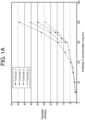
- FIGS. 1A and 1B depict plots of the viscosity of two exemplary liquid antibody formulations.
- FIG. 1A depicts a plot of the viscosities of four different formulations of an Antibody A as a function of antibody concentration.
- FIG. 1B depicts a plot of the viscosities of a formulation of an Antibody B as a function of antibody concentration, at two different temperatures (20°C and 25°C). As shown in FIGS.
- the viscosity of each formulation increases exponentially in relation to increases in antibody concentration.
- even slight increases to the concentration of an antibody in a composition may have a proportionally large effect (e.g., an exponentially larger effect) on the composition's viscosity and suitability for loading into a delivery device or administering to a patient.
- a volume of a formulated drug substance for inclusion in a drug product may be slightly more than the nominal volume of the drug product's primary packaging component (e.g., the desired volume of formulated drug substance may be 1.1 mL or 1.2 mL, and a drug product's primary packaging component may have a nominal volume of only 1 mL). This may occur for a variety of reasons.
- a particular dose of the active ingredient may be efficacious or beneficial for treatment of a disease state, but the particular dose may not be deliverable using only the nominal volume of a primary packaging component, because including that particular dose of active ingredient in a volume of liquid equal to the nominal volume of the primary packaging component might increase the viscosity of the drug product to an undesirable level (as described above).
- a concentration of a desired dose of active ingredient in a nominal volume of fluid may be too high to be safe or effective in treating a patient (i.e., a lower concentration is needed for safety, efficacy, or regulatory standards).
- a primary packaging component with a nominal volume that is close to, but slightly less than, the desired volume of the formulated drug substance, instead of either using a single drug container having a larger nominal volume, or using two smaller drug containers having smaller nominal volumes.
- a primary packaging component such as a syringe
- a smaller nominal volume e.g., to allow for an increase in active ingredient dosage, while maintaining tolerable viscosity levels, without necessitating the use of new manufacturing, tooling, packaging, sterilization, and/or delivery processes and/or devices (or even new regulatory clearances).
- a primary packaging component e.g., a syringe
- added volume of formulated drug substance in a primary packaging component may affect the extent to which the primary packaging component may be securely stoppered and handled during packaging, shipping, delivery, and administration.
- Systems and methods disclosed herein may advantageously be used to successfully overfill primary packaging components, such that the packaging components are filled with a volume of a formulated drug substance greater than their nominal volume, while maintaining desired closure and integrity of the primary packaging components and their contents.
- systems and methods disclosed herein may advantageously be used in successfully overfilling PFS.
- systems and methods disclosed herein may be used in successfully overfilling PFS with a variety of liquid or fluid formulated drug substances for parenteral administration, including formulated drug substances having active ingredients such as antibodies, vaccines, antibiotics, pain management medications, anesthetics, hormones, proteins, small molecules, and any other liquid or fluid formulated drug substances.
- overfilling a PFS with a liquid While aspects of the present disclosure are described in terms of overfilling a PFS with a liquid, it is to be understood that the systems and methods disclosed herein may apply to overfilling a variety of primary packaging components with a variety of types of fluids.
- a formulated drug substance including a biologic (e.g., an antibody such as a human monoclonal antibody, a glycosylated protein or other protein, a nucleic acid, a gene therapy medicament, or post-translational molecule)
- a biologic e.g., an antibody such as a human monoclonal antibody, a glycosylated protein or other protein, a nucleic acid, a gene therapy medicament, or post-translational molecule
- any formulated drug substance such as one including any blood component, vaccine, anti-allergenic, antibiotic, pain management medication, anesthetic, hormone, and/or small molecule.
- FIG. 2A depicts in schematic form an exemplary staked syringe 100, which may be overfilled according to the present disclosure. Parts of syringe 100 are depicted in cross-sectional form. Syringe 100 may include a body 102, which may have a flange 104 surrounding an opening at a proximal end of the syringe 100 and a passage 106 leading to a needle 110, at a distal end of the syringe 100. Needle 110 may be covered by a sheath 108. Syringe 100 may also include a cap 120, which may cover the needle 110. Cap 120 may include a grip 122 and a reinforced tip 124.
- Syringe 100 may be any type of syringe having a nominal volume for parenteral administration of a formulated drug substance, such as a standard syringe or a long syringe.
- syringe 100 may be a PFS suitable for sterilizing, pre-filling, packaging, shipping, and single-use administration.
- Syringe 100 may be made of any suitable material or combination of materials, such as, for example, glass, plastic, and/or metal.
- Syringe 100 may have any nominal volume, such as, for example, 0.3 mL, 0.5 mL, 1 mL, 1.5 mL, 2 mL, 2.25 mL, 2.5 mL, 3 mL, 5 mL, or any other nominal volume.
- syringe 100 may be an Ompi EZ-fill ® syringe, a Gerresheimer ready-to-fill syringe, a BD Hypak SCF TM syringe, or other bulk-processed ready-to-fill or prefillable syringe.
- Syringe 100 has a capacity to physically hold more than its nominal volume in fluid.
- syringe 100 may be a multi-use syringe.
- syringe 100 may be suitable for loading into an auto-injector.
- Body 102 of syringe 100 may be configured to hold at least the nominal volume of syringe 100 in fluid.
- Body 102 may be cylindrical, or may have any other suitable shape, such as an elliptic cylinder or a rectangular prism.
- Body 102 may be made of any suitable material for holding a formulated drug substance, such as glass, plastic, metal, and/or silicone.
- Body 102 may also have a wall thickness suitable for maintaining integrity through various handling procedures, such as sterilization, filling, stoppering, packaging, shipment, and/or use.
- Body 102 may have an opening 101 at its proximal end, through which a fluid and a stopper assembly (e.g., stopper assembly 150 depicted in FIG.
- a stopper assembly e.g., stopper assembly 150 depicted in FIG.
- Interior 107 may have a substantially constant cross-sectional size and shape throughout body 102, such that, for example, a stopper may remain in contact with an interior surface of the walls of body 102 while being moved through interior 107.
- body 102 may be transparent, such that any contents placed within body 102 may be visible through the walls of body 102.
- Flange 104 may surround opening 101 at the proximal end of body 102.
- Flange 104 may have a proximal side 103 and a distal side 105.
- flange 104 may be configured to allow for grip around distal side 105 (for example, a finger grip or a mechanical grip), and/or for a plunger flange (e.g., plunger flange 154 depicted in FIG. 2B ) to rest against proximal side 103 when a plunger is pushed fully into body 102.
- a plunger flange e.g., plunger flange 154 depicted in FIG. 2B
- flange 104 may serve to limit an insertion distance of plunger 150 into body 107.
- Flange 104 may have an oval profile, a circular profile, or may be a clipped flange.
- Passage 106 may connect body 102 with needle 110.
- passage 106 may be substantially narrower than interior 107, so as to reduce the volume or flow of fluid that may be pushed toward needle 110.
- Needle 110 may be fluidly connected to passage 106, such that fluid may pass from body 102, through passage 106 and through needle 110.
- the connection between needle 110 and passage 106 may be any suitable connection known in the art.
- Needle 110 may have an opening (not pictured) in or near its distal end, through which fluid may be ejected.
- Needle 110 may be of any suitable biocompatible material for injection into tissue, such as stainless steel, titanium, or any other metal.
- Sheath 108 may cover needle 110 in order to, for example, protect the tip of needle 110 and/or prevent fluid from leaking out of needle 110.
- Cap 120 may be sized and configured to cover needle 110 and secure to body 102 and/or sheath 108.
- Cap 120 may be made of any material suitable to protect needle 110, such as, for example, rubber, glass, plastic, thermoplastic elastomer, other polymer, metal, or combination of such materials.
- Cap 120 may be securable to body 102 in any known removable manner, such as by a threaded connection, or other interlocking connection.
- Cap 120 may include, for example, a grip 122 to allow for ease of removal of cap 120.
- FIG. 2B depicts in schematic form an exemplary stopper assembly 150.
- Stopper assembly 150 may include a plunger rod 152 and plunger flange 154.
- Stopper assembly 150 may also include a stopper 156 (depicted in cross-sectional form), which may be connected to plunger rod 152 via a connector 158.
- Stopper 156 may also include circumferential ribbing 160, one or more protrusions 162, and a top 164.
- Stopper assembly 150 may be compatible (e.g., appropriately sized) with syringe 100, such that plunger rod 152 and stopper 156 fit snugly into body 102 of syringe 100.
- Plunger rod 152 and stopper 156 may also be compatible with one another, such that stopper 156 may be securely joined to plunger rod 152 via, for example, connector 158.
- plunger rod 152 and stopper 156 may be manufactured specifically to be compatible with one another.
- plunger rod 152 may be a corresponding 1 mL plunger rod
- stopper 156 may be a corresponding 1 mL stopper, such as a fluoropolymer-coated stopper.
- stopper 156 may be manufactured to be insertable into interior 107 of body 102 before being connected to plunger rod 152, after which plunger rod 152 may be connected into the inserted stopper 156 by connector 158.
- connector 158 is a screw connector
- stopper 156 may have a cavity that is threaded in a manner complementary to a helical screw shape of connector 158, into which connector 158 may be screwed.
- Plunger rod 152 may be sized and configured to pull and push stopper 156 through interior 107 of body 102, once connected to stopper 156 via connecter 158. Plunger rod 152 may thus be made of any material suitable to withstand the force necessary to move stopper 156 through interior 107 of body 102.
- plunger rod 152 may be made of metal, glass, plastic, other polymer, or a combination thereof.
- Stopper 156 may likewise be sized and configured to fit snugly within interior 107. For example, if interior 107 has a substantially constant circular cross section (i.e., if body 102 is cylindrical), stopper 156 may likewise have a circular cross section with a diameter designed to fit snugly within a diameter of interior 107.
- Stopper 156 may be made of any suitable material known in the art, such as, for example, rubber, plastic, silicone, or thermoplastic elastomer. In some embodiments, stopper 156 may be coated with a material that reduces interaction between the material of stopper 156 and a formulated drug substance housed within body 102. For example, stopper 156 may be coated in a Teflon or fluoropolymer film, or in a bonded silicone oil. Additionally, stopper 156 may have circumferential ribbing 160 and/or one or more protrusions 162, which may be configured to increase a seal between stopper 156 and body 102, without preventing movability of stopper 156 in body 102.
- FIGS. 3A depicts in schematic form a filled and stoppered syringe assembly 200, including stopper assembly 150 inserted into syringe 100, such that stopper 156 and a part of plunger rod 152 are inside body 102 to where top 164 of stopper 156 is inserted past distal side 105 of flange 104 by a distance A.
- Syringe assembly 200 is filled with a formulated drug substance 202.
- Formulated drug substance 202 may be any fluid formulated drug substance suitable for packaging within syringe assembly 200.
- formulated drug substance 202 may be any fluid suitable for parenteral administration through needle 110.
- Formulated drug substance 202 may be, for example, a liquid, a gel, or a suspension.
- formulated drug substance 202 may include an active pharmaceutical ingredient (API) in a liquid or gel solution.
- API active pharmaceutical ingredient
- Such an API may be any suitable API for therapeutic administration, such as a protein (e.g., an antibody such as a human monoclonal antibody, a glycosylated protein, or other protein), a nucleic acid, a gene therapy medicament, an antibiotic, a pain management medication, an anesthetic, a hormone, or other large- or small-molecule API.
- a protein e.g., an antibody such as a human monoclonal antibody, a glycosylated protein, or other protein
- nucleic acid e.g., an antibody such as a human monoclonal antibody, a glycosylated protein, or other protein
- a nucleic acid e.g., an antibody such as a human monoclonal antibody, a glycosylated protein, or other protein
- a nucleic acid e.g., an antibody such as a human monoclonal antibody, a glycosylated protein, or other protein
- nucleic acid e.g.,
- a volume of formulated drug substance 202 introduced into syringe 100 may be greater than a nominal volume of syringe 100.
- a volume of formulated drug substance 202 may be at least about 3% greater than a nominal volume of syringe 100.
- a volume of formulated drug substance 202 may be between about 3% and about 40% greater than a nominal volume of syringe 100.
- a volume of formulated drug substance 202 may be between about 3% and about 30%, between about 12% and about 25%, or between about 14% and about 25% greater than a nominal volume of syringe 100.
- a volume of formulated drug substance 202 may be about 3%, 4%, 5%, 6%, 7%, 8%, 9%, 10%, 11%, 12%, 13%, 14%, 15%, 16%, 17%, 18%, 19%, 20%, 21%, 22%, 23%, 24%, 25%, 26%, 27%, 28%, 29%, or 30% greater than a nominal volume of syringe 100.
- a volume of formulated drug substance 202 may be between about 0.1 mL and 0.3 mL greater than a nominal volume of syringe 100.
- a volume of formulated drug substance 202 may be between about 1.09 mL and 1.30 mL, such as between about 1.10 mL and 1.27 mL, 1.10 mL and 1.25 mL, or 1.10 mL and 1.15 mL, such as 1.09 mL, 1.10 mL, 1.11 mL, 1.12 mL, 1.13 mL, 1.14 mL, 1.15 mL, 1.16 mL, 1.17 mL, 1.18 mL, 1.19 mL, 1.20 mL, 1.21 mL, 1.22 mL, 1.23 mL, 1.24 mL, 1.25 mL, 1.26 mL, or 1.27 mL.
- a volume of formulated drug substance 202 may be between about 2.09 mL and 2.30 mL, such as between about 2.10 mL and 2.25 mL, 2.10 mL and 2.20 mL, or 2.10 mL and 2.15 mL, such as 2.09 mL, 2.10 mL, 2.11 mL, 2.12 mL, 2.13 mL, 2.14 mL, 2.15 mL, 2.16 mL, 2.17 mL, 2.18 mL, 2.19 mL, or 2.20 mL.
- a volume of formulated drug substance 202 may be greater than a nominal volume of syringe 100 but less than 140%, 130%, or 120% of the nominal volume of syringe 100.
- the volume of formulated drug substance 202 introduced into syringe 100 may be slightly greater than the volume of formulated drug substance 202 that may be expelled from syringe 100 through needle 110, due to "dead volume," e.g., volume that remains trapped in passage 106 (and/or needle 110) after stopper assembly 150 has been fully pushed through body 102.
- a fill volume of formulated drug substance 202 may be 1.19 mL, but a potential expulsion volume, or administered volume, of formulated drug substance 202 through needle 110 may be about 1.14 mL.
- the volume of formulated drug substance 202 introduced into syringe 100 may be greater than the combination of the target volume of formulated drug substance 202 and the dead volume of syringe 100. Additionally, in some embodiments, a target volume of formulated drug substance 202 introduced into syringe 100 may be slightly greater than the target volume of formulated drug substance 202 to be expelled through needle 110, in order to account for variability in filling processes and to guarantee that a minimum amount of formulated drug substance 202 is delivered.
- no air space exists in interior 107 of body 102 after formulated drug substance 202 has been added and stopper 156 has been housed within body 102.
- some such air space may exist.
- such air space as measured from any point on the bottom of stopper 156 to any point on a dose line of formulated drug substance 202, may be between about 0.01 mm and about 1 mm.
- the existing air space may be relatively small such that an air bubble only may be visible if body 102 is turned on its side, as shown by air bubble 170 in Fig. 3B .
- the existing air space may account for between about 5 ⁇ L and 250 ⁇ L of fluid volume, such as 150 ⁇ L of fluid volume.
- Distance A may be a distance from the distal side 105 of flange 104 to top 164 of stopper 156, or from opening 101 at the proximal end of body 102, to top 164 of stopper 156. In some embodiments, distance A may be greater than 0, such that the entirety of stopper 156 is housed within body 102. This may ensure that formulated drug substance 202 is fully sealed within body 102. In further embodiments, distance A may be greater than an experimentally-determined threshold. For example, in some syringes having a nominal volume of 1 mL, distance A may be at least about 1 mm.
- distance A may be at least about 1.5 mm, 2 mm, 2.5 mm, at least about 2.56 mm, at least about 2.57 mm, at least about 3 mm, at least about 3.5 mm, at least about 4 mm, at least about 4.5 mm, at least about 5.0 mm, or at least about 5.5 mm.
- distance A may be experimentally determined in part based on an extent to which plunger rod 152 may be able to tilt relative to a longitudinal axis of body 102 in syringe assembly 200. This may be to prevent excess tilting of plunger rod 152 from dislodging stopper 156, thus breaking a sterile seal between stopper 156 and body 102, or otherwise compromise integrity of stopper 156, body 102, and/or syringe assembly 200 (e.g., during packaging, transportation, unpacking, or use of syringe assembly 200). In some embodiments, distance A may be large enough such that any tilting of plunger rod 152 is limited by contact with the wall of body 102, to less than a given angle relative to a longitudinal axis of body 102.
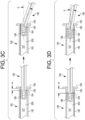
- FIGS. 3C and 3D depict alternative placements of stopper 156 in interior 107 of body 102.
- distance A is too small, because plunger rod 152 may tilt to such an extent (e.g., angle a) that stopper 156 may pull away from the wall of body 102 or may be dislodged from the syringe, thus compromising the integrity of stopper 156 and sterility of stopper 156, syringe 102, and formulated drug substance 202.
- angle a e.g., angle a
- distance A is adequate, such that tilting of plunger rod 152 is limited by the walls of body 102 (e.g., to an angle b) and is not sufficient to allow stopper 156 to pull away from the wall of body 102 and become dislodged or otherwise compromised.
- angle b may be no greater than, e.g., 20°, 15°, 12°, or 10°.
- An overfilled and stoppered primary packaging component such as an overfilled and stoppered syringe, may be achieved by a variety of methods. Additionally, a variety of methods may be used in order to package an overfilled and stoppered drug container.
- FIG. 4 depicts a flow diagram of steps in a method 300 for overfilling a primary packaging component, such as a drug container.
- a formulated drug substance may be prepared.
- a drug container having specifications for holding a nominal volume may be prepared.
- the drug container may be filled with a volume of formulated drug substance, where the fill volume is greater than the nominal volume.
- the drug container may be stoppered.
- the drug container may be packaged.
- a formulated drug substance may be prepared.
- a variety of preparations may be appropriate.
- an API may be prepared in a fluid (e.g., liquid or gel) solution suitable for administration to a patient.
- a fluid e.g., liquid or gel
- an API may be thus prepared so as to avoid precipitation of the API out of solution.
- a pre-made, frozen, and stored formulated drug substance may be removed from storage and thawed to an appropriate temperature for filling, such as room temperature.
- a drug substance may be diluted by various excipients and/or buffers to arrive at a formulated drug substance.
- a formulated drug substance may be filtered through a filtration system, e.g., to ensure sterility, prior to filling of the drug container. Filtering the formulated drug substance through a filtration system may include one or more of thawing, pooling, mixing, equilibrating temperature of, filtering, and/or transferring the formulated drug substance.
- a drug container having a nominal volume may be prepared.
- syringe assembly 200 depicted in FIGS. 3A and 3B may be disassembled such that syringe 100 is separated from stopper assembly 150.
- the drug container may be assembled, removed from packaging, cleaned, or sterilized.
- the drug container may be loaded into a filling machine suitable for automatically filling the drug container with a volume of formulated drug substance.
- the drug container may have any nominal volume.
- multiple drug containers may be assembled and sterilized in bulk, e.g., in batches of 80, 100, 160, 200, or more drug containers.
- the drug container may be filled with a volume of the formulated drug substance, where the volume is greater than the nominal volume of the drug container.
- This filling step may be accomplished by, for example, a machine filling process using an automatic filling machine, using a semi-automatic filling machine, or may be accomplished manually.
- the drug container may be filled under vacuum, to prevent volume within the drug container from being taken up by air pockets or bubbles.
- multiple drug containers may be filled in bulk, using, e.g., an automated fill finish process. For example, batches of 80, 100, 160, 200, or more drug containers may be filled as part of an automated fill process.
- the drug container may be filled in aseptic conditions.
- the volume of prepared formulated drug substance may be any amount that is greater than the nominal volume.
- the volume of prepared formulated drug substance may be at least about 10% greater than the nominal volume, or may be any other amount greater than the nominal volume, as has been described with respect to formulated drug substance 202 in syringe assembly 200.
- the drug container may be stoppered.
- Stoppering includes ensuring the proper placement of a stoppering element with respect to the rest of the drug container.
- stoppering may include ensuring that the top 164 of stopper 156 has at least passed the distal side 105 of flange 104 of body 102, such that stopper 156 is fully within interior 107 of body 102.
- stoppering may include ensuring that the top 164 of stopper 156 is inserted at least a desired distance past distal side 105 of flange 104, as has been previously described with respect to syringe assembly 200.
- Stoppering according to step 308 may include a vacuum stoppering process, as depicted in FIGS. 5A-5D , or a vacuum-assisted stoppering processes, as depicted in FIGS. 6A-6E .
- a vacuum may be applied during stoppering, to prevent or reduce trapping of air in interior 107 of body 102 and to promote insertion of the stopper as far into interior 107 of body 102 as possible.
- Vacuum stoppering or vacuum-assisted stoppering may promote overfilling of syringe 100, because a vacuum may facilitate replacing air that would normally be trapped in interior 107 of body 102 with additional volume of formulated drug substance 202.
- a vacuum stoppering process for example, will allow a stopper to be drawn close to the fluid in the drug container without mechanical stoppering parts coming into contact with the fluid, and without undesirable deformation (e.g., wrinkling or tearing) of a stopper.
- a vacuum stoppering process or a vacuum-assisted stoppering process may be preferable to, e.g., a mechanical stoppering process, which may not provide these benefits.
- stoppering according to step 308 may be accomplished by any other method known in the art.
- FIGS. 5A-5D depict one exemplary vacuum stoppering process.
- a vacuum is applied to the distal side of the drug container, and the stopper is drawn into the container by the vacuum.
- vacuum housing 502 includes a gasket 504, which may surround vacuum housing 502, and a vacuum conduit 506.
- Vacuum housing 502 may be sized to hold stopper 156, and may have a diameter comparable to a diameter of syringe body 102.
- Formulated drug substance 202 may have been introduced into syringe body 202. As depicted in FIG.
- stopper 156 may be introduced into vacuum housing 502 with the assistance of an insertion rod 508, which may fit into a cavity 157 of stopper 156.
- vacuum housing 502, holding stopper 156 may be positioned over syringe body 102, such that gasket 504 is in contact with flange 104 of syringe body 102. Gasket 504 may create a seal between vacuum housing 502 and flange 104 of body 102.
- a vacuum may be applied to the sealed area beneath stopper 156 (i.e., interior 107 of body 102), via vacuum conduit 506.
- the vacuum allows stopper 156 to be drawn down out of vacuum housing 502 and into body 102, as depicted in FIG. 5C .
- the vacuum may aid in ensuring that stopper 156 is placed as close to formulated drug substance 202 as possible.
- vacuum housing 502 may be removed.
- FIGS. 6A-6E depict one exemplary vacuum-assisted stoppering process.
- a vacuum is applied to the drug container, and a stopper insertion tube is used to compress the stopper and insert the stopper into the drug container, assisted by the vacuum-created suction.
- stopper insertion tube 602 includes a gasket 604, which may surround stopper insertion tube 602, and a vacuum conduit 606. All or part of stopper insertion tube 602 may be sized to hold stopper 156 in a slightly compressed configuration, and may fit within syringe body 102, into which formulated drug substance 202 has been introduced. As depicted in FIG.
- stopper 156 may be introduced into stopper insertion tube 602 with the assistance of an insertion rod 608, which may fit into a cavity 157 of stopper 156.
- stopper insertion tube 602, holding stopper 156 may be introduced into interior 107 of syringe body 102.
- Gasket 604 may create a seal between insertion tube 602 and flange 104 of body 102.
- a vacuum may be applied to the sealed area beneath stopper 156, via vacuum conduit 606.
- insertion rod 608 may be used move stopper 156 through insertion tube 602. The vacuum may assist in further drawing stopper 156 into body 102, such that it is close to formulated drug substance 202.
- Insertion rod 608 may assist in holding stopper 156 in place, such that stopper 156 remains and expands to fit within body 102.
- insertion rod 608 may be removed. In some embodiments, insertion rod 608 may be removed prior to removal of insertion tube 602, and a vacuum may continue to be applied through insertion tube 602 to draw stopper 156 into body 102 after removal of insertion rod 608.
- Using a vacuum or vacuum-assisted stoppering process to draw the stopper into the container may reduce the likelihood that mechanical stoppering elements touch the formulated drug substance within the container, thus preserving the sterility of the formulated drug substance.
- the stoppering element e.g., stopper 156
- the stoppering element may be inserted or drawn into interior 107 of body 102 using a vacuum or vacuum-assisted stoppering process without having a plunger rod (e.g., plunger rod 152) attached.
- the plunger rod may be connected to the stopper (e.g., via cavity 157) after stoppering is complete.
- the drug container may be packaged.
- Packaging may include, for example, enclosing the entire stoppered drug container in a secondary packaging component (i.e., packaging not in direct contact with the formulated drug substance), such as plastic packaging suitable for shipment of the drug container.
- Step 310 may also or alternately include applying one or more seals and/or labels to the stoppered drug container or its packaging. In some embodiments, little or no packaging (beyond the drug container) may be necessary.
- the stoppered and packaged drug containers may be stored, shipped, and/or used as desired.
- the drug containers may be pre-sterilized and filled and stoppered via an aseptic filling process.
- the packaged drug container may be "terminally" sterilized. Terminal sterilization may be performed by any method known in the art that does not negatively affect the stoppered drug container by, for example, moving the stopper of the drug container (e.g., stopper 156 in syringe assembly 200) so as to expose the formulated drug substance within the drug container (e.g., formulated drug substance 202 within syringe assembly 200) to a non-sterile environment, or cause the formulated drug substance to leak.
- terminal sterilization may be performed by any method known in the art that does not (i) expose the stoppered drug container and its contents to temperatures and/or pressures that may adversely affect the container or the formulated drug substance inside, or (ii) result in leaching of sterilant residuals from the stopper 156.
- terminali sterilization may be accomplished by vaporized hydrogen peroxide sterilization processes, such as those disclosed in U.S. Patent Application Nos. 62/477,030 , filed on March 27, 2017, and 62/472,067, filed on March 17, 2017 , which are incorporated by reference herein.
- Terminal sterilization may also be accomplished by, for example, other processes using vaporized hydrogen peroxide, ethylene oxide (EO) sterilization, radiation, steam, or nitrogen dioxide (NO 2 ), gamma radiation sterilization, electron beam sterilization, or other processes known in the art.
- EO ethylene oxide
- NO 2 nitrogen dioxide
- any or all of the above-described steps and phases may be executed manually, automatically by various preparation, filling, and stoppering machines and methods known in the art, or by a combination of manual and automatic actions.
- any or all of the above-described steps and phases may be executed on one or more batches of drug containers.
- a batch may include, for example, a plurality of the same drug containers that may be prepared, overfilled, stoppered, etc. in a group.
- a batch of prefillable syringes may include 10, 50, 80, 150, 160, 200, 1,000, 10,000, 20,000, 50,000, 100,000 or more prefillable syringes.
- any of the aforementioned steps of method 300 may be omitted or combined with another step.
- steps and phases may be described with regard to drug containers or, more specifically, syringes, it is to be understood that the steps disclosed herein may be applied to a variety of primary packaging components. Moreover, one or more of the aforementioned steps may be performed out of the order depicted in FIG. 4 .
- Theoretical lost volumes e.g., dead volumes, or volumes remaining in the syringe after expulsion of as much volume as possible, and potential negative deviations from desired volumes based on variability in fill processes
- IPC in-process control
- “drug heights” within theoretical filled syringes using the dimensions of the syringes.
- the drug heights were then combined with the dimensions of the syringes and stopper assemblies to determine theoretical stopper positions in syringes filled with the desired theoretical fill volumes.
- “Stopper position” refers to the distance between the top of the stopper in a filled syringe and the distal side of the syringe flange (e.g. distance A in FIGS. 3A-3D of the present disclosure).
- a bubble height in each syringe was also taken into consideration.
- “Bubble height” refers to the distance between the fill line of the formulated drug substance in a filled syringe and the bottom of the stopper.
- the stopper height would be 7.65 +/- 0.4 mm and the bubble height would be at 4 mm +/- 1 mm.
- the stopper was required to be a certain distance below the flange of the syringe in order to restrict the plunger rod of the stopper assembly from tilting far enough to deform the stopper, to an extent that could potentially compromise the integrity of the seal formed by the stopper. It was determined that the stopper would not deform to such an extent if the plunger rod was prevented from tilting at an angle of greater than 12° relative to a longitudinal axis of the syringe body. Based on provided dimensions of the syringe, stopper, and plunger, this length was determined to be 3.0 mm, with a tolerance of +/- 0.5 mm.
- a plurality of PFS were overfilled by machine as follows.
- Five formulated substances (87.7 mg/mL of an antibody A, 131.6 mg/mL antibody A, 175 mg/mL antibody A, a placebo solution, and water for injection (WFI)) were prepared and frozen at -80° C. Each formulated substance was removed from frozen storage and thawed for 16 hours. The formulated substances (except for WFI) were mixed, filtered, and transferred to an environment of 2-8° C as follows: Table 4 Formulated Substance Mixing Time pH Filtration Time Filtration Yield Total time of exposure at room temp.
- the redundant filtration lines consisted of two Millipak 20 units and 1/4" x 3/8" Pt cured silicone tubing for the product pathway. In the case of 175 mg/mL antibody A, two Millipak 20 units were initially used, and were switched out part of the way through with Millipak 40 units. A peristaltic pump was used as the motive force for filtration. All primary filters were tested and passed filter integrity as per standard EP-024.
- the PFS filled in this procedure included 1 mL BD Hypak Physiolys SCF TM low tungsten syringes (Beckton Dickinson Medical), having a nominal volume of 1 mL. These syringes were paired with 1 mL BD Hypak PS Flurotec plunger stoppers and 1 mL BD Hypak 21510 PR C Plunger Rods (Beckton Dickinson Medical).
- the desired placement of the top of the stopper was at least 2.57 mm below the distal side of the syringe flange, and preferably between 5.0 mm and 2.56 mm below the distal side of the syringe flange.
- the desired placement of the rib of the stopper closest to the top of the stopper was at least 4.9 mm below the distal side of the syringe flange.
- Filling in this procedure was completed using an INOVA H3-5V commercial scale syringe filler.
- Stoppering was completed using a Becton Dickson Hypak stoppering unit.
- Stoppering height (e.g., distance between the top of the stopper and the distal side of the syringe flange) was measured using Vernier calipers.
- the syringe filler was initially set up for a target fill volume of 1.28 mL. Using WFI, this resulted in an average deliverable volume of 1.27 mL for ten dispensed syringes.
- a vacuum stoppering tank setting of 70 mBar and 750 ms stoppering dwell time on the stoppering unit was initially used. At this fill volume and stoppering dwell time setting, stoppering was sometimes incomplete and WFI was drawn into the vacuum chamber.
- the syringe filler was then set up for a target fill volume of 1.19 mL. This was targeted to maintain a minimum deliverable volume of 1.14 mL while providing a larger operating buffer for the vacuum stoppering setting and stopper placement requirement.
- the vacuum stoppering settings were kept between 70-75 mBar while the stopper dwell time was changed to 250 ms. When tested using WFI, this eliminated the problem of product suction into the vacuum chamber.
- the stoppering placement requirement (with the top of the stopper at least 3.0 mm below the distal side of the syringe flange) was, however, met on the stoppered syringes.
- the syringe filler set at a target fill volume of 1.19 mL was then used to fill syringes using WFI, the placebo, and the antibody A formulated substance.
- 160 syringes were filled with each of the five different fluids and at each of three different machine speeds (40%, 65%, and 90%) (with the exception of 87.7 mg/mL antibody A at 40% speed, for which only 35 syringes were filled, and 87.7 mg/mL antibody A at 65% speed, for which none were filled, due to an insufficient amount of product being available). All syringes were stoppered using a Hypak stoppering machine. Deliverable volumes from 20 filled and stoppered syringes from each batch were then measured.
- Deliverable volumes were measured by expelling volume from each of the 20 syringes, weighing the expelled volume, and converting the weight to volume using the following densities: Table 5 Formulated Substance Density Placebo 1.023 g/mL 87.7 mg/mL antibody A 1.047 g/mL 131.6 mg/mL antibody A 1.059 g/mL 175 mg/mL antibody A 1.072 g/mL
- Deliverable volumes were calculated to be as follows: Table 6 Condition Avg. Vol. (mL) Max. Vol. (mL) Min. Vol. (mL) WFI - 40% speed 1.18 1.19 1.16 WFI - 65% speed 1.17 1.18 1.17 WFI - 90% speed 1.18 1.20 1.15 Placebo - 40% speed 1.18 1.19 1.18 Placebo - 65% speed 1.18 1.19 1.18 Placebo - 90% speed 1.19 1.22 1.18 87.7 mg/mL antibody A - 40% speed 1.17 1.19 1.15 87.7 mg/mL antibody A - 65% speed N/A* N/A* N/A* 87.7 mg/mL antibody A - 90% speed 1.19 1.20 1.17 131.6 mg/mL antibody A - 40% speed 1.16 1.19 1.14 131.6 mg/mL antibody A - 65% speed 1.18 1.20 1.16 131.6 mg/mL antibody A - 90% speed 1.17 1.19 1.15 175 mg/mL antibody A - 40% speed 1.19 1.20
- Stoppering heights were measured from the top of the stopper to the distal side of the syringe flange, and were measured and calculated to be as follows: Table 7 Condition Avg. Stoppering Height (mm) Max. Stoppering Height (mm) Min.
- a plurality of PFS were overfilled by hand as follows.
- Three formulated substances (87.7 mg/mL antibody A, 131.6 mg/mL antibody A, 175 mg/mL antibody A) were prepared and frozen at -80° C. Each substance was removed from frozen storage and thawed for 16 hours. The substances were mixed, filtered, and transferred to 2-8° C as follows: Table 8 Formulated Substance Mixing Time pH Filtration Time Filtration Yield Total time of exposure at room temp. after thawing 87.7 mg/mL antibody A 12 min 6.04 7 min 94% 100 min 131.6 mg/mL antibody A 12 min 6.11 11 min 93% 85 min 175 mg/mL antibody A 11 min 6.02 21 min 91% 60 min
- the redundant filtration lines for 87.7 mg/mL antibody A and 131.6 mg/mL antibody A consisted of two Millipak 20s and 1/4" x 3/8" Pt cured silicone tubing for the product pathway.
- the redundant filtration lines for 175 mg/mL antibody A consisted of two Millipak 40s and 1/4" x 3/8" Pt cured silicone tubing for the product pathway.
- a peristaltic pump was used as the motive force for filtration.
- the PFS filled in this procedure included 1 mL BD Hypak Physiolys SCF TM low tungsten syringes (Beckton Dickinson Medical), paired with 1 mL BD Hypak PS Flurotec plunger stoppers and 1 mL BD Hypak 21510 PR C Plunger Rods (Beckton Dickinson Medical).
- the desired placement of the top of the stopper was at least 3.0 mm below the distal side of the syringe flange. Filling in this procedure was completed by hand using a Watson-Marlow pump. Stoppering was completed using a Becton Dickson Hypak vacuum stoppering unit.
- the target fill volume was set at 1.19 mL for this procedure.
- 160 syringes in two tubs of 80 syringes each) were filled with each of the three different formulated substances.
- Deliverable volumes from 10 successfully filled and stoppered syringes from each batch were then measured.
- Deliverable volumes were measured by expelling volume from each syringe, weighing the expelled volume, and converting the weight to volume using the densities noted in Table 5.
- Deliverable volumes were calculated to be as follows: Table 9 Condition Avg. Vol. (mL) Max. Vol. (mL) Min. Vol.
- Stoppering heights were measured for 15 hand-filled samples using Vernier calipers, and were taken, from the top of the stopper to the distal side of the syringe flange. Measurements were as follows: Table 10 Condition Avg. Stoppering Height (mm) Max. Stoppering Height (mm) Min.
- Stoppering Height (mm) 87.7 mg/mL antibody A (Tub 1 of 2) 5.7 6.0 5.4 87.7 mg/mL antibody A (Tub 2 of 2) 5.6 6.2 5.4 131.6 mg/mL antibody A (Tub 1 of 2) 6.2 6.6 6.0 131.6 mg/mL antibody A (Tub 2 of 2) 6.0 6.2 5.8 175 mg/mL antibody A (Tub 1 of 2) 6.2 6.8 6.0 175 mg/mL antibody A (Tub 2 of 2) 6.3 6.7 6.2
- stoppering heights of hand-filled syringes were comparable to stoppering heights of machine-filled syringes.
Landscapes
- Health & Medical Sciences (AREA)
- Engineering & Computer Science (AREA)
- General Health & Medical Sciences (AREA)
- Public Health (AREA)
- Anesthesiology (AREA)
- Biomedical Technology (AREA)
- Heart & Thoracic Surgery (AREA)
- Hematology (AREA)
- Life Sciences & Earth Sciences (AREA)
- Animal Behavior & Ethology (AREA)
- Veterinary Medicine (AREA)
- Vascular Medicine (AREA)
- Mechanical Engineering (AREA)
- Diabetes (AREA)
- Chemical & Material Sciences (AREA)
- Dispersion Chemistry (AREA)
- Infusion, Injection, And Reservoir Apparatuses (AREA)
- Medical Preparation Storing Or Oral Administration Devices (AREA)
- Medicinal Preparation (AREA)
- Medicines That Contain Protein Lipid Enzymes And Other Medicines (AREA)
- Medicines Containing Antibodies Or Antigens For Use As Internal Diagnostic Agents (AREA)
Claims (8)
- Verfahren zum Herstellen eines Arzneimittelprodukts, umfassend:Einbringen eines Volumens einer formulierten Arzneimittelsubstanz (202) in eine primäre Verpackungskomponente unter Verwendung einer automatischen Abfüllmaschine oder einer halbautomatischen Abfüllmaschine,wobei die primäre Verpackungskomponente eine vorfüllbare Spritze (100) ist, wobei die vorfüllbare Spritze (100) einen Körper (102) und einen Flansch (104) aufweist, der eine Öffnung (101) an einem proximalen Ende der Spritze (100) und einen Durchgang (106) umgibt, der zu einer Nadel (110) an einem distalen Ende der Spritze (100) führt, unddas Volumen der formulierten Arzneimittelsubstanz (202) größer ist als ein Nennvolumen der primären Verpackungskomponente, nämlich zwischen 110 % und 140 % des Nennvolumens der primären Verpackungskomponente;Positionieren eines Stopfens (156) innerhalb der primären Verpackungskomponente,wobei eine Oberseite (164) des Stopfens (156) um einen Abstand A an der distalen Seite (105) des Flansches (104) vorbeigeführt wird,wobei das Positionieren des Stopfens (156) das Anlegen eines Vakuums an den Stopfen (156) umfasst, wobei das Vakuum an den Stopfen (156) während eines Vakuumverschlussverfahrens oder eines vakuumunterstützten Verschlussverfahrens angelegt wird, um den Stopfen (156) in die vorfüllbare Spritze (100) zu ziehen; undVerbinden einer Kolbenstange (152) mit dem Stopfen (156) über ein Verbindungsstück (158);wobei der Stopfen (156) in einen Innenraum (107) des Körpers (102) eingeführt wird, bevor die Kolbenstange (152) mit dem eingeführten Stopfen (156) durch das Verbindungsstück (158) verbunden wird,wobei der Abstand A groß genug ist, so dass jedes Kippen der Kolbenstange (152), sobald sie mit dem Stopfen (156) verbunden ist, durch Kontakt mit einer Wand des Körpers (102) auf weniger als einen gegebenen Winkel relativ zu einer Längsachse des Körpers (102) begrenzt ist und nicht ausreicht, um es dem Stopfen (156) zu ermöglichen, sich von der Wand des Körpers (102) wegzuziehen und sich zu lösen oder anderweitig beeinträchtigt zu werden,wobei der gegebene Winkel 20° beträgt.
- Verfahren nach Anspruch 1, wobei die primäre Verpackungskomponente eine vorfüllbare Spritze (100) mit einem Nennvolumen von mindestens 1 mL ist.
- Verfahren nach Anspruch 1, wobei das Volumen der formulierten Arzneimittelsubstanz (202) zwischen 0,1 mL und 0,3 mL größer ist als das Nennvolumen der primären Verpackungskomponente.
- Verfahren nach Anspruch 1, ferner umfassend das Einlegen der primären Verpackungskomponente in eine zusätzliche Verpackung.
- Verfahren zum Herstellen einer Vielzahl von Arzneimittelprodukten, wobei das Verfahren das Wiederholen der Schritte nach Anspruch 1 für jede einer Vielzahl von primären Verpackungskomponenten in einer Charge umfasst.
- Verfahren nach Anspruch 5, wobei die Charge der primären Verpackungskomponenten 80 vorgefüllte Spritzen umfasst.
- Verfahren nach Anspruch 1, wobei das Nennvolumen 1 mL beträgt und das Positionieren des Stopfens (156) innerhalb der primären Verpackungskomponente ferner das Einsetzen des Stopfens (156) in den Körper (102) der Spritze (100) umfasst, so dass ein Ende des Stopfens (156), das dem Flansch (104) der Spritze am nächsten ist, zwischen etwa 2,5 mm und etwa 5,0 mm von dem Flansch (104) der Spritze (100) entfernt ist.
- Verfahren nach Anspruch 1, wobei das Anlegen des Vakuums an den Stopfen (156) der primären Verpackungskomponente einschließt, dass der Stopfen (156) der primären Verpackungskomponente einem Druck zwischen 70 und 75 mBar ausgesetzt wird.
Priority Applications (1)
| Application Number | Priority Date | Filing Date | Title |
|---|---|---|---|
| EP24189541.6A EP4438501A3 (de) | 2017-06-29 | 2017-06-29 | Vorrichtungen und verfahren zum überfüllen von arzneimittelbehältern |
Applications Claiming Priority (1)
| Application Number | Priority Date | Filing Date | Title |
|---|---|---|---|
| PCT/US2017/040011 WO2019005072A1 (en) | 2017-06-29 | 2017-06-29 | Devices and methods for overfilling drug containers |
Related Child Applications (1)
| Application Number | Title | Priority Date | Filing Date |
|---|---|---|---|
| EP24189541.6A Division EP4438501A3 (de) | 2017-06-29 | 2017-06-29 | Vorrichtungen und verfahren zum überfüllen von arzneimittelbehältern |
Publications (2)
| Publication Number | Publication Date |
|---|---|
| EP3645401A1 EP3645401A1 (de) | 2020-05-06 |
| EP3645401B1 true EP3645401B1 (de) | 2024-07-24 |
Family
ID=59315755
Family Applications (2)
| Application Number | Title | Priority Date | Filing Date |
|---|---|---|---|
| EP17737998.9A Active EP3645401B1 (de) | 2017-06-29 | 2017-06-29 | Vorrichtungen und verfahren zum überfüllen von arzneimittelbehältern |
| EP24189541.6A Pending EP4438501A3 (de) | 2017-06-29 | 2017-06-29 | Vorrichtungen und verfahren zum überfüllen von arzneimittelbehältern |
Family Applications After (1)
| Application Number | Title | Priority Date | Filing Date |
|---|---|---|---|
| EP24189541.6A Pending EP4438501A3 (de) | 2017-06-29 | 2017-06-29 | Vorrichtungen und verfahren zum überfüllen von arzneimittelbehältern |
Country Status (16)
| Country | Link |
|---|---|
| US (4) | US11577025B2 (de) |
| EP (2) | EP3645401B1 (de) |
| JP (3) | JP2020531057A (de) |
| KR (3) | KR20240096769A (de) |
| AR (2) | AR110759A1 (de) |
| AU (2) | AU2017420758A1 (de) |
| BR (1) | BR112019027300B1 (de) |
| CA (1) | CA2973151C (de) |
| DE (1) | DE212017000337U1 (de) |
| EA (1) | EA202090085A1 (de) |
| ES (1) | ES2990132T3 (de) |
| IL (2) | IL271434B2 (de) |
| MX (1) | MX2019015792A (de) |
| MY (1) | MY201666A (de) |
| TW (2) | TWI736704B (de) |
| WO (1) | WO2019005072A1 (de) |
Families Citing this family (11)
| Publication number | Priority date | Publication date | Assignee | Title |
|---|---|---|---|---|
| PT3858405T (pt) | 2012-06-01 | 2023-06-26 | Novartis Ag | Seringa |
| FR3093088A1 (fr) * | 2019-02-21 | 2020-08-28 | Lyofal | Contenant pour le conditionnement de matières sous atmosphère contrôlée et procédé de conditionnement utilisant un tel contenant |
| IT201900007551A1 (it) * | 2019-05-30 | 2020-11-30 | Gd Spa | Unità di riempimento di un contenitore per prodotti liquidi, in particolare una carpula del settore farmaceutico |
| WO2021188319A1 (en) * | 2020-03-16 | 2021-09-23 | W. L. Gore & Associates, Inc. | Vacuum insertion methods for inserting lubricant free syringe stoppers and a system for assembling same |
| JP2023526869A (ja) * | 2020-05-22 | 2023-06-23 | ダブリュ.エル.ゴア アンド アソシエイツ,インコーポレイティド | 潤滑剤不含バレル又は潤滑剤不含カートリッジチューブに潤滑剤不含ストッパを挿入する方法及びそれを組み立てるためのシステム |
| US11602598B1 (en) * | 2020-08-27 | 2023-03-14 | Fresenius Kabi Deutschland Gmbh | Prefilled syringe with pegfilgrastim having optimized dose and methods related thereto |
| GB202107153D0 (en) * | 2021-05-19 | 2021-06-30 | UCB Biopharma SRL | Method for filling vials containing liquid drug products |
| JP2024544061A (ja) * | 2021-12-03 | 2024-11-27 | アムジエン・インコーポレーテツド | シリンジ内のストッパ配置 |
| JPWO2023176244A1 (de) * | 2022-03-14 | 2023-09-21 | ||
| US20240399064A1 (en) * | 2023-05-30 | 2024-12-05 | Becton, Dickinson And Company | Container Closure with Reverse Coefficient of Thermal Expansion Materials |
| EP4628125A1 (de) * | 2024-04-02 | 2025-10-08 | Becton, Dickinson and Company | Spritzenkolbenstopper mit führungsaktivierendem innenhohlraum |
Citations (9)
| Publication number | Priority date | Publication date | Assignee | Title |
|---|---|---|---|---|
| US5009646A (en) * | 1988-03-16 | 1991-04-23 | Daikyo Gomu Seiko Ltd. | Sliding stopper for a syringe |
| US5685846A (en) * | 1995-02-27 | 1997-11-11 | Schott Parenta Systems, Inc. | Dual chamber internal by-pass syringe assembly |
| WO1999055402A1 (en) * | 1998-04-30 | 1999-11-04 | Abbott Laboratories | Syringe assembly |
| US20030032928A1 (en) * | 2000-03-02 | 2003-02-13 | Morihiro Sudo | Prefilled syringe assembly |
| JP2005118222A (ja) * | 2003-10-15 | 2005-05-12 | Arute:Kk | 容器兼用注射器 |
| US20070185439A1 (en) * | 2005-11-29 | 2007-08-09 | Kouichi Sugita | Injection device |
| JP2008212213A (ja) * | 2007-02-28 | 2008-09-18 | Hisamitsu Pharmaceut Co Inc | 真空打栓用治具 |
| US20110224610A1 (en) * | 2010-03-15 | 2011-09-15 | Becton, Dickinson And Company | Medical Device Including an Air Evacuation System |
| WO2017047295A1 (ja) * | 2015-09-17 | 2017-03-23 | テルモ株式会社 | シリンジ用プランジャおよびそれを用いたプレフィルドシリンジ |
Family Cites Families (38)
| Publication number | Priority date | Publication date | Assignee | Title |
|---|---|---|---|---|
| US2832340A (en) * | 1957-03-26 | 1958-04-29 | American Home Prod | Syringe push rod |
| US3965945A (en) | 1974-09-09 | 1976-06-29 | Ross John D | Filling aid for medicant syringe |
| US4357971A (en) * | 1980-09-19 | 1982-11-09 | Cyberon Corporation | Syringe gauging, loading and injection apparatus |
| US4573967A (en) | 1983-12-06 | 1986-03-04 | Eli Lilly And Company | Vacuum vial infusion system |
| US5538506A (en) | 1993-11-03 | 1996-07-23 | Farris; Barry | Prefilled fluid syringe |
| US5993412A (en) * | 1997-05-19 | 1999-11-30 | Bioject, Inc. | Injection apparatus |
| US20010018937A1 (en) | 1998-12-28 | 2001-09-06 | Shigeru Nemoto | Method and device for pre-filling a syringe with a contrast agent |
| US6171286B1 (en) * | 1999-04-20 | 2001-01-09 | James R. Gross | Self-aligning syringe plunger |
| US6152898A (en) | 1999-04-30 | 2000-11-28 | Medtronic, Inc. | Overfill protection systems for implantable drug delivery devices |
| WO2001005456A1 (en) * | 1999-07-15 | 2001-01-25 | Bracco International B.V. | Plunger for syringe |
| DE19935681A1 (de) * | 1999-07-29 | 2001-02-15 | Vetter & Co Apotheker | Vorrichtung zum Befüllen eines Spritzenzylinders und/oder zum Setzen eines Stopfens im Spritzenzylinder |
| US20030097098A1 (en) | 2000-03-29 | 2003-05-22 | Gilad Lavi | Needle assembly and sheath and method of filling a drug delivery device |
| US7331944B2 (en) * | 2000-10-23 | 2008-02-19 | Medical Instill Technologies, Inc. | Ophthalmic dispenser and associated method |
| US6382035B1 (en) | 2001-04-02 | 2002-05-07 | Rheodyne, Lp | Multi-valving sample injection apparatus |
| DE10129452A1 (de) * | 2001-06-19 | 2003-01-09 | Bosch Gmbh Robert | Verfahren zum Befüllen von im wesentlichen zylinderförmigen Ampullen |
| JP4737887B2 (ja) | 2001-08-16 | 2011-08-03 | テルモ株式会社 | プレフィルドシリンジ |
| AU2003297653A1 (en) * | 2002-12-03 | 2004-06-23 | Forhealth Technologies, Inc. | Automated syringe preparation and automated transfer of medication thereto and safety features associated therewith |
| US6877530B2 (en) * | 2002-12-03 | 2005-04-12 | Forhealth Technologies, Inc. | Automated means for withdrawing a syringe plunger |
| DE10306400A1 (de) * | 2003-02-15 | 2004-09-02 | Arzneimittel Gmbh Apotheker Vetter & Co. Ravensburg | Verfahren zur Identifizierung und/oder Überwachung von medizinischen Spritzen, insbesondere vorgefüllten Fertigspritzen |
| US20060168916A1 (en) * | 2004-11-05 | 2006-08-03 | Griebel Robert A E | Method and apparatus to insert stoppers into prefilled syringes |
| US20070078429A1 (en) | 2005-06-15 | 2007-04-05 | Inviro Medical Devices Ltd. | Safety fluid transfer cannula |
| US8225824B2 (en) | 2007-11-16 | 2012-07-24 | Intelligent Hospital Systems, Ltd. | Method and apparatus for automated fluid transfer operations |
| CN104324438B (zh) * | 2008-01-11 | 2017-06-16 | Ucb医药有限公司 | 用于类风湿性关节炎患者的给药系统 |
| US8386070B2 (en) | 2009-03-18 | 2013-02-26 | Intelligent Hospital Systems, Ltd | Automated pharmacy admixture system |
| JP4638553B1 (ja) * | 2010-08-09 | 2011-02-23 | 株式会社アルテ | 二室式容器兼用注射器の製造方法及びフロントストッパー |
| EP2672983B1 (de) * | 2011-02-11 | 2017-04-19 | Edge Therapeutics, Inc. | Zusammensetzungen und verfahren zur verbesserung der prognose für einen patienten mit subarachnoider blutung |
| MX2015004636A (es) * | 2012-10-12 | 2015-10-22 | Lilly Co Eli | Motores químicos y métodos para su uso, especialmente en la inyección de fluidos altamente viscosos. |
| EP2995333A4 (de) * | 2013-05-10 | 2017-01-04 | Terumo Kabushiki Kaisha | Herstellungsverfahren für eine vorgefüllte spritze und herstellungsvorrichtung für eine vorgefüllte spritze |
| TW201900139A (zh) | 2013-08-16 | 2019-01-01 | 加拿大商凡爾克斯醫藥系統公司 | 用於裝填藥物容器的方法、裝置及系統 |
| US9827376B2 (en) * | 2014-01-29 | 2017-11-28 | Becton, Dickinson And Company | Plunger assembly including a plunger rod for advancing a stopper through a syringe |
| EP3009354A1 (de) * | 2014-10-15 | 2016-04-20 | F. Hoffmann-La Roche AG | Verfahren zur Bereitstellung eines getrockneten festen Produktes in einem primären Verpackungsbehälter, das einen aktiven pharmazeutischen Inhaltsstoff enthält |
| KR102455905B1 (ko) * | 2014-10-30 | 2022-10-17 | 추가이 세이야쿠 가부시키가이샤 | 시린지 캡을 구비한, 침 부착 프리필드 시린지 제제 |
| US9155775B1 (en) | 2015-01-28 | 2015-10-13 | Teva Pharmaceutical Industries, Ltd. | Process for manufacturing glatiramer acetate product |
| DE102016200434A1 (de) * | 2016-01-15 | 2017-07-20 | Schott Schweiz Ag | Kolbenstange für medizinische Packmittel |
| US10286151B2 (en) * | 2016-02-26 | 2019-05-14 | West Pharma. Services IL, Ltd. | Plunger with reduced leakage during storage |
| CN115998858A (zh) | 2016-07-05 | 2023-04-25 | 赛诺菲 | 抗体制剂 |
| US20180105294A1 (en) * | 2016-10-13 | 2018-04-19 | Bourjois Abboud | Methods and systems for prefilling syringes |
| EP3582834A4 (de) * | 2017-02-17 | 2021-04-21 | Becton, Dickinson and Company | Spritze und kolbenstange mit stopfenführung |
-
2017
- 2017-06-29 IL IL271434A patent/IL271434B2/en unknown
- 2017-06-29 DE DE212017000337.5U patent/DE212017000337U1/de active Active
- 2017-06-29 US US16/626,677 patent/US11577025B2/en active Active
- 2017-06-29 MX MX2019015792A patent/MX2019015792A/es unknown
- 2017-06-29 BR BR112019027300-0A patent/BR112019027300B1/pt active IP Right Grant
- 2017-06-29 KR KR1020247018925A patent/KR20240096769A/ko active Pending
- 2017-06-29 CA CA2973151A patent/CA2973151C/en active Active
- 2017-06-29 EA EA202090085A patent/EA202090085A1/ru unknown
- 2017-06-29 KR KR1020237003202A patent/KR102675224B1/ko active Active
- 2017-06-29 IL IL321235A patent/IL321235A/en unknown
- 2017-06-29 JP JP2019571701A patent/JP2020531057A/ja active Pending
- 2017-06-29 AU AU2017420758A patent/AU2017420758A1/en not_active Abandoned
- 2017-06-29 MY MYPI2019007595A patent/MY201666A/en unknown
- 2017-06-29 WO PCT/US2017/040011 patent/WO2019005072A1/en not_active Ceased
- 2017-06-29 EP EP17737998.9A patent/EP3645401B1/de active Active
- 2017-06-29 KR KR1020207001627A patent/KR102494471B1/ko active Active
- 2017-06-29 ES ES17737998T patent/ES2990132T3/es active Active
- 2017-06-29 EP EP24189541.6A patent/EP4438501A3/de active Pending
- 2017-11-08 TW TW106138531A patent/TWI736704B/zh active
- 2017-11-08 TW TW110125708A patent/TWI787906B/zh active
-
2018
- 2018-01-19 AR ARP180100126A patent/AR110759A1/es active IP Right Grant
-
2022
- 2022-03-18 AR ARP220100650A patent/AR126326A2/es unknown
-
2023
- 2023-01-10 US US18/152,431 patent/US11918785B2/en active Active
- 2023-01-13 JP JP2023003929A patent/JP2023052394A/ja active Pending
-
2024
- 2024-01-26 US US18/424,037 patent/US12440622B2/en active Active
- 2024-08-30 AU AU2024216498A patent/AU2024216498A1/en active Pending
-
2025
- 2025-05-28 JP JP2025088577A patent/JP2025126176A/ja active Pending
- 2025-09-19 US US19/333,578 patent/US20260014319A1/en active Pending
Patent Citations (9)
| Publication number | Priority date | Publication date | Assignee | Title |
|---|---|---|---|---|
| US5009646A (en) * | 1988-03-16 | 1991-04-23 | Daikyo Gomu Seiko Ltd. | Sliding stopper for a syringe |
| US5685846A (en) * | 1995-02-27 | 1997-11-11 | Schott Parenta Systems, Inc. | Dual chamber internal by-pass syringe assembly |
| WO1999055402A1 (en) * | 1998-04-30 | 1999-11-04 | Abbott Laboratories | Syringe assembly |
| US20030032928A1 (en) * | 2000-03-02 | 2003-02-13 | Morihiro Sudo | Prefilled syringe assembly |
| JP2005118222A (ja) * | 2003-10-15 | 2005-05-12 | Arute:Kk | 容器兼用注射器 |
| US20070185439A1 (en) * | 2005-11-29 | 2007-08-09 | Kouichi Sugita | Injection device |
| JP2008212213A (ja) * | 2007-02-28 | 2008-09-18 | Hisamitsu Pharmaceut Co Inc | 真空打栓用治具 |
| US20110224610A1 (en) * | 2010-03-15 | 2011-09-15 | Becton, Dickinson And Company | Medical Device Including an Air Evacuation System |
| WO2017047295A1 (ja) * | 2015-09-17 | 2017-03-23 | テルモ株式会社 | シリンジ用プランジャおよびそれを用いたプレフィルドシリンジ |
Also Published As
Similar Documents
| Publication | Publication Date | Title |
|---|---|---|
| US12440622B2 (en) | Devices and methods for overfilling drug containers | |
| EP3679922B2 (de) | Spritze | |
| JP2025160274A (ja) | 注射器および気密性の試験方法 | |
| US9375385B2 (en) | Pre-filled active vial having integral plunger assembly | |
| JP7044708B2 (ja) | カスタマイズシリンジの充填方法 | |
| AU2013342179A1 (en) | Method and apparatus for adding buffers and other substances to medical cartridges | |
| EA052043B1 (ru) | Устройства и способы для переполнения контейнеров с лекарственным средством | |
| EA045636B1 (ru) | Устройство и способ для переполнения контейнера с лекарственным средством | |
| GB2418616A (en) | Injection device with a piston having needle and plunger attachments. | |
| TW202019505A (zh) | 預充填注射裝置 |
Legal Events
| Date | Code | Title | Description |
|---|---|---|---|
| STAA | Information on the status of an ep patent application or granted ep patent |
Free format text: STATUS: UNKNOWN |
|
| STAA | Information on the status of an ep patent application or granted ep patent |
Free format text: STATUS: THE INTERNATIONAL PUBLICATION HAS BEEN MADE |
|
| PUAI | Public reference made under article 153(3) epc to a published international application that has entered the european phase |
Free format text: ORIGINAL CODE: 0009012 |
|
| STAA | Information on the status of an ep patent application or granted ep patent |
Free format text: STATUS: REQUEST FOR EXAMINATION WAS MADE |
|
| 17P | Request for examination filed |
Effective date: 20200129 |
|
| AK | Designated contracting states |
Kind code of ref document: A1 Designated state(s): AL AT BE BG CH CY CZ DE DK EE ES FI FR GB GR HR HU IE IS IT LI LT LU LV MC MK MT NL NO PL PT RO RS SE SI SK SM TR |
|
| AX | Request for extension of the european patent |
Extension state: BA ME |
|
| DAV | Request for validation of the european patent (deleted) | ||
| DAX | Request for extension of the european patent (deleted) | ||
| STAA | Information on the status of an ep patent application or granted ep patent |
Free format text: STATUS: EXAMINATION IS IN PROGRESS |
|
| 17Q | First examination report despatched |
Effective date: 20210209 |
|
| P01 | Opt-out of the competence of the unified patent court (upc) registered |
Effective date: 20230519 |
|
| GRAP | Despatch of communication of intention to grant a patent |
Free format text: ORIGINAL CODE: EPIDOSNIGR1 |
|
| STAA | Information on the status of an ep patent application or granted ep patent |
Free format text: STATUS: GRANT OF PATENT IS INTENDED |
|
| INTG | Intention to grant announced |
Effective date: 20240207 |
|
| GRAS | Grant fee paid |
Free format text: ORIGINAL CODE: EPIDOSNIGR3 |
|
| GRAA | (expected) grant |
Free format text: ORIGINAL CODE: 0009210 |
|
| STAA | Information on the status of an ep patent application or granted ep patent |
Free format text: STATUS: THE PATENT HAS BEEN GRANTED |
|
| AK | Designated contracting states |
Kind code of ref document: B1 Designated state(s): AL AT BE BG CH CY CZ DE DK EE ES FI FR GB GR HR HU IE IS IT LI LT LU LV MC MK MT NL NO PL PT RO RS SE SI SK SM TR |
|
| REG | Reference to a national code |
Ref country code: GB Ref legal event code: FG4D |
|
| REG | Reference to a national code |
Ref country code: CH Ref legal event code: EP |
|
| REG | Reference to a national code |
Ref country code: DE Ref legal event code: R096 Ref document number: 602017083525 Country of ref document: DE |
|
| REG | Reference to a national code |
Ref country code: IE Ref legal event code: FG4D |
|
| REG | Reference to a national code |
Ref country code: NL Ref legal event code: FP |
|
| REG | Reference to a national code |
Ref country code: LT Ref legal event code: MG9D |
|
| REG | Reference to a national code |
Ref country code: ES Ref legal event code: FG2A Ref document number: 2990132 Country of ref document: ES Kind code of ref document: T3 Effective date: 20241128 |
|
| PG25 | Lapsed in a contracting state [announced via postgrant information from national office to epo] |
Ref country code: PT Free format text: LAPSE BECAUSE OF FAILURE TO SUBMIT A TRANSLATION OF THE DESCRIPTION OR TO PAY THE FEE WITHIN THE PRESCRIBED TIME-LIMIT Effective date: 20241125 |
|
| REG | Reference to a national code |
Ref country code: AT Ref legal event code: MK05 Ref document number: 1706110 Country of ref document: AT Kind code of ref document: T Effective date: 20240724 |
|
| PG25 | Lapsed in a contracting state [announced via postgrant information from national office to epo] |
Ref country code: PT Free format text: LAPSE BECAUSE OF FAILURE TO SUBMIT A TRANSLATION OF THE DESCRIPTION OR TO PAY THE FEE WITHIN THE PRESCRIBED TIME-LIMIT Effective date: 20241125 |
|
| PG25 | Lapsed in a contracting state [announced via postgrant information from national office to epo] |
Ref country code: NO Free format text: LAPSE BECAUSE OF FAILURE TO SUBMIT A TRANSLATION OF THE DESCRIPTION OR TO PAY THE FEE WITHIN THE PRESCRIBED TIME-LIMIT Effective date: 20241024 |
|
| PG25 | Lapsed in a contracting state [announced via postgrant information from national office to epo] |
Ref country code: GR Free format text: LAPSE BECAUSE OF FAILURE TO SUBMIT A TRANSLATION OF THE DESCRIPTION OR TO PAY THE FEE WITHIN THE PRESCRIBED TIME-LIMIT Effective date: 20241025 Ref country code: FI Free format text: LAPSE BECAUSE OF FAILURE TO SUBMIT A TRANSLATION OF THE DESCRIPTION OR TO PAY THE FEE WITHIN THE PRESCRIBED TIME-LIMIT Effective date: 20240724 Ref country code: PL Free format text: LAPSE BECAUSE OF FAILURE TO SUBMIT A TRANSLATION OF THE DESCRIPTION OR TO PAY THE FEE WITHIN THE PRESCRIBED TIME-LIMIT Effective date: 20240724 |
|
| PG25 | Lapsed in a contracting state [announced via postgrant information from national office to epo] |
Ref country code: BG Free format text: LAPSE BECAUSE OF FAILURE TO SUBMIT A TRANSLATION OF THE DESCRIPTION OR TO PAY THE FEE WITHIN THE PRESCRIBED TIME-LIMIT Effective date: 20240724 |
|
| PG25 | Lapsed in a contracting state [announced via postgrant information from national office to epo] |
Ref country code: LV Free format text: LAPSE BECAUSE OF FAILURE TO SUBMIT A TRANSLATION OF THE DESCRIPTION OR TO PAY THE FEE WITHIN THE PRESCRIBED TIME-LIMIT Effective date: 20240724 |
|
| PG25 | Lapsed in a contracting state [announced via postgrant information from national office to epo] |
Ref country code: AT Free format text: LAPSE BECAUSE OF FAILURE TO SUBMIT A TRANSLATION OF THE DESCRIPTION OR TO PAY THE FEE WITHIN THE PRESCRIBED TIME-LIMIT Effective date: 20240724 |
|
| PG25 | Lapsed in a contracting state [announced via postgrant information from national office to epo] |
Ref country code: HR Free format text: LAPSE BECAUSE OF FAILURE TO SUBMIT A TRANSLATION OF THE DESCRIPTION OR TO PAY THE FEE WITHIN THE PRESCRIBED TIME-LIMIT Effective date: 20240724 |
|
| PG25 | Lapsed in a contracting state [announced via postgrant information from national office to epo] |
Ref country code: RS Free format text: LAPSE BECAUSE OF FAILURE TO SUBMIT A TRANSLATION OF THE DESCRIPTION OR TO PAY THE FEE WITHIN THE PRESCRIBED TIME-LIMIT Effective date: 20241024 |
|
| PG25 | Lapsed in a contracting state [announced via postgrant information from national office to epo] |
Ref country code: RS Free format text: LAPSE BECAUSE OF FAILURE TO SUBMIT A TRANSLATION OF THE DESCRIPTION OR TO PAY THE FEE WITHIN THE PRESCRIBED TIME-LIMIT Effective date: 20241024 Ref country code: PL Free format text: LAPSE BECAUSE OF FAILURE TO SUBMIT A TRANSLATION OF THE DESCRIPTION OR TO PAY THE FEE WITHIN THE PRESCRIBED TIME-LIMIT Effective date: 20240724 Ref country code: NO Free format text: LAPSE BECAUSE OF FAILURE TO SUBMIT A TRANSLATION OF THE DESCRIPTION OR TO PAY THE FEE WITHIN THE PRESCRIBED TIME-LIMIT Effective date: 20241024 Ref country code: LV Free format text: LAPSE BECAUSE OF FAILURE TO SUBMIT A TRANSLATION OF THE DESCRIPTION OR TO PAY THE FEE WITHIN THE PRESCRIBED TIME-LIMIT Effective date: 20240724 Ref country code: HR Free format text: LAPSE BECAUSE OF FAILURE TO SUBMIT A TRANSLATION OF THE DESCRIPTION OR TO PAY THE FEE WITHIN THE PRESCRIBED TIME-LIMIT Effective date: 20240724 Ref country code: GR Free format text: LAPSE BECAUSE OF FAILURE TO SUBMIT A TRANSLATION OF THE DESCRIPTION OR TO PAY THE FEE WITHIN THE PRESCRIBED TIME-LIMIT Effective date: 20241025 Ref country code: FI Free format text: LAPSE BECAUSE OF FAILURE TO SUBMIT A TRANSLATION OF THE DESCRIPTION OR TO PAY THE FEE WITHIN THE PRESCRIBED TIME-LIMIT Effective date: 20240724 Ref country code: BG Free format text: LAPSE BECAUSE OF FAILURE TO SUBMIT A TRANSLATION OF THE DESCRIPTION OR TO PAY THE FEE WITHIN THE PRESCRIBED TIME-LIMIT Effective date: 20240724 Ref country code: AT Free format text: LAPSE BECAUSE OF FAILURE TO SUBMIT A TRANSLATION OF THE DESCRIPTION OR TO PAY THE FEE WITHIN THE PRESCRIBED TIME-LIMIT Effective date: 20240724 |
|
| PG25 | Lapsed in a contracting state [announced via postgrant information from national office to epo] |
Ref country code: SM Free format text: LAPSE BECAUSE OF FAILURE TO SUBMIT A TRANSLATION OF THE DESCRIPTION OR TO PAY THE FEE WITHIN THE PRESCRIBED TIME-LIMIT Effective date: 20240724 Ref country code: DK Free format text: LAPSE BECAUSE OF FAILURE TO SUBMIT A TRANSLATION OF THE DESCRIPTION OR TO PAY THE FEE WITHIN THE PRESCRIBED TIME-LIMIT Effective date: 20240724 Ref country code: RO Free format text: LAPSE BECAUSE OF FAILURE TO SUBMIT A TRANSLATION OF THE DESCRIPTION OR TO PAY THE FEE WITHIN THE PRESCRIBED TIME-LIMIT Effective date: 20240724 |
|
| PG25 | Lapsed in a contracting state [announced via postgrant information from national office to epo] |
Ref country code: EE Free format text: LAPSE BECAUSE OF FAILURE TO SUBMIT A TRANSLATION OF THE DESCRIPTION OR TO PAY THE FEE WITHIN THE PRESCRIBED TIME-LIMIT Effective date: 20240724 |
|
| PG25 | Lapsed in a contracting state [announced via postgrant information from national office to epo] |
Ref country code: CZ Free format text: LAPSE BECAUSE OF FAILURE TO SUBMIT A TRANSLATION OF THE DESCRIPTION OR TO PAY THE FEE WITHIN THE PRESCRIBED TIME-LIMIT Effective date: 20240724 |
|
| REG | Reference to a national code |
Ref country code: DE Ref legal event code: R097 Ref document number: 602017083525 Country of ref document: DE |
|
| PG25 | Lapsed in a contracting state [announced via postgrant information from national office to epo] |
Ref country code: SK Free format text: LAPSE BECAUSE OF FAILURE TO SUBMIT A TRANSLATION OF THE DESCRIPTION OR TO PAY THE FEE WITHIN THE PRESCRIBED TIME-LIMIT Effective date: 20240724 |
|
| PLBE | No opposition filed within time limit |
Free format text: ORIGINAL CODE: 0009261 |
|
| STAA | Information on the status of an ep patent application or granted ep patent |
Free format text: STATUS: NO OPPOSITION FILED WITHIN TIME LIMIT |
|
| PGFP | Annual fee paid to national office [announced via postgrant information from national office to epo] |
Ref country code: NL Payment date: 20250520 Year of fee payment: 9 |
|
| 26N | No opposition filed |
Effective date: 20250425 |
|
| PGFP | Annual fee paid to national office [announced via postgrant information from national office to epo] |
Ref country code: DE Payment date: 20250520 Year of fee payment: 9 |
|
| PGFP | Annual fee paid to national office [announced via postgrant information from national office to epo] |
Ref country code: GB Payment date: 20250520 Year of fee payment: 9 |
|
| PGFP | Annual fee paid to national office [announced via postgrant information from national office to epo] |
Ref country code: IS Payment date: 20250616 Year of fee payment: 9 |
|
| PGFP | Annual fee paid to national office [announced via postgrant information from national office to epo] |
Ref country code: BE Payment date: 20250520 Year of fee payment: 9 Ref country code: IT Payment date: 20250520 Year of fee payment: 9 |
|
| PGFP | Annual fee paid to national office [announced via postgrant information from national office to epo] |
Ref country code: FR Payment date: 20250520 Year of fee payment: 9 |
|
| PGFP | Annual fee paid to national office [announced via postgrant information from national office to epo] |
Ref country code: IE Payment date: 20250522 Year of fee payment: 9 |
|
| PG25 | Lapsed in a contracting state [announced via postgrant information from national office to epo] |
Ref country code: SE Free format text: LAPSE BECAUSE OF FAILURE TO SUBMIT A TRANSLATION OF THE DESCRIPTION OR TO PAY THE FEE WITHIN THE PRESCRIBED TIME-LIMIT Effective date: 20240724 |
|
| PGFP | Annual fee paid to national office [announced via postgrant information from national office to epo] |
Ref country code: ES Payment date: 20250701 Year of fee payment: 9 |
|
| PGFP | Annual fee paid to national office [announced via postgrant information from national office to epo] |
Ref country code: CH Payment date: 20250701 Year of fee payment: 9 |
|
| PG25 | Lapsed in a contracting state [announced via postgrant information from national office to epo] |
Ref country code: MC Free format text: LAPSE BECAUSE OF FAILURE TO SUBMIT A TRANSLATION OF THE DESCRIPTION OR TO PAY THE FEE WITHIN THE PRESCRIBED TIME-LIMIT Effective date: 20240724 |
|
| PG25 | Lapsed in a contracting state [announced via postgrant information from national office to epo] |
Ref country code: LU Free format text: LAPSE BECAUSE OF NON-PAYMENT OF DUE FEES Effective date: 20250629 |