EP3638228B1 - Compounds for treating tnbc - Google Patents
Compounds for treating tnbc Download PDFInfo
- Publication number
- EP3638228B1 EP3638228B1 EP18734122.7A EP18734122A EP3638228B1 EP 3638228 B1 EP3638228 B1 EP 3638228B1 EP 18734122 A EP18734122 A EP 18734122A EP 3638228 B1 EP3638228 B1 EP 3638228B1
- Authority
- EP
- European Patent Office
- Prior art keywords
- tinostamustine
- pharmaceutically acceptable
- acceptable salt
- tnbc
- treatment
- Prior art date
- Legal status (The legal status is an assumption and is not a legal conclusion. Google has not performed a legal analysis and makes no representation as to the accuracy of the status listed.)
- Active
Links
Images
Classifications
-
- A—HUMAN NECESSITIES
- A61—MEDICAL OR VETERINARY SCIENCE; HYGIENE
- A61K—PREPARATIONS FOR MEDICAL, DENTAL OR TOILETRY PURPOSES
- A61K31/00—Medicinal preparations containing organic active ingredients
- A61K31/33—Heterocyclic compounds
- A61K31/395—Heterocyclic compounds having nitrogen as a ring hetero atom, e.g. guanethidine or rifamycins
- A61K31/41—Heterocyclic compounds having nitrogen as a ring hetero atom, e.g. guanethidine or rifamycins having five-membered rings with two or more ring hetero atoms, at least one of which being nitrogen, e.g. tetrazole
- A61K31/4164—1,3-Diazoles
- A61K31/4184—1,3-Diazoles condensed with carbocyclic rings, e.g. benzimidazoles
-
- A—HUMAN NECESSITIES
- A61—MEDICAL OR VETERINARY SCIENCE; HYGIENE
- A61K—PREPARATIONS FOR MEDICAL, DENTAL OR TOILETRY PURPOSES
- A61K31/00—Medicinal preparations containing organic active ingredients
- A61K31/33—Heterocyclic compounds
- A61K31/395—Heterocyclic compounds having nitrogen as a ring hetero atom, e.g. guanethidine or rifamycins
- A61K31/41—Heterocyclic compounds having nitrogen as a ring hetero atom, e.g. guanethidine or rifamycins having five-membered rings with two or more ring hetero atoms, at least one of which being nitrogen, e.g. tetrazole
- A61K31/4164—1,3-Diazoles
-
- A—HUMAN NECESSITIES
- A61—MEDICAL OR VETERINARY SCIENCE; HYGIENE
- A61K—PREPARATIONS FOR MEDICAL, DENTAL OR TOILETRY PURPOSES
- A61K31/00—Medicinal preparations containing organic active ingredients
- A61K31/33—Heterocyclic compounds
- A61K31/395—Heterocyclic compounds having nitrogen as a ring hetero atom, e.g. guanethidine or rifamycins
- A61K31/41—Heterocyclic compounds having nitrogen as a ring hetero atom, e.g. guanethidine or rifamycins having five-membered rings with two or more ring hetero atoms, at least one of which being nitrogen, e.g. tetrazole
- A61K31/415—1,2-Diazoles
- A61K31/416—1,2-Diazoles condensed with carbocyclic ring systems, e.g. indazole
-
- A—HUMAN NECESSITIES
- A61—MEDICAL OR VETERINARY SCIENCE; HYGIENE
- A61K—PREPARATIONS FOR MEDICAL, DENTAL OR TOILETRY PURPOSES
- A61K31/00—Medicinal preparations containing organic active ingredients
- A61K31/33—Heterocyclic compounds
- A61K31/395—Heterocyclic compounds having nitrogen as a ring hetero atom, e.g. guanethidine or rifamycins
- A61K31/495—Heterocyclic compounds having nitrogen as a ring hetero atom, e.g. guanethidine or rifamycins having six-membered rings with two or more nitrogen atoms as the only ring heteroatoms, e.g. piperazine or tetrazines
- A61K31/50—Pyridazines; Hydrogenated pyridazines
- A61K31/502—Pyridazines; Hydrogenated pyridazines ortho- or peri-condensed with carbocyclic ring systems, e.g. cinnoline, phthalazine
-
- A—HUMAN NECESSITIES
- A61—MEDICAL OR VETERINARY SCIENCE; HYGIENE
- A61K—PREPARATIONS FOR MEDICAL, DENTAL OR TOILETRY PURPOSES
- A61K45/00—Medicinal preparations containing active ingredients not provided for in groups A61K31/00 - A61K41/00
- A61K45/06—Mixtures of active ingredients without chemical characterisation, e.g. antiphlogistics and cardiaca
-
- A—HUMAN NECESSITIES
- A61—MEDICAL OR VETERINARY SCIENCE; HYGIENE
- A61K—PREPARATIONS FOR MEDICAL, DENTAL OR TOILETRY PURPOSES
- A61K9/00—Medicinal preparations characterised by special physical form
- A61K9/0012—Galenical forms characterised by the site of application
- A61K9/0019—Injectable compositions; Intramuscular, intravenous, arterial, subcutaneous administration; Compositions to be administered through the skin in an invasive manner
-
- A—HUMAN NECESSITIES
- A61—MEDICAL OR VETERINARY SCIENCE; HYGIENE
- A61P—SPECIFIC THERAPEUTIC ACTIVITY OF CHEMICAL COMPOUNDS OR MEDICINAL PREPARATIONS
- A61P35/00—Antineoplastic agents
Definitions
- the present invention relates to compositions for treating cancer, particularly triple negative breast cancer (TNBC).
- TNBC triple negative breast cancer
- Cancer is one of the most life threatening diseases. Cancer is a condition in which cells in a part of the body experience out-of-control growth. According to latest data from American Cancer Society, it is estimated there will be 1.69 million new cases of cancer in USA in 2017. Cancer is the second leading cause of death in the United States (second only to heart disease) and will claim more than 601,000 lives in 2017. In fact, it is estimated the average lifetime risk of developing cancer is 40.8% for American males and 37.5% for American women. Therefore cancer constitutes a major public health burden and represents a significant cost in the United States. These figures are reflected elsewhere across most countries globally, although the types of cancer and relative proportions of the population developing the cancers vary depending upon many different factors such including genetics and diet.
- cancers For decades surgery, chemotherapy, and radiation were the established treatments for various cancers. Patients usually receive a combination of these treatments depending upon the type and extent of their disease. But chemotherapy is the most important option for cancer patients when surgical treatment (i.e. the removal of diseased tissue) is impossible. While surgery is sometimes effective in removing tumours located at certain sites, for example, in the breast, colon, and skin, it cannot be used in the treatment of tumours located in other areas, such as the backbone, nor in the treatment of disseminated hematological cancers including cancers of the blood and blood-forming tissues (such as the bone marrow). Such cancers include multiple myeloma, lymphoma and leukemia.
- Radiotherapy involves the exposure of living tissue to ionizing radiation causing death or damage to the exposed cells. Side effects from radiation therapy may be acute and temporary, while others may be irreversible. Chemotherapy involves the disruption of cell replication or cell metabolism. It is used most often in the treatment of breast, lung, and testicular cancer. One of the main causes of failure in chemotherapy is the development of drug resistance by the cancer cells, a serious problem that may lead to recurrence of disease or even death. Thus, more effective cancer treatments are needed.
- Solid tumours are an abnormal mass of tissue that usually does not contain cysts or liquid areas. Solid tumours may be benign (not cancer), or malignant (cancer). Different types of solid tumours are named for the type of cells that form them. Examples of solid tumours are carcinomas and sarcomas. The four most common cancers occurring worldwide are all solid tumours, namely lung, breast, bowel and prostate cancer. These four solid tumour cancers account for around 4 in 10 of all cancers diagnosed worldwide.
- Breast cancer is the most common noncutaneous cancer in US women, with an estimated 61,000 cases of in situ disease and 246,660 cases of invasive disease in 2016. Thus, fewer than one of six women diagnosed with breast cancer die of the disease. By comparison, it is estimated that about 71,280 American women will die of lung cancer in 2017. Men account for 1 % of breast cancer cases and breast cancer death.
- Breast cancer is not one form of cancer but consists of many different subtypes of cancers. These subtypes of breast cancer are generally diagnosed based upon the presence (or lack of) three receptors: estrogen receptors, progesterone receptors and human epidermal growth factor receptor 2 (HER2). Around 10-20% of breast cancers test negative for both estrogen and prosegrerone receptors and have HER2 gene amplification, and are known as triple negative breast cancer (TNBC). TNBC tends to be more aggressive than other types of breast cancer and it is more likely to metastasise or recur.
- TNBC triple negative breast cancer
- the compound of formula I is disclosed. It is a first-in-class dual-functional alkylating-HDACi fusion molecule which potently inhibits HDAC-regulated pathways. Biological assays showed that the compound of formula I potently inhibits HDAC enzyme (HDAC1 IC 50 of 9 nM).
- the compound of formula I has an INN of tinostamustine and is also known in the art as EDO-S101. It is an AK-DAC (a first-in-class alkylating deacetylase molecule) that, in preclinical studies, has been shown to simultaneously improve access to the DNA strands within cancer cells, break them and block damage repair.
- tinostamustine or a pharmaceutically acceptable salt thereof for use in the treatment of triple negative breast cancer (TNBC) in a patient in need thereof, wherein: the TNBC is used in combination with a DNA damage response (DDR) inhibitor.
- DDR DNA damage response
- tinostamustine or a pharmaceutically acceptable salt thereof is particularly effective in the treatment of TNBC, with activity data showing strong sensitivity to this compound.
- activity data showing strong sensitivity to this compound.
- tinostamustine or a pharmacologically acceptable salt thereof for use as a monotherapy in the treatment of triple negative breast cancer (TNBC) in a patient in need thereof.
- TNBC triple negative breast cancer
- TNBC triple negative breast cancer
- tinostamustine or a pharmaceutically acceptable salt thereof as a monotherapy for the manufacture of a medicament for the treatment of triple negative breast cancer (TNBC) in a patient in need thereof.
- TNBC triple negative breast cancer
- TNBC triple negative breast cancer
- TNBC triple negative breast cancer
- kits comprising tinostamustine or a pharmaceutically acceptable salt thereof together with instructions for treating triple negative breast cancer (TNBC) in a patient in need thereof, wherein:
- kits comprising tinostamustine or a pharmaceutically acceptable salt thereof together with instructions for treating triple negative breast cancer (TNBC) as a monotherapy in a patient in need thereof.
- TNBC triple negative breast cancer
- tinostamustine or a pharmaceutically acceptable salt thereof may be administered in combination with one or more further agent(s).
- the further agent(s) may be DNA repair inhibitors.
- the further agent(s) may be DNA damage response (DDR) inhibitors.
- the further agent may be PARP inhibitors.
- the PARP inhibitor may be olaparib.
- tinostamustine or a pharmaceutically acceptable salt thereof and further agent(s) can be administered concurrently, sequentially or separately.
- the agents are administered concurrently.
- the agents are administered sequentially.
- the agents are administered separately.
- a combination comprising tinostamustine or a pharmaceutically acceptable salt thereof and a further agent(s) selected from DNA repair inhibitors, DDR inhibitors, PARP inhibitors, or olaparib.
- Combinations of tinostamustine or a pharmaceutically acceptable salt thereof and a further agent(s) selected from DNA repair inhibitors, DDR inhibitors, PARP inhibitors, or olaparib have been found to be particularly effective in the treatment of cancers, such as TNBC, such that they are highly promising in efforts to address the problems of finding more effective treatments of cancer.
- Tinostamustine or a pharmaceutically acceptable salt thereof, and further agent(s) can be administered concurrently, sequentially or separately.
- the agents are administered concurrently.
- the agents are administered sequentially.
- the agents are administered separately.
- composition comprising a pharmaceutically acceptable carrier and a combination according to the present invention.
- kits comprising a combination according to the present invention and optionally instructions for treating a patient.
- the cancer may be TNBC.
- the TNBC subtype may be BL1.
- the TNBC subtype may be BRCA-1 wildtype.
- the TNBC may be relapsed and/or refractory.
- the TNBC may be platinum resistant.
- the TNBC may be BRCA-1 wildtype.
- the cancer may be relapsed and/or refractory.
- the cancer may be localized.
- the cancer may be metastatic.
- the cancer may be advanced.
- the cancer may have progressed after at least one line of standard therapy.
- One or more further agent(s) may be administered in combination with tinostamustine or a pharmaceutically acceptable salt thereof.
- the combination may be tinostamustine or a pharmaceutically acceptable salt thereof and a further agent or agents.
- the further agent may be carboplatin.
- the further agent(s) may be DNA repair inhibitors.
- the further agent(s) may be DDR inhibitors.
- the further agent(s) may be PARP inhibitors.
- the PARP inhibitor may be olaparib.
- the further agents may be carboplatin and a PARP inhibitor.
- the DNA repair inhibitors, DDR inhibitors, PARP inhibitors, olaparib may be combined with carboplatin.
- the further agents may be carboplatin and olaparib.
- the compound of formula I has an INN of tinostamustine and is also known in the art as EDO-S101.
- the IUPAC name is 7-(5-(bis(2-chloroethyl)amino)-1-methyl-1H-benzo[d]imidazol-2-yl)-N-hydroxyheptanamide.
- Patient includes humans, non-human mammals (e.g., dogs, cats, rabbits, cattle, horses, sheep, goats, swine, deer, and the like) and non-mammals (e.g., birds, and the like).
- non-human mammals e.g., dogs, cats, rabbits, cattle, horses, sheep, goats, swine, deer, and the like
- non-mammals e.g., birds, and the like.
- “Pharmaceutically acceptable salts” means salts of compounds of the present invention which are pharmaceutically acceptable, as defined above, and which possess the desired pharmacological activity. Such salts include acid addition salts formed with inorganic acids, or with organic acids. Pharmaceutically acceptable salts also include base addition salts which may be formed when acidic protons present are capable of reacting with inorganic or organic bases. Generally, such salts are, for example, prepared by reacting the free acid or base forms of these compounds with a stoichiometric amount of the appropriate base or acid in water or in an organic solvent or in a mixture of the two. Generally, non-aqueous media like ether, ethyl acetate, ethanol, isopropanol or acetonitrile are preferred.
- acid addition salts include mineral acid addition salts such as, for example, hydrochloride, hydrobromide, hydroiodide, sulfate, bisulfate, sulfamate, nitrate, phosphate, and organic acid addition salts such as, for example, acetate, trifluoroacetate, maleate, fumarate, citrate, oxalate, succinate, tartrate, salicylate, tosylate, lactate, naphthalenesulphonae, malate, mandelate, methanesulfonate and p-toluenesulfonate.
- mineral acid addition salts such as, for example, hydrochloride, hydrobromide, hydroiodide, sulfate, bisulfate, sulfamate, nitrate, phosphate
- organic acid addition salts such as, for example, acetate, trifluoroacetate, maleate, fumarate, citrate, oxalate, succ
- alkali addition salts include inorganic salts such as, for example, sodium, potassium, calcium and ammonium salts, and organic alkali salts such as, for example, ethylenediamine, ethanolamine, N,N-dialkylenethanolamine, triethanolamine and basic aminoacids salts.
- the pharmaceutically acceptable salt of tinostamustine may preferably be the hydrochloride, hydrobromide, hydroiodide, sulfate, bisulfate, sulfamate, nitrate, phosphate, citrate, methanesulfonate, trifluoroacetate, glutamate, glucuronate, glutarate, malate, maleate, oxalate, succinate, fumarate, tartrate, tosylate, mandelate, salicylate, lactate, p-toluenesulfonate, naphthalenesulfonate or acetate salt.
- tinostamustine or a pharmaceutically acceptable salt thereof shows surprising efficacy in solid tumours.
- tinostamustine or a pharmaceutically acceptable salt thereof is useful in the treatment of TNBC.
- Breast cancer is not one form of cancer but many different subtypes of cancers. These subtypes of breast cancer are generally diagnosed based upon the presence (or lack of) three receptors: estrogen receptors, progesterone receptors and human epidermal growth factor receptor 2 (HER2). Around 10-20% of breast cancers test negative for both estrogen and progesterone receptors and have HER2 gene amplification, and are known as triple negative breast cancer (TNBC).
- TNBC triple negative breast cancer
- Triple negative breast cancers also tend to be more aggressive than other types of breast cancer and are more likely to metastasise or recur.
- Five year survival rates also tend to be lower for triple negative breast cancers.
- a 2007 study of more than 50,000 women with all stages of breast cancer found that 77% of women with triple-negative breast cancer survived at least 5 years, versus 93% of women with other types of breast cancer.
- Another study of more than 1,600 women published in 2007 found that women with triple-negative breast cancer had a higher risk of death within 5 years of diagnosis, but not after that time period.
- Triple negative breast cancer tends to be higher grade than other types of breast cancer, often scoring grade 3 in their appearance and growth patterns.
- Triple negative breast cancer represents a heterogeneous diseases and gene expression analysis has identified distinct subtypes, each displaying a unique biology: basal-like (including basal-like 1 (BL1) and basal-like 2 (BL2) subgroups), mesenchymal (M), and luminal androgen receptor (LAR) subtypes ( Lehmann et al Refinement of Triple-Negative Breast Cancer Molecular Subtypes: Implications for Neoadjuvant Chemotherapy Selection; PLOS 1; 2016 https://doi.org/10.1371/journal.pone.0157368 ).
- basal-like including basal-like 1 (BL1) and basal-like 2 (BL2) subgroups
- M mesenchymal
- LAR luminal androgen receptor
- the BL1 subtype expresses high levels of genes involved in cell proliferation and DNA damage response.
- Cell lines linked to the BL1 subtype include HCC1143 (BRCA-1 wild type) and HCC1937 (BRCA-1 negative).
- tinostamustine or a pharmaceutically acceptable salt is effective in the treatment of TNBC basal-like 1 (BL1) subgroup. It has further been shown that tinostamustine or a pharmaceutically acceptable salt is effective in the treatment of BRCA-1 wildtype breast cancer.
- Tinostamustine or a pharmaceutically acceptable salt has also been shown for the first time to be effective as a monotherapy in the treatment of TNBC.
- the therapeutically effective amount of tinostamustine or a pharmaceutically acceptable salt administered to the patient is an amount which confers a therapeutic effect in accordance with the present invention on the treated subject, at a reasonable benefit/risk ratio applicable to any medical treatment.
- the therapeutic effect may be objective (i.e. measurable by some test or marker) or subjective (i.e. subject gives an indication of or feels an effect).
- An effective amount of tinostamustine or a pharmaceutically acceptable salt thereof according to the present invention is believed to be one wherein tinostamustine or a pharmaceutically acceptable salt thereof is included at a dosage range of from 0.3 mg/ m 2 to 300 mg/m 2 body surface area of the patient or from 60 mg/ m 2 to 150 mg/m 2 body surface area of the patient. In a preferred embodiment, the dosage range is from 80 mg/ m 2 to 100 mg/m 2 body surface area of the patient.
- the specific therapeutically effective dose level for any particular patient will depend upon a variety of factors including the severity of the disorder; the activity of the specific compound employed; the specific composition employed; the age, body weight, general health, sex and diet of the patient; the time of administration, route of administration, and rate of excretion of the specific compound employed; the duration of the treatment; drugs used in combination or contemporaneously with the specific compound employed; and like factors well known in the medical arts.
- Metalstatic Cancer Cancer has the ability to spread within the body. Cancer cells can spread locally by moving into nearby normal tissue. Cancer can also spread regionally, to nearby lymph nodes, tissues, or organs. Cancer can therefore spread to distant parts of the body. When this happens, it is called metastatic cancer (also known as stage IV cancer), and the process by which cancer cells spread to other parts of the body is called metastasis. Thus, in metastasis, cancer cells break away from where they first formed (primary cancer), travel through the blood or lymph system, and form new tumours (metastatic tumours) in other parts of the body.
- primary cancer primary cancer
- Metastatic cancer cells have features like that of the primary cancer and not like the cells in the place where the cancer is found. This enables doctors to tell whether a cancer is metastatic. Metastatic cancers are given the same name as the primary cancer. For example, breast cancer that has spread to the lung is called metastatic breast cancer, not lung cancer. It is treated as stage IV breast cancer, not as lung cancer.
- Metastatic TNBC refers to a triple negative breast cancer that has metastasised to a new location in the body. The cancer is treated as a stage IV TNBC.
- Advanced Cancer is a cancer that is not curable but responds to treatment. Disease directed therapy is still very important because it prolongs life. For terminal cancer, therapy cannot prolong survival significantly due to the progressive nature of the disease and palliative care is the main treatment option.
- “Monotherapy” means tinostamustine or a pharmaceutically acceptable salt thereof is administered alone as a single agent, i.e. it is not administered in combination with a further drug or drugs.
- examples of such drugs include (but are not limited to) proteasome inhibitors, glucocorticoids and/or tyrosine kinase inhibitors.
- a tinostamustine monotherapy may include radiotherapy.
- DNA repair inhibitors and “DNA damage response (DDR) inhibitors” target cell repair/response pathways and are a promising therapeutic avenue in cancer therapy.
- An example is the class of poly(ADP-ribose) polymerase (PARP) inhibitors, including olaparib.
- PARP poly(ADP-ribose) polymerase
- tinostamustine is administered in combination with a further agent or agents.
- agents may include DNA repair inhibitors, DDR inhibitors, PARP inhibitors, olaparib and/or carboplatin.
- the combinations may exclude proteasome inhibitors, glucocorticoids and/or tyrosine kinase inhibitors.
- Suitable examples of the administration form of tinostamustine or a pharmaceutically acceptable salt thereof include without limitation oral, topical, parenteral, sublingual, rectal, vaginal, ocular, and intranasal.
- Parenteral administration includes subcutaneous injections, intravenous, intramuscular, intrasternal injection or infusion techniques.
- tinostamustine or a pharmaceutically acceptable salt thereof is administered parenterally, and most preferably intravenously.
- BRCA-1 wildtype BRCA-1 is a gene found on chromosome 17.
- BRCA-1 is a human gene that produce tumour suppressor proteins. These proteins help repair damaged DNA and, therefore, play a role in ensuring the stability of each cell's genetic material. When either of these genes is mutated, or altered, such that its protein product is not made or does not function correctly, DNA damage may not be repaired properly. As a result, cells are more likely to develop additional genetic alterations that can lead to cancer.
- Specific inherited mutations in BRCA-1 most notably increase the risk of female breast and ovarian cancers, but they have also been associated with increased risks of several additional types of cancer. People who have inherited mutations in BRCA-1 tend to develop breast and ovarian cancers at younger ages than people who do not have these mutations.
- a harmful BRCA-1 mutation can be inherited from a person's mother or father. Each child of a parent who carries a mutation in the gene has a 50% chance (or 1 chance in 2) of inheriting the mutation. The effects of mutations in BRCA-1 are seen even when a person's second copy of the gene is normal.
- BRCA-1 wildtype means a patient who has non-mutated BRCA-1 gene.
- a woman's lifetime risk of developing breast cancer is greatly increased if she inherits a harmful mutation in BRCA-1.
- About 12% of women in the general population will develop breast cancer sometime during their lives.
- a recent large study estimated that about 72% of women who inherit a harmful BRCA-1 mutation will develop breast cancer by the age of 80.
- those with harmful BRCA-1 mutations also have a high risk of developing a new primary cancer in the opposite (contralateral) breast in the years following a breast cancer diagnosis. It has been estimated that, by 20 years after a first breast cancer diagnosis, about 40% of women who inherit a harmful BRCA-1 mutation will develop cancer in their other breast. As such, patients having a mutated BRCA-1 gene carry an increased risk of getting cancer.
- tinostamustine or a pharmaceutically acceptable salt thereof is administered intravenously to the patient in need thereof at a dosage level to the patient in need thereof of from 0.3 mg/m 2 to 300 mg/m 2 body surface area of the patient.
- tinostamustine or a pharmaceutically acceptable salt thereof is administered intravenously to the patient in need thereof at a dosage level to the patient in need thereof of from 60 mg/m 2 to 150 mg/m 2 body surface area of the patient.
- tinostamustine or a pharmaceutically acceptable salt thereof is administered intravenously to the patient in need thereof at a dosage level to the patient in need thereof of from 80 mg/m 2 to 100 mg/m 2 body surface area of the patient.
- tinostamustine or a pharmaceutically acceptable salt thereof or medicament comprising the same may preferably be administered to a patient in need thereof on days 1, 8 and 15 of a 28 day treatment cycle or on days 1 and 15 of a 28 day treatment cycle.
- tinostamustine or a pharmaceutically acceptable salt thereof is administered on days 1 and 15 of a 28 day treatment cycle.
- tinostamustine or a pharmaceutically acceptable salt thereof or medicament comprising the same may preferably be administered to a patient in need thereof over an infusion time of 60 minutes; or an infusion time of 45 minutes; or an infusion time of 30 minutes.
- tinostamustine or a pharmaceutically acceptable salt thereof is administered over an infusion time of 60 minutes.
- tinostamustine or a pharmaceutically acceptable salt is administered to the patient in need thereof at a dosage level of from 80 mg/m 2 to 100 mg/m 2 body surface area of the patient, on days 1 and 15 of a 28 day treatment cycle, over an infusion time of 60 minutes.
- kits comprising tinostamustine or a pharmaceutically acceptable salt thereof or medicament comprising the same together with instructions.
- the instructions may advise administering tinostamustine or a pharmaceutically acceptable salt thereof according to variables such as the state of the solid tumours being treated; the age, body weight, general health, sex and diet of the patient; the time of administration, route of administration, and rate of excretion of the specific compounds employed; the duration of the treatment; drugs used in combination or contemporaneously with the specific compounds employed; and like factors well known in the medical arts.
- the patient in need of said treatment is given radiotherapy with (including prior to, during or after) treatment of the solid tumour(s) with tinostamustine or a pharmaceutically acceptable salt thereof.
- the patient is treated with tinostamustine or a pharmaceutically acceptable salt thereof and radiotherapy.
- the patient is given radiotherapy treatment prior to the treatment with tinostamustine or a pharmaceutically acceptable salt thereof.
- the radiotherapy may be given at a dose of 1 to 5 Gy over 5-10 consecutive days and preferably 2 Gy over 5-10 consecutive days.
- the patient in need of said treatment is given radiotherapy prior to or after treatment of the solid tumours with tinostamustine or a pharmaceutically acceptable salt thereof.
- the patient is given radiotherapy treatment prior to the treatment with tinostamustine or a pharmaceutically acceptable salt thereof.
- the radiotherapy may be given at a dose of 1 to 5 Gy over 5-10 consecutive days and preferably 2 Gy over 5-10 consecutive days.
- tinostamustine or a pharmaceutically acceptable salt thereof or medicament comprising the same may be in solid or liquid form, where semi-solid, semi-liquid, suspension and gel forms are included within the forms considered herein as either solid or liquid.
- Tinostamustine or a pharmaceutically acceptable salt thereof or medicament comprising the same can be prepared for administration using methodology well known in the pharmaceutical art. Examples of suitable pharmaceutical formulations and carriers are described in "Remington's Pharmaceutical Sciences” by E. W. Martin.
- tinostamustine or a pharmaceutically acceptable salt thereof can be formulated into a powder, granule, compressed tablet, pill, capsule, chewing gum, wafer or the like form.
- a solid composition typically contains one or more inert diluents or carriers. Any inert excipient that is commonly used as a carrier or diluent may be used in compositions of the present invention, such as sugars, polyalcohols, soluble polymers, salts and lipids.
- Sugars and polyalcohols which may be employed include, without limitation, lactose, sucrose, mannitol, and sorbitol.
- soluble polymers which may be employed are polyoxyethylene, poloxamers, polyvinylpyrrolidone, and dextran.
- Useful salts include, without limitation, sodium chloride, magnesium chloride, and calcium chloride.
- Lipids which may be employed include, without limitation, fatty acids, glycerol fatty acid esters, glycolipids, and phospholipids.
- binders such as carboxymethylcellulose, ethyl cellulose, microcrystalline cellulose, or gelatin
- excipients such as starch, lactose or dextrins, disintegrating agents such as alginic acid, sodium alginate, corn starch and the like
- lubricants such as magnesium stearate
- glidants such as colloidal silicon dioxide
- sweetening agents such as sucrose or saccharin
- a flavoring agent such as peppermint, methyl salicylate or orange flavoring
- a coloring agent such as peppermint, methyl salicylate or orange flavoring
- tinostamustine or a pharmaceutically acceptable salt thereof compositions is in the form of a capsule (e.g. a gelatin capsule), it can contain, in addition to materials of the above type, a liquid carrier such as polyethylene glycol, cyclodextrin or a fatty oil.
- a liquid carrier such as polyethylene glycol, cyclodextrin or a fatty oil.
- Tinostamustine or a pharmaceutically acceptable salt thereof compositions can be in the form of a liquid, e.g. an elixir, syrup, solution, emulsion or suspension.
- the liquid can be useful for oral administration or for delivery by injection.
- tinostamustine or a pharmaceutically acceptable salt thereof compositions can comprise one or more of a sweetening agent, preservatives, dye/colorant and flavor enhancer.
- a surfactant, preservative, wetting agent, dispersing agent, suspending agent, buffer, stabilizer and isotonic agent can also be included.
- the preferred route of administration is parenteral administration including, but not limited to, intradermal, intramuscular, intraperitoneal, intravenous, subcutaneous, intranasal, epidural, intranasal, intracerebral, intraventricular, intrathecal, intravaginal or transdermal.
- the preferred mode of administration is left to the discretion of the practitioner, and will depend in part upon the site of the medical condition (such as the site of cancer).
- tinostamustine or a pharmaceutically acceptable salt thereof or medicament comprising the same is administered intravenously.
- Liquid forms of tinostamustine or a pharmaceutically acceptable salt thereof or medicament comprising the same may be solutions, suspensions or other like form, and can also include one or more of the following: sterile diluents such as water for injection, saline solution, preferably physiological saline, Ringer's solution, isotonic sodium chloride, fixed oils such as synthetic mono or digylcerides, polyethylene glycols, glycerin, or other solvents; antibacterial agents such as benzyl alcohol or methyl paraben; and agents for the adjustment of tonicity such as sodium chloride or dextrose.
- a parenteral combination or composition can be enclosed in an ampoule, a disposable syringe or a multiple-dose vial made of glass, plastic or other material.
- Physiological saline is a preferred adjuvant.
- Tinostamustine or a pharmaceutically acceptable salt thereof or medicament comprising the same can be administered by any convenient route, for example by infusion or bolus injection, by absorption through epithelial or mucocutaneous linings, and preferably by bolus.
- compositions comprising tinostamustine or a pharmaceutically acceptable salt thereof are disclosed in WO2013/040286 .
- the present invention encompasses combinations of tinostamustine or a pharmaceutically acceptable salt and a DNA repair inhibitor.
- the present invention encompasses combinations of tinostamustine or a pharmaceutically acceptable salt and a DNA damage response (DDR) inhibitor.
- DDR DNA damage response
- the present invention encompasses combinations of tinostamustine or a pharmaceutically acceptable salt and a PARP inhibitor.
- the PARP inhibitor may be olaparib.
- Carboplatin may be administered further in conjunction with a DNA repair inhibitor, a DDR inhibitor, a PARP inhibitor or olaparib.
- tinostamustine or a pharmaceutically acceptable salt thereof and a further agent(s) are adapted for administration concurrently, sequentially or separately.
- tinostamustine or a pharmaceutically acceptable salt thereof and the further agent(s) are adapted for administration concurrently.
- the molar ratio of further agent to tinostamustine or a pharmaceutically acceptable salt thereof in the combination of the present invention is typically from 1:2000 to 2000:1.
- the further agent may be a DNA repair inhibitor, a DDR inhibitor, a PARP inhibitor, olaparib.
- tinostamustine is referred to as EDO-S101.
- EDO-S101 may be prepared as described in Example 6 of WO-A-2010/085377 .
- Example 1 activity of EDO-S101 in a triple negative breast cancer spheroid model
- TNBC triple negative breast cancer
- Spherotech TNBC cell line forming multicellular spheroids were prepared for the cell line shown in Table 1.
- Table 1 Cell line Spheroid formation Site of origin* Histology# Molecular subtype TNBC subtype BRCA-1 status HCC1143 + PT IDC Basal A BL1 wt
- Fresh primary triple negative breast cancer samples were obtained after informed consent of the individual patient was given. Patients were recruited following clinical diagnosis, and prior to chemotherapy commencing.
- Heterotypic tumour spheroids were prepared from the individual primary breast cancer tissue.
- the tumour samples were mechanically and enzymatically digested using an enzyme cocktail (Roche, Penzberg Germany), cell viability determined using the trypan-blue exclusion test, and spheroids seeded at a cell density of 50,000 using a modified liquid overlay method. After 48h in cell culture under standard conditions, successful spheroid formation was documented photographically before starting treatment.
- the spheroids were treated with EDO-S101 (5 ⁇ M, 10 ⁇ M) alone and in combination with carboplatin and/or the PARP inhibitor olaparib (Table 2) for different periods of time (48, 72h). Solvent controls and an untreated (medium) control was used under the same culture conditions. Treatment efficacy of all drugs was analysed with a standard ATP assay.
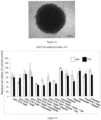
- Figure 1a shows a HCC1143 p13 spheroid 48h after seeding, and before starting treatment.
- Figure 1b shows the residual cell viability (% solvent control) of the HCC1143 p13 spheroid model following treatment with EDO-S101 alone and in combination with carboplatin and/or olaparib after 48h and 72h.
- HCC1143 cells are from the BL1 triple negative breast cancer subtype.
- EDO-S101 5 ⁇ m and 10 ⁇ m alone demonstrated the most enhanced reduction in cell viability (86% and 57% residual cell viability respectively) compared to any of the control agents (carboplatin, paclitaxel, olaparib, or combinations thereof) which range from 85-118%.
- treatment with 10 ⁇ m EDO-S101 revealed pronounced reduction in cell viability activity against HCC1143 cells. The most pronounced reduction in cell viability (53% residual cell viability) was observed in spheroids treated with EDO-S101 (5 ⁇ m)+Ola.
- EDO-S101 After 72h treatment with EDO-S101 (5 ⁇ M and 10 ⁇ M) as a monotherapy, enhanced activity against spheroid cell viability (80% and 77% residual cell viability respectively) compared to the negative control was observed.
- EDO-S101 monotherapy was more effective than treatment with paclitaxel, carboplatin, C+Ola or P+Ola, but was less effective than Ola alone (62% residual cell viability).
- EDO-S101 (5 ⁇ M and 10 ⁇ M) + Ola (45% and 48% residual cell viability respectively) demonstrated improved efficacy over Ola as a monotherapy, as did EDO-S101 (5 ⁇ M and 10 ⁇ M)+Ola+C (58% and 52% residual cell viability respectively).
- EDO-S101 therefore demonstrated enhanced efficacy against HCC1143 cell viability as compared against Paclitaxel, Carboplatin, Olaparib or any combinations thereof.
- FIGS 1a and 1b demonstrate that EDO-S101 alone has activity against TNBC.
- the figures also demonstrate that EDO-S101 in combination other cancer drugs also demonstrate activity against TNBC. This is shown in the examples in relation to:
- EDO-S101 is shown to have activity in the BL1 subtype.
- EDO-S101 is further shown to have activity in BRCA-1 wild type TNBC, as shown from cell line HCC1143.
- Phase 1 To determine the safety, tolerability, maximum tolerated dose (MTD), and recommended phase 2 dose (RP2D) of EDO-S101 as a single agent in patients with solid tumors who have progressed after at least one (1) line of standard therapy.
- MTD maximum tolerated dose
- R2D recommended phase 2 dose
- Phase 2 To evaluate the efficacy of EDO-S101 in selected tumor types.
- Condition Intervention Phase Phase 1 Drug: EDO-S101 Phase 1/2 Advanced or metastatic Solid Tumors Phase 2: small cell lung cancer (SCLC) soft tissue sarcoma or non-Kit GIST triple negative breast cancer ovarian cancer
- SCLC small cell lung cancer
- Schedule A EDO-S101, IV, 60mg/m 2 up to 150mg/m 2 Day 1 and 15 of each 28 day cycle
- Schedule B EDO-S101, IV, 60mg/m 2 up to 150mg/m 2 Day 1, 8 and 15 of each 28 day cycle
- RP2D and selected schedule will be further investigated in patients with specific types of solid tumors: relapsed/refractory SCLC, soft tissue sarcoma, non-Kit GIST, triple negative breast, and ovarian cancers.
- EDO-S101 I entity a first-in-class fusion molecule of an alkylator, bendamustine and a histone-deacetylase inhibitor (HDACi), vorinostat.
- HDACi histone-deacetylase inhibitor
- the study is designed as an open label, Phase 1/2 trial of single agent EDOS101.
- the phase 1 portion of the study is designed to define the MTD for two (2) administration schedules by evaluating toxicities during dose escalation until MAD.
- the phase 2 portion of the study is designed to evaluate ORR and CBR at four (4) or six (6) months depending on the type of solid tumor.
- Phase 2 patients must meet the cohort-specific inclusion/exclusion criteria in addition to the general inclusion/exclusion criteria for Phase 1 and Phase 2 study listed above.
Landscapes
- Health & Medical Sciences (AREA)
- Life Sciences & Earth Sciences (AREA)
- General Health & Medical Sciences (AREA)
- Medicinal Chemistry (AREA)
- Veterinary Medicine (AREA)
- Public Health (AREA)
- Pharmacology & Pharmacy (AREA)
- Chemical & Material Sciences (AREA)
- Animal Behavior & Ethology (AREA)
- Epidemiology (AREA)
- Organic Chemistry (AREA)
- Chemical Kinetics & Catalysis (AREA)
- Nuclear Medicine, Radiotherapy & Molecular Imaging (AREA)
- General Chemical & Material Sciences (AREA)
- Dermatology (AREA)
- Pharmaceuticals Containing Other Organic And Inorganic Compounds (AREA)
- Medicines That Contain Protein Lipid Enzymes And Other Medicines (AREA)
- Acyclic And Carbocyclic Compounds In Medicinal Compositions (AREA)
Applications Claiming Priority (2)
| Application Number | Priority Date | Filing Date | Title |
|---|---|---|---|
| GBGB1709406.1A GB201709406D0 (en) | 2017-06-13 | 2017-06-13 | Compounds for treating TNBC |
| PCT/EP2018/065662 WO2018229130A1 (en) | 2017-06-13 | 2018-06-13 | Compounds for treating tnbc |
Publications (3)
| Publication Number | Publication Date |
|---|---|
| EP3638228A1 EP3638228A1 (en) | 2020-04-22 |
| EP3638228B1 true EP3638228B1 (en) | 2023-08-23 |
| EP3638228C0 EP3638228C0 (en) | 2023-08-23 |
Family
ID=59358315
Family Applications (1)
| Application Number | Title | Priority Date | Filing Date |
|---|---|---|---|
| EP18734122.7A Active EP3638228B1 (en) | 2017-06-13 | 2018-06-13 | Compounds for treating tnbc |
Country Status (14)
| Country | Link |
|---|---|
| US (4) | US11413276B2 (enExample) |
| EP (1) | EP3638228B1 (enExample) |
| JP (1) | JP2020523354A (enExample) |
| KR (1) | KR20200014789A (enExample) |
| AR (1) | AR112103A1 (enExample) |
| AU (1) | AU2018285819A1 (enExample) |
| BR (1) | BR112019026474A2 (enExample) |
| CA (1) | CA3067058A1 (enExample) |
| ES (1) | ES2959952T3 (enExample) |
| GB (1) | GB201709406D0 (enExample) |
| IL (1) | IL271018A (enExample) |
| MX (1) | MX390945B (enExample) |
| TW (1) | TW201919615A (enExample) |
| WO (1) | WO2018229130A1 (enExample) |
Families Citing this family (9)
| Publication number | Priority date | Publication date | Assignee | Title |
|---|---|---|---|---|
| GB201409471D0 (en) | 2014-05-28 | 2014-07-09 | Euro Celtique Sa | Pharmaceutical composition |
| GB201409485D0 (en) | 2014-05-28 | 2014-07-09 | Euro Celtique Sa | Pharmaceutical composition |
| CA3040155C (en) | 2016-10-11 | 2024-01-16 | Euro-Celtique S.A. | Compound for use in the treatment of hodgkin lymphoma |
| GB201709405D0 (en) | 2017-06-13 | 2017-07-26 | Euro Celtique Sa | Compounds for treating ovarian cancer |
| GB201709406D0 (en) | 2017-06-13 | 2017-07-26 | Euro-Cletique S A | Compounds for treating TNBC |
| GB201709402D0 (en) | 2017-06-13 | 2017-07-26 | Euro Celtique Sa | Compounds for treating t-pll |
| GB201709403D0 (en) | 2017-06-13 | 2017-07-26 | Euro Celtique Sa | Compounds for treating sarcoma |
| US20200369667A1 (en) * | 2017-12-05 | 2020-11-26 | Angex Pharmaceutical, Inc. | Heterocyclic compounds as prmt5 inhibitors |
| JP2022522928A (ja) * | 2018-12-18 | 2022-04-21 | ムンディファーマ・インターナショナル・コーポレーション・リミテッド | 多発性骨髄腫を治療するための化合物 |
Family Cites Families (70)
| Publication number | Priority date | Publication date | Assignee | Title |
|---|---|---|---|---|
| DE34727C (de) | Ch. H. TH. HAVEMANN in Paris, 16 rue Bleue | Verfahren zur direkten Gewinnung metallischen Bleis | ||
| DD34727A1 (de) | 1963-12-21 | 1964-12-28 | Dietrich Krebs | Verfahren zur Herstellung von 1-Stellung substituierten [5-Bis-(chloräthyl)-amino-benzimidazolyl-(2)]-alkancarbonsäuren |
| US4522811A (en) | 1982-07-08 | 1985-06-11 | Syntex (U.S.A.) Inc. | Serial injection of muramyldipeptides and liposomes enhances the anti-infective activity of muramyldipeptides |
| US6407079B1 (en) | 1985-07-03 | 2002-06-18 | Janssen Pharmaceutica N.V. | Pharmaceutical compositions containing drugs which are instable or sparingly soluble in water and methods for their preparation |
| US5376645A (en) | 1990-01-23 | 1994-12-27 | University Of Kansas | Derivatives of cyclodextrins exhibiting enhanced aqueous solubility and the use thereof |
| KR0166088B1 (ko) | 1990-01-23 | 1999-01-15 | . | 수용해도가 증가된 시클로덱스트린 유도체 및 이의 용도 |
| US5369108A (en) | 1991-10-04 | 1994-11-29 | Sloan-Kettering Institute For Cancer Research | Potent inducers of terminal differentiation and methods of use thereof |
| GB9126209D0 (en) | 1991-12-10 | 1992-02-12 | Orion Yhtymae Oy | Drug formulations for parenteral use |
| US5602112A (en) | 1992-06-19 | 1997-02-11 | Supergen, Inc. | Pharmaceutical formulation |
| US5882941A (en) | 1994-05-04 | 1999-03-16 | Massachusette Institute Of Technology | Programmable genotoxic agents and uses therefor |
| US6046177A (en) | 1997-05-05 | 2000-04-04 | Cydex, Inc. | Sulfoalkyl ether cyclodextrin based controlled release solid pharmaceutical formulations |
| US5874418A (en) | 1997-05-05 | 1999-02-23 | Cydex, Inc. | Sulfoalkyl ether cyclodextrin based solid pharmaceutical formulations and their use |
| PT986403E (pt) | 1997-06-13 | 2004-04-30 | Cydex Inc | Composicao com um tempo de vida de armazenagem prolongado compreendendo a ciclodextrina e drogas ou prodrogas que se decompoem em compostos insoluveis em agua |
| US6040321A (en) | 1997-11-12 | 2000-03-21 | Bristol-Myers Squibb Company | Aminothiazole inhibitors of cyclin dependent kinases |
| US6214852B1 (en) | 1998-10-21 | 2001-04-10 | Bristol-Myers Squibb Company | N-[5-[[[5-alkyl-2-oxazolyl]methyl]thio]-2-thiazolyl]-carboxamide inhibitors of cyclin dependent kinases |
| US6392053B2 (en) | 1999-12-15 | 2002-05-21 | Bristol-Myers Squibb Company | Process for preparing arylacetylaminothiazoles |
| US20020076409A1 (en) | 2000-07-12 | 2002-06-20 | March Carl J. | Method for treating cancer |
| PE20020354A1 (es) | 2000-09-01 | 2002-06-12 | Novartis Ag | Compuestos de hidroxamato como inhibidores de histona-desacetilasa (hda) |
| EP1335898B1 (en) | 2000-09-29 | 2005-11-23 | TopoTarget UK Limited | Carbamic acid compounds comprising an amide linkage as hdac inhibitors |
| WO2002055017A2 (en) | 2000-11-21 | 2002-07-18 | Wake Forest University | Method of treating autoimmune diseases |
| CN1764648A (zh) | 2003-01-13 | 2006-04-26 | 安斯泰来制药有限公司 | 作为组蛋白脱乙酰酶(hdac)抑制剂的异羟肟酸衍生物 |
| JP4790594B2 (ja) | 2003-02-25 | 2011-10-12 | トポターゲット ユーケー リミテッド | Hdacインヒビターとしての、二環式ヘテロアリール基を含むヒドロキサム酸化合物 |
| WO2005013958A1 (en) | 2003-08-07 | 2005-02-17 | Novartis Ag | Histone deacetylase inhibitors as immunosuppressants |
| US7223745B2 (en) | 2003-08-14 | 2007-05-29 | Cephalon, Inc. | Proteasome inhibitors and methods of using the same |
| AU2005230682B2 (en) | 2004-04-05 | 2010-10-21 | Merck Hdac Research, Llc | Histone deacetylase inhibitor prodrugs |
| WO2007134169A2 (en) | 2006-05-10 | 2007-11-22 | Nuada, Llc | Indole, benzimidazole, and benzolactam boronic acid compounds, analogs thereof and methods of use thereof |
| US8436190B2 (en) | 2005-01-14 | 2013-05-07 | Cephalon, Inc. | Bendamustine pharmaceutical compositions |
| EA023400B1 (ru) | 2005-05-13 | 2016-05-31 | Топотаргет Юкей Лимитед | Фармацевтические составы, содержащие ингибиторы деацетилазы гистонов |
| US7399956B2 (en) | 2005-11-28 | 2008-07-15 | Avago Technologies Ecbuip Pte Ltd | Optical encoder with sinusoidal photodetector output signal |
| CA2673483C (en) | 2006-10-20 | 2014-04-08 | Icos Corporation | Compositions of chk1 inhibitors |
| GB0621160D0 (en) | 2006-10-24 | 2006-12-06 | Imp College Innovations Ltd | Compounds and uses thereof |
| WO2008063644A1 (en) | 2006-11-20 | 2008-05-29 | Cephalon, Inc. | Method of radio-sensitizing tumors using a radio-sensitizing agent |
| RU2482877C2 (ru) | 2006-12-11 | 2013-05-27 | Дженентек, Инк. | Композиции и способы для лечения опухоли |
| CN101084876A (zh) | 2007-07-11 | 2007-12-12 | 济南康泉医药科技有限公司 | 一种含苯达莫司汀的抗癌组合物 |
| TW200922564A (en) | 2007-09-10 | 2009-06-01 | Curis Inc | CDK inhibitors containing a zinc binding moiety |
| WO2009067453A1 (en) | 2007-11-19 | 2009-05-28 | Syndax Pharmaceuticals, Inc. | Combinations of hdac inhibitors and proteasome inhibitors |
| WO2009100045A1 (en) | 2008-02-04 | 2009-08-13 | Translational Genomics Research Institute | Compounds, pharmaceutical compositions and methods of use of hydroxamic acid derivatives |
| EP2889029A1 (en) | 2008-09-25 | 2015-07-01 | Cephalon, Inc. | Liquid formulations of bendamustine |
| EP2346836B1 (en) | 2008-10-08 | 2018-03-07 | Cephalon, Inc. | Processes for the preparation of bendamustine |
| WO2010075542A1 (en) | 2008-12-23 | 2010-07-01 | Curis, Inc. | Cdk inhibitors |
| SI2389375T1 (sl) | 2009-01-23 | 2015-11-30 | Euro-Celtique S.A. | Derivati hidroksamske kisline |
| CA2753641C (en) | 2009-02-25 | 2014-09-16 | Supratek Pharma, Inc. | Bendamustine cyclopolysaccharide compositions |
| US8603521B2 (en) | 2009-04-17 | 2013-12-10 | Pharmacyclics, Inc. | Formulations of histone deacetylase inhibitor and uses thereof |
| WO2011017448A1 (en) | 2009-08-05 | 2011-02-10 | The Trustees Of The University Of Pennsylvania | Use of histone deacetylase inhibitors for treatment of autoimmune diseases |
| US9057174B2 (en) | 2009-10-19 | 2015-06-16 | Hitachi Construction Machinery Co., Ltd. | Diagnosis system and diagnosis method for construction machine |
| CN101928234B (zh) | 2010-01-15 | 2012-12-12 | 北京欧凯纳斯科技有限公司 | 6/7-(杂)芳基-n-羟基己/庚酰胺化合物及其制备方法 |
| ES2602475T3 (es) | 2010-04-15 | 2017-02-21 | Tracon Pharmaceuticals, Inc. | Potenciación de la actividad anticáncer por terapia de combinación con inhibidores de la vía BER |
| ES2605586T3 (es) | 2010-04-16 | 2017-03-15 | Cellact Pharma Gmbh | Análogos de etopósido para el tratamiento de tumores metastásicos |
| JO3659B1 (ar) | 2010-06-02 | 2020-08-27 | Astellas Deutschland Gmbh | أشكال جرعات بينداموستين عن طريق الفم وإستخداماته العلاجية |
| US8748470B2 (en) | 2011-03-17 | 2014-06-10 | The University Of Chicago | Methods for treating ovarian cancer by inhibiting fatty acid binding proteins |
| KR101892788B1 (ko) | 2011-09-13 | 2018-08-28 | 파마싸이클릭스 엘엘씨 | 벤다무스틴과 조합된 히스톤 디아세틸라제 억제제의 제제 및 그의 용도 |
| CN102993102B (zh) | 2011-09-16 | 2016-08-24 | 杭州民生药业有限公司 | [1-甲基-2-(7’-庚异羟肟酸基)-5-n,n-二(2’-氯乙基)]-1h-苯并咪唑的合成方法 |
| EP2758052B9 (en) | 2011-09-18 | 2019-03-27 | Euro-Celtique S.A. | Pharmaceutical composition comprising an HDAC inhibitor and a cyclopolysaccharide |
| PL2760860T3 (pl) | 2011-09-28 | 2017-06-30 | Euro-Celtique S.A. | Pochodne iperytu azotowego |
| AR092790A1 (es) | 2012-02-01 | 2015-05-06 | Euro Celtique Sa | Derivados bencimidazolicos del acido hidroxamico |
| US10335494B2 (en) | 2013-12-06 | 2019-07-02 | Millennium Pharmaceuticals, Inc. | Combination of aurora kinase inhibitors and anti-CD30 antibodies |
| NZ630314A (en) | 2014-02-18 | 2016-03-31 | Celgene Corp | Combination therapy for hematological malignancies |
| GB201409485D0 (en) | 2014-05-28 | 2014-07-09 | Euro Celtique Sa | Pharmaceutical composition |
| GB201409488D0 (en) | 2014-05-28 | 2014-07-09 | Euro Celtique Sa | Pharmaceutical composition |
| GB201409471D0 (en) | 2014-05-28 | 2014-07-09 | Euro Celtique Sa | Pharmaceutical composition |
| CA2969790A1 (en) | 2014-12-05 | 2016-06-09 | University of Modena and Reggio Emilia | Combinations of histone deacetylase inhibitors and bendamustine |
| JP2016109634A (ja) | 2014-12-09 | 2016-06-20 | 株式会社安川電機 | エンコーダ及びエンコーダ付きモータ |
| CN106580971B (zh) | 2015-10-20 | 2019-11-12 | 杭州梯诺医药科技有限公司 | 一种药物组合物及其制备方法 |
| US20180098969A1 (en) | 2016-10-11 | 2018-04-12 | Purdue Pharmaceutical Products L.P. | Hodgkin lymphoma therapy |
| CA3040155C (en) | 2016-10-11 | 2024-01-16 | Euro-Celtique S.A. | Compound for use in the treatment of hodgkin lymphoma |
| GB201709405D0 (en) | 2017-06-13 | 2017-07-26 | Euro Celtique Sa | Compounds for treating ovarian cancer |
| GB201709403D0 (en) | 2017-06-13 | 2017-07-26 | Euro Celtique Sa | Compounds for treating sarcoma |
| GB201709406D0 (en) | 2017-06-13 | 2017-07-26 | Euro-Cletique S A | Compounds for treating TNBC |
| GB201709402D0 (en) | 2017-06-13 | 2017-07-26 | Euro Celtique Sa | Compounds for treating t-pll |
| JP2022522928A (ja) | 2018-12-18 | 2022-04-21 | ムンディファーマ・インターナショナル・コーポレーション・リミテッド | 多発性骨髄腫を治療するための化合物 |
-
2017
- 2017-06-13 GB GBGB1709406.1A patent/GB201709406D0/en not_active Ceased
-
2018
- 2018-06-13 JP JP2019568645A patent/JP2020523354A/ja active Pending
- 2018-06-13 CA CA3067058A patent/CA3067058A1/en active Pending
- 2018-06-13 ES ES18734122T patent/ES2959952T3/es active Active
- 2018-06-13 KR KR1020197037077A patent/KR20200014789A/ko not_active Ceased
- 2018-06-13 WO PCT/EP2018/065662 patent/WO2018229130A1/en not_active Ceased
- 2018-06-13 MX MX2019015211A patent/MX390945B/es unknown
- 2018-06-13 EP EP18734122.7A patent/EP3638228B1/en active Active
- 2018-06-13 US US16/621,896 patent/US11413276B2/en active Active
- 2018-06-13 AR ARP180101625A patent/AR112103A1/es unknown
- 2018-06-13 AU AU2018285819A patent/AU2018285819A1/en not_active Abandoned
- 2018-06-13 TW TW107120391A patent/TW201919615A/zh unknown
- 2018-06-13 BR BR112019026474-4A patent/BR112019026474A2/pt not_active IP Right Cessation
-
2019
- 2019-11-28 IL IL271018A patent/IL271018A/en unknown
-
2022
- 2022-08-11 US US17/885,696 patent/US11786509B2/en active Active
-
2023
- 2023-09-12 US US18/244,913 patent/US12303492B2/en active Active
-
2025
- 2025-05-16 US US19/210,044 patent/US20250275945A1/en active Pending
Also Published As
| Publication number | Publication date |
|---|---|
| AR112103A1 (es) | 2019-09-18 |
| MX390945B (es) | 2025-03-21 |
| EP3638228A1 (en) | 2020-04-22 |
| GB201709406D0 (en) | 2017-07-26 |
| KR20200014789A (ko) | 2020-02-11 |
| BR112019026474A2 (pt) | 2020-07-14 |
| IL271018A (en) | 2020-01-30 |
| AU2018285819A1 (en) | 2019-12-19 |
| US20200230109A1 (en) | 2020-07-23 |
| US12303492B2 (en) | 2025-05-20 |
| MX2019015211A (es) | 2022-03-23 |
| CA3067058A1 (en) | 2018-12-20 |
| US20230080216A1 (en) | 2023-03-16 |
| ES2959952T3 (es) | 2024-02-29 |
| US11786509B2 (en) | 2023-10-17 |
| US20240139155A1 (en) | 2024-05-02 |
| EP3638228C0 (en) | 2023-08-23 |
| TW201919615A (zh) | 2019-06-01 |
| WO2018229130A1 (en) | 2018-12-20 |
| JP2020523354A (ja) | 2020-08-06 |
| US11413276B2 (en) | 2022-08-16 |
| US20250275945A1 (en) | 2025-09-04 |
Similar Documents
| Publication | Publication Date | Title |
|---|---|---|
| US12303492B2 (en) | Compounds for treating TNBC | |
| US20240261265A1 (en) | Tinostamustine for use in treating ovarian cancer | |
| US12257237B2 (en) | Tinostamustine for use in treating sarcoma | |
| EP3148536B1 (en) | Pharmaceutical combinations for treating cancer | |
| JP2019511204A (ja) | コパンリシブバイオマーカー | |
| TW202308641A (zh) | 用於治療癌症之方法及包含cdk抑制劑之給藥方案 |
Legal Events
| Date | Code | Title | Description |
|---|---|---|---|
| STAA | Information on the status of an ep patent application or granted ep patent |
Free format text: STATUS: UNKNOWN |
|
| STAA | Information on the status of an ep patent application or granted ep patent |
Free format text: STATUS: THE INTERNATIONAL PUBLICATION HAS BEEN MADE |
|
| PUAI | Public reference made under article 153(3) epc to a published international application that has entered the european phase |
Free format text: ORIGINAL CODE: 0009012 |
|
| STAA | Information on the status of an ep patent application or granted ep patent |
Free format text: STATUS: REQUEST FOR EXAMINATION WAS MADE |
|
| 17P | Request for examination filed |
Effective date: 20191217 |
|
| AK | Designated contracting states |
Kind code of ref document: A1 Designated state(s): AL AT BE BG CH CY CZ DE DK EE ES FI FR GB GR HR HU IE IS IT LI LT LU LV MC MK MT NL NO PL PT RO RS SE SI SK SM TR |
|
| AX | Request for extension of the european patent |
Extension state: BA ME |
|
| DAV | Request for validation of the european patent (deleted) | ||
| DAX | Request for extension of the european patent (deleted) | ||
| STAA | Information on the status of an ep patent application or granted ep patent |
Free format text: STATUS: EXAMINATION IS IN PROGRESS |
|
| RIC1 | Information provided on ipc code assigned before grant |
Ipc: A61P 35/00 20060101ALI20221129BHEP Ipc: A61K 31/502 20060101ALI20221129BHEP Ipc: A61K 31/4164 20060101AFI20221129BHEP |
|
| 17Q | First examination report despatched |
Effective date: 20221207 |
|
| 17Q | First examination report despatched |
Effective date: 20230104 |
|
| REG | Reference to a national code |
Ref country code: DE Ref legal event code: R079 Free format text: PREVIOUS MAIN CLASS: A61K0031416400 Ipc: A61K0031416000 Ref document number: 602018055925 Country of ref document: DE |
|
| GRAP | Despatch of communication of intention to grant a patent |
Free format text: ORIGINAL CODE: EPIDOSNIGR1 |
|
| STAA | Information on the status of an ep patent application or granted ep patent |
Free format text: STATUS: GRANT OF PATENT IS INTENDED |
|
| RIC1 | Information provided on ipc code assigned before grant |
Ipc: A61K 35/00 20060101ALI20230217BHEP Ipc: A61K 31/502 20060101ALI20230217BHEP Ipc: A61K 31/416 20060101AFI20230217BHEP |
|
| INTG | Intention to grant announced |
Effective date: 20230314 |
|
| GRAS | Grant fee paid |
Free format text: ORIGINAL CODE: EPIDOSNIGR3 |
|
| GRAA | (expected) grant |
Free format text: ORIGINAL CODE: 0009210 |
|
| STAA | Information on the status of an ep patent application or granted ep patent |
Free format text: STATUS: THE PATENT HAS BEEN GRANTED |
|
| AK | Designated contracting states |
Kind code of ref document: B1 Designated state(s): AL AT BE BG CH CY CZ DE DK EE ES FI FR GB GR HR HU IE IS IT LI LT LU LV MC MK MT NL NO PL PT RO RS SE SI SK SM TR |
|
| REG | Reference to a national code |
Ref country code: GB Ref legal event code: FG4D |
|
| REG | Reference to a national code |
Ref country code: CH Ref legal event code: EP |
|
| REG | Reference to a national code |
Ref country code: IE Ref legal event code: FG4D |
|
| REG | Reference to a national code |
Ref country code: DE Ref legal event code: R096 Ref document number: 602018055925 Country of ref document: DE |
|
| U01 | Request for unitary effect filed |
Effective date: 20230922 |
|
| U07 | Unitary effect registered |
Designated state(s): AT BE BG DE DK EE FI FR IT LT LU LV MT NL PT SE SI Effective date: 20230927 |
|
| PG25 | Lapsed in a contracting state [announced via postgrant information from national office to epo] |
Ref country code: GR Free format text: LAPSE BECAUSE OF FAILURE TO SUBMIT A TRANSLATION OF THE DESCRIPTION OR TO PAY THE FEE WITHIN THE PRESCRIBED TIME-LIMIT Effective date: 20231124 |
|
| PG25 | Lapsed in a contracting state [announced via postgrant information from national office to epo] |
Ref country code: IS Free format text: LAPSE BECAUSE OF FAILURE TO SUBMIT A TRANSLATION OF THE DESCRIPTION OR TO PAY THE FEE WITHIN THE PRESCRIBED TIME-LIMIT Effective date: 20231223 |
|
| PG25 | Lapsed in a contracting state [announced via postgrant information from national office to epo] |
Ref country code: RS Free format text: LAPSE BECAUSE OF FAILURE TO SUBMIT A TRANSLATION OF THE DESCRIPTION OR TO PAY THE FEE WITHIN THE PRESCRIBED TIME-LIMIT Effective date: 20230823 Ref country code: NO Free format text: LAPSE BECAUSE OF FAILURE TO SUBMIT A TRANSLATION OF THE DESCRIPTION OR TO PAY THE FEE WITHIN THE PRESCRIBED TIME-LIMIT Effective date: 20231123 Ref country code: IS Free format text: LAPSE BECAUSE OF FAILURE TO SUBMIT A TRANSLATION OF THE DESCRIPTION OR TO PAY THE FEE WITHIN THE PRESCRIBED TIME-LIMIT Effective date: 20231223 Ref country code: HR Free format text: LAPSE BECAUSE OF FAILURE TO SUBMIT A TRANSLATION OF THE DESCRIPTION OR TO PAY THE FEE WITHIN THE PRESCRIBED TIME-LIMIT Effective date: 20230823 Ref country code: GR Free format text: LAPSE BECAUSE OF FAILURE TO SUBMIT A TRANSLATION OF THE DESCRIPTION OR TO PAY THE FEE WITHIN THE PRESCRIBED TIME-LIMIT Effective date: 20231124 |
|
| PG25 | Lapsed in a contracting state [announced via postgrant information from national office to epo] |
Ref country code: PL Free format text: LAPSE BECAUSE OF FAILURE TO SUBMIT A TRANSLATION OF THE DESCRIPTION OR TO PAY THE FEE WITHIN THE PRESCRIBED TIME-LIMIT Effective date: 20230823 |
|
| REG | Reference to a national code |
Ref country code: ES Ref legal event code: FG2A Ref document number: 2959952 Country of ref document: ES Kind code of ref document: T3 Effective date: 20240229 |
|
| PG25 | Lapsed in a contracting state [announced via postgrant information from national office to epo] |
Ref country code: SM Free format text: LAPSE BECAUSE OF FAILURE TO SUBMIT A TRANSLATION OF THE DESCRIPTION OR TO PAY THE FEE WITHIN THE PRESCRIBED TIME-LIMIT Effective date: 20230823 Ref country code: RO Free format text: LAPSE BECAUSE OF FAILURE TO SUBMIT A TRANSLATION OF THE DESCRIPTION OR TO PAY THE FEE WITHIN THE PRESCRIBED TIME-LIMIT Effective date: 20230823 Ref country code: CZ Free format text: LAPSE BECAUSE OF FAILURE TO SUBMIT A TRANSLATION OF THE DESCRIPTION OR TO PAY THE FEE WITHIN THE PRESCRIBED TIME-LIMIT Effective date: 20230823 Ref country code: SK Free format text: LAPSE BECAUSE OF FAILURE TO SUBMIT A TRANSLATION OF THE DESCRIPTION OR TO PAY THE FEE WITHIN THE PRESCRIBED TIME-LIMIT Effective date: 20230823 |
|
| REG | Reference to a national code |
Ref country code: DE Ref legal event code: R097 Ref document number: 602018055925 Country of ref document: DE |
|
| U20 | Renewal fee for the european patent with unitary effect paid |
Year of fee payment: 7 Effective date: 20240521 |
|
| PLBE | No opposition filed within time limit |
Free format text: ORIGINAL CODE: 0009261 |
|
| STAA | Information on the status of an ep patent application or granted ep patent |
Free format text: STATUS: NO OPPOSITION FILED WITHIN TIME LIMIT |
|
| 26N | No opposition filed |
Effective date: 20240524 |
|
| PG25 | Lapsed in a contracting state [announced via postgrant information from national office to epo] |
Ref country code: MC Free format text: LAPSE BECAUSE OF FAILURE TO SUBMIT A TRANSLATION OF THE DESCRIPTION OR TO PAY THE FEE WITHIN THE PRESCRIBED TIME-LIMIT Effective date: 20230823 |
|
| REG | Reference to a national code |
Ref country code: CH Ref legal event code: PL |
|
| PG25 | Lapsed in a contracting state [announced via postgrant information from national office to epo] |
Ref country code: IE Free format text: LAPSE BECAUSE OF NON-PAYMENT OF DUE FEES Effective date: 20240613 |
|
| PG25 | Lapsed in a contracting state [announced via postgrant information from national office to epo] |
Ref country code: CH Free format text: LAPSE BECAUSE OF NON-PAYMENT OF DUE FEES Effective date: 20240630 |
|
| U20 | Renewal fee for the european patent with unitary effect paid |
Year of fee payment: 8 Effective date: 20250520 |
|
| PGFP | Annual fee paid to national office [announced via postgrant information from national office to epo] |
Ref country code: GB Payment date: 20250520 Year of fee payment: 8 |
|
| PGFP | Annual fee paid to national office [announced via postgrant information from national office to epo] |
Ref country code: ES Payment date: 20250701 Year of fee payment: 8 |
|
| PG25 | Lapsed in a contracting state [announced via postgrant information from national office to epo] |
Ref country code: CY Free format text: LAPSE BECAUSE OF FAILURE TO SUBMIT A TRANSLATION OF THE DESCRIPTION OR TO PAY THE FEE WITHIN THE PRESCRIBED TIME-LIMIT; INVALID AB INITIO Effective date: 20180613 |