EP3633032A2 - Neuartige cas9-proteine und führungsmerkmale für dna-targeting und genomeditierung - Google Patents
Neuartige cas9-proteine und führungsmerkmale für dna-targeting und genomeditierung Download PDFInfo
- Publication number
- EP3633032A2 EP3633032A2 EP19196063.2A EP19196063A EP3633032A2 EP 3633032 A2 EP3633032 A2 EP 3633032A2 EP 19196063 A EP19196063 A EP 19196063A EP 3633032 A2 EP3633032 A2 EP 3633032A2
- Authority
- EP
- European Patent Office
- Prior art keywords
- spp
- sequence
- lactobacillus
- target dna
- region
- Prior art date
- Legal status (The legal status is an assumption and is not a legal conclusion. Google has not performed a legal analysis and makes no representation as to the accuracy of the status listed.)
- Pending
Links
Images










Classifications
-
- C—CHEMISTRY; METALLURGY
- C12—BIOCHEMISTRY; BEER; SPIRITS; WINE; VINEGAR; MICROBIOLOGY; ENZYMOLOGY; MUTATION OR GENETIC ENGINEERING
- C12N—MICROORGANISMS OR ENZYMES; COMPOSITIONS THEREOF; PROPAGATING, PRESERVING, OR MAINTAINING MICROORGANISMS; MUTATION OR GENETIC ENGINEERING; CULTURE MEDIA
- C12N15/00—Mutation or genetic engineering; DNA or RNA concerning genetic engineering, vectors, e.g. plasmids, or their isolation, preparation or purification; Use of hosts therefor
- C12N15/09—Recombinant DNA-technology
- C12N15/63—Introduction of foreign genetic material using vectors; Vectors; Use of hosts therefor; Regulation of expression
- C12N15/79—Vectors or expression systems specially adapted for eukaryotic hosts
- C12N15/85—Vectors or expression systems specially adapted for eukaryotic hosts for animal cells
- C12N15/8509—Vectors or expression systems specially adapted for eukaryotic hosts for animal cells for producing genetically modified animals, e.g. transgenic
-
- C—CHEMISTRY; METALLURGY
- C12—BIOCHEMISTRY; BEER; SPIRITS; WINE; VINEGAR; MICROBIOLOGY; ENZYMOLOGY; MUTATION OR GENETIC ENGINEERING
- C12N—MICROORGANISMS OR ENZYMES; COMPOSITIONS THEREOF; PROPAGATING, PRESERVING, OR MAINTAINING MICROORGANISMS; MUTATION OR GENETIC ENGINEERING; CULTURE MEDIA
- C12N9/00—Enzymes; Proenzymes; Compositions thereof; Processes for preparing, activating, inhibiting, separating or purifying enzymes
- C12N9/14—Hydrolases (3)
- C12N9/16—Hydrolases (3) acting on ester bonds (3.1)
- C12N9/22—Ribonucleases [RNase]; Deoxyribonucleases [DNase]
-
- C—CHEMISTRY; METALLURGY
- C12—BIOCHEMISTRY; BEER; SPIRITS; WINE; VINEGAR; MICROBIOLOGY; ENZYMOLOGY; MUTATION OR GENETIC ENGINEERING
- C12N—MICROORGANISMS OR ENZYMES; COMPOSITIONS THEREOF; PROPAGATING, PRESERVING, OR MAINTAINING MICROORGANISMS; MUTATION OR GENETIC ENGINEERING; CULTURE MEDIA
- C12N15/00—Mutation or genetic engineering; DNA or RNA concerning genetic engineering, vectors, e.g. plasmids, or their isolation, preparation or purification; Use of hosts therefor
- C12N15/09—Recombinant DNA-technology
- C12N15/10—Processes for the isolation, preparation or purification of DNA or RNA
- C12N15/102—Mutagenizing nucleic acids
-
- C—CHEMISTRY; METALLURGY
- C12—BIOCHEMISTRY; BEER; SPIRITS; WINE; VINEGAR; MICROBIOLOGY; ENZYMOLOGY; MUTATION OR GENETIC ENGINEERING
- C12N—MICROORGANISMS OR ENZYMES; COMPOSITIONS THEREOF; PROPAGATING, PRESERVING, OR MAINTAINING MICROORGANISMS; MUTATION OR GENETIC ENGINEERING; CULTURE MEDIA
- C12N15/00—Mutation or genetic engineering; DNA or RNA concerning genetic engineering, vectors, e.g. plasmids, or their isolation, preparation or purification; Use of hosts therefor
- C12N15/09—Recombinant DNA-technology
- C12N15/63—Introduction of foreign genetic material using vectors; Vectors; Use of hosts therefor; Regulation of expression
-
- C—CHEMISTRY; METALLURGY
- C12—BIOCHEMISTRY; BEER; SPIRITS; WINE; VINEGAR; MICROBIOLOGY; ENZYMOLOGY; MUTATION OR GENETIC ENGINEERING
- C12N—MICROORGANISMS OR ENZYMES; COMPOSITIONS THEREOF; PROPAGATING, PRESERVING, OR MAINTAINING MICROORGANISMS; MUTATION OR GENETIC ENGINEERING; CULTURE MEDIA
- C12N15/00—Mutation or genetic engineering; DNA or RNA concerning genetic engineering, vectors, e.g. plasmids, or their isolation, preparation or purification; Use of hosts therefor
- C12N15/09—Recombinant DNA-technology
- C12N15/63—Introduction of foreign genetic material using vectors; Vectors; Use of hosts therefor; Regulation of expression
- C12N15/79—Vectors or expression systems specially adapted for eukaryotic hosts
-
- C—CHEMISTRY; METALLURGY
- C12—BIOCHEMISTRY; BEER; SPIRITS; WINE; VINEGAR; MICROBIOLOGY; ENZYMOLOGY; MUTATION OR GENETIC ENGINEERING
- C12N—MICROORGANISMS OR ENZYMES; COMPOSITIONS THEREOF; PROPAGATING, PRESERVING, OR MAINTAINING MICROORGANISMS; MUTATION OR GENETIC ENGINEERING; CULTURE MEDIA
- C12N15/00—Mutation or genetic engineering; DNA or RNA concerning genetic engineering, vectors, e.g. plasmids, or their isolation, preparation or purification; Use of hosts therefor
- C12N15/09—Recombinant DNA-technology
- C12N15/63—Introduction of foreign genetic material using vectors; Vectors; Use of hosts therefor; Regulation of expression
- C12N15/79—Vectors or expression systems specially adapted for eukaryotic hosts
- C12N15/82—Vectors or expression systems specially adapted for eukaryotic hosts for plant cells, e.g. plant artificial chromosomes (PACs)
- C12N15/8201—Methods for introducing genetic material into plant cells, e.g. DNA, RNA, stable or transient incorporation, tissue culture methods adapted for transformation
- C12N15/8213—Targeted insertion of genes into the plant genome by homologous recombination
-
- C—CHEMISTRY; METALLURGY
- C12—BIOCHEMISTRY; BEER; SPIRITS; WINE; VINEGAR; MICROBIOLOGY; ENZYMOLOGY; MUTATION OR GENETIC ENGINEERING
- C12N—MICROORGANISMS OR ENZYMES; COMPOSITIONS THEREOF; PROPAGATING, PRESERVING, OR MAINTAINING MICROORGANISMS; MUTATION OR GENETIC ENGINEERING; CULTURE MEDIA
- C12N15/00—Mutation or genetic engineering; DNA or RNA concerning genetic engineering, vectors, e.g. plasmids, or their isolation, preparation or purification; Use of hosts therefor
- C12N15/09—Recombinant DNA-technology
- C12N15/63—Introduction of foreign genetic material using vectors; Vectors; Use of hosts therefor; Regulation of expression
- C12N15/79—Vectors or expression systems specially adapted for eukaryotic hosts
- C12N15/85—Vectors or expression systems specially adapted for eukaryotic hosts for animal cells
- C12N15/86—Viral vectors
-
- C—CHEMISTRY; METALLURGY
- C12—BIOCHEMISTRY; BEER; SPIRITS; WINE; VINEGAR; MICROBIOLOGY; ENZYMOLOGY; MUTATION OR GENETIC ENGINEERING
- C12N—MICROORGANISMS OR ENZYMES; COMPOSITIONS THEREOF; PROPAGATING, PRESERVING, OR MAINTAINING MICROORGANISMS; MUTATION OR GENETIC ENGINEERING; CULTURE MEDIA
- C12N15/00—Mutation or genetic engineering; DNA or RNA concerning genetic engineering, vectors, e.g. plasmids, or their isolation, preparation or purification; Use of hosts therefor
- C12N15/09—Recombinant DNA-technology
- C12N15/87—Introduction of foreign genetic material using processes not otherwise provided for, e.g. co-transformation
- C12N15/90—Stable introduction of foreign DNA into chromosome
- C12N15/902—Stable introduction of foreign DNA into chromosome using homologous recombination
- C12N15/907—Stable introduction of foreign DNA into chromosome using homologous recombination in mammalian cells
-
- C—CHEMISTRY; METALLURGY
- C12—BIOCHEMISTRY; BEER; SPIRITS; WINE; VINEGAR; MICROBIOLOGY; ENZYMOLOGY; MUTATION OR GENETIC ENGINEERING
- C12N—MICROORGANISMS OR ENZYMES; COMPOSITIONS THEREOF; PROPAGATING, PRESERVING, OR MAINTAINING MICROORGANISMS; MUTATION OR GENETIC ENGINEERING; CULTURE MEDIA
- C12N9/00—Enzymes; Proenzymes; Compositions thereof; Processes for preparing, activating, inhibiting, separating or purifying enzymes
- C12N9/14—Hydrolases (3)
- C12N9/16—Hydrolases (3) acting on ester bonds (3.1)
- C12N9/22—Ribonucleases [RNase]; Deoxyribonucleases [DNase]
- C12N9/222—Clustered regularly interspaced short palindromic repeats [CRISPR]-associated [CAS] enzymes
-
- C—CHEMISTRY; METALLURGY
- C12—BIOCHEMISTRY; BEER; SPIRITS; WINE; VINEGAR; MICROBIOLOGY; ENZYMOLOGY; MUTATION OR GENETIC ENGINEERING
- C12N—MICROORGANISMS OR ENZYMES; COMPOSITIONS THEREOF; PROPAGATING, PRESERVING, OR MAINTAINING MICROORGANISMS; MUTATION OR GENETIC ENGINEERING; CULTURE MEDIA
- C12N9/00—Enzymes; Proenzymes; Compositions thereof; Processes for preparing, activating, inhibiting, separating or purifying enzymes
- C12N9/96—Stabilising an enzyme by forming an adduct or a composition; Forming enzyme conjugates
-
- A—HUMAN NECESSITIES
- A01—AGRICULTURE; FORESTRY; ANIMAL HUSBANDRY; HUNTING; TRAPPING; FISHING
- A01K—ANIMAL HUSBANDRY; AVICULTURE; APICULTURE; PISCICULTURE; FISHING; REARING OR BREEDING ANIMALS, NOT OTHERWISE PROVIDED FOR; NEW BREEDS OF ANIMALS
- A01K2217/00—Genetically modified animals
- A01K2217/05—Animals comprising random inserted nucleic acids (transgenic)
- A01K2217/052—Animals comprising random inserted nucleic acids (transgenic) inducing gain of function
-
- C—CHEMISTRY; METALLURGY
- C12—BIOCHEMISTRY; BEER; SPIRITS; WINE; VINEGAR; MICROBIOLOGY; ENZYMOLOGY; MUTATION OR GENETIC ENGINEERING
- C12N—MICROORGANISMS OR ENZYMES; COMPOSITIONS THEREOF; PROPAGATING, PRESERVING, OR MAINTAINING MICROORGANISMS; MUTATION OR GENETIC ENGINEERING; CULTURE MEDIA
- C12N15/00—Mutation or genetic engineering; DNA or RNA concerning genetic engineering, vectors, e.g. plasmids, or their isolation, preparation or purification; Use of hosts therefor
- C12N15/09—Recombinant DNA-technology
- C12N15/11—DNA or RNA fragments; Modified forms thereof; Non-coding nucleic acids having a biological activity
- C12N15/111—General methods applicable to biologically active non-coding nucleic acids
-
- C—CHEMISTRY; METALLURGY
- C12—BIOCHEMISTRY; BEER; SPIRITS; WINE; VINEGAR; MICROBIOLOGY; ENZYMOLOGY; MUTATION OR GENETIC ENGINEERING
- C12N—MICROORGANISMS OR ENZYMES; COMPOSITIONS THEREOF; PROPAGATING, PRESERVING, OR MAINTAINING MICROORGANISMS; MUTATION OR GENETIC ENGINEERING; CULTURE MEDIA
- C12N2310/00—Structure or type of the nucleic acid
- C12N2310/10—Type of nucleic acid
-
- C—CHEMISTRY; METALLURGY
- C12—BIOCHEMISTRY; BEER; SPIRITS; WINE; VINEGAR; MICROBIOLOGY; ENZYMOLOGY; MUTATION OR GENETIC ENGINEERING
- C12N—MICROORGANISMS OR ENZYMES; COMPOSITIONS THEREOF; PROPAGATING, PRESERVING, OR MAINTAINING MICROORGANISMS; MUTATION OR GENETIC ENGINEERING; CULTURE MEDIA
- C12N2310/00—Structure or type of the nucleic acid
- C12N2310/10—Type of nucleic acid
- C12N2310/20—Type of nucleic acid involving clustered regularly interspaced short palindromic repeats [CRISPR]
-
- C—CHEMISTRY; METALLURGY
- C12—BIOCHEMISTRY; BEER; SPIRITS; WINE; VINEGAR; MICROBIOLOGY; ENZYMOLOGY; MUTATION OR GENETIC ENGINEERING
- C12N—MICROORGANISMS OR ENZYMES; COMPOSITIONS THEREOF; PROPAGATING, PRESERVING, OR MAINTAINING MICROORGANISMS; MUTATION OR GENETIC ENGINEERING; CULTURE MEDIA
- C12N2800/00—Nucleic acids vectors
- C12N2800/22—Vectors comprising a coding region that has been codon optimised for expression in a respective host
Definitions
- the invention relates to synthetic CRISPR-cas systems and methods of use thereof for site-specific cleavage and nicking, transcriptional control and genome editing.
- CRISPR Clustered Regularly Interspaced Short Palindromic Repeats
- cas associated sequences
- CRISPR-mediated immunization occurs through the uptake of DNA from invasive genetic elements such as plasmids and phages, as novel "spacers.”
- CRISPR-Cas systems consist of arrays of short DNA repeats interspaced by hypervariable sequences, flanked by cas genes, that provide adaptive immunity against invasive genetic elements such as phage and plasmids, through sequence-specific targeting and interference ( Barrangou et al. 2007. Science. 315:1709-1712 ; Brouns et al. 2008. Science 321:960-4 ; Horvath and Barrangou. 2010. Science. 327:167-70 ; Marraffini and Sontheimer. 2008. Science. 322:1843-1845 ; Bhaya et al. 2011. Annu. Rev. Genet. 45:273-297 ; Terns and Terns. 2011. Curr. Opin. Microbiol.
- RNA. 4:267-278 invasive DNA sequences are acquired as novel "spacers" ( Barrangou et al. 2007. Science. 315:1709-1712 ), each paired with a CRISPR repeat and inserted as a novel repeat-spacer unit in the CRISPR locus. Subsequently, the repeat-spacer array is transcribed as a long pre-CRISPR RNA (pre-crRNA) ( Brouns et al. 2008.
- crRNAs small interfering CRISPR RNAs
- Cas endonucleases Garneau et al. 2010. Nature. 468:67-71 ; Haurwitz et al. 2010. Science. 329:1355-1358 ; Sapranauskas et al. 2011. Nucleic Acid Res. 39:9275-9282 ; Jinek et al. 2012. Science. 337:816-821 ; Gasiunas et al. 2012. Proc. Natl. Acad. Sci.
- the specialized Cas endonucleases process the pre-crRNAs, which then assemble into a large multi-Cas protein complex capable of recognizing and cleaving nucleic acids complementary to the crRNA.
- a different process is involved in Type II CRISPR-Cas systems.
- the pre-CRNAs are processed by a mechanism in which a trans-activating crRNA (tracrRNA) hybridizes to repeat regions of the crRNA.
- the hybridized crRNA-tracrRNA are cleaved by RNase III and following a second event that removes the 5' end of each spacer, mature crRNAs are produced that remain associated with the both the tracrRNA and Cas9.
- the mature complex locates a target dsDNA sequence ('protospacer' sequence) that is complementary to the spacer sequence in the complex and cuts both strands.
- Target recognition and cleavage by the complex in the type II system not only requires a sequence that is complementary between the spacer sequence on the crRNA-tracrRNA complex and the target 'protospacer' sequence but also requires a protospacer adjacent motif (PAM) sequence located at the 3' end of the protospacer sequence.
- PAM protospacer adjacent motif
- the present disclosure provides methods and compositions for increasing the efficiency and specificity of synthetic type II CRISPR-Cas systems in such uses as, for example, site-specific cleavage, site-specific nicking, transcriptional control and genome editing.
- a protein-RNA complex comprising the following components: (a) a Cas9 polypeptide comprising the amino acid sequence having at least about 80% identity to a polypeptide comprising an amino acid sequence of any of SEQ ID NOs:194-293, or a functional fragment thereof; (b) a crRNA comprising a 3' region and a 5' region, wherein the 3' region comprises at least about 10 consecutive nucleotides of a Clustered Regularly Interspaced Short Palindromic Repeat (CRISPR) repeat comprising a nucleotide sequence of any one of the nucleotide sequences of SEQ ID NOs:1-98, or a functional fragment thereof, and the 5' region comprises at least about 10 consecutive nucleotides of a spacer sequence located upstream of the repeat; and (c) a tracRNA comprising a 5' and 3' region wherein at least a portion of the 5' region of the tracRNA is complementary to the 3' region (CRISPR)
- CRISPR Clustere
- the invention provides a chimeric RNA construct comprising: (a) a crRNA comprising a 3' region and a 5' region, wherein the 3' region comprises at least about 10 consecutive nucleotides of a CRISPR repeat comprising a nucleotide sequence of any one of the nucleotide sequences of SEQ ID NOs:1-98, or a functional fragment thereof, and the 5' region comprises at least about 10 consecutive nucleotides of a spacer sequence located immediately upstream of the repeat, and (b) a tracRNA comprising a 5' and 3' region, wherein at least a portion of the 5' region of the tracRNA is complementary to the 3' region (CRISPR repeat) of the crRNA and the 3' region of said tracRNA forms secondary structures
- a method for site specific cleavage of a target DNA comprising: contacting a complex of the invention with the target DNA, thereby producing a site specific cleavage of the target DNA in a region defined by complementary binding of the spacer sequence of the crRNA to the target nucleic acid.
- a method for site specific cleavage of a target DNA comprising: contacting a chimeric RNA of the invention with the target DNA in the presence of a Cas9 polypeptide, thereby producing a site specific cleavage of the target nucleic acid in a region defined by complementary binding of the spacer sequence of the crRNA to the target DNA.
- the invention provides a method of transcriptional control of a target DNA, comprising: contacting a complex of the invention with the target DNA, wherein the complex binds to the target DNA and the Cas9 polypeptide of the complex is deactivated, thereby controlling the transcription of the target DNA.
- the invention provides a method of transcriptional control of a target DNA, comprising: contacting a chimeric RNA of the invention with the target DNA in the presence of an deactivated Cas9 polypeptide, wherein the chimeric RNA binds to the target DNA, thereby controlling the transcription of the target DNA.
- the deactivated Cas9 polypeptide is fused with a transcriptional activator, thereby activating transcription of the target DNA.
- a method of DNA editing comprising: contacting a complex of the present invention with the target DNA, wherein the complex binds to the target DNA, thereby editing the target DNA.
- a method of DNA editing comprising: contacting a chimeric RNA of the invention with the target DNA in the presence of a Cas9 polypeptide, wherein the chimeric RNA binds to the target DNA, thereby editing the target DNA.
- a method for cleaving a double stranded polynucleotide comprising contacting a complex of the invention with said polynucleotide, wherein the polynucleotide comprises: (a) a protospacer sequence comprising a sequence that is least 80% complementary to the spacer sequence in the crRNA in said complex, and (b) a protospacer adjacent motif (PAM) comprising a nucleotide sequence of any one of the nucleotide sequences of 5'-NGG-3', 5'-NGAAA-3', 5'-NNG-3', 5'-NGA-3', 5'-NTAA-3', 5'-NTG-3', 5'-NNC-3', 5'-NNAAC-3', 5'-AGA-3', 5'-NNNANNA-3', 5'-NNANAA-3', 5'-NNAAAA-3', and/or 5'-AAAA-3' downstream from the protospacer sequence.
- PAM protospacer adjacent motif
- a method for site specific cleavage of a target DNA comprising: contacting a CRISPR RNA (crRNA) and a trans-encoded CRISPR RNA (tracrRNA) with the target DNA in the presence of a Cas9 polypeptide, wherein (a) the crRNA comprises at its 3' region a repeat from Lactobacillus spp., Bifidobacterium spp., Kandleria spp., Leuconostoc spp., Oenococcus spp., Pediococcus spp., Streptococcus spp., Weissella spp., and/or Olsenella spp., and at its 5' region a spacer sequence from the target DNA, (b) the tracrRNA comprises a sequence at its 5' region that is complementary to the repeat of the crRNA, and (c) the spacer sequence hybridizes with a portion of the target DNA that is complementary
- the crRNA comprises a nucleotide sequence of any one of the nucleotide sequences of SEQ ID NOs:1-98, or a functional fragment thereof
- the tracrRNA comprises a nucleotide sequence of any one of the nucleotide sequences of SEQ ID NOs:99-193, or a functional fragment thereof
- the Cas9 polypeptide is from Lactobacillus spp., Bifidobacterium spp., Kandleria spp., Leuconostoc spp., Oenococcus spp., Pediococcus spp., Streptococcus spp., Weissella spp., and/or Olsenella spp.
- the Cas9 polypeptide comprises an amino acid sequence having at least about 80% identity to a polypeptide comprising the amino acid sequence of any one of SEQ ID NOs:194-293, or a functional fragment thereof.
- a method for site-specific nicking of a (+) strand of a double stranded target DNA comprising contacting a protein-RNA complex with a double stranded target DNA, wherein the complex comprises (a) a crRNA comprising a 3' region and a 5' region, wherein the 3' region comprises at least about 10 consecutive nucleotides of a CRISPR repeat from Lactobacillus spp., Bifidobacterium spp., Kandleria spp., Leuconostoc spp., Oenococcus spp., Pediococcus spp., Streptococcus spp., Weissella spp., and/or Olsenella spp., and the 5' region comprises at least about 10 consecutive nucleotides of a spacer sequence located upstream of the repeat, (b) a tracRNA comprising a 5' and 3' region wherein at
- the invention provides a method for site-specific nicking of the (-) strand of a double stranded target DNA, comprising contacting a protein-RNA complex with a double stranded target DNA, wherein the complex comprises: (a) a crRNA comprising a 3' region and a 5' region, wherein the 3' region comprises at least about 10 consecutive nucleotides of a CRISPR repeat from a Lactobacillus spp., Bifidobacterium spp., Kandleria spp., Leuconostoc spp., Oenococcus spp., Pediococcus spp., Streptococcus spp., Weissella spp., and/or Olsenella spp., and the 5' region comprises at least about 10 consecutive nucleotides of a spacer sequence located upstream of the repeat, (b) a tracRNA comprising a 5' and 3' region where
- the CRISPR repeat comprises a nucleotide sequence of any one of the nucleotide sequences of SEQ ID NOs:1-98, or a functional fragment thereof
- the tracrRNA comprises a nucleotide sequence of any one of the nucleotide sequences of SEQ ID NOs:99-193, or a functional fragment thereof.
- a method for site-specific cleavage of a target DNA in an organism comprising: introducing a protein-RNA complex into said organism or at least one cell of said organism, wherein the protein-RNA complex comprises a crRNA comprising in its 3' region a repeat from Lactobacillus spp., Bifidobacterium spp., Kandleria spp., Leuconostoc spp., Oenococcus spp., Pediococcus spp., Streptococcus spp., Weissella spp., and/or Olsenella spp., and in its 5' region a spacer sequence having complementarity to a site in the target DNA in which a modification is desired; a polypeptide having at least about 80% identity with a Cas9 polypeptide of Lactobacillus spp., Bifidobacterium spp., Kandleria spp.,
- the polypeptide having at least about 80% identity with a Cas9polypeptide comprises a polypeptide comprising the amino acid sequences of any of SEQ ID NOs:194- 293, or a functional fragment thereof
- the crRNA comprises a nucleotide sequence of any one of the nucleotide sequences of SEQ ID NOs:1-98, or a functional fragment thereof
- the tracrRNA comprises a nucleotide sequence of any one of the nucleotide sequences of SEQ ID NOs:99-193, or a functional fragment thereof.
- a method of typing a bacterial strain in a sample comprising amplifying a region of DNA comprising repetitive sequences that are at least about 80% identical to a repetitive sequence encoded by a nucleotide sequence of any one of the nucleotide sequences of SEQ ID NOs:1-98, or a functional fragment thereof, in said sample to produce amplified DNA; and typing the bacterial strain based on the amplified DNA.
- the invention provides a method of detecting the presence of a Lactobacillus spp., Bifidobacterium spp., Kandleria spp., Leuconostoc spp., Oenococcus spp., Pediococcus spp., Streptococcus spp., Weissella spp., and/or Olsenella spp., in a sample, comprising: amplifying in said sample a region of DNA comprising repetitive sequences that are at least about 80% identical to the repetitive sequence encoded by a nucleotide sequence of any of the nucleotide sequences of SEQ ID NOs:1-98, or a functional fragment thereof, to produce amplified DNA, and detecting the amplified DNA.
- the invention provides a method of identifying a strain of Lactobacillus spp., Bifidobacterium spp., Kandleria spp., Leuconostoc spp., Oenococcus spp., Pediococcus spp., Streptococcus spp., Weissella spp., and/or Olsenella spp., having resistance to an invasive foreign DNA, comprising: detecting a CRISPR spacer in said strain of Lactobacillus spp., Bifidobacterium spp., Kandleria spp., Leuconostoc spp., Oenococcus spp., Pediococcus spp., Streptococcus spp., Weissella spp., and/or Olsenella spp., wherein said CRISPR spacer is correlated with resistance to said invasive foreign DNA
- the method comprises correlating the presence of a CRISPR spacer with resistance to said invasive foreign DNA (e.g., phage DNA, plasmid DNA, chromosomal DNA, transposon) in Lactobacillus spp., Bifidobacterium spp., Kandleria spp., Leuconostoc spp., Oenococcus spp., Pediococcus spp., Streptococcus spp., Weissella spp., and/or Olsenella spp. having a CRISPR system.
- invasive foreign DNA e.g., phage DNA, plasmid DNA, chromosomal DNA, transposon
- the method further comprises amplifying the DNA of said strain of Lactobacillus spp., Bifidobacterium spp., Kandleria spp., Leuconostoc spp., Oenococcus spp., Pediococcus spp., Streptococcus spp., Weissella spp., and/or Olsenella spp. using amplification primers for amplifying the CRISPR spacer correlated with resistance, thereby producing a CRISPR spacer amplicon when said CRISPR spacer is present, thereby detecting the presence or absence of said CRISPR spacer amplicon.
- the invention provides a method for modifying (conferring or increasing) resistance of a bacterium or an archaeon to an invasive foreign DNA, comprising: introducing into said bacterium or archaeon a heterologous nucleic acid molecule comprising a first and a second CRISPR repeat from Lactobacillus spp., Bifidobacterium spp., Kandleria spp., Leuconostoc spp., Oenococcus spp., Pediococcus spp., Streptococcus spp., Weissella spp., and/or Olsenella spp.
- the spacer is homologous to at least a portion of the invasive foreign DNA and is located 3' of the first CRISPR repeat and 5' of the second CRISPR repeat to produce transformed bacterial or archeaon cells, and selecting transformed bacteria or archeaon cells having modified resistance to said invasive foreign DNA.
- the invention further provides expression cassettes, vectors and cells comprising the nucleotide sequences of this invention.
- phrases such as “between X and Y” and “between about X and Y” should be interpreted to include X and Y.
- phrases such as “between about X and Y” mean “between about X and about Y” and phrases such as “from about X to Y” mean “from about X to about Y.”
- the terms “increase,” “increasing,” “increased,” “enhance,” “enhanced,” “enhancing,” and “enhancement” (and grammatical variations thereof) describe an elevation of at least about 25%, 50%, 75%, 100%, 150%, 200%, 300%, 400%, 500% or more as compared to a control.
- the terms “reduce,” “reduced,” “reducing,” “reduction,” “diminish,” “suppress,” and “decrease” describe, for example, a decrease of at least about 5%, 10%, 15%, 20%, 25%, 35%, 50%, 75%, 80%, 85%, 90%, 95%, 97% or more, as compared to a control.
- the reduction results in no or essentially no ( i.e., an insignificant amount, e.g ., less than about 10% or even 5%) detectable activity or amount.
- a “heterologous” or a “recombinant” nucleotide sequence is a nucleotide sequence not naturally associated with a host cell into which it is introduced, including non- naturally occurring multiple copies of a naturally occurring nucleotide sequence.
- a “native” or “wild type” nucleic acid, nucleotide sequence, polypeptide or amino acid sequence refers to a naturally occurring or endogenous nucleic acid, nucleotide sequence, polypeptide or amino acid sequence.
- a “wild type mRNA” is an mRNA that is naturally occurring in or endogenous to the organism.
- a “homologous” nucleic acid sequence is a nucleotide sequence naturally associated with a host cell into which it is introduced.
- nucleic acid refers to RNA or DNA that is linear or branched, single or double stranded, or a hybrid thereof.
- the term also encompasses RNA/DNA hybrids.
- less common bases such as inosine, 5-methylcytosine, 6-methyladenine, hypoxanthine and others can also be used for antisense, dsRNA, and ribozyme pairing.
- polynucleotides that contain C-5 propyne analogues of uridine and cytidine have been shown to bind RNA with high affinity and to be potent antisense inhibitors of gene expression.
- Other modifications, such as modification to the phosphodiester backbone, or the 2'-hydroxy in the ribose sugar group of the RNA can also be made.
- nucleotide sequence refers to a heteropolymer of nucleotides or the sequence of these nucleotides from the 5' to 3' end of a nucleic acid molecule and includes DNA or RNA molecules, including cDNA, a DNA fragment or portion, genomic DNA, synthetic (e.g., chemically synthesized) DNA, plasmid DNA, mRNA, and anti-sense RNA, any of which can be single stranded or double stranded.
- nucleic acid sequence “nucleic acid,” “nucleic acid molecule,” “oligonucleotide” and “polynucleotide” are also used interchangeably herein to refer to a heteropolymer of nucleotides.
- Nucleic acid molecules and/or nucleotide sequences provided herein are presented herein in the 5' to 3' direction, from left to right and are represented using the standard code for representing the nucleotide characters as set forth in the U.S. sequence rules, 37 CFR ⁇ 1.821 - 1.825 and the World Intellectual Property Organization (WIPO) Standard ST.25.
- a "5' region” as used herein can mean the region of a polynucleotide that is nearest the 5' end.
- an element in the 5' region of a polynucleotide can be located anywhere from the first nucleotide located at the 5' end of the polynucleotide to the nucleotide located halfway through the polynucleotide.
- a "3' region” as used herein can mean the region of a polynucleotide that is nearest the 3' end.
- an element in the 3' region of a polynucleotide can be located anywhere from the first nucleotide located at the 3' end of the polynucleotide to the nucleotide located halfway through the polynucleotide.
- the term "gene” refers to a nucleic acid molecule capable of being used to produce mRNA, antisense RNA, miRNA, anti-microRNA antisense oligodeoxyribonucleotide (AMO) and the like. Genes may or may not be capable of being used to produce a functional protein or gene product. Genes can include both coding and non-coding regions (e.g., introns, regulatory elements, promoters, enhancers, termination sequences and/or 5' and 3' untranslated regions).
- a gene may be "isolated” by which is meant a nucleic acid that is substantially or essentially free from components normally found in association with the nucleic acid in its natural state. Such components include other cellular material, culture medium from recombinant production, and/or various chemicals used in chemically synthesizing the nucleic acid.
- invasive foreign genetic element means DNA that is foreign to the bacteria or archaea (e.g., genetic elements from, for example, pathogens including, but not limited to, viruses, bacteriophages, and/or plasmids).
- complementarity refers to the natural binding of polynucleotides under permissive salt and temperature conditions by base-pairing.
- sequence "A-G-T” binds to the complementary sequence "T-C-A.”
- Complementarity between two single-stranded molecules may be “partial,” in which only some of the nucleotides bind, or it may be complete when total complementarity exists between the single stranded molecules.
- the degree of complementarity between nucleic acid strands has significant effects on the efficiency and strength of hybridization between nucleic acid strands.
- “Complement” as used herein can mean 100% complementarity or identity with the comparator nucleotide sequence or it can mean less than 100% complementarity (e.g., about 70%, 71%, 72%, 73%, 74%, 75%, 76%, 77%, 78%, 79%, 80%, 81%, 82%, 83%, 84%, 85%, 86%, 87%, 88%, 89%, 90%, 91%, 92%, 93%, 94%, 95%, 96%, 97%, 98%, 99%, and the like, complementarity).
- a "portion" or “fragment” of a nucleotide sequence of the invention will be understood to mean a nucleotide sequence of reduced length relative (e.g., reduced by 1, 2, 3, 4, 5, 6, 7, 8, 9, 10, 11, 12, 13, 14, 15, 16, 17, 18, 19, 20 or more nucleotides) to a reference nucleic acid or nucleotide sequence and comprising, consisting essentially of and/or consisting of a nucleotide sequence of contiguous nucleotides identical or almost identical (e.g., 70%, 71%, 72%, 73%, 74%, 75%, 76%, 77%, 78%, 79%, 80%, 81%, 82%, 83%, 84%, 85%, 86%, 87%, 88%, 89%, 90%, 91%, 92%, 93%, 94%, 95%, 96%, 97%, 98%, 99% identical) to the reference nucleic acid or nucleotide sequence.
- Such a nucleic acid fragment or portion according to the invention may be,
- homologues Different nucleic acids or proteins having homology are referred to herein as "homologues.”
- the term homologue includes homologous sequences from the same and other species and orthologous sequences from the same and other species.
- “Homology” refers to the level of similarity between two or more nucleic acid and/or amino acid sequences in terms of percent of positional identity (i.e., sequence similarity or identity). Homology also refers to the concept of similar functional properties among different nucleic acids or proteins.
- the compositions and methods of the invention further comprise homologues to the nucleotide sequences and polypeptide sequences of this invention.
- Orthologous refers to homologous nucleotide sequences and/ or amino acid sequences in different species that arose from a common ancestral gene during speciation.
- a homologue of a nucleotide sequence of this invention has a substantial sequence identity (e.g., at least about 70%, 71%, 72%, 73%, 74%, 75%, 76%, 77%, 78%, 79%, 80%, 81%, 82%, 83%, 84%, 85%, 86%, 87%, 88%, 89%, 90%, 91%, 92%, 93%, 94%, 95%, 96%, 97%, 98%, 99%, and/or 100%) to said nucleotide sequence of the invention.
- sequence identity refers to the extent to which two optimally aligned polynucleotide or peptide sequences are invariant throughout a window of alignment of components, e.g., nucleotides or amino acids. "Identity” can be readily calculated by known methods including, but not limited to, those described in: Computational Molecular Biology (Lesk, A. M., ed.) Oxford University Press, New York (1988 ); Biocomputing: Informatics and Genome Projects (Smith, D. W., ed.) Academic Press, New York (1993 ); Computer Analysis of Sequence Data, Part I (Griffin, A. M., and Griffin, H.
- percent sequence identity refers to the percentage of identical nucleotides in a linear polynucleotide sequence of a reference (“query”) polynucleotide molecule (or its complementary strand) as compared to a test ("subject") polynucleotide molecule (or its complementary strand) when the two sequences are optimally aligned.
- percent identity can refer to the percentage of identical amino acids in an amino acid sequence.
- the phrase "substantially identical,” or “substantial identity” in the context of two nucleic acid molecules, nucleotide sequences or protein sequences refers to two or more sequences or subsequences that have at least about 70%, 71%, 72%, 73%, 74%, 75%, 76%, 77%, 78%, 79%, 80%, 81%, 82%, 83%, 84%, 85%, 86%, 87%, 88%, 89%, 90%, 91%, 92%, 93%, 94%, 95%, 96%, 97%, 98%, 99%, and/or 100% nucleotide or amino acid residue identity, when compared and aligned for maximum correspondence, as measured using one of the following sequence comparison algorithms or by visual inspection.
- the substantial identity exists over a region of consecutive residues of an amino sequence of the invention that is at least about 50 residues to about 1400 residues in length, about 100 residues to about 1300 residues, about 150 residues to about 1250 residues, about 200 residues to about 1200 residues, about 250 residues to about 1150 residues, about 300 residues to about 1100 residues, about 350 residues to about 1050 residues, about 400 residues to about 1000 residues, about 450 residues to about 950 residues, about 500 residues to about 900 residues, about 550 residues to about 850 residues, about 50 residues to about 100 residues in length, about 100 residues to about 200 residues, about 200 residues to about 400 residues, about 300 residues to about 500 residues, about 400 residues to about 600 residues, and the like, and any value or range therein, up to the full length of the sequence.
- the substantial identity exists over a region of consecutive nucleotides of a nucleotide sequence of the invention that is about 16 nucleotides to about 30 nucleotides, about 18 nucleotides to about 25 nucleotides, about 30 nucleotides to about 40 nucleotides, about 50 nucleotides to about 60 nucleotides, about 70 nucleotides to about 80 nucleotides, about 90 nucleotides to about 100 nucleotides, about 150 nucleotides to about 200 nucleotides, to about 250 nucleotide to about 400 nucleotides, about 500 nucleotides to about 750 nucleotides, about 700 nucleotides to about 1000 nucleotides, about 1250 nucleotides to about 2500 nucleotides, about 2000 nucleotides to about 4000 nucleotides, or more nucleotides in length, and any range therein, up to the full length
- nucleotide sequences can be substantially identical over at least about 22 nucleotides.
- amino acid sequences are substantially identical over at least about 150 residues.
- nucleotide sequences of the invention can be about 70% to about 100% identical over at least about 16 nucleotides to about 25 nucleotides.
- nucleotide sequences of the invention can be about 75% to about 100% identical over at least about 16 nucleotides to about 25 nucleotides.
- nucleotide sequences of the invention can be about 80% to about 100% identical over at least about 16 nucleotides to about 25 nucleotides.
- sequences of the invention can be about 70% identical over at least about 18 nucleotides. In other embodiments, the sequences can be about 85% identical over about 22 nucleotides. In still other embodiments, the sequences can be 100% homologous over about 16 nucleotides. In a further embodiment, the sequences are substantially identical over the entire length of the coding regions. Furthermore, in representative embodiments, substantially identical nucleotide or protein sequences perform substantially the same function (e.g., repeats, Cas9 nuclease activity).
- sequence comparison typically one sequence acts as a reference sequence to which test sequences are compared.
- test and reference sequences are entered into a computer, subsequence coordinates are designated if necessary, and sequence algorithm program parameters are designated.
- sequence comparison algorithm then calculates the percent sequence identity for the test sequence(s) relative to the reference sequence, based on the designated program parameters.
- Optimal alignment of sequences for aligning a comparison window are well known to those skilled in the art and may be conducted by tools such as the local homology algorithm of Smith and Waterman, the homology alignment algorithm of Needleman and Wunsch, the search for similarity method of Pearson and Lipman, and optionally by computerized implementations of these algorithms such as GAP, BESTFIT, FASTA, and TFASTA available as part of the GCG® Wisconsin Package® (Accelrys Inc., San Diego, CA).
- An "identity fraction" for aligned segments of a test sequence and a reference sequence is the number of identical components which are shared by the two aligned sequences divided by the total number of components in the reference sequence segment, i.e ., the entire reference sequence or a smaller defined part of the reference sequence.
- Percent sequence identity is represented as the identity fraction multiplied by 100.
- the comparison of one or more polynucleotide sequences may be to a full-length polynucleotide sequence or a portion thereof, or to a longer polynucleotide sequence.
- percent identity may also be determined using BLASTX version 2.0 for translated nucleotide sequences and BLASTN version 2.0 for polynucleotide sequences.
- HSPs high scoring sequence pairs
- Cumulative scores are calculated using, for nucleotide sequences, the parameters M (reward score for a pair of matching residues; always > 0) and N (penalty score for mismatching residues; always ⁇ 0).
- M forward score for a pair of matching residues
- N penalty score for mismatching residues; always ⁇ 0.
- a scoring matrix is used to calculate the cumulative score. Extension of the word hits in each direction are halted when the cumulative alignment score falls off by the quantity X from its maximum achieved value, the cumulative score goes to zero or below due to the accumulation of one or more negative-scoring residue alignments, or the end of either sequence is reached.
- the BLAST algorithm parameters W, T, and X determine the sensitivity and speed of the alignment.
- W wordlength
- E expectation
- BLOSUM62 scoring matrix see Henikoff & Henikoff, Proc. Natl. Acad. Sci. USA 89: 10915 (1989 )).
- the BLAST algorithm In addition to calculating percent sequence identity, the BLAST algorithm also performs a statistical analysis of the similarity between two sequences (see, e.g., Karlin & Altschul, Proc. Nat'l. Acad. Sci. USA 90: 5873-5787 (1993 )).
- One measure of similarity provided by the BLAST algorithm is the smallest sum probability (P(N)), which provides an indication of the probability by which a match between two nucleotide or amino acid sequences would occur by chance.
- P(N) the smallest sum probability
- a test nucleic acid sequence is considered similar to a reference sequence if the smallest sum probability in a comparison of the test nucleotide sequence to the reference nucleotide sequence is less than about 0.1 to less than about 0.001.
- the smallest sum probability in a comparison of the test nucleotide sequence to the reference nucleotide sequence is less than about 0.001.
- Two nucleotide sequences can also be considered to be substantially complementary when the two sequences hybridize to each other under stringent conditions.
- two nucleotide sequences considered to be substantially complementary hybridize to each other under highly stringent conditions.
- Stringent hybridization conditions and “stringent hybridization wash conditions” in the context of nucleic acid hybridization experiments such as Southern and Northern hybridizations are sequence dependent, and are different under different environmental parameters. An extensive guide to the hybridization of nucleic acids is found in Tijssen Laboratory Techniques in Biochemistry and Molecular Biology-Hybridization with Nucleic Acid Probes part I chapter 2 "Overview of principles of hybridization and the strategy of nucleic acid probe assays” Elsevier, New York (1993 ). Generally, highly stringent hybridization and wash conditions are selected to be about 5°C lower than the thermal melting point (T m ) for the specific sequence at a defined ionic strength and pH.
- T m thermal melting point
- the T m is the temperature (under defined ionic strength and pH) at which 50% of the target sequence hybridizes to a perfectly matched probe.
- Very stringent conditions are selected to be equal to the T m for a particular probe.
- An example of stringent hybridization conditions for hybridization of complementary nucleotide sequences which have more than 100 complementary residues on a filter in a Southern or northern blot is 50% formamide with 1 mg of heparin at 42°C, with the hybridization being carried out overnight.
- An example of highly stringent wash conditions is 0.1 5M NaCl at 72°C for about 15 minutes.
- An example of stringent wash conditions is a 0.2x SSC wash at 65°C for 15 minutes ( see, Sambrook, infra, for a description of SSC buffer).
- a high stringency wash is preceded by a low stringency wash to remove background probe signal.
- An example of a medium stringency wash for a duplex of, e.g., more than 100 nucleotides, is 1x SSC at 45°C for 15 minutes.
- An example of a low stringency wash for a duplex of, e.g ., more than 100 nucleotides, is 4-6x SSC at 40°C for 15 minutes.
- stringent conditions typically involve salt concentrations of less than about 1.0 M Na ion, typically about 0.01 to 1.0 M Na ion concentration (or other salts) at pH 7.0 to 8.3, and the temperature is typically at least about 30°C.
- Stringent conditions can also be achieved with the addition of destabilizing agents such as formamide.
- a signal to noise ratio of 2x (or higher) than that observed for an unrelated probe in the particular hybridization assay indicates detection of a specific hybridization.
- Nucleotide sequences that do not hybridize to each other under stringent conditions are still substantially identical if the proteins that they encode are substantially identical. This can occur, for example, when a copy of a nucleotide sequence is created using the maximum codon degeneracy permitted by the genetic code.
- a reference nucleotide sequence hybridizes to the "test" nucleotide sequence in 7% sodium dodecyl sulfate (SDS), 0.5 M NaPO 4 , 1 mM EDTA at 50°C with washing in 2X SSC, 0.1% SDS at 50°C.
- SDS sodium dodecyl sulfate
- the reference nucleotide sequence hybridizes to the "test" nucleotide sequence in 7% sodium dodecyl sulfate (SDS), 0.5 M NaPO 4 , 1 mM EDTA at 50°C with washing in 1X SSC, 0.1% SDS at 50°C or in 7% sodium dodecyl sulfate (SDS), 0.5 M NaPO 4 , 1 mM EDTA at 50°C with washing in 0.5X SSC, 0.1% SDS at 50°C.
- SDS sodium dodecyl sulfate
- the reference nucleotide sequence hybridizes to the "test" nucleotide sequence in 7% sodium dodecyl sulfate (SDS), 0.5 M NaPO 4 , 1 mM EDTA at 50°C with washing in 0.1X SSC, 0.1% SDS at 50°C, or in 7% sodium dodecyl sulfate (SDS), 0.5 M NaPO 4 , 1 mM EDTA at 50°C with washing in 0.1X SSC, 0.1% SDS at 65°C.
- SDS sodium dodecyl sulfate
- a further indication that two nucleotide sequences or two polypeptide sequences are substantially identical can be that the protein encoded by the first nucleic acid is immunologically cross reactive with the protein encoded by the second nucleic acid.
- nucleotide sequence and/or recombinant nucleic acid molecule of this invention can be codon optimized for expression in any organism of interest. Codon optimization is well known in the art and involves modification of a nucleotide sequence for codon usage bias using species specific codon usage tables. The codon usage tables are generated based on a sequence analysis of the most highly expressed genes for the organism/species of interest. When the nucleotide sequences are to be expressed in the nucleus, the codon usage tables are generated based on a sequence analysis of highly expressed nuclear genes for the species of interest. The modifications of the nucleotide sequences are determined by comparing the species specific codon usage table with the codons present in the native polynucleotide sequences.
- codon optimization of a nucleotide sequence results in a nucleotide sequence having less than 100% identity (e.g., 70%, 71%, 72%, 73%, 74%, 75%, 76%, 77%, 78%, 79%, 80%, 81%, 82%, 83%, 84%, 85%, 86%, 87%, 88%, 89%, 90%, 91%, 92%, 93%, 94%, 95%, 96%, 97%, 98%, 99%, and the like) to the na tive nucleotide sequence but which still encodes a polypeptide having the same function as that encoded by the original, native nucleotide sequence.
- the nucleotide sequence and/or recombinant nucleic acid molecule of this invention can be codon optimized for expression in the particular plant species of interest.
- the codon optimized nucleotide sequences of SEQ ID NOs:194-293, and/or a functional fragment thereof have about 70% to about 99% identity to the nucleotide sequences of SEQ ID NO:194-293 and/or a functional fragment thereof.
- the recombinant nucleic acids molecules, nucleotide sequences and polypeptides of the invention are "isolated.”
- An “isolated” nucleic acid molecule, an “isolated” nucleotide sequence or an “isolated” polypeptide is a nucleic acid molecule, nucleotide sequence or polypeptide that, by the hand of man, exists apart from its native environment and is therefore not a product of nature.
- an isolated nucleic acid molecule, nucleotide sequence or polypeptide may exist in a purified form that is at least partially separated from at least some of the other components of the naturally occurring organism or virus, for example, the cell or viral structural components or other polypeptides or nucleic acids commonly found associated with the polynucleotide.
- the isolated nucleic acid molecule, the isolated nucleotide sequence and/or the isolated polypeptide is at least about 1%, 5%, 10%, 20%, 30%, 40%, 50%, 60%, 70%, 80%, 90%, 95%, or more pure.
- an isolated nucleic acid molecule, nucleotide sequence or polypeptide may exist in a non-native environment such as, for example, a recombinant host cell.
- a non-native environment such as, for example, a recombinant host cell.
- isolated means that it is separated from the chromosome and/or cell in which it naturally occurs.
- a polynucleotide is also isolated if it is separated from the chromosome and/or cell in which it naturally occurs in and is then inserted into a genetic context, a chromosome and/or a cell in which it does not naturally occur (e.g., a different host cell, different regulatory sequences, and/or different position in the genome than as found in nature).
- the recombinant nucleic acid molecules, nucleotide sequences and their encoded polypeptides are "isolated" in that, by the hand of man, they exist apart from their native environment and therefore are not products of nature, however, in some embodiments, they can be introduced into and exist in a recombinant host cell.
- nucleotide sequences and/or recombinant nucleic acid molecules of the invention can be operatively associated with a variety of promoters and other regulatory elements for expression in an organism of interest and/or a cell of an organism of interest.
- a recombinant nucleic acid of this invention can further comprise one or more promoters operably linked to one or more nucleotide sequences.
- operably linked or “operably associated” as used herein, it is meant that the indicated elements are functionally related to each other, and are also generally physically related.
- operably linked or “operably associated” as used herein, refers to nucleotide sequences on a single nucleic acid molecule that are functionally associated.
- a first nucleotide sequence that is operably linked to a second nucleotide sequence means a situation when the first nucleotide sequence is placed in a functional relationship with the second nucleotide sequence.
- a promoter is operably associated with a nucleotide sequence if the promoter effects the transcription or expression of said nucleotide sequence.
- control sequences e.g., promoter
- the control sequences need not be contiguous with the nucleotide sequence to which it is operably associated, as long as the control sequences function to direct the expression thereof.
- intervening untranslated, yet transcribed, sequences can be present between a promoter and a nucleotide sequence, and the promoter can still be considered "operably linked" to the nucleotide sequence.
- a “promoter” is a nucleotide sequence that controls or regulates the transcription of a nucleotide sequence (i.e., a coding sequence) that is operably associated with the promoter.
- the coding sequence may encode a polypeptide and/or a functional RNA.
- a “promoter” refers to a nucleotide sequence that contains a binding site for RNA polymerase II and directs the initiation of transcription.
- promoters are found 5', or upstream, relative to the start of the coding region of the corresponding coding sequence.
- the promoter region may comprise other elements that act as regulators of gene expression.
- Promoters can include, for example, constitutive, inducible, temporally regulated, developmentally regulated, chemically regulated, tissue-preferred and/or tissue-specific promoters for use in the preparation of recombinant nucleic acid molecules, i.e., "chimeric genes” or “chimeric polynucleotides.” These various types of promoters are known in the art.
- promoter will vary depending on the temporal and spatial requirements for expression, and also depending on the host cell to be transformed. Promoters for many different organisms are well known in the art. Based on the extensive knowledge present in the art, the appropriate promoter can be selected for the particular host organism of interest. Thus, for example, much is known about promoters upstream of highly constitutively expressed genes in model organisms and such knowledge can be readily accessed and implemented in other systems as appropriate.
- a recombinant nucleic acid molecule of the invention can be an "expression cassette” or can be comprised within an expression cassette.
- expression cassette means a recombinant nucleic acid molecule comprising a nucleotide sequence of interest (e.g., the nucleotide sequences of the invention), wherein said nucleotide sequence is operably associated with at least a control sequence (e.g., a promoter).
- a control sequence e.g., a promoter
- An expression cassette comprising a nucleotide sequence of interest may be chimeric, meaning that at least one of its components is heterologous with respect to at least one of its other components.
- An expression cassette may also be one that is naturally occurring but has been obtained in a recombinant form useful for heterologous expression.
- An expression cassette also can optionally include a transcriptional and/or translational termination region (i.e., termination region) that is functional in the selected host cell.
- a transcriptional and/or translational termination region i.e., termination region
- a variety of transcriptional terminators are available for use in expression cassettes and are responsible for the termination of transcription beyond the heterologous nucleotide sequence of interest and correct mRNA polyadenylation.
- the termination region may be native to the transcriptional initiation region, may be native to the operably linked nucleotide sequence of interest, may be native to the host cell, or may be from another source ( i.e., foreign or heterologous to the promoter, to the nucleotide sequence of interest, to the host, or any combination thereof).
- An expression cassette of the invention also can include a nucleotide sequence for a selectable marker, which can be used to select a transformed host cell.
- selectable marker means a nucleotide sequence that when expressed imparts a distinct phenotype to the host cell expressing the marker and thus allows such transformed cells to be distinguished from those that do not have the marker.
- Such a nucleotide sequence may encode either a selectable or screenable marker, depending on whether the marker confers a trait that can be selected for by chemical means, such as by using a selective agent (e.g., an antibiotic and the like), or on whether the marker is simply a trait that one can identify through observation or testing, such as by screening (e.g., fluorescence).
- a selective agent e.g., an antibiotic and the like
- screening e.g., fluorescence
- vector refers to a composition for transferring, delivering or introducing a nucleic acid (or nucleic acids) into a cell.
- a vector comprises a nucleic acid molecule comprising the nucleotide sequence(s) to be transferred, delivered or introduced.
- Vectors for use in transformation of host organisms are well known in the art.
- Non-limiting examples of general classes of vectors include but are not limited to a viral vector, a plasmid vector, a phage vector, a phagemid vector, a cosmid vector, a fosmid vector, a bacteriophage, an artificial chromosome, or an Agrobacterium binary vector in double or single stranded linear or circular form which may or may not be self transmissible or mobilizable.
- a vector as defined herein can transform prokaryotic or eukaryotic host either by integration into the cellular genome or exist extrachromosomally (e.g. autonomous replicating plasmid with an origin of replication).
- shuttle vectors by which is meant a DNA vehicle capable, naturally or by design, of replication in two different host organisms, which may be selected from actinomycetes and related species, bacteria and eukaryotic (e.g. higher plant, mammalian, yeast or fungal cells).
- the nucleic acid in the vector is under the control of, and operably linked to, an appropriate promoter or other regulatory elements for transcription in a host cell.
- the vector may be a bi-functional expression vector which functions in multiple hosts. In the case of genomic DNA, this may contain its own promoter or other regulatory elements and in the case of cDNA this may be under the control of an appropriate promoter or other regulatory elements for expression in the host cell.
- the nucleic acid molecules of this invention and/or expression cassettes can be comprised in vectors as described herein and as known in the art.
- contact refers to placing the components of a desired reaction together under conditions suitable for carrying out the desired reaction (e.g., transcriptional control, genome editing, nicking, cleavage, and/or amplifying nucleic acids).
- "Introducing,” “introduce,” “introduced” (and grammatical variations thereof) in the context of a polynucleotide of interest means presenting the nucleotide sequence of interest to the host organism or cell of said organism (e.g., host cell) in such a manner that the nucleotide sequence gains access to the interior of a cell.
- these nucleotide sequences can be assembled as part of a single polynucleotide or nucleic acid construct, or as separate polynucleotide or nucleic acid constructs, and can be located on the same or different expression constructs or transformation vectors. Accordingly, these polynucleotides can be introduced into a host cell in a single transformation event, in separate transformation events, or, for example, they can be incorporated into an organism by conventional breeding protocols.
- transformation refers to the introduction of a heterologous nucleic acid into a cell. Transformation of a cell may be stable or transient.
- a host cell or host organism is stably transformed with a nucleic acid molecule of the invention.
- a host cell or host organism is transiently transformed with a recombinant nucleic acid molecule of the invention.
- Transient transformation in the context of a polynucleotide means that a polynucleotide is introduced into the cell and does not integrate into the genome of the cell.
- stably introducing or “stably introduced” in the context of a polynucleotide introduced into a cell is intended that the introduced polynucleotide is stably incorporated into the genome of the cell, and thus the cell is stably transformed with the polynucleotide.
- “Stable transformation” or “stably transformed” as used herein means that a nucleic acid molecule is introduced into a cell and integrates into the genome of the cell. As such, the integrated nucleic acid molecule is capable of being inherited by the progeny thereof, more particularly, by the progeny of multiple successive generations.
- “Genome” as used herein also includes the nuclear and the plastid genome, and therefore includes integration of the nucleic acid into, for example, the chloroplast or mitochondrial genome.
- Stable transformation as used herein can also refer to a transgene that is maintained extrachromasomally, for example, as a minichromosome or a plasmid.
- Transient transformation may be detected by, for example, an enzyme-linked immunosorbent assay (ELISA) or Western blot, which can detect the presence of a peptide or polypeptide encoded by one or more transgene introduced into an organism.
- Stable transformation of a cell can be detected by, for example, a Southern blot hybridization assay of genomic DNA of the cell with nucleic acid sequences which specifically hybridize with a nucleotide sequence of a transgene introduced into an organism (e.g., a plant).
- Stable transformation of a cell can be detected by, for example, a Northern blot hybridization assay of RNA of the cell with nucleic acid sequences which specifically hybridize with a nucleotide sequence of a transgene introduced into a host organism.
- Stable transformation of a cell can also be detected by, e.g., a polymerase chain reaction (PCR) or other amplification reactions as are well known in the art, employing specific primer sequences that hybridize with target sequence(s) of a transgene, resulting in amplification of the transgene sequence, which can be detected according to standard methods Transformation can also be detected by direct sequencing and/or hybridization protocols well known in the art.
- PCR polymerase chain reaction
- the nucleotide sequences, constructs, expression cassettes can be expressed transiently and/or they can be stably incorporated into the genome of the host organism.
- a recombinant nucleic acid molecule/polynucleotide of the invention can be introduced into a cell by any method known to those of skill in the art.
- transformation of a cell comprises nuclear transformation.
- transformation of a cell comprises plastid transformation (e.g., chloroplast transformation).
- the recombinant nucleic acid molecule/polynucleotide of the invention can be introduced into a cell via conventional breeding techniques.
- a nucleotide sequence therefore can be introduced into a host organism or its cell in any number of ways that are well known in the art.
- the methods of the invention do not depend on a particular method for introducing one or more nucleotide sequences into the organism, only that they gain access to the interior of at least one cell of the organism.
- they can be assembled as part of a single nucleic acid construct, or as separate nucleic acid constructs, and can be located on the same or different nucleic acid constructs.
- nucleotide sequences can be introduced into the cell of interest in a single transformation event, or in separate transformation events, or, alternatively, where relevant, a nucleotide sequence can be incorporated into a plant, for example, as part of a breeding protocol.
- the present invention is directed to the use of CRISPR-Cas systems for site-specific cleavage or nicking of a target DNA, transcriptional control of a target DNA, DNA editing, cleaving a double stranded polynucleotide, for detection and typing of bacteria, and for introducing immunity to invasive foreign DNA (e.g., bacteriophage, plasmid, and the like) into bacteria.
- CRISPR-Cas systems for site-specific cleavage or nicking of a target DNA, transcriptional control of a target DNA, DNA editing, cleaving a double stranded polynucleotide, for detection and typing of bacteria, and for introducing immunity to invasive foreign DNA (e.g., bacteriophage, plasmid, and the like) into bacteria.
- a protein-RNA complex comprising, consisting essentially of, or consisting of the following components: (a) a Cas9 polypeptide comprising, consisting essentially of, or consisting of an amino acid sequence having at least about 80% (e.g., 80%, 81%, 82%, 83%, 84%, 85%, 86%, 87%, 88%, 89%, 90%, 91%, 92%, 93%, 94%, 95%, 96%, 97%, 98%, 99%, and/or 100%) identity to an amino acid sequence of any of SEQ ID NOs:194-293 and/or a functional fragment thereof; (b) a Clustered Regularly Interspaced Short Palindromic Repeats (CRISPR) RNA (crRNA) comprising a 3' region and a 5' region, wherein the 3' region comprises at least about 10 consecutive nucleotides (e.g., about 10, 11, 12, 13, 14, 15, 16, 17, 18, 19, 20, or more consecutive nucleotides) of
- the present invention provides a chimeric RNA construct comprising, consisting essentially of, or consisting of (a) a crRNA comprising a 3' region and a 5' region, wherein the 3' region comprises at least about 10 consecutive nucleotides (e.g., about 10, 11, 12, 13, 14, 15, 16, 17, 18, 19, 20, or more consecutive nucleotides) of a CRISPR repeat comprising a nucleotide sequence of any one of the nucleotide sequences of SEQ ID NOs:1-98, and/or a functional fragment thereof, and the 5' region comprises at least about 10 consecutive nucleotides (e.g., about 10, 11, 12, 13, 14, 15, 16, 17, 18, 19, 20, or more consecutive nucleotides) of a spacer sequence located immediately upstream of the repeat, and(b) a tracRNA comprising a 5' and 3' region, wherein at least a portion of the 5' region of the tracRNA is complementary to the 3' region (repeat) of the crRNA
- the 5' region of the tracrRNA of the protein-RNA complex and/or the chimeric RNA can comprise, consist essentially of, or consist of at least about 20 nucleotides (e.g., 20, 21, 22, 23, 24, 25, 26, 27, 28, 29, 30, 31, 32, 33, 34, 35, 36 or more consecutive nucleotides) complementary to the at least 20 consecutive nucleotides of the 3' region of the crRNA.
- the tracrRNA of the protein-RNA complex and/or the chimeric RNA comprises a nucleotide sequence of any one of the nucleotide sequences of SEQ ID NOs:99-193, and/or a functional fragment thereof.
- Cas9 polypeptides are multifunctional proteins that bind DNA (e.g., target DNA), RNA (guide RNA) and specific nucleotide sequences called protospacer adjacent motifs (PAM), in addition to comprising nuclease/nickase activity (RuH and NHN motifs) that allows them to cut each strand of a double stranded nucleic acid.
- DNA e.g., target DNA
- RNA guide RNA
- PAM protospacer adjacent motifs
- RuH and NHN motifs nuclease/nickase activity
- a CRISPR Cas9 polypeptide can be a Cas9 polypeptide from Lactobacillus spp., Bifidobacterium spp., Kandleria spp., Leuconostoc spp., Oenococcus spp., Pediococcus spp., Streptococcus spp., Weissella spp., and/or Olsenella spp.
- Cas9 polypeptides can recognize and bind to the PAM sequences that are located on the target DNA. Cas9 polypeptides exhibit specificity for the particular PAM sequence that they recognize and bind to.
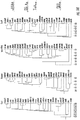
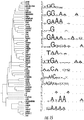
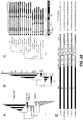
- Fig. 13 shows the relatedness of Cas9 polypeptide sequences from various bacteria and archeae species/strains and the protospacer adjacent motifs (PAMs) that are recognized by the Cas9 polypeptides as described herein.
- a Cas9 polypeptide can be encoded by a nucleotide sequence of any of SEQ ID NOs:294-388, and/or a functional fragment thereof, or a polypeptide comprising the amino acid sequence of SEQ ID NOs:194-293, and/or a functional fragment thereof, or encoded by a nucleotide sequence encoding a polypeptide comprising the amino acid sequence of SEQ ID NOs:194-293, and/or a functional fragment thereof.
- a Cas9 polypeptide can comprise a HNH and/or a RuvC motif comprising HNH and/or RuvC nickase activities, respectively.
- a Cas9 polypeptide can be a deactivated (e.g., mutated, dCAs9) Cas9 polypeptide, wherein the deactivated Cas9 does not comprise HNH and/or RuvC nickase activities.
- the HNH and RuvC motifs have been characterized in S. thermophilus (see, e.g., Sapranauskas et al. Nucleic Acids Res. 39:9275-9282 (2011 )) and one of skill would be able to identify and mutate these motifs in Cas9 polypeptides from other organisms.
- a Cas9 polypeptide in which the HNH motif and/or RuvC motif is/are specifically mutated so that the nickase activity is reduced, deactivated, and/or absent can retain one or more of the other known Cas9 functions including DNA, RNA and PAM recognition and binding activities and thus remain functional with regard to these activities, while non-functional with regard to one or both nickase activities.
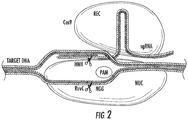
- Cas9 polypeptides The structure of Cas9 polypeptides is described in the art and understood to comprise a nuclease lobe (NUC) and a recognition lobe (REC), with the NUC lobe interacting with the PAM and target DNA, while the REC lobe interacts with and binds to the sgRNA (crRNA-tracRNA) (see, Barrangou, R. Science 344:707-708 (2104 ), generally and figure presented therein. It is between the groove located between the two lobes that the sgRNA-target DNA heteroduplex is formed. Id. Further, as noted above, the HNH and RuvC motifs of a Cas9 polypeptide have been characterized ( Sapranauskas et al.
- Cas9 polypeptides and their interaction with tracRNA and crRNA (sgRNAs) can be found in Nishimasu et al. (Cell 156(5):935-949 (2014 )). Here, they provide the crystal structure of Cas9 in complex with guide RNA and target RNA as well as schematics of the sgRNA:target DNA complex and the structure of the Cas9 polypeptide. Thus, the structure of the Cas9 polypeptide is well characterized with the various functions of the protein associated with defined structures within the polypeptide.
- a further embodiment of the invention provides a functional fragment of a Cas9 polypeptide comprising one or more of the functions of the functions of a Cas9 polypeptide including but not limited to HNH activity, RuvC activity, DNA recognition and/or binding, RNA recognition and/or binding, and/or PAM recognition and/or binding.
- the CRISPR Cas9 polypeptide can be a functional fragment of a CRISPR Cas9 polypeptide.
- a functional fragment of a CRISPR Cas9 polypeptide can be a functional fragment of a Cas9 polypeptide from Lactobacillus spp., Bifidobacterium spp., Kandleria spp., Leuconostoc spp., Oenococcus spp., Pediococcus spp., Streptococcus spp., Weissella spp., and/or Olsenella spp.
- a functional fragment of a CRISPR Cas9 polypeptide can be a functional fragment from an amino acid sequence of any of SEQ ID NOs:194-293.
- the functional fragment of a Cas9 polypeptide can comprise HNH and/or RuvC nickase activities, respectively.
- the functional fragment of a Cas9 polypeptide can be deactivated (mutated) in that it does not comprise HNH and/or RuvC nickase activity.
- a Cas9 functional fragment comprising a mutation in either or both the HNH motif and RuvC motif so that one or both nickase activities are reduced, deactivated, and/or absent, can retain their DNA, RNA and/or PAM recognition and binding activities, as described above, and therefore, such Cas9 fragments remain functional fragments with regard to at least one of these recognition and binding activities.
- a crRNA of this invention comprising a 3' region and a 5' region, can further comprise a CRISPR repeat located upstream of the spacer sequence, wherein the CRISPR repeat comprises, consists essentially, or consists of at least about 10 consecutive nucleotides of CRISPR repeat from Lactobacillus spp., Bifidobacterium spp., Kandleria spp., Leuconostoc spp., Oenococcus spp., Pediococcus spp., Streptococcus spp., Weissella spp., and/or Olsenella spp.
- a crRNA can comprise, consist essentially of, or consist of (from 5' to 3') a spacer sequence - a CRISPR repeat, or a CRISPR repeat - a spacer sequence - a CRISPR repeat.
- a "functional fragment" of a crRNA means a portion of said crRNA which binds to the corresponding tracRNA and/or a portion of which is recognized and bound to a corresponding Cas9 polypeptide.
- a "spacer sequence” as used herein means a sequence that is upstream (5') of a repeat in a crRNA.
- the crRNA comprises two repeats (i.e., a first and a second repeat) the spacer sequence is located between the two repeats (i.e., the spacer sequence is located 3' of the first repeat and 5' of the second repeat).
- the spacer sequence comprises a polynucleotide sequence that is complementary to a target DNA and/or an invasive foreign (e.g., heterologous) DNA (e.g., a nucleotide sequence from a bacteriophage, plasmid or chromosome that is foreign to, for example, a bacterium or an archaeon).
- the spacer sequence can be at least 70% complementary (e.g., 70%, 71%, 72%, 73%, 74%, 75%, 76%, 77%, 78%, 79%, 80%, 81%, 82%, 83%, 84%, 85%, 86%, 87%, 88%, 89%, 90%, 91%, 92%, 93%, 94%, 95%, 96%, 97%, 98%, 99%, or 100% homologous) to the target or invasive foreign DNA.
- the spacer sequence is 100% complementary to the target or invasive foreign DNA.
- the complementarity of the 3' region of the spacer sequence to the target or invasive foreign DNA is 100% but is less than 100% in the 5' region of the spacer.
- the first 7, 8, 9, 10, 11, 12, 13, 14, 15, 16, and the like, nucleotides in the 3' region of a 20 nucleotide spacer sequence can be 100% complementary the target or invasive foreign DNA, while the remaining nucleotides in the 5' region of the spacer sequence are at least about 70% complementary to the target or invasive foreign DNA.
- the first 12 nucleotides of the spacer sequence can be 100% complementary to the target or invasive foreign DNA, while the remaining nucleotides in the 5' region of the spacer sequence be at least about 70% complementary to the target or invasive foreign DNA.
- a repeat for use with this invention can comprise, consist essentially of, or consist of a repeat from Lactobacillus spp., Bifidobacterium spp., Kandleria spp., Leuconostoc spp., Oenococcus spp., Pediococcus spp., Streptococcus spp., Weissella spp., and/or Olsenella spp.
- a repeat from Lactobacillus spp., Bifidobacterium spp., Kandleria spp., Leuconostoc spp., Oenococcus spp., Pediococcus spp., Streptococcus spp., Weissella spp., and/or Olsenella spp. comprises, consists essentially of, or consists of a nucleotide sequence of any of SEQ ID NOs:1-98, or a functional fragment thereof.
- the 5' region of the tracRNA is described herein as complementary to the 3' region (repeat) of the crRNA.
- "complementary" means having at least about 70% or more (e.g., about 70%, 71%, 72%, 73%, 74%, 75%, 76%, 77%, 78%, 79%, 80%, 81%, 82%, 83%, 84%, 85%, 86%, 87%, 88%, 89%, 90%, 91%, 92%, 93%, 94%, 95%, 96%, 97%, 98%, 99%, or 100%) homology to the 3' repeat of the crRNA.
- the 5' region of a tracRNA that is complementary to a 20 nucleotide sequence of a crRNA can have complementarity to about 14 out of 20 consecutive nucleotides of the crRNA repeat.
- the 5' region of a tracRNA that is complementary to a 20 nucleotide sequence of a crRNA can have complementarity to at least 7 consecutive nucleotides (e.g., 7, 8, 9, 10, 11, 12, 13, 14, 15, 16, 17, 18, 19, 20 nucleotides) of the crRNA repeat.
- a tracRNA can comprise, consist essentially of, or consist of a nucleotide sequence of any of SEQ ID NOs:99-193, or a functional fragment thereof.
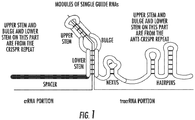
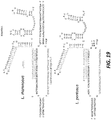
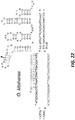
- a tracRNA useful with this invention can comprise, consist essentially of, or consist of a "functional" fragment of a nucleotide sequence of any of SEQ ID NOs:99-193, wherein said functional fragment retains the function of at least one of the motifs of a tracRNA as described herein (e.g., a nexus motif, a hairpin motif, a lower stem motif, an upper stem motif, and/or a bulge motif; see, e.g., Fig. 1 ).
- a functional fragment of a nucleotide sequence of any of SEQ ID NOs:99-193 can comprise, consist essentially of, consist of a nexus motif, a hairpin motif, a lower stem motif, an upper stem motif, a bulge motif and/or any combination thereof.
- a functional fragment of a tracRNA of the invention can comprise, consist essentially of, or consist of a nexus motif, and/or a hairpin motif (see e.g., Fig. 1 ).
- sgRNA e.g., upper stem, bulge, lower stem
- the interaction between the tracRNA and the REC lobe of the Cas9 polypeptide See, e.g., Barrangou, R. Science 344:707-708 (2104 )).
- the present invention further provides expression cassettes and/or vectors comprising or encoding the nucleotide sequences of this invention.
- the present invention additionally provides a cell comprising nucleotide sequences, protein-RNA complexes, and/or the chimeric RNAs of this invention.
- a cell can be from any organism useful with this invention including, but not limited to, a plant cell, bacteria cell, fungal cell, mammalian cell, insect cell, or archaeon cell.
- the cell can be, for example, from Homo sapiens, Drosophila melanogaster, Mus musculus, Rattus norvegicus, Caenorhabditis elegans, Saccharomyces cerevisiae, Zea mays, or Arabidopsis thaliana, and the like.
- a method for site specific cleavage of a target DNA comprising contacting a protein-RNA complex of this invention with the target DNA, thereby producing a site specific cleavage of the target DNA in the region defined by the complementary binding of the spacer sequence of the crRNA to the target nucleic acid.
- a method for site specific cleavage of a target DNA comprising contacting a chimeric RNA of this invention, or an expression cassette or vector comprising or encoding a chimeric RNA of this invention with the target DNA in the presence of a Cas9 polypeptide, thereby producing a site specific cleavage of the target nucleic acid in a region defined by complementary binding of the spacer sequence of the crRNA to the target DNA.
- a method for site specific cleavage of a target DNA comprising contacting a chimeric RNA of this invention, or an expression cassette or vector comprising or encoding a chimeric RNA of this invention with the target DNA in the presence of a Cas9 polypeptide, thereby producing a site specific cleavage of the target nucleic acid in a region defined by complementary binding of the spacer sequence of the crRNA to the target DNA.
- a method of transcriptional control of a target DNA comprising: contacting a protein-RNA complex of this invention with the target DNA, wherein the Cas9 polypeptide of the complex is deactivated and the complex binds to the target DNA, thereby controlling the transcription of the target DNA.
- a method of transcriptional control of a target DNA comprising: contacting a chimeric RNA of this invention, or an expression cassette or vector comprising or encoding a chimeric RNA of this invention with the target DNA in the presence of an deactivated Cas9 polypeptide, wherein the chimeric RNA binds to the target DNA, thereby controlling the transcription of the target DNA.
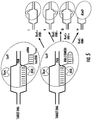
- Transcriptional control means modulating expression of a target DNA (i.e., activation (increasing) and/or repression (decreasing) expression of the target DNA) (see, e.g., Fig. 6B and 6C ).
- an deactivated Cas9 polypeptide can be fused with a transcriptional activator, thereby activating transcription of a target DNA and increasing expression of said target DNA.
- Any transcriptional activator now known or later identified can be used with this invention in a fusion construct with a Cas9 polypeptide as described herein.
- a non-limiting example of such a transcriptional activator is VP64.
- Repression of expression can be accomplished by, for example, using a nuclease free Cas9 with the protein-RNA complexes or chimeric RNAs of this invention, which bind to the target nucleic acid and interfere with or repress expression of the target nucleic acid.
- the invention provides a method of editing a target DNA, comprising: contacting the target DNA with a protein-RNA complex of this invention, wherein the complex binds to the target DNA, thereby editing the target DNA.
- the invention provides a method of editing DNA of a target DNA, comprising: contacting the target DNA with a chimeric RNA of this invention, or an expression cassette or vector comprising or encoding a chimeric RNA of this invention in the presence of a Cas9 polypeptide, wherein the chimeric RNA binds to the target DNA, thereby editing the target DNA. (See, Fig. 6A )
- contacting a target DNA with a protein-RNA complex comprises contacting the target DNA with a protein-RNA complex encoded or comprised in an expression cassette or vector.
- an expression cassette and/or vector can be constructed to express a Cas9 polypeptide and produce a tracRNA-crRNA (sgRNA).
- sgRNA tracRNA-crRNA
- a Cas9 polypeptide can be provided in combination with an expression cassette or vector comprising or encoding a sgRNA.
- no expression cassette or vector is utilized, instead a protein-RNA complex itself can be contacted with the target DNA.
- Additional embodiments of the invention provide a method for cleaving a double stranded polynucleotide, comprising contacting a protein-RNA complex, wherein the polynucleotide comprises, consists essentially of, or consists of (a) a protospacer sequence that is least about 80% (e.g., about 80%, 81%, 82%, 83%, 84%, 85%, 86%, 87%, 88%, 89%, 90%, 91%, 92%, 93%, 94%, 95%, 96%, 97%, 98%, 99%, or 100%) complementary to the spacer sequence in the crRNA in the complex, and (b) a protospacer adjacent motif (PAM) comprising, consisting essentially of, or consisting of a nucleotide sequence of 5'-NGG-3', 5'-NGAAA-3', 5'-NNG-3', 5'-NGA-3', 5'-NTAA-3', 5'-NTG-3', 5'-NNC-3'
- the polypeptide of the complex cleaves both strands of the ds polynucleotide at a cleavage site located 0 to 3 nucleotides upstream of the PAM sequence to create blunt ends (i.e., cleaves 3nt upstream of the 3' edge of the spacer sequence, which is 0 to 3 nucleotides away from the PAM sequence).
- the present invention further provides a method for site specific cleavage of a target DNA, comprising contacting the target DNA with a CRISPR RNA (crRNA), said crRNA comprising a 5' region and a 3' region, and a trans-encoded CRISPR RNA (tracrRNA) comprising a 5' region and a 3' region in the presence of a Cas9 polypeptide, wherein (a) the crRNA comprises, consists essentially of, or consists of at its 3' region a repeat from Lactobacillus spp., Bifidobacterium spp., Kandleria spp., Leuconostoc spp., Oenococcus spp., Pediococcus spp., Streptococcus spp., Weissella spp., and/or Olsenella spp., (e.g., SEQ ID NOs:1-98, or a functional fragment thereof) and at its 5
- the 3' region of the crRNA comprises, consists essentially of, or consists of at least about 10 consecutive nucleotides of the repeat and the 5' region of the crRNA comprises, consists essentially of, or consists of at least about 10 consecutive nucleotides of the spacer sequence.
- the crRNA can comprise, consist essentially of, or consist of a nucleotide sequence of any one of the nucleotide sequences of SEQ ID NOs:1-98, and/or a functional fragment thereof
- the tracrRNA can comprise, consist essentially of, or consist of a nucleotide sequence of any one of the nucleotide sequences of SEQ ID NOs:99-193, and/or a functional fragment thereof.
- a Cas9 polypeptide or nuclease useful with this invention can be any Cas9 polypeptide from, for example, Lactobacillus spp., Bifidobacterium spp., Kandleria spp., Leuconostoc spp., Oenococcus spp., Pediococcus spp., Streptococcus spp., Weissella spp., and/or Olsenella spp.
- a Cas9 polypeptide can comprise, consist essentially of, or consist of an amino acid sequence having at least about 80% (e.g., 80%, 81%, 82%, 83%, 84%, 85%, 86%, 87%, 88%, 89%, 90%, 91%, 92%, 93%, 94%, 95%, 96%, 97%, 98%, 99%, or 100%) identity to a polypeptide comprising the amino acid sequence of SEQ ID NOs:194-293, and/or a functional fragment thereof.
- a Cas9 polypeptide can comprise the activity of an HNH and/or a RuvC nickase.
- the Cas9 polypeptide is deactivated and therefore does not comprise HNH nickase activity. In some embodiments, the Cas9 polypeptide is deactivated and therefore does not comprise RuvC nickase activity. In still other embodiments, the Cas9 polypeptide is deactivated and therefore does not comprise RuvC nickase activity or HNH nickase activity. As described herein, Cas9 polypeptides are multifunctional proteins. Therefore, a Cas9 polypeptide that is deactivated with regard to either or both of the above described nickase activities, can still retain the polypeptide's other functions including DNA, RNA and PAM recognition and binding activity.
- a method for site-specific nicking of a (+) strand of a double stranded target DNA comprising contacting a protein-RNA complex with a double stranded target DNA, wherein the complex comprises, consists essentially of, or consists of (a) a crRNA comprising, consisting essentially of, or consisting of a 3' region and a 5' region, wherein the 3' region comprises, consists essentially of, or consists of at least about 10 consecutive nucleotides of a CRISPR repeat from a Lactobacillus spp., Bifidobacterium spp., Kandleria spp., Leuconostoc spp., Oenococcus spp., Pediococcus spp., Streptococcus spp., Weissella spp., and/or Olsenella spp., and the 5' region comprises, consists essentially of,
- the Cas9 polypeptide can no longer cut the (-) strand of the target DNA (the RuvC motif cuts the (-) strand 5 nucleotides upstream of the PAM), thereby resulting only in a cut in the (+) strand of the target DNA.
- a method for site-specific nicking of the (-) strand of a double stranded target DNA comprising contacting a protein-RNA complex with a double stranded target DNA, wherein the complex comprises, consists essentially of, or consists of (a) a crRNA comprising, consisting essentially of, or consisting of a 3' region and a 5' region, wherein the 3' region comprises, consists essentially of, or consists of at least about 10 consecutive nucleotides of a CRISPR repeat from a Lactobacillus spp., Bifidobacterium spp., Kandleria spp., Leuconostoc spp., Oenococcus spp., Pediococcus spp., Streptococcus spp., Weissella spp., and/or Olsenella spp.
- the 5' region comprises, consists essentially of, or consists of at least about 10 consecutive nucleotides of a spacer sequence located a upstream of the repeat, and (b) a tracRNA comprising, consisting essentially of, or consisting of a 5' and 3' region wherein at least a portion of the 5' region of the tracRNA is complementary to the 3' region (repeat) of the crRNA, (c) a polypeptide comprising, consisting essentially of, or consisting of any of the amino acid sequences of SEQ ID NOs:194-293, and/or a functional fragment thereof, comprising a point mutation in an HNH active site motif; and the target DNA comprises, consists essentially of, or consists of a protospacer sequence that is at least about 80% complementary to the spacer sequence in the crRNA and a protospacer adjacent motif (PAM) sequence comprising a nucleotide sequence of any one of the nucleotide sequences of 5'-NGG-3', 5'-
- the Cas9 polypeptide can no longer cut the (+) strand of the target DNA (the HNH motif cuts the (+) strand 5nt upstream of the PAM), thereby resulting only in a cut in the (+) strand of the target DNA.
- useful for site specific nicking can include any one of the nucleotide sequences of SEQ ID NOs:1-98 or a functional fragment thereof.
- a tracRNA useful for site specific nicking can include any one of the nucleotide sequences of SEQ ID NOs:99-193, or a functional fragment thereof.
- a tracRNA can comprise, consist essentially of, or consist of a fragment of a nucleotide sequence of any of SEQ ID NOs:99-193, wherein said fragment comprises, consists essentially of, consists of a nexus motif, a hairpin motif, a lower stem motif, an upper stem motif, a bulge motif and/or a combination thereof (see e.g., Fig. 1 ).
- a fragment of a tracRNA can comprise, consist essentially of, or consist of a fragment of a nucleotide sequence of any of SEQ ID NOs:99-193, wherein said fragment comprises, consists essentially of, consists of the nexus motif and the hairpin motif.
- a further embodiment of the invention provides a method for site-specific cleavage of a target DNA in vivo, the method comprising: introducing a protein-RNA complex into at least one cell, wherein the protein-RNA complex comprises, consists essentially of, or consists of a crRNA comprising in its 3' region a repeat from Lactobacillus spp., Bifidobacterium spp., Kandleria spp., Leuconostoc spp., Oenococcus spp., Pediococcus spp., Streptococcus spp., Weissella spp., and/or Olsenella spp., and in its 5' region a spacer sequence having complementarity to a site in the target DNA in which a modification is desired; and a polypeptide having at least about 80% identity with a Cas9 polypeptide of Lactobacillus spp., Bifidobacterium spp., Kan
- the target DNA contains a protospacer sequence that is least 80% complementary to the spacer sequence in the crRNA of the protein-RNA complex, and a protospacer adjacent motif (PAM) sequence comprising, consisting essentially of, or consisting of a nucleotide sequence of any of the nucleotide sequences of 5'-NGG-3', 5'-NGAAA-3', 5'-NNG-3', 5'-NGA-3', 5'-NTAA-3', 5'-NTG-3', 5'-NNC-3', 5'-NNAAC-3', 5'-AGA-3', 5'-NNNANNA-3', 5'-NNANAA-3', 5'-NNAAAA-3', and/or 5'-AAAA-3' downstream from the proto-spacer sequence, wherein the polypeptide cleaves both target DNA strands at the cleavage site located 5 nucleotides upstream of the PAM sequence to create blunt ends.
- PAM protospacer adjacent motif
- a donor DNA can be provided for assisting in repair, such as a dsDNA template for homologous recombination in HDR-mediated repair. See, e.g., Fig. 6A , which provides a non-limiting cartoon depiction of genome editing using a Cas9 polypeptide and guide RNAs as described herein.
- the polypeptide having at least about 80% identity with a Cas9 polypeptide can comprise, consist essentially of, or consist of an amino acid sequence of any of the amino acid sequences of SEQ ID NOs:194-293, and/or a functional fragment thereof, or a functional fragment thereof
- the crRNA can comprise, consist essentially of, or consist of a nucleotide sequence of any one of the nucleotide sequences of SEQ ID NOs:1-98, and/or a functional fragment thereof
- the tracrRNA can comprise, consist essentially of, or consist of a nucleotide sequence of any one of the nucleotide sequences of SEQ ID NOs:99-193, and/or a functional fragment thereof.
- the polypeptide having at least about 80% identity with a Cas9 polypeptide can be codon optimized for the organism comprising the target DNA as described herein and as known in the art.
- Non-limiting examples of the types of organisms useful with this invention include plants, bacteria, fungi, mammals, insects, or archaea.
- the polypeptide, and/or a functional fragment thereof, having at least about 80% identity with a Cas9 polypeptide can be codon optimized to be expressed in the organism comprising the target DNA.
- a repeat, a tracRNA sequence, a Cas9 polypeptide or and/or a Cas9 nucleotide sequence can be from Lactobacillus spp., Bifidobacterium spp., Kandleria spp., Leuconostoc spp., Oenococcus spp., Pediococcus spp., Streptococcus spp., Weissella spp., or Olsenella spp.
- a repeat, a tracRNA sequence, a Cas9 polypeptide or and/or a Cas9 nucleotide sequence can be from Bifidobacterium bombi, Bifidobacterium dentium LMG 11045, Bifidobacterium merycicum LMG 11341, Kandleria vitulina DSM 20405, Lactobacillus agilis DSM 20509, Lactobacillus animalis DSM 20602, Lactobacillus apodemi DSM 16634, Lactobacillus brevis subsp gravensis ATCC 27305, Lactobacillus buchneri CD034, Lactobacillus buchneri DSM 20057, Lactobacillus cacaonum DSM 21116, Lactobacillus casei str Zhang, Lactobacillus ceti DSM 22408, Lactobacillus coryniformis subsp coryniformis KCTC 3167, Lactobacillus cor
- combinations of repeats, tracRNA sequences, Cas9 polypeptide sequences and Cas9 nucleotide sequences that may be useful with this invention are set forth in Table 1.
- Table 1 Combinations of repeats, tracRNA sequences, and Cas9 polypeptides and nucleic acid sequences useful with the invention.
- the present invention further provides a method of typing a bacterial or archaeon strain in a sample, comprising amplifying in said sample a region of DNA comprising repetitive sequences that are at least about 80% identical to a nucleotide sequence of SEQ ID NOs:1-98, or a functional fragment thereof, to produce amplified DNA; and typing the bacterial strain based on the amplified DNA.
- the method further comprises sequencing the amplified DNA to produce sequence information; and typing the bacterial strain based on the sequence information.
- typing a bacterial strain further comprises contacting the amplified DNA with one or more restriction enzymes capable of cutting the DNA at at least one site to produce restriction fragments; determining the number and/or size of the restriction fragments; and typing the bacterial strain based on the number and/or size of the restriction fragments.
- Determining the number and/or size of the restriction fragments can mean analyzing the restriction fragments using, for example, agarose gel elextrophoresis and the like as is known in the art.
- the present invention provides a method of detecting the presence of a Lactobacillus spp., Bifidobacterium spp., Kandleria spp., Leuconostoc spp., Oenococcus spp., Pediococcus spp., Streptococcus spp., Weissella spp., and/or Olsenella spp.
- a region of DNA comprising repetitive sequences that are at least about 80% identical to the repetitive sequence encoded by a nucleotide sequence of any of the nucleotide sequences of SEQ ID NOs:1-98, or a functional fragment thereof, to produce amplified DNA, and detecting the amplified DNA.
- amplifying a region of DNA comprises amplifying at least about 20 to about 300 consecutive nucleotides of a region of DNA comprising repetitive sequences.
- amplifying a region of DNA comprises amplifying at least about 20, 25, 23, 35, 40, 45, 50, 55, 60, 65, 70, 75, 80, 85, 90, 95, 100, 110, 120, 130, 140, 150, 160, 170, 180, 190, 200, 210, 220, 230, 240, 250, 260, 270, 280, 290, 300, or more and the like and any range or value therein of consecutive nucleotides of a region of DNA comprising repetitive sequences Any method of amplifying DNA known in the art and later developed can be used with this invention.
- amplifying a region of DNA comprises amplifying at least a single spacer and two repeat elements on either side of the single spacer in the repeat-spacer region of a Lactobacillus spp., Bifidobacterium spp., Kandleria spp., Leuconostoc spp., Oenococcus spp., Pediococcus spp., Streptococcus spp., Weissella spp., and/or Olsenella spp.
- PCR polymerase chain reaction
- amplifying a region of DNA comprises amplifying at least about 50, at least about 100, at least about 150, at least about 200, at least about 250, at least about 300, at least about 350 consecutive nucleotides in the repeat-spacer region of a Lactobacillus spp., Bifidobacterium spp., Kandleria spp., Leuconostoc spp., Oenococcus spp., Pediococcus spp., Streptococcus spp., Weissella spp., and/or Olsenella spp.
- any primer pair designed to comprise conserved sequences flanking the repeat-spacer array could be used.
- invasive foreign DNA having resistance to an invasive foreign DNA
- correlating the presence of a CRISPR spacer with resistance to said invasive foreign DNA e.g., phage DNA, plasmid DNA, chromosomal DNA, transposon DNA
- said invasive foreign DNA e.g., phage DNA, plasmid DNA, chromosomal DNA, transposon DNA
- Lactobacillus spp. Bifidobacterium spp., Kandleria spp., Leuconostoc spp., Oenococcus spp., Pediococcus spp., Streptococcus spp., Weissella spp., and/or Olsenella spp.
- correlate means to establish or establishing an association, a relationship, or a close connection between two or more things.
- correlating can mean establishing an association of the presence of one or more particular spacers in a Lactobacillus spp., Bifidobacterium spp., Kandleria spp., Leuconostoc spp., Oenococcus spp., Pediococcus spp., Streptococcus spp., Weissella spp., and/or Olsenella spp. strain exhibiting resistance to particular invasive foreign DNA.
- correlating means amplifying spacer sequences in a resistant strain of Lactobacillus spp., Bifidobacterium spp., Kandleria spp., Leuconostoc spp., Oenococcus spp., Pediococcus spp., Streptococcus spp., Weissella spp., and/or Olsenella spp., "correlating" means amplifying spacer sequences in a resistant strain of Lactobacillus spp., Bifidobacterium spp., Kandleria spp., Leuconostoc spp., Oenococcus spp., Pediococcus spp., Streptococcus spp., Weissella spp., and/or Olsenella spp., sequencing the amplified spacer sequences and identifying the origin of the spacer sequence by aligning the amplified spacer
- detecting comprises amplifying the DNA of said strain of Lactobacillus spp., Bifidobacterium spp., Kandleria spp., Leuconostoc spp., Oenococcus spp., Pediococcus spp., Streptococcus spp., Weissella spp., and/or Olsenella spp. using amplification primers for amplifying the CRISPR spacer correlated with resistance, to produce a CRISPR spacer amplicon when said CRISPR spacer is present, thereby detecting the presence or absence of said CRISPR spacer amplicon.
- Methods of visualizing or detecting the presence or absence of a CRSIPR spacer amplicon include, for example, gel electrophoresis, sequencing, hybridization and the like.
- inventions provide methods for modifying resistance of a bacterium or an archaeon to an invasive foreign DNA that comprises a target DNA, comprising introducing into cells of said bacterium or archaeon a heterologous nucleic acid molecule comprising, consisting essentially of, or consisting of a first and a second CRISPR repeat from Lactobacillus spp., Bifidobacterium spp., Kandleria spp., Leuconostoc spp., Oenococcus spp., Pediococcus spp., Streptococcus spp., Weissella spp., and/or Olsenella spp.
- the spacer is homologous to at least a portion of the invasive foreign DNA and is located 3' of the first CRISPR repeat and 5' of the second CRISPR repeat to produce transformed bacterial or archaea cells, and selecting transformed bacterial or archaea cells having modified resistance to said invasive foreign DNA.
- modifying the resistance means conferring or increasing resistance in a bacterium or an archaeon to a particular invasive foreign DNA. If the bacterium or archeaon did not have any resistance to the particular invasive foreign DNA prior to the modification, then resistance is conferred upon the bacteria to said invasive foreign DNA by introducing the heterologous nucleic acid molecule of the invention into the cells of said bacterium or archaeaon, thereby providing a level of resistance to said invasive foreign DNA that is greater than that observed to said invasive foreign DNA in a control (e.g., a control bacterium or archaeaon not comprising said heterologous nucleic acid molecule of the invention).
- a control e.g., a control bacterium or archaeaon not comprising said heterologous nucleic acid molecule of the invention.
- the level of resistance to said invasive foreign DNA in said bacterium or archaeon can be increased as compared to the level of resistance to said invasive foreign DNA in a control bacterium or archaeon (e.g., a bacterium or an archaeon not comprising the heterologous nucleic acid molecule of the invention).
- the bacterium to which resistance to a particular invasive foreign DNA can be modified can be Lactobacillus spp., Bifidobacterium spp., Kandleria spp., Leuconostoc spp., Oenococcus spp., Pediococcus spp., Streptococcus spp., Weissella spp., and/or Olsenella spp..
- the first and second CRISPR repeats of the heterologous nucleic acid molecule comprise, consist essentially of, or consist of at least about 10 consecutive nucleotides of a repeat from a Lactobacillus spp., Bifidobacterium spp., Kandleria spp., Leuconostoc spp., Oenococcus spp., Pediococcus spp., Streptococcus spp., Weissella spp., and/or Olsenella spp. and the CRISPR spacer comprises, consists essentially of, or consists of at least about 10 consecutive nucleotides of the invasive foreign DNA.
- the first and second CRISPR repeats comprise, consist essentially of, or consist of a nucleotide sequence of any of the nucleotide sequences of SEQ ID NOs:1-98, a functional fragment thereof, or any combination thereof.
- the spacer sequence can be at least about 80% identical to the at least a portion of the invasive foreign DNA.
- at least about 10 consecutive nucleotides at the 3' end of the CRISPR spacer can be 100% identical to the at least a portion of the invasive foreign DNA.
- bacteria and archaea that can be typed, detected, identified or modified using methods of this invention include, but are not limited to, those from the genera of Lactobacillus spp., Bifidobacterium spp., Kandleria spp., Leuconostoc spp., Oenococcus spp., Pediococcus spp., Streptococcus spp., Weissella spp., and/or Olsenella spp.
- the bacteria and/or archaea that can be typed, detected, identified or modified using the methods of this invention include but are not limited to Bifidobacterium bombi, Bifidobacterium dentium LMG 11045, Bifidobacterium merycicum LMG 11341, Kandleria vitulina DSM 20405, Lactobacillus agilis DSM 20509, Lactobacillus animalis DSM 20602, Lactobacillus apodemi DSM 16634, Lactobacillus brevis subsp gravensis ATCC 27305, Lactobacillus buchneri CD034, Lactobacillus buchneri DSM 20057, Lactobacillus cacaonum DSM 21116, Lactobacillus casei str Zhang, Lactobacillus ceti DSM 22408, Lactobacillus coryniformis subsp coryniformis KCTC 3167, Lactobacillus coryniform
- CRISPR repeat, tracRNA, Cas9 polypeptide and PAM sequences were isolated from different species and strains of bacteria and archae.
- the list of bacterial/archaea species/strains from which at least a CRISPR repeat (e.g., SEQ ID NOs:1-98), tracRNA sequence (e.g., SEQ ID NOs:99-193), Cas9 polypeptide sequence (e.g., SEQ ID NOs:194-293), or a PAM sequence (Table 3, below) was isolated is provided in Table 2, below. Table 2.
- sgRNAs single guide RNAs
- crRNA-tracrRNA single guide RNAs
- Fig. 7 is an enlargement of the predicted secondary structure of a sgRNA from S. anginosus, in which the crRNA and tracRNA portions of the sgRNA are pointed out.
- the crRNA and tracRNA portions of each of the sgRNAs provided in Figs. 7-11 can be similarly identified.
- Fig. 12A provides a phylogenetic tree based on Cas9 protein sequences from various Streptococcus and Lactobacillus species, which shows that the sequences cluster into three families.
- Fig. 12B A consensus sequence and secondary structure of a predicted consensus guide RNA for each family is shown in Fig. 12B .
- Conservation of the overall sgRNA.crRNA/tracRNA structure is observed between families and high levels of sequence conservation is observed within clusters.
- Fig. 13 The congruence between tracrRNA (left), CRISPR repeat (middle) and Cas9 (right) sequence clustering is provided in Fig. 13 , which shows consistent grouping into three families across the three sequence-based phylogenetic trees.
- Fig. 14 shows a congruence between Cas1 (left), tracrRNA (middle left), CRISPR repeat (middle right) and Cas9 (right) sequence clustering.
- Cas9 polypeptides from the various bacteria and archeae species/strains were also grouped according to their corresponding protospacer adjacent motifs (PAM) (left, Fig. 15 ). Consensus sequences for the PAM are provided on the right half of Fig. 15 .
- new and diverse synthetic sgRNAs, chimeric RNAs and protein-RNA complexes can be constructed, which can be used for, for example, specific targeting and cleaving of target DNA, editing of target DNA (e.g., generating altered genotypes), transcriptional control of target genes (repression and activation) and/or DNA labeling.
- chimeric guide RNAs can be constructed from the tracRNA sequences and crRNA sequences in various combinations, swapping out one or more portions of sequences from one (or more) species with portions of sequences from another species, to produce a multitude of different guides functional with one or more Cas9 polypeptide(s) and PAMs, thereby providing increased flexibility and optimization of sgRNA composition and design for different needs.
- Fig. 16 shows trees to predict orthogonal groups.
- Panel A of Fig. 16 provides a Neighbor-joining tree from a MUSCLE alignment of the Cas9 protein sequences from 11 organisms of interest.
- Panel B provides a Neighbor-joining tree from a Clustal alignment of the CRISPR repeat nucleotide sequences from 11 organisms of interest and
- Panel C provides a Neighbor-joining tree from a MUSCLE alignment of the Cas1 protein sequences from 11 organisms of interest, systems.
- Panel D provides a Neighbor-joining tree from a Clustal alignment of the repeat-spacer array leader nucleotide sequences from 11 organisms of interest. The groups were used to determine which leader sequences are more closely related and which are more distantly related to determine potential orthogonal systems.
- Panels A, B, C and D of Fig. 16 were used to determine within each of Cas9 proteins, CRISPR repeat nucleotide sequences, Cas1 proteins and repeat-spacer array leader nucleotide sequences, respectively, which proteins or nucleotide sequences are more closely related and which are more distantly related in order to determine potential orthogonal systems.
- Fig. 17 shows the native tracrRNA:crRNA duplexes that have been combined into single guide RNAs for ease of visualization. Based on the Cas9 proteins, Cas1 proteins, CRIPSR repeats, leader sequences, PAM motifs, guide sequences and structures, the Lactobacillus buchneri and Pediococcus parvulus CRISPR-Cas systems are likely not orthogonal.
- Fig. 18 shows the native tracrRNA:crRNA duplexes that have been combined into single guide RNAs for ease of visualization.
- Fig. 19 shows the native tracrRNA:crRNA duplexes that have been combined into single guide RNAs for ease of visualization. Based on the Cas9 proteins, Cas1 proteins, CRIPSR repeats, leader sequences, PAM motifs, guide sequences and structures, the Lactobacillus rhamnosus and Lactobacillus pentosus CRISPR-Cas systems are likely not orthogonal. Fig.
- Fig. 21 shows the native tracrRNA:crRNA duplexes that have been combined into single guide RNAs for ease of visualization. Based on the Cas9 proteins, Cas1 proteins, CRIPSR repeats, leader sequences, PAM motifs, guide sequences and structures, the Lactobacillus cacaonum and Lactobacillus mali CRISPR-Cas systems are likely not orthogonal with each other.
- Fig. 22 shows the native tracrRNA:crRNA duplexes that have been combined into single guide RNAs for ease of visualization.
- the Oenococcus kitaharae CRISPR-Cas systems is likely to be orthogonal to all other systems.
- a plasmid interference assay activity of the Type II CRISPR-Cas system in Lactobacillus gasseri was investigated (see, Fig. 23 ).
- a highly expressed spacer sequence from the Lga CRISPR repeat spacer array was identified and used to design plasmids flanked by mutated PAMs to determine activity and flexibility of Cas9-based DNA targeting.
- Six different mutations of the PAM were tested.
- Targeting by active Type II CRISPR-Cas systems using Cas9 is shown by a decrease in transformants. If the Cas9 is able to recognize the PAM on the plasmid, the plasmid is cleaved leading to cell death.
- the Lga Cas9 was able to cause a 3 log reduction in transformants when the optimal PAM was used (Lga2) demonstrating this system is active.
- a plasmid interference assay activity of the Type II CRISPR-Cas system in Lactobacillus rhamnosus was also investigated (see, Fig. 24 ).
- a highly expressed spacer sequence from the Lrh CRISPR repeat spacer array was identified and used to design plasmids flanked by mutated PAMs to determine activity and flexibility of Cas9-based DNA targeting.
- Six different mutations of the PAM were tested.
- Targeting by active Type II CRISPR-Cas systems using Cas9 is shown by a decrease in transformants. If the Cas9 is able to recognize the PAM on the plasmid, the plasmid is cleaved leading to cell death.
- the Lrh Cas9 was able to cause a 1.5 log reduction in transformants when the optimal PAM was used (Lrh2) demonstrating this system is active.
- a plasmid interference assay activity of the Type II CRISPR-Cas system in Lactobacillus pentosus was invenstigated.
- a highly expressed spacer sequence from the Lpe CRISPR repeat spacer array was identified and used to design plasmids flanked by mutated PAMs to determine activity and flexibility of Cas9-based DNA targeting.
- Six different mutations of the PAM were tested.
- Targeting by active Type II CRISPR-Cas systems using Cas9 is shown by a decrease in transformants. If the Cas9 is able to recognize the PAM on the plasmid, the plasmid is cleaved leading to cell death.
- the Lpe Cas9 was able to cause a 2 log reduction in transformants when the optimal PAM was used (Lpe1) demonstrating this system is active.
- a plasmid interference assay was used to show the activity of the Type II CRISPR-Cas system in Lactobacillus jensenii (Lje) (see, Fig. 26 ).
- Lje Lactobacillus jensenii
- a highly expressed spacer sequence from the Lje CRISPR repeat spacer array was identified and used to design plasmids flanked by mutated PAMs to determine activity and flexibility of Cas9-based DNA targeting.
- Six different mutations of the PAM were tested.
- Targeting by active Type II CRISPR-Cas systems using Cas9 is shown by a decrease in transformants. If the Cas9 is able to recognize the PAM on the plasmid, the plasmid is cleaved leading to cell death.
- the Lje Cas9 was able to cause a 3 log reduction in transformants when the optimal PAM was used (Lje2, Lje3, Lje7) demonstrating this system is active.
- the activity of the Type II CRISPR-Cas system in Lactobacillus casei was investigated using a plasmid interference assay (see, Fig. 27 ).
- a highly expressed spacer sequence from the Lcas CRISPR repeat spacer array was identified and used to design plasmids flanked by mutated PAMs to determine activity and flexibility of Cas9-based DNA targeting.
- Six different mutations of the PAM were tested.
- Targeting by active Type II CRISPR-Cas systems using Cas9 is shown by a decrease in transformants. If the Cas9 is able to recognize the PAM on the plasmid, the plasmid is cleaved leading to cell death.
- the Lcas Cas9 was able to cause a 1 log reduction in transformants when the optimal PAM was used (Lcas4) demonstrating this system is active.
- Panel C is a linear representation of the Cas9 domains as provided by Nishimasu et al. (Cell 156(5):935-49 (2014 )) for Spy Cas9.
- Panel D is a layout of five select CRISPR-Cas loci.
Landscapes
- Health & Medical Sciences (AREA)
- Life Sciences & Earth Sciences (AREA)
- Genetics & Genomics (AREA)
- Engineering & Computer Science (AREA)
- Chemical & Material Sciences (AREA)
- Bioinformatics & Cheminformatics (AREA)
- Zoology (AREA)
- Organic Chemistry (AREA)
- Wood Science & Technology (AREA)
- Biotechnology (AREA)
- Biomedical Technology (AREA)
- General Engineering & Computer Science (AREA)
- Molecular Biology (AREA)
- Biochemistry (AREA)
- Microbiology (AREA)
- General Health & Medical Sciences (AREA)
- Physics & Mathematics (AREA)
- Biophysics (AREA)
- Plant Pathology (AREA)
- Medicinal Chemistry (AREA)
- Cell Biology (AREA)
- Virology (AREA)
- Veterinary Medicine (AREA)
- Mycology (AREA)
- Crystallography & Structural Chemistry (AREA)
- Micro-Organisms Or Cultivation Processes Thereof (AREA)
- Peptides Or Proteins (AREA)
- Measuring Or Testing Involving Enzymes Or Micro-Organisms (AREA)
- Saccharide Compounds (AREA)
- Enzymes And Modification Thereof (AREA)
Applications Claiming Priority (4)
| Application Number | Priority Date | Filing Date | Title |
|---|---|---|---|
| US201462043204P | 2014-08-28 | 2014-08-28 | |
| US201462043882P | 2014-08-29 | 2014-08-29 | |
| EP15836709.4A EP3186375A4 (de) | 2014-08-28 | 2015-08-27 | Neuartige cas9-proteine und führungsmerkmale für dna-targeting und genomeditierung |
| PCT/US2015/047136 WO2016033298A1 (en) | 2014-08-28 | 2015-08-27 | Novel cas9 proteins and guiding features for dna targeting and genome editing |
Related Parent Applications (1)
| Application Number | Title | Priority Date | Filing Date |
|---|---|---|---|
| EP15836709.4A Division EP3186375A4 (de) | 2014-08-28 | 2015-08-27 | Neuartige cas9-proteine und führungsmerkmale für dna-targeting und genomeditierung |
Publications (2)
| Publication Number | Publication Date |
|---|---|
| EP3633032A2 true EP3633032A2 (de) | 2020-04-08 |
| EP3633032A3 EP3633032A3 (de) | 2020-07-29 |
Family
ID=55400560
Family Applications (2)
| Application Number | Title | Priority Date | Filing Date |
|---|---|---|---|
| EP19196063.2A Pending EP3633032A3 (de) | 2014-08-28 | 2015-08-27 | Neuartige cas9-proteine und führungsmerkmale für dna-targeting und genomeditierung |
| EP15836709.4A Withdrawn EP3186375A4 (de) | 2014-08-28 | 2015-08-27 | Neuartige cas9-proteine und führungsmerkmale für dna-targeting und genomeditierung |
Family Applications After (1)
| Application Number | Title | Priority Date | Filing Date |
|---|---|---|---|
| EP15836709.4A Withdrawn EP3186375A4 (de) | 2014-08-28 | 2015-08-27 | Neuartige cas9-proteine und führungsmerkmale für dna-targeting und genomeditierung |
Country Status (3)
| Country | Link |
|---|---|
| US (2) | US10450584B2 (de) |
| EP (2) | EP3633032A3 (de) |
| WO (1) | WO2016033298A1 (de) |
Cited By (6)
| Publication number | Priority date | Publication date | Assignee | Title |
|---|---|---|---|---|
| US10920222B2 (en) | 2018-04-30 | 2021-02-16 | Snipr Biome Aps | Treating and preventing microbial infections |
| US10953090B2 (en) | 2016-06-05 | 2021-03-23 | Snipr Technologies Limited | Selectively altering microbiota for immune modulation |
| US11147830B2 (en) | 2015-05-06 | 2021-10-19 | Snipr Technologies Limited | Altering microbial populations and modifying microbiota |
| US11578333B2 (en) | 2018-10-14 | 2023-02-14 | Snipr Biome Aps | Single-vector type I vectors |
| US11891629B2 (en) | 2017-08-08 | 2024-02-06 | Snipr Technologies Limited | Propagator cells and methods for propagating phage, in particular for delivering CRISPR-Cas components via probiotic organisms |
| US12076375B2 (en) | 2022-06-29 | 2024-09-03 | Snipr Biome Aps | Treating and preventing E coli infections |
Families Citing this family (93)
| Publication number | Priority date | Publication date | Assignee | Title |
|---|---|---|---|---|
| EP2689019A2 (de) | 2011-03-23 | 2014-01-29 | Pioneer Hi-Bred International Inc. | Verfahren zur herstellung eines komplexen transgenen trait locus |
| WO2013066438A2 (en) | 2011-07-22 | 2013-05-10 | President And Fellows Of Harvard College | Evaluation and improvement of nuclease cleavage specificity |
| US20150044192A1 (en) | 2013-08-09 | 2015-02-12 | President And Fellows Of Harvard College | Methods for identifying a target site of a cas9 nuclease |
| US9359599B2 (en) | 2013-08-22 | 2016-06-07 | President And Fellows Of Harvard College | Engineered transcription activator-like effector (TALE) domains and uses thereof |
| CA3221516A1 (en) | 2013-08-22 | 2015-02-26 | E. I. Du Pont De Nemours And Company | Plant genome modification using guide rna/cas endonuclease systems and methods of use |
| US9526784B2 (en) | 2013-09-06 | 2016-12-27 | President And Fellows Of Harvard College | Delivery system for functional nucleases |
| US9388430B2 (en) | 2013-09-06 | 2016-07-12 | President And Fellows Of Harvard College | Cas9-recombinase fusion proteins and uses thereof |
| US9340799B2 (en) | 2013-09-06 | 2016-05-17 | President And Fellows Of Harvard College | MRNA-sensing switchable gRNAs |
| WO2015066119A1 (en) | 2013-10-30 | 2015-05-07 | North Carolina State University | Compositions and methods related to a type-ii crispr-cas system in lactobacillus buchneri |
| US20150166984A1 (en) | 2013-12-12 | 2015-06-18 | President And Fellows Of Harvard College | Methods for correcting alpha-antitrypsin point mutations |
| EP3129490A4 (de) | 2014-04-08 | 2017-10-04 | North Carolina State University | Verfahren und zusammensetzungen zur rna-agerichteten unterdrückung von transkription mittels crispr-assoziierter gene |
| WO2016022363A2 (en) | 2014-07-30 | 2016-02-11 | President And Fellows Of Harvard College | Cas9 proteins including ligand-dependent inteins |
| BR112017003757A2 (pt) | 2014-09-12 | 2017-12-26 | Du Pont | ?plantas de milho, partes de planta de milho ou sementes de milho? |
| EP3553178A1 (de) | 2015-03-27 | 2019-10-16 | E. I. du Pont de Nemours and Company | Promotoren von u6-small-nuclear-rna-genen aus sojabohnen und deren verwendung in der konstitutiven expression von kleinen rna-genen in pflanzen |
| EP3294878A1 (de) * | 2015-05-15 | 2018-03-21 | Pioneer Hi-Bred International, Inc. | Guide-rns/cas-endonuklease-systeme |
| WO2016196361A1 (en) | 2015-05-29 | 2016-12-08 | North Carolina State University | Methods for screening bacteria, archaea, algae, and yeast using crispr nucleic acids |
| JP7051438B2 (ja) | 2015-06-15 | 2022-04-11 | ノース カロライナ ステート ユニバーシティ | 核酸およびrnaに基づく抗菌剤の効率的な送達のための方法および組成物 |
| WO2017058751A1 (en) | 2015-09-28 | 2017-04-06 | North Carolina State University | Methods and compositions for sequence specific antimicrobials |
| SG10202104041PA (en) | 2015-10-23 | 2021-06-29 | Harvard College | Nucleobase editors and uses thereof |
| WO2017112620A1 (en) | 2015-12-22 | 2017-06-29 | North Carolina State University | Methods and compositions for delivery of crispr based antimicrobials |
| WO2017155715A1 (en) * | 2016-03-11 | 2017-09-14 | Pioneer Hi-Bred International, Inc. | Novel cas9 systems and methods of use |
| CA3010628A1 (en) * | 2016-03-11 | 2017-09-14 | Pioneer Hi-Bred International, Inc. | Novel cas9 systems and methods of use |
| EP3219799A1 (de) | 2016-03-17 | 2017-09-20 | IMBA-Institut für Molekulare Biotechnologie GmbH | Bedingte crispr-sgrna-expression |
| WO2017222773A1 (en) * | 2016-06-20 | 2017-12-28 | Pioneer Hi-Bred International, Inc. | Novel cas systems and methods of use |
| KR20250103795A (ko) | 2016-08-03 | 2025-07-07 | 프레지던트 앤드 펠로우즈 오브 하바드 칼리지 | 아데노신 핵염기 편집제 및 그의 용도 |
| US11661590B2 (en) | 2016-08-09 | 2023-05-30 | President And Fellows Of Harvard College | Programmable CAS9-recombinase fusion proteins and uses thereof |
| WO2018039438A1 (en) | 2016-08-24 | 2018-03-01 | President And Fellows Of Harvard College | Incorporation of unnatural amino acids into proteins using base editing |
| US20190225974A1 (en) | 2016-09-23 | 2019-07-25 | BASF Agricultural Solutions Seed US LLC | Targeted genome optimization in plants |
| SG11201903089RA (en) | 2016-10-14 | 2019-05-30 | Harvard College | Aav delivery of nucleobase editors |
| WO2018119359A1 (en) | 2016-12-23 | 2018-06-28 | President And Fellows Of Harvard College | Editing of ccr5 receptor gene to protect against hiv infection |
| EP3592381A1 (de) | 2017-03-09 | 2020-01-15 | President and Fellows of Harvard College | Krebsimpfstoff |
| US11898179B2 (en) | 2017-03-09 | 2024-02-13 | President And Fellows Of Harvard College | Suppression of pain by gene editing |
| WO2018165629A1 (en) | 2017-03-10 | 2018-09-13 | President And Fellows Of Harvard College | Cytosine to guanine base editor |
| WO2018176009A1 (en) | 2017-03-23 | 2018-09-27 | President And Fellows Of Harvard College | Nucleobase editors comprising nucleic acid programmable dna binding proteins |
| WO2018209320A1 (en) | 2017-05-12 | 2018-11-15 | President And Fellows Of Harvard College | Aptazyme-embedded guide rnas for use with crispr-cas9 in genome editing and transcriptional activation |
| US20200263186A1 (en) * | 2017-05-26 | 2020-08-20 | North Carolina State University | Altered guide rnas for modulating cas9 activity and methods of use |
| MX2019015143A (es) | 2017-06-14 | 2020-07-27 | Wisconsin Alumni Res Found | Rna guias modificados, complejos crispr-ribonucleoproteina y metodos de uso. |
| CN111801345A (zh) | 2017-07-28 | 2020-10-20 | 哈佛大学的校长及成员们 | 使用噬菌体辅助连续进化(pace)的进化碱基编辑器的方法和组合物 |
| EP3676376B1 (de) | 2017-08-30 | 2025-01-15 | President and Fellows of Harvard College | Hocheffiziente baseneditoren mit gam |
| US11795443B2 (en) | 2017-10-16 | 2023-10-24 | The Broad Institute, Inc. | Uses of adenosine base editors |
| WO2019118949A1 (en) | 2017-12-15 | 2019-06-20 | The Broad Institute, Inc. | Systems and methods for predicting repair outcomes in genetic engineering |
| US20200362366A1 (en) | 2018-01-12 | 2020-11-19 | Basf Se | Gene underlying the number of spikelets per spike qtl in wheat on chromosome 7a |
| JP7109547B2 (ja) * | 2018-02-15 | 2022-07-29 | シグマ-アルドリッチ・カンパニー・リミテッド・ライアビリティ・カンパニー | 真核ゲノム修飾のための操作されたCas9システム |
| EP3755792A4 (de) * | 2018-02-23 | 2021-12-08 | Pioneer Hi-Bred International, Inc. | Neue cas9-orthologe |
| US20210172008A1 (en) | 2018-04-04 | 2021-06-10 | Lifeedit, Inc. | Methods and compositions to identify novel crispr systems |
| AU2019265019B2 (en) | 2018-05-11 | 2025-11-06 | Beam Therapeutics Inc. | Methods of substituting pathogenic amino acids using programmable base editor systems |
| US12157760B2 (en) | 2018-05-23 | 2024-12-03 | The Broad Institute, Inc. | Base editors and uses thereof |
| EP3802807B1 (de) | 2018-06-05 | 2024-11-20 | LifeEDIT Therapeutics, Inc. | Rna-gesteuerte nukleasen, aktive fragmente und varianten davon und verwendungsverfahren |
| EP3820495A4 (de) | 2018-07-09 | 2022-07-20 | The Broad Institute Inc. | Rna-programmierbare epigenetische rna-modifikatoren und deren verwendungen |
| US12215315B2 (en) | 2018-08-31 | 2025-02-04 | Industry-Academic Cooperation Foundation, Yonsei University | Method for modifying target nucleic acid in genome of cell |
| AU2019336245B2 (en) | 2018-09-07 | 2026-02-26 | Beam Therapeutics Inc. | Compositions and methods for delivering a nucleobase editing system |
| EP3850088A4 (de) | 2018-09-07 | 2023-07-19 | Beam Therapeutics, Inc. | Zusammensetzungen und verfahren zur verbesserten basisbearbeitung |
| WO2020072253A1 (en) | 2018-10-01 | 2020-04-09 | North Carolina State University | Recombinant type i crispr-cas system and uses thereof for screening for variant cells |
| WO2020072250A1 (en) | 2018-10-01 | 2020-04-09 | North Carolina State University | Recombinant type i crispr-cas system and uses thereof for genome modification and alteration of expression |
| US12264330B2 (en) | 2018-10-01 | 2025-04-01 | North Carolina State University | Recombinant type I CRISPR-Cas system and uses thereof for killing target cells |
| WO2020092453A1 (en) | 2018-10-29 | 2020-05-07 | The Broad Institute, Inc. | Nucleobase editors comprising geocas9 and uses thereof |
| US11739320B2 (en) | 2018-11-05 | 2023-08-29 | Wisconsin Alumni Research Foundation | Gene correction of Pompe disease and other autosomal recessive disorders via RNA-guided nucleases |
| CN113166744B (zh) | 2018-12-14 | 2025-02-07 | 先锋国际良种公司 | 用于基因组编辑的新颖crispr-cas系统 |
| SG11202106977PA (en) | 2018-12-27 | 2021-07-29 | Lifeedit Therapeutics Inc | Polypeptides useful for gene editing and methods of use |
| US12351837B2 (en) | 2019-01-23 | 2025-07-08 | The Broad Institute, Inc. | Supernegatively charged proteins and uses thereof |
| CN114040977B (zh) | 2019-01-31 | 2024-09-03 | 比姆医疗股份有限公司 | 非靶脱氨反应减低的核碱基编辑器和用于定性核碱基编辑器的测定 |
| SG11202108346WA (en) | 2019-02-13 | 2021-08-30 | Beam Therapeutics Inc | Modified immune cells having adenosine deaminase base editors for modifying a nucleobase in a target sequence |
| AU2020223314A1 (en) | 2019-02-13 | 2021-08-12 | Beam Therapeutics Inc. | Compositions and methods for treating alpha-1 antitrypsin deficiency |
| EP3942043A2 (de) | 2019-03-19 | 2022-01-26 | The Broad Institute, Inc. | Verfahren und zusammensetzungen zur editierung von nukleotidsequenzen |
| WO2020214842A1 (en) | 2019-04-17 | 2020-10-22 | The Broad Institute, Inc. | Adenine base editors with reduced off-target effects |
| CN110079530A (zh) * | 2019-05-24 | 2019-08-02 | 青岛农业大学 | 一种源自布氏乳杆菌的基因编辑工具及其制备方法和应用 |
| CN110452922B (zh) * | 2019-08-08 | 2021-03-26 | 华中农业大学 | 利用内源性crispr系统对乳酸片球菌进行基因编辑的方法 |
| WO2021030344A1 (en) * | 2019-08-12 | 2021-02-18 | Lifeedit, Inc. | Rna-guided nucleases and active fragments and variants thereof and methods of use |
| CN115279398B (zh) | 2019-09-27 | 2025-07-04 | 比姆医疗股份有限公司 | 治疗液态癌症的组合物和方法 |
| US12435330B2 (en) | 2019-10-10 | 2025-10-07 | The Broad Institute, Inc. | Methods and compositions for prime editing RNA |
| US12497609B2 (en) | 2019-10-14 | 2025-12-16 | Yonsei University Biohealth Technology Holdings. Inc. | Protospacer adjacent motif sequence and method for modifying target nucleic acid in genome of cell by using same |
| JP2023508731A (ja) | 2019-12-30 | 2023-03-03 | ライフエディット セラピューティクス,インコーポレイティド | Rna誘導ヌクレアーゼ、その活性断片および多様体、ならびに使用方法 |
| TW202208626A (zh) | 2020-04-24 | 2022-03-01 | 美商生命編輯公司 | Rna引導核酸酶及其活性片段與變體,以及使用方法 |
| BR112022022603A2 (pt) | 2020-05-08 | 2023-01-17 | Broad Inst Inc | Métodos e composições para edição simultânea de ambas as fitas de sequência alvo de nucleotídeos de fita dupla |
| CA3173949A1 (en) | 2020-07-15 | 2022-01-20 | LifeEDIT Therapeutics, Inc. | Uracil stabilizing proteins and active fragments and variants thereof and methods of use |
| EP4211235A2 (de) | 2020-09-11 | 2023-07-19 | Lifeedit Therapeutics, Inc. | Dna-modifizierende enzyme und aktive fragmente sowie varianten davon und verfahren zur verwendung |
| US12576151B2 (en) | 2020-09-25 | 2026-03-17 | Beam Therapeutics Inc. | Fratricide resistant modified immune cells and methods of using the same |
| US20230383273A1 (en) * | 2020-10-21 | 2023-11-30 | Emendobio Inc. | Novel omni 56, 58, 65, 68, 71, 75, 78, and 84 crispr nucleases |
| CA3204158A1 (en) * | 2021-01-04 | 2022-07-07 | Juhan Kim | Mad nucleases |
| CN117295817A (zh) | 2021-03-22 | 2023-12-26 | 生命编辑制药股份有限公司 | Dna修饰酶及其活性片段和变体以及使用方法 |
| AU2022290278A1 (en) * | 2021-06-11 | 2024-01-04 | LifeEDIT Therapeutics, Inc. | Rna polymerase iii promoters and methods of use |
| CN119317713A (zh) | 2022-01-24 | 2025-01-14 | 生命编辑制药股份有限公司 | Rna引导核酸酶、其活性片段与变体,及使用方法 |
| MA71732A (fr) | 2022-08-12 | 2025-05-30 | Life Edit Therapeutics, Inc. | Nucléases guidées par arn et fragments actifs, variants associés et procédés d'utilisation |
| EP4577650A1 (de) | 2022-08-25 | 2025-07-02 | Life Edit Therapeutics, Inc. | Chemische modifikation von guide-rnas mit verriegelter nukleinsäure zur rna-geführten nukleasevermittelten geneditierung |
| WO2024042165A2 (en) | 2022-08-26 | 2024-02-29 | UCB Biopharma SRL | Novel rna-guided nucleases and nucleic acid targeting systems comprising such rna-guided nucleases |
| AU2023374241A1 (en) | 2022-11-04 | 2025-06-12 | Life Edit Therapeutics, Inc. | Evolved adenine deaminases and rna-guided nuclease fusion proteins with internal insertion sites and methods of use |
| WO2024127369A1 (en) | 2022-12-16 | 2024-06-20 | LifeEDIT Therapeutics, Inc. | Guide rnas that target foxp3 gene and methods of use |
| JP2026504733A (ja) | 2022-12-16 | 2026-02-09 | ライフ エディット セラピューティクス,インコーポレイティド | Trac遺伝子を標的とするガイドrnaおよび使用方法 |
| TW202507006A (zh) | 2023-04-12 | 2025-02-16 | 美商生命編輯治療學公司 | 藉由編輯突變亨廷頓基因治療亨廷頓氏病之組合物及方法 |
| WO2025022367A2 (en) | 2023-07-27 | 2025-01-30 | Life Edit Therapeutics, Inc. | Rna-guided nucleases and active fragments and variants thereof and methods of use |
| TW202546224A (zh) | 2024-02-12 | 2025-12-01 | 美商生命編輯治療學公司 | 新穎的rna引導之核酸酶及用於聚合酶編輯之蛋白質 |
| WO2026003754A1 (en) | 2024-06-25 | 2026-01-02 | Life Edit Therapeutics, Inc. | Novel reverse transcriptases and uses thereof |
| WO2026012368A1 (zh) * | 2024-07-08 | 2026-01-15 | 华熙生物科技股份有限公司 | 一种Cas蛋白及其基因编辑系统和应用 |
Family Cites Families (82)
| Publication number | Priority date | Publication date | Assignee | Title |
|---|---|---|---|---|
| US7929A (en) * | 1851-02-11 | Scrajper | ||
| US4723202A (en) | 1987-04-02 | 1988-02-02 | The Garrett Corporation | Converter-fed AC machine without damper winding |
| US7919277B2 (en) | 2004-04-28 | 2011-04-05 | Danisco A/S | Detection and typing of bacterial strains |
| US20090007301A1 (en) | 2005-04-15 | 2009-01-01 | Hsu-Ching Chen Wintz | Plant Promoters, Terminators, Genes, Vectors and Related Transformed Plants |
| PT2126130E (pt) | 2007-03-02 | 2015-08-03 | Dupont Nutrition Biosci Aps | Culturas com resistência melhorada a fagos |
| WO2010054154A2 (en) | 2008-11-07 | 2010-05-14 | Danisco A/S | Bifidobacteria crispr sequences |
| WO2010075424A2 (en) | 2008-12-22 | 2010-07-01 | The Regents Of University Of California | Compositions and methods for downregulating prokaryotic genes |
| DK2630156T3 (en) | 2010-10-20 | 2018-12-17 | Dupont Nutrition Biosci Aps | CRISPR-CAS SEQUENCES OF LACTOCOCCUS |
| WO2012164565A1 (en) | 2011-06-01 | 2012-12-06 | Yeda Research And Development Co. Ltd. | Compositions and methods for downregulating prokaryotic genes |
| GB201122458D0 (en) | 2011-12-30 | 2012-02-08 | Univ Wageningen | Modified cascade ribonucleoproteins and uses thereof |
| WO2013141680A1 (en) * | 2012-03-20 | 2013-09-26 | Vilnius University | RNA-DIRECTED DNA CLEAVAGE BY THE Cas9-crRNA COMPLEX |
| US9637739B2 (en) | 2012-03-20 | 2017-05-02 | Vilnius University | RNA-directed DNA cleavage by the Cas9-crRNA complex |
| LT3401400T (lt) | 2012-05-25 | 2019-06-10 | The Regents Of The University Of California | Būdai ir kompozicijos, skirtos rnr molekulės nukreipiamai tikslinės dnr modifikacijai ir rnr molekulės nukreipiamam transkripcijos moduliavimui |
| MX2014015204A (es) | 2012-06-12 | 2015-08-07 | Genentech Inc | Metodos y composiciones para generar alelos con inactivacion condicional. |
| WO2013188638A2 (en) | 2012-06-15 | 2013-12-19 | The Regents Of The University Of California | Endoribonucleases and methods of use thereof |
| WO2014022702A2 (en) | 2012-08-03 | 2014-02-06 | The Regents Of The University Of California | Methods and compositions for controlling gene expression by rna processing |
| PL4397760T3 (pl) | 2012-10-23 | 2026-03-30 | Toolgen Incorporated | Kompozycja do rozszczepiania docelowego dna zawierająca prowadzące rna specyficzne dla docelowego dna i kwas nukleinowy kodujący białko cas lub białko cas oraz jej zastosowanie |
| WO2014071235A1 (en) | 2012-11-01 | 2014-05-08 | Massachusetts Institute Of Technology | Genetic device for the controlled destruction of dna |
| EP3135765A1 (de) | 2012-12-06 | 2017-03-01 | Sigma-Aldrich Co. LLC | Crispr-basierte genommodifizierung und -regulierung |
| WO2014093479A1 (en) | 2012-12-11 | 2014-06-19 | Montana State University | Crispr (clustered regularly interspaced short palindromic repeats) rna-guided control of gene regulation |
| EP2931898B1 (de) | 2012-12-12 | 2016-03-09 | The Broad Institute, Inc. | Technische konzeption und optimierung von systemen, verfahren und zusammensetzungen zur sequenzmanipulation funktionellen domänen |
| CN114634950A (zh) | 2012-12-12 | 2022-06-17 | 布罗德研究所有限公司 | 用于序列操纵的crispr-cas组分系统、方法以及组合物 |
| US20140310830A1 (en) | 2012-12-12 | 2014-10-16 | Feng Zhang | CRISPR-Cas Nickase Systems, Methods And Compositions For Sequence Manipulation in Eukaryotes |
| US8697359B1 (en) | 2012-12-12 | 2014-04-15 | The Broad Institute, Inc. | CRISPR-Cas systems and methods for altering expression of gene products |
| SG10201912991WA (en) | 2012-12-17 | 2020-03-30 | Harvard College | Rna-guided human genome engineering |
| LT2943579T (lt) | 2013-01-10 | 2018-11-12 | Dharmacon, Inc. | Molekulių bibliotekos ir molekulių generavimo būdai |
| EP3919505B1 (de) | 2013-01-16 | 2023-08-30 | Emory University | Verwendungen von cas9-nukleinsäurekomplexen |
| US10660943B2 (en) | 2013-02-07 | 2020-05-26 | The Rockefeller University | Sequence specific antimicrobials |
| SG11201507378UA (en) | 2013-03-14 | 2015-10-29 | Caribou Biosciences Inc | Compositions and methods of nucleic acid-targeting nucleic acids |
| US20140273230A1 (en) | 2013-03-15 | 2014-09-18 | Sigma-Aldrich Co., Llc | Crispr-based genome modification and regulation |
| US20140273235A1 (en) | 2013-03-15 | 2014-09-18 | Regents Of The University Of Minnesota | ENGINEERING PLANT GENOMES USING CRISPR/Cas SYSTEMS |
| US10378027B2 (en) | 2013-03-15 | 2019-08-13 | The General Hospital Corporation | RNA-guided targeting of genetic and epigenomic regulatory proteins to specific genomic loci |
| WO2014186686A2 (en) | 2013-05-17 | 2014-11-20 | Two Blades Foundation | Targeted mutagenesis and genome engineering in plants using rna-guided cas nucleases |
| US11414695B2 (en) | 2013-05-29 | 2022-08-16 | Agilent Technologies, Inc. | Nucleic acid enrichment using Cas9 |
| ES2670531T3 (es) | 2013-05-29 | 2018-05-30 | Cellectis S.A. | Un método para producir una escisión de ADN precisa utilizando la actividad nickasa de Cas9 |
| DK3309248T3 (da) | 2013-05-29 | 2021-08-02 | Cellectis | Fremgangsmåde til manipulering af T-celler til immunterapi under anvendelse af et RNA-guidet CAS-nuklease-system |
| US20140356956A1 (en) | 2013-06-04 | 2014-12-04 | President And Fellows Of Harvard College | RNA-Guided Transcriptional Regulation |
| US9982277B2 (en) | 2013-06-11 | 2018-05-29 | The Regents Of The University Of California | Methods and compositions for target DNA modification |
| WO2014204724A1 (en) | 2013-06-17 | 2014-12-24 | The Broad Institute Inc. | Delivery, engineering and optimization of tandem guide systems, methods and compositions for sequence manipulation |
| EP3725885A1 (de) | 2013-06-17 | 2020-10-21 | The Broad Institute, Inc. | Funktionale genomik unter verwendung von crispr-cas-systemen, zusammensetzungen, verfahren, schirme und anwendungen davon |
| US20150044192A1 (en) | 2013-08-09 | 2015-02-12 | President And Fellows Of Harvard College | Methods for identifying a target site of a cas9 nuclease |
| CA3221516A1 (en) | 2013-08-22 | 2015-02-26 | E. I. Du Pont De Nemours And Company | Plant genome modification using guide rna/cas endonuclease systems and methods of use |
| US10760065B2 (en) | 2013-09-05 | 2020-09-01 | Massachusetts Institute Of Technology | Tuning microbial populations with programmable nucleases |
| US9340799B2 (en) | 2013-09-06 | 2016-05-17 | President And Fellows Of Harvard College | MRNA-sensing switchable gRNAs |
| ES2844174T3 (es) | 2013-09-18 | 2021-07-21 | Kymab Ltd | Métodos, células y organismos |
| US20150098954A1 (en) | 2013-10-08 | 2015-04-09 | Elwha Llc | Compositions and Methods Related to CRISPR Targeting |
| WO2015066119A1 (en) | 2013-10-30 | 2015-05-07 | North Carolina State University | Compositions and methods related to a type-ii crispr-cas system in lactobacillus buchneri |
| US20150132263A1 (en) | 2013-11-11 | 2015-05-14 | Radiant Genomics, Inc. | Compositions and methods for targeted gene disruption in prokaryotes |
| CA2930877A1 (en) | 2013-11-18 | 2015-05-21 | Crispr Therapeutics Ag | Crispr-cas system materials and methods |
| US10787684B2 (en) | 2013-11-19 | 2020-09-29 | President And Fellows Of Harvard College | Large gene excision and insertion |
| EP3835419A1 (de) | 2013-12-12 | 2021-06-16 | The Regents of The University of California | Verfahren und zusammensetzungen zur modifizierung einer einzelsträngigen zielnukleinsäure |
| WO2015089486A2 (en) | 2013-12-12 | 2015-06-18 | The Broad Institute Inc. | Systems, methods and compositions for sequence manipulation with optimized functional crispr-cas systems |
| US20150166984A1 (en) | 2013-12-12 | 2015-06-18 | President And Fellows Of Harvard College | Methods for correcting alpha-antitrypsin point mutations |
| JP2017503514A (ja) | 2014-01-24 | 2017-02-02 | ノースカロライナ ステート ユニバーシティーNorth Carolina State University | Cas9ターゲッティングをガイドする配列に関する方法および組成物 |
| US10787654B2 (en) | 2014-01-24 | 2020-09-29 | North Carolina State University | Methods and compositions for sequence guiding Cas9 targeting |
| US9850525B2 (en) | 2014-01-29 | 2017-12-26 | Agilent Technologies, Inc. | CAS9-based isothermal method of detection of specific DNA sequence |
| EP4467654A3 (de) | 2014-02-04 | 2025-02-19 | Jumpcode Genomics, Inc. | Genomfraktionierung |
| EP3126498A4 (de) | 2014-03-20 | 2017-08-23 | Université Laval | Crispr-basierte verfahren und produkte zur erhöhung der frataxinkonzentration und verwendungen davon |
| JP2017512500A (ja) | 2014-03-25 | 2017-05-25 | ギンゴー バイオワークス, インコーポレイテッド | 細胞工学のための方法および遺伝システム |
| WO2015153791A1 (en) | 2014-04-01 | 2015-10-08 | Editas Medicine, Inc. | Crispr/cas-related methods and compositions for treating herpes simplex virus type 2 (hsv-2) |
| WO2015153889A2 (en) | 2014-04-02 | 2015-10-08 | University Of Florida Research Foundation, Incorporated | Materials and methods for the treatment of latent viral infection |
| EP3126503A1 (de) | 2014-04-03 | 2017-02-08 | Massachusetts Institute Of Technology | Verfahren und zusammensetzung zur herstellung von guide-rna |
| EP3129490A4 (de) | 2014-04-08 | 2017-10-04 | North Carolina State University | Verfahren und zusammensetzungen zur rna-agerichteten unterdrückung von transkription mittels crispr-assoziierter gene |
| CN106687585B (zh) | 2014-04-14 | 2021-11-02 | 美克斯细胞有限公司 | 用于修饰基因组dna的方法和组合物 |
| CN106536739B (zh) | 2014-04-14 | 2021-08-03 | 内梅西斯生物有限公司 | 治疗剂 |
| GB201406968D0 (en) | 2014-04-17 | 2014-06-04 | Green Biologics Ltd | Deletion mutants |
| GB201406970D0 (en) | 2014-04-17 | 2014-06-04 | Green Biologics Ltd | Targeted mutations |
| US11584936B2 (en) | 2014-06-12 | 2023-02-21 | King Abdullah University Of Science And Technology | Targeted viral-mediated plant genome editing using CRISPR /Cas9 |
| WO2015200555A2 (en) | 2014-06-25 | 2015-12-30 | Caribou Biosciences, Inc. | Rna modification to engineer cas9 activity |
| US9582498B2 (en) | 2014-09-12 | 2017-02-28 | Microsoft Technology Licensing, Llc | Actions on digital document elements from voice |
| EP3224353B9 (de) | 2014-11-26 | 2023-08-09 | Technology Innovation Momentum Fund (Israel) Limited Partnership | Gezielte entfernung von bakteriellen genen |
| EP3262173A2 (de) | 2015-02-23 | 2018-01-03 | Crispr Therapeutics AG | Materialien und verfahren zur behandlung von humangenetischen erkrankungen einschliesslich hämoglobinopathien |
| KR20200091499A (ko) | 2015-05-06 | 2020-07-30 | 스니프르 테크놀로지스 리미티드 | 미생물 개체군 변경 및 미생물군 변형 |
| WO2016196361A1 (en) | 2015-05-29 | 2016-12-08 | North Carolina State University | Methods for screening bacteria, archaea, algae, and yeast using crispr nucleic acids |
| JP7051438B2 (ja) | 2015-06-15 | 2022-04-11 | ノース カロライナ ステート ユニバーシティ | 核酸およびrnaに基づく抗菌剤の効率的な送達のための方法および組成物 |
| US9580727B1 (en) | 2015-08-07 | 2017-02-28 | Caribou Biosciences, Inc. | Compositions and methods of engineered CRISPR-Cas9 systems using split-nexus Cas9-associated polynucleotides |
| US10301613B2 (en) | 2015-09-15 | 2019-05-28 | Arizona Board Of Regents On Behalf Of Arizona State University | Targeted remodeling of prokaryotic genomes using CRISPR-nickases |
| WO2017053713A1 (en) | 2015-09-25 | 2017-03-30 | Tarveda Therapeutics, Inc. | Compositions and methods for genome editing |
| WO2017058751A1 (en) | 2015-09-28 | 2017-04-06 | North Carolina State University | Methods and compositions for sequence specific antimicrobials |
| EP4089175A1 (de) | 2015-10-13 | 2022-11-16 | Duke University | Genom-engineering mit typ-i-crispr-systemen in eukaryotischen zellen |
| WO2017112620A1 (en) | 2015-12-22 | 2017-06-29 | North Carolina State University | Methods and compositions for delivery of crispr based antimicrobials |
| WO2017147507A1 (en) | 2016-02-24 | 2017-08-31 | Xycrobe Therapeutics, Inc. | Skin probiotic formulation |
-
2015
- 2015-08-27 US US15/507,176 patent/US10450584B2/en active Active
- 2015-08-27 EP EP19196063.2A patent/EP3633032A3/de active Pending
- 2015-08-27 EP EP15836709.4A patent/EP3186375A4/de not_active Withdrawn
- 2015-08-27 WO PCT/US2015/047136 patent/WO2016033298A1/en not_active Ceased
-
2019
- 2019-09-06 US US16/562,560 patent/US11753651B2/en active Active
Non-Patent Citations (30)
| Title |
|---|
| "Computational Molecular Biology", 1988, OXFORD UNIVERSITY PRESS |
| "Computer Analysis of Sequence Data", 1994, HUMANA PRESS |
| "Sequence Analysis in Molecular Biology", 1987, ACADEMIC PRESS |
| "Sequence Analysis Primer", 1991, STOCKTON PRESS |
| BARRANGOU ET AL., SCIENCE, vol. 315, 2007, pages 1709 - 1712 |
| BARRANGOU R., RNA, vol. 4, 2013, pages 267 - 278 |
| BARRANGOU, R., SCIENCE, vol. 344, pages 707 - 708 |
| BHAYA ET AL., ANNU. REV. GENET., vol. 45, 2011, pages 273 - 297 |
| BREATHNACHCHAMBON, ANNU. REV. BIOCHEM., vol. 50, 1981, pages 349 |
| GARNEAU ET AL., NATURE, vol. 468, 2010, pages 67 - 71 |
| GASIUNAS ET AL., PROC. NATL. ACAD. SCI., vol. 109, 2012, pages E2579 - E2586 |
| HENIKOFFHENIKOFF, PROC. NATL. ACAD. SCI. USA, vol. 89, 1989, pages 10915 |
| HORVATHBARRANGOU, SCIENCE, vol. 329, 2010, pages 1355 - 1358 |
| JIANG ET AL., NAT. BIOTECHNOL., vol. 31, 2013, pages 233 - 239 |
| JINEK ET AL., SCIENCE, vol. 337, 2012, pages 816 - 821 |
| KARLINALTSCHUL, PROC. NAT'L. ACAD. SCI. USA, vol. 90, 1993, pages 5873 - 5787 |
| KARVELIS ET AL., RNA BIOL., vol. 10, 2013, pages 841 - 851 |
| M. JINEK ET AL: "A Programmable Dual-RNA-Guided DNA Endonuclease in Adaptive Bacterial Immunity", SCIENCE, vol. 337, no. 6096, 17 August 2012 (2012-08-17), pages 816 - 821, XP055067740, ISSN: 0036-8075, DOI: 10.1126/science.1225829 * |
| MAGADAN ET AL., PLOS ONE, vol. 7, 2012, pages e40913 |
| MAKAROVA ET AL., NATURE REV. MICROBIOL., vol. 9, 2011, pages 467 - 477 |
| MAKAROVA ET AL., NUCLEIC ACID RES., vol. 41, 2013, pages 4360 - 4377 |
| MARRAFFINISONTHEIMER, SCIENCE, vol. 322, 2008, pages 1843 - 1845 |
| MESSING ET AL.: "Genetic Engineering of Plants", 1983, PLENUM PRESS, PP, pages: 211 - 227 |
| NISHIMASHU ET AL., CELL, vol. 156, no. 5, 2014, pages 935 - 939 |
| RAN ET AL., NATURE PROTOCOLS, vol. 8, 2013, pages 2281 - 2308 |
| SAPRANAUSKAS ET AL., NUCLEIC ACID RES., vol. 39, 2011, pages 9275 - 9282 |
| SAPRANAUSKAS ET AL., NUCLEIC ACIDS RES., vol. 39, 2011, pages 9275 - 9282 |
| TERNSTERNS, CURR. OPIN. MICROBIOL., vol. 14, 2011, pages 321 - 327 |
| TIJSSEN: "Laboratory Techniques in Biochemistry and Molecular Biology-Hybridization with Nucleic Acid Probes", 1993, ELSEVIER, article "Overview of principles of hybridization and the strategy of nucleic acid probe assays" |
| WESTRA ET AL., ANNU. REV. GENET., vol. 46, 2012, pages 311 - 339 |
Cited By (31)
| Publication number | Priority date | Publication date | Assignee | Title |
|---|---|---|---|---|
| US11517582B2 (en) | 2015-05-06 | 2022-12-06 | Snipr Technologies Limited | Altering microbial populations and modifying microbiota |
| US11642363B2 (en) | 2015-05-06 | 2023-05-09 | Snipr Technologies Limited | Altering microbial populations and modifying microbiota |
| US12226430B2 (en) | 2015-05-06 | 2025-02-18 | Snipr Technologies Limited | Altering microbial populations and modifying microbiota |
| US11147830B2 (en) | 2015-05-06 | 2021-10-19 | Snipr Technologies Limited | Altering microbial populations and modifying microbiota |
| US11844760B2 (en) | 2015-05-06 | 2023-12-19 | Snipr Technologies Limited | Altering microbial populations and modifying microbiota |
| US11612617B2 (en) | 2015-05-06 | 2023-03-28 | Snipr Technologies Limited | Altering microbial populations and modifying microbiota |
| US11400110B2 (en) | 2015-05-06 | 2022-08-02 | Snipr Technologies Limited | Altering microbial populations and modifying microbiota |
| US12514869B2 (en) | 2015-05-06 | 2026-01-06 | Snipr Technologies Limited | Altering microbial populations and modifying microbiota |
| US12502401B2 (en) | 2015-05-06 | 2025-12-23 | Snipr Technologies Limited | Altering microbial populations and modifying microbiota |
| US11547716B2 (en) | 2015-05-06 | 2023-01-10 | Snipr Technologies Limited | Altering microbial populations and modifying microbiota |
| US12514867B2 (en) | 2015-05-06 | 2026-01-06 | Snipr Technologies Limited | Altering microbial populations and modifying microbiota |
| US11291723B2 (en) | 2016-06-05 | 2022-04-05 | Snipr Technologies Limited | Selectively altering microbiota for immune modulation |
| US11471531B2 (en) | 2016-06-05 | 2022-10-18 | Snipr Technologies Limited | Selectively altering microbiota for immune modulation |
| US11471530B2 (en) | 2016-06-05 | 2022-10-18 | Snipr Technologies Limited | Selectively altering microbiota for immune modulation |
| US11351252B2 (en) | 2016-06-05 | 2022-06-07 | Snipr Technologies Limited | Selectively altering microbiota for immune modulation |
| US12318445B2 (en) | 2016-06-05 | 2025-06-03 | Snipr Technologies Limited | Selectively altering microbiota for immune modulation |
| US11141481B2 (en) | 2016-06-05 | 2021-10-12 | Snipr Technologies Limited | Selectively altering microbiota for immune modulation |
| US10953090B2 (en) | 2016-06-05 | 2021-03-23 | Snipr Technologies Limited | Selectively altering microbiota for immune modulation |
| US11891629B2 (en) | 2017-08-08 | 2024-02-06 | Snipr Technologies Limited | Propagator cells and methods for propagating phage, in particular for delivering CRISPR-Cas components via probiotic organisms |
| US12516297B2 (en) | 2017-08-08 | 2026-01-06 | Snipr Technologies Limited | Propagator cells and methods for propagating phage, in particular for delivering CRISPR-Cas components via probiotic organisms |
| US11788085B2 (en) | 2018-04-30 | 2023-10-17 | Snipr Biome Aps | Treating and preventing microbial infections |
| US10920222B2 (en) | 2018-04-30 | 2021-02-16 | Snipr Biome Aps | Treating and preventing microbial infections |
| US11643653B2 (en) | 2018-04-30 | 2023-05-09 | Snipr Biome Aps | Treating and preventing microbial infections |
| US12448619B2 (en) | 2018-04-30 | 2025-10-21 | Snipr Biome Aps | Treating and preventing microbial infections |
| US11485973B2 (en) | 2018-04-30 | 2022-11-01 | Snipr Biome Aps | Treating and preventing microbial infections |
| US11421227B2 (en) | 2018-04-30 | 2022-08-23 | Snipr Biome Aps | Treating and preventing microbial infections |
| US11851663B2 (en) | 2018-10-14 | 2023-12-26 | Snipr Biome Aps | Single-vector type I vectors |
| US11629350B2 (en) | 2018-10-14 | 2023-04-18 | Snipr Biome Aps | Single-vector type I vectors |
| US12404513B2 (en) | 2018-10-14 | 2025-09-02 | Snipr Biome Aps | Single-vector Type I vectors |
| US11578333B2 (en) | 2018-10-14 | 2023-02-14 | Snipr Biome Aps | Single-vector type I vectors |
| US12076375B2 (en) | 2022-06-29 | 2024-09-03 | Snipr Biome Aps | Treating and preventing E coli infections |
Also Published As
| Publication number | Publication date |
|---|---|
| US20190390223A1 (en) | 2019-12-26 |
| US20170275648A1 (en) | 2017-09-28 |
| WO2016033298A1 (en) | 2016-03-03 |
| US11753651B2 (en) | 2023-09-12 |
| EP3633032A3 (de) | 2020-07-29 |
| EP3186375A4 (de) | 2019-03-13 |
| EP3186375A1 (de) | 2017-07-05 |
| US10450584B2 (en) | 2019-10-22 |
Similar Documents
| Publication | Publication Date | Title |
|---|---|---|
| US11753651B2 (en) | Cas9 proteins and guiding features for DNA targeting and genome editing | |
| EP3630975B1 (de) | Veränderte guide-rnas zur modulierung der cas9-aktivität und verwendungsverfahren | |
| US11499169B2 (en) | Compositions and methods related to a type-II CRISPR-Cas system in Lactobacillus buchneri | |
| JP7788744B2 (ja) | Cas9ターゲッティングをガイドする配列に関する方法および組成物 | |
| US20210017507A1 (en) | Methods and compositions for sequences guiding cas9 targeting | |
| AU2022204596B2 (en) | Methods for screening bacteria, archaea, algae, and yeast using crispr nucleic acids | |
| WO2016205623A1 (en) | Methods and compositions for genome editing in bacteria using crispr-cas9 systems | |
| EP3601579A1 (de) | Expressionsmodulierende elemente und verwendung davon | |
| CN107849546A (zh) | 对cas内切核酸酶系统、pam序列和指导rna元件的快速表征 | |
| Chroumpi et al. | Identification of a gene encoding the last step of the L-rhamnose catabolic pathway in Aspergillus niger revealed the inducer of the pathway regulator | |
| CN113025597B (zh) | 改进的基因组编辑系统 | |
| Schallenberg-Rüdinger et al. | A single-target mitochondrial RNA editing factor of Funaria hygrometrica can fully reconstitute RNA editing at two sites in Physcomitrella patens | |
| KR20210118069A (ko) | Dna 절단 물질 | |
| US20230051466A1 (en) | crRNA:tracrRNA-BASED BINARY LOGIC GATE DESIGN AS A TOOL FOR SYNTHETIC BIOLOGY | |
| US20240011024A1 (en) | Crispr spacer tags for labeling and/or identifying bacteria, and methods of using the same | |
| US20240400975A1 (en) | Methods for improving phage resistance in clostridium species | |
| Mette et al. | The genetic Characterization of RNA-directed Transcriptional Gene Silencing in Arabidopsis thaliana |
Legal Events
| Date | Code | Title | Description |
|---|---|---|---|
| PUAI | Public reference made under article 153(3) epc to a published international application that has entered the european phase |
Free format text: ORIGINAL CODE: 0009012 |
|
| STAA | Information on the status of an ep patent application or granted ep patent |
Free format text: STATUS: THE APPLICATION HAS BEEN PUBLISHED |
|
| AC | Divisional application: reference to earlier application |
Ref document number: 3186375 Country of ref document: EP Kind code of ref document: P |
|
| AK | Designated contracting states |
Kind code of ref document: A2 Designated state(s): AL AT BE BG CH CY CZ DE DK EE ES FI FR GB GR HR HU IE IS IT LI LT LU LV MC MK MT NL NO PL PT RO RS SE SI SK SM TR |
|
| PUAL | Search report despatched |
Free format text: ORIGINAL CODE: 0009013 |
|
| AK | Designated contracting states |
Kind code of ref document: A3 Designated state(s): AL AT BE BG CH CY CZ DE DK EE ES FI FR GB GR HR HU IE IS IT LI LT LU LV MC MK MT NL NO PL PT RO RS SE SI SK SM TR |
|
| RIC1 | Information provided on ipc code assigned before grant |
Ipc: C12N 15/113 20100101ALI20200622BHEP Ipc: C12N 9/22 20060101AFI20200622BHEP Ipc: C12N 9/96 20060101ALI20200622BHEP Ipc: C12N 15/11 20060101ALI20200622BHEP |
|
| STAA | Information on the status of an ep patent application or granted ep patent |
Free format text: STATUS: REQUEST FOR EXAMINATION WAS MADE |
|
| 17P | Request for examination filed |
Effective date: 20210120 |
|
| RBV | Designated contracting states (corrected) |
Designated state(s): AL AT BE BG CH CY CZ DE DK EE ES FI FR GB GR HR HU IE IS IT LI LT LU LV MC MK MT NL NO PL PT RO RS SE SI SK SM TR |
|
| STAA | Information on the status of an ep patent application or granted ep patent |
Free format text: STATUS: EXAMINATION IS IN PROGRESS |
|
| 17Q | First examination report despatched |
Effective date: 20250124 |