EP3628319B1 - Treatment of hepatic encephalopathy using rifaximin - Google Patents
Treatment of hepatic encephalopathy using rifaximin Download PDFInfo
- Publication number
- EP3628319B1 EP3628319B1 EP19207534.9A EP19207534A EP3628319B1 EP 3628319 B1 EP3628319 B1 EP 3628319B1 EP 19207534 A EP19207534 A EP 19207534A EP 3628319 B1 EP3628319 B1 EP 3628319B1
- Authority
- EP
- European Patent Office
- Prior art keywords
- rifaximin
- study
- subjects
- treatment
- placebo
- Prior art date
- Legal status (The legal status is an assumption and is not a legal conclusion. Google has not performed a legal analysis and makes no representation as to the accuracy of the status listed.)
- Active
Links
Images






Classifications
-
- A—HUMAN NECESSITIES
- A61—MEDICAL OR VETERINARY SCIENCE; HYGIENE
- A61K—PREPARATIONS FOR MEDICAL, DENTAL OR TOILETRY PURPOSES
- A61K31/00—Medicinal preparations containing organic active ingredients
- A61K31/33—Heterocyclic compounds
- A61K31/395—Heterocyclic compounds having nitrogen as a ring hetero atom, e.g. guanethidine or rifamycins
- A61K31/435—Heterocyclic compounds having nitrogen as a ring hetero atom, e.g. guanethidine or rifamycins having six-membered rings with one nitrogen as the only ring hetero atom
- A61K31/4353—Heterocyclic compounds having nitrogen as a ring hetero atom, e.g. guanethidine or rifamycins having six-membered rings with one nitrogen as the only ring hetero atom ortho- or peri-condensed with heterocyclic ring systems
- A61K31/437—Heterocyclic compounds having nitrogen as a ring hetero atom, e.g. guanethidine or rifamycins having six-membered rings with one nitrogen as the only ring hetero atom ortho- or peri-condensed with heterocyclic ring systems the heterocyclic ring system containing a five-membered ring having nitrogen as a ring hetero atom, e.g. indolizine, beta-carboline
-
- A—HUMAN NECESSITIES
- A61—MEDICAL OR VETERINARY SCIENCE; HYGIENE
- A61K—PREPARATIONS FOR MEDICAL, DENTAL OR TOILETRY PURPOSES
- A61K31/00—Medicinal preparations containing organic active ingredients
- A61K31/075—Ethers or acetals
- A61K31/08—Ethers or acetals acyclic, e.g. paraformaldehyde
-
- A—HUMAN NECESSITIES
- A61—MEDICAL OR VETERINARY SCIENCE; HYGIENE
- A61K—PREPARATIONS FOR MEDICAL, DENTAL OR TOILETRY PURPOSES
- A61K31/00—Medicinal preparations containing organic active ingredients
- A61K31/33—Heterocyclic compounds
- A61K31/335—Heterocyclic compounds having oxygen as the only ring hetero atom, e.g. fungichromin
- A61K31/35—Heterocyclic compounds having oxygen as the only ring hetero atom, e.g. fungichromin having six-membered rings with one oxygen as the only ring hetero atom
- A61K31/352—Heterocyclic compounds having oxygen as the only ring hetero atom, e.g. fungichromin having six-membered rings with one oxygen as the only ring hetero atom condensed with carbocyclic rings, e.g. methantheline
-
- A—HUMAN NECESSITIES
- A61—MEDICAL OR VETERINARY SCIENCE; HYGIENE
- A61K—PREPARATIONS FOR MEDICAL, DENTAL OR TOILETRY PURPOSES
- A61K31/00—Medicinal preparations containing organic active ingredients
- A61K31/33—Heterocyclic compounds
- A61K31/395—Heterocyclic compounds having nitrogen as a ring hetero atom, e.g. guanethidine or rifamycins
-
- A—HUMAN NECESSITIES
- A61—MEDICAL OR VETERINARY SCIENCE; HYGIENE
- A61K—PREPARATIONS FOR MEDICAL, DENTAL OR TOILETRY PURPOSES
- A61K31/00—Medicinal preparations containing organic active ingredients
- A61K31/33—Heterocyclic compounds
- A61K31/395—Heterocyclic compounds having nitrogen as a ring hetero atom, e.g. guanethidine or rifamycins
- A61K31/41—Heterocyclic compounds having nitrogen as a ring hetero atom, e.g. guanethidine or rifamycins having five-membered rings with two or more ring hetero atoms, at least one of which being nitrogen, e.g. tetrazole
- A61K31/4164—1,3-Diazoles
-
- A—HUMAN NECESSITIES
- A61—MEDICAL OR VETERINARY SCIENCE; HYGIENE
- A61K—PREPARATIONS FOR MEDICAL, DENTAL OR TOILETRY PURPOSES
- A61K31/00—Medicinal preparations containing organic active ingredients
- A61K31/33—Heterocyclic compounds
- A61K31/395—Heterocyclic compounds having nitrogen as a ring hetero atom, e.g. guanethidine or rifamycins
- A61K31/41—Heterocyclic compounds having nitrogen as a ring hetero atom, e.g. guanethidine or rifamycins having five-membered rings with two or more ring hetero atoms, at least one of which being nitrogen, e.g. tetrazole
- A61K31/425—Thiazoles
- A61K31/426—1,3-Thiazoles
-
- A—HUMAN NECESSITIES
- A61—MEDICAL OR VETERINARY SCIENCE; HYGIENE
- A61K—PREPARATIONS FOR MEDICAL, DENTAL OR TOILETRY PURPOSES
- A61K31/00—Medicinal preparations containing organic active ingredients
- A61K31/33—Heterocyclic compounds
- A61K31/395—Heterocyclic compounds having nitrogen as a ring hetero atom, e.g. guanethidine or rifamycins
- A61K31/435—Heterocyclic compounds having nitrogen as a ring hetero atom, e.g. guanethidine or rifamycins having six-membered rings with one nitrogen as the only ring hetero atom
- A61K31/44—Non condensed pyridines; Hydrogenated derivatives thereof
- A61K31/4427—Non condensed pyridines; Hydrogenated derivatives thereof containing further heterocyclic ring systems
- A61K31/4439—Non condensed pyridines; Hydrogenated derivatives thereof containing further heterocyclic ring systems containing a five-membered ring with nitrogen as a ring hetero atom, e.g. omeprazole
-
- A—HUMAN NECESSITIES
- A61—MEDICAL OR VETERINARY SCIENCE; HYGIENE
- A61K—PREPARATIONS FOR MEDICAL, DENTAL OR TOILETRY PURPOSES
- A61K31/00—Medicinal preparations containing organic active ingredients
- A61K31/60—Salicylic acid; Derivatives thereof
- A61K31/606—Salicylic acid; Derivatives thereof having amino groups
-
- A—HUMAN NECESSITIES
- A61—MEDICAL OR VETERINARY SCIENCE; HYGIENE
- A61K—PREPARATIONS FOR MEDICAL, DENTAL OR TOILETRY PURPOSES
- A61K31/00—Medicinal preparations containing organic active ingredients
- A61K31/70—Carbohydrates; Sugars; Derivatives thereof
- A61K31/7016—Disaccharides, e.g. lactose, lactulose
-
- A—HUMAN NECESSITIES
- A61—MEDICAL OR VETERINARY SCIENCE; HYGIENE
- A61K—PREPARATIONS FOR MEDICAL, DENTAL OR TOILETRY PURPOSES
- A61K31/00—Medicinal preparations containing organic active ingredients
- A61K31/74—Synthetic polymeric materials
- A61K31/785—Polymers containing nitrogen
-
- A—HUMAN NECESSITIES
- A61—MEDICAL OR VETERINARY SCIENCE; HYGIENE
- A61K—PREPARATIONS FOR MEDICAL, DENTAL OR TOILETRY PURPOSES
- A61K38/00—Medicinal preparations containing peptides
- A61K38/04—Peptides having up to 20 amino acids in a fully defined sequence; Derivatives thereof
- A61K38/14—Peptides containing saccharide radicals; Derivatives thereof, e.g. bleomycin, phleomycin, muramylpeptides or vancomycin
-
- A—HUMAN NECESSITIES
- A61—MEDICAL OR VETERINARY SCIENCE; HYGIENE
- A61K—PREPARATIONS FOR MEDICAL, DENTAL OR TOILETRY PURPOSES
- A61K38/00—Medicinal preparations containing peptides
- A61K38/16—Peptides having more than 20 amino acids; Gastrins; Somatostatins; Melanotropins; Derivatives thereof
- A61K38/17—Peptides having more than 20 amino acids; Gastrins; Somatostatins; Melanotropins; Derivatives thereof from animals; from humans
- A61K38/22—Hormones
- A61K38/31—Somatostatins
-
- A—HUMAN NECESSITIES
- A61—MEDICAL OR VETERINARY SCIENCE; HYGIENE
- A61K—PREPARATIONS FOR MEDICAL, DENTAL OR TOILETRY PURPOSES
- A61K45/00—Medicinal preparations containing active ingredients not provided for in groups A61K31/00 - A61K41/00
- A61K45/06—Mixtures of active ingredients without chemical characterisation, e.g. antiphlogistics and cardiaca
-
- A—HUMAN NECESSITIES
- A61—MEDICAL OR VETERINARY SCIENCE; HYGIENE
- A61P—SPECIFIC THERAPEUTIC ACTIVITY OF CHEMICAL COMPOUNDS OR MEDICINAL PREPARATIONS
- A61P1/00—Drugs for disorders of the alimentary tract or the digestive system
- A61P1/04—Drugs for disorders of the alimentary tract or the digestive system for ulcers, gastritis or reflux esophagitis, e.g. antacids, inhibitors of acid secretion, mucosal protectants
-
- A—HUMAN NECESSITIES
- A61—MEDICAL OR VETERINARY SCIENCE; HYGIENE
- A61P—SPECIFIC THERAPEUTIC ACTIVITY OF CHEMICAL COMPOUNDS OR MEDICINAL PREPARATIONS
- A61P1/00—Drugs for disorders of the alimentary tract or the digestive system
- A61P1/12—Antidiarrhoeals
-
- A—HUMAN NECESSITIES
- A61—MEDICAL OR VETERINARY SCIENCE; HYGIENE
- A61P—SPECIFIC THERAPEUTIC ACTIVITY OF CHEMICAL COMPOUNDS OR MEDICINAL PREPARATIONS
- A61P1/00—Drugs for disorders of the alimentary tract or the digestive system
- A61P1/16—Drugs for disorders of the alimentary tract or the digestive system for liver or gallbladder disorders, e.g. hepatoprotective agents, cholagogues, litholytics
-
- A—HUMAN NECESSITIES
- A61—MEDICAL OR VETERINARY SCIENCE; HYGIENE
- A61P—SPECIFIC THERAPEUTIC ACTIVITY OF CHEMICAL COMPOUNDS OR MEDICINAL PREPARATIONS
- A61P1/00—Drugs for disorders of the alimentary tract or the digestive system
- A61P1/18—Drugs for disorders of the alimentary tract or the digestive system for pancreatic disorders, e.g. pancreatic enzymes
-
- A—HUMAN NECESSITIES
- A61—MEDICAL OR VETERINARY SCIENCE; HYGIENE
- A61P—SPECIFIC THERAPEUTIC ACTIVITY OF CHEMICAL COMPOUNDS OR MEDICINAL PREPARATIONS
- A61P25/00—Drugs for disorders of the nervous system
-
- A—HUMAN NECESSITIES
- A61—MEDICAL OR VETERINARY SCIENCE; HYGIENE
- A61P—SPECIFIC THERAPEUTIC ACTIVITY OF CHEMICAL COMPOUNDS OR MEDICINAL PREPARATIONS
- A61P25/00—Drugs for disorders of the nervous system
- A61P25/28—Drugs for disorders of the nervous system for treating neurodegenerative disorders of the central nervous system, e.g. nootropic agents, cognition enhancers, drugs for treating Alzheimer's disease or other forms of dementia
-
- A—HUMAN NECESSITIES
- A61—MEDICAL OR VETERINARY SCIENCE; HYGIENE
- A61P—SPECIFIC THERAPEUTIC ACTIVITY OF CHEMICAL COMPOUNDS OR MEDICINAL PREPARATIONS
- A61P31/00—Antiinfectives, i.e. antibiotics, antiseptics, chemotherapeutics
-
- A—HUMAN NECESSITIES
- A61—MEDICAL OR VETERINARY SCIENCE; HYGIENE
- A61P—SPECIFIC THERAPEUTIC ACTIVITY OF CHEMICAL COMPOUNDS OR MEDICINAL PREPARATIONS
- A61P31/00—Antiinfectives, i.e. antibiotics, antiseptics, chemotherapeutics
- A61P31/04—Antibacterial agents
Definitions
- Hepatic encephalopathy is caused by a reversible decrease in neurologic function associated with liver failure and portosystemic venous shunting.
- HE hepatitis C
- cirrhotics in aging patients.
- Acute HE signifies a serious prognosis with a 40% likelihood of survival for 1 year.
- the invention relates to rifaximin for use in reducing the frequency of hospitalization visits in a method of treating hepatic encephalopathy (HE), comprising administering rifaximin, wherein the rifaximin is administered orally in the form of a tablet at a dosage between 1000 mg to 1200 mg rifaximin daily for a period of 12 months or longer.
- HE hepatic encephalopathy
- references to methods of prevention or treatment of a pathological condition using a pharmaceutically active compound or composition are to be understood as referring to said compound or composition for use in said prevention or treatment.
- HE The main pathogenesis of HE is related to nitrogenous substances derived from the gut adversely affecting brain function.
- the most influential of these compounds is thought to be ammonia, a byproduct of protein digestion that is normally detoxified by the liver.
- Correlation of blood levels with mental state in cirrhosis, however, is inaccurate, in part, because the blood-brain barrier permeability to ammonia is increased in patients with HE.
- Other gut-derived toxins have also been proposed as being responsible for HE.
- a history of overt HE episodes and the severity of HE episodes were also found to be predictive of decreased survival in patients with chronic liver disease.
- survival probability was 42% at 1 year and 23% at 3 years after experiencing an HE episode.
- the occurrence of an HE episode of Conn score 2 in patients with cirrhosis was associated with a 4-fold increase in the risk of death.
- HE hepatic function
- GABA gamma-aminobutyric acid
- Precipitating factors include azotemia (29%), sedatives, tranquilizers, analgesics (24%), gastrointestinal bleeding (18%), excess dietary protein (9%), metabolic alkalosis (11%), infection (3%), constipation (3%).
- Surgery particularly transjugular intrahepatic portal-systemic shunt (TIPS) procedures, also may precipitate HE.
- HE due to unknown causes accounts for only 2% of cases.
- HE is manifested as a continuum of psychomotor dysfunction, impaired memory, increased reaction time, sensory abnormalities, poor concentration and in severe forms, as coma. Changes may be observed in personality, consciousness, behavior and neuromuscular function. Neurologic signs may include hyperreflexia, rigidity, myoclonus and asterixis (coarse "flapping" muscle tremor). Cognitive tasks such as connecting numbers with lines can be abnormal. Fetor hepaticus (sweet breath odor) may be present. Electroencephalogram (EEG) tracings show nonspecific slow, triphasic wave activity mainly over the frontal areas. Prothrombin time may be prolonged and not correctable with Vitamin K. A computed tomography scan of the head may be normal or show general atrophy. Finally, signs of liver disease such as jaundice and ascites may be noted.
- EEG Electroencephalogram
- Diagnosis of HE is made on the basis of medical history, and physical and mental status examinations with the required clinical elements being knowledge of existent liver disease, precipitating factor(s), and/or prior history of HE.
- An EEG may show slow-wave activity, even in mild cases.
- An elevated serum ammonia level is characteristic but not essential, and correlates poorly with the level of encephalopathy
- Management of patients with chronic HE includes 1) provision of supportive care, 2) identification and removal of precipitating factors, 3) reduction of nitrogenous load from the gut, and 4) assessment of the need for long term therapy.
- the nitrogenous load from the gut is typically reduced using non-absorbable disaccharide (lactulose) and/or antibiotics.
- Lactulose is considered a first-line treatment in the United States, but is not currently approved in the U.S. for either the treatment or prevention of HE. Lactulose is metabolized by the intestinal bacteria of the colon, which leads to reduced fecal pH, then to a laxative effect, and finally to fecal elimination. The reduced fecal pH ionizes ammonia (NH 3 ) to the ammonium ion (NH 4 + ) which is used by the bacteria for amino acid and protein synthesis. This lowers the serum ammonia levels and improves mental function.
- NH 3 ammonia
- NH 4 + ammonium ion
- Lactulose is typically used in doses of 30-60 g daily. However, the dose can be titrated up to 20-40 g TID-QID to affect 2-3 semi-formed bowel movements per day. If lactulose cannot be administered orally or per nasogastric tube, for example to patients with stage 3 and 4 HE, it may be given as a 300 cc (200 g) retention enema.
- lactulose can be administered either orally, by mouth or through a nasogastric tube, or via retention enemas.
- the usual oral dose is 30 g followed by dosing every 1 to 2 hours until evacuation occurs. At that point, dosing is adjusted to attain two or three soft bowel movements daily.
- Lactulose for is readily available over-the-counter.
- a convenient and relatively tasteless formulation often referred to in the trade as "lactulose powder for oral solution” can be obtained, for example, from Bertek Pharmaceuticals, Sugarland, Tex. as Kristalose RTM in 10 and 20 gm packets.
- the lactulose syrups commonly sold as laxatives include Cephulac RTM , Chronulac RTM , Cholac RTM , and Enulose RTM . These syrups can be substituted for lactulose powder by using sufficient syrup to provide the desired dosage of lactulose; typically, the named syrups contain about 10 gm lactulose in 15 ml of syrup.
- GI-active antibiotics including neomycin, metronidazole, vancomycin and paromomycin have been used with or without lactulose.
- Current guidelines recommend neomycin at 1 to 2 g/day by mouth with periodic renal and annual auditory monitoring or metronidazole at 250.
- Lactulose can induce diarrhea leading to dehydration, a precipitating factor of HE. Additionally, compliance with lactulose is limited by patient dislike of its overly sweet taste.
- a dosing schedule that is linked to bowel habits and side effects of flatulence, bloating, diarrhea (which leads to dehydration), and acidosis make lactulose difficult to use long-term.
- Antibiotic use in treatment of HE is hampered by toxicity associated with long-term use. Specifically, systemic absorption of neomycin, metronidazole and ampicillin has led to rare cases of nephrotoxicity, ototoxicity, S. enterocolitis , and/or development of resistant bacterial strains. Additionally, neomycin inhibits only aerobic bacteria. Metronidazole is metabolized slowly in patients with hepatic dysfunction, has a potential for alcohol interactions (disulfiram-like effect), and high blood levels may result in seizures.
- Rifaximin is a nonaminoglycoside, semisynthetic antibiotic derived from rifamycin O. It is a non-systemic, non-absorbed, broad-spectrum, oral antibiotic specific for enteric pathogens of the GI tract. Rifaximin was found to be advantageous in treatment of HE relative to previously used antibiotics; e.g., negligible systemic absorption ( ⁇ 0.4%) regardless of food intake or presence of GI disease and exhibits no plasma accumulation with high or repeat doses. The lack of systemic absorption makes rifaximin safe and well tolerated, thus improving patient compliance and reducing side effects associated with currently known treatments.
- Rifaximin (INN; see The Merck Index, XIII Ed., 8304 ) is an antibiotic belonging to the rifamycin class of antibiotics, e.g., a pyrido-imidazo rifamycin.
- Rifaximin exerts its broad antibacterial activity, for example, in the gastrointestinal tract against localized gastrointestinal bacteria that cause infectious diarrhea, irritable bowel syndrome, small intestinal bacterial overgrowth, Crohn's disease, and/or pancreatic insufficiency. It has been reported that rifaximin is characterized by a negligible systemic absorption, due to its chemical and physical characteristics ( Descombe J.J. et al. Pharmacokinetic study of rifaximin after oral administration in healthy volunteers. Int J Clin Pharmacol Res, 14 (2), 51-56, (1994 )).
- EP patent 0161534 discloses a process for rifaximin production using rifamycin O as the starting material ( The Merck Index, XIII Ed., 8301 ).
- US 7,045,620 B1 discloses polymorphic forms of rifaximin.
- Rifaximin is a compound having the structure of formula II:
- Rifaximin exerts a broad antibacterial activity in the gastrointestinal tract against localized gastrointestinal bacteria that cause infectious diarrhea, including anaerobic strains. It has been reported that rifaximin is characterized by a negligible systemic absorption, due to its chemical and physical characteristics ( Descombe J.J. et al. Pharmacokinetic study of rifaximin after oral administration in healthy volunteers. Int J Clin Pharmacol Res, 14 (2), 51-56, (1994 ) ).
- rifaximin acts by binding to the beta-subunit of the bacterial deoxyribonucleic acid-dependent ribonucleic acid (RNA) polymerase, resulting in inhibition of bacterial RNA synthesis. It is active against numerous gram (+) and (-) bacteria, both aerobic and anaerobic. In vitro data indicate rifaximin is active against species of Staphylococcus , Streptococcus , Enterococcus , and Enterobacteriaceae. Bacterial reduction or an increase in antimicrobial resistance in the colonic flora does not frequently occur and does not have a clinical importance. Rifaximin is currently approved in 17 countries outside the US and was licensed by the Food and Drug Administration (FDA) for the US in May 2004.
- FDA Food and Drug Administration
- the invention relates to rifaximin for use in reducing the frequency of hospitalization visits in a method of treating hepatic encephalopathy (HE), comprising administering rifaximin, wherein the rifaximin is administered orally in the form of a tablet at a dosage between 1000 mg to 1200 mg rifaximin daily for a period of 12 months or longer.
- HE hepatic encephalopathy
- rifaximin prevents the onset of HE symptoms and also lengthens the time to a first breakthrough HE episode.
- the time to a first breakthrough HE episode was measured by an increase of the Conn score to Grade ⁇ 2 (e.g., 0 or 1 to ⁇ 2) or a Conn and asterixis score increase of one grade each for those subjects that have a baseline Conn Score of 0.
- the time to breakthrough HE episode was measured by the time to any increase from baseline in either the Conn score (mental state grade) or asterixis grade, with Kaplan-Meier estimates of cumulative proportions of subjects with any increase at Days 28, 56, 84, 112, 140, and 168.
- An efficacy endpoint was a measurement of the time to a first HE-related hospitalization or the time to development of spontaneous bacterial peritonitis (SBP). Another endpoint was a mean change from baseline in blood ammonia concentration over time or a mean change from baseline in critical flicker frequency values over time. An additional endpoint was indicated by a mean daily lactulose consumption over time, shifts from baseline in Conn scores over time; or shifts from baseline in asterixis grades over time. Unless otherwise specified, a shift of a value is the change of that value from a baseline value.
- CLDQ Chronic Liver Disease Questionnaire
- Epworth Sleepiness Scale measures of efficacy of the treatments described herein included mean change from baseline in Chronic Liver Disease Questionnaire (CLDQ) scores over time; mean change from baseline in Epworth Sleepiness Scale scores over time; and proportion of subjects who have an Epworth Sleepiness Scale score >10.
- CLDQ Chronic Liver Disease Questionnaire
- Epworth Sleepiness Scale measures of efficacy of the treatments described herein included mean change from baseline in Chronic Liver Disease Questionnaire (CLDQ) scores over time; mean change from baseline in Epworth Sleepiness Scale scores over time; and proportion of subjects who have an Epworth Sleepiness Scale score >10.
- the evaluation of severity of persistent hepatic encephalopathy may also be based, for example, on Conn scores.
- rifaximin is administered to the subject for 12 months and longer, for example for a subject's entire life span.
- the antibiotic rifaximin is administered daily until the death of the subject.
- the therapeutically effective amount of rifaximin for the use of the invention comprises from between 1000 mg to 1200 mg/day.
- the therapeutically effective amount of rifaximin for the use of the invention comprises from between 1100 mg to 1200 mg/day.
- the therapeutically effective amount of rifaximin for the use of the invention comprises 1150 mg /day.
- the therapeutically effective amount is a dosage regimen of one tablet of the formulation two times each day, wherein each tablet comprises about 550 mg of rifaximin.
- the therapeutically effective amount is a dosage regimen of two tablets three times each day, wherein each capsule comprises 200 mg of rifaximin.
- the therapeutically effective amount is a dosage of 275 mg of rifaximin administered four times per day. In another embodiment, 275 mg of rifaximin is administered as two dosage forms two times per day.
- the claimed use By the claimed use the time to hospitalization is increased.
- the claimed use of rifaximin reduces hospitalization frequency by about 48%. In another embodiment, rifaximin reduces hospitalization frequency by from between about 13% to about 69%.
- Treatment with rifaximin according to the use of the invention maintains remission of HE in the subject.
- a Conn score for the subject is improved over baseline following administration of rifaximin according to the use of the invention.
- a quality of life (QoL) measurement is improved from baseline with administration of rifaximin over a course of treatment with rifaximin according to the use of the invention.
- rifaximin is administered to the subject with lactulose, prior to treatment with lactulose, or following treatment with lactulose according to the use of the invention.
- rifaximin is administered with one or more of align, alinia, Lactulose, pentasa, cholestyramine, sandostatin, vancomycin, lactose, amitiza, flagyl, zegerid, prevacid, or miralax according to the use of the invention.
- a Conn score (mental state grade) of a subject decreases according to the use of the invention.
- a Conn score increase from baseline is increased according to the use of the invention.
- a delay in time to an increase in Conn score is about 54%.
- the percentage delay in time to increase in Conn score may be between about 30% to about 70%.
- administration of rifaximin prevents an increase in Conn score according to the use of the invention.
- administration of rifaximin increases the time to an increase from baseline in a Conn score.
- administration of rifaximin results in an increase of time to an increase from baseline in an asterixis grade according to the use of the invention.
- administration of rifaximin results in a delay in the time to increase in asterixis grade according to the use of the invention.
- administration of rifaximin results in an increase in time to first HE-related hospitalization according to the use of the invention.
- administering results in an increase in the time to development of spontaneous bacterial peritonitis (SBP) according to the use of the invention.
- SBP spontaneous bacterial peritonitis
- administration of rifaximin results in a decrease in blood ammonia concentration from baseline after administration of rifaximin according to the use of the invention.
- the decrease in blood ammonia concentration may be from baseline to 170 days of about 6 ⁇ g/dL.
- administration of rifaximin results in an increase in critical flicker frequency values from baseline after administration of rifaximin according to the use of the invention.
- administration of rifaximin results in a decrease in daily lactulose consumption from baseline over time after administration with rifaximin according to the use of the invention.
- administration of rifaximin results in a decrease in daily lactulose consumption is from between about 7 doses of lactulose to about 2 doses of lactulose according to the use of the invention.
- administration of rifaximin results in a lactulose use that initially increases from baseline.
- the lactulose use may be from between about 1 and about 30 days according to the use of the invention.
- administration of rifaximin results in a shift in baseline in Conn scores over time after administration of rifaximin.
- the shift in baseline in Conn scores may be from between about 1 to about 2.
- administration of rifaximin results in a shift from baseline in asterixis grades over time according to the use of the invention.
- administering results in a change from baseline in Chronic Liver Disease Questionnaire (CLDQ) scores over time according to the use of the invention.
- CLDQ Chronic Liver Disease Questionnaire
- administration of rifaximin results in a change from baseline in Epworth Sleepiness Scale scores over time after administration of rifaximin according to the use of the invention.
- the Model for End-Stage Liver Disease (MELD) score can be utilized to predict liver disease severity based on serum creatinine, serum total bilirubin, and the international normalized ratio for prothrombin time INR.
- the MELD score and has been shown to be useful in predicting mortality in patients with compensated and decompensated cirrhosis.
- the maximum score given for MELD is 40. All values higher than 40 are given a score of 40.
- subjects having a MELD level of between about 1 to 24 responded to treatment for HE using administration of rifaximin.
- subjects having a MELD level less than or equal to 10 responded to treatment with rifaximin.
- subjects having a MELD level between 11 and 18 respond to treatment with rifaximin.
- subjects having a MELD level between 19 and 24 respond to treatment with rifaximin.
- Another embodiment of the above use of the invention is the increasing of time to hospitalization for treatment of HE comprising, administering to a subject 550 mg of rifaximin two times per day (BID).
- Rifaximin can be coated with or disposed in a selected material to protect it from natural conditions that may detrimentally effect its ability to perform its intended function.
- Rifaximin can be administered alone, or in conjunction with either another agent or agents as described above or with a pharmaceutically-acceptable carrier, or both.
- Rifaximin can be administered prior to the administration of the other agent, simultaneously with the agent, or after the administration of the agent.
- rifaximin can also be administered in a proform, which is converted into its active metabolite, or more active metabolite in vivo.
- Administration "in combination with” one or more further therapeutic agents includes simultaneous (concurrent) and consecutive administration in any order.
- the useful in vivo dosage to be administered and the particular mode of administration will vary depending upon the age, weight and mammalian species treated, the particular compounds employed, and the specific use for which these compounds are employed.
- the determination of effective dosage levels that is the dosage levels necessary to achieve the desired result, can be accomplished by one skilled in the art using routine pharmacological methods.
- human clinical applications of products are commenced at lower dosage levels, with dosage level being increased until the desired effect is achieved
- the daily dosage is as defined in the claims.
- an “increase” or “decrease” in a measurement is typically in comparison to a baseline value.
- an increase in time to hospitalization for subjects undergoing treatment may be in comparison to a baseline value of time to hospitalization for subjects that are not undergoing such treatment.
- an increase or decrease in a measurement can be evaluated based on the context in which the term is used.
- Carriers as used herein include pharmaceutically acceptable carriers, excipients, or stabilizers which are nontoxic to the cell or mammal being exposed thereto at the dosages and concentrations employed. Often the physiologically acceptable carrier is an aqueous pH buffered solution.
- physiologically acceptable carriers include buffers such as phosphate, citrate, and other organic acids; antioxidants including ascorbic acid; low molecular weight (less than about 10 residues) polypeptide; proteins, such as serum albumin, gelatin, or immunoglobulins; hydrophilic polymers such as polyvinylpyrrolidone; amino acids such as glycine, glutamine, asparagine, arginine or lysine; monosaccharides, disaccharides, and other carbohydrates including glucose, mannose, or dextrins; chelating agents such as EDTA; sugar alcohols such as mannitol or sorbitol; salt-forming counterions such as sodium; and/or nonionic surfactants such as TWEEN, polyethylene glycol (PEG).
- buffers such as phosphate, citrate, and other organic acids
- antioxidants including ascorbic acid
- proteins such as serum albumin, gelatin, or immunoglobulin
- an effective amount includes an amount effective, at dosages and for periods of time necessary, to achieve the desired result, e.g., sufficient to treat or prevent HE in a patient or subject.
- An effective amount of rifaximin may vary according to factors such as the disease state, age, and weight of the subject, and the ability of rifaximin to elicit a desired response in the subject. Dosage regimens may be adjusted to provide the optimum therapeutic response.
- An effective amount is also one in which any toxic or detrimental effects (e.g., side effects) of a GI specific antibiotic are outweighed by the therapeutically beneficial effects.
- “Ameliorate,” “amelioration,” “improvement” or the like refers to, for example, a detectable improvement or a detectable change consistent with improvement that occurs in a subject or in at least a minority of subjects, e.g., in at least about 2%, 5%, 10%, 15%, 20%, 25%, 30%, 40%, 50%, 60%, 70%, 75%, 80%, 85%, 90%, 95%, 98%, 100% or in a range between about any two of these values.
- Such improvement or change may be observed in treated subjects as compared to subjects not treated with rifaximin, where the untreated subjects have, or are subject to developing, the same or similar disease, condition or symptom.
- Amelioration of a disease, condition, symptom or assay parameter may be determined subjectively or objectively, e.g., self assessment by a subject(s), by a clinician's assessment or by conducting an appropriate assay or measurement, including, e.g., a quality of life assessment, a slowed progression of a disease(s) or condition(s), a reduced severity of a disease(s) or condition(s), or a suitable assay(s) for the level or activity(ies) of a biomolecule(s), cell(s) or by detection of HE episodes in a subject.
- Amelioration may be transient, prolonged or permanent or it may be variable at relevant times during or after rifaximin is administered to a subject or is used in an assay or other method described herein or a cited reference, e.g., within timeframes described infra, or about 1 hour after the administration or use of rifaximin to about 28 days, or 1, 3, 6, 9 months or more after a subject(s) has received such treatment.
- the "modulation" of, e.g., a symptom, level or biological activity of a molecule, or the like refers, for example, that the symptom or activity, or the like is detectably increased or decreased. Such increase or decrease may be observed in treated subjects as compared to subjects not treated with rifaximin, where the untreated subjects have, or are subject to developing, the same or similar disease, condition, symptom or the like. Such increases or decreases may be at least about 2%, 5%, 10%, 15%, 20%, 25%, 30%, 40%, 50%, 60%, 70%, 75%, 80%, 85%, 90%, 95%, 98%, 100%, 150%, 200%, 250%, 300%, 400%, 500%, 1000% or more or within any range between any two of these values.
- Modulation may be determined subjectively or objectively, e.g., by the subject's self assessment, by a clinician's assessment or by conducting an appropriate assay or measurement, including, e.g., quality of life assessments or suitable assays for the level or activity of molecules, cells or cell migration within a subject. Modulation may be transient, prolonged or permanent or it may be variable at relevant times during or after rifaximin is administered to a subject or is used in an assay or other method described herein or a cited reference, e.g., within times descried infra, or about 1 hour of the administration or use of rifaximin to about 3, 6, 9 months or more after a subject(s) has received rifaximin.
- modulate may also refer to increases or decreases in the activity of a cell in response to exposure to rifaximin, e.g., the inhibition of proliferation and/or induction of differentiation of at least a sub-population of cells in an animal such that a desired end result is achieved, e.g., a therapeutic result of rifaximin used for treatment may increase or decrease over the course of a particular treatment.
- obtaining as in “obtaining rifaximin” is intended to include purchasing, synthesizing or otherwise acquiring rifaximin.
- a prophylactically effective amount of a compound refers to an amount of rifaximin which is effective, upon single or multiple dose administration to the subject, in preventing or treating HE.
- pharmaceutical agent composition refers to a chemical compound, composition, agent or drug capable of inducing a desired therapeutic effect when properly administered to a patient. It does not necessarily require more than one type of ingredient.
- compositions are in the form of tablets.
- Tablets and capsules for oral administration may be in a form suitable for unit dose presentation and may contain conventional excipients. Examples of these are: binding agents such as syrup, acacia, gelatin, sorbitol, tragacanth, and polyvinylpyrrolidone; fillers such as lactose, sugar, maize-starch, calcium phosphate, sorbitol or glycine; tableting lubricants, such as magnesium stearate, silicon dioxide, talc, polyethylene glycol or silica; disintegrants, such as potato starch; or acceptable wetting agents, such as sodium lauryl sulfate.
- the tablets may be coated according to methods well known in normal pharmaceutical practice.
- Oral liquid preparations may be in the form of, for example, aqueous or oily suspensions, solutions, emulsions, syrups or elixirs, or may be presented as a dry product for reconstitution with water or other suitable vehicle before use.
- Such liquid preparations may contain conventional additives such as suspending agents, e.g., sorbitol, syrup, methyl cellulose, glucose syrup, gelatin, hydrogenated edible fats, emulsifying agents, e.g., lecithin, sorbitan monooleate, or acacia; non-aqueous vehicles (including edible oils), e.g., almond oil, fractionated coconut oil, oily esters such as glycerine, propylene glycol, or ethyl alcohol; preservatives such as methyl or propyl p-hydroxybenzoate or sorbic acid, and, if desired, conventional flavoring or coloring agents.
- suspending agents e.g., sorbitol, syrup, methyl cellulose, glucose syrup, gelatin, hydrogenated edible fats, emulsifying agents, e.g., lecithin, sorbitan monooleate, or acacia
- non-aqueous vehicles including edible oils
- almond oil fractionated coconut
- systemic administration means the administration of rifaximin, drug or other material, such that it enters the subject's system and, thus, is subject to metabolism and other like processes, for example, subcutaneous administration.
- rifaximin refers to an amount of rifaximin which is effective, upon single or multiple dose administration to the subject, in inhibiting the bacterial growth and/or invasion, or in decreasing symptoms, such as HE episodes, relating to bacterial growth in a subject.
- “Therapeutically effective amount” also refers to the amount of a therapy (e.g., a composition comprising rifaximin), which is sufficient to reduce the severity of HE in a subject.
- prevent refers to the prevention of the recurrence, onset, or development HE episodes or more symptoms of HE. Preventing includes protecting against the occurrence and severity of HE episodes.
- prophylactically effective amount refers to the amount of a therapy (e.g., a composition comprising rifaximin) which is sufficient to result in the prevention of the development, recurrence, or onset of HE episodes or to enhance or improve the prophylactic effect(s) of another therapy.
- a therapy e.g., a composition comprising rifaximin
- Ragonal includes solvates and polymorphous forms of the molecule, including, for example, ⁇ , ⁇ , ⁇ , ⁇ , ⁇ , ⁇ and amorphous forms of rifaximin. These forms are described in more detail, for example, in USSN 11/873,841 ; USSN 11/658,702 ; EP 05 004 635.2, filed 03 May 2005 ; USPN 7,045,620 ; US 61/031,329 ; and G. C. Viscomi, et al., CrystEngComm, 2008, 10, 1074-1081 (April 2008 ).
- Polymorphism refers to the occurrence of different crystalline forms of a single compound in distinct hydrate status, e.g., a property of some compounds and complexes. Thus, polymorphs are distinct solids sharing the same molecular formula, yet each polymorph may have distinct physical properties. Therefore, a single compound may give rise to a variety of polymorphic forms where each form has different and distinct physical properties, such as solubility profiles, melting point temperatures, hygroscopicity, particle shape, density, flowability, compactibility and/or x-ray diffraction peaks. The solubility of each polymorph may vary, thus, identifying the existence of pharmaceutical polymorphs is essential for providing pharmaceuticals with predictable solubility profiles.
- polymorphic forms of a compound can be distinguished in a laboratory by X-ray diffraction spectroscopy and by other methods such as, infrared spectrometry.
- X-ray diffraction spectroscopy and by other methods such as, infrared spectrometry.
- polymorphs and the pharmaceutical applications of polymorphs see G. M. Wall, Pharm Manuf. 3, 33 (1986 ); J. K. Haleblian and W. McCrone, J Pharm. Sci., 58, 911 (1969 ); and J. K. Haleblian, J. Pharm. Sci., 64, 1269 (1975 ).
- breakthrough HE includes, for example, an increase of the Conn score to Grade ⁇ 2 (e.g., 0 or 1 to ⁇ 2) or a Conn and Asterixis score increase of 1 grade each for those subjects that have a baseline Conn score of 0.
- time to the first breakthrough HE episode includes, for example, the duration between the date of first administration of rifaximin and the date of first breakthrough HE episode.
- time to first HE-related hospitalization includes, for example, the duration between the first dose of rifaximin and the date of first HE-related hospitalization.
- time to an increase from baseline in the Conn score includes, for example, the duration between the first dose of rifaximin and the date of first increase in Conn score.
- time to an increase from baseline in the asterixis grade includes, for example, the duration between the first dose of rifaximin and the date of first increase in asterixis grade.
- mean change from baseline in the fatigue domain score of Chronic Liver Disease Questionnaire (CLDQ),at end of treatment (EOT) is the mean score with a baseline from before the first administration of rifaximin.
- mean change from baseline in blood ammonia concentration at EOT includes the mean score with a baseline from before the first administration of rifaximin.
- the "time to diagnosis of spontaneous bacterial peritonitis (SBP),” includes, for example, the duration between the first dose of rifaximin and the date of first episode of SBP.
- the "mean change from baseline at each post-baseline in critical flicker frequency values,” is measured, for example, from a baseline established before the first administration of rifaximin.
- subject includes organisms which are capable of suffering from a bowel disorder or other disorder treatable by rifaximin or who could otherwise benefit from the administration of a rifaximin as described herein, such as human and non-human animals.
- Preferred human animals include human subjects.
- non-human animals of the invention includes all vertebrates, e.g., mammals, e.g., rodents, e.g., mice, and non-mammals, such as non-human primates, e.g., sheep, dog, cow, chickens, amphibians, reptiles, etc.
- Susceptible to a bowel disorder is meant to include subjects at risk of developing a bowel disorder infection, i.e., subjects suffering from immune suppression, subjects that have been exposed to other subjects with a bacterial infection, physicians, nurses, subjects traveling to remote areas known to harbor bacteria that causes travelers' diarrhea, etc.
- a prophylactically effective amount of a compound refers to an amount of a compound of the invention of formula I, formula II, or otherwise described herein which is effective, upon single or multiple dose administration to the subject, in preventing or treating hepatic encephalopathy.
- articles of manufacture that comprise, for example, a container holding a pharmaceutical composition suitable for oral administration of rifaximin in combination with printed labeling instructions providing a discussion of when a particular dosage form extends remission of HE or prevents or delays future episodes of HE.
- the dosage can be modified for administration to a subject suffering from HE, or include labeling for administration to a subject suffering from HE. Exemplary dosage forms and administration protocols are described infra.
- the composition will be contained in any suitable container capable of holding and dispensing the dosage form and which will not significantly interact with the composition and will further be in physical relation with the appropriate labeling.
- the labeling instructions may be consistent with the methods of treatment as described hereinbefore.
- the labeling may be associated with the container by any means that maintain a physical proximity of the two, by way of non-limiting example, they may both be contained in a packaging material such as a box or plastic shrink wrap or may be associated with the instructions being bonded to the container such as with glue that does not obscure the labeling instructions or other bonding or holding means.
- the instructions may inform or advise a health care worker, prescribing physician, a pharmacist, or a subject that they should advise a patient suffering from hepatic encephalopathy that administration of rifaximin may induce cytochrome P450.
- the instructions may inform the subject and/or the healthcare provider that there is an extended time to remission or relapse of subjects that take rifaximin.
- the instructions may inform the subject and/or the healthcare worker or provider that rifaximin does not significantly alter the C max , AUC 0-t , or AUC 0- ⁇ of midazolam.
- the instructions will inform the subject and/or the healthcare worker or provider that rifaximin does not increase the risk of QT prolongation.
- kits are also described herein, for example, kits for treating HE in a subject.
- the kits may contain, for example, rifaximin and instructions for use when treating a subject for an HE.
- the instructions for use may contain prescribing information, dosage information, storage information, and the like.
- Kits may include pharmaceutical preparations of the GI specific antibiotics along with pharmaceutically acceptable solutions, carriers and excipients.
- the ⁇ , ⁇ , ⁇ , delta, epsilon and amorphous forms of rifaximin can be advantageously used in the production of medicinal preparations having antibiotic activity, containing rifaximin, for both oral and topical use.
- the medicinal preparations for oral use may contain rifaximin ⁇ or ⁇ or ⁇ together with other excipients, for example diluting agents such as mannitol, lactose and sorbitol; binding agents such as starchs, gelatines, sugars, cellulose derivatives, natural gums and polyvinylpyrrolidone; lubricating agents such as talc, stearates, hydrogenated vegetable oils, polyethylenglycol and colloidal silicon dioxide; disintegrating agents such as starchs, celluloses, alginates, gums and reticulated polymers; coloring, flavoring and sweetening agents.
- diluting agents such as mannitol, lactose and sorbitol
- binding agents
- Solid preparations of gastrointestinal specific antibiotics administrable by the oral route include for instance coated and uncoated tablets, soft and hard gelatin capsules, sugar-coated pills, lozenges, wafer sheets, pellets and powders in sealed packets.
- Medicinal preparations may contain gastrointestinal specific antibiotics together with usual excipients, such as white petrolatum, white wax, lanoline and derivatives thereof, stearylic alcohol, red iron oxide, propylene glycol, talc, sodium lauryl sulfate, ethers of fatty polyoxyethylene alcohols, disodium edentate, glycerol palmitostearate, esters of fatty polyoxyethylene acids, sorbitan monostearate, glyceryl monostearate, propylene glycol monostearate, hypromellose, polyethylene glycols, sodium starch glycolate, methylcellulose, hydroxymethyl propylcellulose, sodium carboxymethylcellulose, microcrystalline cellulose, colloidal aluminium and magnesium silicate, titanium dioxide, propylene glycol, colloidal silicon dioxide, or sodium alginate.
- excipients such as white petrolatum, white wax, lanoline and derivatives thereof, stearylic alcohol, red iron oxide, propylene glycol, talc,
- Measurements of change in mental status may be done, for example, by the Conn score (also known as the West Haven score).
- the Conn score has been widely used as a measure of mental state in HE studies and is based on the criteria of Parsons- Smith as modified by Conn. Asterixis will not be considered when assessing the subject's status using the Conn scoring criteria listed below.
- Grade 0 No personality or behavioral abnormality detected
- Grade 1 Trivial lack of awareness, euphoria or anxiety; shortened attention span; impairment of addition or subtraction
- Grade 2 Lethargy; disorientation for time; obvious personality change; inappropriate behavior
- rifaximin may be co-administered with other medications, for example, lactulose, antidepressants, anti-inflammatory, methadone, prescription and non-prescription sleep aids (e.g., Lunesta TM (eszopiclone) and Ambien ® (zolpidem tartrate)), and antihistamines, diuretics, laxatives or stool softeners, neurontin (gabapentin) and lyrica (pregabalin).
- other medications for example, lactulose, antidepressants, anti-inflammatory, methadone, prescription and non-prescription sleep aids (e.g., Lunesta TM (eszopiclone) and Ambien ® (zolpidem tartrate)
- antihistamines diuretics
- laxatives or stool softeners neurontin (gabapentin) and lyrica (pregabalin).
- Lactulose use was optional for subjects.
- subjects who used lactulose it was titrated to a dose during the 3 to 7-day observation period according to accepted medical practice.
- Efficacy in regard to asterixis grade was measured as time to any increase from baseline in asterixis grade. Time to an increase in asterixis grade was computed as the number of days from the first dose of rifaximin to the initial occurrence of an increase from baseline in asterixis grade.
- Relative risk of experiencing a breakthrough HE episode (e.g., Conn score Grade ⁇ 2, (e.g., 0 or 1 to ⁇ 2) or a Conn and asterixis score increase of 1 grade each) for each subject in the trial taking either rifaximin or the placebo was measured.
- the analysis compared time to first breakthrough HE episode for rifaximin versus placebo using survival analysis methods. Time to first breakthrough HE episode was computed as the number of days from the first dose of rifaximin to the initial occurrence of breakthrough HE (e.g., Conn score Grade ⁇ 2, or a Conn and asterixis score increase of 1 grade each).
- Conn score also known as the West Haven score.
- the Conn score has been widely used as a measure of mental state in HE studies and is based on the criteria of Parsons- Smith as modified by Conn.
- the scale used in the Conn scoring system is described above.
- HESA Hepatic Encephalopathy Scoring Algorithm
- the Hepatic Encephalopathy Scoring Algorithm is a method that uses both clinical and neuropsychological assessments to assess mental status.
- the Algorithm has been validated previously and has been correlated with the Conn criteria.
- CFF critical flicker frequency
- the CFF was measured on a continuous scale and was the mean of 8 separate fusion-to-flicker transition tests performed in rapid succession.
- Time to first HE-related hospitalization was computed as the number of days from the first dose of rifaximin to the first hospitalization for an HE related event.
- the analysis of time to first HE-related hospitalization was based on the comparison of time to hospitalization between rifaximin and placebo.
- SBP spontaneous bacterial peritonitis
- a subject's daily lactulose consumption was used to compute mean daily lactulose consumption for each month. Treatment differences for mean change from baseline in mean daily lactulose consumption were estimated.
- the CLDQ includes 29 items in the following six domains: abdominal symptoms (three items), fatigue (five items), systemic symptoms (five items), activity (three items), emotional function (eight items), and worry (five items). Summary scores for the CLDQ overall and each of the six domains were computed and summarized at baseline and Days 28, 56, 84, 112, 140 and 168 using descriptive statistics. Treatment differences for mean change in overall score and domain scores from baseline to Days 28, 56, 84, 112, 140 and 168 were collected summarized and compared between treatments. Treatment differences for mean change from baseline to EOT were determined as the change from baseline at EOT in fatigue domain score of Chronic Liver Disease Questionnaire (CLDQ). Similarly, the mean change from baseline in blood ammonia concentration at EOT was also determined.
- CLDQ Chronic Liver Disease Questionnaire
- the SF-36, Chronic Liver Disease Questionnaire (CLDQ), and Epworth Sleepiness Scale were used to measure health related quality of life.
- CLDQ Chronic Liver Disease Questionnaire
- Epworth Sleepiness Scale was used to measure health related quality of life.
- the 29 item CLDQ questionnaire consists of the following domains: fatigue, activity, emotional function, abdominal symptoms, systemic symptoms, and worry.
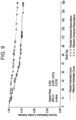
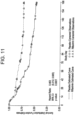
- Figure 1 is a line graph showing Lactulose daily use between subjects taking placebos and subjects taking rifaximin as described above.
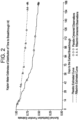
- Figure 2 is a line graph showing Kaplan Meier estimates of the distribution of time to a breakthrough HE event for the placebo group and the rifaximin group. As indicated there was an increased time to breakthrough HE events for subjects taking rifaximin in comparison to subjects taking the placebo.
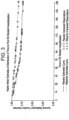
- Figure 3 is a line graph showing Kaplan Meier estimates of the distribution of time to a first HE related hospitalization. As indicated there was an increased time to hospitalization for subjects taking rifaximin in comparison to the placebo group.
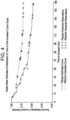
- Figure 4 is a line graph showing Kaplan Meier estimates of the distribution of time to a first increase in Conn scores. As indicated there was an increased time to the first increase in Conn scores for subjects taking rifaximin in comparison to the placebo group.
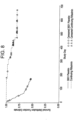
- Figure 5 is a line graph showing Kaplan Meier estimates of the distribution of time to a first increase in Asterixis grade. As indicated there was an increased time to the first increase in Asterixis grade for subjects taking rifaximin in comparison to the placebo group.
- Rifaximin is a potential CYP3A4 inducer
- in vitro studies have shown it to have a lower induction potency than rifampin.
- the estimated intestinal lumen concentration of rifaximin is approximately 5 ⁇ M.
- CYP3A4 activity was induced 1.7-fold and 1.8-fold at rifaximin 1 ⁇ M and 10 ⁇ M; at the same concentrations, rifampin induced CYP3A4 3.7-fold and 4-fold, respectively.
- rifaximin's gut-targeted distribution is believed to limit its CYP3A4 induction mechanism to the intestine, sparing hepatic induction as a result of low systemic exposure. That is, there is a separation of intestinal and hepatic induction for rifaximin This is shown in studies disclosed herein in humans receiving rifaximin, as supported by the absence of induction when either intravenous or oral midazolam was administered following rifaximin 200 mg TID for up to 7.
- any risk of hepatic CYP3A4 induction likely is further mitigated in hepatically impaired patients, for whom significant fractions of portal blood flow are shunted around the liver; 3 therefore, their increased systemic exposure should be accompanied by a proportional decrease in exposure to hepatocytes and the patients should incur no net increase in risk of hepatic CYP3A4 induction.
- cytochrome P450 3A4 cytochrome P450 3A4
- CYP3A4 cytochrome P450 3A4
- An additional clinical drug-drug interaction study showed no effect of rifaximin on the presystemic metabolism of an oral contraceptive containing ethinyl estradiol and norgestimate. Therefore, clinical interactions with drugs metabolized by human cytochrome P450 isoenzymes are not expected.
- the second study an open-label, drug-interaction study examined the effect of rifaximin, 550 mg three times daily, on orally administered (PO) midazolam 2 mg when dosed for 7 and 14 consecutive days.
- rifaximin was shown to be a weak inducer of CYP3A4; given the low systemic exposure of rifaximin, this interaction is believed to be limited to the gastrointestinal tract. This induction is both dose- and dosing-duration dependent.
- the mean C max , AUC 0-t , and AUC 0- ⁇ of midazolam were reduced by ⁇ 25%.
- the highest anticipated free plasma exposure would be 0.03 ⁇ M, which represents a reduction of ⁇ 3000-fold in comparison with the highest concentration at which rifaximin could be tested in the hERG experiments.
- This safety margin greatly exceeds the 30-fold separation between hERG IC 50 and unbound C max that is commonly associated with minimization of risk of clinical QT prolongation. 4
- An efficacy parameter for a first study was the occurrence of an episode of breakthrough overt HE during treatment. Breakthrough overt HE episodes were measured by using the Conn score (or West Haven grade), and the asterixis grade.
- a breakthrough overt HE episode, as defined for the first study, was a marked, clinically significant deterioration in neurological function that can result in a deleterious effect on self care, and lead to hospitalization.
- the efficacy endpoint, time to first breakthrough overt HE episode showed a highly significant protective effect of rifaximin (p ⁇ 0.0001 for between-group difference in relative risk). Rifaximin treatment resulted in a 57.9% reduction, when compared with placebo, in the risk of experiencing breakthrough overt HE during the 6-month treatment period.
- Rifaximin treatment results in fewer overt HE episodes that may otherwise incapacitate the patient, may alleviate the burden on family members who are required to care for the patient, and reduces the burden of hospitalization in this patient population and the healthcare system.
- the first study placebo subjects crossed over to rifaximin therapy by entering the second study, a protective effect of rifaximin was observed: the first study a 70% reduction in risk of experiencing breakthrough overt HE during rifaximin treatment in the second study when compared with their prior placebo experience in the first study. This reduction took place in spite of the aging and presumably progressing nature of the population with chronic liver disease.
- the second study also showed that the protective effect of rifaximin was durable: the estimate of time-to-first breakthrough HE demonstrated long-term maintenance of remission from breakthrough HE when rifaximin subjects in remission after participation in the first study were followed in the second study (up to 680 days of rifaximin therapy; median exposure durations were 168 days in the first study and 253 days in the second study). The incidence of breakthrough HE episode for these rifaximin subjects relative to the first study placebo was lower, an indication of fewer breakthrough HE episodes with rifaximin treatment.
- CFF critical flicker frequency
- results for other efficacy endpoints also demonstrated protective effects of rifaximin.
- the other efficacy endpoint of time to first HE-related hospitalization showed a reduction in risk for rifaximin subjects.
- the analysis of time to first HE-related hospitalization (e.g., hospitalization directly resulting from HE or hospitalization complicated by HE) demonstrated that the reduction in risk of hospitalization due to HE was 50% in the rifaximin group, when compared with placebo, during the 6-month treatment period.
- the HE-related hospitalization rate was 0.38 event/person exposure years (PEY), rifaximin versus 0.78 event/PEY, placebo after normalization to exposure.
- the risk of HE-caused hospitalization (e.g., hospitalization directly resulting from HE only) was reduced by 56% in the rifaximin group when compared with placebo.
- the HE-caused hospitalization rate was 0.30 events/PEY in the rifaximin group versus 0.72 event/PEY in the placebo group.
- HE-caused hospitalization rate was maintained at rates consistent with those in the first study: HE-caused hospitalization rate was 0.29 event/PEY and all cause hospitalization in the second study was 0.66 event/PEY.
- the consistently low HE-related/HE-caused hospitalization rate in rifaximin-treated subjects in the first study and in the second study was at least partly a result of maintaining remission from demonstrated HE in subjects with end-stage liver disease.
- Hepatic encephalopathy is associated with a low quality of life compared to age-matched patients without HE.Patients with HE experience symptoms including fatigue, daytime sleepiness, and lack of awareness (Conn score 1); and confusion and disorientation (Conn score 2) that significantly interfere with day-to-day function and decreased ability for self care. Often, this lack of self care can lead to improper nutrition and non-adherence to therapy and can further escalate into more severe symptoms such as increased somnolence, gross disorientation and stupor, which require hospitalization.
- Rifaximin treatment protects against HE related/ caused hospitalization, thereby improving the functional status for the patient and benefitting his/her caregiver; and reducing the economic cost related to liver cirrhosis and associated HE.
- Neomycin sulfate is only approved for the adjunctive therapy in hepatic coma.
- Conventional therapy aims to lower the production and absorption of ammonia.
- Nonabsorbable disaccharides eg, lactulose or lactitol
- GI-active antibiotics including neomycin, metronidazole, vancomycin, and paromomycin have been used with or without lactulose.
- antibiotics appear to act indirectly by inhibiting the splitting of urea by deaminating bacteria, thus reducing the production of ammonia and other potential toxins.
- Current guidelines recommend (not FDA approved) antibiotic therapy with neomycin or metronidazole as an alternative to treatment with nonabsorbable disaccharides.
- nonabsorbable disaccharide e.g., lactulose
- lactulose nonabsorbable disaccharide
- GI side effects such as bloating, abdominal cramps, and diarrhea.
- Diarrhea resulting in dehydration has been reported with the use of lactulose, a significant consequence for patients with HE as electrolyte abnormalities can worsen HE and lead to renal dysfunction.
- Rifaximin is an attractive therapy for the treatment of patients with HE because of its demonstrated effectiveness, favorable safety profile, and because of disadvantages of systemic aminoglycosides and nonabsorbable disaccharides.
- Rifaximin has a broad spectrum of in vitro antibacterial activity against both Gram-positive and Gram-negative bacteria and against aerobic and anaerobic isolates.
- rifaximin Since rifaximin is poorly absorbed after oral administration, the drug is selectively active in the gastrointestinal tract. Additionally, there is a low risk of drug-drug interactions with the use of rifaximin. Rifaximin has a lower rate of fecal eradication of pathogens compared with other commonly used antibacterial drugs and causes minimal alterations in gut flora suggesting that rifaximin has a different mechanism of action than other commonly used drugs in enteric bacterial infection, such as the fluoroquinolones. The risk of the development of antibiotic resistance is low during chronic treatment with rifaximin when compared to other systemic antibiotics such as neomycin, possibly because resistance is mediated by a mutation in host cell DNA and is not plasmid based.
- the first study was designed to overcome the limitations of previous studies reported in the literature (e.g., heterogeneous subject populations, small population size, short durations, and insufficient endpoints for mental status).
- treatment duration was increased to 6 months. This longer duration was planned to allow for a greater number of subjects to experience an HE episode than if the study was limited to ⁇ 6 weeks. Also, the longer treatment duration provided an opportunity to evaluate the long-term safety of rifaximin in subjects with chronic hepatic cirrhosis and associated recurrent, overt, episodic HE.
- the study investigated consequences of HE with respect to patient care and economic cost by measuring hospitalizations due to HE episodes as a key secondary efficacy endpoint.
- Conn score West Haven criteria
- the Conn score ranges from Stage 0 (lack of detectable changes in personality) to Stage 4 (coma, decerebrate posturing, dilated pupils).
- the Conn score is the recommended and widely used gold standard for grading the severity of impaired mental status in overt HE.Asterixis (flapping tremor) is a neuromotor symptom of overt HE that increases in severity with worsening neurological impairment.
- the control group for the first study received matched placebo tablets in parallel with rifaximin treatments in the active group.
- the second study was an ongoing open-label, treatment-extension study to evaluate the long-term safety of rifaximin 550 mg BID in subjects with a history of recurrent, episodic, overt HE.
- Conn scores and asterixis grades were assessed during the course of the study to measure the protective effect of rifaximin against breakthrough overt HE during treatment for up to approximately 1 year in subjects who completed up to 6 months of rifaximin treatment in the first study and then entered the second study ; in subjects who received placebo in the first study and crossed over to rifaximin treatment in the second study ; and in patients with a history of HE who entered the second study as new subjects.
- the dosage regimen used (550 mg BID) was based on past clinical experience with rifaximin in patients with HE and other subject populations. In several previous studies, rifaximin was safe and effective in subjects with HE at a dose of 1200 mg per day with or without concomitant lactulose. In a 6-month study of rifaximin versus neomycin (14 days on-treatment and 14 days off-treatment per month), 8 rifaximin 1200 mg/day and neomycin (3 g/day) had comparable efficacy in patients with HE. Aminoglycoside antibiotics are contraindicated in patients with advanced liver disease because of the risk of nephrotoxicity.
- An efficacy endpoint was the time to first breakthrough overt HE episode.
- a breakthrough overt HE episode was defined as an increase of Conn score to Grade ⁇ 2 (e.g., 0 or 1 to ⁇ 2) or an increase in Conn and asterixis score of 1 grade each for those subjects who entered the study with a Conn score of 0.
- Time to breakthrough overt HE episode was the duration from time of first dose of study drug to the first breakthrough overt HE episode. Subjects who completed the study and did not experience a breakthrough overt HE episode were censored at the time of their 6-month visit.
- Subjects who terminated early for reasons other than breakthrough overt HE were contacted at 6 months from randomization to determine if subjects had experienced a breakthrough overt HE episode or other outcome (e.g., mortality status); and, if the subject had no breakthrough overt HE event prior to contact, he/she was censored at the time of contact. Therefore, complete capture was achieved for breakthrough overt HE episodes up to 6 months postrandomization.
- Subjects in the study had ⁇ 2 episodes of overt HE equivalent to Conn score ⁇ 2 within 6 months prior to screening (i.e., subjects had documented recurrent, overt HE). At the baseline assessment, subjects were in remission with a Conn score of 0 or 1.
- a breakthrough overt HE episode, as defined above, was a marked deterioration in neurological function.
- the first study was a double-blind, randomized, placebo-controlled study evaluating the efficacy and safety of rifaximin 550 mg BID as compared to placebo.
- Subjects in remission from demonstrated recurrent, overt, episodic HE associated with chronic, hepatic cirrhosis were randomized on Day 0 (Visit 2) according to a 1:1 ratio to receive rifaximin 550 mg BID or placebo for 6 months.
- the primary efficacy endpoint was the time to breakthrough overt HE.
- Breakthrough overt HE was defined as an increase of Conn score to Grade ⁇ 2 (e.g., 0 or 1 to ⁇ 2) or an increase in Conn and asterixis score of 1 grade each for those subjects who entered the study with a Conn score of 0.
- Subjects discontinued from the study at the time of breakthrough overt HE episode. After participation in the first study, subjects had the option to enroll in the open-label, treatment-extension study (the second study).
- Subjects in the study had ⁇ 2 episodes of overt HE equivalent to Conn score ⁇ 2 within 6 months prior to screening (e.g., subjects had recurrent, overt HE). At the baseline assessment, subjects were in remission with a Conn score of 0 or 1. A breakthrough overt HE episode was a marked deterioration in neurological function. Breakthrough overt HE episodes were experienced by 31 of 140 subjects in the rifaximin group and by 73 of 159 subjects in the placebo group during the 6-month treatment period (up to Day 170). Comparison of Kaplan-Meier estimates of time to breakthrough overt HE between groups showed a protective effect of rifaximin (p ⁇ 0.0001).
- Rifaximin treatment results in fewer overt HE episodes that may otherwise incapacitate the patient, may alleviate the burden on family members who are required to care for the patient, and reduces the burden of hospitalization in this patient population and the healthcare system.
- Hepatic encephalopathy-related hospitalizations (hospitalization directly resulting from HE or hospitalization complicated by HE) were reported for 19 of 140 subjects and 36 of 159 subjects in the rifaximin and placebo groups, respectively.
- Rifaximin had a protective effect against HE-related hospitalization during the 6-month treatment period.
- Subjects in the rifaximin group had a 50% reduction in the risk of hospitalization due to HE during the 6-month treatment period when compared with placebo.
- the HE-related hospitalization rate was 0.38 events/PEY in the rifaximin group versus 0.78 event/PEY in the placebo group.
- Hepatic encephalopathy- caused hospitalizations (hospitalization directly resulting from HE only) were reported for 15 of 140 subjects and 33 of 159 subjects in the rifaximin and placebo groups, respectively.
- Subjects in the rifaximin group had a 56% reduction in the risk of hospitalization due to HE during the 6-month treatment period when compared with placebo.
- the HE-caused hospitalization rate was 0.30 events/PEY in the rifaximin group versus 0.72 event/PEY in the placebo group.
- All-cause hospitalization was also lower in the rifaximin group (46 of 140) than in the placebo group (60 of 159) (30% reduction in the rifaximin group compared with placebo).
- the all cause hospitalization rate after normalizing for subject exposure, was 0.90 events/PEY in the rifaximin group and 1.26 event/PEY in the placebo group.
- the HE-related hospitalization rate was 0.38 event/PEY in the rifaximin group and 0.78 event/PEY in the placebo group.
- Rifaximin treatment protects against HE-related hospitalization, thereby improving the quality of life for the patient and for his/her caregiver, and reducing the economic cost related to liver cirrhosis and associated HE.
- Venous ammonia levels a quantitative assessment that is associated with the CNS effects underlying overt HE, was found to be highly correlated to the occurrence of breakthrough overt HE as determined by the clinical evaluation of Conn score (or a combination of Conn score and asterixis grade).
- Median exposure to study drug was 168 days (range: 10 to 178) in the rifaximin group and 110 days (range: 6 to 176) in the placebo group.
- Duration of exposure results are consistent with the finding that lower proportions of subjects in the rifaximin group than in the placebo group experienced breakthrough overt HE resulting in study discontinuation (per protocol, subjects discontinued from the study after breakthrough overt HE).
- TEAEs e.g., in ⁇ 10% of total subjects [combined placebo plus rifaximin] experienced by subjects were the following: diarrhea (10.7% [rifaximin] versus 13.2% [placebo]), nausea (14.3% versus 13.2%), peripheral edema (15% versus 8.2%), fatigue (12.1% versus 11.3%), dizziness (12.9% versus 8.2%), ascites (11.4% versus 9.4%), and headache (10% versus 10.7%).
- the second study is an ongoing open-label, treatment-extension study evaluating the long-term safety of rifaximin 550 mg BID in subjects with a history of recurrent, overt, episodic HE. All eligible subjects had a history of overt HE episodes with a documented severity equivalent to Conn score ⁇ 2 within 12 months prior to screening ( ⁇ 1 qualifying episode was required), a Conn score of ⁇ 2 at the baseline assessment, and either participated in the first study or were new subjects. Unlike the first study, subjects were not required to withdraw from the study after experiencing a breakthrough overt HE episode.
- Time-to-first-breakthrough HE profiles were similar between the rifaximin group in the first study and the new rifaximin group in the second study.
- a durable protective effect of rifaximin was observed in subjects who received rifaximin starting in the first study and continuing in the second study (median exposures to rifaximin were 168 days in the first study and 253 days in the second study)
- Conn scores and asterixis grades changes from baseline in Conn scores and asterixis grades Conn scores were generally maintained or improved with rifaximin use up to 18 months. At the last visit, 70.7% of subjects (188 of 266 subjects) had no change and 20.3% (54 of 266) had improvements in Conn scores compared with baseline, indicating that mental status was maintained or improved in the majority of subjects (91%) over the treatment period.
- asterixis grades were generally maintained or improved with rifaximin use up to 18 months.
- 77.1% of subjects 205 of 266 subjects
- 16.2% 43 of 266
- improvements in asterixis scores compared with baseline, indicating that neuromotor symptoms associated with increasing neurological impairment were maintained in 83.3% of subjects over the treatment period.
- Median exposures in study the second study were 253 days (range: 7 to 680) in the new rifaximin group (subjects who received placebo in the first study or subjects who did not participate in the first study ), 265.5 days (range: 10 to 673) in the continuing rifaximin group (subjects who received rifaximin in the first study and the second study), and 255 days (range: 7 to 680) in the all rifaximin group (all subjects who received rifaximin in the second study). At the time of this interim analysis, most subjects had received rifaximin for 6 to ⁇ 9 months (21.4%) or 9 to ⁇ 12 months (32.3%).
- TEAEs were reported in 230 subjects (86.5%).
- the most common TEAEs e.g., in ⁇ 10% of total subjects
- peripheral edema 15.8%
- urinary tract infection and nausea (12.8% each
- abdominal pain and ascites (10.5% each).
- signs and symptoms associated with HE were not considered AEs unless they met the definition of an SAE, so the number of subject with HE counted in efficacy analysis (72 subjects; 27.1%) is higher than that counted for the safety analyses (57 subjects; 21.4%).
- TEAEs were mild or moderate in intensity, with 40.2% of subjects experiencing at least 1 TEAE that was judged by the investigator to be severe.
- the incidence of TEAEs considered related to study drug was comparable between the new rifaximin group (7.7%) and the continuing rifaximin group (7.1%).
- Treatment-emergent SAEs were experienced by 47.4% of subjects.
- Figure 1 illustrates Kaplan-Meier estimates of time to first breakthrough overt HE episode by treatment group in the ITT population.
- Table 18 presents Kaplan-Meier estimates of the proportions of subjects who experienced breakthrough overt HE over the course of the Treatment Period and results of statistical analyses.
- Subjects who completed the study and did not experience a breakthrough overt HE event were censored at the time of their 6-month visit.
- Subjects who terminated early for reasons other than breakthrough overt HE eg, liver transplant, AE, subject request
- Subjects without breakthrough overt HE were censored at the time of contact or death, whichever was earlier.
- a Number of subjects at risk during the treatment interval estimated using the life table method. Assuming that censored cases were at risk for half of the interval, they only counted for half in figuring the number at risk.
- b Number of events occurring during the treatment interval c Estimate of the probability of experiencing breakthrough overt HE during the treatment interval. Standard error (SE) estimated by using Greenwood's formula.
- SE Standard error
- d Estimate of the probability of no breakthrough overt HE until at least the beginning of the next treatment interval.
- Hazard ratio estimate (hazard of breakthrough overt HE in the rifaximin group compared with the placebo group) determined from the Cox proportional hazards model. P-value based on the Score statistic.
- Breakthrough overt HE episodes were experienced by 31 of 140 subjects in the rifaximin group and by 73 of 159 subjects in the placebo group during the 6-month period since randomization (up to Day 170).
- Comparison of Kaplan-Meier estimates of time to breakthrough overt HE between groups showed a protective effect of rifaximin (p ⁇ 0.0001).
- rifaximin treatment results in fewer overt HE episodes that may otherwise incapacitate the patient, may alleviate the burden on family members who are required to care for the patient, and reduces the burden of hospitalization in this patient population and the healthcare system.
- median exposures were 253 days (range: 7 to 680) in the new rifaximin group (subjects who received placebo in the first study or subjects who did not participate in the first study), 265.5 days (range: 10 to 673) in the continuing rifaximin group (subjects who received rifaximin in the first study and the second study), and 255 days (range: 7 to 680) in the all rifaximin group (all subjects who received rifaximin in the second study
- the survival distribution estimate on y-axis represents the proportion of subjects without breakthrough overt HE.
- the first study data on time to first breakthrough overt HE episode are shown for the rifaximin group (small dashes) and the placebo group (straight line).
- the second study data on time to first breakthrough overt HE episode in the new rifaximin group are shown in large dashes.
- the survival distribution estimate on y-axis represents the proportion of subjects without breakthrough overt HE.
- the first study data on time to first breakthrough overt HE episode are shown in the left panel for the placebo group.
- the vertical line between the left and right panels marks the end of the double-blind study and start of the open-label study.
- Figure 9 illustrates time to first HE-related hospitalization (e.g., hospitalization directly resulting from HE or hospitalization caused by HE) by treatment group in the ITT population in the first study.
- Table 19 presents estimates of the proportions of subjects who had their first HE-related hospitalization over the course of the Treatment Period and results of statistical analyses. Subjects who discontinued prior to hospitalization due to HE and prior to completion of the 6-month treatment period were censored at the time of discontinuation. Hepatic encephalopathy-related hospitalizations were reported for 19 of 140 subjects and 36 of 159 subjects in the rifaximin and placebo groups, respectively.
- the survival distribution estimate on y-axis represents the proportion of subjects without HE-related hospitalization. Dashed line represents rifaximin group and solid line represents placebo group. Open circles and open triangles represent censored subjects. Subjects who discontinued prior to hospitalization due to HE and prior to completion of the 6-month treatment period were censored at the time of discontinuation. Hepatic encephalopathy-related hospitalization was recorded on the HE-related hospitalization CRF.
- a Number of subjects at risk during the treatment interval estimated using the life table method. Assuming that censored cases were at risk for half of the interval, they only counted for half in figuring the number at risk.
- c Estimate of the probability of experiencing HE-related hospitalization during the treatment interval. Standard error (SE) estimated by using Greenwood's formula.
- SE Standard error
- d Estimate of the probability of no HE-related hospitalization until at least the beginning of the next treatment interval.
- Hazard ratio estimate (hazard of HE-related hospitalization in the rifaximin group compared with the placebo group) determined from the Cox proportional hazards model. P-value based on the Score statistic.
- Figure 5 illustrates time to first HE-caused hospitalizations by treatment group in the first study.
- Hepatic encephalopathy-caused hospitalizations were reported for 15 of 140 subjects and 33 of 159 subjects in the rifaximin and placebo groups, respectively.
- Subjects in the rifaximin group had a 56% reduction in the risk of hospitalization due to HE during the 6-month treatment period when compared with placebo.
- the HE-caused hospitalization rate was 0.30 events/PEY in the rifaximin group versus 0.72 event/PEY in the placebo group.
- the survival distribution estimate on y-axis represents the proportion of subjects without HE-caused hospitalizations. Dashed line represents rifaximin group and solid line represents placebo group. Open circles and open triangles represent censored subjects. Subjects who discontinued prior to hospitalization were censored at the time of discontinuation.
- Figure 11 illustrates time to any increase from baseline in Conn score by treatment group in the ITT population.
- Table 20 presents estimates of the proportions of subjects who had any increase in Conn score over the course of the Treatment Period and results of statistical analyses. Subjects who discontinued prior to experiencing an increase in Conn score and prior to completion of the 6-month treatment period were censored at the time of discontinuation. By evaluating the time to any increase from baseline in Conn score, it was possible to compare the earliest worsening in mental status between subjects in the rifaximin and placebo treatment groups, even if the worsening did not reach the definition of breakthrough HE (eg, increase inConn score from 0 to 1).
- breakthrough HE eg, increase inConn score from 0 to 1).
- a Number of subjects at risk during the treatment interval estimated using the life table method.
- b Number of events occurring during the treatment interval Assuming that censored cases were at risk for half of the interval, they only counted for half in figuring the number at risk.
- SE Standard error
- d Estimate of the probability of no increase in Conn score until at least the beginning of the next treatment interval.
- e Hazard ratio estimate (hazard of experiencing an increase in Conn score in the rifaximin group compared with the placebo group) determined from the Cox proportional hazards model. P-value based on the Score statistic.
- Figure 12 illustrates time to any increase from baseline in asterixis grade by treatment group in the ITT population in the first study.
- Table 21 presents estimates of the proportions of subjects who had any increase in asterixis grade over the course of the Treatment Period and results of statistical analyses. Subjects who discontinued prior to experiencing an increase in asterixis grade and prior to completion of the 6-month treatment period were censored at the time of discontinuation.
- a Number of subjects at risk during the treatment interval estimated using the life table method. Assuming that censored cases were at risk for half of the interval, they only counted for half in figuring the number at risk.
- b Number of events occurring during the treatment interval c Estimate of the probability of experiencing an increase in asterixis grade during the treatment interval. Standard error (SE) estimated by using Greenwood's formula.
- SE Standard error
- d Estimate of the probability of no increase in asterixis grade until at least the beginning of the next treatment interval.
- Hazard ratio estimate (hazard of experiencing an increase in asterixis grade in the rifaximin group compared with the placebo group) determined from the Cox proportional hazards model. P-value based on the Score statistic.
- Table 22 summarizes changes from baseline to end of treatment in venous ammonia level by treatment group in the first study.
- Changes from baseline in Conn scores and asterixis grades to last visit were similar among new rifaximin subjects in the second study (e.g., started rifaximin in 3002), continuing rifaximin subjects (e.g., received rifaximin in the first study and in the second study), and all rifaximin experience subjects (e.g., received rifaximin in the first study or in the second study).
- new rifaximin subjects in the second study e.g., started rifaximin in 3002
- continuing rifaximin subjects e.g., received rifaximin in the first study and in the second study
- all rifaximin experience subjects e.g., received rifaximin in the first study or in the second study.
- Data from the second study provide information on the long-term durability of rifaximin for the protection against breakthrough overt HE episodes.
- Time to first breakthrough HE episode is shown for the rifaximin rollover subjects (the first study plus the second study) and the first study placebo subjects in Figure 15. The incidence of breakthrough overt HE in these rollover rifaximin subjects was compared to placebo subjects in the first study .
- the survival distribution estimate on y-axis represents the proportion of subjects without breakthrough overt HE.
- the vertical line marks the end of the double-blind study and start of the open-label study.
- Open circles represent censored subjects in the first study placebo group and open triangles represent censored subjects in the continuing rifaximin group. Subjects who discontinued prior to the first breakthrough overt HE episode were censored at the time of discontinuation.
- the effect of rifaximin therapy on the incidence of overt HE episodes (e.g., burden of HE)
- the numbers of HE episodes in the first study or the second study were compared to the numbers of HE episodes in the absence of rifaximin therapy.
- the 6-month interval prior to the first study or the 12-month interval prior to the second study was compared against rifaximin therapy in either study.
- the time of participation in the first study did not reflect experience in the absence of rifaximin therapy, therefore, for subjects who rolled over to the second study without an HE episode in the first study, the 12-month interval prior to the second study was used for comparison. Most subjects in the second study (152 of 266) were also in the first study.
- Overt HE episodes in the second study were combined with the first study because, unlike the first study, subjects in the second study had the option of remaining on rifaximin after experiencing their first breakthrough HE episode.
- Hepatic encephalopathy is a serious, rare, complex, episodic, neuropsychiatric syndrome associated with advanced liver disease. Hepatic encephalopathy is a daunting burden on the patient, his/her family, and the healthcare system. Overt HE episodes are debilitating, render the patient incapable of self-care, and frequently result in hospitalization. Rifaximin has been granted orphan drug status for the HE indication because the disease is serious and chronically debilitating (further described in Section 1.1), and there is a low incidence of HE in the general population. Also, there is an unmet medical need for patients with HE because of limitations of the current standard of care.
- rifaximin depends on the inhibition of DNA-dependent RNA polymerase of the target microorganisms, leading to the suppression of initiation of chain formation in RNA synthesis.
- Rifaximin has a lower rate of fecal eradication of pathogens compared with other commonly used antibacterial drugs and causes minimal alterations in gut flora suggesting that rifaximin has a different mechanism of action than other commonly used drugs in enteric bacterial infection, such as the fluoroquinolones.
- the antibacterial properties of rifaximin appear to result from bactericidal activity at rifaximin concentrations greater than or equal to the MIC, and from alterations in bacterial morphology and physiological functioning, which have been observed at sub-MIC concentrations.
- microbiological data from a study of patients with ulcerative colitis who were receiving high doses of rifaximin showed that rifaximin-resistant bacterial colonies generated during in vivo exposure to rifaximin were unstable and susceptibility returned after a brief period of treatment interruption.
- Rifaximin treatment results in fewer overt HE episodes that may otherwise incapacitate the patient, may alleviate the burden on family members who are required to care for the patient, and reduces the burden of hospitalization in this patient population and the healthcare system.
- the hazard ratio of rifaximin to placebo was 0.302 (95% CI: 0.166 to 0.549, p ⁇ 0.0001 for between group difference in relative risk). This result represents 70% reduction in risk of experiencing breakthrough overt HE during rifaximin treatment in the second study when compared with their prior placebo experience in the first study. This reduction took place in spite of the aging and presumably progressing nature of the population with chronic liver disease.
- the protective effect was durable: the Kaplan-Meier estimate of time-to-first breakthrough HE demonstrated long-term maintenance of remission from breakthrough HE when rifaximin subjects in remission after participation in the first study were followed in the second study (up to 680 days of rifaximin therapy; median exposure durations were 168 days in the first study and 253 days in the second study).
- the incidence of breakthrough HE episode for these rifaximin subjects relative to the first study placebo was dramatically low, an indication of fewer breakthrough HE episodes with rifaximin treatment (p ⁇ 0.0001 for difference in relative risk between rifaximin and placebo).
- results for other efficacy endpoints also demonstrated statistically significant protective effects of rifaximin.
- first HE-related hospitalization e.g., hospitalization directly resulting from HE or hospitalization complicated by HE
- the all-cause hospitalization rate was 0.92 events/PEY in the rifaximin group versus 1.31 event/PEY in the placebo group.
- HE-caused hospitalization rate was maintained at rates consistent with those in the first study: HE-caused hospitalization rate was 0.29 event/PEY and all cause hospitalization in the second study was 0.66 event/PEY.
- the consistently low HE-related/HE-caused hospitalization rate in rifaximin-treated subjects in the first study and in the second study was at least partly a result of maintaining remission from demonstrated HE in subjects with end-stage liver disease.
Landscapes
- Health & Medical Sciences (AREA)
- Life Sciences & Earth Sciences (AREA)
- Animal Behavior & Ethology (AREA)
- General Health & Medical Sciences (AREA)
- Public Health (AREA)
- Veterinary Medicine (AREA)
- Chemical & Material Sciences (AREA)
- Medicinal Chemistry (AREA)
- Pharmacology & Pharmacy (AREA)
- Epidemiology (AREA)
- Engineering & Computer Science (AREA)
- Bioinformatics & Cheminformatics (AREA)
- Chemical Kinetics & Catalysis (AREA)
- General Chemical & Material Sciences (AREA)
- Nuclear Medicine, Radiotherapy & Molecular Imaging (AREA)
- Organic Chemistry (AREA)
- Gastroenterology & Hepatology (AREA)
- Proteomics, Peptides & Aminoacids (AREA)
- Immunology (AREA)
- Biomedical Technology (AREA)
- Neurology (AREA)
- Neurosurgery (AREA)
- Molecular Biology (AREA)
- Endocrinology (AREA)
- Zoology (AREA)
- Oncology (AREA)
- Communicable Diseases (AREA)
- Psychiatry (AREA)
- Hospice & Palliative Care (AREA)
- Pharmaceuticals Containing Other Organic And Inorganic Compounds (AREA)
- Nitrogen And Oxygen Or Sulfur-Condensed Heterocyclic Ring Systems (AREA)
- Emergency Medicine (AREA)
- Medicines That Contain Protein Lipid Enzymes And Other Medicines (AREA)
Priority Applications (5)
| Application Number | Priority Date | Filing Date | Title |
|---|---|---|---|
| EP25177992.2A EP4591862A3 (en) | 2008-10-02 | 2009-10-02 | Methods of treating hepatic encephalopathy |
| EP24155114.2A EP4342465A3 (en) | 2008-10-02 | 2009-10-02 | Methods of treating hepatic encephalopathy |
| HRP20240317TT HRP20240317T1 (hr) | 2008-10-02 | 2009-10-02 | Liječenje hepatičke encefalopatije uporabom rifaksimina |
| SM20240116T SMT202400116T1 (it) | 2008-10-02 | 2009-10-02 | Trattamento dell’encefalopatia epatica utilizzando rifaximina |
| SI200932192T SI3628319T1 (sl) | 2008-10-02 | 2009-10-02 | Zdravljenje jetrne encefalopatije z rifaksiminom |
Applications Claiming Priority (3)
| Application Number | Priority Date | Filing Date | Title |
|---|---|---|---|
| US10234908P | 2008-10-02 | 2008-10-02 | |
| EP09818544.0A EP2350096B1 (en) | 2008-10-02 | 2009-10-02 | Methods of treating hepatic encephalopathy |
| PCT/US2009/059321 WO2010040020A1 (en) | 2008-10-02 | 2009-10-02 | Methods of treating hepatic encephalopathy |
Related Parent Applications (2)
| Application Number | Title | Priority Date | Filing Date |
|---|---|---|---|
| EP09818544.0A Division EP2350096B1 (en) | 2008-10-02 | 2009-10-02 | Methods of treating hepatic encephalopathy |
| EP09818544.0A Division-Into EP2350096B1 (en) | 2008-10-02 | 2009-10-02 | Methods of treating hepatic encephalopathy |
Related Child Applications (2)
| Application Number | Title | Priority Date | Filing Date |
|---|---|---|---|
| EP24155114.2A Division EP4342465A3 (en) | 2008-10-02 | 2009-10-02 | Methods of treating hepatic encephalopathy |
| EP25177992.2A Division EP4591862A3 (en) | 2008-10-02 | 2009-10-02 | Methods of treating hepatic encephalopathy |
Publications (2)
| Publication Number | Publication Date |
|---|---|
| EP3628319A1 EP3628319A1 (en) | 2020-04-01 |
| EP3628319B1 true EP3628319B1 (en) | 2024-02-14 |
Family
ID=42073897
Family Applications (4)
| Application Number | Title | Priority Date | Filing Date |
|---|---|---|---|
| EP19207534.9A Active EP3628319B1 (en) | 2008-10-02 | 2009-10-02 | Treatment of hepatic encephalopathy using rifaximin |
| EP24155114.2A Pending EP4342465A3 (en) | 2008-10-02 | 2009-10-02 | Methods of treating hepatic encephalopathy |
| EP09818544.0A Revoked EP2350096B1 (en) | 2008-10-02 | 2009-10-02 | Methods of treating hepatic encephalopathy |
| EP25177992.2A Pending EP4591862A3 (en) | 2008-10-02 | 2009-10-02 | Methods of treating hepatic encephalopathy |
Family Applications After (3)
| Application Number | Title | Priority Date | Filing Date |
|---|---|---|---|
| EP24155114.2A Pending EP4342465A3 (en) | 2008-10-02 | 2009-10-02 | Methods of treating hepatic encephalopathy |
| EP09818544.0A Revoked EP2350096B1 (en) | 2008-10-02 | 2009-10-02 | Methods of treating hepatic encephalopathy |
| EP25177992.2A Pending EP4591862A3 (en) | 2008-10-02 | 2009-10-02 | Methods of treating hepatic encephalopathy |
Country Status (21)
| Country | Link |
|---|---|
| US (12) | US20100204173A1 (enExample) |
| EP (4) | EP3628319B1 (enExample) |
| JP (2) | JP6037615B2 (enExample) |
| CN (1) | CN102245615A (enExample) |
| AU (1) | AU2009298389C1 (enExample) |
| BR (1) | BRPI0920465A2 (enExample) |
| CA (1) | CA2739436C (enExample) |
| CY (1) | CY1122806T1 (enExample) |
| DK (2) | DK3628319T3 (enExample) |
| ES (2) | ES2972135T3 (enExample) |
| FI (1) | FI3628319T3 (enExample) |
| HR (2) | HRP20240317T1 (enExample) |
| HU (2) | HUE048293T2 (enExample) |
| IL (1) | IL212055A0 (enExample) |
| LT (2) | LT2350096T (enExample) |
| MX (2) | MX364102B (enExample) |
| PL (2) | PL2350096T3 (enExample) |
| PT (2) | PT2350096T (enExample) |
| SI (2) | SI2350096T1 (enExample) |
| SM (2) | SMT202400116T1 (enExample) |
| WO (1) | WO2010040020A1 (enExample) |
Families Citing this family (55)
| Publication number | Priority date | Publication date | Assignee | Title |
|---|---|---|---|---|
| AUPQ899700A0 (en) | 2000-07-25 | 2000-08-17 | Borody, Thomas Julius | Probiotic recolonisation therapy |
| DK1698630T3 (da) | 2005-03-03 | 2014-12-08 | Alfa Wassermann Spa | Nye polymorfe former af rifaximin, fremgangsmåde for deres fremstilling og anvendelse deraf i de medicinske præparater |
| US12285414B2 (en) | 2008-10-02 | 2025-04-29 | Salix Pharmaceuticals, Inc. | Methods of treating hepatic encephalopathy |
| MX364102B (es) | 2008-10-02 | 2019-04-12 | Salix Pharmaceuticals Ltd | Medicamentos para usarse en el tratamiento de la encefalopatía hepática. |
| US20110035232A1 (en) * | 2008-10-02 | 2011-02-10 | Salix Pharmaceuticals, Ltd. | Methods of treating hepatic encephalopathy |
| US7928115B2 (en) | 2008-10-02 | 2011-04-19 | Salix Pharmaceuticals, Ltd. | Methods of treating travelers diarrhea and hepatic encephalopathy |
| BRPI1010028A2 (pt) * | 2009-06-02 | 2019-02-12 | Salix Pharmaceuticals, Ltd. | métodos de tratamento de encefalopatia hepática |
| RU2571268C2 (ru) * | 2009-06-15 | 2015-12-20 | Саликс Фармасьютикалз, Лтд. | Модуляция системного воздействия рифаксимина |
| CA2778181C (en) | 2009-10-26 | 2024-05-28 | Thomas Julius Borody | Therapy for enteric infections |
| AU2011286165B2 (en) | 2010-08-04 | 2016-10-20 | Thomas Julius Borody | Compositions for fecal floral transplantation and methods for making and using them and devices for delivering them |
| WO2012076832A1 (en) * | 2010-12-09 | 2012-06-14 | Cipla Limited | Suppositories comprising rifaximin |
| BR112013022927A2 (pt) | 2011-03-09 | 2016-12-06 | Univ Minnesota | composição, métodos para substituir ou suplementar ou modificar uma microbiota do cólon de um sujeito, e para tratar um sujeito, e, uso de uma composição |
| PL2773205T3 (pl) | 2011-11-02 | 2024-09-02 | Salix Pharmaceuticals, Inc. | Ryfaksymina w leczeniu ustępującej biegunki z przewagą zespołu jelita drażliwego |
| US9719144B2 (en) | 2012-05-25 | 2017-08-01 | Arizona Board Of Regents | Microbiome markers and therapies for autism spectrum disorders |
| ITBO20120368A1 (it) * | 2012-07-06 | 2014-01-07 | Alfa Wassermann Spa | Composizioni comprendenti rifaximina e amminoacidi, cristalli di rifaximina derivanti da tali composizioni e loro uso. |
| MX2015003107A (es) * | 2012-09-13 | 2015-09-10 | Salix Pharmaceuticals Inc | Metodos para mejorar la supervivencia a largo plazo y reducir los porcentajes de readmision a hospitalizacion para personas que padecen encefalopatia hepatica. |
| US9265458B2 (en) | 2012-12-04 | 2016-02-23 | Sync-Think, Inc. | Application of smooth pursuit cognitive testing paradigms to clinical drug development |
| WO2014107657A2 (en) * | 2013-01-04 | 2014-07-10 | Kohn Kenneth I | Cholesterol-lowering compounds in combination with lipid metabolism-altering compounds of non-absorbable sugars, compounds that convert nh3 to nh4+, or hydrogen-generating compounds for the treatment of high cholesterol and inflammation |
| US9380976B2 (en) | 2013-03-11 | 2016-07-05 | Sync-Think, Inc. | Optical neuroinformatics |
| US9492535B2 (en) | 2013-03-14 | 2016-11-15 | Aimmune Therapeutics, Inc. | Peanut formulations and uses thereof |
| WO2014176632A1 (en) * | 2013-04-30 | 2014-11-06 | Borody Thomas J | Compositions and methods for treating microbiota-related psychotropic conditions and diseases |
| CN103340856A (zh) * | 2013-07-09 | 2013-10-09 | 荣港生技医药科技(北京)有限公司 | 一种利福昔明药物组合物及其制备方法 |
| US20160339040A1 (en) | 2014-01-29 | 2016-11-24 | Umecrine Cognition Ab | Steroid compound for use in the treatment of hepatic encephalopathy |
| ES2621557T3 (es) | 2014-03-31 | 2017-07-04 | Euticals S.P.A. | Mezcla polimórfica de rifaximina y su uso para la preparación de formulaciones sólidas |
| PL3143027T3 (pl) | 2014-05-12 | 2019-11-29 | Alfasigma Spa | Nowe solwatowane krystaliczne postaci rifaksyminy, ich wytwarzanie, kompozycje i zastosowania |
| CN106999477B (zh) * | 2014-06-30 | 2020-04-10 | 萨利克斯药品公司 | 用于重复治疗肠易激综合征(ibs)的方法 |
| TWI748936B (zh) | 2015-01-12 | 2021-12-11 | 瑞典商優鎂奎認知Ab公司 | 新穎化合物 |
| KR20180026376A (ko) | 2015-05-14 | 2018-03-12 | 크레스토보 홀딩스 엘엘씨 | 대변 균무리 이식용 조성물, 및 이의 제조 및 사용 방법, 및 이의 전달을 위한 장치 |
| DK3297644T3 (da) | 2015-05-22 | 2022-04-11 | Univ Arizona State | Fremgangsmåder til behandling af autismespektrumforstyrrelse og forbundne symptomer |
| CA3010865A1 (en) * | 2016-01-08 | 2017-07-13 | Colonaryconcepts Llc | Food based delivery of therapeutic agent for treatment of hepatic encephalopathy |
| US20170360848A1 (en) | 2016-06-15 | 2017-12-21 | Arizona Board Of Regents On Behalf Of Arizona State University | Methods for treating autism spectrum disorder and associated symptoms |
| US10849936B2 (en) | 2016-07-01 | 2020-12-01 | Regents Of The University Of Minnesota | Compositions and methods for C. difficile treatment |
| US20180036352A1 (en) | 2016-08-03 | 2018-02-08 | Crestovo Holdings Llc | Methods for treating ulcerative colitis |
| CN110072525B (zh) | 2016-09-30 | 2022-12-02 | 萨利克斯药品公司 | 利福昔明的固态分散形式 |
| US10092601B2 (en) | 2016-10-11 | 2018-10-09 | Crestovo Holdings Llc | Compositions and methods for treating multiple sclerosis and related disorders |
| US11026978B2 (en) | 2016-10-11 | 2021-06-08 | Finch Therapeutics Holdings Llc | Compositions and methods for treating multiple sclerosis and related disorders |
| US11213549B2 (en) | 2016-10-11 | 2022-01-04 | Finch Therapeutics Holdings Llc | Compositions and method for treating primary sclerosing cholangitis and related disorders |
| CN106822125A (zh) * | 2017-02-28 | 2017-06-13 | 丹诺医药(苏州)有限公司 | 一种利福霉素‑喹嗪酮双靶标分子的新用途 |
| CN106822119A (zh) * | 2017-02-28 | 2017-06-13 | 丹诺医药(苏州)有限公司 | 一种利福霉素‑硝基咪唑偶联分子的新用途 |
| US11040073B2 (en) | 2017-04-05 | 2021-06-22 | Finch Therapeutics Holdings Llc | Compositions and methods for treating diverticulitis and related disorders |
| CN110831606A (zh) | 2017-04-05 | 2020-02-21 | 克雷斯顿沃控股公司 | 治疗帕金森氏病(pd)和相关疾病的组合物和方法 |
| CN110996917A (zh) | 2017-05-26 | 2020-04-10 | 克雷斯顿沃控股公司 | 包含基于粪便微生物的治疗剂的冻干组合物及其制造和使用方法 |
| EP3664823B1 (en) | 2017-08-07 | 2024-06-05 | Finch Therapeutics Holdings LLC | Composition for use in preventing or treating an enterococcal blood stream infection |
| AR114140A1 (es) | 2017-11-10 | 2020-07-29 | Cosmo Technologies Ltd | Composiciones orales de rifamicina sv |
| US11166990B2 (en) | 2018-07-13 | 2021-11-09 | Finch Therapeutics Holdings Llc | Methods and compositions for treating ulcerative colitis |
| US12433945B2 (en) | 2018-08-16 | 2025-10-07 | Société des Produits Nestlé S.A. | Peanut oral immunotherapy with maintenance dose |
| WO2020069280A1 (en) | 2018-09-27 | 2020-04-02 | Crestovo Holdings Llc | Compositions and methods for treating epilepsy and related disorders |
| US12226448B2 (en) | 2018-12-20 | 2025-02-18 | Société des Produits Nestlé S.A. | Peanut oral immunotherapy dosing schedule for missed doses |
| EP3965815A4 (en) | 2019-05-10 | 2023-05-31 | Société des Produits Nestlé S.A. | METHOD OF IMPROVING THE QUALITY OF LIFE IN A PEANUT ALLERGY PATIENT |
| WO2020245214A1 (en) * | 2019-06-03 | 2020-12-10 | Bausch Health Ireland Limited | Use of methylnaltrexone and rifaximin for treatment of increased gut permeability or associated disorders |
| JP2022541795A (ja) | 2019-07-19 | 2022-09-27 | フィンチ セラピューティクス ホールディングス エルエルシー | 胃腸障害の治療のための方法および産物 |
| CN115715193A (zh) * | 2020-03-24 | 2023-02-24 | 博士医疗爱尔兰有限公司 | 用于治疗显性肝性脑病的利福昔明的固体分散体 |
| US20250345400A1 (en) * | 2022-05-18 | 2025-11-13 | Virginia Commonwealth University | Methods for treatment of cognitive impairment in cirrhosis patients |
| WO2025064599A1 (en) * | 2023-09-19 | 2025-03-27 | The United States Government As Represented By The Department Of Veterans Affairs | Rifamycin composition for treating sarcopenia |
| WO2025157240A1 (zh) * | 2024-01-26 | 2025-07-31 | 丹诺医药(苏州)股份有限公司 | 化合物用于制备治疗细菌代谢相关疾病的药物的用途 |
Citations (2)
| Publication number | Priority date | Publication date | Assignee | Title |
|---|---|---|---|---|
| WO2009108814A1 (en) | 2008-02-26 | 2009-09-03 | Salix Pharmaceuticals, Ltd. | Methods for treating bowel diseases |
| EP2350096B1 (en) | 2008-10-02 | 2019-12-11 | Salix Pharmaceuticals, Ltd. | Methods of treating hepatic encephalopathy |
Family Cites Families (49)
| Publication number | Priority date | Publication date | Assignee | Title |
|---|---|---|---|---|
| US3132910A (en) | 1962-03-26 | 1964-05-12 | Eastman Kodak Co | Cabinetry structure |
| US3132908A (en) | 1962-04-02 | 1964-05-12 | Carrier Corp | Thrust bearing construction |
| IT1154655B (it) | 1980-05-22 | 1987-01-21 | Alfa Farmaceutici Spa | Derivati imidazo-rifamicinici metodi per la loro preparazione e loro uso come sostanza ad azione antibatterica |
| US4343785A (en) | 1981-08-10 | 1982-08-10 | Basf Wyandotte Corporation | Gel dentifrice compositions |
| IT1199374B (it) | 1984-05-15 | 1988-12-30 | Alfa Farmaceutici Spa | Processo per la preparazione di pirido-imidazo-rifamicine |
| WO1994008599A1 (en) | 1992-10-14 | 1994-04-28 | The Regents Of The University Of Colorado | Ion-pairing of drugs for improved efficacy and delivery |
| IT1264494B1 (it) | 1993-03-23 | 1996-09-24 | Alfa Wassermann Spa | Uso di rifaximin e di formulazioni che la contengono nel trattamento delle dispepsie gastriche originate da helicobacter |
| US6861053B1 (en) | 1999-08-11 | 2005-03-01 | Cedars-Sinai Medical Center | Methods of diagnosing or treating irritable bowel syndrome and other disorders caused by small intestinal bacterial overgrowth |
| US6562629B1 (en) * | 1999-08-11 | 2003-05-13 | Cedars-Sinai Medical Center | Method of diagnosing irritable bowel syndrome and other disorders caused by small intestinal bacterial overgrowth by detecting the presence of anti-saccharomyces cerivisiae antibodies (asca) in human serum |
| ES2114502B1 (es) | 1996-07-29 | 1999-07-01 | Univ Santiago Compostela | Aplicacion de nanoparticulas a base de polimeros hidrofilicos como formas farmaceuticas. |
| AU4414497A (en) | 1996-09-13 | 1998-04-02 | University Technology Corporation | Biocompatible cationic detergents and uses therefor |
| IT1290679B1 (it) | 1997-02-14 | 1998-12-10 | Alfa Wassermann Spa | Uso della rifaximina e delle composizioni farmaceutiche che la contengono nel trattamento della diarrea da criptosporidiosi. |
| US20020028764A1 (en) | 2000-09-04 | 2002-03-07 | Aarhus Amt. | Treatment of acute and chronic liver disease |
| GB0129260D0 (en) | 2001-12-06 | 2002-01-23 | Eisai London Res Lab Ltd | Pharmaceutical compositions and their uses |
| US20040229948A1 (en) * | 2002-04-12 | 2004-11-18 | Summar Marshall L. | Method for preventing hepatic encephalopathic episodes |
| US20040077533A1 (en) * | 2002-05-23 | 2004-04-22 | Sayada Chalom B. | Methods and compositions for treating bacterial infections and diseases associated therewith |
| US20090149453A1 (en) * | 2002-05-23 | 2009-06-11 | Activbiotics Pharma Llc | Methods and compositions for treating bacterial infections and diseases associated therewith |
| WO2004019907A1 (en) * | 2002-08-29 | 2004-03-11 | Activbiotics, Inc. | Methods and reagents for treating infections of clostridium difficile and diseases associated therewith |
| TW200418485A (en) * | 2002-09-23 | 2004-10-01 | Activbiotics Inc | Rifalazil compositions and therapeutic regimens |
| US7906542B2 (en) | 2004-11-04 | 2011-03-15 | Alfa Wassermann, S.P.A. | Pharmaceutical compositions comprising polymorphic forms α, β, and γ of rifaximin |
| US7902206B2 (en) | 2003-11-07 | 2011-03-08 | Alfa Wassermann, S.P.A. | Polymorphic forms α, β and γ of rifaximin |
| ITMI20032144A1 (it) | 2003-11-07 | 2005-05-08 | Alfa Wassermann Spa | Forme polimorfe di rifaximina, processi per ottenerle e |
| US7256202B2 (en) | 2003-12-31 | 2007-08-14 | Halow George M | Composition and method for treatment of hepatic encephalopathy |
| JP5116479B2 (ja) | 2004-11-26 | 2013-01-09 | ユーシーエル ビジネス ピーエルシー | オルニチンならびにフェニルアセテートまたはフェニルブチレートを含む、肝性脳症を治療するための組成物 |
| US8003118B2 (en) * | 2005-03-02 | 2011-08-23 | Kodsi Robert E | Use of rifaximin for the prevention of aspiration pneumonia and/or sepsis |
| DK1698630T3 (da) | 2005-03-03 | 2014-12-08 | Alfa Wassermann Spa | Nye polymorfe former af rifaximin, fremgangsmåde for deres fremstilling og anvendelse deraf i de medicinske præparater |
| US20090233888A1 (en) | 2005-03-23 | 2009-09-17 | Usc Stevens, University Of Southern California | Treatment of disease conditions through modulation of hydrogen sulfide produced by small intestinal bacterial overgrowth |
| CN101594885B (zh) | 2006-03-09 | 2017-07-18 | 萨利克斯药品公司 | 利福昔明抗直肠功能障碍制剂 |
| EP2049087A2 (en) | 2006-07-21 | 2009-04-22 | LAB International SRL | Hydrophilic abuse deterrent delivery system |
| US20100069421A1 (en) | 2006-08-02 | 2010-03-18 | Doug Bettenhausen | Compositions and methods for the treatment of radiation proctosigmoitis |
| KR20150132214A (ko) | 2006-08-02 | 2015-11-25 | 샐릭스 파마슈티컬스 인코포레이티드 | 방사선 직장s상결장염의 치료를 위한 조성물 및 방법 |
| JP2010504314A (ja) | 2006-09-22 | 2010-02-12 | シプラ・リミテッド | リファキシミン |
| US20100136125A1 (en) | 2006-12-28 | 2010-06-03 | Jacobus Pharmaceutical Company, Inc. | Method of treating inflammatory bowel disease |
| ES2798253T3 (es) | 2007-07-06 | 2020-12-10 | Lupin Ltd | Composiciones farmacéuticas de rifaximina |
| US8383151B2 (en) * | 2007-07-06 | 2013-02-26 | Lupin Limited | Pharmaceutical compositions of rifaximin |
| US8486956B2 (en) * | 2008-02-25 | 2013-07-16 | Salix Pharmaceuticals, Ltd | Forms of rifaximin and uses thereof |
| MY158257A (en) * | 2008-02-25 | 2016-09-30 | Salix Pharmaceuticals Ltd | Forms of rifaximin and uses thereof |
| US20100317681A1 (en) | 2009-06-15 | 2010-12-16 | Salix Pharmaceuticals, Ltd. | Modulation of systemic exposure to rifaximin |
| US20110035232A1 (en) | 2008-10-02 | 2011-02-10 | Salix Pharmaceuticals, Ltd. | Methods of treating hepatic encephalopathy |
| US7928115B2 (en) * | 2008-10-02 | 2011-04-19 | Salix Pharmaceuticals, Ltd. | Methods of treating travelers diarrhea and hepatic encephalopathy |
| BRPI1010028A2 (pt) * | 2009-06-02 | 2019-02-12 | Salix Pharmaceuticals, Ltd. | métodos de tratamento de encefalopatia hepática |
| DE102009052972A1 (de) | 2009-11-12 | 2011-09-15 | Lts Lohmann Therapie-Systeme Ag | Verfahren zur Verhinderung der Kristallisation von Arzneistoffen in einem Polymerfilm |
| EP2340812A1 (en) | 2009-12-18 | 2011-07-06 | Ferring International Center S.A. | Granules for pharmaceutical preparations, methods and apparatus for their production |
| HRP20180016T1 (hr) | 2010-08-26 | 2018-02-09 | Boehringer Ingelheim International Gmbh | Postupci primjene egfr-inhibitora |
| KR20130027255A (ko) * | 2011-09-07 | 2013-03-15 | 삼성전자주식회사 | 키 조립체 및 이를 구비한 회전식 입력 장치 |
| SG11201401471PA (en) | 2011-11-30 | 2014-08-28 | Astrazeneca Ab | Combination treatment of cancer |
| US10234908B2 (en) | 2014-04-29 | 2019-03-19 | Hewlett-Packard Develoment Company, L.P. | Hinge assembly for a computing device |
| US9628828B2 (en) * | 2014-12-15 | 2017-04-18 | Cable Television Laboratories, Inc. | Software defined networking in a cable TV system |
| WO2016193860A1 (en) | 2015-06-04 | 2016-12-08 | Pfizer Inc. | Solid dosage forms of palbociclib |
-
2009
- 2009-10-02 MX MX2014013652A patent/MX364102B/es unknown
- 2009-10-02 HU HUE09818544A patent/HUE048293T2/hu unknown
- 2009-10-02 ES ES19207534T patent/ES2972135T3/es active Active
- 2009-10-02 WO PCT/US2009/059321 patent/WO2010040020A1/en not_active Ceased
- 2009-10-02 LT LTEP09818544.0T patent/LT2350096T/lt unknown
- 2009-10-02 ES ES09818544T patent/ES2770308T3/es active Active
- 2009-10-02 EP EP19207534.9A patent/EP3628319B1/en active Active
- 2009-10-02 PL PL09818544T patent/PL2350096T3/pl unknown
- 2009-10-02 SI SI200932045T patent/SI2350096T1/sl unknown
- 2009-10-02 PT PT98185440T patent/PT2350096T/pt unknown
- 2009-10-02 DK DK19207534.9T patent/DK3628319T3/da active
- 2009-10-02 LT LTEP19207534.9T patent/LT3628319T/lt unknown
- 2009-10-02 DK DK09818544.0T patent/DK2350096T3/da active
- 2009-10-02 EP EP24155114.2A patent/EP4342465A3/en active Pending
- 2009-10-02 FI FIEP19207534.9T patent/FI3628319T3/fi active
- 2009-10-02 SM SM20240116T patent/SMT202400116T1/it unknown
- 2009-10-02 SI SI200932192T patent/SI3628319T1/sl unknown
- 2009-10-02 HR HRP20240317TT patent/HRP20240317T1/hr unknown
- 2009-10-02 EP EP09818544.0A patent/EP2350096B1/en not_active Revoked
- 2009-10-02 PT PT192075349T patent/PT3628319T/pt unknown
- 2009-10-02 CN CN2009801490791A patent/CN102245615A/zh active Pending
- 2009-10-02 JP JP2011530261A patent/JP6037615B2/ja active Active
- 2009-10-02 MX MX2011003548A patent/MX2011003548A/es active IP Right Grant
- 2009-10-02 PL PL19207534.9T patent/PL3628319T3/pl unknown
- 2009-10-02 EP EP25177992.2A patent/EP4591862A3/en active Pending
- 2009-10-02 HR HRP20200284TT patent/HRP20200284T1/hr unknown
- 2009-10-02 AU AU2009298389A patent/AU2009298389C1/en active Active
- 2009-10-02 BR BRPI0920465-2A patent/BRPI0920465A2/pt not_active Application Discontinuation
- 2009-10-02 HU HUE19207534A patent/HUE065491T2/hu unknown
- 2009-10-02 CA CA2739436A patent/CA2739436C/en active Active
- 2009-10-02 SM SM20200124T patent/SMT202000124T1/it unknown
- 2009-10-02 US US12/572,344 patent/US20100204173A1/en not_active Abandoned
-
2011
- 2011-03-31 US US13/077,373 patent/US20110243879A1/en not_active Abandoned
- 2011-03-31 IL IL212055A patent/IL212055A0/en active IP Right Grant
-
2013
- 2013-02-15 US US13/768,617 patent/US8969398B2/en active Active
-
2015
- 2015-02-03 US US14/612,697 patent/US9629829B2/en active Active
- 2015-05-21 JP JP2015103724A patent/JP2015166381A/ja active Pending
-
2017
- 2017-03-16 US US15/460,704 patent/US9949958B2/en active Active
-
2018
- 2018-03-15 US US15/922,010 patent/US10335397B2/en active Active
-
2019
- 2019-05-16 US US16/414,018 patent/US10709694B2/en active Active
-
2020
- 2020-02-21 CY CY20201100167T patent/CY1122806T1/el unknown
- 2020-06-05 US US16/893,651 patent/US20200368213A1/en not_active Abandoned
-
2021
- 2021-03-26 US US17/213,678 patent/US11633384B2/en active Active
-
2023
- 2023-03-06 US US18/117,899 patent/US20240066010A1/en not_active Abandoned
- 2023-04-18 US US18/135,823 patent/US20230330071A1/en not_active Abandoned
-
2024
- 2024-05-17 US US18/667,886 patent/US20240299368A1/en active Pending
Patent Citations (2)
| Publication number | Priority date | Publication date | Assignee | Title |
|---|---|---|---|---|
| WO2009108814A1 (en) | 2008-02-26 | 2009-09-03 | Salix Pharmaceuticals, Ltd. | Methods for treating bowel diseases |
| EP2350096B1 (en) | 2008-10-02 | 2019-12-11 | Salix Pharmaceuticals, Ltd. | Methods of treating hepatic encephalopathy |
Non-Patent Citations (84)
| Title |
|---|
| "Mutschler Arzneimittelwirkungen Lehrbuch der Pharmakologie und Toxikologie", 1 January 2001, WISSENSCHAFTLICHE VERLAGSGESELLSCHAFT MBH , Stuttgart , article ERNST MUTSCHLER ET AL.,: "10.2 Klinische Prüfung", pages: 2pp, 123 - 124, XP055616830 |
| "Rivaximin Treatment is Beneficial for Mild Hepatic Encephalopathy", Nathan M. Bass et al., Presented at the "LIVER MEETING", OCTOBER 29 - NOVEMBER 2, 2004, Boston, Massachusetts * |
| A. PUXEDDU, M. QUARTINI, A. MASSIMETTI: "Rifaximin in the treatment of chronic hepatic encephalopathy", CURRENT MEDICAL RESEARCH AND OPINION, vol. 13, 1 January 1995 (1995-01-01), pages 274 - 281, XP055733786, DOI: 10.1185/03007999509111552 |
| ADACHI JAVIER A, DUPONT HERBERT L: "Rifaximin: A Novel Nonabsorbed Rifamycin for Gastrointestinal Disorders", CLINICAL INFECTIOUS DISEASES, VOLUME 42(4):541-547, 15 February 2006 (2006-02-15), pages 541 - 547, XP093133367, Retrieved from the Internet <URL:https://watermark.silverchair.com/42-4-541.pdf?token=AQECAHi208BE49Ooan9kkhW_Ercy7Dm3ZL_9Cf3qfKAc485ysgAAA14wggNaBgkqhkiG9w0BBwagggNLMIIDRwIBADCCA0AGCSqGSIb3DQEHATAeBglghkgBZQMEAS4wEQQMZFpkIC8jN1d3MmbCAgEQgIIDEc4stA_8P77SubxorTjetieJawicptyE_329NMZ84f2pOYqv5_DsEJuL0H3ApQFX_T19rk49GlIcHYHmr7Pxn7BjeAJCH70ggjVDqVqeDl0Juypirh_oc4ybRADIkITnBMGjWAJkZc1O4hxte2hSUypxajpN--oQoh8-Zi4E55Yb2NDoUaMKC_pqh7T1lum0aDl9mdzgGYmJOxrYjjj5Ea36YxBdORwkhm-bL5aBf2P10IzbXcs0m2REtLt1SskhmdvbFhHYuFX5cKBkH0swI0WTwWHkZBmDFjW4xljzFAFTmSCfG07QxrNuwQvylHwYuReobQcQNLEgEAyGu7w1E4qaOFJD1GqN2NEtDmzPV9WOn2kuIlWhwaQE8nyIZZJmO9bxv2sudPObGw5tY9z3KP5HnHMPiaFJfDrSbxOVNkgV6OQ7lIdBRUHqZaFEyWr8ffCdmkym7BSKIHUYZX1ZUzacrDQnAYWtY4IEJrHggLRzxMinwwNZve6v-huQD3h0YiqvZnXR8GFB49dBZTApwqi |
| ALS-NIELSEN BODIL ET AL: "Non-absorbable disaccharides for hepatic encephalopathy: systematic review of randomised trials", BMJ, vol. 328, no. 7447, 1 May 2004 (2004-05-01), GB, pages 1046, XP093057197, ISSN: 0959-8138, DOI: 10.1136/bmj.38048.506134.EE * |
| ALS-NIELSEN BODIL, GLUUD LISE L, GLUUD CHRISTIAN: "Non-absorbable disaccharides for hepatic encephalopathy: systematic review of randomised trials", BMJ, BMJ, vol. 328, no. 7447, 1 May 2004 (2004-05-01), pages 1046, XP093057197, ISSN: 0959-8138, DOI: 10.1136/bmj.38048.506134.EE |
| ALS-NIELSEN BODIL, GLUUD LISE LOTTE, GLUUD CHRISTIAN: "Nonabsorbable disaccharides for hepatic encephalopathy", COCHRANE DATABASE OF SYSTEMATIC REVIEWS, CHICHESTER, WEST SUSSEX, ENGLAND : WILEY, GB, no. 2, 19 April 2004 (2004-04-19), GB , pages CD003044, XP009562903, ISSN: 1469-493X, DOI: 10.1002/14651858.CD003044.pub2 |
| ANONYMOUS: " NORMIX - Rifaximin - Granules for oral suspension 2 g/100 ml - 60 ml bottle", ALFA FARMACEU CI S.P.A., 1 January 1985 (1985-01-01), XP093303575 |
| ANONYMOUS: "22 Case Studies Where Phase 2 and Phase 3 Trials had Divergent Results Table of Contents", FDA, 1 January 2017 (2017-01-01), XP093303598 |
| ANONYMOUS: "History of Changes for Study: NCT00364689 RICE Trial: Rifaximin In Chronic Hepatic Encephalopathy - A Randomized, Controlled Trial", CLINICAL TRIAL STUDY NCT00364689, 15 August 2006 (2006-08-15), XP055770763, Retrieved from the Internet <URL:https://clinicaltrials.gov/ct2/history/NCT00364689?V_1=View#StudyPageTop> [retrieved on 20210201] |
| ANONYMOUS: "ICH Topic E 8 General Considerations for Clinical Trials - Step 4, Consensus guideline", EMA; NOTE FOR GUIDANCE ON GENERAL CONSIDERATIONS FOR CLINICAL TRIALS (CPMP/ICH/291/95), 17 July 1997 (1997-07-17), XP093235687 |
| ANONYMOUS: "Xifaxan (rifaximin) FDA Approval History - Drugs.com", 27 May 2015 (2015-05-27), XP093013686, Retrieved from the Internet <URL:https://www.drugs.com/history/xifaxan.html> [retrieved on 20230113] * |
| ARROWSMITH JOHN: "Phase III and submission failures: 2007–2010", NATURE REVIEWS DRUG DISCOVERY, NATURE PUBLISHING GROUP, GB, vol. 10, no. 2, 1 February 2011 (2011-02-01), GB , pages 87 - 87, XP038240425, ISSN: 1474-1776, DOI: 10.1038/nrd3375 |
| AUSMUS ASHLEY, LUDWIG SHANNON: "Overt Hepatic Encephalopathy: Pharmacotherapy Review ", MEDICINE2.MISSOURI.EDU, 5 January 2015 (2015-01-05), XP093303594 |
| BASS N M: "Review article: the current pharmacological therapies for hepatic encephalopathy.", ALIMENTARY PHARMACOLOGY & THERAPEUTICS, BLACKWELL SCIENTIFIC PUBLICATIONS LTD., CAMBRIDGE., GB, vol. 25, no. SUPPL 1, 1 February 2007 (2007-02-01), GB , pages 23 - 31, XP002669397, ISSN: 0269-2813, DOI: 10.1111/J.1746-6342.2006.03218.X |
| BASS NATHAN M, NM, GARDNER JD, KAMM AR : "Rifaximin is beneficial for the treatment of hepatic encephalopathy. Presented at the 53rd Annual Meeting of the American Association for the Study of Liver Diseases; Boston, MA. (2004, October 29-November 2) ", 29 October 2004 (2004-10-29), XP093113755, [retrieved on 20231219] |
| BASS, NATHAN M.: "Emerging therapies for the management of hepatic encephalopathy", SEMINARS IN LIVER DISEASE, THIEME MEDICAL PUBLISHERS, US, vol. 27, no. suppl. 2, 1 August 2007 (2007-08-01), US , pages 18 - 25, XP008148563, ISSN: 0272-8087, DOI: 10.1055/s-2007-984575 |
| BAYSAROWICH JENNIFER, KOTEVA KALINKA, HUGHES DONALD W., EJIM LINDA, GRIFFITHS EMMA, ZHANG KUN, JUNOP MURRAY, WRIGHT GERARD D.: "Rifamycin antibiotic resistance by ADP-ribosylation: Structure and diversity of Arr", PROCEEDINGS OF THE NATIONAL ACADEMY OF SCIENCES (PNAS), NATIONAL ACADEMY OF SCIENCES, vol. 105, no. 12, 25 March 2008 (2008-03-25), pages 4886 - 4891, XP093235680, ISSN: 0027-8424, DOI: 10.1073/pnas.0711939105 |
| BLEI, A.T. ; CORDOBA, J. ; THE PRACTICE PARAMETERS COMMITTEE OF THE AMERICAN COLLEGE OF ; GASTROENTEROLOGY: "Hepatic encephalopathy", AMERICAN JOURNAL OF GASTROENTEROLOGY, ELSEVIER SCIENCE INC., US, vol. 96, no. 7, 1 July 2001 (2001-07-01), US , pages 1968 - 1976, XP027391873, ISSN: 0002-9270 |
| COLECCHIA ANTONIO, VESTITO AMANDA, PASQUI FRANCESCA, MAZZELLA GIUSEPPE, RODA ENRICO, PISTOIA FRANCESCA, BRANDIMARTE GIOVANNI, FEST: "Efficacy of long term cyclic administration of the poorly absorbed antibiotic Rifaximin in symptomatic, uncomplicated colonic diverticular disease", WORLD JOURNAL OF GASTROENTEROLOGY, WJG PRESS, CN, vol. 13, no. 2, 1 January 2007 (2007-01-01), CN , pages 264, XP093235690, ISSN: 1007-9327, DOI: 10.3748/wjg.v13.i2.264 |
| D. FESTI, VESTITO A., MAZZELLA G., RODA E., COLECCHIA A.: "Management of Hepatic Encephalopathy: Focus on Antibiotic Therapy", DIGESTION, vol. 73, no. suppl 1, 1 February 2006 (2006-02-01), pages 94 - 101, XP055771240 |
| D10a - Evidence of publication date of 31 May for D10 |
| D10b - Evidence of publication date of 2009 for D10 |
| D3 - Applicant’s 11 November 2022 response (EP 19207534.9) |
| D4 - Applicant’s 19 May 2023 response (EP 19207534.9) |
| D50 - EPO Examining Division Office Action on EP19207534.9, dated 19 January 2023 |
| D52 - Preliminary Opinion of the Boards of Appeal on EP 2350096, dated 25 October 2024 |
| D54a - Publication details of D54 |
| D56 - ENGLISH TRANSLATION |
| D5a - Evidence of publication date of 23 September 2009 for D5 |
| D5a - Index of Hepatology, 2009, 50, Suppl. 4 |
| D6 - Applicant’s 11 October 2023 response (EP 19207534.9) |
| D7 - Opposition Division’s Decision dated 4 November 2022 (EP 09 818 544.0) |
| D8 - Orange Book listing for rifaximin |
| D9 - Normix syrup - ‘Annex 1’ referred to in Applicant’s 19 May 2023 response |
| DE LEO C; EFTIMIADI C; SCHITO G C: "RAPID DISAPPEARANCE FROM THE INTESTINAL TRACT OF BACTERIA RESISTANT TO RIFAXIMIN", DRUGS UNDER EXPERIMENTAL AND CLINICAL RESEARCH, BIOSCIENCE EDIPRINT INC., CH, vol. 12, no. 12, 1 January 1986 (1986-01-01), CH , pages 979 - 981, XP009182467, ISSN: 0378-6501 |
| DUFFY M., OʼMAHONY L., COFFEY J. C., COLLINS J. K., SHANAHAN F., REDMOND H. P., KIRWAN W. O.: "Sulfate-Reducing Bacteria Colonize Pouches Formed for Ulcerative Colitis but Not for Familial Adenomatous Polyposis", DISEASES OF THE COLON AND RECTUM., J.B. LIPPINCOT CO., PHILADELPHIA., US, vol. 45, no. 3, 1 March 2002 (2002-03-01), US , pages 384 - 388, XP009562398, ISSN: 0012-3706, DOI: 10.1007/s10350-004-6187-z |
| EFTIMIADI C; DELEO C; SCHITO G C: "TREATMENT OF HEPATIC ENCEPHALOPATHY WITH L-105 A NEW NON-ABSORBABLE RIFAMYCIN", DRUGS UNDER EXPERIMENTAL AND CLINICAL RESEARCH, BIOSCIENCE EDIPRINT INC., CH, vol. 10, no. 10, 1 January 1984 (1984-01-01), CH , pages 691 - 696, XP009182468, ISSN: 0378-6501 |
| FALCK-YTTER YNGVE, KUNZ REGINA, GUYATT GORDON H., SCHÜNEMANN HOLGER J.: "How Strong Is the Evidence?", AMERICAN JOURNAL OF GASTROENTEROLOGY, ELSEVIER SCIENCE INC., US, vol. 103, no. 6, 1 June 2008 (2008-06-01), US , pages 1334 - 1338, XP009562394, ISSN: 0002-9270, DOI: 10.1111/j.1572-0241.2008.01853.x |
| FARRELL DAVID J.: "Rifaximin in the Treatment of Irritable Bowel Syndrome : Is There a High Risk for Development of Antimicrobial Resistance?", JOURNAL OF CLINICAL GASTROENTEROLOGY., RAVEN PRESS LTD., NEW YORK, NY., US, vol. 47, no. 3, 1 March 2013 (2013-03-01), US , pages 205 - 211, XP093013279, ISSN: 0192-0790, DOI: 10.1097/MCG.0b013e31827559a3 |
| FARRELL DAVID J.: "Rifaximin in the Treatment of Irritable Bowel Syndrome : Is There a High Risk for Development of Antimicrobial Resistance?", JOURNAL OF CLINICAL GASTROENTEROLOGY., vol. 47, no. 3, 1 March 2013 (2013-03-01), US, pages 205 - 211, XP093013279, ISSN: 0192-0790, DOI: 10.1097/MCG.0b013e31827559a3 * |
| FERENCI PETER; LOCKWOOD ALAN; MULLEN KEVIN; TARTER RALPH; WEISSENBORN KARIN; BLEI ANDRES T.: "Hepatic encephalopathy—Definition, nomenclature, diagnosis, and quantification: Final report of the Working Party at the 11th World Congresses of Gastroenterology, Vienna, 1998", HEPATOLOGY, JOHN WILEY & SONS, INC., US, vol. 35, no. 3, 30 October 2002 (2002-10-30), US , pages 716 - 721, XP029576907, ISSN: 0270-9139, DOI: 10.1053/jhep.2002.31250 |
| FRED POORDAD, NATHAN BASS, ARUN J. SANYA, MUHAMMAD Y. SHEIKH, KEVIN D. MULLEN, SAMUEL SIGAL, TODD FREDERICK, ROBERT S. BROWN, SHOB: "THE PROTECTIVE EFFECT OF RIFAXIMIN (1100 MG DAILY) FROM. HEPATIC ENCEPHALOPATHY OBSERVED IN A DOUBLE-BUND PLACEBO CONTROLLED STUDY ISSUBSTANTIATED AND DURABLE OVER THE LONG", HEPATOLOGY, vol. 50, no. Suppl 4, 1 October 2009 (2009-10-01), pages 448A - 449A, XP055770758 |
| GERARD L, GAREY K W, DUPONT H L: "Rifaximin: a nonabsorbable rifamycin antibiotic for use in nonsystemic gastrointerstinal infections", EXPERT REVIEW OF ANTI-INFECTIVE THERAPY, FUTURE DRUGS, LONDON, GB, vol. 3, no. 2, 1 April 2005 (2005-04-01), GB , pages 201 - 211, XP008119006, ISSN: 1478-7210, DOI: 10.1586/14787210.3.2.201 |
| GUY NEFF, WOODIE ZACHRY III: "Systematic Review of the Economic Burden of Overt Hepatic Encephalopathy and Pharmacoeconomic Impact of Rifaximin", PHARMACOECONOMICS, ADIS INTERNATIONAL, AUCKLAND, NZ, vol. 36, no. 7, 1 July 2018 (2018-07-01), NZ , pages 809 - 822, XP055662447, ISSN: 1170-7690, DOI: 10.1007/s40273-018-0641-6 |
| HIROKI OHGE ; JULIE K. FURNE ; JOHN SPRINGFIELD ; DAVID A. ROTHENBERGER ; ROBERT D. MADOFF ; MICHAEL D. LEVITT: "Association Between Fecal Hydrogen Sulfide Production and Pouchitis", DISEASES OF THE COLON & RECTUM, LIPPINCOTT WILLIAMS & WILKINS, US, vol. 48, no. 3, 1 March 2005 (2005-03-01), US , pages 469 - 475, XP019368787, ISSN: 1530-0358 |
| JANET YANG ; HYO-RANG LEE ; KIMBERLY LOW ; SOUMYA CHATTERJEE ; MARK PIMENTEL: "Rifaximin versus Other Antibiotics in the Primary Treatment and Retreatment of Bacterial Overgrowth in IBS", DIGESTIVE DISEASES AND SCIENCES, KLUWER ACADEMIC PUBLISHERS-PLENUM PUBLISHERS, NE, vol. 53, no. 1, 23 May 2007 (2007-05-23), Ne , pages 169 - 174, XP019550554, ISSN: 1573-2568 |
| JIANG Z D, ET AL: "Rifaximin: In vitro and in vivo Antibacterial Activity – A Review", CHEMOTHERAPY, vol. 51, 1 January 2005 (2005-01-01), pages 67 - 72, XP055816074 |
| LAWRENCE KENNETH R ET AL: "Rifaximin for the treatment of hepatic encephalopathy", PHARMACOTHERAPY, WILEY-BLACKWELL, US, vol. 28, no. 8, 1 August 2008 (2008-08-01), pages 1019 - 1032, XP008148564, ISSN: 0277-0008, [retrieved on 20120106], DOI: 10.1592/PHCO.28.8.1019 * |
| LAWRENCE, KENNETH R.; KLEE, JACQUELINE A.: "Rifaximin for the treatment of hepatic encephalopathy", PHARMACOTHERAPY, WILEY-BLACKWELL, US, vol. 28, no. 8, 1 August 2008 (2008-08-01), US , pages 1019 - 1032, XP008148564, ISSN: 0277-0008, DOI: 10.1592/phco.28.8.1019 |
| LEEVY CARROLL B ,PHILLIPS JAMES A: "Hospitalizations during the use of rifaximin versus lactulose for the treatment of hepatic encephalopathy.", DIGESTIVE DISEASES AND SCIENCES., SPRINGER NEW YORK LLC, US, vol. 52, no. 3, 1 March 2007 (2007-03-01), US , pages 737 - 741, XP002669396, ISSN: 0163-2116, DOI: 10.1007/S10620-006-9442-4 |
| LICHTENSTEIN G R: "Rifaximin: Recent advances in gastroenterology and hepatology", GASTROENTEROLOGY & HEPATOLOGY, MILLENNIUM MEDICAL PUBLISHING, US, vol. 3, no. 6, 1 June 2007 (2007-06-01), US , pages 474 - 483, XP009155230, ISSN: 1554-7914 |
| LOGUERCIO CARMELINA, ET AL: "Cyclic treatment of chronic hepatic encephalopathy with rifaximin. Results of a double-blind clinical study", MINERVA GASTROENTEROLOGICA E DIETOLOGICA, 1 March 2004 (2004-03-01), pages 53 - 62, XP055816069, [retrieved on 20210621] |
| MANTRY PARVEZ S, SWAPNIL MUNSAF: "ANALYSIS OF THE EFFECT OF RIFAXIMIN PLUS LACTU LOSE ON HOSPITALIZATIONS IN PATIENTS WITH END STAGE LIVER DISEASE", HEPATOLOGY, AASLD ABSTRACTS, vol. 48, no. 4, 1 October 2008 (2008-10-01), pages 1082A - 1082A, XP093235694 |
| MARSHA Y MORGAN ET AL: "The treatment of hepatic encephalopathy", METABOLIC BRAIN DISEASE, KLUWER ACADEMIC PUBLISHERS-PLENUM PUBLISHERS, NE, vol. 22, no. 3-4, 6 September 2007 (2007-09-06), pages 389 - 405, XP019554851, ISSN: 1573-7365, DOI: 10.1007/S11011-007-9060-7 * |
| MARSHA Y. MORGAN ; A. BLEI ; K. GRÜNGREIFF ; R. JALAN ; G. KIRCHEIS ; G. MARCHESINI ; O. RIGGIO ; KARIN WEISSENBORN: "The treatment of hepatic encephalopathy", METABOLIC BRAIN DISEASE, KLUWER ACADEMIC PUBLISHERS-PLENUM PUBLISHERS, NE, vol. 22, no. 3-4, 6 September 2007 (2007-09-06), Ne , pages 389 - 405, XP019554851, ISSN: 1573-7365, DOI: 10.1007/s11011-007-9060-7 |
| MAS ANTONI, RODÉS JUAN, SUNYER LOURDES, RODRIGO LUÍS, PLANAS RAMON, VARGAS VICTOR, CASTELLS LLUÍS, RODRÍGUEZ-MARTÍNEZ DOLORES,: "Comparison of rifaximin and lactitol in the treatment of acute hepatic encephalopathy: results of a randomized, double-blind, double-dummy, controlled clinical trial", JOURNAL OF HEPATOLOGY, ELSEVIER, AMSTERDAM, NL, vol. 38, no. 1, 1 January 2003 (2003-01-01), AMSTERDAM, NL , pages 51 - 58, XP093303582, ISSN: 0168-8278, DOI: 10.1016/S0168-8278(02)00350-1 |
| MIGLIO F; VALPIANI D; ROSSELLINI S R; FERRIERI A: "Rifaximin, a non-absorbable rifamycin, for the treatment of hepatic encephalopathy. A double-blind, randomised trial", CURRENT MEDICAL RESEARCH AND OPINION, HANTS, GB, vol. 13, no. 10, 1 January 1997 (1997-01-01), GB , pages 593 - 601, XP009175422, ISSN: 0300-7995, DOI: 10.1185/03007999709113333 |
| MULLEN KEVIN D., SANYAL ARUN J., BASS NATHAN M., POORDAD FRED F., SHEIKH MUHAMMAD Y., FREDERICK R. TODD, BORTEY ENOCH, FORBES WILL: "Rifaximin Is Safe and Well Tolerated for Long-term Maintenance of Remission From Overt Hepatic Encephalopathy", CLINICAL GASTROENTEROLOGY AND HEPATOLOGY, W.B. SAUNDERS, AMSTERDAM, NL, vol. 12, no. 8, 1 August 2014 (2014-08-01), AMSTERDAM, NL, pages 1390 - 1397.e2, XP093303578, ISSN: 1542-3565, DOI: 10.1016/j.cgh.2013.12.021 |
| MUNOZ SANTIAGO J: "Hepatic encephalopathy", MEDICAL CLINICS OF NORTH AMERICA., W.B. SAUNDERS CO., US, vol. 92, no. 4, 1 July 2008 (2008-07-01), US , pages 795 - 812, XP008116796, ISSN: 0025-7125, DOI: 10.1016/j.mcna.2008.03.009 |
| NATHAN M. BASS, KEVIN D. MULLEN, ET AL.: "Rifaximin Treatment in Hepatic Encephalopathy", THE NEW ENGLAND JOURNAL OF MEDICINE, vol. 362, no. 12, 25 March 2010 (2010-03-25), pages 1071 - 1081, XP055616660, DOI: 10.1056/NEJMoa0907893 |
| NEFF GUY: "Factors Affecting Compliance and Persistence with Treatment for Hepatic Encephalopathy", PHARMACOTHERAPY, WILEY-BLACKWELL, US, vol. 30, no. 5P2, 1 May 2010 (2010-05-01), US , XP093303584, ISSN: 0277-0008, DOI: 10.1592/phco.30.pt2.22S |
| NEFF GUY: "Pharmacoeconomics of Hepatic Encephalopathy", PHARMACOTHERAPY, WILEY-BLACKWELL, US, vol. 30, no. 5P2, 1 May 2010 (2010-05-01), US , XP093303593, ISSN: 0277-0008, DOI: 10.1592/phco.30.pt2.28S |
| NEFF, G. ; LEEVY, C.B. ; FREDERICK, T. ; MERCHANT, K. ; HUANG, S. ; SHAW, A.L. ; FORBES, W.P.: "66 Rifaximin Reduces the Risk of Hospitalizations in Patients with Previous Episodes of Hepatic Encephalopathy: Results from a Phase 3 Placebo-Controlled Trial", GASTROENTEROLOGY, ELSEVIER INC., US, vol. 136, no. 5, 1 May 2009 (2009-05-01), US , pages A - 12, XP026110603, ISSN: 0016-5085, DOI: 10.1016/S0016-5085(09)60056-1 |
| NEFF, G.W. KEMMER, N. ZACHARIAS, V.C. KAISER, T. DUNCAN, C. MCHENRY, R. JONAS, M. NOVICK, D. WILLIAMSON, C. HESS: "Analysis of Hospitalizations Comparing Rifaximin Versus Lactulose in the Management of Hepatic Encephalopathy", TRANSPLANTATION PROCEEDINGS, ELSEVIER INC., ORLANDO, FL; US, vol. 38, no. 10, 15 December 2006 (2006-12-15), ORLANDO, FL; US , pages 3552 - 3555, XP005804096, ISSN: 0041-1345, DOI: 10.1016/j.transproceed.2006.10.107 |
| PAIK ET AL.: "Comparison of rifaximin and lactulose for the treatment of hepatic encephalopathy: a prospective randomized study", YONSEI MEDICAL JOURNAL, YONSEI UNIVERSITY, KI, vol. 46, no. 3, 30 June 2005 (2005-06-30), KI , pages 399 - 407, XP008139597, ISSN: 0513-5796, DOI: 10.3349/ymj.2005.46.3.399 |
| PELOSINI I, SCARPIGNATO C: "RIFAXIMIN, A PECULIAR RIFAMYCIN DERIVATIVE: ESTABLISHED AND POTENTIAL CLINICAL USE OUTSIDE THE GASTROINTESTINAL TRACT", CHEMOTHERAPY, S. KARGER AG, CH, vol. 51, no. SUPPL. 1, 1 April 2005 (2005-04-01), CH , pages 122 - 130, XP008074543, ISSN: 0009-3157, DOI: 10.1159/000081999 |
| PHARMAGUIDE LEBANON: "NORMIX /5ml", Retrieved from the Internet <URL:http://pharmaguidelb.com/?q=medicines/normix-5-ml-0> [retrieved on 20230203] * |
| R WILLIAMS, JAMES OF, WARNES TW, MORGAN MY.: "Evaluation of the efficacy and safety of rifaximin in the treatment of hepatic encephalopathy: a double-blind, randomized, dose-finding multi-centre study.", EUR J GASTROENTEROL HEPATOL, vol. 12, no. 2, 1 February 2000 (2000-02-01), pages 203 - 208, XP055408536, DOI: 10.1097/00042737-200012020-00012 |
| R WILLIAMS: "Review article: bacterial flora and pathogenesis in hepatic encephalopathy", ALIMENTARY PHARMACOLOGY & THERAPEUTICS, BLACKWELL SCIENTIFIC PUBLICATIONS LTD., CAMBRIDGE., GB, vol. 25, 23 January 2007 (2007-01-23), GB , pages 17 - 22, XP071540655, ISSN: 0269-2813, DOI: 10.1111/j.1746-6342.2006.03217.x |
| RACHEL TAVARES DE MELO, LISA CHARNESKI AND OLGA HILAS: "Rifaximin for the Treatment of Hepatic Encephalopathy", AM J HEALTH-SYST PHARM, vol. 65, 1 May 2008 (2008-05-01), pages 818 - 822, XP055767702 |
| RIGGIO, O. ; MASINI, A. ; EFRATI, C. ; NICOLAO, F. ; ANGELONI, S. ; SALVATORI, F.M. ; BEZZI, M. ; ATTILI, A.F. ; MERLI, M.: "Pharmacological prophylaxis of hepatic encephalopathy after transjugular intrahepatic portosystemic shunt: a randomized controlled study", JOURNAL OF HEPATOLOGY, ELSEVIER, AMSTERDAM, NL, vol. 42, no. 5, 1 May 2005 (2005-05-01), AMSTERDAM, NL , pages 674 - 679, XP025293043, ISSN: 0168-8278, DOI: 10.1016/j.jhep.2004.12.028 |
| ROTHSTEIN DAVID M.: "Rifamycins, Alone and in Combination", COLD SPRING HARBOR PERSPECTIVES IN MEDICINE, COLD SPRING HARBOR, NY : COLD SPRING HARBOR LABORATORY PRESS, US, vol. 6, no. 7, 1 July 2016 (2016-07-01), US , pages a027011, XP093303590, ISSN: 2157-1422, DOI: 10.1101/cshperspect.a027011 |
| RUIZ J. ET AL: "Development of Escherichia coli rifaximin-resistant mutants: frequency of selection and stability", JOURNAL OF ANTIMICROBIAL CHEMOTHERAPY, vol. 61, no. 5, 5 March 2008 (2008-03-05), GB, pages 1016 - 1019, XP093013075, ISSN: 0305-7453, DOI: 10.1093/jac/dkn078 * |
| RUIZ J., MENSA L., PONS M. J., VILA J., GASCON J.: "Development of Escherichia coli rifaximin-resistant mutants: frequency of selection and stability", JOURNAL OF ANTIMICROBIAL CHEMOTHERAPY, OXFORD UNIVERSITY PRESS, GB, vol. 61, no. 5, 5 March 2008 (2008-03-05), GB , pages 1016 - 1019, XP093013075, ISSN: 0305-7453, DOI: 10.1093/jac/dkn078 |
| SALIX PHARMACEUTICALS, INC: "Xifaxan Prescribing Information", 1 March 2008 (2008-03-01), pages 1 - 2, XP008139843 |
| SALIX PHARMACEUTICALS: "NCT00298038 A 6-Month Efficacy, Safety and Tolerability Study of Rifaximin In Preventing Hepatic Encephalopathy - Tabular View - ClinicalTrials.gov", CLINICALTRIALS.ORG, NLM, pages 1 - 4, XP093238453, Retrieved from the Internet <URL:https://web.archive.org/web/20080525053506/http://clinicaltrials.gov/ct2/show/record/NCT00298038> |
| SAMA, C. MORSELLI-LABATE, A.M. PIANTA, P. LAMBERTINI, L. BERARDI, S. MARTINI, G.: "Clinical effects of rifaximin in patientswith hepatic encephalopathy intolerant or nonresponsive to previous lactulose treatment: An open-label, pilot study", CURRENT THERAPEUTIC RESEARCH, EXCERPTA MEDICA, TRENTON, NJ, US, vol. 65, no. 5, 1 September 2004 (2004-09-01), US , pages 413 - 422, XP004687713, ISSN: 0011-393X, DOI: 10.1016/j.curtheres.2004.10.002 |
| SANAKA, MADHUSUDHAN R.; ONG, JANUS P.; MULLEN, KEVIN D.: "Challenges of Designing Hepatic Encephalopathy Treatment Trials", HEPATOLOGY, vol. 38, no. 2, August 2003 (2003-08-01), pages 527 - 529, XP071559672, DOI: 10.1002/hep.510380231 |
| SHEN BO, REMZI FEZA H, LOPEZ A ROCIO, QUEENER ELAINE: "Rifaximin for maintenance therapy in antibiotic-dependent pouchitis", BMC GASTROENTEROLOGY, BIOMED CENTRAL LTD., LONDON, GB, vol. 8, no. 1, 23 June 2008 (2008-06-23), GB , XP093113628, ISSN: 1471-230X, DOI: 10.1186/1471-230X-8-26 |
| STEVEN L. FLAMM: "Rifaximin treatment for reduction of risk of overt hepatic encephalopathy recurrence", THERAPEUTIC ADVANCES IN GASTROENTEROLOGY, LONDON : SAGE, UK, vol. 4, no. 3, 1 May 2011 (2011-05-01), UK , pages 199 - 206, XP055662444, ISSN: 1756-283X, DOI: 10.1177/1756283X11401774 |
| WILLIAMS D. L., SPRING L., COLLINS L., MILLER L. P., HEIFETS L. B., GANGADHARAM P. R. J., GILLIS T. P.: "Contribution of rpoB Mutations to Development of Rifamycin Cross-Resistance in Mycobacterium tuberculosis", ANTIMICROBIAL AGENTS AND CHEMOTHERAPY, AMERICAN SOCIETY FOR MICROBIOLOGY, US, vol. 42, no. 7, 1 July 1998 (1998-07-01), US , pages 1853 - 1857, XP093303587, ISSN: 0066-4804, DOI: 10.1128/AAC.42.7.1853 |
| WONG, FLORENCE; GINES, PERE; NEVENS, FREDERIK; VAN VLIERBERGHE, HANS; GERBES, ALEXANDER L.; ZARSKI, JEAN PIERRE H.; KOCH, ALVARO; : "304: DOUBLE-BLIND, PLACEBO-CONTROLLED STUDY OF SATAVAPTAN IN THE MANAGEMENT OF RECURRENT ASCITES: THE SPARE-1 STUDY 304", HEPATOLOGY, JOHN WILEY & SONS, INC., US, vol. 50, no. S4, 1 October 2009 (2009-10-01) - 3 November 2009 (2009-11-03), US , pages 448A, XP009558828, ISSN: 0270-9139, DOI: 10.1002/hep.23301 |
| ZENEROLI, MARIA LUISA; AVALLONE, ROSSELLA; CORSI, LORENZO; VENTURINI, IVO; BARALDI, CLAUDIA; BARALDI, MARIO: "Management of Hepatic Encephalopathy: Role of Rifaximin", CHEMOTHERAPY, S. KARGER AG, CH, vol. 51, no. suppl. 1, 1 April 2005 (2005-04-01), CH , pages 90 - 95, XP008148562, ISSN: 0009-3157, DOI: 10.1159/000081994 |
Also Published As
Similar Documents
| Publication | Publication Date | Title |
|---|---|---|
| US11633384B2 (en) | Methods of treating hepatic encephalopathy | |
| US8946252B2 (en) | Methods of treating traveler's diarrhea and hepatic encephalopathy | |
| US9855254B2 (en) | Methods of treating hepatic encephalopathy | |
| EP3964066A1 (en) | Methods of treating hepatic encephalopathy | |
| HK40108434A (en) | Methods of treating hepatic encephalopathy | |
| US12285414B2 (en) | Methods of treating hepatic encephalopathy | |
| HK1160639A (en) | Methods of treating hepatic encephalopathy | |
| HK1160639B (en) | Methods of treating hepatic encephalopathy |
Legal Events
| Date | Code | Title | Description |
|---|---|---|---|
| REG | Reference to a national code |
Ref country code: HR Ref legal event code: TUEP Ref document number: P20240317T Country of ref document: HR |
|
| PUAI | Public reference made under article 153(3) epc to a published international application that has entered the european phase |
Free format text: ORIGINAL CODE: 0009012 |
|
| STAA | Information on the status of an ep patent application or granted ep patent |
Free format text: STATUS: THE APPLICATION HAS BEEN PUBLISHED |
|
| AC | Divisional application: reference to earlier application |
Ref document number: 2350096 Country of ref document: EP Kind code of ref document: P |
|
| AK | Designated contracting states |
Kind code of ref document: A1 Designated state(s): AT BE BG CH CY CZ DE DK EE ES FI FR GB GR HR HU IE IS IT LI LT LU LV MC MK MT NL NO PL PT RO SE SI SK SM TR |
|
| AX | Request for extension of the european patent |
Extension state: AL BA RS |
|
| STAA | Information on the status of an ep patent application or granted ep patent |
Free format text: STATUS: REQUEST FOR EXAMINATION WAS MADE |
|
| 17P | Request for examination filed |
Effective date: 20200923 |
|
| RBV | Designated contracting states (corrected) |
Designated state(s): AT BE BG CH CY CZ DE DK EE ES FI FR GB GR HR HU IE IS IT LI LT LU LV MC MK MT NL NO PL PT RO SE SI SK SM TR |
|
| STAA | Information on the status of an ep patent application or granted ep patent |
Free format text: STATUS: EXAMINATION IS IN PROGRESS |
|
| 17Q | First examination report despatched |
Effective date: 20220519 |
|
| P01 | Opt-out of the competence of the unified patent court (upc) registered |
Effective date: 20230521 |
|
| TPAC | Observations filed by third parties |
Free format text: ORIGINAL CODE: EPIDOSNTIPA |
|
| GRAJ | Information related to disapproval of communication of intention to grant by the applicant or resumption of examination proceedings by the epo deleted |
Free format text: ORIGINAL CODE: EPIDOSDIGR1 |
|
| GRAP | Despatch of communication of intention to grant a patent |
Free format text: ORIGINAL CODE: EPIDOSNIGR1 |
|
| TPAC | Observations filed by third parties |
Free format text: ORIGINAL CODE: EPIDOSNTIPA |
|
| INTG | Intention to grant announced |
Effective date: 20231201 |
|
| INTC | Intention to grant announced (deleted) | ||
| GRAP | Despatch of communication of intention to grant a patent |
Free format text: ORIGINAL CODE: EPIDOSNIGR1 |
|
| STAA | Information on the status of an ep patent application or granted ep patent |
Free format text: STATUS: GRANT OF PATENT IS INTENDED |
|
| GRAS | Grant fee paid |
Free format text: ORIGINAL CODE: EPIDOSNIGR3 |
|
| GRAA | (expected) grant |
Free format text: ORIGINAL CODE: 0009210 |
|
| STAA | Information on the status of an ep patent application or granted ep patent |
Free format text: STATUS: THE PATENT HAS BEEN GRANTED |
|
| INTG | Intention to grant announced |
Effective date: 20240105 |
|
| AC | Divisional application: reference to earlier application |
Ref document number: 2350096 Country of ref document: EP Kind code of ref document: P |
|
| AK | Designated contracting states |
Kind code of ref document: B1 Designated state(s): AT BE BG CH CY CZ DE DK EE ES FI FR GB GR HR HU IE IS IT LI LT LU LV MC MK MT NL NO PL PT RO SE SI SK SM TR |
|
| REG | Reference to a national code |
Ref country code: GB Ref legal event code: FG4D |
|
| REG | Reference to a national code |
Ref country code: CH Ref legal event code: EP |
|
| REG | Reference to a national code |
Ref country code: DK Ref legal event code: T3 Effective date: 20240227 |
|
| REG | Reference to a national code |
Ref country code: NL Ref legal event code: FP |
|
| REG | Reference to a national code |
Ref country code: DE Ref legal event code: R096 Ref document number: 602009065194 Country of ref document: DE |
|
| REG | Reference to a national code |
Ref country code: FI Ref legal event code: FGE |
|
| REG | Reference to a national code |
Ref country code: IE Ref legal event code: FG4D |
|
| REG | Reference to a national code |
Ref country code: SE Ref legal event code: TRGR |
|
| REG | Reference to a national code |
Ref country code: PT Ref legal event code: SC4A Ref document number: 3628319 Country of ref document: PT Date of ref document: 20240322 Kind code of ref document: T Free format text: AVAILABILITY OF NATIONAL TRANSLATION Effective date: 20240315 Ref country code: DE Ref legal event code: R081 Ref document number: 602009065194 Country of ref document: DE Owner name: SALIX PHARMACEUTICALS, INC., RALEIGH, US Free format text: FORMER OWNER: SALIX PHARMACEUTICALS, LTD., BRIDGEWATER, NJ, US |
|
| RAP2 | Party data changed (patent owner data changed or rights of a patent transferred) |
Owner name: SALIX PHARMACEUTICALS, INC. |
|
| REG | Reference to a national code |
Ref country code: GR Ref legal event code: EP Ref document number: 20240400660 Country of ref document: GR Effective date: 20240410 |
|
| REG | Reference to a national code |
Ref country code: SK Ref legal event code: T3 Ref document number: E 43719 Country of ref document: SK |
|
| REG | Reference to a national code |
Ref country code: EE Ref legal event code: FG4A Ref document number: E024074 Country of ref document: EE Effective date: 20240318 |
|
| REG | Reference to a national code |
Ref country code: HU Ref legal event code: AG4A Ref document number: E065491 Country of ref document: HU |
|
| REG | Reference to a national code |
Ref country code: HR Ref legal event code: T1PR Ref document number: P20240317 Country of ref document: HR |
|
| REG | Reference to a national code |
Ref country code: ES Ref legal event code: FG2A Ref document number: 2972135 Country of ref document: ES Kind code of ref document: T3 Effective date: 20240611 |
|
| REG | Reference to a national code |
Ref country code: GB Ref legal event code: 732E Free format text: REGISTERED BETWEEN 20240530 AND 20240605 |
|
| PGFP | Annual fee paid to national office [announced via postgrant information from national office to epo] |
Ref country code: MC Payment date: 20240926 Year of fee payment: 16 |
|
| REG | Reference to a national code |
Ref country code: HR Ref legal event code: ODRP Ref document number: P20240317 Country of ref document: HR Payment date: 20240902 Year of fee payment: 16 |
|
| REG | Reference to a national code |
Ref country code: DE Ref legal event code: R026 Ref document number: 602009065194 Country of ref document: DE |
|
| PLBI | Opposition filed |
Free format text: ORIGINAL CODE: 0009260 |
|
| PLBI | Opposition filed |
Free format text: ORIGINAL CODE: 0009260 |
|
| PLAB | Opposition data, opponent's data or that of the opponent's representative modified |
Free format text: ORIGINAL CODE: 0009299OPPO |
|
| PLBI | Opposition filed |
Free format text: ORIGINAL CODE: 0009260 |
|
| PLAX | Notice of opposition and request to file observation + time limit sent |
Free format text: ORIGINAL CODE: EPIDOSNOBS2 |
|
| PGFP | Annual fee paid to national office [announced via postgrant information from national office to epo] |
Ref country code: TR Payment date: 20240920 Year of fee payment: 16 |
|
| 26 | Opposition filed |
Opponent name: HGF LIMITED Effective date: 20241104 |
|
| 26 | Opposition filed |
Opponent name: ACCORD HEALTHCARE LTD Effective date: 20241114 Opponent name: CMS CAMERON MCKENNA NABARRO OLSWANG LLP Effective date: 20241114 Opponent name: STADA-ARZNEIMITTEL AKTIENGESELLSCHAFT Effective date: 20241113 Opponent name: TEVA PHARMACEUTICAL INDUSTRIES LTD. Effective date: 20241112 |
|
| 26 | Opposition filed |
Opponent name: HOLLATZ, CHRISTIAN Effective date: 20241114 |
|
| R26 | Opposition filed (corrected) |
Opponent name: ACCORD HEALTHCARE LTD Effective date: 20241114 Opponent name: CMS CAMERON MCKENNA NABARRO OLSWANG LLP Effective date: 20241114 |
|
| PGFP | Annual fee paid to national office [announced via postgrant information from national office to epo] |
Ref country code: DE Payment date: 20240919 Year of fee payment: 16 |
|
| PGFP | Annual fee paid to national office [announced via postgrant information from national office to epo] |
Ref country code: NO Payment date: 20241009 Year of fee payment: 16 |
|
| PGFP | Annual fee paid to national office [announced via postgrant information from national office to epo] |
Ref country code: DK Payment date: 20241011 Year of fee payment: 16 |
|
| PGFP | Annual fee paid to national office [announced via postgrant information from national office to epo] |
Ref country code: FI Payment date: 20241015 Year of fee payment: 16 |
|
| PGFP | Annual fee paid to national office [announced via postgrant information from national office to epo] |
Ref country code: AT Payment date: 20240925 Year of fee payment: 16 |
|
| PGFP | Annual fee paid to national office [announced via postgrant information from national office to epo] |
Ref country code: ES Payment date: 20241104 Year of fee payment: 16 |
|
| PGFP | Annual fee paid to national office [announced via postgrant information from national office to epo] |
Ref country code: MT Payment date: 20241018 Year of fee payment: 16 Ref country code: CH Payment date: 20241101 Year of fee payment: 16 |
|
| PLAF | Information modified related to communication of a notice of opposition and request to file observations + time limit |
Free format text: ORIGINAL CODE: EPIDOSCOBS2 |
|
| PGFP | Annual fee paid to national office [announced via postgrant information from national office to epo] |
Ref country code: CY Payment date: 20240906 Year of fee payment: 16 |
|
| PLAF | Information modified related to communication of a notice of opposition and request to file observations + time limit |
Free format text: ORIGINAL CODE: EPIDOSCOBS2 |
|
| PLBB | Reply of patent proprietor to notice(s) of opposition received |
Free format text: ORIGINAL CODE: EPIDOSNOBS3 |
|
| PGFP | Annual fee paid to national office [announced via postgrant information from national office to epo] |
Ref country code: NL Payment date: 20250814 Year of fee payment: 17 |
|
| PGFP | Annual fee paid to national office [announced via postgrant information from national office to epo] |
Ref country code: SM Payment date: 20250924 Year of fee payment: 17 |
|
| PGFP | Annual fee paid to national office [announced via postgrant information from national office to epo] |
Ref country code: PT Payment date: 20250926 Year of fee payment: 17 |
|
| PGFP | Annual fee paid to national office [announced via postgrant information from national office to epo] |
Ref country code: LT Payment date: 20250828 Year of fee payment: 17 |
|
| REG | Reference to a national code |
Ref country code: HR Ref legal event code: ODRP Ref document number: P20240317 Country of ref document: HR Payment date: 20250901 Year of fee payment: 17 |
|
| PGFP | Annual fee paid to national office [announced via postgrant information from national office to epo] |
Ref country code: GR Payment date: 20250911 Year of fee payment: 17 |
|
| PGFP | Annual fee paid to national office [announced via postgrant information from national office to epo] |
Ref country code: LU Payment date: 20250929 Year of fee payment: 17 Ref country code: IT Payment date: 20250923 Year of fee payment: 17 Ref country code: PL Payment date: 20250805 Year of fee payment: 17 |
|
| PGFP | Annual fee paid to national office [announced via postgrant information from national office to epo] |
Ref country code: BG Payment date: 20250815 Year of fee payment: 17 Ref country code: BE Payment date: 20250818 Year of fee payment: 17 Ref country code: GB Payment date: 20250923 Year of fee payment: 17 |
|
| PGFP | Annual fee paid to national office [announced via postgrant information from national office to epo] |
Ref country code: HR Payment date: 20250901 Year of fee payment: 17 |
|
| PGFP | Annual fee paid to national office [announced via postgrant information from national office to epo] |
Ref country code: FR Payment date: 20250924 Year of fee payment: 17 |
|
| PGFP | Annual fee paid to national office [announced via postgrant information from national office to epo] |
Ref country code: SE Payment date: 20250812 Year of fee payment: 17 |
|
| PGFP | Annual fee paid to national office [announced via postgrant information from national office to epo] |
Ref country code: IE Payment date: 20250812 Year of fee payment: 17 Ref country code: EE Payment date: 20250902 Year of fee payment: 17 Ref country code: CZ Payment date: 20250929 Year of fee payment: 17 |
|
| PGFP | Annual fee paid to national office [announced via postgrant information from national office to epo] |
Ref country code: RO Payment date: 20250828 Year of fee payment: 17 |
|
| PGFP | Annual fee paid to national office [announced via postgrant information from national office to epo] |
Ref country code: SK Payment date: 20250827 Year of fee payment: 17 |
|
| PGFP | Annual fee paid to national office [announced via postgrant information from national office to epo] |
Ref country code: IS Payment date: 20250917 Year of fee payment: 17 |
|
| PGFP | Annual fee paid to national office [announced via postgrant information from national office to epo] |
Ref country code: LV Payment date: 20250819 Year of fee payment: 17 |
|
| PGFP | Annual fee paid to national office [announced via postgrant information from national office to epo] |
Ref country code: SI Payment date: 20250827 Year of fee payment: 17 |
|
| REG | Reference to a national code |
Ref country code: CH Ref legal event code: U11 Free format text: ST27 STATUS EVENT CODE: U-0-0-U10-U11 (AS PROVIDED BY THE NATIONAL OFFICE) Effective date: 20251101 |
|
| PGFP | Annual fee paid to national office [announced via postgrant information from national office to epo] |
Ref country code: MK Payment date: 20250821 Year of fee payment: 17 |
|
| PGFP | Annual fee paid to national office [announced via postgrant information from national office to epo] |
Ref country code: HU Payment date: 20250828 Year of fee payment: 17 |