EP3615520B1 - Methods - Google Patents
Methods Download PDFInfo
- Publication number
- EP3615520B1 EP3615520B1 EP18724304.3A EP18724304A EP3615520B1 EP 3615520 B1 EP3615520 B1 EP 3615520B1 EP 18724304 A EP18724304 A EP 18724304A EP 3615520 B1 EP3615520 B1 EP 3615520B1
- Authority
- EP
- European Patent Office
- Prior art keywords
- bromo
- tetrafluoro
- epoxypropane
- acetoxy
- tetrafluoropropane
- Prior art date
- Legal status (The legal status is an assumption and is not a legal conclusion. Google has not performed a legal analysis and makes no representation as to the accuracy of the status listed.)
- Active
Links
Images



Classifications
-
- C—CHEMISTRY; METALLURGY
- C07—ORGANIC CHEMISTRY
- C07D—HETEROCYCLIC COMPOUNDS
- C07D301/00—Preparation of oxiranes
- C07D301/02—Synthesis of the oxirane ring
- C07D301/24—Synthesis of the oxirane ring by splitting off HAL—Y from compounds containing the radical HAL—C—C—OY
- C07D301/26—Y being hydrogen
-
- C—CHEMISTRY; METALLURGY
- C07—ORGANIC CHEMISTRY
- C07D—HETEROCYCLIC COMPOUNDS
- C07D303/00—Compounds containing three-membered rings having one oxygen atom as the only ring hetero atom
- C07D303/02—Compounds containing oxirane rings
- C07D303/08—Compounds containing oxirane rings with hydrocarbon radicals, substituted by halogen atoms, nitro radicals or nitroso radicals
-
- C—CHEMISTRY; METALLURGY
- C07—ORGANIC CHEMISTRY
- C07D—HETEROCYCLIC COMPOUNDS
- C07D303/00—Compounds containing three-membered rings having one oxygen atom as the only ring hetero atom
- C07D303/02—Compounds containing oxirane rings
- C07D303/48—Compounds containing oxirane rings with hetero atoms or with carbon atoms having three bonds to hetero atoms with at the most one bond to halogen, directly attached to ring carbon atoms, e.g. ester or nitrile radicals
-
- C—CHEMISTRY; METALLURGY
- C08—ORGANIC MACROMOLECULAR COMPOUNDS; THEIR PREPARATION OR CHEMICAL WORKING-UP; COMPOSITIONS BASED THEREON
- C08G—MACROMOLECULAR COMPOUNDS OBTAINED OTHERWISE THAN BY REACTIONS ONLY INVOLVING UNSATURATED CARBON-TO-CARBON BONDS
- C08G65/00—Macromolecular compounds obtained by reactions forming an ether link in the main chain of the macromolecule
- C08G65/002—Macromolecular compounds obtained by reactions forming an ether link in the main chain of the macromolecule from unsaturated compounds
- C08G65/005—Macromolecular compounds obtained by reactions forming an ether link in the main chain of the macromolecule from unsaturated compounds containing halogens
- C08G65/007—Macromolecular compounds obtained by reactions forming an ether link in the main chain of the macromolecule from unsaturated compounds containing halogens containing fluorine
-
- C—CHEMISTRY; METALLURGY
- C08—ORGANIC MACROMOLECULAR COMPOUNDS; THEIR PREPARATION OR CHEMICAL WORKING-UP; COMPOSITIONS BASED THEREON
- C08G—MACROMOLECULAR COMPOUNDS OBTAINED OTHERWISE THAN BY REACTIONS ONLY INVOLVING UNSATURATED CARBON-TO-CARBON BONDS
- C08G65/00—Macromolecular compounds obtained by reactions forming an ether link in the main chain of the macromolecule
- C08G65/02—Macromolecular compounds obtained by reactions forming an ether link in the main chain of the macromolecule from cyclic ethers by opening of the heterocyclic ring
- C08G65/04—Macromolecular compounds obtained by reactions forming an ether link in the main chain of the macromolecule from cyclic ethers by opening of the heterocyclic ring from cyclic ethers only
- C08G65/22—Cyclic ethers having at least one atom other than carbon and hydrogen outside the ring
-
- C—CHEMISTRY; METALLURGY
- C08—ORGANIC MACROMOLECULAR COMPOUNDS; THEIR PREPARATION OR CHEMICAL WORKING-UP; COMPOSITIONS BASED THEREON
- C08G—MACROMOLECULAR COMPOUNDS OBTAINED OTHERWISE THAN BY REACTIONS ONLY INVOLVING UNSATURATED CARBON-TO-CARBON BONDS
- C08G65/00—Macromolecular compounds obtained by reactions forming an ether link in the main chain of the macromolecule
- C08G65/02—Macromolecular compounds obtained by reactions forming an ether link in the main chain of the macromolecule from cyclic ethers by opening of the heterocyclic ring
- C08G65/04—Macromolecular compounds obtained by reactions forming an ether link in the main chain of the macromolecule from cyclic ethers by opening of the heterocyclic ring from cyclic ethers only
- C08G65/22—Cyclic ethers having at least one atom other than carbon and hydrogen outside the ring
- C08G65/223—Cyclic ethers having at least one atom other than carbon and hydrogen outside the ring containing halogens
- C08G65/226—Cyclic ethers having at least one atom other than carbon and hydrogen outside the ring containing halogens containing fluorine
-
- C—CHEMISTRY; METALLURGY
- C10—PETROLEUM, GAS OR COKE INDUSTRIES; TECHNICAL GASES CONTAINING CARBON MONOXIDE; FUELS; LUBRICANTS; PEAT
- C10M—LUBRICATING COMPOSITIONS; USE OF CHEMICAL SUBSTANCES EITHER ALONE OR AS LUBRICATING INGREDIENTS IN A LUBRICATING COMPOSITION
- C10M107/00—Lubricating compositions characterised by the base-material being a macromolecular compound
- C10M107/38—Lubricating compositions characterised by the base-material being a macromolecular compound containing halogen
-
- C—CHEMISTRY; METALLURGY
- C10—PETROLEUM, GAS OR COKE INDUSTRIES; TECHNICAL GASES CONTAINING CARBON MONOXIDE; FUELS; LUBRICANTS; PEAT
- C10M—LUBRICATING COMPOSITIONS; USE OF CHEMICAL SUBSTANCES EITHER ALONE OR AS LUBRICATING INGREDIENTS IN A LUBRICATING COMPOSITION
- C10M147/00—Lubricating compositions characterised by the additive being a macromolecular compound containing halogen
- C10M147/04—Monomer containing carbon, hydrogen, halogen and oxygen
-
- C—CHEMISTRY; METALLURGY
- C10—PETROLEUM, GAS OR COKE INDUSTRIES; TECHNICAL GASES CONTAINING CARBON MONOXIDE; FUELS; LUBRICANTS; PEAT
- C10M—LUBRICATING COMPOSITIONS; USE OF CHEMICAL SUBSTANCES EITHER ALONE OR AS LUBRICATING INGREDIENTS IN A LUBRICATING COMPOSITION
- C10M2213/00—Organic macromolecular compounds containing halogen as ingredients in lubricant compositions
- C10M2213/04—Organic macromolecular compounds containing halogen as ingredients in lubricant compositions obtained from monomers containing carbon, hydrogen, halogen and oxygen
- C10M2213/043—Organic macromolecular compounds containing halogen as ingredients in lubricant compositions obtained from monomers containing carbon, hydrogen, halogen and oxygen used as base material
-
- C—CHEMISTRY; METALLURGY
- C10—PETROLEUM, GAS OR COKE INDUSTRIES; TECHNICAL GASES CONTAINING CARBON MONOXIDE; FUELS; LUBRICANTS; PEAT
- C10N—INDEXING SCHEME ASSOCIATED WITH SUBCLASS C10M RELATING TO LUBRICATING COMPOSITIONS
- C10N2040/00—Specified use or application for which the lubricating composition is intended
- C10N2040/30—Refrigerators lubricants or compressors lubricants
Definitions
- the present invention relates to methods of preparing tetrafluoro-1,2-epoxypropanes and compounds which are 2,3,3,3-tetrafluoro-1,2-epoxypropane and fluorinated polyether polymers derived from tetrafluoro-1,2-epoxypropanes such as 2,3,3,3-tetrafluoro-1,2-epoxypropane and other related tetrafluoropropene epoxides, such as 1,3,3,3-tetrafluoro-1,2-epoxypropane.
- the present invention also relates to 3-acetoxy-2-bromo-1,1,1,2-tetrafluoropropane and 2-bromo-1,1,1,2-tetrafluoropropan-3-ol, methods of preparing 3-acetoxy-2-bromo-tetrafluoropropanes from tetrafluoropropenes, such as 3-acetoxy-2-bromo-1,1,1,2-tetrafluoropropane from 2,3,3,3-tetrafluoropropene, methods of preparing 2-bromo-tetrafluoropropan-3-ols from 3-acetoxy-2-bromo-tetrafluoropropanes, such as 2-bromo-1,1,1,2-tetrafluoropropan-3-ol from 3-acetoxy-2-bromo-1,1,1,2-tetrafluoropropane, methods of preparing tetrafluoro-1,2-epoxypropanes from 2-bromo-tetrafluoroprop
- Polyethers are an important class of materials with significant commercial value. They are commonly used to manufacture products such as foams, sealants, surfactants, elastomers and biomedical components.
- the polymerisation of fluorinated epoxides is known in the art.
- the ring opening polymerisation of fluorinated epoxides can produce oily or grease-like oligomers, which can be utilized for vacuum pump oil and lubricants of high performance.
- HFO-1234yf is subjected to a typical biotransformation reaction for haloolefins, likely by a cytochrome P450 2E1-catalyzed formation of 2,3,3,3-tetrafluoroepoxypropane at low rates, followed by glutathione conjugation or hydrolytic ring opening.
- tetrafluoropropene epoxides such as 2,3,3,3-tetrafluoro-1,2-epoxypropane and 1,3,3,3-tetrafluoro-1,2-epoxypropane, and methods of polymerising these epoxides are desirable.
- the present invention provides a partially fluorinated polyether of formula [OCRR 1 CR 2 R 3 ] n wherein n is 5 to 100 such as 20 to 60, R is H, R 1 is CF 3 , R 2 is F and R 3 is H, or R is F, R 1 is CF 3 , R 2 is H and R 3 is H and a method for the preparation of such polyethers, such as poly(2,3,3,3-tetrafluoro-1,2-epoxypropane) and other poly(tetrafluoro-1,2-epoxypropanes) such as poly(1,3,3,3-tetrafluoro-1,2-epoxypropane).
- Tetrafluoro-1,2-epoxypropanes may be prepared by dehydrobromination of 2-bromo-tetrafluoropropan-3-ol, which in turn may be prepared from 3-acetoxy-2-bromo-tetrafluoropropane.
- 2,3,3,3-tetrafluoro-1,2-epoxypropane may be prepared by dehydrobromination of 2-bromo-1,1,1,2-tetrafluoropropan-3-ol, which in turn may be prepared from 3-acetoxy-2-bromo-1,1,1,2-tetrafluoropropane.
- Described herein is a compound 3-acetoxy-2-bromo-1,1,1,2-tetrafluoropropane.
- the present invention also provides a method for the preparation of 3-acetoxy-2-bromo-1,1,1,2-tetrafluoropropane, and other 3-acetoxy-2-bromo-tetrafluoropropanes such as 3-acetoxy-2-bromo-1,1,1,3-tetrafluoropropane.
- 'acid that has a pKa of less than about 3' we include acids such as sulphuric acid, hydroiodic acid, hydrobromic acid, perchloric acid, hydrochloric acid, p-toluenesulfonic acid, methanesulfonic acid or mixtures thereof.
- acylating agent we mean any compound capable of adding an acyl group to a compound, such as an acyl halide or an acyl anhydride.
- acylating agents that may be used in the method of the present invention include acetic acid, acetyl chloride or acetic anhydride.
- brominating agent' we include the meaning of any compound that can act as a source to add bromine across a double bond, such as N-bromosuccinimide or bromine.
- 3-acetoxy-2-bromo-1,1,1,2-tetrafluoropropane may be prepared by reacting 2,3,3,3-tetrafluoropropene with N-bromosuccinimide in the presence of acetic acid and sulphuric acid in a bromo-oxidation reaction.
- 2,3,3,3-tetrafluoropropene is also known as 1234yf.
- 2,3,3,3-tetrafluoropropene will be referred to as 1234yf.
- 1,3,3,3-tetrafluoropropene is also known as 1234ze.
- 1,3,3,3-tetrafluoropropene will be referred to as 1234ze.
- the description of 1234ze also includes the two (E) and (Z) geometric isomers of 1234ze.
- “1234ze” means any composition containing from 100% E isomer (0% Z isomer) to 100% Z isomer (0% E isomer).
- Examples of 1234ze materials that may be used in the include those in which the bulk of the material is the E isomer, for example more that 50% E isomer, more preferably >90% E isomer, still more preferably >99% E isomer.
- the bromo-oxidation of tetrafluoropropenes such as 1234yf or 1234ze, may be carried out batch-wise or continuously.
- Any suitable apparatus may be used, such as a static mixer, a tubular reactor, a stirred tank reactor or a stirred vapour-liquid disengagement vessel.
- the 3-acetoxy-2-bromo-tetrafluoropropane product from the bromo-oxidation reaction may be subjected to one or more purification steps.
- the purification may be achieved, for example, by separation of the desired product or reagents by one or more distillation, condensation or phase separation steps and/or by scrubbing with water or aqueous base and drying with e.g. molecular sieves, zeolites or other desiccants. Any unreacted tetrafluoropropene, such as 1234yf or 1234ze, may be recycled back into the reaction.
- the bromo-oxidation reaction typically converts at least about 20% of the starting tetrafluoropropene into 3-acetoxy-2-bromo-tetrafluoropropane, preferably at least about 40%, such as at least about 60%, at least about 70% or at least about 80%, for example, at least about 90%.
- the bromo-oxidation reaction is typically conducted in the liquid phase at atmospheric pressure.
- a temperature of from about 60 to about 100°C may be used, e.g. from about 70 to about 90°C, such as about 80°C.
- Lower and higher temperatures can be used.
- lower or higher temperatures are used if the reaction pressure is higher or lower than atmospheric pressure, respectively.
- any suitable solvent may be used or the reaction may be conducted in the absence of any solvent.
- no solvent is required, by this we mean that the reagents may act as a solvent, but no additional solvent is used.
- suitable solvent we mean a solvent in which the reactants dissolve. The solvent should be stable to the bromo-oxidation reaction and should not react with either the reactants or products within the taught ranges of temperature, pressure etc.
- tetrafluoropropenes such as 1234yf and 1234ze, are gases. They can be fed to the solution comprising an acylating agent, such as acetic acid; sulphuric acid and a brominating agent, such as N-bromosuccinimide as either a liquid or vapour.
- an acylating agent such as acetic acid
- sulphuric acid and a brominating agent, such as N-bromosuccinimide
- Described herein is a compound 2-bromo-1,1,1,2-tetrafluoropropan-3-ol.
- the present invention also provides a method for the preparation of 2-bromo-1,1,1,2-tetrafluoropropan-3-ol from 3-acetoxy-2-bromo-1,1,1,2-tetrafluoropropane, and other 2-bromo-tetrafluoropropan-3-ols from 3-acetoxy-2-bromo-tetrafluoropropanes, such as 2-bromo-1,1,1,3-tetrafluoropropan-3-ol from 3-acetoxy-2-bromo-1,1,1,3-tetrafluoropropane.
- 2-bromo-tetrafluoropropan-3-ols may be prepared by hydrolysing 3-acetoxy-2-bromo-tetrafluoropropanes with an acidic species in an aqueous solution.
- an acidic species' we include the meaning of a compound or molecule with a pKa of less than 7, such as a pKa of less than about 5 or less than about 3.
- 2-bromo-1,1,1,2-tetrafluoropropan-3-ol may be prepared by hydrolysing the 3-acetoxy-2-bromo-1,1,1,2-tetrafluoropropane with an acidic species e.g. sulphuric acid in an aqueous solution.
- an acidic species e.g. sulphuric acid
- Aqueous solutions of the acid are typically prepared from concentrated solutions of acid diluted with water, e.g. deionised water. Such preparation would be well known to the person skilled in the art.
- the hydrolysis of the 3-acetoxy-2-bromo-tetrafluoropropane may be carried out batch-wise or continuously.
- Any suitable apparatus may be used, such as a static mixer, a tubular reactor, a stirred tank reactor or a stirred vapour-liquid disengagement vessel.
- the 2-bromo-tetrafluoropropan-3-ol product from the hydrolysis reaction may be subjected to one or more purification steps.
- the purification may be achieved, for example, by separation of the desired product(s) or reagents by one or more distillation, condensation or phase separation steps and/or by scrubbing with water or aqueous base and drying with e.g. molecular sieves, zeolites or other desiccants. Any 3-acetoxy-2-bromo-tetrafluoropropane that remains unreacted may be recycled back into the reaction.
- the hydrolysis reaction typically converts at least about 40% of the starting 3-acetoxy-2-bromo-tetrafluoropropane into the 2-bromo-tetrafluoropropan-3-ol, preferably at least about 60%, for example, about 80%.
- the hydrolysis reaction is typically conducted in the liquid phase at atmospheric pressure. Any temperature and pressure combination that enables the reaction to reflux may be used. For example, a temperature of from about 60°C to about 400°C, at atmospheric pressure, may be used, e.g. from about 100°C to about 350°C, such as about 330°C. Lower and higher temperatures may be used. Typically, lower or higher temperatures are used if the reaction pressure is higher or lower than atmospheric pressure, respectively.
- any suitable solvent may be used or the reaction can be conducted in the absence of any solvent.
- no solvent is required, by this we mean that the reagents may act as a solvent, but no additional solvent is used.
- suitable solvent we mean a solvent in which the reactants dissolve. The solvent should be stable to the hydrolysis reaction and should not react with either the reactants or products within the taught ranges of temperature, pressure etc.
- bromo-oxidation and hydrolysis steps may be carried out simultaneously to form the required 2-bromo-tetrafluoropropan-3-ol product.
- the method of preparing 2-bromo-tetrafluoropropan-3-ols by the bromo-oxidation of 3-acetoxy-2-bromo-tetrafluoropropanes uses 3-acetoxy-2-bromo-tetrafluoropropanes prepared as previously described.
- the present invention provides a method for preparing a tetrafluoro-1,2-epoxypropane comprising reacting a 2-bromo-tetrafluoropropan-3-ol with an alkaline or alkaline earth metal hydroxide solution.
- the invention provides a method for the preparation of 2,3,3,3-tetrafluoro-1,2-epoxypropane from 2-bromo-1,1,1,2-tetrafluoropropan-3-ol and other tetrafluoro-1,2-epoxypropanes from 2-bromo-tetrafluoropropan-3-ols, such as 1,3,3,3-tetrafluoro-1,2-epoxypropane from 2-bromo-1,1,1,3-tetrafluoropropan-3-ol.
- Tetrafluoro-1,2-epoxypropanes may be prepared by dehydrobromination of 2-bromo-tetrafluoropropan-3-ols.
- 2,3,3,3-tetrafluoro-1,2-epoxypropane may be prepared by dehydrobromination of the 2-bromo-1,1,1,2-tetrafluoropropan-3-ol. Described herein is a compound which is 2,3,3,3-tetrafluoro-1,2-epoxypropane.
- the dehydrobromination comprises reacting the 2-bromo-1,1,1,2-tetrafluoropropan-3-ol or 2-bromo-1,1,1,3-tetrafluoropropan-3-ol with an alkaline or alkaline earth metal hydroxide e.g. sodium or potassium hydroxide in an aqueous solution, e.g. with deionised water.
- an alkaline or alkaline earth metal hydroxide e.g. sodium or potassium hydroxide
- an aqueous solution e.g. with deionised water.
- the dehydrobromination of 2-bromo-tetrafluoropropan-3-ols may be carried out batch-wise or continuously.
- Any suitable apparatus may be used, such as a static mixer, a tubular reactor, a stirred tank reactor or a stirred vapour-liquid disengagement vessel.
- the tetrafluoro-1,2-epoxypropane is removed from the reactor by distillation as it is formed. This can maximise the yield and prevent polymerisation in situ.
- the dehydrobromination of 2-bromo-tetrafluoropropan-3-ols may also be carried out using a multi-phase reactor system wherein the organic species are predominantly soluble in one phase and the inorganic species another. Reaction occurs by transfer of reactants between phases which can be facilitated with phase transfer catalysts such as Crown ethers or Cryptands or surfactants such as Aliquat 336. Such a method of contacting is believed to help prevent unwanted in situ polymerisation of the epoxide product.
- the crude tetrafluoro-1,2-epoxypropane product from the dehydrobromination reaction may be subjected to one or more purification steps.
- the purification may be achieved, for example, by separation of the desired product(s) or reagents by one or more distillation, condensation or phase separation steps and/or by scrubbing with water or aqueous base and drying with e.g. molecular sieves, zeolites or other desiccants. Any 2-bromo-tetrafluoropropan-3-ol that remains unreacted may be recycled back into the reaction.
- the dehydrobromination reaction is typically conducted in the liquid phase.
- a temperature of from about 60°C to about 120°C may be used, e.g. from about 80°C to about 110°C, such as about 90°C or about 100°C.
- Lower and higher temperatures may be used.
- lower or higher temperatures are used if the reaction pressure is higher or lower than atmospheric pressure.
- the reaction is typically conducted in an aqueous environment. Any suitable additional solvent may be used or the reaction can be conducted in the absence of any additional solvent. Preferably, no additional solvent is required, by which we mean that the reagents may act as a solvent, with no additional solvent is used. By suitable we include the meaning of a solvent in which the reactant(s) dissolve at least partially.
- the additional solvent should be stable to the dehydrobromination and should not react with either the reactants or products within the taught ranges of temperature, pressure etc.
- the present invention also provides a method for the preparation of tetrafluoro-1,2-epoxypropanes, formed directly from 3-acetoxy-2-bromo-tetrafluoropropanes, such as 2,3,3,3-tetrafluoro-1,2-epoxypropane from 3-acetoxy-2-bromo-1,1,1,2-tetrafluoropropane, by treatment of the 3-acetoxy-2-bromo-tetrafluoropropane with an aqueous alkaline or alkaline earth metal hydroxide solution, e.g. sodium hydroxide.
- an aqueous alkaline or alkaline earth metal hydroxide solution e.g. sodium hydroxide.
- the alkaline hydrolysis of 3-acetoxy-2-bromo-tetrafluoropropane may be carried out batch-wise or continuously.
- Any suitable apparatus may be used, such as a static mixer, a tubular reactor, a stirred tank reactor or a stirred vapour-liquid disengagement vessel.
- the tetrafluoro-1,2-epoxypropane product from the hydrolysis reaction may be subjected to one or more purification steps.
- the purification may be achieved, for example, by separation of the desired product(s) or reagents by one or more of distillation, condensation or phase separation steps. Any 3-acetoxy-2-bromo-tetrafluoropropane that remains unreacted may be recycled back into the reaction.
- the hydrolysis reaction is typically conducted in the liquid phase.
- a temperature of from about 60°C to about 120°C may be used, e.g. from about 80°C to about 110°C, such as about 90°C or about 100°C.
- Lower and higher temperatures may be used.
- lower or higher temperatures are used if the reaction pressure is higher or lower than atmospheric pressure.
- the reaction is typically conducted in an aqueous environment. Any suitable additional solvent may be used or the reaction can be conducted in the absence of any additional solvent. Preferably, no additional solvent is required, by which we mean that the reagent(s) may act as a solvent, with no additional solvent is used. By suitable we include the meaning of a solvent in which the reactants dissolve at least partially.
- the additional solvent should be stable to the hydrolysis and should not react with either the reactants or products within the taught ranges of temperature, pressure etc.
- the method of preparing tetrafluoro-1,2-epoxypropanes by the dehydrobromination of 2-bromo-tetrafluoropropan-3-ols uses 2-bromo-tetrafluoropropan-3-ols or 3-acetoxy-2-bromo-tetrafluoropropanes prepared as previously described.
- the present invention also provides a process for the preparation of partially fluorinated polyether polymers via the polymerisation of tetrafluoropropene oxides, such as 1,3,3,3-tetrafluoro-1,2-epoxypropane or 2,3,3,3-tetrafluoro-1,2-epoxypropane.
- tetrafluoropropene oxides such as 1,3,3,3-tetrafluoro-1,2-epoxypropane or 2,3,3,3-tetrafluoro-1,2-epoxypropane.
- R is H
- R 1 is CF 3
- R 2 is F
- R 3 is H
- n is from 5 to 100, such as 20 to 60.
- R 1 is CF 3
- R 2 is H
- R 3 is H and n is from 5 to 100, such as 20 to 60.
- the present invention also provides partially fluorinated polyether polymers obtainable by the polymerisation of tetrafluoropropene oxides, such as 1,3,3,3-tetrafluoro-1,2-epoxypropane or 2,3,3,3-tetrafluoro-1,2-epoxypropane.
- the present invention provides poly(1,3,3,3-tetrafluoro-1,2-epoxypropane) and poly(2,3,3,3-tetrafluoro-1,2-epoxypropane).
- the polymerisation of the tetrafluoropropene oxides is preferably a ring opening polymerisation, producing polymers of molecular weight of from about 200 to about 250000. Oligomers, dimers and trimers can also be obtained.
- the ring opening polymerisation is typically conducted using a cationic, anionic or organometallic mediated polymerisation, although other polymerisation methods may be used and would be known to the person skilled in the art.
- cationic mediated polymerisation is through the use of acids such as H 2 SO 4 , HOSO 2 CF 3 and HClO 4 .
- anionic mediated polymerisation examples include the use of alkali metal tert- butoxides, such as tert -C 4 H 9 OLi, tert -C 4 H 9 OK, tert -C 4 H 9 ORb, and tert -C 4 H 9 OCs, potassium hydroxide, metal chlorides such as aluminium chloride or iron chloride, and metal fluorides such as caesium fluoride or potassium fluoride.
- alkali metal tert- butoxides such as tert -C 4 H 9 OLi, tert -C 4 H 9 OK, tert -C 4 H 9 ORb, and tert -C 4 H 9 OCs
- potassium hydroxide potassium hydroxide
- metal chlorides such as aluminium chloride or iron chloride
- metal fluorides such as caesium fluoride or potassium fluoride.
- organometallic mediated polymerisation examples include the use of organozinc compounds, such as Zn(C 2 H 5 ) 2 , (C 2 H 5 ZnOCH 3 ) 4 , [Zn(OCH 3 ) 2 ⁇ (C 2 H 5 ZnOCH 3 ) 6 ], (Zn(OCH 3 ) 2 ) n and [C 2 H 5 ZnMP] 2 [ZnMP 2 ] 2 (wherein MP is CH 3 OCH 2 CH(CH 3 )O-); and organoaluminium compounds such as trimethylaluminium, triethylaluminium or triisobutylaluminium.
- organozinc compounds such as Zn(C 2 H 5 ) 2 , (C 2 H 5 ZnOCH 3 ) 4 , [Zn(OCH 3 ) 2 ⁇ (C 2 H 5 ZnOCH 3 ) 6 ], (Zn(OCH 3 ) 2 ) n and [C 2 H 5 ZnMP] 2 [Z
- the polymerisation may be carried out batch-wise or continuously.
- Any suitable apparatus may be used, such as a static mixer, a tubular reactor, a stirred tank reactor or a stirred vapour-liquid disengagement vessel.
- the polymerisation is conducted in the absence of oxygen, such as under a nitrogen atmosphere.
- the product from the polymerisation of either 1,3,3,3-tetrafluoro-1,2-epoxypropane or 2,3,3,3-tetrafluoro-1,2-epoxypropane may be subjected to one or more purification steps.
- the purification may be achieved, for example, by separation of the desired product(s) or reagents by one or more distillation, condensation or phase separation steps and/or by treatment with an acid/solvent mixture such as hydrochloric acid with acetone or methanol, followed by washing with water. Any epoxide that remains unreacted can be recycled back into the reaction.
- the polymerisation is terminated by treatment with a suitable solvent such as methanol or acetone, containing a small portion (such as from about 0.1% to about 10%) of acid, such as hydrochloric acid.
- a suitable solvent such as methanol or acetone
- acid such as hydrochloric acid.
- the precipitated polymer is then filtered washed and dried. Precipitation can be aided by the addition of water, such as deionised water).
- the polymerisation reaction typically converts at least about 15% of the starting oxide into the partially fluorinated polyether polymer, preferably at least about 40%, for example, about 80%.
- the polymerisation reaction is typically conducted in the liquid phase at atmospheric pressure.
- a temperature of from about -50°C to about 100°C may be used, e.g. from about -5°C to about 90°C, such as about 80°C or from 0 to 5°C.
- Lower and higher temperatures may be used.
- lower or higher temperatures are used if the reaction pressure is higher or lower than atmospheric pressure.
- Any suitable solvent may be used or the reaction can be conducted in the absence of any solvent.
- suitable we mean a solvent in which the reactants dissolve.
- the additional solvent should be stable to the polymerisation reaction and should not react with either the reactants or products within the taught ranges of temperature, pressure etc.
- these partially fluorinated polyethers can be co-polymerised with each other and/or with other epoxides of fluoroolefins, for example, 1,1,1-trifluoro-1,2-epoxypropane, 1,1,1,2,3,3-hexafluoro-1,2-epoxypropane, ethylene oxide and propylene oxide.
- fluoroolefins for example, 1,1,1-trifluoro-1,2-epoxypropane, 1,1,1,2,3,3-hexafluoro-1,2-epoxypropane, ethylene oxide and propylene oxide.
- the partially fluorinated polyethers may be obtained via a process in which the reaction to form 2,3,3,3-tetrafluoro-1,2-epoxypropane or 1,3,3,3-tetrafluoro-1,2-epoxypropane and the reaction to form the partially fluorinated polyether take place in the same reaction vessel.
- ring closing of 2-bromo-1,1,1,2-tetrafluoropropan-3-ol or 2-bromo-1,1,1,3-tetrafluoropropan-3-ol with sodium or potassium hydroxide (for example aqueous sodium or potassium hydroxide) to form 2,3,3,3-tetrafluoro-1,2-epoxypropane or 1,3,3,3-tetrafluoro-1,2-epoxypropane may be accompanied by in situ polymerisation to poly(2,3,3,3-tetrafluoro-1,2-epoxypropane) or poly(1,3,3,3-tetrafluoro-1,2-epoxypropane).
- a temperature of from about -50°C to about 100°C may be used, e.g. from about -5°C to about 90°C, such as about 80°C or from 0 to 5°C.
- Lower and higher temperatures may be used.
- lower or higher temperatures are used if the reaction pressure is higher or lower than atmospheric pressure.
- Polymeric species of the invention derived from 1234yf or 1234ze have been found to be soluble in 1234yf and 1234ze and are suitable for use in lubricant compositions, for example for use with refrigerant compositions comprising these HFO fluids.
- the present invention also provides the use of partially fluorinated polyether polymers in an effective amount in a lubricant composition and/or a heat transfer composition due to their thermal and mechanical stability, lubricity, viscosity, pour point, anti-oxidation and anti-corrosive properties.
- the present invention also provides the use of lubricant compositions and heat transfer compositions comprising partially fluorinated polyether polymers obtained using the process of the present invention in applications that require lubricant compositions and heat transfer compositions such as air conditioning, refrigeration and heat transfer systems.
- the partially fluorinated polyether polymers are generally miscible with lubricant materials and/or heat transfer compounds or compositions.
- Such lubricant compositions may contain a partially fluorinated polyether obtained in accordance with the invention in combination with one or more known lubricant materials.
- a heat transfer composition may contain a partially fluorinated polyether obtained in accordance with the invention in combination with one or more known heat transfer compounds or compositions.
- a partially fluorinated polyether obtained in accordance with the invention may be used in combination with 1234yf, for example in a heat transfer composition.
- poly(2,3,3,3-tetrafluoro-1,2-epoxypropane) may be included in a composition comprising 1234yf.
- Example 1 Bromo-oxidation of tetrafluoropropene to form acetoxy-bromo-tetrafluoropropane: Synthesis of 3-acetoxy-2-bromo-1,1,1,2-tetrafluoropropane
- N -bromosuccinimide (57.2 g, 0.322 mol) was added to a 500 mL flask fitted with a condenser and thermometer. Excess concentrated acetic acid (247 mL) and concentrated sulphuric acid (0.1 equivalents, 0.0322 mol) were added at room temperature. The mixture was stirred and heated to 80 °C. 1234yf was then bubbled intermittently into the solution from a pressure cylinder via a flow controller, over a 5 day period until the reaction had turned a very pale yellow. Once the reaction had cooled to 60 °C it was transferred to a separating funnel and diluted with deionised water. The clear oil was separated, and the aqueous layer was washed twice with ether.
- Example 2 Hydrolysis of acetoxy-bromo-tetrafluoropropane to form bromo-tetrafluoropropanol: Synthesis of 2-bromo-1,1,1,2-tetrafluoropropan-3-ol.
- 2-bromo-1,1,1-trifluoropropan-3-ol (10 g, 0.0524mol) was placed in a 2-necked round bottom flask fitted with a distillation set up and then heated to 95 °C.
- Sodium hydroxide (3 g, 0.0754 mol) was dissolved in water (12 g) at 0 °C with stirring. Once the solution was homogenous it was then added dropwise to the 2-bromo-1,1,1-trifluoropropan-3-ol with rapid stirring via dropping funnel. As the head temperature reached 60 °C clear liquid was collected in a receiver flask (4.2 g).
- Example 4a Ring closing of 1,1,1,2-tetrafluoro-2-bromopropanol to form 2,3,3,3-tetrafluoro-1,2-epoxypropane
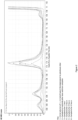
- 1,1,1,2-tetrafluoro-2-bromopropanol (20 g, 0.095 mol) was placed in a 3 necked round bottomed flask along with diethyl ether (40 g). This solution was stirred and cooled to between 0-5°C in an ice bath and then aqueous potassium hydroxide (6.26 g KOH in 13 g water) was added dropwise over approximately 1 hour. The mixture was stirred for a further 7 hours. A sample was withdrawn 1 hour after the KOH addition was complete and analysed by GC-MS. The presence of 2,3,3,3-tetrafluoro-1,2-epoxy propane in the reaction mixture was confirmed based on mass spectral analysis of the species that eluted prior the diethyl ether solvent, see Figure 1 .
- Example 4b Ring closing of 1,1,1,2-tetrafluoro-2-bromopropanol to form 2,3,3,3-tetrafluoro-1,2-epoxy propane and its in situ polymerisation to poly(3,3,3,2-tetrafluoro-1,2-epoxy propane)
- 1,1,1,2-tetrafluoro-2-bromopropanol (8 g, 0.038 mol) was placed in a 3 necked round bottomed flask along with petroleum ether (40-60, 21 g) and 2-3 drops of Aliquat 336. The solution was brought to reflux (45°C) and then aqueous sodium hydroxide (1.6 g NaOH in 20 g water) was added dropwise over approximately 1 hour. The mixture was kept at reflux for a further 6 hours and samples of the organic layer were periodically withdrawn for analysis by GC-MS and 19 F NMR spectroscopy.
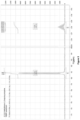
- Figure 2 shows the region in the GC traces where 2,3,3,3-tetrafluoro-1,2-epoxy propane eluted.
- the poly(2,3,3,3-tetrafluoro-1,2-epoxy propane) product was obtained from the reaction mixture distillation residue as a viscous yellow oil following water washing and extraction into dichloromethane, yield 3.24 g (66 %).
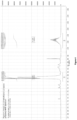
- the 19 F NMR spectrum of the polymeric product is illustrated in Figure 4 , which shows broad, complex signals characteristic of polymeric materials.
- the resulting polymeric oil was found to be soluble in 1234yf and E-1234ze, confirming its utility in heat transfer compositions comprising 1234yf and/or E-1234ze.
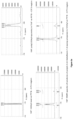
- the initiator (2 g) was weighed into a 100 ml capacity autoclave along with solvent (THF, 52 g) and 1,3,3,3-Tetrafluoro-1,2-epoxy propane (30 g). The autoclave was sealed and the contents heated to 100°C with stirring for 7 hours. After cooling the contents were recovered and the solvent removed in vacuo. The residual oil was dissolved in dichloromethane and the solution washed with water before being dried over anhydrous sodium sulphate. Removal of the solvent in vacuo afforded a viscous yellow oil. The 19 F NMR spectrum of the oil is illustrated in Figure 6b along with that of the starting material for comparison.
- 1,3,3,3-Tetrafluoro-1,2-epoxy propane (23 g) was added to a 50 ml round bottomed flask equipped with a dry ice condenser containing the initiator (98 % wt, 1 ml). The resulting mixture was stirred for 7 hours and then the excess epoxide was distilled off. The resulting oily residue was washed with water and extracted into diethyl ether. The ether solution was dried over anhydrous sodium sulphate and the ether removed in vacuo yielding a viscous red coloured oil. The 19 F NMR spectrum of the oil is illustrated in Figure 6c along with that of the starting material for comparison.
Landscapes
- Chemical & Material Sciences (AREA)
- Organic Chemistry (AREA)
- Chemical Kinetics & Catalysis (AREA)
- Health & Medical Sciences (AREA)
- Medicinal Chemistry (AREA)
- Polymers & Plastics (AREA)
- General Chemical & Material Sciences (AREA)
- Oil, Petroleum & Natural Gas (AREA)
- Organic Low-Molecular-Weight Compounds And Preparation Thereof (AREA)
- Epoxy Compounds (AREA)
- Lubricants (AREA)
- Polyethers (AREA)
Applications Claiming Priority (2)
| Application Number | Priority Date | Filing Date | Title |
|---|---|---|---|
| GBGB1706721.6A GB201706721D0 (en) | 2017-04-27 | 2017-04-27 | Methods |
| PCT/GB2018/051124 WO2018197897A1 (en) | 2017-04-27 | 2018-04-27 | Methods |
Publications (2)
| Publication Number | Publication Date |
|---|---|
| EP3615520A1 EP3615520A1 (en) | 2020-03-04 |
| EP3615520B1 true EP3615520B1 (en) | 2023-11-15 |
Family
ID=59011195
Family Applications (1)
| Application Number | Title | Priority Date | Filing Date |
|---|---|---|---|
| EP18724304.3A Active EP3615520B1 (en) | 2017-04-27 | 2018-04-27 | Methods |
Country Status (9)
| Country | Link |
|---|---|
| US (2) | US11377432B2 (https=) |
| EP (1) | EP3615520B1 (https=) |
| JP (3) | JP7556689B2 (https=) |
| KR (1) | KR20190141680A (https=) |
| CN (1) | CN110546142B (https=) |
| DK (1) | DK3615520T3 (https=) |
| ES (1) | ES2968665T3 (https=) |
| GB (1) | GB201706721D0 (https=) |
| WO (1) | WO2018197897A1 (https=) |
Families Citing this family (2)
| Publication number | Priority date | Publication date | Assignee | Title |
|---|---|---|---|---|
| WO2020128504A2 (en) * | 2018-12-21 | 2020-06-25 | Mexichem Fluor S.A. De C.V. | Compounds |
| GB2582364A (en) | 2019-03-21 | 2020-09-23 | Mexichem Fluor Sa De Cv | Methods |
Family Cites Families (16)
| Publication number | Priority date | Publication date | Assignee | Title |
|---|---|---|---|---|
| US4356291A (en) | 1981-04-03 | 1982-10-26 | E. I. Du Pont De Nemours And Company | Purification and polymerization of hexafluoropropylene oxide |
| JPH0625403A (ja) * | 1992-05-11 | 1994-02-01 | Japan Energy Corp | 含フッ素エーテルオリゴマー及びその製造方法 |
| JPH05310909A (ja) * | 1992-05-11 | 1993-11-22 | Japan Energy Corp | 含フッ素共重合体の製造方法 |
| JPH09110980A (ja) | 1995-10-13 | 1997-04-28 | Japan Energy Corp | トリフルオロプロピレンオキシド重合体の製造方法 |
| JPH09286853A (ja) * | 1996-04-23 | 1997-11-04 | Kao Corp | 含フッ素ポリエーテルの製造方法 |
| JP4570788B2 (ja) * | 1999-05-04 | 2010-10-27 | イー・アイ・デュポン・ドウ・ヌムール・アンド・カンパニー | ポリフッ素化エポキシドおよび関連ポリマーおよび生成方法 |
| DE19942534A1 (de) * | 1999-09-07 | 2001-03-08 | Henkel Ecolab Gmbh & Co Ohg | Fluorhaltige Schmiermittel |
| EP1655358A1 (de) * | 2004-11-04 | 2006-05-10 | Solvay Fluor GmbH | Arbeitsfluid zur Wärmeübertragung |
| EP1698650A1 (en) | 2005-03-02 | 2006-09-06 | 3M Innovative Properties Company | Polymerization of hexafluoropropylene oxide |
| JPWO2007105653A1 (ja) * | 2006-03-10 | 2009-07-30 | 旭硝子株式会社 | 含フッ素エポキシ化合物の開環重合による含フッ素重合体の製造方法 |
| US7456324B2 (en) | 2006-06-02 | 2008-11-25 | Great Lakes Chemical Corp. | Methods for preparing halohydrins and methods for preparing epoxides |
| JP5051445B2 (ja) | 2007-10-17 | 2012-10-17 | 株式会社ジェイテクト | 転がり軸受装置および主軸装置 |
| US7780345B2 (en) * | 2007-12-19 | 2010-08-24 | Motorola, Inc. | Method and apparatus for a temperature sensor for measuring peak temperatures |
| KR101067027B1 (ko) | 2009-03-06 | 2011-09-23 | 한국화학연구원 | 헥사플루오로프로필렌 옥사이드 중합체 조성물 및 헥사플루오로프로필렌 올리고머를 활용한 헥사플루오로프로필렌 옥사이드 중합체의 제조방법 |
| EP3205649B1 (en) * | 2014-11-21 | 2021-02-24 | Daikin Industries, Ltd. | Fluorinated unsaturated cyclic carbonate and process for producing the same |
| CN107709566B (zh) * | 2015-06-25 | 2021-06-08 | 中央硝子株式会社 | 光学活性含氟烷基环氧乙烷的工业制造方法 |
-
2017
- 2017-04-27 GB GBGB1706721.6A patent/GB201706721D0/en not_active Ceased
-
2018
- 2018-04-27 US US16/608,149 patent/US11377432B2/en active Active
- 2018-04-27 DK DK18724304.3T patent/DK3615520T3/da active
- 2018-04-27 KR KR1020197031470A patent/KR20190141680A/ko not_active Ceased
- 2018-04-27 WO PCT/GB2018/051124 patent/WO2018197897A1/en not_active Ceased
- 2018-04-27 ES ES18724304T patent/ES2968665T3/es active Active
- 2018-04-27 CN CN201880027469.0A patent/CN110546142B/zh active Active
- 2018-04-27 EP EP18724304.3A patent/EP3615520B1/en active Active
- 2018-04-27 JP JP2019558540A patent/JP7556689B2/ja active Active
-
2022
- 2022-06-01 US US17/829,598 patent/US11718597B2/en active Active
- 2022-11-17 JP JP2022184113A patent/JP2023015328A/ja active Pending
-
2024
- 2024-05-21 JP JP2024082704A patent/JP2024112914A/ja active Pending
Also Published As
| Publication number | Publication date |
|---|---|
| JP7556689B2 (ja) | 2024-09-26 |
| JP2020517717A (ja) | 2020-06-18 |
| KR20190141680A (ko) | 2019-12-24 |
| JP2023015328A (ja) | 2023-01-31 |
| CN110546142A (zh) | 2019-12-06 |
| WO2018197897A1 (en) | 2018-11-01 |
| US20220289701A1 (en) | 2022-09-15 |
| JP2024112914A (ja) | 2024-08-21 |
| US11718597B2 (en) | 2023-08-08 |
| CN110546142B (zh) | 2023-09-05 |
| US11377432B2 (en) | 2022-07-05 |
| EP3615520A1 (en) | 2020-03-04 |
| DK3615520T3 (en) | 2023-11-27 |
| US20200148654A1 (en) | 2020-05-14 |
| GB201706721D0 (en) | 2017-06-14 |
| ES2968665T3 (es) | 2024-05-13 |
Similar Documents
| Publication | Publication Date | Title |
|---|---|---|
| US12522547B2 (en) | Process for synthesis of fluorinated olefins | |
| JP5056946B2 (ja) | 2,3,3,3−テトラフルオロプロペンの製造方法 | |
| CA2635806C (en) | Method for producing fluorinated organic compounds | |
| CN109970508B (zh) | 1-氯-2,3,3-三氟丙烯的制造方法 | |
| JP2024112914A (ja) | 方法 | |
| EP4215515A1 (en) | Method for producing tetrafluoropropenes | |
| KR101351802B1 (ko) | 플루오르화 유기 화합물 제조방법 | |
| US20090088593A1 (en) | Method For Producing Fluorinated Organic Compounds | |
| WO2016132111A1 (en) | Process for the preparation of tetrafluoropropene | |
| EP2321240B1 (fr) | Procede de preparation de composes fluores olefiniques | |
| US6072088A (en) | Chemical compounds having two trifluoromethyl groups | |
| CN117466704A (zh) | 一种1,2-二氯-3,3,3-三氟丙烯的制备方法 | |
| WO2016138253A1 (en) | Staged synthesis of diiodoperfluoro-c3 to c7-alkanes | |
| HK1167384A (en) | Processes for reducing the amount of monofluoroacetate in hydrofluoroolefin production |
Legal Events
| Date | Code | Title | Description |
|---|---|---|---|
| STAA | Information on the status of an ep patent application or granted ep patent |
Free format text: STATUS: UNKNOWN |
|
| STAA | Information on the status of an ep patent application or granted ep patent |
Free format text: STATUS: THE INTERNATIONAL PUBLICATION HAS BEEN MADE |
|
| PUAI | Public reference made under article 153(3) epc to a published international application that has entered the european phase |
Free format text: ORIGINAL CODE: 0009012 |
|
| STAA | Information on the status of an ep patent application or granted ep patent |
Free format text: STATUS: REQUEST FOR EXAMINATION WAS MADE |
|
| 17P | Request for examination filed |
Effective date: 20191015 |
|
| AK | Designated contracting states |
Kind code of ref document: A1 Designated state(s): AL AT BE BG CH CY CZ DE DK EE ES FI FR GB GR HR HU IE IS IT LI LT LU LV MC MK MT NL NO PL PT RO RS SE SI SK SM TR |
|
| AX | Request for extension of the european patent |
Extension state: BA ME |
|
| DAV | Request for validation of the european patent (deleted) | ||
| DAX | Request for extension of the european patent (deleted) | ||
| STAA | Information on the status of an ep patent application or granted ep patent |
Free format text: STATUS: EXAMINATION IS IN PROGRESS |
|
| 17Q | First examination report despatched |
Effective date: 20200814 |
|
| GRAP | Despatch of communication of intention to grant a patent |
Free format text: ORIGINAL CODE: EPIDOSNIGR1 |
|
| STAA | Information on the status of an ep patent application or granted ep patent |
Free format text: STATUS: GRANT OF PATENT IS INTENDED |
|
| RIC1 | Information provided on ipc code assigned before grant |
Ipc: C08G 65/22 20060101ALI20230124BHEP Ipc: C07D 303/08 20060101ALI20230124BHEP Ipc: C07D 301/26 20060101AFI20230124BHEP |
|
| INTG | Intention to grant announced |
Effective date: 20230227 |
|
| GRAJ | Information related to disapproval of communication of intention to grant by the applicant or resumption of examination proceedings by the epo deleted |
Free format text: ORIGINAL CODE: EPIDOSDIGR1 |
|
| STAA | Information on the status of an ep patent application or granted ep patent |
Free format text: STATUS: EXAMINATION IS IN PROGRESS |
|
| INTC | Intention to grant announced (deleted) | ||
| GRAP | Despatch of communication of intention to grant a patent |
Free format text: ORIGINAL CODE: EPIDOSNIGR1 |
|
| STAA | Information on the status of an ep patent application or granted ep patent |
Free format text: STATUS: GRANT OF PATENT IS INTENDED |
|
| INTG | Intention to grant announced |
Effective date: 20230508 |
|
| GRAJ | Information related to disapproval of communication of intention to grant by the applicant or resumption of examination proceedings by the epo deleted |
Free format text: ORIGINAL CODE: EPIDOSDIGR1 |
|
| STAA | Information on the status of an ep patent application or granted ep patent |
Free format text: STATUS: EXAMINATION IS IN PROGRESS |
|
| P01 | Opt-out of the competence of the unified patent court (upc) registered |
Effective date: 20230517 |
|
| INTC | Intention to grant announced (deleted) | ||
| GRAP | Despatch of communication of intention to grant a patent |
Free format text: ORIGINAL CODE: EPIDOSNIGR1 |
|
| STAA | Information on the status of an ep patent application or granted ep patent |
Free format text: STATUS: GRANT OF PATENT IS INTENDED |
|
| INTG | Intention to grant announced |
Effective date: 20230714 |
|
| GRAS | Grant fee paid |
Free format text: ORIGINAL CODE: EPIDOSNIGR3 |
|
| GRAA | (expected) grant |
Free format text: ORIGINAL CODE: 0009210 |
|
| STAA | Information on the status of an ep patent application or granted ep patent |
Free format text: STATUS: THE PATENT HAS BEEN GRANTED |
|
| AK | Designated contracting states |
Kind code of ref document: B1 Designated state(s): AL AT BE BG CH CY CZ DE DK EE ES FI FR GB GR HR HU IE IS IT LI LT LU LV MC MK MT NL NO PL PT RO RS SE SI SK SM TR |
|
| REG | Reference to a national code |
Ref country code: CH Ref legal event code: EP Ref country code: GB Ref legal event code: FG4D |
|
| REG | Reference to a national code |
Ref country code: DK Ref legal event code: T3 Effective date: 20231123 |
|
| REG | Reference to a national code |
Ref country code: DE Ref legal event code: R096 Ref document number: 602018061092 Country of ref document: DE |
|
| REG | Reference to a national code |
Ref country code: IE Ref legal event code: FG4D |
|
| REG | Reference to a national code |
Ref country code: SE Ref legal event code: TRGR |
|
| REG | Reference to a national code |
Ref country code: NL Ref legal event code: FP |
|
| REG | Reference to a national code |
Ref country code: NO Ref legal event code: T2 Effective date: 20231115 |
|
| REG | Reference to a national code |
Ref country code: LT Ref legal event code: MG9D |
|
| PG25 | Lapsed in a contracting state [announced via postgrant information from national office to epo] |
Ref country code: GR Free format text: LAPSE BECAUSE OF FAILURE TO SUBMIT A TRANSLATION OF THE DESCRIPTION OR TO PAY THE FEE WITHIN THE PRESCRIBED TIME-LIMIT Effective date: 20240216 |
|
| PG25 | Lapsed in a contracting state [announced via postgrant information from national office to epo] |
Ref country code: IS Free format text: LAPSE BECAUSE OF FAILURE TO SUBMIT A TRANSLATION OF THE DESCRIPTION OR TO PAY THE FEE WITHIN THE PRESCRIBED TIME-LIMIT Effective date: 20240315 |
|
| PG25 | Lapsed in a contracting state [announced via postgrant information from national office to epo] |
Ref country code: LT Free format text: LAPSE BECAUSE OF FAILURE TO SUBMIT A TRANSLATION OF THE DESCRIPTION OR TO PAY THE FEE WITHIN THE PRESCRIBED TIME-LIMIT Effective date: 20231115 |
|
| REG | Reference to a national code |
Ref country code: AT Ref legal event code: MK05 Ref document number: 1631685 Country of ref document: AT Kind code of ref document: T Effective date: 20231115 |
|
| PG25 | Lapsed in a contracting state [announced via postgrant information from national office to epo] |
Ref country code: AT Free format text: LAPSE BECAUSE OF FAILURE TO SUBMIT A TRANSLATION OF THE DESCRIPTION OR TO PAY THE FEE WITHIN THE PRESCRIBED TIME-LIMIT Effective date: 20231115 |
|
| PG25 | Lapsed in a contracting state [announced via postgrant information from national office to epo] |
Ref country code: LT Free format text: LAPSE BECAUSE OF FAILURE TO SUBMIT A TRANSLATION OF THE DESCRIPTION OR TO PAY THE FEE WITHIN THE PRESCRIBED TIME-LIMIT Effective date: 20231115 Ref country code: IS Free format text: LAPSE BECAUSE OF FAILURE TO SUBMIT A TRANSLATION OF THE DESCRIPTION OR TO PAY THE FEE WITHIN THE PRESCRIBED TIME-LIMIT Effective date: 20240315 Ref country code: GR Free format text: LAPSE BECAUSE OF FAILURE TO SUBMIT A TRANSLATION OF THE DESCRIPTION OR TO PAY THE FEE WITHIN THE PRESCRIBED TIME-LIMIT Effective date: 20240216 Ref country code: BG Free format text: LAPSE BECAUSE OF FAILURE TO SUBMIT A TRANSLATION OF THE DESCRIPTION OR TO PAY THE FEE WITHIN THE PRESCRIBED TIME-LIMIT Effective date: 20240215 Ref country code: AT Free format text: LAPSE BECAUSE OF FAILURE TO SUBMIT A TRANSLATION OF THE DESCRIPTION OR TO PAY THE FEE WITHIN THE PRESCRIBED TIME-LIMIT Effective date: 20231115 Ref country code: PT Free format text: LAPSE BECAUSE OF FAILURE TO SUBMIT A TRANSLATION OF THE DESCRIPTION OR TO PAY THE FEE WITHIN THE PRESCRIBED TIME-LIMIT Effective date: 20240315 |
|
| REG | Reference to a national code |
Ref country code: ES Ref legal event code: FG2A Ref document number: 2968665 Country of ref document: ES Kind code of ref document: T3 Effective date: 20240513 |
|
| PG25 | Lapsed in a contracting state [announced via postgrant information from national office to epo] |
Ref country code: RS Free format text: LAPSE BECAUSE OF FAILURE TO SUBMIT A TRANSLATION OF THE DESCRIPTION OR TO PAY THE FEE WITHIN THE PRESCRIBED TIME-LIMIT Effective date: 20231115 Ref country code: PL Free format text: LAPSE BECAUSE OF FAILURE TO SUBMIT A TRANSLATION OF THE DESCRIPTION OR TO PAY THE FEE WITHIN THE PRESCRIBED TIME-LIMIT Effective date: 20231115 Ref country code: LV Free format text: LAPSE BECAUSE OF FAILURE TO SUBMIT A TRANSLATION OF THE DESCRIPTION OR TO PAY THE FEE WITHIN THE PRESCRIBED TIME-LIMIT Effective date: 20231115 Ref country code: HR Free format text: LAPSE BECAUSE OF FAILURE TO SUBMIT A TRANSLATION OF THE DESCRIPTION OR TO PAY THE FEE WITHIN THE PRESCRIBED TIME-LIMIT Effective date: 20231115 |
|
| PG25 | Lapsed in a contracting state [announced via postgrant information from national office to epo] |
Ref country code: CZ Free format text: LAPSE BECAUSE OF FAILURE TO SUBMIT A TRANSLATION OF THE DESCRIPTION OR TO PAY THE FEE WITHIN THE PRESCRIBED TIME-LIMIT Effective date: 20231115 |
|
| PG25 | Lapsed in a contracting state [announced via postgrant information from national office to epo] |
Ref country code: SK Free format text: LAPSE BECAUSE OF FAILURE TO SUBMIT A TRANSLATION OF THE DESCRIPTION OR TO PAY THE FEE WITHIN THE PRESCRIBED TIME-LIMIT Effective date: 20231115 |
|
| PG25 | Lapsed in a contracting state [announced via postgrant information from national office to epo] |
Ref country code: SM Free format text: LAPSE BECAUSE OF FAILURE TO SUBMIT A TRANSLATION OF THE DESCRIPTION OR TO PAY THE FEE WITHIN THE PRESCRIBED TIME-LIMIT Effective date: 20231115 Ref country code: SK Free format text: LAPSE BECAUSE OF FAILURE TO SUBMIT A TRANSLATION OF THE DESCRIPTION OR TO PAY THE FEE WITHIN THE PRESCRIBED TIME-LIMIT Effective date: 20231115 Ref country code: RO Free format text: LAPSE BECAUSE OF FAILURE TO SUBMIT A TRANSLATION OF THE DESCRIPTION OR TO PAY THE FEE WITHIN THE PRESCRIBED TIME-LIMIT Effective date: 20231115 Ref country code: EE Free format text: LAPSE BECAUSE OF FAILURE TO SUBMIT A TRANSLATION OF THE DESCRIPTION OR TO PAY THE FEE WITHIN THE PRESCRIBED TIME-LIMIT Effective date: 20231115 Ref country code: CZ Free format text: LAPSE BECAUSE OF FAILURE TO SUBMIT A TRANSLATION OF THE DESCRIPTION OR TO PAY THE FEE WITHIN THE PRESCRIBED TIME-LIMIT Effective date: 20231115 |
|
| REG | Reference to a national code |
Ref country code: DE Ref legal event code: R097 Ref document number: 602018061092 Country of ref document: DE |
|
| PLBE | No opposition filed within time limit |
Free format text: ORIGINAL CODE: 0009261 |
|
| STAA | Information on the status of an ep patent application or granted ep patent |
Free format text: STATUS: NO OPPOSITION FILED WITHIN TIME LIMIT |
|
| 26N | No opposition filed |
Effective date: 20240819 |
|
| PG25 | Lapsed in a contracting state [announced via postgrant information from national office to epo] |
Ref country code: SI Free format text: LAPSE BECAUSE OF FAILURE TO SUBMIT A TRANSLATION OF THE DESCRIPTION OR TO PAY THE FEE WITHIN THE PRESCRIBED TIME-LIMIT Effective date: 20231115 |
|
| PG25 | Lapsed in a contracting state [announced via postgrant information from national office to epo] |
Ref country code: SI Free format text: LAPSE BECAUSE OF FAILURE TO SUBMIT A TRANSLATION OF THE DESCRIPTION OR TO PAY THE FEE WITHIN THE PRESCRIBED TIME-LIMIT Effective date: 20231115 |
|
| PG25 | Lapsed in a contracting state [announced via postgrant information from national office to epo] |
Ref country code: MC Free format text: LAPSE BECAUSE OF FAILURE TO SUBMIT A TRANSLATION OF THE DESCRIPTION OR TO PAY THE FEE WITHIN THE PRESCRIBED TIME-LIMIT Effective date: 20231115 |
|
| PG25 | Lapsed in a contracting state [announced via postgrant information from national office to epo] |
Ref country code: MC Free format text: LAPSE BECAUSE OF FAILURE TO SUBMIT A TRANSLATION OF THE DESCRIPTION OR TO PAY THE FEE WITHIN THE PRESCRIBED TIME-LIMIT Effective date: 20231115 |
|
| REG | Reference to a national code |
Ref country code: CH Ref legal event code: PL |
|
| PG25 | Lapsed in a contracting state [announced via postgrant information from national office to epo] |
Ref country code: LU Free format text: LAPSE BECAUSE OF NON-PAYMENT OF DUE FEES Effective date: 20240427 |
|
| PG25 | Lapsed in a contracting state [announced via postgrant information from national office to epo] |
Ref country code: LU Free format text: LAPSE BECAUSE OF NON-PAYMENT OF DUE FEES Effective date: 20240427 |
|
| PG25 | Lapsed in a contracting state [announced via postgrant information from national office to epo] |
Ref country code: CH Free format text: LAPSE BECAUSE OF NON-PAYMENT OF DUE FEES Effective date: 20240430 |
|
| PGFP | Annual fee paid to national office [announced via postgrant information from national office to epo] |
Ref country code: SE Payment date: 20250314 Year of fee payment: 8 |
|
| PG25 | Lapsed in a contracting state [announced via postgrant information from national office to epo] |
Ref country code: IE Free format text: LAPSE BECAUSE OF NON-PAYMENT OF DUE FEES Effective date: 20240427 |
|
| PGFP | Annual fee paid to national office [announced via postgrant information from national office to epo] |
Ref country code: NL Payment date: 20250414 Year of fee payment: 8 |
|
| PGFP | Annual fee paid to national office [announced via postgrant information from national office to epo] |
Ref country code: DE Payment date: 20250410 Year of fee payment: 8 |
|
| PGFP | Annual fee paid to national office [announced via postgrant information from national office to epo] |
Ref country code: ES Payment date: 20250507 Year of fee payment: 8 Ref country code: GB Payment date: 20250411 Year of fee payment: 8 Ref country code: DK Payment date: 20250417 Year of fee payment: 8 |
|
| PGFP | Annual fee paid to national office [announced via postgrant information from national office to epo] |
Ref country code: NO Payment date: 20250409 Year of fee payment: 8 |
|
| PGFP | Annual fee paid to national office [announced via postgrant information from national office to epo] |
Ref country code: BE Payment date: 20250414 Year of fee payment: 8 Ref country code: IT Payment date: 20250411 Year of fee payment: 8 |
|
| PGFP | Annual fee paid to national office [announced via postgrant information from national office to epo] |
Ref country code: FR Payment date: 20250410 Year of fee payment: 8 |
|
| PG25 | Lapsed in a contracting state [announced via postgrant information from national office to epo] |
Ref country code: CY Free format text: LAPSE BECAUSE OF FAILURE TO SUBMIT A TRANSLATION OF THE DESCRIPTION OR TO PAY THE FEE WITHIN THE PRESCRIBED TIME-LIMIT; INVALID AB INITIO Effective date: 20180427 |
|
| PG25 | Lapsed in a contracting state [announced via postgrant information from national office to epo] |
Ref country code: HU Free format text: LAPSE BECAUSE OF FAILURE TO SUBMIT A TRANSLATION OF THE DESCRIPTION OR TO PAY THE FEE WITHIN THE PRESCRIBED TIME-LIMIT; INVALID AB INITIO Effective date: 20180427 |
|
| PG25 | Lapsed in a contracting state [announced via postgrant information from national office to epo] |
Ref country code: FI Free format text: LAPSE BECAUSE OF FAILURE TO SUBMIT A TRANSLATION OF THE DESCRIPTION OR TO PAY THE FEE WITHIN THE PRESCRIBED TIME-LIMIT Effective date: 20231115 |