EP3609322B1 - Pest control system and associated method - Google Patents
Pest control system and associated method Download PDFInfo
- Publication number
- EP3609322B1 EP3609322B1 EP18718771.1A EP18718771A EP3609322B1 EP 3609322 B1 EP3609322 B1 EP 3609322B1 EP 18718771 A EP18718771 A EP 18718771A EP 3609322 B1 EP3609322 B1 EP 3609322B1
- Authority
- EP
- European Patent Office
- Prior art keywords
- site
- pest
- computer device
- pesticide
- data
- Prior art date
- Legal status (The legal status is an assumption and is not a legal conclusion. Google has not performed a legal analysis and makes no representation as to the accuracy of the status listed.)
- Active
Links
Images




Classifications
-
- A—HUMAN NECESSITIES
- A01—AGRICULTURE; FORESTRY; ANIMAL HUSBANDRY; HUNTING; TRAPPING; FISHING
- A01M—CATCHING, TRAPPING OR SCARING OF ANIMALS; APPARATUS FOR THE DESTRUCTION OF NOXIOUS ANIMALS OR NOXIOUS PLANTS
- A01M1/00—Stationary means for catching or killing insects
- A01M1/02—Stationary means for catching or killing insects with devices or substances, e.g. food, pheronones attracting the insects
- A01M1/026—Stationary means for catching or killing insects with devices or substances, e.g. food, pheronones attracting the insects combined with devices for monitoring insect presence, e.g. termites
-
- A—HUMAN NECESSITIES
- A01—AGRICULTURE; FORESTRY; ANIMAL HUSBANDRY; HUNTING; TRAPPING; FISHING
- A01M—CATCHING, TRAPPING OR SCARING OF ANIMALS; APPARATUS FOR THE DESTRUCTION OF NOXIOUS ANIMALS OR NOXIOUS PLANTS
- A01M1/00—Stationary means for catching or killing insects
- A01M1/20—Poisoning, narcotising, or burning insects
-
- A—HUMAN NECESSITIES
- A01—AGRICULTURE; FORESTRY; ANIMAL HUSBANDRY; HUNTING; TRAPPING; FISHING
- A01M—CATCHING, TRAPPING OR SCARING OF ANIMALS; APPARATUS FOR THE DESTRUCTION OF NOXIOUS ANIMALS OR NOXIOUS PLANTS
- A01M25/00—Devices for dispensing poison for animals
-
- A—HUMAN NECESSITIES
- A01—AGRICULTURE; FORESTRY; ANIMAL HUSBANDRY; HUNTING; TRAPPING; FISHING
- A01M—CATCHING, TRAPPING OR SCARING OF ANIMALS; APPARATUS FOR THE DESTRUCTION OF NOXIOUS ANIMALS OR NOXIOUS PLANTS
- A01M31/00—Hunting appliances
- A01M31/002—Detecting animals in a given area
-
- G—PHYSICS
- G06—COMPUTING OR CALCULATING; COUNTING
- G06Q—INFORMATION AND COMMUNICATION TECHNOLOGY [ICT] SPECIALLY ADAPTED FOR ADMINISTRATIVE, COMMERCIAL, FINANCIAL, MANAGERIAL OR SUPERVISORY PURPOSES; SYSTEMS OR METHODS SPECIALLY ADAPTED FOR ADMINISTRATIVE, COMMERCIAL, FINANCIAL, MANAGERIAL OR SUPERVISORY PURPOSES, NOT OTHERWISE PROVIDED FOR
- G06Q10/00—Administration; Management
- G06Q10/06—Resources, workflows, human or project management; Enterprise or organisation planning; Enterprise or organisation modelling
- G06Q10/063—Operations research, analysis or management
- G06Q10/0637—Strategic management or analysis, e.g. setting a goal or target of an organisation; Planning actions based on goals; Analysis or evaluation of effectiveness of goals
- G06Q10/06375—Prediction of business process outcome or impact based on a proposed change
-
- G—PHYSICS
- G06—COMPUTING OR CALCULATING; COUNTING
- G06Q—INFORMATION AND COMMUNICATION TECHNOLOGY [ICT] SPECIALLY ADAPTED FOR ADMINISTRATIVE, COMMERCIAL, FINANCIAL, MANAGERIAL OR SUPERVISORY PURPOSES; SYSTEMS OR METHODS SPECIALLY ADAPTED FOR ADMINISTRATIVE, COMMERCIAL, FINANCIAL, MANAGERIAL OR SUPERVISORY PURPOSES, NOT OTHERWISE PROVIDED FOR
- G06Q10/00—Administration; Management
- G06Q10/06—Resources, workflows, human or project management; Enterprise or organisation planning; Enterprise or organisation modelling
- G06Q10/063—Operations research, analysis or management
- G06Q10/0639—Performance analysis of employees; Performance analysis of enterprise or organisation operations
- G06Q10/06393—Score-carding, benchmarking or key performance indicator [KPI] analysis
Definitions
- the present disclosure is directed to pest detection, control, and management and, more particularly to a pest control system and method involving centralized pest monitoring and detection, pest identification / infestation source analysis and treatment recommendations, and analytics and inventory control, thereby providing a comprehensive and centrally-driven pest management environment.
- Distributed pest detection networks including a central station in communication with one or more distributed pest detectors or traps, are known in the art.
- distributed pest networks are often very rudimentary, often only signaling to the central station that some unidentified organism has sufficiently interacted with the detector/trap to send a detection signal back to the central station.
- a pest control technician is often dispatched to the site, often with no indication as to the nature of the detected organism, what treatment must be applied to address the detected organism, or what steps must be taken to prevent future occurrences.
- Another issue related to pest control is the application of treatments, particularly chemical pesticide treatments that must be mixed in a particular concentration in a diluent in order to be applied per manufacturer recommendations.
- mixing the pesticide treatment from the pesticide substance (active ingredient) and the diluent may also be guesswork, or a rough approximation at best, with the pest control technician often erring on the side of adding a higher concentration of the pesticide substance to the diluent, unless the pesticide substance and the diluent are provided in precisely measured quantities.
- the application of the pesticide treatment likely uses more of the pesticide substance than necessary, may often be inconsistent between applications, and may not be in the appropriate concentration for optimum efficacy. This, in turn, may lead to inventory issues for the manufacturer/distributors providing the pesticide substance, as well as cost inefficiency on the part of the pest control organization (PCO) handling the pest control issues.
- PCO pest control organization
- WO 2004/021735 A1 describes a remote monitoring system for exterminating pests which comprises at least one sensor for sensing movement of the pest and producing and transmitting detection signals corresponding to the movement.
- the system comprises at least one remote controller, installed at the subject site, for receiving the detection signals and processing and transmitting the received detection signals and a central control apparatus for receiving information from at least one remote controller, analyzing the information, and managing the analyzed information.
- a pest monitoring and control system comprising a plurality of pest monitoring devices each configured for placement at a site and to generate a signal in response to detection of a pest at the site.
- a computer device remotely disposed with respect to the pest monitoring devices is configured to be in communication with the pest monitoring devices so as to receive the generated signals therefrom, the signals from the pest monitoring devices comprising actual site data.
- the computer device is further configured to analyze environmental factor data and historical factor data to determine an amount of the pest monitoring devices suggested for monitoring the site and a placement location about the site for each of the pest monitoring devices, wherein the environmental factor data is associated with environmental factors of and about the site conducive to pest population development, and the historical factor data is associated with factors indicative of historic pest populations at the site.
- the computer device is also configured to direct deployment of the pest control monitoring devices about the site according to the analysis.
- a pesticide application system comprising one or more pesticide dispensing / application units, each pesticide dispensing / application unit including a reservoir configured to house a diluent, a pesticide module configured to house a pesticide substance, and a transmitter module configured to transmit data from the pesticide dispensing / application unit.
- the data includes an amount or a rate of the pesticide substance dispensed from the pesticide module of any of the pesticide dispensing / application units, to form a pest treatment having a concentration of the pesticide substance in the diluent, wherein the pest treatment is dispensed from the pesticide dispensing / application unit to treat a pest.
- the present disclosure includes any combination of two, three, four, or more features or elements set forth in this disclosure, regardless of whether such features or elements are expressly combined in a specific aspect description herein.
- This disclosure is intended to be read holistically such that any separable features or elements of the present disclosure, in any of its various aspects, should be viewed as intended to be combinable unless the context clearly dictates otherwise. Aspects of the present disclosure thus provide advantages as otherwise detailed herein.
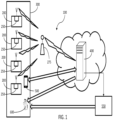
- FIG. 1 schematically illustrates a pest monitoring and control system 100, according to one aspect of the present disclosure.
- the system 100 comprises a plurality of pest monitoring devices 200, each configured for placement at a site 300.
- Each pest monitoring device 200 is further configured to generate a signal in response to detection of a pest, once the pest monitoring device 200 is deployed at the site 300.
- a computer device 400 remotely disposed with respect to the pest monitoring devices 200, is configured to be in communication with the pest monitoring devices 200, so as to receive the generated signals therefrom, with the signals from the pest monitoring devices 200 comprising actual site data (i.e., actual collected data associated with or originating from the site 300 and representing actual events or conditions at the site 300).
- the computer device 400 may be disposed remotely to the site 300 (i.e., remote/central monitoring and communication).
- the computer device 400 may be disposed at the site 300, but remotely and spaced apart from the pest monitoring devices 200.
- each pest monitoring device 200 includes, for example, an appropriate detection arrangement for detecting a pest, depending on whether that pest is walking, crawling, or flying. That is, for example, the pest detection arrangement implemented in an appropriate pest monitoring device, may be configured differently for a flying insect than for a rodent or roach.
- each pest monitoring device 200 includes at least a transmitter module 250 engaged with the pest detection arrangement, with the transmitter module 250 being configured for communicating a detection signal from the pest detection arrangement to the computer device 400.
- the detection signal in some aspects includes, for example, the identity of the pest detected by the pest monitoring device 200. In other aspects, the detection signal may only include the number or amount of detection events indicated by the pest monitoring device 200.
- the communication between the transmitter module 250 and the computer device 400 may be through a direct communication link therebetween or, in some instances, via a communication gateway or hub 275.
- the pest monitoring device 200 also includes a receiver module (not shown) for receiving communications, whether from the computer device 400 or other device appropriately configured for communication therewith.
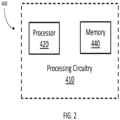
- the computer device 400 comprises processing circuitry 410, a processor 420 and a non-transitory memory 440 storing executable instructions that, in response to execution by the processor 420, cause the computer device 400 to perform particular functions, at least with respect to the pest monitoring device(s) 200 in communication therewith.
- the computer device 400 upon executing appropriate instructions stored therein, is configured to analyze environmental factor data and historical factor data associated with the site 300 in order to determine an amount of the pest monitoring devices 200 suggested for monitoring the site 300. In some instances, the analysis also includes a placement location about the site 300 for each of the pest monitoring devices 200.
- Non-inclusive examples of pertinent site conditions include food and water sources within the building or outside the building, the locations of any ingress/egress doors, locations of supplies or inventory, locations of raw material processing or storage, shipping / delivery locations, the nature and/or frequency of deliveries, temperature within and/or outside the building (i.e., a heat source), humidity within or outside the building, lighting, locations of disposal of refuse / waste, whether there is any failed or comprised structural integrity of the building, locations of cafeterias or break rooms, and/or locations of restroom facilities.
- food and water sources within the building or outside the building the locations of any ingress/egress doors, locations of supplies or inventory, locations of raw material processing or storage, shipping / delivery locations, the nature and/or frequency of deliveries, temperature within and/or outside the building (i.e., a heat source), humidity within or outside the building, lighting, locations of disposal of refuse / waste, whether there is any failed or comprised structural integrity of the building, locations of cafeterias or break rooms, and/or locations of restroom facilities.
- the historical factor data is associated with factors indicative of historic pest populations at the site, wherein such historical factor data includes whether there has previously been pest monitors/traps at the site, the conditions of the site associated with each of those pest monitors/traps, and the amount, type, frequency, or other historical data of the pests registered by those pest monitors/traps.
- the computer device 400 is configured to determine the amount of the pest monitoring devices 200 suggested for monitoring the site 300 and/or the placement location about the site 300 for each of the pest monitoring devices 200.
- the amount and/or placement location of the pest monitoring devices 200 may be determined by the computer device 400 according to a particular factor of the site 300. For example, as shown in FIG.
- the determination of the amount and/or placement location of the pest monitoring devices 200 may include a designation thereof on a linear measure of the perimeter of a building or facility at the site 300 (i.e., the default is a maximum linear spacing of the pest monitoring devices 200 about the perimeter of the building facility (or a minimum number of pest monitoring devices 200 per linear foot of perimeter), wherein the linear spacing is decreased / the amount of pest monitoring devices 200 deployed increases based on the environmental factor data and historical factor data considered by the computer device 400 (increase over the minimum number of pest monitoring devices per linear foot)).
- the computer device 400 is configured to direct the deployment (of the amount and/or placement) of the pest control monitoring devices 200 about the site 300 according to the analysis.
- the computer device 400 is configured to direct the deployment (of the amount and/or placement) of the pest control monitoring devices 200 about the site 300 according to the analysis and in relation to a geospatial map of the site 300. That is, in some aspects, the result of the analysis provided by the computer device 400 is the particular placement, type of pest monitor/trap, etc. shown or otherwise provided in relation to a site map or layout of the building, as shown, for example, in FIG. 4 .
- the computer device 400 is configured to modulate or direct the modulation of at least the amount of pest monitoring devices 200 deployed about the site 300, based on a risk tolerance factor.
- a risk tolerance factor comprises, for example, various factors of business risk, such as audit frequency or history of past audit failures.
- the computer device 400 may propose, direct, or otherwise adjust (increase or decrease) at least the final number or amount of the pest monitoring devices 200 to be deployed for effectively monitoring the site.
- the consideration of the risk tolerance factor may result in adjustment of at least the number of pest monitoring devices 200 at certain, but not all, locations about the site 300.
- the consideration of the risk tolerance factor may result in adjustment of at least the number of pest monitoring devices 200 at certain, but not all, locations about the site 300. In still other aspects, the consideration of the risk tolerance factor may result in adjustment of the type or location of pest monitoring devices 200 at certain locations about the site 300.
- the computer device 400 in response to detection of a pest by any of the pest monitoring devices 200, is configured to analyze the actual site data (i.e., the pest detection data transmitted to the computer device 400) to determine a location or a potential source of the detected pest about the site 300.
- the computer device 400 may be configured to analyze the actual site data to determine a vector 150 indicating the location or the potential source of the detected pest about the site 300. More particularly, in such an aspect, the computer device 400, knowing the geospatial location of the pest monitoring devices 200 with respect to each other (i.e., according to the relative placements of the pest detection devices 200 in relation to the geospatial map, site plan, etc.
- a pest control technician may be dispatched to the site 300 to effectuate an appropriate pest control solution and/or the site 300 may be notified to remove, alter, or otherwise address the possible site or root cause for the infestation.
- the computer device 400 is further configured to be adaptable or capable of self-learning, so as to periodically or ondemand, analyze the actual site data with the environmental factor data and the historical factor data, updated over the previous analysis or the original analysis, to determine whether the placement location of the pest monitoring devices 200 about the site 300 should be altered, and/or whether the amount of the pest monitoring devices 200 deployed about the site 300 should be altered (i.e., to provide for more optimal coverage of the site 300 by the pest monitoring devices 200).
- the algorithms executed by the computer device 400 are self-learning and adaptable, in that as time passes and pest activity is tracked or as business risk sensitivity changes, the algorithms will adjust to changing conditions at the site 300 and will propose reducing or increasing the number and/or altering the location of the necessary pest detection devices 200.
- the computer device 400 upon the computer device 400 determining the source of a possible pest infestation at the site 300, or determining that there is otherwise a vector indication of a possible source, location, or root cause of that pest infestation, the computer device 400 is configured to designate a remedy for the detected pest or the potential source thereof at the site 300. In some instances, prior to designating a remedy, as shown in FIG. 1 , the computer device 400 is configured to direct one or more identification inquiries to a remote terminal 500 in response to the actual site data.
- the remote terminal 500 in such aspects, is configured to receive responses to the one or more identification inquiries input therein from the site 300 and to direct the responses to the computer device 400.
- the computer device 400 is responsive to the responses from the remote terminal 500 to identify the detected pest and thus designate a particular targeted remedy for the identified (detected) pest or the identified source thereof at the site 300.
- the remote terminal 500 may comprise a smart phone, tablet, laptop computer, or the like, in possession of a pest control technician dispatched to the site 300.
- the computer device 400 Upon dispatch of a pest control technician from a pest control organization (PCO) 550 (see, e.g., FIG. 1 ) and arrival of the pest control technician at the site 300, the computer device 400, in response to receipt of pest detection signals / actual site data (not necessarily identifying the detected pest), can direct the pest control technician to the pest monitoring device(s) 200 sending the pest detection signals.
- the computer device 400 via the communication with the remote device 500, may, for example, prompt the pest control technician for an identification of the detected pest or otherwise request a response from the pest control technician, to one or more questions regarding the apparent characteristics of the detected pest.
- the computer device 400 can then determine a particular source of the infestation and/or designate a particular remedy or treatment to address the detected pest(s). In such instances, as will be appreciated by one skilled in the art, if the identified pest is a roach, the designated remedy may be much different than if the identified pest is a rodent.
- the remedy for the detected pest(s), as determined by the computer device 400 may be effectuated by the computer device 400 directing the remedy for the detected pest(s) or the potential source thereof at the site 300, to a pesticide dispenser 600 (see, e.g., FIG. 1 ) configured to effectuate the remedy at the site 300, or to a pest control technician directed to effectuate the remedy at the site 300, whether or not using the pesticide dispenser 600.
- the pesticide dispenser 600 may be a fixed unit located at the site in fixed location, or may be a portable unit in possession of a pest control technician dispatched to the site 300. In either instance, the pesticide dispenser 600 may be configured to be in communication with the computer device 400, whether directly or via appropriate communication equipment.
- the computer device 400 is configured to analyze the actual site data in comparison to operational activity data associated with operational activity factors at the site 300 or external environmental factor data associated with external environmental factors affecting the site 300, to forecast a future pest infestation event at the site 300. Additionally, in some aspects, the computer device 400 is configured to analyze data from environmental monitors associated with the site 300, physical factors data associated with the site 300, data from facility monitors associated with the site 300, or data associated with operation factors associated with the site 300, to determine any correlation thereof with the actual site data so as to identify a root cause of a pest infestation at the site or recommend measures for preventing a future pest infestation.
- Operational activity factors or operation factors may include, for example, issues apparent from a current site landscape or map (e.g., the physical environment, building design), data from facility sensors (e.g., open doors, water leaks), and/or data from operational factors (e.g., raw ingredient deliveries, site drainage).
- External environmental factors may include, for example, data from environmental monitors (e.g., temperature, humidity, etc.) or seasonal factors.
- the correlations may allow the computer device 400 to expand a root cause analysis to recommend changes in structures, operations and atmospheric modifications associated with the site 300 to prevent such pest problems. That is, in some aspects, the computer device 400 is also configured to determine changes in operational activity factors associated with the operational activity data, changes in environmental factors associated with the environmental factor data, or preventative factors, which may be implemented to counteract the forecasted future pest infestation event.
- the computer device 400 is configured to vary the designated remedy or an active ingredient of the designated remedy (i.e., the active ingredient or active substance of a pesticide application) for the detected pest or the potential source thereof at the site 300 so as to prevent or delay development of resistance to the remedy or the active ingredient of the designated remedy by the detected pest. That is, the computer device 400 may be configured to monitor pesticide product usage for a site 300, and can recommend a pesticide product usage rotation that can prevent or delay the development of physiological or behavior resistance to a particular pesticide product or active ingredient thereof in pest population about the site 300. In other instances, the computer device 400 may be configured to notify a site manager to prevent a pest control technician at the site 300 from using a particular pesticide product, in order to comply with certain pesticide resistance management guidelines.
- the designated remedy or an active ingredient of the designated remedy i.e., the active ingredient or active substance of a pesticide application
- the computer device 400 may be configured to correlate actual site data with the designated remedy for the detected pest or the potential source thereof at the site so as to determine any change in pest activity in response to the designated remedy or to rate effectiveness of the designated remedy according to the pest activity being treated. That is, in some aspects, by correlating pest activity at the site 300 (such pest activity being determined, for example, pest monitoring devices 200 and/or by manual data entry from personnel observation sat the site 300) with pesticide product usage, the computer device 400 can analyze changing pest activity at the site 300 as a consequence of particular pesticide product usage. This correlation analysis by the computer device 400 will allow, for example, benchmarking of the performance a particular pesticide product against a particular pest in regard to a specific site 300 or over a number of sites.
- a self-learning aspect may be utilized by the computer device 400, wherein the computer device 400 can learn or be adaptive to propose or recommend the usage of particular pesticide products that are best suited against a pest at a specific site 300 or number of sites based upon updated data.
- the computer device 400 is configured to analyze the actual site data to determine whether pest activity associated therewith is increasing, in relation the designated remedy (i.e., pesticide) or effectuation (i.e., application) parameters associated therewith, to recommend further remedial action at the site 300.
- the further remedial action includes, for example, adjusting the effectuation parameters within a recommended range, addressing site factors not associated with the effectuation parameters, and altering the designated remedy or an active ingredient of the designated remedy so as to prevent or delay development of resistance to the remedy by the detected pest.
- the computer device 400 is configured to direct corrective effectuation (i.e., application of the pesticide product within acceptable or recommended limits) of the designated remedy to return the level of detected pests to below an acceptable threshold. If pest detection incidences are increasing at the site 300 and the remedy (i.e., pesticide product) usage is within normal acceptable or recommended limits, then the computer device 400 is configured to alert site personnel or pest control technicians to perform more detailed inspections of the building/facilities of the site 300 to search for conditions that are conducive to pest survival / development.
- the computer device 400 may be configured to provide an early warning system to alert the site manager of the possible development of physiological and/or behavioral resistance to a designated remedy in a pest population about the site 300. In such instances, the computer device 400 may also recommend alternate remedies or site management actions to maintain effective control of the pest population about the site 300.
- the computer device 400 may be configured to compare the designated remedy to any remedy restrictions for the site 300, and to designate an alternate remedy, if the designated remedy conflicts with the remedy restrictions. That is, in some instances, certain governmental authorities (federal, state, local) may have prohibitions against the use of certain pesticide products in certain locales that may include the site 300. For example, despite federal registration of the pesticide substance, use of that pesticide substance may not be allowed within a protected zone around a known habitat for an endangered species. Alternately, while the federal government may have approved a particular pesticide substance, a state or local government may have adopted restrictions that supersede federal approval, at least for certain locales.
- the computer device 400 may be configured to associate a location of the site with the designated remedy in relation to an accessible directory of any such applicable pesticide substance restrictions for the location of the site 300 and to alert the site manager or pest control technician, before a particular pesticide product is dispatched to or applied at the site, thereby preventing a legal compliance issue.
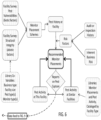
- FIG. 6 is a schematic illustrating an exemplary implementation of a pest monitoring and control system to optimize a distribution of pest monitoring devices at a site in relation to actual data collected from the site, according to one aspect of the present disclosure.
- An account to be monitored generally includes one or more sites, wherein pest monitoring devices as disclosed herein must be distributed at and about each site. Initially, each site being monitored is tagged with descriptive features for a facility, such as the nature of the business, its location, the facility size, and the type(s) of pests considered or type(s) of monitors deployed. Two site-specific surveys are then completed. One survey assesses abiotic factors that enable pest incidence in a facility, such as the number of external openings (e.g., doors, loading docks, windows) in a building, through which pests could travel into the facility. Another survey assesses biotic factors that sustain pest incidence within a facility, such as open food or water sources.
- abiotic factors that enable pest incidence in a facility such as the number of external openings (e.g., doors, loading docks, windows) in a building, through which pests could travel into the facility.
- Another survey assesses biotic factors that sustain pest incidence within a facility, such as open food or water sources.
- Results of these surveys are then analyzed to determine the number and placement of pest monitors at the monitored site. For example, as suggested by the analysis results, one monitor is placed on either side of doors that serve as pest entry points and/or one monitor is located within a prescribed distance of a food and/or water source to which pests frequently travel. With a base number of pest monitor locations about the site, thus determined, recent history of pest activity at the site is cross-referenced with the suggested pest monitor distribution from the initial analysis, to further suggest an increase in the number of pest monitors at locations about the site with a historical record of pest activity to form an adjusted distribution of pest monitors.
- a risk quotient may be applied to the adjusted distribution to further modify the number of deployed pest monitors, wherein the risk quotient may be 1) proportional to the record of past pest incidents as reflected in historical audits or inspections, 2) related to the risk tolerance for the particular type of business conducted at the site.
- the foregoing process defines the scheme for recommended number and placement of pest monitors within and/or about a facility at a site for detecting the presence of unwanted pests.
- the system can "learn” from the accrued pest reports to periodically change the number of pest monitors and/or optimize the distribution/placement of the pest monitors, in response to on-going pest activity within or about the facility, or otherwise at the site.
- the system can draw data from a "library" of pest monitoring device deployment at other facilities/sites running a similar type of business, having a similar facility size or location, etc. In this manner, the number and placement of pest monitors at the monitored site can be continuously or periodically optimized (increased or decreased, or repositioned) to minimize the expense of pest monitoring hardware, while keeping pest incidence within acceptable limits set for the facility/site.
- each pesticide dispensing / application unit 800 includes a reservoir 810 configured to house a diluent 820, a pesticide module 830 configured to house a pesticide substance 840, and a transmitter module 850 configured to transmit data therefrom; and a computer device 900 remotely disposed with respect to the pesticide dispensing / application units 800.
- element 800 may be referred to as one in the same as a pesticide dispensing unit, a pesticide application unit, and/or a pesticide dispensing / application unit, as appropriate or desired.
- the computer device 900 is configured to receive pesticide substance usage data from the pesticide dispensing units 800 via the respective transmitter module 850, wherein the pesticide substance usage data includes, for example, an amount or a rate of the pesticide substance 840 dispensed from the pesticide module 830 of any of the pesticide dispensing units 800 to form a pest treatment having a concentration of the pesticide substance in the diluent, and wherein the formed pest treatment is dispensed from the pesticide dispensing unit 800, whether automatically or through usage of the pesticide dispensing unit 800 by a pest control technician, to treat a pest at the site 300.
- the computer device 900 comprises processing circuitry, a processor and a non-transitory memory (see, e.g., computer device 400 as shown in FIG. 2 ) storing executable instructions that, in response to execution by the processor, cause the computer device 900 to at least determine and monitor usage of the pesticide substance 840.
- the one or more pesticide dispensing units 800 may each comprise a receiver module 870 (see, e.g., FIG.
- the pesticide dispensing units 800 may have many different configurations.
- One example of an appropriate pesticide dispensing unit 800 including a reservoir 810 configured to house a diluent 820, and a pesticide module 830 configured to house a pesticide substance 840 is disclosed, for example, in co-pending U.S. Patent Application Serial No.
- the pesticide application system 700 may be a "stand-alone" system arranged in the manner herein disclosed.
- the pesticide application system 700 may be included in or otherwise associated with the pest monitoring and control system 100 disclosed hereinabove.
- the computer device 400 of the pest monitoring and control system 100 may the same as, cooperative with, or otherwise associated with the computer device 900 of the pesticide application system 700.
- actual site data may be provided to the computer device 900 of the pesticide application system 700 by the pest monitoring device(s) 200 of the pest monitoring and control system 100.
- the pesticide dispensing unit(s) 800 of the pesticide application system 700 may be the designated remedy, may include the designated remedy, or at least associated with the designated remedy dispatched to the site 300 by the computer device 400 of the pest monitoring and control system 100 (or by the computer device 900, either directly or via notification of a PCO 550 as shown, for example, in FIG. 7 ), for automatic effectuation or by effectuation by directions/instructions imparted to a pest control technician, to address one or more detected pests at the site 300.
- a regional, national, or global database on pesticide application practices can be apportioned by job type and correlated with pest detection incidences derived from pest monitoring devices 200 or other actual site data.
- performance of pest management programs implemented by various pest control organizations (PCOs) can be monitored and analyzed, and best practices recommendations in regard to pesticide application can be determined.
- PCOs pest control organizations
- the system 700 comprises a plurality of pesticide dispensing units 800.
- the computer device 900 is configured to determine an overall usage of the pesticide substance 840 based on the amount or the rate thereof dispensed from the pesticide modules 830 of the collective plurality of the pesticide dispensing units 800. Based on the determined usage amount or usage rate of the pesticide substance 840, the computer device 900 is configured to determine a normal usage distribution statistic for the pesticide substance 840 dispensed from one or more of the pesticide dispensing units 800.
- the computer device 900 is configured to compare the determined usage of the pesticide substance 840 from any of the pesticide dispensing units 800 to the normal usage distribution statistic to determine any of the pesticide dispensing units 800 dispensing more than or less than the normal usage distribution statistic for the pesticide substance 840.
- a pest control organization (PCO) manager can index or benchmark usage of the pesticide substance 840 by a particular pesticide dispensing unit 800 against a pool or selected group of pesticide dispensing units 800 performing a similar job / dispensing the same pesticide substance 840, whether the selected group of pesticide dispensing units 800 are within the same PCO, or whether the selected group extends across several different PCOs in a particular region or across the nation.
- PCO pest control organization
- the computer device 900 By tracking/monitoring the usage of a pesticide substance by certain pesticide dispensing units 800, for example, by a particular job type (i.e., a routine dispatch of a pest control technician to respond to a pest detection at a site 300 in a region having other similar sites that are being monitored/treated), the computer device 900 is configured to determine distribution statistics for "normal usage" of the pesticide substance 840 and can automatically flag or highlight individual pesticide dispensing unit(s) 800 and the pest control technician(s) associated therewith that are statistical outliers from the normal distribution statistic for usage of the pesticide substance 840.
- each pesticide dispensing unit 800 is associated with a pest control technician and, in response to the determined usage of the pesticide substance 840 from any of the pesticide dispensing units 800 being outside the normal usage distribution statistic, the computer device 900 is configured to determine remedial pesticide application training for the pest control technician.
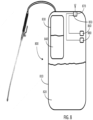
- the one or more pesticide dispensing units 800 each comprise a timer module 860 (see, e.g., FIG. 8 ) in communication with the transmitter module 850, wherein the timer module 860 is configured to determine a duration of a pesticide application event by the respective pesticide dispensing unit 800, and wherein the computer device 900 is configured to determine a normal duration (i.e., the duration of a pesticide application event) distribution statistic for a plurality of the pesticide application events.
- the computer device 900 is configured to compare the determined duration of the pesticide application event from any of the pesticide dispensing units 800 to the normal duration distribution statistic, in order to determine any of the pesticide dispensing units 800 being used for more than or less than the normal duration distribution statistic for the plurality of pesticide application events.
- each pesticide dispensing unit is associated with a pest control technician, and, in response to the determined duration of the pesticide application event from any of the pesticide dispensing units 800 being outside the normal duration distribution statistic, the computer device 900 is configured to determine and monitor remedial pesticide application training for the pest control technician.
- the computer device 900 is configured to determine distribution statistics for "normal application time” and can automatically flag or highlight individual pesticide dispensing unit(s) 800 and the pest control technician(s) associated therewith that are statistical outliers from the normal distribution statistic for the time required to complete a pesticide application job.
- PCO managers can use this information in planning and scheduling of resources (pest control technicians) on the basis of application efficiency to more accurately allocate work among pest control technicians.
- the computer device 900 may be configured to automate pricing for the pesticide application job, for example, via a pricing estimation based on the normal time/duration distribution, which, in turn can be used for customer billing purposes.
- the computer device 900 is configured to identify pest control technicians who are faster or slower in completing a particular pesticide application job type than the normal time/duration distribution, and can automatically direct those non-conforming pest control technicians, for example, to on-line video training modules that help improve consistency with established best practices with such pesticide application jobs.
- the computer device 900 may also be configured track or monitor compliance of those pest control technicians with the remedial training, and further to correlate this completion of remedial training with any subsequent change in the performance of the pest control technician with respect to duration of a pesticide application job. Any improvement in performance by the pest control technician can thus be commended, or additional training can be recommended if the pest control technician's performance has not improved.
- the computer device 900 can be configured to identify any pest control technician who under-apply or over-apply (overall usage or application rate) pesticide products compared to respective normal usage distribution statistics, and can automatically direct those non-conforming pest control technicians, for example, to on-line video training modules that help improve consistency with established best practices with application of such pesticide products.
- the computer device 900 can be configured to track or monitor compliance of those pest control technicians with the remedial training, and further to correlate this completion of remedial training with any subsequent change in pesticide product usage or application rate. Any improvement in performance by the pest control technician can thus be commended, or additional training can be recommended if the pest control technician's performance has not improved.
- the computer device 900 is configured to correlate data from environmental monitors associated with the site 300, physical factors data associated with the site 300, data from facility monitors associated with the site 300, data associated with operation factors associated with the site 300, or external environmental factor data associated with external environmental factors affecting the site 300, with the determined usage of the pesticide substance. That is, the computer device 900 may be configured to track or monitor detected pest activity across many different types of sites. This detected pest activity can then be correlated with operational cycles (i.e., factors internal to the operation of the site) and/or seasonal/weather patterns affecting the site 300 (i.e., factors external to the site) to produce predictive analytics with respect to various pests.
- operational cycles i.e., factors internal to the operation of the site
- seasonal/weather patterns affecting the site 300 i.e., factors external to the site
- the computer device 900 may also be configured to provide alerts to site managers or PCO managers when a particular site type is trending toward or will have upcoming occurrences/events conducive to an increased level of pest activity, so that appropriate measures can be taken to prevent a problematic pest infestation. Still further, the computer device 900 can be configured to recommend best site/PCO management practices that can be implemented to prevent and/or solve the predicted pest infestation. Furthermore, by the computer device 900 automatically correlating site location and weather information about the site, with pesticide product usage histories, compliance records for the site may be readily generated efficiently addressing regulatory inquiries and/or any routine queries on site safety and/or environmental issues about the site, without requiring warehousing and sorting through paper records.
- the computer device 900 is configured to determine a weather forecast associated with the site 300 or the location thereof, and to direct the pesticide dispensing unit 800, the associated pest control technician, or the site manager to refrain from dispensing the pest treatment at the site 300, if the weather forecast includes a weather event contraindicating dispensation of the pest treatment. That is, certain pesticides, such as pyrethroid insecticides, include instructions advising that the product not be applied if rain is forecast about the site within a 24 hour period of application.
- the computer device 900 may be configured to consult a weather forecasting service to obtain an appropriate forecast for a site location, and correlate the appropriate weather forecast with real-time information regarding a pest control technician / pesticide dispensing unit 800 dispatched to the site. Accordingly, the computer device 900 can issue an alert to the site manager, the pest control technician, or to the pesticide dispensing unit 800, itself, that the usage or application of a particular pesticide product is contraindicated at the present time due to recommended application instructions.
- the computer device 900 may be configured to allow the site manager and/or the PCO manager to prevent a pest control technician from using or applying a particular pesticide product, for example, if applying the pesticide substance would be contraindicated by pesticide application guidelines, if applying the pesticide substance would be in violation of applicable local rules or governing laws, and/or to facilitate compliance with applicable environmental stewardship guidelines associated with the site. That is, notwithstanding federal approval for a particular pesticide product, private companies/sites often establish approved product lists so as to regulate what pesticide products can be used in association with a particular site.
- the computer device 900 By correlating location information of a pesticide dispensing unit 800 and the pesticide substance to be dispensed thereby, with a directory of approved pesticide product for the site/location, the computer device 900 is configured to automatically alert/notify the pest control technician or site manager of the same, before an unapproved product is used, thereby ensuring compliance with particular site policies or laws or regulations affecting the site.
- a geospatial location module 880 i.e., a GPS enabled device as shown, for example, in FIG. 8
- the computer device 900 is configured to correlate a location of the site 300 with locations of the pesticide dispensing units 800 determined from the respective geospatial location module 880 (as well as the location of the associated pest control technician), as transmitted to the computer device 900 via the transmitter module 850.
- the computer device 900 may further be configured to dispatch the pest control technician, associated with the pesticide dispensing unit 800 closest to the location of the site 300, to the site 300 to dispense the pest treatment.
- the computer device 900 can automatically route alerts/notifications of detected pest activity received from a site to the pesticide dispensing unit 800 / pest control technician closest to the site 300 so as to, for example, minimize response time and optimize labor utilization. Also, upon collection of sufficient data, the computer device 900 can be adaptable to sort alerts/notifications by severity or importance of the detected pest activity at various sites, and to dispatch certain resources (i.e., on-site personnel or resources) to respond to less serious detected pest problems, while escalating to dispatching particular pest control technicians from the PCO for more serious detected pest problems.
- certain resources i.e., on-site personnel or resources
- the computer device 900 may be configured to determine the locations of the pesticide dispensing units 800 from the respective geospatial location module 880, to compare the location of any one of the pesticide dispensing units 800 to pest treatment restrictions for the location, and to designate an alternate pest treatment if the designated pest treatment conflicts with the pest treatment restrictions for the location.
- the pesticide module 880 of the respective pesticide dispensing unit 800 is configured to monitor consumption of the pesticide substance 840 housed thereby and to transmit associated consumption data to the computer device 900 via the transmitter module 850.
- the computer device 900 is configured to analyze the consumption data to determine a usage rate for the pesticide substance 840 in the pesticide module 830, an ordering interval for a replacement pesticide module to replace the pesticide module 830 upon depletion of the pesticide substance 840 housed thereby, a retrieving interval for retrieving the pesticide module 830 upon depletion of the pesticide substance 840 housed thereby, or an inventory level of the pesticide modules 830 required to provide expedient replacement of the pesticide module 830 upon depletion of the pesticide substance 840 housed thereby.
- the computer device 900 may be configured, for example, to create a verifiable record for each individual pest control technician / pesticide dispensing unit 800, so as to provide an accurate record of the pesticide product(s) being applied, the quantity or application rate thereof, the site location, and the date(s) of application.
- the computer device 900 is thus capable of monitoring and reporting exposure to certain pesticide product(s) for occupational health compliance (i.e., environmental exposure).
- one possible advantage or benefit to the aspects of the pesticide dispensing unit 800 disclosed herein is, for example, that the automated and closed/contained formation of the pest treatment through mixing the pesticide substance 840 from the pesticide module 830 with the diluent 820 from the reservoir 810, reduces exposure of the pest control technician and/or the proximate public to the pesticide substance 840 which may be in concentrated form.
- the computer device 900 is configured to compare the consumption data, for example, regarding the usage amount or rate of the pesticide substance 840 in the various pesticide modules 830, to an inventory of pesticide modules 830 housing the pesticide substance 840 and pesticide modules depleted of the pesticide substance, to generate audit data (i.e., for tracking the pesticide modules 830 and overall consumption of the pesticide product(s)).
- audit data i.e., for tracking the pesticide modules 830 and overall consumption of the pesticide product(s)
- the computer device 900 may be configured to monitor inventories available at distinct levels: within the company (i.e., PCO), individual branch locations, or within every service vehicle.
- Supply chain logistics can thus be optimized, enabling automatic inventory replenishment that get the right pesticide product(s) to the right pest control technician(s) in the right quantities on a "just in time” basis.
- the computer device 900 can automatically schedule retrieval or empty /depleted pesticide modules 830 for recycling or replacement.
- the computer device 90 may be configured to monitor for any discrepancies in the pesticide product(s) and generate stewardship alerts for possible misappropriated / stolen / misplaced pesticide product(s) in response to any discovered discrepancies. In other instances, such discrepancies may indicate, for example, that calibration of the various pesticide dispensing units 800 may be needed.
- the computer device 900 is configured to determine supply chain information associated with the pesticide module 830 housing the pesticide substance 840, and to compare the supply chain information to pest detection information associated with the site 300 to monitor pesticide substance product quality or pesticide substance performance metrics. That is, through access to product supply databases, identifying batch, assay, supplier, etc. information associated with various pesticide products, the computer device 900, also performing analysis on pest detection occurrences at the site 300, is configured to determine pesticide product quality issues or performance / efficacy problems. As a result, alerts/notifications can be promptly issued to handle any product recalls that may be necessary.
- FIG. 9 is a schematic illustration of an exemplary implementation of a pesticide application system to optimize pesticide usage and handling at a site in relation to actual data collected from the site, according to one aspect of the present disclosure. That is, in this example, the system is deployed to optimize pest management, in particular the application of pesticide formulations at a site to mitigate pest incidence in a facility, private residence or multi-unit residence.
- An account generally includes one or more sites, with each site being serviced by the system being tagged with descriptive features for a facility, such as the nature of the business, its location, the facility size, and/or the type(s) of pests encountered.
- the characteristics of the pesticide application event are recorded, such as the date a particular pesticide was applied, as well as the particular concentration and volume of that particular pesticide.
- This treatment event record of the pesticide application is logged into a database for analysis. Diverse analytics are performed on the accumulated treatment events.
- external databases are accessed to retrieve temperature and precipitation events at the site, and this data can be correlated with the frequency of treatment events to learn how weather effects the persistence / efficacy of a particular pesticide used and applied at the site.
- the system can be configured to consult various 'libraries' that summarize governmental or private restrictions on when or where a particular pesticide can be used, and can send alerts to a technician (via a connected pesticide application device) to prevent unintentional violations from negatively affecting the compliance record of the pest management firm.
- a pest management firm may establish a priori thresholds, or conduct a posteriori analysis of treatment events, to flag outliers in treatment events where corrective action is required. For example, by tracking pesticide applications by all of their technicians, the pest management firm can establish thresholds of application volume or even service time (i.e., by arithmetic mean plus or minus one standard deviation). The pest control firm can then identify technicians who are applying too much of pesticide or technicians who are not spending enough time to properly service the facility/site. With this insight, the pest control firm can direct technicians to training resources to ensure compliance with company standards of service or industry standard practice, for example, based on analysis of pesticide treatment records for similar facilities/sites associated with a multitude of other companies whose data is in the master database.
- userdefined thresholds may be established for pest incidence that signals the need for a pesticide treatment at a facility/site.
- the optimized pest management system can generate an alert notifying the technician or pest management firm of the need for an additional pesticide application service at the facility/site.
- the "need for service" alert may be modified in different manners. For example, a particular pesticide product may be recommended if the time period since the last pesticide application service is shorter than expectation (i.e., a shorter interval based on manufacturer-recommended treatment). Based on records of the instant pest management firm, or from a multitude of other similarly-situated pesticide management firms, the expected effective duration of pest suppression following a pesticide treatment can be established (i.e., by the arithmetic mean plus or minus one standard deviation). Deviation from this threshold could be suggestive of poor performance, either by the technician, the pesticide chemical, or both.
- a scheduled rotation may be established between or among different pesticides.
- the system thus keeps track of sequential use of one pesticide within a facility/at a site and then recommends the next pesticide product to be used in the management scheme for preventing pesticide resistance in the targeted pests. Poor performance outside of a normative result can also serve as an alert to a risk for pest resistance development to the pesticide, or to other conditions that reduce the effectiveness of the pesticide.
- the system can thus be used to regulate pesticide application events, in the frequency or quality, by delivery data insights. Further, via interactions with pest alerts determined by an associated pest monitoring system, the system can optimize pest management in a facility/at a site by minimizing the expense and risk associated with pesticide treatments, while keeping pest incidence within acceptable limits set for the facility/site.
- aspects of the present disclosure also provide methods performed by the disclosed and claimed systems, as shown generally in the operational flow diagrams of FIGS. 8 and 9 , and as discussed throughout the disclosure herein.
- aspects of the present disclosure may also provide associated non-transitory computer-readable storage mediums each having computer-readable program code stored therein that, in response to execution by a processor, causes an apparatus to at least perform the methods disclosed herein.
- computer program product(s) for performing the functions/operations/steps disclosed above in the form of, for example, a non-transitory computer-readable storage medium (i.e., memory device) having particular computer-readable program code portions stored therein by the medium that, in response to execution by the processor device, cause the apparatus to at least perform the steps disclosed herein.
- a non-transitory computer-readable storage medium i.e., memory device
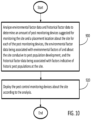
- FIGS. 8 and 9 are operational flow diagrams associated with particular methods, systems, apparatuses and computer program products according to particular aspects of the present disclosure. More particularly, FIG. 10 schematically illustrates a method of pest monitoring and control at a site, according to one aspect of the present disclosure, comprising analyzing environmental factor data and historical factor data to determine an amount of pest monitoring devices suggested for monitoring the site and a placement location about the site for each of the pest monitoring devices, the environmental factor data being associated with environmental factors of and about the site conducive to pest population development, and the historical factor data being associated with factors indicative of historic pest populations at the site (Block 900); and deploying the pest control monitoring devices about the site according to the analysis (Block 920).
- FIG. 10 schematically illustrates a method of pest monitoring and control at a site, according to one aspect of the present disclosure, comprising analyzing environmental factor data and historical factor data to determine an amount of pest monitoring devices suggested for monitoring the site and a placement location about the site for each of the pest monitoring devices, the environmental factor data being associated with environmental factors of and about
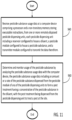
- FIG. 11 schematically illustrates an operation flow diagram of a method of pesticide application at a site, comprising receiving pesticide substance usage data at a computer device comprising a processor and a non-transitory memory storing executable instructions, from one or more remotely disposed pesticide dispensing units, each pesticide dispensing unit including a reservoir configured to house a diluent, a pesticide module configured to house a pesticide substance, and a transmitter module configured to transmit the data therefrom (Block 940); and determining and monitoring usage of the pesticide substance by analyzing the pesticide substance usage data with the computer device, the pesticide substance usage data including an amount or a rate of the pesticide substance dispensed from the pesticide module of any of the pesticide dispensing units to form a pest treatment having a concentration of the pesticide substance in the diluent, with the pest treatment being dispensed from the pesticide dispensing unit to treat a pest at the site (Block 960).
- each block or step of each operational flow diagram or combinations of blocks in the operational flow diagram can be implemented by appropriate computer program instructions executed by the processor device.
- These computer program instructions may be loaded onto a computer device or other programmable apparatus for executing the functions specified in the operational flow diagram otherwise associated with the method(s) disclosed herein.
- These computer program instructions may also be stored in a non-transitory computer-readable memory (i.e., memory device), so as to be accessible by a computer device or other programmable apparatus in a particular manner, such that the executable instructions stored in the computer-readable memory may produce or facilitate the operation of an article of manufacture capable of directing or otherwise executing the instructions which implement the functions specified in the operational flow diagram otherwise associated with the method(s) disclosed herein.
- the computer program instructions may also be loaded onto a computer device or other programmable apparatus to cause a series of operational steps to be performed on the computer device or other programmable apparatus to produce a computer-implemented process such that the instructions executed by the computer device or other programmable apparatus provide or otherwise direct appropriate steps for implementing the functions/steps specified in the operational flow diagram otherwise associated with the method(s) disclosed herein. It will also be understood that each step of the operational flow diagram, or combinations of steps in the operational flow diagram, can be implemented by special purpose hardware-based computer systems which perform the specified functions or steps, or combinations of special purpose hardware and computer instructions (software).
- program code instructions may be stored in memory, and executed by processing circuitry that is thereby programmed, to implement functions of the systems, subsystems, tools and their respective elements described herein.
- any suitable program code instructions may be loaded onto a computer or other programmable apparatus from a non-transitory computer-readable storage medium to produce a particular machine, such that the particular machine becomes a basis for implementing the functions specified herein.
- These program code instructions may also be stored in a non-transitory computer-readable storage medium that can direct a computer, a processing circuitry or other programmable apparatus to function in a particular manner to thereby generate a particular machine or particular article of manufacture.
- the instructions stored in the non-transitory computer-readable storage medium may produce an article of manufacture, where the article of manufacture becomes a means for implementing functions described herein.
- the program code instructions may be retrieved from a non-transitory computer-readable storage medium and loaded into a computer, processing circuitry or other programmable apparatus to configure the computer, processing circuitry or other programmable apparatus to execute operations to be performed on or by the computer, processing circuitry or other programmable apparatus.
- Retrieval, loading and execution of the program code instructions may be performed sequentially such that one instruction is retrieved, loaded and executed at a time. In some example implementations, retrieval, loading and/or execution may be performed in parallel such that multiple instructions are retrieved, loaded, and/or executed together. Execution of the program code instructions may produce a computer-implemented process such that the instructions executed by the computer, processing circuitry or other programmable apparatus provide operations for implementing functions described herein.
- an apparatus may include processing circuitry and a non-transitory computer-readable storage medium or memory coupled to the processing circuitry, where the processing circuitry is configured to execute computer-readable program code stored in the memory. It will also be understood that one or more functions, and combinations of functions, may be implemented by special purpose hardware-based computer systems and/or processing circuitry which perform the specified functions, or combinations of special purpose hardware and program code instructions.
- historical data of site treatment protocols and pest detection incidences may be used to perform analytics directed to various business performance metrics (e.g., account retention factors, satisfaction surveys) such that management can use these insights to optimize customer satisfaction and improve business growth and profitability.
- business performance metrics e.g., account retention factors, satisfaction surveys
Landscapes
- Life Sciences & Earth Sciences (AREA)
- Pest Control & Pesticides (AREA)
- Engineering & Computer Science (AREA)
- Business, Economics & Management (AREA)
- Human Resources & Organizations (AREA)
- Insects & Arthropods (AREA)
- Environmental Sciences (AREA)
- Wood Science & Technology (AREA)
- Zoology (AREA)
- Economics (AREA)
- Strategic Management (AREA)
- Educational Administration (AREA)
- Entrepreneurship & Innovation (AREA)
- General Health & Medical Sciences (AREA)
- Development Economics (AREA)
- Health & Medical Sciences (AREA)
- Toxicology (AREA)
- Marketing (AREA)
- Game Theory and Decision Science (AREA)
- Operations Research (AREA)
- Quality & Reliability (AREA)
- Tourism & Hospitality (AREA)
- Physics & Mathematics (AREA)
- General Business, Economics & Management (AREA)
- General Physics & Mathematics (AREA)
- Theoretical Computer Science (AREA)
- Catching Or Destruction (AREA)
- Management, Administration, Business Operations System, And Electronic Commerce (AREA)
Applications Claiming Priority (2)
| Application Number | Priority Date | Filing Date | Title |
|---|---|---|---|
| US15/485,820 US10834914B2 (en) | 2017-04-12 | 2017-04-12 | Pest control system and associated method |
| PCT/EP2018/059398 WO2018189298A1 (en) | 2017-04-12 | 2018-04-12 | Pest control system and associated method |
Publications (3)
| Publication Number | Publication Date |
|---|---|
| EP3609322A1 EP3609322A1 (en) | 2020-02-19 |
| EP3609322B1 true EP3609322B1 (en) | 2024-02-28 |
| EP3609322C0 EP3609322C0 (en) | 2024-02-28 |
Family
ID=62025824
Family Applications (1)
| Application Number | Title | Priority Date | Filing Date |
|---|---|---|---|
| EP18718771.1A Active EP3609322B1 (en) | 2017-04-12 | 2018-04-12 | Pest control system and associated method |
Country Status (7)
| Country | Link |
|---|---|
| US (2) | US10834914B2 (cg-RX-API-DMAC7.html) |
| EP (1) | EP3609322B1 (cg-RX-API-DMAC7.html) |
| JP (3) | JP7362483B2 (cg-RX-API-DMAC7.html) |
| CN (1) | CN110719733B (cg-RX-API-DMAC7.html) |
| BR (1) | BR112019021418B1 (cg-RX-API-DMAC7.html) |
| CA (1) | CA3059526A1 (cg-RX-API-DMAC7.html) |
| WO (1) | WO2018189298A1 (cg-RX-API-DMAC7.html) |
Families Citing this family (27)
| Publication number | Priority date | Publication date | Assignee | Title |
|---|---|---|---|---|
| KR101507554B1 (ko) * | 2014-12-12 | 2015-04-01 | 주식회사 이티엔디 | 해충정보관리를 위한 영상촬영기능을 갖춘 포충장치 |
| EP3378308A1 (en) * | 2017-03-24 | 2018-09-26 | Skehøjgaard Development ApS | System and method for detecting rats and mice infestations |
| US10834914B2 (en) * | 2017-04-12 | 2020-11-17 | Bayer Ag | Pest control system and associated method |
| US20190012926A1 (en) * | 2017-07-05 | 2019-01-10 | Tyfoom, Llc | User interface for enhanced safety and training compliance |
| US10798541B2 (en) | 2017-11-07 | 2020-10-06 | Pica Product Development, Llc | Systems, methods and devices for remote trap monitoring |
| US10909830B1 (en) | 2017-11-07 | 2021-02-02 | Pica Product Development, Llc | Personal emergency alert system, method and device |
| US10694338B2 (en) | 2017-11-07 | 2020-06-23 | Pica Product Development, Llc | Cellular automated external defibrillator (AED) tracker |
| ES3072796T3 (en) * | 2017-11-16 | 2026-07-06 | Google Llc | System and method for dynamic release planning for insect release |
| EP4344540A3 (en) | 2018-06-29 | 2024-08-14 | Smart Wave Technologies, Inc. | Pest control system having event monitoring |
| US20210315193A1 (en) * | 2018-10-26 | 2021-10-14 | Human Centered And Bio-Inspired Ideas For Daily Life S.R.L. In Sigla Hubilife S.R.L. | Bio-robotic device for luring and killing hematophagous arthropods |
| CN111596313B (zh) * | 2019-02-21 | 2022-05-10 | 深圳市玉龙环保产业有限公司 | 区域性四害数量检测系统及应用方法 |
| CN113939191B (zh) | 2019-04-03 | 2023-07-25 | 道农业科学有限公司 | 用于用有害生物检测站来检测有害生物的适配性有源红外传感器硬件和软件 |
| CN110506719B (zh) * | 2019-08-07 | 2022-04-29 | 泉州市绿普森生物科技有限公司 | 一种物联网性诱测报系统 |
| US12161103B2 (en) | 2020-03-04 | 2024-12-10 | Fmc Corporation | Systems and methods for predicting pest pressure using geospatial features and machine learning |
| MX2022010924A (es) * | 2020-03-04 | 2022-09-29 | Fmc Corp | Sistemas y metodos para mapas de calor de presion de plagas. |
| US12178202B2 (en) * | 2020-06-09 | 2024-12-31 | Rynan Technologies Pte. Ltd. | Insect monitoring system and method |
| CN112055079B (zh) * | 2020-09-03 | 2022-08-23 | 华艺生态园林股份有限公司 | 一种基于云计算平台的病虫害监测预警系统 |
| US20220087246A1 (en) * | 2020-09-23 | 2022-03-24 | International Business Machine Corporation | Detection of pests within an infrastructure by leveraging digital twin |
| SE546667C2 (en) * | 2020-12-08 | 2025-01-14 | Laensfoersaekringar Skaraborg | Method for managing a pest control system and a bait station |
| US20220232813A1 (en) * | 2021-01-23 | 2022-07-28 | PestNotify Patent Holdco, LLC | Insect Trap and Classification System |
| CN113317295A (zh) * | 2021-05-14 | 2021-08-31 | 北京百瑞盛田环保科技发展有限公司 | 一种施药监管方法、装置及系统 |
| CN114419441A (zh) * | 2022-01-18 | 2022-04-29 | 陈丽 | 一种农作物病虫害的监测方法和系统 |
| KR102619457B1 (ko) * | 2022-01-26 | 2023-12-28 | 국립생태원 | 침입외래종 위해 관리 평가시스템 |
| CN115203315B (zh) * | 2022-07-18 | 2023-06-27 | 浙江鼎昆环境科技有限公司 | 监测点状态展示系统及计算方法 |
| CN120266178A (zh) | 2022-10-14 | 2025-07-04 | 软银集团股份有限公司 | 自动驾驶车辆的控制装置、程序、信号控制装置、信号机装置、信号机系统、信号控制程序、信息通知装置以及信息通知程序 |
| CN116008479B (zh) * | 2023-01-04 | 2025-01-21 | 上海烟草集团有限责任公司 | 烟叶醇化质量控制方法、系统、介质及电子设备 |
| CN119071322B (zh) * | 2024-08-12 | 2025-05-13 | 深圳市名高科技有限公司 | 一种外来有害生物监测数据实时传输系统及方法 |
Family Cites Families (111)
| Publication number | Priority date | Publication date | Assignee | Title |
|---|---|---|---|---|
| GB8704375D0 (en) | 1987-02-25 | 1987-04-01 | Rentokil Ltd | Pest monitoring system |
| CA1332000C (en) * | 1988-10-04 | 1994-09-13 | Nicola Liburdi | Computerized fertilizer injector system |
| US5005416A (en) | 1989-04-04 | 1991-04-09 | The United States Of America As Represented By The Secretary Of Agriculture | Insect detection using a pitfall probe trap having vibration detection |
| US4937555A (en) | 1989-04-04 | 1990-06-26 | The United States Of America As Represented By The Secretary Of Agriculture | Piezoelectric apparatus and process for detection of insect infestation in an agricultural commodity |
| NL8901035A (nl) | 1989-04-25 | 1990-11-16 | Ecotronics Bv | Systeem ten behoeve van registratie en/of bestrijding van knaagdieren zoals muizen en ratten. |
| US5473942A (en) | 1992-10-19 | 1995-12-12 | Vick; Kenneth W. | Acoustic location fixing insect detector |
| TW263421B (cg-RX-API-DMAC7.html) | 1993-07-07 | 1995-11-21 | Sharp Kk | |
| US5646404A (en) | 1995-02-17 | 1997-07-08 | The United States Of America As Represented By The Secretary Of Agriculture | Electronic grain probe insect counter (EGPIC) |
| US6493363B1 (en) | 1995-11-09 | 2002-12-10 | The United States Of America As Represented By The Secretary Of Agricultural | Automated counting insect electrocutor |
| US6055766A (en) | 1996-08-09 | 2000-05-02 | Biosensory Insect Control Corporation | Apparatus for attracting and destroying insects |
| US5815090A (en) | 1996-10-31 | 1998-09-29 | University Of Florida Research Foundation, Inc. | Remote monitoring system for detecting termites |
| US6339897B1 (en) | 1997-07-08 | 2002-01-22 | Microfab Technologies, Inc. | Method and apparatus for dispensing airborne materials for controlling pests |
| US8400348B1 (en) | 1999-05-14 | 2013-03-19 | Applied Information Movement and Management, Inc. | Airborne biota monitoring and control system |
| US6653971B1 (en) | 1999-05-14 | 2003-11-25 | David L. Guice | Airborne biota monitoring and control system |
| US7026942B2 (en) | 1999-06-08 | 2006-04-11 | Gilberto Cristofori | Method for signalling the presence of prey in traps for vermin and device for carrying out this method |
| US6150944A (en) | 1999-07-15 | 2000-11-21 | Relative Solutions Corporation | Termite detection apparatus |
| US7212112B2 (en) | 1999-07-21 | 2007-05-01 | Dow Agrosciences Llc | Detection and control of pests |
| AU8651601A (en) | 2000-08-22 | 2002-03-04 | Eye On Solutions Llc | Remote detection, monitoring and information management system |
| US6445301B1 (en) | 2000-09-12 | 2002-09-03 | Liphatech, Inc. | Electronic pest monitoring system and method |
| US6669105B2 (en) | 2000-09-13 | 2003-12-30 | Adapco, Inc. | Closed-loop mosquito insecticide delivery system and method |
| US6766251B2 (en) | 2001-02-05 | 2004-07-20 | Isca Technologies, Inc. | Method for pest management using pest identification sensors and network accessible database |
| US6385544B1 (en) | 2001-02-05 | 2002-05-07 | Agenor Mafra-Neto | Method for pest management and crop certification utilizing network accessible database |
| EP1239421B1 (fr) | 2001-03-08 | 2008-10-15 | EM Microelectronic-Marin SA | Système de détection de passage d'individus ou d'objets par une entrée-sortie à un espace délimité |
| US7020996B2 (en) | 2001-04-06 | 2006-04-04 | Morton Beroza | Method and system for remotely detecting trapped insects |
| US20020144452A1 (en) | 2001-04-06 | 2002-10-10 | Morton Beroza | More efficient and environmentally-desirable means of detecting insects entering lure-baited traps or attractive areas |
| US6882279B2 (en) | 2001-05-02 | 2005-04-19 | The United States Of America As Represented By The Secretary Of Agriculture | Sensor output analog processing-A microcontroller-based insect monitoring system |
| US6874707B2 (en) | 2001-05-31 | 2005-04-05 | Terra Spase | System for automated monitoring and maintenance of crops including computer control of irrigation and chemical delivery using multiple channel conduit |
| FR2825801B1 (fr) | 2001-06-08 | 2003-10-03 | Solween Technologies | Procede et dispositif pour la detection, l'identification et la quantification densimetrique d'insectes granivores dans des stocks cerealisers ou autres |
| US6775946B2 (en) | 2001-06-11 | 2004-08-17 | The Chamberlain Group, Inc. | Remote identifying animal trap |
| CN101023743A (zh) * | 2001-08-09 | 2007-08-29 | 道农业科学有限公司 | 虫害的检测与防治 |
| JP2003168181A (ja) | 2001-11-29 | 2003-06-13 | Kansai Sogo Kankyo Center:Kk | 環境測定装置及び当該装置を用いた環境監視システム及び害虫監視システム |
| US20030160699A1 (en) | 2002-02-22 | 2003-08-28 | Aircom Manufacturing, Inc. | Apparatus, system and method for pest determination and notification |
| WO2003084321A1 (en) | 2002-03-29 | 2003-10-16 | Ecolab Inc. | Method and apparatus for capacitively sensing pests |
| US7071829B2 (en) | 2002-03-29 | 2006-07-04 | Ecolab Inc. | Light extinction based non-destructive flying insect detector |
| DE60304049T2 (de) | 2002-03-29 | 2006-10-26 | Ecolab Inc., Saint Paul | Verfahren und vorrichtung zur automatischen erzeugung von schädlingsfangberichten und zur aufzeichnung zusätzlicher fangparameterdaten |
| US7032346B1 (en) * | 2002-04-12 | 2006-04-25 | Calvin Richard | Foundation fumigation system |
| AU2002950326A0 (en) | 2002-07-24 | 2002-09-12 | J I Peston Pty Ltd | An electronic bait station |
| AU2003261621A1 (en) * | 2002-09-02 | 2004-03-19 | Cesco Co., Ltd. | Remote monitoring system for exterminating pest and a method thereof |
| US7530195B2 (en) | 2002-10-02 | 2009-05-12 | Ratco Aps | Electrocution animal trap with a sender |
| US7271706B2 (en) | 2002-10-09 | 2007-09-18 | The University Of Mississippi | Termite acoustic detection |
| US20040216364A1 (en) | 2003-04-08 | 2004-11-04 | Joel Norman Joseph Gosselin | Pest trap monitoring system |
| US7496228B2 (en) | 2003-06-13 | 2009-02-24 | Landwehr Val R | Method and system for detecting and classifying objects in images, such as insects and other arthropods |
| US7656300B2 (en) | 2003-06-16 | 2010-02-02 | Rønnau Development ApS | Pest control system |
| US20050151653A1 (en) | 2003-07-25 | 2005-07-14 | Chan Wee P. | Method and apparatus for determining the occurrence of animal incidence |
| GB2407016A (en) | 2003-10-14 | 2005-04-20 | Rentokil Initial Uk Ltd | Pest detection apparatus |
| US7540433B2 (en) | 2003-10-29 | 2009-06-02 | Tmc Systems, L.P. | Insect control system and method |
| US7066218B1 (en) | 2003-10-29 | 2006-06-27 | Tmc Systems, L.P. | Insect control system and method |
| US20050125260A1 (en) | 2003-12-08 | 2005-06-09 | Agflex, Inc. | Method for quoting and contracting for management of inputs and services under a commercial service agreement, with a service loss guaranty or insurance policy and using an information management system |
| US7506547B2 (en) | 2004-01-26 | 2009-03-24 | Jesmonth Richard E | System and method for generating three-dimensional density-based defect map |
| KR100689966B1 (ko) | 2004-02-28 | 2007-03-08 | 주식회사 세스코 | 포획율을 향상시킨 바퀴벌레 트랩 및 이를 이용한 원격모니터링 시스템 |
| US7090147B2 (en) | 2004-03-23 | 2006-08-15 | Rod Lovett | Mosquito misting system |
| EP1595452A1 (en) | 2004-05-13 | 2005-11-16 | ISCA Technologies | Method for pest management using pest identification sensors and network accessible database |
| JP2006034251A (ja) * | 2004-07-30 | 2006-02-09 | Soko Denshi Kk | 液体散布システム |
| US7264177B2 (en) * | 2004-08-03 | 2007-09-04 | Intelligent Lawn Systems, L.P. | Methods, systems and apparatuses for automated irrigation and chemical treatment |
| US7286056B2 (en) | 2005-03-22 | 2007-10-23 | Lawrence Kates | System and method for pest detection |
| GB0517917D0 (en) | 2005-09-03 | 2005-10-12 | Riwa Ltd | A bait box |
| US7295898B2 (en) | 2006-01-24 | 2007-11-13 | Mist Away Systems, Inc. | Insect control apparatus and method |
| US7395161B2 (en) | 2006-02-10 | 2008-07-01 | David Thomas A | Polymodal biological detection system |
| DK177937B1 (da) | 2006-10-19 | 2015-01-19 | Paf Holding Aps | Rottefælde |
| ES2702357T3 (es) | 2006-10-23 | 2019-02-28 | Dow Agrosciences Llc | Técnicas de detección, monitorización y control de ácaros |
| US8258966B2 (en) | 2006-11-13 | 2012-09-04 | Syngenta Limited | Pest detector |
| WO2008083062A1 (en) | 2006-12-29 | 2008-07-10 | Pioneer Hi-Bred International, Inc. | Automated location-based information recall |
| US20080236023A1 (en) | 2007-03-28 | 2008-10-02 | Ecolab Inc. | Automated pest-trapping device |
| NZ554311A (en) | 2007-04-02 | 2009-10-30 | Contimo Ltd | A pest control device |
| WO2009026201A1 (en) | 2007-08-20 | 2009-02-26 | The Lubrizol Corporation | Polymers with pendant heterocyclic-containing groups and lubricating oil compositions containing same |
| US9015987B2 (en) | 2007-12-27 | 2015-04-28 | New Frequency, Inc. | Telemetry-enabled trap monitoring system |
| DE202008003216U1 (de) | 2008-03-06 | 2009-07-16 | Futura Gmbh Vertriebsgesellschaft | Kleintierfalle |
| TWI385604B (zh) | 2008-04-03 | 2013-02-11 | 國立臺灣大學 | 多關卡感測型群集動物數量自動統計裝置 |
| TWI375930B (en) | 2008-04-03 | 2012-11-01 | Univ Nat Taiwan | Distant ecosystem monitoring system front-end gateway device |
| US8448377B1 (en) | 2008-05-09 | 2013-05-28 | Hampton Harold Price, III | Closed-circuit pest extermination system |
| US8026822B2 (en) | 2008-09-09 | 2011-09-27 | Dow Agrosciences Llc | Networked pest control system |
| US8224481B2 (en) * | 2009-01-19 | 2012-07-17 | Access Business Group International Llc | Method and apparatus for dispensing fluid compositions |
| US8994529B2 (en) | 2009-06-08 | 2015-03-31 | Jeffrey C. White | Mosquito misting system and method for using same |
| US8156683B2 (en) | 2009-07-09 | 2012-04-17 | David Slotnick | Wireless rat trap movement detection system |
| US8599026B2 (en) | 2009-11-11 | 2013-12-03 | Nisus Corporation | Animal control system |
| JP2010046095A (ja) | 2009-11-30 | 2010-03-04 | Dow Agrosciences Llc | 害虫駆除方法及び装置 |
| JP5150677B2 (ja) | 2010-05-14 | 2013-02-20 | イカリ消毒株式会社 | 防鼠システム |
| US8504234B2 (en) | 2010-08-20 | 2013-08-06 | Deere & Company | Robotic pesticide application |
| US9357759B2 (en) | 2010-08-20 | 2016-06-07 | Deere & Company | Networked chemical dispersion system |
| LT2627170T (lt) | 2010-10-17 | 2020-09-10 | Purdue Research Foundation | Elektroninė vabzdžių populiacijų stebėsena |
| SG189915A1 (en) | 2010-10-29 | 2013-06-28 | Commw Scient Ind Res Org | A real-time insect monitoring device |
| US20120175429A1 (en) * | 2011-01-06 | 2012-07-12 | Zupsic Matthew M | Fluid dispenser and processes thereof |
| BE1019897A3 (fr) | 2011-04-05 | 2013-02-05 | Frojmovics Abraham | Methode et systeme de controle et de communication des statuts de postes d'appatages de nuisibles. |
| JP5346983B2 (ja) | 2011-05-09 | 2013-11-20 | ヤマホ工業株式会社 | 簡易式噴霧機 |
| US9939540B2 (en) | 2011-08-19 | 2018-04-10 | Cornell University | System and methods for remote monitoring |
| US9433201B2 (en) | 2011-08-26 | 2016-09-06 | Joseph F. Azzarello, JR. | Pest control system and method |
| US20130047497A1 (en) | 2011-08-29 | 2013-02-28 | Jeffrey C. White | Insect control system |
| BRPI1104356A2 (pt) | 2011-11-01 | 2013-09-03 | Attax Dedetizacco Desratizacco Sc Ltda Me | mÉtodo e sistema de controle e eliminaÇço de pragas |
| WO2013137919A1 (en) | 2012-03-12 | 2013-09-19 | Global Ip Holding Co., Llc | Polymodal detection notification and first response pest treatment system |
| US8896452B2 (en) | 2012-03-24 | 2014-11-25 | Plurasense, Inc. | Bettle sensing device and method of use |
| WO2013177652A1 (en) | 2012-05-29 | 2013-12-05 | Animal Deterrent Systems Ltd. | Multiple-use vermin trap apparatus, method and system |
| US20130342344A1 (en) | 2012-06-20 | 2013-12-26 | BlueRadios, Inc. | Wireless Mousetrap and System |
| US20150216158A1 (en) | 2012-09-04 | 2015-08-06 | The State of Israel, Ministry of Agriculture & Rural Dev., Agri. Research Org. (ARO) (Volcanic Ce | System for automatic trapping and counting of flying insects |
| US20140300477A1 (en) | 2012-09-25 | 2014-10-09 | Woodstream Corporation | Wireless notification systems and methods for electronic rodent traps |
| US20140085100A1 (en) | 2012-09-25 | 2014-03-27 | Woodstream Corporation | Wireless notification system and method for electronic rodent traps |
| WO2014125158A1 (en) | 2013-02-14 | 2014-08-21 | Kanniainen Teo | A method and an apparatus for imaging arthropods |
| KR101388928B1 (ko) | 2013-03-11 | 2014-04-24 | 고형순 | 해충 탐지 장치 및 시스템, 해충에 의한 손상 탐지 방법 |
| MX2015013180A (es) | 2013-03-15 | 2016-04-20 | Basf Se | Sistema de mezclado y dispensado de plaguicida automatizado y método de uso. |
| US20140279600A1 (en) | 2013-03-15 | 2014-09-18 | Mitchell Barry Chait | Automated monitoring of pest traps in a distributed work environment |
| BR112016004980B1 (pt) | 2013-09-10 | 2020-10-06 | Basf Se | Sistema de monitoramento de pragas e método de monitoramento |
| US20160023873A1 (en) | 2014-07-22 | 2016-01-28 | Eli Kasan | Pry bar |
| TWI574607B (zh) | 2014-11-27 | 2017-03-21 | 國立臺灣大學 | 用於作物的施藥系統及其施藥方法 |
| US9999211B2 (en) | 2015-02-13 | 2018-06-19 | Delta Five, Llc | Insect traps and monitoring system |
| CN104770347B (zh) * | 2015-04-15 | 2017-09-15 | 李学恩 | 一种便携式智能型虫情测报系统 |
| EP3326393B1 (en) | 2015-07-21 | 2021-09-29 | Smart Wave Technologies, Inc. | A pest control monitoring system |
| AU2016330651B2 (en) * | 2015-09-30 | 2021-12-23 | Bayer Aktiengesellschaft | Neutralization system |
| US10486122B2 (en) * | 2016-02-02 | 2019-11-26 | Yvette Seifert Hirth | Fluid mixer with touch-enabled graphical user interface, auto flush-out, management reporting, and logging |
| CN105955158B (zh) * | 2016-05-04 | 2018-11-23 | 北京农业信息技术研究中心 | 一种基于手机的害虫自动监测系统及方法 |
| CN109475114A (zh) * | 2016-07-11 | 2019-03-15 | 拜耳农作物科学股份公司 | 带有未加压喷雾材料容器的喷雾设备 |
| US10834914B2 (en) * | 2017-04-12 | 2020-11-17 | Bayer Ag | Pest control system and associated method |
| US11564384B2 (en) * | 2018-06-18 | 2023-01-31 | International Business Machines Corporation | Manage and control pests infestation using machine learning in conjunction with automated devices |
-
2017
- 2017-04-12 US US15/485,820 patent/US10834914B2/en active Active
-
2018
- 2018-04-12 BR BR112019021418-6A patent/BR112019021418B1/pt active IP Right Grant
- 2018-04-12 US US16/604,014 patent/US11696576B2/en active Active
- 2018-04-12 JP JP2019555890A patent/JP7362483B2/ja active Active
- 2018-04-12 CN CN201880038992.3A patent/CN110719733B/zh active Active
- 2018-04-12 EP EP18718771.1A patent/EP3609322B1/en active Active
- 2018-04-12 WO PCT/EP2018/059398 patent/WO2018189298A1/en not_active Ceased
- 2018-04-12 CA CA3059526A patent/CA3059526A1/en active Pending
-
2022
- 2022-09-08 JP JP2022143284A patent/JP7751551B2/ja active Active
-
2024
- 2024-09-17 JP JP2024159864A patent/JP2024175045A/ja active Pending
Also Published As
| Publication number | Publication date |
|---|---|
| US20200337289A1 (en) | 2020-10-29 |
| JP7362483B2 (ja) | 2023-10-17 |
| EP3609322C0 (en) | 2024-02-28 |
| CN110719733B (zh) | 2022-04-19 |
| WO2018189298A1 (en) | 2018-10-18 |
| CA3059526A1 (en) | 2018-10-18 |
| JP7751551B2 (ja) | 2025-10-08 |
| JP2020517020A (ja) | 2020-06-11 |
| US11696576B2 (en) | 2023-07-11 |
| JP2022172347A (ja) | 2022-11-15 |
| BR112019021418B1 (pt) | 2023-05-02 |
| EP3609322A1 (en) | 2020-02-19 |
| US10834914B2 (en) | 2020-11-17 |
| BR112019021418A2 (pt) | 2020-05-05 |
| US20180295831A1 (en) | 2018-10-18 |
| JP2024175045A (ja) | 2024-12-17 |
| CN110719733A (zh) | 2020-01-21 |
Similar Documents
| Publication | Publication Date | Title |
|---|---|---|
| US11696576B2 (en) | Pest control system and associated method | |
| JP7123970B2 (ja) | スマート学習を用いた付加価値のある有害生物防除システム | |
| US11638419B2 (en) | Sensor station system for pest monitoring | |
| US10726957B2 (en) | Systems and methods for predicting and detecting hazardous conditions and facilitating regulatory compliance through automated communication platforms | |
| US10558946B2 (en) | Item replenishment | |
| US20140279600A1 (en) | Automated monitoring of pest traps in a distributed work environment | |
| US20060082444A1 (en) | Management system for enhanced RFID system performance | |
| US20140261189A1 (en) | Automated monitoring of compliance in an egg farm based on egg counts | |
| US20230252410A1 (en) | Rfid based inventory system and method | |
| CN119578878B (zh) | 一种基于粮库大数据的风险预警方法、设备及介质 | |
| US20230270083A1 (en) | Water tank monitoring | |
| CN118155144A (zh) | 基于ai视觉的蔬菜种植农药投入品监管系统及方法 | |
| US20220335373A1 (en) | Method for integrating production process | |
| KR20170064574A (ko) | 급식소 식품 위해성 관리 장치 및 시스템 | |
| CN119904167A (zh) | 基于核电生产领域化学品管理库存仓储的管理方法及系统 | |
| BR112019021298B1 (pt) | Sistema integrado para gerenciamento de controle de pragas digitalizado para uma localização e método para simultaneamente monitorar e tratar a localização contra pragas |
Legal Events
| Date | Code | Title | Description |
|---|---|---|---|
| STAA | Information on the status of an ep patent application or granted ep patent |
Free format text: STATUS: UNKNOWN |
|
| STAA | Information on the status of an ep patent application or granted ep patent |
Free format text: STATUS: THE INTERNATIONAL PUBLICATION HAS BEEN MADE |
|
| PUAI | Public reference made under article 153(3) epc to a published international application that has entered the european phase |
Free format text: ORIGINAL CODE: 0009012 |
|
| STAA | Information on the status of an ep patent application or granted ep patent |
Free format text: STATUS: REQUEST FOR EXAMINATION WAS MADE |
|
| 17P | Request for examination filed |
Effective date: 20191112 |
|
| AK | Designated contracting states |
Kind code of ref document: A1 Designated state(s): AL AT BE BG CH CY CZ DE DK EE ES FI FR GB GR HR HU IE IS IT LI LT LU LV MC MK MT NL NO PL PT RO RS SE SI SK SM TR |
|
| AX | Request for extension of the european patent |
Extension state: BA ME |
|
| DAV | Request for validation of the european patent (deleted) | ||
| DAX | Request for extension of the european patent (deleted) | ||
| STAA | Information on the status of an ep patent application or granted ep patent |
Free format text: STATUS: EXAMINATION IS IN PROGRESS |
|
| 17Q | First examination report despatched |
Effective date: 20210610 |
|
| P01 | Opt-out of the competence of the unified patent court (upc) registered |
Effective date: 20230421 |
|
| GRAP | Despatch of communication of intention to grant a patent |
Free format text: ORIGINAL CODE: EPIDOSNIGR1 |
|
| STAA | Information on the status of an ep patent application or granted ep patent |
Free format text: STATUS: GRANT OF PATENT IS INTENDED |
|
| RAP1 | Party data changed (applicant data changed or rights of an application transferred) |
Owner name: DISCOVERY PURCHASER CORPORATION |
|
| INTG | Intention to grant announced |
Effective date: 20230915 |
|
| GRAS | Grant fee paid |
Free format text: ORIGINAL CODE: EPIDOSNIGR3 |
|
| GRAA | (expected) grant |
Free format text: ORIGINAL CODE: 0009210 |
|
| STAA | Information on the status of an ep patent application or granted ep patent |
Free format text: STATUS: THE PATENT HAS BEEN GRANTED |
|
| AK | Designated contracting states |
Kind code of ref document: B1 Designated state(s): AL AT BE BG CH CY CZ DE DK EE ES FI FR GB GR HR HU IE IS IT LI LT LU LV MC MK MT NL NO PL PT RO RS SE SI SK SM TR |
|
| REG | Reference to a national code |
Ref country code: GB Ref legal event code: FG4D |
|
| REG | Reference to a national code |
Ref country code: CH Ref legal event code: EP |
|
| REG | Reference to a national code |
Ref country code: DE Ref legal event code: R096 Ref document number: 602018065827 Country of ref document: DE |
|
| REG | Reference to a national code |
Ref country code: IE Ref legal event code: FG4D |
|
| U01 | Request for unitary effect filed |
Effective date: 20240308 |
|
| U07 | Unitary effect registered |
Designated state(s): AT BE BG DE DK EE FI FR IT LT LU LV MT NL PT SE SI Effective date: 20240319 |
|
| P04 | Withdrawal of opt-out of the competence of the unified patent court (upc) registered |
Effective date: 20240412 |
|
| U20 | Renewal fee for the european patent with unitary effect paid |
Year of fee payment: 7 Effective date: 20240429 |
|
| PG25 | Lapsed in a contracting state [announced via postgrant information from national office to epo] |
Ref country code: IS Free format text: LAPSE BECAUSE OF FAILURE TO SUBMIT A TRANSLATION OF THE DESCRIPTION OR TO PAY THE FEE WITHIN THE PRESCRIBED TIME-LIMIT Effective date: 20240628 |
|
| PG25 | Lapsed in a contracting state [announced via postgrant information from national office to epo] |
Ref country code: GR Free format text: LAPSE BECAUSE OF FAILURE TO SUBMIT A TRANSLATION OF THE DESCRIPTION OR TO PAY THE FEE WITHIN THE PRESCRIBED TIME-LIMIT Effective date: 20240529 |
|
| PG25 | Lapsed in a contracting state [announced via postgrant information from national office to epo] |
Ref country code: RS Free format text: LAPSE BECAUSE OF FAILURE TO SUBMIT A TRANSLATION OF THE DESCRIPTION OR TO PAY THE FEE WITHIN THE PRESCRIBED TIME-LIMIT Effective date: 20240528 Ref country code: HR Free format text: LAPSE BECAUSE OF FAILURE TO SUBMIT A TRANSLATION OF THE DESCRIPTION OR TO PAY THE FEE WITHIN THE PRESCRIBED TIME-LIMIT Effective date: 20240228 |
|
| PG25 | Lapsed in a contracting state [announced via postgrant information from national office to epo] |
Ref country code: ES Free format text: LAPSE BECAUSE OF FAILURE TO SUBMIT A TRANSLATION OF THE DESCRIPTION OR TO PAY THE FEE WITHIN THE PRESCRIBED TIME-LIMIT Effective date: 20240228 |
|
| PG25 | Lapsed in a contracting state [announced via postgrant information from national office to epo] |
Ref country code: RS Free format text: LAPSE BECAUSE OF FAILURE TO SUBMIT A TRANSLATION OF THE DESCRIPTION OR TO PAY THE FEE WITHIN THE PRESCRIBED TIME-LIMIT Effective date: 20240528 Ref country code: NO Free format text: LAPSE BECAUSE OF FAILURE TO SUBMIT A TRANSLATION OF THE DESCRIPTION OR TO PAY THE FEE WITHIN THE PRESCRIBED TIME-LIMIT Effective date: 20240528 Ref country code: IS Free format text: LAPSE BECAUSE OF FAILURE TO SUBMIT A TRANSLATION OF THE DESCRIPTION OR TO PAY THE FEE WITHIN THE PRESCRIBED TIME-LIMIT Effective date: 20240628 Ref country code: HR Free format text: LAPSE BECAUSE OF FAILURE TO SUBMIT A TRANSLATION OF THE DESCRIPTION OR TO PAY THE FEE WITHIN THE PRESCRIBED TIME-LIMIT Effective date: 20240228 Ref country code: GR Free format text: LAPSE BECAUSE OF FAILURE TO SUBMIT A TRANSLATION OF THE DESCRIPTION OR TO PAY THE FEE WITHIN THE PRESCRIBED TIME-LIMIT Effective date: 20240529 Ref country code: ES Free format text: LAPSE BECAUSE OF FAILURE TO SUBMIT A TRANSLATION OF THE DESCRIPTION OR TO PAY THE FEE WITHIN THE PRESCRIBED TIME-LIMIT Effective date: 20240228 |
|
| PG25 | Lapsed in a contracting state [announced via postgrant information from national office to epo] |
Ref country code: PL Free format text: LAPSE BECAUSE OF FAILURE TO SUBMIT A TRANSLATION OF THE DESCRIPTION OR TO PAY THE FEE WITHIN THE PRESCRIBED TIME-LIMIT Effective date: 20240228 |
|
| PG25 | Lapsed in a contracting state [announced via postgrant information from national office to epo] |
Ref country code: PL Free format text: LAPSE BECAUSE OF FAILURE TO SUBMIT A TRANSLATION OF THE DESCRIPTION OR TO PAY THE FEE WITHIN THE PRESCRIBED TIME-LIMIT Effective date: 20240228 |
|
| PG25 | Lapsed in a contracting state [announced via postgrant information from national office to epo] |
Ref country code: SM Free format text: LAPSE BECAUSE OF FAILURE TO SUBMIT A TRANSLATION OF THE DESCRIPTION OR TO PAY THE FEE WITHIN THE PRESCRIBED TIME-LIMIT Effective date: 20240228 |
|
| PG25 | Lapsed in a contracting state [announced via postgrant information from national office to epo] |
Ref country code: CZ Free format text: LAPSE BECAUSE OF FAILURE TO SUBMIT A TRANSLATION OF THE DESCRIPTION OR TO PAY THE FEE WITHIN THE PRESCRIBED TIME-LIMIT Effective date: 20240228 |
|
| PG25 | Lapsed in a contracting state [announced via postgrant information from national office to epo] |
Ref country code: SK Free format text: LAPSE BECAUSE OF FAILURE TO SUBMIT A TRANSLATION OF THE DESCRIPTION OR TO PAY THE FEE WITHIN THE PRESCRIBED TIME-LIMIT Effective date: 20240228 |
|
| PG25 | Lapsed in a contracting state [announced via postgrant information from national office to epo] |
Ref country code: SM Free format text: LAPSE BECAUSE OF FAILURE TO SUBMIT A TRANSLATION OF THE DESCRIPTION OR TO PAY THE FEE WITHIN THE PRESCRIBED TIME-LIMIT Effective date: 20240228 Ref country code: SK Free format text: LAPSE BECAUSE OF FAILURE TO SUBMIT A TRANSLATION OF THE DESCRIPTION OR TO PAY THE FEE WITHIN THE PRESCRIBED TIME-LIMIT Effective date: 20240228 Ref country code: RO Free format text: LAPSE BECAUSE OF FAILURE TO SUBMIT A TRANSLATION OF THE DESCRIPTION OR TO PAY THE FEE WITHIN THE PRESCRIBED TIME-LIMIT Effective date: 20240228 Ref country code: CZ Free format text: LAPSE BECAUSE OF FAILURE TO SUBMIT A TRANSLATION OF THE DESCRIPTION OR TO PAY THE FEE WITHIN THE PRESCRIBED TIME-LIMIT Effective date: 20240228 |
|
| PG25 | Lapsed in a contracting state [announced via postgrant information from national office to epo] |
Ref country code: MC Free format text: LAPSE BECAUSE OF FAILURE TO SUBMIT A TRANSLATION OF THE DESCRIPTION OR TO PAY THE FEE WITHIN THE PRESCRIBED TIME-LIMIT Effective date: 20240228 |
|
| PG25 | Lapsed in a contracting state [announced via postgrant information from national office to epo] |
Ref country code: MC Free format text: LAPSE BECAUSE OF FAILURE TO SUBMIT A TRANSLATION OF THE DESCRIPTION OR TO PAY THE FEE WITHIN THE PRESCRIBED TIME-LIMIT Effective date: 20240228 |
|
| REG | Reference to a national code |
Ref country code: DE Ref legal event code: R097 Ref document number: 602018065827 Country of ref document: DE Ref country code: CH Ref legal event code: PL |
|
| PLBE | No opposition filed within time limit |
Free format text: ORIGINAL CODE: 0009261 |
|
| STAA | Information on the status of an ep patent application or granted ep patent |
Free format text: STATUS: NO OPPOSITION FILED WITHIN TIME LIMIT |
|
| PG25 | Lapsed in a contracting state [announced via postgrant information from national office to epo] |
Ref country code: CH Free format text: LAPSE BECAUSE OF NON-PAYMENT OF DUE FEES Effective date: 20240430 |
|
| 26N | No opposition filed |
Effective date: 20241129 |
|
| PG25 | Lapsed in a contracting state [announced via postgrant information from national office to epo] |
Ref country code: IE Free format text: LAPSE BECAUSE OF NON-PAYMENT OF DUE FEES Effective date: 20240412 |
|
| U20 | Renewal fee for the european patent with unitary effect paid |
Year of fee payment: 8 Effective date: 20250424 |
|
| PG25 | Lapsed in a contracting state [announced via postgrant information from national office to epo] |
Ref country code: CY Free format text: LAPSE BECAUSE OF FAILURE TO SUBMIT A TRANSLATION OF THE DESCRIPTION OR TO PAY THE FEE WITHIN THE PRESCRIBED TIME-LIMIT; INVALID AB INITIO Effective date: 20180412 |
|
| PG25 | Lapsed in a contracting state [announced via postgrant information from national office to epo] |
Ref country code: HU Free format text: LAPSE BECAUSE OF FAILURE TO SUBMIT A TRANSLATION OF THE DESCRIPTION OR TO PAY THE FEE WITHIN THE PRESCRIBED TIME-LIMIT; INVALID AB INITIO Effective date: 20180412 |
|
| U20 | Renewal fee for the european patent with unitary effect paid |
Year of fee payment: 9 Effective date: 20260421 |
|
| PG25 | Lapsed in a contracting state [announced via postgrant information from national office to epo] |
Ref country code: TR Free format text: LAPSE BECAUSE OF FAILURE TO SUBMIT A TRANSLATION OF THE DESCRIPTION OR TO PAY THE FEE WITHIN THE PRESCRIBED TIME-LIMIT Effective date: 20240228 |
|
| PGFP | Annual fee paid to national office [announced via postgrant information from national office to epo] |
Ref country code: GB Payment date: 20260421 Year of fee payment: 9 |