EP3604097B1 - Lenkeingabeinformationserfassungsvorrichtung - Google Patents
Lenkeingabeinformationserfassungsvorrichtung Download PDFInfo
- Publication number
- EP3604097B1 EP3604097B1 EP18780807.6A EP18780807A EP3604097B1 EP 3604097 B1 EP3604097 B1 EP 3604097B1 EP 18780807 A EP18780807 A EP 18780807A EP 3604097 B1 EP3604097 B1 EP 3604097B1
- Authority
- EP
- European Patent Office
- Prior art keywords
- information
- rider
- vehicle
- input
- acquisition section
- Prior art date
- Legal status (The legal status is an assumption and is not a legal conclusion. Google has not performed a legal analysis and makes no representation as to the accuracy of the status listed.)
- Active
Links
Images



Classifications
-
- B—PERFORMING OPERATIONS; TRANSPORTING
- B60—VEHICLES IN GENERAL
- B60W—CONJOINT CONTROL OF VEHICLE SUB-UNITS OF DIFFERENT TYPE OR DIFFERENT FUNCTION; CONTROL SYSTEMS SPECIALLY ADAPTED FOR HYBRID VEHICLES; ROAD VEHICLE DRIVE CONTROL SYSTEMS FOR PURPOSES NOT RELATED TO THE CONTROL OF A PARTICULAR SUB-UNIT
- B60W50/00—Details of control systems for road vehicle drive control not related to the control of a particular sub-unit, e.g. process diagnostic or vehicle driver interfaces
- B60W50/08—Interaction between the driver and the control system
-
- B—PERFORMING OPERATIONS; TRANSPORTING
- B62—LAND VEHICLES FOR TRAVELLING OTHERWISE THAN ON RAILS
- B62J—CYCLE SADDLES OR SEATS; AUXILIARY DEVICES OR ACCESSORIES SPECIALLY ADAPTED TO CYCLES AND NOT OTHERWISE PROVIDED FOR, e.g. ARTICLE CARRIERS OR CYCLE PROTECTORS
- B62J45/00—Electrical equipment arrangements specially adapted for use as accessories on cycles, not otherwise provided for
- B62J45/40—Sensor arrangements; Mounting thereof
- B62J45/41—Sensor arrangements; Mounting thereof characterised by the type of sensor
- B62J45/416—Physiological sensors, e.g. heart rate sensors
-
- B—PERFORMING OPERATIONS; TRANSPORTING
- B62—LAND VEHICLES FOR TRAVELLING OTHERWISE THAN ON RAILS
- B62K—CYCLES; CYCLE FRAMES; CYCLE STEERING DEVICES; RIDER-OPERATED TERMINAL CONTROLS SPECIALLY ADAPTED FOR CYCLES; CYCLE AXLE SUSPENSIONS; CYCLE SIDECARS, FORECARS, OR THE LIKE
- B62K21/00—Steering devices
-
- B—PERFORMING OPERATIONS; TRANSPORTING
- B60—VEHICLES IN GENERAL
- B60W—CONJOINT CONTROL OF VEHICLE SUB-UNITS OF DIFFERENT TYPE OR DIFFERENT FUNCTION; CONTROL SYSTEMS SPECIALLY ADAPTED FOR HYBRID VEHICLES; ROAD VEHICLE DRIVE CONTROL SYSTEMS FOR PURPOSES NOT RELATED TO THE CONTROL OF A PARTICULAR SUB-UNIT
- B60W2300/00—Indexing codes relating to the type of vehicle
- B60W2300/36—Cycles; Motorcycles; Scooters
-
- B—PERFORMING OPERATIONS; TRANSPORTING
- B60—VEHICLES IN GENERAL
- B60W—CONJOINT CONTROL OF VEHICLE SUB-UNITS OF DIFFERENT TYPE OR DIFFERENT FUNCTION; CONTROL SYSTEMS SPECIALLY ADAPTED FOR HYBRID VEHICLES; ROAD VEHICLE DRIVE CONTROL SYSTEMS FOR PURPOSES NOT RELATED TO THE CONTROL OF A PARTICULAR SUB-UNIT
- B60W2540/00—Input parameters relating to occupants
- B60W2540/221—Physiology, e.g. weight, heartbeat, health or special needs
-
- B—PERFORMING OPERATIONS; TRANSPORTING
- B60—VEHICLES IN GENERAL
- B60W—CONJOINT CONTROL OF VEHICLE SUB-UNITS OF DIFFERENT TYPE OR DIFFERENT FUNCTION; CONTROL SYSTEMS SPECIALLY ADAPTED FOR HYBRID VEHICLES; ROAD VEHICLE DRIVE CONTROL SYSTEMS FOR PURPOSES NOT RELATED TO THE CONTROL OF A PARTICULAR SUB-UNIT
- B60W2540/00—Input parameters relating to occupants
- B60W2540/223—Posture, e.g. hand, foot, or seat position, turned or inclined
-
- B—PERFORMING OPERATIONS; TRANSPORTING
- B60—VEHICLES IN GENERAL
- B60W—CONJOINT CONTROL OF VEHICLE SUB-UNITS OF DIFFERENT TYPE OR DIFFERENT FUNCTION; CONTROL SYSTEMS SPECIALLY ADAPTED FOR HYBRID VEHICLES; ROAD VEHICLE DRIVE CONTROL SYSTEMS FOR PURPOSES NOT RELATED TO THE CONTROL OF A PARTICULAR SUB-UNIT
- B60W2710/00—Output or target parameters relating to a particular sub-units
- B60W2710/20—Steering systems
Definitions
- the present teaching relates to a steering input information acquisition device that acquires information related to a steering input by a rider to a straddled vehicle.
- Japanese Patent Application Publication No. 2007-62602 discloses a method in which a rider is photographed by a video camera and a behavior of rider is quantitively grasped from a video image of an action of the rider. This prior art method does not include steering input information related to muscle activity of the operator.
- Patent Document 1 Japanese Patent Application Publication No. 2007-62602
- It is an object of the present teaching is to provide a device that acquires necessary information related to a steering input of a rider for grasping a behavior of a straddled vehicle during travel.
- the present inventors examined factors affecting the behavior of the straddled vehicle during travel in detail.
- One of the factors affecting the behavior of the straddled vehicle during travel is an operation input to an operation member by the rider.
- the operation member include, for example, an accelerator operation member, a front brake operation member, a rear brake operation member, a handle, a clutch operation member, a shift operation member, or the like.
- a driving force, a breaking force, a travel direction, or the like of the straddled vehicle is changed and the behavior of the straddled vehicle during travel is changed.
- change in a posture of the rider affects the behavior of the straddled vehicle during travel.
- the motion of the rider includes three elements.
- the three elements are the posture of the rider, the reactive force received by the rider from the vehicle, and information related to muscle activity of the rider.
- the present inventors found that a behavior of the straddled vehicle during travel can be grasped with high accuracy by taking these three elements into consideration.
- the present inventors noticed through their detailed examinations that the posture of the rider actually tends to be determined. Specifically, it was found that, while the rider is riding on the straddled vehicle, hands and feet of the rider contact the straddled vehicle, and therefore, the posture of the rider is constrained. As a result, the degree of freedom of the posture of the rider is reduced, and therefore, the posture of the rider tends to be determined. It was thus found that, using the fact that the posture of the rider tends to be determined as described above, the information related to the muscle activity of the rider, which affects steering of the straddled vehicle, can be grasped with high accuracy. The present inventors completed the present teaching, based on the above described findings.
- a steering input information acquisition device acquires information related to a steering input of a rider to a straddled vehicle.
- the steering input information acquisition device includes a motion-input-information-acquisition section and an operation-input-information-acquisition section.
- the motion-input-information-acquisition section acquires information related to a motion input of the rider to the straddled vehicle.
- the motion input of the rider is an input that causes a vehicle behavior of the straddled vehicle to occur.
- the information related to the motion input of the rider includes information related to a posture of the rider, information related to a reactive force received by the rider from the straddled vehicle, and information related to muscle activity of the rider.
- the operation-input-information-acquisition section acquires information related to an operation input of the rider to an operation member of the straddled vehicle.
- the operation input of the rider to the operation member is the input that causes the vehicle behavior of the straddled vehicle to occur.
- the steering input information acquisition device acquires information related to the steering input of the rider to the straddled vehicle, based on information acquired from the motion-input-information-acquisition section and information acquired from the operation-input-information-acquisition section.
- the information related to the steering input of the rider to the straddled vehicle is acquired by using the information related to the motion input and the operation input of the rider. Therefore, the behavior of the straddled vehicle during travel can be grasped with high accuracy.
- the input that causes the vehicle behavior of the straddled vehicle to occur includes the motion input of the rider to the straddled vehicle and the operation input of the rider to the operation member of the straddled vehicle.
- the vehicle behavior of the straddled vehicle includes, for example, acceleration, deceleration, turning, or the like during travel.
- the information related to the operation input of the rider to the operation member of the straddled vehicle is, for example, an operation amount of the operation member.
- the operation member there is no particular limitation on the operation member, as long as the behavior of the straddled vehicle is changed by operation of the operation member by the rider. That is, there is no particular limitation on the operation member, as long as a driving force, a breaking force, a travel direction, or the like of the straddled vehicle is changed and the behavior of the straddled vehicle during travel is changed.
- the operation members include, for example, an accelerator operation member, a front brake operation member, a rear brake operation member, a handle, a clutch operation member, a shift operation member, or the like.
- the information related to the operation input of the operator to the operation member of the operation subject can be acquired, for example, by using a sensor.
- a sensor There is no particular limitation on the sensor, as long as the sensor can measure the operation amount of the operation member.
- the sensor is, for example, a position sensor.
- the motion-input-information-acquisition section may include a posture-information-acquisition section.
- the posture-information-acquisition section acquires information related to the posture of the rider.
- the information related to the posture of the rider is necessary information for specifying the posture of the rider.
- the information related to the posture of the rider is necessary data (for example, positional information) for specifying positions of head, shoulders, elbows, or the like of the rider.
- the posture of the rider is specified, for example, by grasping positions of joints of the rider.
- the posture of the rider includes, for example, a visual line (that is, movement of eyeballs) of the rider.
- the information related to the posture of the rider can be acquired, for example, by using a camera or a sensor.
- the camera may be, for example, a monocular camera and may be a stereo camera.
- the camera is provided in the straddled vehicle, there is no particular limitation on a position in which the camera is provided in the straddled vehicle, as long as the position is a position in which the information related to the posture of the operator can be acquired.
- the camera is provided, for example, in a handle or the like of the straddled vehicle.
- the number of the cameras may be one and may be a plural number.
- the sensor may be provided in the straddled vehicle and may be provided to the rider.
- the sensor When the sensor is provided to the rider, for example, it is an option to provide the sensor to clothing of the rider.
- the sensor may be, for example, an inertial sensor.
- the sensor may be, for example, a cloth-like sensor.
- the number of the sensors may be one and may be a plural number.
- the posture-information-acquisition section acquires information.
- the posture-information-acquisition section may be configured to acquire information by measurement and may be configured to estimate necessary information from measured data to acquire the necessary information.
- the posture-information-acquisition section may be configured to acquire information related to temporal change in the posture of the rider.
- the posture-information-acquisition section acquires information (specifically, information related to the motion input of the rider) related to the steering input of the rider to the straddled vehicle using the information related to the temporal change in the posture of the rider. Therefore, the vehicle behavior of the straddled vehicle during travel can be grasped with higher accuracy.
- the motion-input-information-acquisition section may include a reactive-force-information-acquisition section.
- the reactive-force-information-acquisition section acquires information related to the reactive force received by the rider from the straddled vehicle.
- the reactive force received by the rider from the straddled vehicle occurs due to input of a load to the straddled vehicle by the rider. That is, the rider receives the reactive force from the straddled vehicle in a portion in which the rider contacts the straddled vehicle.
- the portions in which the rider contacts the straddled vehicle are, for example, grips that the rider holds, steps on which the rider puts the feet, a seat on which the rider sits, a fuel tank on which the rider maintains a knee grip posture, or the like.
- the information related to the reactive force received by the rider from the straddled vehicle is necessary information for specifying the reactive force received by the rider from the straddled vehicle.
- the information related to the reactive force is necessary data (for example, a load) for specifying a force received by the rider from the position in which the rider contacts the straddled vehicle (or a force applied by the rider to the portion).
- the information related to the reactive force received by the rider from the straddled vehicle can be acquired, for example, by a sensor.
- the sensor is, for example, a load sensor or a pressure sensor.
- the load sensor may be, for example, of a strain gauge type, may be of a capacitance type, and may be of a piezoelectric type.
- the pressure sensor is, for example, of a contact type.
- Each of the load sensor and the pressure sensor may be, for example, a cloth-like sensor.
- the reactive-force-information-acquisition section acquires information.
- the reactive-force-information-acquisition section may be configured to acquire information by measurement and may be configured to estimate necessary information from measured data to acquire the necessary information.
- the reactive-force-information-acquisition section may be configured to acquire information related to temporal change in the reactive force received by the rider from the straddled vehicle.
- the reactive-force-information-acquisition section acquires information (specifically, information related to the motion input of the rider) related to the steering input of the rider to the straddled vehicle using the information related to the temporal change in the reactive force received by the rider from the straddled vehicle. Therefore, the vehicle behavior of the straddled vehicle during travel can be grasped with higher accuracy.
- the motion-input-information-acquisition section may be configured to acquire the information related to the motion input of the rider to the straddled vehicle, based on information acquired from the posture-information-acquisition section and information acquired from the reactive-force-information-acquisition section.
- the motion-input-information-acquisition section may include the muscle-activity-information-acquisition section.
- the muscle-activity-information-acquisition section acquires information related to the muscle activity of the rider.
- the muscle activity of the rider There is no particular limitation on the muscle activity of the rider, as long as the muscle activity is activity related to the motion input of the rider to the straddled vehicle.
- the muscle activity of the rider is reflected to the posture of the rider and the reactive force received by the rider from the straddled vehicle in most cases.
- the posture of the rider changes based on results of the muscle activity of the rider.
- Information related to the muscle activity of the rider is necessary information for specifying the muscle activity of the rider.
- the information related to the muscle activity of the rider includes, for example, a joint torque due to the muscle activity of the rider.
- the muscle-activity-information-acquisition section acquires information.
- the muscle-activity-information-acquisition section may be configured to acquire information by measurement and may be configured to estimate necessary information from measured data to acquire the necessary information.
- the muscle-activity-information-acquisition section may be configured to acquire the information related to the muscle activity of the rider, based on the information acquired from the posture-information-acquisition section and the information acquired from the reactive-force-information-acquisition section. This is because the muscle activity of the rider is reflected to the posture of the rider and the reactive force received by the rider from the straddled vehicle in most cases.
- the motion-input-information-acquisition section may further include a vehicle-information-acquisition section.
- the vehicle-information-acquisition section acquires information related to the vehicle behavior.
- the information related to the vehicle behavior is necessary information for specifying the vehicle behavior.
- the information related to the vehicle behavior is, for example, vehicle speed, acceleration, angle speed, a posture of a vehicle (a pitch angle or a roll angle), a suspension stoke amount, or the like.
- the vehicle-information-acquisition section acquires information.
- the vehicle-information-acquisition section may be configured to acquire information by measurement and may be configured to estimate necessary information from measured data to acquire the necessary information.
- the muscle-activity-information-acquisition section may be configured to acquire the information related to the muscle activity of the rider, based on the information acquired from the posture-information-acquisition section, the information acquired from the reactive-force-information-acquisition section, and information acquired from the vehicle-information-acquisition section. This is because the muscle activity of the rider is reflected to the posture of the rider, the reactive force received by the rider from the straddled vehicle, and an inertial force accompanying the vehicle behavior in most cases.
- the muscle-activity-information-acquisition section may be configured to acquire information related to temporal change in the muscle activity of the rider.
- the muscle-activity-information-acquisition section acquires the information related to the steering input of the rider to the straddled vehicle using the information related to the temporal change in the muscle activity of the rider. Therefore, the vehicle behavior of the straddled vehicle during travel can be grasped with higher accuracy.
- the vehicle-information-acquisition section may be configured to acquire information related to temporal change in the vehicle behavior.
- the reactive-force-information-acquisition section may be configured to acquire the information related to the temporal change in the reactive force received by the rider from the vehicle.
- connection As used herein, the terms “mounted,” “connected,” “coupled,” and/or equivalents thereof are used in a broad sense and include both of “direct” or “indirect” mounting, connection, and coupling. Furthermore, “connected” or “coupled” is not limited to physical or mechanical connections or couplings and may include direct or indirect connections or couplings.
- the steering input is an input that includes a motion input of a rider to a straddled vehicle and an operation input of the rider to an operation member of the straddled vehicle.
- the motion input of the rider to the straddled vehicle incudes a posture of the rider, a reactive force received by the rider from the straddled vehicle, the muscle activity of the rider, or the like.
- the operation input of the rider to the operation member of the straddled vehicle means operating the operation member of the straddled vehicle by the rider.
- the operation member is a structure used for operating the straddled vehicle.
- the operation member include, for example, an accelerator operation member, a front brake operation member, a rear brake operation member, a handle, a clutch operation member, a shift operation member, or the like.
- the operation member may be formed of a component or a portion of the component.
- the vehicle behavior means motion generated on the straddled vehicle by the motion input and the operation input of the rider.
- vehicle behavior include, for example, vehicle speed, acceleration, angle speed, a posture of a vehicle (a pitch angle, a roll angle, and a yaw angle), a suspension stoke amount, or the like.
- vehicle behavior include, for example, acceleration, deceleration, turning, or the like during travel.
- the straddled vehicle is a vehicle on which the rider rides on in a state in which the rider bestrides a saddle.
- Examples of the straddled vehicle include a motorcycle, a tricycle, or the like.
- Examples of the motorcycle include a scooter-type motorcycle.
- the straddle vehicle includes at least one front wheel.
- the straddle vehicle includes at least one rear wheel.
- Examples of the straddle vehicle include a leaning vehicle.
- the leaning vehicle is a vehicle a vehicle body of which leans to left when turning to left and leans to right when turning to right. Examples of the leaning vehicle include a motorcycle.
- the steering input information acquisition device With the steering input information acquisition device according to an embodiment of the present teaching, information related to a steering input of an operator, which is necessary for grasping a behavior of an operation target, can be acquired.
- FIG. 1 is a schematic view illustrating a straddled vehicle 30 (an operation subject) including a steering input information acquisition device 10 according to an embodiment of the present teaching.
- FIG. 2 is a functional block diagram of the steering input information acquisition device 10 according to an embodiment of the present teaching.
- FIG. 6 is a diagram schematically illustrating an outline structure of the steering input information acquisition device 10 and a process of acquiring steering input information by the steering input information acquisition device 10.
- the steering input information acquisition device 10 acquires information related to a steering input by a rider (an operator) to the straddled vehicle 30. Each information is input to the steering input information acquisition device 10 from a posture-information-detection section 20, a reactive-force-information-detection section 22, an operation-input-information-detection section 24, and a vehicle-information-detection section 26. Note that, in FIG. 1 , the steering input information acquisition device 10 is disposed in the straddled vehicle 30, but the steering input information acquisition device 10 may be disposed in a position other than the straddled vehicle 30.
- the steering input information acquisition device 10 includes a processing section 10A, a storage section 10B, and an output section 10C.
- the processing section 10A performs processing of acquiring information related to a steering input of the rider to the straddled vehicle 30.
- the storage section 10B stores necessary information (for example, a program, parameters for executing the program, or the like) for processing by the processing section 10A.
- the output section 10C outputs information that has been processed by the processing section 10A to outside of the steering input information acquisition device 10.
- the information that has been processed by the processing section 10A is stored in the storage section 10B.
- the information that has been processed by the processing section 10A may be output from the steering input information acquisition device 10 by the output section 10C without being stored in the storage section 10B.
- the information that has been processed by the processing section 10A may be output to the outside from the output section 10C and be stored in an external device.
- the steering input information acquisition device 10 is realized by a computer including, for example, a CPU, a RAM, a ROM, a ROM, an external storage device, or the like.
- the processing section 10A is a function section which employs the CPU as a calculation processing section and the RAM as a work area and is realized by execution of a program stored in the RAM or the ROM.
- the storage section 10B includes the RAM or the ROM.
- the RAM is used as a work area when the CPU executes the program.
- various types of programs, setting data, or the like, which are executed by the steering input information acquisition device 10 are stored in the RAM or the ROM.
- the processing section 10A includes a motion-input-information-acquisition section 101 and an operation-input-information-acquisition section 102.
- the motion-input-information-acquisition section 101 is a function section realized by execution of a motion input information acquisition program stored in the RAM or the ROM on the calculation processing section, such as the CPU or the like. Note that, as will be described later, the motion input information acquisition program includes a plurality of programs.
- the operation-input-information-acquisition section 102 is a function section realized by execution of an operation input information acquisition program stored in the RAM or the ROM on the calculation processing section, such as the CPU or the like.
- the motion-input-information-acquisition section 101 or the operation-input-information-acquisition section 102 may be formed of a hardware.
- a portion of the motion-input-information-acquisition section 101 or the operation-input-information-acquisition section 102 may be formed of a hardware and another portion thereof may be formed of a function section realized by execution of a program.
- the motion-input-information-acquisition section 101 acquires information related to a motion input of the rider to the straddled vehicle 30.
- the motion input of the rider is an input that causes a vehicle behavior of the straddled vehicle 30 (a behavior of the operation subject) to occur.
- the vehicle behavior of the straddled vehicle 30 includes, for example, acceleration, deceleration, turning, or the like during travel.
- the input that causes the vehicle behavior of the straddled vehicle 30 to occur includes the motion input of the rider to the straddled vehicle 30 and the operation input of the rider to an operation member of the straddled vehicle 30.
- the information related to the motion input of the rider includes information related to a posture of the rider, information related to a reactive force received by the rider from the straddled vehicle 30, and information related to muscle activity of the rider.
- the motion-input-information-acquisition section 101 includes a posture-information-acquisition section 1011, a reactive-force-information-acquisition section 1012, a vehicle-information-acquisition section 1014 (an operation-subject-information-acquisition section), and a muscle-activity-information-acquisition section 1013.
- the posture-information-acquisition section 1011 is a function section realized by execution of a posture information acquisition program stored in the RAM or the ROM on the calculation processing section, such as the CPU or the like.
- the reactive-force-information-acquisition section 1012 is a function section realized by execution of a reactive force information acquisition program stored in the RAM or the ROM on the calculation processing section, such as the CPU or the like.
- the vehicle-information-acquisition section 1014 is a function section realized by execution of a vehicle information acquisition program stored in the RAM or the ROM on the calculation processing section, such as the CPU or the like.
- the muscle-activity-information-acquisition section 1013 is a function section realized by execution of a muscle activity information acquisition program stored in the RAM or the ROM on the calculation processing section, such as the CPU or the like. The function sections realized by execution of these programs will be described below.
- the posture-information-acquisition section 1011, the reactive-force-information-acquisition section 1012, the vehicle-information-acquisition section 1014, or the muscle-activity-information-acquisition section 1013 may be formed of a hardware.
- a portion of the posture-information-acquisition section 1011, the reactive-force-information-acquisition section 1012, the vehicle-information-acquisition section 1014, or the muscle-activity-information-acquisition section 1013 may be formed of a hardware and another portion thereof may be formed of a function section realized by execution of a program.
- the posture-information-acquisition section 1011 acquires information related to the posture of the rider.
- Information related to the posture of the rider is necessary information for specifying the posture of the rider.
- the information related to the posture of the rider is necessary data (for example, positional information) for specifying positions of head, shoulders, elbows, or the like of the rider.
- the posture of the rider is specified, for example, by grasping positions of joints of the rider.
- the posture of the rider includes, for example, a visual line (that is, movements of eyeballs) of the rider.
- the information related to the posture of the rider is input to the posture-information-acquisition section 1011 from the posture-information-detection section 20.
- the posture-information-detection section 20 detects the information related to the posture of the rider. Note that, in FIG. 2 , only one posture-information-detection section 20 is illustrated, but a plurality of posture-information-detection sections 20 may be provided, for example, in accordance with the number, type, or the like of information that is detected.
- the posture-information-detection section 20 and the posture-information-acquisition section 1011 may be connected to each other via a wired communication and may be connected to each other via a wireless communication, as long as information can be input to the posture-information-acquisition section 1011 from the posture-information-detection section 20.
- the posture-information-detection section 20 is, for example, a camera or a sensor.
- the camera may be, for example, a monocular camera and may be a stereo camera.
- the camera is provided, for example, in a handle or the like of the straddled vehicle 30.
- the sensor may be provided in the straddled vehicle 30 and may be provided to the rider. In a case where the sensor is provided to the rider, for example, as one option, the sensor is provided on clothing of the rider.
- the sensor may be, for example, an inertial sensor.
- the sensor may be, for example, a cloth-like sensor.
- the posture-information-acquisition section 1011 acquires information.
- the posture-information-acquisition section 1011 may be configured to acquire information that has been detected by the posture-information-detection section 20 as it is and may be configured to estimate necessary information from the information that has been detected by the posture-information-detection section 20 to acquire the necessary information.
- the posture-information-acquisition section 1011 may be configured to acquire information related to temporal change in the posture of the rider.
- the posture-information-acquisition section 1011 is able to estimate the posture of the rider, based on information (the information related to the posture of the rider) which has been acquired. Specifically, the posture-information-acquisition section 1011 estimates the posture of the rider in a manner described below.
- the posture-information-acquisition section 1011 generates a digital mannequin having an equal body size to that of the rider.
- the digital mannequin is generated, for example, by using a known technology. There is no particular limitation on a technology used for generating the digital mannequin, as long as the digital mannequin can be generated.
- the digital mannequin is generated, for example, by using three-dimensional modeling by CAD.
- the digital mannequin is, for example, a human body model generated by a computer mannequin.
- the computer mannequin is a software tool used for virtually evaluating human body size compatibility between a product on CAD and a user.
- the posture-information-acquisition section 1011 estimates a riding posture of the rider, based on a product form of the straddled vehicle 30 on which the rider rides, physical constitution information of the rider, and contact conditions for the rider to the straddled vehicle 30.
- the above described digital mannequin is used for estimation of the riding posture of the rider.
- the product form of the straddled vehicle 30 is acquired, for example, by measuring actual dimensions of the straddled vehicle 30.
- the physical constitution information of the rider is acquired, for example, by using data that was used when the above described digital mannequin was generated.
- the contact conditions There is no particular limitation on the contact conditions, as long as the contact conditions are conditions under which a portion of a body of the rider and a portion of the straddled vehicle 30 contact each other. There may be one or more contact positions of the body of the rider and the straddled vehicle 30.
- a right hand of the rider holds a right grip
- a left hand of the rider holds a left grip
- a right foot of the rider is on a right step
- a left foot of the rider is on a left step.
- the rising posture of the rider is estimated, for example, by using a known technology.
- a technology of estimating the riding posture of the rider there is no particular limitation on a technology of estimating the riding posture of the rider, as long as the riding posture of the rider can be estimated.
- the posture-information-acquisition section 1011 measures the body position of the rider in a state in which the rider actually is riding on the straddled vehicle 30 and complements the riding posture of the rider which has been estimated in the above described manner. This is because the accurate riding posture of the rider is not determined only by using the product form of the straddled vehicle 30 on which the rider rides, the physical constitution information of the rider, and the contact conditions for the rider to the straddled vehicle 30.
- the rider can freely move an upper half of the body (specifically, the head, the shoulders, and arms) and a lower half of the body (specifically, buttocks and knees).
- motion capture may be used. Specifically, a marker attached to the clothing of the rider may be photographed by the camera as the posture-information-detection section 20 and the body position of the rider who is riding on the straddled vehicle 30 may be measured based on a taken image.
- the posture-information-acquisition section 1011 is able to estimate the posture of the rider by complementing the riding posture of the rider.
- the posture-information-acquisition section 1011 may be configured to calculate a gravity center position of the body of the rider by using the riding posture of the rider, which has been complemented.
- the reactive-force-information-acquisition section 1012 acquires information related to a reactive force received by the rider from the straddled vehicle 30.
- the reactive force received by the rider from the straddled vehicle 30 occurs due to input of a load to the straddled vehicle 30 by the rider. That is, the rider receives the reactive force from the straddled vehicle 30 in a portion in which the rider contacts the straddled vehicle 30.
- the portions in which the rider contacts the straddled vehicle 30 are, for example, the grips that the rider holds, the steps on which the rider puts the feet, the seat on which the rider sits, the fuel tank on which the rider maintains a knee grip posture, or the like.
- Information related to the reactive force received by the rider from the straddled vehicle 30 is necessary information for specifying the reactive force received by the rider from the straddled vehicle 30.
- the information related to the reactive force is necessary data (for example, a load) for specifying a force received by the rider from the portion in which the rider contacts the straddled vehicle 30 (or a force applied by the rider to the portion).
- the information related to the reactive force received by the rider from the straddled vehicle 30 is input to the reactive-force-information-acquisition section 1012 from the reactive-force-information-detection section 22.
- the reactive-force-information-detection section 22 detects the information related to the reactive force received by the rider from the straddled vehicle 30. Note that, in FIG. 2 , only one reactive-force-information-detection section 22 is illustrated but a plurality of reactive-force-information-detection sections 22 may be provided, for example, in accordance with the number, type, or the like of information that is detected.
- the reactive-force-information-detection section 22 and the reactive-force-information-acquisition section 1012 may be connected to each other via a wired communication and may be connected to each other via a wireless communication, as long as information can be input to the reactive-force-information-acquisition section 1012 from the reactive-force-information-detection section 22.
- the reactive-force-information-detection section 22 is, for example, a sensor.
- the sensor is, for example, a load sensor or a pressure sensor.
- the load sensor may be, for example, of a strain gauge type, may be of a capacitance type, and may be of a piezoelectric type.
- the pressure sensor is, for example, of a contact type.
- Each of the load sensor and the pressure sensor may be, for example, a cloth-like sensor.
- the reactive-force-information-acquisition section 1012 acquires information.
- the reactive-force-information-acquisition section 1012 may be configured to acquire information that has been detected by the reactive-force-information-detection section 22 as it is and may be configured to estimate necessary information from the information that has been detected by the reactive-force-information-detection section 22 to acquire the necessary information.
- the reactive-force-information-acquisition section 1012 may be configured to acquire information related to temporal change in the reactive force received by the rider from the straddled vehicle 30.
- the vehicle-information-acquisition section 1014 acquires information related to a vehicle behavior.
- the information related to the vehicle behavior is necessary information for specifying the vehicle behavior.
- the information related to the vehicle behavior is, for example, vehicle speed, acceleration, angle speed, a posture of a vehicle (a pitch angle or a roll angle), a suspension stoke amount, or the like.
- the information related to the vehicle behavior is input to the vehicle-information-acquisition section 1014 from the vehicle-information-detection section 26.
- the vehicle-information-detection section 26 detects the information related to the vehicle behavior. Note that, in FIG. 2 , only one vehicle-information-detection section 26 is illustrated, but a plurality of vehicle-information-detection sections 26 may be provided, for example, in accordance with the number, type, or the like of information that is detected.
- the vehicle-information-detection section 26 and the vehicle-information-acquisition section 1014 may be connected to each other via a wired communication and may be connected to each other via a wireless communication, as long as information can be input to the vehicle-information-acquisition section 1014 from the vehicle-information-detection section 26.
- the vehicle-information-detection section 26 is, for example, a sensor. There is no particular limitation on a structure of the sensor, as long as the sensor can be provided in the straddled vehicle 30.
- the sensor is, for example, a vehicle posture detection sensor (a pitch angle detection sensor, a roll angle detection sensor, an acceleration detection sensor, or an angle speed detection sensor), a suspension stroke amount detection sensor, or a vehicle speed sensor.
- the vehicle-information-acquisition section 1014 acquires information.
- the vehicle-information-acquisition section 1014 may be configured to acquire information that has been detected by the vehicle-information-detection section 26 as it is and may be configured to estimate necessary information from the information that has been detected by the vehicle-information-detection section 26 to acquire the necessary information.
- the vehicle-information-acquisition section 1014 may be configured to acquire the information related to temporal change in the vehicle behavior.
- the muscle-activity-information-acquisition section 1013 acquires information related to the muscle activity of the rider.
- the muscle activity of the rider is reflected to the posture of the rider and the reactive force received by the rider from the straddled vehicle 30 in most cases.
- the posture of the rider changes based on a result of the muscle activity of the rider.
- the information related to the muscle activity of the rider is necessary information for specifying the muscle activity of the rider.
- the information related to the muscle activity of the rider includes, for example, a joint torque due to the muscle activity of the rider.
- the muscle-activity-information-acquisition section 1013 acquires the information related to the muscle activity of the rider, based on information acquired from the posture-information-acquisition section 1011, information acquired from the reactive-force-information-acquisition section 1012, and information acquired from the vehicle-information-acquisition section 1014. This is because the muscle activity of the rider is reflected to the posture of the rider, the reactive force received by the rider from the straddled vehicle 30, and inertial force accompanying the vehicle behavior, such as acceleration, deceleration, turning, or the like, in most cases.
- the muscle-activity-information-acquisition section 1013 may be configured to acquire information related to temporal change in the muscle activity of the rider.
- the muscle-activity-information-acquisition section 1013 is able to estimate the muscle activity of the rider, based on information (the information related to the muscle activity of the rider) which has been acquired. Specifically, the muscle-activity-information-acquisition section 1013 estimates the muscle activity of the rider in a manner described below.
- the muscle-activity-information-acquisition section 1013 estimates a joint torque of the body of the rider, based on the information acquired by the posture-information-acquisition section 1011, the information acquired by the reactive-force-information-acquisition section 1012, and the information acquired by the vehicle-information-acquisition section 1014.
- the joint torque is estimated, for example, by using a known technology (for example, Supervised by the Clinical Gait Analysis Forum, edited by Yoshihiro Ehara, Sumiko Yamamoto, 2008, "Rinshou Hokou Keisoku Nyumon (Getting Started Clinical Gait Measurement), Ishiyaku Publishers, Inc., pp.139-141 ).
- a known technology for example, Supervised by the Clinical Gait Analysis Forum, edited by Yoshihiro Ehara, Sumiko Yamamoto, 2008, "Rinshou Hokou Keisoku Nyumon (Getting Started Clinical Gait Measurement), Ishiyaku Publishers, Inc., pp.139-141 .
- the muscle-activity-information-acquisition section 1013 estimates the muscle activity of the rider, based on the joint torque that has been estimated in the above described manner and the information acquired by the posture-information-acquisition section 1011, by using a known technology (for example, Japanese Patent Application Publication No. 2017-86184 , Kazutaka Kurihara, et al., 2002, "Musculoskeketal Dynamic Calculation from Inverse Kinematics of Minute Detail Human Body Model Using Motion Capture", RSJ 20th Anniversary Special Lectures , or the like).
- a known technology for example, Japanese Patent Application Publication No. 2017-86184 , Kazutaka Kurihara, et al., 2002, "Musculoskeketal Dynamic Calculation from Inverse Kinematics of Minute Detail Human Body Model Using Motion Capture", RSJ 20th Anniversary Special Lectures , or the like.
- the muscle activity of the rider may be estimated from a direct measurement value of muscle activity, such as a surface myoelectric potential or the like.
- the operation-input-information-acquisition section 102 acquires information related to an operation input of the rider to the operation member of the straddled vehicle 30.
- the operation member includes, for example, an accelerator operation member, a front brake operation member, a rear brake operation member, a handle, a clutch operation member, a shift operation member, or the like.
- the operation input of the rider to the operation member is an input that causes the vehicle behavior of the straddled vehicle 30 to occur.
- the information related to the operation input of the rider to the operation member of the straddled vehicle 30 is, for example, an operation amount of the operation member.
- the information related to the operation input of the rider is input to the operation-input-information-acquisition section 102 from the operation-input-information-detection section 24.
- the operation-input-information-detection section 24 detects the information related to the operation input of the rider to the operation member of the straddled vehicle 30. Note that, in FIG. 2 , only one operation-input-information-detection section 24 is illustrated but a plurality of operation-input-information-detection sections 24 may be provided, for example, in accordance with the number, type, or the like of information that is detected.
- the operation-input-information-detection section 24 and the operation-input-information-acquisition section 102 may be connected to each other via a wired communication and may be connected to each other via a wireless communication, as long as information can be input to the operation-input-information-acquisition section 102 from the operation-input-information-detection section 24.
- the operation-input-information-detection section 24 is, for example, a sensor. There is no particular limitation on a structure of the sensor, as long as the operation amount of the operation member can be measured.
- the sensor is, for example, a position sensor.
- the position sensor may be of a contact type and may be of a non-contact type.
- the position sensor may be, for example, a sensor using ultrasonic waves, may be a sensor using magnetism, and may be a sensor using light.
- FIG. 3 is a flowchart illustrating steering input information acquisition processing executed by the steering input information acquisition device 10.
- the steering input information acquisition device 10 (specifically, the posture-information-acquisition section 1011) acquires the information (posture information in FIG. 3 ) related to the posture of the rider in Step S1.
- the steering input information acquisition device 10 (specifically, the reactive-force-information-acquisition section 1012) acquires the information (reactive force information in FIG. 3 ) related to the reactive force received by the rider from the straddled vehicle 30 in Step S2.
- the steering input information acquisition device 10 (specifically, the vehicle-information-acquisition section 1014) acquires the information (vehicle information in FIG. 3 ) related to the vehicle behavior in Step S3.
- the steering input information acquisition device 10 (specifically, the muscle-activity-information-acquisition section 1013) acquires the information (muscle activity information in FIG. 3 ) related to the muscle activity of the rider in Step S4.
- the steering input information acquisition device 10 (specifically, the operation-input-information-acquisition section 102) acquires the information (operation input information in FIG. 3 ) related to the operation input of the rider to the operation member of the straddled vehicle 30 in Step S5.
- the steering input information acquisition device 10 (specifically, the processing section 10A) acquires, based on the information acquired in Steps S1 to S5 described above, the information (steering input information in FIG. 3 ) related to the steering input of the rider to the straddled vehicle 30 in Step S6. For example, as illustrated in FIG.
- the steering input information acquisition device 10 acquires information related to the steering input of the rider to the straddled vehicle 30 by performing calculation using the information related to the posture of the rider, the information related to the reactive force received by the rider from the straddled vehicle 30, the information related to the vehicle behavior, the information related to the muscle activity of the rider, and the information related to the operation input of the rider to the operation member of the straddled vehicle 30.
- the steering input information acquisition device 10 acquires a correlation between information acquired by performing calculation using the information related to the posture of the rider, the information related to the reactive force received by the rider from the straddled vehicle 30, the information related to the vehicle behavior, and the information related to the muscle activity of the rider, and the information related to the operation input of the rider to the operation member of the straddled vehicle 30. That is, as the information related to the steering input of the rider to the straddled vehicle 30, for example, information indicating a correlation between information related to the motion input of the rider to the straddled vehicle 30 and the information related to the operation input of the rider to the operation member of the straddled vehicle 30 or the like can be used.
- Step S6 After processing of Step S6 described above ends, the steering input information acquisition device 10 terminates the steering input information acquisition processing.
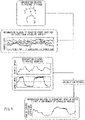
- FIG. 5 is a diagram schematically illustrating an example of acquisition of steering input information by the steering input information acquisition device 10.
- the steering input information acquisition device 10 acquires the information (steering input information) related to the steering input of the rider to the straddled vehicle 30 by performing calculation using the information related to the posture of the rider, the information related to the reactive force received by the rider from the straddled vehicle 30, and the information related to the vehicle behavior.
- the information related to the posture of the rider the information related to the reactive force received by the rider from the straddled vehicle 30, the information related to the vehicle behavior, and the steering input information are as described below.
- the information related to the posture of the rider is, for example, information obtained by reproducing the physical constitution information of the rider who is riding on the straddled vehicle 30 by a digital mannequin or the like and complementing the physical constitution information of the rider, which has been reproduced, with results of measurements of the body position of the rider by motion capture or the like.
- the information related to the reactive force received by the rider from the straddled vehicle 30 is, for example, a handle load in an X direction, a Y direction, and a Z direction.
- the handle load is a load generated on the handle by handling of the rider when the rider is riding on the straddled vehicle 30.
- the rider receives a load corresponding to the handle load as the reactive force from the straddled vehicle 30.
- the information related to the vehicle behavior is the vehicle speed of the straddled vehicle 30 and a handle angle as a steering angle of the handle.
- the steering input information is a gravity center position in a left-right direction of the rider who is riding on the straddled vehicle 30.
- the steering input information acquisition device 10 is able to obtain the gravity center position in the left-right direction of the rider as the steering input information using the information related to the posture of the rider, the information related to the reactive force received by the rider from the straddled vehicle 30, and the information related to the vehicle behavior. Also, the steering input information acquisition device 10 is able to acquire information related to the joint torque or the muscle activity from the information related to the posture of the rider and the information related to the reactive force received by the rider from the straddled vehicle 30. Furthermore, the steering input information acquisition device 10 is also able to calculate a stability evaluation index from the information related to the reactive force received by the rider from the straddled vehicle 30 and the information related to the vehicle behavior. Note that the stability evaluation index is, for example, a resistance received by the hands of the rider who holds the handle.
- the steering input information acquisition device 10 acquires, based on the information acquired from the motion-input-information-acquisition section 101 and the information acquired from the operation-input-information-acquisition section 102, the information related to the steering input of the rider to the straddled vehicle 30. Therefore, the behavior of the straddled vehicle 30 during travel can be grasped with high accuracy.
- the behavior of the straddled vehicle 30 when a beginner steers the straddled vehicle 30 and the behavior of the straddled vehicle 30 when an expert steers the straddled vehicle 30 can be compared to each other.
- a guideline used for teaching a steering of the straddled vehicle 30 to a beginner can be made.
- the information related to the behavior of the straddled vehicle 30 during travel, which has been grasped with high accuracy in the manner described above, may be also used for creating a steering simulator of a straddled vehicle.
- the information related to the behavior of the straddled vehicle 30 during travel, which has been grasped with high accuracy in the manner described above, may be also displayed by a display device or the like.
- the information related to the behavior of the straddled vehicle 30 during travel, which has been grasped with high accuracy in the manner described above may be used for control (control of a driving force, suspension setting, brake control, or the like) of a vehicle.
- the motion-input-information-acquisition section 101 includes the muscle-activity-information-acquisition section 1013.
- the muscle-activity-information-acquisition section 1013 acquires, based on the information acquired by the posture-information-acquisition section 1011, the information acquired by the reactive-force-information-acquisition section 1012, and the information acquired by the vehicle-information-acquisition section 1014, the information related to the muscle activity of the rider. Therefore, for example, as compared to a case where a sensor configured to measure the myoelectric potential is used, it is easier to acquire the information related to the muscle activity of the rider.
Landscapes
- Engineering & Computer Science (AREA)
- Mechanical Engineering (AREA)
- Automation & Control Theory (AREA)
- Cardiology (AREA)
- Transportation (AREA)
- Health & Medical Sciences (AREA)
- Life Sciences & Earth Sciences (AREA)
- Biophysics (AREA)
- Human Computer Interaction (AREA)
- General Health & Medical Sciences (AREA)
- Heart & Thoracic Surgery (AREA)
- Physiology (AREA)
- User Interface Of Digital Computer (AREA)
- Communication Control (AREA)
- Control Of Driving Devices And Active Controlling Of Vehicle (AREA)
- Measurement Of The Respiration, Hearing Ability, Form, And Blood Characteristics Of Living Organisms (AREA)
Claims (9)
- Eine Lenkeingabeinformationserfassungsvorrichtung (10), die konfiguriert ist, Informationen zu erfassen, die sich auf eine Lenkeingabe eines Fahrers an ein Grätschsitzfahrzeug (30) beziehen, wobei die Lenkeingabeinformationserfassungsvorrichtung (10) folgende Merkmale aufweist:einen Bewegungseingabeinformationserfassungsabschnitt (101), der konfiguriert ist, Informationen zu erfassen, die Informationen umfassen, die sich auf eine Haltung des Fahrers beziehen, Informationen, die sich auf eine Reaktionskraft beziehen, die durch den Fahrer von dem Grätschsitzfahrzeug (30) empfangen wird, und Informationen, die sich auf eine Muskelaktivität des Fahrers beziehen und die sich auf eine Bewegungseingabe des Fahrers an das Grätschsitzfahrzeug (30) beziehen, wobei die Bewegungseingabe bewirkt, dass ein Fahrzeugverhalten des Grätschsitzfahrzeugs (30) auftritt; undeinen Betriebseingabeinformationserfassungsabschnitt (102), der konfiguriert ist, Informationen zu erfassen, die sich auf eine Betriebseingabe des Fahrers an ein Betriebsbauglied des Grätschsitzfahrzeugs (30) beziehen, wobei die Betriebseingabe bewirkt, dass das Fahrzeugverhalten auftritt, wobei die Lenkeingabeinformationserfassungsvorrichtung (10) die Informationen erfasst, die sich auf die Lenkeingabe beziehen, basierend auf Informationen, die von dem Bewegungseingabeinformationserfassungsabschnitt (101) und dem Betriebseingabeinformationserfassungsabschnitt (102) erfasst werden.
- Die Lenkeingabeinformationserfassungsvorrichtung (10) gemäß Anspruch 1,bei der der Bewegungseingabeinformationserfassungsabschnitt (101) folgende Merkmale umfasst:einen Haltungsinformationserfassungsabschnitt (1011), der konfiguriert ist, Informationen zu erfassen, die sich auf die Haltung des Fahrers beziehen undeinen Reaktionskraftinformationserfassungsabschnitt (1012), der konfiguriert ist, Informationen zu erfassen, die sich auf die Reaktionskraft beziehen, die durch den Fahrer von dem Grätschsitzfahrzeug (30) empfangen wird, undder Bewegungseingabeinformationserfassungsabschnitt (101) konfiguriert ist, die Informationen zu erfassen, die sich auf die Bewegungseingabe beziehen, basierend auf Informationen, die von dem Haltungsinformationserfassungsabschnitt (1011) und dem Reaktionskraftinformationserfassungsabschnitt (1012) erfasst werden.
- Die Lenkeingabeinformationserfassungsvorrichtung (10) gemäß Anspruch 2,
bei der der Bewegungseingabeinformationserfassungsabschnitt (101) einen Muskelaktivitätsinformationserfassungsabschnitt (1013) umfasst, der konfiguriert ist, Informationen zu erfassen, die sich auf die Muskelaktivität des Fahrers beziehen. - Die Lenkeingabeinformationserfassungsvorrichtung (10) gemäß Anspruch 3,
bei der der Muskeiaktivitätsinformationserfassungsabschnitt (1013) konfiguriert ist, die Informationen zu erfassen, die sich auf die Muskelaktivität des Fahrers beziehen, basierend auf den Informationen, die von dem Haltungsinformationserfassungsabschnitt (1011) und dem Reaktionskraftinformationserfassungsabschnitt (1012) erfasst werden. - Die Lenkeingabeinformationserfassungsvorrichtung (10) gemäß Anspruch 3,bei der der Bewegungseingabeinformationserfassungsabschnitt (101) ferner einen Fahrzeuginformationserfassungsabschnitt (1014) umfasst, der konfiguriert ist, Informationen zu erfassen, die sich auf das Fahrzeugverhalten beziehen undder Muskelaktivitätsinformationserfassungsabschnitt (1013) konfiguriert ist, die Informationen zu erfassen, die sich auf die Muskelaktivität des Fahrers beziehen, basierend auf den Informationen, die von dem Haltungsinformationserfassungsabschnitt (1011), dem Reaktionskraftinformationserfassungsabschnitt (1012) und dem Fahrzeuginformationserfassungsabschnitt (1014) erfasst werden.
- Die Lenkeingabeinformationserfassungsvorrichtung (10) gemäß Anspruch 5,
bei der der Fahrzeuginformationserfassungsabschnitt (1014) konfiguriert ist, Informationen zu erfassen, die sich auf zeitliche Veränderungen des Fahrzeugverhaltens beziehen. - Die Lenkeingabeinformationserfassungsvorrichtung (10) gemäß einem der Ansprüche 3 bis 6,
bei der der Muskelaktivitätsinformationserfassungsabschnitt (1013) konfiguriert ist, Informationen zu erfassen, die sich auf eine zeitliche Veränderung der Muskelaktivität des Fahrers beziehen. - Die Lenkeingabeinformationserfassungsvorrichtung (10) gemäß einem der Ansprüche 2 bis 7,
bei der der Haltungsinformationserfassungsabschnitt (1011) konfiguriert ist, Informationen zu erfassen, die sich auf eine zeitliche Veränderung der Haltung des Fahrers beziehen. - Die Lenkeingabeinformationserfassungsvorrichtung (10) gemäß einem der Ansprüche 2 bis 8,
bei der der Reaktionskraftinformationserfassungsabschnitt (1012) konfiguriert ist, Informationen zu erfassen, die sich auf eine zeitliche Veränderung der Reaktionskraft beziehen, die durch den Fahrer von dem Grätschsitzfahrzeug (30) empfangen wird.
Applications Claiming Priority (2)
| Application Number | Priority Date | Filing Date | Title |
|---|---|---|---|
| JP2017076672A JP2020100163A (ja) | 2017-04-07 | 2017-04-07 | 操縦入力情報取得装置 |
| PCT/JP2018/014718 WO2018186488A1 (ja) | 2017-04-07 | 2018-04-06 | 操縦入力情報取得装置 |
Publications (3)
| Publication Number | Publication Date |
|---|---|
| EP3604097A1 EP3604097A1 (de) | 2020-02-05 |
| EP3604097A4 EP3604097A4 (de) | 2020-04-22 |
| EP3604097B1 true EP3604097B1 (de) | 2022-05-11 |
Family
ID=63712703
Family Applications (1)
| Application Number | Title | Priority Date | Filing Date |
|---|---|---|---|
| EP18780807.6A Active EP3604097B1 (de) | 2017-04-07 | 2018-04-06 | Lenkeingabeinformationserfassungsvorrichtung |
Country Status (4)
| Country | Link |
|---|---|
| EP (1) | EP3604097B1 (de) |
| JP (1) | JP2020100163A (de) |
| ES (1) | ES2918248T3 (de) |
| WO (1) | WO2018186488A1 (de) |
Cited By (1)
| Publication number | Priority date | Publication date | Assignee | Title |
|---|---|---|---|---|
| WO2024013760A1 (en) * | 2022-07-12 | 2024-01-18 | Tvs Motor Company Limited | A system and method for assisting a rider of a vehicle |
Families Citing this family (5)
| Publication number | Priority date | Publication date | Assignee | Title |
|---|---|---|---|---|
| JP2019026165A (ja) * | 2017-08-02 | 2019-02-21 | ローベルト ボッシュ ゲゼルシャフト ミット ベシュレンクテル ハフツング | 制御装置、車体挙動制御システム、モータサイクル、及び、制御方法 |
| JP7324671B2 (ja) * | 2019-09-26 | 2023-08-10 | 日立Astemo株式会社 | バーハンドル車両用ブレーキ制御装置 |
| EP3882114B1 (de) * | 2020-03-19 | 2023-09-20 | Honda Research Institute Europe GmbH | System zur schätzung der reithaltung |
| DE102021203112A1 (de) * | 2021-03-29 | 2022-09-29 | Robert Bosch Gesellschaft mit beschränkter Haftung | Verfahren zum Betreiben eines Kraftfahrzeugs, System |
| WO2023191105A1 (ja) * | 2022-03-31 | 2023-10-05 | 本田技研工業株式会社 | 鞍乗型車両 |
Family Cites Families (9)
| Publication number | Priority date | Publication date | Assignee | Title |
|---|---|---|---|---|
| JP2002230699A (ja) * | 2001-01-31 | 2002-08-16 | Mazda Motor Corp | 運転負担判定装置、運転負担判定方法、当該方法を実行するコンピュータプログラム、並びに当該コンピュータプログラムを格納した記憶媒体 |
| JP4433739B2 (ja) * | 2003-09-17 | 2010-03-17 | 横浜ゴム株式会社 | 作業中ストレス評価装置および作業中ストレス評価方法 |
| JP2006274869A (ja) * | 2005-03-29 | 2006-10-12 | Yamaha Motor Co Ltd | 鞍乗り型輸送機器用操縦制御装置 |
| JP2006337055A (ja) * | 2005-05-31 | 2006-12-14 | Yamaha Motor Co Ltd | ハンドル荷重検出装置及びそれを備えた輸送機器 |
| JP2007062602A (ja) | 2005-08-31 | 2007-03-15 | Honda Motor Co Ltd | ライダー挙動計測方法 |
| CN102686476B (zh) * | 2009-12-25 | 2014-10-08 | 雅马哈发动机株式会社 | 驾驶员特性判断装置以及包括所述驾驶员特性判断装置的跨骑式车辆 |
| JP5490917B2 (ja) * | 2010-10-29 | 2014-05-14 | パイオニア株式会社 | ペダリング目標設定装置、ペダリング目標設定方法、ペダリング目標設定プログラム、ペダリング目標設定プログラムを記録した媒体 |
| JP6078124B1 (ja) * | 2015-08-27 | 2017-02-08 | 富士重工業株式会社 | 車両の制御装置及び車両の制御方法 |
| JP2017086184A (ja) | 2015-11-02 | 2017-05-25 | 国立大学法人埼玉大学 | 筋活動可視化システムと筋活動可視化方法 |
-
2017
- 2017-04-07 JP JP2017076672A patent/JP2020100163A/ja active Pending
-
2018
- 2018-04-06 WO PCT/JP2018/014718 patent/WO2018186488A1/ja not_active Ceased
- 2018-04-06 EP EP18780807.6A patent/EP3604097B1/de active Active
- 2018-04-06 ES ES18780807T patent/ES2918248T3/es active Active
Cited By (1)
| Publication number | Priority date | Publication date | Assignee | Title |
|---|---|---|---|---|
| WO2024013760A1 (en) * | 2022-07-12 | 2024-01-18 | Tvs Motor Company Limited | A system and method for assisting a rider of a vehicle |
Also Published As
| Publication number | Publication date |
|---|---|
| EP3604097A4 (de) | 2020-04-22 |
| EP3604097A1 (de) | 2020-02-05 |
| WO2018186488A1 (ja) | 2018-10-11 |
| ES2918248T3 (es) | 2022-07-14 |
| JP2020100163A (ja) | 2020-07-02 |
Similar Documents
| Publication | Publication Date | Title |
|---|---|---|
| EP3604097B1 (de) | Lenkeingabeinformationserfassungsvorrichtung | |
| JP6678832B2 (ja) | 遠隔制御マニピュレータシステムおよび制御装置 | |
| EP3560808B1 (de) | Gelenkdrehmomentberechnungsvorrichtung, gelenkdrehmomentberechnungsverfahren und gelenkdrehmoment-berechnungsprogramm | |
| Rasmussen et al. | Anybody-a software system for ergonomic optimization | |
| JP4915263B2 (ja) | 歩行能力からの運動機能向上メニュー提案システム及び歩行能力からの運動機能向上メニュー提案方法 | |
| Trkov et al. | Inertial sensor-based slip detection in human walking | |
| Plantard et al. | Inverse dynamics based on occlusion-resistant Kinect data: Is it usable for ergonomics? | |
| KR102013854B1 (ko) | 상지 다관절 임피던스 측정 방법 및 그 장치 | |
| Mohammadi et al. | Fingertip force estimation via inertial and magnetic sensors in deformable object manipulation | |
| KR20220136901A (ko) | 정보 처리 장치, 정보 처리 방법 및 프로그램 | |
| Lu et al. | Whole-body pose estimation in physical rider–bicycle interactions with a monocular camera and wearable gyroscopes | |
| Gabrielli et al. | Instrumented steering wheel for biomechanical measurements | |
| CN117045239A (zh) | 一种基于多传感器信息融合的康复机器人病患重心识别方法 | |
| JP2012101284A (ja) | 人の動作における意図推定装置 | |
| Zhang et al. | Rider/bicycle pose estimation with IMU/seat force measurements | |
| Theofanidis et al. | A motion and force analysis system for human upper-limb exercises | |
| Ángel-López et al. | Kinematic hand analysis using motion capture technology | |
| Venture et al. | Identification of human mass properties from motion | |
| JP6378492B2 (ja) | 移動運動解析装置及びプログラム | |
| Chénier et al. | A simplified upper-body model to improve the external validity of wheelchair simulators | |
| JP5958962B2 (ja) | 母指及び手指の評価システム | |
| JP2018038656A (ja) | 関節トルク演算システム、サイクルコンピュータ及び関節トルクの測定方法 | |
| JP7465842B2 (ja) | 作業支援システム | |
| JP6470562B2 (ja) | 運動能力評価装置、運動能力評価システム及び運動能力評価方法 | |
| CN116518848B (zh) | 一种乘员h点及手部抓握中心点的测量方法及装置 |
Legal Events
| Date | Code | Title | Description |
|---|---|---|---|
| STAA | Information on the status of an ep patent application or granted ep patent |
Free format text: STATUS: THE INTERNATIONAL PUBLICATION HAS BEEN MADE |
|
| PUAI | Public reference made under article 153(3) epc to a published international application that has entered the european phase |
Free format text: ORIGINAL CODE: 0009012 |
|
| STAA | Information on the status of an ep patent application or granted ep patent |
Free format text: STATUS: REQUEST FOR EXAMINATION WAS MADE |
|
| 17P | Request for examination filed |
Effective date: 20191024 |
|
| AK | Designated contracting states |
Kind code of ref document: A1 Designated state(s): AL AT BE BG CH CY CZ DE DK EE ES FI FR GB GR HR HU IE IS IT LI LT LU LV MC MK MT NL NO PL PT RO RS SE SI SK SM TR |
|
| AX | Request for extension of the european patent |
Extension state: BA ME |
|
| A4 | Supplementary search report drawn up and despatched |
Effective date: 20200325 |
|
| RIC1 | Information provided on ipc code assigned before grant |
Ipc: B62K 21/00 20060101ALI20200319BHEP Ipc: B60W 30/045 20120101ALI20200319BHEP Ipc: B62J 99/00 20200101AFI20200319BHEP Ipc: B60W 50/08 20200101ALI20200319BHEP Ipc: B62J 45/416 20200101ALI20200319BHEP |
|
| DAV | Request for validation of the european patent (deleted) | ||
| DAX | Request for extension of the european patent (deleted) | ||
| STAA | Information on the status of an ep patent application or granted ep patent |
Free format text: STATUS: EXAMINATION IS IN PROGRESS |
|
| 17Q | First examination report despatched |
Effective date: 20210113 |
|
| GRAP | Despatch of communication of intention to grant a patent |
Free format text: ORIGINAL CODE: EPIDOSNIGR1 |
|
| STAA | Information on the status of an ep patent application or granted ep patent |
Free format text: STATUS: GRANT OF PATENT IS INTENDED |
|
| RAP3 | Party data changed (applicant data changed or rights of an application transferred) |
Owner name: NATIONAL INSTITUTE OF ADVANCED INDUSTRIAL SCIENCE AND TECHNOLOGY Owner name: YAMAHA HATSUDOKI KABUSHIKI KAISHA |
|
| INTG | Intention to grant announced |
Effective date: 20220222 |
|
| RIN1 | Information on inventor provided before grant (corrected) |
Inventor name: MURAI, AKIHIKO Inventor name: MIYATA, NATSUKI Inventor name: TADA, MITSUNORI Inventor name: SHII, NORIKO Inventor name: HARADA, YOSHINORI Inventor name: OKUHARA, NAOKI Inventor name: SATOH, AKIRA Inventor name: ISHII, WATARU |
|
| GRAS | Grant fee paid |
Free format text: ORIGINAL CODE: EPIDOSNIGR3 |
|
| GRAA | (expected) grant |
Free format text: ORIGINAL CODE: 0009210 |
|
| STAA | Information on the status of an ep patent application or granted ep patent |
Free format text: STATUS: THE PATENT HAS BEEN GRANTED |
|
| AK | Designated contracting states |
Kind code of ref document: B1 Designated state(s): AL AT BE BG CH CY CZ DE DK EE ES FI FR GB GR HR HU IE IS IT LI LT LU LV MC MK MT NL NO PL PT RO RS SE SI SK SM TR |
|
| REG | Reference to a national code |
Ref country code: GB Ref legal event code: FG4D |
|
| REG | Reference to a national code |
Ref country code: CH Ref legal event code: EP |
|
| REG | Reference to a national code |
Ref country code: AT Ref legal event code: REF Ref document number: 1491212 Country of ref document: AT Kind code of ref document: T Effective date: 20220515 |
|
| REG | Reference to a national code |
Ref country code: DE Ref legal event code: R096 Ref document number: 602018035498 Country of ref document: DE |
|
| REG | Reference to a national code |
Ref country code: IE Ref legal event code: FG4D |
|
| REG | Reference to a national code |
Ref country code: ES Ref legal event code: FG2A Ref document number: 2918248 Country of ref document: ES Kind code of ref document: T3 Effective date: 20220714 |
|
| REG | Reference to a national code |
Ref country code: LT Ref legal event code: MG9D |
|
| REG | Reference to a national code |
Ref country code: NL Ref legal event code: MP Effective date: 20220511 |
|
| REG | Reference to a national code |
Ref country code: AT Ref legal event code: MK05 Ref document number: 1491212 Country of ref document: AT Kind code of ref document: T Effective date: 20220511 |
|
| PG25 | Lapsed in a contracting state [announced via postgrant information from national office to epo] |
Ref country code: SE Free format text: LAPSE BECAUSE OF FAILURE TO SUBMIT A TRANSLATION OF THE DESCRIPTION OR TO PAY THE FEE WITHIN THE PRESCRIBED TIME-LIMIT Effective date: 20220511 Ref country code: PT Free format text: LAPSE BECAUSE OF FAILURE TO SUBMIT A TRANSLATION OF THE DESCRIPTION OR TO PAY THE FEE WITHIN THE PRESCRIBED TIME-LIMIT Effective date: 20220912 Ref country code: NO Free format text: LAPSE BECAUSE OF FAILURE TO SUBMIT A TRANSLATION OF THE DESCRIPTION OR TO PAY THE FEE WITHIN THE PRESCRIBED TIME-LIMIT Effective date: 20220811 Ref country code: NL Free format text: LAPSE BECAUSE OF FAILURE TO SUBMIT A TRANSLATION OF THE DESCRIPTION OR TO PAY THE FEE WITHIN THE PRESCRIBED TIME-LIMIT Effective date: 20220511 Ref country code: LT Free format text: LAPSE BECAUSE OF FAILURE TO SUBMIT A TRANSLATION OF THE DESCRIPTION OR TO PAY THE FEE WITHIN THE PRESCRIBED TIME-LIMIT Effective date: 20220511 Ref country code: HR Free format text: LAPSE BECAUSE OF FAILURE TO SUBMIT A TRANSLATION OF THE DESCRIPTION OR TO PAY THE FEE WITHIN THE PRESCRIBED TIME-LIMIT Effective date: 20220511 Ref country code: GR Free format text: LAPSE BECAUSE OF FAILURE TO SUBMIT A TRANSLATION OF THE DESCRIPTION OR TO PAY THE FEE WITHIN THE PRESCRIBED TIME-LIMIT Effective date: 20220812 Ref country code: FI Free format text: LAPSE BECAUSE OF FAILURE TO SUBMIT A TRANSLATION OF THE DESCRIPTION OR TO PAY THE FEE WITHIN THE PRESCRIBED TIME-LIMIT Effective date: 20220511 Ref country code: BG Free format text: LAPSE BECAUSE OF FAILURE TO SUBMIT A TRANSLATION OF THE DESCRIPTION OR TO PAY THE FEE WITHIN THE PRESCRIBED TIME-LIMIT Effective date: 20220811 Ref country code: AT Free format text: LAPSE BECAUSE OF FAILURE TO SUBMIT A TRANSLATION OF THE DESCRIPTION OR TO PAY THE FEE WITHIN THE PRESCRIBED TIME-LIMIT Effective date: 20220511 |
|
| PG25 | Lapsed in a contracting state [announced via postgrant information from national office to epo] |
Ref country code: RS Free format text: LAPSE BECAUSE OF FAILURE TO SUBMIT A TRANSLATION OF THE DESCRIPTION OR TO PAY THE FEE WITHIN THE PRESCRIBED TIME-LIMIT Effective date: 20220511 Ref country code: PL Free format text: LAPSE BECAUSE OF FAILURE TO SUBMIT A TRANSLATION OF THE DESCRIPTION OR TO PAY THE FEE WITHIN THE PRESCRIBED TIME-LIMIT Effective date: 20220511 Ref country code: LV Free format text: LAPSE BECAUSE OF FAILURE TO SUBMIT A TRANSLATION OF THE DESCRIPTION OR TO PAY THE FEE WITHIN THE PRESCRIBED TIME-LIMIT Effective date: 20220511 Ref country code: IS Free format text: LAPSE BECAUSE OF FAILURE TO SUBMIT A TRANSLATION OF THE DESCRIPTION OR TO PAY THE FEE WITHIN THE PRESCRIBED TIME-LIMIT Effective date: 20220911 |
|
| PG25 | Lapsed in a contracting state [announced via postgrant information from national office to epo] |
Ref country code: SM Free format text: LAPSE BECAUSE OF FAILURE TO SUBMIT A TRANSLATION OF THE DESCRIPTION OR TO PAY THE FEE WITHIN THE PRESCRIBED TIME-LIMIT Effective date: 20220511 Ref country code: SK Free format text: LAPSE BECAUSE OF FAILURE TO SUBMIT A TRANSLATION OF THE DESCRIPTION OR TO PAY THE FEE WITHIN THE PRESCRIBED TIME-LIMIT Effective date: 20220511 Ref country code: RO Free format text: LAPSE BECAUSE OF FAILURE TO SUBMIT A TRANSLATION OF THE DESCRIPTION OR TO PAY THE FEE WITHIN THE PRESCRIBED TIME-LIMIT Effective date: 20220511 Ref country code: EE Free format text: LAPSE BECAUSE OF FAILURE TO SUBMIT A TRANSLATION OF THE DESCRIPTION OR TO PAY THE FEE WITHIN THE PRESCRIBED TIME-LIMIT Effective date: 20220511 Ref country code: DK Free format text: LAPSE BECAUSE OF FAILURE TO SUBMIT A TRANSLATION OF THE DESCRIPTION OR TO PAY THE FEE WITHIN THE PRESCRIBED TIME-LIMIT Effective date: 20220511 Ref country code: CZ Free format text: LAPSE BECAUSE OF FAILURE TO SUBMIT A TRANSLATION OF THE DESCRIPTION OR TO PAY THE FEE WITHIN THE PRESCRIBED TIME-LIMIT Effective date: 20220511 |
|
| REG | Reference to a national code |
Ref country code: DE Ref legal event code: R097 Ref document number: 602018035498 Country of ref document: DE |
|
| PLBE | No opposition filed within time limit |
Free format text: ORIGINAL CODE: 0009261 |
|
| STAA | Information on the status of an ep patent application or granted ep patent |
Free format text: STATUS: NO OPPOSITION FILED WITHIN TIME LIMIT |
|
| PG25 | Lapsed in a contracting state [announced via postgrant information from national office to epo] |
Ref country code: AL Free format text: LAPSE BECAUSE OF FAILURE TO SUBMIT A TRANSLATION OF THE DESCRIPTION OR TO PAY THE FEE WITHIN THE PRESCRIBED TIME-LIMIT Effective date: 20220511 |
|
| REG | Reference to a national code |
Ref country code: DE Ref legal event code: R081 Ref document number: 602018035498 Country of ref document: DE Owner name: YAMAHA HATSUDOKI KABUSHIKI KAISHA, IWATA-SHI, JP Free format text: FORMER OWNERS: NATIONAL INSTITUTE OF ADVANCED INDUSTRIAL SCIENCE AND TECHNOLOGY, TOKYO, JP; YAMAHA HATSUDOKI KABUSHIKI KAISHA, IWATA-SHI, SHIZUOKA-KEN, JP |
|
| 26N | No opposition filed |
Effective date: 20230214 |
|
| REG | Reference to a national code |
Ref country code: GB Ref legal event code: 732E Free format text: REGISTERED BETWEEN 20230406 AND 20230412 |
|
| PG25 | Lapsed in a contracting state [announced via postgrant information from national office to epo] |
Ref country code: SI Free format text: LAPSE BECAUSE OF FAILURE TO SUBMIT A TRANSLATION OF THE DESCRIPTION OR TO PAY THE FEE WITHIN THE PRESCRIBED TIME-LIMIT Effective date: 20220511 |
|
| REG | Reference to a national code |
Ref country code: ES Ref legal event code: PC2A Owner name: YAMAHA HATSUDOKI KABUSHIKI KAISHA Effective date: 20230602 |
|
| P01 | Opt-out of the competence of the unified patent court (upc) registered |
Effective date: 20230527 |
|
| REG | Reference to a national code |
Ref country code: CH Ref legal event code: PL |
|
| PG25 | Lapsed in a contracting state [announced via postgrant information from national office to epo] |
Ref country code: LU Free format text: LAPSE BECAUSE OF NON-PAYMENT OF DUE FEES Effective date: 20230406 |
|
| REG | Reference to a national code |
Ref country code: BE Ref legal event code: MM Effective date: 20230430 |
|
| PG25 | Lapsed in a contracting state [announced via postgrant information from national office to epo] |
Ref country code: MC Free format text: LAPSE BECAUSE OF FAILURE TO SUBMIT A TRANSLATION OF THE DESCRIPTION OR TO PAY THE FEE WITHIN THE PRESCRIBED TIME-LIMIT Effective date: 20220511 |
|
| PG25 | Lapsed in a contracting state [announced via postgrant information from national office to epo] |
Ref country code: MC Free format text: LAPSE BECAUSE OF FAILURE TO SUBMIT A TRANSLATION OF THE DESCRIPTION OR TO PAY THE FEE WITHIN THE PRESCRIBED TIME-LIMIT Effective date: 20220511 Ref country code: LI Free format text: LAPSE BECAUSE OF NON-PAYMENT OF DUE FEES Effective date: 20230430 Ref country code: CH Free format text: LAPSE BECAUSE OF NON-PAYMENT OF DUE FEES Effective date: 20230430 |
|
| REG | Reference to a national code |
Ref country code: IE Ref legal event code: MM4A |
|
| PG25 | Lapsed in a contracting state [announced via postgrant information from national office to epo] |
Ref country code: BE Free format text: LAPSE BECAUSE OF NON-PAYMENT OF DUE FEES Effective date: 20230430 |
|
| PG25 | Lapsed in a contracting state [announced via postgrant information from national office to epo] |
Ref country code: IE Free format text: LAPSE BECAUSE OF NON-PAYMENT OF DUE FEES Effective date: 20230406 |
|
| PG25 | Lapsed in a contracting state [announced via postgrant information from national office to epo] |
Ref country code: IE Free format text: LAPSE BECAUSE OF NON-PAYMENT OF DUE FEES Effective date: 20230406 |
|
| PG25 | Lapsed in a contracting state [announced via postgrant information from national office to epo] |
Ref country code: BG Free format text: LAPSE BECAUSE OF FAILURE TO SUBMIT A TRANSLATION OF THE DESCRIPTION OR TO PAY THE FEE WITHIN THE PRESCRIBED TIME-LIMIT Effective date: 20220511 |
|
| PG25 | Lapsed in a contracting state [announced via postgrant information from national office to epo] |
Ref country code: BG Free format text: LAPSE BECAUSE OF FAILURE TO SUBMIT A TRANSLATION OF THE DESCRIPTION OR TO PAY THE FEE WITHIN THE PRESCRIBED TIME-LIMIT Effective date: 20220511 |
|
| PGFP | Annual fee paid to national office [announced via postgrant information from national office to epo] |
Ref country code: DE Payment date: 20250422 Year of fee payment: 8 |
|
| PGFP | Annual fee paid to national office [announced via postgrant information from national office to epo] |
Ref country code: GB Payment date: 20250423 Year of fee payment: 8 Ref country code: ES Payment date: 20250530 Year of fee payment: 8 |
|
| PGFP | Annual fee paid to national office [announced via postgrant information from national office to epo] |
Ref country code: IT Payment date: 20250424 Year of fee payment: 8 |
|
| PGFP | Annual fee paid to national office [announced via postgrant information from national office to epo] |
Ref country code: FR Payment date: 20250425 Year of fee payment: 8 |
|
| PG25 | Lapsed in a contracting state [announced via postgrant information from national office to epo] |
Ref country code: CY Free format text: LAPSE BECAUSE OF FAILURE TO SUBMIT A TRANSLATION OF THE DESCRIPTION OR TO PAY THE FEE WITHIN THE PRESCRIBED TIME-LIMIT; INVALID AB INITIO Effective date: 20180406 |
|
| PG25 | Lapsed in a contracting state [announced via postgrant information from national office to epo] |
Ref country code: HU Free format text: LAPSE BECAUSE OF FAILURE TO SUBMIT A TRANSLATION OF THE DESCRIPTION OR TO PAY THE FEE WITHIN THE PRESCRIBED TIME-LIMIT; INVALID AB INITIO Effective date: 20180406 |
|
| PG25 | Lapsed in a contracting state [announced via postgrant information from national office to epo] |
Ref country code: TR Free format text: LAPSE BECAUSE OF FAILURE TO SUBMIT A TRANSLATION OF THE DESCRIPTION OR TO PAY THE FEE WITHIN THE PRESCRIBED TIME-LIMIT Effective date: 20220511 |