EP3601411B1 - Kationische polymere mit d-fructose-substituenten - Google Patents
Kationische polymere mit d-fructose-substituenten Download PDFInfo
- Publication number
- EP3601411B1 EP3601411B1 EP18724772.1A EP18724772A EP3601411B1 EP 3601411 B1 EP3601411 B1 EP 3601411B1 EP 18724772 A EP18724772 A EP 18724772A EP 3601411 B1 EP3601411 B1 EP 3601411B1
- Authority
- EP
- European Patent Office
- Prior art keywords
- fructose
- cationic polymers
- cationic
- polymer
- covalently bonded
- Prior art date
- Legal status (The legal status is an assumption and is not a legal conclusion. Google has not performed a legal analysis and makes no representation as to the accuracy of the status listed.)
- Active
Links
Images

Classifications
-
- C—CHEMISTRY; METALLURGY
- C08—ORGANIC MACROMOLECULAR COMPOUNDS; THEIR PREPARATION OR CHEMICAL WORKING-UP; COMPOSITIONS BASED THEREON
- C08G—MACROMOLECULAR COMPOUNDS OBTAINED OTHERWISE THAN BY REACTIONS ONLY INVOLVING UNSATURATED CARBON-TO-CARBON BONDS
- C08G69/00—Macromolecular compounds obtained by reactions forming a carboxylic amide link in the main chain of the macromolecule
- C08G69/48—Polymers modified by chemical after-treatment
-
- A—HUMAN NECESSITIES
- A61—MEDICAL OR VETERINARY SCIENCE; HYGIENE
- A61K—PREPARATIONS FOR MEDICAL, DENTAL OR TOILETRY PURPOSES
- A61K47/00—Medicinal preparations characterised by the non-active ingredients used, e.g. carriers or inert additives; Targeting or modifying agents chemically bound to the active ingredient
- A61K47/50—Medicinal preparations characterised by the non-active ingredients used, e.g. carriers or inert additives; Targeting or modifying agents chemically bound to the active ingredient the non-active ingredient being chemically bound to the active ingredient, e.g. polymer-drug conjugates
- A61K47/51—Medicinal preparations characterised by the non-active ingredients used, e.g. carriers or inert additives; Targeting or modifying agents chemically bound to the active ingredient the non-active ingredient being chemically bound to the active ingredient, e.g. polymer-drug conjugates the non-active ingredient being a modifying agent
- A61K47/54—Medicinal preparations characterised by the non-active ingredients used, e.g. carriers or inert additives; Targeting or modifying agents chemically bound to the active ingredient the non-active ingredient being chemically bound to the active ingredient, e.g. polymer-drug conjugates the non-active ingredient being a modifying agent the modifying agent being an organic compound
- A61K47/543—Lipids, e.g. triglycerides; Polyamines, e.g. spermine or spermidine
-
- A—HUMAN NECESSITIES
- A61—MEDICAL OR VETERINARY SCIENCE; HYGIENE
- A61K—PREPARATIONS FOR MEDICAL, DENTAL OR TOILETRY PURPOSES
- A61K47/00—Medicinal preparations characterised by the non-active ingredients used, e.g. carriers or inert additives; Targeting or modifying agents chemically bound to the active ingredient
- A61K47/50—Medicinal preparations characterised by the non-active ingredients used, e.g. carriers or inert additives; Targeting or modifying agents chemically bound to the active ingredient the non-active ingredient being chemically bound to the active ingredient, e.g. polymer-drug conjugates
- A61K47/51—Medicinal preparations characterised by the non-active ingredients used, e.g. carriers or inert additives; Targeting or modifying agents chemically bound to the active ingredient the non-active ingredient being chemically bound to the active ingredient, e.g. polymer-drug conjugates the non-active ingredient being a modifying agent
- A61K47/62—Medicinal preparations characterised by the non-active ingredients used, e.g. carriers or inert additives; Targeting or modifying agents chemically bound to the active ingredient the non-active ingredient being chemically bound to the active ingredient, e.g. polymer-drug conjugates the non-active ingredient being a modifying agent the modifying agent being a protein, peptide or polyamino acid
- A61K47/64—Drug-peptide, drug-protein or drug-polyamino acid conjugates, i.e. the modifying agent being a peptide, protein or polyamino acid which is covalently bonded or complexed to a therapeutically active agent
- A61K47/645—Polycationic or polyanionic oligopeptides, polypeptides or polyamino acids, e.g. polylysine, polyarginine, polyglutamic acid or peptide TAT
- A61K47/6455—Polycationic oligopeptides, polypeptides or polyamino acids, e.g. for complexing nucleic acids
-
- C—CHEMISTRY; METALLURGY
- C07—ORGANIC CHEMISTRY
- C07H—SUGARS; DERIVATIVES THEREOF; NUCLEOSIDES; NUCLEOTIDES; NUCLEIC ACIDS
- C07H3/00—Compounds containing only hydrogen atoms and saccharide radicals having only carbon, hydrogen, and oxygen atoms
- C07H3/02—Monosaccharides
-
- C—CHEMISTRY; METALLURGY
- C08—ORGANIC MACROMOLECULAR COMPOUNDS; THEIR PREPARATION OR CHEMICAL WORKING-UP; COMPOSITIONS BASED THEREON
- C08G—MACROMOLECULAR COMPOUNDS OBTAINED OTHERWISE THAN BY REACTIONS ONLY INVOLVING UNSATURATED CARBON-TO-CARBON BONDS
- C08G73/00—Macromolecular compounds obtained by reactions forming a linkage containing nitrogen with or without oxygen or carbon in the main chain of the macromolecule, not provided for in groups C08G12/00 - C08G71/00
- C08G73/02—Polyamines
- C08G73/0206—Polyalkylene(poly)amines
- C08G73/0213—Preparatory process
- C08G73/0226—Quaternisation of polyalkylene(poly)amines
Definitions
- the invention relates to novel cationic polymers that are conjugated with D-fructose, which enables them to selectively interact with specific structural elements on cell surfaces.
- cationic polymers Due to their high density of positive charges, cationic polymers have the ability to complex negatively charged genetic material, such as siRNA (small interfering ribonucleic acid) or pDNA (plasmid deoxyribonucleic acid).
- siRNA small interfering ribonucleic acid
- pDNA plasmid deoxyribonucleic acid
- the resulting adducts between cationic polymers and genetic material are called polyplexes, which can be used to transport genetic material (e.g. siRNA) into cells.
- Cationic polymers have already been successfully used as additives in sugar surfactants to improve the sensory properties and foam feeling in cosmetic applications (patent application: Use of cationic biopolymers to improve the sensory properties of preparations containing sugar surfactants, DE19605355A1 , Joerg Kahre, Rolf Wachter).
- cationic polymers can be functionalized with small protein sequences (e.g.: RGD peptides) and thus the selectivity can be influenced ( CL Waite et al. (2009): "PAMAM-RGD Conjugates Enhance siRNA Delivery Through a Multicellular Spheroid Model of Malignant Glioma” Bioconjugate Chemistry: 20: 1908-1916 ). The exact one The mechanism is unclear and the presence of integrin (transport membrane protein in animal cells) is necessary.
- small protein sequences e.g.: RGD peptides
- Poly(propyleneimine) polymers were functionalized with D-mannose and their properties were investigated for successful use against HIV. This approach is used exclusively to specifically target immune cells, so-called macrophages, with lectin receptors.
- macrophages so-called macrophages, with lectin receptors.
- Lactose and ⁇ -cyclodextrin were coupled to a cationic star-shaped poly(amidoamine) (PAMAM) dendrimer for the treatment of familial amyloidotic polyneuropathy.
- PAMAM poly(amidoamine)
- the approach only targets transthyretin gene expression in hepatocytes ( Y. Hayashi et. al (2012): "Potential Use of Lactosylated Dendrimer (G3)/ ⁇ -Cyclodextrin Conjugates as Hepatocyte-Specific siRNA Carriers for the Treatment of Familial Amyloidotic Polyneuropathy" Molecular Pharmaceutics: 9, 1645-1653 ).
- Cationic liposomes were modified with D-fucose and examined for their influence on adenovirus-induced immune responses. This approach is used exclusively for the targeted delivery of the specific transcription factor NF- ⁇ B to spleen and liver macrophages.
- H. Huang et al. (2009): "Suppressive effects of sugar-modified cationic liposome/NF- ⁇ B decoy complexes on adenovirus vector-induced innate immune responses” Journal of Controlled Release: 133, 139-145 ).
- Nucleic acids and their polyplexes with cationic polymers have been described. In this approach, sugar molecules were present in solution during polyplex formation, but are not covalently bound to the cationic polymer. Thus, they do not fulfill any direct targeting functions.
- Patent application Nucleic acid-cationic polymer compositions and methods of making and using the same, WO2016178233A1, Abraham Hochberg, Jennifer Gallula ).
- the invention is based on the object of creating novel, biocompatible, easy-to-produce, D-fructose-conjugated cationic polymers which have increased selectivity towards certain cell types.
- selectivity refers, on the one hand, to the interaction of the novel D-fructose-conjugated, cationic polymers with certain structural elements on the cell surface and, on the other hand, to the cytotoxic effect on certain cell types.
- the selective, cytotoxic effect on GLUT5-overexpressing cell types such as the majority of breast cancer cell types, is of particular interest.
- cationic polymers with D-fructose substituents which consist of a basic structure of the general formula (I):
- Non-limiting examples of preferred cationic polymers can be poly-L-lysine (PLL), polyethyleneimine (PEI) or dextrans, such as diethylaminoethyl dextran (DEAE-D) or dextran spermine (D-SPM) or polymethacrylates, such as poly(2-dimethylamino)ethyl methacrylate (PDMAEMA) and polydimethylaminoethyl methacrylate (PDAMA).
- PLL poly-L-lysine
- PEI polyethyleneimine
- DEAE-D diethylaminoethyl dextran
- D-SPM dextran spermine
- polymethacrylates such as poly(2-dimethylamino)ethyl methacrylate (PDMAEMA) and polydimethylaminoethyl methacrylate (PDAMA).
- Linkers are one or more atoms or functional groups that connect the cationic polymer with the D-fructose unit. Suitable linkers include any alkyl or aryl radical, any alkenyl or alkynyl radical, an ether or thioether, an amine, an ester, amide or other carboxylic acid derivative, a heterocycle (e.g. triazole or maleimide), a disulfide, an imine or an imide.
- a heterocycle e.g. triazole or maleimide
- D-fructose and its derivatives are understood to mean all chemical molecules that are based on D-fructose and thereby retain the stereochemistry of positions 3, 4 and 5 in open or closed form.
- Chemical modifications, in particular the introduction of functional groups such as thiol, azide, carboxylic acids and their derivatives and / or amino groups at one or more positions of the sugar (but not at the glycosidic C2 atom of D-fructose), while maintaining the stereochemistry of positions 3, 4 and 5 are also understood to be D-fructose derivatives.
- D-fructose has a keto functionality in an open-chain form, which completely changes its chemical properties. Like other sugars, it is transported into the cells and metabolized via specific transport proteins (GLUTs).
- the transporter responsible for D-fructose is the GLUT5 transporter ( A. Godoy et al. (2006): "Differential subcellular distribution of glucose transporters GLUT1-6 and GLUT9 in human cancer: Ultrastructural localization of GLUT1 and GLUT5 in breast tumor tissues.” Journal of Cellular Physiology 207 (3): 614-627 ).
- D-fructose-conjugated, cationic polymers based on linear poly(ethyleneimine) (L-PEI, (I)) and branched poly(ethyleneimine) (B-PEI, (II)).
- the D-fructose derivative 5 was fully characterized and all individual steps could be carried out in high yields.
- the introduction of the thiol serves to attach the sugar to the polymer via a photocatalyzed thiol-ene click reaction.
- epoxy-functionalized D-fructose can be produced by Williamson etherification with epichlorohydrin.
- B-PEI By stirring in methanol for three days at room temperature, B-PEI can be functionalized by a ring-opening reaction with the previously synthesized D-fructose derivative. D-fructose conjugated B-PEIs with 14%, 23%, 28%, 39% and 76% functionalized primary amino groups were prepared.
- the acidic cleavage of the isopropylidene protecting groups in the presence of water was carried out after heating the cationic polymers with bound D-fructose derivatives for several days at 40 °C using 2M HCl. Dialysis (cellulose ester, MWCO: 500-1000 Da) against water resulted in D-fructose functionalized B-PEIs.
- the polymer P3 was subjected to intensive biological evaluation.
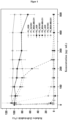
- Figure 1 shows cell type-dependent cytotoxicity studies using the alamarBlue assay of the polymers P1, P2 and P3. Untreated cells served as a reference for 100% viability. The cells were treated with the indicated polymer concentrations for 24 h.
- the D-fructose-conjugated polymer P3 showed increased toxicity against the breast cancer cell line MDA-MB-231, while non-cancer cells (HUVEC and L929) showed no significant reduction in cell viability.
- Polymers P2 and P1 showed no selectivity ( Figure 1 ).
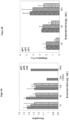
- Figure 2A shows the erythrocyte aggregation assay of the polymers with indicated concentrations.
- B-PEI served as a positive control, PBS as a negative control.
- Figure 2B shows the hemolysis assay of the erythrocytes after incubation with the polymers at the indicated concentrations.
- Triton X-100 served as a positive control (100% hemolysis) and PBS as a negative control (1.99%).
- a value less than 2% hemolysis is classified as non-hemolytic, 2 to 5% as mild hemolytic and > 5% as hemolytic.
- the values represent the mean of three measurements ( ⁇ standard deviation).
- the polymer P3 does not cause aggregation of erythrocytes and does not show hemolysis in contrast to P1 and P2 ( Figure 2 ).
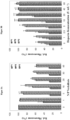
- FIG. 3A and 3B shows polyplex formation and stability with pDNA of polymers P1, P2 and P3.
- Figure 3A shows in particular the binding affinity under specified N/P ratios (ethidium bromide quenching assay) and
- the D-fructose conjugated polymer P3 shows stable polyplex formation at an N/P ratio >15 and further shows a rapid release of the genetic material in the presence of heparin ( Figure 3 ).
- the table shows the size and zeta potential of the polyplexes P1 to P3 at N/P 20 in HBG buffer (measured by dynamic and electrophoretic light scattering).
- the polymers were labeled with different dyes (Cy-5 and Rhodamine-SCN), incubated with the mentioned cell lines and the results were evaluated by flow cytometry (FACS) and confocal laser scanning microscopy (CLSM).
- FACS flow cytometry
- CLSM confocal laser scanning microscopy
- MFI mean fluorescence intensity
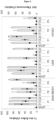
- P1 and P2 show non-specific uptake in all cell lines considered (5-60%) at all N/P ratios.
- the significant difference in uptake behavior in MDA-MB-231 between the immediate Precursor P2 and the D-fructose-conjugated P3 underline a successful targeting function of the sugar molecule.
- the pillars in Figure 4 reflect the percentage of cells that show any fluorescence due to pDNA uptake.
Landscapes
- Chemical & Material Sciences (AREA)
- Health & Medical Sciences (AREA)
- Life Sciences & Earth Sciences (AREA)
- Medicinal Chemistry (AREA)
- Organic Chemistry (AREA)
- Engineering & Computer Science (AREA)
- Chemical Kinetics & Catalysis (AREA)
- Polymers & Plastics (AREA)
- General Health & Medical Sciences (AREA)
- Bioinformatics & Cheminformatics (AREA)
- Molecular Biology (AREA)
- Animal Behavior & Ethology (AREA)
- Public Health (AREA)
- Veterinary Medicine (AREA)
- Biochemistry (AREA)
- Proteomics, Peptides & Aminoacids (AREA)
- Pharmacology & Pharmacy (AREA)
- Epidemiology (AREA)
- General Chemical & Material Sciences (AREA)
- Genetics & Genomics (AREA)
- Biotechnology (AREA)
- Biophysics (AREA)
- Medicinal Preparation (AREA)
- Pharmaceuticals Containing Other Organic And Inorganic Compounds (AREA)
- Macromolecular Compounds Obtained By Forming Nitrogen-Containing Linkages In General (AREA)
- Polysaccharides And Polysaccharide Derivatives (AREA)
- Medicines That Contain Protein Lipid Enzymes And Other Medicines (AREA)
Description
- Die Erfindung betrifft neue kationische Polymere, die mit D-Fructose-konjugiert sind, wodurch sie selektiv mit spezifischen Strukturelementen an Zelloberflächen wechselwirken können.
- Bekannte kationische Polymere, wie Poly(ethylenimin) (PEI) oder Poly(L-Lysin) (PLL), weisen wesentliche Nachteile auf (H. Lv et al. (2006): "Toxicity of cationic lipids and cationic polymers in gene delivery" Journal of Controlled Release 114: 100-109):
- allgemeine und unspezifische Zytotoxizität gegenüber Zellen,
- Auslösen von Aggregation und Hämolyse von Blutzellen.
- Kationische Polymere weisen aufgrund ihrer hohen Dichte an positiven Ladungen die Fähigkeit auf, negativ geladenes, genetisches Material, wie beispielsweise siRNA (small interfering ribonucleic acid) oder pDNA (plasmid desoxyribonucleic acid), zu komplexieren. Die so entstehenden Addukte zwischen kationischen Polymeren und genetischem Material werden Polyplexe genannt, mit deren Hilfe der Transport von genetischem Material (z.B. siRNA) in Zellen erreicht werden kann.
- Kationische Polymere konnten bereits erfolgreich als Zusatzstoff bei Zuckertensiden zur Verbesserung der sensorischen Eigenschaften und des Schaumgefühls bei kosmetischen Anwendungen eingesetzt werden (Patentanmeldung: Verwendung von kationischen Biopolymeren zur Verbesserung der sensorischen Eigenschaften zuckertensidhaltiger Zubereitungen,
DE19605355A1 , Joerg Kahre, Rolf Wachter). - Weiterhin können kationische Polymere mit kleinen Proteinsequenzen (z.B.: RGD Peptide) funktionalisiert und damit die Selektivität beeinflusst werden (C. L. Waite et al. (2009): "PAMAM-RGD Conjugates Enhance siRNA Delivery Through a Multicellular Spheroid Model of Malignant Glioma" Bioconjugate Chemistry: 20: 1908-1916). Der genaue Mechanismus ist hierbei unklar und das Vorhandensein von Integrin (Transportmembranprotein in tierischen Zellen) ist notwendig.
- Eine kovalente Verknüpfung von kationischen Polymeren mit Zuckern ist ebenfalls bekannt geworden.
- Poly(propylenimin)-Polymere konnten mit D-Mannose funktionalisiert und deren Eigenschaften im erfolgreichen Einsatz gegen HIV untersucht werden. Dabei dient dieser Ansatz ausschließlich für das gezielte Ansteuern von Immunzellen, sogenannten Makrophagen, mit Lectin-Rezeptoren. (T. Dutta et. al (2007): "Targeting potential and anti-HIV activity of lamivudine loaded mannosylated poly (propyleneimine) dendrimer" Biochimica et Biophysica Acta (BBA) - General Subjects: 1770, 681-686).
-
WO 2003/008555 A2 offenbart ein polymeres Konjugat, das als Genträger fungiert und zur gezielten Genabgabe verwendet werden kann, umfassend ein kationisches Polymer (CP)-Element, auf das ein Poly(ethylenglykol)-Element (PEG) aufgepfropft ist, das wiederum kovalent an eine Targeting-Einheit (TM) gebunden ist, wobei 0. 1 bis 10 Molprozent der kationischen Gruppen des CP mit dem TM-PEG substituiert sind, und wobei das polymere Konjugat durch ein Verfahren synthetisiert wird, das umfasst: - 1) Erhalten eines TM mit einer Amingruppe und einem bifunktionellen PEG, das ein λ-Vinylsulfon (VS) an einem Ende und einen ω-N-Hydroxysuccinimidylester (NHS) am anderen Ende enthält (VS-PEG-NHS);
- 2) Umsetzen der Amingruppe des TM mit der VS-Gruppe des VS-PEG-NHS, um VS-PEG-TM zu erhalten;
- und 3) Umsetzen der VS-Gruppe des VS-PEG-TM mit den Amingruppen des CP bei einem pH-Wert von 4 bis 9,
- wobei das TM aus der Gruppe ausgewählt ist, die aus Monosacchariden, Oligosacchariden, terminalen Zuckerresten, Polysacchariden, terminalen Monoglycosiden, Targeting-Peptiden und Antikörpern besteht oder die aus Galaktose-, Laktose-, Fruktose- und Mannose-terminalen Monoglykosiden besteht und wobei das PA Polyethylenimin (PEI) ist.
- Der Nachteil dieser Synthese von D-Galactose-konjugierten Poly(ethylenglycol)-poly(ethylenimin)-Copolymeren für die Transfektion genetischen Materials in Hepatozyten besteht darin, dass dieser Ansatz nur für Leberzellen mit ASGP-Rezeptoren geeignet ist [Publikation: K. Sagara et al. (2002). "A new synthesis of galactose-poly(ethylene glycol)-polyethylenimine for gene delivery to hepatocytes" Journal of Controlled Release 79(1-3): 271-281)].
- Lactose und α-Cyclodextrin wurden an ein kationisches, sternförmiges Poly(amidoamine) (PAMAM) Dendrimer gekoppelt zur Behandlung von familiärer, amyloidotischer Polyneuropathie. Dabei zielt der Ansatz lediglich auf die Transthyretin-Genexpression in Hepatozyten ab (Y. Hayashi et. al (2012): "Potential Use of Lactosylated Dendrimer (G3)/α-Cyclodextrin Conjugates as Hepatocyte-Specific siRNA Carriers for the Treatment of Familial Amyloidotic Polyneuropathy" Molecular Pharmaceutics: 9, 1645-1653).
- Kationische Liposome wurden mit D-Fucose modifiziert und auf ihren Einfluss auf Adenovirus-induzierte Immunantworten untersucht. Dieser Ansatz dient ausschließlich der gezielten Lieferung des spezifischen Transkriptionsfaktors NF-κB zu Milz- und Lebermakrophagen. (H. Huang et al. (2009): "Suppressive effects of sugar-modified cationic liposome/NF-κB decoy complexes on adenovirus vector-induced innate immune responses" Journal of Controlled Release: 133, 139-145).
- Acrylat- bzw. Methacrylat-basierte kationische Polymere mit glykosidisch gebundenen Sacchariden wurden beschrieben. Dabei beschreibt der Ansatz lediglich die chemische Zusammensetzung solcher Polymere und erwähnt in keinerlei Hinsicht eine mögliche biologische Anwendung. Mit den dort beschriebenen, glykosidisch gebundenen ZuckerResten kann eine Wechselwirkung mit Zucker-Transportern in Zellmembranen auch nicht erreicht werden (Patentanmeldung: Novel Glycopolymers, Uses Thereof, and Monomers Useful for Preparation Thereof,
US20080281064A1, Stephanie Chiron, Marie-Pierre LaBeau, Etienne Fleury, David Viet, Sylvain Cottaz, Hugues Driguez, Sami Halila ). - Nucleinsäuren und deren Polyplexe mit kationischen Polymeren wurden beschrieben. Bei diesem Ansatz waren Zucker-Moleküle bei der Polyplex-Bildung in Lösung anwesend, sind jedoch nicht kovalent am kationischen Polymer gebunden. Damit erfüllen sie keine direkten Targeting-Funktionen. (Patentanmeldung: Nucleic acid-cationic polymer compositions and methods of making and using the same,
WO2016178233A1, Abraham Hochberg, Jennifer Gallula ). - Der Erfindung liegt die Aufgabe zugrunde, neuartige, biokompatible, einfach herstellbare, D-Fructose-konjugierte kationische Polymere zu schaffen, die eine erhöhte Selektivität gegenüber bestimmten Zellarten aufweisen.
- Dabei bezieht sich der Begriff Selektivität zum einen auf die Wechselwirkung der neuartigen D-Fructose-konjugierten, kationischen Polymeren mit bestimmten Strukturelementen an der Zelloberfläche und zum anderen auf die zytotoxische Wirkung auf bestimmte Zelltypen. Hierbei ist als nichtbeschränkendes Beispiel insbesondere die selektive, zytotoxische Wirkung auf GLUT5-überexprimierende Zelltypen, wie z.B. ein Großteil der Brustkrebszelltypen, von Interesse.
- Erfindungsgemäß werden zur Lösung dieser Aufgabe kationische Polymere mit D-Fructose-Substituenten gefunden, die aus einer Grundstruktur der allgemeinen Formel (I) bestehen:

- Kationisches Polymer ist dabei eine makromolekulare Verbindung aus n Wiederholungseinheiten (bevorzugt n = 10 bis 1000) mit einer oder mehreren positiven Ladungen.
- Nichtbeschränkende Beispiele für bevorzugte kationische Polymere können hierbei Poly-L-Lysin (PLL), Polyethylenimin (PEI) oder Dextrane, wie Diethylaminoethyl-Dextran (DEAE-D) oder Dextran-Spermin (D-SPM) oder Polymethacrylate, wie Poly-(2-dimethylamino)ethyl-methacrylat (PDMAEMA) und Poly-dimethyl-aminoethylmethacrylat (PDAMA) sein.
- Linker sind hierbei ein oder mehrere Atome oder funktionelle Gruppen, die das kationische Polymer mit der D-Fructose-Einheit verbinden. Geeignet dafür sind z.B. ein beliebiger Alkyl- oder Aryl-Rest, ein beliebiger Alkenyl oder Alkinyl-Rest, ein Ether oder Thioether, ein Amin, ein Ester-, Amid- oder ein anderes Carbonsäure-Derivat, ein Heterozyklus (z.B. Triazol oder Maleimid), ein Disulfid, ein Imin bzw. ein Imid.
- Als D-Fructose und seine Derivate werden alle chemischen Moleküle verstanden, die auf D-Fructose basieren und dabei die Stereochemie der Positionen 3, 4 und 5 in offener oder geschlossener Form beibehalten. Chemische Modifikationen, insbesondere das Einführen von funktionellen Gruppen, wie z.B. Thiol-, Azid-, Carbonsäuren- und ihre Derivate und / oder Amino-Gruppen an eine oder mehrere Positionen des Zuckers (aber nicht am glykosidischen C2-Atom der D-Fructose), unter Beibehaltung der Stereochemie der Positionen 3, 4 und 5 werden hierbei ebenfalls als D-Fructose-Derivate verstanden.
- Die D-Fructose besitzt eine Keto-Funktionalität in offenkettiger Form, was die chemischen Eigenschaften gänzlich verändert. Sie wird, analog zu anderen Zuckern, über spezifische Transportproteine (GLUTs) in die Zellen eingeschleust und verstoffwechselt. Der für D-Fructose verantwortliche Transporter ist der GLUT5-Transporter (A. Godoy et al. (2006): "Differential subcellular distribution of glucose transporters GLUT1-6 and GLUT9 in human cancer: Ultrastructural localization of GLUT1 and GLUT5 in breast tumor tissues." Journal of Cellular Physiology 207 (3): 614-627).
- Überraschenderweise hat sich das D-Fructose-substituierte, kationische Polymer P3 als vorteilhaft gezeigt:

- Im Vergleich zu unmodifizierten, kationischen Polymeren (z.B. L-PEI) besitzt P3:
- eine erhöhte Wasserlöslichkeit;
- Zytotoxizität gegenüber Brustkrebszellen, wie z.B. MDA-MB-231;
- keine Zytotoxizität gegenüber Nichtkrebszellen, wie z.B. HUVEC oder L929;
- stark verringerte hämolytische Aktivität gegenüber Blutzellen;
- keine Auslösung der Aggregation von Blutbestandteilen;
- sowie die Fähigkeit, Polyplexe mit negativ geladenen Biomolekülen, wie beispielsweise pDNA oder siRNA, zu bilden.
- Die Erfindung soll nachstehend anhand der Synthese von D-Fructose-konjugierten, kationischen Polymeren (basierend auf linearem Poly(ethylenimin) (L-PEI, (I)) und verzweigtem Poly(ethylenimin) (B-PEI, (II)) gezeigt werden.
-

- Schematische Darstellung der vierstufigen Synthese von 1-O-(2-Mercapto-ethyl)-2,3:4,5-di-O-isopropylidene-β-D-fructopyranosid: a) Benzyl-2-bromoethyl-ether, NaH, THF, rt; b) H2/Pd (C), CH3OH, rt; c) Mesylchlorid, Et3N, 4-DMAP, CH2Cl2, 0 °C; d) 1. Thioharnstoff, Butanon, 95 °C, 2. K2S2O5, CH2Cl2 / H2O, 50 °C.
- Das D-Fructose-Derivat 5 wurde vollständig charakterisiert und alle einzelnen Schritte konnten in hohen Ausbeuten durchgeführt werden. Die Einführung des Thiols dient dem Anhängen des Zuckers an das Polymer via photokatalysierter Thiol-En-Click-Reaktion.
-

- Schematische Darstellung der Synthese von P(EI-stat-ButEnOx-stat-FruButOx): a) 6 M HCl, 100 °C, Rückfluss; b) Pyridin, 4-DMAP, 80 °C; c) D-Fructose-Derivat (5), Methanol, 2,2-Dimethoxy-2-phenylacetophenon, 25 °C, UV = 365 nm; d) THF/H2O, 2M HCl, 40 °C.
- Vorliegende Copolymere und entsprechende Zwischenstufen konnten umfangreich charakterisiert werden. Als Precursor diente ein Copolymer bestehend aus Ethylenimin (EI) und mit Doppelbindungen funktionalisiertes EI. Im letzten Schritt erfolgte das Anbringen des Zucker-Derivats 5 via photokatalysierter Thiol-En-Click-Reaktion. Saure Entschützung resultierte im wasserlöslichen Polymer P3.
-

- Ausgehend von kommerziell verfügbarer, Isopropyliden-geschützter D-Fructose kann durch eine Williamson-Veretherung mit Epichlorhydrin, die Epoxy-funktionalisierte D-Fructose hergestellt werden.
-

- Schematische Darstellung der allgemeinen Ringöffnungsreaktion zwischen Epoxiden und primären Aminen.

- Schematische Darstellung einer möglichen Wiederholungseinheit von verzweigtem Poly(ethylenimin) (B-PEI).
- Durch dreitägiges Rühren bei Raumtemperatur in Methanol kann B-PEI durch eine Ringöffnungsreaktion mit dem vorher synthetisierten D-Fructose-Derivat funktionalisiert werden. Es wurden D-Fructose konjugierte B-PEIs mit 14%, 23%, 28%, 39% und 76% funktionalisierten, primären Aminogruppen hergestellt.
- Die saure Abspaltung der Isopropyliden-Schutzgruppen in Anwesenheit von Wasser erfolgte nach mehrtägiger Erwärmung der kationischen Polymere mit gebundenen D-Fructose-Derivaten bei 40 °C unter Verwendung von 2M HCl. Dialysen (Celluloseester, MWCO: 500-1000 Da) gegen Wasser resultierten in D-Fructose funktionalisierten B-PEIs.
- Das Polymer P3 wurde einer intensiven, biologischen Evaluation unterworfen.
-
Figur 1 zeigt Zelltyp-abhängige Zytotoxizitätsstudien mittels alamarBlue-Assay der Polymere P1, P2 und P3. Unbehandelte Zellen dienten als Referenz für 100%ige Vitalität. Die Zellen wurden 24 h mit den angegebenen Polymerkonzentrationen behandelt. - Überraschenderweise zeigte das D-Fructose-konjugierte Polymer P3 eine erhöhte Toxizität gegenüber der Brustkrebszelllinie MDA-MB-231, während Nicht-Krebszellen (HUVEC und L929) keine signifikante Verringerung der Zellvitalität zeigten. Polymere P2 und P1 zeigten keinerlei Selektivität (
Figur 1 ). -
Figur 2A zeigt den Erythrozyt-Aggregations-Assay der Polymere mit angegebenen Konzentrationen. B-PEI diente als Positivkontrolle, PBS als Negativkontrolle.Figur 2B zeigt den Hämolyse-Assay der Erythrozyten nach Inkubation mit den Polymeren mit den angegebenen Konzentrationen. Triton X-100 diente als Positivkontrolle (100 % Hämolyse) und PBS als Negativkontrolle (1.99 %). Ein Wert kleiner als 2% Hämolyse wird klassifiziert als nicht-hämolytisch, 2 bis 5% als leicht hämolytisch und > 5% als hämolytisch. Die Werte repräsentieren den Mittelwert aus drei Messungen (± Standardabweichung). - Das Polymer P3 verursacht keine Aggregation von Erythrozyten und zeigt keine Hämolyse im Gegensatz zu P1 und P2 (
Figur 2 ). - Die Fähigkeit genetisches Material zu komplexieren ist ein zentrales Anliegen des verwendeten, kationischen Polymers. Um dies zu überprüfen, werden verschiedene Verhältnisse (N/P-Verhältnisse) der Summe aller Stickstoff-Atome (N) des kationischen Polymers und der Phosphor-Atome (P) des genetischen Materials getestet.
Figur 3A und 3B zeigt die Polyplex-Formation und Stabilität mit pDNA der Polymere P1, P2 and P3.Figur 3A zeigt hierbei im speziellen die Bindungsaffinität unter angegebenen N/P-Verhältnissen (Ethidiumbromid Quenching-Assay) undFigur 3B zeigt den Dissoziations-Assay der Polyplexe bei einem N/P Verhältnis von 20 unter Verwendung von Heparin (0 to 60 U mL-1). Die Werte spiegeln das Mittel aus drei Messungen wieder ± S.D (n=3). - Das D-Fructose konjugierte Polymer P3 zeigt stabile Polyplexbildung bei einem N/P Verhältnis >15 und zeigt weiterhin eine zügige Freisetzung des genetischen Materials in Anwesenheit von Heparin (
Figur 3 ). -
Polymer z-Durchschnitt [d/nm] PDI Numerischer Durchschnitt [d/nm] Zetapotential [mV] P1 217±8 0.47 71 ± 13 24.0 ± 0.4 P2 264 ± 11 0.35 109 ± 33 24.3 ± 1.1 P3 165 ± 1 0.26 83 ± 29 17.6 ± 0.4 - Die Tabelle zeigt Größe und Zeta-Potential der Polyplexe von P1 bis P3 bei N/P 20 im HBG Puffer (gemessen mit Hilfe von dynamischer und elektrophoretischer Lichtstreuung).
- Um die Resultate der Zelltoxizitätsstudien zu unterstützen, wurden die Polymere mit verschiedenen Farbstoffen (Cy-5 und Rhodamin-SCN) markiert, mit den erwähnten Zelllinien inkubiert und die Ergebnisse mittels Durchflusszytometrie (FACS) und konfokaler Laserscanning-Mikroskopie (CLSM) evaluiert.
-
Figur 4 zeigt die Zellaufnahme-Studien. Polyplexe der Polymere P1 bis P3 wurden mit YOYO-1 markierter pDNA und L929-, HUVEC- und MDA-MB-231-Zellen inkubiert. Abgebildet ist die relative, mittlere Fluoreszenzintensität (MFI) aller lebenden Zellen verglichen zur pDNA-Kontrolle ohne Polymer (Punkte). Die Werte spiegeln das Mittel aus drei Messungen wieder ± S.D (n=3). - P1 und P2 zeigen hierbei eine unspezifische Aufnahme in alle betrachteten Zelllinien (5-60%) bei allen N/P Verhältnissen. P3 hingegen zeigt eine signifikant erhöhte Aufnahme in die Brustkrebszelllinie MDA-MB-231 für N/P = 50 (60%) im Vergleich zu P1 und P2 (20-30%). Des Weiteren zeigt P3 eine deutlich verringerte Aufnahme in die Nicht-Brustkrebszelllinie L929 (20%) und die menschliche Primärzelllinie HUVEC (5%) für N/P = 50. Der deutliche Unterschied im Uptake-Verhalten in MDA-MB-231 zwischen der unmittelbaren Vorstufe P2 und dem D-Fructose-konjugierten P3 unterstreicht eine erfolgreiche Targeting-Funktion des Zucker-Moleküls. Die Säulen in
Figur 4 spiegeln den prozentualen Anteil der Zellen wieder, die durch pDNA-Aufnahme überhaupt Fluoreszenz aufweisen. - Diese Ergebnisse wurden auch mittels konfokaler Laserscanning-Mikroskopie der Zellen beobachtet, wenn diese mit den Farbstoff-markierten Polymeren inkubiert wurden. Bei N/P 50 war die Fluoreszenzintensität von P3 in L929 gering und hoch in MDA-MB-231 Zellen, wogegen Polymere P1 und P2 einen reversen Trent aufzeigten. Die Resultate der Aufnahme-Studien in lebenden Zellen sind in Einklang mit den Ergebnissen der Zytotoxizitätsassays und zeigen damit eine Zelltypspezifität des D-Fructose-konjugierten Polymers P3.
Claims (11)
- Kationische Polymere mit kovalent gebundener D-Fructose der allgemeinen Formel (I) mit den Bestandteilen:• a) Kationisches Polymer in Form von makromolekularen Verbindungen aus n Wiederholungseinheiten mit einer oder mehreren positiven Ladungen;• b) D-Fructose oder mehrere D-Fructose oder Derivate von D-Fructose• und Linker, wobei der Linker das kationische Polymer mit der D-Fructose oder mit Derivaten von D-Fructose mittels eines beliebigen Alkyl- oder Aryl-Restes, eines beliebigen Alkenyl oder Alkinyl-Restes, eines Ethers, Thioethers oder Amins, eines Ester-, Amid- oder eines anderen Carbonsäure-Derivats, eines Heterozyklus`, eines Disulfids, eines Imins bzw. eines Imids verknüpft,dadurch gekennzeichnet, dass die Fructose oder mehrere D-Fructose oder D-Fructose-Derivate in offenkettiger, furanoider oder pyranoider Struktur über eines seiner fünf möglichen Kohlenstoffatome in C1-, C3-, C4-, C5- oder C6-Position nicht- glykosidisch mit dem Linker verknüpft ist.
- Kationische Polymere mit kovalent gebundener D-Fructose gemäß Anspruch 1, dadurch gekennzeichnet, dass sie funktionelle Gruppen aufweisen, welche unter entsprechenden Bedingungen positive Ladungen aufweisen.
- Kationische Polymere mit kovalent gebundener D-Fructose gemäß mindestens einem der Ansprüche 1 bis 2, dadurch gekennzeichnet, dass sie funktionelle Gruppen, welche positive Ladungen tragen, an verschiedenen Positionen einmal oder mehrfach im Polymer enthalten.
- Kationische Polymere mit kovalent gebundener D-Fructose gemäß mindestens einem der Ansprüche 1 bis 3, dadurch gekennzeichnet, dass sie sowohl als Homo- oder als Copolymer ausgebildet sind.
- Kationische Polymere mit kovalent gebundener D-Fructose gemäß mindestens einem der Ansprüche 1 bis 4, dadurch gekennzeichnet, dass sie linear oder verzweigt sind, wobei letztere Form Sterne, Bürsten und Kämme einschließt.
- Kationische Polymere mit kovalent gebundener D-Fructose gemäß mindestens einem der Ansprüche 1 bis 5, dadurch gekennzeichnet, dass eine oder mehrere D-Fructose-Reste an einzelne, mehrere oder alle Wiederholungseinheiten des kationischen Polymers über den Linker gebunden sind.
- Kationische Polymere mit kovalent gebundener D-Fructose gemäß mindestens einem der Ansprüche 1 bis 6, dadurch gekennzeichnet, dass die D-Fructose neben freien OH-Gruppen weitere Substituenten an den Kohlenstoffatomen 1, 2, 3, 4, 5 und / oder 6 trägt.
- Kationische Polymere mit kovalent gebundener D-Fructose gemäß mindestens einem der Ansprüche 1 bis 7, dadurch gekennzeichnet, dass ein biologisch aktives Material aus der Gruppe der Nucleinsäuren elektrostatisch und/oder kovalent gebunden ist.
- Kationische Polymere mit kovalent gebundener D-Fructose gemäß Anspruch 8, dadurch gekennzeichnet, dass die gebundene Nucleinsäure aus der Gruppe von DNA, RNA, einem Ribosom und/oder einem DNA-RNA-Hybrid ist und dabei doppelsträngig und/oder einzelsträngig vorliegt.
- Verwendung des kationischen Polymers mit kovalent gebundener D-Fructose gemäß mindestens einem der Ansprüche 1 bis 9 zum Transport und der Abgabe eines biologisch aktiven Materials in eine lebende Zelle.
- Verwendung des kationischen Polymers mit kovalent gebundener D-Fructose gemäß mindestens einem der Ansprüche 1 bis 9 zur selektiven Abtötung bestimmter Zellarten.
Applications Claiming Priority (2)
| Application Number | Priority Date | Filing Date | Title |
|---|---|---|---|
| DE102017003004.9A DE102017003004A1 (de) | 2017-03-23 | 2017-03-23 | Kationische Polymere mit D-Fructose-Substituenten |
| PCT/DE2018/100268 WO2018171845A1 (de) | 2017-03-23 | 2018-03-23 | Kationische polymere mit d-fructose-substituenten |
Publications (2)
| Publication Number | Publication Date |
|---|---|
| EP3601411A1 EP3601411A1 (de) | 2020-02-05 |
| EP3601411B1 true EP3601411B1 (de) | 2024-04-03 |
Family
ID=62167083
Family Applications (1)
| Application Number | Title | Priority Date | Filing Date |
|---|---|---|---|
| EP18724772.1A Active EP3601411B1 (de) | 2017-03-23 | 2018-03-23 | Kationische polymere mit d-fructose-substituenten |
Country Status (11)
| Country | Link |
|---|---|
| US (1) | US11530296B2 (de) |
| EP (1) | EP3601411B1 (de) |
| JP (1) | JP7353180B2 (de) |
| CN (1) | CN110662786A (de) |
| CA (1) | CA3062038A1 (de) |
| DE (1) | DE102017003004A1 (de) |
| DK (1) | DK3601411T3 (de) |
| ES (1) | ES2979134T3 (de) |
| FI (1) | FI3601411T3 (de) |
| HU (1) | HUE067485T2 (de) |
| WO (1) | WO2018171845A1 (de) |
Families Citing this family (1)
| Publication number | Priority date | Publication date | Assignee | Title |
|---|---|---|---|---|
| WO2025225509A1 (ja) * | 2024-04-22 | 2025-10-30 | 国立研究開発法人科学技術振興機構 | 核酸送達用構造体、核酸送達用構造体の製造方法、及び医薬 |
Family Cites Families (7)
| Publication number | Priority date | Publication date | Assignee | Title |
|---|---|---|---|---|
| MX9707887A (es) * | 1995-04-14 | 1997-11-29 | Kazunori Kataoka | Polioxietileno que tiene un azucar en un extremo y un grupo funcional diferente en el otro extremo, y un metodo para la produccion del mismo. |
| DE19605355A1 (de) | 1996-02-14 | 1997-08-21 | Henkel Kgaa | Verwendung von kationischen Biopolymeren zur Verbesserung der sensorischen Eigenschaften zuckertensidhaltiger Zubereitungen |
| US6586524B2 (en) | 2001-07-19 | 2003-07-01 | Expression Genetics, Inc. | Cellular targeting poly(ethylene glycol)-grafted polymeric gene carrier |
| US7883720B2 (en) * | 2003-07-09 | 2011-02-08 | Wisconsin Alumni Research Foundation | Charge-dynamic polymers and delivery of anionic compounds |
| FR2873123B1 (fr) | 2004-07-13 | 2006-09-15 | Rhodia Chimie Sa | Nouveaux glycopolymeres, leurs utilisations, et monomeres utiles pour leur preparation |
| US8057821B2 (en) * | 2004-11-03 | 2011-11-15 | Egen, Inc. | Biodegradable cross-linked cationic multi-block copolymers for gene delivery and methods of making thereof |
| JP2018515479A (ja) | 2015-05-05 | 2018-06-14 | イッサム リサーチ ディベロップメント カンパニー オブ ザ ヘブライ ユニバーシティー オブ エルサレム リミテッドYissum Research Development Company Of The Hebrew Universty Of Jerusalem Ltd. | 核酸−カチオン性ポリマー組成物、並びにその作製方法及び使用方法 |
-
2017
- 2017-03-23 DE DE102017003004.9A patent/DE102017003004A1/de not_active Withdrawn
-
2018
- 2018-03-23 JP JP2019552055A patent/JP7353180B2/ja active Active
- 2018-03-23 WO PCT/DE2018/100268 patent/WO2018171845A1/de not_active Ceased
- 2018-03-23 FI FIEP18724772.1T patent/FI3601411T3/fi active
- 2018-03-23 DK DK18724772.1T patent/DK3601411T3/da active
- 2018-03-23 US US16/495,676 patent/US11530296B2/en active Active
- 2018-03-23 CA CA3062038A patent/CA3062038A1/en active Pending
- 2018-03-23 ES ES18724772T patent/ES2979134T3/es active Active
- 2018-03-23 HU HUE18724772A patent/HUE067485T2/hu unknown
- 2018-03-23 EP EP18724772.1A patent/EP3601411B1/de active Active
- 2018-03-23 CN CN201880033919.7A patent/CN110662786A/zh active Pending
Also Published As
| Publication number | Publication date |
|---|---|
| FI3601411T3 (fi) | 2024-04-26 |
| CA3062038A1 (en) | 2019-10-30 |
| CN110662786A (zh) | 2020-01-07 |
| US11530296B2 (en) | 2022-12-20 |
| DK3601411T3 (da) | 2024-04-15 |
| DE102017003004A1 (de) | 2018-09-27 |
| JP2020512454A (ja) | 2020-04-23 |
| US20200407502A1 (en) | 2020-12-31 |
| EP3601411A1 (de) | 2020-02-05 |
| JP7353180B2 (ja) | 2023-09-29 |
| WO2018171845A1 (de) | 2018-09-27 |
| HUE067485T2 (hu) | 2024-10-28 |
| ES2979134T3 (es) | 2024-09-24 |
Similar Documents
| Publication | Publication Date | Title |
|---|---|---|
| DE69535540T2 (de) | Zusammensetzung enthaltend nukleinsäuren und kationische polymere, zubereitung und verwendung | |
| DE60302784T2 (de) | Kontrolliertes abbaubares polymer-biomolekül oder wirkstoffträger und verfahren zur synthese dieses trägers | |
| DE69528363T2 (de) | Neue nukleinsaure-polymer komplexe, verfahren zur deren herstellung und verwendung zur transfektion von zellen | |
| Oroojalian et al. | Efficient megalin targeted delivery to renal proximal tubular cells mediated by modified-polymyxin B-polyethylenimine based nano-gene-carriers | |
| Oroojalian et al. | Megalin-targeted enhanced transfection efficiency in cultured human HK-2 renal tubular proximal cells using aminoglycoside-carboxyalkyl-polyethylenimine-containing nanoplexes | |
| DE60119711T2 (de) | Verfahren zur herstellung von funktionalierten polyalkyleniminen, diese enthaltende zusammenstellungen und ihre verwendungen | |
| Askarian et al. | PAMAM-pullulan conjugates as targeted gene carriers for liver cell | |
| Mielanczyk et al. | In vitro evaluation of doxorubicin conjugates based on sugar core nonlinear polymethacrylates toward anticancer drug delivery | |
| DE602004007155T2 (de) | Kationische polymere mit abbaubaren vernetzungen | |
| DE69833487T9 (de) | Polymer-wirkstoff-konjugate zur behandlung von krebs | |
| EA029146B1 (ru) | Способ получения катионных амфифильных блок-сополимеров n,n-диметиламиноэтилметакрилата для доставки нуклеиновых кислот в живые клетки | |
| EP2600900A2 (de) | Supramolekulare multiplex-aggregate zur nicht-viralen ausgabe eines genetischen materials | |
| JP2003528163A (ja) | カチオン性ブロックコポリマー | |
| DE102004039875A1 (de) | Nanotransportsystem mit dendritischer Architektur | |
| WO2018171845A1 (de) | Kationische polymere mit d-fructose-substituenten | |
| EP4331617A1 (de) | Künstliche nukleinsäure und nukleinsäurefreisetzungsverfahren damit | |
| DE102020114183B4 (de) | Mittel zur transfektion von nukleinsäuren in zellen | |
| EP1274462B1 (de) | Gezielte transfektion von zellen mittels biotinyliertem dendrimer | |
| EP1915413A1 (de) | Kationische polymere für den transport von nukleinsäuren in zellen | |
| DE69709891T2 (de) | Chitosan enthaltende zusammensetzung | |
| Liu et al. | Integrating disulfides into a polyethylenimine gene carrier selectively boosts significant transfection activity in lung tissue enabling robust IL-12 gene therapy against metastatic lung cancers | |
| JP4712333B2 (ja) | ハイブリッド多糖系キャリアーを用いる核酸類の導入方法。 | |
| Ahmed et al. | Synthetic cationic glycopolymers for gene delivery | |
| DE102022202099B3 (de) | Gemisch, wässrige lösung enthaltend das gemisch und verwendungen der wässrigen lösung | |
| DE102014016901B4 (de) | Verfahren zur Herstellung für neue Dextranderivate als Wirkstoffträgersystem und deren Verwendung |
Legal Events
| Date | Code | Title | Description |
|---|---|---|---|
| STAA | Information on the status of an ep patent application or granted ep patent |
Free format text: STATUS: UNKNOWN |
|
| STAA | Information on the status of an ep patent application or granted ep patent |
Free format text: STATUS: THE INTERNATIONAL PUBLICATION HAS BEEN MADE |
|
| PUAI | Public reference made under article 153(3) epc to a published international application that has entered the european phase |
Free format text: ORIGINAL CODE: 0009012 |
|
| STAA | Information on the status of an ep patent application or granted ep patent |
Free format text: STATUS: REQUEST FOR EXAMINATION WAS MADE |
|
| 17P | Request for examination filed |
Effective date: 20191008 |
|
| AK | Designated contracting states |
Kind code of ref document: A1 Designated state(s): AL AT BE BG CH CY CZ DE DK EE ES FI FR GB GR HR HU IE IS IT LI LT LU LV MC MK MT NL NO PL PT RO RS SE SI SK SM TR |
|
| AX | Request for extension of the european patent |
Extension state: BA ME |
|
| RIN1 | Information on inventor provided before grant (corrected) |
Inventor name: ENGLERT, CHRISTOPH Inventor name: GOTTSCHALDT, MICHAEL Inventor name: PROEHL, MICHAEL Inventor name: SCHUBERT, ULRICH SIGMAR |
|
| DAV | Request for validation of the european patent (deleted) | ||
| DAX | Request for extension of the european patent (deleted) | ||
| STAA | Information on the status of an ep patent application or granted ep patent |
Free format text: STATUS: EXAMINATION IS IN PROGRESS |
|
| 17Q | First examination report despatched |
Effective date: 20220921 |
|
| GRAP | Despatch of communication of intention to grant a patent |
Free format text: ORIGINAL CODE: EPIDOSNIGR1 |
|
| STAA | Information on the status of an ep patent application or granted ep patent |
Free format text: STATUS: GRANT OF PATENT IS INTENDED |
|
| INTG | Intention to grant announced |
Effective date: 20230322 |
|
| GRAJ | Information related to disapproval of communication of intention to grant by the applicant or resumption of examination proceedings by the epo deleted |
Free format text: ORIGINAL CODE: EPIDOSDIGR1 |
|
| STAA | Information on the status of an ep patent application or granted ep patent |
Free format text: STATUS: EXAMINATION IS IN PROGRESS |
|
| INTC | Intention to grant announced (deleted) | ||
| GRAS | Grant fee paid |
Free format text: ORIGINAL CODE: EPIDOSNIGR3 |
|
| STAA | Information on the status of an ep patent application or granted ep patent |
Free format text: STATUS: GRANT OF PATENT IS INTENDED |
|
| GRAP | Despatch of communication of intention to grant a patent |
Free format text: ORIGINAL CODE: EPIDOSNIGR1 |
|
| INTG | Intention to grant announced |
Effective date: 20231016 |
|
| GRAA | (expected) grant |
Free format text: ORIGINAL CODE: 0009210 |
|
| STAA | Information on the status of an ep patent application or granted ep patent |
Free format text: STATUS: THE PATENT HAS BEEN GRANTED |
|
| RAP1 | Party data changed (applicant data changed or rights of an application transferred) |
Owner name: SMARTDYELIVERY GMBH |
|
| AK | Designated contracting states |
Kind code of ref document: B1 Designated state(s): AL AT BE BG CH CY CZ DE DK EE ES FI FR GB GR HR HU IE IS IT LI LT LU LV MC MK MT NL NO PL PT RO RS SE SI SK SM TR |
|
| REG | Reference to a national code |
Ref country code: GB Ref legal event code: FG4D Free format text: NOT ENGLISH |
|
| REG | Reference to a national code |
Ref country code: DK Ref legal event code: T3 Effective date: 20240411 Ref country code: CH Ref legal event code: EP |
|
| REG | Reference to a national code |
Ref country code: DE Ref legal event code: R096 Ref document number: 502018014375 Country of ref document: DE |
|
| REG | Reference to a national code |
Ref country code: IE Ref legal event code: FG4D Free format text: LANGUAGE OF EP DOCUMENT: GERMAN |
|
| REG | Reference to a national code |
Ref country code: FI Ref legal event code: FGE |
|
| REG | Reference to a national code |
Ref country code: SE Ref legal event code: TRGR |
|
| REG | Reference to a national code |
Ref country code: NL Ref legal event code: FP |
|
| REG | Reference to a national code |
Ref country code: LT Ref legal event code: MG9D |
|
| P01 | Opt-out of the competence of the unified patent court (upc) registered |
Free format text: CASE NUMBER: APP_42772/2024 Effective date: 20240719 |
|
| REG | Reference to a national code |
Ref country code: ES Ref legal event code: FG2A Ref document number: 2979134 Country of ref document: ES Kind code of ref document: T3 Effective date: 20240924 |
|
| PG25 | Lapsed in a contracting state [announced via postgrant information from national office to epo] |
Ref country code: IS Free format text: LAPSE BECAUSE OF FAILURE TO SUBMIT A TRANSLATION OF THE DESCRIPTION OR TO PAY THE FEE WITHIN THE PRESCRIBED TIME-LIMIT Effective date: 20240803 |
|
| PG25 | Lapsed in a contracting state [announced via postgrant information from national office to epo] |
Ref country code: BG Free format text: LAPSE BECAUSE OF FAILURE TO SUBMIT A TRANSLATION OF THE DESCRIPTION OR TO PAY THE FEE WITHIN THE PRESCRIBED TIME-LIMIT Effective date: 20240403 |
|
| PG25 | Lapsed in a contracting state [announced via postgrant information from national office to epo] |
Ref country code: HR Free format text: LAPSE BECAUSE OF FAILURE TO SUBMIT A TRANSLATION OF THE DESCRIPTION OR TO PAY THE FEE WITHIN THE PRESCRIBED TIME-LIMIT Effective date: 20240403 |
|
| PG25 | Lapsed in a contracting state [announced via postgrant information from national office to epo] |
Ref country code: GR Free format text: LAPSE BECAUSE OF FAILURE TO SUBMIT A TRANSLATION OF THE DESCRIPTION OR TO PAY THE FEE WITHIN THE PRESCRIBED TIME-LIMIT Effective date: 20240704 |
|
| PG25 | Lapsed in a contracting state [announced via postgrant information from national office to epo] |
Ref country code: PT Free format text: LAPSE BECAUSE OF FAILURE TO SUBMIT A TRANSLATION OF THE DESCRIPTION OR TO PAY THE FEE WITHIN THE PRESCRIBED TIME-LIMIT Effective date: 20240805 |
|
| PG25 | Lapsed in a contracting state [announced via postgrant information from national office to epo] |
Ref country code: CZ Free format text: LAPSE BECAUSE OF FAILURE TO SUBMIT A TRANSLATION OF THE DESCRIPTION OR TO PAY THE FEE WITHIN THE PRESCRIBED TIME-LIMIT Effective date: 20240403 |
|
| PG25 | Lapsed in a contracting state [announced via postgrant information from national office to epo] |
Ref country code: PL Free format text: LAPSE BECAUSE OF FAILURE TO SUBMIT A TRANSLATION OF THE DESCRIPTION OR TO PAY THE FEE WITHIN THE PRESCRIBED TIME-LIMIT Effective date: 20240403 |
|
| REG | Reference to a national code |
Ref country code: HU Ref legal event code: AG4A Ref document number: E067485 Country of ref document: HU |
|
| PG25 | Lapsed in a contracting state [announced via postgrant information from national office to epo] |
Ref country code: LV Free format text: LAPSE BECAUSE OF FAILURE TO SUBMIT A TRANSLATION OF THE DESCRIPTION OR TO PAY THE FEE WITHIN THE PRESCRIBED TIME-LIMIT Effective date: 20240403 |
|
| PG25 | Lapsed in a contracting state [announced via postgrant information from national office to epo] |
Ref country code: PT Free format text: LAPSE BECAUSE OF FAILURE TO SUBMIT A TRANSLATION OF THE DESCRIPTION OR TO PAY THE FEE WITHIN THE PRESCRIBED TIME-LIMIT Effective date: 20240805 Ref country code: PL Free format text: LAPSE BECAUSE OF FAILURE TO SUBMIT A TRANSLATION OF THE DESCRIPTION OR TO PAY THE FEE WITHIN THE PRESCRIBED TIME-LIMIT Effective date: 20240403 Ref country code: LV Free format text: LAPSE BECAUSE OF FAILURE TO SUBMIT A TRANSLATION OF THE DESCRIPTION OR TO PAY THE FEE WITHIN THE PRESCRIBED TIME-LIMIT Effective date: 20240403 Ref country code: IS Free format text: LAPSE BECAUSE OF FAILURE TO SUBMIT A TRANSLATION OF THE DESCRIPTION OR TO PAY THE FEE WITHIN THE PRESCRIBED TIME-LIMIT Effective date: 20240803 Ref country code: HR Free format text: LAPSE BECAUSE OF FAILURE TO SUBMIT A TRANSLATION OF THE DESCRIPTION OR TO PAY THE FEE WITHIN THE PRESCRIBED TIME-LIMIT Effective date: 20240403 Ref country code: GR Free format text: LAPSE BECAUSE OF FAILURE TO SUBMIT A TRANSLATION OF THE DESCRIPTION OR TO PAY THE FEE WITHIN THE PRESCRIBED TIME-LIMIT Effective date: 20240704 Ref country code: CZ Free format text: LAPSE BECAUSE OF FAILURE TO SUBMIT A TRANSLATION OF THE DESCRIPTION OR TO PAY THE FEE WITHIN THE PRESCRIBED TIME-LIMIT Effective date: 20240403 Ref country code: BG Free format text: LAPSE BECAUSE OF FAILURE TO SUBMIT A TRANSLATION OF THE DESCRIPTION OR TO PAY THE FEE WITHIN THE PRESCRIBED TIME-LIMIT Effective date: 20240403 Ref country code: RS Free format text: LAPSE BECAUSE OF FAILURE TO SUBMIT A TRANSLATION OF THE DESCRIPTION OR TO PAY THE FEE WITHIN THE PRESCRIBED TIME-LIMIT Effective date: 20240703 |
|
| REG | Reference to a national code |
Ref country code: DE Ref legal event code: R097 Ref document number: 502018014375 Country of ref document: DE |
|
| PG25 | Lapsed in a contracting state [announced via postgrant information from national office to epo] |
Ref country code: EE Free format text: LAPSE BECAUSE OF FAILURE TO SUBMIT A TRANSLATION OF THE DESCRIPTION OR TO PAY THE FEE WITHIN THE PRESCRIBED TIME-LIMIT Effective date: 20240403 |
|
| PG25 | Lapsed in a contracting state [announced via postgrant information from national office to epo] |
Ref country code: RO Free format text: LAPSE BECAUSE OF FAILURE TO SUBMIT A TRANSLATION OF THE DESCRIPTION OR TO PAY THE FEE WITHIN THE PRESCRIBED TIME-LIMIT Effective date: 20240403 Ref country code: SK Free format text: LAPSE BECAUSE OF FAILURE TO SUBMIT A TRANSLATION OF THE DESCRIPTION OR TO PAY THE FEE WITHIN THE PRESCRIBED TIME-LIMIT Effective date: 20240403 |
|
| PG25 | Lapsed in a contracting state [announced via postgrant information from national office to epo] |
Ref country code: SM Free format text: LAPSE BECAUSE OF FAILURE TO SUBMIT A TRANSLATION OF THE DESCRIPTION OR TO PAY THE FEE WITHIN THE PRESCRIBED TIME-LIMIT Effective date: 20240403 |
|
| PG25 | Lapsed in a contracting state [announced via postgrant information from national office to epo] |
Ref country code: SM Free format text: LAPSE BECAUSE OF FAILURE TO SUBMIT A TRANSLATION OF THE DESCRIPTION OR TO PAY THE FEE WITHIN THE PRESCRIBED TIME-LIMIT Effective date: 20240403 Ref country code: SK Free format text: LAPSE BECAUSE OF FAILURE TO SUBMIT A TRANSLATION OF THE DESCRIPTION OR TO PAY THE FEE WITHIN THE PRESCRIBED TIME-LIMIT Effective date: 20240403 Ref country code: RO Free format text: LAPSE BECAUSE OF FAILURE TO SUBMIT A TRANSLATION OF THE DESCRIPTION OR TO PAY THE FEE WITHIN THE PRESCRIBED TIME-LIMIT Effective date: 20240403 Ref country code: EE Free format text: LAPSE BECAUSE OF FAILURE TO SUBMIT A TRANSLATION OF THE DESCRIPTION OR TO PAY THE FEE WITHIN THE PRESCRIBED TIME-LIMIT Effective date: 20240403 |
|
| PLBE | No opposition filed within time limit |
Free format text: ORIGINAL CODE: 0009261 |
|
| STAA | Information on the status of an ep patent application or granted ep patent |
Free format text: STATUS: NO OPPOSITION FILED WITHIN TIME LIMIT |
|
| 26N | No opposition filed |
Effective date: 20250106 |
|
| PG25 | Lapsed in a contracting state [announced via postgrant information from national office to epo] |
Ref country code: SI Free format text: LAPSE BECAUSE OF FAILURE TO SUBMIT A TRANSLATION OF THE DESCRIPTION OR TO PAY THE FEE WITHIN THE PRESCRIBED TIME-LIMIT Effective date: 20240403 |
|
| PGFP | Annual fee paid to national office [announced via postgrant information from national office to epo] |
Ref country code: ES Payment date: 20250401 Year of fee payment: 8 |
|
| PGFP | Annual fee paid to national office [announced via postgrant information from national office to epo] |
Ref country code: CH Payment date: 20250401 Year of fee payment: 8 |
|
| PG25 | Lapsed in a contracting state [announced via postgrant information from national office to epo] |
Ref country code: MC Free format text: LAPSE BECAUSE OF FAILURE TO SUBMIT A TRANSLATION OF THE DESCRIPTION OR TO PAY THE FEE WITHIN THE PRESCRIBED TIME-LIMIT Effective date: 20240403 |
|
| PG25 | Lapsed in a contracting state [announced via postgrant information from national office to epo] |
Ref country code: LU Free format text: LAPSE BECAUSE OF NON-PAYMENT OF DUE FEES Effective date: 20250323 |
|
| PG25 | Lapsed in a contracting state [announced via postgrant information from national office to epo] |
Ref country code: IT Free format text: LAPSE BECAUSE OF NON-PAYMENT OF DUE FEES Effective date: 20250323 |
|
| REG | Reference to a national code |
Ref country code: CH Ref legal event code: U11 Free format text: ST27 STATUS EVENT CODE: U-0-0-U10-U11 (AS PROVIDED BY THE NATIONAL OFFICE) Effective date: 20260401 |
|
| PGFP | Annual fee paid to national office [announced via postgrant information from national office to epo] |
Ref country code: SE Payment date: 20260216 Year of fee payment: 9 |
|
| PGFP | Annual fee paid to national office [announced via postgrant information from national office to epo] |
Ref country code: GB Payment date: 20260216 Year of fee payment: 9 |
|
| PGFP | Annual fee paid to national office [announced via postgrant information from national office to epo] |
Ref country code: DK Payment date: 20260209 Year of fee payment: 9 Ref country code: NO Payment date: 20260302 Year of fee payment: 9 Ref country code: DE Payment date: 20260204 Year of fee payment: 9 Ref country code: IE Payment date: 20260205 Year of fee payment: 9 |
|
| PGFP | Annual fee paid to national office [announced via postgrant information from national office to epo] |
Ref country code: AT Payment date: 20260302 Year of fee payment: 9 |
|
| PG25 | Lapsed in a contracting state [announced via postgrant information from national office to epo] |
Ref country code: IT Free format text: LAPSE BECAUSE OF NON-PAYMENT OF DUE FEES Effective date: 20250323 |
|
| PGFP | Annual fee paid to national office [announced via postgrant information from national office to epo] |
Ref country code: FI Payment date: 20260224 Year of fee payment: 9 Ref country code: BE Payment date: 20260211 Year of fee payment: 9 Ref country code: IT Payment date: 20260204 Year of fee payment: 9 |
|
| PGRI | Patent reinstated in contracting state [announced from national office to epo] |
Ref country code: IT Effective date: 20250731 |
|
| PGFP | Annual fee paid to national office [announced via postgrant information from national office to epo] |
Ref country code: HU Payment date: 20260310 Year of fee payment: 9 Ref country code: NL Payment date: 20260323 Year of fee payment: 9 |
|
| PGFP | Annual fee paid to national office [announced via postgrant information from national office to epo] |
Ref country code: FR Payment date: 20260331 Year of fee payment: 9 |
|
| PGFP | Annual fee paid to national office [announced via postgrant information from national office to epo] |
Ref country code: MT Payment date: 20260204 Year of fee payment: 9 |