EP3588459B1 - Detection of a drowsy driver based on vehicle-to-everything communications - Google Patents
Detection of a drowsy driver based on vehicle-to-everything communications Download PDFInfo
- Publication number
- EP3588459B1 EP3588459B1 EP19179875.0A EP19179875A EP3588459B1 EP 3588459 B1 EP3588459 B1 EP 3588459B1 EP 19179875 A EP19179875 A EP 19179875A EP 3588459 B1 EP3588459 B1 EP 3588459B1
- Authority
- EP
- European Patent Office
- Prior art keywords
- vehicle
- drowsy
- connected vehicle
- driver
- dsrc
- Prior art date
- Legal status (The legal status is an assumption and is not a legal conclusion. Google has not performed a legal analysis and makes no representation as to the accuracy of the status listed.)
- Active
Links
Images



Classifications
-
- G—PHYSICS
- G06—COMPUTING OR CALCULATING; COUNTING
- G06V—IMAGE OR VIDEO RECOGNITION OR UNDERSTANDING
- G06V20/00—Scenes; Scene-specific elements
- G06V20/50—Context or environment of the image
- G06V20/59—Context or environment of the image inside of a vehicle, e.g. relating to seat occupancy, driver state or inner lighting conditions
- G06V20/597—Recognising the driver's state or behaviour, e.g. attention or drowsiness
-
- G—PHYSICS
- G08—SIGNALLING
- G08B—SIGNALLING OR CALLING SYSTEMS; ORDER TELEGRAPHS; ALARM SYSTEMS
- G08B21/00—Alarms responsive to a single specified undesired or abnormal condition and not otherwise provided for
- G08B21/02—Alarms for ensuring the safety of persons
- G08B21/06—Alarms for ensuring the safety of persons indicating a condition of sleep, e.g. anti-dozing alarms
-
- B—PERFORMING OPERATIONS; TRANSPORTING
- B60—VEHICLES IN GENERAL
- B60K—ARRANGEMENT OR MOUNTING OF PROPULSION UNITS OR OF TRANSMISSIONS IN VEHICLES; ARRANGEMENT OR MOUNTING OF PLURAL DIVERSE PRIME-MOVERS IN VEHICLES; AUXILIARY DRIVES FOR VEHICLES; INSTRUMENTATION OR DASHBOARDS FOR VEHICLES; ARRANGEMENTS IN CONNECTION WITH COOLING, AIR INTAKE, GAS EXHAUST OR FUEL SUPPLY OF PROPULSION UNITS IN VEHICLES
- B60K28/00—Safety devices for propulsion-unit control, specially adapted for, or arranged in, vehicles, e.g. preventing fuel supply or ignition in the event of potentially dangerous conditions
- B60K28/02—Safety devices for propulsion-unit control, specially adapted for, or arranged in, vehicles, e.g. preventing fuel supply or ignition in the event of potentially dangerous conditions responsive to conditions relating to the driver
- B60K28/06—Safety devices for propulsion-unit control, specially adapted for, or arranged in, vehicles, e.g. preventing fuel supply or ignition in the event of potentially dangerous conditions responsive to conditions relating to the driver responsive to incapacity of driver
-
- B—PERFORMING OPERATIONS; TRANSPORTING
- B60—VEHICLES IN GENERAL
- B60W—CONJOINT CONTROL OF VEHICLE SUB-UNITS OF DIFFERENT TYPE OR DIFFERENT FUNCTION; CONTROL SYSTEMS SPECIALLY ADAPTED FOR HYBRID VEHICLES; ROAD VEHICLE DRIVE CONTROL SYSTEMS FOR PURPOSES NOT RELATED TO THE CONTROL OF A PARTICULAR SUB-UNIT
- B60W30/00—Purposes of road vehicle drive control systems not related to the control of a particular sub-unit, e.g. of systems using conjoint control of vehicle sub-units
- B60W30/08—Active safety systems predicting or avoiding probable or impending collision or attempting to minimise its consequences
- B60W30/09—Taking automatic action to avoid collision, e.g. braking and steering
-
- B—PERFORMING OPERATIONS; TRANSPORTING
- B60—VEHICLES IN GENERAL
- B60W—CONJOINT CONTROL OF VEHICLE SUB-UNITS OF DIFFERENT TYPE OR DIFFERENT FUNCTION; CONTROL SYSTEMS SPECIALLY ADAPTED FOR HYBRID VEHICLES; ROAD VEHICLE DRIVE CONTROL SYSTEMS FOR PURPOSES NOT RELATED TO THE CONTROL OF A PARTICULAR SUB-UNIT
- B60W30/00—Purposes of road vehicle drive control systems not related to the control of a particular sub-unit, e.g. of systems using conjoint control of vehicle sub-units
- B60W30/08—Active safety systems predicting or avoiding probable or impending collision or attempting to minimise its consequences
- B60W30/095—Predicting travel path or likelihood of collision
- B60W30/0956—Predicting travel path or likelihood of collision the prediction being responsive to traffic or environmental parameters
-
- B—PERFORMING OPERATIONS; TRANSPORTING
- B60—VEHICLES IN GENERAL
- B60W—CONJOINT CONTROL OF VEHICLE SUB-UNITS OF DIFFERENT TYPE OR DIFFERENT FUNCTION; CONTROL SYSTEMS SPECIALLY ADAPTED FOR HYBRID VEHICLES; ROAD VEHICLE DRIVE CONTROL SYSTEMS FOR PURPOSES NOT RELATED TO THE CONTROL OF A PARTICULAR SUB-UNIT
- B60W40/00—Estimation or calculation of non-directly measurable driving parameters for road vehicle drive control systems not related to the control of a particular sub unit, e.g. by using mathematical models
- B60W40/08—Estimation or calculation of non-directly measurable driving parameters for road vehicle drive control systems not related to the control of a particular sub unit, e.g. by using mathematical models related to drivers or passengers
-
- B—PERFORMING OPERATIONS; TRANSPORTING
- B60—VEHICLES IN GENERAL
- B60W—CONJOINT CONTROL OF VEHICLE SUB-UNITS OF DIFFERENT TYPE OR DIFFERENT FUNCTION; CONTROL SYSTEMS SPECIALLY ADAPTED FOR HYBRID VEHICLES; ROAD VEHICLE DRIVE CONTROL SYSTEMS FOR PURPOSES NOT RELATED TO THE CONTROL OF A PARTICULAR SUB-UNIT
- B60W50/00—Details of control systems for road vehicle drive control not related to the control of a particular sub-unit, e.g. process diagnostic or vehicle driver interfaces
- B60W50/08—Interaction between the driver and the control system
- B60W50/14—Means for informing the driver, warning the driver or prompting a driver intervention
-
- G—PHYSICS
- G07—CHECKING-DEVICES
- G07C—TIME OR ATTENDANCE REGISTERS; REGISTERING OR INDICATING THE WORKING OF MACHINES; GENERATING RANDOM NUMBERS; VOTING OR LOTTERY APPARATUS; ARRANGEMENTS, SYSTEMS OR APPARATUS FOR CHECKING NOT PROVIDED FOR ELSEWHERE
- G07C5/00—Registering or indicating the working of vehicles
- G07C5/008—Registering or indicating the working of vehicles communicating information to a remotely located station
-
- G—PHYSICS
- G08—SIGNALLING
- G08G—TRAFFIC CONTROL SYSTEMS
- G08G1/00—Traffic control systems for road vehicles
- G08G1/09—Arrangements for giving variable traffic instructions
- G08G1/0962—Arrangements for giving variable traffic instructions having an indicator mounted inside the vehicle, e.g. giving voice messages
- G08G1/0967—Systems involving transmission of highway information, e.g. weather, speed limits
- G08G1/096708—Systems involving transmission of highway information, e.g. weather, speed limits where the received information might be used to generate an automatic action on the vehicle control
- G08G1/096716—Systems involving transmission of highway information, e.g. weather, speed limits where the received information might be used to generate an automatic action on the vehicle control where the received information does not generate an automatic action on the vehicle control
-
- G—PHYSICS
- G08—SIGNALLING
- G08G—TRAFFIC CONTROL SYSTEMS
- G08G1/00—Traffic control systems for road vehicles
- G08G1/09—Arrangements for giving variable traffic instructions
- G08G1/0962—Arrangements for giving variable traffic instructions having an indicator mounted inside the vehicle, e.g. giving voice messages
- G08G1/0967—Systems involving transmission of highway information, e.g. weather, speed limits
- G08G1/096708—Systems involving transmission of highway information, e.g. weather, speed limits where the received information might be used to generate an automatic action on the vehicle control
- G08G1/096725—Systems involving transmission of highway information, e.g. weather, speed limits where the received information might be used to generate an automatic action on the vehicle control where the received information generates an automatic action on the vehicle control
-
- G—PHYSICS
- G08—SIGNALLING
- G08G—TRAFFIC CONTROL SYSTEMS
- G08G1/00—Traffic control systems for road vehicles
- G08G1/09—Arrangements for giving variable traffic instructions
- G08G1/0962—Arrangements for giving variable traffic instructions having an indicator mounted inside the vehicle, e.g. giving voice messages
- G08G1/0967—Systems involving transmission of highway information, e.g. weather, speed limits
- G08G1/096733—Systems involving transmission of highway information, e.g. weather, speed limits where a selection of the information might take place
- G08G1/096758—Systems involving transmission of highway information, e.g. weather, speed limits where a selection of the information might take place where no selection takes place on the transmitted or the received information
-
- G—PHYSICS
- G08—SIGNALLING
- G08G—TRAFFIC CONTROL SYSTEMS
- G08G1/00—Traffic control systems for road vehicles
- G08G1/09—Arrangements for giving variable traffic instructions
- G08G1/0962—Arrangements for giving variable traffic instructions having an indicator mounted inside the vehicle, e.g. giving voice messages
- G08G1/0967—Systems involving transmission of highway information, e.g. weather, speed limits
- G08G1/096766—Systems involving transmission of highway information, e.g. weather, speed limits where the system is characterised by the origin of the information transmission
- G08G1/096791—Systems involving transmission of highway information, e.g. weather, speed limits where the system is characterised by the origin of the information transmission where the origin of the information is another vehicle
-
- G—PHYSICS
- G08—SIGNALLING
- G08G—TRAFFIC CONTROL SYSTEMS
- G08G1/00—Traffic control systems for road vehicles
- G08G1/16—Anti-collision systems
- G08G1/161—Decentralised systems, e.g. inter-vehicle communication
- G08G1/162—Decentralised systems, e.g. inter-vehicle communication event-triggered
-
- G—PHYSICS
- G08—SIGNALLING
- G08G—TRAFFIC CONTROL SYSTEMS
- G08G1/00—Traffic control systems for road vehicles
- G08G1/16—Anti-collision systems
- G08G1/161—Decentralised systems, e.g. inter-vehicle communication
- G08G1/163—Decentralised systems, e.g. inter-vehicle communication involving continuous checking
-
- H—ELECTRICITY
- H04—ELECTRIC COMMUNICATION TECHNIQUE
- H04W—WIRELESS COMMUNICATION NETWORKS
- H04W4/00—Services specially adapted for wireless communication networks; Facilities therefor
- H04W4/30—Services specially adapted for particular environments, situations or purposes
- H04W4/40—Services specially adapted for particular environments, situations or purposes for vehicles, e.g. vehicle-to-pedestrians [V2P]
-
- B—PERFORMING OPERATIONS; TRANSPORTING
- B60—VEHICLES IN GENERAL
- B60W—CONJOINT CONTROL OF VEHICLE SUB-UNITS OF DIFFERENT TYPE OR DIFFERENT FUNCTION; CONTROL SYSTEMS SPECIALLY ADAPTED FOR HYBRID VEHICLES; ROAD VEHICLE DRIVE CONTROL SYSTEMS FOR PURPOSES NOT RELATED TO THE CONTROL OF A PARTICULAR SUB-UNIT
- B60W40/00—Estimation or calculation of non-directly measurable driving parameters for road vehicle drive control systems not related to the control of a particular sub unit, e.g. by using mathematical models
- B60W40/08—Estimation or calculation of non-directly measurable driving parameters for road vehicle drive control systems not related to the control of a particular sub unit, e.g. by using mathematical models related to drivers or passengers
- B60W2040/0818—Inactivity or incapacity of driver
- B60W2040/0827—Inactivity or incapacity of driver due to sleepiness
-
- B—PERFORMING OPERATIONS; TRANSPORTING
- B60—VEHICLES IN GENERAL
- B60W—CONJOINT CONTROL OF VEHICLE SUB-UNITS OF DIFFERENT TYPE OR DIFFERENT FUNCTION; CONTROL SYSTEMS SPECIALLY ADAPTED FOR HYBRID VEHICLES; ROAD VEHICLE DRIVE CONTROL SYSTEMS FOR PURPOSES NOT RELATED TO THE CONTROL OF A PARTICULAR SUB-UNIT
- B60W2540/00—Input parameters relating to occupants
- B60W2540/30—Driving style
-
- B—PERFORMING OPERATIONS; TRANSPORTING
- B60—VEHICLES IN GENERAL
- B60W—CONJOINT CONTROL OF VEHICLE SUB-UNITS OF DIFFERENT TYPE OR DIFFERENT FUNCTION; CONTROL SYSTEMS SPECIALLY ADAPTED FOR HYBRID VEHICLES; ROAD VEHICLE DRIVE CONTROL SYSTEMS FOR PURPOSES NOT RELATED TO THE CONTROL OF A PARTICULAR SUB-UNIT
- B60W2556/00—Input parameters relating to data
- B60W2556/10—Historical data
-
- B—PERFORMING OPERATIONS; TRANSPORTING
- B60—VEHICLES IN GENERAL
- B60W—CONJOINT CONTROL OF VEHICLE SUB-UNITS OF DIFFERENT TYPE OR DIFFERENT FUNCTION; CONTROL SYSTEMS SPECIALLY ADAPTED FOR HYBRID VEHICLES; ROAD VEHICLE DRIVE CONTROL SYSTEMS FOR PURPOSES NOT RELATED TO THE CONTROL OF A PARTICULAR SUB-UNIT
- B60W2556/00—Input parameters relating to data
- B60W2556/45—External transmission of data to or from the vehicle
-
- B—PERFORMING OPERATIONS; TRANSPORTING
- B60—VEHICLES IN GENERAL
- B60W—CONJOINT CONTROL OF VEHICLE SUB-UNITS OF DIFFERENT TYPE OR DIFFERENT FUNCTION; CONTROL SYSTEMS SPECIALLY ADAPTED FOR HYBRID VEHICLES; ROAD VEHICLE DRIVE CONTROL SYSTEMS FOR PURPOSES NOT RELATED TO THE CONTROL OF A PARTICULAR SUB-UNIT
- B60W2556/00—Input parameters relating to data
- B60W2556/45—External transmission of data to or from the vehicle
- B60W2556/65—Data transmitted between vehicles
Definitions
- the specification relates to detecting a presence of a drowsy driver of a vehicle based on Vehicle-to-Everything (V2X) communications.
- V2X Vehicle-to-Everything
- the document US 2015/206434 A1 discloses an on-vehicle information processing device that comprises an other-vehicle position detector that detects a position of another vehicle existing in a vicinity of an own vehicle, and a communication unit that acquires, via communication, other-vehicle information including driver dynamic information from said other vehicle whose position is detected by said other-vehicle position detector, said driver dynamic information indicating a current state of activity of a driver of said other vehicle.
- a controller controls calling attention of a driver of said own vehicle or traveling of said own vehicle based on said driver dynamic information acquired by said communication unit.
- a drowsy detection system that is installed in an onboard vehicle computer of a connected vehicle (an "ego vehicle").
- the drowsy detection system is operable to provide two solutions to the problem of drowsy driving, wherein the claimed invention refers to the second solution and the first solution shows an unclaimed comparative example.
- DSRC-equipped vehicles transmit Basic Safety Messages ("BSM” if singular or "BSMs” if plural) at a regular interval (e.g., once every 0.10 seconds).
- BSMs have a mandatory payload that includes, among other things, information about the path history of the vehicle that transmits the BSM.
- a remote vehicle is driven by a drowsy driver. The remote vehicle is DSRC-equipped, and it regularly transmits BSMs that include path history data of the remote vehicle.
- the drowsy detection system includes software installed on an ego vehicle that receives the BSMs from the remote vehicle and analyzes the path history data to identify the presence of the drowsy driver.
- the ego vehicle is driven by an ego driver.
- the drowsy detection system is operable to notify the ego driver of the presence of the drowsy driver so that they can take steps to mitigate the danger posed to them by the drowsy driver.
- An ego vehicle is driven by a drowsy driver and a remote vehicle is driven by a remote driver.
- Both the ego vehicle and the remote vehicle are DSRC-equipped, and both include an instance of the drowsy detection system installed in their onboard vehicle computer.
- the ego vehicle includes a driver monitoring system that detects that the driver is drowsy.
- the drowsy detection system of the ego vehicle is installed in an Engine Control Unit (ECU) that operates the driver monitoring system.
- ECU Engine Control Unit
- the drowsy detection system of the ego vehicle (1) identifies that the ECU is processing signals that indicate that the driver is drowsy and (2) determines whether the ego vehicle is in automated driving mode.
- the drowsy detection system of the ego vehicle inserts digital data into a BSM transmitted by the ego vehicle that describes (1) whether driver of the ego vehicle is drowsy; and (2) whether the ego vehicle is in automated driving mode [i.e., because the driver's drowsiness does not matter if automated driving is engaged].
- the ego vehicle transmits the BSM.
- the remote vehicle receives the BSM.
- the drowsy detection system beneficially provides a safer driving environment and improves the operation of a connected vehicle by assisting the connected vehicle to avoid drowsy drivers and reduce the risk caused by drowsy drivers.
- the drowsy detection system works even if local onboard sensors do not detect that another vehicle is driven by a drowsy driver due to non-line of sight scenarios, bad weather conditions, bad road conditions, and other variables that impede the operation of the local onboard sensors.
- a system of one or more computers can be configured to perform particular operations or actions by virtue of having software, firmware, hardware, or a combination of them installed on the system that in operation causes or cause the system to perform the actions.
- One or more computer programs can be configured to perform particular operations or actions by virtue of including instructions that, when executed by data processing apparatus, cause the apparatus to perform the actions.
- Implementations of the described techniques may include hardware, a method or process, or computer software on a computer-accessible medium.
- One general aspect includes a computer program product including instructions that, when executed by a processor of a first connected vehicle, causes the processor to perform operations including: receiving a V2X message including digital data describing a path history of a second connected vehicle; determining that a driver of the second connected vehicle is drowsy based on the path history described by the digital data included in the V2X message; and executing a remedial action that is operable to modify an operation of the first connected vehicle based on the driver of the second connected vehicle being drowsy so that a risk created by the driver is reduced.
- Other embodiments of this aspect include corresponding computer systems, apparatus, and computer programs recorded on one or more computer storage devices, each configured to perform the actions of the methods.
- Implementations may include one or more of the following features.
- the computer program product where the V2X message is a dedicated short-range communication (DSRC) message.
- the computer program product where the V2X message is not one of the following: a WiFi message; a 3G message; a 4G message; a 5G message; a long-term evolution (LTE) message; a millimeter wave communication message; a Bluetooth message; and a satellite communication.
- the computer program product where the remedial action is different depending on whether the first connected vehicle is an autonomous vehicle or a non-autonomous vehicle.
- the computer program product where the remedial action includes providing a notification that describes the second connected vehicle as being operated by a drowsy driver.
- the computer program product where the first connected vehicle is an autonomous vehicle and the remedial action includes the first connected vehicle automatically taking an evasive maneuver to avoid the second connected vehicle.
- Implementations of the described techniques may include hardware, a method or process, or computer software on a computer-accessible medium.
- V2X communication include one or more of the following: DSRC (including BSMs, among other types of DSRC communication); LTE; millimeter wave communication; full-duplex wireless communication; 3G; 4G; 5G; LTE-Vehicle-to-Everything (LTE-V2X); LTE-Vehicle-to-Vehicle (LTE-V2V); LTE-Device-to-Device (LTE-D2D); Voice over LTE (VoLTE); 5G-Vehicle-to-Everything (5G-V2X); etc.
- DSRC including BSMs, among other types of DSRC communication
- LTE LTE; millimeter wave communication; full-duplex wireless communication
- a "DSRC-equipped” device is a processor-based device that includes a DSRC radio, a DSRC-compliant GPS unit and is operable to lawfully send and receive DSRC messages in a jurisdiction where the DSRC-equipped device is located.
- Various endpoints may be DSRC-equipped devices, including, for example, a roadside unit (RSU), a smartphone, a tablet computer and any other processor-based computing device that includes a DSRC radio and is operable to lawfully send and receive DSRC messages as described above.
- RSU roadside unit
- an RSU that is a DSRC-equipped device does not include a DSRC-compliant GPS unit, but does include a non-transitory memory that stores digital data describing positional information for the RSU having lane-level accuracy, and the DSRC radio or some other system of the RSU inserts a copy of this digital data in the BSM data that is transmitted by the DSRC radio of the RSU.
- the RSU does not include a DSRC-compliant GPS unit but is still operable to distribute BSM data that satisfies the requirements for the DSRC standard.
- the BSM data is described in more detail below with reference to Figures 4 and 5 according to some embodiments.
- a DSRC message is a wireless message that is specially configured to be sent and received by highly mobile devices such as vehicles, and is compliant with one or more of the following DSRC standards, including any derivative or fork thereof: EN 12253:2004 Dedicated Short-Range Communication - Physical layer using microwave at 5.8 GHz (review); EN 12795:2002 Dedicated Short-Range Communication (DSRC) - DSRC Data link layer: Medium Access and Logical Link Control (review); EN 12834:2002 Dedicated Short-Range Communication - Application layer (review); and EN 13372:2004 Dedicated Short-Range Communication (DSRC) - DSRC profiles for RTTT applications (review); EN ISO 14906:2004 Electronic Fee Collection - Application interface.
- DSRC messages are transmitted at 5.9 GHz. In the United States, DSRC messages are allocated 75 MHz of spectrum in the 5.9 GHz band. In Europe, DSRC messages are allocated 30 MHz of spectrum in the 5.9 GHz band. In Japan, DSRC messages are transmitted in the 760 MHz band with 10 MHz of spectrum. A wireless message, therefore, is not a DSRC message unless it operates in the 5.9 GHz band in the United States and Europe or the 760 MHz band in Japan. A wireless message is also not a DSRC message unless it is transmitted by a DSRC transmitter of a DSRC radio.
- a DSRC message is not any of the following: a WiFi message; a 3G message; a 4G message; an LTE message; a millimeter wave communication message; a Bluetooth message; a satellite communication; and a short-range radio message transmitted or broadcast by a key fob at 315 MHz or 433.92 MHz.
- key fobs for remote keyless systems include a short-range radio transmitter which operates at 315 MHz, and transmissions or broadcasts from this short-range radio transmitter are not DSRC messages since, for example, such transmissions or broadcasts do not comply with any DSRC standard, are not transmitted by a DSRC transmitter of a DSRC radio and are not transmitted at 5.9 GHz.
- key fobs for remote keyless systems include a short-range radio transmitter which operates at 433.92 MHz, and transmissions or broadcasts from this short-range radio transmitter are not DSRC messages for similar reasons as those described above for remote keyless systems in the United States.
- the wireless messages of key fobs made as a component of a remote keyless entry system are not DSRC messages for additional reasons.
- the payload for a DSRC message is also required to include digital data describing a rich amount of vehicular data of various types of data.
- a DSRC message always includes, at a minimum, a unique identifier of the vehicle which transmits the DSRC message as well as the GPS data for that vehicle. This amount of data requires a larger bandwidth than what is possible for other types of non-DSRC wireless messages.
- Figures 4 and 5 depict examples of a permissible payload for a particular type of DSRC message referred to as a BSM message.
- the wireless messages of key fobs as a component of a remote keyless entry system are not DSRC messages because they do not include a payload which is permissible under the DSRC standard.
- a key fob merely transmits a wireless message including a digital key which is known to a vehicle which is paired with the key fob; there is not sufficient bandwidth for other data to be included in the payload because the bandwidth allocated for these transmissions is very small.
- DSRC messages are allocated large amounts of bandwidth and are required to include a far richer amount of data, including, for example, a unique identifier and the GPS data for the vehicle which transmitted the DSRC message.
- a DSRC-equipped vehicle does not include a conventional global positioning system unit ("GPS unit”), and instead includes a DSRC-compliant GPS unit.
- GPS unit global positioning system unit
- a conventional GPS unit provides positional information that describes a position of the conventional GPS unit with an accuracy of plus or minus 10 meters of the actual position of the conventional GPS unit.
- a DSRC-compliant GPS unit provides GPS data that describes a position of the DSRC-compliant GPS unit with an accuracy of plus or minus 1.5 meters of the actual position of the DSRC-compliant GPS unit. This degree of accuracy is referred to as "lane-level accuracy" since, for example, a lane of a roadway is generally about 3 meters wide, and an accuracy of plus or minus 1.5 meters is sufficient to identify which lane a vehicle is traveling in on a roadway.
- a DSRC-compliant GPS unit is operable to identify, monitor and track its two-dimensional position within 1.5 meters of its actual position 68% of the time under an open sky.
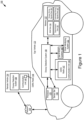
- the operating environment 100 includes the following elements: an ego vehicle 123; and a remote vehicle 124. These elements are communicatively coupled to one another by a network 105.
- the operating environment 100 may include one or more ego vehicles 123, one or more remote vehicles 124, and one or more networks 105.
- the network 105 may be a conventional type, wired or wireless, and may have numerous different configurations including a star configuration, token ring configuration, or other configurations. Furthermore, the network 105 may include a local area network (LAN), a wide area network (WAN) (e.g., the Internet), or other interconnected data paths across which multiple devices and/or entities may communicate. In some embodiments, the network 105 may include a peer-to-peer network. The network 105 may also be coupled to or may include portions of a telecommunications network for sending data in a variety of different communication protocols.
- LAN local area network
- WAN wide area network
- the network 105 may also be coupled to or may include portions of a telecommunications network for sending data in a variety of different communication protocols.
- the network 105 includes Bluetooth ® communication networks or a cellular communications network for sending and receiving data including via short messaging service (SMS), multimedia messaging service (MMS), hypertext transfer protocol (HTTP), direct data connection, wireless application protocol (WAP), e-mail, DSRC, full-duplex wireless communication, mmWave, WiFi (infrastructure mode), WiFi (ad-hoc mode), visible light communication, TV white space communication and satellite communication.
- the network 105 may also include a mobile data network that may include 3G, 4G, LTE, 5G, LTE-V2V, LTE-V2X, LTE-D2D, VoLTE, 5G-V2X or any other mobile data network or combination of mobile data networks.
- the network 105 may include one or more IEEE 802.11 wireless networks.
- the network 105 may include any type of V2X network described herein.
- the ego vehicle 123 is any type of connected vehicle.
- the ego vehicle 123 is one of the following types of vehicles: a car; a truck; a sports utility vehicle; a bus; a semi-truck; a robotic car; a drone or any other roadway-based conveyance.
- the ego vehicle 123 is a DSRC-equipped vehicle.
- the ego vehicle 123 is an autonomous vehicle or a semi-autonomous vehicle.
- the ego vehicle 123 includes a set of Advanced Driver Assistance Systems 180 (a set of "ADAS systems 180") which provide autonomous features to the ego vehicle 123 which are sufficient to render the ego vehicle 123 an autonomous vehicle.
- ADAS systems 180 Advanced Driver Assistance Systems 180
- the National Highway Traffic Safety Administration (“NHTSA”) has defined different "levels” of autonomous vehicles, e.g., Level 0, Level 1, Level 2, Level 3, Level 4 and Level 5. If an autonomous vehicle has a higher-level number than another autonomous vehicle (e.g., Level 3 is a higher-level number than Levels 2 or 1), then the autonomous vehicle with a higher-level number offers a greater combination and quantity of autonomous features relative to the vehicle with the lower level number.
- level 3 is a higher-level number than Levels 2 or 1
- the different levels of autonomous vehicles are described briefly below.
- Level 0 The set of ADAS systems 180 installed in a vehicle (e.g., the ego vehicle 123) have no vehicle control.
- the set of ADAS systems 180 may issue warnings to the driver of the vehicle.
- a vehicle which is Level 0 is not an autonomous or semi-autonomous vehicle.
- Level 1 The driver must be ready to take driving control of the autonomous vehicle at any time.
- the set of ADAS systems 180 installed in the autonomous vehicle may provide autonomous features such as one or more of the following: Adaptive Cruise Control ("ACC”); and Parking Assistance with automated steering and Lane Keeping Assistance (“LKA”) Type II, in any combination.
- ACC Adaptive Cruise Control
- LKA Lane Keeping Assistance
- Level 2 The driver is obliged to detect objects and events in the roadway environment and respond if the set of ADAS systems 180 installed in the autonomous vehicle fail to respond properly (based on the driver's subjective judgement).
- the set of ADAS systems 180 installed in the autonomous vehicle executes accelerating, braking, and steering.
- the set of ADAS systems 180 installed in the autonomous vehicle can deactivate immediately upon takeover by the driver.
- Level 3 Within known, limited environments (such as freeways), the driver can safely turn their attention away from driving tasks, but must still be prepared to take control of the autonomous vehicle when needed.
- Level 4 The set of ADAS systems 180 installed in the autonomous vehicle can control the autonomous vehicle in all but a few environments such as severe weather.
- the driver must enable the automated system (which is comprised of the set of ADAS systems 180 installed in the ego vehicle 123) only when it is safe to do so.
- the automated system is enabled, driver attention is not required for the autonomous vehicle to operate safely and consistent with accepted norms.
- Level 5 Other than setting the destination and starting the system, no human intervention is required.
- the automated system can drive to any location where it is legal to drive and make its own decision (which may vary based on the jurisdiction where the vehicle is located).
- a highly autonomous vehicle is an autonomous vehicle that is Level 3 or higher.
- the ego vehicle 123 is one of the following: a Level 1 autonomous vehicle; a Level 2 autonomous vehicle; a Level 3 autonomous vehicle; a Level 4 autonomous vehicle; a Level 5 autonomous vehicle; and an HAV.
- the set of ADAS systems 180 may include one or more of the following types of ADAS systems: an ACC system; an adaptive high beam system; an adaptive light control system; an automatic parking system; an automotive night vision system; a blind spot monitor; a collision avoidance system; a crosswind stabilization system; a driver drowsiness detection system; a driver monitoring system 152; an emergency driver assistance system; a forward collision warning system; an intersection assistance system; an intelligent speed adaption system; a lane departure warning system (also referred to as a lane keep assistant); a pedestrian protection system; a traffic sign recognition system; a turning assistant; a wrong-way driving warning system; autopilot; sign recognition; and sign assist.
- Each of these example ADAS systems provide their own features and functionality that may be referred to herein as an "ADAS feature” or “ADAS functionality,” respectively.
- the features and functionality provided by these example ADAS systems are also referred to herein as an “autonomous feature” or an “autonomous functionality,” respectively.
- the driver monitoring system 152 is an ADAS system that identifies when a vehicle, such as the ego vehicle 123, is being driven by a drowsy driver.
- the driver monitoring system 152 is a conventional driver monitoring system.
- the ego vehicle 123 includes the following elements: a processor 125; a memory 127; a sensor set 150; a communication unit 145; the set of ADAS systems 180 including the driver monitoring system 152; and a drowsy detection system 199.
- the processor 125 and the memory 127 may be elements of an onboard vehicle computer system (such as computer system 200 described below with reference to Figure 2 ).
- the onboard vehicle computer system may be operable to cause or control the operation of the drowsy detection system 199 of the ego vehicle 123.
- the onboard vehicle computer system may be operable to access and execute the data stored on the memory 127 to provide the functionality described herein for the drowsy detection system 199 of the ego vehicle 123 or its elements (see, e.g., Figure 2 ).
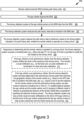
- the onboard vehicle computer system may be operable to execute the drowsy detection system 199 which causes the onboard vehicle computer system to execute one or more steps of one or more of the method 300 described below with reference to Figure 3 .
- the onboard vehicle computer system may be operable to execute the drowsy detection system 199 which causes the onboard vehicle computer system to execute one or more steps of one or more of the method 600 described below with reference to Figures 6A and 6B .
- the processor 125 and the memory 127 may be elements of an onboard unit.
- the onboard unit includes an ECU or an onboard vehicle computer system that may be operable to cause or control the operation of the drowsy detection system 199.
- the onboard unit may be operable to access and execute the data stored on the memory 127 to provide the functionality described herein for the drowsy detection system 199 or its elements.
- the onboard unit may be operable to execute the drowsy detection system 199 which causes the onboard unit to execute one or more steps of one or more of the method 300 described below with reference to Figure 3 .
- the ego vehicle 123 may include a sensor set 150.
- the sensor set 150 includes one or more sensors that are operable to measure the physical environment outside of the ego vehicle 123.
- the sensor set 150 includes one or more sensors that record one or more physical characteristics of the physical environment that is proximate to the ego vehicle 123.
- the memory 127 may store sensor data that describes the one or more physical characteristics recorded by the sensor set 150.
- the memory 127 is a non-transitory memory that stores instructions or data that may be accessed and executed by the processor 125.
- the instructions or data may include code for performing the techniques described herein.
- the memory 127 may be a dynamic random-access memory (DRAM) device, a static random-access memory (SRAM) device, flash memory, or some other memory device.
- the memory 127 also includes a non-volatile memory or similar permanent storage device and media including a hard disk drive, a floppy disk drive, a CD-ROM device, a DVD-ROM device, a DVD-RAM device, a DVD-RW device, a flash memory device, or some other mass storage device for storing information on a more permanent basis.
- a portion of the memory 127 may be reserved for use as a buffer or virtual random-access memory (virtual RAM).
- the ego vehicle 123 may include one or more memories 127.
Landscapes
- Engineering & Computer Science (AREA)
- Physics & Mathematics (AREA)
- General Physics & Mathematics (AREA)
- Automation & Control Theory (AREA)
- Transportation (AREA)
- Mechanical Engineering (AREA)
- Life Sciences & Earth Sciences (AREA)
- Atmospheric Sciences (AREA)
- Mathematical Physics (AREA)
- Signal Processing (AREA)
- Computer Networks & Wireless Communication (AREA)
- Emergency Management (AREA)
- Business, Economics & Management (AREA)
- Human Computer Interaction (AREA)
- Chemical & Material Sciences (AREA)
- Combustion & Propulsion (AREA)
- Multimedia (AREA)
- Theoretical Computer Science (AREA)
- Traffic Control Systems (AREA)
- Control Of Driving Devices And Active Controlling Of Vehicle (AREA)
Applications Claiming Priority (1)
| Application Number | Priority Date | Filing Date | Title |
|---|---|---|---|
| US16/018,972 US10796175B2 (en) | 2018-06-26 | 2018-06-26 | Detection of a drowsy driver based on vehicle-to-everything communications |
Publications (2)
| Publication Number | Publication Date |
|---|---|
| EP3588459A1 EP3588459A1 (en) | 2020-01-01 |
| EP3588459B1 true EP3588459B1 (en) | 2025-06-25 |
Family
ID=66857717
Family Applications (1)
| Application Number | Title | Priority Date | Filing Date |
|---|---|---|---|
| EP19179875.0A Active EP3588459B1 (en) | 2018-06-26 | 2019-06-13 | Detection of a drowsy driver based on vehicle-to-everything communications |
Country Status (4)
| Country | Link |
|---|---|
| US (1) | US10796175B2 (enExample) |
| EP (1) | EP3588459B1 (enExample) |
| JP (1) | JP7318360B2 (enExample) |
| CN (1) | CN110712649B (enExample) |
Families Citing this family (17)
| Publication number | Priority date | Publication date | Assignee | Title |
|---|---|---|---|---|
| JP2020005185A (ja) * | 2018-06-29 | 2020-01-09 | ルネサスエレクトロニクス株式会社 | 通信装置 |
| US10989554B2 (en) * | 2018-08-24 | 2021-04-27 | Honda Motor Co., Ltd. | System and method for emotion navigation routing |
| KR102529919B1 (ko) * | 2018-11-28 | 2023-05-08 | 현대자동차주식회사 | 졸음 운전 관리 장치, 시스템 및 방법 |
| US10966068B2 (en) * | 2019-01-06 | 2021-03-30 | Palo Alto Innovation, LLC | User-configurable sensor platform |
| IT201900000133A1 (it) * | 2019-01-07 | 2020-07-07 | St Microelectronics Srl | "Procedimento di elaborazione di immagini, sistema, veicolo e prodotto informatico corrispondenti" |
| JP7232094B2 (ja) * | 2019-03-25 | 2023-03-02 | 株式会社Subaru | 車両の制御装置、車両の制御方法及びプログラム |
| KR102807503B1 (ko) * | 2019-05-14 | 2025-05-16 | 현대자동차주식회사 | 차량 및 그 제어방법 |
| TWI737051B (zh) * | 2019-11-28 | 2021-08-21 | 啓碁科技股份有限公司 | 基於車聯網通訊之車輛預警的方法、遠程信息處理控制單元及裝置 |
| IT202000001393A1 (it) * | 2020-01-24 | 2021-07-24 | St Microelectronics Srl | Procedimento di elaborazione di segnali elettrofisiologici, sistema, veicolo e prodotto informatico corrispondenti |
| CN112071061B (zh) * | 2020-09-11 | 2021-10-15 | 武汉云上融媒科技有限公司 | 基于云计算和数据分析的车辆服务系统 |
| CN113771874A (zh) * | 2021-08-02 | 2021-12-10 | 北京百度网讯科技有限公司 | 自动驾驶车辆的控制方法、装置、电子设备及可读存储介质 |
| US11767021B2 (en) | 2021-09-15 | 2023-09-26 | Toyota Research Institute, Inc. | Systems and methods for remotely assisting an operator |
| DE102022205571A1 (de) * | 2022-06-01 | 2023-12-07 | Volkswagen Aktiengesellschaft | Verfahren zur Müdigkeitsbekämpfung eines Fahrers eines Kraftfahrzeugs sowie elektronische Recheneinrichtung |
| US12260747B2 (en) * | 2022-07-05 | 2025-03-25 | Qualcomm Incorporated | Misbehavior detection in a vehicle-to-everything (V2X) maneuver coordination message |
| IT202200017931A1 (it) | 2022-08-31 | 2024-03-02 | Fiat Ricerche | “metodo e sistema di allerta per guidatori di gruppi di autoveicoli” |
| WO2025059730A1 (en) * | 2023-09-22 | 2025-03-27 | Fortescue Ltd | Collision avoidance system |
| CN120207348A (zh) * | 2023-12-26 | 2025-06-27 | 纬创资通股份有限公司 | 驾驶监控方法及车辆驾驶风险评估系统 |
Family Cites Families (24)
| Publication number | Priority date | Publication date | Assignee | Title |
|---|---|---|---|---|
| JP4114485B2 (ja) | 2003-01-15 | 2008-07-09 | 日産自動車株式会社 | 車両走行状態検出装置及び車両走行制御装置 |
| JP2008023086A (ja) | 2006-07-21 | 2008-02-07 | Hino Motors Ltd | 覚醒度検出装置 |
| JP4853525B2 (ja) | 2009-02-09 | 2012-01-11 | トヨタ自動車株式会社 | 移動領域予測装置 |
| US20110106442A1 (en) | 2009-10-30 | 2011-05-05 | Indian Institute Of Technology Bombay | Collision avoidance system and method |
| DE112012006975T5 (de) * | 2012-10-04 | 2015-08-06 | Mitsubishi Electric Corporation | Fahrzeugbordinformations -Verarbeitungsvorrichtung |
| US9751534B2 (en) | 2013-03-15 | 2017-09-05 | Honda Motor Co., Ltd. | System and method for responding to driver state |
| EP3158392B1 (en) * | 2014-06-23 | 2020-03-04 | Honda Motor Co., Ltd. | System and method for responding to driver state |
| US20160321924A1 (en) * | 2015-05-01 | 2016-11-03 | Hyundai America Technical Center, Inc. | Predictive road hazard identification system |
| CN105035074A (zh) * | 2015-06-23 | 2015-11-11 | 南京理工大学 | 基于便携式智能设备的车辆主动安全控制方法 |
| US10553112B2 (en) * | 2015-08-19 | 2020-02-04 | Qualcomm Incorporated | Safety event message transmission timing in dedicated short-range communication (DSRC) |
| US10358143B2 (en) * | 2015-09-01 | 2019-07-23 | Ford Global Technologies, Llc | Aberrant driver classification and reporting |
| US9959763B2 (en) | 2016-01-08 | 2018-05-01 | Ford Global Technologies, Llc | System and method for coordinating V2X and standard vehicles |
| CA3014660C (en) * | 2016-02-15 | 2021-08-17 | Allstate Insurance Company | Early notification of non-autonomous area |
| US9688288B1 (en) * | 2016-03-08 | 2017-06-27 | VOLKSWAGEN AG et al. | Geofencing for auto drive route planning |
| JP6552992B2 (ja) * | 2016-03-17 | 2019-07-31 | 株式会社東芝 | 情報処理装置、車載装置および情報処理方法 |
| US20170276504A1 (en) * | 2016-03-22 | 2017-09-28 | Toyota Jidosha Kabushiki Kaisha | Vehicular Traffic Assistance Based on Traffic Management Decisions |
| US10309789B2 (en) * | 2016-03-25 | 2019-06-04 | Qualcomm Incorporated | Automated lane assignment for vehicles |
| JP2017200791A (ja) | 2016-05-02 | 2017-11-09 | 富士通テン株式会社 | 乗員保護装置及び乗員保護方法 |
| US9956963B2 (en) * | 2016-06-08 | 2018-05-01 | GM Global Technology Operations LLC | Apparatus for assessing, predicting, and responding to driver fatigue and drowsiness levels |
| US10013877B2 (en) | 2016-06-20 | 2018-07-03 | Toyota Jidosha Kabushiki Kaisha | Traffic obstruction notification system based on wireless vehicle data |
| US10269242B2 (en) * | 2016-07-12 | 2019-04-23 | Ford Global Technologies, Llc | Autonomous police vehicle |
| US10281925B2 (en) * | 2016-10-21 | 2019-05-07 | Toyota Jidosha Kabushiki Kaisha | Estimate of geographical position of a vehicle using wireless vehicle data |
| US10852728B2 (en) * | 2017-12-27 | 2020-12-01 | Intel Corporation | Remote driver state consideration for autonomous vehicles |
| US11079241B2 (en) * | 2017-12-29 | 2021-08-03 | Intel Corporation | Detection of GPS spoofing based on non-location data |
-
2018
- 2018-06-26 US US16/018,972 patent/US10796175B2/en active Active
-
2019
- 2019-06-13 EP EP19179875.0A patent/EP3588459B1/en active Active
- 2019-06-26 JP JP2019118632A patent/JP7318360B2/ja active Active
- 2019-06-26 CN CN201910557676.3A patent/CN110712649B/zh active Active
Also Published As
| Publication number | Publication date |
|---|---|
| US20190392235A1 (en) | 2019-12-26 |
| CN110712649B (zh) | 2024-10-29 |
| US10796175B2 (en) | 2020-10-06 |
| JP7318360B2 (ja) | 2023-08-01 |
| CN110712649A (zh) | 2020-01-21 |
| EP3588459A1 (en) | 2020-01-01 |
| JP2020030806A (ja) | 2020-02-27 |
Similar Documents
| Publication | Publication Date | Title |
|---|---|---|
| EP3588459B1 (en) | Detection of a drowsy driver based on vehicle-to-everything communications | |
| EP3557893B1 (en) | Multi-level hybrid vehicle-to-anything communications for cooperative perception | |
| CN111326018B (zh) | 基于车辆事故再现数据的车辆组件更改 | |
| US11697410B2 (en) | Vehicle-to-everything communication-based lane change collision avoidance warning | |
| US11676427B2 (en) | Vehicle component modification based on vehicle-to-everything communications | |
| US10762363B2 (en) | Road sign recognition for connected vehicles | |
| US11069245B2 (en) | Lane change timing indicator | |
| US10248410B2 (en) | Implementation decision to provide ADAS function update for a vehicle | |
| EP3588990A1 (en) | Assisting flying drones to select and approach vehicles for improved flying range | |
| US10802110B2 (en) | Vehicular radar interference management using basic safety messages | |
| US10969456B2 (en) | Context system for improved understanding of vehicle-to-everything (V2X) communications by V2X receivers | |
| US20200286382A1 (en) | Data-to-camera (d2c) based filters for improved object detection in images based on vehicle-to-everything communication | |
| US12204038B2 (en) | Vehicle-to-everything (V2X) full-duplex localization assistance for V2X receivers | |
| EP3588816A1 (en) | Reducing adjacent channel interference for wireless vehicular messages | |
| EP3565286B1 (en) | Disaster mitigation system for connected vehicles having hidden vehicle functionality |
Legal Events
| Date | Code | Title | Description |
|---|---|---|---|
| PUAI | Public reference made under article 153(3) epc to a published international application that has entered the european phase |
Free format text: ORIGINAL CODE: 0009012 |
|
| STAA | Information on the status of an ep patent application or granted ep patent |
Free format text: STATUS: REQUEST FOR EXAMINATION WAS MADE |
|
| 17P | Request for examination filed |
Effective date: 20190613 |
|
| AK | Designated contracting states |
Kind code of ref document: A1 Designated state(s): AL AT BE BG CH CY CZ DE DK EE ES FI FR GB GR HR HU IE IS IT LI LT LU LV MC MK MT NL NO PL PT RO RS SE SI SK SM TR |
|
| AX | Request for extension of the european patent |
Extension state: BA ME |
|
| STAA | Information on the status of an ep patent application or granted ep patent |
Free format text: STATUS: EXAMINATION IS IN PROGRESS |
|
| 17Q | First examination report despatched |
Effective date: 20210719 |
|
| GRAP | Despatch of communication of intention to grant a patent |
Free format text: ORIGINAL CODE: EPIDOSNIGR1 |
|
| STAA | Information on the status of an ep patent application or granted ep patent |
Free format text: STATUS: GRANT OF PATENT IS INTENDED |
|
| INTG | Intention to grant announced |
Effective date: 20250221 |
|
| GRAS | Grant fee paid |
Free format text: ORIGINAL CODE: EPIDOSNIGR3 |
|
| GRAA | (expected) grant |
Free format text: ORIGINAL CODE: 0009210 |
|
| STAA | Information on the status of an ep patent application or granted ep patent |
Free format text: STATUS: THE PATENT HAS BEEN GRANTED |
|
| AK | Designated contracting states |
Kind code of ref document: B1 Designated state(s): AL AT BE BG CH CY CZ DE DK EE ES FI FR GB GR HR HU IE IS IT LI LT LU LV MC MK MT NL NO PL PT RO RS SE SI SK SM TR |
|
| REG | Reference to a national code |
Ref country code: GB Ref legal event code: FG4D |
|
| REG | Reference to a national code |
Ref country code: CH Ref legal event code: EP |
|
| REG | Reference to a national code |
Ref country code: CH Ref legal event code: EP |
|
| REG | Reference to a national code |
Ref country code: IE Ref legal event code: FG4D |
|
| REG | Reference to a national code |
Ref country code: DE Ref legal event code: R096 Ref document number: 602019071460 Country of ref document: DE |
|
| PG25 | Lapsed in a contracting state [announced via postgrant information from national office to epo] |
Ref country code: FI Free format text: LAPSE BECAUSE OF FAILURE TO SUBMIT A TRANSLATION OF THE DESCRIPTION OR TO PAY THE FEE WITHIN THE PRESCRIBED TIME-LIMIT Effective date: 20250625 |
|
| REG | Reference to a national code |
Ref country code: LT Ref legal event code: MG9D |
|
| PG25 | Lapsed in a contracting state [announced via postgrant information from national office to epo] |
Ref country code: NO Free format text: LAPSE BECAUSE OF FAILURE TO SUBMIT A TRANSLATION OF THE DESCRIPTION OR TO PAY THE FEE WITHIN THE PRESCRIBED TIME-LIMIT Effective date: 20250925 Ref country code: GR Free format text: LAPSE BECAUSE OF FAILURE TO SUBMIT A TRANSLATION OF THE DESCRIPTION OR TO PAY THE FEE WITHIN THE PRESCRIBED TIME-LIMIT Effective date: 20250926 |
|
| PG25 | Lapsed in a contracting state [announced via postgrant information from national office to epo] |
Ref country code: BG Free format text: LAPSE BECAUSE OF FAILURE TO SUBMIT A TRANSLATION OF THE DESCRIPTION OR TO PAY THE FEE WITHIN THE PRESCRIBED TIME-LIMIT Effective date: 20250625 |
|
| PG25 | Lapsed in a contracting state [announced via postgrant information from national office to epo] |
Ref country code: HR Free format text: LAPSE BECAUSE OF FAILURE TO SUBMIT A TRANSLATION OF THE DESCRIPTION OR TO PAY THE FEE WITHIN THE PRESCRIBED TIME-LIMIT Effective date: 20250625 |
|
| PG25 | Lapsed in a contracting state [announced via postgrant information from national office to epo] |
Ref country code: RS Free format text: LAPSE BECAUSE OF FAILURE TO SUBMIT A TRANSLATION OF THE DESCRIPTION OR TO PAY THE FEE WITHIN THE PRESCRIBED TIME-LIMIT Effective date: 20250925 |
|
| PG25 | Lapsed in a contracting state [announced via postgrant information from national office to epo] |
Ref country code: LV Free format text: LAPSE BECAUSE OF FAILURE TO SUBMIT A TRANSLATION OF THE DESCRIPTION OR TO PAY THE FEE WITHIN THE PRESCRIBED TIME-LIMIT Effective date: 20250625 |
|
| REG | Reference to a national code |
Ref country code: NL Ref legal event code: MP Effective date: 20250625 |
|
| PG25 | Lapsed in a contracting state [announced via postgrant information from national office to epo] |
Ref country code: NL Free format text: LAPSE BECAUSE OF FAILURE TO SUBMIT A TRANSLATION OF THE DESCRIPTION OR TO PAY THE FEE WITHIN THE PRESCRIBED TIME-LIMIT Effective date: 20250625 |
|
| PG25 | Lapsed in a contracting state [announced via postgrant information from national office to epo] |
Ref country code: PT Free format text: LAPSE BECAUSE OF FAILURE TO SUBMIT A TRANSLATION OF THE DESCRIPTION OR TO PAY THE FEE WITHIN THE PRESCRIBED TIME-LIMIT Effective date: 20251027 |
|
| REG | Reference to a national code |
Ref country code: AT Ref legal event code: MK05 Ref document number: 1807367 Country of ref document: AT Kind code of ref document: T Effective date: 20250625 |