EP3585864B1 - Methods for cracking hydrocarbon streams such as crude oils utilizing catalysts which include zeolite mixtures - Google Patents
Methods for cracking hydrocarbon streams such as crude oils utilizing catalysts which include zeolite mixtures Download PDFInfo
- Publication number
- EP3585864B1 EP3585864B1 EP18710179.5A EP18710179A EP3585864B1 EP 3585864 B1 EP3585864 B1 EP 3585864B1 EP 18710179 A EP18710179 A EP 18710179A EP 3585864 B1 EP3585864 B1 EP 3585864B1
- Authority
- EP
- European Patent Office
- Prior art keywords
- cracking catalyst
- zeolite
- total
- catalyst
- framework type
- Prior art date
- Legal status (The legal status is an assumption and is not a legal conclusion. Google has not performed a legal analysis and makes no representation as to the accuracy of the status listed.)
- Active
Links
Images
Classifications
-
- C—CHEMISTRY; METALLURGY
- C10—PETROLEUM, GAS OR COKE INDUSTRIES; TECHNICAL GASES CONTAINING CARBON MONOXIDE; FUELS; LUBRICANTS; PEAT
- C10G—CRACKING HYDROCARBON OILS; PRODUCTION OF LIQUID HYDROCARBON MIXTURES, e.g. BY DESTRUCTIVE HYDROGENATION, OLIGOMERISATION, POLYMERISATION; RECOVERY OF HYDROCARBON OILS FROM OIL-SHALE, OIL-SAND, OR GASES; REFINING MIXTURES MAINLY CONSISTING OF HYDROCARBONS; REFORMING OF NAPHTHA; MINERAL WAXES
- C10G11/00—Catalytic cracking, in the absence of hydrogen, of hydrocarbon oils
- C10G11/02—Catalytic cracking, in the absence of hydrogen, of hydrocarbon oils characterised by the catalyst used
- C10G11/04—Oxides
- C10G11/05—Crystalline alumino-silicates, e.g. molecular sieves
-
- B—PERFORMING OPERATIONS; TRANSPORTING
- B01—PHYSICAL OR CHEMICAL PROCESSES OR APPARATUS IN GENERAL
- B01J—CHEMICAL OR PHYSICAL PROCESSES, e.g. CATALYSIS OR COLLOID CHEMISTRY; THEIR RELEVANT APPARATUS
- B01J21/00—Catalysts comprising the elements, oxides, or hydroxides of magnesium, boron, aluminium, carbon, silicon, titanium, zirconium, or hafnium
- B01J21/16—Clays or other mineral silicates
-
- B—PERFORMING OPERATIONS; TRANSPORTING
- B01—PHYSICAL OR CHEMICAL PROCESSES OR APPARATUS IN GENERAL
- B01J—CHEMICAL OR PHYSICAL PROCESSES, e.g. CATALYSIS OR COLLOID CHEMISTRY; THEIR RELEVANT APPARATUS
- B01J29/00—Catalysts comprising molecular sieves
- B01J29/005—Mixtures of molecular sieves comprising at least one molecular sieve which is not an aluminosilicate zeolite, e.g. from groups B01J29/03 - B01J29/049 or B01J29/82 - B01J29/89
-
- B—PERFORMING OPERATIONS; TRANSPORTING
- B01—PHYSICAL OR CHEMICAL PROCESSES OR APPARATUS IN GENERAL
- B01J—CHEMICAL OR PHYSICAL PROCESSES, e.g. CATALYSIS OR COLLOID CHEMISTRY; THEIR RELEVANT APPARATUS
- B01J29/00—Catalysts comprising molecular sieves
- B01J29/04—Catalysts comprising molecular sieves having base-exchange properties, e.g. crystalline zeolites
- B01J29/06—Crystalline aluminosilicate zeolites; Isomorphous compounds thereof
- B01J29/08—Crystalline aluminosilicate zeolites; Isomorphous compounds thereof of the faujasite type, e.g. type X or Y
- B01J29/084—Y-type faujasite
-
- B—PERFORMING OPERATIONS; TRANSPORTING
- B01—PHYSICAL OR CHEMICAL PROCESSES OR APPARATUS IN GENERAL
- B01J—CHEMICAL OR PHYSICAL PROCESSES, e.g. CATALYSIS OR COLLOID CHEMISTRY; THEIR RELEVANT APPARATUS
- B01J29/00—Catalysts comprising molecular sieves
- B01J29/04—Catalysts comprising molecular sieves having base-exchange properties, e.g. crystalline zeolites
- B01J29/06—Crystalline aluminosilicate zeolites; Isomorphous compounds thereof
- B01J29/40—Crystalline aluminosilicate zeolites; Isomorphous compounds thereof of the pentasil type, e.g. types ZSM-5, ZSM-8 or ZSM-11, as exemplified by patent documents US3702886, GB1334243 and US3709979, respectively
-
- B—PERFORMING OPERATIONS; TRANSPORTING
- B01—PHYSICAL OR CHEMICAL PROCESSES OR APPARATUS IN GENERAL
- B01J—CHEMICAL OR PHYSICAL PROCESSES, e.g. CATALYSIS OR COLLOID CHEMISTRY; THEIR RELEVANT APPARATUS
- B01J29/00—Catalysts comprising molecular sieves
- B01J29/04—Catalysts comprising molecular sieves having base-exchange properties, e.g. crystalline zeolites
- B01J29/06—Crystalline aluminosilicate zeolites; Isomorphous compounds thereof
- B01J29/70—Crystalline aluminosilicate zeolites; Isomorphous compounds thereof of types characterised by their specific structure not provided for in groups B01J29/08 - B01J29/65
- B01J29/7007—Zeolite Beta
-
- B—PERFORMING OPERATIONS; TRANSPORTING
- B01—PHYSICAL OR CHEMICAL PROCESSES OR APPARATUS IN GENERAL
- B01J—CHEMICAL OR PHYSICAL PROCESSES, e.g. CATALYSIS OR COLLOID CHEMISTRY; THEIR RELEVANT APPARATUS
- B01J29/00—Catalysts comprising molecular sieves
- B01J29/04—Catalysts comprising molecular sieves having base-exchange properties, e.g. crystalline zeolites
- B01J29/06—Crystalline aluminosilicate zeolites; Isomorphous compounds thereof
- B01J29/80—Mixtures of different zeolites
-
- B—PERFORMING OPERATIONS; TRANSPORTING
- B01—PHYSICAL OR CHEMICAL PROCESSES OR APPARATUS IN GENERAL
- B01J—CHEMICAL OR PHYSICAL PROCESSES, e.g. CATALYSIS OR COLLOID CHEMISTRY; THEIR RELEVANT APPARATUS
- B01J37/00—Processes, in general, for preparing catalysts; Processes, in general, for activation of catalysts
- B01J37/02—Impregnation, coating or precipitation
- B01J37/0201—Impregnation
-
- B—PERFORMING OPERATIONS; TRANSPORTING
- B01—PHYSICAL OR CHEMICAL PROCESSES OR APPARATUS IN GENERAL
- B01J—CHEMICAL OR PHYSICAL PROCESSES, e.g. CATALYSIS OR COLLOID CHEMISTRY; THEIR RELEVANT APPARATUS
- B01J37/00—Processes, in general, for preparing catalysts; Processes, in general, for activation of catalysts
- B01J37/28—Phosphorising
-
- C—CHEMISTRY; METALLURGY
- C10—PETROLEUM, GAS OR COKE INDUSTRIES; TECHNICAL GASES CONTAINING CARBON MONOXIDE; FUELS; LUBRICANTS; PEAT
- C10G—CRACKING HYDROCARBON OILS; PRODUCTION OF LIQUID HYDROCARBON MIXTURES, e.g. BY DESTRUCTIVE HYDROGENATION, OLIGOMERISATION, POLYMERISATION; RECOVERY OF HYDROCARBON OILS FROM OIL-SHALE, OIL-SAND, OR GASES; REFINING MIXTURES MAINLY CONSISTING OF HYDROCARBONS; REFORMING OF NAPHTHA; MINERAL WAXES
- C10G11/00—Catalytic cracking, in the absence of hydrogen, of hydrocarbon oils
- C10G11/14—Catalytic cracking, in the absence of hydrogen, of hydrocarbon oils with preheated moving solid catalysts
- C10G11/18—Catalytic cracking, in the absence of hydrogen, of hydrocarbon oils with preheated moving solid catalysts according to the "fluidised-bed" technique
-
- C—CHEMISTRY; METALLURGY
- C10—PETROLEUM, GAS OR COKE INDUSTRIES; TECHNICAL GASES CONTAINING CARBON MONOXIDE; FUELS; LUBRICANTS; PEAT
- C10G—CRACKING HYDROCARBON OILS; PRODUCTION OF LIQUID HYDROCARBON MIXTURES, e.g. BY DESTRUCTIVE HYDROGENATION, OLIGOMERISATION, POLYMERISATION; RECOVERY OF HYDROCARBON OILS FROM OIL-SHALE, OIL-SAND, OR GASES; REFINING MIXTURES MAINLY CONSISTING OF HYDROCARBONS; REFORMING OF NAPHTHA; MINERAL WAXES
- C10G2400/00—Products obtained by processes covered by groups C10G9/00 - C10G69/14
- C10G2400/20—C2-C4 olefins
Definitions
- the present disclosure relates to the cracking of hydrocarbons, and more particularly to systems and method for the cracking of hydrocarbon streams by zeolite-containing catalyst systems.
- Light olefins such as ethylene, propylene, and butene are basic intermediates for a large portion of the petrochemical industry. They are mainly obtained through the thermal cracking (sometimes referred to as “steam pyrolysis” or “steam cracking") of petroleum gases and distillates such as naphtha, kerosene, or even gas oil.
- thermal cracking sometimes referred to as "steam pyrolysis” or “steam cracking”
- distillates such as naphtha, kerosene, or even gas oil.
- other production sources must be considered beyond traditional thermal cracking processes utilizing petroleum gases and distillates as feedstocks.
- US 2009/325786 discloses a hydrocarbon conversion catalyst comprising a zeolite mixture comprising, based on the total weight of the zeolite mixture, 1-75 wt % of a zeolite beta modified with phosphorus and a transition metal M, 25-99 wt % of a zeolite having a MFI structure and 0-74 wt % of a large pore zeolite, wherein the anhydrous chemical formula of the zeolite beta modified with phosphorus and the transition metal M is represented in the mass percent of the oxides as (0-0.3)Na 2 O.(0.5-10)Al 2 O 3 .(1.3-10)P 2 O 5 .(0.7-15)M x O y .(64-97)SiO 2 .
- the invention is a cracking process according to claim 1.
- the present disclosure is related to processes and cracking catalysts for producing these intermediate compounds such as light olefins, sometimes referred to in this disclosure as "system products," by the direct conversion of feedstock crude oils such as gas condensate.
- production of light olefins from light hydrocarbon feedstocks may be beneficial as compared with the conversion of other feedstocks in producing these intermediate compounds because the light hydrocarbon feedstocks may be more widely available, may involve less processing costs to convert to light olefins, or both.
- new cracking catalysts are needed to selectively convert light hydrocarbon feedstocks to products with relatively high yields of light olefins such as butene.
- a hydrocarbon feed stream may be cracked by a method comprising contacting the hydrocarbon feed stream with a cracking catalyst in a reactor unit.
- the hydrocarbon feed stream is crude oil and has an API gravity of at least 40 degrees.
- the cracking catalyst includes one or more binder materials in an amount of from 5 weight percent (wt.%) to 30 wt.% of the total cracking catalyst, one or more matrix materials in an amount of from 30 wt.% to 60 wt.% of the total cracking catalyst, *BEA framework type zeolite in an amount of from 5 wt.% to 45 wt.% of the total cracking catalyst, FAU framework type zeolite in an amount of from 5 wt.% to 45 wt.% of the total cracking catalyst, and MFI framework type zeolite in an amount of from 5 wt.% to 45 wt.% of the total cracking catalyst, where the *BEA framework type zeolite comprises less than 1 wt.% of transition metal.
- a hydrocarbon feed stream may be cracked by a method comprising contacting the hydrocarbon feed stream with a cracking catalyst in a reactor unit.
- the hydrocarbon feed stream is crude oil and has an API gravity of at least 40 degrees.
- the cracking catalyst may comprise pseudoboehmite in an amount of from 5 wt.% to 30 wt.% of the total cracking catalyst, kaolin in an amount of from 30 wt.% to 60 wt.% of the total cracking catalyst, zeolite Beta in an amount of from 5 wt.% to 45 wt.% of the total cracking catalyst, zeolite Y in an amount of from 5 wt.% to 45 wt.% of the total cracking catalyst, and ZSM-5 in an amount of from 5 wt.% to 45 wt.% of the total cracking catalyst, wherein the zeolite Beta comprises less than 1 wt% of transition metal
- a system for cracking a hydrocarbon feed stream comprises a fixed bed reactor, a hydrocarbon feed stream entering the reactor, where the hydrocarbon feed stream is crude oil and has an API gravity of at least 40 degrees, a product stream exiting the reactor, and a cracking catalyst positioned at least in the reactor.
- the cracking catalyst includes one or more binder materials in an amount of from 5 weight percent (wt.%) to 30 wt.% of the total cracking catalyst, one or more matrix materials in an amount of from 30 wt.% to 60 wt.% of the total cracking catalyst, *BEA framework type zeolite in an amount of from 5 wt.% to 45 wt.% of the total cracking catalyst, FAU framework type zeolite in an amount of from 5 wt.% to 45 wt.% of the total cracking catalyst, and MFI framework type zeolite in an amount of from 5 wt.% to 45 wt.% of the total cracking catalyst, where the *BEA framework type zeolite comprises less than 1 wt.% of transition metal.
- valves, temperature sensors, electronic controllers and the like that may be employed and well known to those of ordinary skill in the art of certain chemical processing operations are not included.
- accompanying components that are often included in conventional chemical processing operations such as refineries, such as, for example, air supplies, catalyst hoppers, and flue gas handling are not depicted. It should be understood that these components are within the scope of the present embodiments disclosed. However, operational components, such as those described in the present disclosure, may be added to the embodiments described in this disclosure.
- arrows in the drawings refer to process streams. However, the arrows may equivalently refer to transfer lines which may serve to transfer process steams between two or more system components. Additionally, arrows that connect to system components define inlets or outlets in each given system component. The arrow direction corresponds generally with the major direction of movement of the materials of the stream contained within the physical transfer line signified by the arrow. Furthermore, arrows which do not connect two or more system components signify a product stream which exits the depicted system or a system inlet stream which enters the depicted system. Product streams may be further processed in accompanying chemical processing systems or may be commercialized as end products. System inlet streams may be streams transferred from accompanying chemical processing systems or may be non-processed feedstock streams.
- arrows in the drawings may schematically depict process steps of transporting a stream from one system component to another system component.
- an arrow from one system component pointing to another system component may represent "passing" a system component effluent to another system component, which may include the contents of a process stream "exiting” or being “removed” from one system component and "introducing" the contents of that product stream to another system component.
- Described in this disclosure are various embodiments of systems (which systems are outside of the scope of the invention) and methods for processing crude oil hydrocarbon feed streams, such as light crude oils, into petrochemical products such as streams that include one or more of ethylene, propylene, and butene.
- the processing of the hydrocarbon feed stream may include cracking of the hydrocarbon feed stream by contacting the hydrocarbon feed stream with a cracking catalyst.
- the hydrocarbon feed stream may comprise a relatively light crude oil, such as gas condensate.
- the cracking catalyst includes a zeolite mixture comprising a *BEA framework type zeolite (such as, but not limited to, zeolite Beta), an FAU framework type zeolite (such as, but not limited to, zeolite Y), and an MFI framework type zeolite (such as, but not limited to, ZSM-5), as described herein.
- *BEA, MFI, and FAU refer to zeolite framework types as identified by their respective three letter codes established by the International Union of Pure and Applied Chemistry (IUPAC).
- the cracking catalyst may comprise other materials, such as, without limitation, one or more alumina-containing materials, one or more binder materials, or both.
- the cracking catalyst converts the hydrocarbon feed stream into a product stream that may include, without limitation, dry gases (that is, one or more of hydrogen gas, methane, and ethane), liquefied petroleum gases (that is, one or more of propane and butane), light olefins (that is, one or more of ethylene, propylene, and butene), gasoline (that is, hydrocarbons having 4 to 12 carbons per molecule, including alkanes, cycloalkanes, and olefins), and coke.
- dry gases that is, one or more of hydrogen gas, methane, and ethane
- liquefied petroleum gases that is, one or more of propane and butane
- light olefins that is, one or more of ethylene, propylene, and butene
- gasoline that is, hydrocarbons having 4 to 12 carbons per molecule, including alkanes, cycloalkanes, and olefins
- coke hydrocarbons
- the hydrocarbon feed stream which is converted to the product stream by contact with the cracking catalyst has an API gravity of at least 40 degrees, or even at least 50 degrees.
- the hydrocarbon feed stream comprises or consists of gas condensate having an API gravity of from 50 degrees to 55 degrees.
- crude oil refers to fuels which have been minimally processed or not processed following extraction from their respective sources.
- gas condensate is considered a crude oil even though it may undergo minimal processing to separate vapor fractions from liquid fractions in the formation of the gas condensate.
- crude oils may include hydrocarbon feedstocks which have been minimally processed such as by the partial or full removal of unwanted contaminants such as one or more of sulfur, heavy metals, nitrogen, or aromatics, such as by hydroprocessing.
- the hydrocarbon feed stream may have an API gravity of from 45 degrees to 60 degrees.
- the combination of zeolites in the zeolite mixture promotes conversion of the hydrocarbon feed stream to a product stream having an enhanced yield of light olefins.
- zeolite Beta in combination with zeolite Y and ZSM-5 may promote the formation of light olefins from a hydrocarbon feedstock that is relatively light, such as gas condensate.
- zeolite Y may be utilized for the production of gasoline
- ZSM-5 may be utilized to increase the yield of propylene and the octane number
- Zeolite Beta may be utilized to produce olefins and the octane number of gasoline.
- a petrochemical FCC (fluid catalytic cracking) catalyst system that results in a significant increase in light olefin yield and gasoline octane from relatively light feedstock fuels may be obtained.
- a “cracking catalyst” refers to any substance which increases the rate of a cracking chemical reaction.
- “cracking” generally refers to a chemical reaction where a molecule having carbon to carbon bonds is broken into more than one molecule by the breaking of one or more of the carbon to carbon bonds, or is converted from a compound which includes a cyclic moiety, such as an aromatic, to a compound which does not include a cyclic moiety or contains fewer cyclic moieties than prior to cracking.
- cracking catalysts promote cracking of a reactant
- the cracking catalyst is not limited to cracking functionality, and may, in some embodiments, be operable to promote other reactions.
- the catalyst composition comprises an FAU framework type zeolite, such as zeolite Y.
- zeolite Y refers to zeolite having a FAU framework type according to the IUPAC zeolite nomenclature and consisting of silica and alumina, where the molar ratio of silica to alumina is at least 3.
- the molar ratio of silica to alumina in the zeolite Y may be at least 5, at least 12, or even at least 30, such as from 5 to 30, from 12 to 30, or from about 15 to about 30.
- the unit cell size of the zeolite Y may be from about 24 Angstrom to about 25 Angstrom, such as 24.56 Angstrom.
- the cracking catalyst comprises an amount of FAU framework type zeolite (such as zeolite Y) in an amount of from 5 wt.% to 45 wt.% of the total cracking catalyst.
- the cracking catalyst may comprise FAU framework type zeolite in an amount of from 5 wt.% to 40 wt.% of the total cracking catalyst, from 5 wt.% to 35 wt.% of the total cracking catalyst, from 5 wt.% to 30 wt.% of the total cracking catalyst, from 5 wt.% to 25 wt.% of the total cracking catalyst, from 5 wt.% to 20 wt.% of the total cracking catalyst, from 5 wt.% to 15 wt.% of the total cracking catalyst, from 5 wt.% to 10 wt.% of the total cracking catalyst, from 10 wt.% to 45 wt.% of the total cracking catalyst, from 15 wt
- the cracking catalyst may comprise FAU framework type zeolite in an amount of from 10 wt.% to 20 wt.% of the total cracking catalyst, from 15 wt.% to 30 wt.% of the total cracking catalyst, or from 10 wt.% to 40 wt.% of the total cracking catalyst.
- all or a portion of the FAU framework type zeolite may be zeolite Y.
- the cracking catalyst comprises a *BEA framework type zeolite, such as zeolite Beta.
- zeolite Beta refers to zeolite having a *BEA framework type according to the IUPAC zeolite nomenclature and consisting of silica and alumina.
- the molar ratio of silica to alumina in the zeolite Beta may be at least 10, at least 25, or even at least 100.
- the molar ratio of silica to alumina in the zeolite Beta may be from 5 to 500, such as from 25 to 300.
- the zeolite Beta may be in the form of H-Beta, the acidic form of zeolite Beta usually derived from NH 4 -Beta via calcination.
- the zeolite Beta may be stabilized by direct reaction with phosphoric acid (H 3 PO 4 ) or by impregnation with ammonium hydrogen phosphate (NH 4 ) 2 HPO 4 .
- the *BEA framework type zeolite may comprise one or more phosphorus-containing compounds, such as a phosphorus oxide, such as phosphorus pentoxide ("P 2 O 5 ").
- the *BEA framework type zeolite may include one or more phosphorus-containing compounds in an amount of from 1 wt.% to 20 wt.% of the total amount of the *BEA framework type zeolite, such as from 5 wt.% to 10 wt.% of the total amount of *BEA framework type zeolite.
- the amount of phosphorus-containing compounds relative to the total amount of *BEA framework type zeolite may be from 1 wt.% to 18 wt.%, from 1 wt.% to 16 wt.%, from 1 wt.% to 14 wt.%, from 1 wt.% to 12 wt.%, from 1 wt.% to 10 wt.%, from 1 wt.% to 8 wt.%, from 1 wt.% to 6 wt.%, from 1 wt.% to 4 wt.%, from 1 wt.% to 2 wt.%, from 2 wt.% to 20 wt.%, from 4 wt.% to 20 wt.%, from 6 wt.% to 20 wt.%, from 8 wt.% to 20 wt.%, from 10 wt.% to 20 wt.%, from 12 wt.% to 20 wt.%.
- the cracking catalyst comprises an amount of *BEA framework type zeolite (such as zeolite Beta) in an amount of from 5 wt.% to 45 wt.% of the total cracking catalyst.
- the cracking catalyst may comprise *BEA framework type zeolite in an amount of from 5 wt.% to 40 wt.% of the total cracking catalyst, from 5 wt.% to 35 wt.% of the total cracking catalyst, from 5 wt.% to 30 wt.% of the total cracking catalyst, from 5 wt.% to 25 wt.% of the total cracking catalyst, from 5 wt.% to 20 wt.% of the total cracking catalyst, from 5 wt.% to 15 wt.% of the total cracking catalyst, from 5 wt.% to 10 wt.% of the total cracking catalyst, from 10 wt.% to 45 wt.% of the total cracking catalyst, from 15 w
- the cracking catalyst may comprise *BEA framework type zeolite in an amount of from 5 wt.% to 35 wt.% of the total cracking catalyst, from 15 wt.% to 35 wt.% of the total cracking catalyst, from 20 wt.% to 35 wt.% of the total cracking catalyst, or from 25 wt.% to 40 wt.% of the total cracking catalyst.
- the catalyst composition comprises MFI framework type zeolite, such as ZSM-5.
- ZSM-5" refers to zeolites having an MFI framework type according to the IUPAC zeolite nomenclature and consisting of silica and alumina.
- ZSM-5 refers to "Zeolite Socony Mobil-5" and is a pentasil family zeolite that can be represented by the chemical formula Na n Al n Si 96-n O 192 ⁇ 16H 2 O, where 0 ⁇ n ⁇ 27.
- the molar ratio of silica to alumina in the ZSM-5 may be at least 5.
- the molar ratio of silica to alumina in the zeolite Y may be at least 10, at least 12, or even at least 30, such as from 5 to 30, from 12 to 30, or from 5 to 80.
- suitable ZSM-5 include those commercially available from Zeolyst International, such as CBV2314, CBV3024E, CBV5524G, and CBV28014.
- the MFI framework type zeolite may comprise one or more phosphorus-containing compounds, such as a phosphorus oxide, such as phosphorus pentoxide ("P 2 O 5 ").
- the MFI framework type zeolite may include one or more phosphorus-containing compounds in an amount of from 1 wt.% to 20 wt.% of the total amount of MFI framework type zeolite, such as from 5 wt.% to 10 wt.% of the total amount of MFI framework type zeolite.
- the amount of phosphorus containing compounds relative to the total amount of MFI framework type zeolite may be from 1 wt.% to 18 wt.%, from 1 wt.% to 16 wt.%, from 1 wt.% to 14 wt.%, from 1 wt.% to 12 wt.%, from 1 wt.% to 10 wt.%, from 1 wt.% to 8 wt.%, from 1 wt.% to 6 wt.%, from 1 wt.% to 4 wt.%, from 1 wt.% to 2 wt.%, from 2 wt.% to 20 wt.%, from 4 wt.% to 20 wt.%, from 6 wt.% to 20 wt.%, from 8 wt.% to 20 wt.%, from 10 wt.% to 20 wt.%, from 12 wt.% to 20 wt.%.%
- the cracking catalyst may comprise MFI framework type zeolite, such as ZSM-5, in an amount of from 5 wt.% to 45 wt.% of the total cracking catalyst.
- the cracking catalyst may comprise MFI framework type zeolite in an amount of from 5 wt.% to 40 wt.% of the total cracking catalyst, from 5 wt.% to 35 wt.% of the total cracking catalyst, from 5 wt.% to 30 wt.% of the total cracking catalyst, from 5 wt.% to 25 wt.% of the total cracking catalyst, from 5 wt.% to 20 wt.% of the total cracking catalyst, from 5 wt.% to 15 wt.% of the total cracking catalyst, from 5 wt.% to 10 wt.% of the total cracking catalyst, from 10 wt.% to 45 wt.% of the total cracking catalyst, from 15 wt.% to 45 wt.% of the total cracking catalyst
- the cracking catalyst may comprise MFI framework type zeolite in an amount of from 10 wt.% to 30 wt.% of the total cracking catalyst, from 10 wt.% to 20 wt.% of the total cracking catalyst, from 5 wt.% to 10 wt.% of the total cracking catalyst, or from 10 wt.% to 25 wt.% of the total cracking catalyst.
- the *BEA framework type zeolite comprises less than 1 wt.% of transition metal.
- the MFI framework type zeolite and/or the FAU framework type zeolite may also be substantially free of transition metals (that is, comprises less than 1 wt.% of transition metal).
- one or more of the ZSM-5, zeolite Beta, and zeolite Y may consist of less than or equal to 1 wt.%, 0.5 wt.%, 0.3 wt.%, 0.1 wt.%, 0. 01, or even 0.001 wt.% of transition metals.
- transition metals include scandium, titanium, vanadium, chromium, manganese, iron, cobalt, nickel, copper, zinc, yttrium, zirconium, niobium, molybdenum, technetium, ruthenium, rhodium, palladium, silver, cadmium, hafnium, tantalum, tungsten, rhenium, osmium, iridium, platinum, gold, mercury, rutherfordium, dubnium, seaborgium, bohrium, hassium, meitnerium, darmstadtium, roentgenium, and copemicium.
- one or more of the MFI framework type zeolite, *BEA framework type zeolite, and FAU framework type zeolite comprise phosphorus pentoxide, wherein optionally, one or more of the MFI framework type zeolite, *BEA framework type zeolite, and FAU framework type zeolite comprise from 1 wt.% to 20 wt.% of phosphorus pentoxide.
- the catalyst composition comprises one or more binder materials, such as alumina-containing compounds or silica-containing compounds (including compounds containing alumina and silica).
- binder materials refer to materials which may serve to "glue” or otherwise hold zeolite and the matrix together in the microsphere. It may improve the attrition resistance of the catalyst particle.
- the binder material may comprise alumina (such as amorphous alumina), silica-alumina (such as amorphous silica-alumina), or silica (such as amorphous silica).
- the binder material may comprise pseudoboehmite.
- the cracking catalyst may comprise from 5 wt.% to 30 wt.% of pseudoboehmite.
- pseudoboehmite refers to an aluminum-containing compound with the chemical composition AlO(OH) consisting of crystalline boehmite.
- Suitable pseudoboehmite includes CATAPAL ® aluminas, commercially available from Sasol Limited of Africa.
- Boehmite refers to aluminum oxide hydroxide as well, but pseudoboehmite generally has a greater amount of water than boehmite.
- the binder material, such as pseudoboehmite may be peptized with an acid, such as a mono-protic acid, such as nitric acid (“HNO 3 ”) or hydrochloric acid (“HCl").
- the cracking catalyst comprises the one or more binder materials in an amount of from 5 wt.% to 30 wt.% of the total cracking catalyst.
- the cracking catalyst may comprise binder material in an amount of from 5 wt.% to 25 wt.% of the total cracking catalyst, from 5 wt.% to 20 wt.% of the total cracking catalyst, from 5 wt.% to 15 wt.% of the total cracking catalyst, from 5 wt.% to 10 wt.% of the total cracking catalyst, from 10 wt.% to 30 wt.% of the total cracking catalyst, from 15 wt.% to 30 wt.% of the total cracking catalyst, 20 wt.% to 30 wt.% of the total cracking catalyst, or from 25 wt.% to 30 wt.% of the total cracking catalyst.
- cracking catalyst may comprise the binder materials in an amount of from 10 wt.% to 20 wt.% of the total cracking catalyst, such as from 12 wt.% to 18 wt.% of the total cracking catalyst, or from 14 wt.% to 16 wt.% of the total cracking catalyst. It should be understood that, in one or more embodiments, the cracking catalyst may include any single disclosed binder material in an amount of the disclosed wt.% ranges. In additional embodiments, the cracking catalyst may include any two or more binder materials in combination in an amount of the disclosed wt.% ranges.
- matrix materials may refer to a clay material such as kaolin. Without being bound by theory, it is believed that the matrix materials of the catalyst serves both physical and catalytic functions. Physical functions include providing particle integrity and attrition resistance, acting as a heat transfer medium, and providing a porous structure to allow diffusion of hydrocarbons into and out of the catalyst microspheres. The matrix can also affect catalyst selectivity, product quality and resistance to poisons. The matrix materials may tend to exert its strongest influence on overall catalytic properties for those reactions which directly involve relatively large molecules.
- the matrix material comprises kaolin.
- kaolin refers to a clay material that has a relatively large amount (such as at least about 50 wt.%, at least 60 wt.%, at least 70 wt.%, at least 80 wt.%, at least 90 wt.%, or even at least 95 wt.%) of kaolinite, which can be represented by the chemical formula Al 2 Si 2 O 5 (OH) 4 .
- Kaolin is sometimes referred to as "china clay.”
- the matrix material may comprise other clay materials.
- the cracking catalyst comprises or more matrix materials in an amount of from 30 wt.% to 60 wt.% of the total cracking catalyst.
- the cracking catalyst may comprise the matrix material in an amount of from 30 wt.% to 55 wt.% of the total cracking catalyst, from 30 wt.% to 50 wt.% of the total cracking catalyst, from 30 wt.% to 45 wt.% of the total cracking catalyst, from 30 wt.% to 40 wt.% of the total cracking catalyst, from 30 wt.% to 35 wt.% of the total cracking catalyst, from 35 wt.% to 60 wt.% of the total cracking catalyst, from 40 wt.% to 60 wt.% of the total cracking catalyst, from 45 wt.% to 60 wt.% of the total cracking catalyst, from 50 wt.% to 60 wt.% of the total cracking catalyst, or from 55 wt
- the cracking catalyst may comprise the matrix material in an amount of from 35 wt.% to 55 wt.% of the total cracking catalyst, such as from 40 wt.% to 50 wt.% of the total cracking catalyst, or from 43 wt.% to 47 wt.% of the total cracking catalyst. It should be understood that, in one or more embodiments, the cracking catalyst may include any single disclosed matrix material in an amount of the disclosed wt.% ranges. In additional embodiments, the cracking catalyst may include any two or more matrix materials in combination in an amount of the disclosed wt.% ranges.
- the cracking catalyst may be in the form of shaped microparticles, such as microspheres.
- microparticles refer to particles having of size of from 0.1 microns and 100 microns.
- the size of a microparticle refers to the maximum length of a particle from one side to another, measured along the longest distance of the microparticle.
- a spherically shaped microparticle has a size equal to its diameter, or a rectangular prism shaped microparticle has a maximum length equal to the hypotenuse stretching from opposite corners.
- the zeolites of the zeolite mixture may all be included in each microparticle.
- microparticles may be mixed, where the microparticles contain only a portion of the zeolite mixture.
- a mixture of three microparticle types may be included in the cracking catalyst, where one type of microparticle includes only ZSM-5, one type of microparticle includes only zeolite Beta, and one microparticle type includes only zeolite Y.
- the cracking catalyst may be formed by a variety of processes.
- the matrix material may be mixed with a fluid such as water to form a slurry, and the zeolites may be separately mixed with a fluid such as water to form a slurry.
- the matrix material slurry and the zeolite slurry may be combined under stirring.
- another slurry may be formed by combining the binder material with a fluid such as water.
- the binder slurry may then be combined with the slurry containing the zeolites and matrix material to form an all-ingredients slurry.
- the all-ingredients slurry may be dried, for example by spraying, and then calcinated, to produce the microparticles of the cracking catalyst.
- the cracking catalyst may be deactivated by contact with steam prior to use in a reactor to convert hydrocarbons.
- the purpose of steam treatment is to accelerate the hydrothermal aging which occurs in an operational FCC regenerator to obtain an equilibrium catalyst.
- Steam treatment may lead to the removal of aluminum from the framework leading to a decrease in the number of sites where framework hydrolysis can occur under hydrothermal and thermal conditions. This removal of aluminum results in an increased thermal and hydrothermal stability in dealuminated zeolites.
- the unit cell size may decrease as a result of dealumination since the smaller SiO 4 tetrahedron replaces the larger AlO 4 - tetrahedron.
- the acidity of zeolites may also affected by dealumination through the removal of framework aluminum and the formation of extra-framework aluminum species.
- Dealumination may affect the acidity of the zeolite by decreasing the total acidity and increasing the acid strength of the zeolite.
- the total acidity may decrease because of the removal of framework aluminum, which act as Bronsted acid sites.
- the acid strength of the zeolite may be increased because of the removal of paired acid sites or the removal of the second coordinate next nearest neighbor aluminum.
- the increase in the acid strength may be caused by the charge density on the proton of the OH group being highest when there is no framework aluminum in the second coordination sphere.
- the hydrocarbon feed stream may be contacted by the cracking catalyst in a reactor unit.
- a reactor unit refers to a vessel or series of vessels in which one or more chemical reactions may occur between one or more reactants in the presence of one or more catalysts.
- a reactor may include a tank or tubular reactor configured to operate as a batch reactor, a continuous stirred-tank reactor (CSTR), or a plug flow reactor.
- Example reactors include packed bed reactors such as fixed bed reactors, and fluidized bed reactors.
- the reactor unit used to convert the hydrocarbon feed stream may be a fluidized bed reactor.
- a "fluid catalytic cracking reactor” refers to a reactor unit that can be operable to contact a fluidized reactant with a solid material (usually in particulate form), such as a cracking catalyst.
- a fluidized bed reactor which cracks a reactant stream with a fluidized solid cracking catalyst may be referred to as a fluid catalytic cracking reactor unit.
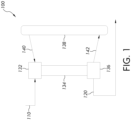
- FIG. 1 schematically depicts a fluid catalytic cracking reactor unit 100 which converts a hydrocarbon feed stream 110 into a product stream 120.
- the embodiment of FIG. 1 includes cracking catalyst regeneration functionality.
- the hydrocarbon feed stream 110 may be passed to a fluid catalytic cracking reactor unit 100.
- the fluid catalytic cracking reactor unit 100 may include a cracking catalyst/feed mixing zone 132, a reaction zone 134, a separation zone 136, and a cracking catalyst regeneration zone 138.
- the hydrocarbon feed stream 110 may be introduced to the cracking catalyst/feed mixing zone 132 where it is mixed with regenerated cracking catalyst from regenerated catalyst stream 140 passed from the cracking catalyst regeneration zone 138.
- the hydrocarbon feed stream 110 is reacted by contact with the regenerated cracking catalyst in the reaction zone 134, which cracks the contents of the hydrocarbon feed stream 110.
- the contents of the reaction zone 134 are passed to the separation zone 136 where the cracked product of the reaction zone 134 is separated from spent catalyst, which is passed in a spent catalyst stream 142 to the cracking catalyst regeneration zone 138 where it is regenerated by, for example, removing coke from the spent cracking catalyst.
- the product stream 120 is passed from the fluid catalytic cracking reactor unit, where it may be further processed, for example by separation into multiple streams.
- fluid catalytic cracking reactor unit 100 of FIG. 1 is a simplified schematic of one particular embodiment of a fluid catalytic cracking reactor unit, and other configurations of fluid catalytic cracking reactor units may be suitable for the presently disclosed hydrocarbon cracking methods.
- the catalyst may not be recycled, and in such embodiments, the components of FIG. 1 related to the regeneration of the cracking catalyst would not be present.
- the hydrocarbon feed stream is a fluid stream (either gaseous or liquid) which has a relatively great API gravity, such as at least 40 degrees, and often greater than 50 degrees.
- the hydrocarbon feed stream 110 may have an API gravity of at least about 30 degrees, at least 35 degrees, at least 40 degrees, at least 45 degrees, at least 50 degrees, at least 55 degrees, or even at least 60 degrees.
- the hydrocarbon feed stream 110 is a crude oil feedstock
- the hydrocarbon feed stream 110 may be processed to remove components such as one or more of metals, sulfur, or nitrogen prior to being treated with the cracking catalysts presently described.
- at least 50 wt.%, 60 wt.%, 70 wt.%, 80 wt.%, 90 wt.%, 95 wt.%, or even 99 wt.% of the hydrocarbon feed stream is gas condensate.
- the hydrocarbon feed stream 110 which is cracked consists of gas condensate, such as gas condensate available from the Khuff geological formation.
- gas condensate such as gas condensate available from the Khuff geological formation.
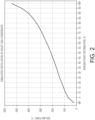
- Khuff gas condensate properties an example feedstock fuel for the cracking process of the present disclosure, is shown in Table 1.
- FIG. 2 shows the boiling point profile for Khuff gas condensate.
- IBP refers to the initial boiling point
- FBP refers to the final boiling point.
- FIG. 2 depicts weight percentages of oil boiled as a function of increasing temperature.
- Table 1 Example of Khuff Gas Condensate Property Units Value American Petroleum Institute (API) gravity degrees 52.8 Density grams per cubic centimeter (g/cm 3 ) 0.7695 Sulfur Content weight percent (wt.%) 0.03 Nickel parts per billion by weight (ppbw) Less than 20 Vanadium ppbw Less than 20 Iron ppbw Less than 20 Copper ppbw Less than 20 Sodium Chloride (NaCl) Content ppbw 50 Conradson Carbon wt.% 0.03 Basic nitrogen Parts per million (ppm) Less than 10
- the hydrocarbon feed stream 110 may have a boiling point profile as described by the 5 wt.% boiling temperature, the 25 wt.% boiling temperature, the 50 wt.% boiling temperature, the 75 wt.% boiling temperature, and the 95 wt.% boiling temperature. These respective boiling temperatures correspond to the temperature at which a given weight percentage of the hydrocarbon feed stream boils.
- the hydrocarbon feed stream 100 may have one or more of a 5 wt.% boiling temperature of less than 150°C, a 25 wt.% boiling temperature of less than 225°C, a 50 wt.% boiling temperature of less than 300°C, a 75 wt.% boiling temperature of less than 400°C, and a 95 wt.% boiling temperature of less than 600°C.
- the hydrocarbon feed stream 100 may have one or more of a 5 wt.% boiling temperature of from 0°C to 100°C, a 25 wt.% boiling temperature of from 75°C to 175°C, a 50 wt.% boiling temperature of from 150°C to 250°C, a 75 wt.% boiling temperature of from 250°C to 350°C, and a 95 wt.% boiling temperature of from 450°C to 550°C.
- the reaction fluid catalytic cracking reaction may be a high severity fluid catalytic cracking reaction.
- "high severity" fluid catalytic cracking refers to cracking under reaction temperatures of at least about 500 degrees Celsius (“°C").
- the reaction zone 134 of the fluid catalytic cracking reactor unit 100 may operate at a temperature of from 500°C to 700°C, such as from about 600°C to about 700°C, or from about 625°C to about 675°C.
- the catalyst to oil weight ratio may be from 7 to 10, such as from 7.5 to 9.5 or from 7.75 to 8.25.
- the residence time of the mixture in the reaction zone 127 may be from 0.2 to 2 seconds.
- the contacting of the hydrocarbon feed stream 125 with the cracking catalyst produces a product stream 120 that may comprise at least 20 wt.% of light olefins selected from ethylene, propylene, and butene.
- the product stream 120 may comprise at least 22 wt.% of light olefins, at least 25 wt.% of light olefins, at least 30 wt.% of light olefins, or even at least at least 40 wt.% of light olefins.
- the product stream 120 may comprise at least 3 wt.% of ethylene, at least 5 wt.% of ethylene, at least 7 wt.% of ethylene, or even at least 8 wt.% of ethylene, at least 13 wt.% of propylene, at least 15 wt.% of propylene, at least 19 wt.% of propylene, or even at least 21 wt.% of propylene, at least 8 wt.% of butene, at least 10 wt.% of butene, at least 14 wt.% of butene, or even at least 18 wt.% of butene.
- a number of cracking catalysts were prepared with varying amounts of ZSM-5, zeolite Y, and zeolite Beta. Additionally, comparative catalysts were prepared under the same procedures. The catalyst compositions prepared are show in Tables 2. Additionally, comparative catalyst compositions were prepared and are shown in Table 3. It is noted that Sample 2 was prepared from microspheres of Comparative Sample A (25 wt.%), Comparative Sample B (15 wt.%), and Comparative Sample C (60 wt.%).
- the ZSM-5 zeolite used was CBV 2314 zeolite commercially available from Zeolyst International, which has a silica to alumina ratio of 23.
- the zeolite Beta used was CP814E zeolite commercially available from Zeolyst International, which has a silica to alumina ratio of 25.
- the zeolite Y used was SP13-0159 zeolite commercially available from W.R. Grace and Company, which had a silica to alumina ratio of 6.
- the catalysts were prepared by blending kaolin clay powder with de-ionized water.
- the zeolite mixture dry basis
- an appropriate amount of ortho-phosphoric acid concentration 85 wt % was gradually added to achieve 3.5 wt.% of total zeolite weight. Stirring was continued for another 15 minutes.
- the zeolite-phosphoric acid slurry was then added to the kaolin slurry and stirred for 5 minutes.
- a slurry of Catapal alumina was prepared by mixing Catapal alumina (dry basis) with distilled water, which was peptized by adding an appropriate amount of concentrated nitric acid (concentration of 70 wt.%) and stirring for thirty minutes. The resulting peptized Catapal slurry was added to the zeolite-kaolin slurry and blended for 10 minutes, producing a slurry with high viscosity where the individual particles remain suspended.
- the resulting slurry was made up of 30 wt.% solids was spray dried to produce particles of 20-100 microns. The dried particles were then calcined at 500°C for 3 hours.
- MAT microactivity testing unit
- ASTM D-3907 and D-5154 testing protocols For each MAT run, a full mass balance was obtained and was found to be around 100%. All MAT runs were performed at a cracking temperature of 650°C and a time-on-stream of 30 seconds. All samples were steamed at 750°C for 3 hours prior to experimentation.
- results show the effect of zeolite Beta on conversion and the yield of light olefins. Conversion and light olefin yield increase with the amount of zeolite Beta in the formulation.
- results also show the synergetic effect of having zeolite Y, zeolite Beta and ZSM-5 in the formulation as improved light olefin yield is realized than when just only either ZSM-5 or zeolite Y are in the formulation. Therefore it may be advantageous to supplement the conventional FCC catalyst with zeolite beta in order to increase the light olefin yield and gasoline octane.
- a catalyst formulation containing a large pore zeolite, such as zeolite Y or zeolite Beta, as the primary cracking component and a medium pore zeolite such as ZSM-5 provides a more active catalyst with better light olefin yield.
- any two quantitative values assigned to a property may constitute a range of that property, and all combinations of ranges formed from all stated quantitative values of a given property are contemplated in this disclosure.
Landscapes
- Chemical & Material Sciences (AREA)
- Engineering & Computer Science (AREA)
- Organic Chemistry (AREA)
- Chemical Kinetics & Catalysis (AREA)
- Materials Engineering (AREA)
- Crystallography & Structural Chemistry (AREA)
- Oil, Petroleum & Natural Gas (AREA)
- General Chemical & Material Sciences (AREA)
- Dispersion Chemistry (AREA)
- Production Of Liquid Hydrocarbon Mixture For Refining Petroleum (AREA)
- Catalysts (AREA)
- Organic Low-Molecular-Weight Compounds And Preparation Thereof (AREA)
- Low-Molecular Organic Synthesis Reactions Using Catalysts (AREA)
Applications Claiming Priority (2)
| Application Number | Priority Date | Filing Date | Title |
|---|---|---|---|
| US201762462689P | 2017-02-23 | 2017-02-23 | |
| PCT/US2018/018482 WO2018156427A1 (en) | 2017-02-23 | 2018-02-16 | Systems and methods for cracking hydrocarbon streams such as crude oils utilizing catalysts which include zeolite mixtures |
Publications (2)
| Publication Number | Publication Date |
|---|---|
| EP3585864A1 EP3585864A1 (en) | 2020-01-01 |
| EP3585864B1 true EP3585864B1 (en) | 2024-06-05 |
Family
ID=61617087
Family Applications (1)
| Application Number | Title | Priority Date | Filing Date |
|---|---|---|---|
| EP18710179.5A Active EP3585864B1 (en) | 2017-02-23 | 2018-02-16 | Methods for cracking hydrocarbon streams such as crude oils utilizing catalysts which include zeolite mixtures |
Country Status (8)
| Country | Link |
|---|---|
| US (1) | US10494574B2 (enExample) |
| EP (1) | EP3585864B1 (enExample) |
| JP (1) | JP2020509122A (enExample) |
| KR (1) | KR102574535B1 (enExample) |
| CN (1) | CN110325622A (enExample) |
| SA (1) | SA519402509B1 (enExample) |
| SG (1) | SG11201907671XA (enExample) |
| WO (1) | WO2018156427A1 (enExample) |
Families Citing this family (18)
| Publication number | Priority date | Publication date | Assignee | Title |
|---|---|---|---|---|
| KR20220044200A (ko) * | 2019-08-01 | 2022-04-06 | 킹 압둘라 유니버시티 오브 사이언스 앤드 테크놀로지 | 금속 카바이드계 촉매 및 그 제조 방법 |
| US11225612B2 (en) | 2020-03-27 | 2022-01-18 | Saudi Arabian Oil Company | Catalyst and process for catalytic steam cracking of heavy distillate |
| US20230347330A1 (en) * | 2020-06-24 | 2023-11-02 | China Petroleum & Chemical Corporation | ZSM-5/Beta CORE-SHELL MOLECULAR SIEVE AND SYNTHESIS AND USE THEREOF |
| US11332678B2 (en) | 2020-07-23 | 2022-05-17 | Saudi Arabian Oil Company | Processing of paraffinic naphtha with modified USY zeolite dehydrogenation catalyst |
| US11274068B2 (en) * | 2020-07-23 | 2022-03-15 | Saudi Arabian Oil Company | Process for interconversion of olefins with modified beta zeolite |
| US11154845B1 (en) | 2020-07-28 | 2021-10-26 | Saudi Arabian Oil Company | Hydrocracking catalysts containing USY and beta zeolites for hydrocarbon oil and method for hydrocracking hydrocarbon oil with hydrocracking catalysts |
| US11420192B2 (en) | 2020-07-28 | 2022-08-23 | Saudi Arabian Oil Company | Hydrocracking catalysts containing rare earth containing post-modified USY zeolite, method for preparing hydrocracking catalysts, and methods for hydrocracking hydrocarbon oil with hydrocracking catalysts |
| US12338208B2 (en) * | 2020-07-31 | 2025-06-24 | Basf Corporation | Fluid catalytic cracking catalyst composition for enhanced butylene to propylene selectivity ratio |
| US11142703B1 (en) | 2020-08-05 | 2021-10-12 | Saudi Arabian Oil Company | Fluid catalytic cracking with catalyst system containing modified beta zeolite additive |
| US11370975B2 (en) | 2020-09-30 | 2022-06-28 | Saudi Arabian Oil Company | Steam-enhanced catalytic cracking of hydrocarbons to produce light olefins |
| TW202224767A (zh) * | 2020-10-01 | 2022-07-01 | 美商W R 康格雷氏公司 | 用於流體催化裂解的催化劑組成物及其製備方法 |
| CA3198746A1 (en) * | 2020-11-20 | 2022-05-27 | Bilge Yilmaz | Fluid catalytic cracking additive composition for enhanced butylenes selectivity over propylene |
| US11230676B1 (en) | 2021-01-12 | 2022-01-25 | Saudi Arabian Oil Company | Processes for producing petrochemical products from crude oil |
| US11618858B1 (en) | 2021-12-06 | 2023-04-04 | Saudi Arabian Oil Company | Hydrodearylation catalysts for aromatic bottoms oil, method for producing hydrodearylation catalysts, and method for hydrodearylating aromatic bottoms oil with hydrodearylation catalysts |
| WO2024069636A1 (en) * | 2022-09-27 | 2024-04-04 | Hindustan Petroleum Corporation Limited | A catalyst composition for catalytic cracking of paraffin rich feed into light olefins |
| US12351760B2 (en) * | 2023-03-10 | 2025-07-08 | Saudi Arabian Oil Company | Modified ZSM-5 for steam enhanced catalytic cracking of crude oil to light olefins and aromatics |
| US20250115814A1 (en) * | 2023-10-10 | 2025-04-10 | Saudi Arabian Oil Company | Catalyst compositions that include zeolites with different silica to alumina molar ratios |
| WO2025090456A1 (en) * | 2023-10-27 | 2025-05-01 | W.R. Grace & Co.-Conn. | Processes for fluid catalytic cracking bio-renewable feeds |
Family Cites Families (40)
| Publication number | Priority date | Publication date | Assignee | Title |
|---|---|---|---|---|
| US3074878A (en) | 1957-10-18 | 1963-01-22 | Exxon Research Engineering Co | Short contact time system |
| US3758403A (en) | 1970-10-06 | 1973-09-11 | Mobil Oil | Olites catalytic cracking of hydrocarbons with mixture of zsm-5 and other ze |
| US4419221A (en) | 1981-10-27 | 1983-12-06 | Texaco Inc. | Cracking with short contact time and high temperatures |
| CN1004878B (zh) | 1987-08-08 | 1989-07-26 | 中国石油化工总公司 | 制取低碳烯烃的烃类催化转化方法 |
| US5279726A (en) | 1990-05-22 | 1994-01-18 | Union Oil Company Of California | Catalyst containing zeolite beta and processes for its use |
| US5350501A (en) | 1990-05-22 | 1994-09-27 | Union Oil Company Of California | Hydrocracking catalyst and process |
| US5275720A (en) | 1990-11-30 | 1994-01-04 | Union Oil Company Of California | Gasoline hydrocracking catalyst and process |
| US5194412A (en) | 1991-01-22 | 1993-03-16 | W. R. Grace & Co.-Conn. | Catalytic compositions |
| CN1031646C (zh) | 1992-10-22 | 1996-04-24 | 中国石油化工总公司 | 石油烃的催化转化方法 |
| CN1030287C (zh) | 1992-10-22 | 1995-11-22 | 中国石油化工总公司 | 制取高质量汽油、丙烯、丁烯的烃转化催化剂 |
| EP0708807B1 (en) | 1993-07-16 | 1999-09-22 | Mobil Oil Corporation | Catalyst system and process for catalytic cracking |
| US5462652A (en) | 1993-09-24 | 1995-10-31 | Uop | Short contact FCC process with catalyst blending |
| CN1036320C (zh) * | 1993-11-23 | 1997-11-05 | 中国石油化工总公司石油化工科学研究院 | 一种制备异丁烯和异戊烯的裂化催化剂 |
| US5457078A (en) | 1993-11-29 | 1995-10-10 | Mobil Oil Corporation | Manufacture of improved zeolite Beta catalyst |
| JP2002515329A (ja) * | 1998-05-15 | 2002-05-28 | ブルドッグ テクノロジーズ,ユー.エス.エイ.,インコーポレイテッド | アルカリリン酸塩活性化クレー・ゼオライト触媒 |
| US7084087B2 (en) | 1999-09-07 | 2006-08-01 | Abb Lummus Global Inc. | Zeolite composite, method for making and catalytic application thereof |
| EP1116775A1 (en) | 2000-01-12 | 2001-07-18 | Akzo Nobel N.V. | Catalyst composition with high efficiency for the production of light olefins |
| US6656346B2 (en) | 2001-06-07 | 2003-12-02 | King Fahd University Of Petroleum And Minerals | Fluid catalytic cracking process for heavy oil |
| CA2563262C (en) | 2004-03-31 | 2012-07-10 | China Petroleum & Chemical Corporation | A zeolite-containing hydrocarbon-converting catalyst, the preparation process thereof, and a process for converting hydrocarbon oils with the catalyst |
| TWI277648B (en) | 2004-07-29 | 2007-04-01 | China Petrochemical Technology | A cracking catalyst for hydrocarbons and its preparation |
| TWI379711B (en) | 2004-11-05 | 2012-12-21 | Grace W R & Co | Catalyst for light olefins and lpg in fluidized catalytic cracking units |
| US7510645B2 (en) | 2005-11-04 | 2009-03-31 | Uop Llc | Hydrocracking catalyst containing beta and Y zeolites, and process for its use to produce naphtha |
| CN101117591B (zh) | 2006-07-31 | 2012-01-25 | 中国石油化工股份有限公司 | 一种催化裂化催化剂及其制备方法 |
| CN101134913B (zh) * | 2006-08-31 | 2011-05-18 | 中国石油化工股份有限公司 | 一种烃类催化转化方法 |
| CN101134172B (zh) * | 2006-08-31 | 2010-10-27 | 中国石油化工股份有限公司 | 一种烃类转化催化剂 |
| US8067656B2 (en) * | 2008-11-26 | 2011-11-29 | Chevron U.S.A. Inc. | Liquid-liquid separation process via coalescers |
| DK2424959T3 (da) | 2009-04-29 | 2020-07-13 | Shell Int Research | Fremgangsmåde til fremstilling af en hydrokrakningskatalysator |
| EP2462089B1 (en) | 2009-08-06 | 2015-01-07 | Shell Internationale Research Maatschappij B.V. | Method for revamping an hf or sulphuric acid alkylation unit |
| US9181491B2 (en) | 2009-12-31 | 2015-11-10 | Chevron U.S.A. Inc. | Process and system for blending synthetic and natural crude oils and blends made thereby |
| EP2547750B1 (en) | 2010-03-18 | 2016-12-14 | W. R. Grace & Co.-Conn | High light olefins fcc catalyst compositions |
| US9200218B2 (en) | 2011-03-31 | 2015-12-01 | Exxonmobil Research And Engineering Company | Fuels hydrocracking with dewaxing of fuel products |
| CN103813856B (zh) | 2011-07-21 | 2016-08-10 | 瑞来斯实业有限公司 | 流化床催化裂化(fcc)催化剂添加剂及其制备方法 |
| US8920755B2 (en) * | 2011-09-12 | 2014-12-30 | Chevron U.S.A. Inc. | Conversion of HF alkylation units for ionic liquid catalyzed alkylation processes |
| WO2014042641A1 (en) | 2012-09-13 | 2014-03-20 | Basf Corporation | Novel catalyst to increase propylene yields from a fluid catalytic cracking unit |
| US9227181B2 (en) * | 2011-09-13 | 2016-01-05 | Basf Corporation | Catalyst to increase propylene yields from a fluid catalytic cracking unit |
| US9656185B2 (en) | 2012-07-11 | 2017-05-23 | Merichem Company | Contactor and separation apparatus and process of using same |
| CN103785453B (zh) | 2012-10-26 | 2016-01-20 | 中国石油化工股份有限公司 | 一种催化裂解催化剂及其制备方法 |
| MX352582B (es) | 2012-11-06 | 2017-11-07 | Mexicano Inst Petrol | Composito mesoporoso de mallas moleculares para la hidrodesintegracion de crudos pesados y residuos. |
| SG11201508993XA (en) * | 2013-07-02 | 2016-01-28 | Saudi Basic Ind Corp | Process for the production of light olefins and aromatics from a hydrocarbon feedstock |
| US9522859B2 (en) | 2014-12-11 | 2016-12-20 | Uop Llc | Methods for recovering ionic liquid fines from a process stream |
-
2018
- 2018-02-15 US US15/897,915 patent/US10494574B2/en active Active
- 2018-02-16 SG SG11201907671XA patent/SG11201907671XA/en unknown
- 2018-02-16 KR KR1020197027619A patent/KR102574535B1/ko active Active
- 2018-02-16 EP EP18710179.5A patent/EP3585864B1/en active Active
- 2018-02-16 JP JP2019545927A patent/JP2020509122A/ja active Pending
- 2018-02-16 CN CN201880013291.4A patent/CN110325622A/zh active Pending
- 2018-02-16 WO PCT/US2018/018482 patent/WO2018156427A1/en not_active Ceased
-
2019
- 2019-08-22 SA SA519402509A patent/SA519402509B1/ar unknown
Also Published As
| Publication number | Publication date |
|---|---|
| US10494574B2 (en) | 2019-12-03 |
| KR20190116485A (ko) | 2019-10-14 |
| SG11201907671XA (en) | 2019-09-27 |
| CN110325622A (zh) | 2019-10-11 |
| US20180237702A1 (en) | 2018-08-23 |
| JP2020509122A (ja) | 2020-03-26 |
| WO2018156427A1 (en) | 2018-08-30 |
| SA519402509B1 (ar) | 2022-11-09 |
| KR102574535B1 (ko) | 2023-09-06 |
| EP3585864A1 (en) | 2020-01-01 |
Similar Documents
| Publication | Publication Date | Title |
|---|---|---|
| EP3585864B1 (en) | Methods for cracking hydrocarbon streams such as crude oils utilizing catalysts which include zeolite mixtures | |
| US10357761B2 (en) | Catalyst for fluidized catalytic cracking and method for fluidized catalytic cracking | |
| JP6461161B2 (ja) | リン含有fcc触媒 | |
| CN102812109B (zh) | 高轻质烯烃fcc催化剂组合物 | |
| US20230048215A1 (en) | Bottoms upgrading and low coke fluid catalytic cracking catalyst | |
| US10526546B2 (en) | Systems and methods for cracking hydrocarbon streams utilizing cracking catalysts | |
| CN101341230B (zh) | 新型裂化催化剂组合物 | |
| CN101747129A (zh) | 一种催化转化生产低碳烯烃的方法 | |
| KR102857717B1 (ko) | 개질된 베타 제올라이트 첨가제를 포함하는 촉매 시스템을 사용하는 유동 촉매 크래킹 | |
| WO2019055246A2 (en) | ATTRITION RESISTANT FLUID CATALYTIC CRACKING ADDITIVES | |
| US11827855B1 (en) | Process and nano-ZSM-5 based catalyst formulation for cracking crude oil to produce light olefins and aromatics | |
| US11814593B1 (en) | Processes for hydroprocessing and cracking crude oil | |
| US12012554B2 (en) | Process and catalyst formulation for cracking crude oil to produce light olefins and aromatics | |
| US20250115814A1 (en) | Catalyst compositions that include zeolites with different silica to alumina molar ratios | |
| US11866651B1 (en) | Process and catalyst formulation for cracking crude oil | |
| US11814594B1 (en) | Processes for hydroprocessing and cracking crude oil | |
| US11866660B1 (en) | Process and catalyst formulation for cracking crude oil |
Legal Events
| Date | Code | Title | Description |
|---|---|---|---|
| STAA | Information on the status of an ep patent application or granted ep patent |
Free format text: STATUS: UNKNOWN |
|
| STAA | Information on the status of an ep patent application or granted ep patent |
Free format text: STATUS: THE INTERNATIONAL PUBLICATION HAS BEEN MADE |
|
| PUAI | Public reference made under article 153(3) epc to a published international application that has entered the european phase |
Free format text: ORIGINAL CODE: 0009012 |
|
| STAA | Information on the status of an ep patent application or granted ep patent |
Free format text: STATUS: REQUEST FOR EXAMINATION WAS MADE |
|
| 17P | Request for examination filed |
Effective date: 20190917 |
|
| AK | Designated contracting states |
Kind code of ref document: A1 Designated state(s): AL AT BE BG CH CY CZ DE DK EE ES FI FR GB GR HR HU IE IS IT LI LT LU LV MC MK MT NL NO PL PT RO RS SE SI SK SM TR |
|
| AX | Request for extension of the european patent |
Extension state: BA ME |
|
| DAV | Request for validation of the european patent (deleted) | ||
| DAX | Request for extension of the european patent (deleted) | ||
| STAA | Information on the status of an ep patent application or granted ep patent |
Free format text: STATUS: EXAMINATION IS IN PROGRESS |
|
| 17Q | First examination report despatched |
Effective date: 20201204 |
|
| REG | Reference to a national code |
Ref country code: DE Ref legal event code: R079 Free format text: PREVIOUS MAIN CLASS: C10G0011050000 Ipc: B01J0029080000 Ref country code: DE Ref legal event code: R079 Ref document number: 602018070259 Country of ref document: DE Free format text: PREVIOUS MAIN CLASS: C10G0011050000 Ipc: B01J0029080000 |
|
| RIC1 | Information provided on ipc code assigned before grant |
Ipc: B01J 29/08 20060101AFI20210316BHEP Ipc: B01J 29/40 20060101ALI20210316BHEP Ipc: B01J 29/00 20060101ALI20210316BHEP Ipc: B01J 37/02 20060101ALI20210316BHEP Ipc: B01J 37/28 20060101ALI20210316BHEP Ipc: B01J 21/16 20060101ALI20210316BHEP Ipc: C10G 11/05 20060101ALI20210316BHEP Ipc: C10G 11/18 20060101ALI20210316BHEP Ipc: B01J 29/80 20060101ALI20210316BHEP Ipc: B01J 29/70 20060101ALI20210316BHEP |
|
| GRAP | Despatch of communication of intention to grant a patent |
Free format text: ORIGINAL CODE: EPIDOSNIGR1 |
|
| STAA | Information on the status of an ep patent application or granted ep patent |
Free format text: STATUS: GRANT OF PATENT IS INTENDED |
|
| INTG | Intention to grant announced |
Effective date: 20240110 |
|
| GRAS | Grant fee paid |
Free format text: ORIGINAL CODE: EPIDOSNIGR3 |
|
| GRAA | (expected) grant |
Free format text: ORIGINAL CODE: 0009210 |
|
| STAA | Information on the status of an ep patent application or granted ep patent |
Free format text: STATUS: THE PATENT HAS BEEN GRANTED |
|
| P01 | Opt-out of the competence of the unified patent court (upc) registered |
Effective date: 20240419 |
|
| AK | Designated contracting states |
Kind code of ref document: B1 Designated state(s): AL AT BE BG CH CY CZ DE DK EE ES FI FR GB GR HR HU IE IS IT LI LT LU LV MC MK MT NL NO PL PT RO RS SE SI SK SM TR |
|
| REG | Reference to a national code |
Ref country code: GB Ref legal event code: FG4D |
|
| REG | Reference to a national code |
Ref country code: CH Ref legal event code: EP |
|
| REG | Reference to a national code |
Ref country code: DE Ref legal event code: R096 Ref document number: 602018070259 Country of ref document: DE |
|
| REG | Reference to a national code |
Ref country code: IE Ref legal event code: FG4D |
|
| REG | Reference to a national code |
Ref country code: NL Ref legal event code: FP |
|
| REG | Reference to a national code |
Ref country code: LT Ref legal event code: MG9D |
|
| PG25 | Lapsed in a contracting state [announced via postgrant information from national office to epo] |
Ref country code: BG Free format text: LAPSE BECAUSE OF FAILURE TO SUBMIT A TRANSLATION OF THE DESCRIPTION OR TO PAY THE FEE WITHIN THE PRESCRIBED TIME-LIMIT Effective date: 20240605 |
|
| PG25 | Lapsed in a contracting state [announced via postgrant information from national office to epo] |
Ref country code: FI Free format text: LAPSE BECAUSE OF FAILURE TO SUBMIT A TRANSLATION OF THE DESCRIPTION OR TO PAY THE FEE WITHIN THE PRESCRIBED TIME-LIMIT Effective date: 20240605 Ref country code: HR Free format text: LAPSE BECAUSE OF FAILURE TO SUBMIT A TRANSLATION OF THE DESCRIPTION OR TO PAY THE FEE WITHIN THE PRESCRIBED TIME-LIMIT Effective date: 20240605 |
|
| PG25 | Lapsed in a contracting state [announced via postgrant information from national office to epo] |
Ref country code: GR Free format text: LAPSE BECAUSE OF FAILURE TO SUBMIT A TRANSLATION OF THE DESCRIPTION OR TO PAY THE FEE WITHIN THE PRESCRIBED TIME-LIMIT Effective date: 20240906 |
|
| PG25 | Lapsed in a contracting state [announced via postgrant information from national office to epo] |
Ref country code: ES Free format text: LAPSE BECAUSE OF FAILURE TO SUBMIT A TRANSLATION OF THE DESCRIPTION OR TO PAY THE FEE WITHIN THE PRESCRIBED TIME-LIMIT Effective date: 20240605 |
|
| PG25 | Lapsed in a contracting state [announced via postgrant information from national office to epo] |
Ref country code: LV Free format text: LAPSE BECAUSE OF FAILURE TO SUBMIT A TRANSLATION OF THE DESCRIPTION OR TO PAY THE FEE WITHIN THE PRESCRIBED TIME-LIMIT Effective date: 20240605 |
|
| PG25 | Lapsed in a contracting state [announced via postgrant information from national office to epo] |
Ref country code: NO Free format text: LAPSE BECAUSE OF FAILURE TO SUBMIT A TRANSLATION OF THE DESCRIPTION OR TO PAY THE FEE WITHIN THE PRESCRIBED TIME-LIMIT Effective date: 20240905 Ref country code: LV Free format text: LAPSE BECAUSE OF FAILURE TO SUBMIT A TRANSLATION OF THE DESCRIPTION OR TO PAY THE FEE WITHIN THE PRESCRIBED TIME-LIMIT Effective date: 20240605 Ref country code: HR Free format text: LAPSE BECAUSE OF FAILURE TO SUBMIT A TRANSLATION OF THE DESCRIPTION OR TO PAY THE FEE WITHIN THE PRESCRIBED TIME-LIMIT Effective date: 20240605 Ref country code: GR Free format text: LAPSE BECAUSE OF FAILURE TO SUBMIT A TRANSLATION OF THE DESCRIPTION OR TO PAY THE FEE WITHIN THE PRESCRIBED TIME-LIMIT Effective date: 20240906 Ref country code: FI Free format text: LAPSE BECAUSE OF FAILURE TO SUBMIT A TRANSLATION OF THE DESCRIPTION OR TO PAY THE FEE WITHIN THE PRESCRIBED TIME-LIMIT Effective date: 20240605 Ref country code: ES Free format text: LAPSE BECAUSE OF FAILURE TO SUBMIT A TRANSLATION OF THE DESCRIPTION OR TO PAY THE FEE WITHIN THE PRESCRIBED TIME-LIMIT Effective date: 20240605 Ref country code: BG Free format text: LAPSE BECAUSE OF FAILURE TO SUBMIT A TRANSLATION OF THE DESCRIPTION OR TO PAY THE FEE WITHIN THE PRESCRIBED TIME-LIMIT Effective date: 20240605 Ref country code: RS Free format text: LAPSE BECAUSE OF FAILURE TO SUBMIT A TRANSLATION OF THE DESCRIPTION OR TO PAY THE FEE WITHIN THE PRESCRIBED TIME-LIMIT Effective date: 20240905 |
|
| REG | Reference to a national code |
Ref country code: AT Ref legal event code: MK05 Ref document number: 1692057 Country of ref document: AT Kind code of ref document: T Effective date: 20240605 |
|
| PG25 | Lapsed in a contracting state [announced via postgrant information from national office to epo] |
Ref country code: PT Free format text: LAPSE BECAUSE OF FAILURE TO SUBMIT A TRANSLATION OF THE DESCRIPTION OR TO PAY THE FEE WITHIN THE PRESCRIBED TIME-LIMIT Effective date: 20241007 |
|
| PG25 | Lapsed in a contracting state [announced via postgrant information from national office to epo] |
Ref country code: PT Free format text: LAPSE BECAUSE OF FAILURE TO SUBMIT A TRANSLATION OF THE DESCRIPTION OR TO PAY THE FEE WITHIN THE PRESCRIBED TIME-LIMIT Effective date: 20241007 |
|
| PG25 | Lapsed in a contracting state [announced via postgrant information from national office to epo] |
Ref country code: PL Free format text: LAPSE BECAUSE OF FAILURE TO SUBMIT A TRANSLATION OF THE DESCRIPTION OR TO PAY THE FEE WITHIN THE PRESCRIBED TIME-LIMIT Effective date: 20240605 |
|
| PG25 | Lapsed in a contracting state [announced via postgrant information from national office to epo] |
Ref country code: EE Free format text: LAPSE BECAUSE OF FAILURE TO SUBMIT A TRANSLATION OF THE DESCRIPTION OR TO PAY THE FEE WITHIN THE PRESCRIBED TIME-LIMIT Effective date: 20240605 |
|
| PG25 | Lapsed in a contracting state [announced via postgrant information from national office to epo] |
Ref country code: IS Free format text: LAPSE BECAUSE OF FAILURE TO SUBMIT A TRANSLATION OF THE DESCRIPTION OR TO PAY THE FEE WITHIN THE PRESCRIBED TIME-LIMIT Effective date: 20241005 Ref country code: AT Free format text: LAPSE BECAUSE OF FAILURE TO SUBMIT A TRANSLATION OF THE DESCRIPTION OR TO PAY THE FEE WITHIN THE PRESCRIBED TIME-LIMIT Effective date: 20240605 |
|
| PG25 | Lapsed in a contracting state [announced via postgrant information from national office to epo] |
Ref country code: CZ Free format text: LAPSE BECAUSE OF FAILURE TO SUBMIT A TRANSLATION OF THE DESCRIPTION OR TO PAY THE FEE WITHIN THE PRESCRIBED TIME-LIMIT Effective date: 20240605 |
|
| PG25 | Lapsed in a contracting state [announced via postgrant information from national office to epo] |
Ref country code: RO Free format text: LAPSE BECAUSE OF FAILURE TO SUBMIT A TRANSLATION OF THE DESCRIPTION OR TO PAY THE FEE WITHIN THE PRESCRIBED TIME-LIMIT Effective date: 20240605 Ref country code: SK Free format text: LAPSE BECAUSE OF FAILURE TO SUBMIT A TRANSLATION OF THE DESCRIPTION OR TO PAY THE FEE WITHIN THE PRESCRIBED TIME-LIMIT Effective date: 20240605 |
|
| PG25 | Lapsed in a contracting state [announced via postgrant information from national office to epo] |
Ref country code: SM Free format text: LAPSE BECAUSE OF FAILURE TO SUBMIT A TRANSLATION OF THE DESCRIPTION OR TO PAY THE FEE WITHIN THE PRESCRIBED TIME-LIMIT Effective date: 20240605 |
|
| PG25 | Lapsed in a contracting state [announced via postgrant information from national office to epo] |
Ref country code: SM Free format text: LAPSE BECAUSE OF FAILURE TO SUBMIT A TRANSLATION OF THE DESCRIPTION OR TO PAY THE FEE WITHIN THE PRESCRIBED TIME-LIMIT Effective date: 20240605 Ref country code: SK Free format text: LAPSE BECAUSE OF FAILURE TO SUBMIT A TRANSLATION OF THE DESCRIPTION OR TO PAY THE FEE WITHIN THE PRESCRIBED TIME-LIMIT Effective date: 20240605 Ref country code: RO Free format text: LAPSE BECAUSE OF FAILURE TO SUBMIT A TRANSLATION OF THE DESCRIPTION OR TO PAY THE FEE WITHIN THE PRESCRIBED TIME-LIMIT Effective date: 20240605 Ref country code: PL Free format text: LAPSE BECAUSE OF FAILURE TO SUBMIT A TRANSLATION OF THE DESCRIPTION OR TO PAY THE FEE WITHIN THE PRESCRIBED TIME-LIMIT Effective date: 20240605 Ref country code: IS Free format text: LAPSE BECAUSE OF FAILURE TO SUBMIT A TRANSLATION OF THE DESCRIPTION OR TO PAY THE FEE WITHIN THE PRESCRIBED TIME-LIMIT Effective date: 20241005 Ref country code: EE Free format text: LAPSE BECAUSE OF FAILURE TO SUBMIT A TRANSLATION OF THE DESCRIPTION OR TO PAY THE FEE WITHIN THE PRESCRIBED TIME-LIMIT Effective date: 20240605 Ref country code: CZ Free format text: LAPSE BECAUSE OF FAILURE TO SUBMIT A TRANSLATION OF THE DESCRIPTION OR TO PAY THE FEE WITHIN THE PRESCRIBED TIME-LIMIT Effective date: 20240605 Ref country code: AT Free format text: LAPSE BECAUSE OF FAILURE TO SUBMIT A TRANSLATION OF THE DESCRIPTION OR TO PAY THE FEE WITHIN THE PRESCRIBED TIME-LIMIT Effective date: 20240605 |
|
| PG25 | Lapsed in a contracting state [announced via postgrant information from national office to epo] |
Ref country code: IT Free format text: LAPSE BECAUSE OF FAILURE TO SUBMIT A TRANSLATION OF THE DESCRIPTION OR TO PAY THE FEE WITHIN THE PRESCRIBED TIME-LIMIT Effective date: 20240605 |
|
| PGFP | Annual fee paid to national office [announced via postgrant information from national office to epo] |
Ref country code: NL Payment date: 20250121 Year of fee payment: 8 |
|
| REG | Reference to a national code |
Ref country code: DE Ref legal event code: R097 Ref document number: 602018070259 Country of ref document: DE |
|
| PGFP | Annual fee paid to national office [announced via postgrant information from national office to epo] |
Ref country code: DE Payment date: 20250122 Year of fee payment: 8 |
|
| PLBE | No opposition filed within time limit |
Free format text: ORIGINAL CODE: 0009261 |
|
| STAA | Information on the status of an ep patent application or granted ep patent |
Free format text: STATUS: NO OPPOSITION FILED WITHIN TIME LIMIT |
|
| PG25 | Lapsed in a contracting state [announced via postgrant information from national office to epo] |
Ref country code: DK Free format text: LAPSE BECAUSE OF FAILURE TO SUBMIT A TRANSLATION OF THE DESCRIPTION OR TO PAY THE FEE WITHIN THE PRESCRIBED TIME-LIMIT Effective date: 20240605 |
|
| PGFP | Annual fee paid to national office [announced via postgrant information from national office to epo] |
Ref country code: FR Payment date: 20250121 Year of fee payment: 8 |
|
| 26N | No opposition filed |
Effective date: 20250306 |
|
| PG25 | Lapsed in a contracting state [announced via postgrant information from national office to epo] |
Ref country code: SE Free format text: LAPSE BECAUSE OF FAILURE TO SUBMIT A TRANSLATION OF THE DESCRIPTION OR TO PAY THE FEE WITHIN THE PRESCRIBED TIME-LIMIT Effective date: 20240605 |
|
| PG25 | Lapsed in a contracting state [announced via postgrant information from national office to epo] |
Ref country code: MC Free format text: LAPSE BECAUSE OF FAILURE TO SUBMIT A TRANSLATION OF THE DESCRIPTION OR TO PAY THE FEE WITHIN THE PRESCRIBED TIME-LIMIT Effective date: 20240605 |
|
| REG | Reference to a national code |
Ref country code: CH Ref legal event code: PL |
|
| PG25 | Lapsed in a contracting state [announced via postgrant information from national office to epo] |
Ref country code: LU Free format text: LAPSE BECAUSE OF NON-PAYMENT OF DUE FEES Effective date: 20250216 |
|
| PG25 | Lapsed in a contracting state [announced via postgrant information from national office to epo] |
Ref country code: CH Free format text: LAPSE BECAUSE OF NON-PAYMENT OF DUE FEES Effective date: 20250228 |
|
| GBPC | Gb: european patent ceased through non-payment of renewal fee |
Effective date: 20250216 |
|
| REG | Reference to a national code |
Ref country code: BE Ref legal event code: MM Effective date: 20250228 |