EP3568166B1 - Materiau de regeneration osseuse - Google Patents
Materiau de regeneration osseuse Download PDFInfo
- Publication number
- EP3568166B1 EP3568166B1 EP18700301.7A EP18700301A EP3568166B1 EP 3568166 B1 EP3568166 B1 EP 3568166B1 EP 18700301 A EP18700301 A EP 18700301A EP 3568166 B1 EP3568166 B1 EP 3568166B1
- Authority
- EP
- European Patent Office
- Prior art keywords
- hydroxyapatite
- bone regeneration
- phase
- bone
- calcium
- Prior art date
- Legal status (The legal status is an assumption and is not a legal conclusion. Google has not performed a legal analysis and makes no representation as to the accuracy of the status listed.)
- Active
Links
Images


Classifications
-
- A—HUMAN NECESSITIES
- A61—MEDICAL OR VETERINARY SCIENCE; HYGIENE
- A61F—FILTERS IMPLANTABLE INTO BLOOD VESSELS; PROSTHESES; DEVICES PROVIDING PATENCY TO, OR PREVENTING COLLAPSING OF, TUBULAR STRUCTURES OF THE BODY, e.g. STENTS; ORTHOPAEDIC, NURSING OR CONTRACEPTIVE DEVICES; FOMENTATION; TREATMENT OR PROTECTION OF EYES OR EARS; BANDAGES, DRESSINGS OR ABSORBENT PADS; FIRST-AID KITS
- A61F2/00—Filters implantable into blood vessels; Prostheses, i.e. artificial substitutes or replacements for parts of the body; Appliances for connecting them with the body; Devices providing patency to, or preventing collapsing of, tubular structures of the body, e.g. stents
- A61F2/02—Prostheses implantable into the body
- A61F2/28—Bones
-
- A—HUMAN NECESSITIES
- A61—MEDICAL OR VETERINARY SCIENCE; HYGIENE
- A61L—METHODS OR APPARATUS FOR STERILISING MATERIALS OR OBJECTS IN GENERAL; DISINFECTION, STERILISATION OR DEODORISATION OF AIR; CHEMICAL ASPECTS OF BANDAGES, DRESSINGS, ABSORBENT PADS OR SURGICAL ARTICLES; MATERIALS FOR BANDAGES, DRESSINGS, ABSORBENT PADS OR SURGICAL ARTICLES
- A61L27/00—Materials for grafts or prostheses or for coating grafts or prostheses
- A61L27/02—Inorganic materials
- A61L27/12—Phosphorus-containing materials, e.g. apatite
-
- A—HUMAN NECESSITIES
- A61—MEDICAL OR VETERINARY SCIENCE; HYGIENE
- A61L—METHODS OR APPARATUS FOR STERILISING MATERIALS OR OBJECTS IN GENERAL; DISINFECTION, STERILISATION OR DEODORISATION OF AIR; CHEMICAL ASPECTS OF BANDAGES, DRESSINGS, ABSORBENT PADS OR SURGICAL ARTICLES; MATERIALS FOR BANDAGES, DRESSINGS, ABSORBENT PADS OR SURGICAL ARTICLES
- A61L27/00—Materials for grafts or prostheses or for coating grafts or prostheses
- A61L27/36—Materials for grafts or prostheses or for coating grafts or prostheses containing ingredients of undetermined constitution or reaction products thereof, e.g. transplant tissue, natural bone, extracellular matrix
-
- A—HUMAN NECESSITIES
- A61—MEDICAL OR VETERINARY SCIENCE; HYGIENE
- A61L—METHODS OR APPARATUS FOR STERILISING MATERIALS OR OBJECTS IN GENERAL; DISINFECTION, STERILISATION OR DEODORISATION OF AIR; CHEMICAL ASPECTS OF BANDAGES, DRESSINGS, ABSORBENT PADS OR SURGICAL ARTICLES; MATERIALS FOR BANDAGES, DRESSINGS, ABSORBENT PADS OR SURGICAL ARTICLES
- A61L27/00—Materials for grafts or prostheses or for coating grafts or prostheses
- A61L27/36—Materials for grafts or prostheses or for coating grafts or prostheses containing ingredients of undetermined constitution or reaction products thereof, e.g. transplant tissue, natural bone, extracellular matrix
- A61L27/3604—Materials for grafts or prostheses or for coating grafts or prostheses containing ingredients of undetermined constitution or reaction products thereof, e.g. transplant tissue, natural bone, extracellular matrix characterised by the human or animal origin of the biological material, e.g. hair, fascia, fish scales, silk, shellac, pericardium, pleura, renal tissue, amniotic membrane, parenchymal tissue, fetal tissue, muscle tissue, fat tissue, enamel
- A61L27/3608—Bone, e.g. demineralised bone matrix [DBM], bone powder
-
- A—HUMAN NECESSITIES
- A61—MEDICAL OR VETERINARY SCIENCE; HYGIENE
- A61L—METHODS OR APPARATUS FOR STERILISING MATERIALS OR OBJECTS IN GENERAL; DISINFECTION, STERILISATION OR DEODORISATION OF AIR; CHEMICAL ASPECTS OF BANDAGES, DRESSINGS, ABSORBENT PADS OR SURGICAL ARTICLES; MATERIALS FOR BANDAGES, DRESSINGS, ABSORBENT PADS OR SURGICAL ARTICLES
- A61L27/00—Materials for grafts or prostheses or for coating grafts or prostheses
- A61L27/36—Materials for grafts or prostheses or for coating grafts or prostheses containing ingredients of undetermined constitution or reaction products thereof, e.g. transplant tissue, natural bone, extracellular matrix
- A61L27/3641—Materials for grafts or prostheses or for coating grafts or prostheses containing ingredients of undetermined constitution or reaction products thereof, e.g. transplant tissue, natural bone, extracellular matrix characterised by the site of application in the body
- A61L27/3645—Connective tissue
- A61L27/365—Bones
-
- A—HUMAN NECESSITIES
- A61—MEDICAL OR VETERINARY SCIENCE; HYGIENE
- A61L—METHODS OR APPARATUS FOR STERILISING MATERIALS OR OBJECTS IN GENERAL; DISINFECTION, STERILISATION OR DEODORISATION OF AIR; CHEMICAL ASPECTS OF BANDAGES, DRESSINGS, ABSORBENT PADS OR SURGICAL ARTICLES; MATERIALS FOR BANDAGES, DRESSINGS, ABSORBENT PADS OR SURGICAL ARTICLES
- A61L27/00—Materials for grafts or prostheses or for coating grafts or prostheses
- A61L27/50—Materials characterised by their function or physical properties, e.g. injectable or lubricating compositions, shape-memory materials, surface modified materials
- A61L27/54—Biologically active materials, e.g. therapeutic substances
-
- A—HUMAN NECESSITIES
- A61—MEDICAL OR VETERINARY SCIENCE; HYGIENE
- A61L—METHODS OR APPARATUS FOR STERILISING MATERIALS OR OBJECTS IN GENERAL; DISINFECTION, STERILISATION OR DEODORISATION OF AIR; CHEMICAL ASPECTS OF BANDAGES, DRESSINGS, ABSORBENT PADS OR SURGICAL ARTICLES; MATERIALS FOR BANDAGES, DRESSINGS, ABSORBENT PADS OR SURGICAL ARTICLES
- A61L27/00—Materials for grafts or prostheses or for coating grafts or prostheses
- A61L27/50—Materials characterised by their function or physical properties, e.g. injectable or lubricating compositions, shape-memory materials, surface modified materials
- A61L27/56—Porous materials, e.g. foams or sponges
-
- A—HUMAN NECESSITIES
- A61—MEDICAL OR VETERINARY SCIENCE; HYGIENE
- A61F—FILTERS IMPLANTABLE INTO BLOOD VESSELS; PROSTHESES; DEVICES PROVIDING PATENCY TO, OR PREVENTING COLLAPSING OF, TUBULAR STRUCTURES OF THE BODY, e.g. STENTS; ORTHOPAEDIC, NURSING OR CONTRACEPTIVE DEVICES; FOMENTATION; TREATMENT OR PROTECTION OF EYES OR EARS; BANDAGES, DRESSINGS OR ABSORBENT PADS; FIRST-AID KITS
- A61F2/00—Filters implantable into blood vessels; Prostheses, i.e. artificial substitutes or replacements for parts of the body; Appliances for connecting them with the body; Devices providing patency to, or preventing collapsing of, tubular structures of the body, e.g. stents
- A61F2/02—Prostheses implantable into the body
- A61F2/28—Bones
- A61F2002/2835—Bone graft implants for filling a bony defect or an endoprosthesis cavity, e.g. by synthetic material or biological material
-
- A—HUMAN NECESSITIES
- A61—MEDICAL OR VETERINARY SCIENCE; HYGIENE
- A61L—METHODS OR APPARATUS FOR STERILISING MATERIALS OR OBJECTS IN GENERAL; DISINFECTION, STERILISATION OR DEODORISATION OF AIR; CHEMICAL ASPECTS OF BANDAGES, DRESSINGS, ABSORBENT PADS OR SURGICAL ARTICLES; MATERIALS FOR BANDAGES, DRESSINGS, ABSORBENT PADS OR SURGICAL ARTICLES
- A61L2300/00—Biologically active materials used in bandages, wound dressings, absorbent pads or medical devices
- A61L2300/40—Biologically active materials used in bandages, wound dressings, absorbent pads or medical devices characterised by a specific therapeutic activity or mode of action
- A61L2300/404—Biocides, antimicrobial agents, antiseptic agents
- A61L2300/406—Antibiotics
-
- A—HUMAN NECESSITIES
- A61—MEDICAL OR VETERINARY SCIENCE; HYGIENE
- A61L—METHODS OR APPARATUS FOR STERILISING MATERIALS OR OBJECTS IN GENERAL; DISINFECTION, STERILISATION OR DEODORISATION OF AIR; CHEMICAL ASPECTS OF BANDAGES, DRESSINGS, ABSORBENT PADS OR SURGICAL ARTICLES; MATERIALS FOR BANDAGES, DRESSINGS, ABSORBENT PADS OR SURGICAL ARTICLES
- A61L2300/00—Biologically active materials used in bandages, wound dressings, absorbent pads or medical devices
- A61L2300/40—Biologically active materials used in bandages, wound dressings, absorbent pads or medical devices characterised by a specific therapeutic activity or mode of action
- A61L2300/412—Tissue-regenerating or healing or proliferative agents
- A61L2300/414—Growth factors
-
- A—HUMAN NECESSITIES
- A61—MEDICAL OR VETERINARY SCIENCE; HYGIENE
- A61L—METHODS OR APPARATUS FOR STERILISING MATERIALS OR OBJECTS IN GENERAL; DISINFECTION, STERILISATION OR DEODORISATION OF AIR; CHEMICAL ASPECTS OF BANDAGES, DRESSINGS, ABSORBENT PADS OR SURGICAL ARTICLES; MATERIALS FOR BANDAGES, DRESSINGS, ABSORBENT PADS OR SURGICAL ARTICLES
- A61L2430/00—Materials or treatment for tissue regeneration
- A61L2430/02—Materials or treatment for tissue regeneration for reconstruction of bones; weight-bearing implants
Definitions
- the present invention relates to a bone regeneration material comprising a first solid phase of hydroxyapatite of natural macroporous origin having pores with diameters greater than or equal to 50 ⁇ m, preferably pores with diameters of between 50 and 100 ⁇ m.
- Such a bone regeneration material is known from the document WO2015 / 049336 and is used within the framework of the treatment of bone deteriorations in various fields such as reconstructive or cosmetic surgery.
- Hydroxyapatite is a mineral species of the phosphate family, with the formula Ca 5 (PO 4 ) 3 (OH). More specifically, hydroxyapatite belongs to the crystallographic family of apatites which are isomorphic compounds having the same hexagonal structure. This compound has been widely used as a biomaterial for many years in different medical specialties because hydroxyapatites are the most common crystalline calcium phosphates and the primary mineral constituents of bone, tooth enamel and dentin. Furthermore, hydroxyapatites (and in particular hydroxyapatites of natural origin) exhibit good properties of biocompatibility and specific adsorption to cells or proteins.
- hydroxyapatite of natural origin has osteoconductive properties as well as a crystalline structure and a morphology identical to those of a natural bone material in humans, hydroxyapatite therefore being perfectly suitable in the context of '' reconstructive or restorative bone surgery.
- many materials comprising hydroxyapatite are currently used as dental implants to stimulate bone reconstruction at bone sites exhibiting defects or deterioration.
- the use of a natural hydroxyapatite from of bone samples cleaned of their organic substances (proteins, prions, peptides and lipids) makes it possible to obtain a matrix which is particularly favorable to bone regeneration in comparison with its artificial analogue.
- the bone regeneration material is previously cleaned of all traces of organic substances so that the implant is well accepted / integrated by the organism, is biocompatible and can interact by osteoconduction with the biological environment in which it is. square.
- hydroxyapatites can serve as substitute materials for the replacement or regeneration of diseased or damaged tissue. They are also frequently used as a coating on titanium prostheses to facilitate osseointegration or to prevent wear due to micromovements between the implant and the bone. Hydroxyapatites can also be used as a cement to replace autogenous bone grafts.
- hydroxyapatite exhibits a structure with interconnected micropores.
- hydroxyapatite has a chemical composition very close to that of the mineral phase of bone and its biological properties as well as its biocompatibility make it an excellent bone substitute.
- bone colonization depends on the porous characteristics of the bone regeneration material and the interconnection between its macropores (number and size). These interconnections constitute kinds of "tunnels" which allow the passage of cells and blood circulation between the pores, thus promoting bone formation.
- Hydroxyapatite due to its high level of biocompatibility and its slow absorption in the body, can be administered in different forms and in many tissues for applications various.
- malleable cements based on hydroxyapatite which are prepared and then administered to the area to be treated where they harden. These cements are used as a bone substitute because of their good osseointegration and their bioresorbability allowing room for new bone over time.
- Some hydroxyapatite-based products are still in the form of a block, powder or granules used in orthopedics, as a filling or as a supplement to dental implants.
- hydroxyapatite-based cements which require a prior mixing of a powder and a solution before depositing on or in an area to be treated where in situ hardening then takes place.
- Other hydroxyapatite-based products still need to be shaped before implantation on or in the area to be treated.
- the document US2002 / 0114755 discloses a material comprising hydroxyapatite and 50 to 90% by mass of tricalcium phosphate, the material according to this prior document being obtained by converting hard algae tissues in an aqueous solution of phosphate with the addition of Mg + ions + at high temperature.
- the bone regeneration material according to this prior document that is to say which comprises hydroxyapatite and 50 to 90% by mass of tricalcium phosphate of natural origin, has an interconnected porous structure, improved and controllable resorption in the body leading to accelerated bone regeneration.
- the process for obtaining such a bone regeneration material consists of the transformation of hydroxyapatite into tricalcium phosphate. It is therefore the conversion of a first natural phase into a second natural phase, the hydroxyapatite being replaced by tricalcium phosphate.
- tricalcium phosphate which is more soluble than hydroxyapatite will rapidly dissolve and release calcium and phosphorus ions into the environment of the implantation site.
- the tricalcium phosphate of such a bone regeneration material represents 50 to 90% by mass and is obtained by the conversion of a part of the hydroxyapatite contained in the starting material, namely from the tissue of 'hard algae.
- a bone regeneration material according to the document US2002 / 0114755 therefore does not make it possible to maintain over the long term the adequate microporous structure of natural hydroxyapatite once it has been implanted and therefore does not make it possible to ensure an optimal bone regeneration process at the implantation site in terms of proliferation and differentiation of bone cells because such a material, once implanted, no longer has an adequate surface topography or microporosity.
- the document EP 0278583A2 discloses a bone replacement material comprising hydroxyapatite from natural bone, having pores with a diameter of between 5 and 500 ⁇ m.
- the material comprises two phases, one of which has a Ca / P molar ratio of between 1.0 and 2.0.
- the second phase includes tetracalcium phosphate.
- the document also discloses a manufacturing process which consists in soaking natural bone in a solution of phosphorus or in a solution comprising calcium followed by a sintering step.
- the aim of the invention is to overcome the drawbacks of the state of the art by providing a bone regeneration material making it possible to minimize the bone regeneration time while stimulating the potential for bone regeneration so as to obtain a quantity of bone. regenerated optimally.
- the bone regeneration material according to the invention not only has chemical properties (optimized release of calcium and phosphorus in the form of free ions) which make it possible to minimize the time for bone regeneration, but also has physical properties (topography and porosity preserved) allowing good bone colonization so as to obtain an optimal quantity of regenerated bone.
- a bone regeneration material comprising a first solid phase of hydroxyapatite of natural macroporous origin having pores of diameters greater than or equal to 50 ⁇ m, preferably pores with diameters of between 50 and 100 ⁇ m, said bone regeneration material being characterized in that said first solid phase of hydroxyapatite is enriched with a second phase of calcium phosphate, said second phase being a solid synthetic phase, exhibiting a Ca / P molar ratio of between 0.2 and 2, preferably between 0.3 and 1.8, preferably between 0.5 and 1.65, and exhibiting a product of solubility Ks greater than that of said first phase of hydroxyapatite of natural origin, said material for bone regeneration exhibiting a ratio by weight defined between said first solid phase of hydroxyapatite of natural origin and said second solid synthetic phase of calcium phosphate between 99/1 and 1/99.
- the ratio by weight defined between said first solid phase of hydroxyapatite of natural origin and said second solid synthetic phase of calcium phosphate is 95/5, 90/10, 85/15, 80 / 20, 75/25, 70/30, 65/35, 60/40, 55/45, 50/50, 45/55, 40/60, 35/65, 30/70, 25/75, 20/80, 15/85, 10/90 or 5/95.
- the bone regeneration material according to the invention that is to say in which the solid phase of hydroxyapatite is a natural hydroxyapatite phase which is enriched by a second phase of calcium phosphate, exhibits optimal topographic characteristics (porosity, specific surface, etc.) making it possible to optimize bone regeneration by allowing good bone colonization, even after implantation of the bone regeneration material.
- a bone regeneration material according to the invention therefore exhibits both optimal chemical and physical properties (optimized release of calcium and phosphorus in the form of free ions / topography, porosity) which ensure bone regeneration and formation of bone.
- optimized bones in a significantly reduced time by compared to a bone regeneration material such as that of the documents WO2015 / 049336 and US2002 / 0114755 .
- two-phase bone regeneration materials are described in the state of the art, in particular materials consisting of a combination of synthetic hydroxyapatite and synthetic tricalcium calcium phosphate: they are therefore 100% synthetic materials. which, as for a regeneration material as indicated at the beginning, impose a relatively long duration of bone regeneration. Furthermore, such totally synthetic bi-phasic bone regeneration materials do not, unlike a material according to the invention, make it possible to ensure optimal bone regeneration at the implantation site in terms of proliferation and differentiation of cells. bone because they do not have an adequate surface topography or microporosity.
- said second solid synthetic phase of calcium phosphate has a product of solubility Ks greater than that of said first phase of hydroxyapatite of natural origin.
- solubility Ks greater than that of said first phase of hydroxyapatite of natural origin.
- the solubility of the second phase is higher, it is essentially this phase in particular which will be at the origin of the release of calcium and phosphorus in the form of free ions (for example Ca 2+ and PO 4 3- ) and not the hydroxyapatite of natural origin which dissolves much less and which, on the contrary, tends to bind these ions from the implantation environment.
- said first solid phase of hydroxyapatite of natural origin has a specific surface area greater than 4 m 2 / g.
- said second solid synthetic phase of calcium phosphate is chosen from the group consisting of monocalcium calcium phosphate (MCP), dicalcium calcium phosphate (DCP), octacalcium phosphate (OCP), calcium deficient apatite (CDA), amorphous calcium phosphate (ACP), tricalcium calcium phosphate (TCP), tetracalcium calcium phosphate (TTCP), and mixtures thereof.
- MCP monocalcium calcium phosphate
- DCP dicalcium calcium phosphate
- OCP octacalcium phosphate
- CDA calcium deficient apatite
- ACP amorphous calcium phosphate
- TCP tricalcium calcium phosphate
- TTCP tetracalcium calcium phosphate
- said first phase of hydroxyapatite of natural origin is hydroxyapatite obtained from a bone material of natural origin, in particular from a bone material of animal origin.
- the hydroxyapatite of natural origin can be hydroxyapatite obtained from bone material from a mammal (bovine, horse, pig or sheep), coral or dry.
- said hydroxyapatite of macroporous natural origin of said first phase is a hydroxyapatite of macroporous natural origin at least partially sintered.
- Controlled sintering heating a powder without leading it to melting
- advantageously makes it possible to obtain a hydroxyapatite of natural origin exhibiting increased mechanical strength properties while maintaining adequate micro-porosity and surface topography, which facilitates implantation and improves long-term stability after implantation.
- the bone regeneration material according to the invention further comprises at least one therapeutic agent chosen from the group consisting of antibiotics, antivirals, anti-inflammatories, hormones such as steroids, growth factors such as BMPs ("Bone Morphogenetic Protein ”), anti-rejection agents, stem cells, and mixtures thereof.
- at least one therapeutic agent chosen from the group consisting of antibiotics, antivirals, anti-inflammatories, hormones such as steroids, growth factors such as BMPs ("Bone Morphogenetic Protein ”), anti-rejection agents, stem cells, and mixtures thereof.
- the bone regeneration material according to the invention is intended for use as an implant or prosthesis for bone formation, bone regeneration or for bone repair in a mammal, preferably in a human.
- a subject of the invention is also a medical device containing a bone regeneration material according to the invention.
- a subject of the invention is also a bone regeneration composition comprising a bone regeneration material according to the invention.
- said first soaking takes place in a first solution of Ca (NO 3 ) 2 .4H 2 O, of CaCl 2 .2H 2 O, of Ca (OH) 2 , CaSO 4 . 2H 2 O or CaCO 3 .
- said second soaking takes place in a second solution of Na 3 PO 4 , of Na 2 HPO 4 , of NaH 2 PO 4 .H 2 O, of K 3 PO 4 , of K 2 HPO 4 , KH 2 PO 4 , K 2 HPO 4 , (NH 4 ) 3 PO 4 , (NH 4 ) 2 HPO 4 or NH 4 H 2 PO 4 .
- the figures 1a, 1b and 1c respectively illustrate the evolution of the calcium (Ca) concentration over time for a solid phase of hydroxyapatite of natural bovine origin not enriched immersed in an HBSS medium, the evolution of the phosphorus (P) concentration during time for a solid phase of hydroxyapatite of natural unenriched bovine origin immersed in an HBSS medium and the weight gain at over time for a solid phase of unenriched natural bovine hydroxyapatite immersed in an HBSS medium.
- Ca calcium
- P phosphorus
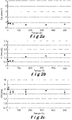
- the figures 2a, 2b, and 2c respectively illustrate the change in the calcium (Ca) concentration over time for a material immersed in an HBSS medium and comprising a solid phase of hydroxyapatite of natural bovine origin enriched by a solid synthetic phase of calcium phosphate (ratio 90/10), the evolution of the phosphorus (P) concentration over time for a material immersed in an HBSS medium and comprising a solid phase of hydroxyapatite of natural bovine origin enriched with a solid synthetic phase of phosphate of calcium (ratio 90/10) and the weight gain for a material immersed in an HBSS medium and comprising a solid phase of hydroxyapatite of natural bovine origin enriched with a solid synthetic phase of calcium phosphate (ratio 90/10).
- the figures 3a, 3b, and 3c respectively illustrate the change in the calcium (Ca) concentration over time for a material immersed in an HBSS medium and comprising a solid phase of hydroxyapatite of natural bovine origin enriched by a solid synthetic phase of calcium phosphate (ratio 80/20), the evolution of the phosphorus (P) concentration over time for a material immersed in an HBSS medium and comprising a solid phase of hydroxyapatite of natural bovine origin enriched with a solid synthetic phase of phosphate of calcium (80/20 ratio) and the weight gain for a material immersed in an HBSS medium and comprising a solid phase of hydroxyapatite of natural bovine origin enriched with a solid synthetic phase of calcium phosphate (80/20 ratio).
- Comparative tests were carried out in order to determine the quantities (concentrations) of calcium and phosphorus released over time (solubility tests) from different bone regeneration materials, this in a medium reproducing the in-vivo conditions of implantation.
- the solid phase of hydroxyapatite of natural bovine origin is obtained according to the process described in the document WO2015 / 049336 and is more particularly composed of hydroxyapatite particles having a size of between 0.25 mm and 1 mm.
- the materials comprising a first solid phase of hydroxyapatite of natural origin and a second solid synthetic phase of calcium phosphate were obtained by successive and alternating soaks lasting 5 minutes of the first solid phase of original hydroxyapatite.
- the first bath enriches the hydroxyapatite particles of natural origin with calcium (Ca 2+ ), the second bath with phosphorus (PO 4 3- ).
- the quantities (concentrations) of calcium and phosphorus released at the start of each sample in the HBSS medium were measured according to the ICP-AES (Inductively Coupled Plasma - Atomic Emission Spectroscopy) technique, this following removal of any suspended matter in HBSS medium by centrifugation.
- the weight of the materials were defined by weighing (gravimetry) before and after immersion in the HBSS medium, this for each of the times mentioned above.
- the starting concentrations in calcium and phosphorus are respectively 1.26 mmol / l and 0.78 mmol / l, which corresponds to the concentrations of these ions in the initial HBSS medium.
Landscapes
- Health & Medical Sciences (AREA)
- Chemical & Material Sciences (AREA)
- Life Sciences & Earth Sciences (AREA)
- Veterinary Medicine (AREA)
- Medicinal Chemistry (AREA)
- Oral & Maxillofacial Surgery (AREA)
- Transplantation (AREA)
- Animal Behavior & Ethology (AREA)
- General Health & Medical Sciences (AREA)
- Public Health (AREA)
- Epidemiology (AREA)
- Dermatology (AREA)
- Engineering & Computer Science (AREA)
- Biomedical Technology (AREA)
- Orthopedic Medicine & Surgery (AREA)
- Botany (AREA)
- Chemical Kinetics & Catalysis (AREA)
- Molecular Biology (AREA)
- Vascular Medicine (AREA)
- Dispersion Chemistry (AREA)
- Inorganic Chemistry (AREA)
- Urology & Nephrology (AREA)
- Zoology (AREA)
- Cardiology (AREA)
- Heart & Thoracic Surgery (AREA)
- Materials For Medical Uses (AREA)
- Medicines Containing Material From Animals Or Micro-Organisms (AREA)
Description
- La présente invention se rapporte à un matériau de régénération osseuse comprenant une première phase solide d'hydroxyapatite d'origine naturelle macroporeuse présentant des pores de diamètres supérieurs ou égaux à 50 µm, de préférence des pores de diamètres compris entre 50 et 100 µm.
- Un tel matériau de régénération osseuse est connu du document
WO2015/049336 et est utilisé dans le cadre du traitement de détériorations osseuses dans différents domaines comme la chirurgie réparatrice ou esthétique. - L'hydroxyapatite est une espèce minérale de la famille des phosphates, de formule Ca5(PO4)3(OH). Plus spécifiquement, l'hydroxyapatite appartient à la famille cristallographique des apatites qui sont des composés isomorphes possédant une même structure hexagonale. Ce composé est largement utilisé comme biomatériau depuis de nombreuses années dans différentes spécialités médicales car les hydroxyapatites sont les phosphates de calcium cristallins les plus fréquents et les premiers constituants minéraux des os, de l'émail dentaire et de la dentine. Par ailleurs, les hydroxyapatites (et en particulier les hydroxyapatites d'origine naturelle) présentent de bonnes propriétés de biocompatibilité et d'adsorption spécifique des cellules ou des protéines.
- Il est ainsi reconnu que l'hydroxyapatite d'origine naturelle présente des propriétés ostéoconductrices ainsi qu'une structure cristalline et une morphologie identiques à celles d'un matériau osseux naturel chez l'humain, l'hydroxyapatite convenant par conséquent parfaitement dans le cadre d'une chirurgie reconstructrice ou réparatrice de l'os. En ce sens, de nombreux matériaux comprenant de l'hydroxyapatite sont actuellement utilisés comme implants dentaires pour stimuler la reconstruction osseuse sur des sites osseux présentant des défauts ou des détériorations. En particulier, l'utilisation d'une hydroxyapatite naturelle provenant d'échantillons osseux nettoyés de leurs substances organiques (protéines, prions, peptides et lipides) permet d'obtenir une matrice particulièrement propice à la régénération osseuse en comparaison avec son analogue artificiel. Il est préférable que le matériau de régénération osseuse soit préalablement épuré de toute trace de substances organiques de sorte que l'implant soit bien accepté/intégré par l'organisme, soit biocompatible et puisse interagir par ostéoconduction avec l'environnement biologique dans lequel il est placé.
- A titre d'exemples, les hydroxyapatites peuvent servir de matériaux de substitution pour le remplacement ou la régénération de tissus malades ou endommagés. Elles sont également fréquemment utilisées comme revêtement (coating) sur des prothèses en titane pour faciliter l'ostéointégration ou encore pour empêcher l'usure due à des micromouvements entre l'implant et l'os. Les hydroxyapatites peuvent également être utilisées en tant que ciment afin de remplacer les greffes osseuses autogènes. En outre, un nombre croissant d'applications de l'hydroxyapatite en tant que vecteur de médicaments se développe, ceci parce que l'hydroxyapatite présente une structure avec des micropores interconnectés.
- Comme mentionné ci-dessus, l'hydroxyapatite possède une composition chimique très proche de celle de la phase minérale de l'os et ses propriétés biologiques ainsi que sa biocompatibilité en font un excellent produit de substitution osseuse. Précisons qu'une colonisation osseuse dépend des caractéristiques poreuses du matériau de régénération osseuse et de l'interconnexion entre ses macropores (nombre et dimension). Ces interconnexions constituent des sortes de « tunnels » qui permettent le passage des cellules et la circulation sanguine entre les pores favorisant ainsi la formation osseuse.
- L'hydroxyapatite, de par son haut niveau de biocompatibilité et sa lente résorption dans l'organisme, peut être administrée sous différentes formes et dans de nombreux tissus pour des applications diverses. On distingue notamment des ciments malléables à base d'hydroxyapatite qui sont préparés puis administrés sur la zone à traiter où ils durcissent. Ces ciments sont utilisés en tant que substitut osseux du fait de leur bonne ostéointégration et de leur biorésorbabilité permettant de laisser place à un os néoformé au cours du temps.
- Il existe également des solutions et des gels à base d'hydroxyapatite pouvant contenir un polymère comme de la carboxyméthylcellulose. On parle alors d'implants composites céramiquepolymère bioactifs, ces produits pouvant être utilisés dans différents domaines comme pour combler des déficiences parodontales en chirurgie dentaire ou faire du comblement en chirurgie orthopédique.
- Certains produits à base d'hydroxyapatite se présentent encore sous forme de bloc, de poudre ou de granulés utilisés en orthopédie, en comblement ou en tant que complément aux implants dentaires.
- Parmi les produits à base d'hydroxyapatite, nombreux sont ceux qui ne sont pas prêts à l'emploi et qui nécessitent une préparation préalable. C'est le cas notamment des ciments à base d'hydroxyapatite qui requièrent un mélange préalable d'une poudre et d'une solution avant dépôt sur ou dans une zone à traiter où un durcissement in situ s'opère alors. D'autres produits à base d'hydroxyapatite nécessitent encore d'être mis en forme avant implantation sur ou dans la zone à traiter.
- Malheureusement, même si un tel matériau de régénération osseuse comprenant une phase solide d'hydroxyapatite d'origine naturelle macroporeuse présente des propriétés propices à une implantation endoosseuse et permet une régénération osseuse correcte grâce à sa biocompatibilité et à ses capacités ostéoconductrices, il est observé en pratique que ce type de matériau de régénération osseuse n'est pas toujours optimal et que le délai du processus de régénération osseuse est toujours relativement long (1 mm/mois). Par ailleurs, la quantité de régénération osseuse est fréquemment insuffisante, ce qui entraîne la formation de fibroses partielles plutôt qu'une ossification totale.
- Dans un but d'accélération du processus de régénération osseuse, le document
US2002/0114755 divulgue un matériau comprenant de l'hydroxyapatite et 50 à 90% en masse de phosphate tricalcique, le matériau selon ce document antérieur étant obtenu par conversion de tissus d'algues dures dans une solution aqueuse de phosphate avec l'addition d'ions Mg++ à température élevée. - Le matériau de régénération osseuse selon ce document antérieur, c'est-à-dire qui comprend de l'hydroxyapatite et 50 à 90% en masse de phosphate tricalcique d'origine naturelle, présente une structure poreuse interconnectée, une résorption améliorée et contrôlable dans l'organisme conduisant à une régénération osseuse accélérée.
- Malheureusement, même si un matériau de régénération osseuse selon le document
US2002/0114755 permet d'accélérer le processus de régénération osseuse en augmentant l'apport de calcium et de phosphore sous forme d'ions libres dans l'environnement direct du site d'implantation, il est observé que ce type de matériau n'est pas optimal. - En effet, le procédé d'obtention d'un tel matériau de régénération osseuse consiste en la transformation d'hydroxyapatite en phosphate tricalcique. Il s'agit donc de la conversion d'une première phase naturelle en une seconde phase naturelle, l'hydroxyapatite étant remplacé par le phosphate tricalcique.
- Ainsi, lors de l'implantation du matériau de régénération osseuse selon le document
US2002/0114755 , le phosphate tricalcique qui est plus soluble que l'hydroxyapatite va rapidement se solubiliser et libérer des ions calcium et phosphore dans l'environnement du site d'implantation. Comme cité ci-dessus, le phosphate tricalcique d'un tel matériau de régénération osseuse représente 50 à 90% en masse et est obtenu par la conversion d'une partie de l'hydroxyapatite contenue dans le matériau de départ, à savoir du tissu d'algues dures. Par conséquent, avec un matériau de régénération osseuse selon ce document antérieur, 50 à 90% de la masse (correspondant au phosphate tricalcique) va rapidement se solubiliser suite à l'implantation et conduire ainsi à un matériau d'hydroxyapatite naturel présentant de larges zones de vide et donc à un matériau d'hydroxyapatite qui est certes d'origine naturelle mais qui ne présente plus les caractéristiques topographiques (porosité, surface spécifique,...) optimales permettant une bonne régénération osseuse. - Un matériau de régénération osseuse selon le document
US2002/0114755 ne permet donc pas de maintenir sur le long terme la structure microporeuse adéquate de l'hydroxyapatite naturelle une fois celui-ci implanté et ne permet donc pas d'assurer un processus de régénération osseuse optimal au site d'implantation en termes de prolifération et de différenciation des cellules osseuses car un tel matériau, une fois implanté, ne possède plus une topographie superficielle ni une microporosité adéquate. - Le document
EP 0278583A2 divulgue un matériau de remplacement osseux comprenant de l'hydroxyapatite provenant d'os naturel, ayant des pores de diamètre compris entre 5 et 500 µm. Le matériau comprend deux phases dont une ayant un ratio molaire Ca/P compris entre 1,0 and 2,0. La seconde phase comprend du tetracalcium de phosphate. Le document divulgue aussi un procédé de fabrication qui consiste à tremper l'os naturel dans une solution de phosphore ou dans une solution comprenant du calcium suivi d'un étape de frittage. - L'invention a pour but de pallier les inconvénients de l'état de la technique en procurant un matériau de régénération osseuse permettant de minimiser le temps de régénération osseuse tout en stimulant le potentiel de régénération osseuse de telle sorte à obtenir une quantité d'os régénéré optimale.
- Le matériau de régénération osseuse selon l'invention présente non seulement des propriétés chimiques (relargage optimisé en calcium et en phosphore sous forme d'ions libres) qui permettent de minimiser le temps de régénération osseuse, mais présente également des propriétés physiques (topographie et porosité conservées) optimales autorisant une bonne colonisation osseuse de telle sorte à obtenir une quantité d'os régénéré optimale.
- Pour résoudre ce problème, il est prévu suivant l'invention, un matériau de régénération osseuse comprenant une première phase solide d'hydroxyapatite d'origine naturelle macroporeuse présentant des pores de diamètres supérieurs ou égaux à 50 µm, de préférence des pores de diamètres compris entre 50 et 100 µm, ledit matériau de régénération osseuse étant caractérisé en ce que ladite première phase solide d'hydroxyapatite est enrichie par une deuxième phase de phosphate de calcium, ladite deuxième phase étant une phase synthétique solide, présentant un ratio molaire Ca/P compris entre 0,2 et 2, de préférence compris entre 0,3 et 1,8, préférentiellement compris entre 0,5 et 1,65, et présentant un produit de solubilité Ks supérieur à celui de ladite première phase d'hydroxyapatite d'origine naturelle, ledit matériau de régénération osseuse présentant un ratio en poids défini entre ladite première phase solide d'hydroxyapatite d'origine naturelle et ladite deuxième phase synthétique solide de phosphate de calcium compris entre 99/1 et 1/99.
- Avantageusement, selon l'invention, le ratio en poids défini entre ladite première phase solide d'hydroxyapatite d'origine naturelle et ladite deuxième phase synthétique solide de phosphate de calcium est de 95/5, 90/10, 85/15, 80/20, 75/25, 70/30, 65/35, 60/40, 55/45, 50/50, 45/55, 40/60, 35/65, 30/70, 25/75, 20/80, 15/85, 10/90 ou 5/95.
- Dans le cadre de la présente invention, il a été mis en évidence qu'un tel matériau de régénération osseuse suivant l'invention présentant :
- une première phase solide d'hydroxyapatite d'origine naturelle présentant des pores de diamètres supérieurs ou égaux à 50 µm, de préférence des pores de diamètres compris entre 50 et 100 µm ;
- une deuxième phase synthétique solide de phosphate de calcium destinée à enrichir ladite première phase ;
- un ratio molaire Ca/P pour la deuxième phase synthétique solide de phosphate de calcium compris entre 0,2 et 2, de préférence compris entre 0,3 et 1,8, préférentiellement compris entre 0,5 et 1,65 et présentant un produit de solubilité Ks supérieur à celui de ladite première phase d'hydroxyapatite d'origine naturelle; et
- un ratio en poids défini entre ladite première phase solide d'hydroxyapatite d'origine naturelle et ladite deuxième phase synthétique solide de phosphate de calcium compris entre 99/1 et 1/99, permet d'assurer un relargage adéquat de calcium (par exemple sous la forme d'ions libres extracellulaires Ca2+) et phosphore (par exemple sous la forme d'ions libres extracellulaires PO4 3-) dans l'environnement du site de régénération osseuse de telle sorte que ceux-ci puissent jouer le rôle de promoteurs de la repousse des tissus biologiques environnants en favorisant significativement la prolifération et la différentiation des cellules osseuses ainsi que la minéralisation.
- En outre, il a été observé de manière surprenante que le matériau de régénération osseuse selon l'invention, c'est-à-dire dont la phase solide d'hydroxyapatite est une phase d'hydroxyapatite naturelle qui est enrichie par une deuxième phase de phosphate de calcium, présente des caractéristiques topographiques (porosité, surface spécifique, ...) optimales permettant d'optimiser la régénération osseuse en autorisant une bonne colonisation osseuse, et ce même après l'implantation du matériau de régénération osseuse.
- Une bonne colonisation osseuse dépend des caractéristiques poreuses du matériau de régénération osseuse et de l'interconnexion entre ses macropores (nombre et dimensions), ces interconnexions constituant des sortes de « tunnels » qui permettent le passage des cellules et la circulation sanguine entre les pores favorisant la formation osseuse. La conservation des caractéristiques topographiques de l'hydroxyapatite naturelle est donc capitale pour obtenir une régénération osseuse adéquate, ce qui n'est pas le cas avec un matériau de régénération selon le document
US2002/0114755 où une partie (50 à 90% en masse) de la phase naturelle d'hydroxyapatite est convertie en une phase naturelle de phosphate tricalcique. - Un matériau de régénération osseuse selon l'invention présente donc à la fois des propriétés chimiques et physiques optimales (relargage optimisé en calcium et en phosphore sous forme d'ions libres / topographie, porosité) qui assurent une régénération osseuse et une formation de l'os optimisées en un temps significativement réduit par rapport à un matériau de régénération osseuse tel que celui des documents
WO2015/049336 etUS2002/0114755 . - En particulier, dans le cadre de la présente invention, il a été mis en évidence que, lorsque le ratio en poids défini entre ladite première phase solide d'hydroxyapatite d'origine naturelle et ladite deuxième phase synthétique solide de phosphate de calcium est compris entre 99/1 et 1/99, et est de préférence de 95/5, 90/10, 85/15, 80/20, 75/25, 70/30, 65/35, 60/40, 55/45, 50/50, 45/55, 40/60, 35/65, 30/70, 25/75, 20/80, 15/85, 10/90 ou 5/95, le temps de régénération osseuse est significativement réduit. Ceci est dû au fait qu'avec un tel ratio, au moins l'un des relargages en calcium et/ou en phosphore sous forme d'ions libres est tel que du calcium et/ou du phosphore se trouve alors dans le milieu environnant de régénération osseuse en une quantité permettant d'y augmenter significativement la concentration par rapport à la concentration naturellement rencontrée, alors que l'hydroxyapatite seule a tendance à capturer le calcium et le phosphore sous forme d'ions libres et à en dépléter le milieu environnent du site de régénération osseuse.
- Notons que des matériaux de régénération osseuse bi-phasiques sont décrits dans l'état de la technique, en particulier des matériaux consistant en une association d'hydroxyapatite synthétique et de phosphate de calcium tricalcique synthétique : il s'agit donc de matériaux 100% synthétiques qui, comme pour un matériau de régénération tel qu'indiqué au début, imposent une durée de régénération osseuse relativement longue. Par ailleurs, de tels matériaux de régénération osseuse bi-phasiques totalement synthétiques ne permettent pas, au contraire d'un matériau selon l'invention, d'assurer une régénération osseuse optimale au site d'implantation en termes de prolifération et de différentiation des cellules osseuses car ils ne possèdent pas une topographie superficielle ni une microporosité adéquates.
- De préférence, selon l'invention, ladite deuxième phase synthétique solide de phosphate de calcium présente un produit de solubilité Ks supérieur à celui de ladite première phase d'hydroxyapatite d'origine naturelle. Ceci est particulièrement avantageux puisqu'il convient d'apporter du calcium et du phosphore sous forme d'ions libres dans l'environnement direct du site d'implantation tout en conservant les propriétés structurelles (taille des pores, surface spécifique, ...) et de composition de la phase solide d'hydroxyapatite d'origine naturelle. Puisque la solubilité de la deuxième phase est supérieure, c'est essentiellement cette phase en particulier qui va être à l'origine de la libération de calcium et de phosphore sous forme d'ions libres (par exemple Ca2+ et PO4 3-) et non pas l'hydroxyapatite d'origine naturelle qui se dissout nettement moins et qui, au contraire, a tendance à fixer ces ions au départ de l'environnement d'implantation.
- Avantageusement, selon l'invention, ladite première phase solide d'hydroxyapatite d'origine naturelle présente une surface spécifique supérieure à 4m2/g.
- Préférentiellement, selon l'invention, ladite deuxième phase synthétique solide de phosphate de calcium est choisie dans le groupe constitué du phosphate de calcium monocalcique (MCP), du phosphate de calcium bicalcique (DCP), du phosphate octacalcique (OCP), de l'apatite déficiente en calcium (CDA), du phosphate de calcium amorphe (ACP), du phosphate de calcium tricalcique (TCP), du phosphate de calcium tétracalcique (TTCP), et leurs mélanges.
- Avantageusement, selon l'invention, ladite première phase d'hydroxyapatite d'origine naturelle est de l'hydroxyapatite obtenue à partir d'un matériau osseux d'origine naturelle, en particulier à partir d'un matériau osseux d'origine animale. Par exemple, l'hydroxyapatite d'origine naturelle peut être de l'hydroxyapatite obtenue à partir d'un matériau osseux provenant d'un mammifère (bovin, cheval, cochon ou mouton), de corail ou de sèche.
- De façon préférée, selon l'invention, ladite hydroxyapatite d'origine naturelle macroporeuse de ladite première phase est une hydroxyapatite d'origine naturelle macroporeuse au moins partiellement frittée. Le frittage contrôlé (chauffage d'une poudre sans la mener à la fusion) permet avantageusement d'obtenir une hydroxyapatite d'origine naturelle présentant des propriétés accrues de résistance mécanique tout en conservant une micro-porosité et une topographie de surface adéquates, ce qui permet de faciliter l'implantation et d'améliorer la stabilité à long terme après implantation.
- Avantageusement, le matériau de régénération osseuse selon l'invention, comprend en outre au moins un agent thérapeutique choisi dans le groupe constitué des antibiotiques, des antiviraux, des antiinflammatoires, des hormones comme les stéroïdes, des facteurs de croissance comme les BMP (« Bone Morphogenetic Protein »), des agents anti-rejets, des cellules souches, et leurs mélanges.
- De préférence, le matériau de régénération osseuse selon l'invention est destiné à être utilisé comme implant ou prothèse pour une formation d'os, une régénération d'os ou pour une réparation d'os chez un mammifère, de préférence chez un humain.
- D'autres formes de réalisation d'un matériau de régénération osseuse suivant l'invention sont indiquées dans les revendications annexées.
- L'invention a aussi pour objet un dispositif médical contenant un matériau de régénération osseuse selon l'invention.
- D'autres formes de réalisation d'un dispositif médical suivant l'invention sont indiquées dans les revendications annexées.
- L'invention a aussi pour objet une composition de régénération osseuse comprenant un matériau de régénération osseuse selon l'invention.
- D'autres formes de réalisation d'une composition suivant l'invention sont indiquées dans les revendications annexées.
- La présente invention porte également sur un procédé d'enrichissement d'un matériau de régénération osseuse selon l'invention, ledit procédé comprenant:
- une étape d'amenée d'un matériau de régénération osseuse, et
- une étape d'enrichissement dudit matériau de régénération osseuse, en calcium et en phosphore,
- De préférence, selon le procédé suivant l'invention, ledit premier trempage a lieu dans une première solution de Ca(NO3)2.4H2O, de CaCl2.2H2O, de Ca(OH)2, CaSO4.2H2O ou de CaCO3.
- Avantageusement, selon le procédé suivant l'invention, ledit deuxième trempage a lieu dans une deuxième solution de Na3PO4, de Na2HPO4, de NaH2PO4.H2O, de K3PO4, de K2HPO4, de KH2PO4, de K2HPO4, de (NH4)3PO4, de (NH4)2HPO4 ou de NH4H2PO4.
- D'autres formes de réalisation d'un procédé suivant l'invention sont indiquées dans les revendications annexées.
- D'autres caractéristiques, détails et avantages de l'invention ressortiront de la description donnée ci-après, à titre non limitatif et en faisant référence aux figures annexés.
- Les
figures 1a, 1b et 1c illustrent respectivement l'évolution de la concentration en calcium (Ca) au cours du temps pour une phase solide d'hydroxyapatite d'origine naturelle bovine non enrichie immergée dans un milieu HBSS, l'évolution de la concentration en phosphore (P) au cours du temps pour une phase solide d'hydroxyapatite d'origine naturelle bovine non enrichie immergée dans un milieu HBSS et la prise de poids au cours du temps pour une phase solide d'hydroxyapatite d'origine naturelle bovine non enrichie immergée dans un milieu HBSS. - Les
figures 2a, 2b, et 2c illustrent respectivement l'évolution de la concentration en calcium (Ca) au cours du temps pour un matériau immergé dans un milieu HBSS et comprenant une phase solide d'hydroxyapatite d'origine naturelle bovine enrichie par une phase synthétique solide de phosphate de calcium (ratio 90/10), l'évolution de la concentration en phosphore (P) au cours du temps pour un matériau immergé dans un milieu HBSS et comprenant une phase solide d'hydroxyapatite d'origine naturelle bovine enrichie par une phase synthétique solide de phosphate de calcium (ratio 90/10) et la prise de poids pour un matériau immergé dans un milieu HBSS et comprenant une phase solide d'hydroxyapatite d'origine naturelle bovine enrichie par une phase synthétique solide de phosphate de calcium (ratio 90/10). - Les
figures 3a, 3b, et 3c illustrent respectivement l'évolution de la concentration en calcium (Ca) au cours du temps pour un matériau immergé dans un milieu HBSS et comprenant une phase solide d'hydroxyapatite d'origine naturelle bovine enrichie par une phase synthétique solide de phosphate de calcium (ratio 80/20), l'évolution de la concentration en phosphore (P) au cours du temps pour un matériau immergé dans un milieu HBSS et comprenant une phase solide d'hydroxyapatite d'origine naturelle bovine enrichie par une phase synthétique solide de phosphate de calcium (ratio 80/20) et la prise de poids pour un matériau immergé dans un milieu HBSS et comprenant une phase solide d'hydroxyapatite d'origine naturelle bovine enrichie par une phase synthétique solide de phosphate de calcium (ratio 80/20). - Des essais comparatifs ont été réalisés afin de déterminer les quantités (concentrations) en calcium et en phosphore relarguées au cours du temps (tests de solubilité) au départ de différents matériaux de régénération osseuse, ceci dans un milieu reproduisant les conditions in-vivo d'implantation.
- Pour ce faire, les taux et les quantités (concentrations) en calcium et en phosphore relargués ont été mesurés dans un milieu simulant les conditions d'implantation in-vivo (plasma sanguin humain), c'est-à-dire dans un milieu HBSS (Hank's balanced salt médium) présentant un pH de 7 et dont la composition est reprise au tableau 1 ci-dessous :
Tableau 1 Concentrations (mM) Na+ 142,8 K+ 5,8 Mg2+ 0,9 Ca2+ 1,3 Cl- 146,8 HCO3- 4,2 HPO4 2- 0,3 H2PO4- 0,4 SO4 2- 0,4 Glucose 5,6 - Les matériaux de régénération osseuse suivants ont été testés :
- Matériau 1 : 0,5 g de phase solide d'hydroxyapatite d'origine naturelle bovine non enrichie présentant des pores d'une taille comprise entre 50 et 100 µm ;
- Matériau 2: 0,5 g de phase solide d'hydroxyapatite d'origine naturelle bovine présentant des pores d'une taille comprise entre 50 et 100 µm et enrichie par une phase synthétique solide de phosphate de calcium selon un ratio en poids phase solide d'hydroxyapatite/ phase synthétique solide de phosphate de calcium de 90/10, la phase de phosphate de calcium présentant un ratio molaire Ca/P inférieur à 1,67; et
- Matériau 3: 0,5g de phase solide d'hydroxyapatite d'origine naturelle bovine présentant des pores d'une taille comprise entre 50 et 100µm et enrichie par une phase synthétique solide de phosphate de calcium selon un ratio en poids phase solide d'hydroxyapatite/ phase synthétique solide de phosphate de calcium de 80/20, la phase de phosphate de calcium présentant un ratio molaire Ca/P inférieur à 1,67.
- La phase solide d'hydroxyapatite d'origine naturelle bovine est obtenue selon le procédé décrit dans le document
WO2015/049336 et est plus particulièrement composée de particules d'hydroxyapatite présentant une taille comprise entre 0,25 mm et 1 mm. - Les matériaux comprenant une première phase solide d'hydroxyapatite d'origine naturelle et une deuxième phase synthétique solide de phosphate de calcium ont été obtenus par trempages successifs et alternés d'une durée de 5 minutes de la première phase solide d'hydroxyapatite d'origine naturelle (particules d'hydroxyapatite) dans des bains distincts de Ca(NO3)2.4H2O (1M, pH=10) et de NaH2PO4.H2O (0,5M, pH=10). Le premier bain permet d'enrichir les particules d'hydroxyapatite d'origine naturelle en calcium (Ca2+), le second bain en phosphore (PO4 3-).
- Suite à 4 trempages successifs (2 trempages dans chaque bain) pour obtenir un ratio en poids phase solide d'hydroxyapatite/ phase synthétique solide de phosphate de calcium de 90/10 ou suite à 6 trempages successifs (3 trempages dans chaque bain) pour obtenir un ratio en poids phase solide d'hydroxyapatite/ phase synthétique solide de phosphate de calcium de 80/20, les particules d'hydroxyapatite d'origine naturelle enrichies en calcium et en phosphore ont été rincées afin d'éliminer les excès de calcium et de phosphore puis séchées à une température de 100°C durant 6 heures.
- Un total de 36 échantillons (de 0,5 g) ont été testés simultanément par immersion dans 10 ml de milieu HBSS à une température de 37°C. Des mesures de relargage en calcium et en phosphore sous forme d'ions libres ont été réalisées après 8h, 24h, 48h, 1 semaine, 2 semaines et 3 semaines sur deux échantillons pour chaque matériau et par durée, ces échantillons étant rincés et séchés à une température de 100°C après chacune de ces durées.
- Les quantités (concentrations) en calcium et en phosphore relarguées au départ de chaque échantillon dans le milieu HBSS ont été mesurées selon la technique ICP-AES (Inductively Coupled Plasma - Atomic Emission Spectroscopy), ceci suite à une élimination des éventuelles matières en suspension dans le milieu HBSS par centrifugation. Le poids des matériaux ont été définis par pesées (gravimétrie) avant et après immersion dans le milieu HBSS, ceci pour chacune des durées mentionnées ci-dessus.
- Les résultats obtenus sont illustrés aux
figures 1 à 3 . Pour chacun des matériaux (échantillons), les concentrations de départ en calcium et en phosphore sont respectivement de 1,26 mmol/l et de 0,78 mmol/l, ce qui correspond aux concentrations en ces ions dans le milieu HBSS initial. - Ces résultats montrent que, lorsque le matériau 1 - phase solide d'hydroxyapatite d'origine naturelle bovine non enrichie - est immergé dans le milieu HBSS, les concentrations en calcium et en phosphore sous forme d'ions libres décroissent avant de se stabiliser (
figures 1a et 1b ). En parallèle, une augmentation en poids du matériau 1 est observée (figure 1c ). Par exemple, après 3 semaines, la concentration en calcium dans le milieu est de 0,06 mmol/l tandis que la concentration en phosphore dans le milieu est de 0,03 mmol/l pour un gain de poids moyen par échantillon de 5 mg. - Pour le matériau 2 - phase solide d'hydroxyapatite d'origine naturelle bovine enrichie par une phase synthétique solide de phosphate de calcium (ratio 90/10) - les concentrations en calcium et en phosphore commencent par décroitre avec une rapide stabilisation de la concentration en calcium (0,6 mmol/l) tandis que la concentration en phosphore augmente progressivement jusqu'à atteindre une valeur finale de 1,34 mmol/l après 3 semaines d'immersion (
figures 2a et 2b ), cette concentration étant supérieure à la concentration initiale en phosphore dans le milieu HBSS. Les poids des échantillons du matériau 2 ont d'abord quelque peu augmenté avant de décroitre jusqu'à une perte en poids de 3,5 mg (figure 2c ). - Concernant le matériau 3 - phase solide d'hydroxyapatite d'origine naturelle bovine enrichie par une phase synthétique solide de phosphate de calcium (ratio 80/20) -, les concentrations en calcium et en phosphore augmentent au cours du temps tandis que le poids des échantillons décroit (
figures 3a à 3c ). Les concentrations finales en calcium et en phosphore, après 3 semaines d'immersion dans le milieu HBSS, sont respectivement de 3,69 mmol/l et de 2,78 mmol/l pour une perte en poids de 12,5 mg, ces concentrations étant supérieures à celles initialement mesurées dans le milieu HBSS. - Les résultats obtenus avec le matériau 1 - phase solide d'hydroxyapatite d'origine naturelle bovine non enrichie - soulignent la capacité de l'hydroxyapatite à fixer le calcium et le phosphore sous forme d'ions libres présents dans le milieu HBSS pour former une couche d'apatite à sa surface. Déjà après 8h d'immersion, la majeure partie des ions libres de calcium et de phosphore sont absorbés à la surface des échantillons. Ces résultats concordent avec les relevés gravimétriques qui indiquent que les échantillons sont plus lourds après 3 semaines d'immersion. Ces résultats indiquent donc que le matériau 1 (hydroxyapatite non enrichie) fixe le calcium et le phosphore sous forme d'ions libres et que la dissolution de l'hydroxyapatite dans le milieu HBSS est négligeable.
- Ces résultats font ressortir, pour le matériau 2 - phase solide d'hydroxyapatite d'origine naturelle bovine enrichie par une phase synthétique solide de phosphate de calcium (ratio 90/10) - que deux phénomènes ont lieu de façon concomitante puisque les concentrations en calcium et en phosphore décroissent d'abord toutes deux, ce qui est à nouveau lié à la capacité que possède l'hydroxyapatite de fixer ces ions. Toutefois, la concentration en phosphore dans le milieu augmente ensuite et dépasse même la concentration en ce composé dans le milieu HBSS initial alors que la concentration en calcium reste inférieure à celle initialement mesurée dans le milieu HBSS en étant cependant supérieure à celle mesurée lorsque le matériau 1 est immergé dans ce même milieu. En parallèle, après 3 semaines, les résultats gravimétriques montrent que les échantillons ont perdu du poids. L'ensemble de ces résultats pour le matériau 2 indiquent que ce matériau se dissout dans le milieu HBSS, ce qui ne peut être attribué qu'à la phase d'enrichissement (phase synthétique solide de phosphate de calcium) puisque les résultats obtenus avec le matériau 1 montrent que la dissolution de l'hydroxyapatite dans les mêmes conditions est totalement négligeable.
- Les résultats obtenus avec le matériau 3 - phase solide d'hydroxyapatite d'origine naturelle bovine enrichie par une phase synthétique solide de phosphate de calcium (ratio 80/20) - démontrent qu'aucune diminution des concentrations en calcium et en phosphore n'a lieu, que du contraire puisque les concentrations en calcium et en phosphore augmentent au cours du temps en parallèle avec une perte de poids des échantillons. De ces observations, il peut être conclu que ces augmentations des concentrations en calcium et en phosphore sont dues à une dissolution de la deuxième phase du matériau 3 dans le milieu HBSS puisque les résultats obtenus avec le matériau 1 montrent que la dissolution de l'hydroxyapatite dans les mêmes conditions est totalement négligeable. Par ailleurs, il peut être observé que le matériau 3 ne fixe pas le calcium et le phosphore sous forme d'ions libres relargués ou seulement de façon négligeable, ce qui assure que ces derniers restent en solution.
- L'ensemble de ces résultats montre aussi que l'enrichissement (phase synthétique solide de phosphate de calcium) est plus soluble que l'hydroxyapatite et qu'il est en mesure de relarguer du calcium et du phosphore sous forme d'ions libres (Ca2+ et PO4 3-) dans le milieu environnement (HBSS mimant le plasma sanguin).
Claims (12)
- Matériau de régénération osseuse comprenant une première phase solide d'hydroxyapatite d'origine naturelle macroporeuse présentant des pores de diamètres supérieurs ou égaux à 50 µm, de préférence des pores de diamètres compris entre 50 et 100 µm, ledit matériau de régénération osseuse étant caractérisé en ce que ladite première phase solide d'hydroxyapatite est enrichie par une deuxième phase de phosphate de calcium, ladite deuxième phase étant une phase synthétique solide, présentant un ratio molaire Ca/P compris entre 0,2 et 2, de préférence compris entre 0,3 et 1,8, préférentiellement compris entre 0,5 et 1,65, et présentant un produit de solubilité Ks supérieur à celui de ladite première phase d'hydroxyapatite d'origine naturelle, ledit matériau de régénération osseuse présentant un ratio en poids défini entre ladite première phase solide d'hydroxyapatite d'origine naturelle et ladite deuxième phase synthétique solide de phosphate de calcium compris entre 99/1 et 1/99.
- Matériau de régénération osseuse selon la revendication 1, caractérisé en ce que ladite première phase solide d'hydroxyapatite d'origine naturelle présente une surface spécifique supérieure à 4m2/g.
- Matériau de régénération osseuse selon l'une quelconque des revendications précédentes, caractérisé en ce que ladite deuxième phase synthétique solide de phosphate de calcium est choisie dans le groupe constitué du phosphate de calcium monocalcique (MCP), du phosphate de calcium bicalcique (DCP), du phosphate octacalcique (OCP), de l'apatite déficiente en calcium (CDA), du phosphate de calcium amorphe (ACP), du phosphate de calcium tricalcique (TCP), du phosphate de calcium tétracalcique (TTCP), et leurs mélanges.
- Matériau de régénération osseuse selon l'une quelconque des revendications précédentes, dans lequel ladite première phase d'hydroxyapatite d'origine naturelle est de l'hydroxyapatite obtenue à partir d'un matériau osseux d'origine naturelle, en particulier à partir d'un matériau osseux d'origine animale.
- Matériau de régénération osseuse selon l'une quelconque des revendications précédentes, dans lequel ladite hydroxyapatite d'origine naturelle macroporeuse de ladite première phase est une hydroxyapatite d'origine naturelle macroporeuse au moins partiellement frittée.
- Matériau de régénération osseuse selon l'une quelconque des revendications précédentes, comprenant en outre au moins un agent thérapeutique choisi dans le groupe constitué des antibiotiques, des antiviraux, des antiinflammatoires, des hormones comme les stéroïdes, des facteurs de croissance comme les BMP (« Bone Morphogenetic Protein »), des agents anti-rejets, des cellules souches, et leurs mélanges.
- Matériau de régénération osseuse selon l'une quelconque des revendications précédentes, destiné à être utilisé comme implant ou prothèse pour une formation d'os, une régénération d'os ou pour une réparation d'os chez un mammifère, de préférence chez un humain.
- Dispositif médical contenant un matériau de régénération osseuse selon l'une quelconque des revendications 1 à 6.
- Composition de régénération osseuse comprenant un matériau de régénération osseuse selon l'une quelconque des revendications 1 à 6.
- Procédé d'enrichissement d'un matériau de régénération osseuse selon l'une quelconque des revendications 1 à 6, ledit procédé comprenant:- une étape d'amenée d'un matériau de régénération osseuse, et- une étape d'enrichissement dudit matériau de régénération osseuse, en calcium et en phosphore,ledit procédé étant caractérisé en ce que ladite étape d'enrichissement en calcium et en phosphore est réalisée par au moins un premier et au moins un deuxième trempage distincts se succédant l'un l'autre dans un ordre quelconque, ledit au moins un premier trempage ayant lieu dans une première solution comprenant du calcium et ledit au moins un deuxième trempage ayant lieu dans une deuxième solution comprenant du phosphore.
- Procédé d'enrichissement d'un matériau de régénération osseuse selon la revendication 10, caractérisé en ce que ledit premier trempage a lieu dans une première solution de Ca(NO3)2.4H2O, de CaCl2.2H2O, de Ca(OH)2, CaSO4.2H2O ou de CaCO3.
- Procédé d'enrichissement d'un matériau de régénération osseuse selon la revendication 10 ou 11, caractérisé en ce que ledit deuxième trempage a lieu dans une deuxième solution de Na3PO4, de Na2HPO4, de NaH2PO4.H2O, de K3PO4, de K2HPO4, de KH2PO4, de
K2HPO4, de (NH4)3PO4, de (NH4)2HPO4 ou de NH4H2PO4.
Applications Claiming Priority (3)
| Application Number | Priority Date | Filing Date | Title |
|---|---|---|---|
| BE2017/5025A BE1024778B1 (fr) | 2017-01-16 | 2017-01-16 | Matériau de régénération osseuse |
| EPPCT/EP2017/050779 | 2017-01-16 | ||
| PCT/EP2018/050877 WO2018130686A1 (fr) | 2017-01-16 | 2018-01-15 | Materiau de regeneration osseuse |
Publications (2)
| Publication Number | Publication Date |
|---|---|
| EP3568166A1 EP3568166A1 (fr) | 2019-11-20 |
| EP3568166B1 true EP3568166B1 (fr) | 2021-06-09 |
Family
ID=60955069
Family Applications (1)
| Application Number | Title | Priority Date | Filing Date |
|---|---|---|---|
| EP18700301.7A Active EP3568166B1 (fr) | 2017-01-16 | 2018-01-15 | Materiau de regeneration osseuse |
Country Status (11)
| Country | Link |
|---|---|
| US (2) | US20200121827A1 (fr) |
| EP (1) | EP3568166B1 (fr) |
| JP (1) | JP6998383B2 (fr) |
| KR (1) | KR102461677B1 (fr) |
| CN (1) | CN110267688B (fr) |
| AU (1) | AU2018207988C1 (fr) |
| CA (1) | CA3048355A1 (fr) |
| ES (1) | ES2885104T3 (fr) |
| PT (1) | PT3568166T (fr) |
| WO (1) | WO2018130686A1 (fr) |
| ZA (1) | ZA201904400B (fr) |
Families Citing this family (4)
| Publication number | Priority date | Publication date | Assignee | Title |
|---|---|---|---|---|
| BE1028336B1 (fr) | 2020-05-22 | 2021-12-21 | Wishbone | Dispositif de recouvrement agence pour favoriser une regeneration osseuse |
| BE1030086B1 (fr) * | 2021-12-23 | 2023-07-26 | Wishbone | Matériau de régénération osseuse |
| SE544797C2 (en) * | 2022-02-16 | 2022-11-15 | Cavix Ab | Macroporous hydroxyapatite composition and methods of making such |
| WO2024253374A1 (fr) * | 2023-06-09 | 2024-12-12 | 주식회사 메디밸류 | Composition de greffe osseuse et procédé de fabrication de celle-ci |
Family Cites Families (10)
| Publication number | Priority date | Publication date | Assignee | Title |
|---|---|---|---|---|
| US4861733A (en) * | 1987-02-13 | 1989-08-29 | Interpore International | Calcium phosphate bone substitute materials |
| JP4515553B2 (ja) * | 1999-05-11 | 2010-08-04 | 日油株式会社 | ハイドロキシアパタイト複合体の製造方法、その複合体及び生体適合性材料 |
| US6881227B2 (en) | 1999-11-30 | 2005-04-19 | Margarita Jordanova-Spassova | Hydroxylapatite material containing tricalcium phosphate with microporous structure |
| JP4685277B2 (ja) * | 2001-06-20 | 2011-05-18 | 独立行政法人物質・材料研究機構 | 生体組織基体の被覆方法 |
| JP4646554B2 (ja) | 2003-06-25 | 2011-03-09 | 株式会社神戸製鋼所 | 生体インプラント用セラミックス部材及びその製造方法 |
| KR100593262B1 (ko) * | 2003-08-28 | 2006-06-26 | 재단법인서울대학교산학협력재단 | 아파타이트 분말 제조 방법 |
| CN101987208A (zh) * | 2009-08-03 | 2011-03-23 | 宁波大学 | 墨鱼骨转化多相大孔径骨再生支架材料及制备方法 |
| GB201122405D0 (en) | 2011-12-23 | 2012-02-08 | Univ Aberdeen | Calcium phosphate material |
| JP5879459B2 (ja) | 2012-07-31 | 2016-03-08 | ガイストリヒ・ファーマ・アクチェンゲゼルシャフトGeistlich Pharma Ag | 親水性のホスフェートグループを含有する脱水された部分的に精製された骨置換材料 |
| BE1023728B1 (fr) | 2013-10-03 | 2017-06-30 | Wishbone Sa | Materiau de regeneration osseuse et son procede de fabrication |
-
2018
- 2018-01-15 CN CN201880006964.3A patent/CN110267688B/zh active Active
- 2018-01-15 KR KR1020197020453A patent/KR102461677B1/ko active Active
- 2018-01-15 WO PCT/EP2018/050877 patent/WO2018130686A1/fr not_active Ceased
- 2018-01-15 CA CA3048355A patent/CA3048355A1/fr active Pending
- 2018-01-15 ES ES18700301T patent/ES2885104T3/es active Active
- 2018-01-15 AU AU2018207988A patent/AU2018207988C1/en active Active
- 2018-01-15 JP JP2019538324A patent/JP6998383B2/ja active Active
- 2018-01-15 PT PT187003017T patent/PT3568166T/pt unknown
- 2018-01-15 EP EP18700301.7A patent/EP3568166B1/fr active Active
- 2018-01-15 US US16/477,904 patent/US20200121827A1/en not_active Abandoned
-
2019
- 2019-07-04 ZA ZA2019/04400A patent/ZA201904400B/en unknown
-
2025
- 2025-08-01 US US19/287,889 patent/US20250352698A1/en active Pending
Also Published As
| Publication number | Publication date |
|---|---|
| EP3568166A1 (fr) | 2019-11-20 |
| JP6998383B2 (ja) | 2022-01-18 |
| PT3568166T (pt) | 2021-08-30 |
| US20200121827A1 (en) | 2020-04-23 |
| US20250352698A1 (en) | 2025-11-20 |
| ES2885104T3 (es) | 2021-12-13 |
| AU2018207988B2 (en) | 2022-04-28 |
| JP2020505111A (ja) | 2020-02-20 |
| CN110267688B (zh) | 2021-12-21 |
| KR102461677B1 (ko) | 2022-10-31 |
| AU2018207988A1 (en) | 2019-07-11 |
| WO2018130686A1 (fr) | 2018-07-19 |
| ZA201904400B (en) | 2022-12-21 |
| CN110267688A (zh) | 2019-09-20 |
| AU2018207988C1 (en) | 2022-10-13 |
| KR20190118554A (ko) | 2019-10-18 |
| CA3048355A1 (fr) | 2018-07-19 |
Similar Documents
| Publication | Publication Date | Title |
|---|---|---|
| AU2010255700B2 (en) | Multi-dimensional biomaterial and method for producing the same | |
| US20250352698A1 (en) | Bone regeneration material | |
| FR2706768A1 (fr) | ||
| FR2794649A1 (fr) | Biomateriau a base d'un derive de dextrane insolubilise et d'un facteur de croissance, son procede de preparation et ses applications | |
| Pang et al. | Biologic properties of nano-hydroxyapatite: An in vivo study of calvarial defects, ectopic bone formation and bone implantation | |
| CA2914130C (fr) | Implant a porosite controlee comprenant une matrice revetue d'un verre bioactif ou d'un materiau hybride | |
| KR20150058203A (ko) | 알긴산염 코팅된 이산화티타늄 스캐폴드의 제조 방법 | |
| EP2307064B1 (fr) | Biomateriaux a base de phosphate de calcium | |
| Yuan et al. | Experimental study of natural hydroxyapatite/chitosan composite on reconstructing bone defects | |
| WO2010023179A2 (fr) | Substitut osseux à base de bioverre poreux et de sulfate de calcium | |
| JP2023542733A (ja) | 高弾性のリン酸カルシウム系注入型骨移植材組成物及びその製造方法 | |
| BE1024778B1 (fr) | Matériau de régénération osseuse | |
| CA2736820A1 (fr) | Substitut osseux a base de bioverre poreux et de sulfate de calcium | |
| US20220111117A1 (en) | Bone regeneration material | |
| BE1030086B1 (fr) | Matériau de régénération osseuse | |
| Greenspan | Physical and chemical properties of commercially available mineralized bone allograft | |
| Jeon et al. | Cryo-printed collagen scaffolds reinforced with dentin-derived bioactive particles promote osteo-angiogenic bone regeneration | |
| Bloemers et al. | The use of calcium phosphates as a bone substitute material in trauma surgery | |
| AU2015202527A1 (en) | Multi-dimensional biomaterial and method for producing the same |
Legal Events
| Date | Code | Title | Description |
|---|---|---|---|
| STAA | Information on the status of an ep patent application or granted ep patent |
Free format text: STATUS: UNKNOWN |
|
| STAA | Information on the status of an ep patent application or granted ep patent |
Free format text: STATUS: THE INTERNATIONAL PUBLICATION HAS BEEN MADE |
|
| PUAI | Public reference made under article 153(3) epc to a published international application that has entered the european phase |
Free format text: ORIGINAL CODE: 0009012 |
|
| STAA | Information on the status of an ep patent application or granted ep patent |
Free format text: STATUS: REQUEST FOR EXAMINATION WAS MADE |
|
| 17P | Request for examination filed |
Effective date: 20190712 |
|
| AK | Designated contracting states |
Kind code of ref document: A1 Designated state(s): AL AT BE BG CH CY CZ DE DK EE ES FI FR GB GR HR HU IE IS IT LI LT LU LV MC MK MT NL NO PL PT RO RS SE SI SK SM TR |
|
| AX | Request for extension of the european patent |
Extension state: BA ME |
|
| DAV | Request for validation of the european patent (deleted) | ||
| DAX | Request for extension of the european patent (deleted) | ||
| GRAP | Despatch of communication of intention to grant a patent |
Free format text: ORIGINAL CODE: EPIDOSNIGR1 |
|
| STAA | Information on the status of an ep patent application or granted ep patent |
Free format text: STATUS: GRANT OF PATENT IS INTENDED |
|
| INTG | Intention to grant announced |
Effective date: 20210323 |
|
| GRAS | Grant fee paid |
Free format text: ORIGINAL CODE: EPIDOSNIGR3 |
|
| GRAA | (expected) grant |
Free format text: ORIGINAL CODE: 0009210 |
|
| STAA | Information on the status of an ep patent application or granted ep patent |
Free format text: STATUS: THE PATENT HAS BEEN GRANTED |
|
| AK | Designated contracting states |
Kind code of ref document: B1 Designated state(s): AL AT BE BG CH CY CZ DE DK EE ES FI FR GB GR HR HU IE IS IT LI LT LU LV MC MK MT NL NO PL PT RO RS SE SI SK SM TR |
|
| REG | Reference to a national code |
Ref country code: GB Ref legal event code: FG4D Free format text: NOT ENGLISH |
|
| REG | Reference to a national code |
Ref country code: CH Ref legal event code: EP Ref country code: AT Ref legal event code: REF Ref document number: 1399928 Country of ref document: AT Kind code of ref document: T Effective date: 20210615 |
|
| REG | Reference to a national code |
Ref country code: DE Ref legal event code: R096 Ref document number: 602018018339 Country of ref document: DE |
|
| REG | Reference to a national code |
Ref country code: IE Ref legal event code: FG4D Free format text: LANGUAGE OF EP DOCUMENT: FRENCH |
|
| REG | Reference to a national code |
Ref country code: NL Ref legal event code: FP |
|
| REG | Reference to a national code |
Ref country code: PT Ref legal event code: SC4A Ref document number: 3568166 Country of ref document: PT Date of ref document: 20210830 Kind code of ref document: T Free format text: AVAILABILITY OF NATIONAL TRANSLATION Effective date: 20210824 |
|
| REG | Reference to a national code |
Ref country code: SE Ref legal event code: TRGR |
|
| REG | Reference to a national code |
Ref country code: LT Ref legal event code: MG9D |
|
| PG25 | Lapsed in a contracting state [announced via postgrant information from national office to epo] |
Ref country code: LT Free format text: LAPSE BECAUSE OF FAILURE TO SUBMIT A TRANSLATION OF THE DESCRIPTION OR TO PAY THE FEE WITHIN THE PRESCRIBED TIME-LIMIT Effective date: 20210609 Ref country code: HR Free format text: LAPSE BECAUSE OF FAILURE TO SUBMIT A TRANSLATION OF THE DESCRIPTION OR TO PAY THE FEE WITHIN THE PRESCRIBED TIME-LIMIT Effective date: 20210609 Ref country code: FI Free format text: LAPSE BECAUSE OF FAILURE TO SUBMIT A TRANSLATION OF THE DESCRIPTION OR TO PAY THE FEE WITHIN THE PRESCRIBED TIME-LIMIT Effective date: 20210609 Ref country code: BG Free format text: LAPSE BECAUSE OF FAILURE TO SUBMIT A TRANSLATION OF THE DESCRIPTION OR TO PAY THE FEE WITHIN THE PRESCRIBED TIME-LIMIT Effective date: 20210909 |
|
| PG25 | Lapsed in a contracting state [announced via postgrant information from national office to epo] |
Ref country code: RS Free format text: LAPSE BECAUSE OF FAILURE TO SUBMIT A TRANSLATION OF THE DESCRIPTION OR TO PAY THE FEE WITHIN THE PRESCRIBED TIME-LIMIT Effective date: 20210609 Ref country code: NO Free format text: LAPSE BECAUSE OF FAILURE TO SUBMIT A TRANSLATION OF THE DESCRIPTION OR TO PAY THE FEE WITHIN THE PRESCRIBED TIME-LIMIT Effective date: 20210909 Ref country code: LV Free format text: LAPSE BECAUSE OF FAILURE TO SUBMIT A TRANSLATION OF THE DESCRIPTION OR TO PAY THE FEE WITHIN THE PRESCRIBED TIME-LIMIT Effective date: 20210609 Ref country code: GR Free format text: LAPSE BECAUSE OF FAILURE TO SUBMIT A TRANSLATION OF THE DESCRIPTION OR TO PAY THE FEE WITHIN THE PRESCRIBED TIME-LIMIT Effective date: 20210910 |
|
| REG | Reference to a national code |
Ref country code: ES Ref legal event code: FG2A Ref document number: 2885104 Country of ref document: ES Kind code of ref document: T3 Effective date: 20211213 |
|
| PG25 | Lapsed in a contracting state [announced via postgrant information from national office to epo] |
Ref country code: EE Free format text: LAPSE BECAUSE OF FAILURE TO SUBMIT A TRANSLATION OF THE DESCRIPTION OR TO PAY THE FEE WITHIN THE PRESCRIBED TIME-LIMIT Effective date: 20210609 Ref country code: SM Free format text: LAPSE BECAUSE OF FAILURE TO SUBMIT A TRANSLATION OF THE DESCRIPTION OR TO PAY THE FEE WITHIN THE PRESCRIBED TIME-LIMIT Effective date: 20210609 Ref country code: SK Free format text: LAPSE BECAUSE OF FAILURE TO SUBMIT A TRANSLATION OF THE DESCRIPTION OR TO PAY THE FEE WITHIN THE PRESCRIBED TIME-LIMIT Effective date: 20210609 Ref country code: RO Free format text: LAPSE BECAUSE OF FAILURE TO SUBMIT A TRANSLATION OF THE DESCRIPTION OR TO PAY THE FEE WITHIN THE PRESCRIBED TIME-LIMIT Effective date: 20210609 Ref country code: CZ Free format text: LAPSE BECAUSE OF FAILURE TO SUBMIT A TRANSLATION OF THE DESCRIPTION OR TO PAY THE FEE WITHIN THE PRESCRIBED TIME-LIMIT Effective date: 20210609 |
|
| PG25 | Lapsed in a contracting state [announced via postgrant information from national office to epo] |
Ref country code: PL Free format text: LAPSE BECAUSE OF FAILURE TO SUBMIT A TRANSLATION OF THE DESCRIPTION OR TO PAY THE FEE WITHIN THE PRESCRIBED TIME-LIMIT Effective date: 20210609 |
|
| REG | Reference to a national code |
Ref country code: DE Ref legal event code: R097 Ref document number: 602018018339 Country of ref document: DE |
|
| PLBE | No opposition filed within time limit |
Free format text: ORIGINAL CODE: 0009261 |
|
| STAA | Information on the status of an ep patent application or granted ep patent |
Free format text: STATUS: NO OPPOSITION FILED WITHIN TIME LIMIT |
|
| PG25 | Lapsed in a contracting state [announced via postgrant information from national office to epo] |
Ref country code: DK Free format text: LAPSE BECAUSE OF FAILURE TO SUBMIT A TRANSLATION OF THE DESCRIPTION OR TO PAY THE FEE WITHIN THE PRESCRIBED TIME-LIMIT Effective date: 20210609 |
|
| 26N | No opposition filed |
Effective date: 20220310 |
|
| PG25 | Lapsed in a contracting state [announced via postgrant information from national office to epo] |
Ref country code: AL Free format text: LAPSE BECAUSE OF FAILURE TO SUBMIT A TRANSLATION OF THE DESCRIPTION OR TO PAY THE FEE WITHIN THE PRESCRIBED TIME-LIMIT Effective date: 20210609 |
|
| PG25 | Lapsed in a contracting state [announced via postgrant information from national office to epo] |
Ref country code: MC Free format text: LAPSE BECAUSE OF FAILURE TO SUBMIT A TRANSLATION OF THE DESCRIPTION OR TO PAY THE FEE WITHIN THE PRESCRIBED TIME-LIMIT Effective date: 20210609 |
|
| PG25 | Lapsed in a contracting state [announced via postgrant information from national office to epo] |
Ref country code: LU Free format text: LAPSE BECAUSE OF NON-PAYMENT OF DUE FEES Effective date: 20220115 |
|
| PG25 | Lapsed in a contracting state [announced via postgrant information from national office to epo] |
Ref country code: IE Free format text: LAPSE BECAUSE OF NON-PAYMENT OF DUE FEES Effective date: 20220115 |
|
| P01 | Opt-out of the competence of the unified patent court (upc) registered |
Effective date: 20230608 |
|
| PG25 | Lapsed in a contracting state [announced via postgrant information from national office to epo] |
Ref country code: MK Free format text: LAPSE BECAUSE OF FAILURE TO SUBMIT A TRANSLATION OF THE DESCRIPTION OR TO PAY THE FEE WITHIN THE PRESCRIBED TIME-LIMIT Effective date: 20210609 Ref country code: CY Free format text: LAPSE BECAUSE OF FAILURE TO SUBMIT A TRANSLATION OF THE DESCRIPTION OR TO PAY THE FEE WITHIN THE PRESCRIBED TIME-LIMIT Effective date: 20210609 |
|
| PG25 | Lapsed in a contracting state [announced via postgrant information from national office to epo] |
Ref country code: HU Free format text: LAPSE BECAUSE OF FAILURE TO SUBMIT A TRANSLATION OF THE DESCRIPTION OR TO PAY THE FEE WITHIN THE PRESCRIBED TIME-LIMIT; INVALID AB INITIO Effective date: 20180115 |
|
| PG25 | Lapsed in a contracting state [announced via postgrant information from national office to epo] |
Ref country code: TR Free format text: LAPSE BECAUSE OF FAILURE TO SUBMIT A TRANSLATION OF THE DESCRIPTION OR TO PAY THE FEE WITHIN THE PRESCRIBED TIME-LIMIT Effective date: 20210609 |
|
| PG25 | Lapsed in a contracting state [announced via postgrant information from national office to epo] |
Ref country code: MT Free format text: LAPSE BECAUSE OF FAILURE TO SUBMIT A TRANSLATION OF THE DESCRIPTION OR TO PAY THE FEE WITHIN THE PRESCRIBED TIME-LIMIT Effective date: 20210609 |
|
| PGFP | Annual fee paid to national office [announced via postgrant information from national office to epo] |
Ref country code: ES Payment date: 20250227 Year of fee payment: 8 |
|
| REG | Reference to a national code |
Ref country code: AT Ref legal event code: UEP Ref document number: 1399928 Country of ref document: AT Kind code of ref document: T Effective date: 20210609 |
|
| PGFP | Annual fee paid to national office [announced via postgrant information from national office to epo] |
Ref country code: PT Payment date: 20251229 Year of fee payment: 9 |
|
| REG | Reference to a national code |
Ref country code: CH Ref legal event code: U11 Free format text: ST27 STATUS EVENT CODE: U-0-0-U10-U11 (AS PROVIDED BY THE NATIONAL OFFICE) Effective date: 20260201 |
|
| PGFP | Annual fee paid to national office [announced via postgrant information from national office to epo] |
Ref country code: NL Payment date: 20260122 Year of fee payment: 9 |
|
| PGFP | Annual fee paid to national office [announced via postgrant information from national office to epo] |
Ref country code: SE Payment date: 20260122 Year of fee payment: 9 |
|
| PGFP | Annual fee paid to national office [announced via postgrant information from national office to epo] |
Ref country code: GB Payment date: 20260122 Year of fee payment: 9 |
|
| PGFP | Annual fee paid to national office [announced via postgrant information from national office to epo] |
Ref country code: DE Payment date: 20260123 Year of fee payment: 9 |
|
| PGFP | Annual fee paid to national office [announced via postgrant information from national office to epo] |
Ref country code: AT Payment date: 20260113 Year of fee payment: 9 |
|
| PGFP | Annual fee paid to national office [announced via postgrant information from national office to epo] |
Ref country code: BE Payment date: 20260122 Year of fee payment: 9 Ref country code: IT Payment date: 20260114 Year of fee payment: 9 |
|
| PGFP | Annual fee paid to national office [announced via postgrant information from national office to epo] |
Ref country code: FR Payment date: 20260123 Year of fee payment: 9 |
|
| PGFP | Annual fee paid to national office [announced via postgrant information from national office to epo] |
Ref country code: CH Payment date: 20260201 Year of fee payment: 9 |