EP3567193A1 - Mobiles schloss - Google Patents
Mobiles schloss Download PDFInfo
- Publication number
- EP3567193A1 EP3567193A1 EP19172290.9A EP19172290A EP3567193A1 EP 3567193 A1 EP3567193 A1 EP 3567193A1 EP 19172290 A EP19172290 A EP 19172290A EP 3567193 A1 EP3567193 A1 EP 3567193A1
- Authority
- EP
- European Patent Office
- Prior art keywords
- lock
- user
- authentication
- mobile terminal
- authentication module
- Prior art date
- Legal status (The legal status is an assumption and is not a legal conclusion. Google has not performed a legal analysis and makes no representation as to the accuracy of the status listed.)
- Granted
Links
Images



Classifications
-
- E—FIXED CONSTRUCTIONS
- E05—LOCKS; KEYS; WINDOW OR DOOR FITTINGS; SAFES
- E05B—LOCKS; ACCESSORIES THEREFOR; HANDCUFFS
- E05B71/00—Locks specially adapted for bicycles, other than padlocks
-
- E—FIXED CONSTRUCTIONS
- E05—LOCKS; KEYS; WINDOW OR DOOR FITTINGS; SAFES
- E05B—LOCKS; ACCESSORIES THEREFOR; HANDCUFFS
- E05B45/00—Alarm locks
- E05B45/005—Chain-locks, cable-locks or padlocks with alarms
-
- B—PERFORMING OPERATIONS; TRANSPORTING
- B62—LAND VEHICLES FOR TRAVELLING OTHERWISE THAN ON RAILS
- B62H—CYCLE STANDS; SUPPORTS OR HOLDERS FOR PARKING OR STORING CYCLES; APPLIANCES PREVENTING OR INDICATING UNAUTHORIZED USE OR THEFT OF CYCLES; LOCKS INTEGRAL WITH CYCLES; DEVICES FOR LEARNING TO RIDE CYCLES
- B62H5/00—Appliances preventing or indicating unauthorised use or theft of cycles; Locks integral with cycles
-
- B—PERFORMING OPERATIONS; TRANSPORTING
- B62—LAND VEHICLES FOR TRAVELLING OTHERWISE THAN ON RAILS
- B62H—CYCLE STANDS; SUPPORTS OR HOLDERS FOR PARKING OR STORING CYCLES; APPLIANCES PREVENTING OR INDICATING UNAUTHORIZED USE OR THEFT OF CYCLES; LOCKS INTEGRAL WITH CYCLES; DEVICES FOR LEARNING TO RIDE CYCLES
- B62H5/00—Appliances preventing or indicating unauthorised use or theft of cycles; Locks integral with cycles
- B62H5/001—Preventing theft of parts or accessories used on cycles, e.g. lamp, dynamo
-
- B—PERFORMING OPERATIONS; TRANSPORTING
- B62—LAND VEHICLES FOR TRAVELLING OTHERWISE THAN ON RAILS
- B62H—CYCLE STANDS; SUPPORTS OR HOLDERS FOR PARKING OR STORING CYCLES; APPLIANCES PREVENTING OR INDICATING UNAUTHORIZED USE OR THEFT OF CYCLES; LOCKS INTEGRAL WITH CYCLES; DEVICES FOR LEARNING TO RIDE CYCLES
- B62H5/00—Appliances preventing or indicating unauthorised use or theft of cycles; Locks integral with cycles
- B62H5/20—Appliances preventing or indicating unauthorised use or theft of cycles; Locks integral with cycles indicating unauthorised use, e.g. acting on signalling devices
-
- E—FIXED CONSTRUCTIONS
- E05—LOCKS; KEYS; WINDOW OR DOOR FITTINGS; SAFES
- E05B—LOCKS; ACCESSORIES THEREFOR; HANDCUFFS
- E05B47/00—Operating or controlling locks or other fastening devices by electric or magnetic means
- E05B47/0001—Operating or controlling locks or other fastening devices by electric or magnetic means with electric actuators; Constructional features thereof
- E05B47/0012—Operating or controlling locks or other fastening devices by electric or magnetic means with electric actuators; Constructional features thereof with rotary electromotors
-
- E—FIXED CONSTRUCTIONS
- E05—LOCKS; KEYS; WINDOW OR DOOR FITTINGS; SAFES
- E05B—LOCKS; ACCESSORIES THEREFOR; HANDCUFFS
- E05B47/00—Operating or controlling locks or other fastening devices by electric or magnetic means
- E05B47/06—Controlling mechanically-operated bolts by electro-magnetically-operated detents
- E05B47/0603—Controlling mechanically-operated bolts by electro-magnetically-operated detents the detent moving rectilinearly
-
- E—FIXED CONSTRUCTIONS
- E05—LOCKS; KEYS; WINDOW OR DOOR FITTINGS; SAFES
- E05B—LOCKS; ACCESSORIES THEREFOR; HANDCUFFS
- E05B67/00—Padlocks; Details thereof
- E05B67/06—Shackles; Arrangement of the shackle
- E05B67/063—Padlocks with removable shackles
-
- E—FIXED CONSTRUCTIONS
- E05—LOCKS; KEYS; WINDOW OR DOOR FITTINGS; SAFES
- E05B—LOCKS; ACCESSORIES THEREFOR; HANDCUFFS
- E05B67/00—Padlocks; Details thereof
- E05B67/06—Shackles; Arrangement of the shackle
- E05B67/22—Padlocks with sliding shackles, with or without rotary or pivotal movement
-
- G—PHYSICS
- G07—CHECKING-DEVICES
- G07C—TIME OR ATTENDANCE REGISTERS; REGISTERING OR INDICATING THE WORKING OF MACHINES; GENERATING RANDOM NUMBERS; VOTING OR LOTTERY APPARATUS; ARRANGEMENTS, SYSTEMS OR APPARATUS FOR CHECKING NOT PROVIDED FOR ELSEWHERE
- G07C9/00—Individual registration on entry or exit
- G07C9/00174—Electronically operated locks; Circuits therefor; Nonmechanical keys therefor, e.g. passive or active electrical keys or other data carriers without mechanical keys
- G07C9/00309—Electronically operated locks; Circuits therefor; Nonmechanical keys therefor, e.g. passive or active electrical keys or other data carriers without mechanical keys operated with bidirectional data transmission between data carrier and locks
-
- G—PHYSICS
- G07—CHECKING-DEVICES
- G07C—TIME OR ATTENDANCE REGISTERS; REGISTERING OR INDICATING THE WORKING OF MACHINES; GENERATING RANDOM NUMBERS; VOTING OR LOTTERY APPARATUS; ARRANGEMENTS, SYSTEMS OR APPARATUS FOR CHECKING NOT PROVIDED FOR ELSEWHERE
- G07C9/00—Individual registration on entry or exit
- G07C9/00174—Electronically operated locks; Circuits therefor; Nonmechanical keys therefor, e.g. passive or active electrical keys or other data carriers without mechanical keys
- G07C9/00944—Details of construction or manufacture
-
- H—ELECTRICITY
- H04—ELECTRIC COMMUNICATION TECHNIQUE
- H04W—WIRELESS COMMUNICATION NETWORKS
- H04W12/00—Security arrangements; Authentication; Protecting privacy or anonymity
- H04W12/06—Authentication
-
- B—PERFORMING OPERATIONS; TRANSPORTING
- B62—LAND VEHICLES FOR TRAVELLING OTHERWISE THAN ON RAILS
- B62M—RIDER PROPULSION OF WHEELED VEHICLES OR SLEDGES; POWERED PROPULSION OF SLEDGES OR SINGLE-TRACK CYCLES; TRANSMISSIONS SPECIALLY ADAPTED FOR SUCH VEHICLES
- B62M6/00—Rider propulsion of wheeled vehicles with additional source of power, e.g. combustion engine or electric motor
- B62M6/80—Accessories, e.g. power sources; Arrangements thereof
- B62M6/90—Batteries
-
- E—FIXED CONSTRUCTIONS
- E05—LOCKS; KEYS; WINDOW OR DOOR FITTINGS; SAFES
- E05B—LOCKS; ACCESSORIES THEREFOR; HANDCUFFS
- E05B47/00—Operating or controlling locks or other fastening devices by electric or magnetic means
- E05B2047/0048—Circuits, feeding, monitoring
- E05B2047/0057—Feeding
- E05B2047/0058—Feeding by batteries
-
- E—FIXED CONSTRUCTIONS
- E05—LOCKS; KEYS; WINDOW OR DOOR FITTINGS; SAFES
- E05B—LOCKS; ACCESSORIES THEREFOR; HANDCUFFS
- E05B47/00—Operating or controlling locks or other fastening devices by electric or magnetic means
- E05B2047/0048—Circuits, feeding, monitoring
- E05B2047/0065—Saving energy
-
- E—FIXED CONSTRUCTIONS
- E05—LOCKS; KEYS; WINDOW OR DOOR FITTINGS; SAFES
- E05B—LOCKS; ACCESSORIES THEREFOR; HANDCUFFS
- E05B47/00—Operating or controlling locks or other fastening devices by electric or magnetic means
- E05B2047/0094—Mechanical aspects of remotely controlled locks
-
- E—FIXED CONSTRUCTIONS
- E05—LOCKS; KEYS; WINDOW OR DOOR FITTINGS; SAFES
- E05B—LOCKS; ACCESSORIES THEREFOR; HANDCUFFS
- E05B47/00—Operating or controlling locks or other fastening devices by electric or magnetic means
- E05B2047/0094—Mechanical aspects of remotely controlled locks
- E05B2047/0095—Mechanical aspects of locks controlled by telephone signals, e.g. by mobile phones
Definitions
- the invention relates to a mobile lock.
- a mobile lock is understood in this context, any type of lock that is not stationary installed in a building or in a motor vehicle, but can be removed from an object to be closed, such as a padlock, U-lock or cable lock.
- mobile locks in this context include frame locks or battery compartment locks, which are attached to two- or three-wheeled, especially on bicycles. Such mobile locks are known in principle.
- the invention has for its object to make the use of a mobile lock more comfortable.
- the mobile lock according to the invention comprises an unlocking motor, an authentication module for authenticating a user of the lock and an actuatable by the user actuator, by means of which the unlocking motor for unlocking the lock can be activated upon successful authentication of the user.
- the invention is based on the idea not to unlock the lock as conventionally by means of a key, but instead a provide unlockable by the user unlocking motor. It is in the lock so an electronic lock.
- this also has an authentication module for authentication of the user. In this way, the user no longer has to carry a physical key to unlock the lock, which not only increases the ease of use, but also eliminates the risk of loss or theft of the key.
- the user's authentication will be unnoticed in the background.
- the user In order to prevent inadvertent unlocking of the lock upon successful authentication of the user, for example if the user is within an authentication distance to the lock, but he has no intention to unlock the lock, the user must in case of actually desired unlocking the lock Castle therefore still perform a deliberate act in which he actuates the actuator.
- the authentication is preferably wireless.
- the user thus needs an authentication-enabling mobile terminal, which he carries with him for authentication, such as a remote control Smartphone or a Smartwatch, for authentication purposes not to fetch extra, but can leave this, for example, in his pocket.
- the wireless authentication allows the user in principle can already be authenticated when approaching the lock, so that the closing motor is activated upon actuation of the actuator without delay, which contributes to increased ease of use. It is understood that for such an early authentication of the user, the authentication module must always be kept in a waking state in which it in turn can send out signals for the detection of possibly nearby users and / or answer identification requests from nearby users. However, this permanent keeping awake of the authentication module comes at the expense of powering the mobile lock and, in the worst case, can result in an energy store for the lock no longer providing enough power to the lock motor to unlock the lock.
- Such an operation of the authentication module is less critical in a mobile lock, which is connected to the power supply to the traction battery of an e-bike or electric scooter, since the traction battery is charged anyway regularly and the risk of power or voltage loss of the castle normally is excluded.
- a lock may for example be a frame lock or a battery compartment lock.
- the lock is not connected to the traction battery of an e-bike or electric scooter, for example, if the lock is a removable padlock, padlock, cable lock or a frame lock of a conventional two-wheeler, an embodiment is preferred in which the authentication module can be activated by pressing the actuator. In this way, the authentication module after completion of an authentication or unlocking operation in one no energy-consuming idle state can be offset to conserve energy storage of the castle. Only by actuating the actuating element is the authentication module effectively woken up again in order to make a pairing with an optionally located nearby mobile terminal of the user and perform an authentication process. Depending on how quickly the wake up of the authentication module, the pairing of authentication module and mobile terminal and the actual authentication takes place, the lock is unlocked in this case only after a certain time delay after actuation of the actuator.
- the authentication module comprises a transceiver unit for establishing a wireless connection with a user's mobile terminal.
- the mobile terminal may be a remote control associated with the lock, or may also be a portable computer which the user normally carries with him, such as a smartphone, smartwatch, or tablet.
- the wireless connection is preferably a Bluetooth connection.
- Bluetooth connections have proven themselves in terms of range and universality.
- the actuating element can be actuated by contact or non-contact.
- the actuating element may be formed by a pulse generator, in particular a pushbutton, preferably a push or push button, and / or by an optically, capacitively or inductively acting button.
- the actuating element is formed on the lock.
- the authentication module can also be activated by attaching an on-board computer to a bicycle.
- the on-board computer effectively forms the actuating element itself, that is to say no additional actuating element needs to be provided on the lock.
- This embodiment proves to be particularly advantageous if it is the lock to a frame lock or a battery lock of an e-bike, in which the user usually takes off the on-board computer when leaving the e-bike and carries with him.
- an actuating element in the form of a button, switch or slide or an optically, capacitively or inductively acting button can be formed on the on-board computer, which the user must actuate in order to trigger the activation of the authentication module.
- an effective operation of such an actuator may be possible only after the attachment of the on-board computer a bicycle or before.
- the actuating element can also be embodied on the mobile terminal of the user and communicate with the lock wirelessly, in particular via Bluetooth, for waking up the authentication module and / or activating the closing motor.
- the communication between the on-board computer and the lock can be wireless, in particular via Bluetooth, or wired, in particular via a bracket attached to the bike for the on-board computer.
- the actuating element is formed by a sensor arranged in the lock and connected to the authentication module for detecting a movement of the lock. In this case, the user must actively move the lock to complete the authentication process or to trigger the activation of the closing motor. It is understood that such a design of the actuating element is more suitable for a padlock, padlock or cable lock as for a frame lock or battery lock.
- the lock comprises a sensor for detecting a movement of the lock and an alarm module connected to the sensor and the authentication module, which emits an alarm, in particular acoustic, in the case of detected by the sensor movement of the lock and unsuccessful user authentication.
- an alarm module connected to the sensor and the authentication module, which emits an alarm, in particular acoustic, in the case of detected by the sensor movement of the lock and unsuccessful user authentication.
- the same sensor is provided for detecting a movement of the lock as an actuating element and for the alarm function, since in this case it fulfills a dual function in a particularly economical manner.
- the unlocking motor is preferably an electric motor. It is understood that the mobile lock preferably has energy via an energy store for supplying the unlocking motor, the authentication module and optionally the actuating element.
- the energy store can be a battery or an accumulator.
- Another object of the invention is a locking system with a mobile lock of the type described above and a mobile terminal, by means of which a user of the lock can authenticate to this.
- the advantages mentioned above in connection with the mobile lock apply correspondingly to the locking system according to the invention.
- the mobile terminal comprises a transmitting / receiving unit, to establish a wireless connection with the authentication module of the lock.
- the mobile terminal can be a remote control or a portable computer, in particular a smartwatch, a smartphone, a tablet etc.
- the mobile terminal has an energy store, by means of which the lock can be supplied with at least sufficient energy for emergency unlocking.
- the lock can still be unlocked even if it itself should be completely de-energized or de-energized, for example, because a battery of the castle is defective or the user has failed to charge a battery of the castle in time.
- the energy storage of the mobile terminal thus ensures in other words an emergency power / voltage supply.
- the lock and the mobile terminal preferably have complementary connection elements, by means of which the mobile terminal can be connected to the lock with power to this.
- connection elements may comprise, for example, a USB plug and a USB socket.
- the terminal of the mobile terminal may be movable between a passive layer in which it is protected in a housing of the mobile terminal and an active layer in which it is at least partially the housing protrudes and can be coupled to the connection element of the castle.
- Another object is a method for unlocking or locking a mobile lock having an unlocking motor, an authentication module and a user-operable actuator, in which method by means of the authentication module authentication of the user is performed and in case of successful authentication of the user and additional Actuation of the actuating element of the unlocking motor is activated to unlock the lock.
- the authentication of the user advantageously takes place wirelessly and in particular via a Bluetooth connection between the authentication module and a mobile terminal of the user.
- the authentication of the user can already be carried out before the actuation of the actuating element, which however presupposes that the authentication module is permanently active and detects the presence of potential users.
- the authentication module is activated by the actuation of the actuating element and the authentication of the user is carried out only after the actuation of the actuating element.
- the authentication module may normally take a power-saving sleep state and be woken up only to perform an authentication process.
- Fig.1 Locking system shown comprises a mobile lock 10 in the form of a U-shaped lock, with a U-shaped striker 12, the ends of which are received in a locked state of the lock 10 in a lock body 14 and locked therein.
- the locking elements 16 can be achieved by means of an unlocking motor 20 arranged in the lock body 14, here in the form of an electric motor, from the locking recesses 18, for example against the restoring force of unrepresented locking springs, which bias the locking elements in the direction of the locking recesses 18.
- an unlocking motor 20 arranged in the lock body 14, here in the form of an electric motor, from the locking recesses 18, for example against the restoring force of unrepresented locking springs, which bias the locking elements in the direction of the locking recesses 18.
- the lock 10 Since the locking of the striker 12 is effected in the lock body 14 by the locking springs, which displace the locking elements 16 in the locking recesses 18, and the unlocking motor 20 ultimately provides only for the unlocking of the lock 10, the lock 10 is also used as a semi-automatic lock 10 designated. In principle, however, a fully automatic lock 10 in which the unlocking motor 20 provides both the unlocking and the locking is also conceivable.
- an energy storage 22 is housed in the lock body 14.
- the energy store 22 is an accumulator which can be charged by means of an externally accessible connection element, here in the form of a USB socket.
- the energy store 22 could also be a battery, which can be replaced if necessary.
- the lock body 14 which is formed in the present embodiment in the form of a capacitive sensor surface.
- the actuating element 26 could also be an optically or inductively acting button or a rotary knob, pushbutton, toggle switch or slide switch.
- the actuating element 26 is connected to an authentication module 28 housed in the lock body 14, which in turn is connected to the electric motor 20.
- the authentication module 28 is activated so that the authentication module 28 performs an authentication process.
- the authentication module 28 by means of a transmitting / receiving unit 29 initially a Bluetooth connection to a mobile terminal 30 ago, which leads a user of the lock 10 for this purpose.
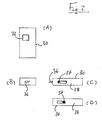
- the mobile terminal 30 is a Bluetooth-enabled remote control (see also Fig. 2 ), which in turn has a transmitting / receiving unit 31 and can be switched on by means of a switch-on element 32.
- the remote control may also include a motion sensor, not shown, for example, a 3D position sensor for detecting a movement of the remote control, which makes it possible to wake the remote control upon detection of a movement, after this has passed into an energy-saving idle state after their use.
- the mobile terminal 30 could also be formed by a smartwatch, a smartphone, or another Bluetooth-enabled portable computer.
- the authentication module 28 Once the authentication module 28 has established a Bluetooth connection to the mobile terminal 30, it performs authentication of the mobile terminal 30. In the case of a positive authentication, the authentication module 28 sends a release signal to the electric motor 20, so that it for unlocking of the lock 10, the locking elements 16 and the striker 12 can disengage.
- the authentication module 28 does not send a release signal to the unlock motor 20, i. the lock 10 is not unlocked and thus can not be opened by the user.
- the actuating element 26 is designed in the form of a motion sensor, then the authentication module 28 can be connected to an alarm module (not shown) which emits an alarm, in particular an acoustic alarm, in order to protect against theft in the event of a detected movement of the lock 10 and an unsuccessful authentication process.
- the mobile terminal 30 has a Notenergy Eat 34, for example in the form of a power bank, and a complementary to the connection element 24 of the lock 10 Connection element 36, here in the form of a USB connector to connect the Not energie Grande 34 of the mobile terminal 30 to the connection element 24 of the lock 10 and the energy storage 22 of the lock 10 at least so far charged that the authentication carried out and the lock 10 can be unlocked ,
- connection element 36 of the mobile terminal 30 In order to protect the connection element 36 of the mobile terminal 30 from soiling and / or damage, the connection element 36 can be moved by means of a slide 37 into a housing 38 of the mobile terminal 30 (FIG. Fig. 2D ) and if necessary be removed from it ( Fig. 2C ).
- a second embodiment of the locking system is shown, which differs from the first embodiment described above only in that the mobile lock 10 is not here a U-lock, but is attached to a frame 40 of a bicycle 42 frame lock. Also, this frame lock has a lock body and a lockable in the lock body striker, which is unlocked by an electric motor, the unlocking of the striker in the manner described above requires a positive authentication of a mobile terminal 30 after actuation of an actuating element of the lock 10.
- a third embodiment of a locking system according to the invention is shown, which differs from the basis of Fig. 1
- the first embodiment described therein differs in that the lock 10 is not a U-lock, but a battery lock, which is attached to a frame 40 of a bicycle 42 and serves to secure a traction battery 44 of the bicycle 42.
- this lock 10 has no striker, but instead a latch not shown for securing the battery compartment in the traction battery 44, which can be brought by an electric motor of the lock in a release position to release the traction battery 44, as soon as after actuation of an actuating element of the castle 10 in the manner described above, a positive authentication of a mobile terminal 30 has taken place.
- a bicycle 42 also with both a frame lock 10 of Fig. 3 as well as with a battery lock 10 of Fig. 4 can be equipped.
- both locks 10 can be unlocked with one and the same mobile terminal 30.
Landscapes
- Engineering & Computer Science (AREA)
- Mechanical Engineering (AREA)
- Computer Networks & Wireless Communication (AREA)
- Physics & Mathematics (AREA)
- General Physics & Mathematics (AREA)
- Chemical & Material Sciences (AREA)
- Combustion & Propulsion (AREA)
- Computer Security & Cryptography (AREA)
- Signal Processing (AREA)
- Manufacturing & Machinery (AREA)
- Transportation (AREA)
- Lock And Its Accessories (AREA)
Abstract
Description
- Die Erfindung betrifft ein mobiles Schloss. Unter einem mobilen Schloss wird in diesem Kontext jede Art von Schloss verstanden, das nicht stationär in einem Gebäude oder in einem Kraftfahrzeug verbaut ist, sondern von einem abzuschließenden Objekt abgenommen werden kann, wie beispielsweise ein Hangschloss, Bügelschloss oder Kabelschloss. Darüber hinaus umfassen mobile Schlösser in diesem Kontext auch Rahmenschlösser oder Batteriefachschlösser, welche an Zwei- oder Dreirädern, insbesondere an Fahrrädern, angebracht sind. Derartige mobile Schlösser sind grundsätzlich bekannt.
- Der Erfindung liegt die Aufgabe zugrunde, die Nutzung eines mobilen Schlosses komfortabler zu gestalten.
- Zur Lösung der Aufgabe ist ein mobiles Schloss mit den Merkmalen des Anspruchs 1 vorgesehen.
- Das erfindungsgemäße mobile Schloss umfasst einen Entriegelungsmotor, ein Authentifizierungsmodul zur Authentifizierung eines Nutzers des Schlosses und ein durch den Nutzer betätigbares Betätigungselement, mittels welchem bei erfolgreicher Authentifizierung des Nutzers der Entriegelungsmotor zur Entriegelung des Schlosses aktivierbar ist.
- Der Erfindung liegt der Gedanke zugrunde, das Schloss nicht wie herkömmlicherweise üblich mittels eines Schlüssels zu entriegeln, sondern stattdessen einen durch den Nutzer aktivierbaren Entriegelungsmotor vorzusehen. Es handelt sich bei dem Schloss also um ein elektronisches Schloss.
- Damit sichergestellt ist, dass ausschließlich ein berechtigter Nutzer das Schloss entriegeln kann, weist dieses außerdem ein Authentifizierungsmodul zur Authentifizierung des Nutzers auf. Auf diese Weise braucht der Nutzer zur Entriegelung des Schlosses keinen physischen Schlüssel mehr mit sich zu führen, wodurch nicht nur der Nutzungskomfort erhöht ist, sondern gleichzeitig auch das Risiko eines Verlusts oder Diebstahls des Schlüssels wegfällt.
- Idealerweise erfolgt die Authentifizierung des Nutzers für diesen unbemerkt im Hintergrund. Um bei erfolgreicher Authentifizierung des Nutzers eine unbeabsichtigte Entriegelung des Schlosses zu verhindern, beispielsweise wenn der Nutzer sich innerhalb einer die Authentifizierung ermöglichenden Entfernung zum Schloss befindet, er aber keine Absicht hegt, das Schloss zu entriegeln, muss der Nutzer im Fall einer tatsächlich gewünschten Entriegelung des Schlosses daher noch eine bewusste Handlung durchführen, in dem er das Betätigungselement betätigt.
- Es versteht sich, dass nicht nur die Entriegelung des Schlosses bei erfolgreicher Nutzerauthentifizierung und Betätigung des Betätigungselements möglich ist, sondern auf die gleiche Weise auch eine Verriegelung des Schlosses vorstellbar ist.
- Vorteilhafte Ausbildungen der Erfindung sind den Unteransprüchen, der Beschreibung und der Zeichnung zu entnehmen.
- Um die Authentifizierung des Nutzers für diesen unbemerkt im Hintergrund durchführen zu können, erfolgt die Authentifizierung bevorzugt drahtlos. Der Nutzer braucht also ein die Authentifizierung ermöglichendes mobiles Endgerät, welches er zur Authentifizierung bei sich trägt, wie beispielsweise eine Fernbedienung, ein Smartphone oder eine Smartwatch, zu Authentifizierungszwecken nicht extra hervor zu holen, sondern kann dieses zum Beispiel in seiner Tasche lassen.
- Außerdem ermöglicht die drahtlose Authentifizierung, dass der Nutzer grundsätzlich bereits bei einer Annäherung an das Schloss authentifiziert werden kann, so dass der Schließmotor bei Betätigung des Betätigungselements ohne Zeitverzögerung aktivierbar ist, was zu einem erhöhten Nutzungskomfort beiträgt. Es versteht sich, dass für eine derartige frühe Authentifizierung des Nutzers das Authentifizierungsmodul stets in einem Wachzustand gehalten werden muss, in welchem es seinerseits Signale zur Detektion von gegebenenfalls in der Nähe befindlichen Nutzern aussendet und/oder Identifikationsanfragen von in der Nähe befindlichen Nutzern beantworten kann. Dieses dauerhafte Wachhalten des Authentifizierungsmoduls geht jedoch auf Kosten einer Energieversorgung des mobilen Schlossses und kann im schlimmsten Fall dazu führen, dass ein Energiespeicher für das Schlosses nicht mehr ausreichend Energie an den Schließmotor liefern kann, um das Schloss zu entriegeln. Es versteht sich, dass ein solcher Betrieb des Authentifizierungsmoduls bei einem mobilen Schloss unkritischer ist, welches zur Energieversorgung an die Traktionsbatterie eines E-Bikes oder Elektrorollers angeschlossen ist, da die Traktionsbatterie ohnehin regelmäßig aufgeladen wird und die Gefahr einer Strom- oder Spannungslosigkeit des Schlosses normalerweise ausgeschlossen ist. Ein solches Schloss kann beispielsweise ein Rahmenschloss oder ein Batteriefachschloss sein.
- Insbesondere wenn das Schloss nicht an die Traktionsbatterie eines E-Bikes oder Elektrorollers angeschlossen ist, beispielsweise wenn es sich bei dem Schloss um ein abnehmbares Bügelschloss, Hangschloss, Kabelschloss oder um ein Rahmenschloss eines herkömmlichen Zweirads handelt, wird eine Ausführungsform bevorzugt, bei welcher das Authentifizierungsmodul durch Betätigen des Betätigungselements aktivierbar ist. Auf diese Weise kann das Authentifizierungsmodul nach Beendigung eines Authentifizierungs- bzw. Entriegelungsvorgangs in einen keine Energie verbrauchenden Ruhezustand versetzt werden, um einen Energiespeicher des Schlosses zu schonen. Erst durch Betätigen des Betätigungselements wird das Authentifizierungsmodul gewissermaßen wieder aufgeweckt, um eine Paarung mit einem gegebenenfalls in der Nähe befindlichen mobilen Endgerät des Nutzers vorzunehmen und einen Authentifizierungsvorgang durchzuführen. In Abhängigkeit davon, wie schnell das Aufwecken des Authentifizierungsmoduls, die Paarung von Authentifizierungsmodul und mobilem Endgerät und die eigentliche Authentifizierung erfolgt, wird das Schloss in diesem Fall erst mit einer gewissen Zeitverzögerung nach Betätigen des Betätigungselements entriegelt.
- Vorteilhafterweise umfasst das Authentifizierungsmodul eine Sende/Empfangseinheit, um eine drahtlose Verbindung mit einem mobilen Endgerät des Nutzers herzustellen. Bei dem mobilen Endgerät kann es sich um eine dem Schloss zugeordnete Fernbedienung handeln oder auch um einen tragbaren Computer, welchen der Nutzer normalerweise ohnehin bei sich führt, beispielsweise ein Smartphone, eine Smartwatch oder ein Tablet.
- Bei der drahtlosen Verbindung handelt es sich bevorzugt um eine Bluetooth-Verbindung. Bluetooth-Verbindungen haben sich insbesondere hinsichtlich Reichweite und Universalität bewährt.
- Das Betätigungselement kann durch Berührung oder auch berührungslos betätigbar sein. Beispielsweise kann das Betätigungselement durch einen Impulsgeber, insbesondere einen Taster, bevorzugt einen Druck- oder Schiebetaster, und/oder durch eine optisch, kapazitiv oder induktiv wirkende Schaltfläche gebildet sein.
- Gemäß einer Ausführungsform ist das Betätigungselement an dem Schloss ausgebildet. Dies ermöglicht eine besonders intuitive Bedienung des Schlosses. Alternativ oder zusätzlich kann das Authentifizierungsmodul auch durch Anbringen eines Bordcomputers an einem Fahrrad aktivierbar sein. In diesem Fall bildet der Bordcomputer gewissermaßen selbst das Betätigungselement, das heißt an dem Schloss braucht kein zusätzliches Betätigungselement vorgesehen zu werden. Diese Ausführungsform erweist sich als besonders vorteilhaft, wenn es sich bei dem Schloss um ein Rahmenschloss oder ein Batteriefachschloss eines E-Bikes handelt, bei welchem der Nutzer den Bordcomputer beim Verlassen des E-Bikes üblicherweise abnimmt und mit sich führt.
- Es versteht sich, dass nicht bereits das Anbringen des Bordcomputers an dem Fahrrad zu einer Aktivierung des Authentifizierungsmoduls führen muss. Vielmehr kann an dem Bordcomputer ein Betätigungselement in Form eines Knopfes, Schalters oder Schiebers oder einer optisch, kapazitiv oder induktiv wirkenden Schaltfläche ausgebildet sein, welches der Nutzer betätigen muss, um die Aktivierung des Authentifizierungsmoduls auszulösen. Je nach Ausführungsform kann eine wirksame Betätigung eines solchen Betätigungselements erst nach der Anbringung des Bordcomputers einem Fahrrad oder schon vorher möglich sein.
- Alternativ oder zusätzlich kann das Betätigungselement außerdem an dem mobilen Endgerät des Nutzers ausgebildet sein und zum Aufwecken des Authentifizierungsmoduls und/oder Aktivieren des Schließmotors drahtlos, insbesondere via Bluetooth, mit dem Schloss kommunizieren. In jedem Fall kann die Kommunikation zwischen dem Bordcomputer und dem Schloss drahtlos, insbesondere via Bluetooth, oder drahtgebunden, insbesondere über eine am Fahrrad befestigte Halterung für den Bordcomputer, erfolgen.
- Gemäß noch einer weiteren Ausführungsform ist das Betätigungselement durch einen im Schloss angeordneten und mit dem Authentifizierungsmodul verbundenen Sensor zur Detektion einer Bewegung des Schlosses gebildet. In diesem Fall muss der Nutzer das Schloss aktiv bewegen, um den Authentifizierungsvorgang bzw. die Aktivierung des Schließmotors auszulösen. Es versteht sich, dass eine derartige Ausbildung des Betätigungselements eher für ein Bügelschloss, Hangschloss oder Kabelschloss geeignet ist als für ein Rahmenschloss oder Batteriefachschloss.
- Gemäß noch einer weiteren Ausführungsform umfasst das Schloss einen Sensor zur Detektion einer Bewegung des Schlosses und ein mit dem Sensor und dem Authentifizierungsmodul verbundenes Alarmmodul, welches im Falle einer durch den Sensor detektierten Bewegung des Schlosses und nichterfolgreicher Nutzerauthentifizierung einen, insbesondere akustischen, Alarm ausgibt. Durch eine derartige Alarmfunktion wird der Diebstahlschutz erheblich erhöht.
- Bevorzugt ist derselbe Sensor zur Detektion einer Bewegung des Schlosses als Betätigungselement und für die Alarmfunktion vorgesehen, da er in diesem Fall auf besonders wirtschaftliche Weise eine Doppelfunktion erfüllt.
- Der Entriegelungsmotor ist vorzugsweise ein Elektromotor. Es versteht sich, dass das mobile Schloss bevorzugt über einen Energiespeicher zur Versorgung des Entriegelungsmotors, des Authentifizierungsmoduls und gegebenenfalls des Betätigungselements mit Energie verfügt. So kann es sich bei dem Energiespeicher beispielsweise um eine Batterie oder einen Akkumulator handeln.
- Weiterer Gegenstand der Erfindung ist ein Schließsystem mit einem mobilen Schloss der voranstehend beschriebenen Art und einem mobilen Endgerät, mittels welchem sich ein Nutzer des Schlosses an diesem authentisieren kann. Die voranstehend im Zusammenhang mit dem mobilen Schloss genannten Vorteile gelten für das erfindungsgemäße Schließsystem entsprechend.
- Damit das mobile Endgerät mit dem Authentifizierungsmodul des Schlosses kommunizieren kann, umfasst vorteilhafterweise auch das mobile Endgerät eine Sende/Empfangseinheit, um eine drahtlose Verbindung mit dem Authentifizierungsmodul des Schlosses herzustellen.
- Wie bereits erwähnt kann das mobile Endgerät eine Fernbedienung oder ein tragbarer Computer sein, insbesondere eine Smartwatch, ein Smartphone, ein Tablet etc.
- Gemäß einer Ausführungsform weist das mobile Endgerät einen Energiespeicher auf, durch welchen das Schloss zumindest mit für eine Notentriegelung ausreichender Energie versorgbar ist. Auf diese Weise kann das Schloss auch dann noch entriegelt werden, wenn es selbst vollständig strom- bzw. spannungslos sein sollte, beispielsweise weil eine Batterie des Schlosses defekt ist oder der Nutzer versäumt hat, einen Akkumulator des Schlosses rechtzeitig aufzuladen. Der Energiespeicher des mobilen Endgeräts stellt mit anderen Worten also eine Notstrom-/spannungsversorgung sicher.
- Zur Realisierung einer solchen Notstrom-/spannungsversorgung weisen das Schloss und das mobile Endgerät bevorzugt komplementäre Anschlusselemente auf, mittels welchen das mobile Endgerät zur Versorgung des Schlosses mit Energie an dieses anschließbar ist.
- Die Anschlusselemente können beispielsweise einen USB-Stecker und eine USB-Buchse umfassen.
- Insbesondere wenn es sich bei dem mobilen Endgerät um eine dem Schloss zugeordnete Fernbedienung handelt, kann das Anschlusselement des mobilen Endgeräts zwischen einer Passivlage, in welcher es in einem Gehäuse des mobilen Endgeräts geschützt ist, und einer Aktivlage bewegbar sein, in welcher es zumindest teilweise aus dem Gehäuse herausragt und mit dem Anschlusselement des Schlosses koppelbar ist.
- Weiterer Gegenstand ist ein Verfahren zum Entriegeln oder Verriegeln eines mobilen Schlosses, das einen Entriegelungsmotor, ein Authentifizierungsmodul und ein durch einen Nutzer betätigbares Betätigungselement aufweist, bei welchem Verfahren mittels des Authentifizierungsmoduls eine Authentifizierung des Nutzers durchgeführt wird und im Falle einer erfolgreichen Authentifizierung des Nutzers und zusätzlicher Betätigung des Betätigungselements der Entriegelungsmotor zur Entriegelung des Schlosses aktiviert wird. Durch das erfindungsgemäße Verfahren lassen sich die voranstehend aufgeführten Vorteile entsprechend erreichen.
- Wie bereits erwähnt erfolgt die Authentifizierung des Nutzers vorteilhafterweise drahtlos und insbesondere über eine Bluetooth-Verbindung zwischen dem Authentifizierungsmodul und einem mobilen Endgerät des Nutzers.
- Dabei kann die Authentifizierung des Nutzers bereits vor der Betätigung des Betätigungselements durchgeführt werden, was jedoch voraussetzt, dass das Authentifizierungsmodul dauerhaft aktiv ist und die Präsenz von potentiellen Nutzern detektiert.
- Gemäß einer energieeffizienteren Ausführungsform wird das Authentifizierungsmodul durch die Betätigung des Betätigungselements aktiviert und die Authentifizierung des Nutzers erst nach der Betätigung des Betätigungselements durchgeführt. In diesem Fall kann das Authentifizierungsmodul normalerweise einen energiesparenden Ruhezustand einnehmen und lediglich zur Durchführung eines Authentifizierungsvorgangs aufgeweckt werden.
- Nachfolgend wird die Erfindung rein beispielhaft anhand möglicher Ausführungsformen unter Bezugnahme auf die beigefügte Zeichnung beschrieben. Es zeigen:
- Fig. 1
- eine schematische Darstellung eines Schließsystems gemäß einer ersten Ausführungsform der Erfindung;
- Fig. 2A
- Draufsicht auf eine Fernbedienung des Schließsystems von
Fig. 1 ; - Fig. 2B
- Frontansicht der Fernbedienung von
Fig. 2A ; - Fig. 2C
- Seitenansicht der Fernbedienung von
Fig. 2A mit ausgefahrenem Anschlusselement; - Fig. 2D
- Seitenansicht der Fernbedienung von
Fig. 2A mit eingefahrenem Anschlusselement; - Fig. 3
- eine schematische Darstellung eines Schließsystems gemäß einer zweiten Ausführungsform der Erfindung; und
- Fig. 4
- eine schematische Darstellung eines Schließsystems gemäß einer dritten Ausführungsform der Erfindung.
- Das in
Fig.1 dargestellte Schließsystem umfasst ein mobiles Schloss 10 in Form eines Bügelschlosses, mit einem U-förmigen Schließbügel 12, dessen Enden in einem verriegelten Zustand des Schlosses 10 in einem Schlosskörper 14 aufgenommen und darin verriegelt sind. - Die Verriegelung des Schließbügels 12 in dem Schlosskörper 14 erfolgt mittels in dem Schlosskörper 14 beweglich gelagerten Verriegelungselementen 16, welche in entsprechende Verriegelungsvertiefungen 18 des Schließbügels 12 eingreifen und dadurch verhindern, dass der Schließbügel 12 aus dem Schlosskörper 14 herausgezogen werden kann.
- Zur Entriegelung des Schlosses 10 können die Verriegelungselemente 16 mittels eines in dem Schlosskörper 14 angeordneten Entriegelungsmotors 20, hier in Form eines Elektromotors, aus den Verriegelungsvertiefungen 18 gelöst werden, beispielsweise entgegen der Rückstellkraft nicht dargestellter Verriegelungsfedern, welche die Verriegelungselemente in Richtung der Verriegelungsvertiefungen 18 vorspannen.
- Da die Verriegelung des Schließbügels 12 in dem Schlosskörper 14 durch die Verriegelungsfedern bewirkt wird, welche die Verriegelungselemente 16 in die Verriegelungsvertiefungen 18 verlagern, und der Entriegelungsmotor 20 letztlich nur für die Entriegelung des Schlosses 10 sorgt, wird das Schloss 10 auch als ein halbautomatisches Schloss 10 bezeichnet. Vorstellbar ist grundsätzlich aber auch ein vollautomatisches Schloss 10, bei welchem der Entriegelungsmotor 20 sowohl für die Entriegelung als auch für die Verriegelung sorgt.
- Zur Energieversorgung des Elektromotors 20 ist ein Energiespeicher 22 in dem Schlosskörper 14 untergebracht. Im vorliegenden Ausführungsbeispiel handelt es sich bei dem Energiespeicher 22 um einen Akkumulator, welcher mittels eines von außen zugänglichen Anschlusselements, hier in Form einer USB-Buchse, aufladbar ist. Alternativ könnte es sich bei dem Energiespeicher 22 aber auch um eine Batterie handeln, welche bei Bedarf ausgewechselt werden kann.
- Zur Auslösung eines Entriegelungsvorgangs ist ein für den Nutzer zugängliches Betätigungselement 26 an dem Schlosskörper 14 vorgesehen, welches im vorliegenden Ausführungsbeispiel in Form einer kapazitiv wirkenden Sensorfläche ausgebildet ist. Alternativ könnte es sich bei dem Betätigungselement 26 aber auch um eine optisch oder induktiv wirkende Schaltfläche oder um einen Drehknopf, Druckknopf, Kippschalter oder Schiebeschalter handeln. Ferner ist es vorstellbar, das Betätigungselement 26 in Form eines Bewegungssensors auszubilden. Die Betätigung des Betätigungselements 26 würde in diesem Fall durch eine Bewegung des Schlosses 10 erfolgen.
- Das Betätigungselement 26 ist mit einem in dem Schlosskörper 14 untergebrachten Authentifizierungsmodul 28 verbunden, welches seinerseits mit dem Elektromotor 20 verbunden ist. Durch Betätigung des Betätigungselements 26 wird das Authentifizierungsmodul 28 aktiviert, so dass das Authentifizierungsmodul 28 einen Authentifizierungsvorgang durchführt. Hierzu stellt das Authentifizierungsmodul 28 mittels einer Sende/Empfangseinheit 29 zunächst eine Bluetooth-Verbindung zu einem mobilen Endgerät 30 her, welches ein Nutzer des Schlosses 10 zu diesem Zweck bei sich führt.
- Im vorliegenden Ausführungsbeispiel handelt es sich bei dem mobilen Endgerät 30 um eine Bluetooth-fähige Fernbedienung (siehe auch
Fig. 2 ), welche ihrerseits eine Sende/Empfangseinheit 31 aufweist und mittels eines Einschaltelements 32 eingeschaltet werden kann. Die Fernbedienung kann auch einen nicht dargestellten Bewegungssensor, beispielsweise einen 3D-Lagesensor, zur Detektion einer Bewegung der Fernbedienung aufweisen, welcher es ermöglicht, die Fernbedienung bei Detektion einer Bewegung aufzuwecken, nachdem diese nach ihrer Benutzung in einen energiesparenden Ruhezustand übergegangen ist. - Alternativ könnte das mobile Endgerät 30 aber auch durch eine Smartwatch, ein Smartphone oder einen anderen Bluetooth-fähigen tragbaren Computer gebildet sein.
- Sobald das Authentifizierungsmodul 28 eine Bluetooth-Verbindung zu dem mobilen Endgerät 30 hergestellt hat, führt es eine Authentifizierung des mobilen Endgeräts 30 durch. Im Falle einer positiven Authentifizierung sendet das Authentifizierungsmodul 28 ein Freigabesignal an den Elektromotor 20, damit dieser zur Entriegelung des Schlosses 10 die Verriegelungselemente 16 und den Schließbügel 12 außer Eingriff bringen kann.
- Wird das mobile Endgerät 30 hingegen nicht positiv authentifiziert, so sendet das Authentifizierungsmodul 28 kein Freigabesignal an den Entriegelungsmotor 20, d.h. das Schloss 10 wird nicht entriegelt und kann somit durch den Nutzer nicht geöffnet werden. Ist das Betätigungselement 26 in Form eines Bewegungssensors ausgebildet, so kann das Authentifizierungsmodul 28 mit einem nicht dargestellten Alarmmodul verbunden sein, welches zum Schutz vor Diebstahl im Falle einer detektierten Bewegung des Schlosses 10 und eines nichterfolgreichen Authentifizierungsvorgangs einen, insbesondere akustischen, Alarm ausgibt.
- Es versteht sich, dass sowohl der Authentifizierungsvorgang als auch der eigentliche Entriegelungsvorgang voraussetzen, dass der Energiespeicher 22 über ausreichend Energie verfügt. Für den Fall, dass der Energiespeicher 22 derart entladen ist, dass eine Authentifizierung und/oder Entriegelung nicht mehr möglich ist, verfügt das mobile Endgerät 30 über einen Notenergiespeicher 34, beispielsweise in Form einer Powerbank, und ein zu dem Anschlusselement 24 des Schlosses 10 komplementäres Anschlusselement 36, hier in Form eines USB-Steckers, um den Notenergiespeicher 34 des mobilen Endgeräts 30 an das Anschlusselement 24 des Schlosses 10 anzuschließen und den Energiespeicher 22 des Schlosses 10 zumindest so weit aufzuladen, dass die Authentifizierung durchgeführt und das Schloss 10 entriegelt werden kann.
- Zum Schutz des Anschlusselements 36 des mobilen Endgeräts 30 vor Verschmutzung und/oder Beschädigung kann das Anschlusselement 36 mittels eines Schiebers 37 in ein Gehäuse 38 des mobilen Endgeräts 30 eingefahren (
Fig. 2D ) und bei Bedarf aus diesem herausgefahren werden (Fig. 2C ). - In
Fig. 3 ist eine zweite Ausführungsform des Schließsystems dargestellt, welche sich von der voranstehend beschriebenen ersten Ausführungsform lediglich darin unterscheidet, dass es sich bei dem mobilen Schloss 10 hier nicht um ein Bügelschloss, sondern um ein an einem Rahmen 40 eines Fahrrads 42 angebrachtes Rahmenschloss handelt. Auch dieses Rahmenschloss verfügt über einen Schlosskörper und einen in dem Schlosskörper verriegelbaren Schließbügel, welcher mittels eines Elektromotors entriegelbar ist, wobei die Entriegelung des Schließbügels in voranstehend beschriebener Weise eine positive Authentifizierung eines mobilen Endgeräts 30 nach Betätigung eines Betätigungselements des Schlosses 10 voraussetzt. - In
Fig. 4 ist eine dritte Ausführungsform eines erfindungsgemäßen Schließsystems dargestellt, welche sich von der anhand vonFig. 1 beschriebenen ersten Ausführungsform darin unterscheidet, dass es sich bei dem Schloss 10 nicht um ein Bügelschloss, sondern um ein Batteriefachschloss handelt, welches an einem Rahmen 40 eines Fahrrads 42 angebracht ist und zur Sicherung einer Traktionsbatterie 44 des Fahrrads 42 dient. Insofern weist dieses Schloss 10 keinen Schließbügel auf, sondern stattdessen einen nicht näher dargestellten Riegel zur Sicherung der in dem Batteriefach aufgenommenen Traktionsbatterie 44, welcher durch einen Elektromotor des Schlosses in eine Freigabelage zur Freigabe der Traktionsbatterie 44 bringbar ist, sobald nach Betätigung eines Betätigungselements des Schlosses 10 in voranstehend beschriebener Weise eine positive Authentifizierung eines mobilen Endgeräts 30 stattgefunden hat. - Es versteht sich, dass ein Fahrrad 42 auch sowohl mit einem Rahmenschloss 10 von
Fig. 3 als auch mit einem Batteriefachschloss 10 vonFig. 4 ausgerüstet sein kann. In diesem Fall ist es vorteilhaft, wenn sich beide Schlösser 10 mit ein- und demselben mobilen Endgerät 30 entriegeln lassen. Grundsätzlich ist es aber auch vorstellbar, separate mobile Endgeräte 30 zur Entriegelung des Rahmenschlosses 10 einerseits und des Batteriefachschlosses 10 andererseits vorzusehen. - Des Weiteren versteht es sich, dass, wenn es sich bei dem Fahrrad 42 um ein E-Bike handelt, dass Batteriefachschloss 10 und/oder das Rahmenschloss 10 nicht notwendigerweise über einen eigenen Energiespeicher 22 verfügen müssen, sondern zur Energieversorgung stattdessen an die Traktionsbatterie 44 des Fahrrads 42 angeschlossen sein können.
-
- 10
- Schloss
- 12
- Schließbügel
- 14
- Schlosskörper
- 16
- Verriegelungselement
- 18
- Verriegelungsvertiefung
- 20
- Entriegelungsmotor
- 22
- Energiespeicher
- 24
- Anschlusselement
- 26
- Betätigungselement
- 28
- Authentifizierungsmodul
- 29
- Sende/Empfangseinheit
- 30
- mobiles Endgerät
- 31
- Sende/Empfangseinheit
- 32
- Einschaltelement
- 34
- Notenergiespeicher
- 36
- Anschlusselement
- 37
- Schieber
- 38
- Gehäuse
- 40
- Rahmen
- 42
- Fahrrad
- 44
- Traktionsbatterie
Claims (15)
- Mobiles Schloss (10) mit einem Entriegelungsmotor (20), einem Authentifizierungsmodul (28) zur Authentifizierung eines Nutzers des Schlosses (10) und einem durch den Nutzer betätigbaren Betätigungselement (26), mittels welchem bei erfolgreicher Authentifizierung des Nutzers der Entriegelungsmotor (20) zur Entriegelung des Schlosses (10) aktivierbar ist.
- Schloss (10) nach Anspruch 1,
dadurch gekennzeichnet, dass
die Authentifizierung drahtlos erfolgt; und/oder
das Authentifizierungsmodul (28) eine Sende/Empfangseinheit (29) umfasst, um eine drahtlose Verbindung mit einem mobilen Endgerät (30) des Nutzers herzustellen, insbesondere wobei die drahtlose Verbindung eine Bluetooth-Verbindung ist. - Schloss (10) nach Anspruch 1 oder 2,
dadurch gekennzeichnet, dass
das Authentifizierungsmodul (28) durch Betätigen des Betätigungselements (26) aktivierbar ist; und/oder
das Betätigungselement (26) durch Berührung oder berührungslos betätigbar ist. - Schloss (10) nach zumindest einem der vorstehenden Ansprüche,
dadurch gekennzeichnet, dass
das Betätigungselement (26) ein Impulsgeber ist, insbesondere ein Taster, bevorzugt ein Druck- oder Schiebetaster, und/oder durch eine optisch, kapazitiv oder induktiv wirkende Schaltfläche gebildet ist; und/oder das Betätigungselement (26) an dem Schloss (10) ausgebildet ist. - Schloss (10) nach zumindest einem der vorstehenden Ansprüche,
dadurch gekennzeichnet, dass
das Authentifizierungsmodul (28) durch Anbringen eines Bordcomputers an einem Fahrrad, insbesondere E-Bike, aktivierbar ist. - Schloss (10) nach zumindest einem der vorstehenden Ansprüche,
dadurch gekennzeichnet, dass
das Betätigungselement (26) durch einen im Schloss (10) angeordneten und mit dem Authentifizierungsmodul verbundenen Sensor zur Detektion einer Bewegung des Schlosses (10) gebildet ist. - Schloss (10) nach zumindest einem der vorstehenden Ansprüche,
gekennzeichnet durch
einen Sensor zur Detektion einer Bewegung des Schlosses (10) und ein mit dem Sensor und dem Authentifizierungsmodul verbundenes Alarmmodul, welches im Falle einer durch den Sensor detektierten Bewegung des Schlosses (10) und nichterfolgreicher Nutzerauthentifizierung einen, insbesondere akustischen, Alarm ausgibt. - Schließsystem umfassend ein mobiles Schloss (10) nach einem der vorherigen Ansprüche und ein mobiles Endgerät (30), mittels welchem sich ein Nutzer des Schlosses (10) an diesem authentisieren kann.
- Schließsystem nach Anspruch 8,
dadurch gekennzeichnet, dass
das mobile Endgerät (30) eine Sende/Empfangseinheit (31) umfasst, um eine drahtlose Verbindung mit dem Authentifizierungsmodul (28) des Schlosses (10) herzustellen. - Schließsystem nach Anspruch 8 oder 9,
dadurch gekennzeichnet, dass
das Betätigungselement (26) an dem mobilen Endgerät (30) ausgebildet ist. - Schließsystem nach zumindest einem der Ansprüche 8 bis 10,
dadurch gekennzeichnet, dass
das mobile Endgerät (30) einen Energiespeicher (34) aufweist, durch welchen das Schloss (10) mit zumindest für eine Notentriegelung ausreichender Energie versorgbar ist. - Schließsystem nach zumindest einem der Ansprüche 8 bis 11,
dadurch gekennzeichnet, dass
das Schloss (10) und das mobile Endgerät (30) komplementäre Anschlusselemente (24, 36) aufweisen, mittels welchen das mobile Endgerät (30) zur Versorgung des Schlosses (10) mit Energie an dieses anschließbar ist, insbesondere wobei die Anschlusselemente (24, 36) einen USB-Stecker und eine USB-Buchse umfassen. - Schließsystem nach Anspruch 12,
dadurch gekennzeichnet, dass
das Anschlusselement (36) des mobilen Endgeräts (30) zwischen einer Passivlage, in welcher es in einem Gehäuse (38) des mobilen Endgeräts (30) geschützt ist, und einer Aktivlage bewegbar ist, in welcher es zumindest teilweise aus dem Gehäuse (38) herausragt und mit dem Anschlusselement (24) des Schlosses (10) koppelbar ist. - Verfahren zum Entriegeln eines mobilen Schlosses (10), welches einen Entriegelungsmotor (20), ein Authentifizierungsmodul (10) und ein durch einen Nutzer betätigbares Betätigungselement (26) aufweist, bei welchem Verfahren
mittels des Authentifizierungsmoduls (28) eine Authentifizierung des Nutzers durchgeführt wird und
im Falle einer erfolgreichen Authentifizierung des Nutzers und zusätzlicher Betätigung des Betätigungselements (26) der Entriegelungsmotor (20) zur Entriegelung des Schlosses (10) aktiviert wird. - Verfahren nach Anspruch 14,
dadurch gekennzeichnet, dass die Authentifizierung des Nutzers drahtlos und insbesondere über eine Bluetooth-Verbindung zwischen dem Authentifizierungsmodul (28) und einem mobilen Endgerät (30) des Nutzers erfolgt; und/oder die Authentifizierung des Nutzers bereits vor der Betätigung des Betätigungselements (26) durchgeführt wird; oder
das Authentifizierungsmodul (28) durch die Betätigung des Betätigungselements (26) aktiviert wird und die Authentifizierung des Nutzers erst nach der Betätigung des Betätigungselements (26) durchgeführt wird.
Applications Claiming Priority (1)
| Application Number | Priority Date | Filing Date | Title |
|---|---|---|---|
| DE102018111296.3A DE102018111296A1 (de) | 2018-05-11 | 2018-05-11 | Mobiles Schloss |
Publications (2)
| Publication Number | Publication Date |
|---|---|
| EP3567193A1 true EP3567193A1 (de) | 2019-11-13 |
| EP3567193B1 EP3567193B1 (de) | 2022-06-08 |
Family
ID=66379791
Family Applications (1)
| Application Number | Title | Priority Date | Filing Date |
|---|---|---|---|
| EP19172290.9A Active EP3567193B1 (de) | 2018-05-11 | 2019-05-02 | Mobiles schloss |
Country Status (7)
| Country | Link |
|---|---|
| US (1) | US11859411B2 (de) |
| EP (1) | EP3567193B1 (de) |
| CN (1) | CN110473317A (de) |
| CA (1) | CA3042785A1 (de) |
| DE (1) | DE102018111296A1 (de) |
| DK (1) | DK3567193T3 (de) |
| TW (1) | TWI816788B (de) |
Cited By (2)
| Publication number | Priority date | Publication date | Assignee | Title |
|---|---|---|---|---|
| CN113482450A (zh) * | 2021-08-03 | 2021-10-08 | 王群 | 一种智能链条锁 |
| EP4370764A4 (de) * | 2021-07-12 | 2025-08-06 | Schlage Lock Co Llc | Tragbare schlossvorrichtung |
Families Citing this family (13)
| Publication number | Priority date | Publication date | Assignee | Title |
|---|---|---|---|---|
| DE102019123477A1 (de) | 2019-09-02 | 2021-03-04 | ABUS August Bremicker Söhne Kommanditgesellschaft | Tragbares Bügelschloss |
| CN113044139B (zh) * | 2019-12-10 | 2023-03-17 | 九号智能(常州)科技有限公司 | 电动车座桶的控制方法和装置、电动车及存储介质 |
| CN111042671A (zh) * | 2019-12-17 | 2020-04-21 | 国网浙江省电力有限公司宁波供电公司 | 一种智能锁 |
| DE102020116008A1 (de) * | 2020-06-17 | 2021-12-23 | ABUS August Bremicker Söhne Kommanditgesellschaft | Tragbares elektronisches Schloss |
| DE102021105648A1 (de) * | 2021-03-09 | 2022-09-15 | ABUS August Bremicker Söhne Kommanditgesellschaft | Verfahren zum Betreiben eines Fahrzeugschlosses |
| US12018516B2 (en) * | 2021-06-30 | 2024-06-25 | Delta Cycle Corporation | Electronic lock |
| US12024924B2 (en) * | 2021-07-01 | 2024-07-02 | Delta Cycle Corporation | Electronic lock |
| US12060733B2 (en) | 2021-08-16 | 2024-08-13 | Delta Cycle Corporation | Bicycle cable lock |
| DE102021122247A1 (de) | 2021-08-27 | 2023-03-02 | ABUS August Bremicker Söhne Kommanditgesellschaft | Elektromechanisches Schloss |
| DE102022117829A1 (de) * | 2022-07-18 | 2024-01-18 | Bayerische Motoren Werke Aktiengesellschaft | Anordnung eines Verkleidungsteils an einem Bauelement eines Kraftrads sowie Verfahren |
| DE102022117836A1 (de) | 2022-07-18 | 2024-01-18 | Bayerische Motoren Werke Aktiengesellschaft | System zur Freigabe eines an einem insbesondere einspurigen Kraftfahrzeug lösbar befestigen Behälters |
| CN116061874B (zh) * | 2023-01-18 | 2024-06-21 | 重庆长安汽车股份有限公司 | 一种基于soa服务架构的防盗认证方法、系统、设备和介质 |
| DE102024200480A1 (de) * | 2024-01-18 | 2025-07-24 | Volkswagen Aktiengesellschaft | Vorrichtung und System für ein Kraftfahrzeug zum Ver- und/oder Entriegeln eines Gegenstands |
Citations (8)
| Publication number | Priority date | Publication date | Assignee | Title |
|---|---|---|---|---|
| CH702459A2 (de) * | 2009-12-19 | 2011-06-30 | Martin Hofer | Integrale ferngesteuerte Vorrichtung zur Verbesserung der Fahrsicherheit und Diebstahlsicherung von Zweirädern. |
| DE102012100110A1 (de) * | 2012-01-09 | 2013-07-11 | T-Investment Ltd. | Kombination aus einem Schloss und einem mobilen Identifikationsgeber |
| DE102013013087A1 (de) * | 2012-08-08 | 2014-02-13 | Marquardt Verwaltungs-Gmbh | Fahrzeug |
| US8875550B1 (en) * | 2011-11-08 | 2014-11-04 | Bryan Daniel Spunt | Double shackle bicycle padlock with RFID unlocking |
| US20140360232A1 (en) * | 2013-06-07 | 2014-12-11 | Velo Labs, Inc. | Wireless ultra-low power portable lock |
| DE202016002087U1 (de) * | 2016-03-30 | 2016-04-20 | Felix Mayer | Elektronisches Fahrradschloss |
| DE202016002367U1 (de) * | 2016-04-11 | 2016-05-13 | PEARL. GmbH | Elektronisches Schließsystem |
| DE102015119187A1 (de) * | 2015-11-06 | 2017-05-11 | Glaser und Rist GbR (vertretungsberechtigte Gesellschafter: Claus Rist, 44797 Bochum, Martin Glaser, 59192 Bergkamen) | Verriegelungsvorrichtung für ein Mobilgerät |
Family Cites Families (28)
| Publication number | Priority date | Publication date | Assignee | Title |
|---|---|---|---|---|
| US6318138B1 (en) * | 1999-11-15 | 2001-11-20 | Kurt Mathews | Remotely controlled door lock |
| US20080024272A1 (en) * | 2003-07-18 | 2008-01-31 | Fiske Michael S | Biometric authentication lock machine |
| US7336150B2 (en) * | 2005-03-17 | 2008-02-26 | Security People, Inc. | Locker lock with master override and low power jump start |
| JP2006321454A (ja) * | 2005-05-20 | 2006-11-30 | Yamaha Motor Co Ltd | 鞍乗型車両の車両制御装置 |
| DE202005015165U1 (de) * | 2005-09-27 | 2005-12-29 | Huf Hülsbeck & Fürst Gmbh & Co. Kg | Fernsteuerbare Schließvorrichtung für ein Fahrzeug |
| US9208628B2 (en) * | 2007-05-30 | 2015-12-08 | Security People, Inc. | Electronic locks particularly for office furniture |
| CN101145249A (zh) | 2006-09-15 | 2008-03-19 | 雅马哈发动机株式会社 | 感应式机车锁具 |
| CN101994423A (zh) * | 2009-08-21 | 2011-03-30 | 朝日电装株式会社 | 圆筒销子锁的保护装置 |
| TWM415952U (en) * | 2011-06-01 | 2011-11-11 | Deutron Electronics Corp | Complex locks |
| DE102011081207A1 (de) * | 2011-08-18 | 2013-02-21 | Cargoguard Gmbh | Verschliessvorrichtung |
| EP2592601B1 (de) * | 2011-11-11 | 2015-03-18 | iLOQ Oy | Elektromechanische Sperre |
| US8616031B2 (en) * | 2012-05-10 | 2013-12-31 | Wesko Systems Limited | Interchangeable electronic lock |
| US20140250954A1 (en) * | 2013-03-06 | 2014-09-11 | James F. Buzhardt | Smart padlock |
| US20140266588A1 (en) * | 2013-03-15 | 2014-09-18 | Mesh Motion, Inc. | Peer-to-peer bike sharing system |
| GB201311001D0 (en) * | 2013-06-20 | 2013-08-07 | Lucabella Holdings Llc | Lucabella |
| JP5981971B2 (ja) * | 2014-09-12 | 2016-08-31 | 本田技研工業株式会社 | ドアロックシステム |
| US9512649B2 (en) * | 2014-09-26 | 2016-12-06 | Mohamed Mohamed | Bicycle security device |
| US20160116510A1 (en) | 2014-10-27 | 2016-04-28 | Master Lock Company | Predictive battery warnings for an electronic locking device |
| US9574375B2 (en) * | 2014-11-07 | 2017-02-21 | Kevin Henderson | Electronic lock |
| DE102015005419A1 (de) * | 2015-04-29 | 2016-11-03 | haveltec UG (haftungsbeschränkt) | Automatisches Zweiradschloss |
| US9523218B1 (en) * | 2015-06-19 | 2016-12-20 | Donnald McGraw | Lock assembly |
| DE102015121715A1 (de) * | 2015-12-14 | 2017-06-14 | Deutsche Telekom Ag | Elektronisches Sicherungsschloss |
| DE102016104674A1 (de) * | 2016-03-14 | 2017-09-14 | Nuloc Gmbh | Fahrradschloss mit einem Textilband, Bausatz und Verfahren zum Betreiben eines Fahrradschlosses |
| DE102016119570A1 (de) * | 2016-10-13 | 2018-04-19 | ABUS August Bremicker Söhne KG | Fahrzeug mit einem elektrisch betriebenen Antriebsmotor |
| DE102018111290A1 (de) * | 2018-05-11 | 2019-11-14 | ABUS August Bremicker Söhne KG | Schließsystem |
| DE102018111301A1 (de) * | 2018-05-11 | 2019-11-14 | ABUS August Bremicker Söhne KG | Mobiles Schloss |
| US11352817B2 (en) * | 2019-01-25 | 2022-06-07 | Noke, Inc. | Electronic lock and interchangeable shackles |
| DE102020116008A1 (de) * | 2020-06-17 | 2021-12-23 | ABUS August Bremicker Söhne Kommanditgesellschaft | Tragbares elektronisches Schloss |
-
2018
- 2018-05-11 DE DE102018111296.3A patent/DE102018111296A1/de active Pending
-
2019
- 2019-05-02 DK DK19172290.9T patent/DK3567193T3/da active
- 2019-05-02 EP EP19172290.9A patent/EP3567193B1/de active Active
- 2019-05-08 TW TW108115895A patent/TWI816788B/zh active
- 2019-05-09 CA CA3042785A patent/CA3042785A1/en active Pending
- 2019-05-09 US US16/408,293 patent/US11859411B2/en active Active
- 2019-05-10 CN CN201910387370.8A patent/CN110473317A/zh active Pending
Patent Citations (8)
| Publication number | Priority date | Publication date | Assignee | Title |
|---|---|---|---|---|
| CH702459A2 (de) * | 2009-12-19 | 2011-06-30 | Martin Hofer | Integrale ferngesteuerte Vorrichtung zur Verbesserung der Fahrsicherheit und Diebstahlsicherung von Zweirädern. |
| US8875550B1 (en) * | 2011-11-08 | 2014-11-04 | Bryan Daniel Spunt | Double shackle bicycle padlock with RFID unlocking |
| DE102012100110A1 (de) * | 2012-01-09 | 2013-07-11 | T-Investment Ltd. | Kombination aus einem Schloss und einem mobilen Identifikationsgeber |
| DE102013013087A1 (de) * | 2012-08-08 | 2014-02-13 | Marquardt Verwaltungs-Gmbh | Fahrzeug |
| US20140360232A1 (en) * | 2013-06-07 | 2014-12-11 | Velo Labs, Inc. | Wireless ultra-low power portable lock |
| DE102015119187A1 (de) * | 2015-11-06 | 2017-05-11 | Glaser und Rist GbR (vertretungsberechtigte Gesellschafter: Claus Rist, 44797 Bochum, Martin Glaser, 59192 Bergkamen) | Verriegelungsvorrichtung für ein Mobilgerät |
| DE202016002087U1 (de) * | 2016-03-30 | 2016-04-20 | Felix Mayer | Elektronisches Fahrradschloss |
| DE202016002367U1 (de) * | 2016-04-11 | 2016-05-13 | PEARL. GmbH | Elektronisches Schließsystem |
Cited By (2)
| Publication number | Priority date | Publication date | Assignee | Title |
|---|---|---|---|---|
| EP4370764A4 (de) * | 2021-07-12 | 2025-08-06 | Schlage Lock Co Llc | Tragbare schlossvorrichtung |
| CN113482450A (zh) * | 2021-08-03 | 2021-10-08 | 王群 | 一种智能链条锁 |
Also Published As
| Publication number | Publication date |
|---|---|
| EP3567193B1 (de) | 2022-06-08 |
| US20190368234A1 (en) | 2019-12-05 |
| CA3042785A1 (en) | 2019-11-11 |
| DE102018111296A1 (de) | 2019-11-14 |
| US11859411B2 (en) | 2024-01-02 |
| TWI816788B (zh) | 2023-10-01 |
| CN110473317A (zh) | 2019-11-19 |
| DK3567193T3 (da) | 2022-07-18 |
| TW201946810A (zh) | 2019-12-16 |
Similar Documents
| Publication | Publication Date | Title |
|---|---|---|
| EP3567193B1 (de) | Mobiles schloss | |
| EP3567192B1 (de) | Mobiles schloss | |
| EP1055044B1 (de) | Vorrichtung zum auslösen einer berechtigungsabfrage für ein fahrzeug | |
| DE202015104401U1 (de) | Schlüsselloses Fahrzeugtürklinkensystem mit angetriebenem Backup-Entriegelungsfeature | |
| DE202016102459U1 (de) | Alternativer Sicherungszugang für Fahrzeuge | |
| EP3567195B1 (de) | Handsender für ein mobiles schloss | |
| DE102016005342A1 (de) | Schließsystem sowie Vorrichtung mit einem Schließsystem | |
| DE102005031186C5 (de) | Intelligente Betätigungsvorrichtung | |
| EP2007610B1 (de) | Elektrische lenkungsverriegelung, insbesondere für ein kraftfahrzeug | |
| DE102015113770A1 (de) | Elektronisches Fahrzeugsicherheitssystem ohne Schlosszylinder | |
| EP4056789B1 (de) | Verfahren zum betreiben eines fahrzeugschlosses | |
| EP3566934B1 (de) | Bremsscheibenschloss | |
| EP3329531A1 (de) | Elektrischer energiespeicher mit fernbetätigbarer sperrvorrichtung | |
| EP1839275A1 (de) | System und dessen komponenten zur abwicklung von signalverarbeitungsabl[ufen unter einbeziehung einer zur pr[senzerfassung geeigneten synthetischen aura | |
| DE10341456B4 (de) | Manipulationsgeschützter Schlüssel | |
| EP2859164B1 (de) | System für eine sicherheitsvorrichtung | |
| EP2651701B1 (de) | Mechanische verriegelungsvorrichtung für ein motorrad | |
| EP3428889B1 (de) | Türgriffanordnung für ein kraftfahrzeug mit einer stromübertragungseinrichtung | |
| DE102005017577B4 (de) | Vorrichtung zum Verriegeln eines Kraftfahrzeugs | |
| DE10202329A1 (de) | Schließsystem, insbesondere für ein Kraftfahrzeug | |
| DE102012100110A1 (de) | Kombination aus einem Schloss und einem mobilen Identifikationsgeber | |
| EP3898394A1 (de) | Diebstahlsicherungsanordnung | |
| DE102005055888A1 (de) | System und dessen Komponenten zur Abwicklung von Signalverarbeitungsabläufen unter Einbeziehung einer zur Präsenzerfassung geeigneten synthetischen Aura |
Legal Events
| Date | Code | Title | Description |
|---|---|---|---|
| PUAI | Public reference made under article 153(3) epc to a published international application that has entered the european phase |
Free format text: ORIGINAL CODE: 0009012 |
|
| STAA | Information on the status of an ep patent application or granted ep patent |
Free format text: STATUS: THE APPLICATION HAS BEEN PUBLISHED |
|
| AK | Designated contracting states |
Kind code of ref document: A1 Designated state(s): AL AT BE BG CH CY CZ DE DK EE ES FI FR GB GR HR HU IE IS IT LI LT LU LV MC MK MT NL NO PL PT RO RS SE SI SK SM TR |
|
| AX | Request for extension of the european patent |
Extension state: BA ME |
|
| STAA | Information on the status of an ep patent application or granted ep patent |
Free format text: STATUS: REQUEST FOR EXAMINATION WAS MADE |
|
| 17P | Request for examination filed |
Effective date: 20200330 |
|
| RBV | Designated contracting states (corrected) |
Designated state(s): AL AT BE BG CH CY CZ DE DK EE ES FI FR GB GR HR HU IE IS IT LI LT LU LV MC MK MT NL NO PL PT RO RS SE SI SK SM TR |
|
| STAA | Information on the status of an ep patent application or granted ep patent |
Free format text: STATUS: EXAMINATION IS IN PROGRESS |
|
| 17Q | First examination report despatched |
Effective date: 20210121 |
|
| RIC1 | Information provided on ipc code assigned before grant |
Ipc: E05B 47/06 20060101ALI20211011BHEP Ipc: B62J 45/20 20200101ALI20211011BHEP Ipc: B62M 6/90 20100101ALI20211011BHEP Ipc: B62H 5/20 20060101ALI20211011BHEP Ipc: E05B 71/00 20060101ALI20211011BHEP Ipc: B62H 5/00 20060101ALI20211011BHEP Ipc: E05B 67/06 20060101ALI20211011BHEP Ipc: E05B 47/00 20060101ALI20211011BHEP Ipc: E05B 45/00 20060101AFI20211011BHEP |
|
| GRAP | Despatch of communication of intention to grant a patent |
Free format text: ORIGINAL CODE: EPIDOSNIGR1 |
|
| STAA | Information on the status of an ep patent application or granted ep patent |
Free format text: STATUS: GRANT OF PATENT IS INTENDED |
|
| INTG | Intention to grant announced |
Effective date: 20211217 |
|
| GRAS | Grant fee paid |
Free format text: ORIGINAL CODE: EPIDOSNIGR3 |
|
| GRAA | (expected) grant |
Free format text: ORIGINAL CODE: 0009210 |
|
| STAA | Information on the status of an ep patent application or granted ep patent |
Free format text: STATUS: THE PATENT HAS BEEN GRANTED |
|
| AK | Designated contracting states |
Kind code of ref document: B1 Designated state(s): AL AT BE BG CH CY CZ DE DK EE ES FI FR GB GR HR HU IE IS IT LI LT LU LV MC MK MT NL NO PL PT RO RS SE SI SK SM TR |
|
| REG | Reference to a national code |
Ref country code: AT Ref legal event code: REF Ref document number: 1497029 Country of ref document: AT Kind code of ref document: T Effective date: 20220615 Ref country code: CH Ref legal event code: EP |
|
| REG | Reference to a national code |
Ref country code: DE Ref legal event code: R096 Ref document number: 502019004550 Country of ref document: DE |
|
| REG | Reference to a national code |
Ref country code: IE Ref legal event code: FG4D Free format text: LANGUAGE OF EP DOCUMENT: GERMAN |
|
| REG | Reference to a national code |
Ref country code: DK Ref legal event code: T3 Effective date: 20220711 Ref country code: NO Ref legal event code: T2 Effective date: 20220608 |
|
| REG | Reference to a national code |
Ref country code: NL Ref legal event code: FP |
|
| REG | Reference to a national code |
Ref country code: SE Ref legal event code: TRGR |
|
| REG | Reference to a national code |
Ref country code: LT Ref legal event code: MG9D |
|
| PG25 | Lapsed in a contracting state [announced via postgrant information from national office to epo] |
Ref country code: LT Free format text: LAPSE BECAUSE OF FAILURE TO SUBMIT A TRANSLATION OF THE DESCRIPTION OR TO PAY THE FEE WITHIN THE PRESCRIBED TIME-LIMIT Effective date: 20220608 Ref country code: HR Free format text: LAPSE BECAUSE OF FAILURE TO SUBMIT A TRANSLATION OF THE DESCRIPTION OR TO PAY THE FEE WITHIN THE PRESCRIBED TIME-LIMIT Effective date: 20220608 Ref country code: FI Free format text: LAPSE BECAUSE OF FAILURE TO SUBMIT A TRANSLATION OF THE DESCRIPTION OR TO PAY THE FEE WITHIN THE PRESCRIBED TIME-LIMIT Effective date: 20220608 Ref country code: ES Free format text: LAPSE BECAUSE OF FAILURE TO SUBMIT A TRANSLATION OF THE DESCRIPTION OR TO PAY THE FEE WITHIN THE PRESCRIBED TIME-LIMIT Effective date: 20220608 Ref country code: BG Free format text: LAPSE BECAUSE OF FAILURE TO SUBMIT A TRANSLATION OF THE DESCRIPTION OR TO PAY THE FEE WITHIN THE PRESCRIBED TIME-LIMIT Effective date: 20220908 |
|
| PG25 | Lapsed in a contracting state [announced via postgrant information from national office to epo] |
Ref country code: RS Free format text: LAPSE BECAUSE OF FAILURE TO SUBMIT A TRANSLATION OF THE DESCRIPTION OR TO PAY THE FEE WITHIN THE PRESCRIBED TIME-LIMIT Effective date: 20220608 Ref country code: LV Free format text: LAPSE BECAUSE OF FAILURE TO SUBMIT A TRANSLATION OF THE DESCRIPTION OR TO PAY THE FEE WITHIN THE PRESCRIBED TIME-LIMIT Effective date: 20220608 |
|
| PG25 | Lapsed in a contracting state [announced via postgrant information from national office to epo] |
Ref country code: SM Free format text: LAPSE BECAUSE OF FAILURE TO SUBMIT A TRANSLATION OF THE DESCRIPTION OR TO PAY THE FEE WITHIN THE PRESCRIBED TIME-LIMIT Effective date: 20220608 Ref country code: SK Free format text: LAPSE BECAUSE OF FAILURE TO SUBMIT A TRANSLATION OF THE DESCRIPTION OR TO PAY THE FEE WITHIN THE PRESCRIBED TIME-LIMIT Effective date: 20220608 Ref country code: RO Free format text: LAPSE BECAUSE OF FAILURE TO SUBMIT A TRANSLATION OF THE DESCRIPTION OR TO PAY THE FEE WITHIN THE PRESCRIBED TIME-LIMIT Effective date: 20220608 Ref country code: PT Free format text: LAPSE BECAUSE OF FAILURE TO SUBMIT A TRANSLATION OF THE DESCRIPTION OR TO PAY THE FEE WITHIN THE PRESCRIBED TIME-LIMIT Effective date: 20221010 Ref country code: EE Free format text: LAPSE BECAUSE OF FAILURE TO SUBMIT A TRANSLATION OF THE DESCRIPTION OR TO PAY THE FEE WITHIN THE PRESCRIBED TIME-LIMIT Effective date: 20220608 Ref country code: CZ Free format text: LAPSE BECAUSE OF FAILURE TO SUBMIT A TRANSLATION OF THE DESCRIPTION OR TO PAY THE FEE WITHIN THE PRESCRIBED TIME-LIMIT Effective date: 20220608 |
|
| PG25 | Lapsed in a contracting state [announced via postgrant information from national office to epo] |
Ref country code: PL Free format text: LAPSE BECAUSE OF FAILURE TO SUBMIT A TRANSLATION OF THE DESCRIPTION OR TO PAY THE FEE WITHIN THE PRESCRIBED TIME-LIMIT Effective date: 20220608 Ref country code: IS Free format text: LAPSE BECAUSE OF FAILURE TO SUBMIT A TRANSLATION OF THE DESCRIPTION OR TO PAY THE FEE WITHIN THE PRESCRIBED TIME-LIMIT Effective date: 20221008 |
|
| REG | Reference to a national code |
Ref country code: DE Ref legal event code: R097 Ref document number: 502019004550 Country of ref document: DE |
|
| PG25 | Lapsed in a contracting state [announced via postgrant information from national office to epo] |
Ref country code: AL Free format text: LAPSE BECAUSE OF FAILURE TO SUBMIT A TRANSLATION OF THE DESCRIPTION OR TO PAY THE FEE WITHIN THE PRESCRIBED TIME-LIMIT Effective date: 20220608 |
|
| PLBE | No opposition filed within time limit |
Free format text: ORIGINAL CODE: 0009261 |
|
| STAA | Information on the status of an ep patent application or granted ep patent |
Free format text: STATUS: NO OPPOSITION FILED WITHIN TIME LIMIT |
|
| 26N | No opposition filed |
Effective date: 20230310 |
|
| PG25 | Lapsed in a contracting state [announced via postgrant information from national office to epo] |
Ref country code: SI Free format text: LAPSE BECAUSE OF FAILURE TO SUBMIT A TRANSLATION OF THE DESCRIPTION OR TO PAY THE FEE WITHIN THE PRESCRIBED TIME-LIMIT Effective date: 20220608 |
|
| PG25 | Lapsed in a contracting state [announced via postgrant information from national office to epo] |
Ref country code: MC Free format text: LAPSE BECAUSE OF FAILURE TO SUBMIT A TRANSLATION OF THE DESCRIPTION OR TO PAY THE FEE WITHIN THE PRESCRIBED TIME-LIMIT Effective date: 20220608 |
|
| PG25 | Lapsed in a contracting state [announced via postgrant information from national office to epo] |
Ref country code: MC Free format text: LAPSE BECAUSE OF FAILURE TO SUBMIT A TRANSLATION OF THE DESCRIPTION OR TO PAY THE FEE WITHIN THE PRESCRIBED TIME-LIMIT Effective date: 20220608 Ref country code: LU Free format text: LAPSE BECAUSE OF NON-PAYMENT OF DUE FEES Effective date: 20230502 Ref country code: IT Free format text: LAPSE BECAUSE OF FAILURE TO SUBMIT A TRANSLATION OF THE DESCRIPTION OR TO PAY THE FEE WITHIN THE PRESCRIBED TIME-LIMIT Effective date: 20220608 |
|
| REG | Reference to a national code |
Ref country code: IE Ref legal event code: MM4A |
|
| PG25 | Lapsed in a contracting state [announced via postgrant information from national office to epo] |
Ref country code: IE Free format text: LAPSE BECAUSE OF NON-PAYMENT OF DUE FEES Effective date: 20230502 |
|
| PG25 | Lapsed in a contracting state [announced via postgrant information from national office to epo] |
Ref country code: IE Free format text: LAPSE BECAUSE OF NON-PAYMENT OF DUE FEES Effective date: 20230502 |
|
| PG25 | Lapsed in a contracting state [announced via postgrant information from national office to epo] |
Ref country code: BG Free format text: LAPSE BECAUSE OF FAILURE TO SUBMIT A TRANSLATION OF THE DESCRIPTION OR TO PAY THE FEE WITHIN THE PRESCRIBED TIME-LIMIT Effective date: 20220608 |
|
| PG25 | Lapsed in a contracting state [announced via postgrant information from national office to epo] |
Ref country code: BG Free format text: LAPSE BECAUSE OF FAILURE TO SUBMIT A TRANSLATION OF THE DESCRIPTION OR TO PAY THE FEE WITHIN THE PRESCRIBED TIME-LIMIT Effective date: 20220608 |
|
| PGFP | Annual fee paid to national office [announced via postgrant information from national office to epo] |
Ref country code: NL Payment date: 20250521 Year of fee payment: 7 |
|
| PGFP | Annual fee paid to national office [announced via postgrant information from national office to epo] |
Ref country code: GB Payment date: 20250527 Year of fee payment: 7 Ref country code: DK Payment date: 20250526 Year of fee payment: 7 |
|
| PGFP | Annual fee paid to national office [announced via postgrant information from national office to epo] |
Ref country code: NO Payment date: 20250523 Year of fee payment: 7 |
|
| PGFP | Annual fee paid to national office [announced via postgrant information from national office to epo] |
Ref country code: BE Payment date: 20250521 Year of fee payment: 7 |
|
| PGFP | Annual fee paid to national office [announced via postgrant information from national office to epo] |
Ref country code: FR Payment date: 20250528 Year of fee payment: 7 |
|
| PGFP | Annual fee paid to national office [announced via postgrant information from national office to epo] |
Ref country code: CH Payment date: 20250601 Year of fee payment: 7 |
|
| PGFP | Annual fee paid to national office [announced via postgrant information from national office to epo] |
Ref country code: AT Payment date: 20250522 Year of fee payment: 7 |
|
| PG25 | Lapsed in a contracting state [announced via postgrant information from national office to epo] |
Ref country code: CY Free format text: LAPSE BECAUSE OF FAILURE TO SUBMIT A TRANSLATION OF THE DESCRIPTION OR TO PAY THE FEE WITHIN THE PRESCRIBED TIME-LIMIT; INVALID AB INITIO Effective date: 20190502 |
|
| PGFP | Annual fee paid to national office [announced via postgrant information from national office to epo] |
Ref country code: SE Payment date: 20250521 Year of fee payment: 7 |
|
| PG25 | Lapsed in a contracting state [announced via postgrant information from national office to epo] |
Ref country code: HU Free format text: LAPSE BECAUSE OF FAILURE TO SUBMIT A TRANSLATION OF THE DESCRIPTION OR TO PAY THE FEE WITHIN THE PRESCRIBED TIME-LIMIT; INVALID AB INITIO Effective date: 20190502 |
|
| PG25 | Lapsed in a contracting state [announced via postgrant information from national office to epo] |
Ref country code: GR Free format text: LAPSE BECAUSE OF FAILURE TO SUBMIT A TRANSLATION OF THE DESCRIPTION OR TO PAY THE FEE WITHIN THE PRESCRIBED TIME-LIMIT; INVALID AB INITIO Effective date: 20190502 |
|
| PGFP | Annual fee paid to national office [announced via postgrant information from national office to epo] |
Ref country code: DE Payment date: 20250729 Year of fee payment: 7 |
|
| PG25 | Lapsed in a contracting state [announced via postgrant information from national office to epo] |
Ref country code: TR Free format text: LAPSE BECAUSE OF FAILURE TO SUBMIT A TRANSLATION OF THE DESCRIPTION OR TO PAY THE FEE WITHIN THE PRESCRIBED TIME-LIMIT Effective date: 20220608 |