EP3566428B1 - Verfahren, system, elektronische vorrichtung, kommunikationsserver und vorrichtung zur alarmierung eines angerufenen teilnehmers bei einem dringenden anruf - Google Patents
Verfahren, system, elektronische vorrichtung, kommunikationsserver und vorrichtung zur alarmierung eines angerufenen teilnehmers bei einem dringenden anruf Download PDFInfo
- Publication number
- EP3566428B1 EP3566428B1 EP17707961.3A EP17707961A EP3566428B1 EP 3566428 B1 EP3566428 B1 EP 3566428B1 EP 17707961 A EP17707961 A EP 17707961A EP 3566428 B1 EP3566428 B1 EP 3566428B1
- Authority
- EP
- European Patent Office
- Prior art keywords
- user
- setup message
- line number
- call setup
- called party
- Prior art date
- Legal status (The legal status is an assumption and is not a legal conclusion. Google has not performed a legal analysis and makes no representation as to the accuracy of the status listed.)
- Active
Links
Images


Classifications
-
- H—ELECTRICITY
- H04—ELECTRIC COMMUNICATION TECHNIQUE
- H04M—TELEPHONIC COMMUNICATION
- H04M3/00—Automatic or semi-automatic exchanges
- H04M3/42—Systems providing special services or facilities to subscribers
- H04M3/42025—Calling or Called party identification service
- H04M3/42034—Calling party identification service
- H04M3/42042—Notifying the called party of information on the calling party
-
- H—ELECTRICITY
- H04—ELECTRIC COMMUNICATION TECHNIQUE
- H04M—TELEPHONIC COMMUNICATION
- H04M3/00—Automatic or semi-automatic exchanges
- H04M3/42—Systems providing special services or facilities to subscribers
- H04M3/42025—Calling or Called party identification service
- H04M3/42034—Calling party identification service
- H04M3/42059—Making use of the calling party identifier
-
- H—ELECTRICITY
- H04—ELECTRIC COMMUNICATION TECHNIQUE
- H04M—TELEPHONIC COMMUNICATION
- H04M1/00—Substation equipment, e.g. for use by subscribers
- H04M1/57—Arrangements for indicating or recording the number of the calling subscriber at the called subscriber's set
-
- H—ELECTRICITY
- H04—ELECTRIC COMMUNICATION TECHNIQUE
- H04M—TELEPHONIC COMMUNICATION
- H04M3/00—Automatic or semi-automatic exchanges
- H04M3/42—Systems providing special services or facilities to subscribers
- H04M3/42382—Text-based messaging services in telephone networks such as PSTN/ISDN, e.g. User-to-User Signalling or Short Message Service for fixed networks
-
- H—ELECTRICITY
- H04—ELECTRIC COMMUNICATION TECHNIQUE
- H04M—TELEPHONIC COMMUNICATION
- H04M3/00—Automatic or semi-automatic exchanges
- H04M3/42—Systems providing special services or facilities to subscribers
- H04M3/436—Arrangements for screening incoming calls, i.e. evaluating the characteristics of a call before deciding whether to answer it
-
- H—ELECTRICITY
- H04—ELECTRIC COMMUNICATION TECHNIQUE
- H04M—TELEPHONIC COMMUNICATION
- H04M2203/00—Aspects of automatic or semi-automatic exchanges
- H04M2203/60—Aspects of automatic or semi-automatic exchanges related to security aspects in telephonic communication systems
- H04M2203/6045—Identity confirmation
-
- H—ELECTRICITY
- H04—ELECTRIC COMMUNICATION TECHNIQUE
- H04M—TELEPHONIC COMMUNICATION
- H04M2242/00—Special services or facilities
- H04M2242/22—Automatic class or number identification arrangements
Definitions
- the present invention relates to a method, system, apparatus and software product for alerting a called party that the caller of an incoming call has urgent reasons to talk, to reach someone or in general to communicate.
- the US patent application US 20160183072A1 discloses a system for sending a notification to a mobile device in relation to an incoming urgency call including information identifying the mobile device and an urgency value.
- the indication can be delivered in several ways such as, for example, by means of a Short Message Service (SMS), through a mobile application, or by sending network setup message.
- SMS Short Message Service
- EP1217859A1 discloses a method for operating a context-sensitive mobile device capable of receiving a notification containing context-sensitive information. In response to such context-sensitive information the method disclosed in EP1217859 is capable of changing the settings of the mobile device.
- the Japanese patent application JP2001177646 discloses a method and a system for notifying a telephone system of an urgent incoming call and for varying the operations of the telephone system based on the urgency of the caller.
- the present invention seeks to overcome the shortcomings of the mentioned prior art and other shortcomings by means of a method, system and apparatus allowing the called person to understand that the incoming one is an emergency call.
- the present invention sends an alerting information in the user-user information element provided in the setup message of the call, according to the specifications of the most used telephony standards, so that the called person can receive that alerting information before answering the call.
- the alerting information may comprise identification data that allow the called party to ascertain the caller identity.
- the identification data may comprise the name of the caller and possibly other personal data (like the birthday of the caller or the recipient or the social security number in the case of call to a doctor or hospital).
- the message can be protected by a digital signature or authenticated by a certificate.
- a table is provided where next to the name and/or last name of the caller, possibly additional identification data are stored, in order to allow the called person to recognize the caller.
- the keyboard of the phone or the touch screen should provide a key or an on-screen button indicating that the phone call to be placed is of the urgent type (red button, print "urgent").
- the keyboard should provide to the user an interface to choose the type of urgent message to be sent.
- the calling party apparatus For alerting the called user according to the present invention, the calling party apparatus, which is associated with a calling line number, makes an attempt to call the called party apparatus, which is associated with a called line number, and states that the call is urgent by an alert information that the called party can hear and/or see before answering the call.
- the calling party apparatus by its processing means, generates a first call setup message including the called line number and a user-user information element.
- This element comprises a user-user information field whose content is transported "transparently" to the called party apparatus through the communications networks. In the user-user information field the calling party apparatus puts the alert information.
- This second call setup message comprises a second user-user information element, which comprises a second user-user information field, whose content is the same as that of said first user-user information field.
- the second call setup message may comprise an information element notifying the calling line number.
- the communication network transmits the second call setup message to the called party apparatus, which extracts from it the content of the user-user information field.
- the called party apparatus issues an alert for its user, according to the extracted content of the user-user information field.
- the alert information may comprise personal data of the caller, as said above.
- the caller's personal data may be checked against the data contained in a "personal data table", where the recipient may have stored the telephone numbers of some contacts associated with their personal data.
- the apparatus of the called party extracts, from the second call setup message, the calling line number and searches the personal data table for it and the personal data carried by the user-user information field. The result of the check is then presented to the user.
- the second call setup message will comprise an information element carrying the cause of the missed notification, for instance indicating that the caller line is of the type "private number".
- the apparatus of the called party extracts that cause and outputs a suitable alert with the relevant information.
- any reference to "an embodiment” will indicate that a particular configuration, structure or feature, described in regard to the implementation of the invention, is comprised in at least one embodiment. Therefore, the phrase “in an embodiment” and other similar phrases, which may be present in different parts of this description, will not necessarily be all related to the same embodiment. Furthermore, any particular configuration, structure or feature may be combined in one or more embodiments in any way deemed appropriate. The references below are therefore used only for the sake of simplicity, and do not limit the protection scope or extension of the various embodiments.
- ISUP ISDN User Part
- UUS user-to-user information service
- the invention may also be applied to systems utilizing the Session Initiation Protocol (SIP), as with SIP an application can insert User-to-User Information (UUI) data during the initiation phase of session establishment.
- UUI User-to-User Information
- VoIP Voice over IP
- UUI data can benefit from the UUI data.
- That first setup message 102 may include a so called "user-user Information Element" (user-user IE), that has the purpose to convey information from the calling party to the called party.
- the user-user IE includes in fact a user-user information field (user-user IF) that is transported transparently to the called party through the communication network 101.
- the user-user IE is specified in ITU-T Q.931 [ITU.Q931.1998] and 3GPP TS 24.008 [TS.24.008], among others.
- the calling party apparatus 104 uses that user-user IF to convey to the called party an alert information possibly comprising ancillary data for allowing the called party to check the caller identity.
- the caller may also add information on the reason of the call.
- the calling party apparatus 104 has a specific key, or button, or “tile” that the user has to press or tap. That key or button is appropriately labelled (e.g. "URGENT”, “DANGER”, “HELP”, or similar words) and possibly highlighted by decoration (e.g. red) and icon. You can also have other means to initiate the activation of an urgent call, such as gestures or combinations of keys or buttons, provided that what the user has to do is something simple to remember and does not imply a significant probability of inadvertently placing urgent calls.
- a specific key, or button, or “tile” that the user has to press or tap. That key or button is appropriately labelled (e.g. "URGENT”, “DANGER”, “HELP”, or similar words) and possibly highlighted by decoration (e.g. red) and icon.
- the calling party apparatus 104 When the user presses that key or taps that button, the calling party apparatus 104 includes a first user-user IE in the first setup message 102 that it sends to the communication network 101.
- the content of the first user-user IE and, in particular, the content of its user-user IF is detailed later on.
- the calling party apparatus 104 transmits the first setup message 102, with its first user-user IE, to the communication network 101.
- the communication network 101 receives that first setup message 102 and extract and analyzes the data that it carries. On their basis, the communication network generates a second setup message 103, and, if the first setup message 102 carries a user-user IE, the communication network include in the second setup message 103 a second user-user IE as well, wherein its user-user IF (second user-user IF) is same as that of the first user-user IF. Then the communication network 101 transmits the second setup message 103 to the called party apparatus 105.
- the called party apparatus 105 receives the second setup message 103 and extracts the content of the second user-user IF. On the basis of that content and before the its user can answer the call, it outputs an alert and, possibly, data on the caller identity and on the reason of the call.
- the content of the user-user IF may include in fact different types of information associated with caller:
- Checking the alert information against data stored in a personal data table is a kind of password-based authentication, easy to integrate, simply to manage, and without additional costs. On the other hand, as any password-based authentication, security is low.
- the security level could be higher even though hashes have to be short, considering that the maximum size of the user-user IE, according to the 3GPP specification, is 35 bytes [3GPP TS 24.008].
- managing digital signatures and certificates is cumbersome and involves costs, and the content of the alert information has to shrink in fewer byte to make room for digests.
- the alert information may be a simple word or few words, such as "URGENT”, “VERY URGENT”, “I NEED HELP”, or others.
- the alert information can also be a code word that can be translated through an appropriate deciphering algorithm into one of the above expressions, or other expressions, according to the preferred language that is set in the called party apparatus 105 and the apparatus characteristics (e.g., display capabilities).
- the recipient can better face the request to have a phone call.
- Fig. 2 shows the essential elements required to implement the invention:
- the content of the user-user IF is preset, so that, to place an urgent call, the calling user has nothing to do but pressing or tapping the "URGENT" button and selecting from the phone book, or keying in, the telephone number to call.
- the activation of the "URGENT" key or button may be done before or after entering the telephone number to call, as the skilled person understands.
- the called party apparatus 105 could have a "personal data table" stored in the memory means 203, wherein some telephone numbers are associated with personal data of the respective contacts. In that table, some personal data may be taken from the phone book and others may be taken or added automatically or manually from other sources.
- the recipient of the second call setup message 103 can thus compare the data carried by the user-user IF against those of the personal data table and ascertain the caller identity. This requires that the second setup message 103 received by the called party carries the calling line number.
- a communication server may be envisaged in the network.
- the communication server controls in its data base if the personal data of the calling party are consistent with those contained in the subscriber register associated with the phone number of the calling party. If this check is positive, no action is taken and the network sends a regular call setup message (the second call setup message 103) to the called party. In the case of discrepancy between these data, the communication server sends to the called party an information, like "pay attention the caller name is not the one registered as Subscriber".
- This information may be embedded in one of the information elements that the network may include in the second setup message or in a specific message that the network can send to the called party, such as a regular SMS, or other kinds of messages, according to the capabilities of the called party apparatus. It is clear that this system of checking authenticity requires that the communication server has in its data base information relating to the user and the phone number of the calling party. Also problems of the user privacy should be considered implementing this type of embodiment of the invention. With this respect, the subscriber should sign a disclaimer about the permission of using his/her personal data when the communication server uses the name of the subscriber to implement this authenticity measure.
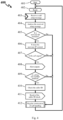
- the flow chart of Fig. 3 sketches the process for issuing the first call setup message 102, carrying a user-user IF, according to the following main phases: 301 Start of the process. 302 Ready state: the calling party apparatus 104 waits for user inputs. 303 User inputs: the user presses keys or taps or touches buttons to input commands and data. 304 Analysis of the user inputs: the user inputs are analyzed and the possible activation of the "URGENT" button is detected. 305 Determination on urgent call: if the user requests to place an urgent call, the process goes to phase 307, otherwise it continues to phase 306. 306 Regular action: the process calls the procedure for carrying out the action requested by the user, which does not involve placing an urgent call, then it goes back to the ready state 302.
- 307 retrieve data for user-user IE: the data needed to create the user-user IE are retrieved from the "personal data table", stored in the memory means 203.
- 308 Create user-user IE: a first user-user IE is created with the data retrieved from the memory means 203.
- 309 Create call setup message: a first call setup message 102 is created including the first user-user IE created in the previous phase.
- 310 Transmit call setup message: the first setup message 102 created in the previous phase is transmitted to the communication network 101 through the transceiving means 201 and the process goes back to the ready state 302.
- Fig. 4 On the other side the process for alerting the called party to an incoming urgent call is sketched in Fig. 4 by a flow chart that comprises the following main phases: 401 Start of the process. 402 Ready state: the called party apparatus 104 waits for a second call setup message 103. 403 Receive a call setup message: a call setup message 103 is received from the communication network 101. 404 Analyze the received setup message: the contents of the information elements of the received second call setup message 103 are extracted and analyzed. In particular the disclosure of the calling line number and the existence of user-user IE is checked. 405 Determination on user-user IE: if a user-user IE is included in the received call setup message 103, the process continues to phase 406, otherwise it goes to phase 412.
- Extract the user-user IF content the content of user-user IF, is extracted and analyzed.
- Determination on urgent call if the user-user IF comprises an alert information according to the invention, the process continues to phase 408, otherwise it jumps to phase 412.
- phase 409 Determination on the calling line number : if the calling line number is notified, the process continues to phase 410, otherwise it jumps to phase 412.
- 410 Check the caller identity : the data carried by the user-user IF are compared against those of the personal data table stored in the memory means 203 of the called party apparatus 105.
- 411 Outputs on identity check : the results of the check carried out in the previous phase is presented to the user of the called party. In case of matching data, a simple confirmation of the caller identity may be given, while in the case of mismatch, or missing data, appropriate visual warnings and/or alert sounds may be given.
- 412 Regular continuation of call handling: the process continues as a regular procedure for handling an incoming call, in which the called party may answer the call or not. Then the process go back to the ready state (phase 402).
- At the calling party side part of the content of the user-user IF is automatically taken from a table or the phone book, where at least one datum, which preferably has a special meaning for the called party with reference to the relevant contact, is stored (e.g., the social security number of the caller, that its doctor could check).
- This allows the calling party to tailor the information sent through the user-user IF to the recipient acquaintance with the calling party (e.g., sending the social security number to a doctor, a particular date or nickname or other peculiar personal data to a relative or a friend). This minimizes the size of the user-user IF and simplifies the check by the called party.
- a number of alternative contents for the user-user IF are stored in the memory means 203 and the user is prompted to select one of them, through the touch screen or the keyboard and the graphical interface.
- the user is given the chance to select and modify a preset content for the user-user IF, or even to type in a brand new one, also in this case through the touch screen or the keyboard and the graphical interface.
- the second call setup message 103 will include an information element providing the called party with the detailed reason why the calling line number is not notified/withheld. So the called user will be informed if the calling line number is not notified for a technical reason (e.g., interaction with other services), or the call is coming from a coin line/payphone, or the calling party has applied the calling line identification restriction. In this last case the restriction on the calling line number should be clearly highlighted and stated.
- the calling party apparatus after having transmitted said first call setup message, may prompt its user to send to the called party an accompanying text/video message.
- a message comprising text and images could be welcome for providing additional information or instruction about the event relevant to the urgent call. Additional information may be, for example, the street address where the caller is or where the recipient should go, details of people to contact, images depicting what happened around the caller, and other pieced of information.
- the message content could be automatically initialized with the content of the already sent user-user IF, or part of it.
- the type of that message could be SMS, MMS, WhatsApp, Direct Twitter message, iMessage, or others types, according to the capabilities of the apparatuses and the knowledge that the calling party has about the habits of the called party.
- An accompanying message is also useful to cope with a temporary inability for the called person to hear the call alert, having left the phone away or in an isolated place.
- a person that is in a difficulty can promptly ask for help and the called person can understand the urgency even if he or she is engaged in an important and demanding activity.
- the calling party apparatus can provide a set of pre-stored information and a graphical interface.
- the calling party apparatus is apt to present the user with the various messages to be sent, in order to allow the calling party the possibility to choose the most appropriate one.
- the alerting information may have predefined format and types for an automatic and/or manual selection and transmission as the first call setup message.
- pre-stored messages may be in particular different alerting expressions such as "HELP”, “FIRE”, “CAR ACCIDENT”, “CALL BACK IMMEDIATELY”, “HOSPITAL”, “EARTHQUAKE” or the like, or may be the current position of the user apparatus taken from a GPS/navigation system incorporated in such apparatus. In last case, the position of the calling apparatus can be transferred to the navigation system of the called apparatus to show the called party the route to be followed to reach the calling party.
- the messages may comprise data to plan a route to the caller/user, a time information (current or in the future), a temperature value, an altitude value and/or movement speed, to enable the called party to deduce more information and to arrange the necessary steps depending on the given situation.
- a communication server is proposed, which is configured to perform at least a part of the described methods here or according to the annexed method claims.
- the communication server is adapted to recognize the alert information in the first call setup message 102 and is further configured to initiate a second information signal dependent on the recognized said alert information, in particular by including a specific information in the second call setup message 103 that the communication network 101 sends to the called party or by triggering an additional or separate message or an emergency call.
- the transmitted alert information is processed by the communication server before the reception of the call setup message by the called party, which is very helpful, especially in cases in which the calling user is in a dangerous situation and emergency measures are necessary.
Landscapes
- Engineering & Computer Science (AREA)
- Signal Processing (AREA)
- Computer Networks & Wireless Communication (AREA)
- Telephonic Communication Services (AREA)
Claims (8)
- Benutzergerät (105) zum Empfangen von Sprachanrufen und Nachrichten, wobei das Benutzergerät (105) mit einer anrufenden Leitungsnummer assoziiert ist und umfasst:- Eingabe-/Ausgabemittel (202) zur Interaktion mit einem Benutzer,- Sende- und Empfangsmittel (201) zur Kommunikation mit einem Kommunikationsnetzwerk (101),- Speichermittel (203) zum Speichern von Daten,- Verarbeitungsmittel (204), die mit den Eingabe-/Ausgabemitteln (203), den Sende-/Empfangsmitteln (201) und den Speichermitteln (203) kommunizieren,wobei die Verarbeitungsmittel (204) konfiguriert sind zum:- Empfangen von dem Kommunikationsnetzwerk (101), mittels der Sende- und Empfangsmittel (201), von einer Anrufeinstellungsnachricht (103) umfassend ein Benutzer-Benutzer-Informationselement umfassend ein Benutzer-Benutzer-Informationsfeld,- Extrahieren des Inhaltes des Benutzer-Benutzer-Informationsfeldes, wobei das Benutzer-Benutzer-Informationsfeld konfiguriert ist um eine Alarminformation zu beinhalten, und- Ausgeben eines Audio- und/oder Videoalarmsignals und einer Information, durch die Eingabe-/Ausgabemittel (202), entsprechend des Inhalts des Benutzer-Benutzer-Informationsfeldes, dadurch gekennzeichnet, dass die Alarminformation weiter konfiguriert ist um mindestens eine Personenreferenz des Anrufers zu umfassen und die Anrufeinstellungsnachricht (103) ist weiter konfiguriert eine anrufende Leitungsnummer zu umfassen, und wobei:- die Speichermittel (203) sind konfiguriert zum Umfassen eine Personenreferenzpunkttabelle, in welcher mindestens ein Personenreferenzpunkt assoziiert ist mit der anrufenden Leitungsnummer und- die Verarbeitungsmittel (204) sind konfiguriert zum:• Extrahieren der anrufenden Leitungsnummer aus der Anrufeinstellungsnachricht (103),• Prüfung des mindestens einen Personenreferenzpunkts des Anrufers, welcher in dem Benutzer-Benutzer-Informationselement enthalten ist, gegen die Daten, die in der Personenreferenzpunkttabelle enthalten ist und• Ausgeben des Ergebnisses der Personenreferenzpunktprüfung durch die Eingabe-/Ausgabemittel (202).
- Benutzergerät (105) nach Anspruch 1, wobei die Ausgaben von Audio- und/oder Videoalarmsignalen und -informationen die Audio- und Videoeinstellungen des angerufenen Teilnehmergeräts überschreibt und überlagern die aktuellen Ausgaben von Audio- und Videosignalen.
- Benutzergerät (104, 105) nach einem der vorhergehenden Ansprüche, wobei die Verarbeitungsmittell (204) nach der Übertragung der ersten Anrufeinstellungsnachricht (102) dazu konfiguriert ist, den anrufenden Teilnehmer dazu aufzufordern um eine begleitende Nachricht zu senden, die Elemente umfasst, die aus dem Inhalt des ersten Benutzer-Benutzer-Informationsfelds stammen.
- System zum Alarmieren eines angerufenen Teilnehmers vor einem Telefonanruf, umfassend ein Kommunikationsnetzwerk (101), ein anrufendes Teilnehmergerät (104) assoziiert mit einer anrufenden Leitungsnummer, und ein angerufenes Teilnehmergerät (105) assoziiert mit einer angerufenen Leitungsnummer, wobei der anrufende Teilnehmer konfiguriert ist um einen Versuch zu machen um den angerufenen Teilnehmer mittels des Kommunikationsnetzwerks (101) durch das Übermitteln einer ersten Anrufeinstellungsnachricht (102) anzurufen und das angerufenen Teilnehmergerät (105) ist konfiguriert um von dem Kommunikationsnetzwerk (101) eine zweite Anrufeinstellungsnachricht (103) zu empfangen,
wobei- die erste Anrufeinstellungsnachricht (102) ist so konfiguriert, dass sie die angerufene Leitungsnummer und ein erstes Benutzer-Benutzer-Informationselement umfasst, das ein erstes Benutzer-Benutzer-Informationsfeld umfasst, und- die zweite Anrufeinstellungsnachricht (103) ist so konfiguriert, dass sie die Rufnummer und ein zweites Benutzer-Benutzer-Informationselement umfasst, das so konfiguriert ist, dass es ein zweites Benutzer-Benutzer-Informationsfeld umfasst, dessen Inhalt derselbe ist wie der des ersten Benutzer-Benutzers Informationsfelds,wobei- der Inhalt des ersten Benutzer-Benutzer-Informationsfelds ist so konfiguriert, dass er mindestens eine Alarminformation umfasst,- das angerufene Teilnehmergerät (105) ist so konfiguriert, dass es seinen Benutzer entsprechend dem Inhalt des zweiten Benutzer-Benutzer-Informationsfelds alarmiert dadurch gekennzeichnet- die Alarminformation ist so konfiguriert, dass sie mindestens einen Personenreferenzpunkt des Anrufers umfasst,- die zweite Anrufeinstellungsnachricht (103) ist weiter so konfiguriert, dass sie die anrufenden Leitungsnummer enthält, und das angerufene Teilnehmergerät ist so konfiguriert, dass es die anrufenden Leitungsnummer aus der zweiten Anrufeinstellungsnachricht (103) extrahiert.- das angerufene Teilnehmergerät ist konfiguriert, dass es eine "Personendatentabelle" umfasst, in der mindestens ein Personenreferenzpunkt mit einer anrufenden Leitungsnummer assoziiert ist,- das angerufene Teilnehmergerät ist konfiguriert, dass es den mindestens einen Personenreferenzpunkt des Anrufers, der in den Alarminformationen enthalten ist, gegen den Daten, die in der Personendatentabelle prüft und konfiguriert ist das Ergebnis der Prüfung seinem Benutzer auszugeben. - Verfahren zum Alarmieren eines angerufenen Teilnehmers über einen Telefonanruf, der von einem anrufenden Teilnehmer getätigt wurde, wobei der angerufene Teilnehmer mit einer angerufenen Leitungsnummer assoziiert ist und der anrufende Teilnehmer mit einer anrufenden Leitungsnummer assoziiert ist, umfassend- eine erste Generierungsphase, in der eine erste Anrufeinstellungsnachricht (102) von dem anrufenden Teilnehmer generiert wird, wobei die erste Anrufeinstellungsnachricht (102) die angerufene Leitungsnummer und ein erstes Benutzer-Benutzer-Informationselement umfasst, welches ein erstes Benutzer-Benutzerinformationsfeld umfasst, dessen Inhalt mindestens eine Alarminformation umfasst,- eine erste Übertragungsphase, in der die erste Anrufeinstellungsnachricht (102) an ein Kommunikationsnetzwerk (101) übertragen wird,- eine erste Empfangsphase, in der das Kommunikationsnetzwerk (101) die erste Anrufeinstellungsnachricht (102) empfängt,- eine Routing-Phase, in der eine zweite Anrufeinstellungsnachricht (103) erfolgt, adressiert an die angerufene Leitungsnummer, wird von dem Kommunikationsnetzwerk (101) generiert, wobei die zweite Anrufeinstellungsnachricht (103) ein zweites Benutzer-Benutzer-Informationselement umfasst, das ein zweites Benutzer-Benutzer-Informationsfeld umfasst, dessen Inhalt derselbe ist wie das des ersten Benutzer-Benutzer-Informationsfelds,- eine zweite Übertragungsphase, in der die zweite Anrufeinstellungsnachricht (103) an den angerufenen Teilnehmer, der mit der angerufenen Leitungsnummer assoziiert ist, übertragen wird,- eine zweite Empfangsphase, in der der angerufene Teilnehmer die zweite Anrufeinstellungsnachricht (102) empfängt,- eine erste Extraktionsphase, in der der Inhalt des zweiten Benutzer-Benutzer-Informationsfelds auf der Seite des angerufenen Teilnehmers extrahiert wird, und- eine erste Ausgabephase, in der auf der Seite des angerufenen Teilnehmers entsprechend dem Inhalt des zweiten Benutzer-Benutzer-Informationsfelds ein Alarm ausgegeben wird, dadurch gekennzeichnet, dass- die Alarminformation umfasst weiter mindestens einen Personenreferenzpunkt des Anrufers,- die zweite Anrufeinstellungsnachricht (103) umfasst weiter die anrufenden Leitungsnummer, und- auf der angerufenen Teilnehmerseite eine "Personendatentabelle" existiert, in welcher mindestens ein Personenreferenzpunkt mit der anrufenden Leitungsnummer assoziiert ist, undwobei das Verfahren weiter umfasst, nach der ersten Extraktionsphase,- eine zweite Extraktionsphase, in welcher die anrufende Leitungsnummer aus der zweiten Anrufeinstellungsnachricht (103) extrahiert wird,- eine Identitätsprüfungsphase, in welcher der mindestens ein Personenreferenzpunkt des Anrufers, enthalten in der Alarminformation, gegen die Daten in der Personendatentabelle geprüft wird, und- eine zweite Ausgabephase nach der ersten Ausgabephase, in welcher das Ergebnis der Personenreferenzpunktprüfung ausgegeben wird.
- Verfahren nach Anspruch 5, wobei die Ausgaben von Audio- und/oder Videoalarmsignalen und -informationen die Audio- und Videoeinstellungen des angerufenen Teilnehmergeräts überschreiben und überlagern die aktuellen Ausgaben von Audio- und Videosignalen.
- Verfahren nach einem der Ansprüche 5 oder 6, weiter umfassend eine Aufforderungsphase nach der ersten Übertragungsphase, in der der anrufende Teilnehmer aufgefordert wird, eine Begleitnachricht zu senden, die Elemente enthält, die dem Inhalt des ersten Benutzer-Benutzer-Informationsfelds entnommen sind.
- Softwareprodukt umfassend Instruktionen, welche wenn das Programm durch einen Benutzer des Geräts (105) zum Empfangen von Sprachanrufen und Nachrichten ausgeführt wird, veranlasst das Benutzergerät (105) die folgenden Schritte auszuführen:- Empfangen von dem Kommunikationsnetzwerk (101) eine Anrufeinstellungsnachricht (103) umfassend ein Benutzer-Benutzer-Informationselement, wobei das Benutzer-Benutzer-Informationselement umfasst ein Benutzer-Benutzer-Informationsfeld,- Extrahieren des Inhaltes des Benutzer-Benutzer-Informationsfeldes, wobei das Benutzer-Benutzer-Informationsfeld konfiguriert ist um eine Alarminformation zu beinhalten;- Ausgeben eines Audio- und/oder Videoalarmsignals und einer Information entsprechend dem Inhalt des Benutzer-Benutzer-Informationsfeldes,dadurch gekennzeichnet, dass- die Alarminformation umfasst weiter mindestens einen Personenreferenzpunkt des Anrufers;- die Anrufeinstellungsnachricht (103) umfasst weiter eine anrufende Leitungsnummer; die Instruktionen des Computerprogramms veranlassen weiter das Benutzergerät (105) die folgenden Schritte auszuführen:• Extrahieren der anrufenden Leitungsnummer aus der Anrufeinstellungsnachricht (103),• Prüfen des mindestens einen Personenreferenzpunkts des Anrufers, welcher in dem Benutzer-Benutzer-Informationselement enthalten ist, gegen die Personendatentabelle, in der mindestens ein Personenreferenzpunkt mit der anrufenden Leitungsnummer assoziiert ist und• Ausgeben des Ergebnisses der Personenreferenzpunktprüfung.
Applications Claiming Priority (1)
| Application Number | Priority Date | Filing Date | Title |
|---|---|---|---|
| PCT/IB2017/050966 WO2018154349A1 (en) | 2017-02-21 | 2017-02-21 | Title: method, system, electronic device, communication server and apparatus for alerting a called party to an urgent call |
Publications (2)
| Publication Number | Publication Date |
|---|---|
| EP3566428A1 EP3566428A1 (de) | 2019-11-13 |
| EP3566428B1 true EP3566428B1 (de) | 2024-04-03 |
Family
ID=58191508
Family Applications (1)
| Application Number | Title | Priority Date | Filing Date |
|---|---|---|---|
| EP17707961.3A Active EP3566428B1 (de) | 2017-02-21 | 2017-02-21 | Verfahren, system, elektronische vorrichtung, kommunikationsserver und vorrichtung zur alarmierung eines angerufenen teilnehmers bei einem dringenden anruf |
Country Status (5)
| Country | Link |
|---|---|
| US (1) | US10911595B2 (de) |
| EP (1) | EP3566428B1 (de) |
| CN (2) | CN116095239A (de) |
| ES (1) | ES2983082T3 (de) |
| WO (1) | WO2018154349A1 (de) |
Families Citing this family (2)
| Publication number | Priority date | Publication date | Assignee | Title |
|---|---|---|---|---|
| EP3566428B1 (de) * | 2017-02-21 | 2024-04-03 | Saronikos Trading and Services, Unipessoal Lda | Verfahren, system, elektronische vorrichtung, kommunikationsserver und vorrichtung zur alarmierung eines angerufenen teilnehmers bei einem dringenden anruf |
| US12438980B2 (en) * | 2022-02-22 | 2025-10-07 | Journey.ai | Coordinating conveying a reason for a call from a user device |
Family Cites Families (15)
| Publication number | Priority date | Publication date | Assignee | Title |
|---|---|---|---|---|
| US5305097A (en) * | 1989-12-20 | 1994-04-19 | Canon Kabushiki Kaisha | Communicating apparatus having a calling party number display device |
| CA2246260C (en) * | 1996-02-13 | 2001-10-02 | Kabushiki Kaisha Toshiba | Digital button telephone system and extension terminal for the same |
| US6263061B1 (en) * | 1996-02-13 | 2001-07-17 | Kabushiki Kaish Toshiba | Digital button telephone system and extension terminal for the same |
| EP1024643A1 (de) * | 1999-01-29 | 2000-08-02 | International Business Machines Corporation | Verfahren, Vorrichtung und Kommunikationssystem zum Aufbau einer Telekommunikationsverbindung |
| JP2001177646A (ja) | 1999-12-17 | 2001-06-29 | Nec Telecom Syst Ltd | 発信者情報通知による緊急度通知方法とシステム及び電話端末と記録媒体 |
| US20020077086A1 (en) | 2000-12-20 | 2002-06-20 | Nokia Mobile Phones Ltd | Method and apparatus for using DTMF for controlling context calls, and mutual context information exchange during mobile communication |
| US8254541B2 (en) * | 2006-12-29 | 2012-08-28 | Alcatel Lucent | Validating caller ID information to protect against caller ID spoofing |
| TWI338900B (en) | 2007-08-07 | 2011-03-11 | Au Optronics Corp | Shift register array |
| CN101345964B (zh) * | 2008-08-04 | 2011-11-16 | 华为终端有限公司 | 通讯终端来电的提示方法及通讯终端 |
| CN101568193A (zh) * | 2009-05-21 | 2009-10-28 | 腾讯科技(深圳)有限公司 | 一种即时通信终端主叫信息的显示方法及系统 |
| CN103053148B (zh) | 2010-07-21 | 2015-02-04 | 拿索斯财务有限公司 | 用于提供关于未接呼叫的指示的通信设备及其方法 |
| CN102780806B (zh) * | 2012-07-24 | 2015-06-24 | 北京灵创众和科技有限公司 | 一种通信过程中的身份信息传递方法、装置及系统 |
| WO2015108823A1 (en) * | 2014-01-17 | 2015-07-23 | Microsoft Technology Licensing, Llc | Identity reputation |
| US20160183072A1 (en) | 2014-12-18 | 2016-06-23 | Harish Mitty | Advanced call notification |
| EP3566428B1 (de) * | 2017-02-21 | 2024-04-03 | Saronikos Trading and Services, Unipessoal Lda | Verfahren, system, elektronische vorrichtung, kommunikationsserver und vorrichtung zur alarmierung eines angerufenen teilnehmers bei einem dringenden anruf |
-
2017
- 2017-02-21 EP EP17707961.3A patent/EP3566428B1/de active Active
- 2017-02-21 ES ES17707961T patent/ES2983082T3/es active Active
- 2017-02-21 WO PCT/IB2017/050966 patent/WO2018154349A1/en not_active Ceased
- 2017-02-21 CN CN202310042835.2A patent/CN116095239A/zh active Pending
- 2017-02-21 US US16/487,286 patent/US10911595B2/en active Active
- 2017-02-21 CN CN201780086968.2A patent/CN110313166A/zh active Pending
Also Published As
| Publication number | Publication date |
|---|---|
| US20200059553A1 (en) | 2020-02-20 |
| US10911595B2 (en) | 2021-02-02 |
| ES2983082T3 (es) | 2024-10-21 |
| EP3566428A1 (de) | 2019-11-13 |
| CN110313166A (zh) | 2019-10-08 |
| CN116095239A (zh) | 2023-05-09 |
| WO2018154349A1 (en) | 2018-08-30 |
Similar Documents
| Publication | Publication Date | Title |
|---|---|---|
| KR100585758B1 (ko) | 이동 통신 단말기의 메시지 인증 및 인증 표시 방법 | |
| EP2933987A1 (de) | Zusätzliche Informationen über einen Anrufer | |
| JP2013051690A (ja) | 発呼者識別カスタマイゼーション、および通信デバイスの遠隔管理のためのシステムおよび方法 | |
| CN101540970B (zh) | 一种终端处理主叫信息的方法和装置 | |
| TWI393424B (zh) | 對緊急呼叫加入資訊的方法及系統 | |
| KR20050089708A (ko) | 긴급 호출 시스템 및 그 제어 방법 | |
| US20080285727A1 (en) | Communications Controller And Protocol | |
| EP3566428B1 (de) | Verfahren, system, elektronische vorrichtung, kommunikationsserver und vorrichtung zur alarmierung eines angerufenen teilnehmers bei einem dringenden anruf | |
| GB2471612A (en) | Authenticated voice or video calls for preventing phishing | |
| EP2761847B1 (de) | Verfahren und system zur verwaltung der kommunikation zwischen zwei benutzern | |
| US10462302B2 (en) | Method for establishing the routing, in particular forwarding of an object of a communications activity, and devices for carrying out said method | |
| JP2009260484A (ja) | 通信装置 | |
| KR101194998B1 (ko) | 모바일단말기간의 피싱 방지를 위한 서비스 제공 시스템 및 방법 | |
| EP2613504A1 (de) | Verfahren und Vorrichtung zur Ermöglichung der Kommunikation zwischen einem Finder eines verlegten drahtlosen Endgeräts und einem autorisierten Benutzer | |
| US10154387B2 (en) | Process of initiation of a conversation | |
| JP2017108206A (ja) | 不審電話番号登録防止機能を有する電話装置 | |
| JP4375317B2 (ja) | 電話装置 | |
| US9843677B2 (en) | Data entry confirmation system for a device or system with dialing capability | |
| JP2010186261A (ja) | 音声変換機能を有するサービス提供装置、サービス提供方法およびサービス提供システム | |
| JP2005328306A (ja) | 通信システム | |
| KR20160004544A (ko) | 이모티콘을 이용한 문자메시지 보안 방법 및 이를 구현하는 이동통신단말기 | |
| JP2008072365A (ja) | 接続制御システム、位置情報サーバ、接続制御装置、発信者装置、位置情報プログラム、接続制御プログラム、および発信者プログラム | |
| JP2008172393A (ja) | プロバイダ報知システム、プロバイダ報知方法及びプロバイダ報知用プログラム | |
| JP2000196734A (ja) | 電話端末における発信者番号表示規制装置および方法 | |
| KR20070017436A (ko) | 발신 호 메시징 방법 및 그를 위한 시스템 |
Legal Events
| Date | Code | Title | Description |
|---|---|---|---|
| STAA | Information on the status of an ep patent application or granted ep patent |
Free format text: STATUS: UNKNOWN |
|
| STAA | Information on the status of an ep patent application or granted ep patent |
Free format text: STATUS: THE INTERNATIONAL PUBLICATION HAS BEEN MADE |
|
| PUAI | Public reference made under article 153(3) epc to a published international application that has entered the european phase |
Free format text: ORIGINAL CODE: 0009012 |
|
| STAA | Information on the status of an ep patent application or granted ep patent |
Free format text: STATUS: REQUEST FOR EXAMINATION WAS MADE |
|
| 17P | Request for examination filed |
Effective date: 20190809 |
|
| AK | Designated contracting states |
Kind code of ref document: A1 Designated state(s): AL AT BE BG CH CY CZ DE DK EE ES FI FR GB GR HR HU IE IS IT LI LT LU LV MC MK MT NL NO PL PT RO RS SE SI SK SM TR |
|
| AX | Request for extension of the european patent |
Extension state: BA ME |
|
| DAV | Request for validation of the european patent (deleted) | ||
| DAX | Request for extension of the european patent (deleted) | ||
| STAA | Information on the status of an ep patent application or granted ep patent |
Free format text: STATUS: EXAMINATION IS IN PROGRESS |
|
| 17Q | First examination report despatched |
Effective date: 20210707 |
|
| P01 | Opt-out of the competence of the unified patent court (upc) registered |
Effective date: 20230419 |
|
| GRAP | Despatch of communication of intention to grant a patent |
Free format text: ORIGINAL CODE: EPIDOSNIGR1 |
|
| STAA | Information on the status of an ep patent application or granted ep patent |
Free format text: STATUS: GRANT OF PATENT IS INTENDED |
|
| INTG | Intention to grant announced |
Effective date: 20230925 |
|
| GRAS | Grant fee paid |
Free format text: ORIGINAL CODE: EPIDOSNIGR3 |
|
| GRAA | (expected) grant |
Free format text: ORIGINAL CODE: 0009210 |
|
| STAA | Information on the status of an ep patent application or granted ep patent |
Free format text: STATUS: THE PATENT HAS BEEN GRANTED |
|
| AK | Designated contracting states |
Kind code of ref document: B1 Designated state(s): AL AT BE BG CH CY CZ DE DK EE ES FI FR GB GR HR HU IE IS IT LI LT LU LV MC MK MT NL NO PL PT RO RS SE SI SK SM TR |
|
| REG | Reference to a national code |
Ref country code: GB Ref legal event code: FG4D |
|
| REG | Reference to a national code |
Ref country code: CH Ref legal event code: EP |
|
| REG | Reference to a national code |
Ref country code: IE Ref legal event code: FG4D |
|
| REG | Reference to a national code |
Ref country code: DE Ref legal event code: R096 Ref document number: 602017080565 Country of ref document: DE |
|
| REG | Reference to a national code |
Ref country code: LT Ref legal event code: MG9D |
|
| REG | Reference to a national code |
Ref country code: NL Ref legal event code: MP Effective date: 20240403 |
|
| REG | Reference to a national code |
Ref country code: AT Ref legal event code: MK05 Ref document number: 1673662 Country of ref document: AT Kind code of ref document: T Effective date: 20240403 |
|
| PG25 | Lapsed in a contracting state [announced via postgrant information from national office to epo] |
Ref country code: NL Free format text: LAPSE BECAUSE OF FAILURE TO SUBMIT A TRANSLATION OF THE DESCRIPTION OR TO PAY THE FEE WITHIN THE PRESCRIBED TIME-LIMIT Effective date: 20240403 |
|
| PG25 | Lapsed in a contracting state [announced via postgrant information from national office to epo] |
Ref country code: NL Free format text: LAPSE BECAUSE OF FAILURE TO SUBMIT A TRANSLATION OF THE DESCRIPTION OR TO PAY THE FEE WITHIN THE PRESCRIBED TIME-LIMIT Effective date: 20240403 |
|
| PG25 | Lapsed in a contracting state [announced via postgrant information from national office to epo] |
Ref country code: IS Free format text: LAPSE BECAUSE OF FAILURE TO SUBMIT A TRANSLATION OF THE DESCRIPTION OR TO PAY THE FEE WITHIN THE PRESCRIBED TIME-LIMIT Effective date: 20240803 |
|
| PG25 | Lapsed in a contracting state [announced via postgrant information from national office to epo] |
Ref country code: BG Free format text: LAPSE BECAUSE OF FAILURE TO SUBMIT A TRANSLATION OF THE DESCRIPTION OR TO PAY THE FEE WITHIN THE PRESCRIBED TIME-LIMIT Effective date: 20240403 |
|
| PG25 | Lapsed in a contracting state [announced via postgrant information from national office to epo] |
Ref country code: HR Free format text: LAPSE BECAUSE OF FAILURE TO SUBMIT A TRANSLATION OF THE DESCRIPTION OR TO PAY THE FEE WITHIN THE PRESCRIBED TIME-LIMIT Effective date: 20240403 Ref country code: FI Free format text: LAPSE BECAUSE OF FAILURE TO SUBMIT A TRANSLATION OF THE DESCRIPTION OR TO PAY THE FEE WITHIN THE PRESCRIBED TIME-LIMIT Effective date: 20240403 |
|
| PG25 | Lapsed in a contracting state [announced via postgrant information from national office to epo] |
Ref country code: GR Free format text: LAPSE BECAUSE OF FAILURE TO SUBMIT A TRANSLATION OF THE DESCRIPTION OR TO PAY THE FEE WITHIN THE PRESCRIBED TIME-LIMIT Effective date: 20240704 |
|
| PG25 | Lapsed in a contracting state [announced via postgrant information from national office to epo] |
Ref country code: PT Free format text: LAPSE BECAUSE OF FAILURE TO SUBMIT A TRANSLATION OF THE DESCRIPTION OR TO PAY THE FEE WITHIN THE PRESCRIBED TIME-LIMIT Effective date: 20240805 |
|
| REG | Reference to a national code |
Ref country code: ES Ref legal event code: FG2A Ref document number: 2983082 Country of ref document: ES Kind code of ref document: T3 Effective date: 20241021 |
|
| PG25 | Lapsed in a contracting state [announced via postgrant information from national office to epo] |
Ref country code: CZ Free format text: LAPSE BECAUSE OF FAILURE TO SUBMIT A TRANSLATION OF THE DESCRIPTION OR TO PAY THE FEE WITHIN THE PRESCRIBED TIME-LIMIT Effective date: 20240403 |
|
| PG25 | Lapsed in a contracting state [announced via postgrant information from national office to epo] |
Ref country code: AT Free format text: LAPSE BECAUSE OF FAILURE TO SUBMIT A TRANSLATION OF THE DESCRIPTION OR TO PAY THE FEE WITHIN THE PRESCRIBED TIME-LIMIT Effective date: 20240403 |
|
| PG25 | Lapsed in a contracting state [announced via postgrant information from national office to epo] |
Ref country code: PL Free format text: LAPSE BECAUSE OF FAILURE TO SUBMIT A TRANSLATION OF THE DESCRIPTION OR TO PAY THE FEE WITHIN THE PRESCRIBED TIME-LIMIT Effective date: 20240403 |
|
| PG25 | Lapsed in a contracting state [announced via postgrant information from national office to epo] |
Ref country code: LV Free format text: LAPSE BECAUSE OF FAILURE TO SUBMIT A TRANSLATION OF THE DESCRIPTION OR TO PAY THE FEE WITHIN THE PRESCRIBED TIME-LIMIT Effective date: 20240403 |
|
| PG25 | Lapsed in a contracting state [announced via postgrant information from national office to epo] |
Ref country code: PT Free format text: LAPSE BECAUSE OF FAILURE TO SUBMIT A TRANSLATION OF THE DESCRIPTION OR TO PAY THE FEE WITHIN THE PRESCRIBED TIME-LIMIT Effective date: 20240805 Ref country code: PL Free format text: LAPSE BECAUSE OF FAILURE TO SUBMIT A TRANSLATION OF THE DESCRIPTION OR TO PAY THE FEE WITHIN THE PRESCRIBED TIME-LIMIT Effective date: 20240403 Ref country code: NO Free format text: LAPSE BECAUSE OF FAILURE TO SUBMIT A TRANSLATION OF THE DESCRIPTION OR TO PAY THE FEE WITHIN THE PRESCRIBED TIME-LIMIT Effective date: 20240703 Ref country code: LV Free format text: LAPSE BECAUSE OF FAILURE TO SUBMIT A TRANSLATION OF THE DESCRIPTION OR TO PAY THE FEE WITHIN THE PRESCRIBED TIME-LIMIT Effective date: 20240403 Ref country code: IS Free format text: LAPSE BECAUSE OF FAILURE TO SUBMIT A TRANSLATION OF THE DESCRIPTION OR TO PAY THE FEE WITHIN THE PRESCRIBED TIME-LIMIT Effective date: 20240803 Ref country code: HR Free format text: LAPSE BECAUSE OF FAILURE TO SUBMIT A TRANSLATION OF THE DESCRIPTION OR TO PAY THE FEE WITHIN THE PRESCRIBED TIME-LIMIT Effective date: 20240403 Ref country code: GR Free format text: LAPSE BECAUSE OF FAILURE TO SUBMIT A TRANSLATION OF THE DESCRIPTION OR TO PAY THE FEE WITHIN THE PRESCRIBED TIME-LIMIT Effective date: 20240704 Ref country code: FI Free format text: LAPSE BECAUSE OF FAILURE TO SUBMIT A TRANSLATION OF THE DESCRIPTION OR TO PAY THE FEE WITHIN THE PRESCRIBED TIME-LIMIT Effective date: 20240403 Ref country code: CZ Free format text: LAPSE BECAUSE OF FAILURE TO SUBMIT A TRANSLATION OF THE DESCRIPTION OR TO PAY THE FEE WITHIN THE PRESCRIBED TIME-LIMIT Effective date: 20240403 Ref country code: BG Free format text: LAPSE BECAUSE OF FAILURE TO SUBMIT A TRANSLATION OF THE DESCRIPTION OR TO PAY THE FEE WITHIN THE PRESCRIBED TIME-LIMIT Effective date: 20240403 Ref country code: AT Free format text: LAPSE BECAUSE OF FAILURE TO SUBMIT A TRANSLATION OF THE DESCRIPTION OR TO PAY THE FEE WITHIN THE PRESCRIBED TIME-LIMIT Effective date: 20240403 Ref country code: RS Free format text: LAPSE BECAUSE OF FAILURE TO SUBMIT A TRANSLATION OF THE DESCRIPTION OR TO PAY THE FEE WITHIN THE PRESCRIBED TIME-LIMIT Effective date: 20240703 |
|
| REG | Reference to a national code |
Ref country code: DE Ref legal event code: R097 Ref document number: 602017080565 Country of ref document: DE |
|
| PG25 | Lapsed in a contracting state [announced via postgrant information from national office to epo] |
Ref country code: DK Free format text: LAPSE BECAUSE OF FAILURE TO SUBMIT A TRANSLATION OF THE DESCRIPTION OR TO PAY THE FEE WITHIN THE PRESCRIBED TIME-LIMIT Effective date: 20240403 |
|
| PG25 | Lapsed in a contracting state [announced via postgrant information from national office to epo] |
Ref country code: EE Free format text: LAPSE BECAUSE OF FAILURE TO SUBMIT A TRANSLATION OF THE DESCRIPTION OR TO PAY THE FEE WITHIN THE PRESCRIBED TIME-LIMIT Effective date: 20240403 |
|
| PG25 | Lapsed in a contracting state [announced via postgrant information from national office to epo] |
Ref country code: SK Free format text: LAPSE BECAUSE OF FAILURE TO SUBMIT A TRANSLATION OF THE DESCRIPTION OR TO PAY THE FEE WITHIN THE PRESCRIBED TIME-LIMIT Effective date: 20240403 Ref country code: RO Free format text: LAPSE BECAUSE OF FAILURE TO SUBMIT A TRANSLATION OF THE DESCRIPTION OR TO PAY THE FEE WITHIN THE PRESCRIBED TIME-LIMIT Effective date: 20240403 |
|
| PG25 | Lapsed in a contracting state [announced via postgrant information from national office to epo] |
Ref country code: SM Free format text: LAPSE BECAUSE OF FAILURE TO SUBMIT A TRANSLATION OF THE DESCRIPTION OR TO PAY THE FEE WITHIN THE PRESCRIBED TIME-LIMIT Effective date: 20240403 |
|
| PG25 | Lapsed in a contracting state [announced via postgrant information from national office to epo] |
Ref country code: SM Free format text: LAPSE BECAUSE OF FAILURE TO SUBMIT A TRANSLATION OF THE DESCRIPTION OR TO PAY THE FEE WITHIN THE PRESCRIBED TIME-LIMIT Effective date: 20240403 Ref country code: SK Free format text: LAPSE BECAUSE OF FAILURE TO SUBMIT A TRANSLATION OF THE DESCRIPTION OR TO PAY THE FEE WITHIN THE PRESCRIBED TIME-LIMIT Effective date: 20240403 Ref country code: RO Free format text: LAPSE BECAUSE OF FAILURE TO SUBMIT A TRANSLATION OF THE DESCRIPTION OR TO PAY THE FEE WITHIN THE PRESCRIBED TIME-LIMIT Effective date: 20240403 Ref country code: EE Free format text: LAPSE BECAUSE OF FAILURE TO SUBMIT A TRANSLATION OF THE DESCRIPTION OR TO PAY THE FEE WITHIN THE PRESCRIBED TIME-LIMIT Effective date: 20240403 Ref country code: DK Free format text: LAPSE BECAUSE OF FAILURE TO SUBMIT A TRANSLATION OF THE DESCRIPTION OR TO PAY THE FEE WITHIN THE PRESCRIBED TIME-LIMIT Effective date: 20240403 |
|
| PLBE | No opposition filed within time limit |
Free format text: ORIGINAL CODE: 0009261 |
|
| STAA | Information on the status of an ep patent application or granted ep patent |
Free format text: STATUS: NO OPPOSITION FILED WITHIN TIME LIMIT |
|
| 26N | No opposition filed |
Effective date: 20250106 |
|
| PGFP | Annual fee paid to national office [announced via postgrant information from national office to epo] |
Ref country code: DE Payment date: 20250225 Year of fee payment: 9 |
|
| PGFP | Annual fee paid to national office [announced via postgrant information from national office to epo] |
Ref country code: ES Payment date: 20250303 Year of fee payment: 9 |
|
| PG25 | Lapsed in a contracting state [announced via postgrant information from national office to epo] |
Ref country code: SI Free format text: LAPSE BECAUSE OF FAILURE TO SUBMIT A TRANSLATION OF THE DESCRIPTION OR TO PAY THE FEE WITHIN THE PRESCRIBED TIME-LIMIT Effective date: 20240403 |
|
| PGFP | Annual fee paid to national office [announced via postgrant information from national office to epo] |
Ref country code: FR Payment date: 20250218 Year of fee payment: 9 |
|
| PGFP | Annual fee paid to national office [announced via postgrant information from national office to epo] |
Ref country code: GB Payment date: 20250221 Year of fee payment: 9 |
|
| PG25 | Lapsed in a contracting state [announced via postgrant information from national office to epo] |
Ref country code: SE Free format text: LAPSE BECAUSE OF FAILURE TO SUBMIT A TRANSLATION OF THE DESCRIPTION OR TO PAY THE FEE WITHIN THE PRESCRIBED TIME-LIMIT Effective date: 20240403 |
|
| PG25 | Lapsed in a contracting state [announced via postgrant information from national office to epo] |
Ref country code: MC Free format text: LAPSE BECAUSE OF FAILURE TO SUBMIT A TRANSLATION OF THE DESCRIPTION OR TO PAY THE FEE WITHIN THE PRESCRIBED TIME-LIMIT Effective date: 20240403 |
|
| REG | Reference to a national code |
Ref country code: CH Ref legal event code: PL |
|
| PG25 | Lapsed in a contracting state [announced via postgrant information from national office to epo] |
Ref country code: LU Free format text: LAPSE BECAUSE OF NON-PAYMENT OF DUE FEES Effective date: 20250221 |
|
| PG25 | Lapsed in a contracting state [announced via postgrant information from national office to epo] |
Ref country code: CH Free format text: LAPSE BECAUSE OF NON-PAYMENT OF DUE FEES Effective date: 20250228 |
|
| REG | Reference to a national code |
Ref country code: BE Ref legal event code: MM Effective date: 20250228 |
|
| PG25 | Lapsed in a contracting state [announced via postgrant information from national office to epo] |
Ref country code: IT Free format text: LAPSE BECAUSE OF NON-PAYMENT OF DUE FEES Effective date: 20250221 |
|
| PG25 | Lapsed in a contracting state [announced via postgrant information from national office to epo] |
Ref country code: BE Free format text: LAPSE BECAUSE OF NON-PAYMENT OF DUE FEES Effective date: 20250228 |
|
| PG25 | Lapsed in a contracting state [announced via postgrant information from national office to epo] |
Ref country code: IE Free format text: LAPSE BECAUSE OF NON-PAYMENT OF DUE FEES Effective date: 20250221 |