EP3553167B1 - Dreidimensionale mikroumgebungsstruktur zur steuerung des zellverhaltens, dreidimensionale oberfläche zur steuerung des zellverhaltens und verfahren zur herstellung einer anordnung und einer dreidimensionalen mikroumgebungsstruktur - Google Patents
Dreidimensionale mikroumgebungsstruktur zur steuerung des zellverhaltens, dreidimensionale oberfläche zur steuerung des zellverhaltens und verfahren zur herstellung einer anordnung und einer dreidimensionalen mikroumgebungsstruktur Download PDFInfo
- Publication number
- EP3553167B1 EP3553167B1 EP16923489.5A EP16923489A EP3553167B1 EP 3553167 B1 EP3553167 B1 EP 3553167B1 EP 16923489 A EP16923489 A EP 16923489A EP 3553167 B1 EP3553167 B1 EP 3553167B1
- Authority
- EP
- European Patent Office
- Prior art keywords
- motif
- seq
- peptide
- integrin
- receptor
- Prior art date
- Legal status (The legal status is an assumption and is not a legal conclusion. Google has not performed a legal analysis and makes no representation as to the accuracy of the status listed.)
- Active
Links
Images







Classifications
-
- C—CHEMISTRY; METALLURGY
- C12—BIOCHEMISTRY; BEER; SPIRITS; WINE; VINEGAR; MICROBIOLOGY; ENZYMOLOGY; MUTATION OR GENETIC ENGINEERING
- C12N—MICROORGANISMS OR ENZYMES; COMPOSITIONS THEREOF; PROPAGATING, PRESERVING, OR MAINTAINING MICROORGANISMS; MUTATION OR GENETIC ENGINEERING; CULTURE MEDIA
- C12N5/00—Undifferentiated human, animal or plant cells, e.g. cell lines; Tissues; Cultivation or maintenance thereof; Culture media therefor
- C12N5/0068—General culture methods using substrates
-
- A—HUMAN NECESSITIES
- A61—MEDICAL OR VETERINARY SCIENCE; HYGIENE
- A61K—PREPARATIONS FOR MEDICAL, DENTAL OR TOILETRY PURPOSES
- A61K38/00—Medicinal preparations containing peptides
- A61K38/04—Peptides having up to 20 amino acids in a fully defined sequence; Derivatives thereof
- A61K38/10—Peptides having 12 to 20 amino acids
-
- A—HUMAN NECESSITIES
- A61—MEDICAL OR VETERINARY SCIENCE; HYGIENE
- A61K—PREPARATIONS FOR MEDICAL, DENTAL OR TOILETRY PURPOSES
- A61K38/00—Medicinal preparations containing peptides
- A61K38/16—Peptides having more than 20 amino acids; Gastrins; Somatostatins; Melanotropins; Derivatives thereof
-
- C—CHEMISTRY; METALLURGY
- C07—ORGANIC CHEMISTRY
- C07K—PEPTIDES
- C07K14/00—Peptides having more than 20 amino acids; Gastrins; Somatostatins; Melanotropins; Derivatives thereof
- C07K14/435—Peptides having more than 20 amino acids; Gastrins; Somatostatins; Melanotropins; Derivatives thereof from animals; from humans
- C07K14/46—Peptides having more than 20 amino acids; Gastrins; Somatostatins; Melanotropins; Derivatives thereof from animals; from humans from vertebrates
- C07K14/47—Peptides having more than 20 amino acids; Gastrins; Somatostatins; Melanotropins; Derivatives thereof from animals; from humans from vertebrates from mammals
- C07K14/4701—Peptides having more than 20 amino acids; Gastrins; Somatostatins; Melanotropins; Derivatives thereof from animals; from humans from vertebrates from mammals not used
- C07K14/4702—Regulators; Modulating activity
-
- C—CHEMISTRY; METALLURGY
- C07—ORGANIC CHEMISTRY
- C07K—PEPTIDES
- C07K14/00—Peptides having more than 20 amino acids; Gastrins; Somatostatins; Melanotropins; Derivatives thereof
- C07K14/435—Peptides having more than 20 amino acids; Gastrins; Somatostatins; Melanotropins; Derivatives thereof from animals; from humans
- C07K14/475—Growth factors; Growth regulators
- C07K14/485—Epidermal growth factor [EGF], i.e. urogastrone
-
- C—CHEMISTRY; METALLURGY
- C07—ORGANIC CHEMISTRY
- C07K—PEPTIDES
- C07K14/00—Peptides having more than 20 amino acids; Gastrins; Somatostatins; Melanotropins; Derivatives thereof
- C07K14/435—Peptides having more than 20 amino acids; Gastrins; Somatostatins; Melanotropins; Derivatives thereof from animals; from humans
- C07K14/475—Growth factors; Growth regulators
- C07K14/495—Transforming growth factor [TGF]
-
- C—CHEMISTRY; METALLURGY
- C07—ORGANIC CHEMISTRY
- C07K—PEPTIDES
- C07K14/00—Peptides having more than 20 amino acids; Gastrins; Somatostatins; Melanotropins; Derivatives thereof
- C07K14/435—Peptides having more than 20 amino acids; Gastrins; Somatostatins; Melanotropins; Derivatives thereof from animals; from humans
- C07K14/475—Growth factors; Growth regulators
- C07K14/50—Fibroblast growth factor [FGF]
-
- C—CHEMISTRY; METALLURGY
- C07—ORGANIC CHEMISTRY
- C07K—PEPTIDES
- C07K14/00—Peptides having more than 20 amino acids; Gastrins; Somatostatins; Melanotropins; Derivatives thereof
- C07K14/435—Peptides having more than 20 amino acids; Gastrins; Somatostatins; Melanotropins; Derivatives thereof from animals; from humans
- C07K14/52—Cytokines; Lymphokines; Interferons
- C07K14/54—Interleukins [IL]
- C07K14/5415—Leukaemia inhibitory factor [LIF]
-
- C—CHEMISTRY; METALLURGY
- C07—ORGANIC CHEMISTRY
- C07K—PEPTIDES
- C07K14/00—Peptides having more than 20 amino acids; Gastrins; Somatostatins; Melanotropins; Derivatives thereof
- C07K14/435—Peptides having more than 20 amino acids; Gastrins; Somatostatins; Melanotropins; Derivatives thereof from animals; from humans
- C07K14/705—Receptors; Cell surface antigens; Cell surface determinants
- C07K14/71—Receptors; Cell surface antigens; Cell surface determinants for growth factors; for growth regulators
-
- C—CHEMISTRY; METALLURGY
- C07—ORGANIC CHEMISTRY
- C07K—PEPTIDES
- C07K14/00—Peptides having more than 20 amino acids; Gastrins; Somatostatins; Melanotropins; Derivatives thereof
- C07K14/435—Peptides having more than 20 amino acids; Gastrins; Somatostatins; Melanotropins; Derivatives thereof from animals; from humans
- C07K14/78—Connective tissue peptides, e.g. collagen, elastin, laminin, fibronectin, vitronectin or cold insoluble globulin [CIG]
-
- C—CHEMISTRY; METALLURGY
- C08—ORGANIC MACROMOLECULAR COMPOUNDS; THEIR PREPARATION OR CHEMICAL WORKING-UP; COMPOSITIONS BASED THEREON
- C08J—WORKING-UP; GENERAL PROCESSES OF COMPOUNDING; AFTER-TREATMENT NOT COVERED BY SUBCLASSES C08B, C08C, C08F, C08G or C08H
- C08J3/00—Processes of treating or compounding macromolecular substances
- C08J3/02—Making solutions, dispersions, lattices or gels by other methods than by solution, emulsion or suspension polymerisation techniques
- C08J3/03—Making solutions, dispersions, lattices or gels by other methods than by solution, emulsion or suspension polymerisation techniques in aqueous media
- C08J3/075—Macromolecular gels
-
- C—CHEMISTRY; METALLURGY
- C12—BIOCHEMISTRY; BEER; SPIRITS; WINE; VINEGAR; MICROBIOLOGY; ENZYMOLOGY; MUTATION OR GENETIC ENGINEERING
- C12N—MICROORGANISMS OR ENZYMES; COMPOSITIONS THEREOF; PROPAGATING, PRESERVING, OR MAINTAINING MICROORGANISMS; MUTATION OR GENETIC ENGINEERING; CULTURE MEDIA
- C12N5/00—Undifferentiated human, animal or plant cells, e.g. cell lines; Tissues; Cultivation or maintenance thereof; Culture media therefor
- C12N5/06—Animal cells or tissues; Human cells or tissues
- C12N5/0602—Vertebrate cells
- C12N5/0607—Non-embryonic pluripotent stem cells, e.g. MASC
-
- C—CHEMISTRY; METALLURGY
- C12—BIOCHEMISTRY; BEER; SPIRITS; WINE; VINEGAR; MICROBIOLOGY; ENZYMOLOGY; MUTATION OR GENETIC ENGINEERING
- C12N—MICROORGANISMS OR ENZYMES; COMPOSITIONS THEREOF; PROPAGATING, PRESERVING, OR MAINTAINING MICROORGANISMS; MUTATION OR GENETIC ENGINEERING; CULTURE MEDIA
- C12N5/00—Undifferentiated human, animal or plant cells, e.g. cell lines; Tissues; Cultivation or maintenance thereof; Culture media therefor
- C12N5/06—Animal cells or tissues; Human cells or tissues
- C12N5/0602—Vertebrate cells
- C12N5/0696—Artificially induced pluripotent stem cells, e.g. iPS
-
- C—CHEMISTRY; METALLURGY
- C08—ORGANIC MACROMOLECULAR COMPOUNDS; THEIR PREPARATION OR CHEMICAL WORKING-UP; COMPOSITIONS BASED THEREON
- C08J—WORKING-UP; GENERAL PROCESSES OF COMPOUNDING; AFTER-TREATMENT NOT COVERED BY SUBCLASSES C08B, C08C, C08F, C08G or C08H
- C08J2371/00—Characterised by the use of polyethers obtained by reactions forming an ether link in the main chain; Derivatives of such polymers
- C08J2371/02—Polyalkylene oxides
-
- C—CHEMISTRY; METALLURGY
- C08—ORGANIC MACROMOLECULAR COMPOUNDS; THEIR PREPARATION OR CHEMICAL WORKING-UP; COMPOSITIONS BASED THEREON
- C08J—WORKING-UP; GENERAL PROCESSES OF COMPOUNDING; AFTER-TREATMENT NOT COVERED BY SUBCLASSES C08B, C08C, C08F, C08G or C08H
- C08J2471/00—Characterised by the use of polyethers obtained by reactions forming an ether link in the main chain; Derivatives of such polymers
- C08J2471/02—Polyalkylene oxides
-
- C—CHEMISTRY; METALLURGY
- C12—BIOCHEMISTRY; BEER; SPIRITS; WINE; VINEGAR; MICROBIOLOGY; ENZYMOLOGY; MUTATION OR GENETIC ENGINEERING
- C12N—MICROORGANISMS OR ENZYMES; COMPOSITIONS THEREOF; PROPAGATING, PRESERVING, OR MAINTAINING MICROORGANISMS; MUTATION OR GENETIC ENGINEERING; CULTURE MEDIA
- C12N2501/00—Active agents used in cell culture processes, e.g. differentation
- C12N2501/10—Growth factors
- C12N2501/113—Acidic fibroblast growth factor (aFGF, FGF-1)
-
- C—CHEMISTRY; METALLURGY
- C12—BIOCHEMISTRY; BEER; SPIRITS; WINE; VINEGAR; MICROBIOLOGY; ENZYMOLOGY; MUTATION OR GENETIC ENGINEERING
- C12N—MICROORGANISMS OR ENZYMES; COMPOSITIONS THEREOF; PROPAGATING, PRESERVING, OR MAINTAINING MICROORGANISMS; MUTATION OR GENETIC ENGINEERING; CULTURE MEDIA
- C12N2513/00—3D culture
-
- C—CHEMISTRY; METALLURGY
- C12—BIOCHEMISTRY; BEER; SPIRITS; WINE; VINEGAR; MICROBIOLOGY; ENZYMOLOGY; MUTATION OR GENETIC ENGINEERING
- C12N—MICROORGANISMS OR ENZYMES; COMPOSITIONS THEREOF; PROPAGATING, PRESERVING, OR MAINTAINING MICROORGANISMS; MUTATION OR GENETIC ENGINEERING; CULTURE MEDIA
- C12N2533/00—Supports or coatings for cell culture, characterised by material
- C12N2533/30—Synthetic polymers
-
- C—CHEMISTRY; METALLURGY
- C12—BIOCHEMISTRY; BEER; SPIRITS; WINE; VINEGAR; MICROBIOLOGY; ENZYMOLOGY; MUTATION OR GENETIC ENGINEERING
- C12N—MICROORGANISMS OR ENZYMES; COMPOSITIONS THEREOF; PROPAGATING, PRESERVING, OR MAINTAINING MICROORGANISMS; MUTATION OR GENETIC ENGINEERING; CULTURE MEDIA
- C12N2533/00—Supports or coatings for cell culture, characterised by material
- C12N2533/50—Proteins
-
- C—CHEMISTRY; METALLURGY
- C12—BIOCHEMISTRY; BEER; SPIRITS; WINE; VINEGAR; MICROBIOLOGY; ENZYMOLOGY; MUTATION OR GENETIC ENGINEERING
- C12N—MICROORGANISMS OR ENZYMES; COMPOSITIONS THEREOF; PROPAGATING, PRESERVING, OR MAINTAINING MICROORGANISMS; MUTATION OR GENETIC ENGINEERING; CULTURE MEDIA
- C12N2535/00—Supports or coatings for cell culture characterised by topography
Definitions
- the present inventors have studied a technology capable of finely controlling cell behaviors, such as cell adhesion, migration, growth and differentiation, thereby completing the present disclosure.
- the P1 (first peptide) motif in the peptide motifs may control integrin receptor activity
- the P2 (second peptide) motif may control integrin coreceptor activity, thereby generating a signal for controlling the cell behavior
- the P1 (first peptide) motif may activate one or more of ⁇ 3 ⁇ 1, ⁇ 5 ⁇ 1, ⁇ 6 ⁇ 1, ⁇ 9 ⁇ 1, ⁇ 3, ⁇ 5 integrin receptors and heparin receptors.
- the P1 (first peptide) motif may activate ⁇ 6 ⁇ 1integrin receptor.
- the coreceptor may be two coreceptors selected from Frizzled receptor, LIF receptor, FGF receptor and TGF receptor.
- the coreceptor may be one or more of Frizzled receptor, FGF receptor, EGF receptor, cadherin, syndecan, and interleukin receptor.
- the motif that activates TGF receptor may be selected from MHRMPSFLPTTL or LTGKNFPMFHRN.
- the peptide motifs may be those attached to an adhesive protein.
- the adhesive protein may be a mussel adhesive protein.
- the present disclosure provides a surface for controlling cell behavior according to independent claim 5.
- the surface comprises two or more peptide motifs, including a P1 (first peptide) motif and a P2 (second peptide) motif, which bind to cell receptors, wherein the peptide motifs bind to two or more different receptors on the cell, thereby generating a signal for controlling the cell behavior.
- the present disclosure provides a method for manufacturing a three-dimensional microenvironment structure for controlling cell behavior according to claim 8.
- the method comprises the steps of: 1) electrospinning a composition containing one or more polymer materials selected from among PVDF, PAN, PES and PLA, thereby manufacturing a three-dimensional structure; and 2) coating the three-dimensional structure with a composition containing peptide motifs.
- the peptide motifs of the present disclosure may control the activity of one or more of integrin-Frizzled receptor, integrin-LIF receptor, integrin-BMP receptor, integrin-FGF receptor, and integrin-EGF receptor.
- the peptide motifs of the present disclosure preferably include one or more of RGD, PHSRN-RGDSP, SPPRRARVT, TWYKIAF, RKRLQVQLSIRT, NRWHSIYITRFG, GIIFFL, RYWLPR, RNIAEIKDI, WQPPRARI, KNNQKSEPLLIGRKKT, KKQRFRHRNRKGYRSG, LCCGRGHRTRTQRVTERCNC, LGTQGRLCNKTSEGMDGCEL, IVPLLLLVLH, YTAQGEPFPNNVEKLCAP, LFSHAVSSNG, ADTPPV, DQNDN, and LRAHAVDING, and preferably essentially include PHSRN-RGDSP.
- the ⁇ 6 ⁇ 1 integrin-activating motif is preferably selected from among GKNTGDHFVLYM (SEQ ID NO: 22), WSLYNFEQTFMI, (SEQ ID NO: 23), RFDQELRLVSYN (SEQ ID NO: 24), RLVSYSGVLFFLK (SEQ ID NO: 25), ASKAIQVFLLGG (SEQ ID NO: 26), VLVRVERATVFS (SEQ ID NO: 27), TVFSVDQDNMLE (SEQ ID NO: 28), RLRGPQRVFDLH (SEQ ID NO: 29), FDLHQNMGSVN (SEQ ID NO: 30), QQNLGSVNVSTG (SEQ ID NO: 31), SRATAQKVSRRS (SEQ ID NO: 32), TWYKIAFQRNRK (SEQ ID NO: 45), and NRWHSIYITRFG (SEQ ID NO: 46).
- the method for manufacturing a three-dimensional microenvironment structure for controlling cell behavior may comprise the steps of 1) electrospinning a composition containing one or more polymer materials selected from among PVDF, PAN, PES and PLA, thereby manufacturing a three-dimensional structure; and 2) coating the three-dimensional structure with a composition containing peptide motifs.
- the E-solution is an electrospunable bio-functional component prepared according to the above-described method.
- FIG. 1 shows the results of silver staining performed to confirm that a peptide motif functioning as an extracellular matrix mimetic is located on the nanofiber surface.
- Functionalization to introduce a peptide motif onto the nanofiber surface requires additional processes such as a surface treatment process of chemically immobilizing the peptide motif to introduce the peptide motif onto the nanofiber surface, but the present disclosure is based on the thermodynamic principle, and does not require the addition or supplementation of a conventional electrospinning process, indicating that the present disclosure has the advantages of being economical and simple.
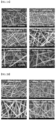
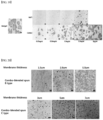
- FIG. 2A depicts photographs of nanofibers having fiber diameters of 200 nm, 500 nm and 800 nm, respectively
- FIG. 2B depicts photographs of nanofibers having fiber diameters of 600 nm and 1000 nm, respectively.
- the diameter of nanofibers is one of the important factors that affect cell adhesion and growth.
- a membrane substrate having a changed nanofiber diameter was achieved while a biochemical environment formed by an extracellular matrix was maintained constant.
- a chemical immobilization method according to a conventional art a constant density or orientation is not always realized, since the chemical reaction between the peptide motif and the nanofiber surface is a random reaction, but in the present disclosure, a membrane having a precisely controlled nanofiber diameter can be manufactured while a constant density or orientation is always maintained.
- reaction solution of 2) was added to the nanofiber surface so that it reacted with the -COOH group on the nanofiber surface to form particles.
- FIG. 3 shows results indicating that when an extracellular matrix mimetic is introduced to the nanofiber surface, particles having a particle size of 500 nm to 5 ⁇ m can be obtained.
- the peptide motif was present on the nanofiber surface and membranes having fiber diameters of 200 nm, 500 nm and 800 nm could be manufactured, making it possible to manufacture a cell culture surface capable of precisely controlling a cellular microenvironment.
- FIG. 6C shows the effects of protein blending and spinning and a motif on the adhesion of cells (mESCs), and the terms used therein indicate the following:
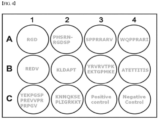
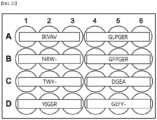
- sequences of the 20 peptide motifs include RGD, PHSRN-RGDSP, SPPRRARVT, TWYKIAF, RKRLQVQLSIRT, NRWHSIYTTRFG, GIIFFL, RYVVLPR, RNIAEIKDI, WQPPRARI, KNNQKSEPLLIGRKKT, KKQRFRHRNRKGYRSG, LCCGRGHRTRTQRVTERCNC, LGTQGRLCNKTSEGMDGCEL, IVPLLLLVLH, YTAQGEPFPNNVEKLCAP, LFSHAVSSNG, ADTPPV, DQNDN, LRAHAVDING, and the like.
- FIGS. 8 to 10 show results indicating that peptides derived from fibronectin (such as PHSRN-RGDSP), laminin (such as RNIAEIKDI) or cadherin (such as ADTPPV) are effective for stem cell adhesion and colony formation.
- fibronectin such as PHSRN-RGDSP
- laminin such as RNIAEIKDI
- cadherin such as ADTPPV
- PHSRN-RGDSP fibronectin
- laminin such as RNIAEIKDI
- cadherin such as ADTPPV
- PHSRN-RGDSP resulted in the cell adhesion and colony size comparable to the levels of Matrigel, and thus PHSRN-RGDSP was used in subsequent experiments.
- nanofibers and a PDL-coated surface which have no peptide motif, were used as controls in comparative experiments.
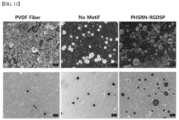
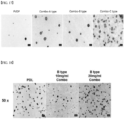
- FIG. 11 shows the results of AP staining performed to examine the effects of each motif on embryonic stem cell self-renewal and colony size.
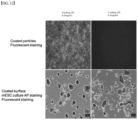
- FIG. 12 shows the effect of a coating method (2D plate coating) used for protein coating and the experimental results are as follows.
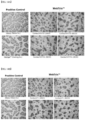
- Membranes with three microenvironments were prepared and coated on 6 well plates. Culture of human induced pluripotent stem cells was performed in the same manner as described in Example 5, and the effect of each microenvironment on the behavior of the stem cells was examined.
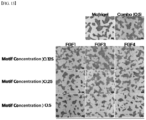
- FIG. 13 shows the results obtained by coating PHSRN-RGDSP and each FGF protein on plates and examining whether the coated protein can simultaneously control integrin-FGF receptor and examining the effect of the coating concentration of the proteins.
- integrin-Frizzed receptor was above the Matrigel level in terms of the maintenance of stem cell differentiation potential and exhibited an effect similar to that of iMatrix.
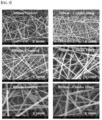
- membranes having nanofiber diameters of 200 nm (Combo-A type), 600 nm (Combo-B type) and 1000 nm (Combo-C type) were prepared. At this time, the membrane surface had PHSRN-RGDSP which is an integrin binding peptide motif.
- the membrane showed lower self-renewal than that of PDL which is a common material for stem cell culture, but when the density of PHSRN-RGDSP was increased, the effect of improving self-renewal could be obtained.
- FIG. 22 is a graph showing the effect of each peptide motif on the migration of cells, and as can be seen therein, the effect of the laminin-derived peptide motifs was better than that of the collagen-derived peptide motifs. In addition, it can be seen that there is an optimal concentration of each motif at which the migration reaches the maximum.
Landscapes
- Health & Medical Sciences (AREA)
- Chemical & Material Sciences (AREA)
- Life Sciences & Earth Sciences (AREA)
- Organic Chemistry (AREA)
- Genetics & Genomics (AREA)
- Zoology (AREA)
- Engineering & Computer Science (AREA)
- General Health & Medical Sciences (AREA)
- Biochemistry (AREA)
- Gastroenterology & Hepatology (AREA)
- Medicinal Chemistry (AREA)
- Biomedical Technology (AREA)
- Bioinformatics & Cheminformatics (AREA)
- Proteomics, Peptides & Aminoacids (AREA)
- Wood Science & Technology (AREA)
- Biotechnology (AREA)
- Biophysics (AREA)
- Molecular Biology (AREA)
- Toxicology (AREA)
- Cell Biology (AREA)
- General Engineering & Computer Science (AREA)
- Microbiology (AREA)
- Immunology (AREA)
- Developmental Biology & Embryology (AREA)
- Dispersion Chemistry (AREA)
- Public Health (AREA)
- Pharmacology & Pharmacy (AREA)
- Epidemiology (AREA)
- Animal Behavior & Ethology (AREA)
- Veterinary Medicine (AREA)
- Transplantation (AREA)
- Polymers & Plastics (AREA)
- Chemical Kinetics & Catalysis (AREA)
- Peptides Or Proteins (AREA)
- Micro-Organisms Or Cultivation Processes Thereof (AREA)
- Apparatus Associated With Microorganisms And Enzymes (AREA)
Claims (8)
- Dreidimensionale Mikro-Umgebungsstruktur zur Steuerung des Zellverhaltens, umfassend: eine Nanofasermembran; und zwei oder mehr Peptidmotive, einschließlich eines P1 (ersten Peptid)-Motivs und eines P2 (zweiten Peptid)-Motivs,wobei die Nanofasermembran eines oder mehrere von PVDF, PAN, PES und PLA umfasst;wobei das P1 (erste Peptid)-Motiv die α5β1- oder α6β1-Integrinaktivität steuert;wobei das P2 (zweite Peptid)-Motiv die Integrin-Korezeptor-Aktivität steuert, wodurch ein Signal zur Steuerung des Zellverhaltens erzeugt wird;wobei der Korezeptor einer oder mehrere ausgewählt aus Frizzled-Rezeptor, FGF-Rezeptor, TGF-Rezeptor und LIF-Rezeptor ist;wobei das P1 (erste Peptid)-Motiv ausgewählt ist aus RGD (SEQ ID NO: 15), GRGDSP (SEQ ID NO: 16), PHSRN-RGDSP (SEQ ID NO: 17), SPPRRARVT (SEQ ID NO: 18) und KNNQKSEPLIGRKKT (SEQ ID NO: 20) als α5β1-Integrin-Aktivierungsmotiv;wobei vorzugsweise das P1 (erste Peptid)-Motiv PHSRN-RGDSP ist;oder wobei das P1 (erste Peptid)-Motiv ausgewählt ist aus GKNTGDHFVLYM (SEQ ID NO: 22), WSLYNFEQTFML (SEQ ID NO: 23), RFDQELRLVSYN (SEQ ID NO: 24), RLVSYSGVLFFLK (SEQ ID NO: 25), ASKAIQVFLLGG (SEQ ID NO: 26), VLVRVERATVFS (SEQ ID NO: 27), TVFSVDQDNMLE (SEQ ID NO: 28), RLRGPQRVFDLH (SEQ ID NO: 29), FDLHQNMGSVN (SEQ ID NO: 30), QQNLGSVNVSTG (SEQ ID NO: 31) und SRATAQKVSRRS (SEQ ID NO: 32) als α6β1-Integrin-Aktivierungsmotiv;wobei vorzugsweise das P1 (erste Peptid)-Motiv WSLYNFEQTFML ist;wobei das P2-Motiv (zweite Motiv) ausgewählt ist aus LCCGRGHRTQRVTERCNC und LGTQGRLCNKTSEGMDGCEL als Frizzled-Rezeptor-Aktivierungsmotiv;oder wobei das P2-Motiv ausgewählt ist aus FLPMSAKS, HFKDPKRLYCK, ANRYLAMKEDGRLLAS, KTGPGQKA und WYVALKRTGQYKLG als FGF-Rezeptor-Aktivierungsmotiv;oder wobei das P2-Motiv ausgewählt ist aus MHRMPSFLPTTL und LTGKNFPMFHRN als TGF-Rezeptor-Aktivierungsmotiv;oder wobei das P2-Motiv ausgewählt ist aus IVPLLLLVLH und YTAQGEPFPNNVEKLCAP als LIF-Rezeptor-Aktivierungsmotiv; undwobei die Integrin-Aktivität und die Integrin-Korezeptor-Aktivität gleichzeitig gesteuert werden.
- Dreidimensionale Mikro-Umgebungsstruktur nach Anspruch 1, wobei die zwei oder mehr Peptidmotive zwei oder mehr verschiedene Rezeptoren auf der Zelle binden, wodurch ein Signal zur Steuerung des Zellverhaltens erzeugt wird,wobei vorzugsweise das Zellverhalten eines oder mehrere ausgewählt aus der Gruppe bestehend aus Zelladhäsion, Migration, Wachstum, Proliferation, Morphogenese, Differenzierung und Apoptose ist, undwobei stärker bevorzugt das Zellverhalten Zellwachstum ist.
- Dreidimensionale Mikro-Umgebungsstruktur nach einem der vorstehenden Ansprüche, wobei die Peptidmotive in einer Konzentration von 0,001 mg/ml bis 10 mg/ml eingeführt werden.
- Dreidimensionale Mikro-Umgebungsstruktur nach einem der vorstehenden Ansprüche, wobei die Peptidmotive diejenigen sind, die an ein adhäsives Protein gebunden sind,
wobei vorzugsweise das adhäsive Protein ein Muscheladhäsionsprotein ist. - Oberfläche zur Steuerung des Zellverhaltens, wobei die Oberfläche zwei oder mehr Peptidmotive umfasst, einschließlich eines P1 (ersten Peptid)-Motivs und eines P2 (zweiten Peptid)-Motivs, welche an Zellrezeptoren binden, wobei die Peptidmotive zwei oder mehr verschiedene Rezeptoren auf der Zelle binden, wodurch ein Signal zur Steuerung des Zellverhaltens erzeugt wird,wobei die Oberfläche eine poröse Oberfläche, eine nicht-poröse Oberfläche oder eine Kombination davon ist, oder die Oberfläche die Oberfläche von einem oder mehreren von einer Nanofaser, einem Hydrogel und einem Partikel ist, wobei das Zellverhalten eines oder mehrere ausgewählt aus der Gruppe bestehend aus Zelladhäsion, Migration, Wachstum, Proliferation, Morphogenese, Differenzierung oder Apoptose ist, wobei die zwei oder mehr verschiedenen Rezeptoren Integrin-Bindungsrezeptor und Integrin-Korezeptor sind,wobei das P1 (erste Peptid)-Motiv die α5β1- und/oder α6β1-Integrinaktivität steuert, wobei das P2 (zweite Peptid)-Motiv die Integrin-Korezeptor-Aktivität steuert,wobei der Korezeptor einer oder mehrere ausgewählt aus Frizzled-Rezeptor, LIF-Rezeptor, FGF-Rezeptor und TGF-Rezeptor ist;wobei das P1 (erste Peptid)-Motiv ausgewählt ist aus RGD (SEQ ID NO: 15), GRGDSP (SEQ ID NO: 16), PHSRN-RGDSP (SEQ ID NO: 17), SPPRRARVT (SEQ ID NO: 18) und KNNQKSEPLIGRKKT (SEQ ID NO: 20) als α5β1-Integrin-Aktivierungsmotiv;wobei vorzugsweise das P1 (erste Peptid)-Motiv PHSRN-RGDSP ist;oder wobei das P1 (erste Peptid)-Motiv ausgewählt ist aus GKNTGDHFVLYM (SEQ ID NO: 22), WSLYNFEQTFML (SEQ ID NO: 23), RFDQELRLVSYN (SEQ ID NO: 24), RLVSYSGVLFFLK (SEQ ID NO: 25), ASKAIQVFLLGG (SEQ ID NO: 26), VLVRVERATVFS (SEQ ID NO: 27), TVFSVDQDNMLE (SEQ ID NO: 28), RLRGPQRVFDLH (SEQ ID NO: 29), FDLHQNMGSVN (SEQ ID NO: 30), QQNLGSVNVSTG (SEQ ID NO: 31) und SRATAQKVSRRS (SEQ ID NO: 32) als α6β1-Integrin-Aktivierungsmotiv;wobei vorzugsweise das P1 (erste Peptid)-Motiv WSLYNFEQTFML ist;wobei das P2-Motiv (zweite Motiv) ausgewählt ist aus LCCGRGHRTQRVTERCNC und LGTQGRLCNKTSEGMDGCEL als Frizzled-Rezeptor-Aktivierungsmotiv;oder wobei das P2-Motiv ausgewählt ist aus FLPMSAKS, HFKDPKRLYCK, ANRYLAMKEDGRLLAS, KTGPGQKA und WYVALKRTGQYKLG als FGF-Rezeptor-Aktivierungsmotiv;oder wobei das P2-Motiv ausgewählt ist aus MHRMPSFLPTTL und LTGKNFPMFHRN als TGF-Rezeptor-Aktivierungsmotiv;oder wobei das P2-Motiv ausgewählt ist aus IVPLLLLVLH und YTAQGEPFPNNVEKLCAP als LIF-Rezeptor-Aktivierungsmotiv; undwobei die Integrin-Aktivität und die Integrin-Korezeptor-Aktivität gleichzeitig gesteuert werden.
- In-vitro-Verwendung von zwei oder mehr der Strukturen oder Oberflächen nach einem der vorstehenden Ansprüche als Anordnung zur Steuerung des Zellverhaltens.
- Verfahren zur Herstellung einer dreidimensionalen Mikro-Umgebungsstruktur zur Steuerung des Zellverhaltens, wobei das Verfahren die folgenden Schritte umfasst:1) Herstellen einer Zusammensetzung, die ein oder mehrere Polymermaterialien enthält, die ausgewählt sind aus PVDF, PAN, PES und PLA;2) Herstellen einer Zusammensetzung, die ein P1 (erstes Peptid)-Motiv und ein P2 (zweites Peptid)-Motiv enthält; und3) Mischen der Zusammensetzung von 1) und der Zusammensetzung von 2), gefolgt von Elektrospinnen;wobei das P1 (erste Peptid)-Motiv die α5β1- und/oder α6β1-Integrinaktivität steuert,wobei das P2 (zweite Peptid)-Motiv die Integrin-Korezeptor-Aktivität steuert, undwobei der Korezeptor einer oder mehrere ausgewählt aus Frizzled-Rezeptor, LIF-Rezeptor, FGF-Rezeptor und TGF-Rezeptor ist;wobei das P1 (erste Peptid)-Motiv ausgewählt ist aus RGD (SEQ ID NO: 15), GRGDSP (SEQ ID NO: 16), PHSRN-RGDSP (SEQ ID NO: 17), SPPRRARVT (SEQ ID NO: 18) und KNNQKSEPLIGRKKT (SEQ ID NO: 20) als α5β1-Integrin-Aktivierungsmotiv;wobei vorzugsweise das P1 (erste Peptid)-Motiv PHSRN-RGDSP ist;oder wobei das P1 (erste Peptid)-Motiv ausgewählt ist aus GKNTGDHFVLYM (SEQ ID NO: 22), WSLYNFEQTFML (SEQ ID NO: 23), RFDQELRLVSYN (SEQ ID NO: 24), RLVSYSGVLFFLK (SEQ ID NO: 25), ASKAIQVFLLGG (SEQ ID NO: 26), VLVRVERATVFS (SEQ ID NO: 27), TVFSVDQDNMLE (SEQ ID NO: 28), RLRGPQRVFDLH (SEQ ID NO: 29), FDLHQNMGSVN (SEQ ID NO: 30), QQNLGSVNVSTG (SEQ ID NO: 31) und SRATAQKVSRRS (SEQ ID NO: 32) als α6β1-Integrin-Aktivierungsmotiv;wobei vorzugsweise das P1 (erste Peptid)-Motiv WSLYNFEQTFML ist;wobei das P2-Motiv (zweite Motiv) ausgewählt ist aus LCCGRGHRTQRVTERCNC und LGTQGRLCNKTSEGMDGCEL als Frizzled-Rezeptor-Aktivierungsmotiv;oder wobei das P2-Motiv ausgewählt ist aus FLPMSAKS, HFKDPKRLYCK, ANRYLAMKEDGRLLAS, KTGPGQKA und WYVALKRTGQYKLG als FGF-Rezeptor-Aktivierungsmotiv;oder wobei das P2-Motiv ausgewählt ist aus MHRMPSFLPTTL und LTGKNFPMFHRN als TGF-Rezeptor-Aktivierungsmotiv;oder wobei das P2-Motiv ausgewählt ist aus IVPLLLLVLH und YTAQGEPFPNNVEKLCAP als LIF-Rezeptor-Aktivierungsmotiv; undwobei die Integrin-Aktivität und die Integrin-Korezeptor-Aktivität gleichzeitig gesteuert werden.
- Verfahren zur Herstellung einer dreidimensionalen Mikro-Umgebungsstruktur zur Steuerung des Zellverhaltens, wobei das Verfahren die folgenden Schritte umfasst:1) Elektrospinnen einer Zusammensetzung, die ein oder mehrere Polymermaterialien enthält, die ausgewählt sind aus PVDF, PAN, PES und PLA, wodurch eine dreidimensionale Struktur hergestellt wird; und2) Beschichten der dreidimensionalen Struktur mit einer Zusammensetzung, die ein P1 (erstes Peptid)-Motiv und ein P2 (zweites Peptid)-Motiv enthält;wobei das P1 (erste Peptid)-Motiv die α5β1- und/oder α6β1-Integrinaktivität steuert,wobei das P2 (zweite Peptid)-Motiv die Integrin-Korezeptor-Aktivität steuert, undwobei der Korezeptor einer oder mehrere ausgewählt aus Frizzled-Rezeptor, LIF-Rezeptor, FGF-Rezeptor und TGF-Rezeptor ist;wobei das P1 (erste Peptid)-Motiv ausgewählt ist aus RGD (SEQ ID NO: 15), GRGDSP (SEQ ID NO: 16), PHSRN-RGDSP (SEQ ID NO: 17), SPPRRARVT (SEQ ID NO: 18) und KNNQKSEPLIGRKKT (SEQ ID NO: 20) als α5β1-Integrin-Aktivierungsmotiv;wobei vorzugsweise das P1 (erste Peptid)-Motiv PHSRN-RGDSP ist;oder wobei das P1 (erste Peptid)-Motiv ausgewählt ist aus GKNTGDHFVLYM (SEQ ID NO: 22), WSLYNFEQTFML (SEQ ID NO: 23), RFDQELRLVSYN (SEQ ID NO: 24), RLRGPQRVFDLH (SEQ ID NO: 27), TVFSVDQDNMLE (SEQ ID NO: 28), SRATAQKVSRRS (SEQ ID NO: 32) als α6β1-Integrin-Aktivierungsmotiv;wobei vorzugsweise das P1 (erste Peptid)-Motiv WSLYNFEQTFML ist;wobei das P2-Motiv (zweite Motiv) ausgewählt ist aus LCCGRGHRTQRVTERCNC und LGTQGRLCNKTSEGMDGCEL als Frizzled-Rezeptor-Aktivierungsmotiv;oder wobei das P2-Motiv ausgewählt ist aus FLPMSAKS, HFKDPKRLYCK, ANRYLAMKEDGRLLAS, KTGPGQKA und WYVALKRTGQYKLG als FGF-Rezeptor-Aktivierungsmotiv;oder wobei das P2-Motiv ausgewählt ist aus MHRMPSFLPTTL und LTGKNFPMFHRN als TGF-Rezeptor-Aktivierungsmotiv;oder wobei das P2-Motiv ausgewählt ist aus IVPLLLLVLH und YTAQGEPFPNNVEKLCAP als LIF-Rezeptor-Aktivierungsmotiv; undwobei die Integrin-Aktivität und die Integrin-Korezeptor-Aktivität gleichzeitig gesteuert werden.
Applications Claiming Priority (1)
| Application Number | Priority Date | Filing Date | Title |
|---|---|---|---|
| PCT/KR2016/014319 WO2018105777A1 (ko) | 2016-12-07 | 2016-12-07 | 세포 거동 조절용 3차원 미세환경 구조물, 세포 거동 조절용 3 차원 표면, 어레이 및 3 차원 미세환경 구조물의 제조방법 |
Publications (5)
| Publication Number | Publication Date |
|---|---|
| EP3553167A1 EP3553167A1 (de) | 2019-10-16 |
| EP3553167A4 EP3553167A4 (de) | 2020-02-19 |
| EP3553167B1 true EP3553167B1 (de) | 2024-07-10 |
| EP3553167C0 EP3553167C0 (de) | 2024-07-10 |
| EP3553167B9 EP3553167B9 (de) | 2024-10-23 |
Family
ID=62491064
Family Applications (1)
| Application Number | Title | Priority Date | Filing Date |
|---|---|---|---|
| EP16923489.5A Active EP3553167B9 (de) | 2016-12-07 | 2016-12-07 | Dreidimensionale mikroumgebungsstruktur zur steuerung des zellverhaltens, dreidimensionale oberfläche zur steuerung des zellverhaltens und verfahren zur herstellung einer anordnung und einer dreidimensionalen mikroumgebungsstruktur |
Country Status (7)
| Country | Link |
|---|---|
| US (1) | US12305193B2 (de) |
| EP (1) | EP3553167B9 (de) |
| JP (2) | JP7421933B2 (de) |
| KR (2) | KR102713191B1 (de) |
| CN (1) | CN110249043B (de) |
| AU (1) | AU2016431869B2 (de) |
| WO (1) | WO2018105777A1 (de) |
Families Citing this family (6)
| Publication number | Priority date | Publication date | Assignee | Title |
|---|---|---|---|---|
| AU2016431869B2 (en) | 2016-12-07 | 2021-12-09 | Amolifescience Co., Ltd. | Three-dimensional micro-environment structure for controlling cell behavior, three-dimensional surface for controlling cell behavior, and method for manufacturing array and three-dimensional micro-environment structure |
| KR102065171B1 (ko) * | 2019-02-20 | 2020-01-13 | (주)케어젠 | 대기오염물질에 의한 피부 손상 방지 및 항노화용 펩타이드와 이의 용도 |
| WO2021133143A1 (ko) * | 2019-12-27 | 2021-07-01 | 주식회사 아모라이프사이언스 | 세포배양기재 및 이의 제조방법 |
| JP7625185B2 (ja) * | 2020-12-16 | 2025-02-03 | ステロ バイオテクノロジー カンパニー,リミテッド | 成長因子に結合するタンパク質基板 |
| US20250066720A1 (en) * | 2022-02-21 | 2025-02-27 | Stelo Biotechnology Co., Ltd. | Gf binding ecm mimetic coated microcarrier |
| WO2024181523A1 (ja) | 2023-02-28 | 2024-09-06 | 株式会社ノベルジェン | 接着性及び機能性を有する組換えタンパク質並びにそれを含む組成物 |
Family Cites Families (13)
| Publication number | Priority date | Publication date | Assignee | Title |
|---|---|---|---|---|
| US5700909A (en) * | 1993-07-30 | 1997-12-23 | The Regents Of The University Of California | Prosaposin and cytokine-derived peptides |
| WO2005010044A2 (en) | 2003-07-08 | 2005-02-03 | Genentech, Inc. | Il-17 a/f heterologous polypeptides and therapeutic uses thereof |
| US7704740B2 (en) | 2003-11-05 | 2010-04-27 | Michigan State University | Nanofibrillar structure and applications including cell and tissue culture |
| US20070231362A1 (en) | 2006-04-04 | 2007-10-04 | 3M Innovative Properties Company | Schistose microfibrillated article for cell growth |
| WO2008093646A1 (ja) * | 2007-02-01 | 2008-08-07 | National University Corporation NARA Institute of Science and Technology | Wntシグナル伝達系活性化ペプチド |
| WO2011115420A2 (en) * | 2010-03-16 | 2011-09-22 | Kollodis Biosciences, Inc. | Adhesive extracellular matrix mimetic |
| GB201203085D0 (en) * | 2012-02-22 | 2012-04-04 | Univ Manchester | Hydrogels |
| JPWO2014034146A1 (ja) | 2012-09-03 | 2016-08-08 | 三菱レイヨン株式会社 | 細胞培養用モジュール |
| KR101311325B1 (ko) | 2012-09-13 | 2013-09-30 | 이상재 | 합성 디자인된 3차원 미세환경 구조물 |
| US20150003068A1 (en) * | 2013-07-01 | 2015-01-01 | Chao-Chin Yeh | Arc led lamp |
| US11220669B2 (en) * | 2015-06-05 | 2022-01-11 | Amolifescience Co., Ltd. | Defined three dimensional microenvironment for cell culture |
| US9868828B2 (en) * | 2015-06-23 | 2018-01-16 | Amolifescience Co., Ltd. | Defined three-dimensional microenvironment for stem cell |
| AU2016431869B2 (en) | 2016-12-07 | 2021-12-09 | Amolifescience Co., Ltd. | Three-dimensional micro-environment structure for controlling cell behavior, three-dimensional surface for controlling cell behavior, and method for manufacturing array and three-dimensional micro-environment structure |
-
2016
- 2016-12-07 AU AU2016431869A patent/AU2016431869B2/en active Active
- 2016-12-07 JP JP2019531304A patent/JP7421933B2/ja active Active
- 2016-12-07 KR KR1020217043251A patent/KR102713191B1/ko active Active
- 2016-12-07 US US16/467,613 patent/US12305193B2/en active Active
- 2016-12-07 KR KR1020197019430A patent/KR20190091331A/ko not_active Ceased
- 2016-12-07 WO PCT/KR2016/014319 patent/WO2018105777A1/ko not_active Ceased
- 2016-12-07 CN CN201680092071.6A patent/CN110249043B/zh active Active
- 2016-12-07 EP EP16923489.5A patent/EP3553167B9/de active Active
-
2022
- 2022-03-16 JP JP2022041936A patent/JP2022081639A/ja active Pending
Also Published As
| Publication number | Publication date |
|---|---|
| JP7421933B2 (ja) | 2024-01-25 |
| EP3553167A4 (de) | 2020-02-19 |
| KR20220004225A (ko) | 2022-01-11 |
| US20190382719A1 (en) | 2019-12-19 |
| KR102713191B1 (ko) | 2024-10-07 |
| CN110249043B (zh) | 2024-01-23 |
| EP3553167B9 (de) | 2024-10-23 |
| AU2016431869B2 (en) | 2021-12-09 |
| AU2016431869A1 (en) | 2019-07-25 |
| US12305193B2 (en) | 2025-05-20 |
| JP2020511942A (ja) | 2020-04-23 |
| EP3553167C0 (de) | 2024-07-10 |
| EP3553167A1 (de) | 2019-10-16 |
| JP2022081639A (ja) | 2022-05-31 |
| WO2018105777A1 (ko) | 2018-06-14 |
| KR20190091331A (ko) | 2019-08-05 |
| CN110249043A (zh) | 2019-09-17 |
Similar Documents
| Publication | Publication Date | Title |
|---|---|---|
| EP3553167B9 (de) | Dreidimensionale mikroumgebungsstruktur zur steuerung des zellverhaltens, dreidimensionale oberfläche zur steuerung des zellverhaltens und verfahren zur herstellung einer anordnung und einer dreidimensionalen mikroumgebungsstruktur | |
| Fernandez-Perez et al. | Characterization of extracellular matrix modified poly (ε-caprolactone) electrospun scaffolds with differing fiber orientations for corneal stroma regeneration | |
| Wohlrab et al. | Cell adhesion and proliferation on RGD-modified recombinant spider silk proteins | |
| KR101637431B1 (ko) | 세포 지지체 및 골재생재 | |
| Rnjak et al. | Primary human dermal fibroblast interactions with open weave three-dimensional scaffolds prepared from synthetic human elastin | |
| Hosseinkhani et al. | Design of tissue-engineered nanoscaffold through self-assembly of peptide amphiphile | |
| Hosseinkhani et al. | Osteogenic differentiation of mesenchymal stem cells in self-assembled peptide-amphiphile nanofibers | |
| Hosseinkhani et al. | Proliferation and differentiation of mesenchymal stem cells using self-assembled peptide amphiphile nanofibers | |
| EP2564880B1 (de) | Zellkonstrukt für die Zelltransplantation und Zellaggregat für die Zelltransplantation | |
| US20060147501A1 (en) | Collagen compositions and biomaterials | |
| US20110200560A1 (en) | Non-ionic self-assembling peptides and uses thereof | |
| CN104667349B (zh) | 负载生长因子的丝素蛋白/胶原蛋白支架材料及制备方法 | |
| US20150252148A1 (en) | Synthetically designed extracellular microenvironment | |
| JP2021072890A (ja) | 計測可能な三次元弾性構造物の製造 | |
| WO2011108517A1 (ja) | 生体親和性を有する高分子ブロックと細胞からなる細胞構造体 | |
| Brun et al. | Electrospun scaffolds of self-assembling peptides with poly (ethylene oxide) for bone tissue engineering | |
| KR101209233B1 (ko) | 피브린 결합능을 가진 생리활성 펩타이드가 함유된 피브린 수화젤 | |
| CN113416264A (zh) | 一种三嵌段多肽、三嵌段多肽自组装形成的胶原蛋白仿生材料 | |
| CN120795125A (zh) | 胶原蛋白、胶原蛋白水凝胶及其制备方法和用途 | |
| KR102486925B1 (ko) | 세포배양기재 및 이의 제조방법 | |
| CN117327145A (zh) | 肽、肽修饰的sis膜、其制备方法及应用 | |
| Hu et al. | In vitro evaluation of the growth and migration of Schwann cells on electrospun silk fibroin nanofibers | |
| EP4701675A1 (de) | Verfahren zur herstellung einer kollagen- und seidenpolypeptidverbundstruktur | |
| Suter | Cellular interactions with protein nanofibers | |
| JP2026083355A (ja) | 組織体の製造方法、及び脂肪由来幹細胞の分化促進方法 |
Legal Events
| Date | Code | Title | Description |
|---|---|---|---|
| STAA | Information on the status of an ep patent application or granted ep patent |
Free format text: STATUS: THE INTERNATIONAL PUBLICATION HAS BEEN MADE |
|
| PUAI | Public reference made under article 153(3) epc to a published international application that has entered the european phase |
Free format text: ORIGINAL CODE: 0009012 |
|
| STAA | Information on the status of an ep patent application or granted ep patent |
Free format text: STATUS: REQUEST FOR EXAMINATION WAS MADE |
|
| 17P | Request for examination filed |
Effective date: 20190705 |
|
| AK | Designated contracting states |
Kind code of ref document: A1 Designated state(s): AL AT BE BG CH CY CZ DE DK EE ES FI FR GB GR HR HU IE IS IT LI LT LU LV MC MK MT NL NO PL PT RO RS SE SI SK SM TR |
|
| AX | Request for extension of the european patent |
Extension state: BA ME |
|
| A4 | Supplementary search report drawn up and despatched |
Effective date: 20200117 |
|
| RIC1 | Information provided on ipc code assigned before grant |
Ipc: C12N 5/074 20100101ALI20200113BHEP Ipc: C12N 5/00 20060101AFI20200113BHEP |
|
| DAV | Request for validation of the european patent (deleted) | ||
| DAX | Request for extension of the european patent (deleted) | ||
| STAA | Information on the status of an ep patent application or granted ep patent |
Free format text: STATUS: EXAMINATION IS IN PROGRESS |
|
| 17Q | First examination report despatched |
Effective date: 20220617 |
|
| REG | Reference to a national code |
Ref legal event code: R079 Ref country code: DE Ref document number: 602016088391 Country of ref document: DE Free format text: PREVIOUS MAIN CLASS: C12N0005000000 Ipc: C07K0014470000 |
|
| GRAP | Despatch of communication of intention to grant a patent |
Free format text: ORIGINAL CODE: EPIDOSNIGR1 |
|
| STAA | Information on the status of an ep patent application or granted ep patent |
Free format text: STATUS: GRANT OF PATENT IS INTENDED |
|
| RIC1 | Information provided on ipc code assigned before grant |
Ipc: C12N 5/00 20060101ALI20230831BHEP Ipc: C07K 14/78 20060101ALI20230831BHEP Ipc: C07K 14/71 20060101ALI20230831BHEP Ipc: C07K 14/54 20060101ALI20230831BHEP Ipc: C07K 14/50 20060101ALI20230831BHEP Ipc: C07K 14/495 20060101ALI20230831BHEP Ipc: C07K 14/47 20060101AFI20230831BHEP |
|
| INTG | Intention to grant announced |
Effective date: 20230929 |
|
| GRAJ | Information related to disapproval of communication of intention to grant by the applicant or resumption of examination proceedings by the epo deleted |
Free format text: ORIGINAL CODE: EPIDOSDIGR1 |
|
| STAA | Information on the status of an ep patent application or granted ep patent |
Free format text: STATUS: EXAMINATION IS IN PROGRESS |
|
| INTC | Intention to grant announced (deleted) | ||
| GRAP | Despatch of communication of intention to grant a patent |
Free format text: ORIGINAL CODE: EPIDOSNIGR1 |
|
| STAA | Information on the status of an ep patent application or granted ep patent |
Free format text: STATUS: GRANT OF PATENT IS INTENDED |
|
| INTG | Intention to grant announced |
Effective date: 20240117 |
|
| GRAJ | Information related to disapproval of communication of intention to grant by the applicant or resumption of examination proceedings by the epo deleted |
Free format text: ORIGINAL CODE: EPIDOSDIGR1 |
|
| STAA | Information on the status of an ep patent application or granted ep patent |
Free format text: STATUS: EXAMINATION IS IN PROGRESS |
|
| GRAJ | Information related to disapproval of communication of intention to grant by the applicant or resumption of examination proceedings by the epo deleted |
Free format text: ORIGINAL CODE: EPIDOSDIGR1 |
|
| GRAP | Despatch of communication of intention to grant a patent |
Free format text: ORIGINAL CODE: EPIDOSNIGR1 |
|
| INTC | Intention to grant announced (deleted) | ||
| GRAP | Despatch of communication of intention to grant a patent |
Free format text: ORIGINAL CODE: EPIDOSNIGR1 |
|
| STAA | Information on the status of an ep patent application or granted ep patent |
Free format text: STATUS: GRANT OF PATENT IS INTENDED |
|
| GRAS | Grant fee paid |
Free format text: ORIGINAL CODE: EPIDOSNIGR3 |
|
| GRAA | (expected) grant |
Free format text: ORIGINAL CODE: 0009210 |
|
| STAA | Information on the status of an ep patent application or granted ep patent |
Free format text: STATUS: THE PATENT HAS BEEN GRANTED |
|
| INTG | Intention to grant announced |
Effective date: 20240528 |
|
| AK | Designated contracting states |
Kind code of ref document: B1 Designated state(s): AL AT BE BG CH CY CZ DE DK EE ES FI FR GB GR HR HU IE IS IT LI LT LU LV MC MK MT NL NO PL PT RO RS SE SI SK SM TR |
|
| REG | Reference to a national code |
Ref country code: CH Ref legal event code: EP |
|
| REG | Reference to a national code |
Ref country code: DE Ref legal event code: R096 Ref document number: 602016088391 Country of ref document: DE |
|
| U01 | Request for unitary effect filed |
Effective date: 20240809 |
|
| U07 | Unitary effect registered |
Designated state(s): AT BE BG DE DK EE FI FR IT LT LU LV MT NL PT SE SI Effective date: 20240822 |
|
| REG | Reference to a national code |
Ref country code: CH Ref legal event code: PK Free format text: BERICHTIGUNG B9 |
|
| PG25 | Lapsed in a contracting state [announced via postgrant information from national office to epo] |
Ref country code: NO Free format text: LAPSE BECAUSE OF FAILURE TO SUBMIT A TRANSLATION OF THE DESCRIPTION OR TO PAY THE FEE WITHIN THE PRESCRIBED TIME-LIMIT Effective date: 20241010 |
|
| PG25 | Lapsed in a contracting state [announced via postgrant information from national office to epo] |
Ref country code: GR Free format text: LAPSE BECAUSE OF FAILURE TO SUBMIT A TRANSLATION OF THE DESCRIPTION OR TO PAY THE FEE WITHIN THE PRESCRIBED TIME-LIMIT Effective date: 20241011 Ref country code: PL Free format text: LAPSE BECAUSE OF FAILURE TO SUBMIT A TRANSLATION OF THE DESCRIPTION OR TO PAY THE FEE WITHIN THE PRESCRIBED TIME-LIMIT Effective date: 20240710 |
|
| PG25 | Lapsed in a contracting state [announced via postgrant information from national office to epo] |
Ref country code: IS Free format text: LAPSE BECAUSE OF FAILURE TO SUBMIT A TRANSLATION OF THE DESCRIPTION OR TO PAY THE FEE WITHIN THE PRESCRIBED TIME-LIMIT Effective date: 20241110 |
|
| PG25 | Lapsed in a contracting state [announced via postgrant information from national office to epo] |
Ref country code: HR Free format text: LAPSE BECAUSE OF FAILURE TO SUBMIT A TRANSLATION OF THE DESCRIPTION OR TO PAY THE FEE WITHIN THE PRESCRIBED TIME-LIMIT Effective date: 20240710 |
|
| PG25 | Lapsed in a contracting state [announced via postgrant information from national office to epo] |
Ref country code: ES Free format text: LAPSE BECAUSE OF FAILURE TO SUBMIT A TRANSLATION OF THE DESCRIPTION OR TO PAY THE FEE WITHIN THE PRESCRIBED TIME-LIMIT Effective date: 20240710 Ref country code: RS Free format text: LAPSE BECAUSE OF FAILURE TO SUBMIT A TRANSLATION OF THE DESCRIPTION OR TO PAY THE FEE WITHIN THE PRESCRIBED TIME-LIMIT Effective date: 20241010 |
|
| U20 | Renewal fee for the european patent with unitary effect paid |
Year of fee payment: 9 Effective date: 20241226 |
|
| PG25 | Lapsed in a contracting state [announced via postgrant information from national office to epo] |
Ref country code: RS Free format text: LAPSE BECAUSE OF FAILURE TO SUBMIT A TRANSLATION OF THE DESCRIPTION OR TO PAY THE FEE WITHIN THE PRESCRIBED TIME-LIMIT Effective date: 20241010 Ref country code: PL Free format text: LAPSE BECAUSE OF FAILURE TO SUBMIT A TRANSLATION OF THE DESCRIPTION OR TO PAY THE FEE WITHIN THE PRESCRIBED TIME-LIMIT Effective date: 20240710 Ref country code: NO Free format text: LAPSE BECAUSE OF FAILURE TO SUBMIT A TRANSLATION OF THE DESCRIPTION OR TO PAY THE FEE WITHIN THE PRESCRIBED TIME-LIMIT Effective date: 20241010 Ref country code: IS Free format text: LAPSE BECAUSE OF FAILURE TO SUBMIT A TRANSLATION OF THE DESCRIPTION OR TO PAY THE FEE WITHIN THE PRESCRIBED TIME-LIMIT Effective date: 20241110 Ref country code: HR Free format text: LAPSE BECAUSE OF FAILURE TO SUBMIT A TRANSLATION OF THE DESCRIPTION OR TO PAY THE FEE WITHIN THE PRESCRIBED TIME-LIMIT Effective date: 20240710 Ref country code: GR Free format text: LAPSE BECAUSE OF FAILURE TO SUBMIT A TRANSLATION OF THE DESCRIPTION OR TO PAY THE FEE WITHIN THE PRESCRIBED TIME-LIMIT Effective date: 20241011 Ref country code: ES Free format text: LAPSE BECAUSE OF FAILURE TO SUBMIT A TRANSLATION OF THE DESCRIPTION OR TO PAY THE FEE WITHIN THE PRESCRIBED TIME-LIMIT Effective date: 20240710 |
|
| PG25 | Lapsed in a contracting state [announced via postgrant information from national office to epo] |
Ref country code: SM Free format text: LAPSE BECAUSE OF FAILURE TO SUBMIT A TRANSLATION OF THE DESCRIPTION OR TO PAY THE FEE WITHIN THE PRESCRIBED TIME-LIMIT Effective date: 20240710 |
|
| PG25 | Lapsed in a contracting state [announced via postgrant information from national office to epo] |
Ref country code: CZ Free format text: LAPSE BECAUSE OF FAILURE TO SUBMIT A TRANSLATION OF THE DESCRIPTION OR TO PAY THE FEE WITHIN THE PRESCRIBED TIME-LIMIT Effective date: 20240710 |
|
| PG25 | Lapsed in a contracting state [announced via postgrant information from national office to epo] |
Ref country code: SK Free format text: LAPSE BECAUSE OF FAILURE TO SUBMIT A TRANSLATION OF THE DESCRIPTION OR TO PAY THE FEE WITHIN THE PRESCRIBED TIME-LIMIT Effective date: 20240710 |
|
| PLBE | No opposition filed within time limit |
Free format text: ORIGINAL CODE: 0009261 |
|
| STAA | Information on the status of an ep patent application or granted ep patent |
Free format text: STATUS: NO OPPOSITION FILED WITHIN TIME LIMIT |
|
| 26N | No opposition filed |
Effective date: 20250411 |
|
| PG25 | Lapsed in a contracting state [announced via postgrant information from national office to epo] |
Ref country code: MC Free format text: LAPSE BECAUSE OF FAILURE TO SUBMIT A TRANSLATION OF THE DESCRIPTION OR TO PAY THE FEE WITHIN THE PRESCRIBED TIME-LIMIT Effective date: 20240710 |
|
| REG | Reference to a national code |
Ref country code: CH Ref legal event code: PL |
|
| PG25 | Lapsed in a contracting state [announced via postgrant information from national office to epo] |
Ref country code: CH Free format text: LAPSE BECAUSE OF NON-PAYMENT OF DUE FEES Effective date: 20241231 |
|
| PG25 | Lapsed in a contracting state [announced via postgrant information from national office to epo] |
Ref country code: IE Free format text: LAPSE BECAUSE OF NON-PAYMENT OF DUE FEES Effective date: 20241207 |
|
| PG25 | Lapsed in a contracting state [announced via postgrant information from national office to epo] |
Ref country code: RO Free format text: LAPSE BECAUSE OF FAILURE TO SUBMIT A TRANSLATION OF THE DESCRIPTION OR TO PAY THE FEE WITHIN THE PRESCRIBED TIME-LIMIT Effective date: 20240710 |
|
| PGFP | Annual fee paid to national office [announced via postgrant information from national office to epo] |
Ref country code: GB Payment date: 20251120 Year of fee payment: 10 |
|
| U20 | Renewal fee for the european patent with unitary effect paid |
Year of fee payment: 10 Effective date: 20251223 |
|
| PG25 | Lapsed in a contracting state [announced via postgrant information from national office to epo] |
Ref country code: CY Free format text: LAPSE BECAUSE OF FAILURE TO SUBMIT A TRANSLATION OF THE DESCRIPTION OR TO PAY THE FEE WITHIN THE PRESCRIBED TIME-LIMIT; INVALID AB INITIO Effective date: 20161207 |