EP3547639B1 - Datenaustauschverfahren basierend auf einer vielzahl von blockketten - Google Patents
Datenaustauschverfahren basierend auf einer vielzahl von blockketten Download PDFInfo
- Publication number
- EP3547639B1 EP3547639B1 EP18212824.9A EP18212824A EP3547639B1 EP 3547639 B1 EP3547639 B1 EP 3547639B1 EP 18212824 A EP18212824 A EP 18212824A EP 3547639 B1 EP3547639 B1 EP 3547639B1
- Authority
- EP
- European Patent Office
- Prior art keywords
- data
- user
- information
- management server
- storage
- Prior art date
- Legal status (The legal status is an assumption and is not a legal conclusion. Google has not performed a legal analysis and makes no representation as to the accuracy of the status listed.)
- Active
Links
Images





Classifications
-
- G—PHYSICS
- G06—COMPUTING OR CALCULATING; COUNTING
- G06F—ELECTRIC DIGITAL DATA PROCESSING
- G06F16/00—Information retrieval; Database structures therefor; File system structures therefor
- G06F16/20—Information retrieval; Database structures therefor; File system structures therefor of structured data, e.g. relational data
- G06F16/23—Updating
- G06F16/2379—Updates performed during online database operations; commit processing
-
- H—ELECTRICITY
- H04—ELECTRIC COMMUNICATION TECHNIQUE
- H04L—TRANSMISSION OF DIGITAL INFORMATION, e.g. TELEGRAPHIC COMMUNICATION
- H04L67/00—Network arrangements or protocols for supporting network services or applications
- H04L67/50—Network services
- H04L67/56—Provisioning of proxy services
- H04L67/562—Brokering proxy services
-
- G—PHYSICS
- G06—COMPUTING OR CALCULATING; COUNTING
- G06Q—INFORMATION AND COMMUNICATION TECHNOLOGY [ICT] SPECIALLY ADAPTED FOR ADMINISTRATIVE, COMMERCIAL, FINANCIAL, MANAGERIAL OR SUPERVISORY PURPOSES; SYSTEMS OR METHODS SPECIALLY ADAPTED FOR ADMINISTRATIVE, COMMERCIAL, FINANCIAL, MANAGERIAL OR SUPERVISORY PURPOSES, NOT OTHERWISE PROVIDED FOR
- G06Q20/00—Payment architectures, schemes or protocols
- G06Q20/38—Payment protocols; Details thereof
- G06Q20/382—Payment protocols; Details thereof insuring higher security of transaction
- G06Q20/3829—Payment protocols; Details thereof insuring higher security of transaction involving key management
-
- G—PHYSICS
- G06—COMPUTING OR CALCULATING; COUNTING
- G06Q—INFORMATION AND COMMUNICATION TECHNOLOGY [ICT] SPECIALLY ADAPTED FOR ADMINISTRATIVE, COMMERCIAL, FINANCIAL, MANAGERIAL OR SUPERVISORY PURPOSES; SYSTEMS OR METHODS SPECIALLY ADAPTED FOR ADMINISTRATIVE, COMMERCIAL, FINANCIAL, MANAGERIAL OR SUPERVISORY PURPOSES, NOT OTHERWISE PROVIDED FOR
- G06Q30/00—Commerce
- G06Q30/02—Marketing; Price estimation or determination; Fundraising
- G06Q30/0207—Discounts or incentives, e.g. coupons or rebates
- G06Q30/0226—Incentive systems for frequent usage, e.g. frequent flyer miles programs or point systems
-
- G—PHYSICS
- G06—COMPUTING OR CALCULATING; COUNTING
- G06Q—INFORMATION AND COMMUNICATION TECHNOLOGY [ICT] SPECIALLY ADAPTED FOR ADMINISTRATIVE, COMMERCIAL, FINANCIAL, MANAGERIAL OR SUPERVISORY PURPOSES; SYSTEMS OR METHODS SPECIALLY ADAPTED FOR ADMINISTRATIVE, COMMERCIAL, FINANCIAL, MANAGERIAL OR SUPERVISORY PURPOSES, NOT OTHERWISE PROVIDED FOR
- G06Q30/00—Commerce
- G06Q30/06—Buying, selling or leasing transactions
- G06Q30/0601—Electronic shopping [e-shopping]
-
- G—PHYSICS
- G06—COMPUTING OR CALCULATING; COUNTING
- G06Q—INFORMATION AND COMMUNICATION TECHNOLOGY [ICT] SPECIALLY ADAPTED FOR ADMINISTRATIVE, COMMERCIAL, FINANCIAL, MANAGERIAL OR SUPERVISORY PURPOSES; SYSTEMS OR METHODS SPECIALLY ADAPTED FOR ADMINISTRATIVE, COMMERCIAL, FINANCIAL, MANAGERIAL OR SUPERVISORY PURPOSES, NOT OTHERWISE PROVIDED FOR
- G06Q30/00—Commerce
- G06Q30/06—Buying, selling or leasing transactions
- G06Q30/0645—Rental transactions; Leasing transactions
-
- G—PHYSICS
- G06—COMPUTING OR CALCULATING; COUNTING
- G06Q—INFORMATION AND COMMUNICATION TECHNOLOGY [ICT] SPECIALLY ADAPTED FOR ADMINISTRATIVE, COMMERCIAL, FINANCIAL, MANAGERIAL OR SUPERVISORY PURPOSES; SYSTEMS OR METHODS SPECIALLY ADAPTED FOR ADMINISTRATIVE, COMMERCIAL, FINANCIAL, MANAGERIAL OR SUPERVISORY PURPOSES, NOT OTHERWISE PROVIDED FOR
- G06Q40/00—Finance; Insurance; Tax strategies; Processing of corporate or income taxes
- G06Q40/04—Trading; Exchange, e.g. stocks, commodities, derivatives or currency exchange
-
- H—ELECTRICITY
- H04—ELECTRIC COMMUNICATION TECHNIQUE
- H04L—TRANSMISSION OF DIGITAL INFORMATION, e.g. TELEGRAPHIC COMMUNICATION
- H04L63/00—Network architectures or network communication protocols for network security
- H04L63/08—Network architectures or network communication protocols for network security for authentication of entities
- H04L63/0807—Network architectures or network communication protocols for network security for authentication of entities using tickets, e.g. Kerberos
-
- H—ELECTRICITY
- H04—ELECTRIC COMMUNICATION TECHNIQUE
- H04L—TRANSMISSION OF DIGITAL INFORMATION, e.g. TELEGRAPHIC COMMUNICATION
- H04L63/00—Network architectures or network communication protocols for network security
- H04L63/12—Applying verification of the received information
-
- H—ELECTRICITY
- H04—ELECTRIC COMMUNICATION TECHNIQUE
- H04L—TRANSMISSION OF DIGITAL INFORMATION, e.g. TELEGRAPHIC COMMUNICATION
- H04L67/00—Network arrangements or protocols for supporting network services or applications
- H04L67/01—Protocols
- H04L67/10—Protocols in which an application is distributed across nodes in the network
- H04L67/1097—Protocols in which an application is distributed across nodes in the network for distributed storage of data in networks, e.g. transport arrangements for network file system [NFS], storage area networks [SAN] or network attached storage [NAS]
-
- H—ELECTRICITY
- H04—ELECTRIC COMMUNICATION TECHNIQUE
- H04L—TRANSMISSION OF DIGITAL INFORMATION, e.g. TELEGRAPHIC COMMUNICATION
- H04L67/00—Network arrangements or protocols for supporting network services or applications
- H04L67/50—Network services
- H04L67/56—Provisioning of proxy services
- H04L67/561—Adding application-functional data or data for application control, e.g. adding metadata
-
- H—ELECTRICITY
- H04—ELECTRIC COMMUNICATION TECHNIQUE
- H04L—TRANSMISSION OF DIGITAL INFORMATION, e.g. TELEGRAPHIC COMMUNICATION
- H04L9/00—Cryptographic mechanisms or cryptographic arrangements for secret or secure communications; Network security protocols
- H04L9/06—Cryptographic mechanisms or cryptographic arrangements for secret or secure communications; Network security protocols the encryption apparatus using shift registers or memories for block-wise or stream coding, e.g. DES systems or RC4; Hash functions; Pseudorandom sequence generators
- H04L9/0618—Block ciphers, i.e. encrypting groups of characters of a plain text message using fixed encryption transformation
- H04L9/0637—Modes of operation, e.g. cipher block chaining [CBC], electronic codebook [ECB] or Galois/counter mode [GCM]
-
- H—ELECTRICITY
- H04—ELECTRIC COMMUNICATION TECHNIQUE
- H04L—TRANSMISSION OF DIGITAL INFORMATION, e.g. TELEGRAPHIC COMMUNICATION
- H04L9/00—Cryptographic mechanisms or cryptographic arrangements for secret or secure communications; Network security protocols
- H04L9/06—Cryptographic mechanisms or cryptographic arrangements for secret or secure communications; Network security protocols the encryption apparatus using shift registers or memories for block-wise or stream coding, e.g. DES systems or RC4; Hash functions; Pseudorandom sequence generators
- H04L9/0643—Hash functions, e.g. MD5, SHA, HMAC or f9 MAC
-
- H—ELECTRICITY
- H04—ELECTRIC COMMUNICATION TECHNIQUE
- H04L—TRANSMISSION OF DIGITAL INFORMATION, e.g. TELEGRAPHIC COMMUNICATION
- H04L9/00—Cryptographic mechanisms or cryptographic arrangements for secret or secure communications; Network security protocols
- H04L9/50—Cryptographic mechanisms or cryptographic arrangements for secret or secure communications; Network security protocols using hash chains, e.g. blockchains or hash trees
Definitions
- the following description relates to a data sharing method based on a plurality of blockchains.
- the following description relates to a platform for data transaction relay and data sharing based on sharing economy, and more particularly, to a method of sharing data, which is owned by an individual, between subjects of a transaction, the method serving to integrate management as a transaction relay platform between a data provider and a data user.
- P2P peer-to-peer
- the sharing economy is an economic model based on cooperative consumption, in which idle resources are not owned by an individual but shared among several subjects of transaction.
- the sharing economy is a transaction relay system between a resource provider and a resource user.
- a user pays a use fee for resources and uses as many resources as necessary, and a resource provider obtains a reward for idle resources that he or she has provided. Also, the platform which relays the transaction obtains a commission.
- WO-A-2017/022917 discloses a certificate issuing system based on a blockchain, the system having means for directly generating a certificate-specific public key and a certificate-specific private key in a user terminal operated by a user.
- Data may be composed of various kinds of information.
- data may include specific genomic information, treatment information, and life information of various creatures including humans. Since the probability of a disease may be estimated from data of a human, it is possible to implement customized precision medicine for providing the most appropriate treatment to every patient.
- genomic information and treatment information of a specific group due to various loopholes of regulations and systems, high cost, time consumption, and the like.
- life information is a record of unique lives, such as lifestyles and environments, which vary depending on individuals, and it may be difficult to collect life information unless individuals provide their information. Since personal data of individuals may be de-identified and then safely shared, these problems may be solved through a blockchain-based integrated data management platform on which a researcher and a research institution using personal data may obtain reliable data.
- the following embodiments may accelerate data sharing and use by applying the blockchain technology to a sharing economy-based platform and may improve users' data accessibility and management efficiency by facilitating use of a public-domain software source. Also, the following embodiments may ensure security, reliability, and immediacy through a systematic security system capable of transparently and flexibly coping with the risk of hacking, an increase in the amount of data, and sharing when managing big data which is a large amount of integrated data. Further, the following embodiments may make it possible to construct an economic incentive system based on rewards and use fees such that participation of users may increase and a reduction in cost and time may be expected.
- the following embodiments introduce the blockchain technology, thereby safely registering, keeping, and sharing data which is an idle resource shared among all participants, solving security problems of data hacking and manipulation, and providing a verification-based data transaction system and method.
- the following embodiments provide a data sharing transaction system and method in which individuals are rewarded for providing and lending data, which is their idle resource, and data users obtain necessary data by paying use fees for necessary data such that both the individuals and the data users may benefit from the system and method.
- the following embodiments provide a blockchain system and method in which a function is implemented through a blockchain so that a data owner may store and register data which is an idle resource in a shared storage server or delete data in the shared storage server personally or through an institution.
- the following embodiments provide an integrated management system and method for blockchain-based shared data in which a borrower may search shared data for necessary data and receive the necessary data from a storage.
- the present invention provides a data sharing method based on a plurality of blockchains according to claims 1 and 7.
- an integrated management method for data sharing including: a) inputting, by users (including data owners/providers and data borrowers/users), basic information and registering the basic information in a personal information blockchain; b) storing, by a data provider, personal data in a data storage server and registering and deleting the personal data in data information and data blockchains; c) searching, by a data user, the data storage server for necessary personal data of a provider; d) paying, by the data user, a use fee for the necessary personal data of the provider and receiving the corresponding data from the data storage server; and e) transferring the use fee for shared genomic/medical information data to the data provider.
- Operation a) may include: receiving identification information, such as names, birthdates, and email addresses, of the users as the basic information and registering the basic information in a user information blockchain; performing user authentication through the user information blockchain; and creating a virtual account through which it is possible to deposit and withdraw the use fee.
- identification information such as names, birthdates, and email addresses
- Operation b) may include: registering, by the data provider, meta information of the data in a metadata blockchain; personally transmitting, by the data provider, the data to the data storage server; and deleting, by the data provider, the personal data and information. Meanwhile, b) may include requesting, by the data provider, a data production company to transmit the data to the storage server.
- Operation c) may include searching, by the data user, the metadata blockchain for meta information of the necessary data.
- Operation d) may include: changing, by the data user, the use fee for the data into a virtual currency (e.g., points, membership mileage, or actual cash); registering the virtual currency in the virtual account through the information and data blockchain; and requesting, by the data user, the necessary data from the data storage server and receiving the necessary data.
- a virtual currency e.g., points, membership mileage, or actual cash
- Operation e) may include: transmitting the virtual currency to the virtual account registered in a genomic/medical information data blockchain and changing the received virtual currency into the use fee for the data.
- bio information data is described below, the following technology may be applied to various data providing services regardless of data type.
- Genomic data indicates data obtained from a sample (specimen) of a specific user and a creature (a human, an animal, a microbe, etc.).
- genomic data may include a base sequence, gene expression data, a genetic variation of standard genomic data, deoxyribonucleic acid (DNA) methylation, etc. obtained from DNA, ribonucleic acid (RNA), protein, etc. of a cell, a piece of tissue, and the like.
- genomic data includes sequence information obtained by analyzing a specific specimen. Genomic data may be generally represented as digital data. This corresponds to sequence data obtained through next-generation sequencing (NGS) analysis equipment and the like.
- NGS next-generation sequencing
- Genome analysis data indicates information obtained by analyzing genomic data.
- analysis data includes diagnosis results, disease prediction results, disease risks, paternity test results, means of curing a disease, candidate materials for a new medicine, etc. acquired by analyzing genomic data.
- Medical data indicates data which may be used to determine health conditions of a specific user (e.g., a patient).
- medical data may include electronic medical record (EMR) data of a hospital.
- EMR electronic medical record
- medical data may include examination results (clinical information) of medical equipment, diagnosis results of a medical staff, or the like.
- medical data may include medical image data and the like measured or captured by medical equipment.
- medical data may include bio signal data acquired by a mobile terminal (e.g., a healthcare device) capable of measuring bio signals.
- data indicates a digital source including various pieces of information regardless of data format or type.
- Data may include personal information, information generated by an individual, information obtained by analyzing personal data, experimental data of an individual, and the like.
- data may include at least one of the above-described genomic data, analysis data, and medical data.
- Data may be generated by each object (a person, a company, a research institute, a school, a hospital, etc.) which is a biological or social subject.
- Metadata may be identification data derived from a data generation or manipulation process. Metadata corresponds to data for identifying or additionally describing data. Metadata may be a reference for searching for specific data.
- metadata may include a genomic data format, a production methodology for genomic data, sequencing machine information, sample information, a definition in molecular biological technology, a production, results and statistics about data quality analysis, a production date, and the like.
- metadata may include a production date, a production institution, patient information (an identifier and the like), disease information, an examination technique, a type of examination equipment, a data format, etc. of medical data.
- a provider indicates a user who produces or processes data and provides the data.
- a provider may be a user who provides data so that the data may be shared.
- a provider may provide data that is personally produced by himself or herself or produced by another person.
- a receiver indicates a user who receives data shared by a provider.
- a receiver may conduct research, analysis, etc. using data.
- a user includes a specific subject such as a person or an institution.
- a user terminal or a terminal may be a computing device and indicates a client device used by a user.
- a user may be specified as a user terminal.
- a computing device indicates a device which analyzes input source data using an arithmetic unit such as a central processing unit (CPU), application processor (AP), etc.
- a computing device generally includes an arithmetic unit, a memory, an input-output unit, a communication interface unit, and the like.
- a computing device may be implemented as a server, a personal computer (PC), a tablet PC, a smart phone, and the like.
- a hash key may be a value used to identify a user in a blockchain network.
- a hash key may be generated in various ways. Representative hash key generation algorithms are MD5, SHA-256, and the like.
- a hash key may be a unique value for a specific user.
- a hash key may be a key composed of a string of a variable length.
- a public key and an encryption key are keys for encrypting and transmitting data in a blockchain network.
- a public key and an encryption key are used for encryption known as public-key cryptography.
- a public key may be a key for encrypting data
- an encryption key may be a key for decrypting data.
- a public key and an encryption key may be paired with each other and may be randomly generated using various public key encryption methods (e.g., Rivest-Shamir-Adleman (RSA), elliptic curve cryptography, etc.).
- a blockchain indicates a chain-link-based distributed data storage environment in which small pieces of data called “blocks" are generated in a peer-to-peer (P2P) manner from data to be managed.
- a blockchain network indicates a network component constituting a blockchain.
- FIG. 1 shows an example of a data sharing model.
- FIG. 1 shows a user terminal 10 used by a provider A, a user terminal 20 used by a receiver B, a management server 30, and a blockchain set 40.
- the user terminal used by the provider A and the user terminal used by the receiver B will be referred to as a first terminal 10 and a second terminal 20, respectively.
- Data may be input to the first terminal 10. Otherwise, the first terminal 10 may generate data. Otherwise, the first terminal 10 may receive data from another object. The first terminal 10 transmits the data to the management server 30.
- the management server 30 manages an overall process for data sharing.
- the management server 30 may be managed by a service provider of a data sharing service. It is possible to see that the management server 30 and the blockchain set 40 constitute a system for data sharing.
- Data sharing employs a plurality of blockchains (a blockchain set). Respective blockchains of a blockchain set are associated with different processes or functions for data sharing.
- the blockchain set 40 includes a user information blockchain, a point information blockchain, a metadata blockchain, and a data storage blockchain. Details thereof will be described below.
- the management server 30 registers information on users in the user information blockchain in advance.
- the management server 30 may authenticate a specific user using the user information blockchain.
- the management server 30 registers metadata of the data received from the first terminal 10 in the metadata blockchain.
- the management server 30 builds the data storage blockchain by storing the data received from the first terminal 10 in a storage server. Also, the management server 30 manages point information of users (generation, use, transfer, discard, etc. of points) using the point information blockchain.
- the management server 30 receives a request for data from the second terminal 20.
- the management server 30 may inquire about the requested data using metadata.
- the management server 30 may inquire about data stored in the storage server.
- the management server 30 transmits storage information of the corresponding data to the second terminal 20.
- the second terminal 20 may receive the data from the storage server using the storage information.
- a blockchain network has roughly two kinds of components.
- One element may be a blockchain node, and the other element may be a client.
- a node of a blockchain serves as a backend of a general service and a client of a blockchain serves as a client.
- nodes share the transaction through a distributed consensus process and execute the transaction. The client may see results of the transaction.
- the user terminals 10 and 20 correspond to clients.
- blockchain nodes correspond to nodes connected to the network.
- FIG. 2 shows an example of a data sharing system 100.
- the data sharing system 100 includes a management server 110 and a plurality of blockchains 120, 130, 140, and 150.
- the management server 110 corresponds to the management server 30 ofFIG. 1.
- User terminals include the first terminal 10 of a provider side and the second terminal 20 of a receiver side.
- FIG. 2 shows a total of four blockchains 120 to 150.
- One blockchain may be composed of a plurality of blockchain nodes. The four blockchains are described below. In some cases, the system may further include a blockchain for another item, which will be described below.
- the user information blockchain 120 has user information.
- the user information blockchain 120 stores a hash key for a user and user information.
- the user information may include the user's identifier, identity (ID), contact information, email address, name, sex, affiliated institution, birthdate, and the like.
- the user information blockchain 120 may have user information encrypted with a public key.
- the point information blockchain 130 has point information. Points may be incentives to data sharing. Also, points correspond to a use fee for data. Further, points may also be a commission for a data broker. Points may be a blockchain-based virtual currency. Alternatively, points may be a unique currency (a cyber money, cash, mileage, etc.) for a sharing service not based on a blockchain. Points may be changed into currency used in the real world through a separate system or service. The point information blockchain 130 has remaining point information, details of point transactions, etc. of an individual user.
- the metadata blockchain 140 has metadata of data.
- the metadata blockchain 140 may have metadata encrypted with a specific public key.
- the data storage blockchain 150 has storage information of data stored in a storage server.
- the storage information may include an identifier of the storage server, a file name, a position at which data is stored in a storage medium of the storage server, a file size, file split information, a verification key, and the like.
- a storage server 155 stores data.
- the storage server 155 may be a single server. Alternatively, as shown in FIG. 2 , the storage server 155 may include n servers storage server 1, ..., and storage server n.
- n servers storage server 1, ..., and storage server n.
- one server a primary storage server
- other servers secondary storage servers
- a plurality of storage servers or a plurality of secondary storage servers may be nodes constituting a blockchain such that the plurality of storage servers may constitute the blockchain.
- the data storage blockchain 150 has storage information of an entirety of holding data.
- the management server 110 stores user information, point transaction information, metadata, and data in a blockchain network.
- the management server 110 serves to transmit data to the second terminal 20, which requests the data.
- the management server 110 may have a user management function.
- the management server 110 may receive and store information on users in a user information blockchain network and perform user authentication on the basis of the stored user information.
- the management server 110 may have a point management function.
- the management server 110 may store and inquire about details of users' point purchases or sales, details of point transactions accompanying inter-user transactions, remaining points of users, etc. through the blockchain network.
- the management server 110 may have a metadata management function.
- the management server 110 stores metadata received from data providers in the blockchain network.
- the management server 110 may search for data on the basis of the metadata and create a group of data corresponding to search results.
- the management server 110 may have a data storage management function.
- the management server 110 may receive data from providers, store the received data in the storage server 155, and transmit a group created by collecting data to a receiver.
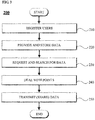
- FIG. 3 shows an example of a flowchart of a data sharing process 200.
- FIG. 3 shows a schematic process for data sharing.
- Users a provider and a receiver
- the management server 110 registers user information and hash keys in a user information blockchain.
- the management server 110 may authenticate a user who performs or requests a data providing process, a data sharing process, a point dealing process, or the like before starting the corresponding process.
- the management server 110 may perform user authentication using the user information blockchain.
- the provider provides data to the management server 110, and the management server 110 builds the data storage blockchain 150 while storing the data in the storage server 155 (220).
- the management server 110 may register metadata of the data in the metadata blockchain 140.
- the receiver requests necessary data to the management server 110.
- the management server 110 searches for the requested data (230).
- the management server 110 may search for the data using metadata.
- the management server 110 Before providing the data to the receiver, the management server 110 deals with points related to data use (240).
- the management server 110 registers details of a point transaction (point change, point transfer, point purchase, etc.) in the point information blockchain 130. For example, receiver points may be transferred to the provider through this process.
- the management server 110 provides the storage information of the requested data to the receiver.
- the receiver may receive the data from the storage server 155 using the storage information.
- the management server 110 would transmits (shares) the requested data to the receiver by providing the storage information of the requested data (250).
- data used in the process of user information registration, data storage, metadata registration, point dealing, etc. may be encrypted using a public-key method.
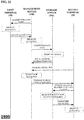
- FIG. 4 shows an example of a sequence diagram of a user information registration and authentication process 300.
- FIG. 4 shows both a user registration process and a user authentication process.
- a user terminal indicates the first terminal 10 and/or the second terminal 20.
- a provider or a receiver may be required to perform user registration in advance so as to provide or request data.
- User information PI may be input to the user terminal 10/20 (301).
- the user terminal 10/20 transmits the user information PI to the management server 110 (302).
- the management server 110 may generate a hash key.
- the management server 110 generates a hash key H k for a user who has requested generation of a hash key using the user information PI (311).
- the hash key Hk is used as an identifier of the user (the terminal) who has currently requested generation of a hash key. Therefore, the hash key Hk corresponds to user-specific unique information.
- the management server 110 generates the hash key Hk by inputting the input user information PI to a certain hash function. An algorithm or a hash function for generating a hash key may be varied.
- the management server 110 may encrypt the received user information PI (to generate PI') (312).
- the management server 110 may encrypt the user information using a public key received from the user terminal 10/20. Meanwhile, the user terminal 10/20 may transmit user information PI' encrypted with the public key to the management server 110.
- the management server 110 transfers the generated hash key H k to the user terminal 10/20 that has requested a hash key (321).
- the user terminal 10/20 stores the hash key H k in a storage medium (322).
- the management server 110 transmits user block data including the encrypted user information PI' and the hash key H k to the user information blockchain 120 (331).
- the user information blockchain 120 registers the received encrypted user information PI' and hash key H k (332).
- the management server 110 may additionally transmit the public key used for encryption to the user information blockchain 120.
- the user information blockchain 120 may additionally register the public key.
- the above-described operations 301 to 332 correspond to a user information registration process.
- User authentication may be required for a specific operation or each operation of a data sharing service. Only a user who has gone through user authentication may be allowed to proceed with subsequent operations.
- the user information PI may be input to the user terminal 10/20 (351).
- the user terminal 10/20 transmits the user information PI or the stored hash key H k thereof to the management server 110 (352).
- the management server 110 may generate the encrypted user information PI' by encrypting the received user information with the public key.
- the management server 110 inquires about user information using the received user information PI (or PI') or hash key H k (361).
- the management server 110 inquires about user information transferred to the user information blockchain 120 using the received information.
- the management server 110 transmits acquired user information or the hash key H k to the user information blockchain 120 (362).
- the user information blockchain 120 may identify user information on the basis of the received information (371). For example, the user information blockchain 120 may identify user information on the basis of the hash key H k . The user information blockchain 120 transmits the identified user information to the management server 110 (372).
- the management server 110 may perform user authentication by comparing user information PI' received from the user information blockchain 120 and the user information PI' received from the user terminal 10/20. Also, the management server 110 may generate an authentication token (381). Here, the management server 110 may encrypt the authentication token with the public key. The management server 110 transmits the user authentication token to the user terminal 10/20 (382).
- the user terminal 10/20 stores the user authentication token (383).
- the user terminal 10/20 may decrypt the encrypted user authentication token and store the decrypted user authentication token. Subsequently, the user terminal 10/20 may use the authentication token in a process of communicating with the management server 110.
- the management server 110 which requires authentication may provide specific data only to a user terminal that transfers a valid authentication token.
- a virtual account creation operation may be performed for an individual user.
- Virtual account creation involves an operation of creating an account (a wallet) of the user in the point information blockchain 130.
- Virtual account creation may employ a method which is generally used in a blockchain-based virtual currency service. The following description of FIG. 5 is based on a situation in which user-specific virtual accounts have been created.
- FIG. 5 shows an example of a sequence diagram of a point transaction process 400.
- FIG. 5 shows an example of a process of dealing with and managing a user's points.
- User point transaction information may be input to the user terminal 10/20 (401).
- the point transaction information may include information required for a point transaction.
- the point transaction information includes transaction counterparty information (user information or a hash key), purchased point information, information on point depositing and withdrawing, remaining point information, transaction amount information, and the like.
- the user terminal 10/20 transmits the point transaction information to the management server 110 (411).
- the user terminal 10/20 may encrypt the point transaction information with a public key and transmit the encrypted information.
- the management server 110 may authenticate a user who has transmitted the point transaction information (420). The subsequent process may proceed only for a user who has gone through authentication.
- the management server 110 may authenticate the user using the authentication token received from the user terminal 10/20.
- the authentication token has been described above with reference to FIG. 4 .
- the management server 110 may inquire about details of the requested point transaction (421). For example, the management server 110 may inquire about a specific block corresponding to a ledger in which details of the transaction have been recorded. The management server 110 transmits the point transaction information to the confirmed point information blockchain 130 (422).
- the point information blockchain 130 inquires about information on point transactions and registers the requested transaction information (431). For example, the point information blockchain 130 may reduce points from a ledger of a specific user (a receiver) and add points to a ledger of another user (a provider). The point information blockchain 130 records information related to the transaction details in the block. Then, the point information blockchain 130 transmits changed point transaction information to the management server 110 (432).
- the management server 110 may verify whether the transaction information received from the point information blockchain 130 and the transaction information received from the user terminal 10/20 coincide with each other (441). When the verification is successful, the management server 110 transmits the changed point transaction information to the user terminal 10/20 (442). The user terminal 10/20 stores the changed user point transaction information (451).
- FIG. 6 shows an example of a sequence diagram of a process 500 of managing metadata of data.
- FIG. 6 includes a process of registering metadata and a process of deleting metadata.
- Data may be input to the first terminal 10 (511).
- metadata of data may be input to the user terminal 10/20.
- the first terminal 10 transmits the input or acquired data or metadata to the management server 110 (512).
- the management server 110 may authenticate the user who has transmitted the data or the metadata (520). The subsequent process may proceed only for a user who has gone through authentication.
- the management server 110 may
- the authentication token has been described above with reference to FIG. 4 .
- the management server 110 may identify metadata from the data (521). When the data is received, the management server 110 may also verify whether the data conforms to a predetermined format or standard. Alternatively, the management server 110 may verify the data with a specific verification key. The verification key indicates information for verifying an electronic signature. In this case, the data is required to include an electronic signature in advance. The provider transmits the data including an electronic signature.
- the data may include information on metadata in a specific format.
- the management server 110 may extract the metadata from the data.
- the management server 110 directly receives metadata from the first terminal 10, no identification process is necessary.
- the management server 110 transmits the metadata to the metadata blockchain 140 (522).
- the metadata blockchain 140 registers the metadata related to the data as block data (531).
- the metadata registered in the metadata blockchain 140 may be used to determine whether the requested data exists.
- the process of deleting metadata is described.
- the first terminal 10 requests deletion of metadata (551).
- the first terminal 10 transmits a metadata deletion message to the management server 110 (552).
- the deletion message may include an identifier of the data, an identifier of the metadata to be deleted, a point of generation time of the metadata, and the like. Alternatively, the deletion message may include an entirety of metadata.
- the management server 110 verifies the received metadata deletion message (561).
- the management server 110 may verify the deletion message with a specific verification key. Separately from this, the management server 110 may authenticate the user who has transferred the deletion message (560). The authentication may be performed according to whether an authentication token transferred from the first terminal 10 is valid.
- the management server 110 transmits the deletion message to the metadata blockchain 140 (562).
- the metadata blockchain 140 deletes the metadata using information included in the deletion message (571). Subsequently, the metadata blockchain 140 transmits a deletion acknowledgement message to the management server 110 (581).
- the management server 110 may transmit the deletion acknowledgement message to the
- FIG. 7 shows an example of a sequence diagram of a data storage and deletion process 600.
- Data may be input to the first terminal 10 (601).
- the first terminal 10 may generate data by itself, or information generated by a third party may be input to the first terminal 10.
- the first terminal 10 may encrypt the generated data with a public key (602).
- the management server 110 may encrypt the data with the public key of the first terminal 10.
- the first terminal 10 transmits the data to the management server 110 (611).
- the management server 110 may verify the received data on the basis of certain criteria (612). For example, when the data has a specific format, the management server 110 may verify whether the data satisfies standards of the format. Alternatively, the management server 110 may verify the data using a verification key for the data.
- the management server 110 may authenticate the user who has transmitted the data (620). The subsequent process may proceed only for a user who has gone through authentication.
- the management server 110 may authenticate the user using the authentication token received from the user terminal 10/20.
- the authentication token has been described above with reference to FIG. 4 .
- the management server 110 transmits the encrypted data to the storage server 155 (621).
- the storage server 155 stores the received data (622).
- the storage server 155 may include a plurality of servers. In this case, the data may be stored in the plurality of servers in a distributed or divided manner.
- One or more servers transfer their storage information of the data to the data storage blockchain 150 (631).
- the data storage blockchain 150 registers storage information of data stored in the storage server 155 in an integrated manner (632). While each storage server 155 has only information held therein, the data storage blockchain 150 has storage information of an entirety of data.
- storage information may include an identifier of a storage server, a file name, a position at which data is stored in a storage medium of the storage server, a file size, file split information, a verification key, and the like.
- the data storage blockchain 150 transmits the data storage information to the management server 110 (641).
- the management server 110 registers the storage information of the data (642). In other words, the management server 110 has storage information of the entirety of data.
- the first terminal 10 requests data deletion (651).
- the first terminal 10 transmits a data deletion message to the management server 110 (652).
- the management server 110 verifies the deletion message (661).
- the deletion message may include a name, an identifier, etc. of data to be deleted.
- the management server 110 may verify the deletion message using a verification key. Also, the management server 110 may authenticate the user (the first terminal 10) who has transmitted the deletion message through a separate process.
- the management server 110 may authenticate the user who has transmitted the deletion message (670). The subsequent process may proceed only for a user who has gone through authentication.
- the management server 110 may authenticate the user using the authentication token received from the user terminal 10/20.
- the authentication token has been described above with reference to FIG. 4 .
- the management server 110 transmits the data deletion message to the storage server 155 (671). Since the management server 110 has the storage information, it is possible to transmit the deletion message to the storage server 155 storing the deletion target (671). The storage server 155 deletes the data requested to be deleted (681). Although not shown in FIG. 7 , the storage server 155 deletes the data and registers changed information in the data storage blockchain 150. The data storage blockchain 150 updates the storage data. The storage server 155 transmits a deletion acknowledgement message to the management server 110 (691). The management server 110 may transmit the deletion acknowledgement message to the first terminal 10 (692).
- the deletion message transmitted by the first terminal 10 may include deletion information for data and metadata of the data.
- FIG. 8 shows an example of a sequence diagram of a data search and transmission process 700.
- FIG. 8 corresponds to a process in which a receiver receives shared data.
- a data search term may be input to the second terminal 20 (711).
- the data search term may be composed of various pieces of information.
- the data search term may include an identifier of a specific target person, an identifier of a specific genome, an identifier of a specific disease, an identifier of a specific organ, a data generation time, a data update time, and the like.
- the data search term may include metadata of data.
- the second terminal 20 transmits the data search term to the management server 110 (712).
- the management server 110 may authenticate the user who has transmitted the search term (720). The subsequent process may proceed only for a user who has gone through authentication.
- the management server 110 may authenticate the user using the authentication token received from the user terminal 10/20.
- the authentication token has been described above with reference to FIG. 4 .
- the management server 110 determines whether the requested data exists in the storage server 155 first (721).
- the management server 110 may determine whether the corresponding data exists in the storage server 155 using the information included in the search term. For example, the management server 110 may determine whether the corresponding data is currently in the storage server 155 using an identifier of the data. Further, the management server 110 may determine whether the corresponding data is in the metadata blockchain 140 using the metadata included in the search term.
- the management server 110 may search information in the metadata blockchain 140 using information, such as a data generation technique, a data generation time, and a specific disease type, and determine whether there is data satisfying the corresponding conditions.
- the management server 110 inquires about points and deals with points (731). A point transaction has been described above with reference to FIG. 5 .
- the management server 110 checks whether the receiver has points in the point information blockchain 130. When the receiver has remaining points corresponding to a reward for data sharing, the management server 110 reduces the receiver's points and increases a provider of the corresponding data. Also, the management server 110 may take some of the receiver's points to a manager's account as a commission for the data relay service.
- the management server 110 identifies storage information of the requested data (741). Meanwhile, the management server 110 may identify multiple pieces of data which satisfy a search expression included in the search term and create one group with the pieces of data. In this case, the management server 110 identifies overall storage information of the pieces of data in the group. The management server 110 transmits the identified storage information to the second terminal 20 (742).
- the second terminal 20 stores the received storage information and generates a transmission request message for requesting transmission from a corresponding storage server (751).
- the transmission request message may include an identifier (an address) of the storage server, the identifier of the data, a storage position of the data, and the like.
- the second terminal 20 transmits the transmission request message to the corresponding storage server 155 (752).
- the storage server 155 identifies the requested data using the information included in the transmission request message and identifies data stored at a specific position (761).
- the storage server 155 transmits the identified data to the second terminal 20 (762).
- the second terminal 20 receives the data and decrypts the data with an encryption key (771). Therefore, the second terminal 20 may be required to acquire, in advance, the encryption key for decrypting the data which has been encrypted with a public key.
- the user information blockchain 120 may have the encryption key for a specific user.
- the second terminal 20 may acquire, in advance, the encryption key for the specific user through the management server 110.
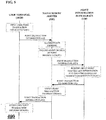
- FIG. 9 shows an example of a sequence diagram of a process of identifying data on the basis of metadata.
- a receiver wants to receive data shared by a provider, the receiver requests the data which satisfies a condition to the management server 110.
- a search term may be input to the second terminal 20 (811).
- the second terminal 20 transmits the search term to the management server 110 (812).
- the search term includes information for identifying a specific kind of data wanted by the receiver.
- the search term may include at least some of metadata of data.
- the management server 110 may authenticate the user who has transmitted the search term as described above (820). Also, the management server 110 may verify the received search term using a verification key (821). Alternatively, the management server 110 may simply verify whether the search term is composed of a valid search term which conforms to a specific format. When the authentication and the verification are successful, the management server 110 transmits the search term to the metadata blockchain 140 (822).
- the metadata blockchain 140 extracts metadata related to the received search term (831).
- the metadata blockchain 140 may extract all metadata including a specific piece of metadata. Then, the metadata blockchain 140 may transmit the extracted metadata to the management server 110 (832).
- the metadata may include an identifier of data.
- the management server 110 may identify specific pieces of data in the received metadata. Also, when multiple pieces of data are related to the search term, the management server 110 may create one group with the pieces of data (841). The management server 110 extracts storage information of the identified one or more pieces of data (842). As described above, the management server 110 has storage information of data stored in the storage server 155. In some cases, a separate server or blockchain may manage the storage information.
- the management server 110 transmits the identified storage information to the second terminal 20 (851).
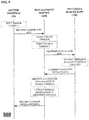
- FIG. 10 shows an example of a sequence diagram of a data sharing process including an encryption process.
- FIG. 10 corresponds to a process in which the first terminal 10 provides data and the second terminal 20 receives the provided data.
- the management server 110 transmits its own public key P s to the first terminal 10 (901).
- the first terminal 10 encrypts data using the public key P s (911).
- the first terminal 10 transmits the encrypted data to the management server 110 (912).
- the management server 110 may encrypt the data transmitted from the first terminal 10 using its own public key and proceed with the subsequent process.
- the management server 110 may verify the data using a verification key (921).
- the management server 110 transmits the encrypted data to the storage server 155 (922).
- One or more storage servers 155 store the encrypted data (931).
- a plurality of storage servers 155 may constitute the data storage blockchain 150.
- the storage servers 155 transmit storage information of the stored data to the management server 110 (932).
- the second terminal 20 requests data of interest from the management server 110 (941).
- the second terminal 20 may transmit its own public key P ue2 (941).
- the management server 110 searches for the data through the above-described process (951).
- the management server 110 may request found data from the storage servers 155 (952).
- the storage servers 155 transmit the requested data to the management server 110 (953).
- the management server 110 decrypts the received data with an encryption key corresponding to its public key P s and then may encrypt the decrypted data again with the public key P ue2 of the second terminal (961).
- the management server 110 transmits the encrypted data to the second terminal 20 (971).
- the second terminal 20 decrypts the received data with its encryption key (981).
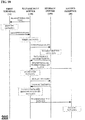
- FIG. 11 shows another example of a sequence diagram of a data sharing process including an encryption process.
- FIG. 11 corresponds to a process in which the first terminal 10 provides data and the second terminal 20 receives the provided data.
- the management server 110 transmits its own public key P s to the first terminal 10 (1001).
- the first terminal 10 encrypts data using the public key P s (1011).
- the first terminal 10 transmits the encrypted data to the management server 110 (1012).
- the management server 110 may decrypt the received data with its encryption key (1021).
- the management server 110 transmits the decrypted data to the storage server 155 (1022).
- One or more storage servers 155 store the decrypted data (1031).
- a plurality of storage servers 155 may constitute the data storage blockchain 150.
- the storage servers 155 transmit storage information of the stored data to the management server 110 (1032).
- the second terminal 20 requests data of interest from the management server 110 (1041).
- the management server 110 searches for the data through the above-described process (1051).
- the management server 110 transmits storage information of found data to the second terminal 20 (1052).
- the second terminal 20 may request the specific data from the storage servers 155 using the storage information (1061). At this time, the second terminal 20 may transmit its public key P ue2 to the storage servers 155 (1061).
- the storage servers 155 may search for the requested data and encrypt the data with the public key P ue2 (1062).
- the storage servers 155 transmit the encrypted data to the second terminal 20 (1063).
- the second terminal 20 may decrypt the received data with its encryption key (1071).
- the methods described above can be written as a computer program, a piece of code, an instruction, or some combination thereof, for independently or collectively instructing or configuring the processing device to operate as desired.
- Software and data may be embodied permanently or temporarily in any type of machine, component, physical or virtual equipment, computer storage medium or device that is capable of providing instructions or data to or being interpreted by the processing device.
- the software also may be distributed over network coupled computer systems so that the software is stored and executed in a distributed fashion.
- the software and data may be stored by one or more non-transitory computer readable recording mediums.
- the media may also include, alone or in combination with the software program instructions, data files, data structures, and the like.
- the non-transitory computer readable recording medium may include any data storage device that can store data that can be thereafter read by a computer system or processing device.
- Examples of the non-transitory computer readable recording medium include read-only memory (ROM), random-access memory (RAM), Compact Disc Read-only Memory (CD-ROMs), magnetic tapes, USBs, floppy disks, hard disks, optical recording media (e.g., CD-ROMs, or DVDs), and PC interfaces (e.g., PCI, PCI-express, WiFi, etc.).
- ROM read-only memory
- RAM random-access memory
- CD-ROMs Compact Disc Read-only Memory
- CD-ROMs Compact Disc Read-only Memory
- magnetic tapes e.g., USBs, floppy disks, hard disks
- optical recording media e.g., CD-ROMs, or DVDs
- PC interfaces e.g., PCI, PCI-express, WiFi, etc.
Landscapes
- Engineering & Computer Science (AREA)
- Business, Economics & Management (AREA)
- Accounting & Taxation (AREA)
- Finance (AREA)
- Computer Networks & Wireless Communication (AREA)
- Signal Processing (AREA)
- Computer Security & Cryptography (AREA)
- Theoretical Computer Science (AREA)
- Physics & Mathematics (AREA)
- General Physics & Mathematics (AREA)
- Strategic Management (AREA)
- Development Economics (AREA)
- General Business, Economics & Management (AREA)
- General Engineering & Computer Science (AREA)
- Marketing (AREA)
- Economics (AREA)
- Computing Systems (AREA)
- Computer Hardware Design (AREA)
- Databases & Information Systems (AREA)
- Power Engineering (AREA)
- Data Mining & Analysis (AREA)
- Entrepreneurship & Innovation (AREA)
- Game Theory and Decision Science (AREA)
- Technology Law (AREA)
- Library & Information Science (AREA)
- Financial Or Insurance-Related Operations Such As Payment And Settlement (AREA)
- Information Retrieval, Db Structures And Fs Structures Therefor (AREA)
- Storage Device Security (AREA)
Claims (15)
- Datenaustauschverfahren basierend auf mehreren Blockchains (120, 130, 140, 150) mit jeweils unterschiedlichen Funktionen zueinander, wobei das Verfahren umfasst:Erfassen mittels eines Management-Server (110), von Nutzer-Blockdaten, welche Nutzer-Information und eine Rautetaste eines jeden Nutzers mehrerer Nutzer umfassen, die einen ersten Nutzer und einen zweiten Nutzer in einer Nutzer-Informations-Blockchain (120) umfassen;Empfangen, durch den Management-Server (110), von Speicherinformation von Daten, die von dem ersten Nutzer aus einem Speicherserver (155) bereitgestellt wurde;Erfassen, durch den Management-Server (110), von Metadaten der bereitgestellten Daten in einer Metadaten-Blockchain (140);Empfangen, durch den Management-Server (110), eine Anfrage nach spezifischen Daten in den von dem zweiten Nutzer bereitgestellten Daten;Identifizieren, durch den Management-Server (110), der spezifischen Daten basierend auf einem Ergebnis eines Vergleichs von Information, die in der Anfrage enthalten war, mit den Metadaten in der Metadaten-Blockchain (140); und Übertragen, mittels des Management-Servers (110), der Speicherinformation der spezifischen Daten an den zweiten Nutzer;wobei der Management-Server (110) den ersten Nutzer und den zweiten Nutzer unter Verwendung von Information authentifiziert, die in der Nutzer-Informations-Blockchain (120) gespeichert ist, und wobei der Management-Server (110) die Speicherinformation der spezifischen Daten überträgt, wenn die Authentifizierung des zweiten Nutzers erfolgreich ist, wobei die Speicherinformation einen Identifikator des Speicherservers (155) und einen Speicherort für Daten in dem Speicherserver (155) umfasst.
- Datenaustauschverfahren nach Anspruch 1, wobei die Identifizierung der spezifischen Daten umfasst, Übertragen, mittels des Management-Servers (110), von mindestens einer der Informationsstücke, die in der Anfrage nach den Metadaten-Blockchains (140) enthalten sind, um die spezifischen Daten zu identifizieren.
- Datenaustauschverfahren nach Anspruch 1, welches weiter umfasst:
Erfassen, durch den Management-Server (110), von Details einer Punkttransaktion, die mit dem Austausch der spezifischen Daten einhergeht, in einer Punkt-Informations-Blockchain (130), welche Punkte des zweiten Nutzers und Punkte des ersten Nutzers managt. - Datenaustauschverfahren nach Anspruch 1, wobei die Speicherinformation mindestens eines umfasst von einem Identifikator der bereitgestellten Daten, einem Verifizierungsschlüssel, einer Ordnergröße und einer Ordneraufteilungs-Information..
- Datenaustauschverfahren nach Anspruch 1, welches mehrere Speicherserver (155) umfasst, und wobei die mehreren Speicherserver (155) eine Datenspeicherungs-Blockchain (150) mit der Speicherinformation der bereitgestellten Daten darstellen.
- Datenaustauschverfahren nach Anspruch 1, welches weiter umfasst:
Authentifizieren, durch den Management-Server (110), einen entsprechenden Nutzer durch Identifizieren des entsprechenden Nutzers in der Nutzer-Informations-Blockchain (120) unter Verwendung der Nutzer-Information des ersten Nutzers oder des zweiten Nutzers und Übertragen eines Authentifikationszeichens an den ersten Nutzer oder den zweiten Nutzer. - Datenaustauschverfahren basierend auf mehreren Blockchains (120, 130, 140, 150) mit jeweils unterschiedlichen Funktionen zueinander, wobei das Verfahren umfasst:Erfassen, durch einen Management-Server (110), von Nutzer-Blockdaten, die Nutzer-Informationen und eine Rautetaste eines jeden Nutzers der mehreren Nutzer umfassen, die einen ersten Nutzer und einen zweiten Nutzer in einer Nutzer-Informations-Blockchain (120) umfassen;Übertragen, durch den Management-Server (110), von Daten, die von dem ersten Nutzer bereitgestellt wurden, an eine Datenspeicher-Blockchain (150), die aus mindestens einem Speicherserver (155) zusammengesetzt ist;Empfangen, durch den Management-Server (110), von Speicherinformation der bereitgestellten Daten von dem mindestens einen Speicherserver (155);Empfangen, durch den Management-Server (110), von Identifizierungs-Information spezifischer Daten von dem zweiten Nutzer;Extrahieren, durch den Management-Server (110), von Speicherinformation der spezifischen Daten unter der vorher erhaltenen Speicherinformation basierend auf einem Ergebnis eines Vergleichs der Identifizierungs-Information mit Metadaten in einer Metadaten-Blockchain (140); undÜbertragen, durch den Management-Server (110), der extrahierten SpeicherInformation an den zweiten Nutzer;wobei der Management-Server (110) den ersten Nutzer und den zweiten Nutzer unter Verwendung von Information authentifiziert, die in der Nutzer-Informations-Blockchain (120) gespeichert ist, und wobei der Management-Server (110) die Speicherinformation der spezifischen Daten überträgt, wenn die Authentifizierung des zweiten Nutzers erfolgreich ist, wobei die Speicherinformation einen Identifikator des mindestens einen Speicherservers (155) und einen Speicherort der Daten in dem mindestens einen Speicherserver (155) umfasst.
- Datenaustauschverfahren nach Anspruch 7, wobei die Erfassung der Nutzer- Blockdaten umfasst, Empfangen, durch den Management-Server (110), von Nutzer-Information eines jeden Nutzers der mehreren Nutzer und Erzeugen einer Rautetaste unter Verwendung der empfangenen Nutzer-Information.
- Datenaustauschverfahren nach Anspruch 8, welches weiter umfasst:
Durchführen, durch den Management-Server (110), einer Nutzer-Authentifizierung durch Vergleichen von Information, die in der Nutzer Informations-Blockchain (120) gespeichert ist, und Nutzer-Information, die von den mehreren Nutzer übertragen wird. - Datenaustauschverfahren nach Anspruch 7, welches weiter umfasst:
Erfassen, durch den Management-Server (110), von Metadaten der bereitgestellten Daten in der Metadaten-Blockchain (140). - Datenaustauschverfahren nach Anspruch 10, welches weiter umfasst:
Übertragen, durch den Management-Server (110), von Information, die in der Identifizierungs-Information enthalten ist, zu der Metadaten-Blockchain (140), um die spezifischen Daten zu identifizieren. - Datenaustauschverfahren nach Anspruch 7, welches weiter umfasst:
Erfassen, durch den Management-Server (110), von Details einer Punkt-Transaktion, die den Austausch der spezifischen Daten begleiten, in einer Punkt-Informations-Blockchain (130), die Punkte der mehreren Nutzer managt. - Datenaustauschverfahren nach Anspruch 7, wobei das Extrahieren der Speicherinformation der spezifischen Daten umfasst, Identifizieren, durch den Management-Server (110), der Metadaten der spezifischen Daten, die von der Metadaten-Blockchain (140) in Antwort auf die Übertragung der Identifizierungs-Information zu der Metadaten-Blockchain (140) empfangen wurde, und Extrahieren der Speicherinformation der spezifischen Daten basierend auf den Metadaten der spezifischen Daten.
- Datenaustauschverfahren nach Anspruch 7, welches weiter umfasst:
Empfangen, durch den zweiten Nutzer, der spezifischen Daten von dem mindestens einen Speicherserver (155) unter Verwendung der Speicherinformation. - Datenaustauschverfahren nach Anspruch 7, wobei die Speicherinformation mindestens einen umfasst von einem Identifikator der bereitgestellten Daten, einem Verifizierungsschlüssel, einer Ordnergröße, und Ordner-Aufteilungs-Information.
Applications Claiming Priority (1)
| Application Number | Priority Date | Filing Date | Title |
|---|---|---|---|
| KR1020180035570A KR101893729B1 (ko) | 2018-03-28 | 2018-03-28 | 복수의 블록체인에 기반한 데이터 공유 방법 |
Publications (2)
| Publication Number | Publication Date |
|---|---|
| EP3547639A1 EP3547639A1 (de) | 2019-10-02 |
| EP3547639B1 true EP3547639B1 (de) | 2020-12-30 |
Family
ID=63862888
Family Applications (1)
| Application Number | Title | Priority Date | Filing Date |
|---|---|---|---|
| EP18212824.9A Active EP3547639B1 (de) | 2018-03-28 | 2018-12-15 | Datenaustauschverfahren basierend auf einer vielzahl von blockketten |
Country Status (6)
| Country | Link |
|---|---|
| US (1) | US10417219B1 (de) |
| EP (1) | EP3547639B1 (de) |
| JP (1) | JP6771534B2 (de) |
| KR (1) | KR101893729B1 (de) |
| CN (1) | CN110322240B (de) |
| SG (1) | SG10201810910YA (de) |
Families Citing this family (87)
| Publication number | Priority date | Publication date | Assignee | Title |
|---|---|---|---|---|
| JP2018516030A (ja) | 2015-05-05 | 2018-06-14 | ショカード、インコーポレイテッド | ブロックチェーンを使用するid管理サービス |
| EP3424179B1 (de) | 2016-03-04 | 2022-02-16 | Ping Identity Corporation | Verfahren und system für authentifizierte anmeldung mit statischen oder dynamischen codes |
| US10007826B2 (en) | 2016-03-07 | 2018-06-26 | ShoCard, Inc. | Transferring data files using a series of visual codes |
| US10509932B2 (en) | 2016-03-07 | 2019-12-17 | ShoCard, Inc. | Large data transfer using visual codes with feedback confirmation |
| CN116679845A (zh) | 2017-02-06 | 2023-09-01 | 平蛙实验室股份公司 | 触摸感测装置 |
| US10498541B2 (en) | 2017-02-06 | 2019-12-03 | ShocCard, Inc. | Electronic identification verification methods and systems |
| USRE49968E1 (en) | 2017-02-06 | 2024-05-14 | Ping Identity Corporation | Electronic identification verification methods and systems with storage of certification records to a side chain |
| EP3676694A4 (de) * | 2017-09-01 | 2021-06-09 | FlatFrog Laboratories AB | Verbesserte optische komponente |
| EP4120620A1 (de) | 2017-12-08 | 2023-01-18 | Ping Identity Corporation | Verfahren und systeme zur rückgewinnung von daten unter verwendung dynamischer passwörter |
| KR101880175B1 (ko) * | 2018-02-13 | 2018-07-19 | 주식회사 마크로젠 | 복수의 블록체인에 기반을 둔 생명정보 데이터 제공 방법, 생명정보 데이터 저장 방법 및 생명정보 데이터 전송 시스템 |
| US11567610B2 (en) | 2018-03-05 | 2023-01-31 | Flatfrog Laboratories Ab | Detection line broadening |
| TW201947406A (zh) * | 2018-05-03 | 2019-12-16 | 華東科技股份有限公司 | 資料交換群組系統及方法 |
| US11379867B2 (en) * | 2018-06-19 | 2022-07-05 | Sang Mi RYU | Method for automatically providing cryptocurrency to recommender using propagation on SNS |
| KR102224949B1 (ko) * | 2018-10-08 | 2021-03-09 | (주)허니냅스 | 의료 데이터 거래 시스템 및 그 방법 |
| US11082221B2 (en) | 2018-10-17 | 2021-08-03 | Ping Identity Corporation | Methods and systems for creating and recovering accounts using dynamic passwords |
| US10979227B2 (en) * | 2018-10-17 | 2021-04-13 | Ping Identity Corporation | Blockchain ID connect |
| WO2020080992A1 (en) | 2018-10-20 | 2020-04-23 | Flatfrog Laboratories Ab | Frame for a touch-sensitive device and tool therefor |
| KR102117537B1 (ko) * | 2018-11-16 | 2020-06-02 | 김재호 | 유언 관리를 위한 서비스 제공 시스템 및 방법 |
| KR102126891B1 (ko) * | 2018-11-30 | 2020-06-25 | 이재만 | 일정관리 서비스 제공방법 및 이를 이용한 일정관리 서비스 제공시스템 |
| KR101979161B1 (ko) * | 2018-12-03 | 2019-05-15 | 엄성민 | 블록체인을 이용한 레이블 타입 데이터 관리 기반의 ai 학습 데이터 생산성 향상 시스템 및 그 방법 |
| KR102107911B1 (ko) * | 2018-12-03 | 2020-05-07 | 엄성민 | Ai 학습 기반의 레이블 타입 데이터 자동 검수 시스템 및 그 방법 |
| CN109587241B (zh) * | 2018-12-04 | 2022-02-11 | 挖财网络技术有限公司 | 一种数据共享方法及其设备 |
| CN109614822A (zh) * | 2018-12-12 | 2019-04-12 | 北京时代远行信息科技有限公司 | 一种基于区块链的信息资源获取方法、装置及系统 |
| KR102149896B1 (ko) * | 2018-12-14 | 2020-08-31 | 건양대학교 산학협력단 | 블록체인 기반의 대기정보관리시스템 |
| US11924524B2 (en) * | 2018-12-20 | 2024-03-05 | Rovi Guides, Inc. | Metadata distribution and management via transactional blockchain technology |
| US10839411B2 (en) * | 2018-12-21 | 2020-11-17 | Noodle Technology Inc. | Validation in a decentralized network |
| KR102194631B1 (ko) * | 2019-01-11 | 2020-12-23 | 김휘영 | 블록체인을 이용한 악성링크 탐지 시스템 및 방법과, 이를 위한 컴퓨터 프로그램 |
| JP7071938B2 (ja) * | 2019-01-23 | 2022-05-19 | 株式会社日立製作所 | データベース管理サービス提供システム |
| CN110011960A (zh) * | 2019-01-23 | 2019-07-12 | 阿里巴巴集团控股有限公司 | 基于区块链的数据共享方法、系统、服务器及可读存储介质 |
| KR102297592B1 (ko) * | 2019-01-30 | 2021-09-03 | 펜타시큐리티시스템 주식회사 | 블록체인을 이용한 빅데이터 공유 방법 및 장치 |
| US11531686B2 (en) * | 2019-02-04 | 2022-12-20 | Apex Data Solutions, Llc | Computing system providing blockchain-facilitated semantic interoperability between multiple disparate systems of record (SORs) and related methods |
| US11399031B2 (en) | 2019-02-05 | 2022-07-26 | Centurylink Intellectual Property Llc | Tracking or storing of equipment configuration data using immutable ledger functionality of blockchains |
| KR102244622B1 (ko) * | 2019-02-15 | 2021-04-26 | 리걸테크 주식회사 | 데이터 관리 시스템 및 데이터 관리 방법 |
| US11061641B2 (en) * | 2019-02-28 | 2021-07-13 | Ricoh Company, Ltd. | Screen sharing system, and information processing apparatus |
| KR102330005B1 (ko) * | 2019-03-11 | 2021-11-24 | 순천향대학교 산학협력단 | 효율적인 내용 변경 및 삭제를 위한 하이브리드 블록체인 시스템 및 하이브리드 블록체인을 이용한 xgs 주입 방법 |
| KR102720693B1 (ko) * | 2019-03-20 | 2024-10-21 | 주식회사 케이티 | 블록체인 환경에서의 데이터 공유 방법 및 이를 위한 장치 |
| CN109947854B (zh) * | 2019-03-29 | 2022-04-08 | 百度在线网络技术(北京)有限公司 | 基于区块链的电子病历处理方法、装置、设备和介质 |
| US11436368B2 (en) * | 2019-04-04 | 2022-09-06 | Accenture Global Solutions Limited | Personal data management system |
| US10860731B2 (en) | 2019-04-04 | 2020-12-08 | Accenture Global Solutions Limited | Personal data ecosystems |
| WO2020209413A1 (ko) * | 2019-04-10 | 2020-10-15 | 주식회사 엘비엑스씨 | 블록 체인 기반의 이상 탐지 장치 및 방법 |
| CN110071969B (zh) * | 2019-04-17 | 2021-11-30 | 杭州云象网络技术有限公司 | 一种基于多链架构的数据安全共享方法 |
| KR102150953B1 (ko) * | 2019-05-02 | 2020-09-02 | 최윤호 | 블록체인을 이용한 리워드 제공 통합 로그인 방법 및 장치 |
| KR102374824B1 (ko) * | 2019-05-17 | 2022-03-16 | 한양대학교 산학협력단 | 자율참여, 보상 기반의 건강 정보 제공 및 증진 방법 및 장치 |
| KR102140972B1 (ko) * | 2019-05-27 | 2020-08-05 | 주식회사 아이티로 | 시나리오에 기초한 청소 서비스 및 콘텐츠 제공 방법, 장치 및 컴퓨터-판독가능 기록 매체 |
| CN112148728B (zh) * | 2019-06-28 | 2024-08-02 | 伊姆西Ip控股有限责任公司 | 用于信息处理的方法、设备和计算机程序产品 |
| US11283595B1 (en) * | 2019-08-29 | 2022-03-22 | Hiro Systems Pbc | Systems and methods for securing cached data stored off-chain in a blockchain-based network |
| KR102271201B1 (ko) | 2019-10-01 | 2021-06-30 | 숭실대학교산학협력단 | 블록체인을 이용한 개인정보 관리 방법 및 그 방법이 적용된 블록체인 네트워크 관리자 |
| CN111078638B (zh) * | 2019-10-21 | 2023-04-07 | 支付宝(杭州)信息技术有限公司 | 电子资源处理方法、装置、介质及服务器 |
| US12056316B2 (en) | 2019-11-25 | 2024-08-06 | Flatfrog Laboratories Ab | Touch-sensing apparatus |
| CN111028108B (zh) * | 2019-12-16 | 2022-05-31 | 重庆锐云科技有限公司 | 一种房地产经纪人的信用标的系统 |
| CN114846471A (zh) | 2019-12-26 | 2022-08-02 | 松下电器(美国)知识产权公司 | 数据流通方法、程序及数据流通系统 |
| US12099997B1 (en) | 2020-01-31 | 2024-09-24 | Steven Mark Hoffberg | Tokenized fungible liabilities |
| EP4100822A4 (de) | 2020-02-08 | 2024-02-28 | FlatFrog Laboratories AB | Berührungsgerät mit interaktionen mit niedriger latenzzeit |
| CN121614054A (zh) | 2020-02-10 | 2026-03-06 | 平蛙实验室股份公司 | 触摸感测设备和制造触摸感测设备的框架元件的方法 |
| CN110931093B (zh) * | 2020-02-18 | 2020-06-16 | 支付宝(杭州)信息技术有限公司 | 医疗信息共享系统及方法 |
| CN111311325B (zh) * | 2020-02-18 | 2023-06-20 | 火天股份有限公司 | 一种基于区块链技术的债务承兑共享管理运营模式 |
| CN111371863B (zh) * | 2020-02-25 | 2023-05-26 | 常州三泰科技有限公司 | 基于联盟链技术的化学数据存储、共享平台及方法 |
| KR102351050B1 (ko) | 2020-03-11 | 2022-01-13 | (주)소셜인프라테크 | 블록체인 기반 전자 합의 문서를 이용한 그룹 전산 관리 시스템 |
| CN111339206B (zh) * | 2020-03-11 | 2023-07-18 | 建信金融科技有限责任公司 | 一种基于区块链的数据共享方法和装置 |
| KR102904122B1 (ko) | 2020-03-17 | 2025-12-26 | 삼성전자주식회사 | 전자 장치 및 그 제어 방법 |
| KR102294918B1 (ko) * | 2020-04-21 | 2021-08-27 | 이니그마(주) | 복수의 블록체인에 기반을 둔 메시지 전송채널 자동선택 및 메시지 중복 제거 시스템 및 방법 |
| CN111339106B (zh) | 2020-05-18 | 2020-08-28 | 杭州趣链科技有限公司 | 一种区块链数据索引的方法 |
| EP3923173A1 (de) * | 2020-06-10 | 2021-12-15 | Christian Hieronimi | Verfahren und vorrichtungen zum speichern von informationen in einer verteilten ledger-datenbank |
| KR102337677B1 (ko) | 2020-07-16 | 2021-12-09 | (주)휴먼스케이프 | 디지털 검증 지문 삽입 시스템 및 그 방법 |
| KR102337673B1 (ko) | 2020-07-16 | 2021-12-09 | (주)휴먼스케이프 | 데이터 열람 검증 시스템 및 그 방법 |
| US11860856B2 (en) * | 2020-07-20 | 2024-01-02 | International Business Machines Corporation | Managing distributed ledger storage space |
| JP7403406B2 (ja) | 2020-07-30 | 2023-12-22 | 株式会社日立製作所 | データ利活用システムにおけるデータ提供方法 |
| KR102256912B1 (ko) * | 2020-08-07 | 2021-05-27 | 이근우 | 블록체인 네트워크를 구성하고 있는 복수의 노드 장치들과 연동하여 실시간 리서치를 수행하는 리서치 관리 서버 및 그 동작 방법 |
| CN112163191A (zh) * | 2020-09-15 | 2021-01-01 | 广东工业大学 | 一种基于国密区块链的教育资源共享方法及系统 |
| KR20220039349A (ko) * | 2020-09-22 | 2022-03-29 | 이호준 | 블록체인을 기반으로 하는 유전자 정보 거래 시스템 및 그 방법 |
| CN112511599B (zh) * | 2020-11-10 | 2023-03-24 | 南京莱斯信息技术股份有限公司 | 一种基于区块链的人防数据共享系统及方法 |
| CN112381650B (zh) * | 2020-11-18 | 2024-02-27 | 西安纸贵互联网科技有限公司 | 跨链互操作的交易处理方法、装置、电子设备和存储介质 |
| KR102279377B1 (ko) * | 2020-11-24 | 2021-07-20 | 주식회사 엔젠바이오 | 블록체인을 이용한 개인 권한 기반의 의료 정보 제공 시스템 |
| CN112527912B (zh) * | 2021-02-07 | 2021-06-01 | 腾讯科技(深圳)有限公司 | 基于区块链网络的数据处理方法、装置及计算机设备 |
| US11170130B1 (en) | 2021-04-08 | 2021-11-09 | Aster Key, LLC | Apparatus, systems and methods for storing user profile data on a distributed database for anonymous verification |
| CN113518129B (zh) * | 2021-07-23 | 2023-09-12 | 广东电网有限责任公司 | 一种电力能源互联共享的方法及装置 |
| KR102683659B1 (ko) * | 2021-11-01 | 2024-07-09 | 엘지전자 주식회사 | 블록체인 상의 제어 매뉴얼을 이용하여 가전제품의 기능을 향상시키는 방법 및 이를 구현하는 서버 |
| KR102691915B1 (ko) * | 2021-11-04 | 2024-08-05 | (주)아이티아이즈 | 디지털 헬스케어 플랫폼 제공 방법 및 시스템 |
| JP7403868B2 (ja) * | 2022-02-18 | 2023-12-25 | 株式会社ゼロワン | 個人情報管理システム |
| JP7713412B2 (ja) * | 2022-03-07 | 2025-07-25 | 株式会社日立ソリューションズ | コンテンツ保護システム |
| WO2023181880A1 (ja) * | 2022-03-25 | 2023-09-28 | テルモ株式会社 | 情報処理方法、プログラム及び情報処理装置 |
| US20230328050A1 (en) * | 2022-04-08 | 2023-10-12 | Micro Focus Llc | Using authentication credentials to validate blockchain additions |
| CN114708041A (zh) * | 2022-05-16 | 2022-07-05 | 北京共识数信科技有限公司 | 一种基于积分激励的行业数据共享方法、系统和存储介质 |
| US20240070316A1 (en) * | 2022-08-31 | 2024-02-29 | Snickerdoodle Labs, Inc. | Techniques for providing a privacy-based data sharing protocol |
| KR102501897B1 (ko) * | 2022-10-31 | 2023-03-03 | 주식회사 에이아이플랫폼 | 의료 데이터 판매 플랫폼 |
| JP7597422B1 (ja) | 2024-01-12 | 2024-12-10 | 株式会社サンクスネット | 健康医療情報管理システム |
| CN118245458B (zh) * | 2024-05-29 | 2024-08-09 | 苏州元脑智能科技有限公司 | 基于区块链的共享数据处理方法、系统、设备和产品 |
Family Cites Families (19)
| Publication number | Priority date | Publication date | Assignee | Title |
|---|---|---|---|---|
| JP2003338814A (ja) * | 2002-05-20 | 2003-11-28 | Canon Inc | 通信システム、管理サーバおよびその制御方法ならびにプログラム |
| US7363651B2 (en) * | 2002-09-13 | 2008-04-22 | Sun Microsystems, Inc. | System for digital content access control |
| US20080147821A1 (en) * | 2006-12-19 | 2008-06-19 | Dietrich Bradley W | Managed peer-to-peer content backup service system and method using dynamic content dispersal to plural storage nodes |
| KR101661930B1 (ko) * | 2015-08-03 | 2016-10-05 | 주식회사 코인플러그 | 블록체인을 기반으로 하는 공인인증서 발급시스템 |
| US10114969B1 (en) * | 2015-08-04 | 2018-10-30 | Jordan White Chaney | Ultra-secure blockchain-based electronic information transfer system |
| US10402792B2 (en) * | 2015-08-13 | 2019-09-03 | The Toronto-Dominion Bank | Systems and method for tracking enterprise events using hybrid public-private blockchain ledgers |
| KR101720268B1 (ko) | 2015-10-26 | 2017-03-27 | (주)아이알엠 | 환자정보 보호를 위한 의료영상의 클라우드 데이터베이스 구축 및 판독 방법 |
| WO2017134281A1 (en) * | 2016-02-04 | 2017-08-10 | Nasdaq Technology Ab | Systems and methods for storing and sharing transactional data using distributed computer systems |
| US20170228371A1 (en) * | 2016-02-05 | 2017-08-10 | Manifold Technology, Inc. | Blockchain-enhanced database |
| KR101763827B1 (ko) | 2016-04-07 | 2017-08-02 | 주식회사 라이프시맨틱스 | 블록체인 기반 의료데이터전송시스템, 방법 및 프로그램 |
| US10333705B2 (en) * | 2016-04-30 | 2019-06-25 | Civic Technologies, Inc. | Methods and apparatus for providing attestation of information using a centralized or distributed ledger |
| JP6628188B2 (ja) * | 2016-05-10 | 2020-01-08 | 日本電信電話株式会社 | 決済システム、決済方法、トランザクション生成装置及びトランザクション生成プログラム |
| US20170344988A1 (en) * | 2016-05-24 | 2017-11-30 | Ubs Ag | System and method for facilitating blockchain-based validation |
| KR20180003113A (ko) | 2016-06-30 | 2018-01-09 | 주식회사 케이티 | 서버, 디바이스 및 이에 의한 사용자 인증 방법 |
| KR101950912B1 (ko) | 2016-08-01 | 2019-02-21 | 서강대학교산학협력단 | 블록체인 기반 트랜잭션 검증 시스템 및 그 방법 |
| US11631077B2 (en) * | 2017-01-17 | 2023-04-18 | HashLynx Inc. | System for facilitating secure electronic communications between entities and processing resource transfers |
| US10225078B2 (en) * | 2017-02-09 | 2019-03-05 | International Business Machines Corporation | Managing a database management system using a blockchain database |
| US10176308B2 (en) * | 2017-04-28 | 2019-01-08 | Accenture Global Solutions Limited | Entitlement management system |
| CN107181599B (zh) * | 2017-07-18 | 2020-01-21 | 天津理工大学 | 基于区块链的路由位置数据保密存储及共享方法 |
-
2018
- 2018-03-28 KR KR1020180035570A patent/KR101893729B1/ko active Active
- 2018-12-05 SG SG10201810910Y patent/SG10201810910YA/en unknown
- 2018-12-11 JP JP2018231812A patent/JP6771534B2/ja active Active
- 2018-12-14 CN CN201811533720.9A patent/CN110322240B/zh active Active
- 2018-12-15 EP EP18212824.9A patent/EP3547639B1/de active Active
- 2018-12-17 US US16/222,332 patent/US10417219B1/en active Active
Also Published As
| Publication number | Publication date |
|---|---|
| US20190303362A1 (en) | 2019-10-03 |
| JP6771534B2 (ja) | 2020-10-21 |
| US10417219B1 (en) | 2019-09-17 |
| EP3547639A1 (de) | 2019-10-02 |
| CN110322240A (zh) | 2019-10-11 |
| CN110322240B (zh) | 2025-01-14 |
| JP2019176458A (ja) | 2019-10-10 |
| SG10201810910YA (en) | 2019-10-30 |
| KR101893729B1 (ko) | 2018-10-04 |
Similar Documents
| Publication | Publication Date | Title |
|---|---|---|
| US10417219B1 (en) | Data sharing method based on plurality of blockchains | |
| EP3525212B1 (de) | Verfahren zur bereitstellung von bioinformationsdaten basierend auf mehreren blockchains | |
| US12580910B2 (en) | Synthetic genomic variant-based secure transaction devices, systems and methods | |
| US20230306425A1 (en) | Data usage method, system, and program thereof employing blockchain network (bcn) | |
| US10484178B2 (en) | Systems and methods for providing a universal decentralized solution for verification of users with cross-verification features | |
| CN114026823A (zh) | 用于处理匿名数据的计算机系统及其操作方法 | |
| EP4029190B1 (de) | Genetische daten in transaktionen | |
| KR20210133473A (ko) | 블록체인과 피케이아이기술을 이용한 개인의료기록 공유방법 | |
| US20230317224A1 (en) | Patient specified health record on blockchain | |
| JP7403868B2 (ja) | 個人情報管理システム | |
| JP7279760B2 (ja) | 情報処理システム、情報処理装置及びプログラム | |
| WO2019209291A1 (en) | Systems and methods for providing a universal decentralized solution for verification of users with cross-verification features | |
| KR102350614B1 (ko) | 블록체인 레지스트리를 이용한 건강데이터 교류 시스템 및 방법과 이를 수행하기 위한 프로그램을 기록한 기록매체 | |
| KR20220144671A (ko) | 허가형 블록체인에 기반하여 암 검진 데이터를 공유하기 위한 방법 및 장치 | |
| KR20240135975A (ko) | Did 기반의 마이데이터 저장 및 공유 시스템 | |
| Jagadamba et al. | Adaptive electronic health records management and secure distribution using blockchain | |
| KR102564730B1 (ko) | 바이오 키 기반의 개인정보 획득 방법 및 장치 | |
| US20260134427A1 (en) | Data Usage Method, System, and Program Thereof Employing Blockchain Network (BCN) | |
| EP3629274A1 (de) | Intelligente vertragsbasierte bestellung von medizinischen verfahren | |
| KR20240014317A (ko) | 개인서명 데이터에 대한 nft 발행을 통한 개인서명의 소유권 증명 시스템 | |
| JP2022137888A (ja) | 患者追跡調査支援システム、患者追跡調査支援方法、支援制御装置、端末装置およびプログラム |
Legal Events
| Date | Code | Title | Description |
|---|---|---|---|
| PUAI | Public reference made under article 153(3) epc to a published international application that has entered the european phase |
Free format text: ORIGINAL CODE: 0009012 |
|
| STAA | Information on the status of an ep patent application or granted ep patent |
Free format text: STATUS: THE APPLICATION HAS BEEN PUBLISHED |
|
| AK | Designated contracting states |
Kind code of ref document: A1 Designated state(s): AL AT BE BG CH CY CZ DE DK EE ES FI FR GB GR HR HU IE IS IT LI LT LU LV MC MK MT NL NO PL PT RO RS SE SI SK SM TR |
|
| AX | Request for extension of the european patent |
Extension state: BA ME |
|
| STAA | Information on the status of an ep patent application or granted ep patent |
Free format text: STATUS: REQUEST FOR EXAMINATION WAS MADE |
|
| 17P | Request for examination filed |
Effective date: 20200401 |
|
| RBV | Designated contracting states (corrected) |
Designated state(s): AL AT BE BG CH CY CZ DE DK EE ES FI FR GB GR HR HU IE IS IT LI LT LU LV MC MK MT NL NO PL PT RO RS SE SI SK SM TR |
|
| GRAP | Despatch of communication of intention to grant a patent |
Free format text: ORIGINAL CODE: EPIDOSNIGR1 |
|
| STAA | Information on the status of an ep patent application or granted ep patent |
Free format text: STATUS: GRANT OF PATENT IS INTENDED |
|
| INTG | Intention to grant announced |
Effective date: 20200713 |
|
| GRAS | Grant fee paid |
Free format text: ORIGINAL CODE: EPIDOSNIGR3 |
|
| GRAA | (expected) grant |
Free format text: ORIGINAL CODE: 0009210 |
|
| STAA | Information on the status of an ep patent application or granted ep patent |
Free format text: STATUS: THE PATENT HAS BEEN GRANTED |
|
| AK | Designated contracting states |
Kind code of ref document: B1 Designated state(s): AL AT BE BG CH CY CZ DE DK EE ES FI FR GB GR HR HU IE IS IT LI LT LU LV MC MK MT NL NO PL PT RO RS SE SI SK SM TR |
|
| REG | Reference to a national code |
Ref country code: GB Ref legal event code: FG4D |
|
| REG | Reference to a national code |
Ref country code: AT Ref legal event code: REF Ref document number: 1351071 Country of ref document: AT Kind code of ref document: T Effective date: 20210115 |
|
| REG | Reference to a national code |
Ref country code: DE Ref legal event code: R096 Ref document number: 602018011329 Country of ref document: DE |
|
| REG | Reference to a national code |
Ref country code: IE Ref legal event code: FG4D |
|
| PG25 | Lapsed in a contracting state [announced via postgrant information from national office to epo] |
Ref country code: GR Free format text: LAPSE BECAUSE OF FAILURE TO SUBMIT A TRANSLATION OF THE DESCRIPTION OR TO PAY THE FEE WITHIN THE PRESCRIBED TIME-LIMIT Effective date: 20210331 Ref country code: NO Free format text: LAPSE BECAUSE OF FAILURE TO SUBMIT A TRANSLATION OF THE DESCRIPTION OR TO PAY THE FEE WITHIN THE PRESCRIBED TIME-LIMIT Effective date: 20210330 Ref country code: RS Free format text: LAPSE BECAUSE OF FAILURE TO SUBMIT A TRANSLATION OF THE DESCRIPTION OR TO PAY THE FEE WITHIN THE PRESCRIBED TIME-LIMIT Effective date: 20201230 Ref country code: FI Free format text: LAPSE BECAUSE OF FAILURE TO SUBMIT A TRANSLATION OF THE DESCRIPTION OR TO PAY THE FEE WITHIN THE PRESCRIBED TIME-LIMIT Effective date: 20201230 |
|
| REG | Reference to a national code |
Ref country code: AT Ref legal event code: MK05 Ref document number: 1351071 Country of ref document: AT Kind code of ref document: T Effective date: 20201230 |
|
| PG25 | Lapsed in a contracting state [announced via postgrant information from national office to epo] |
Ref country code: LV Free format text: LAPSE BECAUSE OF FAILURE TO SUBMIT A TRANSLATION OF THE DESCRIPTION OR TO PAY THE FEE WITHIN THE PRESCRIBED TIME-LIMIT Effective date: 20201230 Ref country code: SE Free format text: LAPSE BECAUSE OF FAILURE TO SUBMIT A TRANSLATION OF THE DESCRIPTION OR TO PAY THE FEE WITHIN THE PRESCRIBED TIME-LIMIT Effective date: 20201230 Ref country code: BG Free format text: LAPSE BECAUSE OF FAILURE TO SUBMIT A TRANSLATION OF THE DESCRIPTION OR TO PAY THE FEE WITHIN THE PRESCRIBED TIME-LIMIT Effective date: 20210330 |
|
| REG | Reference to a national code |
Ref country code: NL Ref legal event code: MP Effective date: 20201230 |
|
| PG25 | Lapsed in a contracting state [announced via postgrant information from national office to epo] |
Ref country code: HR Free format text: LAPSE BECAUSE OF FAILURE TO SUBMIT A TRANSLATION OF THE DESCRIPTION OR TO PAY THE FEE WITHIN THE PRESCRIBED TIME-LIMIT Effective date: 20201230 |
|
| REG | Reference to a national code |
Ref country code: LT Ref legal event code: MG9D |
|
| PG25 | Lapsed in a contracting state [announced via postgrant information from national office to epo] |
Ref country code: SK Free format text: LAPSE BECAUSE OF FAILURE TO SUBMIT A TRANSLATION OF THE DESCRIPTION OR TO PAY THE FEE WITHIN THE PRESCRIBED TIME-LIMIT Effective date: 20201230 Ref country code: CZ Free format text: LAPSE BECAUSE OF FAILURE TO SUBMIT A TRANSLATION OF THE DESCRIPTION OR TO PAY THE FEE WITHIN THE PRESCRIBED TIME-LIMIT Effective date: 20201230 Ref country code: EE Free format text: LAPSE BECAUSE OF FAILURE TO SUBMIT A TRANSLATION OF THE DESCRIPTION OR TO PAY THE FEE WITHIN THE PRESCRIBED TIME-LIMIT Effective date: 20201230 Ref country code: RO Free format text: LAPSE BECAUSE OF FAILURE TO SUBMIT A TRANSLATION OF THE DESCRIPTION OR TO PAY THE FEE WITHIN THE PRESCRIBED TIME-LIMIT Effective date: 20201230 Ref country code: PT Free format text: LAPSE BECAUSE OF FAILURE TO SUBMIT A TRANSLATION OF THE DESCRIPTION OR TO PAY THE FEE WITHIN THE PRESCRIBED TIME-LIMIT Effective date: 20210430 Ref country code: LT Free format text: LAPSE BECAUSE OF FAILURE TO SUBMIT A TRANSLATION OF THE DESCRIPTION OR TO PAY THE FEE WITHIN THE PRESCRIBED TIME-LIMIT Effective date: 20201230 |
|
| PG25 | Lapsed in a contracting state [announced via postgrant information from national office to epo] |
Ref country code: PL Free format text: LAPSE BECAUSE OF FAILURE TO SUBMIT A TRANSLATION OF THE DESCRIPTION OR TO PAY THE FEE WITHIN THE PRESCRIBED TIME-LIMIT Effective date: 20201230 Ref country code: AT Free format text: LAPSE BECAUSE OF FAILURE TO SUBMIT A TRANSLATION OF THE DESCRIPTION OR TO PAY THE FEE WITHIN THE PRESCRIBED TIME-LIMIT Effective date: 20201230 |
|
| PG25 | Lapsed in a contracting state [announced via postgrant information from national office to epo] |
Ref country code: IS Free format text: LAPSE BECAUSE OF FAILURE TO SUBMIT A TRANSLATION OF THE DESCRIPTION OR TO PAY THE FEE WITHIN THE PRESCRIBED TIME-LIMIT Effective date: 20210430 |
|
| REG | Reference to a national code |
Ref country code: DE Ref legal event code: R097 Ref document number: 602018011329 Country of ref document: DE |
|
| PG25 | Lapsed in a contracting state [announced via postgrant information from national office to epo] |
Ref country code: IT Free format text: LAPSE BECAUSE OF FAILURE TO SUBMIT A TRANSLATION OF THE DESCRIPTION OR TO PAY THE FEE WITHIN THE PRESCRIBED TIME-LIMIT Effective date: 20201230 Ref country code: AL Free format text: LAPSE BECAUSE OF FAILURE TO SUBMIT A TRANSLATION OF THE DESCRIPTION OR TO PAY THE FEE WITHIN THE PRESCRIBED TIME-LIMIT Effective date: 20201230 |
|
| PLBE | No opposition filed within time limit |
Free format text: ORIGINAL CODE: 0009261 |
|
| STAA | Information on the status of an ep patent application or granted ep patent |
Free format text: STATUS: NO OPPOSITION FILED WITHIN TIME LIMIT |
|
| REG | Reference to a national code |
Ref country code: DE Ref legal event code: R079 Ref document number: 602018011329 Country of ref document: DE Free format text: PREVIOUS MAIN CLASS: H04L0029060000 Ipc: H04L0065000000 |
|
| PG25 | Lapsed in a contracting state [announced via postgrant information from national office to epo] |
Ref country code: DK Free format text: LAPSE BECAUSE OF FAILURE TO SUBMIT A TRANSLATION OF THE DESCRIPTION OR TO PAY THE FEE WITHIN THE PRESCRIBED TIME-LIMIT Effective date: 20201230 |
|
| 26N | No opposition filed |
Effective date: 20211001 |
|
| PG25 | Lapsed in a contracting state [announced via postgrant information from national office to epo] |
Ref country code: ES Free format text: LAPSE BECAUSE OF FAILURE TO SUBMIT A TRANSLATION OF THE DESCRIPTION OR TO PAY THE FEE WITHIN THE PRESCRIBED TIME-LIMIT Effective date: 20201230 |
|
| PG25 | Lapsed in a contracting state [announced via postgrant information from national office to epo] |
Ref country code: SI Free format text: LAPSE BECAUSE OF FAILURE TO SUBMIT A TRANSLATION OF THE DESCRIPTION OR TO PAY THE FEE WITHIN THE PRESCRIBED TIME-LIMIT Effective date: 20201230 |
|
| PG25 | Lapsed in a contracting state [announced via postgrant information from national office to epo] |
Ref country code: IS Free format text: LAPSE BECAUSE OF FAILURE TO SUBMIT A TRANSLATION OF THE DESCRIPTION OR TO PAY THE FEE WITHIN THE PRESCRIBED TIME-LIMIT Effective date: 20210430 |
|
| PG25 | Lapsed in a contracting state [announced via postgrant information from national office to epo] |
Ref country code: MC Free format text: LAPSE BECAUSE OF FAILURE TO SUBMIT A TRANSLATION OF THE DESCRIPTION OR TO PAY THE FEE WITHIN THE PRESCRIBED TIME-LIMIT Effective date: 20201230 |
|
| REG | Reference to a national code |
Ref country code: CH Ref legal event code: PL |
|
| REG | Reference to a national code |
Ref country code: BE Ref legal event code: MM Effective date: 20211231 |
|
| PG25 | Lapsed in a contracting state [announced via postgrant information from national office to epo] |
Ref country code: LU Free format text: LAPSE BECAUSE OF NON-PAYMENT OF DUE FEES Effective date: 20211215 Ref country code: IE Free format text: LAPSE BECAUSE OF NON-PAYMENT OF DUE FEES Effective date: 20211215 |
|
| PG25 | Lapsed in a contracting state [announced via postgrant information from national office to epo] |
Ref country code: BE Free format text: LAPSE BECAUSE OF NON-PAYMENT OF DUE FEES Effective date: 20211231 |
|
| PG25 | Lapsed in a contracting state [announced via postgrant information from national office to epo] |
Ref country code: LI Free format text: LAPSE BECAUSE OF NON-PAYMENT OF DUE FEES Effective date: 20211231 Ref country code: CH Free format text: LAPSE BECAUSE OF NON-PAYMENT OF DUE FEES Effective date: 20211231 |
|
| P01 | Opt-out of the competence of the unified patent court (upc) registered |
Effective date: 20230519 |
|
| PG25 | Lapsed in a contracting state [announced via postgrant information from national office to epo] |
Ref country code: NL Free format text: LAPSE BECAUSE OF NON-PAYMENT OF DUE FEES Effective date: 20201230 Ref country code: CY Free format text: LAPSE BECAUSE OF FAILURE TO SUBMIT A TRANSLATION OF THE DESCRIPTION OR TO PAY THE FEE WITHIN THE PRESCRIBED TIME-LIMIT Effective date: 20201230 |
|
| PG25 | Lapsed in a contracting state [announced via postgrant information from national office to epo] |
Ref country code: SM Free format text: LAPSE BECAUSE OF FAILURE TO SUBMIT A TRANSLATION OF THE DESCRIPTION OR TO PAY THE FEE WITHIN THE PRESCRIBED TIME-LIMIT Effective date: 20201230 Ref country code: HU Free format text: LAPSE BECAUSE OF FAILURE TO SUBMIT A TRANSLATION OF THE DESCRIPTION OR TO PAY THE FEE WITHIN THE PRESCRIBED TIME-LIMIT; INVALID AB INITIO Effective date: 20181215 |
|
| PG25 | Lapsed in a contracting state [announced via postgrant information from national office to epo] |
Ref country code: MK Free format text: LAPSE BECAUSE OF FAILURE TO SUBMIT A TRANSLATION OF THE DESCRIPTION OR TO PAY THE FEE WITHIN THE PRESCRIBED TIME-LIMIT Effective date: 20201230 |
|
| REG | Reference to a national code |
Ref country code: DE Ref legal event code: R082 Ref document number: 602018011329 Country of ref document: DE Representative=s name: STRAUS, ALEXANDER, DIPL.-CHEM.UNIV. DR.PHIL., DE |
|
| PG25 | Lapsed in a contracting state [announced via postgrant information from national office to epo] |
Ref country code: MT Free format text: LAPSE BECAUSE OF FAILURE TO SUBMIT A TRANSLATION OF THE DESCRIPTION OR TO PAY THE FEE WITHIN THE PRESCRIBED TIME-LIMIT Effective date: 20201230 |
|
| PGFP | Annual fee paid to national office [announced via postgrant information from national office to epo] |
Ref country code: DE Payment date: 20241210 Year of fee payment: 7 |
|
| PGFP | Annual fee paid to national office [announced via postgrant information from national office to epo] |
Ref country code: GB Payment date: 20241122 Year of fee payment: 7 |
|
| PGFP | Annual fee paid to national office [announced via postgrant information from national office to epo] |
Ref country code: FR Payment date: 20241224 Year of fee payment: 7 |
|
| PG25 | Lapsed in a contracting state [announced via postgrant information from national office to epo] |
Ref country code: TR Free format text: LAPSE BECAUSE OF FAILURE TO SUBMIT A TRANSLATION OF THE DESCRIPTION OR TO PAY THE FEE WITHIN THE PRESCRIBED TIME-LIMIT Effective date: 20201230 |