EP3531275B1 - Verfahren, vorrichtung und system zum schutz des gehörs - Google Patents
Verfahren, vorrichtung und system zum schutz des gehörs Download PDFInfo
- Publication number
- EP3531275B1 EP3531275B1 EP17862182.7A EP17862182A EP3531275B1 EP 3531275 B1 EP3531275 B1 EP 3531275B1 EP 17862182 A EP17862182 A EP 17862182A EP 3531275 B1 EP3531275 B1 EP 3531275B1
- Authority
- EP
- European Patent Office
- Prior art keywords
- heard
- duration
- volume
- sound
- ambient noise
- Prior art date
- Legal status (The legal status is an assumption and is not a legal conclusion. Google has not performed a legal analysis and makes no representation as to the accuracy of the status listed.)
- Active
Links
Images


Classifications
-
- G—PHYSICS
- G06—COMPUTING OR CALCULATING; COUNTING
- G06F—ELECTRIC DIGITAL DATA PROCESSING
- G06F3/00—Input arrangements for transferring data to be processed into a form capable of being handled by the computer; Output arrangements for transferring data from processing unit to output unit, e.g. interface arrangements
- G06F3/16—Sound input; Sound output
- G06F3/165—Management of the audio stream, e.g. setting of volume, audio stream path
-
- G—PHYSICS
- G06—COMPUTING OR CALCULATING; COUNTING
- G06F—ELECTRIC DIGITAL DATA PROCESSING
- G06F3/00—Input arrangements for transferring data to be processed into a form capable of being handled by the computer; Output arrangements for transferring data from processing unit to output unit, e.g. interface arrangements
- G06F3/16—Sound input; Sound output
-
- H—ELECTRICITY
- H03—ELECTRONIC CIRCUITRY
- H03G—CONTROL OF AMPLIFICATION
- H03G3/00—Gain control in amplifiers or frequency changers
- H03G3/20—Automatic control
- H03G3/30—Automatic control in amplifiers having semiconductor devices
- H03G3/32—Automatic control in amplifiers having semiconductor devices the control being dependent upon ambient noise level or sound level
-
- H—ELECTRICITY
- H04—ELECTRIC COMMUNICATION TECHNIQUE
- H04R—LOUDSPEAKERS, MICROPHONES, GRAMOPHONE PICK-UPS OR LIKE ACOUSTIC ELECTROMECHANICAL TRANSDUCERS; ELECTRIC HEARING AIDS; PUBLIC ADDRESS SYSTEMS
- H04R3/00—Circuits for transducers
-
- H—ELECTRICITY
- H04—ELECTRIC COMMUNICATION TECHNIQUE
- H04R—LOUDSPEAKERS, MICROPHONES, GRAMOPHONE PICK-UPS OR LIKE ACOUSTIC ELECTROMECHANICAL TRANSDUCERS; ELECTRIC HEARING AIDS; PUBLIC ADDRESS SYSTEMS
- H04R2430/00—Signal processing covered by H04R, not provided for in its groups
- H04R2430/01—Aspects of volume control, not necessarily automatic, in sound systems
Definitions
- the application relates to the field of mobile communication technologies, and in particular to a hearing protection method, a hearing protection apparatus and a hearing protection system.
- handheld smart devices such as tablets and smart phones have brought great convenience to people's lives and entertainment.
- the functions of the existing smart devices are not limited to entertainment, leisure, query materials, etc.
- More and more smart devices also have functions focusing on health, medical care, and sports monitoring.
- most smart devices currently focus on the monitoring of the user's heart rate, exercise volume and sleep quality, but lack the monitoring and protection mechanism for the user's ear hearing.
- the hearing protection method generally adopts a prompting method for prompting the user that the current volume is too large, to remind the user to perform volume adjustment, see for example European patent application EP1816892A1 .
- This prompting manner is single, and cannot effectively adapt to the needs of specific users.
- the embodiments of the present application provide a hearing protection method, a device, and a system, to solve the problem that in current hearing protection method the user is only prompted that the current volume is too large, the prompt mode is single and cannot effectively adapt to the requirements of the specific user.
- an embodiment of the present invention provides a hearing protection method including:
- an embodiment of the present invention provides a hearing protection apparatus including a command receiver unit, a data collection unit and a central processing unit, where:
- the start command input by the user is received by the hearing protection apparatus to activate the hearing protection mode; the sound data in multiple dimensions is collected and whether the sound data in any of the dimensions is within a corresponding preset threshold is determined; and corresponding prompt information is sent when the sound data in any of the dimensions exceeds the corresponding preset threshold
- various prompting manners are provided to remind the user to make corresponding adjustments, thereby achieving the purpose of hearing protection, and effectively adapting to the needs of specific users.
- the size of the sequence numbers of the processes does not mean the order of execution sequence, and the execution order of each process should be determined by its function and internal logic, and the sequence numbers should not form any limit to the implementation processes of the embodiments of the present application.
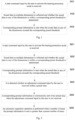
- FIG. 1 is a flowchart showing an implementation process of a hearing protection method according to Embodiment 1 of the present invention, which is described in detail as follows:
- step S101 a start command input by the user to activate the hearing protection mode is received.
- an operation button for a start command is displayed on the screen of the device, and when the user clicks, double-clicks or sliding touches the operation button the hearing protection mode is activated.
- the user can alternatively use voice to activate the hearing protection mode, which is not limited here.
- step S102 sound data in multiple dimensions is collected and whether the sound data in any of the dimensions is within a corresponding preset threshold is determined.
- the sound data in multiple dimensions includes a device-played sound volume, an ambient noise volume, and a heard sound duration.
- the preset threshold corresponding to the device-played sound volume is a preset volume threshold
- the preset threshold corresponding to the noise volume is a preset noise threshold
- the sound data in any of the dimensions is set with one or more preset thresholds.
- the preset time threshold corresponding to the heard sound duration is a preset threshold interval
- the preset threshold interval is a set of different time thresholds set by noise volume ranges which are divided according to the ambient noise volume, a number of the time thresholds being consistent with a total number of the divided noise volume ranges.
- the ambient noise volume of 60 dB or less is divided into a noise interval, and the time threshold of its corresponding heard sound duration is 3 hours; the ambient noise volume of 61 dB to 70 dB is divided into another noise interval, and the time threshold of its corresponding heard sound duration is 2 hours; the ambient noise volume of 71dB to 85dB is divided into another noise interval, and the time threshold of its corresponding heard sound duration is 1 hour and 45 minutes; and the ambient noise volume of 111 dB to 120 dB is divided into another noise interval, and the time threshold of its corresponding heard sound duration is 5 minutes.
- the division of the specific noise intervals and the preset time thresholds of their corresponding heard sound durations may be determined according to long-term statistics, or may be determined according to an experiment or personal experience of a user, or may be determined according to a certain function formula, which is not specifically limited herein.
- the ambient noise volume is inversely proportional to the heard noise duration.
- the device-played sound volume is a volume value actually output by the device when an audio and video file, such as music, recording, video, or the like, is played or a call is made by the current device.
- the ambient noise volume is an actual ambient noise volume of the current location of the user, and when the location of the user changes, the ambient noise volume may change greatly.
- the heard sound duration includes a heard device-sound duration and a heard noise duration, where:
- a pre-heard noise duration is calculated according to the conversion coefficient and a preset time threshold for the ambient noise volume after the change, the pre-heard noise duration and the heard noise duration being timed are accumulated, and whether the accumulated duration exceeds the preset time threshold corresponding to the ambient noise volume after the change occurs is determined.
- the pre-heard noise duration is obtained by converting the heard noise duration before the change occurs to the heard noise duration that has been listened after the change and accumulating the heard noise duration being timed, which can avoid the fact that under different ambient noise volumes the actual heard sound duration of the user exceeds any preset time threshold corresponding to different ambient noise volumes, which can achieve the purpose of more effectively protecting the user's hearing.
- the heard device-sound duration and the heard noise duration are a group of parallel.
- the preset time threshold corresponding to the heard device-sound duration is greater than the preset time threshold corresponding to the heard noise duration.
- the user is located in the equipment room, the current ambient noise volume is 80 dB, and the preset time threshold corresponding to the ambient noise volume of 80 dB is 1 hour and 45 minutes.
- the conversion coefficient S equals to 60 minutes divided by 105 minutes (1 hour 45 minutes), which is 0.57
- the pre-noise duration T equals to 47 minutes multiplied by 0.57, which is 26.79 minutes, which is equivalent to that the user's heard sound duration under the ambient noise volume of 95 dB is 26.79 minutes
- the user's actual available heard sound duration T' under the ambient noise volume of 95dB equals to 47 minutes minus 26.79 minutes, which is 20.21 minutes.
- the user is located in the equipment room, the current ambient noise volume is 80 dB, and the preset time threshold corresponding to the ambient noise volume of 80 dB is 1 hour and 45 minutes.
- the conversion coefficient S1 equals to 60 minutes divided by 105 minutes (1 hour 45 minutes), which is 0.57
- the pre-noise duration T1 equals to 180 minutes multiplied by 0.57, which is 102.6 minutes, which is equivalent to that the user's heard sound duration under the ambient noise volume of 50 dB is 102.6 minutes
- the accumulated heard sound duration reaches 132.6 minutes, which does not exceed the preset time threshold for the ambient noise volume of 50 dB.
- the conversion coefficient S2 equals to 132 minutes divided by 180 minutes, which is 0.57 and the pre-noise duration T2 equals to 105 minutes multiplied by 0.74, which is 77.7 minutes.
- the time threshold of 1 hour and 45 minutes for the ambient noise volume of 80 dB is reached.
- the user is located in the equipment room, the current ambient noise volume is 110 dB, and the preset time threshold corresponding to the ambient noise volume of 110 dB is 10 minutes.
- the current ambient noise volume is 120 dB
- the preset time threshold corresponding to the ambient noise volume of 120 dB is 5 minutes, then when the user listens for 2.5 minutes in the equipment room with an ambient noise volume of 120 dB, the preset time threshold of 5 minutes for the ambient noise volume of 120 dB is reached.
- the heard noise duration may also be understood as the high-intensity heard sound duration, which generally refers to the total duration that the user has listened to at an ambient noise volume higher than a preset noise threshold.
- step S103 corresponding prompt information is sent when the sound data in any of the dimensions exceeds the corresponding preset threshold.
- the prompt information may be voice prompt information or text prompt information, which is not limited herein.
- the hearing protection apparatus sends corresponding prompt information. For example, when the user adjusts the device-played sound volume to 80dB or more, a dialog box will pop up, prompting the user that "The current playing volume is beyond the comfort level acceptable to the human ear and it is recommended to lower the volume to protect your hearing!"
- the hearing protection apparatus sends a corresponding prompt message. For example, when the ambient noise of the user's current location is 90dB, a dialog box will pop up, prompting the user that "Your current environment is 90dB noise zone and it is recommended to turn on the earphone noise reduction function to protect your hearing! ".
- the hearing protection apparatus sends a corresponding prompt message.
- a dialog box pops up, prompting the user that "your currently listening time has been more than 3 hours, in order to protect your hearing, please pay attention to rest, you can massage the yifeng point near the earlobe (the depression between the earlobe and the high bone behind the ear) and tinghui point (in front of the tragus, the depression of the posterior edge of the mandibular joint) each 30 times, which can increase the blood circulation of the inner ear and protect the hearing.”
- the corresponding prompt information is sent.
- the user is located in the equipment room, the current ambient noise volume is 90 dB, and the preset time threshold corresponding to the preset noise interval for the ambient noise volume of 90 dB is 1 hour.
- the preset time threshold corresponding to the preset noise interval for the ambient noise volume of 50 dB is 3 hours.
- a dialog box will pop up, prompting the user that "your current heard sound duration has exceeded the range that the human ear can bear, in order to protect your hearing, please pay attention to rest, you can massage the yifeng point near the earlobe (the depression between the earlobe and the high bone behind the ear) and tinghui point (in front of the tragus, the depression of the posterior edge of the mandibular joint) each 30 times, which can increase the blood circulation of the inner ear and protect the hearing.”
- the start command input by the user is received by the hearing protection apparatus to activate the hearing protection mode; the sound data in multiple dimensions is collected and whether the sound data in any of the dimensions is within a corresponding preset threshold is determined; and corresponding prompt information is sent when the sound data in any of the dimensions exceeds the corresponding preset threshold
- various prompting manners are provided to remind the user to make corresponding adjustments, thereby achieving the purpose of hearing protection, and effectively adapting to the needs of specific users.
- FIG. 2 is a flowchart showing an implementation process of another hearing protection method according to Embodiment 2 of the present application, which is described in detail as follows:
- the adjustment command includes a volume lowering command, an earphone noise reduction function enabling command, a current status maintenance command, or a listening suspension command.
- the listening suspension command includes clicking the abort button in the audio or video software, directly closing the audio or video software, hanging up the phone or the like.
- step S205 corresponding prompt information is continuously sent every preset time when the adjustment command input by the user is not received.
- step S206 an automatic regulation operation is performed when a number of times the prompt information is sent is greater than a preset number of times.
- the device in order to avoid repeatedly prompting the user so as to occupy system resources, it is set that when the reminders to the user reaches a certain number of times, the device automatically performs an automatic control operations, such as lowering the volume, automatically stopping the playing of the audio or video files, maintaining current status or interrupting the connection of the earphone with the device.
- an automatic control operations such as lowering the volume, automatically stopping the playing of the audio or video files, maintaining current status or interrupting the connection of the earphone with the device.
- the corresponding adjustment action is performed based on the detection of whether the adjustment command input by the user is received.
- FIG. 3 is a flowchart showing an implementation process of another hearing protection method according to Embodiment 3 of the present application, which is described in detail as follows:
- the feedback command refers to an action command that the user performs corresponding adjustment when the device-played sound volume is too high; and the historical feedback record refers to multiple volume records formed by recording the user adjusts or does not adjust the device-played sound volume.
- step S305 the preset threshold is adjusted according to the historical feedback record.
- the preset threshold refers to a preset volume threshold of the device-played sound volume.
- the comfortable volume for the ear is not higher than 60dB.
- the device-played sound volume currently set by the user is 90dB
- the device will output a prompt that the listening volume is too large.
- the device can adapt to the listening requirements of different users, and the purpose of the hearing protection is achieved, thereby giving the users a better experience.
- FIG. 4 is a flowchart showing an implementation process of another hearing protection method according to Embodiment 4 of the present application, which is described in detail as follows:
- the message formed according to the listening statistics is similar to the physical examination report, and the user can learn the data of his daily listening according to the message, and fundamentally solve the problem of hearing protection.
- the hearing protection apparatus In order to improve human-computer interaction, the hearing protection apparatus also gives optimization suggestion of reasonably balancing and improving listening time and environment according to the sound statistical data, and gives the user a better experience with the professional optimization suggestion.
- the format of the message may be in the form of a table, or may be composed of texts and numbers.
- collecting sound data in multiple dimensions to form the sound statistical data can give the user a more intuitive understanding so as to understand his own historical listening condition, and can obtain better hearing protection effect according to the optimization suggestion of the hearing protection apparatus.
- FIG. 5 is a block diagram showing a specific structure of the hearing protection apparatus 5 according to Embodiment 5 of the present application, which is used to operate the hearing protection method described in FIGS. 1 to 4 . For convenience of description, only the parts related to the embodiment of the present application are shown.
- the hearing protection apparatus 5 includes a command receiver unit 51, a data collection unit 52 and a central processing unit 53;
- the sound data in multiple dimensions includes a device-played sound volume, an ambient noise volume, and a heard sound duration.
- the heard sound duration data includes a heard device-sound duration and a heard noise duration, where:
- the central processing unit comprises:
- the preset time threshold corresponding to the heard sound duration is a preset threshold interval
- the preset threshold interval is a set of different time thresholds set by noise volume ranges which are divided according to the ambient noise volume, a number of the time thresholds being consistent with a total number of the divided noise volume ranges.
- the apparatus further includes a detecting unit, an adjustment command processing unit, and an automatic control unit;
- the apparatus further includes a recording unit and a preset threshold adjustment unit:
- the hearing protection apparatus may be disposed in a device such as a mobile phone, a computer, or a tablet, which is not limited herein.
- the start command input by the user is received by the command receiver unit 51 of the hearing protection apparatus to activate the hearing protection mode; the sound data in multiple dimensions is collected by the data collection unit 52 and whether the sound data in any of the dimensions is within a corresponding preset threshold is determined; and corresponding prompt information is sent by the central processing unit 53 when the sound data in any of the dimensions exceeds the corresponding preset threshold.
- various prompting manners are provided to remind the user to make corresponding adjustments, thereby achieving the purpose of hearing protection, and effectively adapting to the needs of specific users.
- FIG. 6 is a schematic diagram of a hearing protection system 6 according to an embodiment of the present application.
- the hearing protection system 6 may be a host server including computing ability, or a personal computer PC, or a portable computer or terminal, etc.
- the specific embodiments of the present application do not limit the specific implementation of the hearing protection system.
- the hearing protection system 6 includes: a processor 61, a communication interface 62, a memory 64, and a bus 64.
- the processor 61, the communication interface 62 and the memory 63 communicate with each other through the bus 64.
- the communication interface 62 is configured to communicate with a music device.
- the processor 61 is configured to execute a program 66.
- the program 66 may include program code, which includes computer operating instructions.
- the processor 61 may be a central processing unit (CPU), or an Application Specific Integrated Circuit (ASIC), or one or more integrated circuits configured to implement embodiments of the present application.
- CPU central processing unit
- ASIC Application Specific Integrated Circuit
- the memory 63 is used to store the program 66.
- the memory 63 may include a high speed RAM memory and may also include a non-volatile memory such as at least one disk memory.
- the program 66 may include:
- program 66 may further include:
- program 66 may further include:
- each unit in the program 66 For the specific implementation of each unit in the program 66, reference may be made to the corresponding unit in the embodiment shown in FIG. 6 , and details are not described herein.
- the disclosed device/terminal device and method could be implemented in other ways.
- the device described above are merely illustrative; for example, the division of the units is only a logical function division, and other division could be used in the actual implementation, for example, multiple units or components could be combined or integrated into another system, or some features can be ignored, or not performed.
- the coupling or direct coupling or communication connection shown or discussed could be through some interfaces, and indirect coupling or communication connection between devices or units may be electrical, mechanical, or in other manners.
- the units described as separate components could or could not be physically separate, the components shown as units could or could not be physical units, which can be located in one place, or can be distributed to multiple network elements. Parts or all of the elements could be selected according to the actual needs to achieve the object of the present embodiment.
- each of the embodiments of the present application can be integrated into a single processing unit, or exist individually and physically, or two or more than two units are integrated into a single unit.
- the aforesaid integrated unit can either be achieved by hardware, or be achieved in the form of software functional units.
- the integrated unit is achieved in the form of software functional units, and is sold or used as an independent product, it can be stored in a computer readable storage medium.
- the technical solution of the embodiments of the present application may contribute to the prior art or all or part of the technical solution may be embodied in the form of a software product which is stored in a storage and includes a plurality of commands for causing a computer device (which may be a personal computer, a server, or a network device, etc.) or a processor to perform all or part of the steps of the methods described in various embodiments of the embodiments of the present application.
- the foregoing storage medium includes: a U disk, a mobile hard disk, a read-only memory (ROM), a random access memory (RAM), a magnetic disk, or an optical disk, and the like.
Landscapes
- Engineering & Computer Science (AREA)
- Theoretical Computer Science (AREA)
- Physics & Mathematics (AREA)
- General Physics & Mathematics (AREA)
- General Health & Medical Sciences (AREA)
- Human Computer Interaction (AREA)
- Audiology, Speech & Language Pathology (AREA)
- General Engineering & Computer Science (AREA)
- Health & Medical Sciences (AREA)
- Multimedia (AREA)
- Acoustics & Sound (AREA)
- Signal Processing (AREA)
- Telephone Function (AREA)
- Circuit For Audible Band Transducer (AREA)
- Mobile Radio Communication Systems (AREA)
- Two-Way Televisions, Distribution Of Moving Picture Or The Like (AREA)
Claims (8)
- Verfahren zur Aufforderung zum Gehörschutz, umfassend:Empfangen (S101) eines vom Benutzer eingegebenen Startbefehls zum Aktivieren eines Gehörschutzmodus;Sammeln (S102) von Schalldaten in mehreren Dimensionen und Bestimmen, ob die Schalldaten in einer beliebigen der Dimensionen innerhalb eines entsprechenden voreingestellten Schwellenwertes liegen; undSenden (S103) von entsprechenden Aufforderungsinformationen, wenn die Schalldaten in einer beliebigen der Dimensionen den entsprechenden voreingestellten Schwellenwert überschreiten;wobei die Schalldaten in mehreren Dimensionen eine Gerätewiedergabeschalllautstärke, eine Umgebungsgeräuschlautstärke und eine Schallhördauer umfassen;wobei die Schallhördauerdaten eine Geräteschallhördauer und eine Geräuschhördauer umfassen, wobei es sich bei der Geräteschallhördauer um die Schallhördauerdaten handelt, die auf der Grundlage der Gerätewiedergabeschalllautstärke zeitlich bestimmt werden, nachdem der Gehörschutzmodus aktiviert wurde; undwobei die Geräuschhördauer die Schallhördauer ist, die auf der Grundlage der Umgebungsgeräuschlautstärke zeitlich bestimmt wird, wenn die Umgebungsgeräuschlautstärke größer ist als ein voreingestellter Geräuschschwellenwert, nachdem der Gehörschutzmodus aktiviert wurde;wobei das Senden von entsprechenden Aufforderungsinformationen, wenn die Schalldaten in einer beliebigen der Dimensionen den entsprechenden voreingestellten Schwellenwert überschreiten, umfasst:Senden von entsprechenden Aufforderungsinformationen, wenn die Geräteschallhördauer einen voreingestellten zeitlichen Schwellenwert überschreitet;Senden von entsprechenden Aufforderungsinformationen, wenn die Geräuschhördauer einen voreingestellten zeitlichen Schwellenwert überschreitet, der der Umgebungsgeräuschlautstärke entspricht;dadurch gekennzeichnet, dass das Senden von entsprechenden Aufforderungsinformationen, wenn die Schalldaten in einer beliebigen der Dimensionen den entsprechenden voreingestellten Schwellenwert überschreiten, ferner umfasst:wenn eine Änderung der Umgebungsgeräuschlautstärke erfasst wird und die Umgebungsgeräuschlautstärke vor der Änderung einen voreingestellten zeitlichen Schwellenwert, der der Umgebungsgeräuschlautstärke vor der Änderung entspricht, nicht überschreitet, Speichern der Geräuschhördauer der Umgebungsgeräuschlautstärke vor der Änderung und Starten der Zeitmessung auf der Grundlage der Umgebungsgeräuschlautstärke nach der Änderung;Berechnen eines Verhältnisses zwischen der Geräuschhördauer vor der Änderung und dem voreingestellten zeitlichen Schwellenwert, der der Umgebungsgeräuschlautstärke vor der Änderung entspricht, zum Erhalten eines Umrechnungskoeffizienten; undBerechnen einer Dauer von zuvor gehörtem Geräusch gemäß dem Umrechnungskoeffizienten und einem voreingestellten zeitlichen Schwellenwert, der der Umgebungsgeräuschlautstärke nach der Änderung entspricht, Akkumulieren der Dauer von zuvor gehörtem Geräusch und der Geräuschhördauer nach der Änderung, und Senden von entsprechenden Aufforderungsinformationen, wenn die akkumulierte Dauer den voreingestellten zeitlichen Schwellenwert überschreitet, der der Umgebungsgeräuschlautstärke nach der Änderung entspricht.
- Verfahren nach Anspruch 1, wobei der voreingestellte zeitliche Schwellenwert, der der Schallhördauer entspricht, ein voreingestelltes Schwellenwertintervall ist und das voreingestellte Schwellenwertintervall ein Satz verschiedener zeitlicher Schwellenwerte ist, die durch Geräuschlautstärkebereiche festgelegt sind, die entsprechend der Umgebungsgeräuschlautstärke unterteilt sind, wobei eine Anzahl der zeitlichen Schwellenwerte mit einer Gesamtzahl der unterteilten Geräuschlautstärkebereiche konsistent ist.
- Verfahren nach Anspruch 1, wobei das Verfahren nach dem Senden von entsprechenden Aufforderungsinformationen ferner umfasst:Erfassen (S204), ob ein vom Benutzer eingegebener Einstellbefehl innerhalb einer voreingestellten Zeit empfangen wird;kontinuierliches Senden (S205) entsprechender Aufforderungsinformationen zu jedem voreingestellten Zeitpunkt, wenn der vom Benutzer eingegebene Einstellbefehl nicht empfangen wird; undDurchführen (S206) eines automatischen Regelungsvorgangs, wenn eine Anzahl von Zeitpunkten, zu denen die Aufforderungsinformationen gesendet werden, größer ist als eine voreingestellte Anzahl von Zeitpunkten.
- Verfahren nach einem der Ansprüche 1 bis 3, wobei, wobei das Verfahren nach dem Senden von entsprechenden Aufforderungsinformationen ferner umfasst:Aufzeichnen (S304) eines vom Benutzer eingegebenen Rückmeldungsbefehls zum Erstellen eines Datensatzes mit historischen Rückmeldungen; undEinstellen (S305) des voreingestellten Schwellenwertes gemäß dem Datensatz mit historischen Rückmeldungen.
- Vorrichtung zur Aufforderung zum Gehörschutz, umfassend:eine Befehlsempfängereinheit (51), die dafür ausgelegt ist, einen vom Benutzer eingegebenen Startbefehl zum Aktivieren eines Gehörschutzmodus zu empfangen;eine Datensammeleinheit (52), die dafür ausgelegt ist, Schalldaten in mehreren Dimensionen zu sammeln und zu bestimmen, ob die Schalldaten in einer beliebigen der Dimensionen innerhalb eines entsprechenden voreingestellten Schwellenwertes liegen; undeine Zentralverarbeitungseinheit (53), die dafür ausgelegt ist, entsprechende Aufforderungsinformationen zu senden, wenn die Schalldaten in einer beliebigen der Dimensionen den entsprechenden voreingestellten Schwellenwert überschreiten;wobei die Schalldaten in mehreren Dimensionen eine Gerätewiedergabeschalllautstärke, eine Umgebungsgeräuschlautstärke und eine Schallhördauer umfassen;wobei die Schallhördauerdaten eine Geräteschallhördauer und eine Geräuschhördauer umfassen, wobei es sich bei der Geräteschallhördauer um die Schallhördauerdaten handelt, die auf der Grundlage der Gerätewiedergabeschalllautstärke zeitlich bestimmt werden, nachdem der Gehörschutzmodus aktiviert wurde; undwobei die Geräuschhördauer die Schallhördauer ist, die auf der Grundlage der Umgebungsgeräuschlautstärke zeitlich bestimmt wird, wenn die Umgebungsgeräuschlautstärke größer ist als ein voreingestellter Geräuschschwellenwert, nachdem der Gehörschutzmodus aktiviert wurde;wobei die Zentralverarbeitungseinheit umfasst:eine erste Informationssendeuntereinheit, die dafür ausgelegt ist, entsprechende Aufforderungsinformationen zu senden, wenn die Geräteschallhördauer einen voreingestellten zeitlichen Schwellenwert überschreitet;eine zweite Informationssendeuntereinheit, die dafür ausgelegt ist, entsprechende Aufforderungsinformationen zu senden, wenn die Geräuschhördauer einen voreingestellten zeitlichen Schwellenwert überschreitet, der der Umgebungsgeräuschlautstärke entspricht;dadurch gekennzeichnet, dass die Zentralverarbeitungseinheit ferner umfasst:eine Lautstärkeänderungsverarbeitungsuntereinheit, die dafür ausgelegt ist, die Geräuschhördauer der Umgebungsgeräuschlautstärke vor der Änderung zu speichern und eine Zeitmessung auf der Grundlage der Umgebungsgeräuschlautstärke nach der Änderung zu starten, wenn eine Änderung der Umgebungsgeräuschlautstärke erfasst wird und die Umgebungsgeräuschlautstärke vor der Änderung einen voreingestellten zeitlichen Schwellenwert, der der Umgebungsgeräuschlautstärke vor der Änderung entspricht, nicht überschreitet;eine Verhältnisberechnungsuntereinheit, die dafür ausgelegt ist, ein Verhältnis zwischen der Geräuschhördauer vor der Änderung und dem voreingestellten zeitlichen Schwellenwert zu berechnen, der der Umgebungsgeräuschlautstärke vor der Änderung entspricht, zum Erhalten eines Umrechnungskoeffizienten; undeine Zentralverarbeitungsuntereinheit, die dafür ausgelegt ist, eine Dauer von zuvor gehörtem Geräusch gemäß dem Umrechnungskoeffizienten und einem voreingestellten zeitlichen Schwellenwert, der der Umgebungsgeräuschlautstärke nach der Änderung entspricht, zu berechnen, die Dauer von zuvor gehörtem Geräusch und der Geräuschhördauer nach der Änderung zu akkumulieren, und entsprechende Aufforderungsinformationen, wenn die akkumulierte Dauer den voreingestellten zeitlichen Schwellenwert überschreitet, der der Umgebungsgeräuschlautstärke nach der Änderung entspricht, zu senden.
- Vorrichtung nach Anspruch 5, wobei der voreingestellte zeitliche Schwellenwert, der der Schallhördauer entspricht, ein voreingestelltes Schwellenwertintervall ist und das voreingestellte Schwellenwertintervall ein Satz verschiedener zeitlicher Schwellenwerte ist, die durch Geräuschlautstärkebereiche festgelegt sind, die entsprechend der Umgebungsgeräuschlautstärke unterteilt sind, wobei eine Anzahl der zeitlichen Schwellenwerte mit einer Gesamtzahl der unterteilten Geräuschlautstärkebereiche konsistent ist.
- Vorrichtung nach Anspruch 5, ferner umfassend:eine Erfassungseinheit, die dafür ausgelegt ist, zu erfassen, ob ein vom Benutzer eingegebener Einstellbefehl innerhalb einer voreingestellten Zeit empfangen wird;eine Einstellbefehlsverarbeitungseinheit, die dafür ausgelegt ist, kontinuierlich entsprechende Aufforderungsinformationen zu jedem voreingestellten Zeitpunkt zu senden, wenn der vom Benutzer eingegebene Einstellbefehl nicht empfangen wird; undeine Einheit zur automatischen Steuerung, die dafür ausgelegt ist, einen automatischen Regelungsvorgang durchzuführen, wenn eine Anzahl von Zeitpunkten, zu denen die Aufforderungsinformationen gesendet werden, größer ist als eine voreingestellte Anzahl von Zeitpunkten.
- Vorrichtung nach einem der Ansprüche 5 bis 7, ferner umfassend:eine Aufzeichnungseinheit, die dafür ausgelegt ist, einen vom Benutzer eingegebenen Rückmeldungsbefehl zum Erstellen eines Datensatzes mit historischen Rückmeldungen aufzuzeichnen; undeine Einheit zur Einstellung eines voreingestellten Schwellenwertes, die dafür ausgelegt ist, den voreingestellten Schwellenwert gemäß dem Datensatz mit historischen Rückmeldungen einzustellen.
Applications Claiming Priority (2)
| Application Number | Priority Date | Filing Date | Title |
|---|---|---|---|
| CN201610920291.5A CN106502618B (zh) | 2016-10-21 | 2016-10-21 | 一种听力保护方法及装置 |
| PCT/CN2017/078182 WO2018072391A1 (zh) | 2016-10-21 | 2017-03-24 | 一种听力保护方法、装置及系统 |
Publications (4)
| Publication Number | Publication Date |
|---|---|
| EP3531275A1 EP3531275A1 (de) | 2019-08-28 |
| EP3531275A4 EP3531275A4 (de) | 2020-06-17 |
| EP3531275C0 EP3531275C0 (de) | 2024-08-28 |
| EP3531275B1 true EP3531275B1 (de) | 2024-08-28 |
Family
ID=58319394
Family Applications (1)
| Application Number | Title | Priority Date | Filing Date |
|---|---|---|---|
| EP17862182.7A Active EP3531275B1 (de) | 2016-10-21 | 2017-03-24 | Verfahren, vorrichtung und system zum schutz des gehörs |
Country Status (5)
| Country | Link |
|---|---|
| US (1) | US10789037B2 (de) |
| EP (1) | EP3531275B1 (de) |
| JP (1) | JP6857726B2 (de) |
| CN (1) | CN106502618B (de) |
| WO (1) | WO2018072391A1 (de) |
Families Citing this family (18)
| Publication number | Priority date | Publication date | Assignee | Title |
|---|---|---|---|---|
| CN106502618B (zh) | 2016-10-21 | 2020-10-13 | 深圳市冠旭电子股份有限公司 | 一种听力保护方法及装置 |
| CN108737929A (zh) * | 2017-04-25 | 2018-11-02 | 塞舌尔商元鼎音讯股份有限公司 | 自动调降音量的方法及电子装置 |
| CN107908388A (zh) * | 2017-11-17 | 2018-04-13 | 珠海市魅族科技有限公司 | 音量控制方法及装置、计算机装置及计算机可读存储介质 |
| CN109147816B (zh) * | 2018-06-05 | 2021-08-24 | 安克创新科技股份有限公司 | 对音乐进行音量调节的方法及设备 |
| CN108989931B (zh) * | 2018-06-19 | 2020-10-09 | 美特科技(苏州)有限公司 | 听力保护耳机及其听力保护方法、计算机可读存储介质 |
| CN109254754B (zh) * | 2018-11-23 | 2021-07-13 | 歌尔科技有限公司 | 一种提示方法、装置、耳机及计算机可读存储介质 |
| CN110657884A (zh) * | 2019-09-27 | 2020-01-07 | 歌尔股份有限公司 | 一种可穿戴设备及其噪声检测方法和装置 |
| CN112577590A (zh) * | 2019-09-30 | 2021-03-30 | 万魔声学科技有限公司 | 听力保护方法及装置 |
| CN112947886B (zh) * | 2019-12-11 | 2024-07-19 | 荣耀终端有限公司 | 保护用户听力的方法、装置和电子设备 |
| CN111510822A (zh) * | 2020-04-15 | 2020-08-07 | 美特科技(苏州)有限公司 | 声音控制系统、装置、方法及其计算机可读存储介质 |
| CN111700343A (zh) * | 2020-06-09 | 2020-09-25 | 南京耀宇医疗科技有限公司 | 一种基于环境音监测提供信息提示的智能手环 |
| KR102510794B1 (ko) * | 2020-10-26 | 2023-03-16 | 주식회사 바디프랜드 | 청각을 보호하는 마사지 장치 |
| CN112869945A (zh) * | 2021-01-11 | 2021-06-01 | 杭州师范大学 | 一种噪声性听力损失保护装置 |
| CN112887857B (zh) * | 2021-01-25 | 2023-04-07 | 湖南普奇水环境研究院有限公司 | 一种消除收音噪音的听力保护方法及系统 |
| CN113891208A (zh) * | 2021-09-27 | 2022-01-04 | 深圳艾创力科技有限公司 | 一种耳机音控方法、系统、装置及存储介质 |
| CN117234452B (zh) * | 2022-06-08 | 2026-01-09 | 荣耀终端股份有限公司 | 听音信息的显示方法与电子设备 |
| CN115525243A (zh) * | 2022-10-11 | 2022-12-27 | 重庆长安汽车股份有限公司 | 车辆的座舱听力保护方法、装置、车辆及存储介质 |
| CN116243881A (zh) * | 2023-02-15 | 2023-06-09 | 深圳前海深蕾半导体有限公司 | 一种听力保护方法和装置 |
Family Cites Families (15)
| Publication number | Priority date | Publication date | Assignee | Title |
|---|---|---|---|---|
| US7003123B2 (en) | 2001-06-27 | 2006-02-21 | International Business Machines Corp. | Volume regulating and monitoring system |
| JP4173765B2 (ja) * | 2003-05-02 | 2008-10-29 | アルパイン株式会社 | 難聴予防装置 |
| ATE440455T1 (de) * | 2006-02-01 | 2009-09-15 | Ruwisch Dietmar Dr | Verfahren und vorrichtung zum gehírschutz von telefonbenutzern |
| CN101060314B (zh) * | 2006-04-19 | 2011-06-08 | 鸿富锦精密工业(深圳)有限公司 | 保护听力的方法及声音输出装置 |
| US20090208024A1 (en) * | 2006-05-16 | 2009-08-20 | Microsound A/S | Apparatus for reducing the risk of noise induced hearing loss |
| KR101267059B1 (ko) * | 2006-07-25 | 2013-05-23 | 삼성전자주식회사 | 휴대용 단말기에서 청력 저하를 방지하기 위한 장치 및방법 |
| JP4779960B2 (ja) * | 2006-12-20 | 2011-09-28 | ヤマハ株式会社 | 音量制御装置とプログラム |
| WO2011116002A1 (en) * | 2010-03-15 | 2011-09-22 | Board Of Regents, The University Of Texas System | Method and apparatus for automatically reducing a volume level of an audio signal provided to a user |
| US20130094658A1 (en) * | 2011-10-17 | 2013-04-18 | Honeywell International Inc. | Sound exposure monitor for hearing protection device |
| CN103458339A (zh) * | 2012-06-01 | 2013-12-18 | 联想(北京)有限公司 | 一种音频输出控制方法及电子设备 |
| CN103309641A (zh) * | 2013-05-17 | 2013-09-18 | 惠州Tcl移动通信有限公司 | 移动终端及其音量的调节方法 |
| CN104581535B (zh) * | 2015-01-26 | 2019-06-18 | 深圳市冠旭电子股份有限公司 | 一种耳机降噪方法及装置 |
| CN104967932B (zh) | 2015-05-18 | 2018-09-25 | 小米科技有限责任公司 | 耳机使用提醒方法和装置、智能终端 |
| CN105898650A (zh) | 2015-12-31 | 2016-08-24 | 乐视移动智能信息技术(北京)有限公司 | 用于智能设备的音量提示方法及系统 |
| CN106502618B (zh) | 2016-10-21 | 2020-10-13 | 深圳市冠旭电子股份有限公司 | 一种听力保护方法及装置 |
-
2016
- 2016-10-21 CN CN201610920291.5A patent/CN106502618B/zh active Active
-
2017
- 2017-03-24 US US16/343,746 patent/US10789037B2/en active Active
- 2017-03-24 WO PCT/CN2017/078182 patent/WO2018072391A1/zh not_active Ceased
- 2017-03-24 EP EP17862182.7A patent/EP3531275B1/de active Active
- 2017-03-24 JP JP2019521101A patent/JP6857726B2/ja active Active
Also Published As
| Publication number | Publication date |
|---|---|
| WO2018072391A1 (zh) | 2018-04-26 |
| EP3531275C0 (de) | 2024-08-28 |
| JP2020503713A (ja) | 2020-01-30 |
| US20190278557A1 (en) | 2019-09-12 |
| CN106502618B (zh) | 2020-10-13 |
| US10789037B2 (en) | 2020-09-29 |
| CN106502618A (zh) | 2017-03-15 |
| JP6857726B2 (ja) | 2021-04-14 |
| EP3531275A4 (de) | 2020-06-17 |
| EP3531275A1 (de) | 2019-08-28 |
Similar Documents
| Publication | Publication Date | Title |
|---|---|---|
| US10789037B2 (en) | Hearing protection method, apparatus and system | |
| CN109151634B (zh) | 无线耳机音量控制方法、无线耳机及移动终端 | |
| CN102172044B (zh) | 音频输出的控制方法及设备 | |
| CN112087685A (zh) | 一种助眠耳机的控制方法及装置 | |
| CN107205187B (zh) | 一种基于耳机控制音乐播放的方法、装置及终端设备 | |
| CN110832830B (zh) | 一种调节音量的方法和电子设备 | |
| JP2019175455A (ja) | ワイヤレススピーカの再生モードの切り替え方法、装置及びワイヤレススピーカ | |
| CN112230779B (zh) | 操作响应方法、装置、设备及存储介质 | |
| CN107885479A (zh) | 一种音量调整方法、终端设备及计算机可读介质 | |
| CN105338162A (zh) | 一种自适应调整手机来电提醒方式的方法及系统 | |
| CN107168677A (zh) | 音频处理方法及装置、电子设备、存储介质 | |
| CN107220163A (zh) | 移动终端及其管理方法、计算机可读存储介质 | |
| TW201414274A (zh) | 音效處理系統及方法 | |
| CN107515765B (zh) | 一种闹铃的关闭方法、系统及终端设备 | |
| CN114903473A (zh) | 听力检测方法、装置、电子设备以及存储介质 | |
| EP2887698B1 (de) | Hörgerät zum Abspielen einer hörbaren Werbeanzeige | |
| CN106648540B (zh) | 一种音乐切换方法及装置 | |
| TWI826116B (zh) | 電腦系統及用於聲音輸出裝置的輸出調整方法 | |
| CN111416909B (zh) | 音量自适应调节方法、系统、存储介质及移动终端 | |
| CN108882083B (zh) | 信号处理方法及相关产品 | |
| CN105631224A (zh) | 一种健康监测方法、移动终端及健康监测系统 | |
| CN106406808A (zh) | 一种音量处理方法、装置及终端 | |
| CN105718773A (zh) | 一种终端解锁方法及装置 | |
| CN107493376A (zh) | 一种铃声音量调节方法和装置 | |
| WO2022226961A1 (zh) | 听力监测方法和听力监测装置 |
Legal Events
| Date | Code | Title | Description |
|---|---|---|---|
| STAA | Information on the status of an ep patent application or granted ep patent |
Free format text: STATUS: THE INTERNATIONAL PUBLICATION HAS BEEN MADE |
|
| PUAI | Public reference made under article 153(3) epc to a published international application that has entered the european phase |
Free format text: ORIGINAL CODE: 0009012 |
|
| STAA | Information on the status of an ep patent application or granted ep patent |
Free format text: STATUS: REQUEST FOR EXAMINATION WAS MADE |
|
| 17P | Request for examination filed |
Effective date: 20190521 |
|
| AK | Designated contracting states |
Kind code of ref document: A1 Designated state(s): AL AT BE BG CH CY CZ DE DK EE ES FI FR GB GR HR HU IE IS IT LI LT LU LV MC MK MT NL NO PL PT RO RS SE SI SK SM TR |
|
| AX | Request for extension of the european patent |
Extension state: BA ME |
|
| DAV | Request for validation of the european patent (deleted) | ||
| DAX | Request for extension of the european patent (deleted) | ||
| A4 | Supplementary search report drawn up and despatched |
Effective date: 20200520 |
|
| RIC1 | Information provided on ipc code assigned before grant |
Ipc: A61F 11/14 20060101ALI20200514BHEP Ipc: G06F 3/16 20060101AFI20200514BHEP |
|
| STAA | Information on the status of an ep patent application or granted ep patent |
Free format text: STATUS: EXAMINATION IS IN PROGRESS |
|
| 17Q | First examination report despatched |
Effective date: 20211209 |
|
| GRAP | Despatch of communication of intention to grant a patent |
Free format text: ORIGINAL CODE: EPIDOSNIGR1 |
|
| STAA | Information on the status of an ep patent application or granted ep patent |
Free format text: STATUS: GRANT OF PATENT IS INTENDED |
|
| INTG | Intention to grant announced |
Effective date: 20240411 |
|
| RIN1 | Information on inventor provided before grant (corrected) |
Inventor name: SHI, RUIWEN Inventor name: WU, HAIQUAN Inventor name: YU, XIN Inventor name: GUO, SHIWEN Inventor name: WANG, ZHENLI |
|
| GRAS | Grant fee paid |
Free format text: ORIGINAL CODE: EPIDOSNIGR3 |
|
| GRAA | (expected) grant |
Free format text: ORIGINAL CODE: 0009210 |
|
| STAA | Information on the status of an ep patent application or granted ep patent |
Free format text: STATUS: THE PATENT HAS BEEN GRANTED |
|
| AK | Designated contracting states |
Kind code of ref document: B1 Designated state(s): AL AT BE BG CH CY CZ DE DK EE ES FI FR GB GR HR HU IE IS IT LI LT LU LV MC MK MT NL NO PL PT RO RS SE SI SK SM TR |
|
| REG | Reference to a national code |
Ref country code: GB Ref legal event code: FG4D |
|
| REG | Reference to a national code |
Ref country code: CH Ref legal event code: EP |
|
| REG | Reference to a national code |
Ref country code: DE Ref legal event code: R096 Ref document number: 602017084530 Country of ref document: DE |
|
| REG | Reference to a national code |
Ref country code: IE Ref legal event code: FG4D |
|
| U01 | Request for unitary effect filed |
Effective date: 20240927 |
|
| U07 | Unitary effect registered |
Designated state(s): AT BE BG DE DK EE FI FR IT LT LU LV MT NL PT RO SE SI Effective date: 20241024 |
|
| PG25 | Lapsed in a contracting state [announced via postgrant information from national office to epo] |
Ref country code: NO Free format text: LAPSE BECAUSE OF FAILURE TO SUBMIT A TRANSLATION OF THE DESCRIPTION OR TO PAY THE FEE WITHIN THE PRESCRIBED TIME-LIMIT Effective date: 20241128 |
|
| PG25 | Lapsed in a contracting state [announced via postgrant information from national office to epo] |
Ref country code: GR Free format text: LAPSE BECAUSE OF FAILURE TO SUBMIT A TRANSLATION OF THE DESCRIPTION OR TO PAY THE FEE WITHIN THE PRESCRIBED TIME-LIMIT Effective date: 20241129 Ref country code: PL Free format text: LAPSE BECAUSE OF FAILURE TO SUBMIT A TRANSLATION OF THE DESCRIPTION OR TO PAY THE FEE WITHIN THE PRESCRIBED TIME-LIMIT Effective date: 20240828 |
|
| PG25 | Lapsed in a contracting state [announced via postgrant information from national office to epo] |
Ref country code: IS Free format text: LAPSE BECAUSE OF FAILURE TO SUBMIT A TRANSLATION OF THE DESCRIPTION OR TO PAY THE FEE WITHIN THE PRESCRIBED TIME-LIMIT Effective date: 20241228 |
|
| PG25 | Lapsed in a contracting state [announced via postgrant information from national office to epo] |
Ref country code: HR Free format text: LAPSE BECAUSE OF FAILURE TO SUBMIT A TRANSLATION OF THE DESCRIPTION OR TO PAY THE FEE WITHIN THE PRESCRIBED TIME-LIMIT Effective date: 20240828 |
|
| PG25 | Lapsed in a contracting state [announced via postgrant information from national office to epo] |
Ref country code: RS Free format text: LAPSE BECAUSE OF FAILURE TO SUBMIT A TRANSLATION OF THE DESCRIPTION OR TO PAY THE FEE WITHIN THE PRESCRIBED TIME-LIMIT Effective date: 20241128 Ref country code: ES Free format text: LAPSE BECAUSE OF FAILURE TO SUBMIT A TRANSLATION OF THE DESCRIPTION OR TO PAY THE FEE WITHIN THE PRESCRIBED TIME-LIMIT Effective date: 20240828 |
|
| PG25 | Lapsed in a contracting state [announced via postgrant information from national office to epo] |
Ref country code: RS Free format text: LAPSE BECAUSE OF FAILURE TO SUBMIT A TRANSLATION OF THE DESCRIPTION OR TO PAY THE FEE WITHIN THE PRESCRIBED TIME-LIMIT Effective date: 20241128 Ref country code: PL Free format text: LAPSE BECAUSE OF FAILURE TO SUBMIT A TRANSLATION OF THE DESCRIPTION OR TO PAY THE FEE WITHIN THE PRESCRIBED TIME-LIMIT Effective date: 20240828 Ref country code: NO Free format text: LAPSE BECAUSE OF FAILURE TO SUBMIT A TRANSLATION OF THE DESCRIPTION OR TO PAY THE FEE WITHIN THE PRESCRIBED TIME-LIMIT Effective date: 20241128 Ref country code: IS Free format text: LAPSE BECAUSE OF FAILURE TO SUBMIT A TRANSLATION OF THE DESCRIPTION OR TO PAY THE FEE WITHIN THE PRESCRIBED TIME-LIMIT Effective date: 20241228 Ref country code: HR Free format text: LAPSE BECAUSE OF FAILURE TO SUBMIT A TRANSLATION OF THE DESCRIPTION OR TO PAY THE FEE WITHIN THE PRESCRIBED TIME-LIMIT Effective date: 20240828 Ref country code: GR Free format text: LAPSE BECAUSE OF FAILURE TO SUBMIT A TRANSLATION OF THE DESCRIPTION OR TO PAY THE FEE WITHIN THE PRESCRIBED TIME-LIMIT Effective date: 20241129 Ref country code: ES Free format text: LAPSE BECAUSE OF FAILURE TO SUBMIT A TRANSLATION OF THE DESCRIPTION OR TO PAY THE FEE WITHIN THE PRESCRIBED TIME-LIMIT Effective date: 20240828 |
|
| U20 | Renewal fee for the european patent with unitary effect paid |
Year of fee payment: 9 Effective date: 20250306 |
|
| PG25 | Lapsed in a contracting state [announced via postgrant information from national office to epo] |
Ref country code: SM Free format text: LAPSE BECAUSE OF FAILURE TO SUBMIT A TRANSLATION OF THE DESCRIPTION OR TO PAY THE FEE WITHIN THE PRESCRIBED TIME-LIMIT Effective date: 20240828 |
|
| PG25 | Lapsed in a contracting state [announced via postgrant information from national office to epo] |
Ref country code: CZ Free format text: LAPSE BECAUSE OF FAILURE TO SUBMIT A TRANSLATION OF THE DESCRIPTION OR TO PAY THE FEE WITHIN THE PRESCRIBED TIME-LIMIT Effective date: 20240828 |
|
| PG25 | Lapsed in a contracting state [announced via postgrant information from national office to epo] |
Ref country code: SK Free format text: LAPSE BECAUSE OF FAILURE TO SUBMIT A TRANSLATION OF THE DESCRIPTION OR TO PAY THE FEE WITHIN THE PRESCRIBED TIME-LIMIT Effective date: 20240828 |
|
| PLBE | No opposition filed within time limit |
Free format text: ORIGINAL CODE: 0009261 |
|
| STAA | Information on the status of an ep patent application or granted ep patent |
Free format text: STATUS: NO OPPOSITION FILED WITHIN TIME LIMIT |
|
| 26N | No opposition filed |
Effective date: 20250530 |
|
| PG25 | Lapsed in a contracting state [announced via postgrant information from national office to epo] |
Ref country code: MC Free format text: LAPSE BECAUSE OF FAILURE TO SUBMIT A TRANSLATION OF THE DESCRIPTION OR TO PAY THE FEE WITHIN THE PRESCRIBED TIME-LIMIT Effective date: 20240828 |
|
| REG | Reference to a national code |
Ref country code: CH Ref legal event code: H13 Free format text: ST27 STATUS EVENT CODE: U-0-0-H10-H13 (AS PROVIDED BY THE NATIONAL OFFICE) Effective date: 20251023 |
|
| GBPC | Gb: european patent ceased through non-payment of renewal fee |
Effective date: 20250324 |
|
| PG25 | Lapsed in a contracting state [announced via postgrant information from national office to epo] |
Ref country code: GB Free format text: LAPSE BECAUSE OF NON-PAYMENT OF DUE FEES Effective date: 20250324 |
|
| PG25 | Lapsed in a contracting state [announced via postgrant information from national office to epo] |
Ref country code: CH Free format text: LAPSE BECAUSE OF NON-PAYMENT OF DUE FEES Effective date: 20250331 |
|
| PG25 | Lapsed in a contracting state [announced via postgrant information from national office to epo] |
Ref country code: IE Free format text: LAPSE BECAUSE OF NON-PAYMENT OF DUE FEES Effective date: 20250324 |
|
| U20 | Renewal fee for the european patent with unitary effect paid |
Year of fee payment: 10 Effective date: 20260318 |