EP3529234B1 - Compounds, process for obtaining the compounds, pharmaceutical composition, use of the compounds and method for treating psychiatric disorders and/or sleep disorders - Google Patents
Compounds, process for obtaining the compounds, pharmaceutical composition, use of the compounds and method for treating psychiatric disorders and/or sleep disorders Download PDFInfo
- Publication number
- EP3529234B1 EP3529234B1 EP17865155.0A EP17865155A EP3529234B1 EP 3529234 B1 EP3529234 B1 EP 3529234B1 EP 17865155 A EP17865155 A EP 17865155A EP 3529234 B1 EP3529234 B1 EP 3529234B1
- Authority
- EP
- European Patent Office
- Prior art keywords
- ethyl
- benzimidazole
- methoxy
- ethoxy
- acetamide
- Prior art date
- Legal status (The legal status is an assumption and is not a legal conclusion. Google has not performed a legal analysis and makes no representation as to the accuracy of the status listed.)
- Active
Links
Images

Classifications
-
- C—CHEMISTRY; METALLURGY
- C07—ORGANIC CHEMISTRY
- C07D—HETEROCYCLIC COMPOUNDS
- C07D235/00—Heterocyclic compounds containing 1,3-diazole or hydrogenated 1,3-diazole rings, condensed with other rings
- C07D235/02—Heterocyclic compounds containing 1,3-diazole or hydrogenated 1,3-diazole rings, condensed with other rings condensed with carbocyclic rings or ring systems
- C07D235/04—Benzimidazoles; Hydrogenated benzimidazoles
- C07D235/24—Benzimidazoles; Hydrogenated benzimidazoles with hetero atoms or with carbon atoms having three bonds to hetero atoms with at the most one bond to halogen, e.g. ester or nitrile radicals, directly attached in position 2
- C07D235/26—Oxygen atoms
-
- A—HUMAN NECESSITIES
- A61—MEDICAL OR VETERINARY SCIENCE; HYGIENE
- A61P—SPECIFIC THERAPEUTIC ACTIVITY OF CHEMICAL COMPOUNDS OR MEDICINAL PREPARATIONS
- A61P25/00—Drugs for disorders of the nervous system
- A61P25/20—Hypnotics; Sedatives
-
- C—CHEMISTRY; METALLURGY
- C07—ORGANIC CHEMISTRY
- C07D—HETEROCYCLIC COMPOUNDS
- C07D491/00—Heterocyclic compounds containing in the condensed ring system both one or more rings having oxygen atoms as the only ring hetero atoms and one or more rings having nitrogen atoms as the only ring hetero atoms, not provided for by groups C07D451/00 - C07D459/00, C07D463/00, C07D477/00 or C07D489/00
- C07D491/02—Heterocyclic compounds containing in the condensed ring system both one or more rings having oxygen atoms as the only ring hetero atoms and one or more rings having nitrogen atoms as the only ring hetero atoms, not provided for by groups C07D451/00 - C07D459/00, C07D463/00, C07D477/00 or C07D489/00 in which the condensed system contains two hetero rings
- C07D491/04—Ortho-condensed systems
- C07D491/044—Ortho-condensed systems with only one oxygen atom as ring hetero atom in the oxygen-containing ring
- C07D491/048—Ortho-condensed systems with only one oxygen atom as ring hetero atom in the oxygen-containing ring the oxygen-containing ring being five-membered
-
- A—HUMAN NECESSITIES
- A61—MEDICAL OR VETERINARY SCIENCE; HYGIENE
- A61K—PREPARATIONS FOR MEDICAL, DENTAL OR TOILETRY PURPOSES
- A61K31/00—Medicinal preparations containing organic active ingredients
- A61K31/33—Heterocyclic compounds
- A61K31/395—Heterocyclic compounds having nitrogen as a ring hetero atom, e.g. guanethidine or rifamycins
- A61K31/41—Heterocyclic compounds having nitrogen as a ring hetero atom, e.g. guanethidine or rifamycins having five-membered rings with two or more ring hetero atoms, at least one of which being nitrogen, e.g. tetrazole
- A61K31/4164—1,3-Diazoles
- A61K31/4184—1,3-Diazoles condensed with carbocyclic rings, e.g. benzimidazoles
-
- A—HUMAN NECESSITIES
- A61—MEDICAL OR VETERINARY SCIENCE; HYGIENE
- A61P—SPECIFIC THERAPEUTIC ACTIVITY OF CHEMICAL COMPOUNDS OR MEDICINAL PREPARATIONS
- A61P25/00—Drugs for disorders of the nervous system
-
- A—HUMAN NECESSITIES
- A61—MEDICAL OR VETERINARY SCIENCE; HYGIENE
- A61P—SPECIFIC THERAPEUTIC ACTIVITY OF CHEMICAL COMPOUNDS OR MEDICINAL PREPARATIONS
- A61P25/00—Drugs for disorders of the nervous system
- A61P25/22—Anxiolytics
-
- A—HUMAN NECESSITIES
- A61—MEDICAL OR VETERINARY SCIENCE; HYGIENE
- A61P—SPECIFIC THERAPEUTIC ACTIVITY OF CHEMICAL COMPOUNDS OR MEDICINAL PREPARATIONS
- A61P25/00—Drugs for disorders of the nervous system
- A61P25/24—Antidepressants
-
- C—CHEMISTRY; METALLURGY
- C07—ORGANIC CHEMISTRY
- C07D—HETEROCYCLIC COMPOUNDS
- C07D235/00—Heterocyclic compounds containing 1,3-diazole or hydrogenated 1,3-diazole rings, condensed with other rings
- C07D235/02—Heterocyclic compounds containing 1,3-diazole or hydrogenated 1,3-diazole rings, condensed with other rings condensed with carbocyclic rings or ring systems
- C07D235/04—Benzimidazoles; Hydrogenated benzimidazoles
- C07D235/24—Benzimidazoles; Hydrogenated benzimidazoles with hetero atoms or with carbon atoms having three bonds to hetero atoms with at the most one bond to halogen, e.g. ester or nitrile radicals, directly attached in position 2
- C07D235/28—Sulfur atoms
Definitions
- the present invention relates to novel and inventive pharmacologically active benzimidazole derivative compounds, which have affinity for melatonergic receptors, specially MT1 and MT2, showing high bioavailability and decreased drug-drug interaction potential. Novel and inventive routes of synthesis are also described for these compounds, as well as pharmaceutical compositions comprising these compounds and their use in the treatment of individuals affected by psychiatric disorders and/or sleep disorders related to such receptors, such as depression, anxiety, insomnia and circadian cycle disorders.
- the present invention is in the field of pharmacy, medicine and chemistry.
- melatonin is a natural hormone widely present in a variety of organisms, such as bacteria, unicellular algae, fungi, plants, vertebrates and mammals, including humans. In mammals, melatonin is mainly produced by the pineal gland and released into the blood stream following the circadian rhythm, reaching a high plasma concentration at night ( Zlotos, D. P., Jockers, R., Cecon, E., Rivara, S., & Witt-Enderby, P. A. (2014). MT1 and MT2 melatonin receptors: ligands, models, oligomers, and therapeutic potential. Journal of Medicinal Chemistry, 57(8), 3161-3185 .).
- melatonin The physiological effects of melatonin are mediated by the activation of G protein-coupled melatonergic receptors, which have been named MT 1 and MT 2 . Both receptors are present in mammals, including humans.
- Melatonin has a variety of activities, including chronobiotic, hypnotic, antioxidative, oncostatic, immunoregulatory activities and it is also linked to the reproductive cycle management, controlling the onset of puberty. Its contribution in the regulation of human mood and behavior has arisen significant clinical attention.
- melatonin production or in the expression of its receptors have shown importance in breast cancer, neurodegenerative diseases and in Parkinson's and Alzheimer's diseases, in addition to some neurological disorders in children, conditions such as chronic insomnia and sleep disorders related to the circadian cycle.
- commercial melatonin has an unfavorable pharmacokinetic profile due to its high first pass metabolism, very short half-life and high pharmacokinetic inter-individual variability.
- Agomelatine and ramelteon are two examples of commercially available melatonergic compounds; although considered effective, present non optimal pharmacokinetics for oral drugs, as explained below.
- Agomelatine described in the document EP 0 447 285 by Andrieux et al. describes compounds of general formula: which are useful in the treatment of central nervous system diseases.
- R1 is an optionally substituted hydrocarbon group, an optionally substituted amino group or an optionally substituted heterocyclic group
- R2 represents a hydrogen or an optionally substituted hydrocarbon group
- R3 represents a hydrogen atom, an optionally substituted hydrocarbon group or an optionally substituted heterocyclic group
- X represents CHR4, NR4, O or S, wherein R4 represents a hydrogen atom or an optionally substituted hydrocarbon group
- Y is C, CH or N, provided that when X is CH2, Y is C or CH; the dashed line represents a single or double bond
- A represents an optionally substituted 5- to 7-membered oxygen-containing heterocyclic ring
- ring B represents an optionally substituted benzene ring and m represents a full figure from 1 to 4.
- Agomelatine and ramelteon have appropriate oral absorption.
- both compounds undergo extensive hepatic (or first pass) metabolism, resulting in low absolute bioavailabilities, which are estimated to be 1% for agomelatine and 1.8% for ramelteon (respectively: Valdoxan - Product Information - Australia, and Pandi-Perumal et al., Pharmacotherapy of insomnia with ramelteon: safety, efficacy and clinical applications, Journal of Central Nervous System Disease 2011, 3, 51-65 ).
- the low bioavailability due to extensive metabolism leads to highly variable pharmacokinetic profiles for both drugs among individuals.
- the main metabolite of ramelteon which is characterized by hydroxylation of the secondary carbon in the R1 group, is also active and, therefore, the action of the drug depends on its metabolism, which compromises drug efficacy due to the population heterogeneity.
- Bioavailability is one of the most important properties in oral drugs.
- a high oral bioavailability allows a reduction in dose, enough to achieve proper pharmacological effect, reducing the risk of side effects and toxicity.
- a low bioavailability may result in low efficacy and high inter-individual variability, which may trigger unpredictable responses to the drug.
- Agomelatine tends to interact with proteins naturally involved with the metabolism of xenobiotic compounds, such as liver cytochrome enzymes (CYP450).
- CYP450 liver cytochrome enzymes
- Around 90% of agomelatine is metabolized in the liver by the P450 cytochrome 1A2 (CYP1A2) enzyme and 10% by cytochromes CYP2C9 and CYP2C19, with a high first pass metabolism, as previously mentioned.
- One possible metabolite of agomelatine is 3,4-epoxide, which is highly reactive and can covalently modify important proteins, probably being responsible for liver toxicity.
- agomelatine As it is a CYP1A2 substrate, the concomitant administration of agomelatine with other drugs that interact with this isoform (such as fluvoxamine and ciprofloxacin) is not recommended, as described in the package leaflet for the reference drug for agomelatine, Valdoxan. Since these drugs are potent inhibitors of CYP1A2, their concomitant administration with agomelatine inhibits its metabolism and may lead to elevated plasma concentrations.
- drugs that interact with this isoform such as fluvoxamine and ciprofloxacin
- CYP1A2 drugs that are moderate inhibitors of CYP1A2, such as propranolol, and CYP1A2 inducers, such as rifampicin, also should not be administered concomitantly with agomelatine since they alter its metabolism, which may lead to liver toxicity (specially in the case of inducers).
- agomelatine metabolism is dependent on CYP2C9 and CYP2C19, two highly polymorphic proteins in the population, makes the metabolism of this drug highly variable in patients, which leads to an additional risk.
- ligands have been designed comprising the bicyclic indole ring substitution present in melatonin with other bicyclic or non-bicyclic bioisosteric rings, such as naphthalene, benzofuran, benzothiophene, benzoxazole, indane, tetralin, quinoline, phenyl, among many others, without considerable detriment to the high affinity to receptors.
- bioisosteric indole nuclei described in the state of the art seems to indicate that the nature of the aromatic ring type of different ligands is less relevant for the affinity with melatonin receptors.
- melatonergic compounds that do not contain benzimidazole nuclei and therefore are not relevant to the present invention, are mentioned as state of the art and can be found in: EP 0 506 539 , WO 1997/11056 , WO99/62515 , WO95/17405 , US5856529 , US 6211225 .
- the present invention addresses this gap with novel compounds comprising benzimidazole nucleus with novel and inventive substituents.
- the carbon between the nitrogen of the benzimidazole ring is bonded to an oxygen atom, followed by an alkyl chain.
- These compounds have high affinity for the melatonergic receptors MT1 and MT2 and have low affinity for the CYP450 complex enzymes.
- these compounds show a promising pharmacokinetic profile, with high bioavailability; additionally, it is possible to avoid liver problems, including those resulting from drug interactions.
- the compounds of the present invention are useful in the treatment of subjects affected with psychiatric disorders and/or sleep disorders mediated by or associated with these receptors, such as disorders related to sleep and circadian cycle, jet lag, chronic insomnia and/or psychiatric disorders such as major depressive disorder, seasonal depression, and anxiety.
- the present invention relates to novel and inventive pharmacologically active benzimidazole derivative compounds with high bioavailability and reduced drug-drug interaction effects. More specifically, they have high affinity for melatonin MT1 and MT2 receptors and have no affinity for CYP enzymes, specially CYP1A2. The method for obtaining the route of synthesis for these compounds, pharmaceutical compositions and their use in the treatment of individuals affected with psychiatric disorders and/or sleep disorders are also described.
- a further object of the present invention is a process of obtaining the compound of general formula (I), comprising the following steps:
- the process for obtaining the compound of general formula (I) can further comprise the step of:
- Another object of the present invention is the process for obtaining the compound of general formula (II) comprising the following steps:
- a further object of the present invention is a pharmaceutical composition characterized for comprising a compound of general formula (I):
- a further object of the present invention is a pharmaceutical composition characterized for comprising a compound of general formula (II):
- Another object of the present invention is a method of treating psychiatric disorders and/or sleep disorders, which comprises in administering to a mammal a therapeutically effective amount of the compound of general formula(I): wherein
- Another object of the present invention is a method of treating psychiatric disorders and/or sleep disorders, which comprises administering to a mammal a therapeutically effective amount of the compound of general formula (II): wherein
- the substituted derivative would have an electron withdrawal caused by inductive effect in the benzimidazole ring, thus causing a greater destabilization of the protonated form and a greater population of molecules in the neutral form.
- This factor would lower the pKa value of the benzimidazole derivatives substituted with an electron withdrawing group.
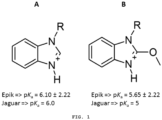
- calculation of the pKa values for the conjugated acids of the benzimidazole ring and its derivative substituted with a methoxy at the 2-position of the ring demonstrated a lower pKa for the latter.
- the values were obtained using the programs Epik (J. Comput. Aided Mol. Des., 2010, 24, 591-604 ) and Jaguar (Int. J. Quantum Chem., 2013, 113 (18), 2110-2142 ), as shown in Figure 1 .
- benzimidazole compounds of the present invention are represented by the general formula (I) wherein
- alkyl, haloalkyl, cycloalkyl, alkenyl and alkynyl include both branched and unbranched derivatives.
- alkyl refers to a straight or branched chain hydrocarbon which is fully saturated.
- alkyls are: methyl, ethyl, propyl, butyl, pentyl, hexyl and isomers thereof.
- alkenyl and alkynyl correspond to straight or branched chain hydrocarbons containing unsaturation, alkenyls having at least one double bond and the alkynyls having at least one triple bond.
- alkenyls and alkynyls are: ethenyl, propenyl, butenyl, pentenyl, hexenyl, ethynyl, propynyl, butynyl, pentynyl, hexynyl and isomers thereof.
- haloalkyl corresponds to an alkyl group containing at least one of its hydrogens substituted by a halogen selected from the group comprising fluorine, chlorine, bromine and iodine.
- haloalkyls are: chloromethyl, chloroethyl, chloropropyl, chlorobutyl, bromomethyl, bromoethyl, bromopropyl, bromobutyl, fluorobutyl, fluoroethyl, fluoropropyl, fluorobutyl, trichloromethyl, trifluoromethyl, tribromomethyl, iodomethyl, iodoethyl, iodopropyl and isomers thereof.
- cycloalkyl corresponds to fully saturated monocyclic hydrocarbons.
- Non-limiting examples are cyclopropyl, cyclobutyl, cyclopentyl and cyclohexyl.
- alkyl-cycloalkyl corresponds to a C3-6 cycloalkyl which is attached to a compound by an alkyl group comprising at least one carbon atom.
- halogens preferably selected for use in the present invention correspond to fluorine, bromine, chlorine and iodine.
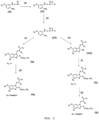
- the starting compound (III) obtained from a similar procedure to that described by Depreux (Synthetic Communications 1994, 24 (15), 2123-2132 ), is acylated using anhydrides or carboxylic acids halides for the introduction of the R1 substituent, resulting in the intermediate compound (VI). Then, the compound (VI) is reduced to the intermediate (VII).
- the intermediate (VII) is cyclized using tetraalkyl orthocarbonates, such as tetramethylorthocarbonate and tetraethyl orthocarbonate, resulting in the compound of formula (Ia), wherein the substituent R3 corresponds to a hydrogen.
- the introduction of the halogen as substituent R3 is performed in a subsequent step, by reacting the compound (Ia) with an N-halosuccinimide selected from the group comprising N-bromosuccinimide, N-chlorosuccinimide and N-iodosuccinimide, resulting in the compound of formula (Ia) wherein R3 is bromide, chlorine or iodine.
- N-halosuccinimide selected from the group comprising N-bromosuccinimide, N-chlorosuccinimide and N-iodosuccinimide
- intermediate (VII) cyclization of intermediate (VII) with thiourea results in the formation of intermediate (VIII), which is alkylated using an alkylating agent for the formation of the compound of formula (Ib) where R3 corresponds to a hydrogen.
- introduction of the halogen as substituent R3 is performed in a subsequent step by reacting the compound (Ib) with an N-halosuccinimide selected from the group comprising N-bromosuccinimide, N-chlorosuccinimide and N-iodosuccinimide, resulting in the compound of formula (Ib) wherein R3 is bromide, chlorine or iodine.
- Figure 3 describes the obtainment of the compound of general formula (II).
- the intermediate (IX) obtained from a similar procedure to that described by Koike et al. (Journal of Medicinal Chemistry 2011, 54 (12), 4207-4218 ), is cyclized using tetraalkylorthocarbonates, such as tetramethylorthocarbonate and tetraethyl orthocarbonate, resulting in the intermediate (X).
- This intermediate is deprotected to result in the intermediate (XI), which is acylated using carboxylic acid anhydrides or halides for the introduction of the R1 substituent, thereby obtaining the compound of formula (IIa).
- intermediate (IX) cyclization of intermediate (IX) with thiourea results in the formation of intermediate (XII), which is alkylated using an alkylating agent resulting in the intermediate (XIII). Then, the intermediate (XIII) is deprotected and acylated with carboxylic acid anhydrides or halides for the introduction of the R1 substituent, thereby obtaining the compound of formula(IIb).
- a further object of the present invention is the process to obtain the compound of general formula (I), comprising the following steps:
- Another object of the present invention is the process to obtain the compound of general formula (II) comprising the following steps:
- the process of obtaining the compound of general formula (II) comprises the following steps:
- carboxylic acid anhydrides used in the process of obtaining the compound of formulae (I) or (II) comprise commercially available compounds or those synthetically produced.
- Non-limiting examples of carboxylic acid anhydrides which may be used in this invention include acetic, propionic, butyric, crotonic, valeric anhydrides, among others.
- carboxylic acid halides employed in the process of obtaining the compound of formula (I) or (II), comprise both the commercially available and the synthetically prepared compounds.
- Non-limiting examples of carboxylic acid halides include the chlorides and bromides of acetic, propanoic, butanoic, valeric, cyclopropanecarboxylic, cyclobutanecarboxylic, cyclopentanecarboxylic, cyclohexanecarboxylic, alpha-bromoacetic, alphachloroacetic acids, among others.
- Alkylating agents are substances that transfer alkyl groups between molecules. There are several alkylating agents available in the market, as well as a variety of reactions used for this purpose. Non-limiting examples of alkylating agents used in the process described in this invention correspond to alkyl halides, such as methyl and ethyl bromides or iodides.
- Deprotection agents are chemicals used to remove protecting groups.
- Protecting groups are chemical groups used to protect specific functions which, when unmodified, are likely to react or undergo alteration with reagents used for structural modifications directed to other positions of the molecule.
- deprotection agent capable of removing the tert-butoxycarbonyl protecting group from the intermediates (X) and (XIII) corresponds to trifluoroacetic acid.
- a reducing agent has the role of promoting the transformation of an aromatic nitro group into an amino group.
- Several reagents may be used to promote this reduction.
- Non-limiting examples of typical reducing agents of aromatic nitro groups include iron or tin in hydrochloric acid medium, zinc, several metal catalysts, among others.
- the present invention also comprises isomers, tautomers, pure enantiomers, racemic mixtures and diastereomers of the compound of general formulae (I) or (II), as well as mixtures thereof at any ratios.
- the compound of formulae (I) or (II) may show different aspects.
- the present invention also comprises the amorphous form, the solvates, hydrates and polymorphs of the compound of formulae (I) or (II).
- the compound of formulae (I) or (II) should be administered to an animal, mammal, particularly a human, preferably as a pharmaceutical composition, i.e., associated o pharmaceutically acceptable vehicles which are acceptable to each route of administration.
- compositions of the present invention contain one or more compounds herein proposed, as active ingredient, associated with one or more pharmaceutically acceptable vehicles.
- the active ingredient is commonly mixed, diluted or encapsulated with at least one vehicle.
- the final composition may be a capsule, sachet, paper or other way of containment.
- the vehicle When the vehicle is a diluent, it may be in solid, semi-solid, or liquid form, acting as a carrier, excipient or medium for the active ingredient.
- the composition may be tablets, pills, powders, sachets, suspensions, emulsions, solutions, aerosols (in solid or liquid medium), creams, hard or soft capsules, suppositories, injections.
- a pharmaceutically acceptable vehicle any substance other than the compound of general formulae (I) or (II), which has been intentionally added thereto to produce a pharmaceutical dosage form suitable to a route of administration.
- pharmaceutical acceptable vehicle (excipients) suitable for pharmaceutical compositions are described in Handbook of Pharmaceutical Manufacturing Formulations - Vol. 1 to 6 - 2004 - Sarfaraz K. Niazi - CRCPress and Remington's Pharmaceutical Sciences, Mack Publishing .
- Non-limiting examples of routes of administration of the composition comprising the compound of general formulae (I) or (II) are oral, parenteral, nasal, rectal, transmucosal and transdermal routes, oral administration being particularly preferred.
- the therapeutic dose to be used with respect to the compounds of the present invention should be planned and calculated according to route of administration chosen, age, weight and condition of the patient and disorder severity. Overall, the compounds of the present invention are administered in therapeutically effective doses ranging from about 0.1 mg to about 2,000 mg per day. Effective doses may be extrapolated from dose-response curves obtained from in vitro or animal models. Typically, the physician will administer the compound to a suitable dose in order to achieve the expected effect.
- N-(2-((5-methoxy-2-nitrophenyl)amino)ethyl)acetamide (3.0g, 11.8mmol) and methanol (300ml) were added.
- the mixture was heated to a temperature of approximately 45°C under stirring to dissolve the solid.
- the solution was cooled to room temperature and zinc powder (11.55g, 176mmol) and ammonium formate (5.61g, 89.0mmol) were added under vigorous stirring.
- the mixture was kept under stirring for approximately 1 hour and then gravity filtered.
- the filtrate was roto-evaporated and the residue was extracted with dichloromethane (3x300ml).
- N-(2-((5-methoxy-2-nitrophenyl)amino)ethyl)propionamide (0.56g, 2.10mmol) and methanol (50ml) were added to a 100ml reactor.
- the mixture was heated to a temperature of approximately 45°C under stirring to dissolve the solid.
- the solution was cooled to room temperature and zinc powder (2.04g, 31.2mmol) and ammonium formate (0.99g, 15.7mmol) were added under vigorous stirring.
- the mixture was kept under stirring for approximately 1 hour and then gravity filtered.
- the filtrate was roto-evaporated and dichloromethane (300ml) was added to the residue.
- N1-(5-methoxy-2-nitrophenyl)ethane-1,2-diamine (1g, 4.73mmol), dichloromethane (50ml) and triethylamine (0.67ml, 4.80mmol) were added.
- the reaction medium was kept under stirring and a solution of butanoyl chloride (0.49ml, 4.73mmol) in dichloromethane (10ml) was slowly added through an addition funnel.
- the reaction medium was kept under stirring at room temperature for 2 hours.
- 10% aqueous hydrochloric acid solution (10ml) was added.
- the dichloromethane was separated and the aqueous phase extracted with dichloromethane (2x20ml).
- N-(2-((5-methoxy-2-nitrophenyl)amino)ethyl) butyramide (0.51g, 1.81mmol) and methanol (50ml) were added to a 100ml reactor.
- the mixture was heated to a temperature of approximately 45°C under stirring to dissolve the solid.
- the solution was cooled to room temperature and powdered zinc (1.76g, 26.9mmol) and ammonium formate (0.86g, 13.6mmol) were added under vigorous stirring.
- the mixture was kept under stirring for approximately 1 hour and then gravity filtered.
- N1- (5-methoxy-2-nitrophenyl) ethane-1,2-diamine (1g, 4.73mmol), dichloromethane (50ml) and triethylamine (0.67ml, 4.80mmol) were added.
- the reaction medium was kept under stirring and a solution of cyclopropanecarbonyl chloride (0.43ml, 4.73mmol) in dichloromethane (10ml) was slowly added through an addition funnel.
- the reaction medium was kept under stirring at room temperature for 2 hours. After the completion of the reaction, 10% aqueous hydrochloric acid solution (10ml) was added.
- N-(2-((5-methoxy-2-nitrophenyl)amino)ethyl)cyclopropane carboxamide (0.79g, 2.83mmol) and methanol (70ml) were added.
- the mixture was heated to a temperature of approximately 45°C under stirring to dissolve the solid.
- the solution was cooled to room temperature and powdered zinc (2.78g, 42.5mmol) and ammonium formate (1.34, 22.3mmol) were added under vigorous stirring.
- the mixture was kept under stirring for approximately 1 hour and then gravity filtered.
- the filtrate was roto-evaporated and dichloromethane (300ml) was added to the residue.
- N1-(5-methoxy-2-nitrophenyl)ethane-1,2-diamine (1g, 4.73mmol), dichloromethane (50ml) and triethylamine (0.67ml, 4.80mmol) were added.
- the reaction medium was kept under stirring and a solution of cyclobutanecarbonyl chloride (0.54ml, 4.73mmol) in dichloromethane (10ml) was slowly added through an addition funnel.
- the reaction medium was kept under stirring at room temperature for 2 hours. After the completion of the reaction, 10% aqueous hydrochloric acid solution (10ml) was added.
- N-(2-((5-methoxy-2-nitrophenyl)amino)ethyl)cyclobutanecarboxamide (0.785g, 2.68mmol) and methanol (60ml) were added.
- the mixture was heated to a temperature of approximately 45°C under stirring to dissolve the solid.
- the solution was cooled to room temperature and 2.60g of powdered zinc (2.60g, 39.8mmol) and 1.26g of ammonium formate (1.26g, 20.0mmol) were added under vigorous stirring.
- the mixture was kept under stirring for approximately 1 hour and then gravity filtered.
- the filtrate was roto-evaporated and dichloromethane (300ml) was added to the residue.
- N1-(5-methoxy-2-nitrophenyl)ethane-1,2-diamine (1g, 4.73mmol), dichloromethane (50ml) and triethylamine (0.67ml, 4.80mmol) were added to a 100ml reactor with magnetic stirring.
- the reaction medium was kept under stirring and a solution of cyclopentanecarbonyl chloride (0.585ml, 4.73mmol) in dichloromethane (10ml) was slowly added through an addition funnel.
- the reaction medium was kept under stirring at room temperature for 2 hours. After the completion of the reaction, 10% aqueous hydrochloric acid solution (10ml) was added.
- N-(2-((5-methoxy-2-nitrophenyl) amino)ethyl)cyclopentane carboxamide (0.100g, 0.325mmol) and methanol (20ml) were added.
- the mixture was heated to a temperature of approximately 45°C under stirring to dissolve the solid.
- the solution was cooled to room temperature and zinc powder (0.317g, 4.85mmol) and ammonium formate (0.153g, 2.43mmol) were added under vigorous stirring.
- the mixture was kept under stirring for approximately 1 hour and then gravity filtered. The filtrate was roto-evaporated and dichloromethane (100ml) was added to the residue.
- N1-(5-methoxy-2-nitrophenyl)ethane-1,2-diamine (1g, 4.73mmol), dichloromethane (50ml) and triethylamine (0.67ml, 4.80mmol) were added to a 100mlreactor with magnetic stirring.
- the reaction medium was kept under stirring and a solution of 0.64ml of cyclohexanecarbonyl chloride (0.64ml, 4.73mmol) in dichloromethane (10ml) was slowly added through an addition funnel.
- the reaction medium was kept under stirring at room temperature for 2 hours. After the completion of the reaction, 10% aqueous hydrochloric acid solution (10ml) was added.
- N-(3-((5-methoxy-2-nitrophenyl)amino)propyl)acetamide (1.0g, 3.74mmol) and methanol (50ml) were added.
- the mixture was kept under vigorous stirring and powdered zinc (3.65g, 55.8mmol) and ammonium formate (1.77g, 28.1mmol) were added.
- the mixture was kept under stirring for approximately 1 hour and then gravity filtered. The filtrate was roto-evaporated and dichloromethane (300ml) was added to the residue.
- N1-(5-methoxy-2-nitrophenyl) propane-1,2-diamine (0.60g, 2.67mmol)
- ethanol 40ml
- acetic anhydride 0.254ml, 2,67mmol
- the reaction medium was heated to 60°C and kept under stirring for 1 hour.
- the ethanol was evaporated to dryness and the resulting oil dissolved in ethyl acetate and washed with 15% sodium carbonate solution.
- N-(1-((5-methoxy-2-nitrophenyl)amino)propan-2-yl)acetamide (0.55g, 2.06mmol) and methanol (35ml) were added.
- the system was kept under stirring with heating between 40 and 50°C until complete dissolution of the solid.
- the reaction medium was cooled to room temperature and powdered zinc (2.0g, 30.6mmol) and ammonium formate (0.97g, 15.4mmol) were added under vigorous stirring.
- the resulting mixture was kept under stirring for approximately 30 minutes and then gravity filtered. The filtrate was roto-evaporated and the resulting residue was extracted with dichloromethane (300ml).
- N1-(5-methoxy-2-nitrophenyl) ethane-1,2-diamine (1g, 4.73mmol), dichloromethane (50ml) and triethylamine (0.67ml, 4.81mmol) were added.
- the reaction medium was kept under stirring and a bromoacetyl bromide solution (0.413ml, 4.74mmol) in dichloromethane (10ml) was slowly added through an addition funnel.
- the reaction medium was kept under stirring at room temperature for 2 hours. After the completion of the reaction, 10ml of 10% aqueous hydrochloric acid solution (10ml) was added.
- N-(2-((2-amino-5-methoxyphenyl)amino)ethyl)acetamide (1.340g, 6.00mmol) and thiourea (0.457g, 6.00mmol) were added.
- the mixture was initially heated to 120°C for 10 min with intense vapor release and then heated to 160°C for 5 min, with second vapor release. The temperature was reduced to 80°C and ethanol (15ml) was added.
- N-(2-(2-ethoxy-6-methoxy-1H-benzimidazole-1-yl)ethyl)acetamide (Example 1) (100mg, 0.360mmol), chloroform (5ml) and N-bromosuccinimide (64mg, 360mmol) were added.
- the reaction medium was under reflux and kept under stirring for 8 hours.
- N-(2-(2-ethoxy-6-methoxy-1H-benzimidazole-1-yl)ethyl)acetamide (Example 1) (0.5g, 1.80mmol), isopropanol (25ml) and N-chlorosuccinimide (0.241g, 1.80mmol) were added.
- N-(3-(2,6-dimethoxy-1H-benzimidazole-1-yl)propyl)acetamide (Example 9) (48.5mg, 0.175mmol), N-chlorosuccinimide (24.1mg, 0.180mmol) and isopropanol (2ml) were added.
- the reaction medium was kept under reflux and stirred for 6 hours, then poured into chloroform (40ml).
- N-(2-(2,6-dimethoxy-1H-benzimidazole-1-yl)ethyl)acetamide (Example 10) (60mg, 0.228mmol), N-chlorosuccinimide(30.4mg, 0.228mmol) and isopropanol (3ml) were added.
- the reaction medium was kept under reflux and stirred for 96 hours, then poured into chloroform (40ml) .
- N-(2-(2-ethoxy-6-methoxy-1H-benzimidazole-1-yl)ethyl)cyclopropane carboxamide (Example 4) (92mg, 0.329mmol), N-Chlorosuccinimide (45mg, 0.337mmol) and isopropanol (4ml) were added.
- the reaction medium was kept under reflux and stirred for 24 hours, then poured into chloroform (60ml).
- N-(2-(2-ethoxy-6-methoxy-1H-benzimidazole-1-yl)ethyl)acetamide (Example 1) (0.5g, 1.80mmol), chloroform (50ml) and N-chlorosuccinimide (0.270g, 2.02mmol) were added.
- the reaction medium was under reflux and kept under heating and stirring for 48 hours. After this period, the reaction medium was roto-evaporated to dryness and diluted with chloroform (200ml).
- the binding assay was performed in melatonergic MT1 and MT2 receptors in order to check the receptor affinity for the ligand, i.e., the ability of the molecule to bind to the respective receptors.
- the Ki described in the results is the dissociation constant and measures the affinity of a nonradioactive test compound for the receptor.
- the IC50 shows the concentration of the substance required for achieving 50% inhibition of the receptors.
- Kd shows the affinity of the radio ligand to the receptor. Receptor inhibition is measured by the % of inhibition a binding specific control.
- Recombinant human cells (CHO-derived) and [1251]2-iodomelatonin compound labeling were used followed by incubation and detection at concentration of 0.01-0.05nM by Scintillation Count, with Kd 0.04nM and 0.085nM, respectively. Incubation was performed for 60-120 min at 37°C.
- agomelatine showed high affinity to the melatonergic receptor MT1 (Ki 0.2nM) and MT2 (Ki 0.042nM).
- the inventive compounds also showed high affinity for both MT1 and MT2 receptors, as demonstrated in Table 1.
- the affinity of compounds 120, 121, 140, 142 and 143, expressed as affinity constant (Ki) values by the MT1 receptor was 1.1, 0.88, 2.2, 1.3 and 2.1nM.
- the affinity for the MT2 receptor was 4.5, 0.93, 11, 1.6 and 0.8 nM, respectively.
- Functional results are assays that allow the determination of the intrinsic activity of drugs, indicating whether a compound is an agonist, antagonist or inverse agonist.
- the EC50 shows the drug concentration required to induce half the maximal effect, after a specific exposure time, and is usually used as way to measure the potency of a drug.
- HEK-293 as a recombinant cell in which a specific stimulus was performed (according to the drug/compound in study), followed by incubation.
- the detection of the result was carried out by Cellular Dielectric Spectroscopy for impedances or by HTRF (Homogeneous Time Resolved Fluorescence) to detect IP1 (myo-Inositol 1 phosphate), a protein related to intracellular signaling.
- HTRF Homogeneous Time Resolved Fluorescence
- agomelatine behaves as an agonist and showed high potency for the MT1 receptors (EC50 0.15nM) and MT2 (EC50 0.019nM).
- the inventive compounds also behave as agonists and demonstrated high potency to the melatonergic receptors MT1 and MT2, as shown in Table 1.
- Permeability tests were performed using Caco-2 cells, a colorectal epithelial adenocarcinoma cell line. These cells resemble intestinal epithelial cells in some aspects, such as the formation of a polarized monolayer, a well-defined brush border on the apical surface, and intercellular junctions.
- the test is performed in both directions [apical to basolateral (A-B) and basolateral to apical (B-A)] through the cell monolayer, allowing an efflux ratio that provides an indicator as to whether a compound undergoes active efflux.
- Particle detection was performed with HPLC-MS/MS (mass spectrometry) according to the calculation of the peak area of the result. MS/MS was performed by combining two mass detectors in a single instrument.
- A-B permeability was performed at pH 6.5/7.4 with incubation time of 0 and 60 minutes at 37°C and B-A permeability was performed at pH 6.5/7.4 with incubation time of 0 and 40 minutes at 37°C.
- Table 2 Chemical Structure Molecule Code Permeability A-B (pH 6.5/7.4) Permeability B-A (pH 6.5/7.4) IA2-76 (agomelatine) 83.9 48.5 IA2-120 32.1 29.5 IA2-121 58.2 32.1 IA2-140 27.3 55.1 IA2-142 34.0 57.8 IA2-143 21.3 71.8
- Water solubility of the present invention was determined by comparing the peak area calculation in a calibration standard (200 ⁇ M) containing organic solvent (methanol/water, 60/40, v/v) with the area calculation of the corresponding peak in a buffer sample.
- chromatographic purity % was defined as the calculation of the main peak area relative to the calculation of the peak area integrate of the standard HPLC calibration chromatogram.
- a standard calibration chromatogram was then generated for each compound tested along with a UV/VIS spectrum with maximal labeled absorbance. The shake-flash technique was used with constant stirring during incubation to keep a uniform medium for 24 hours in PBS at pH 7.4. The results showed that the solubility of the test compounds was similar to that of agomelatine, as shown in Table 3.
- Cryopreserved hepatocytes from humans, rats (Sprague-Dawley males) and from mice (CD-1 males) were used for incubation at different times (0, 0.5, 1, 1.5, 2 hours) at 37°C followed by HPLC-MS/MS detection.
- the aim was to verify the clearance time of the test substance on hepatocytes.
- the experiment was performed on a 96-well plate and the cryopreserved hepatocytes were thawed and resuspended in Krebs-Heinslet buffer(pH 7.3).
- the reaction was started by adding each test compound to each cell suspension and performing the incubation at the times indicated above.
- the reaction was quenched with addition of acetonitrile in the wells and detection by HPLC-MS/MS (mass spectrometry). MS/MS is performed by combining two mass detectors into a single instrument.
- the CYP inhibition test used fluorogenic substrates specific to each CYP to check for inhibition thereof by detection of the expected metabolite using a fluorimetric method.
- Recombinant CYPs (CYP2B6, CYP2C8, CYP2C9, CYP2C9, CYP2C19, CYP2D6, CYP3A4) from specific humans for each cytochrome family, subfamily and polypeptide were used.
- CEC CEC
- CHC Cyano-7-Hydroxycoumarin
- EFC Ethoxy-4-trifluoromethyl coumarin
- HFC 7-Hydroxytrifluoromethylcoumarin
- DBF Dibenzylfluorescein
- MFC Methoxy-4-trifluoromethylcoumarin
- BFC BFC
- BzRes benzyloxyresorufin
- the detection of the metabolite was done with a fluorimetric method: analytical technique to identify and characterize the amount of substance by excitation using a beam of ultraviolet light and measurement of the emitted fluorescence.
- a fluorimetric method analytical technique to identify and characterize the amount of substance by excitation using a beam of ultraviolet light and measurement of the emitted fluorescence.
- a fluorimetric method analytical technique to identify and characterize the amount of substance by excitation using a beam of ultraviolet light and measurement of the emitted fluorescence.
- a fluorimetric method analytical technique to identify and characterize the amount of substance by excitation using a beam of ultraviolet light and measurement of the emitted fluorescence.
- a fluorimetric method analytical technique to identify and characterize the amount of substance by excitation using a beam of ultraviolet light and measurement of the emitted fluorescence.
- inventive compounds do not present high affinity to the 07 cytochrome isoforms analyzed (CYP2A6, CYP2B6, CYP2C8, CYP2C9, CYP2C19, CYP2D6, CYP3A4), specially to CYP1A2, CYP isoform which agomelatine has high affinity, according to Table 5.
- PK tests were performed with CD-1 mice, using 4 animals per molecule tested, 2 animals for pharmacokinetic analysis by intravenous (IV) administration and 2 animals for oral administration.
- the treatment was carried out in a single dose: I.V. group with dose of 1mg/kg and Oral group with dose of 10 mg/kg.
- the vehicle consisted of 5% DMSO, 30% PEG400 and 65% water. Blood collection was performed after euthanasia at 08 defined time points and at 24 hours post-dose.
- the pharmacokinetic analysis parameters detected for Group IV were: half-life (t1/2), drug concentration at time zero (C0), last measurable plasma concentration (AUClast), area under the plasma concentration curve extrapolation percentage (AUC%ext), area under the plasma concentration curve extrapolation to infinity (AUCinf), volume of distribution (Vz), steady state volume of distribution (Vss), clearance (CL) and mean residence time (MRT).
- the parameters evaluated for the Oral group were: bioavailability (F%), maximum concentration reached (Cmax), time to reach maximum plasma concentration (Tmax), last measurable plasma concentration (AUClast), area under the plasma concentration curve extrapolation percentage (AUC% ext), area under the plasma concentration curve extrapolation to infinity (AUCinf), area under the plasma concentration curve extrapolation to infinity versus dose (AUCinf/Dose), half-Life (t1/2), and mean residence time (MRT) .
- inventive molecules 120, 121, 140, 142, 143 and agomelatine presented higher C0 and lower Clearance than agomelatine, highlighting the improved pharmacokinetics of the inventive molecules.
- the compounds and agomelatine showed a Tmax of 0.25h, except compound 140 (0.375h).
- all the inventive compounds showed a Cmax higher than agomelatine, being 3405, 6490, 5010, 7550, 8915ng/ml for compounds 120, 121, 140, 142 and 143, respectively, in comparison to 21.9ng/ml for agomelatine.
- the last measurable plasma concentration (AUClast) of the compounds was also higher in comparison to agomelatine.
- PK tests were performed on Wistar-Han mice, using 4 animals per molecule tested, 2 animals for analysis of I.V. pharmacokinetics and 2 animals for analysis of oral PK.
- the study lasted for 2 weeks (including acclimation time and study), in which the route of administration was made by injection into the caudal vein and oral gavage.
- the treatment was carried out in a single dose: I.V. group with dose of 1mg/kg and Oral group with dose of 10mg/kg.
- the vehicle consisted of 5% DMSO, 30% PEG400 and 65% water. Clinical observations were made twice a day (morning and afternoon) in the pre-dose at the 08 time points defined in the protocol.
- Blood collection was performed after euthanasia in the pre-dose animals at 08 defined time points and at 24 hours post-dose.
- the pharmacokinetic analysis parameters detected for Group IV were: half-life (t1/2), drug concentration at time zero (C0), last measurable plasma concentration (AUClast), area under the plasma concentration curve extrapolation percentage (AUC%ext), area under the plasma concentration curve extrapolation to infinity (AUCinf), volume of distribution (Vz), steady state volume of distribution (Vss), clearance (CL) and mean residence time (MRT).
- the parameters evaluated for the Oral group were: bioavailability (F%), maximum concentration reached (Cmax), time to reach maximum plasma concentration (Tmax), last measurable plasma concentration (AUClast), area under the plasma concentration curve extrapolation percentage (AUC% ext), area under the plasma concentration curve extrapolation to infinity (AUCinf), area under the plasma concentration curve extrapolation to infinity versus dose (AUCinf/Dose), half-Life (t1/2), and mean residence time (MRT) .
Landscapes
- Health & Medical Sciences (AREA)
- Chemical & Material Sciences (AREA)
- Organic Chemistry (AREA)
- Public Health (AREA)
- Veterinary Medicine (AREA)
- General Health & Medical Sciences (AREA)
- Animal Behavior & Ethology (AREA)
- Life Sciences & Earth Sciences (AREA)
- Pharmacology & Pharmacy (AREA)
- Medicinal Chemistry (AREA)
- Chemical Kinetics & Catalysis (AREA)
- General Chemical & Material Sciences (AREA)
- Neurosurgery (AREA)
- Nuclear Medicine, Radiotherapy & Molecular Imaging (AREA)
- Neurology (AREA)
- Biomedical Technology (AREA)
- Bioinformatics & Cheminformatics (AREA)
- Engineering & Computer Science (AREA)
- Pain & Pain Management (AREA)
- Psychiatry (AREA)
- Anesthesiology (AREA)
- Epidemiology (AREA)
- Pharmaceuticals Containing Other Organic And Inorganic Compounds (AREA)
- Low-Molecular Organic Synthesis Reactions Using Catalysts (AREA)
- Nitrogen Condensed Heterocyclic Rings (AREA)
- Acyclic And Carbocyclic Compounds In Medicinal Compositions (AREA)
- Plural Heterocyclic Compounds (AREA)
Priority Applications (1)
| Application Number | Priority Date | Filing Date | Title |
|---|---|---|---|
| EP20185268.8A EP3741760B1 (en) | 2016-10-24 | 2017-10-23 | Compounds, process for obtaining the compounds, pharmaceutical composition, use of the compounds and method for treating psychiatric disorders and/or sleep disorders |
Applications Claiming Priority (2)
| Application Number | Priority Date | Filing Date | Title |
|---|---|---|---|
| BR102016024814A BR102016024814A2 (pt) | 2016-10-24 | 2016-10-24 | composto, processo de obtenção do composto, composição farmacêutica, uso do composto e método de tratamento de desordens psiquiátricas e/ou distúrbios do sono |
| PCT/BR2017/050320 WO2018076090A1 (en) | 2016-10-24 | 2017-10-23 | Compounds, process for obtaining the compounds, pharmaceutical composition, use of the compounds and method for treating psychiatric disorders and/or sleep disorders |
Related Child Applications (2)
| Application Number | Title | Priority Date | Filing Date |
|---|---|---|---|
| EP20185268.8A Division EP3741760B1 (en) | 2016-10-24 | 2017-10-23 | Compounds, process for obtaining the compounds, pharmaceutical composition, use of the compounds and method for treating psychiatric disorders and/or sleep disorders |
| EP20185268.8A Division-Into EP3741760B1 (en) | 2016-10-24 | 2017-10-23 | Compounds, process for obtaining the compounds, pharmaceutical composition, use of the compounds and method for treating psychiatric disorders and/or sleep disorders |
Publications (3)
| Publication Number | Publication Date |
|---|---|
| EP3529234A1 EP3529234A1 (en) | 2019-08-28 |
| EP3529234A4 EP3529234A4 (en) | 2020-03-11 |
| EP3529234B1 true EP3529234B1 (en) | 2023-11-29 |
Family
ID=62023150
Family Applications (2)
| Application Number | Title | Priority Date | Filing Date |
|---|---|---|---|
| EP17865155.0A Active EP3529234B1 (en) | 2016-10-24 | 2017-10-23 | Compounds, process for obtaining the compounds, pharmaceutical composition, use of the compounds and method for treating psychiatric disorders and/or sleep disorders |
| EP20185268.8A Active EP3741760B1 (en) | 2016-10-24 | 2017-10-23 | Compounds, process for obtaining the compounds, pharmaceutical composition, use of the compounds and method for treating psychiatric disorders and/or sleep disorders |
Family Applications After (1)
| Application Number | Title | Priority Date | Filing Date |
|---|---|---|---|
| EP20185268.8A Active EP3741760B1 (en) | 2016-10-24 | 2017-10-23 | Compounds, process for obtaining the compounds, pharmaceutical composition, use of the compounds and method for treating psychiatric disorders and/or sleep disorders |
Country Status (20)
| Country | Link |
|---|---|
| US (2) | US10781182B2 (enExample) |
| EP (2) | EP3529234B1 (enExample) |
| JP (1) | JP7194683B2 (enExample) |
| KR (1) | KR102594251B1 (enExample) |
| CN (2) | CN110088092B (enExample) |
| AR (1) | AR109467A1 (enExample) |
| AU (1) | AU2017351756B2 (enExample) |
| BR (1) | BR102016024814A2 (enExample) |
| CL (1) | CL2019001105A1 (enExample) |
| CO (1) | CO2019004756A2 (enExample) |
| DK (1) | DK3529234T3 (enExample) |
| EC (1) | ECSP19032963A (enExample) |
| ES (2) | ES2970546T3 (enExample) |
| FI (1) | FI3529234T3 (enExample) |
| MX (1) | MX392990B (enExample) |
| PE (2) | PE20250558A1 (enExample) |
| PT (1) | PT3529234T (enExample) |
| SG (2) | SG11201903113TA (enExample) |
| UY (2) | UY37334A (enExample) |
| WO (1) | WO2018076090A1 (enExample) |
Families Citing this family (6)
| Publication number | Priority date | Publication date | Assignee | Title |
|---|---|---|---|---|
| BR102016024814A2 (pt) * | 2016-10-24 | 2018-05-08 | Aché Laboratórios Farmacêuticos S.A. | composto, processo de obtenção do composto, composição farmacêutica, uso do composto e método de tratamento de desordens psiquiátricas e/ou distúrbios do sono |
| UA125824C2 (uk) | 2016-10-24 | 2022-06-15 | Астразенека Аб | 6,7,8,9-ТЕТРАГІДРО-3H-ПІРАЗОЛО[4,3-f]ІЗОХІНОЛІНОВІ ПОХІДНІ, ЗАСТОСОВНІ В ЛІКУВАННІ РАКУ |
| CR20190379A (es) | 2017-01-30 | 2019-10-21 | Astrazeneca Ab | Moduladores del receptor de estrógeno |
| AR121842A1 (es) * | 2020-04-15 | 2022-07-13 | Ache Laboratorios Farmaceuticos Sa | Compuesto de benzimidazol para el tratamiento de trastornos metabólicos |
| US20210330653A1 (en) | 2020-04-24 | 2021-10-28 | Astrazeneca Ab | Dosage Regimen for the Treatment of Cancer |
| PE20221838A1 (es) | 2020-04-24 | 2022-11-29 | Astrazeneca Ab | Formulaciones farmaceuticas |
Family Cites Families (20)
| Publication number | Priority date | Publication date | Assignee | Title |
|---|---|---|---|---|
| FR2658818B1 (fr) | 1990-02-27 | 1993-12-31 | Adir Cie | Nouveaux derives a structure naphtalenique, leur procede de preparation et les compositions pharmaceutiques qui les contiennent. |
| US5260051A (en) | 1990-12-17 | 1993-11-09 | Lever Brothers Company, Division Of Conopco, Inc. | Compositions comprising phosphate ester compounds containing a beneficial reagent component |
| FR2674524B1 (fr) | 1991-03-25 | 1993-05-21 | Adir | Nouveaux amides alkyl heterocycliques, leur procede de preparation et les compositions pharmaceutiques qui les contiennent. |
| FR2680366B1 (fr) | 1991-08-13 | 1995-01-20 | Adir | Nouveaux derives d'arylethylamines, leurs procedes de preparation et les compositions pharmaceutiques qui les contiennent. |
| GB9326192D0 (en) | 1993-12-22 | 1994-02-23 | Glaxo Group Ltd | Chemical compounds |
| WO1995034304A1 (en) * | 1994-06-10 | 1995-12-21 | Nauchno-Issledovatelsky Institut Farmakologii Rossiyskoi Akademii Meditsinskikh Nauk | Pharmacologically active 2-mercaptobenzimidazole derivatives |
| US5496826A (en) | 1994-09-02 | 1996-03-05 | Bristol-Myers Squibb Company | Pharmaceutical methods of using heterocyclic derivatives of N-phenylamides |
| FR2738818B1 (fr) | 1995-09-18 | 1997-12-05 | Valentonine | Nouveaux derives d'oxydation d'indolylalkylamines, et leur utilisation a titre de medicament |
| JP2884153B2 (ja) * | 1996-03-08 | 1999-04-19 | 武田薬品工業株式会社 | 三環性化合物、その製造法および剤 |
| US6034239A (en) | 1996-03-08 | 2000-03-07 | Takeda Chemical Industries, Ltd. | Tricyclic compounds, their production and use |
| KR100499106B1 (ko) | 1996-12-10 | 2005-07-01 | 브리스톨-마이어즈 스퀴브 컴페니 | 벤조디옥솔, 벤조퓨란, 디히드로벤조퓨란, 및 벤조디옥산 멜라토닌 작용제 |
| CA2334299A1 (en) | 1998-06-05 | 1999-12-09 | Pierre Dextraze | Heterocyclic cis cyclopropane derivatives as melatonergic agents |
| PT1189900E (pt) | 1999-06-30 | 2004-05-31 | Bristol Myers Squibb Co | Derivados de aminopirrolidina heterociclicos utilizados como agentes melatonergicos |
| WO2003062224A1 (en) * | 2002-01-17 | 2003-07-31 | Eli Lilly And Company | Aza-cyclic compounds as modulators of acetylcholine receptors |
| EP1719761A4 (en) | 2004-02-23 | 2007-10-10 | Dainippon Sumitomo Pharma Co | NEW HETEROCYCLIC CONNECTION |
| ES2264641B1 (es) * | 2005-06-17 | 2008-03-01 | Quimica Sintetica, S.A. | Procedimiento para la obtencion de derivados de bencimidazol y sus intermedios. |
| JP2010503654A (ja) * | 2006-09-12 | 2010-02-04 | ファイザー・プロダクツ・インク | ベンゾイミダゾロン誘導体 |
| JP2010507664A (ja) * | 2006-10-25 | 2010-03-11 | 武田薬品工業株式会社 | ベンズイミダゾール化合物 |
| RU2401831C2 (ru) * | 2008-12-15 | 2010-10-20 | Алла Хем, Ллс | Средство, снижающее влечение к алкоголю, фармацевтическая композиция и способы ее получения, лекарственное средство и способ лечения |
| BR102016024814A2 (pt) * | 2016-10-24 | 2018-05-08 | Aché Laboratórios Farmacêuticos S.A. | composto, processo de obtenção do composto, composição farmacêutica, uso do composto e método de tratamento de desordens psiquiátricas e/ou distúrbios do sono |
-
2016
- 2016-10-24 BR BR102016024814A patent/BR102016024814A2/pt not_active Application Discontinuation
-
2017
- 2017-07-19 UY UY0001037334A patent/UY37334A/es active IP Right Grant
- 2017-07-19 UY UY0001040644A patent/UY40644A/es not_active Application Discontinuation
- 2017-08-30 AR ARP170102402A patent/AR109467A1/es active IP Right Grant
- 2017-10-23 EP EP17865155.0A patent/EP3529234B1/en active Active
- 2017-10-23 ES ES17865155T patent/ES2970546T3/es active Active
- 2017-10-23 PT PT178651550T patent/PT3529234T/pt unknown
- 2017-10-23 WO PCT/BR2017/050320 patent/WO2018076090A1/en not_active Ceased
- 2017-10-23 PE PE2023002494A patent/PE20250558A1/es unknown
- 2017-10-23 SG SG11201903113TA patent/SG11201903113TA/en unknown
- 2017-10-23 ES ES20185268T patent/ES3013994T3/es active Active
- 2017-10-23 KR KR1020197011842A patent/KR102594251B1/ko active Active
- 2017-10-23 FI FIEP17865155.0T patent/FI3529234T3/fi active
- 2017-10-23 PE PE2019000861A patent/PE20191046A1/es unknown
- 2017-10-23 US US16/344,721 patent/US10781182B2/en active Active
- 2017-10-23 AU AU2017351756A patent/AU2017351756B2/en active Active
- 2017-10-23 EP EP20185268.8A patent/EP3741760B1/en active Active
- 2017-10-23 DK DK17865155.0T patent/DK3529234T3/da active
- 2017-10-23 MX MX2019004782A patent/MX392990B/es unknown
- 2017-10-23 CN CN201780079647.XA patent/CN110088092B/zh active Active
- 2017-10-23 CN CN202210815568.3A patent/CN115181108A/zh active Pending
- 2017-10-23 SG SG10202009001TA patent/SG10202009001TA/en unknown
- 2017-10-23 JP JP2019542758A patent/JP7194683B2/ja active Active
-
2019
- 2019-04-23 CL CL2019001105A patent/CL2019001105A1/es unknown
- 2019-05-09 EC ECSENADI201932963A patent/ECSP19032963A/es unknown
- 2019-05-09 CO CONC2019/0004756A patent/CO2019004756A2/es unknown
-
2020
- 2020-05-13 US US15/930,990 patent/US11091445B2/en active Active
Also Published As
Similar Documents
| Publication | Publication Date | Title |
|---|---|---|
| EP3741760B1 (en) | Compounds, process for obtaining the compounds, pharmaceutical composition, use of the compounds and method for treating psychiatric disorders and/or sleep disorders | |
| EP2432766B1 (fr) | Composé anticancéreux et composition pharmaceutique le contenant | |
| US8389544B2 (en) | Isoquinolone compounds as subtype-selective agonists for melatonin receptors MT1 and MT2 | |
| JP5744886B2 (ja) | シクロペンタンカルボキサミド誘導体、このような化合物を含む薬物及びそれらの使用 | |
| KR20070045254A (ko) | 인돌리진 카르복사미드 및 그 아자 및 디아자유도체 | |
| EP3210969B1 (en) | Kcnq2-5 channel activator | |
| BRPI0610833A2 (pt) | derivados de acetileno | |
| Zhang et al. | Recent research advances in ATX inhibitors: An overview of primary literature | |
| Liu et al. | Derivatives of 2-(dipropylamino) tetralin: effect of the C8-substituent on the interaction with 5-HT1A receptors | |
| CN112979659B (zh) | 一类HIF-2α小分子抑制剂的制备及用途 | |
| EP3447045B9 (en) | 1-(1-hydroxy-2,3-dihydro-1h-inden-5-yl)-urea derivatives and related compounds kcnq 2-5 channel activators for treating dysuria | |
| CA3042040C (en) | 2-substituted benzimidazolyl compounds, process for obtaining the compounds, pharmaceutical composition, use of the compounds and method for treating psychiatric disorders and/or sleep disorders | |
| HK40081925A (en) | Compounds, and preparation process, pharmaceutical composition and use thereof | |
| CN111718350A (zh) | 吡唑取代的吡唑并嘧啶化合物和药物组合物及其应用 | |
| EP3472155B1 (en) | Deuterated compounds for treating pain | |
| HK40011198A (en) | Compounds, process for obtaining the compounds, pharmaceutical composition, use of the compounds and method for treating psychiatric disorders and/or sleep disorders | |
| JP2025511343A (ja) | N-置換キノリノン化合物、その製造方法及びその使用 | |
| HK40011198B (en) | Compounds, process for obtaining the compounds, pharmaceutical composition, use of the compounds and method for treating psychiatric disorders and/or sleep disorders | |
| CN117126134A (zh) | 新型四氢异喹啉类化合物、其制备方法、包含此类化合物的药物组合物及其用途 | |
| BR112019008197B1 (pt) | Composto, processo de obtenção do composto, composição farmacêutica e uso do composto | |
| EP1544201B1 (en) | Novel derivatives of cycloalcanodiones, method for the production thereof and their pharmacological applications | |
| TW202608881A (zh) | 咪唑稠環類化合物、藥物組成物及其製備方法和用途 |
Legal Events
| Date | Code | Title | Description |
|---|---|---|---|
| STAA | Information on the status of an ep patent application or granted ep patent |
Free format text: STATUS: THE INTERNATIONAL PUBLICATION HAS BEEN MADE |
|
| PUAI | Public reference made under article 153(3) epc to a published international application that has entered the european phase |
Free format text: ORIGINAL CODE: 0009012 |
|
| STAA | Information on the status of an ep patent application or granted ep patent |
Free format text: STATUS: REQUEST FOR EXAMINATION WAS MADE |
|
| 17P | Request for examination filed |
Effective date: 20190509 |
|
| AK | Designated contracting states |
Kind code of ref document: A1 Designated state(s): AL AT BE BG CH CY CZ DE DK EE ES FI FR GB GR HR HU IE IS IT LI LT LU LV MC MK MT NL NO PL PT RO RS SE SI SK SM TR |
|
| AX | Request for extension of the european patent |
Extension state: BA ME |
|
| DAV | Request for validation of the european patent (deleted) | ||
| DAX | Request for extension of the european patent (deleted) | ||
| A4 | Supplementary search report drawn up and despatched |
Effective date: 20200212 |
|
| RIC1 | Information provided on ipc code assigned before grant |
Ipc: C07D 235/26 20060101AFI20200206BHEP Ipc: C07D 235/28 20060101ALI20200206BHEP Ipc: A61P 25/20 20060101ALI20200206BHEP Ipc: A61P 25/24 20060101ALI20200206BHEP Ipc: A61K 31/4184 20060101ALI20200206BHEP Ipc: A61P 25/22 20060101ALI20200206BHEP |
|
| STAA | Information on the status of an ep patent application or granted ep patent |
Free format text: STATUS: EXAMINATION IS IN PROGRESS |
|
| 17Q | First examination report despatched |
Effective date: 20220301 |
|
| GRAP | Despatch of communication of intention to grant a patent |
Free format text: ORIGINAL CODE: EPIDOSNIGR1 |
|
| STAA | Information on the status of an ep patent application or granted ep patent |
Free format text: STATUS: GRANT OF PATENT IS INTENDED |
|
| INTG | Intention to grant announced |
Effective date: 20230515 |
|
| GRAS | Grant fee paid |
Free format text: ORIGINAL CODE: EPIDOSNIGR3 |
|
| GRAA | (expected) grant |
Free format text: ORIGINAL CODE: 0009210 |
|
| STAA | Information on the status of an ep patent application or granted ep patent |
Free format text: STATUS: THE PATENT HAS BEEN GRANTED |
|
| AK | Designated contracting states |
Kind code of ref document: B1 Designated state(s): AL AT BE BG CH CY CZ DE DK EE ES FI FR GB GR HR HU IE IS IT LI LT LU LV MC MK MT NL NO PL PT RO RS SE SI SK SM TR |
|
| REG | Reference to a national code |
Ref country code: GB Ref legal event code: FG4D |
|
| REG | Reference to a national code |
Ref country code: CH Ref legal event code: EP |
|
| REG | Reference to a national code |
Ref country code: DE Ref legal event code: R096 Ref document number: 602017077088 Country of ref document: DE |
|
| REG | Reference to a national code |
Ref country code: IE Ref legal event code: FG4D |
|
| REG | Reference to a national code |
Ref country code: FI Ref legal event code: FGE |
|
| REG | Reference to a national code |
Ref country code: SE Ref legal event code: TRGR |
|
| REG | Reference to a national code |
Ref country code: PT Ref legal event code: SC4A Ref document number: 3529234 Country of ref document: PT Date of ref document: 20240201 Kind code of ref document: T Free format text: AVAILABILITY OF NATIONAL TRANSLATION Effective date: 20240129 |
|
| REG | Reference to a national code |
Ref country code: DK Ref legal event code: T3 Effective date: 20240201 |
|
| REG | Reference to a national code |
Ref country code: NL Ref legal event code: FP |
|
| REG | Reference to a national code |
Ref country code: NO Ref legal event code: T2 Effective date: 20231129 |
|
| REG | Reference to a national code |
Ref country code: GR Ref legal event code: EP Ref document number: 20240400466 Country of ref document: GR Effective date: 20240312 |
|
| REG | Reference to a national code |
Ref country code: LT Ref legal event code: MG9D |
|
| PG25 | Lapsed in a contracting state [announced via postgrant information from national office to epo] |
Ref country code: LT Free format text: LAPSE BECAUSE OF FAILURE TO SUBMIT A TRANSLATION OF THE DESCRIPTION OR TO PAY THE FEE WITHIN THE PRESCRIBED TIME-LIMIT Effective date: 20231129 |
|
| PG25 | Lapsed in a contracting state [announced via postgrant information from national office to epo] |
Ref country code: LT Free format text: LAPSE BECAUSE OF FAILURE TO SUBMIT A TRANSLATION OF THE DESCRIPTION OR TO PAY THE FEE WITHIN THE PRESCRIBED TIME-LIMIT Effective date: 20231129 Ref country code: BG Free format text: LAPSE BECAUSE OF FAILURE TO SUBMIT A TRANSLATION OF THE DESCRIPTION OR TO PAY THE FEE WITHIN THE PRESCRIBED TIME-LIMIT Effective date: 20240229 |
|
| REG | Reference to a national code |
Ref country code: ES Ref legal event code: FG2A Ref document number: 2970546 Country of ref document: ES Kind code of ref document: T3 Effective date: 20240529 |
|
| PG25 | Lapsed in a contracting state [announced via postgrant information from national office to epo] |
Ref country code: RS Free format text: LAPSE BECAUSE OF FAILURE TO SUBMIT A TRANSLATION OF THE DESCRIPTION OR TO PAY THE FEE WITHIN THE PRESCRIBED TIME-LIMIT Effective date: 20231129 Ref country code: PL Free format text: LAPSE BECAUSE OF FAILURE TO SUBMIT A TRANSLATION OF THE DESCRIPTION OR TO PAY THE FEE WITHIN THE PRESCRIBED TIME-LIMIT Effective date: 20231129 Ref country code: LV Free format text: LAPSE BECAUSE OF FAILURE TO SUBMIT A TRANSLATION OF THE DESCRIPTION OR TO PAY THE FEE WITHIN THE PRESCRIBED TIME-LIMIT Effective date: 20231129 Ref country code: HR Free format text: LAPSE BECAUSE OF FAILURE TO SUBMIT A TRANSLATION OF THE DESCRIPTION OR TO PAY THE FEE WITHIN THE PRESCRIBED TIME-LIMIT Effective date: 20231129 |
|
| PG25 | Lapsed in a contracting state [announced via postgrant information from national office to epo] |
Ref country code: CZ Free format text: LAPSE BECAUSE OF FAILURE TO SUBMIT A TRANSLATION OF THE DESCRIPTION OR TO PAY THE FEE WITHIN THE PRESCRIBED TIME-LIMIT Effective date: 20231129 |
|
| PG25 | Lapsed in a contracting state [announced via postgrant information from national office to epo] |
Ref country code: SK Free format text: LAPSE BECAUSE OF FAILURE TO SUBMIT A TRANSLATION OF THE DESCRIPTION OR TO PAY THE FEE WITHIN THE PRESCRIBED TIME-LIMIT Effective date: 20231129 |
|
| PG25 | Lapsed in a contracting state [announced via postgrant information from national office to epo] |
Ref country code: SM Free format text: LAPSE BECAUSE OF FAILURE TO SUBMIT A TRANSLATION OF THE DESCRIPTION OR TO PAY THE FEE WITHIN THE PRESCRIBED TIME-LIMIT Effective date: 20231129 Ref country code: SK Free format text: LAPSE BECAUSE OF FAILURE TO SUBMIT A TRANSLATION OF THE DESCRIPTION OR TO PAY THE FEE WITHIN THE PRESCRIBED TIME-LIMIT Effective date: 20231129 Ref country code: RO Free format text: LAPSE BECAUSE OF FAILURE TO SUBMIT A TRANSLATION OF THE DESCRIPTION OR TO PAY THE FEE WITHIN THE PRESCRIBED TIME-LIMIT Effective date: 20231129 Ref country code: EE Free format text: LAPSE BECAUSE OF FAILURE TO SUBMIT A TRANSLATION OF THE DESCRIPTION OR TO PAY THE FEE WITHIN THE PRESCRIBED TIME-LIMIT Effective date: 20231129 Ref country code: CZ Free format text: LAPSE BECAUSE OF FAILURE TO SUBMIT A TRANSLATION OF THE DESCRIPTION OR TO PAY THE FEE WITHIN THE PRESCRIBED TIME-LIMIT Effective date: 20231129 |
|
| REG | Reference to a national code |
Ref country code: DE Ref legal event code: R097 Ref document number: 602017077088 Country of ref document: DE |
|
| REG | Reference to a national code |
Ref country code: AT Ref legal event code: UEP Ref document number: 1635989 Country of ref document: AT Kind code of ref document: T Effective date: 20231129 |
|
| PLBE | No opposition filed within time limit |
Free format text: ORIGINAL CODE: 0009261 |
|
| STAA | Information on the status of an ep patent application or granted ep patent |
Free format text: STATUS: NO OPPOSITION FILED WITHIN TIME LIMIT |
|
| PG25 | Lapsed in a contracting state [announced via postgrant information from national office to epo] |
Ref country code: SI Free format text: LAPSE BECAUSE OF FAILURE TO SUBMIT A TRANSLATION OF THE DESCRIPTION OR TO PAY THE FEE WITHIN THE PRESCRIBED TIME-LIMIT Effective date: 20231129 |
|
| PG25 | Lapsed in a contracting state [announced via postgrant information from national office to epo] |
Ref country code: SI Free format text: LAPSE BECAUSE OF FAILURE TO SUBMIT A TRANSLATION OF THE DESCRIPTION OR TO PAY THE FEE WITHIN THE PRESCRIBED TIME-LIMIT Effective date: 20231129 |
|
| 26N | No opposition filed |
Effective date: 20240830 |
|
| PG25 | Lapsed in a contracting state [announced via postgrant information from national office to epo] |
Ref country code: MC Free format text: LAPSE BECAUSE OF FAILURE TO SUBMIT A TRANSLATION OF THE DESCRIPTION OR TO PAY THE FEE WITHIN THE PRESCRIBED TIME-LIMIT Effective date: 20231129 |
|
| PG25 | Lapsed in a contracting state [announced via postgrant information from national office to epo] |
Ref country code: LU Free format text: LAPSE BECAUSE OF NON-PAYMENT OF DUE FEES Effective date: 20241023 |
|
| PGFP | Annual fee paid to national office [announced via postgrant information from national office to epo] |
Ref country code: FI Payment date: 20250922 Year of fee payment: 9 |
|
| PGFP | Annual fee paid to national office [announced via postgrant information from national office to epo] |
Ref country code: DK Payment date: 20250923 Year of fee payment: 9 |
|
| PGFP | Annual fee paid to national office [announced via postgrant information from national office to epo] |
Ref country code: GR Payment date: 20250918 Year of fee payment: 9 Ref country code: NO Payment date: 20250926 Year of fee payment: 9 |
|
| PGFP | Annual fee paid to national office [announced via postgrant information from national office to epo] |
Ref country code: NL Payment date: 20250923 Year of fee payment: 9 |
|
| PGFP | Annual fee paid to national office [announced via postgrant information from national office to epo] |
Ref country code: BE Payment date: 20250923 Year of fee payment: 9 Ref country code: GB Payment date: 20250919 Year of fee payment: 9 |
|
| PGFP | Annual fee paid to national office [announced via postgrant information from national office to epo] |
Ref country code: FR Payment date: 20250917 Year of fee payment: 9 |
|
| PGFP | Annual fee paid to national office [announced via postgrant information from national office to epo] |
Ref country code: SE Payment date: 20250925 Year of fee payment: 9 |
|
| PGFP | Annual fee paid to national office [announced via postgrant information from national office to epo] |
Ref country code: IE Payment date: 20250926 Year of fee payment: 9 |
|
| PGFP | Annual fee paid to national office [announced via postgrant information from national office to epo] |
Ref country code: IS Payment date: 20250918 Year of fee payment: 9 |
|
| REG | Reference to a national code |
Ref country code: CH Ref legal event code: U11 Free format text: ST27 STATUS EVENT CODE: U-0-0-U10-U11 (AS PROVIDED BY THE NATIONAL OFFICE) Effective date: 20251101 |
|
| PGFP | Annual fee paid to national office [announced via postgrant information from national office to epo] |
Ref country code: PT Payment date: 20251009 Year of fee payment: 9 |
|
| PGFP | Annual fee paid to national office [announced via postgrant information from national office to epo] |
Ref country code: AT Payment date: 20251022 Year of fee payment: 9 |
|
| PGFP | Annual fee paid to national office [announced via postgrant information from national office to epo] |
Ref country code: IT Payment date: 20251009 Year of fee payment: 9 |
|
| PGFP | Annual fee paid to national office [announced via postgrant information from national office to epo] |
Ref country code: TR Payment date: 20251008 Year of fee payment: 9 |
|
| PGFP | Annual fee paid to national office [announced via postgrant information from national office to epo] |
Ref country code: CH Payment date: 20251101 Year of fee payment: 9 |
|
| PG25 | Lapsed in a contracting state [announced via postgrant information from national office to epo] |
Ref country code: CY Free format text: LAPSE BECAUSE OF FAILURE TO SUBMIT A TRANSLATION OF THE DESCRIPTION OR TO PAY THE FEE WITHIN THE PRESCRIBED TIME-LIMIT; INVALID AB INITIO Effective date: 20171023 |
|
| PGFP | Annual fee paid to national office [announced via postgrant information from national office to epo] |
Ref country code: ES Payment date: 20251103 Year of fee payment: 9 |
|
| PG25 | Lapsed in a contracting state [announced via postgrant information from national office to epo] |
Ref country code: HU Free format text: LAPSE BECAUSE OF FAILURE TO SUBMIT A TRANSLATION OF THE DESCRIPTION OR TO PAY THE FEE WITHIN THE PRESCRIBED TIME-LIMIT; INVALID AB INITIO Effective date: 20171023 |
|
| PGFP | Annual fee paid to national office [announced via postgrant information from national office to epo] |
Ref country code: DE Payment date: 20251222 Year of fee payment: 9 |