EP3528501A1 - Methods and apparatus to measure media using media object characteristics - Google Patents
Methods and apparatus to measure media using media object characteristics Download PDFInfo
- Publication number
- EP3528501A1 EP3528501A1 EP19163955.8A EP19163955A EP3528501A1 EP 3528501 A1 EP3528501 A1 EP 3528501A1 EP 19163955 A EP19163955 A EP 19163955A EP 3528501 A1 EP3528501 A1 EP 3528501A1
- Authority
- EP
- European Patent Office
- Prior art keywords
- media
- client device
- media object
- identifier
- collector
- Prior art date
- Legal status (The legal status is an assumption and is not a legal conclusion. Google has not performed a legal analysis and makes no representation as to the accuracy of the status listed.)
- Granted
Links
Images




Classifications
-
- H—ELECTRICITY
- H04—ELECTRIC COMMUNICATION TECHNIQUE
- H04L—TRANSMISSION OF DIGITAL INFORMATION, e.g. TELEGRAPHIC COMMUNICATION
- H04L67/00—Network arrangements or protocols for supporting network services or applications
- H04L67/01—Protocols
- H04L67/02—Protocols based on web technology, e.g. hypertext transfer protocol [HTTP]
-
- G—PHYSICS
- G06—COMPUTING OR CALCULATING; COUNTING
- G06F—ELECTRIC DIGITAL DATA PROCESSING
- G06F16/00—Information retrieval; Database structures therefor; File system structures therefor
- G06F16/90—Details of database functions independent of the retrieved data types
- G06F16/95—Retrieval from the web
- G06F16/958—Organisation or management of web site content, e.g. publishing, maintaining pages or automatic linking
-
- G—PHYSICS
- G06—COMPUTING OR CALCULATING; COUNTING
- G06Q—INFORMATION AND COMMUNICATION TECHNOLOGY [ICT] SPECIALLY ADAPTED FOR ADMINISTRATIVE, COMMERCIAL, FINANCIAL, MANAGERIAL OR SUPERVISORY PURPOSES; SYSTEMS OR METHODS SPECIALLY ADAPTED FOR ADMINISTRATIVE, COMMERCIAL, FINANCIAL, MANAGERIAL OR SUPERVISORY PURPOSES, NOT OTHERWISE PROVIDED FOR
- G06Q30/00—Commerce
- G06Q30/02—Marketing; Price estimation or determination; Fundraising
- G06Q30/0241—Advertisements
- G06Q30/0276—Advertisement creation
-
- G—PHYSICS
- G06—COMPUTING OR CALCULATING; COUNTING
- G06Q—INFORMATION AND COMMUNICATION TECHNOLOGY [ICT] SPECIALLY ADAPTED FOR ADMINISTRATIVE, COMMERCIAL, FINANCIAL, MANAGERIAL OR SUPERVISORY PURPOSES; SYSTEMS OR METHODS SPECIALLY ADAPTED FOR ADMINISTRATIVE, COMMERCIAL, FINANCIAL, MANAGERIAL OR SUPERVISORY PURPOSES, NOT OTHERWISE PROVIDED FOR
- G06Q30/00—Commerce
- G06Q30/02—Marketing; Price estimation or determination; Fundraising
- G06Q30/0241—Advertisements
- G06Q30/0277—Online advertisement
-
- H—ELECTRICITY
- H04—ELECTRIC COMMUNICATION TECHNIQUE
- H04H—BROADCAST COMMUNICATION
- H04H60/00—Arrangements for broadcast applications with a direct linking to broadcast information or broadcast space-time; Broadcast-related systems
- H04H60/29—Arrangements for monitoring broadcast services or broadcast-related services
- H04H60/31—Arrangements for monitoring the use made of the broadcast services
-
- H—ELECTRICITY
- H04—ELECTRIC COMMUNICATION TECHNIQUE
- H04L—TRANSMISSION OF DIGITAL INFORMATION, e.g. TELEGRAPHIC COMMUNICATION
- H04L67/00—Network arrangements or protocols for supporting network services or applications
- H04L67/50—Network services
- H04L67/535—Tracking the activity of the user
-
- H—ELECTRICITY
- H04—ELECTRIC COMMUNICATION TECHNIQUE
- H04N—PICTORIAL COMMUNICATION, e.g. TELEVISION
- H04N21/00—Selective content distribution, e.g. interactive television or video on demand [VOD]
- H04N21/40—Client devices specifically adapted for the reception of or interaction with content, e.g. set-top-box [STB]; Operations thereof
- H04N21/43—Processing of content or additional data, e.g. demultiplexing additional data from a digital video stream; Elementary client operations, e.g. monitoring of home network or synchronising decoder's clock; Client middleware
- H04N21/442—Monitoring of processes or resources, e.g. detecting the failure of a recording device, monitoring the downstream bandwidth, the number of times a movie has been viewed, the storage space available from the internal hard disk
- H04N21/44213—Monitoring of end-user related data
- H04N21/44222—Analytics of user selections, e.g. selection of programmes or purchase activity
- H04N21/44224—Monitoring of user activity on external systems, e.g. Internet browsing
- H04N21/44226—Monitoring of user activity on external systems, e.g. Internet browsing on social networks
-
- H—ELECTRICITY
- H04—ELECTRIC COMMUNICATION TECHNIQUE
- H04W—WIRELESS COMMUNICATION NETWORKS
- H04W4/00—Services specially adapted for wireless communication networks; Facilities therefor
- H04W4/20—Services signaling; Auxiliary data signalling, i.e. transmitting data via a non-traffic channel
- H04W4/21—Services signaling; Auxiliary data signalling, i.e. transmitting data via a non-traffic channel for social networking applications
Definitions
- the present disclosure relates generally to monitoring media and, more particularly, to methods and apparatus to measure media using media object characteristics.
- audience measurement entities determine audience engagement levels for media programming based on registered panel members. That is, an audience measurement entity enrolls people who consent to being monitored into a panel. The audience measurement entity then monitors those panel members to determine media programs (e.g., television programs or radio programs, movies, DVDs, etc.) exposed to those panel members. In this manner, the audience measurement entity can determine exposure metrics for different media based on the collected media measurement data.
- media programs e.g., television programs or radio programs, movies, DVDs, etc.
- Techniques for monitoring user access to Internet resources such as web pages, advertisements and/or other Internet-accessible media have evolved significantly over the years.
- Some known systems perform such monitoring primarily through server logs.
- entities serving media on the Internet can use known techniques to log the number of requests received for their media (e.g., content and/or advertisements) at their server.
- server logs In particular, entities serving media on the Internet would log the number of requests received for their media at their server. Basing Internet usage research on server logs is problematic for several reasons. For example, server logs can be tampered with either directly or via zombie programs which repeatedly request media from the server to increase the server log counts. Secondly, media is sometimes retrieved once, cached locally and then repeatedly viewed from the local cache without involving the server in the repeat viewings. Server logs cannot track these views of cached media. Thus, server logs are susceptible to both over-counting and under-counting errors.
- the beacon instructions cause monitoring data reflecting information about the access to the media to be sent from the client that downloaded the media to a monitoring entity.
- the monitoring entity is an audience measurement entity (AME) that did not provide the media to the client and who is a trusted (e.g., neutral) third party for providing accurate usage statistics (e.g., The Nielsen Company, LLC).
- AME audience measurement entity
- the beaconing instructions are associated with the media and executed by the client browser whenever the media is accessed, the monitoring information is provided to the AME irrespective of whether the client is a panelist of the AME.
- Audience measurement entities and/or other businesses often desire to link demographics to the monitoring information.
- the AME establishes a panel of users who have agreed to provide their demographic information and to have their Internet browsing activities monitored. When an individual joins the panel, they provide detailed information concerning their identity and demographics (e.g., gender, age, ethnicity, income, home location, occupation, etc.) to the AME.
- the audience measurement entity sets a cookie on the panelist computer that enables the audience measurement entity to identify the panelist whenever the panelist accesses tagged media and, thus, sends monitoring information to the audience measurement entity.
- database proprietors operating on the Internet. These database proprietors provide services to large numbers of subscribers. In exchange for the provision of the service, the subscribers register with the proprietor. As part of this registration, the subscribers provide detailed demographic information. Examples of such database proprietors include social network providers, email providers, etc. such as Facebook, Myspace, Twitter, Yahoo!, Google, etc. These database proprietors set cookies on the computers of their subscribers to enable the database proprietor to recognize the user when they visit their website.
- the protocols of the Internet make cookies inaccessible outside of the domain (e.g., Internet domain, domain name, etc.) on which they were set.
- a cookie set in the amazon.com domain is accessible to servers in the amazon.com domain, but not to servers outside that domain. Therefore, although an audience measurement entity might find it advantageous to access the cookies set by the database proprietors, they are unable to do so.
- each beacon request corresponds to a single piece of tagged media rendered or presented via a client computer (e.g., via a web browser, an application, etc.). As such, impression information is often not collected about other media co-located on a web page or simultaneously presented by a web browser.
- Such prior beaconing processes provide a limited understanding of Internet-accessible media to which users are exposed. For example, a beacon request of prior beaconing processes may indicate a host web page address and a media identifier of one media item presented on that host web page. However, this provides no information about what other media was presented on the host web page. Thus, no correlations or causal relationships between different media on a web page can be measured with such prior beaconing processes.
- a user may visit a social network web page that serves as a portal to access movie trailers.
- the portal may also display a tagged banner advertisement in addition to the movie trailers.
- the tagged banner advertisement may cause a client computer to send a beacon request that includes an advertisement identifier for the tagged banner advertisement and the URL for the host web page URL
- the beacon request will not convey any information about the concurrently displayed movie trailer.
- the host web page will get full credit for causing the impression of the tagged banner advertisement, but the displayed movie trailer will get no credit as being a cause for drawing a user's attention that facilitated displaying the tagged banner advertisement. Examples disclosed herein extend the data collection process so that beacon requests convey information to the AME about numerous media objects concurrently presented on a client device.
- Examples disclosed herein enable an AME to leverage information or characteristics about numerous media objects concurrently displayed at a client device so that the AME can simultaneously log impressions for the numerous media objects concurrently presented at the client device. Examples disclosed herein also enable determining causal relationships between the numerous presented media objects. Examples disclosed herein also enable an AME to leverage existing databases of database proprietors to collect more extensive Internet usage and demographic data by extending the beaconing process to encompass participating database proprietors and by using such database proprietors as interim data collectors.
- Examples disclosed herein involve tagging media objects (e.g., advertisements, product images (e.g., for e-commerce, online purchasing, etc.), television programming, news stories, etc.), that are delivered via the Internet, by embedding instructions (e.g., collector instructions and beacon instructions) into the media objects.
- Collector instructions and beacon instructions are executed by client devices when the client devices reproduce the received media objects for display or playback.
- the collector instructions and beacon instructions cause the client device to collect characteristics of presented media objects and send the collected characteristics in a beacon request to a collection facility.
- the collector instructions collect media object characteristics (e.g., embedded identifiers, embedded codes, embedded information, signatures, etc.) from media objects so that the collection facility can identify the media objects and related information based on the characteristics.
- media object characteristics provide information such as program title, serving domain, host website address (uniform resource locator (URL)), media owner, ad campaign identifier, product name, product manufacturer, etc.
- URL uniform resource locator
- beacon requests and media object parameters enable the collection facility to log impressions for corresponding media objects as those media objects are presented at client devices.
- Examples disclosed herein facilitate using a single communication from a client device to communicate multiple impressions to a collection facility about multiple media objects presented concurrently at a client device.
- a master or collector media object that includes collector instructions and beacon instructions (e.g., a master tag that includes such instructions).
- the collector media object operates to collect media object characteristics from all of the other media objects being concurrently presented at the client device. In this manner, instead of all of the concurrently presented media objects sending corresponding beacon requests to the collection facility, the collector media object sends a single beacon request with all of the collected media object information from all of the other presented media objects. This significantly reduces the amount of network bandwidth and communication resources required by the client device to report on the concurrently presented media objects to the collection facility. In addition, this enables determining relationships (e.g., causal relationships) between the different media objects.
- the reporting of media object parameters for multiple simultaneously displayed media objects enables crediting multiple entities with causation of ad/media impressions. For example, if a media clip (a media object) of the television show "Breaking Bad" is accessed by a user as embedded media via a socialnetwork.com web page, and the web page also simultaneously displays numerous tagged ads (media objects), a master tag in one of the media objects collects media object parameters of the "Breaking Bad" clip and of the displayed ads. The master tag then sends a beacon request with all the collected media object parameters to the collection facility.
- the collected parameters for all of the media objects enable logging impressions for the displayed ads and awarding causal credit to both the "Breaking Bad” clip and the socialnetwork.com web page to indicate that both the "Breaking Bad” clip and the socialnetwork.com web page drew the user's attention to enable the displayed ads to be served on the same web page.
- Examples disclosed herein may be implemented by an audience measurement entity (e.g., any entity interested in measuring or tracking audience exposures to advertisements, content, and/or any other media) in cooperation with any number of database proprietors such as online web services providers.
- database proprietors/online web services providers may be social network sites (e.g., Facebook, Twitter, MySpace, etc.), multi-service sites (e.g., Yahoo!, Google, Experian, Axiom, Catalina, etc.), online retailer sites (e.g., Amazon.com, Buy.com, etc.), and/or any other web service(s) site that maintains user registration records.
- examples disclosed herein use demographic information located in the audience measurement entity's records as well as demographic information located at one or more database proprietors that maintain records or profiles of users having accounts therewith. In this manner, examples disclosed herein may be used to supplement demographic information maintained by a ratings entity (e.g., an AME such as The Nielsen Company of Schaumburg, Illinois, United States of America, that collects media exposure measurements and/or demographics) with demographic information from one or more different database proprietors.
- a ratings entity e.g., an AME such as The Nielsen Company of Schaumburg, Illinois, United States of America, that collects media exposure measurements and/or demographics
- Examples disclosed herein enable a client device to send a single beacon request to an AME to report multiple media objects presented at the client device. In this manner, by using a single beacon request to report multiple media objects, the AME can log a significant number of impressions for media objects presented on a client device while receiving relatively few communications from a client device notifying of the presented media objects. In addition, examples disclosed herein enable logging relationships between the different media objects.
- an impression is defined to be an event in which a home or individual is exposed to the corresponding media (e.g., content and/or advertisement). Thus, an impression represents a home or an individual having been exposed to media (e.g., an advertisement, content, a group of advertisements and/or a collection of content).
- a quantity of impressions or impression count is the total number of times media (e.g., an advertisement or advertisement campaign) has been accessed by a web population (e.g., the number of times the media is accessed as decreased by, for example, pop-up blockers and/or increased by, for example, retrieval from local cache memory).
- a demographic impression is defined to be an impression that is associated with a characteristic (e.g., a demographic characteristic) of the person exposed to the media.
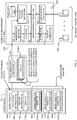
- FIG. 1 depicts an example client device 102 that is configured to present a plurality of media objects 104a-d via a user interface.
- the client device 102 of the illustrated example may be any device capable of accessing media over a network.
- the client device 102 may be a computer, a tablet, a mobile device, a smart television, or any other Internet-capable device or appliance. Examples disclosed herein may be used to collect impression information for any type of media including content and/or advertisements.
- Media objects, such as the media objects 104a-d may include web pages, streaming video, streaming audio, internet protocol television (IPTV) content, movies, television programming and/or other programming, and such media objects are generally referred to herein as content.
- IPTV internet protocol television
- the media objects 104a-d include user-generated media that is, for example, uploaded to media upload sites such as YouTube and subsequently downloaded and/or streamed by many client devices for playback.
- Media objects, such as the media objects 104a-d may also include advertisements. Advertisements are typically distributed with content. Traditionally, content is provided at little or no cost to the audience because it is subsidized by advertisers that pay to have their advertisements distributed with the content.
- “media” refers collectively and/or individually to content and/or advertisement(s).
- the media objects A 104a and D 104d are advertisements
- the media object B 104b is a host web page
- the media object C 104c is a video.
- the media objects 104a-d may be used to present any other media.
- the media object B 104b could be a website, a portal, a web app, etc. in which the media object A 104a is an informational panel that displays facts or other information (e.g., statistics about a sports team or athlete, information or reviews about a movie or television program, etc.) about a video presented in the media object C 104c (e.g., a sports video, a movie, a television program, a news program, etc.).
- Examples disclosed herein may be used to collect impression information about multiple media objects (e.g., media objects A, B, C, and D) concurrently presented at client devices so that the impression information can be used to determine relationships between different media concurrently presented to users via client devices.
- Such relationships may be causal relationships indicating that an impression to a particular media object, such as an advertisement, may be a result of a person visiting a particular website (e.g., identified by a corresponding URL) or viewing a particular streaming television channel (e.g., identified by a channel number or network name) to access a particular television program or other media.
- causal credits can be awarded to the visited website or streaming television channel and to the accessed television program or media (e.g., content) as drawing the user's attention to create an opportunity for presenting other media (e.g., an advertisement media object).
- the media objects 104a-d are provided to the client device 102 by one or more media provider(s) 106.
- the media provider(s) 106 may be media providers (e.g., content providers), media publishers, and/or advertisers that distribute the media objects 104a-c via the Internet to users that access websites and/or online television services (e.g., web-based TV, Internet protocol TV (IPTV), etc.).
- the media objects 104a-c may additionally or alternatively be distributed through broadcast television services to traditional non-Internet based (e.g., RF, terrestrial or satellite based) television sets that are monitored for viewership using the techniques disclosed herein and/or other techniques.
- the client device 102 may be a tablet device that operates as a second screen to view supplemental media (e.g., advertisements, character/actor biographies, behind the scene footage, director commentaries, etc.) when a user is also watching related, primary media (e.g., a television show, a movie, etc.) via a primary screen such as a television.
- supplemental media e.g., advertisements, character/actor biographies, behind the scene footage, director commentaries, etc.
- primary media e.g., a television show, a movie, etc.
- Examples disclosed herein facilitate collecting impression information from both the primary and secondary screens and analyzing the impression information in connection with demographic information of the same user of both the primary and secondary screens.
- the primary and secondary screen devices may both store a same identifier that can be used to identify the user and/or demographic information associated with those devices. As such, impressions can be logged for both of those devices based on the same identifier to correlate the same demographic information with all of the impressions logged in connection with that identifier.
- the primary and secondary screens may have different, respective identifiers that are both used to identify the same user and/or demographic information associated with the primary and secondary devices. As such, impressions can be logged for both of the devices based on the respective identifiers to correlate the same demographic information with all of the impressions logged in connection with the primary and secondary devices.
- the media objects 104a, 104c, and 104d are embedded media objects embedded in the media object B 104b (e.g., a container media object).
- the media objects 104a, 104c, and 104d of the illustrated example are juxtaposed media objects. Examples disclosed herein may also be used in connection with sequential media objects as shown in the illustrated example of FIG. 12 .
- sequential media objects are objects that are presented in a sequential manner (e.g., in seriatim).
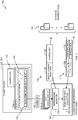
- FIG. 12 shows a timeline 1200 and a web page media object 1202 showing sequential media objects at different times t 0 1204, t 1 1206 and t 2 1208 along the timeline 1200.
- FIG. 12 shows a timeline 1200 and a web page media object 1202 showing sequential media objects at different times t 0 1204, t 1 1206 and t 2 1208 along the timeline 1200.
- the web page media object 1202 displays a media player media object 1212 that presents a content media object 1214 at time t 0 1204, a first advertisement (ADVERTISEMENT_A) media object 1216 at time t 1 1206, and a second advertisement (ADVERTISEMENT_B) media object 1218 at time t 2 1208.
- the content 1214, the first advertisement 1216, and the second advertisement 1218 are presented sequentially in that they do not appear concurrently in the media player media object 1212 at the same time.
- the media player media object 1212 of the illustrated example is a container object in which the content 1214, the first advertisement 1216, and the second advertisement 1218 are embedded media objects in the media player media object 1212.
- a video (e.g., a movie, a television program, a sporting event stream or video, a news program, etc.) displayed in the media player media object 1212 is the container object, and the advertisements 1216 and 1218 are embedded media objects in the video container object.
- Examples disclosed herein may be used to monitor and measure sequential media objects such as the content 1214, the first advertisement 1216, and the second advertisement 1218, juxtaposed media objects such as the media objects 104a, 104c, and 104d of FIG. 1 , and embedded media objects such as the media objects 104a, 104c, and 104d of FIG. 1 embedded in the media object 104b, and such as the content 1214, the first advertisement 1216, and the second advertisement 1218 of FIG. 12 embedded in the media player media object 1212.
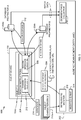
- FIG. 2 depicts an example system 200 in which an AME 202 may associate media impressions with user demographic information based on characteristics of the media objects 104a-d of FIG. 1 and distributed demographics information located across numerous database proprietors 204.
- distributed demographics information is used herein to refer to demographics information obtained from at least two sources, at least one of which is a database proprietor 204 such as an online web services provider.
- database proprietors 204 maintain user account records corresponding to users registered for Internet-based services provided by the database proprietors.
- Demographic information may include, for example, gender, age, ethnicity, income, home location, education level, occupation, etc.
- At least one of the media objects 104a-d is configured as a collector object, and others of the media objects 104a-d are configured as passive objects.
- collector object is a media object that operates to collect media object characteristics from all of the other media objects being concurrently presented at the client device 102.
- a passive object is a media object having characteristics that are collected by a collector object for sending to an AME during an impression reporting process.
- the media object A 104a is a collector object
- the media objects 104b-d are passive objects.
- the media object A 104a of the illustrated example includes collector instructions 206 and beacon instructions 208.
- the instructions 206 and 208 form a master tag.
- a master tag in the illustrated example is embedded in a media object so that the media object can operate as a collector object.
- a master tag having the instructions 206 and 208 is provided to the media object A 104a so that the media object A 104a can operate as a collector object.
- all of the media objects 104a-d of the illustrated example include object characteristics 210a-d.
- the media object A 104a collects object characteristics from itself and from the other media objects 104b-d to send the collected object characteristics to the AME 202.
- the collector instructions 206 when executed, cause the client device 102 to collect the object characteristics 210a-d from the media objects 104a-d.
- the beacon instructions 208 when executed, cause the client device 102 to send the object characteristics 210a-d in a beacon request 212 to the AME 202.
- a media object called by a user is a master object (e.g., the media object A 104a) and media objects called by the master object are designated as subordinate objects (e.g., the media objects 104b-d).
- subordinate objects can become master objects relative to other media objects.
- a media object called by another media object is a subordinate object relative to the media object that called it.
- a subordinate object e.g., a first-level subordinate object
- another subordinate object e.g., a second-level subordinate object.
- the media objects 104a, 104c, and 104d are juxtaposed media objects relative to one another and are embedded objects in the media object 104b. Examples disclosed herein may also be used in connection with sequential media objects such as the content media object 1214, the advertisement (ADVERTISEMENT_A) media object 1216, and the advertisement (ADVERTISEMENT_B) media object 1218 of FIG. 12 . In the illustrated example of FIG.
- the media player media object 1212 is provided with a master tag 1222 having collector and beacon instructions (e.g., similar or identical to the collector instructions 206 and beacon instructions 208 of FIG. 2 ).
- the content media object 1214 is provided with object characteristics 1226
- the advertisement (ADVERTISEMENT_A) media object 1216 is provided with object characteristics 1228
- the advertisement (ADVERTISEMENT_B) media object 1218 is provided with object characteristics 1230.
- the media player media object 1212 remains presented as a container object (e.g., remains instantiated and/or displayed) at times 1204, 1206, and 1208 as shown in FIG.12 while the embedded sequential media objects 1214, 1216, and 1218 are sequentially presented in the media player media object 1212. Since the media player media object 1212 remains presented, collector instructions in the master tag 1222 of the media player media object 1212 collect the object characteristics 1226 when the content media object 1214 is presented at time t 0 1204, collect the object characteristics 1228 when the advertisement (ADVERTISEMENT_A) media object 1216 is presented at time t 1 1206, and collect the object characteristics 1230 when the advertisement (ADVERTISEMENT_B) media object 1218 is presented at time t 2 1208. The beacon instructions of the master tag 1222 can then send the collected object characteristics 1226, 1228, and 1230 to the AME 202.
- collector instructions in the master tag 1222 of the media player media object 1212 collect the object characteristics 1226 when the content media object 1214 is presented at time t
- the master tag 1222 is provided in the content media object 1214, and the content media object 1214 is the container object that remains instantiated or loaded (e.g., in the background) when the advertisement media objects 1216 and 1218 are presented.
- collector instructions in the master tag 1222 of the content media object 1214 collect the object characteristics 1226 when the content media object 1214 is presented at time t 0 1204, collect the object characteristics 1228 when the advertisement (ADVERTISEMENT_A) media object 1216 is presented at time t 1 1206, and collect the object characteristics 1230 when the advertisement (ADVERTISEMENT_B) media object 1218 is presented at time t 2 1208.
- Beacon instructions in the master tag 1222 of the content media object 1214 then send the collected object characteristics 1226, 1228, and 1230 to the AME 202.
- the collector instructions 206 and the beacon instructions 208 are computer executable instructions (e.g., Java, javascript, or any other computer language or script) embedded in the media object A 104a by the creator of the media object A 104a and/or another entity (e.g., a subsequent media distributor or publisher such as the media provider(s) 206 of FIG. 1 ).
- another entity e.g., a subsequent media distributor or publisher such as the media provider(s) 206 of FIG. 1 .
- one or more hyperlink(s) is instead provided in the media object A 104a to direct a web browser to download or retrieve the collector instructions 206 and the beacon instructions 208 from one or more specified servers.
- the instructions 206 and 208 are executed by a web browser that is presenting the media objects 104a-d.
- the instructions are executed by an application (or an "app" on a mobile device) that is presenting the media objects 104a-d.
- the instructions are executed as independent programs.
- a smart television may execute the instructions as separate programs.
- the media object A 104a is referred to as being tagged with a master tag that includes the collector instructions and the beacon instructions 208.
- the object characteristics 210a-d may be information embedded in the media objects 104a-d.
- one or more hyperlink(s) are instead provided in the media objects 104a-d to direct a web browser to download or retrieve the object characteristics 210a-d from one or more specified servers. This enables, for example, the AME 202 to change the object characteristics 210a-d without involving the media provider of the media objects 104a-d.
- the embedded information may be one or more of identification codes (e.g., metadata) that identify associated media, campaign identifiers (IDs) that identify associated ad campaigns, a creative type ID (e.g., identifying Flash-based media or ads, banner ads, rich type ads, etc.), a source ID (e.g., identifying the media publisher), and a placement ID (e.g., identifying the physical placement of the media on a screen).
- IDs campaign identifiers
- a creative type ID e.g., identifying Flash-based media or ads, banner ads, rich type ads, etc.
- a source ID e.g., identifying the media publisher
- a placement ID e.g., identifying the physical placement of the media on a screen.
- the object characteristics 210a-d are derived from visual and/or audible characteristics of the media objects 104a-d.
- the collector instructions 206 may be configured to cause the client device 102 to generate video, image, or audio signatures from portions
- the collector instructions 206 may cause the client device 102 to perform a screen capture or a screen scan to collect an image or images representative of the media objects 104a-d and generate signatures corresponding to the media objects 104a-d based on the image(s). Additionally or alternatively, the collector instructions 206 may cause the client device 102 to intercept and/or capture audio of the media object(s) 104a-d and generate one or more signatures corresponding to the media object(s) 104a-d based on the audio. In this manner, the AME 202 can use a collected signature from one of the media objects 104a-d to identify the one of the media objects 104a-d based on a matching reference signature stored at the AME 202.
- the collector instructions 206 may cause the client device 102 to perform optical character recognition (e.g., text recognition) or logo recognition based on screen capture images and use recognized text and/or logos associated with the media objects 104a-d as part of the object characteristics 210a-d.
- optical character recognition e.g., text recognition
- logo recognition e.g., logo recognition
- execution of the beacon instructions 208 causes the client device 102 to send a beacon request 212 to a server (e.g., an Internet protocol (IP) address or URL) of the AME 202 specified in the beacon instructions 208.
- a server e.g., an Internet protocol (IP) address or URL
- the beacon instructions 208 cause the client device 102 to locate an identifier 214 and the object characteristics 210a-d in the beacon request 212.
- the beacon request 212 of the illustrated example is an impression request that causes the AME 202 to log impressions for the media objects 104a-d.
- an impression request is a reporting to the AME 202 of an occurrence of a media object being presented at the client device 102.
- the beacon/impression request 212 may be implemented as a hypertext transfer protocol (HTTP) request. However, whereas a transmitted HTTP request identifies a webpage or other resource to be downloaded, the beacon/impression request 212 includes audience measurement information (e.g., the object characteristics 210a-d and the identifier 214) as its payload.
- the server to which the beacon/impression request 212 is directed is programmed to log the audience measurement information of the beacon/impression request 212 as an impression (e.g., a media impression such as advertisement and/or content impressions depending on the nature of the media objects for which object characteristics are communicated in the beacon/impression request 212).
- the identifier 214 of the illustrated example may be any identifier useful to associate demographic information with the user or users of the client device 102.
- the identifier 214 may be a device identifier (e.g., an international mobile equipment identity (IMEI), a mobile equipment identifier (MEID), a media access control (MAC) address, etc.), a web browser unique identifier (e.g., a cookie), a user identifier (e.g., a user name, a login ID, etc.), an Adobe Flash® client identifier, identification information stored in an HTML5 datastore, or any other identifier that the AME 202 and/or database proprietors 204 store in association with demographic information about users of client devices.
- IMEI international mobile equipment identity
- MEID mobile equipment identifier
- MAC media access control
- a web browser unique identifier e.g., a cookie
- a user identifier e.g., a user name, a login ID, etc.
- the AME 202 when the AME 202 receives the identifier 214 in the beacon/impression request 212, the AME 202 can obtain demographic information corresponding to a user of the client device 102 based on the identifier 214 that the AME 202 receives in the beacon/impression request 212 from the client device 102.
- the identifier 212 may be encrypted (e.g., hashed) at the client device 102 so that only an intended final recipient of the identifier 212 can decrypt the hashed identifier 212.
- the identifier 212 is a cookie that is set in the client device 102 by the AME 202
- the identifier 212 can be hashed so that only the AME 202 can decrypt the identifier 212.
- the client device 102 can hash the identifier 212 so that only a wireless carrier (e.g., one of the database proprietors 204) can decrypt the hashed identifier 212 to recover the IMEI for use in accessing demographic information corresponding to the user of the client device 102.
- a wireless carrier e.g., one of the database proprietors 204
- the AME 202 cannot recover identifier information when the identifier 214 is hashed by the client device 102 for decrypting only by the intended database proprietor 204.
- the AME 202 of the illustrated example is provided with an example apparatus 216 to receive beacon requests (e.g., the beacon/impression request 212) and to log impressions and/or demographic impressions for different media objects (e.g., the media objects 104a-d) based on information (e.g., the identifier 214 and the object characteristics 210a-d) in the beacon requests.
- the example apparatus 216 is provided with an example impressions monitor 218, an example creditor 220, an example panelist profile retriever 222, an example panel database 224, an example demographics corrector 226, an example demographics collector 228, an example attributor 230, and an example report generator 232.
- the example impressions monitor 218, the example creditor 220, the example panelist profile retriever 222, the example panel database 224, the example demographics corrector 226, the example demographics collector 228, the example attributor 230, and the example report generator 232 may be configured as one or more apparatus in the AME 202.
- the impressions monitor 218 of the illustrated example is provided to log impressions of media (e.g., impressions of the media objects 104a-d) based on received beacon/impression requests (e.g., the beacon/impression request 212).
- the creditor 220 of the illustrated example is provided to award causal credits to particular media objects (e.g., ones of the media objects 104a-d) that are responsible for drawing users' attention to create opportunities for presenting other media objects (e.g., others of the media objects 104a-d). For example, if media object B 104b of FIGS. 1 and 2 represents a web page and media object C 104c of FIGS.
- the creditor 220 can award causal credits to the web page represented by media object B 104b and to the movie trailer video represented by media object C 104c because a user's attention was drawn to the web page based on the user's interest in accessing the movie trailer video. Both of the particular web page and the particular movie trailer video in which the user was interested drew the user's attention creating an opportunity to present other media (e.g., advertisements) represented by the media object A 104a and the media object D 104d.
- media e.g., advertisements
- the impressions logged by the impression monitor 218 can be further processed by the creditor 220 to determine which media objects should be awarded causal credits for drawing the attention of people resulting in the creation of opportunities to present advertisements or other media which may be supplemental or related to the people's interests.
- the media objects 104a-d of FIGS. 1 and 2 may be presented on an e-commerce web site (e.g., an online shopping site such as Amazon.com, ebay.com, or other online retailers), and the AME 202 may be interested in identifying retail products for sale that create opportunities to present supplemental/related media and/or advertisements.
- the media object B 104b of FIGS. 1 and 2 represents an online retailer web page
- the media object C 104c of FIGS. 1 and 2 represents a video about a product that a user is interested in purchasing from the online retailer.
- both of the particular online retailer web page and the particular product in which the user was interested drew the user's attention creating an opportunity to present other media (e.g., advertisements) represented by the media object A 104a and the media object D 104d.
- the creditor 220 awards causal credit to the media object B 104b and the media object C 104c for creating the presentation opportunity for other media (e.g., advertisements or other media) represented by the media object A 104a and the media object D 104d.
- the client device 102 may be a smart television tuned to a particular channel represented by the media object B 104b.
- a user is drawn to the particular channel to watch a television program represented by the media object C 104c.
- the creditor 220 of the illustrated example of FIG. 2 awards causal credits to the tuned-to channel and the television program for creating the presentation opportunity for media (e.g., advertisements or other media) represented by the media object A 104a and the media object D 104d.
- examples disclosed herein can be used to award causal credit to media in the area of internet-based media delivery services, to award causal credit to products in the area of product-based e-commerce, and to award causal credit to media delivery networks or channels and television programs in the area of internet-based streaming media services and internet protocol television (IPTV) services.
- Examples disclosed herein may also be used in other types of media delivery and e-commerce areas in which people access information of interest that results in creating opportunities for concurrently presenting other media.
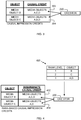
- FIG. 3 illustrates an example manner of awarding causal credits to media objects identified as creating opportunities for presenting other media to users.
- the example technique shown in FIG. 3 can be used to award causal credits as discussed above.
- the creditor 220 awards causal credits 302 and 304 to the media object B 104b and to the media object C 104c.
- the causal credit 302 awarded to the media object B 104b references media identifiers that identify the media object A 104a, the media object C 104c, and the media object D 104d which were presented as a result of the opportunity created by the media object B 104b.
- the causal credit 304 references media identifiers that identify the media object A 104a, the media object B 104b, and the media object D 104d which were presented as a result of the opportunity created by the media object C 104c.
- the creditor 220 awards causal credits 302 and 304 to the media objects 104b and 104c for creating the opportunity to present each other and the media objects 104a and 104d.
- the creditor 220 is configured to award causal credits based on hierarchical rankings of media objects. That is, the creditor 220 of the illustrated example may award causal credits to higher-ranked media objects for causing opportunities to present lower-ranked media objects.
- FIG. 4 illustrates an example manner of awarding subordinate causal credits to media objects based on a hierarchical ranking system. The illustrated example of FIG. 4 shows a hierarchical rankings structure 400 in which the media object C 104c is ranked higher than the media objects 104a and 104d, and the media object B 104b is ranked higher than the media objects 104a, 104c, and 104d.
- the creditor 220 awards the media object B 104b with a causal credit 402 corresponding to the opportunity created to present the media objects 104a, 104c, and 104d which are subordinate in hierarchy relative to the media object B 104b.
- the creditor 220 awards the media object C 104c with a causal credit 404 corresponding to the opportunity created to present the media objects 104a and 104d which are subordinate in hierarchy relative to the media object C 104c.
- the creditor 220 does not award the media objects 104a and 104d with causal credits corresponding to the opportunity to present the media objects 104b and 104c because the media objects 104a and 104d have lower priority rankings in the illustrated hierarchical rankings structure 400.
- the creditor 220 does not award the media objects 104a and 104d with any causal credit related to the presentation of each other. That is, the creditor 220 of the illustrated example is configured to award subordinate causal credits to media objects for impressions of subordinate media objects but not to award subordinate causal credits to media objects for impressions of higher-ranked or equally-ranked media objects.
- the media object B 104b is a higher-ranked object relative to subordinate media objects A 104a, B 104c, and D 104d.
- the higher-ranked object is also a master object.
- the creditor 220 of the illustrated example determines which of the media objects 104a-d is the higher-ranked object to be credited with the causal credit 302 based on a higher-ranked object identifier. For example, when the creditor 220 identifies a higher-ranked object identifier in the media object B 104b, the creditor 220 determines that the media object B 104b is the higher-ranked object to be awarded the causal credit 302 for creating the opportunity to present the subordinate media objects 104a, 104c, 104d.
- Media objects can be higher-ranked objects based on different events or criteria.
- media e.g., a movie, a television program, a sporting event stream or video, a news stream or video, etc.
- media requested by a user is designated a higher-ranked object
- other juxtaposed, embedded, or sequentially presented media objects e.g., advertisements or media
- a media object called by another media object is a subordinate object relative to the media object that called it.
- a main video object e.g., a movie, a television program, a news video, a sports video, etc.
- requested by a user may call an advertisement object.
- a subordinate object may become a higher-ranked object relative to another subordinate object (e.g., a second-level subordinate object).
- higher-ranked objects or master objects track which objects are caller objects (e.g., higher-ranked objects) and which objects are called objects (e.g., subordinate objects called by a higher-ranked object) so that the creditor 220 can identify higher-ranked objects and subordinate objects to determine which media objects should be awarded causal credits.
- Hierarchical priority rankings of media objects may be specified by the AME 202 ( FIG. 2 ), the media publisher(s) 106 ( FIG. 1 ), and/or any other entity that defines how impressions for media objects are analyzed relative to one another.
- the priority rankings may be provided in the media objects as part of the media objects' object characteristics 210a-d.
- hierarchical rankings may be provided to the AME 202 as a process separate from beacon requests. For example, the AME 202 may receive a listing of hierarchical rankings for all media objects that participate in beaconing, and the AME 202 may subsequently use the listing of hierarchical rankings each time the AME 202 logs impressions based on received beacon requests.
- the media objects 104a-d are provided with hyperlinks that cause the client device 102 to request and retrieve the priority rankings from one or more specified servers (e.g., one or more servers of the media publisher(s) 106, the AME 202, and/or any other entity that specifies, stores and/or serves the priority rankings) when the media objects 104a-d are accessed.
- the media publisher(s) 106, the AME 202, and/or any other entity that specifies the priority rankings can change the priority rankings without needing to change or update the media objects 104a-d.
- the panelist profile retriever 222 of the illustrated example is provided to retrieve demographic information corresponding to panelists from the panel database 224 when the identifier 214 of the beacon/impression request 212 corresponds to a panel member of the AME 202.
- the AME 202 stores panelists' demographic information in the panel database 224.
- the AME 202 enrolls people that consent to being monitored into the panel.
- the AME 202 receives demographic information from the enrolling people so that subsequent correlations may be made between logged media impressions and panelists corresponding to different demographic segments.
- the panel database 224 also stores purchase behavior, product-affinity information, and/or other consumer behavior and/or interests associated with panel members.
- the AME 202 may collect such information directly from the panel members and/or may collect the information over time by observing online behaviors of the panel members. In this manner, when the AME 202 logs impressions corresponding to panel members, the AME 202 can correlate such impressions with demographics, purchase behavior, product-affinity information and/or any other consumer behavior and/or interests stored in the panel database 224.
- the panel database 224 stores reference identifiers of panel members in association with corresponding demographic information of those panel members.
- the demographics collector 228 of the illustrated example of FIG. 2 is provided to obtain demographic information from one or more of the database proprietors 204. Different techniques for obtaining such demographic information from the database proprietors 204 are described below in connection with FIGS. 5-7 .
- the database proprietors 204 are entities that operate based on user registration models. As used herein, a user registration model is a model in which users subscribe to services of those entities by creating an account and providing demographic-related information about themselves.
- the demographic information stored at and provided by the database proprietors 204 may include purchase behavior, product-affinity information, and/or other consumer behavior and/or interests associated with registered users of the database proprietors 204.
- the database proprietors 204 may collect such information directly from the registered users and/or may collect the information over time by observing online behaviors of the registered users.
- Sharing of demographic information associated with registered users of the database proprietors 204 enables the AME 202 to extend or supplement its panel data in the panel database 224 with substantially reliable demographic information from external sources (e.g., the database proprietors 204), thus extending the coverage, accuracy, and/or completeness of demographics-based audience measurements collected by the AME 202.
- Such access to the database proprietors 204 also enables the AME 202 to monitor persons who would not otherwise have joined a panel of the AME 202.
- Any entity having a database identifying demographics of a set of individuals may cooperate with the AME 202.
- Such entities referred to herein as "database proprietors,” may include entities such as Facebook, Google, Yahoo!, MSN, Twitter, Apple iTunes, Experian, etc.
- the demographics corrector 226 of the illustrated example is provided to analyze demographic information received from the database proprietors 204 relative to panelist demographic information stored in the panel database 224 for corresponding media impressions to correct or adjust the demographic information from the database proprietors 204.
- panelist demographic information stored in the panel database 224 is reliable, high-quality data that is trusted for its accuracy which results from the methodologies used by the AME 202 to recruit panelists and collect their demographic information.
- the AME 202 may conduct personal or telephonic interviews of panelists to confirm the accuracy of collected demographic data.
- the AME 202 may employ agents to review the demographic information in the panel database 224 for possible inaccuracies or missing information and to follow up with panel members to correct the demographic information.
- the AME 202 may incentivize panel members to provide demographic information by giving the panel members monetary rewards or other forms of compensation in exchange for truthful, complete, and accurate demographic information.
- the demographics corrector 226 may correct demographic information received from database proprietors 204 based on accurate panelist demographic information. For example, for media impressions logged for a particular media object (e.g., one of the media objects 104a-d), the demographics corrector 226 receives panelist demographic information from the panel database 224 of panelists known to have been exposed to the particular media object. The demographics corrector 226 also receives demographic information from the database proprietors 204. In some examples, the database proprietors 204 provide aggregate demographic information.
- Aggregate demographic information includes demographic information of numerous users that is combined to show different demographic segments for groups of people exposed to a particular media object (e.g., percentages of users that are female or male, percentages of users across different age range buckets, etc.).
- the demographic information collected by database proprietors 204 can sometimes be less accurate than panelist demographics due to lack of truthfulness, forgetfulness, misunderstandings, etc. during registration processes when people register for services of the database proprietors 204.
- the example demographics corrector 226 is provided to apply adjustments or corrections to demographics information received from the database proprietors 204 based on panelist demographic information stored in the panel database 224.
- the demographics corrector 226 can adjust the outlier demographics information to better align with the more prominent age range bucket observed from the panel database 224.
- the attributor 230 is provided to attribute demographic information to media objects (e.g., the media objects 104a-d).
- media objects e.g., the media objects 104a-d.
- Some examples disclosed herein enable attributing the same demographics of a user to multiple media objects concurrently presented on a client device.
- the client device 102 concurrently presents the media objects 104a-d, and the beacon instructions 208 in the media object A 104a cause the client device 102 to send the object characteristics 210a-d and the identifier 214 in the beacon/impression request 212 to the AME 202.
- the attributor 230 can determine that a same user corresponding to the identifier 214 was exposed to all of the media objects 104a-d. As such, the attributor 230 of the illustrated example receives demographic information corresponding to the user (e.g., corresponding to the identifier 214) from the demographics corrector 226 and imputes (or associates) the demographic information to the logged impressions for all of the media objects 104a-d represented by the object characteristics 210a-d in the beacon/impression request 212.
- demographic information corresponding to the user e.g., corresponding to the identifier 214
- the demographics corrector 226 imputes (or associates) the demographic information to the logged impressions for all of the media objects 104a-d represented by the object characteristics 210a-d in the beacon/impression request 212.
- the attributor 230 can associate the same demographic information with multiple impressions logged from a single beacon/impression request 212, which advantageously reduces the number of communications (e.g., beacon requests) needed from the client device 102 to log impressions and corresponding demographic information for numerous media objects presented on the client device 102.
- communications e.g., beacon requests
- the report generator 232 is provided to generate demographic-based impression reports showing statistics of different demographic segments of logged impressions for different media objects (e.g., the media objects 104a-d).
- the AME 202 may sell and/or provide such demographic-based impression reports to advertisers, product manufacturers, service providers, media producers, media distributors, media networks, and/or any other entity interested in creating, producing, and/or distributing media, and/or any other entity interested in buying and/or selling advertisement space.
- Such demographic-based impression reports can assist entities in deciding where to spend money on creating, producing, and/or distributing media and/or where to spend advertising money to reach particular demographic segments.
- While an example manner of implementing the example apparatus 216 is illustrated in FIG. 2 , one or more of the elements, processes and/or devices illustrated in FIG. 2 may be combined, divided, re-arranged, omitted, eliminated and/or implemented in any other way.
- the example impressions monitor 218, the example creditor 220, the example panelist profile retriever 222, the example panel database 224, the example demographics corrector 226, the example demographics collector 228, the example attributor 230, and the example report generator 232 and/or, more generally, the example apparatus 216 of FIG. 2 may be implemented by hardware, software, firmware and/or any combination of hardware, software and/or firmware.
- any of the example impressions monitor 218, the example creditor 220, the example panelist profile retriever 222, the example panel database 224, the example demographics corrector 226, the example demographics collector 228, the example attributor 230, and the example report generator 232 and/or, more generally, the example apparatus 216 could be implemented by one or more analog or digital circuit(s), logic circuits, programmable processor(s), application specific integrated circuit(s) (ASIC(s)), programmable logic device(s) (PLD(s)) and/or field programmable logic device(s) (FPLD(s)).
- ASIC application specific integrated circuit
- PLD programmable logic device
- FPLD field programmable logic device
- At least one of the example impressions monitor 218, the example creditor 220, the example panelist profile retriever 222, the example panel database 224, the example demographics corrector 226, the example demographics collector 228, the example attributor 230, and/or the example report generator 232 is/are hereby expressly defined to include a tangible computer readable storage device or storage disk such as a memory, a digital versatile disk (DVD), a compact disk (CD), a Blu-ray disk, etc. storing the software and/or firmware.
- the example apparatus 216 of FIG. 2 may include one or more elements, processes and/or devices in addition to, or instead of, those illustrated in FIG. 2 , and/or may include more than one of any or all of the illustrated elements, processes and devices.
- FIG. 5 is a communication flow diagram 500 of an example manner in which the AME 202 of FIG. 2 can collect impressions and demographic information based on a client device reporting impressions to the AME 202 and to the distributed database proprietors 204 of FIG. 2 .
- the example communication flow diagram 500 shows an example manner in which the example apparatus 216 of FIG. 2 logs impressions reported by a client device (e.g., client device 102).
- client device e.g., client device 102
- the example chain of events shown in FIG. 5 occurs when a client device 102 accesses tagged media (e.g., one or more of the tagged media objects 104a-d of FIGS. 1 and 2 ).
- tagged media e.g., one or more of the tagged media objects 104a-d of FIGS. 1 and 2 .
- a client sends an HTTP request to a server (e.g., one or more of the media providers 106 of FIG. 1 ) for media, which, in this example, is tagged to forward an impression request (e.g., the beacon/impression request 212) to the AME 202.
- the client device 102 receives the requested media object A 104a from a media provider (e.g., one of the media providers 106 of FIG. 1 ).
- the client device 102 requests a webpage containing media of interest (e.g., www.weather.com) and the requested webpage contains the media of interest and links to ads that are downloaded and rendered within the webpage.
- the ads may come from different servers than the originally requested media of interest.
- the media object A 104a is tagged with the beacon instructions 208 (and with the collector instructions 206 of FIG. 2 which are not shown in FIG. 5 ).
- the beacon instructions 208 cause the client device 102 to send the beacon/impression request 212 to the impression monitor 218 when the client device 102 accesses the media object A 104a.
- the client device 102 sends the beacon/impression request 212 using an HTTP request addressed to the URL of the impression monitor 218 at, for example, a first internet domain.
- the beacon/impression request 212 of the illustrated example includes the media object characteristics 210a-d for all of the media objects 104a-d of FIGS. 1 and 2 .
- the collector instructions 206 cause the client device 102 to collect the media object characteristics 210a-d from the media objects 104a-d.
- the collector instructions 206 may be provided in the media object A 104a when the media object A 104a is served to the client device 102 or the client device 102 may send a beacon request prior to the beacon/impression request 212 to request the collector instructions 206 from a server.
- examples disclosed herein can be used to report multiple impressions for multiple media objects (e.g., the media objects 104a-d) presented at a client device using a single beacon request (e.g., the beacon/impression request 212) that includes information (e.g., the media object characteristics 210a-d) about all of the presented media objects.
- a single beacon request e.g., the beacon/impression request 212
- Such an example manner of reporting multiple impressions in a single beacon request reduces the amount of required bandwidth and processing resources of a client device, a receiving server (e.g., the impression monitor 218), and a network.
- the beacon/impression request 212 of the illustrated example includes the identifier 214 as shown in FIG. 2 . In other examples, the identifier 214 may not be passed until the client device 102 receives a request sent by a server of the AME 202 in response to, for example, the impression monitor 218 receiving the beacon/impression request 212.
- the impression monitor 218 logs impressions for all of the media objects 104a-d by recording the media object characteristics 210a-d contained in the beacon/impression request 212. In some examples, the impression monitor 218 logs the impressions by recording media identification information that is determined based on the media object characteristics 210a-d. For example, if the media object characteristics 210a-d include codes and/or signatures that the collector instructions 206 ( FIG. 2 ) collected from the media objects 104a-d, the impressions monitor 218 can look up identification information corresponding to the media objects 104a-d based on the codes and/or signatures using any suitable technique known in the art.
- the impressions monitor 218 logs impressions regardless of whether the client device 102 sends an identifier 214 to the impression monitor 218. However, if the client device 102 sends an identifier 214, and the identifier 214 matches a user ID of a panelist member (e.g., a panelist corresponding to a profile stored in the panel database 224 of FIG. 2 ), the logged impressions for the media objects 104a-d will correspond to a panelist of the AME 202.
- a panelist member e.g., a panelist corresponding to a profile stored in the panel database 224 of FIG. 2
- the impression monitor 218 will still benefit from logging the impressions for the media objects 104a-d even though it will not have a user ID record (and, thus, corresponding demographics) for the impressions logged based on the beacon/impression request 212.
- the impression monitor 218 returns a beacon response message 504 (e.g., a first beacon response) to the client device 102 including an HTTP "302 Found" re-direct message and a URL of a participating database proprietor 204 at, for example, a second internet domain.
- the HTTP "302 Found" re-direct message in the beacon response 504 instructs the client device 102 to send a second beacon request 508 to a database proprietor A 204a.
- the impression monitor 218 determines the database proprietor 204a specified in the beacon response 504 using a rule and/or any other suitable type of selection criteria or process.
- the impression monitor 218 determines a particular database proprietor to which to redirect a beacon request based on, for example, empirical data indicative of which database proprietor is most likely to have demographic data for a user corresponding to the identifier 214.
- the beacon instructions 208 include a predefined URL of one or more database proprietors 204 to which the client device 102 should send follow up beacon requests 508.
- the same database proprietor is always identified in the first redirect message (e.g., the beacon response 504) and that database proprietor always redirects the client device 102 via a beacon response 512 to a same second database proprietor 204b when the first database proprietor 204a cannot identify the identifier 214 ( FIG. 2 ) as corresponding to one of its registered users (and, thus, does not have demographic information corresponding to the identifier 214) and/or does not log impressions for the media objects 104a-d.
- the impression monitor 218 prior to sending the beacon response 504 to the client device 102, the impression monitor 218 replaces site IDs (e.g., URLs) of the media provider(s) 106 ( FIG. 1 ) that served the media objects 104a-d with modified site IDs (e.g., substitute site IDs) which are discernable only by the impression monitor 218 as corresponding to the media provider(s) 106.
- the impression monitor 218 may also replace the host website ID (e.g., www.acme.com) with a modified host site ID (e.g., a substitute host site ID) which is discernable only by the impression monitor system 218 as corresponding to the host website.
- the impression monitor 218 also replaces the media object characteristics 210a-d with modified media characteristics or modified media identifiers corresponding to the media object characteristics 210a-d. In some examples, the impression monitor 218 does not send site IDs, host site IDS, the media object characteristics 210a-d or modified versions in the beacon response 504.
- the impression monitor 218 maintains a modified ID mapping table 514 that maps original site IDs with modified (or substitute) site IDs and/or maps modified media characteristics or identifiers to the media object characteristics 210-d to obfuscate or hide such information from database proprietors. Also in the illustrated example, the impression monitor 218 encrypts all of the information received in the beacon/impression request 212 and the modified information to prevent any intercepting parties from decoding the information. The impression monitor 218 of the illustrated example sends the encrypted information in the beacon response 504 to the client device 102. In the illustrated example, the impression monitor 218 uses an encryption that can be decrypted by the selected partner site specified in the HTTP "302 Found" re-direct message.
- the impression data collected by the database proprietors 204 is provided to the demographics collector 228 of the AME 202 as batch data.
- some user IDs e.g., the identifier 214 of FIG. 2
- user IDs of some impressions logged by one or more database proprietors 204 may match user IDs of impressions logged by the impression monitor 218, while others will not match.
- the AME 202 may use the demographics-based impressions from matching user ID logs provided by database proprietors 204 to assess and/or improve the accuracy of its own demographic data stored in the panel database 224 of FIG. 2 , if necessary.
- the AME 202 may use the impressions (e.g., advertisement impressions, content impressions, and/or any other media impressions) to derive demographics-based online ratings even though such impressions are not associated with panelists of the AME 202.
- beacon instruction processes of FIG. 5 Additional examples that may be used to implement the beacon instruction processes of FIG. 5 are disclosed in Mainak et al., US patent no. 8,370,489 , which is hereby incorporated herein by reference in its entirety. In addition, other examples that may be used to implement such beacon instructions are disclosed in Blumenau, U.S. Patent 6,108,637 , which is hereby incorporated herein by reference in its entirety.
- FIG. 6 depicts a communication flow diagram 600 of an example manner in which the AME 202 can receive demographic information from database proprietors 204 on a per-beacon reporting basis.
- the communication flow diagram 600 of the illustrated example involves generating an AME-to-database proprietor user ID mapping based on a re-direct from the AME 202 to a partner database proprietor 204.
- the media object A 104a is tagged with the beacon instructions 208 (and the collector instructions 206 of FIG. 2 which are not shown in FIG. 6 ).
- the impression monitor 218 determines whether the beacon/impression request 212 includes an AME user identifier (e.g., the identifier 214 of FIG. 2 ) that can be used by the AME 202 to identify the client device 102.
- the AME user identifier is an AME cookie that is set by the AME 202 in the AME internet domain. If the beacon/impression request 212 does not include an AME user identifier, the impression monitor 218 creates an AME user identifier for the client device 102.
- the impression monitor 218 determines whether the AME user identifier is associated with (e.g., mapped to) a database proprietor user identifier for a database proprietor 204. If there is a database proprietor user identifier, the example impression monitor 218 stores an impression in association with the AME user identifier corresponding to the client device 102. The impression monitor 218 may or may not respond to the beacon/impression request 212. In the illustrated example, the impression monitor 218 responds to the beacon/impression request 212 with something not intended to affect display of the media objects 104a-d (e.g., with a transparent 1x1 pixel image or other requested media such as a placeholder). In some examples, the beacon/impression request 212 does not elicit a response.
- the example impression monitor 218 sends a re-direct message (e.g., an HTTP "302 Found" re-direct message) to the client device 102 in a beacon response 606 in response to the beacon/impression request 212.
- a re-direct message e.g., an HTTP "302 Found" re-direct message
- the example impression monitor 218 of the illustrated example created an AME user identifier (e.g., the identifier 214 of FIG. 2 ) for the client device 102, or if there is no database proprietor user identifier for the client device 102 associated with (e.g., mapped to) an existing AME user identifier
- the example impression monitor 218 adds an AME user identifier 602 to a URL parameter of the beacon response 606.
- the example impression monitor 218 also adds to the URL parameter of the beacon response 606 an internet address 608 of a database proprietor 204a or multiple addresses of multiple database proprietors 204.
- the impression monitor 218 may select one or more of multiple database proprietors (e.g., from a list of cooperating partner database proprietors) based on, for example, the expected demographics of users to which media is served by the media provider(s) 106.
- the impression monitor 218 selects a default database proprietor 204 and one or more backup database proprietors 204.
- the default and backup database proprietors 204 may be used by the client device 102 to send redirected beacon requests 612 to multiple database proprietors 204 in seriatum until one of the database proprietors 204 confirms that it recognizes the client device 102 as corresponding to one of its registered users.
- the example client device 102 receives the beacon response 606 and sends a beacon request 612 to the database proprietor 204a based on (e.g., using) the internet address 608.
- the client device 102 sends the beacon request 612 to the internet address 608 of the database proprietor A 204a, and includes the AME user identifier 602 (e.g., an AME_UID_value) in a parameter of a URL 616 that includes the internet address 608.
- the client device 102 may have a database proprietor user identifier (not shown) created and managed by the database proprietor 204a to identify the client device 102 and/or a registered user associated with the client device 102.
- the example client device 102 also provides the database proprietor user identifier with the beacon request 612.
- the beacon instructions 208 may cause the client device 102 to also locate other information in the beacon request 612 such as media ID, media type ID, ad campaign ID, placement ID, and/or any other information related to the media object A 104a.
- the database proprietor A 204a of the illustrated example determines whether an AME user ID 602 is provided by the client device 102 in the beacon request 612. If the beacon request 612 includes the AME user ID 602, the example database proprietor 204a maps the AME user ID 602 to a database proprietor user ID 622 (e.g., a DBP_UID). In the illustrated example, the database proprietor A 204a locates the mapped AME user ID 602 and database proprietor user ID 622 (e.g., stores an association between the AME user identifier 602 and the database proprietor user ID 622) as a parameter in a URL 618 that includes the internet address of the AME 202.
- a database proprietor user ID 622 e.g., a DBP_UID
- the database proprietor A 204a sends a message using the URL 618 to the example demographics collector 228 that indicates the mapping between the AME user identifier 602 and the database proprietor user identifier 622.
- the message transmitted using the URL 618 provides, as a parameter of the URL 618, the mapping between the AME user identifier 602 and the database proprietor user identifier 622 for the impression(s) logged by the impressions monitor 218 based on the beacon/impression request 212.
- the URL 618 also includes, as parameters of the URL 618, demographic information 626 associated with the client device 102 (e.g., demographic information for a user of the client device 102) that is known to the database proprietor A 204a.
- the URL 618 further includes a timestamp of the user identifier mapping.
- the impressions monitor 218 and/or the demographics collector 228 stores the timestamps derived from HTTP messages transmitted and received during the mapping process.
- the AME user identifier 602 is unique such that the timestamps are not necessary for matching the AME user identifier 602 and/or the database proprietor user identifier 622 to impressions data.
- the demographics collector 228 stores the mapping between the AME user identifier 602 and the database proprietor identifier 622, and stores the demographic information 626 in connection with the mapped identifiers.
- the example impressions monitor 218 logs a corresponding impression and does not need to re-direct the user device 102 thereby reducing traffic to the database proprietor 204a.
- the AME 202 can associate the demographic information 626 with the media impressions for all of the media objects 104a-d ( FIGS. 1 and 2 ) that the impressions monitor 218 logged based on the beacon/impression request 212.
- the AME 202 can log numerous impressions with corresponding demographic information received from the database proprietor 204a based on a single beacon request (e.g., the beacon/impression request 212) that reports the numerous impressions. In this manner, bandwidth and processing resources needed from the client device 102, networks, and servers are not significantly increased while increasing the number of impressions that are collected.
- FIG. 7 depicts a communication flow diagram 700 of an example manner in which the AME 202 can receive demographic information from the database proprietors 204 based on shared keys or other identification information shared between the AME 202 and the database proprietors 204.
- the beacon instructions 208 of the media object A 104a cause the client device 102 to send a shared key 702 in the beacon/impression request 212.
- the shared key 702 of the illustrated example may implement the identifier 214 of FIG. 2 .
- the beacon/impression request 212 also includes the media object characteristics 210a-d for all of the media objects 104a-d of FIGS. 1 and 2 . In this manner, the single beacon/impression request 212 can be used to report multiple impressions for multiple media objects.
- the impression monitor 218 When the impression monitor 218 receives the beacon/impression request 212, the impression monitor 218 logs multiple impressions corresponding to the numerous media objects 104a-d. In addition, the impression monitor 218 sends a demographic information request 704 to one or more of the database proprietors 204.
- the demographic information request 704 includes the shared key 702.
- the shared key 702 of the illustrated example is an identifier that uniquely identifies the client device 102 to the AME 202 and one or more of the database proprietors 204.
- the one or more database proprietors 204 that recognize the shared key 702 as uniquely identifying the client device 102 can store the shared key 702 in association with user registration accounts corresponding to the user or users of the client device 102.
- the AME 202 can also store the shared key 702 in the panel database 224 of FIG. 2 in association with one or more panel member records of user(s) corresponding to the client device 102. In this manner, when the impression monitor 218 and the one or more database proprietors 204 receive the shared key 702, the AME 202 and the database proprietor(s) 204 can retrieve demographic information corresponding to the client device 102 based on the shared key.
- the impression monitor 218 includes encrypted media object ID(s) 708 in the demographic information request 704.
- the encrypted media object ID(s) 708 of the illustrated example are media identifiers that correspond to the media objects 204a-d of FIGS. 1 and 2 .
- the impression monitor 218 can generate the encrypted media object ID(s) 708 based on media object IDs retrieved from the media object characteristics 210a-d in the beacon/impression request 212 and/or based on media object IDs determined by the impression monitor 218 (e.g., via a look up table or media reference database) based on media characteristics obtained from the media object characteristics 210a-d.
- the impression monitor 218 of the illustrated example encrypts the media object ID(s) corresponding to the media objects 104a-d to generate the encrypted media object ID(s) 708.
- the database proprietors 204 are provided with information (e.g., encryption keys) to decrypt the encrypted media object ID(s) 708.
- the database proprietors 204 do not decrypt the encrypted media object ID(s) 708.
- the impressions monitor 218 does not encrypt media object ID(s) and instead sends media object ID(s) in the demographic information request 704 without obscuring the media object ID(s).
- the database proprietor(s) 204 retrieve demographic information 712 corresponding to the shared key 702 and associate the demographic information 712 with the encrypted media object ID(s) 708 (or unencrypted media object ID(s)).
- the database proprietor(s) 204 then send a demographic information response 714 to the demographics collector 228 at the AME 202 including the associated demographic information 712 and the encrypted media object ID(s) 708.
- the AME 202 can associate the demographic information 712 with impressions logged by the impressions monitor 218 for corresponding ones of the media objects 104a-d based on the demographic information 712 associated with corresponding ones of the encrypted media object ID(s) 708.
- the database proprietor(s) 204 include the shared key 702 in the demographic information response 714 in association with the demographic information 712 and the encrypted media object ID(s) 708.
- the shared key 702 is omitted from the demographic information response 714.
- the database proprietor(s) 204 may want to return anonymous demographics so that the AME 202 can associate demographic information to media impressions, but cannot determine which demographics correspond to which client devices. In this manner, the database proprietor(s) 204 can obscure connections between client devices and particular demographics while still providing the AME 202 the ability to accurately associate demographic information with corresponding media impressions based on the demographic information 712 being associated with corresponding encrypted media object ID(s) 708.
- impressions e.g., advertisement impressions, content impressions, and/or any other types of media impressions
- impressions can be mapped to corresponding demographics when multiple impressions for numerous media objects (e.g., the media object 104a-d of FIGS. 1 and 2 ) are reported in a single beacon request (e.g., the beacon/impression request 212 of FIGS. 2 and 5-7 ).
- the example process of FIGS. 5-7 enable mapping impressions to demographics even when beacon requests are received from client devices that are not associated with panel members of the AME 202.
- the AME 202 can collect distributed impressions logged by (1) the impression monitor 218 and (2) any participating database proprietor 204. As a result, the collected data covers a larger population with richer demographic information than has previously been possible.
- demographic information can be associated with significantly more media impressions without significantly increasing the bandwidth requirements or processing resource requirements of client devices, networks, and/or servers. Consequently, generating accurate, consistent, and meaningful online ratings is possible by pooling the resources of the distributed databases as described above.
- the example processes of FIGS. 5-7 generate online ratings based on a large number of combined demographic databases distributed among unrelated parties (e.g., Nielsen, Facebook, Google, Yahoo!, etc.).
- the end result appears as if users attributable to the logged impressions were part of a large virtual panel formed of registered users of the audience measurement entity because the selection of the participating partner sites can be tracked as if they were members of a panel maintained by the AME 202. This is accomplished without violating the privacy protocols and policies of the Internet.
- an intermediary server e.g., a third party
- intermediary third-party servers may merge and/or adjust demographic information provided by the AME 202 and the database proprietors 204.
- the intermediary third-party servers can then provide the merged and/or adjusted demographic information to the AME 202 and to the database proprietors 204 in such a manner that the AME 202 and the database proprietors 204 can attribute the demographic information to corresponding logged impressions.
- FIGS. 8-10 Flowcharts representative of example machine readable instructions for implementing the client device 102 of FIGS. 1 , 2 , and 5-7 and/or the example apparatus 216 of FIG. 2 are shown in FIGS. 8-10 .
- the machine readable instructions comprise programs for execution by a processor such as the processor 1112 shown in the example processor platform 1100 discussed below in connection with FIG. 11 .
- the programs may be embodied in software stored on a tangible computer readable storage medium such as a CD-ROM, a floppy disk, a hard drive, a digital versatile disk (DVD), a Blu-ray disk, or a memory associated with the processor 1112, but the entirety of the programs and/or parts thereof could alternatively be executed by a device other than the processor 1112 and/or embodied in firmware or dedicated hardware.
- a tangible computer readable storage medium such as a CD-ROM, a floppy disk, a hard drive, a digital versatile disk (DVD), a Blu-ray disk, or a memory associated with the processor 1112, but the entirety of the programs and/or parts thereof could alternatively be executed by a device other than the processor 1112 and/or embodied in firmware or dedicated hardware.
- FIGS. 8-10 many other methods of implementing the example client device 102 and/or the example apparatus 216 may alternatively be used. For example, the order of execution of the blocks may be changed, and/or some of the blocks described
- FIGS. 8-10 may be implemented using coded instructions (e.g., computer and/or machine readable instructions) stored on a tangible computer readable storage medium such as a hard disk drive, a flash memory, a read-only memory (ROM), a compact disk (CD), a digital versatile disk (DVD), a cache, a random-access memory (RAM) and/or any other storage device or storage disk in which information is stored for any duration (e.g., for extended time periods, permanently, for brief instances, for temporarily buffering, and/or for caching of the information).
- a tangible computer readable storage medium such as a hard disk drive, a flash memory, a read-only memory (ROM), a compact disk (CD), a digital versatile disk (DVD), a cache, a random-access memory (RAM) and/or any other storage device or storage disk in which information is stored for any duration (e.g., for extended time periods, permanently, for brief instances, for temporarily buffering, and/or for caching of the information).
- tangible computer readable storage medium and “tangible machine readable storage medium” are used interchangeably. Additionally or alternatively, the example processes of FIGS. 8-10 may be implemented using coded instructions (e.g., computer and/or machine readable instructions) stored on a non-transitory computer and/or machine readable medium such as a hard disk drive, a flash memory, a read-only memory, a compact disk, a digital versatile disk, a cache, a random-access memory and/or any other storage device or storage disk in which information is stored for any duration (e.g., for extended time periods, permanently, for brief instances, for temporarily buffering, and/or for caching of the information).
- coded instructions e.g., computer and/or machine readable instructions
- a non-transitory computer and/or machine readable medium such as a hard disk drive, a flash memory, a read-only memory, a compact disk, a digital versatile disk, a cache, a random-access memory and/or any other storage device or storage disk in which
- non-transitory computer readable medium is expressly defined to include any type of computer readable device or disc and to exclude propagating signals.
- phrase “at least” is used as the transition term in a preamble of a claim, it is open-ended in the same manner as the term “comprising” is open ended.
- FIG. 8 is a flow diagram representative of example machine readable instructions that may be executed by the client device 102 of FIGS. 1 , 2 , and 5-7 to report media object impressions to the AME 202 ( FIGS. 2 and 5-7 ) and/or one or more database proprietors 204 ( FIGS. 2 and 5-7 ).
- the client device 102 receives numerous media objects (e.g., the media objects 104a-d of FIGS. 1 and 2 ) (block 802).
- the client device 102 presents the media objects 104a-d (block 804).
- the client device 102 may present the media objects 104a-d via a display interface and/or an audio interface.
- the client device 102 determines which of the media objects 104a-d is a collector media object (block 806). In the illustrated example, the client device 102 determines that the media object A 104a is a collector media object as shown in FIG. 2 . For example, the client device 102 may identify the media object A 104a as the collector media object by detecting the collector instructions 206 ( FIG. 2 ) embedded in the media object A 104a. Additionally or alternatively, the media object A 104a may notify the client device 102 that it is the collector media object.
- the client device 102 executes the collector instructions 206 to collect media object characteristics (e.g., the media object characteristics 210a-d of FIG. 2 ) from media objects presented by the client device 102 (block 808).
- the collector instructions 206 cause the client device 102 to collect media object characteristics from the collector media object A 104a and the passive media objects 104b-d shown in FIG. 2 .
- the client device 102 locates the media object characteristics 210a-d and an identifier (e.g., the identifier 214 of FIGS. 2 , 5 , and 6 and/or the shared key 702 of FIG. 7 ) in a beacon request (e.g., the beacon/impression request 212 of FIGS. 2 and 5-7 ) (block 810).
- a beacon request e.g., the beacon/impression request 212 of FIGS. 2 and 5-7
- the client device 102 sends the beacon/impression request 212 to the AME 202 (block 812). For example, the client device 102 sends the beacon/impression request 212 based on the beacon instructions 208 ( FIG. 2 ) to the impression monitor 218 of the AME 202 as shown in FIGS. 2 and 5-7 .
- the client device 102 determines whether to send any beacon request(s) to any database proprietor(s) (e.g., the database proprietor(s) 204 of FIGS. 2 and 5-7 ) (block 814).
- the beacon instructions 208 may include URLs of one or more database proprietor(s) 204 to which the client device 102 is to send beacon requests (e.g., the beacon request(s) 508 of FIG. 5 and/or the beacon request(s) 612 of FIG. 6 ).
- the client device 102 may receive one or more beacon response(s) (e.g., the beacon response 504 of FIG. 5 and/or the beacon response 606 of FIG. 6 ) from the impressions monitor 218, and send one or more beacon request(s) to one or more database proprietor(s) 204 based on one or more URL(s) located in the beacon response(s).
- the client device 102 determines at block 814 that it should not send one or more beacon request(s) to one or more database proprietor(s) 204, the example process of FIG. 8 ends. Otherwise, if the client device 102 determines at block 814 that it should send one or more beacon request(s) to one or more database proprietor(s) 204, the client device 102 determines which one or more database proprietor(s) 204 are target recipients of the one or more beacon request(s) (block 816). For example, the target database proprietor(s) 204 can be indicated in the beacon instructions 208 and/or in a beacon response from the impression monitor 218. The client device 102 generates the one or more beacon request(s) (e.g., the beacon request(s) 508 of FIG.
- the client device 102 can generate the beacon request(s) intended for the one or more database proprietor(s) as discussed above in connection with FIG. 5 and/or FIG. 6 .
- the client device 102 sends the beacon request(s) to the one or more target database proprietor(s) 204 (block 820). The example process of FIG. 8 then ends.
- FIG. 9 is a flow diagram representative of example machine readable instructions that may be executed by the apparatus 216 ( FIG. 2 ) at the AME 202 to log impressions for media objects (e.g., the media objects 104a-d of FIGS. 1 and 2 ).
- the impression monitor 218 receives the beacon/impression request 212 ( FIGS. 2 and 5-7 ) from the client device 102 ( FIGS. 2 and 5-7 ) (block 902).
- the impression monitor 218 identifies the media objects 104a-d based on the media object characteristics 210a-d located in the beacon/impression request 212 (block 904).
- the media object characteristics 210a-d may include media IDs that identify the media objects 104a-d.
- the media object characteristics 210a-d may include other characteristics (e.g., signatures, codes, identifiers, publisher URL's, etc.) that the impression monitor 218 may use to look up corresponding media IDs (e.g., using a reference media look-up database) to identify the media objects 104a-d.
- the impression monitor 218 logs impressions for the media objects 104a-d (block 906).
- the creditor 220 determines a media object hierarchy for the media objects 104a-d (block 908).
- the media object hierarchy may be implemented as disclosed above in connection with FIG. 4 .
- the creditor 220 awards one or more causal credit(s) based on one or more of the media objects 104a-d based on the media object hierarchy (block 910).
- the creditor 220 can award one or more causal credits based on the identified media object hierarchy to ones of the media objects 104a-d that contributed to creating the opportunity for presenting others of the media objects 104a-d as disclosed above in connection with FIG. 4 .
- the example process of FIG. 9 then ends.
- FIG. 10 is a flow diagram representative of example machine readable instructions that may be executed by the apparatus 216 ( FIG. 2 ) at the AME 202 to associate demographic information with media object impressions.
- the panelist profile retriever 222 determines whether the client device 102 ( FIGS. 1 , 2 , and 5-7 ) is recognized as being associated with a panel member (block 1002).
- the panelist profile retriever 222 may determine whether the identifier 214 of FIGS. 2 , 5 , and 6 (and/or the shared key 702 of FIG. 7 ) received in the beacon/impression request 212 is stored in the panel database 224 in association with a panel member record.
- the panelist profile retriever 222 retrieves demographic information associated with the panel member from the panel database 224 (block 1004). For example, the panelist profile retriever 222 retrieves the demographic information based on the identifier 214 and/or the shared key 702.
- the demographic collector 228 After retrieving demographic information from the panel database 224 at block 1004 or if the panelist profile retriever 222 determines at block 1002 that the client device 102 is not associated with a panel member, the demographic collector 228 receives demographic information from one or more of the database proprietor(s) 204 ( FIGS. 2 and 5-7 ) (block 1006). For example, the demographic collector 228 may receive the demographic information from the database proprietor(s) 204 using any suitable technique including any process described above in connection with FIGS. 5-7 .
- the demographic corrector 226 determines whether it should adjust any of the demographic information from the panel database 224 and/or the demographic information from the database proprietor(s) 204 (block 1008).
- the demographic corrector 226 may be configured to analyze the demographic information from the panel database 224 relative to the demographic information from the database proprietor(s) 204 and to adjust any of the demographic information that is missing and/or inaccurate. In some examples in which the demographic corrector 226 is not provided and/or the demographic corrector 226 is disabled, the apparatus 216 does not adjust demographic information. If the demographic corrector 226 determines that it should not adjust demographic information, control advances to block 1012.
- the demographic corrector 226 adjusts the demographic information (block 1010).
- the demographic corrector 226 may adjust the demographic information from the panel database 224 by using demographic information from the database proprietor(s) 204 to fill-in missing data and/or correct inaccurate data. Additionally or alternatively, the demographic corrector 226 may adjust the demographic information from the database proprietor(s) 204 based on the demographic information from the panel database 224 to fill-in missing data and/or correct inaccurate data.
- the attributor 230 ( FIG. 2 ) associates the demographic information with an impression of a corresponding collector media object (e.g., the collector media object A 104a shown in FIG. 2 ) (block 1012).
- the attributor 230 determines one or more passive media object(s) that were reported in connection with the collector media object A 104a via the same beacon/impression request 212 (block 1014).
- the attributor 230 may use the impressions logged by the impression monitor 218 to determine that the passive media objects 104b-d were reported in the same beacon/impression request 212 that reported the collector media object A 104a.
- the attributor 230 associates demographic information with one or more impression(s) of the corresponding passive media object(s) 104b-d (block 1016). In this manner, the attributor 230 can attribute the same demographics information retrieved for the collector media object A 104a to the passive media objects 104b-d that were reported in the same beacon/impression request 212. This technique is useful to accurately associate demographic information with multiple media object impressions logged based on a single beacon request from a client device. As such, a client device need not use more resources to send multiple beacon requests to the AME 202 to report impressions for multiple media objects. The example process of FIG. 10 then ends.
- FIG. 11 is a block diagram of an example processor platform 1100 that is capable of executing example instructions of FIGS. 8-10 to implement the client device 102 of FIGS. 1 , 2 , and 5-7 and/or the apparatus 216 of FIG. 2 .
- the processor platform 1100 can be, for example, a server, a personal computer, a mobile device (e.g., a cell phone, a smart phone, a tablet such as an iPadTM tablet), a personal digital assistant (PDA), an Internet appliance, a digital versatile disk (DVD) player, a compact disk (CD) player, a digital video recorder, a Blu-ray player, a gaming console, a personal video recorder, a set top box, or any other type of computing device.
- a mobile device e.g., a cell phone, a smart phone, a tablet such as an iPadTM tablet
- PDA personal digital assistant
- DVD digital versatile disk
- CD compact disk
- DVD digital video recorder
- Blu-ray player a gaming console
- the processor platform 1100 of the illustrated example includes a processor 1112.
- the processor 1112 of the illustrated example is hardware.
- the processor 1112 can be implemented by one or more integrated circuits, logic circuits, microprocessors or controllers from any desired family or manufacturer.
- the processor 1112 of the illustrated example includes a local memory 1113 (e.g., a cache).
- the processor 1112 of the illustrated example is in communication with a main memory including a volatile memory 1114 and a non-volatile memory 1116 via a bus 1118.
- the volatile memory 1114 may be implemented by Synchronous Dynamic Random Access Memory (SDRAM), Dynamic Random Access Memory (DRAM), RAMBUS Dynamic Random Access Memory (RDRAM) and/or any other type of random access memory device.
- the non-volatile memory 1116 may be implemented by flash memory and/or any other desired type of memory device. Access to the main memory 1114, 1116 is controlled by a memory controller.
- the processor platform 1100 of the illustrated example also includes an interface circuit 1120.
- the interface circuit 1120 may be implemented by any type of interface standard, such as an Ethernet interface, a universal serial bus (USB), and/or a PCI express interface.
- one or more input devices 1122 are connected to the interface circuit 1120.
- the input device(s) 1122 permit a user to enter data and commands into the processor 1112.
- the input device(s) can be implemented by, for example, an audio sensor, a microphone, a camera (still or video), a keyboard, a button, a mouse, a touchscreen, a track-pad, a trackball, isopoint and/or a voice recognition system.
- One or more output devices 1124 are also connected to the interface circuit 1120 of the illustrated example.
- the output devices 1124 can be implemented, for example, by display devices (e.g., a light emitting diode (LED), an organic light emitting diode (OLED), a liquid crystal display, a cathode ray tube display (CRT), a touchscreen, a tactile output device, a light emitting diode (LED), a printer and/or speakers).
- the interface circuit 1120 of the illustrated example thus, typically includes a graphics driver card.
- the interface circuit 1120 of the illustrated example also includes a communication device such as a transmitter, a receiver, a transceiver, a modem and/or network interface card to facilitate exchange of data with external machines (e.g., computing devices of any kind) via a network 1126 (e.g., an Ethernet connection, a digital subscriber line (DSL), a telephone line, coaxial cable, a cellular telephone system, etc.).
- a communication device such as a transmitter, a receiver, a transceiver, a modem and/or network interface card to facilitate exchange of data with external machines (e.g., computing devices of any kind) via a network 1126 (e.g., an Ethernet connection, a digital subscriber line (DSL), a telephone line, coaxial cable, a cellular telephone system, etc.).
- DSL digital subscriber line
- the processor platform 1100 of the illustrated example also includes one or more mass storage devices 1128 for storing software and/or data.
- mass storage devices 1128 include floppy disk drives, hard drive disks, CD drives, Blu-ray disk drives, RAID systems, and DVD drives.
- Coded instructions 1132 of the illustrated example represent the example machine readable instructions represented by the flow diagrams of FIGS. 8-10 .
- the example coded instructions 1132 may be stored in the mass storage device 1128, in the volatile memory 1114, in the non-volatile memory 1116, and/or on a removable tangible computer readable storage medium such as a CD or DVD.
Landscapes
- Engineering & Computer Science (AREA)
- Business, Economics & Management (AREA)
- Strategic Management (AREA)
- Finance (AREA)
- Development Economics (AREA)
- Accounting & Taxation (AREA)
- Theoretical Computer Science (AREA)
- Signal Processing (AREA)
- Physics & Mathematics (AREA)
- General Physics & Mathematics (AREA)
- Computer Networks & Wireless Communication (AREA)
- Marketing (AREA)
- General Business, Economics & Management (AREA)
- Entrepreneurship & Innovation (AREA)
- Game Theory and Decision Science (AREA)
- Economics (AREA)
- General Health & Medical Sciences (AREA)
- Social Psychology (AREA)
- Databases & Information Systems (AREA)
- Health & Medical Sciences (AREA)
- Multimedia (AREA)
- General Engineering & Computer Science (AREA)
- Data Mining & Analysis (AREA)
- Computer Hardware Design (AREA)
- Information Transfer Between Computers (AREA)
- Management, Administration, Business Operations System, And Electronic Commerce (AREA)
- Investigating Or Analysing Materials By The Use Of Chemical Reactions (AREA)
- Analysing Materials By The Use Of Radiation (AREA)
- Testing, Inspecting, Measuring Of Stereoscopic Televisions And Televisions (AREA)
Abstract
Description
- This application claims priority to United States Provisional Patent Application No.
61/920,048 filed on December 23, 2013 - The present disclosure relates generally to monitoring media and, more particularly, to methods and apparatus to measure media using media object characteristics.
- Traditionally, audience measurement entities determine audience engagement levels for media programming based on registered panel members. That is, an audience measurement entity enrolls people who consent to being monitored into a panel. The audience measurement entity then monitors those panel members to determine media programs (e.g., television programs or radio programs, movies, DVDs, etc.) exposed to those panel members. In this manner, the audience measurement entity can determine exposure metrics for different media based on the collected media measurement data.
- Techniques for monitoring user access to Internet resources such as web pages, advertisements and/or other Internet-accessible media have evolved significantly over the years. Some known systems perform such monitoring primarily through server logs. In particular, entities serving media on the Internet can use known techniques to log the number of requests received for their media (e.g., content and/or advertisements) at their server.
-
-
FIG. 1 depicts an example client device user interface that is presenting a plurality of media objects. -
FIG. 2 depicts an example system that may be used to associate media impressions with user demographic information based on characteristics of the media objects ofFIG. 1 and demographics information distributed across numerous database proprietors. -
FIG. 3 illustrates an example manner of awarding causal credits to media objects identified as creating opportunities for presenting other media to users. -
FIG. 4 illustrates an example manner of awarding causal credits to media objects based on a hierarchical ranking system. -
FIG. 5 is a communication flow diagram of an example manner in which an audience measurement entity (AME) can collect impressions and demographic information based on a client device reporting impressions to the AME and to distributed database proprietors. -
FIG. 6 depicts a communication flow diagram of an example manner in which an AME can receive demographic information from database proprietors on a per-beacon reporting basis. -
FIG. 7 depicts a communication flow diagram of an example manner in which an AME can receive demographic information from database proprietors based on keys or other identification information held by both the AME and the database proprietors. -
FIG. 8 is a flow diagram representative of example machine readable instructions that may be executed by a client device ofFIGS. 1 and2 to report media object impressions to an AME and/or one or more database proprietors. -
FIG. 9 is a flow diagram representative of example machine readable instructions that may be executed by an apparatus ofFIG. 2 at an AME to log impressions for media objects. -
FIG. 10 is a flow diagram representative of example machine readable instructions that may be executed by an apparatus ofFIG. 2 at an AME to associate demographic information with impressions for media objects concurrently presented at a client device. -
FIG. 11 is an example processor system that can be used to execute the example instructions ofFIGS. 8-10 to implement example apparatus and systems disclosed herein. -
FIG. 12 depicts an example web page interface displaying a media player to present sequential media objects including content and advertisements. - Techniques for monitoring user access to Internet-accessible media such as web pages, advertisements, content and/or other media has evolved significantly over the years. At one point in the past, such monitoring was done primarily through server logs. In particular, entities serving media on the Internet would log the number of requests received for their media at their server. Basing Internet usage research on server logs is problematic for several reasons. For example, server logs can be tampered with either directly or via zombie programs which repeatedly request media from the server to increase the server log counts. Secondly, media is sometimes retrieved once, cached locally and then repeatedly viewed from the local cache without involving the server in the repeat viewings. Server logs cannot track these views of cached media. Thus, server logs are susceptible to both over-counting and under-counting errors.
- The inventions disclosed in
Blumenau, US Patent 6,108,637 , fundamentally changed the way Internet monitoring is performed and overcame the limitations of the server side log monitoring techniques described above. For example, Blumenau disclosed a technique wherein Internet media to be tracked is tagged with beacon instructions. In particular, monitoring instructions are associated with the HTML of the media to be tracked. When a client requests the media, both the media and the beacon instructions are downloaded to the client. The beacon instructions are, thus, executed whenever the media is accessed, be it from a server or from a cache. - The beacon instructions cause monitoring data reflecting information about the access to the media to be sent from the client that downloaded the media to a monitoring entity. Typically, the monitoring entity is an audience measurement entity (AME) that did not provide the media to the client and who is a trusted (e.g., neutral) third party for providing accurate usage statistics (e.g., The Nielsen Company, LLC). Advantageously, because the beaconing instructions are associated with the media and executed by the client browser whenever the media is accessed, the monitoring information is provided to the AME irrespective of whether the client is a panelist of the AME.
- Audience measurement entities and/or other businesses often desire to link demographics to the monitoring information. To address this issue, the AME establishes a panel of users who have agreed to provide their demographic information and to have their Internet browsing activities monitored. When an individual joins the panel, they provide detailed information concerning their identity and demographics (e.g., gender, age, ethnicity, income, home location, occupation, etc.) to the AME. The audience measurement entity sets a cookie on the panelist computer that enables the audience measurement entity to identify the panelist whenever the panelist accesses tagged media and, thus, sends monitoring information to the audience measurement entity.
- Since most of the clients providing monitoring information from the tagged media are not panelists and, thus, are unknown to the audience measurement entity, it is necessary to use statistical methods to impute demographic information based on the data collected for panelists to the larger population of users providing data for the tagged media. However, panel sizes of audience measurement entities remain small compared to the general population of users. Thus, a problem is presented as to how to increase panel sizes while ensuring the demographics data of the panel is accurate.
- There are many database proprietors operating on the Internet. These database proprietors provide services to large numbers of subscribers. In exchange for the provision of the service, the subscribers register with the proprietor. As part of this registration, the subscribers provide detailed demographic information. Examples of such database proprietors include social network providers, email providers, etc. such as Facebook, Myspace, Twitter, Yahoo!, Google, etc. These database proprietors set cookies on the computers of their subscribers to enable the database proprietor to recognize the user when they visit their website.
- The protocols of the Internet make cookies inaccessible outside of the domain (e.g., Internet domain, domain name, etc.) on which they were set. Thus, a cookie set in the amazon.com domain is accessible to servers in the amazon.com domain, but not to servers outside that domain. Therefore, although an audience measurement entity might find it advantageous to access the cookies set by the database proprietors, they are unable to do so.
- Another drawback of prior beaconing processes is that each beacon request corresponds to a single piece of tagged media rendered or presented via a client computer (e.g., via a web browser, an application, etc.). As such, impression information is often not collected about other media co-located on a web page or simultaneously presented by a web browser. Such prior beaconing processes provide a limited understanding of Internet-accessible media to which users are exposed. For example, a beacon request of prior beaconing processes may indicate a host web page address and a media identifier of one media item presented on that host web page. However, this provides no information about what other media was presented on the host web page. Thus, no correlations or causal relationships between different media on a web page can be measured with such prior beaconing processes. For example, a user may visit a social network web page that serves as a portal to access movie trailers. The portal may also display a tagged banner advertisement in addition to the movie trailers. While the tagged banner advertisement may cause a client computer to send a beacon request that includes an advertisement identifier for the tagged banner advertisement and the URL for the host web page URL, the beacon request will not convey any information about the concurrently displayed movie trailer. As such, the host web page will get full credit for causing the impression of the tagged banner advertisement, but the displayed movie trailer will get no credit as being a cause for drawing a user's attention that facilitated displaying the tagged banner advertisement. Examples disclosed herein extend the data collection process so that beacon requests convey information to the AME about numerous media objects concurrently presented on a client device.
- Examples disclosed herein enable an AME to leverage information or characteristics about numerous media objects concurrently displayed at a client device so that the AME can simultaneously log impressions for the numerous media objects concurrently presented at the client device. Examples disclosed herein also enable determining causal relationships between the numerous presented media objects. Examples disclosed herein also enable an AME to leverage existing databases of database proprietors to collect more extensive Internet usage and demographic data by extending the beaconing process to encompass participating database proprietors and by using such database proprietors as interim data collectors.
- Examples disclosed herein involve tagging media objects (e.g., advertisements, product images (e.g., for e-commerce, online purchasing, etc.), television programming, news stories, etc.), that are delivered via the Internet, by embedding instructions (e.g., collector instructions and beacon instructions) into the media objects. Collector instructions and beacon instructions are executed by client devices when the client devices reproduce the received media objects for display or playback. When a client device executes the collector instructions and beacon instructions, the collector instructions and beacon instructions cause the client device to collect characteristics of presented media objects and send the collected characteristics in a beacon request to a collection facility. The collector instructions collect media object characteristics (e.g., embedded identifiers, embedded codes, embedded information, signatures, etc.) from media objects so that the collection facility can identify the media objects and related information based on the characteristics. In some examples, media object characteristics provide information such as program title, serving domain, host website address (uniform resource locator (URL)), media owner, ad campaign identifier, product name, product manufacturer, etc. In this manner, beacon requests and media object parameters enable the collection facility to log impressions for corresponding media objects as those media objects are presented at client devices.
- Examples disclosed herein facilitate using a single communication from a client device to communicate multiple impressions to a collection facility about multiple media objects presented concurrently at a client device. When multiple media objects are rendered on a display of a client device or otherwise presented by the client device, one of the media objects is designated as a master or collector media object that includes collector instructions and beacon instructions (e.g., a master tag that includes such instructions). The collector media object operates to collect media object characteristics from all of the other media objects being concurrently presented at the client device. In this manner, instead of all of the concurrently presented media objects sending corresponding beacon requests to the collection facility, the collector media object sends a single beacon request with all of the collected media object information from all of the other presented media objects. This significantly reduces the amount of network bandwidth and communication resources required by the client device to report on the concurrently presented media objects to the collection facility. In addition, this enables determining relationships (e.g., causal relationships) between the different media objects.
- The reporting of media object parameters for multiple simultaneously displayed media objects enables crediting multiple entities with causation of ad/media impressions. For example, if a media clip (a media object) of the television show "Breaking Bad" is accessed by a user as embedded media via a socialnetwork.com web page, and the web page also simultaneously displays numerous tagged ads (media objects), a master tag in one of the media objects collects media object parameters of the "Breaking Bad" clip and of the displayed ads. The master tag then sends a beacon request with all the collected media object parameters to the collection facility. The collected parameters for all of the media objects enable logging impressions for the displayed ads and awarding causal credit to both the "Breaking Bad" clip and the socialnetwork.com web page to indicate that both the "Breaking Bad" clip and the socialnetwork.com web page drew the user's attention to enable the displayed ads to be served on the same web page.
- Examples disclosed herein may be implemented by an audience measurement entity (e.g., any entity interested in measuring or tracking audience exposures to advertisements, content, and/or any other media) in cooperation with any number of database proprietors such as online web services providers. Such database proprietors/online web services providers may be social network sites (e.g., Facebook, Twitter, MySpace, etc.), multi-service sites (e.g., Yahoo!, Google, Experian, Axiom, Catalina, etc.), online retailer sites (e.g., Amazon.com, Buy.com, etc.), and/or any other web service(s) site that maintains user registration records.
- To increase the likelihood that measured viewership is accurately attributed to the correct demographics, examples disclosed herein use demographic information located in the audience measurement entity's records as well as demographic information located at one or more database proprietors that maintain records or profiles of users having accounts therewith. In this manner, examples disclosed herein may be used to supplement demographic information maintained by a ratings entity (e.g., an AME such as The Nielsen Company of Schaumburg, Illinois, United States of America, that collects media exposure measurements and/or demographics) with demographic information from one or more different database proprietors.
- Examples disclosed herein enable a client device to send a single beacon request to an AME to report multiple media objects presented at the client device. In this manner, by using a single beacon request to report multiple media objects, the AME can log a significant number of impressions for media objects presented on a client device while receiving relatively few communications from a client device notifying of the presented media objects. In addition, examples disclosed herein enable logging relationships between the different media objects. As used herein, an impression is defined to be an event in which a home or individual is exposed to the corresponding media (e.g., content and/or advertisement). Thus, an impression represents a home or an individual having been exposed to media (e.g., an advertisement, content, a group of advertisements and/or a collection of content). In Internet advertising, a quantity of impressions or impression count is the total number of times media (e.g., an advertisement or advertisement campaign) has been accessed by a web population (e.g., the number of times the media is accessed as decreased by, for example, pop-up blockers and/or increased by, for example, retrieval from local cache memory). As used herein, a demographic impression is defined to be an impression that is associated with a characteristic (e.g., a demographic characteristic) of the person exposed to the media.
-
FIG. 1 depicts anexample client device 102 that is configured to present a plurality ofmedia objects 104a-d via a user interface. Theclient device 102 of the illustrated example may be any device capable of accessing media over a network. For example, theclient device 102 may be a computer, a tablet, a mobile device, a smart television, or any other Internet-capable device or appliance. Examples disclosed herein may be used to collect impression information for any type of media including content and/or advertisements. Media objects, such as the media objects 104a-d, may include web pages, streaming video, streaming audio, internet protocol television (IPTV) content, movies, television programming and/or other programming, and such media objects are generally referred to herein as content. In some examples, the media objects 104a-d include user-generated media that is, for example, uploaded to media upload sites such as YouTube and subsequently downloaded and/or streamed by many client devices for playback. Media objects, such as the media objects 104a-d, may also include advertisements. Advertisements are typically distributed with content. Traditionally, content is provided at little or no cost to the audience because it is subsidized by advertisers that pay to have their advertisements distributed with the content. As used herein, "media" refers collectively and/or individually to content and/or advertisement(s). - In the illustrated example of
FIG. 1 , the media objects A 104a andD 104d are advertisements, themedia object B 104b is a host web page, and themedia object C 104c is a video. In other examples, the media objects 104a-d may be used to present any other media. For example, themedia object B 104b could be a website, a portal, a web app, etc. in which the media object A 104a is an informational panel that displays facts or other information (e.g., statistics about a sports team or athlete, information or reviews about a movie or television program, etc.) about a video presented in themedia object C 104c (e.g., a sports video, a movie, a television program, a news program, etc.). Examples disclosed herein may be used to collect impression information about multiple media objects (e.g., media objects A, B, C, and D) concurrently presented at client devices so that the impression information can be used to determine relationships between different media concurrently presented to users via client devices. Such relationships may be causal relationships indicating that an impression to a particular media object, such as an advertisement, may be a result of a person visiting a particular website (e.g., identified by a corresponding URL) or viewing a particular streaming television channel (e.g., identified by a channel number or network name) to access a particular television program or other media. In this manner, causal credits can be awarded to the visited website or streaming television channel and to the accessed television program or media (e.g., content) as drawing the user's attention to create an opportunity for presenting other media (e.g., an advertisement media object). - In the illustrated example, the media objects 104a-d are provided to the
client device 102 by one or more media provider(s) 106. In the illustrated example, the media provider(s) 106 may be media providers (e.g., content providers), media publishers, and/or advertisers that distribute the media objects 104a-c via the Internet to users that access websites and/or online television services (e.g., web-based TV, Internet protocol TV (IPTV), etc.). The media objects 104a-c may additionally or alternatively be distributed through broadcast television services to traditional non-Internet based (e.g., RF, terrestrial or satellite based) television sets that are monitored for viewership using the techniques disclosed herein and/or other techniques. - Although a
single client device 102 is shown in the illustrated example ofFIG. 1 , examples disclosed herein are useable to collect impression information from multiple client devices concurrently in use by a user. For example, theclient device 102 may be a tablet device that operates as a second screen to view supplemental media (e.g., advertisements, character/actor biographies, behind the scene footage, director commentaries, etc.) when a user is also watching related, primary media (e.g., a television show, a movie, etc.) via a primary screen such as a television. Examples disclosed herein facilitate collecting impression information from both the primary and secondary screens and analyzing the impression information in connection with demographic information of the same user of both the primary and secondary screens. For example, the primary and secondary screen devices may both store a same identifier that can be used to identify the user and/or demographic information associated with those devices. As such, impressions can be logged for both of those devices based on the same identifier to correlate the same demographic information with all of the impressions logged in connection with that identifier. Alternatively, the primary and secondary screens may have different, respective identifiers that are both used to identify the same user and/or demographic information associated with the primary and secondary devices. As such, impressions can be logged for both of the devices based on the respective identifiers to correlate the same demographic information with all of the impressions logged in connection with the primary and secondary devices. - In the illustrated example of
FIG. 1 , themedia objects media object B 104b (e.g., a container media object). The media objects 104a, 104c, and 104d of the illustrated example are juxtaposed media objects. Examples disclosed herein may also be used in connection with sequential media objects as shown in the illustrated example ofFIG. 12 . For example, sequential media objects are objects that are presented in a sequential manner (e.g., in seriatim). For example,FIG. 12 shows atimeline 1200 and a web page media object 1202 showing sequential media objects at different times t0 1204,t 1 1206 andt 2 1208 along thetimeline 1200. In the illustrated example ofFIG. 12 , the web page media object 1202 displays a media player media object 1212 that presents acontent media object 1214 attime t 0 1204, a first advertisement (ADVERTISEMENT_A)media object 1216 attime t 1 1206, and a second advertisement (ADVERTISEMENT_B)media object 1218 attime t 2 1208. In the illustrated example, thecontent 1214, thefirst advertisement 1216, and thesecond advertisement 1218 are presented sequentially in that they do not appear concurrently in the media player media object 1212 at the same time. In addition, the media player media object 1212 of the illustrated example is a container object in which thecontent 1214, thefirst advertisement 1216, and thesecond advertisement 1218 are embedded media objects in the mediaplayer media object 1212. In some examples, a video (e.g., a movie, a television program, a sporting event stream or video, a news program, etc.) displayed in the media player media object 1212 is the container object, and theadvertisements content 1214, thefirst advertisement 1216, and thesecond advertisement 1218, juxtaposed media objects such as themedia objects FIG. 1 , and embedded media objects such as themedia objects FIG. 1 embedded in themedia object 104b, and such as thecontent 1214, thefirst advertisement 1216, and thesecond advertisement 1218 ofFIG. 12 embedded in the mediaplayer media object 1212. -
FIG. 2 depicts an example system 200 in which anAME 202 may associate media impressions with user demographic information based on characteristics of the media objects 104a-d ofFIG. 1 and distributed demographics information located acrossnumerous database proprietors 204. "Distributed demographics information" is used herein to refer to demographics information obtained from at least two sources, at least one of which is adatabase proprietor 204 such as an online web services provider. In examples disclosed herein,database proprietors 204 maintain user account records corresponding to users registered for Internet-based services provided by the database proprietors. Demographic information may include, for example, gender, age, ethnicity, income, home location, education level, occupation, etc. - In the illustrated example, to facilitate sending impression information about numerous ones of the media objects 104a-d from the
client device 102 to theAME 202, at least one of the media objects 104a-d is configured as a collector object, and others of the media objects 104a-d are configured as passive objects. In the illustrated example, collector object is a media object that operates to collect media object characteristics from all of the other media objects being concurrently presented at theclient device 102. In the illustrated example, a passive object is a media object having characteristics that are collected by a collector object for sending to an AME during an impression reporting process. In the illustrated example, the media object A 104a is a collector object, and the media objects 104b-d are passive objects. The media object A 104a of the illustrated example includescollector instructions 206 andbeacon instructions 208. In the illustrated example, theinstructions FIG. 2 a master tag having theinstructions media object A 104a can operate as a collector object. In addition, all of the media objects 104a-d of the illustrated example includeobject characteristics 210a-d. As the collector object, the media object A 104a collects object characteristics from itself and from theother media objects 104b-d to send the collected object characteristics to theAME 202. To accomplish this process, thecollector instructions 206, when executed, cause theclient device 102 to collect theobject characteristics 210a-d from the media objects 104a-d. In addition, thebeacon instructions 208, when executed, cause theclient device 102 to send theobject characteristics 210a-d in abeacon request 212 to theAME 202. - In some examples, a media object called by a user is a master object (e.g., the
media object A 104a) and media objects called by the master object are designated as subordinate objects (e.g., the media objects 104b-d). In some examples, subordinate objects can become master objects relative to other media objects. For example, a media object called by another media object is a subordinate object relative to the media object that called it. As such, a subordinate object (e.g., a first-level subordinate object) may become a master object relative to another subordinate object (e.g., a second-level subordinate object). - As discussed above in connection with
FIG. 1 , themedia objects media object 104b. Examples disclosed herein may also be used in connection with sequential media objects such as thecontent media object 1214, the advertisement (ADVERTISEMENT_A)media object 1216, and the advertisement (ADVERTISEMENT_B)media object 1218 ofFIG. 12 . In the illustrated example ofFIG. 12 , to facilitate collecting media object characteristics corresponding to thecontent media object 1214, the advertisement (ADVERTISEMENT_A)media object 1216, and the advertisement (ADVERTISEMENT_B)media object 1218, the media player media object 1212 is provided with amaster tag 1222 having collector and beacon instructions (e.g., similar or identical to thecollector instructions 206 andbeacon instructions 208 ofFIG. 2 ). In addition, thecontent media object 1214 is provided withobject characteristics 1226, the advertisement (ADVERTISEMENT_A)media object 1216 is provided withobject characteristics 1228, and the advertisement (ADVERTISEMENT_B)media object 1218 is provided withobject characteristics 1230. In the illustrated example, the media player media object 1212 remains presented as a container object (e.g., remains instantiated and/or displayed) attimes FIG.12 while the embeddedsequential media objects player media object 1212. Since the media player media object 1212 remains presented, collector instructions in themaster tag 1222 of the media player media object 1212 collect theobject characteristics 1226 when thecontent media object 1214 is presented attime t 0 1204, collect theobject characteristics 1228 when the advertisement (ADVERTISEMENT_A)media object 1216 is presented attime t 1 1206, and collect theobject characteristics 1230 when the advertisement (ADVERTISEMENT_B)media object 1218 is presented attime t 2 1208. The beacon instructions of themaster tag 1222 can then send the collectedobject characteristics AME 202. - In some examples, the
master tag 1222 is provided in thecontent media object 1214, and thecontent media object 1214 is the container object that remains instantiated or loaded (e.g., in the background) when theadvertisement media objects master tag 1222 of the content media object 1214 collect theobject characteristics 1226 when thecontent media object 1214 is presented attime t 0 1204, collect theobject characteristics 1228 when the advertisement (ADVERTISEMENT_A)media object 1216 is presented attime t 1 1206, and collect theobject characteristics 1230 when the advertisement (ADVERTISEMENT_B)media object 1218 is presented attime t 2 1208. Beacon instructions in themaster tag 1222 of the content media object 1214 then send the collectedobject characteristics AME 202. - In the illustrated example, the
collector instructions 206 and thebeacon instructions 208 are computer executable instructions (e.g., Java, javascript, or any other computer language or script) embedded in themedia object A 104a by the creator of themedia object A 104a and/or another entity (e.g., a subsequent media distributor or publisher such as the media provider(s) 206 ofFIG. 1 ). In some examples, instead of embedding thecollector instructions 206 and thebeacon instructions 208 in the media object A 104a, one or more hyperlink(s) is instead provided in the media object A 104a to direct a web browser to download or retrieve thecollector instructions 206 and thebeacon instructions 208 from one or more specified servers. This enables, for example, theAME 202 to change the instructions without involving the media provider of the media object A 104a. In some examples, theinstructions beacon instructions 208. - The
object characteristics 210a-d may be information embedded in the media objects 104a-d. In some examples, instead of embedding theobject characteristics 210a-d in the media objects 104a-d, one or more hyperlink(s) are instead provided in the media objects 104a-d to direct a web browser to download or retrieve theobject characteristics 210a-d from one or more specified servers. This enables, for example, theAME 202 to change theobject characteristics 210a-d without involving the media provider of the media objects 104a-d. In some examples, the embedded information may be one or more of identification codes (e.g., metadata) that identify associated media, campaign identifiers (IDs) that identify associated ad campaigns, a creative type ID (e.g., identifying Flash-based media or ads, banner ads, rich type ads, etc.), a source ID (e.g., identifying the media publisher), and a placement ID (e.g., identifying the physical placement of the media on a screen). In some examples, theobject characteristics 210a-d are derived from visual and/or audible characteristics of the media objects 104a-d. For example, thecollector instructions 206 may be configured to cause theclient device 102 to generate video, image, or audio signatures from portions of the media objects 104a-d. For example, thecollector instructions 206 may cause theclient device 102 to perform a screen capture or a screen scan to collect an image or images representative of the media objects 104a-d and generate signatures corresponding to the media objects 104a-d based on the image(s). Additionally or alternatively, thecollector instructions 206 may cause theclient device 102 to intercept and/or capture audio of the media object(s) 104a-d and generate one or more signatures corresponding to the media object(s) 104a-d based on the audio. In this manner, theAME 202 can use a collected signature from one of the media objects 104a-d to identify the one of the media objects 104a-d based on a matching reference signature stored at theAME 202. In some examples, thecollector instructions 206 may cause theclient device 102 to perform optical character recognition (e.g., text recognition) or logo recognition based on screen capture images and use recognized text and/or logos associated with the media objects 104a-d as part of theobject characteristics 210a-d. - After collecting the
object characteristics 210a-d based on thecollector instructions 206, execution of thebeacon instructions 208 causes theclient device 102 to send abeacon request 212 to a server (e.g., an Internet protocol (IP) address or URL) of theAME 202 specified in thebeacon instructions 208. In the illustrated example, thebeacon instructions 208 cause theclient device 102 to locate anidentifier 214 and theobject characteristics 210a-d in thebeacon request 212. Thebeacon request 212 of the illustrated example is an impression request that causes theAME 202 to log impressions for the media objects 104a-d. In the illustrated example, an impression request is a reporting to theAME 202 of an occurrence of a media object being presented at theclient device 102. The beacon/impression request 212 may be implemented as a hypertext transfer protocol (HTTP) request. However, whereas a transmitted HTTP request identifies a webpage or other resource to be downloaded, the beacon/impression request 212 includes audience measurement information (e.g., theobject characteristics 210a-d and the identifier 214) as its payload. The server to which the beacon/impression request 212 is directed is programmed to log the audience measurement information of the beacon/impression request 212 as an impression (e.g., a media impression such as advertisement and/or content impressions depending on the nature of the media objects for which object characteristics are communicated in the beacon/impression request 212). - The
identifier 214 of the illustrated example may be any identifier useful to associate demographic information with the user or users of theclient device 102. In some examples, theidentifier 214 may be a device identifier (e.g., an international mobile equipment identity (IMEI), a mobile equipment identifier (MEID), a media access control (MAC) address, etc.), a web browser unique identifier (e.g., a cookie), a user identifier (e.g., a user name, a login ID, etc.), an Adobe Flash® client identifier, identification information stored in an HTML5 datastore, or any other identifier that theAME 202 and/ordatabase proprietors 204 store in association with demographic information about users of client devices. In this manner, when theAME 202 receives theidentifier 214 in the beacon/impression request 212, theAME 202 can obtain demographic information corresponding to a user of theclient device 102 based on theidentifier 214 that theAME 202 receives in the beacon/impression request 212 from theclient device 102. In some examples, theidentifier 212 may be encrypted (e.g., hashed) at theclient device 102 so that only an intended final recipient of theidentifier 212 can decrypt the hashedidentifier 212. For example, if theidentifier 212 is a cookie that is set in theclient device 102 by theAME 202, theidentifier 212 can be hashed so that only theAME 202 can decrypt theidentifier 212. If theidentifier 212 is an IMEI number, theclient device 102 can hash theidentifier 212 so that only a wireless carrier (e.g., one of the database proprietors 204) can decrypt the hashedidentifier 212 to recover the IMEI for use in accessing demographic information corresponding to the user of theclient device 102. By hashing theidentifier 214, an intermediate party receiving the beacon request cannot directly identify a user of theclient device 102. For example, if the intended final recipient of theidentifier 214 is one of thedatabase proprietors 204, theAME 202 cannot recover identifier information when theidentifier 214 is hashed by theclient device 102 for decrypting only by the intendeddatabase proprietor 204. - The
AME 202 of the illustrated example is provided with anexample apparatus 216 to receive beacon requests (e.g., the beacon/impression request 212) and to log impressions and/or demographic impressions for different media objects (e.g., themedia objects 104a-d) based on information (e.g., theidentifier 214 and theobject characteristics 210a-d) in the beacon requests. Theexample apparatus 216 is provided with an example impressions monitor 218, anexample creditor 220, an examplepanelist profile retriever 222, anexample panel database 224, anexample demographics corrector 226, anexample demographics collector 228, anexample attributor 230, and anexample report generator 232. The example impressions monitor 218, theexample creditor 220, the examplepanelist profile retriever 222, theexample panel database 224, theexample demographics corrector 226, theexample demographics collector 228, theexample attributor 230, and theexample report generator 232 may be configured as one or more apparatus in theAME 202. - The impressions monitor 218 of the illustrated example is provided to log impressions of media (e.g., impressions of the
media objects 104a-d) based on received beacon/impression requests (e.g., the beacon/impression request 212). Thecreditor 220 of the illustrated example is provided to award causal credits to particular media objects (e.g., ones of themedia objects 104a-d) that are responsible for drawing users' attention to create opportunities for presenting other media objects (e.g., others of the media objects 104a-d). For example, if media objectB 104b ofFIGS. 1 and2 represents a web page andmedia object C 104c ofFIGS. 1 and2 represents a movie trailer video accessed by a user via the web page, thecreditor 220 can award causal credits to the web page represented bymedia object B 104b and to the movie trailer video represented bymedia object C 104c because a user's attention was drawn to the web page based on the user's interest in accessing the movie trailer video. Both of the particular web page and the particular movie trailer video in which the user was interested drew the user's attention creating an opportunity to present other media (e.g., advertisements) represented by themedia object A 104a and themedia object D 104d. As such, the impressions logged by the impression monitor 218 can be further processed by thecreditor 220 to determine which media objects should be awarded causal credits for drawing the attention of people resulting in the creation of opportunities to present advertisements or other media which may be supplemental or related to the people's interests. - While the above example is related to a media delivery context in which the
media object C 104c is a movie trailer video, examples disclosed herein may be similarly used in other types of Internet media scenarios. For example, the media objects 104a-d ofFIGS. 1 and2 may be presented on an e-commerce web site (e.g., an online shopping site such as Amazon.com, ebay.com, or other online retailers), and theAME 202 may be interested in identifying retail products for sale that create opportunities to present supplemental/related media and/or advertisements. In such example scenarios, themedia object B 104b ofFIGS. 1 and2 represents an online retailer web page, and themedia object C 104c ofFIGS. 1 and2 represents a video about a product that a user is interested in purchasing from the online retailer. In such examples, both of the particular online retailer web page and the particular product in which the user was interested drew the user's attention creating an opportunity to present other media (e.g., advertisements) represented by themedia object A 104a and themedia object D 104d. In such examples, thecreditor 220 awards causal credit to themedia object B 104b and themedia object C 104c for creating the presentation opportunity for other media (e.g., advertisements or other media) represented by themedia object A 104a and themedia object D 104d. - In examples associated with television delivery services, the
client device 102 may be a smart television tuned to a particular channel represented by themedia object B 104b. In such examples, a user is drawn to the particular channel to watch a television program represented by themedia object C 104c. As such, thecreditor 220 of the illustrated example ofFIG. 2 awards causal credits to the tuned-to channel and the television program for creating the presentation opportunity for media (e.g., advertisements or other media) represented by themedia object A 104a and themedia object D 104d. Accordingly, examples disclosed herein can be used to award causal credit to media in the area of internet-based media delivery services, to award causal credit to products in the area of product-based e-commerce, and to award causal credit to media delivery networks or channels and television programs in the area of internet-based streaming media services and internet protocol television (IPTV) services. Examples disclosed herein may also be used in other types of media delivery and e-commerce areas in which people access information of interest that results in creating opportunities for concurrently presenting other media. -
FIG. 3 illustrates an example manner of awarding causal credits to media objects identified as creating opportunities for presenting other media to users. The example technique shown inFIG. 3 can be used to award causal credits as discussed above. In the illustrated example ofFIG. 3 , thecreditor 220 awardscausal credits media object B 104b and to themedia object C 104c. In the illustrated example, thecausal credit 302 awarded to themedia object B 104b references media identifiers that identify the media object A 104a, themedia object C 104c, and themedia object D 104d which were presented as a result of the opportunity created by themedia object B 104b. In the illustrated example, thecausal credit 304 references media identifiers that identify the media object A 104a, themedia object B 104b, and themedia object D 104d which were presented as a result of the opportunity created by themedia object C 104c. Thus, in the illustrated example ofFIG. 3 , thecreditor 220 awardscausal credits media objects - In some examples, the
creditor 220 is configured to award causal credits based on hierarchical rankings of media objects. That is, thecreditor 220 of the illustrated example may award causal credits to higher-ranked media objects for causing opportunities to present lower-ranked media objects.FIG. 4 illustrates an example manner of awarding subordinate causal credits to media objects based on a hierarchical ranking system. The illustrated example ofFIG. 4 shows ahierarchical rankings structure 400 in which themedia object C 104c is ranked higher than themedia objects media object B 104b is ranked higher than themedia objects creditor 220 awards themedia object B 104b with acausal credit 402 corresponding to the opportunity created to present themedia objects media object B 104b. In addition, thecreditor 220 awards themedia object C 104c with a causal credit 404 corresponding to the opportunity created to present themedia objects media object C 104c. Unlike thecausal credit 304 ofFIG. 3 which credits themedia object C 104c for creating an opportunity to present themedia object B 104b in addition to themedia objects creditor 220 of the illustrated example ofFIG. 4 does not award themedia object C 104c with causal credit corresponding to the opportunity to present themedia object B 104b because themedia object C 104c has a lower priority ranking in the examplehierarchical rankings structure 400. In addition, thecreditor 220 does not award themedia objects media objects hierarchical rankings structure 400. Also, because themedia objects hierarchical rankings structure 400, thecreditor 220 does not award themedia objects creditor 220 of the illustrated example is configured to award subordinate causal credits to media objects for impressions of subordinate media objects but not to award subordinate causal credits to media objects for impressions of higher-ranked or equally-ranked media objects. - In the illustrated example, the
media object B 104b is a higher-ranked object relative to subordinate media objects A 104a,B 104c, andD 104d. In some examples, the higher-ranked object is also a master object. Thecreditor 220 of the illustrated example determines which of the media objects 104a-d is the higher-ranked object to be credited with thecausal credit 302 based on a higher-ranked object identifier. For example, when thecreditor 220 identifies a higher-ranked object identifier in themedia object B 104b, thecreditor 220 determines that the themedia object B 104b is the higher-ranked object to be awarded thecausal credit 302 for creating the opportunity to present thesubordinate media objects - Media objects can be higher-ranked objects based on different events or criteria. In some examples, media (e.g., a movie, a television program, a sporting event stream or video, a news stream or video, etc.) requested by a user is designated a higher-ranked object, and other juxtaposed, embedded, or sequentially presented media objects (e.g., advertisements or media) are subordinate media objects relative to the higher-ranked object. In some examples, a media object called by another media object is a subordinate object relative to the media object that called it. For example, a main video object (e.g., a movie, a television program, a news video, a sports video, etc.) requested by a user may call an advertisement object. As such, a subordinate object (e.g., a first-level subordinate object) may become a higher-ranked object relative to another subordinate object (e.g., a second-level subordinate object). In some examples, higher-ranked objects or master objects track which objects are caller objects (e.g., higher-ranked objects) and which objects are called objects (e.g., subordinate objects called by a higher-ranked object) so that the
creditor 220 can identify higher-ranked objects and subordinate objects to determine which media objects should be awarded causal credits. - Hierarchical priority rankings of media objects may be specified by the AME 202 (
FIG. 2 ), the media publisher(s) 106 (FIG. 1 ), and/or any other entity that defines how impressions for media objects are analyzed relative to one another. In some examples, the priority rankings may be provided in the media objects as part of the media objects'object characteristics 210a-d. In other examples, hierarchical rankings may be provided to theAME 202 as a process separate from beacon requests. For example, theAME 202 may receive a listing of hierarchical rankings for all media objects that participate in beaconing, and theAME 202 may subsequently use the listing of hierarchical rankings each time theAME 202 logs impressions based on received beacon requests. In some examples, the media objects 104a-d are provided with hyperlinks that cause theclient device 102 to request and retrieve the priority rankings from one or more specified servers (e.g., one or more servers of the media publisher(s) 106, theAME 202, and/or any other entity that specifies, stores and/or serves the priority rankings) when the media objects 104a-d are accessed. In this manner, the media publisher(s) 106, theAME 202, and/or any other entity that specifies the priority rankings can change the priority rankings without needing to change or update the media objects 104a-d. - Returning to
FIG. 2 , thepanelist profile retriever 222 of the illustrated example is provided to retrieve demographic information corresponding to panelists from thepanel database 224 when theidentifier 214 of the beacon/impression request 212 corresponds to a panel member of theAME 202. In the illustrated example, theAME 202 stores panelists' demographic information in thepanel database 224. To generate and maintain a panel of audience members, theAME 202 enrolls people that consent to being monitored into the panel. During enrollment, theAME 202 receives demographic information from the enrolling people so that subsequent correlations may be made between logged media impressions and panelists corresponding to different demographic segments. In some examples, thepanel database 224 also stores purchase behavior, product-affinity information, and/or other consumer behavior and/or interests associated with panel members. TheAME 202 may collect such information directly from the panel members and/or may collect the information over time by observing online behaviors of the panel members. In this manner, when theAME 202 logs impressions corresponding to panel members, theAME 202 can correlate such impressions with demographics, purchase behavior, product-affinity information and/or any other consumer behavior and/or interests stored in thepanel database 224. To enable thepanelist profile retriever 222 to retrieve demographic information for different users identified in beacon requests (e.g., the beacon/impression request 212), thepanel database 224 stores reference identifiers of panel members in association with corresponding demographic information of those panel members. - The
demographics collector 228 of the illustrated example ofFIG. 2 is provided to obtain demographic information from one or more of thedatabase proprietors 204. Different techniques for obtaining such demographic information from thedatabase proprietors 204 are described below in connection withFIGS. 5-7 . In examples disclosed herein, thedatabase proprietors 204 are entities that operate based on user registration models. As used herein, a user registration model is a model in which users subscribe to services of those entities by creating an account and providing demographic-related information about themselves. In some examples, the demographic information stored at and provided by thedatabase proprietors 204 may include purchase behavior, product-affinity information, and/or other consumer behavior and/or interests associated with registered users of thedatabase proprietors 204. Thedatabase proprietors 204 may collect such information directly from the registered users and/or may collect the information over time by observing online behaviors of the registered users. - Sharing of demographic information associated with registered users of the
database proprietors 204 enables theAME 202 to extend or supplement its panel data in thepanel database 224 with substantially reliable demographic information from external sources (e.g., the database proprietors 204), thus extending the coverage, accuracy, and/or completeness of demographics-based audience measurements collected by theAME 202. Such access to thedatabase proprietors 204 also enables theAME 202 to monitor persons who would not otherwise have joined a panel of theAME 202. Any entity having a database identifying demographics of a set of individuals may cooperate with theAME 202. Such entities, referred to herein as "database proprietors," may include entities such as Facebook, Google, Yahoo!, MSN, Twitter, Apple iTunes, Experian, etc. - The demographics corrector 226 of the illustrated example is provided to analyze demographic information received from the
database proprietors 204 relative to panelist demographic information stored in thepanel database 224 for corresponding media impressions to correct or adjust the demographic information from thedatabase proprietors 204. In examples disclosed herein, panelist demographic information stored in thepanel database 224 is reliable, high-quality data that is trusted for its accuracy which results from the methodologies used by theAME 202 to recruit panelists and collect their demographic information. For example, theAME 202 may conduct personal or telephonic interviews of panelists to confirm the accuracy of collected demographic data. In addition, theAME 202 may employ agents to review the demographic information in thepanel database 224 for possible inaccuracies or missing information and to follow up with panel members to correct the demographic information. In addition, theAME 202 may incentivize panel members to provide demographic information by giving the panel members monetary rewards or other forms of compensation in exchange for truthful, complete, and accurate demographic information. As such, thedemographics corrector 226 may correct demographic information received fromdatabase proprietors 204 based on accurate panelist demographic information. For example, for media impressions logged for a particular media object (e.g., one of the media objects 104a-d), thedemographics corrector 226 receives panelist demographic information from thepanel database 224 of panelists known to have been exposed to the particular media object. The demographics corrector 226 also receives demographic information from thedatabase proprietors 204. In some examples, thedatabase proprietors 204 provide aggregate demographic information. Aggregate demographic information includes demographic information of numerous users that is combined to show different demographic segments for groups of people exposed to a particular media object (e.g., percentages of users that are female or male, percentages of users across different age range buckets, etc.). The demographic information collected bydatabase proprietors 204 can sometimes be less accurate than panelist demographics due to lack of truthfulness, forgetfulness, misunderstandings, etc. during registration processes when people register for services of thedatabase proprietors 204. As such, theexample demographics corrector 226 is provided to apply adjustments or corrections to demographics information received from thedatabase proprietors 204 based on panelist demographic information stored in thepanel database 224. For example, if the panelist demographic information from thepanel database 224 shows that a high percentage of panel members exposed to particular media correspond to an age range bucket of 35-40 years of age, and the demographic information from thedatabase proprietors 204 shows significant outliers in age range buckets of 18-21 years of age and 75+ years of age, thedemographics corrector 226 can adjust the outlier demographics information to better align with the more prominent age range bucket observed from thepanel database 224. - In the illustrated example, the
attributor 230 is provided to attribute demographic information to media objects (e.g., the media objects 104a-d). Some examples disclosed herein enable attributing the same demographics of a user to multiple media objects concurrently presented on a client device. For example, in the illustrated example ofFIG. 2 , theclient device 102 concurrently presents the media objects 104a-d, and thebeacon instructions 208 in themedia object A 104a cause theclient device 102 to send theobject characteristics 210a-d and theidentifier 214 in the beacon/impression request 212 to theAME 202. Based on the information in thebeacon request 214, theattributor 230 can determine that a same user corresponding to theidentifier 214 was exposed to all of the media objects 104a-d. As such, theattributor 230 of the illustrated example receives demographic information corresponding to the user (e.g., corresponding to the identifier 214) from thedemographics corrector 226 and imputes (or associates) the demographic information to the logged impressions for all of the media objects 104a-d represented by theobject characteristics 210a-d in the beacon/impression request 212. In this manner, theattributor 230 can associate the same demographic information with multiple impressions logged from a single beacon/impression request 212, which advantageously reduces the number of communications (e.g., beacon requests) needed from theclient device 102 to log impressions and corresponding demographic information for numerous media objects presented on theclient device 102. - In the illustrated example, the
report generator 232 is provided to generate demographic-based impression reports showing statistics of different demographic segments of logged impressions for different media objects (e.g., the media objects 104a-d). In the illustrated example, theAME 202 may sell and/or provide such demographic-based impression reports to advertisers, product manufacturers, service providers, media producers, media distributors, media networks, and/or any other entity interested in creating, producing, and/or distributing media, and/or any other entity interested in buying and/or selling advertisement space. Such demographic-based impression reports can assist entities in deciding where to spend money on creating, producing, and/or distributing media and/or where to spend advertising money to reach particular demographic segments. - While an example manner of implementing the
example apparatus 216 is illustrated inFIG. 2 , one or more of the elements, processes and/or devices illustrated inFIG. 2 may be combined, divided, re-arranged, omitted, eliminated and/or implemented in any other way. Further, the example impressions monitor 218, theexample creditor 220, the examplepanelist profile retriever 222, theexample panel database 224, theexample demographics corrector 226, theexample demographics collector 228, theexample attributor 230, and theexample report generator 232 and/or, more generally, theexample apparatus 216 ofFIG. 2 may be implemented by hardware, software, firmware and/or any combination of hardware, software and/or firmware. Thus, for example, any of the example impressions monitor 218, theexample creditor 220, the examplepanelist profile retriever 222, theexample panel database 224, theexample demographics corrector 226, theexample demographics collector 228, theexample attributor 230, and theexample report generator 232 and/or, more generally, theexample apparatus 216 could be implemented by one or more analog or digital circuit(s), logic circuits, programmable processor(s), application specific integrated circuit(s) (ASIC(s)), programmable logic device(s) (PLD(s)) and/or field programmable logic device(s) (FPLD(s)). When reading any of the apparatus or system claims of this patent to cover a purely software and/or firmware implementation, at least one of the example impressions monitor 218, theexample creditor 220, the examplepanelist profile retriever 222, theexample panel database 224, theexample demographics corrector 226, theexample demographics collector 228, theexample attributor 230, and/or theexample report generator 232 is/are hereby expressly defined to include a tangible computer readable storage device or storage disk such as a memory, a digital versatile disk (DVD), a compact disk (CD), a Blu-ray disk, etc. storing the software and/or firmware. Further still, theexample apparatus 216 ofFIG. 2 may include one or more elements, processes and/or devices in addition to, or instead of, those illustrated inFIG. 2 , and/or may include more than one of any or all of the illustrated elements, processes and devices. -
FIG. 5 is a communication flow diagram 500 of an example manner in which theAME 202 ofFIG. 2 can collect impressions and demographic information based on a client device reporting impressions to theAME 202 and to the distributeddatabase proprietors 204 ofFIG. 2 . The example communication flow diagram 500 shows an example manner in which theexample apparatus 216 ofFIG. 2 logs impressions reported by a client device (e.g., client device 102). The example chain of events shown inFIG. 5 occurs when aclient device 102 accesses tagged media (e.g., one or more of the taggedmedia objects 104a-d ofFIGS. 1 and2 ). Thus, the events ofFIG. 5 begin when a client sends an HTTP request to a server (e.g., one or more of themedia providers 106 ofFIG. 1 ) for media, which, in this example, is tagged to forward an impression request (e.g., the beacon/impression request 212) to theAME 202. In the illustrated example ofFIG. 5 , theclient device 102 receives the requested media object A 104a from a media provider (e.g., one of themedia providers 106 ofFIG. 1 ). In some examples, theclient device 102 requests a webpage containing media of interest (e.g., www.weather.com) and the requested webpage contains the media of interest and links to ads that are downloaded and rendered within the webpage. The ads may come from different servers than the originally requested media of interest. - In the illustrated example, the media object A 104a is tagged with the beacon instructions 208 (and with the
collector instructions 206 ofFIG. 2 which are not shown inFIG. 5 ). Thebeacon instructions 208 cause theclient device 102 to send the beacon/impression request 212 to the impression monitor 218 when theclient device 102 accesses the media object A 104a. In the illustrated example, theclient device 102 sends the beacon/impression request 212 using an HTTP request addressed to the URL of the impression monitor 218 at, for example, a first internet domain. The beacon/impression request 212 of the illustrated example includes themedia object characteristics 210a-d for all of the media objects 104a-d ofFIGS. 1 and2 . In the illustrated example, thecollector instructions 206 cause theclient device 102 to collect themedia object characteristics 210a-d from the media objects 104a-d. Thecollector instructions 206 may be provided in the media object A 104a when the media object A 104a is served to theclient device 102 or theclient device 102 may send a beacon request prior to the beacon/impression request 212 to request thecollector instructions 206 from a server. In any case, by reporting themedia object characteristics 210a-d, examples disclosed herein can be used to report multiple impressions for multiple media objects (e.g., themedia objects 104a-d) presented at a client device using a single beacon request (e.g., the beacon/impression request 212) that includes information (e.g., themedia object characteristics 210a-d) about all of the presented media objects. Such an example manner of reporting multiple impressions in a single beacon request reduces the amount of required bandwidth and processing resources of a client device, a receiving server (e.g., the impression monitor 218), and a network. In addition, the beacon/impression request 212 of the illustrated example includes theidentifier 214 as shown inFIG. 2 . In other examples, theidentifier 214 may not be passed until theclient device 102 receives a request sent by a server of theAME 202 in response to, for example, the impression monitor 218 receiving the beacon/impression request 212. - In response to receiving the beacon/
impression request 212, the impression monitor 218 logs impressions for all of the media objects 104a-d by recording themedia object characteristics 210a-d contained in the beacon/impression request 212. In some examples, the impression monitor 218 logs the impressions by recording media identification information that is determined based on themedia object characteristics 210a-d. For example, if themedia object characteristics 210a-d include codes and/or signatures that the collector instructions 206 (FIG. 2 ) collected from the media objects 104a-d, the impressions monitor 218 can look up identification information corresponding to the media objects 104a-d based on the codes and/or signatures using any suitable technique known in the art. - In some examples, the impressions monitor 218 logs impressions regardless of whether the
client device 102 sends anidentifier 214 to theimpression monitor 218. However, if theclient device 102 sends anidentifier 214, and theidentifier 214 matches a user ID of a panelist member (e.g., a panelist corresponding to a profile stored in thepanel database 224 ofFIG. 2 ), the logged impressions for the media objects 104a-d will correspond to a panelist of theAME 202. If theidentifier 214 does not correspond to a panelist of theAME 202, the impression monitor 218 will still benefit from logging the impressions for the media objects 104a-d even though it will not have a user ID record (and, thus, corresponding demographics) for the impressions logged based on the beacon/impression request 212. - In the illustrated example of
FIG. 5 , to compare or supplement panelist demographics (e.g., for accuracy or completeness) of theAME 202 with demographics from one or more of the database proprietors 204 (FIG. 2 ), the impression monitor 218 returns a beacon response message 504 (e.g., a first beacon response) to theclient device 102 including an HTTP "302 Found" re-direct message and a URL of a participatingdatabase proprietor 204 at, for example, a second internet domain. In the illustrated example, the HTTP "302 Found" re-direct message in thebeacon response 504 instructs theclient device 102 to send asecond beacon request 508 to adatabase proprietor A 204a. In other examples, instead of using an HTTP "302 Found" re-direct message, redirects may instead be implemented using, for example, an iframe source instruction (e.g., <iframe src = " ">) or any other instruction that can instruct a client device to send a subsequent beacon request (e.g., the second beacon request 508) to a participatingdatabase proprietor 204. In the illustrated example, theimpression monitor 218 determines thedatabase proprietor 204a specified in thebeacon response 504 using a rule and/or any other suitable type of selection criteria or process. In some examples, theimpression monitor 218 determines a particular database proprietor to which to redirect a beacon request based on, for example, empirical data indicative of which database proprietor is most likely to have demographic data for a user corresponding to theidentifier 214. In some examples, thebeacon instructions 208 include a predefined URL of one ormore database proprietors 204 to which theclient device 102 should send follow up beacon requests 508. In other examples, the same database proprietor is always identified in the first redirect message (e.g., the beacon response 504) and that database proprietor always redirects theclient device 102 via abeacon response 512 to a samesecond database proprietor 204b when thefirst database proprietor 204a cannot identify the identifier 214 (FIG. 2 ) as corresponding to one of its registered users (and, thus, does not have demographic information corresponding to the identifier 214) and/or does not log impressions for the media objects 104a-d. - In some examples, prior to sending the
beacon response 504 to theclient device 102, theimpression monitor 218 replaces site IDs (e.g., URLs) of the media provider(s) 106 (FIG. 1 ) that served the media objects 104a-d with modified site IDs (e.g., substitute site IDs) which are discernable only by the impression monitor 218 as corresponding to the media provider(s) 106. In some examples, the impression monitor 218 may also replace the host website ID (e.g., www.acme.com) with a modified host site ID (e.g., a substitute host site ID) which is discernable only by theimpression monitor system 218 as corresponding to the host website. In this way, the source(s) of the media objects 104a-d and/or the host website are obscured from participatingdatabase proprietors 104a-d. In some examples, the impression monitor 218 also replaces themedia object characteristics 210a-d with modified media characteristics or modified media identifiers corresponding to themedia object characteristics 210a-d. In some examples, theimpression monitor 218 does not send site IDs, host site IDS, themedia object characteristics 210a-d or modified versions in thebeacon response 504. - In the illustrated example, the
impression monitor 218 maintains a modified ID mapping table 514 that maps original site IDs with modified (or substitute) site IDs and/or maps modified media characteristics or identifiers to the media object characteristics 210-d to obfuscate or hide such information from database proprietors. Also in the illustrated example, theimpression monitor 218 encrypts all of the information received in the beacon/impression request 212 and the modified information to prevent any intercepting parties from decoding the information. The impression monitor 218 of the illustrated example sends the encrypted information in thebeacon response 504 to theclient device 102. In the illustrated example, the impression monitor 218 uses an encryption that can be decrypted by the selected partner site specified in the HTTP "302 Found" re-direct message. - Periodically or aperiodically, the impression data collected by the
database proprietors 204 is provided to thedemographics collector 228 of theAME 202 as batch data. As discussed above, some user IDs (e.g., theidentifier 214 ofFIG. 2 ) may not match panel members of theAME 202, but may match registered users of one ormore database proprietors 204. During a data collecting and merging process to combine demographic and impression data from theAME 202 and the participatingdatabase proprietors 204, user IDs of some impressions logged by one ormore database proprietors 204 may match user IDs of impressions logged by theimpression monitor 218, while others will not match. In some examples, theAME 202 may use the demographics-based impressions from matching user ID logs provided bydatabase proprietors 204 to assess and/or improve the accuracy of its own demographic data stored in thepanel database 224 ofFIG. 2 , if necessary. For the demographics-based impressions associated with non-matching user ID logs, theAME 202 may use the impressions (e.g., advertisement impressions, content impressions, and/or any other media impressions) to derive demographics-based online ratings even though such impressions are not associated with panelists of theAME 202. - Additional examples that may be used to implement the beacon instruction processes of
FIG. 5 are disclosed inMainak et al., US patent no. 8,370,489 , which is hereby incorporated herein by reference in its entirety. In addition, other examples that may be used to implement such beacon instructions are disclosed inBlumenau, U.S. Patent 6,108,637 , which is hereby incorporated herein by reference in its entirety. -
FIG. 6 depicts a communication flow diagram 600 of an example manner in which theAME 202 can receive demographic information fromdatabase proprietors 204 on a per-beacon reporting basis. The communication flow diagram 600 of the illustrated example involves generating an AME-to-database proprietor user ID mapping based on a re-direct from theAME 202 to apartner database proprietor 204. In the illustrated example ofFIG. 6 , the media object A 104a is tagged with the beacon instructions 208 (and thecollector instructions 206 ofFIG. 2 which are not shown inFIG. 6 ). - In the illustrated example of
FIG. 6 , when the impressions monitor 218 receives the beacon/impression request 212 from theclient device 102, theimpression monitor 218 determines whether the beacon/impression request 212 includes an AME user identifier (e.g., theidentifier 214 ofFIG. 2 ) that can be used by theAME 202 to identify theclient device 102. In some examples, the AME user identifier is an AME cookie that is set by theAME 202 in the AME internet domain. If the beacon/impression request 212 does not include an AME user identifier, theimpression monitor 218 creates an AME user identifier for theclient device 102. If the beacon/impression request 212 does include an AME user identifier, theimpression monitor 218 determines whether the AME user identifier is associated with (e.g., mapped to) a database proprietor user identifier for adatabase proprietor 204. If there is a database proprietor user identifier, the example impression monitor 218 stores an impression in association with the AME user identifier corresponding to theclient device 102. The impression monitor 218 may or may not respond to the beacon/impression request 212. In the illustrated example, theimpression monitor 218 responds to the beacon/impression request 212 with something not intended to affect display of themedia objects 104a-d (e.g., with a transparent 1x1 pixel image or other requested media such as a placeholder). In some examples, the beacon/impression request 212 does not elicit a response. - In the illustrated example of
FIG. 6 , the example impression monitor 218 sends a re-direct message (e.g., an HTTP "302 Found" re-direct message) to theclient device 102 in abeacon response 606 in response to the beacon/impression request 212. If the impression monitor 218 of the illustrated example created an AME user identifier (e.g., theidentifier 214 ofFIG. 2 ) for theclient device 102, or if there is no database proprietor user identifier for theclient device 102 associated with (e.g., mapped to) an existing AME user identifier, the example impression monitor 218 adds anAME user identifier 602 to a URL parameter of thebeacon response 606. The example impression monitor 218 also adds to the URL parameter of thebeacon response 606 aninternet address 608 of adatabase proprietor 204a or multiple addresses ofmultiple database proprietors 204. For example, the impression monitor 218 may select one or more of multiple database proprietors (e.g., from a list of cooperating partner database proprietors) based on, for example, the expected demographics of users to which media is served by the media provider(s) 106. In some examples, theimpression monitor 218 selects adefault database proprietor 204 and one or morebackup database proprietors 204. For example, the default andbackup database proprietors 204 may be used by theclient device 102 to send redirectedbeacon requests 612 tomultiple database proprietors 204 in seriatum until one of thedatabase proprietors 204 confirms that it recognizes theclient device 102 as corresponding to one of its registered users. - The
example client device 102 receives thebeacon response 606 and sends abeacon request 612 to thedatabase proprietor 204a based on (e.g., using) theinternet address 608. In the illustrated example, theclient device 102 sends thebeacon request 612 to theinternet address 608 of thedatabase proprietor A 204a, and includes the AME user identifier 602 (e.g., an AME_UID_value) in a parameter of aURL 616 that includes theinternet address 608. In the illustrated example, theclient device 102 may have a database proprietor user identifier (not shown) created and managed by thedatabase proprietor 204a to identify theclient device 102 and/or a registered user associated with theclient device 102. If theclient device 102 has a database proprietor user identifier for the domain of thedatabase proprietor 204a, theexample client device 102 also provides the database proprietor user identifier with thebeacon request 612. In some examples, thebeacon instructions 208 may cause theclient device 102 to also locate other information in thebeacon request 612 such as media ID, media type ID, ad campaign ID, placement ID, and/or any other information related to the media object A 104a. - When the
database proprietor A 204a of the illustrated example receives thebeacon request 612, thedatabase proprietor A 204a determines whether anAME user ID 602 is provided by theclient device 102 in thebeacon request 612. If thebeacon request 612 includes theAME user ID 602, theexample database proprietor 204a maps theAME user ID 602 to a database proprietor user ID 622 (e.g., a DBP_UID). In the illustrated example, thedatabase proprietor A 204a locates the mappedAME user ID 602 and database proprietor user ID 622 (e.g., stores an association between theAME user identifier 602 and the database proprietor user ID 622) as a parameter in aURL 618 that includes the internet address of theAME 202. Thedatabase proprietor A 204a sends a message using theURL 618 to theexample demographics collector 228 that indicates the mapping between theAME user identifier 602 and the databaseproprietor user identifier 622. Thus, in the illustrated example, the message transmitted using theURL 618 provides, as a parameter of theURL 618, the mapping between theAME user identifier 602 and the databaseproprietor user identifier 622 for the impression(s) logged by the impressions monitor 218 based on the beacon/impression request 212. - In the illustrated example of
FIG. 6 , theURL 618 also includes, as parameters of theURL 618,demographic information 626 associated with the client device 102 (e.g., demographic information for a user of the client device 102) that is known to thedatabase proprietor A 204a. Thedemographic information 626 includes age (Y_Age=45) and gender (Y_Gender=M). However, any other type of demographic information may alternatively or additionally be provided in theURL 618. In some examples, theURL 618 further includes a timestamp of the user identifier mapping. In some other examples, the impressions monitor 218 and/or thedemographics collector 228 stores the timestamps derived from HTTP messages transmitted and received during the mapping process. In some examples, theAME user identifier 602 is unique such that the timestamps are not necessary for matching theAME user identifier 602 and/or the databaseproprietor user identifier 622 to impressions data. - In the illustrated example, the
demographics collector 228 stores the mapping between theAME user identifier 602 and thedatabase proprietor identifier 622, and stores thedemographic information 626 in connection with the mapped identifiers. For subsequent beacon requests received from theclient device 102 for the sameAME user identifier 602, the example impressions monitor 218 logs a corresponding impression and does not need to re-direct theuser device 102 thereby reducing traffic to thedatabase proprietor 204a. - Additional examples that may be used to collect demographic impressions based on providing demographic information and/or mapping AME-to-database proprietor user identifiers in URL parameters are disclosed in
Seth et al., US application no. 13/915,381, filed on June 11, 2013 - In the illustrated example, based on receiving the
demographic information 626 in theURL 618 in connection with theAME user identifier 602, theAME 202 can associate thedemographic information 626 with the media impressions for all of the media objects 104a-d (FIGS. 1 and2 ) that the impressions monitor 218 logged based on the beacon/impression request 212. Thus, by using thecollector instructions 206 and thebeacon instructions 208 in themedia object A 104a shown inFIG. 2 to cause theclient device 102 to report impressions for all of the media objects 104a-d in a single beacon/impression request 212, theAME 202 can log numerous impressions with corresponding demographic information received from thedatabase proprietor 204a based on a single beacon request (e.g., the beacon/impression request 212) that reports the numerous impressions. In this manner, bandwidth and processing resources needed from theclient device 102, networks, and servers are not significantly increased while increasing the number of impressions that are collected. -
FIG. 7 depicts a communication flow diagram 700 of an example manner in which theAME 202 can receive demographic information from thedatabase proprietors 204 based on shared keys or other identification information shared between theAME 202 and thedatabase proprietors 204. In the illustrated example ofFIG. 7 , thebeacon instructions 208 of themedia object A 104a cause theclient device 102 to send a shared key 702 in the beacon/impression request 212. The sharedkey 702 of the illustrated example may implement theidentifier 214 ofFIG. 2 . In addition, the beacon/impression request 212 also includes themedia object characteristics 210a-d for all of the media objects 104a-d ofFIGS. 1 and2 . In this manner, the single beacon/impression request 212 can be used to report multiple impressions for multiple media objects. - When the
impression monitor 218 receives the beacon/impression request 212, the impression monitor 218 logs multiple impressions corresponding to thenumerous media objects 104a-d. In addition, theimpression monitor 218 sends ademographic information request 704 to one or more of thedatabase proprietors 204. In the illustrated example, thedemographic information request 704 includes the sharedkey 702. The sharedkey 702 of the illustrated example is an identifier that uniquely identifies theclient device 102 to theAME 202 and one or more of thedatabase proprietors 204. For example, the one ormore database proprietors 204 that recognize the shared key 702 as uniquely identifying theclient device 102 can store the shared key 702 in association with user registration accounts corresponding to the user or users of theclient device 102. Similarly, theAME 202 can also store the shared key 702 in thepanel database 224 ofFIG. 2 in association with one or more panel member records of user(s) corresponding to theclient device 102. In this manner, when theimpression monitor 218 and the one ormore database proprietors 204 receive the sharedkey 702, theAME 202 and the database proprietor(s) 204 can retrieve demographic information corresponding to theclient device 102 based on the shared key. - In the illustrated example, the
impression monitor 218 includes encrypted media object ID(s) 708 in thedemographic information request 704. The encrypted media object ID(s) 708 of the illustrated example are media identifiers that correspond to the media objects 204a-d ofFIGS. 1 and2 . For example, the impression monitor 218 can generate the encrypted media object ID(s) 708 based on media object IDs retrieved from themedia object characteristics 210a-d in the beacon/impression request 212 and/or based on media object IDs determined by the impression monitor 218 (e.g., via a look up table or media reference database) based on media characteristics obtained from themedia object characteristics 210a-d. In any case, to obscure the identities of the media objects 104a-d from intercepting parties and/or from thedatabase proprietors 204, the impression monitor 218 of the illustrated example, encrypts the media object ID(s) corresponding to the media objects 104a-d to generate the encrypted media object ID(s) 708. In some examples, thedatabase proprietors 204 are provided with information (e.g., encryption keys) to decrypt the encrypted media object ID(s) 708. In other examples, thedatabase proprietors 204 do not decrypt the encrypted media object ID(s) 708. In yet other examples, the impressions monitor 218 does not encrypt media object ID(s) and instead sends media object ID(s) in thedemographic information request 704 without obscuring the media object ID(s). - In the illustrated example, the database proprietor(s) 204 retrieve
demographic information 712 corresponding to the sharedkey 702 and associate thedemographic information 712 with the encrypted media object ID(s) 708 (or unencrypted media object ID(s)). The database proprietor(s) 204 then send ademographic information response 714 to thedemographics collector 228 at theAME 202 including the associateddemographic information 712 and the encrypted media object ID(s) 708. In this manner, theAME 202 can associate thedemographic information 712 with impressions logged by the impressions monitor 218 for corresponding ones of the media objects 104a-d based on thedemographic information 712 associated with corresponding ones of the encrypted media object ID(s) 708. In the illustrated example, the database proprietor(s) 204 include the shared key 702 in thedemographic information response 714 in association with thedemographic information 712 and the encrypted media object ID(s) 708. In other examples, the sharedkey 702 is omitted from thedemographic information response 714. For example, the database proprietor(s) 204 may want to return anonymous demographics so that theAME 202 can associate demographic information to media impressions, but cannot determine which demographics correspond to which client devices. In this manner, the database proprietor(s) 204 can obscure connections between client devices and particular demographics while still providing theAME 202 the ability to accurately associate demographic information with corresponding media impressions based on thedemographic information 712 being associated with corresponding encrypted media object ID(s) 708. - Using the example processes illustrated in
FIGS. 5-7 , impressions (e.g., advertisement impressions, content impressions, and/or any other types of media impressions) can be mapped to corresponding demographics when multiple impressions for numerous media objects (e.g., themedia object 104a-d ofFIGS. 1 and2 ) are reported in a single beacon request (e.g., the beacon/impression request 212 ofFIGS. 2 and5-7 ). In addition, the example process ofFIGS. 5-7 enable mapping impressions to demographics even when beacon requests are received from client devices that are not associated with panel members of theAME 202. That is, during an impression collection or merging process, theAME 202 can collect distributed impressions logged by (1) theimpression monitor 218 and (2) any participatingdatabase proprietor 204. As a result, the collected data covers a larger population with richer demographic information than has previously been possible. In addition, by receiving multiple impressions in a single beacon request, demographic information can be associated with significantly more media impressions without significantly increasing the bandwidth requirements or processing resource requirements of client devices, networks, and/or servers. Consequently, generating accurate, consistent, and meaningful online ratings is possible by pooling the resources of the distributed databases as described above. The example processes ofFIGS. 5-7 generate online ratings based on a large number of combined demographic databases distributed among unrelated parties (e.g., Nielsen, Facebook, Google, Yahoo!, etc.). The end result appears as if users attributable to the logged impressions were part of a large virtual panel formed of registered users of the audience measurement entity because the selection of the participating partner sites can be tracked as if they were members of a panel maintained by theAME 202. This is accomplished without violating the privacy protocols and policies of the Internet. - Although the examples of
FIG. 5-7 show direct communications between theAME 202 and thedatabase proprietors 204, in other examples, an intermediary server (e.g., a third party) may be used to broker communications and process data exchanged between theAME 202 and thedatabase proprietors 204. For example, intermediary third-party servers may merge and/or adjust demographic information provided by theAME 202 and thedatabase proprietors 204. The intermediary third-party servers can then provide the merged and/or adjusted demographic information to theAME 202 and to thedatabase proprietors 204 in such a manner that theAME 202 and thedatabase proprietors 204 can attribute the demographic information to corresponding logged impressions. - Flowcharts representative of example machine readable instructions for implementing the
client device 102 ofFIGS. 1 ,2 , and5-7 and/or theexample apparatus 216 ofFIG. 2 are shown inFIGS. 8-10 . In this example, the machine readable instructions comprise programs for execution by a processor such as theprocessor 1112 shown in theexample processor platform 1100 discussed below in connection withFIG. 11 . The programs may be embodied in software stored on a tangible computer readable storage medium such as a CD-ROM, a floppy disk, a hard drive, a digital versatile disk (DVD), a Blu-ray disk, or a memory associated with theprocessor 1112, but the entirety of the programs and/or parts thereof could alternatively be executed by a device other than theprocessor 1112 and/or embodied in firmware or dedicated hardware. Further, although the example programs are described with reference to the flowcharts illustrated inFIGS. 8-10 , many other methods of implementing theexample client device 102 and/or theexample apparatus 216 may alternatively be used. For example, the order of execution of the blocks may be changed, and/or some of the blocks described may be changed, eliminated, or combined. - As mentioned above, the example processes of
FIGS. 8-10 may be implemented using coded instructions (e.g., computer and/or machine readable instructions) stored on a tangible computer readable storage medium such as a hard disk drive, a flash memory, a read-only memory (ROM), a compact disk (CD), a digital versatile disk (DVD), a cache, a random-access memory (RAM) and/or any other storage device or storage disk in which information is stored for any duration (e.g., for extended time periods, permanently, for brief instances, for temporarily buffering, and/or for caching of the information). As used herein, the term tangible computer readable storage medium is expressly defined to include any type of computer readable storage device and/or storage disk and to exclude propagating signals. As used herein, "tangible computer readable storage medium" and "tangible machine readable storage medium" are used interchangeably. Additionally or alternatively, the example processes ofFIGS. 8-10 may be implemented using coded instructions (e.g., computer and/or machine readable instructions) stored on a non-transitory computer and/or machine readable medium such as a hard disk drive, a flash memory, a read-only memory, a compact disk, a digital versatile disk, a cache, a random-access memory and/or any other storage device or storage disk in which information is stored for any duration (e.g., for extended time periods, permanently, for brief instances, for temporarily buffering, and/or for caching of the information). As used herein, the term non-transitory computer readable medium is expressly defined to include any type of computer readable device or disc and to exclude propagating signals. As used herein, when the phrase "at least" is used as the transition term in a preamble of a claim, it is open-ended in the same manner as the term "comprising" is open ended. -
FIG. 8 is a flow diagram representative of example machine readable instructions that may be executed by theclient device 102 ofFIGS. 1 ,2 , and5-7 to report media object impressions to the AME 202 (FIGS. 2 and5-7 ) and/or one or more database proprietors 204 (FIGS. 2 and5-7 ). Initially, theclient device 102 receives numerous media objects (e.g., the media objects 104a-d ofFIGS. 1 and2 ) (block 802). Theclient device 102 presents the media objects 104a-d (block 804). For example, theclient device 102 may present the media objects 104a-d via a display interface and/or an audio interface. Theclient device 102 determines which of the media objects 104a-d is a collector media object (block 806). In the illustrated example, theclient device 102 determines that the media object A 104a is a collector media object as shown inFIG. 2 . For example, theclient device 102 may identify the media object A 104a as the collector media object by detecting the collector instructions 206 (FIG. 2 ) embedded in the media object A 104a. Additionally or alternatively, themedia object A 104a may notify theclient device 102 that it is the collector media object. - The
client device 102 executes thecollector instructions 206 to collect media object characteristics (e.g., themedia object characteristics 210a-d ofFIG. 2 ) from media objects presented by the client device 102 (block 808). In the illustrated example, thecollector instructions 206 cause theclient device 102 to collect media object characteristics from the collector media object A 104a and thepassive media objects 104b-d shown inFIG. 2 . Theclient device 102 locates themedia object characteristics 210a-d and an identifier (e.g., theidentifier 214 ofFIGS. 2 ,5 , and6 and/or the sharedkey 702 ofFIG. 7 ) in a beacon request (e.g., the beacon/impression request 212 ofFIGS. 2 and5-7 ) (block 810). Theclient device 102 sends the beacon/impression request 212 to the AME 202 (block 812). For example, theclient device 102 sends the beacon/impression request 212 based on the beacon instructions 208 (FIG. 2 ) to the impression monitor 218 of theAME 202 as shown inFIGS. 2 and5-7 . - The
client device 102 determines whether to send any beacon request(s) to any database proprietor(s) (e.g., the database proprietor(s) 204 ofFIGS. 2 and5-7 ) (block 814). For example, thebeacon instructions 208 may include URLs of one or more database proprietor(s) 204 to which theclient device 102 is to send beacon requests (e.g., the beacon request(s) 508 ofFIG. 5 and/or the beacon request(s) 612 ofFIG. 6 ). Additionally or alternatively, theclient device 102 may receive one or more beacon response(s) (e.g., thebeacon response 504 ofFIG. 5 and/or thebeacon response 606 ofFIG. 6 ) from the impressions monitor 218, and send one or more beacon request(s) to one or more database proprietor(s) 204 based on one or more URL(s) located in the beacon response(s). - If the
client device 102 determines atblock 814 that it should not send one or more beacon request(s) to one or more database proprietor(s) 204, the example process ofFIG. 8 ends. Otherwise, if theclient device 102 determines atblock 814 that it should send one or more beacon request(s) to one or more database proprietor(s) 204, theclient device 102 determines which one or more database proprietor(s) 204 are target recipients of the one or more beacon request(s) (block 816). For example, the target database proprietor(s) 204 can be indicated in thebeacon instructions 208 and/or in a beacon response from theimpression monitor 218. Theclient device 102 generates the one or more beacon request(s) (e.g., the beacon request(s) 508 ofFIG. 5 and/or the beacon request(s) 612 ofFIG. 6 ) (block 818). For example, theclient device 102 can generate the beacon request(s) intended for the one or more database proprietor(s) as discussed above in connection withFIG. 5 and/orFIG. 6 . Theclient device 102 sends the beacon request(s) to the one or more target database proprietor(s) 204 (block 820). The example process ofFIG. 8 then ends. -
FIG. 9 is a flow diagram representative of example machine readable instructions that may be executed by the apparatus 216 (FIG. 2 ) at theAME 202 to log impressions for media objects (e.g., the media objects 104a-d ofFIGS. 1 and2 ). Initially, the impression monitor 218 (FIGS. 2 and5-7 ) receives the beacon/impression request 212 (FIGS. 2 and5-7 ) from the client device 102 (FIGS. 2 and5-7 ) (block 902). The impression monitor 218 identifies the media objects 104a-d based on themedia object characteristics 210a-d located in the beacon/impression request 212 (block 904). For example, themedia object characteristics 210a-d may include media IDs that identify the media objects 104a-d. Alternatively, themedia object characteristics 210a-d may include other characteristics (e.g., signatures, codes, identifiers, publisher URL's, etc.) that the impression monitor 218 may use to look up corresponding media IDs (e.g., using a reference media look-up database) to identify the media objects 104a-d. The impression monitor 218 logs impressions for the media objects 104a-d (block 906). - The creditor 220 (
FIG. 2 ) determines a media object hierarchy for the media objects 104a-d (block 908). For example, the media object hierarchy may be implemented as disclosed above in connection withFIG. 4 . Thecreditor 220 awards one or more causal credit(s) based on one or more of the media objects 104a-d based on the media object hierarchy (block 910). For example, thecreditor 220 can award one or more causal credits based on the identified media object hierarchy to ones of the media objects 104a-d that contributed to creating the opportunity for presenting others of the media objects 104a-d as disclosed above in connection withFIG. 4 . The example process ofFIG. 9 then ends. -
FIG. 10 is a flow diagram representative of example machine readable instructions that may be executed by the apparatus 216 (FIG. 2 ) at theAME 202 to associate demographic information with media object impressions. Initially, the panelist profile retriever 222 (FIG. 2 ) determines whether the client device 102 (FIGS. 1 ,2 , and5-7 ) is recognized as being associated with a panel member (block 1002). For example, thepanelist profile retriever 222 may determine whether theidentifier 214 ofFIGS. 2 ,5 , and6 (and/or the sharedkey 702 ofFIG. 7 ) received in the beacon/impression request 212 is stored in thepanel database 224 in association with a panel member record. If theclient device 102 is associated with a panel member, thepanelist profile retriever 222 retrieves demographic information associated with the panel member from the panel database 224 (block 1004). For example, thepanelist profile retriever 222 retrieves the demographic information based on theidentifier 214 and/or the sharedkey 702. - After retrieving demographic information from the
panel database 224 atblock 1004 or if thepanelist profile retriever 222 determines atblock 1002 that theclient device 102 is not associated with a panel member, thedemographic collector 228 receives demographic information from one or more of the database proprietor(s) 204 (FIGS. 2 and5-7 ) (block 1006). For example, thedemographic collector 228 may receive the demographic information from the database proprietor(s) 204 using any suitable technique including any process described above in connection withFIGS. 5-7 . - The demographic corrector 226 (
FIG. 2 ) determines whether it should adjust any of the demographic information from thepanel database 224 and/or the demographic information from the database proprietor(s) 204 (block 1008). For example, thedemographic corrector 226 may be configured to analyze the demographic information from thepanel database 224 relative to the demographic information from the database proprietor(s) 204 and to adjust any of the demographic information that is missing and/or inaccurate. In some examples in which thedemographic corrector 226 is not provided and/or thedemographic corrector 226 is disabled, theapparatus 216 does not adjust demographic information. If thedemographic corrector 226 determines that it should not adjust demographic information, control advances to block 1012. Otherwise, if thedemographic corrector 226 determines that it should adjust demographic information (block 1008), thedemographic corrector 226 adjusts the demographic information (block 1010). For example, thedemographic corrector 226 may adjust the demographic information from thepanel database 224 by using demographic information from the database proprietor(s) 204 to fill-in missing data and/or correct inaccurate data. Additionally or alternatively, thedemographic corrector 226 may adjust the demographic information from the database proprietor(s) 204 based on the demographic information from thepanel database 224 to fill-in missing data and/or correct inaccurate data. - The attributor 230 (
FIG. 2 ) associates the demographic information with an impression of a corresponding collector media object (e.g., the collector media object A 104a shown inFIG. 2 ) (block 1012). In addition, theattributor 230 determines one or more passive media object(s) that were reported in connection with the collector media object A 104a via the same beacon/impression request 212 (block 1014). For example, theattributor 230 may use the impressions logged by the impression monitor 218 to determine that thepassive media objects 104b-d were reported in the same beacon/impression request 212 that reported the collector media object A 104a. The attributor 230 associates demographic information with one or more impression(s) of the corresponding passive media object(s) 104b-d (block 1016). In this manner, theattributor 230 can attribute the same demographics information retrieved for the collector media object A 104a to thepassive media objects 104b-d that were reported in the same beacon/impression request 212. This technique is useful to accurately associate demographic information with multiple media object impressions logged based on a single beacon request from a client device. As such, a client device need not use more resources to send multiple beacon requests to theAME 202 to report impressions for multiple media objects. The example process ofFIG. 10 then ends. -
FIG. 11 is a block diagram of anexample processor platform 1100 that is capable of executing example instructions ofFIGS. 8-10 to implement theclient device 102 ofFIGS. 1 ,2 , and5-7 and/or theapparatus 216 ofFIG. 2 . Theprocessor platform 1100 can be, for example, a server, a personal computer, a mobile device (e.g., a cell phone, a smart phone, a tablet such as an iPad™ tablet), a personal digital assistant (PDA), an Internet appliance, a digital versatile disk (DVD) player, a compact disk (CD) player, a digital video recorder, a Blu-ray player, a gaming console, a personal video recorder, a set top box, or any other type of computing device. - The
processor platform 1100 of the illustrated example includes aprocessor 1112. Theprocessor 1112 of the illustrated example is hardware. For example, theprocessor 1112 can be implemented by one or more integrated circuits, logic circuits, microprocessors or controllers from any desired family or manufacturer. - The
processor 1112 of the illustrated example includes a local memory 1113 (e.g., a cache). Theprocessor 1112 of the illustrated example is in communication with a main memory including avolatile memory 1114 and anon-volatile memory 1116 via abus 1118. Thevolatile memory 1114 may be implemented by Synchronous Dynamic Random Access Memory (SDRAM), Dynamic Random Access Memory (DRAM), RAMBUS Dynamic Random Access Memory (RDRAM) and/or any other type of random access memory device. Thenon-volatile memory 1116 may be implemented by flash memory and/or any other desired type of memory device. Access to themain memory - The
processor platform 1100 of the illustrated example also includes aninterface circuit 1120. Theinterface circuit 1120 may be implemented by any type of interface standard, such as an Ethernet interface, a universal serial bus (USB), and/or a PCI express interface. - In the illustrated example, one or
more input devices 1122 are connected to theinterface circuit 1120. The input device(s) 1122 permit a user to enter data and commands into theprocessor 1112. The input device(s) can be implemented by, for example, an audio sensor, a microphone, a camera (still or video), a keyboard, a button, a mouse, a touchscreen, a track-pad, a trackball, isopoint and/or a voice recognition system. - One or
more output devices 1124 are also connected to theinterface circuit 1120 of the illustrated example. Theoutput devices 1124 can be implemented, for example, by display devices (e.g., a light emitting diode (LED), an organic light emitting diode (OLED), a liquid crystal display, a cathode ray tube display (CRT), a touchscreen, a tactile output device, a light emitting diode (LED), a printer and/or speakers). Theinterface circuit 1120 of the illustrated example, thus, typically includes a graphics driver card. - The
interface circuit 1120 of the illustrated example also includes a communication device such as a transmitter, a receiver, a transceiver, a modem and/or network interface card to facilitate exchange of data with external machines (e.g., computing devices of any kind) via a network 1126 (e.g., an Ethernet connection, a digital subscriber line (DSL), a telephone line, coaxial cable, a cellular telephone system, etc.). - The
processor platform 1100 of the illustrated example also includes one or moremass storage devices 1128 for storing software and/or data. Examples of suchmass storage devices 1128 include floppy disk drives, hard drive disks, CD drives, Blu-ray disk drives, RAID systems, and DVD drives. -
Coded instructions 1132 of the illustrated example represent the example machine readable instructions represented by the flow diagrams ofFIGS. 8-10 . The example codedinstructions 1132 may be stored in themass storage device 1128, in thevolatile memory 1114, in thenon-volatile memory 1116, and/or on a removable tangible computer readable storage medium such as a CD or DVD. - From the foregoing, it will be appreciated that examples have been disclosed to facilitate using a single communication from a client device to communicate multiple impressions to a collection facility about multiple media objects presented/displayed concurrently at the client device. When multiple media objects are presented by the client device, one of the media objects operates as a collector media object. The collector media object collects media object parameters from all of the other media objects being concurrently presented at the client device. In this manner, instead of all of the concurrently presented media objects sending corresponding beacon requests to a collection facility, the collector media object sends a single beacon request with all of the collected media object information from all of the other presented media objects. This significantly reduces the amount of network bandwidth and communication resources required by the client device to report on the concurrently presented media objects to the collection facility. In addition, this enables determining relationships (e.g., causal relationships) between the different media objects.
- Although certain methods, apparatus, systems, and articles of manufacture have been disclosed herein, the scope of coverage of this patent is not limited thereto. To the contrary, this patent covers all methods, apparatus, systems, and articles of manufacture fairly falling within the scope of the claims either literally or under the doctrine of equivalents.
Claims (24)
- An apparatus comprising:an impressions monitor (218) to receive a first network communication from a client device (102), the first network communication including a first characteristic (210a) corresponding to a collector media object (104a) presented at the client device (102) and second characteristics (210b-d) respectively corresponding to a plurality of second media objects (104b-d) concurrently presented with the collector media object (104a) at the client device (102), the first characteristic (210a) and the second characteristics (210b-d) collected at the client device (102) for transmission in the first network communication based on an instruction (206) in the collector media object (104a);a demographics collector (228) to receive a second network communication from a database proprietor (204, 204a, 204b), the second network communication including demographic information (626); andan attributor (230) to associate the demographic information (626) with the first and second characteristics (210a-d) based on the first and second characteristics (210a-d) being received in the same first network communication from the client device (102).
- The apparatus as defined in claim 1, wherein the collector media object (104a) and the second media objects (104b-d) are presented on a web page rendered at the client device (102).
- The apparatus as defined in claim 1, wherein the client device (102) is at least one of a computer, a television, a tablet, or a mobile telephone.
- The apparatus as defined in claim 1, wherein each of the collector media object (104a) and the second media objects (104b-d) include at least one of an advertisement, video, or audio.
- The apparatus as defined in claim 1, wherein the demographics collector (228) is to receive, from the database proprietor (204, 204a, 204b), the demographic information (626) as part of a parameter in a hypertext transfer protocol request.
- The apparatus as defined in claim 1, wherein the impressions monitor (218) is to:receive a first identifier (214) in the first network communication from the client device (102), the first identifier (214) corresponding to an audience measurement entity (202); andsend the client device (102) a redirect request instructing the client device (102) to send the database proprietor (204, 204a, 204b) a third network communication including a second identifier corresponding to the database proprietor (204, 204a, 204b).
- The apparatus as defined in claim 6, wherein the first identifier (214) is a first cookie corresponding to the audience measurement entity (202) at a first internet domain, and the second identifier is a second cookie corresponding to the database proprietor (204, 204a, 204b) at a second internet domain.
- The apparatus as defined in claim 1, wherein the impressions monitor (218) is to log impressions for media corresponding to the collector media object (104a) and the second media objects (104b-d), the attributor (230) to associate the demographic information (626) with the logged impressions.
- A method comprising:receiving, at a server, a first network communication from a client device (102), the first network communication including a first characteristic (210a) corresponding to a collector media object (104a) presented at the client device (102), and second characteristics (210b-d) respectively corresponding to a plurality of second media objects (104b-d) concurrently presented with the collector media object (104a) at the client device (102), the first characteristic (210a) and the second characteristics (210b-d) collected for transmission in the first network communication based on an instruction (206) embedded in the collector media object (104a);receiving, at the server, a second network communication from a database proprietor (204, 204a, 204b), the second network communication including demographic information (626); andassociating, by executing an instruction with a processor, the demographic information (626) with the first and second characteristics (210a-d) based on the receiving of the first and second characteristics (210a-d) in the same first network communication from the client device (102).
- The method as defined in claim 9, wherein the collector media object (104a) and the second media objects (104b-d) are presented on a web page rendered at the client device (102).
- The method as defined in claim 9, wherein the client device (102) is at least one of a computer, a television, a tablet, or a mobile telephone.
- The method as defined in claim 9, wherein each of the collector media object (104a) and the second media objects (104b-d) include at least one of an advertisement, video, or audio.
- The method as defined in claim 9, further including:requesting from the database proprietor (204, 204a, 204b) demographic information (626) corresponding to the client device (102); andreceiving from the database proprietor (204, 204a, 204b) the requested demographic information (626) as part of a parameter in a hypertext transfer protocol request.
- The method as defined in claim 9, further including receiving a first identifier (214) in the first network communication from the client device (102), the first identifier (214) corresponding to an audience measurement entity (202), and sending the client device (102) a redirect request instructing the client device (102) to send the database proprietor (204, 204a, 204b) a third network communication including a second identifier corresponding to the database proprietor (204, 204a, 204b).
- The method as defined in claim 14, wherein the first identifier (214) is a first cookie corresponding to the audience measurement entity (202) at a first internet domain, and the second identifier is a second cookie corresponding to the database proprietor (204, 204a, 204b) at a second internet domain.
- The method as defined in claim 9, further including:logging impressions for media corresponding to the collector media object (104a) and the second media objects (104b-d); andassociating the demographic information (626) with the logged impressions.
- A tangible computer readable storage medium comprising instructions that, when executed, cause a machine to at least:receive a first network communication from a client device (102), the first network communication including a first characteristic (210a) corresponding to a collector media object (104a), and second characteristics (210b-d) respectively corresponding to a plurality of second media objects (104b-d) concurrently presented with the collector media object (104a) at the client device (102), the first characteristic (210a) and the second characteristics (210b-d) collected for transmission in the first network communication based on an instruction (206) embedded in the collector media object (104a);receive a second network communication from a database proprietor (204, 204a, 204b); andassociate the demographic information (626) with the first and second characteristics (210a-d) based on the receiving of the first and second characteristics (210a-d) in the same first network communication from the client device (102).
- The tangible computer readable storage medium as defined in claim 17, wherein the collector media object (104a) and the second media objects (104b-d) are presented on a web page rendered at the client device (102).
- The tangible computer readable storage medium as defined in claim 17, wherein the client device (102) is at least one of a computer, a television, a tablet, or a mobile telephone.
- The tangible computer readable storage medium as defined in claim 17, wherein each of the collector media object (104a) and the second media objects (104b-d) include at least one of an advertisement, video, or audio.
- The tangible computer readable storage medium as defined in claim 17, wherein the instructions further cause the machine to:request from the database proprietor (204, 204a, 204b) demographic information (626) corresponding to the client device (102); andreceive from the database proprietor (204, 204a, 204b) the requested demographic information (626) as part of a parameter in a hypertext transfer protocol request.
- The tangible computer readable storage medium as defined in claim 17, wherein the instructions further cause the machine to receive a first identifier (214) in the first network communication from the client device (102), the first identifier (214) corresponding to an audience measurement entity (202), and send the client device (102) a redirect request instructing the client device (102) to send the database proprietor (204, 204a, 204b) a third network communication including a second identifier corresponding to the database proprietor (204, 204a, 204b).
- The tangible computer readable storage medium as defined in claim 22, wherein the first identifier (214) is a first cookie corresponding to the audience measurement entity (202) at a first internet domain, and the second identifier is a second cookie corresponding to the database proprietor (204, 204a, 204b) at a second internet domain.
- The tangible computer readable storage medium as defined in claim 17, wherein the instructions further cause the machine to:log impressions for media corresponding to the collector media object (104a) and the second media objects (104b-d); andassociate the demographic information (626) with the logged impressions.
Priority Applications (1)
| Application Number | Priority Date | Filing Date | Title |
|---|---|---|---|
| EP20198038.0A EP3780633A1 (en) | 2013-12-23 | 2014-05-01 | Methods and apparatus to measure media using media object characteristics |
Applications Claiming Priority (3)
| Application Number | Priority Date | Filing Date | Title |
|---|---|---|---|
| US201361920048P | 2013-12-23 | 2013-12-23 | |
| EP14875492.2A EP3087748B1 (en) | 2013-12-23 | 2014-05-01 | Methods and apparatus to measure media using media object characteristics |
| PCT/US2014/036298 WO2015099824A2 (en) | 2013-12-23 | 2014-05-01 | Methods and apparatus to measure media using media object characteristics |
Related Parent Applications (2)
| Application Number | Title | Priority Date | Filing Date |
|---|---|---|---|
| EP14875492.2A Division-Into EP3087748B1 (en) | 2013-12-23 | 2014-05-01 | Methods and apparatus to measure media using media object characteristics |
| EP14875492.2A Division EP3087748B1 (en) | 2013-12-23 | 2014-05-01 | Methods and apparatus to measure media using media object characteristics |
Related Child Applications (2)
| Application Number | Title | Priority Date | Filing Date |
|---|---|---|---|
| EP20198038.0A Division EP3780633A1 (en) | 2013-12-23 | 2014-05-01 | Methods and apparatus to measure media using media object characteristics |
| EP20198038.0A Division-Into EP3780633A1 (en) | 2013-12-23 | 2014-05-01 | Methods and apparatus to measure media using media object characteristics |
Publications (2)
| Publication Number | Publication Date |
|---|---|
| EP3528501A1 true EP3528501A1 (en) | 2019-08-21 |
| EP3528501B1 EP3528501B1 (en) | 2020-11-04 |
Family
ID=53479754
Family Applications (3)
| Application Number | Title | Priority Date | Filing Date |
|---|---|---|---|
| EP20198038.0A Withdrawn EP3780633A1 (en) | 2013-12-23 | 2014-05-01 | Methods and apparatus to measure media using media object characteristics |
| EP19163955.8A Not-in-force EP3528501B1 (en) | 2013-12-23 | 2014-05-01 | Methods and apparatus to measure media using media object characteristics |
| EP14875492.2A Not-in-force EP3087748B1 (en) | 2013-12-23 | 2014-05-01 | Methods and apparatus to measure media using media object characteristics |
Family Applications Before (1)
| Application Number | Title | Priority Date | Filing Date |
|---|---|---|---|
| EP20198038.0A Withdrawn EP3780633A1 (en) | 2013-12-23 | 2014-05-01 | Methods and apparatus to measure media using media object characteristics |
Family Applications After (1)
| Application Number | Title | Priority Date | Filing Date |
|---|---|---|---|
| EP14875492.2A Not-in-force EP3087748B1 (en) | 2013-12-23 | 2014-05-01 | Methods and apparatus to measure media using media object characteristics |
Country Status (7)
| Country | Link |
|---|---|
| US (2) | US10956947B2 (en) |
| EP (3) | EP3780633A1 (en) |
| JP (1) | JP6198214B2 (en) |
| CN (2) | CN110399584A (en) |
| AU (2) | AU2014370451B2 (en) |
| CA (3) | CA3171071A1 (en) |
| WO (1) | WO2015099824A2 (en) |
Families Citing this family (34)
| Publication number | Priority date | Publication date | Assignee | Title |
|---|---|---|---|---|
| US11869024B2 (en) * | 2010-09-22 | 2024-01-09 | The Nielsen Company (Us), Llc | Methods and apparatus to analyze and adjust demographic information |
| WO2015099824A2 (en) | 2013-12-23 | 2015-07-02 | The Nielsen Company (Us), Llc | Methods and apparatus to measure media using media object characteristics |
| US10311464B2 (en) | 2014-07-17 | 2019-06-04 | The Nielsen Company (Us), Llc | Methods and apparatus to determine impressions corresponding to market segments |
| US10325591B1 (en) * | 2014-09-05 | 2019-06-18 | Amazon Technologies, Inc. | Identifying and suppressing interfering audio content |
| US10120542B2 (en) * | 2014-10-08 | 2018-11-06 | International Business Machines Corporation | Reproducing state of source environment when image was screen captured on a different computing device using resource location, resource navigation and positional metadata embedded in image |
| US10410230B2 (en) * | 2015-01-29 | 2019-09-10 | The Nielsen Company (Us), Llc | Methods and apparatus to collect impressions associated with over-the-top media devices |
| US10419307B2 (en) * | 2015-04-30 | 2019-09-17 | The Nielsen Company (Us), Llc | Methods and apparatus to coordinate receipt of monitoring information |
| US20240187706A1 (en) * | 2015-07-24 | 2024-06-06 | Videoamp, Inc. | Targeting tv advertising slots based on consumer online behavior |
| US10469903B2 (en) * | 2017-02-09 | 2019-11-05 | The Nielsen Company (Us), Llc | Methods and apparatus to correct misattributions of media impressions |
| US10602224B2 (en) * | 2017-02-28 | 2020-03-24 | The Nielsen Company (Us), Llc | Methods and apparatus to determine synthetic respondent level data |
| US10728614B2 (en) | 2017-02-28 | 2020-07-28 | The Nielsen Company (Us), Llc | Methods and apparatus to replicate panelists using a local minimum solution of an integer least squares problem |
| US10681414B2 (en) | 2017-02-28 | 2020-06-09 | The Nielsen Company (Us), Llc | Methods and apparatus to estimate population reach from different marginal rating unions |
| US20180249211A1 (en) | 2017-02-28 | 2018-08-30 | The Nielsen Company (Us), Llc | Methods and apparatus to estimate population reach from marginal ratings |
| GB201704658D0 (en) * | 2017-03-24 | 2017-05-10 | Rolls Royce Plc | Direct part marking |
| GB201704800D0 (en) * | 2017-03-27 | 2017-05-10 | Aksor | Methods of determining the location of a user in an area, and user location systems |
| US10382818B2 (en) * | 2017-06-27 | 2019-08-13 | The Nielson Company (Us), Llc | Methods and apparatus to determine synthetic respondent level data using constrained Markov chains |
| JP6337332B1 (en) * | 2017-10-04 | 2018-06-06 | 株式会社アドインテ | Information distribution system and information distribution method |
| US10694243B2 (en) | 2018-05-31 | 2020-06-23 | The Nielsen Company (Us), Llc | Methods and apparatus to identify media based on watermarks across different audio streams and/or different watermarking techniques |
| US10762524B2 (en) * | 2018-07-30 | 2020-09-01 | Accenture Global Solutions Limited | Data platform and analytics for predicting media metrics |
| US11356747B2 (en) | 2018-12-21 | 2022-06-07 | The Nielsen Company (Us), Llc | Apparatus and methods to associate different watermarks detected in media |
| US11216834B2 (en) * | 2019-03-15 | 2022-01-04 | The Nielsen Company (Us), Llc | Methods and apparatus to estimate population reach from different marginal ratings and/or unions of marginal ratings based on impression data |
| US10856027B2 (en) | 2019-03-15 | 2020-12-01 | The Nielsen Company (Us), Llc | Methods and apparatus to estimate population reach from different marginal rating unions |
| US11741485B2 (en) | 2019-11-06 | 2023-08-29 | The Nielsen Company (Us), Llc | Methods and apparatus to estimate de-duplicated unknown total audience sizes based on partial information of known audiences |
| US20210319474A1 (en) | 2020-04-08 | 2021-10-14 | The Nielsen Company (Us), Llc | Methods and apparatus to estimate population reach from marginals |
| US11553054B2 (en) * | 2020-04-30 | 2023-01-10 | The Nielsen Company (Us), Llc | Measurement of internet media consumption |
| WO2021231299A1 (en) * | 2020-05-13 | 2021-11-18 | The Nielsen Company (Us), Llc | Methods and apparatus to generate computer-trained machine learning models to correct computer-generated errors in audience data |
| US11783354B2 (en) | 2020-08-21 | 2023-10-10 | The Nielsen Company (Us), Llc | Methods and apparatus to estimate census level audience sizes, impression counts, and duration data |
| US11481802B2 (en) | 2020-08-31 | 2022-10-25 | The Nielsen Company (Us), Llc | Methods and apparatus for audience and impression deduplication |
| US11941646B2 (en) | 2020-09-11 | 2024-03-26 | The Nielsen Company (Us), Llc | Methods and apparatus to estimate population reach from marginals |
| US12120391B2 (en) | 2020-09-18 | 2024-10-15 | The Nielsen Company (Us), Llc | Methods and apparatus to estimate audience sizes and durations of media accesses |
| US12093968B2 (en) | 2020-09-18 | 2024-09-17 | The Nielsen Company (Us), Llc | Methods, systems and apparatus to estimate census-level total impression durations and audience size across demographics |
| US11553226B2 (en) | 2020-11-16 | 2023-01-10 | The Nielsen Company (Us), Llc | Methods and apparatus to estimate population reach from marginal ratings with missing information |
| US11790397B2 (en) | 2021-02-08 | 2023-10-17 | The Nielsen Company (Us), Llc | Methods and apparatus to perform computer-based monitoring of audiences of network-based media by using information theory to estimate intermediate level unions |
| US12439125B2 (en) * | 2023-01-30 | 2025-10-07 | Comcast Cable Communications, Llc | Systems and methods for automatic content recognition |
Citations (4)
| Publication number | Priority date | Publication date | Assignee | Title |
|---|---|---|---|---|
| US6108637A (en) | 1996-09-03 | 2000-08-22 | Nielsen Media Research, Inc. | Content display monitor |
| US20110231240A1 (en) * | 2010-02-08 | 2011-09-22 | Kent Matthew Schoen | Communicating Information in a Social Network System about Activities from Another Domain |
| US8370489B2 (en) | 2010-09-22 | 2013-02-05 | The Nielsen Company (Us), Llc | Methods and apparatus to determine impressions using distributed demographic information |
| US20130166520A1 (en) * | 2009-09-21 | 2013-06-27 | Adobe Systems Incorporated | Monitoring behavior with respect to a software program |
Family Cites Families (365)
| Publication number | Priority date | Publication date | Assignee | Title |
|---|---|---|---|---|
| US3540003A (en) | 1968-06-10 | 1970-11-10 | Ibm | Computer monitoring system |
| US3906450A (en) | 1970-10-09 | 1975-09-16 | Jr Eduardo Da Silva Prado | Electronic system for the recording of periodically sampled variables |
| US3818458A (en) | 1972-11-08 | 1974-06-18 | Comress | Method and apparatus for monitoring a general purpose digital computer |
| US3906454A (en) | 1973-05-18 | 1975-09-16 | Bell Telephone Labor Inc | Computer monitoring system |
| UST955010I4 (en) | 1975-03-12 | 1977-02-01 | International Business Machines Corporation | Hardware/software monitoring system |
| US4361832A (en) | 1977-01-28 | 1982-11-30 | Cole Martin T | Automatic centralized monitoring system |
| GB1553027A (en) | 1977-05-12 | 1979-09-19 | Marconi Co Ltd | Message signal scrambling apparatus |
| US4168396A (en) | 1977-10-31 | 1979-09-18 | Best Robert M | Microprocessor for executing enciphered programs |
| US4230990C1 (en) | 1979-03-16 | 2002-04-09 | John G Lert Jr | Broadcast program identification method and system |
| US4319079A (en) | 1979-09-13 | 1982-03-09 | Best Robert M | Crypto microprocessor using block cipher |
| US4306289A (en) | 1980-02-04 | 1981-12-15 | Western Electric Company, Inc. | Digital computer having code conversion apparatus for an encrypted program |
| US4367525A (en) | 1980-06-06 | 1983-01-04 | Tesdata Systems Corporation | CPU Channel monitoring system |
| ES8305961A1 (en) | 1980-09-26 | 1983-04-16 | Loefberg Bo | Method for processing an information signal and means for carrying out the method. |
| GB2128453A (en) | 1982-10-08 | 1984-04-26 | Philips Electronic Associated | System identification in communications systems |
| US4588991A (en) | 1983-03-07 | 1986-05-13 | Atalla Corporation | File access security method and means |
| JPH0648293B2 (en) | 1983-03-18 | 1994-06-22 | 和芙 橋本 | Automatic measurement and alarm device for radioactivity |
| US4590550A (en) | 1983-06-29 | 1986-05-20 | International Business Machines Corporation | Internally distributed monitoring system |
| US4658093A (en) | 1983-07-11 | 1987-04-14 | Hellman Martin E | Software distribution system |
| US4558413A (en) | 1983-11-21 | 1985-12-10 | Xerox Corporation | Software version management system |
| US4740890A (en) | 1983-12-22 | 1988-04-26 | Software Concepts, Inc. | Software protection system with trial period usage code and unlimited use unlocking code both recorded on program storage media |
| US4754262A (en) | 1984-03-01 | 1988-06-28 | Interactive Technologies, Inc. | Multiplexed alarm system |
| US4718005A (en) | 1984-05-03 | 1988-01-05 | International Business Machines Corporation | Distributed control of alias name usage in networks |
| US4672572A (en) | 1984-05-21 | 1987-06-09 | Gould Inc. | Protector system for computer access and use |
| US4621325A (en) | 1984-06-06 | 1986-11-04 | Information Retrieval Methods, Inc. | Method for monitoring receipt and stocking of goods in a direct store delivery |
| US4791565A (en) | 1984-06-20 | 1988-12-13 | Effective Security Systems, Inc. | Apparatus for controlling the use of computer software |
| US4747139A (en) | 1984-08-27 | 1988-05-24 | Taaffe James L | Software security method and systems |
| US4696034A (en) | 1984-10-12 | 1987-09-22 | Signal Security Technologies | High security pay television system |
| GB2176639B (en) | 1985-05-31 | 1988-11-23 | Mars Inc | Data acquisition system |
| US4685056A (en) | 1985-06-11 | 1987-08-04 | Pueblo Technologies, Inc. | Computer security device |
| US4757533A (en) | 1985-09-11 | 1988-07-12 | Computer Security Corporation | Security system for microcomputers |
| US4825354A (en) | 1985-11-12 | 1989-04-25 | American Telephone And Telegraph Company, At&T Bell Laboratories | Method of file access in a distributed processing computer network |
| US4720782A (en) | 1986-01-13 | 1988-01-19 | Digital Equipment Corporation | Console unit for clustered digital data processing system |
| US4734865A (en) | 1986-01-28 | 1988-03-29 | Bell & Howell Company | Insertion machine with audit trail and command protocol |
| US4926255A (en) | 1986-03-10 | 1990-05-15 | Kohorn H Von | System for evaluation of response to broadcast transmissions |
| US4821178A (en) | 1986-08-15 | 1989-04-11 | International Business Machines Corporation | Internal performance monitoring by event sampling |
| US4977594A (en) | 1986-10-14 | 1990-12-11 | Electronic Publishing Resources, Inc. | Database usage metering and protection system and method |
| US5050213A (en) | 1986-10-14 | 1991-09-17 | Electronic Publishing Resources, Inc. | Database usage metering and protection system and method |
| US4827508A (en) | 1986-10-14 | 1989-05-02 | Personal Library Software, Inc. | Database usage metering and protection system and method |
| US4970644A (en) | 1987-01-02 | 1990-11-13 | Schlumberger Technology Corporation | Reconfigurable well logging system |
| US4866769A (en) | 1987-08-05 | 1989-09-12 | Ibm Corporation | Hardware assist for protecting PC software |
| US4914689A (en) | 1987-12-22 | 1990-04-03 | Bell Mountain States Telephone & Telegraph Co. | Reverse automatic number identification system |
| US4943963A (en) | 1988-01-19 | 1990-07-24 | A. C. Nielsen Company | Data collection and transmission system with real time clock |
| US4940976A (en) | 1988-02-05 | 1990-07-10 | Utilicom Inc. | Automated remote water meter readout system |
| US4956769A (en) | 1988-05-16 | 1990-09-11 | Sysmith, Inc. | Occurence and value based security system for computer databases |
| US5113518A (en) | 1988-06-03 | 1992-05-12 | Durst Jr Robert T | Method and system for preventing unauthorized use of software |
| US5023907A (en) | 1988-09-30 | 1991-06-11 | Apollo Computer, Inc. | Network license server |
| US4926162A (en) | 1988-10-28 | 1990-05-15 | Honeywell Inc. | High security communication line monitor |
| WO1990007828A1 (en) | 1989-01-09 | 1990-07-12 | Kabushikigaisha Shogakuikueisha Kyoikukenkyusho | Apparatus for grasping tv viewing condition in household |
| CA2053261A1 (en) | 1989-04-28 | 1990-10-29 | Gary D. Hornbuckle | Method and apparatus for remotely controlling and monitoring the use of computer software |
| WO1990013865A1 (en) | 1989-04-28 | 1990-11-15 | Softel, Inc. | Method and apparatus for remotely controlling and monitoring the use of computer software |
| US5214780A (en) | 1990-03-23 | 1993-05-25 | Sun Microsystems, Inc. | Synchronized journaling system |
| US5086386A (en) | 1990-03-23 | 1992-02-04 | Sun Microsystems, Inc. | Method and apparatus for benchmarking the working set of window-based computer systems |
| CA2036205C (en) | 1990-06-01 | 1996-11-19 | Russell J. Welsh | Program monitoring unit |
| US5032979A (en) | 1990-06-22 | 1991-07-16 | International Business Machines Corporation | Distributed security auditing subsystem for an operating system |
| US5182770A (en) | 1991-04-19 | 1993-01-26 | Geza Medveczky | System and apparatus for protecting computer software |
| US5444642A (en) | 1991-05-07 | 1995-08-22 | General Signal Corporation | Computer system for monitoring events and which is capable of automatically configuring itself responsive to changes in system hardware |
| US5440738A (en) | 1991-05-16 | 1995-08-08 | Tally Systems Corporation | Method and apparatus for digital data processor file configuration detection |
| US5233642A (en) | 1991-05-24 | 1993-08-03 | Omnitronix, Inc. | Cellular telephone usage monitoring system |
| US5204897A (en) | 1991-06-28 | 1993-04-20 | Digital Equipment Corporation | Management interface for license management system |
| US5406269A (en) | 1991-07-05 | 1995-04-11 | David Baran | Method and apparatus for the remote verification of the operation of electronic devices by standard transmission mediums |
| US5355484A (en) | 1991-08-12 | 1994-10-11 | International Business Machines Corporation | Dynamically established event monitors in event management services of a computer system |
| US5343239A (en) | 1991-11-20 | 1994-08-30 | Zing Systems, L.P. | Transaction based interactive television system |
| JPH05324352A (en) | 1992-05-22 | 1993-12-07 | Nec Corp | Device for monitoring computer usage |
| US5287408A (en) | 1992-08-31 | 1994-02-15 | Autodesk, Inc. | Apparatus and method for serializing and validating copies of computer software |
| US5377269A (en) | 1992-10-29 | 1994-12-27 | Intelligent Security Systems, Inc. | Security access and monitoring system for personal computer |
| US5450134A (en) | 1993-01-12 | 1995-09-12 | Visual Automation Systems, Inc. | Video facility management system for encoding and decoding video signals to facilitate identification of the video signals |
| US5483658A (en) | 1993-02-26 | 1996-01-09 | Grube; Gary W. | Detection of unauthorized use of software applications in processing devices |
| US5499340A (en) | 1994-01-12 | 1996-03-12 | Isogon Corporation | Method and apparatus for computer program usage monitoring |
| JP3400068B2 (en) | 1994-03-18 | 2003-04-28 | 富士通株式会社 | Response amount prediction system |
| CA2119970A1 (en) | 1994-03-25 | 1995-09-26 | Michael A. Lyons | Program monitoring system |
| IL114359A0 (en) | 1994-06-30 | 1995-10-31 | Walker Asset Management Ltd | System and method for remote gaming |
| US5594934A (en) | 1994-09-21 | 1997-01-14 | A.C. Nielsen Company | Real time correlation meter |
| US5758257A (en) | 1994-11-29 | 1998-05-26 | Herz; Frederick | System and method for scheduling broadcast of and access to video programs and other data using customer profiles |
| AU5424696A (en) | 1995-03-16 | 1996-10-02 | Bell Atlantic Network Services, Inc. | Simulcasting digital video programs for broadcast and interactive services |
| US5812928A (en) | 1995-04-12 | 1998-09-22 | Watson Technologies | Cable television control apparatus and method with channel access controller at node of network including channel filtering system |
| JPH0944432A (en) | 1995-05-24 | 1997-02-14 | Fuji Xerox Co Ltd | Information processing method and information processing apparatus |
| US5940738A (en) | 1995-05-26 | 1999-08-17 | Hyundai Electronics America, Inc. | Video pedestal network |
| US5675510A (en) | 1995-06-07 | 1997-10-07 | Pc Meter L.P. | Computer use meter and analyzer |
| US8574074B2 (en) | 2005-09-30 | 2013-11-05 | Sony Computer Entertainment America Llc | Advertising impression determination |
| US5848396A (en) | 1996-04-26 | 1998-12-08 | Freedom Of Information, Inc. | Method and apparatus for determining behavioral profile of a computer user |
| US6073241A (en) | 1996-08-29 | 2000-06-06 | C/Net, Inc. | Apparatus and method for tracking world wide web browser requests across distinct domains using persistent client-side state |
| US5948061A (en) | 1996-10-29 | 1999-09-07 | Double Click, Inc. | Method of delivery, targeting, and measuring advertising over networks |
| US6052730A (en) | 1997-01-10 | 2000-04-18 | The Board Of Trustees Of The Leland Stanford Junior University | Method for monitoring and/or modifying web browsing sessions |
| US6035339A (en) | 1997-03-13 | 2000-03-07 | At&T Corporation | Network information delivery system for delivering information based on end user terminal requirements |
| US6643696B2 (en) | 1997-03-21 | 2003-11-04 | Owen Davis | Method and apparatus for tracking client interaction with a network resource and creating client profiles and resource database |
| US5796952A (en) | 1997-03-21 | 1998-08-18 | Dot Com Development, Inc. | Method and apparatus for tracking client interaction with a network resource and creating client profiles and resource database |
| US6247050B1 (en) | 1997-09-12 | 2001-06-12 | Intel Corporation | System for collecting and displaying performance improvement information for a computer |
| US6286140B1 (en) | 1997-11-20 | 2001-09-04 | Thomas P. Ivanyi | System and method for measuring and storing information pertaining to television viewer or user behavior |
| US6098093A (en) | 1998-03-19 | 2000-08-01 | International Business Machines Corp. | Maintaining sessions in a clustered server environment |
| US6477707B1 (en) | 1998-03-24 | 2002-11-05 | Fantastic Corporation | Method and system for broadcast transmission of media objects |
| US20020095676A1 (en) | 1998-05-15 | 2002-07-18 | Robert A. Knee | Interactive television program guide system for determining user values for demographic categories |
| US6279036B1 (en) | 1998-05-15 | 2001-08-21 | International Business Machines Corporation | Method and apparatus for detecting actual viewing or electronic advertisements |
| US7240022B1 (en) | 1998-05-19 | 2007-07-03 | Mypoints.Com Inc. | Demographic information gathering and incentive award system and method |
| US6434614B1 (en) | 1998-05-29 | 2002-08-13 | Nielsen Media Research, Inc. | Tracking of internet advertisements using banner tags |
| US6223215B1 (en) | 1998-09-22 | 2001-04-24 | Sony Corporation | Tracking a user's purchases on the internet by associating the user with an inbound source and a session identifier |
| US7150030B1 (en) | 1998-12-03 | 2006-12-12 | Prime Research Alliance, Inc. | Subscriber characterization system |
| US7949565B1 (en) | 1998-12-03 | 2011-05-24 | Prime Research Alliance E., Inc. | Privacy-protected advertising system |
| US6684194B1 (en) | 1998-12-03 | 2004-01-27 | Expanse Network, Inc. | Subscriber identification system |
| US6457010B1 (en) | 1998-12-03 | 2002-09-24 | Expanse Networks, Inc. | Client-server based subscriber characterization system |
| US6164975A (en) | 1998-12-11 | 2000-12-26 | Marshall Weingarden | Interactive instructional system using adaptive cognitive profiling |
| US6055573A (en) | 1998-12-30 | 2000-04-25 | Supermarkets Online, Inc. | Communicating with a computer based on an updated purchase behavior classification of a particular consumer |
| US6460079B1 (en) | 1999-03-04 | 2002-10-01 | Nielsen Media Research, Inc. | Method and system for the discovery of cookies and other client information |
| US6529952B1 (en) | 1999-04-02 | 2003-03-04 | Nielsen Media Research, Inc. | Method and system for the collection of cookies and other information from a panel |
| US6721713B1 (en) | 1999-05-27 | 2004-04-13 | Andersen Consulting Llp | Business alliance identification in a web architecture framework |
| US7523191B1 (en) | 2000-06-02 | 2009-04-21 | Yahoo! Inc. | System and method for monitoring user interaction with web pages |
| US6102406A (en) | 1999-06-07 | 2000-08-15 | Steven A. Miles | Internet-based advertising scheme employing scavenger hunt metaphor |
| EP1059599A3 (en) | 1999-06-08 | 2002-09-25 | Nokia Corporation | Method and apparatus for retrieving specific information associated with an obtained indentifier |
| US6606657B1 (en) | 1999-06-22 | 2003-08-12 | Comverse, Ltd. | System and method for processing and presenting internet usage information |
| US7010497B1 (en) | 1999-07-08 | 2006-03-07 | Dynamiclogic, Inc. | System and method for evaluating and/or monitoring effectiveness of on-line advertising |
| AUPQ206399A0 (en) | 1999-08-06 | 1999-08-26 | Imr Worldwide Pty Ltd. | Network user measurement system and method |
| US6415323B1 (en) | 1999-09-03 | 2002-07-02 | Fastforward Networks | Proximity-based redirection system for robust and scalable service-node location in an internetwork |
| US6839680B1 (en) | 1999-09-30 | 2005-01-04 | Fujitsu Limited | Internet profiling |
| US6691163B1 (en) | 1999-12-23 | 2004-02-10 | Alexa Internet | Use of web usage trail data to identify related links |
| US7007080B2 (en) | 1999-12-23 | 2006-02-28 | Solution Inc Limited | System for reconfiguring and registering a new IP address for a computer to access a different network without user intervention |
| US7146329B2 (en) | 2000-01-13 | 2006-12-05 | Erinmedia, Llc | Privacy compliant multiple dataset correlation and content delivery system and methods |
| WO2001052173A1 (en) | 2000-01-13 | 2001-07-19 | Erinmedia, Inc. | Privacy compliant multiple dataset correlation system |
| US6993590B1 (en) | 2000-01-13 | 2006-01-31 | Inktomi Corporation | Method of creating data streams for user-specific usage data gathering systems |
| JP4759198B2 (en) | 2000-01-14 | 2011-08-31 | パナソニック株式会社 | Service providing apparatuses that allow other apparatuses to access unique information recorded on a portable recording medium in which unique information is recorded, methods thereof, and the recording medium. |
| US7065503B2 (en) | 2000-01-14 | 2006-06-20 | Matsushita Electric Industrial Co., Ltd. | Cookie data stored on transportable recording medium |
| AU2001229654A1 (en) | 2000-01-21 | 2001-07-31 | Angara E-Commerce Services, Inc. | Electronic commerce services |
| ES2228812T3 (en) | 2000-02-23 | 2005-04-16 | Tradesafely.Com Limited | METHOD AND APPLIANCE FOR CHECKING INTERNET WEB SITES. |
| US7181412B1 (en) | 2000-03-22 | 2007-02-20 | Comscore Networks Inc. | Systems and methods for collecting consumer data |
| US7930285B2 (en) | 2000-03-22 | 2011-04-19 | Comscore, Inc. | Systems for and methods of user demographic reporting usable for identifying users and collecting usage data |
| US7260837B2 (en) | 2000-03-22 | 2007-08-21 | Comscore Networks, Inc. | Systems and methods for user identification, user demographic reporting and collecting usage data usage biometrics |
| JP2001338176A (en) | 2000-03-23 | 2001-12-07 | Casio Comput Co Ltd | Information transmission mediation method and system |
| JP2001282982A (en) | 2000-03-28 | 2001-10-12 | Hisahiro Negi | Web marketing system |
| US6990531B2 (en) | 2000-04-17 | 2006-01-24 | Circadence Corporation | System and method for providing last-mile data prioritization |
| US7039699B1 (en) | 2000-05-02 | 2006-05-02 | Microsoft Corporation | Tracking usage behavior in computer systems |
| US20020046104A1 (en) | 2000-05-09 | 2002-04-18 | Geomicro, Inc. | Method and apparatus for generating targeted impressions to internet clients |
| US7962603B1 (en) | 2000-06-06 | 2011-06-14 | Nobuyoshi Morimoto | System and method for identifying individual users accessing a web site |
| JP2001357192A (en) | 2000-06-12 | 2001-12-26 | Toshiba Corp | Customer attitude survey method and system, and storage medium storing program |
| US6966034B2 (en) * | 2000-06-30 | 2005-11-15 | Microsoft Corporation | Supplemental request header for applications or devices using web browsers |
| KR100765735B1 (en) | 2000-07-03 | 2007-10-15 | 삼성전자주식회사 | User Information Protection System and Method through Internet |
| JP2004504674A (en) | 2000-07-18 | 2004-02-12 | ヤフー! インコーポレイテッド | System and method for selecting another advertising inventory instead of a sold-out advertising inventory |
| US7363643B2 (en) | 2000-08-31 | 2008-04-22 | Eddie Drake | Real-time audience monitoring, content rating, and content enhancing |
| JP2002091852A (en) | 2000-09-18 | 2002-03-29 | Seino Information Service Co Ltd | Browsing history acquisition method and information provision method |
| US20020035566A1 (en) * | 2000-09-20 | 2002-03-21 | Choicepoint, Inc. | Method and system for the wireless delivery of images |
| US6892231B2 (en) * | 2000-11-02 | 2005-05-10 | Microsoft Corporation | Method and apparatus for verifying the contents of a global configuration file |
| KR20020037980A (en) | 2000-11-16 | 2002-05-23 | 김형순 | System for retrieving and providing information |
| US7600014B2 (en) | 2000-11-16 | 2009-10-06 | Symantec Corporation | Method and system for monitoring the performance of a distributed application |
| JP2002163562A (en) | 2000-11-27 | 2002-06-07 | Dainippon Printing Co Ltd | Information distribution server device |
| US6879960B2 (en) | 2000-12-01 | 2005-04-12 | Claritas, Inc. | Method and system for using customer preferences in real time to customize a commercial transaction |
| JP2002324025A (en) | 2001-02-20 | 2002-11-08 | Sony Computer Entertainment Inc | Audience rating investigation device and method, network distribution program receiving device and reception method, audience rating investigation system, recording medium recording audience rating investigation program, recording medium recording control program of network distribution program reception device, audience rating investigation program, and Control program for network distribution program receiving device |
| JP4248183B2 (en) | 2001-02-26 | 2009-04-02 | パナソニック株式会社 | Cookie processing program and image data display device |
| WO2002082214A2 (en) | 2001-04-06 | 2002-10-17 | Predictive Media Corporation | Method and apparatus for identifying unique client users from user behavioral data |
| WO2002084507A1 (en) | 2001-04-13 | 2002-10-24 | Netiq Corporation | User-side tracking of multimedia application usage within a web page |
| JP2002342375A (en) * | 2001-05-21 | 2002-11-29 | Nippon Telegr & Teleph Corp <Ntt> | Information relationship definition method, monitoring server, information relationship definition program, and storage medium storing information relationship definition program |
| US20030055530A1 (en) * | 2001-06-05 | 2003-03-20 | Dave Dodson | System for delivering web content to fuel dispenser |
| US7647418B2 (en) | 2001-06-19 | 2010-01-12 | Savvis Communications Corporation | Real-time streaming media measurement system and method |
| JP2003044396A (en) | 2001-08-03 | 2003-02-14 | Fujitsu Ltd | Access management method |
| US20030037131A1 (en) | 2001-08-17 | 2003-02-20 | International Business Machines Corporation | User information coordination across multiple domains |
| JP2003067290A (en) * | 2001-08-27 | 2003-03-07 | Ntt Data Corp | Information distribution system and its program |
| JP2003067289A (en) | 2001-08-30 | 2003-03-07 | Bear Communications Co Ltd | Web advertising distribution system |
| US7257546B2 (en) | 2001-09-04 | 2007-08-14 | Yahoo! Inc. | System and method for correlating user data from a content provider and user data from an advertising provider that is stored on autonomous systems |
| JPWO2003027860A1 (en) | 2001-09-19 | 2005-01-13 | 株式会社エヌ・ティ・ティ・アド | Content distribution system for distributing content changing on time axis, content distribution server, log collection server, content relay server, user terminal, content viewing state grasping method, recommendation method, and content providing method |
| US20030074252A1 (en) | 2001-10-12 | 2003-04-17 | Avenue A, Inc. | System and method for determining internet advertising strategy |
| US6877007B1 (en) | 2001-10-16 | 2005-04-05 | Anna M. Hentzel | Method and apparatus for tracking a user's interaction with a resource supplied by a server computer |
| US7024451B2 (en) * | 2001-11-05 | 2006-04-04 | Hewlett-Packard Development Company, L.P. | System and method for maintaining consistent independent server-side state among collaborating servers |
| US7272617B1 (en) | 2001-11-30 | 2007-09-18 | Ncr Corp. | Analytic data set creation for modeling in a customer relationship management system |
| US7343417B2 (en) | 2001-11-30 | 2008-03-11 | Knowledge Networks, Inc. | System and method for rating media information |
| US20080000495A1 (en) | 2001-12-07 | 2008-01-03 | Eric Hansen | Apparatus and method for single substrate processing |
| US7369984B2 (en) | 2002-02-01 | 2008-05-06 | John Fairweather | Platform-independent real-time interface translation by token mapping without modification of application code |
| US20030177488A1 (en) | 2002-03-12 | 2003-09-18 | Smith Geoff S. | Systems and methods for media audience measurement |
| US20030229884A1 (en) | 2002-05-21 | 2003-12-11 | Hewlett-Packard Development Company | Interaction manager template |
| US20040167763A1 (en) | 2002-05-31 | 2004-08-26 | Liebman Michael N | Information processing method for evaluating biochemical pathway models using clinical data |
| EP1379044A1 (en) | 2002-06-22 | 2004-01-07 | TELEFONAKTIEBOLAGET LM ERICSSON (publ) | Method for providing information to a web server |
| US20040098229A1 (en) | 2002-06-28 | 2004-05-20 | Brett Error | Efficient click-stream data collection |
| US7627872B2 (en) | 2002-07-26 | 2009-12-01 | Arbitron Inc. | Media data usage measurement and reporting systems and methods |
| US8086559B2 (en) | 2002-09-24 | 2011-12-27 | Google, Inc. | Serving content-relevant advertisements with client-side device support |
| US7890451B2 (en) | 2002-10-09 | 2011-02-15 | Compete, Inc. | Computer program product and method for refining an estimate of internet traffic |
| US20040088212A1 (en) | 2002-10-31 | 2004-05-06 | Hill Clarke R. | Dynamic audience analysis for computer content |
| US7574423B2 (en) | 2003-03-20 | 2009-08-11 | International Business Machines Corporation | Partial data model exposure through client side caching |
| US7505958B2 (en) | 2004-09-30 | 2009-03-17 | International Business Machines Corporation | Metadata management for a data abstraction model |
| CA2686265A1 (en) | 2003-06-17 | 2004-12-17 | Ibm Canada Limited - Ibm Canada Limitee | Multiple identity management in an electronic commerce site |
| US20050033657A1 (en) | 2003-07-25 | 2005-02-10 | Keepmedia, Inc., A Delaware Corporation | Personalized content management and presentation systems |
| US9117217B2 (en) | 2003-08-01 | 2015-08-25 | Advertising.Com Llc | Audience targeting with universal profile synchronization |
| US7805332B2 (en) | 2003-08-01 | 2010-09-28 | AOL, Inc. | System and method for segmenting and targeting audience members |
| US8464290B2 (en) | 2003-08-01 | 2013-06-11 | Tacoda, Inc. | Network for matching an audience with deliverable content |
| ZA200600900B (en) | 2003-08-01 | 2007-05-30 | Tacoda Systems Inc | System and method for segmenting and targeting audience members |
| US20070198327A1 (en) * | 2003-08-15 | 2007-08-23 | Amir Yazdani | Systems and methods for measuring, targeting, verifying, and reporting advertising impressions |
| WO2005024689A1 (en) | 2003-09-04 | 2005-03-17 | Interscope Inc. | Nsumer’s purchase behavior analysis method and device |
| US7152074B2 (en) | 2003-09-19 | 2006-12-19 | International Business Machines Corporation | Extensible framework supporting deposit of heterogenous data sources into a target data repository |
| AU2003272178A1 (en) | 2003-10-24 | 2005-05-11 | Telefonaktiebolaget Lm Ericsson (Publ) | A method and device for audience monitoring on multicast capable networks |
| US20050144069A1 (en) | 2003-12-23 | 2005-06-30 | Wiseman Leora R. | Method and system for providing targeted graphical advertisements |
| US7949639B2 (en) | 2004-02-20 | 2011-05-24 | Symphonyiri Group, Inc. | Attribute segments and data table bias reduction |
| US7792954B2 (en) | 2004-04-02 | 2010-09-07 | Webtrends, Inc. | Systems and methods for tracking web activity |
| US20050267799A1 (en) | 2004-05-10 | 2005-12-01 | Wesley Chan | System and method for enabling publishers to select preferred types of electronic documents |
| US7302447B2 (en) | 2005-01-14 | 2007-11-27 | International Business Machines Corporation | Virtual columns |
| CA2576865C (en) | 2004-08-09 | 2013-06-18 | Nielsen Media Research, Inc. | Methods and apparatus to monitor audio/visual content from various sources |
| US7546370B1 (en) | 2004-08-18 | 2009-06-09 | Google Inc. | Search engine with multiple crawlers sharing cookies |
| US20060089754A1 (en) | 2004-10-27 | 2006-04-27 | Andrew Mortenson | An installed Vehicle Personal Computing (VPC) system with touch interaction, voice interaction or sensor interaction(s) that provides access to multiple information sources and software applications such as internet connected data applications, dynamic traffic-aware navigational routing, vehicle tracking, emergency accident dispatching, business applications, office applications, music and video player(s), personal info portal, vehicle monitoring, alarm and camera security and recording. |
| JP2006127320A (en) | 2004-10-29 | 2006-05-18 | Solid Technology Kk | Terminal attribute estimation apparatus and terminal attribute estimation method |
| JP2006127321A (en) | 2004-10-29 | 2006-05-18 | Solid Technology Kk | Terminal attribute retrofit apparatus and terminal attribute retrofit method |
| US8131861B2 (en) | 2005-05-20 | 2012-03-06 | Webtrends, Inc. | Method for cross-domain tracking of web site traffic |
| US8312172B2 (en) | 2005-05-26 | 2012-11-13 | Bytemobile, Inc. | Method and system for delta compression |
| US7849154B2 (en) | 2005-06-27 | 2010-12-07 | M:Metrics, Inc. | Acquiring, storing, and correlating profile data of cellular mobile communications system's users to events |
| JP4764103B2 (en) | 2005-08-18 | 2011-08-31 | 株式会社東芝 | Content data distribution system and information processing apparatus |
| CN100452781C (en) | 2005-10-26 | 2009-01-14 | 华为技术有限公司 | A method for sending destination user partly unavailable message |
| US7870125B1 (en) * | 2005-12-27 | 2011-01-11 | Charter Communications Holding Company | Integrated media content server system and method for the customization of metadata that is associated therewith |
| US20090030780A1 (en) | 2006-01-03 | 2009-01-29 | Ds-Iq, Inc. | Measuring effectiveness of marketing campaigns presented on media devices in public places using audience exposure data |
| CA2666199C (en) | 2006-03-27 | 2015-08-25 | Nielsen Media Research, Inc. | Methods and systems to meter media content presented on a wireless communication device |
| MX2007015979A (en) | 2006-03-31 | 2009-04-07 | Nielsen Media Res Inc | Methods, systems, and apparatus for multi-purpose metering. |
| US7941525B1 (en) | 2006-04-01 | 2011-05-10 | ClickTale, Ltd. | Method and system for monitoring an activity of a user |
| US20070271518A1 (en) | 2006-05-16 | 2007-11-22 | Bellsouth Intellectual Property Corporation | Methods, Apparatus and Computer Program Products for Audience-Adaptive Control of Content Presentation Based on Sensed Audience Attentiveness |
| US20070271580A1 (en) | 2006-05-16 | 2007-11-22 | Bellsouth Intellectual Property Corporation | Methods, Apparatus and Computer Program Products for Audience-Adaptive Control of Content Presentation Based on Sensed Audience Demographics |
| WO2007149341A2 (en) * | 2006-06-14 | 2007-12-27 | Agent Science Technologies, Inc. | System to associate a demographic to a user of an electronic system |
| EP2030439B1 (en) | 2006-06-15 | 2018-09-19 | The Nielsen Company (US), LLC | Methods and apparatus to meter content exposure using closed caption information |
| US20080004958A1 (en) | 2006-06-29 | 2008-01-03 | Tony Ralph | Client side counting verification testing |
| CN100456298C (en) | 2006-07-12 | 2009-01-28 | 百度在线网络技术(北京)有限公司 | Advertisement information retrieval system and advertisement information retrieval method |
| US20080086523A1 (en) | 2006-08-18 | 2008-04-10 | Akamai Technologies, Inc. | Method of data collection in a distributed network |
| US20100004977A1 (en) | 2006-09-05 | 2010-01-07 | Innerscope Research Llc | Method and System For Measuring User Experience For Interactive Activities |
| US20080082402A1 (en) * | 2006-09-19 | 2008-04-03 | Paranormalresearch.Com | Advertisement server for wireless access points |
| JP4935274B2 (en) | 2006-09-27 | 2012-05-23 | 大日本印刷株式会社 | Server and program |
| US8671016B2 (en) * | 2007-02-28 | 2014-03-11 | Ebay, Inc. | Methods and apparatus for advertising via computer networks and websites |
| US8060601B1 (en) | 2007-03-07 | 2011-11-15 | Comscore, Inc. | Detecting content and user response to content |
| US8166076B2 (en) * | 2007-03-08 | 2012-04-24 | Microsoft Corporation | Digital media metadata management |
| KR100910517B1 (en) | 2007-03-21 | 2009-07-31 | 엔에이치엔비즈니스플랫폼 주식회사 | Method and system for expanding target inventory through browser-login mapping |
| US20080276179A1 (en) | 2007-05-05 | 2008-11-06 | Intapp Inc. | Monitoring and Aggregating User Activities in Heterogeneous Systems |
| EP2153559A2 (en) | 2007-05-31 | 2010-02-17 | The Nielsen Company | Methods and apparatus to model set-top box data |
| US8099315B2 (en) | 2007-06-05 | 2012-01-17 | At&T Intellectual Property I, L.P. | Interest profiles for audio and/or video streams |
| US7890592B2 (en) | 2007-06-29 | 2011-02-15 | Microsoft Corporation | Processing data obtained from a presence-based system |
| US8229780B2 (en) | 2007-07-30 | 2012-07-24 | Silvercarrot, Inc. | System and method for online lead generation |
| US20090055241A1 (en) | 2007-08-23 | 2009-02-26 | Att Knowledge Ventures L.P. | System and Method for Estimating a Qualiifed Impression Count for Advertising Data in a Communication System |
| US7698422B2 (en) | 2007-09-10 | 2010-04-13 | Specific Media, Inc. | System and method of determining user demographic profiles of anonymous users |
| US20090076899A1 (en) | 2007-09-14 | 2009-03-19 | Gbodimowo Gbeminiyi A | Method for analyzing, searching for, and trading targeted advertisement spaces |
| US7925694B2 (en) | 2007-10-19 | 2011-04-12 | Citrix Systems, Inc. | Systems and methods for managing cookies via HTTP content layer |
| WO2009076617A2 (en) | 2007-12-13 | 2009-06-18 | Google Inc. | Impression normalization |
| US20090171762A1 (en) | 2008-01-02 | 2009-07-02 | Microsoft Corporation | Advertising in an Entertainment Access Service |
| US8180112B2 (en) | 2008-01-21 | 2012-05-15 | Eastman Kodak Company | Enabling persistent recognition of individuals in images |
| JP5178219B2 (en) | 2008-01-31 | 2013-04-10 | 三菱スペース・ソフトウエア株式会社 | Access analysis device, access analysis method, and access analysis program |
| US8302120B2 (en) | 2008-02-19 | 2012-10-30 | The Nielsen Company (Us), Llc | Methods and apparatus to monitor advertisement exposure |
| US8151194B1 (en) | 2008-03-26 | 2012-04-03 | Google Inc. | Visual presentation of video usage statistics |
| US8112301B2 (en) | 2008-04-14 | 2012-02-07 | Tra, Inc. | Using consumer purchase behavior for television targeting |
| CA2720814A1 (en) | 2008-04-17 | 2009-12-03 | Arbitron, Inc. | Cross-media interactivity metrics |
| US20090307084A1 (en) | 2008-06-10 | 2009-12-10 | Integrated Media Measurement, Inc. | Measuring Exposure To Media Across Multiple Media Delivery Mechanisms |
| US20100010866A1 (en) | 2008-07-11 | 2010-01-14 | Microsoft Corporation | Advertising across social network communication pathways |
| US8280683B2 (en) | 2008-07-17 | 2012-10-02 | International Business Machines Corporation | Probabilistic framework for the highly efficient correlation of call chains with hardware events |
| JP4834042B2 (en) | 2008-08-06 | 2011-12-07 | ヤフー株式会社 | User-created content management device, user-created content management system, and browser preference survey method |
| US8549163B2 (en) | 2008-09-18 | 2013-10-01 | Jonathan M. Urdan | Passive parameter based demographics generation |
| US20100076814A1 (en) | 2008-09-24 | 2010-03-25 | Manning Kathleen E | Method for financial forecasting for associations using actuarial open group simulation |
| US20100088152A1 (en) | 2008-10-02 | 2010-04-08 | Dominic Bennett | Predicting user response to advertisements |
| US20100088373A1 (en) | 2008-10-06 | 2010-04-08 | Jeremy Pinkham | Method of Tracking & Targeting Internet Payloads based on Time Spent Actively Viewing |
| AU2008363490A1 (en) | 2008-10-28 | 2010-05-06 | Norwell Sa | Audience measurement system |
| US20100121676A1 (en) | 2008-11-11 | 2010-05-13 | Yahoo! Inc. | Method and system for logging impressions of online advertisments |
| US8087041B2 (en) | 2008-12-10 | 2011-12-27 | Google Inc. | Estimating reach and frequency of advertisements |
| US20100153175A1 (en) | 2008-12-12 | 2010-06-17 | At&T Intellectual Property I, L.P. | Correlation of Psycho-Demographic Data and Social Network Data to Initiate an Action |
| US8356247B2 (en) | 2008-12-16 | 2013-01-15 | Rich Media Worldwide, Llc | Content rendering control system and method |
| US20100161385A1 (en) | 2008-12-19 | 2010-06-24 | Nxn Tech, Llc | Method and System for Content Based Demographics Prediction for Websites |
| US7890609B2 (en) | 2009-01-15 | 2011-02-15 | Almondnet, Inc. | Requesting offline profile data for online use in a privacy-sensitive manner |
| JP2012516514A (en) | 2009-01-29 | 2012-07-19 | ザ ニールセン カンパニー (ユー エス) エルエルシー | Method and apparatus for measuring market statistics |
| US20100205057A1 (en) | 2009-02-06 | 2010-08-12 | Rodney Hook | Privacy-sensitive methods, systems, and media for targeting online advertisements using brand affinity modeling |
| US10262337B2 (en) | 2009-03-06 | 2019-04-16 | AppNexus Inc. | Advertising platform transaction management |
| KR101073112B1 (en) | 2009-03-11 | 2011-10-12 | 박상호 | A management method for contents combined work and advertising using an open license and apparatus thereof |
| KR100931328B1 (en) | 2009-03-12 | 2009-12-11 | 주식회사 로그 | System and method for integrating and operating a plurality of access statistics servers |
| US8150974B2 (en) | 2009-03-17 | 2012-04-03 | Kindsight, Inc. | Character differentiation system generating session fingerprint using events associated with subscriber ID and session ID |
| US7882054B2 (en) | 2009-03-19 | 2011-02-01 | Gutman Levitan | System for estimating audience size in a digital broadcast environment using control packets and predictions |
| US8266687B2 (en) | 2009-03-27 | 2012-09-11 | Sophos Plc | Discovery of the use of anonymizing proxies by analysis of HTTP cookies |
| JP5492630B2 (en) | 2009-03-31 | 2014-05-14 | 株式会社ビデオリサーチ | Content contact investigation system and content contact investigation method |
| US20100268573A1 (en) | 2009-04-17 | 2010-10-21 | Anand Jain | System and method for utilizing supplemental audio beaconing in audience measurement |
| US10008212B2 (en) | 2009-04-17 | 2018-06-26 | The Nielsen Company (Us), Llc | System and method for utilizing audio encoding for measuring media exposure with environmental masking |
| US20100268540A1 (en) * | 2009-04-17 | 2010-10-21 | Taymoor Arshi | System and method for utilizing audio beaconing in audience measurement |
| US8555391B1 (en) * | 2009-04-25 | 2013-10-08 | Dasient, Inc. | Adaptive scanning |
| US8429287B2 (en) | 2009-04-29 | 2013-04-23 | Rangecast Technologies, Llc | Network audio distribution system and method |
| US8468271B1 (en) | 2009-06-02 | 2013-06-18 | Juniper Networks, Inc. | Providing privacy within computer networks using anonymous cookies |
| JP4987035B2 (en) * | 2009-06-03 | 2012-07-25 | ヤフー株式会社 | Server device and advertisement system |
| US8990337B2 (en) | 2009-06-08 | 2015-03-24 | Collective, Inc. | Tracking advertising abandonment rates |
| US20100313009A1 (en) | 2009-06-09 | 2010-12-09 | Jacques Combet | System and method to enable tracking of consumer behavior and activity |
| US8898689B2 (en) | 2009-07-08 | 2014-11-25 | Telefonaktiebolaget L M Ericsson (Publ) | Method and arrangements for analysing multimedia content |
| US20120192214A1 (en) | 2009-12-22 | 2012-07-26 | Resonate Networks | Method and apparatus for delivering targeted content to television viewers |
| KR101118741B1 (en) | 2009-08-31 | 2012-03-12 | 주식회사 나스미디어 | A method for providing internet advertisement popularity rating |
| US8234408B2 (en) | 2009-09-10 | 2012-07-31 | Cloudshield Technologies, Inc. | Differentiating unique systems sharing a common address |
| US8504411B1 (en) | 2009-09-14 | 2013-08-06 | Aol Advertising Inc. | Systems and methods for online user profiling and segmentation |
| US20110087519A1 (en) | 2009-10-09 | 2011-04-14 | Visa U.S.A. Inc. | Systems and Methods for Panel Enhancement with Transaction Data |
| US8082464B2 (en) | 2009-10-13 | 2011-12-20 | International Business Machines Corporation | Managing availability of a component having a closed address space |
| US8595058B2 (en) | 2009-10-15 | 2013-11-26 | Visa U.S.A. | Systems and methods to match identifiers |
| US8549552B2 (en) | 2009-11-03 | 2013-10-01 | The Nielsen Company (Us), Llc | Methods and apparatus to monitor media exposure in vehicles |
| US8566856B2 (en) | 2009-12-01 | 2013-10-22 | International Business Machines Corporation | Video stream measurement method and system |
| US9390438B2 (en) | 2009-12-08 | 2016-07-12 | Comscore, Inc. | Systems and methods for capturing and reporting metrics regarding user engagement including a canvas model |
| US20110153391A1 (en) | 2009-12-21 | 2011-06-23 | Michael Tenbrock | Peer-to-peer privacy panel for audience measurement |
| US8925024B2 (en) | 2009-12-31 | 2014-12-30 | The Nielsen Company (Us), Llc | Methods and apparatus to detect commercial advertisements associated with media presentations |
| US20110246306A1 (en) | 2010-01-29 | 2011-10-06 | Bank Of America Corporation | Mobile location tracking integrated merchant offer program and customer shopping |
| US20110191184A1 (en) | 2010-01-29 | 2011-08-04 | Bank Of America Corporation | Mobile location integrated merchant offer program and customer shopping |
| US20110191664A1 (en) | 2010-02-04 | 2011-08-04 | At&T Intellectual Property I, L.P. | Systems for and methods for detecting url web tracking and consumer opt-out cookies |
| US20110196735A1 (en) | 2010-02-05 | 2011-08-11 | Von Sydow Gustav | System and method for measuring effectiveness of electronically presented advertizing |
| US8280844B2 (en) | 2010-02-15 | 2012-10-02 | Bank Of America Corporation | Anomalous activity detection |
| US20120310729A1 (en) | 2010-03-16 | 2012-12-06 | Dalto John H | Targeted learning in online advertising auction exchanges |
| CA2795128A1 (en) | 2010-03-31 | 2011-10-06 | Mediamath, Inc. | Systems and methods for integration of a demand side platform |
| US8626901B2 (en) | 2010-04-05 | 2014-01-07 | Comscore, Inc. | Measurements based on panel and census data |
| US9508011B2 (en) * | 2010-05-10 | 2016-11-29 | Videosurf, Inc. | Video visual and audio query |
| US20110282730A1 (en) | 2010-05-13 | 2011-11-17 | AdChoice, Inc. | System and method for selecting and implementing an internet advertising campaign |
| US8307006B2 (en) | 2010-06-30 | 2012-11-06 | The Nielsen Company (Us), Llc | Methods and apparatus to obtain anonymous audience measurement data from network server data for particular demographic and usage profiles |
| US8484511B2 (en) | 2010-07-01 | 2013-07-09 | Time Warner Cable Enterprises Llc | Apparatus and methods for data collection, analysis and validation including error correction in a content delivery network |
| US9747605B2 (en) | 2010-08-02 | 2017-08-29 | Facebook, Inc. | Measuring quality of user interaction with third party content |
| US8886773B2 (en) | 2010-08-14 | 2014-11-11 | The Nielsen Company (Us), Llc | Systems, methods, and apparatus to monitor mobile internet activity |
| US9092797B2 (en) * | 2010-09-22 | 2015-07-28 | The Nielsen Company (Us), Llc | Methods and apparatus to analyze and adjust demographic information |
| AU2013203898B2 (en) | 2010-09-22 | 2015-07-02 | The Nielsen Company (Us), Llc | Methods and apparatus to determine impressions using distributed demographic information |
| JP5681421B2 (en) | 2010-09-22 | 2015-03-11 | 株式会社ビデオリサーチ | Information distribution system |
| US9122760B2 (en) | 2010-10-12 | 2015-09-01 | Robert Osann, Jr. | User preference correlation for web-based selection |
| JP5674414B2 (en) | 2010-10-27 | 2015-02-25 | 株式会社ビデオリサーチ | Access log matching system and access log matching method |
| US8635674B2 (en) | 2011-07-06 | 2014-01-21 | Symphony Advanced Media | Social content monitoring platform methods |
| US8631122B2 (en) | 2010-11-29 | 2014-01-14 | Viralheat, Inc. | Determining demographics based on user interaction |
| US20120143713A1 (en) | 2010-12-06 | 2012-06-07 | Campaigngrid, Llc | Electronic and network-based franking |
| US9497154B2 (en) | 2010-12-13 | 2016-11-15 | Facebook, Inc. | Measuring social network-based interaction with web content external to a social networking system |
| US8453173B1 (en) | 2010-12-13 | 2013-05-28 | Google Inc. | Estimating demographic compositions of television audiences from audience similarities |
| US20120151079A1 (en) | 2010-12-13 | 2012-06-14 | Jan Besehanic | Methods and apparatus to measure media exposure |
| US20120158490A1 (en) | 2010-12-16 | 2012-06-21 | Yahoo! Inc. | Sponsored search auction mechanism for rich media advertising |
| US8954536B2 (en) | 2010-12-20 | 2015-02-10 | The Nielsen Company (Us), Llc | Methods and apparatus to determine media impressions using distributed demographic information |
| US8874639B2 (en) | 2010-12-22 | 2014-10-28 | Facebook, Inc. | Determining advertising effectiveness outside of a social networking system |
| US20120173701A1 (en) | 2010-12-30 | 2012-07-05 | Arbitron Inc. | Matching techniques for cross-platform monitoring and information |
| US20120209920A1 (en) | 2011-02-10 | 2012-08-16 | Microsoft Corporation | Social influencers discovery |
| US20120206331A1 (en) | 2011-02-14 | 2012-08-16 | Gandhi Sidhant D | Methods and Systems for Supporting Gesture Recognition Applications across Devices |
| US8543454B2 (en) | 2011-02-18 | 2013-09-24 | Bluefin Labs, Inc. | Generating audience response metrics and ratings from social interest in time-based media |
| CA2810264C (en) | 2011-03-18 | 2020-06-09 | The Nielsen Company (Us), Llc | Methods and apparatus to determine media impressions |
| US8984547B2 (en) | 2011-04-11 | 2015-03-17 | Google Inc. | Estimating demographic compositions of television audiences |
| US20120265606A1 (en) | 2011-04-14 | 2012-10-18 | Patnode Michael L | System and method for obtaining consumer information |
| US20120303454A1 (en) | 2011-05-26 | 2012-11-29 | Yahoo! Inc. | Methods and systems for targeting advertisements on login pages |
| US9282158B2 (en) | 2011-06-06 | 2016-03-08 | Google Inc. | Reducing redirects |
| US8560683B2 (en) | 2011-06-10 | 2013-10-15 | Google Inc. | Video and site analytics |
| US9210208B2 (en) | 2011-06-21 | 2015-12-08 | The Nielsen Company (Us), Llc | Monitoring streaming media content |
| US8688524B1 (en) | 2011-06-28 | 2014-04-01 | Amazon Technologies, Inc. | Tracking online impressions to offline purchases |
| US8498491B1 (en) | 2011-08-10 | 2013-07-30 | Google Inc. | Estimating age using multiple classifiers |
| US10783547B2 (en) | 2011-08-17 | 2020-09-22 | Facebook, Inc. | Approximating unique advertisement impressions on a social networking system |
| US20130060629A1 (en) | 2011-09-07 | 2013-03-07 | Joshua Rangsikitpho | Optimization of Content Placement |
| JP2013057918A (en) | 2011-09-09 | 2013-03-28 | Shigeto Umeda | System for displaying and bidding for variable-length advertisement |
| US8909771B2 (en) | 2011-09-15 | 2014-12-09 | Stephan HEATH | System and method for using global location information, 2D and 3D mapping, social media, and user behavior and information for a consumer feedback social media analytics platform for providing analytic measurements data of online consumer feedback for global brand products or services of past, present or future customers, users, and/or target markets |
| US20130080263A1 (en) | 2011-09-23 | 2013-03-28 | Jonathan Goldman | Per-view charging for video advertisements |
| US20130117103A1 (en) | 2011-11-08 | 2013-05-09 | Insightexpress, Llc | Universal control |
| US20130124628A1 (en) | 2011-11-15 | 2013-05-16 | Srilal Weerasinghe | Method and apparatus for providing social network based advertising with user control and privacy |
| WO2013078640A1 (en) | 2011-11-30 | 2013-06-06 | Google Inc. | Estimating user demographics |
| US9331975B2 (en) | 2011-12-16 | 2016-05-03 | The Nielsen Company (Us), Llc | Systems, methods, and apparatus to identify media presentation devices |
| US9224094B2 (en) | 2012-01-26 | 2015-12-29 | The Nielsen Company (Us), Llc | Systems, methods, and articles of manufacture to measure online audiences |
| US8600796B1 (en) | 2012-01-30 | 2013-12-03 | Bazaarvoice, Inc. | System, method and computer program product for identifying products associated with polarized sentiments |
| US20130204694A1 (en) | 2012-02-07 | 2013-08-08 | Sayso, Llc | Context-Based Study Generation and Administration |
| US9015255B2 (en) | 2012-02-14 | 2015-04-21 | The Nielsen Company (Us), Llc | Methods and apparatus to identify session users with cookie information |
| US8973023B1 (en) | 2012-02-29 | 2015-03-03 | The Nielsen Company (Us), Llc | Methods and apparatus to determine audience duplication in cross-media campaigns |
| US9659105B2 (en) | 2012-03-15 | 2017-05-23 | The Nielsen Company (Us), Llc | Methods and apparatus to track web browsing sessions |
| JP2013200763A (en) * | 2012-03-26 | 2013-10-03 | Video Research:Kk | Terminal device and collection method |
| US20130262181A1 (en) | 2012-03-30 | 2013-10-03 | Alexander Topchy | Methods and apparatus to predict audience composition and/or solicit audience members |
| US9965767B2 (en) | 2012-04-20 | 2018-05-08 | Comscore, Inc. | Attribution of demographics to census data |
| US20130325588A1 (en) | 2012-06-04 | 2013-12-05 | The Board of Trustees for the Leland Stanford, Junior, University | Method and System for Measuring the Effectiveness of Search Advertising |
| US20130331971A1 (en) * | 2012-06-10 | 2013-12-12 | Eran Bida | Watermarking and using same for audience measurement |
| AU2013204865B2 (en) * | 2012-06-11 | 2015-07-09 | The Nielsen Company (Us), Llc | Methods and apparatus to share online media impressions data |
| US9430778B2 (en) | 2012-07-30 | 2016-08-30 | Kount Inc. | Authenticating users for accurate online audience measurement |
| US9461876B2 (en) | 2012-08-29 | 2016-10-04 | Loci | System and method for fuzzy concept mapping, voting ontology crowd sourcing, and technology prediction |
| AU2013204953B2 (en) | 2012-08-30 | 2016-09-08 | The Nielsen Company (Us), Llc | Methods and apparatus to collect distributed user information for media impressions |
| US20140108130A1 (en) | 2012-10-12 | 2014-04-17 | Google Inc. | Calculating audience metrics for online campaigns |
| US9621446B2 (en) | 2012-10-26 | 2017-04-11 | Comscore, Inc. | Combining measurements based on beacon data |
| US9055021B2 (en) | 2012-11-30 | 2015-06-09 | The Nielsen Company (Us), Llc | Methods and apparatus to monitor impressions of social media messages |
| US20140164447A1 (en) * | 2012-12-12 | 2014-06-12 | Akamai Technologies Inc. | Cookie synchronization and acceleration of third-party content in a web page |
| US9678960B2 (en) * | 2013-01-31 | 2017-06-13 | Disney Enterprises, Inc. | Methods and systems of dynamic content analysis |
| US20140279074A1 (en) | 2013-03-15 | 2014-09-18 | Turn Inc. | Data management platform for digital advertising |
| US20140324544A1 (en) | 2013-04-26 | 2014-10-30 | Paul Donato | Methods and apparatus to determine demographic distributions of online users |
| US9519914B2 (en) | 2013-04-30 | 2016-12-13 | The Nielsen Company (Us), Llc | Methods and apparatus to determine ratings information for online media presentations |
| US20140337104A1 (en) | 2013-05-09 | 2014-11-13 | Steven J. Splaine | Methods and apparatus to determine impressions using distributed demographic information |
| US8775332B1 (en) | 2013-06-13 | 2014-07-08 | InsideSales.com, Inc. | Adaptive user interfaces |
| US10068246B2 (en) | 2013-07-12 | 2018-09-04 | The Nielsen Company (Us), Llc | Methods and apparatus to collect distributed user information for media impressions |
| US9313294B2 (en) | 2013-08-12 | 2016-04-12 | The Nielsen Company (Us), Llc | Methods and apparatus to de-duplicate impression information |
| WO2015099824A2 (en) | 2013-12-23 | 2015-07-02 | The Nielsen Company (Us), Llc | Methods and apparatus to measure media using media object characteristics |
| US9852163B2 (en) | 2013-12-30 | 2017-12-26 | The Nielsen Company (Us), Llc | Methods and apparatus to de-duplicate impression information |
| US9237138B2 (en) | 2013-12-31 | 2016-01-12 | The Nielsen Company (Us), Llc | Methods and apparatus to collect distributed user information for media impressions and search terms |
| US20150193816A1 (en) | 2014-01-06 | 2015-07-09 | The Nielsen Company (Us), Llc | Methods and apparatus to correct misattributions of media impressions |
| US8910195B1 (en) | 2014-02-20 | 2014-12-09 | Google Inc. | Systems and methods for enhancing audience measurement data |
| KR102193392B1 (en) | 2014-03-13 | 2020-12-22 | 더 닐슨 컴퍼니 (유에스) 엘엘씨 | Methods and apparatus to compensate impression data for misattribution and/or non-coverage by a database proprietor |
| US20160063539A1 (en) | 2014-08-29 | 2016-03-03 | The Nielsen Company (Us), Llc | Methods and apparatus to associate transactions with media impressions |
| JP7262167B2 (en) | 2017-11-22 | 2023-04-21 | 株式会社シマノ | Double bearing reel |
-
2014
- 2014-05-01 WO PCT/US2014/036298 patent/WO2015099824A2/en not_active Ceased
- 2014-05-01 JP JP2016535132A patent/JP6198214B2/en not_active Expired - Fee Related
- 2014-05-01 EP EP20198038.0A patent/EP3780633A1/en not_active Withdrawn
- 2014-05-01 CA CA3171071A patent/CA3171071A1/en active Pending
- 2014-05-01 CA CA3080543A patent/CA3080543C/en active Active
- 2014-05-01 CN CN201910659192.XA patent/CN110399584A/en active Pending
- 2014-05-01 EP EP19163955.8A patent/EP3528501B1/en not_active Not-in-force
- 2014-05-01 CN CN201480070313.2A patent/CN105830453B/en not_active Expired - Fee Related
- 2014-05-01 CA CA2932235A patent/CA2932235C/en active Active
- 2014-05-01 EP EP14875492.2A patent/EP3087748B1/en not_active Not-in-force
- 2014-05-01 AU AU2014370451A patent/AU2014370451B2/en not_active Ceased
- 2014-07-11 US US14/329,779 patent/US10956947B2/en active Active
-
2018
- 2018-01-16 AU AU2018200343A patent/AU2018200343B2/en not_active Ceased
-
2021
- 2021-03-19 US US17/207,218 patent/US11854049B2/en active Active
Patent Citations (5)
| Publication number | Priority date | Publication date | Assignee | Title |
|---|---|---|---|---|
| US6108637A (en) | 1996-09-03 | 2000-08-22 | Nielsen Media Research, Inc. | Content display monitor |
| US20130166520A1 (en) * | 2009-09-21 | 2013-06-27 | Adobe Systems Incorporated | Monitoring behavior with respect to a software program |
| US20110231240A1 (en) * | 2010-02-08 | 2011-09-22 | Kent Matthew Schoen | Communicating Information in a Social Network System about Activities from Another Domain |
| US8370489B2 (en) | 2010-09-22 | 2013-02-05 | The Nielsen Company (Us), Llc | Methods and apparatus to determine impressions using distributed demographic information |
| US20130097311A1 (en) * | 2010-09-22 | 2013-04-18 | Mainak Mazumdar | Methods and apparatus to determine impressions using distributed demographic information |
Also Published As
| Publication number | Publication date |
|---|---|
| EP3087748A4 (en) | 2017-11-01 |
| EP3087748B1 (en) | 2019-04-24 |
| CA2932235A1 (en) | 2015-07-02 |
| CN110399584A (en) | 2019-11-01 |
| US11854049B2 (en) | 2023-12-26 |
| CA3080543C (en) | 2022-10-18 |
| JP2017504869A (en) | 2017-02-09 |
| CN105830453A (en) | 2016-08-03 |
| EP3087748A2 (en) | 2016-11-02 |
| CA3080543A1 (en) | 2015-07-02 |
| US20150180989A1 (en) | 2015-06-25 |
| EP3780633A1 (en) | 2021-02-17 |
| WO2015099824A3 (en) | 2015-11-12 |
| WO2015099824A2 (en) | 2015-07-02 |
| EP3528501B1 (en) | 2020-11-04 |
| CA2932235C (en) | 2020-07-14 |
| AU2014370451B2 (en) | 2017-10-19 |
| AU2018200343A1 (en) | 2018-02-08 |
| US20210209659A1 (en) | 2021-07-08 |
| CA3171071A1 (en) | 2015-07-02 |
| AU2014370451A1 (en) | 2016-06-09 |
| JP6198214B2 (en) | 2017-09-20 |
| CN105830453B (en) | 2019-08-16 |
| AU2018200343B2 (en) | 2019-05-16 |
| US10956947B2 (en) | 2021-03-23 |
Similar Documents
| Publication | Publication Date | Title |
|---|---|---|
| US11854049B2 (en) | Methods and apparatus to measure media using media object characteristics | |
| JP7071470B2 (en) | Methods and equipment for identifying impressions using distributed demographic information | |
| KR101753179B1 (en) | Method and apparatus to determine ratings information for online media presentations | |
| KR101618690B1 (en) | Methods and apparatus to collect distributed user information for media impressions and search terms | |
| US10600076B2 (en) | Systems and methods for obfuscated audience measurement | |
| US11727423B2 (en) | Methods and apparatus to collect impressions associated with over-the-top media devices | |
| JP2015532800A (en) | Method and apparatus for determining impressions using distributed demographic information | |
| US20170118532A1 (en) | Methods and apparatus to calculate granular data of a region based on another region for media audience measurement | |
| HK40013767A (en) | Apparatus for measuring media,server and computer readable storage medium | |
| HK1227204B (en) | Method and apparatus to measure media | |
| HK1227204A1 (en) | Method and apparatus to measure media | |
| HK1208298B (en) | Methods and apparatus to determine ratings information for online media presentations | |
| HK1185173B (en) | Methods and apparatus to determine impressions using distributed demographic information |
Legal Events
| Date | Code | Title | Description |
|---|---|---|---|
| PUAI | Public reference made under article 153(3) epc to a published international application that has entered the european phase |
Free format text: ORIGINAL CODE: 0009012 |
|
| STAA | Information on the status of an ep patent application or granted ep patent |
Free format text: STATUS: THE APPLICATION HAS BEEN PUBLISHED |
|
| AC | Divisional application: reference to earlier application |
Ref document number: 3087748 Country of ref document: EP Kind code of ref document: P |
|
| AK | Designated contracting states |
Kind code of ref document: A1 Designated state(s): AL AT BE BG CH CY CZ DE DK EE ES FI FR GB GR HR HU IE IS IT LI LT LU LV MC MK MT NL NO PL PT RO RS SE SI SK SM TR |
|
| STAA | Information on the status of an ep patent application or granted ep patent |
Free format text: STATUS: REQUEST FOR EXAMINATION WAS MADE |
|
| 17P | Request for examination filed |
Effective date: 20200221 |
|
| RBV | Designated contracting states (corrected) |
Designated state(s): AL AT BE BG CH CY CZ DE DK EE ES FI FR GB GR HR HU IE IS IT LI LT LU LV MC MK MT NL NO PL PT RO RS SE SI SK SM TR |
|
| GRAP | Despatch of communication of intention to grant a patent |
Free format text: ORIGINAL CODE: EPIDOSNIGR1 |
|
| STAA | Information on the status of an ep patent application or granted ep patent |
Free format text: STATUS: GRANT OF PATENT IS INTENDED |
|
| INTG | Intention to grant announced |
Effective date: 20200520 |
|
| GRAS | Grant fee paid |
Free format text: ORIGINAL CODE: EPIDOSNIGR3 |
|
| GRAA | (expected) grant |
Free format text: ORIGINAL CODE: 0009210 |
|
| STAA | Information on the status of an ep patent application or granted ep patent |
Free format text: STATUS: THE PATENT HAS BEEN GRANTED |
|
| AC | Divisional application: reference to earlier application |
Ref document number: 3087748 Country of ref document: EP Kind code of ref document: P |
|
| AK | Designated contracting states |
Kind code of ref document: B1 Designated state(s): AL AT BE BG CH CY CZ DE DK EE ES FI FR GB GR HR HU IE IS IT LI LT LU LV MC MK MT NL NO PL PT RO RS SE SI SK SM TR |
|
| REG | Reference to a national code |
Ref country code: GB Ref legal event code: FG4D |
|
| REG | Reference to a national code |
Ref country code: CH Ref legal event code: EP |
|
| REG | Reference to a national code |
Ref country code: AT Ref legal event code: REF Ref document number: 1332360 Country of ref document: AT Kind code of ref document: T Effective date: 20201115 |
|
| REG | Reference to a national code |
Ref country code: IE Ref legal event code: FG4D |
|
| REG | Reference to a national code |
Ref country code: DE Ref legal event code: R096 Ref document number: 602014072189 Country of ref document: DE |
|
| REG | Reference to a national code |
Ref country code: NL Ref legal event code: MP Effective date: 20201104 |
|
| REG | Reference to a national code |
Ref country code: AT Ref legal event code: MK05 Ref document number: 1332360 Country of ref document: AT Kind code of ref document: T Effective date: 20201104 |
|
| PG25 | Lapsed in a contracting state [announced via postgrant information from national office to epo] |
Ref country code: PT Free format text: LAPSE BECAUSE OF FAILURE TO SUBMIT A TRANSLATION OF THE DESCRIPTION OR TO PAY THE FEE WITHIN THE PRESCRIBED TIME-LIMIT Effective date: 20210304 Ref country code: RS Free format text: LAPSE BECAUSE OF FAILURE TO SUBMIT A TRANSLATION OF THE DESCRIPTION OR TO PAY THE FEE WITHIN THE PRESCRIBED TIME-LIMIT Effective date: 20201104 Ref country code: FI Free format text: LAPSE BECAUSE OF FAILURE TO SUBMIT A TRANSLATION OF THE DESCRIPTION OR TO PAY THE FEE WITHIN THE PRESCRIBED TIME-LIMIT Effective date: 20201104 Ref country code: NO Free format text: LAPSE BECAUSE OF FAILURE TO SUBMIT A TRANSLATION OF THE DESCRIPTION OR TO PAY THE FEE WITHIN THE PRESCRIBED TIME-LIMIT Effective date: 20210204 Ref country code: GR Free format text: LAPSE BECAUSE OF FAILURE TO SUBMIT A TRANSLATION OF THE DESCRIPTION OR TO PAY THE FEE WITHIN THE PRESCRIBED TIME-LIMIT Effective date: 20210205 |
|
| PG25 | Lapsed in a contracting state [announced via postgrant information from national office to epo] |
Ref country code: ES Free format text: LAPSE BECAUSE OF FAILURE TO SUBMIT A TRANSLATION OF THE DESCRIPTION OR TO PAY THE FEE WITHIN THE PRESCRIBED TIME-LIMIT Effective date: 20201104 Ref country code: AT Free format text: LAPSE BECAUSE OF FAILURE TO SUBMIT A TRANSLATION OF THE DESCRIPTION OR TO PAY THE FEE WITHIN THE PRESCRIBED TIME-LIMIT Effective date: 20201104 Ref country code: BG Free format text: LAPSE BECAUSE OF FAILURE TO SUBMIT A TRANSLATION OF THE DESCRIPTION OR TO PAY THE FEE WITHIN THE PRESCRIBED TIME-LIMIT Effective date: 20210204 Ref country code: IS Free format text: LAPSE BECAUSE OF FAILURE TO SUBMIT A TRANSLATION OF THE DESCRIPTION OR TO PAY THE FEE WITHIN THE PRESCRIBED TIME-LIMIT Effective date: 20210304 Ref country code: PL Free format text: LAPSE BECAUSE OF FAILURE TO SUBMIT A TRANSLATION OF THE DESCRIPTION OR TO PAY THE FEE WITHIN THE PRESCRIBED TIME-LIMIT Effective date: 20201104 Ref country code: LV Free format text: LAPSE BECAUSE OF FAILURE TO SUBMIT A TRANSLATION OF THE DESCRIPTION OR TO PAY THE FEE WITHIN THE PRESCRIBED TIME-LIMIT Effective date: 20201104 Ref country code: SE Free format text: LAPSE BECAUSE OF FAILURE TO SUBMIT A TRANSLATION OF THE DESCRIPTION OR TO PAY THE FEE WITHIN THE PRESCRIBED TIME-LIMIT Effective date: 20201104 |
|
| REG | Reference to a national code |
Ref country code: LT Ref legal event code: MG9D |
|
| PG25 | Lapsed in a contracting state [announced via postgrant information from national office to epo] |
Ref country code: HR Free format text: LAPSE BECAUSE OF FAILURE TO SUBMIT A TRANSLATION OF THE DESCRIPTION OR TO PAY THE FEE WITHIN THE PRESCRIBED TIME-LIMIT Effective date: 20201104 |
|
| PG25 | Lapsed in a contracting state [announced via postgrant information from national office to epo] |
Ref country code: SM Free format text: LAPSE BECAUSE OF FAILURE TO SUBMIT A TRANSLATION OF THE DESCRIPTION OR TO PAY THE FEE WITHIN THE PRESCRIBED TIME-LIMIT Effective date: 20201104 Ref country code: SK Free format text: LAPSE BECAUSE OF FAILURE TO SUBMIT A TRANSLATION OF THE DESCRIPTION OR TO PAY THE FEE WITHIN THE PRESCRIBED TIME-LIMIT Effective date: 20201104 Ref country code: EE Free format text: LAPSE BECAUSE OF FAILURE TO SUBMIT A TRANSLATION OF THE DESCRIPTION OR TO PAY THE FEE WITHIN THE PRESCRIBED TIME-LIMIT Effective date: 20201104 Ref country code: CZ Free format text: LAPSE BECAUSE OF FAILURE TO SUBMIT A TRANSLATION OF THE DESCRIPTION OR TO PAY THE FEE WITHIN THE PRESCRIBED TIME-LIMIT Effective date: 20201104 Ref country code: RO Free format text: LAPSE BECAUSE OF FAILURE TO SUBMIT A TRANSLATION OF THE DESCRIPTION OR TO PAY THE FEE WITHIN THE PRESCRIBED TIME-LIMIT Effective date: 20201104 Ref country code: LT Free format text: LAPSE BECAUSE OF FAILURE TO SUBMIT A TRANSLATION OF THE DESCRIPTION OR TO PAY THE FEE WITHIN THE PRESCRIBED TIME-LIMIT Effective date: 20201104 |
|
| REG | Reference to a national code |
Ref country code: DE Ref legal event code: R097 Ref document number: 602014072189 Country of ref document: DE |
|
| PG25 | Lapsed in a contracting state [announced via postgrant information from national office to epo] |
Ref country code: DK Free format text: LAPSE BECAUSE OF FAILURE TO SUBMIT A TRANSLATION OF THE DESCRIPTION OR TO PAY THE FEE WITHIN THE PRESCRIBED TIME-LIMIT Effective date: 20201104 |
|
| PLBE | No opposition filed within time limit |
Free format text: ORIGINAL CODE: 0009261 |
|
| STAA | Information on the status of an ep patent application or granted ep patent |
Free format text: STATUS: NO OPPOSITION FILED WITHIN TIME LIMIT |
|
| 26N | No opposition filed |
Effective date: 20210805 |
|
| PG25 | Lapsed in a contracting state [announced via postgrant information from national office to epo] |
Ref country code: NL Free format text: LAPSE BECAUSE OF FAILURE TO SUBMIT A TRANSLATION OF THE DESCRIPTION OR TO PAY THE FEE WITHIN THE PRESCRIBED TIME-LIMIT Effective date: 20201104 Ref country code: AL Free format text: LAPSE BECAUSE OF FAILURE TO SUBMIT A TRANSLATION OF THE DESCRIPTION OR TO PAY THE FEE WITHIN THE PRESCRIBED TIME-LIMIT Effective date: 20201104 Ref country code: IT Free format text: LAPSE BECAUSE OF FAILURE TO SUBMIT A TRANSLATION OF THE DESCRIPTION OR TO PAY THE FEE WITHIN THE PRESCRIBED TIME-LIMIT Effective date: 20201104 |
|
| PG25 | Lapsed in a contracting state [announced via postgrant information from national office to epo] |
Ref country code: SI Free format text: LAPSE BECAUSE OF FAILURE TO SUBMIT A TRANSLATION OF THE DESCRIPTION OR TO PAY THE FEE WITHIN THE PRESCRIBED TIME-LIMIT Effective date: 20201104 |
|
| REG | Reference to a national code |
Ref country code: CH Ref legal event code: PL |
|
| PG25 | Lapsed in a contracting state [announced via postgrant information from national office to epo] |
Ref country code: MC Free format text: LAPSE BECAUSE OF FAILURE TO SUBMIT A TRANSLATION OF THE DESCRIPTION OR TO PAY THE FEE WITHIN THE PRESCRIBED TIME-LIMIT Effective date: 20201104 Ref country code: CH Free format text: LAPSE BECAUSE OF NON-PAYMENT OF DUE FEES Effective date: 20210531 Ref country code: LU Free format text: LAPSE BECAUSE OF NON-PAYMENT OF DUE FEES Effective date: 20210501 Ref country code: LI Free format text: LAPSE BECAUSE OF NON-PAYMENT OF DUE FEES Effective date: 20210531 |
|
| REG | Reference to a national code |
Ref country code: BE Ref legal event code: MM Effective date: 20210531 |
|
| PG25 | Lapsed in a contracting state [announced via postgrant information from national office to epo] |
Ref country code: IE Free format text: LAPSE BECAUSE OF NON-PAYMENT OF DUE FEES Effective date: 20210501 |
|
| PG25 | Lapsed in a contracting state [announced via postgrant information from national office to epo] |
Ref country code: IS Free format text: LAPSE BECAUSE OF FAILURE TO SUBMIT A TRANSLATION OF THE DESCRIPTION OR TO PAY THE FEE WITHIN THE PRESCRIBED TIME-LIMIT Effective date: 20210304 |
|
| PG25 | Lapsed in a contracting state [announced via postgrant information from national office to epo] |
Ref country code: BE Free format text: LAPSE BECAUSE OF NON-PAYMENT OF DUE FEES Effective date: 20210531 |
|
| PGFP | Annual fee paid to national office [announced via postgrant information from national office to epo] |
Ref country code: GB Payment date: 20220527 Year of fee payment: 9 Ref country code: FR Payment date: 20220525 Year of fee payment: 9 Ref country code: DE Payment date: 20220527 Year of fee payment: 9 |
|
| PG25 | Lapsed in a contracting state [announced via postgrant information from national office to epo] |
Ref country code: CY Free format text: LAPSE BECAUSE OF FAILURE TO SUBMIT A TRANSLATION OF THE DESCRIPTION OR TO PAY THE FEE WITHIN THE PRESCRIBED TIME-LIMIT Effective date: 20201104 |
|
| PG25 | Lapsed in a contracting state [announced via postgrant information from national office to epo] |
Ref country code: HU Free format text: LAPSE BECAUSE OF FAILURE TO SUBMIT A TRANSLATION OF THE DESCRIPTION OR TO PAY THE FEE WITHIN THE PRESCRIBED TIME-LIMIT; INVALID AB INITIO Effective date: 20140501 |
|
| REG | Reference to a national code |
Ref country code: DE Ref legal event code: R119 Ref document number: 602014072189 Country of ref document: DE |
|
| GBPC | Gb: european patent ceased through non-payment of renewal fee |
Effective date: 20230501 |
|
| PG25 | Lapsed in a contracting state [announced via postgrant information from national office to epo] |
Ref country code: MK Free format text: LAPSE BECAUSE OF FAILURE TO SUBMIT A TRANSLATION OF THE DESCRIPTION OR TO PAY THE FEE WITHIN THE PRESCRIBED TIME-LIMIT Effective date: 20201104 Ref country code: DE Free format text: LAPSE BECAUSE OF NON-PAYMENT OF DUE FEES Effective date: 20231201 Ref country code: GB Free format text: LAPSE BECAUSE OF NON-PAYMENT OF DUE FEES Effective date: 20230501 |
|
| PG25 | Lapsed in a contracting state [announced via postgrant information from national office to epo] |
Ref country code: FR Free format text: LAPSE BECAUSE OF NON-PAYMENT OF DUE FEES Effective date: 20230531 |
|
| PG25 | Lapsed in a contracting state [announced via postgrant information from national office to epo] |
Ref country code: MT Free format text: LAPSE BECAUSE OF FAILURE TO SUBMIT A TRANSLATION OF THE DESCRIPTION OR TO PAY THE FEE WITHIN THE PRESCRIBED TIME-LIMIT Effective date: 20201104 |
|
| PG25 | Lapsed in a contracting state [announced via postgrant information from national office to epo] |
Ref country code: TR Free format text: LAPSE BECAUSE OF FAILURE TO SUBMIT A TRANSLATION OF THE DESCRIPTION OR TO PAY THE FEE WITHIN THE PRESCRIBED TIME-LIMIT Effective date: 20201104 |