EP3524260B1 - Pharmaceutical compositions for treatment of inappetence - Google Patents
Pharmaceutical compositions for treatment of inappetence Download PDFInfo
- Publication number
- EP3524260B1 EP3524260B1 EP19161662.2A EP19161662A EP3524260B1 EP 3524260 B1 EP3524260 B1 EP 3524260B1 EP 19161662 A EP19161662 A EP 19161662A EP 3524260 B1 EP3524260 B1 EP 3524260B1
- Authority
- EP
- European Patent Office
- Prior art keywords
- capromorelin
- composition
- day
- serum
- animals
- Prior art date
- Legal status (The legal status is an assumption and is not a legal conclusion. Google has not performed a legal analysis and makes no representation as to the accuracy of the status listed.)
- Active
Links
Images





































Classifications
-
- A—HUMAN NECESSITIES
- A23—FOODS OR FOODSTUFFS; TREATMENT THEREOF, NOT COVERED BY OTHER CLASSES
- A23K—FODDER
- A23K20/00—Accessory food factors for animal feeding-stuffs
- A23K20/10—Organic substances
- A23K20/111—Aromatic compounds
-
- A—HUMAN NECESSITIES
- A23—FOODS OR FOODSTUFFS; TREATMENT THEREOF, NOT COVERED BY OTHER CLASSES
- A23K—FODDER
- A23K20/00—Accessory food factors for animal feeding-stuffs
- A23K20/10—Organic substances
- A23K20/116—Heterocyclic compounds
- A23K20/132—Heterocyclic compounds containing only one nitrogen as hetero atom
-
- A—HUMAN NECESSITIES
- A23—FOODS OR FOODSTUFFS; TREATMENT THEREOF, NOT COVERED BY OTHER CLASSES
- A23K—FODDER
- A23K20/00—Accessory food factors for animal feeding-stuffs
- A23K20/10—Organic substances
- A23K20/116—Heterocyclic compounds
- A23K20/137—Heterocyclic compounds containing two hetero atoms, of which at least one is nitrogen
-
- A—HUMAN NECESSITIES
- A23—FOODS OR FOODSTUFFS; TREATMENT THEREOF, NOT COVERED BY OTHER CLASSES
- A23K—FODDER
- A23K50/00—Feeding-stuffs specially adapted for particular animals
- A23K50/10—Feeding-stuffs specially adapted for particular animals for ruminants
-
- A—HUMAN NECESSITIES
- A23—FOODS OR FOODSTUFFS; TREATMENT THEREOF, NOT COVERED BY OTHER CLASSES
- A23K—FODDER
- A23K50/00—Feeding-stuffs specially adapted for particular animals
- A23K50/20—Feeding-stuffs specially adapted for particular animals for horses
-
- A—HUMAN NECESSITIES
- A23—FOODS OR FOODSTUFFS; TREATMENT THEREOF, NOT COVERED BY OTHER CLASSES
- A23K—FODDER
- A23K50/00—Feeding-stuffs specially adapted for particular animals
- A23K50/40—Feeding-stuffs specially adapted for particular animals for carnivorous animals, e.g. cats or dogs
-
- A—HUMAN NECESSITIES
- A61—MEDICAL OR VETERINARY SCIENCE; HYGIENE
- A61K—PREPARATIONS FOR MEDICAL, DENTAL OR TOILETRY PURPOSES
- A61K31/00—Medicinal preparations containing organic active ingredients
- A61K31/33—Heterocyclic compounds
- A61K31/395—Heterocyclic compounds having nitrogen as a ring hetero atom, e.g. guanethidine or rifamycins
- A61K31/41—Heterocyclic compounds having nitrogen as a ring hetero atom, e.g. guanethidine or rifamycins having five-membered rings with two or more ring hetero atoms, at least one of which being nitrogen, e.g. tetrazole
-
- A—HUMAN NECESSITIES
- A61—MEDICAL OR VETERINARY SCIENCE; HYGIENE
- A61K—PREPARATIONS FOR MEDICAL, DENTAL OR TOILETRY PURPOSES
- A61K31/00—Medicinal preparations containing organic active ingredients
- A61K31/33—Heterocyclic compounds
- A61K31/395—Heterocyclic compounds having nitrogen as a ring hetero atom, e.g. guanethidine or rifamycins
- A61K31/435—Heterocyclic compounds having nitrogen as a ring hetero atom, e.g. guanethidine or rifamycins having six-membered rings with one nitrogen as the only ring hetero atom
- A61K31/4353—Heterocyclic compounds having nitrogen as a ring hetero atom, e.g. guanethidine or rifamycins having six-membered rings with one nitrogen as the only ring hetero atom ortho- or peri-condensed with heterocyclic ring systems
- A61K31/437—Heterocyclic compounds having nitrogen as a ring hetero atom, e.g. guanethidine or rifamycins having six-membered rings with one nitrogen as the only ring hetero atom ortho- or peri-condensed with heterocyclic ring systems the heterocyclic ring system containing a five-membered ring having nitrogen as a ring hetero atom, e.g. indolizine, beta-carboline
-
- A—HUMAN NECESSITIES
- A61—MEDICAL OR VETERINARY SCIENCE; HYGIENE
- A61K—PREPARATIONS FOR MEDICAL, DENTAL OR TOILETRY PURPOSES
- A61K45/00—Medicinal preparations containing active ingredients not provided for in groups A61K31/00 - A61K41/00
- A61K45/06—Mixtures of active ingredients without chemical characterisation, e.g. antiphlogistics and cardiaca
-
- A—HUMAN NECESSITIES
- A61—MEDICAL OR VETERINARY SCIENCE; HYGIENE
- A61K—PREPARATIONS FOR MEDICAL, DENTAL OR TOILETRY PURPOSES
- A61K9/00—Medicinal preparations characterised by special physical form
- A61K9/0087—Galenical forms not covered by A61K9/02 - A61K9/7023
- A61K9/0095—Drinks; Beverages; Syrups; Compositions for reconstitution thereof, e.g. powders or tablets to be dispersed in a glass of water; Veterinary drenches
-
- A—HUMAN NECESSITIES
- A61—MEDICAL OR VETERINARY SCIENCE; HYGIENE
- A61P—SPECIFIC THERAPEUTIC ACTIVITY OF CHEMICAL COMPOUNDS OR MEDICINAL PREPARATIONS
- A61P1/00—Drugs for disorders of the alimentary tract or the digestive system
- A61P1/14—Prodigestives, e.g. acids, enzymes, appetite stimulants, antidyspeptics, tonics, antiflatulents
-
- A—HUMAN NECESSITIES
- A61—MEDICAL OR VETERINARY SCIENCE; HYGIENE
- A61P—SPECIFIC THERAPEUTIC ACTIVITY OF CHEMICAL COMPOUNDS OR MEDICINAL PREPARATIONS
- A61P43/00—Drugs for specific purposes, not provided for in groups A61P1/00-A61P41/00
-
- A—HUMAN NECESSITIES
- A61—MEDICAL OR VETERINARY SCIENCE; HYGIENE
- A61K—PREPARATIONS FOR MEDICAL, DENTAL OR TOILETRY PURPOSES
- A61K9/00—Medicinal preparations characterised by special physical form
- A61K9/08—Solutions
Definitions
- the present invention relates to an inappetence-controlling compound for use to control inappetence in animals.
- the current invention is directed to a novel use of an inappetence-controlling compound to potentially induce increased food intake and lean muscle growth in animals suffering from inappetence.
- companion animals and livestock can suffer from inappetence and other disorders that can result in loss of lean muscle, an inability to participate in physical activity, and other undesirable outcomes for the companion animal and the owner.
- companion animals undergoing chemotherapy or afflicted with cancer, heart disease, or chronic kidney disease can suffer from inappetence, weight loss, general frailty, and/or cachexia.
- the conditions or afflictions inducing the inappetence, weight loss, general frailty and/or cachexia can be at least partially exacerbated by the fact that the diets of these animals consist of fewer calories, vitamins, minerals, protein, and other necessary nutritional components, due to the decrease in food intake.
- these animals can exhibit a decrease in lean muscle, general weakness including a weakened immune system, possibly making the animals susceptible to infections.
- compositions and methods of using the composition to control inappetence while not inducing a significant increase in adipose tissue.
- Methods for increasing growth hormone levels, lean muscle mass and physical performance in human adults is discussed in White, J. Clin. Endocrin Metabolism; 2009, 94(4) 1198-1206 .
- Macrocyclic compounds and selective androgen receptor modulators (SARMs) for the treatment of various conditions are described in US 2009/170757 and US 2010/249228 , respectively.
- the present invention relates to the use of compositions of an inappetence-controlling compound in increasing lean muscle mass.
- the present invention provides a pharmaceutical composition for use in treating inappetence in a dog or cat, wherein the composition is for oral administration.
- the composition comprises a therapeutically effective amount of capromorelin comprising a concentration of between about 3.0 milligrams and about 4.5 milligrams of capromorelin per kilogram of body weight of the dog or cat and one or more pharmaceutically acceptable excipients or carries.
- the composition is formulated for administration at least once per day, wherein upon administration to the dog or cat, the dog or cat increases food intake by at least 50% when compared to no administration, and the lean muscle mass increases by at least 5% of the dog or cat when compared to no administration.
- the inappetence-controlling compound comprises the ghrelin agonist, capromorelin and is administered to one or more companion animals (canines or felines).
- the composition comprising the ghrelin agonist is preferably provided in a therapeutically effective amount to treat inappetence-induced weight loss and to promote the addition of lean muscle mass.
- the capromorelin-containing composition is administered to the companion animals through a variety of different pathways, including the oral cavity and optionally intravenously, and can be administered at least once or twice per day during the treatment regimen.
- the compound can be a pill or a liquid and can be flavored to mask any unpleasant or bitter taste.
- the capromorelin-containing composition is administered to the companion animal in conjunction with a chemotherapeutic regimen to at least partially prevent, inhibit, control, and/or alleviate inappetence associated with chemotherapy treatment.
- the capromorelin-containing composition is administered as a part of food product, a treat, and/or a chew.
- the food product, treat, or chew is manufactured such that the capromorelin-containing composition is integrated into the product prior to reaching the consumer.
- the capromorelin-containing composition can be formulated as a liquid and sprayed on an animal food product, such as feed for livestock.
- the capromorelin-containing composition is added to a preformed food product, treat, or chew prior to feeding the companion animals.
- a method for increasing lean muscle mass in a non-human animal comprises the step of administering a capromorelin composition to a non-human animal.
- the method preferably also alleviates weight loss.
- the capromorelin composition is orally administered.
- the dose of the capromorelin composition is preferably a therapeutically effective dose of a capromorelin composition.
- the capromorelin composition may optionally include one or more flavoring agents or flavor-masking agents, however this is not required.
- the therapeutically effective dose of the capromorelin composition induces the non-human animal to consume greater amounts of food relative to those animals experiencing inappetence but not receiving the capromorelin composition or when compared to no food consumption by the animal.
- the therapeutically effective dose of the capromorelin composition increases lean muscle mass relative to those animals not receiving the capromorelin composition.
- Lean muscle mass is increased by at least 5%.
- the concentration of capromorelin in the composition may be provided as 3.0 mg or 4.0 mg or values in-between, where the amount of capromorelin is per kilogram body weight of the animal.
- the capromorelin composition may comprise a sufficient amount of capromorelin to achieve a Cmax of around 150 nanograms of capromorelin or a metabolite thereof per milliliter of plasma at a Tmax of around two hours.
- the capromorelin composition may be administered to the non-human animal in conjunction with a chemotherapeutic regimen to at least partially prevent, inhibit, control, and/or alleviate inappetence associated with the chemotherapy. Lean muscle mass is also increased.
- the method preferably comprises the steps of determining that the non-human animal is experiencing inappetence-induced weight loss and administering at least one dose of a capromorelin-containing composition to the non-human animal.
- the method may further include the step of observing an indicator (e.g., food consumption, body weight, leans muscle mass, levels of insulin-like growth factor, growth hormone, etc.) or obtaining a sample from the non-human animal and measuring an amount of the plasma marker (e.g., levels of insulin-like growth factor, growth hormone, etc.) in the sample.
- an indicator e.g., food consumption, body weight, leans muscle mass, levels of insulin-like growth factor, growth hormone, etc.
- an amount of the plasma marker e.g., levels of insulin-like growth factor, growth hormone, etc.
- the dose of the capromorelin-containing composition can be adjusted in light of the amount of the plasma marker in the sample.
- the composition may be administered to the non-human animal until the animal gains a sufficient amount of weight.
- the plasma marker may be at least one of insulin-like growth factor-1, cortisol, capromorelin, and combinations thereof.
- the dose of the capromorelin-containing composition may be increased to a level that induces an increase in the amount insulin-like growth factor-1 in the sample.
- the dose of the capromorelin-containing composition may be decreased to correspondingly decrease the amount of cortisol in the sample.
- the method may further comprise the step of obtaining a serum sample from the non-human animal, where the serum sample optionally can be analyzed for the level of certain plasma markers or changes in the level of certain plasma markers over time.
- the present invention provides a pharmaceutical composition for treatment of inappetence in the non-human animals dogs or cats as defined in claim 1.
- the pharmaceutical composition comprises a therapeutically effective amount of capromorelin and at least one carrier or pharmaceutically acceptable excipient.
- the pharmaceutical composition also includes at least one of a flavoring agent or a flavor-masking agent (e.g., a sweetening agent, a savory agent, a bittering agent, a souring agent, etc.).
- the pharmaceutical composition includes either an emulsifying agent or a viscosifying agent, or combinations thereof.
- the pharmaceutical composition preferably comprises about 0.01% to about 10% weight per volume of the emulsifying agent and/or the viscosifying agent, where values such as 0.03%, 0.2%, 0.4%, 0.6%, 0.8%, 1.0%, 2%, 3%, 4%, 5%, 6%, 7%, 8%, 9%, and 10% weight per volume of the emulsifying agent and/or the viscosifying agent are envisioned.
- the concentration of capromorelin in the composition may be provided as 3.0 mg or 4.0 mg or values in-between, where the amount of capromorelin is per kilogram body weight of the animal.
- the pharmaceutical composition includes a carrier and the volume of the dose can be contained within a syringe for oral administration.
- the capromorelin-containing composition comprises a sufficient amount of capromorelin to achieve a Cmax of around 150 nanograms of capromorelin or a metabolite thereof per milliliter of plasma at a Tmax of around two hours.
- the pharmaceutical composition of the present invention is formulated for oral administration.
- the pharmaceutical composition of the present invention may additionally be formulated for intravenous, intramuscular, and/or subcutaneous administration.
- the carrier may comprise a salt or buffer solution that can be mixed with the capromorelin.
- An embodiment comprising a salt or buffer solution may be administered via intravenous or subcutaneous administration.
- the dose of the pharmaceutical composition of the present invention is provided in a dose of between about 3 and about 4.5 milligrams of capromorelin per kilogram of body weight.
- the dose of the pharmaceutical composition of the present invention is administered to the non-human animal at least once a day or at least twice per day for a predetermined time period, while further subsequent does are envisioned.
- the predetermined time period for administration is about seven days.
- a further method for treating weight loss in a companion animal Preferably, a method of building lean muscle mass in an animal or livestock is also described. The method preferably includes the steps of determining that the companion animal is experiencing weight loss and administering at least one dose of a capromorelin-containing composition to the animal. The method may include the step of administering the composition to the animal using a syringe. The method optionally includes a further step of assessing one or more plasma markers of the animal that are associated with weight loss. Preferably, the dose of the capromorelin-containing composition is adjusted in view of the assessment of the one or more plasma markers.
- the plasma markers preferably include, but are not limited to, insulin like growth factor-1, cortisol, capromorelin, and combinations thereof.
- the dose of the capromorelin-containing composition can be increased or decreased depending on the level of the plasma marker present in the animal.
- the pharmaceutical composition of the present invention is administered to the companion animal at least once or twice per day. Further, the concentration of capromorelin in the composition may be provided as 3.0 mg or 4.0 mg or values in-between, where the amount of capromorelin is per kilogram body weight of the animal.
- the capromorelin-containing composition may comprise a sufficient amount of capromorelin to achieve a Cmax of around 150 nanograms of capromorelin or a metabolite thereof per milliliter of plasma at a Tmax of around two hours.
- the composition is administered to the companion animal by oral administration.
- an indicator is assessed in order to determine if the animal requires subsequent doses or an increased amount of the capromorelin- containing composition.
- the indicators include, but are not limited to, change in weight, weight gain, weight loss, change in food intake, and increase or decrease in lean muscle mass.
- non-human animals include, but are not limited to, companion animals.
- efficient and/or improved weight gain is preferably induced after the pharmaceutical composition of the present invention is administered to non-human animal.
- the pharmaceutical composition is administered to the non-human animals via oral administration and optionally one or more other routes of administration, preferably selected from the group consisting of, but not limited to, intravenous, or as an implant disposed within the cutaneous or muscle tissue of the livestock.
- the pharmaceutical composition can be mixed with feed provided to the non-human animals for sustenance.
- the composition can be administered as a pill, a tablet, an implant, a patch, a film, an injection, a suppository, transdermally, spray for food products, liquid filled syringe, etc., or combinations thereof.
- the composition may be administered to the livestock as a portion of a food product (e.g., livestock feed) such that the normal feeding process results in administration of the composition to the livestock.
- the concentration of capromorelin in the composition may be provided as 3.0 mg or 4.0 mg, or values in-between, where the amount of capromorelin is per kilogram body weight of the animal.
- the pharmaceutical composition of the present invention is provided for oral administration suitable for the treatment of inappetence in dogs or cats.
- the oral pharmaceutical composition includes a therapeutically effective amount of capromorelin.
- the concentration of capromorelin may comprise amounts of about 3.0 mg and about 4.0 mg of capromorelin per kilogram of body weight of the dogs or cats.
- a method for treating inappetence in a non-human animal is also described.
- the method preferably includes the steps of administering a pharmaceutical composition to the non-human animal at least once per day until sufficient weight gain occurs.
- sufficient weight gain includes a 5%, 10%, or 20% increase in body weight relative to the body weight of the non-human animal prior to receiving the pharmaceutical composition.
- the pharmaceutical composition includes approximately 3 milligrams of capromorelin per kilogram of body weight of the non-human animal.
- a method of maintaining a body weight in a companion animal is also disclosed.
- the method preferably includes the steps of administering an amount of a capromorelin-containing composition to the companion animal and monitoring the weight of the companion animal to determine that the body weight of the animal is being maintained.
- the composition may be orally administered or administered as a part of a chew, a treat, or a food product.
- a method for achieving desired pharmokinetic values by administration of a pharmaceutical composition and a carrier is also disclosed.
- the composition administered as part of the method preferably includes a sufficient amount of capromorelin to achieve a C max of around 150 nanograms of capromorelin or a metabolite thereof per milliliter of plasma at a T max of around 2 hours.
- the composition includes a sufficient amount of capromorelin to achieve a C max of around 905 nanograms of capromorelin or a metabolite thereof per milliliter of plasma at a T max of around 25 minutes.
- the Tmax is from about twenty-five minutes to 2 hours, where the Tmax may be 25 minutes, 30 minutes, 1 hour, or 2 hours.
- the Cmax preferably ranges from about 100 ng/mL to about 1000 ng/mL.
- compositions provided herein can be used for treatment, prevention, alleviation, and/or control of inappetence-induced weight loss in animals as defined in claim 1.
- the animals may be companion animals.
- the composition upon administration of the pharmaceutical composition of the present invention to a non-human animal the composition induces the production of one or more molecules that can cause the non-human animal to experience a hunger sensation.
- a method of increasing the production of one or more molecules that cause the animal to experience a hunger sensation is described. The method includes the step of administering a composition comprising capromorelin to an animal exhibiting inappetence.
- a method for increasing lean muscle mass includes the step of administering a composition comprising capromorelin.
- administration of the capromorelin-containing composition to a non-human animal induces one or more molecules that increase lean muscle mass.
- the food consumed as a result of the increased hunger sensation, resulting from administration of the capromorelin-containing composition may be used in building lean muscle in lieu of a significant amount of adipose deposition.
- the composition of the present invention increases lean muscle mass by at least 5%, at least 10% or at least 15%.
- the pharmaceutical composition of the present invention comprises the ghrelin agonist capromorelin.
- the pharmaceutical composition of the present invention includes at least one flavoring agent or a flavor-masking agent.
- the present invention is based on, at least in part, the finding that treatment of companion animals and livestock afflicted with inappetence-induced weight loss that receive one or more doses of the pharmaceutical composition described herein exhibit increased body weights, increased food consumption, and increased serum levels of one or more relevant proteins and/or other molecules, such as, but not limited to, insulin-like growth factor-1 (hereinafter "IGF-1”), growth hormone (hereinafter "GH”), and/or cortisol.
- IGF-1 insulin-like growth factor-1
- GH growth hormone
- a method of increasing serum levels of one or more relevant proteins and/or other molecules, used as plasma markers, such as, but not limited to insulin-like growth factor-1 (hereinafter "IGF-1"), growth hormone (hereinafter “GH”), and/or cortisol comprising the step of administering a composition comprising capromorelin to an animal in need thereof.
- the method may further comprise the step of determining the concentration of the plasma marker in the blood of the animal and monitoring the concentration of the plasma marker in the blood stream of the animal over time.
- the method further includes the step of administering the capromorelin composition to the animal until a point where the concentration of the plasma markers in the blood increase relative to the initial concentration of the plasma marker in the animal.
- the composition can include any active ingredient disclosed in U.S. Patent Nos. 6,482,825 , 6,852,722 , or 6,306,875 .
- capromorelin is also known as 2-amino-N-[2-(3aR-benzyl-2-methyl-3-oxo-2,3,3a,4,6,7-hexahydro-pyrazolo[4,3-c]pyridine-5-yl-1R-benzyloxymethyl-2-oxo-ethyl]-isobutyramid-L-tartate.
- capromorelin has the following chemical structure.
- ghrelin is a hormone that is produced predominantly in the stomach and other portions of the alimentary canal and is the endogenous ligand of the ghrelin receptor, which is also known as the growth hormone secretagogue receptor (GHS-R).
- GHS-Rs can be expressed in multiple tissues, including neurological tissues, such as, but not limited to the pituitary gland and the hypothalamus.
- Ghrelin exhibits a relatively short half-life (e.g., approximately ten minutes) in the blood of animals, including companion animals and livestock, and begins accumulating in the blood shortly after completion of a meal. Accordingly, the longer the period of time since the last meal of the animal, the greater the concentration of ghrelin will be in the animal's blood.
- the animals begin feeling hunger, which stimulates food intake.
- circulating ghrelin can also bind GHS-Rs in the pituitary gland to stimulate the release of GH.
- animals naturally secrete GH throughout the circadian rhythm cycle. Although this natural release remains constant throughout the life of the animal, the magnitude of the releases of GH diminishes over the course of the life of the animal.
- the released GH can circulate through the companion animal, which can induce the production and secretion of IGF-1 into circulation.
- the increase in circulating IGF-1 levels can induce lean muscle growth, which can be correlated with increased strength, stamina, and well-being.
- ghrelin can also induce production of cortisol, which has been shown to increase the likelihood of adipose deposition of adipose tissue.
- capromorelin When administered to an animal, such as a companion animal or livestock, capromorelin can function as a GHS-R agonist to control inappetence, weight loss, anorexia, and/or cachexia. Specifically, the administration of capromorelin can induce appetite stimulation and secretion of GH. Unlike endogenous ghrelin, capromorelin typically exhibits a longer half-life in circulation and unlike exogenous ghrelin, capromorelin can be orally administered. Capromorelin compositions are orally administered to the animals.
- capromorelin compositions can also be administered via other routes, including, but not limited to, (e.g., intravenous, intraperitoneal, intramuscular, intrathecal, subcutaneous, and any other suitable route of administration).
- routes including, but not limited to, (e.g., intravenous, intraperitoneal, intramuscular, intrathecal, subcutaneous, and any other suitable route of administration).
- capromorelin operates similar to the mechanism of ghrelin.
- capromorelin binds to GHS-R, a G-protein-coupled receptor that can activate protein kinase C and stimulate GH release from the pituitary gland, which can result in the elevation of circulating GH.
- GH can then cause the release of IGF-1, which may induce negative feedback to the pituitary gland, thereby reducing or inhibiting GH release.
- IGF-1 also acts to increase lean body mass.
- the administration of capromorelin can supplement the diminishing natural release of GH over the life of the animal.
- the negative feedback arising from the circulating IGF-1 can also reduce levels of circulating cortisol, thereby at least partially reducing the likelihood of increased adipose deposition.
- capromorelin is included within the inappetence-controlling composition in one or more concentrations.
- the capromorelin is at least partially dissolved in an aqueous solvent (e.g., deionized and/or purified water).
- the concentration of capromorelin is preferably at least one of 3.0 mg/kg, 4.0 mg/kg, and any concentrations there between.
- capromorelin can be at least partially dissolved in an aqueous solvent and the pharmaceutical composition can comprise other non-active ingredients, such as preservatives, emulsifying and/or viscosifying agents, sweeteners, flavoring agents, flavor-masking agents, and/or other carrier materials.
- the concentration of capromorelin within the inappetence-controlling composition is at least partially dependent upon the route of administration and/or the number of times in a pre-determined time period the composition is administered to companion animals or livestock.
- the inappetence-controlling composition is orally administered one or more times per day.
- the composition can be administered as a solution, a solid, or a preferred viscous liquid formulation.
- the greater number of times per day the composition is administered to the companion animals the lesser the amount of capromorelin is needed to produce desired results.
- dosing of the animals can be divided into multiple treatment regimens, depending on severity of the indications of the animal.
- an animal may receive a 3 mg/kg, 3.5 mg/kg, 4 mg/kg or 4.5 mg/kg dosing regimen.
- some of these dosing regimens may be in the form of solid or liquid formulations.
- some animals e.g., dogs
- the capsules or other forms can include different concentrations of capromorelin to enable dosing of animals of a plurality of weights (i.e., because the capromorelin dosing is at least partially dependent on the weight of the animal).
- capsules can be manufactured with a capromorelin concentration of 20 mg per capsule, 35 mg per capsule, and 75 mg per capsule.
- different combinations of capsules can be administered to the animals in need of treatment to provide the necessary dose of capromorelin to the animal.
- an animal weighing approximately 15 kg and placed on a 3 mg/kg treatment regimen would require about 45 mg of capromorelin per dose.
- the animal can receive two 20 mg capsules to provide a dose of capromorelin that is close to 45 mg (i.e., with between 5 and 10 milligrams of the desired dose based on animal weight or within a dosing band).
- Other animals of other sizes and placed on other treatment regimens can be similarly treated to provide an efficacious amount of capromorelin.
- the dose of capromorelin comprises a sufficient amount to achieve a Cmax of around 150 nanograms of capromorelin or a metabolite thereof per milliliter of plasma at a Tmax of around 2 hours.
- the dose of capromorelin comprises a sufficient amount to achieve a Cmax of around 905 nanograms of capromorelin or a metabolite thereof per milliliter of plasma at a Tmax of around twenty-five minutes.
- the Tmax can occur in individual animals preferably at a 30 minute, 1 hour or 2 hour time interval, with the range being from about 30 minutes to 2 hours to reach Tmax.
- the Cmax is between 100 ng/mL to 1000 ng/, however, this varies in different animals, therefore the Cmax could be even higher.
- the Cmax is about 100 ng/mL, about 200 ng/mL, about 300 ng/mL, about 400 ng/mL, about 500 ng/mL, about 600 ng/mL, about 700 ng/mL, about 800 ng/mL, about 900 ng/mL, and about 100 ng/mL.
- the inappetence-controlling composition comprise liquid oral formulations that can be used in a manner similar to the above solid oral formulation.
- the liquid formulations can be administered in a syringe or sprayed on animal food, treats, or chews.
- the liquid formulations can be prepared to comprise the following concentrations of capromorelin within the liquid formulation: 20 mg/mL, 30 mg/mL, 40 mg/mL, or 60 mg/mL.
- the different concentrations of the liquid formulation can be used to enable dosing of animals of a plurality of weights (i.e., because the capromorelin dosing is at least partially dependent on the weight of the animal).
- capromorelin different volumes of the different solutions can be administered to the animals to provide the required dose of capromorelin.
- an animal weighing approximately 15 kg and placed on a 3 mg/kg treatment regimen would require about 45 mg of capromorelin per dose.
- the animal can receive about 2.3 mL of the 20 mg/mL solution or 1.1 mL of the 40 mg/mL solution to provide a dose of capromorelin that is close to 45 mg.
- the animal could receive 2.3 mL of the 30 mg/mL solution or 1.1 mL of the 60 mg/mL solution to provide a dose of capromorelin close to 67.5 mg (i.e., the dose a 15 kg animal should receive on this treatment regimen).
- Other animals of other sizes and placed on other treatment regimens can be similarly treated to provide an efficacious amount of capromorelin.
- the inappetence-controlling composition is orally administered.
- the inappetence-controlling composition is additionally parenterally and/or topically administered.
- the inappetence-controlling composition can be orally formulated in a liquid and/or a solid formulation so that the composition can be administered using at least one of a spray, a syringe, a pill, a tablet, a caplet, a gel-cap, or an otherwise liquid-based administration scheme.
- the composition can be administered to the animal as a part of a daily feeding regimen.
- the composition can be formulated to be mixed with the feed or other food product intended to be consumed by the animal such that, as the animal consumes its daily food intake (e.g., kibble or soft food), the animal is also consuming the composition.
- the composition can be formulated as a liquid or a powder so that prior to feeding the animal, the formulation can be applied (e.g., sprayed) to the food for consumption by the animal.
- the food provided to the animals e.g., companion animals
- other food products provided to the animal can be supplemented with the capromorelin composition.
- soft or hard treats or chews e.g., rawhide or other animal-based products given to animals for enjoyment and/or enrichment
- the capromorelin composition is either incorporated into the treat or chew or sprayed onto the treat or chew.
- the treats or chews can be purchased in a form that already includes the capromorelin composition.
- the capromorelin composition can be later added to the treats or chews by the individual feeding the animal.
- the composition may be produced and delivered in the form of a kit.
- the kit preferably includes a syringe, one or more vessels, and directions that instruct the user to withdraw about one done from the vessels and administer the dose to the animals.
- the composition can be stored in one or more vessels (e.g., a sterile bottle) from which an individual (e.g., a veterinarian and/or a caretaker/owner of the animal) can access the inappetence-controlling composition.
- an individual e.g., a veterinarian and/or a caretaker/owner of the animal
- the individual can withdraw about one dose of the composition (e.g., about five milliliters) from the vessel for administration to the animal.
- the individual can secure the animal and place the syringe within the mouth of the animal (e.g., a back corner of the mouth near the back of the tongue. Once prepared, the individual can depress the plunger of the syringe to release the composition into the mouth/oral cavity of the animal so that the animal swallows the composition. As a result of placing the syringe near the rear of the mouth, the animal will nearly involuntarily swallow the composition so that some or all of the composition is received within the alimentary canal of the animal.
- the inappetence-inducing composition can comprise a solid-dosage formulation so that the composition can be given in other forms (e.g., pills, caplets, tablets, etc.) with or without food.
- the inappetence-controlling composition is provided to the individual in a "ready-to-use" formulation.
- the composition can be provided in the vessel so that the individual is not required to make any further additions to the vessel or treat the composition in any way to prepare the composition for administration to the animal.
- the inappetence-controlling composition can be provided in an emulsified liquid formulation or suspension so that one or more additional compounds, excipients, other materials or preparatory steps may need to be added or carried out to ready the composition for administration to the animal.
- the composition includes one or more pharmaceutically acceptable excipients or carriers.
- excipients or carriers include, but are not limited to, diluents, binders, fillers, buffering agents, pH modifying agents, disintegrants, dispersing agents, stabilizers, preservatives, salt solutions, and/or coloring agents.
- the amount and types of excipients may be selected according to known principles of pharmaceutical science.
- the composition includes one or more flavoring agents and/or flavor-masking agents.
- the composition may have an unpleasant or undesirable flavor so that one or more additional compounds may be added to increase palatability.
- the flavoring agents and/or flavor masking agents may comprise one or more of a sweetening agent, a savory agent (i.e., an agent that imbues the composition with a salty flavor), a bittering agent, and a souring agent.
- the inappetence-controlling composition that may be formulated for oral administration can include one or more of the following flavoring agents and/or flavor-masking agents (e.g., sweetening agents): sucralose, MagnaSweet ® , Di-Pac ® compressible sugar (i.e., a 97% : 3% mixture of sucrose and maltodextrin), Thaumatin T200X, Talin-Pure, OptisweetSD, stevia extract rebaudioside A, and/or neotame.
- some sugar-containing sweeteners e.g., saccharose-containing materials
- the flavoring agents and/or flavor-masking agents can comprise a vanilla-comprising composition, such as, but not limited to ethyl vanillin, vanillin-RHD, vanillin-Merck, vanilla-TG-old and suitable solvents (e.g., ethanol and/or water).
- suitable solvents e.g., ethanol and/or water.
- other flavoring agents and/or flavor-masking agents can be added that confer other flavors on the composition, such as banana, pork liver, beef, etc.
- the flavoring agents and/or flavor-masking agents preferably comprise a percent weight per final volume of the inappetence-controlling composition of between about 50% to about 0.001%, depending on the agent selected.
- the flavoring agents and/or flavor-masking agents can comprise a percent weight per final volume of the inappetence-controlling composition of between about 40% to about 0.01%, depending on the agent selected. More preferably, the flavoring agents and/or flavor-masking agents can comprise a percent weight per final volume of the inappetence-controlling composition of between about 30% to about 0.01%, depending on the agent selected.
- the inappetence-controlling composition can include more than one flavoring agent and/or flavor-masking agent.
- the inappetence-controlling composition includes one or more inactive ingredients (i.e., carriers) that can function to stabilize or buffer the composition, function as an emulsifier or viscosifying agent for at least one or more of the constituents of the composition, function as a vehicle, function as a replacement material for sucrose, function as a solvent, and can function to serve any other desirable role.
- inactive ingredients i.e., carriers
- the inappetence-controlling composition can include one or more of the following substances: citric acid, sodium citrate, sodium chloride, methyl 4-hydroxybenzoate salt, propyl 4-hydroxybenzoate salt, neosorb sorbitol, maltitol, propylene glycol, vegetable glycerin, Kollidon 90F, xanthan gum, Pluriol-E3350 ® , polyvinylpyrrolidone, polyethylene glycol and/or purified/deionized water.
- the inactive ingredients can comprise a percent weight per final volume of the inappetence-controlling composition of between about 80% to about 0.001%, depending on the agent selected.
- the inactive ingredients can comprise a percent weight per final volume or weight of the inappetence-controlling composition of between about 40% to about 0.01%, depending on the agent selected. More preferably, the inactive ingredients can comprise a percent weight per final volume of the inappetence-controlling composition of between about 25% to about 0.01%, depending on the agent selected. As previously mentioned, in some embodiments, the inappetence-controlling composition can include more than one inactive ingredient.
- the inappetence-controlling composition may include the following base formulation in a solution: Ingredient % weight per volume Capromorelin 2.10, 3.10, or 4.10 Methyl 4-Hydroxybenzoate S. Salt 0.045 - 0.115 Propyl 4-Hydroxybenzoate S. Salt 0.005 - 0.015 Citric Acid (Anhydrous) 0.5 - 0.7 Sodium Citrate 0.5 Sodium Chloride 0.7 - 1.0 Neosorb sorbitol 70% 30 - 31 Maltitol Solution 25 Vegetable-based Glycerin 17 - 21 Purified Water q.s.
- this formulation is exemplary, with the amounts of each components and combination of ingredients is subject to variation.
- the following combinations of materials, solutions, compositions, and/or compounds can be added to the base formulation disclosed above to form one or more inappetence-controlling compositions for administration to treat inappetence-induced weight loss.
- the composition of the present invention comprises capromorelin, a viscosifying agent, and a flavoring agent and/or flavor-masking agent.
- the flavoring agent and/or flavor-masking agent is preferably a sweetener.
- one or more of the constituents can be omitted from the base formulation when preparing the inappetence-controlling compositions.
- the formulations shown below are exemplary and are not intended to be limiting.
- Formulation Number Concentration of Capromorelin Composition (in mg/mL) Viscosifying Agent (in % weight per volume) Sweetener Flavoring Agent and/or Flavor-Masking Agent 1 21 Kollidon 90F (1.5%) Thaumatin T200X (0.4%); Stevia Rebaudioside A (0.4%); and MagnaSweet ® (0.5%) Ethyl Vanillin (0.1%) and Ethanol (0.25%) 2 21 Kollidon 90F (1.4%-1.5%) Sucralose (0.7%) and MagnaSweet ® (0.5%) Vanillin (0.1%) and optionally Ethanol (0.25%) 3 21 Kollidon 90F (1.5%) Talin-Pure (0.3%) and MagnaSweet ® (0.5%) Ethyl Vanillin (0.1%) and Ethanol (0.25%) 4 21 Kollidon 90F (1.5%) OptisweetSD (0.5%) and MagnaSweet ® (0.5%) Ethyl Vanillin (0.1%) and Ethanol
- the compositions can be used in conjunction with another treatment regimen that may induce inappetence.
- the compositions can be administered to animals (e.g., companion animals) as a part of a chemotherapeutic or radiation treatment regimen.
- animals e.g., companion animals
- chemotherapeutic or radiation treatment regimens may cause significant weight loss, wasting, muscle loss, cachexia, or other negative side effects that can be at least partially improved or abrogated by additional food consumption and/or increases in lean muscle mass.
- administration of therapeutically effective amounts of the compositions comprising capromorelin can induce food intake, thereby leading to weight gain and increased lean muscle mass.
- the animals can have more energy for activities and coping with the treatment regimens.
- the compositions are administered to animals suffering from other conditions requiring unappetizing food.
- some animals diagnosed with chronic kidney disease are placed on a specialized diet to improve this condition.
- some animals do not find the specialized diet food to be appetizing, and, as a result, do not consume enough of the specialized diet food for treatment of the chronic kidney disease or for sustenance.
- some animals can receive therapeutically effective amounts of the inappetence-controlling composition comprising capromorelin to stimulate hunger and induce consumption of the specialized diet food.
- the chronic kidney disease can be better controlled by the specialized diet food and the animal can consume sufficient calories for a pleasant existence.
- the compositions can be used to treat a general state of inappetence-induced weight loss.
- some animals for unknown reasons, experience inappetence, which, as previously mentioned, can lead to weigh loss, wasting, cachexia, lethargy, and other unpleasant results.
- the animals can receive one or more therapeutically effective doses of the composition comprising capromorelin to increase food consumption and lean muscle mass.
- the companion animals can experience healthy weight gain leading to an improved quality of life.
- the capromorelin-containing composition comprises a sufficient amount of capromorelin to achieve a Cmax of around 150 nanograms of capromorelin or a metabolite thereof per milliliter of plasma at a Tmax of around two hours.
- the Tmax is preferably from about twenty-five minutes to 2 hours, where intervals are envisioned at about 30 minutes, about an hour, and about 2 hours.
- the Tmax is preferably from about 100 ng/mL to about 1,000 ng/mL.
- the treatment regimen of the inappetence-controlling composition of the present invention can be at least partially adjusted during the course of treatment. For example, after the animal is diagnosed as experiencing inappetence-induced weight loss (e.g., regardless of cause), an amount of the composition believed to be therapeutically effective can be orally administered to the animal. After a pre-determined time period, (e.g., about eight hours after the first administration of the composition and about seven days later), a technician, a veterinarian, or any other suitable individual can extract a sample (e.g., a serum sample) from the animal to measure amounts of one or more plasma markers within the sample. The samples may be taken at any other suitable time points known to those skilled in the art that would be appropriate for measuring the one or more plasma markers.
- a sample e.g., a serum sample
- the plasma markers are preferably selected from the group consisting of, but not limited to, IGF-1, cortisol, capromorelin, and combinations thereof.
- an indicator is used.
- the indicator is preferably selected from, but not limited to, weight gain, weight loss, an increase in food consumption, a decrease in food consumption, an increase in muscle mass, a decrease in muscle mass, and combinations thereof.
- a minimum concentration of one or more of the plasma markers is determined at a first time point, a minimum concentration of one or more of the plasma markers is determined at a second time point, and so on.
- the minimum concentration of one or more of the plasma markers is determined at a first time point, a first and a second time point, or a first, a second, and a third time point.
- the concentration of the plasma markers can be compared to determine if the plasma marker is increasing or decreasing over time. Further, the concentration of the plasma markers may be compared to a predetermined value such that the dose of the pharmaceutical composition can be increased or decreased depending on the concentration of the plasma marker.
- a method of determining the effectiveness of the composition can be determined using the steps above and is preferably adjusted during the course of treatment. For example, if the amount or concentration of IGF-1 within the sample is low, the dose of the composition is increased in either concentration of capromorelin or amount of capromorelin administered to the companion animal. Conversely, if the amount of cortisol within the sample is too great, which can lead to increased adipose deposition, the dose of the composition can be decreased in either concentration of capromorelin or amount of capromorelin administered to the companion animal.
- the method preferably comprises the steps of determining that an animal is experiencing inappetence, measuring one or more plasma markers, administering a composition comprising capromorelin to the animal, taking a further measurement of one or more plasma markers, and determining if the dose is appropriate or needs to be adjusted.
- the plasma markers are preferably selected from the group consisting of, but not limited to, IGF-1, cortisol, capromorelin, and combinations thereof
- the above treatment regimen may be carried out without extracting a sample.
- other indicators of weight loss can be measured to assess the effectiveness of the treatment regimen.
- These indicators can include a change in weight (e.g., continued weight loss, weigh gain, weight loss stabilization), a change in food intake (e.g., increase in food intake relative to the pre-treatment time period), and/or a measurement of a change in lean muscle (e.g., scoring a value of the lean muscle index of the animal to assess lean muscle growth).
- a change in weight e.g., continued weight loss, weigh gain, weight loss stabilization
- a change in food intake e.g., increase in food intake relative to the pre-treatment time period
- a measurement of a change in lean muscle e.g., scoring a value of the lean muscle index of the animal to assess lean muscle growth.
- the capromorelin composition can be administered to an animal in need thereof until the animal is no longer in need thereof.
- the capromorelin composition can be administered to an animal suffering from inappetence-induced weight loss until the animal regains a sufficient amount of weight.
- the veterinarian or caretaker can continue to administer the composition (e.g., daily etc.) until the weight of the animal increases a sufficient amount.
- the sufficient amount of weight gain may be a 5% increase in body weight compared to the body weight of the animal prior to receiving the initial dose of the composition.
- the sufficient amount of weight gain may be more than 5% (e.g., 10%, 20%, 25%, etc.), as determined by the needs of the animal.
- a method of treating inappetence comprising the steps of determining that an animal has inappetence, administering at least one dose of a capromorelin-containing composition, assessing a plasma marker or indicator value in the animal, and continuing to administer the capromorelin-containing composition until the value of the plasma marker or indicator is appropriate for the animal.
- the terms “about” and “approximately” designate that a value is within a statistically meaningful range. Such a range can be typically within 20%, more typically still within 10%, and even more typically within 5% of a given value or range. The allowable variation encompassed by the terms “about” and “approximately” depends on the particular system under study and can be readily appreciated by one of ordinary skill in the art.
- animal designates non-human animals, such as “livestock” and “companion animals.”
- livestock includes cattle, sheep, pigs, poultry (e.g., chickens, turkeys, quail, etc.) goats, llamas, and other similar animals.
- composition applies to any solid object, semi-solid, or liquid composition designed to contain a specific pre-determined amount (dose) of a certain ingredient, for example, an active pharmaceutical ingredient, as previously mentioned and as discussed below.
- Suitable compositions may be pharmaceutical drug delivery systems, including those for oral administration, buccal administration, rectal administration, topical or mucosal administration, or subcutaneous implants, or other implanted drug delivery systems; or compositions for delivery minerals, vitamins and other nutraceuticals, oral care agents, flavorants, flavor-masking agents, and the like.
- the compositions are generally liquid, however they may contain solid or semi-solid components.
- the dosage form is an orally administered system for delivering a pharmaceutical active ingredient to the alimentary canal of a companion animal.
- mg/kg designates milligrams of composition per kilogram of body weight.
- treatment includes inhibiting an existing condition or arresting its development; or ameliorating or causing regression of the condition.
- prevention includes substantially blocking or inhibiting the development or growth of a condition before it starts.
- animal refers to a mammal, specifically a companion animal, including but not limited to dogs, cats, rabbits, ferrets, horses, and hamsters.
- the phrase "therapeutically effective amount” refers to an amount effective, at dosages and for periods of time necessary, to achieve the desired therapeutic result.
- a therapeutically effective amount of capromorelin may be determined by a person skilled in the art (e.g., a veterinarian) and may vary according to factors such as the clinical state, age, sex, and weight of the companion animal, bioavailability of capromorelin, and the ability of the active agent(s) to elicit a desired response in the companion animal.
- a therapeutically effective amount is also one in which any toxic or detrimental effects of the active agent(s), are outweighed by the therapeutically beneficial effects.
- a therapeutically effective amount also encompasses an amount that is effective, at dosages and for periods of time necessary, to achieve the desired result (e.g., weight gain through the addition of lean muscle mass).
- q.s means to add a quantity (e.g., volume or mass) of an ingredient until the final amount (e.g., volume or mass) is reached.
- w/v designates a concentration of a substance as measured in weight of the substance per volume of a solution or composition.
- EXAMPLE 1 Defining a Dosing Regimen of an Inappetence-Controlling Compound Containing Capromorelin for Inducing Food Intake and Lean Muscle Increases in Companion Animals
- IGF-1 insulin-like growth factor 1
- GH growth hormone
- cortisol cortisol
- Group A which was the control group, was dosed twice per day, via oral gavage, with a vehicle (deionized water alone) and was used as a baseline data point for comparison against the active treatment regimens.
- Group B comprised an active treatment group that received two treatments per day, via oral gavage, with a capromorelin-containing composition with a concentration of 3 mg/kg capromorelin per treatment.
- Group C comprised an active treatment group that received one treatment per day, via oral gavage, with a capromorelin-containing composition with a concentration of 6 mg/kg capromorelin per treatment.
- each of the dogs was monitored for clinical observations, mortality, morbidity, body mass, and food consumption.
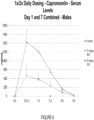
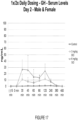
- Serum samples were taken to measure capromorelin concentration, GH concentration, IGF-1 concentration, and cortisol concentration. Serum samples were taken on days 1, 2, 4, and 7 at -15 minutes (pre-dose), immediately prior to dosing (0 minutes) and 30, 45, 60, 90, 120, 240, 360, and/or 480 minutes post dosing. Additional blood samples were taken at 8 AM on Day 10 of the study to assess long-term impact of the active treatments.
- dogs in the active treatment groups i.e., Groups B and C
- dogs in the control group i.e., Group A
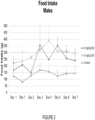
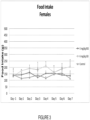
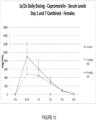
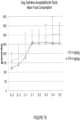
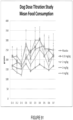
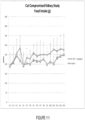
- dogs treated with a once-daily 6 mg/kg or a twice-daily 3mg/kg dose of capromorelin consumed more food relative to dogs receiving deionized water only are shown in FIGS. 1-3 .
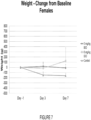
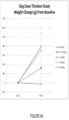
- dogs treated with the once-daily 6 mg/kg or the twice-daily 3mg/kg dose of capromorelin gained more weight relative to dogs receiving deionized water only.
- the male dogs in these treatment groups experienced a 4-5% increase in weight over the course of the seven day treatment period ( FIG. 6 ); however body weight changes in female dogs ( FIG. 7 ) were not as clearly defined.
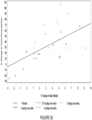
- the increase in body weight appears to be correlated with the increase in food consumption. More specifically, as discussed above, male dogs tended to consume more food ( FIG. 2 ), and, correspondingly, male dogs also gained more body weight ( FIG. 6 ).
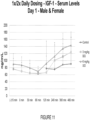
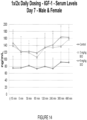
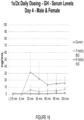
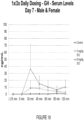
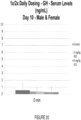
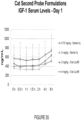
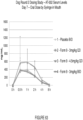
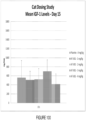
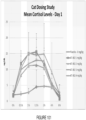
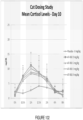
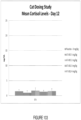
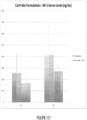
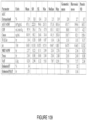
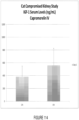
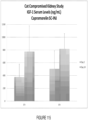
- FIGS. 11-15 treatment with capromorelin induced IGF-1 levels within the serum of the dogs.
- IGF-1 levels exhibited an increase in the serum, relative to the dogs receiving only deionized water.
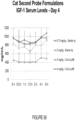
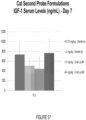
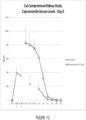
- FIGS. 12-14 on days 2, 4, and 7 of the treatment course, serum IGF-1 levels remained consistently higher in dogs receiving both doses of capromorelin.
- FIG. 15 three days after terminating treatment (Day 10), levels of serum IGF-1 in the dogs receiving capromorelin treatment were not significantly different than the levels of serum IGF-1 in the dogs receiving deionized water alone.
- the general elevation of IGF-1 during the treatment regimen was similarly observed dogs treated with the once-daily 6 mg/kg or the twice-daily 3 mg/kg dose of capromorelin.
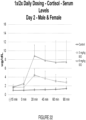
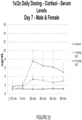
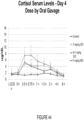
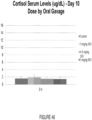
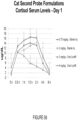
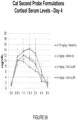
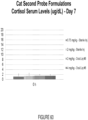
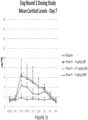
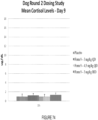
- cortisol concentrations in the serum appear to correlate with administration of capromorelin. Specifically, on days 1, 2, and 7 ( FIGS. 21-23 , respectively), after approximately 0.5h post treatment, cortisol concentrations in the serum of dogs treated with capromorelin increased relative to dogs receiving only deionized water. Moreover, the amount of increase in cortisol concentration in the serum correlates with the dosing regimen used. Particularly, dogs that received the once-daily 6 mg/kg dose exhibited greater concentrations of cortisol in the serum relative to dogs that received the twice-daily 3 mg/kg dose of capromorelin. Moreover, as shown in FIG. 24 , three days after terminating treatment (Day 10), levels of cortisol in the serum in the dogs receiving capromorelin treatment were not significantly different than the levels of cortisol in the serum in the dogs receiving deionized water alone.
- both dosing regimens produced discernible impacts on the dogs of Groups B and C, relative to the negative control dogs of Group A. Moreover, no toxicological responses were noted. Pharmacological effects were noted, including increased body weight and food consumption, as well as increased levels of serum GH, IGF-1, cortisol, and capromorelin. In general, the increases in serum concentrations of GH, IGF-1, and cortisol were more pronounced in animals receiving the once-daily 6 mg/kg dosing regimen.
- the twice-daily 3 mg/kg dosing regimen induced sufficient amounts of IGF-1 to promote lean muscle growth within the dogs, but also did not induce increases in GH and cortisol concentrations to the same extent as the once-daily 6 mg/kg dosing regimen.
- the dogs are less likely experience an increase in adipose deposition, meaning that the increase in body weight is more likely to be lean muscle.
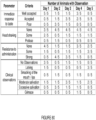
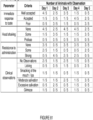
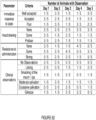
- the acceptability/palatability testing was conducted the first two days after the pharmacokinetic analysis. Briefly, at the same time on Days 1 and 2 after the pharmacokinetic analysis, dogs were orally dosed in the corner of the mouth with the capromorelin formulations used in the pharmacokinetic analysis. The dogs' responses to the different formulations were recorded.
- formulation administration in the corner of the mouth via syringe was accepted by the dogs, but not well accepted. It did not appear that the dogs liked the taste of the formulations, with formulation 5 being the most accepted and formulation 1 being the least accepted.
- each of the tested formulations produced adequate serum concentrations of capromorelin.
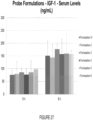
- the administration of all of the formulations produced increased levels of IGF-1 in the serum.
- formulation 4 will be used in future experimentation because it produced the most consistent capromorelin serum profile. As discussed in greater detail below, further refinement of formulation four will be needed in order to improve the palatability, which can improve the ease with which owners of the companion animals can administer the composition.
- formulation 4 includes the following constituents at the following concentrations, as measured in weight of the constituent per total volume of the solution: Ingredient % weight per volume Capromorelin 2.10 Methyl 4-Hydroxybenzoate Salt 0.14 Propyl 4-Hydroxybenzoate Salt 0.02 Ethyl Vanillin 0.32 Sucralose 1.27 Purified Water 36.00 Propylene Glycol q.s.
- formulation 4 was mixed with a plurality of different sweeteners, flavors, and/or masking agents to improve dog acceptability/palatability of this formulation.
- twenty Beagle dogs ten males and ten females
- Each of the dogs received a test formulation of capromorelin via a single oral dose in the corner of the mouth. This testing included two iterations with the same groups of dogs on consecutive days. However, on the second day, only four groups were necessary because a total of nine formulations were tested (i.e., five formulations tested on the first day and four formulations tested on the second day).
- test formulation 4 Nine new formulations of formulation 4 were tested at the 3 mg/kg dose. Moreover, during administration of the test formulations, dogs were observed to determine whether the test formulations were "well-accepted” by assessing a lack of clinical observations and an apparent acceptance or willingness to orally receive the formulations. Moreover, during testing, if at least three of the four dogs in a test group displayed a "well-accepted" response to a test formulation (as determined by testing personal), serum samples were collected a times 0, 0.5h, 1h, 2h, 4h, and 8h post administration. Serum samples were tested for capromorelin and IGF-1 concentrations.
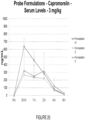
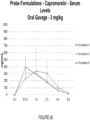
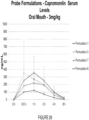
- FIGS. 28 and 29 Data reflecting "well-accepted" formulations is shown in FIGS. 28 and 29 .
- formulations 1, 3, 7, and 8 were determined to be “well-accepted” by the dogs.
- each of these formulations resulted in detectable levels of capromorelin in the serum and increases in IGF-1 at eight hours after administration. It was determined that formulation 8 produced the most consistent capromorelin serum profile, however, the present invention is not limited to the embodiment of formulation 8.
- the "well-accepted" formulations include the following constituents at the following concentrations, as measured in weight of the constituent per total volume of the solution: Formulation 1 Ingredient % weight per volume Capromorelin 2.10 Citric Acid 0.50 Sodium Citrate 0.50 Sodium Chloride 1.00 Methyl 4-Hydroxybenzoate Salt 0.11 Propyl 4-Hydroxybenzoate Salt 0.01 Sucralose 0.50 MagnaSweet 0.50 Natural Vanilla Flavor 0.40 Di-Pac ® Compressible sugar (97% Sucrose and 3% Maltodextrin) 30.00 Propylene Glycol 25.00 Vegetable Glycerin 17.00 Purified Water q.s.
- Formulation 3 Ingredient % weight per volume Capromorelin 2.10 Citric Acid 0.50 Sodium Citrate 0.50 Sodium Chloride 1.00 Methyl 4-Hydroxybenzoate Salt 0.11 Propyl 4-Hydroxybenzoate Salt 0.01 Sucralose 0.50 MagnaSweet 0.50 Macorogolglycerol Hydroxysterarate 0.16 Natural Vanilla Flavor 0.40 Di-Pac ® Compressible sugar (97% Sucrose and 3% Maltodextrin) 30.00 Propylene Glycol 25.00 Vegetable Glycerin 17.00 Purified Water q.s.
- Formulation 7 Ingredient % weight per volume Capromorelin 2.10 Citric Acid 0.50 Sodium Citrate 0.50 Sodium Chloride 1.00 Methyl 4-Hydroxybenzoate Salt 0.11 Propyl 4-Hydroxybenzoate Salt 0.01 Neotame 0.15 MagnaSweet 0.35 Natural Vanilla Flavor 0.40 Di-Pac ® Compressible sugar (97% Sucrose and 3% Maltodextrin) 30.00 Propylene Glycol 25.00 Vegetable Glycerin 17.00 Purified Water q.s.
- Formulation 8 Ingredient % weight per volume Capromorelin 2.10 Citric Acid 0.50 Sodium Citrate 0.50 Sodium Chloride 1.00 Methyl 4-Hydroxybenzoate Salt 0.11 Propyl 4-Hydroxybenzoate Salt 0.01 Thaumatin 0.18 Stevia Extract Rebaudioside A 0.13 MagnaSweet 0.30 Natural Vanilla Flavor 0.40 Di-Pac ® Compressible sugar (97% Sucrose and 3% Maltodextrin) 30.00 Propylene Glycol 25.00 Vegetable Glycerin 17.00 Purified Water q.s.
- the twice-daily 3 mg/kg dosing regimen was previously selected for further formulation analysis, an additional analysis of the dosing regimen was conducted to refine the concentrations and numbers of daily administrations of the capromorelin composition. Specifically, an analysis was conducted to determine if a less frequent dosing regimen of the capromorelin composition was a viable alternative to the twice-daily 3 mg/kg dosing regimen.
- the first group received a placebo formulation (i.e., deionized water) twice per day, via oral gavage.
- the second group received a once-daily dose of the capromorelin composition at a concentration of 3 mg/kg, via oral gavage.
- the third group received a twice-daily dose of the capromorelin composition at a concentration of 3 mg/kg, via oral gavage.
- each of the dogs was monitored for clinical observations, mortality, moribundity, body mass, acceptability/palatability, and food consumption.
- Serum samples were taken to measure capromorelin concentration, GH concentration, IGF-1 concentration, and cortisol concentration. Serum samples were taken on days 1, 2, 4, and 7 at -15 minutes (pre-dose), immediately prior to dosing (0 minutes) and 30, 45, 60, 90, 120, 240, 360, and/or 480 minutes post dosing. Additional serum samples were taken at 8 AM on Day 10 of the study to assess long-term impact of the active treatments.
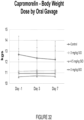
- dogs in the active treatment groups consumed greater amounts of food and did not lose weight during the experiment, compared to dogs in the control group (i.e., the first group).
- dogs receiving the active treatment regardless of dose, consumed more food than did dogs in the negative control group.
- dogs receiving the once-daily and the twice-daily 3 mg/kg dose of capromorelin consumed an average of approximately 34% more food consumed daily, relative to the negative control.
- the dogs receiving the active treatments did not experience the same weight loss exhibited by the dogs in the negative treatment group.
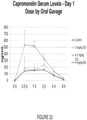
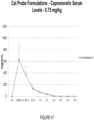
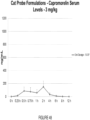
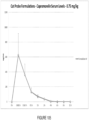
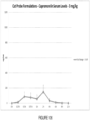
- capromorelin concentrations tended to begin rising at approximately 0.5 h after dosing and, in general, decreased to near undetectable levels by eight hours after administration. The results confirmed that the capromorelin composition was correctly administered.
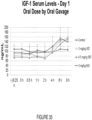
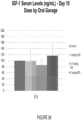
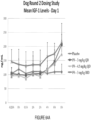
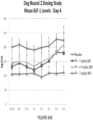
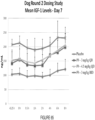
- FIGS. 35-38 treatment with capromorelin induced IGF-1 levels within the serum of the dogs.
- IGF-1 levels exhibited an increase in the serum, relative to the dogs receiving only deionized water.
- serum IGF-1 levels remained consistently higher in dogs receiving capromorelin.
- FIG. 38 three days after terminating treatment (Day 10), levels of serum IGF-1 in the dogs receiving capromorelin treatment were not significantly different than the levels of serum IGF-1 in the dogs receiving deionized water alone.
- the dogs in the active treatment group exhibit increased IGF-1 levels in the serum.
- the dogs receiving the once-daily treatment exhibit an approximately 83.9% increase in serum IGF-1 concentration, relative to time 0 on day 1.
- the dogs receiving the twice-daily treatment exhibit an approximately 50.6% increase in serum IGF-1 concentration, relative to time 0 on day 1.
- the once-daily treatment induces approximately 39.5% and 36.8% increases in serum IGF-1 concentration, relatively to time 0 on days 4 and 7, respectively.
- the twice-daily treatment induces approximately 15.4% and 13.3% increases in serum IGF-1 concentration, relatively to time 0 on days 4 and 7, respectively. It is possible that the dogs receiving the twice-daily administration of the capromorelin composition exhibit increases of a lesser magnitude because serum concentrations of IGF-1 are already at higher concentrations than are IGF-1 levels in dogs receiving the once-daily administration of capromorelin.
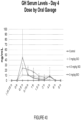
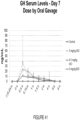
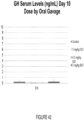
- cortisol concentrations in the serum appear to correlate with administration of capromorelin. Specifically, on days 1, 4, and 7 ( FIGS. 43-45 , respectively), at approximately 0.5h post treatment, cortisol concentrations in the serum of dogs treated with capromorelin increased relative to dogs receiving only deionized water. In addition, increases in cortisol serum levels were mitigated on days 4 and 7, and even more so with the twice-daily treatment of capromorelin. Moreover, as shown in FIG. 46 , three days after terminating treatment (Day 10), levels of cortisol in the serum in the dogs receiving capromorelin treatment were not significantly different than the levels of cortisol in the serum in the dogs receiving deionized water alone.
- both dosing regimens produced discernible impacts on the dogs of the active treatment groups, relative to the negative control dogs. Moreover, no toxicological responses were noted. Pharmacological effects were noted, including no significant decreases in body weight and increased food consumption, as well as increased levels of serum GH, IGF-1, cortisol, and capromorelin. In general, the more pronounced increases in serum concentrations of IGF-1 and mitigated expression of cortisol was noted in the dogs receiving the twice-daily administrations. Because of this noted benefit, the twice-daily administration of the capromorelin composition (at a concentration of 3 mg/kg) will be further explored, along with other dosing regimens to determine the most efficacious dose in an optimal volume.
- compositions were orally administered (i.e., using a syringe) to the animals in a flavored formulation of the following composition:
- Formulation 9 Ingredient % weight per volume Capromorelin (not present in Group 1 composition) 3.10 Citric Acid 0.70 Sodium Citrate 0.50 Sodium Chloride 0.70 Methyl 4-Hydroxybenzoate Salt 0.045 Propyl 4-Hydroxybenzoate Salt 0.005 Thaumatin T200X 0.60 Stevia Extract Rebaudioside A 99% 0.70 MagnaSweet 0.50 Vanillin 0.20 Neosorb Sorbitol 70% 30.30 Maltitol Solution (Lycasin 80/55) 25.00 Glycerol Anhydrous 20.20 Kollidon 90F (PVP) 1.5 Ethanol (ABS) 0.50 Purified Water q.s.
- the animals were orally administered the flavored formulation at approximately 8:00 AM and, for Group 4 only, again at 6:00 PM.
- the animals were fed at 10:00 AM beginning seven days prior to Day 1 and continuing for the duration of the study.
- the animals were offered twice the normal amount of food. Approximately two hours after the food offering, the remainder was removed and weighed to assess food intake.
- This restricted feeding regime was started at Day -7 to allow the animals to transition to a normal feed intake before the study was initiated.
- Food consumption was calculated and recorded on Days -7 through Day 7. Baseline food consumption was calculated for each individual dog as the average number of grams of food consumed on Days -3, -2, and -1.
- the study period food consumption was calculated for each individual dog as the average of Days 1 through 7.
- Body weights were collected on Days -1, 3, and 7.
- the animals that received the experimental compositions consumed greater amounts of food and gained more weight than the animals in Group 1 (i.e ., the placebo group).
- the animals of Groups 2-4 (i.e ., those that received the capromorelin-containing composition), consumed greater amounts of food relative to the animals in the control group.
- the control animals consumed nearly 16% less food, with the Group 2 animals consuming 42.7% more food, the Group 3 animals consuming 34.5% more food, and the Group 4 animals consuming 31.5% more food.
- Table 1 Weight Change Group Treatment Comparison of Weight on Day -1 to Weight on Day 7 (X ⁇ SD, %) 1 Placebo - 2x per day -1.17 ⁇ 1.51% 2 Capromorelin - 3mg/kg 1x per day 4.52 ⁇ 1.67 % 3 Capromorelin - 4.5 mg/kg 1x per day 3.78 ⁇ 2.93 % 4 Capromorelin - 3 mg/kg 2x per day 4.17 ⁇ 1.35 %
- the concentrations of capromorelin within the serum were as expected.
- this data also shows that there was no evidence of capromorelin accumulation in these animals, as the concentration dropped to below detectable levels by 8 hours post administration.
- the levels of IGF-1, growth hormone, and cortisol increased as a result of capromorelin administration.
- the IGF-1 levels in the control animals remained near baseline throughout the study.
- the animals in Groups 2-4 experienced increases in the amounts of IGF-1 present in the serum on Days 1, 4, and 7.
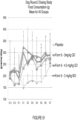
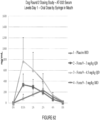
- the IGF-1 levels exhibited a sustained increase over a twenty-four hour period in the treated animals by Day 4 ( FIG. 64B ) and remained elevated on Day 7.
- the animals receiving the twice-daily administrations (Group 4) exhibited the highest sustained increase, but it appeared that there was little difference in the sustained levels of IGF-1 between Groups 2 and 3.
- the data in FIG. 66 shows that the IGF-1 levels remained slightly elevated after the treatment had been ceased for 2 days ( i.e ., on Day 9).
- Groups 2-4 experienced initial increases in the serum concentration of growth hormone.
- the level of growth hormone in the Group 1 animals remained near baseline for the duration of the experiment.
- the animals that received capromorelin experienced an increase in growth hormone in the serum on Day 1 ( FIG. 67 ), which was mitigated by Day 4 ( FIG. 68 ), further reduced by Day 7 ( FIG. 69 ), and not detected after the conclusion of the experiment (Day 9; FIG. 70 ).
- FIGS. 71-74 treatment with capromorelin also resulted in initially increased levels of cortisol.
- the level of cortisol in the Group 1 animals remained near baseline for the duration of the experiment.
- the animals that received capromorelin experienced an initial increase in cortisol in the serum on Day 1 ( FIG. 71 ), which was mitigated by Day 4 ( FIG. 72 ), further reduced by Day 7 ( FIG. 73 ), and not detected after the conclusion of the experiment (Day 9; FIG. 74 ).
- the cortisol profile was best mitigated in the Group 4 animals, but there was no significant difference between the Group 2 and Group 3 animals.
- Formulation 9 Ingredient % weight per volume Capromorelin 3.10 Citric Acid (Anhydrous) 0.70 Sodium Citrate 0.50 Sodium Chloride 0.70 Methyl 4-Hydroxybenzoate Salt 0.045 Propyl 4-Hydroxybenzoate Salt 0.005 Thaumatin T200X 0.60 Stevia Extract Rebaudioside A 99% 0.70 MagnaSweet Plus Liquid 0.50 Vanillin 0.20 Neosorb Sorbitol 70% 30.30 Maltitol Solution (Lycasin 80/55) 25.00 Glycerol Anhydrous 20.20 Kollidon 90F (PVP) 1.5 Ethanol (ABS) 0.50 Purified Water q.s.
- the animals were orally administered the different formulations at approximately 8:00 AM.
- the animals were fed at 10:00 AM beginning seven days prior to Day 1 and continuing for the duration of the study (5 days).
- the animals were offered twice the normal amount of food. Approximately two hours after the food offering, the remainder was removed and weighed to assess food intake.
- This restricted feeding regime was started at Day -7 to allow the animals to transition to a normal feed intake before the study was initiated.
- Food consumption was calculated and recorded on Days -7 through Day 5. Baseline food consumption was calculated for each individual dog as the average number of grams of food consumed on Days -3, -2, and -1.
- the study period food consumption was calculated for each individual dog as the average of Days 1 through 5. Body weights were collected on Days -1 and 5.
- both formulations induced weight gain and increased food consumption over the course of the study.
- FIG. 75 although throughout the experiment the body weights of the animals were greater in the group receiving Formulation 9, a greater increase in body weight was seen in animals receiving Formulation 2.
- animals receiving Formulation 2 exhibited an approximately 7.84% increase in body weight on Day 5, relative to Day -1, while animals receiving Formulation 9 exhibited an approximately 6.5% increase in body weight over the same time period.
- FIG. 76 both groups of animals also consumed increased amounts of food over the course of the five-day experiment.
- the first group received the placebo formulation once per day
- the second group received Formulation 2 that was administered at a dose of 0.33 mg/kg once per day
- the third group received Formulation 2 that was administered at a dose of 2.0 mg/kg once per day
- the fourth group received Formulation 2 that was administered at a dose of 3.0 mg/kg once per day
- the fifth group received Formulation 2 that was administered at a dose of 4.0 mg/kg once per day.
- the animals were orally administered the formulation at approximately 8:00 AM.
- the animals were fed at 10:00 AM beginning 10 days prior to Day 1 and continuing for the duration of the study (7 days).
- This feeding regime was started at Day -10 to allow the animals to transition to a normal feed intake before the study was initiated.
- Food consumption was calculated and recorded on Days -3 through Day 7.
- Baseline food consumption was calculated for each group of dogs as the average number of grams of food consumed on Days -3, -2, and -1.
- the study period food consumption was calculated for each group of dogs as the average of study Days 1 through 7.
- Body weights were collected on Days 1 (immediately prior to dosing) and 8 (following an overnight fast). No blood was collected for during this experiment.
- Table 2 Weight Change Treatment Comparison of Weight on Day 1 to Weight on Day 8 Placebo - 1x per day -0.26% Formulation 2 - 0.33 mg/kg 1x per day 1.88% Formulation 2 - 2.0 mg/kg 1x per day 4.91% Formulation 2 - 3 mg/kg 1x per day 5.29% Formulation 2 - 4 mg/kg 1x per day 4.54%
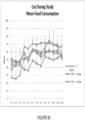
- the average food consumption increased in the non-placebo groups when compared to baseline.
- the baseline average was calculated by averaging the food consumed by the dogs on each of Days -3 to -1.
- the food consumption average was calculated by taking the daily food consumption during the study period on Days 1 to 7.
- FIG. 91 generally shows an increase in the amount of food consumed by the animals receiving the non-placebo formulation.
- the 4 mg/kg group consumed significantly more food.
- the Pearson correlation coefficient for the percent change in food consumption versus the percent change in body weight was 0.585, which corresponds to a slope of 5.9%.
- Table 3 Food Intake Change Treatment Day -3 to -1 (Baseline Period) Average Food Consumption (Grams) Day 1 to Day 7 (Study Period) Average Food Consumption (Grams) Differenc e % Food Consumption Change over Baseline Placebo - 1x per day 159.89 161.76 1.87 1.17 Formulation 2 - 0.33 mg/kg 1x per day 193.33 244.55 51.22 26.49 Formulation 2 - 2.0 mg/kg 1x per day 178.89 242.83 63.94 35.74 Formulation 2 - 3 mg/kg 1x per day 205.83 266.48 60.65 29.47 Formulation 2 - 4 mg/kg 1x per day 136.72 210.93 74.21 54.28
- a pharmacokinetic study was conducted in cats to assess capromorelin and IGF-1 concentrations in the serum after administration of different formulations. Briefly, twelve cats were randomized into Group A (six cats) and Group B (six cats). Group A received an IV formulation that included 0.75 mg/kg of capromorelin and Group B received the previously tested formulation 4 via oral gavage. Formulation 4 includes capromorelin at a concentration of 3 mg/kg. Serum samples were taken after administration of the two test formulations to assess capromorelin and IGF-1 concentrations. Samples were taken a time 0 (pre-administration) and 5 minutes, 10 minutes, 30 minutes, 1h, 2h, 4h, 6h, 8h, and 12h post administration.
- capromorelin compositions in cats do not exhibit the same pharmacokinetic profile as these compositions exhibit in dogs.
- formulation 4 which was administered via oral gavage, produced a relatively low serum concentration of capromorelin, with the peak concentration occurring two hours after administration.
- the IV formulation produced a serum concentration of capromorelin similar to what was observed in dogs. Specifically, the serum concentration of capromorelin increased relatively soon after administration (i.e., 5 minutes) and proceeded to decrease until the final samples were taken twelve hours after administration.
- IGF-1 is still induced eight hours after administration, as shown in FIG. 49 . This disparity in bioavailability and IGF-1 expression could indicate a relatively large efficacy window for capromorelin to trigger an IGF-1-induced lean muscle response.
- formulation 8 from Example 3 (i.e., the most "well-accepted” formulation) in cats. Moreover, the administration of formulation 8 was also analyzed to determine if administration of this formulation could induce sustained production of IGF-1 and relatively depressed, mitigated, or lower levels of cortisol. The different capromorelin-dosing regimens were also assessed for the impact on food intake and changes in body mass.
- the first group received a sterile injection of a capromorelin composition containing a 0.75 mg/kg concentration of capromorelin once per day during the four-day experiment.
- the second group received a once-daily sterile injection of a capromorelin composition at a concentration of 2 mg/kg.
- the third group received a once-daily dose of a capromorelin composition at a concentration of 2 mg/kg, via oral gavage.
- the fourth group received a once-daily dose of a capromorelin composition containing capromorelin at a concentration of 4 mg/kg, via oral gavage.
- each of the cats was monitored for clinical observations, mortality, moribundity, body mass, acceptability/palatability, and food consumption.
- Serum samples were taken to measure capromorelin concentration, IGF-1 concentration, and cortisol concentration. Serum samples were taken on days 1 and 4 immediately prior to dosing (0 minutes) and 30, 60, 90, 120, 240, 360, and/or 480 minutes post dosing. Additional serum samples were taken at 8 AM on Day 7 of the study to assess long-term impact of the active treatments.
- cats receiving the sterile injectable formulations exhibited a different pharmacokinetic profile, relative to the cats receiving the oral formulation.
- the cats receiving sterile injectable formulation displayed a pharmacokinetic profile similar to the previous examples with dogs.
- the capromorelin concentration in the serum peaked at about 0.5h post administration and decreased until reaching near undetectable levels by around eight hours after administration.
- the serum concentrations of capromorelin in the groups receiving the sterile injectable formulation appear to correspond to the concentration of capromorelin administered, as shown in FIGS. 51-53 . More specifically, the maximum concentrations of capromorelin in the serum are approximately 2.5 to 3 times greater in the group of cats receiving the 2 mg/kg sterile injection relative to the cats receiving the 0.75 mg/kg dose.
- FIGS. 55-57 treatment with capromorelin induced IGF-1 levels within the serum of the cats.
- IGF-1 levels exhibited an increase in the serum.
- one treatment group the cats receiving the 2 mg/kg oral formulation, experienced only moderately increased concentrations of IGF-1 at eight hours post administration, relative to pre-treatment levels.
- cats receiving the sterile injectable formulations and the 4 mg/kg oral formulation exhibited sustained increased IGF-1 levels, similar to the IGF-1 profile observed in dogs.
- the cats in at least some of the treatment groups exhibit increased IGF-1 levels in the serum.
- the cats receiving the 0.75 mg/kg and 2 mg/kg sterile injectable formulations exhibit approximately 39.8% and 43.1% increases in serum IGF-1 concentration, respectively, relative to time 0 on day 1.
- the cats receiving the 2 mg/kg and 4 mg/kg oral formulations exhibit approximately 26.6% and 30.8% increases in serum IGF-1 concentration, respectively, relative to time 0 on day 1.
- the 0.75 mg/kg and 2 mg/kg sterile injectable formulations induce approximately 12.2% and 10.8% increases in serum IGF-1 concentration, relatively to time 0 on day 4, respectively.
- the 2 mg/kg and 4 mg/kg oral formulations induce approximately 7.6% and 0.7% increases in serum IGF-1 concentration, relatively to time 0 on day 4, respectively. It is possible that the cats receiving the sterile injectable and 4 mg/kg oral formulations exhibit increases of a lesser magnitude because serum concentrations of IGF-1 are already at a higher level than are IGF-1 levels in cats receiving theses dosing regimens of capromorelin.
- cortisol concentrations in the serum appear to correlate with administration of capromorelin. Specifically, on days 1 and 4 ( FIGS. 58 and 59 , respectively), at approximately 0.5h post treatment, cortisol concentrations in the serum of dogs treated with capromorelin begin increasing. Moreover, in all treatment groups other than the 2 mg/kg oral formulation group, the cortisol concentrations continued to increase until between 90 and 120 minutes, where the concentrations began to decrease until reaching near undetectable levels at 480 minutes. In addition, increases in cortisol serum levels were mitigated on day 4, relative to the levels detected during day 1. Moreover, as shown in FIG. 60 , three days after terminating treatment (Day 7), levels of serum cortisol in the cats receiving capromorelin treatment were similar in all treatment groups.
- Group 1 received Formulation 1 (referred to as PRT2-81 in corresponding Figures; described below) once per day at a dose of 4 mg/kg of body weight of capromorelin;
- Group 2 received Formulation 2 (referred to as New Form in corresponding Figures; described below) once per day at a dose of 4 mg/kg of body weight of capromorelin;
- Group 3 received Formulation 3 (referred to as PERT2-86 in corresponding Figures; described below) once per day at a dose of 4 mg/kg of body weight of capromorelin;
- Group 4 received Formulation 4 (referred to as PRT3-99I in corresponding Figures; described below) once per day at a dose of 4 mg/kg of body weight of capromorelin.
- Formulation 1 PRT2-81 Ingredient % weight per volume Capromorelin 2.10 Citric Acid 0.70 Sodium Citrate 0.50 Sodium Chloride 0.70 Methyl 4-Hydroxybenzoate Salt 0.112 Propyl 4-Hydroxybenzoate Salt 0.013 Thaumatin T200X 0.40 S Rebaudioside A 0.40 MagnaSweet Plus Liquid 0.50 Ethyl Vanillin 0.10 Ethanol 0.25 Neosorb Sorbitol 70% 30.00 Maltitol Solution (Lycasin 80/55) 25.00 Glycerin 20.00 Kollidon 90F (PVP) 1.5 Purified Water q.s.
- Formulation 2 New Form
- Ingredient % weight per volume Capromorelin 3.10 Citric Acid 0.70 Sodium Citrate 0.50 Sodium Chloride 0.70 Methyl 4-Hydroxybenzoate Salt 0.045 Propyl 4-Hydroxybenzoate Salt 0.005 Thaumatin T200X 0.60 MagnaSweet Plus Liquid 0.50 S Rebaudioside A 0.7 Vanillin 0.20 Neosorb Sorbitol 70% 30.00 Maltitol Solution (Lycasin 80/55) 25.00 Glycerol Anhydrous 20.00 Kollidon 90F (PVP) 1.5 Purified Water q.s.
- PVP Kollidon 90F
- Formulation 3 PERT2-86 Ingredient % weight per volume Capromorelin 2.10 Citric Acid 0.70 Sodium Citrate 0.50 Sodium Chloride 0.70 Methyl 4-Hydroxybenzoate Salt 0.112 Propyl 4-Hydroxybenzoate Salt 0.013 Thaumatin T200X 0.40 S Rebaudioside A 0.40 MagnaSweet Plus Liquid 0.50 Ethyl Vanillin 0.13 Ethanol 0.30 Neosorb Sorbitol 70% 30.00 Maltitol Solution (Lycasin 80/55) 25.00 Glycerol Anhydrous 20.50 Pluriol-E3350 (PEG) 7.5 Purified Water q.s.
- Formulation 4- PRT3-99I Ingredient % weight per volume Capromorelin 3.10 Citric Acid (Anhydrous) 0.70 Sodium Citrate 0.50 Sodium Chloride 0.70 Methyl 4-Hydroxybenzoate Salt 0.045 Propyl 4-Hydroxybenzoate Salt 0.005 Thaumatin T200X 0.60 Stevia Extract Rebaudioside A 99% 0.70 MagnaSweet Plus Liquid 0.50 Vanillin 0.20 Neosorb Sorbitol 70% 30.30 Maltitol Solution (Lycasin 80/55) 25.00 Glycerol Anhydrous 20.20 Kollidon 90F (PVP) 1.5 Ethanol (ABS) 0.50 Purified Water q.s.
- the cats did not appear to have significant issues with any of the formulations, although the cats appeared to generally dislike the dosing procedure. In general, none of the formulations were "well accepted" by the cats; however most of the formulations were still accepted with some adverse clinical observation projected by some of the cats (i.e., licking, smacking of the mouth/lips, and salivation). Overall, the formulations were generally accepted at similar levels by the cats.
- Table 4 weight Change Group Day -1 Weights (mean ⁇ SD, kg) Day 6 Weights (mean ⁇ SD, kg) Average Increase in Weight on Day 6 v. Day -1 1 - PRT2-81 5.1 ⁇ 1.4 5.2 ⁇ 1.4 2.0% 2 - New Form 5.0 ⁇ 2.5 5.2 ⁇ 2.4 4.0% 3 - PERT2-86 5.0 ⁇ 1.6 5.2 ⁇ 1.6 4.0% 4 - PRT3-99I 4.9 ⁇ 2.1 5.0 ⁇ 2.0 2.0%
- the increase seen in the weights of the cats was due, at least in part, to an increase in food consumption.
- food consumption was calculated for all animals, including during the acclimation period during Days -3 to -1.
- mean individual food consumption ranged from 19 to 60 grams per day for all made study cats and 23 to 50 grams per day for all female study cats.
- Table 5 Food Intake Increase Group Day -3 to -1 Mean (g) Day 1 to 6 Mean (g) Difference (g) Percent Food Intake Increase 1 - PRT2-81 36.20 67.23 31.03 85.72 2 - New Form 38.21 75.93 37.72 98.72 3 - PERT2-86 45.33 69.73 24.40 53.83 4 - PRT3-99I 44.13 63.33 19.20 43.51
- each of the test formulations induced an initial spike in capromorelin concentration in the test animals within 30 minutes of administration. After the initial spike and over the course of the next eight hours, the serum concentrations of capromorelin decreased to levels below detection limitations of the assay. Interestingly, animals in Group 1, on average, exhibited a higher initial spike in capromorelin concentration in the serum, but eventually cleared the composition by eight hours post dosing.
- FIG. 88 and Table 4 below all four tested formulations induced some level of increase in serum concentration of IGF-1.
- Group 1 received the placebo formulation once per day;
- Group 2 received Formulation 4 at a dose of 1 mg/kg once per day;
- Group 3 received Formulation 4 at a dose of 2 mg/kg once per day;
- Group 4 received Formulation 4 at a dose of 3 mg/kg once per day;
- Group 5 received Formulation 4 at a dose of 4 mg/kg once per day. All animals were orally dosed.
- the experiment proceeded after an acclimation period of seven days, with this period intended to allow the cats to adapt to the feeding regimen associated with the experiments.
- Day -7 300 grams of food was offered to each of the animals for a period of approximately 4 hours, starting at 11:00 AM and ending at 3:00 PM. After removal, the food was weighed each day to assess consumption.
- all animals were orally administered in the corner of the mouth with the appropriate dose of Formulation 4.
- blood samples were taken from each cat at multiple time points for measurements of capromorelin, IGF-1, and/or cortisol in the serum. In particular, blood samples were taken at pre-dose (0 minutes), 30, 60, 90, 120, 240, and 480 minutes post dose.
- Table 7 Food Intake Increase Group Day -3 to -1 (Baseline) (g) Day 1 to 10 (Study Period) (g) Difference (g) Percent Food Consumption Change Over Baseline 1 - Placebo 43.06 47.25 4.20 9.75 2 - 1 mg/kg 48.33 58.43 10.10 20.90 3 - 2 mg/kg 43.89 62.83 18.95 43.17 4 - 3 mg/kg 45.94 68.78 22.84 49.71 5 - 4 mg/kg 27.67 56.62 28.95 104.62
- Table 8 Change in Body Weight Group Mean - Change from Baseline to Day 10 (kg) Mean - Change from Baseline to Day 10 (%) 1 - Placebo 0.00 0.00 2 - 1 mg/kg 0.15 3.07 3 - 2 mg/kg 0.16 3.04 4 - 3 mg/kg 0.27 5.38 5 - 4 mg/kg 0.21 4.43
- IGF-1 Serum Concentrations Day 1 Group Percent Increase in IGF-1 at 480 Minutes relative to Pre-Dose Levels (0 Minutes) 1 - Placebo 12.79 2 - 1 mg/kg 44.69 3 - 2 mg/kg 34.35 4 - 3 mg/kg 45.02 5 - 4 mg/kg 56.83
- Table 10 IGF-1 Serum Concentrations: Day 10 Group Percent Increase in IGF-1 at 480 Minutes relative to Pre-Dose Levels (0 Minutes) 1 - Placebo 5.23 2 - 1 mg/kg 8.51 3 - 2 mg/kg 10.41 4 - 3 mg/kg -3.45 5 - 4 mg/kg 11.26
- the cats were given a seven day acclimation period to adjust to the experimental conditions and feed provided. After the acclimation period, on Day 0, all animals in Group 1 received an intravenous injection of the composition containing a dose of 0.75 mg/kg of capromorelin. On Day 0, the animals in Group 2 received an oral administration of the formulation via gavage at a dose of 3 mg/kg of capromorelin.
- serum samples were taken from the Group 1 animals at time 0 (pre-administration) and 5 minutes, 10 minutes, 30 minutes, 1h, 2h, 4h, 6h, 8h, and 12h post administration and serum samples were also taken from the Group 2 animals at time 0 (per-administration) and 15 minutes, 30 minutes, 45 minutes, 1h, 2h, 4h, 6h, 8h, and 12h post administration.
- the animals in Group 2 received a second dose of the test formulation at a dose of 1 mg/kg to assess palatability and acceptability, which revealed general acceptability and palatability of the formulation (data now shown).
- the serum profile of the concentration of capromorelin differed between Groups 1 and 2.
- the serum concentration of the Group 1 animals increased at a much faster rate and reached a much greater level, compared to the Group 2.
- the Group 2 animals which received an oral administration of the capromorelin composition, experienced a small peak in serum concentration at around 2 hours post administration of around 150 ng/mL.
- the Group 1 animals which received an intravenous injection of the composition, experienced a greater peak (around 625 ng/mL) at around 5 minutes post administration.
- the animals in Group 1 also experienced a greater increased in IGF-1 levels in the serum compared to the animals in Group 2.
- the plasma profile of the Group 2 animals consisted of an absorption phase, plateau or double peak at the T max , and a rapid terminal phase.
- the pharmacokinetic data for the Group 2 animals is illustrated in FIG. 109 .
- the mean C max was 148.9 ng/mL and occurred at 2 hours.
- the plateau or double peak of the profile could be due to the enterohepatic recycling, which occurs when a drug is eliminated as a drug-conjugate complex in the bile such that the complex is broken down in the distal intestinal track so that the drug is reabsorbed.
- the plateau or double peak could also be due to absorption at different points in the intestinal track.
- the mean-terminal half-life was 1.04 hours.
- blood samples were taken from the Group 1 animals at time points 0 (pre-administration), 5 minutes, 10 minutes, 30 minutes, 1 h, 2h, 4h, 6h, 8h, and 12h post administration on Day 0.
- Blood samples were taken from the Group 2 animals at time points 0 (pre-administration), 15 minutes, 30 minutes, 45 minutes, 1 h, 2h, 4h, 6h, 8h, and 12h post administration on Day 0 and time points 0, 30 minutes, 1h, 2h, 4h, and 8h post administration on Day 13.
- body weights were collected on study days -7, -1, and 13 (for Groups 2 and 3 only). Diet consumption was also monitored on study days -7 until day 13 for the animals in Groups 2 and 3 only.
- the serum concentration of capromorelin initially spiked at about 5 minutes post-administration (about 397 ng/mL) and then gradually returned to baseline by about 8 hours after administration.
- the serum concentration of capromorelin also initially spiked at about 15 minutes post-administration (about 833 ng/mL) and then returned to baseline levels by about 8 hours after administration.
- the animals in Group 2 exhibited a spike in serum capromorelin concentration at 30 minutes post administration (about 950 ng/mL) and then returned to baseline levels by about 8 hours post administration. As such, it appears that capromorelin does not accumulate in the serum of animals after 14 days of treatment because the levels of capromorelin in the Group 2 animals were at a baseline at both times 0 and 8 hours post administration on Day 13.
- the animals in Groups 1 and 2 both experienced an increased in serum concentration of IGF-1 as a result of the treatment with capromorelin.
- the animals in Group 1 experienced an increase in IGF-1 ( FIG. 114 ), which was also seen on Days 0 and 13 in the Group 2 animals ( FIG. 115 ).
- the pharmacokinetics of subcutaneously administered capromorelin were also determined.
- the geometric Cmax was 893 ng/mL and was noted at 0.42 hours.
- the mean fraction of the dose absorbed was determined by dividing the mean area under the curve (AUC)/dose of the animals in Group 2, which was divided by AUC/dose of the animals in Group 1.
- the mean fraction of the dose (F) absorbed is 1.37.
- the mean absorption time was rapid (0.4 hr), which suggests rapid absorption of capromorelin via subcutaneous administration, which is shorter than oral administration times of absorption.
- this pharmacokinetic data suggests that capromorelin that is subcutaneously administered to cats is well absorbed.
Landscapes
- Life Sciences & Earth Sciences (AREA)
- Chemical & Material Sciences (AREA)
- Health & Medical Sciences (AREA)
- Polymers & Plastics (AREA)
- Engineering & Computer Science (AREA)
- Public Health (AREA)
- Veterinary Medicine (AREA)
- General Health & Medical Sciences (AREA)
- Animal Behavior & Ethology (AREA)
- Medicinal Chemistry (AREA)
- Pharmacology & Pharmacy (AREA)
- Animal Husbandry (AREA)
- Zoology (AREA)
- Food Science & Technology (AREA)
- Epidemiology (AREA)
- Birds (AREA)
- Organic Chemistry (AREA)
- Nuclear Medicine, Radiotherapy & Molecular Imaging (AREA)
- General Chemical & Material Sciences (AREA)
- Chemical Kinetics & Catalysis (AREA)
- Bioinformatics & Cheminformatics (AREA)
- Nutrition Science (AREA)
- Pharmaceuticals Containing Other Organic And Inorganic Compounds (AREA)
- Fodder In General (AREA)
- Medicines That Contain Protein Lipid Enzymes And Other Medicines (AREA)
- Medicinal Preparation (AREA)
- Acyclic And Carbocyclic Compounds In Medicinal Compositions (AREA)
- Feed For Specific Animals (AREA)
- Dermatology (AREA)
- Investigating Or Analysing Biological Materials (AREA)
- Medicines Containing Material From Animals Or Micro-Organisms (AREA)
Priority Applications (1)
| Application Number | Priority Date | Filing Date | Title |
|---|---|---|---|
| EP23191187.6A EP4302825A3 (en) | 2012-09-27 | 2013-09-27 | Pharmaceutical compositions for treatment of inappetence |
Applications Claiming Priority (3)
| Application Number | Priority Date | Filing Date | Title |
|---|---|---|---|
| US201261706164P | 2012-09-27 | 2012-09-27 | |
| PCT/US2013/062227 WO2014052780A2 (en) | 2012-09-27 | 2013-09-27 | Compositions and methods of use of an inappetance-controlling compound |
| EP13841455.2A EP2906041A4 (en) | 2012-09-27 | 2013-09-27 | COMPOSITIONS AND METHODS FOR USE IN A CAPACITY CONNECTOR |
Related Parent Applications (1)
| Application Number | Title | Priority Date | Filing Date |
|---|---|---|---|
| EP13841455.2A Division EP2906041A4 (en) | 2012-09-27 | 2013-09-27 | COMPOSITIONS AND METHODS FOR USE IN A CAPACITY CONNECTOR |
Related Child Applications (1)
| Application Number | Title | Priority Date | Filing Date |
|---|---|---|---|
| EP23191187.6A Division EP4302825A3 (en) | 2012-09-27 | 2013-09-27 | Pharmaceutical compositions for treatment of inappetence |
Publications (2)
| Publication Number | Publication Date |
|---|---|
| EP3524260A1 EP3524260A1 (en) | 2019-08-14 |
| EP3524260B1 true EP3524260B1 (en) | 2023-09-13 |
Family
ID=50339468
Family Applications (3)
| Application Number | Title | Priority Date | Filing Date |
|---|---|---|---|
| EP19161662.2A Active EP3524260B1 (en) | 2012-09-27 | 2013-09-27 | Pharmaceutical compositions for treatment of inappetence |
| EP13841455.2A Withdrawn EP2906041A4 (en) | 2012-09-27 | 2013-09-27 | COMPOSITIONS AND METHODS FOR USE IN A CAPACITY CONNECTOR |
| EP23191187.6A Pending EP4302825A3 (en) | 2012-09-27 | 2013-09-27 | Pharmaceutical compositions for treatment of inappetence |
Family Applications After (2)
| Application Number | Title | Priority Date | Filing Date |
|---|---|---|---|
| EP13841455.2A Withdrawn EP2906041A4 (en) | 2012-09-27 | 2013-09-27 | COMPOSITIONS AND METHODS FOR USE IN A CAPACITY CONNECTOR |
| EP23191187.6A Pending EP4302825A3 (en) | 2012-09-27 | 2013-09-27 | Pharmaceutical compositions for treatment of inappetence |
Country Status (18)
| Country | Link |
|---|---|
| US (1) | US11090292B2 (enExample) |
| EP (3) | EP3524260B1 (enExample) |
| JP (2) | JP6779618B2 (enExample) |
| KR (6) | KR20250048114A (enExample) |
| CN (2) | CN111419845A (enExample) |
| AR (2) | AR092713A1 (enExample) |
| AU (2) | AU2013323349B2 (enExample) |
| BR (1) | BR112015006282B1 (enExample) |
| CA (1) | CA2886091C (enExample) |
| DK (1) | DK3524260T3 (enExample) |
| ES (1) | ES2959427T3 (enExample) |
| MX (2) | MX2015003564A (enExample) |
| NZ (2) | NZ746394A (enExample) |
| PL (1) | PL3524260T3 (enExample) |
| PT (1) | PT3524260T (enExample) |
| RU (1) | RU2648958C2 (enExample) |
| TW (3) | TWI732158B (enExample) |
| WO (1) | WO2014052780A2 (enExample) |
Families Citing this family (7)
| Publication number | Priority date | Publication date | Assignee | Title |
|---|---|---|---|---|
| US10975070B2 (en) | 2010-02-26 | 2021-04-13 | Raqualia Pharma Inc. | Ghrelin receptor agonist for treatment of cachexia |
| WO2013119800A1 (en) | 2012-02-07 | 2013-08-15 | Massachusetts Institute Of Technology | Use of antagonists of ghrelin or ghrelin receptor to prevent or treat stress-sensitive psychiatric illness |
| BR112015006282B1 (pt) | 2012-09-27 | 2021-11-23 | Aratana Therapeutics, Inc | Composições e usos de capromorelina para controle de inapetência |
| US9724396B2 (en) | 2013-03-15 | 2017-08-08 | Massachusetts Institute Of Technology | Use of antagonists of growth hormone or growth hormone receptor to prevent or treat stress-sensitive psychiatric illness |
| US9700591B2 (en) * | 2015-01-28 | 2017-07-11 | Aratana Therapeutics, Inc. | Compositions and methods for chronic use of a weight-gaining compound |
| US10317418B2 (en) | 2015-02-24 | 2019-06-11 | Massachusetts Institute Of Technology | Use of ghrelin or functional ghrelin receptor agonists to prevent and treat stress-sensitive psychiatric illness |
| WO2018089723A1 (en) * | 2016-11-11 | 2018-05-17 | Hill's Pet Nutrition, Inc. | Compositions and methods of pet food |
Family Cites Families (23)
| Publication number | Priority date | Publication date | Assignee | Title |
|---|---|---|---|---|
| US193273A (en) * | 1877-07-17 | Improvement in material for pulley-covers | ||
| JP2893901B2 (ja) * | 1990-09-07 | 1999-05-24 | 株式会社岐阜免疫研究所 | 動物用抗体含有油性ペースト製剤 |
| CA2095786A1 (en) * | 1992-05-08 | 1993-11-09 | Franco J. Vaccarino | Method of stimulating appetite |
| TW432073B (en) | 1995-12-28 | 2001-05-01 | Pfizer | Pyrazolopyridine compounds |
| DE60140285D1 (de) | 2000-05-31 | 2009-12-10 | Pfizer Prod Inc | Verwendung von Wachstumshormonsekretagoga zur Förderung der Beweglichkeit des Verdauungstrakts |
| EP1181933A3 (en) * | 2000-06-29 | 2002-04-10 | Pfizer Products Inc. | Use of growth hormone secretagogues for stimulating or increasing appetite |
| US8309603B2 (en) * | 2004-06-07 | 2012-11-13 | University Of Tennessee Research Foundation | SARMs and method of use thereof |
| US7491695B2 (en) * | 2003-06-18 | 2009-02-17 | Tranzyme Pharma Inc. | Methods of using macrocyclic modulators of the ghrelin receptor |
| US7476653B2 (en) | 2003-06-18 | 2009-01-13 | Tranzyme Pharma, Inc. | Macrocyclic modulators of the ghrelin receptor |
| JP2007532495A (ja) * | 2004-04-07 | 2007-11-15 | ガストロテック・ファルマ・アクティーゼルスカブ | グレリン欠乏を治療するための分泌促進薬の使用 |
| WO2006045313A2 (en) * | 2004-10-27 | 2006-05-04 | Gastrotech Pharma A/S | Uses of secretagogues for treatment of organ transplant patients |
| US8226973B2 (en) * | 2005-11-02 | 2012-07-24 | Nestec, S. A. | Isoflavone compositions for reducing accumulation of body fat in male mammals, and methods for their use |
| NZ571183A (en) * | 2006-03-13 | 2010-09-30 | Liat Mintz | Use of ghrelin splice variant for treating cachexia and/or anorexia and/or anorexia-cachexia and/or malnutrition and/or lipodystrophy and/or muscle wasting and/or appetite stimulation |
| US8299022B2 (en) | 2006-09-27 | 2012-10-30 | Ipsen Pharma S.A.S. | Analogs of ghrelin substituted at the N-terminal |
| JP2008127377A (ja) * | 2006-11-24 | 2008-06-05 | Jichi Medical Univ | Ghs−r作動薬を含有してなるメタボリックシンドローム又は高血圧症の予防・治療剤。 |
| US20080226802A1 (en) * | 2007-03-14 | 2008-09-18 | Concentrate Manufacturing Company Of Ireland | Beverage having natural sweeteners with one or more stevia components and source of berry |
| TWI429436B (zh) * | 2007-04-10 | 2014-03-11 | Helsinn Therapeutics Us Inc | 使用生長激素促泌素治療或預防嘔吐之方法 |
| RU2007129408A (ru) * | 2007-07-31 | 2009-02-10 | Игорь Николаевич Жирков (RU) | Способ выращивания поросят в период откорма |
| FR2920295B1 (fr) | 2007-09-05 | 2009-12-11 | Desvac | Dispositif d'injection de produits veterinaires a des volailles, comprenant un element de contention presentant une forme anatomique incluant des moyens de calage d'un os reperable |
| CN101854814B (zh) * | 2007-11-12 | 2013-07-31 | 三荣源有限公司 | 改善甜叶菊提取物甜味的方法 |
| EP2412713B1 (en) * | 2009-03-26 | 2016-11-30 | Takeda Pharmaceutical Company Limited | Pyrazole compound |
| US10975070B2 (en) | 2010-02-26 | 2021-04-13 | Raqualia Pharma Inc. | Ghrelin receptor agonist for treatment of cachexia |
| BR112015006282B1 (pt) | 2012-09-27 | 2021-11-23 | Aratana Therapeutics, Inc | Composições e usos de capromorelina para controle de inapetência |
-
2013
- 2013-09-27 BR BR112015006282-2A patent/BR112015006282B1/pt active IP Right Grant
- 2013-09-27 EP EP19161662.2A patent/EP3524260B1/en active Active
- 2013-09-27 EP EP13841455.2A patent/EP2906041A4/en not_active Withdrawn
- 2013-09-27 TW TW107142255A patent/TWI732158B/zh active
- 2013-09-27 NZ NZ746394A patent/NZ746394A/en unknown
- 2013-09-27 JP JP2015534747A patent/JP6779618B2/ja active Active
- 2013-09-27 RU RU2015114996A patent/RU2648958C2/ru active
- 2013-09-27 PT PT191616622T patent/PT3524260T/pt unknown
- 2013-09-27 KR KR1020257009208A patent/KR20250048114A/ko active Pending
- 2013-09-27 ES ES19161662T patent/ES2959427T3/es active Active
- 2013-09-27 TW TW109121986A patent/TW202106298A/zh unknown
- 2013-09-27 TW TW102135177A patent/TWI667024B/zh active
- 2013-09-27 KR KR1020217042990A patent/KR20220003640A/ko not_active Ceased
- 2013-09-27 AR ARP130103486A patent/AR092713A1/es not_active Application Discontinuation
- 2013-09-27 KR KR1020217001509A patent/KR20210009438A/ko not_active Ceased
- 2013-09-27 CA CA2886091A patent/CA2886091C/en active Active
- 2013-09-27 DK DK19161662.2T patent/DK3524260T3/da active
- 2013-09-27 WO PCT/US2013/062227 patent/WO2014052780A2/en not_active Ceased
- 2013-09-27 AU AU2013323349A patent/AU2013323349B2/en active Active
- 2013-09-27 NZ NZ707174A patent/NZ707174A/en active IP Right Revival
- 2013-09-27 PL PL19161662.2T patent/PL3524260T3/pl unknown
- 2013-09-27 CN CN202010001164.1A patent/CN111419845A/zh active Pending
- 2013-09-27 US US14/039,114 patent/US11090292B2/en active Active
- 2013-09-27 MX MX2015003564A patent/MX2015003564A/es active IP Right Grant
- 2013-09-27 KR KR1020157009647A patent/KR20150058345A/ko not_active Ceased
- 2013-09-27 KR KR1020197037811A patent/KR20190143484A/ko not_active Ceased
- 2013-09-27 CN CN201380061931.6A patent/CN105072909A/zh active Pending
- 2013-09-27 EP EP23191187.6A patent/EP4302825A3/en active Pending
- 2013-09-27 KR KR1020237019962A patent/KR20230097201A/ko not_active Ceased
-
2015
- 2015-03-19 MX MX2022015141A patent/MX2022015141A/es unknown
-
2016
- 2016-08-22 AU AU2016216741A patent/AU2016216741B2/en active Active
-
2018
- 2018-03-07 JP JP2018041063A patent/JP6796097B2/ja active Active
-
2021
- 2021-10-22 AR ARP210102942A patent/AR123902A2/es unknown
Non-Patent Citations (2)
| Title |
|---|
| CHAN DANIEL L. ET AL: "Nutrition in Critical Illness", VETERINARY CLINICS OF NORTH AMERICA: SMALL ANIMAL PRACTICE., vol. 36, no. 6, 1 November 2006 (2006-11-01), US, pages 1225 - 1241, XP055810122, ISSN: 0195-5616, Retrieved from the Internet <URL:http://dx.doi.org/10.1016/j.cvsm.2006.08.009> DOI: 10.1016/j.cvsm.2006.08.009 * |
| ZOLLERS BILL ET AL: "Capromorelin oral solution (ENTYCE ) increases food consumption and body weight when administered for 4 consecutive days to healthy adult Beagle dogs in a randomized, masked, placebo controlled study", BMC VETERINARY RESEARCH, vol. 13, no. 1, 1 December 2016 (2016-12-01), XP055810090, Retrieved from the Internet <URL:http://link.springer.com/content/pdf/10.1186/s12917-016-0925-z.pdf> DOI: 10.1186/s12917-016-0925-z * |
Also Published As
Similar Documents
| Publication | Publication Date | Title |
|---|---|---|
| AU2016216741B2 (en) | Compositions and methods of use of an inappetance-controlling compound | |
| US8722115B2 (en) | Methods for improving health in animals | |
| JP7120718B2 (ja) | 体重増加用化合物の長期使用のための組成物と方法 | |
| HK40104431A (en) | Pharmaceutical compositions for treatment of inappetence |
Legal Events
| Date | Code | Title | Description |
|---|---|---|---|
| PUAI | Public reference made under article 153(3) epc to a published international application that has entered the european phase |
Free format text: ORIGINAL CODE: 0009012 |
|
| STAA | Information on the status of an ep patent application or granted ep patent |
Free format text: STATUS: THE APPLICATION HAS BEEN PUBLISHED |
|
| AC | Divisional application: reference to earlier application |
Ref document number: 2906041 Country of ref document: EP Kind code of ref document: P |
|
| AK | Designated contracting states |
Kind code of ref document: A1 Designated state(s): AL AT BE BG CH CY CZ DE DK EE ES FI FR GB GR HR HU IE IS IT LI LT LU LV MC MK MT NL NO PL PT RO RS SE SI SK SM TR |
|
| STAA | Information on the status of an ep patent application or granted ep patent |
Free format text: STATUS: REQUEST FOR EXAMINATION WAS MADE |
|
| 17P | Request for examination filed |
Effective date: 20200211 |
|
| RBV | Designated contracting states (corrected) |
Designated state(s): AL AT BE BG CH CY CZ DE DK EE ES FI FR GB GR HR HU IE IS IT LI LT LU LV MC MK MT NL NO PL PT RO RS SE SI SK SM TR |
|
| STAA | Information on the status of an ep patent application or granted ep patent |
Free format text: STATUS: EXAMINATION IS IN PROGRESS |
|
| 17Q | First examination report despatched |
Effective date: 20200616 |
|
| RAP1 | Party data changed (applicant data changed or rights of an application transferred) |
Owner name: ELANCO ANIMAL HEALTH INCORPORATED |
|
| REG | Reference to a national code |
Ref country code: DE Ref legal event code: R079 Ipc: A61P0001140000 Ref country code: DE Ref legal event code: R079 Ref document number: 602013084659 Country of ref document: DE Free format text: PREVIOUS MAIN CLASS: A61K0038250000 Ipc: A61P0001140000 |
|
| RIC1 | Information provided on ipc code assigned before grant |
Ipc: A61K 45/06 20060101ALI20221223BHEP Ipc: A61K 31/437 20060101ALI20221223BHEP Ipc: A61K 9/08 20060101ALI20221223BHEP Ipc: A61K 9/00 20060101ALI20221223BHEP Ipc: A61K 38/25 20060101ALI20221223BHEP Ipc: A61P 43/00 20060101ALI20221223BHEP Ipc: A23K 50/40 20160101ALI20221223BHEP Ipc: A23K 50/10 20160101ALI20221223BHEP Ipc: A23K 20/132 20160101ALI20221223BHEP Ipc: A23K 20/111 20160101ALI20221223BHEP Ipc: A61P 1/14 20060101AFI20221223BHEP |
|
| GRAP | Despatch of communication of intention to grant a patent |
Free format text: ORIGINAL CODE: EPIDOSNIGR1 |
|
| STAA | Information on the status of an ep patent application or granted ep patent |
Free format text: STATUS: GRANT OF PATENT IS INTENDED |
|
| INTG | Intention to grant announced |
Effective date: 20230424 |
|
| GRAS | Grant fee paid |
Free format text: ORIGINAL CODE: EPIDOSNIGR3 |
|
| GRAA | (expected) grant |
Free format text: ORIGINAL CODE: 0009210 |
|
| STAA | Information on the status of an ep patent application or granted ep patent |
Free format text: STATUS: THE PATENT HAS BEEN GRANTED |
|
| P01 | Opt-out of the competence of the unified patent court (upc) registered |
Effective date: 20230721 |
|
| AC | Divisional application: reference to earlier application |
Ref document number: 2906041 Country of ref document: EP Kind code of ref document: P |
|
| AK | Designated contracting states |
Kind code of ref document: B1 Designated state(s): AL AT BE BG CH CY CZ DE DK EE ES FI FR GB GR HR HU IE IS IT LI LT LU LV MC MK MT NL NO PL PT RO RS SE SI SK SM TR |
|
| REG | Reference to a national code |
Ref country code: CH Ref legal event code: EP |
|
| REG | Reference to a national code |
Ref country code: DE Ref legal event code: R096 Ref document number: 602013084659 Country of ref document: DE |
|
| REG | Reference to a national code |
Ref country code: DK Ref legal event code: T3 Effective date: 20231002 |
|
| REG | Reference to a national code |
Ref country code: IE Ref legal event code: FG4D |
|
| REG | Reference to a national code |
Ref country code: PT Ref legal event code: SC4A Ref document number: 3524260 Country of ref document: PT Date of ref document: 20231013 Kind code of ref document: T Free format text: AVAILABILITY OF NATIONAL TRANSLATION Effective date: 20231003 |
|
| REG | Reference to a national code |
Ref country code: NO Ref legal event code: T2 Effective date: 20230913 |
|
| REG | Reference to a national code |
Ref country code: DE Ref legal event code: R082 Ref document number: 602013084659 Country of ref document: DE Representative=s name: MAIWALD GMBH, DE |
|
| REG | Reference to a national code |
Ref country code: NL Ref legal event code: FP |
|
| REG | Reference to a national code |
Ref country code: SE Ref legal event code: TRGR |
|
| REG | Reference to a national code |
Ref country code: LT Ref legal event code: MG9D |
|
| PG25 | Lapsed in a contracting state [announced via postgrant information from national office to epo] |
Ref country code: GR Free format text: LAPSE BECAUSE OF FAILURE TO SUBMIT A TRANSLATION OF THE DESCRIPTION OR TO PAY THE FEE WITHIN THE PRESCRIBED TIME-LIMIT Effective date: 20231214 |
|
| PG25 | Lapsed in a contracting state [announced via postgrant information from national office to epo] |
Ref country code: RS Free format text: LAPSE BECAUSE OF FAILURE TO SUBMIT A TRANSLATION OF THE DESCRIPTION OR TO PAY THE FEE WITHIN THE PRESCRIBED TIME-LIMIT Effective date: 20230913 Ref country code: LV Free format text: LAPSE BECAUSE OF FAILURE TO SUBMIT A TRANSLATION OF THE DESCRIPTION OR TO PAY THE FEE WITHIN THE PRESCRIBED TIME-LIMIT Effective date: 20230913 Ref country code: LT Free format text: LAPSE BECAUSE OF FAILURE TO SUBMIT A TRANSLATION OF THE DESCRIPTION OR TO PAY THE FEE WITHIN THE PRESCRIBED TIME-LIMIT Effective date: 20230913 Ref country code: HR Free format text: LAPSE BECAUSE OF FAILURE TO SUBMIT A TRANSLATION OF THE DESCRIPTION OR TO PAY THE FEE WITHIN THE PRESCRIBED TIME-LIMIT Effective date: 20230913 Ref country code: GR Free format text: LAPSE BECAUSE OF FAILURE TO SUBMIT A TRANSLATION OF THE DESCRIPTION OR TO PAY THE FEE WITHIN THE PRESCRIBED TIME-LIMIT Effective date: 20231214 Ref country code: FI Free format text: LAPSE BECAUSE OF FAILURE TO SUBMIT A TRANSLATION OF THE DESCRIPTION OR TO PAY THE FEE WITHIN THE PRESCRIBED TIME-LIMIT Effective date: 20230913 |
|
| REG | Reference to a national code |
Ref country code: AT Ref legal event code: UEP Ref document number: 1610661 Country of ref document: AT Kind code of ref document: T Effective date: 20230913 |
|
| REG | Reference to a national code |
Ref country code: ES Ref legal event code: FG2A Ref document number: 2959427 Country of ref document: ES Kind code of ref document: T3 Effective date: 20240226 |
|
| PG25 | Lapsed in a contracting state [announced via postgrant information from national office to epo] |
Ref country code: IS Free format text: LAPSE BECAUSE OF FAILURE TO SUBMIT A TRANSLATION OF THE DESCRIPTION OR TO PAY THE FEE WITHIN THE PRESCRIBED TIME-LIMIT Effective date: 20240113 |
|
| PG25 | Lapsed in a contracting state [announced via postgrant information from national office to epo] |
Ref country code: SM Free format text: LAPSE BECAUSE OF FAILURE TO SUBMIT A TRANSLATION OF THE DESCRIPTION OR TO PAY THE FEE WITHIN THE PRESCRIBED TIME-LIMIT Effective date: 20230913 Ref country code: RO Free format text: LAPSE BECAUSE OF FAILURE TO SUBMIT A TRANSLATION OF THE DESCRIPTION OR TO PAY THE FEE WITHIN THE PRESCRIBED TIME-LIMIT Effective date: 20230913 Ref country code: IS Free format text: LAPSE BECAUSE OF FAILURE TO SUBMIT A TRANSLATION OF THE DESCRIPTION OR TO PAY THE FEE WITHIN THE PRESCRIBED TIME-LIMIT Effective date: 20240113 Ref country code: EE Free format text: LAPSE BECAUSE OF FAILURE TO SUBMIT A TRANSLATION OF THE DESCRIPTION OR TO PAY THE FEE WITHIN THE PRESCRIBED TIME-LIMIT Effective date: 20230913 Ref country code: SK Free format text: LAPSE BECAUSE OF FAILURE TO SUBMIT A TRANSLATION OF THE DESCRIPTION OR TO PAY THE FEE WITHIN THE PRESCRIBED TIME-LIMIT Effective date: 20230913 |
|
| PG25 | Lapsed in a contracting state [announced via postgrant information from national office to epo] |
Ref country code: LU Free format text: LAPSE BECAUSE OF NON-PAYMENT OF DUE FEES Effective date: 20230927 |
|
| PG25 | Lapsed in a contracting state [announced via postgrant information from national office to epo] |
Ref country code: LU Free format text: LAPSE BECAUSE OF NON-PAYMENT OF DUE FEES Effective date: 20230927 |
|
| REG | Reference to a national code |
Ref country code: DE Ref legal event code: R097 Ref document number: 602013084659 Country of ref document: DE |
|
| PG25 | Lapsed in a contracting state [announced via postgrant information from national office to epo] |
Ref country code: MC Free format text: LAPSE BECAUSE OF FAILURE TO SUBMIT A TRANSLATION OF THE DESCRIPTION OR TO PAY THE FEE WITHIN THE PRESCRIBED TIME-LIMIT Effective date: 20230913 |
|
| PLBE | No opposition filed within time limit |
Free format text: ORIGINAL CODE: 0009261 |
|
| STAA | Information on the status of an ep patent application or granted ep patent |
Free format text: STATUS: NO OPPOSITION FILED WITHIN TIME LIMIT |
|
| PG25 | Lapsed in a contracting state [announced via postgrant information from national office to epo] |
Ref country code: MC Free format text: LAPSE BECAUSE OF FAILURE TO SUBMIT A TRANSLATION OF THE DESCRIPTION OR TO PAY THE FEE WITHIN THE PRESCRIBED TIME-LIMIT Effective date: 20230913 |
|
| 26N | No opposition filed |
Effective date: 20240614 |
|
| PG25 | Lapsed in a contracting state [announced via postgrant information from national office to epo] |
Ref country code: SI Free format text: LAPSE BECAUSE OF FAILURE TO SUBMIT A TRANSLATION OF THE DESCRIPTION OR TO PAY THE FEE WITHIN THE PRESCRIBED TIME-LIMIT Effective date: 20230913 |
|
| PG25 | Lapsed in a contracting state [announced via postgrant information from national office to epo] |
Ref country code: SI Free format text: LAPSE BECAUSE OF FAILURE TO SUBMIT A TRANSLATION OF THE DESCRIPTION OR TO PAY THE FEE WITHIN THE PRESCRIBED TIME-LIMIT Effective date: 20230913 |
|
| PG25 | Lapsed in a contracting state [announced via postgrant information from national office to epo] |
Ref country code: BG Free format text: LAPSE BECAUSE OF FAILURE TO SUBMIT A TRANSLATION OF THE DESCRIPTION OR TO PAY THE FEE WITHIN THE PRESCRIBED TIME-LIMIT Effective date: 20230913 |
|
| PG25 | Lapsed in a contracting state [announced via postgrant information from national office to epo] |
Ref country code: BG Free format text: LAPSE BECAUSE OF FAILURE TO SUBMIT A TRANSLATION OF THE DESCRIPTION OR TO PAY THE FEE WITHIN THE PRESCRIBED TIME-LIMIT Effective date: 20230913 |
|
| PG25 | Lapsed in a contracting state [announced via postgrant information from national office to epo] |
Ref country code: CY Free format text: LAPSE BECAUSE OF FAILURE TO SUBMIT A TRANSLATION OF THE DESCRIPTION OR TO PAY THE FEE WITHIN THE PRESCRIBED TIME-LIMIT; INVALID AB INITIO Effective date: 20130927 |
|
| PG25 | Lapsed in a contracting state [announced via postgrant information from national office to epo] |
Ref country code: HU Free format text: LAPSE BECAUSE OF FAILURE TO SUBMIT A TRANSLATION OF THE DESCRIPTION OR TO PAY THE FEE WITHIN THE PRESCRIBED TIME-LIMIT; INVALID AB INITIO Effective date: 20130927 |
|
| PGFP | Annual fee paid to national office [announced via postgrant information from national office to epo] |
Ref country code: NL Payment date: 20250820 Year of fee payment: 13 |
|
| REG | Reference to a national code |
Ref country code: CH Ref legal event code: U11 Free format text: ST27 STATUS EVENT CODE: U-0-0-U10-U11 (AS PROVIDED BY THE NATIONAL OFFICE) Effective date: 20251001 |
|
| PGFP | Annual fee paid to national office [announced via postgrant information from national office to epo] |
Ref country code: PT Payment date: 20250826 Year of fee payment: 13 |
|
| PGFP | Annual fee paid to national office [announced via postgrant information from national office to epo] |
Ref country code: DK Payment date: 20250820 Year of fee payment: 13 Ref country code: DE Payment date: 20250820 Year of fee payment: 13 |
|
| PGFP | Annual fee paid to national office [announced via postgrant information from national office to epo] |
Ref country code: NO Payment date: 20250825 Year of fee payment: 13 |
|
| PGFP | Annual fee paid to national office [announced via postgrant information from national office to epo] |
Ref country code: PL Payment date: 20250826 Year of fee payment: 13 Ref country code: IT Payment date: 20250820 Year of fee payment: 13 |
|
| PGFP | Annual fee paid to national office [announced via postgrant information from national office to epo] |
Ref country code: BE Payment date: 20250820 Year of fee payment: 13 Ref country code: GB Payment date: 20250827 Year of fee payment: 13 |
|
| PGFP | Annual fee paid to national office [announced via postgrant information from national office to epo] |
Ref country code: FR Payment date: 20250820 Year of fee payment: 13 Ref country code: AT Payment date: 20250822 Year of fee payment: 13 |
|
| PGFP | Annual fee paid to national office [announced via postgrant information from national office to epo] |
Ref country code: SE Payment date: 20250820 Year of fee payment: 13 |
|
| PGFP | Annual fee paid to national office [announced via postgrant information from national office to epo] |
Ref country code: CZ Payment date: 20250828 Year of fee payment: 13 Ref country code: IE Payment date: 20250822 Year of fee payment: 13 |
|
| PG25 | Lapsed in a contracting state [announced via postgrant information from national office to epo] |
Ref country code: TR Free format text: LAPSE BECAUSE OF FAILURE TO SUBMIT A TRANSLATION OF THE DESCRIPTION OR TO PAY THE FEE WITHIN THE PRESCRIBED TIME-LIMIT Effective date: 20230913 |
|
| PGFP | Annual fee paid to national office [announced via postgrant information from national office to epo] |
Ref country code: CH Payment date: 20251001 Year of fee payment: 13 |
|
| PGFP | Annual fee paid to national office [announced via postgrant information from national office to epo] |
Ref country code: ES Payment date: 20251001 Year of fee payment: 13 |