EP3523242B1 - Molecular sieve ssz-107, its synthesis and use - Google Patents
Molecular sieve ssz-107, its synthesis and use Download PDFInfo
- Publication number
- EP3523242B1 EP3523242B1 EP17740594.1A EP17740594A EP3523242B1 EP 3523242 B1 EP3523242 B1 EP 3523242B1 EP 17740594 A EP17740594 A EP 17740594A EP 3523242 B1 EP3523242 B1 EP 3523242B1
- Authority
- EP
- European Patent Office
- Prior art keywords
- sio
- molecular sieve
- organic compound
- catalyst
- group
- Prior art date
- Legal status (The legal status is an assumption and is not a legal conclusion. Google has not performed a legal analysis and makes no representation as to the accuracy of the status listed.)
- Active
Links
Images

Classifications
-
- C—CHEMISTRY; METALLURGY
- C01—INORGANIC CHEMISTRY
- C01B—NON-METALLIC ELEMENTS; COMPOUNDS THEREOF; METALLOIDS OR COMPOUNDS THEREOF NOT COVERED BY SUBCLASS C01C
- C01B39/00—Compounds having molecular sieve and base-exchange properties, e.g. crystalline zeolites; Their preparation; After-treatment, e.g. ion-exchange or dealumination
- C01B39/02—Crystalline aluminosilicate zeolites; Isomorphous compounds thereof; Direct preparation thereof; Preparation thereof starting from a reaction mixture containing a crystalline zeolite of another type, or from preformed reactants; After-treatment thereof
- C01B39/46—Other types characterised by their X-ray diffraction pattern and their defined composition
- C01B39/48—Other types characterised by their X-ray diffraction pattern and their defined composition using at least one organic template directing agent
-
- B—PERFORMING OPERATIONS; TRANSPORTING
- B01—PHYSICAL OR CHEMICAL PROCESSES OR APPARATUS IN GENERAL
- B01D—SEPARATION
- B01D53/00—Separation of gases or vapours; Recovering vapours of volatile solvents from gases; Chemical or biological purification of waste gases, e.g. engine exhaust gases, smoke, fumes, flue gases, aerosols
- B01D53/02—Separation of gases or vapours; Recovering vapours of volatile solvents from gases; Chemical or biological purification of waste gases, e.g. engine exhaust gases, smoke, fumes, flue gases, aerosols by adsorption, e.g. preparative gas chromatography
-
- B—PERFORMING OPERATIONS; TRANSPORTING
- B01—PHYSICAL OR CHEMICAL PROCESSES OR APPARATUS IN GENERAL
- B01D—SEPARATION
- B01D53/00—Separation of gases or vapours; Recovering vapours of volatile solvents from gases; Chemical or biological purification of waste gases, e.g. engine exhaust gases, smoke, fumes, flue gases, aerosols
- B01D53/34—Chemical or biological purification of waste gases
- B01D53/74—General processes for purification of waste gases; Apparatus or devices specially adapted therefor
- B01D53/86—Catalytic processes
- B01D53/8621—Removing nitrogen compounds
- B01D53/8625—Nitrogen oxides
- B01D53/8628—Processes characterised by a specific catalyst
-
- B—PERFORMING OPERATIONS; TRANSPORTING
- B01—PHYSICAL OR CHEMICAL PROCESSES OR APPARATUS IN GENERAL
- B01D—SEPARATION
- B01D53/00—Separation of gases or vapours; Recovering vapours of volatile solvents from gases; Chemical or biological purification of waste gases, e.g. engine exhaust gases, smoke, fumes, flue gases, aerosols
- B01D53/34—Chemical or biological purification of waste gases
- B01D53/92—Chemical or biological purification of waste gases of engine exhaust gases
- B01D53/94—Chemical or biological purification of waste gases of engine exhaust gases by catalytic processes
- B01D53/9404—Removing only nitrogen compounds
- B01D53/9409—Nitrogen oxides
- B01D53/9413—Processes characterised by a specific catalyst
- B01D53/9418—Processes characterised by a specific catalyst for removing nitrogen oxides by selective catalytic reduction [SCR] using a reducing agent in a lean exhaust gas
-
- B—PERFORMING OPERATIONS; TRANSPORTING
- B01—PHYSICAL OR CHEMICAL PROCESSES OR APPARATUS IN GENERAL
- B01J—CHEMICAL OR PHYSICAL PROCESSES, e.g. CATALYSIS OR COLLOID CHEMISTRY; THEIR RELEVANT APPARATUS
- B01J29/00—Catalysts comprising molecular sieves
- B01J29/04—Catalysts comprising molecular sieves having base-exchange properties, e.g. crystalline zeolites
- B01J29/06—Crystalline aluminosilicate zeolites; Isomorphous compounds thereof
- B01J29/70—Crystalline aluminosilicate zeolites; Isomorphous compounds thereof of types characterised by their specific structure not provided for in groups B01J29/08 - B01J29/65
-
- B—PERFORMING OPERATIONS; TRANSPORTING
- B01—PHYSICAL OR CHEMICAL PROCESSES OR APPARATUS IN GENERAL
- B01J—CHEMICAL OR PHYSICAL PROCESSES, e.g. CATALYSIS OR COLLOID CHEMISTRY; THEIR RELEVANT APPARATUS
- B01J29/00—Catalysts comprising molecular sieves
- B01J29/04—Catalysts comprising molecular sieves having base-exchange properties, e.g. crystalline zeolites
- B01J29/06—Crystalline aluminosilicate zeolites; Isomorphous compounds thereof
- B01J29/70—Crystalline aluminosilicate zeolites; Isomorphous compounds thereof of types characterised by their specific structure not provided for in groups B01J29/08 - B01J29/65
- B01J29/72—Crystalline aluminosilicate zeolites; Isomorphous compounds thereof of types characterised by their specific structure not provided for in groups B01J29/08 - B01J29/65 containing iron group metals, noble metals or copper
-
- B—PERFORMING OPERATIONS; TRANSPORTING
- B01—PHYSICAL OR CHEMICAL PROCESSES OR APPARATUS IN GENERAL
- B01J—CHEMICAL OR PHYSICAL PROCESSES, e.g. CATALYSIS OR COLLOID CHEMISTRY; THEIR RELEVANT APPARATUS
- B01J37/00—Processes, in general, for preparing catalysts; Processes, in general, for activation of catalysts
- B01J37/0009—Use of binding agents; Moulding; Pressing; Powdering; Granulating; Addition of materials ameliorating the mechanical properties of the product catalyst
-
- B—PERFORMING OPERATIONS; TRANSPORTING
- B01—PHYSICAL OR CHEMICAL PROCESSES OR APPARATUS IN GENERAL
- B01J—CHEMICAL OR PHYSICAL PROCESSES, e.g. CATALYSIS OR COLLOID CHEMISTRY; THEIR RELEVANT APPARATUS
- B01J37/00—Processes, in general, for preparing catalysts; Processes, in general, for activation of catalysts
- B01J37/009—Preparation by separation, e.g. by filtration, decantation, screening
-
- B—PERFORMING OPERATIONS; TRANSPORTING
- B01—PHYSICAL OR CHEMICAL PROCESSES OR APPARATUS IN GENERAL
- B01J—CHEMICAL OR PHYSICAL PROCESSES, e.g. CATALYSIS OR COLLOID CHEMISTRY; THEIR RELEVANT APPARATUS
- B01J37/00—Processes, in general, for preparing catalysts; Processes, in general, for activation of catalysts
- B01J37/04—Mixing
-
- B—PERFORMING OPERATIONS; TRANSPORTING
- B01—PHYSICAL OR CHEMICAL PROCESSES OR APPARATUS IN GENERAL
- B01J—CHEMICAL OR PHYSICAL PROCESSES, e.g. CATALYSIS OR COLLOID CHEMISTRY; THEIR RELEVANT APPARATUS
- B01J37/00—Processes, in general, for preparing catalysts; Processes, in general, for activation of catalysts
- B01J37/06—Washing
-
- B—PERFORMING OPERATIONS; TRANSPORTING
- B01—PHYSICAL OR CHEMICAL PROCESSES OR APPARATUS IN GENERAL
- B01J—CHEMICAL OR PHYSICAL PROCESSES, e.g. CATALYSIS OR COLLOID CHEMISTRY; THEIR RELEVANT APPARATUS
- B01J37/00—Processes, in general, for preparing catalysts; Processes, in general, for activation of catalysts
- B01J37/08—Heat treatment
- B01J37/10—Heat treatment in the presence of water, e.g. steam
-
- C—CHEMISTRY; METALLURGY
- C01—INORGANIC CHEMISTRY
- C01B—NON-METALLIC ELEMENTS; COMPOUNDS THEREOF; METALLOIDS OR COMPOUNDS THEREOF NOT COVERED BY SUBCLASS C01C
- C01B39/00—Compounds having molecular sieve and base-exchange properties, e.g. crystalline zeolites; Their preparation; After-treatment, e.g. ion-exchange or dealumination
- C01B39/02—Crystalline aluminosilicate zeolites; Isomorphous compounds thereof; Direct preparation thereof; Preparation thereof starting from a reaction mixture containing a crystalline zeolite of another type, or from preformed reactants; After-treatment thereof
- C01B39/026—After-treatment
-
- C—CHEMISTRY; METALLURGY
- C07—ORGANIC CHEMISTRY
- C07C—ACYCLIC OR CARBOCYCLIC COMPOUNDS
- C07C1/00—Preparation of hydrocarbons from one or more compounds, none of them being a hydrocarbon
- C07C1/20—Preparation of hydrocarbons from one or more compounds, none of them being a hydrocarbon starting from organic compounds containing only oxygen atoms as heteroatoms
-
- B—PERFORMING OPERATIONS; TRANSPORTING
- B01—PHYSICAL OR CHEMICAL PROCESSES OR APPARATUS IN GENERAL
- B01D—SEPARATION
- B01D2253/00—Adsorbents used in seperation treatment of gases and vapours
- B01D2253/10—Inorganic adsorbents
- B01D2253/116—Molecular sieves other than zeolites
-
- B—PERFORMING OPERATIONS; TRANSPORTING
- B01—PHYSICAL OR CHEMICAL PROCESSES OR APPARATUS IN GENERAL
- B01D—SEPARATION
- B01D2255/00—Catalysts
- B01D2255/20—Metals or compounds thereof
- B01D2255/209—Other metals
- B01D2255/2092—Aluminium
-
- B—PERFORMING OPERATIONS; TRANSPORTING
- B01—PHYSICAL OR CHEMICAL PROCESSES OR APPARATUS IN GENERAL
- B01D—SEPARATION
- B01D2255/00—Catalysts
- B01D2255/30—Silica
-
- B—PERFORMING OPERATIONS; TRANSPORTING
- B01—PHYSICAL OR CHEMICAL PROCESSES OR APPARATUS IN GENERAL
- B01D—SEPARATION
- B01D53/00—Separation of gases or vapours; Recovering vapours of volatile solvents from gases; Chemical or biological purification of waste gases, e.g. engine exhaust gases, smoke, fumes, flue gases, aerosols
- B01D53/26—Drying gases or vapours
- B01D53/28—Selection of materials for use as drying agents
-
- C—CHEMISTRY; METALLURGY
- C01—INORGANIC CHEMISTRY
- C01P—INDEXING SCHEME RELATING TO STRUCTURAL AND PHYSICAL ASPECTS OF SOLID INORGANIC COMPOUNDS
- C01P2002/00—Crystal-structural characteristics
- C01P2002/70—Crystal-structural characteristics defined by measured X-ray, neutron or electron diffraction data
- C01P2002/72—Crystal-structural characteristics defined by measured X-ray, neutron or electron diffraction data by d-values or two theta-values, e.g. as X-ray diagram
-
- C—CHEMISTRY; METALLURGY
- C01—INORGANIC CHEMISTRY
- C01P—INDEXING SCHEME RELATING TO STRUCTURAL AND PHYSICAL ASPECTS OF SOLID INORGANIC COMPOUNDS
- C01P2002/00—Crystal-structural characteristics
- C01P2002/70—Crystal-structural characteristics defined by measured X-ray, neutron or electron diffraction data
- C01P2002/74—Crystal-structural characteristics defined by measured X-ray, neutron or electron diffraction data by peak-intensities or a ratio thereof only
-
- C—CHEMISTRY; METALLURGY
- C01—INORGANIC CHEMISTRY
- C01P—INDEXING SCHEME RELATING TO STRUCTURAL AND PHYSICAL ASPECTS OF SOLID INORGANIC COMPOUNDS
- C01P2004/00—Particle morphology
- C01P2004/01—Particle morphology depicted by an image
- C01P2004/03—Particle morphology depicted by an image obtained by SEM
-
- C—CHEMISTRY; METALLURGY
- C01—INORGANIC CHEMISTRY
- C01P—INDEXING SCHEME RELATING TO STRUCTURAL AND PHYSICAL ASPECTS OF SOLID INORGANIC COMPOUNDS
- C01P2006/00—Physical properties of inorganic compounds
- C01P2006/14—Pore volume
-
- C—CHEMISTRY; METALLURGY
- C07—ORGANIC CHEMISTRY
- C07C—ACYCLIC OR CARBOCYCLIC COMPOUNDS
- C07C2529/00—Catalysts comprising molecular sieves
- C07C2529/04—Catalysts comprising molecular sieves having base-exchange properties, e.g. crystalline zeolites, pillared clays
- C07C2529/06—Crystalline aluminosilicate zeolites; Isomorphous compounds thereof
- C07C2529/70—Crystalline aluminosilicate zeolites; Isomorphous compounds thereof of types characterised by their specific structure not provided for in groups C07C2529/08 - C07C2529/65
-
- C—CHEMISTRY; METALLURGY
- C07—ORGANIC CHEMISTRY
- C07C—ACYCLIC OR CARBOCYCLIC COMPOUNDS
- C07C2529/00—Catalysts comprising molecular sieves
- C07C2529/04—Catalysts comprising molecular sieves having base-exchange properties, e.g. crystalline zeolites, pillared clays
- C07C2529/06—Crystalline aluminosilicate zeolites; Isomorphous compounds thereof
- C07C2529/70—Crystalline aluminosilicate zeolites; Isomorphous compounds thereof of types characterised by their specific structure not provided for in groups C07C2529/08 - C07C2529/65
- C07C2529/72—Crystalline aluminosilicate zeolites; Isomorphous compounds thereof of types characterised by their specific structure not provided for in groups C07C2529/08 - C07C2529/65 containing iron group metals, noble metals or copper
-
- C—CHEMISTRY; METALLURGY
- C07—ORGANIC CHEMISTRY
- C07C—ACYCLIC OR CARBOCYCLIC COMPOUNDS
- C07C2529/00—Catalysts comprising molecular sieves
- C07C2529/04—Catalysts comprising molecular sieves having base-exchange properties, e.g. crystalline zeolites, pillared clays
- C07C2529/06—Crystalline aluminosilicate zeolites; Isomorphous compounds thereof
- C07C2529/70—Crystalline aluminosilicate zeolites; Isomorphous compounds thereof of types characterised by their specific structure not provided for in groups C07C2529/08 - C07C2529/65
- C07C2529/72—Crystalline aluminosilicate zeolites; Isomorphous compounds thereof of types characterised by their specific structure not provided for in groups C07C2529/08 - C07C2529/65 containing iron group metals, noble metals or copper
- C07C2529/74—Noble metals
-
- C—CHEMISTRY; METALLURGY
- C07—ORGANIC CHEMISTRY
- C07C—ACYCLIC OR CARBOCYCLIC COMPOUNDS
- C07C2529/00—Catalysts comprising molecular sieves
- C07C2529/04—Catalysts comprising molecular sieves having base-exchange properties, e.g. crystalline zeolites, pillared clays
- C07C2529/06—Crystalline aluminosilicate zeolites; Isomorphous compounds thereof
- C07C2529/70—Crystalline aluminosilicate zeolites; Isomorphous compounds thereof of types characterised by their specific structure not provided for in groups C07C2529/08 - C07C2529/65
- C07C2529/72—Crystalline aluminosilicate zeolites; Isomorphous compounds thereof of types characterised by their specific structure not provided for in groups C07C2529/08 - C07C2529/65 containing iron group metals, noble metals or copper
- C07C2529/76—Iron group metals or copper
-
- C—CHEMISTRY; METALLURGY
- C07—ORGANIC CHEMISTRY
- C07C—ACYCLIC OR CARBOCYCLIC COMPOUNDS
- C07C2529/00—Catalysts comprising molecular sieves
- C07C2529/04—Catalysts comprising molecular sieves having base-exchange properties, e.g. crystalline zeolites, pillared clays
- C07C2529/06—Crystalline aluminosilicate zeolites; Isomorphous compounds thereof
- C07C2529/70—Crystalline aluminosilicate zeolites; Isomorphous compounds thereof of types characterised by their specific structure not provided for in groups C07C2529/08 - C07C2529/65
- C07C2529/78—Crystalline aluminosilicate zeolites; Isomorphous compounds thereof of types characterised by their specific structure not provided for in groups C07C2529/08 - C07C2529/65 containing arsenic, antimony, bismuth, vanadium, niobium, tantalum, polonium, chromium, molybdenum, tungsten, manganese, technetium or rhenium
-
- Y—GENERAL TAGGING OF NEW TECHNOLOGICAL DEVELOPMENTS; GENERAL TAGGING OF CROSS-SECTIONAL TECHNOLOGIES SPANNING OVER SEVERAL SECTIONS OF THE IPC; TECHNICAL SUBJECTS COVERED BY FORMER USPC CROSS-REFERENCE ART COLLECTIONS [XRACs] AND DIGESTS
- Y02—TECHNOLOGIES OR APPLICATIONS FOR MITIGATION OR ADAPTATION AGAINST CLIMATE CHANGE
- Y02P—CLIMATE CHANGE MITIGATION TECHNOLOGIES IN THE PRODUCTION OR PROCESSING OF GOODS
- Y02P30/00—Technologies relating to oil refining and petrochemical industry
- Y02P30/20—Technologies relating to oil refining and petrochemical industry using bio-feedstock
-
- Y—GENERAL TAGGING OF NEW TECHNOLOGICAL DEVELOPMENTS; GENERAL TAGGING OF CROSS-SECTIONAL TECHNOLOGIES SPANNING OVER SEVERAL SECTIONS OF THE IPC; TECHNICAL SUBJECTS COVERED BY FORMER USPC CROSS-REFERENCE ART COLLECTIONS [XRACs] AND DIGESTS
- Y02—TECHNOLOGIES OR APPLICATIONS FOR MITIGATION OR ADAPTATION AGAINST CLIMATE CHANGE
- Y02P—CLIMATE CHANGE MITIGATION TECHNOLOGIES IN THE PRODUCTION OR PROCESSING OF GOODS
- Y02P30/00—Technologies relating to oil refining and petrochemical industry
- Y02P30/40—Ethylene production
Definitions
- This disclosure relates to a novel molecular sieve material designated as SSZ-107, its synthesis, and its use as an adsorbent and a catalyst.
- molecular sieve materials both natural and synthetic, have been demonstrated in the past to be useful as adsorbents and to have catalytic properties for various types of organic conversion reactions.
- Certain molecular sieves such as zeolites, aluminophosphates, and mesoporous materials, are ordered, porous crystalline materials having a definite crystalline structure as determined by X-ray diffraction.
- Within the crystalline molecular sieve material there are a large number of cavities which may be interconnected by a number of channels or pores. These cavities and pores are uniform in size within a specific molecular sieve material. Because the dimensions of these pores are such as to accept for adsorption molecules of certain dimensions while rejecting those of larger dimensions, these materials have come to be known as "molecular sieves" and are utilized in a variety of industrial processes.
- New molecular sieves can contain novel internal pore architectures, providing enhanced selectivities in these processes.
- the present disclosure is directed to a novel family of crystalline molecular sieves with unique properties, referred to herein as “molecular sieve SSZ-107” or simply “SSZ-107.”
- a molecular sieve having, in its as-synthesized form, and X-ray diffraction pattern including the peaks listed in Table 2.
- molecular sieve SSZ-107 has a chemical composition comprising the following molar relationship: Broad Exemplary SiO 2 /Al 2 O 3 5 to 25 5 to 15 Q/SiO 2 > 0 to 0.1 > 0 to 0.1 M/SiO 2 > 0 to 0.1 > 0 to 0.1 wherein compositional variables Q comprises 1,1-diethylpyrrolidinium cations and M is a Group 1 or Group 2 metal.
- a molecular sieve having, in its calcined form, an X-ray diffraction pattern including the peaks listed in Table 3.
- molecular sieve SSZ-107 has a chemical composition, in terms of mole ratios, comprising the following: Al 2 O 3 :( n )SiO 2 wherein n has a value of from 5 to 25.
- a method of synthesizing molecular sieve SSZ-107 comprising (a) preparing a reaction mixture comprising: (1) a source of silicon oxide; (2) a source of aluminum oxide; (3) a source of a Group 1 or Group 2 metal; (4) a structure directing agent comprising 1,1-diethylpyrrolidinium cations; (5) hydroxide ions; and (6) water; and (b) subjecting the reaction mixture to crystallization conditions sufficient to form crystals of the molecular sieve.
- an organic compound conversion process comprising contacting an organic compound under organic compound conversion conditions with a catalyst comprising the molecular sieve described herein.
- a process of selectively reducing nitrogen oxides (NO x ), comprising contacting a gaseous stream containing nitrogen oxides, with a catalyst comprising the molecular sieve described herein.
- molecular sieve SSZ-107 is prepared by: (a) preparing a reaction mixture containing zeolite Y as a combined source of (1) silicon oxide and (2) aluminum oxide; (3) a source of a Group 1 or Group 2 metal (M); (4) a structure directing agent (Q) comprising 1,1-diethylpyrrolidinium cations; (5) hydroxide ions; and (6) water; and (b) subjecting the reaction mixture to crystallization conditions sufficient to form crystals of the molecular sieve.
- composition of the reaction mixture from which the molecular sieve is formed in terms of mole ratios, is identified in Table 1 below: TABLE 1 Reactants Broad Exemplary SiO 2 /Al 2 O 3 5 to 100 15 to 80 M/SiO 2 0.05 to 1.00 0.10 to 0.50 Q/SiO 2 0.05 to 0.50 0.10 to 0.35 OH/SiO 2 0.10 to 1.00 0.20 to 0.60 H 2 O/SiO 2 10 to 100 10 to 40 wherein compositional variables Q and M are as described herein above.
- the structure directing agent (Q) comprises 1,1-diethylpyrrolidinium cations, represented by the following structure (1):
- Suitable sources of Q are the hydroxides, chlorides, bromides, and/or other salts of the quaternary ammonium compound.
- the reaction mixture may contain seeds of a molecular sieve material, such as SSZ-107 crystals from a previous synthesis, in an amount of from 0.01 to 10,000 ppm by weight (e.g., 100 to 5000 ppm by weight) of the reaction mixture.
- a molecular sieve material such as SSZ-107 crystals from a previous synthesis
- the molecular sieve reaction mixture can be supplied by more than one source. Also, two or more reaction components can be provided by one source.
- the reaction mixture can be prepared either batch wise or continuously. Crystal size, morphology and crystallization time of the molecular sieve described herein can vary with the nature of the reaction mixture and the crystallization conditions.
- Crystallization of the molecular sieve from the above reaction mixture can be carried out under either static, tumbled or stirred conditions in a suitable reactor vessel, such as for example polypropylene jars or Teflon-lined or stainless steel autoclaves, at a temperature of from 100°C to 200°C (e.g., 120°C to 160°C) for a time sufficient for crystallization to occur at the temperature used, e.g., from 1 day to 10 days. Crystallization is usually carried out in a closed system under autogenous pressure.
- the solid product is recovered from the reaction mixture by standard mechanical separation techniques such as centrifugation or filtration.
- the crystals are water-washed and then dried to obtain the as-synthesized molecular sieve crystals.
- the drying step is typically performed at a temperature of less than 200°C.
- the recovered crystalline molecular sieve product contains within its pore structure at least a portion of the structure directing agent used in the synthesis.
- the molecular sieve described herein may be subjected to subsequent treatment to remove part or all of the organic structure directing agent used in its synthesis.
- This can be conveniently effected by thermal treatment in which the as-synthesized material can be heated at a temperature of at least 370°C for at least 1 minute and not longer than 24 hours. While sub-atmospheric and/or superatmospheric pressures can be employed for the thermal treatment, atmospheric pressure may typically be desired for reasons of convenience.
- the thermal treatment can be performed at a temperature up to 925°C.
- the organic structure directing agent can be removed by treatment with ozone (see, e.g., A.N. Parikh et al., Micropor. Mesopor. Mater. 2004, 76, 17-22 ).
- replacing cations include metal ions, hydrogen ions, hydrogen precursor, e.g., ammonium ions and mixtures thereof.
- Particularly preferred replacing cations are those which tailor the catalytic activity for certain organic conversion reactions. These include hydrogen, rare earth metals and metals of Groups 2 to 15 of the Periodic Table of the Elements.
- the present molecular sieve can be formulated into a catalyst composition by combination with other materials, such as binders and/or matrix materials, which provide additional hardness or catalytic activity to the finished catalyst.
- Materials which can be blended with the present molecular sieve can be various inert or catalytically active materials. These materials include compositions such as kaolin and other clays, various forms of rare earth metals, other non-zeolite catalyst components, zeolite catalyst components, alumina or alumina sol, titania, zirconia, quartz, silica or silica sol, and mixtures thereof. These components are also effective in reducing overall catalyst cost, acting as a thermal sink to assist in heat shielding the catalyst during regeneration, densifying the catalyst and increasing catalyst strength. When blended with such components, the amount of SSZ-107 contained in the final catalyst product can range from 1 to 90 wt. % (e.g., 2 to 80 wt. %) of the total catalyst.
- compositions such as kaolin and other clays, various forms of rare earth metals, other non-zeolite catalyst components, zeolite catalyst components, alumina or alumina sol, titania, zirconia, quartz, silica or si
- molecular sieve SSZ-107 has a chemical composition comprising the following molar relationship: Broad Exemplary SiO 2 /Al 2 O 3 5 to 25 5 to 15 Q/SiO 2 > 0 to 0.1 > 0 to 0.1 M/SiO 2 > 0 to 0.1 > 0 to 0.1 wherein compositional variables Q and M are as described herein above.
- the as-synthesized form of the molecular sieve disclosed herein may have molar ratios different from the molar ratios of reactants of the reaction mixture used to prepare the as-synthesized form. This result may occur due to incomplete incorporation of 100% of the reactants of the reaction mixture into the crystals formed (from the reaction mixture).
- molecular sieve SSZ-107 has a chemical composition comprising the following molar relationship: Al 2 O 3 : ( n )SiO 2 wherein n has a value of from 5 to 25 (e.g., 5 to 20, or 5 to 15).
- the novel molecular sieve structure SSZ-107 is characterized by an X-ray diffraction pattern, which in the as-synthesized form of the molecular sieve, includes at least the lines listed in Table 2 below and which, in the calcined form of the molecular sieve, includes at least the peaks listed in Table 3 below.
- the powder X-ray diffraction patterns presented herein were collected by standard techniques.
- the radiation was CuK ⁇ radiation.
- Minor variations in the diffraction pattern can result from variations in the mole ratios of the framework species of the particular sample due to changes in lattice constants. In addition, sufficiently small crystals will affect the shape and intensity of peaks, leading to significant peak broadening. Minor variations in the diffraction pattern can also result from variations in the organic compound used in the preparation. Calcination can also cause minor shifts in the XRD pattern. Notwithstanding these minor perturbations, the basic crystal lattice structure remains unchanged.
- Molecular sieve SSZ-107 can be used to dry gases and liquids; for selective molecular separation based on size and polar properties; as an ion-exchanger; as a chemical carrier; in gas chromatography; and as a catalyst.
- suitable catalytic uses include organic compound conversion reactions, the synthesis of monoalkylamines and dialkylamines, the conversion of organic oxygenates to olefins, and the catalytic reduction of nitrogen oxides.
- molecular sieve SSZ-107 is in the catalytic conversion of organic oxygenates to one or more olefins, particularly ethylene and propylene.
- organic oxygenates is defined herein to include aliphatic alcohols, ethers, carbonyl compounds (e.g., aldehydes, ketones, carboxylic acids, carbonates, and the like), and compounds containing hetero-atoms, such as, halides, mercaptans, sulfides, amines, and mixtures thereof.
- the aliphatic moiety normally contains from 1 to 10 carbon atoms (e.g., 1 to 4 carbon atoms).
- Representative organic oxygenates include lower straight chain or branched aliphatic alcohols, their unsaturated counterparts, and their nitrogen, halogen, and sulfur analogs.
- suitable organic oxygenate compounds include methanol; ethanol; n-propanol; isopropanol; C 4 to C 10 alcohols; methyl ethyl ether; dimethyl ether; diethyl ether; diisopropyl ether; formaldehyde; dimethyl carbonate; acetone; acetic acid; n -alkyl amines, n -alkyl halides, n -alkyl sulfides having n -alkyl groups in a range of from 3 to 10 carbon atoms; and mixtures thereof.
- Particularly suitable oxygenate compounds are methanol, dimethyl ether, or combinations thereof, especially methanol.
- a feedstock comprising an organic oxygenate is contacted in the vapor phase in a reaction zone with a catalyst comprising the molecular sieve of the present disclosure at effective process conditions so as to produce the desired olefins.
- the process may be carried out in a liquid or a mixed vapor/liquid phase.
- different conversion rates and selectivities of feedstock-to-product may result depending upon the catalyst and the reaction conditions.
- the diluent is generally non-reactive to the feedstock or molecular sieve catalyst composition and is typically used to reduce the concentration of the oxygenate in the feedstock.
- suitable diluents include helium, argon, nitrogen, carbon monoxide, carbon dioxide, water, essentially non-reactive paraffins (especially alkanes such as methane, ethane, and propane), essentially non-reactive aromatic compounds, and mixtures thereof.
- the most preferred diluents are water and nitrogen, with water being particularly preferred.
- Diluent(s) may comprise from 1 to 99 mol % of the total feed mixture.
- the temperature employed in the oxygenate conversion process may vary over a wide range, such as from 200°C to 1000° C (e.g., 250°C to 800°C, 300°C to 650°C, or 400°C to 600°C).
- Light olefin products will form, although not necessarily in optimum amounts, at a wide range of pressures, including autogenous pressures and pressures in the range of from 0.1 kPa to 10 MPa (e.g., 7 kPa to 5 MPa, or 50 kPa to 1 MPa).
- the foregoing pressures are exclusive of diluent, if any is present, and refer to the partial pressure of the feedstock as it relates to oxygenate compounds and/or mixtures thereof. Lower and upper extremes of pressure may adversely affect selectivity, conversion, coking rate, and/or reaction rate; however, light olefins such as ethylene still may form.
- the oxygenate conversion process should be continued for a period of time sufficient to produce the desired olefin products.
- the reaction time may vary from tenths of seconds to a number of hours.
- the reaction time is largely determined by the reaction temperature, the pressure, the catalyst selected, the weight hourly space velocity, the phase (liquid or vapor), and the selected process design characteristics.
- WHSV weight hourly space velocities
- the WHSV generally may be in the range of from 0.01 to 500 h -1 (e.g., 0.5 to 300 h -1 , or 1 to 200 h -1 ).
- molecular sieve SSZ-107 Another suitable use of molecular sieve SSZ-107 is in the selective catalytic reduction (SCR) of nitrogen oxides.
- SCR selective catalytic reduction
- a gaseous stream comprising nitrogen oxides (NO x ) is selectively reduced in the presence of a reductant and a catalyst comprising molecular sieve SSZ-107.
- the nitrogen oxides (principally NO and NO 2 ) are reduced to N 2 while the reductant is oxidized.
- ammonia is the reductant
- N 2 is also an oxidation product.
- the only reaction products are water and N 2 , although some NH 3 is usually oxidized with air to NO or N 2 O.
- one more transition metals may be incorporated into the molecular sieve support. Any suitable transition metal may be selected. Transition metals particularly effective for use during selective catalytic reduction include one or more of Cr, Mn, Fe, Co, Ce, Ni, Cu, Mo, Ru, Rh, Pd, Ag, Re, Ir, and Pt. In one embodiment, the transition metal is selected from Fe and Cu. In an exemplary embodiment, the transition metal is Cu. Any suitable and effective amount of transition metal may be used in the catalyst. The total amount of the transition metal(s) that may be included in the molecular sieve may be from 0.01 to 20 wt. % (e.g., 0.1 to 10 wt. %, 0.5 to 5 wt. %, or 1 to 2.5 wt. %) based on the total weight of the molecular sieve support.
- the total amount of the transition metal(s) that may be included in the molecular sieve may be from 0.01 to 20 wt. % (e.g., 0.1 to 10
- the molecular sieve catalyst may be used in any suitable form.
- the molecular sieve catalyst may be used in powder form, as extrudates, as pellets, or in any other suitable form.
- the molecular sieve catalyst for use in the reduction of nitrogen oxides may be coated on a suitable substrate monolith or can be formed as extruded-type catalysts, but is preferably used in a catalyst coating.
- the molecular sieve catalyst is coated on a flow-through monolith substrate (i.e., a honeycomb monolithic catalyst support structure with many small, parallel channels running axially through the entire part) or filter monolith substrate, such as a wall-flow filter, etc.
- the molecular sieve catalyst for use herein may be coated (e.g., as a washcoat component) on a suitable monolith substrate, such as a metal or ceramic flow through monolith substrate or a filtering substrate, such as a wall-flow filter or sintered metal or partial filter.
- the molecular sieve may be synthesized directly onto the substrate and/or may be formed into an extruded-type flow through catalyst.
- the gaseous stream comprising nitrogen oxides may contain one or more of NO, NO 2 , and N 2 O in addition to other non-NO x gases such as N 2 , O 2 , CO, CO 2 , SO 2 , HCl and H 2 O.
- the exhaust gas may contain from 1 to 10,000 ppm (e.g., 10 to 1,000 ppm, or 50 to 500 ppm) of NO.
- the reductant can be a nitrogen compound or a short-chain (C 1 to C 8 ) hydrocarbon.
- the reductant is a nitrogen compound.
- Suitable nitrogen compounds include ammonia, hydrazine, and ammonia precursors (e.g., urea, ammonium carbonate, ammonium carbamate, ammonium hydrogen carbonate, and ammonium formate).
- the gaseous stream comprising nitrogen oxides can contact the catalyst at a gas hourly space velocity of from 5000 to 500,000 h -1 (e.g., 10,000 to 200,000 h -1 ).
- the reduction of nitrogen oxides may be carried out at a temperature within the range of 100°C to 650°C (e.g., 250°C to 600°C).
- the reduction of nitrogen oxides may be carried out in the presence of oxygen or in the absence of oxygen.
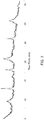
- Powder XRD of the as-synthesized product gave the pattern indicated in FIG. 1 and showed the product to be a pure form of a new phase, SSZ-107.
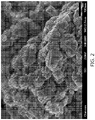
- a SEM image of the as-synthesized product is shown in FIG. 2 .
- the as-synthesized product has a SiO 2/ Al 2 O 3 mole ratio of 9.43, as determined by ICP elemental analysis.
- Powder XRD of the as-synthesized product gave the pattern indicated in FIG. 1 and showed the product to be pure SSZ-107.
- the as-synthesized product has a SiO 2 /Al 2 O 3 mole ratio of 11.02, as determined by ICP elemental analysis.
- Powder XRD of the as-synthesized product gave the pattern indicated in FIG. 1 and showed the product to be pure SSZ-107.
- the as-synthesized product has a SiO 2 /Al 2 O 3 mole ratio of 9.17, as determined by ICP elemental analysis.
- Powder XRD of the as-synthesized product gave the pattern indicated in FIG. 1 and showed the product to be pure SSZ-107.
- the as-synthesized product has a SiO 2 /Al 2 O 3 mole ratio of 8.76, as determined by ICP elemental analysis.
- Powder XRD of the as-synthesized product gave the pattern indicated in FIG. 1 and showed the product to be pure CHA-type zeolite.
- the as-synthesized molecular sieve product of Example 1 was calcined inside a muffle furnace under a flow of air heated to 540°C at a rate of 1°C/minute and held at 540°C for 5 hours, cooled and then analyzed by powder XRD.
- Powder XRD of the calcined product gave the pattern indicated in FIG. 3 and showed the material to be stable after calcination to remove the organic structure directing agent.
- Example 7 The calcined molecular sieve material of Example 7 was treated with 10 mL (per g of molecular sieve) of a 1N ammonium nitrate solution at 90°C for 2 hours. The mixture was cooled, the solvent decanted off and the same process repeated.
- the product (NH 4 -SSZ-107) was subjected to micropore volume analysis using N 2 an adsorbate and via the B.E.T. method.
- the molecular sieve had a micropore volume of 0.18 cm 3 /g.
Landscapes
- Chemical & Material Sciences (AREA)
- Engineering & Computer Science (AREA)
- Organic Chemistry (AREA)
- Chemical Kinetics & Catalysis (AREA)
- Materials Engineering (AREA)
- Life Sciences & Earth Sciences (AREA)
- General Life Sciences & Earth Sciences (AREA)
- Geology (AREA)
- Environmental & Geological Engineering (AREA)
- Oil, Petroleum & Natural Gas (AREA)
- General Chemical & Material Sciences (AREA)
- Analytical Chemistry (AREA)
- Health & Medical Sciences (AREA)
- Biomedical Technology (AREA)
- Inorganic Chemistry (AREA)
- Crystallography & Structural Chemistry (AREA)
- Thermal Sciences (AREA)
- Physics & Mathematics (AREA)
- Combustion & Propulsion (AREA)
- Catalysts (AREA)
- Silicates, Zeolites, And Molecular Sieves (AREA)
Applications Claiming Priority (2)
| Application Number | Priority Date | Filing Date | Title |
|---|---|---|---|
| US201662404256P | 2016-10-05 | 2016-10-05 | |
| PCT/US2017/041073 WO2018067214A1 (en) | 2016-10-05 | 2017-07-07 | Molecular sieve ssz-107, its synthesis and use |
Publications (2)
| Publication Number | Publication Date |
|---|---|
| EP3523242A1 EP3523242A1 (en) | 2019-08-14 |
| EP3523242B1 true EP3523242B1 (en) | 2020-05-13 |
Family
ID=59363293
Family Applications (1)
| Application Number | Title | Priority Date | Filing Date |
|---|---|---|---|
| EP17740594.1A Active EP3523242B1 (en) | 2016-10-05 | 2017-07-07 | Molecular sieve ssz-107, its synthesis and use |
Country Status (6)
| Country | Link |
|---|---|
| US (1) | US9981853B2 (https=) |
| EP (1) | EP3523242B1 (https=) |
| JP (1) | JP6868648B2 (https=) |
| KR (1) | KR102391078B1 (https=) |
| CN (1) | CN109311686B (https=) |
| WO (1) | WO2018067214A1 (https=) |
Families Citing this family (2)
| Publication number | Priority date | Publication date | Assignee | Title |
|---|---|---|---|---|
| FR3078897B1 (fr) * | 2018-03-18 | 2022-05-06 | Arkema France | Procede de decarbonatation de flux gazeux |
| US11033886B2 (en) * | 2019-02-27 | 2021-06-15 | Chevron U.S.A. Inc. | Molecular sieve SSZ-115, its synthesis and use |
Family Cites Families (14)
| Publication number | Priority date | Publication date | Assignee | Title |
|---|---|---|---|---|
| US4391785A (en) * | 1981-12-21 | 1983-07-05 | Mobil Oil Corporation | Preparation of ZSM-12 type zeolites |
| US20040191167A1 (en) * | 2003-03-26 | 2004-09-30 | Saleh Elomari | Zeolite SSZ-65 composition of matter and synthesis thereof utility |
| EP1701913B1 (en) | 2003-12-23 | 2017-01-25 | ExxonMobil Chemical Patents Inc. | Chabazite-type molecular sieve and its synthesis method |
| JP5627593B2 (ja) * | 2008-11-25 | 2014-11-19 | シェブロン ユー.エス.エー. インコーポレイテッド | モレキュラーシーブssz−83 |
| US8545800B1 (en) * | 2012-04-12 | 2013-10-01 | Chevron U.S.A. Inc. | Molecular sieve SSZ-87 |
| CN104797337B (zh) * | 2012-09-28 | 2018-04-20 | 太平洋工业发展公司 | 在选择性催化还原中用作催化剂的氧化铝硅酸盐沸石‑型材料及其制造方法 |
| CN104703694B (zh) * | 2013-03-15 | 2018-12-21 | 庄信万丰股份有限公司 | 用于处理废气的催化剂 |
| EP3008015A1 (en) * | 2013-06-10 | 2016-04-20 | ExxonMobil Chemical Patents Inc. | A process for making molecular sieves |
| CN104418343B (zh) | 2013-08-20 | 2016-06-08 | 中触媒新材料股份有限公司 | 一种ts-1钛硅分子筛及其制备方法和应用 |
| US9206052B2 (en) * | 2013-09-16 | 2015-12-08 | Chevron U.S.A. Inc. | Method for preparing zeolite SSZ-35 |
| US9108856B2 (en) * | 2013-09-18 | 2015-08-18 | Chevron U.S.A. Inc. | Method for preparing CHA-type molecular sieves using colloidal aluminosilicate and novel structure directing agents |
| US9192924B1 (en) * | 2014-06-04 | 2015-11-24 | Chevron U.S.A. Inc. | Molecular sieve SSZ-99 |
| US9505626B2 (en) * | 2014-09-09 | 2016-11-29 | Chevron U.S.A. Inc. | Molecular sieve SSZ-101 |
| US9708192B2 (en) * | 2014-11-25 | 2017-07-18 | Chevron U.S.A. Inc. | Method for preparing aluminosilicate molecular sieves having the CHA framework type |
-
2017
- 2017-07-07 US US15/643,553 patent/US9981853B2/en active Active
- 2017-07-07 WO PCT/US2017/041073 patent/WO2018067214A1/en not_active Ceased
- 2017-07-07 CN CN201780032946.8A patent/CN109311686B/zh active Active
- 2017-07-07 JP JP2018566389A patent/JP6868648B2/ja active Active
- 2017-07-07 KR KR1020197013022A patent/KR102391078B1/ko active Active
- 2017-07-07 EP EP17740594.1A patent/EP3523242B1/en active Active
Non-Patent Citations (1)
| Title |
|---|
| None * |
Also Published As
| Publication number | Publication date |
|---|---|
| WO2018067214A1 (en) | 2018-04-12 |
| CN109311686B (zh) | 2021-11-12 |
| EP3523242A1 (en) | 2019-08-14 |
| KR20190056446A (ko) | 2019-05-24 |
| CN109311686A (zh) | 2019-02-05 |
| JP6868648B2 (ja) | 2021-05-12 |
| US20180093896A1 (en) | 2018-04-05 |
| JP2019529297A (ja) | 2019-10-17 |
| US9981853B2 (en) | 2018-05-29 |
| KR102391078B1 (ko) | 2022-04-29 |
Similar Documents
| Publication | Publication Date | Title |
|---|---|---|
| US9908108B2 (en) | High-silica AFX framework type zeolites | |
| EP3464180B1 (en) | High-silica afx framework type zeolites | |
| EP3571160B1 (en) | Molecular sieve ssz-108, its synthesis and use | |
| CN115770608A (zh) | 一种烯烃合成胺类化合物的胺化催化剂及其制备方法和应用 | |
| EP3802425B1 (en) | Synthesis of molecular sieve ssz-109 | |
| EP3523242B1 (en) | Molecular sieve ssz-107, its synthesis and use | |
| CN112138724A (zh) | 加氢烷基化催化剂及其方法 | |
| Konno et al. | Effects of crystal size and Si/Al ratio of MFI-type zeolite catalyst on n-hexane cracking for light olefin synthesis | |
| WO2015137884A1 (en) | Zeolites with mww framework formed of silicon and zinc or iron, and related methods | |
| CN108927132A (zh) | 一种双功能催化剂及一氧化碳加氢制乙烯的方法 | |
| EP3458416B1 (en) | Molecular sieve ssz-104, its synthesis and use | |
| JP7738868B2 (ja) | シクロペンタジエンの製造方法 | |
| JP6633440B2 (ja) | アルカン脱水素用触媒及びこれを用いたアルケンの製造方法 |
Legal Events
| Date | Code | Title | Description |
|---|---|---|---|
| STAA | Information on the status of an ep patent application or granted ep patent |
Free format text: STATUS: UNKNOWN |
|
| STAA | Information on the status of an ep patent application or granted ep patent |
Free format text: STATUS: THE INTERNATIONAL PUBLICATION HAS BEEN MADE |
|
| PUAI | Public reference made under article 153(3) epc to a published international application that has entered the european phase |
Free format text: ORIGINAL CODE: 0009012 |
|
| STAA | Information on the status of an ep patent application or granted ep patent |
Free format text: STATUS: REQUEST FOR EXAMINATION WAS MADE |
|
| 17P | Request for examination filed |
Effective date: 20181019 |
|
| AK | Designated contracting states |
Kind code of ref document: A1 Designated state(s): AL AT BE BG CH CY CZ DE DK EE ES FI FR GB GR HR HU IE IS IT LI LT LU LV MC MK MT NL NO PL PT RO RS SE SI SK SM TR |
|
| AX | Request for extension of the european patent |
Extension state: BA ME |
|
| DAV | Request for validation of the european patent (deleted) | ||
| DAX | Request for extension of the european patent (deleted) | ||
| REG | Reference to a national code |
Ref country code: DE Ref legal event code: R079 Ref document number: 602017016619 Country of ref document: DE Free format text: PREVIOUS MAIN CLASS: C01B0039480000 Ipc: B01D0053940000 |
|
| GRAP | Despatch of communication of intention to grant a patent |
Free format text: ORIGINAL CODE: EPIDOSNIGR1 |
|
| STAA | Information on the status of an ep patent application or granted ep patent |
Free format text: STATUS: GRANT OF PATENT IS INTENDED |
|
| RIC1 | Information provided on ipc code assigned before grant |
Ipc: B01J 29/72 20060101ALI20200224BHEP Ipc: B01J 29/70 20060101ALI20200224BHEP Ipc: C01B 39/48 20060101ALI20200224BHEP Ipc: C01B 39/02 20060101ALI20200224BHEP Ipc: B01D 53/94 20060101AFI20200224BHEP |
|
| GRAS | Grant fee paid |
Free format text: ORIGINAL CODE: EPIDOSNIGR3 |
|
| INTG | Intention to grant announced |
Effective date: 20200313 |
|
| GRAA | (expected) grant |
Free format text: ORIGINAL CODE: 0009210 |
|
| STAA | Information on the status of an ep patent application or granted ep patent |
Free format text: STATUS: THE PATENT HAS BEEN GRANTED |
|
| AK | Designated contracting states |
Kind code of ref document: B1 Designated state(s): AL AT BE BG CH CY CZ DE DK EE ES FI FR GB GR HR HU IE IS IT LI LT LU LV MC MK MT NL NO PL PT RO RS SE SI SK SM TR |
|
| REG | Reference to a national code |
Ref country code: GB Ref legal event code: FG4D |
|
| REG | Reference to a national code |
Ref country code: CH Ref legal event code: EP |
|
| REG | Reference to a national code |
Ref country code: DE Ref legal event code: R096 Ref document number: 602017016619 Country of ref document: DE |
|
| REG | Reference to a national code |
Ref country code: AT Ref legal event code: REF Ref document number: 1269509 Country of ref document: AT Kind code of ref document: T Effective date: 20200615 |
|
| REG | Reference to a national code |
Ref country code: NL Ref legal event code: FP |
|
| REG | Reference to a national code |
Ref country code: LT Ref legal event code: MG4D |
|
| PG25 | Lapsed in a contracting state [announced via postgrant information from national office to epo] |
Ref country code: IS Free format text: LAPSE BECAUSE OF FAILURE TO SUBMIT A TRANSLATION OF THE DESCRIPTION OR TO PAY THE FEE WITHIN THE PRESCRIBED TIME-LIMIT Effective date: 20200913 Ref country code: FI Free format text: LAPSE BECAUSE OF FAILURE TO SUBMIT A TRANSLATION OF THE DESCRIPTION OR TO PAY THE FEE WITHIN THE PRESCRIBED TIME-LIMIT Effective date: 20200513 Ref country code: PT Free format text: LAPSE BECAUSE OF FAILURE TO SUBMIT A TRANSLATION OF THE DESCRIPTION OR TO PAY THE FEE WITHIN THE PRESCRIBED TIME-LIMIT Effective date: 20200914 Ref country code: LT Free format text: LAPSE BECAUSE OF FAILURE TO SUBMIT A TRANSLATION OF THE DESCRIPTION OR TO PAY THE FEE WITHIN THE PRESCRIBED TIME-LIMIT Effective date: 20200513 Ref country code: SE Free format text: LAPSE BECAUSE OF FAILURE TO SUBMIT A TRANSLATION OF THE DESCRIPTION OR TO PAY THE FEE WITHIN THE PRESCRIBED TIME-LIMIT Effective date: 20200513 Ref country code: GR Free format text: LAPSE BECAUSE OF FAILURE TO SUBMIT A TRANSLATION OF THE DESCRIPTION OR TO PAY THE FEE WITHIN THE PRESCRIBED TIME-LIMIT Effective date: 20200814 Ref country code: NO Free format text: LAPSE BECAUSE OF FAILURE TO SUBMIT A TRANSLATION OF THE DESCRIPTION OR TO PAY THE FEE WITHIN THE PRESCRIBED TIME-LIMIT Effective date: 20200813 |
|
| PG25 | Lapsed in a contracting state [announced via postgrant information from national office to epo] |
Ref country code: BG Free format text: LAPSE BECAUSE OF FAILURE TO SUBMIT A TRANSLATION OF THE DESCRIPTION OR TO PAY THE FEE WITHIN THE PRESCRIBED TIME-LIMIT Effective date: 20200813 Ref country code: RS Free format text: LAPSE BECAUSE OF FAILURE TO SUBMIT A TRANSLATION OF THE DESCRIPTION OR TO PAY THE FEE WITHIN THE PRESCRIBED TIME-LIMIT Effective date: 20200513 Ref country code: LV Free format text: LAPSE BECAUSE OF FAILURE TO SUBMIT A TRANSLATION OF THE DESCRIPTION OR TO PAY THE FEE WITHIN THE PRESCRIBED TIME-LIMIT Effective date: 20200513 Ref country code: HR Free format text: LAPSE BECAUSE OF FAILURE TO SUBMIT A TRANSLATION OF THE DESCRIPTION OR TO PAY THE FEE WITHIN THE PRESCRIBED TIME-LIMIT Effective date: 20200513 |
|
| REG | Reference to a national code |
Ref country code: AT Ref legal event code: MK05 Ref document number: 1269509 Country of ref document: AT Kind code of ref document: T Effective date: 20200513 |
|
| PG25 | Lapsed in a contracting state [announced via postgrant information from national office to epo] |
Ref country code: AL Free format text: LAPSE BECAUSE OF FAILURE TO SUBMIT A TRANSLATION OF THE DESCRIPTION OR TO PAY THE FEE WITHIN THE PRESCRIBED TIME-LIMIT Effective date: 20200513 |
|
| REG | Reference to a national code |
Ref country code: DE Ref legal event code: R082 Ref document number: 602017016619 Country of ref document: DE Representative=s name: HL KEMPNER PATENTANWAELTE, SOLICITORS (ENGLAND, DE Ref country code: DE Ref legal event code: R082 Ref document number: 602017016619 Country of ref document: DE Representative=s name: HL KEMPNER PATENTANWALT, RECHTSANWALT, SOLICIT, DE Ref country code: DE Ref legal event code: R082 Ref document number: 602017016619 Country of ref document: DE Representative=s name: HL KEMPNER PARTG MBB, DE |
|
| PG25 | Lapsed in a contracting state [announced via postgrant information from national office to epo] |
Ref country code: EE Free format text: LAPSE BECAUSE OF FAILURE TO SUBMIT A TRANSLATION OF THE DESCRIPTION OR TO PAY THE FEE WITHIN THE PRESCRIBED TIME-LIMIT Effective date: 20200513 Ref country code: DK Free format text: LAPSE BECAUSE OF FAILURE TO SUBMIT A TRANSLATION OF THE DESCRIPTION OR TO PAY THE FEE WITHIN THE PRESCRIBED TIME-LIMIT Effective date: 20200513 Ref country code: RO Free format text: LAPSE BECAUSE OF FAILURE TO SUBMIT A TRANSLATION OF THE DESCRIPTION OR TO PAY THE FEE WITHIN THE PRESCRIBED TIME-LIMIT Effective date: 20200513 Ref country code: AT Free format text: LAPSE BECAUSE OF FAILURE TO SUBMIT A TRANSLATION OF THE DESCRIPTION OR TO PAY THE FEE WITHIN THE PRESCRIBED TIME-LIMIT Effective date: 20200513 Ref country code: IT Free format text: LAPSE BECAUSE OF FAILURE TO SUBMIT A TRANSLATION OF THE DESCRIPTION OR TO PAY THE FEE WITHIN THE PRESCRIBED TIME-LIMIT Effective date: 20200513 Ref country code: SM Free format text: LAPSE BECAUSE OF FAILURE TO SUBMIT A TRANSLATION OF THE DESCRIPTION OR TO PAY THE FEE WITHIN THE PRESCRIBED TIME-LIMIT Effective date: 20200513 Ref country code: CZ Free format text: LAPSE BECAUSE OF FAILURE TO SUBMIT A TRANSLATION OF THE DESCRIPTION OR TO PAY THE FEE WITHIN THE PRESCRIBED TIME-LIMIT Effective date: 20200513 Ref country code: ES Free format text: LAPSE BECAUSE OF FAILURE TO SUBMIT A TRANSLATION OF THE DESCRIPTION OR TO PAY THE FEE WITHIN THE PRESCRIBED TIME-LIMIT Effective date: 20200513 |
|
| REG | Reference to a national code |
Ref country code: DE Ref legal event code: R097 Ref document number: 602017016619 Country of ref document: DE |
|
| PG25 | Lapsed in a contracting state [announced via postgrant information from national office to epo] |
Ref country code: PL Free format text: LAPSE BECAUSE OF FAILURE TO SUBMIT A TRANSLATION OF THE DESCRIPTION OR TO PAY THE FEE WITHIN THE PRESCRIBED TIME-LIMIT Effective date: 20200513 Ref country code: MC Free format text: LAPSE BECAUSE OF FAILURE TO SUBMIT A TRANSLATION OF THE DESCRIPTION OR TO PAY THE FEE WITHIN THE PRESCRIBED TIME-LIMIT Effective date: 20200513 Ref country code: SK Free format text: LAPSE BECAUSE OF FAILURE TO SUBMIT A TRANSLATION OF THE DESCRIPTION OR TO PAY THE FEE WITHIN THE PRESCRIBED TIME-LIMIT Effective date: 20200513 |
|
| REG | Reference to a national code |
Ref country code: CH Ref legal event code: PL |
|
| PLBE | No opposition filed within time limit |
Free format text: ORIGINAL CODE: 0009261 |
|
| STAA | Information on the status of an ep patent application or granted ep patent |
Free format text: STATUS: NO OPPOSITION FILED WITHIN TIME LIMIT |
|
| 26N | No opposition filed |
Effective date: 20210216 |
|
| REG | Reference to a national code |
Ref country code: BE Ref legal event code: MM Effective date: 20200731 |
|
| PG25 | Lapsed in a contracting state [announced via postgrant information from national office to epo] |
Ref country code: LI Free format text: LAPSE BECAUSE OF NON-PAYMENT OF DUE FEES Effective date: 20200731 Ref country code: IE Free format text: LAPSE BECAUSE OF NON-PAYMENT OF DUE FEES Effective date: 20200707 Ref country code: LU Free format text: LAPSE BECAUSE OF NON-PAYMENT OF DUE FEES Effective date: 20200707 Ref country code: CH Free format text: LAPSE BECAUSE OF NON-PAYMENT OF DUE FEES Effective date: 20200731 |
|
| PG25 | Lapsed in a contracting state [announced via postgrant information from national office to epo] |
Ref country code: BE Free format text: LAPSE BECAUSE OF NON-PAYMENT OF DUE FEES Effective date: 20200731 |
|
| PG25 | Lapsed in a contracting state [announced via postgrant information from national office to epo] |
Ref country code: TR Free format text: LAPSE BECAUSE OF FAILURE TO SUBMIT A TRANSLATION OF THE DESCRIPTION OR TO PAY THE FEE WITHIN THE PRESCRIBED TIME-LIMIT Effective date: 20200513 Ref country code: MT Free format text: LAPSE BECAUSE OF FAILURE TO SUBMIT A TRANSLATION OF THE DESCRIPTION OR TO PAY THE FEE WITHIN THE PRESCRIBED TIME-LIMIT Effective date: 20200513 Ref country code: CY Free format text: LAPSE BECAUSE OF FAILURE TO SUBMIT A TRANSLATION OF THE DESCRIPTION OR TO PAY THE FEE WITHIN THE PRESCRIBED TIME-LIMIT Effective date: 20200513 |
|
| PG25 | Lapsed in a contracting state [announced via postgrant information from national office to epo] |
Ref country code: MK Free format text: LAPSE BECAUSE OF FAILURE TO SUBMIT A TRANSLATION OF THE DESCRIPTION OR TO PAY THE FEE WITHIN THE PRESCRIBED TIME-LIMIT Effective date: 20200513 |
|
| P01 | Opt-out of the competence of the unified patent court (upc) registered |
Effective date: 20230522 |
|
| PG25 | Lapsed in a contracting state [announced via postgrant information from national office to epo] |
Ref country code: SI Free format text: LAPSE BECAUSE OF FAILURE TO SUBMIT A TRANSLATION OF THE DESCRIPTION OR TO PAY THE FEE WITHIN THE PRESCRIBED TIME-LIMIT Effective date: 20200513 |
|
| PGFP | Annual fee paid to national office [announced via postgrant information from national office to epo] |
Ref country code: GB Payment date: 20250626 Year of fee payment: 9 |
|
| PGFP | Annual fee paid to national office [announced via postgrant information from national office to epo] |
Ref country code: NL Payment date: 20250627 Year of fee payment: 9 |
|
| PGFP | Annual fee paid to national office [announced via postgrant information from national office to epo] |
Ref country code: FR Payment date: 20250623 Year of fee payment: 9 |
|
| PGFP | Annual fee paid to national office [announced via postgrant information from national office to epo] |
Ref country code: DE Payment date: 20250624 Year of fee payment: 9 |