EP3519569B1 - Adenoassociated virus vectors for the treatment of mucopolysaccharidoses - Google Patents
Adenoassociated virus vectors for the treatment of mucopolysaccharidoses Download PDFInfo
- Publication number
- EP3519569B1 EP3519569B1 EP17777541.8A EP17777541A EP3519569B1 EP 3519569 B1 EP3519569 B1 EP 3519569B1 EP 17777541 A EP17777541 A EP 17777541A EP 3519569 B1 EP3519569 B1 EP 3519569B1
- Authority
- EP
- European Patent Office
- Prior art keywords
- vector
- aav
- cag
- gns
- aav9
- Prior art date
- Legal status (The legal status is an assumption and is not a legal conclusion. Google has not performed a legal analysis and makes no representation as to the accuracy of the status listed.)
- Active
Links
Images










Classifications
-
- A—HUMAN NECESSITIES
- A61—MEDICAL OR VETERINARY SCIENCE; HYGIENE
- A61K—PREPARATIONS FOR MEDICAL, DENTAL OR TOILETRY PURPOSES
- A61K48/00—Medicinal preparations containing genetic material which is inserted into cells of the living body to treat genetic diseases; Gene therapy
- A61K48/005—Medicinal preparations containing genetic material which is inserted into cells of the living body to treat genetic diseases; Gene therapy characterised by an aspect of the 'active' part of the composition delivered, i.e. the nucleic acid delivered
- A61K48/0066—Manipulation of the nucleic acid to modify its expression pattern, e.g. enhance its duration of expression, achieved by the presence of particular introns in the delivered nucleic acid
-
- C—CHEMISTRY; METALLURGY
- C12—BIOCHEMISTRY; BEER; SPIRITS; WINE; VINEGAR; MICROBIOLOGY; ENZYMOLOGY; MUTATION OR GENETIC ENGINEERING
- C12N—MICROORGANISMS OR ENZYMES; COMPOSITIONS THEREOF; PROPAGATING, PRESERVING, OR MAINTAINING MICROORGANISMS; MUTATION OR GENETIC ENGINEERING; CULTURE MEDIA
- C12N9/00—Enzymes; Proenzymes; Compositions thereof; Processes for preparing, activating, inhibiting, separating or purifying enzymes
- C12N9/14—Hydrolases (3)
- C12N9/16—Hydrolases (3) acting on ester bonds (3.1)
-
- A—HUMAN NECESSITIES
- A61—MEDICAL OR VETERINARY SCIENCE; HYGIENE
- A61K—PREPARATIONS FOR MEDICAL, DENTAL OR TOILETRY PURPOSES
- A61K38/00—Medicinal preparations containing peptides
- A61K38/16—Peptides having more than 20 amino acids; Gastrins; Somatostatins; Melanotropins; Derivatives thereof
- A61K38/43—Enzymes; Proenzymes; Derivatives thereof
- A61K38/46—Hydrolases (3)
- A61K38/465—Hydrolases (3) acting on ester bonds (3.1), e.g. lipases, ribonucleases
-
- A—HUMAN NECESSITIES
- A61—MEDICAL OR VETERINARY SCIENCE; HYGIENE
- A61P—SPECIFIC THERAPEUTIC ACTIVITY OF CHEMICAL COMPOUNDS OR MEDICINAL PREPARATIONS
- A61P3/00—Drugs for disorders of the metabolism
-
- C—CHEMISTRY; METALLURGY
- C12—BIOCHEMISTRY; BEER; SPIRITS; WINE; VINEGAR; MICROBIOLOGY; ENZYMOLOGY; MUTATION OR GENETIC ENGINEERING
- C12N—MICROORGANISMS OR ENZYMES; COMPOSITIONS THEREOF; PROPAGATING, PRESERVING, OR MAINTAINING MICROORGANISMS; MUTATION OR GENETIC ENGINEERING; CULTURE MEDIA
- C12N15/00—Mutation or genetic engineering; DNA or RNA concerning genetic engineering, vectors, e.g. plasmids, or their isolation, preparation or purification; Use of hosts therefor
- C12N15/09—Recombinant DNA-technology
- C12N15/63—Introduction of foreign genetic material using vectors; Vectors; Use of hosts therefor; Regulation of expression
- C12N15/79—Vectors or expression systems specially adapted for eukaryotic hosts
- C12N15/85—Vectors or expression systems specially adapted for eukaryotic hosts for animal cells
- C12N15/86—Viral vectors
-
- C—CHEMISTRY; METALLURGY
- C12—BIOCHEMISTRY; BEER; SPIRITS; WINE; VINEGAR; MICROBIOLOGY; ENZYMOLOGY; MUTATION OR GENETIC ENGINEERING
- C12Y—ENZYMES
- C12Y301/00—Hydrolases acting on ester bonds (3.1)
- C12Y301/06—Sulfuric ester hydrolases (3.1.6)
- C12Y301/06014—N-Acetylglucosamine-6-sulfatase (3.1.6.14)
-
- A—HUMAN NECESSITIES
- A01—AGRICULTURE; FORESTRY; ANIMAL HUSBANDRY; HUNTING; TRAPPING; FISHING
- A01K—ANIMAL HUSBANDRY; AVICULTURE; APICULTURE; PISCICULTURE; FISHING; REARING OR BREEDING ANIMALS, NOT OTHERWISE PROVIDED FOR; NEW BREEDS OF ANIMALS
- A01K2217/00—Genetically modified animals
- A01K2217/07—Animals genetically altered by homologous recombination
- A01K2217/075—Animals genetically altered by homologous recombination inducing loss of function, i.e. knock out
-
- A—HUMAN NECESSITIES
- A01—AGRICULTURE; FORESTRY; ANIMAL HUSBANDRY; HUNTING; TRAPPING; FISHING
- A01K—ANIMAL HUSBANDRY; AVICULTURE; APICULTURE; PISCICULTURE; FISHING; REARING OR BREEDING ANIMALS, NOT OTHERWISE PROVIDED FOR; NEW BREEDS OF ANIMALS
- A01K2227/00—Animals characterised by species
- A01K2227/10—Mammal
- A01K2227/105—Murine
-
- A—HUMAN NECESSITIES
- A01—AGRICULTURE; FORESTRY; ANIMAL HUSBANDRY; HUNTING; TRAPPING; FISHING
- A01K—ANIMAL HUSBANDRY; AVICULTURE; APICULTURE; PISCICULTURE; FISHING; REARING OR BREEDING ANIMALS, NOT OTHERWISE PROVIDED FOR; NEW BREEDS OF ANIMALS
- A01K2267/00—Animals characterised by purpose
- A01K2267/03—Animal model, e.g. for test or diseases
- A01K2267/035—Animal model for multifactorial diseases
- A01K2267/0362—Animal model for lipid/glucose metabolism, e.g. obesity, type-2 diabetes
-
- C—CHEMISTRY; METALLURGY
- C12—BIOCHEMISTRY; BEER; SPIRITS; WINE; VINEGAR; MICROBIOLOGY; ENZYMOLOGY; MUTATION OR GENETIC ENGINEERING
- C12N—MICROORGANISMS OR ENZYMES; COMPOSITIONS THEREOF; PROPAGATING, PRESERVING, OR MAINTAINING MICROORGANISMS; MUTATION OR GENETIC ENGINEERING; CULTURE MEDIA
- C12N2750/00—MICROORGANISMS OR ENZYMES; COMPOSITIONS THEREOF; PROPAGATING, PRESERVING, OR MAINTAINING MICROORGANISMS; MUTATION OR GENETIC ENGINEERING; CULTURE MEDIA ssDNA viruses
- C12N2750/00011—Details
- C12N2750/14011—Parvoviridae
- C12N2750/14111—Dependovirus, e.g. adenoassociated viruses
- C12N2750/14141—Use of virus, viral particle or viral elements as a vector
- C12N2750/14143—Use of virus, viral particle or viral elements as a vector viral genome or elements thereof as genetic vector
-
- C—CHEMISTRY; METALLURGY
- C12—BIOCHEMISTRY; BEER; SPIRITS; WINE; VINEGAR; MICROBIOLOGY; ENZYMOLOGY; MUTATION OR GENETIC ENGINEERING
- C12N—MICROORGANISMS OR ENZYMES; COMPOSITIONS THEREOF; PROPAGATING, PRESERVING, OR MAINTAINING MICROORGANISMS; MUTATION OR GENETIC ENGINEERING; CULTURE MEDIA
- C12N2830/00—Vector systems having a special element relevant for transcription
- C12N2830/15—Vector systems having a special element relevant for transcription chimeric enhancer/promoter combination
-
- C—CHEMISTRY; METALLURGY
- C12—BIOCHEMISTRY; BEER; SPIRITS; WINE; VINEGAR; MICROBIOLOGY; ENZYMOLOGY; MUTATION OR GENETIC ENGINEERING
- C12N—MICROORGANISMS OR ENZYMES; COMPOSITIONS THEREOF; PROPAGATING, PRESERVING, OR MAINTAINING MICROORGANISMS; MUTATION OR GENETIC ENGINEERING; CULTURE MEDIA
- C12N2830/00—Vector systems having a special element relevant for transcription
- C12N2830/80—Vector systems having a special element relevant for transcription from vertebrates
- C12N2830/90—Vector systems having a special element relevant for transcription from vertebrates avian
Definitions
- the present invention relates to polynucleotides and vectors useful for the expression of proteins of interest and their utilization in gene therapy.
- the present invention also relates to vectors and nucleic acid sequences helpful for the treatment of mucopolysaccharidoses type IIID.
- the lysosome is an organelle found in the cytoplasm of animal cells that contains more than 50 hydrolases that break down biomolecules during the recycling of worn-out cellular components or after the engulfment of viruses and bacteria.
- This organelle contains several types of hydrolytic enzymes, including proteases, nucleases, glycosidases, lipases, phospholipases, phosphatases and sulfatases. All enzymes are acid hydrolases.
- Lysosomal storage diseases are caused by genetic defects that affect one or more lysosomal enzymes. These genetic diseases result generally from a deficiency in a particular enzyme activity present in the lysosome. To a lesser extent, these diseases may be due to deficiencies in proteins involved in lysosomal biogenesis.
- LSDs are individually rare, although as a group these disorders are relatively common in the general population.
- the combined prevalence of LSDs is approximately 1 per 5,000 live births.
- some groups within the general population are particularly afflicted by a high occurrence of LSDs.
- the prevalence of Gaucher and Tay-Sachs diseases in descendants from Jewish Central and Eastern European (Ashkenazi) individuals is 1 per 600 and 1 per 3,900 births, respectively.
- the mucopolysaccharidoses are a group of seven (I-VII) LSD diseases characterized by the absence or deficiency of a specific lysosomal enzyme involved in the metabolism of Glucosaminoglycans (GAGs). All MPS have an autosomal recessive patern of inheritance, with the exception for MPSII (Hunter disease) that has a Xchromosomal linked inheritance.
- mucopolysaccharidosis type III (MPSIII or Sanfilippo syndrome) is the most common with a reported birth prevalence ranging from 0.28 and 4.1 per 100.000 births.
- This syndrome is caused by the deficiency of one of the enzymes involved in the degradation of the GAG heparan sulfate (HS).
- HS GAG heparan sulfate
- Four subtypes of Sanfilippo have been defined, each one caused by a deficiency in a different enzyme: type A (MPSIIIA), B (MPSIIIB), C (MPSIIIC) and D (MPSIIID). The genes coding these enzymes have been identified and various mutations have been reported.
- MPSIIID is caused by the deficiency in the activity of the enzyme N-acetylglucosamine 6-sulfatase (GNS, EC 3.1.6.14). GNS catalyzes the hydrolysis of the 6-sulfate groups of the N-acetyl-D-glucosamine 6-sulfate units of HS. As a consequence of the sustained accumulation of non-degraded HS progressive cellular damage occurs, resulting in multisystemic disease.
- MPSIIID is the rarest form of the known MPSs, with only 31 patients described in the literature so far. Twenty-two different mutations have been identified in the human GNS gene leading to the deficiency of the activity of the GNS enzyme.
- MPSIIID patients seem to follow the general pattern of clinical presentation of the Sanfilippo Syndrome, characterized by progressive central nervous system (CNS) degeneration and relatively mild somatic disease. After an early period of normal development the first signs of the disease usually manifest in the form of speech and developmental delay. This is followed by the appearance of other symptoms during infancy that may include progressive loss of psychomotor skills, speech loss, restless behavior, hyperactivity, sleep disorders, loss of contact with the environment and mental retardation. In addition to neurological symptoms, other non-neurological comorbidities such as upper respiratory tract infections, hirsutism, macrocephaly, hepatomegaly, reduced joint mobility and coarse facial features are also common among MPSIIID patients. In the end, MPSIIID evolves to a bedridden stage.
- the rate of disease progression and the phenotypic features present are highly variable between patients, with reported life expectancies ranging from as low as 14 years to the fourth decade. This variability may be related to multiple factors, such as the nature of the mutation, ethnicity or differences in the health care the patient receives.
- ERT has been tested in a caprine model of the disease See Thompson, et al., J Inherit Metab Dis. 1992;15(5):760-8 .
- rcGNS recombinant caprine GNS
- ERT with human recombinant enzyme is commercially available for MPS I, II and VI.
- Reported benefits of ERT include improvements in joint mobility, walking ability, pulmonary and respiratory functions along with reductions in urinary GAG excretion, and liver and spleen volumes when the enzyme is infused intravenously.
- medical support has to be available during intravenous product administration.
- HSCT Hematopoietic stem cell transplantation
- BMT bone marrow-derived stem cells
- the principle underlying the correction by HSCT is that donor monocytes are able to cross the capillary wall, even at the BBB, after which they differentiate into tissue macrophages, microglia in the case of the CNS, and secrete the deficient enzyme for delivery to the various cells.
- bone marrow transplantation has proven unsuccessful in MPSIII patients, even if treated at pre-symptomatic stages, and it is not considered a therapeutic option for this disease.
- umbilical cord blood-derived stem cells transplantation it is yet unclear whether this approach results in protection of the CNS from degeneration in MPSIII patients.
- Substrate deprivation therapy aims at reducing the rate of GAG synthesis, so that, if any residual activity remains, this might be sufficient to prevent the excessive accumulation of GAGs or at least slow down the rate of accumulation.
- Genistein a soybean isoflavone, has been suggested to act as an inhibitor of HS production by decreasing the kinase activity of the Epidermal Growth Factor receptor (EGFR). See Piotrowska E, et al., Eur J Hum Genet. 2006;14(7):846-52 . Recent studies indicate that genistein inhibits synthesis of GAGs in fibroblasts of patients suffering from various mucopolysaccharidoses (types I, II, IIIA and IIIB).
- Adenoassociated virus (AAV) vector-mediated gene transfer in particular, is rapidly emerging as the approach of choice for many in vivo gene therapy applications, due to the high transduction efficiency and the lack of pathogenicity of these vectors.
- AAV vectors can transduce post-mitotic cells and several pre-clinical and clinical studies have demonstrated the potential of AAV vector-mediated gene transfer to efficiently drive sustained expression of therapeutic transgenes for a variety of diseases.
- Intravenously administered AAV9 vectors capable of crossing the BBB, have recently proven efficacious at increasing enzymatic activity and promoting correction of lysosomal storage pathology in CNS and somatic organs, leading to improved behavioural performance and extension of lifespan in MPSIIIA and MPSIIIB mice models.
- a phase I/II clinical trial for MPSIIIA using AAV9 administered into a peripheral limb vein is currently ongoing (NCT02716246).
- MPSIIIA mice treated with AAVrh10 vectors encoding for sulfamidase and sulfatase-modifying Factor 1 showed improved heparan sulfate catabolism and signs of decreased inflammation but only in areas restricted or close to the injection point. See Tardieu M, et al,. Hum Gene Ther. 2014;25(6):506-16 .
- MPSIIIA NCT02053064
- MPSIIIB ISOTN19853672
- the present invention provides new polynucleotides and vectors for the treatment of mucopolysaccharidoses type III D (MPSIID).
- the present invention relates to a polynucleotide comprising an expression cassette wherein said expression cassette comprises a transcriptional regulatory region operatively linked to a nucleotide sequence encoding GNS protein wherein said nucleotide sequence is SEQ ID NO: 4.
- the present invention provides new vectors containing a polynucleotide according to the invention.
- said vectors are new recombinant vectors for the treatment of mucopolysaccharidoses type IIID.
- Said recombinant vectors are in particular Adeno-associated Virus Vectors (AAV).
- AAV Adeno-associated Virus Vectors
- a further aspect of the present invention relates to a pharmaceutical composition
- a pharmaceutical composition comprising a therapeutically effective amount of the polynucleotide or the vector described herein.
- a further aspect of the invention relates to the polynucleotide of the invention or a vector described herein, or a pharmaceutical composition described herein for use as a medicament, in particular for the treatment of mucopolysaccharidoses type IIID.
- the present invention also provides a method for the production of the adeno-associated viral vector of serotype 9 according to the invention.
- the plasmids pAAV-CAG-hGNS (SEQ ID NO: 5), pAAV-CAG-ohGNS-version1 (SEQ ID NO: 6), pAAV-CAG-ohGNS-version2 (SEQ ID NO: 7) and pAAV-CAG-ohGNS-version3 (SEQ ID NO: 8) were deposited on July 21 st , 2016 under access numbers DSM 32342, DSM 32343, DSM 32344 and DSM 32345 respectively at the DSMZ - Deutsche Sammlung von Mikroorganismen und Zellkulturen, InhoffenstraBe 7 B, D-38124 Braunschweig, Federal Republic of Germany.
- nucleotide sequence or “isolated nucleotide sequence” or “polynucleotide sequence” or “polynucleotide” are interchangeably used herein and refer to a nucleic acid molecule, either DNA or RNA, containing deoxyribonucleotides or ribonucleotides respectively.
- the nucleic acid may be double stranded, single stranded, or contain portions of both double stranded or single stranded sequence.
- % sequence identity refers to the percentage of nucleotides or amino acids of a candidate sequence that are identical to the nucleotides or amino acids in the sequence of reference, after aligning the sequences to achieve the maximum % sequence identity.
- sequence identity is calculated based on the full length of two given SEQ ID NO or on part thereof.
- the % sequence identity can be determined by any methods or algorithms established in the art, such as the ALIGN, BLAST and BLAST 2.0 algorithms. See Altschul S, et al., Nuc Acids Res. 1977;25:3389-3402 and Altschul S, et al., J Mol Biol. 1990;215:403-410 .
- % sequence identity is calculated dividing the number of nucleotides or amino acids that are identical after aligning the sequence of reference and the candidate sequence, by the total number of nucleotides or amino acids in the sequence of reference and multiplying the result by 100.
- the skilled person may also take into account the so-called “conservative" amino acid substitutions, as would be clear to the skilled person.
- Conservative amino acid substitutions are based on the interchangeability of residues having similar side chains.
- the group of amino acids having aliphatic side chains includes glycine, alanine, valine, leucine, and isoleucine;
- the group of amino acids having aliphatic-hydroxyl side chains includes serine and threonine;
- the group of amino acids having amide-containing side chains includes asparagine and glutamine;
- the group of amino acids having aromatic side chains includes phenylalanine, tyrosine, and tryptophan;
- the group of amino acids having basic side chains includes lysine, arginine, and histidine; and the group of amino acids having sulphur-containing side chains includes cysteine and methionine.
- Substitutional variants of the amino acid sequence disclosed herein are those in which at least one residue in the disclosed sequences has been removed and a different residue inserted in its place.
- the amino acid change is conservative.
- Preferred conservative substitutions for each of the naturally occurring amino acids are as follows: Ala to Ser; Arg to Lys; Asn to Gin or His; Asp to Glu; Cys to Ser or Ala; Gin to Asn; Glu to Asp; Gly to Pro; His to Asn or Gin; He to Leu or Val; Leu to He or Val; Lys to Arg; Gin to Glu; Met to Leu or He; Phe to Met, Leu or Tyr; Ser to Thr; Thr to Ser; Trp to Tyr; Tyr to Trp or Phe; and, Val to He or Leu.
- codify or "coding” refer to the genetic code that determines how a nucleotide sequence is translated into a polypeptide or a protein.
- the order of the nucleotides in a sequence determines the order of amino acids along a polypeptide or a protein.
- protein refers to a macromolecule composed of one or more linear chains of amino acids or polypeptides. Proteins can suffer post-translational modifications, like the conversion of a cysteine residue to 3-oxoalanine, glycosylation or metal binding. Glycosilation of a protein is the addition of different carbohydrates that are linked covalently to the amino acid chain.
- transcriptional regulatory region refers to a nucleic acid fragment capable of regulating the expression of one or more genes.
- the regulatory regions of the polynucleotides of the invention may include a promoter, plus response elements, activator and enhancer sequences for binding of transcription factors to aid RNA polymerase binding and promote expression, and operator or silencer sequences to which repressor proteins bind to block RNA polymerase attachment and prevent expression.
- promoter must be understood as a nucleic acid fragment that functions to control the transcription of one or more polynucleotides e.g. coding sequences, which is placed 5' upstream of the polynucleotide sequence(s), and which is structurally identified by the presence of a binding site for DNA dependent RNA polymerase, transcription initiation sites and, but not limited to, binding sites for transcription factors, repressors, and any other nucleotide sequences known in the art to act directly or indirectly to regulate the amount of transcription from the promoter.
- polynucleotides e.g. coding sequences, which is placed 5' upstream of the polynucleotide sequence(s), and which is structurally identified by the presence of a binding site for DNA dependent RNA polymerase, transcription initiation sites and, but not limited to, binding sites for transcription factors, repressors, and any other nucleotide sequences known in the art to act directly or indirectly to regulate the amount of transcription from the promoter.
- a promoter is said to be active or is said to drive the expression of a nucleotide sequence operatively linked to it when it can initiate transcription of said nucleotide sequence in an expression system using a gene construct comprising said promoter operably linked to a nucleotide sequence of interest using a suitable assay such a RT-qPCR or Northern blotting (detection of the transcript).
- a suitable assay such as RT-qPCR or Northern blotting (detection of the transcript).
- the activity of said promoter may also be assessed at the protein level using a suitable assay for the encoded protein such as Western blotting or an ELISA.
- a promoter is said to be capable to initiate transcription if a transcript can be detected or if an increase in a transcript or protein level is found of at least 5%, 10%, 15%, 20%, 30%, 40%, 50%, 60%, 70%, 80%, 90%, 100%, 200%, 300%, 500%, 1000%, 1500% or 2000% as compared to transcription using a construct which only differs in that it is free of said promoter.
- the term “constitutive” promoter refers to a promoter that is active under most physiological and developmental conditions.
- An “inducible” promoter is a promoter that is preferably regulated depending on physiological or developmental conditions. An inducible promoter may be active after drug delivery or light exposure. A “constitutive” promoter therefore is not regulated in the sense of an "inducible” promoter.
- a “tissue-specific” promoter is preferably active in specific types of cells/tissues. As opposed to a “tissue-specific” promoter, the promoter used in the context of the disclosure is a "ubiquitous" promoter.
- a ubiquitous promoter may be defined as a promoter that is active in many or in any different tissue(s). Usually, "many” in this context means more than 5 or at least 6, 10, 15, 20 or in 5, 6, 7, 8, 9, 10, 11, 12, 13, 14, 15, 16, 17, 18, 19, 20 different tissues.
- CAG promoter refers to a promoter comprising the chicken ⁇ -actin promoter and cytomegalovirus enhancer ( Alexopoulou A. et al. BMC Cell Biology 2008; 9(2): 1-11 ). More precisely, said CAG promoter comprises (i) the cytomegalovirus (CMV) early enhancer element, (ii) the chicken beta-actin promoter, (iii) the first intron of chicken beta-actin gene, and (iv) the intron 2/exon 3 of the rabbit beta-globin gene.
- CMV cytomegalovirus
- operably linked refers to the functional relation and the location of the promoter sequence with respect to the gene of interest (e.g. a promoter or enhancer is operably linked to a coding sequence if it affects the transcription of the sequence).
- a promoter operably linked is contiguous to the sequence of interest.
- an enhancer does not have to be contiguous to the sequence of interest to control its expression.
- post-transcriptional regulatory region refers to any polynucleotide that facilitates the expression, stabilization, or localization of the sequences contained in the cassette or the resulting gene product.
- vector refers to a construct capable of delivering, and optionally expressing, one or more polynucleotides of interest into a host cell.
- vectors include, but are not limited to, viral vectors, naked DNA or RNA expression vectors, plasmid, cosmid or phage vectors, DNA or RNA expression vectors associated with cationic condensing agents, DNA or RNA expression vectors encapsulated in liposomes, and certain eukaryotic cells, such as producer cells.
- the vectors can be stable and can be self-replicating. There are no limitations regarding the type of vector that can be used.
- the vector can be a cloning vector, suitable for propagation and for obtaining polynucleotides, gene constructs or expression vectors incorporated to several heterologous organisms.
- Suitable vectors include prokaryotic expression vectors (e.g. pUC18, pUC19, Bluescript and their derivatives), mpl8, mpl9, pBR322, pMB9, CoIEI, pCRI, RP4, phages and shuttle vectors (e.g. pSA3 and pAT28), and eukaryotic expression vectors based on viral vectors (e.g.
- adenoviruses adeno-associated viruses as well as retroviruses and lentiviruses
- non-viral vectors such as pSilencer 4.1-CMV (Ambion®, Life Technologies Corp., Carslbad, CA, US), pcDNA3, pcDNA3.1/hyg pHCMV/Zeo, pCR3.1, pEFI/His, pIND/GS, pRc/HCMV2, pSV40/Zeo2, pTRACER-HCMV, pUB6/V5-His, pVAXI, pZeoSV2, pCI, pSVL and pKSV-10, pBPV-I, pML2d and pTDTI.
- pSilencer 4.1-CMV Ambion®, Life Technologies Corp., Carslbad, CA, US
- pcDNA3, pcDNA3.1/hyg pHCMV/Zeo pCR3.1
- recombinant plasmid refers to a small, circular, double-stranded, self-replicating DNA molecule obtained through genetic engineering techniques capable of transferring genetic material of interest to a cell, which results in production of the product encoded by that said genetic material (e.g. a protein polypeptide, peptide or functional RNA) in the target cell.
- the term “recombinant plasmid” or “plasmid” also refers to a small, circular, double-stranded, self-replicating DNA molecule obtained through genetic engineering techniques used during the manufacturing of viral vectors as carriers of the recombinant vector genome.
- viral vector refers to an agent obtained from a naturally-occurring virus through genetic engineering techniques capable of transferring genetic material (e.g. DNA or RNA) of interest to a cell, which results in production of the product encoded by that said genetic material (e.g. a protein polypeptide, peptide or functional RNA) in the target cell.
- genetic material e.g. DNA or RNA
- a cell which results in production of the product encoded by that said genetic material (e.g. a protein polypeptide, peptide or functional RNA) in the target cell.
- Adeno-associated virus refers to a viral particle composed of at least one capsid protein of AAV (preferably composed of all capsid proteins of a particular AAV serotype) and an encapsulated polynucleotide corresponding to the AAV genome.
- the wild-type AAV refers to a virus that belongs to the genus Dependovirus, family Parvoviridae.
- the wild-type AAV genome is approximately 4.7 Kb in length and consists of a single stranded deoxyribonucleic acid (ssDNA) that can be positive or negative-sensed.
- the wild-type genome includes inverted terminal repeats (ITR) at both ends of the DNA strand, and three open reading frames (ORFs).
- the ORF rep encodes for four Rep proteins necessary for AAV lifecycle.
- the ORF cap contains nucleotide sequences encoding capsid proteins: VP1, VP2 and VP3, which interact to form a capsid of icosahedral symmetry.
- the AAP ORF which overlaps with the Cap ORF, encodes for the AAP protein that appears to promote capsid assembly. If the particle comprises a heterologous polynucleotide (i.e.
- AAV vector particle or "AAV viral vector” or "AAV vector”.
- AAV vector double stranded AAV also called dsAAV or scAAV.
- AAV ITRs adeno-associated virus ITRs
- AAV ITRs refers to the inverted terminal repeats present at both ends of the DNA strand of the genome of an AAV.
- the ITR sequences are required for efficient multiplication of the AAV genome. Another property of these sequences is their ability to form a hairpin. This characteristic contributes to their self-priming, which allows the primase-independent synthesis of the second DNA strand.
- the ITRs have also been shown to be required for both integration of the wild-type AAV DNA into the host cell genome (e.g.
- the ITR sequences are about 145 bp in length. Preferably, the entire sequences of the ITRs are used in the genome of the AAV viral vector, although some degree of minor modification of these sequences is permissible.
- a wild-type ITR sequence may be altered by insertion, deletion or truncation, as long as the ITR mediates the desired functions, e.g. replication, nicking, virus packaging, integration, and/or provirus rescue, and the like.
- the ITR may be from any wild-type AAV, including but not limited to serotypes 1, 2, 3, 4, 5, 6, 7, 8, 9, 10, 11 or 12 or any other AAV known or later discovered.
- the AAV comprises two ITRs, which may be the same or different. Further, the two AAV ITRs can be from the same AAV serotype as the AAV capsid, or can be different.
- the 5' and 3' AAV ITRs derive from AAVI, AAV2, AAV4, AAV5, AAV7, AAV8 and/or AAV9
- ITRs are from AAV2, AAV8 and/or AAV9 being AAV2 the most preferred.
- the AAV2 ITRs are selected to generate a pseudotyped AAV (i.e. an AAV having capsid and ITRs derived from different serotypes).
- the expression "recombinant viral genome”, as used herein, refers to an AAV genome in which at least one extraneous polynucleotide is inserted into the naturally occurring AAV genome.
- the genome of the AAV according to the invention typically comprises the cis-acting 5' and 3' inverted terminal repeat sequences (ITRs) and an expression cassette.
- genetic therapy refers to the transfer of genetic material (e.g. DNA or RNA) of interest into a cell to treat or prevent a genetic or acquired disease or condition.
- the genetic material of interest encodes a product (e.g. a protein polypeptide, peptide or functional RNA) whose production in vivo is desired.
- the genetic material of interest can encode an enzyme, hormone, receptor, or polypeptide of therapeutic value.
- transduce or “transduction”, as used herein, refers to the process whereby a foreign nucleotide sequence is introduced into a cell via a viral vector.
- transfection refers to the process of deliberately introducing purified nucleic acids by non-viral methods into eukaryotic cells.
- treat refers to the administration of a compound or composition of the invention to control the progression of a disease.
- Control of disease progression is understood as the achievent of the beneficial or desired clinical results that include, but are not limited to, reduction of the symptoms, reduction of the duration of the disease, stabilization of pathological states (specifically to avoid additional deterioration), delay of the progression of the disease, improvement in the pathological state, and remission (both partial and total).
- the control of progression of the disease also involves an extension of survival, compared with the expected survival if treatment is not applied.
- an effective amount refers to an amount of a substance sufficient to achieve the intended purpose.
- an effective amount of an AAV9 vector to increase N-acetylglucosamine-6-sulfatase (GNS) activity is an amount sufficient to reduce glycosaminoglycan accumulation.
- a "therapeutically effective amount” of an expression vector to treat a disease or disorder is an amount of the expression vector sufficient to reduce or eradicate the signs and symptoms of the disease or disorder.
- the effective amount of a given substance will vary with factors such as the nature of the substance, the route of administration, the size and species of the animal to receive the substance and the purpose of giving the substance. The effective amount in each individual case may be determined empirically by a skilled artisan according to established methods in the art.
- the term "individual” refers to a mammal, preferably human or non-human mammal, more preferably mouse, rat, other rodents, rabbit, dog, cat, pig, cow, horse or primate, further more preferably human.
- the present invention provides new polynucleotides and vectors for the treatment of mucopolysaccharidoses type III (MPSIIID).
- the present invention relates to a polynucleotide (hereinafter referred to the "polynucleotide of the invention") comprising an expression cassette wherein said expression cassette comprises a transcriptional regulatory region operatively linked to a nucleotide sequence encoding the GNS protein wherein said nucleotide sequence is SEQ ID NO: 4.
- N-acetylglucosamine-6-sulfatase is a lysosomal enzyme found in all cells. It is involved in the catabolism of the glycosaminoglycan (GAG) heparan sulfate (HS). This enzyme catalyzes the hydrolysis of the 6-sulfate groups of the N-acetyl-D-glucosamine 6-sulfate units of heparan sulfate. Deficiency of this enzyme results in the accumulation of undergraded substrate and the lysosomal storage disorder mucopolysaccharidosis type IIID (Sanfilippo D syndrome).
- the present disclosure also contemplates polynucleotide sequences encoding GNS variants and fragments known in the art. Thus, the disclosure should be construed to include DNA encoding functionally equivalent variants of GNS.
- the term "functionally equivalent variant”, as used herein, relates to any polypeptide substantially homologous to the sequence of GNS defined above and that preserves the biological activity of GNS.
- the sequence of such functional equivalent variants can be obtained from the sequence of GNS as defined above by means of insertion, substitution or deletion of one or more amino acids and which substantially preserves the biological activity of GNS.
- Methods for determining whether a variant preserves the biological activity of the native GNS are widely known to the skilled person and include any of the assays used in the experimental part of said application.
- functionally equivalent variants of GNS encompassed by the present invention have at least one of the functions of GNS such as, for example, normalize or reduce glycosaminoglycan (GAG) levels, in particular, HS levels.
- GAG glycosaminoglycan
- GNS substrate accumulation
- a polypeptide is considered a functionally equivalent variant of GNS if it shows ability in the functions as mentioned above, particularly, if it is capable of hydrolyzing the 6-sulfate groups of the N-acetyl-D-glucosamine 6-sulfate units of heparan sulfate, with at least 10%, 20%, 30%, 40%, 50%, 60%, 70%, 80%, 90% or 100% of the ability of the GNS wild type polypeptide.
- the functionally equivalent variants of GNS are polypeptides substantially homologous to the native GNS.
- the expression "substantially homologous”, relates to a protein sequence when said protein sequence has a degree of identity with respect to the GNS wild type sequence of at least 50%, at least 55%, at least 60%, at least 65%, at least 70%, at least 75%, at least 80%, at least 85%, at least 90%, at least 91%, at least 92%, at least 93%, at least 94%, at least 95%, at least 96%, at least 97%, at least 98%o or at least 99%.
- the degree of identity between two polypeptides is determined using computer algorithms and methods that are widely known to the persons skilled in the art.
- the identity between two amino acid sequences is preferably determined by using the BLASTP algorithm [ BLAST Manual, Altschul, S., et al, NCBI NLM NIH Bethesda, Md. 20894 , Altschul, S., et al, J. Mol. Biol. 215: 403-410 (1990 )], though other similar algorithms can also be used.
- GNS Functionally equivalent variants of GNS may be obtained by replacing nucleotides within its coding polynucleotide, accounting for codon preference in the host cell that is to be used to produce the GNS.
- Functionally equivalent variants of GNS may be generated by making conservative amino acid changes and testing the resulting variant in one of the functional assays described above or other functional assays known in the art.
- Conservative amino acid substitutions refer to the interchangeability of residues having similar side chains.
- a group of amino acids having aliphatic side chains is glycine, alanine, valine, leucine, and isoleucine
- a group of amino acids having aliphatic-hydroxyl side chains is serine and threonine
- a group of amino acids having amide-containing side chains is asparagine and glutamine
- a group of amino acids having aromatic side chains is phenylalanine, tyrosine, and tryptophan
- a group of amino acids having basic side chains is lysine, arginine, and histidine
- a group of amino acids having sulfur-containing side chains is cysteine and methionine.
- Preferred conservative amino acids substitution groups are: valine-leucine-i
- the nucleotide sequence encoding the GNS protein or a functionally equivalent variant thereof contained in the polynucleotide has 70% to 85% identity with SEQ ID NO: 1 or between 75% to 85% identity with SEQ ID NO: 1 or between 75% to 80% identity with SEQ ID NO: 1.
- said GNS nucleotide sequence is selected from the group consisting of SEQ ID NO: 2 and SEQ ID NO: 3.
- the GNS protein encoded by the polynucleotide of the disclosure is selected from the group consisting of human GNS and mouse GNS.
- the expression cassette which forms part of the polynucleotide of the present disclosure may further comprise expression control sequences including, but not limited to, appropriate transcription regulatory sequences (i.e. initiation, termination, promoter, and enhancer), efficient RNA processing signals (e.g. splicing and polyadenylation (polyA) signals), sequences that stabilize cytoplasmic mRNA, sequences that enhance translation efficiency (i.e. Kozak consensus sequence), sequences that enhance protein stability, and when desired, sequences that enhance secretion of the encoded product.
- appropriate transcription regulatory sequences i.e. initiation, termination, promoter, and enhancer
- efficient RNA processing signals e.g. splicing and polyadenylation (polyA) signals
- sequences that stabilize cytoplasmic mRNA sequences that enhance translation efficiency (i.e. Kozak consensus sequence)
- sequences that enhance protein stability i.e. Kozak consensus sequence
- sequences that enhance protein stability i.e. Kozak consensus sequence
- the polynucleotide of the invention comprises an expression cassette wherein said expression cassette comprises a transcriptional regulatory region operatively linked to a nucleotide sequence encoding GNS wherein said nucleotide sequence is SEQ ID NO: 4.
- said transcriptional regulatory region comprises a promoter.
- said promoter is a constitutive promoter.
- said promoter is the CAG promoter.
- the expression cassette is flanked by AAV ITRs.
- said AAV ITRs are AAV2 ITRs.
- the expression cassette of the present disclosure comprises a nucleotide sequence encoding GNS or a functionally equivalent variant thereof.
- Said nucleotide sequence is the nucleotide sequence encoding human GNS, which corresponds to the sequence of the NCBI database with accession number NM_002076.3, more particularly it is SEQ ID NO: 1.
- the nucleotide sequence is a variant of the nucleotide sequence encoding human GNS, preferably is a sequence selected from the group consisting of SEQ ID NO: 2 and SEQ ID NO: 3.
- the expression cassette which forms part of the polynucleotide of the present disclosure further comprises a post-transcriptional regulatory region.
- post-transcriptional regulatory region refers to any polynucleotide that facilitates the expression, stabilization, or localization of the sequences contained in the cassette or the resulting gene product.
- the post- transcriptional regulatory region may be, without limitation, the Woodchuck Hepatitis Virus post-transcriptional region (WPRE).
- WPRE Woodchuck Hepatitis Virus post-transcriptional region
- the expression cassette further comprises a polyadenylation signal.
- polyadenylation signal relates to a nucleic acid sequence that mediates the attachment of a polyadenine tail to the 3' terminus of the mRNA.
- Suitable polyadenylation signals include, without limitation, the SV40 early polyadenylation signal, the SV40 late polyadenylation signal, the HSV thymidine kinase polyadenylation signal, the protamine gene polyadenylation signal, the adenovirus 5 Elb polyadenylation signal, the bovine growth hormone polyadenylation signal, the human variant growth hormone polyadenylation signal, the rabbit beta-globin poly A signal and the like.
- the polyadenylation signal is the rabbit beta-globin poly A signal or functional variants and fragments thereof.
- the invention relates to a vector, herein referred to as "vector of the invention", containing the polynucleotide of the invention.
- said vector is a plasmid.
- said vector is an AAV vector, said AAV vector comprising a recombinant viral genome comprising a polynucleotide according to the invention.
- said vector is selected from the group consisting of plasmid pAAV-CAG-hGNS, with accession number DSM 32342, as set forth in SEQ ID NO: 5, plasmid pAAV-CAG-ohGNS-version1, with accession number DSM 32343, as set forth in SEQ ID NO: 6, and plasmid pAAV-CAG-ohGNS-version2 with accession number DSM 32344, as set forth in SEQ ID NO: 7.
- said vector is the plasmid pAAV-CAG-ohGNS-version3 with accession number DSM 32345, as set forth in SEQ ID NO: 8.
- the present disclosure refers to an adeno-associated viral vector, AAV vector, said AAV vector containing a recombinant viral genome wherein said recombinant viral genome comprises a polynucleotide comprising an expression cassette comprising a transcriptional regulatory region operatively linked to a nucleotide sequence encoding GNS or a functional equivalent variant thereof.
- AAV according to the present disclosure include any serotype of the AAV known serotypes.
- the different serotypes of AAV have genomic sequences with a significant homology, providing an identical series of genetic functions, produce virions that are essentially equivalent in physical and functional terms, and replicate and assemble through practically identical mechanisms.
- the AAV of the present disclosure may belong to the serotype 1 of AAV (AAV1), AAV2, AAV3 (including types 3A and 3B), AAV4, AAV5, AAV6, AAV7, AAV8, AAV10, AAV11, avian AAV, bovine AAV, canine AAV, equine AAV, ovine AAV, and any other AAV.
- AAV vector of the present disclosure is of a serotype selected from the group consisting of the AAV2, AAV5, AAV7, AAV8, AAV10 and AAVrh10 serotypes.
- said AAV vector of the invention is of serotype 9, AAV9.
- said AAV vector contains a human or murine GNS sequence.
- the AAV vector according to the disclosure comprises a GNS encoding nucleotide sequence having 70% to 85% identity with SEQ ID NO: 1.
- the AAV vector comprises a GNS sequence, said GNS encoding nucleotide sequence is SEQ ID NO: 4.
- the transcriptional regulatory region in the expression cassette comprises a promoter.
- said promoter is a constitutive promoter.
- the AAV vector is the AAV9-CAG-hGNS, SEQ ID NO:9, containing the nucleotide sequence SEQ ID NO: 1 linked to the CAG promoter.
- the AAV vector is the AAV9-CAG-ohGNS-version1, SEQ ID NO:10 containing the nucleotide sequence SEQ ID NO: 2 linked to the CAG promoter.
- the AAV is the AAV9-CAG-ohGNS-version2, SEQ ID NO:11 containing the nucleotide sequence SEQ ID NO: 3 linked to the CAG promoter.
- the AAV vector is the AAV9-CAG-ohGNS-version3, SEQ ID NO:12 containing the nucleotide sequence SEQ ID NO: 4 linked to the CAG promoter.
- the AAV contains a recombinant viral genome comprising a nucleotide sequence containing an expression cassette comprising in the 5' to 3' direction, (i) a 5' AAV2 ITR, (ii) a CMV immediate-early enhancer, (iii) a chicken B-actin promoter, (iv) the first intron of chicken beta-actin gene, (v) the intron 2/exon 3 from the rabbit beta-globin gene, (vi) the GNS cDNA or a functionally equivalent variant thereof, (vii) a poly A signal, such as the rabbit beta-globin poly A signal, and (viii) a 3' AAV2 ITR.
- the vector genome can comprise other sequences (e.g. intervening sequences between the sequences specifically described above). Components (i) to (v) have the meaning typically understood by the person skilled in the art.
- the recombinant viral genome comprises the nucleotide sequence SEQ ID NO:9.
- the 5' AAV ITR comprises nucleotides 1-120
- the CMV enhancer comprises nucleotides 194-557
- the B-actin promoter comprises nucleotides 558-839
- the first intron of chicken beta-actin gene comprises nucleotides 840-1804
- the intron 2/exon 3 from the rabbit beta-globin gene comprises nucleotides 1805-1906
- the human GNS cDNA comprises nucleotides 1934-3592
- the rabbit beta-globin poly A signal comprises nucleotides 3619-4147
- the 3' AAV2 ITR comprises nucleotides 4206-4313 of SEQ ID NO: 5.
- the recombinant viral genome comprises the nucleotide sequence SEQ ID NO:10.
- the 5' AAV ITR comprises nucleotides 1-120
- the CMV enhancer comprises nucleotides 194-557
- the B-actin promoter comprises nucleotides 558-839
- the first intron of chicken beta-actin gene comprises nucleotides 840-1804
- the intron 2/exon 3 from the rabbit beta-globin gene comprises nucleotides 1805-1906
- the human GNS cDNA comprises nucleotides 1934-3592
- the rabbit beta-globin poly A signal comprises nucleotides 3619-4147
- the 3' AAV2 ITR comprises nucleotides 4206-4313 of SEQ ID NO: 6.
- the recombinant viral genome comprises the nucleotide sequence SEQ ID NO:11.
- the 5' AAV ITR comprises nucleotides 1-120
- the CMV enhancer comprises nucleotides 194-557
- the B-actin promoter comprises nucleotides 558-839
- the first intron of chicken beta-actin gene comprises nucleotides 840-1804
- the intron 2/exon 3 from the rabbit beta-globin gene comprises nucleotides 1805-1906
- the human GNS cDNA comprises nucleotides 1934-3592
- the rabbit beta-globin poly A signal comprises nucleotides 3619-4147
- the 3' AAV2 ITR comprises nucleotides 4206-4313 of SEQ ID NO: 7.
- the recombinant viral genome comprises the nucleotide sequence SEQ ID NO:12.
- the 5' AAV ITR comprises nucleotides 1-120
- the CMV enhancer comprises nucleotides 194-557
- the B-actin promoter comprises nucleotides 558-839
- the first intron of chicken beta-actin gene comprises nucleotides 840-1804
- the intron 2/exon 3 from the rabbit beta-globin gene comprises nucleotides 1805-1906
- the human GNS cDNA comprises nucleotides 1934-3592
- the rabbit beta-globin poly A signal comprises nucleotides 3619-4147
- the 3' AAV2 ITR comprises nucleotides 4206-4313 of SEQ ID NO: 8.
- Modified AAV sequences also can be used in the context of the present disclosure.
- Such modified sequences e.g. include sequences having at least about 70%, at least about 75%, at least about 80%, at least about 85%, at least about 90%, at least about 95% or more nucleotide and/or amino acid sequence identity (e.g. a sequence having about 75-99% nucleotide or amino acid sequence identity) to an AAV ITR or VP of any of the serotypes known and that maintain the function of said components.
- Assays for determining the function of AAV ITR or VP are known in the art.
- Said modified sequences can be used in place of wild-type AAV ITR or VP sequences.
- the AAV vector of the present disclosure comprises a capsid from any serotype.
- the different AAV serotypes have genomic sequences of significant homology at the amino acid and the nucleic acid levels, providing an identical set of genetic functions, produce virions that are essentially equivalent in physical and functional terms, and replicate and assemble through practically identical mechanisms.
- the AAV of the present disclosure may belong to the serotype 1 of AAV (AAV1), AAV2, AAV3 (including types 3 A and 3B), AAV4, AAV5, AAV6, AAV7, AAV8, AAV10, AAV11, avian AAV, bovine AAV, canine AAV, equine AAV, ovine AAV, and any other AAV.
- the adeno-associated viral vector is of a serotype selected from the group consisting of the of AAV2, AAV5, AAV7, AAV8, AAV10 and AAVrh10 serotypes.
- said AAV is AAV serotype 9, AAV9.
- the genome of the AAV vector of the invention lacks the rep and cap open reading frames.
- Such AAV vectors can only be replicated and packaged into infectious viral particles in host cells that have been transfected with a vector encoding and expressing the rep and cap gene products (i.e. AAV Rep and Cap proteins), and wherein the host cells have been transfected with a vector which encodes and expresses a proteins from the adenovirus.
- the polynucleotide, vector or AAV vector of the invention can be administered to the human or animal body by conventional methods, which require its formulation in a pharmaceutical composition.
- the invention relates to a pharmaceutical composition (hereinafter referred to as "pharmaceutical composition of the invention") comprising a therapeutically effective amount of the polynucleotide of the invention, or the vector of the invention or the adeno-associated viral (AAV) vector of the invention.
- pharmaceutical composition may further include a pharmaceutically acceptable carrier.
- the term "therapeutically effective amount” refers to the quantity of the polynucleotide, vector or AAV vector of the invention calculated to produce the desired effect and will generally be determined, among other reasons, by the own features of the polynucleotide, vector or AAV vector of the invention and the therapeutic effect to be obtained.
- said quantity that will be effective in the treatment of a disease can be determined by standard clinical techniques described herein or otherwise known in the art.
- the precise dose used in the formulation will depend on the administration route.
- the initial doses can be estimated from in vivo data (e.g. animal models) using techniques well known in the state of the art. Someone with normal experience in the state of the art can easily optimize administration to humans based on the data in animals.
- the dosage of the formulation can be measured or calculated as viral particles or as genome copies (“GC")/viral genomes ("vg").
- Any method known in the art can be used to determine the genome copy (GC) number per milliliter of the viral compositions of the invention.
- One method for performing AAV GC number titration is as follows: purified AAV vector samples are first treated with DNase to eliminate un-encapsidated AAV genome DNA or contaminating plasmid DNA from the production process. The DNase resistant particles are then subjected to heat treatment to release the genome from the capsid. The released genomes are then quantitated by real-time PCR using primer/probe sets targeting a specific region of the viral genome.
- pharmaceutically acceptable carrier refers to a non-toxic solid, semisolid, or liquid filler, diluent, encapsulating material, or formulation auxiliary of any conventional type.
- a pharmaceutically acceptable carrier is essentially non-toxic to recipients at the employed dosages and concentrations and is compatible with other ingredients of the formulation.
- the number and the nature of the pharmaceutically acceptable carriers depend on the desired administration form.
- the pharmaceutically acceptable carriers are known and may be prepared by methods well known in the art.
- the pharmaceutical composition can be formulated in accordance with routine procedures as a pharmaceutical composition adapted for intravenous, subcutaneous, intramuscular, intra-cerebrospinal fluid (CSF) e.g. intracisternal or intra-cerebroventricular, administration to human beings..
- CSF intra-cerebrospinal fluid
- the AAV vector may be formulated for parenteral administration by injection (e.g. by bolus injection or continuous infusion).
- Formulations for injection may be presented in unit dosage form (e.g. in ampoules or in mono or multi-dose containers) with an added preservative.
- the viral compositions may take such forms as suspensions, solutions, or emulsions in oily or aqueous vehicles, and may contain formulatory agents such as suspending, stabilizing, or dispersing agents.
- Liquid preparations of the AAV formulations may be prepared by conventional means with pharmaceutically acceptable additives such as suspending agents (e.g. sorbitol syrup, cellulose derivatives or hydrogenated edible fats), emulsifying agents (e.g.
- compositions may be in powder form for constitution with a suitable vehicle (e.g. sterile pyrogen- free water) before use.
- a suitable vehicle e.g. sterile pyrogen- free water
- the composition may also include a local anaesthetic such as lidocaine to relieve pain at the injection site.
- a water vial can be provided for injection or sterile saline solution, so that the ingredients can be mixed before administration.
- the pharmaceutically acceptable carrier is saline solution and a detergent such as polyethylene-polyoxypropylene block copolymer, Pluronic F68®.
- compositions of the invention may be formulated for delivery to animals for veterinary purposes (e.g. livestock (cattle, pigs, others)), and other non-human mammalian subjects, as well as to human subjects.
- veterinary purposes e.g. livestock (cattle, pigs, others)
- non-human mammalian subjects e.g. human, pigs, others
- the pharmaceutical composition of the invention can be formulated with a physiologically acceptable carrier for use in gene transfer and gene therapy applications.
- adjuvants in combination with or in admixture with the polynucleotide, vector or AAV vector of the invention.
- Adjuvants contemplated include, but are not limited to, mineral salt adjuvants or mineral salt gel adjuvants, particulate adjuvants, microparticulate adjuvants, mucosal adjuvants.
- Adjuvants can be administered to a subject as a mixture with the polynucleotide, vector or AAV vector of the invention, or used in combination.
- the pharmaceutical composition may be administered locally or systemically.
- the pharmaceutical composition is administered near the tissue or organ whose cells are to be transduced or is administered locally in the lateral ventricle or is administered systemically.
- systemically administered means that the polynucleotide, vectors, AAV vectors or compositions may be administered to a subject in a non-localized manner.
- the systemic administration may reach several organs or tissues throughout the body of the subject or may reach specific organs or tissues of the subject.
- the intravenous administration may result in the transduction of more than one tissue or organ in a subject.
- the pharmaceutical compositions may be administered in a single dose or, in particular embodiments of the invention, multiple doses (e.g. two, three, four, or more administrations) may be employed to achieve a therapeutic effect.
- the present invention relates to a polynucleotide, a vector or an AAV vector according to the invention or a pharmaceutical composition according to the invention for use in medicine.
- the invention relates to a polynucleotide, a vector or an AAV vector according to the invention or a pharmaceutical composition according to the second aspect of the invention for use in the treatment of mucopolysaccharidosis type IIID.
- the present disclosure relates to a polynucleotide, a vector or an AAV vector or a pharmaceutical composition according to the disclosure for increasing N-acetylglucosamine-6-sulfatase activity.
- prevention refers to inhibiting the inception or decreasing the occurrence of a disease in a subject. Prevention may be complete (e.g. the total absence of pathological cells in a subject) or partial. Prevention also refers to a reduced susceptibility to a clinical condition.
- treatment refers to the administration of a polynucleotide, or vector or AAV vector or a pharmaceutical composition of the invention to control the progression of a disease after its clinical signs have appeared.
- Control of the disease progression is understood to mean the achievement of the beneficial or desired clinical results that include, but are not limited to, reduction of the symptoms, reduction of the duration of the disease, stabilization of pathological states (specifically to avoid additional deterioration), delay of the progression of the disease, improvement of the pathological state, and remission (both partial and total).
- the control of progression of the disease also involves an extension of survival, compared with the expected survival if treatment is not applied.
- subject refers to an individual or animal, such as a human being, a non-human primate (e.g. chimpanzees and other apes and monkey species), a farm animal (e.g. birds, fish, cattle, sheep, pigs, goats, and horses), a domestic mammal (e.g. dogs and cats), or a laboratory animal (e.g. rodents, such as mice, rats and guinea pigs).
- the term includes a subject of any age or sex. In a preferred embodiment the subject is a mammal, preferably a human being.
- the invention also relates to a method for obtaining the AAV vectors of the invention.
- Said AAV vectors can be obtained by introducing the polynucleotides of the invention into cells that express the Rep and Cap proteins constitutively or wherein the Rep and Cap coding sequences are provided in plasmids or vectors.
- the invention relates to a method for producing an AAV vector of serotype 9, AVV9, comprising the steps of:
- Any cell capable of producing AAV vectors can be used in the present invention.
- cap protein refers to a polypeptide having at least one functional activity of a native AAV cap protein (e.g. VPI, VP2, VP3).
- functional activities of cap proteins include the ability to induce formation of a capsid, facilitate accumulation of single-stranded DNA, facilitate AAV DNA packaging into capsids (i.e. encapsidation), bind to cellular receptors, and facilitate entry of the virion into host cells.
- any cap protein can be used in the context of the present invention.
- capsid refers to the structure in which the viral genome is packaged.
- a capsid consists of several oligomeric structural subunits made of proteins.
- AAV have an icosahedral capsid formed by the interaction of three capsid proteins: VP1, VP2 and VP3.
- rep protein refers to a polypeptide having at least one functional activity of a native AAV rep protein.
- a "functional activity" of a rep protein is any activity associated with the physiological function of the protein, including facilitation of replication of DNA through recognition, binding and nicking of the AAV origin of DNA replication as well as DNA helicase activity. Additional functions include modulation of transcription from AAV (or other heterologous) promoters and site-specific integration of AAV DNA into a host chromosome.
- AAV rep genes derive from the serotype AAV2.
- viral proteins upon which AAV is dependent for replication refers to polypeptides which perform functions upon which AAV is dependent for replication (i.e. "helper functions").
- the helper functions include, without limitation, those functions required for activation of AAV gene transcription, stage specific AAV mRNA splicing, AAV DNA replication, synthesis of cap proteins, and AAV capsid assembly.
- Viral-based accessory functions can be derived from any of the known helper viruses such as adenovirus, herpesvirus (other than herpes simplex virus type-1), and vaccinia virus.
- Helper functions include, without limitation, adenovirus EI, E2a, VA, and E4 or herpesvirus UL5, UL8, UL52, and UL29, and herpesvirus polymerase.
- the polynucleotide of the invention or the genes AAV rep, AAV cap and genes providing helper functions can be introduced into the cell by incorporating said genes into a vector such as, for example, a plasmid, and introducing said vector into the cell.
- the genes can be incorporated into the same plasmid or into different plasmids.
- the polynucleotide of the invention is incorporated in one plasmid, the AAV rep and cap genes are incorporated into another plasmid and the genes providing helper functions are incorporated into a third plasmid.
- the plasmids containing the polynucleotide of the invention and or the AAV rep and cap genes or genes providing helper functions can be introduced into the cell by using any suitable method well known in the art.
- transfection methods include, but are not limited to, co-precipitation with calcium phosphate, DEAE-dextran, polybrene, electroporation, microinjection, liposome-mediated fusion, lipofection, retrovirus infection and biolistic transfection.
- said genes can be introduced into the cell simultaneously with the polynucleotide of the invention.
- said genes can be introduced in the cell before or after the introduction of the polynucleotide of the invention.
- the cells are transfected simultaneously with three plasmids, i) a plasmid comprising the polynucleotide of the invention, ii) a plasmid comprising the AAV rep and cap genes and iii) a plasmid comprising the genes providing the helper functions.
- Step (ii) of the method of the invention involves maintaining the cell under conditions adequate for assembly of the AAV.
- Methods of culturing cells and exemplary conditions which promote the release of AAV vector particles may be carried out as described in examples herein.
- Producer cells are grown for a suitable period of time in order to promote the assembly of the AAV and the release of viral vectors into the media.
- time of culture is measured from the point of viral production.
- viral production generally begins upon supplying helper virus function in an appropriate producer cell as described herein.
- Step (iii) of the method of the invention involves purifying the AAV vector produced by the cell.
- the AAV is purified following an optimized method based on a polyethylene glycol precipitation step and two consecutive cesium chloride (CsCI) gradients.
- CsCI cesium chloride
- AAV a naturally occurring and engineered AAV, their encoding nucleic acids, AAV cap and rep proteins, as well as methods for isolating or generating, propagating, and purifying such AAV, and in particular, their capsids, suitable for use in production of AAV are known in the art.
- the present disclosure further provides an isolated cell comprising the polynucleotide sequence of the disclosure encoding the GNS protein or a functionally equivalent variant thereof.
- the AAV vectors described herein were obtained by triple transfection.
- the materials required for making the vectors were: HEK293 cells (expressing adenoviral E1 genes), helper plasmid providing adenovirus functions, plasmid providing AAV rep genes from serotype 2 and cap genes from serotype 9 (AAV9) and, finally, the backbone plasmid with AAV2 ITRs and the construct of interest.
- glucosamine (N-acetyl)-6-sulfatase-expressing AAV vectors To generate glucosamine (N-acetyl)-6-sulfatase-expressing AAV vectors, the optimized or non-optimized coding sequences of human or murine glucosamine (N-acetyl)-6-sulfatase were cloned into an AAV backbone plasmid under the control of the ubiquitous hybrid CAG promoter. Large-scale production of plasmids was done using an EndoFree Plasmid Megaprep Kit (Qiagen).
- Vectors were generated by helper virus-free transfection of HEK293 cells using three plasmids with modifications. See Matsushita T, et al., Gene Ther. 1998;5:938-945 and Wright J, et al., Mol. Ther. 2005;12:171-178 .
- Cells were cultured to 70% confluence in roller bottles (RB) (Corning, Corning, NY, US) in DMEM supplemented with 10% FBS and then co-transfected with: 1) a plasmid carrying the expression cassette flanked by the viral ITRs of serotype 2 AAV (described above); 2) a plasmid carrying the AAV rep2 and the cap9 genes; and 3) a plasmid carrying the adenovirus helper functions.
- Vectors were purified by two consecutives cesium chloride gradients using an optimized protocol as previously described. See Ayuso E, et al., Gene Ther. 2010;17:503-510 . Vectors were dialyzed against PBS + 0.001% Pluronic® F68, filtered, titred by qPCR and stored at - 80oC until use.
- the vectors of the present invention were constructed according to molecular biology techniques well known in the art.
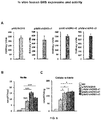
- HEK293 cells were transfected with 4 ⁇ g of pAAV-CAG-hGNS, pAAV-CAG-ohGNS-v1, pAAV-CAG-ohGNS-v2 or pAAV-CAG-ohGNS-v3 using Lipofectamine® 2000 (Invitrogen, Thermo Fisher Scientific, CA, USA) following the manufacturer's instructions. After 48 hours, cells and culture media were harvested and processed for RNA and protein extraction.
- RPLPP0 SEQ ID NO: 27: Fw: 5' CTC TGG AGA AAC TGC TGC CT 3', SEQ ID NO: 28: Rv: 5' CTG CAC ATC ACT CAG GAT TTC AA 3').
- Real-time PCR was performed in a Light Cycler® 480 (Roche, Manheim, Germany) using the Light Cycler® 480 SYBRgreen I Master (Roche, Mannheim, Germany).
- Protein extracts were obtained by sonication of cells in 250 ⁇ l of Mili-Q water and protein content was quantified using Bradford protein assay (Bio-Rad, Hercules, CA, US). N-acetylglucosamine 6-sulfatase activity was determined in 5 ⁇ g of cell protein extracts and 5 ⁇ l of culture media and normalized by total amount of protein and volume, respectively, with a 4-methylumbelliferone-derived fluorogenic substrate (Moscerdam Substrates, Oegstgeest, NL), as described previously. See Wang He et al., J Inher Metab Diss 1993;16:935-941 .
- C57BL/6N-A/a embryonic stem cells carrying a reporter ( LacZ) gene tagged insertion in the Gns gene available through the International Mouse Phenotyping Consortium (IMPC, www. mousephenotype.org) were obtained.
- Clones were microinjected in C57BL/6J blastocytes in the Transgenic Animal Unit of the Center of Animal Biotechnology and Gene Therapy (CBATEG) at Universitat Aut ⁇ noma de Barcelona (UAB), and the resulting male chimeras were bred with C57BI/6N females to generate Gns knock-out offspring.
- Genotype was determined on genomic DNA from tailclipped samples with a PCR analysis that amplifies a sequence encompassing the targeted mutation.
- Sense primer 5'- CCACACAGGGCAGTTCTCTT-3' (SEQ ID NO: 13).
- Antisense primer 5'- GTGGGACCCAAGTCGATGTT-3' (SEQ ID NO: 14).
- Mice were fed ad libitum with a standard diet (Harlan, Tekland) and maintained under a light-dark cycle of 12 h (lights on at 9:00 A.M.).
- mice For intravenous vector delivery, 1x10 10 vector genomes of AAV9 vectors baring different versions of the human glucosamine (N-acetyl)-6-sulfatase coding sequence were delivered to mice in a total volume of 200 ⁇ l through tail vein injection. WT and non-treated Gns - / - animals were used as controls.
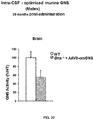
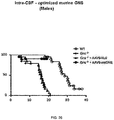
- intra-CSF delivery of AAV9-CAG-omGNS vectors to mice a total dose of 5x10 10 vg were injected to the cisterna magna of 2-month-old Gns - / - animals.
- a similar cohort of animals was injected with 5x10 10 vg control non-coding (AAV9-null) vector. At 6, 12 and 22 months of age, i.e. 4, 10 and 20 months post vector administration, mice were sacrificed and tissues were harvested.
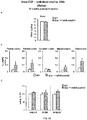
- glycosaminoglycan For glycosaminoglycan (GAG) quantification, tissue samples were weighted and then digested with proteinase K and extracts were clarified by centrifugation and filtration. GAG levels were determined in tissue extracts with the Blyscan sulfated glycosaminoglycan kit (Biocolor, Carrickfergus, County Antrim, GB), using chondroitin 4-sulfate as standard. The levels of GAG were normalized to wet tissue weight.
- Blyscan sulfated glycosaminoglycan kit Biocolor, Carrickfergus, County Antrim, GB
- HGSNAT activity was determined from 30 ⁇ g of protein extract incubated with Acetylcoenzyme A and 4-methylumbelliferyl- ⁇ -D-glucosamine (MU- ⁇ GlcNH 2 , Moscerdam Substrates) for 17 h at 37 oC. See Voznyi et al., J Inh Metab Dis 1993;16:465-72 .
- GALNS activity was assayed by a 2-step protocol using 10 ⁇ g of protein extract and 4-Methylumbelliferyl ⁇ -D-Galactopyranoside-6-sulfate Sodium Salt (MU- ⁇ Gal-6S) during the first incubation for 17 h at 37 oC.
- the second step was carried out adding P i - buffer (0.9M Na 2 HPO 4 /0.9M NaH 2 PO 4 buffer, pH4.3 + 0.02% (w/v) Na-azide) and ⁇ -Galactosidase ( ⁇ -Gal-Ao, Sigma) and incubating the mix for 2 h at 37 oC.
- P i - buffer 0.M Na 2 HPO 4 /0.9M NaH 2 PO 4 buffer, pH4.3 + 0.02% (w/v) Na-azide
- ⁇ -Galactosidase ⁇ -Gal-Ao, Sigma
- HEXB activity was assayed by incubation of 0.1 ⁇ g of protein extract with 4-methylumbelliferyl N-acetyl- ⁇ -D-glucosaminide (Sigma) for 1 h at 37°C. After stopping reactions by increasing the pH, released fluorescence was measured with FLx800 fluorimeter (BioTek Instruments). All brain and liver activities levels were normalized against the total amount of protein, quantified using Bradford protein assay (Bio-Rad, Hercules, CA, US).
- Tissues were fixed for 12-24 h in formalin, embedded in paraffin and sectioned.
- paraffin sections were subjected to heat-induced epitope retrieval in citrate buffer, pH 6, and then incubated overnight at 4oC with rat anti-LAMP2 antibody (Ab13524; Abcam, Cambridge, UK) diluted at 1:500 and subsequently incubated with biotinylated rabbit anti-rat antibody (Dako, Glostrup, DK) at 1:300.
- GFAP immunostaining in brain samples paraffin sections were incubated overnight at 4oC with rabbit anti-GFAP antibody (Ab6673; Abcam, Cambridge, UK) diluted at 1:1000 and subsequently incubated with biotinylated goat anti-rabbit antibody (31820; Vector Laboratories, Burlingame, CA, USA) at 1:300.
- LAMP2 and GFAP signals were amplified by incubating sections with ABC-Peroxidase staining kit (Thermo Scientific, Waltham, MA, US) at 1:100 dilution and visualized using 3,3-diaminobenzidine (Sigma-Aldrich, St. Louis, MO, US) as a chromogen.
- BSI-B4 lectin L5391; Sigma-Aldrich, St. Louis, MO, USA
- BSI-B4 signal was visualized using 3,3-diaminobenzidine (Sigma-Aldrich, St. Louis, MO, US) as a chromogen.
- Brightfield images were obtained with an optical microscope (Eclipse 90i; Nikon, Tokyo, JP).
- the NIS Elements Advanced Research 2.20 software was used to quantify LAMP2, GFAP, and BSI-B4 signals in 3-5 images of each brain region (original magnification, ⁇ 20) per animal, using the same signal threshold settings for all animals. Then, the percentage of positive area was calculated, i.e., the area, in pixels, with a positive signal over the total tissue area in the image.
- mice were sacrificed by an overdose of isofluorane (Isofluo, Labs. Esteve, Barcelona, ES) and perfused via inferior vena cava with 1 ml of 2.5% glutaraldehyde and 2% paraformaldehyde.
- a small portion (approximately 1mm 3 ) of the cerebral cortex, the left lateral lobe of the liver or the lung were sectioned and incubated for 2 hours at 4°C in the same fixative.
- the specimens were postfixed in 1% osmium tetroxide, stained in aqueous uranyl acetate, and then dehydrated through a graded ethanol series and embedded in epoxy resin. Ultrathin sections (600-800 ⁇ ) from the resin blocks were stained using lead citrate and examined in a transmission electron microscope (H-7000; Hitachi, Tokyo, JP).
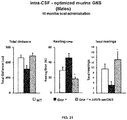
- mice The behavior of 6 and 22-month-old mice was analyzed by the open field test performed between 9:00 am and 1:00 pm. Animals were placed in the lower left corner of a brightly lit chamber (41 x 41 x 30 cm) crossed by 2 bundles of photobeams (SedaCom32; Panlab) that detected horizontal and vertical movements of the mice. The area surface was divided into three squared concentric regions: center (14 x 14 cm), periphery (27 x 27 cm) and border (41 x 41 cm). Exploratory and motor activities were recorded during the first 3 minutes of the test using a video-tracking system (SmartJunior, Panlab).
- a video-tracking system SmartJunior, Panlab
- the CDS for human glucosamine (N-acetyl)-6-sulfatase was used as starting material and was chemically synthetized for this purpose (GeneArt; Life Technologies).
- the CDS was received cloned inside the plasmid pMA-RQ (AmpR) flanked by Mlul and EcoRI restriction sites at 5' and 3', respectively.
- the MluI/EcoRI human glucosamine (N-acetyl)-6-sulfatase CDS fragment was excised from the pMA-RQ plasmid and subsequently cloned between the Mlul and EcoRI restrictions sites of the AAV backbone plasmid pAAV-CAG.
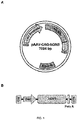
- the resulting plasmid was named pAAV-CAG-hGNS (accession number DSM 32342). See Figure 1A and SEQ ID NO: 5.
- the AAV backbone plasmid pAAV-CAG used herein had been previously generated and contained the ITRs from the AAV2 genome, the CAG promoter, and the polyA signal from rabbit ⁇ -globin, as well as a multicloning site for cloning of CDSs of interest.
- the CAG promoter is a hybrid promoter composed of the CMV early/intermediate enhancer and the chicken ⁇ -actin promoter. This promoter is able to drive a potent expression ubiquitously.
- Expression cassettes including an optimized version of glucosamine (N-acetyl)-6-sulfatase cDNA sequence were designed and obtained.
- the sequence optimization was performed to maximize the efficiency of N-acetylglucosamine 6-sulfatase protein production in human beings through elimination of cryptic splice sites and RNA destabilizing sequence elements for increased RNA stability, addition of RNA stabilizing sequence elements, codon optimization and G/C content adaptation, avoidance of stable RNA secondary structures amongst others changes.
- the CDS for human glucosamine (N-acetyl)-6-sulfatase (NCBI Reference Sequence: NM_002076.3) was used as starting point for sequence optimization.
- the first optimized CDS (GeneArt; Life Technologies) was received cloned inside the plasmid pMA-T (AmpR) flanked by Mlul and EcoRI restriction sites at 5' and 3', respectively.
- the MluI/EcoRI optimized human glucosamine (N-acetyl)-6-sulfatase CDS fragment was excised from the pMA-T plasmid and subsequently cloned between the Mlul and EcoRI restrictions sites of the AAV backbone plasmid pAAV-CAG.
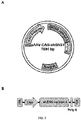
- the resulting plasmid was named pAAV-CAG-ohGNS-version1 (accession number DSM 32343). See Figure 2A and SEQ ID NO: 6.
- the CDS for human glucosamine (N-acetyl)-6-sulfatase was subjected to sequence optimization (DNA2.0 Inc).
- the optimized CDS was received cloned inside the plasmid pJ204 (AmpR) flanked by Mlul and EcoRI restriction sites at 5' and 3', respectively.
- the MluI/EcoRI optimized human glucosamine (N-acetyl)-6-sulfatase CDS fragment was excised from the pJ204 plasmid and subsequently cloned between the Mlul and EcoRI restrictions sites of the AAV backbone plasmid pAAV-CAG.
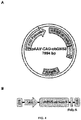
- the resulting plasmid was named pAAV-CAG-ohGNS-version2 (accession number DSM 32344). See Figure 3A and SEQ ID NO: 7.
- the CDS for human glucosamine (N-acetyl)-6-sulfatase was subjected to sequence optimization (Genescript Inc).
- the optimized CDS was received cloned inside the plasmid pUC57 (AmpR) flanked by Mlul and EcoRI restriction sites at 5' and 3', respectively.
- the MluI/EcoRI optimized human glucosamine (N-acetyl)-6-sulfatase CDS fragment was excised from the pUC57 plasmid and subsequently cloned between the Mlul and EcoRI restrictions sites of the AAV backbone plasmid pAAV-CAG.
- the resulting plasmid was named pAAV-CAG-ohGNS-version3 (accession number DSM 32345). See Figure 4A and SEQ ID NO: 8.
- the CDS for murine glucosamine (N-acetyl)-6-sulfatase was subjected to sequence optimization (GeneArt; Life Technologies).
- the optimized CDS; SEQ ID NO: 16 was received cloned inside the plasmid pMA-RQ (AmpR) flanked by Mlul and EcoRI restriction sites at 5' and 3', respectively.
- the MluI/EcoRI optimized murine glucosamine (N-acetyl)-6-sulfatase CDS fragment was excised from the pMA-RQ plasmid and subsequently cloned between the Mlul and EcoRI restrictions sites of the AAV backbone plasmid pAAV-CAG.
- the resulting plasmid was named pAAV-CAG-omGNS. See Figure 5A and SEQ ID NO:17.
- Vectors AAV9-CAG-hGNS were generated by helper virus-free transfection of HEK293 cells using three plasmids with modifications. See Matsushita et al., Gene Ther. 1998;5(7):938-45 , Wright et al., Mol Ther. 2005;12(1)171-8 .
- Cells were cultured to 70% confluence in roller bottles (RB) (Corning, Corning, NY, US) in DMEM supplemented with 10% FBS and then co-transfected with: 1) a plasmid carrying the expression cassette flanked by AAV2 ITRs (pAAV-CAG-hGNS; SEQ ID NO: 5); 2) a plasmid carrying the AAV2 rep and the AAV9 cap genes (pREP2CAP9); and 3) a plasmid carrying the adenovirus helper functions.
- Vectors were purified by two consecutives cesium chloride gradients using an optimized protocol as previously described. See Ayuso et al., Gene Ther. 2010;17(4):503-10 . Vectors were dialyzed against PBS + 0.001% Pluronic® F68, filtered, titred by qPCR and stored at -80oC until use. See Figure 1B .
- Vectors AAV9-CAG-ohGNS-version1 (SEQ ID NO:10) were generated by helper virus-free transfection of HEK293 cells using three plasmids with modifications. See Matsushita et al., and Wright et al., supra.
- Cells were cultured to 70% confluence in roller bottles (RB) (Corning, Corning, NY, US) in DMEM supplemented with 10% FBS and then co-transfected with: 1) a plasmid carrying the expression cassette flanked by AAV2 ITRs (pAAV-CAG-ohGNS-version1; SEQ ID NO: 6); 2) a plasmid carrying the AAV2 rep and the AAV9 cap genes (pREP2CAP9); and 3) a plasmid carrying the adenovirus helper functions.
- Vectors were purified by two consecutives cesium chloride gradients using an optimized protocol as previously described. See Ayuso et al., supra. Vectors were dialyzed against PBS + 0.001% Pluronic® F68, filtered, titred by qPCR and stored at - 80oC until use. See Figure 2B .
- Vectors AAV9-CAG-ohGNS-version2 (SEQ ID NO:11) were generated by helper virus-free transfection of HEK293 cells using three plasmids with modifications. See Matsushita et al., and Wright et al., supra.
- Cells were cultured to 70% confluence in roller bottles (RB) (Corning, Corning, NY, US) in DMEM supplemented with 10% FBS and then co-transfected with: 1) a plasmid carrying the expression cassette flanked by AAV2 ITRs (pAAV-CAG-ohGNS-version2; SEQ ID NO: 7); 2) a plasmid carrying the AAV2 rep and the AAV9 cap genes (pREP2CAP9); and 3) a plasmid carrying the adenovirus helper functions.
- Vectors were purified by two consecutives cesium chloride gradients using an optimized protocol as previously described. See Ayuso et al ., supra. Vectors were dialyzed against PBS + 0.001% Pluronic® F68, filtered, titred by qPCR and stored at - 80oC until use. See Figure 3B .
- Vectors AAV9-CAG-ohGNS-version3 (SEQ ID NO:12) were generated by helper virus-free transfection of HEK293 cells using three plasmids with modifications. See Matsushita et al., and Wright et al., supra.
- Cells were cultured to 70% confluence in roller bottles (RB) (Corning, Corning, NY, US) in DMEM supplemented with 10% FBS and then co-transfected with: 1) a plasmid carrying the expression cassette flanked by AAV2 ITRs (pAAV-CAG-ohGNS-version3; SEQ ID NO: 8); 2) a plasmid carrying the AAV2 rep and the AAV9 cap genes (pREP2CAP9); and 3) a plasmid carrying the adenovirus helper functions.
- Vectors were purified by two consecutives cesium chloride gradients using an optimized protocol as previously described. See Ayuso et al ., supra. Vectors were dialyzed against PBS + 0.001% Pluronic® F68, filtered, titred by qPCR and stored at - 80oC until use. See Figure 4B .
- Vectors AAV9-CAG-omGNS (SEQ ID NO: 18) were generated by helper virus-free transfection of HEK293 cells using three plasmids with modifications. See Matsushita et al., and Wright et al., supra.
- Cells were cultured to 70% confluence in roller bottles (RB) (Corning, Corning, NY, US) in DMEM supplemented with 10% FBS and then co-transfected with: 1) a plasmid carrying the expression cassette flanked by AAV2 ITRs (pAAV-CAG-omGNS; SEQ ID NO: 17); 2) a plasmid carrying the AAV2 rep and the AAV9 cap genes (pREP2CAP9); and 3) a plasmid carrying the adenovirus helper functions.
- Vectors were purified by two consecutives cesium chloride gradients using an optimized protocol as previously described. See Ayuso et al ., supra. Vectors were dialyzed against PBS + 0.001% Pluronic® F68, filtered, titred by qPCR and stored at -80oC until use. See Figure 5B and SEQ ID NO:18.
- Example 11 In vitro testing of pAAV-CAG-hGNS, pAAV-CAG-ohGNS-version1, pAAV-CAG-ohGNS-version2 and pAAV-CAG-ohGNS-version3
- HEK293 cells were transfected with 4 ⁇ g of plasmids pAAV-CAG-hGNS, pAAV-CAG-ohGNS-version1, pAAV-CAG-ohGNS-version2 and pAAV-CAG-ohGNS-version3 containing different versions of human glucosamine (N-acetyl)-6-sulfatase.
- glucosamine (N-acetyl)-6-sulfatase Forty-eight hours after transfection, cells were collected, total RNA extracted and expression of glucosamine (N-acetyl)-6-sulfatase was measured by quantitative RT-PCR using primers specific for each sequence. Transfection with all four glucosamine (N-acetyl)-6-sulfatase-containing plasmids resulted in detection of glucosamine (N-acetyl)-6-sulfatase mRNA. See Figure 6A . Furthermore, glucosamine (N-acetyl)-6-sulfatase activity was increased in both the media and the cellular extracts of wells transfected with the therapeutic constructs. See Figures 6B and 6C .
- Example 12 Intravenous injection of AAV-CAG-hGNS, AAV-CAG-ohGNS-version1, AAV-CAG-ohGNS-version2 or AAV-CAG-ohGNS-version3 to MPSIIID mice
- a total dose of 1x10 10 vector genomes of AAV-CAG-hGNS, AAV-CAG-ohGNS-version1, AAV-CAG-ohGNS-version2 or AAV-CAG-ohGNS-version3 containing different versions of the human glucosamine (N-acetyl)-6-sulfatase expressing cassette were delivered intravenously to 2-month-old MPSIIID-affected mice via tail vein injection.
- Glucosamine (N-acetyl)-6-sulfatase activity levels ranged from 1300% to 2700% of WT levels in liver and 900% to 3300% of WT in serum. See Figures 7A and 7B .
- a total dose of 5x10 10 vector genomes of AAV9-CAG-omGNS vector was injected into the cisterna magna of 2-month-old MPSIIID animals in a total volume of 5 ⁇ l.
- the enzymatic activity of GNS in the brain of MPSIIID treated animals was normalized, reaching similar values to those observed in healthy animals. See Figure 8 .
- the restoration of GNS activity led to a complete normalization of the substrate accumulation characteristic of the disease in all CNS regions analysed, as indicated by the similar level of GAG build-up in wild-type controls and treated Gns - / - mice. See Figure 9A .
- IDUA iduronidase, alpha-L-
- GALNS galactosamine (N-acetyl)-6-sulfatase
- GUSB glucuronidase, beta
- HEXB hexosaminidase B
- Neuroinflamation characterized the activation of glial cells of the central nervous system, is a hallmark of the Sanfilippo syndrome.
- the signal intensity for the staining used to detect astrocytosis (GFAP) and microgliosis (BSIB4) was increased in Gns - / - mice treated with Null vectors in comparison to healthy controls.
- the treatment of Gns - / - mice with AAV9-CAG-omGNS decreased the % of positive area of both markers of inflammation in all brain regions studied. See Figure 11A and 11B .
- AAV9 vectors administered to the CSF leak to the periphery and transduce the liver. See Haurigot et al., Clin Invest. 2013;123(8):3254-3271 . Accordingly, the activity of GNS in the liver of Gns - / - male mice treated with AAV9-CAG-omGNS was approximately 20-fold higher than that observed in healthy animals. See Figure 12 . When overexpressed in the liver, soluble lysosomal proteins are efficiently secreted to the bloodstream, turning this organ into a source of circulating enzyme See Ruzo et al., Mol Ther 2012; 20(2):254-66 .
- mice Ten months after AAV9-CAG-omGNS delivery, treated GNS-deficient mice showed normal or almost normal content of GAGs in peripheral organs such as liver, heart, spleen, lung, kidney and adipose tissue. See Figure 20A .
- the brains of 22-month-old treated MPSIIID mice also showed very low GFAP and BSI-B4 signals, indicating that the profound effect of the therapy on neuroinflammation persisted 20 months after a single administration of the therapeutic AAV9-CAG-omGNS vectors. See Figure 24 A and B.
- sustained production of GNS led to normal levels of GAG content in the peripheral organs of treated MPSIIID mice, in which liver, heart, spleen, lung and adipose tissue had the same GAG content than the peripheral organs of healthy age-matched animals. See Figure 25 .
Landscapes
- Health & Medical Sciences (AREA)
- Life Sciences & Earth Sciences (AREA)
- Chemical & Material Sciences (AREA)
- Engineering & Computer Science (AREA)
- Genetics & Genomics (AREA)
- Organic Chemistry (AREA)
- Bioinformatics & Cheminformatics (AREA)
- General Health & Medical Sciences (AREA)
- Zoology (AREA)
- Wood Science & Technology (AREA)
- General Engineering & Computer Science (AREA)
- Biochemistry (AREA)
- Biotechnology (AREA)
- Medicinal Chemistry (AREA)
- Biomedical Technology (AREA)
- Animal Behavior & Ethology (AREA)
- Public Health (AREA)
- Veterinary Medicine (AREA)
- Pharmacology & Pharmacy (AREA)
- Molecular Biology (AREA)
- Microbiology (AREA)
- Epidemiology (AREA)
- General Chemical & Material Sciences (AREA)
- Chemical Kinetics & Catalysis (AREA)
- Hematology (AREA)
- Obesity (AREA)
- Gastroenterology & Hepatology (AREA)
- Immunology (AREA)
- Proteomics, Peptides & Aminoacids (AREA)
- Virology (AREA)
- Physics & Mathematics (AREA)
- Diabetes (AREA)
- Biophysics (AREA)
- Plant Pathology (AREA)
- Nuclear Medicine, Radiotherapy & Molecular Imaging (AREA)
- Medicines Containing Material From Animals Or Micro-Organisms (AREA)
- Medicines That Contain Protein Lipid Enzymes And Other Medicines (AREA)
- Pharmaceuticals Containing Other Organic And Inorganic Compounds (AREA)
- Enzymes And Modification Thereof (AREA)
Applications Claiming Priority (2)
| Application Number | Priority Date | Filing Date | Title |
|---|---|---|---|
| EP16382450 | 2016-09-30 | ||
| PCT/EP2017/074081 WO2018060097A1 (en) | 2016-09-30 | 2017-09-22 | Adenoassociated virus vectors for the treatment of mucopolysaccharidoses |
Publications (2)
| Publication Number | Publication Date |
|---|---|
| EP3519569A1 EP3519569A1 (en) | 2019-08-07 |
| EP3519569B1 true EP3519569B1 (en) | 2020-12-02 |
Family
ID=57123944
Family Applications (1)
| Application Number | Title | Priority Date | Filing Date |
|---|---|---|---|
| EP17777541.8A Active EP3519569B1 (en) | 2016-09-30 | 2017-09-22 | Adenoassociated virus vectors for the treatment of mucopolysaccharidoses |
Country Status (10)
| Country | Link |
|---|---|
| US (1) | US11338046B2 (enExample) |
| EP (1) | EP3519569B1 (enExample) |
| JP (1) | JP7059285B2 (enExample) |
| CN (1) | CN109863243B (enExample) |
| AR (1) | AR109752A1 (enExample) |
| AU (1) | AU2017333336B2 (enExample) |
| ES (1) | ES2859661T3 (enExample) |
| PT (1) | PT3519569T (enExample) |
| TW (1) | TW201814044A (enExample) |
| WO (1) | WO2018060097A1 (enExample) |
Families Citing this family (15)
| Publication number | Priority date | Publication date | Assignee | Title |
|---|---|---|---|---|
| US9309534B2 (en) | 2010-07-12 | 2016-04-12 | Universidad Autonoma De Barcelona | Gene therapy composition for use in diabetes treatment |
| EP2692868A1 (en) | 2012-08-02 | 2014-02-05 | Universitat Autònoma De Barcelona | Adeno-associated viral (AAV) vectors useful for transducing adipose tissue |
| JP2016523835A (ja) * | 2013-05-15 | 2016-08-12 | リージェンツ オブ ザ ユニバーシティ オブ ミネソタ | 中枢神経系へのアデノ随伴ウイルスを介した遺伝子導入 |
| US10973931B2 (en) | 2014-09-16 | 2021-04-13 | Universitat Autònoma De Barcelona | Adeno-associated viral vectors for the gene therapy of metabolic diseases |
| US11085055B2 (en) | 2014-12-05 | 2021-08-10 | Universitat Autonoma De Barcelona | Viral vectors for the treatment of diabetes |
| EP3242945B1 (en) | 2015-01-07 | 2021-09-01 | Universitat Autònoma de Barcelona | Single-vector gene construct comprising insulin and glucokinase genes |
| KR102765034B1 (ko) | 2017-05-24 | 2025-02-11 | 유니버시타트 아우토노마 데 바르셀로나 | 섬유아세포 성장 인자 21 (fgf21) 코딩 서열을 포함하는 바이러스 발현 컨스트럭트 |
| IL278213B2 (en) | 2018-04-27 | 2026-04-01 | Rocket Pharmaceuticals Ltd | A gene therapy vector encoding an e3 ubiquitin protein ligase (park2) and use thereof in treating or inhibiting the onset of parkinson’s disease (pd) |
| MY204731A (en) * | 2018-05-30 | 2024-09-11 | Esteve Pharmaceuticals Sa | Adenoassociated virus vectors for the treatment of mucopolysaccharidoses type iv a |
| EP3820537A4 (en) * | 2018-07-12 | 2022-04-13 | Spacecraft Seven, LLC | GENE THERAPY VECTORS FOR TREATMENT OF DANON DISEASE |
| IL283452B2 (en) | 2018-11-26 | 2026-04-01 | Univ Barcelona Autonoma | FIBROBLAST GROWTH FACTOR 21 (FGF21)-BASED GENE THERAPY |
| ES2948620T3 (es) | 2019-07-10 | 2023-09-14 | Masonic Medical Res Laboratory | Vgll4 con elemento regulador CIS de UCP-1 y método de uso del mismo |
| CN111718947B (zh) * | 2020-06-18 | 2022-08-23 | 舒泰神(北京)生物制药股份有限公司 | 用于治疗ⅲa或ⅲb型粘多糖贮积症的腺相关病毒载体及用途 |
| WO2022032226A1 (en) | 2020-08-07 | 2022-02-10 | Spacecraft Seven, Llc | Plakophilin-2 (pkp2) gene therapy using aav vector |
| CN114480454B (zh) * | 2020-10-27 | 2024-03-29 | 华东理工大学 | 用于治疗粘多糖贮积症ⅱ型的腺相关病毒载体、药物及其应用 |
Family Cites Families (10)
| Publication number | Priority date | Publication date | Assignee | Title |
|---|---|---|---|---|
| US7232670B2 (en) * | 2001-09-28 | 2007-06-19 | St. Jude Children's Research Hospital | Targeting proteins to cells expressing mannose receptors via expression in insect cells |
| CN110496230A (zh) * | 2003-02-11 | 2019-11-26 | 夏尔人类遗传性治疗公司 | 使用甲酰-甘氨酸生成酶(fge)对多种硫酸酯酶缺乏症和其它病症进行诊断和治疗 |
| EP2394667A1 (en) * | 2010-06-10 | 2011-12-14 | Laboratorios Del Dr. Esteve, S.A. | Vectors and sequences for the treatment of diseases |
| SG10201604810UA (en) * | 2012-02-07 | 2016-08-30 | Global Bio Therapeutics Inc | Compartmentalized method of nucleic acid delivery and compositions and uses thereof |
| CN105916990B (zh) * | 2013-08-02 | 2020-02-04 | 巴塞罗那自治大学 | 用于转导脂肪组织的腺相关病毒载体 |
| WO2015060722A1 (en) * | 2013-10-24 | 2015-04-30 | Uniqure Ip B.V. | Aav-5 pseudotyped vector for gene therapy for neurological diseases |
| GB201322798D0 (en) * | 2013-12-20 | 2014-02-05 | Oxford Biomedica Ltd | Production system |
| SG11201609314XA (en) | 2014-05-14 | 2016-12-29 | Esteve Labor Dr | Adenoassociated virus vectors for the treatment of lysosomal storage disorders |
| EA201791803A1 (ru) * | 2015-02-10 | 2017-11-30 | Джензим Корпорейшн | Улучшенная доставка вирусных частиц в полосатое тело и кору больших полушарий |
| US9981021B1 (en) * | 2015-04-09 | 2018-05-29 | Kinetiq, Inc. | Subcutaneous therapeutic enzyme formulations, uses, and methods for generating thereof |
-
2017
- 2017-09-22 EP EP17777541.8A patent/EP3519569B1/en active Active
- 2017-09-22 CN CN201780060410.7A patent/CN109863243B/zh active Active
- 2017-09-22 PT PT177775418T patent/PT3519569T/pt unknown
- 2017-09-22 AU AU2017333336A patent/AU2017333336B2/en not_active Ceased
- 2017-09-22 WO PCT/EP2017/074081 patent/WO2018060097A1/en not_active Ceased
- 2017-09-22 US US16/337,953 patent/US11338046B2/en not_active Expired - Fee Related
- 2017-09-22 JP JP2019538714A patent/JP7059285B2/ja not_active Expired - Fee Related
- 2017-09-22 ES ES17777541T patent/ES2859661T3/es active Active
- 2017-09-29 AR ARP170102704A patent/AR109752A1/es unknown
- 2017-09-30 TW TW106133935A patent/TW201814044A/zh unknown
Non-Patent Citations (1)
| Title |
|---|
| None * |
Also Published As
| Publication number | Publication date |
|---|---|
| ES2859661T3 (es) | 2021-10-04 |
| PT3519569T (pt) | 2021-03-04 |
| WO2018060097A1 (en) | 2018-04-05 |
| CN109863243B (zh) | 2023-07-28 |
| AR109752A1 (es) | 2019-01-23 |
| TW201814044A (zh) | 2018-04-16 |
| AU2017333336A1 (en) | 2019-04-11 |
| US20190231900A1 (en) | 2019-08-01 |
| EP3519569A1 (en) | 2019-08-07 |
| US11338046B2 (en) | 2022-05-24 |
| JP2019528793A (ja) | 2019-10-17 |
| AU2017333336B2 (en) | 2023-11-09 |
| CN109863243A (zh) | 2019-06-07 |
| JP7059285B2 (ja) | 2022-04-25 |
Similar Documents
| Publication | Publication Date | Title |
|---|---|---|
| US11338046B2 (en) | Adenoassociated virus vectors for the treatment of mucopolysaccharidoses | |
| EP2579900B1 (en) | Vectors and sequences for the treatment of diseases | |
| EP3303576B1 (en) | Adenoassociated virus vectors for the treatment of mucopolysaccharidoses | |
| EP3143146B1 (en) | Adenoassociated virus vectors for the treatment of lysosomal storage disorders | |
| US20250075194A1 (en) | Adenoassociated virus vectors for the treatment of mucopolysaccharidoses type iv a | |
| HK40012896A (en) | Adenoassociated virus vectors for the treatment of mucopolysaccharidoses | |
| HK40012896B (en) | Adenoassociated virus vectors for the treatment of mucopolysaccharidoses | |
| HK1253798B (en) | Adenoassociated virus vectors for the treatment of mucopolysaccharidoses | |
| HK1253798A1 (en) | Adenoassociated virus vectors for the treatment of mucopolysaccharidoses | |
| HK1184071B (en) | Vectors and sequences for the treatment of diseases | |
| HK1184071A (en) | Vectors and sequences for the treatment of diseases | |
| HK1231926B (en) | Adenoassociated virus vectors for the treatment of lysosomal storage disorders |
Legal Events
| Date | Code | Title | Description |
|---|---|---|---|
| STAA | Information on the status of an ep patent application or granted ep patent |
Free format text: STATUS: UNKNOWN |
|
| STAA | Information on the status of an ep patent application or granted ep patent |
Free format text: STATUS: THE INTERNATIONAL PUBLICATION HAS BEEN MADE |
|
| PUAI | Public reference made under article 153(3) epc to a published international application that has entered the european phase |
Free format text: ORIGINAL CODE: 0009012 |
|
| STAA | Information on the status of an ep patent application or granted ep patent |
Free format text: STATUS: REQUEST FOR EXAMINATION WAS MADE |
|
| 17P | Request for examination filed |
Effective date: 20190208 |
|
| AK | Designated contracting states |
Kind code of ref document: A1 Designated state(s): AL AT BE BG CH CY CZ DE DK EE ES FI FR GB GR HR HU IE IS IT LI LT LU LV MC MK MT NL NO PL PT RO RS SE SI SK SM TR |
|
| AX | Request for extension of the european patent |
Extension state: BA ME |
|
| STAA | Information on the status of an ep patent application or granted ep patent |
Free format text: STATUS: EXAMINATION IS IN PROGRESS |
|
| 17Q | First examination report despatched |
Effective date: 20200129 |
|
| GRAP | Despatch of communication of intention to grant a patent |
Free format text: ORIGINAL CODE: EPIDOSNIGR1 |
|
| STAA | Information on the status of an ep patent application or granted ep patent |
Free format text: STATUS: GRANT OF PATENT IS INTENDED |
|
| INTG | Intention to grant announced |
Effective date: 20200703 |
|
| REG | Reference to a national code |
Ref country code: HK Ref legal event code: DE Ref document number: 40012896 Country of ref document: HK |
|
| GRAS | Grant fee paid |
Free format text: ORIGINAL CODE: EPIDOSNIGR3 |
|
| GRAA | (expected) grant |
Free format text: ORIGINAL CODE: 0009210 |
|
| STAA | Information on the status of an ep patent application or granted ep patent |
Free format text: STATUS: THE PATENT HAS BEEN GRANTED |
|
| AK | Designated contracting states |
Kind code of ref document: B1 Designated state(s): AL AT BE BG CH CY CZ DE DK EE ES FI FR GB GR HR HU IE IS IT LI LT LU LV MC MK MT NL NO PL PT RO RS SE SI SK SM TR |
|
| AX | Request for extension of the european patent |
Extension state: BA ME |
|
| REG | Reference to a national code |
Ref country code: GB Ref legal event code: FG4D |
|
| REG | Reference to a national code |
Ref country code: AT Ref legal event code: REF Ref document number: 1340979 Country of ref document: AT Kind code of ref document: T Effective date: 20201215 Ref country code: CH Ref legal event code: EP |
|
| REG | Reference to a national code |
Ref country code: DE Ref legal event code: R096 Ref document number: 602017028855 Country of ref document: DE |
|
| REG | Reference to a national code |
Ref country code: IE Ref legal event code: FG4D |
|
| REG | Reference to a national code |
Ref country code: CH Ref legal event code: NV Representative=s name: NOVAGRAAF INTERNATIONAL SA, CH |
|
| REG | Reference to a national code |
Ref country code: PT Ref legal event code: SC4A Ref document number: 3519569 Country of ref document: PT Date of ref document: 20210304 Kind code of ref document: T Free format text: AVAILABILITY OF NATIONAL TRANSLATION Effective date: 20210226 |
|
| REG | Reference to a national code |
Ref country code: NL Ref legal event code: FP |
|
| REG | Reference to a national code |
Ref country code: GR Ref legal event code: EP Ref document number: 20210400567 Country of ref document: GR Effective date: 20210416 |
|
| PG25 | Lapsed in a contracting state [announced via postgrant information from national office to epo] |
Ref country code: RS Free format text: LAPSE BECAUSE OF FAILURE TO SUBMIT A TRANSLATION OF THE DESCRIPTION OR TO PAY THE FEE WITHIN THE PRESCRIBED TIME-LIMIT Effective date: 20201202 Ref country code: FI Free format text: LAPSE BECAUSE OF FAILURE TO SUBMIT A TRANSLATION OF THE DESCRIPTION OR TO PAY THE FEE WITHIN THE PRESCRIBED TIME-LIMIT Effective date: 20201202 Ref country code: NO Free format text: LAPSE BECAUSE OF FAILURE TO SUBMIT A TRANSLATION OF THE DESCRIPTION OR TO PAY THE FEE WITHIN THE PRESCRIBED TIME-LIMIT Effective date: 20210302 |
|
| PG25 | Lapsed in a contracting state [announced via postgrant information from national office to epo] |
Ref country code: LV Free format text: LAPSE BECAUSE OF FAILURE TO SUBMIT A TRANSLATION OF THE DESCRIPTION OR TO PAY THE FEE WITHIN THE PRESCRIBED TIME-LIMIT Effective date: 20201202 Ref country code: PL Free format text: LAPSE BECAUSE OF FAILURE TO SUBMIT A TRANSLATION OF THE DESCRIPTION OR TO PAY THE FEE WITHIN THE PRESCRIBED TIME-LIMIT Effective date: 20201202 Ref country code: SE Free format text: LAPSE BECAUSE OF FAILURE TO SUBMIT A TRANSLATION OF THE DESCRIPTION OR TO PAY THE FEE WITHIN THE PRESCRIBED TIME-LIMIT Effective date: 20201202 Ref country code: BG Free format text: LAPSE BECAUSE OF FAILURE TO SUBMIT A TRANSLATION OF THE DESCRIPTION OR TO PAY THE FEE WITHIN THE PRESCRIBED TIME-LIMIT Effective date: 20210302 |
|
| PG25 | Lapsed in a contracting state [announced via postgrant information from national office to epo] |
Ref country code: HR Free format text: LAPSE BECAUSE OF FAILURE TO SUBMIT A TRANSLATION OF THE DESCRIPTION OR TO PAY THE FEE WITHIN THE PRESCRIBED TIME-LIMIT Effective date: 20201202 |
|
| REG | Reference to a national code |
Ref country code: LT Ref legal event code: MG9D |
|
| PG25 | Lapsed in a contracting state [announced via postgrant information from national office to epo] |
Ref country code: EE Free format text: LAPSE BECAUSE OF FAILURE TO SUBMIT A TRANSLATION OF THE DESCRIPTION OR TO PAY THE FEE WITHIN THE PRESCRIBED TIME-LIMIT Effective date: 20201202 Ref country code: CZ Free format text: LAPSE BECAUSE OF FAILURE TO SUBMIT A TRANSLATION OF THE DESCRIPTION OR TO PAY THE FEE WITHIN THE PRESCRIBED TIME-LIMIT Effective date: 20201202 Ref country code: LT Free format text: LAPSE BECAUSE OF FAILURE TO SUBMIT A TRANSLATION OF THE DESCRIPTION OR TO PAY THE FEE WITHIN THE PRESCRIBED TIME-LIMIT Effective date: 20201202 Ref country code: SM Free format text: LAPSE BECAUSE OF FAILURE TO SUBMIT A TRANSLATION OF THE DESCRIPTION OR TO PAY THE FEE WITHIN THE PRESCRIBED TIME-LIMIT Effective date: 20201202 Ref country code: RO Free format text: LAPSE BECAUSE OF FAILURE TO SUBMIT A TRANSLATION OF THE DESCRIPTION OR TO PAY THE FEE WITHIN THE PRESCRIBED TIME-LIMIT Effective date: 20201202 Ref country code: SK Free format text: LAPSE BECAUSE OF FAILURE TO SUBMIT A TRANSLATION OF THE DESCRIPTION OR TO PAY THE FEE WITHIN THE PRESCRIBED TIME-LIMIT Effective date: 20201202 |
|
| VS25 | Lapsed in a validation state [announced via postgrant information from nat. office to epo] |
Ref country code: MD Free format text: LAPSE BECAUSE OF FAILURE TO SUBMIT A TRANSLATION OF THE DESCRIPTION OR TO PAY THE FEE WITHIN THE PRESCRIBED TIME-LIMIT Effective date: 20201202 |
|
| REG | Reference to a national code |
Ref country code: DE Ref legal event code: R097 Ref document number: 602017028855 Country of ref document: DE |
|
| PG25 | Lapsed in a contracting state [announced via postgrant information from national office to epo] |
Ref country code: IS Free format text: LAPSE BECAUSE OF FAILURE TO SUBMIT A TRANSLATION OF THE DESCRIPTION OR TO PAY THE FEE WITHIN THE PRESCRIBED TIME-LIMIT Effective date: 20210402 |
|
| REG | Reference to a national code |
Ref country code: ES Ref legal event code: FG2A Ref document number: 2859661 Country of ref document: ES Kind code of ref document: T3 Effective date: 20211004 |
|
| PLBE | No opposition filed within time limit |
Free format text: ORIGINAL CODE: 0009261 |
|
| STAA | Information on the status of an ep patent application or granted ep patent |
Free format text: STATUS: NO OPPOSITION FILED WITHIN TIME LIMIT |
|
| PG25 | Lapsed in a contracting state [announced via postgrant information from national office to epo] |
Ref country code: AL Free format text: LAPSE BECAUSE OF FAILURE TO SUBMIT A TRANSLATION OF THE DESCRIPTION OR TO PAY THE FEE WITHIN THE PRESCRIBED TIME-LIMIT Effective date: 20201202 |
|
| 26N | No opposition filed |
Effective date: 20210903 |
|
| PG25 | Lapsed in a contracting state [announced via postgrant information from national office to epo] |
Ref country code: SI Free format text: LAPSE BECAUSE OF FAILURE TO SUBMIT A TRANSLATION OF THE DESCRIPTION OR TO PAY THE FEE WITHIN THE PRESCRIBED TIME-LIMIT Effective date: 20201202 Ref country code: DK Free format text: LAPSE BECAUSE OF FAILURE TO SUBMIT A TRANSLATION OF THE DESCRIPTION OR TO PAY THE FEE WITHIN THE PRESCRIBED TIME-LIMIT Effective date: 20201202 |
|
| PG25 | Lapsed in a contracting state [announced via postgrant information from national office to epo] |
Ref country code: IS Free format text: LAPSE BECAUSE OF FAILURE TO SUBMIT A TRANSLATION OF THE DESCRIPTION OR TO PAY THE FEE WITHIN THE PRESCRIBED TIME-LIMIT Effective date: 20210402 Ref country code: MC Free format text: LAPSE BECAUSE OF FAILURE TO SUBMIT A TRANSLATION OF THE DESCRIPTION OR TO PAY THE FEE WITHIN THE PRESCRIBED TIME-LIMIT Effective date: 20201202 |
|
| P01 | Opt-out of the competence of the unified patent court (upc) registered |
Effective date: 20230315 |
|
| PG25 | Lapsed in a contracting state [announced via postgrant information from national office to epo] |
Ref country code: CY Free format text: LAPSE BECAUSE OF FAILURE TO SUBMIT A TRANSLATION OF THE DESCRIPTION OR TO PAY THE FEE WITHIN THE PRESCRIBED TIME-LIMIT Effective date: 20201202 |
|
| PG25 | Lapsed in a contracting state [announced via postgrant information from national office to epo] |
Ref country code: HU Free format text: LAPSE BECAUSE OF FAILURE TO SUBMIT A TRANSLATION OF THE DESCRIPTION OR TO PAY THE FEE WITHIN THE PRESCRIBED TIME-LIMIT; INVALID AB INITIO Effective date: 20170922 |
|
| PG25 | Lapsed in a contracting state [announced via postgrant information from national office to epo] |
Ref country code: MK Free format text: LAPSE BECAUSE OF FAILURE TO SUBMIT A TRANSLATION OF THE DESCRIPTION OR TO PAY THE FEE WITHIN THE PRESCRIBED TIME-LIMIT Effective date: 20201202 |
|
| VS25 | Lapsed in a validation state [announced via postgrant information from nat. office to epo] |
Ref country code: MA Free format text: LAPSE BECAUSE OF FAILURE TO SUBMIT A TRANSLATION OF THE DESCRIPTION OR TO PAY THE FEE WITHIN THE PRESCRIBED TIME-LIMIT Effective date: 20201202 |
|
| PGFP | Annual fee paid to national office [announced via postgrant information from national office to epo] |
Ref country code: PT Payment date: 20240614 Year of fee payment: 8 |
|
| PGFP | Annual fee paid to national office [announced via postgrant information from national office to epo] |
Ref country code: LU Payment date: 20240809 Year of fee payment: 8 |
|
| PGFP | Annual fee paid to national office [announced via postgrant information from national office to epo] |
Ref country code: NL Payment date: 20240813 Year of fee payment: 8 |
|
| PG25 | Lapsed in a contracting state [announced via postgrant information from national office to epo] |
Ref country code: MT Free format text: LAPSE BECAUSE OF FAILURE TO SUBMIT A TRANSLATION OF THE DESCRIPTION OR TO PAY THE FEE WITHIN THE PRESCRIBED TIME-LIMIT Effective date: 20201202 |
|
| PGFP | Annual fee paid to national office [announced via postgrant information from national office to epo] |
Ref country code: DE Payment date: 20240808 Year of fee payment: 8 Ref country code: IE Payment date: 20240826 Year of fee payment: 8 |
|
| PGFP | Annual fee paid to national office [announced via postgrant information from national office to epo] |
Ref country code: GR Payment date: 20240827 Year of fee payment: 8 |
|
| PGFP | Annual fee paid to national office [announced via postgrant information from national office to epo] |
Ref country code: GB Payment date: 20240808 Year of fee payment: 8 |
|
| PGFP | Annual fee paid to national office [announced via postgrant information from national office to epo] |
Ref country code: BE Payment date: 20240809 Year of fee payment: 8 |
|
| PGFP | Annual fee paid to national office [announced via postgrant information from national office to epo] |
Ref country code: FR Payment date: 20240808 Year of fee payment: 8 |
|
| PGFP | Annual fee paid to national office [announced via postgrant information from national office to epo] |
Ref country code: AT Payment date: 20240826 Year of fee payment: 8 |
|
| PGFP | Annual fee paid to national office [announced via postgrant information from national office to epo] |
Ref country code: IT Payment date: 20240911 Year of fee payment: 8 |
|
| PGFP | Annual fee paid to national office [announced via postgrant information from national office to epo] |
Ref country code: ES Payment date: 20241014 Year of fee payment: 8 |
|
| PGFP | Annual fee paid to national office [announced via postgrant information from national office to epo] |
Ref country code: CH Payment date: 20241001 Year of fee payment: 8 |
|
| PG25 | Lapsed in a contracting state [announced via postgrant information from national office to epo] |
Ref country code: TR Free format text: LAPSE BECAUSE OF FAILURE TO SUBMIT A TRANSLATION OF THE DESCRIPTION OR TO PAY THE FEE WITHIN THE PRESCRIBED TIME-LIMIT Effective date: 20201202 |
|
| REG | Reference to a national code |
Ref country code: DE Ref legal event code: R119 Ref document number: 602017028855 Country of ref document: DE |
|
| PG25 | Lapsed in a contracting state [announced via postgrant information from national office to epo] |
Ref country code: PT Free format text: LAPSE BECAUSE OF NON-PAYMENT OF DUE FEES Effective date: 20260323 |
|
| REG | Reference to a national code |
Ref country code: CH Ref legal event code: H13 Free format text: ST27 STATUS EVENT CODE: U-0-0-H10-H13 (AS PROVIDED BY THE NATIONAL OFFICE) Effective date: 20260504 |
|
| REG | Reference to a national code |
Ref country code: NL Ref legal event code: MM Effective date: 20251001 |
|
| REG | Reference to a national code |
Ref country code: AT Ref legal event code: MM01 Ref document number: 1340979 Country of ref document: AT Kind code of ref document: T Effective date: 20250922 |
|
| PG25 | Lapsed in a contracting state [announced via postgrant information from national office to epo] |
Ref country code: LU Free format text: LAPSE BECAUSE OF NON-PAYMENT OF DUE FEES Effective date: 20250922 |
|
| GBPC | Gb: european patent ceased through non-payment of renewal fee |
Effective date: 20250922 |
|
| REG | Reference to a national code |
Ref country code: BE Ref legal event code: MM Effective date: 20250930 |
|
| PG25 | Lapsed in a contracting state [announced via postgrant information from national office to epo] |
Ref country code: NL Free format text: LAPSE BECAUSE OF NON-PAYMENT OF DUE FEES Effective date: 20251001 |
|
| PG25 | Lapsed in a contracting state [announced via postgrant information from national office to epo] |
Ref country code: GB Free format text: LAPSE BECAUSE OF NON-PAYMENT OF DUE FEES Effective date: 20250922 |
|
| PG25 | Lapsed in a contracting state [announced via postgrant information from national office to epo] |
Ref country code: GR Free format text: LAPSE BECAUSE OF NON-PAYMENT OF DUE FEES Effective date: 20260406 Ref country code: IT Free format text: LAPSE BECAUSE OF NON-PAYMENT OF DUE FEES Effective date: 20250922 |
|
| PG25 | Lapsed in a contracting state [announced via postgrant information from national office to epo] |
Ref country code: DE Free format text: LAPSE BECAUSE OF NON-PAYMENT OF DUE FEES Effective date: 20260401 |
|
| PG25 | Lapsed in a contracting state [announced via postgrant information from national office to epo] |
Ref country code: AT Free format text: LAPSE BECAUSE OF NON-PAYMENT OF DUE FEES Effective date: 20250922 |
|
| PG25 | Lapsed in a contracting state [announced via postgrant information from national office to epo] |
Ref country code: BE Free format text: LAPSE BECAUSE OF NON-PAYMENT OF DUE FEES Effective date: 20250930 Ref country code: CH Free format text: LAPSE BECAUSE OF NON-PAYMENT OF DUE FEES Effective date: 20250930 Ref country code: IE Free format text: LAPSE BECAUSE OF NON-PAYMENT OF DUE FEES Effective date: 20250922 |
|
| PG25 | Lapsed in a contracting state [announced via postgrant information from national office to epo] |
Ref country code: FR Free format text: LAPSE BECAUSE OF NON-PAYMENT OF DUE FEES Effective date: 20250930 |