EP3518932B1 - Treatment of prostate cancer - Google Patents
Treatment of prostate cancer Download PDFInfo
- Publication number
- EP3518932B1 EP3518932B1 EP17823017.3A EP17823017A EP3518932B1 EP 3518932 B1 EP3518932 B1 EP 3518932B1 EP 17823017 A EP17823017 A EP 17823017A EP 3518932 B1 EP3518932 B1 EP 3518932B1
- Authority
- EP
- European Patent Office
- Prior art keywords
- oral
- once
- administration
- weeks
- disclosure
- Prior art date
- Legal status (The legal status is an assumption and is not a legal conclusion. Google has not performed a legal analysis and makes no representation as to the accuracy of the status listed.)
- Active
Links
Images





















Classifications
-
- A—HUMAN NECESSITIES
- A61—MEDICAL OR VETERINARY SCIENCE; HYGIENE
- A61K—PREPARATIONS FOR MEDICAL, DENTAL OR TOILETRY PURPOSES
- A61K31/00—Medicinal preparations containing organic active ingredients
- A61K31/33—Heterocyclic compounds
- A61K31/395—Heterocyclic compounds having nitrogen as a ring hetero atom, e.g. guanethidine or rifamycins
- A61K31/495—Heterocyclic compounds having nitrogen as a ring hetero atom, e.g. guanethidine or rifamycins having six-membered rings with two or more nitrogen atoms as the only ring heteroatoms, e.g. piperazine or tetrazines
- A61K31/50—Pyridazines; Hydrogenated pyridazines
- A61K31/501—Pyridazines; Hydrogenated pyridazines not condensed and containing further heterocyclic rings
-
- A—HUMAN NECESSITIES
- A61—MEDICAL OR VETERINARY SCIENCE; HYGIENE
- A61K—PREPARATIONS FOR MEDICAL, DENTAL OR TOILETRY PURPOSES
- A61K31/00—Medicinal preparations containing organic active ingredients
- A61K31/33—Heterocyclic compounds
- A61K31/395—Heterocyclic compounds having nitrogen as a ring hetero atom, e.g. guanethidine or rifamycins
- A61K31/495—Heterocyclic compounds having nitrogen as a ring hetero atom, e.g. guanethidine or rifamycins having six-membered rings with two or more nitrogen atoms as the only ring heteroatoms, e.g. piperazine or tetrazines
- A61K31/505—Pyrimidines; Hydrogenated pyrimidines, e.g. trimethoprim
- A61K31/519—Pyrimidines; Hydrogenated pyrimidines, e.g. trimethoprim ortho- or peri-condensed with heterocyclic rings
-
- A—HUMAN NECESSITIES
- A61—MEDICAL OR VETERINARY SCIENCE; HYGIENE
- A61K—PREPARATIONS FOR MEDICAL, DENTAL OR TOILETRY PURPOSES
- A61K31/00—Medicinal preparations containing organic active ingredients
- A61K31/33—Heterocyclic compounds
- A61K31/395—Heterocyclic compounds having nitrogen as a ring hetero atom, e.g. guanethidine or rifamycins
- A61K31/41—Heterocyclic compounds having nitrogen as a ring hetero atom, e.g. guanethidine or rifamycins having five-membered rings with two or more ring hetero atoms, at least one of which being nitrogen, e.g. tetrazole
- A61K31/4164—1,3-Diazoles
- A61K31/4166—1,3-Diazoles having oxo groups directly attached to the heterocyclic ring, e.g. phenytoin
-
- A—HUMAN NECESSITIES
- A61—MEDICAL OR VETERINARY SCIENCE; HYGIENE
- A61K—PREPARATIONS FOR MEDICAL, DENTAL OR TOILETRY PURPOSES
- A61K31/00—Medicinal preparations containing organic active ingredients
- A61K31/33—Heterocyclic compounds
- A61K31/395—Heterocyclic compounds having nitrogen as a ring hetero atom, e.g. guanethidine or rifamycins
- A61K31/495—Heterocyclic compounds having nitrogen as a ring hetero atom, e.g. guanethidine or rifamycins having six-membered rings with two or more nitrogen atoms as the only ring heteroatoms, e.g. piperazine or tetrazines
- A61K31/505—Pyrimidines; Hydrogenated pyrimidines, e.g. trimethoprim
- A61K31/513—Pyrimidines; Hydrogenated pyrimidines, e.g. trimethoprim having oxo groups directly attached to the heterocyclic ring, e.g. cytosine
-
- A—HUMAN NECESSITIES
- A61—MEDICAL OR VETERINARY SCIENCE; HYGIENE
- A61K—PREPARATIONS FOR MEDICAL, DENTAL OR TOILETRY PURPOSES
- A61K45/00—Medicinal preparations containing active ingredients not provided for in groups A61K31/00 - A61K41/00
- A61K45/06—Mixtures of active ingredients without chemical characterisation, e.g. antiphlogistics and cardiaca
-
- A—HUMAN NECESSITIES
- A61—MEDICAL OR VETERINARY SCIENCE; HYGIENE
- A61K—PREPARATIONS FOR MEDICAL, DENTAL OR TOILETRY PURPOSES
- A61K9/00—Medicinal preparations characterised by special physical form
- A61K9/0012—Galenical forms characterised by the site of application
- A61K9/0053—Mouth and digestive tract, i.e. intraoral and peroral administration
-
- A—HUMAN NECESSITIES
- A61—MEDICAL OR VETERINARY SCIENCE; HYGIENE
- A61P—SPECIFIC THERAPEUTIC ACTIVITY OF CHEMICAL COMPOUNDS OR MEDICINAL PREPARATIONS
- A61P35/00—Antineoplastic agents
Definitions
- the present disclosure relates to methods for treating prostate cancer, including advanced prostate cancer and hormone dependent or sensitive prostate cancer, in a subject by an oral formulation. It also includes the treatment of men with castration-resistant prostate cancer. In particular, the present disclosure relates to methods for suppressing one or more sex hormones in a subject, by once-daily oral administration of a dosage form. The present disclosure also relates to a dosage pack having a separate oral load dose formulation and oral maintenance dose formulation.
- Prostate cancer is the second most prevalent form of cancer in men and the second leading cause of death due to cancer in men in the United States. According to the National Cancer Institute, approximately 2.9 million men are currently living with prostate cancer in the United States, and approximately 180,000 men are newly diagnosed in the United States each year.
- Prostate cancer is responsive to surgical castration and the effectiveness of this therapy results from the elimination of androgens.
- An androgen may refer to any natural or synthetic compound, usually a steroid hormone, which stimulates or controls the development and maintenance of male characteristics in vertebrates by binding to androgen receptors. Androgens include testosterone, dihydrotestosterone (DHT), dehydroepiandrosterone, and androstenedione.
- DHT dihydrotestosterone
- dehydroepiandrosterone and androstenedione.
- Most prostate cancers are androgen dependent and androgens, such as testosterone, promote the growth of cancerous prostate cells.
- ADT drastically reduces serum testosterone levels, blocks androgen receptor signaling, and delays prostate cancer progression.
- ADT serves as alternative to surgical castration and is valuable in the treatment of prostate cancer.
- GnRH receptor agonist gonadotropin-releasing hormone
- GnRH agonists are peptides that are unable to be administered orally and must be administered subcutaneously (SC), intravenously (IV), intramuscularly, or intranasally. Often these GnRH agonists are administered as depot formulation once every 1-3 months. Consequently, development is needed for a new treatment that is easy and convenient to administer, does not cause clinical flare, and which allows for suspension of treatment for a variety of time periods, and an increase in serum testosterone levels over a short period of time once treatment is suspended.
- CA2978223A1 relates to a tablet comprising not less than 25 mass % of N-(4-(1-(2,6- difluorobenzyl)-5-((dimethylamino)methyl)-3-(6-methoxy-3- pyridazinyl)-2,4-dioxo-1,2,3,4-tetrahydrothieno[2,3- d]pyrimidin-6-yl)phenyl)-N'-methoxyurea.
- Nakata et al., European Journal of Pharmacology, 2014 (723), 167-174 relates to the suppression of the hypothalamic-pituitary-gonadal axis by TAK-385 (relugolix).
- One aspect of the disclosure relates to a compound for use in a method of treating prostate cancer in a subject in need thereof, wherein the compound is N-(4-(1-(2,6-difluorobenzyl)-5-((dimethylamino)methyl)-3-(6-methoxy-3-pyridazinyl)-2,4-dioxo-1,2,3,4-tetrahydrothieno[2,3-d]pyrimidin-6-yl)phenyl)-N'-methoxyurea or a pharmaceutically acceptable salt thereof, and the method comprises:
- the method further comprises suspending administration of the oral formulation for a suspension period to allow for an increase of serum testosterone levels.
- the subject's serum testosterone level increases to greater than about 55 ng/dL within 30 days of the beginning of the suspension period.
- the subject's serum testosterone level increases to greater than about 280 ng/dL within 85 days of the beginning of the suspension period.
- administration is suspended after 24 consecutive weeks of treatment, preferably after at least 36 consecutive weeks of treatment, more preferably after at least 52 consecutive weeks of treatment.
- the subject is in need of an increase in serum testosterone levels due to an intercurrent illness, receiving radiation therapy, while bedridden, having suffered an injury, having a surgical procedure or other invasive procedure, or a desire for a period of restored sexual function.
- a medical castration level of less than or equal to 50 ng/dL (1.73 nmol/L) serum testosterone is achieved by the beginning of week 5 and maintained through the end of week 48.
- Another aspect of the disclosure relates to a compound for use in a method of suppressing one or more sex hormones in a subject having hormone-dependent prostate cancer, wherein the compound is N-(4-(1-(2,6- difluorobenzyl)-5-((dimethylamino)methyl)-3-(6-methoxy-3-pyridazinyl)-2,4-dioxo- 1,2,3,4-tetrahydrothieno[2,3-d]pyrimidin-6-yl)phenyl)-N'-methoxyurea, or a pharmaceutically acceptable salt thereof, the method comprising:
- the sex hormone is FSH.
- the method further comprises administering enzalutamide.
- the serum testosterone level increases to above medical castration level. In some embodiments, the serum testosterone level increases to greater than about 55 ng/dL or to greater than about 350 ng/dL. In certain embodiments, the serum testosterone level increases to about 300 ng/dL to about 600 ng/dL.
- the serum testosterone level increases to the subject's serum testosterone level prior to once-daily administration of the oral formulation of the disclosure. In certain embodiments of any of the foregoing or following, the serum testosterone level increases to the subject's serum testosterone level prior to once-daily administration of the oral formulation of the disclosure within 7 days of the beginning of the suspension period. In certain embodiments of any of the foregoing or following, the serum testosterone level increases to the subject's serum testosterone level prior to once-daily administration of the oral formulation of the disclosure within 45 days of the beginning of the suspension period.
- the prostate cancer is hormone dependent prostate cancer.
- the prostate cancer is advanced prostate cancer.
- the prostate cancer is metastatic, non-metastatic, locally advanced, advanced hormone sensitive, advanced castration resistant, or recurrent.
- the prostate cancer is castration-resistant metastatic prostate cancer.
- the prostate cancer is castration-resistant non-metastatic prostate cancer.
- the prostate cancer is hormone-sensitive metastatic prostate cancer.
- the prostate cancer is hormone-sensitive non-metastatic prostate cancer.
- said administering comprises administration once-daily of an oral load dose formulation of 360 mg of Compound 1, or a corresponding amount of a pharmaceutically acceptable salt thereof, for 1-3 days at the beginning of treatment. In some embodiments, said administering comprises administration once-daily of an oral load dose formulation of from about 240 mg to about 480 mg of Compound 1, or a corresponding amount of a pharmaceutically acceptable salt thereof, for 1-3 days at the beginning of treatment after the suspension period. In certain embodiments, said administering comprises administration once-daily of an oral maintenance dose formulation of from about 80 mg to about 160 mg of Compound 1, or a corresponding amount of a pharmaceutically acceptable salt thereof. In certain embodiments of any of the foregoing or following, the once-daily oral maintenance dose formulation administration begins on the day after administering the last dose of the once-daily oral load dose formulation.
- the suspension period is up to 52 weeks, up to 36 weeks, up to 24 weeks, up to 12 weeks, up to 8 weeks, or up to 4 weeks.
- the suspension period is discontinued when the subject's prostate-specific antigen (PSA) level is ⁇ 20% of the subject's PSA level of the nadir during treatment. In some embodiments, the suspension period is discontinued when the subject's PSA level is ⁇ 50% of the subject's PSA level prior to treatment. In certain embodiments, the suspension period is discontinued when the subject's PSA level is greater than the subject's PSA level at the beginning of the suspension period. In certain embodiments, the suspension period is discontinued when the subject experiences return of symptoms of prostate cancer. In some embodiments, the suspension period may be discontinued when the subject's PSA level is ⁇ 3 ng/mL, ⁇ 10 ng/mL, ⁇ 20 ng/mL, or ⁇ 30 ng/mL.
- PSA prostate-specific antigen
- the oral formulation is administered once-daily for 12 consecutive weeks or greater, for 24 consecutive weeks or greater, for 48 consecutive weeks or greater, for 52 consecutive weeks or greater, for 72 consecutive weeks or greater, or for 96 consecutive weeks or greater.
- once-daily administration of an oral formulation of the disclosure is suspended after at least 24 consecutive weeks of treatment, at least 36 consecutive weeks of treatment, or at least 52 consecutive weeks of treatment.
- the subject is in need of an increase in serum testosterone levels due to an intercurrent illness, receiving radiation therapy, while bedridden, having suffered an injury, having a surgical procedure or other invasive procedure, or a desire for a period of restored sexual function.
- the subject is in need of an increase in serum testosterone levels due to an intercurrent illness or surgical or other invasive procedure with projected full recovery time of at least two weeks.
- once-daily administration of the oral formulation of the disclosure is suspended prior to a surgical or other invasive procedure or radiation therapy.
- once-daily administration of the oral formulation of the disclosure is suspended after or during the surgical or other invasive procedure, injury, or radiation therapy.
- once-daily administration of the oral formulation of the disclosure occurs prior to and during the surgical or other invasive procedure or radiation therapy and once-daily administration of the oral formulation of the disclosure is suspended after the surgery or other invasive procedure or radiation therapy.
- the surgical procedure is heart surgery, knee replacement, hip replacement, abdominal surgery, pelvic surgery, vascular surgery, spine surgery, or an emergency procedure due to injury.
- the subject is identified as at risk for acute postoperative frailty.
- once-daily administration of the oral formulation of the disclosure is suspended during the intercurrent illness or while the subject is bedridden.
- once-daily administration of the oral formulation of the disclosure is suspended following an accident or injury requiring prolonged recovery. In some embodiments, once-daily once-daily administration of the oral formulation of the disclosure is suspended following a stroke, cerebral hemorrhage, myocardial infarction, congestive heart failure, hip fracture or other event resulting in limited mobility and requiring prolonged recovery. In certain embodiments, once-daily administration of the oral formulation of the disclosure resumes after the subject is recovered from the intercurrent illness, is no longer bedridden, has resumed normal activities of daily living, or has regained a normal level of function.
- the invasive procedure is a colonoscopy, angioplasty, stent placement, endovascular coil placement, endovascular aneurysm repair, endoscopy, laparoscopy, arthroscopy, coronary catheterization, or another cathether-based procedure.
- the serum testosterone level is above medical castration levels within 7 days of the suspension of once-daily administration of the oral formulation of the disclosure.
- the oral load dose formulation comprises about 360 mg of Compound 1, or a corresponding amount of a pharmaceutically acceptable salt thereof, and is administered once on day 1 of treatment
- the oral maintenance formulation comprises about 120 mg of Compound 1, or a corresponding amount of a pharmaceutically acceptable salt thereof, and is administered once-daily.
- the administering is pre-prandial. In some embodiments, the administering is at least 1 hour before eating or at least 2 hours after eating. In certain embodiments, the administering is at least 30 minutes before eating or while subject is fasting.
- the oral formulation, oral load dose formulation and oral maintenance dose formulation are immediate release formulations.
- the oral maintenance dose formulation comprises 102 mg to 204 mg of mannitol, 6 mg to 12 mg of hydroxypropyl cellulose, 10 mg to 20 mg of sodium starch glycolate, and 2 mg to 4 mg of magnesium stearate.
- the anti-androgen is selected from the group consisting of flutamide, nilutamide, bicalutamide, enzalutamide, apalutamide, cyproterone acetate, megestrol acetate, chlormadinone acetate, spironolactone, canrenone, drospirenone, ketoconazole, topilutamide (fluridil), and cimetidine.
- the methods or uses further comprise administering a CYP17 lyase inhibitor.
- the CYP17 lyase inhibitor is abiraterone.
- the subject's serum testosterone level is suppressed prior to and after the suspension of once-daily administration of the oral formulation of the disclosure.
- the method or use does not comprise administration of an anti-androgen.
- the method or use does not comprise administration of prednisone. In some embodiments, the method or use further comprises administration of prednisone.
- the method or use further comprises suspending once-daily administration of the oral formulation of the disclosure for a subsequent suspension period after completion of the suspension period and resumption of once-daily administration of the oral formulation of the disclosure.
- the subsequent suspension period occurs at least 12 weeks after resuming once-daily administration of the oral formulation comprising about 80 mg to about 480 mg of Compound 1, or a corresponding amount of a pharmaceutically acceptable salt thereof.
- the serum testosterone levels in the subject are at or below medical castration level. In some embodiments, within 4 days of first administering once-daily the oral formulation, or oral load dose formulation and oral maintenance dose formulation, the serum testosterone levels in the subject are at or below medical castration level.
- references in the description to methods of treatment by therapy or surgery or in vivo diagnosis refer to the compounds, pharmaceutical compositions and medicaments of the present invention for use in those methods.
- the prostate cancer can be hormone dependent prostate cancer, advanced prostate cancer, advanced hormone sensitive prostate cancer, metastatic, non-metastatic, locally advanced, advanced hormone dependent, advanced castration resistant, recurrent, castration-resistant metastatic prostate cancer, castration-resistant non-metastatic prostate cancer, hormone-sensitive metastatic prostate cancer, or hormone-sensitive non-metastatic prostate cancer.
- formulations comprising Compound 1, or a pharmaceutically acceptable salt thereof, rapidly inhibit production of sex hormones, such as testosterone, LH, and FSH, and are not associated with an initial aggravation of symptoms, also known as clinical or hormonal flares.
- sex hormones such as testosterone, LH, and FSH
- Compound 1, or a pharmaceutically acceptable salt thereof is present in an oral formulation and is not a depot, or a slow-release formulation and, once treatment is suspended, hormone levels increase and may return to the subject's serum hormone levels prior to treatment commencing (i.e., baseline levels) after once-daily administration of Compound 1, or a pharmaceutically acceptable salt thereof, is discontinued, thereby providing more control for patients and their physicians.
- the treatment methods and uses of this disclosure allow for suspension periods in which subjects can stop treatment for a period of time and later restart treatment with no adverse effects.
- Suspension of treatment can be planned (e.g., in advance of, during or after a scheduled surgical or invasive procedure (e.g., knee replacement surgery or colonoscopy)) or can be implemented after the subject experiences, for example, intercurrent illness or injury. In either scenario (planned or unplanned), increasing the serum testosterone levels aids in recovery or helps to maintain the subject's physical health.
- a scheduled surgical or invasive procedure e.g., knee replacement surgery or colonoscopy
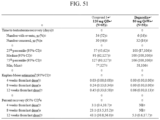
- Compound 1 is that, as shown in Example 9 and FIGS. 50 and 53 , 43% of subjects achieve pre-treatment serum testosterone levels or a serum testosterone level at or above 280 ng/dL by 12 weeks verus only 5.3% with degarelix.
- the disclosure provides methods and uses for treating prostate cancer in a subject in need thereof comprising administering, once-daily, formulations comprising Compound 1, or a pharmaceutically acceptable salt thereof.
- Subjects treated once-daily with oral formulations comprising Compound 1, or a pharmaceutically acceptable salt thereof experience an increase in serum testosterone levels after the last dose of the formulation comprising Compound 1, or a pharmaceutically acceptable salt thereof.
- the disclosure provides methods of using oral formulations comprising Compound 1, or a pharmaceutically acceptable salt thereof, for treating prostate cancer in a subject in need of an increase in serum testosterone levels to a level above 50 ng/dL.
- formulations comprising Compound 1, or a pharmaceutically acceptable salt thereof can be suspended for a suspension period, leading to an increase in the subject's serum testosterone levels shortly after the beginning of the suspension period.
- serum testosterone levels will increase within 1 week of beginning a suspension period.
- An increase in a subject's serum testosterone level can be very beneficial for subjects experiencing an intercurrent illness, receiving radiation therapy, while bedridden, having suffered an injury, having a surgical procedure or other invasive procedure, or a desire for a period of restored sexual function (e.g., 25 th wedding anniversary).
- Higher serum testosterone levels can be beneficial in such subjects because testosterone has an anabolic effect, helping to rebuild tissues, increase weight and muscle mass, and promote growth and mineralization of bone.
- Treatment can also be suspended to improve the subject's quality of life and energy levels; to help with healing after injury, illness, surgery, or radiation therapy; to aid subjects in remaining in control of their lifestyles; and to assist in regaining strength and mobility after intercurrent illness.
- serum testosterone levels reach the subject's serum testosterone level prior to treatment commencing
- the benefit of increased serum testosterone compared to a medical castration level may be important in a subject's recovery from, for example, surgery, such as knee replacement or hip surgery (whether planned or unplanned).
- the contribution of testosterone to rebuilding tissue and increasing muscle mass can be a factor for successful post-surgery physical therapy and regaining range of movement, mobility and strength.
- Once-daily administration of oral formulations comprising Compound 1, or a pharmaceutically acceptable salt thereof can resume at the end of the suspension period.
- once-daily administration of oral formulations comprising Compound 1, or a pharmaceutically acceptable salt thereof does not necessarily resume after suspension of once-daily administration, for example, if prostate-specific antigen (PSA) levels remain at an acceptable level during the suspension period.
- PSA prostate-specific antigen
- serum testosterone levels typically fall to at or below medical castration levels within about 4 to about 8 days of first administering once-daily an oral formulation of the disclosure. This is in contrast with leuprolide and other GnRH agonists. If a subject stops and restarts treatment with leuprolide, or other GnRH agonists, it may take up to one month to observe a decrease in the subject's serum testosterone levels. Furthermore, the maximum decline in PSA, or PSA nadir, occurs more rapidly with once-daily administration of Compound 1, or a pharmaceutically acceptable salt thereof, than with GnRH agonists.
- the present methods and uses allow for suspension of treatment by stopping the once-daily administration of the oral formulations, leading to an immediate rise in serum testosterone levels, without adverse effects in response to unexpected events. Additionally, where upcoming surgeries may be planned, for example a hip or knee replacement, the treatment can be suspended either shortly prior to or at the time of surgery to ensure optimal recovery of the patient after surgery and potentially better outcomes due to higher levels of the anabolic hormone testosterone.
- the methods and uses disclosed herein may allow for resumption of once-daily administration of Compound 1, or a pharmaceutically acceptable salt thereof, during the post-operative recovery stage if a subject's prostate cancer begins to worsen or spread.
- serum testosterone levels typically fall to at or below medical castration levels within about 4 to about 8 days of first administering once-daily an oral formulation of the disclosure.
- the intermittent therapy allowed by the methods, uses, and formulations of this disclosure may prevent the change from hormone dependent to androgen independent prostate cancer. Androgen independence may be an intrinsic, but dormant, property of some prostate cancer cells that is activated in response to androgen deprivation.
- the Compound 1, or a pharmaceutically acceptable salt thereof, intermittent therapy disclosed herein could be dosed so that a complete and continuous androgen deprivation does not happen, possibly preventing androgen independence.
- Compound 1, or a pharmaceutically acceptable salt thereof can allow fluctuations back and forth (many peaks and valleys) with testosterone.
- Intermittent treatment may refer to on-again, off-again treatment or a "drug holiday.”
- An example of intermittent treatment is stopping once-daily administration of oral formulations of the disclosure once the PSA drops to a very low level and if the PSA level begins to rise, restarting once-daily administration.
- Another form of intermittent therapy using the claimed methods and uses may employ therapy for fixed periods of time, for example, 6 months on followed by 6 months off.
- Compound 1, or a pharmaceutically acceptable salt thereof has a faster onset of action than currently available GnRH agonists, and unlike available peptide GnRH agonists that are given either subcutaneously or intranasally, Compound 1 is a non-peptide preparation that may be administered orally and once-daily.
- GnRH agonists such as leuprolide acetate
- Compound 1, or a pharmaceutically acceptable salt thereof offers several advantages. Such advantages may include, but are not limited to, oral administration, rapid onset of serum testosterone suppression within four days, rapid onset of serum FSH suppression, rapid PSA depression, absence of clinical flare, no need for anti-androgen therapy to protect the patient from clinical flare symptoms.
- the ability to suspend treatment for periods of time can lead to an increase in serum testosterone levels shortly after treatment is suspended and may also return serum testosterone to the subject's serum testosterone level prior to treatment commencing after treatment is suspended, depending on the suspension period, and each of these outcomes may quickly result in improvements in quality of life, healing, and energy levels.
- Compound 1, or a pharmaceutically acceptable salt thereof also offers advantages over other GnRH antagonists.
- hormone levels such as serum testosterone levels
- a GnRH antagonist depot formulation such as degarelix
- the option of increased serum testosterone levels, including a return to the subject's serum testosterone level prior to treatment commencing, is desirable for patients wanting to eliminate any unwanted effects of hormone suppression.
- the more rapid return of hormonal levels to the subject's serum hormone levels prior to treatment commencing is also advantageous in the restoration of energy levels and strength in men, for example, for the reasons such as described above.
- oral formulations comprising Compound 1, or a pharmaceutically acceptable salt thereof, for the manufacture of a medicament for treatment according to any of methods described herein.
- oral formulations comprising Compound 1, or a pharmaceutically acceptable salt thereof, for use in any of the methods described herein.
- Compound 1 namely N-(4-(1-(2,6-difluorobenzyl)-5-((dimethylamino)methyl)-3-(6-methoxy-3-pyridazinyl)-2,4-dioxo-1,2,3,4-tetrahydrothieno[2,3-d]pyrimidin-6-yl)phenyl)-N'-methoxyurea, is represented by the formula:
- Compound 1 and pharmaceutical compositions including Compound 1 can be produced by methods described in U.S. Patent 7,300,935 , U.S. Patent No. 8,058,280 , U.S. Patent No. 9,346,822 , U.S. Patent No. 9,758,528 , U.S. Patent 8,735,401 , and WO 2016136849 .
- Compound 1 is a pharmaceutically acceptable salt.
- “Physiologically acceptable,” “pharmaceutically acceptable,” or “pharmacologically acceptable” compounds and compositions may include materials which are not biologically, or otherwise, undesirable. For example, the material may be administered to an individual without causing any substantially undesirable biological effects or interacting in a deleterious manner with any of the components of the composition in which it is contained.
- the pharmaceutically acceptable salt of Compound 1 is a pharmaceutically acceptable acid addition salt.
- Such salts include, but are not limited to, salts with inorganic acids (e.g., hydrochloric acid, hydrobromic acid, nitric acid, sulfuric acid, phosphoric acid, and the like), and salts with organic acids (e.g., formic acid, acetic acid, trifluoroacetic acid, fumaric acid, oxalic acid, tartaric acid, maleic acid, citric acid, succinic acid, malic acid, methanesulfonic acid, benzenesulfonic acid, p-toluenesulfonic acid, and the like).
- inorganic acids e.g., hydrochloric acid, hydrobromic acid, nitric acid, sulfuric acid, phosphoric acid, and the like
- organic acids e.g., formic acid, acetic acid, trifluoroacetic acid, fumaric acid, oxalic acid, tartaric acid, maleic acid, citric acid, succinic acid, malic
- amounts of Compound 1 disclosed refer to the amount of Compound 1 free form present in the formulation.
- the term "corresponding amount” as used herein refers to the amount of a pharmaceutically acceptable salt of Compound 1 required to obtain the amount of Compound 1 free form recited in the formulation. It would be clear to one of skill in the art how to calculate the "corresponding amount" of the salt of a compound, such as the corresponding amount of the pharmaceutically acceptable salt of Compound 1, taking into account the difference in molecular weight between the free form of a compound and a salt form. For example, 80.0 mg of compound free base, would correspond to 84.7 mg of the HCl salt.
- Compound 1 has been characterized as an orally active, nonpeptide, GnRH antagonist.
- Compound 1 has been shown to antagonize GnRH through the GnRH receptors, which are present in the pituitary anterior lobe basophiles (secretory cells), and inhibits the GnRH-stimulated secretion of LH and FSH from these cells.
- the drug decreases blood concentrations of hormones, including testosterone.
- Compound 1, or a pharmaceutically acceptable salt thereof improves clinical symptoms observed in patients with prostate cancer.
- Administration of oral formulations comprising Compound 1, or a pharmaceutically acceptable salt thereof also causes a rapid decline in serum PSA levels.
- Compound 1 is a GnRH antagonist, it does not cause clinical flare and has a faster onset of action than GnRH agonists. Unlike GnRH agonists, Compound 1 is not a peptide preparation.
- Prostate cancer may capture any cancer of the prostate, such as those described herein. Most prostate cancer is adenocarcinoma, but rarely can also include transitional cell (urothelial) cancer, squamous cell, small cell, carcinoid, or sarcomas. Prostate cancer can spread beyond the prostate (e.g., advanced prostate cancer) or it can be non-metastatic. “Non-metastatic prostate cancer” may refer to prostate cancer that has not spread from the primary site of the prostate and may be hormone-sensitive.
- Hormonal therapy is used to reduce the serum testosterone levels in prostate cancer. Hormonal therapy can also be used to reduce the serum PSA and FSH levels in prostate cancer.
- a "patient” or a “subject” may refer to a mammal or a non-mammal. Examples of mammals include, but are not limited to, any member of the class Mammalia: humans, non-human primates such as chimpanzees, and other apes and monkey species; farm animals such as cattle, horses, sheep, goats, swine; domestic animals such as rabbits, dogs, and cats; laboratory animals including rodents, such as rats, mice and guinea pigs, and the like. Examples of non-mammals include, but are not limited to, birds, fish and the like.
- the mammal is a human.
- the patient or subject is a human man.
- the prostate cancer is hormone dependent prostate cancer.
- “Hormone dependent prostate cancer,” “hormone sensitive prostate cancer,” “androgen dependent prostate cancer,” or “androgen sensitive prostate cancer” may refer to prostate cancer needing relatively high levels of androgens to grow early in its development. Such prostate cancer may be referred to as androgen/hormone dependent or androgen/hormone sensitive because treatments that decrease androgen levels or block androgen activity can effectively inhibit its growth.
- the prostate cancer is advanced prostate cancer.
- Prostate cancer is typically considered “advanced” if it has spread beyond the prostate gland and the area around the prostate. It may spread to nearby tissues, lymph nodes, bones, or other parts of the body. When it spreads to tissues directly adjacent to the prostate gland, it is often referred to as "locally advanced prostate cancer.” When it spreads beyond the tissues directly adjacent to the prostate gland, it is typically referred to as “metastatic prostate cancer.” Metastatic prostate cancer typically may have spread to the bone, lung, liver, brain, lymph nodes outside the pelvis, or other organs, and may be hormone-sensitive.
- prostate cancer PSA biochemical relapse following primary surgical or radiation therapy of curative intent; newly diagnosed metastatic prostate cancer; advanced localized disease for which immediate radiation or surgical therapy is not indicated, or men whose disease progresses after prostatectomy or radiation.
- the clinical recurrence of advanced prostate cancer occurs when it is associated with symptoms. Therefore, "advanced" prostate cancer may be present with or without evidence on diagnostic imaging tests and with or without clinical symptoms.
- the treatment methods and uses of this disclosure include palliative treatment of advanced prostate cancer.
- the prostate cancer is advanced hormone sensitive prostate cancer.
- Advanced hormone dependent prostate cancer “advanced hormone sensitive prostate cancer,” “advanced androgen dependent prostate cancer,” or “advanced androgen sensitive prostate cancer” as used herein may refer to prostate cancer that has spread beyond the prostate gland and the area around the prostate. The growth of prostate cancer is suppressed or the cancer may even shrink when androgen levels are suppressed (e.g., hormonal therapy that lowers serum testosterone below castration levels ⁇ 50 ng/dL).
- the prostate cancer is locally advanced, advanced castration resistant, or recurrent.
- “Locally advanced prostate cancer” may refer to cancer that has started to break out of the prostate, or has spread to the area just outside, or nearby, the prostate. It may also be characterized as stage T3 or T4 prostate cancer. It may have spread to one or more of e.g., the prostate capsule, the seminal vesicles, the pelvic lymph nodes, the bladder, and the back passage (rectum).
- Advanced castration-resistant prostate cancer or “advanced hormone-resistant prostate cancer” may refer to castration-resistant prostate cancer that has spread beyond the prostate gland and the area around the prostate.
- Recurrent prostate cancer may refer to prostate cancer that has been detected or has returned following initial treatment, such as after surgery, radiation therapy, and/or hormone therapy. Recurrent prostate cancer may have a biochemical and/or clinical recurrence. Some patients may only have a rise in PSA level as evidence of the recurrent prostate cancer (biochemical recurrence) and others will have evidence of recurrent prostate cancer on x-rays and scans (clinical recurrence). "Biochemical recurrence” may refer to the return of the prostate cancer after initial treatment, but the return cannot be measured by standard imaging methods.
- prostate cancer may be present with or without evidence on diagnostic imaging tests and with or without clinical symptoms.
- the return of the prostate cancer is identified by a rise in PSA as determined by a blood test.
- the criteria for is biochemical recurrence may include a rise in PSA of "nadir + 2 ng/mL" for relapse after radiation therapy, > 0.2 ng/mL if recurrent after prostatectomy, and > 2 ng/mL if recurrent after all other treatments.
- “Clinical recurrence” may refer to the return of clinical symptoms associated with growth or spread of prostate cancer after initial treatment of prostate cancer.
- the prostate cancer is castration-resistant prostate cancer. In some embodiments of the methods and uses described herein, the prostate cancer is castration-resistant metastatic prostate cancer. In some embodiments of the methods and uses described herein, the prostate cancer is castration-resistant non-metastatic prostate cancer.
- Basation-resistant prostate cancer or “hormone-resistant prostate cancer” may refer to prostate cancer that continues to grow even when androgen levels in the body are extremely low or undetectable. For example, with castration-resistant prostate cancer, PSA may increase or the cancer may show other signs of growing even after using hormone therapy to bring serum testosterone to castration levels ( ⁇ 50 ng/dL).
- Castration-resistant prostate cancer For castration-resistant prostate cancer, hormonal therapy (e.g., suppression of serum testosterone levels) is continued, and additional therapies are added to the treatment protocol in addition to the continued administration of drugs used to lower serum testosterone.
- Castration-resistant prostate cancer may be either metastatic (castration-resistant metastatic prostate cancer) or non-metastatic (castration-resistant non-metastatic prostate cancer) prostate cancer.
- Metalstatic castration resistant prostate cancer or “castration-resistant metastatic prostate cancer” may refer to prostate cancer that has spread beyond the prostate and continues to grow and progress (including but not limited to a rise in PSA) in the setting of suppressed androgen levels (i.e., hormonal therapy that lowers serum testosterone below castration levels ⁇ 50 ng/dL).
- once-daily administration of an oral formulation comprising Compound 1, or a pharmaceutically acceptable salt thereof reduces serum FSH levels and, therefore, may reduce the rate of subjects who develop castration-resistant prostate cancer. In some embodiments, once-daily administration of an oral formulation comprising Compound 1, or a pharmaceutically acceptable salt thereof, reduces serum FSH levels and, therefore, may slow the development of castration-resistant prostate cancer.
- the prostate cancer is hormone-sensitive metastatic prostate cancer. In some embodiments of the methods and uses described herein, the prostate cancer is hormone-sensitive non-metastatic prostate cancer.
- the prostate cancer is hormone naive advanced prostate cancer.
- "Hormone naive advanced prostate cancer” may be subdivided into two disease states: biochemical recurrence or traditional metastatic prostate cancer and may be characterized by no prior hormonal therapy or androgen deprivation therapy (ADT).
- ADT androgen deprivation therapy
- oral formulation encompasses the terms “oral load dose formulation,” “oral load dosage,” “oral load dose,” “oral maintenance dose formulation,” “oral maintenance dosage,” and the like, unless clearly dictated otherwise by context.
- An “oral load dose formulation,” “oral load dosage,” or “oral load dose” is an initial dose of a Compound 1, or a pharmaceutically acceptable salt thereof, that may be given at the beginning of a course of treatment before changing to a different maintenance dose. As described herein, it is typically a larger initial dose of Compound 1, or a pharmaceutically acceptable salt thereof, or series of such doses given to rapidly achieve a therapeutically effective amount of drug in the body.
- a “therapeutically effective amount” may refer to an amount of a compound sufficient to treat a specified disorder or disease or one or more of its symptoms and/or to prevent the occurrence of the disease or disorder.
- a therapeutically effective dose for prostate cancer treatment includes where the treatment brings about an amelioration of one or more symptoms of the prostate cancer, slows the progression of the prostate cancer, results in remission, etc.
- An "oral maintenance dose formulation,” “oral maintenance dosage,” or “oral maintenance dose” is the dose of Compound 1, or a pharmaceutically acceptable salt thereof, given after a certain period of taking the load dosage and is typically a lower amount of Compound 1, or a pharmaceutically acceptable salt thereof, than the load dosage yet maintains the desired therapeutic effect.
- the oral formulations of the methods and uses described herein comprise about 120 mg of Compound 1, or a corresponding amount of a pharmaceutically acceptable salt thereof. In some embodiments, the oral formulations of the methods and uses described herein comprise about 360 mg of Compound 1, or a corresponding amount of a pharmaceutically acceptable salt thereof.
- the oral formulation comprises about 120 mg or about 360 mg of Compound 1, or a corresponding amount of a pharmaceutically acceptable salt thereof.
- the methods and uses described herein also include treating prostate cancer in a subject in need thereof by administering to the subject once-daily for at least 4 consecutive weeks, at least 8 consecutive weeks, at least 12 consecutive weeks, at least 16 consecutive weeks, at least 20 consecutive weeks, or at least 24 consecutive weeks an oral formulation comprising about 120 mg or about 360 mg of Compound 1, or a corresponding amount of a pharmaceutically acceptable salt thereof.
- sex hormones may result from treating prostate cancer by administering Compound 1, or a pharmaceutically acceptable salt thereof, thereby suppressing one or more sex hormones, to a subject in need of treatment as described herein.
- "Suppression” as used herein may occur by inhibiting the production of luteinizing hormone (LH) and follicle-stimulating hormone (FSH) by the pituitary gland, a hormone required by the testes to make testosterone and other androgens or sex hormones.
- Follicle-stimulating hormone (FSH) stimulates FSH receptors expressed on the endothelial cells of tumor blood vessels in prostate cancer specimens.
- FSH signaling in prostate cancer may contribute to the progression of castration resistant prostate cancer.
- Suppression of serum testosterone levels may mean that the testes are not producing testosterone at the levels normally observed in the absence of treatment for an oral formulation comprising Compound 1, or a pharmaceutically acceptable salt thereof.
- the degree of suppression is measured by serum testosterone, or other sex hormone, levels in the blood.
- Sex hormones may refer to any glandular secretions that are responsible for controlling sexual development and reproductive function in males.
- sex hormones include, for example, testosterone, dihydrotestosterone, follicle-stimulating hormone (FSH), LH, GnRH, androsterone, and inhibin.
- one or more sex hormones may be suppressed by the once-daily administration of Compound 1, or a pharmaceutically acceptable salt thereof, to a subject having prostate cancer.
- medical castration levels of less than or equal to 50 ng/dL (1.73 nmol/L) serum testosterone may be achieved and maintained from day 14 to day 28 after beginning once-daily administration.
- medical castration levels of less than or equal to 50 ng/dL (1.73 nmol/L) serum testosterone may be achieved within 24 to 48 hours.
- medical castration levels of less than or equal to 50 ng/dL (1.73 nmol/L) serum testosterone are achieved by the beginning of week 5 and maintained through the end of week 48.
- “medical castration” generally refers to serum testosterone levels of about ⁇ 50 ng/dL and “profound castration” generally refers to serum testosterone levels of about ⁇ 20 ng/dL.
- methods and uses are provided for suppressing one or more sex hormones, including testosterone, LH, and FSH, in a subject having prostate cancer. Additionally, in accordance with this disclosure, methods and uses are provided for suppressing serum PSA levels.
- the methods and uses include: administering to the subject once-daily for at least one day, an oral dosage form that includes at least one oral load dose formulation, wherein the oral load dose formulation comprises 360 mg of Compound 1, or a corresponding amount of a pharmaceutically acceptable salt thereof; and administering once-daily to the subject for at least 4 consecutive weeks, at least 8 consecutive weeks, at least 12 consecutive weeks, at least 16 consecutive weeks, at least 20 consecutive weeks, or at least 24 consecutive weeks, an oral maintenance dose formulation, in which the oral maintenance dose formulation comprise about 120 mg of Compound 1, or a corresponding amount of a pharmaceutically acceptable salt thereof.
- serum testosterone may be suppressed in the subject to a level less than or equal to 50 ng/dL (1.73 nmol/L) or less than or equal to 20 ng/dL (0.69 nmol/L).
- a single oral load dose formulation of 360 mg and oral maintenance dose formulations of 120 mg of Compound 1, or a corresponding amount of a pharmaceutically acceptable salt thereof, for 48 consecutive weeks medical castration levels of less than or equal to 50 ng/dL (1.73 nmol/L) serum testosterone may be achieved by the beginning of week 5 and maintained through the end of week 48.
- the treatment methods and uses of this disclosure may provide fast onset and fast offset for subjects.
- offset unlike GnRH agonists, such as leuprolide acetate, Compound 1, or a pharmaceutically acceptable salt thereof, is neither a depot or a slow-release formulation, and hormone levels, particularly serum testosterone levels, increase and may return to the subject's serum hormone levels prior to treatment commencing more rapidly after once-daily administration is discontinued, providing more control and treatment options for patients and their physicians.
- hormone levels particularly serum testosterone levels
- increases in serum testosterone levels in some cases to the subject's serum hormone levels prior to treatment commencing (pre-treatment levels)
- pre-treatment levels may be advantageous in the management of an intercurrent illness, among other conditions and procedures, and for the restoration of sexual function and energy levels in men.
- Methods and uses described herein may permit more rapid recovery from short-term medical castration, when used for neoadjuvant/adjuvant therapy or intermittent ADT.
- this flexibility is important in both the treatment setting, for example, where a subject may be receiving radiation treatment or where there is the occurrence of a condition or procedure unrelated to the prostate cancer treatment.
- a subject undergoing prostate cancer treatment who is involved in a car accident. Whether or not a surgical procedure is required to aid in recovery from the car accident, higher serum testosterone levels will aid in the subject's recovery because testosterone has an anabolic effect, helping to rebuild tissues and increase weight and muscle mass.
- the present methods and uses allow for suspension of treatment without adverse effects in response to unexpected events (e.g., illness, injury, etc.). Additionally, where upcoming surgeries may be planned, for example a hip or knee replacement, the treatment may be suspended either shortly prior to or at the time of surgery to ensure optimal recovery of the patient after surgery and potentially better outcomes due to higher serum testosterone levels.
- unexpected events e.g., illness, injury, etc.
- the treatment may be suspended either shortly prior to or at the time of surgery to ensure optimal recovery of the patient after surgery and potentially better outcomes due to higher serum testosterone levels.
- Subjects undergoing treatment in accordance with this disclosure may be able to remain in control of their lifestyle and quality of life.
- treatment with formulations of this disclosure allows for suspension periods, or intermittent treatment, in which subjects can stop treatment for a period of time and later restart treatment with no adverse effects, including no incidence of clinical flare.
- "Clinical” or “hormonal flare” may refer to a temporary increase in serum testosterone levels from complete serum testosterone suppression levels in the body caused by certain types of hormone therapy (e.g., androgen deprivation therapy) used to treat prostate cancer.
- Clinical flare can be serious in nature, for example, causing exacerbation of bone pain and urinary problems.
- the treatment methods and uses of this disclosure may provide a desirable quick on/off option for subjects.
- the treatment methods and uses of this disclosure allow maintenance of sexual activity by subjects at certain times during the treatment period. Increases in serum testosterone levels can also promote an increase in energy levels, which may have a positive impact on the subject's (and the subject's family's) quality of life. For example, for important life events (e.g., attending one's daughter's wedding, walking her down the aisle, and dancing with the mother of the bride or celebrating an important wedding anniversary), the present methods and uses can incorporate suspension period allowing for increased energy levels or improvement in sexual function and therefore greater enjoyment of such events, without the potential adverse impact on the control of the prostate cancer related to the clinical flare associated with restarting treatment after the suspension period.
- important life events e.g., attending one's daughter's wedding, walking her down the aisle, and dancing with the mother of the bride or celebrating an important wedding anniversary
- the disclosure provides methods of using oral formulations comprising Compound 1, or a pharmaceutically acceptable salt thereof, for treating prostate cancer in a subject in need of an increase in serum testosterone levels to a level above 50 ng/dL.
- the disclosure also provides methods and uses for treating prostate cancer in a subject in need thereof comprising administering once-daily formulations comprising Compound 1, or a pharmaceutically acceptable salt thereof.
- Once-daily administration of formulations comprising Compound 1, or a pharmaceutically acceptable salt thereof can be suspended for a suspension period, leading to an increase in the subject's serum testosterone levels.
- once-daily administration of oral formulations comprising Compound 1, or a pharmaceutically acceptable salt thereof resumes at the end of the suspension period.
- once-daily administration of oral formulations comprising Compound 1, or a pharmaceutically acceptable salt thereof does not resume after it is suspended.
- the present disclosure further provides that, after suspending once-daily administration of oral formulations of the disclosure for a suspension period, the subject may experience an increase in serum testosterone levels.
- a subject's serum testosterone level may increase within 1 day of the beginning of the suspension period.
- a subject's serum testosterone level may increase within 2 days of the beginning of the suspension period.
- a subject's serum testosterone level may increase within 3 days of the beginning of the suspension period.
- a subject's serum testosterone level may increase within 4 days of the beginning of the suspension period. In some embodiments after stopping once-daily administration of oral formulations of the disclosure for a suspension period, a subject's serum testosterone level may increase within 5 days of the beginning of the suspension period. In some embodiments after stopping once-daily administration of oral formulations of the disclosure for a suspension period, a subject's serum testosterone level may increase within 6 days of the beginning of the suspension period. In some embodiments after stopping once-daily administration of oral formulations of the disclosure for a suspension period, a subject's serum testosterone level may increase within 7 days of the beginning of the suspension period. In some embodiments after stopping once-daily administration of oral formulations of the disclosure for a suspension period, a subject's serum testosterone level may increase within 10 days of the beginning of the suspension period.
- a subject's serum testosterone level may increase to the subject's serum testosterone level prior to once-daily administration of an oral formulation of the disclosure comprising Compound 1, or a pharmaceutically acceptable salt thereof.
- the serum testosterone level may increase to the subject's serum testosterone level prior to administration of the oral formulation of the disclosure within 4 weeks, or within 8 weeks, or within 12 weeks, or within 16 weeks, or within 24 weeks, after the last dose administered prior to the suspension period.
- the serum testosterone level may increase to the subject's serum testosterone level prior to once-daily administration of the oral formulation of the disclosure within 4 weeks to 12 weeks after the last dose.
- the serum testosterone level may increase to the subject's serum testosterone level prior to administration of the oral formulations comprising Compound 1, or a pharmaceutically acceptable salt thereof, within 1 day of the suspension of administration. In some embodiments after stopping once-daily administration of oral formulations of the disclosure for a suspension period, the serum testosterone level may increase to the subject's serum testosterone level prior to administration of the oral formulations within 2 days of the suspension of administration. In some embodiments after stopping once-daily administration of oral formulations of the disclosure for a suspension period, the serum testosterone level may increase to the subject's serum testosterone level prior to administration of the oral formulations of the disclosure within 3 days of the suspension of administration.
- the serum testosterone level may increase to the subject's serum testosterone level prior to administration of the oral formulations of the disclosure within 4 days of the suspension of administration. In some embodiments after stopping once-daily administration of oral formulations of the disclosure for a suspension period, the serum testosterone level may increase to the subject's serum testosterone level prior to administration of the oral formulations of the disclosure within 5 days of the suspension of administration. In some embodiments after stopping once-daily administration of oral formulations of the disclosure for a suspension period, the serum testosterone level may increase to the subject's serum testosterone level prior to administration of the oral formulations of the disclosure within 6 days of the suspension of administration.
- the serum testosterone level may increase to the subject's serum testosterone level prior to administration of the oral formulations of the disclosure within 7 days of the suspension of administration. In some embodiments after stopping once-daily administration of oral formulations of the disclosure for a suspension period, the serum testosterone level may increase to the subject's serum testosterone level prior to administration of the oral formulations of the disclosure within 8 days of the suspension of administration. In some embodiments after stopping once-daily administration of oral formulations of the disclosure for a suspension period, the serum testosterone level may increase to the subject's serum testosterone level prior to administration of the oral formulations of the disclosure within 9 days of the suspension of administration.
- the serum testosterone level may increase to the subject's serum testosterone level prior to administration of the oral formulations of the disclosure within 10 days of the suspension of administration. In some embodiments after stopping once-daily administration of oral formulations of the disclosure for a suspension period, the serum testosterone level may increase to the subject's serum testosterone level prior to administration of the oral formulations of the disclosure within 15 days of the suspension of administration. In some embodiments after stopping once-daily administration of oral formulations of the disclosure for a suspension period, the serum testosterone level may increase to the subject's serum testosterone level prior to administration of the oral formulations of the disclosure within 20 days of the suspension of administration.
- the serum testosterone level may increase to the subject's serum testosterone level prior to administration of the oral formulations of the disclosure within 30 days of the suspension of administration. In some embodiments after stopping once-daily administration of oral formulations of the disclosure for a suspension period, the serum testosterone level may increase to the subject's serum testosterone level prior to administration of the oral formulations of the disclosure within 35 days of the suspension of administration. In some embodiments after stopping once-daily administration of oral formulations of the disclosure for a suspension period, the serum testosterone level may increase to the subject's serum testosterone level prior to administration of the oral formulations of the disclosure within 40 days of the suspension of administration.
- the serum testosterone level may increase to the subject's serum testosterone level prior to administration of the oral formulations of the disclosure within 45 days of the suspension of administration. In some embodiments after stopping once-daily administration of oral formulations of the disclosure for a suspension period, the serum testosterone level may increase to the subject's serum testosterone level prior to administration of the oral formulations of the disclosure within 50 days of the suspension of administration. In some embodiments after stopping once-daily administration of oral formulations of the disclosure for a suspension period, the serum testosterone level may increase to the subject's serum testosterone level prior to administration of the oral formulations of the disclosure within 55 days of the suspension of administration.
- the serum testosterone level may increase to the subject's serum testosterone level prior to administration of the oral formulations of the disclosure within 60 days of the suspension of administration. In some embodiments after stopping once-daily administration of oral formulations of the disclosure for a suspension period, the serum testosterone level may increase to the subject's serum testosterone level prior to administration of the oral formulations of the disclosure within 65 days of the suspension of administration. In some embodiments after stopping once-daily administration of oral formulations of the disclosure for a suspension period, the serum testosterone level may increase to the subject's serum testosterone level prior to administration of the oral formulations of the disclosure within 70 days of the suspension of administration.
- the serum testosterone level may increase to the subject's serum testosterone level prior to administration of the oral formulations of the disclosure within 75 days of the suspension of administration. In some embodiments after stopping once-daily administration of oral formulations of the disclosure for a suspension period, the serum testosterone level may increase to the subject's serum testosterone level prior to administration of the oral formulations of the disclosure within 80 days of the suspension of administration. In some embodiments after stopping once-daily administration of oral formulations of the disclosure for a suspension period, the serum testosterone level may increase to the subject's serum testosterone level prior to administration of the oral formulations of the disclosure within 85 days of the suspension of administration.
- the serum testosterone level may increase to the subject's serum testosterone level prior to administration of the oral formulations of the disclosure within 90 days of the suspension of administration. In some embodiments after stopping once-daily administration of oral formulations of the disclosure for a suspension period, the serum testosterone level may increase to the subject's serum testosterone level prior to administration of the oral formulations of the disclosure within 95 days of the suspension of administration. In some embodiments after stopping once-daily administration of oral formulations of the disclosure for a suspension period, the serum testosterone level may increase to the subject's serum testosterone level prior to administration of the oral formulations of the disclosure within 100 days of the suspension of administration.
- the disclosure provides for increases in a subject's serum testosterone level to greater than medical castration levels.
- a subject's serum testosterone level may increase to greater than medical castration levels within 1 day of the beginning of the suspension period.
- a subject's serum testosterone level may increase to greater than medical castration levels within 2 days of the beginning of the suspension period.
- a subject's serum testosterone level may increase to greater than medical castration levels within 3 days of the beginning of the suspension period. In some embodiments after stopping once-daily administration of oral formulations of the disclosure for a suspension period, a subject's serum testosterone level may increase to greater than medical castration levels within 4 days of the beginning of the suspension period. In some embodiments after stopping once-daily administration of oral formulations of the disclosure for a suspension period, a subject's serum testosterone level may increase to greater than medical castration levels within 5 days of the beginning of the suspension period.
- a subject's serum testosterone level may increase to greater than medical castration levels within 6 days of the beginning of the suspension period. In some embodiments after stopping once-daily administration of oral formulations of the disclosure for a suspension period, a subject's serum testosterone level may increase to greater than medical castration levels within 7 days of the beginning of the suspension period. In some embodiments after stopping once-daily administration of oral formulations of the disclosure for a suspension period, a subject's serum testosterone level may increase to greater than medical castration levels within 10 days of the beginning of the suspension period.
- a subject's serum testosterone level may increase to greater than medical castration levels within 15 days of the beginning of the suspension period. In some embodiments after stopping once-daily administration of oral formulations of the disclosure for a suspension period, a subject's serum testosterone level may increase to greater than medical castration levels within 20 days of the beginning of the suspension period. In some embodiments after stopping once-daily administration of oral formulations of the disclosure for a suspension period, a subject's serum testosterone level may increase to greater than medical castration levels within 25 days of the beginning of the suspension period. In some embodiments after stopping once-daily administration of oral formulations of the disclosure for a suspension period, a subject's serum testosterone level may increase to greater than medical castration levels within 30 days of the beginning of the suspension period.
- a subject's serum testosterone level may increase to greater than about 55 ng/dL within 1 day of the beginning of the suspension period. In some embodiments after stopping once-daily administration of oral formulations of the disclosure for a suspension period, a subject's serum testosterone level may increase to greater than about 55 ng/dL within 2 days of the beginning of the suspension period. In some embodiments after stopping once-daily administration of oral formulations of the disclosure for a suspension period, a subject's serum testosterone level may increase to greater than about 55 ng/dL within 3 days of the beginning of the suspension period.
- a subject's serum testosterone level may increase to greater than about 55 ng/dL within 4 days of the beginning of the suspension period. In some embodiments after stopping once-daily administration of oral formulations of the disclosure for a suspension period, a subject's serum testosterone level may increase to greater than about 55 ng/dL within 5 days of the beginning of the suspension period. In some embodiments after stopping once-daily administration of oral formulations of the disclosure for a suspension period, a subject's serum testosterone level may increase to greater than about 55 ng/dL within 6 days of the beginning of the suspension period.
- a subject's serum testosterone level may increase to greater than about 55 ng/dL within 7 days of the beginning of the suspension period. In some embodiments after stopping once-daily administration of oral formulations of the disclosure for a suspension period, a subject's serum testosterone level may increase to greater than about 55 ng/dL within 10 days of the beginning of the suspension period. In some embodiments after stopping once-daily administration of oral formulations of the disclosure for a suspension period, a subject's serum testosterone level may increase to greater than about 55 ng/dL within 15 days of the beginning of the suspension period.
- a subject's serum testosterone level may increase to greater than about 55 ng/dL within 20 days of the beginning of the suspension period. In some embodiments after stopping once-daily administration of oral formulations of the disclosure for a suspension period, a subject's serum testosterone level may increase to greater than about 55 ng/dL within 25 days of the beginning of the suspension period. In some embodiments after stopping once-daily administration of oral formulations of the disclosure for a suspension period, a subject's serum testosterone level may increase to greater than about 55 ng/dL within 30 days of the beginning of the suspension period.
- a subject's serum testosterone level may increase to greater than or about 60 ng/dL, about 65 ng/dL, about 70 ng/dL, about 75 ng/dL, about 80 ng/dL, about 85 ng/dL, about 90 ng/dL, about 95 ng/dL, about 100 ng/dL, about 150 ng/dL, about 200 ng/dL, about 250 ng/dL, about 280 ng/dL, about 300 ng/dL, about 350 ng/dL, about 400 ng/dL, about 450 ng/dL, about 500 ng/
- a subject's serum testosterone level may increase to greater than or about 60 ng/dL, about 65 ng/dL, about 70 ng/dL, about 75 ng/dL, about 80 ng/dL, about 85 ng/dL, about 90 ng/dL, about 95 ng/dL, about 100 ng/dL, about 150 ng/dL, about 200 ng/dL, about 250 ng/dL, about 280 ng/dL, about 300 ng/dL, about 350 ng/dL, about 400 ng/dL, about 450 ng/dL, about 500 ng/dL, about 550 ng/dL, or about 600 ng/dL within 2 days of the beginning of the suspension period.
- a subject's serum testosterone level may increase to greater than or about 60 ng/dL, about 65 ng/dL, about 70 ng/dL, about 75 ng/dL, about 80 ng/dL, about 85 ng/dL, about 90 ng/dL, about 95 ng/dL, about 100 ng/dL, about 150 ng/dL, about 200 ng/dL, about 250 ng/dL, about 280 ng/dL, about 300 ng/dL, about 350 ng/dL, about 400 ng/dL, about 450 ng/dL, about 500 ng/dL, about 550 ng/dL, or about 600 ng/dL within 3 days of the beginning of the suspension period.
- a subject's serum testosterone level may increase to greater than or about 60 ng/dL, about 65 ng/dL, about 70 ng/dL, about 75 ng/dL, about 80 ng/dL, about 85 ng/dL, about 90 ng/dL, about 95 ng/dL, about 100 ng/dL, about 150 ng/dL, about 200 ng/dL, about 250 ng/dL, about 280 ng/dL, about 300 ng/dL, about 350 ng/dL, about 400 ng/dL, about 450 ng/dL, about 500 ng/dL, about 550 ng/dL, or about 600 ng/dL within 4 days of the beginning of the suspension period.
- a subject's serum testosterone level may increase to greater than or about 60 ng/dL, about 65 ng/dL, about 70 ng/dL, about 75 ng/dL, about 80 ng/dL, about 85 ng/dL, about 90 ng/dL, about 95 ng/dL, about 100 ng/dL, about 150 ng/dL, about 200 ng/dL, about 250 ng/dL, about 280 ng/dL, about 300 ng/dL, about 350 ng/dL, about 400 ng/dL, about 450 ng/dL, about 500 ng/dL, about 550 ng/dL, or about 600 ng/dL within 5 days of the beginning of the suspension period.
- a subject's serum testosterone level may increase to greater than or about 60 ng/dL, about 65 ng/dL, about 70 ng/dL, about 75 ng/dL, about 80 ng/dL, about 85 ng/dL, about 90 ng/dL, about 95 ng/dL, about 100 ng/dL, about 150 ng/dL, about 200 ng/dL, about 250 ng/dL, about 280 ng/dL, about 300 ng/dL, about 350 ng/dL, about 400 ng/dL, about 450 ng/dL, about 500 ng/dL, about 550 ng/dL, or about 600 ng/dL within 6 days of the beginning of the suspension period.
- a subject's serum testosterone level may increase to greater than or about 60 ng/dL, about 65 ng/dL, about 70 ng/dL, about 75 ng/dL, about 80 ng/dL, about 85 ng/dL, about 90 ng/dL, about 95 ng/dL, about 100 ng/dL, about 150 ng/dL, about 200 ng/dL, about 250 ng/dL, about 280 ng/dL, about 300 ng/dL, about 350 ng/dL, about 400 ng/dL, about 450 ng/dL, about 500 ng/dL, about 550 ng/dL, or about 600 ng/dL within 7 days of the beginning of the suspension period.
- a subject's serum testosterone level may increase to greater than or about 60 ng/dL, about 65 ng/dL, about 70 ng/dL, about 75 ng/dL, about 80 ng/dL, about 85 ng/dL, about 90 ng/dL, about 95 ng/dL, about 100 ng/dL, about 150 ng/dL, about 200 ng/dL, about 250 ng/dL, about 280 ng/dL, about 300 ng/dL, about 350 ng/dL, about 400 ng/dL, about 450 ng/dL, about 500 ng/dL, about 550 ng/dL, or about 600 ng/dL within 10 days of the beginning of the suspension period.
- a subject's serum testosterone level may increase to greater than or about 60 ng/dL, about 65 ng/dL, about 70 ng/dL, about 75 ng/dL, about 80 ng/dL, about 85 ng/dL, about 90 ng/dL, about 95 ng/dL, about 100 ng/dL, about 150 ng/dL, about 200 ng/dL, about 250 ng/dL, about 280 ng/dL, about 300 ng/dL, about 350 ng/dL, about 400 ng/dL, about 450 ng/dL, about 500 ng/dL, about 550 ng/dL, or about 600 ng/dL within 15 days of the beginning of the suspension period.
- a subject's serum testosterone level may increase to greater than or about 60 ng/dL, about 65 ng/dL, about 70 ng/dL, about 75 ng/dL, about 80 ng/dL, about 85 ng/dL, about 90 ng/dL, about 95 ng/dL, about 100 ng/dL, about 150 ng/dL, about 200 ng/dL, about 250 ng/dL, about 280 ng/dL, about 300 ng/dL, about 350 ng/dL, about 400 ng/dL, about 450 ng/dL, about 500 ng/dL, about 550 ng/dL, or about 600 ng/dL within 20 days of the beginning of the suspension period.
- a subject's serum testosterone level may increase to greater than or about 60 ng/dL, about 65 ng/dL, about 70 ng/dL, about 75 ng/dL, about 80 ng/dL, about 85 ng/dL, about 90 ng/dL, about 95 ng/dL, about 100 ng/dL, about 150 ng/dL, about 200 ng/dL, about 250 ng/dL, about 280 ng/dL, about 300 ng/dL, about 350 ng/dL, about 400 ng/dL, about 450 ng/dL, about 500 ng/dL, about 550 ng/dL, or about 600 ng/dL within 25 days of the beginning of the suspension period.
- a subject's serum testosterone level may increase to greater than or about 60 ng/dL, about 65 ng/dL, about 70 ng/dL, about 75 ng/dL, about 80 ng/dL, about 85 ng/dL, about 90 ng/dL, about 95 ng/dL, about 100 ng/dL, about 150 ng/dL, about 200 ng/dL, about 250 ng/dL, about 280 ng/dL, about 300 ng/dL, about 350 ng/dL, about 400 ng/dL, about 450 ng/dL, about 500 ng/dL, about 550 ng/dL, or about 600 ng/dL within 30 days of the beginning of the suspension period.
- a subject's serum testosterone level may increase to greater than or about 60 ng/dL, about 65 ng/dL, about 70 ng/dL, about 75 ng/dL, about 80 ng/dL, about 85 ng/dL, about 90 ng/dL, about 95 ng/dL, about 100 ng/dL, about 150 ng/dL, about 200 ng/dL, about 250 ng/dL, about 280 ng/dL, about 300 ng/dL, about 350 ng/dL, about 400 ng/dL, about 450 ng/dL, about 500 ng/dL, about 550 ng/dL, or about 600 ng/dL within 35 days of the beginning of the suspension period.
- a subject's serum testosterone level may increase to greater than or about 60 ng/dL, about 65 ng/dL, about 70 ng/dL, about 75 ng/dL, about 80 ng/dL, about 85 ng/dL, about 90 ng/dL, about 95 ng/dL, about 100 ng/dL, about 150 ng/dL, about 200 ng/dL, about 250 ng/dL, about 280 ng/dL, about 300 ng/dL, about 350 ng/dL, about 400 ng/dL, about 450 ng/dL, about 500 ng/dL, about 550 ng/dL, or about 600 ng/dL within 40 days of the beginning of the suspension period.
- a subject's serum testosterone level may increase to greater than or about 60 ng/dL, about 65 ng/dL, about 70 ng/dL, about 75 ng/dL, about 80 ng/dL, about 85 ng/dL, about 90 ng/dL, about 95 ng/dL, about 100 ng/dL, about 150 ng/dL, about 200 ng/dL, about 250 ng/dL, about 280 ng/dL, about 300 ng/dL, about 350 ng/dL, about 400 ng/dL, about 450 ng/dL, about 500 ng/dL, about 550 ng/dL, or about 600 ng/dL within 45 days of the beginning of the suspension period.
- a subject's serum testosterone level may increase to greater than or about 60 ng/dL, about 65 ng/dL, about 70 ng/dL, about 75 ng/dL, about 80 ng/dL, about 85 ng/dL, about 90 ng/dL, about 95 ng/dL, about 100 ng/dL, about 150 ng/dL, about 200 ng/dL, about 250 ng/dL, about 280 ng/dL, about 300 ng/dL, about 350 ng/dL, about 400 ng/dL, about 450 ng/dL, about 500 ng/dL, about 550 ng/dL, or about 600 ng/dL within 50 days of the beginning of the suspension period.
- a subject's serum testosterone level may increase to greater than or about 60 ng/dL, about 65 ng/dL, about 70 ng/dL, about 75 ng/dL, about 80 ng/dL, about 85 ng/dL, about 90 ng/dL, about 95 ng/dL, about 100 ng/dL, about 150 ng/dL, about 200 ng/dL, about 250 ng/dL, about 280 ng/dL, about 300 ng/dL, about 350 ng/dL, about 400 ng/dL, about 450 ng/dL, about 500 ng/dL, about 550 ng/dL, or about 600 ng/dL within 55 days of the beginning of the suspension period.
- a subject's serum testosterone level may increase to greater than or about 60 ng/dL, about 65 ng/dL, about 70 ng/dL, about 75 ng/dL, about 80 ng/dL, about 85 ng/dL, about 90 ng/dL, about 95 ng/dL, about 100 ng/dL, about 150 ng/dL, about 200 ng/dL, about 250 ng/dL, about 280 ng/dL, about 300 ng/dL, about 350 ng/dL, about 400 ng/dL, about 450 ng/dL, about 500 ng/dL, about 550 ng/dL, or about 600 ng/dL within 60 days of the beginning of the suspension period.
- a subject's serum testosterone level may increase to greater than or about 60 ng/dL, about 65 ng/dL, about 70 ng/dL, about 75 ng/dL, about 80 ng/dL, about 85 ng/dL, about 90 ng/dL, about 95 ng/dL, about 100 ng/dL, about 150 ng/dL, about 200 ng/dL, about 250 ng/dL, about 280 ng/dL, about 300 ng/dL, about 350 ng/dL, about 400 ng/dL, about 450 ng/dL, about 500 ng/dL, about 550 ng/dL, or about 600 ng/dL within 65 days of the beginning of the suspension period.
- a subject's serum testosterone level may increase to greater than or about 60 ng/dL, about 65 ng/dL, about 70 ng/dL, about 75 ng/dL, about 80 ng/dL, about 85 ng/dL, about 90 ng/dL, about 95 ng/dL, about 100 ng/dL, about 150 ng/dL, about 200 ng/dL, about 250 ng/dL, about 280 ng/dL, about 300 ng/dL, about 350 ng/dL, about 400 ng/dL, about 450 ng/dL, about 500 ng/dL, about 550 ng/dL, or about 600 ng/dL within 70 days of the beginning of the suspension period.
- a subject's serum testosterone level may increase to greater than or about 60 ng/dL, about 65 ng/dL, about 70 ng/dL, about 75 ng/dL, about 80 ng/dL, about 85 ng/dL, about 90 ng/dL, about 95 ng/dL, about 100 ng/dL, about 150 ng/dL, about 200 ng/dL, about 250 ng/dL, about 280 ng/dL, about 300 ng/dL, about 350 ng/dL, about 400 ng/dL, about 450 ng/dL, about 500 ng/dL, about 550 ng/dL, or about 600 ng/dL within 75 days of the beginning of the suspension period.
- a subject's serum testosterone level may increase to greater than or about 60 ng/dL, about 65 ng/dL, about 70 ng/dL, about 75 ng/dL, about 80 ng/dL, about 85 ng/dL, about 90 ng/dL, about 95 ng/dL, about 100 ng/dL, about 150 ng/dL, about 200 ng/dL, about 250 ng/dL, about 280 ng/dL, about 300 ng/dL, about 350 ng/dL, about 400 ng/dL, about 450 ng/dL, about 500 ng/dL, about 550 ng/dL, or about 600 ng/dL within 80 days of the beginning of the suspension period.
- a subject's serum testosterone level may increase to greater than or about 60 ng/dL, about 65 ng/dL, about 70 ng/dL, about 75 ng/dL, about 80 ng/dL, about 85 ng/dL, about 90 ng/dL, about 95 ng/dL, about 100 ng/dL, about 150 ng/dL, about 200 ng/dL, about 250 ng/dL, about 280 ng/dL, about 300 ng/dL, about 350 ng/dL, about 400 ng/dL, about 450 ng/dL, about 500 ng/dL, about 550 ng/dL, or about 600 ng/dL within 85 days of the beginning of the suspension period.
- a subject's serum testosterone level may increase to greater than or about 60 ng/dL, about 65 ng/dL, about 70 ng/dL, about 75 ng/dL, about 80 ng/dL, about 85 ng/dL, about 90 ng/dL, about 95 ng/dL, about 100 ng/dL, about 150 ng/dL, about 200 ng/dL, about 250 ng/dL, about 280 ng/dL, about 300 ng/dL, about 350 ng/dL, about 400 ng/dL, about 450 ng/dL, about 500 ng/dL, about 550 ng/dL, or about 600 ng/dL within 90 days of the beginning of the suspension period.
- a subject's serum testosterone level may increase to greater than or about 60 ng/dL, about 65 ng/dL, about 70 ng/dL, about 75 ng/dL, about 80 ng/dL, about 85 ng/dL, about 90 ng/dL, about 95 ng/dL, about 100 ng/dL, about 150 ng/dL, about 200 ng/dL, about 250 ng/dL, about 280 ng/dL, about 300 ng/dL, about 350 ng/dL, about 400 ng/dL, about 450 ng/dL, about 500 ng/dL, about 550 ng/dL, or about 600 ng/dL within 95 days of the beginning of the suspension period.
- a subject's serum testosterone level may increase to greater than or about 60 ng/dL, about 65 ng/dL, about 70 ng/dL, about 75 ng/dL, about 80 ng/dL, about 85 ng/dL, about 90 ng/dL, about 95 ng/dL, about 100 ng/dL, about 150 ng/dL, about 200 ng/dL, about 250 ng/dL, about 280 ng/dL, about 300 ng/dL, about 350 ng/dL, about 400 ng/dL, about 450 ng/dL, about 500 ng/dL, about 550 ng/dL, or about 600 ng/dL within 100 days of the beginning of the suspension period.
- a subject's serum testosterone level may increase to greater than or about 350 ng/dL, about 400 ng/dL, about 450 ng/dL, about 500 ng/dL, about 550 ng/dL, or about 600 ng/dL
- a subject's serum testosterone level may increase to about 50 ng/dL to about 100 ng/dL, about 100 ng/dL to about 150 ng/dL, about 150 ng/dL to about 200 ng/dL, about 200 ng/dL to about 250 ng/dL, about 250 ng/dL to about 300 ng/dL, about 300 ng/dL to about 350 ng/dL, about 350 ng/dL to about 400 ng/dL, about 400 ng/dL to about 450 ng/dL, about 450 ng/dL to about 500 ng/dL, about 500 ng/dL to about 550 ng/dL, about 550 ng/dL to about 600 ng/dL, or about 300 ng/dL to about 600 ng/dL within 1 day of the beginning of the suspension period.
- a subject's serum testosterone level may increase to about 50 ng/dL to about 100 ng/dL, about 100 ng/dL to about 150 ng/dL, about 150 ng/dL to about 200 ng/dL, about 200 ng/dL to about 250 ng/dL, about 250 ng/dL to about 300 ng/dL, about 300 ng/dL to about 350 ng/dL, about 350 ng/dL to about 400 ng/dL, about 400 ng/dL to about 450 ng/dL, about 450 ng/dL to about 500 ng/dL, about 500 ng/dL to about 550 ng/dL, about 550 ng/dL to about 600 ng/dL, or about 300 ng/dL to about 600 ng/dL within 2 days of the beginning of the suspension period.
- a subject's serum testosterone level may increase to about 50 ng/dL to about 100 ng/dL, about 100 ng/dL to about 150 ng/dL, about 150 ng/dL to about 200 ng/dL, about 200 ng/dL to about 250 ng/dL, about 250 ng/dL to about 300 ng/dL, about 300 ng/dL to about 350 ng/dL, about 350 ng/dL to about 400 ng/dL, about 400 ng/dL to about 450 ng/dL, about 450 ng/dL to about 500 ng/dL, about 500 ng/dL to about 550 ng/dL, about 550 ng/dL to about 600 ng/dL, or about 300 ng/dL to about 600 ng/dL within 3 days of the beginning of the suspension period.
- a subject's serum testosterone level may increase to about 50 ng/dL to about 100 ng/dL, about 100 ng/dL to about 150 ng/dL, about 150 ng/dL to about 200 ng/dL, about 200 ng/dL to about 250 ng/dL, about 250 ng/dL to about 300 ng/dL, about 300 ng/dL to about 350 ng/dL, about 350 ng/dL to about 400 ng/dL, about 400 ng/dL to about 450 ng/dL, about 450 ng/dL to about 500 ng/dL, about 500 ng/dL to about 550 ng/dL, about 550 ng/dL to about 600 ng/dL, or about 300 ng/dL to about 600 ng/dL within 4 days of the beginning of the suspension period.
- a subject's serum testosterone level may increase to about 50 ng/dL to about 100 ng/dL, about 100 ng/dL to about 150 ng/dL, about 150 ng/dL to about 200 ng/dL, about 200 ng/dL to about 250 ng/dL, about 250 ng/dL to about 300 ng/dL, about 300 ng/dL to about 350 ng/dL, about 350 ng/dL to about 400 ng/dL, about 400 ng/dL to about 450 ng/dL, about 450 ng/dL to about 500 ng/dL, about 500 ng/dL to about 550 ng/dL, about 550 ng/dL to about 600 ng/dL, or about 300 ng/dL to about 600 ng/dL within 5 days of the beginning of the suspension period.
- a subject's serum testosterone level may increase to about 50 ng/dL to about 100 ng/dL, about 100 ng/dL to about 150 ng/dL, about 150 ng/dL to about 200 ng/dL, about 200 ng/dL to about 250 ng/dL, about 250 ng/dL to about 300 ng/dL, about 300 ng/dL to about 350 ng/dL, about 350 ng/dL to about 400 ng/dL, about 400 ng/dL to about 450 ng/dL, about 450 ng/dL to about 500 ng/dL, about 500 ng/dL to about 550 ng/dL, about 550 ng/dL to about 600 ng/dL, or about 300 ng/dL to about 600 ng/dL within 6 days of the beginning of the suspension period.
- a subject's serum testosterone level may increase to about 50 ng/dL to about 100 ng/dL, about 100 ng/dL to about 150 ng/dL, about 150 ng/dL to about 200 ng/dL, about 200 ng/dL to about 250 ng/dL, about 250 ng/dL to about 300 ng/dL, about 300 ng/dL to about 350 ng/dL, about 350 ng/dL to about 400 ng/dL, about 400 ng/dL to about 450 ng/dL, about 450 ng/dL to about 500 ng/dL, about 500 ng/dL to about 550 ng/dL, about 550 ng/dL to about 600 ng/dL, or about 300 ng/dL to about 600 ng/dL within 7 days of the beginning of the suspension period.
- a subject's serum testosterone level may increase to about 50 ng/dL to about 100 ng/dL, about 100 ng/dL to about 150 ng/dL, about 150 ng/dL to about 200 ng/dL, about 200 ng/dL to about 250 ng/dL, about 250 ng/dL to about 300 ng/dL, about 300 ng/dL to about 350 ng/dL, about 350 ng/dL to about 400 ng/dL, about 400 ng/dL to about 450 ng/dL, about 450 ng/dL to about 500 ng/dL, about 500 ng/dL to about 550 ng/dL, about 550 ng/dL to about 600 ng/dL, or about 300 ng/dL to about 600 ng/dL within 10 days of the beginning of the suspension period.
- a subject's serum testosterone level may increase to about 50 ng/dL to about 100 ng/dL, about 100 ng/dL to about 150 ng/dL, about 150 ng/dL to about 200 ng/dL, about 200 ng/dL to about 250 ng/dL, about 250 ng/dL to about 300 ng/dL, about 300 ng/dL to about 350 ng/dL, about 350 ng/dL to about 400 ng/dL, about 400 ng/dL to about 450 ng/dL, about 450 ng/dL to about 500 ng/dL, about 500 ng/dL to about 550 ng/dL, about 550 ng/dL to about 600 ng/dL, or about 300 ng/dL to about 600 ng/dL within 15 days of the beginning of the suspension period.
- a subject's serum testosterone level may increase to about 50 ng/dL to about 100 ng/dL, about 100 ng/dL to about 150 ng/dL, about 150 ng/dL to about 200 ng/dL, about 200 ng/dL to about 250 ng/dL, about 250 ng/dL to about 300 ng/dL, about 300 ng/dL to about 350 ng/dL, about 350 ng/dL to about 400 ng/dL, about 400 ng/dL to about 450 ng/dL, about 450 ng/dL to about 500 ng/dL, about 500 ng/dL to about 550 ng/dL, about 550 ng/dL to about 600 ng/dL, or about 300 ng/dL to about 600 ng/dL within 20 days of the beginning of the suspension period.
- a subject's serum testosterone level may increase to about 50 ng/dL to about 100 ng/dL, about 100 ng/dL to about 150 ng/dL, about 150 ng/dL to about 200 ng/dL, about 200 ng/dL to about 250 ng/dL, about 250 ng/dL to about 300 ng/dL, about 300 ng/dL to about 350 ng/dL, about 350 ng/dL to about 400 ng/dL, about 400 ng/dL to about 450 ng/dL, about 450 ng/dL to about 500 ng/dL, about 500 ng/dL to about 550 ng/dL, about 550 ng/dL to about 600 ng/dL, or about 300 ng/dL to about 600 ng/dL within 25 days of the beginning of the suspension period.
- a subject's serum testosterone level may increase to about 50 ng/dL to about 100 ng/dL, about 100 ng/dL to about 150 ng/dL, about 150 ng/dL to about 200 ng/dL, about 200 ng/dL to about 250 ng/dL, about 250 ng/dL to about 300 ng/dL, about 300 ng/dL to about 350 ng/dL, about 350 ng/dL to about 400 ng/dL, about 400 ng/dL to about 450 ng/dL, about 450 ng/dL to about 500 ng/dL, about 500 ng/dL to about 550 ng/dL, about 550 ng/dL to about 600 ng/dL, or about 300 ng/dL to about 600 ng/dL within 30 days of the beginning of the suspension period.
- a subject's serum testosterone level may increase to about 50 ng/dL to about 100 ng/dL, about 100 ng/dL to about 150 ng/dL, about 150 ng/dL to about 200 ng/dL, about 200 ng/dL to about 250 ng/dL, about 250 ng/dL to about 300 ng/dL, about 300 ng/dL to about 350 ng/dL, about 350 ng/dL to about 400 ng/dL, about 400 ng/dL to about 450 ng/dL, about 450 ng/dL to about 500 ng/dL, about 500 ng/dL to about 550 ng/dL, about 550 ng/dL to about 600 ng/dL, or about 300 ng/dL to about 600 ng/dL within 35 days of the beginning of the suspension period.
- a subject's serum testosterone level may increase to about 50 ng/dL to about 100 ng/dL, about 100 ng/dL to about 150 ng/dL, about 150 ng/dL to about 200 ng/dL, about 200 ng/dL to about 250 ng/dL, about 250 ng/dL to about 300 ng/dL, about 300 ng/dL to about 350 ng/dL, about 350 ng/dL to about 400 ng/dL, about 400 ng/dL to about 450 ng/dL, about 450 ng/dL to about 500 ng/dL, about 500 ng/dL to about 550 ng/dL, about 550 ng/dL to about 600 ng/dL, or about 300 ng/dL to about 600 ng/dL within 40 days of the beginning of the suspension period.
- a subject's serum testosterone level may increase to about 50 ng/dL to about 100 ng/dL, about 100 ng/dL to about 150 ng/dL, about 150 ng/dL to about 200 ng/dL, about 200 ng/dL to about 250 ng/dL, about 250 ng/dL to about 300 ng/dL, about 300 ng/dL to about 350 ng/dL, about 350 ng/dL to about 400 ng/dL, about 400 ng/dL to about 450 ng/dL, about 450 ng/dL to about 500 ng/dL, about 500 ng/dL to about 550 ng/dL, about 550 ng/dL to about 600 ng/dL, or about 300 ng/dL to about 600 ng/dL within 45 days of the beginning of the suspension period.
- a subject's serum testosterone level may increase to about 50 ng/dL to about 100 ng/dL, about 100 ng/dL to about 150 ng/dL, about 150 ng/dL to about 200 ng/dL, about 200 ng/dL to about 250 ng/dL, about 250 ng/dL to about 300 ng/dL, about 300 ng/dL to about 350 ng/dL, about 350 ng/dL to about 400 ng/dL, about 400 ng/dL to about 450 ng/dL, about 450 ng/dL to about 500 ng/dL, about 500 ng/dL to about 550 ng/dL, about 550 ng/dL to about 600 ng/dL, or about 300 ng/dL to about 600 ng/dL within 50 days of the beginning of the suspension period.
- a subject's serum testosterone level may increase to about 50 ng/dL to about 100 ng/dL, about 100 ng/dL to about 150 ng/dL, about 150 ng/dL to about 200 ng/dL, about 200 ng/dL to about 250 ng/dL, about 250 ng/dL to about 300 ng/dL, about 300 ng/dL to about 350 ng/dL, about 350 ng/dL to about 400 ng/dL, about 400 ng/dL to about 450 ng/dL, about 450 ng/dL to about 500 ng/dL, about 500 ng/dL to about 550 ng/dL, about 550 ng/dL to about 600 ng/dL, or about 300 ng/dL to about 600 ng/dL within 50 days of the beginning of the suspension period.
- a subject's serum testosterone level may increase to about 50 ng/dL to about 100 ng/dL, about 100 ng/dL to about 150 ng/dL, about 150 ng/dL to about 200 ng/dL, about 200 ng/dL to about 250 ng/dL, about 250 ng/dL to about 300 ng/dL, about 300 ng/dL to about 350 ng/dL, about 350 ng/dL to about 400 ng/dL, about 400 ng/dL to about 450 ng/dL, about 450 ng/dL to about 500 ng/dL, about 500 ng/dL to about 550 ng/dL, about 550 ng/dL to about 600 ng/dL, or about 300 ng/dL to about 600 ng/dL within 60 days of the beginning of the suspension period.
- a subject's serum testosterone level may increase to about 50 ng/dL to about 100 ng/dL, about 100 ng/dL to about 150 ng/dL, about 150 ng/dL to about 200 ng/dL, about 200 ng/dL to about 250 ng/dL, about 250 ng/dL to about 300 ng/dL, about 300 ng/dL to about 350 ng/dL, about 350 ng/dL to about 400 ng/dL, about 400 ng/dL to about 450 ng/dL, about 450 ng/dL to about 500 ng/dL, about 500 ng/dL to about 550 ng/dL, about 550 ng/dL to about 600 ng/dL, or about 300 ng/dL to about 600 ng/dL within 65 days of the beginning of the suspension period.
- a subject's serum testosterone level may increase to about 50 ng/dL to about 100 ng/dL, about 100 ng/dL to about 150 ng/dL, about 150 ng/dL to about 200 ng/dL, about 200 ng/dL to about 250 ng/dL, about 250 ng/dL to about 300 ng/dL, about 300 ng/dL to about 350 ng/dL, about 350 ng/dL to about 400 ng/dL, about 400 ng/dL to about 450 ng/dL, about 450 ng/dL to about 500 ng/dL, about 500 ng/dL to about 550 ng/dL, about 550 ng/dL to about 600 ng/dL, or about 300 ng/dL to about 600 ng/dL within 70 days of the beginning of the suspension period.
- a subject's serum testosterone level may increase to about 50 ng/dL to about 100 ng/dL, about 100 ng/dL to about 150 ng/dL, about 150 ng/dL to about 200 ng/dL, about 200 ng/dL to about 250 ng/dL, about 250 ng/dL to about 300 ng/dL, about 300 ng/dL to about 350 ng/dL, about 350 ng/dL to about 400 ng/dL, about 400 ng/dL to about 450 ng/dL, about 450 ng/dL to about 500 ng/dL, about 500 ng/dL to about 550 ng/dL, about 550 ng/dL to about 600 ng/dL, or about 300 ng/dL to about 600 ng/dL within 75 days of the beginning of the suspension period.
- a subject's serum testosterone level may increase to about 50 ng/dL to about 100 ng/dL, about 100 ng/dL to about 150 ng/dL, about 150 ng/dL to about 200 ng/dL, about 200 ng/dL to about 250 ng/dL, about 250 ng/dL to about 300 ng/dL, about 300 ng/dL to about 350 ng/dL, about 350 ng/dL to about 400 ng/dL, about 400 ng/dL to about 450 ng/dL, about 450 ng/dL to about 500 ng/dL, about 500 ng/dL to about 550 ng/dL, about 550 ng/dL to about 600 ng/dL, or about 300 ng/dL to about 600 ng/dL within 80 days of the beginning of the suspension period.
- a subject's serum testosterone level may increase to about 50 ng/dL to about 100 ng/dL, about 100 ng/dL to about 150 ng/dL, about 150 ng/dL to about 200 ng/dL, about 200 ng/dL to about 250 ng/dL, about 250 ng/dL to about 300 ng/dL, about 300 ng/dL to about 350 ng/dL, about 350 ng/dL to about 400 ng/dL, about 400 ng/dL to about 450 ng/dL, about 450 ng/dL to about 500 ng/dL, about 500 ng/dL to about 550 ng/dL, about 550 ng/dL to about 600 ng/dL, or about 300 ng/dL to about 600 ng/dL within 85 days of the beginning of the suspension period.
- a subject's serum testosterone level may increase to about 50 ng/dL to about 100 ng/dL, about 100 ng/dL to about 150 ng/dL, about 150 ng/dL to about 200 ng/dL, about 200 ng/dL to about 250 ng/dL, about 250 ng/dL to about 300 ng/dL, about 300 ng/dL to about 350 ng/dL, about 350 ng/dL to about 400 ng/dL, about 400 ng/dL to about 450 ng/dL, about 450 ng/dL to about 500 ng/dL, about 500 ng/dL to about 550 ng/dL, about 550 ng/dL to about 600 ng/dL, or about 300 ng/dL to about 600 ng/dL within 90 days of the beginning of the suspension period.
- a subject's serum testosterone level may increase to about 50 ng/dL to about 100 ng/dL, about 100 ng/dL to about 150 ng/dL, about 150 ng/dL to about 200 ng/dL, about 200 ng/dL to about 250 ng/dL, about 250 ng/dL to about 300 ng/dL, about 300 ng/dL to about 350 ng/dL, about 350 ng/dL to about 400 ng/dL, about 400 ng/dL to about 450 ng/dL, about 450 ng/dL to about 500 ng/dL, about 500 ng/dL to about 550 ng/dL, about 550 ng/dL to about 600 ng/dL, or about 300 ng/dL to about 600 ng/dL within 95 days of the beginning of the suspension period.
- a subject's serum testosterone level may increase to about 50 ng/dL to about 100 ng/dL, about 100 ng/dL to about 150 ng/dL, about 150 ng/dL to about 200 ng/dL, about 200 ng/dL to about 250 ng/dL, about 250 ng/dL to about 300 ng/dL, about 300 ng/dL to about 350 ng/dL, about 350 ng/dL to about 400 ng/dL, about 400 ng/dL to about 450 ng/dL, about 450 ng/dL to about 500 ng/dL, about 500 ng/dL to about 550 ng/dL, about 550 ng/dL to about 600 ng/dL, or about 300 ng/dL to about 600 ng/dL within 100 days of the beginning of the suspension period. In some embodiments after stopping once-daily administration
- a subject's serum testosterone level may be suppressed prior to and after the suspension of administration (e.g., the serum testosterone level is below the medical castration level, profound medical castration level, significantly lower than the subject's level prior to treatment (e.g., less than 50% of pre-treatment level, less than 40%, less than 30%, less than 20%, less than 10%, less than 5%, or less than 1%)).
- the present disclosure also provides for resuming once-daily administration of an oral formulation of the disclosure or an oral load dose formulation and an oral maintenance dose formulation of the disclosure after a suspension period to achieve a return to medical castration levels of serum testosterone.
- resuming once-daily administration with Compound 1, or a pharmaceutically acceptable salt thereof does not include the disadvantageous clinical flare associated with GnRH agonists and therefore should not lead to worsening of symptoms or erosion of prior gains in treatment as would restarting treatment after a suspension period when treating with GnRH agonists.
- the serum testosterone levels in the subject may be at or below medical castration level. In some embodiments, within 4 days of first administering once-daily an oral formulation of the disclosure or an oral load dose formulation and an oral maintenance dose formulation of the disclosure after a suspension period, the serum testosterone levels in the subject may be at or below medical castration level. In some embodiments, within 5 days of first administering once-daily an oral formulation of the disclosure or an oral load dose formulation and an oral maintenance dose formulation of the disclosure after a suspension period, the serum testosterone levels in the subject may be at or below medical castration level.
- the serum testosterone levels in the subject may be at or below medical castration level. In some embodiments, within 7 days of first administering once-daily an oral formulation of the disclosure or an oral load dose formulation and an oral maintenance dose formulation of the disclosure after a suspension period, the serum testosterone levels in the subject may be at or below medical castration level. In some embodiments, within 8 days of first administering once-daily an oral formulation of the disclosure or an oral load dose formulation and an oral maintenance dose formulation of the disclosure after a suspension period, the serum testosterone levels in the subject may be at or below medical castration level. In some embodiments, within 3 days of first administering once-daily an oral formulation of the disclosure or an oral load dose formulation and an oral maintenance dose formulation of the disclosure after a suspension period, the serum testosterone levels in the subject may be at or below medical castration level.
- serum testosterone levels in a subject may be at or below medical castration level within 24 hours to 48 hours after commencing administration.
- serum testosterone levels in a subject after resuming once-daily administration of an oral formulation of the disclosure comprising about 180 mg of Compound 1, or a corresponding amount of a pharmaceutically acceptable salt thereof, after a suspension period, serum testosterone levels in a subject may be at or below medical castration level within 3 days after commencing administration.
- serum testosterone levels in a subject may be at or below medical castration level within 4 days after commencing administration.
- serum testosterone levels in a subject after resuming once-daily administration of an oral formulation of the disclosure comprising about 180 mg of Compound 1, or a corresponding amount of a pharmaceutically acceptable salt thereof, after a suspension period, serum testosterone levels in a subject may be at or below medical castration level within 5 days after commencing administration.
- serum testosterone levels in a subject may be at or below medical castration level within 6 days after commencing administration.
- serum testosterone levels in a subject after resuming once-daily administration of an oral formulation of the disclosure comprising about 180 mg of Compound 1, or a corresponding amount of a pharmaceutically acceptable salt thereof, after a suspension period, serum testosterone levels in a subject may be at or below medical castration level within 1 week after commencing administration.
- serum testosterone levels in a subject may be at or below medical castration level within 24 hours to 48 hours after commencing administration.
- serum testosterone levels in a subject after resuming once-daily administration of an oral formulation of the disclosure comprising about 80 mg to about 160 mg of Compound 1, or a corresponding amount of a pharmaceutically acceptable salt thereof, after a suspension period, serum testosterone levels in a subject may be at or below medical castration level within 3 days after commencing administration.
- serum testosterone levels in a subject may be at or below medical castration level within 4 days after commencing administration.
- serum testosterone levels in a subject after resuming once-daily administration of an oral formulation of the disclosure comprising about 80 mg to about 160 mg of Compound 1, or a corresponding amount of a pharmaceutically acceptable salt thereof, after a suspension period, serum testosterone levels in a subject may be at or below medical castration level within 5 days after commencing administration.
- serum testosterone levels in a subject may be at or below medical castration level within 6 days after commencing administration.
- serum testosterone levels in a subject after resuming once-daily administration of an oral formulation of the disclosure comprising about 80 mg to about 160 mg of Compound 1, or a corresponding amount of a pharmaceutically acceptable salt thereof, after a suspension period, serum testosterone levels in a subject may be at or below medical castration level within 1 week after commencing administration.
- serum testosterone levels in a subject may be at or below medical castration level within 24 hours to 48 hours after commencing administration.
- serum testosterone levels in a subject after resuming once-daily administration of an oral formulation of the disclosure comprising about 120 mg of Compound 1, or a corresponding amount of a pharmaceutically acceptable salt thereof, after a suspension period, serum testosterone levels in a subject may be at or below medical castration level within 3 days after commencing administration.
- serum testosterone levels in a subject may be at or below medical castration level within 4 days after commencing administration.
- serum testosterone levels in a subject after resuming once-daily administration of an oral formulation of the disclosure comprising about 120 mg of Compound 1, or a corresponding amount of a pharmaceutically acceptable salt thereof, after a suspension period, serum testosterone levels in a subject may be at or below medical castration level within 5 days after commencing administration.
- serum testosterone levels in a subject may be at or below medical castration level within 6 days after commencing administration.
- serum testosterone levels in a subject after resuming once-daily administration of an oral formulation of the disclosure comprising about 120 mg of Compound 1, or a corresponding amount of a pharmaceutically acceptable salt thereof, after a suspension period, serum testosterone levels in a subject may be at or below medical castration level within 1 week after commencing administration.
- an oral load dose formulation of the disclosure comprising 240 mg of Compound 1, or a corresponding amount of a pharmaceutically acceptable salt thereof, once-daily for 1-3 days at the beginning of treatment after a suspension period
- an oral maintenance dose formulation of the disclosure comprising 120 mg of Compound 1, or a corresponding amount of a pharmaceutically acceptable salt thereof, starting on the day after administering the last dose of the oral load dose formulation, and continuing for a set treatment period (e.g., at least 4 consecutive weeks or greater, at least 8 consecutive weeks or greater, at least 12 consecutive weeks or greater, at least 16 consecutive weeks or greater, at least 20 consecutive weeks or greater, 24 consecutive weeks or greater, 36 consecutive weeks or greater, 48 consecutive weeks or greater, 52 consecutive weeks or greater, 72 consecutive weeks or greater, or 96 consecutive weeks or greater)
- medical castration levels of less than or equal to 50 ng/dL (1.73 nmol/L) serum testosterone may be achieved within 24 to 48 hours after commencing administration and maintained until the end of administration.
- serum testosterone levels in a subject may be at or below medical castration level within 3 days after commencing administration and maintained until the end of administration.
- serum testosterone levels in a subject may be at or below medical castration level within 4 days after commencing administration and maintained until the end of administration.
- serum testosterone levels in a subject may be at or below medical castration level within 5 days after commencing administration and maintained until the end of administration.
- serum testosterone levels in a subject may be at or below medical castration level within 6 days after commencing administration and maintained until the end of administration.
- serum testosterone levels in a subject may be at or below medical castration level within 1 week after commencing administration and maintained until the end of administration.
- serum testosterone levels in a subject may be at or below medical castration level within 2 weeks after commencing administration and maintained until the end of administration.
- serum testosterone levels in a subject may be at or below medical castration level within 3 weeks after commencing administration and maintained until the end of administration.
- serum testosterone levels in a subject may be at or below medical castration level within 4 weeks after commencing administration and maintained until the end of administration.
- an oral load dose formulation of the disclosure comprising 360 mg of Compound 1, or a corresponding amount of a pharmaceutically acceptable salt thereof, once-daily for 1-3 days at the beginning of treatment after a suspension period
- an oral maintenance dose formulation of the disclosure comprising 120 mg of Compound 1, or a corresponding amount of a pharmaceutically acceptable salt thereof, starting on the day after administering the last dose of the oral load dose formulation, and continuing for a set treatment period (e.g., at least 4 consecutive weeks or greater, at least 8 consecutive weeks or greater, at least 12 consecutive weeks or greater, at least 16 consecutive weeks or greater, at least 20 consecutive weeks or greater, 24 consecutive weeks or greater, 36 consecutive weeks or greater, 48 consecutive weeks or greater, 52 consecutive weeks or greater, 72 consecutive weeks or greater, or 96 consecutive weeks or greater)
- medical castration levels of less than or equal to 50 ng/dL (1.73 nmol/L) serum testosterone may be achieved within 24 to 48 hours after commencing administration and maintained until the end of administration.
- serum testosterone levels in a subject may be at or below medical castration level within 3 days after commencing administration and maintained until the end of administration.
- serum testosterone levels in a subject may be at or below medical castration level within 4 days after commencing administration and maintained until the end of administration.
- serum testosterone levels in a subject may be at or below medical castration level within 5 days after commencing administration and maintained until the end of administration.
- serum testosterone levels in a subject may be at or below medical castration level within 6 days after commencing administration and maintained until the end of administration.
- serum testosterone levels in a subject may be at or below medical castration level within 1 week after commencing administration and maintained until the end of administration.
- serum testosterone levels in a subject may be at or below medical castration level within 2 weeks after commencing administration and maintained until the end of administration.
- serum testosterone levels in a subject may be at or below medical castration level within 3 weeks after commencing administration and maintained until the end of administration.
- serum testosterone levels in a subject may be at or below medical castration level within 4 weeks after commencing administration and maintained until the end of administration.
- an oral load dose formulation of the disclosure comprising 360 mg of Compound 1, or a corresponding amount of a pharmaceutically acceptable salt thereof, once-daily for 1-3 days at the beginning of treatment after a suspension period
- an oral maintenance dose formulation of the disclosure comprising 120 mg of Compound 1, or a corresponding amount of a pharmaceutically acceptable salt thereof, starting on the day after administering the last dose of the oral load dose formulation, and continuing for a set treatment period (e.g., at least 4 consecutive weeks or greater, at least 8 consecutive weeks or greater, at least 12 consecutive weeks or greater, at least 16 consecutive weeks or greater, at least 20 consecutive weeks or greater, 24 consecutive weeks or greater, 36 consecutive weeks or greater, 48 consecutive weeks or greater, 52 consecutive weeks or greater, 72 consecutive weeks or greater, or 96 consecutive weeks or greater)
- profound castration levels of less than or equal to 20 ng/dL (1.73 nmol/L) serum testosterone may be achieved within 24 to 48 hours after commencing administration and maintained until the end of administration.
- an oral load dose formulation of the disclosure comprising 360 mg of Compound 1, or a corresponding amount of a pharmaceutically acceptable salt thereof, once-daily for 1-3 days at the beginning of treatment after a suspension period, and once-daily administration of an oral maintenance dose formulation of the disclosure comprising 120 mg of Compound 1, or a corresponding amount of a pharmaceutically acceptable salt thereof, starting on the day after administering the last dose of the oral load dose formulation, and continuing for a set treatment period
- serum testosterone levels in a subject may be at or below profound castration level within 3 days after commencing administration and maintained until the end of administration.
- serum testosterone levels in a subject may be at or below profound castration level within 4 days after commencing administration and maintained until the end of administration.
- serum testosterone levels in a subject may be at or below profound castration level within 5 days after commencing administration and maintained until the end of administration.
- an oral load dose formulation of the disclosure comprising 360 mg of Compound 1, or a corresponding amount of a pharmaceutically acceptable salt thereof, once-daily for 1-3 days at the beginning of treatment after a suspension period, and once-daily administration of an oral maintenance dose formulation of the disclosure comprising 120 mg of Compound 1, or a corresponding amount of a pharmaceutically acceptable salt thereof, starting on the day after administering the last dose of the oral load dose formulation, and continuing for a set treatment period
- serum testosterone levels in a subject may be at or below profound castration level within 6 days after commencing administration and maintained until the end of administration.
- serum testosterone levels in a subject may be at or below profound castration level within 1 week after commencing administration and maintained until the end of administration.
- serum testosterone levels in a subject may be at or below profound castration level within 2 weeks after commencing administration and maintained until the end of administration.
- an oral load dose formulation of the disclosure comprising 360 mg of Compound 1, or a corresponding amount of a pharmaceutically acceptable salt thereof, once-daily for 1-3 days at the beginning of treatment after a suspension period, and once-daily administration of an oral maintenance dose formulation of the disclosure comprising 120 mg of Compound 1, or a corresponding amount of a pharmaceutically acceptable salt thereof, starting on the day after administering the last dose of the oral load dose formulation, and continuing for a set treatment period
- serum testosterone levels in a subject may be at or below profound castration level within 3 weeks after commencing administration and maintained until the end of administration.
- an oral load dose formulation of the disclosure comprising 360 mg of Compound 1, or a corresponding amount of a pharmaceutically acceptable salt thereof, once-daily for 1-3 days at the beginning of treatment after a suspension period, and once-daily administration of an oral maintenance dose formulation of the disclosure comprising 120 mg of Compound 1, or a corresponding amount of a pharmaceutically acceptable salt thereof, starting on the day after administering the last dose of the oral load dose formulation, and continuing for a set treatment period
- serum testosterone levels in a subject may be at or below profound castration level within 4 weeks after commencing administration and maintained until the end of administration.
- median time from administration of the first oral formulation after the suspension period to PSA nadir may be less than 5 weeks, less than 6 weeks, less than 7, weeks, less than 8 weeks, less than 9 weeks, less than 10 weeks, less than 11 weeks, less than 12 weeks, less than 13 weeks, less than 14 weeks, less than 15 weeks, less than 16 weeks, less than 17 weeks, less than 18 weeks, less than 19 weeks, less than 20 weeks, less than 21 weeks, less than 22 weeks, less than 23 weeks, less than 24 weeks, or less than 25 weeks.
- median time from administration of the first oral formulation after the suspension period to PSA nadir may be about 5 weeks to about 10 weeks, about 5 weeks to about 15 weeks, about 5 weeks to about 20 weeks, about 5 weeks to about 25 weeks, about 10 weeks to about 15 weeks, about 10 weeks to about 20 weeks, about 10 weeks to about 25 weeks, or about 15 weeks to about 20 weeks.
- median time from administration of the first oral formulation after the suspension period to PSA nadir may be about 10 weeks to about 20 weeks.
- serum PSA levels are reduced by greater than or equal to about 5%, greater than or equal to about 10%, greater than or equal to about 20%, greater than or equal to about 30%, greater than or equal to about 40%, greater than or equal to about 50%, greater than or equal to about 60%, greater than or equal to about 70%, greater than or equal to about 80%, or greater than or equal to about 90% of the subject's serum PSA levels prior to treatment commencing.
- serum PSA levels are reduced by greater than or equal to about 50% of the subject's serum PSA levels prior to treatment commencing.
- median time from commencing treatment to PSA nadir may be less than 5 weeks, less than 6 weeks, less than 7, weeks, less than 8 weeks, less than 9 weeks, less than 10 weeks, less than 11 weeks, less than 12 weeks, less than 13 weeks, less than 14 weeks, less than 15 weeks, less than 16 weeks, less than 17 weeks, less than 18 weeks, less than 19 weeks, less than 20 weeks, less than 21 weeks, less than 22 weeks, less than 23 weeks, less than 24 weeks, or less than 25 weeks.
- median time from commencing treatment to PSA nadir may be about 5 weeks to about 10 weeks, about 5 weeks to about 15 weeks, about 5 weeks to about 20 weeks, about 5 weeks to about 25 weeks, about 10 weeks to about 15 weeks, about 10 weeks to about 20 weeks, about 10 weeks to about 25 weeks, or about 15 weeks to about 20 weeks.
- median time from commencing treatment to PSA nadir may be about 10 weeks to about 20 weeks.
- serum PSA levels are reduced by greater than or equal to about 5%, greater than or equal to about 10%, greater than or equal to about 20%, greater than or equal to about 30%, greater than or equal to about 40%, greater than or equal to about 50%, greater than or equal to about 60%, greater than or equal to about 70%, greater than or equal to about 80%, or greater than or equal to about 90% of the subject's serum PSA levels prior to treatment commencing.
- serum PSA levels are reduced by greater than or equal to about 50% of the subject's serum PSA levels prior to treatment commencing.
- serum FSH levels may be less than or equal to about 7.2 mIU/mL, about 4.8 mIU/mL, about 2.4 mIU/mL, or about 1.2 mIU/mL.
- once-daily administration of oral formulations comprising Compound 1, or a pharmaceutically acceptable salt thereof may result in sustained suppression of serum FSH levels.
- Normal FSH levels in adult males are typically between 1.5 to 12.4 mIU/mL, but are elevated in subjects with prostate cancer.
- serum FSH levels after resuming once-daily administration of an oral formulation of the disclosure for 1 week after a suspension period, serum FSH levels may be less than or equal to about 7.2 mIU/mL, about 4.8 mIU/mL, about 2.4 mIU/mL, or about 1.2 mIU/mL. In some embodiments, resuming once-daily administration of an oral formulation of the disclosure for 1 week, 4 weeks, 12 weeks, 24 weeks, or 48 weeks after a suspension period may suppress serum FSH levels by greater than or equal to about 80% or about 90% of the subject's serum FSH levels prior to treatment commencing.
- serum FSH levels may be less than or equal to about 7.2 mIU/mL, about 4.8 mIU/mL, about 2.4 mIU/mL, or about 1.2 mIU/mL 1 week, 4 weeks, 12 weeks, 24 weeks, or 48 weeks after commencing treatment.
- once-daily administration of oral formulations comprising Compound 1, or a pharmaceutically acceptable salt thereof may result in sustained suppression of serum FSH levels.
- serum FSH levels may be less than or equal to about 7.2 mIU/mL, about 4.8 mIU/mL, about 2.4 mIU/mL, or about 1.2 mIU/mL 1 week after commencing treatment.
- serum FSH levels may be suppressed by greater than or equal to about 80% or about 90% of the subject's serum FSH levels prior to treatment commencing 1 week, 4 weeks, 12 weeks, 24 weeks, or 48 weeks after commencing treatment.
- administration may be suspended for a suspension period as necessary to allow for an increase in serum testosterone levels.
- the subject is in need of an increase in serum testosterone levels to a level above 50 ng/dL.
- Increases in serum testosterone level may be needed due to an intercurrent illness, receiving radiation therapy, while bedridden, having suffered an injury, having a surgical procedure or other invasive procedure, or a desire for a period of restored sexual function.
- an "intercurrent illness” may refer to an illness occurring during the course of another illness, not related to the primary illness process (e.g., the illness is not prostate cancer or a symptom of prostate cancer but can be, for example pneumonia, etc.).
- an intercurrent illness is an acute illness-an illness with an abrupt onset.
- An intercurrent illness can result in loss of physical function or in muscle wasting, prolonged periods of time in bed, prolonged inflammation, infection, or prolonged physical therapy.
- An “injury” may impair the structure or function of the body and can result in loss of physical function or in muscle wasting, prolonged periods of time in bed, prolonged inflammation, infection, prolonged physical therapy, or recovery from a surgical or invasive procedure.
- Traum includes, but is not limited to, wounds, fractures, and burns.
- a “surgical procedure” or “other invasive procedure” may refer to a procedure that is carried out by entering the body through the skin or through a body cavity or anatomical opening, and includes procedures carried out in an operating room, surgical suite or procedure room.
- a "surgical procedure” can include, but is not limited to, heart surgery, knee replacement, hip replacement, abdominal surgery, pelvic surgery, vascular surgery, spine surgery, or an emergency procedure due to injury.
- An “invasive procedure” may include, but is not limited to, a colonoscopy, angioplasty, stent placement, endovascular coil placement, endovascular aneurysm repair, endoscopy, laparoscopy, arthroscopy, coronary catheterization, or another cathether-based procedure.
- Restored sexual function or “recovery of sexual function” may refer to an improvement in sexual function observed as sex hormone levels increase after suspension of once-daily administration of oral formulations comprising Compound 1, or a pharmaceutically acceptable salt thereof.
- serum testosterone levels are normalized to above medical castration levels of > 50 ng/dL because once-daily administration of oral formulations comprising Compound 1, or a pharmaceutically acceptable salt thereof, is suspended, sexual function is improved.
- Improvement of sexual function may include, but is not limited to, improvements in libido, erectile dysfunction, arousal, orgasm, nocturnal erections, sexual desire, penile morphology, ejaculation, quality of life, overall self-esteem, and overall relationships.
- Once-daily administration may also be suspended to improve the subject's quality of life and energy levels; to help with healing after injury, intercurrent illness, surgery, or radiation therapy; to aid subjects in remaining in control of their lifestyles, including an improvement in sexual function; and to assist in regaining strength and mobility after intercurrent illness or injury.
- administration may or may not resume as needed.
- once-daily administration resumes after the subject is recovered from an intercurrent illness, is no longer bedridden, has resumed normal activities of daily living, or has regained a normal level of function (e.g., returns to the level of function the subject experience prior to the illness).
- the present disclosure provides for suspension of the once-daily administration of oral formulations of the disclosure prior to a surgical procedure or other invasive procedure or radiation therapy.
- once-daily administration may be suspended prior to a surgical procedure or other invasive procedure.
- once-daily administration of oral formulations of the disclosure may be suspended after a surgical procedure or other invasive procedure, injury, or radiation therapy.
- once-daily administration of oral formulations of the disclosure occurs prior to and during the surgical procedure or other invasive procedure or radiation therapy and once-daily administration may be suspended after the surgical procedure or other invasive procedure or radiation therapy.
- once-daily administration of oral formulations of the disclosure may be suspended during a surgical procedure or other invasive procedure, injury, or radiation therapy.
- once-daily administration of the oral formulations of the disclosure may be suspended because the subject is in need of an increase in serum testosterone levels due to a surgical procedure or other invasive procedure with a projected full recovery time of at least about 1 week, about 2 weeks, about 3 weeks, about 4 weeks, about 5 weeks, about 6 weeks, about 7 weeks, about 8 weeks, about 9 weeks, about 10 weeks, about 12 weeks, about 16 weeks, about 20 weeks, about 24 weeks, about 36 weeks, about 48 weeks, or about 52 weeks.
- the recovery time is about 2 weeks.
- once-daily administration of oral formulations of the disclosure is not resumed after a suspension of administration prior to, after, or during a surgical procedure or other invasive procedure. In certain such embodiments, once-daily administration is not resumed after a suspension of administration after a surgical procedure or other invasive procedure.
- the surgical procedure is heart surgery, knee replacement, hip replacement, abdominal surgery, pelvic surgery, vascular surgery, spine surgery, or an emergency procedure due to injury.
- the subject receiving prostate cancer treatment is identified as at risk for acute postoperative frailty.
- the present disclosure provides for suspension of once-daily administration of oral formulations of the disclosure prior to radiation therapy.
- once-daily administration of oral formulations of the disclosure may be suspended after radiation therapy.
- Suspension of once-daily administration of oral formulations of the disclosure after radiation therapy may aid in recovery from the radiation therapy yet permit therapeutic treatment with oral formulations comprising Compound 1, or a pharmaceutically acceptable salt thereof, during radiation therapy, enabling intensive treatment of prostate cancer.
- once-daily administration of oral formulations of the disclosure occurs prior to and during radiation therapy and administration may be suspended after radiation therapy.
- once-daily administration of oral formulations of the disclosure may be suspended during radiation therapy.
- once-daily administration of the oral formulations of the disclosure may be suspended because the subject is in need of an increase in serum testosterone levels due to radiation therapy for at least about 1 week, about 2 weeks, about 3 weeks, about 4 weeks, about 5 weeks, about 6 weeks, about 7 weeks, about 8 weeks, about 9 weeks, about 10 weeks, about 12 weeks, about 16 weeks, about 20 weeks, about 24 weeks, about 36 weeks, about 48 weeks, or about 52 weeks.
- once-daily administration of oral formulations of the disclosure is not resumed after a suspension of administration prior to, after, or during radiation therapy. In certain such embodiments, once-daily administration is not resumed after a suspension of administration after radiation therapy.
- once-daily administration may be resumed when there is rise in PSA of "nadir + 2 ng/mL" after radiation therapy. In some embodiments, once-daily administration may be resumed after radiation therapy when the subject's PSA level rises to ⁇ 3 ng/mL, ⁇ 10 ng/mL, ⁇ 20 ng/mL, or ⁇ 30 ng/mL.
- once-daily administration may be suspended during an intercurrent illness or while the subject is bedridden. In some embodiments, once-daily administration may be suspended after an intercurrent illness. In certain embodiments, once-daily administration of the oral formulations of the disclosure may be suspended because the subject is in need of an increase in serum testosterone levels due to an intercurrent illness with a projected full recovery time of at least about 1 week, about 2 weeks, about 3 weeks, about 4 weeks, about 5 weeks, about 6 weeks, about 7 weeks, about 8 weeks, about 9 weeks, about 10 weeks, about 12 weeks, about 16 weeks, about 20 weeks, about 24 weeks, about 36 weeks, about 48 weeks, or about 52 weeks. In certain such embodiments, the recovery time is about 2 weeks.
- once-daily administration of oral formulations of the disclosure is not resumed after a suspension of administration after or during an intercurrent illness. In certain such embodiments, once-daily administration is not resumed after a suspension of administration after an intercurrent illness. In some embodiments, once-daily administration of oral formulations of the disclosure may be suspended for an intercurrent illness, wherein the illness is stroke or cerebral hemorrhage. In certain embodiments, once-daily administration may be suspended for an intercurrent illness, wherein the illness is myocardial infarction or congestive heart failure. In some embodiments, once-daily administration is suspended following an accident or injury requiring prolonged recovery. In some embodiments, once-daily administration is suspended following a stroke, cerebral hemorrhage, myocardial infarction, congestive heart failure, hip fracture or other event resulting in limited mobility and requiring prolonged recovery.
- once-daily administration of the oral formulations of the disclosure may be suspended because the subject is in need of an increase in serum testosterone levels due to an injury with a projected full recovery time of at least about 1 week, about 2 weeks, about 3 weeks, about 4 weeks, about 5 weeks, about 6 weeks, about 7 weeks, about 8 weeks, about 9 weeks, about 10 weeks, about 12 weeks, about 16 weeks, about 20 weeks, about 24 weeks, about 36 weeks, about 48 weeks, or about 52 weeks. In certain such embodiments, the recovery time is about 2 weeks.
- once-daily administration of oral formulations of the disclosure may be suspended for an injury, wherein the injury is a bone fracture.
- once-daily administration may be suspended for an injury, wherein the injury is a hip fracture.
- once-daily administration of oral formulations of the disclosure may be suspended for an injury, wherein the injury is a knee injury.
- the formulations of this disclosure may allow for a rise of serum testosterone when medically needed. Stopping once-daily administration of the oral formulations of the disclosure comprising Compound 1, or a pharmaceutically acceptable salt thereof, may decrease the catabolic effect of intercurrent/acute illness and bedrest in men with prostate cancer, thereby allowing for serum testosterone levels to rise to assist in regaining strength and mobility after an intercurrent/acute illness. This benefit cannot be achieved with the depot GnRH agonist/antagonist formulations.
- This intermittent androgen deprivation therapy may minimize adverse events associated with continuous androgen deprivation therapy while providing comparable efficacy for patients with prostate cancer.
- the duration of the suspension period should be such that there is minimal adverse effect on the treatment due to the temporary stoppage of once-daily administration of oral formulations of the disclosure.
- the suspension period is from 4 weeks or less to 12 weeks or greater. Longer suspension periods may be possible as long as the subject's PSA levels remain low, such as ⁇ 4 ng/mL or ⁇ 0.2 ng/mL.
- once-daily administration may be resumed when there is rise in PSA of "nadir + 2 ng/mL" during the suspension period.
- the suspension period may be up to 60 weeks. In some embodiments, the suspension period may be up to 52 weeks. In some embodiments, the suspension period may be up to 48 weeks. In some embodiments, the suspension period may be up to 36 weeks. In some embodiments, the suspension period may be up to 24 weeks. In some embodiments, the suspension period may be up to 20 weeks. In some embodiments, the suspension period may be up to 16 weeks. In some embodiments, the suspension period may be up to 12 weeks. In some embodiments, the suspension period may be up to 4 weeks. In some embodiments, the suspension period may be up to 8 weeks.
- the duration of the suspension period can be altered.
- the subject may be off therapy.
- the suspension period is discontinued when the subject's prostate-specific antigen (PSA) level is ⁇ 20% of the subject's PSA level of the nadir during treatment.
- the suspension period is discontinued when the subject's PSA level is ⁇ 50% of the subject's PSA level prior to treatment.
- the suspension period is discontinued when the subject's PSA level is greater than the subject's PSA level at the beginning of the suspension period.
- the suspension period is discontinued when the subject experiences return of symptoms of prostate cancer. In certain embodiments, the suspension period is discontinued when the subject's PSA level is ⁇ 3 ng/mL. In other embodiments, the suspension period is discontinued when the subject's PSA level is ⁇ 10 ng/mL. In some embodiments, the suspension period is discontinued when the subject's PSA level is ⁇ 20 ng/mL. In other embodiments, the suspension period is discontinued when the subject's PSA level is ⁇ 30 ng/mL.
- the time as to when a suspension period during the treatment period can be taken by a subject should be such that there is a minimal adverse effect on the treatment due to the suspension period.
- a subject before a suspension period can be taken, a subject must have completed at least 4 consecutive weeks, at least 8 consecutive weeks, at least 12 consecutive weeks, at least 16 consecutive weeks, at least 20 consecutive weeks, at least 24 consecutive weeks, at least 36 consecutive weeks, at least 48 consecutive weeks, at least 52 consecutive weeks, at least 72 consecutive weeks, or at least 96 consecutive weeks of treatment.
- a subject before a suspension period can be taken, a subject must have completed at least 24 consecutive weeks of treatment.
- a suspension period before a suspension period can be taken, a subject must have completed at least 48 consecutive weeks of treatment.
- duration depending on one or more of the following: symptom severity, subject age, weight and sensitivity, the time for taking the suspension period during the treatment period can be altered.
- the serum testosterone levels in the subject may be at or below medical castration level.
- the serum testosterone levels in the subject may be at or below medical castration level.
- the serum testosterone levels in the subject may be at or below medical castration level.
- the serum testosterone levels in the subject may be at or below medical castration level. In some embodiments, within 7 days of first administering once-daily an oral formulation of the disclosure or an oral load dose formulation and an oral maintenance dose formulation of the disclosure, the serum testosterone levels in the subject may be at or below medical castration level. In some embodiments, within 8 days of first administering once-daily an oral formulation of the disclosure or an oral load dose formulation and an oral maintenance dose formulation of the disclosure, the serum testosterone levels in the subject may be at or below medical castration level. In some embodiments, within 3 days of first administering once-daily an oral formulation of the disclosure or an oral load dose formulation and an oral maintenance dose formulation of the disclosure, the serum testosterone levels in the subject may be at or below medical castration level.
- an oral load dose formulation of the disclosure following administration of an oral load dose formulation of the disclosure once-daily for 1-3 days at the beginning of treatment, and once-daily administration of an oral maintenance dose formulation of the disclosure starting on the day after administering the last dose of the oral load dose formulation, and continuing for a set treatment period (e.g., at least 4 consecutive weeks or greater, at least 8 consecutive weeks or greater, at least 12 consecutive weeks or greater, at least 16 consecutive weeks or greater, at least 20 consecutive weeks or greater, 24 consecutive weeks or greater, 36 consecutive weeks or greater, 48 consecutive weeks or greater, 52 consecutive weeks or greater, 72 consecutive weeks or greater, or 96 consecutive weeks or greater), medical castration levels of less than or equal to 50 ng/dL (1.73 nmol/L) serum testosterone may be achieved within 24 to 48 hours after commencing administration and maintained until the end of administration.
- a set treatment period e.g., at least 4 consecutive weeks or greater, at least 8 consecutive weeks or greater, at least 12 consecutive weeks or greater, at least 16 consecutive weeks or greater, at least 20
- serum testosterone levels in a subject may be at or below medical castration level within 3 days after commencing administration and maintained until the end of administration.
- serum testosterone levels in a subject may be at or below medical castration level within 4 days after commencing administration and maintained until the end of administration.
- serum testosterone levels in a subject may be at or below medical castration level within 5 days after commencing administration and maintained until the end of administration.
- serum testosterone levels in a subject may be at or below medical castration level within 6 days after commencing administration and maintained until the end of administration.
- serum testosterone levels in a subject may be at or below medical castration level within 1 week after commencing administration and maintained until the end of administration.
- serum testosterone levels in a subject may be at or below medical castration level within 2 weeks after commencing administration and maintained until the end of administration.
- serum testosterone levels in a subject may be at or below medical castration level within 3 weeks after commencing administration and maintained until the end of administration.
- serum testosterone levels in a subject may be at or below medical castration level within 4 weeks after commencing administration and maintained until the end of administration.
- serum testosterone levels in a subject may be at or below medical castration level within 3 days after commencing administration.
- medical castration levels of less than or equal to 50 ng/dL (1.73 nmol/L) serum testosterone may be achieved within 24 to 48 hours after commencing administration.
- an oral load dose formulation of the disclosure comprising 240 mg of Compound 1, or a corresponding amount of a pharmaceutically acceptable salt thereof, once-daily for 1-3 days at the beginning of treatment
- an oral maintenance dose formulation of the disclosure comprising 120 mg of Compound 1, or a corresponding amount of a pharmaceutically acceptable salt thereof, starting on the day after administering the last dose of the oral load dose formulation, and continuing for a set treatment period (e.g., at least 4 consecutive weeks or greater, at least 8 consecutive weeks or greater, at least 12 consecutive weeks or greater, at least 16 consecutive weeks or greater, at least 20 consecutive weeks or greater, 24 consecutive weeks or greater, 36 consecutive weeks or greater, 48 consecutive weeks or greater, 52 consecutive weeks or greater, 72 consecutive weeks or greater, or 96 consecutive weeks or greater)
- medical castration levels of less than or equal to 50 ng/dL (1.73 nmol/L) serum testosterone may be achieved within 24 to 48 hours after commencing administration and maintained until the end of
- an oral load dose formulation of the disclosure comprising 360 mg of Compound 1, or a corresponding amount of a pharmaceutically acceptable salt thereof, once-daily for 1-3 days at the beginning of treatment, and once-daily administration of an oral maintenance dose formulation of the disclosure comprising 120 mg of Compound 1, or a corresponding amount of a pharmaceutically acceptable salt thereof, starting on the day after administering the last dose of the oral load dose formulation, and continuing for a set treatment period (e.g., at least 4 consecutive weeks or greater, at least 8 consecutive weeks or greater, at least 12 consecutive weeks or greater, at least 16 consecutive weeks or greater, at least 20 consecutive weeks or greater, 24 consecutive weeks or greater, 36 consecutive weeks or greater, 48 consecutive weeks or greater, 52 consecutive weeks or greater, 72 consecutive weeks or greater, or 96 consecutive weeks or greater), medical castration levels of less than or equal to 50 ng/dL (1.73 nmol/L) serum testosterone may be achieved within 24 to 48 hours after commencing administration and maintained until the end of administration
- a set treatment period e.g., at
- serum testosterone levels in a subject may be at or below medical castration level within 3 days after commencing administration and maintained until the end of administration.
- serum testosterone levels in a subject may be at or below medical castration level within 4 days after commencing administration and maintained until the end of administration.
- serum testosterone levels in a subject may be at or below medical castration level within 5 days after commencing administration and maintained until the end of administration.
- serum testosterone levels in a subject may be at or below medical castration level within 6 days after commencing administration and maintained until the end of administration.
- serum testosterone levels in a subject may be at or below medical castration level within 1 week after commencing administration and maintained until the end of administration.
- serum testosterone levels in a subject may be at or below medical castration level within 2 weeks after commencing administration and maintained until the end of administration.
- serum testosterone levels in a subject may be at or below medical castration level within 3 weeks after commencing administration and maintained until the end of administration.
- serum testosterone levels in a subject may be at or below medical castration level within 4 weeks after commencing administration and maintained until the end of administration.
- an oral load dose formulation of the disclosure comprising 360 mg of Compound 1, or a corresponding amount of a pharmaceutically acceptable salt thereof, once-daily for 1-3 days at the beginning of treatment
- an oral maintenance dose formulation of the disclosure comprising 120 mg of Compound 1, or a corresponding amount of a pharmaceutically acceptable salt thereof, starting on the day after administering the last dose of the oral load dose formulation, and continuing for a set treatment period (e.g., at least 4 consecutive weeks or greater, at least 8 consecutive weeks or greater, at least 12 consecutive weeks or greater, at least 16 consecutive weeks or greater, at least 20 consecutive weeks or greater, 24 consecutive weeks or greater, 36 consecutive weeks or greater, 48 consecutive weeks or greater, 52 consecutive weeks or greater, 72 consecutive weeks or greater, or 96 consecutive weeks or greater), profound castration levels of less than or equal to 20 ng/dL (1.73 nmol/L) serum testosterone may be achieved within 24 to 48 hours after commencing administration and maintained until the end of administration
- an oral load dose formulation of the disclosure comprising 360 mg of Compound 1, or a corresponding amount of a pharmaceutically acceptable salt thereof, once-daily for 1-3 days at the beginning of treatment, and once-daily administration of an oral maintenance dose formulation of the disclosure comprising 120 mg of Compound 1, or a corresponding amount of a pharmaceutically acceptable salt thereof, starting on the day after administering the last dose of the oral load dose formulation, and continuing for a set treatment period
- serum testosterone levels in a subject may be at or below profound castration level within 3 days after commencing administration and maintained until the end of administration.
- serum testosterone levels in a subject may be at or below profound castration level within 4 days after commencing administration and maintained until the end of administration.
- serum testosterone levels in a subject may be at or below profound castration level within 5 days after commencing administration and maintained until the end of administration.
- serum testosterone levels in a subject may be at or below profound castration level within 6 days after commencing administration and maintained until the end of administration.
- serum testosterone levels in a subject may be at or below profound castration level within 1 week after commencing administration and maintained until the end of administration.
- serum testosterone levels in a subject may be at or below profound castration level within 2 weeks after commencing administration and maintained until the end of administration.
- serum testosterone levels in a subject may be at or below profound castration level within 3 weeks after commencing administration and maintained until the end of administration.
- serum testosterone levels in a subject may be at or below profound castration level within 4 weeks after commencing administration and maintained until the end of administration.
- PSA may be suppressed in the subject to a level less than or equal to 4 ng/mL or less than or equal to 2 ng/mL.
- median time from administration of the first oral formulation to PSA nadir may be less than 5 weeks, less than 6 weeks, less than 7, weeks, less than 8 weeks, less than 9 weeks, less than 10 weeks, less than 11 weeks, less than 12 weeks, less than 13 weeks, less than 14 weeks, less than 15 weeks, less than 16 weeks, less than 17 weeks, less than 18 weeks, less than 19 weeks, less than 20 weeks, less than 21 weeks, less than 22 weeks, less than 23 weeks, less than 24 weeks, or less than 25 weeks.
- median time from administration of the first oral formulation to PSA nadir may be about 5 weeks to about 10 weeks, about 5 weeks to about 15 weeks, about 5 weeks to about 20 weeks, about 5 weeks to about 25 weeks, about 10 weeks to about 15 weeks, about 10 weeks to about 20 weeks, about 10 weeks to about 25 weeks, or about 15 weeks to about 20 weeks.
- median time from administration of the first oral formulation to PSA nadir may be about 10 weeks to about 20 weeks.
- serum PSA levels are reduced by greater than or equal to about 5%, greater than or equal to about 10%, greater than or equal to about 20%, greater than or equal to about 30%, greater than or equal to about 40%, greater than or equal to about 50%, greater than or equal to about 60%, greater than or equal to about 70%, greater than or equal to about 80%, or greater than or equal to about 90% of the subject's serum PSA levels prior to treatment commencing.
- serum PSA levels are reduced by greater than or equal to about 50% of the subject's serum PSA levels prior to treatment commencing.
- median time from commencing treatment to PSA nadir may be less than 5 weeks, less than 6 weeks, less than 7, weeks, less than 8 weeks, less than 9 weeks, less than 10 weeks, less than 11 weeks, less than 12 weeks, less than 13 weeks, less than 14 weeks, less than 15 weeks, less than 16 weeks, less than 17 weeks, less than 18 weeks, less than 19 weeks, less than 20 weeks, less than 21 weeks, less than 22 weeks, less than 23 weeks, less than 24 weeks, or less than 25 weeks.
- median time from commencing treatment to PSA nadir may be about 5 weeks to about 10 weeks, about 5 weeks to about 15 weeks, about 5 weeks to about 20 weeks, about 5 weeks to about 25 weeks, about 10 weeks to about 15 weeks, about 10 weeks to about 20 weeks, about 10 weeks to about 25 weeks, or about 15 weeks to about 20 weeks.
- median time from commencing treatment to PSA nadir may be about 10 weeks to about 20 weeks.
- serum PSA levels are reduced by greater than or equal to about 5%, greater than or equal to about 10%, greater than or equal to about 20%, greater than or equal to about 30%, greater than or equal to about 40%, greater than or equal to about 50%, greater than or equal to about 60%, greater than or equal to about 70%, greater than or equal to about 80%, or greater than or equal to about 90% of the subject's serum PSA levels prior to treatment commencing.
- serum PSA levels are reduced by greater than or equal to about 50% of the subject's serum PSA levels prior to treatment commencing.
- serum FSH levels may be less than or equal to about 7.2 mIU/mL, about 4.8 mIU/mL, about 2.4 mIU/mL, or about 1.2 mIU/mL.
- once-daily administration of oral formulations comprising Compound 1, or a pharmaceutically acceptable salt thereof may result in sustained suppression of serum FSH levels.
- Normal FSH levels in adult males are typically between 1.5 to 12.4 mIU/mL, but are elevated in subjects with prostate cancer.
- serum FSH levels may be less than or equal to about 7.2 mIU/mL, about 4.8 mIU/mL, about 2.4 mIU/mL, or about 1.2 mIU/mL.
- once-daily administration of oral formulations comprising Compound 1, or a pharmaceutically acceptable salt thereof, for 1 week, 4 weeks, 12 weeks, 24 weeks, or 48 weeks may suppress serum FSH levels by greater than or equal to about 80% or about 90% of the subject's serum FSH levels prior to treatment commencing.
- serum FSH levels may be less than or equal to about 7.2 mIU/mL, about 4.8 mIU/mL, about 2.4 mIU/mL, or about 1.2 mIU/mL 1 week, 4 weeks, 12 weeks, 24 weeks, or 48 weeks after commencing treatment.
- once-daily administration of oral formulations comprising Compound 1, or a pharmaceutically acceptable salt thereof may result in sustained suppression of serum FSH levels.
- serum FSH levels may be less than or equal to about 7.2 mIU/mL, about 4.8 mIU/mL, about 2.4 mIU/mL, or about 1.2 mIU/mL 1 week after commencing treatment.
- serum FSH levels may be suppressed by greater than or equal to about 80% or about 90% of the subject's serum FSH levels prior to treatment commencing 1 week, 4 weeks, 12 weeks, 24 weeks, or 48 weeks after commencing treatment.
- the disclosure also provides oral formulations comprising 120 mg or 360 mg of Compound 1, or a corresponding amount of a pharmaceutically acceptable salt thereof, for use in a method of treating prostate cancer in a subject in need thereof.
- the disclosure provides oral formulations comprising 120 mg or 360 mg of Compound 1, or a corresponding amount of a pharmaceutically acceptable salt thereof, for use in a method for treating prostate cancer in a subject in need thereof, the method comprising: administering the oral formulation to the subject once daily; suspending administration of the oral formulation for a suspension period to allow for an increase of serum testosterone levels; and resuming administering to the subject once daily the oral formulation at the end of the suspension period.
- the disclosure also provides for use of Compound 1, or a pharmaceutically acceptable salt thereof, for the manufacture of a medicament for the treatment of prostate cancer.
- the prostate cancer is hormone dependent prostate cancer, advanced prostate cancer, metastatic, non-metastatic, locally advanced, advanced hormone sensitive, advanced castration resistant, recurrent, castration-resistant metastatic prostate cancer, castration-resistant non-metastatic prostate cancer, hormone-sensitive metastatic prostate cancer, or hormone-sensitive non-metastatic prostate cancer.
- the medicament comprises 120 mg or 360 mg of Compound 1, or a corresponding amount of the pharmaceutically acceptable salt thereof.
- Methods and uses described herein may provide androgen deprivation in prostate cancer without increasing risk of hyperglycemia and diabetes as compared to GnRH agonists (e.g., Lupron). Unlike other GnRH antagonists (e.g., degarelix), oral formulations of the disclosure provide androgen deprivation without need for injection.
- GnRH agonists e.g., Lupron
- oral formulations of the disclosure provide androgen deprivation without need for injection.
- Compound 1 may delay progression of castration resistant disease.
- Compound 1, or a pharmaceutically acceptable salt thereof may offer improved disease control when compared with a GnRH agonist in terms of superior FSH suppression and PSA progression-free survival.
- anti-androgen may refer to any drug or substance that decreases the levels or activity of androgens. Anti-androgens tend to inhibit the production, activity, or effects of a male sex hormone or prevent androgens like testosterone or dihydrotestosterone from mediating their biological effects in the body.
- the anti-androgen withdrawal syndrome is a well-established phenomenon in prostate cancer. It is widely accepted that a subset of patients will benefit from the withdrawal of anti-androgen or steroidal hormone from hormonal therapy, exhibiting decreasing PSA values and clinical improvement.
- Methods and uses described herein may be employed to provide heart benefits.
- the cardiac benefits may be linked to better FSH suppression compared to agonists.
- Methods and uses described herein may be employed to provide ADT with lower rates of cardiovascular side effects compared to agonists.
- the formulations of the present disclosure may be useful in sexual reassignment/cross gender transition protocols. Further, the formulations of the present disclosure may be useful in preserving fertility during chemotherapy.
- GnRH agonists and antagonists are typically given either subcutaneously, intramuscularly or intranasally, including by depot formulations, Compound 1, or a pharmaceutically acceptable salt thereof, may be administered orally and once-daily, making dose administration easier and more convenient.
- Compound 1 for treatment of prostate cancer, Compound 1, or a pharmaceutically acceptable salt thereof, may be administered orally once-daily, and formulated with a pharmaceutically acceptable carrier or excipients.
- the dosage formulation is a solid preparation, such as a tablet, capsule, granule, or powder, for oral administration.
- the oral formulations comprising Compound 1, or a pharmaceutically acceptable salt thereof have an immediate release profile.
- the oral formulation may have other release profiles including, for example, sustained release, controlled release, delayed release and extended release.
- the periods of once-daily administration for oral formulations comprising Compound 1, or a pharmaceutically acceptable salt thereof, in the methods and uses described herein are: at least 4 consecutive weeks or greater, at least 8 consecutive weeks or greater, at least 12 consecutive weeks or greater, at least 16 consecutive weeks or greater, at least 20 consecutive weeks or greater, 24 consecutive weeks or greater, 36 consecutive weeks or greater, 48 consecutive weeks or greater, 52 consecutive weeks or greater, 72 consecutive weeks or greater, or 96 consecutive weeks or greater.
- the periods of once-daily administration are 4 consecutive weeks or greater.
- the periods of once-daily administration are 8 consecutive weeks or greater.
- the periods of once-daily administration are 12 consecutive weeks or greater.
- the periods of once-daily administration are 16 consecutive weeks or greater. In some embodiments, the periods of once-daily administration are 20 consecutive weeks or greater. In some embodiments, the periods of once-daily administration are 24 consecutive weeks or greater. In some embodiments, the periods of once-daily administration are 36 consecutive weeks or greater. In some embodiments, the periods of daily administration are 48 consecutive weeks or greater. In some embodiments, the periods of once-daily administration are 52 consecutive weeks or greater. In some embodiments, the periods of once-daily administration are 72 consecutive weeks or greater. In some embodiments, the periods of once-daily administration are 96 consecutive weeks or greater.
- the treatment periods using oral formulations comprising Compound 1, or a pharmaceutically acceptable salt thereof, for treating prostate cancer in a subject and suppressing PSA and/or one or more sex hormones in a subject, including testosterone, LH, and FSH may be of a long duration, such as, once-daily administration for consecutive day periods of 48 weeks or greater, once-daily administration for consecutive day periods of 52 consecutive weeks or greater, once-daily administration for consecutive day periods of 72 consecutive weeks or greater, once-daily administration for consecutive day periods of 76 weeks or greater, once-daily administration for consecutive day periods of 96 weeks or greater, once-daily administration for consecutive day periods of 104 weeks or greater, or once-daily administration for consecutive day periods of 128 weeks or greater.
- the treatment period is once-daily administration for consecutive day periods of 48 weeks or greater.
- the methods and uses described herein include administering, once-daily, oral formulations comprising Compound 1, or a pharmaceutically acceptable salt thereof, to a subject in need thereof for the treatment of prostate cancer.
- the oral formulation comprises about 120 mg of Compound 1, or a corresponding amount of a pharmaceutically acceptable salt thereof.
- the oral formulation comprises about 360 mg of Compound 1, or a corresponding amount of a pharmaceutically acceptable salt thereof.
- the present disclosure provides once-daily administration of oral formulations such as an oral load dose formulation comprising Compound 1, or a pharmaceutically acceptable salt thereof, and an oral maintenance dose formulation comprising Compound 1, or a pharmaceutically acceptable salt thereof, to a subject in need of treatment for prostate cancer.
- the oral load dose formulation is a tablet or capsule and the oral maintenance dose formulations are a tablet or capsule.
- the oral load dose formulation has an immediate release profile.
- the oral load dose formulation can have other release profiles including, for example, sustained release, controlled release, delayed release and extended release.
- the oral maintenance dose formulation has an immediate release profile.
- the oral maintenance dose formulation can have other release profiles including, for example, sustained release, controlled release, delayed release and extended release.
- both the oral load and oral maintenance dose formulations are immediate release formulations.
- an oral load dose formulation comprising Compound 1, or a pharmaceutically acceptable salt thereof may be administered once-daily to begin treatment of prostate cancer and the duration of administration is between 1 and 3 days. In some embodiments, an oral load dose formulation comprising Compound 1, or a pharmaceutically acceptable salt thereof, may be administered once-daily to begin treatment of prostate cancer and the duration of administration is 1 day. In some embodiments, an oral load dose formulation comprising Compound 1, or a pharmaceutically acceptable salt thereof, may be administered once-daily to begin treatment of prostate cancer and the duration of administration is 2 days. In some embodiments, an oral load dose formulation comprising Compound 1, or a pharmaceutically acceptable salt thereof, may be administered once-daily to begin treatment of prostate cancer and the duration of administration is 3 days.
- the oral load dose formulation of the disclosure comprises about 360 mg of Compound 1, or a corresponding amount of a pharmaceutically acceptable salt thereof.
- the oral maintenance dose formulation of the disclosure comprises about 120 mg of Compound 1, or a corresponding amount of a pharmaceutically acceptable salt thereof.
- the oral load dose formulation of the disclosure may be administered once-daily for 1-3 days at the beginning of treatment and each dose comprises about 360 mg of Compound 1, or a corresponding amount of a pharmaceutically acceptable salt thereof.
- the oral load dose formulation of the disclosure may be administered once-daily for 1 day at the beginning of treatment and each dose comprises about 360 mg of Compound 1, or a corresponding amount of a pharmaceutically acceptable salt thereof.
- the oral maintenance dose formulation of the disclosure may be administered once-daily and comprises about 120 mg of Compound 1, or a corresponding amount of a pharmaceutically acceptable salt thereof.
- the oral maintenance dose formulations of the disclosure may be administered once-daily for 4 consecutive weeks or greater, 8 consecutive weeks or greater, 12 consecutive weeks or greater, 16 consecutive weeks or greater, 20 consecutive weeks or greater, 24 consecutive weeks or greater, 36 consecutive weeks or greater, 48 consecutive weeks or greater, 52 consecutive weeks or greater, 72 consecutive weeks or greater, or 96 consecutive weeks or greater.
- the oral maintenance dose formulations of the disclosure may be administered once-daily for 4 consecutive weeks or greater.
- the oral maintenance dose formulations of the disclosure may be administered once-daily for 8 consecutive weeks or greater.
- the oral maintenance dose formulations of the disclosure may be administered once-daily for 12 consecutive weeks or greater.
- the oral maintenance dose formulations of the disclosure may be administered once-daily for 16 consecutive weeks or greater. In some embodiments, the oral maintenance dose formulations of the disclosure may be administered once-daily for 20 consecutive weeks or greater. In some embodiments, the oral maintenance dose formulations of the disclosure may be administered once-daily for 24 consecutive weeks or greater. In some embodiments, the oral maintenance dose formulations of the disclosure may be administered once-daily for 36 consecutive weeks or greater. In some embodiments, the oral maintenance dose formulations of the disclosure may be administered once-daily for 48 consecutive weeks or greater. In some embodiments, the oral maintenance dose formulations of the disclosure may be administered once-daily for 52 consecutive weeks or greater.
- the oral maintenance dose formulations of the disclosure may be administered once-daily for 72 consecutive weeks or greater. In some embodiments, the oral maintenance dose formulations of the disclosure may be administered once-daily for 96 consecutive weeks or greater. For chronic administration, the oral maintenance dose formulations of the disclosure may be administered once-daily for: consecutive day periods of 48 weeks or greater, consecutive day periods of 52 consecutive weeks or greater, consecutive day periods of 72 consecutive weeks or greater, consecutive day periods of 76 weeks or greater, consecutive day periods of 96 weeks or greater, consecutive day periods of 104 weeks or greater, or consecutive day periods of 128 weeks or greater. In certain such embodiments, the oral maintenance dose formulations of the disclosure may be administered once-daily for consecutive day periods of 48 weeks or greater.
- the oral load dose formulation of the disclosure comprises about 360 mg of Compound 1, or a corresponding amount of a pharmaceutically acceptable salt thereof, and may be administered once on day 1 of the treatment period, and the oral maintenance dose formulations of the disclosure comprise about 120 mg of Compound 1, or a corresponding amount of a pharmaceutically acceptable salt thereof, and may be administered once-daily starting on day 2 of the treatment period.
- the daily oral maintenance dose formulations may be administered once-daily for a 12 consecutive weeks or greater treatment period.
- the daily oral maintenance dose formulations of the disclosure may be administered once-daily for a 48 consecutive weeks or greater treatment period.
- the oral load dose formulation of the disclosure comprises about 360 mg of Compound 1, or a corresponding amount of a pharmaceutically acceptable salt thereof, and may be administered once on day 1 of a first treatment period
- the oral maintenance dose formulations of the disclosure comprise about 120 mg of Compound 1, or a corresponding amount of a pharmaceutically acceptable salt thereof, and may be administered once-daily starting on day 1 or day 2 of a second treatment period.
- the daily oral maintenance dose formulations may be administered once-daily for a 12 consecutive weeks or greater treatment period.
- the daily oral maintenance dose formulations of the disclosure may be administered once-daily for a 48 consecutive weeks or greater treatment period.
- the present disclosure further provides that once-daily administration of oral formulations comprising Compound 1, or a pharmaceutically acceptable salt thereof, can be suspended for a suspension period, thereby allowing for an increase in a subject's serum testosterone levels. Increased serum testosterone levels during the suspension period may enable subjects to remain in control of their lifestyle and quality of life (e.g., maintenance of sexual activity).
- the suspension occurs after the oral formulation of the disclosure is administered once-daily for 4 consecutive weeks or greater.
- the suspension occurs after the oral formulation of the disclosure is administered once-daily for 8 consecutive weeks or greater.
- the suspension occurs after the oral formulation of the disclosure is administered once-daily for 12 consecutive weeks or greater.
- the suspension occurs after the oral formulation of the disclosure is administered once-daily for 16 consecutive weeks or greater. In some embodiments, the suspension occurs after the oral formulation of the disclosure is administered once-daily for 20 consecutive weeks or greater. In some embodiments, the suspension occurs after the oral formulation of the disclosure is administered once-daily for 24 consecutive weeks or greater. In some embodiments, the suspension occurs after the oral formulation of the disclosure is administered once-daily for 36 consecutive weeks or greater. In some embodiments, the suspension occurs after the oral formulation of the disclosure is administered once-daily for 48 consecutive weeks or greater. In some embodiments, the suspension occurs after the oral formulation of the disclosure is administered once-daily for 52 consecutive weeks or greater.
- the suspension occurs after the oral formulation of the disclosure is administered once-daily for 72 consecutive weeks or greater. In some embodiments, the suspension occurs after the oral formulation of the disclosure is administered once-daily for 96 consecutive weeks or greater. In some embodiments, the administration of the oral formulation of the disclosure is suspended after at least 24 consecutive weeks of once-daily administration. In some embodiments, the administration of the oral formulation of the disclosure is suspended after at least 48 consecutive weeks of once-daily administration.
- the suspension period may last until the desired increase in a subject's serum testosterone levels is achieved or may last as long as required. In some embodiments, the suspension period may last until the PSA begins to rise. In some embodiments, once-daily administration may be resumed when there is rise in PSA of "nadir + 2 ng/mL.” In some embodiments, once-daily administration may be resumed when the subject's PSA level is ⁇ 3 ng/mL, ⁇ 10 ng/mL, ⁇ 20 ng/mL, or ⁇ 30 ng/mL. In some embodiments, the suspension period may be up to 60 weeks. In some embodiments, the suspension period may be up to 52 weeks. In some embodiments, the suspension period may be up to 48 weeks.
- the suspension period may be up to 36 weeks. In some embodiments, the suspension period may be up to 24 weeks. In some embodiments, the suspension period may be up to 20 weeks. In some embodiments, the suspension period may be up to 16 weeks. In some embodiments, the suspension period may be up to 12 weeks. In some embodiments, the suspension period may be up to 4 weeks. In some embodiments, the suspension period may be up to 8 weeks.
- the once-daily administration of oral formulations of the disclosure comprising Compound 1, or a pharmaceutically acceptable salt thereof, for all methods and uses disclosed herein can be suspended for a period of 4 weeks or less, after at least 24 consecutive weeks of once-daily administration. In some embodiments, the once-daily administration of oral formulations of the disclosure comprising Compound 1, or a pharmaceutically acceptable salt thereof, for all methods and uses disclosed herein can be suspended for a period of 4 weeks or less to 8 weeks or greater, after at least 24 consecutive weeks of once-daily administration.
- the once-daily administration of oral formulations comprising Compound 1, or a pharmaceutically acceptable salt thereof, for all methods and uses disclosed herein can be suspended for a period of 4 weeks or less to 12 weeks or greater, after at least 24 consecutive weeks of once-daily administration. In some embodiments, the once-daily administration of oral formulations comprising Compound 1, or a pharmaceutically acceptable salt thereof, for all methods and uses disclosed herein can be suspended for a period of 4 weeks or less to 16 weeks or greater, after at least 24 consecutive weeks of once-daily administration.
- the once-daily administration of oral formulations comprising Compound 1, or a pharmaceutically acceptable salt thereof, for all methods and uses disclosed herein can be suspended for a period of 4 weeks or less to 20 weeks or greater, after at least 24 consecutive weeks of once-daily administration. In some embodiments, the once-daily administration of oral formulations comprising Compound 1, or a pharmaceutically acceptable salt thereof, for all methods and uses disclosed herein can be suspended for a period of 4 weeks or less to 24 weeks or greater, after at least 24 consecutive weeks of once-daily administration.
- the once-daily administration of oral formulations comprising Compound 1, or a pharmaceutically acceptable salt thereof, for all methods and uses disclosed herein can be suspended for a period of 4 weeks or less to 36 weeks or greater, after at least 24 consecutive weeks of once-daily administration. In some embodiments, the once-daily administration of oral formulations comprising Compound 1, or a pharmaceutically acceptable salt thereof, for all methods and uses disclosed herein can be suspended for a period of 4 weeks or less to 48 weeks or greater, after at least 24 consecutive weeks of once-daily administration.
- the once-daily administration of oral formulations comprising Compound 1, or a pharmaceutically acceptable salt thereof, for all methods and uses disclosed herein can be suspended for a period of 4 weeks or less to 52 weeks or greater, after at least 24 consecutive weeks of once-daily administration. In some embodiments, the once-daily administration of oral formulations comprising Compound 1, or a pharmaceutically acceptable salt thereof, for all methods and uses disclosed herein can be suspended for a period of 4 weeks or less to 60 weeks or greater, after at least 24 consecutive weeks of once-daily administration.
- the present disclosure provides for resumption of once-daily administration of oral formulations of the disclosure following a suspension period.
- once-daily administration of oral formulations of the disclosure comprising about 80 mg to about 480 mg of Compound 1, or a corresponding amount of a pharmaceutically acceptable salt thereof, is resumed at the end of the suspension period.
- an oral load dose formulation of the disclosure comprising about 240 mg to about 480 mg of Compound 1, or a corresponding amount of a pharmaceutically acceptable salt thereof, may be administered once-daily for 1-3 days at the beginning of the treatment period after the suspension period.
- the oral load dose formulation of the disclosure may be administered once-daily for 1 day after the suspension period.
- the oral load dose formulation of the disclosure may be administered once-daily for 2 days after the suspension period.
- the oral load dose formulation of the disclosure may be administered once-daily for 3 days after the suspension period.
- the present disclosure provides for administration of a once-daily oral maintenance dose formulation of the disclosure comprising about 80 mg to about 160 mg of Compound 1, or a corresponding amount of a pharmaceutically acceptable salt thereof, beginning after administering the last dose of the oral load dose formulation of the disclosure.
- administration of the once-daily oral maintenance dose formulation of the disclosure comprising about 80 mg to about 160 mg of Compound 1, or a corresponding amount of a pharmaceutically acceptable salt thereof, begins on the day after administering the last dose of the oral load dose formulation of the disclosure.
- the oral load dose formulation of the disclosure may be administered once-daily for 1-3 days at the beginning of each treatment period.
- the oral maintenance dose formulation of the disclosure may be administered once-daily at the beginning of each treatment period.
- the oral formulations or oral maintenance dose formulations may be administered once-daily for 4 consecutive weeks or greater, 8 consecutive weeks or greater, 12 consecutive weeks or greater, 16 consecutive weeks or later, 20 consecutive weeks or greater, 24 consecutive weeks or greater, 36 consecutive weeks or greater, 48 consecutive weeks or greater, 52 consecutive weeks or greater, 72 consecutive weeks or greater, or 96 consecutive weeks or greater.
- the oral formulations or oral maintenance dose formulations of the disclosure may be administered once-daily for 4 consecutive weeks or greater following a suspension period.
- the oral formulations or oral maintenance dose formulations of the disclosure may be administered once-daily for 8 consecutive weeks or greater following a suspension period.
- the oral formulations or oral maintenance dose formulations of the disclosure may be administered once-daily for 12 consecutive weeks or greater following a suspension period. In some embodiments, the oral formulations or oral maintenance dose formulations of the disclosure may be administered once-daily for 16 consecutive weeks or greater following a suspension period. In some embodiments, the oral formulations or oral maintenance dose formulations of the disclosure may be administered once-daily for 20 consecutive weeks or greater following a suspension period. In some embodiments, the oral formulations or oral maintenance dose formulations of the disclosure may be administered once-daily for 24 consecutive weeks or greater following a suspension period. In some embodiments, the oral formulations or oral maintenance dose formulations of the disclosure may be administered once-daily for 36 consecutive weeks or greater following a suspension period.
- the oral formulations or oral maintenance dose formulations of the disclosure may be administered once-daily for 48 consecutive weeks or greater following a suspension period. In some embodiments, the oral formulations or oral maintenance dose formulations of the disclosure may be administered once-daily for 52 consecutive weeks or greater following a suspension period. In some embodiments, the oral formulations or oral maintenance dose formulations of the disclosure may be administered once-daily for 72 consecutive weeks or greater following a suspension period. In some embodiments, the oral formulations or oral maintenance dose formulations of the disclosure may be administered once-daily for 96 consecutive weeks or greater following a suspension period.
- the oral formulations or oral maintenance dose formulations of the disclosure may be administered once-daily for: consecutive day periods of 48 weeks or greater, consecutive day periods of 52 consecutive weeks or greater, consecutive day periods of 72 consecutive weeks or greater, consecutive day periods of 76 weeks or greater, consecutive day periods of 96 weeks or greater, consecutive day periods of 104 weeks or greater, or consecutive day periods of 128 weeks or greater.
- the oral formulations or oral maintenance dose formulations of the disclosure may be administered once-daily for consecutive day periods of 48 weeks or greater.
- the once-daily administration of oral formulations comprising Compound 1, or a pharmaceutically acceptable salt thereof is suspended for a subsequent suspension period after completion of an initial suspension period and resumption of administration.
- the subsequent suspension period occurs at least 12 weeks after resuming once-daily administration of an oral formulation comprising about 80 mg to about 480 mg of Compound 1, or a corresponding amount of a pharmaceutically acceptable salt thereof.
- the present disclosure also provides for not resuming administration once it is suspended.
- administration may be suspended after radiation therapy is completed and not resumed.
- administration after radiation therapy is completed will not be resumed until the PSA rises.
- once-daily administration may be resumed when there is rise in PSA of "nadir + 2 ng/mL" after radiation therapy.
- once-daily administration may resumed after radiation therapy when the subject's PSA level is ⁇ 3 ng/mL, ⁇ 10 ng/mL, ⁇ 20 ng/mL, or ⁇ 30 ng/mL.
- administration of the oral formulations of the present disclosure is food dependent. In certain such embodiments, administration is preferably before any meal.
- the oral formulation comprising Compound 1, or a pharmaceutically acceptable salt thereof may be administered pre-prandial.
- administration is at least 1 hour before eating or at least 2 hours after eating. In other embodiments, administration can also be at least 30 minutes before eating or while the subject is fasting. In some embodiments, administration is about 2 hours before eating or 1 hour after eating. In some embodiments, administration is at least 30 minutes before eating, 1 hour before eating, or 2 hours before eating. In some embodiments, administration is at least 30 minutes after eating, 1 hour after eating, or 2 hours after eating.
- the administration of the oral formulations of the disclosure is without any fasting or eating schedule requirement. In some embodiments, the administration is without any fasting requirement. In certain such embodiments, the administration of the oral formulation can be food independent. In some embodiments, administration can be during a meal.
- the present disclosure provides that the administration for all methods and uses described herein is such that there is no stimulation of sex hormones, and thereby flare is prevented or minimized in subjects.
- symptom severity a condition in which a smoker, and existing medications.
- risk factors such as whether a smoker, and existing medications.
- the oral formulations of the disclosure may include, but are not limited to, tablets, capsules, caplets, pills, oral dissolving films, lozenges, gums, granules, and powders.
- the oral formulation is a tablet or a capsule.
- the oral formulations, including the oral load and maintenance dose formulations, disclosed herein have an immediate release profile.
- the oral formulations can have other release profiles including, for example, sustained release, controlled release, delayed release and extended release.
- the oral formulations disclosed herein have a sustained release profile.
- the oral formulations disclosed herein have controlled release profile.
- the oral formulations disclosed herein have a delayed release profile.
- the oral formulations disclosed herein have an extended release profile.
- excipients of the oral formulations of the disclosure are a blend of excipients, and amounts, that help to optimize the efficacy of the formulation.
- the following are core excipients and include various organic or inorganic excipients or carrier substances, including, but not limited to, one or more fillers or diluents, lubricants, binders, surfactants, pH adjusters, sweeteners, flavors, and disintegrants.
- There can be a film coat with pharmaceutical additives including, but not limited to, one or more film formers, coating bases, coating additives, plasticizers, organic acids, pigments or antioxidants, light shielding agents, flow-aids or polishing agents, and colorants.
- Diluents or fillers for use in the present disclosure include organic materials and inorganic materials including, but not limited to, dextrose, lactose, mannitol, D-mannitol (e.g., PEARLITOL 50C, PEARLITOL 100SD, PEARLITOL 200SD, PEARLITOL 300 DC, and PEARLITOL 400DC), sodium starch, sucrose, calcium phosphate, anhydrous calcium phosphate, precipitated calcium carbonate, calcium sulfate, calcium carbonate, calcium silicate, sorbitol, corn starch, potato starch, wheat starch, rice starch, partly pregelatinized starch, pregelatinized starch, porous starch, and calcium carbonate starch.
- dextrose lactose
- mannitol e.g., D-mannitol
- D-mannitol e.g., PEARLITOL 50C, PEARLITOL 100SD, PEARLITOL 200SD
- the diluent is mannitol.
- Diluents or fillers for use in the present disclosure include organic materials and inorganic materials also include, but are not limited to, hydroxypropyl cellulose, crystalline cellulose (e.g., CEOLUS KG-802 (grade: KG-802) and CEOLUS PH-302 (grade: PH-302)), crystalline cellulose (particles), crystalline cellulose (fine particles), microcrystalline cellulose, hydroxypropyl methylcellulose (e.g., hypromellose 2910), starch, gelatin, sucrose, dextrin, lactose, povidone (polyvinylpyrrolidone), copolyvidone, acacia, sodium alginate, and carboxymethylcellulose.
- the diluent is D-mannitol.
- the diluent is microcrystalline cellulose.
- the diluent is lactose.
- Binders for use in the present disclosure include, but are not limited to, hydroxypropyl cellulose, crystalline cellulose (e.g., CEOLUS KG-802 (grade: KG-802) and CEOLUS PH-302 (grade: PH-302)), crystalline cellulose (particles), crystalline cellulose (fine particles), microcrystalline cellulose, hydroxypropyl methylcellulose (e.g., hypromellose 2910), starch, gelatin, sucrose, dextrin, lactose, povidone (polyvinylpyrrolidone), and copolyvidone.
- Natural and synthetic gums that can be used as binders include, but are not limited to, acacia, sodium alginate, and carboxymethylcellulose.
- the binder is hydroxypropyl methylcellulose.
- the binder is hydroxypropyl cellulose.
- Disintegrants for use in the present disclosure include, but are not limited to, crosslinked polymers, such as crosslinked polyvinylpyrrolidone (crospovidone), crosslinked sodium carboxylmethyl cellulose (croscarmellose sodium), crosslinked carmellose sodium, microcrystalline cellulose, carboxymethyl cellulose, carboxylmethyl cellulose calcium, carboxylmethyl starch sodium, and sodium starch glycolate.
- Additional disintegrants for use in the present disclosure include, but are not limited to, corn starch, sodium carboxymethyl starch, low-substituted hydroxypropylcellulose (L-HPC), hydroxypropyl starch, and magnesium alumino metasilicate.
- the disintegrant is sodium starch glycolate.
- the disintegrant is crosslinked sodium carboxylmethyl cellulose.
- Lubricants for use in the present disclosure include, but are not limited to, magnesium stearate; stearic acid; sodium stearyl fumarate; triethyl citrate; inorganic lubricants, namely talc, colloidal silica and fumed silicon dioxide; polymeric lubricants, such as polyethylene glycol, PEG 4000, and PEG 6000; mineral oils; and hydrogenated vegetable oils.
- inorganic lubricants namely talc, colloidal silica and fumed silicon dioxide
- polymeric lubricants such as polyethylene glycol, PEG 4000, and PEG 6000
- mineral oils such as polyethylene glycol, PEG 4000, and PEG 6000
- hydrogenated vegetable oils such as fatty acids and metallic salts thereof, fatty acid esters and salts thereof, organic waxes, polymers and inorganic substances.
- Useful fatty acids include, but are not limited to, lauric acid, palmitic acid and stearic acid.
- Useful metallic salts include, but are not limited to, those of calcium, magnesium and zinc.
- Useful fatty acid esters include, but are not limited to, glyceride esters, such as glyceryl monostearate, glyceryl tribehenate, glyceryl palmitostearate and glyceryl dibehenate.
- Useful sugar esters include, but are not limited to, sucrose esters of fatty acids, sorbitan monostearate, and sucrose monopalmitate.
- Useful salts thereof include, but are not limited to, sodium oleate, sodium benzoate, sodium acetate, magnesium lauryl sulfate, and sodium lauryl sulfate.
- lubricants include magnesium stearate, calcium stearate, talc, and colloidal silica. In some embodiments, the lubricant is magnesium stearate.
- polyethylene glycol is a generic term of compounds represented by the formula H(OCH 2 CH 2 ) n OH wherein n is a natural number (compound wherein n is not less than 2000 is sometimes referred to as polyethylene oxide).
- colorants used in the formulations of the disclosure include, but are not limited to, food colors such as Food Color Yellow No. 5, Food Color Red No. 2, Food Color Blue No. 2 and the like, food lake colors, red ferric oxide, and yellow ferric oxide.
- pH adjusters used in the formulations of the disclosure include, but are not limited to, citric acid or a salt thereof, phosphoric acid or a salt thereof, carbonic acid or a salt thereof, tartaric acid or a salt thereof, fumaric acid or a salt thereof, acetic acid or a salt thereof, and amino acid or a salt thereof.
- surfactants used in the formulations of the disclosure include, but are not limited to, sodium lauryl sulfate, polysorbate 80, and polyoxyethylene(160) polyoxypropylene(30)glycol.
- sweeteners used in the formulations of the disclosure include, but are not limited to, aspartame (trade name), acesulfame potassium, sucralose, thaumatin, saccharin sodium, and dipotassium glycyrrhizinate.
- flavors used in the formulations of the disclosure include, but are not limited to, menthol, peppermint oil, lemon oil, and vanillin.
- the pigments for use herein include, but are not limited to, titanium dioxide.
- the film former/film coating base is a sugar coating base.
- Sugar coating bases for use herein include, but are not limited to, sucrose in combination with one or more of talc, precipitated calcium carbonate, gelatin, gum arabic, pullulan, or carnauba wax.
- the film former/film coating base is a water-soluble film coating base.
- Water-soluble film coating bases for use herein include, but are not limited to, cellulose polymers such as hydroxypropylcellulose, hydroxypropyl methylcellulose (e.g., hypromellose 2910, TC-5), hydroxyethylcellulose, methylhydroxyethylcellulose and the like; synthetic polymers such as polyvinyl acetaldiethylaminoacetate, aminoalkylmethacrylate copolymer E, polyvinylpyrrolidone and the like; and polysaccharides such as pullulan and the like.
- the water-soluble film coating base is hydroxypropyl methylcellulose (e.g., hypromellose 2910, TC-5).
- the film former/film coating base is hydroxypropyl methylcellulose (HPMC).
- the hydroxypropyl methylcellulose is hypromellose 2910.
- the film former/film coating base comprises cellulose polymers such as hydroxypropylmethylcellulose phthalate, ethylcellulose, hydroxypropylmethylcellulose acetate succinate, carboxymethylethylcellulose, cellulose acetate phthalate and the like; acrylic acid polymers such as methacrylic acid copolymer L, methacrylic acid copolymer LD, methacrylic acid copolymer S, aminoalkylmethacrylate copolymer RS, ethyl acrylate-methyl methacrylate copolymer suspension, and the like; and naturally occurring substances such as shellac and the like.
- cellulose polymers such as hydroxypropylmethylcellulose phthalate, ethylcellulose, hydroxypropylmethylcellulose acetate succinate, carboxymethylethylcellulose, cellulose acetate phthalate and the like
- acrylic acid polymers such as methacrylic acid copolymer L, methacrylic acid copolymer LD, methacrylic acid cop
- the flow aid/polishing agent is carnauba wax. In some embodiments, the flow aid/polishing agent is talc.
- colorants for use herein include, but are not limited to, ferric oxide.
- the colorant is red ferric oxide.
- the colorant is yellow ferric oxide.
- the colorant is a combination of yellow ferric oxide and red ferric oxide.
- the plasticizers for use herein include, but are not limited to, polyethylene glycol (e.g., macrogol 6000), triethyl citrate, castor oil, polysorbates, and the like.
- the organic acids for use herein include, but are not limited to, citric acid, tartaric acid, malic acid, ascorbic acid, and the like.
- the oral formulations of the disclosure comprise at least one excipient that improves stability while maintaining load capacity. It has been found that for the treatment of prostate cancer, the oral formulations provided by this disclosure that include sodium starch glycolate have improved stability and greater load capacity of Compound 1, or a pharmaceutically acceptable salt thereof, so that Compound 1, or a corresponding amount of a pharmaceutically acceptable salt thereof, can be as high as about 360 mg in an oral load dose formulation and about 120 mg in an oral maintenance dose formulation.
- the present disclosure provides oral formulations comprising Compound 1, or a pharmaceutically acceptable salt thereof, for the treatment of prostate cancer.
- the oral formulations comprise about 120 mg of Compound 1, or a corresponding amount of a pharmaceutically acceptable salt thereof, and core excipients, such as one or more diluents, one or more binders, one or more disintegrants, one or more lubricants, or combinations thereof.
- the diluent comprises mannitol
- the binder comprises hydroxypropyl cellulose
- the disintegrant comprises sodium starch glycolate
- the lubricant comprises hydroxypropyl cellulose.
- the oral formulations further comprise one or more film formers/film coating bases, one or more pigments, one or more colorants, one or more flow aids/polishing agents, or combinations thereof.
- the film former/film coating base comprises hypromellose 2910
- the pigment comprises titanium dioxide
- the colorant comprises ferric oxide
- the flow aid/polishing agent comprises carnauba wax.
- the oral formulations of the disclosure comprise about 360 mg of Compound 1, or a corresponding amount of a pharmaceutically acceptable salt thereof, and core excipients such as one or more diluents, one or more binders, one or more disintegrants, one or more lubricants, or combinations thereof.
- the diluent comprises mannitol
- the binder comprises hydroxypropyl cellulose
- the disintegrant comprises sodium starch glycolate
- the lubricant comprises hydroxypropyl cellulose.
- the oral formulations of the disclosure further comprise one or more film formers/film coating bases, one or more pigments, one or more colorants, one or more flow aids/polishing agents, or combinations thereof.
- the film formers/film coating base comprises hypromellose 2910
- the pigment comprises titanium dioxide
- the colorant comprises ferric oxide
- the flow aid/polishing agent comprises carnauba wax.
- the present disclosure provides oral formulations comprising about 120 mg of Compound 1, or a corresponding amount of a pharmaceutically acceptable salt thereof, and core excipients, namely, 51 mg to 244 mg of mannitol, 3 mg to 12 mg of hydroxypropyl cellulose, 10 mg to 20 mg of sodium starch glycolate, and 2 mg to 4 mg of magnesium stearate.
- the oral formulations of the disclosure can comprise 120 mg of Compound 1, or a corresponding amount of a pharmaceutically acceptable salt thereof, and core excipients, namely, 51 mg to 244 mg of mannitol, 3 mg to 12 mg of hydroxypropyl cellulose, 10 mg to 20 mg of sodium starch glycolate, and 2 mg to 4 mg of magnesium stearate.
- core excipients namely, 51 mg to 244 mg of mannitol, 3 mg to 12 mg of hydroxypropyl cellulose, 10 mg to 20 mg of sodium starch glycolate, and 2 mg to 4 mg of magnesium stearate.
- the present disclosure still further provides that such oral formulations include a film coat having film excipients, namely, 7.12 to 14.24 mg of hypromellose 2910 (i.e., hydroxypropyl methylcellulose), 0.8 mg to 1.6 mg of titanium dioxide, a sufficient quantity of carnauba wax, and 0.08 mg to 0.16 mg of ferric oxide.
- the oral formulations of the disclosure comprise 120 mg of Compound 1, or a corresponding amount of a pharmaceutically acceptable salt thereof, and core excipients, namely, 102 mg to 204 mg of mannitol, 6 mg to 12 mg of hydroxypropyl cellulose, 10 mg to 20 mg of sodium starch glycolate, and 2 mg to 4 mg of magnesium stearate.
- core excipients namely, 102 mg to 204 mg of mannitol, 6 mg to 12 mg of hydroxypropyl cellulose, 10 mg to 20 mg of sodium starch glycolate, and 2 mg to 4 mg of magnesium stearate.
- the present disclosure still further provides that such oral formulations include a film coat having film excipients, namely, 7.12 to 14.24 mg of hypromellose 2910 (i.e., hydroxypropyl methylcellulose), 0.8 mg to 1.6 mg of titanium dioxide, a sufficient quantity of carnauba wax, and 0.08 mg to 0.16 mg of ferric oxide.
- the oral formulations of the disclosure comprise 360 mg of Compound 1, or a corresponding amount of a pharmaceutically acceptable salt thereof.
- the oral formulations of the disclosure can include: from 306 mg to 612 mg of mannitol (including D-mannitol); from 30 mg to 60 mg of sodium starch glycolate; from 18 mg to 36 mg of hydroxypropyl cellulose; and from 6 mg to 12 mg of magnesium stearate, as core excipients; as well as from 21.36 mg to 42.72 mg of hypromellose 2910; from 2.4 mg to 4.8 mg of titanium dioxide; from 0.24 mg to 0.48 mg of ferric oxide; and a sufficient quantity of carnauba wax.
- the oral formulations of the disclosure comprise 360 of Compound 1, or a corresponding amount of a pharmaceutically acceptable salt thereof.
- the oral formulations of the disclosure can include: from 306 mg to 612 mg of mannitol (including D-mannitol); from 30 mg to 60 mg of sodium starch glycolate; from 18 mg to 36 mg of hydroxypropyl cellulose; and from 6 mg to 12 mg of magnesium stearate.
- the oral formulations of the disclosure further comprise from 21.36 mg to 42.72 mg of hypromellose 2910; from 2.4 mg to 4.8 mg of titanium dioxide; from 0.24 mg to 0.48 mg of ferric oxide; and a sufficient quantity of carnauba wax.
- the oral load dose formulations of the disclosure comprise about 360 mg of Compound 1, or a corresponding amount of a pharmaceutically acceptable salt thereof, and may be administered once-daily. In some embodiments, the oral load dose formulations comprise about 360 mg of Compound 1, or a corresponding amount of a pharmaceutically acceptable salt thereof. About 360 mg of Compound 1, or a corresponding amount of a pharmaceutically acceptable salt thereof, is used because it optimizes stability in the composition, as well as maintains an efficacious load dose. In some embodiments, the oral maintenance dose formulations of the disclosure comprise about 120 mg of Compound 1, or a corresponding amount of a pharmaceutically acceptable salt thereof, and may be administered once-daily.
- the oral maintenance dose formulations of the disclosure comprise about 120 mg of Compound 1, or a corresponding amount of a pharmaceutically acceptable salt thereof.
- Oral maintenance dose formulations of the disclosure comprising Compound 1, or a pharmaceutically acceptable salt thereof, can be used for treating prostate cancer.
- the oral maintenance dose formulations of the disclosure comprise 120 mg of Compound 1, or a corresponding amount of a pharmaceutically acceptable salt thereof, and core excipients, such as one or more diluents, one or more binders, one or more disintegrants, one or more lubricants, or combinations thereof.
- the diluent comprises mannitol
- the binder comprises hydroxypropyl cellulose
- the disintegrant comprises sodium starch glycolate
- the lubricant comprises hydroxypropyl cellulose.
- the oral maintenance dose formulations further comprise one or more film formers/film coating bases, one or more pigments, one or more colorants, one or more flow aids/polishing agents, or combinations thereof.
- the film former/film coating base comprises hypromellose 2910
- the pigment comprises titanium dioxide
- the colorant comprises ferric oxide
- the flow aid/polishing agent comprises carnauba wax.
- the oral maintenance dose formulations of the disclosure can include: from 244 mg to 488 mg of mannitol (including D-mannitol); from 80 mg to 160 mg of microcrystalline cellulose; from 12 mg to 24 mg of hydroxypropyl cellulose; from 20 mg to 40 mg of croscarmellose sodium; from 4 mg to 8 mg of magnesium stearate; from 14.24 mg to 28.48 mg of hypromellose 2910; from 1.6 mg to 3.2 mg of titanium dioxide; and from 0.16 mg to 0.32 mg of ferric oxide.
- water is removed during processing of the oral maintenance dose formulation.
- the oral maintenance dose formulation of the disclosure includes: 17.54 wt% of Compound 1, or a corresponding amount of a pharmaceutically acceptable salt thereof; 53.51 wt% of mannitol; 17.54 wt% of microcrystalline cellulose; 2.63 wt% of hydroxypropyl cellulose; 4.39 wt% of croscarmellose sodium, and 0.88 wt% of magnesium stearate, as core excipients.
- the oral maintenance dose formulation of the disclosure also includes the following other excipients: 3.12 wt% of hypromellose 2910; 0.35 wt% of titanium dioxide; and 0.04 wt% of ferric oxide.
- the oral maintenance dose formulations provided by this disclosure comprise 120 mg of Compound 1, or a corresponding amount of a pharmaceutically acceptable salt thereof.
- the oral maintenance dose formulations of the disclosure can include: from 102 mg to 204 mg of mannitol (including D-mannitol); from 10 mg to 20 mg of sodium starch glycolate; from 6 mg to 12 mg of hydroxypropyl cellulose; from 2 mg to 4 mg of magnesium stearate; from 7.12 mg to 14.24 mg of hypromellose 2910; from 0.8 mg to 1.6 mg of titanium dioxide; from 0.08 mg to 0.16 mg of ferric oxide; and a sufficient quantity of carnauba wax.
- the oral maintenance dose formulations provided by this disclosure comprise 120 mg of Compound 1, or a corresponding amount of a pharmaceutically acceptable salt thereof.
- the oral maintenance dose formulations of the disclosure can include: from 102 mg to 204 mg of mannitol (including D-mannitol); from 10 mg to 20 mg of sodium starch glycolate; from 6 mg to 12 mg of hydroxypropyl cellulose; and from 2 mg to 4 mg of magnesium stearate.
- the oral maintenance dose formulations of the disclosure further comprise from 7.12 mg to 14.24 mg of hypromellose 2910; from 0.8 mg to 1.6 mg of titanium dioxide; from 0.08 mg to 0.16 mg of ferric oxide; and a sufficient quantity of carnauba wax.
- the oral maintenance dose formulations of the disclosure include: 38.46 wt% of Compound 1, or a corresponding amount of a pharmaceutically acceptable salt thereof; 49.04 wt% of mannitol; 4.81 wt% of sodium starch glycolate (Type A); 2.88 wt% of hydroxypropyl cellulose; and 0.96 wt% of magnesium stearate, as core excipients.
- the oral maintenance dose formulations of the disclosure also include the following other excipients: 3.42 wt% of hypromellose 2910; 0.38 wt% of titanium dioxide; 0.04 wt% of ferric oxide; and a sufficient quantity of carnauba wax.
- the oral maintenance dose formulations of the disclosure include: 120 mg of Compound 1, or a corresponding amount of a pharmaceutically acceptable salt thereof; 366 mg of mannitol (filler/diluent); 120 mg of microcrystalline cellulose (filler/diluent); 18 mg of hydroxypropyl cellulose (binder); 30 mg of croscarmellose sodium (disintegrant), and 6 mg of magnesium stearate (lubricant), as core excipients.
- the oral maintenance dose formulations of the disclosure also include the following other excipients: 21.36 mg of hypromellose 2910 (film coating base); 2.4 mg of titanium dioxide (pigment); and 0.24 mg of ferric oxide (colorant).
- the oral maintenance dose formulations provided by this disclosure include: 120 mg of Compound 1, or a corresponding amount of a pharmaceutically acceptable salt thereof; 153 mg of mannitol (filler/diluent); 15 mg of sodium starch glycolate (disintegrant); 9 mg of hydroxypropyl cellulose (binder); 3 mg of magnesium stearate (lubricant); 10.68 mg of hypromellose 2910 (film coating base); 1.2 mg of titanium dioxide (pigment); 0.12 mg of ferric oxide (colorant); and a sufficient quantity of carnauba wax (tablet flow aid/polishing agent).
- the disclosure provides oral load dose formulations comprising Compound 1, or pharmaceutically acceptable salt thereof, for treatment of prostate cancer.
- the oral load dose formulations of the disclosure comprise 360 mg of Compound 1, or a corresponding amount of a pharmaceutically acceptable salt thereof, and core excipients such as one or more diluents, one or more binders, one or more disintegrants, one or more lubricants, or combinations thereof.
- the diluent comprises mannitol
- the binder comprises hydroxypropyl cellulose
- the disintegrant comprises sodium starch glycolate
- the lubricant comprises hydroxypropyl cellulose.
- the oral load dose formulations of the disclosure further comprise one or more film formers/film coating bases, one or more pigments, one or more colorants, one or more flow aids/polishing agents, or combinations thereof.
- the film former/film coating base comprises hypromellose 2910
- the pigment comprises titanium dioxide
- the colorant comprises ferric oxide
- the flow aid/polishing agent comprises carnauba wax.
- the oral load dose formulations of the disclosure can include: from 732 mg to 1464 mg of mannitol (including D-mannitol); from 240 mg to 480 mg of microcrystalline cellulose; from 36 mg to 72 mg of hydroxypropyl cellulose; from 60 mg to 120 mg of croscarmellose sodium; from 12 mg to 24 mg of magnesium stearate; from 42.72 mg to 85.44 mg of hypromellose 2910; from 4.8 mg to 9.6 mg of titanium dioxide; and from 0.48 mg to 0.96 mg of ferric oxide.
- water is removed during processing of the oral load dose formulation.
- the oral load dose formulations of the disclosure include: 17.54 wt% of Compound 1, or a corresponding amount of a pharmaceutically acceptable salt thereof; 53.51 wt% of mannitol; 17.54 wt% of microcrystalline cellulose; 2.63 wt% of hydroxypropyl cellulose; 4.39 wt% of croscarmellose sodium; and 0.88 wt% of magnesium stearate, as core excipients.
- the oral load dose formulations of the disclosure also include the following other excipients: 3.12 wt% of hypromellose 2910; 0.35 wt% of titanium dioxide; and 0.04 wt% of ferric oxide.
- the oral load dose formulations of the disclosure comprise 360 mg of Compound 1, or a corresponding amount of a pharmaceutically acceptable salt thereof.
- the oral load dose formulations of the disclosure can include: from 306 mg to 612 mg of mannitol (including D-mannitol); from 30 mg to 60 mg of sodium starch glycolate; from 18 mg to 36 mg of hydroxypropyl cellulose; and from 6 mg to 12 mg of magnesium stearate, as core excipients; as well as from 21.36 mg to 42.72 mg of hypromellose 2910; from 2.4 mg to 4.8 mg of titanium dioxide; from 0.24 mg to 0.48 mg of ferric oxide; and a sufficient quantity of carnauba wax.
- the oral load dose formulations of the disclosure comprise 360 mg of Compound 1, or a corresponding amount of a pharmaceutically acceptable salt thereof.
- the oral load dose formulations of the disclosure can include: from 306 mg to 612 mg of mannitol (including D-mannitol); from 30 mg to 60 mg of sodium starch glycolate; from 18 mg to 36 mg of hydroxypropyl cellulose; and from 6 mg to 12 mg of magnesium stearate.
- the oral load dose formulations of the disclosure further comprise from 21.36 mg to 42.72 mg of hypromellose 2910; from 2.4 mg to 4.8 mg of titanium dioxide; from 0.24 mg to 0.48 mg of ferric oxide; and a sufficient quantity of carnauba wax.
- the oral load dose formulations of the disclosure include: 38.46 wt% of Compound 1, or a corresponding amount of a pharmaceutically acceptable salt thereof; 49.04 wt% of mannitol; 4.81 wt% of sodium starch glycolate (Type A); 2.88 wt% of hydroxypropyl cellulose; and 0.96 wt% of magnesium stearate, as core excipients.
- the oral load dose formulations of the disclosure also include the following other excipients: 3.42 wt% of hypromellose 2910; 0.38 wt% of titanium dioxide; 0.04 wt% of ferric oxide; and a sufficient quantity of carnauba wax.
- the oral load dose formulations of the disclosure include: 360 mg of Compound 1, or a corresponding amount of a pharmaceutically acceptable salt thereof; 1098 mg of mannitol (filler/diluent); 360 mg of microcrystalline cellulose (filler/diluent); 54 mg of hydroxypropyl cellulose (binder); 90 mg of croscarmellose sodium (disintegrant); and 18 mg of magnesium stearate (lubricant), as core excipients.
- the oral load dose formulations of the disclosure also include the following other excipients: 64.08 mg of hypromellose 2910 (film coating base); 7.2 mg of titanium dioxide (pigment); and 0.72 mg of ferric oxide (colorant).
- the oral load dose formulations provided by this disclosure include: 360 mg of Compound 1, or a corresponding amount of a pharmaceutically acceptable salt thereof; 459 mg of mannitol (filler/diluent); 45 mg of sodium starch glycolate (disintegrant); 27 mg of hydroxypropyl cellulose (binder); 9 mg of magnesium stearate (lubricant); 32.04 mg of hypromellose 2910 (film coating base); 3.6 mg of titanium dioxide (pigment); 0.36 mg of ferric oxide (colorant); and a sufficient quantity of carnauba wax (tablet flow aid/polishing agent).
- the present disclosure provides for dosage packs comprising the oral load and maintenance dose formulations disclosed herein.
- the dosage pack of the disclosure includes an oral load dose formulation that is separate from an oral maintenance dose formulation.
- the dosage pack is used for treating prostate cancer.
- the oral load dose formulation in the dosage pack has a different color, shape, and/or size than the oral maintenance dose formulation.
- the oral load dose and maintenance formulations independently comprise excipients such as one or more diluents, one or more binders, one or more disintegrants, one or more lubricants, or combinations thereof.
- the diluent comprises mannitol
- the binder comprises hydroxypropyl cellulose
- the disintegrant comprises sodium starch glycolate
- the lubricant comprises hydroxypropyl cellulose.
- the oral load dose and maintenance formulations independently further comprise one or more film formers/film coating bases, one or more pigments, one or more colorants, one or more flow aids/polishing agents, or combinations thereof.
- the film former/film coating base comprises hypromellose 2910
- the pigment comprises titanium dioxide
- the colorant comprises ferric oxide
- the flow aid/polishing agent comprises carnauba wax.
- the oral load dose formulation of the dosage pack of the disclosure comprises 306 mg to 612 mg of mannitol, 18 mg to 36 mg of hydroxypropyl cellulose, 30 mg to 60 mg of sodium starch glycolate, and 6 mg to 12 mg of magnesium stearate.
- the oral load dose formulation of the dosage pack of the disclosure further comprises 21.36 mg to 42.72 mg of hypromellose 2910, 2.4 mg to 4.8 mg of titanium dioxide, 0.24 mg to 0.48 mg of ferric oxide, and a sufficient quantity of carnauba wax.
- the oral maintenance dose formulation of the dosage pack of the disclosure comprises 102 mg to 204 mg of mannitol, 6 mg to 12 mg of hydroxypropyl cellulose, 10 mg to 20 mg of sodium starch glycolate, and 2 mg to 4 mg of magnesium stearate.
- the oral maintenance dose formulation of the dosage pack of the disclosure further comprises 7.12 mg to 14.24 mg of hypromellose 2910, 0.8 mg to 1.6 mg of titanium dioxide, 0.08 mg to 0.16 mg of ferric oxide, and a sufficient quantity of carnauba wax.
- the oral load dose formulation and the oral maintenance dose formulation of the dosage pack include at least one excipient that improves stability while maintaining load capacity.
- the sodium starch glycolate in the oral load dose formulation and the oral maintenance dose formulation of the dosage pack of the disclosure improves stability and load capacity of Compound 1, or a pharmaceutically acceptable salt thereof, in the oral load dose formulation and the oral maintenance dose formulation.
- the oral load dose formulation of the dosage pack of the disclosure comprises about 360 mg of Compound 1, or a corresponding amount of a pharmaceutically acceptable salt thereof.
- the oral maintenance dose formulation of the dosage pack of the disclosure comprises about 120 mg of Compound 1, or a corresponding amount of a pharmaceutically acceptable salt thereof.
- the oral load dose formulation of the dosage pack of the disclosure comprises about 360 mg of Compound 1, or a corresponding amount of a pharmaceutically acceptable salt thereof, and the oral maintenance dose formulation comprises about 120 mg of Compound 1, or a corresponding amount of a pharmaceutically acceptable salt thereof.
- the oral load dose formulation and the oral maintenance dose formulation of the dosage pack of the disclosure are tablets.
- the oral load dose formulation and the oral maintenance dose formulation of the dosage pack of the disclosure have an immediate release profile.
- the dosage pack of the disclosure further comprises at least one of an anti-androgen or CYP17 lyase inhibitor.
- the anti-androgen comprises enzalutamide, bicalutamide, enzalutamide or flutamide
- the CYP17 lyase inhibitor comprises abiraterone.
- the administration mode of oral formulations of the disclosure comprising Compound 1, or a pharmaceutically acceptable salt thereof, and a concomitant medicament can, for example, be (1) an administration of a single oral formulation obtained by formulating Compound 1, or a pharmaceutically acceptable salt thereof, and a concomitant medicament, simultaneously, (2) a simultaneous administration via an identical route of two formulations obtained by formulating Compound 1, or a pharmaceutically acceptable salt thereof, and a concomitant medicament separately, and (3) a sequential and intermittent administration via an identical route of two formulations obtained by formulating Compound 1, or a pharmaceutically acceptable salt thereof, and a concomitant medicament separately.
- methods and uses comprising administration of oral formulations of the disclosure comprising Compound 1, or a pharmaceutically acceptable salt thereof can further comprise radiation therapy.
- methods and uses comprising administration of oral formulations of the disclosure comprising Compound 1, or a pharmaceutically acceptable salt thereof can further comprise administration of chemotherapy.
- “Chemotherapy” may refer to a category of treatment using agents/drugs that are destructive to tumor cells and certain tissues. Examples of such agents/drugs include small molecule compounds and biologic drugs, such as an antibody or a polypeptide.
- Chemotherapy drugs that can be used with the methods and uses described herein include, but are not limited to, alkylating agents, antimetabolites, anti-tumor antibiotics, topoisomerase inhibitors, mitotic inhibitors, corticosteroids, differentiating agents, proteasome inhibitors, immunotherapeutics, and hormone therapeutics.
- Chemotherapy drugs may include, but are not limited to, abiraterone acetate with or without prednisone, enzalutamide, docetaxel, cabazitaxel, mitoxantrone, estramustine, doxorubicin, etoposide, vinblastine, and inhibitors of the enzyme poly adenosine diphosphate ribose polymerase (PARP).
- PARP poly adenosine diphosphate ribose polymerase
- oral formulations of the disclosure comprising Compound 1, or a pharmaceutically acceptable salt thereof, can be given daily together with an anti-androgen.
- the anti-androgen can be given on and off throughout treatment to provide benefit of an anti-androgen withdrawal syndrome.
- oral formulations comprising Compound 1, or a pharmaceutically acceptable salt thereof can be given on and off throughout the treatment cycle to provide an anti-androgen withdrawal syndrome by itself.
- an anti-androgen can be co-administered with an oral formulation of the disclosure comprising Compound 1, or a pharmaceutically acceptable salt thereof.
- Illustrative anti-androgens include, but are not limited to, flutamide, nilutamide, bicalutamide, enzalutamide, apalutamide, cyproterone acetate, megestrol acetate, chlormadinone acetate, spironolactone, canrenone, drospirenone, ketoconazole, topilutamide (fluridil), and cimetidine.
- Such anti-androgens are typically administered for the first 2 to 4 weeks of treatment.
- An illustrative dosage is an oral formulation comprising about 120 mg of Compound 1, or a corresponding amount of a pharmaceutically acceptable salt thereof, and 160 mg of enzalutamide.
- an oral formulation of the disclosure comprising Compound 1, or a pharmaceutically acceptable salt thereof may be administered with a CYP17 lyase inhibitor.
- the CYP17 lysase inhibitor is abiraterone or salts thereof, galeterone or salts thereof, ketoconazole or salts thereof, or seviteronel or salts thereof.
- the CYP17 lyase inhibitor comprises abiraterone or salts thereof.
- the CYP17 lyase inhibitor and oral formulation comprising Compound 1, or a pharmaceutically acceptable salt thereof may be administered with a glucocorticoid.
- the glucocorticoid is prednisone.
- An illustrative dosing regime is abiraterone acetate given daily in combination with prednisone given daily.
- 1000 mg of abiraterone acetate is given orally once-daily in combination with 5 mg prednisone given orally twice daily.
- the CYP17 lyase inhibitor and oral formulation comprising Compound 1, or a pharmaceutically acceptable salt thereof, may be administered in the absence of a glucocorticoid.
- an oral formulation of the disclosure comprising Compound 1, or a pharmaceutically acceptable salt thereof, may be administered in combination with a growth hormone (receptor) antagonist, or Prolactin (receptor) antagonist, or other drugs that may decrease growth hormone or IGF-1.
- an oral formulation of the disclosure comprising Compound 1, or a pharmaceutically acceptable salt thereof, may be administered to a subject in conjunction with one or more interventions that mitigate or avoid side-effects normally associated with a GnRH antagonist, such as bone mineral density (BMD) loss.
- Interventions include life style interventions and pharmacologic interventions.
- life style interventions include, but are not limited to, exercise, smoking abstinence, and alcohol abstinence.
- pharmacologic interventions include, but are not limited to, calcium supplementation, vitamin D supplementation, bisphosphonates, denosumab, calcitonin, SERMs, and strontium.
- the methods and uses provided herein do not include administering Compound 1 or a pharmaceutically acceptable salt thereof within 6 hours of administering a P-glycoprotein (P-gp) inhibitor, CYP3A inducer, or a P-gp inducer, or any combinations thereof.
- P-gp mediates the export of drugs from certain cells, such as those located in the small intestine, blood-brain barrier, hepatocytes, and kidney proximal tube.
- P-gp may be affected by P-gp inducers or inhibitors, which impair P-gp mediated uptake or efflux, or enhance P-gp activity, respectively.
- CYP3A is a subfamily of monooxygenases which may be involved in drug metabolism.
- P-gp or CYP3A inducers may include carbamazepine, rifampin, St. John's wort, bosentan, efavirenz, mitotane, modafinil, or nafcillin.
- P-gp inhibitors may include amiodarone, azithromycin, captopril, carvedilol, clarithromycin, conivaptan, cyclosporine, diltiazem, dronedarone, eliglustat, erythromycin, felodipine, itraconazole, ketoconazole, lapatinib, lopinavir/ritonavir, propafenone, quercetin, quinidine, reserpine, ranolazine, saquinavir, telaprevir, tipranavir, ticagrelor, tacrolimus, and verapamil.
- a discussion of the P-gp transport system may be found in J.D.
- Compound 1 or a pharmaceutically acceptable salt thereof is administered no less than 6 hours, no less than 8 hours, no less than 10 hours, or no less than 12 hours before a P-gp inhibitor, CYP3A inducer, or a P-gp inducer, or any combinations thereof is administered. In some embodiments, Compound 1 or a pharmaceutically acceptable salt thereof is administered no less than 6 hours, no less than 8 hours, no less than 10 hours, or no less than 12 hours after a P-gp inhibitor, CYP3A inducer, or a P-gp inducer, or any combinations thereof is administered.
- Compound 1 or a pharmaceutically acceptable salt thereof is administered no less than 16 hours, no less than 20 hours, or no less than 24 hours before a P-gp inhibitor, CYP3A inducer, or a P-gp inducer, or any combinations thereof is administered.
- Compound 1 or a pharmaceutically acceptable salt thereof is administered no less than 16 hours, no less than 20 hours, or no less than 24 hours after a P-gp inhibitor, CYP3A inducer, or a P-gp inducer, or any combinations thereof is administered.
- Compound 1, or a pharmaceutically acceptable salt thereof is formulated to achieve a desired PK profile, such as effective plasma levels for once-daily treatment with a low dose of Compound 1, or a pharmaceutically acceptable salt thereof.
- Pharmacokinetic characteristics were determined in healthy subjects after single or repeat-dose administration (once per day, until pharmacokinetic steady-state is reached, at least as long as 5 half-lives). The effect of food or meals was determined after a single-dose administration, where the pharmacokinetics of Compound 1 before/with/after food is compared to administration in the fasted state (no food for at least 8 hours prior to dosing and for 4 hours after dosing).
- a "high-bioavailability formulation" dosage form comprising about 120 mg of Compound 1, or a corresponding amount of a pharmaceutically acceptable salt thereof, taken orally pre-prandially may provide a blood plasma concentration of at least about 22.68 ng/mL at 1 hour after dose administration. In some embodiments, it may provide a blood plasma concentration of about 48.6 ng/mL at 1 hour after dose administration. In certain embodiments, it may provide a blood plasma concentration of about 84 ng/mL at 1 hour after dose administration. In some embodiments, the high-bioavailability formulation may have a lower dose of Compound 1, or a pharmaceutically acceptable salt thereof, yet may achieve the same average drug exposure in subjects.
- Compound 1, or a pharmaceutically acceptable salt thereof may be formulated to achieve a low variability of pharmacokinetic and pharmacodynamic effects in subjects.
- a "low variability formulation" dosage form comprising about 40 mg of Compound 1, or a corresponding amount of a pharmaceutically acceptable salt thereof, taken orally pre-prandially may provide pharmacodynamic effects that are less subject to variation in subjects, yet may achieve the same average drug exposure in subjects as in other embodiments described herein.
- an oral load dose formulation tablet comprising about 360 mg of Compound 1, or a corresponding amount of a pharmaceutically acceptable salt thereof
- an oral maintenance dose formulation tablet comprising about 120 mg of Compound 1, or a corresponding amount of a pharmaceutically acceptable salt thereof, are formulated so that both are high-bioavailability and food-independent, and may provide pharmacokinetic and pharmacodynamic effects that are less subject to variation in subjects.
- a patient can take an oral formulation comprising Compound 1, or a pharmaceutically acceptable salt thereof, before or after a meal, which requires that consuming a meal has a minimum effect on the mean plasma AUC relative to the fasting state.
- a "food-independent formulation" oral maintenance dose formulation comprising about 120 mg of Compound 1, or a corresponding amount of a pharmaceutically acceptable salt thereof, taken orally may have a ratio of the mean plasma AUC for fed-state administration relative to fasted-state administration [mean plasma AUC( fed )/mean plasma AUC( fasted )] that is 0.9 to 1.1, such as 0.95 to 1.05 or 1.
- the mean plasma AUC( fed )/ mean plasma AUC( fasted ) is 0.8 to 1.25.
- the present disclosure also provides a method or use for treating prostate cancer in a subject, the method or use including: administering to the subject for at least one day for a first treatment period, an oral load dose formulation comprising 360 mg of Compound 1, or a corresponding amount of a pharmaceutically acceptable salt thereof; and administering to the subject at least once daily for 24 consecutive weeks or greater for a second treatment period, an oral maintenance dose formulation having 120 mg of Compound 1, or a corresponding amount of a pharmaceutically acceptable salt thereof, and the oral maintenance dose formulation has a PK profile in which mean plasma AUC (0-tau) may increase at least 1.5 fold or 2 fold or greater when measured from the first day of the first treatment period to last day of the second treatment period.
- the oral maintenance dose formulation has a PK profile in which mean plasma AUC (0-tau) may increase at 2 fold or greater when measured from the first to last day of the treatment period.
- the present disclosure provides a method or use for suppressing one or more sex hormones in a subject having prostate cancer that includes: administering to the subject for at least one day for a first treatment period, an oral load dose formulation comprising 360 mg of Compound 1, or a corresponding amount of a pharmaceutically acceptable salt thereof; and administering to the subject at least once daily for 24 consecutive weeks or greater for a second treatment period, an oral maintenance dose formulation having 120 mg of Compound 1, or a corresponding amount of a pharmaceutically acceptable salt thereof, and the oral maintenance dose formulation has a PK profile in which mean plasma AUC (0-tau) may increase at least 1.5 fold or 2 fold or greater, when measured from the first day of the first treatment period to last day of the second treatment period. In certain such embodiments, the AUC (0-tau) may increase at least 2 fold or greater when measured from the first to last day of the treatment period.
- the present disclosure further provides a method or use for treating prostate cancer that includes: administering to the subject for at least one day for a first treatment period, an oral formulation comprising 360 mg of Compound 1, or a corresponding amount of a pharmaceutically acceptable salt thereof; and administering to the subject at least once daily for 24 consecutive weeks or greater for a second treatment period, the oral maintenance dose formulation comprising 120 mg of Compound 1, or a corresponding amount of a pharmaceutically acceptable salt thereof, and the oral maintenance dose formulation has a PK profile in which mean C max may increase at least 2 fold when measured from the first day of the first treatment period to last day of the second treatment period.
- the present disclosure further provides a method or use for suppressing one or more sex hormones in a subject having prostate cancer, which includes: administering to the subject for at least one day for a first treatment period, or oral load dose formulation comprising 360 mg of Compound 1, or a corresponding amount of a pharmaceutically acceptable salt thereof; and administering to the subject at least once daily for 24 consecutive weeks or greater for a second treatment period, an oral maintenance dose formulation comprising 120 mg of Compound 1, or a corresponding amount of a pharmaceutically acceptable salt thereof, and the oral maintenance dose formulation has a PK profile in which mean C max may increase at least 2 fold when measured from the first day of the first treatment period to last day of the second treatment period.
- mean C max may be achieved between 1 and 2 hours (T max ) after beginning treatment.
- Mean plasma T 1/2 may be 30 to 70 hours measured at day 14 after beginning treatment. Steady state may be reached within 10 days after beginning treatment. Less than 4% of Compound 1 may be excreted unchanged in urine of a subject, measured at day 14 after beginning treatment. Medical castration levels of less than or equal to 50 ng/dL (1.73 nmol/L) serum testosterone may be achieved and maintained from day 14 to day 28 after beginning treatment.
- Additional benefits that may result from treating prostate cancer by administering oral formulations comprising Compound 1, or a pharmaceutically acceptable salt thereof, to a subject include, for example, mean plasma AUC (0-tau) may increase 1.5 to 2.5 fold (150% to 250%) from day 1 to day 14 after beginning treatment.
- mean C max may increase 1.5 to 2.5 fold (150% to 250%) from day 1 to day 14 after beginning treatment.
- Additional benefits that may result from treating prostate cancer by administering oral formulations comprising Compound 1, or a pharmaceutically acceptable salt thereof, to a subject include, for example, mean plasma AUC (0-tau) may increase 1.5 to 2.5 fold (150% to 250%) from day 1 to day 14 after beginning treatment.
- mean C max may increase 1.5 to 2.5 fold (150 to 250%) from day 1 to day 14 after beginning treatment.
- the mean plasma T 1/2 of Compound 1 may be at least 15 hours, at least about 30 hours, or at least about 35 hours, measured at the end of the treatment period. In some embodiments, the mean plasma T 1/2 of Compound 1 may be about 35 hours to about 45 hours, such as about 37 hours to about 42 hours, measured at the end of the treatment period.
- median trough plasma concentration (C min ) of unchanged Compound 1 may range between 1.0 ng/mL and 9.0 ng/mL, particularly between 2.0 ng/mL and 8.0 ng/mL, and more particularly between 2.5 ng/mL and 7.5 ng/mL, for the 80 mg dose, and between 2.0 ng/mL and 14.0 ng/mL, particularly between 4.0 ng/mL and 12.0 ng/mL, and more particularly between 4.5 ng/mL and 11.5 ng/mL, for the 120 mg dose.
- C min may be maintained constant over the treatment period.
- the absorption of Compound 1 in plasma may be decreased and delayed following a single dose administered 30 minutes after the start of a standard U.S. Food and Drug Administration (FDA) high fat, high-calorie breakfast (approx. 800-1000 calories, 50% from fat) compared to fasting conditions.
- Median T max may increase under fed conditions.
- Mean C max and mean plasma AUC ⁇ may be reduced under fed conditions compared with fasted conditions, indicating a clinically meaningful effect of food on the oral bioavailability of Compound 1.
- Compound 1, or a pharmaceutically acceptable salt thereof may be administered daily 30 minutes prior to ingestion of a standardized morning meal (approx.
- subjects should take oral formulations comprising Compound 1, or a pharmaceutically acceptable salt thereof, upon arising in the morning, on an empty stomach, and start eating approximately 30 minutes after dosing whenever possible.
- the change from baseline i.e., the subject's serum PSA level prior to treatment commencing
- the mean serum PSA concentration at 13 consecutive weeks may be a reduction from 10.6004 ng/L to 1.0823 ng/L (i.e., 10.6 fold (1060%) reduction) for the 80 mg dose, and a reduction from 6.6275
- the change from baseline in the mean serum PSA concentration may result in a 6.5 to 15.5 fold (650% to 1550%), particularly a 7.5 to 14.5 fold (750% to 1450%), and more particularly a 8.0 to 12 fold (800% to 1200%), reduction for the 80 mg dose and a 7.5 to 16.5 fold (750% to 1650%), particularly a 8.5 to 15.5 fold (850% to 1550%), and more particularly a 9.0 to 13 fold (900% to 1300%), reduction for the 120 mg dose.
- Rates of PSA reduction achieved by the Compound 1, or a pharmaceutically acceptable salt thereof, formulations may be comparable to leuprolide acetate and degarelix, but the Compound 1, or a pharmaceutically acceptable salt thereof, formulations provide greater ease of use.
- the change from baseline i.e., the subject's serum LH level prior to treatment commencing
- the mean serum LH concentration at the end of 16 consecutive days namely end of treatment
- the change from baseline may be a reduction from 3.90 IU/L to 0.23 IU/L (i.e., 13.8 fold (1380%) reduction) for 180 mg dose, and a reduction from 4.57 IU/L to 0.33 IU/L (i.e., 17 fold (1700%) reduction) for 80 mg dose.
- the change from baseline in the mean serum LH concentration may result in a 10 to 18 fold (1000% to 1800%), particularly a 12 to 16 fold (1200% to 1600%), and more particularly a 12.5 to 15.5 fold (1250% to 1550%), reduction for the 80 mg dose, and a 14 to 20 fold (1400% to 2000%), particularly a 15 to 19 fold (1500% to 1900%), and more particularly a 15.5 to 18.5 fold (1550% to 1850%), reduction for the 180 mg dose.
- the change from baseline (i.e., the subject's serum testosterone level prior to treatment commencing) in the mean serum testosterone concentration at the end of 16 consecutive days may be a reduction from 10.40 nmol/L to 0.3565 nmol/L (i.e., 29 fold (2900%) reduction) for the 80 mg dose, and a reduction from 10.40 nmol/L to 0.4320 nmol/L (i.e., 24 fold (2400%) reduction) for the 180 mg dose.
- the change from baseline in the mean serum testosterone concentration may result in a 25 to 33 fold (2500% to 3300%), particularly a 27 to 31 fold (2700% to 3100%), and more particularly a 27.5 to 30.5 fold (2750% to 3050%), reduction for the 80 mg dose, and a 20 to 28 fold (2000% to 2800%), particularly a 22 to 26 fold (2200% to 2600%), and more particularly a 22.5 to 25.5 fold (2250% to 2550%), reduction for the 180 mg dose.
- Rates of testosterone suppression achieved by the Compound 1, or a pharmaceutically acceptable salt thereof, formulations may be comparable to leuprolide acetate and degarelix, but the Compound 1, or a pharmaceutically acceptable salt thereof, formulations provide greater ease of use.
- Change from baseline in mean serum FSH concentration at the end of 16 consecutive days may be a reduction from 6.07 IU/L to 0.67 IU/L (i.e., 9.1 fold (910%) reduction) for the 80 mg dose, and a reduction from 3.88 IU/L to 0.33 IU/L (i.e., 11.8 fold (1180%) reduction) for the 180 mg dose.
- the change from baseline in mean serum FSH concentration may result in a 5 to 13 fold (500% to 1300%), particularly a 7 to 11 fold (700% to 1100%), and more particularly a 7.5 to 10.5 fold (750% to 1050%), reduction for the 80 mg dose, and a 8 to 16 fold (800% to 1600%), particularly a 10 to 14 fold (1000% to 1400%), and more particularly a 10.5 to 13.5 fold (1050% to 1350%), reduction for the 180 mg dose.
- the change from baseline (i.e., the subject's serum DHT level prior to treatment commencing) in the mean serum DHT concentration at the end of the 16 consecutive days may be a reduction from 1.883 nmol/L to 1.095 nmol/L (i.e., 1.7 fold (170%) reduction) for the 80 mg dose, and a reduction from 1.882 nmol/L to 0.865 nmol/L (i.e., 2.2 fold (220%) reduction) for the 180 mg dose.
- the change from baseline in the mean serum DHT concentration may result in a 1.1 to 5 fold (110% to 500%), particularly a 1.1 to 3 fold (110% to 300%), and more particularly a 1.1 to 2.5 fold (110% to 250%), reduction for the 80 mg dose, and a 1.1 to 6 fold (110% to 600%), particularly a 1.1 to 4 fold (110% to 400%), and more particularly a 1.1 to 3.5 fold (110% to 350%), reduction for the 180 mg dose.
- N-(4-(1-(2,6-difluorobenzyl)-3-(6-methoxy-3-pyridazinyl)-5-((methylamino) methyl)-2,4-dioxo-1,2,3,4-tetrahydrothieno[2,3-d]pyrimidin-6-yl)phenyl)-N'-methoxyurea 150 mg, 0.259 mmol was dissolved in DMF (4 mL), and methyl iodide (0.010 mL, 0.164 mmol) was added thereto. The reaction mixture was stirred at room temperature for 1 hour, combined with an aqueous solution of sodium hydrogen carbonate and extracted with ethyl acetate.
- Film coated tablets were prepared by using the compound obtained in Example 1 (120 mg), mannitol (366 mg), microcrystalline cellulose (120 mg), hydroxypropyl cellulose (18 mg), croscarmellose sodium (30 mg), magnesium stearate (6 mg), and sufficient quantity of purified water. Water was removed during processing. In a fluid bed dryer granulator (LAB-1, Powrex Corporation), the compound obtained in Example 1, mannitol, precisely D-mannitol, and microcrystalline cellulose were preheated and mixed, an aqueous solution of hydroxypropyl cellulose was sprayed, and the mixture was dried to give a granulated powder.
- LAB-1 fluid bed dryer granulator
- croscarmellose sodium and magnesium stearate were mixed in a bag to give a mixed powder.
- the mixed powder was tableted by a rotary tableting machine (compact 10 tableting machine, Kikusui Seisakusho Ltd.) with a 6.0 mmcp pounder to give core tablets.
- the core tablets were placed in a film coating machine (DRC-200, Powrex Corporation), a film coating solution with a composition of hypromellose 2910 (21.36 mg), titanium dioxide (2.4 mg), and red ferric oxide (0.24 mg) was sprayed to give film coated tablets.
- the obtained film coated tablets were placed in a glass bottle, which was tightly sealed and preserved at 60 °C for 2 weeks.
- Film coated tablets were prepared by using the compound obtained in Example 1 (360 mg), mannitol (1098 mg), microcrystalline cellulose (360 mg), hydroxypropyl cellulose (54 mg), croscarmellose sodium (90 mg), magnesium stearate (18 mg), and sufficient quantity of purified water. Water was removed during processing. In a fluid bed dryer granulator (LAB-1, Powrex Corporation), the compound obtained in Example 1, mannitol, precisely D-mannitol, and microcrystalline cellulose were preheated and mixed, an aqueous solution of hydroxypropyl cellulose was sprayed, and the mixture was dried to give a granulated powder.
- LAB-1 fluid bed dryer granulator
- croscarmellose sodium and magnesium stearate were mixed in a bag to give a mixed powder.
- the mixed powder was tableted by a rotary tableting machine (compact 10 tableting machine, Kikusui Seisakusho Ltd.) with a 6.0 mmcp pounder to give core tablets.
- the core tablets were placed in a film coating machine (DRC-200, Powrex Corporation), a film coating solution with a composition of hypromellose 2910 (64.08 mg), titanium dioxide (7.2 mg), and red ferric oxide (0.72 mg) was sprayed to give film coated tablets.
- the obtained film coated tablets were placed in a glass bottle, which was tightly sealed and preserved at 60 °C for 2 weeks.
- Film coated tablets were prepared by using the compound obtained in Example 1 (120 mg), mannitol (153 mg), sodium starch glycolate (Type A) (15 mg), hydroxypropyl cellulose (9 mg), magnesium stearate (3 mg), and a sufficient quantity of purified water. Again, water was removed during processing.
- a fluid bed dryer granulator (LAB-1, Powrex Corporation)
- the compound obtained in Example 1 D-mannitol, and sodium starch glycolate were preheated and mixed, an aqueous solution of hydroxypropyl cellulose was sprayed, and the mixture was dried to give a granulated powder.
- magnesium stearate was added, and they were mixed in a bag to give a mixed powder.
- the mixed powder was tableted by a rotary tableting machine (compact 10 tableting machine, Kikusui Seisakusho Ltd.) with a 6.0 mmcp pounder to give core tablets.
- the core tablets were placed in a film coating machine (DRC-200, Powrex Corporation), a film coating solution with a composition of hypromellose 2910 (10.68 mg), titanium dioxide (1.2 mg), ferric oxide (0.12 mg), and a sufficient quantity of carnauba wax, was sprayed to give film coated tablets.
- the obtained film coated tablets were placed in a glass bottle, which was tightly sealed and preserved at 60 °C for 2 weeks.
- Film coated tablets were prepared by using the compound obtained in Example 1 (360 mg), mannitol (459 mg), sodium starch glycolate (Type A) (45 mg), hydroxypropyl cellulose (27 mg), magnesium stearate (9 mg), and a sufficient quantity of purified water. Again, water was removed during processing.
- a fluid bed dryer granulator (LAB-1, Powrex Corporation)
- the compound obtained in Example 1 D-mannitol, and sodium starch glycolate were preheated and mixed, an aqueous solution of hydroxypropyl cellulose was sprayed, and the mixture was dried to give a granulated powder.
- magnesium stearate was added, and they were mixed in a bag to give a mixed powder.
- the mixed powder was tableted by a rotary tableting machine (compact 10 tableting machine, Kikusui Seisakusho Ltd.) with a 6.0 mmcp pounder to give core tablets.
- the core tablets were placed in a film coating machine (DRC-200, Powrex Corporation), a film coating solution with a composition of hypromellose 2910 (32.04 mg), titanium dioxide (3.6 mg), ferric oxide (0.36 mg), and a sufficient quantity of carnauba wax, was sprayed to give film coated tablets.
- the obtained film coated tablets were placed in a glass bottle, which was tightly sealed and preserved at 60 °C for 2 weeks.
- Part A a dose-rising phase
- Part B an expansion phase. Whether or not the study would proceed to the next cohort or to Part B was determined through assessment of tolerability at the present dose, based on the incidence of adverse effects during the evaluation period.
- the Compound 1 formulation was taken orally once a day for 28 days.
- the 120 mg Compound 1 formulation comprised a core tablet of Compound 1 (120 mg), mannitol (366 mg), microcrystalline cellulose (60 mg), hydroxypropyl cellulose (18 mg), croscarmellose sodium (30 mg), and magnesium stearate (6 mg).
- the core tablets were coated with a film coating comprising hypromellose 2910 (21.36 mg), titanium dioxide (2.4 mg), and red ferric oxide (0.06 mg).
- the amounts of the excipients in the core tablet and film coating were adjusted accordingly based on the amount of Compound 1 in the core tablet (e.g., for the 360 mg tablet, the amount of excipient added to the core tablet and film coating is three times the amount added to the 120 mg tablet).
- Subjects in Cohort 1 received a load dose of 320 mg and a maintenance dose of 80 mg; subjects in Cohort 2 received a load dose of 320 mg and a maintenance dose of 120 mg; subjects in Cohort 3 received a load dose of 320 mg and a maintenance dose of 160 mg; and subjects in Cohort 4 received a load dose of 360 mg and a maintenance dose of 120 mg.
- Subjects being switched to treatment with GnRH agonists (e.g., leuprolide acetate) or GnRH antagonists (e.g., degarelix) go through a 1-week follow-up period after receiving their last dose of the Compound 1 formulation.
- GnRH agonists e.g., leuprolide acetate
- GnRH antagonists e.g., degarelix
- Part B subjects were randomized in a 1:1 ratio (15 patients each) to either the 80 mg group (load dose of Compound 1 320 mg and maintenance of 80 mg orally once-daily) or 120 mg group (load dose of Compound 1 320 mg and maintenance dose of 120 mg orally once-daily) to evaluate the safety of the Compound 1 formulation.
- efficacy assessments were also performed according to the study schedule, and the Compound 1 formulation was administered until each subject met the discontinuation criteria.
- the serum concentrations of testosterone and other pharmacodynamic parameters involved in the testosterone synthetic pathway were measured during 28 days of the treatment period in Part A and for up to 96 weeks in Part B.
- Assay methods of serum testosterone, LH and FSH are chemiluminescent immunoassay (CLIA) (lower limits of quantitation [LLOQ] were 0.04 ng/mL, 0.10 mIU/mL, and 0.10 mIU/mL, respectively)
- DHT was radioimmunoassay (RIA) of ammonium sulfate salting out (LLOQ was 0.02 ng/mL)
- SHBG was two-side CLIA (LLOQ was 2.0 nmol/L).
- the mean serum testosterone concentration of each dose level of Compound 1 is shown in FIG. 1
- individual changes in the serum testosterone concentration of each dose level of the study drug is presented in FIG. 2 .
- the serum testosterone concentration rapidly decreased after the first dose in all dose levels (maintenance dose of 80 mg, 120 mg or 160 mg).
- the mean serum testosterone concentration fell to below medical castration levels (i.e., below 50 ng/dL) within the first 3 days of dosing.
- the serum testosterone concentration achieved medical castration levels between Day 2 and Day 14 and was maintained thereafter up to 3 days after the last dose on Day 28 in all subjects.
- the mean serum LH, FSH, DHT and SHBG concentrations for each dose level of the study drug are graphically shown in FIGS. 3-6 , respectively.
- the serum LH, FSH and DHT concentrations were rapidly suppressed, similar to the serum testosterone concentration, in all dose levels. There were no particular changes between the baseline (i.e., the subject's serum hormone levels prior to treatment commencing) and postdose serum SHBG concentrations.
- the mean serum testosterone concentration for each dose level of the study drug is shown in FIG. 7
- changes in the serum testosterone concentration for each dose level of the study drug is shown in FIG. 8A and FIG. 8B
- summary statistics of serum testosterone concentrations is shown in FIG. 2 .
- the serum testosterone concentration was rapidly suppressed after the first dose in all dose levels (maintenance dose of 80 mg or 120 mg).
- the mean serum testosterone concentration was suppresssed to below medical castration levels (i.e., below 50 ng/dL) within the first 4 days of dosing. In all subjects, the serum testosterone concentration reached medical castration levels between Day 2 and Week 3. Medical castration levels were maintained in all subjects throughout the evaluation period.
- the mean serum LH, FSH, DHT and SHBG concentrations for each dose level of the study drug are shown graphically in FIGS. 9-12 , respectively.
- the serum LH, FSH and DHT concentrations were rapidly suppressed, similar to the serum testosterone concentration, in all dose levels. There were no particular changes in the baseline and postdose serum SHBG concentrations.
- the serum concentration of PSA was measured during the 28 days of treatment period in Part A and for up to 96 weeks in Part B.
- the assay method of PSA was a chemiluminescent enzyme immunoassay (CLEIA) and LLOQ was 0.008 ng/mL.
- the mean and median percentage changes from baseline in the serum PSA concentration at Week 13 Day 1 were -89.47% and -97.20%, respectively, in the 80 mg group and -93.11% and -95.80%, respectively, in the 120 mg group.
- summary satistics of serum PSA and change from baseline in PSA are tabulated in FIG. 14 .
- the change from baseline in mean serum PSA concentration at Week 13 Day 1 is 10.6 fold (1060%) reduction for 80 mg dosage (reduced from 10.6004 ng/L to 1.0823 ng/L), and 11.3 fold (1130%) reduction for 180 mg dosage (reduced from 6.6275 ng/L to 0.5849 ng/L).
- the plasma concentration of unchanged Compound 1 was measured by validated LC-MS/MS method (LLOQ: 0.01 ng/mL) in patients with prostate cancer when the study drug was repeatedly administered.
- the Compound 1 formulation was administered once-daily for 28 days.
- the profiles of plasma unchanged Compound 1 concentration - time at Day 1 (loading dose) and Days 14 and 28 (maintenance dose) are shown in FIG. 15A-15C , and preliminary pharmacokientic parameters are summarized in FIG. 16 .
- a load dose of 320 mg was orally administered.
- the plasma concentration of unchanged Compound 1 rapidly increased after administration across dosing cohorts.
- the median maximum drug concentration-time (T max ) was 1.0 hour or 1.5 hours. There were little differences in mean C max or mean plasma AUC 24 among the cohorts.
- a maintenance dose of 80 to 160 mg was repeatedly administered once-daily.
- the plasma concentration of unchanged Compound 1 rapidly increased after administration in all cohorts.
- the median T max was 0.5-2.0 hours.
- the mean C max , C trough and mean plasma AUC 24 generally increased proportionately with dose.
- the mean plasma T 1/2 was 66.5-78.1 hours, and there were little differences among the cohorts.
- a maintenance dose of 80 mg or 120 mg (starting with a loading dose of 320 mg on Day 1 for both cases) was repeatedly administered once-daily.
- the mean trough plasma concentration of unchanged Compound 1 between Week 2 and Week 25 is shown in FIG. 17A and 17B .
- Aim To evaluate the PK, PD, safety and tolerability of Compound 1 in healthy male subjects following single and once daily doses for 2 and 4 weeks.
- PK was dosed proportionally over 80-360 mg range.
- the food effect with 180 mg dose was similar to that observed with 40 mg dose, demonstrating that the food effect is dose independent.
- the ANOVA results showed that the C max and AUC 0-inf ratios of least square means (90% CI) of fed versus fasted state were 48.25 (22.62-102.90) and 52.74 (29.99-92.76), respectively.
- a 360 mg single dose resulted in castrate levels ( ⁇ 50 ng/dL) within 24 hours post dose.
- 360 mg Day 1 and 40 mg day 2 to 14 resulted in rapid castration level and sustained castration level.
- 320 mg day 1, 160 mg day 2, and 40 mg day 3 to 28 did not maintain castrate level.
- 80 mg once daily took up to 21 days to reach castrate level.
- Part 1 included single dose administration of the Compound 1 formulation across 4 dose cohorts plus placebo and included a fed/fasted arm
- Part 2 included multiple dose administration of the Compound 1 formulation for 14 days across 5 dose cohorts plus placebo
- Parts 3 and 4 included once-daily (QD), multiple dose administration of the Compound 1 formulation for 28 days across 2 dose cohorts (total of 4 dose levels), plus placebo.
- the Compound 1 formulation was supplied as light red-colored, film-coated tablets, each containing active Compound 1.
- the 120 mg Compound 1 formulation comprised a core tablet of Compound 1 (120 mg), mannitol (366 mg), microcrystalline cellulose (60 mg), hydroxypropyl cellulose (18 mg), croscarmellose sodium (30 mg), and magnesium stearate (6 mg).
- the core tablets were coated with a film coating comprising hypromellose 2910 (21.36 mg), titanium dioxide (2.4 mg), and red ferric oxide (0.06 mg).
- the amounts of the excipients in the core tablet and film coating were adjusted accordingly based on the amount of Compound 1 in the core tablet (e.g., for the 360 mg tablet, the amount of excipient added to the core tablet and film coating is three times the amount added to the 120 mg tablet).
- a single oral dose of 80 mg, 120 mg, 180 mg, and 360 mg Compound 1 formulation was administered.
- 80 mg, 180 mg, 40 mg, and 20 mg Compound 1 formulation was administered for 14 days.
- the 40 mg dose was administered once per day with a single load dose of 360 mg on Day 1 of the 14 days of treatment administration.
- one 20 mg dose was administered with loading doses of 320 mg on Day 1, 240 mg on Day 2, and 160 mg on Day 3, and the other 20 mg dose was administered with loading doses of 320 mg on Day 1 and 160 mg on Day 2.
- Parts 3 and 4 of the study administered 40 mg or 160 mg, and 60 mg or 80 mg Compound 1 formulation QD for 28 days, respectively.
- the 40 mg dose was administered with loading doses of 320 mg and 160 mg on Days 1 and 2 of treatment, respectively.
- Part 1 included single oral dose administration; Part 2 included 14 days of daily treatment; and Parts 3 and 4 included 28 days of daily treatment.
- Blood (approximately 4 mL) and urine samples were collected for the determination of the plasma (Parts 1 through 4) and urine (Parts 1 and 2) concentrations of Compound 1.
- Samples were analyzed using validated liquid chromatography with tandem mass spectrometry (LC/MS/MS) methods. The LLOQ was 0.0100 ng/mL for plasma and 0.500 ng/mL for urine.
- the main pharmacodynamic variables included serum concentrations of LH and testosterone, measured at regular intervals following single- and multiple dose administration of the Compound 1 formulation in Parts 1 through 4.
- FSH, DHT, and insulin-like growth factor 1 (IGF-1; Parts 3 and 4 only) were measured in a subset of samples.
- LLOQ 0.4 nmol/L.
- a validated LC/MS/MS method with an LLOQ of 0.173 nmol/L and a ULOQ of 10.425 nmol/L, was used for all subsequent baseline (i.e., the subject's serum hormone levels prior to treatment commencing) and postdose measurements.
- Dose-proportionality of PK parameters of the Compound 1 formulation after single and multiple dosing were first explored graphically by plotting individual dose-normalized exposure parameters: dose-adjusted observed mean C max /D, dose-adjusted mean plasma AUC 0-tlqc /D and dose-adjusted mean plasma AUC 0- ⁇ /D, or dose-adjusted over the dosing interval mean plasma AUC 0-tau /D versus dose. Then, a formal assessment was performed using both analysis of variance (ANOVA) and power model approaches.
- ANOVA analysis of variance
- Part 1 (Cohort 3), ANOVA was performed on ln-transformed PK parameters [mean plasma AUC 0-tlqc , mean plasma AUC 0- ⁇ , and mean C max ] of Compound 1 to assess the effect of food on Compound 1 oral bioavailability.
- steady state attainment was determined based on visual inspection of mean observed predose plasma concentration during multiple dosing (C trough ) versus time profiles at each dose level.
- Noncompartmental analysis of Part 3 and 4 data were not planned given the limited number of postdose samples collected per subject on Days 1 and 28.
- Pharmacodynamic measures included serum concentrations of testosterone, DHT, LH, and FSH.
- the number and percentage of subjects with average serum testosterone levels less than 0.69 nmol/L occurring during the second week of dosing were tabulated.
- the number and percentage of subjects with serum testosterone levels consistently less than 0.69 nmol/L from Day 14 through Day 28 were tabulated.
- Compound 1 was readily absorbed in plasma following single and multiple oral administration. The absorption phase was somewhat erratic, with individual first time to T max values ranging from 0.5 to 12 hours postdose (median ⁇ 2 hours) across all doses studied. Co-administration with food decreased mean C max and mean plasma AUC 0- ⁇ by approximately 50% and delayed absorption (median T max 5 hours) when compared to fasting conditions. When dosing 30 minutes prior to ingestion of a standardized meal, the rate of absorption was unchanged while the Compound 1 systemic exposure (mean plasma AUC) was reduced on average by approximately 28%.
- the absorption of Compound 1 in plasma was decreased and delayed following a single 180 mg dose administered 30 minutes after the start of a standard U.S. FDA high fat, high-calorie breakfast (approx. 800-1000 calories, 50% from fat) compared to fasting conditions.
- Median T max increased from 1.75 to 5.00 hours under fed conditions.
- the mean C max and mean plasma AUC ⁇ ratios (and associated 90% CI) of least square means of fed versus fasted state were 48.25% (22.62%, 102.90%) and 52.74% (29.99%, 92.76%), respectively, indicating a clinically meaningful effect of food on the oral bioavailability of Compound 1.
- the Compound 1 formulation was administered daily 30 minutes prior to ingestion of a standardized morning meal (approx. 600 calories, 27% from fat). Under these conditions, systemic exposure to Compound 1 was reduced to a lesser extent (approximately 28% on average) and no obvious changes in the rate of absorption were observed when compared to fasting conditions. Consequently, in the 28 day outpatient multiple dose Parts 3 and 4, subjects were instructed to take the Compound 1 formulation upon arising in the morning, on an empty stomach, and start eating approximately 30 minutes after dosing whenever possible.
- Mean serum FSH concentration-time data (IU/L) for the treatment period (Part 1) is presented in FIG. 27 .
- the mean serum FSH concentration profile was similar across respective dose cohorts at corresponding time points for the 80, 120, 180, and 360 mg groups.
- Mean serum FSH concentrations began to decrease 2 hours postdose to a low at 48 hours.
- Mean serum DHT concentration-time data (nmol/L) for the treatment period (Part 1) is resented in FIG. 28 .
- the mean serum DHT concentration profile was similar across respective dose cohorts at corresponding time points for the 80, 120, 180, and 360 mg groups.
- Mean serum DHT concentrations began to decrease 2 hours postdose. Decreases in DHT were more profound in the 180 and 360 mg dose cohorts, with minor and variable further reductions occurring after the 12 hour time point.
- Compound 1 was readily absorbed in plasma following single and multiple dose oral administration. After attaining mean C max , typically occurring within 1 to 2 hours after repeat dosing, plasma Compound 1 concentrations declined in a multi-exponential manner with a mean disposition phase. Mean plasma T 1/2 was approximately 36 to 65 hours across the 20 to 180 mg QD dose range. Moderate to large interindividual variability in Compound 1 systemic exposures was apparent across all study parts.
- mean plasma AUC 0-tau increased in a dose-proportional manner following multiple doses of Compound 1 over the dose range of 20 to 180 mg QD, while mean C max increased slightly more than dose-proportionately.
- Steady state conditions were reached within 10 to 14 days and Compound 1 systemic exposure increased approximately 2 fold (200%) following QD dosing.
- Effective medical castration was consistently achieved at maintenance doses of 80 mg, 160 mg and 180 mg QD. Only load doses of 180 mg or greater led to serum testosterone levels below the medical castration limit of 1.73 nmol/L within 24 to 48 hours. While a large variability in the pharmacodynamics response was apparent across cohorts, higher doses of Compound 1 produced more robust serum testosterone suppression.
- the recommended safe and effective dose regimen based on this study would be ⁇ 80 mg QD Compound 1 for sustained castration during the treatment period.
- Compound 1 caused an immediate and effective suppression of gonadotropins (LH, FSH) and serum testosterone as a result of competitive binding for the pituitary GnRH receptors.
- Mean serum LH concentration-time data (IU/L) for the treatment period (Part 2) is presented in FIG. 29 .
- Mean time-course of serum testosterone lowering following a multiple oral dose administration of Compound 1 (Part 2) is depicted graphically in FIG. 30 .
- Mean serum testosterone concentration-time data (nmol/L) for the treatment period (Part 2) is tabulated in FIG. 31A and 31B .
- Mean serum DHT concentration-time data (nmol/L) for the treatment period (Part 2) is presented in FIG. 33 .
- the mean serum DHT concentration profiles were generally consistent with serum testosterone.
- the change from baseline in mean serum testosterone concentration at the end of 16 days of treatment is 29 fold (2900%) reduction for 80 mg dosage (reduced from 10.40 nmol/L to 0.3565 nmol/L), and 24 fold (2400%) reduction for 180 mg dosage (reduced from 10.40 nmol/L to 0.4320 nmol/L).
- the change from baseline in mean serum dihydrotestosterone concentration at the end of 16 days is 1.7 fold (170%) reduction for 80 mg dosage (reduced from 1.883 nmol/L to 1.095 nmol/L), and 2.2 fold (220%) reduction for 180 mg dosage (reduced from 1.882 nmol/L to 0.865 nmol/L).
- Mean serum LH concentration-time data (IU/L) for the treatment period (Part 3) is presented in FIG. 34
- for the treatment period (Part 4) is presented in FIG. 39
- Mean time-course of serum testosterone lowering following a multiple oral dose administration of Compound 1 (Part 3) is shown in FIG. 35
- administration of Compound 1 (Part 4) is shown in FIG. 40
- Mean serum testosterone concentration-time data (nmol/L) for the treatment period (Part 3) is presented in FIG. 36
- for the treatment period (Part 4) is presented in FIG. 41 .
- Mean serum FSH concentration-time data (IU/L) for the treatment period (Part 3) is presented in FIG. 37
- for the treatment period (Part 4) is presented in FIG. 42 .
- Mean serum DHT concentration-time data (nmol/L) for the treatment period (Part 3) is presented in FIG. 38
- for the treatment period (Part 4) is presented in FIG. 43 .
- both 160 mg (Part 3) and 80 mg (Part 4) were effective at achieving medical ( ⁇ 1.73 nmol/L) and profound ( ⁇ 0.69 nmol/L) castration during the third and fourth weeks of repeat administration.
- the 40 mg QD dose was ineffective in maintaining castration between Days 14 and 28.
- the results at 60 mg QD were intermediate to those of 40 and 80 mg and suggested that the likely minimal, fully effective maintenance dose for medical castration would be at 80 mg QD or above.
- the time-course of serum testosterone suppression following treatment (Part 2) with Compound 1 in healthy men for 14 days is shown in FIG. 44A-44D .
- the correlation between serum testosterone suppression and Compound 1 steady state exposure in healthy men (Part 2) is shown is FIG. 45
- in healthy men (Parts 3 and 4) is shown is FIG. 48 .
- the time-course of serum testosterone suppression following treatment (Parts 3 and 4) with Compound 1 in healthy men for 28 days is shown in FIG. 46A-46D .
- the percent of subjects reaching serum testosterone below castration levels after 28 days of treatment (Parts 3 and 4) with Compound 1 is shown in FIG. 47A and 47B .
- Compound 1 was well tolerated, with no AEs of symptomatic significance unless directly related to the effects of acute medical castration. Mild to moderate transaminase elevations were observed without symptoms or changes in total bilirubin. Changes in QT/QTc intervals were consistent with those described in the literature with other medical castration agents.
- the 120 mg Compound 1 formulation comprised a core tablet of Compound 1 (120 mg), mannitol (366 mg), microcrystalline cellulose (60 mg), hydroxypropyl cellulose (18 mg), croscarmellose sodium (30 mg), and magnesium stearate (6 mg).
- the core tablets were coated with a film coating comprising hypromellose 2910 (21.36 mg), titanium dioxide (2.4 mg), and red ferric oxide (0.06 mg).
- the amounts of the excipients in the core tablet and film coating were adjusted accordingly based on the amount of Compound 1 in the core tablet (e.g., for a 360 mg tablet, the amount of excipient added to the core tablet and film coating is three times the amount added to the 120 mg tablet).
- the Compound 1 formulation or conventional leuprolide acetate was administered for up to 48 weeks.
- study visits occurred at baseline (week 1), day 1 of weeks 2, 3, and 5, and then every 4 weeks until week 49 (the end of the 48-week core study period). All patients who completed ⁇ 12 weeks of Compound 1 therapy were followed off-treatment for 12 weeks with assessments at 4 (end of treatment, EOT), 8 (follow-up visit), and 12 (end of study, EOS) weeks.
- leuprolide acetate leuprorelin
- on-treatment study visits occurred at baseline (day 1, week 1), day 1 of weeks 2, 3, and 5, and then every 4 weeks until week 25, and then at 12 week intervals (week 37 and 49).
- Eligible men were aged ⁇ 18 years with a histologically confirmed diagnosis of prostate adenocarcinoma, and were candidates for ADT for the management of hormone-sensitive prostate cancer with one of the following clinical disease states: advanced localized disease not suitable for primary surgical or radiation therapy; evidence of PSA biochemical or clinical relapse following primary surgery or radiation therapy of curative intent; or newly diagnosed metastatic disease that was asymptomatic and without visceral involvement.
- ECOG Eastern Cooperative Oncology Group
- QoL Quality of life
- the 25-item Prostate Cancer Module of the European Organization for Research and Treatment of Cancer Quality of Life Questionnaire (EORTC QLQ-PR25), Aging Male Survey (AMS), and core 30-item EORTC Quality of Life Questionnaire (EORTC QLQ-C30) were completed at screening, day 1 of weeks 5, 13, 25, 37, and 49, and, if applicable, at the follow-up visits.
- PSA levels were measured at each visit. On average, in patients receiving the Compound 1 formulation, PSA levels decreased to less than 0.4 ng/mL by the Week 13 Day 1 visit and to less than 0.2 ng/mL by the Week 21 Day 1 visit. Following initiation of treatment, the PSA response was more rapid in patients receiving Compound 1 compared with leuprorelin ( FIG. 52 ). Patients receiving Compound 1 also achieved PSA nadir more quickly than patients receiving leuprolide acetate (Table 1). Eighty-three percent of patients receiving Compound 1 had a ⁇ 50% serum PSA reduction after 4 weeks of treatment versus only 20% of patients receiving leuprolide.
- FSH levels were also measured at each visit. Compound 1 caused greater suppression of FSH compared to leuprorelin (leuprolide acetate). This was seen at both the 80 mg and 120 mg doses of Compound 1 (Table 2). Median FSH was ⁇ 4.2 mIU/mL with leuprolide (agonist) after 48 weeks of treatment. Although FSH did drop with leuprolide, it was not sustained suppression. However, with Compound 1 (antagonist), median FSH was 1.62 mIU/mL after 48 weeks of treatment, and this was far more sustained over the 48 weeks. FSH droped from > 10 mIU/mL at baseline to the 0.6-1.6 mIU/mL range for Compound 1, 120 mg dose over the course of 48 weeks.
- serum testosterone decreased to below the medical castration threshold of 50 ng/dL (1.7 nmol/L) by Day 4 (end of Day 3) visit, and to below the profound castration threshold of 20 ng/dL (0.7 nmol/L) by the Week 5 Day 1 visit.
- serum testosterone levels rose during the first 1 to 2 weeks of therapy then declined to castrate levels by Week 5 Day 1. No serum testosterone surge or resultant tumor flare occurred after Compound 1 treatment initiation.
- the median serum testosterone levels at EOT (4 weeks after the end of treatment) were 72.9 ng/dL for 120 mg Compound 1 versus 9.8 ng/dL with leuprorelin (Tables 3 and 4).
- the median serum testosterone levels were 329.8 ng/dL for 120 mg Compound 1 versus 9.8 ng/dL with leuprorelin.
- the median serum testosterone levels were 322.8 ng/dL for 120 mg Compound 1 versus 13.5 ng/dL with leuprorelin.
- the serum testosterone levels after stopping treatment with Compound 1 were above medical castration levels (50 ng/dL or 1.7 nmol/L) after 4 weeks after the end of treatment.
- Table 3 Testosterone Levels During follow-Up Visits Median testosterone, ng/dL (range) Compound 1 n Leuprorelin Q12W n 80 mg QD n 120 mg QD EOT 14 90 ⁇ 0 (10 ⁇ 9-929 ⁇ 4) 21 72 ⁇ 9 (4 ⁇ 3-362 ⁇ 9) 18 9 ⁇ 8 (3 ⁇ 5-108.0)
- EOT 14 90 ⁇ 0 (10 ⁇ 9-929 ⁇ 4) 21 72 ⁇ 9 (4 ⁇ 3-362 ⁇ 9) 18 9 ⁇ 8 (3 ⁇ 5-108.0)
- Follow-up visit 8 379 ⁇ 7 (17 ⁇ 9-480 ⁇ 7) 11 329 ⁇ 8 (21 ⁇ 9-646 ⁇ 6) 15 9 ⁇ 8 (4 ⁇ 3-265 ⁇ 0)
- D day.
- EOS end of study.
- EOT end of treatment.
- Q12W once every 12 weeks.
- Efficacy and safety analyses were conducted using a safety population (received ⁇ 1 dose of study drug).
- the safety population included 56, 54, and 24 patients in the Compound 1 80 mg, Compound 1 120 mg, and leuprorelin groups, respectively.
- Safety was assessed by recording the incidence, severity, and types of treatment-emergent adverse events; by physical examination (including slit lamp examination of the anterior eye); and by evaluating changes from baseline in weight, vital signs, 12-lead electrocardiogram (ECG), and clinical laboratory parameters. All adverse events and serious adverse events were recorded throughout the entire study period and for 30 days after the last dose of Compound 1 or for 12 weeks plus 30 days after the last leuprorelin injection.
- a treatment-emergent adverse event was defined as any adverse event that occurred after administration of the first dose of treatment drug and through 30 days after the last dose of Compound 1, or 12 weeks plus 30 days following the last dose of leuprorelin. The percentage is based on the total number of patients in the safety population of the 48-week core period. ⁇ Ophthalmology examinations were performed only in patients treated with Compound 1.
- External beam radiotherapy is a standard treatment option for intermediate/high-risk prostate cancer.
- ADT androgen deprivation therapy
- GnRH gonadotrophin-releasing hormone
- Eligible male patients were aged ⁇ 18 years with a histologically confirmed diagnosis of localized, intermediate-risk prostate cancer, for whom 6-month neoadjuvant and adjuvant androgen deprivation therapy (ADT) to external beam radiation therapy (EBRT) was indicated.
- ADT 6-month neoadjuvant and adjuvant androgen deprivation therapy
- EBRT external beam radiation therapy
- the criteria for establishing intermediate-risk prostate cancer included the presence of one of the following, without any high-risk feature: T2b-T2c disease, Gleason score 7, or prostate-specific antigen (PSA) 10-20 ng/mL.
- PSA prostate-specific antigen
- EBRT scheduled to begin ⁇ 12 weeks after baseline visit; screening serum testosterone >150 ng/dL (5.2 nmol/L); screening PSA concentration >2 ng/mL; body mass index ⁇ 18.0 at screening or baseline (i.e., the subject's BMI prior to treatment commencing); Eastern Cooperative Oncology Group performance status of 0 or 1 at screening.
- participation was allowed for older patients with high-risk disease (e.g., based on Gleason score or tumor status) who were deemed likely to benefit from 6 months of neoadjuvant/adjuvant ADT. Most patients had intermediate-risk disease. However, a few patients, based on Gleason score or tumor, node, and metastasis staging system, were technically of higher than intermediate risk.
- the 120 mg Compound 1 formulation comprised a core tablet of Compound 1 (120 mg), mannitol (366 mg), microcrystalline cellulose (60 mg), hydroxypropyl cellulose (18 mg), croscarmellose sodium (30 mg), and magnesium stearate (6 mg).
- the core tablets were coated with a film coating comprising hypromellose 2910 (21.36 mg), titanium dioxide (2.4 mg), and red ferric oxide (0.06 mg).
- the amounts of the excipients in the core tablet and film coating were adjusted accordingly based on the amount of Compound 1 in the core tablet (e.g., for the 360 mg tablet, the amount of excipient added to the core tablet and film coating is three times the amount added to the 120 mg tablet).
- EOS End of study
- Samples for testosterone, luteinizing hormone (LH), FSH, and PSA concentrations were taken at screening, on day 1 of the first week (additionally days 2 and 4 for testosterone and LH), and on day 1 of weeks 2, 3, 5, 9, 13, 17, 21, 25, 29, 33, and 37 thereafter.
- PSA levels decreased to ⁇ 0.2 ng/mL by the Week 13 Day 1 visit.
- LH levels were low for both the Compound 1 and degarelix treated groups (Compound 1: 0.462 mIU/mL; degarelix: 0.499 mIU/mL).
- FSH levels at this time point were not available; however, a decrease from the levels before administration of Compound 1 or degarelix (Compound 1: 11.826 IU/L; degarelix: 11.716 IU/L) was noted at Week 2, Day 1 (Compound 1: 2.363 IU/L; degarelix: 2.519 IU/L) for both groups. Suppression of FSH was less profound than that of LH, but consistent with the literature, and was greater than that observed with GnRH agonists.
- QoL Quality of Life
- EORTC QLQ-C30 30-item European Organisation for Research and Treatment of Cancer quality of life questionnaire
- EORTC QLQ-PR25 25-item prostate cancer module EORTC questionnaire
- AMS aging male survey
- serum testosterone lowering over Day 1 through Day 15 showed a rapid reduction over the first 24 hours and on average below medical castration levels of serum testosterone 72 hours (Week 1 Day 4) following start of dosing (or loading dose injection).
- the serum testosterone lowering effect of Compound 1 120 mg daily over 25 weeks was as sustained as that with the degarelix injectable antagonist analog.
- PSA% responses were less than observed in the study in Example 8, but nonetheless exceed 89% in most patients.
- the PSA responses in both the Compound 1 formulation and degarelix treatment groups appear similar.
- the proportion of patients achieving PSA values less than 0.2 ng/mL by the end of 12 weeks was 6 of 30 patients for the Compound 1 formulation arm versus 1 of 20 patients for the degarelix arm.
- Rates for medical castration (less than 50 ng/dL) and profound castration (less than 20 ng/dL) were determined over the course of 24 weeks overall, for subjects who received at least 12 weeks of treatment, and for subjects who received at least 24 weeks of treatment. Overall, both medical castration and profound castration rates over 24 weeks were higher for Compound 1 (95% and 82%, respectively) compared with the degarelix group (89% and 68%, respectively), as shown in FIG. 49 . In subjects who had at least 12 weeks of treatment, castration rates were similar overall.
- the time to castration appeared to be similar between treatment groups.
- Median time to medical castration ( ⁇ 50 ng/dL) was 4 days (95% CI: 2-4) for the Compound 1 group and 3 days (95% CI: 2-4) for the degarelix group.
- Median time to profound castration ( ⁇ 20 ng/dL) was 15 days (95% CI: 8-15) for the Compound 1 group and 12 days (95% CI: 8-15) for the degarelix group.
- Testosterone recovery was defined as back to Baseline or >280 ng/dL, whichever occurs first. It was censored for patients starting alternative ADT without recovery at the last testosterone lab assessment before the start of ADT.
- Baseline was defined as the value collected at the time closest to, but prior to, the start of study drug administration. The value ⁇ 0.10 nmol/L (LLQ) was imputed as 0.10 nmol/L.
- FIG. 51 A summary of time to serum testosterone recovery based on Kaplan-Meier estimates for the overall safety population is provided in FIG. 51 .
- the median (95% CI) number of days to recovery was 91 (62, 127) days for the Compound 1 group and 100 (100, 106) days for the degarelix group.
- Patients treated with Compound 1 had a higher probability of achieving serum testosterone recovery throughout the study compared with patients treated with degarelix as shown in FIG. 51 .
- the results were the same as the results for the overall safety population.
- the median testosterone at the week 28/EOT visit was 93.9 ng/dL (Table 10). This was 4 weeks after stopping Compound 1. Thus, median testosterone at 4 weeks after stopping treatment was well above the 50 ng/dL castration threshold. In comparison, the median testosterone was 9.6 ng/dL for degarelix at the same time point (week 28/EOT), 16.1 ng/dL at 8 weeks out (Week 32/follow-up), and 30.0 ng/dL at 12 weeks out (Week 36/EOS). Thus, with injectable GnRH antagonist (degarelix), testosterone was still suppressed under the castration threshold 12 weeks after 24 week study (16 weeks after that last monthly injection of degarelix).
- Table 11 Change in QoL During Treatment (from Baseline to Week 25) or Recovery (from Week 25 to Week 36) Global health/QoL* Sexual activity Hormonal treatment-related symptoms ⁇
- Q4W once every 4 weeks.
- QD once daily.
- this study demonstrated rapid and sustained suppression of serum testosterone levels for the 24 week treatment duration. Importantly, in this study, the serum testosterone recovery following the last dose of treatment was more rapid in the Compound 1 arm than in the degarelix arm.
- each subject participated in 3 treatment periods with a 10-day washout interval between each dose.
- Subjects received a single 120 mg oral dose of Compound 1 on Day 1, Day 11, and Day 21, per the assigned arm and sequence, followed by serial blood sampling for PK assessments at predetermined time points up to 120 hours postdose.
- PK assessments at predetermined time points up to 120 hours postdose.
- subjects were confined to the clinical site for a total of 4 days.
- Each eligible subject was to check into the clinical site on the evening of Day -1 and undergo baseline safety assessments.
- Subjects were confined to the clinical site from Day -1 through Day 4. Following the Day 4 (72 hours postdose) PK blood sampling, subjects were discharged from the clinical site. Subjects were instructed to return to the study clinic on the morning of Day 5 for the 96-hour PK assessment and on the morning of Day 6 for the 120-hour PK assessment. Subjects were to return to the study clinic on the evening of Day 10 and were confined from Day 10 through Day 14. Following the Day 14 (72 hours postdose) PK blood sampling, subjects were discharged from the clinical site. Subjects were instructed to return to the study clinic on the morning of Day 15 for the 96-hour PK assessment and the morning of Day 16 for the 120-hour PK assessment.
- Subjects were to return to the study clinic on the evening of Day 20 and were confined from Day 20 through Day 24. Following the Day 24 (72 hours postdose) PK blood sampling, subjects were discharged from the clinical site. Subjects were instructed to return to the study clinic on the morning of Day 25 for the 96-hour PK assessment on the morning of Day 26 for the 120-hour PK assessment. Study drug was administered in the morning of Days 1, 11, and 21 in either the fed or fasted state. During confinement, subjects received standardized meals scheduled at the same time each day.
- Subjects received single doses of Compound 1 on the first day of each treatment period i.e., Day 1, Day 11, and Day 21.
- Regimen A Compound 1, 120 mg dose (80 mg+40 mg tablets) T2 Formulation under fasted conditions.
- Regimen D Compound 1, 120 mg (1 ⁇ 120 mg tablet) T4 Formulation C under fasted conditions.
- Regimen E Compound 1, 120 mg (1 ⁇ 120 mg tablet) T4 Formulation C under fed conditions (standard US FDA high-fat, high-calorie breakfast).
- Tables 14 and 15 below provide summaries of some pharmacokinetic parameters following administration of the different formulations.
- Table 14 Summary Statistics of Plasma Pharmacokinetic Parameters of Compound 1 Following Single Oral Administration of 120 mg Compound 1 as T4 Formulation B or C Tablet Compared to T2 Formulation Tablets Under Fasted Conditions Parameter (unit) Arm 1 Arm 2 Statistic T2 Form. T4 Form. B T2 Form. T4 Form.
- N 27.
- Table 15 Summary Statistics of Plasma Pharmacokinetic Parameters of Compound 1 Following Single Oral Administration of 120 mg Compound 1 as T4 Formulation B or C Tablet Under Fed Conditions Parameter (unit)
- Example 11 A Study to Evaluate the Safety and Efficacy of Compound 1 in Patients with Androgen-Sensitive Advanced Prostate Cancer
- Compound 1 is an oral gonadotropin-releasing hormone (GnRH) receptor antagonist that lowers testosterone by inhibiting pituitary release of follicle-stimulating hormone (FSH) and luteinizing hormone (LH).
- GnRH oral gonadotropin-releasing hormone
- FSH follicle-stimulating hormone
- LH luteinizing hormone
- Compound 1 120 mg orally once daily or leuprolide acetate depot suspension, 22.5 mg (or 11.25 mg in some Asian countries), every 3-months (3-M) will be administered to patients with prostate cancer who require androgen deprivation therapy.
- This study will evaluate the ability of Compound 1, or a pharmaceutically acceptable salt thereof, to achieve and maintain serum testosterone suppression to castrate levels ( ⁇ 50 ng/dL [1.7 nmol/L]) for 48 weeks in patients with androgen-sensitive advanced prostate cancer.
- a patient must be, in the opinion of the investigator, a candidate for at least 1 year of continuous androgen deprivation therapy for the management of androgen-sensitive advanced prostate cancer and must not be a candidate for surgical therapy.
- Eligible patients include those with evidence of biochemical relapse (rising PSA) following local primary intervention with curative intent, newly diagnosed metastatic disease (excluding metastases to the brain), and/or advanced localized disease.
- Patients may receive radiotherapy, cryotherapy or high frequency ultrasound no sooner than 2 months after initiation of androgen deprivation therapy. Patients may be included if they have not previously received androgen deprivation therapy for more than 12 months, and if the androgen deprivation therapy was completed at least 12 months prior to baseline.
- Baseline serum testosterone must be ⁇ 150 ng/dL (5.2 nmol/L) to be enrolled.
- Patients enrolled in this study will be randomized 2:1 to receive oral Compound 1 120 mg once daily following a loading dose of 360 mg on Day 1 or leuprolide acetate 3-M depot 22.5 mg (or 11.25 mg in some Asian countries), plus an antiandrogen for the first 4 weeks or longer if indicated in the opinion of the investigator. Randomization will be stratified by geographic region, presence of metastatic disease, and age.
- Approximately 1125 patients will be enrolled in this study from approximately 200 study centers in North and South America, Europe, and the Asia- Pacific region.
- the study includes a Screening Period of up to 28 days, a Treatment Period of 48 weeks, and a Follow-up Period of up to 90 days (with visits at 30 and 60 days after the treatment period ends). Additionally, unscheduled follow-up visit(s) may be arranged for patients with study-related safety concerns as needed. Eligible patients will receive study treatment for 48 weeks.
- testosterone and PSA will be assessed monthly and patient-reported outcomes (European Organisation of Research and Treatment of Cancer [EORTC] QLQ-C30, European Quality of Life 5-Dimesion 5-Level questionnaire [EuroQol EQ-5D-5L]) will be assessed approximately every 3 months during the Treatment Period and more frequently during the Follow-up Period. Additional serum endocrine evaluations will include: LH, FSH, dihydrotestosterone, and sex hormone binding globulin. Compound 1 pharmacokinetic (PK) samples will be collected throughout the study. Full PK profiles will be determined in a subset of patients in Asia.
- Time to testosterone recovery will be measured in approximately 100 patients randomized to Compound 1 and approximately 50 patients randomized to leuprolide acetate who complete 48 weeks of treatment and who do not plan to start alternative androgen deprivation therapy within the following 12 weeks (or within 24 weeks following the last injection of leuprolide acetate 3-M depot).
- Safety assessments will include treatment-emergent adverse events, vital signs, physical examinations, clinical laboratory tests, 12-lead electrocardiograms (ECG), and visual acuity tests.
- Testosterone level ⁇ 50 ng/dL [1.7 nmol/L] should remain on study and may receive additional oral therapy, systemic antineoplastic, and/or radiotherapy as prescribed by the investigator.
- the primary endpoint of the study is sustained castration rate defined as the cumulative probability of testosterone suppression to ⁇ 50 ng/dL (1.7 nmol/L) while on study treatment from Week 5 Day 1 (Study Day 29) through Week 49 Day 1 (Study Day 337).
- Secondary Endpoints include:
- Exploratory Endpoints include:
Landscapes
- Health & Medical Sciences (AREA)
- General Health & Medical Sciences (AREA)
- Chemical & Material Sciences (AREA)
- Veterinary Medicine (AREA)
- Medicinal Chemistry (AREA)
- Public Health (AREA)
- Pharmacology & Pharmacy (AREA)
- Life Sciences & Earth Sciences (AREA)
- Animal Behavior & Ethology (AREA)
- Epidemiology (AREA)
- Nuclear Medicine, Radiotherapy & Molecular Imaging (AREA)
- Organic Chemistry (AREA)
- General Chemical & Material Sciences (AREA)
- Chemical Kinetics & Catalysis (AREA)
- Nutrition Science (AREA)
- Physiology (AREA)
- Pharmaceuticals Containing Other Organic And Inorganic Compounds (AREA)
- Medicinal Preparation (AREA)
- Steroid Compounds (AREA)
- Plural Heterocyclic Compounds (AREA)
- Heterocyclic Carbon Compounds Containing A Hetero Ring Having Oxygen Or Sulfur (AREA)
- Medicines That Contain Protein Lipid Enzymes And Other Medicines (AREA)
- Acyclic And Carbocyclic Compounds In Medicinal Compositions (AREA)
Priority Applications (3)
| Application Number | Priority Date | Filing Date | Title |
|---|---|---|---|
| HRP20241740TT HRP20241740T1 (hr) | 2016-09-30 | 2017-09-29 | Liječenje raka prostate |
| SI201731574T SI3518932T1 (sl) | 2016-09-30 | 2017-09-29 | Zdravljenje raka prostate |
| EP24212224.0A EP4520398A3 (en) | 2016-09-30 | 2017-09-29 | Treatment of prostate cancer |
Applications Claiming Priority (3)
| Application Number | Priority Date | Filing Date | Title |
|---|---|---|---|
| US201662402004P | 2016-09-30 | 2016-09-30 | |
| US201662402150P | 2016-09-30 | 2016-09-30 | |
| PCT/EP2017/074849 WO2018060463A2 (en) | 2016-09-30 | 2017-09-29 | Treatment of prostate cancer |
Related Child Applications (1)
| Application Number | Title | Priority Date | Filing Date |
|---|---|---|---|
| EP24212224.0A Division EP4520398A3 (en) | 2016-09-30 | 2017-09-29 | Treatment of prostate cancer |
Publications (2)
| Publication Number | Publication Date |
|---|---|
| EP3518932A2 EP3518932A2 (en) | 2019-08-07 |
| EP3518932B1 true EP3518932B1 (en) | 2024-11-13 |
Family
ID=60915459
Family Applications (2)
| Application Number | Title | Priority Date | Filing Date |
|---|---|---|---|
| EP17823017.3A Active EP3518932B1 (en) | 2016-09-30 | 2017-09-29 | Treatment of prostate cancer |
| EP24212224.0A Pending EP4520398A3 (en) | 2016-09-30 | 2017-09-29 | Treatment of prostate cancer |
Family Applications After (1)
| Application Number | Title | Priority Date | Filing Date |
|---|---|---|---|
| EP24212224.0A Pending EP4520398A3 (en) | 2016-09-30 | 2017-09-29 | Treatment of prostate cancer |
Country Status (21)
| Country | Link |
|---|---|
| US (7) | US10449191B2 (OSRAM) |
| EP (2) | EP3518932B1 (OSRAM) |
| JP (1) | JP7062673B2 (OSRAM) |
| CN (1) | CN110248661A (OSRAM) |
| AU (2) | AU2017334035B2 (OSRAM) |
| BR (1) | BR112019006228A2 (OSRAM) |
| CA (1) | CA3038875A1 (OSRAM) |
| DK (1) | DK3518932T3 (OSRAM) |
| ES (1) | ES3002857T3 (OSRAM) |
| FI (1) | FI3518932T3 (OSRAM) |
| HR (1) | HRP20241740T1 (OSRAM) |
| HU (1) | HUE070578T2 (OSRAM) |
| IL (3) | IL308528A (OSRAM) |
| LT (1) | LT3518932T (OSRAM) |
| MA (1) | MA46361A (OSRAM) |
| MX (2) | MX2019003733A (OSRAM) |
| NZ (1) | NZ752918A (OSRAM) |
| PL (1) | PL3518932T3 (OSRAM) |
| PT (1) | PT3518932T (OSRAM) |
| SI (1) | SI3518932T1 (OSRAM) |
| WO (1) | WO2018060463A2 (OSRAM) |
Families Citing this family (11)
| Publication number | Priority date | Publication date | Assignee | Title |
|---|---|---|---|---|
| PT3415517T (pt) | 2012-09-28 | 2022-05-13 | Takeda Pharmaceuticals Co | Forma cristalina de 1-(4-1-(2,6-difluorobenzil)-5- dimetilaminometil-3-(6-metoxipiridazin-3-il)-2,4-dioxo- 1,2,3,4-tetrahidrotieno(2,3-d)-pirimidin-6-il)fenil)-3- metoxiureia |
| EP3518932B1 (en) | 2016-09-30 | 2024-11-13 | Sumitomo Pharma Switzerland GmbH | Treatment of prostate cancer |
| ES2912929T5 (en) | 2016-09-30 | 2025-05-09 | Sumitomo Pharma Switzerland Gmbh | Methods of treating uterine fibroids and endometriosis |
| CN110194776B (zh) * | 2019-06-27 | 2021-05-28 | 四川伊诺达博医药科技有限公司 | 一种瑞卢戈利的合成方法 |
| CN115279769A (zh) | 2019-10-10 | 2022-11-01 | 梦欧文科学有限责任公司 | N-(4-(1-(2,6-二氟苄基)-5-((二甲基氨基)甲基)-3-(6-甲氧基-3-哒嗪基)-2,4-二氧代-1,2,3,4-四氢噻吩并[2,3-d]嘧啶-6-基)苯基)-n’-甲氧基脲的结晶形式 |
| EP4041738A1 (en) * | 2019-10-10 | 2022-08-17 | Myovant Sciences GmbH | Crystalline solvated forms of n-(4-(1-(2,6-difluorobenzyl)-5- ((dimethylamino)methyl)-3-(6-methoxy-3-pyridazinyl)-2,4-dioxo-1,2,3,4- tetrahydrothieno[2,3-d]pyrimidin-6-yl)phenyl)-n'-methoxyurea |
| CA3185151A1 (en) | 2020-05-29 | 2021-12-02 | Myovant Sciences Gmbh | Combination solid oral dosage forms of gonadotropin-releasing hormone antagonists |
| EP4232164A4 (en) * | 2020-10-20 | 2025-01-15 | Baylor College of Medicine | MULTIPLEX METABOLIC MARKERS IN PLASMA FOR EARLY DETECTION OF AFRICAN AMERICAN PROSTATE CANCER |
| EP4243829A1 (en) * | 2020-11-11 | 2023-09-20 | Myovant Sciences GmbH | Methods of administering relugolix |
| EP4419530A1 (en) | 2021-10-18 | 2024-08-28 | Sumitomo Pharma Switzerland GmbH | Crystalline form of an ethanol solvate of n-(4-(1-(2,6-difluorobenzyl)-5-((dimethylamino)methyl)-3-(6-methoxy-3-pyridazinyl)-2,4-dioxo-1,2,3,4-tetrahydrothieno[2,3-d]pyrimidin-6-yl)phenyl)-n'-methoxyurea |
| WO2023152611A1 (en) * | 2022-02-11 | 2023-08-17 | Aragon Pharmaceuticals, Inc. | Apalutamide and relugolix for the treatment of prostate cancer |
Citations (1)
| Publication number | Priority date | Publication date | Assignee | Title |
|---|---|---|---|---|
| CA2978223A1 (en) | 2015-02-26 | 2016-09-01 | Takeda Pharmaceutical Company Limited | Formulations of n-(4-(1-(2,6-difluorobenzyl)-5-((dimethyl amino)methyl)-3-(6-methoxy-3-pyridazinyl)-2,4-dioxo-1,2,3,4-tetrahydrothieno[2,3-d]pyrimidin-6-yl)phenyl)-n'-methoxyurea |
Family Cites Families (20)
| Publication number | Priority date | Publication date | Assignee | Title |
|---|---|---|---|---|
| FR2710637B1 (fr) | 1993-09-28 | 1995-12-08 | Roquette Freres | Mannitol pulvérulent de friabilité modérée et son procédé de préparation. |
| RU2233284C2 (ru) | 1999-03-24 | 2004-07-27 | Такеда Кемикал Индастриз, Лтд. | Тиенопиримидиновые производные, способ их получения, фармацевтическая композиция и способ антагонизации гонадотропин-рилизинг гормона |
| TWI225863B (en) | 1999-03-24 | 2005-01-01 | Takeda Chemical Industries Ltd | Thienopyrimidine compounds, their production and use |
| WO2001064683A1 (en) | 2000-02-29 | 2001-09-07 | Takeda Chemical Industries, Ltd. | Processes for the production of thienopyrimidine derivatives |
| WO2003057689A1 (en) | 2002-01-02 | 2003-07-17 | Fujisawa Pharmaceutical Co., Ltd. | Aminopyrimidine compounds, processes for their preparation and pharmaceutical compositions containing them |
| WO2003064429A1 (en) | 2002-01-30 | 2003-08-07 | Takeda Chemical Industries, Ltd. | Thienopyrimidines, process for preparing the same and use thereof |
| PL208114B1 (pl) | 2002-02-26 | 2011-03-31 | Astrazeneca Ab | Kompozycja farmaceutyczna, sposób jej wytwarzania i zastosowanie |
| PT1591446E (pt) | 2003-01-29 | 2013-06-12 | Takeda Pharmaceutical | Compostos de tienopirimidina e sua utilização |
| CA2531508C (en) | 2003-07-07 | 2013-10-08 | Neurocrine Biosciences, Inc. | Pyrimidine-2, 4-dione derivatives as gonadotropin-releasing hormone receptor antagonists |
| KR20080041662A (ko) | 2005-07-22 | 2008-05-13 | 다케다 야쿠힌 고교 가부시키가이샤 | 조기 배란 예방제 |
| NZ580457A (en) | 2007-04-06 | 2012-03-30 | Neurocrine Biosciences Inc | Gonadotropin-releasing hormone receptor antagonists and methods relating thereto |
| US8765948B2 (en) | 2007-11-07 | 2014-07-01 | Neurocrine Biosciences, Inc. | Processes for the preparation of uracil derivatives |
| TWI442932B (zh) | 2008-02-11 | 2014-07-01 | Ferring Int Ct Sa | 以GnRH拮抗劑治療攝護腺癌的方法 |
| WO2010026993A1 (ja) | 2008-09-03 | 2010-03-11 | 武田薬品工業株式会社 | 製剤における吸収性改善方法および吸収性が改善された製剤 |
| PT3415517T (pt) | 2012-09-28 | 2022-05-13 | Takeda Pharmaceuticals Co | Forma cristalina de 1-(4-1-(2,6-difluorobenzil)-5- dimetilaminometil-3-(6-metoxipiridazin-3-il)-2,4-dioxo- 1,2,3,4-tetrahidrotieno(2,3-d)-pirimidin-6-il)fenil)-3- metoxiureia |
| EP3185881B1 (en) | 2014-08-26 | 2022-03-09 | Betanien Hospital | Methods, agents and compositions for treatment of inflammatory conditions |
| US9949974B2 (en) | 2015-09-01 | 2018-04-24 | Abbvie Inc. | Methods of adminstering elagolix |
| US20180044977A1 (en) | 2016-08-12 | 2018-02-15 | Raynor Mfg. Co. | Rolling door construction for controlling air leakage |
| EP3518932B1 (en) | 2016-09-30 | 2024-11-13 | Sumitomo Pharma Switzerland GmbH | Treatment of prostate cancer |
| ES2912929T5 (en) | 2016-09-30 | 2025-05-09 | Sumitomo Pharma Switzerland Gmbh | Methods of treating uterine fibroids and endometriosis |
-
2017
- 2017-09-29 EP EP17823017.3A patent/EP3518932B1/en active Active
- 2017-09-29 HR HRP20241740TT patent/HRP20241740T1/hr unknown
- 2017-09-29 SI SI201731574T patent/SI3518932T1/sl unknown
- 2017-09-29 ES ES17823017T patent/ES3002857T3/es active Active
- 2017-09-29 CA CA3038875A patent/CA3038875A1/en active Pending
- 2017-09-29 DK DK17823017.3T patent/DK3518932T3/da active
- 2017-09-29 JP JP2019538720A patent/JP7062673B2/ja active Active
- 2017-09-29 WO PCT/EP2017/074849 patent/WO2018060463A2/en not_active Ceased
- 2017-09-29 FI FIEP17823017.3T patent/FI3518932T3/fi active
- 2017-09-29 BR BR112019006228A patent/BR112019006228A2/pt not_active Application Discontinuation
- 2017-09-29 CN CN201780072970.4A patent/CN110248661A/zh active Pending
- 2017-09-29 NZ NZ752918A patent/NZ752918A/en unknown
- 2017-09-29 MX MX2019003733A patent/MX2019003733A/es unknown
- 2017-09-29 PL PL17823017.3T patent/PL3518932T3/pl unknown
- 2017-09-29 HU HUE17823017A patent/HUE070578T2/hu unknown
- 2017-09-29 LT LTEPPCT/EP2017/074849T patent/LT3518932T/lt unknown
- 2017-09-29 IL IL308528A patent/IL308528A/en unknown
- 2017-09-29 PT PT178230173T patent/PT3518932T/pt unknown
- 2017-09-29 AU AU2017334035A patent/AU2017334035B2/en active Active
- 2017-09-29 IL IL300071A patent/IL300071A/en unknown
- 2017-09-29 MA MA046361A patent/MA46361A/fr unknown
- 2017-09-29 EP EP24212224.0A patent/EP4520398A3/en active Pending
-
2019
- 2019-03-28 IL IL265697A patent/IL265697B2/en unknown
- 2019-03-29 US US16/369,729 patent/US10449191B2/en active Active
- 2019-03-29 MX MX2023001468A patent/MX2023001468A/es unknown
- 2019-09-06 US US16/563,161 patent/US10786501B2/en active Active
-
2020
- 2020-08-20 US US16/998,900 patent/US11583526B2/en active Active
-
2022
- 2022-07-15 US US17/866,203 patent/US12097198B2/en active Active
-
2023
- 2023-02-22 AU AU2023201047A patent/AU2023201047B2/en active Active
-
2024
- 2024-06-28 US US18/758,904 patent/US12144809B1/en active Active
- 2024-11-05 US US18/937,891 patent/US12336990B2/en active Active
- 2024-11-25 US US18/959,460 patent/US20250082632A1/en active Pending
Patent Citations (1)
| Publication number | Priority date | Publication date | Assignee | Title |
|---|---|---|---|---|
| CA2978223A1 (en) | 2015-02-26 | 2016-09-01 | Takeda Pharmaceutical Company Limited | Formulations of n-(4-(1-(2,6-difluorobenzyl)-5-((dimethyl amino)methyl)-3-(6-methoxy-3-pyridazinyl)-2,4-dioxo-1,2,3,4-tetrahydrothieno[2,3-d]pyrimidin-6-yl)phenyl)-n'-methoxyurea |
Non-Patent Citations (23)
| Title |
|---|
| "Aulton's Pharmaceutics: The Design and Manufacture of Medicines Fourth edition", 1 January 2013, ELSEVIER LTD., , article JOHN H. COLLETT, SORAYA DHILLON: "DOSAGE REGIMENS", pages: 2pp, 355 - 366, XP055794776 |
| "D2 - NCT02135445 on 2016_06_02: ClinicalTrials.gov Archive", 2 June 2016, CLINICALTRIALS.GOV |
| ANONYMOUS: "History of Changes for Study: NCT02135445 - Safety and Efficacy of TAK-385 for Patients With Localized Prostate Cancer", 1 March 2017 (2017-03-01), Retrieved from the Internet <URL:https://www.clinicaltrials.gov/ct2/history/NCT02135445?V_8=View#StudyPageTop> [retrieved on 20210223] * |
| ANONYMOUS: "Safety and Efficacy of TAK-385 for Patients With Localized Prostate Cancer- History of Changes for Study : NCT02135445", CLINICALTRIALS.GOV, 1 March 2017 (2017-03-01), XP093251789 |
| BEER TOMASZ M., ARMSTRONG ANDREW J., RATHKOPF DANA E., LORIOT YOHANN, STERNBERG CORA N., HIGANO CELESTIA S., IVERSEN PETER, BHATTA: "Enzalutamide in Metastatic Prostate Cancer before Chemotherapy", THE NEW ENGLAND JOURNAL OF MEDICINE, ELI LILY AND COMPANY, USA, vol. 371, no. 5, 31 July 2014 (2014-07-31), USA, pages 424 - 433, XP055926904, DOI: 10.1056/NEJMoa1405095 |
| D17: "A Phase 1 clinical study of TAK-385 in healthy men; Clinical study report", TAKEDA PHARMACEUTICAL COMPANY LTD, STUDY C27001,, 29 August 2013 (2013-08-29) |
| D18 - Japan Registry of Clinical Trials, jRCT2080222485, "A Phase 1, Randomized, Open-Label Study of TAK-385, an Oral Gonadotropin Releasing Hormone (GnRH) Antagonist in Japanese Patients With Androgen Deprivation Treatment-Naive Nonmetastatic Prostate Cancer", Last modified on 9 July 2015 |
| D22 - Presentation by Lawrence Drudge-Coates delivered at the British Uro-Oncology Group – British Association of Urological Nurses (BUG–BAUN) Joint Meeting, 2015 |
| D3a - Supplemental Materials of MacLean et al., Journal of Clinical Endocrinology and Metabolism, 2016, 100(12), 4579-4587 (OD3) Published online 26.10.2015 |
| D6 - Submission from patentee during prosecution on 15.12.2021 15.12.2021 |
| D7 - Submission from patentee during prosecution on 11.07.2024 11.07.2024 |
| DAVID B. MACLEAN, HONGLIANG SHI, HéLèNE M. FAESSEL, FRED SAAD: "Medical Castration Using the Investigational Oral GnRH Antagonist TAK-385 (Relugolix): Phase 1 Study in Healthy Males", JOURNAL OF CLINICAL ENDOCRINOLOGY AND METABOLISM, THE ENDOCRINE SOCIETY, US, vol. 100, no. 12, 1 December 2015 (2015-12-01), US , pages 4579 - 4587, XP055459555, ISSN: 0021-972X, DOI: 10.1210/jc.2015-2770 |
| DAVID BURTON MACLEAN: "Safety and Testosterone-Lowering Effects of the Investigational, Oral, GnRH Antagonist, TAK-385 in Healthy Male Volunteers: Results of a Phase 1 Inpatient/Outpatient Study : Breast & Prostate Cancer", 15 June 2013 (2013-06-15), XP055459501, Retrieved from the Internet <URL:http://press.endocrine.org/doi/abs/10.1210/endo-meetings.2013.CN.1.SAT-318> [retrieved on 20180314] |
| K. MIWA ET AL.: "Discovery of 1-{4-[1-(2,6-Difluorobenzyl)-5- (dimethylamino)methyl]-3-(6- methoxypyridazin-3-yl)-2,4-dioxo- 1,2,3,4-tetrahydrothieno[2,3-d]pyrimidin-6-yl]phenyl}-3-methoxyurea (TAK-385) as a Potent, Orally Active, Non-Peptide Antagonist of the Human Gonadotropin-Releasing Hormone Receptor", JOURNAL OF MEDICINAL CHEMISTR, vol. 54, no. 14, 2011, pages 4998 - 5012, XP055012890, DOI: 10.1021/jm200216q |
| MAGNAN S.; PILOTE L.; BERNIER L.; FRADET V.; É. VIGNEAULT; TURGEON A.F. : "Intermittent Versus Continuous Androgen Deprivation Therapy for Prostate Cancer: A Systematic Review and Meta-Analysis", INTERNATIONAL JOURNAL OF RADIATION: ONCOLOGY BIOLOGY PHYSICS., PERGAMON PRESS., USA, vol. 87, no. 2, 1 January 1900 (1900-01-01), USA , XP028725666, ISSN: 0360-3016, DOI: 10.1016/j.ijrobp.2013.06.404 |
| MILLENNIUM PHARMACEUTICALS, INC.: "A Phase 2 Study to Evaluate the Safety and Efficacy of TAK-385, Together With a Leuprorelin Observational Cohort, in Participants With Prostate Cancer - NCT02083185", CLINICAL TRIALS, CLINICALTRIALS.GOV, 6 May 2016 (2016-05-06), XP093305830, Retrieved from the Internet <URL:https://clinicaltrials.gov/study/NCT02083185?term=NCT02083185&rank=1&tab=history&a=9#version-content-panel> |
| N SHORE, BAILEN J, PIECZONKA C, MACLEAN D, SHI H, FAESSEL H, SAAD F: "S474 Abstracts 2502 ORAL TAK-385, an oral GnRH antagonist: efficacy and safety results from a randomized phase 2 trial in prostate cancer patients (pts)", 1 September 2015 (2015-09-01), XP055459562, Retrieved from the Internet <URL:http://www.ejcancer.com/article/S0959-8049(16)31324-7/pdf> [retrieved on 20180315] |
| NAKATA DAISUKE; MASAKI TSUNEO; TANAKA AKIRA; YOSHIMATSU MIE; AKINAGA YUMIKO; ASADA MARI; SASADA REIKO; TAKEYAMA MICHIYASU; MIWA KA: "Suppression of the hypothalamic–pituitary–gonadal axis by TAK-385 (relugolix), a novel, investigational, orally active, small molecule gonadotropin-releasing hormone (GnRH) antagonist: Studies in human GnRH receptor knock", EUROPEAN JOURNAL OF PHARMACOLOGY, ELSEVIER SCIENCE, NL, vol. 723, 11 December 2013 (2013-12-11), NL , pages 167 - 174, XP028607987, ISSN: 0014-2999, DOI: 10.1016/j.ejphar.2013.12.001 |
| SAAD FRED ET AL: "Second interim analysis (IA2) results from a phase II trial of TAK-385, an oral GnRH antagonist, in prostate cancer patients (pts). | Journal of Clinical Oncology", JOURNAL OF CLINICAL ONCOLOGY, 10 January 2016 (2016-01-10), XP055778964, Retrieved from the Internet <URL:https://ascopubs.org/doi/abs/10.1200/jco.2016.34.2_suppl.200> [retrieved on 20210223] * |
| SAAD FRED, JAMES L. BAILEN , CHRISTOPHER MICHAEL PIECZONKA , DANIEL R. SALTZSTEIN , PAUL R. SIEBER , DAVID B. MACLEANHONGLIANG SH: "Second interim analysis (IA2) results from a phase II trial of TAK-385, an oral GnRH antagonist, in prostate cancer patients (pts). | Journal of Clinical Oncology", JOURNAL OF CLINICAL ONCOLOGY, XP055778964, Retrieved from the Internet <URL:https://ascopubs.org/doi/abs/10.1200/jco.2016.34.2_suppl.200> [retrieved on 20210223] |
| SHORE NEAL D., SAAD FRED, COOKSON MICHAEL S., GEORGE DANIEL J., SALTZSTEIN DANIEL R., TUTRONE RONALD, AKAZA HIDEYUKI, BOSSI ALBERT: "Oral Relugolix for Androgen-Deprivation Therapy in Advanced Prostate Cancer", NEW ENGLAND JOURNAL OF MEDICINE, MASSACHUSETTS MEDICAL SOCIETY, UNITED STATES, vol. 382, no. 23, 4 June 2020 (2020-06-04), United States, pages 2187 - 2196, XP093305827, ISSN: 0028-4793, DOI: 10.1056/NEJMoa2004325 |
| SHORE NEAL D.; BAILEN JAMES L.; PIECZONKA CHRISTOPHER; SALTZSTEIN DANIEL R.; SIEBER PAUL R.; MACLEAN DAVID B.; SHI HONGLIANG; FAES: "PD28-01 TESTOSTERONE LOWERING, PSA RESPONSE AND QUALITY OF LIFE IN PATIENTS WITH ADVANCED HORMONE SENSITIVE PROSTATE CANCER RECEIVING TAK-385, AN ORAL GNRH ANTAGONIST: PHASE 2 INTERIM ANALYSIS", JOURNAL OF UROLOGY, ELSEVIER, vol. 195, no. 4, 1 January 1900 (1900-01-01), XP029476663, ISSN: 0022-5347, DOI: 10.1016/j.juro.2016.02.388 |
| TAKEDA: "Bioavailability and Effect of Food on TAK-385 Tablet Formulations in Healthy Participants - NCT02396147", CLINICAL TRIALS, CLINICALTRIALS.GOV, 9 June 2016 (2016-06-09), XP093305832, Retrieved from the Internet <URL:https://clinicaltrials.gov/study/NCT02396147?term=NCT02396147&rank=1&a=3> |
Also Published As
Similar Documents
| Publication | Publication Date | Title |
|---|---|---|
| AU2023201047B2 (en) | Treatment of prostate cancer | |
| EP3518933B2 (en) | Methods of treating uterine fibroids and endometriosis | |
| WO2001078686A1 (en) | Time-release coated solid compositions for oral administration | |
| AU2009213751A1 (en) | Treatment of metastatic stage prostate cancer with degarelix | |
| JP2024510666A (ja) | Ddr遺伝子変異転移性去勢感受性前立腺がんを処置するためのタラゾパリブおよび抗アンドロゲンの組合せ | |
| JP2023085303A (ja) | 前立腺癌治療における新しいアジュバント療法 | |
| US9539236B2 (en) | Pharmaceutical composition for preventing or treating cancer | |
| HK40012835A (en) | Treatment of prostate cancer | |
| HK40012835B (en) | Treatment of prostate cancer | |
| US12629370B2 (en) | Treatment of prostate cancer | |
| HK40116485A (en) | Treatment of prostate cancer | |
| US20250170146A1 (en) | Niraparib and abiraterone acetate plus prednisone to improve clinical outcomes in patients with metastatic castration-resistant prostate cancer and hrr alterations | |
| US11723898B2 (en) | Androgen receptor inhibitors for the treatment of non-metastatic castration-resistant prostate cancer in subjects with severe hepatic impairment | |
| EA043716B1 (ru) | Лечение рака предстательной железы | |
| WO2023114264A1 (en) | Combination for treatment of high-risk metastatic hormone-sensitive prostate cancer | |
| CN117098535A (zh) | 用于治疗ddr基因突变转移性去势敏感性前列腺癌的他拉唑帕尼与抗雄激素的组合 | |
| HK40012837B (en) | Methods of treating uterine fibroids and endometriosis |
Legal Events
| Date | Code | Title | Description |
|---|---|---|---|
| REG | Reference to a national code |
Ref country code: HR Ref legal event code: TUEP Ref document number: P20241740T Country of ref document: HR |
|
| STAA | Information on the status of an ep patent application or granted ep patent |
Free format text: STATUS: UNKNOWN |
|
| STAA | Information on the status of an ep patent application or granted ep patent |
Free format text: STATUS: THE INTERNATIONAL PUBLICATION HAS BEEN MADE |
|
| PUAI | Public reference made under article 153(3) epc to a published international application that has entered the european phase |
Free format text: ORIGINAL CODE: 0009012 |
|
| STAA | Information on the status of an ep patent application or granted ep patent |
Free format text: STATUS: REQUEST FOR EXAMINATION WAS MADE |
|
| 17P | Request for examination filed |
Effective date: 20190430 |
|
| AK | Designated contracting states |
Kind code of ref document: A2 Designated state(s): AL AT BE BG CH CY CZ DE DK EE ES FI FR GB GR HR HU IE IS IT LI LT LU LV MC MK MT NL NO PL PT RO RS SE SI SK SM TR |
|
| AX | Request for extension of the european patent |
Extension state: BA ME |
|
| RIN1 | Information on inventor provided before grant (corrected) |
Inventor name: JOHNSON, BRENDAN MARK Inventor name: SEELY, LYNN Inventor name: MUDD, PAUL, N., JR. Inventor name: MACLEAN, DAVID B. Inventor name: RAJASEKHAR, VIJAYKUMAR REDDY |
|
| REG | Reference to a national code |
Ref country code: HK Ref legal event code: DE Ref document number: 40012835 Country of ref document: HK |
|
| STAA | Information on the status of an ep patent application or granted ep patent |
Free format text: STATUS: EXAMINATION IS IN PROGRESS |
|
| 17Q | First examination report despatched |
Effective date: 20210305 |
|
| RAP3 | Party data changed (applicant data changed or rights of an application transferred) |
Owner name: TAKEDA PHARMACEUTICAL COMPANY LIMITED Owner name: MYOVANT SCIENCES GMBH |
|
| RAP3 | Party data changed (applicant data changed or rights of an application transferred) |
Owner name: TAKEDA PHARMACEUTICAL COMPANY LIMITED Owner name: MYOVANT SCIENCES GMBH |
|
| GRAP | Despatch of communication of intention to grant a patent |
Free format text: ORIGINAL CODE: EPIDOSNIGR1 |
|
| STAA | Information on the status of an ep patent application or granted ep patent |
Free format text: STATUS: GRANT OF PATENT IS INTENDED |
|
| RAP3 | Party data changed (applicant data changed or rights of an application transferred) |
Owner name: TAKEDA PHARMACEUTICAL COMPANY LIMITED Owner name: SUMITOMO PHARMA SWITZERLAND GMBH |
|
| RIN1 | Information on inventor provided before grant (corrected) |
Inventor name: FAESSEL, HELENE M. Inventor name: MUDD, PAUL, N., JR. Inventor name: SEELY, LYNN Inventor name: MACLEAN, DAVID B. Inventor name: JOHNSON, BRENDAN MARK Inventor name: RAJASEKHAR, VIJAYKUMAR REDDY |
|
| P01 | Opt-out of the competence of the unified patent court (upc) registered |
Free format text: CASE NUMBER: APP_42975/2024 Effective date: 20240722 |
|
| INTG | Intention to grant announced |
Effective date: 20240801 |
|
| RIN1 | Information on inventor provided before grant (corrected) |
Inventor name: FAESSEL, HELENE M. Inventor name: MUDD, PAUL, N. Inventor name: SEELY, LYNN Inventor name: MACLEAN, DAVID B. Inventor name: JOHNSON, BRENDAN MARK Inventor name: RAJASEKHAR, VIJAYKUMAR REDDY |
|
| GRAS | Grant fee paid |
Free format text: ORIGINAL CODE: EPIDOSNIGR3 |
|
| GRAA | (expected) grant |
Free format text: ORIGINAL CODE: 0009210 |
|
| STAA | Information on the status of an ep patent application or granted ep patent |
Free format text: STATUS: THE PATENT HAS BEEN GRANTED |
|
| AK | Designated contracting states |
Kind code of ref document: B1 Designated state(s): AL AT BE BG CH CY CZ DE DK EE ES FI FR GB GR HR HU IE IS IT LI LT LU LV MC MK MT NL NO PL PT RO RS SE SI SK SM TR |
|
| REG | Reference to a national code |
Ref country code: GB Ref legal event code: FG4D |
|
| REG | Reference to a national code |
Ref country code: CH Ref legal event code: EP |
|
| REG | Reference to a national code |
Ref country code: DE Ref legal event code: R096 Ref document number: 602017086135 Country of ref document: DE |
|
| REG | Reference to a national code |
Ref country code: IE Ref legal event code: FG4D |
|
| REG | Reference to a national code |
Ref country code: PT Ref legal event code: SC4A Ref document number: 3518932 Country of ref document: PT Date of ref document: 20250116 Kind code of ref document: T Free format text: AVAILABILITY OF NATIONAL TRANSLATION Effective date: 20250109 |
|
| REG | Reference to a national code |
Ref country code: DK Ref legal event code: T3 Effective date: 20250124 |
|
| REG | Reference to a national code |
Ref country code: FI Ref legal event code: FGE |
|
| REG | Reference to a national code |
Ref country code: SE Ref legal event code: TRGR |
|
| REG | Reference to a national code |
Ref country code: NL Ref legal event code: FP |
|
| REG | Reference to a national code |
Ref country code: HR Ref legal event code: T1PR Ref document number: P20241740 Country of ref document: HR |
|
| REG | Reference to a national code |
Ref country code: ES Ref legal event code: FG2A Ref document number: 3002857 Country of ref document: ES Kind code of ref document: T3 Effective date: 20250307 |
|
| REG | Reference to a national code |
Ref country code: SK Ref legal event code: T3 Ref document number: E 45802 Country of ref document: SK |
|
| REG | Reference to a national code |
Ref country code: EE Ref legal event code: FG4A Ref document number: E024851 Country of ref document: EE Effective date: 20250106 |
|
| REG | Reference to a national code |
Ref country code: GR Ref legal event code: EP Ref document number: 20250400264 Country of ref document: GR Effective date: 20250314 |
|
| PG25 | Lapsed in a contracting state [announced via postgrant information from national office to epo] |
Ref country code: IS Free format text: LAPSE BECAUSE OF FAILURE TO SUBMIT A TRANSLATION OF THE DESCRIPTION OR TO PAY THE FEE WITHIN THE PRESCRIBED TIME-LIMIT Effective date: 20250313 |
|
| PG25 | Lapsed in a contracting state [announced via postgrant information from national office to epo] |
Ref country code: BG Free format text: LAPSE BECAUSE OF FAILURE TO SUBMIT A TRANSLATION OF THE DESCRIPTION OR TO PAY THE FEE WITHIN THE PRESCRIBED TIME-LIMIT Effective date: 20241113 |
|
| PG25 | Lapsed in a contracting state [announced via postgrant information from national office to epo] |
Ref country code: RS Free format text: LAPSE BECAUSE OF FAILURE TO SUBMIT A TRANSLATION OF THE DESCRIPTION OR TO PAY THE FEE WITHIN THE PRESCRIBED TIME-LIMIT Effective date: 20250213 |
|
| REG | Reference to a national code |
Ref country code: HU Ref legal event code: AG4A Ref document number: E070578 Country of ref document: HU |
|
| PG25 | Lapsed in a contracting state [announced via postgrant information from national office to epo] |
Ref country code: SM Free format text: LAPSE BECAUSE OF FAILURE TO SUBMIT A TRANSLATION OF THE DESCRIPTION OR TO PAY THE FEE WITHIN THE PRESCRIBED TIME-LIMIT Effective date: 20241113 |
|
| VS25 | Lapsed in a validation state [announced via postgrant information from nat. office to epo] |
Ref country code: MD Free format text: LAPSE BECAUSE OF FAILURE TO SUBMIT A TRANSLATION OF THE DESCRIPTION OR TO PAY THE FEE WITHIN THE PRESCRIBED TIME-LIMIT Effective date: 20241113 |
|
| REG | Reference to a national code |
Ref country code: DE Ref legal event code: R026 Ref document number: 602017086135 Country of ref document: DE |
|
| PLBI | Opposition filed |
Free format text: ORIGINAL CODE: 0009260 |
|
| PLAX | Notice of opposition and request to file observation + time limit sent |
Free format text: ORIGINAL CODE: EPIDOSNOBS2 |
|
| 26 | Opposition filed |
Opponent name: ABG INTELLECTUAL PROPERTY LAW, S.L. Effective date: 20250807 Opponent name: SANDOZ AG Effective date: 20250807 |
|
| RAP2 | Party data changed (patent owner data changed or rights of a patent transferred) |
Owner name: SUMITOMO PHARMA CO., LTD. Owner name: TAKEDA PHARMACEUTICAL COMPANY LIMITED |
|
| REG | Reference to a national code |
Ref country code: CH Ref legal event code: U11 Free format text: ST27 STATUS EVENT CODE: U-0-0-U10-U11 (AS PROVIDED BY THE NATIONAL OFFICE) Effective date: 20251001 |
|
| PGFP | Annual fee paid to national office [announced via postgrant information from national office to epo] |
Ref country code: FI Payment date: 20250925 Year of fee payment: 9 Ref country code: PT Payment date: 20250904 Year of fee payment: 9 |
|
| PGFP | Annual fee paid to national office [announced via postgrant information from national office to epo] |
Ref country code: LT Payment date: 20250903 Year of fee payment: 9 Ref country code: DE Payment date: 20250929 Year of fee payment: 9 Ref country code: DK Payment date: 20250925 Year of fee payment: 9 |
|
| REG | Reference to a national code |
Ref country code: HR Ref legal event code: ODRP Ref document number: P20241740 Country of ref document: HR Payment date: 20250911 Year of fee payment: 9 |
|
| PGFP | Annual fee paid to national office [announced via postgrant information from national office to epo] |
Ref country code: NO Payment date: 20250929 Year of fee payment: 9 Ref country code: GR Payment date: 20250926 Year of fee payment: 9 |
|
| PGFP | Annual fee paid to national office [announced via postgrant information from national office to epo] |
Ref country code: PL Payment date: 20250905 Year of fee payment: 9 Ref country code: IT Payment date: 20250919 Year of fee payment: 9 Ref country code: NL Payment date: 20250926 Year of fee payment: 9 |
|
| PGFP | Annual fee paid to national office [announced via postgrant information from national office to epo] |
Ref country code: HU Payment date: 20250910 Year of fee payment: 9 Ref country code: BE Payment date: 20250929 Year of fee payment: 9 Ref country code: GB Payment date: 20250929 Year of fee payment: 9 |
|
| PGFP | Annual fee paid to national office [announced via postgrant information from national office to epo] |
Ref country code: HR Payment date: 20250911 Year of fee payment: 9 |
|
| PGFP | Annual fee paid to national office [announced via postgrant information from national office to epo] |
Ref country code: FR Payment date: 20250925 Year of fee payment: 9 Ref country code: AT Payment date: 20250929 Year of fee payment: 9 |
|
| PGFP | Annual fee paid to national office [announced via postgrant information from national office to epo] |
Ref country code: SE Payment date: 20250927 Year of fee payment: 9 |
|
| PGFP | Annual fee paid to national office [announced via postgrant information from national office to epo] |
Ref country code: CZ Payment date: 20250909 Year of fee payment: 9 Ref country code: EE Payment date: 20250909 Year of fee payment: 9 Ref country code: IE Payment date: 20250929 Year of fee payment: 9 |
|
| PGFP | Annual fee paid to national office [announced via postgrant information from national office to epo] |
Ref country code: RO Payment date: 20250909 Year of fee payment: 9 |
|
| PGFP | Annual fee paid to national office [announced via postgrant information from national office to epo] |
Ref country code: SK Payment date: 20250903 Year of fee payment: 9 |
|
| PGFP | Annual fee paid to national office [announced via postgrant information from national office to epo] |
Ref country code: LV Payment date: 20250903 Year of fee payment: 9 |
|
| PGFP | Annual fee paid to national office [announced via postgrant information from national office to epo] |
Ref country code: SI Payment date: 20250901 Year of fee payment: 9 |
|
| PLBB | Reply of patent proprietor to notice(s) of opposition received |
Free format text: ORIGINAL CODE: EPIDOSNOBS3 |
|
| PGFP | Annual fee paid to national office [announced via postgrant information from national office to epo] |
Ref country code: CH Payment date: 20251001 Year of fee payment: 9 |
|
| PGFP | Annual fee paid to national office [announced via postgrant information from national office to epo] |
Ref country code: ES Payment date: 20251001 Year of fee payment: 9 |
|
| REG | Reference to a national code |
Ref country code: AT Ref legal event code: UEP Ref document number: 1741133 Country of ref document: AT Kind code of ref document: T Effective date: 20241113 |
|
| VS25 | Lapsed in a validation state [announced via postgrant information from nat. office to epo] |
Ref country code: MA Free format text: LAPSE BECAUSE OF FAILURE TO SUBMIT A TRANSLATION OF THE DESCRIPTION OR TO PAY THE FEE WITHIN THE PRESCRIBED TIME-LIMIT; INVALID AB INITIO Effective date: 20170929 |