EP3512940B1 - Process for plasminogen purification starting from human plasma - Google Patents
Process for plasminogen purification starting from human plasma Download PDFInfo
- Publication number
- EP3512940B1 EP3512940B1 EP17780628.8A EP17780628A EP3512940B1 EP 3512940 B1 EP3512940 B1 EP 3512940B1 EP 17780628 A EP17780628 A EP 17780628A EP 3512940 B1 EP3512940 B1 EP 3512940B1
- Authority
- EP
- European Patent Office
- Prior art keywords
- plasminogen
- resin
- process according
- affinity chromatography
- plasma
- Prior art date
- Legal status (The legal status is an assumption and is not a legal conclusion. Google has not performed a legal analysis and makes no representation as to the accuracy of the status listed.)
- Active
Links
Images

Classifications
-
- C—CHEMISTRY; METALLURGY
- C12—BIOCHEMISTRY; BEER; SPIRITS; WINE; VINEGAR; MICROBIOLOGY; ENZYMOLOGY; MUTATION OR GENETIC ENGINEERING
- C12N—MICROORGANISMS OR ENZYMES; COMPOSITIONS THEREOF; PROPAGATING, PRESERVING, OR MAINTAINING MICROORGANISMS; MUTATION OR GENETIC ENGINEERING; CULTURE MEDIA
- C12N9/00—Enzymes; Proenzymes; Compositions thereof; Processes for preparing, activating, inhibiting, separating or purifying enzymes
- C12N9/14—Hydrolases (3)
- C12N9/48—Hydrolases (3) acting on peptide bonds (3.4)
- C12N9/50—Proteinases, e.g. Endopeptidases (3.4.21-3.4.25)
- C12N9/64—Proteinases, e.g. Endopeptidases (3.4.21-3.4.25) derived from animal tissue
- C12N9/6421—Proteinases, e.g. Endopeptidases (3.4.21-3.4.25) derived from animal tissue from mammals
- C12N9/6424—Serine endopeptidases (3.4.21)
- C12N9/6435—Plasmin (3.4.21.7), i.e. fibrinolysin
-
- C—CHEMISTRY; METALLURGY
- C12—BIOCHEMISTRY; BEER; SPIRITS; WINE; VINEGAR; MICROBIOLOGY; ENZYMOLOGY; MUTATION OR GENETIC ENGINEERING
- C12Y—ENZYMES
- C12Y304/00—Hydrolases acting on peptide bonds, i.e. peptidases (3.4)
- C12Y304/21—Serine endopeptidases (3.4.21)
- C12Y304/21007—Plasmin (3.4.21.7), i.e. fibrinolysin
Definitions
- the present invention relates to the field of blood products, in particular to purification and production of human plasminogen.
- Plasminogen (Pg) is synthetized as a plasma zymogen and is converted to the serine protease Plasmin (Pm) by the physiological activators urokinase (uPA) or tissue plasminogen activator (tPA), causing the activation of the fibrinolytic system.
- uPA urokinase
- tPA tissue plasminogen activator
- Plasminogen is synthesized as a 810-amino acids polypeptide; its native form has a NH 2 -terminal glutamic acid and it is called Glu-Pg.
- the mature form of plasminogen (791 -amino acids) is due to cleavage of a 19-amino acid leader peptide during the secretion.
- the conversion of human plasminogen to plasmin involves cleavage of Arg 561 -Val 562 bond resulting in the generation of Glu-Pm, which contains a N-terminal heavy chain of 561-amino acids and a disulfide-linked carboxy-terminal light chain of 230-amino acids.
- Plasmin catalyzes the hydrolysis of the N-terminal Glu 1 -Pg in position 77, converting Glu 1 -Pg to another plasminogen form called Lys 78 -Pg. This conversion is important for maximal enhancement in Glu-Pg activation on cell surface.
- the first documented abnormal human plasminogen was reported over 25 years ago in a patient heterozygous for a plasminogen deficiency with a history of thrombotic events. Homozygous or compound heterozygous mutations in plasminogen gene trigger a severe inflammation threatening visual function when affecting the cornea named capitaous conjunctivitis or pseudo membranous disease and, in some cases, occlusive hydrocephalus.
- Deutsch D. G. and Mertz E. describe a method of plasminogen purification from human plasma based on affinity chromatography using Lysine-Sepharose 4B resin.
- a volume of 340 mL of plasma (diluted to 640 mL with water) was passed through 150 mL of resin, washed with 0.3 M phosphate buffer and 3 mM EDTA, and the elution of plasminogen was conducted with 0.2 M ⁇ -aminocapronic acid which was removed, in the cold, by means of Sephadex G-25 column.
- US3943245 describes the purification of plasminogen from human and non-human mammalian plasma or Cohn Fraction III by modified affinity chromatography using Sepharose-L-lysine with high ionic strength buffer solutions as in ion exchange chromatography.
- EP0638314 describes the purification of plasminogen starting from Cohn's fraction II + III subjecting it to solvent/detergent (S/D) viral inactivation step before the affinity chromatography step on a lysine-Sepharose column which was washed with 0.9% glycine solution (pH 7.2) containing 0.9% sodium chloride and 500 mL of 0.9% glycine solution (pH 7.2) containing 1 M sodium chloride and elution of adsorbed plasminogen was carried out with 0.9% glycine solution (pH 7.2) containing 0.25 M lysine.
- the thus lyophilized plasminogen preparation was subjected to a dry heat treatment at 60 °C to 80 °C for 72 hours or more to produce a Lys type plasminogen-containing composition in which viruses were removed or inactivated.
- the aim of the invention is to provide a process scalable to industrial level for obtaining a purified and virus safe plasminogen suitable to be administered to humans for therapeutic purposes.
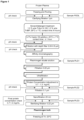
- Subject-matter of the present invention is a process of purification of plasminogen as defined in the claims starting from human plasma or a fractionation intermediate thereof; said process comprising:
- the present invention also includes a nanofiltration step (ix) which protects the preparation from small enveloped and non-enveloped viruses, such as for example HAV.
- the process of the present invention does not require any addition of protease inhibitors.
- protease inhibitors eg. aprotinin, PMSF and soybean trypsin inhibitor
- aprotinin e.g. aprotinin, PMSF and soybean trypsin inhibitor
- no preservative agents are added and a fully functional plasminogen is obtained in total absence of any protease inhibitors.
- a virally inactivated and highly pure plasminogen preparation is obtained starting from human plasma or from a fractionation intermediate thereof.
- the purification method here described is efficient, reproducible and scalable up to industrial level, allowing to produce functional and intact Glu-plasminogen without adding any protease inhibitor as preservative agent.
- the present invention provides a single chromatography based method, sufficient to obtain a highly pure plasminogen preparation.
- the high level of purity makes such plasminogen composition suitable for use in the treatment of human diseases due to genetic plasminogen deficiency.
- starting material can be human plasma or fractionation intermediates thereof wherein fractionation intermediates means cryoprecipitate, Cohn Fraction III or Cohn Fraction II + III.
- the starting material for plasminogen purification is a frozen source of plasma.
- the human frozen plasma is thawed under continuous stirring until a temperature of 20 ⁇ 1 °C is reached and the pH is adjusted to 7.0 - 8.0 with pressurized CO 2 or N 2 .
- the thawed plasma is preferably clarified by a filtration step (i) on a 1 ⁇ m filter and subsequently it is submitted to the viral inactivation step (ii) contacting the solution with a mixture of solvent/detergent (S/D).
- This step (ii) envisages ensuring a finished product safe from enveloped viruses.
- the S/D mixture has the following composition: 1% w/w Triton X-100 and 1% w/w tri-(n-butyl)-phosphate (TnBP).
- TnBP tri-(n-butyl)-phosphate
- the mixture is added to the plasma at a 30 °C ⁇ 1 °C and stirred for 30 minutes.
- the S/D treatment is carried out for at least six hours at 28 °C ⁇ 1 °C; during the treatment, the pH is monitored and eventually is adjusted to 7.0 - 8.0.
- Castor Oil addition step (iii) is preferably included.
- Castor Oil concentration is 3 - 5% of S/D plasma; it is added at 20 °C ⁇ 1 °C and stirred for 60 minutes, then the solution is kept at rest for at least 1 hour with the purpose of separating the S/D phase from plasma phase.
- the addition of Castor Oil envisages an improvement of the plasma filterability, reducing the risk of loading S/D onto the column during the following chromatography, thus preserving the integrity of the resin.
- plasma is preferably subjected to a filtration step (iv) and thus filtered through a 3.00 - 0.5 ⁇ m depth filter.
- the subsequent affinity chromatography step (v) is preferably performed on the affinity resin ECH-Lysine Sepharose 4 Fast Flow which is based on a highly cross-linked 4% agarose and enables rapid processing of large sample volumes.
- the ECH-Lysine Sepharose 4 Fast Flow resin can be submitted to several cleaning cycles with many commonly used agents, thus ensuring the safety of the finished product with no impact on integrity and functionality of the resin itself, also at an industrial level.
- ECH-Lysine Sepharose 4 Fast Flow The advantage of using ECH-Lysine Sepharose 4 Fast Flow is that said resin is based on a highly cross-linked 4% agarose, thus enabling rapid processing of large sample volumes appropriate to industrial production.
- the stable ether linkage, that covalently binds the L-Lysine to a long hydrophilic spacer arm (see Scheme 1) attached on Sepharose 4 Fast Flow, also permits to submit the resin to several cleaning cycles without losing its integrity and functionality.
- the cleaning of the resin, after each production, is essential for the safety of the finished product and it avoids cross-contamination.
- the affinity chromatography described in the present invention represents an improvement of the previously used Lysine Sepharose 4B resin whose documented instability to the cleaning agents, makes said resin not suitable for industrial production of plasminogen.
- Long term stability studies showed that ECH-Lysine Sepharose 4 Fast Flow can be treated with many commonly used cleaning agents without any significant changes neither in ligand concentration nor in plasminogen binding capacity, the exception being long exposure under strongly basic conditions.
- the starting material is loaded onto the column at 150 - 250 cm/h linear flow rate with pressure values ⁇ 0.1 MPa. Lower flow rate values entail long loading time, certainly not suitable for the industrial scale up of the method.
- the buffer used for affinity chromatography on ECH-Lysine Sepharose 4 Fast Flow resin are the following:
- the above buffers i.e. buffer composition B used in the affinity chromatography step (v), compared with the other tested buffers (i.e. buffer composition A), allow to obtain a higher plasminogen yield.
- the chromatographic product of step (v) is preferably subjected to a filtration step (vi) through a 0.22 ⁇ m filter, then the plasminogen purification preferably prosecutes with an ultrafiltration step (vii), making it possible to obtain a concentrated and dialyzed protein solution suitable for ocular administration.
- ultrafiltration (vii) is performed with 20 - 25 volumes of saline solution (0.1 M sodium chloride) by using 30,000 Dalton dialysis cassettes to remove ⁇ -aminocaproic acid; then the system is washed with 0.1 M sodium chloride to achieve a 0.7 - 1.3 mg/mL protein concentration.
- the plasminogen solution is preferably subjected to a filtration step (viii) through a 0.1 ⁇ m filter and subsequently subjected to the viral removal step (ix), namely nanofiltration.
- nanofiltration involves filtration through a 20 nanometer viral grade filter.
- the preparation is then preferably submitted to a sterile filtration through a 0.22 ⁇ m filter (x) and the plasminogen bulk thus obtained is preserved at the temperature ⁇ -20°C.
- the nanofiltration step (ix) protects from small enveloped and non-enveloped viruses, such as for example HAV. This virus removal procedure certainly allows an improvement of the plasminogen purification process compared to what has previously been described in literature.
- protease inhibitors eg. aprotinin, PMSF and soybean trypsin inhibitor
- the present method allows to obtain a fully functional plasminogen without adding any preservative agent, thus avoiding adverse effects thereof.
- Plasminogen totally preserves its integrity and, as shown in the experimental section, comparability study between plasminogen obtained with or without aprotinin demonstrates that there are no differences neither in plasminogen antigen nor in activity and yield thereof.
- plasminogen preparation herein described is mainly in the form of Glu-Pg, which represents the dominant form of plasminogen in plasma.
- the circulating half-life of Glu-Pg is greatly higher than Lys-Pg, thus the present invention provides a method to obtain plasminogen preparation suitable for therapy in humans.
- the loading sample step of chromatography was initially performed at 50 cm/h.
- Such flow rate for high loading volume (30 - 35 CV), entails long duration time of chromatography, not suitable for industrial processes.
- the loading flow rate was increased up to 200 cm/h, maintaining low back pressure, thus reducing the step duration from 7 hours to less than 2 hours.
- a decrease of the plasminogen yield from 80.35% to 70% was observed (Table 1) thus further optimizations, regarding the composition of the buffers, have needed to be investigated.
- composition of the buffers used at the beginning was substituted with composition B, which mainly differed for absence of EDTA (Table 2); loading volume and flow rate were unchanged.
- Table 1 using buffer composition B decreased the loss of plasminogen in the washing fraction and, at the same time, it significantly improved the plasminogen yield in the elution fraction up to 90.40%.
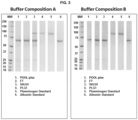
- SDS-PAGE Sodium Dodecyl Sulphate PolyAcrylamide Gel Electrophoresis
- Figure 3 the washing step performed with buffer composition A showed a band corresponding to plasminogen molecular weight, demonstrating the loss of plasminogen during this step; such band was not visible in case of washing step performed with buffer composition B.
- buffer composition B significantly increased the removal of the main contaminant albumin in the washing step, thus reducing the content thereof in the elution fraction (Table 1).
- the optimized chromatographic conditions were the following: 30 - 35 CV loading volume; 200 cm/h flow rate; buffer composition B. Table 1. Chromatography performed in different conditions of loading volumes, flow rates, buffers composition, presence or absence of aprotinin. Results are expressed as mean ⁇ SD from three separate experiments run in triplicate PURIFICATION IN PRESENCE OF APROTININ Buffer CV Flow rate SAMPLE PLG (IU/mL) PLG (g/L) Albumin (g/L) PLG Yield Mean SD Mean SD Mean SD A 10 50 cm/h Pool Plasma 0,91 0,01 0,12 0,01 32 0,14 80,50 ⁇ 6,0 % FT - - - - 28,55 0,07 WASH - - - - 0,023 0,0019 PLG1 11,62 0,01 1,49 0,02 0,009 0,0001 PURIFICATION IN PRESENCE OF APROTININ Buffer CV Flow rate SAMPLE PLG (IU/mL) PLG (g/L) Albumin (g/L) PLG Yi
- composition A Two different chromatographic buffers composition, namely composition A and composition B.
- the purification was carried out both with and without adding bovine aprotinin (20 KIU/mL) to the thawed plasma before performing the 1 ⁇ m clarifying filtration.
- bovine aprotinin 20 KIU/mL
- the absence of aprotinin did not change plasminogen antigen, activity and yield; moreover, although an increase of the albumin content in the elution fraction was observed, it was not significant.
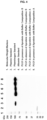
- Figure 4 shows the results obtained from Western Blot analysis relative to chromatography performed in presence or absence of aprotinin by means of buffer composition A vs buffer composition B: none of the analyzed samples showed the activation band corresponding to plasmin demonstrating that, even in absence of aprotinin, plasminogen totally preserved its integrity.
- ELISA enzyme linked immunosorbent assay
- Results are expressed as mean ⁇ SD from three separate experiments run in triplicate Sample Description
- Pg (mg/mL) Glu-Pg (mg/mL) Glu-Pg/Pg Mean SD Mean SD PLG with Buffer Composition A 1,38 0,01 1,24 0,12 89,8 % PLG with Buffer Composition B 2,10 0,00 2,07 0,15 98,6 % PLG with Buffer Composition B in absence of aprotinin 1,65 0,02 1,70 0,05 103,0 %
- Human frozen plasma (1.88 Kg) was thawed under continuous stirring until the temperature reached 20 °C. pH was adjusted to 7.5 with CO 2 and, after filtration on a 1 ⁇ m filter, 1.74 Kg of thawed plasma were subjected to the viral inactivation step: the S/D mixture, composed of 1% w/w Triton X-100 (17.44 g) and 1% w/w TnBP (17.44 g), was added at a 30 °C and stirred for 30 minutes.
- the S/D treatment was carried out for six hours at 28 °C and, at the end of this time, 65.8 g of Castor Oil (3.7% of S/D plasma) were added at 20°C under stirred condition for 60 minutes; then the solution was kept at rest for 1 hour in order to separate the S/D phase from plasma phase.
- 1.0 Kg of S/D plasma was loaded on the affinity resin ECH-Lysine Sepharose 4 Fast Flow (packed into a column 16 mm of diameter by 15 cm of height). The amount of plasma loaded corresponded to 33 CV; the linear flow rate was 200 cm/h and buffers used were the same as described in Table 2 (buffer composition B).
- the chromatographic product (0.035 Kg) was filtered through a 0.22 ⁇ m filter and, in order to remove ⁇ -aminocaproic acid, ultrafiltration was performed with 20 - 25 volumes of saline solution (0.1 M sodium chloride) by using 30,000 Dalton dialysis cassettes. After that, the system was washed with 0.1 M sodium chloride solution adjusting the protein concentration to 1.2 mg/mL, and the plasminogen solution thus obtained (0.07 Kg), was filtered by using a 0.1 ⁇ m filter.
- the viral removal step was performed by passing the solution through a 20 nanometer viral grade nanofilter Planova 20N and, after a final sterile filtration, the plasminogen bulk preparation (0.07 Kg) was preserved at the temperature -20 °C.
Landscapes
- Chemical & Material Sciences (AREA)
- Health & Medical Sciences (AREA)
- Organic Chemistry (AREA)
- Life Sciences & Earth Sciences (AREA)
- Engineering & Computer Science (AREA)
- Wood Science & Technology (AREA)
- Bioinformatics & Cheminformatics (AREA)
- Zoology (AREA)
- Genetics & Genomics (AREA)
- Biomedical Technology (AREA)
- Biochemistry (AREA)
- General Health & Medical Sciences (AREA)
- General Engineering & Computer Science (AREA)
- Medicinal Chemistry (AREA)
- Molecular Biology (AREA)
- Biotechnology (AREA)
- Microbiology (AREA)
- Enzymes And Modification Thereof (AREA)
- Medicines That Contain Protein Lipid Enzymes And Other Medicines (AREA)
- Peptides Or Proteins (AREA)
Priority Applications (3)
| Application Number | Priority Date | Filing Date | Title |
|---|---|---|---|
| RS20250014A RS66365B1 (sr) | 2016-09-13 | 2017-09-12 | Postupak za prečišćavanje plazminogena polazeći od humane plazme |
| HRP20250015TT HRP20250015T1 (hr) | 2016-09-13 | 2017-09-12 | Postupak za pročišćavanje plazminogena polazeći od humane plazme |
| SM20250066T SMT202500066T1 (it) | 2016-09-13 | 2017-09-12 | Processo per la purificazione del plasminogeno a partire da plasma umano |
Applications Claiming Priority (2)
| Application Number | Priority Date | Filing Date | Title |
|---|---|---|---|
| IT102016000091964A IT201600091964A1 (it) | 2016-09-13 | 2016-09-13 | Processo per la purificazione del plasminogeno a partire da plasma umano. |
| PCT/EP2017/072824 WO2018050618A1 (en) | 2016-09-13 | 2017-09-12 | Process for plasminogen purification starting from human plasma |
Publications (3)
| Publication Number | Publication Date |
|---|---|
| EP3512940A1 EP3512940A1 (en) | 2019-07-24 |
| EP3512940B1 true EP3512940B1 (en) | 2024-10-30 |
| EP3512940C0 EP3512940C0 (en) | 2024-10-30 |
Family
ID=57909871
Family Applications (1)
| Application Number | Title | Priority Date | Filing Date |
|---|---|---|---|
| EP17780628.8A Active EP3512940B1 (en) | 2016-09-13 | 2017-09-12 | Process for plasminogen purification starting from human plasma |
Country Status (15)
| Country | Link |
|---|---|
| US (1) | US11591587B2 (pl) |
| EP (1) | EP3512940B1 (pl) |
| JP (1) | JP7122310B2 (pl) |
| CN (1) | CN109952374A (pl) |
| AU (1) | AU2017326469A1 (pl) |
| CA (1) | CA3036425A1 (pl) |
| ES (1) | ES3003880T3 (pl) |
| HR (1) | HRP20250015T1 (pl) |
| HU (1) | HUE070014T2 (pl) |
| IL (1) | IL265281B2 (pl) |
| IT (1) | IT201600091964A1 (pl) |
| PL (1) | PL3512940T3 (pl) |
| RS (1) | RS66365B1 (pl) |
| SM (1) | SMT202500066T1 (pl) |
| WO (1) | WO2018050618A1 (pl) |
Families Citing this family (2)
| Publication number | Priority date | Publication date | Assignee | Title |
|---|---|---|---|---|
| JP3258942B2 (ja) | 1997-09-01 | 2002-02-18 | 元旦ビューティ工業株式会社 | 太陽エネルギー変換装置付き外装材及び太陽エネルギー変換装置付き外装構造 |
| CN116004589A (zh) * | 2022-12-05 | 2023-04-25 | 重庆艾生斯生物工程有限公司 | 纤溶酶-α2抗纤溶酶复合物的制备方法和应用 |
Family Cites Families (5)
| Publication number | Priority date | Publication date | Assignee | Title |
|---|---|---|---|---|
| US3943245A (en) | 1974-02-14 | 1976-03-09 | Armour Pharmaceutical Company | Purification of plasminogen |
| JPH06166634A (ja) * | 1992-12-01 | 1994-06-14 | Green Cross Corp:The | プラスミノーゲン含有組成物の製造方法 |
| US7544500B2 (en) * | 1999-11-13 | 2009-06-09 | Talecris Biotherapeutics, Inc. | Process for the production of a reversibly inactive acidified plasmin composition |
| IL158754A0 (en) | 2001-05-21 | 2004-05-12 | Omrix Biopharm Sa | Removal of plasmin(ogen) from protein solutions |
| EP1964579A1 (en) * | 2007-02-14 | 2008-09-03 | Fondation pour la Recherche Diagnostique | Preparation of virally inactivated biological fluids having high alpha-2-antiplasmin activity |
-
2016
- 2016-09-13 IT IT102016000091964A patent/IT201600091964A1/it unknown
-
2017
- 2017-09-12 HR HRP20250015TT patent/HRP20250015T1/hr unknown
- 2017-09-12 IL IL265281A patent/IL265281B2/en unknown
- 2017-09-12 CA CA3036425A patent/CA3036425A1/en active Pending
- 2017-09-12 AU AU2017326469A patent/AU2017326469A1/en not_active Abandoned
- 2017-09-12 SM SM20250066T patent/SMT202500066T1/it unknown
- 2017-09-12 ES ES17780628T patent/ES3003880T3/es active Active
- 2017-09-12 WO PCT/EP2017/072824 patent/WO2018050618A1/en not_active Ceased
- 2017-09-12 CN CN201780056130.9A patent/CN109952374A/zh active Pending
- 2017-09-12 EP EP17780628.8A patent/EP3512940B1/en active Active
- 2017-09-12 PL PL17780628.8T patent/PL3512940T3/pl unknown
- 2017-09-12 JP JP2019535970A patent/JP7122310B2/ja active Active
- 2017-09-12 HU HUE17780628A patent/HUE070014T2/hu unknown
- 2017-09-12 US US16/333,023 patent/US11591587B2/en active Active
- 2017-09-12 RS RS20250014A patent/RS66365B1/sr unknown
Also Published As
| Publication number | Publication date |
|---|---|
| AU2017326469A1 (en) | 2019-05-02 |
| WO2018050618A1 (en) | 2018-03-22 |
| HRP20250015T1 (hr) | 2025-03-14 |
| CA3036425A1 (en) | 2018-03-22 |
| US20190330611A1 (en) | 2019-10-31 |
| HUE070014T2 (hu) | 2025-05-28 |
| US11591587B2 (en) | 2023-02-28 |
| IL265281B2 (en) | 2024-12-01 |
| BR112019004841A2 (pt) | 2019-06-04 |
| CN109952374A (zh) | 2019-06-28 |
| JP2019534039A (ja) | 2019-11-28 |
| PL3512940T3 (pl) | 2025-03-03 |
| EP3512940A1 (en) | 2019-07-24 |
| EP3512940C0 (en) | 2024-10-30 |
| ES3003880T3 (en) | 2025-03-11 |
| JP7122310B2 (ja) | 2022-08-19 |
| IL265281B1 (en) | 2024-08-01 |
| RS66365B1 (sr) | 2025-01-31 |
| SMT202500066T1 (it) | 2025-03-12 |
| IT201600091964A1 (it) | 2018-03-13 |
| IL265281A (en) | 2019-05-30 |
Similar Documents
| Publication | Publication Date | Title |
|---|---|---|
| EP0317376B2 (fr) | Préparation de concentré de facteur IX humain de haute pureté et d'autres protéines plasmatiques | |
| AU2011234521B2 (en) | A process for purifying Vitamin K dependent proteins such as coagulation factor IX | |
| AU2003244850B2 (en) | Processes for the preparation of fibrinogen | |
| KR20010049991A (ko) | 혈액 응고 인자 ⅷ를 활성화시키는 프로테아제, 이의프로효소 또는 이들 단백질의 혼합물을 친화성크로마토그래피에 의해 순수한 형태로 제조하는 방법 | |
| JP2001095563A (ja) | イオン交換クロマトグラフィーによって血液凝固第vii因子を活性化するプロテアーゼ、そのプロ酵素または両タンパク質の混合物を純粋形態で調製する方法 | |
| EP0573605B1 (en) | Preparation of factor ix | |
| EP3512940B1 (en) | Process for plasminogen purification starting from human plasma | |
| JPH1059866A (ja) | 血液凝固第vii因子及び/もしくは活性化血液凝固第vii因子の製造方法 | |
| JP3043558B2 (ja) | ヒト活性化プロテインc調製物及びその製法 | |
| JP5053435B2 (ja) | Vwfプロペプチドから成熟vwfを産生するための方法。 | |
| US20040106779A1 (en) | Modified factor IX preparation | |
| EP0763596A1 (en) | Process for producing thrombin | |
| Strömqvist et al. | Properties of recombinant human plasma procarboxypeptidase U produced in mammalian and insect cells | |
| BR112019004841B1 (pt) | Processo para purificação de plasminogênio partindo de plasma humano | |
| JP2714817B2 (ja) | ウロキナーゼ前駆体の製造方法 | |
| FI100406B (fi) | Menetelmä vampyyrilepakon syljen plasminogeeniaktivaattoreiden valmist amiseksi | |
| JPWO2000043412A1 (ja) | 高度に精製されたヘパリンコファクターii含有組成物およびその分離方法 | |
| WO2000043412A1 (en) | Compositions containing highly purified heparin cofactor ii and method for separating the same |
Legal Events
| Date | Code | Title | Description |
|---|---|---|---|
| REG | Reference to a national code |
Ref country code: HR Ref legal event code: TUEP Ref document number: P20250015T Country of ref document: HR |
|
| STAA | Information on the status of an ep patent application or granted ep patent |
Free format text: STATUS: UNKNOWN |
|
| STAA | Information on the status of an ep patent application or granted ep patent |
Free format text: STATUS: THE INTERNATIONAL PUBLICATION HAS BEEN MADE |
|
| PUAI | Public reference made under article 153(3) epc to a published international application that has entered the european phase |
Free format text: ORIGINAL CODE: 0009012 |
|
| STAA | Information on the status of an ep patent application or granted ep patent |
Free format text: STATUS: REQUEST FOR EXAMINATION WAS MADE |
|
| 17P | Request for examination filed |
Effective date: 20190412 |
|
| AK | Designated contracting states |
Kind code of ref document: A1 Designated state(s): AL AT BE BG CH CY CZ DE DK EE ES FI FR GB GR HR HU IE IS IT LI LT LU LV MC MK MT NL NO PL PT RO RS SE SI SK SM TR |
|
| AX | Request for extension of the european patent |
Extension state: BA ME |
|
| DAV | Request for validation of the european patent (deleted) | ||
| DAX | Request for extension of the european patent (deleted) | ||
| STAA | Information on the status of an ep patent application or granted ep patent |
Free format text: STATUS: EXAMINATION IS IN PROGRESS |
|
| 17Q | First examination report despatched |
Effective date: 20201019 |
|
| P01 | Opt-out of the competence of the unified patent court (upc) registered |
Effective date: 20230529 |
|
| GRAP | Despatch of communication of intention to grant a patent |
Free format text: ORIGINAL CODE: EPIDOSNIGR1 |
|
| STAA | Information on the status of an ep patent application or granted ep patent |
Free format text: STATUS: GRANT OF PATENT IS INTENDED |
|
| INTG | Intention to grant announced |
Effective date: 20240527 |
|
| RAP3 | Party data changed (applicant data changed or rights of an application transferred) |
Owner name: KEDRION S.P.A. |
|
| GRAS | Grant fee paid |
Free format text: ORIGINAL CODE: EPIDOSNIGR3 |
|
| GRAA | (expected) grant |
Free format text: ORIGINAL CODE: 0009210 |
|
| STAA | Information on the status of an ep patent application or granted ep patent |
Free format text: STATUS: THE PATENT HAS BEEN GRANTED |
|
| AK | Designated contracting states |
Kind code of ref document: B1 Designated state(s): AL AT BE BG CH CY CZ DE DK EE ES FI FR GB GR HR HU IE IS IT LI LT LU LV MC MK MT NL NO PL PT RO RS SE SI SK SM TR |
|
| REG | Reference to a national code |
Ref country code: GB Ref legal event code: FG4D |
|
| REG | Reference to a national code |
Ref country code: CH Ref legal event code: EP |
|
| REG | Reference to a national code |
Ref country code: DE Ref legal event code: R096 Ref document number: 602017085788 Country of ref document: DE |
|
| REG | Reference to a national code |
Ref country code: IE Ref legal event code: FG4D |
|
| U01 | Request for unitary effect filed |
Effective date: 20241127 |
|
| U07 | Unitary effect registered |
Designated state(s): AT BE BG DE DK EE FI FR IT LT LU LV MT NL PT RO SE SI Effective date: 20241203 |
|
| P04 | Withdrawal of opt-out of the competence of the unified patent court (upc) registered |
Free format text: CASE NUMBER: APP_63457/2024 Effective date: 20241129 |
|
| REG | Reference to a national code |
Ref country code: SK Ref legal event code: T3 Ref document number: E 45641 Country of ref document: SK |
|
| REG | Reference to a national code |
Ref country code: GR Ref legal event code: EP Ref document number: 20250400040 Country of ref document: GR Effective date: 20250211 |
|
| REG | Reference to a national code |
Ref country code: ES Ref legal event code: FG2A Ref document number: 3003880 Country of ref document: ES Kind code of ref document: T3 Effective date: 20250311 |
|
| REG | Reference to a national code |
Ref country code: HR Ref legal event code: T1PR Ref document number: P20250015 Country of ref document: HR |
|
| REG | Reference to a national code |
Ref country code: HU Ref legal event code: AG4A Ref document number: E070014 Country of ref document: HU |
|
| PGFP | Annual fee paid to national office [announced via postgrant information from national office to epo] |
Ref country code: SM Payment date: 20250627 Year of fee payment: 9 |
|
| PLBE | No opposition filed within time limit |
Free format text: ORIGINAL CODE: 0009261 |
|
| STAA | Information on the status of an ep patent application or granted ep patent |
Free format text: STATUS: NO OPPOSITION FILED WITHIN TIME LIMIT |
|
| U20 | Renewal fee for the european patent with unitary effect paid |
Year of fee payment: 9 Effective date: 20250807 |
|
| REG | Reference to a national code |
Ref country code: HR Ref legal event code: ODRP Ref document number: P20250015 Country of ref document: HR Payment date: 20250806 Year of fee payment: 9 |
|
| REG | Reference to a national code |
Ref country code: CH Ref legal event code: U11 Free format text: ST27 STATUS EVENT CODE: U-0-0-U10-U11 (AS PROVIDED BY THE NATIONAL OFFICE) Effective date: 20251001 |
|
| 26N | No opposition filed |
Effective date: 20250731 |
|
| PGFP | Annual fee paid to national office [announced via postgrant information from national office to epo] |
Ref country code: GR Payment date: 20250818 Year of fee payment: 9 Ref country code: MC Payment date: 20250828 Year of fee payment: 9 Ref country code: NO Payment date: 20250909 Year of fee payment: 9 |
|
| PGFP | Annual fee paid to national office [announced via postgrant information from national office to epo] |
Ref country code: PL Payment date: 20250701 Year of fee payment: 9 Ref country code: TR Payment date: 20250908 Year of fee payment: 9 |
|
| PGFP | Annual fee paid to national office [announced via postgrant information from national office to epo] |
Ref country code: HU Payment date: 20250813 Year of fee payment: 9 Ref country code: GB Payment date: 20250703 Year of fee payment: 9 |
|
| PGFP | Annual fee paid to national office [announced via postgrant information from national office to epo] |
Ref country code: HR Payment date: 20250806 Year of fee payment: 9 |
|
| PGFP | Annual fee paid to national office [announced via postgrant information from national office to epo] |
Ref country code: AL Payment date: 20250904 Year of fee payment: 9 |
|
| PGFP | Annual fee paid to national office [announced via postgrant information from national office to epo] |
Ref country code: RS Payment date: 20250819 Year of fee payment: 9 Ref country code: CZ Payment date: 20250821 Year of fee payment: 9 Ref country code: IE Payment date: 20250702 Year of fee payment: 9 |
|
| PGFP | Annual fee paid to national office [announced via postgrant information from national office to epo] |
Ref country code: SK Payment date: 20250812 Year of fee payment: 9 |
|
| PGFP | Annual fee paid to national office [announced via postgrant information from national office to epo] |
Ref country code: IS Payment date: 20250910 Year of fee payment: 9 |
|
| PGFP | Annual fee paid to national office [announced via postgrant information from national office to epo] |
Ref country code: MK Payment date: 20250724 Year of fee payment: 9 |
|
| PGFP | Annual fee paid to national office [announced via postgrant information from national office to epo] |
Ref country code: CH Payment date: 20251001 Year of fee payment: 9 |
|
| PGFP | Annual fee paid to national office [announced via postgrant information from national office to epo] |
Ref country code: CY Payment date: 20250806 Year of fee payment: 9 |
|
| PGFP | Annual fee paid to national office [announced via postgrant information from national office to epo] |
Ref country code: ES Payment date: 20251015 Year of fee payment: 9 |