EP3506529B1 - Virtual real-time clock based on time information from multiple communication systems - Google Patents
Virtual real-time clock based on time information from multiple communication systems Download PDFInfo
- Publication number
- EP3506529B1 EP3506529B1 EP19155372.6A EP19155372A EP3506529B1 EP 3506529 B1 EP3506529 B1 EP 3506529B1 EP 19155372 A EP19155372 A EP 19155372A EP 3506529 B1 EP3506529 B1 EP 3506529B1
- Authority
- EP
- European Patent Office
- Prior art keywords
- time
- communication system
- wireless communication
- terminal
- timing
- Prior art date
- Legal status (The legal status is an assumption and is not a legal conclusion. Google has not performed a legal analysis and makes no representation as to the accuracy of the status listed.)
- Expired - Lifetime
Links
- 238000004891 communication Methods 0.000 title claims description 86
- 238000000034 method Methods 0.000 claims description 43
- 230000001413 cellular effect Effects 0.000 claims description 40
- 230000011664 signaling Effects 0.000 claims description 29
- 230000001360 synchronised effect Effects 0.000 claims description 15
- 238000012545 processing Methods 0.000 description 42
- 238000010586 diagram Methods 0.000 description 17
- 230000005540 biological transmission Effects 0.000 description 7
- 230000006870 function Effects 0.000 description 6
- 230000001419 dependent effect Effects 0.000 description 4
- PCHJSUWPFVWCPO-UHFFFAOYSA-N gold Chemical compound [Au] PCHJSUWPFVWCPO-UHFFFAOYSA-N 0.000 description 4
- 239000010931 gold Substances 0.000 description 4
- 229910052737 gold Inorganic materials 0.000 description 4
- 238000003708 edge detection Methods 0.000 description 3
- 238000001914 filtration Methods 0.000 description 3
- 238000005259 measurement Methods 0.000 description 3
- 230000035945 sensitivity Effects 0.000 description 3
- 238000009825 accumulation Methods 0.000 description 2
- 230000001427 coherent effect Effects 0.000 description 2
- 230000001186 cumulative effect Effects 0.000 description 2
- 238000009795 derivation Methods 0.000 description 2
- 238000003491 array Methods 0.000 description 1
- 238000012937 correction Methods 0.000 description 1
- 238000001514 detection method Methods 0.000 description 1
- 230000000694 effects Effects 0.000 description 1
- 230000010354 integration Effects 0.000 description 1
- 230000007774 longterm Effects 0.000 description 1
- 238000011084 recovery Methods 0.000 description 1
- 238000012546 transfer Methods 0.000 description 1
Images




Classifications
-
- H—ELECTRICITY
- H04—ELECTRIC COMMUNICATION TECHNIQUE
- H04W—WIRELESS COMMUNICATION NETWORKS
- H04W56/00—Synchronisation arrangements
- H04W56/001—Synchronization between nodes
- H04W56/0015—Synchronization between nodes one node acting as a reference for the others
-
- G—PHYSICS
- G04—HOROLOGY
- G04R—RADIO-CONTROLLED TIME-PIECES
- G04R20/00—Setting the time according to the time information carried or implied by the radio signal
- G04R20/02—Setting the time according to the time information carried or implied by the radio signal the radio signal being sent by a satellite, e.g. GPS
-
- H—ELECTRICITY
- H04—ELECTRIC COMMUNICATION TECHNIQUE
- H04W—WIRELESS COMMUNICATION NETWORKS
- H04W56/00—Synchronisation arrangements
- H04W56/004—Synchronisation arrangements compensating for timing error of reception due to propagation delay
- H04W56/005—Synchronisation arrangements compensating for timing error of reception due to propagation delay compensating for timing error by adjustment in the receiver
Definitions
- the present invention relates generally to communication, and more specifically to a method and apparatus for implementing a virtual real-time clock based on time information from multiple communication systems.
- the time-of-arrival of a signal from a GPS satellite may be determined by processing the GPS signal itself to obtain the necessary time information.
- the complete time information may be partitioned into three different time components: bit of week (BOW), epoch (in bit), and sub-code frame (all of which are described in detail below).
- BOW bit of week
- epoch in bit
- sub-code frame all of which are described in detail below.
- Each time component covers a different time range and has a different time resolution.
- Each time component may be obtained from the GPS signal based on different signal processing by the receiver.
- the processing to obtain these time components is typically performed in sequential order, in increasing coarse time resolution, such that sub-code frame (fine) timing is obtained first, epoch (in bit) timing is obtained next, and BOW (coarse) time information is obtained last.
- the terminal may be commanded to perform a new position fix at an arbitrary time instant.
- the counter may then be used as a real-time clock to estimate the amount of time that has elapsed, as measured by the terminal's internal clock, since the time instant for which the last GPS time was obtained.
- the absolute time at this arbitrary time instant may be estimated by adding the elapsed time estimate to the last GPS time. The accuracy of this absolute time estimate is dependent on the accuracy of the elapsed time estimate. If the elapsed time can be estimated with a relatively high degree of accuracy, then the absolute time estimate is reasonably accurate. In this case, it may not be necessary to recover BOW and epoch in bit timing for the new position fix. Consequently, the new position fix may be obtained in a much shorter amount of time, which is highly desirable.
- a mobile terminal equipped with a positioning receiver operates in a wireless communications system having control channels and at least one traffic channel unsynchronized to the control channels.
- the mobile terminal camps on a first control channel in a first cell having a first time base associated therewith. While camped on the control channel, the mobile terminal establishes a local clock reference, internal to the mobile terminal, capable of tracking the first time base.
- the mobile terminal then operates on a first traffic channel that is unsynchronized to the first control channel and notes the difference in time bases between the control channel and the traffic channel.
- the mobile terminal receives TDMA-to-GPS relationship data, which is a measure of the offset between system time for the wireless communications system as expressed on particular control channel ("TDMA time”) and the system time for the GPS system ("GPS time"). Thereafter, an accurate estimate of the GPS time is calculated in the mobile terminal based on the local clock reference and the TDMA-to-GPS relationship data.
- TDMA time system time for the wireless communications system as expressed on particular control channel
- GPS time system time for the GPS system
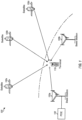
- FIG. 1 is diagram showing a wireless terminal 110 capable of receiving signals from multiple communication systems.
- One such communication system is the well-known Global Positioning System (GPS).
- GPS Global Positioning System
- Another such communication system is a wireless (e.g., cellular) communication system, which may be a Code Division Multiple Access (CDMA), Time Division Multiple Access (TDMA), Frequency Division Multiple Access (FDMA), or some other multiple-access communication system.
- CDMA Code Division Multiple Access
- TDMA Time Division Multiple Access
- FDMA Frequency Division Multiple Access
- the CDMA system may implement one or more standards such as IS-95, IS-2000, W-CDMA, and so on.
- the TDMA system may implement one or more standards such as GSM, GPRS, and so on. These various standards are known in the art and incorporated herein by reference.
- Terminal 110 may receive signals from a number of GPS satellites 130, and may process these GPS signals to derive an estimate of its current position.
- the terminal may obtain GPS time as one of the results of a position fix (or may be operated to process the GPS signals to obtain only GPS time).
- This GPS time is an accurate indication of actual time, since the clocks maintained by the GPS satellites are very accurate and are further adjusted as necessary to track an extremely accurate atomic clock on earth.
- the GPS time may thus be viewed as "true" or absolute time.
- the terminal can calibrate its own timing whenever it is provided with GPS time. However, since the terminal may perform position fixes at sporadic time instants (e.g., whenever directed by the user and/or the cellular system), GPS time may be available only at these sporadic time instants.
- a method and apparatus is provided herein to implement a "virtual" real-time clock at a terminal based on time information from multiple communication systems, one of which may be an asynchronous system (e.g., a GSM or W-CDMA system).
- asynchronous system e.g., a GSM or W-CDMA system.
- the inventor has recognized that, although the base stations in a cellular system may be operated asynchronously, the timing of each base station is derived based on a clock that is typically more accurate than the internal clock of the terminal. For example, while the internal clock of the terminal may have accuracy on the order of 10 ppm or worse, the clock of a base station may have accuracy on the order of ⁇ 0.05 ppm or possibly 0.01 ppm (i.e., 100 to 1000 times more accurate).
- An accurate virtual real-time clock may then be implemented by the terminal based on GPS time from the GPS (whenever available) and the accurate timing of the base stations in the cellular system.
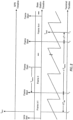
- FIG. 2 is a diagram that illustrates an implementation of the virtual real-time clock at a terminal based on time information from the GPS and cellular system.
- FIG. 2 shows three different timelines for the terminal, a base station in the cellular system, and the GPS. These three different timelines result from the use of three different clocks (which are not locked) for the terminal, the base station, and the GPS.
- the counter provides system time for the terminal as well as defines the timeline of the terminal.
- any given time instant on the terminal timeline is associated with a particular counter value, which is used as the system time for the terminal at that time instant.
- the counter is able to provide "relative” time (i.e., the amount of time that has elapsed between two time instants) but is not able to provide "absolute” time (i.e., "true” or actual time at a given time instant).
- the virtual real-time clock is effectively implemented based on time information from multiple communication systems (e.g., GPS and cellular system).
- the time information from one communication system e.g., GPS
- the time information from the other communication system e.g., a cellular system
- the virtual real-time clock may then provide an accurate estimate of the absolute time at any arbitrary time instant based on the absolute time from one communication system and the relative time from the other communication system.
- a less accurate clock e.g., the internal clock within the terminal
- FIG. 3 is a diagram that illustrates an implementation of the virtual real-time clock based on time information from the GPS and two asynchronous base stations in a cellular system.
- FIG. 3 shows three different timelines for the terminal and the two base stations. These three different timelines result from the use of three different clocks (which are not locked) for the terminal and the two base stations. The timeline for the GPS is not shown for simplicity.
- the terminal is provided with absolute time value t abs1 , which may be the GPS time, for that time instant.
- the terminal associates a counter value of C 1 for time instant T 1 with the absolute time t abs1 , which then establishes a relationship between the terminal timing and GPS timing.
- the terminal also receives a transmission from base station 2.
- the terminal To establish a timing relationship between base station 2 and GPS, the terminal first detects the start of frame i from base station 2 as occurring at time instant T 3 . The terminal then associates a counter value of C 3 for time instant T 3 with the start of frame i from base station 2.
- absolute time may be needed (e.g., for a new position fix).
- the absolute time t abs2 at time instant T 6 may then be estimated based on the timing of base station 1 and/or 2, which may be dependent on the base station(s) from which the terminal can still receive frames near time instant T 6 .
- the process to estimate the absolute time t abs2 at time instant T 6 based on the timing of base station 1 may be achieved as described above for FIG. 2 .
- the number of whole frames between time instants T 3 and T 5 is also determined (e.g., based on the frame numbers extracted from the signaling messages transmitted in frames i and i + n , or based on another counter maintained by the terminal to count the number of frames).
- the absolute time estimate, t ⁇ abs2 is derived based on four terms.
- the term t abs1 is very accurate and the term n T frame is based on the timing of base station 2, which is also accurate.
- the terms ⁇ T BS2 and ⁇ T 2 for base station 2 are derived based on the timing of the terminal, and has approximately the same amount of error as the terms ⁇ T BS1 and ⁇ T 1 derived for base station 1.
- the virtual real-time clock may be accurately maintained even as the terminal is handed off from one base station to another in an asynchronous cellular system.
- FIG. 3 shows the derivation of the time offsets ⁇ T BS1 and ⁇ T BS2 based on two frames k and i that are received within one frame period of time instant T 1 .
- frames transmitted at any time instants by the asynchronous base stations may be used to obtain the relative time information.
- the phases (i.e., bit-level timing) and numbers of these frames may be determined (e.g., from the signaling messages transmitted in these frames) and used to derive the time offsets ⁇ T BS1 and ⁇ T BS2 .
- Each time offset may be less than one frame period (i.e., ⁇ T BS ⁇ T frame ) or greater than one frame period (i.e., ⁇ T BS > T frame ).
- the handoff between base stations may also occur at any time and may be accounted for (e.g., such that the time offset for each base station covers only the time period for which relative time is not available).
- the virtual real-time clock may use the relative time information from any number of asynchronous base stations. In general, the relative time information from each base station may be used for any applicable time period for which frames are received from that base station.
- the relative time information may be obtained by processing signaling messages transmitted by the base stations in the cellular system.
- Each standard defines the specific signaling message to be used, the frequency of its transmission, and so on. For clarity, the signaling message for GSM used to obtain relative time information is described below.
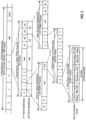
- the BSIC identifies a specific base station from which the synchronization burst was transmitted, and may be used to uniquely identify each base station.
- the start of each received synchronization burst may be determined and used as the frame start shown in FIGS. 2 and 3 .
- the 19-bit reduced TDMA frame number may be used to determine the number of frames that have been transmitted between any two synchronization bursts. Since each bit has a duration of 3.69 ⁇ sec, relative time may be obtained to within 3.69 ⁇ sec resolution from the synchronization bursts.
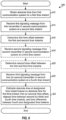
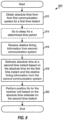
- FIG. 5 is a flow diagram of an embodiment of a process 500 for providing an estimate of absolute time based on time information from multiple communication systems.
- Absolute time information is received from a first communication system (e.g., GPS) (step 512).
- the absolute time information may be in the form of absolute time for a specific time instant.
- Relative time information is also received from a first transmitter in a second communication system (e.g., a cellular system) (step 514).
- the relative time information may be in the form of signaling messages (e.g., synchronization bursts) periodically transmitted by the first transmitter.
- Relative time information may also be received from a second transmitter in the second communication system (step 516, which is optional and shown as a dashed box).
- an estimate of absolute time at a designated time instant may be determined based on (1) the absolute time for the first time instant (e.g., t abs1 in FIG. 3 ), (2) the first time offset (e.g., ⁇ T BS1 ), (3) an elapsed time between the second and fourth time instants (e.g., n T frame1 ), and (4) the time difference between the fourth and designated time instants (e.g., ⁇ T 1 ) (step 624).
- the virtual real-time clock may be implemented based on time information received from multiple communication systems.
- at least one communication system e.g., GPS
- at least one other communication system e.g., a cellular system
- the communication system that provides relative time information may also provide absolute time information (e.g., in messages) at designated time instants.
- a base station in the cellular system may (periodically or when requested) transmit a message with the absolute time at the time of the message transmission (e.g., the start of the frame with the message).
- the relative time information may be provided by various means.
- One common means is via the transmission of signaling messages at selected time instants such that the time difference between any two signaling messages can be ascertained.
- the signaling messages may be (1) the synchronization bursts transmitted by each base station in the GSM system, as described in FIG. 4 , (2) the system frame number (SFN) transmitted by each base station in the W-CDMA system, (3) paging indicators transmitted at known time intervals, and so on.
- SFN system frame number
- paging indicators transmitted at known time intervals, and so on.
- Various types of signaling message may be used, and this is within the scope of the invention.
- the virtual real-time clock may be used to provide an accurate estimate of absolute time at any designated time instant.
- This accurate time estimate may be advantageously used for various applications, one of which is position determination.
- the accurate time estimate may be used to (1) provide a position fix in a shorter period of time and/or (2) provide higher sensitivity in the processing of the signals used for the position fix. The benefits attainable with the accurate time estimate for position fixes based on GPS signals are described below.
- the position of a terminal may be determined based on (1) distances to a sufficient number of transmitters, which are used as reference points, and (2) the locations of these transmitters.
- the terminal can estimate the distance to each GPS satellite by measuring the time required for a signal to travel from the satellite to the terminal. If the time the signal is transmitted from the GPS satellite is known (e.g., stamped or encoded in the signal), then the travel time of the signal can be determined by observing the time the signal is received at the terminal (based on the terminal's internal clock). Typically however, the amount of time between transmission and reception cannot be exactly determined because of offsets between the clocks at the terminal and GPS satellite. Thus, a "pseudo-range" is typically derived based on the difference between a reference time and the time that the signal is received. The pseudo-range thus represents the relative distance between the terminal and the GPS satellite from which the signal was received.
- BOW time information may be obtained by demodulating the received data bits and extracting the various types of information included in the navigation data. BOW time information may also be obtained using a pattern matching technique that compares received data bits with predicted data bits.
- the pattern matching technique is described in U.S. Patent Nos. 5,812,087 , 6,052,081 and 6,239,742 , which are incorporated herein by reference.
- the data format for the navigation data is described in detail in a document entitled " Global Position System Standard Positioning Service Signal Specification," 2nd Edition, June 2, 1995 , which is readily available in the art and incorporated herein by reference.
- Table 1 lists the three time components, the time range and resolution associated with each time component, the processing technique used to recover each time component, and an approximate amount of time needed to recover each time component (which assumes that the time components with finer resolution, if any, have already been recovered).
- Table 1 Time Component Time Range Resolution Processing Technique Processing Time BOW > 20 msec 20 msec Demodulate Data > 5 seconds Epoch (in bit) 1 to 20 msec 1 msec Edge Detection ⁇ 2-3 seconds Sub-Code Frame 0 to 1 msec 0.977 ⁇ sec Match Filtering ⁇ 1-2 seconds
- the terminal may be idle for a period of time and may then be commanded to perform a position fix at time instant T 4 .
- the receiver can skip the processing for any time component that it has a priori knowledge of.
- the GPS receiver only needs to determine sub-code frame (chip-level) timing to compute the position fix.
- this absolute time estimate t ⁇ abs2 has an uncertainty of less than or equal to ⁇ 10 msec
- the GPS receiver would need to determine both sub-code frame and epoch in bit timing to compute the position fix.
- the absolute time estimate t ⁇ sbs2 has an uncertainty of greater than ⁇ 10 msec, then the GPS receiver would need to determine sub-code frame, epoch in bit, and BOW timing to compute the position fix.
- Accurate time is also needed to provide accurate estimates of the location of the GPS satellites used for a position fix.
- Each satellite transmits "Ephemeris" information, which includes a high accuracy modeled prediction of its own orbit, as tracked and reported by tracking stations on earth.
- the Ephemeris is provided in a form of a function with time as an input variable. Since each GPS satellite moves at a rate of approximately 3600 m/sec, an accurate estimate of absolute time (e.g., to within a few ⁇ sec) is needed to derive an accurate estimate of the satellite location.
- the absolute time estimate from the virtual real-time clock may be provided as the time input to the function to obtain an initial position estimate for a satellite. A pseudo-range from the terminal to the initial satellite position estimate can then be computed.
- relative time information is received from the second communication system (step 816).
- Absolute time at a second time instant may then be estimated based on the absolute time for the first time instant and the relative time information from the second communication system (step 818).
- a position fix is then performed by the receiver unit based on the absolute time estimate for the second time instant (step 820).
- Terrestrial receiver 912b includes front-end circuitry that processes the signals transmitted from base stations and may provide relative time information derived from these signals. For example, terrestrial receiver 912b may determine the frame-level timing of a received frame. The absolute time information from GPS receiver 912a and the relative time information from terrestrial receiver 912b may be used to implement the virtual real-time clock.
- Processing unit 914 may be designed to perform various functions. For example, processing unit may (e.g., when directed) perform a position fix for receiver unit 900 based on the GPS and/or cellular system. Processing unit 914 may further implement the virtual real-time clock based on the absolute time information obtained from the GPS and the relative time information obtained from the cellular system. When requested, processing unit 914 can estimate absolute time at a designated time instant and provide this absolute time estimate to a requesting unit (e.g., GPS receiver 912a).
- a requesting unit e.g., GPS receiver 912a
Landscapes
- Engineering & Computer Science (AREA)
- Computer Networks & Wireless Communication (AREA)
- Signal Processing (AREA)
- Radar, Positioning & Navigation (AREA)
- Remote Sensing (AREA)
- Physics & Mathematics (AREA)
- General Physics & Mathematics (AREA)
- Synchronisation In Digital Transmission Systems (AREA)
- Position Fixing By Use Of Radio Waves (AREA)
- Mobile Radio Communication Systems (AREA)
- Electric Clocks (AREA)
Applications Claiming Priority (4)
| Application Number | Priority Date | Filing Date | Title |
|---|---|---|---|
| US10/401,816 US7139225B2 (en) | 2003-03-27 | 2003-03-27 | Virtual real-time clock based on time information from multiple communication systems |
| PCT/US2004/009306 WO2004088880A2 (en) | 2003-03-27 | 2004-03-26 | Virtual real-time clock based on time information from multiple communication systems |
| EP12005861.5A EP2536229B1 (en) | 2003-03-27 | 2004-03-26 | Virtual real-time clock based on time informations from multiple communication systems |
| EP04758396.8A EP1606893B1 (en) | 2003-03-27 | 2004-03-26 | Virtual real-time clock based on time information from multiple communication systems |
Related Parent Applications (3)
| Application Number | Title | Priority Date | Filing Date |
|---|---|---|---|
| EP04758396.8A Division EP1606893B1 (en) | 2003-03-27 | 2004-03-26 | Virtual real-time clock based on time information from multiple communication systems |
| EP12005861.5A Division EP2536229B1 (en) | 2003-03-27 | 2004-03-26 | Virtual real-time clock based on time informations from multiple communication systems |
| EP12005861.5A Division-Into EP2536229B1 (en) | 2003-03-27 | 2004-03-26 | Virtual real-time clock based on time informations from multiple communication systems |
Publications (2)
| Publication Number | Publication Date |
|---|---|
| EP3506529A1 EP3506529A1 (en) | 2019-07-03 |
| EP3506529B1 true EP3506529B1 (en) | 2023-06-28 |
Family
ID=32989530
Family Applications (3)
| Application Number | Title | Priority Date | Filing Date |
|---|---|---|---|
| EP19155372.6A Expired - Lifetime EP3506529B1 (en) | 2003-03-27 | 2004-03-26 | Virtual real-time clock based on time information from multiple communication systems |
| EP04758396.8A Expired - Lifetime EP1606893B1 (en) | 2003-03-27 | 2004-03-26 | Virtual real-time clock based on time information from multiple communication systems |
| EP12005861.5A Expired - Lifetime EP2536229B1 (en) | 2003-03-27 | 2004-03-26 | Virtual real-time clock based on time informations from multiple communication systems |
Family Applications After (2)
| Application Number | Title | Priority Date | Filing Date |
|---|---|---|---|
| EP04758396.8A Expired - Lifetime EP1606893B1 (en) | 2003-03-27 | 2004-03-26 | Virtual real-time clock based on time information from multiple communication systems |
| EP12005861.5A Expired - Lifetime EP2536229B1 (en) | 2003-03-27 | 2004-03-26 | Virtual real-time clock based on time informations from multiple communication systems |
Country Status (10)
| Country | Link |
|---|---|
| US (5) | US7139225B2 (https=) |
| EP (3) | EP3506529B1 (https=) |
| JP (1) | JP4680893B2 (https=) |
| KR (1) | KR101098675B1 (https=) |
| CN (1) | CN1784841B (https=) |
| BR (1) | BRPI0408766B1 (https=) |
| ES (1) | ES2507668T3 (https=) |
| IL (1) | IL171079A (https=) |
| MX (1) | MXPA05010351A (https=) |
| WO (1) | WO2004088880A2 (https=) |
Families Citing this family (77)
| Publication number | Priority date | Publication date | Assignee | Title |
|---|---|---|---|---|
| US7925210B2 (en) | 2001-05-21 | 2011-04-12 | Sirf Technology, Inc. | Synchronizing a radio network with end user radio terminals |
| US6873573B2 (en) * | 2001-09-21 | 2005-03-29 | Quartex, Inc. | Wireless synchronous time system |
| US7454217B2 (en) * | 2001-10-04 | 2008-11-18 | Stephen William Edge | Method and apparatus for wireless network timekeeping and synchronization |
| JP4600480B2 (ja) | 2008-01-16 | 2010-12-15 | セイコーエプソン株式会社 | 電子時計 |
| US7642959B2 (en) * | 2003-03-21 | 2010-01-05 | Global Locate, Inc. | Method and apparatus for processing satellite signals at a satellite positioning system receiver |
| US7139225B2 (en) * | 2003-03-27 | 2006-11-21 | Qualcomm, Incorporated | Virtual real-time clock based on time information from multiple communication systems |
| DE10357201A1 (de) * | 2003-12-08 | 2005-07-07 | Atmel Germany Gmbh | Funkuhr |
| US7953411B1 (en) * | 2004-06-09 | 2011-05-31 | Zte (Usa) Inc. | Virtual soft hand over in OFDM and OFDMA wireless communication network |
| EP1896907A2 (en) * | 2004-06-23 | 2008-03-12 | Nxp B.V. | Method for updating the present time in a mobile telephone, apparatus using the method and memory to implement the method. |
| CN100561903C (zh) * | 2004-09-09 | 2009-11-18 | 松下电器产业株式会社 | 发送装置、中继装置、接收装置及具有这些装置的网络系统 |
| US20060136350A1 (en) * | 2004-11-26 | 2006-06-22 | Jackson George G | Space time continuum intercept detection system |
| JP2006214933A (ja) * | 2005-02-04 | 2006-08-17 | Seiko Epson Corp | 測位システム、端末装置、端末装置の制御方法、端末装置の制御プログラム、端末装置の制御プログラムを記録したコンピュータ読み取り可能な記録媒体 |
| US8700559B2 (en) * | 2005-03-28 | 2014-04-15 | Siemens Aktiengesellschaft | Interface chaining to populate a class-based model |
| US8364185B2 (en) * | 2005-04-18 | 2013-01-29 | Samsung Electronics Co., Ltd. | Method and system for synchronizing a clock for an adjacent network to a clock for an overlay network |
| CN101390294B (zh) * | 2005-05-10 | 2012-05-30 | 高通股份有限公司 | 使用多通信模式用户设备使基站同步 |
| US7398411B2 (en) * | 2005-05-12 | 2008-07-08 | Schweitzer Engineering Laboratories, Inc. | Self-calibrating time code generator |
| US9354297B2 (en) | 2005-09-27 | 2016-05-31 | Qualcomm Incorporated | Position location using phase-adjusted transmitters |
| US8981996B2 (en) | 2005-09-27 | 2015-03-17 | Qualcomm Incorporated | Position location using transmitters with timing offset and phase adjustment |
| US7636276B2 (en) | 2006-01-03 | 2009-12-22 | Alan Navarre | Device for measurement of geo-solar time parameters |
| US7893869B2 (en) * | 2006-01-05 | 2011-02-22 | Qualcomm Incorporated | Global navigation satellite system |
| JP2009523247A (ja) * | 2006-01-10 | 2009-06-18 | クゥアルコム・インコーポレイテッド | 全地球型衛星航法システム |
| TW200735549A (en) * | 2006-03-07 | 2007-09-16 | Uniband Electronic Corp | Method and apparatus for bit-rate enhancement and wireless communication using the same |
| JP2009530622A (ja) * | 2006-03-15 | 2009-08-27 | クゥアルコム・インコーポレイテッド | 全地球的航法衛星システム |
| US7532159B2 (en) * | 2006-05-19 | 2009-05-12 | Trimble Navigation Limited | Fast time to first fix by calibration of a real time clock |
| JP2008003438A (ja) * | 2006-06-26 | 2008-01-10 | Sony Corp | 乱数生成装置、乱数生成制御方法、メモリアクセス制御装置、および、通信装置 |
| US8185129B2 (en) | 2006-07-07 | 2012-05-22 | Skyhook Wireless, Inc. | System and method of passive and active scanning of WLAN-enabled access points to estimate position of a WLAN positioning device |
| JP2008032636A (ja) * | 2006-07-31 | 2008-02-14 | Seiko Epson Corp | 時刻修正装置、時刻修正装置付き計時装置及び時刻修正方法 |
| US7856234B2 (en) | 2006-11-07 | 2010-12-21 | Skyhook Wireless, Inc. | System and method for estimating positioning error within a WLAN-based positioning system |
| JP2008170232A (ja) * | 2007-01-10 | 2008-07-24 | Seiko Epson Corp | 時刻修正装置、時刻修正装置付き計時装置及び時刻修正方法 |
| JP2008170231A (ja) * | 2007-01-10 | 2008-07-24 | Seiko Epson Corp | 時刻修正装置、時刻修正装置付き計時装置及び時刻修正方法 |
| ATE511106T1 (de) * | 2007-03-29 | 2011-06-15 | Cambridge Positioning Sys Ltd | Bestimmung von zeitänderungen in einem mobilen endgerät |
| US20080263380A1 (en) * | 2007-04-23 | 2008-10-23 | Joseph Ernest Dryer | Gps time syncronization for data device |
| GB2454493A (en) * | 2007-11-08 | 2009-05-13 | Cambridge Silicon Radio Ltd | Improved bluetooth clock accuracy |
| US20090146871A1 (en) * | 2007-12-07 | 2009-06-11 | Charles Abraham | Method and apparatus for managing time in a satellite positioning system |
| JP4479811B2 (ja) * | 2008-03-11 | 2010-06-09 | カシオ計算機株式会社 | 時刻修正装置、および、電波時計 |
| EP2149798B1 (en) * | 2008-07-31 | 2011-09-07 | Telefonaktiebolaget LM Ericsson (publ) | Time tracking for mobile equipment |
| US8154449B2 (en) * | 2008-08-18 | 2012-04-10 | O2Micro International, Ltd. | Signal acquisition systems with applications of general clocks |
| TW201009376A (en) * | 2008-08-29 | 2010-03-01 | Askey Computer Corp | Electronic device having GNSS receiver and activating and positioning method thereof |
| JP5262457B2 (ja) * | 2008-09-02 | 2013-08-14 | 富士通株式会社 | 伝送システム |
| US8891338B2 (en) * | 2009-01-29 | 2014-11-18 | Itron, Inc. | Measuring the accuracy of an endpoint clock from a remote device |
| JP5121782B2 (ja) * | 2009-06-29 | 2013-01-16 | 日本電信電話株式会社 | 無線通信システム、無線基地局装置、無線端末装置、および時刻取得方法 |
| US8022877B2 (en) | 2009-07-16 | 2011-09-20 | Skyhook Wireless, Inc. | Systems and methods for using a satellite positioning system to detect moved WLAN access points |
| US8694819B2 (en) * | 2009-08-24 | 2014-04-08 | Hewlett-Packard Development Company, L.P. | System and method for gradually adjusting a virtual interval timer counter value to compensate the divergence of a physical interval timer counter value and the virtual interval timer counter value |
| US8483732B2 (en) * | 2009-10-27 | 2013-07-09 | Qualcomm Incorporated | Method and apparatus for timestamping uplink messages |
| US9872261B2 (en) * | 2009-12-07 | 2018-01-16 | Qualcomm Incorporated | Method and apparatus for improving synchronization shift command transmission efficiency in TD-SCDMA uplink synchronization |
| US20110161716A1 (en) * | 2009-12-31 | 2011-06-30 | Hyvoenen Jani | Systems, methods, and apparatuses for providing access to real time information |
| US8644438B2 (en) * | 2010-01-30 | 2014-02-04 | Robert Welland | Method and apparatus for providing a synthetic system |
| US8359488B2 (en) * | 2010-04-12 | 2013-01-22 | Red Hat, Inc. | Keeping time in multi-processor virtualization environments |
| JP5234838B2 (ja) * | 2010-05-19 | 2013-07-10 | Necビッグローブ株式会社 | 携帯端末、時刻通知方法およびプログラム |
| GB2487061A (en) * | 2011-01-05 | 2012-07-11 | Thales Holdings Uk Plc | Position determination of mobile device using GNSS and a radio positioning system |
| BRPI1101401A2 (pt) | 2011-03-29 | 2013-06-04 | Inst Alberto Luiz Coimbra De Pos Graduacao E Pesquisas De Engenharia Coppe Ufrj | relàgio virtual estritamente crescente para temporizaÇço de alta precisço de programas em sistemas de multiprocessamento |
| US8984168B2 (en) * | 2011-03-31 | 2015-03-17 | Microsoft Technology Licensing, Llc | Relative timestamp when real time clock is unavailable |
| US8812019B2 (en) | 2011-08-05 | 2014-08-19 | Qualcomm Incorporated | Providing wireless transmitter almanac information to mobile device based on expected route |
| US9509461B2 (en) | 2012-02-20 | 2016-11-29 | Lg Electronics Inc. | Method and apparatus for transmitting and receiving signals in wireless communication system |
| US20130232373A1 (en) * | 2012-03-01 | 2013-09-05 | Tung-Yi Wang | Method for performing real time clock calibration through frame number calculation, and associated apparatus |
| US9167542B2 (en) * | 2012-03-12 | 2015-10-20 | Qualcomm Incorporated | Determining clock models |
| CN102809961B (zh) * | 2012-08-27 | 2014-09-17 | 中国科学院国家天文台南京天文光学技术研究所 | 望远镜控制系统时变时滞问题的解决方法 |
| US20150063253A1 (en) * | 2013-09-05 | 2015-03-05 | Qualcomm Incorporated | Methods for neighbor csi-rs detection |
| US10198388B2 (en) | 2013-09-20 | 2019-02-05 | Seagate Technology Llc | Data storage system with pre-boot interface |
| US20150103818A1 (en) * | 2013-10-11 | 2015-04-16 | Qualcomm Incorporated | Transport and error compensation of a globally synchronized time-base |
| USD750978S1 (en) * | 2013-12-24 | 2016-03-08 | Solid Control Holding B.V. | Access control terminal and time registration terminal |
| GB2518921B (en) * | 2014-03-24 | 2016-02-17 | Imagination Tech Ltd | High definition timing synchronisation function |
| US9455824B1 (en) * | 2015-06-26 | 2016-09-27 | Facebook, Inc. | Distributed network synchronization methods and architectures |
| US9900855B2 (en) * | 2015-12-08 | 2018-02-20 | Mediatek Inc. | Method and associated time manager for managing time relation between system times of different remote systems |
| JP6508096B2 (ja) * | 2016-03-16 | 2019-05-08 | カシオ計算機株式会社 | 衛星電波受信装置、電波時計、日時情報出力方法、及びプログラム |
| JP6790887B2 (ja) * | 2017-02-13 | 2020-11-25 | カシオ計算機株式会社 | 衛星電波受信装置、電子時計、測位制御方法及びプログラム |
| CN106912100B (zh) * | 2017-03-14 | 2019-12-31 | 东北大学 | 基于TPSN和TSync的家电网络时间同步方法 |
| JP6911427B2 (ja) * | 2017-03-21 | 2021-07-28 | セイコーエプソン株式会社 | 電子機器および受信装置 |
| DE102018107931B4 (de) * | 2017-04-17 | 2021-03-18 | Mediatek Inc. | Techniken zur Erfassung von GNSS-Signalen zum gewünschten Zeitpunkt |
| US20180299561A1 (en) * | 2017-04-17 | 2018-10-18 | Mediatek Inc. | Techniques of capturing gnss signals at requested timing |
| CN109005557B (zh) * | 2018-09-26 | 2021-12-07 | 中兴通讯股份有限公司 | 一种时延对称性测量方法、装置和系统 |
| CN112534953B (zh) * | 2018-12-28 | 2023-03-21 | 华为技术有限公司 | 系统定时管理方法及通信装置 |
| JP6988855B2 (ja) * | 2019-04-02 | 2022-01-05 | カシオ計算機株式会社 | 電子時計、情報更新制御方法及びプログラム |
| US11871366B2 (en) | 2021-12-15 | 2024-01-09 | Viavi Solutions Inc. | Test device for measuring synchronization errors between clusters in a cellular network |
| CN114911306B (zh) * | 2022-03-21 | 2024-05-07 | 中海油田服务股份有限公司 | 精密钟差预报方法、装置、计算设备及存储介质 |
| TWI830541B (zh) * | 2022-12-15 | 2024-01-21 | 中華電信股份有限公司 | 一種同步時鐘源之劣化判斷系統、方法及其電腦可讀媒介 |
| CN119758698B (zh) * | 2025-03-06 | 2025-06-06 | 中国科学院国家授时中心 | 一种顾及低轨星载钟的时间基准生成方法 |
Family Cites Families (30)
| Publication number | Priority date | Publication date | Assignee | Title |
|---|---|---|---|---|
| CA2091962A1 (en) * | 1992-03-31 | 1993-10-01 | Mark L. Witsaman | Clock synchronization system |
| SE470037C (sv) * | 1992-10-27 | 1995-04-10 | Ericsson Telefon Ab L M | Anordning vid mobila telekommunikationssystem för att möjliggöra synkronisering av basstationernas sändare |
| US5319374A (en) * | 1993-02-02 | 1994-06-07 | Trimble Navigation Limited | Precise universal time for vehicles |
| JPH0744719B2 (ja) * | 1993-03-29 | 1995-05-15 | 日本電気株式会社 | 無線選択呼出受信機 |
| US5510797A (en) * | 1993-04-15 | 1996-04-23 | Trimble Navigation Limited | Provision of SPS timing signals |
| US5945944A (en) * | 1996-03-08 | 1999-08-31 | Snaptrack, Inc. | Method and apparatus for determining time for GPS receivers |
| CN1084479C (zh) * | 1997-01-27 | 2002-05-08 | 华为技术有限公司 | 一种基于gps信号的定时方法和设备 |
| US5812087A (en) | 1997-02-03 | 1998-09-22 | Snaptrack, Inc. | Method and apparatus for satellite positioning system based time measurement |
| US6215442B1 (en) | 1997-02-03 | 2001-04-10 | Snaptrack, Inc. | Method and apparatus for determining time in a satellite positioning system |
| US6118977A (en) * | 1997-09-11 | 2000-09-12 | Lucent Technologies, Inc. | Telecommunications-assisted satellite positioning system |
| US5872774A (en) | 1997-09-19 | 1999-02-16 | Qualcomm Incorporated | Mobile station assisted timing synchronization in a CDMA communication system |
| US6078873A (en) * | 1997-10-02 | 2000-06-20 | Cummins Engine Company, Inc. | Method and apparatus for real-time data stamping via datalink and volatile ECM timer/clock |
| US6208871B1 (en) * | 1998-02-27 | 2001-03-27 | Motorola, Inc. | Method and apparatus for providing a time adjustment to a wireless communication system |
| JP4267092B2 (ja) * | 1998-07-07 | 2009-05-27 | 富士通株式会社 | 時刻同期方法 |
| US6185429B1 (en) * | 1998-07-31 | 2001-02-06 | Motorola, Inc. | Method and apparatus for performing a time synchronization of a base site |
| US6204808B1 (en) * | 1998-08-13 | 2001-03-20 | Ericsson Inc. | Method and system for aiding GPS receivers via a cellular or PCS network |
| US6236623B1 (en) * | 1998-10-16 | 2001-05-22 | Moore Industries | System and method for synchronizing clocks in a plurality of devices across a communication channel |
| US7053824B2 (en) * | 2001-11-06 | 2006-05-30 | Global Locate, Inc. | Method and apparatus for receiving a global positioning system signal using a cellular acquisition signal |
| EP1094374B1 (en) * | 1999-10-20 | 2007-12-05 | Sony Deutschland GmbH | Mobile terminal for a wireless telecommunication system with accurate real time generation |
| JP4543480B2 (ja) * | 2000-03-02 | 2010-09-15 | ソニー株式会社 | Gps受信機、およびgps測位方法 |
| US6603978B1 (en) | 2000-03-24 | 2003-08-05 | Ericsson Inc. | Accurate GPS time estimate based on information from a wireless communications system |
| US6631708B1 (en) * | 2000-10-12 | 2003-10-14 | Ford Global Technologies, Llc | Control method for engine |
| US6377517B1 (en) * | 2000-10-17 | 2002-04-23 | Agilent Technologies Inc. | Method and system for synchronizing a time of day clock based on a satellite signal and a communication signal |
| US6865380B2 (en) * | 2001-02-05 | 2005-03-08 | Nokia Corporation | Method, apparatus and system for frequency stabilization using cellular signal bursts |
| US6678510B2 (en) * | 2001-02-05 | 2004-01-13 | Nokia Mobile Phones Ltd. | Method, apparatus and system for GPS time synchronization using cellular signal bursts |
| US7877104B2 (en) | 2001-05-21 | 2011-01-25 | Sirf Technology Inc. | Method for synchronizing a radio network using end user radio terminals |
| US6633825B2 (en) * | 2001-06-29 | 2003-10-14 | Siemens Power Transmission & Distribution, Inc. | Automatic calibration of time keeping for utility meters |
| JP2003028946A (ja) * | 2001-07-12 | 2003-01-29 | Mitsui & Co Ltd | 位置測定方法および装置 |
| US6768448B2 (en) * | 2002-08-02 | 2004-07-27 | Qualcomm Incorporated | Apparatus and method for time maintenance in a satellite position system receiver |
| US7139225B2 (en) * | 2003-03-27 | 2006-11-21 | Qualcomm, Incorporated | Virtual real-time clock based on time information from multiple communication systems |
-
2003
- 2003-03-27 US US10/401,816 patent/US7139225B2/en not_active Expired - Lifetime
-
2004
- 2004-03-26 CN CN2004800124403A patent/CN1784841B/zh not_active Expired - Lifetime
- 2004-03-26 MX MXPA05010351A patent/MXPA05010351A/es active IP Right Grant
- 2004-03-26 ES ES04758396.8T patent/ES2507668T3/es not_active Expired - Lifetime
- 2004-03-26 EP EP19155372.6A patent/EP3506529B1/en not_active Expired - Lifetime
- 2004-03-26 JP JP2006509346A patent/JP4680893B2/ja not_active Expired - Lifetime
- 2004-03-26 WO PCT/US2004/009306 patent/WO2004088880A2/en not_active Ceased
- 2004-03-26 EP EP04758396.8A patent/EP1606893B1/en not_active Expired - Lifetime
- 2004-03-26 BR BRPI0408766-6A patent/BRPI0408766B1/pt active IP Right Grant
- 2004-03-26 EP EP12005861.5A patent/EP2536229B1/en not_active Expired - Lifetime
-
2005
- 2005-09-25 IL IL171079A patent/IL171079A/en not_active IP Right Cessation
- 2005-09-27 KR KR1020057018236A patent/KR101098675B1/ko not_active Expired - Lifetime
-
2006
- 2006-10-27 US US11/553,610 patent/US7551129B2/en not_active Expired - Lifetime
-
2009
- 2009-06-15 US US12/484,877 patent/US7911381B2/en not_active Expired - Lifetime
-
2011
- 2011-02-23 US US13/033,036 patent/US8395969B2/en not_active Expired - Fee Related
-
2013
- 2013-03-01 US US13/782,619 patent/US20130176828A1/en not_active Abandoned
Also Published As
| Publication number | Publication date |
|---|---|
| EP1606893A2 (en) | 2005-12-21 |
| JP2006521773A (ja) | 2006-09-21 |
| WO2004088880A2 (en) | 2004-10-14 |
| BRPI0408766B1 (pt) | 2020-12-01 |
| MXPA05010351A (es) | 2006-03-08 |
| US20110164607A1 (en) | 2011-07-07 |
| CN1784841A (zh) | 2006-06-07 |
| US20130176828A1 (en) | 2013-07-11 |
| EP2536229B1 (en) | 2019-11-27 |
| US20090251367A1 (en) | 2009-10-08 |
| ES2507668T3 (es) | 2014-10-15 |
| EP1606893B1 (en) | 2014-07-30 |
| EP3506529A1 (en) | 2019-07-03 |
| EP2536229A3 (en) | 2017-04-26 |
| US8395969B2 (en) | 2013-03-12 |
| US20080018530A1 (en) | 2008-01-24 |
| WO2004088880A3 (en) | 2005-03-10 |
| KR101098675B1 (ko) | 2011-12-23 |
| IL171079A (en) | 2010-12-30 |
| CN1784841B (zh) | 2010-08-11 |
| US7551129B2 (en) | 2009-06-23 |
| KR20050119153A (ko) | 2005-12-20 |
| EP2536229A2 (en) | 2012-12-19 |
| US20040190378A1 (en) | 2004-09-30 |
| BRPI0408766A (pt) | 2006-04-18 |
| JP4680893B2 (ja) | 2011-05-11 |
| US7139225B2 (en) | 2006-11-21 |
| US7911381B2 (en) | 2011-03-22 |
Similar Documents
| Publication | Publication Date | Title |
|---|---|---|
| EP3506529B1 (en) | Virtual real-time clock based on time information from multiple communication systems | |
| EP1212852B1 (en) | System and method for synchronizing base stations in cellular and pcs networks | |
| KR100671677B1 (ko) | 셀룰러 또는 pcs 네트워크를 통해 gps 수신기를 돕는 방법 및 시스템 | |
| EP1112509B1 (en) | Method for improving signal acquisition in a global positioning system receiver | |
| EP1275259B1 (en) | Providing time synchronization to a gps locator | |
| US7215967B1 (en) | System and method for fast cold start of a GPS receiver in a telecommunications environment | |
| US20030069033A1 (en) | Method and apparatus for wireless network timekeeping and synchronization | |
| HK1086679A (en) | Virtual real-time clock based on time information from multiple communication systems |
Legal Events
| Date | Code | Title | Description |
|---|---|---|---|
| PUAI | Public reference made under article 153(3) epc to a published international application that has entered the european phase |
Free format text: ORIGINAL CODE: 0009012 |
|
| STAA | Information on the status of an ep patent application or granted ep patent |
Free format text: STATUS: REQUEST FOR EXAMINATION WAS MADE |
|
| 17P | Request for examination filed |
Effective date: 20190204 |
|
| AC | Divisional application: reference to earlier application |
Ref document number: 2536229 Country of ref document: EP Kind code of ref document: P Ref document number: 1606893 Country of ref document: EP Kind code of ref document: P |
|
| AK | Designated contracting states |
Kind code of ref document: A1 Designated state(s): AT BE BG CH CY CZ DE DK EE ES FI FR GB GR HU IE IT LI LU MC NL PL PT RO SE SI SK TR |
|
| STAA | Information on the status of an ep patent application or granted ep patent |
Free format text: STATUS: EXAMINATION IS IN PROGRESS |
|
| 17Q | First examination report despatched |
Effective date: 20210201 |
|
| GRAP | Despatch of communication of intention to grant a patent |
Free format text: ORIGINAL CODE: EPIDOSNIGR1 |
|
| STAA | Information on the status of an ep patent application or granted ep patent |
Free format text: STATUS: GRANT OF PATENT IS INTENDED |
|
| INTG | Intention to grant announced |
Effective date: 20221206 |
|
| GRAJ | Information related to disapproval of communication of intention to grant by the applicant or resumption of examination proceedings by the epo deleted |
Free format text: ORIGINAL CODE: EPIDOSDIGR1 |
|
| STAA | Information on the status of an ep patent application or granted ep patent |
Free format text: STATUS: EXAMINATION IS IN PROGRESS |
|
| GRAP | Despatch of communication of intention to grant a patent |
Free format text: ORIGINAL CODE: EPIDOSNIGR1 |
|
| INTC | Intention to grant announced (deleted) | ||
| STAA | Information on the status of an ep patent application or granted ep patent |
Free format text: STATUS: GRANT OF PATENT IS INTENDED |
|
| GRAS | Grant fee paid |
Free format text: ORIGINAL CODE: EPIDOSNIGR3 |
|
| GRAA | (expected) grant |
Free format text: ORIGINAL CODE: 0009210 |
|
| STAA | Information on the status of an ep patent application or granted ep patent |
Free format text: STATUS: THE PATENT HAS BEEN GRANTED |
|
| INTG | Intention to grant announced |
Effective date: 20230504 |
|
| AC | Divisional application: reference to earlier application |
Ref document number: 1606893 Country of ref document: EP Kind code of ref document: P Ref document number: 2536229 Country of ref document: EP Kind code of ref document: P |
|
| AK | Designated contracting states |
Kind code of ref document: B1 Designated state(s): AT BE BG CH CY CZ DE DK EE ES FI FR GB GR HU IE IT LI LU MC NL PL PT RO SE SI SK TR |
|
| REG | Reference to a national code |
Ref country code: CH Ref legal event code: EP |
|
| REG | Reference to a national code |
Ref country code: AT Ref legal event code: REF Ref document number: 1583660 Country of ref document: AT Kind code of ref document: T Effective date: 20230715 |
|
| REG | Reference to a national code |
Ref country code: IE Ref legal event code: FG4D |
|
| REG | Reference to a national code |
Ref country code: DE Ref legal event code: R096 Ref document number: 602004055148 Country of ref document: DE |
|
| PG25 | Lapsed in a contracting state [announced via postgrant information from national office to epo] |
Ref country code: SE Free format text: LAPSE BECAUSE OF FAILURE TO SUBMIT A TRANSLATION OF THE DESCRIPTION OR TO PAY THE FEE WITHIN THE PRESCRIBED TIME-LIMIT Effective date: 20230628 |
|
| REG | Reference to a national code |
Ref country code: NL Ref legal event code: MP Effective date: 20230628 |
|
| REG | Reference to a national code |
Ref country code: AT Ref legal event code: MK05 Ref document number: 1583660 Country of ref document: AT Kind code of ref document: T Effective date: 20230628 |
|
| PG25 | Lapsed in a contracting state [announced via postgrant information from national office to epo] |
Ref country code: NL Free format text: LAPSE BECAUSE OF FAILURE TO SUBMIT A TRANSLATION OF THE DESCRIPTION OR TO PAY THE FEE WITHIN THE PRESCRIBED TIME-LIMIT Effective date: 20230628 Ref country code: GR Free format text: LAPSE BECAUSE OF FAILURE TO SUBMIT A TRANSLATION OF THE DESCRIPTION OR TO PAY THE FEE WITHIN THE PRESCRIBED TIME-LIMIT Effective date: 20230929 |
|
| PG25 | Lapsed in a contracting state [announced via postgrant information from national office to epo] |
Ref country code: SK Free format text: LAPSE BECAUSE OF FAILURE TO SUBMIT A TRANSLATION OF THE DESCRIPTION OR TO PAY THE FEE WITHIN THE PRESCRIBED TIME-LIMIT Effective date: 20230628 |
|
| PG25 | Lapsed in a contracting state [announced via postgrant information from national office to epo] |
Ref country code: ES Free format text: LAPSE BECAUSE OF FAILURE TO SUBMIT A TRANSLATION OF THE DESCRIPTION OR TO PAY THE FEE WITHIN THE PRESCRIBED TIME-LIMIT Effective date: 20230628 |
|
| PG25 | Lapsed in a contracting state [announced via postgrant information from national office to epo] |
Ref country code: SK Free format text: LAPSE BECAUSE OF FAILURE TO SUBMIT A TRANSLATION OF THE DESCRIPTION OR TO PAY THE FEE WITHIN THE PRESCRIBED TIME-LIMIT Effective date: 20230628 Ref country code: RO Free format text: LAPSE BECAUSE OF FAILURE TO SUBMIT A TRANSLATION OF THE DESCRIPTION OR TO PAY THE FEE WITHIN THE PRESCRIBED TIME-LIMIT Effective date: 20230628 Ref country code: PT Free format text: LAPSE BECAUSE OF FAILURE TO SUBMIT A TRANSLATION OF THE DESCRIPTION OR TO PAY THE FEE WITHIN THE PRESCRIBED TIME-LIMIT Effective date: 20231030 Ref country code: ES Free format text: LAPSE BECAUSE OF FAILURE TO SUBMIT A TRANSLATION OF THE DESCRIPTION OR TO PAY THE FEE WITHIN THE PRESCRIBED TIME-LIMIT Effective date: 20230628 Ref country code: EE Free format text: LAPSE BECAUSE OF FAILURE TO SUBMIT A TRANSLATION OF THE DESCRIPTION OR TO PAY THE FEE WITHIN THE PRESCRIBED TIME-LIMIT Effective date: 20230628 Ref country code: CZ Free format text: LAPSE BECAUSE OF FAILURE TO SUBMIT A TRANSLATION OF THE DESCRIPTION OR TO PAY THE FEE WITHIN THE PRESCRIBED TIME-LIMIT Effective date: 20230628 Ref country code: AT Free format text: LAPSE BECAUSE OF FAILURE TO SUBMIT A TRANSLATION OF THE DESCRIPTION OR TO PAY THE FEE WITHIN THE PRESCRIBED TIME-LIMIT Effective date: 20230628 |
|
| PG25 | Lapsed in a contracting state [announced via postgrant information from national office to epo] |
Ref country code: PL Free format text: LAPSE BECAUSE OF FAILURE TO SUBMIT A TRANSLATION OF THE DESCRIPTION OR TO PAY THE FEE WITHIN THE PRESCRIBED TIME-LIMIT Effective date: 20230628 |
|
| REG | Reference to a national code |
Ref country code: DE Ref legal event code: R071 Ref document number: 602004055148 Country of ref document: DE |
|
| REG | Reference to a national code |
Ref country code: CH Ref legal event code: PL |
|
| REG | Reference to a national code |
Ref country code: DE Ref legal event code: R097 Ref document number: 602004055148 Country of ref document: DE |
|
| REG | Reference to a national code |
Ref country code: BE Ref legal event code: MK Effective date: 20240326 |
|
| REG | Reference to a national code |
Ref country code: IE Ref legal event code: MK9A |
|
| PG25 | Lapsed in a contracting state [announced via postgrant information from national office to epo] |
Ref country code: DK Free format text: LAPSE BECAUSE OF FAILURE TO SUBMIT A TRANSLATION OF THE DESCRIPTION OR TO PAY THE FEE WITHIN THE PRESCRIBED TIME-LIMIT Effective date: 20230628 |
|
| PLBE | No opposition filed within time limit |
Free format text: ORIGINAL CODE: 0009261 |
|
| STAA | Information on the status of an ep patent application or granted ep patent |
Free format text: STATUS: NO OPPOSITION FILED WITHIN TIME LIMIT |
|
| PG25 | Lapsed in a contracting state [announced via postgrant information from national office to epo] |
Ref country code: IT Free format text: LAPSE BECAUSE OF FAILURE TO SUBMIT A TRANSLATION OF THE DESCRIPTION OR TO PAY THE FEE WITHIN THE PRESCRIBED TIME-LIMIT Effective date: 20230628 |
|
| 26N | No opposition filed |
Effective date: 20240402 |
|
| REG | Reference to a national code |
Ref country code: GB Ref legal event code: PE20 Expiry date: 20240325 |
|
| PG25 | Lapsed in a contracting state [announced via postgrant information from national office to epo] |
Ref country code: IE Free format text: LAPSE BECAUSE OF EXPIRATION OF PROTECTION Effective date: 20240326 |
|
| PG25 | Lapsed in a contracting state [announced via postgrant information from national office to epo] |
Ref country code: GB Free format text: LAPSE BECAUSE OF EXPIRATION OF PROTECTION Effective date: 20240325 |
|
| PG25 | Lapsed in a contracting state [announced via postgrant information from national office to epo] |
Ref country code: IE Free format text: LAPSE BECAUSE OF EXPIRATION OF PROTECTION Effective date: 20240326 Ref country code: GB Free format text: LAPSE BECAUSE OF EXPIRATION OF PROTECTION Effective date: 20240325 Ref country code: SI Free format text: LAPSE BECAUSE OF FAILURE TO SUBMIT A TRANSLATION OF THE DESCRIPTION OR TO PAY THE FEE WITHIN THE PRESCRIBED TIME-LIMIT Effective date: 20230628 |
|
| PG25 | Lapsed in a contracting state [announced via postgrant information from national office to epo] |
Ref country code: BG Free format text: LAPSE BECAUSE OF FAILURE TO SUBMIT A TRANSLATION OF THE DESCRIPTION OR TO PAY THE FEE WITHIN THE PRESCRIBED TIME-LIMIT Effective date: 20230628 |
|
| PG25 | Lapsed in a contracting state [announced via postgrant information from national office to epo] |
Ref country code: BG Free format text: LAPSE BECAUSE OF FAILURE TO SUBMIT A TRANSLATION OF THE DESCRIPTION OR TO PAY THE FEE WITHIN THE PRESCRIBED TIME-LIMIT Effective date: 20230628 |