EP3502749B1 - Radiation detection device - Google Patents
Radiation detection device Download PDFInfo
- Publication number
- EP3502749B1 EP3502749B1 EP18213055.9A EP18213055A EP3502749B1 EP 3502749 B1 EP3502749 B1 EP 3502749B1 EP 18213055 A EP18213055 A EP 18213055A EP 3502749 B1 EP3502749 B1 EP 3502749B1
- Authority
- EP
- European Patent Office
- Prior art keywords
- supporting member
- radiation detection
- detection panel
- detection device
- filler
- Prior art date
- Legal status (The legal status is an assumption and is not a legal conclusion. Google has not performed a legal analysis and makes no representation as to the accuracy of the status listed.)
- Active
Links
Images







Classifications
-
- G—PHYSICS
- G01—MEASURING; TESTING
- G01T—MEASUREMENT OF NUCLEAR OR X-RADIATION
- G01T1/00—Measuring X-radiation, gamma radiation, corpuscular radiation, or cosmic radiation
- G01T1/16—Measuring radiation intensity
- G01T1/20—Measuring radiation intensity with scintillation detectors
- G01T1/2006—Measuring radiation intensity with scintillation detectors using a combination of a scintillator and photodetector which measures the means radiation intensity
-
- G—PHYSICS
- G01—MEASURING; TESTING
- G01T—MEASUREMENT OF NUCLEAR OR X-RADIATION
- G01T1/00—Measuring X-radiation, gamma radiation, corpuscular radiation, or cosmic radiation
- G01T1/16—Measuring radiation intensity
- G01T1/20—Measuring radiation intensity with scintillation detectors
- G01T1/2012—Measuring radiation intensity with scintillation detectors using stimulable phosphors, e.g. stimulable phosphor sheets
-
- G—PHYSICS
- G01—MEASURING; TESTING
- G01T—MEASUREMENT OF NUCLEAR OR X-RADIATION
- G01T7/00—Details of radiation-measuring instruments
-
- G—PHYSICS
- G03—PHOTOGRAPHY; CINEMATOGRAPHY; ANALOGOUS TECHNIQUES USING WAVES OTHER THAN OPTICAL WAVES; ELECTROGRAPHY; HOLOGRAPHY
- G03B—APPARATUS OR ARRANGEMENTS FOR TAKING PHOTOGRAPHS OR FOR PROJECTING OR VIEWING THEM; APPARATUS OR ARRANGEMENTS EMPLOYING ANALOGOUS TECHNIQUES USING WAVES OTHER THAN OPTICAL WAVES; ACCESSORIES THEREFOR
- G03B42/00—Obtaining records using waves other than optical waves; Visualisation of such records by using optical means
- G03B42/02—Obtaining records using waves other than optical waves; Visualisation of such records by using optical means using X-rays
Definitions
- the present invention relates to a radiation detection device.
- a so-called flat panel detector is used to acquire a radiographic image of an object.
- the FPD comprises, for example, a scintillator that emits fluorescence corresponding to the amount of incident radiation and a detection substrate on which pixels detecting the fluorescence emitted from the scintillator are two-dimensionally arranged. Radiation transmitted through the object is incident on the scintillator and each pixel converts the fluorescence generated from the scintillator into an electric signal. Radiographic image data of the object is generated on the basis of the electric signal output from each pixel.
- a so-called electronic cassette in which an FPD is accommodated in a housing and which is portable has been known as the radiation detection device comprising the FPD (for example, see JP2004-321568A , JP2009-020099A , and JP2011-069740A ).
- a radiography apparatus disclosed in JP2004-321568A comprises a base that supports a radiation detection panel which is an FPD.
- An upper surface of the base to which the radiation detection panel is fixed is a flat surface.
- a plurality of concave portions are formed in a lower surface of the base.
- a reinforcing plate that covers the concave portions is fixed to the lower surface of the base.
- the base is made of a material with high rigidity, such as an aluminum alloy.
- the reinforcing plate is made of, for example, an aluminum alloy.
- a digital X-ray detector disclosed in JP2009-020099A comprises a panel supporting member that supports an X-ray detection sensor which is an FPD.
- the panel supporting member includes a supporting layer and a low-density core member adhered to the supporting layer.
- the X-ray detection sensor is adhered to the low-density core member.
- the supporting layer is made of, for example, a carbon fiber reinforced plastic material and the low-density core member is made of, for example, a foamed material.
- An X-ray imaging apparatus disclosed in JP2011-069740A comprises a supporting member that supports an X-ray detection sensor which is an FPD.
- a supporting surface of the supporting member to which an X-ray detection panel is bonded is a flat surface.
- a convex portion is formed on a rear surface opposite to the supporting surface of the supporting member.
- a concave portion that is fitted to the convex portion is formed in the bottom of a housing which faces the rear surface.
- US 2011/204239 A1 discloses a radiation detection device having a radiation detection panel, a supporting member having a concave portion between a first surface thereof and the panel, and a housing accommodating the panel and the supporting member. Similar radiation detection devices are known from WO 2012/165155 A1 and JP 2010 262134 A .
- the reinforcing plate is fixed to the lower surface of the base to increase the rigidity of the base.
- the reinforcing plate is made of, for example, an aluminum alloy and is relatively heavy, similarly to the base. Therefore, there is a concern that the reinforcing plate will hinder the weight reduction of the radiography apparatus.
- the panel supporting member includes the supporting layer and the low-density core member which is adhered to the supporting layer and is made of a foamed material.
- the X-ray detection sensor is adhered to the low-density core member.
- the foamed material has low adhesion.
- the supporting surface of the supporting member is a flat surface and the convex portion is formed on the rear surface of the supporting member. Since the weight of the convex portion is added, there is a concern that the supporting member will hinder the weight reduction of the X-ray imaging apparatus.
- the invention has been made in view of the above-mentioned problems and an object of the invention is to provide a radiation detection device that can reduce the weight of a supporting member supporting a radiation detection panel, improve the rigidity of the supporting member, and prevent the damage of the radiation detection panel.
- a radiation detection device that can reduce the weight of a supporting member supporting a radiation detection panel, improve the rigidity of the supporting member, and prevent the damage of the radiation detection panel.
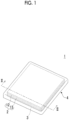
- Figs. 1 and 2 illustrate an example of a radiation detection device for describing an embodiment of the invention.
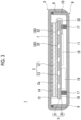
- a radiation detection device 1 illustrated in Figs. 1 and 2 is a so-called electronic cassette and comprises a radiation detection panel 2 that detects radiation, such as X-rays, a supporting member 3 that supports the radiation detection panel 2, and a housing 4 that accommodates the radiation detection panel 2 and the supporting member 3.
- a radiation detection panel 2 that detects radiation, such as X-rays
- a supporting member 3 that supports the radiation detection panel 2
- a housing 4 that accommodates the radiation detection panel 2 and the supporting member 3.
- the housing 4 is formed in a rectangular parallelepiped shape and typically has a size based on the International Organization for Standardization (ISO) 4090:2001.
- the housing 4 includes a front member 5 and a back member 6.
- a top plate 7 that covers a radiation incident surface 2a of the radiation detection panel 2 and an outer frame 8 that surrounds the outer periphery of the radiation detection panel 2 are integrally formed.
- the front member 5 is made of a material which can reduce weight and increase load resistance. Examples of the material include a magnesium alloy, an aluminum alloy, a fiber reinforced resin, a cellulose nanofiber (CNF) reinforced resin, and a resin that satisfy a specific gravity of 3.0 or less and a Young's modulus of 1.8 GPa or more.
- the front member 5 is preferably made of a resin material, such as a fiber reinforced resin with high radiation transmittance, in consideration of the formation of the top plate 7 transmitting radiation.
- the back member 6 an inner frame 10 that is fitted inside the outer frame 8 and a bottom 11 that is provided in an opening portion 9 opposite to the top plate 7 of the front member 5 are integrally formed.
- the back member 6 covers the opening portion 9. It is preferable that the back member 6 is made of a material which can reduce weight and increase load resistance. Examples of the material include a magnesium alloy, an aluminum alloy, a fiber reinforced resin, a cellulose nanofiber (CNF) reinforced resin, and a resin that satisfy a specific gravity of 3.0 or less and a Young's modulus of 1.8 GPa or more.
- the material include a magnesium alloy, an aluminum alloy, a fiber reinforced resin, a cellulose nanofiber (CNF) reinforced resin, and a resin that satisfy a specific gravity of 3.0 or less and a Young's modulus of 1.8 GPa or more.
- the radiation detection panel 2 is formed in a rectangular shape, includes a scintillator 12 and a detection substrate 13, and is provided behind the top plate 7 in the housing 4.
- the rectangular shape is not limited to a quadrangle with right-angled corners and includes a quadrangle with chamfered corners or a quadrangle with rounded corners.
- the scintillator 12 has a phosphor, such as Csl:Tl (thallium-activated cesium iodide) or GOS (Gd 2 O 2 S:Tb, terbium-activated gadolinium oxysulfide) and emits fluorescence corresponding to the amount of incident radiation.
- the detection substrate 13 includes a plurality of pixels that are two-dimensionally arranged, detects fluorescence generated by the scintillator 12 with the pixels, and converts the detected fluorescence into an electric signal.
- the scintillator 12 and the detection substrate 13 are stacked in the order of the scintillator 12 and the detection substrate 13 from the top plate 7 of the housing 4.
- the scintillator 12 and the detection substrate 13 may be stacked in the order of the detection substrate 13 and the scintillator 12 from the top plate 7.
- a direct-conversion-type radiation detection panel may be used in which a photoconductive film of each pixel of the detection substrate 13 that generates signal charge is made of, for example, amorphous selenium and which directly converts radiation into signal charge.
- a buffer member 14 is provided between the radiation incident surface 2a of the radiation detection panel 2 and the top plate 7 of the housing 4 which covers the radiation incident surface 2a. In a case in which the load of the object is applied to the top plate 7, the buffer member 14 disperses the load and prevents local stress from being applied to the radiation detection panel 2.
- the buffer member 14 is made of a foamed material such as foamed silicone or foamed urethane.
- the supporting member 3 is a plate-shaped member and is formed in a rectangular shape.
- the supporting member 3 has a first surface 15 that faces the top plate 7 of the housing 4 and a second surface 16 that is opposite to the first surface 15.
- the radiation detection panel 2 is supported by the first surface 15 of the supporting member 3.
- the supporting member 3 is supported by a plurality of spacers 17 provided on the second surface 16 of the supporting member 3.
- the spacer 17 protrudes from the second surface 16 to the bottom 11 of the housing 4 facing the second surface 16 and comes into contact with the bottom 11.
- An appropriate space is formed between the supporting member 3 and the bottom 11.
- a circuit substrate 18 is provided between the supporting member 3 and the bottom 11.
- a driving control circuit that controls the driving of the detection substrate 13, a signal processing circuit that processes the electric signal output from the detection substrate 13, a communication circuit for communication with the outside, and a power circuit are formed on the circuit substrate 18.
- the circuit substrate 18 is schematically illustrated as a single element in Fig. 2 . However, the circuit substrate 18 may be divided into a plurality of circuit substrates and the plurality of circuit substrates may be dispersed between the supporting member 3 and the bottom 11.
- a power supply unit 19 that supplies power to the detection substrate 13 and the circuit substrate 18 is provided between the supporting member 3 and the bottom 11.
- the power supply unit 19 is a rechargeable battery, such as a lithium-ion secondary battery, or a capacitor, such as an electric double layer capacitor or a lithium-ion capacitor.
- the power supply unit 19 is schematically illustrated as a single element in Fig. 2 . However, the power supply unit 19 may be divided into a plurality of power supply units and the plurality of power supply units may be dispersed between the supporting member 3 and the bottom 11.
- the detection substrate 13 of the radiation detection panel 2 which is provided on the first surface 15 of the supporting member 3 and the circuit substrate 18 which is provided on the second surface 16 of the supporting member 3 are connected to each other by a flexible substrate 20.
- the flexible substrate 20 protrudes from the outer periphery of the radiation detection panel 2 to the outer frame 8 and the inner frame 10, is bent in an arch shape so as to pass between the supporting member 3 and the outer frame 8 and the inner frame 10 of the housing 4, and is connected to the circuit substrate 18.
- the supporting member 3 has one or more concave portions.
- the concave portions are provided in the first surface 15 supporting the radiation detection panel 2.
- the concave portion is a hole 30 with the bottom whose periphery is closed by the supporting member 3.
- a plurality of concave portions are provided in the first surface 15.
- the radiation detection panel 2 is bonded to a region of the first surface 15 except the openings of the holes 30 in the first surface 15 through a bonding material such as double-sided adhesive tape or as an adhesive.
- the provision of the holes 30 in the supporting member 3 makes it possible to reduce the weight of the supporting member 3, to increase the thickness of the supporting member 3 without increasing the weight of the supporting member 3, and thus to increase the rigidity of the supporting member 3. Since the radiation detection panel 2 is directly bonded to the first surface 15 of the supporting member 3, it is possible to prevent the positional deviation of the radiation detection panel 2 with respect to the supporting member 3. Therefore, it is possible to prevent the damage of the radiation detection panel 2.
- the supporting member 3 is made of a material which can reduce weight and increase load resistance.
- the material include a magnesium alloy, an aluminum alloy, a fiber reinforced resin, a cellulose nanofiber (CNF) reinforced resin, and a resin that satisfy a specific gravity of 3.0 or less and a Young's modulus of 1.8 GPa or more.
- the hole 30 can be formed in the supporting member 3 by machine processing such as cutting.
- the hole 30 formed by machine processing typically has a circular shape. However, the shape of the hole 30 is not limited to the circular shape.
- the supporting member 3 may have a single-layer structure as illustrated in Fig. 2 or may have a multi-layer structure in which plate-shaped members made of the above-mentioned material are stacked as illustrated in Fig. 3 .
- the supporting member 3 may include a first layer 31 in which through holes 32 are formed and a second layer 33 on which the first layer 31 is stacked.
- the hole 30 is configured by closing one opening of the through hole 32 with the second layer 33.
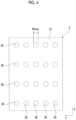
- Figs. 4 and 5 illustrate an example of the arrangement of the holes 30.
- the supporting member 3 is formed in a rectangular shape.
- a direction along one set of opposite sides of the supporting member 3 in the first surface 15 of the supporting member 3 is a first direction X and a direction along the other set of opposite sides is a second direction Y.
- a plurality of holes 30 are arranged at regular intervals in the first direction X and are arranged at regular intervals in the second direction Y.
- the plurality of holes 30 are arranged in a lattice shape.
- a plurality of holes 30 are arranged at regular intervals in the first direction X and concave portion columns 34, each of which has the holes 30 arranged in the first direction X, are arranged at intervals in the second direction Y.
- Two adjacent concave portion columns 34 are a first column 34a and a second column 34b.
- a plurality of holes 30 included in the first column 34a are arranged so as to deviate from a plurality of holes 30 included in the second column 34b in the first direction X. That is, the holes 30 are arranged in zigzag.
- the holes 30 can be arranged in the second direction Y more sparsely than those in the example of the arrangement of the holes 30 illustrated in Fig. 4 . Therefore, it is possible to prevent the warpage of the supporting member 3 in the second direction and to further prevent the damage of the radiation detection panel 2.
- the maximum value (opening size) Wmax of the opening dimension of the hole 30 in the first surface 15 is preferably less than 52.5 mm and more preferably equal to or less than 40 mm.
- local stress is applied to the radiation detection panel 2 in a case in which the top plate 7 of the housing 4 is stepped on.
- the minimum value of the size of the heel of an adult is 52.5 mm according to the "Human Body Size and Shape Database" by the National Institute of Advanced Industrial Science and Technology (AIST).
- the maximum value Wmax of the opening dimension of the hole 30 is less than 52.5 mm, at least a portion of the load applied from the heel to the top plate 7 can be supported by the first surface 15 of the supporting member 3, regardless of the positional relationship between the heel and the hole 30, and it is possible to further prevent the damage of the radiation detection panel 2.
- the size of the heel is a distance between the points where a straight line drawn from a heel point at a position corresponding to 16% of the foot length along the axis of the foot (a straight line connecting the heel point and the second finger tip) so as to be perpendicular to the axis of the foot intersects the inside and outside of the contour in the outline of the sole of the foot.
- the hole 30 is a void.
- the hole 30 is filled with a filler 35.
- the filler 35 has a lower density than the material (for example, an aluminum alloy, a magnesium alloy, or a fiber reinforced resin) forming the supporting member 3 and is made of, for example, a silicon-based or urethane-based foamed material.
- the hole 30 is filled with the filler 35, the local warpage of the radiation detection panel 2 sunk in the holes 30 is prevented.
- the hole 30 is filled with the filler 35, the bonding area between the radiation detection panel 2 and the supporting member 3 increases and the positional deviation of the radiation detection panel 2 with respect to the supporting member 3 is prevented. Therefore, it is possible to further prevent the damage of the radiation detection panel 2.
- the periphery of the hole 30 is closed by the supporting member 3 and the filler 35 filling the hole 30 is surrounded by the supporting member 3. Therefore, even in a case in which the adhesion of the filler 35 made of a foamed material to the supporting member 3 is reduced, the positional deviation of the filler 35 with respect to the supporting member 3 is reliably prevented.
- the filler 35 is made of a foamed material, and a surface layer 35a (see Fig. 7 ) of the filler 35 exposed from the first surface 15 of the supporting member 3 is a skin layer with a higher density than the inside of the filler 35 except the surface layer 35a.
- the surface layer 35a (skin layer) with a relatively high density can be formed using a jig 50 having a flat molding surface 51.
- an inlet 52 and an outlet 53 that extend from the hole 30 to the second surface 16 may be formed in each hole 30 and a foamed material may be injected from the inlet 52 with the first surface 15 of the supporting member 3 coming into close contact with the molding surface 51 of the jig 50.
- the filler 35 made of a foamed material is convex or concave with respect to the first surface 15 of the supporting member 3.
- a tape member interposed between the first surface 15 and the radiation detection panel 2 and a tape member interposed between the filler 35 and the radiation detection panel 2 may be formed with different thicknesses and the amount of unevenness of the filler 35 with respect to the first surface 15 may be absorbed by the difference in thickness between the tape members.
- the filler 35 made of a foamed material has a lower thermal conductivity than the material (for example, an aluminum alloy, a magnesium alloy, or a fiber reinforced resin) forming the supporting member 3. Therefore, it is preferable that the hole 30 and the filler 35 are formed in at least an overlap region A which overlaps the circuit substrate 18 in the first surface 15 of the supporting member 3. In this case, it is possible to prevent heat generated from an electronic component mounted on the circuit substrate 18 from being transmitted to the radiation detection panel 2 and to reduce noise generated in the radiation detection panel 2 due to heat.
- the material for example, an aluminum alloy, a magnesium alloy, or a fiber reinforced resin
- the concave portion provided in the first surface 15 of the supporting member 3 is not limited to the hole 30.
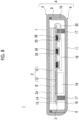
- a concave portion illustrated in Fig. 8 is an embossed portion 36 which is a convex portion on the second surface 16 of the supporting member 3. The periphery of the embossed portion 36 is closed by the supporting member 3.
- a plurality of embossed portions 36 are provided in the first surface 15.
- the embossed portion 36 can be formed by press working such as squeezing.
- the embossed portion 36 can be formed in an appropriate shape, such as a circular shape or a rectangular shape, by press working.
- the plurality of embossed portions 36 may be arranged in a lattice shape as in the example of the arrangement of the holes 30 illustrated in Fig. 4 and is preferably arranged in zigzag as in the example of the arrangement of the holes 30 illustrated in Fig. 5 .
- the maximum value of the opening dimension of the embossed portion 36 in the first surface 15 is less than 52.5 mm. According to the presently claimed invention, the embossed portion 36 is filled with the filler 35.
- the power supply unit 19 provided on the second surface 16 of the supporting member 3 is thicker than the circuit substrate 18.
- the embossed portion 36 which is a convex portion on the second surface 16 of the supporting member 3 is provided in a region except an overlap region B that overlaps the power supply unit 19 in the first surface 15 of the supporting member 3.
- a rib 37 that connects two embossed portions 36 may be appropriately provided on the second surface 16 of the supporting member 3.
- the rib 37 makes it possible to further increase the rigidity of the supporting member 3 and to further prevent the damage of the radiation detection panel 2.
- each of the hole 30 and the embossed portion 36 is closed by the supporting member 3.
- the concave portion provided in the first surface 15 of the supporting member 3 is not limited to the structure in which the periphery of the concave portion is closed by the supporting member 3.
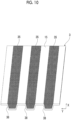
- a concave portion illustrated in Fig. 10 is an embossed portion 38 that is formed in a groove shape extending in the first direction X of the supporting member 3. Both ends of the embossed portion 38 in the first direction are open.
- a plurality of embossed portions 38 are arranged at intervals in the second direction Y.
- the embossed portion 38 is filled with the filler 35.
- the filler 35 filling the embossed portion 38 is engaged with the supporting member 3 in the second direction Y. Therefore, the positional deviation of the filler 35 with respect to the supporting member 3 in the second direction Y is reliably prevented.
- a plurality of holes 30, embossed portions 36, or embossed portions 38 as the concave portions provided in the first surface 15 of the supporting member 3 are provided in the first surface 15.
- one concave portion may be provided.
- one concave portion 40 is provided in the first surface 15 of the supporting member 3.
- the concave portion 40 is filled with the filler 35.
- the concave portion 40 is an embossed portion which is a convex portion on the second surface 16 of the supporting member 3.
- the concave portion 40 may be a hole with a bottom.
- the concave portion 40 is smaller than the radiation detection panel 2.
- An outer peripheral portion 2b of the radiation detection panel 2 is supported by the supporting member 3.
- the entire outer peripheral portion 2b is supported by the supporting member 3.
- a portion of the outer peripheral portion 2b in a circumferential direction may deviate from the supporting member 3.
- a central portion of the radiation detection panel 2 except the outer peripheral portion 2b is supported by the filler 35.
- the filler 35 having a lower density than the material (for example, an aluminum alloy, a magnesium alloy, or a fiber reinforced resin) forming the supporting member 3 is more easily deformed than the supporting member 3.
- the buffer member 14 provided between the radiation detection panel 2 and the top plate 7 of the housing 4 is more flexible than the filler 35 in order to prevent the concentration of stress on a boundary portion between the central portion and the outer peripheral portion 2b of the radiation detection panel 2 caused by the sinking of the central portion in the concave portion 40 in a case in which a load is locally applied to the central portion of the radiation detection panel 2.
- Flexibility is represented by 25% compressive load (compressive load required for 25% deformation in the thickness direction) or 50% compressive load (compressive load required for 50% deformation in the thickness direction). As the compressive load becomes smaller, flexibility becomes higher.
- the compressive load is a value measured by a hardness test method defined by JIS K 6400-2. Since the buffer member 14 that is relatively flexible is deformed before the filler 35, the deformation of the filler 35 is prevented and the sinking of the central portion of the radiation detection panel 2 in the concave portion 40 is prevented. Therefore, the concentration of stress on the boundary portion between the central portion and the outer peripheral portion 2b of the radiation detection panel 2 is reduced. As a result, it is possible to prevent the damage of the radiation detection panel 2.
- the radiation detection panel 2 includes the scintillator 12 and the detection substrate 13 and an outer peripheral portion 13a of the detection substrate 13 protrudes outward from an outer peripheral portion 12a of the scintillator 12.
- the outer peripheral portion 2b of the radiation detection panel 2 supported by the supporting member 3 includes the outer peripheral portion 13a of the detection substrate 13 and the outer peripheral portion 12a of the scintillator 12.
- the detection substrate 13 is typically a glass substrate and is relatively fragile.
- the scintillator 12 is stacked on the detection substrate 13 to reinforce the detection substrate 13.
- the outer peripheral portion 2b of the radiation detection panel 2 includes the outer peripheral portion 13a of the detection substrate 13 and the outer peripheral portion 12a of the scintillator 12, the range from the outer periphery of the detection substrate 13 to the scintillator 12 is supported by the supporting member 3 made of a single material. Therefore, the concentration of stress on the outer periphery of the scintillator 12 whose strength varies is reduced and it is possible to further prevent the damage of the radiation detection panel 2.
- the range from the outer periphery of the detection substrate 13 to the scintillator 12 may be supported by a single material in order to reduce the concentration of stress on the outer periphery of the scintillator 12 whose strength varies or may be supported by the filler 35 instead of the supporting member 3.
- one concave portion 41 is provided in the first surface 15 of the supporting member 3.
- the concave portion 41 is filled with the filler 35.
- the concave portion 41 is larger than the radiation detection panel 2 and the entire radiation detection panel 2 is supported by the filler 35.
- the range from the outer periphery of the detection substrate 13 to the scintillator 12 is supported by the filler 35 made of a single material. Therefore, the concentration of stress on the outer periphery of the scintillator 12 whose strength varies is reduced and it is possible to further prevent the damage of the radiation detection panel 2.
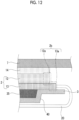
- the supporting member 3 includes a frame portion 42 that surrounds the outer periphery of the radiation detection panel 2 as illustrated in Fig. 14 .
- the radiation detection device 1 falls and an impact is applied to the outer frame 8 (see Fig. 13 ) and the inner frame 10 (see Fig. 13 ) of the housing 4, since the outer periphery of the radiation detection panel 2 is surrounded by the frame portion 42, it is possible to protect the radiation detection panel 2 from the impact. Therefore, it is possible to further prevent the damage of the radiation detection panel 2.
- a cutout 43 may be appropriately provided in a part which can interfere with the flexible substrate 20 in the frame portion 42.
Landscapes
- Physics & Mathematics (AREA)
- General Physics & Mathematics (AREA)
- Health & Medical Sciences (AREA)
- Life Sciences & Earth Sciences (AREA)
- High Energy & Nuclear Physics (AREA)
- Molecular Biology (AREA)
- Spectroscopy & Molecular Physics (AREA)
- Measurement Of Radiation (AREA)
- Radiography Using Non-Light Waves (AREA)
- Apparatus For Radiation Diagnosis (AREA)
Applications Claiming Priority (1)
| Application Number | Priority Date | Filing Date | Title |
|---|---|---|---|
| JP2017246646A JP6944868B2 (ja) | 2017-12-22 | 2017-12-22 | 放射線検出装置 |
Publications (2)
| Publication Number | Publication Date |
|---|---|
| EP3502749A1 EP3502749A1 (en) | 2019-06-26 |
| EP3502749B1 true EP3502749B1 (en) | 2023-10-04 |
Family
ID=64744437
Family Applications (1)
| Application Number | Title | Priority Date | Filing Date |
|---|---|---|---|
| EP18213055.9A Active EP3502749B1 (en) | 2017-12-22 | 2018-12-17 | Radiation detection device |
Country Status (4)
| Country | Link |
|---|---|
| US (1) | US10732308B2 (https=) |
| EP (1) | EP3502749B1 (https=) |
| JP (1) | JP6944868B2 (https=) |
| CN (1) | CN109959959B (https=) |
Families Citing this family (8)
| Publication number | Priority date | Publication date | Assignee | Title |
|---|---|---|---|---|
| KR102420540B1 (ko) * | 2019-08-13 | 2022-07-13 | 주식회사 뷰웍스 | X선 디텍터용 커버 및 이를 포함하는 x선 디텍터 |
| US20210048543A1 (en) * | 2019-08-13 | 2021-02-18 | Vieworks Co., Ltd. | X-ray detector cover and x-ray detector having same |
| JP7468105B2 (ja) * | 2020-04-16 | 2024-04-16 | コニカミノルタ株式会社 | 放射線検出器 |
| JP2023063720A (ja) * | 2021-10-25 | 2023-05-10 | キヤノン株式会社 | 放射線撮影装置 |
| CN116806370A (zh) * | 2022-01-25 | 2023-09-26 | 京东方科技集团股份有限公司 | 探测基板及射线探测器 |
| JP7810011B2 (ja) * | 2022-02-28 | 2026-02-03 | コニカミノルタ株式会社 | 放射線撮影装置 |
| JP2024064190A (ja) * | 2022-10-27 | 2024-05-14 | キヤノン株式会社 | 放射線撮像装置および放射線撮影システム |
| CN121730866A (zh) * | 2024-09-26 | 2026-03-27 | 迪爱株式会社 | 包括支撑部的射线探测器 |
Family Cites Families (9)
| Publication number | Priority date | Publication date | Assignee | Title |
|---|---|---|---|---|
| JP3848288B2 (ja) * | 2003-04-25 | 2006-11-22 | キヤノン株式会社 | 放射線画像撮影装置 |
| US7495227B2 (en) | 2007-07-10 | 2009-02-24 | General Electric Company | Digital x-ray detectors |
| JP2010262134A (ja) * | 2009-05-07 | 2010-11-18 | Fujifilm Corp | 放射線検出装置及び放射線画像撮影システム |
| JP5629445B2 (ja) * | 2009-09-25 | 2014-11-19 | キヤノン株式会社 | X線画像撮影装置 |
| JP2011194212A (ja) * | 2010-02-24 | 2011-10-06 | Fujifilm Corp | 放射線検出装置 |
| JP2012247401A (ja) * | 2011-05-31 | 2012-12-13 | Fujifilm Corp | 放射線撮影装置 |
| JP6018854B2 (ja) * | 2012-09-14 | 2016-11-02 | 浜松ホトニクス株式会社 | シンチレータパネル、及び、放射線検出器 |
| JP2015017956A (ja) * | 2013-07-12 | 2015-01-29 | 東芝電子管デバイス株式会社 | 放射線検出器 |
| JP6397208B2 (ja) * | 2014-04-09 | 2018-09-26 | キヤノン株式会社 | 放射線画像撮影装置および放射線画像撮影システム |
-
2017
- 2017-12-22 JP JP2017246646A patent/JP6944868B2/ja active Active
-
2018
- 2018-12-17 EP EP18213055.9A patent/EP3502749B1/en active Active
- 2018-12-20 CN CN201811562113.5A patent/CN109959959B/zh active Active
- 2018-12-21 US US16/230,129 patent/US10732308B2/en active Active
Also Published As
| Publication number | Publication date |
|---|---|
| US20190196034A1 (en) | 2019-06-27 |
| US10732308B2 (en) | 2020-08-04 |
| CN109959959A (zh) | 2019-07-02 |
| EP3502749A1 (en) | 2019-06-26 |
| JP2019113402A (ja) | 2019-07-11 |
| JP6944868B2 (ja) | 2021-10-06 |
| CN109959959B (zh) | 2023-07-21 |
Similar Documents
| Publication | Publication Date | Title |
|---|---|---|
| EP3502749B1 (en) | Radiation detection device | |
| US8035084B2 (en) | Cassette type radiographic image solid-state detector | |
| US8324584B2 (en) | Cassette type radiographic image solid-state detector | |
| US11079503B2 (en) | Radiation detection device | |
| EP3770639B1 (en) | Radiation detector, radiographic photography device, and production method for radiation detector | |
| US8901505B2 (en) | Cassette for radiographic imaging | |
| JP6931604B2 (ja) | 放射線検出装置 | |
| JP2009257914A (ja) | カセッテ型放射線画像検出器 | |
| WO2009125632A1 (ja) | 可搬型放射線固体検出器 | |
| US11099286B2 (en) | Radiation detection device | |
| JP2009101053A (ja) | カセッテ型放射線画像固体検出器 | |
| US20230273329A1 (en) | Radiation imaging apparatus | |
| US10973476B2 (en) | Radiation detection device | |
| JP2009104043A (ja) | カセッテ型放射線画像固体検出器 | |
| JP2009104042A (ja) | 補強フレーム及びカセッテ型放射線画像固体検出器 | |
| US20190196032A1 (en) | Radiation detection device | |
| US10551511B2 (en) | Radiation detection device | |
| JP2011141154A (ja) | 放射線画像検出装置 | |
| JP2009156936A (ja) | カセッテ型放射線画像撮影装置 |
Legal Events
| Date | Code | Title | Description |
|---|---|---|---|
| PUAI | Public reference made under article 153(3) epc to a published international application that has entered the european phase |
Free format text: ORIGINAL CODE: 0009012 |
|
| STAA | Information on the status of an ep patent application or granted ep patent |
Free format text: STATUS: THE APPLICATION HAS BEEN PUBLISHED |
|
| AK | Designated contracting states |
Kind code of ref document: A1 Designated state(s): AL AT BE BG CH CY CZ DE DK EE ES FI FR GB GR HR HU IE IS IT LI LT LU LV MC MK MT NL NO PL PT RO RS SE SI SK SM TR |
|
| AX | Request for extension of the european patent |
Extension state: BA ME |
|
| STAA | Information on the status of an ep patent application or granted ep patent |
Free format text: STATUS: REQUEST FOR EXAMINATION WAS MADE |
|
| 17P | Request for examination filed |
Effective date: 20191223 |
|
| RBV | Designated contracting states (corrected) |
Designated state(s): AL AT BE BG CH CY CZ DE DK EE ES FI FR GB GR HR HU IE IS IT LI LT LU LV MC MK MT NL NO PL PT RO RS SE SI SK SM TR |
|
| RAP3 | Party data changed (applicant data changed or rights of an application transferred) |
Owner name: FUJIFILM CORPORATION |
|
| STAA | Information on the status of an ep patent application or granted ep patent |
Free format text: STATUS: EXAMINATION IS IN PROGRESS |
|
| 17Q | First examination report despatched |
Effective date: 20220215 |
|
| GRAP | Despatch of communication of intention to grant a patent |
Free format text: ORIGINAL CODE: EPIDOSNIGR1 |
|
| STAA | Information on the status of an ep patent application or granted ep patent |
Free format text: STATUS: GRANT OF PATENT IS INTENDED |
|
| INTG | Intention to grant announced |
Effective date: 20230428 |
|
| GRAS | Grant fee paid |
Free format text: ORIGINAL CODE: EPIDOSNIGR3 |
|
| GRAA | (expected) grant |
Free format text: ORIGINAL CODE: 0009210 |
|
| STAA | Information on the status of an ep patent application or granted ep patent |
Free format text: STATUS: THE PATENT HAS BEEN GRANTED |
|
| P01 | Opt-out of the competence of the unified patent court (upc) registered |
Effective date: 20230823 |
|
| AK | Designated contracting states |
Kind code of ref document: B1 Designated state(s): AL AT BE BG CH CY CZ DE DK EE ES FI FR GB GR HR HU IE IS IT LI LT LU LV MC MK MT NL NO PL PT RO RS SE SI SK SM TR |
|
| REG | Reference to a national code |
Ref country code: GB Ref legal event code: FG4D |
|
| REG | Reference to a national code |
Ref country code: CH Ref legal event code: EP |
|
| REG | Reference to a national code |
Ref country code: IE Ref legal event code: FG4D |
|
| REG | Reference to a national code |
Ref country code: DE Ref legal event code: R096 Ref document number: 602018058587 Country of ref document: DE |
|
| REG | Reference to a national code |
Ref country code: LT Ref legal event code: MG9D |
|
| REG | Reference to a national code |
Ref country code: NL Ref legal event code: MP Effective date: 20231004 |
|
| REG | Reference to a national code |
Ref country code: AT Ref legal event code: MK05 Ref document number: 1618295 Country of ref document: AT Kind code of ref document: T Effective date: 20231004 |
|
| PG25 | Lapsed in a contracting state [announced via postgrant information from national office to epo] |
Ref country code: NL Free format text: LAPSE BECAUSE OF FAILURE TO SUBMIT A TRANSLATION OF THE DESCRIPTION OR TO PAY THE FEE WITHIN THE PRESCRIBED TIME-LIMIT Effective date: 20231004 |
|
| PG25 | Lapsed in a contracting state [announced via postgrant information from national office to epo] |
Ref country code: GR Free format text: LAPSE BECAUSE OF FAILURE TO SUBMIT A TRANSLATION OF THE DESCRIPTION OR TO PAY THE FEE WITHIN THE PRESCRIBED TIME-LIMIT Effective date: 20240105 |
|
| PG25 | Lapsed in a contracting state [announced via postgrant information from national office to epo] |
Ref country code: IS Free format text: LAPSE BECAUSE OF FAILURE TO SUBMIT A TRANSLATION OF THE DESCRIPTION OR TO PAY THE FEE WITHIN THE PRESCRIBED TIME-LIMIT Effective date: 20240204 |
|
| PG25 | Lapsed in a contracting state [announced via postgrant information from national office to epo] |
Ref country code: LT Free format text: LAPSE BECAUSE OF FAILURE TO SUBMIT A TRANSLATION OF THE DESCRIPTION OR TO PAY THE FEE WITHIN THE PRESCRIBED TIME-LIMIT Effective date: 20231004 |
|
| PG25 | Lapsed in a contracting state [announced via postgrant information from national office to epo] |
Ref country code: AT Free format text: LAPSE BECAUSE OF FAILURE TO SUBMIT A TRANSLATION OF THE DESCRIPTION OR TO PAY THE FEE WITHIN THE PRESCRIBED TIME-LIMIT Effective date: 20231004 |
|
| PG25 | Lapsed in a contracting state [announced via postgrant information from national office to epo] |
Ref country code: ES Free format text: LAPSE BECAUSE OF FAILURE TO SUBMIT A TRANSLATION OF THE DESCRIPTION OR TO PAY THE FEE WITHIN THE PRESCRIBED TIME-LIMIT Effective date: 20231004 |
|
| PG25 | Lapsed in a contracting state [announced via postgrant information from national office to epo] |
Ref country code: LT Free format text: LAPSE BECAUSE OF FAILURE TO SUBMIT A TRANSLATION OF THE DESCRIPTION OR TO PAY THE FEE WITHIN THE PRESCRIBED TIME-LIMIT Effective date: 20231004 Ref country code: IS Free format text: LAPSE BECAUSE OF FAILURE TO SUBMIT A TRANSLATION OF THE DESCRIPTION OR TO PAY THE FEE WITHIN THE PRESCRIBED TIME-LIMIT Effective date: 20240204 Ref country code: GR Free format text: LAPSE BECAUSE OF FAILURE TO SUBMIT A TRANSLATION OF THE DESCRIPTION OR TO PAY THE FEE WITHIN THE PRESCRIBED TIME-LIMIT Effective date: 20240105 Ref country code: ES Free format text: LAPSE BECAUSE OF FAILURE TO SUBMIT A TRANSLATION OF THE DESCRIPTION OR TO PAY THE FEE WITHIN THE PRESCRIBED TIME-LIMIT Effective date: 20231004 Ref country code: BG Free format text: LAPSE BECAUSE OF FAILURE TO SUBMIT A TRANSLATION OF THE DESCRIPTION OR TO PAY THE FEE WITHIN THE PRESCRIBED TIME-LIMIT Effective date: 20240104 Ref country code: AT Free format text: LAPSE BECAUSE OF FAILURE TO SUBMIT A TRANSLATION OF THE DESCRIPTION OR TO PAY THE FEE WITHIN THE PRESCRIBED TIME-LIMIT Effective date: 20231004 Ref country code: PT Free format text: LAPSE BECAUSE OF FAILURE TO SUBMIT A TRANSLATION OF THE DESCRIPTION OR TO PAY THE FEE WITHIN THE PRESCRIBED TIME-LIMIT Effective date: 20240205 |
|
| PG25 | Lapsed in a contracting state [announced via postgrant information from national office to epo] |
Ref country code: SE Free format text: LAPSE BECAUSE OF FAILURE TO SUBMIT A TRANSLATION OF THE DESCRIPTION OR TO PAY THE FEE WITHIN THE PRESCRIBED TIME-LIMIT Effective date: 20231004 Ref country code: RS Free format text: LAPSE BECAUSE OF FAILURE TO SUBMIT A TRANSLATION OF THE DESCRIPTION OR TO PAY THE FEE WITHIN THE PRESCRIBED TIME-LIMIT Effective date: 20231004 Ref country code: PL Free format text: LAPSE BECAUSE OF FAILURE TO SUBMIT A TRANSLATION OF THE DESCRIPTION OR TO PAY THE FEE WITHIN THE PRESCRIBED TIME-LIMIT Effective date: 20231004 Ref country code: NO Free format text: LAPSE BECAUSE OF FAILURE TO SUBMIT A TRANSLATION OF THE DESCRIPTION OR TO PAY THE FEE WITHIN THE PRESCRIBED TIME-LIMIT Effective date: 20240104 Ref country code: LV Free format text: LAPSE BECAUSE OF FAILURE TO SUBMIT A TRANSLATION OF THE DESCRIPTION OR TO PAY THE FEE WITHIN THE PRESCRIBED TIME-LIMIT Effective date: 20231004 Ref country code: HR Free format text: LAPSE BECAUSE OF FAILURE TO SUBMIT A TRANSLATION OF THE DESCRIPTION OR TO PAY THE FEE WITHIN THE PRESCRIBED TIME-LIMIT Effective date: 20231004 |
|
| REG | Reference to a national code |
Ref country code: DE Ref legal event code: R097 Ref document number: 602018058587 Country of ref document: DE |
|
| PG25 | Lapsed in a contracting state [announced via postgrant information from national office to epo] |
Ref country code: DK Free format text: LAPSE BECAUSE OF FAILURE TO SUBMIT A TRANSLATION OF THE DESCRIPTION OR TO PAY THE FEE WITHIN THE PRESCRIBED TIME-LIMIT Effective date: 20231004 |
|
| PG25 | Lapsed in a contracting state [announced via postgrant information from national office to epo] |
Ref country code: CZ Free format text: LAPSE BECAUSE OF FAILURE TO SUBMIT A TRANSLATION OF THE DESCRIPTION OR TO PAY THE FEE WITHIN THE PRESCRIBED TIME-LIMIT Effective date: 20231004 |
|
| PG25 | Lapsed in a contracting state [announced via postgrant information from national office to epo] |
Ref country code: SK Free format text: LAPSE BECAUSE OF FAILURE TO SUBMIT A TRANSLATION OF THE DESCRIPTION OR TO PAY THE FEE WITHIN THE PRESCRIBED TIME-LIMIT Effective date: 20231004 |
|
| PG25 | Lapsed in a contracting state [announced via postgrant information from national office to epo] |
Ref country code: SM Free format text: LAPSE BECAUSE OF FAILURE TO SUBMIT A TRANSLATION OF THE DESCRIPTION OR TO PAY THE FEE WITHIN THE PRESCRIBED TIME-LIMIT Effective date: 20231004 Ref country code: SK Free format text: LAPSE BECAUSE OF FAILURE TO SUBMIT A TRANSLATION OF THE DESCRIPTION OR TO PAY THE FEE WITHIN THE PRESCRIBED TIME-LIMIT Effective date: 20231004 Ref country code: RO Free format text: LAPSE BECAUSE OF FAILURE TO SUBMIT A TRANSLATION OF THE DESCRIPTION OR TO PAY THE FEE WITHIN THE PRESCRIBED TIME-LIMIT Effective date: 20231004 Ref country code: IT Free format text: LAPSE BECAUSE OF FAILURE TO SUBMIT A TRANSLATION OF THE DESCRIPTION OR TO PAY THE FEE WITHIN THE PRESCRIBED TIME-LIMIT Effective date: 20231004 Ref country code: EE Free format text: LAPSE BECAUSE OF FAILURE TO SUBMIT A TRANSLATION OF THE DESCRIPTION OR TO PAY THE FEE WITHIN THE PRESCRIBED TIME-LIMIT Effective date: 20231004 Ref country code: DK Free format text: LAPSE BECAUSE OF FAILURE TO SUBMIT A TRANSLATION OF THE DESCRIPTION OR TO PAY THE FEE WITHIN THE PRESCRIBED TIME-LIMIT Effective date: 20231004 Ref country code: CZ Free format text: LAPSE BECAUSE OF FAILURE TO SUBMIT A TRANSLATION OF THE DESCRIPTION OR TO PAY THE FEE WITHIN THE PRESCRIBED TIME-LIMIT Effective date: 20231004 |
|
| REG | Reference to a national code |
Ref country code: CH Ref legal event code: PL |
|
| PLBE | No opposition filed within time limit |
Free format text: ORIGINAL CODE: 0009261 |
|
| STAA | Information on the status of an ep patent application or granted ep patent |
Free format text: STATUS: NO OPPOSITION FILED WITHIN TIME LIMIT |
|
| PG25 | Lapsed in a contracting state [announced via postgrant information from national office to epo] |
Ref country code: LU Free format text: LAPSE BECAUSE OF NON-PAYMENT OF DUE FEES Effective date: 20231217 |
|
| PG25 | Lapsed in a contracting state [announced via postgrant information from national office to epo] |
Ref country code: MC Free format text: LAPSE BECAUSE OF FAILURE TO SUBMIT A TRANSLATION OF THE DESCRIPTION OR TO PAY THE FEE WITHIN THE PRESCRIBED TIME-LIMIT Effective date: 20231004 |
|
| REG | Reference to a national code |
Ref country code: BE Ref legal event code: MM Effective date: 20231231 |
|
| PG25 | Lapsed in a contracting state [announced via postgrant information from national office to epo] |
Ref country code: MC Free format text: LAPSE BECAUSE OF FAILURE TO SUBMIT A TRANSLATION OF THE DESCRIPTION OR TO PAY THE FEE WITHIN THE PRESCRIBED TIME-LIMIT Effective date: 20231004 Ref country code: LU Free format text: LAPSE BECAUSE OF NON-PAYMENT OF DUE FEES Effective date: 20231217 |
|
| 26N | No opposition filed |
Effective date: 20240705 |
|
| GBPC | Gb: european patent ceased through non-payment of renewal fee |
Effective date: 20240104 |
|
| REG | Reference to a national code |
Ref country code: IE Ref legal event code: MM4A |
|
| PG25 | Lapsed in a contracting state [announced via postgrant information from national office to epo] |
Ref country code: IE Free format text: LAPSE BECAUSE OF NON-PAYMENT OF DUE FEES Effective date: 20231217 |
|
| PG25 | Lapsed in a contracting state [announced via postgrant information from national office to epo] |
Ref country code: GB Free format text: LAPSE BECAUSE OF NON-PAYMENT OF DUE FEES Effective date: 20240104 |
|
| PG25 | Lapsed in a contracting state [announced via postgrant information from national office to epo] |
Ref country code: BE Free format text: LAPSE BECAUSE OF NON-PAYMENT OF DUE FEES Effective date: 20231231 |
|
| PG25 | Lapsed in a contracting state [announced via postgrant information from national office to epo] |
Ref country code: CH Free format text: LAPSE BECAUSE OF NON-PAYMENT OF DUE FEES Effective date: 20231231 |
|
| PG25 | Lapsed in a contracting state [announced via postgrant information from national office to epo] |
Ref country code: SI Free format text: LAPSE BECAUSE OF FAILURE TO SUBMIT A TRANSLATION OF THE DESCRIPTION OR TO PAY THE FEE WITHIN THE PRESCRIBED TIME-LIMIT Effective date: 20231004 |
|
| PG25 | Lapsed in a contracting state [announced via postgrant information from national office to epo] |
Ref country code: SI Free format text: LAPSE BECAUSE OF FAILURE TO SUBMIT A TRANSLATION OF THE DESCRIPTION OR TO PAY THE FEE WITHIN THE PRESCRIBED TIME-LIMIT Effective date: 20231004 Ref country code: IE Free format text: LAPSE BECAUSE OF NON-PAYMENT OF DUE FEES Effective date: 20231217 Ref country code: GB Free format text: LAPSE BECAUSE OF NON-PAYMENT OF DUE FEES Effective date: 20240104 Ref country code: CH Free format text: LAPSE BECAUSE OF NON-PAYMENT OF DUE FEES Effective date: 20231231 Ref country code: BE Free format text: LAPSE BECAUSE OF NON-PAYMENT OF DUE FEES Effective date: 20231231 |
|
| PG25 | Lapsed in a contracting state [announced via postgrant information from national office to epo] |
Ref country code: FI Free format text: LAPSE BECAUSE OF FAILURE TO SUBMIT A TRANSLATION OF THE DESCRIPTION OR TO PAY THE FEE WITHIN THE PRESCRIBED TIME-LIMIT Effective date: 20231004 |
|
| PG25 | Lapsed in a contracting state [announced via postgrant information from national office to epo] |
Ref country code: CY Free format text: LAPSE BECAUSE OF FAILURE TO SUBMIT A TRANSLATION OF THE DESCRIPTION OR TO PAY THE FEE WITHIN THE PRESCRIBED TIME-LIMIT; INVALID AB INITIO Effective date: 20181217 |
|
| PG25 | Lapsed in a contracting state [announced via postgrant information from national office to epo] |
Ref country code: HU Free format text: LAPSE BECAUSE OF FAILURE TO SUBMIT A TRANSLATION OF THE DESCRIPTION OR TO PAY THE FEE WITHIN THE PRESCRIBED TIME-LIMIT; INVALID AB INITIO Effective date: 20181217 |
|
| PG25 | Lapsed in a contracting state [announced via postgrant information from national office to epo] |
Ref country code: TR Free format text: LAPSE BECAUSE OF FAILURE TO SUBMIT A TRANSLATION OF THE DESCRIPTION OR TO PAY THE FEE WITHIN THE PRESCRIBED TIME-LIMIT Effective date: 20231004 |
|
| PGFP | Annual fee paid to national office [announced via postgrant information from national office to epo] |
Ref country code: DE Payment date: 20251028 Year of fee payment: 8 |
|
| PGFP | Annual fee paid to national office [announced via postgrant information from national office to epo] |
Ref country code: FR Payment date: 20251117 Year of fee payment: 8 |