EP3498262B1 - Gel injectable d'acide hyaluronique - Google Patents
Gel injectable d'acide hyaluronique Download PDFInfo
- Publication number
- EP3498262B1 EP3498262B1 EP19156054.9A EP19156054A EP3498262B1 EP 3498262 B1 EP3498262 B1 EP 3498262B1 EP 19156054 A EP19156054 A EP 19156054A EP 3498262 B1 EP3498262 B1 EP 3498262B1
- Authority
- EP
- European Patent Office
- Prior art keywords
- hyaluronic acid
- gel
- formulation
- polyol
- concentration
- Prior art date
- Legal status (The legal status is an assumption and is not a legal conclusion. Google has not performed a legal analysis and makes no representation as to the accuracy of the status listed.)
- Active
Links
Images



Classifications
-
- A—HUMAN NECESSITIES
- A61—MEDICAL OR VETERINARY SCIENCE; HYGIENE
- A61K—PREPARATIONS FOR MEDICAL, DENTAL OR TOILETRY PURPOSES
- A61K9/00—Medicinal preparations characterised by special physical form
- A61K9/0012—Galenical forms characterised by the site of application
- A61K9/0019—Injectable compositions; Intramuscular, intravenous, arterial, subcutaneous administration; Compositions to be administered through the skin in an invasive manner
- A61K9/0024—Solid, semi-solid or solidifying implants, which are implanted or injected in body tissue
-
- A—HUMAN NECESSITIES
- A61—MEDICAL OR VETERINARY SCIENCE; HYGIENE
- A61K—PREPARATIONS FOR MEDICAL, DENTAL OR TOILETRY PURPOSES
- A61K31/00—Medicinal preparations containing organic active ingredients
- A61K31/70—Carbohydrates; Sugars; Derivatives thereof
- A61K31/715—Polysaccharides, i.e. having more than five saccharide radicals attached to each other by glycosidic linkages; Derivatives thereof, e.g. ethers, esters
- A61K31/726—Glycosaminoglycans, i.e. mucopolysaccharides
- A61K31/728—Hyaluronic acid
-
- A—HUMAN NECESSITIES
- A61—MEDICAL OR VETERINARY SCIENCE; HYGIENE
- A61K—PREPARATIONS FOR MEDICAL, DENTAL OR TOILETRY PURPOSES
- A61K47/00—Medicinal preparations characterised by the non-active ingredients used, e.g. carriers or inert additives; Targeting or modifying agents chemically bound to the active ingredient
- A61K47/06—Organic compounds, e.g. natural or synthetic hydrocarbons, polyolefins, mineral oil, petrolatum or ozokerite
- A61K47/08—Organic compounds, e.g. natural or synthetic hydrocarbons, polyolefins, mineral oil, petrolatum or ozokerite containing oxygen, e.g. ethers, acetals, ketones, quinones, aldehydes, peroxides
- A61K47/10—Alcohols; Phenols; Salts thereof, e.g. glycerol; Polyethylene glycols [PEG]; Poloxamers; PEG/POE alkyl ethers
-
- A—HUMAN NECESSITIES
- A61—MEDICAL OR VETERINARY SCIENCE; HYGIENE
- A61K—PREPARATIONS FOR MEDICAL, DENTAL OR TOILETRY PURPOSES
- A61K9/00—Medicinal preparations characterised by special physical form
- A61K9/06—Ointments; Bases therefor; Other semi-solid forms, e.g. creams, sticks, gels
-
- A—HUMAN NECESSITIES
- A61—MEDICAL OR VETERINARY SCIENCE; HYGIENE
- A61L—METHODS OR APPARATUS FOR STERILISING MATERIALS OR OBJECTS IN GENERAL; DISINFECTION, STERILISATION OR DEODORISATION OF AIR; CHEMICAL ASPECTS OF BANDAGES, DRESSINGS, ABSORBENT PADS OR SURGICAL ARTICLES; MATERIALS FOR BANDAGES, DRESSINGS, ABSORBENT PADS OR SURGICAL ARTICLES
- A61L2/00—Disinfection or sterilisation of materials or objects, in general; Accessories therefor
- A61L2/02—Disinfection or sterilisation of materials or objects, in general; Accessories therefor using physical processes
- A61L2/04—Heat
-
- A—HUMAN NECESSITIES
- A61—MEDICAL OR VETERINARY SCIENCE; HYGIENE
- A61L—METHODS OR APPARATUS FOR STERILISING MATERIALS OR OBJECTS IN GENERAL; DISINFECTION, STERILISATION OR DEODORISATION OF AIR; CHEMICAL ASPECTS OF BANDAGES, DRESSINGS, ABSORBENT PADS OR SURGICAL ARTICLES; MATERIALS FOR BANDAGES, DRESSINGS, ABSORBENT PADS OR SURGICAL ARTICLES
- A61L26/00—Chemical aspects of, or use of materials for, wound dressings or bandages in liquid, gel or powder form
- A61L26/0009—Chemical aspects of, or use of materials for, wound dressings or bandages in liquid, gel or powder form containing macromolecular materials
- A61L26/0052—Mixtures of macromolecular compounds
-
- A—HUMAN NECESSITIES
- A61—MEDICAL OR VETERINARY SCIENCE; HYGIENE
- A61L—METHODS OR APPARATUS FOR STERILISING MATERIALS OR OBJECTS IN GENERAL; DISINFECTION, STERILISATION OR DEODORISATION OF AIR; CHEMICAL ASPECTS OF BANDAGES, DRESSINGS, ABSORBENT PADS OR SURGICAL ARTICLES; MATERIALS FOR BANDAGES, DRESSINGS, ABSORBENT PADS OR SURGICAL ARTICLES
- A61L26/00—Chemical aspects of, or use of materials for, wound dressings or bandages in liquid, gel or powder form
- A61L26/0061—Use of materials characterised by their function or physical properties
- A61L26/008—Hydrogels or hydrocolloids
-
- A—HUMAN NECESSITIES
- A61—MEDICAL OR VETERINARY SCIENCE; HYGIENE
- A61P—SPECIFIC THERAPEUTIC ACTIVITY OF CHEMICAL COMPOUNDS OR MEDICINAL PREPARATIONS
- A61P19/00—Drugs for skeletal disorders
-
- A—HUMAN NECESSITIES
- A61—MEDICAL OR VETERINARY SCIENCE; HYGIENE
- A61P—SPECIFIC THERAPEUTIC ACTIVITY OF CHEMICAL COMPOUNDS OR MEDICINAL PREPARATIONS
- A61P19/00—Drugs for skeletal disorders
- A61P19/02—Drugs for skeletal disorders for joint disorders, e.g. arthritis, arthrosis
-
- A—HUMAN NECESSITIES
- A61—MEDICAL OR VETERINARY SCIENCE; HYGIENE
- A61L—METHODS OR APPARATUS FOR STERILISING MATERIALS OR OBJECTS IN GENERAL; DISINFECTION, STERILISATION OR DEODORISATION OF AIR; CHEMICAL ASPECTS OF BANDAGES, DRESSINGS, ABSORBENT PADS OR SURGICAL ARTICLES; MATERIALS FOR BANDAGES, DRESSINGS, ABSORBENT PADS OR SURGICAL ARTICLES
- A61L2103/00—Materials or objects being the target of disinfection or sterilisation
- A61L2103/05—Living organisms or biological materials
-
- A—HUMAN NECESSITIES
- A61—MEDICAL OR VETERINARY SCIENCE; HYGIENE
- A61L—METHODS OR APPARATUS FOR STERILISING MATERIALS OR OBJECTS IN GENERAL; DISINFECTION, STERILISATION OR DEODORISATION OF AIR; CHEMICAL ASPECTS OF BANDAGES, DRESSINGS, ABSORBENT PADS OR SURGICAL ARTICLES; MATERIALS FOR BANDAGES, DRESSINGS, ABSORBENT PADS OR SURGICAL ARTICLES
- A61L2400/00—Materials characterised by their function or physical properties
- A61L2400/06—Flowable or injectable implant compositions
Definitions
- the invention relates to a sterile injectable aqueous gel formulation composed of hyaluronic acid (or a salt thereof) with or without other polysaccharide (s) of natural origin and one or more polyol ( s).
- This injectable formulation is used intra-articularly in the treatment of joint degeneration.
- the invention also relates to the process for preparing said formulation.
- a joint is a junction that connects two bones and gives them mobility in relation to each other.
- synovial joints are the most numerous joints, especially in the limbs. In these joints, bones unite through a cavity filled with a fluid that is both viscous and elastic called synovial fluid.
- the synovial fluid is responsible for the proper functioning and protection of the joints. It consists in particular of a polysaccharide, hyaluronic acid, which gives the synovial fluid properties of viscoelasticity allowing, depending on the constraints imposed, lubrication of the joint or absorption of shocks.
- synovial fluid deteriorates (decrease in concentration and mass molecular level of hyaluronic acid) and this degradation reduces the ability of synovial fluid to lubricate the joint and absorb shock.
- Viscosupplementation treatment involves injecting a gel into the joint to replace the deficient synovial fluid. Viscosupplementation can reduce or stop pain and help restore joint mobility.
- the viscosupplementation products currently on the market are gels that contain hyaluronic acid. These gels can be based on hyaluronic acid of animal or non-animal origin and crosslinked (case of Synvisc®, Durolane®) or uncrosslinked (case of Synocrom®, Arthrum®, Lubravisc®, Structovial®).
- This low persistence (kinetics of rapid resorption of the gel within the joint) is explained by a degradation (by depolymerization) of hyaluronic acid.
- the main factors of degradation of hyaluronic acid in the joint are radical degradation, thermal degradation at 37 ° C and mechanical degradation (enzymatic degradation is not an important factor of degradation in the joint).
- the therapeutic efficacy of the viscosupplement lasts longer than its residence time in the joint
- the persistence of a gel based on hyaluronic acid in the joint is a predominant parameter governing the efficacy of the product.
- the longer the gel based on hyaluronic acid has a long residence time in the joint the more effective the treatment by viscosupplementation (reduction in pain, gain in mobility). Therefore, increasing the residence time (remanence) of a gel within the joint is essential to increase the effectiveness of a viscosupplementation treatment using a gel based on hyaluronic acid.
- the present invention therefore consists of a sterile injectable aqueous formulation in the form of a gel composed of hyaluronic acid (or one of its salts) with or without other polysaccharide (s) of natural origin and one or more polyol (s).
- This formulation used in the treatment of articular degeneration, presents in certain cases (see examples 1 and 3) a rheology close to that of synovial fluid and still increased resistance to degradation.
- Example 4 shows the best resistance of a gel based on hyaluronic acid and a polyol when the latter is subjected to a radical, thermal and mechanical degradation test. This better resistance of the gel to degradation allows a longer persistence of the gel injected intra-articularly.
- Example 5 shows the better resistance of a gel based on hyaluronic acid and a polyol to thermal degradation. This better resistance of the gel to thermal degradation allows a longer persistence of the gel injected intra-articularly and better stability of the formulation during storage of the product before use (important point for the shelf life of the product).
- Example 8 demonstrates the strong affinity between hyaluronic acid and a polyol.
- the strong affinity between the hyaluronic acid and the polyol will prevent the rapid release of the polyol from the gel (and therefore its rapid elimination from the joint) and thus allow effective long-term protection of the gel by the polyol against degradation.
- Examples 1 and 3 show a rheology of a gel based on hyaluronic acid and a polyol close to that of synovial fluid.
- the formulation as defined in the claims has, after sterilization in an autoclave, a crossover frequency f c between the elastic modulus G 'and the viscous modulus G "close to 0.41 Hz. gel has viscoelastic properties similar to that of synovial fluid.
- the crossover frequency is between 0 and 10 Hz, preferably 0.41 ⁇ 0.41 Hz, G ′ being greater than G ′′ at high frequency.
- G ′ being greater than G ′′ at high frequency.
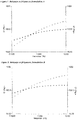
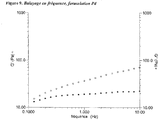
- the figures 1-5 show the viscous and elastic moduli of gels according to one aspect of the present invention while the figures 6-9 show those of commercial gels.
- the figures 10 and 11 illustrate the kinetics of radical, thermal and mechanical degradation of gels and the hyaluronic acid / polyol affinity.
- Hyaluronic acid is preferably obtained by biofermentation, but it can also be of animal origin. Its molecular mass is preferably from 0.1 to 10x10 6 Da and more preferably from 2 to 3x10 6 Da.
- the concentration of hyaluronic acid is between 1 and 100 mg / ml and preferably between 10 and 25 mg / ml.
- the concentration of polyols is preferably 15 to 45 mg / ml.
- the polysaccharide (s) of natural origin which can be used in combination with hyaluronic acid is chosen, for example, from chondroitin sulphate, keratan, keratan sulphate, heparin, heparan sulphate, cellulose and its derivatives. , chitosan, xanthans, alginates, and all of their respective salts.
- Hyaluronic acid just like the polysaccharide (s) of natural origin, can be crosslinked or uncrosslinked, grafted or ungrafted according to the crosslinking / grafting techniques described in the prior art.
- the polyol (s) is chosen from propylene glycol, sorbitol or mannitol.
- the polyol concentration is between 15 and 100 mg / ml and preferably between 15 and 45 mg / ml.
- the aqueous solution used is preferably a buffered solution.
- the composition of this buffer solution is chosen in order to have the desired physicochemical (pH, osmolarity) and rheological properties.
- the chosen buffer solution is a phosphate buffer solution.
- the formulation is sterilized in an autoclave.
- the formulation according to the present invention is used by injection into the joint and the injected dose may be between 0.1 and 20 ml depending on the nature of the joint treated.
- formulations prepared in the following examples are gels based on sodium hyaluronate (NaHA) uncrosslinked or crosslinked with polyol.
- the preparation of the uncrosslinked or crosslinked gels is carried out according to techniques well known to those skilled in the art.
- the sodium hyaluronate used to make these gels has a molecular mass equal to 2.5x10 6 Da.
- the crosslinking agent used is BDDE and the definition of the degree of crosslinking used is: mass (BDDE) / mass (dry NaHA).
- the incorporation of the polyol into the gel is carried out by adding the necessary quantity of polyol in the uncrosslinked or crosslinked gel and mixing with a spatula for 10 minutes (per 100 g of final gel).
- the rheometer used to perform the rheological measurements is an AR1000 (TA instruments) with a flat geometry of 40 mm, a gap of 1000 microns and an analysis temperature of 37 ° C.
- the polyols are assayed using an Ultimate 3000 HPLC (Dionex) and an ion exchange column.
- Example 2 Physicochemical properties of the formulations of example 1
- Formulations A, B, C, D, E and F are isotonic and have a neutral pH.
- Example 3 Rheological properties of the formulations of example 1
- the viscoelastic properties of formulations A, B, C, D and E are characterized by measuring the change in viscous modulus (G ") and elastic modulus (G ') as a function of frequency (see figures 1 to 5 ).
- Example 4 Resistance to degradation of the formulations of example 1
- the degradation test is carried out by adding an oxidant to the gel to be tested, by homogenizing with a spatula for 1 minute, by placing the temperature at 37 ° C. and by imposing a deformation of 0.3%.
- the value of the parameter Tan ⁇ G "/ G 'at 0.7 Hz (characteristic parameter of the viscoelastic properties of the gel) is measured over time.
- each formulation B, C, D and E has a significantly greater resistance to degradation than that of the gel without polyol (formulations G).
- formulation F has significantly greater resistance to degradation than that of the corresponding gel without polyol (formulation H).
- the polyols effectively protect the gel from degradation.
- Example 5 Accelerated aging study of a formulation with and without polyol
- a measurement of the zero viscosity (zero shear viscosity) and a determination of the frequency f c of crossing between the elastic modulus G 'and the viscous modulus G "is carried out at 3 times (t 0, 7 days, 26 days)
- Example 6 Comparison of the rheology of 4 commercial viscosupplementation products and of a formulation obtained according to the present invention
- the figures 6 - 9 give the viscous (G ") and elastic (G ') moduli as a function of the frequency.
- the crossover frequency is much higher than 3 Hz and therefore, the products do not have a strong elasticity allowing shock absorption when the knee is in motion.
- the product P4 has a very low crossover frequency, the elastic modulus is greater than the viscous modulus over the entire frequency range 0.1 - 10 Hz. Therefore, the elasticity is important when the knee is in motion but the lubrication of the joint is inefficient when the patient is at rest.
- Example 7 Comparison of the resistance to degradation of 3 commercial viscosupplementation products and of a formulation obtained according to the present invention
- the degradation test is carried out according to the method described in Example 4.
- the value of the parameter G ′ at 0.7 Hz is monitored over time.
- Example 8 Demonstration of the strong hyaluronic acid / polyol affinity
- formulation E gel based on 20 mg / ml of uncrosslinked NaHA and 40 mg / ml of sorbitol - example 1 was introduced into a dialysis membrane (n ° 1) (Spectra / Pore®, MWCO : 12-14,000).
- the kinetics of sorbitol release in a gel is significantly slower than in a buffer solution.
Landscapes
- Health & Medical Sciences (AREA)
- Life Sciences & Earth Sciences (AREA)
- Chemical & Material Sciences (AREA)
- Public Health (AREA)
- Animal Behavior & Ethology (AREA)
- General Health & Medical Sciences (AREA)
- Veterinary Medicine (AREA)
- Epidemiology (AREA)
- Engineering & Computer Science (AREA)
- Medicinal Chemistry (AREA)
- Pharmacology & Pharmacy (AREA)
- Dermatology (AREA)
- Materials Engineering (AREA)
- Chemical Kinetics & Catalysis (AREA)
- General Chemical & Material Sciences (AREA)
- Molecular Biology (AREA)
- Dispersion Chemistry (AREA)
- Neurosurgery (AREA)
- Biomedical Technology (AREA)
- Organic Chemistry (AREA)
- Nuclear Medicine, Radiotherapy & Molecular Imaging (AREA)
- Physical Education & Sports Medicine (AREA)
- Bioinformatics & Cheminformatics (AREA)
- Oil, Petroleum & Natural Gas (AREA)
- Rheumatology (AREA)
- Immunology (AREA)
- Orthopedic Medicine & Surgery (AREA)
- Pharmaceuticals Containing Other Organic And Inorganic Compounds (AREA)
- Medicinal Preparation (AREA)
- Materials For Medical Uses (AREA)
Description
- L'invention concerne une formulation aqueuse injectable stérile sous forme de gel composée d'acide hyaluronique (ou l'un de ses sels) avec ou sans autre(s) polysaccharide(s) d'origine naturelle et d'un ou plusieurs polyol(s). Cette formulation injectable est utilisée en intra-articulaire dans le traitement des dégénérescences articulaires. L'invention concerne également le procédé de préparation de ladite formulation.
- Une articulation est une jonction permettant de relier deux os et de leur donner une mobilité l'un par rapport à l'autre.
- Les articulations synoviales sont les articulations les plus nombreuses, notamment au niveau des membres. Dans ces articulations, les os s'unissent via une cavité remplie d'un liquide à la fois visqueux et élastique appelé liquide synovial.
- Le liquide synovial est responsable du bon fonctionnement et de la protection des articulations. Il est notamment constitué d'un polysaccharide, l'acide hyaluronique, qui confère au liquide synovial des propriétés de viscoélasticité permettant, en fonction des contraintes imposées, une lubrification de l'articulation ou une absorption des chocs.
- Dans le cas des dégénérescences articulaires comme l'arthrose du genou (dégénérescences dues notamment à des facteurs comme l'obésité, l'hérédité, les traumatismes, ...), le liquide synovial se dégrade (diminution de la concentration et de la masse moléculaire de l'acide hyaluronique) et cette dégradation réduit la capacité du liquide synovial à lubrifier l'articulation et à amortir les chocs.
- Le traitement par viscosupplémentation consiste à injecter un gel dans l'articulation afin de remplacer le liquide synovial déficient. La viscosupplémentation peut atténuer ou enrayer la douleur et contribuer à restaurer la mobilité de l'articulation.
- Les produits de viscosupplémentation actuellement sur le marché sont des gels qui contiennent de l'acide hyaluronique. Ces gels peuvent être à base d'acide hyaluronique d'origine animale ou non animale et réticulés (cas de Synvisc®, Durolane®) ou non réticulés (cas de Synocrom®, Arthrum®, Lubravisc®, Structovial®).
- Il est bien connu de l'homme de l'art que la rémanence d'un gel à base d'acide hyaluronique est faible dans une articulation (de quelques heures à quelques jours). D'après Laurent «The Chemistry, biology and medical applications of hyaluronan and its derivatives, Wenner-Gren International series, Volume 72 », la demi-vie dans une articulation de lapin d'une solution à 1 % de hyaluronan est de 12h et celle d'un gel à 0.5% de Hylan B est de 9 jours.
- Cette faible rémanence (cinétique de résorption rapide du gel au sein de l'articulation) s'explique par une dégradation (par dépolymérisation) de l'acide hyaluronique. Les principaux facteurs de dégradation de l'acide hyaluronique dans l'articulation sont la dégradation radicalaire, la dégradation thermique à 37°C et la dégradation mécanique (la dégradation enzymatique n'est pas un facteur important de dégradation dans l'articulation). Bien que l'efficacité thérapeutique du viscosupplément soit de plus longue durée que son temps de résidence dans l'articulation, la rémanence d'un gel à base d'acide hyaluronique dans l'articulation est un paramètre prépondérant régissant l'efficacité du produit. Ainsi, plus le gel à base d'acide hyaluronique à un temps de résidence important dans l'articulation et plus le traitement par viscosupplémentation (diminution de la douleur, gain de mobilité) est efficace. Par conséquent, l'augmentation du temps de résidence (rémanence) d'un gel au sein de l'articulation est un point capital pour augmenter l'efficacité d'un traitement par viscosupplémentation à l'aide d'un gel à base d'acide hyaluronique.
- Il est bien connu par l'homme de l'art que l'augmentation de la concentration en acide hyaluronique, l'utilisation de hautes masses moléculaires d'acide hyaluronique et les techniques de réticulation/greffage de l'acide hyaluronique permettent d'améliorer la rémanence d'un gel à base d'acide hyaluronique. Toutefois, l'optimisation des différents paramètres listés ci-dessus ne semble pas suffisante pour permettre d'augmenter significativement la rémanence d'un gel à base d'acide hyaluronique en intra-articulaire (la demi-vie, au sein de l'articulation, des gels actuels de viscosupplémentation présents sur le marché n'est au maximum que de quelques jours).
- De façon tout à fait inattendue et surprenante, on a mis en évidence :
- que la présence d'un polyol dans une formulation aqueuse stérile à base d'acide hyaluronique permet d'augmenter significativement la résistance aux dégradations de ce gel
- une forte affinité de l'acide hyaluronique et du polyol au sein du gel stérile impliquant une cinétique lente de relarguage du polyol hors du gel : cette affinité entre l'acide hyaluronique et le polyol implique une protection efficace sur le long terme du gel par le polyol par un effet synergique
- pour une composition particulière d'une formulation aqueuse d'acide hyaluronique et d'un polyol, la stérilisation donne à ce gel des propriétés viscoélastiques tout à fait étonnantes en ce qu'elles reproduisent pratiquement les propriétés viscoélastiques du liquide synovial sain - ces propriétés rhéologiques particulières du gel sont maintenues plus longtemps au cours du temps grâce à la protection contre les dégradations induite par la synergie « acide hyaluronique/polyol ».
- La présente invention consiste donc en une formulation aqueuse injectable stérile sous forme de gel composée d'acide hyaluronique (ou l'un de ses sels) avec ou sans autre(s) polysaccharide(s) d'origine naturelle et d'un ou plusieurs polyol(s). Cette formulation, utilisée dans le traitement des dégénérescences articulaires, présente dans certains cas (voir exemples 1 et 3) une rhéologie proche de celle du liquide synovial et toujours une résistance accrue à la dégradation.
- L'exemple 4 montre la meilleure résistance d'un gel à base d'acide hyaluronique et d'un polyol lorsque celui-ci est soumis à un test de dégradation radicalaire, thermique et mécanique. Cette meilleure résistance du gel à la dégradation permet une plus longue rémanence du gel injecté en intra-articulaire.
- L'exemple 5 montre la meilleure résistance d'un gel à base d'acide hyaluronique et d'un polyol à la dégradation thermique. Cette meilleure résistance du gel à la dégradation thermique permet une plus longue rémanence du gel injecté en intra-articulaire et une meilleure stabilité de la formulation lors du stockage du produit avant utilisation (point important pour la durée de péremption du produit).
- L'exemple 8 démontre la forte affinité entre l'acide hyaluronique et un polyol. Injecté dans l'articulation, la forte affinité entre l'acide hyaluronique et le polyol permet une meilleure résistance du gel à la dégradation sur le long terme par un effet synergique. En effet, dans le cas d'une injection d'une solution de polyol dans l'articulation, le lavage naturel va rapidement éliminer la molécule (= polyol) de l'articulation. Dans le cas d'un gel à base d'acide hyaluronique avec polyol, la forte affinité entre l'acide hyaluronique et le polyol va empêcher le relarguage rapide du polyol hors du gel (et donc son élimination rapide hors de l'articulation) et permettre ainsi une protection efficace sur le long terme du gel par le polyol contre les dégradations.
- Les exemples 1 et 3 montrent une rhéologie d'un gel à base d'acide hyaluronique et d'un polyol proche de celle du liquide synovial.
- La publication MAZZUCCO D. et aL, « Rheology of joint fluid in total knee arthroplasty patients» ; Journal of Orthopaedic Research, 1157-1163, 2002, indique que la fréquence de croisement entre le module élastique G' et le module visqueux G" est égal à 0,41 ± 0,12 Hz pour un liquide synovial sain (non arthosé) du genou. La valeur de cette fréquence de croisement est confirmée par la publication de Fam et aL, « Rheological properties of synovial fluids », Biorheology, 44, 59-74, 2007. Dans cette publication, une figure présente la fréquence de croisement entre les modules G' et G" comprise entre 0 et 10 Hz pour un liquide synovial appartenant à une personne jeune ou âgée ou encore pour un liquide synovial arthrosé.
- En dessous de 0,41 Hz : G" > G', le liquide synovial est à dominante visqueuse impliquant une forte lubrification de l'articulation lorsque le patient est au repos.
- En dessus de 0,41 Hz : G' > G", le liquide synovial est à dominante élastique impliquant une forte absorption des chocs lorsque le patient court ou saute.
- La présente invention est exposée dans le jeu de revendications.
- Selon la présente invention, la formulation telle que définie dans les revendications possède, après stérilisation à l'autoclave, une fréquence fc de croisement entre le module élastique G' et le module visqueux G" proche de 0,41 Hz. Ainsi, le gel possède des propriétés viscoélastiques proches de celle du liquide synovial.
- De ce fait, selon la présente invention :
- Au-dessous de fc : G" > G', le gel est à dominante visqueuse avec une lubrification efficace de l'articulation au repos,
- Au-dessus de fc : G' > G", le gel est à dominante élastique avec une absorption efficace des chocs lorsque le patient court ou saute (protection de l'articulation).
- Selon la présente invention, la fréquence de croisement est comprise entre 0 et 10 Hz, de préférence 0,41 ± 0,41 Hz, G' étant supérieur à G" à haute fréquence. Une telle rhéologie est donc appropriée aux contraintes mécaniques des articulations et notamment du genou, de la hanche ou des petites articulations. Par conséquent, elle présente un grand intérêt dans le traitement de l'arthrose par viscosupplémentation du genou ou des autres articulations.
- Les
figures 1-5 montrent les modules visqueux et élastique de gels selon un aspect de la présente invention tandis que lesfigures 6-9 montrent ceux de gels du commerce. Lesfigures 10 et 11 illustrent la cinétique de dégradation radicalaire, thermique et mécanique de gels et l'affinité acide hyaluronique/polyol. - L'acide hyaluronique est préférentiellement obtenu par biofermentation mais il peut également être d'origine animale. Sa masse moléculaire est de préférence de 0,1 à 10x106Da et de préférence encore de 2 à 3x10⁶Da.
- La concentration en acide hyaluronique est comprise entre 1 et 100 mg/ml et préférentiellement entre 10 et 25 mg/ml. La concentration en polyols est de préférence de 15 à 45 mg/ml.
- Le (ou les) polysaccharide d'origine naturelle pouvant être utilisé en association avec l'acide hyaluronique est choisi par exemple parmi la chondroïtine sulfate, le kératane, le kératane sulfate, l'héparine, l'héparane sulfate, la cellulose et ses dérivés, le chitosan, les xanthanes, les alginates, et l'ensemble de leurs sels respectifs.
- L'acide hyaluronique, tout comme le ou les polysaccharide(s) d'origine naturelle, peut être réticulé ou non réticulé, greffé ou non greffé selon les techniques de réticulation/greffage décrites dans l'art antérieur.
- Le (ou les) polyol est choisi parmi le propylène glycol, le sorbitol, ou le mannitol.
- La concentration en polyol est comprise entre 15 et 100 mg/ml et préférentiellement entre 15 et 45 mg/ml.
- La solution aqueuse utilisée est préférentiellement une solution tamponnée. La composition de cette solution tampon est choisie afin d'avoir les propriétés physico-chimiques (pH, osmolarité) et rhéologiques désirées.
- Préférentiellement, la solution tampon choisie est une solution tampon phosphate.
- Selon la présente invention, la formulation est stérilisée à l'autoclave.
- La formulation selon la présente invention est utilisée par injection dans l'articulation et la dose injectée peut être comprise entre 0,1 et 20 ml en fonction de la nature de l'articulation traitée.
- A titre illustratif, on donne ci-dessous une formulation de gel viscoélastique que l'on peut préparer selon la présente invention :
- Gel viscoélastique à base d'acide hyaluronique et de sorbitol Solution stérile composée de 20 mg/ml d'acide hyaluronique (MM = 2,5x10⁶ Da) et de 40 mg/ml de sorbitol dans du tampon phosphate.
- Des exemples sont proposés afin d'illustrer l'invention mais ne sont nullement limitatifs de ladite invention. Les formulations préparées dans les exemples suivants sont des gels à base de hyaluronate de sodium (NaHA) non réticulé ou réticulé avec polyol.
- La préparation des gels non réticulé ou réticulé est effectuée selon les techniques bien connues par l'homme de l'art. Le hyaluronate de sodium utilisé pour fabriquer ces gels possède une masse moléculaire égale à 2.5x10⁶ Da. Dans le cas des gels réticulés, le réticulant utilisé est le BDDE et la définition du taux de réticulation utilisée est : masse(BDDE)/masse(NaHA sec). L'incorporation du polyol dans le gel est effectuée en ajoutant la quantité nécessaire de polyol dans le gel non réticulé ou réticulé et en mélangeant à la spatule pendant 10 minutes (pour 100 g de gel final).
- Les gels préparés sont remplis dans des seringues en verre puis stérilisés à la chaleur humide (T = 121°C).
- Le rhéomètre utilisé pour effectuer les mesures rhéologiques est un AR1000 (TA instruments) avec une géométrie plate de 40 mm, un gap de 1000 microns et une température d'analyse de 37°C.
- Le dosage des polyols est effectué par une HPLC Ultimate 3000 (Dionex) et une colonne échangeuse d'ions.
- Les formulations A et B ne relèvent pas de l'invention revendiquée et ne sont présentes qu'à titre illustratif.
- Formulation A : gel à base de NaHA non réticulé avec glycérol
- 15 mg de NaHA à 2,5x10⁶ Da
- 20 mg de glycérol
- Qsp 1 ml de tampon phosphate
- Formulation B : gel à base de NaHA non réticulé avec glycérol
- 20 mg de NaHA à 2,5 x10⁶ Da
- 20 mg de glycérol
- Qsp 1 ml de tampon phosphate
- Formulation C : gel à base de NaHA non réticulé avec propylène glycol
- 20 mg de NaHA à 2,5x 10⁶ Da
- 15 mg de propylène glycol
- Qsp 1 ml de tampon phosphate
- Formulation D : gel à base de NaHA non réticulé avec mannitol
- 20 mg de NaHA à 2,5 x 10⁶ Da
- 15 mg de mannitol
- Qsp 1 ml de tampon phosphate
- Formulation E : gel à base de NaHA non réticulé avec sorbitol
- 20 mg de NaHA à 2,5 X 10⁶ Da
- 40 mg de sorbitol
- Qsp 1 ml de tampon phosphate
- Formulation F : gel à base de NaHA réticulé avec sorbitol
- 18 mg de NaHA à 2,5 x 10⁶ Da, taux de réticulation = 6%
- 50 mg de sorbitol
- Qsp 1 ml de tampon phosphate
-
- pH (à température ambiante)Formulation pH A (illustrative) 7,0 B (illustrative) 7,2 C 7,1 D 7,0 E 7,1 F 7,1
- osmolaritéFormulation Osmolarité (mOsm/kg) A (illustrative) 335 B (illustrative) 322 C 324 D 315 E 326 F 335 - Les formulations A, B, C, D, E et F sont isotoniques et possèdent un pH neutre.
- Les propriétés viscoélastiques des formulations A, B, C, D et E sont caractérisées en mesurant l'évolution du module visqueux (G") et du module élastique (G') en fonction de la fréquence (voir
figures 1 à 5 ). - Pour ces 5 formulations, on constate que la fréquence de croisement du module G' et du module G" est proche de celle du liquide synovial sain.
- Le tableau ci-dessous donne les valeurs de fréquence de croisement fc pour chaque formulation et pour le liquide synovial sain.
Formulation Fréquence de croisement fc (HZ) A (illustrative) 0,50 B (illustrative) 0,32 C 0,32 D 0,32 E 0,33 Liquide synovial sain (publication de Mazzucco D. et al.) 0,41 ± 0,12 - Comme décrit dans la présente invention :
- Au-dessous de fc : G" > G', le gel est à dominante visqueuse avec une lubrification efficace de l'articulation au repos,
- Au-dessus de fc : G' > G", le gel est à dominante élastique avec une absorption efficace des chocs lorsque le patient court ou saute
- Pour montrer que la présence d'un polyol dans un gel à base de NaHA permet de réduire la dégradation du gel par une action radicalaire, thermique et mécanique, on a comparé la résistance à la dégradation de gels à base de NaHA avec polyol (formulations de l'exemple 1) et la résistance à la dégradation de gels à base de NaHA sans polyol (= gels références).
- Pour les formulations B, C, D et E de l'exemple 1, le gel référence à base de NaHA sans polyol est un gel à base de NaHA non réticulé à 20 mg/ml de NaHA (MM= 2,5x 10⁶ Da, dans du tampon phosphate) - formulation G.
- Pour la formulation F de l'exemple 1, le gel référence à base de NaHA sans polyol est un gel à base de NaHA réticulé à 18 mg/ml de NaHA (MM= 2,5x10⁶ Da avant réticulation, dans du tampon phosphate) possédant un taux de réticulation de 6% - formulation H.
- Le test de dégradation est effectué en ajoutant un oxydant dans le gel à tester, en homogénéisant à la spatule pendant 1 minute, en se plaçant à la température de 37°C et en imposant une déformation de 0.3%. La valeur du paramètre Tanδ = G"/G' à 0,7Hz (paramètre caractéristique des propriétés viscoélastiques du gel) est mesurée au cours du temps.
- On constate que ce paramètre augmente au cours du temps, synonyme d'une déstructuration progressive du gel. Les valeurs mesurées à t=0 et t=15 min pour les formulations B, C, D, E, F, G et H sont données dans le tableau ci-dessous.
Formulation Tanδ (t = 0 min) Tanδ (t = 15 min) Δ Tanδ (%) B (illustrative) 1,10 3,34 +204 % C 1,08 3,13 +205 % D 1,19 4,63 +289% E 1,08 2,57 + 138% F 0,74 0,80 +8% G 1,41 6,56 +365 % H (référence) 0,74 0,93 +26% - Comme décrit dans la présente invention, chaque formulation B, C, D et E possède une résistance aux dégradations significativement plus importante que celle du gel sans polyol (formulations G). De même, la formulation F possède une résistance aux dégradations significativement plus importante que celle du gel correspondant sans polyol (formulation H).
- Par conséquent, les polyols protègent le gel de façon efficace contre les dégradations.
- Deux formulations sont mises en vieillissement accéléré à l'étuve à 40°C :
- formulation B (illustrative) de l'exemple 1: solution à base d'acide hyaluronique et de glycérol
- formulation G sans adjonction d'alcool (décrite dans l'exemple 4)
- 20 mg d'acide hyaluronique à 2,5 x 10⁶ Da
- Qsp 1 ml de tampon phosphate
- Une mesure de la viscosité zéro (viscosité à cisaillement nul) et une détermination de la fréquence fc de croisement entre le module élastique G' et le module visqueux G" est effectuée à 3 temps (t = 0, 7 jours, 26 jours)
- Les résultats obtenus sont donnés dans le tableau ci-dessous :
Nombre de jours de vieillissement à 40°C Formulation Viscosité zéro Variation de viscosité zéro par rapport à to (%) fc(Hz) Variation de fc par rapport à to (%) 0 jour B 262 / 0,32 / G 192 / 0,39 / 7 jours B *ND / 0,32 0% G *ND / 0,39 0% 26 jours B 210 -17 % 0,37 +16% G 143 -26 % 0,50 +28 % *ND : non déterminé - On constate que lors du vieillissement accéléré, la perte de viscosité zéro et le décalage de la fréquence de croisement fc sont moins importants dans le cas de la formulation B (formulation avec polyol) que dans le cas de la formulation sans polyol (formulation G).
- Les produits testés sont les suivants :
Produit Nom commercial Fabricant Concentration en acide hyaluronique (mg/ml) Masse moléculaire de l'acide hyaluronique (Da) Méthode de stérilisation P1 Synocrom® CROMA PHARMA 10 2,2 - 2,7.106 Chaleur humide P2 Structovial® CROMA PHARMA 10 2,2 - 2,7.106 Chaleur humide P3 Fermathron® HYALTECH 10 1.106 Filtration P4 Lubravisc® BOHUS BIOTECH 10 4.106 Chaleur humide Formulation D de l'exemple 1 Non applicable Non applicable 20 (+ 15 mg/ml de mannitol) 2,5.106 Chaleur humide - Pour les 5 gels testés, les
figures 6 - 9 donnent les modules visqueux (G") et élastique (G') en fonction de la fréquence. - On constate que seul le gel selon l'exemple 1 présente une fréquence de croisement (0,50 Hz) voisine de celle du liquide synovial sain (0,41 Hz).
- Le tableau ci-dessous regroupe les valeurs des fréquences de croisement fc pour les produits P1 à P4 et pour la formulation D de l'exemple 1.
Produit fc (Hz) Formulation D de l'exemple 1 0,32 P1 5,8 P2 5,0 P3 6,3 P4 0,09 - On sait d'après la publication de Mazzucco D. et al. (Citée plus haut) que la fréquence de croisement du liquide synovial sain (0,41 Hz) est en dessous des fréquences observées dans le genou lors de la marche (0,7 Hz) et de la course (3 Hz).
- Pour les produits P1 à P3, la fréquence de croisement est bien supérieure à 3 Hz et par conséquent, les produits ne présentent pas une forte élasticité permettant l'absorption des chocs lorsque le genou est en mouvement.
- Le produit P4 a une très faible fréquence de croisement, le module élastique est supérieur au module visqueux sur toute la gamme de fréquence 0,1 - 10 Hz. Par conséquent, l'élasticité est importante lorsque le genou est en mouvement mais la lubrification de l'articulation est peu efficace lorsque le patient est au repos.
- Les produits testés sont les suivants :
Produit Nom Commercial Fabricant Concentration en acide hyaluronique (mg/ml) T1 Arthrum® LCA Pharmaceutical 20 T2 Ostenil® TRB Chemedica 10 T3 Synocrom® CROMA PHARMA 10 Formulation E de l'exemple 1 Non applicable Non applicable 20 (+ 40 mg/ml de sorbitol) - Le test de dégradation est effectué selon la méthode décrite dans l'exemple 4. La valeur du paramètre G' à 0,7Hz est suivi au cours du temps.
- Les courbes de rhéologie ainsi obtenues sont données en
figure 10 . - On constate que le gel selon la présente invention se dégrade significativement moins rapidement que les 3 produits commerciaux testés.
- Afin de démontrer la forte affinité entre l'acide hyaluronique et le polyol et donc la protection du gel par le polyol sur le long terme, une étude de suivi du relarguage d'un polyol par dialyse a été effectuée.
- 5g de la formulation E (gel à base de 20 mg/ml de NaHA non réticulé et de 40 mg/ml de sorbitol - exemple 1) a été introduit dans une membrane (n°1) de dialyse (Spectra/Pore®, MWCO : 12-14,000).
- 5g d'une solution tampon phosphate contenant 40 mg/ml de sorbitol a été introduit dans une 2éme membrane (n°2) de dialyse (Spectra/Pore®, MWCO : 12-14,000) - même dimension que la membrane n°1.
- Ces membranes ont été disposées dans des flacons respectifs contenant 50 g d'eau purifiée (= bain de dialyse) sous agitation magnétique. Des mesures de concentration en sorbitol par HPLC ont été effectuées dans les bains de dialyse à différents temps afin de suivre la cinétique de relarguage du sorbitol hors de la membrane avec gel ou solution tampon.
- Les courbes de suivi de la concentration en sorbitol au cours du temps sont données en
figure 11 . - La cinétique de relarguage du sorbitol dans un gel est significativement plus lente que dans une solution tampon.
- Cette étude met en avant la synergie entre l'acide hyaluronique et le polyol présent dans le gel : la forte affinité acide hyaluronique/polyol permet au polyol d'être présent au sein du gel sur une longue période et la capacité de protection du polyol vis-à-vis du gel permet d'avoir une forte résistance sur le long terme du gel contre les dégradations.
Claims (11)
- Formulation aqueuse injectable stérile, pour une injection intra-articulaire dans le traitement des dégénérescences articulaires, ladite formulation se présentant sous forme de gel contenant de l'acide hyaluronique ou un de ses sels à une teneur de 1-100 mg/ml et éventuellement un ou plusieurs autres polysaccharides d'origine naturelle, et un ou plusieurs polyols à une teneur de 15-100 mg/ml, le ou les polyols étant choisis parmi le propylène glycol, le sorbitol, le mannitol ou un mélange de ceux-ci, le gel stérilisé à l'autoclave ayant une fréquence de croisement du module élastique G' et de module visqueux G" comprise entre 0 et 10 Hz, de préférence 0,41 ± 0,41 Hz, G' étant supérieur à G" à haute fréquence.
- Formulation selon la revendication 1, dans laquelle l'acide hyaluronique est non réticulé ou sensiblement non réticulé.
- Formulation selon la revendication 1, dans laquelle l'acide hyaluronique est réticulé.
- Formulation selon l'une ou l'autre des revendications 1 ou 2, dans laquelle la concentration en acide hyaluronique ou en un de ses sels est de 10 à 25 mg/ml et la concentration en polyol(s) est de 15 à 45 mg/ml.
- Formulation selon l'une quelconque des revendications 1 à 4 dans laquelle l'acide hyaluronique (ou l'un des sels) seul ou en mélange a une masse moléculaire de 0,1 à 10x106 Da.
- Formulation selon l'une quelconque des revendications 1 à 5, dans laquelle l'acide hyaluronique a une masse moléculaire de 2 à 3x10⁶ Da.
- Formulation selon l'une quelconque des revendications 1 à 6 dans laquelle la concentration en acide hyaluronique est de 20 mg/ml et celle en sorbitol est de 40 mg/ml.
- Formulation selon l'une quelconque des revendications 1 à 2 et 4 à 6 dans laquelle la concentration en hyaluronate de sodium à 2,5 106 Da non réticulé, est de 20 mg/ml et celle en mannitol est de 15 mg/ml, dans une quantité de tampon phosphate suffisante pour 1 ml.
- Formulation selon l'une quelconque des revendications 1 à 2 et 4 à 6 dans laquelle la concentration en hyaluronate de sodium à 2,5 106 Da non réticulé, est de 20 mg/ml et celle en propylène glycol est de 15 mg/ml, dans une quantité de tampon phosphate suffisante pour 1 ml.
- Procédé de préparation d'une formulation aqueuse injectable stérile sous forme de gel selon l'une quelconque des revendications 1 à 9 comprenant les étapes consistant à préparer une composition aqueuse contenant l'acide hyaluronique ou un de ses sels, éventuellement un ou plusieurs autres polysaccharides d'origine naturelle, et un ou plusieurs polyols choisis parmi le propylène glycol, le sorbitol; le mannitol ou un mélange de ceux-ci, et à stériliser à l'autoclave la composition ainsi obtenue.
- Formulation selon l'une quelconque des revendications 1 à 9 pour une utilisation par injection intra-articulaire à raison de 0,1 à 20 ml.
Priority Applications (1)
| Application Number | Priority Date | Filing Date | Title |
|---|---|---|---|
| PL19156054T PL3498262T3 (pl) | 2007-07-02 | 2008-07-02 | Kwas hialuronowy - żel do wstrzykiwania |
Applications Claiming Priority (3)
| Application Number | Priority Date | Filing Date | Title |
|---|---|---|---|
| FR0704772A FR2918276B1 (fr) | 2007-07-02 | 2007-07-02 | "utilisation d'un gel de polysaccharide(s)naturel(s)pour la preparation d'une formulation injectable de traitement des degenerescences articulaires" |
| PCT/FR2008/000948 WO2009024670A2 (fr) | 2007-07-02 | 2008-07-02 | Gel injectable d ' acide hyaluronique pour le traitement des degenerescences articulaires |
| EP08827889.0A EP2173324B1 (fr) | 2007-07-02 | 2008-07-02 | Gel injectable d'acide hyaluronique pour le traitement des degenerescences articulaires |
Related Parent Applications (2)
| Application Number | Title | Priority Date | Filing Date |
|---|---|---|---|
| EP08827889.0A Division-Into EP2173324B1 (fr) | 2007-07-02 | 2008-07-02 | Gel injectable d'acide hyaluronique pour le traitement des degenerescences articulaires |
| EP08827889.0A Division EP2173324B1 (fr) | 2007-07-02 | 2008-07-02 | Gel injectable d'acide hyaluronique pour le traitement des degenerescences articulaires |
Publications (2)
| Publication Number | Publication Date |
|---|---|
| EP3498262A1 EP3498262A1 (fr) | 2019-06-19 |
| EP3498262B1 true EP3498262B1 (fr) | 2021-09-01 |
Family
ID=39167393
Family Applications (2)
| Application Number | Title | Priority Date | Filing Date |
|---|---|---|---|
| EP19156054.9A Active EP3498262B1 (fr) | 2007-07-02 | 2008-07-02 | Gel injectable d'acide hyaluronique |
| EP08827889.0A Active EP2173324B1 (fr) | 2007-07-02 | 2008-07-02 | Gel injectable d'acide hyaluronique pour le traitement des degenerescences articulaires |
Family Applications After (1)
| Application Number | Title | Priority Date | Filing Date |
|---|---|---|---|
| EP08827889.0A Active EP2173324B1 (fr) | 2007-07-02 | 2008-07-02 | Gel injectable d'acide hyaluronique pour le traitement des degenerescences articulaires |
Country Status (14)
| Country | Link |
|---|---|
| US (1) | US9138405B2 (fr) |
| EP (2) | EP3498262B1 (fr) |
| JP (1) | JP5517133B2 (fr) |
| KR (1) | KR20100028582A (fr) |
| CN (2) | CN101686936A (fr) |
| BR (1) | BRPI0813011B8 (fr) |
| CA (1) | CA2691600C (fr) |
| ES (2) | ES2735376T3 (fr) |
| FR (1) | FR2918276B1 (fr) |
| HU (1) | HUE056793T2 (fr) |
| PL (2) | PL3498262T3 (fr) |
| PT (2) | PT2173324T (fr) |
| TR (1) | TR201909779T4 (fr) |
| WO (1) | WO2009024670A2 (fr) |
Families Citing this family (36)
| Publication number | Priority date | Publication date | Assignee | Title |
|---|---|---|---|---|
| FR2945949B1 (fr) * | 2009-05-26 | 2011-05-13 | Anteis Sa | Hydrogel injectable permettant une supplementation en glycerol dans la peau sur le long terme. |
| US8273725B2 (en) | 2009-09-10 | 2012-09-25 | Genzyme Corporation | Stable hyaluronan/steroid formulation |
| FR2954165B1 (fr) | 2009-12-18 | 2012-01-13 | Jean-Noel Thorel | Compositions injectables a usage intra-articulaire associant un agent de viscosupplementation et un milieu de croissance des fibroblastes |
| JP5457238B2 (ja) * | 2010-03-17 | 2014-04-02 | 電気化学工業株式会社 | ヒアルロン酸及び/又はその塩の含有液の加熱滅菌方法 |
| IT1402382B1 (it) * | 2010-09-09 | 2013-09-04 | Ibsa Inst Biochimique Sa | Complessi cooperativi ibridi di acido ialuronico |
| US8455436B2 (en) | 2010-12-28 | 2013-06-04 | Depuy Mitek, Llc | Compositions and methods for treating joints |
| US8524662B2 (en) | 2010-12-28 | 2013-09-03 | Depuy Mitek, Llc | Compositions and methods for treating joints |
| US8398611B2 (en) | 2010-12-28 | 2013-03-19 | Depuy Mitek, Inc. | Compositions and methods for treating joints |
| US20140038917A1 (en) * | 2011-04-19 | 2014-02-06 | Anteis S.A. | Sterile and injectable aqueous formulation for administration in the intra-articular space of an intra-articular joint |
| US8623839B2 (en) * | 2011-06-30 | 2014-01-07 | Depuy Mitek, Llc | Compositions and methods for stabilized polysaccharide formulations |
| GB201118586D0 (en) * | 2011-10-27 | 2011-12-07 | Turzi Antoine | New A-PRP medical device, manufacturing machine and process |
| WO2013076160A1 (fr) * | 2011-11-21 | 2013-05-30 | Université Libre de Bruxelles | Formulations à libération prolongée utiles dans le traitement de maladies |
| WO2013076162A1 (fr) * | 2011-11-21 | 2013-05-30 | Université Libre de Bruxelles | Formulations utiles dans le traitement de maladies ostéoarticulaires |
| FR2991876B1 (fr) | 2012-06-13 | 2014-11-21 | Vivacy Lab | Composition, en milieu aqueux, comprenant au moins un acide hyaluronique et au moins un sel hydrosoluble de sucrose octasulfate |
| FR2994846B1 (fr) | 2012-08-29 | 2014-12-26 | Vivacy Lab | Composition, sterilisee, comprenant au moins un acide hyaluronique et de l'ascorbyl phosphate de magnesium |
| US20150352142A1 (en) * | 2013-01-11 | 2015-12-10 | Carbylan Therapeutics, Inc. | Stabilized compositions comprising hyaluronic acid |
| EP4137139A1 (fr) * | 2013-07-10 | 2023-02-22 | Matrix Biology Institute | Compositions d'hyaluronane à élasticité élevée et leurs utilisations |
| KR101582380B1 (ko) * | 2013-09-11 | 2016-01-05 | 주식회사 제네웰 | 손상 조직에 대한 세포 전달 및 조직 재생용 생체재료와 제조방법 |
| US9187576B2 (en) | 2013-11-25 | 2015-11-17 | Deuteria Biomaterials, Llc | Deuterium-enriched hyaluronan |
| US9682099B2 (en) | 2015-01-20 | 2017-06-20 | DePuy Synthes Products, Inc. | Compositions and methods for treating joints |
| FR3032617B1 (fr) * | 2015-02-16 | 2018-03-16 | Kylane Laboratoires Sa | Procede de preparation d un hydrogel injectable; hydrogel obtenu; utilisation de l hydrogel obtenu |
| ES2871199T3 (es) | 2015-09-24 | 2021-10-28 | Matrix Biology Inst | Composiciones de hialuronano de alta elasticidad y métodos de uso de las mismas |
| CN105879124B (zh) * | 2016-04-26 | 2019-03-19 | 华熙福瑞达生物医药有限公司 | 一种注射用左旋聚乳酸填充剂及其制备方法 |
| KR101916193B1 (ko) | 2016-08-25 | 2018-11-07 | 주식회사 파마리서치프로덕트 | 핵산 및 키토산을 포함하는 관절강 주사용 조성물 |
| US10576099B2 (en) | 2016-10-21 | 2020-03-03 | Covidien Lp | Injectable scaffold for treatment of intracranial aneurysms and related technology |
| FR3063649B1 (fr) * | 2017-03-07 | 2021-05-21 | Laboratoire De Rhumatologie Appliquee | Nouvelle solution visco-elastique et son utilisation en rhumatologie |
| EP4223284A1 (fr) | 2017-08-22 | 2023-08-09 | Moebius Medical Ltd. | Formulation liposomale pour lubrification d'articulation |
| IT201800007683A1 (it) | 2018-07-31 | 2020-01-31 | Altergon Sa | Composizioni cooperative sinergiche utili per aumento del tessuto molle, rilascio di farmaco e campi correlati |
| WO2020111888A1 (fr) * | 2018-11-30 | 2020-06-04 | 주식회사 엘지화학 | Composition de supplément de liquide synovial comprenant de l'acide hyaluronique |
| WO2020154305A1 (fr) | 2019-01-21 | 2020-07-30 | Eclipse Medcorp, Llc | Procédé, système et appareil pour séparer des composants d'un échantillon biologique |
| US12007382B2 (en) | 2019-10-31 | 2024-06-11 | Crown Laboratories, Inc. | Systems, methods and apparatus for separating components of a sample |
| WO2021092619A1 (fr) | 2019-11-04 | 2021-05-14 | Covidien Lp | Systèmes et méthodes de traitement d'anévrismes |
| EP3854377A1 (fr) * | 2020-01-22 | 2021-07-28 | Laboratoires Genevrier Sas | Composition comprenant de l'acide hyaluronique et un polyol ou de carboxyméthylcellulose |
| US12364793B2 (en) | 2021-03-16 | 2025-07-22 | Covidien Lp | Injectable biopolymer compositions and associated systems and methods |
| EP4522178A1 (fr) | 2023-01-19 | 2025-03-19 | Moebius Medical Ltd. | Composition liposomale à action prolongée pour le traitement de la douleur dans des troubles articulaires |
| WO2025133721A1 (fr) * | 2023-12-19 | 2025-06-26 | Universidade Nova De Lisboa | Composition injectable de médicaments anti-inflammatoires non stéroïdiens, procédés et utilisations associés |
Citations (8)
| Publication number | Priority date | Publication date | Assignee | Title |
|---|---|---|---|---|
| US5079236A (en) | 1987-05-27 | 1992-01-07 | Hyal Pharmaceutical Corporation | Pure, sterile, pyrogen-free hyaluronic acid formulations their methods of preparation and methods of use |
| US5972909A (en) | 1997-04-30 | 1999-10-26 | Chemedica S.A. | Use of hyaluronic acid and corresponding salts for the preparation of an aqueous solution useful as intra-articular lavage liquid |
| US20030203030A1 (en) | 2002-01-18 | 2003-10-30 | Control Delivery Systems, Inc. | Polymeric gel delivery system for pharmaceuticals |
| WO2004073759A1 (fr) | 2003-02-19 | 2004-09-02 | Aventis Pharmaceuticals Holdings Inc. | Composition et methode pour augmenter le tissu mou intradermique |
| WO2006067608A1 (fr) | 2004-12-22 | 2006-06-29 | Laboratoire Medidom S.A. | Formulations aqueuses a base de hyaluronate de sodium a usage parenteral |
| EP1732620A1 (fr) | 2004-03-29 | 2006-12-20 | Bausch & Lomb Incorporated | Nouveau phagocyte de radical libre contenant une composition viscoelastique, methodes d'utilisation et conditionnement |
| EP1968711A2 (fr) | 2006-01-06 | 2008-09-17 | Anteis SA | Gel viscoelastique a usage dermatologique |
| EP2152329A1 (fr) | 2006-12-06 | 2010-02-17 | Pierre Fabre Dermo-Cosmetique | Gel d'acide hyaluronique pour injection intradermique |
Family Cites Families (9)
| Publication number | Priority date | Publication date | Assignee | Title |
|---|---|---|---|---|
| IL80298A (en) * | 1986-10-14 | 1993-01-31 | Res & Dev Co Ltd | Eye drops |
| EP0297860B1 (fr) * | 1987-07-01 | 1993-09-01 | Genentech, Inc. | Compositions thérapeutiques et méthode pour la prévention de dépôts de fibrine et d'adhésions |
| US5095037B1 (en) * | 1989-12-21 | 1995-12-19 | Nissho Kk | Combined anti-inflammatory agent |
| JP2788340B2 (ja) * | 1989-12-21 | 1998-08-20 | 株式会社ニッショー | 炎症治療剤 |
| AU652022B2 (en) * | 1991-02-12 | 1994-08-11 | C.R. Bard Inc. | Injectable medical device |
| US7968110B2 (en) * | 1992-02-11 | 2011-06-28 | Merz Aesthetics, Inc. | Tissue augmentation material and method |
| US20050208095A1 (en) * | 2003-11-20 | 2005-09-22 | Angiotech International Ag | Polymer compositions and methods for their use |
| FR2865737B1 (fr) * | 2004-02-03 | 2006-03-31 | Anteis Sa | Gel reticule biocompatible |
| BRPI0515191A (pt) * | 2004-08-13 | 2008-07-08 | Angiotech Internac Ag | composição farmacêutica, método para aumentar osso ou substituir perda óssea, método para reduzir a dor associada com cicatriz pós-cirúrgica, método para prevenir aderência cirúrgicas, método para aumento ou reparo de pele ou tecido, método para manter volume em fluido ocular durante cirurgia ocular, método para reduzir a dor associada com osteoartrite, método para tratar doença de refluxo gastroesofágico, método para tratar ou prevenir incontinência urinária, método para tratar ou prevenir incontinência fecal, implante método e dispositivo médico |
-
2007
- 2007-07-02 FR FR0704772A patent/FR2918276B1/fr active Active
-
2008
- 2008-07-02 PL PL19156054T patent/PL3498262T3/pl unknown
- 2008-07-02 WO PCT/FR2008/000948 patent/WO2009024670A2/fr not_active Ceased
- 2008-07-02 EP EP19156054.9A patent/EP3498262B1/fr active Active
- 2008-07-02 CN CN200880023126A patent/CN101686936A/zh active Pending
- 2008-07-02 PT PT08827889T patent/PT2173324T/pt unknown
- 2008-07-02 ES ES08827889T patent/ES2735376T3/es active Active
- 2008-07-02 KR KR20097027301A patent/KR20100028582A/ko not_active Ceased
- 2008-07-02 PT PT191560549T patent/PT3498262T/pt unknown
- 2008-07-02 EP EP08827889.0A patent/EP2173324B1/fr active Active
- 2008-07-02 PL PL08827889T patent/PL2173324T3/pl unknown
- 2008-07-02 CA CA2691600A patent/CA2691600C/fr active Active
- 2008-07-02 US US12/667,627 patent/US9138405B2/en active Active
- 2008-07-02 JP JP2010514043A patent/JP5517133B2/ja active Active
- 2008-07-02 TR TR2019/09779T patent/TR201909779T4/tr unknown
- 2008-07-02 CN CN201510090635.XA patent/CN104825482A/zh active Pending
- 2008-07-02 BR BRPI0813011A patent/BRPI0813011B8/pt active IP Right Grant
- 2008-07-02 HU HUE19156054A patent/HUE056793T2/hu unknown
- 2008-07-02 ES ES19156054T patent/ES2898939T3/es active Active
Patent Citations (8)
| Publication number | Priority date | Publication date | Assignee | Title |
|---|---|---|---|---|
| US5079236A (en) | 1987-05-27 | 1992-01-07 | Hyal Pharmaceutical Corporation | Pure, sterile, pyrogen-free hyaluronic acid formulations their methods of preparation and methods of use |
| US5972909A (en) | 1997-04-30 | 1999-10-26 | Chemedica S.A. | Use of hyaluronic acid and corresponding salts for the preparation of an aqueous solution useful as intra-articular lavage liquid |
| US20030203030A1 (en) | 2002-01-18 | 2003-10-30 | Control Delivery Systems, Inc. | Polymeric gel delivery system for pharmaceuticals |
| WO2004073759A1 (fr) | 2003-02-19 | 2004-09-02 | Aventis Pharmaceuticals Holdings Inc. | Composition et methode pour augmenter le tissu mou intradermique |
| EP1732620A1 (fr) | 2004-03-29 | 2006-12-20 | Bausch & Lomb Incorporated | Nouveau phagocyte de radical libre contenant une composition viscoelastique, methodes d'utilisation et conditionnement |
| WO2006067608A1 (fr) | 2004-12-22 | 2006-06-29 | Laboratoire Medidom S.A. | Formulations aqueuses a base de hyaluronate de sodium a usage parenteral |
| EP1968711A2 (fr) | 2006-01-06 | 2008-09-17 | Anteis SA | Gel viscoelastique a usage dermatologique |
| EP2152329A1 (fr) | 2006-12-06 | 2010-02-17 | Pierre Fabre Dermo-Cosmetique | Gel d'acide hyaluronique pour injection intradermique |
Non-Patent Citations (13)
| Title |
|---|
| ANONYMOUS: "AUTOCLAVE", WIKIPEDIA, 8 January 2020 (2020-01-08), pages 1 - 4, XP055933705 |
| ANONYMOUS: "Lubravisc ® sodium hyaluronate 1%", BOHUS BIOTECH, February 2007 (2007-02-01), pages 1, XP055933724 |
| ANONYMOUS: "Megacrom", CHROMAPHARMA, 2002, pages 1, XP055933671 |
| ANONYMOUS: "Product information Visiol", VISIOL TRB CHEMEDICA, 2016, pages 1 - 2, XP055933684 |
| BALAZS, ENDRE: "The Physical Properties of Synovial Fluid and the Special Role of Hyaluronic Acid", DISORDERS OF TEH KNEE, 1974, pages 63 - 75, XP002787888 |
| BELDA JOSÉ, ARTOLA ALBERT°, GARDA-MANZANARES MARIA D, FERRER CONSUELO, HAROUN HAZERN E, HASSANEIN AHMED, BAEYENS VINCENT, MUNOZ GO: "Hyaluronic acid combined with mannitol to improve protection against free-radical endothelial damage: Experimental Model", JOURNAL CATARACT AND REFRACTIVE SURGERY, 20050601 SURGERY, vol. 31, no. 6, pages 1213 - 1218, XP027831600 |
| L.W. MORELAND: "Intra-articular hyaluronan (hyaluronic acid) and hylans for the treatment of osteoarthritis: mechanisms of action", ARTHRITIS RESEARCH AND THERAPY, vol. 5, no. 2, 2003, pages 54 - 67, XP003023055 |
| MENDOZA ET AL: "Inhibitory effects of different antioxidants on hyaluronan depolymerization", CARBOHYDRATE RESEARCH, PERGAMON, GB, vol. 342, no. 1, 19 December 2006 (2006-12-19), pages 96 - 102, XP005808572, ISSN: 0008-6215, DOI: 10.1016/J.CARRES.2006.10.027 * |
| MENDOZA; ALVAREZ G; PULIDO A I; MOLINA M M; MERINO A J; REAL G; FERNANDES R; PRIETO P; J G: "Inhibitory effects of différent antioxidants on hyaluronan depolymerization", CARBOHYDRATE RESEARCH, 2007, pages 96 - 102, XP005808572 |
| RHEOLOGY OF JOINT FLUID IN TOTAL KNEE ARTHROPLASTY PATIENTS, JOURNAL OF ORTHOPAEDIC RESEARCH, vol. 20, no. 06, 2002, pages 1157 - 1163, XP003028284 |
| SHAW MONTGOMERY T.: "On estimating the zero-shear-rate viscosity: Tests with PIB and PDMS", AIP CONFERENCE PROCEEDINGS, AMERICAN INSTITUTE OF PHYSICS, NEW YORK, US, vol. 1779, 31 October 2016 (2016-10-31), NEW YORK, US , pages 070011, XP055953738, ISSN: 0094-243X, DOI: 10.1063/1.4965543 |
| STERN; KOGAN R; JEDRZEJAS G; SOLTES M J; L: "The many ways to cleave hyaluronan", THE MANY WAYS TO CLEAVE HYALURONAN, vol. 25, no. 6, 28 September 2007 (2007-09-28), pages 537 - 557, XP022277342 |
| UNKNOWN: "Extract of a product information: Lubravisc- Sodium Hyaluronate", 1 January 2006 (2006-01-01), pages 1 - 1, XP055813696, Retrieved from the Internet <URL:www.bohusbiotech.com> * |
Also Published As
| Publication number | Publication date |
|---|---|
| EP2173324B1 (fr) | 2019-04-10 |
| US9138405B2 (en) | 2015-09-22 |
| PT2173324T (pt) | 2019-07-09 |
| WO2009024670A3 (fr) | 2009-04-23 |
| KR20100028582A (ko) | 2010-03-12 |
| TR201909779T4 (tr) | 2019-07-22 |
| BRPI0813011A2 (pt) | 2014-12-23 |
| BRPI0813011B1 (pt) | 2019-10-08 |
| BRPI0813011B8 (pt) | 2021-05-25 |
| CA2691600A1 (fr) | 2009-02-26 |
| US20100184720A1 (en) | 2010-07-22 |
| FR2918276A1 (fr) | 2009-01-09 |
| JP5517133B2 (ja) | 2014-06-11 |
| WO2009024670A2 (fr) | 2009-02-26 |
| HUE056793T2 (hu) | 2022-03-28 |
| ES2898939T3 (es) | 2022-03-09 |
| CN101686936A (zh) | 2010-03-31 |
| CA2691600C (fr) | 2017-01-10 |
| CN104825482A (zh) | 2015-08-12 |
| PL3498262T3 (pl) | 2022-02-07 |
| EP3498262A1 (fr) | 2019-06-19 |
| FR2918276B1 (fr) | 2010-01-22 |
| JP2010531863A (ja) | 2010-09-30 |
| PL2173324T3 (pl) | 2019-09-30 |
| PT3498262T (pt) | 2021-11-11 |
| EP2173324A2 (fr) | 2010-04-14 |
| ES2735376T3 (es) | 2019-12-18 |
Similar Documents
| Publication | Publication Date | Title |
|---|---|---|
| EP2173324B1 (fr) | Gel injectable d'acide hyaluronique pour le traitement des degenerescences articulaires | |
| EP2861301B1 (fr) | Composition, en milieux aqueux, comprenant au moins un acide hyaluronique et au moins un sel hydrosoluble de sucrose octasulfate | |
| US8455465B2 (en) | Heat sterilised injectable composition of hyaluronic acid or one of the salts thereof, polyols and lidocaine | |
| CA2932967C (fr) | Compositions d'acide hyaluronique comprenant de la mepivacaine | |
| EP2903591B1 (fr) | Formulation aqueuse stérile injectable à base d'acide hyaluronique réticulé et d'hydroxyapatite pour usage thérapeutique | |
| TWI683674B (zh) | 具有改良抗性之多糖軟組織充填劑 | |
| US20140038917A1 (en) | Sterile and injectable aqueous formulation for administration in the intra-articular space of an intra-articular joint | |
| EA024569B1 (ru) | Высокобиосовместимые композиции хитозана/солей глюкозамина с двусторонним термогелеобразованием | |
| EP2210621A1 (fr) | Composition pour le traitement d'une affection articulaire | |
| CA3060431A1 (fr) | Procede de preparation d'un gel aqueux d'acide hyaluronique | |
| EP3829643B1 (fr) | Compositions à coopération synergique utiles pour une augmentation de tissu mou, une administration de médicament et des domaines associés | |
| US10028976B2 (en) | Injectable formulation of natural polysaccharide and polyol for treatment of osteoarthritis | |
| FR3047666A1 (fr) | Composition injectable; procede de preparation de ladite composition; utilisation de ladite composition | |
| JP2024509534A (ja) | ポリマーをベースとする植込み型又は注入型生成物及びそれらの調製方法 |
Legal Events
| Date | Code | Title | Description |
|---|---|---|---|
| PUAI | Public reference made under article 153(3) epc to a published international application that has entered the european phase |
Free format text: ORIGINAL CODE: 0009012 |
|
| STAA | Information on the status of an ep patent application or granted ep patent |
Free format text: STATUS: THE APPLICATION HAS BEEN PUBLISHED |
|
| AC | Divisional application: reference to earlier application |
Ref document number: 2173324 Country of ref document: EP Kind code of ref document: P |
|
| AK | Designated contracting states |
Kind code of ref document: A1 Designated state(s): AT BE BG CH CY CZ DE DK EE ES FI FR GB GR HR HU IE IS IT LI LT LU LV MC MT NL NO PL PT RO SE SI SK TR |
|
| STAA | Information on the status of an ep patent application or granted ep patent |
Free format text: STATUS: REQUEST FOR EXAMINATION WAS MADE |
|
| 17P | Request for examination filed |
Effective date: 20191217 |
|
| RBV | Designated contracting states (corrected) |
Designated state(s): AT BE BG CH CY CZ DE DK EE ES FI FR GB GR HR HU IE IS IT LI LT LU LV MC MT NL NO PL PT RO SE SI SK TR |
|
| STAA | Information on the status of an ep patent application or granted ep patent |
Free format text: STATUS: EXAMINATION IS IN PROGRESS |
|
| 17Q | First examination report despatched |
Effective date: 20210303 |
|
| TPAC | Observations filed by third parties |
Free format text: ORIGINAL CODE: EPIDOSNTIPA |
|
| GRAP | Despatch of communication of intention to grant a patent |
Free format text: ORIGINAL CODE: EPIDOSNIGR1 |
|
| STAA | Information on the status of an ep patent application or granted ep patent |
Free format text: STATUS: GRANT OF PATENT IS INTENDED |
|
| GRAS | Grant fee paid |
Free format text: ORIGINAL CODE: EPIDOSNIGR3 |
|
| RIC1 | Information provided on ipc code assigned before grant |
Ipc: A61K 47/10 20170101ALN20210614BHEP Ipc: A61K 31/728 20060101ALI20210614BHEP Ipc: A61P 19/00 20060101ALI20210614BHEP Ipc: A61K 9/06 20060101AFI20210614BHEP |
|
| INTG | Intention to grant announced |
Effective date: 20210702 |
|
| GRAA | (expected) grant |
Free format text: ORIGINAL CODE: 0009210 |
|
| STAA | Information on the status of an ep patent application or granted ep patent |
Free format text: STATUS: THE PATENT HAS BEEN GRANTED |
|
| AC | Divisional application: reference to earlier application |
Ref document number: 2173324 Country of ref document: EP Kind code of ref document: P |
|
| AK | Designated contracting states |
Kind code of ref document: B1 Designated state(s): AT BE BG CH CY CZ DE DK EE ES FI FR GB GR HR HU IE IS IT LI LT LU LV MC MT NL NO PL PT RO SE SI SK TR |
|
| REG | Reference to a national code |
Ref country code: GB Ref legal event code: FG4D Free format text: NOT ENGLISH |
|
| REG | Reference to a national code |
Ref country code: CH Ref legal event code: EP Ref country code: AT Ref legal event code: REF Ref document number: 1425452 Country of ref document: AT Kind code of ref document: T Effective date: 20210915 |
|
| REG | Reference to a national code |
Ref country code: DE Ref legal event code: R096 Ref document number: 602008064205 Country of ref document: DE |
|
| REG | Reference to a national code |
Ref country code: IE Ref legal event code: FG4D Free format text: LANGUAGE OF EP DOCUMENT: FRENCH |
|
| RAP4 | Party data changed (patent owner data changed or rights of a patent transferred) |
Owner name: APTISSEN SA |
|
| RAP4 | Party data changed (patent owner data changed or rights of a patent transferred) |
Owner name: APTISSEN SA |
|
| REG | Reference to a national code |
Ref country code: PT Ref legal event code: SC4A Ref document number: 3498262 Country of ref document: PT Date of ref document: 20211111 Kind code of ref document: T Free format text: AVAILABILITY OF NATIONAL TRANSLATION Effective date: 20211105 |
|
| REG | Reference to a national code |
Ref country code: DK Ref legal event code: T3 Effective date: 20211124 |
|
| REG | Reference to a national code |
Ref country code: SE Ref legal event code: TRGR |
|
| REG | Reference to a national code |
Ref country code: LT Ref legal event code: MG9D |
|
| REG | Reference to a national code |
Ref country code: NL Ref legal event code: MP Effective date: 20210901 |
|
| PG25 | Lapsed in a contracting state [announced via postgrant information from national office to epo] |
Ref country code: FI Free format text: LAPSE BECAUSE OF FAILURE TO SUBMIT A TRANSLATION OF THE DESCRIPTION OR TO PAY THE FEE WITHIN THE PRESCRIBED TIME-LIMIT Effective date: 20210901 Ref country code: NO Free format text: LAPSE BECAUSE OF FAILURE TO SUBMIT A TRANSLATION OF THE DESCRIPTION OR TO PAY THE FEE WITHIN THE PRESCRIBED TIME-LIMIT Effective date: 20211201 Ref country code: HR Free format text: LAPSE BECAUSE OF FAILURE TO SUBMIT A TRANSLATION OF THE DESCRIPTION OR TO PAY THE FEE WITHIN THE PRESCRIBED TIME-LIMIT Effective date: 20210901 Ref country code: LT Free format text: LAPSE BECAUSE OF FAILURE TO SUBMIT A TRANSLATION OF THE DESCRIPTION OR TO PAY THE FEE WITHIN THE PRESCRIBED TIME-LIMIT Effective date: 20210901 Ref country code: BG Free format text: LAPSE BECAUSE OF FAILURE TO SUBMIT A TRANSLATION OF THE DESCRIPTION OR TO PAY THE FEE WITHIN THE PRESCRIBED TIME-LIMIT Effective date: 20211201 |
|
| PG25 | Lapsed in a contracting state [announced via postgrant information from national office to epo] |
Ref country code: LV Free format text: LAPSE BECAUSE OF FAILURE TO SUBMIT A TRANSLATION OF THE DESCRIPTION OR TO PAY THE FEE WITHIN THE PRESCRIBED TIME-LIMIT Effective date: 20210901 Ref country code: GR Free format text: LAPSE BECAUSE OF FAILURE TO SUBMIT A TRANSLATION OF THE DESCRIPTION OR TO PAY THE FEE WITHIN THE PRESCRIBED TIME-LIMIT Effective date: 20211202 |
|
| REG | Reference to a national code |
Ref country code: ES Ref legal event code: FG2A Ref document number: 2898939 Country of ref document: ES Kind code of ref document: T3 Effective date: 20220309 |
|
| REG | Reference to a national code |
Ref country code: HU Ref legal event code: AG4A Ref document number: E056793 Country of ref document: HU |
|
| REG | Reference to a national code |
Ref country code: DE Ref legal event code: R026 Ref document number: 602008064205 Country of ref document: DE |
|
| PG25 | Lapsed in a contracting state [announced via postgrant information from national office to epo] |
Ref country code: IS Free format text: LAPSE BECAUSE OF FAILURE TO SUBMIT A TRANSLATION OF THE DESCRIPTION OR TO PAY THE FEE WITHIN THE PRESCRIBED TIME-LIMIT Effective date: 20220101 Ref country code: SK Free format text: LAPSE BECAUSE OF FAILURE TO SUBMIT A TRANSLATION OF THE DESCRIPTION OR TO PAY THE FEE WITHIN THE PRESCRIBED TIME-LIMIT Effective date: 20210901 Ref country code: RO Free format text: LAPSE BECAUSE OF FAILURE TO SUBMIT A TRANSLATION OF THE DESCRIPTION OR TO PAY THE FEE WITHIN THE PRESCRIBED TIME-LIMIT Effective date: 20210901 Ref country code: NL Free format text: LAPSE BECAUSE OF FAILURE TO SUBMIT A TRANSLATION OF THE DESCRIPTION OR TO PAY THE FEE WITHIN THE PRESCRIBED TIME-LIMIT Effective date: 20210901 Ref country code: EE Free format text: LAPSE BECAUSE OF FAILURE TO SUBMIT A TRANSLATION OF THE DESCRIPTION OR TO PAY THE FEE WITHIN THE PRESCRIBED TIME-LIMIT Effective date: 20210901 Ref country code: CZ Free format text: LAPSE BECAUSE OF FAILURE TO SUBMIT A TRANSLATION OF THE DESCRIPTION OR TO PAY THE FEE WITHIN THE PRESCRIBED TIME-LIMIT Effective date: 20210901 |
|
| PLBI | Opposition filed |
Free format text: ORIGINAL CODE: 0009260 |
|
| PLAX | Notice of opposition and request to file observation + time limit sent |
Free format text: ORIGINAL CODE: EPIDOSNOBS2 |
|
| 26 | Opposition filed |
Opponent name: LABORATOIRES VIVACY Effective date: 20220531 |
|
| PG25 | Lapsed in a contracting state [announced via postgrant information from national office to epo] |
Ref country code: SI Free format text: LAPSE BECAUSE OF FAILURE TO SUBMIT A TRANSLATION OF THE DESCRIPTION OR TO PAY THE FEE WITHIN THE PRESCRIBED TIME-LIMIT Effective date: 20210901 |
|
| PLBB | Reply of patent proprietor to notice(s) of opposition received |
Free format text: ORIGINAL CODE: EPIDOSNOBS3 |
|
| REG | Reference to a national code |
Ref country code: AT Ref legal event code: UEP Ref document number: 1425452 Country of ref document: AT Kind code of ref document: T Effective date: 20210901 |
|
| PG25 | Lapsed in a contracting state [announced via postgrant information from national office to epo] |
Ref country code: MC Free format text: LAPSE BECAUSE OF FAILURE TO SUBMIT A TRANSLATION OF THE DESCRIPTION OR TO PAY THE FEE WITHIN THE PRESCRIBED TIME-LIMIT Effective date: 20210901 |
|
| P01 | Opt-out of the competence of the unified patent court (upc) registered |
Effective date: 20230621 |
|
| PG25 | Lapsed in a contracting state [announced via postgrant information from national office to epo] |
Ref country code: CY Free format text: LAPSE BECAUSE OF FAILURE TO SUBMIT A TRANSLATION OF THE DESCRIPTION OR TO PAY THE FEE WITHIN THE PRESCRIBED TIME-LIMIT Effective date: 20210901 |
|
| REG | Reference to a national code |
Ref country code: CH Ref legal event code: PK Free format text: RECTIFICATIONS |
|
| RIC2 | Information provided on ipc code assigned after grant |
Ipc: A61P 19/02 20060101ALI20240521BHEP Ipc: A61P 19/00 20060101ALI20240521BHEP Ipc: A61L 26/00 20060101ALI20240521BHEP Ipc: A61L 2/00 20060101ALI20240521BHEP Ipc: A61K 47/10 20170101ALI20240521BHEP Ipc: A61K 31/728 20060101ALI20240521BHEP Ipc: A61K 9/06 20060101AFI20240521BHEP |
|
| APBP | Date of receipt of notice of appeal recorded |
Free format text: ORIGINAL CODE: EPIDOSNNOA2O |
|
| APAH | Appeal reference modified |
Free format text: ORIGINAL CODE: EPIDOSCREFNO |
|
| PG25 | Lapsed in a contracting state [announced via postgrant information from national office to epo] |
Ref country code: MT Free format text: LAPSE BECAUSE OF FAILURE TO SUBMIT A TRANSLATION OF THE DESCRIPTION OR TO PAY THE FEE WITHIN THE PRESCRIBED TIME-LIMIT Effective date: 20210901 |
|
| APBQ | Date of receipt of statement of grounds of appeal recorded |
Free format text: ORIGINAL CODE: EPIDOSNNOA3O |
|
| PGFP | Annual fee paid to national office [announced via postgrant information from national office to epo] |
Ref country code: PL Payment date: 20250624 Year of fee payment: 18 |
|
| PGFP | Annual fee paid to national office [announced via postgrant information from national office to epo] |
Ref country code: PT Payment date: 20250624 Year of fee payment: 18 |
|
| PGFP | Annual fee paid to national office [announced via postgrant information from national office to epo] |
Ref country code: TR Payment date: 20250624 Year of fee payment: 18 |
|
| PGFP | Annual fee paid to national office [announced via postgrant information from national office to epo] |
Ref country code: HU Payment date: 20250723 Year of fee payment: 18 |
|
| PGFP | Annual fee paid to national office [announced via postgrant information from national office to epo] |
Ref country code: LU Payment date: 20250721 Year of fee payment: 18 |
|
| PGFP | Annual fee paid to national office [announced via postgrant information from national office to epo] |
Ref country code: ES Payment date: 20250826 Year of fee payment: 18 |
|
| PGFP | Annual fee paid to national office [announced via postgrant information from national office to epo] |
Ref country code: DK Payment date: 20250725 Year of fee payment: 18 Ref country code: DE Payment date: 20250722 Year of fee payment: 18 |
|
| PGFP | Annual fee paid to national office [announced via postgrant information from national office to epo] |
Ref country code: IT Payment date: 20250724 Year of fee payment: 18 |
|
| PGFP | Annual fee paid to national office [announced via postgrant information from national office to epo] |
Ref country code: BE Payment date: 20250718 Year of fee payment: 18 Ref country code: GB Payment date: 20250722 Year of fee payment: 18 |
|
| PGFP | Annual fee paid to national office [announced via postgrant information from national office to epo] |
Ref country code: FR Payment date: 20250725 Year of fee payment: 18 Ref country code: AT Payment date: 20250722 Year of fee payment: 18 |
|
| PGFP | Annual fee paid to national office [announced via postgrant information from national office to epo] |
Ref country code: CH Payment date: 20250801 Year of fee payment: 18 Ref country code: SE Payment date: 20250722 Year of fee payment: 18 |
|
| PGFP | Annual fee paid to national office [announced via postgrant information from national office to epo] |
Ref country code: IE Payment date: 20250723 Year of fee payment: 18 |