EP3487765B1 - Intelligente verpackungswand - Google Patents
Intelligente verpackungswand Download PDFInfo
- Publication number
- EP3487765B1 EP3487765B1 EP17831743.4A EP17831743A EP3487765B1 EP 3487765 B1 EP3487765 B1 EP 3487765B1 EP 17831743 A EP17831743 A EP 17831743A EP 3487765 B1 EP3487765 B1 EP 3487765B1
- Authority
- EP
- European Patent Office
- Prior art keywords
- packaging
- template
- group
- templates
- buffer
- Prior art date
- Legal status (The legal status is an assumption and is not a legal conclusion. Google has not performed a legal analysis and makes no representation as to the accuracy of the status listed.)
- Active
Links
Images



Classifications
-
- B—PERFORMING OPERATIONS; TRANSPORTING
- B65—CONVEYING; PACKING; STORING; HANDLING THIN OR FILAMENTARY MATERIAL
- B65B—MACHINES, APPARATUS OR DEVICES FOR, OR METHODS OF, PACKAGING ARTICLES OR MATERIALS; UNPACKING
- B65B57/00—Automatic control, checking, warning, or safety devices
- B65B57/10—Automatic control, checking, warning, or safety devices responsive to absence, presence, abnormal feed, or misplacement of articles or materials to be packaged
- B65B57/12—Automatic control, checking, warning, or safety devices responsive to absence, presence, abnormal feed, or misplacement of articles or materials to be packaged and operating to control, or stop, the feed of wrapping materials, containers, or packages
-
- B—PERFORMING OPERATIONS; TRANSPORTING
- B65—CONVEYING; PACKING; STORING; HANDLING THIN OR FILAMENTARY MATERIAL
- B65B—MACHINES, APPARATUS OR DEVICES FOR, OR METHODS OF, PACKAGING ARTICLES OR MATERIALS; UNPACKING
- B65B5/00—Packaging individual articles in containers or receptacles, e.g. bags, sacks, boxes, cartons, cans, jars
- B65B5/02—Machines characterised by incorporation of means for making the containers or receptacles
- B65B5/024—Machines characterised by incorporation of means for making the containers or receptacles for making containers from preformed blanks
-
- B—PERFORMING OPERATIONS; TRANSPORTING
- B31—MAKING ARTICLES OF PAPER, CARDBOARD OR MATERIAL WORKED IN A MANNER ANALOGOUS TO PAPER; WORKING PAPER, CARDBOARD OR MATERIAL WORKED IN A MANNER ANALOGOUS TO PAPER
- B31B—MAKING CONTAINERS OF PAPER, CARDBOARD OR MATERIAL WORKED IN A MANNER ANALOGOUS TO PAPER
- B31B50/00—Making rigid or semi-rigid containers, e.g. boxes or cartons
-
- B—PERFORMING OPERATIONS; TRANSPORTING
- B31—MAKING ARTICLES OF PAPER, CARDBOARD OR MATERIAL WORKED IN A MANNER ANALOGOUS TO PAPER; WORKING PAPER, CARDBOARD OR MATERIAL WORKED IN A MANNER ANALOGOUS TO PAPER
- B31B—MAKING CONTAINERS OF PAPER, CARDBOARD OR MATERIAL WORKED IN A MANNER ANALOGOUS TO PAPER
- B31B50/00—Making rigid or semi-rigid containers, e.g. boxes or cartons
- B31B50/006—Controlling; Regulating; Measuring; Improving safety
-
- B—PERFORMING OPERATIONS; TRANSPORTING
- B31—MAKING ARTICLES OF PAPER, CARDBOARD OR MATERIAL WORKED IN A MANNER ANALOGOUS TO PAPER; WORKING PAPER, CARDBOARD OR MATERIAL WORKED IN A MANNER ANALOGOUS TO PAPER
- B31B—MAKING CONTAINERS OF PAPER, CARDBOARD OR MATERIAL WORKED IN A MANNER ANALOGOUS TO PAPER
- B31B50/00—Making rigid or semi-rigid containers, e.g. boxes or cartons
- B31B50/26—Folding sheets, blanks or webs
-
- B—PERFORMING OPERATIONS; TRANSPORTING
- B31—MAKING ARTICLES OF PAPER, CARDBOARD OR MATERIAL WORKED IN A MANNER ANALOGOUS TO PAPER; WORKING PAPER, CARDBOARD OR MATERIAL WORKED IN A MANNER ANALOGOUS TO PAPER
- B31B—MAKING CONTAINERS OF PAPER, CARDBOARD OR MATERIAL WORKED IN A MANNER ANALOGOUS TO PAPER
- B31B50/00—Making rigid or semi-rigid containers, e.g. boxes or cartons
- B31B50/74—Auxiliary operations
- B31B50/92—Delivering
- B31B50/94—Delivering singly or in succession
-
- B—PERFORMING OPERATIONS; TRANSPORTING
- B65—CONVEYING; PACKING; STORING; HANDLING THIN OR FILAMENTARY MATERIAL
- B65B—MACHINES, APPARATUS OR DEVICES FOR, OR METHODS OF, PACKAGING ARTICLES OR MATERIALS; UNPACKING
- B65B43/00—Forming, feeding, opening or setting-up containers or receptacles in association with packaging
-
- B—PERFORMING OPERATIONS; TRANSPORTING
- B65—CONVEYING; PACKING; STORING; HANDLING THIN OR FILAMENTARY MATERIAL
- B65B—MACHINES, APPARATUS OR DEVICES FOR, OR METHODS OF, PACKAGING ARTICLES OR MATERIALS; UNPACKING
- B65B43/00—Forming, feeding, opening or setting-up containers or receptacles in association with packaging
- B65B43/08—Forming three-dimensional [3D] containers from sheet material
-
- B—PERFORMING OPERATIONS; TRANSPORTING
- B65—CONVEYING; PACKING; STORING; HANDLING THIN OR FILAMENTARY MATERIAL
- B65B—MACHINES, APPARATUS OR DEVICES FOR, OR METHODS OF, PACKAGING ARTICLES OR MATERIALS; UNPACKING
- B65B5/00—Packaging individual articles in containers or receptacles, e.g. bags, sacks, boxes, cartons, cans, jars
- B65B5/02—Machines characterised by incorporation of means for making the containers or receptacles
-
- B—PERFORMING OPERATIONS; TRANSPORTING
- B65—CONVEYING; PACKING; STORING; HANDLING THIN OR FILAMENTARY MATERIAL
- B65B—MACHINES, APPARATUS OR DEVICES FOR, OR METHODS OF, PACKAGING ARTICLES OR MATERIALS; UNPACKING
- B65B59/00—Arrangements to enable machines to handle articles of different sizes, to produce packages of different sizes, to vary the contents of packages, to handle different types of packaging material, or to give access for cleaning or maintenance purposes
-
- B—PERFORMING OPERATIONS; TRANSPORTING
- B65—CONVEYING; PACKING; STORING; HANDLING THIN OR FILAMENTARY MATERIAL
- B65B—MACHINES, APPARATUS OR DEVICES FOR, OR METHODS OF, PACKAGING ARTICLES OR MATERIALS; UNPACKING
- B65B59/00—Arrangements to enable machines to handle articles of different sizes, to produce packages of different sizes, to vary the contents of packages, to handle different types of packaging material, or to give access for cleaning or maintenance purposes
- B65B59/001—Arrangements to enable adjustments related to the product to be packaged
-
- B—PERFORMING OPERATIONS; TRANSPORTING
- B65—CONVEYING; PACKING; STORING; HANDLING THIN OR FILAMENTARY MATERIAL
- B65B—MACHINES, APPARATUS OR DEVICES FOR, OR METHODS OF, PACKAGING ARTICLES OR MATERIALS; UNPACKING
- B65B59/00—Arrangements to enable machines to handle articles of different sizes, to produce packages of different sizes, to vary the contents of packages, to handle different types of packaging material, or to give access for cleaning or maintenance purposes
- B65B59/003—Arrangements to enable adjustments related to the packaging material
-
- B—PERFORMING OPERATIONS; TRANSPORTING
- B65—CONVEYING; PACKING; STORING; HANDLING THIN OR FILAMENTARY MATERIAL
- B65B—MACHINES, APPARATUS OR DEVICES FOR, OR METHODS OF, PACKAGING ARTICLES OR MATERIALS; UNPACKING
- B65B65/00—Details peculiar to packaging machines and not otherwise provided for; Arrangements of such details
- B65B65/003—Packaging lines, e.g. general layout
-
- B—PERFORMING OPERATIONS; TRANSPORTING
- B65—CONVEYING; PACKING; STORING; HANDLING THIN OR FILAMENTARY MATERIAL
- B65G—TRANSPORT OR STORAGE DEVICES, e.g. CONVEYORS FOR LOADING OR TIPPING, SHOP CONVEYOR SYSTEMS OR PNEUMATIC TUBE CONVEYORS
- B65G1/00—Storing articles, individually or in orderly arrangement, in warehouses or magazines
- B65G1/16—Special arrangements of articles in storage spaces
-
- G—PHYSICS
- G05—CONTROLLING; REGULATING
- G05B—CONTROL OR REGULATING SYSTEMS IN GENERAL; FUNCTIONAL ELEMENTS OF SUCH SYSTEMS; MONITORING OR TESTING ARRANGEMENTS FOR SUCH SYSTEMS OR ELEMENTS
- G05B19/00—Program-control systems
- G05B19/02—Program-control systems electric
- G05B19/18—Numerical control [NC], i.e. automatically operating machines, in particular machine tools, e.g. in a manufacturing environment, so as to execute positioning, movement or co-ordinated operations by means of program data in numerical form
- G05B19/188—Numerical control [NC], i.e. automatically operating machines, in particular machine tools, e.g. in a manufacturing environment, so as to execute positioning, movement or co-ordinated operations by means of program data in numerical form characterised by special applications and not provided for in the relevant subclasses, (e.g. making dies, filament winding)
-
- G—PHYSICS
- G06—COMPUTING OR CALCULATING; COUNTING
- G06Q—INFORMATION AND COMMUNICATION TECHNOLOGY [ICT] SPECIALLY ADAPTED FOR ADMINISTRATIVE, COMMERCIAL, FINANCIAL, MANAGERIAL OR SUPERVISORY PURPOSES; SYSTEMS OR METHODS SPECIALLY ADAPTED FOR ADMINISTRATIVE, COMMERCIAL, FINANCIAL, MANAGERIAL OR SUPERVISORY PURPOSES, NOT OTHERWISE PROVIDED FOR
- G06Q10/00—Administration; Management
- G06Q10/08—Logistics, e.g. warehousing, loading or distribution; Inventory or stock management
-
- G—PHYSICS
- G06—COMPUTING OR CALCULATING; COUNTING
- G06Q—INFORMATION AND COMMUNICATION TECHNOLOGY [ICT] SPECIALLY ADAPTED FOR ADMINISTRATIVE, COMMERCIAL, FINANCIAL, MANAGERIAL OR SUPERVISORY PURPOSES; SYSTEMS OR METHODS SPECIALLY ADAPTED FOR ADMINISTRATIVE, COMMERCIAL, FINANCIAL, MANAGERIAL OR SUPERVISORY PURPOSES, NOT OTHERWISE PROVIDED FOR
- G06Q10/00—Administration; Management
- G06Q10/08—Logistics, e.g. warehousing, loading or distribution; Inventory or stock management
- G06Q10/083—Shipping
-
- G—PHYSICS
- G06—COMPUTING OR CALCULATING; COUNTING
- G06Q—INFORMATION AND COMMUNICATION TECHNOLOGY [ICT] SPECIALLY ADAPTED FOR ADMINISTRATIVE, COMMERCIAL, FINANCIAL, MANAGERIAL OR SUPERVISORY PURPOSES; SYSTEMS OR METHODS SPECIALLY ADAPTED FOR ADMINISTRATIVE, COMMERCIAL, FINANCIAL, MANAGERIAL OR SUPERVISORY PURPOSES, NOT OTHERWISE PROVIDED FOR
- G06Q50/00—Information and communication technology [ICT] specially adapted for implementation of business processes of specific business sectors, e.g. utilities or tourism
- G06Q50/04—Manufacturing
-
- B—PERFORMING OPERATIONS; TRANSPORTING
- B65—CONVEYING; PACKING; STORING; HANDLING THIN OR FILAMENTARY MATERIAL
- B65B—MACHINES, APPARATUS OR DEVICES FOR, OR METHODS OF, PACKAGING ARTICLES OR MATERIALS; UNPACKING
- B65B2210/00—Specific aspects of the packaging machine
- B65B2210/04—Customised on demand packaging by determining a specific characteristic, e.g. shape or height, of articles or material to be packaged and selecting, creating or adapting a packaging accordingly, e.g. making a carton starting from web material
-
- G—PHYSICS
- G05—CONTROLLING; REGULATING
- G05B—CONTROL OR REGULATING SYSTEMS IN GENERAL; FUNCTIONAL ELEMENTS OF SUCH SYSTEMS; MONITORING OR TESTING ARRANGEMENTS FOR SUCH SYSTEMS OR ELEMENTS
- G05B2219/00—Program-control systems
- G05B2219/20—Pc systems
- G05B2219/23—Pc programming
- G05B2219/23261—Use control template library
-
- G—PHYSICS
- G05—CONTROLLING; REGULATING
- G05B—CONTROL OR REGULATING SYSTEMS IN GENERAL; FUNCTIONAL ELEMENTS OF SUCH SYSTEMS; MONITORING OR TESTING ARRANGEMENTS FOR SUCH SYSTEMS OR ELEMENTS
- G05B2219/00—Program-control systems
- G05B2219/30—Nc systems
- G05B2219/45—Nc applications
- G05B2219/45048—Packaging
-
- G—PHYSICS
- G06—COMPUTING OR CALCULATING; COUNTING
- G06Q—INFORMATION AND COMMUNICATION TECHNOLOGY [ICT] SPECIALLY ADAPTED FOR ADMINISTRATIVE, COMMERCIAL, FINANCIAL, MANAGERIAL OR SUPERVISORY PURPOSES; SYSTEMS OR METHODS SPECIALLY ADAPTED FOR ADMINISTRATIVE, COMMERCIAL, FINANCIAL, MANAGERIAL OR SUPERVISORY PURPOSES, NOT OTHERWISE PROVIDED FOR
- G06Q10/00—Administration; Management
- G06Q10/08—Logistics, e.g. warehousing, loading or distribution; Inventory or stock management
- G06Q10/087—Inventory or stock management, e.g. order filling, procurement or balancing against orders
-
- Y—GENERAL TAGGING OF NEW TECHNOLOGICAL DEVELOPMENTS; GENERAL TAGGING OF CROSS-SECTIONAL TECHNOLOGIES SPANNING OVER SEVERAL SECTIONS OF THE IPC; TECHNICAL SUBJECTS COVERED BY FORMER USPC CROSS-REFERENCE ART COLLECTIONS [XRACs] AND DIGESTS
- Y02—TECHNOLOGIES OR APPLICATIONS FOR MITIGATION OR ADAPTATION AGAINST CLIMATE CHANGE
- Y02P—CLIMATE CHANGE MITIGATION TECHNOLOGIES IN THE PRODUCTION OR PROCESSING OF GOODS
- Y02P90/00—Enabling technologies with a potential contribution to greenhouse gas [GHG] emissions mitigation
- Y02P90/02—Total factory control, e.g. smart factories, flexible manufacturing systems [FMS] or integrated manufacturing systems [IMS]
-
- Y—GENERAL TAGGING OF NEW TECHNOLOGICAL DEVELOPMENTS; GENERAL TAGGING OF CROSS-SECTIONAL TECHNOLOGIES SPANNING OVER SEVERAL SECTIONS OF THE IPC; TECHNICAL SUBJECTS COVERED BY FORMER USPC CROSS-REFERENCE ART COLLECTIONS [XRACs] AND DIGESTS
- Y02—TECHNOLOGIES OR APPLICATIONS FOR MITIGATION OR ADAPTATION AGAINST CLIMATE CHANGE
- Y02P—CLIMATE CHANGE MITIGATION TECHNOLOGIES IN THE PRODUCTION OR PROCESSING OF GOODS
- Y02P90/00—Enabling technologies with a potential contribution to greenhouse gas [GHG] emissions mitigation
- Y02P90/30—Computing systems specially adapted for manufacturing
Definitions
- the present invention relates to systems, methods and computer-readable media for box-last packaging with enhanced flexibility and speed.
- custom sized boxes In addition to reducing the inefficiencies associated with storing pre-made boxes of numerous sizes, creating custom sized boxes also reduces packaging and shipping costs. In the fulfillment industry it is estimated that shipped items are typically packaged in boxes that are about 40% larger than the shipped items. Boxes that are too large for a particular item are more expensive than a box that is custom sized for the item due to the cost of the excess material used to make the larger box.
- filling material e.g., Styrofoam, foam peanuts, paper, air pillows, etc.
- pressure e.g., when boxes are taped closed or stacked.
- Custom-sized boxes also reduce the shipping costs associated with shipping items compared to shipping the items in oversized boxes.
- a shipping vehicle filled with boxes that are 40% larger than the packaged items is much less cost efficient to operate than a shipping vehicle filled with boxes that are custom sized to fit the packaged items.
- a shipping vehicle filled with custom sized packages can carry a significantly larger number of packages, which can reduce the number of shipping vehicles required to ship that same number of items. Accordingly, in addition or as an alternative to calculating shipping prices based on the weight of a package, shipping prices are often affected by the size of the shipped package. Thus, reducing the size of an item's package can reduce the price of shipping the item.
- packaging-production machines In some circumstances, however, relying upon packaging-production machines to create custom sized packages can create bottlenecks and inefficiencies in the packaging work flow. For example, during busy seasons, the packaging-production machines may not be able to keep up with the flow of products. Similarly, due to the inability to ideally order and process packaging templates, the packaging machines may operate at below-peak efficiency during busy cycles. For example, in some cases it may take more time, but be more cost-effective to make multiple packaging templates at the same time. During busy cycles, the packaging machines may be forced to sacrifice cost efficiency in the interest of speed.
- packaging-production machines and related equipment can potentially reduce inconveniences and costs associated with stocking and using standard sized shipping supplies, the process for making and using custom-made, just-in-time packaging templates can nevertheless be improved through the order in which the packaging templates are created and used.
- US 2016/176562 A1 relates to treating packaging as a pick item, including methods, systems, and computer program products for determining a container size of a container for packaging one or more items.
- An identity of one or more items that are to be packaged into a container is received.
- Corresponding three-dimensional dimensions of each of the one or more items are identified.
- the individual or collective dimensions of the one or more items can also be measured in a manual or automatic process, e.g., stationary or in-line three-dimensional scanners.
- a container size of the container is calculated based on the corresponding three-dimensional dimensions of each of the one or more items.
- the calculated container size is configured to accommodate all of the one or more items within the container.
- the container is produced with an on-demand packaging system or selected from an inventory of pre-made containers, the container having at least the calculated size.
- the container can then be sent to a pack station as a pick item.
- Implementations disclosed herein comprise systems and methods configured to process paperboard (such as corrugated cardboard) and similar fanfold materials and converting the same into packaging templates.
- disclosed embodiments include packaging systems where custom packaging templates are generated and stockpiled within a packaging template buffer.
- a properly managed buffer can alleviate bottlenecks and maximize the use of packaging-production machines.
- a custom-to-fit box can be pre-made in anticipation of receiving a particularly sized order.
- the method includes receiving, from one or more dimensional scanning sensors, dimension information describing physical dimensions of a group of one or more target products that are to be boxed.
- the method also includes accessing, from a packaging database, a packaging inventory that comprises a listing of an available number of each respective packaging template types within a packaging template buffer.
- the packaging template buffer comprises packaging templates that are already manufactured and ready to be folded into boxes.
- the packaging template buffer comprises multiple packaging template types organized within physically divided sections. Additionally, the method includes selecting a particular packaging template type that is associated with interior dimensions that are greater than or equal to the physical dimensions of the group of one or more target product.
- the method includes communicating to a packaging-production machine a template creation command that directs the packaging-production machine to create a first packaging template that corresponds with the particular packaging template type. Further still, the method includes communicating to the packaging template buffer a template identification command that indicates which packaging template should be selected from the packaging template buffer.
- the packaging template buffer contains a second packaging template that also corresponds with the particular packaging template type.
- the template identification command causes the packaging template buffer to display to a user that the second packaging template should be constructed into a box.
- the system comprises one or more processors and the one or more computer-readable media having stored thereon executable instructions that when executed by the one or more processors configure the packaging system to perform various acts.
- the system is configured to receive, from one or more dimensional scanning sensors, dimension information describing physical dimensions of a group of one or more target products that are to be boxed.
- the system is also configured to access, from a packaging database, a packaging inventory that comprises a listing of an available number of each respective packaging template type within a packaging template buffer.
- the packaging template buffer comprises packaging templates that are already manufactured and ready to be folded into boxes.
- the packaging template buffer comprises multiple packaging template types organized within physically divided sections.
- the system also is configured to access, from the packaging database, an order queue that comprises information about currently pending orders that need to be boxed. Additionally, the system is configured to receive, from one or more packaging-production machines, takt information. The takt information describes the amount of time required to complete one or more pending orders within the order queue. Further, the system is configured to automatically optimize the boxing of the group of one or more target products by selecting a particular packaging template type based upon the packaging inventory, the order queue, and the takt information.
- the particular packaging template type is associated with a particular production line selected from one or more production lines, the one or more production lines including a first production line that is associated with pre-manufactured packaging templates, and a second production line that is associated with packaging templates that are produced by the one or more packaging-production machines and stored within the packaging template buffer.
- the system also comprises one or more packaging-production machines that are configured to generate custom-made packaging templates that conform to a pre-determined set of packaging template types.
- the one or more packaging-production machines are configured to generate custom-made packaging templates based upon the dimension information gathered by the one or more scanning sensors.
- the system comprises a packaging template buffer that comprises physically divided sections that contain multiple packaging templates selected from the pre-determined set of packaging template types that are generated by the one or more packaging-production machines. Each of the packaging templates are organized within the physically divided section based upon packaging template type.
- the packaging template buffer comprises multiple packaging template types organized within the physically divided sections.
- the present invention extends to systems and methods configured to process paperboard (such as corrugated cardboard) and similar fanfold materials and converting the same into packaging templates.
- disclosed embodiments include packaging systems where custom packaging templates are generated and stockpiled within a packaging template buffer.
- a properly managed buffer can alleviate bottlenecks and maximize the use of packaging-production machines.
- a custom-to-fit box can be pre-made in anticipation of receiving a particularly sized order.
- Embodiments disclosed herein teach a packaging system that minimizes bottle necks within a packaging system and increase efficiency for package production machines. For example, various products can be picked from a warehouse and then delivered to the packaging system. The packaging system can then determine an optimized path for the various products to be packaged. The optimized path may leverage a packaging template buffer that is carefully managed by the computer system. Through careful management, the packaging template buffer can be leveraged to allow packaging production machines to temporarily delay the production of a packaging template until the packaging template can be concurrently produced with a second packaging template. As such, the packaging template buffer reduces waste, increase production per unit of time, and provides several other benefits that are needed in the field.
- disclosed embodiments include a packaging system that is adaptive to the flow of products and fluctuations in market activity. For example, during the holiday season shipping reaches a peak in volume. In contrast, during summer months, shipping may be in a relative lull. Disclosed embodiments optimize efficiency based upon the volume of packaging taking place. The optimization may take the form of minimizing the amount of corrugate used to generate boxes, minimizing the takt time required for packaging, or optimizing some other desirable characteristics or combination of characteristics. As used herein, "takt time” refers to a measure of the average time between the initial packaging command for one or more products and the boxing of the one or more products.
- FIG. 1 illustrates a schematic diagram of an embodiment of a packaging system 100.
- the depicted packaging system 100 comprises various exemplary components, including a packaging system control unit 110, a product intake system 120, a packaging-production machine 130, a packaging template buffer 140, and a packaging station 150.
- the various components and modules of packaging systems 100 described herein are provided only for the sake of clarity and example.
- One of skill in the art will understand that various alternative or additional modules or components can be used equivalently to the same effect.
- a picking system (not shown) provides a group of one or more target products 122 to the product intake system 120.
- the product intake system 120 comprises a conveyor belt configured to transport the target products 122 through at least a portion of the packaging system 100.
- the product intake system comprises one or more scanning sensors 124.
- the one or more scanning sensors 124 comprise a light curtain. The light curtain uses various light emitters and light detectors to measure both the height and width of the target products 122.
- the product intake system comprises multiple dimensional scanning sensors, such as light curtains for measuring different cross-sections of the group of one or more target products 122.
- the product intake system 120 comprises alternative one or more dimensional scanning sensors 124 for determining the dimensions of the target products 122.
- the one or more dimensional scanning sensors 124 may comprise a URL scanner that scans a URL associated with each of the target products within the group of one or more target products 122.
- the URL scanner may be in communication with a computer database (not shown) that stores the dimensions of each product based upon its URL.
- the one or more dimensional scanning sensors 124 can comprise a lidar sensor, a computer vision system, a laser distance measuring, or any other system capable of measuring dimensions.
- the product intake system 120 determines the overall dimensions of all the group of one or more target products 122 based upon the stored dimensions of each individual product. Accordingly, various different apparatus and systems can be used to determine the dimensions of the group of one or more target products 122.
- the product intake system 120 comprises multiple different scanners.
- the product intake system 120 is depicted as comprising one or more dimensional scanning sensors 124 (e.g., a light curtain) and one or more group scanning sensors 126 (e.g., a URL scanner).
- the one or more dimensional scanning sensors 124 When the group of one or more target products 122 are scanned, the one or more dimensional scanning sensors 124 generate dimension information about the products and one or more group scanning sensors 126 generate group information about the products.
- the dimension information provides dimensional information to the packaging system control unit 110, while the group information provides order information associated with the group of one or more target products 122.
- a single sensor gathers both the dimension information and the group information.
- one or more of the products may comprise a URL that is associated with the order number, products, address, special order instructions, and/or various other similar information.
- the group information is used to generate packaging labels for the boxes that are used to package the products.
- the order information can be used to specify particular packaging features, such that the required strength of the final box.
- the packaging system control unit 110 identifies invalid information within either the group information or the dimension information
- the group of one or more products 122 are redirected towards a secondary conveyor belt 128.
- the invalid information can comprise missing information, incorrect information, or information that doesn't otherwise map to possible outcomes within the packaging system 100.
- the secondary conveyor belt 128 may correspond with a recycling system. For example, products that are placed onto the secondary conveyor belt 128 may be recycled through the product intake system 120.
- the product intake system 120 comprises a scale (not shown).
- the scale measures the weight of the group of one or more products 122 and sends the information to the packaging system control unit 110.
- the packaging system control unit 110 uses the weight to determine a proper strength of a box for boxing the group of one or more products. For example, thicker corrugate may be desirable when packaging heavy items, while thinner corrugate may be more cost-effective when boxing less heavy items.
- the packaging system control unit 110 may comprise a server, a desktop computer, an embedded system, a microcontroller, a cloud server, or any other computing device capable of communicating and processing information.
- the packaging system control unit 110 comprises a packaging database (shown in Figure 3 ) that contains various information relating to the packaging production system.
- the packaging database includes information about potential packaging templates that are available within the packaging system 100, information about packaging inventory that comprises a listing of the available number of each respective packaging template within the packaging template buffer 140, and information about a current order queue (shown as 348 in Figure 3 ) that comprises information about currently pending orders that need to be boxed.
- the packaging template buffer 140 is stocked with a plurality of packaging templates that have already been manufactured and are ready to be folded into boxes.
- the packaging template buffer comprises physically divided sections that contain packaging templates that are organized within the physically divided section based upon packaging template type.
- the packaging templates within the packaging template buffer 140 are associated with a predetermined number of packaging template types.
- the packaging template buffer 140 may comprise one hundred different packaging template types.
- the packaging template buffer 140 can significantly expand the number of different sized boxes that are available to a user without significantly increasing the storage costs and spaces needed to keep an equivalent number of pre-manufactured packaging templates on hand.
- pre-manufactured packaging templates comprise packaging templates that are not created on-site by a packaging production machine.
- pre-manufactured packaging templates comprises packaging templates that are created by a die-cut process and are not made by a packaging machine that is capable of creating custom-sized, on-demand packaging templates.
- pre-manufactured packaging templates require significant amounts of storage space in order to maintain a stock of different template types.
- the packaging system control unit 110 identifies from within the packaging database a particular packaging template type that is associated with interior dimensions that are greater than or equal to the physical dimensions of the target products 122. For example, the packaging system control unit 110 may identify that a particular packaging template type designated XXX describes a packaging template that can be constructed with specific dimensions that are greater than or equal to the physical dimensions of the target products 122.
- the packaging system control unit 110 identifies multiple packing template types that are associated with interior dimensions that are equal to or greater than the dimensions of the target products 122. In various embodiments, the packaging control system unit 110 optimizes the selection of the packaging template type based upon a best fit analysis, the lowest-costing packaging template, the packaging template type with the most stock on hand, the packaging template type with strength aspects that correlate with the target products, or some other selection criteria.
- the packaging system control unit 110 selects a particular template packaging type, the packaging system control unit communicates a template creation command to a packaging-production machine 130.
- the template creation command directs the packaging-production machine 130 to create a first packaging template that corresponds with the particular packaging template type.
- the template creation command also directs a user to place the first packaging template into a particular physical slot in the packaging template buffer 140.
- the packaging system control unit 110 communicates a template identification command to the packaging template buffer.
- the template identification command indicates which packaging template should be selected from the packaging template buffer 140.
- the packaging template buffer contains a second packaging template that is distinct from the first packaging template that is created by the packaging-production machine 130 but also corresponds with the particular packaging template type.
- the template identification command causes the packaging template buffer 140 to display to a user that the second packaging template should be constructed into a box. Accordingly, concurrently, or nearly concurrently, with communicating to the packaging-production machine 130, the packaging system control unit 110 also communicates with the packaging template buffer 140 and the buffer display 142.
- the packaging template buffer 140 displays the visual indication in various different ways.
- a buffer display 142 depicts a visual indication that corresponds with a visual identifier on the packaging template buffer 140.
- the packaging template buffer 140 comprises light indicators embedded into the front surface of the packaging template buffer 142. The light indicators may each be associated with a particular packaging template that is stored within the packaging template buffer 140.
- the packaging template buffer 140 may indicate the desired packaging template by causing a light indicator that is most physically proximate to the desired packaging template to emit light. As such, a user would only need to identify the packaging template nearest to the emitting light indicator.
- the packaging template buffer 140 comprises a printer 154 that prints out a label that is associated with both the particular packaging template and the group of one or more target products. Once the particular packaging template is constructed into a box, a user can apply the label to the box.
- the packaging template buffer 140 is adaptable such that the packaging system control unit 110 manipulates and controls the respective location of each type of packaging template within the packaging template buffer 140.
- the packaging template buffer 140 may comprise particular physical slots that are high-capacity and/or easier to access.
- the packaging system control unit 110 can manipulate the packaging template buffer 140 such that high volume packaging template types are within those particular slots. For example, during a particular time period a smaller packaging template type may be most popular.
- the packaging control unit 110 can cause the smaller packaging template type to be placed in a desired slot by depleting the packaging templates that currently occupy the desired spot and then directing the user to place newly generated smaller packaging templates from the packaging-production machine 130 into the desired slot.
- the buffer display 142 can direct a user to select the smaller packaging templates from the desired slot, instead of their previous slot location. As such, the packaging system control unit 110 automatically adjusts the location of packaging templates within the packaging template buffer 140.
- a user can construct a box from the packaging template.
- the user can then package the group of one or more target products 122 into the box.
- a user "constructs" a box from a packaging template.
- a packaging-production machine 130 generates, or creates, a packaging template from corrugate material.
- the packaging system 100 is configured to identify a particular package template that will fit the group of one or more target products 122 and then send at least two different communications.
- the first communication to the packaging-production machine 130 causes the packaging-production machine 130 to generate a first copy of the particular package template.
- the second communication to the packaging template buffer 140 causes a visual indication to be displayed that directs a user to select a second copy of the particular package template from the packaging template buffer 140.
- the combination of the packaging template buffer 140 and the packaging production machine 130 allows a user to utilize a large number of different packaging template sizes (e.g., 100 different packaging template types) without having to wait for each packaging template to be individually created on an as-needed basis.
- the buffer provided by the packaging template buffer 140, and its associated pre-determined packaging template types allows the packaging system 100 to optimize its work flow. For example, it may conserve considerable amounts of corrugate and money to generate two different packaging templates concurrently.
- the packaging system control unit 110 delays the communication of the template creation command to the packaging-production machine until another group of one or more target products is scanned by the one or more dimensional scanning sensors.
- the packaging system control unit 110 then generates a template creation command (shown as 372 in Figure 3 ) that directs a packaging production machine 130 to create two packaging templates concurrently, wherein the two packaging templates include the particular packaging template type.
- the packaging template buffer 140 contains multiples of at least some of the packaging templates. This allows the packaging system 100 to delay the production of a replacement packaging template for the packaging template buffer 140 until it can be combined with another packaging template.
- FIG. 2 illustrates a schematic diagram of another embodiment of a packaging system 200.
- the packaging system 200 comprises a product intake system 120 for initially processing a group of one or more target products 122.
- the product intake system 120 includes one or more dimensional scanning sensors 124 for measuring dimensions of the group of one or more target products 122 as described above.
- the product intake system 120 sends the dimension information to the packaging system control unit 110.
- the packaging system 200 depicted in Figure 2 comprises a first production line 210, a second production line 220, and a third production line 230.
- the number and structure of the production lines 210, 220, 230 are depicted for the sake of clarity and example. In various additional or alternative embodiments, alternate configurations and numbers of production lines 210, 220, 230 can equivalently be used.
- the packaging system control unit 110 receives from the one or more dimensional scanning sensors 124 dimension information that describes the physical dimensions of the group of one or more target products 122.
- the packaging system control unit 110 then accesses, from within a packaging database (shown as 340 in Figure 3 ), a packaging inventory (shown as 344 in Figure 3 ) that comprises a listing of the available number of each respective packaging template type within the packaging template buffer 140 of the second production line 220.
- the packaging template buffer 140 is stocked with a plurality of packaging templates that have already been manufactured and are ready to be folded into boxes.
- the packaging template buffer 140 is associated with a predetermined number of packaging template types.
- the packaging template buffer 140 may be associated with 100 different packaging template types.
- the packaging inventory comprises a listing of the number of each of the predetermined packing template types that are currently available within the packaging template buffer 140.
- the packaging system control unit 110 can access from the packaging database 340 an ordered queue that comprises information about currently pending orders that need to be boxed.
- the product intake system 120 may comprise a conveyor belt that is long enough to concurrently carry multiple different groups of one or more target products. As such, after each respective group passes through the one or more dimensional scanning sensors 124, there may be a period of time before the scanned groups of products are boxed. During this time, each group of the one or more target products is listed within the order queue.
- the packaging system control unit 110 also calculates and/or receives, from a first set of packaging production machines, takt information.
- the takt information describes the average amount of time required to complete one or more pending orders within the order queue.
- the takt information may describe the average time it takes to package a group of one or more target products 122 from the time they are scanned by the one or dimensional scanning sensors 124 until they are placed within a completed box.
- Disclosed embodiments efficiently and automatically determine and select optimal packaging designs to produce packaging products, such as, for example, box templates. Determining and selecting packaging designs can be based on packaging product information and defined packaging designs, and in some embodiments along with one or more of: takt information, production machine data, packaging material data, and production environment real-time considerations.
- Packaging production machine data includes: packaging production machine types, cost to run packaging production machines, raw material types available at packaging production machines, and design groups used to optimize packaging production at the packaging production machines. Packaging production machines can then be instructed to produce packaging products in accordance with selected packaging designs.
- the packaging system control unit 110 optimizes the boxing of the group of one or more target products 122 by selecting a particular packaging template type.
- a packaging template is a corrugate cut-out of a box.
- the packaging template can be further manipulated, for example, folded and edges connected together, to form a box.
- Box size can vary based on what is being enclosed within the box. Other types of features may also be considered in determining what type and/or size box is desired for a particular use or application.
- Enclosing a heavy or fragile object may, for instance, dictate that a box of a certain type of material be used, or that a box that has improved protection characteristics (e.g., glue flap, integral corner protectors, full size flaps, etc.) be used.
- a box of a certain type of material be used, or that a box that has improved protection characteristics (e.g., glue flap, integral corner protectors, full size flaps, etc.) be used.
- the packaging system control unit 110 optimizes production of packaging productions based on any number of different features or considerations.
- any of a number of different designs or types of packaging may be considered.
- Each packaging type or design may have a different shape, style, or other feature.
- one box design may have top and/or bottom flaps that are approximately half the width of the final box.
- the top and/or bottom flaps may be up to the full width of the box.
- These or other types of boxes may also include glue or staple flaps for assembly, have integrated corner protectors built into the top and/or bottom flaps, or have other features or any combination thereof.
- a hierarchy can be established within the one or more production lines (e.g., 210, 220, 230).
- each production line may be associated with various packaging types, costs, and efficiencies. Different ranges in product dimensions and product characteristics can be associated with a hierarchical ranking across the one or more production lines (e.g., 210, 220, 230).
- production line 230 may be associated with one or more designs that are configured for large high-strength boxes.
- production line 210 may be associated with medium sized, medium strength boxes.
- each respective product line can be associated with a wide array of different hierarchical characteristics, including but not limited to box size, box strength, box design, production speed, production costs. Additionally, each production line may be associated with a hierarchy of box types that outline most preferred boxes to least preferred boxes, based upon cumulative analysis of the various box characteristics. In at least one embodiment, a user performs the cumulative analysis and manually ranks the packaging templates. In at least one embodiment, when determining a particular packaging template to create and a particular production line to use, the packaging system control unit 110 relies upon a hierarchical relation between identify the production line with the highest ranking packaging template that will meet the needs of the one or more target products 122.
- the particular packaging template type is associated with a particular production line selected from one or more production lines (e.g., 210, 220, 230).
- the production lines include at least a first production line 210 and a second production line 220.
- the first production line is associated with pre-manufactured packaging templates.
- the pre-manufactured packaging templates are bulk ordered and may be created off-site using a die-cut machine. As such, the pre-manufactured packaging templates may be less expensive on a per unit basis, but also have far fewer template types and require much more space than the corrugate and packaging template buffer 140 of the second production line 220.
- the second production line is associated with packaging templates 132 that are produced by one or more packaging production machines (i.e., the first set of packaging production machines 222) and stored within the packaging template buffer 140.
- the second production line 220 provides higher customization than the first production line 210 due to the large number of different packaging template types that are available within the packaging template buffer 140.
- the large variety of packaging template types allows the second production lines 220 to provide finished boxes that are a much closer fit and protection to the group of one or more target products 122 than is generally possible for the pre-manufactured packaging templates within the first production line 210.
- the packaging system 200 also includes a third production line 230.
- the third production line 230 comprises a second set of packaging production machines 232 that are configured to generate custom packaging templates 234.
- a group of one or more target products 122 may comprise unusual dimensions that make them a poor fit for the packaging templates available within the packing template buffer 140 of the second production line 220 and the pre-manufactured text packaging templates available within the first production line 210.
- the second set of packaging production machines 232 within the third production line 230 can be utilized to create custom packaging templates on an as-needed basis.
- the packaging system control unit 110 accounts for, among other things, the current takt time within the system, the use of excess corrugate and excess space within boxes, the time of year, the needed packaging strength, aesthetic design of the packaging, and other similar variables. For example, certain times of the year may be associated with significant increases in processed orders. Typically, the holiday season is a busy time of year for many retailers and manufacturers. As such, during this time of year it may be more crucial for products to be quickly boxed and shipped.
- the packaging system control unit 110 routes more groups products to the first production line 210 for packaging.
- the first production line 210 comprises a user interface 212 for instructing a user to construct a pre-manufactured packaging template into a box.
- the first production line 210 may comprise a first pallet of pre-manufactured packaging templates of a first size 214 and a second pallet of pre-manufactured packaging templates of a second size 216.
- the first packaging line 210 may comprise multiple different sizes of pre-manufactured packaging templates.
- the user interface 212 directs a user to select the correct size of packaging template and box the products.
- user interface 212 may comprise a computer display, a printer, a light indicator, or any other interface capable of displaying information to a user.
- the pre-manufactured packaging templates of the first production line 210 are produced in bulk and readily available, it is highly speed efficient to use them for packaging groups of products. Additionally, in some embodiments, because the pre-manufactured packing templates are die-cut produced and/or produced in vast quantities they are less expensive for packaging. As such, relying more heavily on the first production line 210 during busy times allows a user to package more products more quickly; however, it may also result in wasted materials and shipping space due to boxes that are excessively large.
- the packaging system control unit 110 routes groups of products to the first production line 210 when the takt information received from the second production line 220 indicates that the takt time is exceeding a takt time threshold. In selecting which groups of products to send to the first production line 210, however, the packaging system control unit 110 can also account for excess packaging space, special packaging strength requirements, packaging costs, and other various considerations.
- the packaging system control unit 110 using dimension information stored within the packaging database 340 and/or information received from dimensional scanning sensors can calculate a packaging excess associated with the group of one or more target products 122 and the pre-manufactured packaging templates.
- the packaging excess comprises the total volume by which the interior dimensions of boxes associated with specific packaging template types exceed the dimensions of the group of one or more target products that are to be boxed.
- High packaging excess indicates the use of more corrugate than necessary to package the products.
- the excess corrugate can correspond to increased cost for having to add filler to the finished box to protect the products and increased cost in shipping the goods.
- the packaging system control unit 110 selects a particular packaging template type that is associated with the second production line 220. Because the second production line 220 is associated with a large number of different packaging template types (e.g., a hundred different packaging template types), the products are able to be packaged in a better fitting box. Accordingly, the packaging system control unit 110 is capable of balancing packaging orders between multiple production lines 210, 220, 230 to optimize both speed and efficient use of materials.
- the packaging system control unit 110 routes groups of one or more target products 122 to a third production line 230 based upon various different predetermined criteria.
- the packing system control unit 110 may route products to the third production line 230 that are associated with specific dimensional characteristics, specific packaging needs, or any other need that is not addressed by templates within the first production line 210 or the second production line 220.
- a group of one or more target products 122 may comprise long neon light glass tubes. Due to the extreme length of these products and their fragility, the packaging system control unit 110 routes the group of products to the third production line 230 for custom made packaging templates that will tightly hold the neon light glass tubes and protect them during shipping. Accordingly, the packaging system control unit 110 can route products to the third production line 230 when no other packaging templates are available to fit the products and/or when the products are associated with packaging requirements that cannot be met by any other available packaging template.
- the packaging system control unit 110 calculates an available-template-packaging excess associated with the group of one or more target products and available packaging templates.
- the available-template-packaging excess comprises the total volume by which the interior dimensions of the pre-manufactured packaging templates and the packaging templates stored within the packaging template buffer exceed the dimensions of a group of one or more target products that are to be boxed.
- the packaging system control unit 110 automatically optimizes the boxing of the group of one or more target products by selecting a particular packaging template type that is associated with a third production line.
- the third production line is associated with custom-made packaging templates that are generated on-demand based upon the physical dimensions of a group of one or more target products.
- the packaging system control unit 110 can optimize packaging such that an upper threshold of excess corrugate is enforced.
- Figure 3 illustrates a schematic diagram of an embodiment of a packaging system software application 300 that is configured to process and control the various communications and actions described in Figure 1 and Figure 2 .
- the packaging system software application 300 is executed on the packaging system control unit 110, on a remote server that is in communication with the packaging system control unit 110, within a distributed system that includes one or more remote servers and/or one or more processors disposed within the various components of the packaging system 100, 200.
- the packaging system software application 300 comprises various exemplary modules and elements, including an input module 320, a processing module 330, a packaging database 340, a production module 350, and a buffer module 360.
- the described modules and elements do not limit the packaging system software application 300 to any particular configuration or structure.
- One of skill in the art will understand that the modules and elements can be otherwise arranged, divided, or combined within equivalent structures.
- the input module 320 receives dimension information 370 from a product intake system 310.
- the product intake system 310 may comprise any system that is capable of scanning one or more target products to determine the physical dimensions of the one or more target products.
- the input module 320 provides the received dimension information 370 to the processing module 330.
- the processing module 330 identifies within the packaging database 340 a particular package template 342(a-c) that is associated with interior dimensions that are greater than or equal to the physical dimensions of the one or more target products.
- the packaging database 240 comprises information about different types of packaging templates 242(a-c), including, in some embodiments, information about pre-manufactured packaging templates.
- the processing module 330 selects a particular package template digital file 346 based upon various information stored within the packaging database 340 and received from the product intake systems 310.
- the processing module 330 directs the production module 350 to generate a template creation command 372.
- the template creation command 372 directs a packaging-production machine 312 to create the particular packaging template type.
- the processing module 330 directs the buffer module 360 to generate a template identification command 374 that causes a packaging template buffer 314 to indicate which packaging template should be selected from a packaging template buffer 314.
- the production module 350 then communicates the template creation command 372 to the packaging-production machine 312, and the buffer module 360 communicates the template identification command 374 to the packaging template buffer 314.
- the packaging-production machine 312 creates a first packaging template (shown as 132 is Figure 1 ) that conforms with the template creation command
- the template identification command 374 causes the packaging template buffer 314 to display to a user a physical reference to a second packaging template (shown as 156 in Figure 1 ), which also conforms with the particular packaging template type 346.
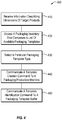
- Figure 4 illustrates that a flow chart of an exemplary method 400 for high flexibility and speed box-last packaging includes an act 410 of receiving dimension information describing dimensions of target products.
- Act 410 comprises receiving, from one or more dimensional scanning sensors, dimension information describing physical dimensions of a group of one or more target products that are to be boxed.
- an product intake scanner 310 communicates dimension information 370 to a packaging system software application 300.
- Figure 4 illustrates that the method 400 includes an act 420 of accessing a packaging inventory that comprises a list of available packaging templates.
- Act 420 comprises accessing, from a packaging database, a packaging inventory that comprises a listing of an available number of each respective packaging template types within a packaging template buffer, wherein the packaging template buffer comprises packaging templates that are already manufactured and ready to be folded into boxes.
- a processing module 230 within the packaging software application 300 accesses a packaging inventory 344 from within the packaging database 340.
- the packaging inventory 344 comprises information about the number of packaging templates available within the packaging template buffer 314.
- Figure 4 also illustrates that the method 400 includes an act 430 of selecting a particular packaging template type.
- Act 430 comprises selecting a particular packaging template type that is associated with interior dimensions that are greater than or equal to the physical dimensions of the group of one or more target product.
- the packaging system control unit 110 (which in some embodiments executes at least a portion of the packaging software application 300) receives dimension information from the one or more dimensional scanning sensors 124.
- the packaging system control unit 110 selects a particular packaging temple type based at least upon the dimension information and information stored within the packaging database 340.
- Figure 4 also illustrates that the method 400 includes an act 440 of communicating a template creation command to a packaging production machine.
- Act 440 comprises communicating a template creation command to a packaging-production machine that directs the packaging production machine to create a first packaging template that corresponds with the particular packaging template type.
- the packaging system control unit 110 communicates a template creation command 372 to the packaging production machine 312 (130 in Figure 1 ).
- Figure 4 illustrates that the method 400 includes an act 450 of communicating a template identification command to a packaging template buffer.
- Act 450 comprises communicating to the packaging template buffer a template identification command that indicates which packaging template should be selected from the package template buffer, wherein: the package template buffer contains a second packaging template that also corresponds with the particular packaging template type, and the template identification command causes the package template buffer to displays to a user that the second packaging template should be constructed into a box.
- the packaging system control unit 110 communicates a template identification command 372 to the packaging template buffer 140.
- the template identification command 372 identifies at the packaging template buffer 140 which packaging template type should be selected and created into a box from the packaging template buffer 140.
- the selected packaging template is associated with the same type of packaging template type that is generated by the packaging production machine 130, but comprises a second copy.
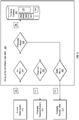
- FIG. 5 illustrates that a flow chart of an exemplary method 500 for high flexibility and speed box-last packaging includes an act 510 of receiving dimension information describing dimensions of target products.
- Act 510 comprises receiving, from one or more dimensional scanning sensors, dimension information describing physical dimensions of a group of one or more target products that are to be boxed.
- a product intake scanner 310 communicates dimension information 370 to a packaging system software application 300.
- Figure 5 illustrates that the method 500 includes an act 520 of accessing a packaging inventor that comprises a list of available packaging templates.
- Act 520 comprises accessing, from a packaging database, a packaging inventory that comprises a listing of an available number of each respective packaging template types within a packaging template buffer, wherein the packaging template buffer comprises packaging templates that are already manufactured and ready to be folded into boxes.
- a processing module 230 within the packaging software application 300 accesses a packaging inventory 344 from within the packaging database 340.
- the packaging inventory 344 comprises information about the number of packaging templates available within the packaging template buffer 314.
- Figure 5 also illustrates that the method 500 includes an act 530 of accessing an order queue of currently pending orders.
- Act 530 comprises accessing, from the packaging database, an order queue that comprises information about currently pending orders that need to be boxed.
- a processing module 230 within the packaging software application 300 accesses an order queue 348 from within the packaging database 340.
- the packaging inventory 344 comprises information about the number of packaging templates available within the packaging template buffer 314.
- Figure 5 illustrates that the method 500 includes an act 540 of receiving a takt time for one or more production machines.
- Act 540 comprises receiving, from one or more packaging-production machines, takt information, wherein the takt information describes the amount of time required to complete one or more pending orders within the order queue.
- the packaging system control unit 110 receives takt time information from a packaging production machine 222.
- the packaging production machine 22 may comprise the ability to internally track its own takt time.
- Figure 5 illustrates that the method 500 includes an act 550 of automatically optimizing the boxing of one or more target products.
- Act 550 comprises automatically optimizing the boxing of the group of one or more target products by selecting a particular packaging template type based upon the packaging inventory, the order queue, and the takt information.
- the particular packaging template type is associated with a particular production line selected from one or more production lines, the one or more production lines including a first production line that is associated with pre-manufactured packaging templates, and a second production line that is associated with packaging templates that are produced by the one or more packaging-production machines and stored within the packaging template buffer.
- the packaging system control unit 110 automatically optimizes the production of a packaging template by selecting a first production line 210, a second production line 220, or some other production line (e.g., 230). Each production line is associated with specific optimization characteristics. The packaging system control unit 110 leverages that unique characteristics of each production line 210, 220, 230 to optimize the boxing of products.
- Embodiments of the present invention may comprise or utilize a special-purpose or general-purpose computer system that includes computer hardware, such as, for example, one or more processors and system memory, as discussed in greater detail below.
- Embodiments within the scope of the present invention also include physical and other computer-readable media for carrying or storing computer-executable instructions and/or data structures.
- Such computer-readable media can be any available media that can be accessed by a general-purpose or special-purpose computer system.
- Computer-readable media that store computer-executable instructions and/or data structures are computer storage media.
- Computer-readable media that carry computer-executable instructions and/or data structures are transmission media.
- embodiments of the invention can comprise at least two distinctly different kinds of computer-readable media: computer storage media and transmission media.
- Computer storage media are physical storage media that store computer-executable instructions and/or data structures.
- Physical storage media include computer hardware, such as RAM, ROM, EEPROM, solid state drives (“SSDs”), flash memory, phase-change memory (“PCM”), optical disk storage, magnetic disk storage or other magnetic storage devices, or any other hardware storage device(s) which can be used to store program code in the form of computer-executable instructions or data structures, which can be accessed and executed by a general-purpose or special-purpose computer system to implement the disclosed functionality of the invention.
- Transmission media can include a network and/or data links which can be used to carry program code in the form of computer-executable instructions or data structures, and which can be accessed by a general-purpose or special-purpose computer system.
- a "network" is defined as one or more data links that enable the transport of electronic data between computer systems and/or modules and/or other electronic devices.
- program code in the form of computer-executable instructions or data structures can be transferred automatically from transmission media to computer storage media (or vice versa).
- program code in the form of computer-executable instructions or data structures received over a network or data link can be buffered in RAM within a network interface module (e.g., a "NIC"), and then eventually transferred to computer system RAM and/or to less volatile computer storage media at a computer system.
- a network interface module e.g., a "NIC”
- computer storage media can be included in computer system components that also (or even primarily) utilize transmission media.
- Computer-executable instructions comprise, for example, instructions and data which, when executed at one or more processors, cause a general-purpose computer system, special-purpose computer system, or special-purpose processing device to perform a certain function or group of functions.
- Computer-executable instructions may be, for example, binaries, intermediate format instructions such as assembly language, or even source code.
- the invention may be practiced in network computing environments with many types of computer system configurations, including, personal computers, desktop computers, laptop computers, message processors, hand-held devices, multi-processor systems, microprocessor-based or programmable consumer electronics, network PCs, minicomputers, mainframe computers, mobile telephones, PDAs, tablets, pagers, routers, switches, and the like.
- the invention may also be practiced in distributed system environments where local and remote computer systems, which are linked (either by hardwired data links, wireless data links, or by a combination of hardwired and wireless data links) through a network, both perform tasks.
- a computer system may include a plurality of constituent computer systems.
- program modules may be located in both local and remote memory storage devices.
- Cloud computing environments may be distributed, although this is not required. When distributed, cloud computing environments may be distributed internationally within an organization and/or have components possessed across multiple organizations.
- “cloud computing” is defined as a model for enabling on-demand network access to a shared pool of configurable computing resources (e.g., networks, servers, storage, applications, and services). The definition of “cloud computing” is not limited to any of the other numerous advantages that can be obtained from such a model when properly deployed.
- a cloud-computing model can be composed of various characteristics, such as on-demand self-service, broad network access, resource pooling, rapid elasticity, measured service, and so forth.
- a cloud-computing model may also come in the form of various service models such as, for example, Software as a Service (“SaaS”), Platform as a Service (“PaaS”), and Infrastructure as a Service (“IaaS”).
- SaaS Software as a Service
- PaaS Platform as a Service
- IaaS Infrastructure as a Service
- the cloud-computing model may also be deployed using different deployment models such as private cloud, community cloud, public cloud, hybrid cloud, and so forth.
- Some embodiments may comprise a system that includes one or more hosts that are each capable of running one or more virtual machines.
- virtual machines emulate an operational computing system, supporting an operating system and perhaps one or more other applications as well.
- each host includes a hypervisor that emulates virtual resources for the virtual machines using physical resources that are abstracted from view of the virtual machines.
- the hypervisor also provides proper isolation between the virtual machines.
- the hypervisor provides the illusion that the virtual machine is interfacing with a physical resource, even though the virtual machine only interfaces with the appearance (e.g., a virtual resource) of a physical resource. Examples of physical resources including processing capacity, memory, disk space, network bandwidth, media drives, and so forth.
Landscapes
- Engineering & Computer Science (AREA)
- Mechanical Engineering (AREA)
- Business, Economics & Management (AREA)
- Economics (AREA)
- General Physics & Mathematics (AREA)
- Physics & Mathematics (AREA)
- Theoretical Computer Science (AREA)
- Human Resources & Organizations (AREA)
- Marketing (AREA)
- General Business, Economics & Management (AREA)
- Strategic Management (AREA)
- Tourism & Hospitality (AREA)
- Manufacturing & Machinery (AREA)
- Operations Research (AREA)
- Development Economics (AREA)
- Entrepreneurship & Innovation (AREA)
- Quality & Reliability (AREA)
- Human Computer Interaction (AREA)
- Automation & Control Theory (AREA)
- Primary Health Care (AREA)
- General Health & Medical Sciences (AREA)
- Health & Medical Sciences (AREA)
- Container Filling Or Packaging Operations (AREA)
- General Factory Administration (AREA)
- Making Paper Articles (AREA)
- Auxiliary Devices For And Details Of Packaging Control (AREA)
Claims (13)
- Verpackungssystem (100) für hochflexibles und schnelles Box-Last-Verpacken, wobei das System Folgendes umfasst:einen oder mehrere Abtastsensoren (124), die konfiguriert sind, um eine Gruppe von einem oder mehreren Zielprodukten (122), die verpackt werden sollen, abzutasten und um Abmessungsinformationen zu erfassen, die die physikalischen Abmessungen der Gruppe von einem oder mehreren Zielprodukten beschreiben; undeine oder mehrere Verpackungsproduktionsmaschinen (130, 312), die konfiguriert sind, um kundenspezifische Verpackungsvorlagen (132) zu erzeugen, die einem vorbestimmten Satz von Verpackungsvorlagentypen entsprechen, wobei die eine oder die mehreren Verpackungsproduktionsmaschinen konfiguriert sind, um kundenspezifische Verpackungsvorlagen auf der Grundlage der von dem einen oder den mehreren Abtastsensoren erfassten Dimensionsinformationen zu erzeugen,einen Verpackungsvorlagenzwischenspeicher (140, 314), der physikalisch unterteilte Abschnitte umfasst, die mehrere Verpackungsvorlagen enthalten, die aus dem vorbestimmten Satz von Verpackungsvorlagentypen ausgewählt sind, die von der einen oder den mehreren Verpackungsproduktionsmaschinen erzeugt werden, wobei jede der mehreren Verpackungsvorlagen innerhalb der physikalisch unterteilten Abschnitte basierend auf dem Verpackungsvorlagentyp organisiert ist, wobei der Verpackungsvorlagenzwischenspeicher mehrere Verpackungsvorlagentypen umfasst, die innerhalb der physikalisch unterteilten Abschnitte organisiert sind.
- Verpackungssystem nach Anspruch 1, wobei der eine oder die mehreren Abtastsensoren einen Lichtvorhang umfassen.
- Verpackungssystem nach Anspruch 1, welches ferner eine Verpackungssystem-Steuereinheit umfasst, die die eine oder mehrere Verpackungsproduktionsmaschinen veranlasst, eine erste Vorlage zu erzeugen, die einem bestimmten Vorlagentyp entspricht, und gleichzeitig eine visuelle Anzeige auslöst, die anzeigt, dass eine zweite Vorlage, die ebenfalls dem bestimmten Vorlagentyp entspricht, aus dem Verpackungsvorlagenzwischenspeicher ausgewählt werden soll, wobei der bestimmte Vorlagentyp Innenabmessungen umfasst, die größer oder gleich den physischen Abmessungen der Gruppe von einem oder mehreren Zielprodukten sind.
- Verfahren zum hochflexiblen und schnellen Box-Last-Verpacken, wobei das Verfahren Folgendes umfasst:Empfangen (410) von Dimensionsinformationen von einem oder mehreren Dimensionsabtastsensoren (124), wobei die Dimensionsinformationen die physikalischen Dimensionen einer Gruppe von einem oder mehreren Zielprodukten (122) beschreiben, die verpackt werden sollen;Zugreifen (420) auf ein Verpackungsinventar (344) aus einer Verpackungsdatenbank (340), wobei das Verpackungsinventar eine Auflistung einer verfügbaren Anzahl jedes entsprechenden Verpackungsvorlagentyps innerhalb eines Verpackungsvorlagenzwischenspeichers (140, 314) umfasst, wobei der Verpackungsvorlagenzwischenspeicher Verpackungsvorlagen (132) umfasst, die bereits hergestellt und bereit sind, zu Schachteln gefaltet zu werden, wobei der Verpackungsvorlagenzwischenspeicher ferner mehrere Verpackungsvorlagentypen umfasst, die innerhalb physikalisch unterteilter Abschnitte organisiert sind;Auswählen (430) eines bestimmten Verpackungsvorlagentyps, der mit Innenabmessungen assoziiert ist, die größer oder gleich den physikalischen Abmessungen der Gruppe von einem oder mehreren Zielprodukten sind;Übermitteln (440) eines Vorlagenerstellungsbefehls an eine Verpackungsproduktionsmaschine (130, 312), der die Verpackungsproduktionsmaschine anweist, eine erste Verpackungsvorlage zu erstellen, die dem bestimmten Verpackungsvorlagentyp entspricht; undÜbermitteln (450) eines Vorlagenidentifikationsbefehls an den Verpackungsvorlagenzwischenspeicher, der anzeigt, welche Verpackungsvorlage aus dem Verpackungsvorlagenzwischenspeicher ausgewählt werden soll, wobei:der Verpackungsvorlagenzwischenspeicher eine zweite Verpackungsvorlage enthält, die ebenfalls dem bestimmten Verpackungsvorlagentyp entspricht, undder Befehl zur Vorlagenidentifikation bewirkt, dass der Verpackungsvorlagenzwischenspeicher einem Benutzer anzeigt, dass die zweite Verpackungsvorlage zu einem Karton konstruiert werden soll.
- Verfahren nach Anspruch 4, wobei das Verfahren ferner einen der folgenden Schritte umfasst:wenn der Verpackungsvorlagenzwischenspeicher bereits eine Verpackungsvorlage enthält, die dem bestimmten Verpackungsvorlagentyp entspricht, Verzögern des Übermittelns des Vorlagenerstellungsbefehls an die Verpackungsproduktionsmaschine, bis eine andere Gruppe von einem oder mehreren Zielprodukten von dem einen oder den mehreren Dimensionsabtastsensoren abgetastet wird,Erzeugen eines Vorlagenerstellungsbefehls, der eine Verpackungsproduktionsmaschine anweist, zwei Verpackungsvorlagen gleichzeitig zu erstellen, wobei die beiden Verpackungsvorlagen den bestimmten Verpackungsvorlagentyp enthalten,Berechnen einer Produktionszeit, die mit einem Zeitaufwand assoziiert ist, der erforderlich ist, um einen potenziellen Verpackungsvorlagentyp mit der Verpackungsproduktionsmaschine zu erzeugen, undwenn die Produktionszeit einen Schwellenwert überschreitet, Zuordnen des bestimmten Verpackungsvorlagentyps zu einer vorgefertigten Verpackungsvorlage, die mit Innenabmessungen assoziiert ist, die größer oder gleich den Innenabmessungen des bestimmten Verpackungsvorlagentyps sind.
- Verfahren nach Anspruch 4, wobei das Verfahren ferner einen der folgenden Schritte umfasst:Empfangen von Gruppeninformationen von einem oder mehreren Gruppenabtastsensoren, die Bestellinformationen beschreiben, die mit der Gruppe von einem oder mehreren Zielprodukten verbunden sind, undEmpfangen von Gewichtsinformationen von einem oder mehreren Gewichtssensoren, wobei die Gewichtsinformationen ein Gewicht der Gruppe von einem oder mehreren Zielprodukten beschreiben, und Auswählen eines bestimmten Verpackungsvorlagentyps, der mit Festigkeitseigenschaften assoziiert ist, die das Gewicht der Gruppe von einem oder mehreren Zielprodukten übersteigen.
- Verfahren nach Anspruch 6, wobei das Verfahren folgendes umfasst, wenn das Verfahren das Empfangen von Gruppeninformationen von einem oder mehreren Gruppenabtastsensoren umfasst, die Bestellinformationen beschreiben, die mit der Gruppe von einem oder mehreren Zielprodukten assoziiert sind:Identifizieren ungültiger Informationen entweder innerhalb der Gruppeninformationen oder der Dimensionsinformationen; undbeim Erkennen ungültiger Informationen, Umleiten der Gruppe von einem oder mehreren Zielprodukten auf ein sekundäres Förderband.
- Verfahren nach Anspruch 4, wobei der eine oder die mehreren Dimensionsabtastsensoren Lichtvorhänge umfassen.
- Ein oder mehrere computerlesbare Medien für ein Verpackungssystem für hochflexibles und schnelles Box-Last-Verpacken, das einen oder mehrere Prozessoren und das eine oder die mehreren computerlesbaren Medien umfasst, wobei auf dem einen oder den mehreren computerlesbaren Medien ausführbare Befehle gespeichert sind, die, wenn sie von dem einen oder den mehreren Prozessoren ausgeführt werden, das Verpackungssystem konfigurieren, um mindestens Folgendes durchzuführen:Empfangen (510) von Dimensionsinformationen von einem oder mehreren Dimensionsabtastsensoren (124), wobei die Dimensionsinformationen die physikalische Dimensionen einer Gruppe von einem oder mehreren Zielprodukten (122) beschreiben, die verpackt werden sollen;Zugreifen (420) auf ein Verpackungsinventar (344) von einer Verpackungsdatenbank (340), wobei das Verpackungsinventar eine Auflistung einer verfügbaren Anzahl jedes entsprechenden Verpackungsvorlagentyps innerhalb eines Verpackungsvorlagenzwischenspeichers (140, 314) umfasst, wobei der Verpackungsvorlagenzwischenspeicher Verpackungsvorlagen (132) umfasst, die bereits hergestellt und bereit sind, zu Schachteln gefaltet zu werden, wobei der Verpackungsvorlagenzwischenspeicher ferner mehrere Verpackungsvorlagentypen umfasst, die innerhalb physikalisch unterteilter Abschnitte organisiert sind;Zugriff (530) auf eine Auftragswarteschlange (348) von der Verpackungsdatenbank, wobei die Auftragswarteschlange Informationen über aktuell anstehende Aufträge enthält, die verpackt werden müssen;Empfangen (540) von Taktinformationen von einer oder mehreren Verpackungsproduktionsmaschinen (130, 312), wobei die Taktinformationen die Zeitdauer beschreiben, die erforderlich ist, um einen oder mehrere anstehende Aufträge innerhalb der Auftragswarteschlange abzuschließen; undautomatisches (550) Optimieren des Verpackens der Gruppe von einem oder mehreren Zielprodukten, indem ein bestimmter Verpackungsvorlagentyp auf der Grundlage des Verpackungsbestands, der Auftragswarteschlange und der Taktinformationen ausgewählt wird,wobei der bestimmte Verpackungsvorlagentyp einer bestimmten Produktionslinie zugeordnet ist, die aus einer oder mehreren Produktionslinien ausgewählt ist, wobei die eine oder die mehreren Produktionslinien umfassen:eine erste Produktionslinie, die mit vorgefertigten Verpackungsvorlagen assoziiert ist, undeine zweite Produktionslinie, die mit Verpackungsvorlagen assoziiert ist, die von der einen oder mehreren Verpackungsproduktionsmaschinen produziert und im Verpackungsvorlagenzwischenspeicher gespeichert werden.
- Ein oder mehrere computerlesbare Medien nach Anspruch 9, wobei das automatische Optimieren der Verpackung der Gruppe von einem oder mehreren Zielprodukten einen der folgenden Schritte umfasst:Auswählen eines bestimmten Vorlagentyps, der mit der ersten Produktionslinie assoziiert ist, wenn die Taktinformationen anzeigen, dass ein Taktwert einen Taktschwellenwert überschreitet, undAuswählen eines bestimmten Vorlagentyps, der mit der zweiten Produktionslinie assoziiert ist, wenn der Verpackungsvorlagenzwischenspeicher eine Verpackungsvorlage mit Abmessungen umfasst, die größer oder gleich den physischen Abmessungen der Gruppe von einem oder mehreren Zielprodukten sind, Berechnen eines Verpackungsüberschusses, der mit der Gruppe von einem oder mehreren Zielprodukten und den vorgefertigten Verpackungsvorlagen assoziiert ist, wobei der Verpackungsüberschuss das Gesamtvolumen umfasst, um das die Innenabmessungen der vorgefertigten Verpackungsvorlage die Abmessungen einer Gruppe von einem oder mehreren Zielprodukten, die zu verpacken sind, überschreitet, und wenn der Verpackungsüberschuss einen ersten Schwellenwert überschreitet, Auswählen eines bestimmten Vorlagentyps, der mit der zweiten Produktionslinie assoziiert ist.
- Ein oder mehrere computerlesbare Medien nach Anspruch 9, wobei die ausführbaren Anweisungen Anweisungen enthalten, die ausführbar sind, um das Verpackungssystem zu konfigurieren, zum:Berechnen eines Überschusses an verfügbaren Verpackungsvorlagen, der mit der Gruppe von einem oder mehreren Zielprodukten und verfügbaren Verpackungsvorlagen assoziiert ist, wobei der Verpackungsüberschuss das Gesamtvolumen umfasst, um das die Innenabmessungen der vorgefertigten Verpackungsvorlagen und der im Verpackungsvorlagenzwischenspeicher gespeicherten Verpackungsvorlagen die Abmessungen einer Gruppe von einem oder mehreren Zielprodukten, die verpackt werden sollen, überschreiten; undwenn der Überschuss an verfügbaren Verpackungsvorlagen einen zweiten Schwellenwert überschreitet, automatisches Optimieren der Verpackung der Gruppe von einem oder mehreren Zielprodukten, indem ein bestimmter Verpackungsschablonentyp ausgewählt wird, der mit einer dritten Produktionslinie assoziiert ist, wobei die dritte Produktionslinie mit kundenspezifischen Verpackungsvorlagen assoziiert ist, die auf der Grundlage der physikalischen Abmessungen einer Gruppe von einem oder mehreren Zielprodukten bei Bedarf erzeugt werden.
- Ein oder mehrere computerlesbare Medien nach Anspruch 9, wobei die ausführbaren Anweisungen Anweisungen enthalten, die ausführbar sind, um das Verpackungssystem zu konfigurieren, zum:
wenn der bestimmte Verpackungsvorlagentyp mit der zweiten Produktionslinie assoziiert ist:Übermitteln eines Vorlagenerstellungsbefehls an eine Verpackungsproduktionsmaschine, der die Verpackungsproduktionsmaschine anweist, eine erste Verpackungsvorlage zu erstellen, die dem bestimmten Verpackungsvorlagentyp entspricht; undÜbermitteln eines Vorlagenidentifikationsbefehls an den Verpackungsvorlagenzwischenspeicher, der anzeigt, welche Verpackungsvorlage aus dem Verpackungsvorlagenzwischenspeicher ausgewählt werden soll, wobei:der Verpackungsvorlagenzwischenspeicher eine zweite Verpackungsvorlage enthält, die ebenfalls dem bestimmten Verpackungsvorlagentyp entspricht, undder Vorlagenidentifikationsbefehl einem Benutzer anzeigt, dass die zweite Verpackungsvorlage zu einem Karton konstruiert werden soll. - Eine oder mehrere computerlesbare Medien nach Anspruch 12, wobei die ausführbaren Anweisungen Anweisungen enthalten, die ausführbar sind, um das Verpackungssystem zu konfigurieren, zum:wenn der Verpackungsvorlagenzwischenspeicher bereits eine Verpackungsvorlage enthält, die dem bestimmten Verpackungsvorlagentyp entspricht, Verzögern des Übermittelns des Vorlagenerstellungsbefehls an die Verpackungsproduktionsmaschine, bis eine andere Gruppe von einem oder mehreren Zielprodukten von dem einen oder den mehreren Dimensionsabtastsensoren abgetastet wird,Erzeugen eines Vorlagenerstellungsbefehls, der eine Verpackungsproduktionsmaschine anweist, zwei Verpackungsvorlagen gleichzeitig zu erstellen, wobei die beiden Verpackungsvorlagen den bestimmten Verpackungsvorlagentyp enthalten.
Priority Applications (1)
| Application Number | Priority Date | Filing Date | Title |
|---|---|---|---|
| EP21179884.8A EP3954616A1 (de) | 2016-07-22 | 2017-07-19 | Intelligente verpackungswand |
Applications Claiming Priority (3)
| Application Number | Priority Date | Filing Date | Title |
|---|---|---|---|
| US201662365710P | 2016-07-22 | 2016-07-22 | |
| US15/652,518 US10647454B2 (en) | 2016-07-22 | 2017-07-18 | Smart packaging wall |
| PCT/US2017/042728 WO2018017647A1 (en) | 2016-07-22 | 2017-07-19 | Smart packaging wall |
Related Child Applications (2)
| Application Number | Title | Priority Date | Filing Date |
|---|---|---|---|
| EP21179884.8A Division-Into EP3954616A1 (de) | 2016-07-22 | 2017-07-19 | Intelligente verpackungswand |
| EP21179884.8A Division EP3954616A1 (de) | 2016-07-22 | 2017-07-19 | Intelligente verpackungswand |
Publications (3)
| Publication Number | Publication Date |
|---|---|
| EP3487765A1 EP3487765A1 (de) | 2019-05-29 |
| EP3487765A4 EP3487765A4 (de) | 2020-03-18 |
| EP3487765B1 true EP3487765B1 (de) | 2021-09-01 |
Family
ID=60989800
Family Applications (2)
| Application Number | Title | Priority Date | Filing Date |
|---|---|---|---|
| EP17831743.4A Active EP3487765B1 (de) | 2016-07-22 | 2017-07-19 | Intelligente verpackungswand |
| EP21179884.8A Withdrawn EP3954616A1 (de) | 2016-07-22 | 2017-07-19 | Intelligente verpackungswand |
Family Applications After (1)
| Application Number | Title | Priority Date | Filing Date |
|---|---|---|---|
| EP21179884.8A Withdrawn EP3954616A1 (de) | 2016-07-22 | 2017-07-19 | Intelligente verpackungswand |
Country Status (7)
| Country | Link |
|---|---|
| US (2) | US10647454B2 (de) |
| EP (2) | EP3487765B1 (de) |
| JP (2) | JP7152387B2 (de) |
| CN (2) | CN109715500B (de) |
| BR (1) | BR112019001257A2 (de) |
| RU (2) | RU2742702C2 (de) |
| WO (1) | WO2018017647A1 (de) |
Families Citing this family (22)
| Publication number | Priority date | Publication date | Assignee | Title |
|---|---|---|---|---|
| US10647454B2 (en) * | 2016-07-22 | 2020-05-12 | Packsize Llc | Smart packaging wall |
| EP3354581B1 (de) * | 2017-01-31 | 2021-05-19 | Quadient Technologies France | System und verfahren zur automatischen verpackung unterschiedlicher versandsätze |
| US10492987B2 (en) * | 2017-06-26 | 2019-12-03 | Parata Systems, Llc | Methods, systems, and computer program products for managing multiple drug product packaging systems using a common database management system |
| CN108527940B (zh) * | 2018-04-12 | 2020-01-21 | 曹芸畅 | 一种包装盒的制造方法 |
| CN109264112B (zh) * | 2018-09-26 | 2020-08-25 | 珠海格力智能装备有限公司 | 一种电器盒的打包方法及装置 |
| US11308534B2 (en) * | 2019-04-05 | 2022-04-19 | Packsize Llc | Automated third-party cost estimation and production |
| CN112693690A (zh) * | 2019-10-22 | 2021-04-23 | 北京京东振世信息技术有限公司 | 确定封装方式的方法、装置、电子设备和存储介质 |
| AU2020379834A1 (en) | 2019-11-05 | 2022-06-09 | Strong Force Vcn Portfolio 2019, Llc | Control tower and enterprise management platform for value chain networks |
| US20210133670A1 (en) | 2019-11-05 | 2021-05-06 | Strong Force Vcn Portfolio 2019, Llc | Control tower and enterprise management platform with a machine learning/artificial intelligence managing sensor and the camera feeds into digital twin |
| WO2021092260A1 (en) | 2019-11-05 | 2021-05-14 | Strong Force Vcn Portfolio 2019, Llc | Control tower and enterprise management platform for value chain networks |
| US11772833B1 (en) * | 2020-03-30 | 2023-10-03 | Amazon Technologies, Inc. | Systems and methods for automated custom shipping containers |
| US11745910B2 (en) * | 2020-10-15 | 2023-09-05 | Packsize Llc | Systems and methods for packaging products |
| US11931985B2 (en) | 2020-11-09 | 2024-03-19 | Iow, Llc | Packaging material with expanding layer and packaging enclosure formed therewith |
| US12304680B2 (en) * | 2020-11-09 | 2025-05-20 | Iow, Llc | System and method for automatically packaging an item |
| US12605923B2 (en) | 2020-11-09 | 2026-04-21 | Iow, Llc | Packaging material having expandable layers |
| JP7635062B2 (ja) * | 2021-04-27 | 2025-02-25 | 株式会社日立製作所 | 物体認識装置および物体認識方法 |
| DE102021134345A1 (de) * | 2021-12-22 | 2023-06-22 | Multivac Sepp Haggenmüller Se & Co. Kg | Produktionslinie zum herstellen verpackter produkte mit vorausschauender erfassung einer erforderlichen bedienerinteraktion |
| US12172790B1 (en) * | 2023-03-28 | 2024-12-24 | Amazon Technologies, Inc. | Visual indicators for optimized packing of multi-item packages |
| JP7688424B2 (ja) * | 2023-07-27 | 2025-06-04 | 長島梱包株式会社 | 情報処理システム |
| DE102023124416A1 (de) * | 2023-09-11 | 2025-03-13 | Ssi Schäfer Automation Gmbh | Mikro-Fulfillment-System für ultrafrische Produkte |
| JP2025064599A (ja) * | 2023-10-06 | 2025-04-17 | Pacraft株式会社 | 容器処理方法及び容器処理機 |
| JP7811603B2 (ja) * | 2024-02-29 | 2026-02-05 | 三菱重工機械システム株式会社 | ケース製造装置、ケースの製造および搬送方法 |
Family Cites Families (70)
| Publication number | Priority date | Publication date | Assignee | Title |
|---|---|---|---|---|
| JP2560613B2 (ja) | 1993-06-30 | 1996-12-04 | 日本電気株式会社 | ピッキング作業支援装置 |
| US20020014533A1 (en) * | 1995-12-18 | 2002-02-07 | Xiaxun Zhu | Automated object dimensioning system employing contour tracing, vertice detection, and forner point detection and reduction methods on 2-d range data maps |
| AU741996B2 (en) | 1997-06-11 | 2001-12-13 | Ranpak Corp. | Cushioning conversion system and method |
| US20020104293A1 (en) | 1998-06-11 | 2002-08-08 | Armington Steven E. | Packaging system |
| US6519916B1 (en) | 1998-12-21 | 2003-02-18 | Free-Flow Packaging International, Inc. | System and method for conveying air-filled packing cushions |
| US6594535B1 (en) * | 1999-01-11 | 2003-07-15 | Demand Flow Institute, Llc | Material and inventory control system for a demand flow process |
| JP3398084B2 (ja) | 1999-04-28 | 2003-04-21 | シャープ株式会社 | トナー貯蔵部を有するユニットの梱包装置および方法 |
| SE518379C2 (sv) * | 2000-02-08 | 2002-10-01 | Meco Pak Ab | Anordning för att styckvis mata objekt |
| WO2001084296A1 (en) | 2000-04-28 | 2001-11-08 | Levine Michael C | Method and system for packing a plurality of articles in a container |
| TW515975B (en) * | 2000-08-21 | 2003-01-01 | Singapore Technologies Logisti | Order-handling inventory management system and method |
| US20030083890A1 (en) | 2001-11-01 | 2003-05-01 | Duncan Gregory Scott | Automated pack out |
| JP2003175918A (ja) | 2001-12-13 | 2003-06-24 | Toppan Printing Co Ltd | 梱包形態選択システム、梱包形態選択方法および梱包形態選択プログラム |
| US20030200111A1 (en) | 2002-04-19 | 2003-10-23 | Salim Damji | Process for determining optimal packaging and shipping of goods |
| US20030229543A1 (en) * | 2002-06-10 | 2003-12-11 | Zimmerman Shannon M. | Centralized management of packaging data with rule-based content validation |
| US7012210B2 (en) * | 2002-08-09 | 2006-03-14 | Lockheed Martin Corporation | Singulation detection system for objects used in conjunction with a conveyor system |
| US6850464B2 (en) | 2003-02-05 | 2005-02-01 | Quantronix, Inc. | Dimensioning system and method of dimensioning |
| EP1597538B1 (de) * | 2003-02-24 | 2012-10-17 | Cedes Safety & Automation AG | Verfahren zur ber hrungslosen vermessung eines objekts |
| US6996955B2 (en) | 2003-09-12 | 2006-02-14 | Sealed Air Corporation (Us) | System for conveying packaging cushions |
| US20050192834A1 (en) | 2003-10-09 | 2005-09-01 | Yates Herbert D.Jr. | Storage container rental system and method thereof |
| US7204070B2 (en) * | 2003-10-10 | 2007-04-17 | The Real Reel Corporation | Method and apparatus for packaging panel products |
| US20050114193A1 (en) * | 2003-11-25 | 2005-05-26 | 3M Innovative Properties Company | Strategic sourcing for packaging material procurement using centralized packaging data management system |
| DE102004009584A1 (de) | 2004-02-25 | 2005-09-15 | Focke & Co.(Gmbh & Co. Kg) | Vorrichtung zum Herstellen und Palettieren von Kartonpackungen |
| US7085677B1 (en) | 2004-04-19 | 2006-08-01 | Amazon Technologies, Inc. | Automatically identifying incongruous item packages |
| FR2878230B1 (fr) | 2004-11-22 | 2008-04-18 | Plus Dev Sa B | Procede et machine pour la mise a hauteur de caisses a section carree ou rectangulaire, par exemple pour l'expedition de marchandises |
| US7665275B2 (en) | 2005-02-18 | 2010-02-23 | Ranpak Corp. | Packaging system with dunnage delivery assembly |
| US7774243B1 (en) | 2005-03-11 | 2010-08-10 | Amazon Technologies, Inc. | Method and system for predestination item transfer among agents within a materials handling facility |
| US7584592B2 (en) | 2005-08-04 | 2009-09-08 | Ranpak Corp. | Packaging system and method |
| EP1922254B1 (de) | 2005-08-19 | 2010-03-17 | Ranpak Corp. | Verpackungssystem und verfahren zur erfassung von geschlossenen behältern |
| SE529801C2 (sv) * | 2006-03-31 | 2007-11-27 | Tetra Laval Holdings & Finance | Formningsanordning, maskin, formningsförfarande och process vid tillverkning av förpackningar |
| US7814733B2 (en) | 2006-04-10 | 2010-10-19 | Ranpak Corp. | Packaging system with volume measurement |
| US7504949B1 (en) | 2006-05-24 | 2009-03-17 | Amazon Technologies, Inc. | Method and apparatus for indirect asset tracking with RFID |
| US7299103B1 (en) | 2006-07-12 | 2007-11-20 | Sealed Air Corporation (Us) | System and method for monitoring consumable usage in packaging machines |
| US7647752B2 (en) | 2006-07-12 | 2010-01-19 | Greg Magnell | System and method for making custom boxes for objects of random size or shape |
| WO2008127429A2 (en) | 2006-11-21 | 2008-10-23 | Ge Healthcare Bio-Sciences Corp. | Assembling and utilizing rfid sensors in containers |
| FR2910879B1 (fr) | 2006-12-29 | 2009-04-03 | Michel Lamamy | Dispositif pour suremballer en lot au moins un objet |
| EP2152359A2 (de) | 2007-05-25 | 2010-02-17 | Compex Medical S.A. | Elektrodenset für wundheilung |
| US8340812B1 (en) * | 2007-08-30 | 2012-12-25 | Amazon Technologies, Inc. | Optimization of packaging sizes |
| WO2009155101A1 (en) | 2008-05-30 | 2009-12-23 | Ranpak Corp. | Packaging system and method with controlled dunnage dispensing |
| US8086344B1 (en) | 2008-06-04 | 2011-12-27 | Amazon Technologies, Inc. | Predictive router for materials handling |
| US20090308965A1 (en) | 2008-06-17 | 2009-12-17 | Sealed Air Corporation (Us) | Machine, method, and system for severing a web |
| ES2547086T3 (es) * | 2009-12-12 | 2015-10-01 | Packsize, Llc | Creación de un embalaje a demanda en función de una disposición personalizada de artículos |
| CA2800082C (en) | 2010-05-26 | 2018-07-17 | Amazon Technologies, Inc. | System and method for process management in a materials handling facility |
| US8855806B2 (en) | 2010-05-26 | 2014-10-07 | Amazon Technologies, Inc. | Managing shipment release from a storage area to a packing station in a materials handling facility |
| US10002207B2 (en) | 2010-06-29 | 2018-06-19 | Packsize Llc | Systems and methods for optimizing production of packaging products |
| EP2601575B1 (de) | 2010-08-03 | 2024-02-21 | Packsize LLC | Erstellen einer on-demand-verpackung auf basis gespeicherter attributdaten |
| RU2585474C2 (ru) * | 2010-12-15 | 2016-05-27 | ПЭКСАЙЗ,ЭлЭлСи | Устройство, системы и способы использования удерживаемых рукой измерительных устройств для создания упаковки по требованию |
| JP6272752B2 (ja) | 2011-04-26 | 2018-01-31 | ベクトン・ディキンソン・アンド・カンパニーBecton, Dickinson And Company | 接着パッチおよび梱包システムでの使用方法 |
| RU2600917C2 (ru) * | 2011-07-22 | 2016-10-27 | ПЭКСАЙЗ ЭлЭлСи | Мозаичное производство упаковочных материалов |
| US8672180B2 (en) | 2011-07-29 | 2014-03-18 | Sealed Air Corporation | Dispensing bin for multiple materials |
| JP2013065196A (ja) | 2011-09-16 | 2013-04-11 | Fuji Xerox Co Ltd | 包装支援装置、包装支援プログラム及び包装材 |
| RU114941U1 (ru) * | 2011-12-30 | 2012-04-20 | Общество с ограниченной ответственностью "Он-Пак.ру" | Устройство перегруппировки в один ряд сдвоенных контейнеров, выполненных в виде вертикально расположенных закрытых контейнеров навстречу друг другу, для технологической линии упаковки сдвоенных контейнеров |
| US10402890B2 (en) * | 2012-01-09 | 2019-09-03 | Packsize Llc | Box-last packaging system, method, and computer program product |
| EP2802447B1 (de) * | 2012-01-09 | 2018-04-18 | Packsize LLC | Verpackungsverfahren mittels eines Verpackungssystems |
| US10229383B2 (en) * | 2012-02-05 | 2019-03-12 | Matthews International Corporation | Perpetual batch order fulfillment |
| US20130218799A1 (en) | 2012-02-16 | 2013-08-22 | Sebastian Lehmann | Container Selection in a Materials Handling Facility |
| US10118723B2 (en) | 2012-03-23 | 2018-11-06 | Amazon Technologies, Inc. | Custom containers in a materials handling facility |
| DE102012006278A1 (de) | 2012-03-29 | 2013-10-02 | Focke & Co. (Gmbh & Co. Kg) | Verfahren und Vorrichtung zum Einführen von Packungen in Kartons |
| US20150324893A1 (en) * | 2012-04-24 | 2015-11-12 | H. J. Paul Langen | Method and system for order fulfilment |
| ITTO20120415A1 (it) * | 2012-05-09 | 2013-11-10 | Alenia Aermacchi Spa | Impianto industriale e procedimento per la produzione di un prodotto industriale, in particolare per un componente o un sitema aeronautico. |
| MY170088A (en) * | 2012-12-11 | 2019-07-04 | Alcon Inc | Method and packaging plant for placing product packages into shipment containers |
| US10922637B2 (en) * | 2013-01-18 | 2021-02-16 | Packsize Llc | Tiling production of packaging materials |
| WO2014117822A1 (en) | 2013-01-29 | 2014-08-07 | Neopost Technologies | A method and system for automatically forming packaging boxes |
| BR112016002642A2 (pt) * | 2013-08-05 | 2017-08-01 | Packsize Llc | material de empacotamento como um item coletado |
| WO2015020974A2 (en) | 2013-08-07 | 2015-02-12 | Matthews Resources, Inc. | Perpetual batch order fulfillment |
| US20150274333A1 (en) * | 2014-03-27 | 2015-10-01 | Aesynt | Apparatuses, systems, and methods for dispensing medication |
| US10071472B2 (en) * | 2014-05-09 | 2018-09-11 | Packsize Llc | Outfeed table |
| PL3201092T3 (pl) | 2014-09-30 | 2020-01-31 | Packsize Llc | System pakowania w dopasowane pudełko |
| US10093438B2 (en) * | 2014-12-29 | 2018-10-09 | Packsize Llc | Converting machine |
| US10647454B2 (en) | 2016-07-22 | 2020-05-12 | Packsize Llc | Smart packaging wall |
| WO2018085191A1 (en) | 2016-11-07 | 2018-05-11 | Wal-Mart Stores, Inc. | Apparatus and method for reusing containers |
-
2017
- 2017-07-18 US US15/652,518 patent/US10647454B2/en active Active
- 2017-07-19 WO PCT/US2017/042728 patent/WO2018017647A1/en not_active Ceased
- 2017-07-19 RU RU2019104877A patent/RU2742702C2/ru active
- 2017-07-19 CN CN201780057472.2A patent/CN109715500B/zh active Active
- 2017-07-19 EP EP17831743.4A patent/EP3487765B1/de active Active
- 2017-07-19 CN CN202110666432.6A patent/CN113371276B/zh active Active
- 2017-07-19 RU RU2021102455A patent/RU2021102455A/ru unknown
- 2017-07-19 BR BR112019001257-5A patent/BR112019001257A2/pt not_active IP Right Cessation
- 2017-07-19 EP EP21179884.8A patent/EP3954616A1/de not_active Withdrawn
- 2017-07-19 JP JP2019503464A patent/JP7152387B2/ja active Active
-
2020
- 2020-03-26 US US16/831,286 patent/US11332269B2/en active Active
-
2022
- 2022-09-29 JP JP2022156769A patent/JP7434481B2/ja active Active
Also Published As
| Publication number | Publication date |
|---|---|
| WO2018017647A1 (en) | 2018-01-25 |
| BR112019001257A2 (pt) | 2019-05-07 |
| CN113371276B (zh) | 2023-10-17 |
| RU2019104877A (ru) | 2020-08-24 |
| US20180022493A1 (en) | 2018-01-25 |
| CN109715500B (zh) | 2021-06-22 |
| US10647454B2 (en) | 2020-05-12 |
| JP2019523184A (ja) | 2019-08-22 |
| EP3487765A1 (de) | 2019-05-29 |
| RU2019104877A3 (de) | 2020-08-24 |
| JP2023011562A (ja) | 2023-01-24 |
| CN109715500A (zh) | 2019-05-03 |
| US11332269B2 (en) | 2022-05-17 |
| JP7434481B2 (ja) | 2024-02-20 |
| JP7152387B2 (ja) | 2022-10-12 |
| RU2742702C2 (ru) | 2021-02-09 |
| CN113371276A (zh) | 2021-09-10 |
| RU2021102455A (ru) | 2021-02-09 |
| EP3954616A1 (de) | 2022-02-16 |
| EP3487765A4 (de) | 2020-03-18 |
| US20200223570A1 (en) | 2020-07-16 |
Similar Documents
| Publication | Publication Date | Title |
|---|---|---|
| US11332269B2 (en) | Smart packaging wall | |
| US10402890B2 (en) | Box-last packaging system, method, and computer program product | |
| US20220043442A1 (en) | Profiling of packaging systems | |
| EP3030490B1 (de) | Verpackungsmaterial als aufnahmeelement | |
| US20210139171A1 (en) | Dunnage and packaging optimization | |
| US9896231B2 (en) | Packaging station system and related methods | |
| EP3201092B1 (de) | Verpackungssystem mit kartonreihung | |
| US11092946B2 (en) | Identifying and managing equipment within an operational environment | |
| US11858676B2 (en) | Systems and methods for assembling unpacked merchandise in containers |
Legal Events
| Date | Code | Title | Description |
|---|---|---|---|
| STAA | Information on the status of an ep patent application or granted ep patent |
Free format text: STATUS: THE INTERNATIONAL PUBLICATION HAS BEEN MADE |
|
| PUAI | Public reference made under article 153(3) epc to a published international application that has entered the european phase |
Free format text: ORIGINAL CODE: 0009012 |
|
| STAA | Information on the status of an ep patent application or granted ep patent |
Free format text: STATUS: REQUEST FOR EXAMINATION WAS MADE |
|
| 17P | Request for examination filed |
Effective date: 20190122 |
|
| AK | Designated contracting states |
Kind code of ref document: A1 Designated state(s): AL AT BE BG CH CY CZ DE DK EE ES FI FR GB GR HR HU IE IS IT LI LT LU LV MC MK MT NL NO PL PT RO RS SE SI SK SM TR |
|
| AX | Request for extension of the european patent |
Extension state: BA ME |
|
| DAV | Request for validation of the european patent (deleted) | ||
| DAX | Request for extension of the european patent (deleted) | ||
| A4 | Supplementary search report drawn up and despatched |
Effective date: 20200218 |
|
| RIC1 | Information provided on ipc code assigned before grant |
Ipc: B65B 43/08 20060101ALI20200212BHEP Ipc: B65B 57/12 20060101ALN20200212BHEP Ipc: B31B 50/94 20170101ALI20200212BHEP Ipc: B65B 59/00 20060101ALI20200212BHEP Ipc: B31B 50/00 20170101ALN20200212BHEP Ipc: B65B 5/02 20060101AFI20200212BHEP |
|
| RIC1 | Information provided on ipc code assigned before grant |
Ipc: B65B 57/12 20060101ALN20201214BHEP Ipc: B65B 43/08 20060101ALI20201214BHEP Ipc: B65B 59/00 20060101ALI20201214BHEP Ipc: B31B 50/00 20170101ALN20201214BHEP Ipc: B31B 50/94 20170101ALI20201214BHEP Ipc: B65B 5/02 20060101AFI20201214BHEP |
|
| GRAP | Despatch of communication of intention to grant a patent |
Free format text: ORIGINAL CODE: EPIDOSNIGR1 |
|
| STAA | Information on the status of an ep patent application or granted ep patent |
Free format text: STATUS: GRANT OF PATENT IS INTENDED |
|
| INTG | Intention to grant announced |
Effective date: 20210210 |
|
| GRAS | Grant fee paid |
Free format text: ORIGINAL CODE: EPIDOSNIGR3 |
|
| GRAA | (expected) grant |
Free format text: ORIGINAL CODE: 0009210 |
|
| STAA | Information on the status of an ep patent application or granted ep patent |
Free format text: STATUS: THE PATENT HAS BEEN GRANTED |
|
| AK | Designated contracting states |
Kind code of ref document: B1 Designated state(s): AL AT BE BG CH CY CZ DE DK EE ES FI FR GB GR HR HU IE IS IT LI LT LU LV MC MK MT NL NO PL PT RO RS SE SI SK SM TR |
|
| REG | Reference to a national code |
Ref country code: GB Ref legal event code: FG4D |
|
| REG | Reference to a national code |
Ref country code: CH Ref legal event code: EP Ref country code: AT Ref legal event code: REF Ref document number: 1426003 Country of ref document: AT Kind code of ref document: T Effective date: 20210915 |
|
| REG | Reference to a national code |
Ref country code: DE Ref legal event code: R096 Ref document number: 602017045359 Country of ref document: DE |
|
| REG | Reference to a national code |
Ref country code: IE Ref legal event code: FG4D |
|
| REG | Reference to a national code |
Ref country code: LT Ref legal event code: MG9D |
|
| REG | Reference to a national code |
Ref country code: NL Ref legal event code: MP Effective date: 20210901 |
|
| PG25 | Lapsed in a contracting state [announced via postgrant information from national office to epo] |
Ref country code: RS Free format text: LAPSE BECAUSE OF FAILURE TO SUBMIT A TRANSLATION OF THE DESCRIPTION OR TO PAY THE FEE WITHIN THE PRESCRIBED TIME-LIMIT Effective date: 20210901 Ref country code: SE Free format text: LAPSE BECAUSE OF FAILURE TO SUBMIT A TRANSLATION OF THE DESCRIPTION OR TO PAY THE FEE WITHIN THE PRESCRIBED TIME-LIMIT Effective date: 20210901 Ref country code: HR Free format text: LAPSE BECAUSE OF FAILURE TO SUBMIT A TRANSLATION OF THE DESCRIPTION OR TO PAY THE FEE WITHIN THE PRESCRIBED TIME-LIMIT Effective date: 20210901 Ref country code: FI Free format text: LAPSE BECAUSE OF FAILURE TO SUBMIT A TRANSLATION OF THE DESCRIPTION OR TO PAY THE FEE WITHIN THE PRESCRIBED TIME-LIMIT Effective date: 20210901 Ref country code: ES Free format text: LAPSE BECAUSE OF FAILURE TO SUBMIT A TRANSLATION OF THE DESCRIPTION OR TO PAY THE FEE WITHIN THE PRESCRIBED TIME-LIMIT Effective date: 20210901 Ref country code: NO Free format text: LAPSE BECAUSE OF FAILURE TO SUBMIT A TRANSLATION OF THE DESCRIPTION OR TO PAY THE FEE WITHIN THE PRESCRIBED TIME-LIMIT Effective date: 20211201 Ref country code: LT Free format text: LAPSE BECAUSE OF FAILURE TO SUBMIT A TRANSLATION OF THE DESCRIPTION OR TO PAY THE FEE WITHIN THE PRESCRIBED TIME-LIMIT Effective date: 20210901 Ref country code: BG Free format text: LAPSE BECAUSE OF FAILURE TO SUBMIT A TRANSLATION OF THE DESCRIPTION OR TO PAY THE FEE WITHIN THE PRESCRIBED TIME-LIMIT Effective date: 20211201 |
|
| REG | Reference to a national code |
Ref country code: AT Ref legal event code: MK05 Ref document number: 1426003 Country of ref document: AT Kind code of ref document: T Effective date: 20210901 |
|
| PG25 | Lapsed in a contracting state [announced via postgrant information from national office to epo] |
Ref country code: PL Free format text: LAPSE BECAUSE OF FAILURE TO SUBMIT A TRANSLATION OF THE DESCRIPTION OR TO PAY THE FEE WITHIN THE PRESCRIBED TIME-LIMIT Effective date: 20210901 Ref country code: LV Free format text: LAPSE BECAUSE OF FAILURE TO SUBMIT A TRANSLATION OF THE DESCRIPTION OR TO PAY THE FEE WITHIN THE PRESCRIBED TIME-LIMIT Effective date: 20210901 Ref country code: GR Free format text: LAPSE BECAUSE OF FAILURE TO SUBMIT A TRANSLATION OF THE DESCRIPTION OR TO PAY THE FEE WITHIN THE PRESCRIBED TIME-LIMIT Effective date: 20211202 |
|
| PG25 | Lapsed in a contracting state [announced via postgrant information from national office to epo] |
Ref country code: AT Free format text: LAPSE BECAUSE OF FAILURE TO SUBMIT A TRANSLATION OF THE DESCRIPTION OR TO PAY THE FEE WITHIN THE PRESCRIBED TIME-LIMIT Effective date: 20210901 |
|
| PG25 | Lapsed in a contracting state [announced via postgrant information from national office to epo] |
Ref country code: IS Free format text: LAPSE BECAUSE OF FAILURE TO SUBMIT A TRANSLATION OF THE DESCRIPTION OR TO PAY THE FEE WITHIN THE PRESCRIBED TIME-LIMIT Effective date: 20220101 Ref country code: SM Free format text: LAPSE BECAUSE OF FAILURE TO SUBMIT A TRANSLATION OF THE DESCRIPTION OR TO PAY THE FEE WITHIN THE PRESCRIBED TIME-LIMIT Effective date: 20210901 Ref country code: SK Free format text: LAPSE BECAUSE OF FAILURE TO SUBMIT A TRANSLATION OF THE DESCRIPTION OR TO PAY THE FEE WITHIN THE PRESCRIBED TIME-LIMIT Effective date: 20210901 Ref country code: RO Free format text: LAPSE BECAUSE OF FAILURE TO SUBMIT A TRANSLATION OF THE DESCRIPTION OR TO PAY THE FEE WITHIN THE PRESCRIBED TIME-LIMIT Effective date: 20210901 Ref country code: PT Free format text: LAPSE BECAUSE OF FAILURE TO SUBMIT A TRANSLATION OF THE DESCRIPTION OR TO PAY THE FEE WITHIN THE PRESCRIBED TIME-LIMIT Effective date: 20220103 Ref country code: NL Free format text: LAPSE BECAUSE OF FAILURE TO SUBMIT A TRANSLATION OF THE DESCRIPTION OR TO PAY THE FEE WITHIN THE PRESCRIBED TIME-LIMIT Effective date: 20210901 Ref country code: EE Free format text: LAPSE BECAUSE OF FAILURE TO SUBMIT A TRANSLATION OF THE DESCRIPTION OR TO PAY THE FEE WITHIN THE PRESCRIBED TIME-LIMIT Effective date: 20210901 Ref country code: CZ Free format text: LAPSE BECAUSE OF FAILURE TO SUBMIT A TRANSLATION OF THE DESCRIPTION OR TO PAY THE FEE WITHIN THE PRESCRIBED TIME-LIMIT Effective date: 20210901 Ref country code: AL Free format text: LAPSE BECAUSE OF FAILURE TO SUBMIT A TRANSLATION OF THE DESCRIPTION OR TO PAY THE FEE WITHIN THE PRESCRIBED TIME-LIMIT Effective date: 20210901 |
|
| REG | Reference to a national code |
Ref country code: DE Ref legal event code: R097 Ref document number: 602017045359 Country of ref document: DE |
|
| PLBE | No opposition filed within time limit |
Free format text: ORIGINAL CODE: 0009261 |
|
| STAA | Information on the status of an ep patent application or granted ep patent |
Free format text: STATUS: NO OPPOSITION FILED WITHIN TIME LIMIT |
|
| PG25 | Lapsed in a contracting state [announced via postgrant information from national office to epo] |
Ref country code: DK Free format text: LAPSE BECAUSE OF FAILURE TO SUBMIT A TRANSLATION OF THE DESCRIPTION OR TO PAY THE FEE WITHIN THE PRESCRIBED TIME-LIMIT Effective date: 20210901 |
|
| 26N | No opposition filed |
Effective date: 20220602 |
|
| PG25 | Lapsed in a contracting state [announced via postgrant information from national office to epo] |
Ref country code: SI Free format text: LAPSE BECAUSE OF FAILURE TO SUBMIT A TRANSLATION OF THE DESCRIPTION OR TO PAY THE FEE WITHIN THE PRESCRIBED TIME-LIMIT Effective date: 20210901 |
|
| PG25 | Lapsed in a contracting state [announced via postgrant information from national office to epo] |
Ref country code: MC Free format text: LAPSE BECAUSE OF FAILURE TO SUBMIT A TRANSLATION OF THE DESCRIPTION OR TO PAY THE FEE WITHIN THE PRESCRIBED TIME-LIMIT Effective date: 20210901 |
|
| REG | Reference to a national code |
Ref country code: CH Ref legal event code: PL |
|
| GBPC | Gb: european patent ceased through non-payment of renewal fee |
Effective date: 20220719 |
|
| REG | Reference to a national code |
Ref country code: BE Ref legal event code: MM Effective date: 20220731 |
|
| PG25 | Lapsed in a contracting state [announced via postgrant information from national office to epo] |
Ref country code: LU Free format text: LAPSE BECAUSE OF NON-PAYMENT OF DUE FEES Effective date: 20220719 Ref country code: LI Free format text: LAPSE BECAUSE OF NON-PAYMENT OF DUE FEES Effective date: 20220731 Ref country code: FR Free format text: LAPSE BECAUSE OF NON-PAYMENT OF DUE FEES Effective date: 20220731 Ref country code: CH Free format text: LAPSE BECAUSE OF NON-PAYMENT OF DUE FEES Effective date: 20220731 |
|
| PG25 | Lapsed in a contracting state [announced via postgrant information from national office to epo] |
Ref country code: GB Free format text: LAPSE BECAUSE OF NON-PAYMENT OF DUE FEES Effective date: 20220719 Ref country code: BE Free format text: LAPSE BECAUSE OF NON-PAYMENT OF DUE FEES Effective date: 20220731 |
|
| P01 | Opt-out of the competence of the unified patent court (upc) registered |
Effective date: 20230526 |
|
| PG25 | Lapsed in a contracting state [announced via postgrant information from national office to epo] |
Ref country code: IE Free format text: LAPSE BECAUSE OF NON-PAYMENT OF DUE FEES Effective date: 20220719 |
|
| PG25 | Lapsed in a contracting state [announced via postgrant information from national office to epo] |
Ref country code: HU Free format text: LAPSE BECAUSE OF FAILURE TO SUBMIT A TRANSLATION OF THE DESCRIPTION OR TO PAY THE FEE WITHIN THE PRESCRIBED TIME-LIMIT; INVALID AB INITIO Effective date: 20170719 |
|
| PG25 | Lapsed in a contracting state [announced via postgrant information from national office to epo] |
Ref country code: MK Free format text: LAPSE BECAUSE OF FAILURE TO SUBMIT A TRANSLATION OF THE DESCRIPTION OR TO PAY THE FEE WITHIN THE PRESCRIBED TIME-LIMIT Effective date: 20210901 Ref country code: CY Free format text: LAPSE BECAUSE OF FAILURE TO SUBMIT A TRANSLATION OF THE DESCRIPTION OR TO PAY THE FEE WITHIN THE PRESCRIBED TIME-LIMIT Effective date: 20210901 |
|
| PG25 | Lapsed in a contracting state [announced via postgrant information from national office to epo] |
Ref country code: MT Free format text: LAPSE BECAUSE OF FAILURE TO SUBMIT A TRANSLATION OF THE DESCRIPTION OR TO PAY THE FEE WITHIN THE PRESCRIBED TIME-LIMIT Effective date: 20210901 |
|
| PGFP | Annual fee paid to national office [announced via postgrant information from national office to epo] |
Ref country code: IT Payment date: 20241028 Year of fee payment: 8 |
|
| PGFP | Annual fee paid to national office [announced via postgrant information from national office to epo] |
Ref country code: DE Payment date: 20250729 Year of fee payment: 9 |
|
| PG25 | Lapsed in a contracting state [announced via postgrant information from national office to epo] |
Ref country code: TR Free format text: LAPSE BECAUSE OF FAILURE TO SUBMIT A TRANSLATION OF THE DESCRIPTION OR TO PAY THE FEE WITHIN THE PRESCRIBED TIME-LIMIT Effective date: 20210901 |