EP3486977B1 - Positive electrode for rechargeable lithium battery, rechargeable lithium battery including same and battery module - Google Patents
Positive electrode for rechargeable lithium battery, rechargeable lithium battery including same and battery module Download PDFInfo
- Publication number
- EP3486977B1 EP3486977B1 EP18206184.6A EP18206184A EP3486977B1 EP 3486977 B1 EP3486977 B1 EP 3486977B1 EP 18206184 A EP18206184 A EP 18206184A EP 3486977 B1 EP3486977 B1 EP 3486977B1
- Authority
- EP
- European Patent Office
- Prior art keywords
- active material
- positive active
- lithium
- rechargeable lithium
- manganese
- Prior art date
- Legal status (The legal status is an assumption and is not a legal conclusion. Google has not performed a legal analysis and makes no representation as to the accuracy of the status listed.)
- Active
Links
Images




Classifications
-
- H—ELECTRICITY
- H01—ELECTRIC ELEMENTS
- H01M—PROCESSES OR MEANS, e.g. BATTERIES, FOR THE DIRECT CONVERSION OF CHEMICAL ENERGY INTO ELECTRICAL ENERGY
- H01M10/00—Secondary cells; Manufacture thereof
- H01M10/05—Accumulators with non-aqueous electrolyte
- H01M10/052—Li-accumulators
-
- H—ELECTRICITY
- H01—ELECTRIC ELEMENTS
- H01M—PROCESSES OR MEANS, e.g. BATTERIES, FOR THE DIRECT CONVERSION OF CHEMICAL ENERGY INTO ELECTRICAL ENERGY
- H01M10/00—Secondary cells; Manufacture thereof
- H01M10/05—Accumulators with non-aqueous electrolyte
- H01M10/052—Li-accumulators
- H01M10/0525—Rocking-chair batteries, i.e. batteries with lithium insertion or intercalation in both electrodes; Lithium-ion batteries
-
- H—ELECTRICITY
- H01—ELECTRIC ELEMENTS
- H01M—PROCESSES OR MEANS, e.g. BATTERIES, FOR THE DIRECT CONVERSION OF CHEMICAL ENERGY INTO ELECTRICAL ENERGY
- H01M4/00—Electrodes
- H01M4/02—Electrodes composed of, or comprising, active material
- H01M4/13—Electrodes for accumulators with non-aqueous electrolyte, e.g. for lithium-accumulators; Processes of manufacture thereof
- H01M4/131—Electrodes based on mixed oxides or hydroxides, or on mixtures of oxides or hydroxides, e.g. LiCoOx
-
- H—ELECTRICITY
- H01—ELECTRIC ELEMENTS
- H01M—PROCESSES OR MEANS, e.g. BATTERIES, FOR THE DIRECT CONVERSION OF CHEMICAL ENERGY INTO ELECTRICAL ENERGY
- H01M4/00—Electrodes
- H01M4/02—Electrodes composed of, or comprising, active material
- H01M4/13—Electrodes for accumulators with non-aqueous electrolyte, e.g. for lithium-accumulators; Processes of manufacture thereof
- H01M4/134—Electrodes based on metals, Si or alloys
-
- H—ELECTRICITY
- H01—ELECTRIC ELEMENTS
- H01M—PROCESSES OR MEANS, e.g. BATTERIES, FOR THE DIRECT CONVERSION OF CHEMICAL ENERGY INTO ELECTRICAL ENERGY
- H01M4/00—Electrodes
- H01M4/02—Electrodes composed of, or comprising, active material
- H01M4/36—Selection of substances as active materials, active masses, active liquids
- H01M4/362—Composites
- H01M4/366—Composites as layered products
-
- H—ELECTRICITY
- H01—ELECTRIC ELEMENTS
- H01M—PROCESSES OR MEANS, e.g. BATTERIES, FOR THE DIRECT CONVERSION OF CHEMICAL ENERGY INTO ELECTRICAL ENERGY
- H01M4/00—Electrodes
- H01M4/02—Electrodes composed of, or comprising, active material
- H01M4/36—Selection of substances as active materials, active masses, active liquids
- H01M4/38—Selection of substances as active materials, active masses, active liquids of elements or alloys
-
- H—ELECTRICITY
- H01—ELECTRIC ELEMENTS
- H01M—PROCESSES OR MEANS, e.g. BATTERIES, FOR THE DIRECT CONVERSION OF CHEMICAL ENERGY INTO ELECTRICAL ENERGY
- H01M4/00—Electrodes
- H01M4/02—Electrodes composed of, or comprising, active material
- H01M4/36—Selection of substances as active materials, active masses, active liquids
- H01M4/48—Selection of substances as active materials, active masses, active liquids of inorganic oxides or hydroxides
- H01M4/485—Selection of substances as active materials, active masses, active liquids of inorganic oxides or hydroxides of mixed oxides or hydroxides for inserting or intercalating light metals, e.g. LiTi2O4 or LiTi2OxFy
-
- H—ELECTRICITY
- H01—ELECTRIC ELEMENTS
- H01M—PROCESSES OR MEANS, e.g. BATTERIES, FOR THE DIRECT CONVERSION OF CHEMICAL ENERGY INTO ELECTRICAL ENERGY
- H01M4/00—Electrodes
- H01M4/02—Electrodes composed of, or comprising, active material
- H01M4/36—Selection of substances as active materials, active masses, active liquids
- H01M4/48—Selection of substances as active materials, active masses, active liquids of inorganic oxides or hydroxides
- H01M4/50—Selection of substances as active materials, active masses, active liquids of inorganic oxides or hydroxides of manganese
- H01M4/505—Selection of substances as active materials, active masses, active liquids of inorganic oxides or hydroxides of manganese of mixed oxides or hydroxides containing manganese for inserting or intercalating light metals, e.g. LiMn2O4 or LiMn2OxFy
-
- H—ELECTRICITY
- H01—ELECTRIC ELEMENTS
- H01M—PROCESSES OR MEANS, e.g. BATTERIES, FOR THE DIRECT CONVERSION OF CHEMICAL ENERGY INTO ELECTRICAL ENERGY
- H01M4/00—Electrodes
- H01M4/02—Electrodes composed of, or comprising, active material
- H01M4/36—Selection of substances as active materials, active masses, active liquids
- H01M4/48—Selection of substances as active materials, active masses, active liquids of inorganic oxides or hydroxides
- H01M4/52—Selection of substances as active materials, active masses, active liquids of inorganic oxides or hydroxides of nickel, cobalt or iron
- H01M4/525—Selection of substances as active materials, active masses, active liquids of inorganic oxides or hydroxides of nickel, cobalt or iron of mixed oxides or hydroxides containing iron, cobalt or nickel for inserting or intercalating light metals, e.g. LiNiO2, LiCoO2 or LiCoOxFy
-
- H—ELECTRICITY
- H01—ELECTRIC ELEMENTS
- H01M—PROCESSES OR MEANS, e.g. BATTERIES, FOR THE DIRECT CONVERSION OF CHEMICAL ENERGY INTO ELECTRICAL ENERGY
- H01M4/00—Electrodes
- H01M4/02—Electrodes composed of, or comprising, active material
- H01M4/62—Selection of inactive substances as ingredients for active masses, e.g. binders, fillers
-
- H—ELECTRICITY
- H01—ELECTRIC ELEMENTS
- H01M—PROCESSES OR MEANS, e.g. BATTERIES, FOR THE DIRECT CONVERSION OF CHEMICAL ENERGY INTO ELECTRICAL ENERGY
- H01M50/00—Constructional details or processes of manufacture of the non-active parts of electrochemical cells other than fuel cells, e.g. hybrid cells
- H01M50/20—Mountings; Secondary casings or frames; Racks, modules or packs; Suspension devices; Shock absorbers; Transport or carrying devices; Holders
-
- H—ELECTRICITY
- H01—ELECTRIC ELEMENTS
- H01M—PROCESSES OR MEANS, e.g. BATTERIES, FOR THE DIRECT CONVERSION OF CHEMICAL ENERGY INTO ELECTRICAL ENERGY
- H01M4/00—Electrodes
- H01M4/02—Electrodes composed of, or comprising, active material
- H01M2004/021—Physical characteristics, e.g. porosity, surface area
-
- H—ELECTRICITY
- H01—ELECTRIC ELEMENTS
- H01M—PROCESSES OR MEANS, e.g. BATTERIES, FOR THE DIRECT CONVERSION OF CHEMICAL ENERGY INTO ELECTRICAL ENERGY
- H01M4/00—Electrodes
- H01M4/02—Electrodes composed of, or comprising, active material
- H01M2004/026—Electrodes composed of, or comprising, active material characterised by the polarity
- H01M2004/028—Positive electrodes
-
- H—ELECTRICITY
- H01—ELECTRIC ELEMENTS
- H01M—PROCESSES OR MEANS, e.g. BATTERIES, FOR THE DIRECT CONVERSION OF CHEMICAL ENERGY INTO ELECTRICAL ENERGY
- H01M2220/00—Batteries for particular applications
- H01M2220/20—Batteries in motive systems, e.g. vehicle, ship, plane
-
- H—ELECTRICITY
- H01—ELECTRIC ELEMENTS
- H01M—PROCESSES OR MEANS, e.g. BATTERIES, FOR THE DIRECT CONVERSION OF CHEMICAL ENERGY INTO ELECTRICAL ENERGY
- H01M2220/00—Batteries for particular applications
- H01M2220/30—Batteries in portable systems, e.g. mobile phone, laptop
-
- Y—GENERAL TAGGING OF NEW TECHNOLOGICAL DEVELOPMENTS; GENERAL TAGGING OF CROSS-SECTIONAL TECHNOLOGIES SPANNING OVER SEVERAL SECTIONS OF THE IPC; TECHNICAL SUBJECTS COVERED BY FORMER USPC CROSS-REFERENCE ART COLLECTIONS [XRACs] AND DIGESTS
- Y02—TECHNOLOGIES OR APPLICATIONS FOR MITIGATION OR ADAPTATION AGAINST CLIMATE CHANGE
- Y02E—REDUCTION OF GREENHOUSE GAS [GHG] EMISSIONS, RELATED TO ENERGY GENERATION, TRANSMISSION OR DISTRIBUTION
- Y02E60/00—Enabling technologies; Technologies with a potential or indirect contribution to GHG emissions mitigation
- Y02E60/10—Energy storage using batteries
-
- Y—GENERAL TAGGING OF NEW TECHNOLOGICAL DEVELOPMENTS; GENERAL TAGGING OF CROSS-SECTIONAL TECHNOLOGIES SPANNING OVER SEVERAL SECTIONS OF THE IPC; TECHNICAL SUBJECTS COVERED BY FORMER USPC CROSS-REFERENCE ART COLLECTIONS [XRACs] AND DIGESTS
- Y02—TECHNOLOGIES OR APPLICATIONS FOR MITIGATION OR ADAPTATION AGAINST CLIMATE CHANGE
- Y02T—CLIMATE CHANGE MITIGATION TECHNOLOGIES RELATED TO TRANSPORTATION
- Y02T10/00—Road transport of goods or passengers
- Y02T10/60—Other road transportation technologies with climate change mitigation effect
- Y02T10/70—Energy storage systems for electromobility, e.g. batteries
Definitions
- a positive active material for a rechargeable lithium battery, and a rechargeable lithium battery and a battery module including the same are disclosed.
- a rechargeable lithium battery has recently drawn attention as a power source for small portable electronic devices.
- Such a rechargeable lithium battery includes a positive electrode including a positive active material, a negative electrode including a negative active material, a separator disposed between the positive electrode and negative electrode, and an electrolyte.
- the negative active material may include various carbon-based materials capable of intercalating/deintercalating lithium such as artificial graphite, natural graphite, hard carbon, and the like, or a Si-based active material.
- the positive active material may include an oxide including lithium and a transition metal and having a structure capable of intercalating lithium ions such as LiCoO 2 , LiMn 2 O 4 , LiNi 1-x Co x O 2 (0 ⁇ x ⁇ 1), LiNi 1-x-y Co x A y O 2 (0 ⁇ x + y ⁇ 1, and A is Mn or Al).
- a rechargeable lithium battery including a conventional positive active material has a merit at a high temperature but small capacity.
- Ni-based and NCM-based (nickel-cobalt-manganese-based) lithium oxides in a high concentration tend to be used in order to accomplish the high capacity, but the Ni-based and NCM-based (nickel-cobalt-manganese-based) lithium oxides in a high concentration show deteriorated characteristics at a high temperature.
- Attempts of doping, applying a coating layer, or the like have been continuously made to addresss the mentioned limitations, as described in the exemplary documents US 2015/147655 A1 , EP 3226331 A1 , US 2014/099545 A1 and US 2012/015250 A1 .
- An embodiment provides a positive active material for a rechargeable lithium battery capable of improving output and high temperature cycle-life characteristics at room temperature and at a low temperature.
- Another embodiment provides a rechargeable lithium battery including the positive active material.
- Yet another embodiment provides a battery module including the rechargeable lithium battery.
- An embodiment provides a positive active material for a rechargeable lithium battery as defined in claim 1 including a lithium nickel-manganese-cobalt composite oxide and a coating layer disposed on the surface of the composite oxide, wherein the coating layer includes Al and W.
- the lithium nickel-manganese-cobalt composite oxide may include nickel in the largest amount of nickel, manganese, and cobalt.
- the lithium nickel-manganese-cobalt composite oxide may be represented by Chemical Formula 1.
- Chemical Formula 1 Li a1 Ni x1 Co y1 Mn z1 M w O 2
- M is at least one metal selected from B, Li, Mg, Al, Ca, Sr, Cr, V, Ti, Fe, Co, Ni, Zr, Zn, Si, Y, Nb, Ga, Sn, Mo, W, and a combination thereof.
- the composite oxide is coated with a lithium oxide including Al and W on its surface.
- the lithium oxide may be represented by Chemical Formula 2. [Chemical Formula 2] Li a W b Al c O d
- the lithium oxide may be a combination of (i) at least one of LiAlO 2 , LiAl 2 O 4 , and Li 2 AlO 3 and (ii) at least one of LiWO 3 and Li 2 WO 3 .
- the lithium oxide may be disposed in an island shape on the surface of the composite oxide.
- the positive active material may have an average particle diameter (D50) of 2 ⁇ m to 10 ⁇ m.
- the positive active material may have a porous structure.
- Another embodiment provides a rechargeable lithium battery including the positive electrode including a positive active material; a negative electrode including a negative active material, and an electrolyte.
- Another embodiment provides a battery module including the rechargeable lithium battery as a unit battery.
- the positive active material for a rechargeable lithium battery may provide a rechargeable lithium battery having improved output characteristics at room temperature and at a low temperature, and improved high temperature cycle-life characteristics.
- an average particle diameter indicates a particle diameter where an accumulated volume is about 50 volume% in a particle distribution and measured by PSA (particle size analyzer).
- FIG. 1 is a schematic view showing a structure of a rechargeable lithium battery according to an embodiment.
- a positive active material for a rechargeable lithium battery includes a lithium nickel-manganese-cobalt composite oxide 1 and a coating layer 2 disposed on the surface of the nickel-manganese-cobalt composite oxide 1.
- the coating layer 2 includes Al and W.
- FIG. 2 shows that the lithium nickel-manganese-cobalt composite oxide 1 and the coating layer 2 are formed to have a sphere-like shape, but the present disclosure is not limited thereto and may have various shapes.
- the composite oxide surface is coated with a lithium oxide including Al and W.
- the lithium nickel-manganese-cobalt composite oxide may include nickel in the largest amount of nickel, manganese, and cobalt. In other words, the composite oxide includes more nickel that manganese or cobalt in atomic percent (at.%). For example, in Chemical Formula 1 below index a1 is greater than index y1, respectively index z1.
- the composite oxide may be represented by Chemical Formula 1.
- Chemical Formula 1 Li a1 Ni x1 Co y1 Mn z1 M w O 2
- M is at least one metal selected from B, Li, Mg, Al, Ca, Sr, Cr, V, Ti, Fe, Co, Ni, Zr, Zn, Si, Y, Nb, Ga, Sn, Mo, W, and a combination thereof.
- M may be at least one metal selected from Zr, Ti, Al, Mg, and a combination thereof.
- the composite oxide represented by Chemical Formula 1 has a high Ni content, and thus charge and discharge capacity, efficiency and cycle-life characteristics may be improved. Specifically, this effect may be effectively obtained in a positive active material including nickel in a large content (high Ni) and having a Ni mole ratio of x1 in a range of about 0.4 to about 0.95 as shown in Chemical Formula 1, that is, in an amount of about 30 mol% to about 95 mol%, specifically, about 50 mol% to about 90 mol%, and more specifically, about 60 mol% to about 80 mol% based on 100 mol% of a lithium nickel-manganese-cobalt composite oxide.
- the lithium nickel-manganese-cobalt composite oxide with a (partial) coating on its surface consisting of a lithium oxide containing aluminum (Al) and Wolfram (W) has improved output characteristics at room temperature and at a low temperature and, in addition, the high temperature cycle-life characteristics as well as high efficiency (high capacity) is also improved compared with to a composite oxide without such coating.
- the lithium oxide may be represented by Chemical Formula 2. [Chemical Formula 2] Li a W b Al c O d
- the lithium oxide may be a combination of (i) at least one of LiAlO 2 , LiAl 2 O 4 , and Li 2 AlO 3 and (ii) at least one of LiWO 3 and Li 2 WO 3 .
- the lithium oxide is LiAlWO 4 .
- the lithium oxide may be disposed in an island shape on the surface of the composite oxide.
- the lithium oxide may be uniformly dispersed on the entire surface of the composite oxide rather than the island form, but the island form has smaller sheet resistance and thus may improve battery performance.
- the term "island shape" refers to a coating consisting of a plurality of discontiguous areas spread over the outer surface of the composite oxide particle. These areas may cover for example 1 to 30%, in particular 1 - 15 % of the total outer surface of the composite oxide particle.
- An average particle diameter (D50) of the positive active material may be 2 ⁇ m to 10 ⁇ m, for example 2 ⁇ m to 7 ⁇ m, or more specifically 2 ⁇ m to 5 ⁇ m.
- active mass density may be improved.
- the positive active material may have a porous structure.
- the positive active material may be a porous compound, i.e. these particles internally include a plurality of pores.
- the pore size and porosity are not particularly limited, and when the positive active material is a porous compound, capacity, and efficiency may be increased.
- nickel compound may be Ni(OH) 2 , NiO, NiOOH, NiCO 3 ⁇ 2Ni(OH) 2 ⁇ 4H 2 O, NiC 2 O 4 ⁇ 2H 2 O, Ni(NO 3 ) 2 ⁇ 6H 2 O, NiSO 4 , NiSO 4 ⁇ 6H 2 O, a nickel salt of fatty acid, a nickel halide.
- Ni(OH) 2 , NiO, NiOOH, NiCO 3 ⁇ 2Ni(OH) 2 ⁇ 4H 2 O, and NiC 2 O 4 ⁇ 2H 2 O which include neither a nitrogen atom nor a sulfur atom may be used in order not to generate a harmful material such as NO x , SO x , and the like during the firing process.
- These nickel compounds may be used alone or as a mixture of two or more.
- Examples of the manganese compound may include a manganese oxide such as Mn 2 O 3 , MnO 2 and Mn 3 O 4 , and the like, a manganese salt such as MnCO 3 , Mn(NO 3 ) 2 , MnSO 4 , manganese acetate, manganese dicarboxylate, manganese citrate, and a manganese salt of fatty acid, oxy hydroxide, and a halide such as manganese chloride.
- MnO 2 , Mn 2 O 3 , and Mn 3 O 4 do not generate gas such as NO x , SO x , and CO 2 during the firing process and may be commercially available inexpensively as an industrial material.
- These manganese compounds may be used alone or as a mixture of two or more.
- Examples of the cobalt compound may include Co(OH) 2 , CoOOH, CoO, Co 2 O 3 , Co 3 O 4 , Co(OCOCH 3 ) 2 ⁇ 4H 2 O, CoCl 2 , Co(NO 3 ) 2 ⁇ 6H 2 O, and Co(SO 4 ) 2 ⁇ 7H 2 O.
- Co(OH) 2 , CoOOH, CoO, Co 2 O 3 , and Co 3 O 4 which do not generate a harmful material such as NO x , SO x , and the like during the firing process may be recommended.
- Co(OH) 2 and CoOOH are industrially inexpensive and have high reactivity and thus may be highly recommended.
- These cobalt compounds may be used alone or as a mixture of two or more.
- a method of mixing the raw materials is not particularly limited but may include a wet or dry process.
- the method may use a ball mill, a vibration mill, a bead mill, and the like.
- the wet mixing may obtain a more uniform mixture and increase reactivity of the mixture during the firing process.
- the mixing time may vary depending on the mixing method. However, any mixing time may be applied, as long as the raw materials are uniformly mixed into a particle level.
- the ball mill (wet or dry mixing) may be used for about 1 hour to about 2 days
- the bead mill (wet continuous mixing) may be used for about 0.1 hour to about 6 hours for mixing and staying.
- particles are dried in a generally-used method.
- the drying method is not particularly limited. However, a spay-drying method may be used in terms of particle uniformity, powder fluidity and powder-treatment performance, and efficient formation of spherical secondary particles.
- Powders obtained from the spray-drying method may be sufficiently mixed with a lithium compound such as Li 2 CO 3 , LiNO 3 , LiNO 2 , LiOH, LiOH ⁇ H 2 O, LiH, LiF, LiCI, LiBr, Lil, CH 3 OOLi, Li 2 O, Li 2 SO 4 , a lithium dicarboxylate salt, lithium citrate, a lithium salt of fatty acid, and alkyl lithium.
- a mole ratio of Li: (Ni + Co + Mn) may be greater than about 1:1. Specifically, the mole ratio may be in a range of about 1.01:1 to about 1.06:1 and more specifically, in a range of about 1.02:1 to about 1.05:1.
- the layer-phased lithium nickel-manganese-cobalt composite oxide may be prepared by adding a doping material along with the lithium compound to the uniform mixture of the nickel compound, the manganese compound, and the cobalt compound.
- the doping material may use a compound including Ba, Mg, Al, Fe, Ti, W, B, Zr, or a combination thereof and specifically, Al, Zr, or a combination thereof.
- This obtained powder mixture is primarily fired (heat-treated).
- This primary firing is performed under a condition determined depending on a composition and a lithium compound raw material used therein.
- the primary firing is performed at greater than or equal to about 700 °C and in addition, less than or equal to about 1100 °C, specifically, less than or equal to about 1075 °C, and more specifically, less than or equal to about 1050 °C.
- the primary firing may be completed by maintaining the temperature condition for a predetermined time and then, decreasing the temperature down to about 10 °C to about 40 °C at a predetermined rate.
- a coating layer including Al and W on the surface of the lithium nickel-manganese-cobalt composite oxide is formed to obtain a positive active material.
- the coating may be performed using a solid-phase reaction method of mixing an Al- and W-containing compound and a lithium nickel-manganese-cobalt composite oxide and then, reacting them at an appropriate temperature, a spray-drying method of dissolving the Al- and W-containing compound in a solvent and then, dispersing/spraying the solution in the lithium nickel-manganese-cobalt composite oxide, a gas-phase reaction method, or the like.
- a molar ratio of W to Al is in the range of 0.8 : 1 to 1 : 0.8, more preferred molar ratio of W to Al is in the range of 0.9 : 1 to 1 : 0.9, most preferred Al and W are present in equimolar amounts.
- the mixture is secondarily fired (heat-treated) to obtain a positive active material according to an embodiment.
- the secondary firing may be performed at greater than or equal to about 600 °C and in addition, less than or equal to about 1000 °C, specifically, less than or equal to about 975 °C, and more specifically, less than or equal to about 950 °C.
- the secondary firing may be completed by maintaining the temperature condition for predetermined time and then, decreasing the temperature at a predetermined rate from about 10 °C to about 40 °C to obtain a positive active material according to an embodiment.
- Another embodiment provides a rechargeable lithium battery including the positive electrode including the positive active material; a negative electrode; and an electrolyte.
- the positive electrode includes a current collector and a positive active material layer disposed on the current collector and including a positive active material.
- an amount of the positive active material may be about 90 wt% to about 98 wt% based on the total weight of the positive active material layer.
- the positive active material layer may further include a binder and a conductive material. The binder and the conductive material may be included in an amount of about 1 wt% to about 5 wt%, respectively based on the total amount of the positive active material layer.
- the binder may include polyvinyl alcohol, carboxylmethyl cellulose, hydroxypropyl cellulose, diacetyl cellulose, polyvinylchloride, polyvinylfluoride, polyvinylpyrrolidone, polyurethane, polytetrafluoroethylene, polyvinylidene fluoride, polyethylene, polypropylene, a styrene-butadiene rubber, an acrylated styrene butadiene rubber, an epoxy resin, or nylon.
- the conductive material may include a carbon-based material such as natural graphite, artificial graphite, carbon black, acetylene black, ketjen black, or a carbon fiber; a metal-based material of a metal powder or a metal fiber including copper, nickel, aluminum, or silver; a conductive polymer such as a polyphenylene derivative; or a mixture thereof.
- a carbon-based material such as natural graphite, artificial graphite, carbon black, acetylene black, ketjen black, or a carbon fiber
- a metal-based material of a metal powder or a metal fiber including copper, nickel, aluminum, or silver a conductive polymer such as a polyphenylene derivative; or a mixture thereof.
- the current collector may include an aluminum foil, a nickel foil, or a combination thereof.
- the negative electrode includes a current collector and a negative active material layer including a negative active material disposed on the current collector.
- the negative active material includes a material that reversibly intercalates/deintercalates lithium ions, a lithium metal, a lithium metal alloy, a material being capable of doping/dedoping lithium, or transition metal oxide.
- the material that reversibly intercalates/deintercalates lithium ions includes carbon materials.
- the carbon material may be any generally-used carbon-based negative active material in a lithium ion secondary battery.
- Examples of the carbon material include crystalline carbon, amorphous carbon, and a combination thereof.
- the crystalline carbon may be non-shaped, or sheet, flake, spherical, or fiber shaped natural graphite or artificial graphite.
- the amorphous carbon may be a soft carbon (carbon obtained by sintering at a low temperature), a hard carbon, a mesophase pitch carbonized product, or fired coke.
- the lithium metal alloy may include lithium and a metal selected from Na, K, Rb, Cs, Fr, Be, Mg, Ca, Sr, Si, Sb, Pb, In, Zn, Ba, Ra, Ge, Al, and Sn.
- the material being capable of doping/dedoping lithium may include Si, SiO x (0 ⁇ x ⁇ 2), a Si-Q alloy (wherein Q is selected from an alkali metal, an alkaline-earth metal, a Group 13 element, a Group 14 element, a Group 15 element, a Group 16 element, a transition metal, a rare earth element, and a combination thereof, and not Si), Sn, SnO 2 , a Sn-R alloy (wherein R is selected from an alkali metal, an alkaline-earth metal, a Group 13 element, a Group 14 element, a Group 15 element, a Group 16 element, a transition metal, a rare earth element, and a combination thereof, and not Sn), and the like.
- the elements Q and R may be selected from Mg, Ca, Sr, Ba, Ra, Sc, Y, Ti, Zr, Hf, Rf, V, Nb, Ta, Db, Cr, Mo, W, Sg, Tc, Re, Bh, Fe, Pb, Ru, Os, Hs, Rh, Ir, Pd, Pt, Cu, Ag, Au, Zn, Cd, B, Al, Ga, Sn, In, TI, Ge, P, As, Sb, Bi, S, Se, Te, Po, and a combination thereof.
- the transition metal oxide may be a vanadium oxide, a lithium vanadium oxide, or a lithium titanium oxide.
- the negative active material may be included in an amount of about 95 wt% to about 99 wt% based on the total weight of the negative active material layer.
- the negative active material layer may include a binder, and optionally a conductive material.
- the amount of the binder may be about 1 wt% to about 5 wt% based on the total weight of the negative active material layer.
- the conductive material it may include about 90 wt% to about 98 wt% of the negative active material, about 1 wt% to about 5 wt% of the binder, and about 1 wt% to about 5 wt% of the conductive material.
- the binder improves binding properties of negative active material particles with one another and with a current collector.
- the binder may be a non-water-soluble binder, a water-soluble binder, or a combination thereof.
- the non-water-soluble binder may be polyvinylchloride, carboxylated polyvinylchloride, polyvinylfluoride, an ethylene oxide-containing polymer, polyvinylpyrrolidone, polyurethane, polytetrafluoroethylene, polyvinylidene fluoride, polyethylene, polypropylene, polyamideimide, polyimide, or a combination thereof.
- the water-soluble binder may include a styrene-butadiene rubber, an acrylated styrene-butadiene rubber (SBR), an acrylonitrile-butadiene rubber, an acrylic rubber, a butyl rubber, a fluorine rubber, an ethylene propylene copolymer, polyepichlorohydrine, polyphosphazene, polyacrylonitrile, polystyrene, an ethylene propylenediene copolymer, polyvinylpyridine, chlorosulfonated polyethylene, a latex, a polyester resin, an acrylic resin, a phenolic resin, an epoxy resin, polyvinyl alcohol, or a combination thereof.
- SBR acrylated styrene-butadiene rubber
- an acrylonitrile-butadiene rubber an acrylic rubber, a butyl rubber, a fluorine rubber, an ethylene propylene copolymer, polyepichlorohydrine, polypho
- a cellulose-based compound may be further used to provide viscosity as a thickener.
- the cellulose-based compound includes one or more of carboxylmethyl cellulose, hydroxypropylmethyl cellulose, methyl cellulose, or alkali metal salts thereof.
- the alkali metals may be Na, K, or Li.
- the thickener may be included in an amount of about 0.1 to about 3 parts by weight based on 100 parts by weight of the negative active material.
- the conductive material may include a carbon-based material such as natural graphite, artificial graphite, carbon black, acetylene black, ketjen black, a carbon fiber, and the like; a metal-based material of a metal powder or a metal fiber including copper, nickel, aluminum, silver, and the like; a conductive polymer such as a polyphenylene derivative; or a mixture thereof.
- a carbon-based material such as natural graphite, artificial graphite, carbon black, acetylene black, ketjen black, a carbon fiber, and the like
- a metal-based material of a metal powder or a metal fiber including copper, nickel, aluminum, silver, and the like
- a conductive polymer such as a polyphenylene derivative
- the current collector may include one selected from a copper foil, a nickel foil, a stainless steel foil, a titanium foil, a nickel foam, a copper foam, a polymer substrate coated with a conductive metal, and a combination thereof.
- the electrolyte includes a non-aqueous organic solvent and a lithium salt.
- the non-aqueous organic solvent serves as a medium for transmitting ions taking part in the electrochemical reaction of a battery.
- the non-aqueous organic solvent may include dimethyl carbonate (DMC), diethyl carbonate (DEC), dipropyl carbonate (DPC), methylpropyl carbonate (MPC), ethylpropyl carbonate (EPC), methylethyl carbonate (MEC), ethylene carbonate (EC), propylene carbonate (PC), butylene carbonate (BC), methyl acetate, ethyl acetate, n-propyl acetate, dimethylacetate, methylpropionate, ethylpropionate, decanolide, mevalonolactone, caprolactone, dibutyl ether, tetraglyme, diglyme, dimethoxyethane, 2-methyltetrahydrofuran, tetrahydrofuran, cyclohexanone, ethanol, isopropyl alcohol, nitriles such as R-CN (wherein R is a C2 to C20 linear, branched, or cycl
- the non-aqueous organic solvent may be used alone or in a mixture.
- their mixing ratio may be controlled in accordance with a desirable battery performance.
- the organic solvent may further include an aromatic hydrocarbon-based organic solvent.
- aromatic hydrocarbon-based organic solvent may be selected from benzene, fluorobenzene, 1,2-difluorobenzene, 1,3-difluorobenzene, 1,4-difluorobenzene, 1,2,3-trifluorobenzene, 1,2,4-trifluorobenzene, chlorobenzene, 1,2-dichlorobenzene, 1,3-dichlorobenzene, 1,4-dichlorobenzene, 1,2,3-trichlorobenzene, 1,2,4 trichlorobenzene, iodobenzene, 1,2-diiodobenzene, 1,3-diiodobenzene, 1,4-diiodobenzene, 1,2,3-triiodobenzene, 1,2,4-triiodobenzene, toluene, fluorotoluene, 2,
- the electrolyte may further include an additive of vinylene carbonate or an ethylene carbonate-based compound as an additive for improving cycle life.
- Examples of the ethylene carbonate-based compound may include difluoro ethylenecarbonate, chloroethylene carbonate, dichloroethylene carbonate, bromoethylene carbonate, dibromoethylene carbonate, nitroethylene carbonate, cyanoethylene carbonate, or fluoroethylene carbonate.
- the amount of the additive for improving cycle life may be flexibly used within an appropriate range.
- the lithium salt dissolved in an organic solvent supplies a battery with lithium ions, basically operates the rechargeable lithium battery, and improves transportation of the lithium ions between positive and negative electrodes.
- the lithium salt include at least one supporting salt selected from LiPF 6 , LiBF 4 , LiSbF 6 , LiAsF 6 , LiN(SO 2 C 2 F 5 ) 2 , Li(CF 3 SO 2 ) 2 N, LiN(SO 3 C 2 F 5 ) 2 , LiC 4 F 9 SO 3 , LiClO 4 , LiAlO 2 , LiAlCl 4 , LiN(C x F 2x+1 SO 2 )(C y F 2y+1 SO 2 ), wherein, x and y are natural numbers, for example an integer ranging from 1 to 20), LiCI, Lil, and LiB(C 2 O 4 ) 2 (lithium bis(oxalato) borate: LiBOB).
- a concentration of the lithium salt may range from about 0.1 M to about 2.0 M.
- the rechargeable lithium battery may further include a separator between the negative electrode and the positive electrode, depending on a kind of the rechargeable lithium battery.
- a suitable separator material include polyethylene, polypropylene, polyvinylidene fluoride, and multi-layers thereof such as a polyethylene/polypropylene double-layered separator, a polyethylene/polypropylene/polyethylene triple-layered separator, and a polypropylene/polyethylene/polypropylene triple-layered separator.
- FIG. 1 is an exploded perspective view of a rechargeable lithium battery according to an embodiment.
- the rechargeable lithium battery according to an embodiment is illustrated as a prismatic battery but is not limited thereto and may include variously-shaped batteries such as a cylindrical battery, a pouch battery, and the like.
- a rechargeable lithium battery 100 includes an electrode assembly 40 manufactured by winding a separator 30 interposed between a positive electrode 10 and a negative electrode 20, and a case 50 housing the electrode assembly 40.
- An electrolyte (not shown) may be impregnated in the positive electrode 10, the negative electrode 20, and the separator 30.
- the rechargeable lithium battery may not only be used as a battery cell used as a power source for a small device but also as a unit battery cell for a medium or large battery module including a plurality of battery cells.
- a battery pack including the battery module as a power of a medium or large device is provided.
- the medium or large device may be an electric vehicle such as an electric vehicle (EV), a hybrid electric vehicle (HEV), a plug-in hybrid electric vehicle (PHEV) and a power storage device.
- EV electric vehicle
- HEV hybrid electric vehicle
- PHEV plug-in hybrid electric vehicle
- Lithium carbonate (Li 2 CO 3 ) and Ni 0.60 Co 0.20 Mn 0.20 (OH) 2 were mixed so that a mole ratio of Li : (Ni + Co + Mn) might be 1.03 : 1 to prepare a first mixture.
- the first mixture was heated up to 850 °C at 5/min, allowed to stand at 850 °C for 5 hours, and then, cooled down to 25 °C at 5/min to prepare a compound represented by Li 1.03 Ni 0.60 Co 0.20 Mn 0.20 O 2 .
- the primary heat treatment was performed at a charge height of 5 cm under an air atmosphere.
- the compound represented by Li 1.03 Ni 0.60 Co 0.20 Mn 0.20 O 2 was mixed with WO 3 and Al 2 O 3 to prepare a mixture.
- the mixture was heated up to 750 °C at 5/min, allowed to stand at 750 °C for 5 hours, and cooled down to 25 °C at 5/min. This secondary heat treatment was performed under an O 2 atmosphere.
- the compound represented by Li 1.03 Ni 0.60 Co 0.20 Mn 0.20 O 2 was coated with LiAlWO 4 to prepare a positive active material.
- an average particle diameter (D50) of the positive active material was 4 ⁇ m.
- a positive active material was prepared according to the same method as Example 1 except for not using WO 3 (using only Al 2 O 3 ).
- Each atom concentration distribution of the positive active materials according to Example 1 and Comparative Example 1 was obtained from the surface by XPS (X-ray Photoelectron Spectroscopy) after sputtering argon thereon.
- the sputtering was performed by using argon ions at a sputtering rate of 0.5 nm/min (SiO 2 conversion).
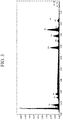
- Example 1 The result of Example 1 is shown in FIG. 3 , and the result of Comparative Example 1 is shown in FIG. 4 .
- lithium oxide including Al and W was present in an island shape on the surface of the positive active material of Example 1, but lithium oxide including only Al was uniformly spread on the surface of the positive active material according to Comparative Example 1.
- the positive active material slurry was coated on an Al foil, and dried and compressed to manufacture a positive electrode.
- the positive electrode, a lithium metal counter electrode, and an electrolyte were used to manufacture a 2032 type half-cell according to a general method.
- the electrolyte was prepared by dissolving 1.0 M LiPF 6 in a mixed solvent of ethylene carbonate and dimethyl carbonate (50 : 50 volume ratio).
- the half-cells were once charged and discharged at 0.2 C to evaluate charge capacity, discharge capacity, and charge and discharge efficiency at -10 °C, and the results are shown in FIG. 5 .
- the half cell using the positive active material of Example 1 showed an excellent low temperature output compared with that using the positive active material of Comparative Example 1.
- a discharge capacity ratio of discharge capacity at each cycle relative to discharge capacity at the first cycle was obtained, and the results are shown in FIG. 6 .
- the half-cell using the positive active material according to Example 1 showed very excellent discharge capacity retention at a high temperature compared with that using the positive active material according to Comparative Example 1.
Landscapes
- Chemical & Material Sciences (AREA)
- Chemical Kinetics & Catalysis (AREA)
- Electrochemistry (AREA)
- General Chemical & Material Sciences (AREA)
- Inorganic Chemistry (AREA)
- Engineering & Computer Science (AREA)
- Composite Materials (AREA)
- Materials Engineering (AREA)
- Manufacturing & Machinery (AREA)
- Battery Electrode And Active Subsutance (AREA)
- Secondary Cells (AREA)
Priority Applications (1)
| Application Number | Priority Date | Filing Date | Title |
|---|---|---|---|
| PL18206184T PL3486977T3 (pl) | 2017-11-16 | 2018-11-14 | Elektroda dodatnia do nadającego się do wielokrotnego ładowania akumulatora litowego, nadający się do wielokrotnego ładowania akumulator litowy ją zawierający i moduł akumulatora |
Applications Claiming Priority (1)
| Application Number | Priority Date | Filing Date | Title |
|---|---|---|---|
| KR1020170153158A KR102164006B1 (ko) | 2017-11-16 | 2017-11-16 | 리튬 이차 전지용 양극 활물질, 이를 포함하는 리튬 이차 전지 및 전지모듈 |
Publications (2)
| Publication Number | Publication Date |
|---|---|
| EP3486977A1 EP3486977A1 (en) | 2019-05-22 |
| EP3486977B1 true EP3486977B1 (en) | 2020-09-09 |
Family
ID=64316356
Family Applications (1)
| Application Number | Title | Priority Date | Filing Date |
|---|---|---|---|
| EP18206184.6A Active EP3486977B1 (en) | 2017-11-16 | 2018-11-14 | Positive electrode for rechargeable lithium battery, rechargeable lithium battery including same and battery module |
Country Status (6)
| Country | Link |
|---|---|
| US (1) | US11031594B2 (pl) |
| EP (1) | EP3486977B1 (pl) |
| KR (1) | KR102164006B1 (pl) |
| CN (1) | CN109802102B (pl) |
| HU (1) | HUE051593T2 (pl) |
| PL (1) | PL3486977T3 (pl) |
Families Citing this family (7)
| Publication number | Priority date | Publication date | Assignee | Title |
|---|---|---|---|---|
| JP7484283B2 (ja) * | 2019-06-25 | 2024-05-16 | 住友金属鉱山株式会社 | リチウムイオン二次電池用正極活物質およびその製造方法、並びに、リチウムイオン二次電池 |
| US20220271272A1 (en) * | 2019-06-25 | 2022-08-25 | Sumitomo Metal Mining Co., Ltd. | Positive electrode active material for lithium-ion secondary batteries, method for producing same, and lithium-ion secondary battery |
| KR102615680B1 (ko) * | 2020-11-25 | 2023-12-19 | 주식회사 씨앤씨머티리얼즈 | 2차전지 양극재 코팅 방법 |
| JP2025515856A (ja) * | 2022-05-20 | 2025-05-20 | エルジー・ケム・リミテッド | 正極活物質およびその製造方法 |
| CN115535973B (zh) * | 2022-10-28 | 2023-06-09 | 四川蜀旺新能源股份有限公司 | 一种钒钨双金属硒化物材料的制备及其应用 |
| CN115863602B (zh) * | 2022-12-29 | 2025-02-25 | 巴斯夫杉杉电池材料有限公司 | 一种多元包覆改性的单晶镍钴锰酸锂正极材料及其制备方法和锂离子电池 |
| KR20240116301A (ko) * | 2023-01-20 | 2024-07-29 | 주식회사 엘지에너지솔루션 | 리튬 이차전지용 양극 슬러리 및 이를 이용한 리튬 이차전지용 양극의 제조방법 |
Family Cites Families (16)
| Publication number | Priority date | Publication date | Assignee | Title |
|---|---|---|---|---|
| KR100385357B1 (ko) * | 2001-06-01 | 2003-05-27 | 삼성에스디아이 주식회사 | 리튬-황 전지 |
| JP4061586B2 (ja) * | 2003-04-11 | 2008-03-19 | ソニー株式会社 | 非水電解質二次電池用正極活物質及びそれを用いた非水電解質二次電池 |
| JP5023912B2 (ja) * | 2007-09-19 | 2012-09-12 | トヨタ自動車株式会社 | 正極活物質の製造方法 |
| CN101752558A (zh) * | 2008-12-22 | 2010-06-23 | 深圳市比克电池有限公司 | 一种锂离子电池正极材料及其制备方法 |
| CN103718350B (zh) * | 2011-07-28 | 2016-03-16 | 三洋电机株式会社 | 非水电解质二次电池 |
| KR20130050161A (ko) * | 2011-11-07 | 2013-05-15 | 삼성에스디아이 주식회사 | 전극활물질, 그 제조방법 및 이를 채용한 전극 및 리튬전지 |
| KR20140044594A (ko) * | 2012-10-05 | 2014-04-15 | 삼성에스디아이 주식회사 | 리튬 이차 전지용 양극 활물질층 조성물 및 이를 이용한 리튬 이차 전지 |
| CN104078670A (zh) * | 2013-03-29 | 2014-10-01 | 北京当升材料科技股份有限公司 | 一种复合锂电正极材料及其制备方法 |
| JP6200959B2 (ja) | 2013-06-18 | 2017-09-20 | エルジー・ケム・リミテッド | リチウム二次電池用正極活物質及びその製造方法 |
| WO2015030402A1 (ko) * | 2013-08-29 | 2015-03-05 | 주식회사 엘지화학 | 리튬 전이금속 복합 입자, 이의 제조방법, 및 이를 포함하는 양극 활물질 |
| JP2015072818A (ja) * | 2013-10-03 | 2015-04-16 | トヨタ自動車株式会社 | 被覆正極活物質およびリチウム固体電池 |
| WO2015115699A1 (ko) | 2014-01-29 | 2015-08-06 | 주식회사 엘앤에프신소재 | 리튬 이차 전지용 양극 활물질, 이의 제조방법 및 이를 포함하는 리튬 이차 전지 |
| JP5999208B2 (ja) * | 2014-04-25 | 2016-09-28 | 住友金属鉱山株式会社 | 非水系電解質二次電池用正極活物質とその製造方法、および該正極活物質を用いた非水系電解質二次電池 |
| JP2016100101A (ja) | 2014-11-19 | 2016-05-30 | 三星エスディアイ株式会社Samsung SDI Co.,Ltd. | リチウムイオン(lithiumion)二次電池用被覆粒子、リチウムイオン二次電池用正極活物質層、及びリチウムイオン二次電池 |
| JP6090608B2 (ja) * | 2014-11-28 | 2017-03-08 | 住友金属鉱山株式会社 | 非水系電解質二次電池用正極活物質とその製造方法、および該正極活物質を用いた非水系電解質二次電池 |
| KR101844631B1 (ko) | 2015-04-01 | 2018-04-02 | 주식회사 엘지화학 | 양극 활물질과 이의 제조 방법 |
-
2017
- 2017-11-16 KR KR1020170153158A patent/KR102164006B1/ko active Active
-
2018
- 2018-11-14 EP EP18206184.6A patent/EP3486977B1/en active Active
- 2018-11-14 HU HUE18206184A patent/HUE051593T2/hu unknown
- 2018-11-14 PL PL18206184T patent/PL3486977T3/pl unknown
- 2018-11-15 US US16/192,729 patent/US11031594B2/en active Active
- 2018-11-16 CN CN201811364515.4A patent/CN109802102B/zh active Active
Non-Patent Citations (1)
| Title |
|---|
| None * |
Also Published As
| Publication number | Publication date |
|---|---|
| HUE051593T2 (hu) | 2021-03-01 |
| CN109802102A (zh) | 2019-05-24 |
| US20190148726A1 (en) | 2019-05-16 |
| KR102164006B1 (ko) | 2020-10-12 |
| PL3486977T3 (pl) | 2021-03-08 |
| CN109802102B (zh) | 2022-03-15 |
| US11031594B2 (en) | 2021-06-08 |
| KR20190056093A (ko) | 2019-05-24 |
| EP3486977A1 (en) | 2019-05-22 |
Similar Documents
| Publication | Publication Date | Title |
|---|---|---|
| JP7229145B2 (ja) | リチウム二次電池用正極活物質、その製造方法およびこれを含むリチウム二次電池 | |
| EP2698850B1 (en) | Positive active material for rechargeable lithium battery, method for preparing same and rechargeable lithium battery including same | |
| US10177377B2 (en) | Positive active material for rechargeable lithium battery, method of preparing same and rechargeable lithium battery including same | |
| EP3486977B1 (en) | Positive electrode for rechargeable lithium battery, rechargeable lithium battery including same and battery module | |
| US20120045693A1 (en) | Negative active material for rechargeable lithium battery, method of preparing same, and rechargeable lithium battery including same | |
| US20200235378A1 (en) | Positive active material | |
| KR102358675B1 (ko) | 리튬 이차 전지용 양극 활물질의 제조 방법 | |
| EP3249721A1 (en) | Positive electrode for rechargeable lithium battery and rechargeable lithium battery including same | |
| JP2010278014A (ja) | リチウム二次電池 | |
| US20240363853A1 (en) | Positive active material for rechargeable lithium battery, method of preparing the same, positive electrode for rechargeable lithium battery including the same and rechargeable lithium battery including the same | |
| US11489192B2 (en) | Lithium secondary battery | |
| EP2221903B1 (en) | Positive electrode for rechargeable lithium battery and rechargeable lithium battery including same | |
| KR102356495B1 (ko) | 리튬 이차 전지용 양극 활물질 및 이를 포함하는 리튬 이차 전지 | |
| US20080118846A1 (en) | Rechargeable lithium battery | |
| US12438152B2 (en) | Positive active material precursor for rechargeable lithium battery, positive active material for rechargeable lithium battery, method of preparing the positive active material, and rechargeable lithium battery including the positive active material | |
| US10784499B2 (en) | Positive active material for rechargeable lithium battery and rechargeable lithium battery including same | |
| KR101573421B1 (ko) | 리튬 이차 전지용 양극 활물질, 이의 제조방법 및 이를 포함하는 리튬 이차 전지 | |
| CA3198091A1 (en) | Positive active material for rechargeable lithium battery, preparing method thereof and rechargeable lithium battery including the same | |
| KR101135491B1 (ko) | 리튬 이차 전지용 양극 및 이를 포함하는 리튬 이차 전지 | |
| US10026961B2 (en) | Positive active material for rechargeable lithium battery, method of preparing same, and rechargeable lithium battery including same | |
| EP3435453B1 (en) | Positive active material for rechargeable lithium battery and rechargeable lithium battery including the same | |
| EP4385952B1 (en) | Positive active material for rechargeable lithium battery and rechargeable lithium battery including the same | |
| KR20170118489A (ko) | 리튬 이차 전지용 양극 활물질 및 이를 포함하는 리튬 이차 전지 | |
| US20190379054A1 (en) | Lithium secondary battery |
Legal Events
| Date | Code | Title | Description |
|---|---|---|---|
| PUAI | Public reference made under article 153(3) epc to a published international application that has entered the european phase |
Free format text: ORIGINAL CODE: 0009012 |
|
| STAA | Information on the status of an ep patent application or granted ep patent |
Free format text: STATUS: REQUEST FOR EXAMINATION WAS MADE |
|
| 17P | Request for examination filed |
Effective date: 20181114 |
|
| AK | Designated contracting states |
Kind code of ref document: A1 Designated state(s): AL AT BE BG CH CY CZ DE DK EE ES FI FR GB GR HR HU IE IS IT LI LT LU LV MC MK MT NL NO PL PT RO RS SE SI SK SM TR |
|
| AX | Request for extension of the european patent |
Extension state: BA ME |
|
| GRAP | Despatch of communication of intention to grant a patent |
Free format text: ORIGINAL CODE: EPIDOSNIGR1 |
|
| STAA | Information on the status of an ep patent application or granted ep patent |
Free format text: STATUS: GRANT OF PATENT IS INTENDED |
|
| INTG | Intention to grant announced |
Effective date: 20200604 |
|
| GRAS | Grant fee paid |
Free format text: ORIGINAL CODE: EPIDOSNIGR3 |
|
| GRAA | (expected) grant |
Free format text: ORIGINAL CODE: 0009210 |
|
| STAA | Information on the status of an ep patent application or granted ep patent |
Free format text: STATUS: THE PATENT HAS BEEN GRANTED |
|
| AK | Designated contracting states |
Kind code of ref document: B1 Designated state(s): AL AT BE BG CH CY CZ DE DK EE ES FI FR GB GR HR HU IE IS IT LI LT LU LV MC MK MT NL NO PL PT RO RS SE SI SK SM TR |
|
| REG | Reference to a national code |
Ref country code: GB Ref legal event code: FG4D |
|
| REG | Reference to a national code |
Ref country code: AT Ref legal event code: REF Ref document number: 1312683 Country of ref document: AT Kind code of ref document: T Effective date: 20200915 Ref country code: CH Ref legal event code: EP |
|
| REG | Reference to a national code |
Ref country code: DE Ref legal event code: R096 Ref document number: 602018007615 Country of ref document: DE |
|
| REG | Reference to a national code |
Ref country code: IE Ref legal event code: FG4D |
|
| REG | Reference to a national code |
Ref country code: LT Ref legal event code: MG4D |
|
| PG25 | Lapsed in a contracting state [announced via postgrant information from national office to epo] |
Ref country code: BG Free format text: LAPSE BECAUSE OF FAILURE TO SUBMIT A TRANSLATION OF THE DESCRIPTION OR TO PAY THE FEE WITHIN THE PRESCRIBED TIME-LIMIT Effective date: 20201209 Ref country code: SE Free format text: LAPSE BECAUSE OF FAILURE TO SUBMIT A TRANSLATION OF THE DESCRIPTION OR TO PAY THE FEE WITHIN THE PRESCRIBED TIME-LIMIT Effective date: 20200909 Ref country code: NO Free format text: LAPSE BECAUSE OF FAILURE TO SUBMIT A TRANSLATION OF THE DESCRIPTION OR TO PAY THE FEE WITHIN THE PRESCRIBED TIME-LIMIT Effective date: 20201209 Ref country code: HR Free format text: LAPSE BECAUSE OF FAILURE TO SUBMIT A TRANSLATION OF THE DESCRIPTION OR TO PAY THE FEE WITHIN THE PRESCRIBED TIME-LIMIT Effective date: 20200909 Ref country code: FI Free format text: LAPSE BECAUSE OF FAILURE TO SUBMIT A TRANSLATION OF THE DESCRIPTION OR TO PAY THE FEE WITHIN THE PRESCRIBED TIME-LIMIT Effective date: 20200909 Ref country code: LT Free format text: LAPSE BECAUSE OF FAILURE TO SUBMIT A TRANSLATION OF THE DESCRIPTION OR TO PAY THE FEE WITHIN THE PRESCRIBED TIME-LIMIT Effective date: 20200909 Ref country code: GR Free format text: LAPSE BECAUSE OF FAILURE TO SUBMIT A TRANSLATION OF THE DESCRIPTION OR TO PAY THE FEE WITHIN THE PRESCRIBED TIME-LIMIT Effective date: 20201210 |
|
| REG | Reference to a national code |
Ref country code: AT Ref legal event code: MK05 Ref document number: 1312683 Country of ref document: AT Kind code of ref document: T Effective date: 20200909 |
|
| REG | Reference to a national code |
Ref country code: NL Ref legal event code: MP Effective date: 20200909 |
|
| PG25 | Lapsed in a contracting state [announced via postgrant information from national office to epo] |
Ref country code: LV Free format text: LAPSE BECAUSE OF FAILURE TO SUBMIT A TRANSLATION OF THE DESCRIPTION OR TO PAY THE FEE WITHIN THE PRESCRIBED TIME-LIMIT Effective date: 20200909 Ref country code: RS Free format text: LAPSE BECAUSE OF FAILURE TO SUBMIT A TRANSLATION OF THE DESCRIPTION OR TO PAY THE FEE WITHIN THE PRESCRIBED TIME-LIMIT Effective date: 20200909 |
|
| REG | Reference to a national code |
Ref country code: HU Ref legal event code: AG4A Ref document number: E051593 Country of ref document: HU |
|
| PG25 | Lapsed in a contracting state [announced via postgrant information from national office to epo] |
Ref country code: SM Free format text: LAPSE BECAUSE OF FAILURE TO SUBMIT A TRANSLATION OF THE DESCRIPTION OR TO PAY THE FEE WITHIN THE PRESCRIBED TIME-LIMIT Effective date: 20200909 Ref country code: RO Free format text: LAPSE BECAUSE OF FAILURE TO SUBMIT A TRANSLATION OF THE DESCRIPTION OR TO PAY THE FEE WITHIN THE PRESCRIBED TIME-LIMIT Effective date: 20200909 Ref country code: PT Free format text: LAPSE BECAUSE OF FAILURE TO SUBMIT A TRANSLATION OF THE DESCRIPTION OR TO PAY THE FEE WITHIN THE PRESCRIBED TIME-LIMIT Effective date: 20210111 Ref country code: CZ Free format text: LAPSE BECAUSE OF FAILURE TO SUBMIT A TRANSLATION OF THE DESCRIPTION OR TO PAY THE FEE WITHIN THE PRESCRIBED TIME-LIMIT Effective date: 20200909 Ref country code: EE Free format text: LAPSE BECAUSE OF FAILURE TO SUBMIT A TRANSLATION OF THE DESCRIPTION OR TO PAY THE FEE WITHIN THE PRESCRIBED TIME-LIMIT Effective date: 20200909 |
|
| PG25 | Lapsed in a contracting state [announced via postgrant information from national office to epo] |
Ref country code: IS Free format text: LAPSE BECAUSE OF FAILURE TO SUBMIT A TRANSLATION OF THE DESCRIPTION OR TO PAY THE FEE WITHIN THE PRESCRIBED TIME-LIMIT Effective date: 20210109 Ref country code: ES Free format text: LAPSE BECAUSE OF FAILURE TO SUBMIT A TRANSLATION OF THE DESCRIPTION OR TO PAY THE FEE WITHIN THE PRESCRIBED TIME-LIMIT Effective date: 20200909 Ref country code: AL Free format text: LAPSE BECAUSE OF FAILURE TO SUBMIT A TRANSLATION OF THE DESCRIPTION OR TO PAY THE FEE WITHIN THE PRESCRIBED TIME-LIMIT Effective date: 20200909 Ref country code: AT Free format text: LAPSE BECAUSE OF FAILURE TO SUBMIT A TRANSLATION OF THE DESCRIPTION OR TO PAY THE FEE WITHIN THE PRESCRIBED TIME-LIMIT Effective date: 20200909 |
|
| REG | Reference to a national code |
Ref country code: DE Ref legal event code: R097 Ref document number: 602018007615 Country of ref document: DE |
|
| PG25 | Lapsed in a contracting state [announced via postgrant information from national office to epo] |
Ref country code: MC Free format text: LAPSE BECAUSE OF FAILURE TO SUBMIT A TRANSLATION OF THE DESCRIPTION OR TO PAY THE FEE WITHIN THE PRESCRIBED TIME-LIMIT Effective date: 20200909 Ref country code: SK Free format text: LAPSE BECAUSE OF FAILURE TO SUBMIT A TRANSLATION OF THE DESCRIPTION OR TO PAY THE FEE WITHIN THE PRESCRIBED TIME-LIMIT Effective date: 20200909 |
|
| PLBE | No opposition filed within time limit |
Free format text: ORIGINAL CODE: 0009261 |
|
| STAA | Information on the status of an ep patent application or granted ep patent |
Free format text: STATUS: NO OPPOSITION FILED WITHIN TIME LIMIT |
|
| PG25 | Lapsed in a contracting state [announced via postgrant information from national office to epo] |
Ref country code: LU Free format text: LAPSE BECAUSE OF NON-PAYMENT OF DUE FEES Effective date: 20201114 |
|
| REG | Reference to a national code |
Ref country code: BE Ref legal event code: MM Effective date: 20201130 |
|
| 26N | No opposition filed |
Effective date: 20210610 |
|
| PG25 | Lapsed in a contracting state [announced via postgrant information from national office to epo] |
Ref country code: DK Free format text: LAPSE BECAUSE OF FAILURE TO SUBMIT A TRANSLATION OF THE DESCRIPTION OR TO PAY THE FEE WITHIN THE PRESCRIBED TIME-LIMIT Effective date: 20200909 Ref country code: SI Free format text: LAPSE BECAUSE OF FAILURE TO SUBMIT A TRANSLATION OF THE DESCRIPTION OR TO PAY THE FEE WITHIN THE PRESCRIBED TIME-LIMIT Effective date: 20200909 |
|
| PG25 | Lapsed in a contracting state [announced via postgrant information from national office to epo] |
Ref country code: IE Free format text: LAPSE BECAUSE OF NON-PAYMENT OF DUE FEES Effective date: 20201114 Ref country code: IT Free format text: LAPSE BECAUSE OF FAILURE TO SUBMIT A TRANSLATION OF THE DESCRIPTION OR TO PAY THE FEE WITHIN THE PRESCRIBED TIME-LIMIT Effective date: 20200909 |
|
| PG25 | Lapsed in a contracting state [announced via postgrant information from national office to epo] |
Ref country code: TR Free format text: LAPSE BECAUSE OF FAILURE TO SUBMIT A TRANSLATION OF THE DESCRIPTION OR TO PAY THE FEE WITHIN THE PRESCRIBED TIME-LIMIT Effective date: 20200909 Ref country code: MT Free format text: LAPSE BECAUSE OF FAILURE TO SUBMIT A TRANSLATION OF THE DESCRIPTION OR TO PAY THE FEE WITHIN THE PRESCRIBED TIME-LIMIT Effective date: 20200909 Ref country code: CY Free format text: LAPSE BECAUSE OF FAILURE TO SUBMIT A TRANSLATION OF THE DESCRIPTION OR TO PAY THE FEE WITHIN THE PRESCRIBED TIME-LIMIT Effective date: 20200909 |
|
| PG25 | Lapsed in a contracting state [announced via postgrant information from national office to epo] |
Ref country code: MK Free format text: LAPSE BECAUSE OF FAILURE TO SUBMIT A TRANSLATION OF THE DESCRIPTION OR TO PAY THE FEE WITHIN THE PRESCRIBED TIME-LIMIT Effective date: 20200909 |
|
| REG | Reference to a national code |
Ref country code: CH Ref legal event code: PL |
|
| PG25 | Lapsed in a contracting state [announced via postgrant information from national office to epo] |
Ref country code: BE Free format text: LAPSE BECAUSE OF NON-PAYMENT OF DUE FEES Effective date: 20201130 |
|
| PG25 | Lapsed in a contracting state [announced via postgrant information from national office to epo] |
Ref country code: LI Free format text: LAPSE BECAUSE OF NON-PAYMENT OF DUE FEES Effective date: 20211130 Ref country code: CH Free format text: LAPSE BECAUSE OF NON-PAYMENT OF DUE FEES Effective date: 20211130 |
|
| PG25 | Lapsed in a contracting state [announced via postgrant information from national office to epo] |
Ref country code: NL Free format text: LAPSE BECAUSE OF NON-PAYMENT OF DUE FEES Effective date: 20200923 |
|
| P01 | Opt-out of the competence of the unified patent court (upc) registered |
Effective date: 20230528 |
|
| PGFP | Annual fee paid to national office [announced via postgrant information from national office to epo] |
Ref country code: HU Payment date: 20251127 Year of fee payment: 8 |
|
| PGFP | Annual fee paid to national office [announced via postgrant information from national office to epo] |
Ref country code: DE Payment date: 20251104 Year of fee payment: 8 |
|
| PGFP | Annual fee paid to national office [announced via postgrant information from national office to epo] |
Ref country code: GB Payment date: 20251030 Year of fee payment: 8 |
|
| PGFP | Annual fee paid to national office [announced via postgrant information from national office to epo] |
Ref country code: FR Payment date: 20251117 Year of fee payment: 8 |
|
| PGFP | Annual fee paid to national office [announced via postgrant information from national office to epo] |
Ref country code: PL Payment date: 20251113 Year of fee payment: 8 |