EP3476895B1 - Vorläuferzusammensetzungen für eine isolation, isolierte raketenmotoren und zugehörige verfahren - Google Patents
Vorläuferzusammensetzungen für eine isolation, isolierte raketenmotoren und zugehörige verfahren Download PDFInfo
- Publication number
- EP3476895B1 EP3476895B1 EP18200704.7A EP18200704A EP3476895B1 EP 3476895 B1 EP3476895 B1 EP 3476895B1 EP 18200704 A EP18200704 A EP 18200704A EP 3476895 B1 EP3476895 B1 EP 3476895B1
- Authority
- EP
- European Patent Office
- Prior art keywords
- precursor composition
- epdm
- parts
- insulation
- weight
- Prior art date
- Legal status (The legal status is an assumption and is not a legal conclusion. Google has not performed a legal analysis and makes no representation as to the accuracy of the status listed.)
- Active
Links
Images



Classifications
-
- F—MECHANICAL ENGINEERING; LIGHTING; HEATING; WEAPONS; BLASTING
- F02—COMBUSTION ENGINES; HOT-GAS OR COMBUSTION-PRODUCT ENGINE PLANTS
- F02K—JET-PROPULSION PLANTS
- F02K9/00—Rocket-engine plants, i.e. plants carrying both fuel and oxidant therefor; Control thereof
- F02K9/08—Rocket-engine plants, i.e. plants carrying both fuel and oxidant therefor; Control thereof using solid propellants
- F02K9/32—Constructional parts; Details not otherwise provided for
- F02K9/34—Casings; Combustion chambers; Liners thereof
- F02K9/346—Liners, e.g. inhibitors
-
- C—CHEMISTRY; METALLURGY
- C08—ORGANIC MACROMOLECULAR COMPOUNDS; THEIR PREPARATION OR CHEMICAL WORKING-UP; COMPOSITIONS BASED THEREON
- C08K—Use of inorganic or non-macromolecular organic substances as compounding ingredients
- C08K3/00—Use of inorganic substances as compounding ingredients
- C08K3/02—Elements
- C08K3/04—Carbon
-
- C—CHEMISTRY; METALLURGY
- C08—ORGANIC MACROMOLECULAR COMPOUNDS; THEIR PREPARATION OR CHEMICAL WORKING-UP; COMPOSITIONS BASED THEREON
- C08L—COMPOSITIONS OF MACROMOLECULAR COMPOUNDS
- C08L23/00—Compositions of homopolymers or copolymers of unsaturated aliphatic hydrocarbons having only one carbon-to-carbon double bond; Compositions of derivatives of such polymers
- C08L23/02—Compositions of homopolymers or copolymers of unsaturated aliphatic hydrocarbons having only one carbon-to-carbon double bond; Compositions of derivatives of such polymers not modified by chemical after-treatment
- C08L23/04—Homopolymers or copolymers of ethene
- C08L23/08—Copolymers of ethene
- C08L23/0807—Copolymers of ethene with unsaturated hydrocarbons only containing four or more carbon atoms
- C08L23/083—Copolymers of ethene with unsaturated hydrocarbons only containing four or more carbon atoms with aliphatic polyenes, i.e. containing two or more carbon-to-carbon double bonds
-
- C—CHEMISTRY; METALLURGY
- C08—ORGANIC MACROMOLECULAR COMPOUNDS; THEIR PREPARATION OR CHEMICAL WORKING-UP; COMPOSITIONS BASED THEREON
- C08L—COMPOSITIONS OF MACROMOLECULAR COMPOUNDS
- C08L23/00—Compositions of homopolymers or copolymers of unsaturated aliphatic hydrocarbons having only one carbon-to-carbon double bond; Compositions of derivatives of such polymers
- C08L23/02—Compositions of homopolymers or copolymers of unsaturated aliphatic hydrocarbons having only one carbon-to-carbon double bond; Compositions of derivatives of such polymers not modified by chemical after-treatment
- C08L23/10—Homopolymers or copolymers of propene
- C08L23/14—Copolymers of propene
- C08L23/145—Copolymers of propene with monomers having two or more carbon-to-carbon double bonds
-
- C—CHEMISTRY; METALLURGY
- C08—ORGANIC MACROMOLECULAR COMPOUNDS; THEIR PREPARATION OR CHEMICAL WORKING-UP; COMPOSITIONS BASED THEREON
- C08L—COMPOSITIONS OF MACROMOLECULAR COMPOUNDS
- C08L23/00—Compositions of homopolymers or copolymers of unsaturated aliphatic hydrocarbons having only one carbon-to-carbon double bond; Compositions of derivatives of such polymers
- C08L23/02—Compositions of homopolymers or copolymers of unsaturated aliphatic hydrocarbons having only one carbon-to-carbon double bond; Compositions of derivatives of such polymers not modified by chemical after-treatment
- C08L23/16—Ethylene-propylene or ethylene-propylene-diene copolymers
-
- C—CHEMISTRY; METALLURGY
- C08—ORGANIC MACROMOLECULAR COMPOUNDS; THEIR PREPARATION OR CHEMICAL WORKING-UP; COMPOSITIONS BASED THEREON
- C08L—COMPOSITIONS OF MACROMOLECULAR COMPOUNDS
- C08L77/00—Compositions of polyamides obtained by reactions forming a carboxylic amide link in the main chain; Compositions of derivatives of such polymers
- C08L77/10—Polyamides derived from aromatically bound amino and carboxyl groups of amino-carboxylic acids or of polyamines and polycarboxylic acids
-
- C—CHEMISTRY; METALLURGY
- C08—ORGANIC MACROMOLECULAR COMPOUNDS; THEIR PREPARATION OR CHEMICAL WORKING-UP; COMPOSITIONS BASED THEREON
- C08L—COMPOSITIONS OF MACROMOLECULAR COMPOUNDS
- C08L9/00—Compositions of homopolymers or copolymers of conjugated diene hydrocarbons
-
- F—MECHANICAL ENGINEERING; LIGHTING; HEATING; WEAPONS; BLASTING
- F02—COMBUSTION ENGINES; HOT-GAS OR COMBUSTION-PRODUCT ENGINE PLANTS
- F02K—JET-PROPULSION PLANTS
- F02K9/00—Rocket-engine plants, i.e. plants carrying both fuel and oxidant therefor; Control thereof
- F02K9/08—Rocket-engine plants, i.e. plants carrying both fuel and oxidant therefor; Control thereof using solid propellants
- F02K9/32—Constructional parts; Details not otherwise provided for
- F02K9/34—Casings; Combustion chambers; Liners thereof
Definitions
- Embodiments of the disclosure relate to a precursor composition of an insulation for use in an article and to methods of insulating the article. More particularly, embodiments of the disclosure relate to a precursor composition including an aramid for an insulation for use in various locations on rocket motors or other articles and methods of insulating a rocket motor or other article.
- Rocket motors include a case that houses an energetic fuel, which may also be characterized as a propellant.
- An insulation and an optional liner protect the case interior from thermal and erosive effects of particle streams generated by combustion of the energetic fuel or propellant.
- the rocket motor includes a nozzle operatively associated with the case to receive combustion products generated by combustion of the propellant and to expel the combustion products, generating thrust to propel the rocket motor and associated aerospace vehicle.
- the insulation is bonded to an interior surface of the case and is fabricated from a composition that, upon curing, is capable of enduring the extreme temperature, pressure, and turbulence conditions produced within the case. High temperature gases and erosive particles are produced with the case during combustion of the energetic fuel or propellant.
- the temperatures inside the case may reach about 2,760°C (about 5,000°F), pressures exceed about 1,500 pounds per square inch (“psi") (about 10.3 MPascal), and velocities of gases reach or exceed Mach 0.2.
- psi pounds per square inch
- velocities of gases reach or exceed Mach 0.2.
- various combinations of mechanical, thermal, and ablative properties are desired in different sections of the rocket motor. For some sections, high elongation properties are desirable while for other sections, good ablation and/or good mechanical properties are desirable. Some sections need good electrostatic discharge (ESD) properties, while other sections need good insulative properties.
- ESD electrostatic discharge
- conventional rocket motors employ different insulations in different sections of the rocket motor. However, using different insulations adds to the cost and complexity of manufacturing the rocket motor because multiple formulations must be produced and applied to the rocket motor.
- the insulations also include fibers or lack fibers depending on the desired mechanical, thermal, and ablative properties needed in the different sections. Asbestos fibers, glass fibers, carbon fibers, basalt fibers, aramid fibers, polybenzamide fibers, polybenzimidazole fibers, or polybenzoxazole fibers have been used in fiber-filled insulations.
- US 2014/255635 A1 discloses a solution of a precursor material for rockets in which aramide or carbon-based fibers are used in the form of a precursor-coated cloth.
- a precursor composition comprising, before curing:ethylene propylene diene monomer (EPDM), an aramid, a filler selected from a group consisting of zinc oxide, silica, magnesium hydroxide, and combinations thereof, and a carbon material comprisingcarbon nanotubes, graphite, or a combination thereof, the precursor composition comprising the EPDM at from about 70 parts by weight to about 150 parts by weight or at from about from about 60 parts by weight to about 110 parts by weight and the carbon material at from about 10.0 parts by weight to about 46.0 parts by weight.
- EPDM ethylene propylene diene monomer
- an aramid a filler selected from a group consisting of zinc oxide, silica, magnesium hydroxide, and combinations thereof
- a carbon material comprisingcarbon nanotubes, graphite, or a combination thereof
- a precursor composition comprising, before curing:ethylene propylene diene monomer (EPDM), an aramid, a filler selected from a group consisting of zinc oxide, silica, magnesium hydroxide, and combinations thereof, and a carbon material comprisingcarbon nanotubes, graphite, or a combination thereof, the precursor composition comprising the EPDM at from about 70 parts by weight to about 150 parts by weight or at from about from about 60 parts by weight to about 110 parts by weight and the carbon material at from about 10.0 parts by weight to about 46.0 parts by weight an antioxidant, a chlorinated organic compound, a filler selected from the group consisting of zinc oxide, silica, magnesium hydroxide, and combinations thereof, stearic acid, a five carbon petroleum hydrocarbon, trimethylolpropane trimethacrylate or a poly(butadiene) resin, and 1,1-di-(t-butylperoxy)-3,3,5-trimethylcyclohexane) polymer or dicumyl
- EPDM ethylene
- a rocket motor is also disclosed and comprises a case, an insulation on at least a portion of the case, and a propellant in the case.
- the insulation comprises a reaction product of ethylene propylene diene monomer (EPDM), an aramid, and a carbon material comprising carbon nanotubes, graphite, or a combination thereof.
- a method of insulating a rocket motor comprises applying a precursor composition of an insulation to at least a component of a rocket motor and curing the precursor composition to form the insulation.
- the precursor composition comprises ethylene propylene diene monomer (EPDM), an aramid, and a carbon material comprising carbon nanotubes, graphite, or a combination thereof.
- An insulation formed precursor composition comprising, before curing:ethylene propylene diene monomer (EPDM), an aramid, a filler selected from a group consisting of zinc oxide, silica, magnesium hydroxide, and combinations thereof, and a carbon material comprisingcarbon nanotubes, graphite, or a combination thereof, the precursor composition comprising the EPDM at from about 70 parts by weight to about 150 parts by weight or at from about from about 60 parts by weight to about 110 parts by weight and the carbon material at from about 10.0 parts by weight to about 46.0 parts by weight is disclosed.
- the insulation When used to insulate a rocket motor or other article to be insulated, the insulation may be characterized as "universal" in that the same insulation may be used on different regions of the particular rocket motor or article that require insulation.
- the universal insulation is formulated to protect different regions of the rocket motor or article that need protection from one or more of heat, erosion, and other extreme conditions experienced during use and operation of the rocket motor or other article.
- the universal insulation may be used as internal insulation of the rocket motor or other article, external insulation of the rocket motor or other article, or as a shear ply to couple a case of the rocket motor to a rocket skirt.
- the universal insulation provides improved or comparable mechanical, physical, rheological, thermal, and ablative properties compared to conventional aramid-filled EPDM-based insulations, while including fewer ingredients than the conventional aramid-filled EPDM-based insulations.
- the universal insulation having substantially similar or identical ingredients in multiple locations of the rocket motor, the cost and complexity of manufacturing the rocket motor or other article is reduced.
- Different regions of the rocket motor or article may also include the universal insulation having similar or identical ingredients except lacking the aramid.
- the precursor composition of the insulation includes the ethylene propylene diene monomer (EPDM), an aramid, a filler selected from a group consisting of zinc oxide, silica, magnesium hydroxide, and combinations thereof, and a carbon material comprisingcarbon nanotubes, graphite, or a combination thereof, the precursor composition comprising the EPDM at from about 70 parts by weight to about 150 parts by weight or at from about from about 60 parts by weight to about 110 parts by weight and the carbon material at from about 10.0 parts by weight to about 46.0 parts by weight, an antioxidant, a flame retardant, a processing aid, a plasticizer, a co-agent, and a curative.
- the ingredients of the precursor composition of the insulation are commercially available and, therefore, are less likely to become obsolete.
- the term "precursor composition” means and includes ingredients of the composition before the ingredients are reacted (e.g., cured). Curing the precursor composition forms the insulation, which may then be applied to the rocket motor or other article.
- the terms “comprising,” “including,” “containing,” “characterized by,” and grammatical equivalents thereof are inclusive or open-ended terms that do not exclude additional, unrecited elements or method acts, but also include the more restrictive terms “consisting of” and “consisting essentially of” and grammatical equivalents thereof.
- the term “may” with respect to a material, structure, feature or method act indicates that such is contemplated for use in implementation of an embodiment of the disclosure and such term is used in preference to the more restrictive term “is” so as to avoid any implication that other, compatible materials, structures, features and methods usable in combination therewith should or must be excluded.
- part refers to part or parts by weight, unless otherwise indicated.
- the term "substantially" in reference to a given parameter, property, or condition means and includes to a degree that one of ordinary skill in the art would understand that the given parameter, property, or condition is met with a degree of variance, such as within acceptable manufacturing tolerances.
- the parameter, property, or condition may be at least 90.0% met, at least 95.0% met, at least 99.0% met, at least 99.9% met, or even 100.0% met.
- the EPDM is a terpolymer of ethylene, propylene, and a non-conjugated diene.
- the non-conjugated diene may include, but is not limited to, ethylidene norbornene (ENB).
- the EPDM may be linear or branched, e.g., including controlled long chain branching (LCB). Using a linear EPDM or branched EPDM may affect the extent of crosslinking of the precursor composition following cure in addition to properties of the uncured precursor composition and cured precursor composition.
- the EPDM may have a diene content of from about 1% by weight (wt%) to about 10 wt%, such as about 5.0 wt%.
- the EPDM has a diene content of about 5.0 wt%. In another embodiment, the EPDM has a diene content of about 6.0 wt%.
- the EPDM may have an ethylene content of greater than about 40 wt%, such as between about 40 wt% and about 85 wt%, between about 40 wt% and about 75 wt%, or between about 45 wt% and about 55 wt%. In some embodiments, the EPDM has an ethylene content of about 50 wt% or about 53 wt%.
- the EPDM may be commercially available from Dow Chemical Company (Midland, MI) under the NORDEL ® tradename or from LANXESS GmbH (Marl, Germany) under the KELTAN ® tradename.
- the EPDM may be NORDEL ® IP 4520 or KELTAN ® 2650.
- other EPDM materials having the above properties may be used, which reduces obsolescence issues.
- the EPDM is present in the precursor composition of the insulation at from about 70 parts to about 150 parts, or from about 60 parts to about 110 parts.
- the EPDM is NORDEL ® IP 4520, has a diene content of about 5.0 wt%, an ethylene content of about 50.0 wt%, and is present in the precursor composition of the insulation at about 65.8 parts.
- the EPDM is KELTAN ® 2650, has a diene content of about 6.0 wt%, an ethylene content of about 53 wt%, and is present in the precursor composition of the insulation at about 80.5 parts or about 100 parts.
- the aramid (also known as an aromatic polyamide, a polyaramid, or para-aramid) in the precursor composition may be poly-p-phenylene terephthalamide, poly-m-phenylene isophthalamide, copoly-p-phenylene-3,4'-oxydiphenylene-terephthalamide, or mixed aliphatic-aromatic polyamides, such as poly-m-xylylene adipamide, poly-m-xylylene pimelamide, poly-m-xylylene azelamide, poly-p-xylylene azelamide, poly-p-xylylene decanamide, or combinations thereof.
- the aramid comprises poly-p-phenylene terephthalamide.
- the aramid may be present in the precursor composition of the insulation at from about 5.0 parts to about 25.0 parts, such as from about 10.0 parts to about 15.0 parts, from about 10.0 parts to about 20.0 parts, from about 15.0 parts to about 20.0 parts, from about 15.0 parts to about 25.0 parts, or from about 20.0 parts to about 25.0 parts.
- the aramid is present at about 11.0 parts.
- the aramid is present at about 20.0 parts.
- the aramid is present at about 21.0 parts.
- the aramid may be used in fiber form.
- the aramid may be poly-p-phenylene terephthalamide fibers, such as those commercially available under the TWARON ® tradename from Teijin Aramid B.V. (Arnhem, Netherlands).
- the poly-p-phenylene terephthalamide fibers exhibit high strength-to-weight properties, high modulus, high dimensional stability, low flammability, a highly crystalline structure, and no melting point.
- the aramid is a pulp form of TWARON ® 1099 para-aramid.
- the TWARON ® 1099 para-aramid has a specific surface area in a range of from about 9 m 2 /g to about 13 m 2 /g with a fiber length of from about 0.9 mm to about 1.35 mm and a moisture content of from about 4% by weight to about 8% by weight.
- the aramid is described herein as being poly-p-phenylene terephthalamide fibers
- other forms of poly-p-phenylene terephthalamide may be used including, but not limited to, filament yarn, staple fiber, pulp, paper, short-cut fiber, fabric, laminate, powder, or tape.
- the pulp form of the poly-p-phenylene terephthalamide fibers is used. The pulp form is produced from a filament yarn that is cut, suspended in water, and fibrillated.
- the pulp form of the poly-p-phenylene terephthalamide fibers is available as a wet pulp or a dry pulp and at various fiber lengths and various degrees of fibrillation.
- the TWARON ® 1099 para-aramid is formed from a TWARON ® filament yarn having a diameter of about 12 ⁇ m and having less than about 1% of a surface finish. These yarns are then heavily fibrillated to form the TWARON ® 1099 para-aramid in the pulp form.
- the pulp form of the poly-p-phenylene terephthalamide fibers is discontinuous and does not exhibit a specific length. When processed, the pulp form breaks down into fibers of different lengths.
- the aramid functions as a low density filler and improves mechanical properties of the insulation formed from the precursor composition.
- TWARON ® type aramid pulp 1099 other fibers may be used, such as glass, boron, boron nitride, silicon carbide, graphite, polyimide, polybenzimidazole, polybenzothiazole, polybenzamide, polybenzoxazole, polyethylene, cellulose, sisal, nylon, mineral wool, polyester, or combinations thereof.
- the carbon material of the precursor composition of the insulation is carbon nanotubes, graphite, or a combination thereof. They account for from about 20.0 parts to about 46.0 parts of the precursor composition of the insulation.
- the carbon material may include single-walled carbon nanotubes or multi-walled carbon nanotubes, either in an undispersed form (e.g., a raw material, such as a powder) or in a pre-dispersed form.
- Multi-walled carbon nanotubes in the pre-dispersed form may include, but are not limited to, those commercially available from Arkema Inc. (Exton, PA) under the GRAPHISTRENGTH ® tradename, such as GRAPHISTRENGTH ® EPDM 20, which contains the multi-walled carbon nanotubes pre-dispersed in EPDM at a concentration of about 17 wt% (about 20 parts).
- the carbon material is expandable graphite.
- the expandable graphite may exhibit an expansion ratio of from about 30 (ml/g) min to about 250 (ml/g) min and a carbon content of from about 80% to about 99%, such as about 80%, about 85%, about 90%, about 95%, or about 99%.
- the expandable graphite has an intercalant compound, such as sulfuric acid, nitric acid, or acetic acid, between graphene layers of the expandable graphite.
- the expandable graphite When the expandable graphite is exposed to heat, the intercalant compound is volatilized, which separates the graphene layers and increases the volume of the graphene layers.
- the expandable graphite may have an average particle size of less than about 75 ⁇ m, greater than about 75 ⁇ m, less than about 180 ⁇ m, greater than about 180 ⁇ m, less than about 250 ⁇ m, or greater than about 300 ⁇ m.
- the expandable graphite is expandable graphite 1722HT from Asbury Carbons Inc. (Asbury, NJ).
- the expandable graphite may be present in the precursor composition of the insulation at from about 1.0 part to about 15.0 parts, such as from about 2.0 parts to about 10.0 parts, from about 3.0 parts to about 8.0 parts or from about 3.0 parts to about 5.0 parts. In some embodiments, the expandable graphite is present in the precursor composition at about 4.0 parts.
- the precursor composition may include carbon nanotubes and graphite.
- the carbon nanotubes may be multi-walled carbon nanotubes in the pre-dispersed form, such as GRAPHISTRENGTH ® EPDM 20, and the graphite may be expandable graphite, such as expandable graphite 1722HT from Asbury Carbons Inc. (Asbury, NJ).
- the carbon material provides ablative properties to the precursor composition of the insulation in addition to the ESD properties. It was unexpected that the carbon material would improve the ablative properties of the insulation since carbon materials are known in the art to be difficult to disperse and ablative properties are usually improved for homogeneous compositions. It is known in the art that carbon nanotubes agglomerate and are difficult to disperse in EPDM-based compositions. However, it was unexpectedly found that the precursor compositions including the multi-walled carbon nanotubes and the expandable graphite exhibited improved ablative properties.
- the antioxidant may be a hydroquinoline compound, such as a polymerized 1,2-dihydro-2,2,4-trimethylquinoline, which is commercially available from Vanderbilt Chemicals, LLC (Norwalk, CT) under the AGERITE ® tradename.
- the antioxidant may be AGERITE ® Resin D.
- the antioxidant may also be an amine compound, a phenol compound, another antioxidant, or combinations thereof, including combinations with the polymerized 1,2-dihydro-2,2,4-trimethylquinoline.
- the antioxidant may be present in the precursor composition of the insulation at from about 0.35 part to about 0.75 part.
- the antioxidant is AGERITE ® Resin D, a polymerized 1,2-dihydro-2,2,4-trimethylquinoline, and is present in the precursor composition of the insulation at about 0.5 part.
- the filler is zinc oxide, silica (silicon dioxide), magnesium hydroxide, or a combination thereof.
- the zinc oxide may include, but is not limited to, a propionic acid coated zinc oxide having a surface area of from about 4.0 m 2 /g to about 6.0 m 2 /g and a particle size of from about 0.18 ⁇ m to about 0.27 ⁇ m, such as Zoco 672, which is commercially available from Zochem Inc. (Brampton, Canada).
- Zoco 672 which is commercially available from Zochem Inc. (Brampton, Canada).
- zinc oxide in a pellet form may be used, such as Zoco 627.
- the silica may be an amorphous, precipitated silica, such as that commercially available from PPG Industries, Inc.
- the magnesium hydroxide may be a non-halogenated, high purity powder, such as that commercially available from Martin Marietta Magnesia Specialties, LLC (Baltimore, MD) under the MAGSHIELD ® tradename.
- the magnesium hydroxide may be MAGSHIELD ® S.
- the purity of the magnesium hydroxide may be greater than about 95%, such as greater than about 97% or greater than about 98%.
- the magnesium hydroxide may also provide flame retardance to the precursor composition of the insulation.
- the precursor composition includes zinc oxide and silica.
- the precursor composition includes magnesium hydroxide.
- the filler may be present in the precursor composition of the insulation at from about 0.5 part to about 10.0 parts, such as from about 1.0 part to about 10.0 parts, from about 0.5 part to about 5.0 parts, from about 0.5 part to about 9.0 parts, or from about 1.0 part to about 5.0 parts.
- Zinc oxide may be present in the precursor composition of the insulation at from about 2.1 parts to about 4.5 parts
- the amorphous, precipitated silica may be present in the precursor composition of the insulation at from about 3 parts to about 8 parts
- the magnesium hydroxide may be present in the precursor composition of the insulation at from about 0.5 part to about 8 parts.
- the filler includes Zoco 672, the zinc oxide, and HI-SIL ® 233, the amorphous, precipitated silica.
- the zinc oxide is present in the precursor composition of the insulation at about 3.0 parts and the amorphous, precipitated silica is present in the precursor composition of the insulation at about 6.0 parts.
- the filler includes MAGSHIELD ® S, the magnesium hydroxide, which is present in the precursor composition of the insulation at about 1.0 part or about 4.0 parts.
- the flame retardant may be a chlorinated organic compound, such as a solid chlorinated paraffin, a polychlorinated polycyclic compound, a chloroprene, or combinations thereof.
- the flame retardant may be present in the precursor composition of the insulation at from about 5.0 parts to about 30.0 parts, such as from about 5.0 parts to about 10.0 parts, from about 10.0 parts to about 25.0 parts, or from about from about 15.0 parts to about 30.0 parts.
- the solid chlorinated paraffin may include, but is not limited to, that commercially available from Dover Chemical Corporation (Dover, OH) under the CHLOREZ ® tradename.
- the solid chlorinated paraffin may be a 70% chlorinated paraffin, such as CHLOREZ ® 700.
- the solid chlorinated paraffin is present in the precursor composition of the insulation at about 20 parts. In other embodiments, the solid chlorinated paraffin is present in the precursor composition of the insulation at about 8 parts.
- the flame retardant may also be a polychlorinated polycyclic compound, such as DECHLORANE PLUS ® 25, which is commercially available from Occidental Chemical Corp. (Dallas, TX).
- the chloroprene may be Neoprene GRT, which is a sulfur-modified polychloroprene and is commercially available from Denka Performance Elastomer, LLC. (New Castle, DE). Combinations of the flame retardants may also be used.
- the flame retardant includes the solid chlorinated paraffin at about 20 parts. In other embodiments, the flame retardant includes the solid chlorinated paraffin at about 8 parts, the polychlorinated polycyclic compound at about 8 parts, and the chloroprene at about 10 parts.
- the processing aid may be a fatty acid or fatty acid derivative, such as that commercially available from PMC Biogenix, Inc. (Memphis, TN) under the INDUSTRENE ® tradename.
- the fatty acid may be a stearic acid (C 17 H 35 CO 2 H), such as INDUSTRENE ® B.
- the stearic acid may be present in the precursor composition of the insulation at from about 0.35 part to about 0.75 part. In some embodiments, the stearic acid is present in the precursor composition of the insulation at about 0.5 part.
- the plasticizer may be an aliphatic resin, such as that commercially available from TOTAL Cray Valley (Exton, PA) under the WINGTACK ® tradename.
- the aliphatic resin may be a five carbon (C5) petroleum hydrocarbon, such as WINGTACK ® 95.
- the aliphatic resin may be present in the precursor composition of the insulation at from about 4.0 parts to about 15.0 parts, such as from about 8.0 parts to about 12.0 parts or from about 10.0 parts to about 11.0 parts. In some embodiments, the aliphatic resin is present in the precursor composition of the insulation at about 10 parts. In other embodiments, the aliphatic resin is present in the precursor composition of the insulation at about 11 parts.
- the co-agent may be a low volatility trifunctional monomer, such as trimethylolpropane trimethacrylate, which is commercially available from Sartomer Americas (Exton, PA) as SR350.
- the co-agent may be a poly(butadiene) resin, such as a high vinyl poly(butadiene), which is commercially available from Cray Valley USA, LLC (Exton, PA) under the RICON ® tradename.
- One or more co-agents may be used.
- the co-agent may be present in the precursor composition of the insulation at from about 1.0 part to about 12.0 parts, such as from about 2.0 parts to about 10.0 parts or from about 2.0 parts to about 8 parts.
- the trimethylolpropane trimethacrylate is present in the precursor composition of the insulation at about 5 parts. In other embodiments, the trimethylolpropane trimethacrylate is present in the precursor composition of the insulation at about 3.6 parts.
- the curative may be a crosslinking peroxide, such as that commercially available from Arkema Inc. (Exton, PA) under the LUPEROX ® tradename.
- One or more curatives may be used.
- the curative may be LUPEROX ® 231 XL40, which is a 40% active dispersion of LUPEROX ® 231 (1,1-di-(t-butylperoxy)-3,3,5-trimethylcyclohexane) polymer initiator on calcium carbonate.
- the 1,1-di-(t-butylperoxy)-3,3,5-trimethylcyclohexane) polymer initiator may also be used in pure form, such as without the inert support.
- the curative may be dicumyl peroxide (DCP), which may be used in pure form or with an inert support.
- DCP dicumyl peroxide
- the curative may be present in the precursor composition of the insulation at from about 1.0 part to about 12.0 parts, such as from about 1.0 part to about 6.0 parts or from about 5.0 parts to about 12 parts.
- the curative is present in the precursor composition of the insulation at about 8.0 parts.
- the curative is present in the precursor composition of the insulation at about 7.0 parts.
- the curative is present in the precursor composition of the insulation at about 5.7 parts.
- antioxidants While specific examples of the antioxidant, co-agent, and curative are provided above, other antioxidants, co-agents, and/or curatives may be used depending on the desired shelf life of the uncured precursor composition or of the insulation, or on the desired mechanical properties of the insulation.
- the antioxidant may be selected depending on whether the precursor composition is to have an increased or decreased shelf life.
- Other co-agents and curatives may be selected depending on the desired mechanical properties or cure temperature requirements of the insulation.
- the precursor compositions of the insulation may include fewer ingredients than the conventional aramid-filled EPDM insulations, reducing the cost and complexity of manufacturing an article including the insulation.
- the precursor composition of the insulation has 12 or 13 ingredients, compared to at least 16 ingredients in the conventional aramid-filled EPDM insulations.
- obsolescence issues with the ingredients may be reduced, such as qualification costs for future materials.
- the ingredients may also be commercially available, which further reduces obsolescence issues.
- the precursor compositions according to embodiments of the disclosure may also have a longer shelf life at room temperature (from about 20°C to about 25°C) compared to the conventional aramid-filled EPDM insulations, which have a shelf life at about 0°C for up to one year.
- the precursor composition may be prepared by combining (e.g., mixing) the EPDM, aramid, carbon material, antioxidant, filler, flame retardant, processing aid, plasticizer, co-agent, and curative in a mixer, such as an internal mixer. All of the ingredients are solid at room temperature and are combined in the mixer to form a homogeneous precursor composition. The ingredients, including the aramid, are homogeneously dispersed in the precursor composition. The pulp form of the aramid used in the precursor composition does not have a specified length and breaks down into shorter length fibers during processing of the precursor composition. Shear in the mixer generates a sufficient amount of heat to soften the EPDM, enabling the homogeneous precursor composition to be formed without adding a solvent. Thus, the precursor composition may be prepared by a solvent-less process. Since no solvents are used, a solvent removal process, such as drying or solvent evaporation, is not needed before curing the precursor composition to form the insulation.
- a solvent removal process such as drying or solvent evaporation
- the precursor composition may be shaped into its desired form, such as by extruding, calendaring, or compression molding.
- the precursor composition is extrudable.
- the extrudability of the precursor composition is comparable to that of the conventional aramid-filled EPDM insulations.
- the precursor composition may exhibit a sufficiently low viscosity such that the precursor composition has a flowable consistency before curing.
- the term "flowable" means and includes a sufficiently low viscosity that enables the precursor composition to change shape or direction substantially uniformly in response to heat and/or shear, such that the precursor composition readily flows out of a container at room temperature.
- the flow behavior and extrudability of the precursor composition reduces the cost of manufacturing the rocket motor because the precursor composition or resulting insulation may be applied to the rocket motor by automated layup processes. By reducing or eliminating manual layup processes, the cost of manufacturing the rocket motor may be reduced.
- the precursor composition maybe calendared to a desired thickness, such as a thickness of about 0.1 inch (about 0.254 cm).
- the precursor composition may be applied to the rocket motor or other article and cured. Alternatively, the precursor composition may be stored until use.
- the precursor composition may be used as internal insulation or external insulation of a rocket motor, or as a shear ply depending on the configuration of the rocket motor.
- the precursor composition may be used as a shear ply to couple a case of the rocket motor to a rocket skirt.
- the precursor composition may be applied to the rocket motor by hand layup or by automated layup processes.
- the insulation may be used in other articles where protection from heat and gases is desired.
- the insulation may be used for heat and gas protection in under-the-hood applications in automobiles.
- the insulation may also be used in conveyor belts and in noise-damping applications in automobile and other fields.
- the insulation since the insulation may be extruded, compression molded, or calendared, the insulation may be used in routine rubber applications including, but not limited to, such applications as hoses, gaskets, seals, isolators and mounts, cushions, air emission hoses, and dock fenders.
- the precursor composition may be applied to a case of the rocket motor and cured, forming the insulation on an inner surface of the case. While the curing may occur at room temperature (about 20°C-25°C), the curing may be accelerated by applying at least one of heat and pressure as known in the art.
- the precursor composition may be applied to a mandrel, cured to form the insulation, and subsequent layers of the rocket motor formed over the insulation.
- the precursor composition may be applied to the mandrel, subsequent layers of the rocket motor formed over the precursor composition, and the entire assembly cured substantially simultaneously.
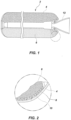
- insulation 8 may be used in a rocket motor 2.
- the rocket motor 2 includes a case 4 produced from a rigid, durable material, such as a metal or composite.
- the case 4 houses a solid propellant 6 that combusts to provide the thrust necessary to propel the rocket motor 2.
- the insulation 8 is applied to an inner surface of the case 4, and is present between the case 4 of the rocket motor 2 and the propellant 6.
- An optional liner 10 may be present between the insulation 8 and the propellant 6.
- Nozzle 12 is operatively associated with the case 4 to receive combustion products generated by combustion of the propellant 6 and to expel the combustion products, generating thrust to propel the rocket motor 2.
- the insulation 8 protects the case 4 from heat and particle streams that are generated by combustion of the propellant 6.
- the insulation 8 may be used on other regions of the rocket motor 2, either internally, externally, or both.
- the insulation 8 may provide ablative protection to an external bulk of the case 4 and nozzle 12.
- the insulation 8 may be used for insulating a solid rocket motor and other large-scale motors, the insulation may also be used with other motors, such as biliquid, hybrid and reverse hybrid motors, or with rocket motor-propelled missiles.
- a single formulation of the insulation 8 may be used in multiple locations in the rocket motor 2.
- different formulations of the insulation 8 may also be used in the rocket motor 2, with precursor compositions of the insulation 8 differing in that some include the aramid as described herein and others are fiber-free as described in U.S. Patent Application Serial Nos. 15/726,731, filed October 6, 2017 , and 15/461,339, filed on March 16, 2017 .
- the different formulations of the insulation 8 may include substantially the same or identical ingredients, with relative amounts of the ingredients being different.
- a method of insulating the rocket motor 2 comprises producing the precursor composition that includes the ingredients described above.
- the precursor composition is deposited on, or applied to, the inner surface of the case 4 of the rocket motor 2.
- the precursor composition is subsequently cured to form the insulation 8.
- the rocket motor 2 may also include multiple precursor compositions of the insulation 8 having similar or identical ingredients. Since these precursor compositions of the insulation 8 include similar or identical ingredients, the precursor compositions may be cured substantially simultaneously in the rocket motor 2, reducing fabrication costs and time.
- the insulation 8 formed from precursor compositions according to embodiments of the disclosure may exhibit comparable or improved mechanical and ablative properties and comparable or improved processing characteristics compared to the conventional aramid-filled EPDM-based insulations.
- the insulation 8 formed from the precursor compositions may exhibit comparable or improved modulus, stress capability, and strain capability compared to the conventional aramid-filled EPDM-based insulations.
- the insulation 8 may also have better tack and ESD properties compared to the conventional aramid-filled EPDM insulations.
- the insulation 8 may also be compatible with the solid propellant 6 used in the rocket motor 2 and non-permeable to gases produced as volatile, combustion products during use of the insulation.
- the insulation 8 formed from the precursor compositions according to embodiments of the disclosure may also have a longer shelf life at room temperature (from about 20°C to about 25°C) compared to the conventional aramid-filled EPDM-based insulations, which have a shelf life at about 0°C for up to one year.
- Precursor compositions including the ingredients shown in Table 1 were produced. Initial formulations including the ingredients shown in Table 1 were prepared. Table 1: Formulations of Precursor Compositions Ingredient EPDM Composition A Amount (parts) EPDM Composition B Amount (parts) I EPDM Composition C Amount (parts) NORDEL ® IP 4520 EPDM 65.8 0 0 KELTAN ® 2650 EPDM 0 80.5 100 AGERITE ® Resin D 0.5 0.5 0.5 Zoco 672 3.0 0 0 HI-SIL ® 233 6.0 0 MAGSHIELD ® S 0 4.0 1.0 CHLOREZ ® 700 20.0 20.0 8.0 DECHLORANE PLUS ® 0 0 8.0 Expandable Graphite 1722HT 4.0 4.0 4.0 GRAPHISTRENGTH ® EPDM 20 a 41.2 23.5 0 Multi-walled Carbon Nanotubes b 0 0 4.0 INDUSTRENE ® B 0.5 0.5 0.5 WINGTACK ® 95
- Tables 2-7 Based on the mechanical, physical, and thermal properties of the formulations in Table 1, additional formulations were prepared and are shown in Tables 2-7. Each of the ingredients was commercially available and was used as received. The ingredients of the respective formulations F-T were added to an internal mixer and combined to produce the respective precursor compositions. The formulations F-T were mixed at a 300 g scale or 5 pound scale.
- the mechanical, physical, and thermal properties of the precursor compositions described in Table 1 were determined and are shown in Table 8.
- the mechanical, physical, and thermal properties were determined by conventional techniques.
- the properties of EPDM Compositions A-C were compared to two conventional, aramid-filled EPDM compositions, which are indicated in Table 8 as "EPDM Comparative Composition D" and "EPDM Comparative Composition E.”
- the EPDM Comparative Compositions D and E included a larger number of ingredients than the EPDM Compositions A-C.
- Table 8 Mechanical, Physical, and Thermal Properties of Precursor Compositions of Table 1 Property EPDM Composition A EPDM Composition B EPDM Composition C ' EPDM Comparative Composition D EPDM Comparative Composition E Number of Ingredients 12 11 13 16 18 Specific Gravity (g/ml) 1.07 1.05 1.04 1-1.04 1.18-1.22 Mooney Viscosity at 212°F 52.3 39 50 20-50 60-90 Tack Time (sec) 0 0 11 0 0 ESD Surface Resistivity (ohms/sq) 2.17 ⁇ 10 6 Insulator 3.0 ⁇ 10 7 Insulator Insulator ESD Volume Resistivity (ohms.cm) 3.92 ⁇ 10 7 Insulator 4.05 ⁇ 10 6 Insulator Insulator Modulus (psi) 24300 13800 10877 4190 8460 Stress Capability (psi) 986 1200 1660 1440 2240 Strain (%) 32 34 29.4 36.3 29.1 Propellant Compatibility Compatible Compatible Compatible Compatible Permeability at 20% Strain Non-
- EPDM Compositions A-C exhibited comparable or improved modulus, stress capability, and strain capability compared to the EPDM Comparative Compositions D and E.
- Each of the EPDM Compositions A-C was also compatible with conventional propellants including, but not limited to, NEPE, PBAN, and HTPB.
- the EPDM Compositions A-C were also determined to be non-permeable to gases produced as volatile, combustion products during use of the precursor composition as insulation.
- EPDM Compositions A and C also exhibited comparable or improved ESD properties compared to EPDM Comparative Compositions D and E.
- Each of EPDM Compositions F-K exhibited desirable properties.
- EPDM Compositions G, Q and R exhibited desirable properties.
- EPDM Compositions Q, S, and T exhibited desirable properties.
- EPDM Compositions N, L, and O exhibited desirable properties.
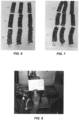
- EPDM Compositions A-C described in Table 1 were determined by conventional techniques. The precursor compositions were placed in a spider mold and cured. Each of EPDM Compositions A-C, respectively, exhibited good rubber flow characteristics in the spider mold, as shown in FIGs. 3-5 .
- the ablative properties of EPDM Compositions A-C described in Table 1 were determined in a low Mach seventy pound char (SPC) motor test.
- SPC low Mach seventy pound char
- the SPC motor test simulated conventional temperature and pressure conditions in low velocity, mid velocity, and high velocity sections of the char motor.
- the diameter of the char motor varies in these three sections, with the char motor having a relatively large diameter in the low velocity section while in the high velocity section, the char motor has a relatively small diameter.
- the diameter of the char motor at a given location determines the amount of exposure that the insulation receives. If the diameter is small, that section of the char motor will be exposed to more gases and will be more prone to erosion than if the diameter is large. Therefore, a particular portion of the char motor in the low velocity section is exposed to a reduced amount of gases in comparison to a particular portion of the char motor in the high velocity section.
- Each of EPDM Compositions A-C was formed into a thin sheet, cured, and assembled into the char motor by conventional techniques.
- the thickness of the insulation was measured at selected intervals, nominally one inch (2.54 cm) apart, before firing the char motor.
- the weight of the part was also recorded before firing the char motor.
- the char motor was disassembled, and the thickness and weight of the insulation were measured again.
- the rate at which each of the insulations is reduced or eroded is expressed in terms of the reduction of the thickness of the insulation per second, and is referred to as the material affected rate or material ablation rate ("MAR").
- the MAR of the insulations was determined by subtracting the post-fired thickness of virgin insulation (i.e., after the char had been removed) at a given point from the pre-fired thickness at the same point and dividing the result by the burn time of the char motor.
- the MAR and percent weight loss are indicators of damage (e.g., ablation) to the insulation, where lower numbers indicate better insulative and ablative performance.
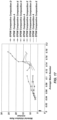
- the MAR was measured for the low velocity, mid velocity, and high velocity sections of the char motor and is shown in FIGs. 9-11 for EPDM Compositions A-C, respectively, along with the MAR for EPDM Comparative Compositions D and E.
- the percent weight loss of the insulations was determined as a function of the pre-fired weight for the low velocity, mid velocity, and high velocity sections of the char motor and is shown in FIGs. 12-14 for EPDM Compositions A-C, respectively, along with the percent weight loss for EPDM Comparative Compositions D and E.
- the average MAR for the insulations formed from the precursor compositions described in Example 1 was measured for the low velocity, mid velocity, and high velocity sections of the char motor and is shown in FIGs. 15-17 for EPDM Compositions A-C, respectively, along with the MAR for EPDM Comparative Compositions D and E.
- EPDM Compositions A-C exhibited comparable or improved ablative performance compared to the conventional, aramid-filled EPDM compositions (EPDM Comparative Compositions D and E).
Landscapes
- Chemical & Material Sciences (AREA)
- Engineering & Computer Science (AREA)
- Health & Medical Sciences (AREA)
- Chemical Kinetics & Catalysis (AREA)
- Medicinal Chemistry (AREA)
- Polymers & Plastics (AREA)
- Organic Chemistry (AREA)
- Combustion & Propulsion (AREA)
- Mechanical Engineering (AREA)
- General Engineering & Computer Science (AREA)
- Compositions Of Macromolecular Compounds (AREA)
Claims (15)
- Vorläuferzusammensetzung, die vor einem Aushärten Folgendes umfasst:Ethylen-Propylen-Dien-Monomer (EPDM), ein Aramid, einen Füllstoff, ausgewählt aus einer Gruppe bestehend aus Zinkoxid, Siliziumdioxid, Magnesiumhydroxid und Kombinationen davon, und ein Kohlenstoffmaterial, umfassendKohlenstoff-Nanoröhrchen, Graphit oder eine Kombination davon, wobei die Vorläuferzusammensetzung das EPDM zu 70 Gewichtsteilen bis 150 Gewichtsteilen oder zu 60 Gewichtsteilen bis etwa 110 Gewichtsteilen und das Kohlenstoffmaterial zu 20,0 Gewichtsteilen bis 46,0 Gewichtsteilen umfasst.
- Vorläuferzusammensetzung nach Anspruch 1, wobei die Vorläuferzusammensetzung umfasst: das Aramid zu 5,0 Gewichtsteilen bis 25,0 Gewichtsteilen.
- Vorläuferzusammensetzung nach Anspruch 1, wobei der Graphit expandierbaren Graphit umfasst.
- Vorläuferzusammensetzung nach Anspruch 3, wobei die Vorläuferzusammensetzung den expandierbaren Graphit in einer Menge von 2,0 Gewichtsteilen bis 10,0 Gewichtsteilen umfasst.
- Vorläuferzusammensetzung nach Anspruch 1, wobei das Kohlenstoffmaterial Kohlenstoffnanoröhren und expandierbaren Graphit umfasst.
- Vorläuferzusammensetzung nach Anspruch 1, wobei die Vorläuferzusammensetzung umfasst:
EPDM, Poly-p-phenylenterephthalamid-Fasern in Zellstoffform, Kohlenstoff-Nanoröhrchen und expandierbaren Graphit, Magnesiumhydroxid, ein polymerisiertes 1,2-Dihydro-2,2,4-trimethylchinolin, ein festes chloriertes Paraffin, Stearinsäure, einen Fünf-Kohlenstoff-Erdölkohlenwasserstoff, Trimethylolpropantrimethacrylat und 1,1-Di-(t-butylperoxy)-3,3,5-trimethylcyclohexan). - Vorläuferzusammensetzung nach Anspruch 1, wobei die Vorläuferzusammensetzung das EPDM, Poly-p-phenylenterephthalamid-Fasern in Zellstoffform, die Kohlenstoffnanoröhrchen und expandierbaren Graphit, Magnesiumhydroxid, ein polymerisiertes 1,2-Dihydro-2,2, 4-Rimethylchinolin, ein festes chloriertes Paraffin, eine polychlorierte polyzyklische Verbindung, ein Chloropren, Stearinsäure, ein Erdölkohlenwasserstoff mit fünf Kohlenstoffatomen, Trimethylolpropantrimethacrylat und 1,1-Di-(t-butylperoxy)-3,3,5-trimethylcyclohexan.
- Vorläuferzusammensetzung nach Anspruch 1, wobei die Vorläuferzusammensetzung das EPDM, Poly-p-phenylenterephthalamid-Fasern in Zellstoffform, die Kohlenstoffnanoröhrchen und expandierbaren Graphit, Zinkoxid, Siliciumdioxid, ein polymerisiertes 1,2-Dihydro-2,2,4-trimethylchinolin, ein festes chloriertes Paraffin, Stearinsäure, einen Fünf-Kohlenstoff-Erdölkohlenwasserstoff, Trimethylolpropantrimethacrylat und 1,1-Di-(t-butylperoxy)-3,3,5-trimethylcyclohexan.
- Vorläuferzusammensetzung nach Anspruch 1, wobei die Vorläuferzusammensetzung umfasst:das Ethylen-Propylen-Dien-Monomer (EPDM);Aramidfasern;das Kohlenstoffmaterial;ein Antioxidationsmittel;eine chlorierte organische Verbindung;den Füllstoff, ausgewählt aus der Gruppe bestehend aus Zinkoxid, Siliziumdioxid, Magnesiumhydroxid und Kombinationen davon;Stearinsäure;einem Erdölkohlenwasserstoff mit fünf Kohlenstoffatomen;Trimethylolpropantrimethacrylat oder einem Poly(butadien)harz; und1,1-Di-(t-butylperoxy)-3,3,5-trimethylcyclohexan) oder Dicumylperoxid.
- Vorläuferzusammensetzung nach Anspruch 9, wobei:das Antioxidans eine Hydrochinolinverbindung, eine Aminverbindung, eine Phenolverbindung oder Kombinationen davon umfasst; unddie chlorierte organische Verbindung ein festes chloriertes Paraffin, eine polychlorierte polyzyklische Verbindung, ein Chloropren oder Kombinationen davon umfasst.
- Raketenmotor, umfassend:
ein Gehäuse, eine Isolierung auf mindestens einem Teil des Gehäuses und ein Treibmittel in dem Gehäuse, wobei die Isolierung umfasst:
ein Reaktionsprodukt der Vorläuferzusammensetzung nach Anspruch 1. - Raketenmotor nach Anspruch 11, wobei die Isolierung auf mehrere Teile des Gehäuses vorhanden ist.
- Verfahren zum Isolieren eines Raketenmotors, umfassend:Aufbringen einer Vorläuferzusammensetzung nach Anspruch 1 einer Isolierung auf mindestens einen Teil eines Raketenmotors; undAushärten der Vorläuferzusammensetzung, um die Isolierung zu bilden.
- Verfahren nach Anspruch 13, wobei das Aufbringen einer Vorläuferzusammensetzung einer Isolierung auf mindestens einen Teil eines Raketenmotors ein Aufbringen der Vorläuferzusammensetzung auf mehrere Teile des Raketenmotors umfasst.
- Verfahren nach Anspruch 14, ferner umfassend ein Aufbringen einer anderen Vorläuferzusammensetzung einer Isolierung auf mindestens einen anderen Teil des Raketenmotors, wobei die andere Vorläuferzusammensetzung eine faserfreie EPDM-Zusammensetzung umfasst.
Applications Claiming Priority (1)
| Application Number | Priority Date | Filing Date | Title |
|---|---|---|---|
| US15/793,862 US20190120174A1 (en) | 2017-10-25 | 2017-10-25 | Precursor compositions for an insulation, insulated rocket motors, and related methods |
Publications (2)
| Publication Number | Publication Date |
|---|---|
| EP3476895A1 EP3476895A1 (de) | 2019-05-01 |
| EP3476895B1 true EP3476895B1 (de) | 2024-06-26 |
Family
ID=64100545
Family Applications (1)
| Application Number | Title | Priority Date | Filing Date |
|---|---|---|---|
| EP18200704.7A Active EP3476895B1 (de) | 2017-10-25 | 2018-10-16 | Vorläuferzusammensetzungen für eine isolation, isolierte raketenmotoren und zugehörige verfahren |
Country Status (2)
| Country | Link |
|---|---|
| US (2) | US20190120174A1 (de) |
| EP (1) | EP3476895B1 (de) |
Families Citing this family (5)
| Publication number | Priority date | Publication date | Assignee | Title |
|---|---|---|---|---|
| US11077627B2 (en) | 2017-08-14 | 2021-08-03 | Northrop Grumman Systems Corporation | Multi-functional protective assemblies, systems including protective assemblies, and related methods |
| US20190120174A1 (en) | 2017-10-25 | 2019-04-25 | Northrop Grumman Innovation Systems, Inc. | Precursor compositions for an insulation, insulated rocket motors, and related methods |
| US11999834B2 (en) | 2019-06-19 | 2024-06-04 | Northrop Grumman Systems Corporation | Precursor compositions for a protective article, protective articles comprising a reaction product of the precursor composition, related aerospace structures, and related methods |
| CN110617160B (zh) * | 2019-08-30 | 2022-06-28 | 南京理工大学 | 一种无喷管发动机阶梯式燃烧室及内壁 |
| US20210277160A1 (en) * | 2020-01-08 | 2021-09-09 | Northrop Grumman Systems Corporation | Precursor compositions for an insulation, insulated rocket motors, and related methods |
Citations (2)
| Publication number | Priority date | Publication date | Assignee | Title |
|---|---|---|---|---|
| US7485060B2 (en) * | 2003-05-30 | 2009-02-03 | Mitsuboshi Belting Ltd. | Rubber composition and power transmission belt incorporating the rubber composition |
| CN107057196A (zh) * | 2017-03-08 | 2017-08-18 | 湖北航聚科技有限公司 | 一种低密度抗烧蚀的绝热材料及其应用 |
Family Cites Families (36)
| Publication number | Priority date | Publication date | Assignee | Title |
|---|---|---|---|---|
| US2303329A (en) | 1940-07-06 | 1942-12-01 | New Jersey Zinc Co | Zinc oxide |
| NO167963C (no) | 1983-02-07 | 1992-01-02 | Hercules Inc | Fremgangsmaate for fremstilling av et rakettmotorhus. |
| US4878431A (en) | 1986-02-21 | 1989-11-07 | Hercules Incorporated | Elastomeric insulating materials for rocket motors |
| US5352312A (en) | 1989-05-10 | 1994-10-04 | Thiokol Corporation | Method of insulating a rocket motor |
| US5272213A (en) | 1992-05-14 | 1993-12-21 | Air Products And Chemicals, Inc. | Scorch retardant polyacrylate elastomers |
| US5821284A (en) * | 1995-10-27 | 1998-10-13 | The United States Of America As Represented By The Secretary Of The Air Force | Durable motor insulation |
| US6566420B1 (en) | 1999-01-13 | 2003-05-20 | Alliant Techsystems Inc. | EPDM rocket motor insulation |
| US6606852B1 (en) | 1999-07-12 | 2003-08-19 | Alliant Techsystems Inc. | Rocket motor insulation containing hydrophobic particles |
| CN1553050A (zh) | 1999-12-23 | 2004-12-08 | ���ܿ���ϵͳ����˾ | 使固体推进剂火箭发动机的壳体绝热的方法 |
| SI20587A (sl) * | 2000-05-19 | 2001-12-31 | DONIT TESNIT, dru�ba za proizvodnjo tesnilnih materialov, | Mehek tesnilni material |
| AU2002311751A1 (en) | 2001-01-10 | 2002-10-15 | Alliant Techsystems Inc. | Fiber-reinforced rocket motor insulation |
| WO2002081561A1 (en) | 2001-04-04 | 2002-10-17 | Kaneka Corporation | Thermoplastic resin composition and elastomer composition |
| US7461503B2 (en) | 2002-06-26 | 2008-12-09 | Alliant Techsystems Inc. | Low-cost, low-density, ablative rubber insulation for rocket motors |
| US6953823B2 (en) | 2003-05-14 | 2005-10-11 | Chung Shan Institute Of Science And Technology | Elastomeric insulating composition for a solid propellant rocket motor |
| US20070270540A1 (en) * | 2003-12-26 | 2007-11-22 | Jsr Corporation | Thermoplastic Elastomer Composition and Molded Article Thereof |
| US20070112136A1 (en) | 2005-11-14 | 2007-05-17 | Sumitomo Chemical Company, Limited Tokai Rubber Industries, Ltd | Rubber composition and process for its production, process for production of vulcanized rubber composition molded articles, and vibration-proof material |
| US20070112091A1 (en) | 2005-11-14 | 2007-05-17 | Jun-Ling Fan | Low density rocket motor insulation |
| US7767746B2 (en) | 2006-05-09 | 2010-08-03 | Alliant Techsystems Inc. | Basalt fiber and nanoclay compositions, articles incorporating the same, and methods of insulating a rocket motor with the same |
| US8845468B2 (en) * | 2008-06-12 | 2014-09-30 | Bando Chemical Industries, Ltd. | Friction drive belt and belt transmission system using the same |
| US20100210770A1 (en) | 2009-02-13 | 2010-08-19 | Jacques Nadeau | Elastomeric composite |
| WO2010109533A1 (ja) * | 2009-03-26 | 2010-09-30 | バンドー化学株式会社 | 平ベルト |
| US20120153242A1 (en) * | 2009-06-24 | 2012-06-21 | Zephyros, Inc. | Insulation materials |
| AU2011256789A1 (en) | 2010-02-02 | 2012-07-12 | Applied Nanostructured Solutions, Llc | Fiber containing parallel-aligned carbon nanotubes |
| JP2011174004A (ja) | 2010-02-25 | 2011-09-08 | Sumitomo Chemical Co Ltd | 電気絶縁体用ゴム組成物及び電気絶縁体 |
| CN105646754B (zh) | 2010-09-23 | 2018-08-07 | 株式会社普利司通 | 用于生产聚二烯的方法 |
| CA2882515C (en) * | 2012-08-31 | 2016-10-18 | Soucy Techno Inc. | Rubber compositions reinforced with fibers and nanometric filamentary structures, and uses thereof |
| US9587586B2 (en) * | 2013-03-06 | 2017-03-07 | Orbital Atk, Inc. | Insulation materials comprising fibers having a partially cured polymer coating thereon, articles including such insulation materials, and methods of forming such materials and articles |
| WO2014168979A1 (en) | 2013-04-08 | 2014-10-16 | Vorbeck Materials | Use of graphene-containing polymer composites |
| CN105593567A (zh) * | 2013-09-30 | 2016-05-18 | 阪东化学株式会社 | 平带及其制造方法 |
| CN104875467B (zh) * | 2014-02-28 | 2017-09-22 | 湖北航天化学技术研究所 | 一种树脂基预混料与火箭发动机壳体同步热固化粘结方法 |
| CN106574080B (zh) | 2014-08-20 | 2018-10-30 | 日本瑞翁株式会社 | 交联性腈橡胶组合物和橡胶交联物 |
| CN105754273B (zh) * | 2016-03-11 | 2018-04-20 | 安徽金兑新材料科技有限公司 | 一种阻隔水汽的聚合纳米薄膜及其制备方法 |
| US10612492B2 (en) | 2017-03-16 | 2020-04-07 | Northrop Grumman Innovation Systems, Inc. | Precursor compositions for an insulation, insulated rocket motors, and related methods |
| US20180265686A1 (en) | 2017-03-16 | 2018-09-20 | Orbital Atk, Inc. | Precursor compositions for an insulation, insulated rocket motors, and related methods |
| US20190120174A1 (en) | 2017-10-25 | 2019-04-25 | Northrop Grumman Innovation Systems, Inc. | Precursor compositions for an insulation, insulated rocket motors, and related methods |
| JP2025174340A (ja) | 2024-05-17 | 2025-11-28 | 株式会社キーズファクトリー | 電子ゲーム機用操作補助具及び電子ゲーム機用操作補助具の移動方法 |
-
2017
- 2017-10-25 US US15/793,862 patent/US20190120174A1/en not_active Abandoned
-
2018
- 2018-10-16 EP EP18200704.7A patent/EP3476895B1/de active Active
-
2022
- 2022-12-12 US US18/064,703 patent/US12560135B2/en active Active
Patent Citations (2)
| Publication number | Priority date | Publication date | Assignee | Title |
|---|---|---|---|---|
| US7485060B2 (en) * | 2003-05-30 | 2009-02-03 | Mitsuboshi Belting Ltd. | Rubber composition and power transmission belt incorporating the rubber composition |
| CN107057196A (zh) * | 2017-03-08 | 2017-08-18 | 湖北航聚科技有限公司 | 一种低密度抗烧蚀的绝热材料及其应用 |
Also Published As
| Publication number | Publication date |
|---|---|
| EP3476895A1 (de) | 2019-05-01 |
| US20230287848A1 (en) | 2023-09-14 |
| US20190120174A1 (en) | 2019-04-25 |
| US12560135B2 (en) | 2026-02-24 |
Similar Documents
| Publication | Publication Date | Title |
|---|---|---|
| US12560135B2 (en) | Precursor compositions for an insulation and related methods | |
| US20090137700A1 (en) | Low cost, low-density, ablative rubber insulation for rocket motors | |
| US7968620B2 (en) | Rocket motors incorporating basalt fiber and nanoclay compositions and methods of insulating a rocket motor with the same | |
| US11306683B2 (en) | Precursor compositions for an insulation and insulated rocket motors | |
| CN1191429C (zh) | 火箭发动机用的弹性体化酚醛树脂烧蚀性隔热物 | |
| EP1373386B1 (de) | Faserverstärkte isolierung für raketenmotoren | |
| US11753544B2 (en) | Insulation precursors, rocket motors, and related methods | |
| US6893597B2 (en) | Method of insulating a case of a solid propellant rocket motor | |
| US20260078210A1 (en) | Precursor compositions comprising a polymeric material, a bromine-containing flame retardant, and antimony trioxide | |
| CN110857345A (zh) | 一种聚烯烃基复合材料及其制备方法 | |
| EP3375817A1 (de) | Vorläuferzusammensetzungen für eine isolation, isolierte raketenmotoren und zugehörige verfahren | |
| CN111320822A (zh) | 一种橡胶热防护材料及其制备方法 | |
| Elashker et al. | Study of thermal protection materials in solid propellant rocket engines | |
| US10370508B1 (en) | High temperature chemical compositions and composites produced therefrom | |
| US7358314B2 (en) | Polybenzoxazole-filled nitrile butadiene rubber compositions | |
| KR101404387B1 (ko) | 보강 충진제를 포함하는 내열재용 고무 조성물 | |
| Gajiwala | Rocket motors incorporating basalt fiber and nanoclay compositions and methods of insulating a rocket motor with the same | |
| JP2006096800A (ja) | インシュレーション材 | |
| Gajiwala | Basalt fiber and nanoclay compositions, articles incorporating the same, and methods of insulating a rocket motor with the same | |
| Center | Development and Application of Flame-Resistant Polymers and Composites |
Legal Events
| Date | Code | Title | Description |
|---|---|---|---|
| PUAI | Public reference made under article 153(3) epc to a published international application that has entered the european phase |
Free format text: ORIGINAL CODE: 0009012 |
|
| STAA | Information on the status of an ep patent application or granted ep patent |
Free format text: STATUS: REQUEST FOR EXAMINATION WAS MADE |
|
| 17P | Request for examination filed |
Effective date: 20181016 |
|
| AK | Designated contracting states |
Kind code of ref document: A1 Designated state(s): AL AT BE BG CH CY CZ DE DK EE ES FI FR GB GR HR HU IE IS IT LI LT LU LV MC MK MT NL NO PL PT RO RS SE SI SK SM TR |
|
| AX | Request for extension of the european patent |
Extension state: BA ME |
|
| RAP1 | Party data changed (applicant data changed or rights of an application transferred) |
Owner name: NORTHROP GRUMMAN SYSTEMS CORPORATION |
|
| STAA | Information on the status of an ep patent application or granted ep patent |
Free format text: STATUS: EXAMINATION IS IN PROGRESS |
|
| 17Q | First examination report despatched |
Effective date: 20220112 |
|
| P01 | Opt-out of the competence of the unified patent court (upc) registered |
Effective date: 20230607 |
|
| GRAP | Despatch of communication of intention to grant a patent |
Free format text: ORIGINAL CODE: EPIDOSNIGR1 |
|
| STAA | Information on the status of an ep patent application or granted ep patent |
Free format text: STATUS: GRANT OF PATENT IS INTENDED |
|
| INTG | Intention to grant announced |
Effective date: 20240118 |
|
| GRAS | Grant fee paid |
Free format text: ORIGINAL CODE: EPIDOSNIGR3 |
|
| GRAA | (expected) grant |
Free format text: ORIGINAL CODE: 0009210 |
|
| STAA | Information on the status of an ep patent application or granted ep patent |
Free format text: STATUS: THE PATENT HAS BEEN GRANTED |
|
| AK | Designated contracting states |
Kind code of ref document: B1 Designated state(s): AL AT BE BG CH CY CZ DE DK EE ES FI FR GB GR HR HU IE IS IT LI LT LU LV MC MK MT NL NO PL PT RO RS SE SI SK SM TR |
|
| REG | Reference to a national code |
Ref country code: GB Ref legal event code: FG4D |
|
| REG | Reference to a national code |
Ref country code: CH Ref legal event code: EP |
|
| REG | Reference to a national code |
Ref country code: DE Ref legal event code: R096 Ref document number: 602018070956 Country of ref document: DE |
|
| PG25 | Lapsed in a contracting state [announced via postgrant information from national office to epo] |
Ref country code: BG Free format text: LAPSE BECAUSE OF FAILURE TO SUBMIT A TRANSLATION OF THE DESCRIPTION OR TO PAY THE FEE WITHIN THE PRESCRIBED TIME-LIMIT Effective date: 20240626 |
|
| PG25 | Lapsed in a contracting state [announced via postgrant information from national office to epo] |
Ref country code: FI Free format text: LAPSE BECAUSE OF FAILURE TO SUBMIT A TRANSLATION OF THE DESCRIPTION OR TO PAY THE FEE WITHIN THE PRESCRIBED TIME-LIMIT Effective date: 20240626 Ref country code: HR Free format text: LAPSE BECAUSE OF FAILURE TO SUBMIT A TRANSLATION OF THE DESCRIPTION OR TO PAY THE FEE WITHIN THE PRESCRIBED TIME-LIMIT Effective date: 20240626 |
|
| REG | Reference to a national code |
Ref country code: LT Ref legal event code: MG9D |
|
| PG25 | Lapsed in a contracting state [announced via postgrant information from national office to epo] |
Ref country code: GR Free format text: LAPSE BECAUSE OF FAILURE TO SUBMIT A TRANSLATION OF THE DESCRIPTION OR TO PAY THE FEE WITHIN THE PRESCRIBED TIME-LIMIT Effective date: 20240927 |
|
| PG25 | Lapsed in a contracting state [announced via postgrant information from national office to epo] |
Ref country code: LV Free format text: LAPSE BECAUSE OF FAILURE TO SUBMIT A TRANSLATION OF THE DESCRIPTION OR TO PAY THE FEE WITHIN THE PRESCRIBED TIME-LIMIT Effective date: 20240626 |
|
| REG | Reference to a national code |
Ref country code: NL Ref legal event code: MP Effective date: 20240626 |
|
| PG25 | Lapsed in a contracting state [announced via postgrant information from national office to epo] |
Ref country code: NO Free format text: LAPSE BECAUSE OF FAILURE TO SUBMIT A TRANSLATION OF THE DESCRIPTION OR TO PAY THE FEE WITHIN THE PRESCRIBED TIME-LIMIT Effective date: 20240926 Ref country code: LV Free format text: LAPSE BECAUSE OF FAILURE TO SUBMIT A TRANSLATION OF THE DESCRIPTION OR TO PAY THE FEE WITHIN THE PRESCRIBED TIME-LIMIT Effective date: 20240626 Ref country code: HR Free format text: LAPSE BECAUSE OF FAILURE TO SUBMIT A TRANSLATION OF THE DESCRIPTION OR TO PAY THE FEE WITHIN THE PRESCRIBED TIME-LIMIT Effective date: 20240626 Ref country code: GR Free format text: LAPSE BECAUSE OF FAILURE TO SUBMIT A TRANSLATION OF THE DESCRIPTION OR TO PAY THE FEE WITHIN THE PRESCRIBED TIME-LIMIT Effective date: 20240927 Ref country code: FI Free format text: LAPSE BECAUSE OF FAILURE TO SUBMIT A TRANSLATION OF THE DESCRIPTION OR TO PAY THE FEE WITHIN THE PRESCRIBED TIME-LIMIT Effective date: 20240626 Ref country code: BG Free format text: LAPSE BECAUSE OF FAILURE TO SUBMIT A TRANSLATION OF THE DESCRIPTION OR TO PAY THE FEE WITHIN THE PRESCRIBED TIME-LIMIT Effective date: 20240626 Ref country code: RS Free format text: LAPSE BECAUSE OF FAILURE TO SUBMIT A TRANSLATION OF THE DESCRIPTION OR TO PAY THE FEE WITHIN THE PRESCRIBED TIME-LIMIT Effective date: 20240926 |
|
| PG25 | Lapsed in a contracting state [announced via postgrant information from national office to epo] |
Ref country code: NL Free format text: LAPSE BECAUSE OF FAILURE TO SUBMIT A TRANSLATION OF THE DESCRIPTION OR TO PAY THE FEE WITHIN THE PRESCRIBED TIME-LIMIT Effective date: 20240626 |
|
| REG | Reference to a national code |
Ref country code: AT Ref legal event code: MK05 Ref document number: 1697673 Country of ref document: AT Kind code of ref document: T Effective date: 20240626 |
|
| PG25 | Lapsed in a contracting state [announced via postgrant information from national office to epo] |
Ref country code: NL Free format text: LAPSE BECAUSE OF FAILURE TO SUBMIT A TRANSLATION OF THE DESCRIPTION OR TO PAY THE FEE WITHIN THE PRESCRIBED TIME-LIMIT Effective date: 20240626 |
|
| PG25 | Lapsed in a contracting state [announced via postgrant information from national office to epo] |
Ref country code: PT Free format text: LAPSE BECAUSE OF FAILURE TO SUBMIT A TRANSLATION OF THE DESCRIPTION OR TO PAY THE FEE WITHIN THE PRESCRIBED TIME-LIMIT Effective date: 20241028 |
|
| PG25 | Lapsed in a contracting state [announced via postgrant information from national office to epo] |
Ref country code: PT Free format text: LAPSE BECAUSE OF FAILURE TO SUBMIT A TRANSLATION OF THE DESCRIPTION OR TO PAY THE FEE WITHIN THE PRESCRIBED TIME-LIMIT Effective date: 20241028 |
|
| PG25 | Lapsed in a contracting state [announced via postgrant information from national office to epo] |
Ref country code: PL Free format text: LAPSE BECAUSE OF FAILURE TO SUBMIT A TRANSLATION OF THE DESCRIPTION OR TO PAY THE FEE WITHIN THE PRESCRIBED TIME-LIMIT Effective date: 20240626 |
|
| PG25 | Lapsed in a contracting state [announced via postgrant information from national office to epo] |
Ref country code: EE Free format text: LAPSE BECAUSE OF FAILURE TO SUBMIT A TRANSLATION OF THE DESCRIPTION OR TO PAY THE FEE WITHIN THE PRESCRIBED TIME-LIMIT Effective date: 20240626 |
|
| PG25 | Lapsed in a contracting state [announced via postgrant information from national office to epo] |
Ref country code: IS Free format text: LAPSE BECAUSE OF FAILURE TO SUBMIT A TRANSLATION OF THE DESCRIPTION OR TO PAY THE FEE WITHIN THE PRESCRIBED TIME-LIMIT Effective date: 20241026 Ref country code: AT Free format text: LAPSE BECAUSE OF FAILURE TO SUBMIT A TRANSLATION OF THE DESCRIPTION OR TO PAY THE FEE WITHIN THE PRESCRIBED TIME-LIMIT Effective date: 20240626 |
|
| PG25 | Lapsed in a contracting state [announced via postgrant information from national office to epo] |
Ref country code: CZ Free format text: LAPSE BECAUSE OF FAILURE TO SUBMIT A TRANSLATION OF THE DESCRIPTION OR TO PAY THE FEE WITHIN THE PRESCRIBED TIME-LIMIT Effective date: 20240626 |
|
| PG25 | Lapsed in a contracting state [announced via postgrant information from national office to epo] |
Ref country code: SK Free format text: LAPSE BECAUSE OF FAILURE TO SUBMIT A TRANSLATION OF THE DESCRIPTION OR TO PAY THE FEE WITHIN THE PRESCRIBED TIME-LIMIT Effective date: 20240626 Ref country code: RO Free format text: LAPSE BECAUSE OF FAILURE TO SUBMIT A TRANSLATION OF THE DESCRIPTION OR TO PAY THE FEE WITHIN THE PRESCRIBED TIME-LIMIT Effective date: 20240626 |
|
| PG25 | Lapsed in a contracting state [announced via postgrant information from national office to epo] |
Ref country code: SM Free format text: LAPSE BECAUSE OF FAILURE TO SUBMIT A TRANSLATION OF THE DESCRIPTION OR TO PAY THE FEE WITHIN THE PRESCRIBED TIME-LIMIT Effective date: 20240626 Ref country code: ES Free format text: LAPSE BECAUSE OF FAILURE TO SUBMIT A TRANSLATION OF THE DESCRIPTION OR TO PAY THE FEE WITHIN THE PRESCRIBED TIME-LIMIT Effective date: 20240626 |
|
| PG25 | Lapsed in a contracting state [announced via postgrant information from national office to epo] |
Ref country code: SM Free format text: LAPSE BECAUSE OF FAILURE TO SUBMIT A TRANSLATION OF THE DESCRIPTION OR TO PAY THE FEE WITHIN THE PRESCRIBED TIME-LIMIT Effective date: 20240626 Ref country code: SK Free format text: LAPSE BECAUSE OF FAILURE TO SUBMIT A TRANSLATION OF THE DESCRIPTION OR TO PAY THE FEE WITHIN THE PRESCRIBED TIME-LIMIT Effective date: 20240626 Ref country code: RO Free format text: LAPSE BECAUSE OF FAILURE TO SUBMIT A TRANSLATION OF THE DESCRIPTION OR TO PAY THE FEE WITHIN THE PRESCRIBED TIME-LIMIT Effective date: 20240626 Ref country code: PL Free format text: LAPSE BECAUSE OF FAILURE TO SUBMIT A TRANSLATION OF THE DESCRIPTION OR TO PAY THE FEE WITHIN THE PRESCRIBED TIME-LIMIT Effective date: 20240626 Ref country code: IS Free format text: LAPSE BECAUSE OF FAILURE TO SUBMIT A TRANSLATION OF THE DESCRIPTION OR TO PAY THE FEE WITHIN THE PRESCRIBED TIME-LIMIT Effective date: 20241026 Ref country code: ES Free format text: LAPSE BECAUSE OF FAILURE TO SUBMIT A TRANSLATION OF THE DESCRIPTION OR TO PAY THE FEE WITHIN THE PRESCRIBED TIME-LIMIT Effective date: 20240626 Ref country code: EE Free format text: LAPSE BECAUSE OF FAILURE TO SUBMIT A TRANSLATION OF THE DESCRIPTION OR TO PAY THE FEE WITHIN THE PRESCRIBED TIME-LIMIT Effective date: 20240626 Ref country code: CZ Free format text: LAPSE BECAUSE OF FAILURE TO SUBMIT A TRANSLATION OF THE DESCRIPTION OR TO PAY THE FEE WITHIN THE PRESCRIBED TIME-LIMIT Effective date: 20240626 Ref country code: AT Free format text: LAPSE BECAUSE OF FAILURE TO SUBMIT A TRANSLATION OF THE DESCRIPTION OR TO PAY THE FEE WITHIN THE PRESCRIBED TIME-LIMIT Effective date: 20240626 |
|
| REG | Reference to a national code |
Ref country code: DE Ref legal event code: R097 Ref document number: 602018070956 Country of ref document: DE |
|
| PG25 | Lapsed in a contracting state [announced via postgrant information from national office to epo] |
Ref country code: DK Free format text: LAPSE BECAUSE OF FAILURE TO SUBMIT A TRANSLATION OF THE DESCRIPTION OR TO PAY THE FEE WITHIN THE PRESCRIBED TIME-LIMIT Effective date: 20240626 |
|
| PLBE | No opposition filed within time limit |
Free format text: ORIGINAL CODE: 0009261 |
|
| STAA | Information on the status of an ep patent application or granted ep patent |
Free format text: STATUS: NO OPPOSITION FILED WITHIN TIME LIMIT |
|
| REG | Reference to a national code |
Ref country code: CH Ref legal event code: PL |
|
| 26N | No opposition filed |
Effective date: 20250327 |
|
| GBPC | Gb: european patent ceased through non-payment of renewal fee |
Effective date: 20241016 |
|
| PG25 | Lapsed in a contracting state [announced via postgrant information from national office to epo] |
Ref country code: MC Free format text: LAPSE BECAUSE OF FAILURE TO SUBMIT A TRANSLATION OF THE DESCRIPTION OR TO PAY THE FEE WITHIN THE PRESCRIBED TIME-LIMIT Effective date: 20240626 |
|
| PG25 | Lapsed in a contracting state [announced via postgrant information from national office to epo] |
Ref country code: GB Free format text: LAPSE BECAUSE OF NON-PAYMENT OF DUE FEES Effective date: 20241016 |
|
| PG25 | Lapsed in a contracting state [announced via postgrant information from national office to epo] |
Ref country code: BE Free format text: LAPSE BECAUSE OF NON-PAYMENT OF DUE FEES Effective date: 20241031 Ref country code: LU Free format text: LAPSE BECAUSE OF NON-PAYMENT OF DUE FEES Effective date: 20241016 |
|
| PG25 | Lapsed in a contracting state [announced via postgrant information from national office to epo] |
Ref country code: CH Free format text: LAPSE BECAUSE OF NON-PAYMENT OF DUE FEES Effective date: 20241031 |
|
| REG | Reference to a national code |
Ref country code: BE Ref legal event code: MM Effective date: 20241031 |
|
| PG25 | Lapsed in a contracting state [announced via postgrant information from national office to epo] |
Ref country code: SE Free format text: LAPSE BECAUSE OF FAILURE TO SUBMIT A TRANSLATION OF THE DESCRIPTION OR TO PAY THE FEE WITHIN THE PRESCRIBED TIME-LIMIT Effective date: 20240626 |
|
| PG25 | Lapsed in a contracting state [announced via postgrant information from national office to epo] |
Ref country code: IE Free format text: LAPSE BECAUSE OF NON-PAYMENT OF DUE FEES Effective date: 20241016 |
|
| PGFP | Annual fee paid to national office [announced via postgrant information from national office to epo] |
Ref country code: DE Payment date: 20251021 Year of fee payment: 8 |
|
| PGFP | Annual fee paid to national office [announced via postgrant information from national office to epo] |
Ref country code: IT Payment date: 20251024 Year of fee payment: 8 |
|
| PGFP | Annual fee paid to national office [announced via postgrant information from national office to epo] |
Ref country code: FR Payment date: 20251030 Year of fee payment: 8 |
|
| PG25 | Lapsed in a contracting state [announced via postgrant information from national office to epo] |
Ref country code: CY Free format text: LAPSE BECAUSE OF FAILURE TO SUBMIT A TRANSLATION OF THE DESCRIPTION OR TO PAY THE FEE WITHIN THE PRESCRIBED TIME-LIMIT; INVALID AB INITIO Effective date: 20181016 |
|
| PG25 | Lapsed in a contracting state [announced via postgrant information from national office to epo] |
Ref country code: HU Free format text: LAPSE BECAUSE OF FAILURE TO SUBMIT A TRANSLATION OF THE DESCRIPTION OR TO PAY THE FEE WITHIN THE PRESCRIBED TIME-LIMIT; INVALID AB INITIO Effective date: 20181016 |