EP3475311B1 - Modified dextran conjugates comprising a lysine-urea-glutamate pharmacophore - Google Patents
Modified dextran conjugates comprising a lysine-urea-glutamate pharmacophore Download PDFInfo
- Publication number
- EP3475311B1 EP3475311B1 EP17734661.6A EP17734661A EP3475311B1 EP 3475311 B1 EP3475311 B1 EP 3475311B1 EP 17734661 A EP17734661 A EP 17734661A EP 3475311 B1 EP3475311 B1 EP 3475311B1
- Authority
- EP
- European Patent Office
- Prior art keywords
- conjugate
- dextran
- modified dextran
- psma
- lysine
- Prior art date
- Legal status (The legal status is an assumption and is not a legal conclusion. Google has not performed a legal analysis and makes no representation as to the accuracy of the status listed.)
- Active
Links
Images


Classifications
-
- A—HUMAN NECESSITIES
- A61—MEDICAL OR VETERINARY SCIENCE; HYGIENE
- A61K—PREPARATIONS FOR MEDICAL, DENTAL OR TOILETRY PURPOSES
- A61K51/00—Preparations containing radioactive substances for use in therapy or testing in vivo
- A61K51/02—Preparations containing radioactive substances for use in therapy or testing in vivo characterised by the carrier, i.e. characterised by the agent or material covalently linked or complexing the radioactive nucleus
- A61K51/04—Organic compounds
- A61K51/0491—Sugars, nucleosides, nucleotides, oligonucleotides, nucleic acids, e.g. DNA, RNA, nucleic acid aptamers
-
- A—HUMAN NECESSITIES
- A61—MEDICAL OR VETERINARY SCIENCE; HYGIENE
- A61K—PREPARATIONS FOR MEDICAL, DENTAL OR TOILETRY PURPOSES
- A61K51/00—Preparations containing radioactive substances for use in therapy or testing in vivo
- A61K51/02—Preparations containing radioactive substances for use in therapy or testing in vivo characterised by the carrier, i.e. characterised by the agent or material covalently linked or complexing the radioactive nucleus
- A61K51/04—Organic compounds
- A61K51/06—Macromolecular compounds, carriers being organic macromolecular compounds, i.e. organic oligomeric, polymeric, dendrimeric molecules
- A61K51/065—Macromolecular compounds, carriers being organic macromolecular compounds, i.e. organic oligomeric, polymeric, dendrimeric molecules conjugates with carriers being macromolecules
-
- A—HUMAN NECESSITIES
- A61—MEDICAL OR VETERINARY SCIENCE; HYGIENE
- A61K—PREPARATIONS FOR MEDICAL, DENTAL OR TOILETRY PURPOSES
- A61K31/00—Medicinal preparations containing organic active ingredients
- A61K31/13—Amines
- A61K31/155—Amidines (), e.g. guanidine (H2N—C(=NH)—NH2), isourea (N=C(OH)—NH2), isothiourea (—N=C(SH)—NH2)
-
- A—HUMAN NECESSITIES
- A61—MEDICAL OR VETERINARY SCIENCE; HYGIENE
- A61K—PREPARATIONS FOR MEDICAL, DENTAL OR TOILETRY PURPOSES
- A61K47/00—Medicinal preparations characterised by the non-active ingredients used, e.g. carriers or inert additives; Targeting or modifying agents chemically bound to the active ingredient
- A61K47/30—Macromolecular organic or inorganic compounds, e.g. inorganic polyphosphates
- A61K47/36—Polysaccharides; Derivatives thereof, e.g. gums, starch, alginate, dextrin, hyaluronic acid, chitosan, inulin, agar or pectin
-
- A—HUMAN NECESSITIES
- A61—MEDICAL OR VETERINARY SCIENCE; HYGIENE
- A61K—PREPARATIONS FOR MEDICAL, DENTAL OR TOILETRY PURPOSES
- A61K47/00—Medicinal preparations characterised by the non-active ingredients used, e.g. carriers or inert additives; Targeting or modifying agents chemically bound to the active ingredient
- A61K47/50—Medicinal preparations characterised by the non-active ingredients used, e.g. carriers or inert additives; Targeting or modifying agents chemically bound to the active ingredient the non-active ingredient being chemically bound to the active ingredient, e.g. polymer-drug conjugates
- A61K47/51—Medicinal preparations characterised by the non-active ingredients used, e.g. carriers or inert additives; Targeting or modifying agents chemically bound to the active ingredient the non-active ingredient being chemically bound to the active ingredient, e.g. polymer-drug conjugates the non-active ingredient being a modifying agent
- A61K47/54—Medicinal preparations characterised by the non-active ingredients used, e.g. carriers or inert additives; Targeting or modifying agents chemically bound to the active ingredient the non-active ingredient being chemically bound to the active ingredient, e.g. polymer-drug conjugates the non-active ingredient being a modifying agent the modifying agent being an organic compound
- A61K47/542—Carboxylic acids, e.g. a fatty acid or an amino acid
-
- A—HUMAN NECESSITIES
- A61—MEDICAL OR VETERINARY SCIENCE; HYGIENE
- A61K—PREPARATIONS FOR MEDICAL, DENTAL OR TOILETRY PURPOSES
- A61K47/00—Medicinal preparations characterised by the non-active ingredients used, e.g. carriers or inert additives; Targeting or modifying agents chemically bound to the active ingredient
- A61K47/50—Medicinal preparations characterised by the non-active ingredients used, e.g. carriers or inert additives; Targeting or modifying agents chemically bound to the active ingredient the non-active ingredient being chemically bound to the active ingredient, e.g. polymer-drug conjugates
- A61K47/51—Medicinal preparations characterised by the non-active ingredients used, e.g. carriers or inert additives; Targeting or modifying agents chemically bound to the active ingredient the non-active ingredient being chemically bound to the active ingredient, e.g. polymer-drug conjugates the non-active ingredient being a modifying agent
- A61K47/54—Medicinal preparations characterised by the non-active ingredients used, e.g. carriers or inert additives; Targeting or modifying agents chemically bound to the active ingredient the non-active ingredient being chemically bound to the active ingredient, e.g. polymer-drug conjugates the non-active ingredient being a modifying agent the modifying agent being an organic compound
- A61K47/547—Chelates, e.g. Gd-DOTA or Zinc-amino acid chelates; Chelate-forming compounds, e.g. DOTA or ethylenediamine being covalently linked or complexed to the pharmacologically- or therapeutically-active agent
-
- A—HUMAN NECESSITIES
- A61—MEDICAL OR VETERINARY SCIENCE; HYGIENE
- A61K—PREPARATIONS FOR MEDICAL, DENTAL OR TOILETRY PURPOSES
- A61K47/00—Medicinal preparations characterised by the non-active ingredients used, e.g. carriers or inert additives; Targeting or modifying agents chemically bound to the active ingredient
- A61K47/50—Medicinal preparations characterised by the non-active ingredients used, e.g. carriers or inert additives; Targeting or modifying agents chemically bound to the active ingredient the non-active ingredient being chemically bound to the active ingredient, e.g. polymer-drug conjugates
- A61K47/51—Medicinal preparations characterised by the non-active ingredients used, e.g. carriers or inert additives; Targeting or modifying agents chemically bound to the active ingredient the non-active ingredient being chemically bound to the active ingredient, e.g. polymer-drug conjugates the non-active ingredient being a modifying agent
- A61K47/56—Medicinal preparations characterised by the non-active ingredients used, e.g. carriers or inert additives; Targeting or modifying agents chemically bound to the active ingredient the non-active ingredient being chemically bound to the active ingredient, e.g. polymer-drug conjugates the non-active ingredient being a modifying agent the modifying agent being an organic macromolecular compound, e.g. an oligomeric, polymeric or dendrimeric molecule
- A61K47/61—Medicinal preparations characterised by the non-active ingredients used, e.g. carriers or inert additives; Targeting or modifying agents chemically bound to the active ingredient the non-active ingredient being chemically bound to the active ingredient, e.g. polymer-drug conjugates the non-active ingredient being a modifying agent the modifying agent being an organic macromolecular compound, e.g. an oligomeric, polymeric or dendrimeric molecule the organic macromolecular compound being a polysaccharide or a derivative thereof
-
- A—HUMAN NECESSITIES
- A61—MEDICAL OR VETERINARY SCIENCE; HYGIENE
- A61K—PREPARATIONS FOR MEDICAL, DENTAL OR TOILETRY PURPOSES
- A61K47/00—Medicinal preparations characterised by the non-active ingredients used, e.g. carriers or inert additives; Targeting or modifying agents chemically bound to the active ingredient
- A61K47/50—Medicinal preparations characterised by the non-active ingredients used, e.g. carriers or inert additives; Targeting or modifying agents chemically bound to the active ingredient the non-active ingredient being chemically bound to the active ingredient, e.g. polymer-drug conjugates
- A61K47/51—Medicinal preparations characterised by the non-active ingredients used, e.g. carriers or inert additives; Targeting or modifying agents chemically bound to the active ingredient the non-active ingredient being chemically bound to the active ingredient, e.g. polymer-drug conjugates the non-active ingredient being a modifying agent
- A61K47/68—Medicinal preparations characterised by the non-active ingredients used, e.g. carriers or inert additives; Targeting or modifying agents chemically bound to the active ingredient the non-active ingredient being chemically bound to the active ingredient, e.g. polymer-drug conjugates the non-active ingredient being a modifying agent the modifying agent being an antibody, an immunoglobulin or a fragment thereof, e.g. an Fc-fragment
-
- A—HUMAN NECESSITIES
- A61—MEDICAL OR VETERINARY SCIENCE; HYGIENE
- A61K—PREPARATIONS FOR MEDICAL, DENTAL OR TOILETRY PURPOSES
- A61K47/00—Medicinal preparations characterised by the non-active ingredients used, e.g. carriers or inert additives; Targeting or modifying agents chemically bound to the active ingredient
- A61K47/50—Medicinal preparations characterised by the non-active ingredients used, e.g. carriers or inert additives; Targeting or modifying agents chemically bound to the active ingredient the non-active ingredient being chemically bound to the active ingredient, e.g. polymer-drug conjugates
- A61K47/51—Medicinal preparations characterised by the non-active ingredients used, e.g. carriers or inert additives; Targeting or modifying agents chemically bound to the active ingredient the non-active ingredient being chemically bound to the active ingredient, e.g. polymer-drug conjugates the non-active ingredient being a modifying agent
- A61K47/68—Medicinal preparations characterised by the non-active ingredients used, e.g. carriers or inert additives; Targeting or modifying agents chemically bound to the active ingredient the non-active ingredient being chemically bound to the active ingredient, e.g. polymer-drug conjugates the non-active ingredient being a modifying agent the modifying agent being an antibody, an immunoglobulin or a fragment thereof, e.g. an Fc-fragment
- A61K47/6835—Medicinal preparations characterised by the non-active ingredients used, e.g. carriers or inert additives; Targeting or modifying agents chemically bound to the active ingredient the non-active ingredient being chemically bound to the active ingredient, e.g. polymer-drug conjugates the non-active ingredient being a modifying agent the modifying agent being an antibody, an immunoglobulin or a fragment thereof, e.g. an Fc-fragment the modifying agent being an antibody or an immunoglobulin bearing at least one antigen-binding site
- A61K47/6851—Medicinal preparations characterised by the non-active ingredients used, e.g. carriers or inert additives; Targeting or modifying agents chemically bound to the active ingredient the non-active ingredient being chemically bound to the active ingredient, e.g. polymer-drug conjugates the non-active ingredient being a modifying agent the modifying agent being an antibody, an immunoglobulin or a fragment thereof, e.g. an Fc-fragment the modifying agent being an antibody or an immunoglobulin bearing at least one antigen-binding site the antibody targeting a determinant of a tumour cell
- A61K47/6869—Medicinal preparations characterised by the non-active ingredients used, e.g. carriers or inert additives; Targeting or modifying agents chemically bound to the active ingredient the non-active ingredient being chemically bound to the active ingredient, e.g. polymer-drug conjugates the non-active ingredient being a modifying agent the modifying agent being an antibody, an immunoglobulin or a fragment thereof, e.g. an Fc-fragment the modifying agent being an antibody or an immunoglobulin bearing at least one antigen-binding site the antibody targeting a determinant of a tumour cell the tumour determinant being from a cell of the reproductive system: ovaria, uterus, testes, prostate
-
- A—HUMAN NECESSITIES
- A61—MEDICAL OR VETERINARY SCIENCE; HYGIENE
- A61K—PREPARATIONS FOR MEDICAL, DENTAL OR TOILETRY PURPOSES
- A61K51/00—Preparations containing radioactive substances for use in therapy or testing in vivo
- A61K51/02—Preparations containing radioactive substances for use in therapy or testing in vivo characterised by the carrier, i.e. characterised by the agent or material covalently linked or complexing the radioactive nucleus
- A61K51/04—Organic compounds
- A61K51/0402—Organic compounds carboxylic acid carriers, fatty acids
-
- A—HUMAN NECESSITIES
- A61—MEDICAL OR VETERINARY SCIENCE; HYGIENE
- A61K—PREPARATIONS FOR MEDICAL, DENTAL OR TOILETRY PURPOSES
- A61K51/00—Preparations containing radioactive substances for use in therapy or testing in vivo
- A61K51/02—Preparations containing radioactive substances for use in therapy or testing in vivo characterised by the carrier, i.e. characterised by the agent or material covalently linked or complexing the radioactive nucleus
- A61K51/04—Organic compounds
- A61K51/06—Macromolecular compounds, carriers being organic macromolecular compounds, i.e. organic oligomeric, polymeric, dendrimeric molecules
-
- A—HUMAN NECESSITIES
- A61—MEDICAL OR VETERINARY SCIENCE; HYGIENE
- A61K—PREPARATIONS FOR MEDICAL, DENTAL OR TOILETRY PURPOSES
- A61K51/00—Preparations containing radioactive substances for use in therapy or testing in vivo
- A61K51/12—Preparations containing radioactive substances for use in therapy or testing in vivo characterised by a special physical form, e.g. emulsion, microcapsules, liposomes, characterized by a special physical form, e.g. emulsions, dispersions, microcapsules
- A61K51/121—Solutions, i.e. homogeneous liquid formulation
-
- A—HUMAN NECESSITIES
- A61—MEDICAL OR VETERINARY SCIENCE; HYGIENE
- A61P—SPECIFIC THERAPEUTIC ACTIVITY OF CHEMICAL COMPOUNDS OR MEDICINAL PREPARATIONS
- A61P13/00—Drugs for disorders of the urinary system
- A61P13/08—Drugs for disorders of the urinary system of the prostate
-
- A—HUMAN NECESSITIES
- A61—MEDICAL OR VETERINARY SCIENCE; HYGIENE
- A61P—SPECIFIC THERAPEUTIC ACTIVITY OF CHEMICAL COMPOUNDS OR MEDICINAL PREPARATIONS
- A61P35/00—Antineoplastic agents
-
- C—CHEMISTRY; METALLURGY
- C08—ORGANIC MACROMOLECULAR COMPOUNDS; THEIR PREPARATION OR CHEMICAL WORKING-UP; COMPOSITIONS BASED THEREON
- C08B—POLYSACCHARIDES; DERIVATIVES THEREOF
- C08B37/00—Preparation of polysaccharides not provided for in groups C08B1/00 - C08B35/00; Derivatives thereof
- C08B37/0006—Homoglycans, i.e. polysaccharides having a main chain consisting of one single sugar, e.g. colominic acid
- C08B37/0009—Homoglycans, i.e. polysaccharides having a main chain consisting of one single sugar, e.g. colominic acid alpha-D-Glucans, e.g. polydextrose, alternan, glycogen; (alpha-1,4)(alpha-1,6)-D-Glucans; (alpha-1,3)(alpha-1,4)-D-Glucans, e.g. isolichenan or nigeran; (alpha-1,4)-D-Glucans; (alpha-1,3)-D-Glucans, e.g. pseudonigeran; Derivatives thereof
- C08B37/0021—Dextran, i.e. (alpha-1,4)-D-glucan; Derivatives thereof, e.g. Sephadex, i.e. crosslinked dextran
Definitions
- the present invention is related to modified dextran conjugates, such as guanidine-dextran conjugates, comprising a glutamate-urea-lysine pharmacophore, and a method for preparation of said conjugates.
- the conjugate of the present invention can be used for treating or diagnosis of a disease or a condition associated with expression of prostate specific membrane antigen (PSMA).
- PSMA prostate specific membrane antigen
- Hydroxypolymers are a group of sugar polymers, which constitute multiple hydroxyl groups, which can be activated and subsequently conveniently substituted with different moieties of effective compounds.
- Dextran is one of most frequently used hydroxypolymers in pharmaceutical industry with established pharmaceutical uses, e.g. for preventing hypovolemic chock, preventing embolism and improving microcirculation. Dextran and its non-toxic properties and high tolerability is very well documented ( AS Segal, 1964 In: Modern medical monographs, ed. Wright, IS, Green & Stratton, NY, London, pp 5-17 . Therefore, it is often used as an example of pharmaceutically applicable hydroxypolymers.
- Guanidine compounds have many interesting and important biomedical effects and consequently many uses. They are for example used as free radical scavengers, inhibitors of nitric oxide synthase (NOS) preventing nitric oxide formation. They are known to have certain anti-proliferative effects on cells.
- the guanidines are also used as "anti-aging" drugs, wherein the effect is achieved by protection from low density lipoprotein oxidation, by prevention of atherosclerotic lesions formation, by retarding the tissue damaging effects of diabetes, e.g. cardiovascular damage, through inhibition of the formation of advanced glycosylation end products (AGE's).
- Aminoguanidine is currently supplied as a non-prescription drug in the United States and its role in the treatment of various diseases have been investigated in clinical studies.
- Targeting or tumor cell selectivity is believed to be achieved through the increased metabolic needs of the fast dividing tumor cells, which require amino-5-guanidinopentanoic acid and structurally related guanidine compounds, and other constituents for polyamine formation ( D Scott Lind, Am Soc Nutr Sci, 2004, J Nutr, 134:2837-2841 ; E Wayne, Turk J Med Sci, 2003, 33, 195-205 ).
- Cellular uptake of said guanidine compounds is mediated principally via the Na+ -independent basic amino acid transport system y+ ( Cendan et al, Ann Surg Oncol, 1995, 2:257-265 ).
- EP1137441 B1 discloses the use of a compound comprising dextran, the charge of which has been modified through covalent binding of charged lysine groups (lysine-dextran), for the manufacture of a medicament for treating charged tumors by selective targeting.
- Still another European patent EP2274018 B1 of the present inventor is related to a modified hydroxypolymer conjugate, preferably a dextran-guanidine-biphosphonate conjugate for treating not only skeletal tumors i.e. bone metastasis, particularly bone metastasis related to hormone refractory prostate cancer HRPC and breast cancer, but also osteoporosis.
- Prostate-specific Membrane Antigen also known as glutamate carboxypeptidase II and N-acetylated alpha-linked acidic dipeptidase 1
- FOLH1 farnesolate hydrolase
- the protein acts as a glutamate carboxypeptidase on different alternative substrates, including the nutrient folate and the neuropeptide N-acetyl-1-aspartyl-1-glutamate and is expressed in a number of tissues such as the prostate, and to a lesser extent, the small intestine, central and peripheral nervous system and kidney.
- PSMA is present on the neovasculature of a wide range of malignant tumors including: prostate, renal, pancreatic, breast, colon, bladder, testicular carcinoma, melanoma, glioblastoma, and soft tissue sarcomas. PSMA has been shown to be an important target for immunological approaches such as vaccines or directed therapy with monoclonal antibodies.
- PSMA prostate-restricted molecules that are secretory proteins
- PSMA prostatic acid phosphatase
- PSMA is an integral cell-surface membrane protein that is not secreted, which makes it an ideal target for antibody therapy.
- Radioactive molecules that selectively bind to specific tumor cell surface proteins provide an attractive route for imaging and treating tumors under non-invasive conditions.
- radiolabeled ligands to the PSMA protein that is often overexpressed on many cancer cells provide an attractive route for non-invasive imaging and selective targeting of cancer cells.
- PROSTASCINT@ is an In-labelled anti-PSMA murine monoclonal antibody approved by the FDA for imaging and staging of newly diagnosed and recurrent prostate cancer patients. Capromab binds to an intracellular epitope of PSMA, thus requiring internalization or exposure of the internal domain of PSMA, therefore preferentially binding apoptotic or necrosing cells. Also monoclonal antibodies that bind to the extracellular domain of PSMA and have been radiolabeled and shown to accumulate in PSMA-positive prostate tumor models in animals. However, diagnosis and tumor detection using monoclonal antibodies has been limited by the low permeability of the monoclonal antibody in solid tumor.
- EP 2097111 B1 discloses glutamate-urea-lysine PSMA-binding moiety conjugated to a radio-imaging moiety that enables rapid visualization of prostate cancer and specific targeting to allow radiotherapy. Further PSMA ligands/modulators are disclosed in WO2015/058151 A2 , WO2014/127365 A1 and EP3011976 A1 .
- PSMA is thus recognized as an attractive molecular target for the development of radiopharmaceuticals to image and treat metastatic prostate cancer but also other cancers wherein PSMA is expressed.
- the present invention is related to modified dextran conjugates that comprise a lysine-urea-glutamate pharmacophore.
- the present invention is also related to a tumor killing composition which comprises the modified dextran conjugate having the lysine-urea-glutamate pharmacophore and at least one pharmaceutically acceptable adjuvant.
- the present invention further comprises a pharmaceutical formulation, comprising the modified dextran conjugate encompassing the lysine-urea-glutamate pharmacophore, a pharmaceutically acceptable salt or solvate thereof, and a pharmaceutically acceptable excipient.
- a method for treating cancer in a subject comprising administering to a subject in need of such treatment a therapeutically effective amount of the tumor killing composition comprising the modified dextran conjugate containing the lysine-urea-glutamate pharmacophore and at least one pharmaceutically acceptable adjuvant or the pharmaceutical formulation comprising the modified dextran conjugate having the lysine-urea-glutamate pharmacophore, a pharmaceutically acceptable salt or solvate thereof, and a pharmaceutically acceptable excipient, is disclosed.
- the present invention relates to a method for producing the modified dextran conjugate containing the lysine-urea-glutamate pharmacophore, wherein a guanidine compound having at least one free amino group is mixed with activated dextran and glutamine-urea-ly sine.
- GUIG glutamate-urea-glutamate
- GUL glutamate-urea-lysine
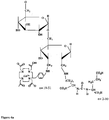
- the present inventors have invented a conjugate, wherein the PSMA protein binding glutamate-urea-lysine tripeptide is combined with modified dextran that can further be combined with compounds having free amino group.
- These compounds include various ligands, such as cytostatic agents or diagnostic/therapeutic radionuclides.
- the modified dextran conjugate of the present invention provides an attractive route for non-invasive imaging, selective targeting and therapy of PSMA expressing cancers.
- the present invention relates to a modified dextran conjugate encompassing a lysine-urea-glutamate pharmacophore.
- the conjugate is a PSMA binding conjugate.
- the dextran moiety is substituted with a compound which have at least one free amino group.
- the dextran moiety is substituted with a guanidine compound.
- the conjugate further comprises substitution with other ligands in the dextran moiety.
- the other ligand is selected from the group consisting of therapeutic compounds, cytostatic drugs and radiometal chelators that may chelate gamma, beta or alpha emitting radionuclides.
- the radionuclide is a gamma emitting (technetium-99m)Tc(CO)3 chelate complex, beta emitting (rhenium-186/188)Re(CO)3 chelate complex or alpha emitting radionuclides chelate complex.
- the dextran moiety is substituted with a gadolinium labelled metal chelate.
- the substitution with gadolinium metal chelate does not reduce the function of the conjugate as compared e.g. to the situation, wherein the dextran moiety is substituted with a guanidine compound.
- One compound that can be added to the modified dextran conjugate encompassing a lysine-urea-glutamate pharmacophore is 1,4,7,10-tetraazacyclododecane-1,4,7,10-tetraacetic acid (also known as DOTA), which is an organic compound with the formula (CH 2 CH 2 NCH 2 CO 2 H) 4 .
- the molecule consists of a central 12-membered tetraaza (i.e., containing four nitrogen atoms) ring.
- DOTA is used as a complexing agent, especially for lanthanide ions. Its complexes have medical applications as contrast agents and cancer treatments.
- DOTA is shorthand for both the tetracarboxylic acid and its various conjugate bases.
- H 4 DOTA tetraacid
- DOTA 4- fully deprotonated derivative
- Many related ligands are referred to using the DOTA acronym, although these derivatives are generally not tetracarboxylic acids or the conjugate bases.
- DOTA is derived from the macrocycle known as cyclen.
- the four secondary amine groups are modified by replacement of the N-H centers with N-CH2CO2H groups.
- the resulting aminopolycarboxylic acid upon ionization of the carboxylic acid groups, is a high affinity chelating agent for di- and trivalent cations.
- DOTA envelops metal cations, but the denticity of the ligand depends on the geometric tendencies of the metal cation.
- the main applications involve the lanthanides and in such complexes DOTA functions as an octadentate ligand, binding the metal through four amine and four carboxylate groups. Most such complexes feature an additional water ligand, giving an overall coordination number of nine.
- DOTA functions as a hexadentate ligand, binding through the four nitrogen and two carboxylate centres.
- the complexes have octahedral coordination geometry, with two pendent carboxylate groups.
- the ligand is heptadentate.
- DOTA was once used as part of some cancer therapies, where it functioned as a chelating agent for the radioisotope 90 Y 3+ . The research was discontinued when scientists found that the cancer only spread. DOTA can be conjugated to monoclonal antibodies by attachment of one of the four carboxyl groups as an amide. The remaining three carboxylate anions are available for binding to the yttrium ion.
- the modified antibody accumulates in the tumour cells, concentrating the effects of the radioactivity of 90 Y.
- Drugs containing this module receive an International Nonproprietary Name ending in tetraxetan (Yttrium ( 90 Y) clivatuzumab tetraxetan and Yttrium ( 90 Y) tacatuzumab tetraxetan).
- DOTA can also be linked to molecules that have affinity for various structures.
- the resulting compounds are used with a number of radioisotopes in cancer therapy and diagnosis (for example in positron emission tomography).
- the conjugate is administrated systemically i.e. by intravenous administration.
- the conjugate can be administered locally or regiolocally e.g. by administration to the peritoneal cavity.
- intravenous administration can be used for systemic administration.
- the conjugate is for use in the treatment, imaging or diagnosis of cancer.
- said cancer comprises malignant tumors including prostate, renal, pancreatic, breast, colon, bladder, testicular carcinoma, melanoma, glioblastoma, and soft tissue sarcomas.
- said cancer is a prostate cancer.
- the invention relates also to a tumor killing composition which comprises the modified dextran conjugate encompassing a lysine-urea-glutamate pharmacophore and at least one pharmaceutically acceptable adjuvant.
- the invention further relates to a pharmaceutical formulation which comprises the modified dextran conjugate encompassing a lysine-urea-glutamate pharmacophore, a pharmaceutically acceptable salt or solvate thereof, and a pharmaceutically acceptable excipient.
- a method for treating cancer in a subject comprising administering to a subject in need of such treatment a therapeutically effective amount of the composition which comprises the modified dextran conjugate encompassing a lysine-urea-glutamate pharmacophore and at least one pharmaceutically acceptable adjuvant or the formulation which comprises the modified dextran conjugate encompassing a lysine-urea-glutamate pharmacophore, a pharmaceutically acceptable salt or solvate thereof, and a pharmaceutically acceptable excipient, is one aspect of the invention.
- Another aspect of the invention is a method for producing the modified dextran conjugate as described above encompassing a lysine-urea-glutamate pharmacophore, wherein a guanidine compound having at least one free amino group is mixed with activated dextran and glutamate-urea-ly sine.
- polyvalent means that more than one type or class of ligand molecule can simultaneously be combined with the modified dextran conjugate.
- the ligands can be combined to the dextran moiety and/or, as traditionally done in constructs with the PSMA binding tripeptide, to the tripeptide.
- the phrases " specifically targeting ", " specific targeting ", and “ specifically targeted” mean that the PSMA binding ligand conjugates described herein are preferentially targeted to prostate cancer cells or to other cells that preferentially express or overexpress PSMA as evidenced by the ability to detect accumulation of the PSMA binding ligand conjugates in the specifically targeted cell type over accumulation in normal tissues that do not express the receptor for the ligand.
- the principle of targeting i.e. intravenous administration of a targeting molecule having a ligand, or ligands, that has a specificity for a specific structure or protein that is expressed by the target tumor cells, depends on the random collision between the targeting molecule and the target structure enabling the specific binding of the ligand.
- the significance of a polyvalent targeting molecule that has multiple specific ligands, is that the probability of binding to its target is increased. This increased binding signifies that the targeting is enhanced i.e. the diagnostic or therapeutic efforts become more effective.
- the dextran moiety can be substituted with a compound which has at least one free amino group and which are covalently coupled to activated hydroxyl groups of the dextran moiety.
- the activated dextran polymer can be substituted for example by guanidine side groups of guanidine.
- the guanidine groups are covalently coupled to said dextran polymer via free amino side groups of the guanidine compounds.
- the substitution is preceded by activating said dextran polymer through oxidation, which enables the reaction with said free amino side groups forming bonds of guanidine compounds with subsequent reduction obtain stable amine bonds ( Matsunaga et al, Nucl Med Biol. 2005, 32, 279-285 ).
- Term " activated dextran " as used herein thus refers to a product that results from oxidation of dextran in the presence of sodium periodate.
- the activated dextran polymer can also be coupled for example to several amino acids, such as lysine or tyrosine.
- the critical feature of these alternative elements to be coupled to the activated dextran polymer is the presence of a free amino group.
- substituted refers to an alkyl or alkenyl group, as defined below (e.g., an alkyl group) in which one or more bonds to a hydrogen atom contained therein are replaced by a bond to non-hydrogen or non-carbon atoms.
- Substituted groups also include groups in which one or more bonds to a carbon(s) or hydrogen(s) atom are replaced by one or more bonds, including double or triple bonds, to a heteroatom.
- a substituted group will be substituted with one or more substituents, unless otherwise specified.
- a substituted group is substituted with 1, 2, 3, 4, 5, or 6 substituents.
- substituent groups include: halogens (i.e., F, Cl, Br, and I); hydroxyls; alkoxy, alkenoxy, alkynoxy, aryloxy, aralkyloxy, heterocyclyloxy, and heterocyclylalkoxy groups; carbonyls (oxo); carboxyls; esters; urethanes; oximes; hydroxylamines; alkoxyamines; aralkoxyamines; thiols; sulfides; sulfoxides; sulfones; sulfonyls; sulfonamides; amines; N-oxides; hydrazines; hydrazides; hydrazones; azides; amides; ureas; amidines; gu
- the guanidine-polymer-conjugate of the present invention is a compound which as a backbone compound has a hydroxylpolymer such as dextran.
- the molecular weight of hydroxylpolymer or dextran is between 10 3 -10 6 Daltons.
- the hydroxypolymer or dextran is substituted with between 15 to 60%, preferably between 20 to 50% guanidine side groups, i.e. 20-50% of the glucose moieties in the dextran backbone are substituted with guanidine groups.
- the aminoguanidine forms a hydrazone bond with the hydroxypolymer or dextran polymer.
- the hydrazone bond can be further reduced, yielding a guanidino hydrazine bond.
- Suitable guanidine compounds are agmatine and aminoguanidine.
- the scope of the present invention also encompasses a ligand-linker complex that binds to PSMA and the use of this ligand-linker complex to target drugs to PSMA positive cells wherein the ligand is not a monoclonal antibody.
- the present invention also includes an anticancer moiety or radionuclide chelator that is covalently linked to the dextran backbone via a free amine e.g. 2-amino-benzyl.
- chelating agent refers to a molecule, often an organic one, and often a Lewis base, having two or more unshared electron pairs available for donation to a metal ion.
- the metal ion is usually coordinated by two or more electron pairs to the chelating agent.
- identityate chelating agent tridentate chelating agent
- tetradentate chelating agent are art-recognized and refer to chelating agents having, respectively, two, three, and four electron pairs readily available for simultaneous donation to a metal ion coordinated by the chelating agent.
- the electron pairs of a chelating agent forms coordinate bonds with a single metal ion; however, in certain examples, a chelating agent may form coordinate bonds with more than one metal ion, with a variety of binding modes being possible.
- Stable attachment of radionuclides by means of macrocylic chelating agents to targeting agents results in agents for targeted radiotherapy/diagnosis.
- the chelators that hold the radionuclide have to have high stability at physiologic conditions to avoid radiation damage to non-target cells. When constructing such agents it is essential to perform thorough optimization of degree of substitution and the stability of the construct.
- the addition of a 2-amino-benzyl group to the macrocylic radiometal chelator results in a chemical handle, the NH2 group, and a chromophore, the benzyl.
- the chemical handle is excellent for reductive amination and the chromphore greately facilitates the optimization of the construction.
- substitution degree i.e. degree of coupling of the macrocylcic chelator
- modified dextran conjugates comprising glutamate-urea-lysine tripeptide may also have substitution of other ligands, e.g., cytostatic compounds, radiometal chelators that may chelate gamma, beta or alpha emitting radionuclides for cancer diagnosis or therapy. Also lysine or any other amino acid or a derivative thereof may be conjugated depending on the purpose.
- other ligands e.g., cytostatic compounds, radiometal chelators that may chelate gamma, beta or alpha emitting radionuclides for cancer diagnosis or therapy.
- lysine or any other amino acid or a derivative thereof may be conjugated depending on the purpose.
- Other functional groups may be coupled additionally to guanidine-dextran-lysine-urea-glutamate conjugate.
- Those compounds include chemotherapeutic drugs, radionuclides, for example, Tc-99m, 1-131, Y-90, Re-188, Sm-153, hormones, hormone antagonists, such as Tamoxifen, peptides, such as somatostatin, toxins, monoclonal antibodies or fragments thereof, free radical scavengers, such as amifostine or proteins.
- Coupling of such functional groups could be achieved directly or via bifunctional chelates that have been coupled to the hydroxypolymer prior to the inclusion of functional groups.
- Radionuclides or radiometals comprise many useful radioactive isotopes of various metallic elements. When properly harnessed, these have valuable emission properties that can be used for diagnostic imaging techniques, such as single photon emission computed tomography (SPECT, e.g.(67)Ga, (99m)Tc, (111)In, (177)Lu) and positron emission tomography (PET, e.g.(68)Ga, (64)Cu, (44)Sc, (86)Y, (89)Zr), as well as therapeutic applications (e.g.(47)Sc, (114m)In, (177)Lu, (90)Y, (212/213)Bi, (212)Pb, (225)Ac, (186/188)Re).
- SPECT single photon emission computed tomography
- PET e.g.(68)Ga, (64)Cu, (44)Sc, (86)Y, (89)Zr
- therapeutic applications e.g.(47)Sc, (114m)
- a fundamental critical component of a radiometal-based radiopharmaceutical is the chelator, the ligand system that binds the radiometal ion in a tight stable coordination complex so that it can be properly directed to a desirable molecular target in vivo.
- chelators should have a free amine group for the conjugation, preferably a 2-amino-benzyl group allowing spectrophotometric determination of the content of chelate in the construct.
- chemotherapeutic drugs and agents include, but are not limited to, adrenocorticoids and corticosteroids, alkylating agents, antiandrogens, antiestrogens, androgens, aclamycin and aclamycin derivatives, estrogens, antimetabolites such as cytosine arabinoside, purine analogs, pyrimidine analogs, and methotrexate, busulfan, carboplatin, chlorambucil, cisplatin and other platinum compounds, tamoxiphen, taxol, paclitaxel, paclitaxel derivatives, Taxotere®, cyclophosphamide, daunomycin, rhizoxin, T2 toxin, plant alkaloids, prednisone, hydroxyurea, teniposide, mitomycins, discodermolides, microtubule inhibitors, epothilones, tubulysins, cyclopropyl benz[e]ind
- pharmacophore as used herein is an abstract description of molecular features which are necessary for molecular recognition of a ligand by a biological macromolecule.
- the IUPAC defines a pharmacophore to be "an ensemble of steric and electronic features that is necessary to ensure the optimal supramolecular interactions with a specific biological target and to trigger (or block) its biological response".
- Typical pharmacophore features include hydrophobic centroids, aromatic rings, hydrogen bond acceptors or donors, cations, and anions. The features need to match different chemical groups with similar properties, in order to identify novel ligands.
- the pharmacophore used in the present invention is the glutamate-urea-lysine tripeptide.
- An aspect of the present invention is to use guanidine-dextran-glutamate-urea-lysine PSMA binding conjugate for treatment and diagnosis of malignant tumors including: prostate, renal, pancreatic, breast, colon, bladder, testicular carcinoma, melanoma, glioblastoma, and soft tissue sarcomas.
- malignant tumor including: prostate, renal, pancreatic, breast, colon, bladder, testicular carcinoma, melanoma, glioblastoma, and soft tissue sarcomas.
- the malignant tumor is a prostate tumor.
- the present invention can be used for diagnosis and/or treatment of PSMA expressing tumors, especially prostate cancer.
- a tumor is a commonly used, but non-specific, term for a neoplasm.
- the word tumor simply refers to a mass. This is a general term that can refer to benign (generally harmless) or malignant (cancerous) growths.
- a cancer is another word for a malignant tumor (a malignant neoplasm). Terms " cancer " and " tumor " are used herein as synonyms and interchangeably.
- Another aspect of the invention is a method for producing the guanidine-dextran-glutamate-urea-lysine PSMA binding conjugate wherein a guanidine compound having at least one free amino group is mixed with activated dextran and glutamine-urea-lysine.
- Still a further aspect of the invention is a pharmaceutical formulation, comprising the guanidine-dextran-glutamate-urea-lysine PSMA binding conjugate, a pharmaceutically acceptable salt or solvate thereof, and a pharmaceutically acceptable excipient.
- One aspect of the invention is also a method of treatment, wherein modified dextran conjugate comprising the glutamate-urea-lysine PSMA binding pharmacophore is administered to a patient in need thereof in an effective amount.
- effective amount or “therapeutally-effective amount” as used herein means that amount of a compound, material, or composition comprising a compound or conjugate of the invention, or other active ingredient which is effective for producing some desired therapeutic effect in at least a sub-population of cells in an animal at a reasonable benefit/risk ratio applicable to any medical treatment.
- a therapeutically effective amount with respect to a compound of the invention means that amount of therapeutic agent alone, or in combination with other therapies, that provides a therapeutic benefit in the treatment or prevention of a disease. Used in connection with a compound of the invention, the term can encompass an amount that improves overall therapy, reduces or avoids symptoms or causes of disease, or enhances the therapeutic efficacy of or synergies with another therapeutic agent.
- treating or “ treatment” is intended to encompass also diagnosis, prophylaxis, therapy and cure.
- the patient receiving this treatment is any animal in need, including primates, in particular humans, and other mammals such as equines, cattle, swine and sheep; and poultry and pets in general.
- a further aspect of the present invention is a tumor killing composition, which comprises the modified dextran conjugate comprising the glutamate-urea-lysine PSMA binding pharmacophore and at least one pharmaceutically acceptable adjuvant.
- suitable adjuvants are a therapeutic radionuclide and an anthracycline.
- compositions comprising conjugates according to the invention include a therapeutically effective amount of the one or more conjugates or compounds for diagnosis, imaging, and/or treatment of diseases caused by PSMA expressing cells in a patient.
- Illustrative compositions include unit doses, unit dosage forms, and the like. It is to be understood that the compositions comprising conjugate according to the invention may include other components and/or ingredients, including, but not limited to, other therapeutically active compounds, and/or one or more carriers, and/or one or more diluents, and/or one or more excipients, and the like.
- methods for using the compounds and pharmaceutical compositions for diagnosis, imaging, and/or treatment of diseases caused by PSMA expressing cells in a patient are also described herein.
- the methods include the step of administering one or more conjugates described herein to the patient.
- uses of the compounds and compositions in the manufacture of a medicament for diagnosis, imaging, and/or treatment of diseases caused by PSMA expressing cells in a patient are also described herein.
- the medicaments include a therapeutically effective amount of the one or more compounds and/or compositions described herein.
- the modified dextran conjugate of the invention has a three-step mechanism of action comprising binding, internalization and exerting the therapeutic effect.
- the guanidine moieties facilitate targeting to the cancer cells through their electrostatic charge, the pharmacophore binds to PSMA, and the therapeutic moiety produces its effects after internalization into the cancer cell.
- conjugates and compositions described herein may be used alone or in combination with other compounds useful for diagnosis, imaging, and/or treatment of diseases caused by PSMA expressing cells in a patient, including those compounds that may be therapeutically effective by the same or different modes of action.
- conjugates and compositions described herein may be used in combination with other compounds that are administered to treat other symptoms of the disease, such as compounds administered to decrease pain, and the like.
- the medicine is preferably administered systemically, i.e. by intra-venous administration.
- the medicine can be administered locally or regiolocally, e.g. by administration to the peritoneal cavity. All these routes of administration are possible and dependent on the specific therapeutic application.
- PSMA binding conjugates according to the present invention which may be capable of detecting both the primary prostate cancer as well as soft tissue and bone metastases, will not only satisfy this critical unmet need, but could alter the current paradigm for the detection and staging of prostate cancer and also offer a unique opportunity to follow response to systemic therapies by non-invasive external imaging. Patient management would be significantly improved as these molecular imaging pharmaceuticals are designed to track specifically both the location and progression of prostate tumor metastases through their PSMA expression.
- the especial advantage of the present invention is that the same platform can be used for both diagnosis and treatment.
- the use of the modified dextran conjugate of the present invention allows an earlier and more accurate diagnosis and represents therapeutic options which, truly allow to affect the biology of the disease in an advanced and metastatic stage so as to more effectively cope with an ever increasing social and medical problem that has uncertain solution perspectives with current therapeutical measures.
- Dextran 40 (PhEUR; 10kD- 500kD, preferable 40kD or 70kD) (Pharmacosmos AS, Denmark) was used as conjugate backbone. Sodium metaperiodate (Merck AG, Darmstadt, Germany) was used for oxidation/activation). Aminoguanidine, L-Lysine (Sigma-Aldrich, Sweden) and the PSMA ligand Glutamate-Urea-Lysine (Peptides & Elephants, custom synthesis) were used for the conjugation. Sodium cyanoborohydride (Sigma Aldrich, Sweden) was used for reductive amination. PD-10 disposable Sephadex G-25 columns were used for separation and purification (G&E Biotech AB, Sweden). FITC was from Sigma Aldrich.
- conjugate 15 mg was mixed with 50 ⁇ g FITC and incubated in the dark at RT for 18 h. After incubation, the conjugate was purified on a PD10 column and eluted in sodiumacetate at pH 6.
- the human metastatic prostate carcinoma cell lines 22Rv1, DU145 and PC3 obtained from American Type Culture Collection (ATCC, USA) was used.
- the cell line was cultured in 5 ml dishes (Falcon) with RPMI 1640 (Sigma). 2 mM glutamine (Sigma), 10 % fetal calf serum (Life Technologist) and 1 % penicillin/streptomycin (Gibco) were added to the media.
- the cells were kept in a 37 °C incubator with humidified air and 5 % CO2.
- the culture medium was changed two times a week. Cells were removed from the dishes by treatment trypsin(0.5g)-EDTA(0.2g)(Sigma, USA).
- the cells were seeded on 8 chamber glasses 50 000 in each well, 2 wells for each cell line. After 24 h in media in the incubator the cells were rinsed in phosphate buffered saline (PBS) and incubated with Lig_PSMA-Dx-FITC conjugate with or without blocking/inhibition with PSMA-ligand. All incubations were performed in PBS at RT.
- the PSMA ligand at a concentration of 627 ⁇ M was used to inhibit the Lig_PSMA-Dx-FITC conjugate PSMA binding. After 10 min the Lig_PSMA-Dx-FITC conjugate was added at a concentration of 1.25 ⁇ M. The cells without blocking were only treated with Lig_PSMA-Dx-FITC 1.25 ⁇ M for 10 min.
- the cells were rinsed carefully in PBS and fixed in 4 % formaldehyde for 10 min.
- the glasses were then mounted with mounting media with DAPI (Vectashield).
- the glasses were analysed in a Zeiss microscope and photos were obtained using Axiovision software.
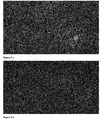
- FIG. 1a shows that Lig_PSMA-DX_FITC conjugate is able to bind to PSMA positive tumor cells 22Rv1
- Figure 1b demonstrates that Lig_PSMA-DX-FITC conjugate does not bind to DU145 cells that do not express PSMA
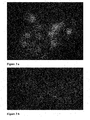
- Figure 3 further shows that the binding of Lig_PSMA-DX_FITC conjugate to PSMA positive tumor cells 22Rv1 can be inhibited by excess amount of free glutamine-urea-lysine.
- dextran was mixed with 18mg of sodiumperiodate in 1 ml of destilled H 2 O and the pH was adjusted to 1.6 with H2SO4. The mixture was incubated on a magnetic stirrer for 45 min at RT in the dark. After activation, the mixture was purified on PD10 sephadex column and the purified and activated dextran was eluted in 0.2M sodiumacetate buffer at pH 6,5.
Landscapes
- Health & Medical Sciences (AREA)
- Life Sciences & Earth Sciences (AREA)
- Chemical & Material Sciences (AREA)
- General Health & Medical Sciences (AREA)
- Medicinal Chemistry (AREA)
- Pharmacology & Pharmacy (AREA)
- Veterinary Medicine (AREA)
- Public Health (AREA)
- Animal Behavior & Ethology (AREA)
- Epidemiology (AREA)
- Engineering & Computer Science (AREA)
- Bioinformatics & Cheminformatics (AREA)
- Chemical Kinetics & Catalysis (AREA)
- Organic Chemistry (AREA)
- Physics & Mathematics (AREA)
- Optics & Photonics (AREA)
- Proteomics, Peptides & Aminoacids (AREA)
- Nuclear Medicine, Radiotherapy & Molecular Imaging (AREA)
- General Chemical & Material Sciences (AREA)
- Biochemistry (AREA)
- Molecular Biology (AREA)
- Immunology (AREA)
- Cell Biology (AREA)
- Materials Engineering (AREA)
- Polymers & Plastics (AREA)
- Urology & Nephrology (AREA)
- Biotechnology (AREA)
- Inorganic Chemistry (AREA)
- Dispersion Chemistry (AREA)
- Reproductive Health (AREA)
- Medicinal Preparation (AREA)
- Medicines Containing Antibodies Or Antigens For Use As Internal Diagnostic Agents (AREA)
- Medicines That Contain Protein Lipid Enzymes And Other Medicines (AREA)
- Polysaccharides And Polysaccharide Derivatives (AREA)
- Pharmaceuticals Containing Other Organic And Inorganic Compounds (AREA)
Applications Claiming Priority (2)
| Application Number | Priority Date | Filing Date | Title |
|---|---|---|---|
| FI20165515A FI127538B (en) | 2016-06-22 | 2016-06-22 | MODIFIED Dextran Conjugates |
| PCT/EP2017/064929 WO2017220488A1 (en) | 2016-06-22 | 2017-06-19 | Modified dextran conjugates comprising a lysine-urea-glutamate pharmacophore |
Publications (2)
| Publication Number | Publication Date |
|---|---|
| EP3475311A1 EP3475311A1 (en) | 2019-05-01 |
| EP3475311B1 true EP3475311B1 (en) | 2020-05-13 |
Family
ID=59269989
Family Applications (1)
| Application Number | Title | Priority Date | Filing Date |
|---|---|---|---|
| EP17734661.6A Active EP3475311B1 (en) | 2016-06-22 | 2017-06-19 | Modified dextran conjugates comprising a lysine-urea-glutamate pharmacophore |
Country Status (9)
| Country | Link |
|---|---|
| US (1) | US20190175767A1 (enExample) |
| EP (1) | EP3475311B1 (enExample) |
| JP (1) | JP6944720B2 (enExample) |
| CN (1) | CN109312004A (enExample) |
| AU (1) | AU2017283151A1 (enExample) |
| CA (1) | CA3027920C (enExample) |
| FI (1) | FI127538B (enExample) |
| IL (1) | IL263886B2 (enExample) |
| WO (1) | WO2017220488A1 (enExample) |
Families Citing this family (6)
| Publication number | Priority date | Publication date | Assignee | Title |
|---|---|---|---|---|
| PL240772B1 (pl) * | 2018-06-11 | 2022-06-06 | Nanothea Spolka Akcyjna | Sposób wytwarzania nanocząstek polimerowych chelatujących izotopy promieniotwórcze do zastosowania w diagnostyce i terapii |
| EP3636635A1 (en) | 2018-10-11 | 2020-04-15 | Academisch Ziekenhuis Leiden h.o.d.n. LUMC | Imaging agents |
| CN113747927B (zh) * | 2019-02-14 | 2024-10-18 | 德国癌症研究中心 | 包含淀粉酶可切割接头的前列腺特异性膜抗原(psma)配体 |
| JP7465576B2 (ja) * | 2019-03-19 | 2024-04-11 | ナノティア エス.エー. | 放射性同位体をキレート化し、psma受容体を標的とする特異的分子で修飾された表面を有するポリマーナノ粒子を調製するプロセスおよびその使用 |
| CN112209970B (zh) * | 2020-10-21 | 2021-10-29 | 北京师范大学 | 一种锝-99m标记含异腈的谷氨酸-脲衍生物的制备方法和应用 |
| WO2024199442A1 (en) * | 2023-03-30 | 2024-10-03 | Genequantum Healthcare (Suzhou) Co., Ltd. | Disaccharide linker, linker-payload containing the same and glycan chain-remodeled antibody-drug conjugate, preparation method and uses thereof |
Family Cites Families (13)
| Publication number | Priority date | Publication date | Assignee | Title |
|---|---|---|---|---|
| US4822594A (en) * | 1987-01-27 | 1989-04-18 | Gibby Wendell A | Contrast enhancing agents for magnetic resonance images |
| SE9803482D0 (sv) | 1998-10-13 | 1998-10-13 | Anders Holmberg | Ion exchange tumor targeting (IETT) |
| ES2684322T3 (es) * | 2006-11-08 | 2018-10-02 | Molecular Insight Pharmaceuticals, Inc. | Heterodímeros de ácido glutámico |
| FI119513B (fi) * | 2007-03-07 | 2008-12-15 | Dextech Medical Ab | Muokatut hydroksipolymeerikonjugaatit, joilla on tappava vaikutus tuumorisoluihin |
| WO2009002529A2 (en) * | 2007-06-26 | 2008-12-31 | The Johns Hopkins University | Labeled inhibitors of prostate specific membrane antigen (psma), biological evaluation, and use as imaging agents |
| US20110118207A1 (en) * | 2008-04-07 | 2011-05-19 | Dextech Medical Ab | Modified hydroxypolymer conjugates with bone seeking and tumor killing moieties |
| JP5843338B2 (ja) * | 2011-08-05 | 2016-01-13 | モレキュラ インサイト ファーマシューティカルズ インコーポレイテッド | 放射標識された前立腺特異的膜抗原阻害剤 |
| EP2785712B1 (en) * | 2011-11-30 | 2019-05-01 | The Johns Hopkins University | Homomultivalent and heteromultivalent inhibitors of prostate specific membrane antigen (pmsa) and uses thereof |
| KR102318999B1 (ko) * | 2012-11-15 | 2021-10-29 | 엔도사이트, 인코포레이티드 | Psma 발현 세포에 의해 야기되는 질병을 치료하기 위한 컨쥬게이트 |
| EP2958596B1 (en) * | 2013-02-15 | 2019-12-04 | Case Western Reserve University | Psma ligands and uses thereof |
| EP3057620A4 (en) * | 2013-10-18 | 2017-05-24 | Molecular Insight Pharmaceuticals, Inc. | Methods of using spect/ct analysis for staging cancer |
| ES2743482T3 (es) * | 2014-05-06 | 2020-02-19 | Univ Johns Hopkins | Inhibidores de PSMA marcados con metal/radiometal para obtención de imágenes dirigidas a PSMA y radioterapia |
| EP3011976A1 (en) * | 2014-10-20 | 2016-04-27 | Deutsches Krebsforschungszentrum | 18F-tagged inhibitors of prostate specific membrane antigen (PSMA), their use as imaging agents |
-
2016
- 2016-06-22 FI FI20165515A patent/FI127538B/en active IP Right Grant
-
2017
- 2017-06-19 WO PCT/EP2017/064929 patent/WO2017220488A1/en not_active Ceased
- 2017-06-19 AU AU2017283151A patent/AU2017283151A1/en not_active Abandoned
- 2017-06-19 IL IL263886A patent/IL263886B2/en unknown
- 2017-06-19 JP JP2018566546A patent/JP6944720B2/ja active Active
- 2017-06-19 CA CA3027920A patent/CA3027920C/en active Active
- 2017-06-19 CN CN201780038758.6A patent/CN109312004A/zh active Pending
- 2017-06-19 EP EP17734661.6A patent/EP3475311B1/en active Active
- 2017-06-19 US US16/309,360 patent/US20190175767A1/en not_active Abandoned
Non-Patent Citations (1)
| Title |
|---|
| None * |
Also Published As
| Publication number | Publication date |
|---|---|
| IL263886B1 (en) | 2023-05-01 |
| JP2019527740A (ja) | 2019-10-03 |
| CA3027920C (en) | 2023-10-17 |
| FI127538B (en) | 2018-08-31 |
| US20190175767A1 (en) | 2019-06-13 |
| FI20165515A7 (fi) | 2017-12-23 |
| WO2017220488A1 (en) | 2017-12-28 |
| EP3475311A1 (en) | 2019-05-01 |
| CN109312004A (zh) | 2019-02-05 |
| IL263886B2 (en) | 2023-09-01 |
| CA3027920A1 (en) | 2017-12-28 |
| JP6944720B2 (ja) | 2021-10-06 |
| AU2017283151A1 (en) | 2018-12-06 |
| IL263886A (en) | 2019-01-31 |
Similar Documents
| Publication | Publication Date | Title |
|---|---|---|
| CA3027920C (en) | Modified dextran conjugates comprising a lysine-urea-glutamate pharmacophore | |
| Wüstemann et al. | Targeting prostate cancer: prostate‐specific membrane antigen based diagnosis and therapy | |
| Kiess et al. | Prostate-specific membrane antigen as a target for cancer imaging and therapy | |
| US8926944B2 (en) | Radiolabeled prostate specific membrane antigen inhibitors | |
| JP6275484B2 (ja) | Psma標的化デンドリマー | |
| JP2021506784A (ja) | 鉛またはトリウム放射性核種に連結されたpsma標的化化合物を含む錯体 | |
| US20050106100A1 (en) | Compounds containing matrix metalloproteinase substrates and methods of their use | |
| KR20070106711A (ko) | 이중 영상화 및 방사선화학요법용 접합체: 조성물,제조방법 및 적용 | |
| BR112012001260B1 (pt) | Conjugados de épsilon-polilisina, seu uso, conjugado de macromolécula, e kit | |
| EA026305B1 (ru) | Альфа-излучающие комплексы | |
| US11998620B2 (en) | PSMA targeted compounds and uses thereof | |
| Uspenskaya et al. | The importance of linkers in the structure of PSMA ligands | |
| JP2025503451A (ja) | 炭酸脱水酵素ixリガンド | |
| Wilbur et al. | Reagents for Astatination of Biomolecules. 5. Evaluation of hydrazone linkers in 211At-and 125I-labeled closo-decaborate (2-) conjugates of Fab′ as a means of decreasing kidney retention | |
| WO2020236903A1 (en) | Pharmaceutical formulations and methods for delivering a therapeutic, diagnostic, or imaging agent to cd206 | |
| JPH06505795A (ja) | キレート化剤 | |
| CN101990442B (zh) | 具有亲骨部分和肿瘤杀伤部分的改性羟基聚合物缀合物 | |
| Lodhi | Synthesis and In Vivo Biological Evaluation of 99mTc (I) Tri-carbonyl Based Radiopharmaceuticals for SPECT Imaging | |
| Lahnif | Development of novel small-molecule drug conjugates for imaging and treatment of prostate cancer | |
| Okarvi et al. | Peptides for Nuclear Medicine Therapy: chemical properties and production | |
| WO2020188318A1 (en) | Process of preparing polymeric nanoparticles that chelate radioactive isotopes and have a surface modified with specific molecules targeting the psma receptor and their use | |
| Braz | Mitochondria-Targeted 111In-Radiocomplexes for Auger Therapy of Prostate Cancer | |
| WO2023239903A1 (en) | Compositions and methods for preventing retention of psma-targeted therapy | |
| JP2007528874A (ja) | 治療用放射性標識薬の効能改善法 | |
| PT590766E (pt) | Complexos metalicos de hidroxiarilo contendo agentes quelantes de acido aminocarboxilico |
Legal Events
| Date | Code | Title | Description |
|---|---|---|---|
| STAA | Information on the status of an ep patent application or granted ep patent |
Free format text: STATUS: UNKNOWN |
|
| STAA | Information on the status of an ep patent application or granted ep patent |
Free format text: STATUS: THE INTERNATIONAL PUBLICATION HAS BEEN MADE |
|
| PUAI | Public reference made under article 153(3) epc to a published international application that has entered the european phase |
Free format text: ORIGINAL CODE: 0009012 |
|
| STAA | Information on the status of an ep patent application or granted ep patent |
Free format text: STATUS: REQUEST FOR EXAMINATION WAS MADE |
|
| 17P | Request for examination filed |
Effective date: 20190115 |
|
| AK | Designated contracting states |
Kind code of ref document: A1 Designated state(s): AL AT BE BG CH CY CZ DE DK EE ES FI FR GB GR HR HU IE IS IT LI LT LU LV MC MK MT NL NO PL PT RO RS SE SI SK SM TR |
|
| AX | Request for extension of the european patent |
Extension state: BA ME |
|
| DAV | Request for validation of the european patent (deleted) | ||
| DAX | Request for extension of the european patent (deleted) | ||
| GRAP | Despatch of communication of intention to grant a patent |
Free format text: ORIGINAL CODE: EPIDOSNIGR1 |
|
| STAA | Information on the status of an ep patent application or granted ep patent |
Free format text: STATUS: GRANT OF PATENT IS INTENDED |
|
| INTG | Intention to grant announced |
Effective date: 20191111 |
|
| GRAJ | Information related to disapproval of communication of intention to grant by the applicant or resumption of examination proceedings by the epo deleted |
Free format text: ORIGINAL CODE: EPIDOSDIGR1 |
|
| STAA | Information on the status of an ep patent application or granted ep patent |
Free format text: STATUS: REQUEST FOR EXAMINATION WAS MADE |
|
| GRAS | Grant fee paid |
Free format text: ORIGINAL CODE: EPIDOSNIGR3 |
|
| STAA | Information on the status of an ep patent application or granted ep patent |
Free format text: STATUS: GRANT OF PATENT IS INTENDED |
|
| GRAP | Despatch of communication of intention to grant a patent |
Free format text: ORIGINAL CODE: EPIDOSNIGR1 |
|
| GRAL | Information related to payment of fee for publishing/printing deleted |
Free format text: ORIGINAL CODE: EPIDOSDIGR3 |
|
| GRAS | Grant fee paid |
Free format text: ORIGINAL CODE: EPIDOSNIGR3 |
|
| INTC | Intention to grant announced (deleted) | ||
| GRAA | (expected) grant |
Free format text: ORIGINAL CODE: 0009210 |
|
| STAA | Information on the status of an ep patent application or granted ep patent |
Free format text: STATUS: THE PATENT HAS BEEN GRANTED |
|
| INTG | Intention to grant announced |
Effective date: 20200317 |
|
| AK | Designated contracting states |
Kind code of ref document: B1 Designated state(s): AL AT BE BG CH CY CZ DE DK EE ES FI FR GB GR HR HU IE IS IT LI LT LU LV MC MK MT NL NO PL PT RO RS SE SI SK SM TR |
|
| REG | Reference to a national code |
Ref country code: GB Ref legal event code: FG4D |
|
| REG | Reference to a national code |
Ref country code: CH Ref legal event code: EP |
|
| REG | Reference to a national code |
Ref country code: DE Ref legal event code: R096 Ref document number: 602017016586 Country of ref document: DE |
|
| REG | Reference to a national code |
Ref country code: AT Ref legal event code: REF Ref document number: 1270159 Country of ref document: AT Kind code of ref document: T Effective date: 20200615 |
|
| REG | Reference to a national code |
Ref country code: SE Ref legal event code: TRGR |
|
| REG | Reference to a national code |
Ref country code: LT Ref legal event code: MG4D |
|
| REG | Reference to a national code |
Ref country code: NL Ref legal event code: MP Effective date: 20200513 |
|
| PG25 | Lapsed in a contracting state [announced via postgrant information from national office to epo] |
Ref country code: LT Free format text: LAPSE BECAUSE OF FAILURE TO SUBMIT A TRANSLATION OF THE DESCRIPTION OR TO PAY THE FEE WITHIN THE PRESCRIBED TIME-LIMIT Effective date: 20200513 Ref country code: GR Free format text: LAPSE BECAUSE OF FAILURE TO SUBMIT A TRANSLATION OF THE DESCRIPTION OR TO PAY THE FEE WITHIN THE PRESCRIBED TIME-LIMIT Effective date: 20200814 Ref country code: FI Free format text: LAPSE BECAUSE OF FAILURE TO SUBMIT A TRANSLATION OF THE DESCRIPTION OR TO PAY THE FEE WITHIN THE PRESCRIBED TIME-LIMIT Effective date: 20200513 Ref country code: PT Free format text: LAPSE BECAUSE OF FAILURE TO SUBMIT A TRANSLATION OF THE DESCRIPTION OR TO PAY THE FEE WITHIN THE PRESCRIBED TIME-LIMIT Effective date: 20200914 Ref country code: IS Free format text: LAPSE BECAUSE OF FAILURE TO SUBMIT A TRANSLATION OF THE DESCRIPTION OR TO PAY THE FEE WITHIN THE PRESCRIBED TIME-LIMIT Effective date: 20200913 Ref country code: NO Free format text: LAPSE BECAUSE OF FAILURE TO SUBMIT A TRANSLATION OF THE DESCRIPTION OR TO PAY THE FEE WITHIN THE PRESCRIBED TIME-LIMIT Effective date: 20200813 |
|
| PG25 | Lapsed in a contracting state [announced via postgrant information from national office to epo] |
Ref country code: RS Free format text: LAPSE BECAUSE OF FAILURE TO SUBMIT A TRANSLATION OF THE DESCRIPTION OR TO PAY THE FEE WITHIN THE PRESCRIBED TIME-LIMIT Effective date: 20200513 Ref country code: BG Free format text: LAPSE BECAUSE OF FAILURE TO SUBMIT A TRANSLATION OF THE DESCRIPTION OR TO PAY THE FEE WITHIN THE PRESCRIBED TIME-LIMIT Effective date: 20200813 Ref country code: HR Free format text: LAPSE BECAUSE OF FAILURE TO SUBMIT A TRANSLATION OF THE DESCRIPTION OR TO PAY THE FEE WITHIN THE PRESCRIBED TIME-LIMIT Effective date: 20200513 Ref country code: LV Free format text: LAPSE BECAUSE OF FAILURE TO SUBMIT A TRANSLATION OF THE DESCRIPTION OR TO PAY THE FEE WITHIN THE PRESCRIBED TIME-LIMIT Effective date: 20200513 |
|
| REG | Reference to a national code |
Ref country code: AT Ref legal event code: MK05 Ref document number: 1270159 Country of ref document: AT Kind code of ref document: T Effective date: 20200513 |
|
| PG25 | Lapsed in a contracting state [announced via postgrant information from national office to epo] |
Ref country code: NL Free format text: LAPSE BECAUSE OF FAILURE TO SUBMIT A TRANSLATION OF THE DESCRIPTION OR TO PAY THE FEE WITHIN THE PRESCRIBED TIME-LIMIT Effective date: 20200513 Ref country code: AL Free format text: LAPSE BECAUSE OF FAILURE TO SUBMIT A TRANSLATION OF THE DESCRIPTION OR TO PAY THE FEE WITHIN THE PRESCRIBED TIME-LIMIT Effective date: 20200513 |
|
| PG25 | Lapsed in a contracting state [announced via postgrant information from national office to epo] |
Ref country code: SM Free format text: LAPSE BECAUSE OF FAILURE TO SUBMIT A TRANSLATION OF THE DESCRIPTION OR TO PAY THE FEE WITHIN THE PRESCRIBED TIME-LIMIT Effective date: 20200513 Ref country code: EE Free format text: LAPSE BECAUSE OF FAILURE TO SUBMIT A TRANSLATION OF THE DESCRIPTION OR TO PAY THE FEE WITHIN THE PRESCRIBED TIME-LIMIT Effective date: 20200513 Ref country code: CZ Free format text: LAPSE BECAUSE OF FAILURE TO SUBMIT A TRANSLATION OF THE DESCRIPTION OR TO PAY THE FEE WITHIN THE PRESCRIBED TIME-LIMIT Effective date: 20200513 Ref country code: RO Free format text: LAPSE BECAUSE OF FAILURE TO SUBMIT A TRANSLATION OF THE DESCRIPTION OR TO PAY THE FEE WITHIN THE PRESCRIBED TIME-LIMIT Effective date: 20200513 Ref country code: ES Free format text: LAPSE BECAUSE OF FAILURE TO SUBMIT A TRANSLATION OF THE DESCRIPTION OR TO PAY THE FEE WITHIN THE PRESCRIBED TIME-LIMIT Effective date: 20200513 Ref country code: AT Free format text: LAPSE BECAUSE OF FAILURE TO SUBMIT A TRANSLATION OF THE DESCRIPTION OR TO PAY THE FEE WITHIN THE PRESCRIBED TIME-LIMIT Effective date: 20200513 Ref country code: DK Free format text: LAPSE BECAUSE OF FAILURE TO SUBMIT A TRANSLATION OF THE DESCRIPTION OR TO PAY THE FEE WITHIN THE PRESCRIBED TIME-LIMIT Effective date: 20200513 |
|
| REG | Reference to a national code |
Ref country code: DE Ref legal event code: R097 Ref document number: 602017016586 Country of ref document: DE |
|
| PG25 | Lapsed in a contracting state [announced via postgrant information from national office to epo] |
Ref country code: SK Free format text: LAPSE BECAUSE OF FAILURE TO SUBMIT A TRANSLATION OF THE DESCRIPTION OR TO PAY THE FEE WITHIN THE PRESCRIBED TIME-LIMIT Effective date: 20200513 Ref country code: MC Free format text: LAPSE BECAUSE OF FAILURE TO SUBMIT A TRANSLATION OF THE DESCRIPTION OR TO PAY THE FEE WITHIN THE PRESCRIBED TIME-LIMIT Effective date: 20200513 Ref country code: PL Free format text: LAPSE BECAUSE OF FAILURE TO SUBMIT A TRANSLATION OF THE DESCRIPTION OR TO PAY THE FEE WITHIN THE PRESCRIBED TIME-LIMIT Effective date: 20200513 |
|
| PLBE | No opposition filed within time limit |
Free format text: ORIGINAL CODE: 0009261 |
|
| STAA | Information on the status of an ep patent application or granted ep patent |
Free format text: STATUS: NO OPPOSITION FILED WITHIN TIME LIMIT |
|
| PG25 | Lapsed in a contracting state [announced via postgrant information from national office to epo] |
Ref country code: LU Free format text: LAPSE BECAUSE OF NON-PAYMENT OF DUE FEES Effective date: 20200619 |
|
| REG | Reference to a national code |
Ref country code: BE Ref legal event code: MM Effective date: 20200630 |
|
| 26N | No opposition filed |
Effective date: 20210216 |
|
| PG25 | Lapsed in a contracting state [announced via postgrant information from national office to epo] |
Ref country code: IE Free format text: LAPSE BECAUSE OF NON-PAYMENT OF DUE FEES Effective date: 20200619 |
|
| PG25 | Lapsed in a contracting state [announced via postgrant information from national office to epo] |
Ref country code: SI Free format text: LAPSE BECAUSE OF FAILURE TO SUBMIT A TRANSLATION OF THE DESCRIPTION OR TO PAY THE FEE WITHIN THE PRESCRIBED TIME-LIMIT Effective date: 20200513 Ref country code: BE Free format text: LAPSE BECAUSE OF NON-PAYMENT OF DUE FEES Effective date: 20200630 |
|
| PG25 | Lapsed in a contracting state [announced via postgrant information from national office to epo] |
Ref country code: TR Free format text: LAPSE BECAUSE OF FAILURE TO SUBMIT A TRANSLATION OF THE DESCRIPTION OR TO PAY THE FEE WITHIN THE PRESCRIBED TIME-LIMIT Effective date: 20200513 Ref country code: MT Free format text: LAPSE BECAUSE OF FAILURE TO SUBMIT A TRANSLATION OF THE DESCRIPTION OR TO PAY THE FEE WITHIN THE PRESCRIBED TIME-LIMIT Effective date: 20200513 Ref country code: CY Free format text: LAPSE BECAUSE OF FAILURE TO SUBMIT A TRANSLATION OF THE DESCRIPTION OR TO PAY THE FEE WITHIN THE PRESCRIBED TIME-LIMIT Effective date: 20200513 |
|
| PG25 | Lapsed in a contracting state [announced via postgrant information from national office to epo] |
Ref country code: MK Free format text: LAPSE BECAUSE OF FAILURE TO SUBMIT A TRANSLATION OF THE DESCRIPTION OR TO PAY THE FEE WITHIN THE PRESCRIBED TIME-LIMIT Effective date: 20200513 |
|
| PGFP | Annual fee paid to national office [announced via postgrant information from national office to epo] |
Ref country code: SE Payment date: 20250618 Year of fee payment: 9 |
|
| PGFP | Annual fee paid to national office [announced via postgrant information from national office to epo] |
Ref country code: CH Payment date: 20250701 Year of fee payment: 9 |
|
| REG | Reference to a national code |
Ref country code: CH Ref legal event code: U11 Free format text: ST27 STATUS EVENT CODE: U-0-0-U10-U11 (AS PROVIDED BY THE NATIONAL OFFICE) Effective date: 20260701 |
|
| PGFP | Annual fee paid to national office [announced via postgrant information from national office to epo] |
Ref country code: GB Payment date: 20260617 Year of fee payment: 10 |
|
| PGFP | Annual fee paid to national office [announced via postgrant information from national office to epo] |
Ref country code: IT Payment date: 20260624 Year of fee payment: 10 |
|
| PGFP | Annual fee paid to national office [announced via postgrant information from national office to epo] |
Ref country code: DE Payment date: 20260618 Year of fee payment: 10 |
|
| PGFP | Annual fee paid to national office [announced via postgrant information from national office to epo] |
Ref country code: FR Payment date: 20260616 Year of fee payment: 10 |