EP3469645B1 - Verfahren zur thermischen behandlung einer lithiumbatterie - Google Patents
Verfahren zur thermischen behandlung einer lithiumbatterie Download PDFInfo
- Publication number
- EP3469645B1 EP3469645B1 EP17734787.9A EP17734787A EP3469645B1 EP 3469645 B1 EP3469645 B1 EP 3469645B1 EP 17734787 A EP17734787 A EP 17734787A EP 3469645 B1 EP3469645 B1 EP 3469645B1
- Authority
- EP
- European Patent Office
- Prior art keywords
- battery
- over
- discharge
- lmp
- lithium
- Prior art date
- Legal status (The legal status is an assumption and is not a legal conclusion. Google has not performed a legal analysis and makes no representation as to the accuracy of the status listed.)
- Active
Links
Images


Classifications
-
- H—ELECTRICITY
- H01—ELECTRIC ELEMENTS
- H01M—PROCESSES OR MEANS, e.g. BATTERIES, FOR THE DIRECT CONVERSION OF CHEMICAL ENERGY INTO ELECTRICAL ENERGY
- H01M10/00—Secondary cells; Manufacture thereof
- H01M10/05—Accumulators with non-aqueous electrolyte
- H01M10/052—Li-accumulators
-
- H—ELECTRICITY
- H01—ELECTRIC ELEMENTS
- H01M—PROCESSES OR MEANS, e.g. BATTERIES, FOR THE DIRECT CONVERSION OF CHEMICAL ENERGY INTO ELECTRICAL ENERGY
- H01M4/00—Electrodes
- H01M4/02—Electrodes composed of, or comprising, active material
- H01M4/04—Processes of manufacture in general
- H01M4/0471—Processes of manufacture in general involving thermal treatment, e.g. firing, sintering, backing particulate active material, thermal decomposition, pyrolysis
-
- H—ELECTRICITY
- H01—ELECTRIC ELEMENTS
- H01M—PROCESSES OR MEANS, e.g. BATTERIES, FOR THE DIRECT CONVERSION OF CHEMICAL ENERGY INTO ELECTRICAL ENERGY
- H01M10/00—Secondary cells; Manufacture thereof
- H01M10/04—Construction or manufacture in general
- H01M10/0468—Compression means for stacks of electrodes and separators
-
- H—ELECTRICITY
- H01—ELECTRIC ELEMENTS
- H01M—PROCESSES OR MEANS, e.g. BATTERIES, FOR THE DIRECT CONVERSION OF CHEMICAL ENERGY INTO ELECTRICAL ENERGY
- H01M10/00—Secondary cells; Manufacture thereof
- H01M10/05—Accumulators with non-aqueous electrolyte
- H01M10/052—Li-accumulators
- H01M10/0525—Rocking-chair batteries, i.e. batteries with lithium insertion or intercalation in both electrodes; Lithium-ion batteries
-
- H—ELECTRICITY
- H01—ELECTRIC ELEMENTS
- H01M—PROCESSES OR MEANS, e.g. BATTERIES, FOR THE DIRECT CONVERSION OF CHEMICAL ENERGY INTO ELECTRICAL ENERGY
- H01M10/00—Secondary cells; Manufacture thereof
- H01M10/05—Accumulators with non-aqueous electrolyte
- H01M10/056—Accumulators with non-aqueous electrolyte characterised by the materials used as electrolytes, e.g. mixed inorganic/organic electrolytes
- H01M10/0564—Accumulators with non-aqueous electrolyte characterised by the materials used as electrolytes, e.g. mixed inorganic/organic electrolytes the electrolyte being constituted of organic materials only
- H01M10/0565—Polymeric materials, e.g. gel-type or solid-type
-
- H—ELECTRICITY
- H01—ELECTRIC ELEMENTS
- H01M—PROCESSES OR MEANS, e.g. BATTERIES, FOR THE DIRECT CONVERSION OF CHEMICAL ENERGY INTO ELECTRICAL ENERGY
- H01M10/00—Secondary cells; Manufacture thereof
- H01M10/05—Accumulators with non-aqueous electrolyte
- H01M10/058—Construction or manufacture
-
- H—ELECTRICITY
- H01—ELECTRIC ELEMENTS
- H01M—PROCESSES OR MEANS, e.g. BATTERIES, FOR THE DIRECT CONVERSION OF CHEMICAL ENERGY INTO ELECTRICAL ENERGY
- H01M4/00—Electrodes
- H01M4/02—Electrodes composed of, or comprising, active material
- H01M4/36—Selection of substances as active materials, active masses, active liquids
- H01M4/38—Selection of substances as active materials, active masses, active liquids of elements or alloys
- H01M4/381—Alkaline or alkaline earth metals elements
- H01M4/382—Lithium
-
- H—ELECTRICITY
- H01—ELECTRIC ELEMENTS
- H01M—PROCESSES OR MEANS, e.g. BATTERIES, FOR THE DIRECT CONVERSION OF CHEMICAL ENERGY INTO ELECTRICAL ENERGY
- H01M4/00—Electrodes
- H01M4/02—Electrodes composed of, or comprising, active material
- H01M4/36—Selection of substances as active materials, active masses, active liquids
- H01M4/58—Selection of substances as active materials, active masses, active liquids of inorganic compounds other than oxides or hydroxides, e.g. sulfides, selenides, tellurides, halogenides or LiCoFy; of polyanionic structures, e.g. phosphates, silicates or borates
- H01M4/5825—Oxygenated metallic salts or polyanionic structures, e.g. borates, phosphates, silicates, olivines
-
- H—ELECTRICITY
- H01—ELECTRIC ELEMENTS
- H01M—PROCESSES OR MEANS, e.g. BATTERIES, FOR THE DIRECT CONVERSION OF CHEMICAL ENERGY INTO ELECTRICAL ENERGY
- H01M10/00—Secondary cells; Manufacture thereof
- H01M10/42—Methods or arrangements for servicing or maintenance of secondary cells or secondary half-cells
- H01M10/44—Methods for charging or discharging
-
- H—ELECTRICITY
- H01—ELECTRIC ELEMENTS
- H01M—PROCESSES OR MEANS, e.g. BATTERIES, FOR THE DIRECT CONVERSION OF CHEMICAL ENERGY INTO ELECTRICAL ENERGY
- H01M4/00—Electrodes
- H01M4/02—Electrodes composed of, or comprising, active material
- H01M2004/026—Electrodes composed of, or comprising, active material characterised by the polarity
- H01M2004/028—Positive electrodes
-
- H—ELECTRICITY
- H01—ELECTRIC ELEMENTS
- H01M—PROCESSES OR MEANS, e.g. BATTERIES, FOR THE DIRECT CONVERSION OF CHEMICAL ENERGY INTO ELECTRICAL ENERGY
- H01M2300/00—Electrolytes
- H01M2300/0017—Non-aqueous electrolytes
- H01M2300/0065—Solid electrolytes
- H01M2300/0082—Organic polymers
-
- Y—GENERAL TAGGING OF NEW TECHNOLOGICAL DEVELOPMENTS; GENERAL TAGGING OF CROSS-SECTIONAL TECHNOLOGIES SPANNING OVER SEVERAL SECTIONS OF THE IPC; TECHNICAL SUBJECTS COVERED BY FORMER USPC CROSS-REFERENCE ART COLLECTIONS [XRACs] AND DIGESTS
- Y02—TECHNOLOGIES OR APPLICATIONS FOR MITIGATION OR ADAPTATION AGAINST CLIMATE CHANGE
- Y02E—REDUCTION OF GREENHOUSE GAS [GHG] EMISSIONS, RELATED TO ENERGY GENERATION, TRANSMISSION OR DISTRIBUTION
- Y02E60/00—Enabling technologies; Technologies with a potential or indirect contribution to GHG emissions mitigation
- Y02E60/10—Energy storage using batteries
-
- Y—GENERAL TAGGING OF NEW TECHNOLOGICAL DEVELOPMENTS; GENERAL TAGGING OF CROSS-SECTIONAL TECHNOLOGIES SPANNING OVER SEVERAL SECTIONS OF THE IPC; TECHNICAL SUBJECTS COVERED BY FORMER USPC CROSS-REFERENCE ART COLLECTIONS [XRACs] AND DIGESTS
- Y02—TECHNOLOGIES OR APPLICATIONS FOR MITIGATION OR ADAPTATION AGAINST CLIMATE CHANGE
- Y02P—CLIMATE CHANGE MITIGATION TECHNOLOGIES IN THE PRODUCTION OR PROCESSING OF GOODS
- Y02P70/00—Climate change mitigation technologies in the production process for final industrial or consumer products
- Y02P70/50—Manufacturing or production processes characterised by the final manufactured product
Definitions
- the present invention relates to the field of lithium batteries, in particular Lithium-Metal-Polymer (LMP) batteries and Lithium-ion polymer (Li-Po) batteries.
- LMP Lithium-Metal-Polymer
- Li-Po Lithium-ion polymer
- the invention relates to a method of heat treatment of a lithium battery in order to optimize its performance, both at the start of the battery's life and in the longer term.
- Lithium batteries are particularly intended for motor vehicles and for stationary storage of electrical energy.
- LMP batteries generally come in the form of an assembly of superimposed thin films (winding or stacking of the following pattern ⁇ electrolyte / cathode / collector / cathode / electrolyte / anode ⁇ on n turns) or of n stacked thin films (cut and superimposed , or n stacks of the above-mentioned pattern).
- This stacked / complexed unitary pattern has a thickness of the order of a hundred micrometers.
- a negative electrode anode
- a solid polymer electrolyte conductive of lithium ions iii
- a positive electrode cathode
- a current collector in contact with the positive electrode and making it possible to ensure the electrical connection.
- the negative electrode of LMP batteries is generally made of a metallic lithium foil or a lithium alloy; the solid polymer electrolyte is generally composed of a polymer based on poly (ethylene oxide) (POE) and at least one lithium salt; the positive electrode is usually a material whose working potential is less than 4V vs Li + / Li (ie the insertion / deinsertion potential of lithium is less than 4V) such as for example a metal oxide (like for example V 2 O 5 , LiV 3 O 8 , LiCoO 2 , LiNiO 2 , LiMn 2 O 4 and LiNi 0.5 Mn 0.5 O 2 ...) or a phosphate of LiMPO 4 type, where M represents a metal cation selected from the group Fe , Mn, Co, Ni and Ti, or combinations of these cations, such as for example LiFePO 4 , and also contains carbon and a polymer; and the current collector is generally made of a sheet of metal.
- the conductivity of the ions is ensured by the
- Li-Po batteries generally consist of a positive electrode of the same type as that of LMP batteries, a gel polymer electrolyte comprising a polymer and a lithium salt in solution in a solvent, and a negative electrode in one carbonaceous material such as graphite.
- Lithium batteries, and especially LMP batteries, have a number of advantages.
- the mass density of LMP batteries is of the order of 120 to 180 Wh / kg, i.e. an energy density at least 2.5 times higher than lead-acid batteries in thermal cars (30-50 Wh / kg). kg).
- LMP batteries also have no memory effect and it is therefore unnecessary to discharge them completely before recharging them, as in the case of certain other technologies (Ni-Cd).
- Lithium-ion batteries of the order of 3.4 V
- LMP batteries do not require any maintenance and have a lifespan of nearly 10 years, which is interesting d 'from a commercial point of view and which makes them relevant for applications requiring electric traction.
- LMP batteries also have certain drawbacks. In fact, to use them, they must be maintained at a temperature of around 60-80 ° C, which almost requires them to be kept charged by leaving the vehicle plugged into the mains when it is not driving. Otherwise, the LMP batteries are empty in a few days due to their temperature maintenance.
- the internal resistance of lithium batteries in particular LMP batteries, also called internal impedance, causes a voltage drop on discharge and leads to a limitation of performance in terms of power or self-heating.
- the internal resistance of a battery is defined as the opposition to the flow of current in a battery.
- Electronic resistance encompasses the resistivity of the materials used such as the cover metal and the internal components, as well as the parasitic resistances linked to the various connectors making up the battery.
- Ionic resistance is the opposition to the flow of current in the battery due to various factors such as the ionic conductivity of the electrolyte and the electrodes as well as the quality of the interfaces.
- Internal resistance is generally low at the start of the battery's life but tends to increase over the life of the battery, which has the consequence of gradually decreasing its performance over the many charge cycles and discharge, until reaching a value too high to allow it to continue to be used for the needs for which it was originally designed.
- the higher the initial internal resistance of a battery the more limited its performance will be.
- the initial internal resistance of a battery can be minimized thanks to the choice of raw materials used in the composition of the electrodes as well as by the improvement of the quality of the assembly.
- US 2005/000086 A1 , US 2004/229118 A1 , US 2002/164531 A1 , US 2015/311490 A1 , US 2015/270523 A1 , US 2004/023114 A1 and JP 2013 097993 A disclose methods of thermal treatment of a lithium-ion polymer battery comprising the application of temperature and pressure. They do not suggest carrying out the heat treatment under voltage or placing the battery in potentiostatic maintenance at a voltage corresponding to the initial state of charge of the battery after its assembly plus or minus 10% to improve the performance of the battery.
- the positive electrode is not limited, in particular to batteries in which the connection of the positive electrode active material is anisotropic.
- the term “significantly reducing the internal resistance” is understood to mean a reduction in the internal resistance of the battery at the end of step 2) of at least 2% compared to the initial internal resistance. , that is to say the internal resistance of the battery measured before the start of step 1) of the method according to the invention.
- steps 1) and 2) are carried out before the first charge of said battery, that is to say, directly after the assembly of the positive electrode with the polymer electrolyte and the electrode. negative.
- the temperature T1 is preferably from 50 to 120 ° C approximately, and even more preferably from 70 to 105 ° C approximately.
- the battery can be brought to the desired temperature T1, for example using its own heating elements or by hot storage.
- the pressure applied to the battery is preferably approximately 0.5 to 10 bar, and even more preferably approximately 1 to 7 bar.
- the desired pressure can for example be applied to the battery by means of springs.
- Step 2) is carried out for a sufficient period of time to significantly decrease the internal resistance of the LMP battery.
- the duration of step 2) is preferably from 5 to 72 hours approximately, and even more preferably from 5 to 25 hours approximately.
- the internal resistance measurements and values referred to in the present application were determined according to the method indicated below, and this under the following conditions: the battery is subjected to a charging current of 8A for 30 sec. then left to stand. The difference in voltage under current with respect to the voltage measured at rest thus makes it possible, via Ohm's law, to calculate the internal resistance value.
- step 2) is carried out under voltage, the battery is placed in potentiostatic maintenance at a voltage corresponding to the initial state of charge of said battery after its assembly, plus or minus 10%, and preferably, plus or minus 2%.
- discharged battery is understood to mean a battery which is discharged to more than 90% of its nominal capacity, and preferably to more than 98%.
- the battery can be used nominally.
- steps 1) and 2) of the method followed by an additional step of over-discharging the battery.
- the method in accordance with the invention further comprises a step 3) of over-discharging said LMP battery.
- this additional over-discharge step makes it possible to further accentuate the drop in the internal resistance of the lithium battery obtained at the end of steps 1) and 2) of the process according to the invention, very particularly in the case of LMP batteries.
- step 3) of over-discharging the lithium battery is preferably carried out until the battery is discharged beyond 100% of its rated capacity, in particular until the battery is discharged beyond 100% of its rated capacity.
- battery is over-discharged from 2 to 40% of its nominal capacity, and even more preferably from 8 to 20% of its nominal capacity.
- Stage 3 of over-discharge can, for example, be carried out by applying to the battery an over-discharge current at an intensity corresponding to a discharge rate ranging from C / 200 to C / 10 approximately.
- the method according to the invention can be applied to any type of lithium battery chosen from LMP batteries and Li-Po batteries, and this whatever the nature of the active material entering into the composition of the positive electrode material. It is however particularly suitable for LMP batteries, more particularly for LMP batteries in which the active material of the positive electrode is chosen from iron phosphate and its derivatives, in particular LiFePO 4 .
- the battery is a Lithium Metal Polymer battery containing iron phosphate LiFePO 4 as a positive electrode material.
- the present invention is illustrated by the following exemplary embodiments, to which it is however not limited.
- the polymer electrolyte was obtained by extrusion of a mixture of polymers (polyethylene oxide (POE) (Zeospan), poly (vinylidene fluoride co-hexafluoropropylene) copolymer (PVDF-HFP) (Solvay), lithium salt ( lithium bis (tetrafluorosulfonyl imide), LiTFSI, 3M) in 48/40/12 mass proportions.
- polymers polyethylene oxide (POE) (Zeospan)
- PVDF-HFP poly (vinylidene fluoride co-hexafluoropropylene) copolymer
- LiTFSI, 3M lithium bis (tetrafluorosulfonyl imide) in 48/40/12 mass proportions.
- the positive electrode material was obtained by extruding and rolling a mixture of lithiated iron phosphate (LiFePO 4 ) (Pulead, unless otherwise stated), a copolymer of ethylene oxide and butylene oxide. P (OE-OB) (Nippon Shokubai), and LiTFSI (3M) in mass proportions 68/24/6, and carbon (Ketjen black) 2%, on either side of an aluminum current collector coated with a carbon protective layer (ARMOR).
- lithiated iron phosphate LiFePO 4
- P OE-OB
- LiTFSI LiTFSI
- each of the unit cells was obtained by juxtaposition of each of the films obtained previously.
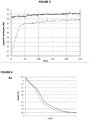
- the figure 1 appended shows the change in internal resistance (in%) of each of the cells as a function of the number of cycles.
- the development of the internal resistance of cell C'1 not in accordance with the invention corresponds to the curve in broken lines and that of cell C1 in accordance with the invention corresponds to the curve in continuous line.
- the other cell first underwent a step of maintaining at a temperature of 80 ° C for 72 hours and under a pressure of 2 bars, before undergoing in turn an over-discharge step at 3A for a period of 3h20 then a cycling (C / 8 D / 2) ( C2 cell obtained according to the method not in accordance with the invention).
- the figure 2 appended shows the change in internal resistance (in%) of each of the cells as a function of the number of cycles.
- the evolution of the internal resistance of cell C'2 not in accordance with the invention corresponds to the high curve and that of cell C2 not in accordance with the invention corresponds to the low curve.
- the figure 3 appended gives the results of the change in the capacity obtained at D / 2, of the two cells C'2 and C2 as a function of the number of cycles.
- the discharged capacity (in Ah) is a function of the number of cycles; the high curve corresponds to cell C2 having undergone the treatment not in accordance with the invention while the low curve corresponds to cell C'2 which has not undergone such treatment.
- Protocol 1 not in accordance with the invention:
- Protocol 2 NOT in accordance with the invention :
- the performances of each of the LMP1 and LMP2 batteries were characterized by a cycle of discharge (D / 4) and charge (C / 10).
- the gains in energy, in Max resistance / modulus and in total resistance (Pack) for the LMP1 battery not in accordance with the invention were calculated relative to the values measured for each of these parameters on the LMP2 battery not in accordance with the invention. .
- the step of maintaining the battery at a temperature of 86 ° C for 18 hours allows both a gain in energy and a decrease in internal resistance, both at the level of a unit cell making up the battery as well as 'at the level of the entire battery.
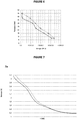
- the over-discharge voltage profile of each of the LMP1 and LMP2 batteries is shown in the figure 4 annexed.
- the voltage (in V) is a function of time (t in Arbitrary Units: UA) and on the figure 4b the derivative of the profile of the figure 4a dt / dV (in sV -1 ) is a function of the voltage (in V).
- the curves in broken lines correspond to the results of the LMP1 battery not in accordance with the invention, while the curves in solid line correspond to the results of the LMP2 battery not in accordance with the invention.
- the figure 5 appended presents the Ragone diagram of the LMP1 and LMP2 batteries.
- the power (in kW) is a function of the energy (in Wh).
- the dashed line curve corresponds to the LMP1 battery not in accordance with the invention and the solid line curve corresponds to the LMP2 battery not in accordance with the invention.
- the figure 6 appended shows the Ragone diagram of the LMP1 ′ and LMP2 batteries.
- the power (in kW) is a function of the energy (in Wh).
- the dotted line curve corresponds to the LMP1 ′ battery not in accordance with the invention and the solid line curve corresponds to the LMP2 battery not in accordance with the invention.
- Protocol 3 in accordance with the invention:
- the performance of each of the LMP3 and LMP4 batteries was characterized by a cycle of discharge (D / 4) and charge (C / 10).
- the gains in energy, in Max resistance / modulus and in total resistance (Pack) for the LMP3 battery in accordance with the invention were calculated relative to the values measured for each of these parameters on the LMP4 battery not in accordance with the invention.
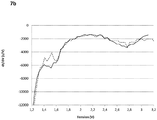
- the over-discharge voltage profile of each of the LMP3 and LMP4 batteries is shown in the figure 7 annexed.
- the tension (in V) is a function of time (t in UA)
- the derivative of the profile of the figure 7a dt / dV (in sV -1 ) is a function of the voltage (in V).
- the curves in broken lines correspond to the results of the LMP3 battery according to the invention, while the curves in solid line correspond to the results of the LMP4 battery not in accordance with the invention.
Landscapes
- Chemical & Material Sciences (AREA)
- Chemical Kinetics & Catalysis (AREA)
- Electrochemistry (AREA)
- General Chemical & Material Sciences (AREA)
- Engineering & Computer Science (AREA)
- Manufacturing & Machinery (AREA)
- Inorganic Chemistry (AREA)
- Materials Engineering (AREA)
- Physics & Mathematics (AREA)
- General Physics & Mathematics (AREA)
- Dispersion Chemistry (AREA)
- Condensed Matter Physics & Semiconductors (AREA)
- Crystallography & Structural Chemistry (AREA)
- Secondary Cells (AREA)
- Battery Electrode And Active Subsutance (AREA)
Claims (14)
- Verfahren zur thermischen Behandlung einer Lithiumbatterie, ausgewählt aus den Lithium-Metall-Polymer-Batterien (LMP) und den Lithiumionen-Polymer-Batterien, wobei die Batterie mindestens eine positive Elektrode, mindestens einen Polymerelektrolyten und mindestens eine negative Elektrode aufweist, wobei das Verfahren dadurch gekennzeichnet ist, dass es umfasst:1) mindestens einen ersten Schritt, der darin besteht, die Batterie auf eine Temperatur T1 von mindestens 50 °C zu bringen,2) mindestens einen zweiten Schritt, bei dem die Batterie auf der Temperatur T1 gehalten wird, bei Anwendung eines Drucks von mindestens 0,5 bar, wobei die Dauer von Schritt 2) 5 Stunden bis 1 Woche beträgt, wobei der Schritt 2) unter Spannung durchgeführt wird und die Batterie in potentiostatischer Aufrechterhaltung in eine Spannung versetzt wird, die dem ursprünglichen Ladezustand der Batterie nach ihrer Montage, plus oder minus 10 %, entspricht,wobei die Schritte 1) und 2) vor dem ersten Laden der Batterie durchgeführt werden.
- Verfahren nach Anspruch 1, dadurch gekennzeichnet, dass die Temperatur T1 50 bis 120 °C beträgt.
- Verfahren nach Anspruch 1 oder 2, dadurch gekennzeichnet, dass die Temperatur T1 70 bis 105 °C beträgt.
- Verfahren nach einem der vorangehenden Ansprüche, dadurch gekennzeichnet, dass bei Schritt 2) der auf die Batterie ausgeübte Druck 0,5 bis 10 bar beträgt.
- Verfahren nach einem der vorangehenden Ansprüche, dadurch gekennzeichnet, dass bei Schritt 2) der auf die Batterie ausgeübte Druck 1 bis 7 bar beträgt.
- Verfahren nach einem der vorangehenden Ansprüche, dadurch gekennzeichnet, dass die Dauer von Schritt 2) 5 bis 72 Stunden beträgt.
- Verfahren nach einem der vorangehenden Ansprüche, dadurch gekennzeichnet, dass die Dauer von Schritt 2) 5 bis 25 Stunden beträgt.
- Verfahren nach einem der vorangehenden Ansprüche, dadurch gekennzeichnet, dass die Batterie in potentiostatischer Aufrechterhaltung in eine Spannung versetzt wird, die dem ursprünglichen Ladezustand der Batterie nach ihrer Montage, plus oder minus 2 %, entspricht.
- Verfahren nach einem der vorangehenden Ansprüche, dadurch gekennzeichnet, dass es ferner einen Schritt 3) des Überentladens der Batterie umfasst.
- Verfahren nach Anspruch 9, dadurch gekennzeichnet, dass es auf eine LMP-Batterie angewendet wird.
- Verfahren nach Anspruch 9 oder 10, dadurch gekennzeichnet, dass der Schritt 3) des Überentladens der Batterie durchgeführt wird, bis die Batterie 2 bis 40 % ihrer Nennkapazität überentladen ist.
- Verfahren nach Anspruch 9 bis 11, dadurch gekennzeichnet, dass der Schritt 3) des Überentladens der Batterie durchgeführt wird, bis die Batterie 8 bis 20 % ihrer Nennkapazität überentladen ist.
- Verfahren nach einem der Ansprüche 9 bis 12, dadurch gekennzeichnet, dass der Schritt 3) des Überentladens durch Anlegen an die Batterie eines Überentladestroms durchgeführt wird, der einem Entladevorgang von C/10 bis C/200 entspricht.
- Verfahren nach einem der vorangehenden Ansprüche, dadurch gekennzeichnet, dass die Lithiumbatterie eine LMP-Batterie ist, in welcher die aktive Materie der positiven Elektrode aus dem Eisenphosphat und seinen Derivaten ausgewählt ist.
Applications Claiming Priority (2)
| Application Number | Priority Date | Filing Date | Title |
|---|---|---|---|
| FR1655239A FR3052599B1 (fr) | 2016-06-08 | 2016-06-08 | Procede de traitement thermique d'une batterie au lithium |
| PCT/FR2017/051433 WO2017212171A1 (fr) | 2016-06-08 | 2017-06-07 | Procede de traitement thermique d'une batterie au lithium |
Publications (2)
| Publication Number | Publication Date |
|---|---|
| EP3469645A1 EP3469645A1 (de) | 2019-04-17 |
| EP3469645B1 true EP3469645B1 (de) | 2020-08-05 |
Family
ID=56943679
Family Applications (1)
| Application Number | Title | Priority Date | Filing Date |
|---|---|---|---|
| EP17734787.9A Active EP3469645B1 (de) | 2016-06-08 | 2017-06-07 | Verfahren zur thermischen behandlung einer lithiumbatterie |
Country Status (14)
| Country | Link |
|---|---|
| US (1) | US20200328401A1 (de) |
| EP (1) | EP3469645B1 (de) |
| JP (1) | JP2019521473A (de) |
| KR (1) | KR20190003688A (de) |
| CN (1) | CN109314234B (de) |
| AU (1) | AU2017278454A1 (de) |
| BR (1) | BR112018071967A2 (de) |
| CA (1) | CA3021298A1 (de) |
| FR (1) | FR3052599B1 (de) |
| IL (1) | IL263391A (de) |
| RU (1) | RU2018135251A (de) |
| SG (1) | SG11201808813SA (de) |
| TW (1) | TW201813168A (de) |
| WO (1) | WO2017212171A1 (de) |
Families Citing this family (6)
| Publication number | Priority date | Publication date | Assignee | Title |
|---|---|---|---|---|
| CN108598593B (zh) * | 2018-07-10 | 2020-05-29 | 星恒电源(滁州)有限公司 | 一种锂离子电池的控温控压化成方法 |
| US20200280109A1 (en) * | 2019-03-01 | 2020-09-03 | Ses Holdings Pte. Ltd. | Rechargeable Battery |
| FI131173B1 (en) * | 2019-07-11 | 2024-11-20 | QID Oy | Method for reducing internal resistance of a battery and battery with reduced internal resistance |
| CN110504483A (zh) * | 2019-07-17 | 2019-11-26 | 北京航天新风机械设备有限责任公司 | 一种固态电解质薄膜的制备方法 |
| CN113140818B (zh) * | 2021-02-27 | 2022-09-06 | 浙江锋锂新能源科技有限公司 | 一种锂金属电池预处理工艺及锂金属电池 |
| CN114194073B (zh) * | 2021-12-17 | 2023-05-23 | 重庆长安新能源汽车科技有限公司 | 一种电机脉冲电流控制方法、装置及电动汽车 |
Family Cites Families (9)
| Publication number | Priority date | Publication date | Assignee | Title |
|---|---|---|---|---|
| JP2001266941A (ja) * | 2000-03-17 | 2001-09-28 | Sony Corp | ゲル電解質電池の製造方法 |
| JP2002110241A (ja) * | 2000-09-29 | 2002-04-12 | Sharp Corp | リチウムポリマー二次電池およびその製造方法 |
| CN1204648C (zh) * | 2001-02-28 | 2005-06-01 | 东芝株式会社 | 非水电解质及非水电解质二次电池 |
| US6936377B2 (en) * | 2003-05-13 | 2005-08-30 | C. Glen Wensley | Card with embedded IC and electrochemical cell |
| JP2013097993A (ja) * | 2011-10-31 | 2013-05-20 | Hitachi Maxell Ltd | リチウムイオン二次電池 |
| PL2903055T3 (pl) * | 2012-09-28 | 2018-04-30 | Zeon Corporation | Porowaty separator membranowy do baterii wtórnej, sposób jego wytwarzania oraz bateria wtórna |
| JP6314832B2 (ja) * | 2012-11-26 | 2018-04-25 | 日本ゼオン株式会社 | 電極/セパレータ積層体の製造方法およびリチウムイオン二次電池 |
| CN104919644A (zh) * | 2013-01-16 | 2015-09-16 | 加拿大巴斯姆有限公司 | 具有降低的阻抗的电化学电池或蓄电池及其生产方法 |
| CN104638311B (zh) * | 2015-03-11 | 2017-03-08 | 浙江中科立德新材料有限公司 | 水系铁锂电池化成方法 |
-
2016
- 2016-06-08 FR FR1655239A patent/FR3052599B1/fr active Active
-
2017
- 2017-06-07 EP EP17734787.9A patent/EP3469645B1/de active Active
- 2017-06-07 US US16/304,886 patent/US20200328401A1/en not_active Abandoned
- 2017-06-07 JP JP2018560019A patent/JP2019521473A/ja active Pending
- 2017-06-07 CA CA3021298A patent/CA3021298A1/fr not_active Abandoned
- 2017-06-07 KR KR1020187034680A patent/KR20190003688A/ko not_active Ceased
- 2017-06-07 TW TW106118918A patent/TW201813168A/zh unknown
- 2017-06-07 CN CN201780035596.0A patent/CN109314234B/zh active Active
- 2017-06-07 AU AU2017278454A patent/AU2017278454A1/en not_active Abandoned
- 2017-06-07 RU RU2018135251A patent/RU2018135251A/ru not_active Application Discontinuation
- 2017-06-07 BR BR112018071967A patent/BR112018071967A2/pt not_active Application Discontinuation
- 2017-06-07 WO PCT/FR2017/051433 patent/WO2017212171A1/fr not_active Ceased
- 2017-06-07 SG SG11201808813SA patent/SG11201808813SA/en unknown
-
2018
- 2018-11-29 IL IL263391A patent/IL263391A/en unknown
Non-Patent Citations (1)
| Title |
|---|
| None * |
Also Published As
| Publication number | Publication date |
|---|---|
| TW201813168A (zh) | 2018-04-01 |
| CN109314234B (zh) | 2021-10-26 |
| FR3052599A1 (fr) | 2017-12-15 |
| FR3052599B1 (fr) | 2021-11-05 |
| US20200328401A1 (en) | 2020-10-15 |
| AU2017278454A1 (en) | 2018-10-25 |
| KR20190003688A (ko) | 2019-01-09 |
| BR112018071967A2 (pt) | 2019-02-12 |
| IL263391A (en) | 2018-12-31 |
| EP3469645A1 (de) | 2019-04-17 |
| JP2019521473A (ja) | 2019-07-25 |
| WO2017212171A1 (fr) | 2017-12-14 |
| CN109314234A (zh) | 2019-02-05 |
| RU2018135251A (ru) | 2020-07-09 |
| SG11201808813SA (en) | 2018-12-28 |
| CA3021298A1 (fr) | 2017-12-14 |
Similar Documents
| Publication | Publication Date | Title |
|---|---|---|
| EP3469645B1 (de) | Verfahren zur thermischen behandlung einer lithiumbatterie | |
| EP2989670B1 (de) | Positivelektrode für eine lithiumbatterie | |
| EP3491689B1 (de) | Anode für eine lithium-ionen-batteriezelle, herstellungsverfahren dafür und batterie damit | |
| JPWO2005117169A1 (ja) | 捲回型非水系二次電池およびそれに用いる電極板 | |
| WO2004068610A2 (fr) | Generateur electrochimique rechargeable | |
| EP2270900A1 (de) | Unausgeglichene Lithium-Ionen-Mikrobatterie | |
| EP1846331B1 (de) | Verfahren zur modifizierung eines mindestens ein übergangsmetall enthaltenden lithiierten oxids mittels phosphationen | |
| WO2018141062A1 (fr) | Matériau d'électrode, électrode et batterie tout solide comprenant un oxyde complexe de structure olivine | |
| JP6478112B2 (ja) | 非水電解質二次電池の製造方法 | |
| EP3327818B1 (de) | Metallionen batterie mit einem elektrodenstapel aufweisend hohe kapazität und hohe leistung | |
| EP2727122A1 (de) | Elektrisch leidende elektrode und sein herstellungsverfahren | |
| EP3090456B1 (de) | Elektrode für eine stromspeicherbatterie mit einem material aus lifepo4 und mindestens zwei anderen speziellen verbindungen | |
| FR3143868A1 (fr) | Electrodes negatives a base de silicium et d’additif fluore | |
| CA3232453A1 (fr) | Procede de fonctionnement d'une batterie au lithium | |
| FR3105882A1 (fr) | Electrode composite comprenant un métal et une membrane polymère, procédé de fabrication et batterie la contenant | |
| Selinis et al. | Proof-of-concept of a novel internal heating method using integrated heating wires in a battery electrode | |
| EP4572085A1 (de) | Verfahren zum ultraschnellen laden einer elektrochemischen speicherzelle | |
| EP3327819B1 (de) | Metallionen-akkumulator mit einem stapel elektroden, gekennzeichnet durch eine hohe energiedichte und eine hohe kapazität | |
| FR3048308A1 (fr) | Procede de realisation d'une electrode ainsi qu'electrode obtenue et cellule de batterie equipee de telles electrodes | |
| FR3151429A1 (fr) | couche métallique comprenant des grains traversants de lithium ou d’alliage de lithium | |
| FR3027159A3 (fr) | Electrode pour une batterie de vehicule de type lithium-ion | |
| FR3060232A1 (fr) | Systeme d'alimentation electrique comprenant la mise en parallele d'un accumulateur electrochimique et d'un supercondensateur |
Legal Events
| Date | Code | Title | Description |
|---|---|---|---|
| STAA | Information on the status of an ep patent application or granted ep patent |
Free format text: STATUS: UNKNOWN |
|
| STAA | Information on the status of an ep patent application or granted ep patent |
Free format text: STATUS: THE INTERNATIONAL PUBLICATION HAS BEEN MADE |
|
| PUAI | Public reference made under article 153(3) epc to a published international application that has entered the european phase |
Free format text: ORIGINAL CODE: 0009012 |
|
| STAA | Information on the status of an ep patent application or granted ep patent |
Free format text: STATUS: REQUEST FOR EXAMINATION WAS MADE |
|
| 17P | Request for examination filed |
Effective date: 20181126 |
|
| AK | Designated contracting states |
Kind code of ref document: A1 Designated state(s): AL AT BE BG CH CY CZ DE DK EE ES FI FR GB GR HR HU IE IS IT LI LT LU LV MC MK MT NL NO PL PT RO RS SE SI SK SM TR |
|
| AX | Request for extension of the european patent |
Extension state: BA ME |
|
| DAV | Request for validation of the european patent (deleted) | ||
| DAX | Request for extension of the european patent (deleted) | ||
| GRAP | Despatch of communication of intention to grant a patent |
Free format text: ORIGINAL CODE: EPIDOSNIGR1 |
|
| STAA | Information on the status of an ep patent application or granted ep patent |
Free format text: STATUS: GRANT OF PATENT IS INTENDED |
|
| INTG | Intention to grant announced |
Effective date: 20191210 |
|
| GRAJ | Information related to disapproval of communication of intention to grant by the applicant or resumption of examination proceedings by the epo deleted |
Free format text: ORIGINAL CODE: EPIDOSDIGR1 |
|
| STAA | Information on the status of an ep patent application or granted ep patent |
Free format text: STATUS: REQUEST FOR EXAMINATION WAS MADE |
|
| GRAS | Grant fee paid |
Free format text: ORIGINAL CODE: EPIDOSNIGR3 |
|
| STAA | Information on the status of an ep patent application or granted ep patent |
Free format text: STATUS: GRANT OF PATENT IS INTENDED |
|
| GRAP | Despatch of communication of intention to grant a patent |
Free format text: ORIGINAL CODE: EPIDOSNIGR1 |
|
| INTC | Intention to grant announced (deleted) | ||
| INTG | Intention to grant announced |
Effective date: 20200330 |
|
| REG | Reference to a national code |
Ref country code: HK Ref legal event code: DE Ref document number: 40005294 Country of ref document: HK |
|
| GRAA | (expected) grant |
Free format text: ORIGINAL CODE: 0009210 |
|
| STAA | Information on the status of an ep patent application or granted ep patent |
Free format text: STATUS: THE PATENT HAS BEEN GRANTED |
|
| AK | Designated contracting states |
Kind code of ref document: B1 Designated state(s): AL AT BE BG CH CY CZ DE DK EE ES FI FR GB GR HR HU IE IS IT LI LT LU LV MC MK MT NL NO PL PT RO RS SE SI SK SM TR |
|
| REG | Reference to a national code |
Ref country code: GB Ref legal event code: FG4D Free format text: NOT ENGLISH |
|
| REG | Reference to a national code |
Ref country code: CH Ref legal event code: EP |
|
| REG | Reference to a national code |
Ref country code: AT Ref legal event code: REF Ref document number: 1299993 Country of ref document: AT Kind code of ref document: T Effective date: 20200815 |
|
| REG | Reference to a national code |
Ref country code: DE Ref legal event code: R096 Ref document number: 602017021113 Country of ref document: DE |
|
| REG | Reference to a national code |
Ref country code: IE Ref legal event code: FG4D Free format text: LANGUAGE OF EP DOCUMENT: FRENCH |
|
| REG | Reference to a national code |
Ref country code: LT Ref legal event code: MG4D |
|
| REG | Reference to a national code |
Ref country code: NL Ref legal event code: MP Effective date: 20200805 |
|
| REG | Reference to a national code |
Ref country code: AT Ref legal event code: MK05 Ref document number: 1299993 Country of ref document: AT Kind code of ref document: T Effective date: 20200805 |
|
| PG25 | Lapsed in a contracting state [announced via postgrant information from national office to epo] |
Ref country code: GR Free format text: LAPSE BECAUSE OF FAILURE TO SUBMIT A TRANSLATION OF THE DESCRIPTION OR TO PAY THE FEE WITHIN THE PRESCRIBED TIME-LIMIT Effective date: 20201106 Ref country code: ES Free format text: LAPSE BECAUSE OF FAILURE TO SUBMIT A TRANSLATION OF THE DESCRIPTION OR TO PAY THE FEE WITHIN THE PRESCRIBED TIME-LIMIT Effective date: 20200805 Ref country code: AT Free format text: LAPSE BECAUSE OF FAILURE TO SUBMIT A TRANSLATION OF THE DESCRIPTION OR TO PAY THE FEE WITHIN THE PRESCRIBED TIME-LIMIT Effective date: 20200805 Ref country code: NO Free format text: LAPSE BECAUSE OF FAILURE TO SUBMIT A TRANSLATION OF THE DESCRIPTION OR TO PAY THE FEE WITHIN THE PRESCRIBED TIME-LIMIT Effective date: 20201105 Ref country code: PT Free format text: LAPSE BECAUSE OF FAILURE TO SUBMIT A TRANSLATION OF THE DESCRIPTION OR TO PAY THE FEE WITHIN THE PRESCRIBED TIME-LIMIT Effective date: 20201207 Ref country code: HR Free format text: LAPSE BECAUSE OF FAILURE TO SUBMIT A TRANSLATION OF THE DESCRIPTION OR TO PAY THE FEE WITHIN THE PRESCRIBED TIME-LIMIT Effective date: 20200805 Ref country code: SE Free format text: LAPSE BECAUSE OF FAILURE TO SUBMIT A TRANSLATION OF THE DESCRIPTION OR TO PAY THE FEE WITHIN THE PRESCRIBED TIME-LIMIT Effective date: 20200805 Ref country code: FI Free format text: LAPSE BECAUSE OF FAILURE TO SUBMIT A TRANSLATION OF THE DESCRIPTION OR TO PAY THE FEE WITHIN THE PRESCRIBED TIME-LIMIT Effective date: 20200805 Ref country code: LT Free format text: LAPSE BECAUSE OF FAILURE TO SUBMIT A TRANSLATION OF THE DESCRIPTION OR TO PAY THE FEE WITHIN THE PRESCRIBED TIME-LIMIT Effective date: 20200805 Ref country code: BG Free format text: LAPSE BECAUSE OF FAILURE TO SUBMIT A TRANSLATION OF THE DESCRIPTION OR TO PAY THE FEE WITHIN THE PRESCRIBED TIME-LIMIT Effective date: 20201105 |
|
| PG25 | Lapsed in a contracting state [announced via postgrant information from national office to epo] |
Ref country code: NL Free format text: LAPSE BECAUSE OF FAILURE TO SUBMIT A TRANSLATION OF THE DESCRIPTION OR TO PAY THE FEE WITHIN THE PRESCRIBED TIME-LIMIT Effective date: 20200805 Ref country code: PL Free format text: LAPSE BECAUSE OF FAILURE TO SUBMIT A TRANSLATION OF THE DESCRIPTION OR TO PAY THE FEE WITHIN THE PRESCRIBED TIME-LIMIT Effective date: 20200805 Ref country code: LV Free format text: LAPSE BECAUSE OF FAILURE TO SUBMIT A TRANSLATION OF THE DESCRIPTION OR TO PAY THE FEE WITHIN THE PRESCRIBED TIME-LIMIT Effective date: 20200805 Ref country code: RS Free format text: LAPSE BECAUSE OF FAILURE TO SUBMIT A TRANSLATION OF THE DESCRIPTION OR TO PAY THE FEE WITHIN THE PRESCRIBED TIME-LIMIT Effective date: 20200805 Ref country code: IS Free format text: LAPSE BECAUSE OF FAILURE TO SUBMIT A TRANSLATION OF THE DESCRIPTION OR TO PAY THE FEE WITHIN THE PRESCRIBED TIME-LIMIT Effective date: 20201205 |
|
| PG25 | Lapsed in a contracting state [announced via postgrant information from national office to epo] |
Ref country code: SM Free format text: LAPSE BECAUSE OF FAILURE TO SUBMIT A TRANSLATION OF THE DESCRIPTION OR TO PAY THE FEE WITHIN THE PRESCRIBED TIME-LIMIT Effective date: 20200805 Ref country code: EE Free format text: LAPSE BECAUSE OF FAILURE TO SUBMIT A TRANSLATION OF THE DESCRIPTION OR TO PAY THE FEE WITHIN THE PRESCRIBED TIME-LIMIT Effective date: 20200805 Ref country code: RO Free format text: LAPSE BECAUSE OF FAILURE TO SUBMIT A TRANSLATION OF THE DESCRIPTION OR TO PAY THE FEE WITHIN THE PRESCRIBED TIME-LIMIT Effective date: 20200805 Ref country code: CZ Free format text: LAPSE BECAUSE OF FAILURE TO SUBMIT A TRANSLATION OF THE DESCRIPTION OR TO PAY THE FEE WITHIN THE PRESCRIBED TIME-LIMIT Effective date: 20200805 Ref country code: DK Free format text: LAPSE BECAUSE OF FAILURE TO SUBMIT A TRANSLATION OF THE DESCRIPTION OR TO PAY THE FEE WITHIN THE PRESCRIBED TIME-LIMIT Effective date: 20200805 |
|
| REG | Reference to a national code |
Ref country code: DE Ref legal event code: R097 Ref document number: 602017021113 Country of ref document: DE |
|
| PG25 | Lapsed in a contracting state [announced via postgrant information from national office to epo] |
Ref country code: AL Free format text: LAPSE BECAUSE OF FAILURE TO SUBMIT A TRANSLATION OF THE DESCRIPTION OR TO PAY THE FEE WITHIN THE PRESCRIBED TIME-LIMIT Effective date: 20200805 |
|
| PLBE | No opposition filed within time limit |
Free format text: ORIGINAL CODE: 0009261 |
|
| STAA | Information on the status of an ep patent application or granted ep patent |
Free format text: STATUS: NO OPPOSITION FILED WITHIN TIME LIMIT |
|
| PG25 | Lapsed in a contracting state [announced via postgrant information from national office to epo] |
Ref country code: SK Free format text: LAPSE BECAUSE OF FAILURE TO SUBMIT A TRANSLATION OF THE DESCRIPTION OR TO PAY THE FEE WITHIN THE PRESCRIBED TIME-LIMIT Effective date: 20200805 |
|
| 26N | No opposition filed |
Effective date: 20210507 |
|
| PG25 | Lapsed in a contracting state [announced via postgrant information from national office to epo] |
Ref country code: IT Free format text: LAPSE BECAUSE OF FAILURE TO SUBMIT A TRANSLATION OF THE DESCRIPTION OR TO PAY THE FEE WITHIN THE PRESCRIBED TIME-LIMIT Effective date: 20200805 |
|
| PG25 | Lapsed in a contracting state [announced via postgrant information from national office to epo] |
Ref country code: SI Free format text: LAPSE BECAUSE OF FAILURE TO SUBMIT A TRANSLATION OF THE DESCRIPTION OR TO PAY THE FEE WITHIN THE PRESCRIBED TIME-LIMIT Effective date: 20200805 |
|
| PG25 | Lapsed in a contracting state [announced via postgrant information from national office to epo] |
Ref country code: MC Free format text: LAPSE BECAUSE OF FAILURE TO SUBMIT A TRANSLATION OF THE DESCRIPTION OR TO PAY THE FEE WITHIN THE PRESCRIBED TIME-LIMIT Effective date: 20200805 |
|
| REG | Reference to a national code |
Ref country code: CH Ref legal event code: PL |
|
| REG | Reference to a national code |
Ref country code: BE Ref legal event code: MM Effective date: 20210630 |
|
| PG25 | Lapsed in a contracting state [announced via postgrant information from national office to epo] |
Ref country code: LU Free format text: LAPSE BECAUSE OF NON-PAYMENT OF DUE FEES Effective date: 20210607 |
|
| PG25 | Lapsed in a contracting state [announced via postgrant information from national office to epo] |
Ref country code: LI Free format text: LAPSE BECAUSE OF NON-PAYMENT OF DUE FEES Effective date: 20210630 Ref country code: IE Free format text: LAPSE BECAUSE OF NON-PAYMENT OF DUE FEES Effective date: 20210607 Ref country code: CH Free format text: LAPSE BECAUSE OF NON-PAYMENT OF DUE FEES Effective date: 20210630 |
|
| PG25 | Lapsed in a contracting state [announced via postgrant information from national office to epo] |
Ref country code: BE Free format text: LAPSE BECAUSE OF NON-PAYMENT OF DUE FEES Effective date: 20210630 |
|
| PG25 | Lapsed in a contracting state [announced via postgrant information from national office to epo] |
Ref country code: CY Free format text: LAPSE BECAUSE OF FAILURE TO SUBMIT A TRANSLATION OF THE DESCRIPTION OR TO PAY THE FEE WITHIN THE PRESCRIBED TIME-LIMIT Effective date: 20200805 |
|
| PG25 | Lapsed in a contracting state [announced via postgrant information from national office to epo] |
Ref country code: HU Free format text: LAPSE BECAUSE OF FAILURE TO SUBMIT A TRANSLATION OF THE DESCRIPTION OR TO PAY THE FEE WITHIN THE PRESCRIBED TIME-LIMIT; INVALID AB INITIO Effective date: 20170607 |
|
| PG25 | Lapsed in a contracting state [announced via postgrant information from national office to epo] |
Ref country code: MK Free format text: LAPSE BECAUSE OF FAILURE TO SUBMIT A TRANSLATION OF THE DESCRIPTION OR TO PAY THE FEE WITHIN THE PRESCRIBED TIME-LIMIT Effective date: 20200805 |
|
| PG25 | Lapsed in a contracting state [announced via postgrant information from national office to epo] |
Ref country code: TR Free format text: LAPSE BECAUSE OF FAILURE TO SUBMIT A TRANSLATION OF THE DESCRIPTION OR TO PAY THE FEE WITHIN THE PRESCRIBED TIME-LIMIT Effective date: 20200805 |
|
| PG25 | Lapsed in a contracting state [announced via postgrant information from national office to epo] |
Ref country code: MT Free format text: LAPSE BECAUSE OF FAILURE TO SUBMIT A TRANSLATION OF THE DESCRIPTION OR TO PAY THE FEE WITHIN THE PRESCRIBED TIME-LIMIT Effective date: 20200805 |
|
| PGFP | Annual fee paid to national office [announced via postgrant information from national office to epo] |
Ref country code: DE Payment date: 20250520 Year of fee payment: 9 |
|
| PGFP | Annual fee paid to national office [announced via postgrant information from national office to epo] |
Ref country code: GB Payment date: 20250520 Year of fee payment: 9 |
|
| PGFP | Annual fee paid to national office [announced via postgrant information from national office to epo] |
Ref country code: FR Payment date: 20250520 Year of fee payment: 9 |
|
| REG | Reference to a national code |
Ref country code: HK Ref legal event code: WD Ref document number: 40005294 Country of ref document: HK |