EP3455299B1 - Compositions comprising a polymeric dye and a cyclodextrin and uses thereof - Google Patents
Compositions comprising a polymeric dye and a cyclodextrin and uses thereof Download PDFInfo
- Publication number
- EP3455299B1 EP3455299B1 EP17727759.7A EP17727759A EP3455299B1 EP 3455299 B1 EP3455299 B1 EP 3455299B1 EP 17727759 A EP17727759 A EP 17727759A EP 3455299 B1 EP3455299 B1 EP 3455299B1
- Authority
- EP
- European Patent Office
- Prior art keywords
- following structure
- occurrence
- independently
- linker
- covalent bond
- Prior art date
- Legal status (The legal status is an assumption and is not a legal conclusion. Google has not performed a legal analysis and makes no representation as to the accuracy of the status listed.)
- Active
Links
Images


Classifications
-
- C—CHEMISTRY; METALLURGY
- C09—DYES; PAINTS; POLISHES; NATURAL RESINS; ADHESIVES; COMPOSITIONS NOT OTHERWISE PROVIDED FOR; APPLICATIONS OF MATERIALS NOT OTHERWISE PROVIDED FOR
- C09B—ORGANIC DYES OR CLOSELY-RELATED COMPOUNDS FOR PRODUCING DYES, e.g. PIGMENTS; MORDANTS; LAKES
- C09B69/00—Dyes not provided for by a single group of this subclass
- C09B69/10—Polymeric dyes; Reaction products of dyes with monomers or with macromolecular compounds
- C09B69/103—Polymeric dyes; Reaction products of dyes with monomers or with macromolecular compounds containing a diaryl- or triarylmethane dye
-
- C—CHEMISTRY; METALLURGY
- C07—ORGANIC CHEMISTRY
- C07F—ACYCLIC, CARBOCYCLIC OR HETEROCYCLIC COMPOUNDS CONTAINING ELEMENTS OTHER THAN CARBON, HYDROGEN, HALOGEN, OXYGEN, NITROGEN, SULFUR, SELENIUM OR TELLURIUM
- C07F9/00—Compounds containing elements of Groups 5 or 15 of the Periodic Table
- C07F9/02—Phosphorus compounds
- C07F9/547—Heterocyclic compounds, e.g. containing phosphorus as a ring hetero atom
- C07F9/655—Heterocyclic compounds, e.g. containing phosphorus as a ring hetero atom having oxygen atoms, with or without sulfur, selenium, or tellurium atoms, as the only ring hetero atoms
- C07F9/6552—Heterocyclic compounds, e.g. containing phosphorus as a ring hetero atom having oxygen atoms, with or without sulfur, selenium, or tellurium atoms, as the only ring hetero atoms the oxygen atom being part of a six-membered ring
- C07F9/65522—Heterocyclic compounds, e.g. containing phosphorus as a ring hetero atom having oxygen atoms, with or without sulfur, selenium, or tellurium atoms, as the only ring hetero atoms the oxygen atom being part of a six-membered ring condensed with carbocyclic rings or carbocyclic ring systems
-
- C—CHEMISTRY; METALLURGY
- C07—ORGANIC CHEMISTRY
- C07F—ACYCLIC, CARBOCYCLIC OR HETEROCYCLIC COMPOUNDS CONTAINING ELEMENTS OTHER THAN CARBON, HYDROGEN, HALOGEN, OXYGEN, NITROGEN, SULFUR, SELENIUM OR TELLURIUM
- C07F9/00—Compounds containing elements of Groups 5 or 15 of the Periodic Table
- C07F9/02—Phosphorus compounds
- C07F9/547—Heterocyclic compounds, e.g. containing phosphorus as a ring hetero atom
- C07F9/6558—Heterocyclic compounds, e.g. containing phosphorus as a ring hetero atom containing at least two different or differently substituted hetero rings neither condensed among themselves nor condensed with a common carbocyclic ring or ring system
- C07F9/65583—Heterocyclic compounds, e.g. containing phosphorus as a ring hetero atom containing at least two different or differently substituted hetero rings neither condensed among themselves nor condensed with a common carbocyclic ring or ring system each of the hetero rings containing nitrogen as ring hetero atom
-
- C—CHEMISTRY; METALLURGY
- C07—ORGANIC CHEMISTRY
- C07F—ACYCLIC, CARBOCYCLIC OR HETEROCYCLIC COMPOUNDS CONTAINING ELEMENTS OTHER THAN CARBON, HYDROGEN, HALOGEN, OXYGEN, NITROGEN, SULFUR, SELENIUM OR TELLURIUM
- C07F9/00—Compounds containing elements of Groups 5 or 15 of the Periodic Table
- C07F9/02—Phosphorus compounds
- C07F9/547—Heterocyclic compounds, e.g. containing phosphorus as a ring hetero atom
- C07F9/6558—Heterocyclic compounds, e.g. containing phosphorus as a ring hetero atom containing at least two different or differently substituted hetero rings neither condensed among themselves nor condensed with a common carbocyclic ring or ring system
- C07F9/65586—Heterocyclic compounds, e.g. containing phosphorus as a ring hetero atom containing at least two different or differently substituted hetero rings neither condensed among themselves nor condensed with a common carbocyclic ring or ring system at least one of the hetero rings does not contain nitrogen as ring hetero atom
-
- C—CHEMISTRY; METALLURGY
- C07—ORGANIC CHEMISTRY
- C07F—ACYCLIC, CARBOCYCLIC OR HETEROCYCLIC COMPOUNDS CONTAINING ELEMENTS OTHER THAN CARBON, HYDROGEN, HALOGEN, OXYGEN, NITROGEN, SULFUR, SELENIUM OR TELLURIUM
- C07F9/00—Compounds containing elements of Groups 5 or 15 of the Periodic Table
- C07F9/02—Phosphorus compounds
- C07F9/547—Heterocyclic compounds, e.g. containing phosphorus as a ring hetero atom
- C07F9/6561—Heterocyclic compounds, e.g. containing phosphorus as a ring hetero atom containing systems of two or more relevant hetero rings condensed among themselves or condensed with a common carbocyclic ring or ring system, with or without other non-condensed hetero rings
-
- C—CHEMISTRY; METALLURGY
- C09—DYES; PAINTS; POLISHES; NATURAL RESINS; ADHESIVES; COMPOSITIONS NOT OTHERWISE PROVIDED FOR; APPLICATIONS OF MATERIALS NOT OTHERWISE PROVIDED FOR
- C09K—MATERIALS FOR MISCELLANEOUS APPLICATIONS, NOT PROVIDED FOR ELSEWHERE
- C09K11/00—Luminescent materials, e.g. electroluminescent or chemiluminescent
- C09K11/02—Use of particular materials as binders, particle coatings or suspension media therefor
-
- C—CHEMISTRY; METALLURGY
- C09—DYES; PAINTS; POLISHES; NATURAL RESINS; ADHESIVES; COMPOSITIONS NOT OTHERWISE PROVIDED FOR; APPLICATIONS OF MATERIALS NOT OTHERWISE PROVIDED FOR
- C09K—MATERIALS FOR MISCELLANEOUS APPLICATIONS, NOT PROVIDED FOR ELSEWHERE
- C09K11/00—Luminescent materials, e.g. electroluminescent or chemiluminescent
- C09K11/06—Luminescent materials, e.g. electroluminescent or chemiluminescent containing organic luminescent materials
-
- G—PHYSICS
- G01—MEASURING; TESTING
- G01N—INVESTIGATING OR ANALYSING MATERIALS BY DETERMINING THEIR CHEMICAL OR PHYSICAL PROPERTIES
- G01N33/00—Investigating or analysing materials by specific methods not covered by groups G01N1/00 - G01N31/00
- G01N33/48—Biological material, e.g. blood, urine; Haemocytometers
- G01N33/50—Chemical analysis of biological material, e.g. blood, urine; Testing involving biospecific ligand binding methods; Immunological testing
- G01N33/5005—Chemical analysis of biological material, e.g. blood, urine; Testing involving biospecific ligand binding methods; Immunological testing involving human or animal cells
-
- G—PHYSICS
- G01—MEASURING; TESTING
- G01N—INVESTIGATING OR ANALYSING MATERIALS BY DETERMINING THEIR CHEMICAL OR PHYSICAL PROPERTIES
- G01N33/00—Investigating or analysing materials by specific methods not covered by groups G01N1/00 - G01N31/00
- G01N33/48—Biological material, e.g. blood, urine; Haemocytometers
- G01N33/50—Chemical analysis of biological material, e.g. blood, urine; Testing involving biospecific ligand binding methods; Immunological testing
- G01N33/52—Use of compounds or compositions for colorimetric, spectrophotometric or fluorometric investigation, e.g. use of reagent paper and including single- and multilayer analytical elements
-
- C—CHEMISTRY; METALLURGY
- C09—DYES; PAINTS; POLISHES; NATURAL RESINS; ADHESIVES; COMPOSITIONS NOT OTHERWISE PROVIDED FOR; APPLICATIONS OF MATERIALS NOT OTHERWISE PROVIDED FOR
- C09K—MATERIALS FOR MISCELLANEOUS APPLICATIONS, NOT PROVIDED FOR ELSEWHERE
- C09K2211/00—Chemical nature of organic luminescent or tenebrescent compounds
- C09K2211/14—Macromolecular compounds
- C09K2211/1408—Carbocyclic compounds
- C09K2211/1425—Non-condensed systems
-
- C—CHEMISTRY; METALLURGY
- C09—DYES; PAINTS; POLISHES; NATURAL RESINS; ADHESIVES; COMPOSITIONS NOT OTHERWISE PROVIDED FOR; APPLICATIONS OF MATERIALS NOT OTHERWISE PROVIDED FOR
- C09K—MATERIALS FOR MISCELLANEOUS APPLICATIONS, NOT PROVIDED FOR ELSEWHERE
- C09K2211/00—Chemical nature of organic luminescent or tenebrescent compounds
- C09K2211/14—Macromolecular compounds
- C09K2211/1441—Heterocyclic
- C09K2211/145—Heterocyclic containing oxygen as the only heteroatom
Definitions
- Embodiments of the present invention are generally directed to dimeric and polymeric fluorescent or colored dyes, and methods for their preparation and use in various analytical methods.
- Fluorescent and/or colored dyes are known to be particularly suitable for applications in which a highly sensitive detection reagent is desirable. Dyes that are able to preferentially label a specific ingredient or component in a sample enable the researcher to determine the presence, quantity and/or location of that specific ingredient or component. In addition, specific systems can be monitored with respect to their spatial and temporal distribution in diverse environments.
- Fluorescence and colorimetric methods are extremely widespread in chemistry and biology. These methods give useful information on the presence, structure, distance, orientation, complexation and/or location for biomolecules.
- time-resolved methods are increasingly used in measurements of dynamics and kinetics.
- many strategies for fluorescence or color labeling of biomolecules, such as nucleic acids and protein have been developed. Since analysis of biomolecules typically occurs in an aqueous environment, the focus has been on development and use of water soluble dyes.
- US 2015/232615 relates to functionalized (e.g., mono- or bi-functional) polymers (e.g., polyethylene glycol and related polymers) as well as methods and materials for making and using such functionalized polymers.
- functionalized e.g., mono- or bi-functional
- polymers e.g., polyethylene glycol and related polymers
- US 2013/059343 provides compounds and methods for attaching fluorescent labels to biological molecules such as nucleotides.
- the compounds and methods are useful for biological assays including DNA modification reactions.
- EP 0708837 relates to a fluorescent conjugate which is useful in specific binding assays. More particularly, the invention relates to compositions and intermediates for a highly-fluorescent water-soluble conjugate which comprises a specific binding member linked to a highly fluorescent polymer.
- US 2010/192312 relates to novel polysiloxane dyes in the form of nanoparticles, to compositions comprising these components, to a process for their preparation and to their use for dyeing of organic materials, such as keratin-containing fibers, wool, leather, silk, cellulose or polyamides.
- WO 2015/027176 is directed to fluorescent or colored dyes and methods for their preparation and use in various analytical methods.
- embodiments of the present invention are generally directed to compositions comprising a polymeric dye and a cyclodextrins and use of such compositions for detection of various analytes, such as biomolecules.
- the cyclodextrin in the composition binds to one or more dye moieties in the polymeric dye and prevents or reduces intramolecular quenching of the signal (e.g., fluorescent signal) from the dye moiety.
- the presently disclosed compositions have a higher molar brightness relative to compositions of polymeric dyes without a cyclodextrin.
- compositions of embodiments of the invention are intensely colored and/or fluorescent and can be readily observed by visual inspection or other means. In some embodiments the compositions may be observed without prior illumination or chemical or enzymatic activation.
- the present invention provides a composition comprising a polymeric dye and a cyclodextrin, wherein the polymeric dye is a compound having the following structure (IB): or a stereoisomer, salt or tautomer thereof, wherein:
- compositions find utility in a number of applications, including use as fluorescent and/or colored dyes in various analytical methods.
- the present disclosure provides a method for visually detecting an analyte molecule, comprising:
- Other disclosed methods include a method for visually detecting an analyte molecule, the method comprising:
- compositions useful in analytical methods for detection of the one or more analyte molecule, such as a biomolecule is also provided.
- the present invention further relates to a method for determining the presence of dead cells in a sample, the method comprising contacting the sample with the composition, thereby binding or associating the polymeric dye with the dead cells, and observing a fluorescent signal from the polymeric dye bound or associated with the dead cells.
- Amino refers to the -NH 2 group.
- Carboxy refers to the -CO 2 H group.
- Cyano refers to the -CN group.
- Niro refers to the -NO 2 group.
- Alkyl refers to a straight or branched hydrocarbon chain group consisting solely of carbon and hydrogen atoms, containing no unsaturation, having from one to twelve carbon atoms (C 1 -C 12 alkyl), one to eight carbon atoms (Ci-Cs alkyl) or one to six carbon atoms (C 1 -C 6 alkyl), and which is attached to the rest of the molecule by a single bond, e.g., methyl, ethyl, n-propyl, 1-methylethyl (iso-propyl), n-butyl, n-pentyl, 1,1-dimethylethyl (t-butyl), 3-methylhexyl, and 2-methylhexyl.
- Alkylene or "alkylene chain” refers to a straight or branched divalent hydrocarbon chain linking the rest of the molecule to a radical group, consisting solely of carbon and hydrogen, containing no unsaturation, and having from one to twelve carbon atoms, e.g. , methylene, ethylene, propylene, n-butylene, ethenylene, propenylene, n -butenylene, propynylene, and n-butynylene.
- the alkylene chain is attached to the rest of the molecule through a single bond and to the radical group through a single bond.
- the points of attachment of the alkylene chain to the rest of the molecule and to the radical group can be through one carbon or any two carbons within the chain.
- Alkenylene or “alkenylene chain” refers to a straight or branched divalent hydrocarbon chain linking the rest of the molecule to a radical group, consisting solely of carbon and hydrogen, containing at least one carbon-carbon double bond and having from two to twelve carbon atoms, e.g. , ethenylene, propenylene, and n-butenylene.
- the alkenylene chain is attached to the rest of the molecule through a single bond and to the radical group through a double bond or a single bond.
- the points of attachment of the alkenylene chain to the rest of the molecule and to the radical group can be through one carbon or any two carbons within the chain.
- Alkynylene or “alkynylene chain” refers to a straight or branched divalent hydrocarbon chain linking the rest of the molecule to a radical group, consisting solely of carbon and hydrogen, containing at least one carbon-carbon triple bond and having from two to twelve carbon atoms, e.g. , ethenylene, propenylene, and n -butenylene.
- the alkynylene chain is attached to the rest of the molecule through a single bond and to the radical group through a double bond or a single bond.
- the points of attachment of the alkynylene chain to the rest of the molecule and to the radical group can be through one carbon or any two carbons within the chain.
- Alkylether refers to any alkyl group as defined above, wherein at least one carbon-carbon bond is replaced with a carbon-oxygen bond.
- the carbon-oxygen bond may be on the terminal end (as in an alkoxy group) or the carbon oxygen bond may be internal (i.e., C-O-C).
- Alkylethers include at least one carbon oxygen bond, but may include more than one.
- PEG polyethylene glycol
- Alkoxy refers to a group of the formula -ORa where R a is an alkyl group as defined above containing one to twelve carbon atoms.
- Heteroalkyl refers to an alkyl group, as defined above, comprising at least one heteroatom (e.g. , N, O, P or S) within the alkyl group or at a terminus of the alkyl group.
- the heteroatom is within the alkyl group (i.e., the heteroalkyl comprises at least one carbon-[heteroatom] x -carbon bond, where x is 1, 2 or 3).
- the heteroatom is at a terminus of the alkyl group and thus serves to join the alkyl group to the remainder of the molecule (e.g.
- M1-H-A M1-H-A
- M1 is a portion of the molecule
- H is a heteroatom
- A is an alkyl group
- exemplary heteroalkyl groups include ethylene oxide (e.g., polyethylene oxide), optionally including phosphorous-oxygen bonds, such as phosphodiester bonds.
- Heteroalkoxy refers to a group of the formula -OR a where R a is a heteroalkyl group as defined above containing one to twelve carbon atoms.
- Heteroalkylene refers to an alkylene group, as defined above, comprising at least one heteroatom (e.g ., N, O, P or S) within the alkylene chain or at a terminus of the alkylene chain.
- the heteroatom is within the alkylene chain (i.e., the heteroalkylene comprises at least one carbon-[heteroatom] x -carbon bond, where x is 1, 2 or 3).
- the heteroatom is at a terminus of the alkylene and thus serves to join the alkylene to the remainder of the molecule (e.g. , M1-H-A-M2, where M1 and M2 are portions of the molecule, H is a heteroatom and A is an alkylene).
- An exemplary heteroalkylene linking group includes ethylene oxide and the linker illustrated below:
- Multimers of the above C-linker are included in various embodiments of heteroalkylene linkers.
- Heteroalkenylene is a heteroalkylene, as defined above, comprising at least one carbon-carbon double bond.
- Heteroalkynylene is a heteroalkylene comprising at least one carbon-carbon triple bond.
- Heteroatomic in reference to a “heteroatomic linker” refers to a linker group consisting of one or more heteroatoms.
- R a is O or S
- R b is OH, O - , S - , OR d or SR d
- R c is
- R d is a counter ion (e.g., Na+) and provided that: i) R a is S; ii) R b is S - or SR d ; or iii)R a is S and R b is S - or SR d .
- R d is a counter ion (e.g., Na+) and provided that: i) R a is S; ii) R b is S - or SR d ; or iii)R a is S and R b is S - or SR d .
- Carbocyclic refers to a stable 3- to 18-membered aromatic or non-aromatic ring comprising 3 to 18 carbon atoms. Unless stated otherwise specifically in the specification, a carbocyclic ring may be a monocyclic, bicyclic, tricyclic or tetracyclic ring system, which may include fused or bridged ring systems, and may be partially or fully saturated. Non-aromatic carbocyclyl radicals include cycloalkyl, while aromatic carbocyclyl radicals include aryl. Unless stated otherwise specifically in the specification, a carbocyclic group is optionally substituted.
- Cycloalkyl refers to a stable non-aromatic monocyclic or polycyclic carbocyclic ring, which may include fused or bridged ring systems, having from three to fifteen carbon atoms, preferably having from three to ten carbon atoms, and which is saturated or unsaturated and attached to the rest of the molecule by a single bond.
- Monocyclic cyclocalkyls include, for example, cyclopropyl, cyclobutyl, cyclopentyl, cyclohexyl, cycloheptly, and cyclooctyl.
- Polycyclic cycloalkyls include, for example, adamantyl, norbomyl, decalinyl, and 7,7-dimethyl-bicyclo-[2.2.1]heptanyl. Unless stated otherwise specifically in the specification, a cycloalkyl group is optionally substituted.
- Aryl refers to a ring system comprising at least one carbocyclic aromatic ring.
- an aryl comprises from 6 to 18 carbon atoms.
- the aryl ring may be a monocyclic, bicyclic, tricyclic or tetracyclic ring system, which may include fused or bridged ring systems.
- Aryls include aryls derived from aceanthrylene, acenaphthylene, acephenanthrylene, anthracene, azulene, benzene, chrysene, fluoranthene, fluorene, a s-indacene, s -indacene, indane, indene, naphthalene, phenalene, phenanthrene, pleiadene, pyrene, and triphenylene. Unless stated otherwise specifically in the specification, an aryl group is optionally substituted.
- Heterocyclic refers to a stable 3- to 18-membered aromatic or non-aromatic ring comprising one to twelve carbon atoms and from one to six heteroatoms selected from the group consisting of nitrogen, oxygen and sulfur.
- the heterocyclic ring may be a monocyclic, bicyclic, tricyclic or tetracyclic ring system, which may include fused or bridged ring systems; and the nitrogen, carbon or sulfur atoms in the heterocyclic ring may be optionally oxidized; the nitrogen atom may be optionally quaternized; and the heterocyclic ring may be partially or fully saturated. Examples of aromatic heterocyclic rings are listed below in the definition of heteroaryls ( i.e.
- heteroaryl being a subset of heterocyclic.
- non-aromatic heterocyclic rings include dioxolanyl, thienyl[1,3]dithianyl, decahydroisoquinolyl, imidazolinyl, imidazolidinyl, isothiazolidinyl, isoxazolidinyl, morpholinyl, octahydroindolyl, octahydroisoindolyl, 2-oxopiperazinyl, 2-oxopiperidinyl, 2-oxopyrrolidinyl, oxazolidinyl, piperidinyl, piperazinyl, 4-piperidonyl, pyrrolidinyl, pyrazolidinyl, pyrazolopyrimidinyl, quinuclidinyl, thiazolidinyl, tetrahydrofuryl, trioxanyl, trithianyl, triazinanyl, thi
- Heteroaryl refers to a 5- to 14-membered ring system comprising one to thirteen carbon atoms, one to six heteroatoms selected from the group consisting of nitrogen, oxygen and sulfur, and at least one aromatic ring.
- the heteroaryl radical may be a monocyclic, bicyclic, tricyclic or tetracyclic ring system, which may include fused or bridged ring systems; and the nitrogen, carbon or sulfur atoms in the heteroaryl radical may be optionally oxidized; the nitrogen atom may be optionally quaternized.
- Examples include, azepinyl, acridinyl, benzimidazolyl, benzthiazolyl, benzindolyl, benzodioxolyl, benzofuranyl, benzooxazolyl, benzothiazolyl, benzothiadiazolyl, benzo[ b ][1,4]dioxepinyl, 1,4-benzodioxanyl, benzonaphthofuranyl, benzoxazolyl, benzodioxolyl, benzodioxinyl, benzopyranyl, benzopyranonyl, benzofuranyl, benzofuranonyl, benzothienyl (benzothiophenyl), benzotriazolyl, benzo[4,6]imidazo[1,2- a ]pyridinyl, benzoxazolinonyl, benzimidazolthionyl, carbazolyl, cinnolinyl
- Fused refers to a ring system comprising at least two rings, wherein the two rings share at least one common ring atom, for example two common ring atoms.
- the fused ring is a heterocyclyl ring or a heteroaryl ring
- the common ring atom(s) may be carbon or nitrogen.
- Fused rings include bicyclic, tricyclic, and tetracyclic.
- substituted used herein means any of the above groups (e.g. , alkyl, alkylene, alkenylene, alkynylene, heteroalkylene, heteroalkenylene, heteroalkynylene, alkoxy, alkylether, alkoxyalkylether, heteroalkyl, heteroalkoxy, phosphoalkyl, phosphoalkylether, thiophosphoalkyl, thiophosphoalkylether, carbocyclic, cycloalkyl, aryl, heterocyclic and/or heteroaryl) wherein at least one hydrogen atom (e.g.
- a non-hydrogen atoms such as: a halogen atom such as F, Cl, Br, and I; an oxygen atom in groups such as hydroxyl groups, alkoxy groups, and ester groups; a sulfur atom in groups such as thiol groups, thioalkyl groups, sulfone groups, sulfonyl groups, and sulfoxide groups; a nitrogen atom in groups such as amines, amides, alkylamines, dialkylamines, arylamines, alkylarylamines, diarylamines, N-oxides, imides, and enamines; a silicon atom in groups such as trialkylsilyl groups, dialkylarylsilyl groups, alkyldiarylsilyl groups, and triarylsilyl groups; and other heteroatoms in various other groups.
- a non-hydrogen atoms such as: a halogen atom such as F, Cl, Br, and I; an oxygen
- Substituted also means any of the above groups in which one or more hydrogen atoms are replaced by a higher-order bond (e.g. , a double- or triple-bond) to a heteroatom such as oxygen in oxo, carbonyl, carboxyl, and ester groups; and nitrogen in groups such as imines, oximes, hydrazones, and nitriles.
- a higher-order bond e.g. , a double- or triple-bond
- nitrogen in groups such as imines, oximes, hydrazones, and nitriles.
- R g and R h are the same or different and independently hydrogen, alkyl, alkoxy, alkylamino, thioalkyl, aryl, aralkyl, cycloalkyl, cycloalkylalkyl, haloalkyl, heterocyclyl, N -heterocyclyl, heterocyclylalkyl, heteroaryl, N -heteroaryl and/or heteroarylalkyl.
- Substituted further means any of the above groups in which one or more hydrogen atoms are replaced by a bond to an amino, cyano, hydroxyl, imino, nitro, oxo, thioxo, halo, alkyl, alkoxy, alkylamino, thioalkyl, aryl, aralkyl, cycloalkyl, cycloalkylalkyl, haloalkyl, heterocyclyl, N -heterocyclyl, heterocyclylalkyl, heteroaryl, N -heteroaryl and/or heteroarylalkyl group.
- each of the foregoing substituents may also be optionally substituted with one or more of the above substituents.
- Conjugation refers to the overlap of one p-orbital with another p-orbital across an intervening sigma bond. Conjugation may occur in cyclic or acyclic compounds.
- a “degree of conjugation” refers to the overlap of at least one p-orbital with another p-orbital across an intervening sigma bond. For example, 1, 3-butadine has one degree of conjugation, while benzene and other aromatic compounds typically have multiple degrees of conjugation. Fluorescent and colored compounds typically comprise at least one degree of conjugation.
- Fluorescent refers to a molecule which is capable of absorbing light of a particular frequency and emitting light of a different frequency. Fluorescence is well-known to those of ordinary skill in the art.
- Cold refers to a molecule which absorbs light within the colored spectrum (i . e ., red, yellow, and blue).
- a “linker” refers to a contiguous chain of at least one atom, such as carbon, oxygen, nitrogen, sulfur, phosphorous and combinations thereof, which connects a portion of a molecule to another portion of the same molecule or to a different molecule, moiety or solid support (e.g., microparticle) via a covalent bond.
- biomolecule refers to any of a variety of biological materials, including nucleic acids, carbohydrates, amino acids, polypeptides, glycoproteins, hormones, aptamers and mixtures thereof. More specifically, the term is intended to include RNA, DNA, oligonucleotides, modified or derivatized nucleotides, enzymes, receptors, prions, receptor ligands (including hormones), antibodies, antigens, and toxins, as well as bacteria, viruses, blood cells, and tissue cells.
- the visually detectable biomolecules of the invention e.g.
- compounds of structure (I) having a biomolecule linked thereto are prepared, as further described herein, by contacting a biomolecule with a compound having a reactive group that enables attachment of the biomolecule to the compound via any available atom or functional group, such as an amino, hydroxy, carboxyl, or sulfhydryl group on the biomolecule.
- a “reactive group” is a moiety capable of reacting with a second reactive groups (e.g. , a “complementary reactive group”) to form one or more covalent bonds, for example by a displacement, oxidation, reduction, addition or cycloaddition reaction.
- Exemplary reactive groups are provided in Table 1, and include for example, nucleophiles, electrophiles, dienes, dienophiles, aldehyde, oxime, hydrazone, alkyne, amine, azide, acylazide, acylhalide, nitrile, nitrone, sulfhydryl, disulfide, sulfonyl halide, isothiocyanate, imidoester, activated ester, ketone, ⁇ , ⁇ -unsaturated carbonyl, alkene, maleimide, ⁇ -haloimide, epoxide, aziridine, tetrazine, tetrazole, phosphine, biotin, and thiirane.
- visible and “visually detectable” are used herein to refer to substances that are observable by visual inspection, without prior illumination, or chemical or enzymatic activation. Such visually detectable substances absorb and emit light in a region of the spectrum ranging from about 300 to about 900 nm. Preferably, such substances are intensely colored, preferably having a molar extinction coefficient of at least about 40,000, more preferably at least about 50,000, still more preferably at least about 60,000, yet still more preferably at least about 70,000, and most preferably at least about 80,000 M -1 cm -1 .
- the compounds of the invention may be detected by observation with the naked eye, or with the aid of an optically based detection device, including absorption spectrophotometers, transmission light microscopes, digital cameras and scanners.
- Visually detectable substances are not limited to those which emit and/or absorb light in the visible spectrum. Substances which emit and/or absorb light in the ultraviolet (UV) region (about 10 nm to about 400 nm), infrared (IR) region (about 700 nm to about 1 mm), and substances emitting and/or absorbing in other regions of the electromagnetic spectrum are also included with the scope of "visually detectable" substances.
- UV ultraviolet
- IR infrared
- the term "photostable visible dye” refers to a chemical moiety that is visually detectable, as defined hereinabove, and is not significantly altered or decomposed upon exposure to light.
- the photostable visible dye does not exhibit significant bleaching or decomposition after being exposed to light for at least one hour. More preferably, the visible dye is stable after exposure to light for at least 12 hours, still more preferably at least 24 hours, still yet more preferably at least one week, and most preferably at least one month.
- photostable visible dyes suitable for use in the compounds and methods of the invention include azo dyes, thioindigo dyes, quinacridone pigments, dioxazine, phthalocyanine, perinone, diketopyrrolopyrrole, quinophthalone, and truary carbonium.
- perylene derivative is intended to include any substituted perylene that is visually detectable. However, the term is not intended to include perylene itself.
- anthracene derivative e.g. , perylene, pyrene, anthracene or naphthalene derivative
- a derivative is an imide, bisimide or hydrazamimide derivative of perylene, anthracene, naphthalene, or pyrene.
- the visually detectable molecules of various embodiments of the invention are useful for a wide variety of analytical applications, such as biochemical and biomedical applications, in which there is a need to determine the presence, location, or quantity of a particular analyte (e.g., biomolecule).
- the invention provides a method for visually detecting a biomolecule, comprising: (a) providing a biological system with a visually detectable biomolecule comprising the compound of structure (I) linked to a biomolecule; and (b) detecting the biomolecule by its visible properties.
- the phrase "detecting the biomolecule by its visible properties” means that the biomolecule, without illumination or chemical or enzymatic activation, is observed with the naked eye, or with the aid of a optically based detection device, including absorption spectrophotometers, transmission light microscopes, digital cameras and scanners.
- a densitometer may be used to quantify the amount of visually detectable biomolecule present.
- the relative quantity of the biomolecule in two samples can be determined by measuring relative optical density. If the stoichiometry of dye molecules per biomolecule is known, and the extinction coefficient of the dye molecule is known, then the absolute concentration of the biomolecule can also be determined from a measurement of optical density.
- biological system is used to refer to any solution or mixture comprising one or more biomolecules in addition to the visually detectable biomolecule.
- biological systems include cells, cell extracts, tissue samples, electrophoretic gels, assay mixtures, and hybridization reaction mixtures.
- Solid support refers to any solid substrate known in the art for solid-phase support of molecules
- a microparticle refers to any of a number of small particles useful for attachment to compounds of the invention, including glass beads, magnetic beads, polymeric beads, and nonpolymeric beads.
- a microparticle comprises polystyrene beads.
- a “solid support reside” refers to the functional group remaining attached to a molecule when the molecule is cleaved from the solid support. Solid support residues are known in the art and can be easily derived based on the structure of the solid support and the group linking the molecule thereto.
- a “targeting moiety” is a moiety that selectively binds or associates with a particular target, such as an analyte molecule. "Selectively" binding or associating means a targeting moiety preferentially associates or binds with the desired target relative to other targets.
- the compounds disclosed herein include linkages to targeting moieties for the purpose of selectively binding or associating the compound with an analyte of interest (i.e., the target of the targeting moiety), thus allowing detection of the analyte.
- Exemplary targeting moieties include antibodies, antigens, nucleic acid sequences, enzymes, proteins, and cell surface receptor antagonists.
- the targeting moiety is a moiety, such as an antibody, that selectively binds or associates with a target feature on or in a cell, for example a target feature on a cell membrane or other cellular structure, thus allowing for detection of cells of interest.
- Small molecules that selectively bind or associate with a desired analyte are also contemplated as targeting moieties in certain embodiments.
- Base pairing moiety refers to a heterocyclic moiety capable of hybridizing with a complementary heterocyclic moiety via hydrogen bonds (e.g. , Watson-Crick base pairing).
- Base pairing moieties include natural and unnatural bases. Examples of base pairing moieties are RNA and DNA bases such adenosine, guanosine, thymidine, cytosine and uridine and analogues thereof.
- Embodiments of the invention disclosed herein are also meant to encompass compositions comprising compounds of structures (IB) being isotopically-labelled by having one or more atoms replaced by an atom having a different atomic mass or mass number.
- isotopes that can be incorporated into the disclosed compounds include isotopes of hydrogen, carbon, nitrogen, oxygen, phosphorous, fluorine, chlorine, and iodine, such as 2 H, 3 H, 11 C, 13 C, 14 C, 13 N, 15 N, 15 O, 17 O, 18 O, 31 P, 32 P, 35 S, 18 F, 36 Cl, 123 I, and 125 I, respectively.
- Isotopically-labeled compounds of structure (IB) can generally be prepared by conventional techniques known to those skilled in the art or by processes analogous to those described below and in the following Examples using an appropriate isotopically-labeled reagent in place of the non-labeled reagent previously employed.
- Solid compound and “stable structure” are meant to indicate a compound that is sufficiently robust to survive isolation to a useful degree of purity from a reaction mixture, and formulation into an efficacious therapeutic agent.
- Salt includes both acid and base addition salts.
- Acid addition salt refers to those salts which are formed with inorganic acids such as hydrochloric acid, hydrobromic acid, sulfuric acid, nitric acid, and phosphoric acid, and organic acids such as acetic acid, 2,2-dichloroacetic acid, adipic acid, alginic acid, ascorbic acid, aspartic acid, benzenesulfonic acid, benzoic acid, 4-acetamidobenzoic acid, camphoric acid, camphor-10-sulfonic acid, capric acid, caproic acid, caprylic acid, carbonic acid, cinnamic acid, citric acid, cyclamic acid, dodecylsulfuric acid, ethane-1,2-disulfonic acid, ethanesulfonic acid, 2-hydroxyethanesulfonic acid, formic acid, fumaric acid, galactaric acid, gentisic acid, glucoheptonic acid, gluconic acid, glucuronic acid,
- Base addition salt refers to those salts which are prepared from addition of an inorganic base or an organic base to the free acid. Salts derived from inorganic bases include sodium, potassium, lithium, ammonium, calcium, magnesium, iron, zinc, copper, manganese, and aluminum salts.
- Salts derived from organic bases include salts of primary, secondary, and tertiary amines, substituted amines including naturally occurring substituted amines, cyclic amines and basic ion exchange resins, such as ammonia, isopropylamine, trimethylamine, diethylamine, triethylamine, tripropylamine, diethanolamine, ethanolamine, deanol, 2-dimethylaminoethanol, 2-diethylaminoethanol, dicyclohexylamine, lysine, arginine, histidine, caffeine, procaine, hydrabamine, choline, betaine, benethamine, benzathine, ethylenediamine, glucosamine, methylglucamine, theobromine, triethanolamine, tromethamine, purines, piperazine, piperidine, N-ethylpiperidine, and polyamine resins.
- Particularly preferred organic bases are isopropylamine, diethylamine
- Crystallizations may produce a solvate of the compounds described herein.
- Embodiments of the present invention include all solvates of the described compounds.
- the term "solvate" refers to an aggregate that comprises one or more molecules of a compound of the invention with one or more molecules of solvent.
- the solvent may be water, in which case the solvate may be a hydrate.
- the solvent may be an organic solvent.
- the compounds of the present invention may exist as a hydrate, including a monohydrate, dihydrate, hemihydrate, sesquihydrate, trihydrate, and tetrahydrate, as well as the corresponding solvated forms.
- the compounds of the invention may be true solvates, while in other cases the compounds of the invention may merely retain adventitious water or another solvent or be a mixture of water plus some adventitious solvent.
- Embodiments of the polymeric dyes of the invention or their salts, tautomers or solvates may contain one or more asymmetric centers and may thus give rise to enantiomers, diastereomers, and other stereoisomeric forms that may be defined, in terms of absolute stereochemistry, as ( R )- or ( S )- or, as (D)- or (L)- for amino acids.
- Embodiments of the present invention are meant to include all such possible isomers, as well as their racemic and optically pure forms.
- Optically active (+) and (-), ( R )- and ( S )-, or (D)- and (L)- isomers may be prepared using chiral synthons or chiral reagents, or resolved using conventional techniques, for example, chromatography and fractional crystallization.
- Conventional techniques for the preparation/isolation of individual enantiomers include chiral synthesis from a suitable optically pure precursor or resolution of the racemate (or the racemate of a salt or derivative) using, for example, chiral high pressure liquid chromatography (HPLC).
- HPLC high pressure liquid chromatography
- stereoisomer refers to a compound made up of the same atoms bonded by the same bonds but having different three-dimensional structures, which are not interchangeable.
- the present invention contemplates various stereoisomers and mixtures thereof and includes “enantiomers”, which refers to two stereoisomers whose molecules are nonsuperimposeable mirror images of one another.
- a “tautomer” refers to a proton shift from one atom of a molecule to another atom of the same molecule.
- the present invention includes tautomers of any said compounds.
- Various tautomeric forms of the compounds are easily derivable by those of ordinary skill in the art.
- compositions useful as fluorescent and/or colored dyes in various analytical methods are provided.
- embodiments of the present invention are directed to compositions comprising a dye compound (e.g., fluorescent dye) and one or more cyclodextrin.
- the compositions comprise a polymeric dye.
- composition comprising a polymeric dye and a cyclodextrin, the polymeric dye comprising two or more dye moieties M covalently linked by a linker L.
- the cyclodextrin helps to prevent or reduce intramolecular quenching of the dye moieties (e.g., fluorescent and/or colored moieties), thus resulting in a dye compound having a high molar "brightness" (e.g., high fluorescence emission).
- the dye moieties e.g., fluorescent and/or colored moieties
- any cyclodextrins may be employed in practice of various embodiments, provided the cyclodextrins reduces or prevents intramolecular quenching of the dye moieties.
- the cyclodextrins having affinity for the particular dye moiety are selected.
- the cyclodextrin is ⁇ -cyclodextrin, ⁇ -cyclodextrin or ⁇ -cyclodextrin.
- the cyclodextrin is ⁇ -cyclodextrin.
- the dye is a compound as disclosed herein (i.e., compound of structure (IB)). .
- certain embodiments of the polymeric dyes employed herein are water soluble, thus allowing their use in various assays requiring an aqueous environment. Accordingly, in various embodiments the compositions comprise water.
- the dye moiety M is selected depending on the particular assay, and can vary in different embodiments. In some embodiments each M is the same. In other embodiments, the polymeric dye comprises two different types of M moieties. In different embodiments, the polymeric dye comprises from 2 to 10 M moieties, which dye moiety may either be the same or different at each occurrence.
- M is selected based on the desired optical properties, for example based on a desired color and/or fluorescence emission wavelength.
- M is the same at each occurrence; however, it is important to note that each occurrence of M need not be an identical M, and certain embodiments include compounds wherein M is not the same at each occurrence.
- each M is not the same and the different M moieties are selected to have absorbance and/or emissions for use in fluorescence resonance energy transfer (FRET) methods.
- FRET fluorescence resonance energy transfer
- the different M moieties are selected such that absorbance of radiation at one wavelength causes emission of radiation at a different wavelength by a FRET mechanism.
- Exemplary M moieties can be appropriately selected by one of ordinary skill in the art based on the desired end use.
- Exemplary M moieties for FRET methods include fluorescein and 5-TAMRA (5-carboxytetramethylrhodamine, succinimidyl ester) dyes.
- M may be attached to the remainder of the molecule from any position (i.e., atom) on M.
- position i.e., atom
- M may be attached to the remainder of molecule from any position (i.e., atom) on M.
- One of skill in the art will recognize means for attaching M to the remainder of molecule. Exemplary methods include the "click" reactions described herein.
- M is a fluorescent moiety comprising two or more carbon-carbon double bonds and at least one degree of conjugation.
- M moieties which are useful in various embodiments of the invention include: Xanthene derivatives (e.g., fluorescein, rhodamine, Oregon green, eosin or Texas red); Cyanine derivatives (e.g., cyanine, indocarbocyanine, oxacarbocyanine, thiacarbocyanine or merocyanine); Squaraine derivatives and ring-substituted squaraines, including Seta, SeTau, and Square dyes; Naphthalene derivatives (e.g., dansyl and prodan derivatives); Coumarin derivatives; oxadiazole derivatives (e.g., pyridyloxazole, nitrobenzoxadiazole or benzoxadiazole); Anthracene derivatives (e.g., anthraquinones, including DRAQ5,
- M moieties include: Cyanine dyes, xanthate dyes (e.g., Hex, Vic, Nedd, Joe or Tet); Yakima yellow; Redmond red; tamra; texas red and alexa fluor ® dyes.
- M comprises three or more aryl or heteroaryl rings, or combinations thereof, for example four or more aryl or heteroaryl rings, or combinations thereof, or even five or more aryl or heteroaryl rings, or combinations thereof.
- M comprises six aryl or heteroaryl rings, or combinations thereof.
- the rings are fused.
- M comprises three or more fused rings, four or more fused rings, five or more fused rings, or even six or more fused rings.
- M is cyclic.
- M is carbocyclic.
- M is heterocyclic.
- M at each occurrence, independently comprises an aryl moiety.
- the aryl moiety is multicyclic.
- the aryl moiety is a fused-multicyclic aryl moiety, for example which may comprise at least 3, at least 4, or even more than 4 aryl rings.
- M at each occurrence, independently comprises at least one heteroatom.
- the heteroatom is nitrogen, oxygen or sulfur.
- M at each occurrence, independently comprises at least one substituent.
- the substituent is a fluoro, chloro, bromo, iodo, amino, alkylamino, arylamino, hydroxy, sulfhydryl, alkoxy, aryloxy, phenyl, aryl, methyl, ethyl, propyl, butyl, isopropyl, t-butyl, carboxy, sulfonate, amide, or formyl group.
- M at each occurrence, independently is a dimethylaminostilbene, quinacridone, fluorophenyl-dimethyl-BODIPY, his-fluorophenyl-BODIPY, acridine, terrylene, sexiphenyl, porphyrin, benzopyrene, (fluorophenyl-dimethyl-difluorobora-diaza-indacene)phenyl, (bis-fluorophenyl-difluorobora-diaza-indacene)phenyl, quaterphenyl, bi-benzothiazole, ter-benzothiazole, bi-naphthyl, bi-anthracyl, squaraine, squarylium, 9, 10-ethynylanthracene or ter-naphthyl moiety.
- M is, at each occurrence, independently p-terphenyl, perylene, azobenzene, phenazine, phenanthroline, acridine, thioxanthrene, chrysene, rubrene, coronene, cyanine, perylene imide, or perylene amide or a derivative thereof.
- M is, at each occurrence, independently a coumarin dye, resorufin dye, dipyrrometheneboron difluoride dye, ruthenium bipyridyl dye, energy transfer dye, thiazole orange dye, polymethine or N-aryl-1,8-naphthalimide dye.
- M at each occurrence is the same. In other embodiments, each M is different. In still more embodiments, one or more M is the same and one or more M is different.
- M is pyrene, perylene, perylene monoimide or 6-FAM or derivative thereof. In some other embodiments, M has one of the following structures:
- M has one of the following structures:
- M moieties comprising carboxylic acid groups are sometimes depicted in the anionic form (CO 2 - ) above, one of skill in the art will understand that this will vary depending on pH, and the protonated form (CO 2 H) is included in various embodiments.
- L is selected to improve the water solubility of the polymeric dye compound.
- L comprises hydrophilic functional groups.
- L comprises charged functional groups (e.g., charged at pH values ranging from 1-14 in an aqueous environment).
- L comprises phosphate, amino acid or alkylene oxide functional groups.
- the polymeric dye typically comprises two or more M moieties and has structure (IB) as set forth below.
- the compound has the following structure (IB): wherein:
- At least one occurrence of x 1 , x 2 , x 3 or x 4 is 1.
- x 1 , x 2 , x 3 and x 4 are each 1 at each occurrence.
- x 1 and x 3 are each 0 at each occurrence.
- x 2 and x 4 are each 1 at each occurrence.
- x 1 and x 3 are each 0 at each occurrence, and x 2 and x 4 are each 1 at each occurrence.
- L 1 at each occurrence, independently comprises a triazolyl functional group. In some other specific embodiments of the compound of structure (IB), L 1 , at each occurrence, independently comprises an amide or thiourea functional group. In other embodiments of the compound of structure (IB), L 1 , at each occurrence, independently an optional alkylene or heteroalkylene linker.
- R 4 is, at each occurrence, independently OH, O - or OR d . It is understood that "OR d " and “SR d " are intended to refer to O - and S - associated with a cation.
- the disodium salt of a phosphate group may be represented as: where R d is sodium (Na + ).
- R 5 is, at each occurrence, oxo.
- R 1 is H.
- the other of R 2 or R 3 is Q or a linker comprising a covalent bond to Q.
- R c is OL'.
- Q a targeting moiety
- an analyte e.g., analyte molecule
- solid support e.g., alyte molecule
- solid support residue e.g., a nucleoside or a further compound of structure (IB).
- the linker L' can be any linker suitable for attaching Q, a targeting moiety, an analyte (e.g., analyte molecule), a solid support, a solid support residue, a nucleoside or a further compound of structure (IB) to the compound of structure (IB).
- analyte e.g., analyte molecule
- solid support e.g., a solid support residue
- nucleoside or a further compound of structure (IB) e.g., analyte molecule
- an analyte e.g., analyte molecule
- solid support e.g., a solid support residue
- nucleoside or a further compound of structure (IB) e.g., a further compound of structure (IB)
- nucleoside e.g., analyte molecule
- nucleoside e.g., a further compound of structure (IB)
- L' has the following structure: wherein:
- n" is an integer from 4 to 10, for example 4, 6 or 10. In other embodiments n" is an integer from 3 to 6, for example 3, 4, 5 or 6.
- L" is an alkylene or heteroalkylene moiety. In some other certain embodiments, L" comprises an alkylene oxide, phosphodiester moiety, sulfhydryl, disulfide or maleimide moiety or combinations thereof.
- the targeting moiety is an antibody or cell surface receptor antagonist.
- R 2 or R 3 has one of the following structures: or
- R 2 or R 3 has the following structure:
- Q is, at each occurrence, independently a moiety comprising a reactive group capable of forming a covalent bond with an analyte molecule or a solid support.
- Q is, at each occurrence, independently a moiety comprising a reactive group capable of forming a covalent bond with a complementary reactive group Q'.
- Q' is present on a further compound of structure (I) (e.g., in the R 2 or R 3 position), and Q and Q' comprise complementary reactive groups such that reaction of the compound of structure (I) and the further compound of structure (I) results in covalently bound dimer of the compound of structure (I).
- Multimer compounds of structure (I) can also be prepared in an analogous manner and are included within the scope of embodiments of the invention.
- Q comprises a moiety having appropriate reactivity for forming the desired bond.
- Q is a moiety which is not susceptible to hydrolysis under aqueous conditions, but is sufficiently reactive to form a bond with a corresponding group on an analyte molecule or solid support (e.g., an amine, azide or alkyne).
- analyte molecule or solid support e.g., an amine, azide or alkyne
- Q comprises a nucleophilic reactive group, an electrophilic reactive group or a cycloaddition reactive group.
- Q comprises a sulfhydryl, disulfide, activated ester, isothiocyanate, azide, alkyne, alkene, diene, dienophile, acid halide, sulfonyl halide, phosphine, ⁇ -haloamide, biotin, amino or maleimide functional group.
- the activated ester is an N-succinimide ester, imidoester or polyflourophenyl ester.
- the alkyne is an alkyl azide or acyl azide.
- the Q groups can be conveniently provided in protected form to increase storage stability or other desired properties, and then the protecting group removed at the appropriate time for conjugation with, for example, a targeting moiety or analyte.
- a "protected form" of Q refers to a moiety having lower reactivity under predetermined reaction conditions relative to Q, but which can be converted to Q under conditions, which preferably do not degrade or react with other portions of the compound of structure (IB).
- One of skill in the art can derive appropriate protected forms of Q based on the particular Q and desired end use and storage conditions. For example, when Q is SH, a protected form of Q includes a disulfide, which can be reduce to reveal the SH moiety using commonly known techniques and reagents.
- the SH moiety will tend to form disulfide bonds with another sulfhydryl group, for example on another compound of structure (IB). Accordingly, some embodiments include compounds of structure (IB), which are in the form of disulfide dimers, the disulfide bond being derived from SH Q groups.
- L' is a linker comprising a covalent bond to a further compound of structure (IB).
- the Q moiety is conveniently masked (e.g., protected) as a disulfide moiety, which can later be reduced to provide an activated Q moiety for binding to a desired analyte molecule or targeting moiety.
- the Q moiety may be masked as a disulfide having the following structure: wherein R is an optionally substituted alkyl group.
- Q is provided as a disulfide moiety having the following structure: where n is an integer from 1 to 10, for example 6.
- the other of R 2 or R 3 is a linker comprising a covalent bond to an analyte molecule or a linker comprising a covalent bond to a solid support.
- the analyte molecule is a nucleic acid, amino acid or a polymer thereof.
- the analyte molecule is an enzyme, receptor, receptor ligand, antibody, glycoprotein, aptamer or prion.
- the solid support is a polymeric bead or nonpolymeric bead.
- m is another variable that can be selected based on the desired fluorescence and/or color intensity.
- m is, at each occurrence, independently an integer from 1 to 10, 3 to 10 or 7 to 9.
- m is, at each occurrence, independently an integer from 1 to 5, for example 1, 2, 3, 4 or 5.
- m is, at each occurrence, independently an integer from 5 to 10, for example 5, 6, 7, 8, 9 or 10.
- each occurrence of m is an integer of one or greater.
- each occurrence of m is an integer of two or greater or three or greater.
- n is, at each occurrence, independently an integer greater than 2, and z is an integer from 3 to 10, for example in some embodiment m is, at each occurrence, independently an integer greater than 2, such as 3, 4, 5 or 6, and z is an integer from 3 to 6.
- n is an integer from 1 to 100. In other embodiments, n is an integer from 1 to 10. In some embodiments, n is 1. In some embodiments n is 2. In some embodiments n is 3. In some embodiments n is 4. In some embodiments n is 5. In some embodiments n is 6. In some embodiments n is 7. In some embodiments n is 8. In some embodiments n is 9. In some embodiments n is 10.
- M in the compound of structure is selected from any of the moieties described above.
- the polymeric dye compound in the compositions is a compound selected from Table 2.
- the compounds in Table 2 were prepared according to the procedures set forth in the Examples and their identity confirmed by mass spectrometry. Table 2. Exemplary Compounds of Structure IB No. MW. Found Calc.
- Some embodiments include any of the foregoing compounds, including the specific compounds provided in Table 2, conjugated to a targeting moiety, such as an antibody.
- Molar fluorescence in certain embodiments can be expressed in terms of the fold increase or decrease relative to the fluorescence emission of the parent fluorophore (e.g., monomer).
- the molar fluorescence of the present compounds is 1.1x, 1.5x, 2x, 3x, 4x, 5x, 6x, 7x, 8x, 9x 10x or even higher relative to the parent fluorophore.
- Various embodiments include preparing compounds having the desired fold increase in fluorescence relative to the parent fluorophore by proper selection of m and n.
- compositions comprising any of the foregoing compositions and one or more analyte molecules (e.g., biomolecules) are provided in various other embodiments.
- analyte molecules e.g., biomolecules
- use of such compositions in analytical methods for detection of the one or more analyte molecules are also provided.
- the compositions are useful in various analytical methods.
- the polymeric dye compound is a compound of structure (IB), (for example wherein one of R 2 or R 3 is a linker comprising a covalent bond to an analyte molecule (e.g., biomolecule) or microparticle, and the other of R 2 or R 3 is H,
- R 2 is a linker comprising a covalent linkage to an analyte molecule, such as a biomolecule.
- a linker comprising a covalent linkage to an analyte molecule, such as a biomolecule.
- a biomolecule such as a biomolecule.
- a nucleic acid, amino acid or a polymer thereof e.g., polynucleotide or polypeptide.
- the biomolecule is an enzyme, receptor, receptor ligand, antibody, glycoprotein, aptamer or prion.
- R 2 is a linker comprising a covalent linkage to a solid support such as a microparticle.
- a solid support such as a microparticle.
- the microparticle is a polymeric bead or nonpolymeric bead.
- said optical response is a fluorescent response.
- said sample comprises cells, and some embodiments further comprise observing said cells by flow cytometry.
- the method further comprises distinguishing the fluorescence response from that of a second fluorophore having detectably different optical properties.
- the disclosure provides a method for visually detecting an analyte molecule, such as a biomolecule, comprising:
- the analyte molecule is a nucleic acid, amino acid or a polymer thereof (e.g. , polynucleotide or polypeptide).
- the analyte molecule is an enzyme, receptor, receptor ligand, antibody, glycoprotein, aptamer or prion.
- a method for visually detecting an analyte molecule comprising:
- the analyte is a particle, such as a cell
- the method includes use of flow cytometry.
- the compound i.e., polymeric dye
- a targeting moiety such as an antibody
- an antibody for selectively associating with the desired cell, thus rendering the cell detectable by any number of techniques, such as visible or fluorescence detection.
- Appropriate antibodies can be selected by one of ordinary skill in the art depending on the desired end use.
- Exemplary antibodies for use in certain embodiments include UCHT1 and MOPC-21.
- Embodiments of the present compositions and polymeric dyes thus find utility in any number of methods, including: cell counting; cell sorting; biomarker detection; quantifying apoptosis; determining cell viability; identifying cell surface antigens; determining total DNA and/or RNA content; identifying specific nucleic acid sequences (e.g., as a nucleic acid probe); and diagnosing diseases, such as blood cancers.
- the compositions can be used in various for analysis of cells.
- the compounds can be used to discriminate between live and dead cells, evaluate the health of cells (e.g., necrosis vs. early apoptitic vs. late apoptitic vs. live cell), tracking ploidy and mitosis during the cell cycle and determining various states of cell proliferation.
- cells e.g., necrosis vs. early apoptitic vs. late apoptitic vs. live cell
- tracking ploidy and mitosis during the cell cycle and determining various states of cell proliferation.
- embodiments of certain polymeric dye compounds preferentially bind to positively charged moieties.
- the compositions may be used in methods for determining the presence of non-intact cells, for example necrotic cells.
- necrotic cells can be determined by admixing a sample containing cells with a composition disclosed herein and analyzing the mixture by flow cytometry.
- Certain polymeric dyes disclosed herein bind to necrotic cells, and thus their presence is detectable under flow cytometry conditions.
- embodiments of the staining methods of employing certain of the disclosed compositions do not require a protein-free incubation buffer, and thus the methods are more efficient to perform than related known methods.
- a method for determining the presence of dead cells in a sample comprising contacting the sample with the disclosed composition, thereby binding or associating the polymeric dye with the dead cells, and observing a fluorescent signal from the polymeric dye bound or associated with the dead cells.
- the method further comprises use of flow cytometry to observe the polymeric dye bound or associated with the dead cells.
- compositions can be used in related methods for determining the presence of positively charged moieties in intact or non-intact cells, apoptitic bodies, depolarized membranes and/or permealized membranes.
- compositions find utility in various disciplines and methods, including: imaging in endoscopy procedures for identification of cancerous and other tissues; identification of necrotic tissue by preferential binding of the compounds to dead cells; single-cell and/or single molecule analytical methods, for example detection of polynucleotides with little or no amplification; cancer imaging, for example by use of a compositions comprising a polymeric dye capable of conjugating to an antibody or sugar or other moiety that preferentially binds cancer cells; imaging in surgical procedures; binding of histones for identification of various diseases; drug delivery, for example by replacing the M moiety with an active drug moiety; and/or contrast agents in dental work and other procedures, for example by preferential binding of the polymeric dye compound to various flora and/or organisms.
- Suitable protecting groups include hydroxy, amino, mercapto and carboxylic acid.
- Suitable protecting groups for hydroxy include trialkylsilyl or diarylalkylsilyl (for example, t-butyldimethylsilyl, t-butyldiphenylsilyl or trimethylsilyl), tetrahydropyranyl, and benzyl.
- Suitable protecting groups for amino, amidino and guanidino include t-butoxycarbonyl, and benzyloxycarbonyl.
- Suitable protecting groups for mercapto include -C(O)-R" (where R" is alkyl, aryl or arylalkyl), p-methoxybenzyl, and trityl.
- Suitable protecting groups for carboxylic acid include alkyl, aryl or arylalkyl esters.
- Protecting groups may be added or removed in accordance with standard techniques, which are known to one skilled in the art and as described herein. The use of protecting groups is described in detail in Green, T.W. and P.G.M. Wutz, Protective Groups in Organic Synthesis (1999), 3rd Ed., Wiley .
- the protecting group may also be a polymer resin such as a Wang resin, Rink resin or a 2-chlorotrityl-chloride resin.
- starting components may be obtained from sources such as Sigma Aldrich, Lancaster Synthesis, Inc., Maybridge, Matrix Scientific, TCI, and Fluorochem USA, or synthesized according to sources known to those skilled in the art (see, for example, Advanced Organic Chemistry: Reactions, Mechanisms, and Structure, 5th edition (Wiley, December 2000 )) or prepared as described in this invention.
- Reaction Scheme I illustrates an exemplary method for preparing an intermediate useful for preparation of compounds of structure (IB), where R 1 , L 2 , L 3 and M are as defined above, R 2 and R 3 are as defined above or are protected variants thereof and L is an optional linker.
- compounds of structure a can be purchased or prepared by methods well-known to those of ordinary skill in the art.
- Reaction of a with M-X, where x is a halogen such as bromo under Suzuki coupling conditions known in the art results in compounds of structure b.
- Compounds of structure b can be used for preparation of compounds of structure (IB) as described below.
- Reaction Scheme II illustrates an exemplary method for preparation of intermediates useful for preparation of polymeric dye compounds.
- a compound of structure a which can be purchased or prepared by well-known techniques, is reacted with M-G' to yield compounds of structure b.
- G and G' represent functional groups having complementary reactivity (i.e ., functional groups which react to form a covalent bond).
- G' may be pendant to M or a part of the structural backbone of M.
- G and G' may be any number of functional groups described herein, such as alkyne and azide, respectively, amine and activated ester, respectively or amine and isothiocyanate, respectively.
- the polymeric dye compounds may be prepared from structure b by reaction under well-known automated DNA synthesis conditions with a phosphoramidite compound having the following structure ( c ): wherein L is independently an optional linker, followed by reaction with another compound of structure b.
- Polymeric dyes are prepared by reacting the desired number of compounds of structure b sequentially with the appropriate phosphoramidite reagent under DNA synthesis conditions.
- the polymeric dyes are prepared by first synthesizing an dimeric or oligomeric compound having the following structure d under typical DNA synthesis conditions: wherein G is, at each occurrence, independently a moiety comprising a reactive group capable of forming a covalent bond with a complementary reactive group G', and L 1a , L 2 , L 3 , R 1 , R 2 , R 3 and n are, at each occurrence, independently as defined herein for compounds of structure (IB), and then reacting the compound of structure d with M-L 1b -G', wherein M, L 1b and G' are as defined herein.
- DNA synthesis methods are well-known in the art. Briefly, two alcohol groups, for example R 2 and R 3 in intermediates b or d above, are functionalized with a dimethoxytrityl (DMT) group and a 2-cyanoethyl-N,N-diisopropylamino phosphoramidite group, respectively.
- the phosphoramidite group is coupled to an alcohol group, typically in the presence of an activator such as tetrazole, followed by oxidation of the phosphorous atom with iodine.
- the dimethoxytrityl group can be removed with acid (e.g ., chloroacetic acid) to expose the free alcohol, which can be reacted with a phosphoramidite group.
- the 2-cyanoethyl group can be removed after oligomerization by treatment with aqueous ammonia.
- Preparation of the phosphoramidites used in the oligomerization methods is also well-known in the art.
- a primary alcohol e.g ., R 3
- a secondary alcohol e.g ., R 2
- R 3 a primary alcohol
- R 2 a secondary alcohol
- R 2 is then functionalized as a phosphoramidite by reaction with an appropriate reagent such as 2-cyanoethyl N,N-dissopropylchlorophosphoramidite.
- Polymeric dyes are prepared by oligomerization of intermediate b according to the well-known phophoramidite chemistry described above. The desired number of m and n repeating units is incorporated into the molecule by repeating the phosphoramidite coupling the desired number of times. It will be appreciated that other compounds can be prepared by analogous methods.
- Phosphoramidites and precursor molecules were also analyzed using a Waters Acquity UHPLC system with a 2.1mm x 50mm Acquity BEH-C18 column held at 45°C, employing an acetonitrile/water mobile phase gradient.
- Molecular weights for monomer intermediates were obtained using tropylium cation infusion enhanced ionization on a Waters/Micromass Quattro micro MS/MS system (in MS only mode). Size Exclusion chromatography (SEC) was accomplished with a Superdex 200 increase 5/150 GL analytical column. Isocratic elution with PBS buffer and a flow rate of 0.25 mL/min with a total run time of 17.5min.
- Extendable alkyne compound 9 or Glen Research 10-1992
- phosphoramidite 100mg was dissolved in dry acetonitrile (700uL) and dichloromethane (300uL). A few sieves were added to the flask and it was blanketed with argon. The sequencer was utilized as described above. The synthesis cycle was repeated until the 5' Oligofloroside was assembled. At the end of the chain assembly, the monomethoxytrityl (MMT) group or dimthoxytrityl (DMT) group was removed with dichloroacetic acid in dichloromethane or dichloroacetic acid in toluene.
- MMT monomethoxytrityl
- DMT dimthoxytrityl
- the compounds were cleaved from the solid support using concentrated aqueous ammonium hydroxide at room temperature for 2-4 hours.
- the product was concentrated in vacuo and Sephadex G-25 columns were used to isolate the main product.
- Analysis was done with a RP-HPLC method couple to a mass spectrometer for molecular weight determination.
- oligofluoroside constructs i.e. , compounds of structure (IB)
- the oligofluoroside constructs were synthesized on an Applied Biosystems 394 DNA/RNA synthesizer on 1 ⁇ mol scale and possessed a 3'-phosphate group or 3'-S 2 -(CH 2 ) 6 -OH group or any of the other groups described herein. Synthesis was performed directly on CPG beads or on Polystyrene solid support using standard phopshoporamadite chemistry.
- the oligofluorosides were synthesized in the 3' to 5' direction using standard solid phase DNA methods, and coupling employed standard ⁇ -cyanoethyl phosphoramidite chemistry.
- Fluoroside phosphoramidite and spacers e.g., hexaethyloxy-glycol phosphoramidite, triethyloxy-glycol phosphoramidite, polyethylene glycol phosphoramidite
- linker e.g., 5'-amino-Modifier Phosphoramidite and thiol -Modifiers S2 Phosphoramidite
- 5'-amino-Modifier Phosphoramidite and thiol -Modifiers S2 Phosphoramidite were dissolved in acetonitrile to make 0.1 M solutions, and were added in successive order using the following synthesis cycle: 1) removal of the 5'-dimethoxytrityl protecting group with dichloroacetic acid in dichloromethane, 2) coupling of the next phosphoramidite with activator reagent in acetonitrile, 3) oxidation of P(III) to form stable P(v) with iodine/pyridine/water, and
- the synthesis cycle was repeated until the full length oligofluoroside construct was assembled.
- the monomethoxytrityl (MMT) group or dimethoxytrityl (DMT) group was removed with dichloroacetic acid in dichloromethane.
- the compounds were provided on controlled-pore glass (CPG) support at 0.2umol scale in a labeled Eppendorf tube. 400 ⁇ L of 20-30% NH 4 OH was added and mixed gently. Open tubes were placed at 55°C for ⁇ 5 minutes or until excess gases had been liberated, and then were closed tightly and incubated for 2hrs (+/- 15 min.). Tubes were removed from the heat block and allowed to reach room temperature, followed by centrifugation at 13,400 RPM for 30 seconds to consolidate the supernatant and solids. Supernatant was carefully removed and placed into a labeled tube, and then 150 ⁇ L acetonitrile was added to wash the support. After the wash was added to the tubes they were placed into a CentriVap apparatus at 40°C until dried.
- CPG controlled-pore glass
- the products were characterized by ESI-MS (see Table 2), UV-absorbance, and fluorescence spectroscopy.
- Dry oligos were re-constituted in 0.1M Na 2 CO 3 and final stock concentrations were measured by NanoDrop spectrometer. 2 ⁇ M solutions of each sequence were made from these stocks by diluting in 0.1M Na 2 CO 3 . Spectral analyses were performed in a 1cm x 1cm quartz cuvette on a Cary UV spectrometer to show absorbance response relative to the group. Each of the 2 ⁇ M stocks were diluted by 200-fold in 0.1M Na 2 CO 3 buffer down to 10nM for the untreated controls. A 20mM stock of HPbCD (hydroxypropyl- ⁇ -cyclodextrin) was made by dissolving 1116.8 mg in 40mL of 0.1M Na 2 CO 3 buffer, pH9.
- HPbCD hydroxypropyl- ⁇ -cyclodextrin
- Each of the 2 ⁇ M stocks were diluted by 200-fold in this buffer down to 10nM.
- the treated and untreated 10nM stocks were analyzed in a 1cm x 1cm quartz cuvette on a Cary/Agilent Eclipse Fluorimeter, using an excitation of 494nm and emission scans from 499-700nm. The instrument was zeroed between readings using the relevant buffer.
- Figure 1 shows that the UV absorbance of the tested dyes increases with the increasing number of dye moieties.
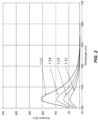
- Figure 2 shoes an increase of fluorescence with an increasing number of fluorescein moieties, but not to the extent of the increase in absorbance. This is believed to be related to intramolecular quenching of the fluorescent moieties.
- the HPbCD thus appears to be reducing or preventing intramolecular quenching.
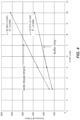
- Figure 4 provides data showing that fluorescent emission is substantially linear with respect to the number of fluorescent moieties when HPbCD is present in the composition; however, in the absence of HPbCD, emission does not correlate linearly with the number of fluorescent moieties, presumably due to intramolecular quenching.
- FAM-NHS ester 2 (2.24g).
- Dichloromethane 35mL was added to the flask, stirring was initiated, flask placed under nitrogen and cooled on ice.
- 2-(2-aminoethoxy)ethanol 420 ⁇ L was dissolved in dichloromethane (35mL), methanol (7mL) and triethylamine (1.5mL) and the resulting solution was charged to the addition funnel.
- the amine solution was added dropwise to the NHS ester over 30 minutes.
- the final solution was stirred for 1h at 0C, the flask was removed from the ice bath and stirred at room temperature for 2h.
- the reaction mixture was concentrated and the crude product was purified by silica gel chromatography. Product fractions were examined by TLC and LC/MS and pooled to afford 1.6g (72%).
- FAM-tosylate 4 (1.8g) and DMF (15mL) was added and the mixture was stirred to effect dissolution.
- sodium azide 830mg
- the mixture was poured onto 100mM citric acid (150mL) and ethyl acetate (150mL) in an extraction funnel. The layers were partitioned and the organic layer retained. The aqueous layer was extracted with ethyl acetate two additional times. The organic layers were combined and dried over sodium sulfate. The solution was filtered and concentrated by rotary evaporation.
- carbamate 7 ( ⁇ 3.1g). Pyridine was added to the flask (270mL) and stirring was initiated. Once the carbamate had been dissolved, the solution was placed on ice and stirred for 15min under nitrogen. Dimethoxytrityl chloride (5.9g) was added to the flask by powder funnel in a single portion. The flask was repurged with nitrogen and stirred at 0C for 1h. The flask was removed from ice and stirred at room temperature overnight. Methanol was added (10mL) and the mixture stirred for 10min. The mixture was concentrated on the rotovap and purified by silica gel chromatography. Product fraction were determined by TLC, pooled and concentrated to a final oil to afford mono-protected diol 8 (3.3g).
- 3-, 5- and 10-mer polyalkyne oligomers were prepared from the phosphoramidite of Example 4 and using the general procedures described in Example 1, wherein a two carbon spacer phosphoramidite is used in place of the glycol spacer of Example 1.
- the mixture was diluted with water (75 ⁇ L) and purified by size exclusion chromatography (Superdex 200 increase 5/150 GL, isocratic elution with PBS, 0.25mL/min, detection at 405nM and 260nM).
- compositions of compounds of structure (II) and a cyclodextrin are prepared and tested as described in Example 2.
- reaction scheme above illustrates an exemplary method for preparing an intermediate useful for preparation of compounds of structure (III), where PG is a suitable protecting group, X is a functional unit that a peptide chain can be built on, the shaded circle is a suitable solid support, and Dye is F', E', or Y'.
- Small porous beads are initially treated with functional units, which bind to the surface of the porous beads.
- Peptide chains are built upon the functional units sites and remain covalently bonded to the bead until they are cleaved. When attached, a peptide chain is immobilized on the solid phase and retained during a filtration process, wherein liquid reagents and by-products of the synthesis are washed away.
- the general cycle of solid phase synthesis is one of repeated cycles of deprotection-wash-coupling-wash.
- a free N-terminal amine of a peptide, attached to a solid support, is coupled to an N-protected amino acid group (e.g ., with Fmoc or Boc).
- the newly introduced amino acid unit is deprotected to reveal a new N-terminal amine, which is further reacted with additional amino acids.
- the process is repeated and the peptide chain is elongated.
- the peptide chain When the peptide chain has incorporated all desired amino acid and monomer units, it is cleaved from the bead. Cleaving reagents such as anhydrous hydrogen fluoride or trifluoroacetic acid can be used to cleave peptide chains from beads. The peptide chain is then collected, purified and characterized.
- Cleaving reagents such as anhydrous hydrogen fluoride or trifluoroacetic acid can be used to cleave peptide chains from beads.
- the peptide chain is then collected, purified and characterized.
- compositions of compounds of structure (II) and a cyclodextrin are prepared and tested as described in Example 2.
- Polymeric dyes of structure (IV) are prepared were prepared using the phosphoramidites of Example 7 and the procedures analogous to those described above. Exemplary compounds and their analytic characterization are provided in Table 5.
- compositions of compounds of structure (IV) and a cyclodextrin are prepared and tested as described in Example 2.
- the general flow cytometry workflow includes the following steps:
- Cells are tested for viability by positively staining necrotic cells to compare damaged cells to intact cells. Assays are used to target non-intact (fixed and non-fixed) cells with positively charged moieties, cell debris, apoptotic bodies, depolarized cell membrane, and permeabilized membranes. Cells are then stained with dye using routine cell preparations (fresh or fixed) and analyzed using flow cytometry.
- Dead cells i.e., necrotic cells
- Dead cells are positively stained
- Apoptotic bodies are intermediately stained
- live cells are left negative. This strategy results in very bright necrotic cells and works also to assess cell permeability.
- Assays are used to target non-intact (fixed and non-fixed) cells with positively charged moieties, cell debris, apoptotic bodies, depolarized cell membrane, and permeabilized membranes. Dye staining is performed on in vitro cultures, primary cells, and samples treated with xenobiotics and analyzed using flow cytometry.
- Cell ploidy and mitosis is the cell cycle is tracked by staining correlated to positively staining DNA intercalators in all cells and cellular bodies containing nucleic acid and cell cycle associated proteins.
- Assays are used to target non-intact (non-fixed only) cells with positively charged moieties, cell debris, apoptotic bodies, depolarized cell membrane, and permeabilized membranes.
- Assays are used to target intact (fixed and permeabilized) cells by staining positively charged moieties after preservation of cells are fixed and permeabilized for intracellular staining.
- Dye staining (in combination with other dyes) is performed on in vitro cultures, primary cells, and samples treated with xenobiotics and analyzed using flow cytometry.
- Cell proliferation is monitored by staining correlated to positively staining DNA intercalators in all cells and cellular bodies containing nucleic acid and cell cycle associated proteins.
- Assays are used to target non-intact (non-fixed only) cells with positively charged moieties, cell debris, apoptotic bodies, depolarized cell membrane, and permeabilized membranes.
- Assays are used to target intact (fixed and permeabilized) cells by staining positively charged moieties after preservation of cells are fixed and permeabilized for intracellular staining.
- Dye staining in combination with monitoring markers for cell proliferation, e.g. Ki67, BRDU is performed on in vitro cultures, primary cells, and samples treated with xenobiotics and analyzed using flow cytometry.
- Compound I-42 having 33 fluorescein moieties was prepared using standard solid-phase oligonucleotide techniques as described herein. I-42 (represented by "A” in the below scheme) was trimerized as illustrated and described below to form a 99-mer dye.
- TCEP tris(2-carboxyethyl)phosphine
- the reaction mixture was diluted with water (100 ⁇ L) and analyzed by PAGE (FIG. 10, Invitrogen EC6875, 10% TBE-Urea gel, 180V constant, electrophoresis halted with resolution of highest MW species completed, visualized by UV illumination (365nm)).
- oligomer dyes having any desired number of dye moieties are prepared in an analogous manner.
- Exemplary compounds were prepared using standard solid-phase oligonucleotide synthesis protocols and a fluorescein-containing phosphoramidite having the following structure: which was purchased from ChemGenes (Cat.# CLP-9780).
- Exemplary linkers (L 4 ) were included in the compounds by coupling with a phosphoramidite having the following structure: which is also commercially available.
Landscapes
- Chemical & Material Sciences (AREA)
- Health & Medical Sciences (AREA)
- Life Sciences & Earth Sciences (AREA)
- Organic Chemistry (AREA)
- Engineering & Computer Science (AREA)
- Molecular Biology (AREA)
- Immunology (AREA)
- Biochemistry (AREA)
- General Health & Medical Sciences (AREA)
- Hematology (AREA)
- Biomedical Technology (AREA)
- Urology & Nephrology (AREA)
- Materials Engineering (AREA)
- Cell Biology (AREA)
- Physics & Mathematics (AREA)
- Analytical Chemistry (AREA)
- Medicinal Chemistry (AREA)
- Food Science & Technology (AREA)
- General Physics & Mathematics (AREA)
- Pathology (AREA)
- Microbiology (AREA)
- Biotechnology (AREA)
- Tropical Medicine & Parasitology (AREA)
- Investigating, Analyzing Materials By Fluorescence Or Luminescence (AREA)
- Investigating Or Analysing Biological Materials (AREA)
- Investigating Or Analysing Materials By Optical Means (AREA)
- Polysaccharides And Polysaccharide Derivatives (AREA)
- Compositions Of Macromolecular Compounds (AREA)
- Investigating Or Analyzing Non-Biological Materials By The Use Of Chemical Means (AREA)
- Plural Heterocyclic Compounds (AREA)
Applications Claiming Priority (2)
| Application Number | Priority Date | Filing Date | Title |
|---|---|---|---|
| US201662334263P | 2016-05-10 | 2016-05-10 | |
| PCT/US2017/032006 WO2017197014A2 (en) | 2016-05-10 | 2017-05-10 | Compositions comprising a polymeric dye and a cyclodextrin and uses thereof |
Publications (2)
| Publication Number | Publication Date |
|---|---|
| EP3455299A2 EP3455299A2 (en) | 2019-03-20 |
| EP3455299B1 true EP3455299B1 (en) | 2024-01-17 |
Family
ID=58995237
Family Applications (1)
| Application Number | Title | Priority Date | Filing Date |
|---|---|---|---|
| EP17727759.7A Active EP3455299B1 (en) | 2016-05-10 | 2017-05-10 | Compositions comprising a polymeric dye and a cyclodextrin and uses thereof |
Country Status (4)
| Country | Link |
|---|---|
| US (1) | US11390754B2 (enExample) |
| EP (1) | EP3455299B1 (enExample) |
| JP (1) | JP7068192B2 (enExample) |
| WO (1) | WO2017197014A2 (enExample) |
Families Citing this family (29)
| Publication number | Priority date | Publication date | Assignee | Title |
|---|---|---|---|---|
| JP6190534B2 (ja) | 2013-08-22 | 2017-08-30 | ソニー株式会社 | 水溶性蛍光染料又は有色染料及びその使用方法 |
| JP6982500B2 (ja) | 2015-02-26 | 2021-12-17 | ソニーグループ株式会社 | フェニルエチニルナフタレン染料およびそれらの使用方法 |
| KR102676814B1 (ko) | 2015-02-26 | 2024-06-21 | 소니그룹주식회사 | 접합 그룹을 포함하는 수용성 형광 또는 착색 염료 |
| US10865310B2 (en) * | 2015-05-11 | 2020-12-15 | Sony Corporation Of America | Ultra bright dimeric or polymeric dyes |
| CN107580618A (zh) | 2016-04-01 | 2018-01-12 | 索尼公司 | 超亮二聚或多聚染料 |
| CN109415574B (zh) | 2016-04-01 | 2021-05-28 | 索尼公司 | 具有刚性间隔基团的超亮二聚体或聚合物染料 |
| JP7069033B2 (ja) | 2016-04-06 | 2022-05-17 | ソニーグループ株式会社 | スペーシングリンカー基を有する超明色ダイマーまたはポリマー染料 |
| JP7527537B2 (ja) | 2016-05-10 | 2024-08-05 | ソニーグループ株式会社 | ペプチド骨格を有する超明色ポリマー染料 |
| AU2017264861B2 (en) | 2016-05-11 | 2021-09-23 | Sony Group Corporation | Ultra bright dimeric or polymeric dyes |
| WO2017214165A1 (en) | 2016-06-06 | 2017-12-14 | Sony Corporation | Ionic polymers comprising fluorescent or colored reporter groups |
| US12018159B2 (en) | 2016-07-29 | 2024-06-25 | Sony Group Corporation | Ultra bright dimeric or polymeric dyes and methods for preparation of the same |
| JP7270254B2 (ja) | 2017-06-16 | 2023-05-10 | デューク ユニバーシティ | 改善された標識検出、演算、検体感知、および調整可能な乱数生成のための共鳴体ネットワーク |
| JP7551056B2 (ja) | 2017-10-05 | 2024-09-17 | ソニーグループ株式会社 | プログラマブルなポリマー薬物 |
| EP3691689A1 (en) | 2017-10-05 | 2020-08-12 | Sony Corporation | Programmable dendritic drugs |
| JP2021503450A (ja) | 2017-11-16 | 2021-02-12 | ソニー株式会社 | プログラム可能なポリマー薬 |
| CN111565757A (zh) | 2018-01-12 | 2020-08-21 | 索尼公司 | 包含生物活性化合物的磷酸烷基聚合物 |
| JP7813098B2 (ja) | 2018-01-12 | 2026-02-12 | ソニーグループ株式会社 | 生物学的に活性な化合物を含む剛性間隔基を有するポリマー |
| JP2021510698A (ja) | 2018-01-12 | 2021-04-30 | ソニー株式会社 | 生物学的に活性な化合物を含むホスホアルキルリボースポリマー |
| KR102742386B1 (ko) | 2018-03-19 | 2024-12-16 | 소니그룹주식회사 | 형광 신호 향상을 위한 2가 금속의 사용 |
| WO2019182766A1 (en) | 2018-03-21 | 2019-09-26 | Sony Corporation | Polymeric tandem dyes with linker groups |
| KR102854332B1 (ko) | 2018-06-27 | 2025-09-03 | 소니그룹주식회사 | 디옥시리보오스를 포함하는 링커 군을 갖는 중합체성 염료 |
| EP3820944A1 (en) | 2018-07-13 | 2021-05-19 | Sony Corporation | Polymeric dyes having a backbone comprising organophosphate units |
| CN114430738A (zh) * | 2019-04-11 | 2022-05-03 | 索尼集团公司 | 可编程的聚合药物 |
| WO2021062176A2 (en) | 2019-09-26 | 2021-04-01 | Sony Corporation | Polymeric tandem dyes with linker groups |
| JP7816141B2 (ja) | 2019-09-30 | 2026-02-18 | ソニーグループ株式会社 | ヌクレオチドプローブ |
| EP4256078A1 (en) | 2020-12-07 | 2023-10-11 | Sony Group Corporation | Spacing linker group design for brightness enhancement in dimeric or polymeric dyes |
| EP4355754A1 (en) | 2021-06-16 | 2024-04-24 | Sony Group Corporation | Method for preparing fluorophore- and chromophore-containing conjugates for visual detection of analyte molecules |
| US20230107794A1 (en) * | 2021-08-31 | 2023-04-06 | Becton, Dickinson And Company | Multi Chromophore Fluorescent Dyes with Enhanced Brightness |
| CN121925274A (zh) | 2023-10-03 | 2026-04-24 | 索尼集团公司 | 用于制备具有药物缀合物的聚合物染料的方法 |
Family Cites Families (137)
| Publication number | Priority date | Publication date | Assignee | Title |
|---|---|---|---|---|
| US4450305A (en) | 1982-10-25 | 1984-05-22 | American Cyanamid Company | Poly(ethyleneoxy)-substituted-9,10-bis(phenylethynyl)anthracenes |
| US4476229A (en) | 1982-11-08 | 1984-10-09 | Abbott Laboratories | Substituted carboxyfluoresceins |
| SU1121931A1 (ru) | 1983-01-10 | 1988-04-15 | Институт Биологической Химии Ан Бсср | Конъюгаты тиреоидных гормонов с альбумином дл выработки антител к тиреоидным гормонам у животных |
| EP0355864A3 (en) | 1984-03-15 | 1991-09-18 | Wako Pure Chemical Industries, Ltd. | Method of quantitatively measuring an oxidative substance by using triphenyl methane type leuco compounds as coloring matter |
| JPH0665677B2 (ja) | 1985-03-09 | 1994-08-24 | 三菱化成株式会社 | リン脂質類似構造を有するジオ−ルおよびその製造方法 |
| US5268486A (en) | 1986-04-18 | 1993-12-07 | Carnegie-Mellon Unversity | Method for labeling and detecting materials employing arylsulfonate cyanine dyes |
| US5053054A (en) | 1988-09-12 | 1991-10-01 | Ortho Pharmaceutical Corporation | Methods and reagents for staining intracellular components |
| US5318894A (en) | 1990-01-30 | 1994-06-07 | Miles Inc. | Composition, device and method of assaying for peroxidatively active substances |
| US6365730B1 (en) | 1990-06-19 | 2002-04-02 | Gene Shears Pty. Limited | DNA-Armed ribozymes and minizymes |
| JPH04282391A (ja) | 1991-03-08 | 1992-10-07 | Fujisawa Pharmaceut Co Ltd | エタノールアミン誘導体およびその製造法 |
| CA2119126C (en) | 1991-09-16 | 1996-09-03 | Molecular Probes, Inc. | Dimers of unsymmetrical cyanine dyes |
| JP3509859B2 (ja) | 1991-11-07 | 2004-03-22 | ナノトロニクス,インコーポレイテッド | 供与体−供与体エネルギー転移系を創製するための発色団および蛍光団でコンジュゲート化されたポリヌクレオチドのハイブリダイゼーション |
| EP0708837B1 (en) * | 1993-07-13 | 2006-03-08 | Abbott Laboratories | Fluorescent polymer labeled conjugates and intermediates |
| US6171859B1 (en) | 1994-03-30 | 2001-01-09 | Mitokor | Method of targeting conjugate molecules to mitochondria |
| US5994143A (en) | 1996-02-01 | 1999-11-30 | Abbott Laboratories | Polymeric fluorophores enhanced by moieties providing a hydrophobic and conformationally restrictive microenvironment |
| US6218108B1 (en) | 1997-05-16 | 2001-04-17 | Research Corporation Technologies, Inc. | Nucleoside analogs with polycyclic aromatic groups attached, methods of synthesis and uses therefor |
| US6893868B2 (en) | 1997-02-20 | 2005-05-17 | Onco Immunin, Inc. | Homo-doubly labeled compositions for the detection of enzyme activity in biological samples |
| US5986030A (en) | 1997-04-15 | 1999-11-16 | Nalco Chemical Company | Fluorescent water soluble polymers |
| DE19717904A1 (de) | 1997-04-23 | 1998-10-29 | Diagnostikforschung Inst | Säurelabile und enzymatisch spaltbare Farbstoffkonstrukte zur Diagnostik mit Nahinfrarotlicht und zur Therapie |
| JP3078793B2 (ja) | 1998-04-30 | 2000-08-21 | 株式会社分子バイオホトニクス研究所 | ロタキサン構造を有する色素、ラベル化剤、およびラベル化方法 |
| US7060708B2 (en) | 1999-03-10 | 2006-06-13 | New River Pharmaceuticals Inc. | Active agent delivery systems and methods for protecting and administering active agents |
| US6716452B1 (en) | 2000-08-22 | 2004-04-06 | New River Pharmaceuticals Inc. | Active agent delivery systems and methods for protecting and administering active agents |
| US6514700B1 (en) | 1999-04-30 | 2003-02-04 | Aclara Biosciences, Inc. | Nucleic acid detection using degradation of a tagged sequence |
| US6627400B1 (en) | 1999-04-30 | 2003-09-30 | Aclara Biosciences, Inc. | Multiplexed measurement of membrane protein populations |
| WO2001007430A1 (en) | 1999-07-22 | 2001-02-01 | Nalco Chemical Compant | Fluorescent water-soluble polymers |
| US6479650B1 (en) | 1999-12-14 | 2002-11-12 | Research Corporation Technologies, Inc. | Fluorescent nucleoside analogs and combinatorial fluorophore arrays comprising same |
| WO2001069254A2 (en) | 2000-03-14 | 2001-09-20 | Genigma Corporation | Visually detectable dye labelled biomolecules for analysis |
| CA2402955C (en) | 2000-03-28 | 2010-03-09 | Nanosphere, Inc. | Nanoparticles having oligonucleotides attached thereto and uses therefor |
| CA2409512A1 (en) | 2000-05-08 | 2001-11-15 | Qtl Biosystems Llc | Improvements to the fluorescent polymer-qtl approach to biosensing |
| WO2001091725A2 (en) | 2000-05-31 | 2001-12-06 | Univ Johns Hopkins | Biologically useful polyphosphates |
| US20020099013A1 (en) | 2000-11-14 | 2002-07-25 | Thomas Piccariello | Active agent delivery systems and methods for protecting and administering active agents |
| CA2421582A1 (en) | 2000-09-11 | 2002-03-21 | The Trustees Of Columbia University In The City Of New York | Combinatorial fluorescence energy transfer tags and uses thereof |
| JP4989013B2 (ja) | 2000-09-19 | 2012-08-01 | リ−コール インコーポレーティッド | シアニン色素 |
| US6448407B1 (en) | 2000-11-01 | 2002-09-10 | Pe Corporation (Ny) | Atropisomers of asymmetric xanthene fluorescent dyes and methods of DNA sequencing and fragment analysis |
| US8394813B2 (en) | 2000-11-14 | 2013-03-12 | Shire Llc | Active agent delivery systems and methods for protecting and administering active agents |
| GB2372256A (en) | 2001-02-14 | 2002-08-21 | Kalibrant Ltd | Detectable entity comprising a plurality of detectable units releasably connected together by stimulus-cleavable linkers for use in fluorescence detection |
| US8323903B2 (en) | 2001-10-12 | 2012-12-04 | Life Technologies Corporation | Antibody complexes and methods for immunolabeling |
| JP3813890B2 (ja) | 2002-03-22 | 2006-08-23 | 富士写真フイルム株式会社 | 3層レジストプロセス用中間層材料組成物及びそれを用いたパターン形成方法 |
| AU2003262833A1 (en) | 2002-08-23 | 2004-03-11 | The Board Of Trustees Of The Leland Stanford Junior University | Fluorescent glycosides and methods for their use |
| EP2316971A1 (en) | 2002-08-26 | 2011-05-04 | The Regents of the University of California | Methods and compositions for detection and analysis of polynucleotides using light harvesting multichromophores |
| US20040138467A1 (en) | 2002-11-26 | 2004-07-15 | French Roger Harquail | Aromatic and aromatic/heteroaromatic molecular structures with controllable electron conducting properties |
| WO2004062475A2 (en) | 2003-01-10 | 2004-07-29 | Albert Einstein College Of Medicine Of Yeshiva University | Fluorescent assays for protein kinases |
| US7238792B2 (en) | 2003-03-18 | 2007-07-03 | Washington State University Research Foundation | Foldable polymers as probes |
| US7172907B2 (en) | 2003-03-21 | 2007-02-06 | Ge Healthcare Bio-Sciences Corp. | Cyanine dye labelling reagents with meso-substitution |
| BRPI0413521A (pt) | 2003-08-14 | 2006-10-10 | Diatos | seqüências de aminoácidos que facilitam a penetração de uma substáncia de interesse nas células e/ou no núcleos celulares |
| WO2005051967A2 (en) | 2003-11-19 | 2005-06-09 | Allelogic Biosciences Corp. | Oligonucleotides labeled with a plurality of fluorophores |
| WO2005064336A1 (en) | 2003-12-09 | 2005-07-14 | Molecular Probes, Inc. | Pyrenyloxysulfonic acid fluorescent agents |
| WO2006078278A2 (en) | 2004-04-27 | 2006-07-27 | Alnylam Pharmaceuticals, Inc. | Single-stranded and double-stranded oligonucleotides comprising a 2-arylpropyl moiety |
| US20060035302A1 (en) | 2004-06-21 | 2006-02-16 | Applera Corporation | Kinase substrates with multiple phosphorylation sites |
| EP1781675B1 (en) | 2004-08-13 | 2014-03-26 | Epoch Biosciences, Inc. | Phosphonate fluorescent dyes and conjugates |
| US8586718B2 (en) | 2004-09-14 | 2013-11-19 | Applied Biosystems, Llc | Multi-chromophoric quencher constructs for use in high sensitivity energy transfer probes |
| US8153706B2 (en) | 2004-10-25 | 2012-04-10 | Hewlett-Packard Development Company, L.P. | Polymeric colorants having pigment and dye components and corresponding ink compositions |
| PL1655317T3 (pl) | 2004-11-09 | 2007-10-31 | Ipagsa Ind Sl | Termoreaktywne polimery absorbujące promieniowanie podczerwone i ich zastosowanie w termoczułej litograficznej płycie drukarskiej |
| CA2594458C (en) | 2005-01-10 | 2016-08-23 | The Regents Of The University Of California | Cationic conjugated polymers suitable for strand-specific polynucleotide detection in homogeneous and solid state assays |
| CN101137735A (zh) | 2005-03-09 | 2008-03-05 | 西菲伊德公司 | 极性染料 |
| US8227621B2 (en) | 2005-06-30 | 2012-07-24 | Li-Cor, Inc. | Cyanine dyes and methods of use |
| WO2007038659A1 (en) | 2005-09-26 | 2007-04-05 | Invitrogen Corporation | Violet laser excitable dyes and their method of use |
| JP4837743B2 (ja) | 2005-11-18 | 2011-12-14 | アメリカ合衆国 | 修飾カルジオリピンおよびその使用法 |
| US8101776B2 (en) | 2005-12-12 | 2012-01-24 | Basf Se | Organic semiconductors and their manufacture |
| US20070148094A1 (en) | 2005-12-22 | 2007-06-28 | Uzgiris Egidijus E | Polymeric imaging agents and medical imaging methods |
| US8425915B2 (en) | 2006-04-13 | 2013-04-23 | Midatech Limited | Nanoparticles for providing immune responses against infectious agents |
| US20100039684A1 (en) | 2006-08-12 | 2010-02-18 | Kolb Eric S | Sensitizer dyes for photoacid generating systems using short visible wavelengths |
| KR20090077779A (ko) | 2006-10-12 | 2009-07-15 | 이데미쓰 고산 가부시키가이샤 | 유기 박막 트랜지스터 소자 및 유기 박막 발광 트랜지스터 |
| JP5636189B2 (ja) | 2006-10-27 | 2014-12-03 | ライフ テクノロジーズ コーポレーション | 蛍光発生性pH感受性色素およびその使用方法 |
| US8053588B2 (en) | 2007-03-07 | 2011-11-08 | Kabushiki Kaisha Toyota Chuo Kenkyusho | Organosilane compound and organosilica obtained therefrom |
| US9556210B2 (en) | 2007-04-23 | 2017-01-31 | Sabag-Rfa Ltd. | System for delivering therapeutic agents into living cells and cells nuclei |
| US9156865B2 (en) | 2007-04-23 | 2015-10-13 | Deliversir Ltd | System for delivering therapeutic agents into living cells and cells nuclei |
| WO2008129548A2 (en) | 2007-04-23 | 2008-10-30 | Segev Laboratories Limited | A system for delivering therapeutic agents into living cells and cells nuclei |
| EP2155805A2 (en) * | 2007-05-11 | 2010-02-24 | Basf Se | Polymeric dyes |
| EP2014698A1 (en) | 2007-07-12 | 2009-01-14 | Crystax Pharmaceuticals S.L. | Polymers and their use as fluorescent labels |
| TWI409280B (zh) | 2007-07-31 | 2013-09-21 | American Dye Source Inc | 聚合物染料、塗覆層組合物及熱微影印刷板 |
| GB2456298A (en) | 2008-01-07 | 2009-07-15 | Anthony Ian Newman | Electroluminescent materials comprising oxidation resistant fluorenes |
| CA2718003C (en) | 2008-03-10 | 2016-05-03 | The University Of Tokyo | Copolymer including uncharged hydrophilic block and cationic polyamino acid block having hydrophobic group in part of side chains, and use thereof |
| AU2009239491B2 (en) | 2008-04-21 | 2014-07-17 | Lawrence Livermore National Security, Llc | Selective high-affinity polydentate ligands and methods of making such |
| KR101041446B1 (ko) | 2008-07-21 | 2011-06-14 | 부산대학교 산학협력단 | 공액고분자 2단계 fret 시스템 및 바이오센서 |
| WO2010026957A1 (ja) | 2008-09-03 | 2010-03-11 | 国立大学法人 富山大学 | 水溶性ロタキサン型蛍光色素および蛍光性有機分子 |
| WO2010055789A1 (ja) | 2008-11-14 | 2010-05-20 | 独立行政法人科学技術振興機構 | オリゴヌクレオチド誘導体、ラベル化剤及びその利用 |
| EP2366027B1 (en) | 2008-11-20 | 2017-01-11 | Nederlandse Organisatie voor toegepast- natuurwetenschappelijk onderzoek TNO | Rapid fret-based diagnosis of bacterial pathogens |
| US8802738B2 (en) | 2008-12-12 | 2014-08-12 | University Of Massachusetts | Polyesters with grafted zwitterions |
| CN102791827B (zh) | 2009-11-09 | 2016-11-16 | 华盛顿大学商业化中心 | 官能化发色聚合物点及其生物共轭体 |
| US9400273B1 (en) | 2009-12-09 | 2016-07-26 | Life Technologies Corporation | 7-hydroxycoumarin-based cell-tracking reagents |
| WO2011088193A2 (en) | 2010-01-13 | 2011-07-21 | University Of Medicine And Dentistry Of New Jersey | Fluorophore chelated lanthanide luminiscent probes with improved quantum efficiency |
| EP2545373B1 (en) | 2010-03-11 | 2022-08-24 | Medtronic Minimed, Inc. | Measuring analyte concentration incorporating temperature and ph correction |
| EP2553019A1 (en) | 2010-03-26 | 2013-02-06 | Mersana Therapeutics, Inc. | Modified polymers for delivery of polynucleotides, method of manufacture, and methods of use thereof |
| US9995679B2 (en) | 2010-05-25 | 2018-06-12 | Carnegie Mellon University | Targeted probes of cellular physiology |
| JPWO2012005310A1 (ja) | 2010-07-08 | 2013-09-05 | 旭硝子株式会社 | 含フッ素芳香族化合物、有機半導体材料および有機薄膜デバイス |
| CA3140885A1 (en) | 2010-12-13 | 2012-06-21 | Quiapeg Pharmaceuticals Ab | Functionalized polymers |
| CN102174078A (zh) | 2011-01-10 | 2011-09-07 | 中国药科大学 | 肿瘤细胞选择性穿膜肽的应用 |
| DK2769226T3 (en) | 2011-07-15 | 2017-09-11 | Medtronic Minimed Inc | COMBINATIONS OF FLUORPHORES AND PYRIDINIUM BORIC ACID QUENCHERS FOR USE IN ANALYTICAL SENSORS |
| US20130059343A1 (en) * | 2011-09-06 | 2013-03-07 | Li-Cor, Inc. | Nucleotide derivatives |
| US9085761B1 (en) | 2012-06-14 | 2015-07-21 | Affymetrix, Inc. | Methods and compositions for amplification of nucleic acids |
| DK2895607T3 (da) | 2012-09-12 | 2021-05-25 | Quark Pharmaceuticals Inc | Dobbeltstrengede oligonukleotidmolekyler til ddit4 og fremgangsmåder til anvendelse deraf |
| WO2014055253A1 (en) | 2012-10-04 | 2014-04-10 | The General Hospital Corporation | Methods of synthesizing and using peg-like fluorochromes |
| AU2013336237A1 (en) | 2012-10-22 | 2015-06-11 | Sabag-Rfa Ltd | A system for delivering therapeutic agents into living cells and cells nuclei |
| WO2014102806A1 (en) | 2012-12-31 | 2014-07-03 | Yeda Research And Development Co. Ltd. | Protein biosensors, cross reactive sensor arrays and methods of use thereof |
| US9545447B2 (en) | 2013-01-04 | 2017-01-17 | The Texas A&M University System | Polymer-drug systems |
| US9714946B2 (en) | 2013-03-14 | 2017-07-25 | Dana-Farber Cancer Institute, Inc. | Bromodomain binding reagents and uses thereof |
| AU2014228504C1 (en) | 2013-03-15 | 2019-10-03 | Visen Medical, Inc. | Substituted silaxanthenium red to near-infrared fluorochromes for in vitro and in vivo imaging and detection |
| WO2014147642A1 (en) | 2013-03-19 | 2014-09-25 | Council Of Scientific & Industrial Research | Substituted fluoranthene-7-carbonitriles as fluorescent dyes for cell imaging applications |
| CN103319378B (zh) | 2013-06-27 | 2015-06-10 | 中国科学院宁波材料技术与工程研究所 | 两性离子有机小分子太阳能电池阴极界面材料及其制法和用途 |
| KR101572901B1 (ko) | 2013-07-12 | 2015-12-15 | 부산대학교 산학협력단 | 2-단계 fret를 이용한 공액고분자 전해질 및 압타머 프로브 기반 표적 물질의 검출 방법 및 형광 센서 |
| JP6190534B2 (ja) * | 2013-08-22 | 2017-08-30 | ソニー株式会社 | 水溶性蛍光染料又は有色染料及びその使用方法 |
| US10406246B2 (en) | 2013-10-17 | 2019-09-10 | Deutsches Kresbsforschungszentrum | Double-labeled probe for molecular imaging and use thereof |
| JP5802865B1 (ja) | 2013-11-11 | 2015-11-04 | オリンパス株式会社 | 処置システム |
| EP3077454A1 (en) | 2013-12-06 | 2016-10-12 | Monosol, LLC | Fluorescent tracer for water-soluble films, related methods, and related articles |
| EP3094687B1 (en) | 2014-01-16 | 2020-02-12 | Sony Corporation | Water soluble fluorescent or colored dyes |
| JP6374172B2 (ja) | 2014-01-31 | 2018-08-15 | 富士フイルム株式会社 | 着色組成物、およびこれを用いた硬化膜、カラーフィルタ、パターン形成方法、カラーフィルタの製造方法、固体撮像素子、画像表示装置ならびに染料多量体 |
| CN104072727A (zh) | 2014-06-23 | 2014-10-01 | 华南理工大学 | 一种含磷脂酰胆碱基的2,7-芴的共轭聚合物及其制备方法与应用 |
| US10709791B2 (en) | 2014-11-12 | 2020-07-14 | University Of Washington | Stabilized polymeric carriers for therapeutic agent delivery |
| EP3218414A1 (en) | 2014-11-14 | 2017-09-20 | Angiochem Inc. | Conjugates including an antibody moiety, a polypeptide that traverses the blood-brain barrier, and a cytotoxin |
| JP6982500B2 (ja) | 2015-02-26 | 2021-12-17 | ソニーグループ株式会社 | フェニルエチニルナフタレン染料およびそれらの使用方法 |
| KR102676814B1 (ko) | 2015-02-26 | 2024-06-21 | 소니그룹주식회사 | 접합 그룹을 포함하는 수용성 형광 또는 착색 염료 |
| CN107207874A (zh) | 2015-03-12 | 2017-09-26 | 贝克顿·迪金森公司 | 聚合物bodipy染料及其使用方法 |
| US10865310B2 (en) | 2015-05-11 | 2020-12-15 | Sony Corporation Of America | Ultra bright dimeric or polymeric dyes |
| US9670318B2 (en) | 2015-05-28 | 2017-06-06 | Miltenyi Biotec Gmbh | Bright fluorochromes based on multimerization of fluorescent dyes |
| US9913992B2 (en) | 2015-12-22 | 2018-03-13 | Colgate-Palmolive Company | Oral treatment device |
| CN107580618A (zh) | 2016-04-01 | 2018-01-12 | 索尼公司 | 超亮二聚或多聚染料 |
| CN109415574B (zh) | 2016-04-01 | 2021-05-28 | 索尼公司 | 具有刚性间隔基团的超亮二聚体或聚合物染料 |
| JP7069033B2 (ja) | 2016-04-06 | 2022-05-17 | ソニーグループ株式会社 | スペーシングリンカー基を有する超明色ダイマーまたはポリマー染料 |
| JP7527537B2 (ja) | 2016-05-10 | 2024-08-05 | ソニーグループ株式会社 | ペプチド骨格を有する超明色ポリマー染料 |
| AU2017264861B2 (en) | 2016-05-11 | 2021-09-23 | Sony Group Corporation | Ultra bright dimeric or polymeric dyes |
| WO2017214165A1 (en) | 2016-06-06 | 2017-12-14 | Sony Corporation | Ionic polymers comprising fluorescent or colored reporter groups |
| US12018159B2 (en) | 2016-07-29 | 2024-06-25 | Sony Group Corporation | Ultra bright dimeric or polymeric dyes and methods for preparation of the same |
| GB2554666B (en) | 2016-09-30 | 2019-12-18 | Sumitomo Chemical Co | Composite Particle |
| CN106589005B (zh) | 2016-11-01 | 2019-08-06 | 北京擎科生物科技有限公司 | 一种荧光信号放大探针中间体、荧光探针及其制备方法 |
| EP3691689A1 (en) | 2017-10-05 | 2020-08-12 | Sony Corporation | Programmable dendritic drugs |
| JP7551056B2 (ja) | 2017-10-05 | 2024-09-17 | ソニーグループ株式会社 | プログラマブルなポリマー薬物 |
| JP2021503450A (ja) | 2017-11-16 | 2021-02-12 | ソニー株式会社 | プログラム可能なポリマー薬 |
| KR102773157B1 (ko) | 2017-12-13 | 2025-02-27 | 소니그룹주식회사 | 생물학적 활성 화합물을 함유하는 이온성 중합체 |
| JP7813098B2 (ja) | 2018-01-12 | 2026-02-12 | ソニーグループ株式会社 | 生物学的に活性な化合物を含む剛性間隔基を有するポリマー |
| JP2021510698A (ja) | 2018-01-12 | 2021-04-30 | ソニー株式会社 | 生物学的に活性な化合物を含むホスホアルキルリボースポリマー |
| CN111565757A (zh) | 2018-01-12 | 2020-08-21 | 索尼公司 | 包含生物活性化合物的磷酸烷基聚合物 |
| KR102742386B1 (ko) | 2018-03-19 | 2024-12-16 | 소니그룹주식회사 | 형광 신호 향상을 위한 2가 금속의 사용 |
| WO2019182766A1 (en) | 2018-03-21 | 2019-09-26 | Sony Corporation | Polymeric tandem dyes with linker groups |
| EP3820944A1 (en) | 2018-07-13 | 2021-05-19 | Sony Corporation | Polymeric dyes having a backbone comprising organophosphate units |
| WO2021062176A2 (en) | 2019-09-26 | 2021-04-01 | Sony Corporation | Polymeric tandem dyes with linker groups |
| JP7816141B2 (ja) | 2019-09-30 | 2026-02-18 | ソニーグループ株式会社 | ヌクレオチドプローブ |
-
2017
- 2017-05-10 WO PCT/US2017/032006 patent/WO2017197014A2/en not_active Ceased
- 2017-05-10 EP EP17727759.7A patent/EP3455299B1/en active Active
- 2017-05-10 US US16/099,988 patent/US11390754B2/en active Active
- 2017-05-10 JP JP2018558700A patent/JP7068192B2/ja active Active
Non-Patent Citations (1)
| Title |
|---|
| GURYEV OLEG ET AL: "Control of the Fluorescence of Dye-Antibody Conjugates by (2-Hydroxypropyl)-[beta]-cyclodextrin in Fluorescence Microscopy and Flow Cytometry", ANALYTICAL CHEMISTRY, vol. 83, no. 18, 15 September 2011 (2011-09-15), US, pages 7109 - 7114, XP055884016, ISSN: 0003-2700, Retrieved from the Internet <URL:https://pubs.acs.org/doi/pdf/10.1021/ac2014146> DOI: 10.1021/ac2014146 * |
Also Published As
| Publication number | Publication date |
|---|---|
| US11390754B2 (en) | 2022-07-19 |
| JP7068192B2 (ja) | 2022-05-16 |
| EP3455299A2 (en) | 2019-03-20 |
| JP2019522066A (ja) | 2019-08-08 |
| US20190136065A1 (en) | 2019-05-09 |
| WO2017197014A3 (en) | 2018-01-04 |
| WO2017197014A2 (en) | 2017-11-16 |
Similar Documents
| Publication | Publication Date | Title |
|---|---|---|
| US12577403B2 (en) | Ultra bright dimeric or polymeric dyes | |
| AU2017264861B2 (en) | Ultra bright dimeric or polymeric dyes | |
| US11390754B2 (en) | Compositions comprising a polymeric dye and a cyclodextrin and uses thereof | |
| EP4137818B1 (en) | Use of divalent metals for enhancement of fluorescent signals | |
| EP3436528B1 (en) | Ultra bright dimeric or polymeric dyes with rigid spacing groups | |
| EP3294811B1 (en) | Ultra bright dimeric or polymeric dyes | |
| JP2019523787A (ja) | 蛍光または有色レポーター基を含むイオン性ポリマー | |
| EP3814366A1 (en) | Polymeric dyes with linker groups comprising deoxyribose | |
| EP3491071A1 (en) | Ultra bright dimeric or polymeric dyes and methods for preparation of the same | |
| EP4256078A1 (en) | Spacing linker group design for brightness enhancement in dimeric or polymeric dyes |
Legal Events
| Date | Code | Title | Description |
|---|---|---|---|
| STAA | Information on the status of an ep patent application or granted ep patent |
Free format text: STATUS: UNKNOWN |
|
| STAA | Information on the status of an ep patent application or granted ep patent |
Free format text: STATUS: THE INTERNATIONAL PUBLICATION HAS BEEN MADE |
|
| PUAI | Public reference made under article 153(3) epc to a published international application that has entered the european phase |
Free format text: ORIGINAL CODE: 0009012 |
|
| STAA | Information on the status of an ep patent application or granted ep patent |
Free format text: STATUS: REQUEST FOR EXAMINATION WAS MADE |
|
| 17P | Request for examination filed |
Effective date: 20181207 |
|
| AK | Designated contracting states |
Kind code of ref document: A2 Designated state(s): AL AT BE BG CH CY CZ DE DK EE ES FI FR GB GR HR HU IE IS IT LI LT LU LV MC MK MT NL NO PL PT RO RS SE SI SK SM TR |
|
| AX | Request for extension of the european patent |
Extension state: BA ME |
|
| RIN1 | Information on inventor provided before grant (corrected) |
Inventor name: SINGH, SHARAT Inventor name: MATRAY, TRACY |
|
| DAV | Request for validation of the european patent (deleted) | ||
| DAX | Request for extension of the european patent (deleted) | ||
| RAP3 | Party data changed (applicant data changed or rights of an application transferred) |
Owner name: SONY GROUP CORPORATION Owner name: SONY CORPORATION OF AMERICA |
|
| STAA | Information on the status of an ep patent application or granted ep patent |
Free format text: STATUS: EXAMINATION IS IN PROGRESS |
|
| 17Q | First examination report despatched |
Effective date: 20220204 |
|
| GRAP | Despatch of communication of intention to grant a patent |
Free format text: ORIGINAL CODE: EPIDOSNIGR1 |
|
| STAA | Information on the status of an ep patent application or granted ep patent |
Free format text: STATUS: GRANT OF PATENT IS INTENDED |
|
| INTG | Intention to grant announced |
Effective date: 20230727 |
|
| GRAS | Grant fee paid |
Free format text: ORIGINAL CODE: EPIDOSNIGR3 |
|
| GRAA | (expected) grant |
Free format text: ORIGINAL CODE: 0009210 |
|
| STAA | Information on the status of an ep patent application or granted ep patent |
Free format text: STATUS: THE PATENT HAS BEEN GRANTED |
|
| RAP1 | Party data changed (applicant data changed or rights of an application transferred) |
Owner name: SONY GROUP CORPORATION |
|
| AK | Designated contracting states |
Kind code of ref document: B1 Designated state(s): AL AT BE BG CH CY CZ DE DK EE ES FI FR GB GR HR HU IE IS IT LI LT LU LV MC MK MT NL NO PL PT RO RS SE SI SK SM TR |
|
| P01 | Opt-out of the competence of the unified patent court (upc) registered |
Effective date: 20231207 |
|
| REG | Reference to a national code |
Ref country code: GB Ref legal event code: FG4D |
|
| REG | Reference to a national code |
Ref country code: DE Ref legal event code: R096 Ref document number: 602017078501 Country of ref document: DE |
|
| REG | Reference to a national code |
Ref country code: NL Ref legal event code: FP Ref country code: CH Ref legal event code: EP |
|
| REG | Reference to a national code |
Ref country code: IE Ref legal event code: FG4D |
|
| REG | Reference to a national code |
Ref country code: LT Ref legal event code: MG9D |
|
| REG | Reference to a national code |
Ref country code: AT Ref legal event code: MK05 Ref document number: 1650523 Country of ref document: AT Kind code of ref document: T Effective date: 20240117 |
|
| PG25 | Lapsed in a contracting state [announced via postgrant information from national office to epo] |
Ref country code: IS Free format text: LAPSE BECAUSE OF FAILURE TO SUBMIT A TRANSLATION OF THE DESCRIPTION OR TO PAY THE FEE WITHIN THE PRESCRIBED TIME-LIMIT Effective date: 20240517 |
|
| PG25 | Lapsed in a contracting state [announced via postgrant information from national office to epo] |
Ref country code: LT Free format text: LAPSE BECAUSE OF FAILURE TO SUBMIT A TRANSLATION OF THE DESCRIPTION OR TO PAY THE FEE WITHIN THE PRESCRIBED TIME-LIMIT Effective date: 20240117 |
|
| PG25 | Lapsed in a contracting state [announced via postgrant information from national office to epo] |
Ref country code: GR Free format text: LAPSE BECAUSE OF FAILURE TO SUBMIT A TRANSLATION OF THE DESCRIPTION OR TO PAY THE FEE WITHIN THE PRESCRIBED TIME-LIMIT Effective date: 20240418 |
|
| PG25 | Lapsed in a contracting state [announced via postgrant information from national office to epo] |
Ref country code: RS Free format text: LAPSE BECAUSE OF FAILURE TO SUBMIT A TRANSLATION OF THE DESCRIPTION OR TO PAY THE FEE WITHIN THE PRESCRIBED TIME-LIMIT Effective date: 20240417 Ref country code: HR Free format text: LAPSE BECAUSE OF FAILURE TO SUBMIT A TRANSLATION OF THE DESCRIPTION OR TO PAY THE FEE WITHIN THE PRESCRIBED TIME-LIMIT Effective date: 20240117 |
|
| PG25 | Lapsed in a contracting state [announced via postgrant information from national office to epo] |
Ref country code: ES Free format text: LAPSE BECAUSE OF FAILURE TO SUBMIT A TRANSLATION OF THE DESCRIPTION OR TO PAY THE FEE WITHIN THE PRESCRIBED TIME-LIMIT Effective date: 20240117 |
|
| PG25 | Lapsed in a contracting state [announced via postgrant information from national office to epo] |
Ref country code: AT Free format text: LAPSE BECAUSE OF FAILURE TO SUBMIT A TRANSLATION OF THE DESCRIPTION OR TO PAY THE FEE WITHIN THE PRESCRIBED TIME-LIMIT Effective date: 20240117 |
|
| PG25 | Lapsed in a contracting state [announced via postgrant information from national office to epo] |
Ref country code: RS Free format text: LAPSE BECAUSE OF FAILURE TO SUBMIT A TRANSLATION OF THE DESCRIPTION OR TO PAY THE FEE WITHIN THE PRESCRIBED TIME-LIMIT Effective date: 20240417 Ref country code: NO Free format text: LAPSE BECAUSE OF FAILURE TO SUBMIT A TRANSLATION OF THE DESCRIPTION OR TO PAY THE FEE WITHIN THE PRESCRIBED TIME-LIMIT Effective date: 20240417 Ref country code: LT Free format text: LAPSE BECAUSE OF FAILURE TO SUBMIT A TRANSLATION OF THE DESCRIPTION OR TO PAY THE FEE WITHIN THE PRESCRIBED TIME-LIMIT Effective date: 20240117 Ref country code: IS Free format text: LAPSE BECAUSE OF FAILURE TO SUBMIT A TRANSLATION OF THE DESCRIPTION OR TO PAY THE FEE WITHIN THE PRESCRIBED TIME-LIMIT Effective date: 20240517 Ref country code: HR Free format text: LAPSE BECAUSE OF FAILURE TO SUBMIT A TRANSLATION OF THE DESCRIPTION OR TO PAY THE FEE WITHIN THE PRESCRIBED TIME-LIMIT Effective date: 20240117 Ref country code: GR Free format text: LAPSE BECAUSE OF FAILURE TO SUBMIT A TRANSLATION OF THE DESCRIPTION OR TO PAY THE FEE WITHIN THE PRESCRIBED TIME-LIMIT Effective date: 20240418 Ref country code: FI Free format text: LAPSE BECAUSE OF FAILURE TO SUBMIT A TRANSLATION OF THE DESCRIPTION OR TO PAY THE FEE WITHIN THE PRESCRIBED TIME-LIMIT Effective date: 20240117 Ref country code: ES Free format text: LAPSE BECAUSE OF FAILURE TO SUBMIT A TRANSLATION OF THE DESCRIPTION OR TO PAY THE FEE WITHIN THE PRESCRIBED TIME-LIMIT Effective date: 20240117 Ref country code: BG Free format text: LAPSE BECAUSE OF FAILURE TO SUBMIT A TRANSLATION OF THE DESCRIPTION OR TO PAY THE FEE WITHIN THE PRESCRIBED TIME-LIMIT Effective date: 20240117 Ref country code: AT Free format text: LAPSE BECAUSE OF FAILURE TO SUBMIT A TRANSLATION OF THE DESCRIPTION OR TO PAY THE FEE WITHIN THE PRESCRIBED TIME-LIMIT Effective date: 20240117 |
|
| PG25 | Lapsed in a contracting state [announced via postgrant information from national office to epo] |
Ref country code: PT Free format text: LAPSE BECAUSE OF FAILURE TO SUBMIT A TRANSLATION OF THE DESCRIPTION OR TO PAY THE FEE WITHIN THE PRESCRIBED TIME-LIMIT Effective date: 20240517 Ref country code: PL Free format text: LAPSE BECAUSE OF FAILURE TO SUBMIT A TRANSLATION OF THE DESCRIPTION OR TO PAY THE FEE WITHIN THE PRESCRIBED TIME-LIMIT Effective date: 20240117 |
|
| PG25 | Lapsed in a contracting state [announced via postgrant information from national office to epo] |
Ref country code: SE Free format text: LAPSE BECAUSE OF FAILURE TO SUBMIT A TRANSLATION OF THE DESCRIPTION OR TO PAY THE FEE WITHIN THE PRESCRIBED TIME-LIMIT Effective date: 20240117 Ref country code: PT Free format text: LAPSE BECAUSE OF FAILURE TO SUBMIT A TRANSLATION OF THE DESCRIPTION OR TO PAY THE FEE WITHIN THE PRESCRIBED TIME-LIMIT Effective date: 20240517 Ref country code: PL Free format text: LAPSE BECAUSE OF FAILURE TO SUBMIT A TRANSLATION OF THE DESCRIPTION OR TO PAY THE FEE WITHIN THE PRESCRIBED TIME-LIMIT Effective date: 20240117 Ref country code: LV Free format text: LAPSE BECAUSE OF FAILURE TO SUBMIT A TRANSLATION OF THE DESCRIPTION OR TO PAY THE FEE WITHIN THE PRESCRIBED TIME-LIMIT Effective date: 20240117 |
|
| PG25 | Lapsed in a contracting state [announced via postgrant information from national office to epo] |
Ref country code: DK Free format text: LAPSE BECAUSE OF FAILURE TO SUBMIT A TRANSLATION OF THE DESCRIPTION OR TO PAY THE FEE WITHIN THE PRESCRIBED TIME-LIMIT Effective date: 20240117 |
|
| PG25 | Lapsed in a contracting state [announced via postgrant information from national office to epo] |
Ref country code: SM Free format text: LAPSE BECAUSE OF FAILURE TO SUBMIT A TRANSLATION OF THE DESCRIPTION OR TO PAY THE FEE WITHIN THE PRESCRIBED TIME-LIMIT Effective date: 20240117 |
|
| REG | Reference to a national code |
Ref country code: DE Ref legal event code: R097 Ref document number: 602017078501 Country of ref document: DE |
|
| PG25 | Lapsed in a contracting state [announced via postgrant information from national office to epo] |
Ref country code: EE Free format text: LAPSE BECAUSE OF FAILURE TO SUBMIT A TRANSLATION OF THE DESCRIPTION OR TO PAY THE FEE WITHIN THE PRESCRIBED TIME-LIMIT Effective date: 20240117 Ref country code: CZ Free format text: LAPSE BECAUSE OF FAILURE TO SUBMIT A TRANSLATION OF THE DESCRIPTION OR TO PAY THE FEE WITHIN THE PRESCRIBED TIME-LIMIT Effective date: 20240117 |
|
| PG25 | Lapsed in a contracting state [announced via postgrant information from national office to epo] |
Ref country code: SK Free format text: LAPSE BECAUSE OF FAILURE TO SUBMIT A TRANSLATION OF THE DESCRIPTION OR TO PAY THE FEE WITHIN THE PRESCRIBED TIME-LIMIT Effective date: 20240117 |
|
| PG25 | Lapsed in a contracting state [announced via postgrant information from national office to epo] |
Ref country code: SM Free format text: LAPSE BECAUSE OF FAILURE TO SUBMIT A TRANSLATION OF THE DESCRIPTION OR TO PAY THE FEE WITHIN THE PRESCRIBED TIME-LIMIT Effective date: 20240117 Ref country code: SK Free format text: LAPSE BECAUSE OF FAILURE TO SUBMIT A TRANSLATION OF THE DESCRIPTION OR TO PAY THE FEE WITHIN THE PRESCRIBED TIME-LIMIT Effective date: 20240117 Ref country code: RO Free format text: LAPSE BECAUSE OF FAILURE TO SUBMIT A TRANSLATION OF THE DESCRIPTION OR TO PAY THE FEE WITHIN THE PRESCRIBED TIME-LIMIT Effective date: 20240117 Ref country code: EE Free format text: LAPSE BECAUSE OF FAILURE TO SUBMIT A TRANSLATION OF THE DESCRIPTION OR TO PAY THE FEE WITHIN THE PRESCRIBED TIME-LIMIT Effective date: 20240117 Ref country code: DK Free format text: LAPSE BECAUSE OF FAILURE TO SUBMIT A TRANSLATION OF THE DESCRIPTION OR TO PAY THE FEE WITHIN THE PRESCRIBED TIME-LIMIT Effective date: 20240117 Ref country code: CZ Free format text: LAPSE BECAUSE OF FAILURE TO SUBMIT A TRANSLATION OF THE DESCRIPTION OR TO PAY THE FEE WITHIN THE PRESCRIBED TIME-LIMIT Effective date: 20240117 |
|
| PLBE | No opposition filed within time limit |
Free format text: ORIGINAL CODE: 0009261 |
|
| STAA | Information on the status of an ep patent application or granted ep patent |
Free format text: STATUS: NO OPPOSITION FILED WITHIN TIME LIMIT |
|
| PG25 | Lapsed in a contracting state [announced via postgrant information from national office to epo] |
Ref country code: IT Free format text: LAPSE BECAUSE OF FAILURE TO SUBMIT A TRANSLATION OF THE DESCRIPTION OR TO PAY THE FEE WITHIN THE PRESCRIBED TIME-LIMIT Effective date: 20240117 |
|
| 26N | No opposition filed |
Effective date: 20241018 |
|
| REG | Reference to a national code |
Ref country code: CH Ref legal event code: PL |
|
| PG25 | Lapsed in a contracting state [announced via postgrant information from national office to epo] |
Ref country code: IT Free format text: LAPSE BECAUSE OF FAILURE TO SUBMIT A TRANSLATION OF THE DESCRIPTION OR TO PAY THE FEE WITHIN THE PRESCRIBED TIME-LIMIT Effective date: 20240117 |
|
| PG25 | Lapsed in a contracting state [announced via postgrant information from national office to epo] |
Ref country code: MC Free format text: LAPSE BECAUSE OF FAILURE TO SUBMIT A TRANSLATION OF THE DESCRIPTION OR TO PAY THE FEE WITHIN THE PRESCRIBED TIME-LIMIT Effective date: 20240117 |
|
| PG25 | Lapsed in a contracting state [announced via postgrant information from national office to epo] |
Ref country code: LU Free format text: LAPSE BECAUSE OF NON-PAYMENT OF DUE FEES Effective date: 20240510 |
|
| PG25 | Lapsed in a contracting state [announced via postgrant information from national office to epo] |
Ref country code: MC Free format text: LAPSE BECAUSE OF FAILURE TO SUBMIT A TRANSLATION OF THE DESCRIPTION OR TO PAY THE FEE WITHIN THE PRESCRIBED TIME-LIMIT Effective date: 20240117 Ref country code: LU Free format text: LAPSE BECAUSE OF NON-PAYMENT OF DUE FEES Effective date: 20240510 Ref country code: CH Free format text: LAPSE BECAUSE OF NON-PAYMENT OF DUE FEES Effective date: 20240531 |
|
| REG | Reference to a national code |
Ref country code: BE Ref legal event code: MM Effective date: 20240531 |
|
| PG25 | Lapsed in a contracting state [announced via postgrant information from national office to epo] |
Ref country code: IE Free format text: LAPSE BECAUSE OF NON-PAYMENT OF DUE FEES Effective date: 20240510 |
|
| PG25 | Lapsed in a contracting state [announced via postgrant information from national office to epo] |
Ref country code: SI Free format text: LAPSE BECAUSE OF FAILURE TO SUBMIT A TRANSLATION OF THE DESCRIPTION OR TO PAY THE FEE WITHIN THE PRESCRIBED TIME-LIMIT Effective date: 20240117 Ref country code: BE Free format text: LAPSE BECAUSE OF NON-PAYMENT OF DUE FEES Effective date: 20240531 |
|
| PGFP | Annual fee paid to national office [announced via postgrant information from national office to epo] |
Ref country code: NL Payment date: 20250423 Year of fee payment: 9 |
|
| PGFP | Annual fee paid to national office [announced via postgrant information from national office to epo] |
Ref country code: DE Payment date: 20250423 Year of fee payment: 9 |
|
| PGFP | Annual fee paid to national office [announced via postgrant information from national office to epo] |
Ref country code: FR Payment date: 20250424 Year of fee payment: 9 |
|
| PG25 | Lapsed in a contracting state [announced via postgrant information from national office to epo] |
Ref country code: CY Free format text: LAPSE BECAUSE OF FAILURE TO SUBMIT A TRANSLATION OF THE DESCRIPTION OR TO PAY THE FEE WITHIN THE PRESCRIBED TIME-LIMIT; INVALID AB INITIO Effective date: 20170510 |
|
| PG25 | Lapsed in a contracting state [announced via postgrant information from national office to epo] |
Ref country code: HU Free format text: LAPSE BECAUSE OF FAILURE TO SUBMIT A TRANSLATION OF THE DESCRIPTION OR TO PAY THE FEE WITHIN THE PRESCRIBED TIME-LIMIT; INVALID AB INITIO Effective date: 20170510 |
|
| PGFP | Annual fee paid to national office [announced via postgrant information from national office to epo] |
Ref country code: GB Payment date: 20260317 Year of fee payment: 10 |