EP3423061B1 - Combination therapy with sorafenib or regorafenib and a phosphoramidate prodrug of troxacitabine - Google Patents
Combination therapy with sorafenib or regorafenib and a phosphoramidate prodrug of troxacitabine Download PDFInfo
- Publication number
- EP3423061B1 EP3423061B1 EP17760400.6A EP17760400A EP3423061B1 EP 3423061 B1 EP3423061 B1 EP 3423061B1 EP 17760400 A EP17760400 A EP 17760400A EP 3423061 B1 EP3423061 B1 EP 3423061B1
- Authority
- EP
- European Patent Office
- Prior art keywords
- troxacitabine
- phosphoramidate prodrug
- sorafenib
- use according
- phosphoramidate
- Prior art date
- Legal status (The legal status is an assumption and is not a legal conclusion. Google has not performed a legal analysis and makes no representation as to the accuracy of the status listed.)
- Active
Links
Images



Classifications
-
- A—HUMAN NECESSITIES
- A61—MEDICAL OR VETERINARY SCIENCE; HYGIENE
- A61K—PREPARATIONS FOR MEDICAL, DENTAL OR TOILETRY PURPOSES
- A61K31/00—Medicinal preparations containing organic active ingredients
- A61K31/33—Heterocyclic compounds
- A61K31/395—Heterocyclic compounds having nitrogen as a ring hetero atom, e.g. guanethidine or rifamycins
- A61K31/435—Heterocyclic compounds having nitrogen as a ring hetero atom, e.g. guanethidine or rifamycins having six-membered rings with one nitrogen as the only ring hetero atom
- A61K31/44—Non condensed pyridines; Hydrogenated derivatives thereof
-
- A—HUMAN NECESSITIES
- A61—MEDICAL OR VETERINARY SCIENCE; HYGIENE
- A61K—PREPARATIONS FOR MEDICAL, DENTAL OR TOILETRY PURPOSES
- A61K31/00—Medicinal preparations containing organic active ingredients
- A61K31/33—Heterocyclic compounds
- A61K31/395—Heterocyclic compounds having nitrogen as a ring hetero atom, e.g. guanethidine or rifamycins
- A61K31/435—Heterocyclic compounds having nitrogen as a ring hetero atom, e.g. guanethidine or rifamycins having six-membered rings with one nitrogen as the only ring hetero atom
- A61K31/44—Non condensed pyridines; Hydrogenated derivatives thereof
- A61K31/4412—Non condensed pyridines; Hydrogenated derivatives thereof having oxo groups directly attached to the heterocyclic ring
-
- A—HUMAN NECESSITIES
- A61—MEDICAL OR VETERINARY SCIENCE; HYGIENE
- A61K—PREPARATIONS FOR MEDICAL, DENTAL OR TOILETRY PURPOSES
- A61K31/00—Medicinal preparations containing organic active ingredients
- A61K31/33—Heterocyclic compounds
- A61K31/395—Heterocyclic compounds having nitrogen as a ring hetero atom, e.g. guanethidine or rifamycins
- A61K31/495—Heterocyclic compounds having nitrogen as a ring hetero atom, e.g. guanethidine or rifamycins having six-membered rings with two or more nitrogen atoms as the only ring heteroatoms, e.g. piperazine or tetrazines
- A61K31/505—Pyrimidines; Hydrogenated pyrimidines, e.g. trimethoprim
- A61K31/513—Pyrimidines; Hydrogenated pyrimidines, e.g. trimethoprim having oxo groups directly attached to the heterocyclic ring, e.g. cytosine
-
- A—HUMAN NECESSITIES
- A61—MEDICAL OR VETERINARY SCIENCE; HYGIENE
- A61K—PREPARATIONS FOR MEDICAL, DENTAL OR TOILETRY PURPOSES
- A61K31/00—Medicinal preparations containing organic active ingredients
- A61K31/66—Phosphorus compounds
- A61K31/675—Phosphorus compounds having nitrogen as a ring hetero atom, e.g. pyridoxal phosphate
-
- A—HUMAN NECESSITIES
- A61—MEDICAL OR VETERINARY SCIENCE; HYGIENE
- A61K—PREPARATIONS FOR MEDICAL, DENTAL OR TOILETRY PURPOSES
- A61K31/00—Medicinal preparations containing organic active ingredients
- A61K31/66—Phosphorus compounds
- A61K31/683—Diesters of a phosphorus acid with two hydroxy compounds, e.g. phosphatidylinositols
- A61K31/685—Diesters of a phosphorus acid with two hydroxy compounds, e.g. phosphatidylinositols one of the hydroxy compounds having nitrogen atoms, e.g. phosphatidylserine, lecithin
-
- A—HUMAN NECESSITIES
- A61—MEDICAL OR VETERINARY SCIENCE; HYGIENE
- A61K—PREPARATIONS FOR MEDICAL, DENTAL OR TOILETRY PURPOSES
- A61K9/00—Medicinal preparations characterised by special physical form
- A61K9/0012—Galenical forms characterised by the site of application
- A61K9/0053—Mouth and digestive tract, i.e. intraoral and peroral administration
-
- A—HUMAN NECESSITIES
- A61—MEDICAL OR VETERINARY SCIENCE; HYGIENE
- A61P—SPECIFIC THERAPEUTIC ACTIVITY OF CHEMICAL COMPOUNDS OR MEDICINAL PREPARATIONS
- A61P35/00—Antineoplastic agents
-
- A—HUMAN NECESSITIES
- A61—MEDICAL OR VETERINARY SCIENCE; HYGIENE
- A61P—SPECIFIC THERAPEUTIC ACTIVITY OF CHEMICAL COMPOUNDS OR MEDICINAL PREPARATIONS
- A61P35/00—Antineoplastic agents
- A61P35/04—Antineoplastic agents specific for metastasis
-
- A—HUMAN NECESSITIES
- A61—MEDICAL OR VETERINARY SCIENCE; HYGIENE
- A61K—PREPARATIONS FOR MEDICAL, DENTAL OR TOILETRY PURPOSES
- A61K2300/00—Mixtures or combinations of active ingredients, wherein at least one active ingredient is fully defined in groups A61K31/00 - A61K41/00
Definitions
- the invention relates to combination therapy for cancer, and more specifically, to sorafenib-troxacitabine phosphoramidate prodrug combination therapy and regorafenib-troxacitabine phosphoramidate prodrug combination therapy for liver cancer and liver metastases.
- Liver cancer (or hepatic cancer) is a cancer that originates in the liver. Primary liver cancer is the fifth most frequently diagnosed cancer globally and the second leading cause of cancer death. Liver cancers are malignant tumours that grow on the surface or inside the liver. They are formed from either the liver itself or from structures within the liver, including blood vessels or the bile duct.
- liver cancer The leading cause of liver cancer is viral infection with hepatitis B virus or hepatitis C virus.
- the cancer usually forms secondary to cirrhosis caused by these viruses. For this reason, the highest rates of liver cancer occur where these viruses are endemic, including East- Asia and sub-Saharan Africa. Liver cancers should not be confused with liver metastases, also known as secondary liver cancer, which is a cancer that originate from organs elsewhere in the body and migrate to the liver.
- HCC hepatocellular carcinoma
- Liver cancer can also form from other structures within the liver such as the bile duct, blood vessels and immune cells.
- Cancer of the bile duct (cholangiocarcinoma and cholangiocellular cystadenocarcinoma) accounts for approximately 6% of primary liver cancers.
- HCC cholangiocarcinoma
- Tumours of the liver blood vessels include angiosarcoma and hemangioendothelioma.
- Embryonal sarcoma and fibrosarcoma are produced from a type of connective tissue known as mesenchyme.
- Cancers produced from muscle in the liver are leiomyosarcoma and rhabdomyosarcoma.
- Other less common liver cancers include carcinosarcomas, teratomas, yolk sac tumours, carcinoid tumours and lymphomas. Lymphomas usually have diffuse infiltration to liver, but it may also form a liver mass in rare occasions.
- Surgical resection is often the treatment of choice for non-cirrhotic livers. Increased risk of complications such as liver failure can occur with resection of cirrhotic livers. 5-year survival rates after resection has massively improved over the last few decades and can now exceed 50%. Recurrence rates after resection due to the spread of the initial tumour or formation of new tumours exceeds 70%. Liver transplantation can also be used in cases of HCC where this form of treatment can be tolerated and the tumour fits specific criteria (e.g., the Milan criteria). Less than 30-40% of individuals with HCC are eligible for surgery and transplant because the cancer is often detected late stage. Also, HCC can progress during the waiting time for liver transplants, which can ultimately prevent a transplant.
- Percutaneous ablation is the only non-surgical treatment that can offer cure.
- percutaneous ablation consist of either injecting chemicals into the liver (ethanol or acetic acid) or producing extremes of temperature using radio frequency ablation, microwaves, lasers or cryotherapy.
- radio frequency ablation has one of the best reputations in HCC, but the limitations include inability to treat tumours close to other organs and blood vessels due to heat generation and the heat sync effect, respectively.
- chemotherapeutics are not routinely used in HCC, although local chemotherapy may be used in a procedure known as transarterial chemoembolization (TACE).
- TACE transarterial chemoembolization
- cytotoxic drugs such as doxorubicin or cisplatin with lipiodol are administered and the arteries supplying the liver are blocked by gelatine sponge or other particles.
- sorafenib a targeted therapy drug that prevents cell proliferation and blood cell growth in some circumstances.
- the fluoro analogue of sorafenib, regorafenib was produced.
- Regorafenib is a targeted therapy drug that is an oral receptor tyrosine kinase inhibitor which blocks an important pathway that promotes cell division.
- Radiotherapy is not often used in HCC because the liver is not tolerant to radiation. Even with modern technology providing well targeted radiation to specific areas of the liver, collateral damage to surrounding liver tissue is a problem, emphasizing the need for better, "liver sparing" regimens. Dual treatments of radiotherapy plus chemoembolization, local chemotherapy, systemic chemotherapy or targeted therapy drugs may show benefit over radiotherapy alone.
- Sorafenib (marketed as NEXAVAR ® ), is an FDA-approved drug for patients with advanced primary liver cancer. It is a small molecule interacting with multiple intracellular and cell surface kinases including the Raf/Mek/Erk pathway. By inhibiting these kinases, genetic transcription involving cell proliferation and angiogenesis is inhibited, with the intriguing observation that hypoxia in solid tumour tissues may be increased due to the treatment reducing blood supply to the tumour.
- Regorafenib (marketed as STIVARGA ® ), is an FDA-approved drug for metastatic colorectal cancer patients who failed with standard treatments, and for patients with advanced gastrointestinal stromal tumors (GIST) that cannot be surgically removed and no longer respond to other FDA-approved treatments for this disease. Regorafenib has also shown positive results in terms of time to progress (TTP) and overall survival(OS) in a phase II clinical trial as a second-line drug for patients with liver cancer who progress after sorafenib treatment.
- TTP time to progress
- OS overall survival
- Troxacitabine (beta-L-dioxolane cytidine) is a cytotoxic deoxycytidine analogue with an unnatural L-configuration which has demonstrated broad activity against both solid and hematopoietic malignancies in vitro and in vivo. Particularly, impressive activity has been observed against human cancer cell lines and xenografts of hepatocellular, prostate, and renal origin ( Cancer Res., 55, 3008-3011, 1995 ).
- Troxacitabine treatment has shown to give rise to a resistance mutation of the kinase deoxycytidine kinase (dCK) which is normally responsible for the first phosphorylation step of the nucleoside, leading to no or very low levels of troxacitabine monophosphate.
- dCK kinase deoxycytidine kinase
- Troxacitabine entered phase III clinical trials in 2008 in the acute myologenous leukemia indication, but did not proceed to registration.
- Discontinued phase II trials with troxacitabine include breast cancer, colorectal cancer, pancreatic cancer, melanoma, NSCLC, renal, prostate and ovarian tumours.
- Troxacitabine was generally administered as an intravenous infusion, thereby exposing many tissues to the drug, irrespective of the site of the cancer. It is believed that the clinical development of troxacitabine has been abandoned.
- WO2005009961 a compound of Formula (I): (I) salts thereof, prodrugs thereof, metabolites thereof, pharmaceutical compositions containing such a compound, and use of such compound and compositions to treat diseases mediated by raf, VEGFR, PDGFR, p38 and flt-3.
- the invention is based, at least in part, on the discovery that certain combinations of sorafenib and specific phosphoramidate prodrugs of troxacitabine are particularly effective at inhibiting, and preventing the proliferation of, liver cancer cells.
- This discovery can be described as a synergy, or greater than additive effect, that is specific to sorafenib and these phosphoramidate prodrugs of troxacitabine, within the area of liver cancer (e.g., HCC).
- HCC liver cancer
- An additional aspect of the invention is based, at least in part, on the discovery that certain combinations of regorafenib and specific phosphoramidate prodrugs of troxacitabine are particularly effective at inhibiting, and preventing the proliferation of, liver cancer cells.
- This discovery can be described as a synergy, or greater than additive effect, that is specific to regorafenib and these phosphoramidate prodrugs of troxacitabine, within the area of liver cancer (e.g., HCC).
- HCC liver cancer
- the invention provides compositions for use in treating liver cancer and liver metastases, whereby sorafenib and a phosphoramidate prodrug of troxacitabine, as defined herein, are administered in combination to human or mammalian individuals.
- the invention provides compositions for use in treating liver cancer and liver metastases, whereby regorafenib and a phosphoramidate prodrug of troxacitabine, as defined herein, are administered in combination to human or mammalian individuals.
- sorafenib i.e., sorafenib tosylate as well as other pharmaceutically acceptable forms, salts, and esters of sorafenib.
- Sorafenib is commercially available as NEXAVAR ® , which is the tosylate salt of sorafenib.
- Sorafenib tosylate has the chemical name 4-(4- ⁇ 3-[4-Chloro-3(trifluoromethyl)phenyl]ureido ⁇ phenoxy) N-methylpyridine-2-carboxamide 4- methylbenzenesulfonate and its structural formula is:
- Sorafenib tosylate is a white to yellowish or brownish solid with a molecular formula of C 21 H 16 ClF 3 N 4 O 3 x C 7 H 8 O 3 S and a molecular weight of 637.0 g/mol. Sorafenib tosylate is practically insoluble in aqueous media, slightly soluble in ethanol and soluble in PEG 400. Sorafenib is also described in U.S. Patent Nos. 7,235,576 , 7,897,623 and 8,124,630 .
- sorafenib Dosage and administration of sorafenib is approved for 400 mg (2 tablets) orally twice daily without food. However, treatment interruption and/or dose reduction may be needed to manage suspected adverse drug reactions. In such cases, dose may be reduced to 400 mg once daily or to 400 mg every other day (see, e.g., the FDA label for NEXAVAR ® tablets, oral, Initial U.S. Approval: 2005).
- sorafenib dosage and administration can follow medically approved guidelines, as well medically accepted deviations or alterations to such guidelines. Further description and details on sorafenib dosing and administration are provided in the Combination Chemotherapy section below.
- the present invention also includes compounds wherein one or more of the atom(s) is/are replaced by an isotope of that/these atom(s), i.e. an atom having the same atomic number but an atomic mass different from the one(s) typically found in nature.
- isotopes examples include but are not limited to isotopes of hydrogen, such as 2 H and 3 H (also denoted D for deuterium and T for tritium, respectively), carbon, such as 11 C, 13 C and 14 C, nitrogen, such as 13 N and 15 N, oxygen, such as 15 O, 17 O and 18 O, phosphorus, such as 31 P and 32 P, fluorine, such as 18 F, chlorine, such as 36 Cl and bromine such as 75 Br, 76 Br, 77 Br and 82 Br.
- isotopically labelled compounds include for example those wherein radioactive isotopes, such as 3 H and 14 C are present, or those wherein non-radioactive isotopes, such as 2 H and 13 C are present.
- isotope included in an isotope-containing compound will depend on the specific application of that compound. For example, for drug or substrate tissue distribution assays or in metabolic studies compounds wherein a radioactive isotope such as 3 H or 14 C is incorporated, will generally be most useful. For radio-imaging applications, for example positron emission tomography (PET) a positron emitting isotope such as 11 C, 18 F, 13 N or 15 O will be useful.
- PET positron emission tomography
- a heavier isotope such as deuterium, i.e. 2 H, may provide certain therapeutic advantages resulting from greater metabolic stability to a compound of the invention, which may result in, for example, an increased in vivo half life of the compound, reduced dosage requirements or an improvement in therapeutic index.
- Isotopically-labelled compounds of formula I or any subgroup of formula I can generally be prepared by conventional techniques known to those skilled in the art or by processes analogous to those described in the Schemes and/or Examples herein by using the appropriate isotopically-labelled reagents or starting material instead of the corresponding non-isotopically-labelled reagent or starting material.
- the invention includes deuterated omega diphenylurea or salts thereof, and more particularly to donafenib, 4-(4-(3-(4-chloro-3-(trifluoromethyl)phenyl)ureido)phenoxy)-N-1',1',1'-trideuteromethylpicolinamide or salts thereof, i.e. a compound having the structural formula:
- Donafenib and the synthesis thereof is extensively disclosed in e.g. WO2011/113367 and WO2014/012480 .
- the invention in various aspects and embodiments, includes the use of regorafenib (i.e., regorafenib monohydrate as well as other pharmaceutically acceptable forms, salts, and esters of regorafenib).
- Regorafenib is commercially available as STIVARGA ® , which is the monohydrate of regorafenib.
- Regorafenib monohydrate has the chemical name 4-[4-( ⁇ [4-chloro-3-(trifluoromethyl) phenyl] carbamoyl ⁇ amino)-3-fluorophenoxy]-N-methylpyridine-2-carboxamide monohydrate and its structural formula is:
- Regorafenib monohydrate is a solid with a molecular formula of C 21 H 15 ClF 4 N 4 O 3 x H 2 O and a molecular weight of 500.83 g/mol. Regorafenib monohydrate is practically insoluble in aqueous media, slightly soluble in acetonitrile, methanol, ethanol, and ethyl acetate and sparingly soluble in acetone. Regorafenib is also described in i.a. WO2004/113274 , WO2005/000284 and WO2005009961 .
- the invention claims a phosphoramidate prodrug of troxacitabine with the formula: wherein
- the phosphoramidate prodrug of troxacitabine has the stereochemistry: where X, Y and Z are as defined above.
- the phosphoramidate prodrug of troxacitabine has the stereochemistry: Where X, Y and Z are as defined above.
- the invention in various aspects and embodiments, is applicable to the above-defined use of a phosphoramidite prodrug of troxacitabine in the treatment of liver cancer in a subject.
- a subject which can be a primate, such as a human.
- the subject can be a mammal, such as mammal other than a mouse.
- the subject can be an adult human (i.e., 18 years or older), or a juvenile human (i.e., less than 18 years old).
- the liver cancer (e.g., HCC) is not resistant to sorafenib.
- the liver cancer (e.g., HCC) can have primary or secondary resistance to sorafenib.
- the subject can be a responder to sorafenib in the absence of the phosphoramidate prodrug of troxacitabine.
- the subject can be a non-responder to sorafenib in the absence of the phosphoramidate prodrug of troxacitabine.
- the subject has undergone a prior treatment with sorafenib lasting at least 2, 4, 6, 8, 10 months or longer.
- the subjects are patients who have experienced one or more significant adverse side effect to sorafenib and therefore require a reduction in dose.
- the liver cancer (e.g., HCC) is not resistant to regorafenib.
- the liver cancer (e.g., HCC) can have primary or secondary resistance to regorafenib.
- the subject can be a responder to regorafenib in the absence of the phosphoramidate prodrug of troxacitabine.
- the subject can be a non-responder to regorafenib in the absence of the phosphoramidate prodrug of troxacitabine.
- the subject has undergone a prior treatment with regorafenib lasting at least 2, 4, 6, 8, 10 months or longer.
- the subjects are patients who have experienced one or more significant adverse side effect to regorafenib and therefore require a reduction in dose.
- the liver cancer (e.g., HCC) is intermediate, advanced, or terminal stage.
- the liver cancer (e.g., HCC) can be metastatic or non-metastatic.
- the liver cancer (e.g., HCC) can be resectable or unresectable.
- the liver cancer (e.g., HCC) can comprise a single tumour, multiple tumours, or a poorly defined tumour with an infiltrative growth pattern (into portal veins or hepatic veins).
- the liver cancer (e.g., HCC) can comprise a fibrolamellar, pseudoglandular (adenoid), pleomorphic (giant cell), or clear cell pattern.
- the liver cancer (e.g., HCC) can comprise a well differentiated form, and tumour cells resemble hepatocytes, form trabeculae, cords, and nests, and/or contain bile pigment in cytoplasm.
- the liver cancer (e.g., HCC) can comprise a poorly differentiated form, and malignant epithelial cells are discohesive, pleomorphic, anaplastic, and/or giant.
- the liver cancer (e.g., HCC) is associated with hepatitis B, hepatitis C, cirrhosis, or type 2 diabetes.
- the subject is a human having an Eastern Cooperative Oncology Group (ECOG) performance status ⁇ 2.
- ECOG Eastern Cooperative Oncology Group
- the subject is a human having acceptable liver function defined as (i) total bilirubin ⁇ 1.5 times the upper limit of normal (ULN); for patients with hepatocellular carcinoma only, total bilirubin ⁇ 3 mg/dL (i.e., Child-Pugh Score for bilirubin is no greater than 2); (ii) aspartate aminotransferase (AST), alanine aminotransferase (ALT) and alkaline phosphatase (ALP) ⁇ 5 x ULN; or (iii) acceptable renal function: ⁇ Serum creatinine ⁇ 1.5 times the ULN, or calculated creatinine clearance > 60 mL/min/1.73 m 2 for patients with creatinine levels above 1.5 times the institutional normal.
- UPN upper limit of normal
- ALT alanine aminotransferase
- ALP alkaline phosphatase
- acceptable renal function ⁇ Serum creatinine ⁇ 1.5 times the ULN, or calculated creatinine clearance > 60
- the subject is a human having acceptable haematological status defined as (i) absolute Neutrophil Count (ANC) > 1500 cells/mm 3 ; (ii) platelet count > 100,000 pits/mm 3 (without transfusion); > 75,000 pits/mm 3 for patients with hepatocellular carcinoma only; or (iii) haemoglobin > 9 g/dL.
- ANC absolute Neutrophil Count
- platelet count > 100,000 pits/mm 3 (without transfusion); > 75,000 pits/mm 3 for patients with hepatocellular carcinoma only; or
- haemoglobin > 9 g/dL.
- the subject is a human having a prothrombin time (PT) or International Normalized Ratio (INR) ⁇ 1.25 ⁇ ULN; INR ⁇ 1.7 or prothrombin time (PT) or ⁇ 4 seconds above ULN (i.e., Child-Pugh Score is no greater than 1 for the coagulation parameter); or serum albumin > 2.8 g/dL (i.e., Child-Pugh Score for albumin is no greater than 2).
- PT prothrombin time
- INR International Normalized Ratio
- PT prothrombin time
- INR International Normalized Ratio
- PT prothrombin time
- serum albumin > 2.8 g/dL
- the subject is a human having a prothrombin Child-Pugh Class A (score 5-6) disease. Score for hepatic encephalopathy must be 1; the score for ascites must be no greater than 2 and clinically irrelevant; for the determination of the Child-Pugh Class.
- the subject is a human that does not have a New York Heart Association (NYHA) Class III or IV cardiac disease, myocardial infarction within the past 6 months, unstable and/or symptomatic arrhythmia, or evidence of ischemia on ECG.
- NYHA New York Heart Association
- the subject does not have an active, uncontrolled bacterial, viral, or fungal infections requiring systemic therapy.
- the subject is a human that is not a pregnant or nursing woman.
- the subject is a human that does not have a known infection with human immunodeficiency virus (HIV).
- HIV human immunodeficiency virus
- the subject is a human that does not have a serious non-malignant disease (e.g., hydronephrosis, liver failure, or other conditions) that could compromise the therapy.
- a serious non-malignant disease e.g., hydronephrosis, liver failure, or other conditions
- the subject is a human that does not have a recent history of haemorrhage and patients predisposed to haemorrhage due to coagulopathies or structural anomalies.
- the subject is a human that does not require treatment with therapeutic doses of coumarin-type anticoagulants.
- the subject is a human that does not have a cirrhosis classed as Child-Pugh B or C.
- the subject is a human that wherein the subject has an alpha- fetoprotein (AFP) > 10, 50, 100, 200, 300, 400, or 500 ng/mL.
- AFP alpha- fetoprotein
- the subject is a human that wherein the subject has an elevates (>10%) AFP-L3 level.
- the subject is a human that has a Des-Gamma-Carboxy (Abnormal) Prothrombin (DCP) > 5, 7.5, 10, 25, 50, 75, or 100 ng/mL.
- DCP Des-Gamma-Carboxy Prothrombin
- the subject is a human that has an abnormal level of an epidermal growth factor receptor (EGFR) (erbB-1), c-erb-2 (Her-2/neu), c-erb-3 (HER-3), c- erb-4 (HER-4), or a combination thereof.
- EGFR epidermal growth factor receptor
- the subject is a human that has an abnormal level of Alpha-Fetoprotein (AFP); Glypican-3 (GPC3); Des-Gamma-Carboxy (Abnormal) Prothrombin (DCP); Serum gamma-glutamyl transferase (GGT); Alpha-I-fucosidase (AFU); Human Carbonyl Reductase 2; Golgi phosphoprotein 2 (GOLPH2); Transforming Growth Factor-Beta (TGF-Beta); Tumor-Specific Growth Factor (TSGF); Hepatocyte growth factor/scatter factor (HGF/SF); Basic Fibroblast Growth Factor; Alpha-Fetoprotein mRNA (AFP mRNA); Gamma-Glutamyl Transferase mRNA (GGT mRNA); Insulin-Like Growth Factor II (IGF-II) mRNA; Albumin mRNA; DK 1; Golgi protein 73 (GP73); Protein
- AFP Alpha-Feto
- the liver cancer is primary liver cancer.
- the liver cancer is hepatocellular carcinoma (HCC).
- HCC hepatocellular carcinoma
- the liver cancer is intra-hepatic cholangiocarcinoma.
- the liver metastasis is derived from colorectal cancer, but also breast cancer, esophageal cancer, lung cancer, melanoma, pancreatic cancer, and stomach cancer.
- the term "administration in combination” is not limited to the situation where both the sorafenib and phosphoramidate prodrug of troxacitabine or the regorafenib and phosphoramidate prodrug of troxacitabine are co-administered to the human or mammal in a common dosage unit such as a tablet or oral suspension, although such common dosage units can have advantages in terms of dosing convenience, patient compliance and accuracy of dose.
- sorafenib and the phosphoramidate prodrug of troxacitabine or the regorafenib and phosphoramidate prodrug of troxacitabine in respective dosage units allowing the prescribing physician greater freedom of calibration of dose.
- sorafenib commercially available products currently include Nexavar ® film coated tablets 200 mg.
- regorafenib commercially available products currently include Stivarga ® film coated tablets 40 mg.
- sorafenib dosing amount and/or schedule can follow clinically approved, or experimental, guidelines.
- the dose of sorafenib is 800, 600, 400, or 200 mg/day.
- a 200 mg/day dose can be administered as a 400 mg dose every other day.
- Individuals with low body weights such as juveniles and geriatrics will generally be dosed with partial tablets.
- the regorafenib dosing amount and/or schedule can follow clinically approved, or experimental, guidelines.
- the dose of regorafenib is 640, 480, 320, or 160 mg/day.
- a 160 mg/day dose can be administered as a 320 mg dose every other day.
- Individuals with low body weights such as juveniles and geriatrics will generally be dosed with partial tablets.
- the phosphoramidate prodrug of troxacitabine will generally be administered orally, most typically as one or several tablets or capsules, each containing between 10 mg to 600 mg of the active pharmaceutical ingredient.
- Representative tablets or capsules may contain between 25 mg and 500 mg, or between 50 mg and 450 mg, or between 100 mg and 400 mg, such as between 150 mg and 400 mg, between 200 mg and 500 mg or between 250 mg and 500 mg.
- the phosphoramidate prodrug of troxacitabine is administered to the subject in 1, 2, 3, 4, 5, 6, or 7 daily doses over a single week (7 days).
- the phosphoramidate prodrug of troxacitabine can be administered to the subject in 1, 2, 3, 4, 5, 6, 7, 8, 9, 10, 11, 12, 13, or 14 daily doses over 14 days.
- the phosphoramidate prodrug of troxacitabine can be administered to the subject in 1, 2, 3, 4, 5, 6, 7, 8, 9, 10, 11, 12, 13, 14, 15, 16, 17, 18, 19, 20, or 21 daily doses over 21 days.
- the phosphoramidate prodrug of troxacitabine can be administered to the subject in 1, 2, 3, 4, 5, 6, 7, 8, 9, 10, 11, 12, 13, 14, 15, 16, 17, 18, 19, 20, 21, 22, 23, 24, 25, 26, 27, or 28 daily doses over 28 days.
- the phosphoramidate prodrug of troxacitabine is administered for: 2 weeks (total 14 days); 1 week with 1 week off (total 14 days); 3 consecutive weeks (total 21 days); 2 weeks with 1 week off (total 21 days); 1 week with 2 weeks off (total 21 days); 4 consecutive weeks (total 28 days); 3 consecutive weeks with 1 week off (total 28 days); 2 weeks with 2 weeks off (total 28 days); 1 week with 3 consecutive weeks off (total 28 days).
- the phosphoramidate prodrug of troxacitabine is administered on day 1 of a 7,14, 21 or 28 day cycle; administered on days 1 and 15 of a 21 or 28 day cycle; administered on days 1, 8, and 15 of a 21 or 28 day cycle; or administered on days 1, 2, 8, and 15 of a 21 or 28 day cycle.
- the phosphoramidate prodrug of troxacitabine can be administered once every 1, 2, 3, 4, 5, 6, 7, or 8 weeks.
- sorafenib and phosphoramidate prodrug of troxacitabine may be administered substantially simultaneously, as a common dosage unit or respective dosage unit, or the administration in combination may be staggered or alternating, that is with separate cycles of sorafenib and the phosphoramidate prodrug of troxacitabine.
- serial week long cycles of daily sorafenib may be interspersed with one, two, three, five or seven day cycles of daily phosphoramidate prodrug of troxacitabine.
- a loading dose of one agent for example the sorafenib component
- a loading dose of one agent for example the sorafenib component
- the ratio (e.g., molar ratio of sorafenib: phosphoramidate prodrug of troxacitabine) is between 20:1 to 1:20, such as 5:1, 2:1, 1:1, 1:2, 1:5 or 1:10.
- the molar ratio of sorafenib: phosphoramidate prodrug of troxacitabine can be measured over different periods of time.
- the molar ratio can be the amount of sorafenib : phosphoramidate prodrug of troxacitabine administered to the subject in a single day, a single week, 14 days, 21 days, or 28 days.
- sorafenib and the phosphoramidate prodrug of troxacitabine are each administered daily (as QD, BID or TID) on the same day.
- sorafenib and the phosphoramidate prodrug of troxacitabine may be co-delivered in a common, orally administered dosage unit, such as a capsule, softgel capsule or tablet
- sorafenib and the phosphoramidate prodrug of troxacitabine are administered as separate, orally administered dosage units.
- the dosage unit(s) of sorafenib and the dosage unit(s) of the phosphoramidate prodrug of troxacitabine are administered at least 6 hours apart on any given day, preferably at least 8 hours and typically around 12 hours apart, for patient comfort.
- sorafenib and the phosphoramidate prodrug of troxacitabine are alternately administered in monotherapy treatment cycles of 1-28 days, optionally interspersed with treatment-free periods of 1-28 days.
- monotherapy of the sorafenib or the phosphoramidate prodrug of troxacitabine means that sorafenib is not administered during a cycle of the phosphoramidate prodrug of troxacitabine and vice versa. Monotherapy does not preclude the co-administration of other therapeutics (including other anticancer agents or palliatives, all as ordained by the responsible physician.
- the regorafenib and phosphoramidate prodrug of troxacitabine may be administered substantially simultaneously, as a common dosage unit or respective dosage unit, or the administration in combination may be staggered or alternating, that is with separate cycles of sorafenib and the phosphoramidate prodrug of troxacitabine.
- serial week long cycles of daily regorafenib may be interspersed with one, two, three, five or seven day cycles of daily phosphoramidate prodrug of troxacitabine.
- a loading dose of one agent for example the regorafenib component
- one agent for example the regorafenib component
- the ratio (e.g., molar ratio of regorafenib : phosphoramidate prodrug of troxacitabine) is between 20:1 to 1:20, such as 5:1, 2:1, 1:1, 1:2, 1:5 or 1:10.
- the molar ratio of regorafenib : phosphoramidate prodrug of troxacitabine can be measured over different periods of time.
- the molar ratio can be the amount of regorafenib : phosphoramidate prodrug of troxacitabine administered to the subject in a single day, a single week, 14 days, 21 days, or 28 days.
- the regorafenib and the phosphoramidate prodrug of troxacitabine are each administered daily (as QD, BID or TID) on the same day.
- the regorafenib and the phosphoramidate prodrug of troxacitabine may be co-delivered in a common, orally administered dosage unit, such as a capsule, softgel capsule or tablet
- the regorafenib and the phosphoramidate prodrug of troxacitabine are administered as separate, orally administered dosage units.
- the dosage unit(s) of regorafenib and the dosage unit(s) of the phosphoramidate prodrug of troxacitabine are administered at least 6 hours apart on any given day, preferably at least 8 hours and typically around 12 hours apart, for patient comfort.
- the regorafenib and the phosphoramidate prodrug of troxacitabine are alternately administered in monotherapy treatment cycles of 1-28 days, optionally interspersed with treatment-free periods of 1-28 days.
- monotherapy of the regorafenib or the phosphoramidate prodrug of troxacitabine means that regorafenib is not administered during a cycle of the phosphoramidate prodrug of troxacitabine and vice versa. Monotherapy does not preclude the co-administration of other therapeutics (including other anticancer agents or palliatives, all as ordained by the responsible physician.
- the terms "about” embraces variations that are within the relevant margin of error, essentially the same (e.g., within an art-accepted confidence interval such as 95% for phenomena that follow a normal or Gaussian distribution), or otherwise does not materially change the effect of the thing being quantified.
- a course of sorafenib-phosphoramidate prodrug of troxacitabine therapy or regorafenib-phosphoramidate prodrug of troxacitabine therapy can be prescribed by a clinician.
- the phosphoramidate prodrug of troxacitabine (and hence the combination therapy) can be administered for 1, 2, 3, 4, 5, 6, 7, 8, 9, 10, 11, or 12 cycles.
- a course of sorafenib-phosphoramidate prodrug of troxacitabine therapy or regorafenib-phosphoramidate prodrug of troxacitabine therapy can be continued until a clinical endpoint is met.
- the therapy is continued until disease progression or unacceptable toxicity occurs.
- the therapy is continued until achieving a pathological complete response (pCR) rate defined as the absence of liver cancer (e.g., HCC).
- pCR pathological complete response
- the therapy is continued until partial or complete remission of the liver cancer.
- Administering the phosphoramidate prodrug of troxacitabine and the regorafenib to a plurality of subjects having HCC increases the Overall Survival (OS), the Progression free Survival (PFS), the Disease Free Survival (DFS), the Response Rate (RR), the Quality of Life (QoL), or a combination thereof.
- OS Overall Survival
- PFS Progression free Survival
- DFS Disease Free Survival
- RR Response Rate
- QoL Quality of Life
- the treatment reduces the size and/or number of the liver cancer tumour(s).
- the treatment can prevent the liver cancer tumour(s) from increasing in size and/or number.
- the treatment can prevent the liver cancer tumour(s) from metastasizing.
- administration is not limited to any particular delivery system and may include, without limitation, parenteral (including subcutaneous, intravenous, intramedullary, intraarticular, intramuscular, or intraperitoneal injection), rectal, topical, transdermal, or preferably oral (for example, in capsules, suspensions, or tablets).
- parenteral including subcutaneous, intravenous, intramedullary, intraarticular, intramuscular, or intraperitoneal injection
- rectal topical
- transdermal or preferably oral (for example, in capsules, suspensions, or tablets).
- Administration to an individual may occur in a single dose or in repeat administrations, and in any of a variety of physiologically acceptable salt forms, and/or with an acceptable pharmaceutical carrier and/or additive as part of a pharmaceutical composition.
- Physiologically acceptable salt forms and standard pharmaceutical formulation techniques, dosages, and excipients are well known to persons skilled in the art (see, e.g., Physicians' Desk Reference (PDR®) 2005, 59th ed., Medical Economics Company, 2004 ; and Remington: The Science and Practice of Pharmacy, eds. Gennado et al. 21th ed., Lippincott, Williams & Wilkins, 2005 ).
- effective dosages achieved in one animal may be extrapolated for use in another animal, including humans, using conversion factors known in the art. See, e.g., Freireich et al., Cancer Chemother Reports 50(4):219-244 (1966 ) and the table below for equivalent surface area dosage factors).
- combination therapies are not specifically limited to any particular course or regimen and may be employed separately or in conjunction with other therapeutic modalities (e.g. chemotherapy or radiotherapy).
- a combination therapy can include additional therapies (e.g. pharmaceutical, radiation, and the like) beyond the sorafenib and phosphoramidate prodrug of troxacitabine or the regorafenib and phosphoramidate prodrug of troxacitabine.
- additional therapies e.g. pharmaceutical, radiation, and the like
- the present invention can be used as an adjuvant therapy (e.g., when combined with surgery).
- the subject is also treated by surgical resection, percutaneous ethanol or acetic acid injection, transarterial chemoembolization, radiofrequency ablation, laser ablation, cryoablation, focused external beam radiation stereotactic radiotherapy, selective internal radiation therapy, intra-arterial iodine- 131-lipiodol administration, and/or high intensity focused ultrasound.
- the combination of the phosphoramidate prodrug of troxacitabine and sorafenib can be used as an adjuvant, neoadjuvant, concomitant, concurrent, or palliative therapy.
- the combination of the phosphoramidate prodrug of troxacitabine and sorafenib can be used as a first line therapy, second line therapy, or crossover therapy.
- the combination of the phosphoramidate prodrug of troxacitabine and regorafenib can be used as an adjuvant, neoadjuvant, concomitant, concurrent, or palliative therapy.
- the combination of the phosphoramidate prodrug of troxacitabine and regorafenib can be used as a first line therapy, second line therapy, or crossover therapy.
- the therapeutically effective dose of sorafenib is reduced through combination with the phosphoramidate prodrug of troxacitabine.
- the weekly or monthly dose of sorafenib can be reduced by at least 10%, 20%, 30%, 40%, 50%, 60%, 70%, 80%, 90% or more relative to the maximum recommended dose or the maximum tolerated dose.
- sorafenib is administered at an effective dose that is at least 50%, 60%, 70%, 80%, 90% or more below the dose needed to be effective in the absence of the phosphoramidate prodrug of troxacitabine administration.
- the IC 50 of sorafenib is reduced by at least 4-, 5-, 10-, 20-, 30-, 40-, 50-, or 100-fold relative to the IC 50 in the absence of the phosphoramidate prodrug of troxacitabine.
- the therapeutically effective dose of regorafenib is reduced through combination with the phosphoramidate prodrug of troxacitabine.
- the weekly or monthly dose of regorafenib can be reduced by at least 10%, 20%, 30%, 40%, 50%, 60%, 70%, 80%, 90% or more relative to the maximum recommended dose or the maximum tolerated dose.
- regorafenib is administered at an effective dose that is at least 50%, 60%, 70%, 80%, 90% or more below the dose needed to be effective in the absence of the phosphoramidate prodrug of troxacitabine administration.
- the IC 50 of regorafenib is reduced by at least 4-, 5-, 10-, 20-, 30-, 40-, 50-, or 100-fold relative to the IC 50 in the absence of the phosphoramidate prodrug of troxacitabine.
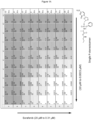
- Figure 1A represents a drug concentration/activity array of the combination of sorafenib and the single phosphorus stereoisomer of the phosphoramidate prodrug of troxacitabine denoted (2S)-2-propylpentyl 2-(((((2S,4S)-4-(4-amino-2-oxopyrimidin-1(2H)-yl)-1,3-dioxolan-2-yl)methoxy)-(phenoxy)phosphoryl)amino)propanoate.
- Figure 1B represents the 3D-synergy plot derived from the data of Figure 1A .
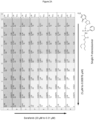
- Figure 2A represents a drug concentration/activity array of the combination of sorafenib and the single phosphorus stereoisomer of phosphoramidate prodrug of troxacitabine denoted (2S)-2-propylpentyl 2-(((((2S,4S)-4-(4-amino-2-oxopyrimidin-1(2H)-yl)-1,3-dioxolan-2-yl)methoxy)(phenoxy)phosphoryl)amino)propanoate.
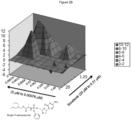
- Figure 2B represents the i3D-synergy plot derived from the data of Figure 2A .
- Figure 3A represents a drug concentration/activity array of the combination of sorafenib and the single phosphorus stereoisomer of phosphoramidate prodrug of troxacitabine denoted (2S)-(S)-pentan-2-yl 2-(((((2S,4S)-4-(4-amino-2-oxopyrimidin-1(2H)-yl)-1,3-dioxolan-2-yl)methoxy)(4-bromophenoxy)phosphoryl)amino)propanoate.
- Figure 3B represents the i3D-synergy plot derived from the data of Figure 3A .
- Figure 4A represents a drug concentration/activity array of the combination of sorafenib and the single phosphorus stereoisomer of phosphoramidate prodrug of troxacitabine denoted (2S)-(R)-sec-butyl 2-(((((2S,4S)-4-(4-amino-2-oxopyrimidin-1(2H)-yl)-1,3-dioxolan-2-yl)methoxy)(phenoxy)phosphoryl)amino)-3-methylbutanoate.
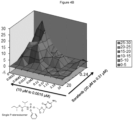
- Figure 4B represents the i3D-synergy plot derived from the data of Figure 4A .
- Hep3B human hepatocellular carcinoma cell line
- DSMZ hepatocellular carcinoma cell line
- Hep3B cells were cultured as epithelial-like cells in monolayers in 90% MEM (with Earle's salts) + 10% h.i. FBS + 2 mM L-glutamine + 50u/ml Penicillin/ 0,05 mg/ ml Streptomycin as culture medium. Confluent cultures were split 1:4 to 1:10 every 3-5 days using trypsin/EDTA, and re-seeded at 0.5-1 ⁇ 10 6 cells/80 cm 2 .
- Cell culture flask is washed 2 times with 5 ml PBS and PBS discarded. Add 1.5 ml of trypsin and put the flask into the incubator for 3-4 minutes. Shake the flask and add 10 ml of DMEM, 10% FCS, 50 ⁇ /ml Penicillin/ 0,05 mg/ ml Streptomycin without phenol red. The cells were counted using the Scepter cell counter, Hep3B cells were diluted to 20 ⁇ 10 3 cells/ml in complete cell medium without phenol red. 100 ⁇ l cell suspension/well was seeded in 96- well cell assay plates. Two replicate plates for each combination.
- Test compounds were tested at nine concentrations, either 5 ⁇ M to 0.00076 ⁇ M or 10 ⁇ M to 0.0015 ⁇ M, in a 1:3 dilution series. Sorafenib was tested at seven concentrations, 20 ⁇ M to 0.3 1 ⁇ M, in a 1:2 dilution series. The four dilution plates were prepared with the Echo instrument.
- the compound dilutions were 2 times the desired final concentrations.
- the volume in the dilution plates in each well are 125 ⁇ l of medium with compounds.
- CCK Kit-8 10 ⁇ l was added to each well using a multi-channel pipette (submerging the tips below the surface in each well). Plates were incubated for 4 hours at 37 °C, 5% CO 2 .
- the plate was read in the spectrophotometer at a wavelength of 450 nm, with a reference filter of 650 nm. Average absorbance was >1 to ⁇ 3 for the vehicle treated cell controls.
- HCC hepatocellular carcinoma
- Troxacitabine phosphoramidate prodrug is given via oral gavage at doses of 25-100 mg/kg once or twice daily for a period of 5-21 days.
- synergy can be modelled by administering troxacitabine parent intraperitoneally (i.p.) at doses of 2.5-25 mg/kg once or twice daily.
- Sorafenib is given via oral gavage once daily at doses of 10-50 mg/kg for a total period of 21 days.
- Tumour growth is assessed during the course of the treatment period and following cessation of treatment if applicable.
- Tumour growth inhibition and tumour growth delay is calculated and statistical analysis performed to assess significant effects of treatment compared to the control group.
- Sorafenib and the phosphoramidate prodrug of troxacitabine with the formula:
- Sorafenib and the phosphoramidate prodrug of troxacitabine with the formula:
- Sorafenib and the phosphoramidate prodrug of troxacitabine with the formula:
- Sorafenib and the phosphoramidate prodrug of troxacitabine with the formula:
Landscapes
- Health & Medical Sciences (AREA)
- Life Sciences & Earth Sciences (AREA)
- Veterinary Medicine (AREA)
- Public Health (AREA)
- General Health & Medical Sciences (AREA)
- Animal Behavior & Ethology (AREA)
- Medicinal Chemistry (AREA)
- Pharmacology & Pharmacy (AREA)
- Chemical & Material Sciences (AREA)
- Epidemiology (AREA)
- Chemical Kinetics & Catalysis (AREA)
- General Chemical & Material Sciences (AREA)
- Nuclear Medicine, Radiotherapy & Molecular Imaging (AREA)
- Organic Chemistry (AREA)
- Physiology (AREA)
- Nutrition Science (AREA)
- Oncology (AREA)
- Pharmaceuticals Containing Other Organic And Inorganic Compounds (AREA)
- Pyridine Compounds (AREA)
Priority Applications (2)
| Application Number | Priority Date | Filing Date | Title |
|---|---|---|---|
| HRP20241508TT HRP20241508T1 (hr) | 2016-03-02 | 2017-02-28 | Kombinirana terapija sorafenibom ili regorafenibom i fosforamidatskim prolijekom troksacitabina |
| RS20241192A RS66090B1 (sr) | 2016-03-02 | 2017-02-28 | Kombinovana terapija sa sorafenibom ili regorafenibom i fosforamidatnim prolekom troksacitabina |
Applications Claiming Priority (3)
| Application Number | Priority Date | Filing Date | Title |
|---|---|---|---|
| SE1650274 | 2016-03-02 | ||
| SE1651204 | 2016-09-08 | ||
| PCT/SE2017/050186 WO2017151044A1 (en) | 2016-03-02 | 2017-02-28 | Combination therapy with sorafenib or regorafenib and a phosphoramidate prodrug of troxacitabine |
Publications (4)
| Publication Number | Publication Date |
|---|---|
| EP3423061A1 EP3423061A1 (en) | 2019-01-09 |
| EP3423061A4 EP3423061A4 (en) | 2019-11-13 |
| EP3423061C0 EP3423061C0 (en) | 2024-08-07 |
| EP3423061B1 true EP3423061B1 (en) | 2024-08-07 |
Family
ID=59744330
Family Applications (1)
| Application Number | Title | Priority Date | Filing Date |
|---|---|---|---|
| EP17760400.6A Active EP3423061B1 (en) | 2016-03-02 | 2017-02-28 | Combination therapy with sorafenib or regorafenib and a phosphoramidate prodrug of troxacitabine |
Country Status (17)
| Country | Link |
|---|---|
| US (2) | US10456413B2 (enExample) |
| EP (1) | EP3423061B1 (enExample) |
| JP (1) | JP6968080B2 (enExample) |
| KR (1) | KR102703122B1 (enExample) |
| CN (2) | CN111956646B (enExample) |
| AU (2) | AU2017227516B2 (enExample) |
| CA (1) | CA3014769C (enExample) |
| ES (1) | ES2987989T3 (enExample) |
| HR (1) | HRP20241508T1 (enExample) |
| HU (1) | HUE068940T2 (enExample) |
| MY (1) | MY198140A (enExample) |
| PL (1) | PL3423061T3 (enExample) |
| RS (1) | RS66090B1 (enExample) |
| RU (1) | RU2018134336A (enExample) |
| SG (1) | SG11201806855WA (enExample) |
| WO (1) | WO2017151044A1 (enExample) |
| ZA (1) | ZA201805445B (enExample) |
Families Citing this family (8)
| Publication number | Priority date | Publication date | Assignee | Title |
|---|---|---|---|---|
| SG11201806855WA (en) | 2016-03-02 | 2018-09-27 | Medivir Ab | Combination therapy with sorafenib or regorafenib and a phosphoramidate prodrug of troxacitabine |
| JP2021512875A (ja) * | 2018-02-02 | 2021-05-20 | カースゲン セラピューティクス カンパニー リミテッドCarsgen Therapeutics Co., Ltd. | 細胞免疫療法の組み合わせ |
| JP7337539B2 (ja) | 2018-06-21 | 2023-09-04 | メディヴィル・アクチエボラーグ | 白血病療法のための塩基修飾シチジンヌクレオチド |
| HUE065972T2 (hu) * | 2019-02-18 | 2024-06-28 | Medivir Ab | Gyógyszerkombináció a májrák kezelésére szolgáló eljárásban történõ alkalmazásra |
| WO2021211039A1 (en) * | 2020-04-15 | 2021-10-21 | Medivir Ab | Miv-818/lenvatinib combination therapy for liver cancer |
| KR20210156389A (ko) | 2020-06-17 | 2021-12-27 | 재단법인대구경북과학기술원 | 레고라페닙을 유효성분으로 포함하는 염증질환의 예방 또는 치료용 약학적 조성물 |
| IT202000022636A1 (it) | 2020-09-25 | 2022-03-25 | Ente Ospedaliero Specializzato In Gastroenterologia Istituto Nazionale Di Ricovero E Cura A Caratter | “terapia di combinazione di sorafenib e/o regorafenib con la proteina ricombinante umana proteoglicano-4 per il trattamento dell'epatocarcinoma” |
| TW202444368A (zh) * | 2023-03-30 | 2024-11-16 | 瑞典商米迪維艾克提伯拉公司 | 以氟曲沙他濱布洛帕胺(fostroxacitabine bralpamide)、免疫檢查點抑制劑及vegf拮抗劑治療肝癌之方法 |
Family Cites Families (17)
| Publication number | Priority date | Publication date | Assignee | Title |
|---|---|---|---|---|
| EP2298311B1 (en) | 1999-01-13 | 2012-05-09 | Bayer HealthCare LLC | w-Carboxy aryl substituted diphenyl ureas as p38 kinase inhibitors |
| US8124630B2 (en) | 1999-01-13 | 2012-02-28 | Bayer Healthcare Llc | ω-carboxyaryl substituted diphenyl ureas as raf kinase inhibitors |
| CN100376570C (zh) * | 2000-10-13 | 2008-03-26 | 希拉生物化学股份有限公司 | 改善胞间传输的二氧戊环类似物 |
| US7235576B1 (en) | 2001-01-12 | 2007-06-26 | Bayer Pharmaceuticals Corporation | Omega-carboxyaryl substituted diphenyl ureas as raf kinase inhibitors |
| EP1636585B2 (en) | 2003-05-20 | 2012-06-13 | Bayer HealthCare LLC | Diaryl ureas with kinase inhibiting activity |
| PL1663978T3 (pl) * | 2003-07-23 | 2008-04-30 | Bayer Healthcare Llc | Fluoropodstawiony omega-karboksyarylodifenylomocznik do leczenia i profilaktyki chorób i stanów |
| CA2645633A1 (en) * | 2006-04-05 | 2007-11-01 | Novartis Ag | Combinations of therapeutic agents for treating cancer |
| US8728516B2 (en) * | 2009-04-30 | 2014-05-20 | Abbvie Inc. | Stabilized lipid formulation of apoptosis promoter |
| CN102190616B (zh) | 2010-03-18 | 2015-07-29 | 苏州泽璟生物制药有限公司 | 一种氘代的ω-二苯基脲的合成及生产的方法和工艺 |
| EP2836216B1 (en) | 2012-04-13 | 2022-06-08 | Epizyme, Inc. | Combination therapy for treating cancer |
| CN103570613B (zh) | 2012-07-18 | 2016-06-15 | 苏州泽璟生物制药有限公司 | 氘代ω-二苯基脲或其盐的多晶型物 |
| EP2879677B1 (en) | 2012-07-28 | 2017-06-14 | Calitor Sciences, LLC | Substituted pyrazolone compounds and methods of use |
| US9872919B2 (en) * | 2012-09-19 | 2018-01-23 | The Research Foundation For The State University Of New York | Prodrugs for selective anticancer therapy |
| EP3074399A1 (en) * | 2013-11-27 | 2016-10-05 | Idenix Pharmaceuticals LLC | 2'-dichloro and 2'-fluoro-2'-chloro nucleoside analogues for hcv infection |
| JP2017504572A (ja) * | 2013-11-27 | 2017-02-09 | アイデニクス・ファーマシューティカルズ・エルエルシー | 肝臓癌治療のためのヌクレオチド類 |
| EP3572410B1 (en) * | 2014-08-25 | 2022-07-20 | Medivir Aktiebolag | Dioxolane analogues of uridine for the treatment of cancer |
| SG11201806855WA (en) | 2016-03-02 | 2018-09-27 | Medivir Ab | Combination therapy with sorafenib or regorafenib and a phosphoramidate prodrug of troxacitabine |
-
2017
- 2017-02-28 SG SG11201806855WA patent/SG11201806855WA/en unknown
- 2017-02-28 CN CN202010727607.5A patent/CN111956646B/zh active Active
- 2017-02-28 HU HUE17760400A patent/HUE068940T2/hu unknown
- 2017-02-28 ES ES17760400T patent/ES2987989T3/es active Active
- 2017-02-28 CA CA3014769A patent/CA3014769C/en active Active
- 2017-02-28 WO PCT/SE2017/050186 patent/WO2017151044A1/en not_active Ceased
- 2017-02-28 RS RS20241192A patent/RS66090B1/sr unknown
- 2017-02-28 AU AU2017227516A patent/AU2017227516B2/en active Active
- 2017-02-28 PL PL17760400.6T patent/PL3423061T3/pl unknown
- 2017-02-28 CN CN201780014430.0A patent/CN109069509B/zh active Active
- 2017-02-28 US US16/081,383 patent/US10456413B2/en active Active
- 2017-02-28 MY MYPI2018703064A patent/MY198140A/en unknown
- 2017-02-28 RU RU2018134336A patent/RU2018134336A/ru not_active Application Discontinuation
- 2017-02-28 HR HRP20241508TT patent/HRP20241508T1/hr unknown
- 2017-02-28 EP EP17760400.6A patent/EP3423061B1/en active Active
- 2017-02-28 JP JP2018545847A patent/JP6968080B2/ja active Active
- 2017-02-28 KR KR1020187028361A patent/KR102703122B1/ko active Active
-
2018
- 2018-08-15 ZA ZA2018/05445A patent/ZA201805445B/en unknown
-
2019
- 2019-08-30 US US16/557,511 patent/US10960017B2/en active Active
-
2022
- 2022-06-01 AU AU2022203761A patent/AU2022203761B2/en active Active
Also Published As
Similar Documents
| Publication | Publication Date | Title |
|---|---|---|
| AU2022203761B2 (en) | Combination therapy with sorafenib or regorafenib and a phosphoramidate prodrug of troxacitabine | |
| WO2017037292A1 (en) | Combination of a dhodh inhibitor and a her inhibitor for use in the treatment of cancer | |
| JP2017507955A (ja) | 肝臓癌のためのソラフェニブとマイクロrnaの併用療法 | |
| JP2019514864A (ja) | 肝癌の治療方法 | |
| AU2021255043B9 (en) | MIV-818/lenvatinib combination therapy for liver cancer | |
| HK40040637A (en) | Combination therapy with sorafenib or regorafenib and a phosphoramidate prodrug of troxacitabine | |
| HK40040637B (en) | Combination therapy with sorafenib or regorafenib and a phosphoramidate prodrug of troxacitabine | |
| HK40000353A (en) | Combination therapy with sorafenib or regorafenib and a phosphoramidate prodrug of troxacitabine | |
| HK40000353B (en) | Combination therapy with sorafenib or regorafenib and a phosphoramidate prodrug of troxacitabine | |
| BR112018067387B1 (pt) | Uso de um agente terapêutico | |
| TWI447111B (zh) | Antitumor agents or postoperative adjuvant chemotherapeutic agents for hepatocellular carcinoma treatment | |
| HK40081068A (en) | Miv-818/lenvatinib combination therapy for liver cancer | |
| WO2024205477A1 (en) | Method for treating liver cancers using fostroxacitabine bralpamide, an immune checkpoint inhibitor and a vegf antagonist |
Legal Events
| Date | Code | Title | Description |
|---|---|---|---|
| REG | Reference to a national code |
Ref country code: HR Ref legal event code: TUEP Ref document number: P20241508T Country of ref document: HR |
|
| STAA | Information on the status of an ep patent application or granted ep patent |
Free format text: STATUS: THE INTERNATIONAL PUBLICATION HAS BEEN MADE |
|
| PUAI | Public reference made under article 153(3) epc to a published international application that has entered the european phase |
Free format text: ORIGINAL CODE: 0009012 |
|
| STAA | Information on the status of an ep patent application or granted ep patent |
Free format text: STATUS: REQUEST FOR EXAMINATION WAS MADE |
|
| 17P | Request for examination filed |
Effective date: 20180831 |
|
| AK | Designated contracting states |
Kind code of ref document: A1 Designated state(s): AL AT BE BG CH CY CZ DE DK EE ES FI FR GB GR HR HU IE IS IT LI LT LU LV MC MK MT NL NO PL PT RO RS SE SI SK SM TR |
|
| AX | Request for extension of the european patent |
Extension state: BA ME |
|
| DAV | Request for validation of the european patent (deleted) | ||
| A4 | Supplementary search report drawn up and despatched |
Effective date: 20191015 |
|
| RIC1 | Information provided on ipc code assigned before grant |
Ipc: A61P 35/00 20060101ALI20191009BHEP Ipc: A61K 31/675 20060101ALI20191009BHEP Ipc: A61K 31/513 20060101AFI20191009BHEP Ipc: A61K 31/685 20060101ALI20191009BHEP Ipc: A61K 31/44 20060101ALI20191009BHEP Ipc: A61K 31/4412 20060101ALI20191009BHEP |
|
| RIC1 | Information provided on ipc code assigned before grant |
Ipc: A61K 31/513 20060101AFI20200608BHEP Ipc: A61K 31/675 20060101ALI20200608BHEP Ipc: A61P 35/00 20060101ALI20200608BHEP Ipc: A61K 31/4412 20060101ALI20200608BHEP Ipc: A61K 31/685 20060101ALI20200608BHEP Ipc: A61K 31/44 20060101ALI20200608BHEP |
|
| STAA | Information on the status of an ep patent application or granted ep patent |
Free format text: STATUS: EXAMINATION IS IN PROGRESS |
|
| 17Q | First examination report despatched |
Effective date: 20230908 |
|
| GRAP | Despatch of communication of intention to grant a patent |
Free format text: ORIGINAL CODE: EPIDOSNIGR1 |
|
| STAA | Information on the status of an ep patent application or granted ep patent |
Free format text: STATUS: GRANT OF PATENT IS INTENDED |
|
| INTG | Intention to grant announced |
Effective date: 20240318 |
|
| GRAS | Grant fee paid |
Free format text: ORIGINAL CODE: EPIDOSNIGR3 |
|
| GRAA | (expected) grant |
Free format text: ORIGINAL CODE: 0009210 |
|
| STAA | Information on the status of an ep patent application or granted ep patent |
Free format text: STATUS: THE PATENT HAS BEEN GRANTED |
|
| AK | Designated contracting states |
Kind code of ref document: B1 Designated state(s): AL AT BE BG CH CY CZ DE DK EE ES FI FR GB GR HR HU IE IS IT LI LT LU LV MC MK MT NL NO PL PT RO RS SE SI SK SM TR |
|
| REG | Reference to a national code |
Ref country code: GB Ref legal event code: FG4D |
|
| REG | Reference to a national code |
Ref country code: CH Ref legal event code: EP |
|
| REG | Reference to a national code |
Ref country code: DE Ref legal event code: R096 Ref document number: 602017083902 Country of ref document: DE |
|
| REG | Reference to a national code |
Ref country code: IE Ref legal event code: FG4D |
|
| U01 | Request for unitary effect filed |
Effective date: 20240821 |
|
| U07 | Unitary effect registered |
Designated state(s): AT BE BG DE DK EE FI FR IT LT LU LV MT NL PT RO SE SI Effective date: 20240902 |
|
| REG | Reference to a national code |
Ref country code: ES Ref legal event code: FG2A Ref document number: 2987989 Country of ref document: ES Kind code of ref document: T3 Effective date: 20241118 |
|
| REG | Reference to a national code |
Ref country code: SK Ref legal event code: T3 Ref document number: E 45211 Country of ref document: SK |
|
| REG | Reference to a national code |
Ref country code: GR Ref legal event code: EP Ref document number: 20240402507 Country of ref document: GR Effective date: 20241209 |
|
| REG | Reference to a national code |
Ref country code: HR Ref legal event code: T1PR Ref document number: P20241508 Country of ref document: HR |
|
| PG25 | Lapsed in a contracting state [announced via postgrant information from national office to epo] |
Ref country code: IS Free format text: LAPSE BECAUSE OF FAILURE TO SUBMIT A TRANSLATION OF THE DESCRIPTION OR TO PAY THE FEE WITHIN THE PRESCRIBED TIME-LIMIT Effective date: 20241207 |
|
| PG25 | Lapsed in a contracting state [announced via postgrant information from national office to epo] |
Ref country code: IS Free format text: LAPSE BECAUSE OF FAILURE TO SUBMIT A TRANSLATION OF THE DESCRIPTION OR TO PAY THE FEE WITHIN THE PRESCRIBED TIME-LIMIT Effective date: 20241207 |
|
| REG | Reference to a national code |
Ref country code: HU Ref legal event code: AG4A Ref document number: E068940 Country of ref document: HU |
|
| REG | Reference to a national code |
Ref country code: HR Ref legal event code: ODRP Ref document number: P20241508 Country of ref document: HR Payment date: 20250129 Year of fee payment: 9 |
|
| U20 | Renewal fee for the european patent with unitary effect paid |
Year of fee payment: 9 Effective date: 20250218 |
|
| PG25 | Lapsed in a contracting state [announced via postgrant information from national office to epo] |
Ref country code: SM Free format text: LAPSE BECAUSE OF FAILURE TO SUBMIT A TRANSLATION OF THE DESCRIPTION OR TO PAY THE FEE WITHIN THE PRESCRIBED TIME-LIMIT Effective date: 20240807 |
|
| PLBE | No opposition filed within time limit |
Free format text: ORIGINAL CODE: 0009261 |
|
| STAA | Information on the status of an ep patent application or granted ep patent |
Free format text: STATUS: NO OPPOSITION FILED WITHIN TIME LIMIT |
|
| 26N | No opposition filed |
Effective date: 20250508 |
|
| PG25 | Lapsed in a contracting state [announced via postgrant information from national office to epo] |
Ref country code: MC Free format text: LAPSE BECAUSE OF FAILURE TO SUBMIT A TRANSLATION OF THE DESCRIPTION OR TO PAY THE FEE WITHIN THE PRESCRIBED TIME-LIMIT Effective date: 20240807 |
|
| REG | Reference to a national code |
Ref country code: CH Ref legal event code: U11 Free format text: ST27 STATUS EVENT CODE: U-0-0-U10-U11 (AS PROVIDED BY THE NATIONAL OFFICE) Effective date: 20260301 |
|
| REG | Reference to a national code |
Ref country code: HR Ref legal event code: ODRP Ref document number: P20241508 Country of ref document: HR Payment date: 20260130 Year of fee payment: 10 |
|
| PGFP | Annual fee paid to national office [announced via postgrant information from national office to epo] |
Ref country code: HU Payment date: 20260204 Year of fee payment: 10 |
|
| U20 | Renewal fee for the european patent with unitary effect paid |
Year of fee payment: 10 Effective date: 20260213 |
|
| PGFP | Annual fee paid to national office [announced via postgrant information from national office to epo] |
Ref country code: GB Payment date: 20260213 Year of fee payment: 10 |
|
| PGFP | Annual fee paid to national office [announced via postgrant information from national office to epo] |
Ref country code: NO Payment date: 20260206 Year of fee payment: 10 Ref country code: IE Payment date: 20260206 Year of fee payment: 10 |
|
| PGFP | Annual fee paid to national office [announced via postgrant information from national office to epo] |
Ref country code: HR Payment date: 20260130 Year of fee payment: 10 |
|
| PGFP | Annual fee paid to national office [announced via postgrant information from national office to epo] |
Ref country code: RS Payment date: 20260130 Year of fee payment: 10 |
|
| PGFP | Annual fee paid to national office [announced via postgrant information from national office to epo] |
Ref country code: TR Payment date: 20260203 Year of fee payment: 10 |
|
| PGFP | Annual fee paid to national office [announced via postgrant information from national office to epo] |
Ref country code: CH Payment date: 20260301 Year of fee payment: 10 Ref country code: CZ Payment date: 20260130 Year of fee payment: 10 |
|
| PGFP | Annual fee paid to national office [announced via postgrant information from national office to epo] |
Ref country code: GR Payment date: 20260206 Year of fee payment: 10 Ref country code: PL Payment date: 20260130 Year of fee payment: 10 Ref country code: CY Payment date: 20260128 Year of fee payment: 10 |
|
| PGFP | Annual fee paid to national office [announced via postgrant information from national office to epo] |
Ref country code: SK Payment date: 20260129 Year of fee payment: 10 |
|
| PGFP | Annual fee paid to national office [announced via postgrant information from national office to epo] |
Ref country code: ES Payment date: 20260513 Year of fee payment: 10 |