EP3399250B1 - Mehrfach verbundenes system und steuerungsverfahren dafür - Google Patents
Mehrfach verbundenes system und steuerungsverfahren dafür Download PDFInfo
- Publication number
- EP3399250B1 EP3399250B1 EP17852265.2A EP17852265A EP3399250B1 EP 3399250 B1 EP3399250 B1 EP 3399250B1 EP 17852265 A EP17852265 A EP 17852265A EP 3399250 B1 EP3399250 B1 EP 3399250B1
- Authority
- EP
- European Patent Office
- Prior art keywords
- indoor unit
- air conditioning
- conditioning system
- split air
- priority level
- Prior art date
- Legal status (The legal status is an assumption and is not a legal conclusion. Google has not performed a legal analysis and makes no representation as to the accuracy of the status listed.)
- Active
Links
Images



Classifications
-
- F—MECHANICAL ENGINEERING; LIGHTING; HEATING; WEAPONS; BLASTING
- F24—HEATING; RANGES; VENTILATING
- F24F—AIR-CONDITIONING; AIR-HUMIDIFICATION; VENTILATION; USE OF AIR CURRENTS FOR SCREENING
- F24F11/00—Control or safety arrangements
- F24F11/62—Control or safety arrangements characterised by the type of control or by internal processing, e.g. using fuzzy logic, adaptive control or estimation of values
-
- F—MECHANICAL ENGINEERING; LIGHTING; HEATING; WEAPONS; BLASTING
- F24—HEATING; RANGES; VENTILATING
- F24F—AIR-CONDITIONING; AIR-HUMIDIFICATION; VENTILATION; USE OF AIR CURRENTS FOR SCREENING
- F24F11/00—Control or safety arrangements
- F24F11/62—Control or safety arrangements characterised by the type of control or by internal processing, e.g. using fuzzy logic, adaptive control or estimation of values
- F24F11/63—Electronic processing
- F24F11/65—Electronic processing for selecting an operating mode
- F24F11/67—Switching between heating and cooling modes
-
- F—MECHANICAL ENGINEERING; LIGHTING; HEATING; WEAPONS; BLASTING
- F24—HEATING; RANGES; VENTILATING
- F24F—AIR-CONDITIONING; AIR-HUMIDIFICATION; VENTILATION; USE OF AIR CURRENTS FOR SCREENING
- F24F1/00—Room units for air-conditioning, e.g. separate or self-contained units or units receiving primary air from a central station
- F24F1/0003—Room units for air-conditioning, e.g. separate or self-contained units or units receiving primary air from a central station characterised by a split arrangement, wherein parts of the air-conditioning system, e.g. evaporator and condenser, are in separately located units
-
- F—MECHANICAL ENGINEERING; LIGHTING; HEATING; WEAPONS; BLASTING
- F24—HEATING; RANGES; VENTILATING
- F24F—AIR-CONDITIONING; AIR-HUMIDIFICATION; VENTILATION; USE OF AIR CURRENTS FOR SCREENING
- F24F11/00—Control or safety arrangements
- F24F11/30—Control or safety arrangements for purposes related to the operation of the system, e.g. for safety or monitoring
-
- F—MECHANICAL ENGINEERING; LIGHTING; HEATING; WEAPONS; BLASTING
- F24—HEATING; RANGES; VENTILATING
- F24F—AIR-CONDITIONING; AIR-HUMIDIFICATION; VENTILATION; USE OF AIR CURRENTS FOR SCREENING
- F24F11/00—Control or safety arrangements
- F24F11/62—Control or safety arrangements characterised by the type of control or by internal processing, e.g. using fuzzy logic, adaptive control or estimation of values
- F24F11/63—Electronic processing
- F24F11/64—Electronic processing using pre-stored data
-
- F—MECHANICAL ENGINEERING; LIGHTING; HEATING; WEAPONS; BLASTING
- F24—HEATING; RANGES; VENTILATING
- F24F—AIR-CONDITIONING; AIR-HUMIDIFICATION; VENTILATION; USE OF AIR CURRENTS FOR SCREENING
- F24F11/00—Control or safety arrangements
- F24F11/62—Control or safety arrangements characterised by the type of control or by internal processing, e.g. using fuzzy logic, adaptive control or estimation of values
- F24F11/63—Electronic processing
- F24F11/65—Electronic processing for selecting an operating mode
-
- F—MECHANICAL ENGINEERING; LIGHTING; HEATING; WEAPONS; BLASTING
- F24—HEATING; RANGES; VENTILATING
- F24F—AIR-CONDITIONING; AIR-HUMIDIFICATION; VENTILATION; USE OF AIR CURRENTS FOR SCREENING
- F24F11/00—Control or safety arrangements
- F24F11/70—Control systems characterised by their outputs; Constructional details thereof
- F24F11/80—Control systems characterised by their outputs; Constructional details thereof for controlling the temperature of the supplied air
- F24F11/83—Control systems characterised by their outputs; Constructional details thereof for controlling the temperature of the supplied air by controlling the supply of heat-exchange fluids to heat-exchangers
- F24F11/84—Control systems characterised by their outputs; Constructional details thereof for controlling the temperature of the supplied air by controlling the supply of heat-exchange fluids to heat-exchangers using valves
-
- F—MECHANICAL ENGINEERING; LIGHTING; HEATING; WEAPONS; BLASTING
- F24—HEATING; RANGES; VENTILATING
- F24F—AIR-CONDITIONING; AIR-HUMIDIFICATION; VENTILATION; USE OF AIR CURRENTS FOR SCREENING
- F24F2110/00—Control inputs relating to air properties
- F24F2110/10—Temperature
-
- F—MECHANICAL ENGINEERING; LIGHTING; HEATING; WEAPONS; BLASTING
- F24—HEATING; RANGES; VENTILATING
- F24F—AIR-CONDITIONING; AIR-HUMIDIFICATION; VENTILATION; USE OF AIR CURRENTS FOR SCREENING
- F24F2110/00—Control inputs relating to air properties
- F24F2110/10—Temperature
- F24F2110/12—Temperature of the outside air
-
- F—MECHANICAL ENGINEERING; LIGHTING; HEATING; WEAPONS; BLASTING
- F24—HEATING; RANGES; VENTILATING
- F24F—AIR-CONDITIONING; AIR-HUMIDIFICATION; VENTILATION; USE OF AIR CURRENTS FOR SCREENING
- F24F2221/00—Details or features not otherwise provided for
- F24F2221/54—Heating and cooling, simultaneously or alternatively
-
- F—MECHANICAL ENGINEERING; LIGHTING; HEATING; WEAPONS; BLASTING
- F24—HEATING; RANGES; VENTILATING
- F24F—AIR-CONDITIONING; AIR-HUMIDIFICATION; VENTILATION; USE OF AIR CURRENTS FOR SCREENING
- F24F3/00—Air-conditioning systems in which conditioned primary air is supplied from one or more central stations to distributing units in the rooms or spaces where it may receive secondary treatment; Apparatus specially designed for such systems
- F24F3/06—Air-conditioning systems in which conditioned primary air is supplied from one or more central stations to distributing units in the rooms or spaces where it may receive secondary treatment; Apparatus specially designed for such systems characterised by the arrangements for the supply of heat-exchange fluid for the subsequent treatment of primary air in the room units
- F24F3/065—Air-conditioning systems in which conditioned primary air is supplied from one or more central stations to distributing units in the rooms or spaces where it may receive secondary treatment; Apparatus specially designed for such systems characterised by the arrangements for the supply of heat-exchange fluid for the subsequent treatment of primary air in the room units with a plurality of evaporators or condensers
-
- F—MECHANICAL ENGINEERING; LIGHTING; HEATING; WEAPONS; BLASTING
- F25—REFRIGERATION OR COOLING; COMBINED HEATING AND REFRIGERATION SYSTEMS; HEAT PUMP SYSTEMS; MANUFACTURE OR STORAGE OF ICE; LIQUEFACTION SOLIDIFICATION OF GASES
- F25B—REFRIGERATION MACHINES, PLANTS OR SYSTEMS; COMBINED HEATING AND REFRIGERATION SYSTEMS; HEAT PUMP SYSTEMS
- F25B13/00—Compression machines, plants or systems, with reversible cycle
-
- F—MECHANICAL ENGINEERING; LIGHTING; HEATING; WEAPONS; BLASTING
- F25—REFRIGERATION OR COOLING; COMBINED HEATING AND REFRIGERATION SYSTEMS; HEAT PUMP SYSTEMS; MANUFACTURE OR STORAGE OF ICE; LIQUEFACTION SOLIDIFICATION OF GASES
- F25B—REFRIGERATION MACHINES, PLANTS OR SYSTEMS; COMBINED HEATING AND REFRIGERATION SYSTEMS; HEAT PUMP SYSTEMS
- F25B2313/00—Compression machines, plants or systems with reversible cycle not otherwise provided for
- F25B2313/025—Compression machines, plants or systems with reversible cycle not otherwise provided for using multiple outdoor units
- F25B2313/0253—Compression machines, plants or systems with reversible cycle not otherwise provided for using multiple outdoor units in parallel arrangements
-
- F—MECHANICAL ENGINEERING; LIGHTING; HEATING; WEAPONS; BLASTING
- F25—REFRIGERATION OR COOLING; COMBINED HEATING AND REFRIGERATION SYSTEMS; HEAT PUMP SYSTEMS; MANUFACTURE OR STORAGE OF ICE; LIQUEFACTION SOLIDIFICATION OF GASES
- F25B—REFRIGERATION MACHINES, PLANTS OR SYSTEMS; COMBINED HEATING AND REFRIGERATION SYSTEMS; HEAT PUMP SYSTEMS
- F25B2700/00—Sensing or detecting of parameters; Sensors therefor
- F25B2700/21—Temperatures
- F25B2700/2106—Temperatures of fresh outdoor air
Definitions
- the present disclosure relates to air conditioner field, and more particularly, to a multi-split air conditioning system and a method for controlling a multi-split air conditioning system.
- a multi-split air conditioning system is a system that uses a single or multiple outdoor units in parallel, and configures a plurality of air conditioning indoor units.
- the indoor units are independently controlled, and general operating modes include refrigerating, heating, air supply, etc.
- the outdoor units can only operate in one mode, and cannot operate in refrigerating and heating mode at the same time. Since the body sense of each person may vary, in the transitional season, there may be cases that some people may want to start refrigerating and others may want to start heating. In this case, it is necessary to set a mode priority for the air conditioning system, and the system operates this mode first.
- priority modes of each air conditioning manufacturer generally include a refrigerating priority or a heating priority. However, the priority modes have certain limitations, and cannot meet needs of most users, user experience is poor.
- EP3021060A1 relates to an air conditioner and a method of controlling the same are provided.
- the air conditioner includes an outdoor unit provided with a compressor, an outdoor temperature sensor, an outdoor humidity recognition part, and a controller.
- the outdoor temperature sensor is installed on the outdoor unit to sense outdoor temperature.
- the outdoor humidity recognition part is installed on the outdoor unit to recognize outdoor humidity information.
- the controller controls an operation of the compressor, based information sensed from the outdoor temperature sensor and the outdoor humidity recognition part.
- the controller determines target evaporation temperature such that the target evaporation temperature is decreased as outdoor humidity increases, and the controller drives the compressor at an operation frequency corresponding to the determined target evaporation temperature.
- An objective of the present disclosure is to provide a multi-split air conditioning system and a method for controlling thereof, which aims to avoid conflicts in operating modes of multi-split air conditioning systems.
- directional indications such as up, down, left, right, front, rear, etc.
- the directional indications are only used to explain relative positional relationships and movement between various components in a specific posture (as illustrated in the drawing). If the specific posture changes, the directional indications may also change accordingly.
- first and second are used herein for purposes of description and are not intended to indicate or imply relative importance or significance or to imply the number of indicated technical features.
- the feature defined with “first” and “second” may comprise one or more of this feature.
- technical solutions between various embodiments can be combined with each other, but must be based on the implementation of those skilled in the art.
- the present invention provides a method for controlling a multi-split air conditioning system according to claim 1, which solves conflicts in operating modes of multi-split air conditioning systems that, when the multi-split air conditioning system is used in a transitional season, some people want the indoor unit to operate in a refrigerating mode, and others want the indoor unit to operate in a heating mode, the ambient temperature is divided, operations in the transitional season are separately controlled and conflicts of operating modes are avoided.
- Fig. 1 illustrates a structure of a multi-split air conditioning system according to an embodiment of the present disclosure.
- the multi-split air conditioning system includes a compressor 1, a four-way valve 2, an outdoor heat exchanger 3, a first throttling element 4, a second throttling element and an indoor heat exchanger.
- the indoor heat exchanger includes a plurality of indoor heat change units, such as a first indoor heat exchange unit 6a and a second indoor heat exchange unit 6b illustrated in Fig. 1 .
- the second throttling element includes a first electronic expansion valve 5a and a second electronic expansion valve 5b.
- the four-way valve 2 includes four ports, i.e., a first port a, a second port b, a third port c and a fourth port d.
- An exhaust port of the compressor 1 is connected with the first port a of the four-way valve 2 with a refrigerant line, and a one-way valve is provided at the exhaust port of the compressor to prevent refrigerant reflux.
- a gas returning port of the compressor 1 is connected with the third port c of the four-way valve 2 with a refrigerant line.
- the multi-split air conditioning system may further include a gas-liquid separator 9, i.e., gas-liquid separation is performed on the refrigerant returned to the compressor 1, to prevent liquid refrigerant from flowing into the compressor 1.
- the third port c of the four-way valve 2 is connected with an inlet of the gas-liquid separator 9, and an outlet of the gas-liquid separator 9 is connected with the gas returning port of the compressor 1 with the refrigerant line.
- An end of the outdoor heat exchanger 3 is connected with the second port b of the four-way valve 2 with a refrigerant line, and the other end of the outdoor heat exchanger 3 is connected with an end of the first throttling element 4 with a refrigerant line.
- the other end of the first throttling element 4 is connected with an end of the indoor heat exchanger, i.e., is connected with an end of the first indoor exchange unit 6a and an end of the second indoor heat exchange unit 6b.
- the other end of the indoor heat exchanger is connected with the four port d of the four-way valve 2 with a refrigerant line, i.e., the other end of the first indoor heat exchange unit 6a and the other end of the second indoor heat exchange unit 6b are connected with the four port d of the four-way valve 2 after joining with the refrigerant line.
- a high-pressure valve 7 is provided on the refrigerant line that connects the first throttling element 4 and an end of the indoor heat exchanger.
- a low-pressure 8 is provided on the refrigerant line that connects with the other end of the indoor heat exchanger and the four-way valve 2.
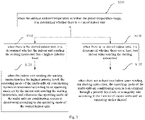
- the present disclosure provides a method for controlling a multi-split air conditioning system. As illustrated in Fig. 2 , the method may include followings.
- an outdoor ambient temperature is acquired when a starting instruction of an indoor unit is received.
- the user When the user wants to start the indoor unit to adjust the temperature (such as increase temperature or decrease temperature) in the area where the indoor unit is located, the user may send a starting instruction, and set a target indoor temperature and an operating mode (such as a refrigerating mode, a heating mode, etc.).
- the indoor unit receives the starting instruction sent by the user, and sends the starting instruction to the outdoor unit.
- the outdoor unit acquires the outdoor ambient temperature based on the starting instruction of the indoor unit.
- a temperature range i.e., a temperature range of the transitional season (such as 22°C to 28°C)
- the air conditioning system is controlled to operate in the heating mode.
- the outdoor ambient temperature is greater than 28°C, the air conditioning system is controlled to operate in the refrigerating mode.
- an operating mode of the multi-split air conditioning system is determined according to operating conditions of respective started indoor units.
- the multi-split air conditioning system When the outdoor ambient temperature is within the preset temperature range, operating conditions of respective indoor units are obtained, and the operating mode of the multi-split air conditioning system is determined through a preset rule according to the operating conditions of respective indoor units.
- the multi-split air conditioning system may operate in a refrigerating mode, or may operate in a heating mode.
- the operating condition may include an operating state (such as on or off) of the indoor unit, and an operating mode (such as a refrigerating mode, a heating mode, etc.) of the indoor unit.
- the multi-split air conditioning system when the multi-split air conditioning system is operating, it is determined whether the outdoor ambient temperature is in the transitional season, when the outdoor ambient temperature is in the transitional season, operating conditions of respective indoor units are obtained, and the operating mode of the multi-split air conditioning system is determined based on the operating conditions of respective indoor units, thereby avoiding conflicts in operating modes of multi-split air conditioning systems.
- block S130 may include followings.
- the outdoor unit may communicate with the indoor unit to inform its respective operating state.
- the operating condition of the indoor unit can be obtained by querying the outdoor unit, such that it can be determined whether there is the started indoor unit.
- the indoor units may be numbered in advance, such as indoor unit 1, indoor unit 2, indoor unit 3, etc.
- a priority level may be set for each indoor unit, and a priority level table can be defined. Therefore, based on the preset priority level table, when it is determined that there is the started indoor unit, the priority level of the started indoor unit may be compared with that of the indoor unit sending the starting instruction, to determine whether the indoor unit sending the starting instruction has the highest priority level.
- the operating mode of the multi-split air conditioning system is determined according to an operating mode set by the indoor unit sending the starting instruction, and otherwise the operating mode of the multi-split air conditioning system is determined according to the operating mode of the started indoor unit.
- the operating mode of the multi-split air conditioning system is determined according to the operating mode set by the starting instruction. For example, when the indoor unit sending the starting instruction is in the refrigerating mode, the multi-split air conditioning system is currently operating in the heating mode, and then the current heating mode is switched to the refrigerating mode.
- the indoor unit sending the starting instruction does not have the highest priority level, i.e., one of the started indoor units has the highest priority level, no operation is performed, and the multi-split air conditioning system operates in the current operating mode.
- the multi-split air conditioning system When there is no started indoor unit, it is indicated that the multi-split air conditioning system is not in the operating state. It is determined whether there is one or more indoor units sending the starting instruction. When there is only one indoor unit sending the starting instruction, the operation of the multi-split air conditioning system is controlled based on the operating mode set by the starting instruction. When there are more than two indoor units sending the starting instruction, the operating mode of the multi-split air conditioning system is determined through a priority level rule or a majority rule based on set operating modes of respective indoor units.
- the operating mode of the multi-split air conditioning system is determined through a priority level rule or a majority rule according to the number of indoor units and set operating modes thereof.
- the majority rule refers to that, according to the number of indoor units sending the same starting instruction and the same operating modes set by respective indoor units, the operating mode of the multi-split air conditioning system is determined by the operating mode set by most of the indoor units.
- the indoor units sending the starting instruction include an indoor unit 1, an indoor unit 2 and an indoor unit 4, the operating mode set by the indoor unit 1 is the refrigerating mode, the operating mode set by the indoor unit 2 is the heating mode, and the operating mode set by the indoor unit 4 is the refrigerating mode, and then the final operating mode of the multi-split air conditioning system is the refrigerating mode according to the majority rule.
- the method further includes followings.
- the mode switching instruction is forwarded to the indoor unit having the highest priority level, and the operating mode of the multi-split air conditioning system is switched when confirmation from the indoor unit having the highest priority level is received.
- the user may want to switch the current operating mode (for example, switch the refrigerating mode to the heating mode), after the indoor unit receives the mode switching instruction, the indoor unit can send it to the outdoor unit.
- the outdoor unit may first determine whether the indoor unit sending the mode switching instruction has the highest priority level. When the indoor unit sending the mode switching instruction has the highest priority level, the current operating mode of the multi-split air conditioning system is switched according to the mode switching instruction. When the indoor unit sending the mode switching instruction does not have the highest priority level, the mode switching instruction is forwarded to the indoor unit having the highest priority level to confirm. It should be noted that, the above comparison of the priority level is to compare the priority level of the indoor unit sending the mode switching instruction to that of the started indoor unit.
- the method further includes followings.
- the indoor unit may further detect the current indoor temperature corresponding to the indoor unit.
- the indoor temperature may be detected by a temperature sensor provided at a return air inlet of the indoor unit.
- the indoor unit is controlled to stop operating for a time period, and then the indoor unit is started again.
- the multi-split air conditioning system may obtain operating conditions of remaining indoor units to re-determine the operating mode of the multi-split air conditioning system.
- embodiments of the present invention further provide a multi-split air conditioning system according to claim 6 for performing the above method.
- the multi-split air conditioning system includes the structure illustrated in Fig. 1 , and further includes a controller.
- the controller is configured to receive a control signal from the indoor unit and control the outdoor unit according to the control signal.
- the controller includes a temperature acquiring module 110, a temperature determining module 120 and a control module 130.
- the temperature acquiring module 110 is configured to acquire an outdoor ambient temperature when receiving a starting instruction of the indoor unit.
- the temperature determining module 120 is configured to determine whether the outdoor ambient temperature is within a preset temperature range.
- the control module 130 is configured to determine an operating mode of the multi-split air conditioning system according to operating conditions of respective started indoor units when the outdoor ambient temperature is within the preset temperature range.
- the user can may a starting instruction, and set a target indoor temperature and an operating mode (such as a refrigerating mode, a heating mode, etc.).
- the indoor unit receives the starting instruction sent by the user, and sends the starting instruction to the outdoor unit.
- the temperature acquiring module 110 acquires the outdoor ambient temperature based on the starting instruction of the indoor unit.
- a temperature range i.e., a temperature range of the transitional season (such as 22°C to 28°C)
- the air conditioning system is controlled to operate in the heating mode.
- the outdoor ambient temperature is greater than 28°C, the air conditioning system is controlled to operate in the refrigerating mode.
- the multi-split air conditioning system When the outdoor ambient temperature is within the preset temperature range, operating conditions of respective indoor units are obtained, and the operating mode of the multi-split air conditioning system is determined through a preset rule according to the operating conditions of respective indoor units.
- the multi-split air conditioning system may operate in a refrigerating mode, or may operate in a heating mode.
- the operating condition may include an operating state (such as on or off) of the indoor unit, and an operating mode (such as a refrigerating mode, a heating mode, etc.) of the indoor unit.
- the outdoor ambient temperature is in the transitional season, when the outdoor ambient temperature is in the transitional season, operating conditions of respective indoor units are obtained, and the operating mode of the multi-split air conditioning system is determined based on the operating conditions of respective indoor units, thereby avoiding conflicts in operating modes of multi-split air conditioning systems.
- control module 130 in the controller is further configured to determine whether there is a started indoor unit when the outdoor ambient temperature is within the preset temperature range; determine whether the indoor unit sending the starting instruction has a highest priority level when there is the started indoor unit; and determine the operating mode of the multi-split air conditioning system according to an operating mode set by the indoor unit sending the starting instruction when the indoor unit sending the starting instruction has the highest priority level, and determine the operating mode of the multi-split air conditioning system according to the operating mode of the started indoor unit when the indoor unit sending the starting instruction does not have the highest priority level.
- the outdoor unit may communicate with the indoor unit to inform its respective operating state.
- the operating condition of the indoor unit can be obtained by querying the outdoor unit, such that it can be determined whether there is the started indoor unit.
- the indoor units may be numbered in advance, such as indoor unit 1, indoor unit 2, indoor unit 3, etc.
- a priority level may be set for each indoor unit, and a priority level table can be defined. Therefore, based on the preset priority level table, when it is determined that there is the started indoor unit, the priority level of the started indoor unit may be compared with that of the indoor unit sending the starting instruction, to determine whether the indoor unit sending the starting instruction has the highest priority level.
- the operating mode of the multi-split air conditioning system is determined according to the operating mode set by the starting instruction. For example, when the indoor unit sending the starting instruction is in the refrigerating mode, the multi-split air conditioning system is currently operating in the heating mode, and then the current heating mode is switched to the refrigerating mode.
- the indoor unit sending the starting instruction does not have the highest priority level, i.e., one of the started indoor units has the highest priority level, no operation is performed, and the multi-split air conditioning system operates in the current operating mode.
- control module 130 is further configured to determine whether there are at least two indoor units sending the starting instruction when there is no started indoor unit; and when there are at least two indoor units sending the starting instruction, determine the operating mode of the multi-split air conditioning system through a priority level rule or a majority rule according to the number of indoor units and set operating modes thereof.
- the multi-split air conditioning system When there is no started indoor unit, it is indicated that the multi-split air conditioning system is not in the operating state. It is determined whether there is one or more indoor units sending the starting instruction. When there is only one indoor unit sending the starting instruction, the operation of the multi-split air conditioning system is controlled based on the operating mode set by the starting instruction. When there are more than two indoor units sending the starting instruction, the operating mode of the multi-split air conditioning system is determined through a priority level rule or a majority rule based on set operating modes of respective indoor units.
- the majority rule refers to that, according to the number of indoor units sending the same starting instruction and the same operating modes set by respective indoor units, the operating mode of the multi-split air conditioning system is determined by the operating mode set by most of the indoor units.
- the indoor units sending the starting instruction include an indoor unit 1, an indoor unit 2 and an indoor unit 4, the operating mode set by the indoor unit 1 is the refrigerating mode, the operating mode set by the indoor unit 2 is the heating mode, and the operating mode set by the indoor unit 4 is the refrigerating mode, and then the final operating mode of the multi-split air conditioning system is the refrigerating mode according to the majority rule.
- control module 130 is further configured to, when receiving a mode switching instruction sent by the indoor unit, determine whether the indoor unit sending the mode switching instruction has the highest priority level; when the indoor unit sending the mode switching instruction does not have the highest priority level, forward the mode switching instruction to the indoor unit having the highest priority level, and switch the operating mode of the multi-split air conditioning system when receiving confirmation from the indoor unit having the highest priority level; and when the indoor unit sending the mode switching instruction has the highest priority level, switch the current operating mode of the multi-split air conditioning system according to the mode switching instruction.
- the user may want to switch the current operating mode (for example, switch the refrigerating mode to the heating mode), after the indoor unit receives the mode switching instruction, the indoor unit can send it to the outdoor unit.
- the outdoor unit may first determine whether the indoor unit sending the mode switching instruction has the highest priority level. When the indoor unit sending the mode switching instruction has the highest priority level, the current operating mode of the multi-split air conditioning system is switched according to the mode switching instruction. When the indoor unit sending the mode switching instruction does not have the highest priority level, the mode switching instruction is forwarded to the indoor unit having the highest priority level to confirm. It should be noted that, the above comparison of the priority level is to compare the priority level of the indoor unit sending the mode switching instruction to that of the started indoor unit.
- control module 130 is further configured to stop operating of the indoor unit for a preset time period and then start the indoor unit again, when a current indoor temperature corresponding to the indoor unit reaches a target temperature.
- the indoor unit may further detect the current indoor temperature corresponding to the indoor unit.
- the indoor temperature may be detected by a temperature sensor provided at a return air inlet of the indoor unit.
- the indoor unit is controlled to stop operating for a time period, and then the indoor unit is started again.
- the multi-split air conditioning system may obtain operating conditions of remaining indoor units to re-determine the operating mode of the multi-split air conditioning system.
Landscapes
- Engineering & Computer Science (AREA)
- Chemical & Material Sciences (AREA)
- Combustion & Propulsion (AREA)
- Mechanical Engineering (AREA)
- General Engineering & Computer Science (AREA)
- Signal Processing (AREA)
- Physics & Mathematics (AREA)
- Fuzzy Systems (AREA)
- Mathematical Physics (AREA)
- Life Sciences & Earth Sciences (AREA)
- Atmospheric Sciences (AREA)
- Air Conditioning Control Device (AREA)
- Selective Calling Equipment (AREA)
- Radio Relay Systems (AREA)
Claims (10)
- Verfahren zum Steuern einer Multisplit-Klimaanlage, umfassend:Erfassen (S110) einer Außenumgebungstemperatur, wenn eine Einschaltanweisung einer Inneneinheit empfangen wird;Bestimmen (S120), ob die Außenumgebungstemperatur innerhalb eines voreingestellten Temperaturbereichs liegt; undBestimmen (S130) eines Betriebsmodus der Multisplit-Klimaanlage gemäß Betriebsbedingungen jeweiliger eingeschalteter Inneneinheiten, wenn die Außenumgebungstemperatur innerhalb des voreingestellten Temperaturbereichs liegt, wobei das Verfahren dadurch gekennzeichnet ist, dass es ferner Folgendes umfasst:
dass das Bestimmen (S130) des Betriebsmodus der Multisplit-Klimaanlage gemäß den Betriebsbedingungen jeweiliger eingeschalteter Inneneinheiten, wenn die Außenumgebungstemperatur innerhalb des voreingestellten Temperaturbereichs liegt, Folgendes umfasst:Bestimmen (S131), ob eine eingeschaltete Inneneinheit vorhanden ist, wenn die Außenumgebungstemperatur innerhalb des voreingestellten Temperaturbereichs liegt;Bestimmen (S132), ob die die Einschaltanweisung sendende Inneneinheit eine höchste Prioritätsstufe aufweist, wenn die eingeschaltete Inneneinheit vorhanden ist; undBestimmen (S133) des Betriebsmodus der Multisplit-Klimaanlage gemäß einem von der die Einschaltanweisung sendenden Inneneinheit eingestellten Betriebsmodus, wenn die die Einschaltanweisung sendende Inneneinheit die höchste Prioritätsstufe aufweist, und Bestimmen des Betriebsmodus der Multisplit-Klimaanlage gemäß dem Betriebsmodus der eingeschalteten Inneneinheit, wen die die Einschaltanweisung sendende Inneneinheit nicht die höchste Prioritätsstufe aufweist. - Verfahren nach Anspruch 1, wobei nach dem Bestimmen, ob eine eingeschaltete Inneneinheit vorhanden ist, wenn die Außenumgebungstemperatur innerhalb des voreingestellten Temperaturbereichs liegt, das Verfahren ferner Folgendes umfasst:Bestimmen (S134), ob mindestens zwei die Einschaltanweisung sendende Inneneinheiten vorhanden sind, wenn keine eingeschaltete Inneneinheit vorhanden ist; undwenn mindestens zwei die Einschaltanweisung sendende Inneneinheiten vorhanden sind, Bestimmen (S135) des Betriebsmodus der Multisplit-Klimaanlage durch eine Prioritätsstufenregel oder eine Mehrheitsregel gemäß der Anzahl von Inneneinheiten und deren eingestellter Betriebsmodi.
- Verfahren nach Anspruch 1, ferner umfassend:wenn eine von der Inneneinheit gesendete Moduswechselanweisung empfangen wird, Bestimmen (S140), ob die die Moduswechselanweisung sendende Inneneinheit die höchste Prioritätsstufe aufweist;wenn die die Moduswechselanweisung sendende Inneneinheit nicht die höchste Prioritätsstufe aufweist, Weiterleiten (S150) der Moduswechselanweisung an die die höchste Prioritätsstufe aufweisende Inneneinheit und Wechseln des Betriebsmodus der Multisplit-Klimaanlage, wenn eine Bestätigung von der die höchste Prioritätsstufe aufweisenden Inneneinheit empfangen wird; undwenn die die Moduswechselanweisung sendende Inneinheit die höchste Prioritätsstufe aufweist, Wechseln (S160) des aktuellen Betriebsmodus der Multisplit-Klimaanlage gemäß der Moduswechselanweisung.
- Verfahren nach einem der Ansprüche 1 bis 3, ferner umfassend:
Abbrechen (S180) des Betriebs der Inneneinheit für einen voreingestellten Zeitraum und dann Wiedereinschalten der Inneneinheit, wenn eine der Inneneinheit entsprechende aktuelle Innentemperatur eine Solltemperatur erreicht. - Verfahren nach Anspruch 1, ferner umfassend:Steuern der Multisplit-Klimaanlage, um in einem Heizmodus zu arbeiten, wenn die Außenumgebungstemperatur niedriger als eine untere Grenze des voreingestellten Temperaturbereichs ist; undSteuern der Multisplit-Klimaanlage, um in einem Kühlmodus zu arbeiten, wenn die Außenumgebungstemperatur höher als eine obere Grenze des voreingestellten Temperaturbereichs ist.
- Multisplit-Klimaanlage, umfassend mindestens eine Außeneinheit (3) und mindestens zwei Inneneinheiten (6a, 6b), wobei die mindestens zwei Inneneinheiten und die mindestens eine Außeneinheit eine Kältemittelkreislaufschleife bilden und miteinander in Verbindung stehen, wobei die Außeneinheit eine Steuereinheit umfasst, die dazu konfiguriert ist, ein Steuersignal von der Inneneinheit zu empfangen und die Außeneinheit gemäß dem Steuersignal zu steuern; wobei die Steuereinheit Folgendes umfasst:ein Temperaturerfassungsmodul (110), das dazu konfiguriert ist, eine Außenumgebungstemperatur zu erfassen (S110), wenn es eine Einschaltanweisung der Inneneinheit empfängt;ein Temperaturbestimmungsmodul (120), das dazu konfiguriert ist, zu bestimmen (S120), ob die Außenumgebungstemperatur innerhalb eines voreingestellten Temperaturbereichs liegt; undein Steuermodul (130), das dazu konfiguriert ist, einen Betriebsmodus der Multisplit-Klimaanlage gemäß Betriebsbedingungen jeweiliger eingeschalteter Inneneinheiten zu bestimmen (S130), wenn die Außenumgebungstemperatur innerhalb des voreingestellten Temperaturbereichs liegt, wobei die Multisplit-Klimaanlage dadurch gekennzeichnet ist, dass das Steuermodul ferner dazu konfiguriert ist:zu bestimmen (S131), ob eine eingeschaltete Inneneinheit vorhanden ist, wenn die Außenumgebungstemperatur innerhalb des voreingestellten Temperaturbereichs liegt;zu bestimmen (S132), ob die die Einschaltanweisung sendende Inneneinheit eine höchste Prioritätsstufe aufweist, wenn die eingeschaltete Inneneinheit vorhanden ist; undden Betriebsmodus der Multisplit-Klimaanlage gemäß einem von der die Einschaltanweisung sendenden Inneneinheit eingestellten Betriebsmodus zu bestimmen (S133), wenn die die Einschaltanweisung sendende Inneneinheit die höchste Prioritätsstufe aufweist, und den Betriebsmodus der Multisplit-Klimaanlage gemäß dem Betriebsmodus der eingeschalteten Inneneinheit zu bestimmen, wenn die die Einschaltanweisung sendende Inneneinheit nicht die höchste Prioritätsstufe aufweist.
- Multisplit-Klimaanlage nach Anspruch 6, wobei das Steuermodul ferner dazu konfiguriert ist:zu bestimmen (S 134), ob mindestens zwei die Einschaltanweisung sendende Inneneinheiten vorhanden sind, wenn keine eingeschaltete Inneneinheit vorhanden ist; undwenn mindestens zwei die Einschaltanweisung sendende Inneneinheiten vorhanden sind, den Betriebsmodus der Multisplit-Klimaanlage durch eine Prioritätsstufenregel oder eine Mehrheitsregel gemäß der Anzahl von Inneneinheiten und deren eingestellter Betriebsmodi zu bestimmen (S135).
- Multisplit-Klimaanlage nach Anspruch 6, wobei das Steuermodul ferner dazu konfiguriert ist:wenn es eine von der Inneneinheit gesendete Moduswechselanweisung empfängt, zu bestimmen (S 140), ob die die Moduswechselanweisung sendende Inneneinheit die höchste Prioritätsstufe aufweist;wenn die die Moduswechselanweisung sendende Inneneinheit nicht die höchste Prioritätsstufe aufweist, die Moduswechselanweisung an die die höchste Prioritätsstufe aufweisende Inneneinheit weiterzuleiten (S150) und den Betriebsmodus der Multisplit-Klimaanlage zu wechseln, wenn es eine Bestätigung von der die höchste Prioritätsstufe aufweisenden Inneneinheit empfängt; undwenn die die Moduswechselanweisung sendende Inneinheit die höchste Prioritätsstufe aufweist, den aktuellen Betriebsmodus der Multisplit-Klimaanlage gemäß der Moduswechselanweisung zu wechseln (160).
- Multisplit-Klimaanlage nach einem der Ansprüche 6 bis 8, wobei das Steuermodul ferner dazu konfiguriert ist:
den Betrieb der Inneneinheit für einen voreingestellten Zeitraum abzubrechen (S180) und dann die Inneneinheit wiedereinzuschalten, wenn eine der Inneneinheit entsprechende aktuelle Innentemperatur eine Solltemperatur erreicht. - Multisplit-Klimaanlage nach Anspruch 6, wobei das Steuermodul ferner dazu konfiguriert ist:die Multisplit-Klimaanlage zu steuern, um in einem Heizmodus zu arbeiten, wenn die Außenumgebungstemperatur geringer als eine untere Grenze des voreingestellten Temperaturbereichs ist; unddie Multisplit-Klimaanlage zu steuern, um in einem Kühlmodus zu arbeiten, wenn die Außenumgebungstemperatur höher als eine obere Grenze des voreingestellten Temperaturbereichs ist.
Applications Claiming Priority (2)
| Application Number | Priority Date | Filing Date | Title |
|---|---|---|---|
| CN201610840220.4A CN106403183B (zh) | 2016-09-21 | 2016-09-21 | 多联机系统及其控制方法 |
| PCT/CN2017/099277 WO2018054196A1 (zh) | 2016-09-21 | 2017-08-28 | 多联机系统及其控制方法 |
Publications (3)
| Publication Number | Publication Date |
|---|---|
| EP3399250A1 EP3399250A1 (de) | 2018-11-07 |
| EP3399250A4 EP3399250A4 (de) | 2019-04-24 |
| EP3399250B1 true EP3399250B1 (de) | 2022-06-01 |
Family
ID=57997810
Family Applications (1)
| Application Number | Title | Priority Date | Filing Date |
|---|---|---|---|
| EP17852265.2A Active EP3399250B1 (de) | 2016-09-21 | 2017-08-28 | Mehrfach verbundenes system und steuerungsverfahren dafür |
Country Status (7)
| Country | Link |
|---|---|
| US (1) | US20190056139A1 (de) |
| EP (1) | EP3399250B1 (de) |
| KR (1) | KR102179455B1 (de) |
| CN (1) | CN106403183B (de) |
| CA (1) | CA3011765A1 (de) |
| ES (1) | ES2919327T3 (de) |
| WO (1) | WO2018054196A1 (de) |
Families Citing this family (24)
| Publication number | Priority date | Publication date | Assignee | Title |
|---|---|---|---|---|
| CN106403183B (zh) * | 2016-09-21 | 2019-04-19 | 广东美的暖通设备有限公司 | 多联机系统及其控制方法 |
| CN107560092B (zh) | 2017-09-25 | 2019-10-22 | 珠海格力电器股份有限公司 | 多联机运行状态控制方法、系统及热泵多联机 |
| CN107830607A (zh) * | 2017-09-27 | 2018-03-23 | 广东美的暖通设备有限公司 | 多联机空调系统及其节能控制方法、装置及存储介质 |
| CN107860103B (zh) * | 2017-10-27 | 2020-04-03 | 广东美的暖通设备有限公司 | 多联机系统的控制方法、装置及具有其的系统 |
| CN107894076B (zh) * | 2017-10-27 | 2021-06-22 | 广东美的暖通设备有限公司 | 多联机空调系统及其节能控制方法、装置及存储介质 |
| CN108036475A (zh) * | 2017-11-21 | 2018-05-15 | 青岛海尔空调电子有限公司 | 用于空调的控制方法和空调 |
| CN108870681A (zh) * | 2018-07-12 | 2018-11-23 | 四川虹美智能科技有限公司 | 一种多联机中央空调的模式自动处理方法、装置及系统 |
| CN108981107B (zh) * | 2018-08-20 | 2022-01-25 | 广东美的暖通设备有限公司 | 多联机空调系统的控制方法、多联机空调系统和介质 |
| KR102600946B1 (ko) * | 2018-09-19 | 2023-11-13 | 삼성전자주식회사 | 공기조화기 및 그 제어방법 |
| CN109373542A (zh) * | 2018-10-09 | 2019-02-22 | 广东美的制冷设备有限公司 | 一拖多空调器及其控制方法、装置和计算机可读存储介质 |
| CN109373543B (zh) | 2018-10-15 | 2020-08-04 | 广东美的制冷设备有限公司 | 一拖多空调器及其控制方法、装置和计算机可读存储介质 |
| CN109373498B (zh) * | 2018-10-17 | 2019-12-10 | 珠海格力电器股份有限公司 | 温度调节设备的需求模式控制方法、装置、系统和空调 |
| CN109764488B (zh) * | 2018-12-29 | 2020-01-14 | 珠海格力电器股份有限公司 | 多联机空调控制方法、装置及机组 |
| CN112146249A (zh) * | 2019-06-28 | 2020-12-29 | 广东美的制冷设备有限公司 | 空调器及其控制方法、系统、计算机可读存储介质 |
| KR102318938B1 (ko) * | 2019-09-24 | 2021-10-28 | 엘지전자 주식회사 | 공기조화기 제어 방법 |
| CN110686379B (zh) * | 2019-10-10 | 2021-05-28 | 广东美的暖通设备有限公司 | 空调系统的控制方法、风管式空调系统及可读存储介质 |
| CN111397137B (zh) * | 2020-04-13 | 2021-10-22 | 宁波奥克斯电气股份有限公司 | 一种多联机运行模式控制方法、装置及多联机系统 |
| CN112762574B (zh) * | 2021-01-21 | 2022-02-11 | 广东美的暖通设备有限公司 | 室内机耗电量检测方法、热回收多联机、存储介质及装置 |
| CN113007872B (zh) * | 2021-03-19 | 2022-07-01 | 青岛海信日立空调系统有限公司 | 一种多联机空调系统 |
| CN115247869B (zh) * | 2021-04-28 | 2024-05-28 | 芜湖美智空调设备有限公司 | 空调器的控制方法、装置、空调器及存储介质 |
| CN113531799A (zh) * | 2021-07-08 | 2021-10-22 | 青岛海尔空调器有限总公司 | 空调启动参数控制方法、装置、电子设备及存储介质 |
| CN114234372B (zh) * | 2021-12-15 | 2022-11-01 | 珠海格力电器股份有限公司 | 模块化多联机的控制方法、装置、多联机系统和存储介质 |
| CN114508837A (zh) * | 2021-12-24 | 2022-05-17 | 青岛海尔空调电子有限公司 | 用于三管式多联机空调机组的控制方法 |
| CN114963453B (zh) * | 2022-05-31 | 2023-09-15 | 宁波奥克斯电气股份有限公司 | 空调运行模式的确定方法、多联机中央空调及存储介质 |
Family Cites Families (17)
| Publication number | Priority date | Publication date | Assignee | Title |
|---|---|---|---|---|
| JPH07305879A (ja) * | 1994-05-10 | 1995-11-21 | Daikin Ind Ltd | マルチ形空気調和機の誤配線検出方法 |
| JPH08303842A (ja) * | 1995-05-09 | 1996-11-22 | Sanyo Electric Co Ltd | エアコンの制御方法 |
| KR20050074695A (ko) * | 2004-01-14 | 2005-07-19 | 삼성전자주식회사 | 공조기기 및 그 제어방법 |
| KR101152936B1 (ko) * | 2004-10-02 | 2012-06-08 | 삼성전자주식회사 | 멀티 에어컨 시스템 및 멀티 에어컨 시스템의 배관연결탐색방법 |
| KR20080042397A (ko) * | 2006-11-09 | 2008-05-15 | 삼성전자주식회사 | 공조시스템의 운전장치 및 그 제어방법 |
| KR101346448B1 (ko) * | 2007-09-03 | 2014-01-10 | 엘지전자 주식회사 | 절환형 멀티 공기조화기 및 냉난방 절환 방법 |
| JP5631012B2 (ja) * | 2010-01-27 | 2014-11-26 | 三菱重工業株式会社 | 空気調和機および空気調和機の制御方法 |
| US20150253020A1 (en) * | 2012-10-10 | 2015-09-10 | Mitsubishi Electric Corporation | Air-conditioning apparatus |
| JP6172702B2 (ja) * | 2012-11-21 | 2017-08-02 | 三菱重工サーマルシステムズ株式会社 | マルチ形空気調和システム |
| CN103216909B (zh) * | 2013-04-01 | 2015-07-22 | 宁波奥克斯电气有限公司 | 变频多联式空调机组制热时室外风机的控制方法 |
| CN103822331B (zh) * | 2014-02-18 | 2017-01-04 | 广东美的暖通设备有限公司 | 风管机系统及其控制方法和控制系统 |
| KR101676921B1 (ko) * | 2014-11-12 | 2016-11-16 | 엘지전자 주식회사 | 공기조화기 및 그 제어방법 |
| CN104566830A (zh) * | 2015-01-20 | 2015-04-29 | 三菱重工海尔(青岛)空调机有限公司 | 一种在多联机系统中的冷媒量检测方法 |
| CN104676836B (zh) * | 2015-02-10 | 2017-04-19 | 四川长虹电器股份有限公司 | 多联机空调系统运行模式的确定方法 |
| CN105588299B (zh) * | 2015-04-10 | 2019-04-05 | 青岛海信日立空调系统有限公司 | 一种多联式空调机组的控制方法及控制装置 |
| CN104896621B (zh) * | 2015-06-09 | 2017-08-29 | 广东美的暖通设备有限公司 | 多联机空调系统及多联机空调系统的控制方法 |
| CN106403183B (zh) * | 2016-09-21 | 2019-04-19 | 广东美的暖通设备有限公司 | 多联机系统及其控制方法 |
-
2016
- 2016-09-21 CN CN201610840220.4A patent/CN106403183B/zh active Active
-
2017
- 2017-08-28 KR KR1020187022461A patent/KR102179455B1/ko active Active
- 2017-08-28 WO PCT/CN2017/099277 patent/WO2018054196A1/zh not_active Ceased
- 2017-08-28 ES ES17852265T patent/ES2919327T3/es active Active
- 2017-08-28 CA CA3011765A patent/CA3011765A1/en not_active Abandoned
- 2017-08-28 EP EP17852265.2A patent/EP3399250B1/de active Active
-
2018
- 2018-10-24 US US16/169,792 patent/US20190056139A1/en not_active Abandoned
Also Published As
| Publication number | Publication date |
|---|---|
| US20190056139A1 (en) | 2019-02-21 |
| KR20180099871A (ko) | 2018-09-05 |
| EP3399250A4 (de) | 2019-04-24 |
| WO2018054196A1 (zh) | 2018-03-29 |
| EP3399250A1 (de) | 2018-11-07 |
| KR102179455B1 (ko) | 2020-11-18 |
| CA3011765A1 (en) | 2018-03-29 |
| ES2919327T3 (es) | 2022-07-26 |
| CN106403183A (zh) | 2017-02-15 |
| CN106403183B (zh) | 2019-04-19 |
Similar Documents
| Publication | Publication Date | Title |
|---|---|---|
| EP3399250A1 (de) | Mehrfach verbundenes system und steuerungsverfahren dafür | |
| US20180340700A1 (en) | Variable refrigerant flow system | |
| US11293661B2 (en) | Multi-unit air conditioning system and a controlling method of multi-unit air conditioning system | |
| US20170328621A1 (en) | Air-conditioning system | |
| EP3299738B1 (de) | System für klimaanlage und warmwasserversorgung | |
| US10921023B2 (en) | System for air-conditioning and hot-water supply | |
| KR102001933B1 (ko) | 공기조화시스템 및 그 제어방법 | |
| CN107202402B (zh) | 空调系统及其控制方法 | |
| KR101995583B1 (ko) | 공기조화기 및 그 제어방법 | |
| US11739950B2 (en) | Hot water supply apparatus | |
| WO2026026034A1 (zh) | 热回收系统的控制方法、控制器、热回收系统和存储介质 | |
| CN106568167B (zh) | 空调系统及其控制方法 | |
| KR101948737B1 (ko) | 공기 조화기 및 그 제어방법 | |
| JP2003090585A (ja) | 空気調和機の冷媒系統アドレス設定方法 | |
| US11209182B2 (en) | System for air-conditioning and hot-water supply | |
| JP3889514B2 (ja) | 空気調和システム | |
| JP2009047419A (ja) | 空気調和システム及びその運転方法 | |
| JP2007085686A (ja) | 空気調和システム及びその運転方法 | |
| CN112696802A (zh) | 控制空调设备的方法、装置和处理器 | |
| CN113574328A (zh) | 空调机和空调系统 | |
| KR102515297B1 (ko) | 실외기, 공기 조화 시스템 및 프로그램 | |
| WO2021002003A1 (ja) | 給湯システム | |
| JP3738123B2 (ja) | 空気調和システム | |
| CN117212978A (zh) | 空调器和空调器的控制方法 | |
| CN120313196A (zh) | 空调器的控制方法、控制器、空调器和介质 |
Legal Events
| Date | Code | Title | Description |
|---|---|---|---|
| STAA | Information on the status of an ep patent application or granted ep patent |
Free format text: STATUS: THE INTERNATIONAL PUBLICATION HAS BEEN MADE |
|
| PUAI | Public reference made under article 153(3) epc to a published international application that has entered the european phase |
Free format text: ORIGINAL CODE: 0009012 |
|
| STAA | Information on the status of an ep patent application or granted ep patent |
Free format text: STATUS: REQUEST FOR EXAMINATION WAS MADE |
|
| 17P | Request for examination filed |
Effective date: 20180802 |
|
| AK | Designated contracting states |
Kind code of ref document: A1 Designated state(s): AL AT BE BG CH CY CZ DE DK EE ES FI FR GB GR HR HU IE IS IT LI LT LU LV MC MK MT NL NO PL PT RO RS SE SI SK SM TR |
|
| AX | Request for extension of the european patent |
Extension state: BA ME |
|
| A4 | Supplementary search report drawn up and despatched |
Effective date: 20190327 |
|
| RIC1 | Information provided on ipc code assigned before grant |
Ipc: F25B 5/02 20060101ALI20190321BHEP Ipc: F24F 11/64 20180101ALI20190321BHEP Ipc: F24F 11/67 20180101ALI20190321BHEP Ipc: F25B 6/02 20060101ALI20190321BHEP Ipc: F24F 110/10 20180101ALI20190321BHEP Ipc: F24F 11/00 20180101AFI20190321BHEP Ipc: F25B 13/00 20060101ALI20190321BHEP Ipc: F25B 29/00 20060101ALI20190321BHEP Ipc: F24F 110/12 20180101ALI20190321BHEP Ipc: F24F 1/0003 20190101ALI20190321BHEP Ipc: F24F 3/06 20060101ALI20190321BHEP |
|
| DAV | Request for validation of the european patent (deleted) | ||
| DAX | Request for extension of the european patent (deleted) | ||
| GRAP | Despatch of communication of intention to grant a patent |
Free format text: ORIGINAL CODE: EPIDOSNIGR1 |
|
| RIC1 | Information provided on ipc code assigned before grant |
Ipc: F25B 13/00 20060101ALI20220209BHEP Ipc: F25B 6/02 20060101ALI20220209BHEP Ipc: F25B 5/02 20060101ALI20220209BHEP Ipc: F24F 110/12 20180101ALI20220209BHEP Ipc: F24F 110/10 20180101ALI20220209BHEP Ipc: F24F 11/67 20180101ALI20220209BHEP Ipc: F24F 11/64 20180101ALI20220209BHEP Ipc: F24F 3/06 20060101ALI20220209BHEP Ipc: F24F 1/0003 20190101ALI20220209BHEP Ipc: F25B 29/00 20060101ALI20220209BHEP Ipc: F24F 11/00 20180101AFI20220209BHEP |
|
| STAA | Information on the status of an ep patent application or granted ep patent |
Free format text: STATUS: GRANT OF PATENT IS INTENDED |
|
| INTG | Intention to grant announced |
Effective date: 20220317 |
|
| GRAS | Grant fee paid |
Free format text: ORIGINAL CODE: EPIDOSNIGR3 |
|
| GRAA | (expected) grant |
Free format text: ORIGINAL CODE: 0009210 |
|
| STAA | Information on the status of an ep patent application or granted ep patent |
Free format text: STATUS: THE PATENT HAS BEEN GRANTED |
|
| AK | Designated contracting states |
Kind code of ref document: B1 Designated state(s): AL AT BE BG CH CY CZ DE DK EE ES FI FR GB GR HR HU IE IS IT LI LT LU LV MC MK MT NL NO PL PT RO RS SE SI SK SM TR |
|
| REG | Reference to a national code |
Ref country code: GB Ref legal event code: FG4D |
|
| REG | Reference to a national code |
Ref country code: AT Ref legal event code: REF Ref document number: 1495614 Country of ref document: AT Kind code of ref document: T Effective date: 20220615 Ref country code: CH Ref legal event code: EP Ref country code: DE Ref legal event code: R096 Ref document number: 602017058127 Country of ref document: DE |
|
| REG | Reference to a national code |
Ref country code: IE Ref legal event code: FG4D |
|
| REG | Reference to a national code |
Ref country code: ES Ref legal event code: FG2A Ref document number: 2919327 Country of ref document: ES Kind code of ref document: T3 Effective date: 20220726 |
|
| REG | Reference to a national code |
Ref country code: LT Ref legal event code: MG9D |
|
| REG | Reference to a national code |
Ref country code: NL Ref legal event code: MP Effective date: 20220601 |
|
| PG25 | Lapsed in a contracting state [announced via postgrant information from national office to epo] |
Ref country code: SE Free format text: LAPSE BECAUSE OF FAILURE TO SUBMIT A TRANSLATION OF THE DESCRIPTION OR TO PAY THE FEE WITHIN THE PRESCRIBED TIME-LIMIT Effective date: 20220601 Ref country code: NO Free format text: LAPSE BECAUSE OF FAILURE TO SUBMIT A TRANSLATION OF THE DESCRIPTION OR TO PAY THE FEE WITHIN THE PRESCRIBED TIME-LIMIT Effective date: 20220901 Ref country code: LT Free format text: LAPSE BECAUSE OF FAILURE TO SUBMIT A TRANSLATION OF THE DESCRIPTION OR TO PAY THE FEE WITHIN THE PRESCRIBED TIME-LIMIT Effective date: 20220601 Ref country code: HR Free format text: LAPSE BECAUSE OF FAILURE TO SUBMIT A TRANSLATION OF THE DESCRIPTION OR TO PAY THE FEE WITHIN THE PRESCRIBED TIME-LIMIT Effective date: 20220601 Ref country code: GR Free format text: LAPSE BECAUSE OF FAILURE TO SUBMIT A TRANSLATION OF THE DESCRIPTION OR TO PAY THE FEE WITHIN THE PRESCRIBED TIME-LIMIT Effective date: 20220902 Ref country code: FI Free format text: LAPSE BECAUSE OF FAILURE TO SUBMIT A TRANSLATION OF THE DESCRIPTION OR TO PAY THE FEE WITHIN THE PRESCRIBED TIME-LIMIT Effective date: 20220601 Ref country code: BG Free format text: LAPSE BECAUSE OF FAILURE TO SUBMIT A TRANSLATION OF THE DESCRIPTION OR TO PAY THE FEE WITHIN THE PRESCRIBED TIME-LIMIT Effective date: 20220901 |
|
| REG | Reference to a national code |
Ref country code: AT Ref legal event code: MK05 Ref document number: 1495614 Country of ref document: AT Kind code of ref document: T Effective date: 20220601 |
|
| PG25 | Lapsed in a contracting state [announced via postgrant information from national office to epo] |
Ref country code: RS Free format text: LAPSE BECAUSE OF FAILURE TO SUBMIT A TRANSLATION OF THE DESCRIPTION OR TO PAY THE FEE WITHIN THE PRESCRIBED TIME-LIMIT Effective date: 20220601 Ref country code: PL Free format text: LAPSE BECAUSE OF FAILURE TO SUBMIT A TRANSLATION OF THE DESCRIPTION OR TO PAY THE FEE WITHIN THE PRESCRIBED TIME-LIMIT Effective date: 20220601 Ref country code: LV Free format text: LAPSE BECAUSE OF FAILURE TO SUBMIT A TRANSLATION OF THE DESCRIPTION OR TO PAY THE FEE WITHIN THE PRESCRIBED TIME-LIMIT Effective date: 20220601 |
|
| PG25 | Lapsed in a contracting state [announced via postgrant information from national office to epo] |
Ref country code: NL Free format text: LAPSE BECAUSE OF FAILURE TO SUBMIT A TRANSLATION OF THE DESCRIPTION OR TO PAY THE FEE WITHIN THE PRESCRIBED TIME-LIMIT Effective date: 20220601 |
|
| PG25 | Lapsed in a contracting state [announced via postgrant information from national office to epo] |
Ref country code: SM Free format text: LAPSE BECAUSE OF FAILURE TO SUBMIT A TRANSLATION OF THE DESCRIPTION OR TO PAY THE FEE WITHIN THE PRESCRIBED TIME-LIMIT Effective date: 20220601 Ref country code: SK Free format text: LAPSE BECAUSE OF FAILURE TO SUBMIT A TRANSLATION OF THE DESCRIPTION OR TO PAY THE FEE WITHIN THE PRESCRIBED TIME-LIMIT Effective date: 20220601 Ref country code: RO Free format text: LAPSE BECAUSE OF FAILURE TO SUBMIT A TRANSLATION OF THE DESCRIPTION OR TO PAY THE FEE WITHIN THE PRESCRIBED TIME-LIMIT Effective date: 20220601 Ref country code: PT Free format text: LAPSE BECAUSE OF FAILURE TO SUBMIT A TRANSLATION OF THE DESCRIPTION OR TO PAY THE FEE WITHIN THE PRESCRIBED TIME-LIMIT Effective date: 20221003 Ref country code: EE Free format text: LAPSE BECAUSE OF FAILURE TO SUBMIT A TRANSLATION OF THE DESCRIPTION OR TO PAY THE FEE WITHIN THE PRESCRIBED TIME-LIMIT Effective date: 20220601 Ref country code: CZ Free format text: LAPSE BECAUSE OF FAILURE TO SUBMIT A TRANSLATION OF THE DESCRIPTION OR TO PAY THE FEE WITHIN THE PRESCRIBED TIME-LIMIT Effective date: 20220601 Ref country code: AT Free format text: LAPSE BECAUSE OF FAILURE TO SUBMIT A TRANSLATION OF THE DESCRIPTION OR TO PAY THE FEE WITHIN THE PRESCRIBED TIME-LIMIT Effective date: 20220601 |
|
| PG25 | Lapsed in a contracting state [announced via postgrant information from national office to epo] |
Ref country code: IS Free format text: LAPSE BECAUSE OF FAILURE TO SUBMIT A TRANSLATION OF THE DESCRIPTION OR TO PAY THE FEE WITHIN THE PRESCRIBED TIME-LIMIT Effective date: 20221001 |
|
| REG | Reference to a national code |
Ref country code: DE Ref legal event code: R097 Ref document number: 602017058127 Country of ref document: DE |
|
| PG25 | Lapsed in a contracting state [announced via postgrant information from national office to epo] |
Ref country code: MC Free format text: LAPSE BECAUSE OF FAILURE TO SUBMIT A TRANSLATION OF THE DESCRIPTION OR TO PAY THE FEE WITHIN THE PRESCRIBED TIME-LIMIT Effective date: 20220601 Ref country code: AL Free format text: LAPSE BECAUSE OF FAILURE TO SUBMIT A TRANSLATION OF THE DESCRIPTION OR TO PAY THE FEE WITHIN THE PRESCRIBED TIME-LIMIT Effective date: 20220601 |
|
| REG | Reference to a national code |
Ref country code: CH Ref legal event code: PL |
|
| PLBE | No opposition filed within time limit |
Free format text: ORIGINAL CODE: 0009261 |
|
| STAA | Information on the status of an ep patent application or granted ep patent |
Free format text: STATUS: NO OPPOSITION FILED WITHIN TIME LIMIT |
|
| PG25 | Lapsed in a contracting state [announced via postgrant information from national office to epo] |
Ref country code: LU Free format text: LAPSE BECAUSE OF NON-PAYMENT OF DUE FEES Effective date: 20220828 Ref country code: LI Free format text: LAPSE BECAUSE OF NON-PAYMENT OF DUE FEES Effective date: 20220831 Ref country code: DK Free format text: LAPSE BECAUSE OF FAILURE TO SUBMIT A TRANSLATION OF THE DESCRIPTION OR TO PAY THE FEE WITHIN THE PRESCRIBED TIME-LIMIT Effective date: 20220601 Ref country code: CH Free format text: LAPSE BECAUSE OF NON-PAYMENT OF DUE FEES Effective date: 20220831 |
|
| REG | Reference to a national code |
Ref country code: BE Ref legal event code: MM Effective date: 20220831 |
|
| 26N | No opposition filed |
Effective date: 20230302 |
|
| GBPC | Gb: european patent ceased through non-payment of renewal fee |
Effective date: 20220901 |
|
| PG25 | Lapsed in a contracting state [announced via postgrant information from national office to epo] |
Ref country code: SI Free format text: LAPSE BECAUSE OF FAILURE TO SUBMIT A TRANSLATION OF THE DESCRIPTION OR TO PAY THE FEE WITHIN THE PRESCRIBED TIME-LIMIT Effective date: 20220601 |
|
| P01 | Opt-out of the competence of the unified patent court (upc) registered |
Effective date: 20230526 |
|
| PG25 | Lapsed in a contracting state [announced via postgrant information from national office to epo] |
Ref country code: IE Free format text: LAPSE BECAUSE OF NON-PAYMENT OF DUE FEES Effective date: 20220828 Ref country code: FR Free format text: LAPSE BECAUSE OF NON-PAYMENT OF DUE FEES Effective date: 20220831 |
|
| PG25 | Lapsed in a contracting state [announced via postgrant information from national office to epo] |
Ref country code: BE Free format text: LAPSE BECAUSE OF NON-PAYMENT OF DUE FEES Effective date: 20220831 |
|
| PG25 | Lapsed in a contracting state [announced via postgrant information from national office to epo] |
Ref country code: GB Free format text: LAPSE BECAUSE OF NON-PAYMENT OF DUE FEES Effective date: 20220901 |
|
| PG25 | Lapsed in a contracting state [announced via postgrant information from national office to epo] |
Ref country code: HU Free format text: LAPSE BECAUSE OF FAILURE TO SUBMIT A TRANSLATION OF THE DESCRIPTION OR TO PAY THE FEE WITHIN THE PRESCRIBED TIME-LIMIT; INVALID AB INITIO Effective date: 20170828 |
|
| PG25 | Lapsed in a contracting state [announced via postgrant information from national office to epo] |
Ref country code: CY Free format text: LAPSE BECAUSE OF FAILURE TO SUBMIT A TRANSLATION OF THE DESCRIPTION OR TO PAY THE FEE WITHIN THE PRESCRIBED TIME-LIMIT Effective date: 20220601 |
|
| PG25 | Lapsed in a contracting state [announced via postgrant information from national office to epo] |
Ref country code: MK Free format text: LAPSE BECAUSE OF FAILURE TO SUBMIT A TRANSLATION OF THE DESCRIPTION OR TO PAY THE FEE WITHIN THE PRESCRIBED TIME-LIMIT Effective date: 20220601 |
|
| PG25 | Lapsed in a contracting state [announced via postgrant information from national office to epo] |
Ref country code: MT Free format text: LAPSE BECAUSE OF FAILURE TO SUBMIT A TRANSLATION OF THE DESCRIPTION OR TO PAY THE FEE WITHIN THE PRESCRIBED TIME-LIMIT Effective date: 20220601 |
|
| PG25 | Lapsed in a contracting state [announced via postgrant information from national office to epo] |
Ref country code: BG Free format text: LAPSE BECAUSE OF FAILURE TO SUBMIT A TRANSLATION OF THE DESCRIPTION OR TO PAY THE FEE WITHIN THE PRESCRIBED TIME-LIMIT Effective date: 20220601 |
|
| PG25 | Lapsed in a contracting state [announced via postgrant information from national office to epo] |
Ref country code: BG Free format text: LAPSE BECAUSE OF FAILURE TO SUBMIT A TRANSLATION OF THE DESCRIPTION OR TO PAY THE FEE WITHIN THE PRESCRIBED TIME-LIMIT Effective date: 20220601 |
|
| PGFP | Annual fee paid to national office [announced via postgrant information from national office to epo] |
Ref country code: ES Payment date: 20250902 Year of fee payment: 9 |
|
| PGFP | Annual fee paid to national office [announced via postgrant information from national office to epo] |
Ref country code: DE Payment date: 20250827 Year of fee payment: 9 |
|
| PGFP | Annual fee paid to national office [announced via postgrant information from national office to epo] |
Ref country code: IT Payment date: 20250827 Year of fee payment: 9 |
|
| PG25 | Lapsed in a contracting state [announced via postgrant information from national office to epo] |
Ref country code: TR Free format text: LAPSE BECAUSE OF FAILURE TO SUBMIT A TRANSLATION OF THE DESCRIPTION OR TO PAY THE FEE WITHIN THE PRESCRIBED TIME-LIMIT Effective date: 20220601 |