EP3393687B2 - Verfahren und vorrichtung für das recycling von metallschrotten - Google Patents
Verfahren und vorrichtung für das recycling von metallschrotten Download PDFInfo
- Publication number
- EP3393687B2 EP3393687B2 EP16823270.0A EP16823270A EP3393687B2 EP 3393687 B2 EP3393687 B2 EP 3393687B2 EP 16823270 A EP16823270 A EP 16823270A EP 3393687 B2 EP3393687 B2 EP 3393687B2
- Authority
- EP
- European Patent Office
- Prior art keywords
- scrap
- alloy
- composition
- split
- lots
- Prior art date
- Legal status (The legal status is an assumption and is not a legal conclusion. Google has not performed a legal analysis and makes no representation as to the accuracy of the status listed.)
- Active
Links
Images


Classifications
-
- B—PERFORMING OPERATIONS; TRANSPORTING
- B07—SEPARATING SOLIDS FROM SOLIDS; SORTING
- B07C—POSTAL SORTING; SORTING INDIVIDUAL ARTICLES, OR BULK MATERIAL FIT TO BE SORTED PIECE-MEAL, e.g. BY PICKING
- B07C5/00—Sorting according to a characteristic or feature of the articles or material being sorted, e.g. by control effected by devices which detect or measure such characteristic or feature; Sorting by manually actuated devices, e.g. switches
- B07C5/34—Sorting according to other particular properties
-
- B—PERFORMING OPERATIONS; TRANSPORTING
- B07—SEPARATING SOLIDS FROM SOLIDS; SORTING
- B07C—POSTAL SORTING; SORTING INDIVIDUAL ARTICLES, OR BULK MATERIAL FIT TO BE SORTED PIECE-MEAL, e.g. BY PICKING
- B07C5/00—Sorting according to a characteristic or feature of the articles or material being sorted, e.g. by control effected by devices which detect or measure such characteristic or feature; Sorting by manually actuated devices, e.g. switches
-
- B—PERFORMING OPERATIONS; TRANSPORTING
- B07—SEPARATING SOLIDS FROM SOLIDS; SORTING
- B07C—POSTAL SORTING; SORTING INDIVIDUAL ARTICLES, OR BULK MATERIAL FIT TO BE SORTED PIECE-MEAL, e.g. BY PICKING
- B07C5/00—Sorting according to a characteristic or feature of the articles or material being sorted, e.g. by control effected by devices which detect or measure such characteristic or feature; Sorting by manually actuated devices, e.g. switches
- B07C5/34—Sorting according to other particular properties
- B07C5/3412—Sorting according to other particular properties according to a code applied to the object which indicates a property of the object, e.g. quality class, contents or incorrect indication
-
- B—PERFORMING OPERATIONS; TRANSPORTING
- B07—SEPARATING SOLIDS FROM SOLIDS; SORTING
- B07C—POSTAL SORTING; SORTING INDIVIDUAL ARTICLES, OR BULK MATERIAL FIT TO BE SORTED PIECE-MEAL, e.g. BY PICKING
- B07C5/00—Sorting according to a characteristic or feature of the articles or material being sorted, e.g. by control effected by devices which detect or measure such characteristic or feature; Sorting by manually actuated devices, e.g. switches
- B07C5/34—Sorting according to other particular properties
- B07C5/346—Sorting according to other particular properties according to radioactive properties
-
- C—CHEMISTRY; METALLURGY
- C22—METALLURGY; FERROUS OR NON-FERROUS ALLOYS; TREATMENT OF ALLOYS OR NON-FERROUS METALS
- C22B—PRODUCTION AND REFINING OF METALS; PRETREATMENT OF RAW MATERIALS
- C22B1/00—Preliminary treatment of ores or scrap
- C22B1/005—Preliminary treatment of scrap
-
- C—CHEMISTRY; METALLURGY
- C22—METALLURGY; FERROUS OR NON-FERROUS ALLOYS; TREATMENT OF ALLOYS OR NON-FERROUS METALS
- C22B—PRODUCTION AND REFINING OF METALS; PRETREATMENT OF RAW MATERIALS
- C22B21/00—Obtaining aluminium
- C22B21/0038—Obtaining aluminium by other processes
- C22B21/0069—Obtaining aluminium by other processes from scrap, skimmings or any secondary source aluminium, e.g. recovery of alloy constituents
-
- C—CHEMISTRY; METALLURGY
- C22—METALLURGY; FERROUS OR NON-FERROUS ALLOYS; TREATMENT OF ALLOYS OR NON-FERROUS METALS
- C22B—PRODUCTION AND REFINING OF METALS; PRETREATMENT OF RAW MATERIALS
- C22B7/00—Working up raw materials other than ores, e.g. scrap, to produce non-ferrous metals and compounds thereof; Methods of a general interest or applied to the winning of more than two metals
- C22B7/005—Separation by a physical processing technique only, e.g. by mechanical breaking
-
- C—CHEMISTRY; METALLURGY
- C22—METALLURGY; FERROUS OR NON-FERROUS ALLOYS; TREATMENT OF ALLOYS OR NON-FERROUS METALS
- C22C—ALLOYS
- C22C21/00—Alloys based on aluminium
-
- G—PHYSICS
- G01—MEASURING; TESTING
- G01N—INVESTIGATING OR ANALYSING MATERIALS BY DETERMINING THEIR CHEMICAL OR PHYSICAL PROPERTIES
- G01N21/00—Investigating or analysing materials by the use of optical means, i.e. using sub-millimetre waves, infrared, visible or ultraviolet light
- G01N21/62—Systems in which the material investigated is excited whereby it emits light or causes a change in wavelength of the incident light
- G01N21/71—Systems in which the material investigated is excited whereby it emits light or causes a change in wavelength of the incident light thermally excited
- G01N21/718—Laser microanalysis, i.e. with formation of sample plasma
-
- G—PHYSICS
- G01—MEASURING; TESTING
- G01N—INVESTIGATING OR ANALYSING MATERIALS BY DETERMINING THEIR CHEMICAL OR PHYSICAL PROPERTIES
- G01N2223/00—Investigating materials by wave or particle radiation
- G01N2223/60—Specific applications or type of materials
- G01N2223/643—Specific applications or type of materials object on conveyor
-
- G—PHYSICS
- G01—MEASURING; TESTING
- G01N—INVESTIGATING OR ANALYSING MATERIALS BY DETERMINING THEIR CHEMICAL OR PHYSICAL PROPERTIES
- G01N23/00—Investigating or analysing materials by the use of wave or particle radiation, e.g. X-rays or neutrons, not covered by groups G01N3/00 – G01N17/00, G01N21/00 or G01N22/00
- G01N23/22—Investigating or analysing materials by the use of wave or particle radiation, e.g. X-rays or neutrons, not covered by groups G01N3/00 – G01N17/00, G01N21/00 or G01N22/00 by measuring secondary emission from the material
- G01N23/221—Investigating or analysing materials by the use of wave or particle radiation, e.g. X-rays or neutrons, not covered by groups G01N3/00 – G01N17/00, G01N21/00 or G01N22/00 by measuring secondary emission from the material by activation analysis
- G01N23/222—Investigating or analysing materials by the use of wave or particle radiation, e.g. X-rays or neutrons, not covered by groups G01N3/00 – G01N17/00, G01N21/00 or G01N22/00 by measuring secondary emission from the material by activation analysis using neutron activation analysis [NAA]
-
- G—PHYSICS
- G01—MEASURING; TESTING
- G01N—INVESTIGATING OR ANALYSING MATERIALS BY DETERMINING THEIR CHEMICAL OR PHYSICAL PROPERTIES
- G01N23/00—Investigating or analysing materials by the use of wave or particle radiation, e.g. X-rays or neutrons, not covered by groups G01N3/00 – G01N17/00, G01N21/00 or G01N22/00
- G01N23/22—Investigating or analysing materials by the use of wave or particle radiation, e.g. X-rays or neutrons, not covered by groups G01N3/00 – G01N17/00, G01N21/00 or G01N22/00 by measuring secondary emission from the material
- G01N23/223—Investigating or analysing materials by the use of wave or particle radiation, e.g. X-rays or neutrons, not covered by groups G01N3/00 – G01N17/00, G01N21/00 or G01N22/00 by measuring secondary emission from the material by irradiating the sample with X-rays or gamma-rays and by measuring X-ray fluorescence
-
- Y—GENERAL TAGGING OF NEW TECHNOLOGICAL DEVELOPMENTS; GENERAL TAGGING OF CROSS-SECTIONAL TECHNOLOGIES SPANNING OVER SEVERAL SECTIONS OF THE IPC; TECHNICAL SUBJECTS COVERED BY FORMER USPC CROSS-REFERENCE ART COLLECTIONS [XRACs] AND DIGESTS
- Y02—TECHNOLOGIES OR APPLICATIONS FOR MITIGATION OR ADAPTATION AGAINST CLIMATE CHANGE
- Y02P—CLIMATE CHANGE MITIGATION TECHNOLOGIES IN THE PRODUCTION OR PROCESSING OF GOODS
- Y02P10/00—Technologies related to metal processing
- Y02P10/20—Recycling
Definitions
- the invention relates to a method and a device for recycling metal scrap, in particular aluminum scrap.
- production scrap is generated at various disposal points. It is desirable to reuse this production scrap in a closed-loop system by melting it down for the manufacture of the product in whose production it was generated. It is also desirable to reuse scrap generated after production (so-called "post-production scrap") for the manufacture of products of the same or similar alloys, so that this scrap is ultimately also recycled.
- the scrap generated after production can, in particular, be scrap resulting from the use, consumption, or wear of aluminum products.
- the scrap can be provided, for example, by extrusion plants.
- the object of the present invention is to provide a method and a device for recycling metal scrap, in particular aluminum scrap, with which a more efficient recycling of the scrap can be achieved.
- This object is at least partially achieved according to the invention by a method for recycling metal scrap, in particular aluminum scrap, according to claim 1, in which a quantity of metal scrap, in particular aluminum scrap, is provided in the form of a plurality of partial lots separated from one another and in which a composition analysis is carried out for each partial lot and composition information based on the composition analysis is assigned to the respective analyzed partial lot.
- the metal scrap in particular aluminum scrap
- a quantity of metal scrap is provided in the form of a plurality of separate partial lots.
- Separate partial lots are understood to be parts of the total scrap that are stored separately from one another and can thus be kept separate.
- the partial lots are preferably provided in the form of individual containers, in which the scrap from each partial lot is combined in a package, for example, a scrap container.
- the amount of scrap generated during a production operation is distributed among various scrap containers.
- a plurality of scrap containers can be provided, which are successively filled with a quantity of scrap.
- each scrap container contains the scrap generated during a specific time interval during production.
- the process involves conducting a composition analysis for each sub-batch.
- the scrap of the sub-batch is subjected, in particular, to a chemical analysis to determine the proportions (contents) of one or more alloying elements contained in the scrap.
- the analysis is carried out for the entire mass of scrap, not just for individual samples, which would lead to high inaccuracies.
- the analysis of the entire mass of a partial batch is intended to identify contaminants, thus enabling efficient recycling of process scrap.
- Composition information based on the composition analysis is assigned to each analyzed sub-lot. For example, values for the content of certain alloying elements (such as Fe, Si, Mn, Mg, etc.) can be assigned to the sub-lot.
- certain alloying elements such as Fe, Si, Mn, Mg, etc.
- the allocation can be achieved by providing the partial lot with a unique identifier, for example by labelling a scrap container containing the partial lot of scrap, and by linking the identifier of the partial lot in an electronic memory of a data processing system with the associated composition information, for example in a table.
- scrap For the recycling of scrap, it is preferable that the scrap be kept separate at the disposal sites to avoid mixing of different alloys. Separation
- the scrap is collected at the disposal sites in small batches or containers, with a mass of, for example, 100 to 2,500 kg. However, mixing of scrap cannot be ruled out even in small batches or containers. Scrap generated after production, for example, from stamping plants in the automotive industry, can also be found in larger batches of up to 15,000 kg.
- the invention is based on the finding that more efficient scrap recycling can be achieved by combining the division of scrap into small sub-batches with a complete analysis of the scrap in each sub-batch. In this way, sub-batches contaminated with foreign scrap can be identified and specifically excluded from the recycling of process scrap and used for other purposes, preferably for a different alloy, in particular an aluminum alloy.
- scrap of different alloys typically accrues consecutively in production operations. Therefore, by filling several scrap containers one after the other, scrap of different alloys can be separated. However, it was also determined that when changing products in production operations, scrap often mixes before and after the change in individual scrap containers. A complete analysis of the sub-batches makes it possible to reliably identify such mixing and to take it into account for the subsequent use of the sub-batches.
- the partial lots preferably each have a mass in the range of 500 to 15,000 kg, preferably from 500 to 5,000 kg, in particular from 1,000 to 4,000 kg.
- this partial batch/container is preferably not recycled but used for another purpose, preferably for other aluminum alloys. Partial batches/containers without contamination can be used for recycling. Contamination can be determined by determining the cumulative content of individual alloying elements in the entire scrap quantity of a partial batch/container. If the content of one or more alloying elements exceeds a specified threshold value in the composition analysis, for example, contamination can be assumed. Which alloying elements must not be exceeded depends on the product whose scrap is being recycled.
- the composition analysis of a partial batch is performed by feeding the entire scrap of the partial batch to an analysis device and analyzing it.
- the scrap of a partial batch is examined in its entirety, so that statistical uncertainties, such as those that occur in a sample analysis, are essentially eliminated.
- the composition analysis comprises a spectroscopic analysis, in particular laser-induced plasma spectroscopy (LIBS), X-ray fluorescence analysis (XRF), and/or prompt gamma neutron activation analysis (PGNAA).
- LIBS laser-induced plasma spectroscopy
- XRF X-ray fluorescence analysis
- PNAA prompt gamma neutron activation analysis
- the atomic nuclei of the scrap material are excited by neutrons from a radioactive source, and the gamma or X-ray radiation emitted by the atomic nuclei is examined spectroscopically. These methods can be used to analyze which alloying elements are contained in the scrap and in what concentration.
- the composition information contains a value for the weight fraction of at least one alloy component in the total weight of the analyzed partial batch.
- the weight fraction value can be a relative value, for example, the content of an alloy component in wt. %, or an absolute value, for example, the content of the alloy component in kg.
- the composition information contains a value for the weight of the partial batch, for example, the weight of the partial batch in kg.
- the partial batch can be weighed before, after, or during the composition analysis. For example, if the scrap of the partial batch is transported to the analysis device by means of a conveyor belt, the scrap weight can be determined using a belt scale. The value for the weight of the partial batch is particularly useful for deciding how the relevant partial lot can continue to be used.
- the partial batches are each assigned to one of several classes as a function of the respective composition information and a predefined assignment rule. In this way, the partial batches are classified based on their respective composition, allowing the individual partial batches to be used more specifically, for example, to manufacture products with a specific alloy composition. Assignment to a class can be performed, for example, using a computer.
- a first class whose value for the weight fraction of at least one alloy component lies within a predetermined range for this alloy component.
- a first class can be defined by an upper limit for a specific alloying element, e.g., Mg.
- the composition information preferably contains a value for the content of the specific alloying element. If the content of the alloying element is below the limit specified by the class, the partial lot in question is assigned to this class. If, on the other hand, the content of the alloying element is above the limit specified by the class, the partial lot is not assigned to this class, but possibly to another class.
- the partial batches are each assigned to one of several predetermined alloy specifications as a function of the respectively assigned composition information.
- the alloys used in a production facility can be specified as alloy specifications.
- An analyzed partial batch can then be assigned to the alloy specification whose composition matches the composition information of the partial batch. If the composition information of a partial batch indicates a particularly low Mg content, for example, the partial batch in question can be assigned an alloy specification with a low Mg content if the other alloy specifications require higher Mg contents.
- one or more partial lots with a predetermined target range for at least one first alloy component are selected from the plurality of partial lots.
- the selection is made by assigning partial lots to one of several predetermined alloy compositions as a function of their content of at least one second alloy component, and only selecting them if the first alloy component of the predetermined alloy composition assigned to the respective partial lot lies within the target range predetermined for the first alloy component.
- the target range of an alloy component is understood to be the range in which the content of the respective alloy component should lie in a selected partial lot.
- This embodiment is particularly suitable for selecting partial lots for the production of an alloy, wherein the alloy has requirements for an alloy component that is difficult or not sufficiently controlled with an analysis device, for example because the required maximum content of the alloy component in question is below the detection limit.
- the suitable partial lots are not determined directly via the first alloy component, which is difficult to control, but indirectly via a more easily detectable second alloy component. This is particularly possible by utilizing the additional information about the generally present alloy compositions.
- the alloy compositions of the processed products are typically known, so that the resulting scrap only needs to be assigned to one of these alloy compositions to determine the composition of the scrap. This makes it possible to determine the associated alloy based on characteristic contents of certain (second) alloy components, and in turn, based on the known composition of the associated alloy, to determine the content of a specific (first) alloy component, which is itself difficult to measure.
- partial batches assigned to a given class or alloy composition are combined into a single large batch. In this way, partial batches that are similar or identical in terms of their composition can be combined in a targeted manner for more economical storage or transport due to the larger batch size.
- the majority of the separated partial lots are provided by dividing a large lot into several partial lots.
- the large lot can, for example, have a weight of more than 20 t, in particular more than 25 t. If, for example, a large lot of scrap weighing 25 t, e.g., a large scrap delivery, is to be prepared for recycling, this large lot can be divided into five parts of 5 t each.
- the five partial lots are then each subjected to a composition analysis according to the described method. In this way, large lots in which scrap of different alloys may be mixed be divided into partial batches, the composition of which is then virtually completely known through composition analysis.
- the size of the partial batches is preferably tailored to the charging process, since large batches are rarely fed into a melting furnace in their entirety.
- Dividing a large batch into several sub-batches is particularly advantageous when the scrap in the large batch is very inhomogeneous. For example, if the scrap in the large batch contains an engine block with an alloy with a high Cu content, the Cu content of the large batch will be very highly concentrated locally. If a part were simply removed from the large batch and fed into a melting furnace without division into sub-batches and composition analysis, the Cu content of the removed part would depend significantly on whether the removed part contained the engine block or not. The uncertainty regarding the Cu content would therefore be very high with this approach. By dividing the batch into sub-batches and analyzing the sub-batches almost completely (instead of just a sample analysis), the uncertainty regarding the composition of the individual sub-batches can be significantly reduced.
- a subset of suitable sublots is selected from a plurality of sublots each with associated composition information for producing an alloy with a predetermined specification for the alloy composition to be achieved, specifically as a function of the composition information associated with the sublots and the predetermined specification.
- the partial batches are stored for random access until they are selected for the production of an alloy with a predetermined specification for the desired alloy composition. This allows the individual partial batches to be removed and used for a specific purpose based on their composition.
- the partial batches can be stored, for example, in individual scrap containers in a rack storage facility.
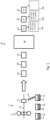
- Fig. 1 shows a first embodiment of the method according to the invention.
- aluminum scrap accumulating during a production operation 2 is filled into several scrap containers 4a-c and thus provided in the form of a plurality of separate partial lots 6a-c.
- Fig. 1 only three partial lots 6a-c are shown as examples, while in a production plant 2 a considerably larger number of partial lots is typically provided.
- production plant 2 is a rolling mill (in Fig. 1 symbolized by the rolling stand 8) for the production of aluminum strips 10.
- trimming scrap 14 is produced, among other things, at the trimming shear 12 during the edge trimming of the rolled strips 10.
- the initially empty scrap containers 4a-c are provided at the trimming shear 12 and then filled one after the other with scrap 14 up to a predetermined weight of, for example, 2 t.
- a composition analysis is carried out in an analysis step 16.
- the containers 4a-c with the partial lots 6a-c are fed separately from one another to an analysis device 18, with which the composition of the scrap of the partial lots 6a-c can be analyzed.
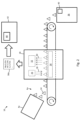
- Fig. 2 shows an example of such an analysis step 16.
- the contents of the scrap container 4a i.e. the scrap 14 of the partial batch 6a, are preferably placed evenly on a conveyor belt 22 and thus successively transported through an analysis device 18.
- the analysis device 18 in this example is an analysis device for prompt gamma neutron activation analysis (PGNAA).
- the analysis device 18 has a neutron source 26, for example a suitable radioactive nuclide such as 252 Cf, which provides neutrons 28 with which the scrap 14 is exposed.
- the neutrons 28 lead to an excitation of the atomic nuclei in the scrap 14, so that the atomic nuclei emit X-rays 30 with a spectrum typical for the respective element.
- the analysis device 18 By analyzing the X-rays 30 in a spectrometer 32, conclusions can be drawn about the elements contained in the scrap and their content.
- the analysis device 18 also includes a belt scale 34, which can be used to determine the weight of the scrap 14 from the partial batch 6a. From the analysis results of the spectrometer 32 and the belt scale 34, the analysis device 18 can reliably determine the relative and absolute content of an alloying element in the partial batch 6a. The reliability of the analysis result is achieved with this type of analysis in particular by analyzing virtually the entire amount of scrap from the partial batch 6a, rather than just a small fraction as in sample analysis.
- the scrap 14 is transported via the conveyor belt 22 to a scrap container 36 and stored separately therein until further use. In particular, no mixing of different partial batches 6a-c initially takes place.
- the partial batch 6a collected again in the scrap container 36 is assigned composition information 38 based on the analysis result of the analysis device 18.
- the composition information 38a can, for example, contain values for absolute or relative contents of certain alloying elements of the partial batch 6a and the weight of the partial batch 6a.
- an identifier 40 is assigned to the scrap container 36 containing the partial batch 6a. This identifier 40 is attached to the scrap container 36, for example, as a barcode or similar. Figures 1 and 3 to 5 This identifier 40 assigned to each partial lot is symbolized by the label "ID1", "ID2", “ID3" etc.
- composition information 38a and the identifier 40 are transmitted to a data processing system 42 connected to the analysis device 18.
- the analysis step 16 shown in the exemplary embodiment is Fig. 1 for all sub-lots 6a-c, so that after this step each sub-lot 6a-c is assigned a corresponding composition information 38a-c.
- each sub-lot 6a-c is assigned corresponding and particularly reliable composition information 38a-c, the sub-lots 6a-c can now be specifically selected for the appropriate use.
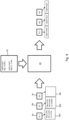
- Figure 3 shows an embodiment of the method in which the partial lots 6a-c are divided into different classes for a specific use via the composition information 38a-c.
- the method of this embodiment first comprises the Fig. 1 The steps shown for providing the quantity of aluminum scrap in sub-lots 6a-c and the composition analysis as well as the allocation of the composition information 38a-c to the respective sub-lots 6a-c.
- the partial lots 6a-c are each assigned to one of a first class 54 and a second class 56 as a function of the respectively assigned composition information 38a-c and a predetermined assignment rule.
- this assignment is initially performed in step 52 using the data processing system 42.
- the allocation rule is defined such that partial lots with a maximum Mg content of 0.1 wt.% are assigned to the first class 54, and partial lots with a Mg content of more than 0.1 wt.% are assigned to the second class 56. In this way, partial lots can be specifically selected for the production of a low-magnesium alloy by selecting only partial lots from the first class for this purpose.
- the allocation of the respective class to the individual partial lots can initially be carried out in the memory 44 of the data processing system 42.
- the corresponding partial lots 6a-c or the scrap containers in which the partial lots 6a-c are stored can be provided with a corresponding identifier.
- the partial lots of a class can also be spatially assigned to one another by storing the partial lots sorted by class. It is also conceivable to combine several or all partial lots of a class into a single large lot 60.
- partial lots 6b and 6c of the first class 54 can be filled into a common scrap container and then, for example, sold to an aluminum smelter or melted down directly.
- Figure 4 shows a further embodiment of the method in which the partial lots 6a-c are each assigned to an alloy specification via the composition information 38a-c and a data set 62 with predetermined alloy specifications.
- the method of this embodiment initially comprises the Fig. 1 The steps shown for providing the quantity of aluminum scrap in sub-lots 6a-c and the composition analysis as well as the allocation of the composition information 38a-c to the respective sub-lots 6a-c.
- the alloy specifications of the alloys processed in Production Plant 2 are typically known. It was recognized that this information could be used advantageously for the analysis of sub-lots 6a-c.
- the alloy specifications of the alloys processed at production facility 2 are compiled in a data set 62, wherein the data set contains information about the range limits of certain alloying elements (e.g., Si, Fe, Mn, Mg, etc.) for each of the alloy specifications (Alloy A, Alloy B, etc.).
- the data set is stored in the memory 44 of the data processing system 42.
- the data processing system 42 is configured to compare the composition information 38a-c with the range limits of the alloying elements of the individual alloys A, B, etc., and to assign the partial batches 6a-c to the respective appropriate alloy. In the best case, the assignment is unambiguous, so that the composition information processed in each case only matches exactly one alloy from the data set. If several alloys from the data set match the composition information, a rule is implemented in the program of the data processing system 42 that determines which of these multiple alloys the corresponding partial batch is assigned to.
- alloy A requires a Mg content of ⁇ 0.05%, while the other alloys in data set 62 require a higher Mg content.
- sub-lot 6b can be clearly assigned to alloy A.
- the assignment can in turn be made by storing a link between the identifier 40 of the partial lot and the assigned alloy in the memory 44 or by attaching a corresponding identifier with the assigned alloy to the corresponding partial lot or the associated scrap container.
- the partial lots of the corresponding alloy with the characteristic Mn content and thus with the desired low Mg content can be selected by assigning the partial lots to given alloys based on their Mn content.
- This approach therefore allows the selection of alloys with specific requirements for a first alloying element (here Mg) by assigning them based on a second alloying element (here Mn) that is more easily detectable.
- Figure 5 shows a further embodiment of the method in which the partial lots 6a-c are specifically selected for the production of a predetermined target alloy via the composition information 38a-c.
- the method of this embodiment initially comprises the Fig. 1 The steps shown for providing the quantity of aluminum scrap in sub-lots 6a-c and the composition analysis as well as the allocation of the composition information 38a-c to the respective sub-lots 6a-c.
- the partial batches 6a-c are stored separately and are accessible in a warehouse 72, which has further partial batches 6d-l, which are also assigned corresponding composition information 38d-l.
- the composition information 38a-l is stored in the memory 44 of the data processing system 42.
- the alloy specification 74 with the desired weight is transmitted to the data processing system 42.
- the data processing system 42 determines, from the desired alloy specification 74 and the composition information 38a-l, which, in addition to the respective composition, also includes a value for the respective weight of the individual partial batches 6a-l, a selection or subset 76 of the partial batches 6a-l that contain the suitable alloying elements in the suitable contents and with the suitable weight.
- This selection or subset 76 of the partial batches 6a-l can then be removed from the warehouse 72 and, for example, combined into a large batch 78, which can then be delivered to a smelter or melted down directly. can be.
- the crucible can be completely or almost completely filled with scrap to achieve the desired alloy.
Landscapes
- Chemical & Material Sciences (AREA)
- Engineering & Computer Science (AREA)
- Life Sciences & Earth Sciences (AREA)
- Materials Engineering (AREA)
- Organic Chemistry (AREA)
- Metallurgy (AREA)
- Mechanical Engineering (AREA)
- Manufacturing & Machinery (AREA)
- Physics & Mathematics (AREA)
- Health & Medical Sciences (AREA)
- Environmental & Geological Engineering (AREA)
- Geology (AREA)
- General Life Sciences & Earth Sciences (AREA)
- Immunology (AREA)
- General Physics & Mathematics (AREA)
- Pathology (AREA)
- General Health & Medical Sciences (AREA)
- Analytical Chemistry (AREA)
- Biochemistry (AREA)
- Geochemistry & Mineralogy (AREA)
- Nuclear Medicine, Radiotherapy & Molecular Imaging (AREA)
- Plasma & Fusion (AREA)
- Optics & Photonics (AREA)
- Manufacture And Refinement Of Metals (AREA)
- Processing Of Solid Wastes (AREA)
- Analysing Materials By The Use Of Radiation (AREA)
- Investigating, Analyzing Materials By Fluorescence Or Luminescence (AREA)
Description
- Die Erfindung betrifft ein Verfahren und eine Vorrichtung für das Recycling von Metallschrotten, insbesondere Aluminiumschrotten.
- Bei der Herstellung und Verarbeitung von Aluminiumbändern fallen an unterschiedlichen Entfallstellen Produktionsschrotte (sog. "production scrap") an. Es ist wünschenswert, diese Produktionsschrotte in einer Kreislaufführung durch Einschmelzen wieder für das Herstellen des Produkts zu nutzen, bei dessen Produktion sie anfallen. Ebenso ist es wünschenswert, nach der Herstellung angefallene Schrotte (sog. "post production scrap") wieder erneut für die Herstellung von Produkten gleicher oder ähnlicher Legierungen einzusetzen, so dass auch bei diesen Schrotten letztlich eine Kreislaufführung erreicht wird. Bei den nach der Herstellung angefallenen Schrotten kann es sich insbesondere um Schrotte handeln, die durch Einsatz, Verbrauch oder Verschleiß von Aluminiumprodukten entstehen. Die Schrotte können beispielweise von Presswerken zur Verfügung gestellt werden.
- Da in Aluminiumwalzwerken typischerweise verschiedene Aluminiumlegierungen verarbeitet werden, kommt es jedoch häufig dazu, dass Schrotte verschiedener Legierungen miteinander vermischt werden. Für eine bevorzugt durchgeführte Kreislauführung muss eine solche Vermischung jedoch ausgeschlossen werden, da ansonsten Grenzwerte für Legierungselemente bei einer Vermischung von unterschiedlichen Produktionsschrotten nicht eingehalten werden können.
- Um eine Vermischung zu identifizieren, werden nach dem heutigen Stand der Technik Stichproben des angefallenen Schrotts genommen und untersucht, typischerweise 2 bis 30 Stichproben. Hierbei besteht jedoch weiterhin eine erhebliche statistische Unsicherheit über die tatsächliche Zusammensetzung des Schrotts, die insbesondere zu hoch für eine effiziente Kreislaufführung der Schrotte ist.
- Sollte eine Vermischung von Schrotten unentdeckt bleiben, kann das dazu führen, dass eine gesamte Schmelzofencharge von bis zu 100 t außerhalb der Spezifikationen liegt und im schlechtesten Fall verschrottet werden muss.
- Vor diesem Hintergrund liegt der vorliegenden Erfindung die Aufgabe zu Grunde, ein Verfahren und eine Vorrichtung für das Recycling von Metallschrotten, insbesondere Aluminiumschrotten, zur Verfügung zu stellen, mit dem eine effizientere Kreislaufführung der Schrotte erreicht werden kann.
- Diese Aufgabe wird erfindungsgemäß zumindest teilweise gelöst durch ein Verfahren für das Recycling von Metallschrotten, insbesondere Aluminiumschrotten, gemäß Patentanspruch 1, bei dem eine Menge Metallschrott, insbesondere Aluminiumschrott, in Form einer Mehrzahl von voneinander separierten Teillosen bereitgestellt wird und bei dem für jedes Teillos eine Zusammensetzungsanalyse durchgeführt und dem jeweils analysierten Teillos eine auf der Zusammensetzungsanalyse basierende Zusammensetzungsinformation zugeordnet wird.
- Bei dem Metallschrott, insbesondere Aluminiumschrott, kann es sich insbesondere um Produktionsschrott, d.h. um Schrott, der während des Produktionsbetriebs anfällt, beispielsweise Besäumschrott von einer Randbesäumung eines gewalzten Aluminiumbands, handeln.
- Bei dem Verfahren wird eine Menge Metallschrott, insbesondere Aluminiumschrott, in Form einer Mehrzahl von voneinander separierten Teillosen bereitgestellt. Unter voneinander separierten Teillosen werden Teile des Gesamtschrotts verstanden, die separat voneinander gelagert sind und so auseinander gehalten werden können. Die Teillose werden vorzugsweise in Form von einzelnen Gebinden bereitgestellt, bei denen der Schrott eines Teilloses jeweils in einer Packung, beispielsweise einem Schrottbehälter, zusammengefasst ist.
- Vorzugsweise wird die bei einem Produktionsbetrieb anfallende Schrottmenge auf verschiedene Schrottbehälter verteilt. Insbesondere können eine Mehrzahl an Schrottbehältern vorgesehen werden, die nacheinander mit einer Menge Schrott befüllt werden. Auf diese Weise enthält ein Schrottbehälter jeweils den Schrott, der in einem bestimmten Zeitintervall während des Produktionsbetriebs angefallen ist.
- Bei dem Verfahren wird für jedes Teillos eine Zusammensetzungsanalyse durchgeführt. Zu diesem Zweck wird der Schrott des Teilloses insbesondere einer chemischen Analyse unterzogen, um die Anteile (die Gehalte) eines oder mehrerer im Schrott enthaltenen Legierungselemente zu ermitteln.
- Die Analyse erfolgt insbesondere für die gesamte Masse des Schrotts und nicht nur für einzelne Stichproben, die zu einer hohen Ungenauigkeit führen würden. Durch die Analyse der gesamten Masse eines Teilloses sollen Verunreinigungen identifiziert werden, sodass eine effiziente Kreislaufführung von Prozessschrotten ermöglicht wird.
- Dem jeweils analysierten Teillos wird eine auf der Zusammensetzungsanalyse basierende Zusammensetzungsinformation zugeordnet. Beispielsweise können dem Teillos Werte für den Gehalt bestimmter Legierungselemente (wie z.B. Fe, Si, Mn, Mg etc.) zugeordnet werden.
- Die Zuordnung kann dadurch erfolgen, dass das Teillos mit einer eindeutigen Kennung versehen wird, beispielsweise durch Beschriftung eines Schrottbehälters, der das Teillos Schrott enthält, und dass die Kennung des Teilloses in einem elektronischen Speicher einer Datenverarbeitungsanlage mit der zugehörigen Zusammensetzungsinformation verknüpft wird, beispielsweise in einer Tabelle.
- Für die Kreislaufnutzung von Schrotten ist es bevorzugt, dass die Schrotte an den Entfallstellen separat gehalten werden, um eine Vermischung von unterschiedlichen Legierungen zu vermeiden. Die Separierung der Schrotte erfolgt an den Entfallstellen in kleinen Teillosen bzw. Gebinden, mit einer Masse von beispielsweise 100 bis 2.500 kg. Eine Vermischung von Schrotten ist jedoch auch in den kleinen Teillosen bzw. Gebinden nicht ausgeschlossen. Nach der Herstellung angefallene Schrotte, beispielsweise von Presswerken der Automobilindustrie, können auch in größeren Teillosen von bis zu 15.000 kg vorliegen.
- Der Erfindung liegt die Erkenntnis zu Grunde, dass eine effizientere Kreislaufführung der Schrotte dadurch erreicht werden kann, dass eine Aufteilung von Schrott in kleine Teillose kombiniert wird mit einer vollständigen Analyse des Schrotts der Teillose. Auf diese Weise können mit Fremdschrotten verunreinigte Teillose identifiziert werden und gezielt von einer Kreislaufführung der Prozessschrotte ausgeschlossen und anderweitig eingesetzt werden, vorzugsweise für eine andere Legierung, insbesondere Aluminiumlegierung.
- Es wurde festgestellt, dass bereits die Aufteilung des Schrotts in Teillose Vorteile bildet, da im Produktionsbetrieb Schrotte verschiedener Legierungen in der Regel nacheinander anfallen und daher durch Befüllung mehrerer Schrottbehälter nacheinander bereits eine Trennung von Schrotten verschiedener Legierungen erreicht werden kann. Es wurde jedoch ebenfalls festgestellt, dass es beim Produktwechsel im Produktionsbetrieb häufig in einzelnen Schrottbehältern zur Vermischung von Schrotten vor und nach dem Wechsel kommt. Durch die vollständige Analyse der Teillose ist es möglich, derartige Vermischungen zuverlässig zu identifizieren und bei der weiteren Verwendung der Teillose zu berücksichtigen.
- Die Teillose weisen vorzugsweise jeweils eine Masse im Bereich von 500 und 15000 kg, vorzugsweise von 500 bis 5000 kg, insbesondere von 1000 bis 4000 kg auf.
- Insbesondere wird praktisch die gesamte Schrottmenge eines Teilloses untersucht, so dass eine erheblich höhere Zuverlässigkeit erreicht wird als bei einer stichprobenartigen Analyse. Wird bei einem Teillos (bzw. in einem Gebinde) eine Verunreinigung festgestellt, wird dieses Teillos/Gebinde vorzugsweise nicht der Kreislaufführung zugeführt, sondern anderweitig genutzt, vorzugsweise für andere Aluminiumlegierungen. Teillose/Gebinde ohne Verunreinigung können für eine Kreislaufführung genutzt werden. Eine Verunreinigung kann durch die Bestimmung des kumulierten Gehalts einzelner Legierungselemente der gesamten Schrottmenge eines Teilloses/Gebindes bestimmt werden. Überschreitet der Gehalt eines oder mehrerer Legierungselemente bei der Zusammensetzungsanalyse beispielsweise einen vorgegebenen Schwellenwert, ist von einer Verunreinigung auszugehen. Welche Legierungselemente nicht überschritten werden dürfen, hängt von dem Produkt ab, dessen Schrott im Kreislauf gefahren wird.
- Die oben genannte Aufgabe wird erfindungsgemäß weiterhin zumindest teilweise gelöst durch eine Vorrichtung, eingerichtet oder aufweisend jeweilige Mittel zur Durchführung des zuvor beschriebenen Verfahrens.
- Im Folgenden werden verschiedene Ausführungsformen des Verfahrens und der Vorrichtung beschrieben, wobei die einzelnen Ausführungsformen jeweils sowohl für das Verfahren als auch für die Vorrichtung anwendbar sind und zudem beliebig miteinander kombiniert werden können.
- Erfindungsgemäß wird die Zusammensetzungsanalyse eines Teilloses durchgeführt, indem der gesamte Schrott des Teilloses einer Analyseeinrichtung zugeführt und durch diese analysiert wird. Auf diese Weise wird der Schrott eines Teilloses in seiner Gesamtheit untersucht, so dass statistische Unsicherheiten, wie sie etwa bei einer Stichprobenanalyse auftreten, im Wesentlichen nicht auftreten.
- Bei einer weiteren Ausführungsform umfasst die Zusammensetzungsanalyse eine spektroskopische Analyse, insbesondere eine laserinduzierte Plasmaspektroskopie (LIBS), eine Röntgenfluoreszenzanalyse (XRF) und/oder eine Prompte-Gamma-Neutronen-Aktivierungs-Analyse (PGNAA). Es wurde festgestellt, dass diese Verfahren besonders gut geeignet sind, um den gesamten Schrott eines Teilloses zu analysieren. Bei der laserinduzierten Plasmaspektroskopie wird mit einem insbesondere gepulsten Laserstrahl Material von den einzelnen Schrottkörnern abgetragen und das von dem abgetragenen Material emittierte Licht spektroskopisch untersucht. Bei der Röntgenfluoreszenzanalyse wird das Material des Schrotts mit Röntgenstrahlung angeregt und das von dem Material emittierte Licht wird spektroskopisch untersucht. Bei der Prompte-Gamma-Neutronen-Aktivierungs-Analyse werden die Atomkerne des Schrottmaterials durch Neutronen von einer radioaktiven Quelle angeregt und die von den Atomkernen emittierte Gamma- bzw. Röntgenstrahlung spektroskopisch untersucht. Mit diesen Methoden lässt sich damit analysieren, welche Legierungselemente in welcher Konzentration im Schrott enthalten sind.
- Bei einer weiteren Ausführungsform enthält die Zusammensetzungsinformation einen Wert für den Gewichtsanteil mindestens einer Legierungskomponente am Gesamtgewicht des analysierten Teilloses. Bei dem Wert für den Gewichtsanteil kann es sich um einen relativen Wert, beispielsweise den Gehalt einer Legierungskomponente in Gew.-%, oder um einen absoluten Wert, beispielsweise den Gehalt der Legierungskomponente in kg, handeln.
- Bei einer weiteren Ausführungsform enthält die Zusammensetzungsinformation einen Wert für das Gewicht des Teilloses, beispielsweise das Gewicht des Teilloses in kg. Zu diesem Zweck kann vor, nach oder bei der Zusammensetzungsanalyse insbesondere eine Wägung des Teilloses vorgenommen werden. Wird beispielsweise der Schrott des Teilloses mittels eines Förderbands zur Analyseeinrichtung transportiert, so kann das Schrottgewicht über eine Bandwaage ermittelt werden. Der Wert für das Gewicht des Teilloses ist insbesondere für die Entscheidung sinnvoll, in welcher Weise das betreffende Teillos weiter verwendet werden kann.
- Bei einer weiteren Ausführungsform werden die Teillose als Funktion der jeweils zugeordneten Zusammensetzungsinformation und einer vorgegebenen Zuordnungsvorschrift jeweils einer von mehreren Klassen zugeordnet. Auf diese Weise wird eine Klassifizierung der Teillose anhand der jeweiligen Zusammensetzung erreicht, so dass sich die einzelnen Teillose gezielter einsetzen lassen, beispielsweise um Produkte einer bestimmten Legierungszusammensetzung herzustellen. Die Zuordnung zu einer Klasse kann beispielsweise mittels eines Computers erfolgen.
- Bei einer weiteren Ausführungsform werden einer ersten Klasse nur solche Teillose zugeordnet, deren Wert für den Gewichtsanteil mindestens einer Legierungskomponente in einem vorgegebenen Bereich für diese Legierungskomponente liegt. Beispielsweise kann eine erste Klasse durch einen oberen Grenzwert für ein bestimmtes Legierungselement, z.B. Mg, definiert werden. Die Zusammensetzungsinformation enthält zu diesem Zweck vorzugsweise einen Wert für den Gehalt des bestimmten Legierungselements. Liegt der Gehalt des Legierungselements unterhalb des von der Klasse vorgegebenen Grenzwerts, so wird das betreffende Teillos dieser Klasse zugeordnet. Liegt der Gehalt des Legierungselements hingegen oberhalb des von der Klasse vorgegebenen Grenzwerts, so wird das Teillos nicht dieser Klasse, sondern ggf. einer anderen Klasse zugeordnet.
- Bei einer weiteren Ausführungsform werden die Teillose als Funktion der jeweils zugeordneten Zusammensetzungsinformation jeweils einer von mehreren vorgegebenen Legierungsspezifikationen zugeordnet. Bei einem Produktionsbetrieb ist häufig bekannt, welche Legierungen während des Betriebs verarbeitet werden. Es ist daher zu erwarten, dass die bei dem Produktionsbetrieb anfallenden Schrotte nicht irgendeine beliebige Legierung aufweisen, sondern eine der bekannten beim Betrieb eingesetzten Legierungen. Diese Information wird bei der vorliegenden Ausführungsform ausgenutzt, um eine bessere Analyse der Teillose zu erreichen. Zu diesem Zweck können die bei einem Produktionsbetrieb verwendeten Legierungen als Legierungsspezifikationen vorgegeben werden. Ein analysiertes Teillos kann dann derjenigen Legierungsspezifikationen zugeordnet werden, deren Zusammensetzung zu der Zusammensetzungsinformation des Teilloses passt. Zeigt die Zusammensetzungsinformation eines Teilloses beispielsweise einen besonders geringen Mg-Gehalt an, so kann das betreffende Teillos eine Legierungsspezifikation mit geringem Mg-Gehalt zugeordnet werden, wenn die übrigen Legierungsspezifikationen höhere Mg-Gehalte verlangen.
- Bei einer weiteren Ausführungsform werden aus der Mehrzahl von Teillosen ein oder mehrere Teillose mit einem vorgegebenen Zielbereich für mindestens eine erste Legierungskomponente ausgewählt, wobei die Auswahl dadurch erfolgt, dass Teillose als Funktion ihres Gehalts mindestens einer zweiten Legierungskomponente einer von mehreren vorgegebenen Legierungszusammensetzungen zugeordnet werden und nur dann ausgewählt werden, wenn die erste Legierungskomponente der dem jeweiligen Teillos zugeordneten vorgegebenen Legierungszusammensetzung innerhalb des für die erste Legierungskomponente vorgegebenen Zielbereichs liegt. Unter dem Zielbereich einer Legierungskomponente wird der Bereich verstanden, in dem der Gehalt der betreffenden Legierungskomponente bei einem ausgewählten Teillos liegen soll.
- Diese Ausführungsform ist insbesondere dazu geeignet, Teillose für die Herstellung einer Legierung auszuwählen, wobei die Legierung Anforderungen an eine Legierungskomponente hat, die mit einer Analyseeinrichtung schlecht oder nicht genau genug kontrolliert werden kann, beispielsweise weil der geforderte Maximalgehalt der betreffenden Legierungskomponente unter der Nachweisgrenze liegt. Bei der vorliegenden Ausführungsform werden die geeigneten Teillose nicht direkt über die schwer zu kontrollierende erste Legierungskomponente, sondern indirekt über eine besser nachweisbare zweite Legierungskomponente bestimmt. Diese ist insbesondere möglich unter Ausnutzung der zusätzlichen Information über die grundsätzlich vorliegenden Legierungszusammensetzungen. Bei einem Produktionsbetrieb sind die Legierungszusammensetzungen der verarbeiteten Produkte typischerweise bekannt, so dass der anfallende Schrott nur einer dieser Legierungszusammensetzungen zugeordnet werden muss, um die Zusammensetzung des Schrotts zu ermitteln. Dadurch lässt sich durch charakteristische Gehalte bestimmter (zweiter) Legierungskomponenten auf die zugehörige Legierung und über die bekannte Zusammensetzung der zugehörigen Legierung wiederum auf den Gehalt einer bestimmten (ersten) Legierungskomponente schließen, die selbst schwierig zu messen ist.
- Bei einer weiteren Ausführungsform werden einer vorgegebenen Klasse oder einer vorgegebenen Legierungszusammensetzung zugeordneten Teillose zu einem Großlos zusammengefasst. Auf diese Weise können hinsichtlich ihrer Zusammensetzung ähnliche oder gleiche Teillose gezielt zusammengefasst werden, um dann aufgrund der größeren Losgröße ökonomischer gelagert oder transportiert zu werden.
- Bei einer weiteren Ausführungsform wird die Mehrzahl der voneinander separierten Teillose dadurch bereitgestellt, dass ein Großlos in mehrere Teillose aufgeteilt wird. Das Großlos kann beispielsweise ein Gewicht von mehr als 20 t, insbesondere mehr als 25 t aufweisen. Soll zum Beispiel ein Großlos Schrott von 25 t, beispielsweise eine große Schrottlieferung, für ein Recycling vorbereitet werden, so kann dieses Großlos beispielsweise in fünf Teile je 5 t aufgeteilt werden. Die fünf Teillose werden dann entsprechend dem beschriebenen Verfahren jeweils einer Zusammensetzungsanalyse unterzogen. Auf diese Weise können Großlose, in denen Schrotte verschiedener Legierungen vermischt sein können, in Teillose zerlegt werden, deren Zusammensetzung dann jeweils durch die Zusammensetzungsanalyse praktisch vollständig bekannt ist. Die Größe der Teillose ist vorzugsweise auf den Chargierprozess abgestimmt, da Großlose selten in Gänze einem Schmelzofen zugeführt werden.
- Die Aufteilung eines Großloses in eine Mehrzahl von Teillosen ist insbesondere dann vorteilhaft, wenn der Schrott des Großloses sehr inhomogen ist. Enthält der Schrott des Großloses beispielsweise einen Motorblock mit stark Cu-haltiger Legierung, so ist der Cu-Gehalt des Großloses lokal sehr stark konzentriert. Würde dem Großlos ohne Aufteilung in Teillose und Zusammensetzungsanalyse einfach ein Teil entnommen und einem Schmelzofen zugeführt, so hinge der Cu-Gehalt des entnommenen Teils maßgeblich davon ab, ob der entnommene Teil den Motorblock umfasst oder nicht. Die Unsicherheit bzgl. des Cu-Gehalts wäre daher bei dieser Vorgehensweise sehr groß. Durch die Aufteilung in Teillose und die praktisch vollständige Analyse der Teillose (anstelle lediglich einer Stichprobenanlyse) kann die Unsicherheit über die Zusammensetzung der einzelnen Teillose erheblich reduziert werden.
- Bei einer weiteren Ausführungsform wird aus einer Mehrzahl von Teillosen mit jeweils zugeordneter Zusammensetzungsinformation für die Herstellung einer Legierung mit vorgegebener Spezifikation für die zu erzielende Legierungszusammensetzung eine Teilmenge geeigneter Teillose ausgewählt, und zwar als Funktion der den Teillosen zugeordneten Zusammensetzungsinformationen und der vorgegebenen Spezifikation.
- Auf diese Weise kann eine optimierte Zielcharge für die Herstellung einer Legierung unter möglichst hohem Schrotteinsatz bereitgestellt werden. Computeralgorithmen zur Chargenoptimierung sind grundsätzlich bekannt. Deren Anwendung ist jedoch bisher problematisch gewesen aufgrund der hohen Unsicherheiten bezüglich der Zusammensetzung des Schrotts. Mit der Aufteilung des Schrotts in Teillose und der zugeordneten, zuverlässigen Zusammensetzungsinformationen lässt sich eine solche Chargenoptimierung mit dem beschriebenen Verfahren deutlich zuverlässiger durchführen.
- Bei einer weiteren Ausführungsform werden die Teillose bis zur Auswahl für die Herstellung einer Legierung mit vorgegebener Spezifikation für die zu erzielende Legierungszusammensetzung für den wahlfreien Zugriff gelagert. Auf diese Weise lassen sich die einzelnen Teillose abhängig von ihrer Zusammensetzung gezielt entnehmen und einer bestimmten Verwendung zuführen. Die Lagerung der Teillose kann beispielsweise in einzelnen Schrottbehältern in einem Regallager erfolgen.
- Weitere Merkmale und Vorteile der Erfindung ergeben sich aus der nachfolgenden Beschreibung mehrerer Ausführungsbeispiele, wobei auf die beigefügte Zeichnung Bezug genommen wird.
- In der Zeichnung zeigen
- Fig. 1
- ein erstes Ausführungsbeispiel des erfindungsgemäßen Verfahrens,
- Fig. 2
- einen Zusammensetzungsanalyse-Schritt für das Verfahren aus
Fig. 1 , - Fig. 3
- ein zweites Ausführungsbeispiel des erfindungsgemäßen Verfahrens,
- Fig. 4
- ein drittes Ausführungsbeispiel des erfindungsgemäßen Verfahrens und
- Fig. 5
- ein viertes Ausführungsbeispiel des erfindungsgemäßen Verfahrens.
-
Fig. 1 zeigt ein erstes Ausführungsbeispiel des erfindungsgemäßen Verfahrens. Bei dem Verfahren wird während eines Produktionsbetriebs 2 anfallender Aluminiumschrott in mehrere Schrottbehälter 4a-c gefüllt und auf diese Weise in Form einer Mehrzahl von voneinander separierten Teillosen 6a-c bereitgestellt. InFig. 1 sind exemplarisch nur drei Teillose 6a-c gezeigt, während bei einem Produktionsbetrieb 2 typischerweise eine erheblich größere Zahl an Teillosen bereitgestellt wird. - Bei dem Produktionsbetrieb 2 handelt es sich in diesem Beispiel um einen Walzbetrieb (in
Fig. 1 durch das Walzgerüst 8 symbolisiert) zur Herstellung von Aluminiumbändern 10. Bei einem solchen Walzbetrieb fallen unter anderem an der Besäumschere 12 beim Randbesäumen der gewalzten Bänder 10 Besäumschrotte 14 an. Die zunächst leeren Schrottbehälter 4a-c werden an der Besäumschere 12 bereitgestellt und dann nacheinander bis zu einem vorgegebenen Gewicht von beispielsweise 2 t mit Schrott 14 befüllt. - Beim Walzbetrieb werden typischerweise Produkte aus verschiedenen Legierungen nacheinander gewalzt. Bei einem Legierungswechsel kann dies dazu führen, dass in einen Schrottbehälter Schrotte 14 aus verschiedenen Legierungen gelangen, wenn der Schrottbehälter nicht genau beim Übergang von einem Walzprodukt einer Legierung zu einem Walzprodukt einer anderen Legierung an der Besäumschere 12 gewechselt wird.
- Es wurde festgestellt, dass eine lediglich stichprobenartige Untersuchung der Schrotte in den Teillosen zu großen statistischen Ungenauigkeiten führt, da die tatsächliche Zusammensetzung der Schrotte zum Teil erheblich von der stichprobenartigen Analyse abweicht. Beim Einschmelzen von Aluminium konnte ein Tiegel daher in der Vergangenheit nur etwa zu 80% mit Schrotten befüllt und eingeschmolzen werden. Nach dem Einschmelzen war dann eine chemische Analyse der Schmelze erforderlich, um die tatsächlich vorliegende Zusammensetzung der Legierung zu ermitteln. Diese wich häufig signifikant von der aus den stichprobenartigen Analysen der Schrotte berechnete Zusammensetzung ab, so dass die übrigen 20% der Tiegelfüllung zur Korrektur der Legierungszusammensetzung definiert befüllt werden musste.
- Dieses Problem wird vorliegend dadurch überwunden, dass die Schrotte in Teillosen bereitgestellt werden, wodurch eine gezielte Auswahl definierter Schrottmengen für das Einschmelzen ermöglicht wird, und andererseits für jedes Teillos eine Zusammensetzungsanalyse durchgeführt wird.
- Entsprechend wird bei dem Ausführungsbeispiel in
Fig. 1 nach der Bereitstellung der Teillose 6a-c in einem Analyseschritt 16 eine Zusammensetzungsanalyse durchgeführt. Zu diesem Zweck werden die Behälter 4a-c mit den Teillosen 6a-c separat voneinander einer Analyseeinrichtung 18 zugeführt, mit der die Zusammensetzung der Schrotte der Teillose 6a-c analysiert werden kann. -
Fig. 2 zeigt ein Beispiel für einen solchen Analyseschritt 16. Der Inhalt des Schrottbehälters 4a, d.h. der Schrott 14 des Teilloses 6a, wird vorzugsweise gleichmäßig auf ein Förderband 22 gegeben und so sukzessive durch eine Analyseeinrichtung 18 transportiert. Bei der Analyseeinrichtung 18 handelt es sich in diesem Beispiel um eine Analyseeinrichtung für die Prompte Gamma Neutronen Aktivierungs Analyse (PGNAA). Zu diesem Zweck weist die Analyseeinrichtung 18 eine Neutronenquelle 26 auf, beispielsweise ein geeignetes radioaktives Nuklid wie 252Cf, welches Neutronen 28 bereitstellt, mit denen der Schrott 14 beaufschlagt wird. Die Neutronen 28 führen zu einer Anregung der Atomkerne im Schrott 14, so dass die Atomkerne Röntgenstrahlen 30 mit einem für das jeweilige Element typischen Spektrum emittieren. Durch die Analyse der Röntgenstrahlen 30 in einem Spektrometer 32 lässt sich so auf die im Schrott enthaltenen Elemente sowie auf deren Gehalt schließen. Die Analyseeinrichtung 18 weist weiterhin auch eine Bandwaage 34 auf, durch die das Gewicht des Schrotts 14 aus dem Teillos 6a bestimmt werden kann. Aus dem Analyseergebnis des Spektrometers 32 und der Bandwaage 34 kann die Analyseeinrichtung 18 zuverlässig den relativen und absoluten Gehalt eines Legierungselements im Teillos 6a bestimmen. Die Zuverlässigkeit des Analyseergebnisses wird bei dieser Art der Analyse insbesondere dadurch erreicht, dass praktisch die gesamte Schrottmenge des Teilloses 6a analysiert und nicht nur ein kleiner Bruchteil wie bei der Stichprobenanalyse. - Nach der Analyse in der Analyseeinrichtung 18 wird der Schrott 14 über das Förderband 22 zu einem Schrottbehälter 36 transportiert und in diesem separat bis zur weiteren Verwendung gelagert. Insbesondere erfolgt zunächst keine Vermischung verschiedener Teillose 6a-c. Dem im Schrottbehälter 36 wieder aufgefangenen Teillos 6a wird eine Zusammensetzungsinformation 38 zugeordnet, die auf dem Analyseergebnis der Analyseeinrichtung 18 basiert. Die Zusammensetzungsinformation 38a kann beispielsweise Werte für absolute oder relative Gehalte bestimmter Legierungselemente des Teilloses 6a und das Gewicht des Teilloses 6a enthalten. Für die Zuordnung der Zusammensetzungsinformation ist dem Schrottbehälter 36, der das Teillos 6a enthält, eine Kennung 40 zugeordnet. Diese Kennung 40 ist beispielsweise als Barcode oder ähnliches am Schrottbehälter 36 angebracht. In den
Figuren 1 und3 bis 5 wird diese den Teillosen jeweils zugeordnete Kennung 40 durch die Beschriftung "ID1", "ID2", "ID3" etc. symbolisiert. - Die Zusammensetzungsinformation 38a und die Kennung 40 werden an eine an die Analyseeinrichtung 18 angeschlossene Datenverarbeitungsanlage 42 übermittelt.
- Diese verknüpft die Kennung 40 mit der Zusammensetzungsinformation 38a des Teilloses 6a, beispielsweise indem im Speicher 44 der Datenverarbeitungsanlage 42 eine Tabelle gespeichert wird, in der die Kennung 40 zusammen mit der Zusammensetzungsinformation 38a gespeichert wird.
- Der in
Fig. 2 dargestellte Analyseschritt 16 wird im Ausführungsbeispiel ausFig. 1 für alle Teillose 6a-c durchgeführt, so dass nach diesem Schritt jedem Teillos 6a-c eine entsprechende Zusammensetzungsinformation 38a-c zugeordnet ist. - Dadurch dass am Ende des Verfahrens aus
Fig. 1 jedem Teillos 6a-c eine entsprechende und insbesondere zuverlässige Zusammensetzungsinformation 38a-c zugeordnet ist, können die Teillose 6a-c nun gezielt für die geeignete Verwendung ausgewählt werden. -
Figur 3 zeigt ein Ausführungsbeispiel des Verfahrens, bei dem die Teillose 6a-c über die Zusammensetzungsinformationen 38a-c für eine bestimmte Verwendung in verschiedene Klassen eingeteilt werden. Das Verfahren dieses Ausführungsbeispiels umfasst zunächst die inFig. 1 dargestellten Schritte der Bereitstellung der Menge Aluminiumschrott in Teillosen 6a-c und der Zusammensetzungsanalyse sowie der Zuordnung der Zusammensetzungsinformationen 38a-c zu den jeweiligen Teillosen 6a-c. - Im nachfolgenden Schritt 52 werden die Teillose 6a-c als Funktion der jeweils zugeordneten Zusammensetzungsinformation 38a-c und einer vorgegebenen Zuordnungsvorschrift jeweils einer von einer ersten Klasse 54 und einer zweiten Klasse 56 zugeordnet. Diese Zuordnung erfolgt in dem Beispiel im Schritt 52 zunächst mit der Datenverarbeitungsanlage 42.
- Die Zuordnungsvorschrift ist in diesem Beispiel so definiert, dass Teillose mit einem Mg-Gehalt von max. 0,1 Gew.-% der ersten Klasse 54 zugeordnet werden und Teillose mit einem Mg-Gehalt von mehr als 0,1 Gew.-% der zweiten Klasse 56 zugeordnet werden. Auf diese Weise lassen sich gezielt Teillose für die Herstellung einer Mgarmen Legierung auswählen, indem zu diesem Zweck nur Teillose aus der ersten Klasse gewählt werden.
- Die Zuordnung der jeweiligen Klasse zu den einzelnen Teillosen kann zunächst im Speicher 44 der Datenverarbeitungsanlage 42 erfolgen. In einem weiteren Schritt 58 können die entsprechenden Teillose 6a-c bzw. die Schrottbehälter, in denen die Teillose 6a-c aufbewahrt werden, mit einer entsprechenden Kennung versehen werden. Weiterhin können die Teillose einer Klasse auch räumlich einander zugeordnet werden, indem die Teillose klassenweise sortiert gelagert werden. Ebenfalls ist es denkbar, mehrere oder alle Teillose einer Klasse zu einem Großlos 60 zusammenzuführen. So können die Teillose 6b und 6c der ersten Klasse 54 in einen gemeinsamen Schrottbehälter gefüllt und dann beispielsweise an ein Aluminiumschmelzwerk verkauft oder direkt eingeschmolzen werden.
-
Figur 4 zeigt ein weiteres Ausführungsbeispiel des Verfahrens, bei dem die Teillose 6a-c über die Zusammensetzungsinformationen 38a-c sowie einem Datensatz 62 mit vorgegebenen Legierungsspezifikationen jeweils einer Legierungsspezifikation zugeordnet werden. Das Verfahren dieses Ausführungsbeispiels umfasst zunächst die inFig. 1 dargestellten Schritte der Bereitstellung der Menge Aluminiumschrott in Teillosen 6a-c und der Zusammensetzungsanalyse sowie der Zuordnung der Zusammensetzungsinformationen 38a-c zu den jeweiligen Teillosen 6a-c. - Die Legierungsspezifikationen der im Produktionsbetrieb 2 verarbeiteten Legierungen sind typischerweise bekannt. Es wurde erkannt, dass sich diese Information vorteilhaft zur Analyse der Teillose 6a-c einsetzen lässt.
- Zu diesem Zweck werden die Legierungsspezifikationen der bei dem Produktionsbetrieb 2 verarbeiteten Legierungen in einem Datensatz 62 zusammengestellt, wobei der Datensatz zu jeder der Legierungsspezifikationen (Legierung A, Legierung B, etc.) Informationen über die Bereichsgrenzen bestimmter Legierungselemente (z.B. Si, Fe, Mn, Mg, etc.) enthält. Der Datensatz ist im Speicher 44 der Datenverarbeitungsanlage 42 gespeichert.
- Die Datenverarbeitungsanlage 42 ist dazu eingerichtet, die Zusammensetzungsinformationen 38a-c mit den Bereichsgrenzen der Legierungselemente der einzelnen Legierungen A, B etc. abzugleichen, und die Teillose 6a-c der jeweils passenden Legierung zuzuordnen. Im günstigsten Fall ist die Zuordnung eindeutig, so dass die jeweils verarbeitete Zusammensetzungsinformation nur zu genau einer Legierung aus dem Datensatz passt. Passen mehreren Legierungen aus dem Datensatz zu der Zusammensetzungsinformation, so ist im Programm der Datenverarbeitungsanlage 42 eine Regel implementiert, die bestimmt, welcher dieser mehreren Legierungen das entsprechende Teillos zugeordnet wird.
- In dem in
Figur 4 dargestellten Beispiel fordert die Spezifikation der Legierung A beispielsweise einen Mg-Gehalt von < 0,05%, während die übrigen Legierungen im Datensatz 62 einen höheren Mg-Gehalt erfordern. In diesem Fall kann beispielsweise das Teillos 6b eindeutig der Legierung A zugeordnet werden. - Die Zuordnung kann wiederum durch Speichern einer Verknüpfung der Kennung 40 des Teilloses mit der zugeordneten Legierung im Speicher 44 erfolgen oder durch Anbringung einer entsprechenden Kennung mit der zugeordneten Legierung an dem entsprechenden Teillos bzw. dem zugehörigen Schrottbehälter.
- Die Zuordnung bekannter Legierungen zu den einzelnen Teillosen erlaubt eine bessere Analyse, da vorbekannte Informationen bei der Analyse ausgenutzt werden können. Insbesondere erlaubt diese Vorgehensweise auch die zuverlässige Klassifizierung von Teillosen zur Herstellung von Legierungen mit Grenzen für bestimmte Legierungselemente, die unterhalb der Nachweisschwelle der Analyseeinrichtung 18 liegen.
- Werden beispielsweise Teillose mit besonders geringem Mg-Gehalt gesucht, die einen Mg-Gehalt unterhalb der Nachweisschwelle haben, und ist bekannt, dass derartig geringe Mg-Gehalt nur bei einer Legierung auftreten, die einen charakteristischen Mn-Gehalt aufweist, so können über eine Zuordnung der Teillose zu vorgegebenen Legierungen über den Mn-Gehalt die Teillose der entsprechenden Legierung mit dem charakteristischen Mn-Gehalt und folglich mit dem gewünscht niedrigen Mg-Gehalt ausgewählt werden. Diese Vorgehensweise erlaubt demnach die Auswahl von Legierungen mit bestimmten Anforderungen an ein erstes Legierungselement (hier Mg) durch eine Zuordnung über ein zweites Legierungselement (hier Mn), das besser nachweisbar ist.
-
Figur 5 zeigt ein weiteres Ausführungsbeispiel des Verfahrens, bei dem die Teillose 6a-c über die Zusammensetzungsinformationen 38a-c gezielt zur Herstellung einer vorgegebenen Ziellegierung ausgewählt werden. Das Verfahren dieses Ausführungsbeispiels umfasst zunächst die inFig. 1 dargestellten Schritte der Bereitstellung der Menge Aluminiumschrott in Teillosen 6a-c und der Zusammensetzungsanalyse sowie der Zuordnung der Zusammensetzungsinformationen 38a-c zu den jeweiligen Teillosen 6a-c. - Die Teillose 6a-c werden separat zugreifbar in einem Lager 72 gelagert, das weitere Teillose 6d-l aufweist, denen ebenfalls eine entsprechende Zusammensetzungsinformation 38d-l zugeordnet ist. Die Zusammensetzungsinformationen 38a-l werden im Speicher 44 der Datenverarbeitungsanlage 42 abgelegt.
- Zur Herstellung einer bestimmten Legierung mit einer vorgegebenen Legierungsspezifikation 74 wird die Legierungsspezifikation 74 mit dem gewünschten Gewicht an die Datenverarbeitungsanlage 42 übermittelt. Mithilfe einer Software zur Chargenoptimierung bestimmt die Datenverarbeitungsanlage 42 aus der gewünschten Legierungsspezifikation 74 und den Zusammensetzungsinformationen 38a-l, die neben der jeweiligen Zusammensetzung auch einen Wert für das jeweilige Gewicht der einzelnen Teillose 6a-l umfassen, eine Auswahl bzw. Teilmenge 76 der Teillose 6a-l, die die geeigneten Legierungselemente in den geeigneten Gehalten und mit dem geeigneten Gewicht aufweisen. Diese Auswahl bzw. Teilmenge 76 der Teillose 6a-l kann dann dem Lager 72 entnommen und beispielsweise zu einem Großlos 78 zusammengefasst werden, dass sodann an ein Schmelzwerk geliefert oder direkt eingeschmolzen werden kann.
- Auf diese Weise kann eine optimierte Zielcharge mit maximalem Schrotteinsatz zur Herstellung einer vorgegebenen Legierung erreicht werden. Insbesondere kann der Schmelztiegel auf diese Weise vollständig oder nahezu vollständig mit Schrott gefüllt werden, umdiegewünschte Legierung zu erreichen.
Claims (11)
- Verfahren für das Recycling von Metallschrotten, insbesondere Aluminiumschrotten,- bei dem eine Menge Metallschrott (14), insbesondere Aluminiumschrott, in Form einer Mehrzahl von voneinander separierten Teillosen (6a-l) bereitgestellt wird,- bei dem für jedes Teillos (6a-1) eine Zusammensetzungsanalyse durchgeführt und dem jeweils analysierten Teillos (6a-1) eine auf der Zusammensetzungsanalyse basierende Zusammensetzungsinformation (38a-l) zugeordnet wird, wobei die Zusammensetzungsanalyse eines Teilloses (6a-l) durchgeführt wird, indem der gesamte Schrott (14) des Teilloses (6a-l), umfassend mehrere Schrottkörner, einer Analyseeinrichtung (18) zugeführt und durch diese analysiert wird, und- bei dem aus einer Mehrzahl von Teillosen (6a-l) mit jeweils zugeordneter Zusammensetzungsinformation (38a-1) für die Herstellung einer Legierung mit vorgegebener Spezifikation für die zu erzielende Legierungszusammensetzung eine Teilmenge (76) geeigneter Teillose (6a-l) ausgewählt wird, und zwar als Funktion der den Teillosen (6a-l) zugeordneten Zusammensetzungsinformationen (38a-1) und der vorgegebenen Spezifikation.
- Verfahren nach Anspruch 1,
dadurch gekennzeichnet, dass die Zusammensetzungsanalyse eine spektroskopische Analyse umfasst, insbesondere eine laserinduzierte Plasmaspektroskopie (LIBS), eine Röntgenfluoreszenzanalyse (XRF) und/oder eine Prompte-Gamma-Neutronen-Aktivierungs-Analyse (PGNAA). - Verfahren nach einem der Ansprüche 1 oder 2,
dadurch gekennzeichnet, dass die Zusammensetzungsinformation (38a-l) einen Wert für den Gewichtsanteil mindestens einer Legierungskomponente am Gesamtgewicht des analysierten Teilloses (6a-1) enthält. - Verfahren nach einem der Ansprüche 1 bis 3,
dadurch gekennzeichnet, dass die Zusammensetzungsinformation (38a-1) einen Wert für das Gewicht des Teilloses (6a-l) enthält. - Verfahren nach einem der Ansprüche 1 bis 4,
dadurch gekennzeichnet, dass die Teillose (6a-l) als Funktion der jeweils zugeordneten Zusammensetzungsinformation (38a-1) und einer vorgegebenen Zuordnungsvorschrift jeweils einer von mehreren Klassen (54, 56) zugeordnet werden. - Verfahren nach Anspruch 5,
dadurch gekennzeichnet, dass einer ersten Klasse (54) nur solche Teillose (6a-1) zugeordnet werden, deren Wert für den Gewichtsanteil mindestens einer Legierungskomponente in einem vorgegebenen Bereich für diese Legierungskomponente liegt. - Verfahren nach einem der Ansprüche 1 bis 6,
dadurch gekennzeichnet, dass die Teillose (6a-l) als Funktion der jeweils zugeordneten Zusammensetzungsinformation (38a-l) jeweils einer von mehreren vorgegebenen Legierungsspezifikationen zugeordnet werden. - Verfahren nach einem der Ansprüche 1 bis 7,
bei dem aus der Mehrzahl von Teillosen (6a-l) ein oder mehrere Teillose (6a-1) mit einem vorgegebenen Zielbereich für mindestens eine erste Legierungskomponente ausgewählt werden, wobei die Auswahl dadurch erfolgt, dass Teillose (6a-l) als Funktion ihres Gehalts mindestens einer zweiten Legierungskomponente einer von mehreren vorgegebenen Legierungszusammensetzungen zugeordnet werden und nur dann ausgewählt werden, wenn die erste Legierungskomponente der dem jeweiligen Teillos (6a-l) zugeordneten vorgegebenen Legierungszusammensetzung innerhalb des für die erste Legierungskomponente vorgegebenen Zielbereichs liegt. - Verfahren nach einem der Ansprüche 5 bis 8,
bei dem einer vorgegebenen Klasse (54, 56) oder einer vorgegebenen Legierungszusammensetzung zugeordnete Teillose (6a-l) zu einem Großlos (60, 78) zusammengefasst werden. - Verfahren nach einem der Ansprüche 1 bis 9,
bei dem die Teillose (6a-l) bis zur Auswahl für die Herstellung einer Legierung mit vorgegebener Spezifikation für die zu erzielende Legierungszusammensetzung für den wahlfreien Zugriff gelagert werden. - Verfahren nach einem der Ansprüche 1 bis 10,
dadurch gekennzeichnet, dass die Mehrzahl der voneinander separierten Teillose (6a-l) dadurch bereitgestellt werden, dass ein Großlos in mehrere Teillose (6a-l) aufgeteilt wird.
Priority Applications (1)
| Application Number | Priority Date | Filing Date | Title |
|---|---|---|---|
| PL16823270.0T PL3393687T5 (pl) | 2015-12-23 | 2016-12-21 | Sposób i urządzenie do recyklingu złomu metalowego |
Applications Claiming Priority (2)
| Application Number | Priority Date | Filing Date | Title |
|---|---|---|---|
| DE102015122818.1A DE102015122818A1 (de) | 2015-12-23 | 2015-12-23 | Verfahren und Vorrichtung für das Recycling von Metallschrotten |
| PCT/EP2016/082112 WO2017108908A1 (de) | 2015-12-23 | 2016-12-21 | Verfahren und vorrichtung für das recycling von metallschrotten |
Publications (3)
| Publication Number | Publication Date |
|---|---|
| EP3393687A1 EP3393687A1 (de) | 2018-10-31 |
| EP3393687B1 EP3393687B1 (de) | 2019-09-11 |
| EP3393687B2 true EP3393687B2 (de) | 2025-04-16 |
Family
ID=57758602
Family Applications (1)
| Application Number | Title | Priority Date | Filing Date |
|---|---|---|---|
| EP16823270.0A Active EP3393687B2 (de) | 2015-12-23 | 2016-12-21 | Verfahren und vorrichtung für das recycling von metallschrotten |
Country Status (12)
| Country | Link |
|---|---|
| US (1) | US10486209B2 (de) |
| EP (1) | EP3393687B2 (de) |
| JP (1) | JP6454449B1 (de) |
| KR (1) | KR101982834B1 (de) |
| CN (1) | CN108463293B (de) |
| BR (1) | BR112018010095B1 (de) |
| DE (1) | DE102015122818A1 (de) |
| ES (1) | ES2748862T5 (de) |
| HU (1) | HUE045422T2 (de) |
| PL (1) | PL3393687T5 (de) |
| SA (1) | SA518391834B1 (de) |
| WO (1) | WO2017108908A1 (de) |
Families Citing this family (33)
| Publication number | Priority date | Publication date | Assignee | Title |
|---|---|---|---|---|
| FR3025806B1 (fr) * | 2014-09-15 | 2019-09-06 | Bigarren Bizi | Procede de traitement et d'extraction de dechets electroniques en vue de la recuperation des constituants inclus dans de tel dechets |
| US12280403B2 (en) | 2015-07-16 | 2025-04-22 | Sortera Technologies, Inc. | Sorting based on chemical composition |
| US11278937B2 (en) | 2015-07-16 | 2022-03-22 | Sortera Alloys, Inc. | Multiple stage sorting |
| US11964304B2 (en) | 2015-07-16 | 2024-04-23 | Sortera Technologies, Inc. | Sorting between metal alloys |
| US12551931B2 (en) | 2015-07-16 | 2026-02-17 | Sortera Technologies, Inc. | Classifying of materials with contaminants |
| US12508628B2 (en) | 2015-07-16 | 2025-12-30 | Sortera Technologies, Inc. | Sorting between metal alloys |
| US12208421B2 (en) | 2015-07-16 | 2025-01-28 | Sortera Technologies, Inc. | Metal separation in a scrap yard |
| JP6653511B2 (ja) * | 2016-07-15 | 2020-02-26 | 国立研究開発法人産業技術総合研究所 | Libs型物体選別装置 |
| EP3318339B1 (de) | 2016-11-03 | 2020-01-29 | AMAG casting GmbH | Vorrichtung und verfahren zur sortierung von aluminiumschrott |
| CN109794426A (zh) * | 2017-11-16 | 2019-05-24 | 钢铁研究总院 | 基于libs技术的全自动在线航空铝分类回收系统 |
| FR3074580B1 (fr) * | 2017-12-06 | 2020-01-03 | Constellium Issoire | Methode de controle a reception de scrap d’aluminium |
| NL2021751B1 (en) * | 2018-10-03 | 2020-05-08 | Univ Delft Tech | Method and system to convert demolished concrete into a readily recyclable product |
| SG11202103927WA (en) * | 2018-10-18 | 2021-05-28 | Security Matters Ltd | System and method for detection and identification of foreign elements in a substance |
| KR102257384B1 (ko) | 2019-01-22 | 2021-05-27 | (주) 보람엔지니어링 | 스크랩에서 획득한 가공소재의 프레스가공 방법 및 그 가공소재를 프레스가공하기 위한 이송장치 |
| KR101981914B1 (ko) | 2019-03-07 | 2019-08-28 | (주)에코에이블 | 야적 철스크랩 재활용 안내 시스템 |
| DE102019109051A1 (de) * | 2019-04-05 | 2020-10-08 | Rwe Power Ag | Vorrichtungen und Verfahren zum Ermitteln einer Elementzusammensetzung eines Materials |
| DE102019109054A1 (de) * | 2019-04-05 | 2020-10-08 | Rwe Power Ag | Vorrichtungen und Verfahren zum Ermitteln einer Elementzusammensetzung eines Materials |
| DE102019114515A1 (de) * | 2019-05-29 | 2020-12-03 | Hydro Aluminium Rolled Products Gmbh | Verfahren für das sammeln von metallschrotten in sammelbehältern |
| US11359262B2 (en) * | 2019-08-07 | 2022-06-14 | House Of Metals Company Limited | Product comprising recycled aluminum alloy wheel fragments and an alloying supplement, and methods and system for producing same |
| CN110455781B (zh) * | 2019-08-26 | 2022-03-25 | 北矿检测技术有限公司 | 用于磷矿选矿系统的libs在线检测系统及其应用 |
| CA3160456A1 (en) | 2019-11-21 | 2021-05-27 | Hydro Aluminium Recycling Deutschland Gmbh | Method and device for analysing and/or sorting scrap metal |
| CN112108496B (zh) * | 2020-09-09 | 2022-05-10 | 安徽光华铝业制造有限公司 | 一种废旧铝制品的回收设备 |
| IT202000023611A1 (it) * | 2020-10-07 | 2022-04-07 | Danieli Off Mecc | Sistema e metodo per la determinazione della composizione chimica di materiali metalllurgici o siderurgici |
| CN116917055A (zh) * | 2021-09-28 | 2023-10-20 | 索特拉科技有限公司 | 基于化学组合物的分拣 |
| CA3209464A1 (en) * | 2021-09-28 | 2023-04-06 | Nalin Kumar | Sorting based on chemical composition |
| EP4441261A4 (de) * | 2021-12-03 | 2025-10-15 | Sortera Tech Inc | Tragbarer materialanalysator |
| CH719213B1 (fr) * | 2021-12-07 | 2024-11-29 | Panatere Sa | Procédé pour le recyclage d'un alliage |
| EP4382216B1 (de) * | 2022-12-08 | 2026-04-29 | Hydro Aluminium Recycling Deutschland GmbH | Verfahren und vorrichtung zum analysieren und sortieren von materialteilen |
| FR3148442B1 (fr) | 2023-05-05 | 2025-05-02 | Constellium Neuf Brisach | Procédé de préparation d’un alliage métallique |
| NO348825B1 (en) | 2023-07-07 | 2025-06-16 | Norsk Hydro As | A method and apparatus for analysis of materials |
| DE102024103566A1 (de) * | 2024-02-08 | 2025-08-14 | Stadler Anlagenbau Gmbh | Verfahren zur Analyse einer Zusammensetzung einer Charge eines Wertstoffgemisches und Sortieranlage |
| WO2025240711A1 (en) * | 2024-05-17 | 2025-11-20 | Novelis Inc. | Systems and methods for analysis and sortation of end-of-life scrap |
| CN118858258B (zh) * | 2024-07-05 | 2025-05-02 | 西安海联石化科技有限公司 | 一种钛及钛合金返回屑料合金牌号在线分析系统 |
Citations (5)
| Publication number | Priority date | Publication date | Assignee | Title |
|---|---|---|---|---|
| FR2562913A1 (fr) † | 1984-04-16 | 1985-10-18 | Lede Philippe Van | Procede d'obtention de pieces moulees et billettes dans un alliage normalise sans passer par le stade des lingots |
| WO1997005969A1 (en) † | 1995-08-09 | 1997-02-20 | Alcan International Limited | Method of sorting pieces of material |
| US6266390B1 (en) † | 1998-09-21 | 2001-07-24 | Spectramet, Llc | High speed materials sorting using x-ray fluorescence |
| RU2260795C1 (ru) † | 2004-06-21 | 2005-09-20 | Общество с ограниченной ответственностью "Балтийская инжиниринговая компания" | Способ идентификации металлического сплава или металла и металлолома, из которого он получен |
| US8234139B2 (en) † | 2007-10-15 | 2012-07-31 | Oracle International Corporation | Process manufacturing with least cost formulation |
Family Cites Families (18)
| Publication number | Priority date | Publication date | Assignee | Title |
|---|---|---|---|---|
| CA1110996A (en) * | 1977-09-09 | 1981-10-20 | Reginald H. Clark | Apparatus and method for sorting articles |
| JPS58177188A (ja) * | 1982-04-13 | 1983-10-17 | リソ−ス リカバリ− リミテツド | 複数の物品の選別方法及び装置 |
| EP0096092B1 (de) * | 1982-06-07 | 1987-01-28 | Klaus Prof. Dipl.-Ing. Sczimarowski | Vorrichtung zum Sortieren von Metallteilen |
| US5180421A (en) * | 1991-03-11 | 1993-01-19 | Rostoker, Inc. | Method and apparatus for recovering useful products from waste streams |
| US5396071A (en) * | 1993-07-09 | 1995-03-07 | Gamma-Metrics | Modularized assembly for bulk material analyzer |
| US6545240B2 (en) * | 1996-02-16 | 2003-04-08 | Huron Valley Steel Corporation | Metal scrap sorting system |
| US5959870A (en) * | 1998-02-20 | 1999-09-28 | Gamma-Metrics | Real-time optimization for mix beds |
| US5948137A (en) * | 1998-07-23 | 1999-09-07 | The David J. Joseph Company | Scrap metal measuring and weighing process and apparatus |
| US6478847B1 (en) * | 2001-08-31 | 2002-11-12 | Mueller Industries, Inc. | Copper scrap processing system |
| JP2005302745A (ja) * | 2001-12-27 | 2005-10-27 | Osaka Industrial Promotion Organization | 希土類ボンド磁石粉末の製造方法及びそれを用いたボンド磁石の製造方法 |
| US7253414B2 (en) * | 2003-06-24 | 2007-08-07 | Energy Technologies, Inc. | Multi-energy gamma attenuation for real time continuous measurement of bulk material |
| US7886915B2 (en) * | 2008-03-19 | 2011-02-15 | Shulman Alvin D | Method for bulk sorting shredded scrap metal |
| RU2601934C2 (ru) * | 2011-08-10 | 2016-11-10 | Проассорт Гмбх | Сортировка металлического лома |
| DE102012024816B4 (de) * | 2011-12-19 | 2014-04-03 | ProASSORT GmbH | Verfahren zum Assortieren von Rohstoffen |
| CN203155689U (zh) * | 2013-04-02 | 2013-08-28 | 安徽精诚铜业股份有限公司 | 铜带废料收集装置的稳定压紧装置 |
| US9956609B1 (en) * | 2014-06-24 | 2018-05-01 | Melt Cognition, LLC | Metal sorting, melting and fabrication apparatus and methods |
| DE102014013160B4 (de) * | 2014-09-11 | 2018-01-11 | ProASSORT GmbH | Verfahren und Vorrichtung zur Sortierung von wiederverwertbaren Rohstoffstücken |
| DE102015122570B4 (de) * | 2015-12-22 | 2021-07-29 | ProASSORT GmbH | Sortierung von Rohstoffstücken |
-
2015
- 2015-12-23 DE DE102015122818.1A patent/DE102015122818A1/de active Pending
-
2016
- 2016-12-21 HU HUE16823270A patent/HUE045422T2/hu unknown
- 2016-12-21 KR KR1020187020576A patent/KR101982834B1/ko active Active
- 2016-12-21 BR BR112018010095-1A patent/BR112018010095B1/pt active IP Right Grant
- 2016-12-21 ES ES16823270T patent/ES2748862T5/es active Active
- 2016-12-21 PL PL16823270.0T patent/PL3393687T5/pl unknown
- 2016-12-21 WO PCT/EP2016/082112 patent/WO2017108908A1/de not_active Ceased
- 2016-12-21 EP EP16823270.0A patent/EP3393687B2/de active Active
- 2016-12-21 JP JP2018533082A patent/JP6454449B1/ja active Active
- 2016-12-21 CN CN201680076542.4A patent/CN108463293B/zh active Active
-
2018
- 2018-06-11 US US16/005,023 patent/US10486209B2/en active Active
- 2018-06-20 SA SA518391834A patent/SA518391834B1/ar unknown
Patent Citations (5)
| Publication number | Priority date | Publication date | Assignee | Title |
|---|---|---|---|---|
| FR2562913A1 (fr) † | 1984-04-16 | 1985-10-18 | Lede Philippe Van | Procede d'obtention de pieces moulees et billettes dans un alliage normalise sans passer par le stade des lingots |
| WO1997005969A1 (en) † | 1995-08-09 | 1997-02-20 | Alcan International Limited | Method of sorting pieces of material |
| US6266390B1 (en) † | 1998-09-21 | 2001-07-24 | Spectramet, Llc | High speed materials sorting using x-ray fluorescence |
| RU2260795C1 (ru) † | 2004-06-21 | 2005-09-20 | Общество с ограниченной ответственностью "Балтийская инжиниринговая компания" | Способ идентификации металлического сплава или металла и металлолома, из которого он получен |
| US8234139B2 (en) † | 2007-10-15 | 2012-07-31 | Oracle International Corporation | Process manufacturing with least cost formulation |
Also Published As
| Publication number | Publication date |
|---|---|
| KR101982834B1 (ko) | 2019-05-28 |
| BR112018010095B1 (pt) | 2021-09-14 |
| ES2748862T3 (es) | 2020-03-18 |
| EP3393687A1 (de) | 2018-10-31 |
| US10486209B2 (en) | 2019-11-26 |
| PL3393687T5 (pl) | 2025-11-17 |
| DE102015122818A1 (de) | 2017-06-29 |
| WO2017108908A1 (de) | 2017-06-29 |
| US20180297091A1 (en) | 2018-10-18 |
| CN108463293B (zh) | 2020-05-19 |
| EP3393687B1 (de) | 2019-09-11 |
| JP6454449B1 (ja) | 2019-01-16 |
| CN108463293A (zh) | 2018-08-28 |
| SA518391834B1 (ar) | 2021-06-17 |
| BR112018010095A2 (pt) | 2018-11-13 |
| PL3393687T3 (pl) | 2019-12-31 |
| ES2748862T5 (en) | 2025-06-02 |
| JP2019503850A (ja) | 2019-02-14 |
| WO2017108908A9 (de) | 2017-10-19 |
| KR20180090892A (ko) | 2018-08-13 |
| HUE045422T2 (hu) | 2019-12-30 |
Similar Documents
| Publication | Publication Date | Title |
|---|---|---|
| EP3393687B1 (de) | Verfahren und vorrichtung für das recycling von metallschrotten | |
| EP3455000B1 (de) | Verfahren und vorrichtung für das legierungsabhängige sortieren von metallschrott, insbesondere aluminiumschrott | |
| DE69607971T2 (de) | Verfahren zum sortieren von materialstücken | |
| EP3336208B1 (de) | Verfahren zur mechanischen aufbereitung von aluminiumschrott | |
| WO2020078683A1 (de) | Verfahren zum visualisieren von prozessinformationen bei der fertigung von blechbauteilen | |
| EP3318339A1 (de) | Vorrichtung und verfahren zur sortierung von aluminiumschrott | |
| DE102012217676B4 (de) | Verfahren zur Identifikation der Zusammensetzung einer Probe | |
| EP1144986A2 (de) | Energiedispersive röntgenfluoreszenzanalyse von chemischen substanzen | |
| EP3744863B1 (de) | Verfahren für das sammeln von metallschrotten in sammelbehältern | |
| EP4382216B1 (de) | Verfahren und vorrichtung zum analysieren und sortieren von materialteilen | |
| EP3800275B1 (de) | Vorrichtung und verfahren zur qualitätseinstufung von tierhäuten | |
| EP4603197A1 (de) | Verfahren und vorrichtung zum legierungsabhängigen sortieren von sortiergut | |
| DE102021117819A1 (de) | Verfahren zum Betreiben einer Hochofen-Konverter-Route | |
| EP4203142A1 (de) | Verbessertes recycling von batterien | |
| DE102024121667A1 (de) | Sortiervorrichtung für ein Sortieren eines Materialgemenges | |
| WO2024074228A1 (de) | Verfahren zur behandlung von schüttgut aus überwiegend metallischen gegenständen und vorrichtung zur durchführung eines solchen verfahrens | |
| DE102019106218B3 (de) | Verfahren und Vorrichtung zum Klassifizieren von Holzprodukten | |
| WO2026027306A1 (de) | Verfahren für ein erzeugen von sortierdaten für ein nachfolgendes sortieren von einem materialgemenge, sowie computerprogrammprodukt | |
| EP4528411A1 (de) | Verfahren zur auswahl eines computergestützten analysemodells | |
| DE112022007939T5 (de) | Lernvorrichtung, numerische steuervorrichtung, verfahren zur vorhersage eines bearbeitungsergebnisses und bearbeitungssystem | |
| AT528655A4 (de) | Verfahren und Vorrichtung zur Klassifizierung von Abfall | |
| DE3503280A1 (de) | Verfahren bzw. system zur automatischen warenidentifizierung | |
| DE19921317A1 (de) | Energiedispersive Röntgenfluoreszenzanalyse von chemischen Substanzen |
Legal Events
| Date | Code | Title | Description |
|---|---|---|---|
| STAA | Information on the status of an ep patent application or granted ep patent |
Free format text: STATUS: UNKNOWN |
|
| STAA | Information on the status of an ep patent application or granted ep patent |
Free format text: STATUS: THE INTERNATIONAL PUBLICATION HAS BEEN MADE |
|
| PUAI | Public reference made under article 153(3) epc to a published international application that has entered the european phase |
Free format text: ORIGINAL CODE: 0009012 |
|
| STAA | Information on the status of an ep patent application or granted ep patent |
Free format text: STATUS: REQUEST FOR EXAMINATION WAS MADE |
|
| 17P | Request for examination filed |
Effective date: 20180601 |
|
| AK | Designated contracting states |
Kind code of ref document: A1 Designated state(s): AL AT BE BG CH CY CZ DE DK EE ES FI FR GB GR HR HU IE IS IT LI LT LU LV MC MK MT NL NO PL PT RO RS SE SI SK SM TR |
|
| AX | Request for extension of the european patent |
Extension state: BA ME |
|
| GRAP | Despatch of communication of intention to grant a patent |
Free format text: ORIGINAL CODE: EPIDOSNIGR1 |
|
| STAA | Information on the status of an ep patent application or granted ep patent |
Free format text: STATUS: GRANT OF PATENT IS INTENDED |
|
| RIC1 | Information provided on ipc code assigned before grant |
Ipc: C22B 7/00 20060101ALI20190219BHEP Ipc: C22B 21/00 20060101ALI20190219BHEP Ipc: C22B 1/00 20060101ALI20190219BHEP Ipc: G01N 23/222 20060101ALI20190219BHEP Ipc: B07C 5/00 20060101ALI20190219BHEP Ipc: G01N 23/223 20060101ALI20190219BHEP Ipc: G01N 21/71 20060101ALI20190219BHEP Ipc: C22C 21/00 20060101ALI20190219BHEP Ipc: B07C 5/346 20060101ALI20190219BHEP Ipc: B09B 3/00 20060101AFI20190219BHEP Ipc: B09B 5/00 20060101ALI20190219BHEP Ipc: B07C 5/34 20060101ALI20190219BHEP |
|
| DAV | Request for validation of the european patent (deleted) | ||
| DAX | Request for extension of the european patent (deleted) | ||
| INTG | Intention to grant announced |
Effective date: 20190320 |
|
| GRAS | Grant fee paid |
Free format text: ORIGINAL CODE: EPIDOSNIGR3 |
|
| GRAA | (expected) grant |
Free format text: ORIGINAL CODE: 0009210 |
|
| STAA | Information on the status of an ep patent application or granted ep patent |
Free format text: STATUS: THE PATENT HAS BEEN GRANTED |
|
| AK | Designated contracting states |
Kind code of ref document: B1 Designated state(s): AL AT BE BG CH CY CZ DE DK EE ES FI FR GB GR HR HU IE IS IT LI LT LU LV MC MK MT NL NO PL PT RO RS SE SI SK SM TR |
|
| REG | Reference to a national code |
Ref country code: GB Ref legal event code: FG4D Free format text: NOT ENGLISH |
|
| REG | Reference to a national code |
Ref country code: CH Ref legal event code: EP |
|
| REG | Reference to a national code |
Ref country code: AT Ref legal event code: REF Ref document number: 1177768 Country of ref document: AT Kind code of ref document: T Effective date: 20190915 |
|
| REG | Reference to a national code |
Ref country code: DE Ref legal event code: R096 Ref document number: 502016006628 Country of ref document: DE Ref country code: IE Ref legal event code: FG4D Free format text: LANGUAGE OF EP DOCUMENT: GERMAN |
|
| REG | Reference to a national code |
Ref country code: NL Ref legal event code: FP |
|
| REG | Reference to a national code |
Ref country code: NO Ref legal event code: T2 Effective date: 20190911 |
|
| REG | Reference to a national code |
Ref country code: SE Ref legal event code: TRGR |
|
| REG | Reference to a national code |
Ref country code: SK Ref legal event code: T3 Ref document number: E 32322 Country of ref document: SK |
|
| REG | Reference to a national code |
Ref country code: HU Ref legal event code: AG4A Ref document number: E045422 Country of ref document: HU |
|
| REG | Reference to a national code |
Ref country code: GR Ref legal event code: EP Ref document number: 20190402888 Country of ref document: GR Effective date: 20191128 |
|
| REG | Reference to a national code |
Ref country code: LT Ref legal event code: MG4D |
|
| PG25 | Lapsed in a contracting state [announced via postgrant information from national office to epo] |
Ref country code: FI Free format text: LAPSE BECAUSE OF FAILURE TO SUBMIT A TRANSLATION OF THE DESCRIPTION OR TO PAY THE FEE WITHIN THE PRESCRIBED TIME-LIMIT Effective date: 20190911 Ref country code: HR Free format text: LAPSE BECAUSE OF FAILURE TO SUBMIT A TRANSLATION OF THE DESCRIPTION OR TO PAY THE FEE WITHIN THE PRESCRIBED TIME-LIMIT Effective date: 20190911 Ref country code: LT Free format text: LAPSE BECAUSE OF FAILURE TO SUBMIT A TRANSLATION OF THE DESCRIPTION OR TO PAY THE FEE WITHIN THE PRESCRIBED TIME-LIMIT Effective date: 20190911 Ref country code: BG Free format text: LAPSE BECAUSE OF FAILURE TO SUBMIT A TRANSLATION OF THE DESCRIPTION OR TO PAY THE FEE WITHIN THE PRESCRIBED TIME-LIMIT Effective date: 20191211 |
|
| PG25 | Lapsed in a contracting state [announced via postgrant information from national office to epo] |
Ref country code: AL Free format text: LAPSE BECAUSE OF FAILURE TO SUBMIT A TRANSLATION OF THE DESCRIPTION OR TO PAY THE FEE WITHIN THE PRESCRIBED TIME-LIMIT Effective date: 20190911 Ref country code: LV Free format text: LAPSE BECAUSE OF FAILURE TO SUBMIT A TRANSLATION OF THE DESCRIPTION OR TO PAY THE FEE WITHIN THE PRESCRIBED TIME-LIMIT Effective date: 20190911 Ref country code: RS Free format text: LAPSE BECAUSE OF FAILURE TO SUBMIT A TRANSLATION OF THE DESCRIPTION OR TO PAY THE FEE WITHIN THE PRESCRIBED TIME-LIMIT Effective date: 20190911 |
|
| REG | Reference to a national code |
Ref country code: ES Ref legal event code: FG2A Ref document number: 2748862 Country of ref document: ES Kind code of ref document: T3 Effective date: 20200318 |
|
| PG25 | Lapsed in a contracting state [announced via postgrant information from national office to epo] |
Ref country code: EE Free format text: LAPSE BECAUSE OF FAILURE TO SUBMIT A TRANSLATION OF THE DESCRIPTION OR TO PAY THE FEE WITHIN THE PRESCRIBED TIME-LIMIT Effective date: 20190911 Ref country code: RO Free format text: LAPSE BECAUSE OF FAILURE TO SUBMIT A TRANSLATION OF THE DESCRIPTION OR TO PAY THE FEE WITHIN THE PRESCRIBED TIME-LIMIT Effective date: 20190911 Ref country code: PT Free format text: LAPSE BECAUSE OF FAILURE TO SUBMIT A TRANSLATION OF THE DESCRIPTION OR TO PAY THE FEE WITHIN THE PRESCRIBED TIME-LIMIT Effective date: 20200113 |
|
| PG25 | Lapsed in a contracting state [announced via postgrant information from national office to epo] |
Ref country code: SM Free format text: LAPSE BECAUSE OF FAILURE TO SUBMIT A TRANSLATION OF THE DESCRIPTION OR TO PAY THE FEE WITHIN THE PRESCRIBED TIME-LIMIT Effective date: 20190911 Ref country code: IS Free format text: LAPSE BECAUSE OF FAILURE TO SUBMIT A TRANSLATION OF THE DESCRIPTION OR TO PAY THE FEE WITHIN THE PRESCRIBED TIME-LIMIT Effective date: 20200224 |
|
| REG | Reference to a national code |
Ref country code: DE Ref legal event code: R026 Ref document number: 502016006628 Country of ref document: DE |
|
| PLBI | Opposition filed |
Free format text: ORIGINAL CODE: 0009260 |
|
| PLAX | Notice of opposition and request to file observation + time limit sent |
Free format text: ORIGINAL CODE: EPIDOSNOBS2 |
|
| 26 | Opposition filed |
Opponent name: C-TEC CONSTELLIUM TECHNOLOGY CENTER / CONSTELLIUM NEUF-BRISACH Effective date: 20200609 |
|
| PG2D | Information on lapse in contracting state deleted |
Ref country code: IS |
|
| PG25 | Lapsed in a contracting state [announced via postgrant information from national office to epo] |
Ref country code: DK Free format text: LAPSE BECAUSE OF FAILURE TO SUBMIT A TRANSLATION OF THE DESCRIPTION OR TO PAY THE FEE WITHIN THE PRESCRIBED TIME-LIMIT Effective date: 20190911 Ref country code: IS Free format text: LAPSE BECAUSE OF FAILURE TO SUBMIT A TRANSLATION OF THE DESCRIPTION OR TO PAY THE FEE WITHIN THE PRESCRIBED TIME-LIMIT Effective date: 20200112 |
|
| REG | Reference to a national code |
Ref country code: CH Ref legal event code: PL |
|
| PG25 | Lapsed in a contracting state [announced via postgrant information from national office to epo] |
Ref country code: MC Free format text: LAPSE BECAUSE OF FAILURE TO SUBMIT A TRANSLATION OF THE DESCRIPTION OR TO PAY THE FEE WITHIN THE PRESCRIBED TIME-LIMIT Effective date: 20190911 |
|
| PG25 | Lapsed in a contracting state [announced via postgrant information from national office to epo] |
Ref country code: IE Free format text: LAPSE BECAUSE OF NON-PAYMENT OF DUE FEES Effective date: 20191221 Ref country code: LU Free format text: LAPSE BECAUSE OF NON-PAYMENT OF DUE FEES Effective date: 20191221 |
|
| PLBB | Reply of patent proprietor to notice(s) of opposition received |
Free format text: ORIGINAL CODE: EPIDOSNOBS3 |
|
| PG25 | Lapsed in a contracting state [announced via postgrant information from national office to epo] |
Ref country code: LI Free format text: LAPSE BECAUSE OF NON-PAYMENT OF DUE FEES Effective date: 20191231 Ref country code: CH Free format text: LAPSE BECAUSE OF NON-PAYMENT OF DUE FEES Effective date: 20191231 |
|
| PG25 | Lapsed in a contracting state [announced via postgrant information from national office to epo] |
Ref country code: CY Free format text: LAPSE BECAUSE OF FAILURE TO SUBMIT A TRANSLATION OF THE DESCRIPTION OR TO PAY THE FEE WITHIN THE PRESCRIBED TIME-LIMIT Effective date: 20190911 |
|
| PG25 | Lapsed in a contracting state [announced via postgrant information from national office to epo] |
Ref country code: MT Free format text: LAPSE BECAUSE OF FAILURE TO SUBMIT A TRANSLATION OF THE DESCRIPTION OR TO PAY THE FEE WITHIN THE PRESCRIBED TIME-LIMIT Effective date: 20190911 |
|
| PG25 | Lapsed in a contracting state [announced via postgrant information from national office to epo] |
Ref country code: SI Free format text: LAPSE BECAUSE OF FAILURE TO SUBMIT A TRANSLATION OF THE DESCRIPTION OR TO PAY THE FEE WITHIN THE PRESCRIBED TIME-LIMIT Effective date: 20190911 |
|
| REG | Reference to a national code |
Ref country code: DE Ref legal event code: R081 Ref document number: 502016006628 Country of ref document: DE Owner name: SPEIRA GMBH, DE Free format text: FORMER OWNER: HYDRO ALUMINIUM ROLLED PRODUCTS GMBH, 41515 GREVENBROICH, DE |
|
| RAP4 | Party data changed (patent owner data changed or rights of a patent transferred) |
Owner name: SPEIRA GMBH |
|
| PG25 | Lapsed in a contracting state [announced via postgrant information from national office to epo] |
Ref country code: MK Free format text: LAPSE BECAUSE OF FAILURE TO SUBMIT A TRANSLATION OF THE DESCRIPTION OR TO PAY THE FEE WITHIN THE PRESCRIBED TIME-LIMIT Effective date: 20190911 |
|
| APBM | Appeal reference recorded |
Free format text: ORIGINAL CODE: EPIDOSNREFNO |
|
| APBP | Date of receipt of notice of appeal recorded |
Free format text: ORIGINAL CODE: EPIDOSNNOA2O |
|
| REG | Reference to a national code |
Ref country code: AT Ref legal event code: HC Ref document number: 1177768 Country of ref document: AT Kind code of ref document: T Owner name: SPEIRA GMBH, DE Effective date: 20220711 |
|
| APBM | Appeal reference recorded |
Free format text: ORIGINAL CODE: EPIDOSNREFNO |
|
| APBP | Date of receipt of notice of appeal recorded |
Free format text: ORIGINAL CODE: EPIDOSNNOA2O |
|
| APAH | Appeal reference modified |
Free format text: ORIGINAL CODE: EPIDOSCREFNO |
|
| APAW | Appeal reference deleted |
Free format text: ORIGINAL CODE: EPIDOSDREFNO |
|
| APBQ | Date of receipt of statement of grounds of appeal recorded |
Free format text: ORIGINAL CODE: EPIDOSNNOA3O |
|
| APBQ | Date of receipt of statement of grounds of appeal recorded |
Free format text: ORIGINAL CODE: EPIDOSNNOA3O |
|
| P01 | Opt-out of the competence of the unified patent court (upc) registered |
Effective date: 20230517 |
|
| APBU | Appeal procedure closed |
Free format text: ORIGINAL CODE: EPIDOSNNOA9O |
|
| PGFP | Annual fee paid to national office [announced via postgrant information from national office to epo] |
Ref country code: HU Payment date: 20240619 Year of fee payment: 9 |
|
| PUAH | Patent maintained in amended form |
Free format text: ORIGINAL CODE: 0009272 |
|
| STAA | Information on the status of an ep patent application or granted ep patent |
Free format text: STATUS: PATENT MAINTAINED AS AMENDED |
|
| 27A | Patent maintained in amended form |
Effective date: 20250416 |
|
| AK | Designated contracting states |
Kind code of ref document: B2 Designated state(s): AL AT BE BG CH CY CZ DE DK EE ES FI FR GB GR HR HU IE IS IT LI LT LU LV MC MK MT NL NO PL PT RO RS SE SI SK SM TR |
|
| REG | Reference to a national code |
Ref country code: DE Ref legal event code: R102 Ref document number: 502016006628 Country of ref document: DE |
|
| REG | Reference to a national code |
Ref country code: GB Ref legal event code: TH Free format text: CORRECTED TRANSLATION OF EUROPEAN PATENT FILED; PATENTS FILED UNDER SECTION 80(3) |
|
| REG | Reference to a national code |
Ref country code: NL Ref legal event code: HC Owner name: SPEIRA GMBH; DE Free format text: DETAILS ASSIGNMENT: CHANGE OF OWNER(S), CHANGE OF OWNER(S) NAME; FORMER OWNER NAME: HYDRO ALUMINIUM ROLLED PRODUCTS GMBH Effective date: 20250429 |
|
| REG | Reference to a national code |
Ref country code: ES Ref legal event code: DC2A Ref document number: 2748862 Country of ref document: ES Kind code of ref document: T5 Effective date: 20250602 |
|
| REG | Reference to a national code |
Ref country code: SK Ref legal event code: TC4A Ref document number: E 32322 Country of ref document: SK Owner name: SPEIRA GMBH, GREVENBROICH, DE Effective date: 20250522 |
|
| REG | Reference to a national code |
Ref country code: SK Ref legal event code: T5 Ref document number: E 32322 Country of ref document: SK |
|
| REG | Reference to a national code |
Ref country code: HU Ref legal event code: HC9C Owner name: SPEIRA GMBH, DE Free format text: FORMER OWNER(S): HYDRO ALUMINIUM ROLLED PRODUCTS GMBH, DE |
|
| REG | Reference to a national code |
Ref country code: NL Ref legal event code: FP |
|
| REG | Reference to a national code |
Ref country code: SE Ref legal event code: RPEO |
|
| REG | Reference to a national code |
Ref country code: GR Ref legal event code: EP Ref document number: 20250401050 Country of ref document: GR Effective date: 20250613 |
|
| REG | Reference to a national code |
Ref country code: BE Ref legal event code: HC Owner name: SPEIRA GMBH; DE Free format text: DETAILS ASSIGNMENT: CHANGE OF OWNER(S), CHANGE OF OWNER(S) NAME; FORMER OWNER NAME: HYDRO ALUMINIUM ROLLED PRODUCTS GMBH Effective date: 20251022 |
|
| PGFP | Annual fee paid to national office [announced via postgrant information from national office to epo] |
Ref country code: DE Payment date: 20251217 Year of fee payment: 10 |
|
| PGFP | Annual fee paid to national office [announced via postgrant information from national office to epo] |
Ref country code: GB Payment date: 20251218 Year of fee payment: 10 |
|
| PGFP | Annual fee paid to national office [announced via postgrant information from national office to epo] |
Ref country code: NO Payment date: 20251222 Year of fee payment: 10 |
|
| PGFP | Annual fee paid to national office [announced via postgrant information from national office to epo] |
Ref country code: AT Payment date: 20251219 Year of fee payment: 10 |
|
| PGFP | Annual fee paid to national office [announced via postgrant information from national office to epo] |
Ref country code: IT Payment date: 20251222 Year of fee payment: 10 |
|
| PGFP | Annual fee paid to national office [announced via postgrant information from national office to epo] |
Ref country code: NL Payment date: 20251218 Year of fee payment: 10 Ref country code: FR Payment date: 20251217 Year of fee payment: 10 |
|
| PGFP | Annual fee paid to national office [announced via postgrant information from national office to epo] |
Ref country code: TR Payment date: 20251212 Year of fee payment: 10 Ref country code: GR Payment date: 20251125 Year of fee payment: 10 Ref country code: BE Payment date: 20251217 Year of fee payment: 10 |
|
| PGFP | Annual fee paid to national office [announced via postgrant information from national office to epo] |
Ref country code: SE Payment date: 20251218 Year of fee payment: 10 |
|
| PGFP | Annual fee paid to national office [announced via postgrant information from national office to epo] |
Ref country code: CZ Payment date: 20251112 Year of fee payment: 10 |
|
| PGFP | Annual fee paid to national office [announced via postgrant information from national office to epo] |
Ref country code: PL Payment date: 20251211 Year of fee payment: 10 |
|
| PGFP | Annual fee paid to national office [announced via postgrant information from national office to epo] |
Ref country code: SK Payment date: 20251112 Year of fee payment: 10 |
|
| PGFP | Annual fee paid to national office [announced via postgrant information from national office to epo] |
Ref country code: ES Payment date: 20260127 Year of fee payment: 10 |