EP3389691B1 - Cyclische, auf ntcp gerichtete peptide und deren verwendungen als eintrittsinhibitoren - Google Patents
Cyclische, auf ntcp gerichtete peptide und deren verwendungen als eintrittsinhibitoren Download PDFInfo
- Publication number
- EP3389691B1 EP3389691B1 EP16822406.1A EP16822406A EP3389691B1 EP 3389691 B1 EP3389691 B1 EP 3389691B1 EP 16822406 A EP16822406 A EP 16822406A EP 3389691 B1 EP3389691 B1 EP 3389691B1
- Authority
- EP
- European Patent Office
- Prior art keywords
- seq
- cyclo
- myr
- cys
- peptide
- Prior art date
- Legal status (The legal status is an assumption and is not a legal conclusion. Google has not performed a legal analysis and makes no representation as to the accuracy of the status listed.)
- Revoked
Links
Images




Classifications
-
- C—CHEMISTRY; METALLURGY
- C07—ORGANIC CHEMISTRY
- C07K—PEPTIDES
- C07K14/00—Peptides having more than 20 amino acids; Gastrins; Somatostatins; Melanotropins; Derivatives thereof
- C07K14/001—Peptides having more than 20 amino acids; Gastrins; Somatostatins; Melanotropins; Derivatives thereof by chemical synthesis
-
- A—HUMAN NECESSITIES
- A61—MEDICAL OR VETERINARY SCIENCE; HYGIENE
- A61K—PREPARATIONS FOR MEDICAL, DENTAL OR TOILETRY PURPOSES
- A61K49/00—Preparations for testing in vivo
- A61K49/001—Preparation for luminescence or biological staining
- A61K49/0013—Luminescence
- A61K49/0017—Fluorescence in vivo
- A61K49/005—Fluorescence in vivo characterised by the carrier molecule carrying the fluorescent agent
- A61K49/0056—Peptides, proteins, polyamino acids
-
- A—HUMAN NECESSITIES
- A61—MEDICAL OR VETERINARY SCIENCE; HYGIENE
- A61K—PREPARATIONS FOR MEDICAL, DENTAL OR TOILETRY PURPOSES
- A61K51/00—Preparations containing radioactive substances for use in therapy or testing in vivo
- A61K51/02—Preparations containing radioactive substances for use in therapy or testing in vivo characterised by the carrier, i.e. characterised by the agent or material covalently linked or complexing the radioactive nucleus
- A61K51/04—Organic compounds
- A61K51/08—Peptides, e.g. proteins, carriers being peptides, polyamino acids, proteins
- A61K51/088—Peptides, e.g. proteins, carriers being peptides, polyamino acids, proteins conjugates with carriers being peptides, polyamino acids or proteins
-
- A—HUMAN NECESSITIES
- A61—MEDICAL OR VETERINARY SCIENCE; HYGIENE
- A61P—SPECIFIC THERAPEUTIC ACTIVITY OF CHEMICAL COMPOUNDS OR MEDICINAL PREPARATIONS
- A61P31/00—Antiinfectives, i.e. antibiotics, antiseptics, chemotherapeutics
- A61P31/12—Antivirals
- A61P31/20—Antivirals for DNA viruses
-
- C—CHEMISTRY; METALLURGY
- C07—ORGANIC CHEMISTRY
- C07K—PEPTIDES
- C07K14/00—Peptides having more than 20 amino acids; Gastrins; Somatostatins; Melanotropins; Derivatives thereof
- C07K14/005—Peptides having more than 20 amino acids; Gastrins; Somatostatins; Melanotropins; Derivatives thereof from viruses
-
- C—CHEMISTRY; METALLURGY
- C07—ORGANIC CHEMISTRY
- C07K—PEPTIDES
- C07K7/00—Peptides having 5 to 20 amino acids in a fully defined sequence; Derivatives thereof
- C07K7/04—Linear peptides containing only normal peptide links
- C07K7/06—Linear peptides containing only normal peptide links having 5 to 11 amino acids
-
- C—CHEMISTRY; METALLURGY
- C07—ORGANIC CHEMISTRY
- C07K—PEPTIDES
- C07K7/00—Peptides having 5 to 20 amino acids in a fully defined sequence; Derivatives thereof
- C07K7/04—Linear peptides containing only normal peptide links
- C07K7/08—Linear peptides containing only normal peptide links having 12 to 20 amino acids
-
- C—CHEMISTRY; METALLURGY
- C07—ORGANIC CHEMISTRY
- C07K—PEPTIDES
- C07K7/00—Peptides having 5 to 20 amino acids in a fully defined sequence; Derivatives thereof
- C07K7/50—Cyclic peptides containing at least one abnormal peptide link
-
- C—CHEMISTRY; METALLURGY
- C07—ORGANIC CHEMISTRY
- C07K—PEPTIDES
- C07K7/00—Peptides having 5 to 20 amino acids in a fully defined sequence; Derivatives thereof
- C07K7/64—Cyclic peptides containing only normal peptide links
-
- A—HUMAN NECESSITIES
- A61—MEDICAL OR VETERINARY SCIENCE; HYGIENE
- A61K—PREPARATIONS FOR MEDICAL, DENTAL OR TOILETRY PURPOSES
- A61K38/00—Medicinal preparations containing peptides
-
- C—CHEMISTRY; METALLURGY
- C12—BIOCHEMISTRY; BEER; SPIRITS; WINE; VINEGAR; MICROBIOLOGY; ENZYMOLOGY; MUTATION OR GENETIC ENGINEERING
- C12N—MICROORGANISMS OR ENZYMES; COMPOSITIONS THEREOF; PROPAGATING, PRESERVING, OR MAINTAINING MICROORGANISMS; MUTATION OR GENETIC ENGINEERING; CULTURE MEDIA
- C12N2730/00—Reverse transcribing DNA viruses
- C12N2730/00011—Details
- C12N2730/10011—Hepadnaviridae
- C12N2730/10111—Orthohepadnavirus, e.g. hepatitis B virus
- C12N2730/10122—New viral proteins or individual genes, new structural or functional aspects of known viral proteins or genes
-
- C—CHEMISTRY; METALLURGY
- C12—BIOCHEMISTRY; BEER; SPIRITS; WINE; VINEGAR; MICROBIOLOGY; ENZYMOLOGY; MUTATION OR GENETIC ENGINEERING
- C12N—MICROORGANISMS OR ENZYMES; COMPOSITIONS THEREOF; PROPAGATING, PRESERVING, OR MAINTAINING MICROORGANISMS; MUTATION OR GENETIC ENGINEERING; CULTURE MEDIA
- C12N2730/00—Reverse transcribing DNA viruses
- C12N2730/00011—Details
- C12N2730/10011—Hepadnaviridae
- C12N2730/10111—Orthohepadnavirus, e.g. hepatitis B virus
- C12N2730/10133—Use of viral protein as therapeutic agent other than vaccine, e.g. apoptosis inducing or anti-inflammatory
-
- C—CHEMISTRY; METALLURGY
- C12—BIOCHEMISTRY; BEER; SPIRITS; WINE; VINEGAR; MICROBIOLOGY; ENZYMOLOGY; MUTATION OR GENETIC ENGINEERING
- C12N—MICROORGANISMS OR ENZYMES; COMPOSITIONS THEREOF; PROPAGATING, PRESERVING, OR MAINTAINING MICROORGANISMS; MUTATION OR GENETIC ENGINEERING; CULTURE MEDIA
- C12N2730/00—Reverse transcribing DNA viruses
- C12N2730/00011—Details
- C12N2730/10011—Hepadnaviridae
- C12N2730/10111—Orthohepadnavirus, e.g. hepatitis B virus
- C12N2730/10134—Use of virus or viral component as vaccine, e.g. live-attenuated or inactivated virus, VLP, viral protein
-
- C—CHEMISTRY; METALLURGY
- C12—BIOCHEMISTRY; BEER; SPIRITS; WINE; VINEGAR; MICROBIOLOGY; ENZYMOLOGY; MUTATION OR GENETIC ENGINEERING
- C12N—MICROORGANISMS OR ENZYMES; COMPOSITIONS THEREOF; PROPAGATING, PRESERVING, OR MAINTAINING MICROORGANISMS; MUTATION OR GENETIC ENGINEERING; CULTURE MEDIA
- C12N2730/00—Reverse transcribing DNA viruses
- C12N2730/00011—Details
- C12N2730/10011—Hepadnaviridae
- C12N2730/10111—Orthohepadnavirus, e.g. hepatitis B virus
- C12N2730/10141—Use of virus, viral particle or viral elements as a vector
-
- Y—GENERAL TAGGING OF NEW TECHNOLOGICAL DEVELOPMENTS; GENERAL TAGGING OF CROSS-SECTIONAL TECHNOLOGIES SPANNING OVER SEVERAL SECTIONS OF THE IPC; TECHNICAL SUBJECTS COVERED BY FORMER USPC CROSS-REFERENCE ART COLLECTIONS [XRACs] AND DIGESTS
- Y02—TECHNOLOGIES OR APPLICATIONS FOR MITIGATION OR ADAPTATION AGAINST CLIMATE CHANGE
- Y02A—TECHNOLOGIES FOR ADAPTATION TO CLIMATE CHANGE
- Y02A50/00—TECHNOLOGIES FOR ADAPTATION TO CLIMATE CHANGE in human health protection, e.g. against extreme weather
- Y02A50/30—Against vector-borne diseases, e.g. mosquito-borne, fly-borne, tick-borne or waterborne diseases whose impact is exacerbated by climate change
Definitions
- the present invention relates to cyclic NTCP targeting peptides which are preS-derived peptides of hepatitis B virus (HBV).
- the present invention further relates to pharmaceutical compositions comprising at least one cyclic peptide.
- the present invention further relates to medical uses of said cyclic peptides and the pharmaceutical compositions, such as in the diagnosis, prevention and/or treatment of a liver disease or condition, and/or in the inhibition of HBV and/or HDV infection.
- HBV-related HCC has a poor prognosis and HBV has therefore been classified by the world health organization (WHO) as the most important naturally occurring human carcinogen.
- WHO world health organization
- HBV is primarily transmitted via the parenteral route. 90-95% of the acutely infected, immune competent individuals clear the virus, thereby gaining life-long immune protection. About 5-10% of infected people develop chronic Hepatitis B (300,000-500,000 persons in Germany). In contrast, in high endemic areas, particularly Central Africa and Eastern Asia, the main mode of transmission is perinatal from mother to child. Unfortunately, infection of not fully immunocompetent children results in a 90-98% chronic course of the disease. Hepatitis B-related HCC is therefore the most common malignancy in many of these countries.
- HBV chronic hepatitis B virus
- HBV human hepatitis B virus
- M middle
- S small
- the hepatitis D virus is a satellite virusoid utilizing the HBV envelope proteins for entry into hepatocytes.
- the myristoylated preS1-domain of L is known to play the key role in HBV and HDV infectivity.
- HBV L-protein derived lipopeptides that block HBV and HDV infection of PHH and HepaRG cells (Gripon et al., 2005, Schulze et al., 2010, WO 2009/092611 A1 ). They are derived from the N-terminal 47 amino acids of the preS1-domain of HBV genotype D (HBVpreS/2-48 myr ) and include the naturally occurring modification with myristic acid.
- hydrophobic modified preS-derived peptides of HBV and their use as vehicles for the specific delivery of compounds to the liver.
- the inventors have furthermore previously identified the receptor responsible for the binding of these HBV L-protein derived lipopeptides, namely sodium taurocholate co-transportingpolypeptide (NTCP/SLC10A1). ( WO 20014/072526 , WO 2014/072524 and WO 2015/014830 ). See also Ni et al. (2014) and Yan et al. (2012).
- Brown et al. (1984) describe determining the affinitx of antibosies to HBV surface antigen in human sera. Guarracino (2015) describes cyclic peptides and syntheses, uses and roles for cyclic peptide mimetics. Camerino et al. (2008) describe computer-assisted design of cyclic peptides and peptidomimetics. Smiya et al. (2015) describe about the identification of fusogenic activity in the preS1 region of HBV surface antigen L protein. Kim et al. (2008) disclose an anti-viral peptide derived from the preS1 surface protein of HBV. Kennedy et al. (1983) describe inhibiting a common human anti-Hepatitis B surface antigen idiotype by a cyclic synthetic peptide.
- the present invention aims to improve the methods and means for the inhibition of NTCP as a HBV and HDV receptor and NTCP-mediated transport of natural substrates and xenobiotics.
- liver diseases such as liver diseases related to NTCP-mediated transport.
- the present invention further aims to improve the methods and means for the inhibition, prevention and/or treatment of HBV-infection and other HBV-related diseases as present in the prior art and it is, thus, an objective of the present invention to provide improved methods and means which allow for a targeted and effective inhibition, prevention and/or treatment of HBV infection and related diseases.
- this object is solved by providing the cyclic peptide of the present invention or the pharmaceutical composition of the present invention for use in medicine.
- this object is solved by providing the cyclic peptide of the present invention or the pharmaceutical composition of the present invention for use in the treatment for the inhibition of HBV and/or HDV infection.
- this object is solved by providing the cyclic peptide of the present invention or the pharmaceutical composition of the present invention for use in the prevention of a primary HBV and/or HDV infection.
- this object is solved by providing the cyclic peptide of the present invention or the pharmaceutical composition of the present invention for use as in vitro HBV and/or HDV entry inhibitors
- this object is solved by providing the cyclic peptide of the present invention or the pharmaceutical composition of the present invention for use in the diagnosis, prevention and/or treatment of a liver disease or condition.
- this object is solved by providing the cyclic peptide of the present invention or the pharmaceutical composition of the present invention for use in the diagnosis, prevention and/or treatment of a cardiovascular disease (CVD).
- CVD cardiovascular disease
- the present invention provides cyclic peptides.
- Said cyclic peptides are preS-derived peptides of hepatitis B virus (HBV).
- a cyclic peptide of the present invention has the general formula Ia cyclo[(X) m - P-(Y) n ] (Ia) wherein
- n 0 to 34, provided that m + n is 0 or at least 1.
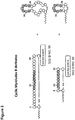
- cyclic peptides of the present invention can be cyclized in different ways, preferably
- the P sequence can be cyclized via head-to-tail cyclization.
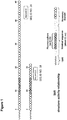
- the peptide is cyclized via head-to-tail cyclization via the N-terminus, i.e. the amino group of the N-terminal asparagine (N) and the C-terminus, i.e. carboxyl group of the C-terminal amino acid proline (P).
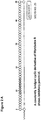
- the peptide can be cyclized via thiol oxidation (disulfide bridge formation) of the two cysteines (C).
- the peptide can be cyclized via thiol oxidation (disulfide bridge formation) of the two cysteines (C).
- the peptide can be cyclized via thiol oxidation (disulfide bridge formation) of the two cysteines (C).
- the peptide can be cyclized via thiol oxidation (disulfide bridge formation) of the two cysteines (C).
- the peptide can be cyclized via thiol oxidation (disulfide bridge formation) of the two cysteines (C).
- the peptide can be cyclized via head-to-tail cyclization via the N-terminus, i.e. the amino group of the N-terminal glycine (G) and the C-terminus, i.e. carboxyl group of the C-terminal amino acid glycine (G).
- the peptide can be cyclized via thiol oxidation (disulfide bridge formation) of the two cysteines (C).
- the cyclic peptide of the present invention is hydrophobically modified, i.e. it carries at least one covalently attached hydrophobic modification.
- the position of the hydrophobic modification(s) can vary within the peptide sequence.
- the hydrophobic modification(s) is/are at amino acid side chain(s) of X and/or Y.
- the hydrophobic modification(s) is/are at amino acid side chain(s) of P.
- the hydrophobic modification is an acylation or addition of hydrophobic moieties, preferably an acylation with C8 to C22 fatty acids , such as myristoyl (C14), palmitoyl (C16) or stearoyl (C18), more preferably myristoyl (C14), or the hydrophobic moiety or moieties is selected from cholesterol, phospholipids, glycolipids, glycerol esters, steroids, ceramids.
- C8 to C22 fatty acids such as myristoyl (C14), palmitoyl (C16) or stearoyl (C18), more preferably myristoyl (C14), or the hydrophobic moiety or moieties is selected from cholesterol, phospholipids, glycolipids, glycerol esters, steroids, ceramids.
- the cyclic peptides of the invention can carry more than one hydrophobic modification, such as two, three, four or more, which can be the same or different.
- a cyclic peptide of the invention carries one myristoyl group (C14) and one stearoyl (C18) group.
- the cyclic peptides of the invention carry one or two hydrophobic modification(s).
- the cyclic peptide with general formula Ia can be obtained via head-to-tail cyclization, such as
- a cyclic peptide with general formula Ia can be: H-cyclo[(X) m -P-(Y)n] such as wherein H is the hydrophobic modification, preferably myristoyl (C14).
- the cyclic peptides of the present invention are preferably suitable to target NTCP (gene name SLC10A1), the sodium taurocholate cotransporter polypeptide.
- the human sodium taurocholate cotransporter polypeptide NTCP/SLC10A1 is a HBV preS1-specific receptor which plays a key role in Hepatitis B virus (HBV) and/or Hepatitis D virus (HDV) infection, as it was recently identified by the inventors (see e.g. WO 2014/072526 , WO 2014/072524 and WO 2015/014830 ). Expression of this receptor or of certain non-human counterparts allows to transform cells that were previously unable to specifically bind HBV and/or HDV and/or non-susceptible to HBV and/or HDV infection into cells that are HBV and/or HDV binding-competent and/or susceptible to HBV and/or HDV infection. Cells that became susceptible to HBV and/or HDV infection after differentiation (HepaRG cells) show a significantly increased susceptibility upon expression of NTCP.
- HepaRG cells show a significantly increased susceptibility upon expression of NTCP.
- NTCP is an integral transmembrane protein, not expressed in HepG2, HuH7, induced in HepaRG cells after DMSO treatment (Kotani et al., 2012) and down-modulated in primary hepatocytes during de-differentiation (Doring et al., 2012).
- targeting NTCP refers to the specific binding of the cyclic peptides of the present invention to the NTCP receptor on respective liver cells/hepatocytes, preferably within a host (subject or patient) but also in some animals that express a binding competent NTCP although they do not support infection (e.g. mouse, rat, dog).
- the NTCP-mediated transport of bile acids is decreased or blocked by the cyclic peptides of the present invention (in case when NTCP is saturated with cyclic peptide(s).
- the HBV/HDV receptor function of NTCP is, however, already blocked, even though NTCP is not saturated with the cyclic peptide(s) indicating different pharmacological doses required for virus inhibition or the inhibition of substrate transport.
- the disclosure also describes a cyclic peptide of the present invention further comprises (accessory) domain(s).
- accessory domain(s) increase the functionality of the cyclic peptides of the invention.
- said accessory domain(s) provide epitopes that provoke antibody responses with additional neutralizing potential for HBV and HDV.
- Such accessory domain(s) can be part of the cyclic peptide or can be acyclic.
- the cyclic peptide contains amino acid residues 8 to 16 of the preS sequence and in addition e.g. amino acid residues 20 to 26 or 20 to 48 of the preS sequence as accessory domain.
- the accessory domain can be linked / attached to an amino acid side chain of X and/or Y, such as a lysine side chain.
- the cyclic peptide of the present invention comprises or consists of an amino acid sequence selected from the group of (wherein P, SEQ ID NO. 1 is underlined and the accessory domain is italic) - amino acid residues 9 to 15 (SEQ. ID NO: 2) HBVpreS9-15 NPLGFFP and e.g. additional amino acids, such as comprising a N-terminal and a C-terminal cysteine (in the peptide sequence before cyclization)
- X Cys
- Y Cys
- X CGTNLSVP
- Y DHQLDPC
- X CGTNLSVP
- Y DHQLDPAFGANSNNPDWDFNPNKDHWPEANKVGC
- cyclo [NPLGFFP] (SEQ. ID NO: 2) cyclo [NPLGFFPD] (SEQ. ID NO: 6) cyclo[PNPLGFFPD] (SEQ. ID NO: 9) cyclo [NPLGFFPDH] (SEQ. ID NO: 12) cyclo[PNPLGFFPDH] (SEQ. ID NO: 15) cyclo [GTNLSVPNPLGFFPDHQLDP] (SEQ. ID NO: 18) cyclo[GTNLSVPNPLGFFPDHQLDPAFGANSNNPDWDFNPNKDHWPEANQVG] (SEQ. ID NO: 21) cyclo[GTNLSVPNPLGFFPDHQLDPAFGANSNNPDWDFNPNKDHWPEANKVG] (SEQ. ID NO: 24) or
- the above comprise a C-terminal D-amino acid, such as D-tyrosine, e.g.
- Examples of preferred cyclic peptides of the present invention, with an N-terminal hydrophobic modification are: Myr-cyclo [HBVpreS9-15] (SEQ. ID NO: 2) myr-cyclo[NPLGFFP] Myr-cyclo [HBVpreS9-16] (SEQ. ID NO: 6) myr-cyclo[NPLGFFPD] Myr-cyclo [HBVpreS8-16] (SEQ. ID NO: 9) myr-cyclo[PNPLGFFPD] Myr-cyclo [HBVpreS9-17] (SEQ. ID NO: 12) myr-cyclo[NPLGFFPDH] Myr-cyclo [HBVpreS8-17] (SEQ.
- cyclo [NPLGFLP] (SEQ ID NO. 3) cyclo [NPLGFLPD] (SEQ ID NO. 27) cyclo [PNPLGFLPD] (SEQ ID NO. 28) cyclo [NPLGFLPDH] (SEQ ID NO. 29) cyclo [PNPLGFLPDH] (SEQ ID NO. 30) cyclo [GTNLSVPNPLGFLPDHQLDP] (SEQ ID NO. 31) cyclo[GTNLSVPNPLGFLPDHQLDPAFGANSNNPDWDFNPNKDHWPEANQVG] (SEQ ID NO. 32) cyclo[GTNLSVPNPLGFLPDHQLDPAFGANSNNPDWDFNPNKDHWPEANKVG] (SEQ ID NO. 33)
- a cyclic peptide of the present invention comprises a further moiety or moieties.
- Such further moiety or moieties are preferably covalently attached, such as via a linker, spacer and/or anchor group(s), e.g. a cleavable linker.
- Preferred radioisotopes are 131 I, 125 I, 99m Tc, 18 F, 68 Ga, 111 In, 90 Y, 177 Lu.
- amino acid residue lysine can be attached/coupled to DOTA[ 68 Ga] (i.e. K(DOTA[ 68 Ga]).
- Preferred fluorescent dyes are Alexa dyes, derivatives of rhodamine and fluorescein, Cy-dyes.
- amino acid residue lysine can be attached/coupled to the fluorescent dye Atto 488 (i.e. K(Atto 488 ).
- Preferred contrast agents are Gadolinium (Gd) complexes, supramagnetic iron (Fe) complexes and particles, compounds containing atoms of high atomic number, i.e. iodine for computer tomography (CT), microbubbles and carriers such as liposomes that contain these contrast agents.
- the cyclic peptide comprises an inhibitor, such as a capsid inhibitor, preferably covalently attached.
- an inhibitor such as a capsid inhibitor
- Such inhibitors have been shown to interfere with HBV infection through destabilization HBV genome containing nucleocapsids and therefore interfer with a post-entry step by e.g. disturb intracellular nucleocapsid trafficking and maturation of nucleocapsids (Wang et al., 2015; Cho et al., 2013; Stray et al., 2006)
- the cyclic peptide and the capsid inhibitor can act as a combination inhibitor which
- HBV The envelope of HBV encloses three proteins termed L (large), M (middle) and S (small). They share the C-terminal S-domain with four transmembrane regions.
- L large
- M large
- S small
- the M- and L-protein carry additional N-terminal extensions of 55 and, genotype-dependent, 107 or 118 amino acids (preS2- and preS1).
- preS-derived peptide of HBV refers to a peptide with an amino acid sequence that corresponds to the N-terminal extensions of the L-protein of HBV, preS1, preferably to a consensus sequence of the species and genotypes A to H as well as of woolly monkey (WMHBV), chimpanzee and gorilla hepatitis B viruses, but it also refers to variants thereof, such as N-terminally and/or C-terminally truncated variants, amino acid substitution variants.
- a peptide or amino acid sequence (a) preferably refers to a peptide with an amino acid sequence that corresponds to or is based on the N-terminal extensions of the L-protein of HBV, preS1, preferably of genotypes A to H as well as of woolly monkey (WMHBV), orangutan, chimpanzee and gorilla hepatitis B viruses and the recently described bat hepatitis B virus, but it also refers to variants thereof, preferably C-terminally truncated variants, amino acid substitution variants.
- the peptides are based on the following sequences (amino acids in single letter code; essential domain or pharmacophore underlined).
- NPLGFXP (wherein X or Xaa is an arbitrary amino acid, preferably F or L, more preferably F)
- the peptide or amino acid sequences are preferably L-amino acid sequences, but can also comprise D-amino acids or are D-amino acid sequences.
- peptide or amino acid sequences can also comprise unnatural amino acids, which are preferably used for cyclization.
- peptides of this invention can be prepared by a variety of procedures readily known to those skilled in the art, in general by synthetic chemical procedures.
- Synthetic chemical procedures include more particularly the solid phase sequential and block synthesis (Erickson & Merrifield, 1976).
- the solid phase sequential procedure can be performed using established automated methods such as by use of an automated peptide synthesizer.
- an ⁇ -amino protected amino acid is bound to a resin support.
- the resin support employed can be any suitable resin conventionally employed in the art for the solid phase preparation of (poly)peptides, preferably polystyrene which has been copolymerized with polyoxyethylen to provide sites for ester formation with the initially introduced o-amino protected amino acid.
- This optimized method applied by the inventors, has been explicitly described (see e.g. Gausepohl et al., 1989).
- the amino acids are introduced one by one (step-wise). Each synthesis cycle corresponding to the introduction of one amino acid includes a deprotection step, successive washing steps, a coupling step with activation of the amino acid, and subsequent washing steps. Each of these steps is followed by a filtration.
- the reactive agents for coupling are the classical reactive agents for (poly)peptide synthesis such as dicyclohexylcarbodiimide, hydroxybenzotriazole, benzotriazil-1-yl-oxytris (dimethylamino) phosphonium hexafluorophosphate, and diphenylphosphorylazide.
- the polypeptide is separated from the resin by a treatment with a strong acid such as trifluoroacetic acid in the presence of anisol, ethanedithiol or 2-methylindole.
- a strong acid such as trifluoroacetic acid in the presence of anisol, ethanedithiol or 2-methylindole.
- the compound is then purified by the classical techniques of purification, in particular by means of HPLC.
- the peptides of the present invention may also be obtained by coupling (poly)peptide fragments that are selectively protected, this coupling being effected e.g. in a solution.
- covalent peptide cyclisation can be achieved by the formation of any chemical bond.
- the main strategies followed are cyclisation by the formation of disulfide bonds or amide bonds.
- the general aspects of peptide cyclization have been comprehensively reviewed by White and Yudin (2011).
- amide bond formation - the head to tail cyclization requires the availability of a carboxylic acid moiety with an appropriate convergent protecting group, i.e. a carbamate linked to an allylic ester (an Alloc group).
- the cyclisation is achieved either on the solid support or in solution using activation agents such as HBTU.
- activation agents such as HBTU.
- the cyclization requires the availability of two thiol groups with an appropriate convergent protecting groups such as Trityl- protecting groups.
- the cyclisation is achieved by oxidation using agents such as hydrogen peroxide or milder conditions as available by air oxidation.
- the present invention provides a pharmaceutical composition.
- compositions according to the present invention comprise
- compositions according to the present invention are very well suited for all the uses and methods described herein.
- the present invention provides a vaccine composition comprising at least one cyclic peptide of the present invention and optionally a pharmaceutically acceptable carrier and/or excipient containing/comprising the immunogenic epitope(s).
- compositions according to the present invention are very well suited for the uses and methods described herein.
- a “pharmaceutically acceptable carrier or excipient” refers to any vehicle wherein or with which the pharmaceutical or vaccine compositions according to the invention may be formulated. It includes a saline solution such as phosphate buffer saline. In general, a diluent or carrier is selected on the basis of the mode and route of administration, and standard pharmaceutical practice.
- compositions according to the present invention are formulated for oral administration and, thus, comprise suitable pharmaceutically acceptable carrier(s) and/or excipient(s) for oral administration.
- Examples for pharmaceutically acceptable carrier(s) and/or excipient(s) are also liposomes.
- the present invention provides the cyclic peptide of the present invention or the pharmaceutical composition of the present invention for use in medicine.
- cyclic peptide(s) of the present invention or the pharmaceutical composition(s) according to the invention are suitable and, thus, provided for the diagnosis, prevention and/or treatment of diseases.
- the present invention provides the cyclic peptide of the present invention or the pharmaceutical composition of the present invention for use in the treatment for the inhibition of HBV and/or HDV infection.
- the present invention provides the cyclic peptide of the present invention or the pharmaceutical composition of the present invention for use in the prevention of a primary HBV and/or HDV infection.
- the present invention provides the cyclic peptide of the present invention or the pharmaceutical composition of the present invention for use as in vitro HBV and/or HDV entry inhibitors
- HBV infection of any genotype of HBV is inhibited or prevented.
- the entry inhibition is via targeting of the sodium taurocholate cotransporter polypeptide (NTCP/SLC10A1), "NTCP targeting”.
- NTCP/SLC10A1 sodium taurocholate cotransporter polypeptide
- the cyclic peptide and the capsid inhibitor can act as a combination inhibitor which
- the present invention provides the cyclic peptide of the present invention or the pharmaceutical composition of the present invention for use in the diagnosis, prevention and/or treatment of a liver disease or condition.
- the liver disease or condition is selected from hepatitis, cirrhosis, haemochromatosis, preferably hepatitis caused by hepatitis A, B, C, D, E, F, G and H virus or concomitant hepatitis caused by viruses,
- the liver disease or disorder is a disease which involves a liver stadium of a virus or a non-viral pathogen, such as a tropical disease, malaria, schistosomiasis, leishmaniasis, Morbus Wilson.
- the liver disease or disorder is a liver tumor, preferably hepatocellular carcinoma (HCC).
- HCC hepatocellular carcinoma
- the liver disease or disorder is a post-transplantation complication after liver transplantation related to bile salt accumulation within the biliary pathway / a post-transplantation-related liver dysfunction.
- the liver disease or condition is related to sodium taurocholate cotransporter polypeptide (NTCP)-mediated transport of compounds into hepatocytes, or necessitates a delivery of a compound, such as a drug or label, to the site or location of the disease or condition.
- NTCP sodium taurocholate cotransporter polypeptide
- said liver disease or condition is a liver involved metabolic disease selected from intrahepatic cholestasis, poisoning of the liver (by liver toxins) / hepatotoxicity, drug-induced cholestatic liver disease, hyperlipidemia, posthepatic cholestasis, metabolic syndrome, non-alcoholic fatty liver disease (NAFLD), glycogen storage diseases,
- a liver involved metabolic disease selected from intrahepatic cholestasis, poisoning of the liver (by liver toxins) / hepatotoxicity, drug-induced cholestatic liver disease, hyperlipidemia, posthepatic cholestasis, metabolic syndrome, non-alcoholic fatty liver disease (NAFLD), glycogen storage diseases,
- the compounds which are transported into hepatocytes via NTCP are preferably bile acids, steroids, conjugated and non-conjugated thyroid hormones, liver toxins, compounds that are covalently bound to taurocholate, bromosulphophthalein, drugs.
- liver diseases or conditions such as liver diseases or conditions that are related to NTCP-mediated transport of compounds (such as bile acids etc.) into hepatocytes, preferably liver involved metabolic diseases (e.g. intrahepatic cholestasis, poisoning of the liver (by liver toxins) / hepatotoxicity, drug-induced cholestatic liver disease, hyperlipidemia, etc.) and cardiovascular diseases.
- NTCP sodium taurocholate cotransporter polypeptide
- liver involved metabolic disease when used herein refers to metabolic disorders including visceral obesity, diabetes mellitus and dyslipidemia which are influenced by the liver metabolism of lipids and bile acids.
- cholestasis is a condition where bile constituents cannot be secreted from hepatocytes into the biliary tree or where bile cannot flow from the liver to the duodenum, resulting in hepatocyte bile acid accumulation within hepatocytes.
- Cholestasis or “intrahepatic cholestasis” when used herein refers to intrahepatic toxic effects of hepatocyte bile acid accumulation related to an insufficient expression and/or activity of bile salt pumps (like BSEP or MRP) in the canalicular membrane.
- BSEP bile salt pumps
- Posthepatic cholestasis when used herein refers to a cholestatic liver disease due to obstruction of the large bile ducts.
- “Poisoning of the liver” or “hepatotoxicity” or “toxic liver disease” when used herein refer to toxic effects of drugs independent of bile acid accumulation. These drugs penetrate the hepatocytes via the NTCP-mediated transport and cause several direct toxic effects, by damaging the mitochondria or by activating enzymes in the cytochrome P-450 system leading to oxidative stress.
- Drug-induced cholestatic liver disease when used herein refers to inhibition of the export of bile acids from hepatocytes due to drug effects on bile salt export pump (BSEP).
- Drug-induced cholestasis may be caused by several drugs which inhibit BSEP, such as rifampicin, cyclosporine A, rifamycin SV, bosentan, troglitazone, erythromycin estolate, and glibenclamide (Fattinger et al., 2001; Funk et al., 2001; Funk et al., 2001; Stieger et al., 2000; Dawson et al., 2012; Morgan et al., 2010; Ogimura et al., 2011).
- BSEP is a member of the ATP-binding cassette (ABC) family of transporters (BSEP is also identified as ABCB11) and it is involved in the process of exporting bile acids out of hepatocytes, thus reducing their toxicity to these cells.
- ABC ATP-binding cassette
- the above mentioned drugs cause the toxic effects of excess bile acid accumulation because the excretion of bile acid via BSEP is disabled.
- Inhibition of NTCP-mediated bile acid uptake via the lipopeptide-based compound (such as MyrB) and NTCP counterbalances BSEP inhibition, and thereby prevents hepatotoxicity or is suitable for treatment and/or diagnosis.
- Hyperlipidemia involves abnormally elevated levels of any or all lipids and/or lipoproteins in the blood. Hyperlipidemias are divided in primary and secondary subtypes. Primary hyperlipidemia is usually due to genetic causes (such as a mutation in a receptor protein), while secondary hyperlipidemia arises due to other underlying causes such as diabetes. Lipid and lipoprotein abnormalities are common in the general population, and are regarded as a modifiable risk factor for cardiovascular disease due to their influence on atherosclerosis.
- “Hypercholesterolemia” (or hypercholesterolaemia) is the presence of high levels of cholesterol in the blood. It is a form of "hyperlipidemia”.
- “Hyperlipidemia” when used herein preferably refers to hypercholesterolemia which includes elevated LDL cholesterol, reduced HDL cholesterol, elevated triglycerides, clogged arteries leading to high blood pressure, cardiovascular disease (CVD), heart attacks and strokes.
- CVD cardiovascular disease
- Metabolic syndrome refers to a disorder of energy utilization and storage, diagnosed by a co-occurrence of three out of five of the following medical conditions: abdominal (central) obesity, elevated blood pressure, elevated fasting plasma glucose, high serum triglycerides, and low high-density cholesterol (HDL) levels. Metabolic syndrome increases the risk of developing cardiovascular disease, particularly heart failure, and diabetes. Metabolic syndrome is also known as metabolic syndrome X, cardiometabolic syndrome, syndrome X, insulin resistance syndrome, Reaven's syndrome, and CHAOS.
- Non-alcoholic fatty liver disease refers to one cause of a fatty liver, occurring when fat is deposited (steatosis) in the liver not due to excessive alcohol use. It is related to insulin resistance and the metabolic syndrome.
- Non-alcoholic steatohepatitis is the most extreme form of NAFLD, and is regarded as a major cause of cirrhosis of the liver of unknown cause.
- the NTCP-mediated transport is decreased or blocked by the cyclic peptides of the present invention.
- the cyclic peptide and the capsid inhibitor can act as a combination inhibitor which
- the present invention provides the cyclic peptide of the present invention or the pharmaceutical composition of the present invention for use in the diagnosis, prevention and/or treatment of a cardiovascular disease (CVD).
- CVD cardiovascular disease
- the cardiovascular disease comprises the control or modification of the cholesterol level or cholesterol uptake, wherein the cholesterol level or uptake is preferably controlled or modified by decreasing or blocking the NCTP-mediated bile salt transport (by the cyclic peptide).
- the cholesterol level or uptake is controlled or modified by decreasing or blocking the NCTP-mediated bile salt transport by the cyclic peptide of the present invention.
- Said uses comprises the control or modification of the cholesterol level or cholesterol uptake, wherein the cholesterol level or uptake is controlled or modified by decreasing or blocking the NCTP-mediated bile salt transport by the cyclic peptide of the present invention.
- Cardiovascular diseases are the major cause of morbidity and death in the western world. High levels of cholesterol have been associated with CVD as one of the antibiotic factors. Of particular importance clinically is the abnormal deposition of cholesterol and cholesterol-rich lipoproteins in the coronary arteries. Such deposition, eventually leading to atherosclerosis, is the leading contributory factor in diseases of the coronary arteries. In this case the management of CVD is critical dependent on lipid-lowering therapies. Different classes of drugs are available for this purpose, such as statins, cholesterol absorption inhibitors, bile acid resins, fibrates and nicotinic acid that act by reducing the levels of cholesterol by distinct pathways (Schmitz & Langmann, 2006). These drugs have several side effects and depend on the relative levels of the metabolizing enzymes and transporters that act on cardiovascular drugs.
- the main control of cholesterol metabolism is caused by bile acid as an important regulator of cholesterol homeostasis.
- the levels of bile acid and cholesterol are linked by the regulation of cholesterol metabolism and absorption.
- the synthesis of the bile acids is the major pathway of cholesterol catabolism in mammals, because the end products of cholesterol utilization are the bile acids.
- the major pathway for the synthesis of the bile acids is initiated via hydroxylation of cholesterol at the 7 position via the action of cholesterol 7 ⁇ -hydroxylase (CYP7A1). That means that the synthesis of bile acids is one of the predominant mechanisms for the excretion of excess cholesterol. Under physiological conditions this regulation is insufficient to compensate for an excess intake of cholesterol.
- bile acid uptake into hepatocytes is blocked, the excretion of cholesterol in the form of bile acids will be sufficient to compensate for an excess dietary intake of cholesterol.
- Blocking bile acid uptake via the lipopeptide-based compound according to the invention and NTCP leads to intracellular deficiency of bile acid which is compensated by increased cholesterol metabolism and absorption.
- the cyclic peptides of the present invention are suitable for lipid-lowering therapies to prevent CVD.
- the route of administration of cyclic peptides or pharmaceutical compositions of the present invention is selected from oral, subcutaneous, intravenous, nasal, intramuscular, transdermal, inhalative, by suppository.
- a preferred route of administration or application is orally.
- a preferred embodiment for nasal administration or application is a nasal spray.
- cyclic peptides or the pharmaceutical compositions of the invention are provided such that they comprise a therapeutically effective amount of said cyclic peptide(s) or of said pharmaceutical composition(s).
- a “therapeutically effective amount” of a cyclic peptide or a pharmaceutical composition of this invention refers to the amount that is sufficient to inhibit NTCP receptor function. Furthermore, said “therapeutically effective amount” depends on the respective application and desired outcome of inhibition, treatment or vaccination.
- said "therapeutically effective amount" of a cyclic peptide or a pharmaceutical composition of this invention refers to the amount that is sufficient to inhibit a HBV and/or HDV infection; prevent a primary HBV and/or HDV infection; treat hepatitis B and/or D and/or vaccinate and/or inhibit entry of HBV and/or HDV in vivo.
- a preferred therapeutically effective amount is in the range of 10 ⁇ g to 1 mg per kg body weight, preferably 10 ⁇ g to 100 ⁇ g.
- the therapeutically effective amount is in the range of from about 0.01 mg to about 50 mg per patient and per day, preferably from about 1 mg to about 20 mg per patient per day or is applied to a patient in a dose ranging from 100 nmol per kg to 2 ⁇ mol per kg per day / or is applied to a patient in a dose ranging from 10 pmol per kg to 20 ⁇ mol per kg body weight.
- a preferred therapeutically effective amount is about 100 ⁇ g per kg body weight or in the range of 1 to 5 mg per patient.
- the preferred therapeutically effective amount in the range of 1 to 5 mg per patient can be administered once a day or in other embodiments only once every 2-3 days.
- Peptides were synthesized on solid phase (Tentagel R RAM resin, capacity 0.22 mmol/g, Rapp Polymere, Tübingen, Germany) using Fmoc/tBu chemistry in peptide synthesizer (Applied Biosystems 443A, Foster City, CA, USA). Before beginning peptide synthesis the resin (0.05 mmol) was preswollen in DCM. Fmoc-protected amino acids were used in a 10-fold excess (0.5mmol) and activated with HBTU/ DIPEA in NMP. See also Schieck et al., 2010.
- Peptide on the solid support was swollen in DCM and washed with NMP.
- Myristic acid (4 eq.) and HATU or COMU (4 eq.) were dissolved in NMP and 10 eq. DIPEA were added.
- the mixture was added to the resin and was incubated for 30 min. Afterwards the resin was washed three times with NMP, three times with DCM and dried.
- the peptide was cleaved and deprotected with TFA/TIS/H 2 O (95:2.5:2.5).
- the deprotected peptide was precipitated with diethyl ether, pelleted by centrifugation (3000 rpm, 5 min) and washed twice with fresh diethyl ether.
- the peptide was dried.
- MyrB Myr- GTNLSVP NPLGFFP DHQLDPAFGANSNNPDWDFNPNKDHWPEANKVG-amide [SEQ ID NO. 24]
- Solid phase cyclization was achieved by 110 mg (86 mL; 0.4 mmol) DPPA and 77 mg (102 ⁇ L; 0.6 mmol) in 2 mL NMP after linear assembly as well as catalytic allyl-deprotection with 5 mg tetrakis(triphenylphosphine)palladium(0) and 30 mg borane dimethylamine complex.
- the cyclic peptide was cleaved and deprotected by 95:2.5:2.5 TFA/water/TIS and purified by HPLC; occasionally a portion of the raw peptide was modified with DOTA or fluorescent dye active esters prior to purification
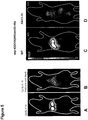
- mice were anesthetized with 1% sevoflurane (Abbott, Wiesbaden, Germany) and images were recorded using an Inveon small animal positron emission tomographic (PET) scanner (Siemens, Knoxville, TN) up to 60 minutes postinjection.
- PET Inveon small animal positron emission tomographic
- HepG2 NTCP cells seeded in a 24 well format were preincubated with the indicated peptide for 30 min at 37°C in culture medium.
- 150 ⁇ M taurocholate (containing 450 cpm/fmol 3 H taurocholate) were added to each well and the cells were incubated an additional 15 minutes at 37°C. Uptake was stopped by removal of the cell culture medium and addition of ice cold PBS. The cells were washed three times with cold PBS and lysed (0.2 M NaOH, 0.05% SDS). Cell lysates were mixed with Ultima Gold liquid scintillation solution (Perkin Elmer, Rodgau, Germany) and the radioactivity measured in a liquid scintillation counter (Packard Instruments, Frankfurt, Germany).
- HepG2 NTCP cells seeded in a 24 well format were preincubated with the indicated peptide at indicated concentrations for 30 min at 37°C in culture medium.
- the cells were subsequently infected with HBV (GE 1.8x10 8 ) overnight in cell culture medium containing 4% PEG for 16 h at 37°C in the presence of the peptides followed by a washing step with PBS.
- the medium was changed every two days and supernatant collected from day 5 to 7 post infection for HBeAg measurement.
Landscapes
- Chemical & Material Sciences (AREA)
- Health & Medical Sciences (AREA)
- Life Sciences & Earth Sciences (AREA)
- Organic Chemistry (AREA)
- General Health & Medical Sciences (AREA)
- Proteomics, Peptides & Aminoacids (AREA)
- Medicinal Chemistry (AREA)
- Molecular Biology (AREA)
- Biophysics (AREA)
- Genetics & Genomics (AREA)
- Biochemistry (AREA)
- Virology (AREA)
- Public Health (AREA)
- Animal Behavior & Ethology (AREA)
- Veterinary Medicine (AREA)
- Pharmacology & Pharmacy (AREA)
- Engineering & Computer Science (AREA)
- Epidemiology (AREA)
- Chemical Kinetics & Catalysis (AREA)
- General Chemical & Material Sciences (AREA)
- Gastroenterology & Hepatology (AREA)
- Nuclear Medicine, Radiotherapy & Molecular Imaging (AREA)
- Biotechnology (AREA)
- Communicable Diseases (AREA)
- Oncology (AREA)
- Optics & Photonics (AREA)
- Physics & Mathematics (AREA)
- Biomedical Technology (AREA)
- Peptides Or Proteins (AREA)
- Medicines That Contain Protein Lipid Enzymes And Other Medicines (AREA)
- Medicinal Preparation (AREA)
- Medicines Containing Antibodies Or Antigens For Use As Internal Diagnostic Agents (AREA)
- Micro-Organisms Or Cultivation Processes Thereof (AREA)
Claims (16)
- Zyklisches Peptid der allgemeinen Formel Ia
cyclo[(X)m-P-(Y)n] (Ia)
wobeiP die Aminosäuresequenz NPLGFXaaP (SEQ ID Nr. 1) ist, wobei Xaa F oder L ist,X eine Aminosäuresequenz ist, die eine Länge von m Aminosäuren hat,
wobei m 0 oder mindestens 1 ist;Y eine Aminosäuresequenz ist, die eine Länge von n Aminosäuren hat,wobei n 0 oder mindestens 1 ist;und wobei m + n 0 bis 42 ist;und wobei es mindestens eine hydrophobe Modifikation an einer Aminosäureseitenkette (Aminosäureseitenketten) von X und/oder P trägt, wobei das zyklische Peptid nicht innerhalb der Aminosäuresequenz von P mit SEQ ID Nr. 1 und nicht über Aminosäureseitenketten von P zyklisiert ist,
wobei die hydrophobe Modifikation eine Acylierung oder eine Hinzufügung von hydrophoben Gruppen ist,
oder ein pharmazeutisch akzeptables Salz davon. - Zyklisches Peptid nach Anspruch 1, wobei die hydrophobe Modifikation eine Acylierung mit C8- bis C22-Fettsäuren, wie Myristoyl (C14), Palmitoyl (C16) oder Stearoyl (C18), bevorzugt Myristoyl (C14), ist,
oder die hydrophobe(n) Gruppe oder Gruppen ausgewählt ist (sind) aus Cholesterin, Phospholipiden, Glycolipiden, Glycerinestern, Steroiden, Ceramiden. - Zyklisches Peptid nach Anspruch 1 oder 2, wobei das Peptid zyklisiert ist(a) über eine Thiol-Oxidation (Disulfidbrückenbildung) von zwei in dem Peptid umfassten Cysteinen (C),(b) Amidkondensation von zwei Aminosäureseitenketten (Lactam),(c) über eine Kopf-an-Schwanz-Zyklisierung,(d) über eine Rückgrat-Zyklisierung, und/oder(e) über eine Thioetherbildung.
- Zyklisches Peptid nach einem der vorangehenden Ansprüche, wobei m = 0 bis 8 und/oder n = 0 bis 34, unter der Voraussetzung, dass m + n mindestens 1 ist.
- Zyklisches Peptid nach einem der vorangehenden Ansprüche mit der Formel
H-cyclo[(X)m-P-(Y)n]
wobei H die hydrophobe Modifikation ist. - Zyklisches Peptid nach einem der vorangehenden Ansprüche, wobei das Peptid eine Aminosäuresequenz umfasst oder aus einer Aminosäuresequenz besteht, ausgewählt aus der Gruppe von
HBVpreS9-15 NPLGFFP (SEQ ID Nr. 2) Cys-HBVpreS9-15-Cys C-NPLGFFP-C (SEQ ID Nr. 4) HBVpreS9-16 NPLGFFPD (SEQ ID Nr. 6) Cys-HBVpreS9-16-Cys C-NPLGFFPD-C (SEQ ID Nr. 7) HBVpreS8-16 PNPLGFFPD (SEQ ID Nr. 9) Cys-HBVpreS8-16-Cys C-PNPLGFFPD-C (SEQ ID Nr. 10) HBVpreS9-17 NPLGFFPDH (SEQ ID Nr. 12) Cys-HBVpreS9-17-Cys C-NPLGFFPDH-C (SEQ ID Nr. 13) HBVpreS8-17 PNPLGFFPDH (SEQ ID Nr. 15) Cys-HBVpreS8-17-Cys C-PNPLGFFPDH-C (SEQ ID Nr. 16) HBVpreS2-21 GTNLSVPNPLGFFPDHQLDP (SEQ ID Nr. 18) Cys-HBVpreS2-21-Cys C-GTNLSVPNPLGFFPDHQLDP-C (SEQ ID Nr. 19) HBVpreS2-48 GTNLSVPNPLGFFPDHQLDPAFGANSNNPDWDFNPNKDHWPEANQVG (SEQ ID Nr. 21) Cys-HBVpreS2-48-Cys C-GTNLSVPNPLGFFPDHQLDPAFGANSNNPDWDFNPNKDHWPEANQVG-C (SEQ ID Nr. 22) Myrcludex B GTNLSVPNPLGFFPDHQLDPAFGANSNNPDWDFNPNKDHWPEANKVG (SEQ ID Nr. 24) Cys-Myrcludex B-Cys C-GTNLSVPNPLGFFPDHQLDPAFGANSNNPDWDFNPNKDHWPEANKVG-C (SEQ ID Nr. 25) cyclo [NPLGFFP] (SEQ ID Nr. 2) cyclo [NPLGFFPD] (SEQ ID Nr. 6) cyclo [PNPLGFFPD] (SEQ ID Nr. 9) cyclo [NPLGFFPDH] (SEQ ID Nr. 12) cyclo[PNPLGFFPDH] (SEQ ID Nr. 15) cyclo[GTNLSVPNPLGFFPDHQLDP] (SEQ ID Nr. 18) cyclo[GTNLSVPNPLGFFPDHQLDPAFGANSNNPDWDFNPNKDHWPEANQVG] (SEQ ID Nr. 21) cyclo[GTNLSVPNPLGFFPDHQLDPAFGANSNNPDWDFNPNKDHWPEANKVG] (SEQ ID Nr. 24) cyclo [NPLGFLP] (SEQ ID Nr. 3) cyclo [NPLGFLPD] (SEQ ID Nr. 27) cyclo [PNPLGFLPD] (SEQ ID Nr. 28) cyclo [NPLGFLPDH] (SEQ ID Nr. 29) cyclo [PNPLGFLPDH] (SEQ ID Nr. 30) cyclo [GTNLSVPNPLGFLPDHQLDP] (SEQ ID Nr. 31) cyclo[GTNLSVPNPLGFLPDHQLDPAFGANSNNPDWDFNPNKDHWPEANQVG] (SEQ ID Nr. 32) cyclo[GTNLSVPNPLGFLPDHQLDPAFGANSNNPDWDFNPNKDHWPEANKVG] (SEQ ID Nr. 33) - Zyklisches Peptid nach einem der vorangehenden Ansprüche, wobei das Peptid eine Aminosäuresequenz umfasst oder aus einer Aminosäuresequenz besteht, ausgewählt aus der Gruppe von
Myr-cyclo-[HBVpreS9-15] (SEQ ID Nr. 2) myr-cyclo[NPLGFFP] Myr-cyclo-[HBVpreS9-16] (SEQ ID Nr. 6) myr-cyclo[NPLGFFPD] Myr-cyclo-[HBVpreS8-16] (SEQ ID Nr. 9) myr-cyclo[PNPLGFFPD] Myr-cyclo-[HBVpreS9-17] (SEQ ID Nr. 12) myr-cyclo[NPLGFFPDH] Myr-cyclo-[HBVpreS8-17] (SEQ ID Nr. 15) myr-cyclo[PNPLGFFPDH] Myr-cyclo-[HBVpreS2-21] (SEQ ID Nr. 18) myr-cyclo[GTNLSVPNPLGFFPDHQLDP] Myr-cyclo-[HBVpreS2-48] (SEQ ID Nr. 21) myr-cyclo[GTNLSVPNPLGFFPDHQLDPAFGANSNNPDWDFNPNKDHWPEANQVG] Myr-cyclo-[HBVpreS2-48] = zyklisches Myrcludex B (SEQ ID Nr. 24) myr-cyclo[GTNLSVPNPLGFFPDHQLDPAFGANSNNPDWDFNPNKDHWPEANKVG]
myr-cyclo[NPLGFLP]
myr-cyclo[NPLGFLPD]
myr-cyclo[PNPLGFLPD]
myr-cyclo[NPLGFLPDH]
myr-cyclo[PNPLGFLPDH]
myr-cyclo[GTNLSVPNPLGFLPDHQLDP] myr-cyclo[GTNLSVPNPLGFLPDHQLDPAFGANSNNPDWDFNPNKDHWPEANQVG] myr-cyclo[GTNLSVPNPLGFLPDHQLDPAFGANSNNPDWDFNPNKDHWPEANKVG]. - Zyklisches Peptid nach einem der vorangehenden Ansprüche, umfassend eine weitere Gruppe oder Gruppen
wie beispielsweise
ein Medikament(e) oder seine (ihre) entsprechende(n) Prodrug(s);
eine Marke(n);
eine Markierung(en), wie beispielsweise ein Fluoreszenzfarbstoff(e), Radioisotop(e) und Kontrastmittel;
ein rekombinantes Virus (rekombinante Viren);
Träger oder Depot(s) für ein Medikament(e), eine Prodrug(s) oder eine Markierung(en);
ein immunogenes Epitop (immunogene Epitope);
Hormone;
ein Inhibitor(en);
Toxine.
bevorzugt kovalent gebunden, wie beispielsweise über einen Linker, Abstandshalter und/oder eine Ankergruppe(n), z.B. einen spaltbaren Linker,
und/oder umfassend einen Inhibitor, wie beispielsweise einen Kapsidinhibitor. - Pharmazeutische Zusammensetzung, umfassend(i) mindestens ein zyklisches Peptid nach einem der Ansprüche 1 bis 8,(ii) wahlweise, einen pharmazeutisch akzeptablen Träger und/oder Hilfsstoff.
- Zyklisches Peptid nach einem der Ansprüche 1 bis 8 oder pharmazeutische Zusammensetzung nach Anspruch 9 zur Verwendung als in vitro-HBV- und/oder -HDV-Eintrittsinhibitoren.
- Zyklisches Peptid nach einem der Ansprüche 1 bis 8 oder pharmazeutische Zusammensetzung nach Anspruch 9 zur Verwendung in der Medizin.
- Zyklisches Peptid oder pharmazeutische Zusammensetzung zur Verwendung nach Anspruch 11, wobei die Verwendung umfasst- Behandlung zur Hemmung einer HBV- und/oder HDV-Infektion,- die Verhinderung einer primären HBV- und/oder HDV-Infektion,
bevorzugt über NTCP-Targeting,
wobei, bevorzugt, eine HBV-Infektion eines beliebigen Genotyps von HBV gehemmt oder verhindert wird. - Zyklisches Peptid nach einem der Ansprüche 1 bis 8 oder pharmazeutische Zusammensetzung nach Anspruch 9 zur Verwendung bei der Diagnose, Verhinderung und/oder Behandlung einer Lebererkrankung oder eines Leberzustands,
wobei, bevorzugt, die Lebererkrankung oder der Leberzustand ausgewählt ist aus Hepatitis, Zirrhose, Hämochromatose, bevorzugt eine durch einen Hepatitis-A-, -B-, -C-, -D-, -E-, -F-, - G- und -H-Virus verursachte Hepatitis oder durch Viren verursachte begleitende Hepatitis,
und/oder wobei, bevorzugt, die Lebererkrankung oder -störung eine Erkrankung ist, die ein Leberstadium eines Virus oder eines nicht-viralen Erregers, beispielsweise eine Tropenkrankheit, Malaria, Schistosomiasis, Leishmaniasis, Morbus Wilson, umfasst,
und/oder wobei, bevorzugt, die Lebererkrankung oder -störung ein Lebertumor, bevorzugt ein hepatozelluläres Karzinom (HCC), ist,
und/oder wobei, bevorzugt, die Lebererkrankung oder -störung eine Posttransplantationskomplikation nach einer Lebertransplantation ist, die mit einer Akkumulierung von Gallensalz innerhalb des Gallenwegs verbunden ist,
und/oder wobei, bevorzugt, die Lebererkrankung oder der Leberzustand mit einem Natrium-Taurocholat-Cotransporter-Polypeptid (NTCP) -vermittelten Transport von Verbindungen in Hepatozyten verbunden ist,
oder eine Verabreichung einer Verbindung, beispielsweise eines Medikaments oder einer Markierung, an die Stelle oder den Ort der Erkrankung oder des Zustands erfordert, und, bevorzugt, eine Leber-involvierte Stoffwechselerkrankung ist, ausgewählt aus intrahepatischer Cholestase,Vergiftung der Leber durch Lebertoxine / Hepatotoxizität,medikamenteninduzierter cholestatischer Lebererkrankung,Hyperlipidämie,posthepatischer Cholestase,metabolischem Syndrom,nichtalkoholischer Fettleberkrankheit (NAFLD),Glykogenspeicher-Erkrankungen,und wobei die Verbindungen, die über NTCP in Hepatozyten transportiert werden, bevorzugt Gallensäuren, Steroide, konjugierte und nicht-konjugierte Schilddrüsenhormone, Lebertoxine, kovalent an Taurocholat, Bromsulfophthalein, Medikamente gebundene Verbindungen sind. - Zyklisches Peptid nach einem der Ansprüche 1 bis 8 oder pharmazeutische Zusammensetzung nach Anspruch 9 zur Verwendung bei der Diagnose, Verhinderung und/oder Behandlung einer kardiovaskulären Erkrankung (CVD),
bevorzugt umfassend das Kontrollieren oder Modifizieren des Cholesterinspiegels oder der Cholesterinaufnahme,
wobei der Cholesterinspiegel oder die Cholesterinaufnahme bevorzugt durch Verringern oder Blockieren des NCTP-vermittelten Gallensalztransports durch das zyklische Peptid kontrolliert oder modifiziert wird. - Zyklisches Peptid oder pharmazeutische Zusammensetzung zur Verwendung nach einem der Ansprüche 11 bis 14, wobei das zyklische Peptid in einer therapeutisch wirksamen Menge, bevorzugt in dem Bereich von etwa 0,01 mg bis etwa 50 mg pro Patient, bevorzugt von etwa 1 mg bis etwa 20 mg pro Patient, verabreicht wird,
oder in einer Dosis in einem Bereich von 10 pmol pro kg bis 20µmol pro kg Körpergewicht an einen Patienten verabreicht wird. - Zyklisches Peptid oder pharmazeutische Zusammensetzung zur Verwendung nach einem der Ansprüche 11 bis 14, wobei der Verabreichungsweg ausgewählt ist aus oral, subkutan, intravenös, nasal, intramuskulär, transdermal, inhalativ, durch Zäpfchen.
Applications Claiming Priority (2)
| Application Number | Priority Date | Filing Date | Title |
|---|---|---|---|
| EP15200494.1A EP3181146A1 (de) | 2015-12-16 | 2015-12-16 | Cyclische, auf ntcp gerichtete peptide und deren verwendungen als eintrittsinhibitoren |
| PCT/EP2016/081117 WO2017102906A1 (en) | 2015-12-16 | 2016-12-15 | Cyclic ntcp-targeting peptides and their uses as entry inhibitors |
Publications (2)
| Publication Number | Publication Date |
|---|---|
| EP3389691A1 EP3389691A1 (de) | 2018-10-24 |
| EP3389691B1 true EP3389691B1 (de) | 2020-05-06 |
Family
ID=55068776
Family Applications (2)
| Application Number | Title | Priority Date | Filing Date |
|---|---|---|---|
| EP15200494.1A Withdrawn EP3181146A1 (de) | 2015-12-16 | 2015-12-16 | Cyclische, auf ntcp gerichtete peptide und deren verwendungen als eintrittsinhibitoren |
| EP16822406.1A Revoked EP3389691B1 (de) | 2015-12-16 | 2016-12-15 | Cyclische, auf ntcp gerichtete peptide und deren verwendungen als eintrittsinhibitoren |
Family Applications Before (1)
| Application Number | Title | Priority Date | Filing Date |
|---|---|---|---|
| EP15200494.1A Withdrawn EP3181146A1 (de) | 2015-12-16 | 2015-12-16 | Cyclische, auf ntcp gerichtete peptide und deren verwendungen als eintrittsinhibitoren |
Country Status (6)
| Country | Link |
|---|---|
| US (1) | US11401304B2 (de) |
| EP (2) | EP3181146A1 (de) |
| JP (2) | JP2019504004A (de) |
| CN (1) | CN108367047B (de) |
| ES (1) | ES2810858T3 (de) |
| WO (1) | WO2017102906A1 (de) |
Families Citing this family (31)
| Publication number | Priority date | Publication date | Assignee | Title |
|---|---|---|---|---|
| JP6882978B2 (ja) | 2014-10-29 | 2021-06-02 | バイスクルアールディー・リミテッド | Mt1−mmpに特異的な二環性ペプチドリガンド |
| DK3463422T3 (da) * | 2016-05-30 | 2024-07-22 | Shanghai Hep Pharmaceutical Co Ltd | Sammensætninger og fremgangsmåder til behandling af stofskiftelidelser |
| JP7301757B2 (ja) | 2017-06-26 | 2023-07-03 | バイスクルアールディー・リミテッド | 検出可能部分を持つ二環式ペプチドリガンドおよびその使用 |
| CN109675016A (zh) * | 2017-10-18 | 2019-04-26 | 上海贺普药业股份有限公司 | 非酒精性脂肪性肝病的治疗药物 |
| CN111867616A (zh) * | 2018-01-11 | 2020-10-30 | 国立大学法人东京大学 | Ntcp抑制剂 |
| JP2021514953A (ja) | 2018-02-23 | 2021-06-17 | バイスクルテクス・リミテッド | 多量体二環式ペプチドリガンド |
| IL279489B2 (en) | 2018-06-22 | 2025-10-01 | Bicycletx Ltd | Bicyclic peptide ligands specific for nectin-4, a drug conjugate containing the peptide ligands and a pharmaceutical composition containing the drug conjugate |
| GB201820316D0 (en) * | 2018-12-13 | 2019-01-30 | Bicyclerd Ltd | Bicyclic peptide ligands specific for IL-17 |
| GB201820288D0 (en) | 2018-12-13 | 2019-01-30 | Bicycle Tx Ltd | Bicycle peptide ligaands specific for MT1-MMP |
| GB201820325D0 (en) | 2018-12-13 | 2019-01-30 | Bicyclerd Ltd | Bicyclic peptide ligands specific for psma |
| GB201820295D0 (en) | 2018-12-13 | 2019-01-30 | Bicyclerd Ltd | Bicyclic peptide ligands specific for MT1-MMP |
| US12551567B2 (en) | 2018-12-21 | 2026-02-17 | Bicyclerd Limited | Bicyclic peptide ligands specific for PD-L1 |
| JP2022514618A (ja) | 2018-12-21 | 2022-02-14 | バイスクルテクス・リミテッド | Pd-l1に特異的な二環式ペプチドリガンド |
| GB201900529D0 (en) | 2019-01-15 | 2019-03-06 | Bicycletx Ltd | Bicyclic peptide ligands specific for CD38 |
| US20220152108A1 (en) * | 2019-03-18 | 2022-05-19 | Svenska Vaccinfabriken Produktion Ab | Chimeric antigen receptors directed to cells expressing the sodium taurocholate co-transporting receptor |
| CN113646325B (zh) * | 2019-03-29 | 2024-11-15 | 新加坡科技研究局 | 与延伸起始因子4e结合的肽和化合物 |
| TWI860386B (zh) | 2019-07-30 | 2024-11-01 | 英商拜西可泰克斯有限公司 | 異質雙環肽複合物 |
| WO2021028686A1 (en) * | 2019-08-13 | 2021-02-18 | Bicycletx Limited | Modified multimeric bicyclic peptide ligands |
| EP4043035A4 (de) * | 2019-10-07 | 2023-09-20 | Riken | Humaner ntcp-bindender antikörper, der die infektion von hepatitis-b-virus (hbv) zu humanen hepatozyten inhibieren kann |
| EP3804750A1 (de) * | 2019-10-10 | 2021-04-14 | Universität Heidelberg | Konjugierte verbindungen zur vorbeugung und/oder behandlung von hbv- und/oder hdv-infektionen, leberkrankheiten und zum abzielen auf ntcp |
| WO2021087037A1 (en) * | 2019-10-29 | 2021-05-06 | University Of Pittsburgh - Of The Commonwealth System Of Higher Education | Lung-specific targeting-peptide (ltp), compositions, and uses thereof |
| WO2021229238A1 (en) * | 2020-05-15 | 2021-11-18 | Bicycletx Limited | Anti-infective bicyclic peptide ligands |
| IL300248A (en) | 2020-08-03 | 2023-03-01 | Bicycletx Ltd | peptide-based linkers |
| TWI815194B (zh) | 2020-10-22 | 2023-09-11 | 美商基利科學股份有限公司 | 介白素2-Fc融合蛋白及使用方法 |
| KR102680147B1 (ko) * | 2021-06-15 | 2024-07-03 | 에이피트바이오 주식회사 | B형 간염바이러스 preS1항원의 간세포 수용체 결합부위에 특이적으로 결합하는 인간 항체 및 이의 용도 |
| WO2023135198A1 (en) * | 2022-01-12 | 2023-07-20 | Vib Vzw | Human ntcp binders for therapeutic use and liver-specific targeted delivery |
| CN116621943A (zh) * | 2022-02-10 | 2023-08-22 | 成都奥达生物科技有限公司 | 一种长效肝炎病毒进入抑制剂 |
| CN116621944A (zh) * | 2022-02-10 | 2023-08-22 | 成都奥达生物科技有限公司 | 一种长效肝炎病毒进入抑制剂 |
| CN114703229B (zh) * | 2022-03-22 | 2023-08-01 | 重庆医科大学 | 一种基于人源细胞的表面展示技术及靶向hbv受体的多肽及其应用 |
| WO2025043696A1 (zh) * | 2023-09-01 | 2025-03-06 | 上海多米瑞生物技术有限公司 | 抗病毒多肽类似物 |
| KR20260007648A (ko) * | 2024-07-05 | 2026-01-15 | 광주과학기술원 | B형 간염 바이러스의 숙주 침투를 저해하는 신규한 PreS1 유도체 화합물 |
Citations (2)
| Publication number | Priority date | Publication date | Assignee | Title |
|---|---|---|---|---|
| WO2009092612A1 (en) | 2008-01-25 | 2009-07-30 | Universitätsklinikum Heidelberg | Hydrophobic modified pres-derived peptides of hepatitis b virus (hbv) and their use as vehicles for the specific delivery of compounds to the liver |
| WO2012107579A1 (en) | 2011-02-10 | 2012-08-16 | Ruprecht-Karls-Universität Heidelberg | Hydrophobic modified peptides and their use for liver specific targeting |
Family Cites Families (9)
| Publication number | Priority date | Publication date | Assignee | Title |
|---|---|---|---|---|
| WO2004058807A2 (en) * | 2002-12-24 | 2004-07-15 | Algonomics N.V. | Mhc class i restricted t-cell stimulating peptides from hepatitis b virus |
| WO2009092396A1 (en) | 2008-01-25 | 2009-07-30 | Universitätsklinikum Heidelberg | Hydrophobic modified pres-derived peptides of hepatitis b virus (hbv) and their use as hbv and hdv entry inhibitors |
| JP2014101274A (ja) * | 2011-03-09 | 2014-06-05 | Jitsubo Co Ltd | 新規な架橋構造を含むtnfレセプターループペプチドの模倣ペプチドを用いた医薬組成物 |
| CN104781274B (zh) * | 2012-11-12 | 2020-03-06 | 海德堡吕布莱希特-卡尔斯大学 | 用于治疗肝脏疾病和心血管疾病的脂肽 |
| WO2014072526A1 (en) | 2012-11-12 | 2014-05-15 | Ruprecht-Karls-Universität Heidelberg | Development of hbv- and/or hdv-susceptible cells, cell lines and non-human animals |
| US9897611B2 (en) * | 2012-12-27 | 2018-02-20 | National Institute Of Advanced Industrial Science And Technology | Molecule library constructed on the basis of backbone structure of microprotein |
| WO2014115229A1 (ja) * | 2013-01-28 | 2014-07-31 | 独立行政法人産業技術総合研究所 | 抗体結合性ペプチド |
| WO2015014830A1 (en) | 2013-07-29 | 2015-02-05 | Rupprecht-Karls-Universität Heidelberg | Lipopetides for use in treating liver diseases and cardiovascular diseases |
| JP2015120657A (ja) * | 2013-12-24 | 2015-07-02 | 国立研究開発法人国立循環器病研究センター | ペプチド及びヒト肝細胞選択的薬物送達複合体 |
-
2015
- 2015-12-16 EP EP15200494.1A patent/EP3181146A1/de not_active Withdrawn
-
2016
- 2016-12-15 US US15/780,129 patent/US11401304B2/en active Active
- 2016-12-15 JP JP2018530570A patent/JP2019504004A/ja not_active Withdrawn
- 2016-12-15 EP EP16822406.1A patent/EP3389691B1/de not_active Revoked
- 2016-12-15 CN CN201680074585.9A patent/CN108367047B/zh active Active
- 2016-12-15 WO PCT/EP2016/081117 patent/WO2017102906A1/en not_active Ceased
- 2016-12-15 ES ES16822406T patent/ES2810858T3/es active Active
-
2021
- 2021-12-13 JP JP2021201748A patent/JP7362142B2/ja active Active
Patent Citations (2)
| Publication number | Priority date | Publication date | Assignee | Title |
|---|---|---|---|---|
| WO2009092612A1 (en) | 2008-01-25 | 2009-07-30 | Universitätsklinikum Heidelberg | Hydrophobic modified pres-derived peptides of hepatitis b virus (hbv) and their use as vehicles for the specific delivery of compounds to the liver |
| WO2012107579A1 (en) | 2011-02-10 | 2012-08-16 | Ruprecht-Karls-Universität Heidelberg | Hydrophobic modified peptides and their use for liver specific targeting |
Non-Patent Citations (16)
| Title |
|---|
| AKCAN ET AL.: "Conotoxin-based Leads in Drug Design", PEPTIDE DRUG DISCOVERY AND DEVELOPMENT: TRANSLATIONAL RESEARCH IN ACADEMIA AND INDUSTRY, 2011, pages 119 - 137, XP055788214 |
| ANDREOTTI ET AL.: "Structural Determinants of Salmon Calcitonin Bioactivity", J. BIOL. CHEM., vol. 281, no. 34, 2006, pages 24193 - 24203, XP055788253 |
| ATKINSON ET AL.: "Structural and Dynamic Characterization of ö-Conotoxin MVIIA: The Binding Loop Exhibits Slow Conformational Exchange", BIOCHEMISTRY, vol. 39, 2000, pages 3908 - 3919, XP055788257 |
| BROWN ET AL.: "Determination of the affinity of antibodies to hepatitis B surface antigen in human sera", J. IMMUNOL. METHODS, vol. 72, no. 1, 3 August 1984 (1984-08-03), pages 41 - 48, XP025425108 |
| CAMERINO ET AL.: "Computer-assisted design of cyclic peptides and peptidomimetics", CHIMICA OGGI, vol. 26, no. 5, 1 September 2008 (2008-09-01), pages 46 - 51, XP055252262 |
| DO-HYOUNG KIM ET AL.: "An anti-viral peptide derived from the preS1 surface protein of hepatitis B virus", BMB REPORTS, 30 September 2008 (2008-09-30), pages 640 - 644, XP055257576 |
| GUARRACINO: "Wheel of Fortune - Cyclic Peptides Hit the Mimetic Jackpot: Current Syntheses, Uses and Roles for Cyclic Peptide Mimetics", CURRENT CHEMICAL BIOLOGY, vol. 9, no. 1, 1 April 2015 (2015-04-01), pages 36 - 52, XP055252227 |
| JENSEN ET AL.: "Cyclisation increases the stability of the sea anemone peptide APETx2 but decreases its activity at acid-sensing ion channel 3", MAR. DRUGS, vol. 10, 2012, pages 1511 - 1527, XP055788240 |
| KAZANTZIS ET AL.: "Conformationally constrained human calcitonin (hCt) analogues reveal a critical role of sequence 17-21 for the oligomerization state and bioactivity of hCt", EUR. J. BIOCHEM., vol. 269, 2002, pages 780 - 791, XP055788245 |
| KENNEDY ET AL.: "Inhibition of a common human anti-hepatitis B surface antigen idiotype by a cyclic synthetic peptide", JOURNAL OF VIROLOGY, 1 May 1983 (1983-05-01), pages 653 - 655, XP055257546 |
| LEVENGOOD ET AL.: "Use of lantibiotic synthetases for the preparation of bioactive constrained peptides", BIORGANIC AND MEDICINAL CHEMISTRY LETTERS, vol. 18, no. 10, 15 May 2008 (2008-05-15), pages 3025 - 3028, XP022669491 |
| ROSE ET AL.: "Crystal structure of the neurophysin-oxytocin complex", NATURE STRUCTURAL BIOLOGY, vol. 3, no. 2, 1996, pages 163 - 169, XP055788261 |
| SCHULZE ET AL.: "Fine Mapping of Pre-S Sequence Requirements for Hepatitis B Virus Large Envelope Protein-Mediated Receptor Interaction", J. VIROL., vol. 84, no. 4, 2010, pages 1989 - 2000, XP055252335, DOI: 10.1128/JVI.01902-09 |
| SOMIYA ET AL.: "Intracellular trafficking of bionanocapsule-liposome complex: Identification of fusogenic activity in the pre-S1 region of hepatitis B virus surface antigen L protein", J. CONTROLLED RELEASE, vol. 212, 12 June 2015 (2015-06-12), pages 10 - 18, XP055257568 |
| TAPEINOU ET AL.: "Cyclic Peptides on a Merry-Go-Round; Towards Drug Design", PEPTIDE SCIENCE, vol. 104, no. 5, 5 April 2015 (2015-04-05), pages 453 - 461, XP055788192 |
| URBAN ET AL.: "Strategies to Inhibit Entry of HBV and HDV Into Hepatocytes", GASTROENTEROLOGY, vol. 147, no. 1, 1 July 2014 (2014-07-01), pages 48 - 64, XP055175233 |
Also Published As
| Publication number | Publication date |
|---|---|
| US11401304B2 (en) | 2022-08-02 |
| US20180354993A1 (en) | 2018-12-13 |
| ES2810858T3 (es) | 2021-03-09 |
| JP2022022455A (ja) | 2022-02-03 |
| JP2019504004A (ja) | 2019-02-14 |
| CN108367047A (zh) | 2018-08-03 |
| WO2017102906A1 (en) | 2017-06-22 |
| EP3389691A1 (de) | 2018-10-24 |
| CN108367047B (zh) | 2022-07-19 |
| JP7362142B2 (ja) | 2023-10-17 |
| EP3181146A1 (de) | 2017-06-21 |
Similar Documents
| Publication | Publication Date | Title |
|---|---|---|
| EP3389691B1 (de) | Cyclische, auf ntcp gerichtete peptide und deren verwendungen als eintrittsinhibitoren | |
| JP5791900B2 (ja) | B型肝炎ウイルス(HBV)の疎水性改変preS由来ペプチドならびにHBV侵入インヒビターおよびHDV侵入インヒビターとしてのそれらの使用 | |
| US20230211003A1 (en) | Conjugate compounds for preventing and/or treating hbv and/or hdv infections, liver diseases andfor targeting ntcp | |
| CN111499722A (zh) | 用于治疗肝脏疾病和心血管疾病的脂肽 | |
| EP1107983A2 (de) | Annexin bindende benzodiazepin und benzothiazepin derivate und hbsag peptide, deren zusammensetzungen und verwendung | |
| ES2399356T3 (es) | Polipéptidos sintéticos derivados de pre-S1 del virus de la hepatitis B y usos de los mismos | |
| EP3189850A1 (de) | Auf die leber gerichtete cyclische pres-peptide von hbv | |
| RU2843902C1 (ru) | Соединения-конъюгаты для предотвращения и/или лечения вируса гепатита b и/или вируса гепатита d, заболеваний печени и для лечения ntcp | |
| Lee et al. | Recent Research and Knowledge on Treatment for Hepatitis B | |
| HK40033649B (zh) | 用於治疗肝脏疾病和心血管疾病的脂肽 | |
| HK1150168B (en) | Hydrophobic modified pres-derived peptides of hepatitis b virus (hbv) and their use as hbv and hdv entry inhibitors |
Legal Events
| Date | Code | Title | Description |
|---|---|---|---|
| STAA | Information on the status of an ep patent application or granted ep patent |
Free format text: STATUS: UNKNOWN |
|
| STAA | Information on the status of an ep patent application or granted ep patent |
Free format text: STATUS: THE INTERNATIONAL PUBLICATION HAS BEEN MADE |
|
| PUAI | Public reference made under article 153(3) epc to a published international application that has entered the european phase |
Free format text: ORIGINAL CODE: 0009012 |
|
| STAA | Information on the status of an ep patent application or granted ep patent |
Free format text: STATUS: REQUEST FOR EXAMINATION WAS MADE |
|
| 17P | Request for examination filed |
Effective date: 20180517 |
|
| AK | Designated contracting states |
Kind code of ref document: A1 Designated state(s): AL AT BE BG CH CY CZ DE DK EE ES FI FR GB GR HR HU IE IS IT LI LT LU LV MC MK MT NL NO PL PT RO RS SE SI SK SM TR |
|
| AX | Request for extension of the european patent |
Extension state: BA ME |
|
| DAV | Request for validation of the european patent (deleted) | ||
| DAX | Request for extension of the european patent (deleted) | ||
| STAA | Information on the status of an ep patent application or granted ep patent |
Free format text: STATUS: EXAMINATION IS IN PROGRESS |
|
| 17Q | First examination report despatched |
Effective date: 20190529 |
|
| GRAP | Despatch of communication of intention to grant a patent |
Free format text: ORIGINAL CODE: EPIDOSNIGR1 |
|
| STAA | Information on the status of an ep patent application or granted ep patent |
Free format text: STATUS: GRANT OF PATENT IS INTENDED |
|
| INTG | Intention to grant announced |
Effective date: 20191125 |
|
| REG | Reference to a national code |
Ref country code: HK Ref legal event code: DE Ref document number: 1262255 Country of ref document: HK |
|
| GRAS | Grant fee paid |
Free format text: ORIGINAL CODE: EPIDOSNIGR3 |
|
| GRAA | (expected) grant |
Free format text: ORIGINAL CODE: 0009210 |
|
| STAA | Information on the status of an ep patent application or granted ep patent |
Free format text: STATUS: THE PATENT HAS BEEN GRANTED |
|
| AK | Designated contracting states |
Kind code of ref document: B1 Designated state(s): AL AT BE BG CH CY CZ DE DK EE ES FI FR GB GR HR HU IE IS IT LI LT LU LV MC MK MT NL NO PL PT RO RS SE SI SK SM TR |
|
| REG | Reference to a national code |
Ref country code: GB Ref legal event code: FG4D |
|
| REG | Reference to a national code |
Ref country code: CH Ref legal event code: EP Ref country code: AT Ref legal event code: REF Ref document number: 1265693 Country of ref document: AT Kind code of ref document: T Effective date: 20200515 |
|
| REG | Reference to a national code |
Ref country code: IE Ref legal event code: FG4D |
|
| REG | Reference to a national code |
Ref country code: DE Ref legal event code: R096 Ref document number: 602016036063 Country of ref document: DE |
|
| REG | Reference to a national code |
Ref country code: CH Ref legal event code: NV Representative=s name: E. BLUM AND CO. AG PATENT- UND MARKENANWAELTE , CH |
|
| REG | Reference to a national code |
Ref country code: NL Ref legal event code: FP |
|
| REG | Reference to a national code |
Ref country code: LT Ref legal event code: MG4D |
|
| PG25 | Lapsed in a contracting state [announced via postgrant information from national office to epo] |
Ref country code: NO Free format text: LAPSE BECAUSE OF FAILURE TO SUBMIT A TRANSLATION OF THE DESCRIPTION OR TO PAY THE FEE WITHIN THE PRESCRIBED TIME-LIMIT Effective date: 20200806 Ref country code: GR Free format text: LAPSE BECAUSE OF FAILURE TO SUBMIT A TRANSLATION OF THE DESCRIPTION OR TO PAY THE FEE WITHIN THE PRESCRIBED TIME-LIMIT Effective date: 20200807 Ref country code: PT Free format text: LAPSE BECAUSE OF FAILURE TO SUBMIT A TRANSLATION OF THE DESCRIPTION OR TO PAY THE FEE WITHIN THE PRESCRIBED TIME-LIMIT Effective date: 20200907 Ref country code: IS Free format text: LAPSE BECAUSE OF FAILURE TO SUBMIT A TRANSLATION OF THE DESCRIPTION OR TO PAY THE FEE WITHIN THE PRESCRIBED TIME-LIMIT Effective date: 20200906 Ref country code: FI Free format text: LAPSE BECAUSE OF FAILURE TO SUBMIT A TRANSLATION OF THE DESCRIPTION OR TO PAY THE FEE WITHIN THE PRESCRIBED TIME-LIMIT Effective date: 20200506 Ref country code: SE Free format text: LAPSE BECAUSE OF FAILURE TO SUBMIT A TRANSLATION OF THE DESCRIPTION OR TO PAY THE FEE WITHIN THE PRESCRIBED TIME-LIMIT Effective date: 20200506 Ref country code: LT Free format text: LAPSE BECAUSE OF FAILURE TO SUBMIT A TRANSLATION OF THE DESCRIPTION OR TO PAY THE FEE WITHIN THE PRESCRIBED TIME-LIMIT Effective date: 20200506 |
|
| PG25 | Lapsed in a contracting state [announced via postgrant information from national office to epo] |
Ref country code: BG Free format text: LAPSE BECAUSE OF FAILURE TO SUBMIT A TRANSLATION OF THE DESCRIPTION OR TO PAY THE FEE WITHIN THE PRESCRIBED TIME-LIMIT Effective date: 20200806 Ref country code: HR Free format text: LAPSE BECAUSE OF FAILURE TO SUBMIT A TRANSLATION OF THE DESCRIPTION OR TO PAY THE FEE WITHIN THE PRESCRIBED TIME-LIMIT Effective date: 20200506 Ref country code: RS Free format text: LAPSE BECAUSE OF FAILURE TO SUBMIT A TRANSLATION OF THE DESCRIPTION OR TO PAY THE FEE WITHIN THE PRESCRIBED TIME-LIMIT Effective date: 20200506 Ref country code: LV Free format text: LAPSE BECAUSE OF FAILURE TO SUBMIT A TRANSLATION OF THE DESCRIPTION OR TO PAY THE FEE WITHIN THE PRESCRIBED TIME-LIMIT Effective date: 20200506 |
|
| REG | Reference to a national code |
Ref country code: AT Ref legal event code: MK05 Ref document number: 1265693 Country of ref document: AT Kind code of ref document: T Effective date: 20200506 |
|
| PG25 | Lapsed in a contracting state [announced via postgrant information from national office to epo] |
Ref country code: AL Free format text: LAPSE BECAUSE OF FAILURE TO SUBMIT A TRANSLATION OF THE DESCRIPTION OR TO PAY THE FEE WITHIN THE PRESCRIBED TIME-LIMIT Effective date: 20200506 |
|
| PG25 | Lapsed in a contracting state [announced via postgrant information from national office to epo] |
Ref country code: AT Free format text: LAPSE BECAUSE OF FAILURE TO SUBMIT A TRANSLATION OF THE DESCRIPTION OR TO PAY THE FEE WITHIN THE PRESCRIBED TIME-LIMIT Effective date: 20200506 Ref country code: EE Free format text: LAPSE BECAUSE OF FAILURE TO SUBMIT A TRANSLATION OF THE DESCRIPTION OR TO PAY THE FEE WITHIN THE PRESCRIBED TIME-LIMIT Effective date: 20200506 Ref country code: SM Free format text: LAPSE BECAUSE OF FAILURE TO SUBMIT A TRANSLATION OF THE DESCRIPTION OR TO PAY THE FEE WITHIN THE PRESCRIBED TIME-LIMIT Effective date: 20200506 Ref country code: DK Free format text: LAPSE BECAUSE OF FAILURE TO SUBMIT A TRANSLATION OF THE DESCRIPTION OR TO PAY THE FEE WITHIN THE PRESCRIBED TIME-LIMIT Effective date: 20200506 Ref country code: RO Free format text: LAPSE BECAUSE OF FAILURE TO SUBMIT A TRANSLATION OF THE DESCRIPTION OR TO PAY THE FEE WITHIN THE PRESCRIBED TIME-LIMIT Effective date: 20200506 Ref country code: CZ Free format text: LAPSE BECAUSE OF FAILURE TO SUBMIT A TRANSLATION OF THE DESCRIPTION OR TO PAY THE FEE WITHIN THE PRESCRIBED TIME-LIMIT Effective date: 20200506 |
|
| REG | Reference to a national code |
Ref country code: DE Ref legal event code: R026 Ref document number: 602016036063 Country of ref document: DE |
|
| PLBI | Opposition filed |
Free format text: ORIGINAL CODE: 0009260 |
|
| PLAX | Notice of opposition and request to file observation + time limit sent |
Free format text: ORIGINAL CODE: EPIDOSNOBS2 |
|
| PG25 | Lapsed in a contracting state [announced via postgrant information from national office to epo] |
Ref country code: PL Free format text: LAPSE BECAUSE OF FAILURE TO SUBMIT A TRANSLATION OF THE DESCRIPTION OR TO PAY THE FEE WITHIN THE PRESCRIBED TIME-LIMIT Effective date: 20200506 Ref country code: SK Free format text: LAPSE BECAUSE OF FAILURE TO SUBMIT A TRANSLATION OF THE DESCRIPTION OR TO PAY THE FEE WITHIN THE PRESCRIBED TIME-LIMIT Effective date: 20200506 |
|
| REG | Reference to a national code |
Ref country code: ES Ref legal event code: FG2A Ref document number: 2810858 Country of ref document: ES Kind code of ref document: T3 Effective date: 20210309 |
|
| 26 | Opposition filed |
Opponent name: MARGARET DIXON LIMITED Effective date: 20210205 |
|
| PLAB | Opposition data, opponent's data or that of the opponent's representative modified |
Free format text: ORIGINAL CODE: 0009299OPPO |
|
| R26 | Opposition filed (corrected) |
Opponent name: MARGARET DIXON LIMITED Effective date: 20210205 |
|
| PG25 | Lapsed in a contracting state [announced via postgrant information from national office to epo] |
Ref country code: SI Free format text: LAPSE BECAUSE OF FAILURE TO SUBMIT A TRANSLATION OF THE DESCRIPTION OR TO PAY THE FEE WITHIN THE PRESCRIBED TIME-LIMIT Effective date: 20200506 |
|
| PLBB | Reply of patent proprietor to notice(s) of opposition received |
Free format text: ORIGINAL CODE: EPIDOSNOBS3 |
|
| PG25 | Lapsed in a contracting state [announced via postgrant information from national office to epo] |
Ref country code: MC Free format text: LAPSE BECAUSE OF FAILURE TO SUBMIT A TRANSLATION OF THE DESCRIPTION OR TO PAY THE FEE WITHIN THE PRESCRIBED TIME-LIMIT Effective date: 20200506 |
|
| PG25 | Lapsed in a contracting state [announced via postgrant information from national office to epo] |
Ref country code: LU Free format text: LAPSE BECAUSE OF NON-PAYMENT OF DUE FEES Effective date: 20201215 Ref country code: IE Free format text: LAPSE BECAUSE OF NON-PAYMENT OF DUE FEES Effective date: 20201215 |
|
| PG25 | Lapsed in a contracting state [announced via postgrant information from national office to epo] |
Ref country code: TR Free format text: LAPSE BECAUSE OF FAILURE TO SUBMIT A TRANSLATION OF THE DESCRIPTION OR TO PAY THE FEE WITHIN THE PRESCRIBED TIME-LIMIT Effective date: 20200506 Ref country code: MT Free format text: LAPSE BECAUSE OF FAILURE TO SUBMIT A TRANSLATION OF THE DESCRIPTION OR TO PAY THE FEE WITHIN THE PRESCRIBED TIME-LIMIT Effective date: 20200506 Ref country code: CY Free format text: LAPSE BECAUSE OF FAILURE TO SUBMIT A TRANSLATION OF THE DESCRIPTION OR TO PAY THE FEE WITHIN THE PRESCRIBED TIME-LIMIT Effective date: 20200506 |
|
| PG25 | Lapsed in a contracting state [announced via postgrant information from national office to epo] |
Ref country code: MK Free format text: LAPSE BECAUSE OF FAILURE TO SUBMIT A TRANSLATION OF THE DESCRIPTION OR TO PAY THE FEE WITHIN THE PRESCRIBED TIME-LIMIT Effective date: 20200506 |
|
| APBM | Appeal reference recorded |
Free format text: ORIGINAL CODE: EPIDOSNREFNO |
|
| APBP | Date of receipt of notice of appeal recorded |
Free format text: ORIGINAL CODE: EPIDOSNNOA2O |
|
| APAH | Appeal reference modified |
Free format text: ORIGINAL CODE: EPIDOSCREFNO |
|
| APBQ | Date of receipt of statement of grounds of appeal recorded |
Free format text: ORIGINAL CODE: EPIDOSNNOA3O |
|
| P01 | Opt-out of the competence of the unified patent court (upc) registered |
Effective date: 20230515 |
|
| PLAB | Opposition data, opponent's data or that of the opponent's representative modified |
Free format text: ORIGINAL CODE: 0009299OPPO |
|
| R26 | Opposition filed (corrected) |
Opponent name: MARGARET DIXON LIMITED Effective date: 20210205 |
|
| PLAB | Opposition data, opponent's data or that of the opponent's representative modified |
Free format text: ORIGINAL CODE: 0009299OPPO |
|
| R26 | Opposition filed (corrected) |
Opponent name: MARGARET DIXON LIMITED Effective date: 20210205 |
|
| PGFP | Annual fee paid to national office [announced via postgrant information from national office to epo] |
Ref country code: DE Payment date: 20241216 Year of fee payment: 9 |
|
| PGFP | Annual fee paid to national office [announced via postgrant information from national office to epo] |
Ref country code: NL Payment date: 20241217 Year of fee payment: 9 Ref country code: BE Payment date: 20241216 Year of fee payment: 9 |
|
| PGFP | Annual fee paid to national office [announced via postgrant information from national office to epo] |
Ref country code: GB Payment date: 20241218 Year of fee payment: 9 |
|
| PGFP | Annual fee paid to national office [announced via postgrant information from national office to epo] |
Ref country code: FR Payment date: 20241219 Year of fee payment: 9 |
|
| PGFP | Annual fee paid to national office [announced via postgrant information from national office to epo] |
Ref country code: IT Payment date: 20241216 Year of fee payment: 9 |
|
| PGFP | Annual fee paid to national office [announced via postgrant information from national office to epo] |
Ref country code: ES Payment date: 20250117 Year of fee payment: 9 |
|
| PGFP | Annual fee paid to national office [announced via postgrant information from national office to epo] |
Ref country code: CH Payment date: 20250101 Year of fee payment: 9 |
|
| PLAB | Opposition data, opponent's data or that of the opponent's representative modified |
Free format text: ORIGINAL CODE: 0009299OPPO |
|
| R26 | Opposition filed (corrected) |
Opponent name: MARGARET DIXON LIMITED Effective date: 20210205 |
|
| APBU | Appeal procedure closed |
Free format text: ORIGINAL CODE: EPIDOSNNOA9O |
|
| REG | Reference to a national code |
Ref country code: DE Ref legal event code: R064 Ref document number: 602016036063 Country of ref document: DE Ref country code: DE Ref legal event code: R103 Ref document number: 602016036063 Country of ref document: DE |
|
| RDAF | Communication despatched that patent is revoked |
Free format text: ORIGINAL CODE: EPIDOSNREV1 |
|
| RDAG | Patent revoked |
Free format text: ORIGINAL CODE: 0009271 |
|
| STAA | Information on the status of an ep patent application or granted ep patent |
Free format text: STATUS: PATENT REVOKED |
|
| REG | Reference to a national code |
Ref country code: CH Ref legal event code: PL |
|
| 27W | Patent revoked |
Effective date: 20250716 |
|
| GBPR | Gb: patent revoked under art. 102 of the ep convention designating the uk as contracting state |
Effective date: 20250716 |
|
| PG25 | Lapsed in a contracting state [announced via postgrant information from national office to epo] |
Ref country code: FR Free format text: LAPSE BECAUSE OF NON-PAYMENT OF DUE FEES Effective date: 20250716 |