EP3381995B1 - Ölgeliermittel - Google Patents
Ölgeliermittel Download PDFInfo
- Publication number
- EP3381995B1 EP3381995B1 EP16873125.5A EP16873125A EP3381995B1 EP 3381995 B1 EP3381995 B1 EP 3381995B1 EP 16873125 A EP16873125 A EP 16873125A EP 3381995 B1 EP3381995 B1 EP 3381995B1
- Authority
- EP
- European Patent Office
- Prior art keywords
- group
- sus
- formula
- mmol
- compound
- Prior art date
- Legal status (The legal status is an assumption and is not a legal conclusion. Google has not performed a legal analysis and makes no representation as to the accuracy of the status listed.)
- Not-in-force
Links
- DWOBGCPUQNFAFB-UHFFFAOYSA-N Nc1ccccc1Cc1ccccc1 Chemical compound Nc1ccccc1Cc1ccccc1 DWOBGCPUQNFAFB-UHFFFAOYSA-N 0.000 description 2
- SCANLUDCBWJDHB-UHFFFAOYSA-N CC(C)(C)c(cc1)ccc1NC(NC)=O Chemical compound CC(C)(C)c(cc1)ccc1NC(NC)=O SCANLUDCBWJDHB-UHFFFAOYSA-N 0.000 description 1
- BYBCZOZQZNWGLH-UHFFFAOYSA-N CC(C)C(C)(C=C)N Chemical compound CC(C)C(C)(C=C)N BYBCZOZQZNWGLH-UHFFFAOYSA-N 0.000 description 1
- AGFIEFCGSGQMDI-UHFFFAOYSA-N CC(C)c(cccc1)c1NC(NC)=O Chemical compound CC(C)c(cccc1)c1NC(NC)=O AGFIEFCGSGQMDI-UHFFFAOYSA-N 0.000 description 1
- JDCBYBRYXPGYFJ-UHFFFAOYSA-N CCCNC(Nc1ccccc1Cc1ccccc1)=O Chemical compound CCCNC(Nc1ccccc1Cc1ccccc1)=O JDCBYBRYXPGYFJ-UHFFFAOYSA-N 0.000 description 1
- SQBHGDSDVWCPHN-UHFFFAOYSA-N CNC(Nc1ccccc1)=O Chemical compound CNC(Nc1ccccc1)=O SQBHGDSDVWCPHN-UHFFFAOYSA-N 0.000 description 1
- PAYRUJLWNCNPSJ-UHFFFAOYSA-N Nc1ccccc1 Chemical compound Nc1ccccc1 PAYRUJLWNCNPSJ-UHFFFAOYSA-N 0.000 description 1
- XGTAUJUMLWXPTK-UHFFFAOYSA-N O=C(NC1CCCCC1)Nc1ccccc1Cc1ccccc1 Chemical compound O=C(NC1CCCCC1)Nc1ccccc1Cc1ccccc1 XGTAUJUMLWXPTK-UHFFFAOYSA-N 0.000 description 1
- KQWGXHWJMSMDJJ-UHFFFAOYSA-N O=C=NC1CCCCC1 Chemical compound O=C=NC1CCCCC1 KQWGXHWJMSMDJJ-UHFFFAOYSA-N 0.000 description 1
Images




Classifications
-
- A—HUMAN NECESSITIES
- A61—MEDICAL OR VETERINARY SCIENCE; HYGIENE
- A61K—PREPARATIONS FOR MEDICAL, DENTAL OR TOILETRY PURPOSES
- A61K8/00—Cosmetics or similar toiletry preparations
- A61K8/02—Cosmetics or similar toiletry preparations characterised by special physical form
- A61K8/04—Dispersions; Emulsions
- A61K8/042—Gels
-
- A—HUMAN NECESSITIES
- A61—MEDICAL OR VETERINARY SCIENCE; HYGIENE
- A61K—PREPARATIONS FOR MEDICAL, DENTAL OR TOILETRY PURPOSES
- A61K47/00—Medicinal preparations characterised by the non-active ingredients used, e.g. carriers or inert additives; Targeting or modifying agents chemically bound to the active ingredient
- A61K47/06—Organic compounds, e.g. natural or synthetic hydrocarbons, polyolefins, mineral oil, petrolatum or ozokerite
- A61K47/16—Organic compounds, e.g. natural or synthetic hydrocarbons, polyolefins, mineral oil, petrolatum or ozokerite containing nitrogen, e.g. nitro-, nitroso-, azo-compounds, nitriles, cyanates
-
- A—HUMAN NECESSITIES
- A61—MEDICAL OR VETERINARY SCIENCE; HYGIENE
- A61K—PREPARATIONS FOR MEDICAL, DENTAL OR TOILETRY PURPOSES
- A61K8/00—Cosmetics or similar toiletry preparations
- A61K8/18—Cosmetics or similar toiletry preparations characterised by the composition
- A61K8/30—Cosmetics or similar toiletry preparations characterised by the composition containing organic compounds
- A61K8/40—Cosmetics or similar toiletry preparations characterised by the composition containing organic compounds containing nitrogen
- A61K8/42—Amides
-
- A—HUMAN NECESSITIES
- A61—MEDICAL OR VETERINARY SCIENCE; HYGIENE
- A61K—PREPARATIONS FOR MEDICAL, DENTAL OR TOILETRY PURPOSES
- A61K9/00—Medicinal preparations characterised by special physical form
- A61K9/06—Ointments; Bases therefor; Other semi-solid forms, e.g. creams, sticks, gels
-
- A—HUMAN NECESSITIES
- A61—MEDICAL OR VETERINARY SCIENCE; HYGIENE
- A61Q—SPECIFIC USE OF COSMETICS OR SIMILAR TOILETRY PREPARATIONS
- A61Q19/00—Preparations for care of the skin
-
- C—CHEMISTRY; METALLURGY
- C07—ORGANIC CHEMISTRY
- C07C—ACYCLIC OR CARBOCYCLIC COMPOUNDS
- C07C275/00—Derivatives of urea, i.e. compounds containing any of the groups, the nitrogen atoms not being part of nitro or nitroso groups
- C07C275/28—Derivatives of urea, i.e. compounds containing any of the groups, the nitrogen atoms not being part of nitro or nitroso groups having nitrogen atoms of urea groups bound to carbon atoms of six-membered aromatic rings of a carbon skeleton
-
- C—CHEMISTRY; METALLURGY
- C07—ORGANIC CHEMISTRY
- C07C—ACYCLIC OR CARBOCYCLIC COMPOUNDS
- C07C275/00—Derivatives of urea, i.e. compounds containing any of the groups, the nitrogen atoms not being part of nitro or nitroso groups
- C07C275/28—Derivatives of urea, i.e. compounds containing any of the groups, the nitrogen atoms not being part of nitro or nitroso groups having nitrogen atoms of urea groups bound to carbon atoms of six-membered aromatic rings of a carbon skeleton
- C07C275/30—Derivatives of urea, i.e. compounds containing any of the groups, the nitrogen atoms not being part of nitro or nitroso groups having nitrogen atoms of urea groups bound to carbon atoms of six-membered aromatic rings of a carbon skeleton being further substituted by halogen atoms, or by nitro or nitroso groups
-
- C—CHEMISTRY; METALLURGY
- C07—ORGANIC CHEMISTRY
- C07C—ACYCLIC OR CARBOCYCLIC COMPOUNDS
- C07C275/00—Derivatives of urea, i.e. compounds containing any of the groups, the nitrogen atoms not being part of nitro or nitroso groups
- C07C275/28—Derivatives of urea, i.e. compounds containing any of the groups, the nitrogen atoms not being part of nitro or nitroso groups having nitrogen atoms of urea groups bound to carbon atoms of six-membered aromatic rings of a carbon skeleton
- C07C275/32—Derivatives of urea, i.e. compounds containing any of the groups, the nitrogen atoms not being part of nitro or nitroso groups having nitrogen atoms of urea groups bound to carbon atoms of six-membered aromatic rings of a carbon skeleton being further substituted by singly-bound oxygen atoms
- C07C275/34—Derivatives of urea, i.e. compounds containing any of the groups, the nitrogen atoms not being part of nitro or nitroso groups having nitrogen atoms of urea groups bound to carbon atoms of six-membered aromatic rings of a carbon skeleton being further substituted by singly-bound oxygen atoms having nitrogen atoms of urea groups and singly-bound oxygen atoms bound to carbon atoms of the same non-condensed six-membered aromatic ring
- C07C275/36—Derivatives of urea, i.e. compounds containing any of the groups, the nitrogen atoms not being part of nitro or nitroso groups having nitrogen atoms of urea groups bound to carbon atoms of six-membered aromatic rings of a carbon skeleton being further substituted by singly-bound oxygen atoms having nitrogen atoms of urea groups and singly-bound oxygen atoms bound to carbon atoms of the same non-condensed six-membered aromatic ring with at least one of the oxygen atoms further bound to a carbon atom of a six-membered aromatic ring, e.g. N-aryloxyphenylureas
-
- C—CHEMISTRY; METALLURGY
- C09—DYES; PAINTS; POLISHES; NATURAL RESINS; ADHESIVES; COMPOSITIONS NOT OTHERWISE PROVIDED FOR; APPLICATIONS OF MATERIALS NOT OTHERWISE PROVIDED FOR
- C09K—MATERIALS FOR MISCELLANEOUS APPLICATIONS, NOT PROVIDED FOR ELSEWHERE
- C09K3/00—Materials not provided for elsewhere
-
- A—HUMAN NECESSITIES
- A61—MEDICAL OR VETERINARY SCIENCE; HYGIENE
- A61K—PREPARATIONS FOR MEDICAL, DENTAL OR TOILETRY PURPOSES
- A61K2800/00—Properties of cosmetic compositions or active ingredients thereof or formulation aids used therein and process related aspects
- A61K2800/10—General cosmetic use
-
- A—HUMAN NECESSITIES
- A61—MEDICAL OR VETERINARY SCIENCE; HYGIENE
- A61K—PREPARATIONS FOR MEDICAL, DENTAL OR TOILETRY PURPOSES
- A61K2800/00—Properties of cosmetic compositions or active ingredients thereof or formulation aids used therein and process related aspects
- A61K2800/40—Chemical, physico-chemical or functional or structural properties of particular ingredients
- A61K2800/48—Thickener, Thickening system
Definitions
- the present invention relates to a novel gelator, and specifically relates to a novel gelator containing a monourea derivative that can form a gel with an organic liquid other than water.
- a gel in general, when the fluid is water, the gel is referred to as a hydrogel, and when the fluid is an organic liquid other than water (such as an organic solvent or an oil), the gel is referred to as an organogel or an oil gel.
- Oil gels are e.g. used in the fields of cosmetics, pharmaceuticals, agrochemicals, foods, adhesives, coating materials, and resins to adjust the flowability of cosmetics or coating materials. Oil gels are also extensively used in the fields of environmental conservation to prevent water pollution by gelation of waste oil to form solids, for example.
- Non-Patent Document 1 S. Shinkai et al., Chem. Eur. J. 2001, 7, No 20, 4327-4334
- oil gels organogels
- the fields of application thereof are expected to expand in the future.
- An object of the present invention is to provide a novel gelator having a heretofore-unproposed structure, particularly a novel gelator that can form an oil gel.
- a first aspect of the present invention relates to a gelator comprising a compound of formula (1):
- a second aspect of the present invention relates to the gelator according to the first aspect, wherein R 1 is a linear alkyl group having a carbon atom number of 14 to 20.
- a third aspect of the present invention relates to the use of the compound of formula (1) as defined in the first or second aspect as a gelator.
- a fourth aspect of the present invention relates to a gel comprising the gelator according to the first or second aspect, and a hydrophobic organic solvent, a hydrophilic organic solution, or an ionic liquid.
- a fifth aspect of the present invention relates to the gel according to the fourth aspect, wherein the hydrophobic organic solvent is at least one selected from the group consisting of a vegetable oil, an ester, a silicone oil, and a hydrocarbon.
- a sixth aspect of the present invention relates to the gel according to the fourth aspect, wherein the hydrophilic organic solvent is at least one selected from the group consisting of methanol, ethanol, 2-propanol, i-butanol, pentanol, hexanol, 1-octanol, isooctanol, acetone, cyclohexanone, acetonitrile, dioxane, glycerol, butanediol, propylene glycol, ethylene glycol, and dimethylsulfoxide.
- the hydrophilic organic solvent is at least one selected from the group consisting of methanol, ethanol, 2-propanol, i-butanol, pentanol, hexanol, 1-octanol, isooctanol, acetone, cyclohexanone, acetonitrile, dioxane, glycerol, butanediol
- An seventh aspect of the present invention relates to the gel according to the fourth aspect, wherein the hydrophilic organic solution is a mixed solvent of a hydrophilic organic solvent and water, and the hydrophilic organic solvent is at least one selected from the group consisting of methanol, ethanol, 2-propanol, i-butanol, pentanol, hexanol, 1-octanol, isooctanol, acetone, cyclohexanone, acetonitrile, dioxane, glycerol, butanediol, propylene glycol, ethylene glycol, and dimethylsulfoxide.
- the hydrophilic organic solution is a mixed solvent of a hydrophilic organic solvent and water
- the hydrophilic organic solvent is at least one selected from the group consisting of methanol, ethanol, 2-propanol, i-butanol, pentanol, hexanol, 1-octanol, is
- a eighth aspect of the present invention relates to the gel according to the fourth aspect, wherein the ionic liquid comprises a combination of a cationic species selected from the group consisting of imidazolium, pyridinium, piperidinium, pyrrolidinium, phosphonium, ammonium, and sulfonium, and an anionic species selected from the group consisting of a halogen, a carboxylate, a sulfate, a sulfonate, a thiocyanate, a nitrate, an aluminate, a borate, a phosphate, an amide, an antimonate, an imide, and a methide.
- a cationic species selected from the group consisting of imidazolium, pyridinium, piperidinium, pyrrolidinium, phosphonium, ammonium, and sulfonium
- an anionic species selected from the group consisting of a halogen, a
- a ninth aspect of the present invention relates to a compound of formula (1): (wherein
- the gelator of the present invention can form gels by gelation of organic solvents.
- the gelator of the present invention can form gels with various media such as a hydrophobic organic solvent, a hydrophilic organic solution, and an ionic liquid, and can readily provide gels containing these media.
- a gelator of the present invention comprises a monourea compound of formula [1]: (wherein
- Examples of the linear or branched alkyl group having a carbon atom number of 12 to 20 of R 1 include dodecyl group, tridecyl group, tetradecyl group, pentadecyl group, hexadecyl group, heptadecyl group, octadecyl group, nonadecyl group, and eicosyl group, as well as branched groups thereof.
- Examples of the cyclic alkyl group having a carbon atom number of 12 to 20 include not only groups consisting only of cyclic alkyl groups (for example, cyclododecyl group, cyclotridecyl group, cyclotetradecyl group, cyclopentadecyl group, cyclohexadecyl group, cycloheptadecyl group, cyclooctadecyl group, cyclononadecyl group, and cycloeicosyl group).
- cyclic alkyl groups for example, cyclododecyl group, cyclotridecyl group, cyclotetradecyl group, cyclopentadecyl group, cyclohexadecyl group, cycloheptadecyl group, cyclooctadecyl group, cyclononadecyl group, and cycloeicosyl group).
- Examples of the linear or branched alkenyl group having a carbon atom number of 12 to 20 include dodecenyl group, tridecenyl group, tetradecenyl group, pentadecenyl group, hexadecenyl group, heptadecenyl group, octadecenyl group, nonadecenyl group, and eicosenyl group, as well as branched groups thereof.
- R 1 in formula [1] is a linear or branched alkyl group having a carbon atom number of 12 to 20, a cyclic alkyl group having a carbon atom number of 12 to 20, or a linear or branched alkenyl group having a carbon atom number of 12 to 20, preferably a linear alkyl group having a carbon atom number of 14 to 20, and most preferably n-octadecyl group.
- Ar is phenyl group substituted with a benzyl group.
- suitable or optimal groups may be selected as R 1 and Ar in formula [1], in consideration of the degree of affinity of the secondary assemblies for the solvent for gelation, or the degree of solubility of the compound of formula [1] in the solvent for gelation.
- the compound of formula [1] is also contemplated by the present invention.
- R 1 in formula [1] is a linear or branched alkyl group having a carbon atom number of 12 to 20, a cyclic alkyl group having a carbon atom number of 12 to 20, or a linear or branched alkenyl group having a carbon atom number of 12 to 20, preferably a linear alkyl group having a carbon atom number of 14 to 20, and most preferably n-octadecyl group.
- Ar in formula [1] is a phenyl group substituted with a benzyl group, and preferably a phenyl group substituted with an o-benzyl group.
- the compound of formula [1] can be easily obtained by reacting, for example, a long-chain alkyl or long-chain alkenyl ester compound of isocyanic acid (R 1 -NCO, wherein R 1 is as defined above in formula [1]) and an aryl compound having an amino group (Ar-NH 2 , wherein Ar is as defined above in formula [1]) in an organic solvent.
- R 1 -NCO long-chain alkyl or long-chain alkenyl ester compound of isocyanic acid
- Ar-NH 2 aryl compound having an amino group
- While usable organic solvents in this reaction are not particularly limited so long as they dissolve the ester compound and the aryl compound, examples thereof include alcohols (for example, ethanol, propanol, butanol, and octanol), cellosolves (for example, methoxyethanol and ethoxyethanol), aprotic polar organic solvents (for example, N,N-dimethylformamide (DMF), dimethylsulfoxide (DMSO), N,N-dimethylacetamide, tetramethylurea, sulfolane, N-methylpyrrolidone, and N,N-dimethylimidazolidinone), ethers (for example, diethyl ether, diisopropyl ether, t-butyl methyl ether (TBME), tetrahydrofuran, and dioxane), aliphatic hydrocarbons (for example, pentane, hexane, cycloxane, octane
- the reaction temperature may be selected, as appropriate, from room temperature (around 25°C) to not higher than the reflux temperature of the organic solvent to be used in the reaction, and the reaction time may be selected, as appropriate, from about 1 hour to about 5 days.
- the solvent is distilled off, and the resulting product may be purified, as required, using known purification methods such as various chromatography methods, a recrystallization method, a reprecipitation method, a distillation method, and washing.
- a gel of the present invention can be obtained by gelation of a solvent with the above-described gelator.
- Specific examples of methods for producing the gel of the present invention include a method in which a predetermined amount of the gelator is dissolved by heating in a solvent, and then the solution is cooled. Typically, when the gelator is dissolved by heating, it is preferably completely dissolved.
- gelation refers to a state in which a flowable liquid has lost its flowability.
- the amount of the gelator of the present invention to be used is typically 0.001 to 20% by mass, for example, 0.05 to 5% by mass, based on the mass of the solvent for gelation, and is typically 0.001 to 20 w/v %, for example, 0.05 to 5 w/v %, based on the volume of the solvent for gelation, although not particularly limited thereto so long as the effects of the present invention are achieved.
- solvent is not particularly limited so long as it does not prevent gelation, preferred specific examples thereof include hydrophobic organic solvents, hydrophilic organic solvents, mixed solvents of water and hydrophilic organic solvents (herein referred to as hydrophilic organic solutions), and ionic liquids.
- the gel of the present invention is formed by including the above-described gelator, and a hydrophobic organic solvent, a hydrophilic organic solvent, a hydrophilic organic solution, or an ionic liquid.
- hydrophobic organic solvent examples include vegetable oils such as olive oil, coconut oil, castor oil, jojoba oil, and sunflower oil; esters such as cetyl octanoate, isopropyl myristate, and isopropyl palmitate; and hydrocarbons such as toluene, xylene, n-hexane, cyclohexane, octane, squalane, liquid paraffin (mineral oil), silicone oils, and hydrogenated polyisobutene.
- vegetable oils such as olive oil, coconut oil, castor oil, jojoba oil, and sunflower oil
- esters such as cetyl octanoate, isopropyl myristate, and isopropyl palmitate
- hydrocarbons such as toluene, xylene, n-hexane, cyclohexane, octane, squalane, liquid paraffin (mineral oil), silicone oils, and hydrogenated polyiso
- hydrophobic organic solvent preferred as the hydrophobic organic solvent are olive oil, isopropyl myristate, toluene, cyclohexane, squalane, liquid paraffin, silicone oils such as linear silicones, cyclic silicones, alkyl-modified silicones, phenyl-modified silicones, dimethicone, and dimethiconol, and octane.
- Products usable as the silicone oils include e.g. a linear silicone (trade name: 2-1184), cyclic silicones (e.g. decamethylcyclopentasiloxane (trade name: SH245)), an alkyl-modified silicone (trade name: SS-3408), a phenyl-modified silicone (trade name: PH-1555), dimethicone (trade name: BY-11-0 series), dimethiconol (trade name: CB-1556) available from Dow Corning Toray Co., Ltd., and e.g. decamethylcyclopentasiloxane (trade name: KF995) available from Shin-Etsu Silicone Co., Ltd.
- a linear silicone trade name: 2-1184
- cyclic silicones e.g. decamethylcyclopentasiloxane (trade name: SH245)
- an alkyl-modified silicone trade name: SS-3408
- a phenyl-modified silicone trade name: PH
- hydrophilic organic solvent and the hydrophilic organic solvent of the hydrophilic organic solution are not particularly limited, so long as they are organic solvents that dissolve in water at any proportions, examples thereof include an alcohol, acetone, cyclohexanone, acetonitrile, dioxane, glycerol, and dimethylsulfoxide.
- the alcohol is preferably a water-soluble alcohol that freely dissolves in water, and more preferably a C 1-9 alcohol, a polyhydric alcohol, a higher alcohol, or a glyceride, for example.
- examples of the C 1-9 alcohol include methanol, ethanol, 2-propanol, i-butanol, pentanol, hexanol, 1-octanol, and isooctanol;
- examples of the polyhydric alcohol include butanediol, ethylene glycol, propylene glycol, and polypropylene glycol;
- examples of the higher alcohol include octyldodecanol, stearyl alcohol, and oleyl alcohol; and examples of the glyceride include trioctanoin, caprylic/capric triglyceride, and glyceryl stearate.
- hydrophilic organic solvent and the hydrophilic organic solvent to be used in the hydrophilic organic solution are methanol, ethanol, 2-propanol, i-butanol, pentanol, hexanol, 1-octanol, isooctanol, acetone, cyclohexanone, acetonitrile, dioxane, glycerol, butanediol, propylene glycol, ethylene glycol, and dimethylsulfoxide, and ethanol is more preferred.
- the proportion of the hydrophilic organic solvent in the hydrophilic organic solution to be used herein is not particularly limited, it may be, for example, 10 to 90 wt%.
- ionic liquids those generally known as "ionic liquids" can be used, including, for example, a combination of a cationic species selected from the group consisting of imidazolium, pyridinium, piperidinium, pyrrolidinium, phosphonium, ammonium, and sulfonium, and an anionic species selected from the group consisting of a halogen, a carboxylate, a sulfate, a sulfonate, a thiocyanate, a nitrate, an aluminate, a borate, a phosphate, an amide, an antimonate, an imide, and a methide.
- a cationic species selected from the group consisting of imidazolium, pyridinium, piperidinium, pyrrolidinium, phosphonium, ammonium, and sulfonium
- anionic species selected from the group consisting of a halogen, a carboxylate
- Examples of representative cationic species include 1,3-dialkylimidazolium ion, 1,2,3-trialkylimidazolium ion, N-alkylpyridinium ion, N-alkylpyrrolidinium ion, N-alkyl-N-alkoxyalkyl-pyrrolidinium ion, tetraalkylammonium ion, trialkyl-alkoxyalkyl-ammonium ion, tetraalkylphosphonium ion, and trialkylsulfonium ion.
- Examples of representative anions include tetrafluoroborate (BF 4 - ) ion, hexafluorophosphate (PF 6 - ) ion, trifluoromethanesulfonate (CF 3 SO 3 - ) ion, hexafluoroantimonate (SbF 6 - ) ion, bis(trifluoromethylsulfonyl)imide ((CF 3 SO 2 ) 2 N - ) ion, bis(fluorosulfonyl)imide ((FSO 2 ) 2 N - ) ion, tris(trinuoromethylsulfonyl)methide ((CF 3 SO 2 ) 3 C - ) ion, nitrate (NO 3 - ) ion, trifluoromethylcarboxylate (CF 3 CO 2 - ) ion, carboxylate (acetate) (CH 3 CO2 - ) ion, and chloroa
- a gel can be obtained by adding the gelator of the present invention to a medium such as the above-described hydrophobic organic solvent, hydrophilic organic solvent, hydrophilic organic solution, or ionic liquid, dissolving the gelator by heating with stirring, as required, and then allowing the solution to stand at room temperature.
- the gel strength can be adjusted by adjusting the concentration of the gelator.
- the gel formed with the gelator of the present invention may be mixed, as required, with various additives (organic compounds such as surfactants, ultraviolet absorbers, moisturizers, preservatives, antioxidants, perfumes, and physiologically active substances (medicinal components), and inorganic compounds such as titanium oxide, talc, mica, and water), in accordance with its use, as long as it does not impair the gelation ability of the gelator.
- organic compounds such as surfactants, ultraviolet absorbers, moisturizers, preservatives, antioxidants, perfumes, and physiologically active substances (medicinal components)
- inorganic compounds such as titanium oxide, talc, mica, and water
- the gelator of the present invention is capable of gelation of various solvents as described above, particularly gelation of hydrophobic organic solvents and ionic liquids.
- the gelator of the present invention and the gel obtained using the same can be used in materials for use in various fields, such as cosmetic or medical base materials, gel electrolytes, cell culture substrates, substrates for storage of biomolecules such as cells or proteins, base materials for external use, biochemical substrates, base materials for foods, contact lenses, diapers, artificial actuators, and base materials for dry-land farming. They can also be widely used as bioreactor carriers such as enzymes in research, medical, analytical, and various industries.
- Octadecyl isocyanate was purchased from Tokyo Chemical Industry Co., Ltd.
- Aniline, 2-naphthylamine, 2-nitroaniline, 3-nitroaniline, 4-nitroaniline, 3,5-dinitroaniline, 2-aminodiphenylmethane, 2-aminodiphenyl ether, 3-aminobiphenyl, 4-aminodiphenylmethane, 4-aminohexanophenone, 3-(tert-butyl)aniline, 4-(tert-butyl)aniline, 3,5-di-(tert-butyl)aniline, 2-chloroaniline, 3-chloroaniline, 4-chloroaniline, 2-bromoaniline, 3-bromoaniline, 4-bromoaniline, 2-isopropylaniline, 3-isopropylaniline, 4-isopropylaniline, and 3,5-dimethylaniline were purchased from Tokyo Chemical Industry Co., Ltd., Kanto Chemical Co., Inc., or Sigma Aldrich Co. LLC.
- Acetonitrile, dichloromethane, 1,2-dichloroethane, and toluene were purchased from Tokyo Chemical Industry Co., Ltd. or Kanto Chemical Co., Inc.
- Hexadeuterodimethyl sulfoxide (DMSO-d 6 ), hexadeuteroacetone (acetone-d 6 ), and 1,2,2,2-tetrachloroethane-d2 (CDCl 2 CDCl 2 ) used for NMR measurements were purchased from Kanto Chemical Co., Inc. or Sigma Aldrich Co. LLC.
- Liquid paraffin, squalane, isopropyl myristate, and ethanol were purchased from Nacalai Tesque, Inc., Tokyo Chemical Industry Co., Ltd., or Matsuzaki-Kasei Co., Ltd., SH245 (decamethylcyclopentasiloxane) was purchased from Dow Corning Toray Co., Ltd., and ionic liquids were purchased from Tokyo Chemical Industry Co., Ltd. or Kanto Chemical Co., Inc.
- Ethyl acetate, methylene chloride, chloroform, toluene, and n-hexane were purchased from Kanto Chemical Co., Inc., and dimethylsulfoxide (DMSO), acetonitrile, and 1,3-butanediol were purchased from Tokyo Chemical Industry Co., Ltd.
- the product was purified by a reprecipitation method with dichloromethane-hexane (CH 2 Cl 2 -hexane) to obtain a monourea compound of formula 2 as a white solid (amount: 571.3 mg, yield: 52%).
- the product was purified by a reprecipitation method with dichloromethane-hexane (CH 2 Cl 2 -hexane) to obtain a monourea compound of formula 8 as a white solid (amount: 620 mg, yield: 70%).
- the product was purified by a reprecipitation method with dichloromethane-hexane (CH 2 Cl 2 -hexane) to obtain a monourea compound of formula 12 as a white solid (amount: 830 mg, yield: 96%).
- the product was purified by reprecipitating the crude product with trichloromethane-hexane (CHCl 3 -hexane), followed by washing the crude product with methanol-acetone, to obtain a monourea compound of formula 21 as a white solid (amount: 2.74 g, yield: 59%).
- An apparatus (a reaction flask, a three-way stopcock, a rotor, a septum, and a Dimroth condenser) was set up, the inside of the apparatus was dried with a heat gun, and then the apparatus was purged with argon. Acetonitrile, aniline (0.7 mL, 8.03 mmol), and octyl isocyanate (1.4 mL, 8.03 mmol) were placed in this order in the reaction flask, and the mixture was stirred at 90°C for 17 hours.
- An apparatus (a reaction flask, a three-way stopcock, a rotor, a septum, and a Dimroth condenser) was set up, the inside of the apparatus was dried with a heat gun, and then the apparatus was purged with argon. Acetonitrile, aniline (0.6 mL, 6.57 mmol), and dodecyl isocyanate (1.6 mL, 6.57 mmol) were placed in this order in the reaction flask, and the mixture was stirred at 90°C for 2.5 hours.
- An apparatus (a reaction flask, a three-way stopcock, a rotor, a septum, and a Dimroth condenser) was set up, the inside of the apparatus was dried with a heat gun, and then the apparatus was purged with argon. Acetonitrile, aniline (0.5 mL, 5.55 mmol), and hexadecyl isocyanate (1.7 mL, 5.55 mmol) were placed in this order in the reaction flask, and the mixture was stirred at 90°C for 4.5 hours.
- An apparatus (a reaction flask, a three-way stopcock, a rotor, a septum, and a Dimroth condenser) was set up, the inside of the apparatus was dried with a heat gun, and then the apparatus was purged with argon. Acetonitrile, 4-t-butylaniline (0.9 mL, 5.55 mmol), and dodecyl isocyanate (1.4 mL, 5.55 mmol) were placed in this order in the reaction flask, and the mixture was stirred at 90°C for 16 hours.
- An apparatus (a reaction flask, a three-way stopcock, a rotor, a septum, and a Dimroth condenser) was set up, the inside of the apparatus was dried with a heat gun, and then the apparatus was purged with argon. 2-Benzylaniline (1.08 g, 5.90 mmol), acetonitrile, and ethyl isocyanate (0.47 mL, 5.90 mmol) were placed in this order in the reaction flask, and the mixture was stirred at 90°C for 13 hours. After the completion of the reaction was confirmed by TLC, the precipitated solid was collected by filtration.
- An apparatus (a reaction flask, a three-way stopcock, a rotor, a septum, and a Dimroth condenser) was set up, the inside of the apparatus was dried with a heat gun, and then the apparatus was purged with argon. 2-Benzylaniline (2.05 g, 11.2 mmol), acetonitrile, and propyl isocyanate (1.05 mL, 11.2 mmol) were placed in this order in the reaction flask while cooling with ice, and the mixture was stirred at 90°C for 3 hours. After the completion of the reaction was confirmed by TLC, the precipitated solid was collected by filtration.
- An apparatus (a reaction flask, a three-way stopcock, a rotor, a septum, and a Dimroth condenser) was set up, the inside of the apparatus was dried with a heat gun, and then the apparatus was purged with argon. 2-Benzylaniline (0.97 g, 5.31 mmol), acetonitrile, and n-butyl isocyanate (0.6 mL, 5.31 mmol) were placed in this order in the reaction flask, and the mixture was stirred at 90°C for 13 hours. After the completion of the reaction was confirmed by TLC, the precipitated solid was collected by filtration.
- An apparatus (a reaction flask, a three-way stopcock, a rotor, a septum, and a Dimroth condenser) was set up, the inside of the apparatus was dried with a heat gun, and then the apparatus was purged with argon. 2-Benzylaniline (1.85 g, 10.1 mmol), acetonitrile, and pentyl isocyanate (1.30 mL, 10.1 mmol) were placed in this order in the reaction flask while cooling with ice, and the mixture was stirred at 90°C for 2 days. After the completion of the reaction was confirmed by TLC, the precipitated solid was collected by filtration.
- An apparatus (a reaction flask, a three-way stopcock, a rotor, a septum, and a Dimroth condenser) was set up, the inside of the apparatus was dried with a heat gun, and then the apparatus was purged with argon. 2-Benzylaniline (1.70 g, 9.25 mmol), acetonitrile, and heptyl isocyanate (1.48 mL, 9.25 mmol) were placed in this order in the reaction flask while cooling with ice, and the mixture was stirred at 90°C for 3 hours. After the completion of the reaction was confirmed by TLC, the precipitated solid was collected by filtration.
- An apparatus (a reaction flask, a three-way stopcock, a rotor, a septum, and a Dimroth condenser) was set up, the inside of the apparatus was dried with a heat gun, and then the apparatus was purged with argon. 2-Benzylaniline (1.8 g, 9.80 mmol), acetonitrile, and octyl isocyanate (1.7 mL, 9.80 mmol) were placed in this order in the reaction flask, and the mixture was stirred at 90°C for 2.5 hours.
- An apparatus (a reaction flask, a three-way stopcock, a rotor, a septum, and a Dimroth condenser) was set up, the inside of the apparatus was dried with a heat gun, and then the apparatus was purged with argon. 2-Benzylaniline (0.93 g, 5.07 mmol), acetonitrile, and dodecyl isocyanate (1.2 mL, 5.07 mmol) were placed in this order in the reaction flask, and the mixture was stirred at 90°C for 2.5 hours.
- An apparatus (a reaction flask, a three-way stopcock, a rotor, a septum, and a Dimroth condenser) was set up, the inside of the apparatus was dried with a heat gun, and then the apparatus was purged with argon. 2-Benzylaniline (0.81 g, 4.44 mmol), acetonitrile, and hexadecyl isocyanate (1.4 mL, 4.44 mmol) were placed in this order in the reaction flask, and the mixture was stirred at 90°C for 4 hours.
- An apparatus (a reaction flask, a three-way stopcock, a rotor, and a septum) was set up, the inside of the apparatus was dried with a heat gun, and then the apparatus was purged with argon. 2-Benzylaniline (1.2 g, 6.48 mmol), tetrahydrofuran (THF), and cyclohexyl isocyanate (0.8 mL, 6.48 mmol) were placed in this order in the reaction flask, and the mixture was stirred at room temperature for 1.5 days.
- 2-Benzylaniline 1.2 g, 6.48 mmol
- THF tetrahydrofuran
- cyclohexyl isocyanate 0.8 mL, 6.48 mmol
- Figs. 11 and 12 show the structural formulae of the thirty nine monourea compounds synthesized in Example 1.
- the gelation test was performed as follows: A gelator (5.0 mg) was weighed out into a 2.0-mL screw cap sample tube, each of the various solvents (500 ⁇ L) was added thereto, and the mixture was heated on a hot plate at 120°C to dissolve the gelator. The solution was subsequently allowed to stand overnight at room temperature, and the formation of a gel was observed.
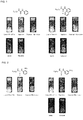
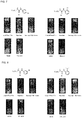
- Figs. 1 to 9 show the gelation behavior in the sample tubes after being allowed to stand in the gelation tests using the compounds of formulae 1 to 18 as gelators.
- the monourea compounds of formulae 6, 29, 31, 32, 33, 34, 35, and 36 synthesized in Example 1 were used as gelators, and their gel-forming abilities were evaluated with various hydrophobic organic solvents (methylene chloride (dichloromethane), chloroform, toluene, hexane, and ethyl acetate).
- hydrophobic organic solvents used herein were not admixed with water at any proportions.
- the gelation test was performed following the same procedures as described in [Example 2], i.e., a gelator (5.0 mg) was weighed out into a 2.0-mL screw cap sample tube, each of the various hydrophobic organic solvents (500 ⁇ L) was added thereto, and the mixture was heated on a hot plate at 120°C to dissolve the gelator. The solution was subsequently allowed to stand overnight at room temperature, and the formation of a gel was observed. "Gelation” was determined as a state in which the solution lost its flowability after being allowed to cool, and did not flow down even when the sample tube was inverted. A transparent gel was evaluated as "G”, and a suspension was evaluated as "SUS". The results are shown in [Table 2].
- Example 2 shows minimum gelation concentrations within parentheses (w/v %). [Table 2] No.
- the monourea compounds of formulae 1, 4, 6, 15, 21, 23, 27, 32, 33, 34, 35, 36, and 37 synthesized in Example 1 were used as gelators, and their gel-forming abilities were evaluated with various hydrophilic organic solvents (dimethylsulfoxide (DMSO) and acetonitrile) and hydrophilic organic solutions (mixed solvents of water and hydrophilic organic solvents: 70% aqueous solution of ethanol and 20% aqueous solution of 1,3-butanediol).
- DMSO dimethylsulfoxide
- hydrophilic organic solutions mixtureed solvents of water and hydrophilic organic solvents: 70% aqueous solution of ethanol and 20% aqueous solution of 1,3-butanediol.
- the hydrophilic organic solvents used herein were admixed with water at any proportions, as described above.
- the gelation test was performed following the same procedures as described in [Example 2], i.e., a gelator (5.0 mg) was weighed out into a 2.0-mL screw cap sample tube, each of the various hydrophilic organic solvents or hydrophilic organic solutions (500 ⁇ L) was added thereto, and the mixture was heated on a hot plate at 120°C to dissolve the gelator. The solution was subsequently allowed to stand overnight at room temperature, and the formation of a gel was observed. "Gelation” was determined as a state in which the solution lost its flowability after being allowed to cool, and did not flow down even when the sample tube was inverted. A transparent gel was evaluated as "G”, a sol was evaluated as "S”, and a suspension was evaluated as "SUS”. The results are shown in [Table 3].
- Example 2 for the cases where transparent gels were obtained, the gelation test was performed by changing the amount of the gelator added, and the minimum amount of the gelator (minimum gelation concentration) required for gelation of each of the various solvents/solutions was determined.
- [Table 3] shows minimum gelation concentrations within parentheses (w/v %). [Table 3] No.
- the monourea compounds of formulae 1, 3, 6, 32, 33, 34, 35, 36, and 37 synthesized in Example 1 were used as gelators, and their gel-forming abilities were evaluated with various ionic liquids.
- the following six ionic liquids were used:
- a gelator (5.0 mg) was weighed out into a 2.0-mL screw cap sample tube, each of the various ionic liquids (500 ⁇ L) was added thereto, and the mixture was heated on a hot plate at 120°C to dissolve the gelator. The solution was subsequently allowed to stand overnight at room temperature, and the formation of a gel was observed. The results are shown in [Table 4]. Moreover, Fig. 10 shows the gelation behavior of some gelators (gelators: monourea compounds of formulae 1, 3, and 6) in sample tubes after being allowed to stand.
- the gelators of the present invention were confirmed to form gels with hydrophobic organic solvents, hydrophilic organic solvents, hydrophilic organic solutions, or ionic liquids.
Landscapes
- Chemical & Material Sciences (AREA)
- Organic Chemistry (AREA)
- Health & Medical Sciences (AREA)
- Life Sciences & Earth Sciences (AREA)
- Veterinary Medicine (AREA)
- Public Health (AREA)
- General Health & Medical Sciences (AREA)
- Animal Behavior & Ethology (AREA)
- Epidemiology (AREA)
- Engineering & Computer Science (AREA)
- Pharmacology & Pharmacy (AREA)
- Medicinal Chemistry (AREA)
- Birds (AREA)
- Oil, Petroleum & Natural Gas (AREA)
- General Chemical & Material Sciences (AREA)
- Chemical Kinetics & Catalysis (AREA)
- Materials Engineering (AREA)
- Dermatology (AREA)
- Dispersion Chemistry (AREA)
- Organic Low-Molecular-Weight Compounds And Preparation Thereof (AREA)
- Cosmetics (AREA)
Claims (8)
- Verbindung der Formel (1):
 R1 eine lineare oder verzweigte Alkylgruppe mit einer Kohlenstoffatomzahl von 12 bis 20, eine cyclische Alkylgruppe mit einer Kohlenstoffatomzahl von 12 bis 20 oder eine lineare oder verzweigte Alkenylgruppe mit einer Kohlenstoffatomzahl von 12 bis 20 ist; undAr eine Phenylgruppe ist, die mit einer Benzylgruppe substituiert ist.
 - Verbindung gemäß Anspruch 1, worin R1 eine lineare Alkylgruppe mit einer Kohlenstoffatomzahl von 14 bis 20 ist.
- Verwendung der Verbindung gemäß Anspruch 1 oder 2 als Gelbildner.
- Gel, umfassend die Verbindung gemäß einem der Ansprüche 1 bis 2 und ein hydrophobes organisches Lösungsmittel, ein hydrophiles organisches Lösungsmittel, eine hydrophile organische Lösung oder eine ionische Flüssigkeit.
- Gel gemäß Anspruch 4, wobei das hydrophobe organische Lösungsmittel mindestens eines ist, das aus der Gruppe ausgewählt ist, die aus einem Pflanzenöl, einem Ester, einem Siliconöl und einem Kohlenwasserstoff besteht.
- Gel gemäß Anspruch 4, wobei das hydrophile organische Lösungsmittel mindestens eines ist, das aus der Gruppe ausgewählt ist, die aus Methanol, Ethanol, 2-Propanol, i-Butanol, Pentanol, Hexanol, 1-Octanol, Isooctanol, Aceton, Cyclohexanon, Acetonitril, Dioxan, Glycerin, Butandiol, Propylenglycol, Ethylenglycol und Dimethylsulfoxid besteht.
- Gel gemäß Anspruch 4, wobei die hydrophile organische Lösung ein Lösungsmittelgemisch von einem hydrophilen organischen Lösungsmittel und Wasser ist, und
das hydrophile organische Lösungsmittel mindestens eines ist, das aus der Gruppe ausgewählt ist, die aus Methanol, Ethanol, 2-Propanol, i-Butanol, Pentanol, Hexanol, 1-Octanol, Isooctanol, Aceton, Cyclohexanon, Acetonitril, Dioxan, Glycerin, Butandiol, Propylenglycol, Ethylenglycol und Dimethylsulfoxid besteht. - Gel gemäß Anspruch 4, wobei die ionische Flüssigkeit eine Kombination von einer kationischen Spezies, ausgewählt aus der Gruppe, bestehend aus Imidazolium, Pyridinium, Piperidinium, Pyrrolidinium, Phosphonium, Ammonium und Sulfonium, und einer anionischen Spezies, ausgewählt aus der Gruppe, bestehend aus einem Halogen, einem Carboxylat, einem Sulfat, einem Sulfonat, einem Thiocyanat, einem Nitrat, einem Aluminat, einem Borat, einem Phosphat, einem Amid, einem Antimonat, einem Imid und einem Methid, umfasst.
Applications Claiming Priority (2)
| Application Number | Priority Date | Filing Date | Title |
|---|---|---|---|
| JP2015242397 | 2015-12-11 | ||
| PCT/JP2016/086770 WO2017099232A1 (ja) | 2015-12-11 | 2016-12-09 | オイルゲル化剤 |
Publications (3)
| Publication Number | Publication Date |
|---|---|
| EP3381995A1 EP3381995A1 (de) | 2018-10-03 |
| EP3381995A4 EP3381995A4 (de) | 2018-12-05 |
| EP3381995B1 true EP3381995B1 (de) | 2019-10-23 |
Family
ID=59014221
Family Applications (1)
| Application Number | Title | Priority Date | Filing Date |
|---|---|---|---|
| EP16873125.5A Not-in-force EP3381995B1 (de) | 2015-12-11 | 2016-12-09 | Ölgeliermittel |
Country Status (7)
| Country | Link |
|---|---|
| US (1) | US10640462B2 (de) |
| EP (1) | EP3381995B1 (de) |
| JP (1) | JP7066117B2 (de) |
| KR (1) | KR20180093898A (de) |
| CN (1) | CN108368414A (de) |
| TW (1) | TW201733620A (de) |
| WO (1) | WO2017099232A1 (de) |
Families Citing this family (1)
| Publication number | Priority date | Publication date | Assignee | Title |
|---|---|---|---|---|
| JP7440879B2 (ja) * | 2019-04-16 | 2024-02-29 | 国立研究開発法人物質・材料研究機構 | 細胞培養基材、細胞培養方法、及び、細胞培養器 |
Family Cites Families (19)
| Publication number | Priority date | Publication date | Assignee | Title |
|---|---|---|---|---|
| US3211692A (en) * | 1961-11-06 | 1965-10-12 | Gulf Oil Corp | Ethylene polymeric compositions containing substituted ureas |
| NL291730A (de) * | 1962-04-20 | 1900-01-01 | ||
| US3663506A (en) * | 1970-11-18 | 1972-05-16 | Union Carbide Corp | Stabilization of urethane polymers with substituted ureas |
| IT1017606B (it) * | 1973-06-06 | 1977-08-10 | Basf Ag | Processo per la preparazione di amine e di uree sostituit |
| US5059002A (en) * | 1989-12-21 | 1991-10-22 | Minnesota Mining And Manufacturing Company | Second harmonic generation with achiral, straight-chain carbamic acid derivatives |
| AT397384B (de) * | 1991-08-16 | 1994-03-25 | Chemie Linz Gmbh | Verfahren zur herstellung reiner n,n'-unsymmetrisch substituierter phenylharnstoffe |
| JPH11349553A (ja) * | 1998-06-02 | 1999-12-21 | Ricoh Co Ltd | 新規な尿素結合をもつ化合物 |
| CN1123565C (zh) | 1999-04-22 | 2003-10-08 | 中国科学院大连化学物理研究所 | 一种不对称苯基取代脲的制备方法 |
| JP2001131014A (ja) | 1999-11-02 | 2001-05-15 | Kao Corp | パール光沢状組成物 |
| EA010267B1 (ru) | 2002-10-07 | 2008-06-30 | Те Риджентс Оф Те Юниверсити Оф Калифорния | Модуляция тревоги через блокаду гидролиза анандамида |
| JP4267387B2 (ja) | 2003-07-10 | 2009-05-27 | 株式会社リコー | 熱可逆記録材料、熱可逆記録ラベル、情報記憶表示部材、画像処理方法 |
| EP2078713A1 (de) * | 2007-12-28 | 2009-07-15 | QuoNova GmbH | Hemmer der Biofilmbildung grampositiver und gramnegativer Bakterien |
| JP5497991B2 (ja) | 2008-03-13 | 2014-05-21 | 富士フイルム株式会社 | 顔料微粒子の製造方法 |
| CN102503860A (zh) | 2011-11-14 | 2012-06-20 | 武汉大学 | 一种1,3-二取代脲和氨基甲酸酯的合成方法 |
| JP2013151628A (ja) | 2011-12-28 | 2013-08-08 | Kyushu Univ | アルキルヒドラジド化合物からなるゲル化剤 |
| KR102073769B1 (ko) | 2012-03-08 | 2020-02-05 | 고쿠리쓰다이가쿠호진 규슈다이가쿠 | 신규 당유도체 겔화제 |
| CN103664704B (zh) | 2012-08-31 | 2016-05-18 | 南京理工大学 | 一种合成n,n’-二取代基脲的方法 |
| CN102993075A (zh) | 2012-11-29 | 2013-03-27 | 江苏长青农化股份有限公司 | 硫脲类杀虫杀螨剂丁醚脲的合成工艺 |
| GB201404372D0 (en) | 2014-03-12 | 2014-04-23 | Univ Warwick | Assay and treatment |
-
2016
- 2016-12-09 EP EP16873125.5A patent/EP3381995B1/de not_active Not-in-force
- 2016-12-09 US US16/061,198 patent/US10640462B2/en active Active
- 2016-12-09 CN CN201680071956.8A patent/CN108368414A/zh active Pending
- 2016-12-09 KR KR1020187014771A patent/KR20180093898A/ko not_active Withdrawn
- 2016-12-09 JP JP2017555165A patent/JP7066117B2/ja active Active
- 2016-12-09 WO PCT/JP2016/086770 patent/WO2017099232A1/ja not_active Ceased
- 2016-12-09 TW TW105140906A patent/TW201733620A/zh unknown
Non-Patent Citations (1)
| Title |
|---|
| None * |
Also Published As
| Publication number | Publication date |
|---|---|
| EP3381995A4 (de) | 2018-12-05 |
| WO2017099232A1 (ja) | 2017-06-15 |
| US20180362454A1 (en) | 2018-12-20 |
| CN108368414A (zh) | 2018-08-03 |
| JP7066117B2 (ja) | 2022-05-13 |
| TW201733620A (zh) | 2017-10-01 |
| JPWO2017099232A1 (ja) | 2018-11-01 |
| EP3381995A1 (de) | 2018-10-03 |
| US10640462B2 (en) | 2020-05-05 |
| KR20180093898A (ko) | 2018-08-22 |
Similar Documents
| Publication | Publication Date | Title |
|---|---|---|
| Scartazzini et al. | Organogels from lecithins | |
| Dai et al. | Tailoring properties of natural deep eutectic solvents with water to facilitate their applications | |
| CN1997620B (zh) | 包含含氮阳离子的离子液体 | |
| Hanabusa et al. | New gelators based on 2-amino-2-phenylethanol: Close gelator-chiral structure relationship | |
| Mohmeyer et al. | A New Class of Low‐Molecular‐Weight Amphiphilic Gelators | |
| Sangeetha et al. | Novel cationic and neutral analogues of bile acids: synthesis and preliminary study of their aggregation properties | |
| EP3381995B1 (de) | Ölgeliermittel | |
| Čaplar et al. | Chiral gelators constructed from 11‐aminoundecanoic (AUDA), lauric and amino acid units. synthesis, gelling properties and preferred gelation of racemates vs. the pure enantiomers | |
| CN101316810A (zh) | 离子液体 | |
| EP2957612B1 (de) | Gelatiniermittel und organisches gel | |
| BRPI0608671B1 (pt) | Processos para produzir um cristal de forma a de cloridrato de 17-ciclopropilmetil-3,14 b-diidróxi-4,5a-epóxi-6b-[n-metil-trans-3-(3-furil)-acril amido]-morfinano | |
| CN106279151A (zh) | 5-(2-(8-((2,6-二甲基苄基)氨基)-2,3-二甲基咪唑并[1,2-a]吡啶-6-甲酰胺基)乙氧基)-5-氧代戊酸的固体形式及其制备方法 | |
| Milanesi et al. | Versatile Low‐Molecular‐Weight Hydrogelators: Achieving Multiresponsiveness through a Modular Design | |
| EP3335692A1 (de) | Verfahren zur herstellung von hochwasserhaltigem emulsionsgel mit einem ölgelbildungsmittel | |
| Debuyck et al. | Comparing Triaminononane and TREN as Trifunctional Amine Cross-Linkers in Covalent Adaptable Networks | |
| CN111763169A (zh) | 一种改良的依度沙班中间体的制备方法 | |
| US8153109B2 (en) | Alkylene carbonate dilution, alkylene carbonate for preparing the dilution, and aqueous reducing chemical agent | |
| JP3254725B2 (ja) | 新しい有機性ゲル化剤 | |
| Manna et al. | Supramolecular gels from bis‐amides of L‐phenylalanine: synthesis, structure and material applications | |
| Li et al. | Synthesis and properties of novel organogelators functionalized with 5-iodo-1, 2, 3-triazole and azobenzene groups | |
| CN119039616B (zh) | 一种手性功能化纳米胶束及其制备方法与应用 | |
| BR112018070090B1 (pt) | Processos para sintetizar uma amido alquil betaína e uma amido amina | |
| Isadiartuti et al. | Solubility and dissolution study of physical mixture of carbamazepine and amino acids | |
| CN105331357A (zh) | 2,7-二(4-乙烯基吡啶)-9-芴酮盐类双光子荧光细胞核定位探针材料及其制备方法与应用 | |
| Krishnan et al. | Gelation characteristics and applications of poly (ethylene glycol) end capped with hydrophobic biodegradable dipeptides |
Legal Events
| Date | Code | Title | Description |
|---|---|---|---|
| STAA | Information on the status of an ep patent application or granted ep patent |
Free format text: STATUS: THE INTERNATIONAL PUBLICATION HAS BEEN MADE |
|
| PUAI | Public reference made under article 153(3) epc to a published international application that has entered the european phase |
Free format text: ORIGINAL CODE: 0009012 |
|
| STAA | Information on the status of an ep patent application or granted ep patent |
Free format text: STATUS: REQUEST FOR EXAMINATION WAS MADE |
|
| 17P | Request for examination filed |
Effective date: 20180625 |
|
| AK | Designated contracting states |
Kind code of ref document: A1 Designated state(s): AL AT BE BG CH CY CZ DE DK EE ES FI FR GB GR HR HU IE IS IT LI LT LU LV MC MK MT NL NO PL PT RO RS SE SI SK SM TR |
|
| AX | Request for extension of the european patent |
Extension state: BA ME |
|
| RIC1 | Information provided on ipc code assigned before grant |
Ipc: C07C 275/36 20060101ALI20181004BHEP Ipc: A61K 47/16 20060101ALI20181004BHEP Ipc: C07C 275/28 20060101ALI20181004BHEP Ipc: A61K 8/42 20060101ALI20181004BHEP Ipc: C09K 3/00 20060101AFI20181004BHEP Ipc: C07C 275/30 20060101ALI20181004BHEP |
|
| STAA | Information on the status of an ep patent application or granted ep patent |
Free format text: STATUS: EXAMINATION IS IN PROGRESS |
|
| A4 | Supplementary search report drawn up and despatched |
Effective date: 20181029 |
|
| 17Q | First examination report despatched |
Effective date: 20181119 |
|
| DAV | Request for validation of the european patent (deleted) | ||
| DAX | Request for extension of the european patent (deleted) | ||
| GRAP | Despatch of communication of intention to grant a patent |
Free format text: ORIGINAL CODE: EPIDOSNIGR1 |
|
| STAA | Information on the status of an ep patent application or granted ep patent |
Free format text: STATUS: GRANT OF PATENT IS INTENDED |
|
| INTG | Intention to grant announced |
Effective date: 20190619 |
|
| GRAS | Grant fee paid |
Free format text: ORIGINAL CODE: EPIDOSNIGR3 |
|
| GRAA | (expected) grant |
Free format text: ORIGINAL CODE: 0009210 |
|
| STAA | Information on the status of an ep patent application or granted ep patent |
Free format text: STATUS: THE PATENT HAS BEEN GRANTED |
|
| AK | Designated contracting states |
Kind code of ref document: B1 Designated state(s): AL AT BE BG CH CY CZ DE DK EE ES FI FR GB GR HR HU IE IS IT LI LT LU LV MC MK MT NL NO PL PT RO RS SE SI SK SM TR |
|
| REG | Reference to a national code |
Ref country code: GB Ref legal event code: FG4D |
|
| REG | Reference to a national code |
Ref country code: CH Ref legal event code: EP |
|
| REG | Reference to a national code |
Ref country code: IE Ref legal event code: FG4D |
|
| REG | Reference to a national code |
Ref country code: DE Ref legal event code: R096 Ref document number: 602016023135 Country of ref document: DE |
|
| REG | Reference to a national code |
Ref country code: AT Ref legal event code: REF Ref document number: 1193614 Country of ref document: AT Kind code of ref document: T Effective date: 20191115 |
|
| REG | Reference to a national code |
Ref country code: NL Ref legal event code: MP Effective date: 20191023 |
|
| REG | Reference to a national code |
Ref country code: LT Ref legal event code: MG4D |
|
| PG25 | Lapsed in a contracting state [announced via postgrant information from national office to epo] |
Ref country code: BG Free format text: LAPSE BECAUSE OF FAILURE TO SUBMIT A TRANSLATION OF THE DESCRIPTION OR TO PAY THE FEE WITHIN THE PRESCRIBED TIME-LIMIT Effective date: 20200123 Ref country code: NO Free format text: LAPSE BECAUSE OF FAILURE TO SUBMIT A TRANSLATION OF THE DESCRIPTION OR TO PAY THE FEE WITHIN THE PRESCRIBED TIME-LIMIT Effective date: 20200123 Ref country code: GR Free format text: LAPSE BECAUSE OF FAILURE TO SUBMIT A TRANSLATION OF THE DESCRIPTION OR TO PAY THE FEE WITHIN THE PRESCRIBED TIME-LIMIT Effective date: 20200124 Ref country code: NL Free format text: LAPSE BECAUSE OF FAILURE TO SUBMIT A TRANSLATION OF THE DESCRIPTION OR TO PAY THE FEE WITHIN THE PRESCRIBED TIME-LIMIT Effective date: 20191023 Ref country code: PL Free format text: LAPSE BECAUSE OF FAILURE TO SUBMIT A TRANSLATION OF THE DESCRIPTION OR TO PAY THE FEE WITHIN THE PRESCRIBED TIME-LIMIT Effective date: 20191023 Ref country code: LT Free format text: LAPSE BECAUSE OF FAILURE TO SUBMIT A TRANSLATION OF THE DESCRIPTION OR TO PAY THE FEE WITHIN THE PRESCRIBED TIME-LIMIT Effective date: 20191023 Ref country code: LV Free format text: LAPSE BECAUSE OF FAILURE TO SUBMIT A TRANSLATION OF THE DESCRIPTION OR TO PAY THE FEE WITHIN THE PRESCRIBED TIME-LIMIT Effective date: 20191023 Ref country code: SE Free format text: LAPSE BECAUSE OF FAILURE TO SUBMIT A TRANSLATION OF THE DESCRIPTION OR TO PAY THE FEE WITHIN THE PRESCRIBED TIME-LIMIT Effective date: 20191023 Ref country code: PT Free format text: LAPSE BECAUSE OF FAILURE TO SUBMIT A TRANSLATION OF THE DESCRIPTION OR TO PAY THE FEE WITHIN THE PRESCRIBED TIME-LIMIT Effective date: 20200224 Ref country code: FI Free format text: LAPSE BECAUSE OF FAILURE TO SUBMIT A TRANSLATION OF THE DESCRIPTION OR TO PAY THE FEE WITHIN THE PRESCRIBED TIME-LIMIT Effective date: 20191023 |
|
| PG25 | Lapsed in a contracting state [announced via postgrant information from national office to epo] |
Ref country code: IS Free format text: LAPSE BECAUSE OF FAILURE TO SUBMIT A TRANSLATION OF THE DESCRIPTION OR TO PAY THE FEE WITHIN THE PRESCRIBED TIME-LIMIT Effective date: 20200224 Ref country code: RS Free format text: LAPSE BECAUSE OF FAILURE TO SUBMIT A TRANSLATION OF THE DESCRIPTION OR TO PAY THE FEE WITHIN THE PRESCRIBED TIME-LIMIT Effective date: 20191023 Ref country code: HR Free format text: LAPSE BECAUSE OF FAILURE TO SUBMIT A TRANSLATION OF THE DESCRIPTION OR TO PAY THE FEE WITHIN THE PRESCRIBED TIME-LIMIT Effective date: 20191023 |
|
| PG25 | Lapsed in a contracting state [announced via postgrant information from national office to epo] |
Ref country code: AL Free format text: LAPSE BECAUSE OF FAILURE TO SUBMIT A TRANSLATION OF THE DESCRIPTION OR TO PAY THE FEE WITHIN THE PRESCRIBED TIME-LIMIT Effective date: 20191023 |
|
| REG | Reference to a national code |
Ref country code: DE Ref legal event code: R097 Ref document number: 602016023135 Country of ref document: DE |
|
| PG2D | Information on lapse in contracting state deleted |
Ref country code: IS |
|
| PG25 | Lapsed in a contracting state [announced via postgrant information from national office to epo] |
Ref country code: ES Free format text: LAPSE BECAUSE OF FAILURE TO SUBMIT A TRANSLATION OF THE DESCRIPTION OR TO PAY THE FEE WITHIN THE PRESCRIBED TIME-LIMIT Effective date: 20191023 Ref country code: DK Free format text: LAPSE BECAUSE OF FAILURE TO SUBMIT A TRANSLATION OF THE DESCRIPTION OR TO PAY THE FEE WITHIN THE PRESCRIBED TIME-LIMIT Effective date: 20191023 Ref country code: EE Free format text: LAPSE BECAUSE OF FAILURE TO SUBMIT A TRANSLATION OF THE DESCRIPTION OR TO PAY THE FEE WITHIN THE PRESCRIBED TIME-LIMIT Effective date: 20191023 Ref country code: RO Free format text: LAPSE BECAUSE OF FAILURE TO SUBMIT A TRANSLATION OF THE DESCRIPTION OR TO PAY THE FEE WITHIN THE PRESCRIBED TIME-LIMIT Effective date: 20191023 Ref country code: CZ Free format text: LAPSE BECAUSE OF FAILURE TO SUBMIT A TRANSLATION OF THE DESCRIPTION OR TO PAY THE FEE WITHIN THE PRESCRIBED TIME-LIMIT Effective date: 20191023 Ref country code: IS Free format text: LAPSE BECAUSE OF FAILURE TO SUBMIT A TRANSLATION OF THE DESCRIPTION OR TO PAY THE FEE WITHIN THE PRESCRIBED TIME-LIMIT Effective date: 20200223 |
|
| REG | Reference to a national code |
Ref country code: CH Ref legal event code: PL |
|
| REG | Reference to a national code |
Ref country code: AT Ref legal event code: MK05 Ref document number: 1193614 Country of ref document: AT Kind code of ref document: T Effective date: 20191023 |
|
| REG | Reference to a national code |
Ref country code: BE Ref legal event code: MM Effective date: 20191231 |
|
| PLBE | No opposition filed within time limit |
Free format text: ORIGINAL CODE: 0009261 |
|
| STAA | Information on the status of an ep patent application or granted ep patent |
Free format text: STATUS: NO OPPOSITION FILED WITHIN TIME LIMIT |
|
| PG25 | Lapsed in a contracting state [announced via postgrant information from national office to epo] |
Ref country code: MC Free format text: LAPSE BECAUSE OF FAILURE TO SUBMIT A TRANSLATION OF THE DESCRIPTION OR TO PAY THE FEE WITHIN THE PRESCRIBED TIME-LIMIT Effective date: 20191023 Ref country code: SK Free format text: LAPSE BECAUSE OF FAILURE TO SUBMIT A TRANSLATION OF THE DESCRIPTION OR TO PAY THE FEE WITHIN THE PRESCRIBED TIME-LIMIT Effective date: 20191023 Ref country code: SM Free format text: LAPSE BECAUSE OF FAILURE TO SUBMIT A TRANSLATION OF THE DESCRIPTION OR TO PAY THE FEE WITHIN THE PRESCRIBED TIME-LIMIT Effective date: 20191023 Ref country code: IT Free format text: LAPSE BECAUSE OF FAILURE TO SUBMIT A TRANSLATION OF THE DESCRIPTION OR TO PAY THE FEE WITHIN THE PRESCRIBED TIME-LIMIT Effective date: 20191023 |
|
| 26N | No opposition filed |
Effective date: 20200724 |
|
| PG25 | Lapsed in a contracting state [announced via postgrant information from national office to epo] |
Ref country code: LU Free format text: LAPSE BECAUSE OF NON-PAYMENT OF DUE FEES Effective date: 20191209 Ref country code: IE Free format text: LAPSE BECAUSE OF NON-PAYMENT OF DUE FEES Effective date: 20191209 |
|
| PG25 | Lapsed in a contracting state [announced via postgrant information from national office to epo] |
Ref country code: SI Free format text: LAPSE BECAUSE OF FAILURE TO SUBMIT A TRANSLATION OF THE DESCRIPTION OR TO PAY THE FEE WITHIN THE PRESCRIBED TIME-LIMIT Effective date: 20191023 Ref country code: CH Free format text: LAPSE BECAUSE OF NON-PAYMENT OF DUE FEES Effective date: 20191231 Ref country code: BE Free format text: LAPSE BECAUSE OF NON-PAYMENT OF DUE FEES Effective date: 20191231 Ref country code: LI Free format text: LAPSE BECAUSE OF NON-PAYMENT OF DUE FEES Effective date: 20191231 Ref country code: AT Free format text: LAPSE BECAUSE OF FAILURE TO SUBMIT A TRANSLATION OF THE DESCRIPTION OR TO PAY THE FEE WITHIN THE PRESCRIBED TIME-LIMIT Effective date: 20191023 |
|
| PG25 | Lapsed in a contracting state [announced via postgrant information from national office to epo] |
Ref country code: CY Free format text: LAPSE BECAUSE OF FAILURE TO SUBMIT A TRANSLATION OF THE DESCRIPTION OR TO PAY THE FEE WITHIN THE PRESCRIBED TIME-LIMIT Effective date: 20191023 |
|
| PG25 | Lapsed in a contracting state [announced via postgrant information from national office to epo] |
Ref country code: HU Free format text: LAPSE BECAUSE OF FAILURE TO SUBMIT A TRANSLATION OF THE DESCRIPTION OR TO PAY THE FEE WITHIN THE PRESCRIBED TIME-LIMIT; INVALID AB INITIO Effective date: 20161209 Ref country code: MT Free format text: LAPSE BECAUSE OF FAILURE TO SUBMIT A TRANSLATION OF THE DESCRIPTION OR TO PAY THE FEE WITHIN THE PRESCRIBED TIME-LIMIT Effective date: 20191023 |
|
| PG25 | Lapsed in a contracting state [announced via postgrant information from national office to epo] |
Ref country code: TR Free format text: LAPSE BECAUSE OF FAILURE TO SUBMIT A TRANSLATION OF THE DESCRIPTION OR TO PAY THE FEE WITHIN THE PRESCRIBED TIME-LIMIT Effective date: 20191023 |
|
| PG25 | Lapsed in a contracting state [announced via postgrant information from national office to epo] |
Ref country code: MK Free format text: LAPSE BECAUSE OF FAILURE TO SUBMIT A TRANSLATION OF THE DESCRIPTION OR TO PAY THE FEE WITHIN THE PRESCRIBED TIME-LIMIT Effective date: 20191023 |
|
| P01 | Opt-out of the competence of the unified patent court (upc) registered |
Effective date: 20230522 |
|
| PGFP | Annual fee paid to national office [announced via postgrant information from national office to epo] |
Ref country code: GB Payment date: 20231102 Year of fee payment: 8 |
|
| PGFP | Annual fee paid to national office [announced via postgrant information from national office to epo] |
Ref country code: FR Payment date: 20231108 Year of fee payment: 8 Ref country code: DE Payment date: 20231031 Year of fee payment: 8 |
|
| REG | Reference to a national code |
Ref country code: DE Ref legal event code: R119 Ref document number: 602016023135 Country of ref document: DE |
|
| GBPC | Gb: european patent ceased through non-payment of renewal fee |
Effective date: 20241209 |
|
| PG25 | Lapsed in a contracting state [announced via postgrant information from national office to epo] |
Ref country code: DE Free format text: LAPSE BECAUSE OF NON-PAYMENT OF DUE FEES Effective date: 20250701 |
|
| PG25 | Lapsed in a contracting state [announced via postgrant information from national office to epo] |
Ref country code: GB Free format text: LAPSE BECAUSE OF NON-PAYMENT OF DUE FEES Effective date: 20241209 |
|
| PG25 | Lapsed in a contracting state [announced via postgrant information from national office to epo] |
Ref country code: FR Free format text: LAPSE BECAUSE OF NON-PAYMENT OF DUE FEES Effective date: 20241231 |