EP3362410B1 - Molecular sieve ssz-105, its synthesis and use - Google Patents
Molecular sieve ssz-105, its synthesis and use Download PDFInfo
- Publication number
- EP3362410B1 EP3362410B1 EP16784303.6A EP16784303A EP3362410B1 EP 3362410 B1 EP3362410 B1 EP 3362410B1 EP 16784303 A EP16784303 A EP 16784303A EP 3362410 B1 EP3362410 B1 EP 3362410B1
- Authority
- EP
- European Patent Office
- Prior art keywords
- molecular sieve
- sio
- catalyst
- framework type
- type molecular
- Prior art date
- Legal status (The legal status is an assumption and is not a legal conclusion. Google has not performed a legal analysis and makes no representation as to the accuracy of the status listed.)
- Active
Links
Images



Classifications
-
- B—PERFORMING OPERATIONS; TRANSPORTING
- B01—PHYSICAL OR CHEMICAL PROCESSES OR APPARATUS IN GENERAL
- B01J—CHEMICAL OR PHYSICAL PROCESSES, e.g. CATALYSIS OR COLLOID CHEMISTRY; THEIR RELEVANT APPARATUS
- B01J35/00—Catalysts, in general, characterised by their form or physical properties
- B01J35/70—Catalysts, in general, characterised by their form or physical properties characterised by their crystalline properties, e.g. semi-crystalline
-
- C—CHEMISTRY; METALLURGY
- C01—INORGANIC CHEMISTRY
- C01B—NON-METALLIC ELEMENTS; COMPOUNDS THEREOF; METALLOIDS OR COMPOUNDS THEREOF NOT COVERED BY SUBCLASS C01C
- C01B39/00—Compounds having molecular sieve and base-exchange properties, e.g. crystalline zeolites; Their preparation; After-treatment, e.g. ion-exchange or dealumination
- C01B39/02—Crystalline aluminosilicate zeolites; Isomorphous compounds thereof; Direct preparation thereof; Preparation thereof starting from a reaction mixture containing a crystalline zeolite of another type, or from preformed reactants; After-treatment thereof
- C01B39/30—Erionite or offretite type, e.g. zeolite T
- C01B39/305—Erionite or offretite type, e.g. zeolite T using at least one organic template directing agent
-
- C—CHEMISTRY; METALLURGY
- C01—INORGANIC CHEMISTRY
- C01B—NON-METALLIC ELEMENTS; COMPOUNDS THEREOF; METALLOIDS OR COMPOUNDS THEREOF NOT COVERED BY SUBCLASS C01C
- C01B39/00—Compounds having molecular sieve and base-exchange properties, e.g. crystalline zeolites; Their preparation; After-treatment, e.g. ion-exchange or dealumination
- C01B39/02—Crystalline aluminosilicate zeolites; Isomorphous compounds thereof; Direct preparation thereof; Preparation thereof starting from a reaction mixture containing a crystalline zeolite of another type, or from preformed reactants; After-treatment thereof
- C01B39/023—Preparation of physical mixtures or intergrowth products of zeolites chosen from group C01B39/04 or two or more of groups C01B39/14 - C01B39/48
-
- B—PERFORMING OPERATIONS; TRANSPORTING
- B01—PHYSICAL OR CHEMICAL PROCESSES OR APPARATUS IN GENERAL
- B01D—SEPARATION
- B01D53/00—Separation of gases or vapours; Recovering vapours of volatile solvents from gases; Chemical or biological purification of waste gases, e.g. engine exhaust gases, smoke, fumes, flue gases, aerosols
- B01D53/34—Chemical or biological purification of waste gases
- B01D53/92—Chemical or biological purification of waste gases of engine exhaust gases
- B01D53/94—Chemical or biological purification of waste gases of engine exhaust gases by catalytic processes
- B01D53/9404—Removing only nitrogen compounds
- B01D53/9409—Nitrogen oxides
- B01D53/9413—Processes characterised by a specific catalyst
- B01D53/9418—Processes characterised by a specific catalyst for removing nitrogen oxides by selective catalytic reduction [SCR] using a reducing agent in a lean exhaust gas
-
- B—PERFORMING OPERATIONS; TRANSPORTING
- B01—PHYSICAL OR CHEMICAL PROCESSES OR APPARATUS IN GENERAL
- B01J—CHEMICAL OR PHYSICAL PROCESSES, e.g. CATALYSIS OR COLLOID CHEMISTRY; THEIR RELEVANT APPARATUS
- B01J29/00—Catalysts comprising molecular sieves
- B01J29/04—Catalysts comprising molecular sieves having base-exchange properties, e.g. crystalline zeolites
- B01J29/06—Crystalline aluminosilicate zeolites; Isomorphous compounds thereof
- B01J29/50—Crystalline aluminosilicate zeolites; Isomorphous compounds thereof of the erionite or offretite type, e.g. zeolite T, as exemplified by patent document US2950952
-
- B—PERFORMING OPERATIONS; TRANSPORTING
- B01—PHYSICAL OR CHEMICAL PROCESSES OR APPARATUS IN GENERAL
- B01J—CHEMICAL OR PHYSICAL PROCESSES, e.g. CATALYSIS OR COLLOID CHEMISTRY; THEIR RELEVANT APPARATUS
- B01J29/00—Catalysts comprising molecular sieves
- B01J29/04—Catalysts comprising molecular sieves having base-exchange properties, e.g. crystalline zeolites
- B01J29/06—Crystalline aluminosilicate zeolites; Isomorphous compounds thereof
- B01J29/50—Crystalline aluminosilicate zeolites; Isomorphous compounds thereof of the erionite or offretite type, e.g. zeolite T, as exemplified by patent document US2950952
- B01J29/505—Crystalline aluminosilicate zeolites; Isomorphous compounds thereof of the erionite or offretite type, e.g. zeolite T, as exemplified by patent document US2950952 containing rare earth elements, titanium, zirconium, hafnium, zinc, cadmium, mercury, gallium, indium, thallium, tin or lead
-
- B—PERFORMING OPERATIONS; TRANSPORTING
- B01—PHYSICAL OR CHEMICAL PROCESSES OR APPARATUS IN GENERAL
- B01J—CHEMICAL OR PHYSICAL PROCESSES, e.g. CATALYSIS OR COLLOID CHEMISTRY; THEIR RELEVANT APPARATUS
- B01J29/00—Catalysts comprising molecular sieves
- B01J29/04—Catalysts comprising molecular sieves having base-exchange properties, e.g. crystalline zeolites
- B01J29/06—Crystalline aluminosilicate zeolites; Isomorphous compounds thereof
- B01J29/50—Crystalline aluminosilicate zeolites; Isomorphous compounds thereof of the erionite or offretite type, e.g. zeolite T, as exemplified by patent document US2950952
- B01J29/52—Crystalline aluminosilicate zeolites; Isomorphous compounds thereof of the erionite or offretite type, e.g. zeolite T, as exemplified by patent document US2950952 containing iron group metals, noble metals or copper
-
- B—PERFORMING OPERATIONS; TRANSPORTING
- B01—PHYSICAL OR CHEMICAL PROCESSES OR APPARATUS IN GENERAL
- B01J—CHEMICAL OR PHYSICAL PROCESSES, e.g. CATALYSIS OR COLLOID CHEMISTRY; THEIR RELEVANT APPARATUS
- B01J29/00—Catalysts comprising molecular sieves
- B01J29/04—Catalysts comprising molecular sieves having base-exchange properties, e.g. crystalline zeolites
- B01J29/06—Crystalline aluminosilicate zeolites; Isomorphous compounds thereof
- B01J29/50—Crystalline aluminosilicate zeolites; Isomorphous compounds thereof of the erionite or offretite type, e.g. zeolite T, as exemplified by patent document US2950952
- B01J29/58—Crystalline aluminosilicate zeolites; Isomorphous compounds thereof of the erionite or offretite type, e.g. zeolite T, as exemplified by patent document US2950952 containing arsenic, antimony, bismuth, vanadium, niobium, tantalum, polonium, chromium, molybdenum, tungsten, manganese, technetium or rhenium
-
- B—PERFORMING OPERATIONS; TRANSPORTING
- B01—PHYSICAL OR CHEMICAL PROCESSES OR APPARATUS IN GENERAL
- B01J—CHEMICAL OR PHYSICAL PROCESSES, e.g. CATALYSIS OR COLLOID CHEMISTRY; THEIR RELEVANT APPARATUS
- B01J29/00—Catalysts comprising molecular sieves
- B01J29/04—Catalysts comprising molecular sieves having base-exchange properties, e.g. crystalline zeolites
- B01J29/06—Crystalline aluminosilicate zeolites; Isomorphous compounds thereof
- B01J29/70—Crystalline aluminosilicate zeolites; Isomorphous compounds thereof of types characterised by their specific structure not provided for in groups B01J29/08 - B01J29/65
-
- B—PERFORMING OPERATIONS; TRANSPORTING
- B01—PHYSICAL OR CHEMICAL PROCESSES OR APPARATUS IN GENERAL
- B01J—CHEMICAL OR PHYSICAL PROCESSES, e.g. CATALYSIS OR COLLOID CHEMISTRY; THEIR RELEVANT APPARATUS
- B01J29/00—Catalysts comprising molecular sieves
- B01J29/04—Catalysts comprising molecular sieves having base-exchange properties, e.g. crystalline zeolites
- B01J29/06—Crystalline aluminosilicate zeolites; Isomorphous compounds thereof
- B01J29/70—Crystalline aluminosilicate zeolites; Isomorphous compounds thereof of types characterised by their specific structure not provided for in groups B01J29/08 - B01J29/65
- B01J29/7049—Crystalline aluminosilicate zeolites; Isomorphous compounds thereof of types characterised by their specific structure not provided for in groups B01J29/08 - B01J29/65 containing rare earth elements, titanium, zirconium, hafnium, zinc, cadmium, mercury, gallium, indium, thallium, tin or lead
-
- B—PERFORMING OPERATIONS; TRANSPORTING
- B01—PHYSICAL OR CHEMICAL PROCESSES OR APPARATUS IN GENERAL
- B01J—CHEMICAL OR PHYSICAL PROCESSES, e.g. CATALYSIS OR COLLOID CHEMISTRY; THEIR RELEVANT APPARATUS
- B01J29/00—Catalysts comprising molecular sieves
- B01J29/04—Catalysts comprising molecular sieves having base-exchange properties, e.g. crystalline zeolites
- B01J29/06—Crystalline aluminosilicate zeolites; Isomorphous compounds thereof
- B01J29/70—Crystalline aluminosilicate zeolites; Isomorphous compounds thereof of types characterised by their specific structure not provided for in groups B01J29/08 - B01J29/65
- B01J29/72—Crystalline aluminosilicate zeolites; Isomorphous compounds thereof of types characterised by their specific structure not provided for in groups B01J29/08 - B01J29/65 containing iron group metals, noble metals or copper
-
- B—PERFORMING OPERATIONS; TRANSPORTING
- B01—PHYSICAL OR CHEMICAL PROCESSES OR APPARATUS IN GENERAL
- B01J—CHEMICAL OR PHYSICAL PROCESSES, e.g. CATALYSIS OR COLLOID CHEMISTRY; THEIR RELEVANT APPARATUS
- B01J29/00—Catalysts comprising molecular sieves
- B01J29/04—Catalysts comprising molecular sieves having base-exchange properties, e.g. crystalline zeolites
- B01J29/06—Crystalline aluminosilicate zeolites; Isomorphous compounds thereof
- B01J29/70—Crystalline aluminosilicate zeolites; Isomorphous compounds thereof of types characterised by their specific structure not provided for in groups B01J29/08 - B01J29/65
- B01J29/78—Crystalline aluminosilicate zeolites; Isomorphous compounds thereof of types characterised by their specific structure not provided for in groups B01J29/08 - B01J29/65 containing arsenic, antimony, bismuth, vanadium, niobium, tantalum, polonium, chromium, molybdenum, tungsten, manganese, technetium or rhenium
-
- B—PERFORMING OPERATIONS; TRANSPORTING
- B01—PHYSICAL OR CHEMICAL PROCESSES OR APPARATUS IN GENERAL
- B01J—CHEMICAL OR PHYSICAL PROCESSES, e.g. CATALYSIS OR COLLOID CHEMISTRY; THEIR RELEVANT APPARATUS
- B01J29/00—Catalysts comprising molecular sieves
- B01J29/04—Catalysts comprising molecular sieves having base-exchange properties, e.g. crystalline zeolites
- B01J29/06—Crystalline aluminosilicate zeolites; Isomorphous compounds thereof
- B01J29/80—Mixtures of different zeolites
-
- C—CHEMISTRY; METALLURGY
- C01—INORGANIC CHEMISTRY
- C01B—NON-METALLIC ELEMENTS; COMPOUNDS THEREOF; METALLOIDS OR COMPOUNDS THEREOF NOT COVERED BY SUBCLASS C01C
- C01B39/00—Compounds having molecular sieve and base-exchange properties, e.g. crystalline zeolites; Their preparation; After-treatment, e.g. ion-exchange or dealumination
- C01B39/02—Crystalline aluminosilicate zeolites; Isomorphous compounds thereof; Direct preparation thereof; Preparation thereof starting from a reaction mixture containing a crystalline zeolite of another type, or from preformed reactants; After-treatment thereof
- C01B39/026—After-treatment
-
- C—CHEMISTRY; METALLURGY
- C01—INORGANIC CHEMISTRY
- C01B—NON-METALLIC ELEMENTS; COMPOUNDS THEREOF; METALLOIDS OR COMPOUNDS THEREOF NOT COVERED BY SUBCLASS C01C
- C01B39/00—Compounds having molecular sieve and base-exchange properties, e.g. crystalline zeolites; Their preparation; After-treatment, e.g. ion-exchange or dealumination
- C01B39/02—Crystalline aluminosilicate zeolites; Isomorphous compounds thereof; Direct preparation thereof; Preparation thereof starting from a reaction mixture containing a crystalline zeolite of another type, or from preformed reactants; After-treatment thereof
- C01B39/46—Other types characterised by their X-ray diffraction pattern and their defined composition
- C01B39/48—Other types characterised by their X-ray diffraction pattern and their defined composition using at least one organic template directing agent
-
- C—CHEMISTRY; METALLURGY
- C07—ORGANIC CHEMISTRY
- C07C—ACYCLIC OR CARBOCYCLIC COMPOUNDS
- C07C1/00—Preparation of hydrocarbons from one or more compounds, none of them being a hydrocarbon
- C07C1/20—Preparation of hydrocarbons from one or more compounds, none of them being a hydrocarbon starting from organic compounds containing only oxygen atoms as heteroatoms
-
- B—PERFORMING OPERATIONS; TRANSPORTING
- B01—PHYSICAL OR CHEMICAL PROCESSES OR APPARATUS IN GENERAL
- B01D—SEPARATION
- B01D2255/00—Catalysts
- B01D2255/10—Noble metals or compounds thereof
- B01D2255/102—Platinum group metals
- B01D2255/1021—Platinum
-
- B—PERFORMING OPERATIONS; TRANSPORTING
- B01—PHYSICAL OR CHEMICAL PROCESSES OR APPARATUS IN GENERAL
- B01D—SEPARATION
- B01D2255/00—Catalysts
- B01D2255/10—Noble metals or compounds thereof
- B01D2255/102—Platinum group metals
- B01D2255/1023—Palladium
-
- B—PERFORMING OPERATIONS; TRANSPORTING
- B01—PHYSICAL OR CHEMICAL PROCESSES OR APPARATUS IN GENERAL
- B01D—SEPARATION
- B01D2255/00—Catalysts
- B01D2255/10—Noble metals or compounds thereof
- B01D2255/102—Platinum group metals
- B01D2255/1025—Rhodium
-
- B—PERFORMING OPERATIONS; TRANSPORTING
- B01—PHYSICAL OR CHEMICAL PROCESSES OR APPARATUS IN GENERAL
- B01D—SEPARATION
- B01D2255/00—Catalysts
- B01D2255/10—Noble metals or compounds thereof
- B01D2255/102—Platinum group metals
- B01D2255/1026—Ruthenium
-
- B—PERFORMING OPERATIONS; TRANSPORTING
- B01—PHYSICAL OR CHEMICAL PROCESSES OR APPARATUS IN GENERAL
- B01D—SEPARATION
- B01D2255/00—Catalysts
- B01D2255/10—Noble metals or compounds thereof
- B01D2255/102—Platinum group metals
- B01D2255/1028—Iridium
-
- B—PERFORMING OPERATIONS; TRANSPORTING
- B01—PHYSICAL OR CHEMICAL PROCESSES OR APPARATUS IN GENERAL
- B01D—SEPARATION
- B01D2255/00—Catalysts
- B01D2255/10—Noble metals or compounds thereof
- B01D2255/104—Silver
-
- B—PERFORMING OPERATIONS; TRANSPORTING
- B01—PHYSICAL OR CHEMICAL PROCESSES OR APPARATUS IN GENERAL
- B01D—SEPARATION
- B01D2255/00—Catalysts
- B01D2255/10—Noble metals or compounds thereof
- B01D2255/106—Gold
-
- B—PERFORMING OPERATIONS; TRANSPORTING
- B01—PHYSICAL OR CHEMICAL PROCESSES OR APPARATUS IN GENERAL
- B01D—SEPARATION
- B01D2255/00—Catalysts
- B01D2255/20—Metals or compounds thereof
- B01D2255/204—Alkaline earth metals
- B01D2255/2045—Calcium
-
- B—PERFORMING OPERATIONS; TRANSPORTING
- B01—PHYSICAL OR CHEMICAL PROCESSES OR APPARATUS IN GENERAL
- B01D—SEPARATION
- B01D2255/00—Catalysts
- B01D2255/20—Metals or compounds thereof
- B01D2255/204—Alkaline earth metals
- B01D2255/2047—Magnesium
-
- B—PERFORMING OPERATIONS; TRANSPORTING
- B01—PHYSICAL OR CHEMICAL PROCESSES OR APPARATUS IN GENERAL
- B01D—SEPARATION
- B01D2255/00—Catalysts
- B01D2255/20—Metals or compounds thereof
- B01D2255/206—Rare earth metals
- B01D2255/2065—Cerium
-
- B—PERFORMING OPERATIONS; TRANSPORTING
- B01—PHYSICAL OR CHEMICAL PROCESSES OR APPARATUS IN GENERAL
- B01D—SEPARATION
- B01D2255/00—Catalysts
- B01D2255/20—Metals or compounds thereof
- B01D2255/207—Transition metals
- B01D2255/2073—Manganese
-
- B—PERFORMING OPERATIONS; TRANSPORTING
- B01—PHYSICAL OR CHEMICAL PROCESSES OR APPARATUS IN GENERAL
- B01D—SEPARATION
- B01D2255/00—Catalysts
- B01D2255/20—Metals or compounds thereof
- B01D2255/207—Transition metals
- B01D2255/20738—Iron
-
- B—PERFORMING OPERATIONS; TRANSPORTING
- B01—PHYSICAL OR CHEMICAL PROCESSES OR APPARATUS IN GENERAL
- B01D—SEPARATION
- B01D2255/00—Catalysts
- B01D2255/20—Metals or compounds thereof
- B01D2255/207—Transition metals
- B01D2255/20746—Cobalt
-
- B—PERFORMING OPERATIONS; TRANSPORTING
- B01—PHYSICAL OR CHEMICAL PROCESSES OR APPARATUS IN GENERAL
- B01D—SEPARATION
- B01D2255/00—Catalysts
- B01D2255/20—Metals or compounds thereof
- B01D2255/207—Transition metals
- B01D2255/20753—Nickel
-
- B—PERFORMING OPERATIONS; TRANSPORTING
- B01—PHYSICAL OR CHEMICAL PROCESSES OR APPARATUS IN GENERAL
- B01D—SEPARATION
- B01D2255/00—Catalysts
- B01D2255/20—Metals or compounds thereof
- B01D2255/207—Transition metals
- B01D2255/20761—Copper
-
- B—PERFORMING OPERATIONS; TRANSPORTING
- B01—PHYSICAL OR CHEMICAL PROCESSES OR APPARATUS IN GENERAL
- B01D—SEPARATION
- B01D2255/00—Catalysts
- B01D2255/20—Metals or compounds thereof
- B01D2255/207—Transition metals
- B01D2255/20769—Molybdenum
-
- B—PERFORMING OPERATIONS; TRANSPORTING
- B01—PHYSICAL OR CHEMICAL PROCESSES OR APPARATUS IN GENERAL
- B01D—SEPARATION
- B01D2255/00—Catalysts
- B01D2255/20—Metals or compounds thereof
- B01D2255/207—Transition metals
- B01D2255/20784—Chromium
-
- B—PERFORMING OPERATIONS; TRANSPORTING
- B01—PHYSICAL OR CHEMICAL PROCESSES OR APPARATUS IN GENERAL
- B01D—SEPARATION
- B01D2255/00—Catalysts
- B01D2255/50—Zeolites
-
- B—PERFORMING OPERATIONS; TRANSPORTING
- B01—PHYSICAL OR CHEMICAL PROCESSES OR APPARATUS IN GENERAL
- B01D—SEPARATION
- B01D53/00—Separation of gases or vapours; Recovering vapours of volatile solvents from gases; Chemical or biological purification of waste gases, e.g. engine exhaust gases, smoke, fumes, flue gases, aerosols
- B01D53/34—Chemical or biological purification of waste gases
- B01D53/92—Chemical or biological purification of waste gases of engine exhaust gases
- B01D53/94—Chemical or biological purification of waste gases of engine exhaust gases by catalytic processes
- B01D53/9404—Removing only nitrogen compounds
- B01D53/9409—Nitrogen oxides
- B01D53/9413—Processes characterised by a specific catalyst
- B01D53/9422—Processes characterised by a specific catalyst for removing nitrogen oxides by NOx storage or reduction by cyclic switching between lean and rich exhaust gases (LNT, NSC, NSR)
-
- B—PERFORMING OPERATIONS; TRANSPORTING
- B01—PHYSICAL OR CHEMICAL PROCESSES OR APPARATUS IN GENERAL
- B01D—SEPARATION
- B01D53/00—Separation of gases or vapours; Recovering vapours of volatile solvents from gases; Chemical or biological purification of waste gases, e.g. engine exhaust gases, smoke, fumes, flue gases, aerosols
- B01D53/34—Chemical or biological purification of waste gases
- B01D53/92—Chemical or biological purification of waste gases of engine exhaust gases
- B01D53/94—Chemical or biological purification of waste gases of engine exhaust gases by catalytic processes
- B01D53/9459—Removing one or more of nitrogen oxides, carbon monoxide, or hydrocarbons by multiple successive catalytic functions; systems with more than one different function, e.g. zone coated catalysts
-
- B—PERFORMING OPERATIONS; TRANSPORTING
- B01—PHYSICAL OR CHEMICAL PROCESSES OR APPARATUS IN GENERAL
- B01J—CHEMICAL OR PHYSICAL PROCESSES, e.g. CATALYSIS OR COLLOID CHEMISTRY; THEIR RELEVANT APPARATUS
- B01J2235/00—Indexing scheme associated with group B01J35/00, related to the analysis techniques used to determine the catalysts form or properties
- B01J2235/15—X-ray diffraction
-
- B—PERFORMING OPERATIONS; TRANSPORTING
- B01—PHYSICAL OR CHEMICAL PROCESSES OR APPARATUS IN GENERAL
- B01J—CHEMICAL OR PHYSICAL PROCESSES, e.g. CATALYSIS OR COLLOID CHEMISTRY; THEIR RELEVANT APPARATUS
- B01J2235/00—Indexing scheme associated with group B01J35/00, related to the analysis techniques used to determine the catalysts form or properties
- B01J2235/30—Scanning electron microscopy; Transmission electron microscopy
-
- C—CHEMISTRY; METALLURGY
- C07—ORGANIC CHEMISTRY
- C07C—ACYCLIC OR CARBOCYCLIC COMPOUNDS
- C07C2529/00—Catalysts comprising molecular sieves
- C07C2529/04—Catalysts comprising molecular sieves having base-exchange properties, e.g. crystalline zeolites, pillared clays
- C07C2529/06—Crystalline aluminosilicate zeolites; Isomorphous compounds thereof
- C07C2529/08—Crystalline aluminosilicate zeolites; Isomorphous compounds thereof of the faujasite type, e.g. type X or Y
-
- C—CHEMISTRY; METALLURGY
- C07—ORGANIC CHEMISTRY
- C07C—ACYCLIC OR CARBOCYCLIC COMPOUNDS
- C07C2529/00—Catalysts comprising molecular sieves
- C07C2529/04—Catalysts comprising molecular sieves having base-exchange properties, e.g. crystalline zeolites, pillared clays
- C07C2529/06—Crystalline aluminosilicate zeolites; Isomorphous compounds thereof
- C07C2529/80—Mixtures of different zeolites
-
- Y—GENERAL TAGGING OF NEW TECHNOLOGICAL DEVELOPMENTS; GENERAL TAGGING OF CROSS-SECTIONAL TECHNOLOGIES SPANNING OVER SEVERAL SECTIONS OF THE IPC; TECHNICAL SUBJECTS COVERED BY FORMER USPC CROSS-REFERENCE ART COLLECTIONS [XRACs] AND DIGESTS
- Y02—TECHNOLOGIES OR APPLICATIONS FOR MITIGATION OR ADAPTATION AGAINST CLIMATE CHANGE
- Y02P—CLIMATE CHANGE MITIGATION TECHNOLOGIES IN THE PRODUCTION OR PROCESSING OF GOODS
- Y02P20/00—Technologies relating to chemical industry
- Y02P20/50—Improvements relating to the production of bulk chemicals
- Y02P20/52—Improvements relating to the production of bulk chemicals using catalysts, e.g. selective catalysts
-
- Y—GENERAL TAGGING OF NEW TECHNOLOGICAL DEVELOPMENTS; GENERAL TAGGING OF CROSS-SECTIONAL TECHNOLOGIES SPANNING OVER SEVERAL SECTIONS OF THE IPC; TECHNICAL SUBJECTS COVERED BY FORMER USPC CROSS-REFERENCE ART COLLECTIONS [XRACs] AND DIGESTS
- Y02—TECHNOLOGIES OR APPLICATIONS FOR MITIGATION OR ADAPTATION AGAINST CLIMATE CHANGE
- Y02P—CLIMATE CHANGE MITIGATION TECHNOLOGIES IN THE PRODUCTION OR PROCESSING OF GOODS
- Y02P30/00—Technologies relating to oil refining and petrochemical industry
- Y02P30/20—Technologies relating to oil refining and petrochemical industry using bio-feedstock
-
- Y—GENERAL TAGGING OF NEW TECHNOLOGICAL DEVELOPMENTS; GENERAL TAGGING OF CROSS-SECTIONAL TECHNOLOGIES SPANNING OVER SEVERAL SECTIONS OF THE IPC; TECHNICAL SUBJECTS COVERED BY FORMER USPC CROSS-REFERENCE ART COLLECTIONS [XRACs] AND DIGESTS
- Y02—TECHNOLOGIES OR APPLICATIONS FOR MITIGATION OR ADAPTATION AGAINST CLIMATE CHANGE
- Y02P—CLIMATE CHANGE MITIGATION TECHNOLOGIES IN THE PRODUCTION OR PROCESSING OF GOODS
- Y02P30/00—Technologies relating to oil refining and petrochemical industry
- Y02P30/40—Ethylene production
Definitions
- This disclosure relates to a novel crystalline molecular sieve designated as SSZ-105, a method for its preparation, and use of SSZ-105 in catalytic and sorption processes.
- molecular sieve materials both natural and synthetic, have been demonstrated in the past to be useful as adsorbents and to have catalytic properties for various types of organic conversion reactions.
- Certain molecular sieves such as zeolites, aluminophosphates, and mesoporous materials, are ordered, porous crystalline materials having a definite crystalline structure as determined by X-ray diffraction.
- Within the crystalline molecular sieve material there are a large number of cavities which may be interconnected by a number of channels or pores. These cavities and pores are uniform in size within a specific molecular sieve material. Because the dimensions of these pores are such as to accept for adsorption molecules of certain dimensions while rejecting those of larger dimensions, these materials have come to be known as "molecular sieves" and are utilized in a variety of industrial processes.
- New molecular sieves can contain novel internal pore architectures, providing enhanced selectivities in these processes.
- Molecular sieves are classified by the Structure Commission of the International Zeolite Association according to the rules of the IUPAC Commission on Zeolite Nomenclature. According to this classification, framework type zeolites and other crystalline microporous molecular sieves, for which a structure has been established, are assigned a three letter code and are described in the " Atlas of Zeolite Framework Types," Sixth Revised Edition, Elsevier, 2007 .
- Molecular sieves may be ordered or disordered. Ordered molecular sieves are built from structurally invariant building units, called Period Building Units (PerBUs), and are periodically ordered in three dimensions. Crystal structures built from PerBUs are called end-member structures if periodic ordering is achieved in all three dimensions. Disordered structures, on the other hand, show periodic ordering in less than three dimensions.
- One such disordered structure is a disordered planar intergrowth in which the building units from more than one framework type are present. Such intergrowths frequently have significantly different catalytic properties from their end members.
- zeolite ZSM-34 is well known intergrowth of ERI and OFF framework types and exhibits a methanol-to-olefins performance superior to that of its individual component materials.
- US4568654 discloses a method to make ZSM-51 using dimethylpiperidinium cations as template.
- WO2013/035054 discloses the synthesis of a LEV material using N,N-dimethylpiperidinium hydroxide as structure directing agent.
- SSZ-105 Disclosed herein is a unique disordered aluminosilicate molecular sieve designated SSZ-105 which comprises at least one intergrown phase of an ERI framework type molecular sieve and an LEV framework type molecular sieve.
- Molecular sieve SSZ-105" comprises at least one intergrown phase of an ERI framework type molecular sieve and an LEV framework type molecular sieve.
- molecular sieve SSZ-105 has a chemical composition, in terms of mole ratios, comprising the following: Al 2 O 3 :( n )SiO 2 wherein n has a value from 10 to 25.
- molecular sieve SSZ-105 has a chemical composition, in terms of mole ratios, comprising the following: Broad Exemplary SiO 2 /Al 2 O 3 10 to 25 15 to 25 Q/SiO 2 0.02 to 0.20 0.05 to 0.20 M/SiO 2 0.01 to 0.20 0.02 to 0.15 wherein Q comprises N , N -dimethylpiperidinium cations and M is a Group 1 metal selected from the group consisting of potassium and combinations of sodium and potassium.
- the molecular sieve disclosed herein is useful in a wide range of processes, including separation processes and as a catalyst in organic conversion reactions.
- a process for converting a feedstock comprising an organic compound to a conversion product which comprises the step of contacting the feedstock with a catalyst at organic compound conversion conditions, the catalyst comprising an active form of the molecular sieve described herein.
- frame type is used in the sense described in the " Atlas of Zeolite Framework Types,” Sixth Revised Edition, Elsevier, 2007 .
- Intergrown molecular sieve phases are disordered planar intergrowths of molecular sieve frameworks. Reference is directed to the " Catalog of Disordered Zeolite Structures," 2000 Edition, published by the Structure Commission of the International Zeolite Association and to the " Collection of Simulated XRD Powder Patterns for Zeolites,” Fifth Revised Edition, Elsevier, 2007, published on behalf of the Structure Commission of the International Zeolite Association for a detailed explanation on intergrown molecular sieve phases.
- the molecular sieves described herein are disordered planar intergrowths of end-member structures ERI and LEV. Both of these two framework types belong to the group that has double 6-rings ( d6r ) as secondary building units. Intergrown ERI/LEV molecular sieves comprise regions of ERI framework type sequences and regions of LEV framework type sequences. Each change from an ERI to an LEV framework type sequence results in a stacking fault.
- an N , N -dimethylpiperidinium cation is used as a structure directing agent ("SDA"), also known as a crystallization template.
- SDA structure directing agent
- the SDA useful for making SSZ-105 has the following structure (1):
- the SDA cation is associated with anions which may be any anion that is not detrimental to the formation of SSZ-105.
- Representative anions include elements from Group 17 of the Periodic Table (e.g., fluoride, chloride, bromide and iodide), hydroxide, sulfate, tetrafluoroboroate, acetate, carboxylate, and the like.
- molecular sieve SSZ-105 is prepared by: (a) preparing a reaction mixture containing (1) at least one source of silicon oxide; (2) at least one source of aluminum oxide, wherein zeolite Y is the combined source of the silicon oxide and aluminum oxide; (3) at least one source of a Group 1 metal (M), wherein M is selected from the group consisting of potassium and combinations of sodium and potassium; (4) hydroxide ions; (5) N , N -dimethylpiperidinium cations; and (6) water; and (b) subjecting the reaction mixture to crystallization conditions sufficient to form crystals of the molecular sieve.
- M Group 1 metal
- composition of the reaction mixture from which the molecular sieve is formed in terms of mole ratios, is identified in Table 1 below: TABLE 1 Components Broad Exemplary SiO 2 /Al 2 O 3 10 to 100 15 to 80 M/SiO 2 0.05 to 1.00 0.10 to 0.30 Q/SiO 2 0.05 to 0.70 0.20 to 0.45 OH/SiO 2 0.10 to 1.00 0.30 to 0.80 H 2 O/SiO 2 10 to 100 15 to 60 wherein compositional variables M and Q are as described herein above.
- Suitable sources of silicon oxide include fumed silica, precipitated silicates, silica hydrogel, silicic acid, colloidal silica, tetra-alkyl orthosilicates (e.g., tetraethyl orthosilicate), and silica hydroxides.
- Suitable sources of aluminum oxide include hydrated alumina and water-soluble aluminum salts (e.g., aluminum nitrate).
- Combined sources of silicon and aluminum can additionally or alternatively be used and can include aluminosilicate zeolites (e.g., zeolite Y) and clays or treated clays (e.g., metakaolin).
- zeolite Y is the combined source of the silicon oxide and aluminum oxide.
- the Group 1 metal (M) is selected from the group consisting of potassium and combinations of sodium and potassium.
- the sodium source may be sodium hydroxide.
- the potassium source may be potassium hydroxide.
- the molar ratio of sodium ( m 1 ) divided by the molar ratio of potassium ( m 2 ) in the reaction mixture is less than or equal to 2.0; or less than or equal to 1.0; preferably, in the range from 0.1 to 2.0; and conveniently, in the range from 0.1 to 0.5.
- the reaction mixture may also include seeds of a molecular sieve material, such as SSZ-105 crystals from a previous synthesis, in an amount of from 0.1 to 10 wt. % or from 0.5 to 5 wt. % of the reaction mixture.
- a molecular sieve material such as SSZ-105 crystals from a previous synthesis
- the molecular sieve reaction mixture can be supplied by more than one source. Also, two or more reaction components can be provided by one source.
- the reaction mixture can be prepared either batch wise or continuously. Crystal size, morphology and crystallization time of the molecular sieve described herein can vary with the nature of the reaction mixture and the crystallization conditions.
- Crystallization of the molecular sieve disclosed herein can be carried out under either static, tumbled or stirred conditions in a suitable reactor vessel, such as for example polypropylene jars or Teflon-lined or stainless steel autoclaves, at a temperature of from 125°C to 200°C (e.g., from 140°C to 180°C) for a time sufficient for crystallization to occur at the temperature used, e.g., from 1 day to 28 days. Crystallization is usually conducted at autogenous pressure in a closed system.
- the solid product is recovered from the reaction mixture by standard mechanical separation techniques such as centrifugation or filtration.
- the crystals are water-washed and then dried to obtain the as-synthesized molecular sieve crystals.
- the drying step is typically performed at a temperature of less than 200°C.
- the recovered crystalline molecular sieve product contains within its pore structure at least a portion of the structure directing agent used in the synthesis.
- the structure directing agent is typically at least partially removed from the molecular sieve by calcination before use. Calcination consists essentially of heating the molecular sieve comprising the structure directing agent at a temperature of from 200°C to 800°C in the presence of an oxygen-containing gas, optionally in the presence of steam.
- the structure directing agent can also be removed by photolysis techniques as described in U.S. Patent No. 6,960,327 .
- any cations in the as-synthesized or calcined molecular sieve can be replaced in accordance with techniques well known in the art by ion exchange with other cations.
- Preferred replacing cations include metal ions, hydrogen ions, hydrogen precursor, e.g., ammonium ions and mixtures thereof.
- Particularly preferred cations are those which tailor the catalytic activity for certain organic conversion reactions. These include hydrogen, rare earth metals and metals of Groups 2 to 15 of the Periodic Table of the Elements.
- the term "as-synthesized” refers to the molecular sieve in its form after crystallization, prior to removal of the SDA cation.
- the molecular sieve disclosed herein can be formulated with into a catalyst composition by combination with other materials, such as binders and/or matrix materials, which provide additional hardness or catalytic activity to the finished catalyst.
- the relative proportions of the SSZ-105 molecular sieve and matrix may vary widely with the SSZ-105 content ranging from 1 to 99 wt. % (e.g., from 10 to 90 wt. % or from 20 to 80 wt. %) of the total catalyst.
- Molecular sieve SSZ-105 is an intergrowth of the ERI and LEV crystal structures. Physical mixtures of the two phases ERI and LEV prepared by mixing samples of two pure materials are not defined as molecular sieve SSZ-105.
- molecular sieve SSZ-105 has a chemical composition, in terms of mole ratios, as described in Table 2: TABLE 2 Broad Exemplary SiO 2 /Al 2 O 3 10 to 25 15 to 25 Q/SiO 2 0.02 to 0.20 0.05 to 0.20 M/SiO 2 0.01 to 0.20 0.02 to 0.15 wherein compositional variables Q and M are as described herein above.
- the as-synthesized form of the molecular sieve disclosed herein may have molar ratios different from the molar ratios of reactants of the reaction mixture used to prepare the as-synthesized form. This result may occur due to incomplete incorporation of 100% of the reactants of the reaction mixture into the crystals formed (from the reaction mixture).
- molecular sieve SSZ-105 has chemical composition comprising the following molar relationship: Al 2 O 3 : ( n )SiO 2 wherein n has a value of
- the intergrown crystalline molecular sieve disclosed herein can have from 5% to 95% (e.g., from 10% to 90%, from 20% to 80%, from 30% to 70%, from 40% to 60%) of the ERI crystal structure.
- the intergrown molecular sieve disclosed herein can have from 5% to 95% (e.g., from 10% to 90%, from 20% to 80%, from 30% to 70%, or from 40% to 60%) of the LEV crystal structure.
- the relative proportions of each of the phases can be analyzed by X-ray diffraction and, in particular, by comparing the observed patterns with calculated patterns generated using algorithms to simulate the effects of stacking disorder.
- DIFFaX is a computer program based on a mathematical model for calculating intensities from faults (see M.M.J. Treacy et al., Proc. R. Soc. Lond. A 1991, 433, 499-520 ).
- DIFFaX is the simulation program selected by and available from the International Zeolite Association to simulate the powder XRD patterns for randomly intergrown phases (see " Collection of Simulated XRD Powder Patterns for Zeolites," Fifth Revised Edition, Elsevier, 2007 ).
- the powder X-ray diffraction patterns presented herein were collected by standard techniques.
- the radiation was CuK ⁇ radiation.
- Minor variations in the diffraction pattern can result from variations in the mole ratios of the framework species of the particular sample due to changes in lattice constants. In addition, sufficiently small crystals will affect the shape and intensity of peaks, leading to significant peak broadening. Minor variations in the diffraction pattern can also result from variations in the organic compound used in the preparation. Calcination can also cause minor shifts in the XRD pattern. Notwithstanding these minor perturbations, the basic crystal lattice structure remains unchanged.
- Molecular sieve SSZ-105 can be used to dry gases and liquids; for selective molecular separation based on size and polar properties; as an ion-exchanger; as a chemical carrier; in gas chromatography; and as a catalyst in organic conversion reactions.
- suitable catalytic uses include catalytic conversion of oxygenates to one or more olefins, synthesis of monoalkylamines and dialkylamines, and catalytic reduction of nitrogen oxides.
- Molecular sieve SSZ-105 can be used to separate gases. For example, it can be used to separate carbon dioxide from natural gas. Typically, the molecular sieve is used as a component in a membrane that is used to separate the gases. Examples of such membranes are disclosed in U.S. Patent No. 6,508,860 .
- Molecular sieve SSZ-105 is useful in the catalytic conversion of organic oxygenates to one or more light olefins, particularly ethylene and/or propylene.
- oxygenates is defined to include aliphatic alcohols, ethers, carbonyl compounds (aldehydes, ketones, carboxylic acids, carbonates, and the like), and also compounds containing hetero-atoms, such as, halides, mercaptans, sulfides, amines, and mixtures thereof.
- the aliphatic moiety will normally contain from 1 to 10 carbon atoms, such as from 1 to 4 carbon atoms.
- Representative organic oxygenates include lower straight chain or branched aliphatic alcohols, their unsaturated counterparts, and their nitrogen, halogen and sulfur analogues.
- suitable oxygenate compounds include methanol, ethanol, n-propanol, isopropanol, C 4 -C 10 alcohols, methyl ethyl ether, dimethyl ether, diethyl ether, diisopropyl ether, formaldehyde, dimethyl carbonate, dimethyl ketone, acetic acid, n -alkyl amines, n -alkyl halides, n -alkyl sulfides having n- alkyl groups of comprising the range of from 3 to 10 carbon atoms, and mixtures thereof.
- Particularly suitable organic oxygenate compounds are methanol, dimethyl ether, or mixtures thereof, most preferably methanol.
- oxygenate designates only the organic material used as the feed.
- the total charge of feed to the reaction zone may contain additional compounds, such as diluents.
- a feedstock comprising an organic oxygenate, optionally with one or more diluents is contacted in the vapor phase in a reaction zone with a catalyst comprising the molecular sieve disclosed herein at effective process conditions so as to produce the desired olefins.
- the process may be carried out in a liquid or a mixed vapor/liquid phase.
- different conversion rates and selectivities of feedstock-to-product may result depending upon the catalyst and the reaction conditions.
- the diluent(s) is generally non-reactive to the feedstock or molecular sieve catalyst composition and is typically used to reduce the concentration of the oxygenate in the feedstock.
- suitable diluents include helium, argon, nitrogen, carbon monoxide, carbon dioxide, water, essentially non-reactive paraffins (especially alkanes such as methane, ethane, and propane), essentially non-reactive aromatic compounds, and mixtures thereof.
- the most preferred diluents are water and nitrogen, with water being particularly preferred.
- Diluent(s) may comprise from 1 to 99 mole % of the total feed mixture.
- the temperature employed in the oxygenate conversion process may vary over a wide range, such as from 200°C to 1000°C (e.g., from 250°C to 800°C, from 250°C to 750°C, from 300°C to 650°C, from 350°C to 600°C, or from 400°C to 600°C).
- Light olefin products will form, although not necessarily in optimum amounts, at a wide range of pressures, including autogenous pressures and pressures in the range of from 0.1 to 10 MPa (e.g., from 7 kPa to 5 MPa, or from 50 kPa to 1 MPa).
- the foregoing pressures are exclusive of diluent, if any is present, and refer to the partial pressure of the feedstock as it relates to oxygenate compounds and/or mixtures thereof. Lower and upper extremes of pressure may adversely affect selectivity, conversion, coking rate, and/or reaction rate; however, light olefins such as ethylene still may form.
- the process should be continued for a period of time sufficient to produce the desired olefin products.
- the reaction time may vary from tenths of seconds to a number of hours.
- the reaction time is largely determined by the reaction temperature, the pressure, the catalyst selected, the weight hourly space velocity, the phase (liquid or vapor) and the selected process design characteristics.
- WHSV weight hourly space velocities
- the WHSV generally should be in the range of from 0.01 h -1 to 500 h -1 (e.g., from 0.5 to 300 h -1 , or from 1 to 200 h -1 ).
- the molecular sieve catalyst can be incorporated into solid particles in which the catalyst is present in an amount effective to promote the desired conversion of oxygenates to light olefins.
- the solid particles comprise a catalytically effective amount of the catalyst and at least one matrix material selected from the group consisting of binder materials, filler materials and mixtures thereof to provide a desired property or properties, e.g., desired catalyst dilution, mechanical strength and the like to the solid particles.
- matrix materials are often, to some extent, porous in nature and can or cannot be effective to promote the desired reaction.
- Filler and binder materials include, for example, synthetic and naturally occurring substances such as metal oxides, clays, silicas, aluminas, silica-aluminas, silica-magnesias, silica-zirconias, silica-thorias and the like. If matrix materials are included in the catalyst composition, the molecular sieve desirably comprises from 1 to 99 wt. % (e.g., from 10 to 90 wt. %, or 20 to 80 wt. %) of the total composition.
- Molecular sieve SSZ-105 can be used in a catalyst to prepare methylamine or dimethylamine.
- Dimethylamine is generally prepared in industrial quantities by continuous reaction of methanol (and/or dimethyl ether) and ammonia in the presence of a silica-alumina catalyst.
- the reactants are typically combined in the vapor phase, at temperatures of from 300°C to 500°C, and at elevated pressures. Such a process is disclosed in U.S. Patent No. 4,737,592 .
- the catalyst is used in its acid form.
- Acid forms of molecular sieves can be prepared by a variety of techniques.
- the molecular sieve used to prepare dimethylamine will be in the hydrogen form, or have an alkali or alkaline earth metal, such as Na, K, Rb, or Cs, ion-exchanged into it.
- the process disclosed herein involves reacting methanol, dimethyl ether, or a mixture thereof and ammonia in amounts sufficient to provide a carbon/nitrogen (C/N) ratio of from 0.2 to 1.5 (e.g., from 0.5 to 1.2).
- the reaction is conducted at a temperature of from 250°C to 450°C (e.g., from 300°C to 400°C).
- Reaction pressures can vary from 7 to 7000 kPa (e.g., from 70 to 3000 kPa).
- a methanol and/or dimethyl ether space time of from 0.01 to 80 h -1 (e.g., from 0.10 to 1.5 h -1 ) is typically used. This space time is calculated as the mass of catalyst divided by the mass flow rate of methanol/dimethyl ether introduced into the reactor.
- Molecular sieve SSZ-105 can be used for the selective reduction of the oxides of nitrogen in a gas stream.
- a gaseous stream comprising nitrogen oxides (NO x ) is selectively reduced in the presence of a reductant and a catalyst comprising molecular sieve SSZ-107.
- the nitrogen oxides (principally NO and NO 2 ) are reduced to N 2 while the reductant is oxidized.
- ammonia is the reductant
- N 2 is also an oxidation product.
- the only reaction products are water and N 2 , although some NH 3 is usually oxidized with air to NO or N 2 O.
- the catalyst comprise may one or more metals supported on the molecular sieve support. Any suitable metal may be selected. Metals particularly effective for use during selective catalytic reduction include metals selected from the group consisting of Cr, Mn, Re, Mo, Fe, Ru, Co, Rh, Ir, Ni, Pd, Pt, Cu, Ag, and mixtures thereof. In one embodiment, the one or more metals is selected from the group consisting of Cr, Mn, Fe, Co, Rh, Ni, Pd, Pt, Cu, and mixtures thereof. Preferably, the metal is selected from Mn, Fe, Co, Pt, and Cu. More preferably, the one or more metals may be selected from the group consisting of Fe, Cu, and mixtures thereof. In an exemplary embodiment, the metal is Cu.
- any suitable and effective amount of at least one metal may be used in the catalyst.
- the total amount of the metal(s) that may be included in the molecular sieve may be from 0.01 to 20 wt. % (e.g., from 0.1 to 10 wt. %, from 0.5 to 5 wt. %, from 1 to 3 wt. %, or from 1.5 to 2.5 wt. %), based on the total weight of the catalyst.
- the molecular sieve acts as a support for the metal, e.g., the metal may be inside the pore(s) and/or may be on the external surface of the molecular sieve. In an exemplary embodiment, a significant amount of the metal(s) resides inside the pores.
- the metal(s) may also be included in the molecular sieve and/or supported by the molecular sieve using any feasible method.
- the metal can be added after the molecular sieve has been synthesized, e.g., by incipient wetness or exchange process; or can be added during molecular sieve synthesis.
- the molecular sieve catalysts may be used in any suitable form.
- the molecular sieve catalyst may be used in powder form, as extrudates, as pellets, or in any other suitable form.
- the molecular sieve catalysts for use herein may be coated on a suitable substrate monolith or can be formed as extruded-type catalysts, but are preferably used in a catalyst coating.
- the molecular sieve catalyst is coated on a flow-through monolith substrate (i.e., a honeycomb monolithic catalyst support structure with many small, parallel channels running axially through the entire part) or filter monolith substrate, such as a wall-flow filter, etc.
- the molecular sieve catalyst for use herein may be coated, e.g., as a washcoat component, on a suitable monolith substrate, such as a metal or ceramic flow through monolith substrate or a filtering substrate, such as a wall-flow filter or sintered metal or partial filter (such as those disclosed in WO 01/80978 or EP 1057519 ).
- a suitable monolith substrate such as a metal or ceramic flow through monolith substrate or a filtering substrate, such as a wall-flow filter or sintered metal or partial filter (such as those disclosed in WO 01/80978 or EP 1057519 ).
- the molecular sieves for use herein may be synthesized directly onto the substrate and/or may be formed into an extruded-type flow through catalyst.
- Washcoat compositions containing the molecular sieves for use herein for coating onto the monolith substrate for manufacturing extruded type substrate monoliths may comprise a binder, such as alumina, silica, (non-molecular sieve) silica-alumina, naturally occurring clays, such as TiO 2 , ZrO 2 , SnO 2 , CeO 2 , or mixtures thereof.
- a binder such as alumina, silica, (non-molecular sieve) silica-alumina, naturally occurring clays, such as TiO 2 , ZrO 2 , SnO 2 , CeO 2 , or mixtures thereof.
- a method of using the catalyst comprises exposing a catalyst to at least one reactant in a chemical process.
- a method for reducing NO x in a gas comprises exposing the gas having at least one reactant, such as NO x , to a catalyst.
- a chemical process for reducing NO x in a gas can include any suitable chemical process using a catalyst comprising a molecular sieve or zeolite.
- Typical chemical processes include, but are not limited to, exhaust gas treatment such as selective catalytic reduction using nitrogenous reductants, lean NO x catalyst, catalyzed soot filter, or a combination of any one of these with a NO x adsorber catalyst or a three-way catalyst (TWC), e.g., NAC+(downstream)SCR or TWC+(downstream)SCR.
- exhaust gas treatment such as selective catalytic reduction using nitrogenous reductants, lean NO x catalyst, catalyzed soot filter, or a combination of any one of these with a NO x adsorber catalyst or a three-way catalyst (TWC), e.g., NAC+(downstream)SCR or TWC+(downstream)SCR.
- a method of treating NO x in an exhaust gas of a lean burn internal combustion engine is to store the NO x from a lean gas in a basic material and then to release the NO x from the basic material and reduce it periodically using a rich gas.
- a basic material such as an alkali metal, alkaline earth metal, or a rare earth metal
- a precious metal such as platinum
- a reduction catalyst component such as rhodium
- NO x adsorber catalyst NAC
- LNT lean NO x trap
- NRC NO x storage/reduction catalyst
- NH 3 may be generated over a NO x adsorber catalyst.
- the addition of a SCR catalyst downstream of the NO x adsorber catalyst may improve the overall system NO x reduction efficiency.
- the SCR catalyst is capable of storing the released NH 3 from the NAC catalyst during rich regeneration events and utilizes the stored NH 3 to selectively reduce some or all of the NO x that slips through the NAC catalyst during the normal lean operation conditions.
- such combined systems may be shown as a combination of their respective acronyms, e.g., NAC+SCR or LNT+SCR.
- the catalysts may be effective in reducing or lean conditions, e.g., as encountered in engine emissions.
- the lean portion of the cycle may consist of exposure to about 200 ppm NO, 10% O 2 , 5% H 2 O, 5% CO 2 in N 2
- the rich portion of the cycle may consist of exposure to about 200 ppm NO, 5000 ppm C 3 H 6 , 1.3% H 2 , 4% CO, 1% O 2 , 5% H 2 O, 5% CO 2 in N 2
- a reducing atmosphere is an atmosphere having a lambda value of less than 1, i.e., the redox composition is net reducing.
- a lean atmosphere is one having a lambda value of greater than 1, i.e., the redox composition is net oxidizing.
- the catalysts described herein may be particularly effective when exposed to a reducing atmosphere, more particularly a high temperature reducing atmosphere, such as when encountered during the rich phase of a lean/rich excursion cycle.
- a method for reducing NO x in a gas comprises exposing the gas having at least one reactant to a catalyst.
- the reactant may include any reactants typically encountered in the chemical processes above.
- Reactants may include a selective catalytic reductant, such as ammonia.
- Selective catalytic reduction may include (1) using ammonia or a nitrogenous reductant or (2) a hydrocarbon reductant (the latter also known as lean NO x catalysis).
- Other reactants may include nitrogen oxides and oxygen.
- the catalysts described herein are used during selective catalytic reduction of NO x with ammonia.
- the at least one reactant e.g., nitrogen oxides
- the reduction of nitrogen oxides may be carried out in the presence of oxygen or in the absence of oxygen.
- the source of nitrogenous reductant can be ammonia, hydrazine, ammonium carbonate, ammonium carbamate, ammonium hydrogen carbonate, ammonium formate or any suitable ammonia precursor, such as urea.
- the method may be performed on a gas derived from a combustion process, such as from an internal combustion engine (whether mobile or stationary), a gas turbine and coal or oil fired power plants.
- the method may also be used to treat gas from industrial processes such as refining, from refinery heaters and boilers, furnaces, the chemical processing industry, coke ovens, municipal waste plants and incinerators, coffee roasting plants, etc.
- the method is used for treating exhaust gas from a vehicular internal combustion engine with a lean/rich cycle, such as a diesel engine, a gasoline engine, or an engine powered by liquid petroleum gas or natural gas.
- a lean/rich cycle such as a diesel engine, a gasoline engine, or an engine powered by liquid petroleum gas or natural gas.
- the nitrogenous reductant may be metered into the flowing exhaust gas only when it is determined that the molecular sieve catalyst is capable of catalyzing NO x reduction at or above a desired efficiency, such as at above 100°C, above 150°C, or above 175°C.
- the determination by the control means can be assisted by one or more suitable sensor inputs indicative of a condition of the engine selected from the group consisting of: exhaust gas temperature, catalyst bed temperature, accelerator position, mass flow of exhaust gas in the system, manifold vacuum, ignition timing, engine speed, lambda value of the exhaust gas, the quantity of fuel injected in the engine, the position of the exhaust gas recirculation (EGR) valve and thereby the amount of EGR and boost pressure.
- EGR exhaust gas recirculation
- Metering may be controlled in response to the quantity of nitrogen oxides in the exhaust gas determined either directly (using a suitable NO x sensor) or indirectly, such as using pre-correlated look-up tables or maps-stored in the control means-correlating any one or more of the abovementioned inputs indicative of a condition of the engine with predicted NO x content of the exhaust gas.
- the molecular sieve supported metal catalysts described herein may exhibit improved NH 3 -SCR activity, good thermal stability, good hydrothermal stability, and tolerate repeated lean/rich high temperature aging.
- Molecular sieve SSZ-105 can also be used as a hydrocarbon trap, particularly for reducing the emissions associated with the combustion of hydrocarbon fuels.
- FTP Federal Test Procedure
- a hydrocarbon adsorber system should trap hydrocarbons exhausted from the engine before they reach the catalytic converter by adsorbing the incompletely burned hydrocarbons. In the ideal case, desorption should occur at temperatures exceeding catalyst light-off.
- the critical factors for any emission hydrocarbon trap are the adsorption capacity of the adsorbent, the desorption temperature at which adsorbed hydrocarbons are desorbed and passed to the catalytic converter (must be higher than the catalyst operating temperature), and the hydrothermal stability of the adsorbent.
- Molecular sieves such as zeolites have generally been found to be useful adsorbents for this application in part due to their hydrothermal stability under these conditions compared to other materials.
- a method of treating exhaust gas that comprises a hydrocarbon combustion product is provided, the method comprising contacting the exhaust gas with molecular sieve SSZ-105 for a time period effective to facilitate adsorption of the hydrocarbon combustion product by the molecular sieve; passing a purge gas through the molecular sieve to remove adsorbed hydrocarbon combustion product therefrom; and contacting the purge gas containing the removed hydrocarbon combustion product with a hydrocarbon conversion catalyst.
- method of treating exhaust gas generally refers to a method of reducing the emission of exhaust gas pollutants, particularly those associated with the incomplete combustion of hydrocarbon fuels. While not exclusively limited thereto, the treatment method is primarily directed to reducing the emission of incompletely combusted exhaust gas components, such as occur during the cold start operation of an internal combustion engine.
- Exhaust gases produced from the combustion of a hydrocarbon fuels in an internal combustion engine contain a plurality of combustion components, typically including linear and branched chain non-aromatic hydrocarbons, cycloaliphatic hydrocarbons, aromatic hydrocarbons, polycyclic hydrocarbons and mixtures thereof, as well as non-hydrocarbon components such as carbon dioxide, water, nitrogen oxides and sulfur dioxide.
- combustion components typically including linear and branched chain non-aromatic hydrocarbons, cycloaliphatic hydrocarbons, aromatic hydrocarbons, polycyclic hydrocarbons and mixtures thereof, as well as non-hydrocarbon components such as carbon dioxide, water, nitrogen oxides and sulfur dioxide.
- aromatic hydrocarbons such as toluene, xylene, benzene and mixtures thereof; linear and branched hydrocarbons such as methane, ethane, ethylene, propane, propylene, butane, pentane, hexane, heptane, octane; cycloaliphatic hydrocarbons such as cyclohexane; and additional fuel additives such as alcohols and methyl tertiary butyl ether (MTBE).
- MTBE methyl tertiary butyl ether
- the method may be applied as a batch process in which the adsorbent is contacted with the exhaust gas batchwise or as a continuous or semi-continuous process in which the exhaust gas continuously or semi-continuously flows through the molecular sieve.
- the method may be applied as a continuous process for purifying the exhaust gas from an internal combustion engine in which a hydrocarbon fuel is combusted.
- the exhaust gas may be first passed from the source, such as from an internal combustion engine, to an adsorbent molecular sieve (i.e., SSZ-105), so that components in the exhaust gas, particularly hydrocarbons, are adsorbed by the molecular sieve.
- the adsorbed components are typically subsequently desorbed from the molecular sieve and brought into contact with a catalyst.
- SSZ-105 may be utilized to adsorb partially combusted hydrocarbon components from the exhaust gas of an internal combustion engine by contacting the molecular sieve with the exhaust gas upstream of a catalytic converter.
- the components adsorbed onto the molecular sieve are desorbed into the exhaust gas stream and passed on to the converter.
- the desorbed hydrocarbon components are then converted by the catalyst due to the improved hydrocarbon conversion efficiency of the catalyst at higher operating temperatures.
- the method disclosed herein may also be carried out sequentially and continuously with a flowing exhaust gas, that is, wherein the exhaust gas continuously flows through the molecular sieve and then through a downstream catalytic converter.
- the exhaust gas may also essentially function as the purge gas for removing exhaust components desorbed from the molecular sieve.
- a separate purge gas stream, or a separate purge gas stream in conjunction with the exhaust gas stream, may also be used to remove the desorbed exhaust gas components, including, without limitation, air such as secondary air that is added to the exhaust gas stream, an inert gas, or a mixture thereof.
- SSZ-105 in batch and semi-continuous systems is also within the scope of this disclosure.
- SSZ-105 may be contacted with a portion of the exhaust gas such that the exhaust gas components, particularly incompletely combusted hydrocarbon components produced during cold start operation of an internal combustion engine, are adsorbed onto the molecular sieve. Thereafter, when the operating temperature of a catalyst such as in a catalytic converter has been reached, the adsorbed components may be purged using a purge gas and passed to the catalyst for conversion to exhaust gas emission products.
- the exhaust gas in a semi-continuous process, the exhaust gas may be initially passed through the molecular sieve and subsequently through a downstream catalyst.
- the exhaust gas may be re-directed to pass only through the catalyst, such that the molecular sieve is bypassed.
- a purge gas such as air may then be passed through the molecular sieve to desorb the exhaust gas components adsorbed onto the molecular sieve.
- the SSZ-105 molecular sieve may also contain a metal cation selected from rare earth, Group 2 metals, Groups 6-12 metals, and mixtures thereof (e.g., the metal cation may be selected from Mg, Ca, Mn, Fe, Co, Ni, Pd, Pt, Cu, Ag, Au, Zn, Cd, and mixtures thereof).
- the molecular sieve contains a metal selected from Cu, Ag, Au and mixtures thereof.
- the molecular sieve may be utilized to adsorb exhaust gas components by itself, it may also be utilized in an adsorbent material that comprises the molecular sieve along with additional materials such as binders and clays.
- the adsorbent material may also comprise one or more catalysts in conjunction with the molecular sieve. Such catalysts are generally known in the art and are not specifically limited for use herein in conjunction with the adsorbent material.
- molecular sieve SSZ-105 may also be included along with molecular sieve SSZ-105 if desired, including without limitation molecular sieves having a framework type such as, e.g., AEI, AFX, *BEA, CHA, CON, IFR, MTT, MWW, MTW, SEW, SFE, SFF, SFG, SFH, SFN, SFS, *SFV, SSY, STF, STT, -SVR, and mixtures thereof, and the like.
- a framework type such as, e.g., AEI, AFX, *BEA, CHA, CON, IFR, MTT, MWW, MTW, SEW, SFE, SFF, SFG, SFH, SFN, SFS, *SFV, SSY, STF, STT, -SVR, and mixtures thereof, and the like.
- the resulting product had a SiO 2 /Al 2 O 3 mole ratio of 15.8, as determined by ICP elemental analysis.
- the resulting product was analyzed by powder XRD and SEM.
- the powder XRD pattern is shown in FIG. 1 .
- the SEM image is shown in FIG. 2 and indicates a uniform field of crystals.
- the list of the characteristic XRD peaks for this as-synthesized product is shown in Table 3 below.
- FIG. 3 A comparison between the experimental powder XRD pattern collected from the calcined product and DIFFaX simulated powder XRD patterns with various ERI/LEV intergrowth ratios is shown in FIG. 3 .
- DIFFaX calculation indicates that the product is an intergrowth material with approximately 50-60% of ERI stacking sequence and 40-50% LEV stacking sequence.
- the resulting product had a SiO 2 /Al 2 O 3 mole ratio of 17.1, as determined by ICP elemental analysis.
- FIG. 5 A comparison between the experimental powder XRD pattern collected from the calcined product and DIFFaX simulated powder XRD patterns with various ERI/LEV intergrowth ratios is shown in FIG. 5 .
- DIFFaX calculation indicates that the product is an intergrowth material with approximately 50-60% of ERI stacking sequence and 40-50% LEV stacking sequence.
- the resulting product had a SiO 2 /Al 2 O 3 mole ratio of 12.7, as determined by ICP elemental analysis.
- FIG. 7 A comparison between the experimental powder XRD pattern collected from the calcined product and DIFFaX simulated powder XRD patterns with various ERI/LEV intergrowth ratios is shown in FIG. 7 .
- DIFFaX calculation indicates that the product is an intergrowth material with approximately 80-90% of ERI stacking sequence and 10-20% LEV stacking sequence.
- the resulting product had a SiO 2 /Al 2 O 3 mole ratio of 19.7, as determined by ICP elemental analysis.
- FIG. 9 A comparison between the experimental powder XRD pattern collected from the calcined product and DIFFaX simulated powder XRD patterns with various ERI/LEV intergrowth ratios is shown in FIG. 9 .
- DIFFaX calculation indicates that the product is an intergrowth material with approximately 20-30% of ERI stacking sequence and 70-80% LEV stacking sequence.
- the resulting product had a SiO 2 /Al 2 O 3 mole ratio of 21.6, as determined by ICP elemental analysis.
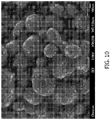
- the resulting product was analyzed by powder XRD and SEM and indicated that the product was pure SSZ-105 molecular sieve.
- the SEM image is shown in FIG. 10 .
- the list of the characteristic XRD peaks for this as-synthesized product is shown in Table 7 below.
- FIG. 11 A comparison between the experimental powder XRD pattern collected from the calcined product and DIFFaX simulated powder XRD patterns with various ERI/LEV intergrowth ratios is shown in FIG. 11 .
- DIFFaX calculation indicates that the product is an intergrowth material with approximately 10-20% of ERI stacking sequence and 80-90% LEV stacking sequence.
- the as-synthesized molecular sieve products were calcined inside a muffle furnace under a flow of air heated to 540°C at a rate of 1°C/minute and held at 540°C for 5 hours, cooled and then analyzed by powder XRD.
- FIG. 3 , FIG. 5 , FIG. 7 , FIG. 9 and FIG. 11 show the XRD patterns of calcined SSZ-105 molecular sieve products 1, 2, 3, 4 and 5, respectively, and indicate that the material remains stable after calcination to remove the organic SDA.
- the calcined material from Example 6 was treated with 10 mL (per g of molecular sieve) of a 1N ammonium nitrate solution at 90°C for 2 hours. The solution was cooled, decanted off and same process repeated.
- the ammonium-exchanged molecular sieve product (NH 4 -SSZ-105) was subjected to a micropore volume analysis using N 2 as adsorbate and via the BET method.
- the molecular sieve exhibited a micropore volume of 0.25 cm 3 /g and indicates that SSZ-105 has microporous character.
- Ammonium-exchanged SSZ-105 was pelletized at 5 kpsi, crushed and meshed to 20-40. 0.20 g of catalyst (diluted 4:1 v/v with alundum) was centered in a stainless steel downflow reactor in a split tube furnace. The catalyst was pre-heated in-situ under flowing nitrogen at 400° C. A feed of pure methanol was introduced into the reactor at a rate of 0.324 cm 3 /h for 1.3 h -1 WHSV in a 30 cm 3 /min flow of nitrogen as carrier gas.
- Reaction products from the product flow out of the reactor were injected automatically into an on-line Agilent gas chromatograph with an FID detector an analyzed in-situ.
Landscapes
- Chemical & Material Sciences (AREA)
- Organic Chemistry (AREA)
- Engineering & Computer Science (AREA)
- Chemical Kinetics & Catalysis (AREA)
- Materials Engineering (AREA)
- Life Sciences & Earth Sciences (AREA)
- Geology (AREA)
- General Life Sciences & Earth Sciences (AREA)
- Crystallography & Structural Chemistry (AREA)
- Inorganic Chemistry (AREA)
- Combustion & Propulsion (AREA)
- Oil, Petroleum & Natural Gas (AREA)
- General Chemical & Material Sciences (AREA)
- Analytical Chemistry (AREA)
- Environmental & Geological Engineering (AREA)
- Biomedical Technology (AREA)
- Health & Medical Sciences (AREA)
- Catalysts (AREA)
- Organic Low-Molecular-Weight Compounds And Preparation Thereof (AREA)
- Low-Molecular Organic Synthesis Reactions Using Catalysts (AREA)
- Silicates, Zeolites, And Molecular Sieves (AREA)
Applications Claiming Priority (4)
| Application Number | Priority Date | Filing Date | Title |
|---|---|---|---|
| US201562242352P | 2015-10-16 | 2015-10-16 | |
| US14/884,859 US9617165B1 (en) | 2015-10-16 | 2015-10-16 | Method for making molecular sieve SSZ-105 |
| US14/884,845 US9663380B2 (en) | 2015-10-16 | 2015-10-16 | Molecular sieve SSZ-105 |
| PCT/US2016/053911 WO2017065967A1 (en) | 2015-10-16 | 2016-09-27 | Molecular sieve ssz-105, its synthesis and use |
Publications (2)
| Publication Number | Publication Date |
|---|---|
| EP3362410A1 EP3362410A1 (en) | 2018-08-22 |
| EP3362410B1 true EP3362410B1 (en) | 2020-01-08 |
Family
ID=57153527
Family Applications (1)
| Application Number | Title | Priority Date | Filing Date |
|---|---|---|---|
| EP16784303.6A Active EP3362410B1 (en) | 2015-10-16 | 2016-09-27 | Molecular sieve ssz-105, its synthesis and use |
Country Status (6)
| Country | Link |
|---|---|
| EP (1) | EP3362410B1 (enExample) |
| JP (1) | JP6697549B2 (enExample) |
| KR (1) | KR102539262B1 (enExample) |
| CN (1) | CN108137333B (enExample) |
| ES (1) | ES2775738T3 (enExample) |
| WO (1) | WO2017065967A1 (enExample) |
Families Citing this family (10)
| Publication number | Priority date | Publication date | Assignee | Title |
|---|---|---|---|---|
| US9663377B1 (en) * | 2015-12-09 | 2017-05-30 | Chevron U.S.A. Inc. | Synthesis of molecular sieve SSZ-105 |
| AU2018229963B2 (en) * | 2017-03-08 | 2023-02-02 | Chevron U.S.A. Inc. | Removal of acid gas from a feed gas stream using small pore zeolites containing double-six-rings and cages |
| JP7363153B2 (ja) | 2019-07-22 | 2023-10-18 | 東ソー株式会社 | ゼオライト及びその製造方法 |
| US11565986B2 (en) * | 2020-08-31 | 2023-01-31 | Chevron U.S.A. Inc. | Ethylene separations using small pore zeolites containing double-six rings and cages |
| CN112158857B (zh) * | 2020-09-30 | 2021-11-23 | 中汽研(天津)汽车工程研究院有限公司 | 一种cha-off-eri共生结构分子筛、其制备方法、其催化剂及其催化剂的应用 |
| CN117203159A (zh) * | 2021-03-26 | 2023-12-08 | 雪佛龙美国公司 | 分子筛ssz-93、催化剂及其使用方法 |
| CN115676849B (zh) * | 2021-07-29 | 2024-03-12 | 中国石油化工股份有限公司 | Svr结构硅锆分子筛及其制备方法 |
| CN113636572B (zh) * | 2021-08-27 | 2022-11-29 | 昆明贵研催化剂有限责任公司 | 高产率Me-SSZ-98型分子筛材料、催化剂及应用 |
| CN114210363B (zh) * | 2022-01-18 | 2022-09-09 | 天津派森新材料技术有限责任公司 | 一种ssz-16含铜催化剂的制备方法 |
| CN114455604B (zh) | 2022-04-13 | 2022-07-01 | 中汽研(天津)汽车工程研究院有限公司 | 一种OFF+ERI结构msect-4分子筛、其制备方法及应用 |
Family Cites Families (14)
| Publication number | Priority date | Publication date | Assignee | Title |
|---|---|---|---|---|
| DE10020170C1 (de) | 2000-04-25 | 2001-09-06 | Emitec Emissionstechnologie | Verfahren zum Entfernen von Rußpartikeln aus einem Abgas und zugehöriges Auffangelement |
| US4568654A (en) * | 1982-11-03 | 1986-02-04 | Mobil Oil Corporation | Zeolite ZSM-51 composition |
| US4737592A (en) | 1984-11-16 | 1988-04-12 | E. I. Du Pont De Nemours And Company | Selected chabazite zeolites as catalysts for conversion of methanol and ammonia to diemethylamine |
| US5580540A (en) * | 1995-12-01 | 1996-12-03 | Chevron U.S.A. Inc. | Zeolite SSZ-44 |
| FI107828B (fi) | 1999-05-18 | 2001-10-15 | Kemira Metalkat Oy | Dieselmoottoreiden pakokaasujen puhdistusjärjestelmä ja menetelmä dieselmoottoreiden pakokaasujen puhdistamiseksi |
| US6508860B1 (en) | 2001-09-21 | 2003-01-21 | L'air Liquide - Societe Anonyme A'directoire Et Conseil De Surveillance Pour L'etude Et L'exploitation Des Procedes Georges Claude | Gas separation membrane with organosilicon-treated molecular sieve |
| US6960327B2 (en) | 2003-01-30 | 2005-11-01 | The Regents Of The University Of California | Methods for removing organic compounds from nano-composite materials |
| JP6081460B2 (ja) * | 2011-09-06 | 2017-02-15 | ビーエーエスエフ ソシエタス・ヨーロピアBasf Se | N,n−ジメチル有機テンプレートを用いるゼオライト系材料の合成 |
| US9670415B2 (en) * | 2011-09-06 | 2017-06-06 | Basf Se | Synthesis of zeolitic materials using N,N-dimethyl organotemplates |
| US9192924B1 (en) * | 2014-06-04 | 2015-11-24 | Chevron U.S.A. Inc. | Molecular sieve SSZ-99 |
| US9409786B2 (en) * | 2014-07-03 | 2016-08-09 | Chevron U.S.A. Inc. | Molecular sieve SSZ-98 |
| US9505626B2 (en) * | 2014-09-09 | 2016-11-29 | Chevron U.S.A. Inc. | Molecular sieve SSZ-101 |
| US9598289B2 (en) * | 2014-10-24 | 2017-03-21 | Chevron U.S.A. Inc. | Molecular sieve SSZ-102 |
| US9586829B2 (en) * | 2015-05-21 | 2017-03-07 | Chevron U.S.A. Inc. | Molecular sieve SSZ-27 |
-
2016
- 2016-09-27 KR KR1020187008739A patent/KR102539262B1/ko active Active
- 2016-09-27 JP JP2018519294A patent/JP6697549B2/ja active Active
- 2016-09-27 ES ES16784303T patent/ES2775738T3/es active Active
- 2016-09-27 WO PCT/US2016/053911 patent/WO2017065967A1/en not_active Ceased
- 2016-09-27 CN CN201680059620.XA patent/CN108137333B/zh active Active
- 2016-09-27 EP EP16784303.6A patent/EP3362410B1/en active Active
Non-Patent Citations (1)
| Title |
|---|
| None * |
Also Published As
| Publication number | Publication date |
|---|---|
| JP2018531869A (ja) | 2018-11-01 |
| EP3362410A1 (en) | 2018-08-22 |
| CN108137333A (zh) | 2018-06-08 |
| WO2017065967A1 (en) | 2017-04-20 |
| KR102539262B1 (ko) | 2023-06-02 |
| CN108137333B (zh) | 2021-04-16 |
| KR20180066053A (ko) | 2018-06-18 |
| ES2775738T3 (es) | 2020-07-28 |
| JP6697549B2 (ja) | 2020-05-20 |
Similar Documents
| Publication | Publication Date | Title |
|---|---|---|
| JP6697549B2 (ja) | 分子ふるいssz−105、その合成および使用 | |
| CN106470945B (zh) | 使用分子筛ssz-98的方法 | |
| JP4889807B2 (ja) | 8員環細孔開口構造を有するモレキュラーシーブまたはゼオライトを含んで成る新規マイクロポーラス結晶性物質およびその製法およびその使用 | |
| JP7664841B2 (ja) | 「sfw-GME尾部」を有するchaとaftとのモレキュラーシーブ連晶調製及び使用の方法 | |
| KR101680286B1 (ko) | 전이금속-함유 알루미노실리케이트 제올라이트 | |
| JP5882238B2 (ja) | NOxの選択触媒還元のための無秩序なモレキュラーシーブ担体 | |
| EP2150328B1 (en) | SCR METHOD AND SYSTEM USING Cu/SAPO-34 ZEOLITE CATALYST | |
| CN112041060B (zh) | 稳定的cha沸石 | |
| US10272423B2 (en) | Processes using molecular sieve SSZ-105 | |
| AU2005309942A1 (en) | High-silica molecular sieve CHA | |
| US9505627B1 (en) | Processes using molecular sieve SSZ-27 | |
| EP1732842B1 (en) | Molecular sieves for improved hydrocarbon traps | |
| KR20150052335A (ko) | 전이 금속/제올라이트 scr 촉매 | |
| US9468917B2 (en) | Processes using molecular sieve SSZ-100 | |
| US9475038B2 (en) | Processes using molecular sieve SSZ-99 | |
| Davis et al. | Molecular sieves for improved hydrocarbon traps | |
| CA2635532A1 (en) | Molecular sieve ssz-73 |
Legal Events
| Date | Code | Title | Description |
|---|---|---|---|
| STAA | Information on the status of an ep patent application or granted ep patent |
Free format text: STATUS: THE INTERNATIONAL PUBLICATION HAS BEEN MADE |
|
| PUAI | Public reference made under article 153(3) epc to a published international application that has entered the european phase |
Free format text: ORIGINAL CODE: 0009012 |
|
| STAA | Information on the status of an ep patent application or granted ep patent |
Free format text: STATUS: REQUEST FOR EXAMINATION WAS MADE |
|
| 17P | Request for examination filed |
Effective date: 20180319 |
|
| AK | Designated contracting states |
Kind code of ref document: A1 Designated state(s): AL AT BE BG CH CY CZ DE DK EE ES FI FR GB GR HR HU IE IS IT LI LT LU LV MC MK MT NL NO PL PT RO RS SE SI SK SM TR |
|
| AX | Request for extension of the european patent |
Extension state: BA ME |
|
| DAV | Request for validation of the european patent (deleted) | ||
| DAX | Request for extension of the european patent (deleted) | ||
| STAA | Information on the status of an ep patent application or granted ep patent |
Free format text: STATUS: EXAMINATION IS IN PROGRESS |
|
| 17Q | First examination report despatched |
Effective date: 20190213 |
|
| GRAP | Despatch of communication of intention to grant a patent |
Free format text: ORIGINAL CODE: EPIDOSNIGR1 |
|
| RIC1 | Information provided on ipc code assigned before grant |
Ipc: C01B 39/02 20060101AFI20190612BHEP Ipc: B01J 29/78 20060101ALI20190612BHEP Ipc: B01J 29/50 20060101ALI20190612BHEP Ipc: C07C 1/20 20060101ALI20190612BHEP Ipc: B01J 29/70 20060101ALI20190612BHEP Ipc: B01J 29/52 20060101ALI20190612BHEP Ipc: B01D 53/94 20060101ALI20190612BHEP Ipc: C01B 39/30 20060101ALI20190612BHEP Ipc: B01J 29/06 20060101ALI20190612BHEP Ipc: B01J 29/80 20060101ALI20190612BHEP Ipc: C01B 39/48 20060101ALI20190612BHEP Ipc: B01J 29/72 20060101ALI20190612BHEP Ipc: B01J 35/00 20060101ALI20190612BHEP Ipc: B01J 29/58 20060101ALI20190612BHEP |
|
| STAA | Information on the status of an ep patent application or granted ep patent |
Free format text: STATUS: GRANT OF PATENT IS INTENDED |
|
| INTG | Intention to grant announced |
Effective date: 20190718 |
|
| GRAS | Grant fee paid |
Free format text: ORIGINAL CODE: EPIDOSNIGR3 |
|
| GRAA | (expected) grant |
Free format text: ORIGINAL CODE: 0009210 |
|
| STAA | Information on the status of an ep patent application or granted ep patent |
Free format text: STATUS: THE PATENT HAS BEEN GRANTED |
|
| AK | Designated contracting states |
Kind code of ref document: B1 Designated state(s): AL AT BE BG CH CY CZ DE DK EE ES FI FR GB GR HR HU IE IS IT LI LT LU LV MC MK MT NL NO PL PT RO RS SE SI SK SM TR |
|
| REG | Reference to a national code |
Ref country code: GB Ref legal event code: FG4D |
|
| REG | Reference to a national code |
Ref country code: CH Ref legal event code: EP |
|
| REG | Reference to a national code |
Ref country code: DE Ref legal event code: R096 Ref document number: 602016027930 Country of ref document: DE |
|
| REG | Reference to a national code |
Ref country code: IE Ref legal event code: FG4D |
|
| REG | Reference to a national code |
Ref country code: AT Ref legal event code: REF Ref document number: 1222479 Country of ref document: AT Kind code of ref document: T Effective date: 20200215 |
|
| REG | Reference to a national code |
Ref country code: NL Ref legal event code: FP |
|
| REG | Reference to a national code |
Ref country code: SE Ref legal event code: TRGR |
|
| REG | Reference to a national code |
Ref country code: LT Ref legal event code: MG4D |
|
| REG | Reference to a national code |
Ref country code: ES Ref legal event code: FG2A Ref document number: 2775738 Country of ref document: ES Kind code of ref document: T3 Effective date: 20200728 |
|
| PG25 | Lapsed in a contracting state [announced via postgrant information from national office to epo] |
Ref country code: NO Free format text: LAPSE BECAUSE OF FAILURE TO SUBMIT A TRANSLATION OF THE DESCRIPTION OR TO PAY THE FEE WITHIN THE PRESCRIBED TIME-LIMIT Effective date: 20200408 Ref country code: FI Free format text: LAPSE BECAUSE OF FAILURE TO SUBMIT A TRANSLATION OF THE DESCRIPTION OR TO PAY THE FEE WITHIN THE PRESCRIBED TIME-LIMIT Effective date: 20200108 Ref country code: PT Free format text: LAPSE BECAUSE OF FAILURE TO SUBMIT A TRANSLATION OF THE DESCRIPTION OR TO PAY THE FEE WITHIN THE PRESCRIBED TIME-LIMIT Effective date: 20200531 Ref country code: RS Free format text: LAPSE BECAUSE OF FAILURE TO SUBMIT A TRANSLATION OF THE DESCRIPTION OR TO PAY THE FEE WITHIN THE PRESCRIBED TIME-LIMIT Effective date: 20200108 Ref country code: LT Free format text: LAPSE BECAUSE OF FAILURE TO SUBMIT A TRANSLATION OF THE DESCRIPTION OR TO PAY THE FEE WITHIN THE PRESCRIBED TIME-LIMIT Effective date: 20200108 |
|
| PG25 | Lapsed in a contracting state [announced via postgrant information from national office to epo] |
Ref country code: HR Free format text: LAPSE BECAUSE OF FAILURE TO SUBMIT A TRANSLATION OF THE DESCRIPTION OR TO PAY THE FEE WITHIN THE PRESCRIBED TIME-LIMIT Effective date: 20200108 Ref country code: LV Free format text: LAPSE BECAUSE OF FAILURE TO SUBMIT A TRANSLATION OF THE DESCRIPTION OR TO PAY THE FEE WITHIN THE PRESCRIBED TIME-LIMIT Effective date: 20200108 Ref country code: BG Free format text: LAPSE BECAUSE OF FAILURE TO SUBMIT A TRANSLATION OF THE DESCRIPTION OR TO PAY THE FEE WITHIN THE PRESCRIBED TIME-LIMIT Effective date: 20200408 Ref country code: IS Free format text: LAPSE BECAUSE OF FAILURE TO SUBMIT A TRANSLATION OF THE DESCRIPTION OR TO PAY THE FEE WITHIN THE PRESCRIBED TIME-LIMIT Effective date: 20200508 Ref country code: GR Free format text: LAPSE BECAUSE OF FAILURE TO SUBMIT A TRANSLATION OF THE DESCRIPTION OR TO PAY THE FEE WITHIN THE PRESCRIBED TIME-LIMIT Effective date: 20200409 |
|
| REG | Reference to a national code |
Ref country code: DE Ref legal event code: R097 Ref document number: 602016027930 Country of ref document: DE |
|
| PG25 | Lapsed in a contracting state [announced via postgrant information from national office to epo] |
Ref country code: CZ Free format text: LAPSE BECAUSE OF FAILURE TO SUBMIT A TRANSLATION OF THE DESCRIPTION OR TO PAY THE FEE WITHIN THE PRESCRIBED TIME-LIMIT Effective date: 20200108 Ref country code: SK Free format text: LAPSE BECAUSE OF FAILURE TO SUBMIT A TRANSLATION OF THE DESCRIPTION OR TO PAY THE FEE WITHIN THE PRESCRIBED TIME-LIMIT Effective date: 20200108 Ref country code: EE Free format text: LAPSE BECAUSE OF FAILURE TO SUBMIT A TRANSLATION OF THE DESCRIPTION OR TO PAY THE FEE WITHIN THE PRESCRIBED TIME-LIMIT Effective date: 20200108 Ref country code: SM Free format text: LAPSE BECAUSE OF FAILURE TO SUBMIT A TRANSLATION OF THE DESCRIPTION OR TO PAY THE FEE WITHIN THE PRESCRIBED TIME-LIMIT Effective date: 20200108 Ref country code: DK Free format text: LAPSE BECAUSE OF FAILURE TO SUBMIT A TRANSLATION OF THE DESCRIPTION OR TO PAY THE FEE WITHIN THE PRESCRIBED TIME-LIMIT Effective date: 20200108 Ref country code: RO Free format text: LAPSE BECAUSE OF FAILURE TO SUBMIT A TRANSLATION OF THE DESCRIPTION OR TO PAY THE FEE WITHIN THE PRESCRIBED TIME-LIMIT Effective date: 20200108 |
|
| PLBE | No opposition filed within time limit |
Free format text: ORIGINAL CODE: 0009261 |
|
| STAA | Information on the status of an ep patent application or granted ep patent |
Free format text: STATUS: NO OPPOSITION FILED WITHIN TIME LIMIT |
|
| REG | Reference to a national code |
Ref country code: AT Ref legal event code: MK05 Ref document number: 1222479 Country of ref document: AT Kind code of ref document: T Effective date: 20200108 |
|
| 26N | No opposition filed |
Effective date: 20201009 |
|
| REG | Reference to a national code |
Ref country code: DE Ref legal event code: R082 Ref document number: 602016027930 Country of ref document: DE Representative=s name: HL KEMPNER PATENTANWAELTE, SOLICITORS (ENGLAND, DE Ref country code: DE Ref legal event code: R082 Ref document number: 602016027930 Country of ref document: DE Representative=s name: HL KEMPNER PATENTANWALT, RECHTSANWALT, SOLICIT, DE Ref country code: DE Ref legal event code: R082 Ref document number: 602016027930 Country of ref document: DE Representative=s name: HL KEMPNER PARTG MBB, DE |
|
| PG25 | Lapsed in a contracting state [announced via postgrant information from national office to epo] |
Ref country code: AT Free format text: LAPSE BECAUSE OF FAILURE TO SUBMIT A TRANSLATION OF THE DESCRIPTION OR TO PAY THE FEE WITHIN THE PRESCRIBED TIME-LIMIT Effective date: 20200108 |
|
| PG25 | Lapsed in a contracting state [announced via postgrant information from national office to epo] |
Ref country code: PL Free format text: LAPSE BECAUSE OF FAILURE TO SUBMIT A TRANSLATION OF THE DESCRIPTION OR TO PAY THE FEE WITHIN THE PRESCRIBED TIME-LIMIT Effective date: 20200108 Ref country code: SI Free format text: LAPSE BECAUSE OF FAILURE TO SUBMIT A TRANSLATION OF THE DESCRIPTION OR TO PAY THE FEE WITHIN THE PRESCRIBED TIME-LIMIT Effective date: 20200108 |
|
| REG | Reference to a national code |
Ref country code: CH Ref legal event code: PL |
|
| REG | Reference to a national code |
Ref country code: BE Ref legal event code: MM Effective date: 20200930 |
|
| PG25 | Lapsed in a contracting state [announced via postgrant information from national office to epo] |
Ref country code: LU Free format text: LAPSE BECAUSE OF NON-PAYMENT OF DUE FEES Effective date: 20200927 |
|
| PG25 | Lapsed in a contracting state [announced via postgrant information from national office to epo] |
Ref country code: LI Free format text: LAPSE BECAUSE OF NON-PAYMENT OF DUE FEES Effective date: 20200930 Ref country code: IE Free format text: LAPSE BECAUSE OF NON-PAYMENT OF DUE FEES Effective date: 20200927 Ref country code: BE Free format text: LAPSE BECAUSE OF NON-PAYMENT OF DUE FEES Effective date: 20200930 Ref country code: CH Free format text: LAPSE BECAUSE OF NON-PAYMENT OF DUE FEES Effective date: 20200930 |
|
| PG25 | Lapsed in a contracting state [announced via postgrant information from national office to epo] |
Ref country code: TR Free format text: LAPSE BECAUSE OF FAILURE TO SUBMIT A TRANSLATION OF THE DESCRIPTION OR TO PAY THE FEE WITHIN THE PRESCRIBED TIME-LIMIT Effective date: 20200108 Ref country code: MT Free format text: LAPSE BECAUSE OF FAILURE TO SUBMIT A TRANSLATION OF THE DESCRIPTION OR TO PAY THE FEE WITHIN THE PRESCRIBED TIME-LIMIT Effective date: 20200108 Ref country code: CY Free format text: LAPSE BECAUSE OF FAILURE TO SUBMIT A TRANSLATION OF THE DESCRIPTION OR TO PAY THE FEE WITHIN THE PRESCRIBED TIME-LIMIT Effective date: 20200108 |
|
| PG25 | Lapsed in a contracting state [announced via postgrant information from national office to epo] |
Ref country code: MK Free format text: LAPSE BECAUSE OF FAILURE TO SUBMIT A TRANSLATION OF THE DESCRIPTION OR TO PAY THE FEE WITHIN THE PRESCRIBED TIME-LIMIT Effective date: 20200108 Ref country code: MC Free format text: LAPSE BECAUSE OF FAILURE TO SUBMIT A TRANSLATION OF THE DESCRIPTION OR TO PAY THE FEE WITHIN THE PRESCRIBED TIME-LIMIT Effective date: 20200108 Ref country code: AL Free format text: LAPSE BECAUSE OF FAILURE TO SUBMIT A TRANSLATION OF THE DESCRIPTION OR TO PAY THE FEE WITHIN THE PRESCRIBED TIME-LIMIT Effective date: 20200108 |
|
| P01 | Opt-out of the competence of the unified patent court (upc) registered |
Effective date: 20230522 |
|
| PGFP | Annual fee paid to national office [announced via postgrant information from national office to epo] |
Ref country code: NL Payment date: 20250814 Year of fee payment: 10 |
|
| PGFP | Annual fee paid to national office [announced via postgrant information from national office to epo] |
Ref country code: DE Payment date: 20250805 Year of fee payment: 10 |
|
| PGFP | Annual fee paid to national office [announced via postgrant information from national office to epo] |
Ref country code: IT Payment date: 20250825 Year of fee payment: 10 |
|
| PGFP | Annual fee paid to national office [announced via postgrant information from national office to epo] |
Ref country code: GB Payment date: 20250807 Year of fee payment: 10 |
|
| PGFP | Annual fee paid to national office [announced via postgrant information from national office to epo] |
Ref country code: FR Payment date: 20250808 Year of fee payment: 10 |
|
| PGFP | Annual fee paid to national office [announced via postgrant information from national office to epo] |
Ref country code: SE Payment date: 20250812 Year of fee payment: 10 |
|
| PGFP | Annual fee paid to national office [announced via postgrant information from national office to epo] |
Ref country code: ES Payment date: 20251014 Year of fee payment: 10 |