EP3341819B1 - Flexible elektronische vorrichtung und betriebsverfahren dafür - Google Patents
Flexible elektronische vorrichtung und betriebsverfahren dafür Download PDFInfo
- Publication number
- EP3341819B1 EP3341819B1 EP16875990.0A EP16875990A EP3341819B1 EP 3341819 B1 EP3341819 B1 EP 3341819B1 EP 16875990 A EP16875990 A EP 16875990A EP 3341819 B1 EP3341819 B1 EP 3341819B1
- Authority
- EP
- European Patent Office
- Prior art keywords
- electronic device
- touch
- press
- interaction
- point
- Prior art date
- Legal status (The legal status is an assumption and is not a legal conclusion. Google has not performed a legal analysis and makes no representation as to the accuracy of the status listed.)
- Not-in-force
Links
Images













Classifications
-
- G—PHYSICS
- G06—COMPUTING OR CALCULATING; COUNTING
- G06F—ELECTRIC DIGITAL DATA PROCESSING
- G06F3/00—Input arrangements for transferring data to be processed into a form capable of being handled by the computer; Output arrangements for transferring data from processing unit to output unit, e.g. interface arrangements
- G06F3/01—Input arrangements or combined input and output arrangements for interaction between user and computer
- G06F3/03—Arrangements for converting the position or the displacement of a member into a coded form
- G06F3/041—Digitisers, e.g. for touch screens or touch pads, characterised by the transducing means
- G06F3/0412—Digitisers structurally integrated in a display
-
- H—ELECTRICITY
- H04—ELECTRIC COMMUNICATION TECHNIQUE
- H04M—TELEPHONIC COMMUNICATION
- H04M1/00—Substation equipment, e.g. for use by subscribers
- H04M1/02—Constructional features of telephone sets
- H04M1/0202—Portable telephone sets, e.g. cordless phones, mobile phones or bar type handsets
- H04M1/026—Details of the structure or mounting of specific components
- H04M1/0266—Details of the structure or mounting of specific components for a display module assembly
- H04M1/0268—Details of the structure or mounting of specific components for a display module assembly including a flexible display panel
-
- G—PHYSICS
- G06—COMPUTING OR CALCULATING; COUNTING
- G06F—ELECTRIC DIGITAL DATA PROCESSING
- G06F1/00—Details not covered by groups G06F3/00 - G06F13/00 and G06F21/00
- G06F1/16—Constructional details or arrangements
- G06F1/1613—Constructional details or arrangements for portable computers
- G06F1/163—Wearable computers, e.g. on a belt
-
- G—PHYSICS
- G06—COMPUTING OR CALCULATING; COUNTING
- G06F—ELECTRIC DIGITAL DATA PROCESSING
- G06F1/00—Details not covered by groups G06F3/00 - G06F13/00 and G06F21/00
- G06F1/16—Constructional details or arrangements
- G06F1/1613—Constructional details or arrangements for portable computers
- G06F1/1633—Constructional details or arrangements of portable computers not specific to the type of enclosures covered by groups G06F1/1615 - G06F1/1626
- G06F1/1637—Details related to the display arrangement, including those related to the mounting of the display in the housing
- G06F1/1652—Details related to the display arrangement, including those related to the mounting of the display in the housing the display being flexible, e.g. mimicking a sheet of paper, or rollable
-
- G—PHYSICS
- G06—COMPUTING OR CALCULATING; COUNTING
- G06F—ELECTRIC DIGITAL DATA PROCESSING
- G06F3/00—Input arrangements for transferring data to be processed into a form capable of being handled by the computer; Output arrangements for transferring data from processing unit to output unit, e.g. interface arrangements
- G06F3/01—Input arrangements or combined input and output arrangements for interaction between user and computer
- G06F3/048—Interaction techniques based on graphical user interfaces [GUI]
- G06F3/0487—Interaction techniques based on graphical user interfaces [GUI] using specific features provided by the input device, e.g. functions controlled by the rotation of a mouse with dual sensing arrangements, or of the nature of the input device, e.g. tap gestures based on pressure sensed by a digitiser
- G06F3/0488—Interaction techniques based on graphical user interfaces [GUI] using specific features provided by the input device, e.g. functions controlled by the rotation of a mouse with dual sensing arrangements, or of the nature of the input device, e.g. tap gestures based on pressure sensed by a digitiser using a touch-screen or digitiser, e.g. input of commands through traced gestures
- G06F3/04883—Interaction techniques based on graphical user interfaces [GUI] using specific features provided by the input device, e.g. functions controlled by the rotation of a mouse with dual sensing arrangements, or of the nature of the input device, e.g. tap gestures based on pressure sensed by a digitiser using a touch-screen or digitiser, e.g. input of commands through traced gestures for inputting data by handwriting, e.g. gesture or text
-
- H—ELECTRICITY
- H04—ELECTRIC COMMUNICATION TECHNIQUE
- H04M—TELEPHONIC COMMUNICATION
- H04M1/00—Substation equipment, e.g. for use by subscribers
- H04M1/02—Constructional features of telephone sets
- H04M1/0202—Portable telephone sets, e.g. cordless phones, mobile phones or bar type handsets
-
- H—ELECTRICITY
- H04—ELECTRIC COMMUNICATION TECHNIQUE
- H04M—TELEPHONIC COMMUNICATION
- H04M1/00—Substation equipment, e.g. for use by subscribers
- H04M1/02—Constructional features of telephone sets
- H04M1/04—Supports for telephone transmitters or receivers
- H04M1/05—Supports for telephone transmitters or receivers specially adapted for use on head, throat or breast
-
- H—ELECTRICITY
- H04—ELECTRIC COMMUNICATION TECHNIQUE
- H04M—TELEPHONIC COMMUNICATION
- H04M1/00—Substation equipment, e.g. for use by subscribers
- H04M1/72—Mobile telephones; Cordless telephones, i.e. devices for establishing wireless links to base stations without route selection
- H04M1/724—User interfaces specially adapted for cordless or mobile telephones
- H04M1/72403—User interfaces specially adapted for cordless or mobile telephones with means for local support of applications that increase the functionality
-
- G—PHYSICS
- G06—COMPUTING OR CALCULATING; COUNTING
- G06F—ELECTRIC DIGITAL DATA PROCESSING
- G06F2203/00—Indexing scheme relating to G06F3/00 - G06F3/048
- G06F2203/041—Indexing scheme relating to G06F3/041 - G06F3/045
- G06F2203/04101—2.5D-digitiser, i.e. digitiser detecting the X/Y position of the input means, finger or stylus, also when it does not touch, but is proximate to the digitiser's interaction surface and also measures the distance of the input means within a short range in the Z direction, possibly with a separate measurement setup
-
- G—PHYSICS
- G06—COMPUTING OR CALCULATING; COUNTING
- G06F—ELECTRIC DIGITAL DATA PROCESSING
- G06F2203/00—Indexing scheme relating to G06F3/00 - G06F3/048
- G06F2203/041—Indexing scheme relating to G06F3/041 - G06F3/045
- G06F2203/04102—Flexible digitiser, i.e. constructional details for allowing the whole digitising part of a device to be flexed or rolled like a sheet of paper
-
- G—PHYSICS
- G06—COMPUTING OR CALCULATING; COUNTING
- G06F—ELECTRIC DIGITAL DATA PROCESSING
- G06F2203/00—Indexing scheme relating to G06F3/00 - G06F3/048
- G06F2203/041—Indexing scheme relating to G06F3/041 - G06F3/045
- G06F2203/04104—Multi-touch detection in digitiser, i.e. details about the simultaneous detection of a plurality of touching locations, e.g. multiple fingers or pen and finger
-
- G—PHYSICS
- G06—COMPUTING OR CALCULATING; COUNTING
- G06F—ELECTRIC DIGITAL DATA PROCESSING
- G06F2203/00—Indexing scheme relating to G06F3/00 - G06F3/048
- G06F2203/041—Indexing scheme relating to G06F3/041 - G06F3/045
- G06F2203/04105—Pressure sensors for measuring the pressure or force exerted on the touch surface without providing the touch position
-
- G—PHYSICS
- G06—COMPUTING OR CALCULATING; COUNTING
- G06F—ELECTRIC DIGITAL DATA PROCESSING
- G06F2203/00—Indexing scheme relating to G06F3/00 - G06F3/048
- G06F2203/048—Indexing scheme relating to G06F3/048
- G06F2203/04806—Zoom, i.e. interaction techniques or interactors for controlling the zooming operation
-
- H—ELECTRICITY
- H04—ELECTRIC COMMUNICATION TECHNIQUE
- H04M—TELEPHONIC COMMUNICATION
- H04M2250/00—Details of telephonic subscriber devices
- H04M2250/12—Details of telephonic subscriber devices including a sensor for measuring a physical value, e.g. temperature or motion
-
- H—ELECTRICITY
- H04—ELECTRIC COMMUNICATION TECHNIQUE
- H04M—TELEPHONIC COMMUNICATION
- H04M2250/00—Details of telephonic subscriber devices
- H04M2250/22—Details of telephonic subscriber devices including a touch pad, a touch sensor or a touch detector
-
- H—ELECTRICITY
- H04—ELECTRIC COMMUNICATION TECHNIQUE
- H04M—TELEPHONIC COMMUNICATION
- H04M2250/00—Details of telephonic subscriber devices
- H04M2250/74—Details of telephonic subscriber devices with voice recognition means
Definitions
- the electronic device is reaching a mobile convergence phase such that it can now provide such functions such as voice call and video call, message delivery including short message service (SMS)/multimedia messaging service (MMS) and e-mail, digital note, camera, broadcasting play, video play, music play, Internet, messenger, game, and social network service (SNS) functions.
- SMS short message service
- MMS multimedia messaging service
- SNS social network service
- a flexible electronic device can advance to a wearable electronic device.
- the wearable electronic device can be donned (i.e., put on for wearing) by a user. Accordingly, the flexible electronic device can differ in shape before and after it is donned by the user, which makes it difficult for the user to achieve a consistent sizing of the electronic device for wearing.
- US 2013/0120302 A1 discloses a display device and a data displaying method including at least one sensor including a touch sensor to generate touch events according to touch events, a flexible sensor to generate a bend signal to detect bend events, and a pressure sensor to generate a pressure signal to detect pressure events, a storage unit to store a function table, and a controller to control the components of the device.
- a processor configured (or set) to perform A, B, and C can be a dedicated processor for performing a corresponding operation or a generic-purpose processor, such as a central processing unit (CPU) or an application processor (AP) which can perform a corresponding operation by executing one or more software programs stored in a memory device.
- a generic-purpose processor such as a central processing unit (CPU) or an application processor (AP) which can perform a corresponding operation by executing one or more software programs stored in a memory device.
- the wearable device can include at least one of an accessory type, such as a watch, a ring, a bracelet, an ankle bracelet, a necklace, glasses, a contact lens, or a head-mounted-device (HMD), a fabric or clothing embedded type, such as electronic garments, a body attachable type, such as a skin pad or a tattoo, and an implantable circuit.
- an accessory type such as a watch, a ring, a bracelet, an ankle bracelet, a necklace, glasses, a contact lens, or a head-mounted-device (HMD)
- a fabric or clothing embedded type such as electronic garments
- a body attachable type such as a skin pad or a tattoo
- implantable circuit implantable circuit.
- the wearable device can be a flexible device.
- the processor 120 includes a CPU and can include one or more of an AP, and a communication processor (CP), and can process an operation or data when controlling at least another component of the electronic device and/or executing an application.
- a CPU can include one or more of an AP, and a communication processor (CP), and can process an operation or data when controlling at least another component of the electronic device and/or executing an application.
- CP communication processor
- the short-range communication module can include at least one of wireless fidelity (WiFi), Bluetooth®, near field communication (NFC), and global navigation satellite system (GNSS) or global positioning system (GPS).
- magnetic secure transmission (MST) can generate a pulse according to transmit data using an electromagnetic signal, and the pulse can generate a magnetic signal.
- the electronic device sends the magnetic signal to a point of sale (POS) terminal, and the POS terminal detects the magnetic signal using an MST reader and restores data by converting the detected magnetic signal to an electric signal.
- the GNSS can include at least one of GPS, GLONASS, Beidou navigation satellite system (Beidou), or Galileo (the European global satellite-based navigation system), according to use area or bandwidth of the GNSS.
- GPS can be interchangeably used with the GNSS.
- the wired communication module can include at least one of universal serial bus (USB), high definition multimedia interface (HDMI), recommended standard 232 (RS-232), and plain old telephone service (POTS).
- USB universal serial bus
- HDMI high definition multimedia interface
- RS-232 recommended standard 232
- POTS plain old telephone service
- the medical sensor of the sensor 130 can include a heart rate monitoring (HRM) sensor and/or a UV sensor.
- HRM heart rate monitoring
- UV sensor can be installed on a front side of the electronic device, such as at a position for detecting an external light such as sunlight.
- the processor 100 can control application execution using the memory 110.
- the application can include one or more applications for performing functions such as a home, dialer, SMS/ MMS, an instant message (IM), browser, camera, alarm, contact, voice dial, e-mail, calendar, media player, album, watch, health care (such as measure an exercise amount or blood sugar level), or environmental information provision application, such as for providing air pressure, humidity, or temperature information.
- IM instant message
- browser camera
- alarm contact
- voice dial e-mail
- calendar e.g., media player, album, watch
- health care such as measure an exercise amount or blood sugar level
- environmental information provision application such as for providing air pressure, humidity, or temperature information.
- the notification relay application can forward notification information generated from another application (such as the SMS/MMS application, the e-mail application, the health care application, and the environmental information application) of the electronic device to the external electronic device.
- the notification relay application can receive and forward notification information from the external electronic device to the user.
- the flexible electronic device can be worn on a particular body part such as a wrist or an arm.
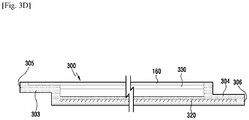
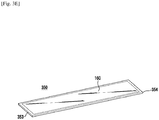
- FIG 3A shows a first position state of the flexible electronic device before it is worn
- FIG 3B shows a second position state of the flexible electronic device in the worn position.
- the flexible electronic device In the first position, the flexible electronic device is nearly flat.
- the flexible electronic device In the second position, the flexible electronic device is placed on the wrist by force.
- a power source which provides the force shall be described.
- a speaker, a microphone, a front camera, and/or at least one sensor can be disposed in another area than the display area, such as in a bezel area on the front side 301 of the main body 300.
- a home button can be included in the main body 300.
- the flexible display can display a main Home screen.
- a power/reset button, a volume button, and one or more microphones can be disposed along edges of one side of the flexible electronic device, a connector can be formed on the other side of the flexible electronic device and can include a plurality of electrodes for wired connection with an external device, and an earphone jack can be disposed on the side of the flexible electronic device, into which an earphone can be inserted.
- the input interface 150 of the electronic device includes a touch panel which can have functionality for recognizing the touch press.
- the electronic device can also include a press sensor or an independent press sensor, such as a piezo sensor, and a touch panel for detecting the press.
- the flexible electronic device can have a wear state, a non-wear state, and first and second switchover states.
- the electronic device can switch from the non-wear state 410 to the wear state 430 through the first switchover state 420 as shown in FIG 4 .
- the electronic device can also switch from the wear state 430 to the non-wear state 450 via the second switchover state 440.
- the flexible electronic device can perform a preset function in the wear state and the non-wear state.
- the electronic device according to embodiments of the present disclosure can activate a corresponding device and/or UI so as to perform a suitable function (or operation) after the first and/or second switchover state 420 and/or 440.
- the electronic device can activate a corresponding medical sensor in the first switchover state 420.
- the electronic device can measure bio information in a stabled state through the activated medical sensor.
- the electronic device can supper the medical sensor.
- the user can conduct a user interaction such as the swipe or the tap.
- a user interaction such as the swipe or the tap.
- the user can perform an inward swipe interaction 631 or an outward swipe interaction 633.
- the user can input an inward or outward swipe interaction 635 or 637 at the touch point that is not pressed.
- the user can tap the touch point that is not pressed.
- the user can input an interaction in addition to a motion.
- the motion can be omitted and can include raising, waving, or turning a hand.
- the processor can activate the press sensor, and when detecting at least one press from multi-touch inputs, the processor can detect whether an additional interaction occurs and thus recognizes the touch interaction.
- the touch panel can include a first electrode and a second electrode, the press sensor can be disposed between the first electrode and the second electrode, and the processor can recognize a touch input, a location, and a press by applying a scan signal to the first electrode and receiving a sensing signal from the second electrode.
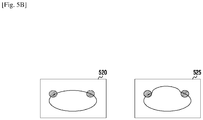
- the multi-touch input can be a 2-point touch input, and, when a 2-point touch input is recognized, the processor can recognize a touch location.
- the processor can activate a microphone and executes a voice input mode, and when recognizing a user in the voice input mode, the electronic device can execute the voice input mode of a whisper mode.
- the processor can switch to a preset application according to a swipe direction.
- the processor can display a quick panel screen on the display.
- the processor can display a list of recent applications on the display.
- FIG 8 illustrates a method for controlling operations according to a touch interaction in an electronic device according to embodiments of the present disclosure.
- the electronic device of the non-wear state can perform a normal operation.
- the electronic device can detect the bending based on the output of the input interface 150 and/or the sensor 130.
- the electronic device can activate the function and/or the UI for performing the operation of the non-wear state after the electronic device is donned for wearing.
- the electronic device can switch to an operation mode of the wear state and execute the operation.
- the bending of the electronic device can be recognized in various manners.
- the user can wear the electronic device by bending it.
- the user can bend the electronic device by touching upper and lower points of the electronic device and pressing the electronic device.
- the user can place the bent electronic device on his/her wrist and couple the electronic device.
- the electronic device can recognize a user's multi-point touch, such as touching the upper and lower points of the display and/or the coupling unit, and recognize the press based on the user's bending.
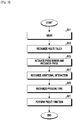
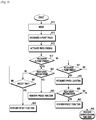
- the electronic device When the electronic device is worn and the multi-touch is input, the electronic device recognizes the multi-touch locations and the touch press level. The electronic device recognizes the interactions generated by the user after the multi-touch is input, and recognizes the pressing time when the press is detected. In operation 821, the electronic device analyzes the locations and the presses of the multi-touch, the additional interaction, and/or the pressing times, and executes the preset function or control the object according to the analysis result.
- the electronic device executes automatically a preset function corresponding to the input.
- the electronic device executes the preset function or control the object according to the interaction.
- FIG 8 illustrates the operations for the multi-touch.
- the touch including three or more points in the wear state of the electronic device may not be suitable for form purposes.
- 2-point touch including the touch location, the press of one point or two points, the additional interaction, such as a user's free gesture and/or motion while still touching and/or pressing, and/or the pressing time are analyzed.
- the electronic device is worn in operation 911 and executes a preset application of the wear state.
- the electronic device can recognize the multi-touch input in operation 913.
- the 2-point touch can be one of the inputs 610 of FIG 6 .
- the electronic device can also recognize their touch locations in operation 913.
- the electronic device can activate the press sensor, such as when satisfying a condition of measuring the press level (such as detecting the 2-touch input), and thus reduce the power consumption for driving the press sensor.
- the electronic device may recognize the touch input and the press simultaneously.
- the electronic device can analyze the output of the press sensor and thus obtain the press level of the 2-point touch inputs.
- the electronic device can determine whether the 2-point touch is recognized in operation 917 and, if the 2-point touch is recognized, determine whether an additional interaction occurs in operation 921.
- the additional interaction can include the gesture and the motion, and the gesture can include the tap and the swipe.
- the additional interaction is the gesture by way of example.
- the electronic device can recognize the additional interaction and perform a preset function and/or object corresponding to the 2-point touch, the two presses, and the interaction in operation 923.
- the electronic device can perform a corresponding function in operation 950, which can be preset for the current input. Without the preset function, the input can be ignored or processed as an error.
- the electronic device when the electronic device is worn and a 2-point touch 1010 is input to the upper and lower sides, the electronic device can recognize the 2-point touch in operation 913 and activate the sensor for detecting the press of the 2-point touch in operation 915. In so doing, when detecting the press 1020 in the 2-point touch, the electronic device can recognize in operations 917 and 921 and perform the preset function of the corresponding touch interaction in operation 923. The touch interaction can move inward while pressing the 2-point touch 1030, or move outward while pressing the 2-point touch 1035.
- the preset function is conducted without checking the additional interaction.
- another function can be set when the additional interaction occurs even after the preset pressing time.
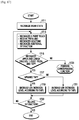
- FIG 11 illustrates another method according to a 2-point touch interaction with an electronic device put on according to an example useful for understanding the invention.
- the electronic device can determine whether the press is maintained over a preset time in operation 1119.
- the electronic device can determine whether the additional interaction is recognized in operation 1131 within the preset time and perform a function corresponding to the touch interaction in operation 1133 if the additional interaction is recognized within the preset time. If the additional interaction is not recognized in operation 1131, the method returns to operation 1119.
- the electronic device can recognize the pressing time and determine whether an additional interaction occurs in operation 1121.
- the electronic device can perform a preset function in operation 1123.
- the electronic device can perform a preset function in operation 1125. That is, when detecting the additional interaction with the press maintained over the preset time, the electronic device can perform the preset function in FIG 10 .
- the function conducted in operation 1123 can be the same as or different from the function conducted in operation 1133.
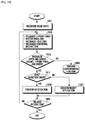
- the electronic device can analyze the output of the press sensor and obtain the press level of the 2-point touch.
- the electronic device can determine whether an additional interaction occurs in operation 1221.
- the electronic device can recognize the additional interaction in operation 1221 and control a preset function and/or object corresponding to the 2-point touch locations, the 2-point press, and the additional interaction in operation 1223.
- the electronic device can determine whether the 2-point touch is pressed over a preset time in operation 1225.
- the electronic device can perform a corresponding function in operation 1250.
- the corresponding function can be a preset function for the current input. Without the preset function, the input can be ignored or processed as an error.
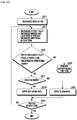
- FIG 13 illustrates a method for entering a voice input mode with an electronic device being worn according to an example useful for understanding the invention.
- FIG 14 depicts operations in the voice input mode of FIG 13 .
- the electronic device can set a normal voice mode in operation 1323.
- the proximity of the user and the electronic device can be determined using a proximity sensor or the camera unit 140.
- the whisper mode can be processes in a lower volume than the normal voice mode.
- a release interaction occurs, such as the 2-point touch release, the electronic device can recognize the release interaction and turn off the microphone in operation 1325. When the release interaction does not occur, the method returns to operation 1313.
- the medical sensor can be an HRM sensor. As the heart iterates relaxation and contraction, a blood flow of a peripheral blood vessel and a volume of the blood vessel vary.
- the HRM sensor can measure a transmittance amount of light based on the variation of the blood vessel and thus represent the heart beat using a waveform. That is, the HRM sensor can employ a photoplethysmography (PPG) method to measure variations of the blood flow or oxygen saturation within the blood vessel.
- PPG photoplethysmography
- the electronic device can recognize the squeeze of the medical sensor 1617, automatically activate the medical sensor, and then enter the biometric mode.
- the biometric sensor disposed on the rear side of the electronic device can contact the inner part of the wrist or the back of the hand.
- the medical sensor closely contacts the wrist and the biometric mode is automatically executed.
- the electronic device when recognizing the 2-point touch, recognizing the press at one point of the 2-point touch, and recognizing the tap interaction at the other point, the electronic device can process the corresponding input by adjusting the level or the count. That is, upon recognizing one press and one tap interaction at the 2-point touch, the electronic device can recognize the corresponding touch interaction to be mapped to the count up and the count down. When such a touch interaction is recognized, the electronic device can process the volume up/down or the brightness up/down according to the running application. For a long press over a certain time instead of the tap in the volume control application, the electronic device may conduct a fast volume level control or accelerated upward/accelerated downward volume control in a corresponding direction.
- the electronic device can recognize its wear state in operation 2211.
- a 2-point touch, a 2-point press, and an additional interaction occur, the electronic device can recognize locations of the 2-point touch, number and locations of presses, and the additional interaction in operation 2213.
- the 2-point touch is input to the upper and lower sides of the electronic device, the 2-point press is recognized, and a swipe interaction is detected at the 2-point touch, the electronic device can recognize them in operation 2215.
- the electronic device Upon recognizing the swipe interaction, the electronic device can determine a direction of the swipe interaction in operation 2217.
- the swipe interaction 631 moves in as shown in FIG 6 , the electronic device switches to a previous page (or a next page) in operation 2219.
- the electronic device can recognize the corresponding touch interaction (use case : depth in (zoom in), next) in various manners according to the running application. For example, when detecting the touch interaction 631 of FIG 6 , the electronic device can switch the thumbnail view of the gallery application to the detail view to, move to a next page in the Internet browser, and switch to a next depth screen in the application having the plurality of the depths. Gesture metaphor of the touch interaction 631 of FIG 6 can pull down the screen and indicate 'forward'.
- FIG 23 illustrates application execution of FIG 22 .
- FIG 24 depicts a screen in the operations of FIG 23 .
- the electronic device when detecting the diagonal touch 613 or 615 of FIG 6 and the rotation interaction, the electronic device can adjust the hour and the minute in the watch application. Upon detecting the touch interaction 2620 of FIG 26A , the electronic device can use this as 'increase', such as alarm create, in the time set.
- the gesture metaphor of the touch interaction 2620 can rotate clockwise and indicate 'increase'.
- controlling can switch to a preset application according to a swipe direction.
- Controlling and further include, when the swipe interaction moves inward controlling can display a quick panel screen on the display, and displaying an application of a selected list as a detail screen in the quick panel screen.
- Controlling can further include, when the touch location is on upper and lower sides of the electronic device, a press is recognized at the two touch locations, and a swipe input is detected, finishing the quick panel screen display.
- Controlling and further include, when the swipe interaction moves outward controlling can display a list screen of recent applications on the display, and displaying an application of a list selected in the recent application list screen. Controlling can further include, when the touch location is on upper and lower sides of the electronic device, a press is recognized at the two touch locations, and an inward swipe input is detected, finishing the recent application screen display.
- Controlling can include, when the touch location is on upper and lower sides of the electronic device, a press is recognized at the two touch locations, and a swipe interaction is detected, performing a preset function according to a swipe direction. Controlling can further include displaying a previous depth screen for an inward swipe direction, and displaying a next depth screen for an outward swipe direction. Controlling can, when touch locations are diagonal, a press is recognized at the two touch locations, and a rotation interaction is detected, move a selected object in a rotation direction.
Landscapes
- Engineering & Computer Science (AREA)
- Theoretical Computer Science (AREA)
- General Engineering & Computer Science (AREA)
- Human Computer Interaction (AREA)
- Computer Hardware Design (AREA)
- Physics & Mathematics (AREA)
- General Physics & Mathematics (AREA)
- Signal Processing (AREA)
- Health & Medical Sciences (AREA)
- Otolaryngology (AREA)
- Computer Networks & Wireless Communication (AREA)
- User Interface Of Digital Computer (AREA)
- Position Input By Displaying (AREA)
- Input From Keyboards Or The Like (AREA)
Claims (9)
- Elektronische Vorrichtung umfassend:ein flexibles Display (160);eine Eingabeschnittstelle (150), die einen Touchpanel umfasst, die zum Erfassen einer Berührungseingabe konfiguriert ist;einen Sensor (130); undeinen Prozessor (100), der funktionell mit dem Display, der Eingabeschnittstelle, und dem Sensor gekoppelt ist,wobei der Prozessor (100) konfiguriert ist zum:Bestimmen (811), unter Verwendung des Sensors, ob ein Zustand der elektronischen Vorrichtung einem Zustand entspricht, der anzeigt, dass die elektronische Vorrichtung von einem Benutzer getragen wird;wenn der Zustand dem Zustand entspricht, der anzeigt, dass die elektronische Vorrichtung von einem Benutzer getragen wird, Bestimmen (813) der Erfassung einer Mehrfachberührung und Analysieren (815) einer Drückstärke der Mehrfachberührung;wenn die Mehrfachberührung eine Drückstärke über einer voreingestellten Drückstärke hat, Bestimmen (817) der Erfassung einer zusätzlichen Interaktion, wobei die zusätzliche Interaktion eine Bewegung der elektronischen Vorrichtung umfasst;Bestimmen (819) einer Drückzeit der Mehrfachberührung, wobei die Drückzeit einer Zeit entspricht während welcher die Mehrfachberührung eine Drückstärke über der voreingestellten Drückstärke aufweist; undfalls keine zusätzliche Interaktion erfasst wird, Ausführen (821) einer voreingestellten Funktion, wenn die Mehrfachberührung erfasst wird und die Drückzeit über einer voreingestellten Zeit beibehalten wird; oderfalls die zusätzliche Interaktion erfasst wird, Ausführen (821) der voreingestellten Funktion, wenn die Mehrfachberührung erfasst wird und die Mehrfachberührung eine Drückstärke über der voreingestellten Drückstärke aufweist.
- Elektronische Vorrichtung nach Anspruch 1, wobei das Touchpanel eine erste Elektrode und eine zweite Elektrode umfasst,
der Sensor ist zwischen der ersten Elektrode und der zweiten Elektrode angebracht, und
der Prozessor (100) ist konfiguriert, um eine Berührungseingabe, eine Stelle, und ein Drücken durch Anwendung eines Abtastungssignals auf die erste Elektrode und Empfangen eines Erfassungssignals von der zweiten Elektrode zu erkennen. - Elektronische Vorrichtung nach Anspruch 1, wobei die Mehrfachberührungseingabe eine 2-Punkt Berührungs(515)eingabe ist, und
wenn eine 2-Punkt-Berührungs(515)eingabe erkannt wird, der Prozessor konfiguriert ist, um zwei Berührungsstellen (913) zu erkennen. - Elektronische Vorrichtung nach Anspruch 3, wobei, wenn die Berührungsstelle an der oberen und unteren Seiten (611) der elektronischen Vorrichtung ist, ein Drücken an einer der Berührungsstellen an der oberen oder unteren Seite erkannt wird, und eine Klopf-Interaktion an einer anderen der oberen oder unteren Seite erkannt wird, der Prozessor konfiguriert ist, um eine Lautstärke basierend auf der Anzahl der erfassten Klöpfe zu steuern.
- Elektronische Vorrichtung nach Anspruch 3, wobei, wenn die Berührungsstelle an der oberen und unteren Seiten (611) der elektronischen Vorrichtung ist, ein Drücken an der Berührungsstelle an einer der oberen oder unteren Seite erkannt wird, und eine Wischinteraktion an einer anderen der oberen oder unteren Seite erfasst wird, der Prozessor konfiguriert ist, um zu einer voreingestellten Anwendung basierend auf einer Wischrichtung umzuschalten.
- Elektronische Vorrichtung nach Anspruch 3, wobei, wenn die Berührungsstelle an der oberen und unteren Seiten (611) der elektronischen Vorrichtung ist, ein Drücken an der Berührungsstelle an der oberen und unteren Seiten erkannt wird, und eine Wischinteraktion erfasst wird, der Prozessor konfiguriert ist, um eine voreingestellte Funktion basierend auf einer Wischrichtung auszuführen.
- Elektronische Vorrichtung nach Anspruch 3, wobei, wenn Berührungsstellen diagonal (613, 615) gegenüberliegen, ein Drücken an den zwei Berührungsstellen erkannt wird, und eine Rotationsinteraktion erfasst wird, der Prozessor konfiguriert ist, um einen ausgewählten Gegenstand in eine Rotationsrichtung zu bewegen.
- Verfahren zum Betreiben einer elektronischen Vorrichtung, das Folgendes umfasst:Identifizieren (811), ob ein Zustand der elektronischen Vorrichtung, die ein flexibles Display (160) umfasst, einem Zustand entspricht, der anzeigt, dass die elektronische Vorrichtung von einem Benutzer getragen wird;wenn der Zustand dem Zustand entspricht, der anzeigt, dass die elektronische Vorrichtung von einem Benutzer getragen wird, Bestimmen (813) des Erfassens einer Mehrfachberührung und Analysieren (815) einer Drückstärke der Mehrfachberührung;wenn die Mehrfachberührung eine Drückstärke über einer voreingestellten Drückstärke hat, Bestimmen (817) des Erfassens einer zusätzlichen Interaktion, wobei die zusätzliche Interaktion eine Bewegung der elektronischen Vorrichtung umfasst;Bestimmen (819) einer Drückzeit der Mehrfachberührung, wobei die Drückzeit einer Zeit entspricht, während welcher die Mehrfachberührung eine Drückstärke über der voreingestellten Drückstärke aufweist; undfalls keine zusätzliche Interaktion erfasst wird, Ausführen (821) einer voreingestellten Funktion, wenn die Mehrfachberührung bestimmt wird und die Drückzeit über einer voreingestellten Zeit beibehalten wird; oderfalls die zusätzliche Interaktion erfasst wird, Ausführen (821) der voreingestellten Funktion, wenn die Mehrfachberührung bestimmt wird und die Mehrfachberührung eine Drückstärke über der voreingestellten Drückstärke hat.
- Verfahren nach Anspruch 8, wobei die Mehrfachberührungseingabe eine 2-Punkt Berührung(515)eingabe ist, und
das Erfassen der Mehrfachberührung ferner Folgendes umfasst:
wenn eine-2-Punkt-Berührungseingabe erfasst (1213) wird, Erkennen (1215) von zwei Berührungsstellen.
Applications Claiming Priority (2)
| Application Number | Priority Date | Filing Date | Title |
|---|---|---|---|
| KR1020150179228A KR102564523B1 (ko) | 2015-12-15 | 2015-12-15 | 플렉서블 전자장치 및 동작 방법 |
| PCT/KR2016/014560 WO2017105048A1 (en) | 2015-12-15 | 2016-12-13 | Flexible electronic device and operating method thereof |
Publications (3)
| Publication Number | Publication Date |
|---|---|
| EP3341819A1 EP3341819A1 (de) | 2018-07-04 |
| EP3341819A4 EP3341819A4 (de) | 2018-08-22 |
| EP3341819B1 true EP3341819B1 (de) | 2021-03-24 |
Family
ID=59018727
Family Applications (1)
| Application Number | Title | Priority Date | Filing Date |
|---|---|---|---|
| EP16875990.0A Not-in-force EP3341819B1 (de) | 2015-12-15 | 2016-12-13 | Flexible elektronische vorrichtung und betriebsverfahren dafür |
Country Status (8)
| Country | Link |
|---|---|
| US (1) | US10191574B2 (de) |
| EP (1) | EP3341819B1 (de) |
| KR (1) | KR102564523B1 (de) |
| CN (1) | CN108292170A (de) |
| AU (1) | AU2016373213B2 (de) |
| BR (1) | BR112018012102A2 (de) |
| MX (1) | MX2018007207A (de) |
| WO (1) | WO2017105048A1 (de) |
Families Citing this family (20)
| Publication number | Priority date | Publication date | Assignee | Title |
|---|---|---|---|---|
| WO2017014330A1 (ko) * | 2015-07-17 | 2017-01-26 | 전자부품연구원 | 웨어러블 장치 및 이를 이용한 정보 입력 방법 |
| US10066987B1 (en) * | 2017-03-02 | 2018-09-04 | International Business Machines Corporation | Using ultraviolet sensor data to determine a pseudo location of a user |
| CN108008904A (zh) * | 2017-11-30 | 2018-05-08 | 努比亚技术有限公司 | 可穿戴式柔性屏显示方法、移动终端及计算机可读存储介质 |
| US11099680B2 (en) * | 2018-01-19 | 2021-08-24 | Tactual Labs Co. | Matrix sensor with receive isolation |
| US10579099B2 (en) * | 2018-04-30 | 2020-03-03 | Apple Inc. | Expandable ring device |
| CN208674170U (zh) | 2018-09-18 | 2019-03-29 | 云谷(固安)科技有限公司 | 发光装置 |
| US11070904B2 (en) | 2018-09-21 | 2021-07-20 | Apple Inc. | Force-activated earphone |
| US11463797B2 (en) | 2018-09-21 | 2022-10-04 | Apple Inc. | Force-activated earphone |
| US11609565B2 (en) * | 2018-10-05 | 2023-03-21 | Ahmad Hassan Abu Elreich | Methods and systems to facilitate monitoring center for ride share and safe testing method based for selfdriving cars to reduce the false call by deuddaction systems based on deep learning machine |
| CN109542310A (zh) * | 2018-11-26 | 2019-03-29 | 努比亚技术有限公司 | 一种触控交互方法、终端及计算机可读存储介质 |
| CN110164313B (zh) * | 2019-05-31 | 2022-07-26 | 武汉天马微电子有限公司 | 一种显示设备 |
| CN110262690A (zh) * | 2019-06-18 | 2019-09-20 | Oppo广东移动通信有限公司 | 双屏显示方法和装置、移动终端、计算机可读存储介质 |
| USD969127S1 (en) * | 2019-07-03 | 2022-11-08 | American Express Travel Related Services Company, Inc. | Wrist band |
| KR102786906B1 (ko) * | 2019-09-05 | 2025-03-26 | 삼성전자주식회사 | 폴더블 전자 장치 및 그 제어 방법 |
| CN110456864A (zh) * | 2019-10-08 | 2019-11-15 | 芯海科技(深圳)股份有限公司 | 柔性设备的控制方法、柔性设备以及存储介质 |
| US12111974B1 (en) * | 2021-03-16 | 2024-10-08 | Zeit Technologies Corporation | Wearable gesture detector |
| DE102022201390A1 (de) * | 2021-03-31 | 2022-10-06 | Apple Inc. | Durch kraft aktivierter kopfhörer |
| US12093522B2 (en) * | 2022-09-20 | 2024-09-17 | Meta Platforms Technologies, Llc | Context-aware antenna tuning |
| US12455051B1 (en) * | 2023-06-27 | 2025-10-28 | Pamela Wise | Wrist illumination device |
| WO2025127701A1 (ko) * | 2023-12-12 | 2025-06-19 | 삼성전자 주식회사 | Gui를 표시하는 웨어러블 전자 장치 및 방법 |
Family Cites Families (18)
| Publication number | Priority date | Publication date | Assignee | Title |
|---|---|---|---|---|
| US8745536B1 (en) * | 2008-11-25 | 2014-06-03 | Perceptive Pixel Inc. | Volumetric data exploration using multi-point input controls |
| KR20100065418A (ko) | 2008-12-08 | 2010-06-17 | 삼성전자주식회사 | 가요성 표시부를 가지는 단말기 및 그의 데이터 표시 방법 |
| US8638311B2 (en) | 2008-12-08 | 2014-01-28 | Samsung Electronics Co., Ltd. | Display device and data displaying method thereof |
| KR20130118032A (ko) * | 2012-04-19 | 2013-10-29 | 삼성전자주식회사 | 전자 장치의 다기능 제공 방법 및 장치 |
| EP2698686B1 (de) * | 2012-07-27 | 2018-10-10 | LG Electronics Inc. | Am Handgelenk tragbares Endgerät und zugehöriges Steuerungsverfahren |
| EP2741176A3 (de) * | 2012-12-10 | 2017-03-08 | Samsung Electronics Co., Ltd | Mobile armbandartige Vorrichtung, Steuerverfahren dafür und Benutzeroberflächenverfahren |
| KR20140107788A (ko) | 2013-02-28 | 2014-09-05 | 삼성전자주식회사 | 이벤트 제어 방법 및 그 전자 장치 |
| KR20150010516A (ko) | 2013-07-19 | 2015-01-28 | 삼성전자주식회사 | 플렉서블 디바이스가 객체를 디스플레이 하는 방법 및 장치 |
| KR102158208B1 (ko) * | 2013-07-26 | 2020-10-23 | 엘지전자 주식회사 | 전자기기 및 그것의 제어 방법 |
| US9310925B2 (en) * | 2013-08-16 | 2016-04-12 | Sony Corporation | Apparatus and method for controlling an interface based on bending |
| US9794397B2 (en) | 2013-10-16 | 2017-10-17 | Lg Electronics Inc. | Watch type mobile terminal and method for controlling the same |
| KR20160103073A (ko) * | 2013-12-24 | 2016-08-31 | 폴리에라 코퍼레이션 | 가요성 전자 부품용 지지대 구조물 |
| US20150185944A1 (en) * | 2013-12-27 | 2015-07-02 | Aleksander Magi | Wearable electronic device including a flexible interactive display |
| KR20150099678A (ko) * | 2014-02-22 | 2015-09-01 | 삼성전자주식회사 | 전자 장치 운용 방법 및 이를 지원하는 전자 장치 |
| WO2015126123A1 (ko) * | 2014-02-22 | 2015-08-27 | 삼성전자 주식회사 | 전자 장치 운용 방법 및 이를 지원하는 전자 장치 |
| KR102204553B1 (ko) * | 2014-05-23 | 2021-01-19 | 엘지전자 주식회사 | 와치 타입 이동 단말기 및 그것의 제어방법 |
| US10599327B2 (en) * | 2014-12-24 | 2020-03-24 | Korea Electronics Technology Institute | Wearable electronic device |
| KR102479462B1 (ko) * | 2015-12-07 | 2022-12-21 | 삼성전자주식회사 | 플렉서블 전자장치 및 그 동작 방법 |
-
2015
- 2015-12-15 KR KR1020150179228A patent/KR102564523B1/ko active Active
-
2016
- 2016-12-13 WO PCT/KR2016/014560 patent/WO2017105048A1/en not_active Ceased
- 2016-12-13 MX MX2018007207A patent/MX2018007207A/es unknown
- 2016-12-13 BR BR112018012102A patent/BR112018012102A2/pt not_active Application Discontinuation
- 2016-12-13 EP EP16875990.0A patent/EP3341819B1/de not_active Not-in-force
- 2016-12-13 AU AU2016373213A patent/AU2016373213B2/en not_active Ceased
- 2016-12-13 CN CN201680069649.6A patent/CN108292170A/zh active Pending
- 2016-12-15 US US15/380,424 patent/US10191574B2/en active Active
Non-Patent Citations (1)
| Title |
|---|
| None * |
Also Published As
| Publication number | Publication date |
|---|---|
| AU2016373213B2 (en) | 2019-08-22 |
| KR20170071194A (ko) | 2017-06-23 |
| AU2016373213A1 (en) | 2018-04-12 |
| WO2017105048A1 (en) | 2017-06-22 |
| US20170168625A1 (en) | 2017-06-15 |
| EP3341819A4 (de) | 2018-08-22 |
| KR102564523B1 (ko) | 2023-08-08 |
| EP3341819A1 (de) | 2018-07-04 |
| CN108292170A (zh) | 2018-07-17 |
| BR112018012102A2 (pt) | 2018-12-04 |
| US10191574B2 (en) | 2019-01-29 |
| MX2018007207A (es) | 2018-08-01 |
Similar Documents
| Publication | Publication Date | Title |
|---|---|---|
| US10191574B2 (en) | Flexible electronic device and operating method thereof | |
| KR102479462B1 (ko) | 플렉서블 전자장치 및 그 동작 방법 | |
| KR102613731B1 (ko) | 복수의 디스플레이를 구비한 전자장치 및 그 제어 방법 | |
| EP3443446B1 (de) | Elektronische vorrichtung mit kraftsensor | |
| KR102364420B1 (ko) | 전자 장치 및 터치 입력에 기초하여 상기 전자 장치를 제어하는 방법 | |
| EP3341830B1 (de) | Elektronische vorrichtung mit flexibler anzeige und verfahren zum betreiben der elektronischen vorrichtung | |
| KR102628789B1 (ko) | 전자 장치 및 전자 장치의 제어 방법 | |
| KR102491287B1 (ko) | 전자 장치 | |
| KR102505478B1 (ko) | 플렉서블 디바이스 및 그 동작 방법 | |
| EP3246806A1 (de) | Elektronische vorrichtung mit anzeige | |
| KR102629341B1 (ko) | 멀티태스킹을 위한 인터페이스 제공 방법 및 이를 구현하는 전자 장치 | |
| EP3506047A1 (de) | Elektronische vorrichtung, verfahren zur bereitstellung einer schnittstelle dafür und zubehör dafür | |
| US20210112070A1 (en) | Method for Limiting Usage of Application, and Terminal | |
| KR20180044129A (ko) | 전자 장치 및 전자 장치의 지문 정보 획득 방법 | |
| KR20170124759A (ko) | 화면 출력 방법 및 이를 수행하는 전자 장치 | |
| EP3550415A2 (de) | Verfahren zur anzeige eines objekts und elektronische vorrichtung damit | |
| KR20170084504A (ko) | 전자 장치 및 그 착용 형태 인식 방법 | |
| EP3549008B1 (de) | Elektronische vorrichtung und steuerungsverfahren dafür | |
| EP3477441B1 (de) | Anzeigevorrichtung, elektronische vorrichtung mit der anzeigevorrichtung und druckmessverfahren dafür | |
| KR20180009147A (ko) | 압력 입력을 이용한 사용자 인터페이스 제공 방법 및 이를 구현한 전자 장치 | |
| KR102395886B1 (ko) | 전자 커버, 이를 포함하는 전자 장치 및 그 제어 방법 | |
| US20150277742A1 (en) | Wearable electronic device | |
| KR102545907B1 (ko) | 콘텐츠 표시 방법 및 이를 수행하는 전자 장치 | |
| KR102610002B1 (ko) | 동작을 제어하는 전자 장치 및 방법 | |
| KR20170082196A (ko) | 와치 타입 단말기 및 그것의 제어방법 |
Legal Events
| Date | Code | Title | Description |
|---|---|---|---|
| STAA | Information on the status of an ep patent application or granted ep patent |
Free format text: STATUS: THE INTERNATIONAL PUBLICATION HAS BEEN MADE |
|
| PUAI | Public reference made under article 153(3) epc to a published international application that has entered the european phase |
Free format text: ORIGINAL CODE: 0009012 |
|
| STAA | Information on the status of an ep patent application or granted ep patent |
Free format text: STATUS: REQUEST FOR EXAMINATION WAS MADE |
|
| 17P | Request for examination filed |
Effective date: 20180328 |
|
| AK | Designated contracting states |
Kind code of ref document: A1 Designated state(s): AL AT BE BG CH CY CZ DE DK EE ES FI FR GB GR HR HU IE IS IT LI LT LU LV MC MK MT NL NO PL PT RO RS SE SI SK SM TR |
|
| AX | Request for extension of the european patent |
Extension state: BA ME |
|
| A4 | Supplementary search report drawn up and despatched |
Effective date: 20180723 |
|
| RIC1 | Information provided on ipc code assigned before grant |
Ipc: G06F 3/0488 20130101ALI20180717BHEP Ipc: G06F 1/16 20060101ALI20180717BHEP Ipc: G06F 3/01 20060101AFI20180717BHEP Ipc: H04M 1/02 20060101ALI20180717BHEP Ipc: G06F 3/041 20060101ALI20180717BHEP |
|
| STAA | Information on the status of an ep patent application or granted ep patent |
Free format text: STATUS: EXAMINATION IS IN PROGRESS |
|
| 17Q | First examination report despatched |
Effective date: 20190121 |
|
| DAV | Request for validation of the european patent (deleted) | ||
| DAX | Request for extension of the european patent (deleted) | ||
| GRAP | Despatch of communication of intention to grant a patent |
Free format text: ORIGINAL CODE: EPIDOSNIGR1 |
|
| STAA | Information on the status of an ep patent application or granted ep patent |
Free format text: STATUS: GRANT OF PATENT IS INTENDED |
|
| INTG | Intention to grant announced |
Effective date: 20201104 |
|
| GRAS | Grant fee paid |
Free format text: ORIGINAL CODE: EPIDOSNIGR3 |
|
| GRAA | (expected) grant |
Free format text: ORIGINAL CODE: 0009210 |
|
| STAA | Information on the status of an ep patent application or granted ep patent |
Free format text: STATUS: THE PATENT HAS BEEN GRANTED |
|
| AK | Designated contracting states |
Kind code of ref document: B1 Designated state(s): AL AT BE BG CH CY CZ DE DK EE ES FI FR GB GR HR HU IE IS IT LI LT LU LV MC MK MT NL NO PL PT RO RS SE SI SK SM TR |
|
| REG | Reference to a national code |
Ref country code: GB Ref legal event code: FG4D |
|
| REG | Reference to a national code |
Ref country code: CH Ref legal event code: EP |
|
| REG | Reference to a national code |
Ref country code: IE Ref legal event code: FG4D |
|
| REG | Reference to a national code |
Ref country code: AT Ref legal event code: REF Ref document number: 1375143 Country of ref document: AT Kind code of ref document: T Effective date: 20210415 Ref country code: DE Ref legal event code: R096 Ref document number: 602016055019 Country of ref document: DE |
|
| REG | Reference to a national code |
Ref country code: LT Ref legal event code: MG9D |
|
| PG25 | Lapsed in a contracting state [announced via postgrant information from national office to epo] |
Ref country code: HR Free format text: LAPSE BECAUSE OF FAILURE TO SUBMIT A TRANSLATION OF THE DESCRIPTION OR TO PAY THE FEE WITHIN THE PRESCRIBED TIME-LIMIT Effective date: 20210324 Ref country code: GR Free format text: LAPSE BECAUSE OF FAILURE TO SUBMIT A TRANSLATION OF THE DESCRIPTION OR TO PAY THE FEE WITHIN THE PRESCRIBED TIME-LIMIT Effective date: 20210625 Ref country code: FI Free format text: LAPSE BECAUSE OF FAILURE TO SUBMIT A TRANSLATION OF THE DESCRIPTION OR TO PAY THE FEE WITHIN THE PRESCRIBED TIME-LIMIT Effective date: 20210324 Ref country code: NO Free format text: LAPSE BECAUSE OF FAILURE TO SUBMIT A TRANSLATION OF THE DESCRIPTION OR TO PAY THE FEE WITHIN THE PRESCRIBED TIME-LIMIT Effective date: 20210624 Ref country code: BG Free format text: LAPSE BECAUSE OF FAILURE TO SUBMIT A TRANSLATION OF THE DESCRIPTION OR TO PAY THE FEE WITHIN THE PRESCRIBED TIME-LIMIT Effective date: 20210624 |
|
| PG25 | Lapsed in a contracting state [announced via postgrant information from national office to epo] |
Ref country code: SE Free format text: LAPSE BECAUSE OF FAILURE TO SUBMIT A TRANSLATION OF THE DESCRIPTION OR TO PAY THE FEE WITHIN THE PRESCRIBED TIME-LIMIT Effective date: 20210324 Ref country code: RS Free format text: LAPSE BECAUSE OF FAILURE TO SUBMIT A TRANSLATION OF THE DESCRIPTION OR TO PAY THE FEE WITHIN THE PRESCRIBED TIME-LIMIT Effective date: 20210324 Ref country code: LV Free format text: LAPSE BECAUSE OF FAILURE TO SUBMIT A TRANSLATION OF THE DESCRIPTION OR TO PAY THE FEE WITHIN THE PRESCRIBED TIME-LIMIT Effective date: 20210324 |
|
| REG | Reference to a national code |
Ref country code: NL Ref legal event code: MP Effective date: 20210324 |
|
| REG | Reference to a national code |
Ref country code: AT Ref legal event code: MK05 Ref document number: 1375143 Country of ref document: AT Kind code of ref document: T Effective date: 20210324 |
|
| PG25 | Lapsed in a contracting state [announced via postgrant information from national office to epo] |
Ref country code: NL Free format text: LAPSE BECAUSE OF FAILURE TO SUBMIT A TRANSLATION OF THE DESCRIPTION OR TO PAY THE FEE WITHIN THE PRESCRIBED TIME-LIMIT Effective date: 20210324 |
|
| PG25 | Lapsed in a contracting state [announced via postgrant information from national office to epo] |
Ref country code: SM Free format text: LAPSE BECAUSE OF FAILURE TO SUBMIT A TRANSLATION OF THE DESCRIPTION OR TO PAY THE FEE WITHIN THE PRESCRIBED TIME-LIMIT Effective date: 20210324 Ref country code: AT Free format text: LAPSE BECAUSE OF FAILURE TO SUBMIT A TRANSLATION OF THE DESCRIPTION OR TO PAY THE FEE WITHIN THE PRESCRIBED TIME-LIMIT Effective date: 20210324 Ref country code: CZ Free format text: LAPSE BECAUSE OF FAILURE TO SUBMIT A TRANSLATION OF THE DESCRIPTION OR TO PAY THE FEE WITHIN THE PRESCRIBED TIME-LIMIT Effective date: 20210324 Ref country code: EE Free format text: LAPSE BECAUSE OF FAILURE TO SUBMIT A TRANSLATION OF THE DESCRIPTION OR TO PAY THE FEE WITHIN THE PRESCRIBED TIME-LIMIT Effective date: 20210324 Ref country code: LT Free format text: LAPSE BECAUSE OF FAILURE TO SUBMIT A TRANSLATION OF THE DESCRIPTION OR TO PAY THE FEE WITHIN THE PRESCRIBED TIME-LIMIT Effective date: 20210324 |
|
| PG25 | Lapsed in a contracting state [announced via postgrant information from national office to epo] |
Ref country code: RO Free format text: LAPSE BECAUSE OF FAILURE TO SUBMIT A TRANSLATION OF THE DESCRIPTION OR TO PAY THE FEE WITHIN THE PRESCRIBED TIME-LIMIT Effective date: 20210324 Ref country code: SK Free format text: LAPSE BECAUSE OF FAILURE TO SUBMIT A TRANSLATION OF THE DESCRIPTION OR TO PAY THE FEE WITHIN THE PRESCRIBED TIME-LIMIT Effective date: 20210324 Ref country code: PT Free format text: LAPSE BECAUSE OF FAILURE TO SUBMIT A TRANSLATION OF THE DESCRIPTION OR TO PAY THE FEE WITHIN THE PRESCRIBED TIME-LIMIT Effective date: 20210726 Ref country code: PL Free format text: LAPSE BECAUSE OF FAILURE TO SUBMIT A TRANSLATION OF THE DESCRIPTION OR TO PAY THE FEE WITHIN THE PRESCRIBED TIME-LIMIT Effective date: 20210324 Ref country code: IS Free format text: LAPSE BECAUSE OF FAILURE TO SUBMIT A TRANSLATION OF THE DESCRIPTION OR TO PAY THE FEE WITHIN THE PRESCRIBED TIME-LIMIT Effective date: 20210724 |
|
| REG | Reference to a national code |
Ref country code: DE Ref legal event code: R097 Ref document number: 602016055019 Country of ref document: DE |
|
| PG25 | Lapsed in a contracting state [announced via postgrant information from national office to epo] |
Ref country code: DK Free format text: LAPSE BECAUSE OF FAILURE TO SUBMIT A TRANSLATION OF THE DESCRIPTION OR TO PAY THE FEE WITHIN THE PRESCRIBED TIME-LIMIT Effective date: 20210324 Ref country code: AL Free format text: LAPSE BECAUSE OF FAILURE TO SUBMIT A TRANSLATION OF THE DESCRIPTION OR TO PAY THE FEE WITHIN THE PRESCRIBED TIME-LIMIT Effective date: 20210324 Ref country code: ES Free format text: LAPSE BECAUSE OF FAILURE TO SUBMIT A TRANSLATION OF THE DESCRIPTION OR TO PAY THE FEE WITHIN THE PRESCRIBED TIME-LIMIT Effective date: 20210324 |
|
| PLBE | No opposition filed within time limit |
Free format text: ORIGINAL CODE: 0009261 |
|
| STAA | Information on the status of an ep patent application or granted ep patent |
Free format text: STATUS: NO OPPOSITION FILED WITHIN TIME LIMIT |
|
| PG25 | Lapsed in a contracting state [announced via postgrant information from national office to epo] |
Ref country code: SI Free format text: LAPSE BECAUSE OF FAILURE TO SUBMIT A TRANSLATION OF THE DESCRIPTION OR TO PAY THE FEE WITHIN THE PRESCRIBED TIME-LIMIT Effective date: 20210324 |
|
| 26N | No opposition filed |
Effective date: 20220104 |
|
| PG25 | Lapsed in a contracting state [announced via postgrant information from national office to epo] |
Ref country code: IS Free format text: LAPSE BECAUSE OF FAILURE TO SUBMIT A TRANSLATION OF THE DESCRIPTION OR TO PAY THE FEE WITHIN THE PRESCRIBED TIME-LIMIT Effective date: 20210724 |
|
| PG25 | Lapsed in a contracting state [announced via postgrant information from national office to epo] |
Ref country code: MC Free format text: LAPSE BECAUSE OF FAILURE TO SUBMIT A TRANSLATION OF THE DESCRIPTION OR TO PAY THE FEE WITHIN THE PRESCRIBED TIME-LIMIT Effective date: 20210324 |
|
| REG | Reference to a national code |
Ref country code: CH Ref legal event code: PL |
|
| GBPC | Gb: european patent ceased through non-payment of renewal fee |
Effective date: 20211213 |
|
| REG | Reference to a national code |
Ref country code: BE Ref legal event code: MM Effective date: 20211231 |
|
| PG25 | Lapsed in a contracting state [announced via postgrant information from national office to epo] |
Ref country code: LU Free format text: LAPSE BECAUSE OF NON-PAYMENT OF DUE FEES Effective date: 20211213 Ref country code: IE Free format text: LAPSE BECAUSE OF NON-PAYMENT OF DUE FEES Effective date: 20211213 Ref country code: GB Free format text: LAPSE BECAUSE OF NON-PAYMENT OF DUE FEES Effective date: 20211213 |
|
| PG25 | Lapsed in a contracting state [announced via postgrant information from national office to epo] |
Ref country code: FR Free format text: LAPSE BECAUSE OF NON-PAYMENT OF DUE FEES Effective date: 20211231 Ref country code: BE Free format text: LAPSE BECAUSE OF NON-PAYMENT OF DUE FEES Effective date: 20211231 |
|
| PG25 | Lapsed in a contracting state [announced via postgrant information from national office to epo] |
Ref country code: LI Free format text: LAPSE BECAUSE OF NON-PAYMENT OF DUE FEES Effective date: 20211231 Ref country code: CH Free format text: LAPSE BECAUSE OF NON-PAYMENT OF DUE FEES Effective date: 20211231 |
|
| PG25 | Lapsed in a contracting state [announced via postgrant information from national office to epo] |
Ref country code: IT Free format text: LAPSE BECAUSE OF FAILURE TO SUBMIT A TRANSLATION OF THE DESCRIPTION OR TO PAY THE FEE WITHIN THE PRESCRIBED TIME-LIMIT Effective date: 20210324 |
|
| PGFP | Annual fee paid to national office [announced via postgrant information from national office to epo] |
Ref country code: DE Payment date: 20220621 Year of fee payment: 7 |
|
| PG25 | Lapsed in a contracting state [announced via postgrant information from national office to epo] |
Ref country code: HU Free format text: LAPSE BECAUSE OF FAILURE TO SUBMIT A TRANSLATION OF THE DESCRIPTION OR TO PAY THE FEE WITHIN THE PRESCRIBED TIME-LIMIT; INVALID AB INITIO Effective date: 20161213 |
|
| PG25 | Lapsed in a contracting state [announced via postgrant information from national office to epo] |
Ref country code: CY Free format text: LAPSE BECAUSE OF FAILURE TO SUBMIT A TRANSLATION OF THE DESCRIPTION OR TO PAY THE FEE WITHIN THE PRESCRIBED TIME-LIMIT Effective date: 20210324 |
|
| PG25 | Lapsed in a contracting state [announced via postgrant information from national office to epo] |
Ref country code: MK Free format text: LAPSE BECAUSE OF FAILURE TO SUBMIT A TRANSLATION OF THE DESCRIPTION OR TO PAY THE FEE WITHIN THE PRESCRIBED TIME-LIMIT Effective date: 20210324 |
|
| REG | Reference to a national code |
Ref country code: DE Ref legal event code: R119 Ref document number: 602016055019 Country of ref document: DE |
|
| PG25 | Lapsed in a contracting state [announced via postgrant information from national office to epo] |
Ref country code: MT Free format text: LAPSE BECAUSE OF FAILURE TO SUBMIT A TRANSLATION OF THE DESCRIPTION OR TO PAY THE FEE WITHIN THE PRESCRIBED TIME-LIMIT Effective date: 20210324 |
|
| PG25 | Lapsed in a contracting state [announced via postgrant information from national office to epo] |
Ref country code: DE Free format text: LAPSE BECAUSE OF NON-PAYMENT OF DUE FEES Effective date: 20240702 |
|
| PG25 | Lapsed in a contracting state [announced via postgrant information from national office to epo] |
Ref country code: DE Free format text: LAPSE BECAUSE OF NON-PAYMENT OF DUE FEES Effective date: 20240702 |
|
| PG25 | Lapsed in a contracting state [announced via postgrant information from national office to epo] |
Ref country code: TR Free format text: LAPSE BECAUSE OF FAILURE TO SUBMIT A TRANSLATION OF THE DESCRIPTION OR TO PAY THE FEE WITHIN THE PRESCRIBED TIME-LIMIT Effective date: 20210324 |