EP3341412B1 - Sialyl-di-lewis a as expressed on glycoproteins but not glycolipids as a functional cancer target and antibodies thereto - Google Patents
Sialyl-di-lewis a as expressed on glycoproteins but not glycolipids as a functional cancer target and antibodies thereto Download PDFInfo
- Publication number
- EP3341412B1 EP3341412B1 EP16760541.9A EP16760541A EP3341412B1 EP 3341412 B1 EP3341412 B1 EP 3341412B1 EP 16760541 A EP16760541 A EP 16760541A EP 3341412 B1 EP3341412 B1 EP 3341412B1
- Authority
- EP
- European Patent Office
- Prior art keywords
- antibody
- lewis
- sialyl
- antibody fragment
- binding
- Prior art date
- Legal status (The legal status is an assumption and is not a legal conclusion. Google has not performed a legal analysis and makes no representation as to the accuracy of the status listed.)
- Active
Links
- 0 C*CC1CC(*)CCC1 Chemical compound C*CC1CC(*)CCC1 0.000 description 4
Images










Classifications
-
- A—HUMAN NECESSITIES
- A61—MEDICAL OR VETERINARY SCIENCE; HYGIENE
- A61K—PREPARATIONS FOR MEDICAL, DENTAL OR TOILETRY PURPOSES
- A61K47/00—Medicinal preparations characterised by the non-active ingredients used, e.g. carriers or inert additives; Targeting or modifying agents chemically bound to the active ingredient
- A61K47/50—Medicinal preparations characterised by the non-active ingredients used, e.g. carriers or inert additives; Targeting or modifying agents chemically bound to the active ingredient the non-active ingredient being chemically bound to the active ingredient, e.g. polymer-drug conjugates
- A61K47/51—Medicinal preparations characterised by the non-active ingredients used, e.g. carriers or inert additives; Targeting or modifying agents chemically bound to the active ingredient the non-active ingredient being chemically bound to the active ingredient, e.g. polymer-drug conjugates the non-active ingredient being a modifying agent
- A61K47/68—Medicinal preparations characterised by the non-active ingredients used, e.g. carriers or inert additives; Targeting or modifying agents chemically bound to the active ingredient the non-active ingredient being chemically bound to the active ingredient, e.g. polymer-drug conjugates the non-active ingredient being a modifying agent the modifying agent being an antibody, an immunoglobulin or a fragment thereof, e.g. an Fc-fragment
- A61K47/6835—Medicinal preparations characterised by the non-active ingredients used, e.g. carriers or inert additives; Targeting or modifying agents chemically bound to the active ingredient the non-active ingredient being chemically bound to the active ingredient, e.g. polymer-drug conjugates the non-active ingredient being a modifying agent the modifying agent being an antibody, an immunoglobulin or a fragment thereof, e.g. an Fc-fragment the modifying agent being an antibody or an immunoglobulin bearing at least one antigen-binding site
- A61K47/6849—Medicinal preparations characterised by the non-active ingredients used, e.g. carriers or inert additives; Targeting or modifying agents chemically bound to the active ingredient the non-active ingredient being chemically bound to the active ingredient, e.g. polymer-drug conjugates the non-active ingredient being a modifying agent the modifying agent being an antibody, an immunoglobulin or a fragment thereof, e.g. an Fc-fragment the modifying agent being an antibody or an immunoglobulin bearing at least one antigen-binding site the antibody targeting a receptor, a cell surface antigen or a cell surface determinant
-
- A—HUMAN NECESSITIES
- A61—MEDICAL OR VETERINARY SCIENCE; HYGIENE
- A61K—PREPARATIONS FOR MEDICAL, DENTAL OR TOILETRY PURPOSES
- A61K39/00—Medicinal preparations containing antigens or antibodies
- A61K39/0005—Vertebrate antigens
- A61K39/0011—Cancer antigens
-
- A—HUMAN NECESSITIES
- A61—MEDICAL OR VETERINARY SCIENCE; HYGIENE
- A61K—PREPARATIONS FOR MEDICAL, DENTAL OR TOILETRY PURPOSES
- A61K39/00—Medicinal preparations containing antigens or antibodies
- A61K39/395—Antibodies; Immunoglobulins; Immune serum, e.g. antilymphocytic serum
- A61K39/39533—Antibodies; Immunoglobulins; Immune serum, e.g. antilymphocytic serum against materials from animals
- A61K39/39558—Antibodies; Immunoglobulins; Immune serum, e.g. antilymphocytic serum against materials from animals against tumor tissues, cells, antigens
-
- A—HUMAN NECESSITIES
- A61—MEDICAL OR VETERINARY SCIENCE; HYGIENE
- A61K—PREPARATIONS FOR MEDICAL, DENTAL OR TOILETRY PURPOSES
- A61K47/00—Medicinal preparations characterised by the non-active ingredients used, e.g. carriers or inert additives; Targeting or modifying agents chemically bound to the active ingredient
- A61K47/50—Medicinal preparations characterised by the non-active ingredients used, e.g. carriers or inert additives; Targeting or modifying agents chemically bound to the active ingredient the non-active ingredient being chemically bound to the active ingredient, e.g. polymer-drug conjugates
- A61K47/51—Medicinal preparations characterised by the non-active ingredients used, e.g. carriers or inert additives; Targeting or modifying agents chemically bound to the active ingredient the non-active ingredient being chemically bound to the active ingredient, e.g. polymer-drug conjugates the non-active ingredient being a modifying agent
- A61K47/68—Medicinal preparations characterised by the non-active ingredients used, e.g. carriers or inert additives; Targeting or modifying agents chemically bound to the active ingredient the non-active ingredient being chemically bound to the active ingredient, e.g. polymer-drug conjugates the non-active ingredient being a modifying agent the modifying agent being an antibody, an immunoglobulin or a fragment thereof, e.g. an Fc-fragment
- A61K47/6801—Drug-antibody or immunoglobulin conjugates defined by the pharmacologically or therapeutically active agent
- A61K47/6803—Drugs conjugated to an antibody or immunoglobulin, e.g. cisplatin-antibody conjugates
-
- A—HUMAN NECESSITIES
- A61—MEDICAL OR VETERINARY SCIENCE; HYGIENE
- A61K—PREPARATIONS FOR MEDICAL, DENTAL OR TOILETRY PURPOSES
- A61K47/00—Medicinal preparations characterised by the non-active ingredients used, e.g. carriers or inert additives; Targeting or modifying agents chemically bound to the active ingredient
- A61K47/50—Medicinal preparations characterised by the non-active ingredients used, e.g. carriers or inert additives; Targeting or modifying agents chemically bound to the active ingredient the non-active ingredient being chemically bound to the active ingredient, e.g. polymer-drug conjugates
- A61K47/51—Medicinal preparations characterised by the non-active ingredients used, e.g. carriers or inert additives; Targeting or modifying agents chemically bound to the active ingredient the non-active ingredient being chemically bound to the active ingredient, e.g. polymer-drug conjugates the non-active ingredient being a modifying agent
- A61K47/68—Medicinal preparations characterised by the non-active ingredients used, e.g. carriers or inert additives; Targeting or modifying agents chemically bound to the active ingredient the non-active ingredient being chemically bound to the active ingredient, e.g. polymer-drug conjugates the non-active ingredient being a modifying agent the modifying agent being an antibody, an immunoglobulin or a fragment thereof, e.g. an Fc-fragment
- A61K47/6801—Drug-antibody or immunoglobulin conjugates defined by the pharmacologically or therapeutically active agent
- A61K47/6803—Drugs conjugated to an antibody or immunoglobulin, e.g. cisplatin-antibody conjugates
- A61K47/68031—Drugs conjugated to an antibody or immunoglobulin, e.g. cisplatin-antibody conjugates the drug being an auristatin
-
- A—HUMAN NECESSITIES
- A61—MEDICAL OR VETERINARY SCIENCE; HYGIENE
- A61K—PREPARATIONS FOR MEDICAL, DENTAL OR TOILETRY PURPOSES
- A61K47/00—Medicinal preparations characterised by the non-active ingredients used, e.g. carriers or inert additives; Targeting or modifying agents chemically bound to the active ingredient
- A61K47/50—Medicinal preparations characterised by the non-active ingredients used, e.g. carriers or inert additives; Targeting or modifying agents chemically bound to the active ingredient the non-active ingredient being chemically bound to the active ingredient, e.g. polymer-drug conjugates
- A61K47/51—Medicinal preparations characterised by the non-active ingredients used, e.g. carriers or inert additives; Targeting or modifying agents chemically bound to the active ingredient the non-active ingredient being chemically bound to the active ingredient, e.g. polymer-drug conjugates the non-active ingredient being a modifying agent
- A61K47/68—Medicinal preparations characterised by the non-active ingredients used, e.g. carriers or inert additives; Targeting or modifying agents chemically bound to the active ingredient the non-active ingredient being chemically bound to the active ingredient, e.g. polymer-drug conjugates the non-active ingredient being a modifying agent the modifying agent being an antibody, an immunoglobulin or a fragment thereof, e.g. an Fc-fragment
- A61K47/6801—Drug-antibody or immunoglobulin conjugates defined by the pharmacologically or therapeutically active agent
- A61K47/6803—Drugs conjugated to an antibody or immunoglobulin, e.g. cisplatin-antibody conjugates
- A61K47/68033—Drugs conjugated to an antibody or immunoglobulin, e.g. cisplatin-antibody conjugates the drug being a maytansine
-
- A—HUMAN NECESSITIES
- A61—MEDICAL OR VETERINARY SCIENCE; HYGIENE
- A61K—PREPARATIONS FOR MEDICAL, DENTAL OR TOILETRY PURPOSES
- A61K47/00—Medicinal preparations characterised by the non-active ingredients used, e.g. carriers or inert additives; Targeting or modifying agents chemically bound to the active ingredient
- A61K47/50—Medicinal preparations characterised by the non-active ingredients used, e.g. carriers or inert additives; Targeting or modifying agents chemically bound to the active ingredient the non-active ingredient being chemically bound to the active ingredient, e.g. polymer-drug conjugates
- A61K47/51—Medicinal preparations characterised by the non-active ingredients used, e.g. carriers or inert additives; Targeting or modifying agents chemically bound to the active ingredient the non-active ingredient being chemically bound to the active ingredient, e.g. polymer-drug conjugates the non-active ingredient being a modifying agent
- A61K47/68—Medicinal preparations characterised by the non-active ingredients used, e.g. carriers or inert additives; Targeting or modifying agents chemically bound to the active ingredient the non-active ingredient being chemically bound to the active ingredient, e.g. polymer-drug conjugates the non-active ingredient being a modifying agent the modifying agent being an antibody, an immunoglobulin or a fragment thereof, e.g. an Fc-fragment
- A61K47/6835—Medicinal preparations characterised by the non-active ingredients used, e.g. carriers or inert additives; Targeting or modifying agents chemically bound to the active ingredient the non-active ingredient being chemically bound to the active ingredient, e.g. polymer-drug conjugates the non-active ingredient being a modifying agent the modifying agent being an antibody, an immunoglobulin or a fragment thereof, e.g. an Fc-fragment the modifying agent being an antibody or an immunoglobulin bearing at least one antigen-binding site
- A61K47/6851—Medicinal preparations characterised by the non-active ingredients used, e.g. carriers or inert additives; Targeting or modifying agents chemically bound to the active ingredient the non-active ingredient being chemically bound to the active ingredient, e.g. polymer-drug conjugates the non-active ingredient being a modifying agent the modifying agent being an antibody, an immunoglobulin or a fragment thereof, e.g. an Fc-fragment the modifying agent being an antibody or an immunoglobulin bearing at least one antigen-binding site the antibody targeting a determinant of a tumour cell
-
- A—HUMAN NECESSITIES
- A61—MEDICAL OR VETERINARY SCIENCE; HYGIENE
- A61K—PREPARATIONS FOR MEDICAL, DENTAL OR TOILETRY PURPOSES
- A61K47/00—Medicinal preparations characterised by the non-active ingredients used, e.g. carriers or inert additives; Targeting or modifying agents chemically bound to the active ingredient
- A61K47/50—Medicinal preparations characterised by the non-active ingredients used, e.g. carriers or inert additives; Targeting or modifying agents chemically bound to the active ingredient the non-active ingredient being chemically bound to the active ingredient, e.g. polymer-drug conjugates
- A61K47/51—Medicinal preparations characterised by the non-active ingredients used, e.g. carriers or inert additives; Targeting or modifying agents chemically bound to the active ingredient the non-active ingredient being chemically bound to the active ingredient, e.g. polymer-drug conjugates the non-active ingredient being a modifying agent
- A61K47/68—Medicinal preparations characterised by the non-active ingredients used, e.g. carriers or inert additives; Targeting or modifying agents chemically bound to the active ingredient the non-active ingredient being chemically bound to the active ingredient, e.g. polymer-drug conjugates the non-active ingredient being a modifying agent the modifying agent being an antibody, an immunoglobulin or a fragment thereof, e.g. an Fc-fragment
- A61K47/6835—Medicinal preparations characterised by the non-active ingredients used, e.g. carriers or inert additives; Targeting or modifying agents chemically bound to the active ingredient the non-active ingredient being chemically bound to the active ingredient, e.g. polymer-drug conjugates the non-active ingredient being a modifying agent the modifying agent being an antibody, an immunoglobulin or a fragment thereof, e.g. an Fc-fragment the modifying agent being an antibody or an immunoglobulin bearing at least one antigen-binding site
- A61K47/6851—Medicinal preparations characterised by the non-active ingredients used, e.g. carriers or inert additives; Targeting or modifying agents chemically bound to the active ingredient the non-active ingredient being chemically bound to the active ingredient, e.g. polymer-drug conjugates the non-active ingredient being a modifying agent the modifying agent being an antibody, an immunoglobulin or a fragment thereof, e.g. an Fc-fragment the modifying agent being an antibody or an immunoglobulin bearing at least one antigen-binding site the antibody targeting a determinant of a tumour cell
- A61K47/6857—Medicinal preparations characterised by the non-active ingredients used, e.g. carriers or inert additives; Targeting or modifying agents chemically bound to the active ingredient the non-active ingredient being chemically bound to the active ingredient, e.g. polymer-drug conjugates the non-active ingredient being a modifying agent the modifying agent being an antibody, an immunoglobulin or a fragment thereof, e.g. an Fc-fragment the modifying agent being an antibody or an immunoglobulin bearing at least one antigen-binding site the antibody targeting a determinant of a tumour cell the tumour determinant being from lung cancer cell
-
- A—HUMAN NECESSITIES
- A61—MEDICAL OR VETERINARY SCIENCE; HYGIENE
- A61K—PREPARATIONS FOR MEDICAL, DENTAL OR TOILETRY PURPOSES
- A61K47/00—Medicinal preparations characterised by the non-active ingredients used, e.g. carriers or inert additives; Targeting or modifying agents chemically bound to the active ingredient
- A61K47/50—Medicinal preparations characterised by the non-active ingredients used, e.g. carriers or inert additives; Targeting or modifying agents chemically bound to the active ingredient the non-active ingredient being chemically bound to the active ingredient, e.g. polymer-drug conjugates
- A61K47/51—Medicinal preparations characterised by the non-active ingredients used, e.g. carriers or inert additives; Targeting or modifying agents chemically bound to the active ingredient the non-active ingredient being chemically bound to the active ingredient, e.g. polymer-drug conjugates the non-active ingredient being a modifying agent
- A61K47/68—Medicinal preparations characterised by the non-active ingredients used, e.g. carriers or inert additives; Targeting or modifying agents chemically bound to the active ingredient the non-active ingredient being chemically bound to the active ingredient, e.g. polymer-drug conjugates the non-active ingredient being a modifying agent the modifying agent being an antibody, an immunoglobulin or a fragment thereof, e.g. an Fc-fragment
- A61K47/6835—Medicinal preparations characterised by the non-active ingredients used, e.g. carriers or inert additives; Targeting or modifying agents chemically bound to the active ingredient the non-active ingredient being chemically bound to the active ingredient, e.g. polymer-drug conjugates the non-active ingredient being a modifying agent the modifying agent being an antibody, an immunoglobulin or a fragment thereof, e.g. an Fc-fragment the modifying agent being an antibody or an immunoglobulin bearing at least one antigen-binding site
- A61K47/6851—Medicinal preparations characterised by the non-active ingredients used, e.g. carriers or inert additives; Targeting or modifying agents chemically bound to the active ingredient the non-active ingredient being chemically bound to the active ingredient, e.g. polymer-drug conjugates the non-active ingredient being a modifying agent the modifying agent being an antibody, an immunoglobulin or a fragment thereof, e.g. an Fc-fragment the modifying agent being an antibody or an immunoglobulin bearing at least one antigen-binding site the antibody targeting a determinant of a tumour cell
- A61K47/6859—Medicinal preparations characterised by the non-active ingredients used, e.g. carriers or inert additives; Targeting or modifying agents chemically bound to the active ingredient the non-active ingredient being chemically bound to the active ingredient, e.g. polymer-drug conjugates the non-active ingredient being a modifying agent the modifying agent being an antibody, an immunoglobulin or a fragment thereof, e.g. an Fc-fragment the modifying agent being an antibody or an immunoglobulin bearing at least one antigen-binding site the antibody targeting a determinant of a tumour cell the tumour determinant being from liver or pancreas cancer cell
-
- A—HUMAN NECESSITIES
- A61—MEDICAL OR VETERINARY SCIENCE; HYGIENE
- A61K—PREPARATIONS FOR MEDICAL, DENTAL OR TOILETRY PURPOSES
- A61K47/00—Medicinal preparations characterised by the non-active ingredients used, e.g. carriers or inert additives; Targeting or modifying agents chemically bound to the active ingredient
- A61K47/50—Medicinal preparations characterised by the non-active ingredients used, e.g. carriers or inert additives; Targeting or modifying agents chemically bound to the active ingredient the non-active ingredient being chemically bound to the active ingredient, e.g. polymer-drug conjugates
- A61K47/51—Medicinal preparations characterised by the non-active ingredients used, e.g. carriers or inert additives; Targeting or modifying agents chemically bound to the active ingredient the non-active ingredient being chemically bound to the active ingredient, e.g. polymer-drug conjugates the non-active ingredient being a modifying agent
- A61K47/68—Medicinal preparations characterised by the non-active ingredients used, e.g. carriers or inert additives; Targeting or modifying agents chemically bound to the active ingredient the non-active ingredient being chemically bound to the active ingredient, e.g. polymer-drug conjugates the non-active ingredient being a modifying agent the modifying agent being an antibody, an immunoglobulin or a fragment thereof, e.g. an Fc-fragment
- A61K47/6835—Medicinal preparations characterised by the non-active ingredients used, e.g. carriers or inert additives; Targeting or modifying agents chemically bound to the active ingredient the non-active ingredient being chemically bound to the active ingredient, e.g. polymer-drug conjugates the non-active ingredient being a modifying agent the modifying agent being an antibody, an immunoglobulin or a fragment thereof, e.g. an Fc-fragment the modifying agent being an antibody or an immunoglobulin bearing at least one antigen-binding site
- A61K47/6851—Medicinal preparations characterised by the non-active ingredients used, e.g. carriers or inert additives; Targeting or modifying agents chemically bound to the active ingredient the non-active ingredient being chemically bound to the active ingredient, e.g. polymer-drug conjugates the non-active ingredient being a modifying agent the modifying agent being an antibody, an immunoglobulin or a fragment thereof, e.g. an Fc-fragment the modifying agent being an antibody or an immunoglobulin bearing at least one antigen-binding site the antibody targeting a determinant of a tumour cell
- A61K47/6863—Medicinal preparations characterised by the non-active ingredients used, e.g. carriers or inert additives; Targeting or modifying agents chemically bound to the active ingredient the non-active ingredient being chemically bound to the active ingredient, e.g. polymer-drug conjugates the non-active ingredient being a modifying agent the modifying agent being an antibody, an immunoglobulin or a fragment thereof, e.g. an Fc-fragment the modifying agent being an antibody or an immunoglobulin bearing at least one antigen-binding site the antibody targeting a determinant of a tumour cell the tumour determinant being from stomach or intestines cancer cell
-
- A—HUMAN NECESSITIES
- A61—MEDICAL OR VETERINARY SCIENCE; HYGIENE
- A61K—PREPARATIONS FOR MEDICAL, DENTAL OR TOILETRY PURPOSES
- A61K47/00—Medicinal preparations characterised by the non-active ingredients used, e.g. carriers or inert additives; Targeting or modifying agents chemically bound to the active ingredient
- A61K47/50—Medicinal preparations characterised by the non-active ingredients used, e.g. carriers or inert additives; Targeting or modifying agents chemically bound to the active ingredient the non-active ingredient being chemically bound to the active ingredient, e.g. polymer-drug conjugates
- A61K47/51—Medicinal preparations characterised by the non-active ingredients used, e.g. carriers or inert additives; Targeting or modifying agents chemically bound to the active ingredient the non-active ingredient being chemically bound to the active ingredient, e.g. polymer-drug conjugates the non-active ingredient being a modifying agent
- A61K47/68—Medicinal preparations characterised by the non-active ingredients used, e.g. carriers or inert additives; Targeting or modifying agents chemically bound to the active ingredient the non-active ingredient being chemically bound to the active ingredient, e.g. polymer-drug conjugates the non-active ingredient being a modifying agent the modifying agent being an antibody, an immunoglobulin or a fragment thereof, e.g. an Fc-fragment
- A61K47/6835—Medicinal preparations characterised by the non-active ingredients used, e.g. carriers or inert additives; Targeting or modifying agents chemically bound to the active ingredient the non-active ingredient being chemically bound to the active ingredient, e.g. polymer-drug conjugates the non-active ingredient being a modifying agent the modifying agent being an antibody, an immunoglobulin or a fragment thereof, e.g. an Fc-fragment the modifying agent being an antibody or an immunoglobulin bearing at least one antigen-binding site
- A61K47/6851—Medicinal preparations characterised by the non-active ingredients used, e.g. carriers or inert additives; Targeting or modifying agents chemically bound to the active ingredient the non-active ingredient being chemically bound to the active ingredient, e.g. polymer-drug conjugates the non-active ingredient being a modifying agent the modifying agent being an antibody, an immunoglobulin or a fragment thereof, e.g. an Fc-fragment the modifying agent being an antibody or an immunoglobulin bearing at least one antigen-binding site the antibody targeting a determinant of a tumour cell
- A61K47/6869—Medicinal preparations characterised by the non-active ingredients used, e.g. carriers or inert additives; Targeting or modifying agents chemically bound to the active ingredient the non-active ingredient being chemically bound to the active ingredient, e.g. polymer-drug conjugates the non-active ingredient being a modifying agent the modifying agent being an antibody, an immunoglobulin or a fragment thereof, e.g. an Fc-fragment the modifying agent being an antibody or an immunoglobulin bearing at least one antigen-binding site the antibody targeting a determinant of a tumour cell the tumour determinant being from a cell of the reproductive system: ovaria, uterus, testes, prostate
-
- A—HUMAN NECESSITIES
- A61—MEDICAL OR VETERINARY SCIENCE; HYGIENE
- A61P—SPECIFIC THERAPEUTIC ACTIVITY OF CHEMICAL COMPOUNDS OR MEDICINAL PREPARATIONS
- A61P35/00—Antineoplastic agents
-
- C—CHEMISTRY; METALLURGY
- C07—ORGANIC CHEMISTRY
- C07K—PEPTIDES
- C07K16/00—Immunoglobulins [IG], e.g. monoclonal or polyclonal antibodies
- C07K16/18—Immunoglobulins [IG], e.g. monoclonal or polyclonal antibodies against material from animals or humans
- C07K16/28—Immunoglobulins [IG], e.g. monoclonal or polyclonal antibodies against material from animals or humans against receptors, cell surface antigens or cell surface determinants
- C07K16/2803—Immunoglobulins [IG], e.g. monoclonal or polyclonal antibodies against material from animals or humans against receptors, cell surface antigens or cell surface determinants against the immunoglobulin superfamily
- C07K16/2809—Immunoglobulins [IG], e.g. monoclonal or polyclonal antibodies against material from animals or humans against receptors, cell surface antigens or cell surface determinants against the immunoglobulin superfamily against the T-cell receptor (TcR)-CD3 complex
-
- C—CHEMISTRY; METALLURGY
- C07—ORGANIC CHEMISTRY
- C07K—PEPTIDES
- C07K16/00—Immunoglobulins [IG], e.g. monoclonal or polyclonal antibodies
- C07K16/18—Immunoglobulins [IG], e.g. monoclonal or polyclonal antibodies against material from animals or humans
- C07K16/28—Immunoglobulins [IG], e.g. monoclonal or polyclonal antibodies against material from animals or humans against receptors, cell surface antigens or cell surface determinants
- C07K16/2896—Immunoglobulins [IG], e.g. monoclonal or polyclonal antibodies against material from animals or humans against receptors, cell surface antigens or cell surface determinants against molecules with a "CD"-designation, not provided for elsewhere
-
- C—CHEMISTRY; METALLURGY
- C07—ORGANIC CHEMISTRY
- C07K—PEPTIDES
- C07K16/00—Immunoglobulins [IG], e.g. monoclonal or polyclonal antibodies
- C07K16/18—Immunoglobulins [IG], e.g. monoclonal or polyclonal antibodies against material from animals or humans
- C07K16/28—Immunoglobulins [IG], e.g. monoclonal or polyclonal antibodies against material from animals or humans against receptors, cell surface antigens or cell surface determinants
- C07K16/30—Immunoglobulins [IG], e.g. monoclonal or polyclonal antibodies against material from animals or humans against receptors, cell surface antigens or cell surface determinants from tumour cells
-
- C—CHEMISTRY; METALLURGY
- C07—ORGANIC CHEMISTRY
- C07K—PEPTIDES
- C07K16/00—Immunoglobulins [IG], e.g. monoclonal or polyclonal antibodies
- C07K16/18—Immunoglobulins [IG], e.g. monoclonal or polyclonal antibodies against material from animals or humans
- C07K16/28—Immunoglobulins [IG], e.g. monoclonal or polyclonal antibodies against material from animals or humans against receptors, cell surface antigens or cell surface determinants
- C07K16/30—Immunoglobulins [IG], e.g. monoclonal or polyclonal antibodies against material from animals or humans against receptors, cell surface antigens or cell surface determinants from tumour cells
- C07K16/3023—Lung
-
- C—CHEMISTRY; METALLURGY
- C07—ORGANIC CHEMISTRY
- C07K—PEPTIDES
- C07K16/00—Immunoglobulins [IG], e.g. monoclonal or polyclonal antibodies
- C07K16/18—Immunoglobulins [IG], e.g. monoclonal or polyclonal antibodies against material from animals or humans
- C07K16/28—Immunoglobulins [IG], e.g. monoclonal or polyclonal antibodies against material from animals or humans against receptors, cell surface antigens or cell surface determinants
- C07K16/30—Immunoglobulins [IG], e.g. monoclonal or polyclonal antibodies against material from animals or humans against receptors, cell surface antigens or cell surface determinants from tumour cells
- C07K16/303—Liver or Pancreas
-
- C—CHEMISTRY; METALLURGY
- C07—ORGANIC CHEMISTRY
- C07K—PEPTIDES
- C07K16/00—Immunoglobulins [IG], e.g. monoclonal or polyclonal antibodies
- C07K16/18—Immunoglobulins [IG], e.g. monoclonal or polyclonal antibodies against material from animals or humans
- C07K16/28—Immunoglobulins [IG], e.g. monoclonal or polyclonal antibodies against material from animals or humans against receptors, cell surface antigens or cell surface determinants
- C07K16/30—Immunoglobulins [IG], e.g. monoclonal or polyclonal antibodies against material from animals or humans against receptors, cell surface antigens or cell surface determinants from tumour cells
- C07K16/3046—Stomach, Intestines
-
- C—CHEMISTRY; METALLURGY
- C07—ORGANIC CHEMISTRY
- C07K—PEPTIDES
- C07K16/00—Immunoglobulins [IG], e.g. monoclonal or polyclonal antibodies
- C07K16/18—Immunoglobulins [IG], e.g. monoclonal or polyclonal antibodies against material from animals or humans
- C07K16/28—Immunoglobulins [IG], e.g. monoclonal or polyclonal antibodies against material from animals or humans against receptors, cell surface antigens or cell surface determinants
- C07K16/30—Immunoglobulins [IG], e.g. monoclonal or polyclonal antibodies against material from animals or humans against receptors, cell surface antigens or cell surface determinants from tumour cells
- C07K16/3069—Reproductive system, e.g. ovaria, uterus, testes, prostate
-
- A—HUMAN NECESSITIES
- A61—MEDICAL OR VETERINARY SCIENCE; HYGIENE
- A61K—PREPARATIONS FOR MEDICAL, DENTAL OR TOILETRY PURPOSES
- A61K39/00—Medicinal preparations containing antigens or antibodies
- A61K2039/505—Medicinal preparations containing antigens or antibodies comprising antibodies
-
- A—HUMAN NECESSITIES
- A61—MEDICAL OR VETERINARY SCIENCE; HYGIENE
- A61K—PREPARATIONS FOR MEDICAL, DENTAL OR TOILETRY PURPOSES
- A61K39/00—Medicinal preparations containing antigens or antibodies
- A61K2039/51—Medicinal preparations containing antigens or antibodies comprising whole cells, viruses or DNA/RNA
- A61K2039/515—Animal cells
- A61K2039/5156—Animal cells expressing foreign proteins
-
- A—HUMAN NECESSITIES
- A61—MEDICAL OR VETERINARY SCIENCE; HYGIENE
- A61K—PREPARATIONS FOR MEDICAL, DENTAL OR TOILETRY PURPOSES
- A61K39/00—Medicinal preparations containing antigens or antibodies
- A61K2039/51—Medicinal preparations containing antigens or antibodies comprising whole cells, viruses or DNA/RNA
- A61K2039/515—Animal cells
- A61K2039/5158—Antigen-pulsed cells, e.g. T-cells
-
- C—CHEMISTRY; METALLURGY
- C07—ORGANIC CHEMISTRY
- C07K—PEPTIDES
- C07K14/00—Peptides having more than 20 amino acids; Gastrins; Somatostatins; Melanotropins; Derivatives thereof
- C07K14/435—Peptides having more than 20 amino acids; Gastrins; Somatostatins; Melanotropins; Derivatives thereof from animals; from humans
- C07K14/705—Receptors; Cell surface antigens; Cell surface determinants
- C07K14/70503—Immunoglobulin superfamily
- C07K14/7051—T-cell receptor (TcR)-CD3 complex
-
- C—CHEMISTRY; METALLURGY
- C07—ORGANIC CHEMISTRY
- C07K—PEPTIDES
- C07K2317/00—Immunoglobulins specific features
- C07K2317/20—Immunoglobulins specific features characterized by taxonomic origin
- C07K2317/24—Immunoglobulins specific features characterized by taxonomic origin containing regions, domains or residues from different species, e.g. chimeric, humanized or veneered
-
- C—CHEMISTRY; METALLURGY
- C07—ORGANIC CHEMISTRY
- C07K—PEPTIDES
- C07K2317/00—Immunoglobulins specific features
- C07K2317/30—Immunoglobulins specific features characterized by aspects of specificity or valency
-
- C—CHEMISTRY; METALLURGY
- C07—ORGANIC CHEMISTRY
- C07K—PEPTIDES
- C07K2317/00—Immunoglobulins specific features
- C07K2317/30—Immunoglobulins specific features characterized by aspects of specificity or valency
- C07K2317/31—Immunoglobulins specific features characterized by aspects of specificity or valency multispecific
-
- C—CHEMISTRY; METALLURGY
- C07—ORGANIC CHEMISTRY
- C07K—PEPTIDES
- C07K2317/00—Immunoglobulins specific features
- C07K2317/60—Immunoglobulins specific features characterized by non-natural combinations of immunoglobulin fragments
- C07K2317/62—Immunoglobulins specific features characterized by non-natural combinations of immunoglobulin fragments comprising only variable region components
- C07K2317/622—Single chain antibody (scFv)
-
- C—CHEMISTRY; METALLURGY
- C07—ORGANIC CHEMISTRY
- C07K—PEPTIDES
- C07K2317/00—Immunoglobulins specific features
- C07K2317/70—Immunoglobulins specific features characterized by effect upon binding to a cell or to an antigen
- C07K2317/73—Inducing cell death, e.g. apoptosis, necrosis or inhibition of cell proliferation
- C07K2317/732—Antibody-dependent cellular cytotoxicity [ADCC]
-
- C—CHEMISTRY; METALLURGY
- C07—ORGANIC CHEMISTRY
- C07K—PEPTIDES
- C07K2317/00—Immunoglobulins specific features
- C07K2317/70—Immunoglobulins specific features characterized by effect upon binding to a cell or to an antigen
- C07K2317/73—Inducing cell death, e.g. apoptosis, necrosis or inhibition of cell proliferation
- C07K2317/734—Complement-dependent cytotoxicity [CDC]
-
- C—CHEMISTRY; METALLURGY
- C07—ORGANIC CHEMISTRY
- C07K—PEPTIDES
- C07K2317/00—Immunoglobulins specific features
- C07K2317/70—Immunoglobulins specific features characterized by effect upon binding to a cell or to an antigen
- C07K2317/77—Internalization into the cell
-
- C—CHEMISTRY; METALLURGY
- C07—ORGANIC CHEMISTRY
- C07K—PEPTIDES
- C07K2317/00—Immunoglobulins specific features
- C07K2317/90—Immunoglobulins specific features characterized by (pharmaco)kinetic aspects or by stability of the immunoglobulin
- C07K2317/92—Affinity (KD), association rate (Ka), dissociation rate (Kd) or EC50 value
-
- C—CHEMISTRY; METALLURGY
- C07—ORGANIC CHEMISTRY
- C07K—PEPTIDES
- C07K2319/00—Fusion polypeptide
- C07K2319/01—Fusion polypeptide containing a localisation/targetting motif
- C07K2319/03—Fusion polypeptide containing a localisation/targetting motif containing a transmembrane segment
Definitions
- the present invention relates to targeting of sialyl-di-Lewis a in cancer and isolated antibodies or antibody fragments, such as monoclonal antibodies (mAbs), which bind this glycan as expressed on glycoproteins but not lipids.
- mAbs monoclonal antibodies
- Glycan structures are present on both protein and glycolipid backbones and can be massively over-expressed in cancer due to altered expression of glycosyltransferases.
- proteins in the ER are decorated with a branched 9 mannose sugar (man) 9 complex.
- mannosidase I removes 4 of the mannose sugars (man) 5 and then mannosidases II removes a further 2 (man) 3 .
- Glycosyltransferases then build complex glycan structures on this mannose core. These glycans are vital for folding and the function of the proteins.
- Generating mAbs to glycans expressed on proteins is a problem, as the mAbs rarely see just the small glycan but usually recognise the glycan on the specific protein giving a very restrictive expression.
- TACAs tumour-associated carbohydrate antigens
- Lewis carbohydrates are ideal candidates for mAb therapy as they have a very limited distribution on normal tissues and are over-expressed in cancers that originated from epithelial cells, particularly in pancreatic and gastrointestinal cancer. They are formed by the sequential addition of fucose onto oligosaccharide precursor chains on glycoproteins and glycolipids, through the action of glycosyltransferases and can be divided in type I chains - which form Le a and Le b and type II chains - which form Lewis x and Lewis y .
- Sialyl-Lewis a is a ligand of E-selectin involved in endothelial leukocyte adhesion and is over-expressed in cancers of the hepato-biliary system, pancreas and gastrointestinal tract, while its natural form, di-sialyl-Lewis a which has an extra sialic acid sugar, is found in non-malignant epithelial cells. Expression of sialyl-Lewis a was found to increase metastatic potential in pancreatic adenocarcinoma (16, 27) and colon cancer (14, 15). In pancreatic and colon cancer, sialyl-Lewis a is also used as a tumour marker to monitor responses to therapy (13,17,18).
- Sialyl-di-Lewis a (this has the single sialic acid found in cancers but also has the Lewis a duplicated and is only found on proteins), is expressed by a wide range of pancreatic tumours but has a very restricted normal tissue expression. More recently, human sialyl-Lewis a mAbs were produced using a patient vaccination strategy that showed specific binding to sialyl-Lewis a and exhibited ADCC, CDC and anti-tumour activity in a xenograft model (20).
- One of these mabs, 5B1 is a human IgG1 which predominantly binds Sialyl Lewis a whether the neuraminic acid is endogenously produced (N-acetyl-neuraminic acid) or exogenously derived (N-glycolyl-neuraminic acid) and whether it is on a long or short spacer. Binding to Sialyl-di-lewis a or Sialyl lewis a-x is weak and insignificant.
- the second mab 7E3 is a human IgM which binds equally to Sialyl lewis a whether the neuraminic acid is endogenously produced (N acetyl neuraminic acid) or exogenously derived (N-glycolyl-neuraminic acid) and whether it is on a long or short spacer, and to Sialyl-di-lewis a or Sialyl lewis a-x .
- Such anti-Sialyl Lewis a mabs would have an unacceptable normal distribution, which is supported by the observation that GivaRex (a mouse monoclonal antibody) and its patent ( WO0191792 ) has been abandoned in preclinical studies.
- An aim of the present invention is to provide an improved antibody or antibody fragment for sialyl-di-Lewis a .
- an isolated antibody or antibody binding fragment capable of binding sialyl-di-Lewis a , wherein the antibody or antibody fragment comprises the following six CDRs:
- the antibody or antibody fragment is specific for sialyl-di-Lewis a and sialyl-Lewis a-x .
- the antibody or antibody fragment may be specific for sialyl-di-Lewis a and sialyl-Lewis a-x present in tumour tissue.
- the antibody or antibody fragment may not bind, or may not significantly bind, mono-sialyl-Lewis a bound to a glycolipid. Additionally or alternatively, the antibody or antibody fragment may not bind, or may not significantly bind, di-sialyl-Lewis a .
- the antibody or antibody fragment may not bind, or may not significantly bind, di-sialyl-Lewis a present in healthy (non-tumour) tissue.
- Synthetic (i.e. non-natural) molecules may be provided for characterizing the antibody or antibody fragment binding specificity.
- Such forms may comprise any one of sialyl-di-Lewis a , sialyl-Lewis a-x , di-sialyl-Lewis a or mono-sialyl-Lewis a molecules presented on a protein or lipid (e.g. a glycoprotein or glycolipid).
- the synthetic molecule may comprise sialyl-Lewis a with exogenously derived N-glycolyl-neuraminic acid or endogenously derived N-acetyl-neuraminic acid.
- the may bind mono-sialyl-Lewis a , wherein the mono-sialyl-Lewis a is presented on a glycoprotein.
- the antibody or antibody fragment may be specific for sialyl-di-Lewis a , sialyl-Lewis a-x and mono-sialyl-Lewis a , wherein the mono-sialyl-Lewis a is presented on a glycoprotein.
- the mono-sialyl-Lewis a may be linked to the protein by a spacer, such as a polymer.
- the polymer may comprise any natural or synthetic molecule that allows sialyl-Lewis a to bind into a groove of the antibody or antibody fragment.
- the polymer chain may comprise a glycan chain or amino acid (i.e. a polypeptide).
- the glycan chain linking the mono-sialyl-Lewis a to the glycoprotein may comprise at least 4 glycan monomer units.
- the glycan chain linking the mono-sialyl-Lewis a to the glycoprotein may comprise at least 5 glycan monomer units.
- the glycan chain linking the mono-sialyl-Lewis a to the glycoprotein may comprise at least 6 glycan monomer units.
- the glycan chain linking the mono-sialyl-Lewis a to the glycoprotein may comprise at least 7 glycan monomer units.
- the glycan chain linking the mono-sialyl-Lewis a to the glycoprotein may comprise at least 8 glycan monomer units.
- the polypeptide linking the mono-sialyl-Lewis a to the glycoprotein may comprise at least 4 amino acids.
- the polypeptide linking the mono-sialyl-Lewis a to the glycoprotein may comprise at least 5 amino acids.
- the polypeptide linking the mono-sialyl-Lewis a to the glycoprotein may comprise at least 6 amino acids.
- the polypeptide linking the mono-sialyl-Lewis a to the glycoprotein may comprise at least 7 amino acids.
- the polypeptide linking the mono-sialyl-Lewis a to the glycoprotein may comprise at least 8 amino acids.
- the present invention advantageously provides an antibody or antibody fragment, such as a monoclonal antibody, that shows a high specificity for sialyl-di-Lewis a and sialyl-Lewis a-x . It can also bind to mono-sialyl-Lewis a when it is linked to a glycoprotein by a glycan chain, suggesting that it requires at least 4 carbohydrates presented in the correct conformation to bind and a spacer (such as a glycan chain) to allow insertion into the antibody groove. This constraint, in contrast to other mono-sialyl-Lewis a binding maAbs, gives it the unique ability to bind to glycoproteins but not glycolipids.
- an antibody or antibody fragment such as a monoclonal antibody
- the antibody or antibody fragment may not bind to glycolipid bound Sialyl lewis a as the lipid is too hyrophobic to allow insertion of the glycan into the deep antibody groove.
- the invention herein has provided, characterised and chimerised an antibody or antibody fragment, such as FG129 mAb.
- This mAb targets the novel glycan, sialyl-di-Lewis a (this has the single sialic acid found in cancers but also has the Lewis a duplicated and is only found on proteins), which is expressed by a wide range of pancreatic tumours but has a very restricted normal tissue expression.
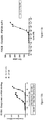
- Chimeric FG129 (CH129) induces strong ADCC and CDC responses on tumours, suggesting the antigen is a good target for immune mediated killing. This can be further potentiated by redirecting T cell killing by recombination of FG129 with a second mAb recognising and activating T cells.
- a further application of the humanised mAb is in the generation of a bispecific mAb targeting the FG129 and CD3 antigens.
- the indication for such a bispecific could be but is not restricted to pancreatic cancer.
- the mAb FG129 also internalised and delivered drugs which efficiently killed tumour cells, demonstrating its ADC potential.
- the isolated antibody or antibody fragment of the invention may be capable of binding sialyl-di-Lewis a and sialyl-Lewis a-x Neu5Aca2-3Galb1-3(Fuca1-4)GlcNAcb1-3Galb1-4(Fucal-3)GlcNAcb- and mono-sialyl-Lewis a Neu5Aca2-3Galb1-3(Fucal-4)GlcNAcb-only attached to a glycoprotein.
- Such antibodies or antibody fragments may be for use in a method for treating cancer.
- Such a binding partner may be for use in the manufacture of a medicament for the treatment of cancer.
- a method of treating cancer comprising administering a binding partner of the invention to a subject in need of such treatment.
- the present invention provides the mAb FG129 which binds to sialyl-di-Lewis a and sialyl-Lewis a-x and mono-sialyl-Lewis a only attached to a glycoprotein.
- the present invention also provides the chimeric hIgG1 129 which binds to sialyl-di-Lewis a and sialyl-Lewis a-x and mono-sialyl-Lewis a only attached to a glycoprotein.
- the antibody or antibody fragment may be capable of binding to some pancreatic tumours, for example at least 70% or 74% of pancreatic tumours in a population of patients.
- the antibody or antibody fragment may be capable of binding to some gastric tumours, for example at least 45% or 50% of gastric tumours in a population of patients.
- the antibody or antibody fragment may be capable of binding to some colorectal tumours, for example at least 30% or 36% of colorectal tumours in a population of patients.
- the antibody or antibody fragment may be capable of binding to some ovarian tumours, for example at least 25% or 27% of ovarian tumours in a population of patients.
- the antibody or antibody fragment may be capable of binding to some non small cell lung cancers, for example at least 5% or 7% of non small cell lung cancers in a population of patients.
- the tumour tissue binding of the antibody or antibody fragment may be assessed by immunohistochemistry (IHC) on tumour tissue microarrays (TMAs).
- the antibody or antibody fragment may not bind, or may not significantly bind to non-cancerous tissue, such as non-cancerous heart, brain, stomach, or kidney tissue. Additionally or alternatively, the antibody or antibody fragment has low affinity for, or does not significantly bind to non-cancerous tissue of the gallbladder, ileum, liver, lung, oesophagus, pancreas, skin or thymus.
- the antibody or antibody fragment may be capable of binding to glycoprotein-presented sialyl-Lewis a with an affinity (KD) of less than about 10 -6 M.
- the antibody or antibody fragment may be capable of binding to glycoprotein-presented sialyl-Lewis a with an affinity (KD) of less than about 10 -7 M.
- the antibody or antibody fragment may be capable of binding to glycoprotein-presented sialyl-Lewis a with an affinity (KD) of less than about 10 -8 M, 10 -9 M, 10 -10 M, 10 -11 M or 10 -12 M.
- the antibody or antibody fragment may be capable of binding to glycoprotein-presented sialyl-Lewis a with an affinity (KD) of less than about 10 -13 M.
- the antibody or antibody fragment may be capable of binding to glycoprotein-presented sialyl-Lewis a with a dissociation rate (Kd) of 10 -8 l/s or less.
- the antibody or antibody fragment may be capable of binding to glycoprotein-presented sialyl-Lewis a with an association rate (Ka) of at least about 10 4 l/Ms. Binding affinity may be measured by surface plasmon resonance Biacore X.
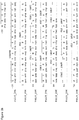
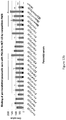
- the antibody or antibody fragment of the present invention may comprise an amino acid sequence substantially as set out as 1-117 (VH) of Figure 1a or 2a .
- the member may comprise a binding domain which comprises an amino acid sequence substantially as set out as residues 98 to 106 (CDRH3) of the amino acid sequence of Figure 1a or 2a .
- the isolated antibody or antibody fragment may additionally comprise one or both, preferably both, of the binding domains substantially as set out as residues 26 to 33 (CDRH1) and residues 50-59 (CDRH2) of the amino acid sequence shown in Figure 1a and 2a .
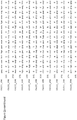
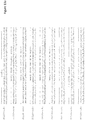
- the isolated antibody or antibody fragment may comprise one or more binding domains selected from the amino acid sequence of residues 27 to 38 (CDRL1), 56-58 (CDRL2) and 95 to 103 (CDRL3) of Figure 1b or 2b .
- the binding domain may comprise an amino acid sequence substantially as set out as residues 95 to 103 (CDRL3) of the amino acid sequence of Figure 1b and 2b .
- the isolated antibody or antibody fragment may additionally comprise one or both, preferably both, of the binding domains substantially as set out as residues 27 to 38 and (CDRL1) residues 56 to 58 of (CDRL2) the amino acid sequence shown in Figure 1b and 2b .
- the antibody or antibody fragment of the present invention may comprise a variable heavy and/or light chain sequence comprising CDRH1-3 and CDRL1-3 of antibody FG129.
- the variable heavy and/or light chain may comprise CDRH1-3 and CDRH1-3 of antibody FG129, and framework regions of FG129.
- Antibodies or antibody fragments which comprise a plurality of binding domains of the same or different sequence, or combinations thereof, are included within the present invention.
- Each binding domain may be carried by a human antibody framework.
- one or more framework regions may be substituted for the framework regions of a whole human antibody or of the variable region thereof.
- One isolated antibody or antibody fragment of the invention comprises the sequence substantially as set out as residues 1 to 114 (VL) of the amino acid sequence shown in Figure 1b or 2b .
- Antibodies or antibody fragments having sequences of the CDRs of Figure 1a or 2a may be combined with antibodies or antibody fragments having sequences of the CDRs of Figure 1b or 2b .
- the antibody or antibody fragment of the invention may comprise a light chain variable sequence comprising said CDR1, CDRL2 and CDRL3, and a heavy chain variable sequence comprising said CDRH1, CDRH2 and CDRH3.
- the antibody or antibody fragment of the invention may comprise a VH domain comprising residues 1 to 117 of the amino acid sequence of Figure 1a or 2a , and a VL domain comprising residues 1 to 114 of the amino acid sequence of Figure 1b or 2b .
- the invention also encompasses antibodies or antibody fragments as described above, but in which the sequence of the binding domains are substantially as set out in Figures 1 or 2 .
- antibodies or antibody fragments as described above are provided, but in which in one or more binding domains differ from those depicted in Figures 1 or 2 by from 1 to 5, from 1 to 4, from 1 to 3, 2 or 1 substitution.
- the invention also encompasses antibodies or antibody fragments having the capability of binding to the same epitopes as the VH and VL sequences depicted in Figures 1 and 2 .
- the epitope of a mAb is the region of its antigen to which the mAb binds.
- Two antibodies bind to the same or overlapping epitope if each competitively inhibits (blocks) binding of the other to the antigen. That is, a 1x, 5x, 10x, 20x or 100x excess of one antibody inhibits binding of the other by at least 50% but preferably 75%, 90% or even 99% as measured in a competitive binding assay compared to a control lacking the competing antibody (see, e.g., Junghans et al., Cancer Res. 50:1495, 1990 ).
- a binding member which competes for binding to to the same epitope as a antibody or antibody fragment of the first aspect of the invention and optionally wherein the binding member is in the same form as the antibody or antibody fragment of the first aspect of the invention.
- the binding member may compete for binding to sialyl-di-Lewis a and sialyl-Lewis a-x and mono-sialyl-Lewis a only attached to a glycoprotein with an antibody comprising a VH chain having the amino acid sequence of residues 1 to 117 of Figure 1a or 2a and a VL chain having the amino acid sequence of residues 1 to 114 of Figure 1b or 2b .
- the competing binding partner competes for binding to to sialyl-di-Lewis a only attached to a glycoprotein with an antibody comprising a VH chain having the amino acid sequence of residues 1 to 117 of Figure 1a or 2a and a VL chain having the amino acid sequence of residues 1 to 114 of Figure 1b or 2b .
- the competing binding partner may compete for binding to sialyl-di-Lewis a and sialyl-Lewis a-x and mono-sialyl-Lewis a only attached to a glycoprotein with an antibody comprising a VH chain having the amino acid sequence of residues 1 to 117 of Figure 1a and a VL chain having the amino acid sequence of residues 1 to 114 of Figure 1b , or with an antibody comprising a VH chain having the amino acid sequence of residues 1 to 117 of Figure 2a and a VL chain having the amino acid sequence of residues 1 to 114 of Figure 2b .
- competing binding partners are antibodies, for example monoclonal antibodies, or any of the antibody variants or fragments mentioned throughout this document.
- the heavy chain of the archtypal antibody is paired with a repertoire of (preferably human) light chains to select a glycan-binding mAb, and then the new light chain is paired with a repertoire of (preferably human) heavy chains to select a (preferably human) glycan-binding mAb having the same epitope as the archtypal mAb.
- MAbs that are capable of binding sialyl-di-Lewis a and sialyl-Lewis a-x and mono-sialyl-Lewis a only attached to a glycoprotein and induce ADCC or internalize and are at least 90%, 95% or 99% identical in the VH and/or VL domain to the VH or VL domains of Figures 1 or 2 , are included in the invention.
- Reference to the 90%, 95%, or 99% identity may be to the framework regions of the VH and/or VL domains.
- the CDR regions may be identical, but the framework regions may vary by up to 1%, 5%, or 10%.
- Such antibodies differ from the sequences of Figures 1 or 2 by a small number of functionally inconsequential amino acid substitutions (e.g., conservative substitutions), deletions, or insertions.
- the antibody fragment may be a Fab, (Fab')2, scFv, Fv, dAb, Fd or a diabody.
- the antibody may be a polyclonal antibody.
- the antibody may be a monoclonal antibody.
- Antibodies of the invention may be humanised, chimeric or veneered antibodies, or may be non-human antibodies of any species.
- the antibody or antibody fragment of the invention may be a mouse antibody FG129 which comprises a heavy chain as depicted in Figure 1a and a light chain as depicted in Figure 1b .
- the antibody or antibody fragment of the invention may be a chimeric antibody FG129 which comprises a heavy chain as depicted in Figure 2a and a light chain as depicted in Figure 2b .
- Antibodies or antibody fragments of the invention may carry a detectable or functional label.
- One aspect of the invention provides an isolated nucleic acid which comprises a sequence encoding an antibody or antibody fragment of the aspects of the invention.
- Methods of preparing antibodies or antibody fragments of the invention may comprise expressing said nucleic acids under conditions to bring about expression of said antibody or antibody antibody fragment, and recovering the antibody or antibody fragment.
- Antibodies or antibody fragments according to the invention may be used in a method of treatment or diagnosis of the human or animal body, such as a method of treatment of a tumour in a patient (preferably human) which comprises administering to said patient an effective amount of an antibody or antibody fragment of the invention.
- the invention also provides an antibody or antibody fragment of the present invention for use as a medicament.
- An specific antibody or antibody fragment of the present invention may be for use in the manufacture of a medicament for the diagnosis or treatment of a tumour.
- Another aspect of the invention provides an antibody or antibody fragment of the invention for use in the prevention, treatment or diagnosis of cancer.
- the cancer may be colorectal cancer, gastric cancer, pancreatic cancer, lung cancer, ovarian cancer or breast cancer.
- the antibody or antibody fragment may be administered, or arranged to be administered, alone or in combination with other treatments.
- a sialyl-di-Lewis a which is capable of being bound, preferably specifically, by a antibody or antibody fragment of the present invention is disclosed.
- the sialyl-di-Lewis a may be provided in isolated form, and may be used in a screen to develop further antibodies or antibody fragments therefor.
- a library of compounds may be screened for members of the library which bind specifically to the sialyl-di-Lewis a .
- the sialyl-di-Lewis a may on a protein backbone. When on a protein backbone, it may have a molecular weight of about 50-150kDa, as determined by SDS-PAGE.
- One aspect of the invention provides a method for diagnosis of cancer comprising using an antibody or antibody fragment of the invention to detect sialyl-di-Lewis a and sialyl-Lewis a-x and/or mono-sialyl-Lewis a only attached to a glycoprotein in a sample from an individual.
- the pattern of glycans detected by the antibody or antibody fragment is used to stratify therapy options for the individual.
- An antibody or antibody fragment of the invention capable of specifically binding sialyl-di-Lewis a and sialyl-Lewis a-x may be for use in the diagnosis or prognosis of colorectal, gastric, pancreatic, lung, ovarian and breast tumours.
- An isolated specific antibody or antibody fragment of the invention capable of specifically binding sialyl-di-Lewis a and sialyl-Lewis a-x and mono-sialyl-Lewis a only attached to a glycoprotein may be for use in the diagnosis or prognosis of colorectal, gastric, pancreatic, lung, ovarian and breast tumours.
- a “specific binding member” is a member of a pair of molecules which have binding specificity for one another.
- the members of a specific binding pair may be naturally derived or wholly or partially synthetically produced.
- One member of the pair of molecules has an area on its surface, which may be a protrusion or a cavity, which specifically binds to and is therefore complementary to a particular spatial and polar organisation of the other member of the pair of molecules.
- the members of the pair have the property of binding specifically to each other.
- types of specific binding pairs are antigen-antibody, biotin-avidin, hormone-hormone receptor, receptor-ligand, enzyme-substrate.
- the present invention is generally concerned with antigen-antibody type reactions, although it also concerns small molecules which bind to the antigen defined herein.
- treatment includes any regime that can benefit a human or non-human animal, preferably mammal.
- the treatment may be in respect of an existing condition or may be prophylactic (preventative treatment).
- Tumour is an abnormal growth of tissue. It may be localised (benign) or invade nearby tissues (malignant) or distant tissues (metastatic). Tumours include neoplastic growths which cause cancer and include oesophageal, colorectal, gastric, breast and endometrial tumours, as well as cancerous tissues or cell lines including, but not limited to, leukaemic cells. As used herein, “tumour” also includes within its scope endometriosis.
- antibody refers to immunoglobulin molecules and immunologically active portions of immunoglobulin molecules, i.e., molecules that contain an antigen binding site that specifically binds an antigen, whether natural or partly or wholly synthetically produced.
- the term also covers any polypeptide or protein having a binding domain which is, or is homologous to, an antibody binding domain. These can be derived from natural sources, or they may be partly or wholly synthetically produced.
- antibodies are the immunoglobulin isotypes (e.g., IgG, IgE, IgM, IgD and IgA) and their isotypic subclasses; fragments which comprise an antigen binding domain such as Fab, scFv, Fv, dAb, Fd; and diabodies.
- Antibodies may be polyclonal or monoclonal. A monoclonal antibody may be referred to as a "mAb".
- antibody should be construed as covering any specific antibody or antibody fragment or substance having a binding domain with the required specificity.
- this term covers antibody fragments, derivatives, functional equivalents and homologues of antibodies, humanised antibodies, including any polypeptide comprising an immunoglobulin binding domain, whether natural or wholly or partially synthetic. Chimeric molecules comprising an immunoglobulin binding domain, or equivalent, fused to another polypeptide are therefore included. Cloning and expression of chimeric antibodies are described in EP- A-0120694 and EP-A-0125023 .
- a humanised antibody may be a modified antibody having the variable regions of a non-human, e.g ., murine, antibody and the constant region of a human antibody. Methods for making humanised antibodies are described in, for example, US Patent No. 5225539 .
- binding fragments are (i) the Fab fragment consisting of VL, VH, CL and CH1 domains; (ii) the Fd fragment consisting of the VH and CH1 domains; (iii) the Fv fragment consisting of the VL and VH domains of a single antibody; (iv) the dAb fragment [25] which consists of a VH domain; (v) isolated CDR regions; (vi) F(ab')2 fragments, a bivalent fragment comprising two linked Fab fragments; (vii) single chain Fv molecules (scFv), wherein a VH domain and a VL domain are linked by a peptide linker which allows the two domains to associate to form an antigen binding site [26, 27]; (viii) bispecific single chain Fv dimers ( WO/1993/011161 ) and; (ix) "diabodies", multivalent or multispecific fragments constructed by
- Diabodies are multimers of polypeptides, each polypeptide comprising a first domain comprising a binding region of an immunoglobulin light chain and a second domain comprising a binding region of an immunoglobulin heavy chain, the two domains being linked ( e.g., by a peptide linker) but unable to associated with each other to form an antigen binding site: antigen binding sites are formed by the association of the first domain of one polypeptide within the multimer with the second domain of another polypeptide within the multimer ( WO94/13804 ).
- bispecific antibodies may be conventional bispecific antibodies, which can be manufactured in a variety of ways [29], e.g., prepared chemically or from hybrid hybridomas, or may be any of the bispecific antibody fragments mentioned above. It may be preferable to use scFv dimers or diabodies rather than whole antibodies. Diabodies and scFv can be constructed without an Fc region, using only variable domains, potentially reducing the effects of anti-idiotypic reaction.
- bispecific antibodies include the single chain “Janusins” described in [30].
- Bispecific diabodies as opposed to bispecific whole antibodies, may also be useful because they can be readily constructed and expressed in E. coli.
- Diabodies (and many other polypeptides such as antibody fragments) of appropriate binding specificities can be readily selected using phage display ( WO94/13804 ) from libraries. If one arm of the diabody is to be kept constant, for instance, with a specificity directed against antigen X, then a library can be made where the other arm is varied and an antibody of appropriate specificity selected.
- sialyl-di-Lewis a refers to the structure: Neu5Ac ⁇ 2-3Gal ⁇ 1-3(Fuc ⁇ 1-4)GlcNAc ⁇ 1-3Gal ⁇ 1-3(Fuc ⁇ 1-4)GlcNAc ⁇ .
- sialyl-Lewis a-x refers to the structure: Neu5Aca2-3Galb1-3(Fuca1-4)GlcNAcb1-3Galb1-4(Fuca1-3)GlcNAcb.
- an “antigen binding domain” is the part of an antibody which comprises the area which specifically binds to and is complementary to part or all of an antigen. Where an antigen is large, an antibody may only bind to a particular part of the antigen, which part is termed an epitope.
- An antigen binding domain may be provided by one or more antibody variable domains.
- An antigen binding domain may comprise an antibody light chain variable region (VL) and an antibody heavy chain variable region (VH).
- Specific is generally used to refer to the situation in which one member of a specific binding pair will not show any significant binding to molecules other than its specific binding partner(s), and, e.g., has less than about 30% cross reactivity with any other molecule. In other embodiments it has less than 20%, 10%, or 1% cross reactivity with any other molecule.
- the term is also applicable where e.g., an antigen binding domain is specific for a particular epitope which is carried by a number of antigens, in which case, the specific binding member carrying the antigen binding domain will be able to bind to the various antigens carrying the epitope.
- Isolated refers to the state in which specific antibodies or antibody fragments of the invention or nucleic acid encoding such antibodies or antibody fragments will preferably be, in accordance with the present invention.
- Antibodies and nucleic acid will generally be free or substantially free of material with which they are naturally associated such as other polypeptides or nucleic acids with which they are found in their natural environment, or the environment in which they are prepared ( e.g ., cell culture) when such preparation is by recombinant DNA technology practised in vitro or in vivo.
- Specific antibodies or antibody fragments and nucleic acid may be formulated with diluents or adjuvants and still for practical purposes be isolated - for example, the members will normally be mixed with gelatin or other carriers if used to coat microtitre plates for use in immunoassays, or will be mixed with pharmaceutically acceptable carriers or diluents when used in diagnosis or therapy.
- Specific binding members may be glycosylated, either naturally or by systems of heterologous eukaryotic cells, or they may be (for example if produced by expression in a prokaryotic cell) unglycosylated.
- the CDR regions of the invention will be either identical or highly homologous to the specified regions of Figures 1 or 2 .
- highly homologous it is contemplated that from 1 to 5, from 1 to 4, from 1 to 3, 2 or 1 substitutions maybe made in the CDRs.
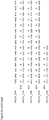
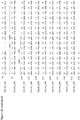
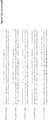
- the invention also includes within its scope polypeptides having the amino acid sequence as set out in Figure 1 or 2 , polynucleotides having the nucleic acid sequences as set out in Figure A or B and sequences having substantial identity thereto, for example, 70%, 80%, 85%, 90%, 95% or 99% identity thereto.
- the percent identity of two amino acid sequences or of two nucleic acid sequences is generally determined by aligning the sequences for optimal comparison purposes (e.g ., gaps can be introduced in the first sequence for best alignment with the second sequence) and comparing the amino acid residues or nucleotides at corresponding positions.
- the "best alignment" is an alignment of two sequences that results in the highest percent identity.
- the determination of percent identity between two sequences can be accomplished using a mathematical algorithm known to those of skill in the art.
- An example of a mathematical algorithm for comparing two sequences is the algorithm of Karlin and Altschul (1990) [31], modified as in Karlin and Altschul (1993) [32].
- the NBLAST and XBLAST programs of Altschul et al. (1990) [33] have incorporated such an algorithm.
- Gapped BLAST can be utilized as described in Altschul et al. (1997) [34].
- PSI-Blast can be used to perform an iterated search that detects distant relationships between molecules (Id.).
- the default parameters of the respective programs e.g., XBLAST and NBLAST
- XBLAST and NBLAST can be used. See http://www.ncbi.nlm.nih.gov.
- Another example of a mathematical algorithm utilized for the comparison of sequences is the algorithm of Myers and Miller, [35].
- ALIGN program version 2.0 which is part of the GCG sequence alignment software package has incorporated such an algorithm.
- More algorithms for sequence analysis known in the art include ADVANCE and ADAM as described in Torellis and Robotti (1994) [36]; and FASTA described in Pearson and Lipman (1988) [37].
- FASTA ktup is a control option that sets the sensitivity and speed of the search.
- Antibodies or antibody fragments of the present invention are capable of binding to a sialyl-di-Lewis a carbohydrate, which may be a sialyl-di-Lewis a on a protein moiety.
- the CDR3 regions comprising the amino acid sequences substantially as set out as residues 98-106 (CDRH3) of Figure 1a and 2a and 95 to 103 of Figure 1b and 2b , are carried in a structure which allows the binding of these regions to a sialyl-di-Lewis a carbohydrate.
- the structure for carrying the CDR3s of the invention will generally be of an antibody heavy or light chain sequence or substantial portion thereof in which the CDR3 regions are located at locations corresponding to the CDR3 region of naturally-occurring VH and VL antibody variable domains encoded by rearranged immunoglobulin genes.
- the structures and locations of immunoglobulin variable domains may be determined by reference to http://www.imgt.org/ .
- amino acid sequence substantially as set out as residues 98-106 of Figure 1a and 2a may be carried as the CDR3 in a human heavy chain variable domain or a substantial portion thereof, and the amino acid sequence substantially as set out as residues and 95-103 of Figure 1b and 2b may be carried as the CDR3 in a human light chain variable domain or a substantial portion thereof.
- variable domains may be derived from any germline or rearranged human variable domain, or may be a synthetic variable domain based on consensus sequences of known human variable domains.
- the CDR3-derived sequences of the invention may be introduced into a repertoire of variable domains lacking CDR3 regions, using recombinant DNA technology.
- Marks et al., (1992) [38] describe methods of producing repertoires of antibody variable domains in which consensus primers directed at or adjacent to the 5' end of the variable domain area are used in conjunction with consensus primers to the third framework region of human VH genes to provide a repertoire of VH variable domains lacking a CDR3. Marks et al. (1992) [38] further describe how this repertoire may be combined with a CDR3 of a particular antibody.
- the CDR3-derived sequences of the present invention may be shuffled with repertoires of VH or VL domains lacking a CDR3, and the shuffled complete VH or VL domains combined with a cognate VL or VH domain to provide antibodies or antibody fragments of the invention.
- the repertoire may then be displayed in a suitable host system such as the phage display system of WO92/01047 so that suitable antibodies or antibody fragments may be selected.
- a repertoire may consist of from anything from 10 4 individual members upwards, for example from 10 6 to 10 8 or 10 10 members.
- Analogous shuffling or combinatorial techniques are also disclosed by Stemmer (1994) [39] who describes the technique in relation to a ⁇ -lactamase gene but observes that the approach may be used for the generation of antibodies.
- a further alternative is to generate novel VH or VL regions carrying the CDR3-derived sequences of the invention using random mutagenesis of, for example, the FG129 VH or VL genes to generate mutations within the entire variable domain.
- Such a technique is described by Gram et al., (1992) [40], who used error-prone PCR.
- Another method which may be used is to direct mutagenesis to CDR regions of VH or VL genes. Such techniques are disclosed by Barbas et al., (1994) [41] and Schier et al., (1996) [42].
- a substantial portion of an immunoglobulin variable domain will generally comprise at least the three CDR regions, together with their intervening framework regions.
- the portion may also include at least about 50% of either or both of the first and fourth framework regions, the 50% being the C-terminal 50% of the first framework region and the N-terminal 50% of the fourth framework region. Additional residues at the N- terminal or C-terminal end of the substantial part of the variable domain may be those not normally associated with naturally occurring variable domain regions.
- construction of antibodies or antibody fragments of the present invention made by recombinant DNA techniques may result in the introduction of N- or C-terminal residues encoded by linkers introduced to facilitate cloning or other manipulation steps, including the introduction of linkers to join variable domains of the invention to further protein sequences including immunoglobulin heavy chains, other variable domains (for example in the production of diabodies) or protein labels as discussed in more detail below.
- One embodiment of the invention provides antibodies or antibody fragments comprising a pair of binding domains based on the amino acid sequences for the VL and VH regions substantially as set out in Figures 1 , i.e. amino acids 1 to 117 (VH) of Figure 1a and 2a and amino acids 1 to 114 (VL) of Figure 1b and 2b .
- Single binding domains based on either of these sequences are within the scope of the invention.
- binding domains based on the amino acid sequence for the VH region substantially set out in Figure 1a and 2a such binding domains may be used as targeting agents since it is known that immunoglobulin VH domains are capable of binding target antigens in a specific manner.
- these domains may be used to screen for complementary domains capable of forming a two-domain antibody or antibody fragment which has in vivo properties as good as or equal to the FG88 antibodies disclosed herein.
- phage display screening methods using the so-called hierarchical dual combinatorial approach as disclosed in WO92/01047 in which an individual colony containing either an H or L chain clone is used to infect a complete library of clones encoding the other chain (L or H) and the resulting two-chain antibody or antibody fragment is selected in accordance with phage display techniques such as those described in that reference. This technique is also disclosed in Marks et al., [38].
- Antibodies or antibody fragments of the present invention may further comprise antibody constant regions or parts thereof.
- antibodies or antibody fragments based on the VL region shown in Figure 1b and 2b may be attached at their C-terminal end to antibody light chain constant domains including human C ⁇ or C ⁇ chains.
- antibody or antibody fragments based on VH region shown in Figure b and 2b may be attached at their C-terminal end to all or part of an immunoglobulin heavy chain derived from any antibody isotype, e.g ., IgG, IgA, IgE and IgM and any of the isotype sub- classes, particularly IgG1, IgG2 and IgG4.
- the antibody fragment of the invention may be a scFv comprising, in the following order 1) a leader sequence, 2) a heavy chain variable region, 3) 3x GGGGS spacer, 4) a light chain variable region, and 5) poly-Ala and a 6x His tag for purification.
- the antibody fragment is an scFv comprising, in the following order 1) a leader sequence, 2) a light chain variable region, 3) 3x GGGGS spacer, and 4) a heavy chain variable region, optionally further comprising either 5' or 3' purification tags.
- the antibody or antibody fragment of the invention may be provided in the form of a chimeric antigen receptor (CAR).
- CARs may also be known as artificial T cell receptors, chimeric T cell receptors, or chimeric immunoreceptors.
- the antibody fragment is an scFv provided in the form of a chimeric antigen receptor (CAR)
- it may be provided in either the heavy chain-light chain orientation or the light chain-heavy chain orientation.
- Antibodies or antibody fragments of the present invention can be used in methods of diagnosis and treatment of tumours in human or animal subjects.
- a detectable label for example a radiolabel such as 131 I or 99 Tc, which may be attached to antibodies or antibody fragments of the invention using conventional chemistry known in the art of antibody imaging.
- Labels also include enzyme labels such as horseradish peroxidase.
- Labels further include chemical moieties such as biotin which may be detected via binding to a specific cognate detectable moiety, e.g ., labelled avidin.
- antibodies or antibody fragments of the invention may additionally be labelled with a functional label.
- Functional labels include substances which are designed to be targeted to the site of cancer to cause destruction thereof.
- Such functional labels include toxins such as ricin and enzymes such as bacterial carboxypeptidase or nitroreductase, which are capable of converting prodrugs into active drugs.
- the antibodies or antibody fragments may be attached or otherwise associated with chemotherapeutic or cytotoxic agents, such as maytansines (DM1 and DM4), onides, auristatins, calicheamicin, duocamycin, doxorubicin or radiolabels, such as 90 Y or 131 I.
- the antibodies or antibody fragments of the present invention may be administered alone or in combination with other treatments, either simultaneously or sequentially, dependent upon the condition to be treated.
- the present invention further provides products containing an antibody or antibody fragment of the present invention and an active agent as a combined preparation for simultaneous, separate or sequential use in the treatment of a tumour.
- Active agents may include chemotherapeutic or cytotoxic agents including, 5-Fluorouracil, cisplatin, Mitomycin C, oxaliplatin and tamoxifen, which may operate synergistically with the antibodies or antibody fragments of the present invention.
- Other active agents may include suitable doses of pain relief drugs such as non-steroidal anti-inflammatory drugs (e.g ., aspirin, paracetamol, ibuprofen or ketoprofen) or opitates such as morphine, or anti-emetics.
- non-steroidal anti-inflammatory drugs e.g ., aspirin, paracetamol, ibuprofen or ketoprofen
- opitates such as morphine, or anti-emetics.
- the ability of the antibodies or antibody fragments of the invention to synergise with an active agent to enhance tumour killing may not be due to immune effector mechanisms but rather may be a direct consequence of the antibody or antibody fragment binding to cell surface bound to sialyl-di-Lewis a and sialyl-Lewis a-x and mono-sialyl-Lewis a only attached to a glycoprotein.
- Antibodies or antibody fragments of the present invention will usually be administered in the form of a pharmaceutical composition, which may comprise at least one component in addition to the antibody or antibody fragment.
- a pharmaceutical composition comprising the antibody or antibody fragment of the invention, and a pharmaceutically acceptable carrier, optionally further comprising at least one other pharmaceutical active.
- Another aspect provides such a pharmaceutical composition for use in the treatment of cancer.
- the pharmaceutical composition may comprise, in addition to active ingredient, a pharmaceutically acceptable excipient, diluent, carrier, buffer, stabiliser or other materials well known to those skilled in the art. Such materials should be non-toxic and should not interfere with the efficacy of the active ingredient.
- a pharmaceutically acceptable excipient diluent, carrier, buffer, stabiliser or other materials well known to those skilled in the art. Such materials should be non-toxic and should not interfere with the efficacy of the active ingredient.
- the precise nature of the carrier or other material will depend on the route of administration, which may be oral, or by injection, e.g., intravenous.
- injections will be the primary route for therapeutic administration of the compositions although delivery through a catheter or other surgical tubing is also used.
- Liquid formulations may be utilised after reconstitution from powder formulations.
- the active ingredient will be in the form of a parenterally acceptable aqueous solution which is pyrogen-free and has suitable pH, isotonicity and stability.
- a parenterally acceptable aqueous solution which is pyrogen-free and has suitable pH, isotonicity and stability.
- isotonic vehicles such as Sodium Chloride Injection, Ringer's Injection, Lactated Ringer's Injection.
- Preservatives, stabilisers, buffers, antioxidants and/or other additives may be included, as required.
- compositions for oral administration may be in tablet, capsule, powder or liquid form.
- a tablet may comprise a solid carrier such as gelatin or an adjuvant.
- Liquid pharmaceutical compositions generally comprise a liquid carrier such as water, petroleum, animal or vegetable oils, mineral oil or synthetic oil. Physiological saline solution, dextrose or other saccharide solution or glycols such as ethylene glycol, propylene glycol or polyethylene glycol may be included. Where the formulation is a liquid it may be, for example, a physiologic salt solution containing non-phosphate buffer at pH 6.8-7.6, or a lyophilised powder.
- composition may also be administered via microspheres, liposomes, other microparticulate delivery systems or sustained release formulations placed in certain tissues including blood.
- sustained release carriers include semipermeable polymer matrices in the form of shared articles, e.g ., suppositories or microcapsules.
- Implantable or microcapsular sustained release matrices include polylactides ( US Patent No. 3, 773, 919 ; EP-A-0058481 ) copolymers of L-glutamic acid and gamma ethyl-L-glutamate [43], poly (2-hydroxyethyl-methacrylate).
- Liposomes containing the polypeptides are prepared by well-known methods: DE 3,218, 121A ; Epstein et al, PNAS USA, 82: 3688-3692, 1985 ; Hwang et al, PNAS USA, 77: 4030-4034, 1980 ; EP-A-0052522 ; EP-A-0036676 ; EP-A-0088046 ; EP-A- 0143949 ; EP-A-0142541 ; JP-A-83-11808 ; US Patent Nos 4,485,045 and 4,544,545 .Ordinarily, the liposomes are of the small (about 200-800 Angstroms) unilamellar type in which the lipid content is greater than about 30 mol. % cholesterol, the selected proportion being adjusted for the optimal rate of the polypeptide leakage.
- composition may be administered in a localised manner to a tumour site or other desired site or may be delivered in a manner in which it targets tumour or other cells.
- compositions are preferably administered to an individual in a "therapeutically effective amount", this being sufficient to show benefit to the individual.
- the actual amount administered, and rate and time-course of administration, will depend on the nature and severity of what is being treated. Prescription of treatment, e.g ., decisions on dosage etc, is within the responsibility of general practitioners and other medical doctors, and typically takes account of the disorder to be treated, the condition of the individual patient, the site of delivery, the method of administration and other factors known to practitioners.
- the compositions of the invention are particularly relevant to the treatment of existing tumours, especially cancer, and in the prevention of the recurrence of such conditions after initial treatment or surgery. Examples of the techniques and protocols mentioned above can be found in Remington's Pharmaceutical Sciences, 16th edition, Oslo, A. (ed), 1980 [45].
- the optimal dose can be determined by physicians based on a number of parameters including, for example, age, sex, weight, severity of the condition being treated, the active ingredient being administered and the route of administration.
- a serum concentration of polypeptides and antibodies that permits saturation of receptors is desirable.
- a concentration in excess of approximately 0.1nM is normally sufficient.
- a dose of 100mg/m 2 of antibody provides a serum concentration of approximately 20nM for approximately eight days.
- doses of antibodies may be given weekly in amounts of 10-300mg/m 2 .
- Equivalent doses of antibody fragments should be used at more frequent intervals in order to maintain a serum level in excess of the concentration that permits saturation of the LecLe X carbohydrate.
- the dose of the composition will be dependent upon the properties of the antibody or antibody fragment, e.g., its binding activity and in vivo plasma half-life, the concentration of the polypeptide in the formulation, the administration route, the site and rate of dosage, the clinical tolerance of the patient involved, the pathological condition afflicting the patient and the like, as is well within the skill of the physician.
- doses of 300 ⁇ g of antibody per patient per administration are preferred, although dosages may range from about 10 ⁇ g to 6 mg per dose.
- Different dosages are utilised during a series of sequential inoculations; the practitioner may administer an initial inoculation and then boost with relatively smaller doses of antibody.
- This invention may also b e directed to optimise immunisation schedules for enhancing a protective immune response against cancer.
- the antibodies or antibody fragments of the present invention may be generated wholly or partly by chemical synthesis.
- the antibodies or antibody fragments can be readily prepared according to well-established, standard liquid or, preferably, solid-phase peptide synthesis methods, general descriptions of which are broadly available (see, for example, in J.M. Stewart and J.D. Young, (1984) [46], in M. Bodanzsky and A.
- Another convenient way of producing an antibody or antibody fragment according to the present invention is to express the nucleic acid encoding it, by use of nucleic acid in an expression system.
- the present invention further provides an isolated nucleic acid encoding an antibody or antibody fragment of the present invention.
- Nucleic acid includes DNA and RNA.
- the present invention provides a nucleic acid which codes for an antibody or antibody fragment of the invention as defined above. Examples of such nucleic acid are shown in Figures 1 and 2 . The skilled person will be able to determine substitutions, deletions and/or additions to such nucleic acids which will still provide an antibody or antibody fragment of the present invention.
- the present invention also provides constructs in the form of plasmids, vectors, transcription or expression cassettes which comprise at least one nucleic acid as described above.
- the present invention also provides a recombinant host cell which comprises a nucleic acid of the invention, optionally in the form of one or more constructs as above.
- a nucleic acid encoding an antibody or antibody fragment of the invention forms an aspect of the present invention.
- a method of production of the antibody or antibody fragment of the invention may comprise expression from encoding nucleic acid therefor. Expression may conveniently be achieved by culturing under appropriate conditions recombinant host cells containing the nucleic acid. Following production by expression, an antibody or antibody fragment may be isolated and/or purified using any suitable technique, then used as appropriate.
- Suitable host cells include bacteria, mammalian cells, yeast and baculovirus systems.
- Mammalian cell lines available in the art for expression of a heterologous polypeptide include Chinese hamster ovary cells, HeLa cells, baby hamster kidney cells, NSO mouse melanoma cells and many others.
- a common, preferred bacterial host is E. coli.
- the expression of antibodies and antibody fragments in prokaryotic cells such as E. coli is well established in the art. For a review, see for example Plückthun (1991) [48]. Expression in eukaryotic cells in culture is alsoavailable to those skilled in the art as an option for production of an antibody or antibody fragment, see for recent review, for example Reff (1993) [49]; Trill et al., (1995) [50].
- Suitable vectors can be chosen or constructed, containing appropriate regulatory sequences, including promoter sequences, terminator sequences, polyadenylation sequences, enhancer sequences, marker genes and other sequences as appropriate.
- Vectors may be plasmids, viral e.g ., 'phage, or phagemid, as appropriate.
- plasmids viral e.g ., 'phage, or phagemid, as appropriate.
- Many known techniques and protocols for manipulation of nucleic acid for example in preparation of nucleic acid constructs, mutagenesis, sequencing, introduction of DNA into cells and gene expression, and analysis of proteins, are described in detail in Ausubel et al. , (1992)[52].
- a further aspect of the present invention provides a recombinant host cell comprising nucleic acid as disclosed herein.
- a method comprising introducing such nucleic acid into a host cell.
- the introduction may employ any available technique.
- suitable techniques may include calcium phosphate transfection, DEAE-Dextran, electroporation, liposome-mediated transfection and transduction using retrovirus or other virus, e.g ., vaccinia or, for insect cells, baculovirus.
- suitable techniques may include calcium chloride transformation, electroporation and transfection using bacteriophage.
- the introduction may be followed by causing or allowing expression from the nucleic acid, e.g., by culturing host cells under conditions for expression of the gene.
- the nucleic acid of the invention may be integrated into the genome (e.g ., chromosome) of the host cell. Integration may be promoted by inclusion of sequences which promote recombination with the genome, in accordance with standard techniques.
- binding member which competes for binding to the same epitope as an antibody or antibody fragment according to the invention.
- the competing binding member optionally is in the same format as the antibody or antibody fragment according to the invention described herein, but with different CDR or variable region sequences.
- Disclosed herein is a method which comprises using a construct as stated above in an expression system in order to express an antibody or antibody fragment or polypeptide as above.
- the cytotoxic effect of the CH129-ADC constructs was assessed by using the water-soluble tetrazolium salt WST-8 (Sigma) to measure the activity of hydrogenases which is directly proportional with the number of viable cells.
- Cells were plated in 96-well plates at a density of 2000 cells/90 ⁇ l/well in 10%FBS-RPMI with Penicillin-Streptomycin (Sigma) and incubated overnight at 37°C, 5%CO2.
- the ADC constructs were then added to the cells at different concentrations in a final volume of 10 ⁇ l/well and the plates were incubated at 37°C, 5%CO2 for 72h with the antibody constructs.
- the WST-8 was then added (10 ⁇ l/well) and the plates were further incubated 37°C, 5%CO2 for 3h. After the 3h incubation, the plates were read at 450 nm by Tecan Infinite F50. Results are expressed as percentages of control wells, consisting of cells only without any antibody. Cytotoxicity was studied on two colorectal cell lines Colo205 and HCT-15 that express high cell surface densities of the targeted antigen sialyl-lewis-a.
- FG129 was produced by immunising Balb/c mice with plasma membrane lipid extracts from LS180 cells (colorectal cell line) incorporated into liposomes, at two-week intervals over a period of 2 months, alpha-galactosylceramide was used as an adjuvant in the first, third and fourth immunisation and anti-CD40 mAb used during the second immunisation.
- Antibody titres were initially monitored by lipid enzyme-linked immunosorbent assay (ELISA).
- Flow cytometry analysis FACS was also carried out using LS180 tumour cells and Western blot using LS180.
- Hybridomas which demonstrated cell surface binding, using an indirect immunofluorescence assay were harvested, washed in complete media and spread across 96 well plates at 0.3 cells per well to acquire a clone.
- the plate was then screened for positive wells and these grown on until a sufficient number of cells was obtained to spread across a 96 well plate at 0.3 cells per well for a second time. If the resulting number of colonies equalled ⁇ 30 and all hybridomas were positive, the hybridoma was considered a clone. Methods for clonal expansion, bulk culture and antibody purification of antibodies or antibody fragments are available using conventional techniques known to those skilled in the art.
- chimeric antibody is intended to refer to antibodies in which the variable region sequences are derived from one species and the constant region sequences are derived from another species, such as an antibody in which the variable region sequences are derived from a mouse antibody and the constant region sequences are derived from a human antibody.
- Chimeric (or humanised) antibodies of the present invention can be prepared based on the sequence of a murine mAb prepared as described above. The amino acid and nucleotide sequence for the variable and constant regions of the heavy ( Figure 1a ) and light chains ( Figure 1b ) of the FG129 mAb are shown in Figures 1 . Numbers refer to the standardised IMGT system for the numbering of antibody sequences [49].
- the CDR1, CDR 2 and CDR 3 regions are indicated.
- the FG129 heavy chain belongs to the mouse heavy chain family IGHV10-1*02 (IGHD1-1*01, IGHJ4*01), with three mutations compared to the parental germline gene.
- the FG129 light chain belongs to the mouse kappa chain family IGKV8-19*01 (IGKJ4*01), with two mutations compared to the parental germline gene.
- FG129 heavy and light chain variable regions were cloned into a human IgG1 expression vector. This was transfected into CHO-S or HEK293 cells and human antibody purified on protein G. The chimeric mAbs CH129 bound to the colorectal cell line, Colo205. The amino acid and nucleotide sequence for the heavy and light chains of the human ch129 mAb are shown in Figures 2a and 2b respectively.
- MAb FG129 is a mouse IgGlk isotype that was generated by immunising Balb/c mice with glycolipid extracts from colorectal cell line LS180.
- Glycan profiling analysis done by CFG on ⁇ 600 natural and synthetic glycans shows a high specificity of FG129 binding sialyl-di-Lewis a (100%) and sialyl-Lewis a-x (89%).
- FG129 binding was assessed by Western blotting ( figure 3b ).
- Tumour lysates or tumour glycolipid extracts from colorectal (Colo205 HCT-15 and LS180) and pancreatic cells lines (BxPc3) were blotted with FG129, CH129 mAb, secondary antibody alone or CA19.9 (anti-sialyl lewis a Mab).
- FG129 and CH129 bound to a wide range of glycoproteins in Colo205 and HCT-15 lysate and to a smaller number of glycoproteins in BxPc3 and LS180 lystates.
- FG129 failed to bind to any of the tumour glycolipid extracts.
- CA19.9 showed binding to a wider range of glycoproteins in BxPc3, Colo205 and LS180 and to glycolipids from BxPc3 and HCT-15 cells. These results suggest that FG129 prefers to bind to six carbohydrate residues and prefers sialyl-di-Lewis a which is predominantly expressed on proteins.
- CA19.9 which prefers the 3 carbohydrate residue glycan, sialyl-Lewis a , binds to both lipids and proteins.
- the affinity measurements revealed subnanomolar functional affinity for FG129 and nanomolar affinity for CH129 , both showing relatively fast on-rates and slow off-rates for sialyl-Lewis-a binding (Table 1b).
- the monovalent binding affinity of the scFv129 was lower (10 -7 M), with a slower on-rate but similar off-rate, suggesting bivalent binding on the chip by FG129 and CH129.
- Table 1a The monovalent binding affinity of the scFv129 was lower (10 -7 M), with a slower on-rate but similar off-rate, suggesting bivalent binding on the chip by FG129 and CH129.
- Immunohistochemistry assessment of FG129 and CH129 mAbs To determine the therapeutic value of FG129, it was screened on colorectal, gastric, pancreatic, lung, and ovarian tumour tissue microarrays (TMAs) by immunohistochemistry (IHC).
- tumour tissue binding of FG129 was assessed by IHC on tumour TMAs.
- the mAb bound to 74% (135/182) of pancreatic tumours, 50% (46/92) of gastric tumours, 36% (100/281) of colorectal tumours, 27% (89/327) of ovarian and 21% (42/201) of NSCLC tumours (Table 1).
- Table 2 The tumour tissue binding of FG129 was assessed by IHC on tumour TMAs.
- the tumour tissue binding of FG129 was assessed by IHC on tumour TMAs.
- the mAb bound to 74% (135/182) of pancreatic tumours, 50% (46/92) of gastric tumours, 36% (100/281) of colorectal tumours, 27% (89/327) of ovarian and 21% (42/201) of NSCLC tumours (Table 1).
- Fig. 5a Representatives of different staining levels of tumour tissues with FG129 are shown in Fig. 5a .
- FG129 had a very restricted binding pattern and did not bind most normal tissues like heart, brain, stomach, and kidney (table 1). Very limited binding was seen in gallbladder (weak), ileum (1%), liver (1%), oesophagus (5%), pancreas (10%), and thyroid (weak: ( Fig. 5c ). This is in direct contrast to CA19.9 mAb which recognizes sialyl Lewis a on both lipids and proteins. It binds strongly (3+) to oesophagus, gallbladder and liver, moderately (2+) to breast and weakly (1+) to rectum.
- FG129 displays strong tumour tissue binding with low normal tissue reactivity, and is associated with poor prognosis in pancreatic cancer patients.
- Table 3 Summary of FG129 and CA19.9 binding to a panel of normal tissues using paraffin-fixed sections. Intensity of staining is shown as 0, 1, 2 or 3, relating to negative, weak, moderate or strong binding.
- CH129 had a very restricted binding pattern and did not bind most normal tissues like heart, brain, stomach, and kidney (table 1). Very limited binding was seen in gallbladder (weak), ileum (1%), liver (1%), oesophagus (5%), pancreas (10%), and thyroid (weak: ( Fig. 5a ).
- FG129 and CH129 showed strong binding (geometric mean (Gm) ⁇ 1000) to tumour cell lines HCT-15, Colo205, moderate binding (Gm ⁇ 100) to BxPc3, ASPC1, LS180, DLD1, and DMS79 and no binding to AGS, SW480, EKVX, MCF-7, LoVo, DU4475, OVCAR3, OVCAR4 and OVCA433.
- HCT-15, Colo205, ASPC1, BxPc3, LS180, DLD1, and DMS79 would be good models for assessing the sensitivity of tumour cells with different cell densities of sialyl-Lewis a to FG129 therapy ( Figure 6a ).
- FG129 failed to bind to normal HUVEC cells ( Figure 6b ).
- an anti-CD55 mAb was used as a positive control and an anti-IgG isotype antibody as a negative control.
- FG129 and CH129 did not bind to PBMCs from a range of healthy donors ( Figure 6c ).
- SABC antigen density
- SABC antigen density
- the mAbs were screened for their ability to act as a drug carrier by internalising and delivering drug to lysosomes.
- Cellular internalisation was assessed by confocal microscopy, which showed internalisation of both 129 mAbs over a period of 90 minutes and co-localisation within the lysosomes.
- the nucleus was stained in blue, plasma membrane in red, lysosomal compartments in purple and the 129 antibodies in green. Internalisation is seen on high cell surface antigen density colorectal cell lines Colo205 and HCT-15 and on pancreatic cell line BxPC3 ( Figure 10a and b ).
- CH129 would make a promising ADC candidate in a clinical setting
- the mab was chemically conjugated to different payload/linker constructs that were pre-clinically and clinically validated.
- three CH129 constructs were produced by ADC Biotechnology: one with the auristatin MMAE linked via a cleavable dipeptide valine-citruline linker and a para-aminobenzylalcohol (PABA) self-immolative spacer (CH129-vcE), one with the DM4 maytansinoid linked via the intermediately cleavable hindered disulphide linker SPDB (CH129-DM4) and one with the DM1 maytansinoid linked through the non-cleavable SMCC linker (CH129-DM1).
- PABA para-aminobenzylalcohol
- a matched set of control ADC constructs was also produced using the non-targeting mab Rituximab, to be used in relevant assay controls. Cytotoxicity was studied on two colorectal cell lines Colo205 and HCT-15 that express high cell surface densities of the targeted antigen sialyl-lewis-a.
- CH129-ADC constructs give high in vitro target dependant efficacy. Results show a dose dependant decrease in cell death directly related with the decrease in antibody concentration on both cell lines. Cell killing was also target dependent, with higher killing being seen on the higher antigen expressing cell line Colo205, compared to HCT-15. On Colo205 ( Figure 11e ) all three CH129-ADC constructs gave 100% cell killing with the vcE construct giving the highest efficacy (Ec50 ⁇ 10 -11M ) followed by the DM1 and DM4 constructs showing similar efficacy (Ec50s ⁇ 10 -10 M).
- the ADC constructs were tested on a mixture of antigen positive and antigen negative cells, and as well on cell lines with heterogeneous tumour antigen expression.
- ADCs with cleavable linkers give bystander killing compared with uncleavable linkers.
- the bystander killing effect of the ADC constructs was evaluated on different cell ratio mixtures of high tumour antigen expressing cells Colo205 with cells that do not express the antigen - AGS. Cells were mixed at ratios of 2:1, 5:1 and 10:1 AGS to Colo205. Colo205 only, and AGS only were used as positive and negative controls respectively. Since AGS is an antigen negative cell line, the killing see on this cell line is non-specific, therefore concentrations at which killing is observed on AGS were not considered when assessing bystander killing. Specific killing is shown in Figures 11g, 11h and 11i highlighted by the rectangle. DM1 was the most stable in this aspect, as it showed killing at concentrations higher than 10nM, while DM4 at 3nM and vcE were less stable showing non-specific killing from 1nM.
- DM1 As DM1 is linked with a non-cleavable linker, it consisted the negative control for bystander killing. The difference between the killing given by DM1 and DM4/vcE at the circled concentrations could be due to bystander killing. Thus, DM4 gave a specific killing of ⁇ 90%, vcE of ⁇ 50-80% while DM1 of ⁇ 20% of the cells.
- Antigen positive patient sera also reduced binding (Gm 600-1000) as did antigen negative patent sera (Gm 650-1500). Even though FG129 was pre-incubated with the pancreatic sera, the mAb showed a strong preference for binding to the cells and not to the secreted antigen from the sera ( Figure 12b ). This suggests that secreted antigen should not prevent FG129 from localising within tumours.
- the FG129 antibody makes an attractive candidate to be used in the context of a chimeric antigen receptor (CAR) as a scFv in order to induce anti-tumour T cell responses.
- CAR chimeric antigen receptor
- the heavy chain and light chain variable region were incorporated in silico into a single scFv sequence in the orientation: leader, heavy chain variable domain, spacer (3x GGGGS), light chain variable domain, spacer (6x Ala); purification tag (6x His) and synthesized ( Figure 13a ).
- Expi293 cells were transfected and allowed to produce protein transiently (6 days). His-tagged scFv was purified from Expi-293 supernatant using immobilised cobalt chromatography. The scFv was then characterised in terms of its binding properties to the sialyl-Lewis-a antigen or to cells expressing the antigen.
- the antigen binding affinity of the FG129-scFv was measured by SPR and by ELISA on sialyl-Lewis-a.
- Antigen binding affinity was also measured by SPR which gave a Kd of 10 -7 M (Table 1).
- the FG129-scFv showed a high binding (Gm ⁇ 400) and gave a dose dependent response with a submicromolar Kd (10 -7 M) ( Figure 13c ). Therefore the FG129-scFv maintains a high specific binding comparable to the binding of the full antibody and also displays a high binding affinity (Kd ⁇ 10 -7 M) despite having only one binding instead of the two binding arms of the full FG129 mab.
- Figure 1a Complete amino acid sequence of mouse FG129/29 IgG1 heavy chain.
- Figure 1b Complete amino acid sequence of mouse FG129/29 kappa chain.
- Figure 2a Complete amino acid sequence of mouse FG129/29 heavy chain variable region chimerised to human IgG1 heavy chain constant region.
- Figure 2b Complete amino acid sequence of mouse FG129/29 kappa chain variable region chimerised to human kappa chain constant region.
Landscapes
- Health & Medical Sciences (AREA)
- Life Sciences & Earth Sciences (AREA)
- Chemical & Material Sciences (AREA)
- Immunology (AREA)
- Medicinal Chemistry (AREA)
- General Health & Medical Sciences (AREA)
- Engineering & Computer Science (AREA)
- Bioinformatics & Cheminformatics (AREA)
- Organic Chemistry (AREA)
- Cell Biology (AREA)
- Veterinary Medicine (AREA)
- Pharmacology & Pharmacy (AREA)
- Animal Behavior & Ethology (AREA)
- Public Health (AREA)
- Epidemiology (AREA)
- Genetics & Genomics (AREA)
- Biophysics (AREA)
- Biochemistry (AREA)
- Molecular Biology (AREA)
- Proteomics, Peptides & Aminoacids (AREA)
- Oncology (AREA)
- Reproductive Health (AREA)
- Gastroenterology & Hepatology (AREA)
- Nuclear Medicine, Radiotherapy & Molecular Imaging (AREA)
- General Chemical & Material Sciences (AREA)
- Chemical Kinetics & Catalysis (AREA)
- Microbiology (AREA)
- Mycology (AREA)
- Pulmonology (AREA)
- Gynecology & Obstetrics (AREA)
- Pregnancy & Childbirth (AREA)
- Biomedical Technology (AREA)
- Peptides Or Proteins (AREA)
- Medicines Containing Antibodies Or Antigens For Use As Internal Diagnostic Agents (AREA)
- Preparation Of Compounds By Using Micro-Organisms (AREA)
- Micro-Organisms Or Cultivation Processes Thereof (AREA)
- Medicinal Preparation (AREA)
Applications Claiming Priority (2)
| Application Number | Priority Date | Filing Date | Title |
|---|---|---|---|
| GBGB1515094.9A GB201515094D0 (en) | 2015-08-25 | 2015-08-25 | Sialyl-di-lewis a as expressed on glycoproteins but not glycolipids as a functional cancer target and antibodies thereto |
| PCT/GB2016/052647 WO2017033020A1 (en) | 2015-08-25 | 2016-08-25 | Sialyl-di-lewis a as expressed on glycoproteins but not glycolipids as a functional cancer target and antibodies thereto |
Publications (2)
| Publication Number | Publication Date |
|---|---|
| EP3341412A1 EP3341412A1 (en) | 2018-07-04 |
| EP3341412B1 true EP3341412B1 (en) | 2020-03-25 |
Family
ID=54292175
Family Applications (1)
| Application Number | Title | Priority Date | Filing Date |
|---|---|---|---|
| EP16760541.9A Active EP3341412B1 (en) | 2015-08-25 | 2016-08-25 | Sialyl-di-lewis a as expressed on glycoproteins but not glycolipids as a functional cancer target and antibodies thereto |
Country Status (12)
| Country | Link |
|---|---|
| US (1) | US10835618B2 (enExample) |
| EP (1) | EP3341412B1 (enExample) |
| JP (1) | JP6928602B2 (enExample) |
| KR (1) | KR102713512B1 (enExample) |
| CN (1) | CN108137695B (enExample) |
| CA (1) | CA2996436A1 (enExample) |
| DK (1) | DK3341412T3 (enExample) |
| ES (1) | ES2788159T3 (enExample) |
| GB (1) | GB201515094D0 (enExample) |
| PT (1) | PT3341412T (enExample) |
| WO (1) | WO2017033020A1 (enExample) |
| ZA (1) | ZA201801994B (enExample) |
Families Citing this family (5)
| Publication number | Priority date | Publication date | Assignee | Title |
|---|---|---|---|---|
| CN105764526B (zh) * | 2013-08-26 | 2020-12-15 | 生物技术研发公司 | 编码抗唾液酸化路易斯a抗原的人抗体的核酸 |
| WO2020081988A1 (en) * | 2018-10-19 | 2020-04-23 | Memorial Sloan-Kettering Cancer Center | Chimeric antigen receptor targeting sialyl lewis a and uses thereof |
| GB201910899D0 (en) * | 2019-07-31 | 2019-09-11 | Scancell Ltd | Binding members |
| GB201910900D0 (en) | 2019-07-31 | 2019-09-11 | Scancell Ltd | Modified fc-regions to enhance functional affinity of antibodies and antigen binding fragments thereof |
| US20250064966A1 (en) * | 2022-01-06 | 2025-02-27 | PTM Therapeutics, Inc. | Methods of treating solid tumors and compositions thereof |
Family Cites Families (3)
| Publication number | Priority date | Publication date | Assignee | Title |
|---|---|---|---|---|
| AT413486B (de) * | 2002-07-03 | 2006-03-15 | Igeneon Krebs Immuntherapie | Verwendung eines antikörpers gerichtet gegen lewis-antigene |
| CN105764526B (zh) | 2013-08-26 | 2020-12-15 | 生物技术研发公司 | 编码抗唾液酸化路易斯a抗原的人抗体的核酸 |
| GB201319374D0 (en) | 2013-11-01 | 2013-12-18 | Univ Nottingham | Glycans as functional cancer targets abd antibodies thereto |
-
2015
- 2015-08-25 GB GBGB1515094.9A patent/GB201515094D0/en not_active Ceased
-
2016
- 2016-08-25 PT PT167605419T patent/PT3341412T/pt unknown
- 2016-08-25 KR KR1020187008554A patent/KR102713512B1/ko active Active
- 2016-08-25 ES ES16760541T patent/ES2788159T3/es active Active
- 2016-08-25 CN CN201680056234.5A patent/CN108137695B/zh active Active
- 2016-08-25 CA CA2996436A patent/CA2996436A1/en active Pending
- 2016-08-25 JP JP2018510883A patent/JP6928602B2/ja active Active
- 2016-08-25 US US15/754,882 patent/US10835618B2/en active Active
- 2016-08-25 DK DK16760541.9T patent/DK3341412T3/da active
- 2016-08-25 EP EP16760541.9A patent/EP3341412B1/en active Active
- 2016-08-25 WO PCT/GB2016/052647 patent/WO2017033020A1/en not_active Ceased
-
2018
- 2018-03-26 ZA ZA2018/01994A patent/ZA201801994B/en unknown
Non-Patent Citations (1)
| Title |
|---|
| None * |
Also Published As
| Publication number | Publication date |
|---|---|
| BR112018003779A2 (pt) | 2018-09-25 |
| ES2788159T3 (es) | 2020-10-20 |
| WO2017033020A1 (en) | 2017-03-02 |
| US20180236095A1 (en) | 2018-08-23 |
| CN108137695B (zh) | 2022-03-29 |
| DK3341412T3 (da) | 2020-05-18 |
| US10835618B2 (en) | 2020-11-17 |
| EP3341412A1 (en) | 2018-07-04 |
| JP2018529328A (ja) | 2018-10-11 |
| CA2996436A1 (en) | 2017-03-02 |
| KR20180100541A (ko) | 2018-09-11 |
| JP6928602B2 (ja) | 2021-09-01 |
| ZA201801994B (en) | 2019-01-30 |
| KR102713512B1 (ko) | 2024-10-04 |
| GB201515094D0 (en) | 2015-10-07 |
| PT3341412T (pt) | 2020-05-21 |
| CN108137695A (zh) | 2018-06-08 |
Similar Documents
| Publication | Publication Date | Title |
|---|---|---|
| US11739159B2 (en) | Antibody binding specifically to MUC1 and use thereof | |
| TW201909926A (zh) | B7h3抗體-藥物偶聯物及其醫藥用途 | |
| TW201132352A (en) | Anti-GCC antibody molecules and related compositions and methods | |
| EP4215546A1 (en) | Anti-nectin-4 antibody, conjugate including same, and application thereof | |
| AU2016233495A2 (en) | Anti-PDL1 antibodies, activatable anti-PDL1 antibodies, and methods of use thereof | |
| US10835618B2 (en) | Sialyl-di-Lewisa as expressed on glycoproteins but not glycolipids as a functional cancer target and antibodies thereto | |
| CN116261590A (zh) | 抗cd3抗体以及其用途 | |
| US12534538B2 (en) | Anti-HER2 binding molecules | |
| TWI822815B (zh) | 抗-人類pd-l1之抗體及其用途 | |
| EP3063160B1 (en) | Glycans as functional cancer targets and antibodies thereto | |
| ES3056660T3 (en) | Anti-lewis y antibodies and uses thereof in cancer therapy | |
| TWI889920B (zh) | 抗trop-2抗體、其抗原結合片段或其突變體、及其醫藥用途 | |
| CN114729057B (zh) | 抗岩藻糖基-gm1抗体 | |
| WO2025131054A1 (en) | Antibody drug conjugates targeting to b7-h3 and egfr and the use thereof | |
| BR112018003779B1 (pt) | Sialil-di-lewis a conforme expresso em glicoproteínas, mas não glicolipídios, como um alvo de câncer funcional e anticorpos para o mesmo | |
| TWI855692B (zh) | 抗cd200r1抗體 | |
| HK40097833A (en) | Anti-nectin-4 antibody, conjugate including same, and application thereof |
Legal Events
| Date | Code | Title | Description |
|---|---|---|---|
| STAA | Information on the status of an ep patent application or granted ep patent |
Free format text: STATUS: THE INTERNATIONAL PUBLICATION HAS BEEN MADE |
|
| PUAI | Public reference made under article 153(3) epc to a published international application that has entered the european phase |
Free format text: ORIGINAL CODE: 0009012 |
|
| STAA | Information on the status of an ep patent application or granted ep patent |
Free format text: STATUS: REQUEST FOR EXAMINATION WAS MADE |
|
| 17P | Request for examination filed |
Effective date: 20180326 |
|
| AK | Designated contracting states |
Kind code of ref document: A1 Designated state(s): AL AT BE BG CH CY CZ DE DK EE ES FI FR GB GR HR HU IE IS IT LI LT LU LV MC MK MT NL NO PL PT RO RS SE SI SK SM TR |
|
| AX | Request for extension of the european patent |
Extension state: BA ME |
|
| DAV | Request for validation of the european patent (deleted) | ||
| DAX | Request for extension of the european patent (deleted) | ||
| STAA | Information on the status of an ep patent application or granted ep patent |
Free format text: STATUS: EXAMINATION IS IN PROGRESS |
|
| 17Q | First examination report despatched |
Effective date: 20190417 |
|
| RAP1 | Party data changed (applicant data changed or rights of an application transferred) |
Owner name: SCANCELL LIMITED |
|
| GRAP | Despatch of communication of intention to grant a patent |
Free format text: ORIGINAL CODE: EPIDOSNIGR1 |
|
| STAA | Information on the status of an ep patent application or granted ep patent |
Free format text: STATUS: GRANT OF PATENT IS INTENDED |
|
| INTG | Intention to grant announced |
Effective date: 20191213 |
|
| GRAS | Grant fee paid |
Free format text: ORIGINAL CODE: EPIDOSNIGR3 |
|
| GRAA | (expected) grant |
Free format text: ORIGINAL CODE: 0009210 |
|
| STAA | Information on the status of an ep patent application or granted ep patent |
Free format text: STATUS: THE PATENT HAS BEEN GRANTED |
|
| AK | Designated contracting states |
Kind code of ref document: B1 Designated state(s): AL AT BE BG CH CY CZ DE DK EE ES FI FR GB GR HR HU IE IS IT LI LT LU LV MC MK MT NL NO PL PT RO RS SE SI SK SM TR |
|
| REG | Reference to a national code |
Ref country code: GB Ref legal event code: FG4D |
|
| REG | Reference to a national code |
Ref country code: AT Ref legal event code: REF Ref document number: 1248441 Country of ref document: AT Kind code of ref document: T Effective date: 20200415 Ref country code: IE Ref legal event code: FG4D |
|
| REG | Reference to a national code |
Ref country code: DE Ref legal event code: R096 Ref document number: 602016032580 Country of ref document: DE |
|
| REG | Reference to a national code |
Ref country code: DK Ref legal event code: T3 Effective date: 20200511 |
|
| REG | Reference to a national code |
Ref country code: PT Ref legal event code: SC4A Ref document number: 3341412 Country of ref document: PT Date of ref document: 20200521 Kind code of ref document: T Free format text: AVAILABILITY OF NATIONAL TRANSLATION Effective date: 20200514 |
|
| REG | Reference to a national code |
Ref country code: SE Ref legal event code: TRGR |
|
| REG | Reference to a national code |
Ref country code: NL Ref legal event code: FP |
|
| REG | Reference to a national code |
Ref country code: FI Ref legal event code: FGE |
|
| PG25 | Lapsed in a contracting state [announced via postgrant information from national office to epo] |
Ref country code: NO Free format text: LAPSE BECAUSE OF FAILURE TO SUBMIT A TRANSLATION OF THE DESCRIPTION OR TO PAY THE FEE WITHIN THE PRESCRIBED TIME-LIMIT Effective date: 20200625 Ref country code: RS Free format text: LAPSE BECAUSE OF FAILURE TO SUBMIT A TRANSLATION OF THE DESCRIPTION OR TO PAY THE FEE WITHIN THE PRESCRIBED TIME-LIMIT Effective date: 20200325 |
|
| PG25 | Lapsed in a contracting state [announced via postgrant information from national office to epo] |
Ref country code: GR Free format text: LAPSE BECAUSE OF FAILURE TO SUBMIT A TRANSLATION OF THE DESCRIPTION OR TO PAY THE FEE WITHIN THE PRESCRIBED TIME-LIMIT Effective date: 20200626 Ref country code: HR Free format text: LAPSE BECAUSE OF FAILURE TO SUBMIT A TRANSLATION OF THE DESCRIPTION OR TO PAY THE FEE WITHIN THE PRESCRIBED TIME-LIMIT Effective date: 20200325 Ref country code: BG Free format text: LAPSE BECAUSE OF FAILURE TO SUBMIT A TRANSLATION OF THE DESCRIPTION OR TO PAY THE FEE WITHIN THE PRESCRIBED TIME-LIMIT Effective date: 20200625 Ref country code: LV Free format text: LAPSE BECAUSE OF FAILURE TO SUBMIT A TRANSLATION OF THE DESCRIPTION OR TO PAY THE FEE WITHIN THE PRESCRIBED TIME-LIMIT Effective date: 20200325 |
|
| REG | Reference to a national code |
Ref country code: LT Ref legal event code: MG4D |
|
| REG | Reference to a national code |
Ref country code: ES Ref legal event code: FG2A Ref document number: 2788159 Country of ref document: ES Kind code of ref document: T3 Effective date: 20201020 |
|
| PG25 | Lapsed in a contracting state [announced via postgrant information from national office to epo] |
Ref country code: CZ Free format text: LAPSE BECAUSE OF FAILURE TO SUBMIT A TRANSLATION OF THE DESCRIPTION OR TO PAY THE FEE WITHIN THE PRESCRIBED TIME-LIMIT Effective date: 20200325 Ref country code: LT Free format text: LAPSE BECAUSE OF FAILURE TO SUBMIT A TRANSLATION OF THE DESCRIPTION OR TO PAY THE FEE WITHIN THE PRESCRIBED TIME-LIMIT Effective date: 20200325 Ref country code: SM Free format text: LAPSE BECAUSE OF FAILURE TO SUBMIT A TRANSLATION OF THE DESCRIPTION OR TO PAY THE FEE WITHIN THE PRESCRIBED TIME-LIMIT Effective date: 20200325 Ref country code: EE Free format text: LAPSE BECAUSE OF FAILURE TO SUBMIT A TRANSLATION OF THE DESCRIPTION OR TO PAY THE FEE WITHIN THE PRESCRIBED TIME-LIMIT Effective date: 20200325 Ref country code: IS Free format text: LAPSE BECAUSE OF FAILURE TO SUBMIT A TRANSLATION OF THE DESCRIPTION OR TO PAY THE FEE WITHIN THE PRESCRIBED TIME-LIMIT Effective date: 20200725 Ref country code: RO Free format text: LAPSE BECAUSE OF FAILURE TO SUBMIT A TRANSLATION OF THE DESCRIPTION OR TO PAY THE FEE WITHIN THE PRESCRIBED TIME-LIMIT Effective date: 20200325 Ref country code: SK Free format text: LAPSE BECAUSE OF FAILURE TO SUBMIT A TRANSLATION OF THE DESCRIPTION OR TO PAY THE FEE WITHIN THE PRESCRIBED TIME-LIMIT Effective date: 20200325 |
|
| REG | Reference to a national code |
Ref country code: AT Ref legal event code: UEP Ref document number: 1248441 Country of ref document: AT Kind code of ref document: T Effective date: 20200325 |
|
| REG | Reference to a national code |
Ref country code: DE Ref legal event code: R097 Ref document number: 602016032580 Country of ref document: DE |
|
| PLBE | No opposition filed within time limit |
Free format text: ORIGINAL CODE: 0009261 |
|
| STAA | Information on the status of an ep patent application or granted ep patent |
Free format text: STATUS: NO OPPOSITION FILED WITHIN TIME LIMIT |
|
| PG25 | Lapsed in a contracting state [announced via postgrant information from national office to epo] |
Ref country code: PL Free format text: LAPSE BECAUSE OF FAILURE TO SUBMIT A TRANSLATION OF THE DESCRIPTION OR TO PAY THE FEE WITHIN THE PRESCRIBED TIME-LIMIT Effective date: 20200325 |
|
| 26N | No opposition filed |
Effective date: 20210112 |
|
| PG25 | Lapsed in a contracting state [announced via postgrant information from national office to epo] |
Ref country code: MC Free format text: LAPSE BECAUSE OF FAILURE TO SUBMIT A TRANSLATION OF THE DESCRIPTION OR TO PAY THE FEE WITHIN THE PRESCRIBED TIME-LIMIT Effective date: 20200325 |
|
| PG25 | Lapsed in a contracting state [announced via postgrant information from national office to epo] |
Ref country code: LU Free format text: LAPSE BECAUSE OF NON-PAYMENT OF DUE FEES Effective date: 20200825 |
|
| PG25 | Lapsed in a contracting state [announced via postgrant information from national office to epo] |
Ref country code: SI Free format text: LAPSE BECAUSE OF FAILURE TO SUBMIT A TRANSLATION OF THE DESCRIPTION OR TO PAY THE FEE WITHIN THE PRESCRIBED TIME-LIMIT Effective date: 20200325 |
|
| PG25 | Lapsed in a contracting state [announced via postgrant information from national office to epo] |
Ref country code: MT Free format text: LAPSE BECAUSE OF FAILURE TO SUBMIT A TRANSLATION OF THE DESCRIPTION OR TO PAY THE FEE WITHIN THE PRESCRIBED TIME-LIMIT Effective date: 20200325 Ref country code: CY Free format text: LAPSE BECAUSE OF FAILURE TO SUBMIT A TRANSLATION OF THE DESCRIPTION OR TO PAY THE FEE WITHIN THE PRESCRIBED TIME-LIMIT Effective date: 20200325 |
|
| PG25 | Lapsed in a contracting state [announced via postgrant information from national office to epo] |
Ref country code: MK Free format text: LAPSE BECAUSE OF FAILURE TO SUBMIT A TRANSLATION OF THE DESCRIPTION OR TO PAY THE FEE WITHIN THE PRESCRIBED TIME-LIMIT Effective date: 20200325 Ref country code: AL Free format text: LAPSE BECAUSE OF FAILURE TO SUBMIT A TRANSLATION OF THE DESCRIPTION OR TO PAY THE FEE WITHIN THE PRESCRIBED TIME-LIMIT Effective date: 20200325 |
|
| P01 | Opt-out of the competence of the unified patent court (upc) registered |
Effective date: 20230510 |
|
| PGFP | Annual fee paid to national office [announced via postgrant information from national office to epo] |
Ref country code: NL Payment date: 20250825 Year of fee payment: 10 |
|
| PGFP | Annual fee paid to national office [announced via postgrant information from national office to epo] |
Ref country code: FI Payment date: 20250825 Year of fee payment: 10 Ref country code: PT Payment date: 20250804 Year of fee payment: 10 Ref country code: ES Payment date: 20250909 Year of fee payment: 10 |
|
| PGFP | Annual fee paid to national office [announced via postgrant information from national office to epo] |
Ref country code: DK Payment date: 20250825 Year of fee payment: 10 Ref country code: DE Payment date: 20250827 Year of fee payment: 10 |
|
| PGFP | Annual fee paid to national office [announced via postgrant information from national office to epo] |
Ref country code: IT Payment date: 20250821 Year of fee payment: 10 Ref country code: TR Payment date: 20250805 Year of fee payment: 10 |
|
| PGFP | Annual fee paid to national office [announced via postgrant information from national office to epo] |
Ref country code: BE Payment date: 20250825 Year of fee payment: 10 Ref country code: GB Payment date: 20250702 Year of fee payment: 10 |
|
| PGFP | Annual fee paid to national office [announced via postgrant information from national office to epo] |
Ref country code: AT Payment date: 20250819 Year of fee payment: 10 Ref country code: FR Payment date: 20250819 Year of fee payment: 10 |
|
| PGFP | Annual fee paid to national office [announced via postgrant information from national office to epo] |
Ref country code: CH Payment date: 20250901 Year of fee payment: 10 Ref country code: SE Payment date: 20250825 Year of fee payment: 10 |
|
| PGFP | Annual fee paid to national office [announced via postgrant information from national office to epo] |
Ref country code: IE Payment date: 20250819 Year of fee payment: 10 |