EP3341410B1 - Chimeric antigen receptors with integrated controllable functions - Google Patents
Chimeric antigen receptors with integrated controllable functions Download PDFInfo
- Publication number
- EP3341410B1 EP3341410B1 EP16757858.2A EP16757858A EP3341410B1 EP 3341410 B1 EP3341410 B1 EP 3341410B1 EP 16757858 A EP16757858 A EP 16757858A EP 3341410 B1 EP3341410 B1 EP 3341410B1
- Authority
- EP
- European Patent Office
- Prior art keywords
- seq
- binding domain
- variant
- ligand
- sequence identity
- Prior art date
- Legal status (The legal status is an assumption and is not a legal conclusion. Google has not performed a legal analysis and makes no representation as to the accuracy of the status listed.)
- Active
Links
Images




Classifications
-
- C—CHEMISTRY; METALLURGY
- C07—ORGANIC CHEMISTRY
- C07K—PEPTIDES
- C07K14/00—Peptides having more than 20 amino acids; Gastrins; Somatostatins; Melanotropins; Derivatives thereof
- C07K14/435—Peptides having more than 20 amino acids; Gastrins; Somatostatins; Melanotropins; Derivatives thereof from animals; from humans
- C07K14/705—Receptors; Cell surface antigens; Cell surface determinants
- C07K14/70503—Immunoglobulin superfamily
- C07K14/7051—T-cell receptor (TcR)-CD3 complex
-
- A—HUMAN NECESSITIES
- A61—MEDICAL OR VETERINARY SCIENCE; HYGIENE
- A61K—PREPARATIONS FOR MEDICAL, DENTAL OR TOILETRY PURPOSES
- A61K31/00—Medicinal preparations containing organic active ingredients
- A61K31/33—Heterocyclic compounds
- A61K31/395—Heterocyclic compounds having nitrogen as a ring hetero atom, e.g. guanethidine or rifamycins
- A61K31/435—Heterocyclic compounds having nitrogen as a ring hetero atom, e.g. guanethidine or rifamycins having six-membered rings with one nitrogen as the only ring hetero atom
- A61K31/4353—Heterocyclic compounds having nitrogen as a ring hetero atom, e.g. guanethidine or rifamycins having six-membered rings with one nitrogen as the only ring hetero atom ortho- or peri-condensed with heterocyclic ring systems
- A61K31/436—Heterocyclic compounds having nitrogen as a ring hetero atom, e.g. guanethidine or rifamycins having six-membered rings with one nitrogen as the only ring hetero atom ortho- or peri-condensed with heterocyclic ring systems the heterocyclic ring system containing a six-membered ring having oxygen as a ring hetero atom, e.g. rapamycin
-
- A—HUMAN NECESSITIES
- A61—MEDICAL OR VETERINARY SCIENCE; HYGIENE
- A61K—PREPARATIONS FOR MEDICAL, DENTAL OR TOILETRY PURPOSES
- A61K35/00—Medicinal preparations containing materials or reaction products thereof with undetermined constitution
- A61K35/12—Materials from mammals; Compositions comprising non-specified tissues or cells; Compositions comprising non-embryonic stem cells; Genetically modified cells
- A61K35/14—Blood; Artificial blood
- A61K35/17—Lymphocytes; B-cells; T-cells; Natural killer cells; Interferon-activated or cytokine-activated lymphocytes
-
- A—HUMAN NECESSITIES
- A61—MEDICAL OR VETERINARY SCIENCE; HYGIENE
- A61K—PREPARATIONS FOR MEDICAL, DENTAL OR TOILETRY PURPOSES
- A61K38/00—Medicinal preparations containing peptides
-
- A—HUMAN NECESSITIES
- A61—MEDICAL OR VETERINARY SCIENCE; HYGIENE
- A61K—PREPARATIONS FOR MEDICAL, DENTAL OR TOILETRY PURPOSES
- A61K40/00—Cellular immunotherapy
- A61K40/10—Cellular immunotherapy characterised by the cell type used
- A61K40/11—T-cells, e.g. tumour infiltrating lymphocytes [TIL] or regulatory T [Treg] cells; Lymphokine-activated killer [LAK] cells
-
- A—HUMAN NECESSITIES
- A61—MEDICAL OR VETERINARY SCIENCE; HYGIENE
- A61K—PREPARATIONS FOR MEDICAL, DENTAL OR TOILETRY PURPOSES
- A61K40/00—Cellular immunotherapy
- A61K40/30—Cellular immunotherapy characterised by the recombinant expression of specific molecules in the cells of the immune system
- A61K40/31—Chimeric antigen receptors [CAR]
-
- A—HUMAN NECESSITIES
- A61—MEDICAL OR VETERINARY SCIENCE; HYGIENE
- A61K—PREPARATIONS FOR MEDICAL, DENTAL OR TOILETRY PURPOSES
- A61K40/00—Cellular immunotherapy
- A61K40/40—Cellular immunotherapy characterised by antigens that are targeted or presented by cells of the immune system
- A61K40/41—Vertebrate antigens
- A61K40/42—Cancer antigens
- A61K40/4202—Receptors, cell surface antigens or cell surface determinants
- A61K40/421—Immunoglobulin superfamily
- A61K40/4211—CD19 or B4
-
- A—HUMAN NECESSITIES
- A61—MEDICAL OR VETERINARY SCIENCE; HYGIENE
- A61K—PREPARATIONS FOR MEDICAL, DENTAL OR TOILETRY PURPOSES
- A61K40/00—Cellular immunotherapy
- A61K40/40—Cellular immunotherapy characterised by antigens that are targeted or presented by cells of the immune system
- A61K40/41—Vertebrate antigens
- A61K40/42—Cancer antigens
- A61K40/4202—Receptors, cell surface antigens or cell surface determinants
- A61K40/4214—Receptors for cytokines
- A61K40/4217—Receptors for interleukins [IL]
-
- A—HUMAN NECESSITIES
- A61—MEDICAL OR VETERINARY SCIENCE; HYGIENE
- A61P—SPECIFIC THERAPEUTIC ACTIVITY OF CHEMICAL COMPOUNDS OR MEDICINAL PREPARATIONS
- A61P35/00—Antineoplastic agents
-
- C—CHEMISTRY; METALLURGY
- C07—ORGANIC CHEMISTRY
- C07K—PEPTIDES
- C07K14/00—Peptides having more than 20 amino acids; Gastrins; Somatostatins; Melanotropins; Derivatives thereof
- C07K14/435—Peptides having more than 20 amino acids; Gastrins; Somatostatins; Melanotropins; Derivatives thereof from animals; from humans
- C07K14/705—Receptors; Cell surface antigens; Cell surface determinants
- C07K14/72—Receptors; Cell surface antigens; Cell surface determinants for hormones
- C07K14/721—Steroid/thyroid hormone superfamily, e.g. GR, EcR, androgen receptor, oestrogen receptor
-
- C—CHEMISTRY; METALLURGY
- C07—ORGANIC CHEMISTRY
- C07K—PEPTIDES
- C07K16/00—Immunoglobulins [IG], e.g. monoclonal or polyclonal antibodies
- C07K16/18—Immunoglobulins [IG], e.g. monoclonal or polyclonal antibodies against material from animals or humans
- C07K16/28—Immunoglobulins [IG], e.g. monoclonal or polyclonal antibodies against material from animals or humans against receptors, cell surface antigens or cell surface determinants
- C07K16/2803—Immunoglobulins [IG], e.g. monoclonal or polyclonal antibodies against material from animals or humans against receptors, cell surface antigens or cell surface determinants against the immunoglobulin superfamily
-
- C—CHEMISTRY; METALLURGY
- C07—ORGANIC CHEMISTRY
- C07K—PEPTIDES
- C07K16/00—Immunoglobulins [IG], e.g. monoclonal or polyclonal antibodies
- C07K16/18—Immunoglobulins [IG], e.g. monoclonal or polyclonal antibodies against material from animals or humans
- C07K16/28—Immunoglobulins [IG], e.g. monoclonal or polyclonal antibodies against material from animals or humans against receptors, cell surface antigens or cell surface determinants
- C07K16/2869—Immunoglobulins [IG], e.g. monoclonal or polyclonal antibodies against material from animals or humans against receptors, cell surface antigens or cell surface determinants against hormone receptors
-
- C—CHEMISTRY; METALLURGY
- C12—BIOCHEMISTRY; BEER; SPIRITS; WINE; VINEGAR; MICROBIOLOGY; ENZYMOLOGY; MUTATION OR GENETIC ENGINEERING
- C12N—MICROORGANISMS OR ENZYMES; COMPOSITIONS THEREOF; PROPAGATING, PRESERVING, OR MAINTAINING MICROORGANISMS; MUTATION OR GENETIC ENGINEERING; CULTURE MEDIA
- C12N5/00—Undifferentiated human, animal or plant cells, e.g. cell lines; Tissues; Cultivation or maintenance thereof; Culture media therefor
- C12N5/06—Animal cells or tissues; Human cells or tissues
- C12N5/0602—Vertebrate cells
- C12N5/0634—Cells from the blood or the immune system
- C12N5/0636—T lymphocytes
-
- A—HUMAN NECESSITIES
- A61—MEDICAL OR VETERINARY SCIENCE; HYGIENE
- A61K—PREPARATIONS FOR MEDICAL, DENTAL OR TOILETRY PURPOSES
- A61K2239/00—Indexing codes associated with cellular immunotherapy of group A61K40/00
- A61K2239/10—Indexing codes associated with cellular immunotherapy of group A61K40/00 characterized by the structure of the chimeric antigen receptor [CAR]
- A61K2239/23—On/off switch
-
- A—HUMAN NECESSITIES
- A61—MEDICAL OR VETERINARY SCIENCE; HYGIENE
- A61K—PREPARATIONS FOR MEDICAL, DENTAL OR TOILETRY PURPOSES
- A61K2239/00—Indexing codes associated with cellular immunotherapy of group A61K40/00
- A61K2239/31—Indexing codes associated with cellular immunotherapy of group A61K40/00 characterized by the route of administration
-
- C—CHEMISTRY; METALLURGY
- C07—ORGANIC CHEMISTRY
- C07K—PEPTIDES
- C07K2317/00—Immunoglobulins specific features
- C07K2317/60—Immunoglobulins specific features characterized by non-natural combinations of immunoglobulin fragments
- C07K2317/62—Immunoglobulins specific features characterized by non-natural combinations of immunoglobulin fragments comprising only variable region components
- C07K2317/622—Single chain antibody (scFv)
-
- C—CHEMISTRY; METALLURGY
- C07—ORGANIC CHEMISTRY
- C07K—PEPTIDES
- C07K2319/00—Fusion polypeptide
- C07K2319/01—Fusion polypeptide containing a localisation/targetting motif
- C07K2319/03—Fusion polypeptide containing a localisation/targetting motif containing a transmembrane segment
-
- C—CHEMISTRY; METALLURGY
- C12—BIOCHEMISTRY; BEER; SPIRITS; WINE; VINEGAR; MICROBIOLOGY; ENZYMOLOGY; MUTATION OR GENETIC ENGINEERING
- C12N—MICROORGANISMS OR ENZYMES; COMPOSITIONS THEREOF; PROPAGATING, PRESERVING, OR MAINTAINING MICROORGANISMS; MUTATION OR GENETIC ENGINEERING; CULTURE MEDIA
- C12N2510/00—Genetically modified cells
Definitions
- the present invention relates to the field of cell immunotherapy and more particularly to a new generation of chimeric antigen receptors (CAR), allowing the control of immune cells endowed with such CARs through the interaction with small molecules. More particularly, the present invention relates to chimeric antigen receptors which comprise in at least one ectodomain a molecular switch controlling the antigen binding function of the receptor. The present invention thus provides more controlled and potentially safer engineered CAR endowed immune cells, such as T-lymphocytes.
- CAR chimeric antigen receptors
- Adoptive immunotherapy which involves the transfer of autologous antigen-specific T cells generated ex vivo, is a promising strategy to treat viral infections and cancer.
- the T cells used for adoptive immunotherapy can be generated either by expansion of antigen-specific T cells or redirection of T cells through genetic engineering (Park, Rosenberg et al. 2011). Transfer of viral antigen specific T cells is a well-established procedure used for the treatment of transplant associated viral infections and rare viral-related malignancies. Similarly, isolation and transfer of tumor specific T cells has been shown to be successful in treating melanoma.
- CARs transgenic T cell receptors or chimeric antigen receptors
- CARs are synthetic receptors consisting of a targeting moiety that is associated with one or more signaling domains in a single fusion molecule.
- the binding moiety of a CAR consists of an antigen-binding domain of a single-chain antibody (scFv), comprising the light and heavy variable fragments of a monoclonal antibody joined by a flexible linker. Binding moieties based on receptor or ligand domains have also been used successfully.
- the signaling domains for first generation CARs are derived from the cytoplasmic region of the CD3zeta or the Fc receptor gamma chains.
- First generation CARs have been shown to successfully redirect T cell cytotoxicity, however, they failed to provide prolonged expansion and anti-tumor activity in vivo.
- Signaling domains from co-stimulatory molecules including CD28, OX-40 (CD134), ICOS and 4-1BB (CD137) have been added alone (second generation) or in combination (third generation) to enhance survival and increase proliferation of CAR modified T cells.
- CARs have successfully allowed T cells to be redirected against antigens expressed at the surface of tumor cells from various malignancies including lymphomas and solid tumors (Jena, Dotti et al. 2010).
- the inventors have developed a system where controlled variations in the conformation of the extracellular portion of a CAR containing the antigen-binding domain could be obtained upon addition of small molecules.
- This integrated system switches the interaction between the antigen and the antigen binding domain between on/off states.
- downstream functions of an immune cell such as cytotoxicity of T cell, endowed with such chimeric antigen receptor can be directly modulated.
- This system provides for novel more controlled and potentially safer engineered CAR endowed immune cells.
- the present invention thus provides in a first aspect a chimeric antigen receptor (CAR) characterized in that it comprises:
- the present invention provides in further aspect polynucleotides and vectors comprising one or more nucleic acid sequences encoding a chimeric antigen receptor of the present invention.
- the present invention provides in a further aspect an immune cell, and more particularly an isolated immune cell, which comprises (e.g., expresses on its surface) at least one chimeric antigen receptor of the present invention.
- the present invention provides in a further aspect methods for engineering an immune cell of the present invention.
- the present invention provides in a further aspect the use of immune cells of the present invention in therapy, such as for use in the treatment of cancer.
- the architecture of the CAR of the inventions provides for a reliable functionality since the first multimerizing ligand-binding domain and second multimerizing ligand-binding domain constituting the molecular switch are present on the same polypeptide molecule.
- This architecture makes the CAR system of the invention independent from factors which may otherwise have an influence on the proper expression and positioning of the ligand-binding domains on the cell surface if both are present on different polypeptide molecules, something which is difficult to control.
- the present invention thus provides in a first aspect a chimeric antigen receptor (CAR) characterized in that it comprises:
- a multimeric, such as dimeric, complex is formed which leads to a conformational change within the ectodomain of the chimeric antigen receptor, which in turn improves the surface exposition of the antigen binding domain.
- a “multimerizing ligand” or “multimerizer”, is a multivalent ligand which is capable of simultaneously binding to at least two binding partners, such as the first and second multimerizing ligand-binding domains, causing upon binding a multimerization, such as dimerization, of the binding partners. More particularly, a “multivalent ligand” is a molecule, preferably a small molecule, which possesses at least two binding sites allowing the simultaneous binding of at least two binding partners, such as the first and second multimerizing ligand-binding domains.
- multimerizing ligand can be used herein interchangeably, and include the terms “dimerizing ligand”, “dimerizer” and “bivalent ligand”, respectively.
- a “dimerizing ligand”, “dimerizer” or “bivalent ligand”, is a molecule, preferably a small molecule, which possesses two binding sites allowing the binding of two ligand binding partners, such as the first and second multimerizing ligand-binding domains, thus causing the dimerization thereof.
- a “small molecule”, as used herein, is a low molecular weight ( ⁇ 2000 daltons) organic compound.
- small molecules which find application in the present invention include the macrolide rapamycin and its analogs, also known as “rapalogs”, such as AP21967, Deforolimus (AP23573), everolimus (RAD001), and temsirolimus (CCI-779).
- Other non-limiting examples of small molecules which find application in the present invention include tacrolimus (FK506), FK506 derivatives, such as FK1012, FK506 analogs, such as AP1903.
- small molecules which find application in the present invention include coumermycin, gibberellin, HaXs, AP1510, AP20187 and AP21967.
- a “multimerizing ligand” may also be a peptide or nucleic acid (natural or synthetic).
- the first multimerizing ligand-binding domain and the second multimerizing ligand binding domain are derived from a chemical induced dimerization (CID) system.
- CID systems are based on the mechanism by which two polypeptides bind only in the presence of a certain small molecule or other dimerizing agent.
- a variety of CID systems is known and may be employed in accordance with the present invention. Examples of suitable CID systems are provided in Table 1 below.
- Second multimerizing ligand-binding domain Dimerizer(s) FKBP12 FRB Rapamycin, rapalogs (AP21967, AP23573, RAD001, CCI-779) FKBP12 FKBP12 FK1012, AP1510 FKBP12 (F36V) FKBP12(F36V) AP1903, AP20187 FKBP12 FRB(T2098L) Rapamycin, AP21967 FKBP12 CalcineurinA (CnA) FK506 FKBP12 Cyclophilin (CyP) FKCsA GyrB GyrB Coumermycin GAl GlD1A Gibberellin GAl GlD1B Gibberellin GAl GlD1C Gibberellin Snap-tag Halo-tag HaXs Snap-tag CLIP-tag sc DHFR DHFR BisMTX glucocorticoid receptor ligand-binding domain DHFR Dex-M
- AP21967 is a rapamycin analog with heterodimerizing activity. Dimerizer AP21967 heterodimerizes FKBP12 with a variant of FRB which contains a single amino acid substitution (T2098L).
- AP1903 is a tacrolimus analog with homodimerizing activity. Dimerizer AP1903 homodimerizes a variant of FKBP12 which contains a single amino acid substitution (F36V).
- Tacrolimus analogs like AP1903 or other macrolide immunosuppressants, can be used to further modulate CAR mediated activation of the immune cells as per the present invention. They can act as small molecule competitors offering additional control of the engineered CAR T-cells.
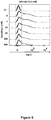
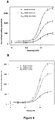
- tacrolimus FK506 was used by the inventors as a small molecule known to bind to the FKBP12 without enabling to form a complex with the FRB (see Example 4 and Figure 6 ).
- AP21967 or rapamycin
- tacrolimus have identical FKBP12 binding core and compete for the same binding site within the FKBP moiety (Wilson, K.P. et al. 1995. Comparative X-ray structures of the major binding protein for the immunosuppressant FK506 (tacrolimus) in unliganded form and in complex with FK506 and rapamycin. Acta Crystallogr D Biol Crystallogr 51, 511-521 ).
- T-cells transfected with the engineered CAR incubated with a fixed amount of AP21967 and increasing amount of tacrolimus show decreased surface detection of the CAR.
- the method according to the present invention aiming to switch-on CAR induced activation of an immune cell, can comprise an additional step where said induction is modulated by contacting said immune cells in-vivo or in-vitro with a tacrolimus analog or macrolide immunosuppressant. This may be done to tune, reduce or suppress the activation of the immune cells by the CAR object of the present invention.
- dimerizer HaXS is described in, e.g., Erhart, D. et al. (2013), "Chemical development of intracellular protein heterodimerizers", Chemistry & Biology 20: 549-557 .
- the dimerizer sc is described in, e.g., Gaultier, A. et al. (2009), “Selective cross-linking of interacting proteins using self-labeling tags", J Am Chem Soc. 131(49):17954-62 .
- the dimerizer BisMTX is described in, e.g., Kopytek, S. J. et al. (2000), "Chemically induced dimerization of dihydrofolate reductase by a homobifunctional dimer of methotrexate", Chemistry & Biology 7:313-321 .
- the dimerizer Dex-Mtx is described in, e.g., Lin, H.N., et al. (2000), "Dexamethasone-methotrexate: An efficient chemical inducer of protein dimerization in vivo", Journal of the American Chemical Society, 122(17):4247-4248 .
- the dimerizer Dex-TMP is described in, e.g., Gallagher, S.S. et al. (2007) "An orthogonal dexamethasone-trimethoprim yeast three-hybrid system", Anal Biochem. 363(1):160-2 .
- the first multimerizing ligand-binding domain and second multimerizing ligand-binding domain can be the same or different.
- the first multimerizing ligand-binding domain and second multimerizing ligand-binding domain are the same.
- the first multimerizing ligand-binding domain and second multimerizing ligand-binding domain are different.
- the first multimerizing ligand-binding domain and second multimerizing ligand-binding domain are selected from the pairs of multimerizing ligand-binding domains consisting of: FK506 binding protein (FKBP12):FKBP-rapamycin binding domain of mTOR (FRB), FKBP12:FKBP12, FKBP (F36V): FKBP (F36V), FKBP12:FRB (T2098L), FKBP12:Calcineurin A (CnA), FKBP12:Cyclophilin (CyP), GyrB:GyrB, GAl:GlD1A, GAl:GlD1B, GAl:GlD1C, Snap-tag:Halo-tag, Snap-tag:CLIP-tag, DHFR:DHFR, glucocorticoid receptor ligand-binding domain:DHFR and PYL1:ABI1.
- FKBP12 FK506 binding protein
- FKBP FK
- the first multimerizing ligand-binding domain is FKBP12 (SEQ ID NO: 1) or a variant thereof having at least 80, such as at least 85, at least 90, at least 95, at least 98 or at least 99%, sequence identity with FKBP12 (SEQ ID NO: 1).
- the first multimerizing ligand-binding domain is FKBP12 (SEQ ID NO: 1).
- the first multimerizing ligand-binding domain is a variant of FKBP12 having at least 80, such as at least 85, at least 90, at least 95, at least 98 or at least 99%, sequence identity with FKBP12 (SEQ ID NO: 1).
- the second multimerizing ligand-binding domain is also FKBP12 (SEQ ID NO: 1) or a variant thereof having at least 80, such as at least 85, at least 90, at least 95, at least 98 or at least 99%, sequence identity with FKBP12 (SEQ ID NO: 1).
- the second multimerizing ligand-binding domain is FKBP12 (SEQ ID NO: 1).
- the second multimerizing ligand-binding domain is a variant of FKBP12 having at least 80, such as at least 85, at least 90, at least 95, at least 98 or at least 99%, sequence identity with FKBP12 (SEQ ID NO: 1).
- the second multimerizing ligand-binding domain is FRB (SEQ ID NO: 2) or a variant thereof having at least 80, such as at least 85, at least 90, at least 95, at least 98 or at least 99%, sequence identity with FRB (SEQ ID NO: 2).
- the second multimerizing ligand-binding domain is FRB (SEQ ID NO: 2).
- the second multimerizing ligand-binding domain is a variant of FRB having at least 80, such as at least 85, at least 90, at least 95, at least 98 or at least 99%, sequence identity with FRB (SEQ ID NO: 2).
- the first multimerizing ligand-binding domain is FKBP12 (SEQ ID NO: 1) or a variant thereof having at least 80, such as at least 85, at least 90, at least 95, at least 98 or at least 99%, sequence identity with FKBP12 (SEQ ID NO: 1)
- the second multimerizing ligand-binding domain is FRB (SEQ ID NO: 2) or a variant thereof having at least 80, such as at least 85, at least 90, at least 95, at least 98 or at least 99%, sequence identity with FRB (SEQ ID NO: 2).
- the first multimerizing ligand-binding domain is FKBP12 (SEQ ID NO: 1)
- the second multimerizing ligand-binding domain is FRB (SEQ ID NO: 2) or a variant thereof having at least 80, such as at least 85, at least 90, at least 95, at least 98 or at least 99%, sequence identity with FRB (SEQ ID NO: 2).
- the first multimerizing ligand-binding domain is FKBP12 (SEQ ID NO: 1)
- the second multimerizing ligand-binding domain is FRB (SEQ ID NO: 2).
- the first multimerizing ligand-binding domain is FKBP12 (SEQ ID NO: 1)
- the second multimerizing ligand-binding domain is a variant of FRB having at least 80, such as at least 85, at least 90, at least 95, at least 98 or at least 99%, sequence identity with FRB (SEQ ID NO: 2).
- the first multimerizing ligand-binding domain is a variant of FKBP12 having at least 80, such as at least 85, at least 90, at least 95, at least 98 or at least 99%, sequence identity with FKBP12 (SEQ ID NO: 1), and the second multimerizing ligand-binding domain is FRB (SEQ ID NO: 2) .
- the first multimerizing ligand-binding domain is a variant of FKBP12 having at least 80, such as at least 85, at least 90, at least 95, at least 98 or at least 99%, sequence identity with FKBP12 (SEQ ID NO: 1)
- the second multimerizing ligand-binding domain is a variant of FRB having at least 80, such as at least 85, at least 90, at least 95, at least 98 or at least 99%, sequence identity with FRB (SEQ ID NO: 2).
- a variant of FKBP12 may differ from FKBP12 (SEQ ID NO: 1) in the substitution of one or more (such as 1 to 10, 1 to 5, or 1 to 3) amino acid residue(s).
- such variant may differ from FKBP12 (SEQ ID NO: 1) in the addition or deletion of one or more (such as 1 to 10, 1 to 5, or 1 to 3) amino acid residue(s).
- a variant of FKBP12 is capable of binding to rapamycin or a rapalog, such as AP21967, AP23573, RAD001 or CCI-779. More specifically, such variant comprises a rapamycin or rapalog binding sequence.
- a non-limiting example of a FKBP12 variant is one which contains a single amino acid substitution (F36V) as shown in SEQ ID NO: 3.
- F36V single amino acid substitution
- Such variant of FKBP12 may for example be used as first and second multimerizing ligand-binding domains, forming a homodimer upon binding of the dimerizer AP1903.
- the first multimerizing ligand-binding domain is FKBP12(F36V) having the amino acid sequence as set forth in SEQ ID NO: 3 and the second multimerizing ligand-binding domain is FKBP12(F36V) having the amino acid sequence as set forth in SEQ ID NO: 3.
- a variant of FRB may differ from FRB (SEQ ID NO: 2) in the substitution of one or more (such as 1 to 10, 1 to 5, or 1 to 3) amino acid residue(s).
- such variant may differ from FRB (SEQ ID NO: 2) in the addition or deletion of one or more (such as 1 to 10, 1 to 5, or 1 to 3) amino acid residue(s).
- a variant of FRB is capable of binding to rapamycin or a rapalog, such as AP21967, AP23573, RAD001 or CCI-779. More specifically, such variant comprises a rapamycin or rapalog binding sequence.
- FRB variants include ones which contain one or more amino acid substitution at the amino acid positions selected from L2031, E2032, S2035, R2036, F2039, G2040, T2098, W2101, D2102, Y2105, and F2108.
- a variant of FRB comprises an amino acid substitution at T2098, where T2098 is replaced by leucine (T2098L), e.g., SEQ ID NO: 4, or phenylalanine (T2098F).
- T2098L leucine
- T2098F phenylalanine
- a variant of FRB comprises an amino acid substitution at E2032, where E2032 is replaced by phenylalanine (E2032F), methionine (E2032M), arginine (E2032R), valine (E2032V), tyrosine (E2032Y), isoleucine (E2032I) or leucine (E2032L).
- a variant of FRB comprises an amino acid substitution at E2032 and at T2098, where E2032 is replaced by any amino acid, and where T2098 is replaced by any amino acid.
- a variant of FRB comprises an E2032I and a T2098L substitution.
- a variant of FRB comprises an E2032L and a T2098L substitution.
- a variant of FRB having the T2098L substitution may for example be used as second multimerizing ligand-binding domain, forming a heterodimer with FKBP12 or variant thereof upon binding of the dimerizer AP21967.
- the first multimerizing ligand-binding domain is FKBP12 (SEQ ID NO: 1)
- the second multimerizing ligand-binding domain is a variant of FRB comprising an amino acid substitution at T2098, where T2098 is replaced by leucine (SEQ ID NO: 4).
- the first multimerizing ligand-binding domain is FKBP12 (SEQ ID NO: 1) or a variant thereof having at least 80, such as at least 85, at least 90, at least 95, at least 98 or at least 99%, sequence identity with FKBP12 (SEQ ID NO: 1)
- the second multimerizing ligand-binding domain is Calcineurin A (CnA) (SEQ ID NO: 5) or a variant thereof having at least 80, such as at least 85, at least 90, at least 95, at least 98 or at least 99%, sequence identity with CnA (SEQ ID NO: 5).
- the first multimerizing ligand-binding domain is FKBP12 (SEQ ID NO: 1)
- the second multimerizing ligand-binding domain is Calcineurin A (CnA) (SEQ ID NO: 5) or a variant thereof having at least 80, such as at least 85, at least 90, at least 95, at least 98 or at least 99%, sequence identity with CnA (SEQ ID NO: 5).
- the first multimerizing ligand-binding domain is a variant of FKBP12 having at least 80, such as at least 85, at least 90, at least 95, at least 98 or at least 99%, sequence identity with FKBP12 (SEQ ID NO: 1)
- the second multimerizing ligand-binding domain is Calcineurin A (CnA) (SEQ ID NO: 5) or a variant thereof having at least 80, such as at least 85, at least 90, at least 95, at least 98 or at least 99%, sequence identity with CnA (SEQ ID NO: 5).
- the first multimerizing ligand-binding domain is FKBP12 (SEQ ID NO: 1)
- the second multimerizing ligand-binding domain is Calcineurin A (CnA) (SEQ ID NO: 5).
- the first multimerizing ligand-binding domain is FKBP12 (SEQ ID NO: 1)
- the second multimerizing ligand-binding domain is a variant of Calcineurin A (CnA) having at least 80, such as at least 85, at least 90, at least 95, at least 98 or at least 99%, sequence identity with CnA (SEQ ID NO: 5).
- a variant of Calcineurin A may differ from CnA (SEQ ID NO: 5) in the substitution of one or more (such as 1 to 10, 1 to 5, or 1 to 3) amino acid residue(s).
- such variant may differ from CnA (SEQ ID NO: 5) in the addition or deletion of one or more (such as 1 to 10, 1 to 5, or 1 to 3) amino acid residue(s).
- a variant of CnA is capable of binding to FK506. More specifically, such variant comprises a FK506 binding sequence.
- the first multimerizing ligand-binding domain is FKBP12 (SEQ ID NO: 1) or a variant thereof having at least 80, such as at least 85, at least 90, at least 95, at least 98 or at least 99%, sequence identity with FKBP12 (SEQ ID NO: 1)
- the second multimerizing ligand-binding domain is Cyclophilin (CyP) (SEQ ID NO: 6) or a variant thereof having at least 80, such as at least 85, at least 90, at least 95, at least 98 or at least 99%, sequence identity with CyP (SEQ ID NO: 6).
- the first multimerizing ligand-binding domain is FKBP12 (SEQ ID NO: 1)
- the second multimerizing ligand-binding domain is Cyclophilin (CyP) (SEQ ID NO: 6) or a variant thereof having at least 80, such as at least 85, at least 90, at least 95, at least 98 or at least 99%, sequence identity with CyP (SEQ ID NO: 6).
- the first multimerizing ligand-binding domain is a variant of FKBP12 having at least 80, such as at least 85, at least 90, at least 95, at least 98 or at least 99%, sequence identity with FKBP12 (SEQ ID NO: 1)
- the second multimerizing ligand-binding domain is Cyclophilin (CyP) (SEQ ID NO: 6) or a variant thereof having at least 80, such as at least 85, at least 90, at least 95, at least 98 or at least 99%, sequence identity with CyP (SEQ ID NO: 6).
- the first multimerizing ligand-binding domain is FKBP12 (SEQ ID NO: 1)
- the second multimerizing ligand-binding domain is Cyclophilin (CyP) (SEQ ID NO: 6).
- the first multimerizing ligand-binding domain is FKBP12 (SEQ ID NO: 1)
- the second multimerizing ligand-binding domain is a variant of Cyclophilin (CyP) having at least 80, such as at least 85, at least 90, at least 95, at least 98 or at least 99%, sequence identity with CyP (SEQ ID NO: 6).
- Cyclophilin may differ from CyP (SEQ ID NO: 6) in the substitution of one or more (such as 1 to 10, 1 to 5, or 1 to 3) amino acid residue(s).
- CyP may differ from CyP (SEQ ID NO: 6) in the addition or deletion of one or more (such as 1 to 10, 1 to 5, or 1 to 3) amino acid residue(s).
- a variant of CyP is capable of binding to FKCsA. More specifically, such variant comprises a FKCsA binding sequence.
- the first multimerizing ligand-binding domain and second multimerizing ligand-binding domain are selected from GyrB (SEQ ID NO: 7), a coumermycin binding fragment thereof, or variants thereof having at least 80, such as at least 85, at least 90, at least 95, at least 98 or at least 99%, sequence identity with GyrB (SEQ ID NO: 7) or the coumermycin binding fragment thereof.
- the first multimerizing ligand-binding domain is GyrB (SEQ ID NO: 7)
- the second multimerizing ligand-binding domain is selected from GyrB (SEQ ID NO: 7), a coumermycin binding fragment thereof, or variants thereof having at least 80, such as at least 85, at least 90, at least 95, at least 98 or at least 99%, sequence identity with GyrB (SEQ ID NO: 7) or the coumermycin binding fragment thereof.
- the first multimerizing ligand-binding domain is a coumermycin binding fragment of GyrB
- the second multimerizing ligand-binding domain is selected from GyrB (SEQ ID NO: 7), a coumermycin binding fragment thereof, or variants thereof having at least 80, such as at least 85, at least 90, at least 95, at least 98 or at least 99%, sequence identity with GyrB (SEQ ID NO: 7) or the coumermycin binding fragment thereof.
- the first multimerizing ligand-binding domain is GyrB (SEQ ID NO: 7) or a variant thereof having at least 80, such as at least 85, at least 90, at least 95, at least 98 or at least 99%, sequence identity with GyrB (SEQ ID NO: 7), and the second multimerizing ligand-binding domain is GyrB (SEQ ID NO: 7) or a variant thereof having at least 80, such as at least 85, at least 90, at least 95, at least 98 or at least 99%, sequence identity with GyrB (SEQ ID NO: 7).
- the first multimerizing ligand-binding domain is GyrB (SEQ ID NO: 7)
- the second multimerizing ligand-binding domain is GyrB (SEQ ID NO: 7) or a variant thereof having at least 80, such as at least 85, at least 90, at least 95, at least 98 or at least 99%, sequence identity with GyrB (SEQ ID NO: 7).
- the first multimerizing ligand-binding domain is a variant of GyrB having at least 80, such as at least 85, at least 90, at least 95, at least 98 or at least 99%, sequence identity with GyrB (SEQ ID NO: 7), and the second multimerizing ligand-binding domain is GyrB (SEQ ID NO: 7) or a variant thereof having at least 80, such as at least 85, at least 90, at least 95, at least 98 or at least 99%, sequence identity with GyrB (SEQ ID NO: 7).
- the first multimerizing ligand-binding domain is GyrB
- the second multimerizing ligand-binding domain is GyrB (SEQ ID NO: 7).
- the first multimerizing ligand-binding domain is GyrB (SEQ ID NO: 7)
- the second multimerizing ligand-binding domain is a variant of GyrB having at least 80, such as at least 85, at least 90, at least 95, at least 98 or at least 99%, sequence identity with GyrB (SEQ ID NO: 7).
- the first multimerizing ligand-binding domain is a variant of GyrB having at least 80, such as at least 85, at least 90, at least 95, at least 98 or at least 99%, sequence identity with GyrB (SEQ ID NO: 7), and the second multimerizing ligand-binding domain is a variant of GyrB having at least 80, such as at least 85, at least 90, at least 95, at least 98 or at least 99%, sequence identity with GyrB (SEQ ID NO: 7).
- the first multimerizing ligand-binding domain is a coumermycin binding fragment of GyrB or a variant thereof having at least 80, such as at least 85, at least 90, at least 95, at least 98 or at least 99%, sequence identity with the coumermycin binding fragment of GyrB
- the second multimerizing ligand-binding domain is a coumermycin binding fragment of GyrB or a variant thereof having at least 80, such as at least 85, at least 90, at least 95, at least 98 or at least 99%, sequence identity with GyrB (SEQ ID NO: 7) or the coumermycin binding fragment thereof.
- the first multimerizing ligand-binding domain is a coumermycin binding fragment of GyrB
- the second multimerizing ligand-binding domain is a coumermycin binding fragment of GyrB or a variant thereof having at least 80, such as at least 85, at least 90, at least 95, at least 98 or at least 99%, sequence identity with the coumermycin binding fragment of GyrB.
- the first multimerizing ligand-binding domain is a variant of a coumermycin binding fragment of GyrB having at least 80, such as at least 85, at least 90, at least 95, at least 98 or at least 99%, sequence identity with the coumermycin binding fragment of GyrB.
- the first multimerizing ligand-binding domain is a coumermycin binding fragment of GyrB
- the second multimerizing ligand-binding domain is a coumermycin binding fragment of GyrB
- a variant of GyrB may differ from GyrB (SEQ ID NO: 7) in the substitution of one or more (such as 1 to 10, 1 to 5, or 1 to 3) amino acid residue(s).
- such variant may differ from GyrB (SEQ ID NO: 7) in the addition or deletion of one or more (such as 1 to 10, 1 to 5, or 1 to 3) amino acid residue(s).
- a variant of GyrB is capable of binding to coumermycin. More specifically, such variant comprises a coumermycin binding sequence.
- a variant of a coumermycin binding fragment of GyrB may differ from a coumermycin binding fragment of GyrB in the substitution of one or more (such as 1 to 10, 1 to 5, or 1 to 3) amino acid residue(s).
- such variant may differ from a coumermycin binding fragment of GyrB in the addition or deletion of one or more (such as 1 to 10, 1 to 5, or 1 to 3) amino acid residue(s).
- such variant is capable of binding to coumermycin. More specifically, such variant comprises a coumermycin binding sequence.
- a coumermycin binding fragment the may be used according to the present invention may be the 24KDa amino terminal subdomain of GyrB.
- the first multimerizing ligand-binding domain is GAI (SEQ ID NO: 8) or a variant thereof having at least 80, such as at least 85, at least 90, at least 95, at least 98 or at least 99%, sequence identity with GAI (SEQ ID NO: 8), and the second multimerizing ligand-binding domain is GlD1A (SEQ ID NO: 9) or a variant thereof having at least 80, such as at least 85, at least 90, at least 95, at least 98 or at least 99%, sequence identity with GlD1A (SEQ ID NO: 9).
- the first multimerizing ligand-binding domain is GAI (SEQ ID NO: 8)
- the second multimerizing ligand-binding domain is GlD1A (SEQ ID NO: 9) or a variant thereof having at least 80, such as at least 85, at least 90, at least 95, at least 98 or at least 99%, sequence identity with GlD1A (SEQ ID NO: 9).
- the first multimerizing ligand-binding domain is a variant of GAI having at least 80, such as at least 85, at least 90, at least 95, at least 98 or at least 99%, sequence identity with GAI (SEQ ID NO: 8), and the second multimerizing ligand-binding domain is GlD1A (SEQ ID NO: 9) or a variant thereof having at least 80, such as at least 85, at least 90, at least 95, at least 98 or at least 99%, sequence identity with GlD1A (SEQ ID NO: 9).
- the first multimerizing ligand-binding domain is GAI (SEQ ID NO: 8) or a variant thereof having at least 80, such as at least 85, at least 90, at least 95, at least 98 or at least 99%, sequence identity with GAI (SEQ ID NO: 6), and the second multimerizing ligand-binding domain is GlD1A (SEQ ID NO: 9).
- the first multimerizing ligand-binding domain is GAI (SEQ ID NO: 8) or a variant thereof having at least 80, such as at least 85, at least 90, at least 95, at least 98 or at least 99%, sequence identity with GAI (SEQ ID NO: 8), and the second multimerizing ligand-binding domain is a variant of GlD1A having at least 80, such as at least 85, at least 90, at least 95, at least 98 or at least 99%, sequence identity with GlD1A (SEQ ID NO: 9).
- the first multimerizing ligand-binding domain is GAI (SEQ ID NO: 8), and the second multimerizing ligand-binding domain is GlD1A (SEQ ID NO: 9).
- the first multimerizing ligand-binding domain is a variant of GAI having at least 80, such as at least 85, at least 90, at least 95, at least 98 or at least 99%, sequence identity with GAI (SEQ ID NO: 8), and the second multimerizing ligand-binding domain is a variant of GlD1A having at least 80, such as at least 85, at least 90, at least 95, at least 98 or at least 99%, sequence identity with GlD1A (SEQ ID NO: 9).
- a variant of GAI may differ from GAI (SEQ ID NO: 8) in the substitution of one or more (such as 1 to 10, 1 to 5, or 1 to 3) amino acid residue(s).
- such variant may differ from GAI (SEQ ID NO: 8) in the addition or deletion of one or more (such as 1 to 10, 1 to 5, or 1 to 3) amino acid residue(s).
- a variant of GAI is capable of binding to gibberellin. More specifically, such variant comprises a gibberellin binding sequence.
- a variant of GlD1A may differ from GlD1A (SEQ ID NO: 9) in the substitution of one or more (such as 1 to 10, 1 to 5, or 1 to 3) amino acid residue(s).
- such variant may differ from GlD1A (SEQ ID NO: 9) in the addition or deletion of one or more (such as 1 to 10, 1 to 5, or 1 to 3) amino acid residue(s).
- a variant of GlD1A is capable of binding to gibberellin. More specifically, such variant comprises a gibberellin binding sequence.
- the first multimerizing ligand-binding domain is GAI (SEQ ID NO: 8) or a variant thereof having at least 80, such as at least 85, at least 90, at least 95, at least 98 or at least 99%, sequence identity with GAI (SEQ ID NO: 8), and the second multimerizing ligand-binding domain is GlD1B (SEQ ID NO: 10) or a variant thereof having at least 80, such as at least 85, at least 90, at least 95, at least 98 or at least 99%, sequence identity with GlD1B (SEQ ID NO: 10).
- the first multimerizing ligand-binding domain is GAI (SEQ ID NO: 8)
- the second multimerizing ligand-binding domain is GlD1B (SEQ ID NO: 10) or a variant thereof having at least 80, such as at least 85, at least 90, at least 95, at least 98 or at least 99%, sequence identity with GlD1B (SEQ ID NO: 10).
- the first multimerizing ligand-binding domain is a variant of GAI having at least 80, such as at least 85, at least 90, at least 95, at least 98 or at least 99%, sequence identity with GAI (SEQ ID NO: 8), and the second multimerizing ligand-binding domain is GlD1B (SEQ ID NO: 10) or a variant thereof having at least 80, such as at least 85, at least 90, at least 95, at least 98 or at least 99%, sequence identity with GlD1B (SEQ ID NO: 10).
- the first multimerizing ligand-binding domain is GAI (SEQ ID NO: 8) or a variant thereof having at least 80, such as at least 85, at least 90, at least 95, at least 98 or at least 99%, sequence identity with GAI (SEQ ID NO: 8), and the second multimerizing ligand-binding domain is GlD1B (SEQ ID NO: 10).
- the first multimerizing ligand-binding domain is GAI (SEQ ID NO: 8) or a variant thereof having at least 80, such as at least 85, at least 90, at least 95, at least 98 or at least 99%, sequence identity with GAI (SEQ ID NO: 8), and the second multimerizing ligand-binding domain is a variant of GlD1B having at least 80, such as at least 85, at least 90, at least 95, at least 98 or at least 99%, sequence identity with GlD1B (SEQ ID NO: 10).
- the first multimerizing ligand-binding domain is GAI (SEQ ID NO: 8), and the second multimerizing ligand-binding domain is GlD1B (SEQ ID NO: 10).
- the first multimerizing ligand-binding domain is a variant of GAI having at least 80, such as at least 85, at least 90, at least 95, at least 98 or at least 99%, sequence identity with GAI (SEQ ID NO: 8), and the second multimerizing ligand-binding domain is a variant of GlD1B having at least 80, such as at least 85, at least 90, at least 95, at least 98 or at least 99%, sequence identity with GlD1B (SEQ ID NO: 10).
- a variant of GlD1B may differ from GlD1B (SEQ ID NO: 10) in the substitution of one or more (such as 1 to 10, 1 to 5, or 1 to 3) amino acid residue(s).
- such variant may differ from GlD1B (SEQ ID NO: 10) in the addition or deletion of one or more (such as 1 to 10, 1 to 5, or 1 to 3) amino acid residue(s).
- a variant of GlD1B is capable of binding to gibberellin. More specifically, such variant comprises a gibberellin binding sequence.
- the first multimerizing ligand-binding domain is GAI (SEQ ID NO: 8) or a variant thereof having at least 80, such as at least 85, at least 90, at least 95, at least 98 or at least 99%, sequence identity with GAI (SEQ ID NO: 8), and the second multimerizing ligand-binding domain is GlD1C (SEQ ID NO: 11) or a variant thereof having at least 80, such as at least 85, at least 90, at least 95, at least 98 or at least 99%, sequence identity with GlD1C (SEQ ID NO: 11).
- the first multimerizing ligand-binding domain is GAI (SEQ ID NO: 8)
- the second multimerizing ligand-binding domain is GlD1C (SEQ ID NO: 11) or a variant thereof having at least 80, such as at least 85, at least 90, at least 95, at least 98 or at least 99%, sequence identity with GlD1C (SEQ ID NO: 11).
- the first multimerizing ligand-binding domain is a variant of GAI having at least 80, such as at least 85, at least 90, at least 95, at least 98 or at least 99%, sequence identity with GAI (SEQ ID NO: 8), and the second multimerizing ligand-binding domain is GlD1C (SEQ ID NO: 11) or a variant thereof having at least 80, such as at least 85, at least 90, at least 95, at least 98 or at least 99%, sequence identity with GlD1C (SEQ ID NO: 11).
- the first multimerizing ligand-binding domain is GAI (SEQ ID NO: 8) or a variant thereof having at least 80, such as at least 85, at least 90, at least 95, at least 98 or at least 99%, sequence identity with GAI (SEQ ID NO: 8), and the second multimerizing ligand-binding domain is GlD1C (SEQ ID NO: 11).
- the first multimerizing ligand-binding domain is GAI (SEQ ID NO: 8) or a variant thereof having at least 80, such as at least 85, at least 90, at least 95, at least 98 or at least 99%, sequence identity with GAI (SEQ ID NO: 8), and the second multimerizing ligand-binding domain is a variant of GlD1C having at least 80, such as at least 85, at least 90, at least 95, at least 98 or at least 99%, sequence identity with GlD1C (SEQ ID NO: 11).
- the first multimerizing ligand-binding domain is GAI (SEQ ID NO: 8), and the second multimerizing ligand-binding domain is GlD1C (SEQ ID NO: 11).
- the first multimerizing ligand-binding domain is a variant of GAI having at least 80, such as at least 85, at least 90, at least 95, at least 98 or at least 99%, sequence identity with GAI (SEQ ID NO: 8), and the second multimerizing ligand-binding domain is a variant of GlD1C having at least 80, such as at least 85, at least 90, at least 95, at least 98 or at least 99%, sequence identity with GlD1C (SEQ ID NO: 11).
- a variant of GlD1C may differ from GlD1C (SEQ ID NO: 11) in the substitution of one or more (such as 1 to 10, 1 to 5, or 1 to 3) amino acid residue(s).
- such variant may differ from GlD1C (SEQ ID NO: 11) in the addition or deletion of one or more (such as 1 to 10, 1 to 5, or 1 to 3) amino acid residue(s).
- a variant of GlD1C is capable of binding to gibberellin. More specifically, such variant comprises a gibberellin binding sequence.
- the first multimerizing ligand-binding domain is Snap-tag (SEQ ID NO: 12) or a variant thereof having at least 80, such as at least 85, at least 90, at least 95, at least 98 or at least 99%, sequence identity with Snap-tag (SEQ ID NO: 12), and the second multimerizing ligand-binding domain is Halo-tag (SEQ ID NO: 13) or a variant thereof having at least 80, such as at least 85, at least 90, at least 95, at least 98 or at least 99%, sequence identity with Halo-tag (SEQ ID NO: 13).
- the first multimerizing ligand-binding domain is Snap-tag (SEQ ID NO: 12)
- the second multimerizing ligand-binding domain is Halo-tag (SEQ ID NO: 13) or a variant thereof having at least 80, such as at least 85, at least 90, at least 95, at least 98 or at least 99%, sequence identity with Halo-tag (SEQ ID NO: 13).
- the first multimerizing ligand-binding domain is a variant of Snap-tag having at least 80, such as at least 85, at least 90, at least 95, at least 98 or at least 99%, sequence identity with Snap-tag (SEQ ID NO: 12), and the second multimerizing ligand-binding domain is Halo-tag (SEQ ID NO: 13) or a variant thereof having at least 80, such as at least 85, at least 90, at least 95, at least 98 or at least 99%, sequence identity with Halo-tag (SEQ ID NO: 13).
- the first multimerizing ligand-binding domain is Snap-tag (SEQ ID NO: 12) or a variant thereof having at least 80, such as at least 85, at least 90, at least 95, at least 98 or at least 99%, sequence identity with Snap-tag (SEQ ID NO: 12), and the second multimerizing ligand-binding domain is Halo-tag (SEQ ID NO: 13).
- the first multimerizing ligand-binding domain is Snap-tag (SEQ ID NO: 12) or a variant thereof having at least 80, such as at least 85, at least 90, at least 95, at least 98 or at least 99%, sequence identity with Snap-tag (SEQ ID NO: 12), and the second multimerizing ligand-binding domain is a variant of Halo-tag having at least 80, such as at least 85, at least 90, at least 95, at least 98 or at least 99%, sequence identity with Halo-tag (SEQ ID NO: 13).
- the first multimerizing ligand-binding domain is Snap-tag (SEQ ID NO: 12), and the second multimerizing ligand-binding domain is Halo-tag (SEQ ID NO: 13).
- the first multimerizing ligand-binding domain is a variant of Snap-tag having at least 80, such as at least 85, at least 90, at least 95, at least 98 or at least 99%, sequence identity with Snap-tag (SEQ ID NO: 12), and the second multimerizing ligand-binding domain is a variant of Halo-tag having at least 80, such as at least 85, at least 90, at least 95, at least 98 or at least 99%, sequence identity with Halo-tag (SEQ ID NO: 13).
- a variant of Snap-tag may differ from Snap-tag (SEQ ID NO: 12) in the substitution of one or more (such as 1 to 10, 1 to 5, or 1 to 3) amino acid residue(s).
- such variant may differ from Snap-tag (SEQ ID NO: 12) in the addition or deletion of one or more (such as 1 to 10, 1 to 5, or 1 to 3) amino acid residue(s).
- a variant of Snap-tag is capable of binding to HaXs. More specifically, such variant comprises a HaXs binding sequence.
- a variant of Halo-tag may differ from Halo-tag (SEQ ID NO: 13) in the substitution of one or more (such as 1 to 10, 1 to 5, or 1 to 3) amino acid residue(s).
- such variant may differ from Halo-tag (SEQ ID NO: 13) in the addition or deletion of one or more (such as 1 to 10, 1 to 5, or 1 to 3) amino acid residue(s).
- a variant of Halo-tag is capable of binding to HaXs. More specifically, such variant comprises a HaXs binding sequence.
- the first multimerizing ligand-binding domain is Snap-tag (SEQ ID NO: 12) or a variant thereof having at least 80, such as at least 85, at least 90, at least 95, at least 98 or at least 99%, sequence identity with Snap-tag (SEQ ID NO: 12), and the second multimerizing ligand-binding domain is CLIP-tag (SEQ ID NO: 14) or a variant thereof having at least 80, such as at least 85, at least 90, at least 95, at least 98 or at least 99%, sequence identity with CLIP-tag (SEQ ID NO: 14).
- the first multimerizing ligand-binding domain is Snap-tag (SEQ ID NO: 12)
- the second multimerizing ligand-binding domain is CLIP-tag (SEQ ID NO: 14) or a variant thereof having at least 80, such as at least 85, at least 90, at least 95, at least 98 or at least 99%, sequence identity with CLIP-tag (SEQ ID NO: 14).
- the first multimerizing ligand-binding domain is a variant of Snap-tag having at least 80, such as at least 85, at least 90, at least 95, at least 98 or at least 99%, sequence identity with Snap-tag (SEQ ID NO: 12), and the second multimerizing ligand-binding domain is CLIP-tag (SEQ ID NO: 14) or a variant thereof having at least 80, such as at least 85, at least 90, at least 95, at least 98 or at least 99%, sequence identity with CLIP-tag (SEQ ID NO: 14).
- the first multimerizing ligand-binding domain is Snap-tag (SEQ ID NO: 12) or a variant thereof having at least 80, such as at least 85, at least 90, at least 95, at least 98 or at least 99%, sequence identity with Snap-tag (SEQ ID NO: 12), and the second multimerizing ligand-binding domain is CLIP-tag (SEQ ID NO: 14).
- the first multimerizing ligand-binding domain is Snap-tag (SEQ ID NO: 12) or a variant thereof having at least 80, such as at least 85, at least 90, at least 95, at least 98 or at least 99%, sequence identity with Snap-tag (SEQ ID NO: 12), and the second multimerizing ligand-binding domain is a variant of CLIP-tag having at least 80, such as at least 85, at least 90, at least 95, at least 98 or at least 99%, sequence identity with CLIP-tag (SEQ ID NO: 14).
- the first multimerizing ligand-binding domain is Snap-tag (SEQ ID NO: 12), and the second multimerizing ligand-binding domain is CLIP-tag (SEQ ID NO: 14).
- the first multimerizing ligand-binding domain is a variant of Snap-tag having at least 80, such as at least 85, at least 90, at least 95, at least 98 or at least 99%, sequence identity with Snap-tag (SEQ ID NO: 12), and the second multimerizing ligand-binding domain is a variant of CLIP-tag having at least 80, such as at least 85, at least 90, at least 95, at least 98 or at least 99%, sequence identity with CLIP-tag (SEQ ID NO: 14).
- a variant of CLIP-tag may differ from CLIP-tag (SEQ ID NO: 14) in the substitution of one or more (such as 1 to 10, 1 to 5, or 1 to 3) amino acid residue(s).
- such variant may differ from CLIP-tag (SEQ ID NO: 14) in the addition or deletion of one or more (such as 1 to 10, 1 to 5, or 1 to 3) amino acid residue(s).
- a variant of CLIP-tag is capable of binding to SC. More specifically, such variant comprises a SC binding sequence.
- the first multimerizing ligand-binding domain is DHFR (SEQ ID NO: 15) or a variant thereof having at least 80, such as at least 85, at least 90, at least 95, at least 98 or at least 99%, sequence identity with DHFR (SEQ ID NO: 15), and the second multimerizing ligand-binding domain is DHFR (SEQ ID NO: 15) or a variant thereof having at least 80, such as at least 85, at least 90, at least 95, at least 98 or at least 99%, sequence identity with DHFR (SEQ ID NO: 15).
- the first multimerizing ligand-binding domain is DHFR (SEQ ID NO: 15)
- the second multimerizing ligand-binding domain is DHFR (SEQ ID NO: 15) or a variant thereof having at least 80, such as at least 85, at least 90, at least 95, at least 98 or at least 99%, sequence identity with DHFR (SEQ ID NO: 15).
- the first multimerizing ligand-binding domain is a variant of DHFR having at least 80, such as at least 85, at least 90, at least 95, at least 98 or at least 99%, sequence identity with DHFR (SEQ ID NO: 15), and the second multimerizing ligand-binding domain is DHFR (SEQ ID NO: 15) or a variant thereof having at least 80, such as at least 85, at least 90, at least 95, at least 98 or at least 99%, sequence identity with DHFR (SEQ ID NO: 15).
- the first multimerizing ligand-binding domain is DHFR (SEQ ID NO: 15) or a variant thereof having at least 80, such as at least 85, at least 90, at least 95, at least 98 or at least 99%, sequence identity with DHFR (SEQ ID NO: 15), and the second multimerizing ligand-binding domain is DHFR (SEQ ID NO: 15).
- the first multimerizing ligand-binding domain is DHFR (SEQ ID NO: 15) or a variant thereof having at least 80, such as at least 85, at least 90, at least 95, at least 98 or at least 99%, sequence identity with DHFR (SEQ ID NO: 15), and the second multimerizing ligand-binding domain is a variant of DHFR having at least 80, such as at least 85, at least 90, at least 95, at least 98 or at least 99%, sequence identity with DHFR (SEQ ID NO: 15).
- the first multimerizing ligand-binding domain is DHFR (SEQ ID NO: 15)
- the second multimerizing ligand-binding domain is DHFR (SEQ ID NO: 15).
- the first multimerizing ligand-binding domain is a variant of DHFR having at least 80, such as at least 85, at least 90, at least 95, at least 98 or at least 99%, sequence identity with DHFR (SEQ ID NO: 15), and the second multimerizing ligand-binding domain is a variant of DHFR having at least 80, such as at least 85, at least 90, at least 95, at least 98 or at least 99%, sequence identity with DHFR (SEQ ID NO: 15).
- a variant of DHFR may differ from DHFR (SEQ ID NO: 15) in the substitution of one or more (such as 1 to 10, 1 to 5, or 1 to 3) amino acid residue(s).
- such variant may differ from DHFR (SEQ ID NO: 15) in the addition or deletion of one or more (such as 1 to 10, 1 to 5, or 1 to 3) amino acid residue(s).
- a variant of DHFR is capable of binding to BisMTX. More specifically, such variant comprises a BisMTX binding sequence.
- the first multimerizing ligand-binding domain is a glucocorticoid receptor ligand-binding domain (SEQ ID NO: 16) or a variant thereof having at least 80, such as at least 85, at least 90, at least 95, at least 98 or at least 99%, sequence identity with said glucocorticoid receptor ligand-binding domain (SEQ ID NO: 16), and the second multimerizing ligand-binding domain is DHFR (SEQ ID NO: 15) or a variant thereof having at least 80, such as at least 85, at least 90, at least 95, at least 98 or at least 99%, sequence identity with DHFR (SEQ ID NO: 15).
- the first multimerizing ligand-binding domain is a glucocorticoid receptor ligand-binding domain (SEQ ID NO: 16)
- the second multimerizing ligand-binding domain is DHFR (SEQ ID NO: 15) or a variant thereof having at least 80, such as at least 85, at least 90, at least 95, at least 98 or at least 99%, sequence identity with DHFR (SEQ ID NO: 15).
- the first multimerizing ligand-binding domain is a variant of a glucocorticoid receptor ligand-binding domain having at least 80, such as at least 85, at least 90, at least 95, at least 98 or at least 99%, sequence identity with a glucocorticoid receptor ligand-binding domain (SEQ ID NO: 16), and the second multimerizing ligand-binding domain is DHFR (SEQ ID NO: 15) or a variant thereof having at least 80, such as at least 85, at least 90, at least 95, at least 98 or at least 99%, sequence identity with DHFR (SEQ ID NO: 15).
- the first multimerizing ligand-binding domain is a glucocorticoid receptor ligand-binding domain (SEQ ID NO: 16) or a variant thereof having at least 80, such as at least 85, at least 90, at least 95, at least 98 or at least 99%, sequence identity with said glucocorticoid receptor ligand-binding domain (SEQ ID NO: 16), and the second multimerizing ligand-binding domain is DHFR (SEQ ID NO: 15).
- the first multimerizing ligand-binding domain is a glucocorticoid receptor ligand-binding domain (SEQ ID NO: 16) or a variant thereof having at least 80, such as at least 85, at least 90, at least 95, at least 98 or at least 99%, sequence identity with said glucocorticoid receptor ligand-binding domain (SEQ ID NO: 16), and the second multimerizing ligand-binding domain is a variant of DHFR having at least 80, such as at least 85, at least 90, at least 95, at least 98 or at least 99%, sequence identity with DHFR (SEQ ID NO: 15).
- the first multimerizing ligand-binding domain is a glucocorticoid receptor ligand-binding domain (SEQ ID NO: 16), and the second multimerizing ligand-binding domain is DHFR (SEQ ID NO: 15).
- the first multimerizing ligand-binding domain is a variant of a glucocorticoid receptor ligand-binding domain having at least 80, such as at least 85, at least 90, at least 95, at least 98 or at least 99%, sequence identity with a glucocorticoid receptor ligand-binding domain (SEQ ID NO: 16), and the second multimerizing ligand-binding domain is a variant of DHFR having at least 80, such as at least 85, at least 90, at least 95, at least 98 or at least 99%, sequence identity with DHFR (SEQ ID NO: 15).
- a variant of a glucocorticoid receptor ligand-binding domain may differ from said glucocorticoid receptor ligand-binding domain (SEQ ID NO: 16) in the substitution of one or more (such as 1 to 10, 1 to 5, or 1 to 3) amino acid residue(s).
- such variant may differ from DHFR (SEQ ID NO: 15) in the addition or deletion of one or more (such as 1 to 10, 1 to 5, or 1 to 3) amino acid residue(s).
- a variant of said glucocorticoid receptor ligand-binding domain is capable of binding to Dex-Mtx or Dex-TMP. More specifically, such variant comprises a Dex-Mtx or Dex-TMP binding sequence.
- the first multimerizing ligand-binding domain is PYL1 (SEQ ID NO: 17) or a variant thereof having at least 80, such as at least 85, at least 90, at least 95, at least 98 or at least 99%, sequence identity with PYL1 (SEQ ID NO: 17), and the second multimerizing ligand-binding domain is ABI1 (SEQ ID NO: 18) or a variant thereof having at least 80, such as at least 85, at least 90, at least 95, at least 98 or at least 99%, sequence identity with ABI1 (SEQ ID NO: 18).
- the first multimerizing ligand-binding domain is PYL1 (SEQ ID NO: 17)
- the second multimerizing ligand-binding domain is ABI1 (SEQ ID NO: 18) or a variant thereof having at least 80, such as at least 85, at least 90, at least 95, at least 98 or at least 99%, sequence identity with ABI1 (SEQ ID NO: 18).
- the first multimerizing ligand-binding domain is a variant of PYL1 having at least 80, such as at least 85, at least 90, at least 95, at least 98 or at least 99%, sequence identity with PYL1 (SEQ ID NO: 17), and the second multimerizing ligand-binding domain is ABI1 (SEQ ID NO: 18) or a variant thereof having at least 80, such as at least 85, at least 90, at least 95, at least 98 or at least 99%, sequence identity with ABI1 (SEQ ID NO: 18).
- the first multimerizing ligand-binding domain is PYL1 (SEQ ID NO: 17) or a variant thereof having at least 80, such as at least 85, at least 90, at least 95, at least 98 or at least 99%, sequence identity with PYL1 (SEQ ID NO: 17), and the second multimerizing ligand-binding domain is ABI1 (SEQ ID NO: 18).
- the first multimerizing ligand-binding domain is PYL1 (SEQ ID NO: 17) or a variant thereof having at least 80, such as at least 85, at least 90, at least 95, at least 98 or at least 99%, sequence identity with PYL1 (SEQ ID NO: 17), and the second multimerizing ligand-binding domain is a variant of ABI1 having at least 80, such as at least 85, at least 90, at least 95, at least 98 or at least 99%, sequence identity with ABI1 (SEQ ID NO: 18).
- the first multimerizing ligand-binding domain is PYL1 (SEQ ID NO: 17), and the second multimerizing ligand-binding domain is ABI1 (SEQ ID NO: 18).
- the first multimerizing ligand-binding domain is a variant of PYL1 having at least 80, such as at least 85, at least 90, at least 95, at least 98 or at least 99%, sequence identity with PYL1 (SEQ ID NO: 17), and the second multimerizing ligand-binding domain is a variant of ABI1 having at least 80, such as at least 85, at least 90, at least 95, at least 98 or at least 99%, sequence identity with ABI1 (SEQ ID NO: 18).
- a variant of PYL1 may differ from PYL1 (SEQ ID NO: 17) in the substitution of one or more (such as 1 to 10, 1 to 5, or 1 to 3) amino acid residue(s).
- such variant may differ from PYL1 (SEQ ID NO: 17) in the addition or deletion of one or more (such as 1 to 10, 1 to 5, or 1 to 3) amino acid residue(s).
- a variant of PYL1 is capable of binding to S-(+)-abscisic acid (ABA). More specifically, such variant comprises a S-(+)-abscisic acid (ABA) binding sequence.
- a variant of ABI1 may differ from ABI1 (SEQ ID NO: 18) in the substitution of one or more (such as 1 to 10, 1 to 5, or 1 to 3) amino acid residue(s). Alternatively, or in addition, such variant may differ from ABI1 (SEQ ID NO: 18) in the addition or deletion of one or more (such as 1 to 10, 1 to 5, or 1 to 3) amino acid residue(s).
- a variant of ABI1 is capable of binding to S-(+)-abscisic acid (ABA). More specifically, such variant comprises a S-(+)-abscisic acid (ABA) binding sequence.
- the first and second multimerizing ligand-binding domains may either be directly fused to each other or may be separated by a peptide linker.
- peptide linker may be composed of up to 50 amino acids, such as up to 25 amino acids. According to certain embodiments, the peptide linker is composed of 5 to 25 amino acids.
- Non-limiting examples of peptide linkers that may be employed according to the invention include a four-EAAAR- linker (SEQ ID NO: 19), a -GS-4x-EAAAR- linker (SEQ ID NO: 20) and variants thereof.
- the peptide linker is a four-EAAAR- linker (SEQ ID NO: 19) or a variant thereof having at least 80, such as at least 85, at least 90, at least 95, at least 98 or at least 99%, sequence identity with the four-EAAAR- linker (SEQ ID NO: 19).
- the peptide linker is a -GS-4x-EAAAR- linker (SEQ ID NO: 20) or a variant thereof having at least 80, such as at least 85, at least 90, at least 95, at least 98 or at least 99%, sequence identity with the -GS-4x-EAAAR-linker (SEQ ID NO: 20).
- the first and second multimerizing ligand-binding domains are in direct fusion (e.g., the C-terminus of the first multimerizing ligand-binding domain is in direct fusion with the N-terminus of the second multimerizing ligand-binding domain).
- direct fusion it is meant that there is no peptide linker between the first and second multimerizing ligand-binding domains, that is the two domains are linked by a carbon-nitrogen bond.
- the first and second multimerizing ligand-binding domains may be arranged in any possible order, that is the first multimerizing ligand-binding domain may be located N-terminal to the second multimerizing ligand-binding domain, or the first multimerizing ligand-binding domain may be located C-terminal to the second multimerizing ligand-binding domain.
- the first multimerizing ligand-binding domain is located N-terminal to the second multimerizing ligand-binding domain.
- the first multimerizing ligand-binding domain is located C-terminal to the second multimerizing ligand-binding domain.
- a chimeric antigen receptor according to the present invention may further comprise a hinge within the at least one ectodomain.
- the hinge is suitably located between the switch domain and the transmembrane domain.
- hinge or “hinge region” used herein generally means any oligo- or polypeptide that functions to link the transmembrane domain to the switch domain.
- a hinge is used to provide more flexibility and accessibility for the extracellular ligand-binding domain.
- a hinge region may comprise up to 300 amino acids, preferably 10 to 100 amino acids and most preferably 25 to 50 amino acids.
- a hinge may be derived from all or part of naturally occurring molecules, such as from all or part of the extracellular region of CD8, CD4 or CD28, or from all or part of an antibody constant region.
- the hinge may be a synthetic sequence that corresponds to a naturally occurring hinge sequence, or may be an entirely synthetic hinge sequence.
- Non-limiting examples of hinges which may be used in accordance to the invention include a part of human CD8 alpha chain, Fc ⁇ RIII ⁇ receptor or IgG1.
- the hinge is selected from the group consisting of CD8 ⁇ hinge, IgG1 hinge and Fc ⁇ RIII ⁇ hinge.
- the hinge is a CD8 ⁇ hinge (SEQ ID NO: 21) or a variant thereof having at least 80, such as at least 85, at least 90, at least 95, at least 98 or at least 99%, sequence identity with the CD8 ⁇ hinge (SEQ ID NO: 21).
- the hinge is a CD8 ⁇ hinge (SEQ ID NO: 21).
- the hinge is a variant of a CD8 ⁇ hinge having at least 80, such as at least 85, at least 90, at least 95, at least 98 or at least 99%, sequence identity with the CD8 ⁇ hinge (SEQ ID NO: 21).
- a variant of a CD8 ⁇ hinge may differ from said CD8 ⁇ hinge in the substitution of one or more (such 1 to 10, 1 to 5, or 1 to 3) amino acid residue(s).
- such variant may differ from said CD8 ⁇ hinge in the addition or deletion of one or more (such 1 to 10, 1 to 5, or 1 to 3) amino acid residue(s).
- the hinge is a IgG1 hinge (SEQ ID NO: 22) or a variant thereof having at least 80, such as at least 85, at least 90, at least 95, at least 98 or at least 99%, sequence identity with the IgG1 hinge (SEQ ID NO: 22).
- the hinge is a IgG1 hinge (SEQ ID NO: 22).
- the hinge is a variant of a IgG1 hinge having at least 80, such as at least 85, at least 90, at least 95, at least 98 or at least 99%, sequence identity with the IgG1 hinge (SEQ ID NO: 22).
- a variant of a IgG1 hinge may differ from said IgG1 hinge in the substitution of one or more (such 1 to 10, 1 to 5, or 1 to 3) amino acid residue(s).
- such variant may differ from said IgG1 hinge in the addition or deletion of one or more (such 1 to 10, 1 to 5, or 1 to 3) amino acid residue(s).
- the hinge is a Fc ⁇ RIII ⁇ hinge (SEQ ID NO: 23) or a variant thereof having at least 80, such as at least 85, at least 90, at least 95, at least 98 or at least 99%, sequence identity with the Fc ⁇ RIII ⁇ hinge (SEQ ID NO: 23).
- the hinge is a Fc ⁇ RIII ⁇ hinge (SEQ ID NO: 23).
- the hinge is a variant of a Fc ⁇ RIII ⁇ hinge having at least 80, such as at least 85, at least 90, at least 95, at least 98 or at least 99%, sequence identity with the Fc ⁇ RIII ⁇ hinge (SEQ ID NO: 23).
- a variant of a Fc ⁇ RIII ⁇ hinge may differ from said Fc ⁇ RIII ⁇ hinge in the substitution of one or more (such 1 to 10, 1 to 5, or 1 to 3) amino acid residue(s).
- such variant may differ from said Fc ⁇ RIII ⁇ hinge in the addition or deletion of one or more (such 1 to 10, 1 to 5, or 1 to 3) amino acid residue(s).
- the "extracellular antigen binding domain" comprised by the ectodomain of the chimeric antigen receptor may be any oligo- or polypeptide that is capable of binding a ligand, more specifically an antigen.
- the domain will be capable of interacting with a cell surface molecule.
- the extracellular ligand-binding domain may be chosen to recognize a ligand that acts as a cell surface marker on target cells associated with a particular disease state.
- cell surface markers that may act as ligands include those associated with viral, bacterial and parasitic infections, autoimmune disease and cancer cells.
- the extracellular ligand-binding domain can comprise an antigen binding fragment derived from an antibody against an antigen of the target.
- the extracellular antigen binding domain comprises an antibody or antigen binding fragment thereof.
- the antigen binding fragment may be, for example, a scFv or a Fab.
- the extracellular antigen binding domain is a scFv, preferably one derived from a monoclonal antibody against an antigen of a target. More specifically, the extracellular ligand-binding domain may comprise a single chain antibody fragment (scFv) comprising the light (VL) and the heavy (VH) variable fragment of a target antigen specific monoclonal antibody, optionally joined by a peptide linker composed of, e.g., 5 to 25 amino acids (such as a GGGGSGGGGSGGGGS-linker as shown in SEQ ID NO: 24).
- scFv single chain antibody fragment
- VL light
- VH heavy variable fragment of a target antigen specific monoclonal antibody
- a peptide linker composed of, e.g., 5 to 25 amino acids (such as a GGGGSGGGGSGGGGS-linker as shown in SEQ ID NO: 24).
- the extracellular antigen binding domain is a Fab, preferably one derived from a monoclonal antibody against an antigen of a target.
- the antigen of the target can be any cluster of differentiation molecules (e.g. CD16, CD64, CD78, CD96,CLL1, CD116, CD117, CD71, CD45, CD71, CD123 and CD138), a tumor-associated surface antigen, such as ErbB2 (HER2/neu), carcinoembryonic antigen (CEA), epithelial cell adhesion molecule (EpCAM), epidermal growth factor receptor (EGFR), EGFR variant III (EGFRvIII), CD19, CD20, CD30, CD40, disialoganglioside GD2, ductalepithelial mucine, gp36, TAG-72, glycosphingolipids, glioma-associated antigen, ⁇ -human chorionic gonadotropin, alphafetoprotein (AFP), lectin-reactive AFP, thyroglobulin, RAGE-1, MN-CA IX, human telomerase reverse transcriptase, RU1, RU2
- the extracellular antigen binding domain may be directed against CD19.
- Such extracellular antigen binding domain may be a scFV derived from a CD19 monoclonal antibody, such as 4G7 (Peipp, Saul et al., 2004).
- said scFV comprises the variable fragments of the CD19 monoclonal antibody 4G7 immunoglobulin gamma 1 heavy chain (SEQ ID NO: 25) and the variable fragments of the CD19 monoclonal antibody 4G7 immunoglobulin kappa light chain (SEQ ID NO: 26 or SEQ ID NO: 27), optionally linked by a peptide linker.
- the extracellular antigen binding domain is directed against CD123.
- Such extracellular antigen binding domain may be a scFV derived from a CD123 monoclonal antibody.
- the extracellular antigen binding domain is directed against ROR1.
- Such extracellular antigen binding domain may be a scFV derived from a ROR1 monoclonal antibody.
- the extracellular antigen binding domain is directed against BCMA.
- Such extracellular antigen binding domain may be a scFV derived from a BCMA monoclonal antibody.
- the extracellular antigen binding domain may be directed against CD20.
- Such extracellular antigen binding domain may be a scFV derived from a CD20 monoclonal antibody.
- the extracellular antigen binding domain may be directed against CD33.
- Such extracellular antigen binding domain may be a scFV derived from a CD33 monoclonal antibody.
- a chimeric antigen receptor according to the invention comprises at least one ectodomain comprising a signal transducing domain and optionally a co-stimulatory domain
- the signal transducing domain or intracellular signaling domain of the CAR of the invention is responsible for intracellular signaling following the binding of extracellular ligand binding domain to the target resulting in the activation of the immune cell and immune response.
- the signal transducing domain is responsible for the activation of at least one of the normal effector functions of the immune cell in which the CAR is expressed.
- the effector function of a T cell can be a cytolytic activity or helper activity including the secretion of cytokines.
- signal transducing domain refers to the portion of a protein which transduces the effector signal function signal and directs the cell to perform a specialized function.
- Preferred examples of signal transducing domain for use in single or multi-chain CAR can be the cytoplasmic sequences of the Fc receptor or T cell receptor and co-receptors that act in concert to initiate signal transduction following antigen receptor engagement, as well as any derivate or variant of these sequences and any synthetic sequence that as the same functional capability.
- Signal transduction domain comprises two distinct classes of cytoplasmic signaling sequence, those that initiate antigen-dependent primary activation, and those that act in an antigen-independent manner to provide a secondary or co-stimulatory signal.
- Primary cytoplasmic signaling sequence can comprise signaling motifs which are known as immunoreceptor tyrosine-based activation motifs of ITAMs.
- ITAMs are well defined signaling motifs found in the intracytoplasmic tail of a variety of receptors that serve as binding sites for syk/zap70 class tyrosine kinases.
- Non-limiting xxamples of ITAM which can be employed in accordance with the invention can include those derived from TCRzeta, FcRgamma, FcRbeta, FcRepsilon, CD3gamma, CD3delta, CD3epsilon, CD3 zeta, CD5, CD22, CD79a, CD79b and CD66d.
- the signaling domain comprises the CD3zeta signaling domain, or the intracytoplasmic domain of the Fc ⁇ RI beta or gamma chains.
- the signaling domain comprises a CD3 zeta signaling domain.
- the signaling domain comprises the CD3 zeta signaling domain as set forth in SEQ ID NO: 28.
- the signaling domain comprises a variant of the CD3 zeta signaling domain as set forth in SEQ ID NO: 28 having at least 80, such as at least 85, at least 90, at least 95, at least 98 or at least 99%, sequence identity with CD3 zeta signaling domain as set forth in SEQ ID NO: 28.
- a variant of a CD3 zeta signaling domain may differ from said CD3 zeta signaling domain in the substitution of one or more (such as 1 to 10, 1 to 5, or 1 to 3) amino acid residue(s).
- such variant may differ from said CD3 zeta signaling domain in the addition or deletion of one or more (such as 1 to 10, 1 to 5, or 1 to 3) amino acid residue(s).
- a variant is one which has the same or similar function and activity as seen for the CD3 zeta signaling domain (SEQ ID NO: 28).
- the signaling domain comprises the intracytoplasmic domain of the Fc ⁇ RI beta or gamma chains or a variant thereof.
- the signaling domain comprises the intracytoplasmic domain of the Fc ⁇ RI beta chain (SEQ ID NO: 29).
- the signaling domain comprises a variant of the intracytoplasmic domain of the Fc ⁇ RI beta chain (SEQ ID NO: 29) having at least 80, such as at least 85, at least 90, at least 95, at least 98 or at least 99%, sequence identity with intracytoplasmic domain of the Fc ⁇ RI beta chain (SEQ ID NO: 29).
- a variant of the intracytoplasmic domain of the Fc ⁇ RI beta chain may differ from said intracytoplasmic domain in the substitution of one or more (such as 1 to 10, 1 to 5, or 1 to 3) amino acid residue(s).
- such variant may differ from said intracytoplasmic domain in the addition or deletion of one or more (such as 1 to 10, 1 to 5, or 1 to 3) amino acid residue(s).
- a variant is one which has the same or similar function and activity as seen for the intracytoplasmic domain of the Fc ⁇ RI beta chain (SEQ ID NO: 29).
- the signaling domain comprises the intracytoplasmic domain of the Fc ⁇ RI gamma chain (SEQ ID NO: 30).
- the signaling domain comprises a variant of the intracytoplasmic domain of the Fc ⁇ RI gamma chain (SEQ ID NO: 30) having at least 80, such as at least 85, at least 90, at least 95, at least 98 or at least 99%, sequence identity with intracytoplasmic domain of the Fc ⁇ RI gamma chain (SEQ ID NO: 30).
- a variant of the intracytoplasmic domain of the Fc ⁇ RI gamma chain may differ from said intracytoplasmic domain in the substitution of one or more (such as 1 to 10, 1 to 5, or 1 to 3) amino acid residue(s).
- such variant may differ from said intracytoplasmic domain in the addition or deletion of one or more (such as 1 to 10, 1 to 5, or 1 to 3) amino acid residue(s).
- a variant is one which has the same or similar function and activity as seen for the intracytoplasmic domain of the Fc ⁇ RI gamma chain (SEQ ID NO: 30).
- the CAR of the present invention comprises in at least one endodomain a co-stimulatory domain.
- the co-stimulatory domain may be any cytoplasmic domain of a costimulatory molecule.
- a co-stimulatory molecule is a cell surface molecule other than an antigen receptor or their ligands that is required for an efficient immune response.
- Co-stimulatory ligand refers to a molecule on an antigen presenting cell that specifically binds a cognate co-stimulatory molecule on a T-cell, thereby providing a signal which, in addition to the primary signal provided by, for instance, binding of a TCR/CD3 complex with an MHC molecule loaded with peptide, mediates a T cell response, including, but not limited to, proliferation activation, differentiation and the like.
- a co-stimulatory ligand can include but is not limited to CD7, B7-1 (CD80), B7-2 (CD86), PD-L1, PD-L2, 4-1BBL, OX40L, inducible costimulatory ligand (ICOS-L), intercellular adhesion molecule (ICAM, CD30L, CD40, CD70, CD83, HLA-G, MICA, M1CB, HVEM, lymphotoxin beta receptor, 3/TR6, ILT3, ILT4, an agonist or antibody that binds Toll ligand receptor and a ligand that specifically binds with B7-H3.
- a co-stimulatory ligand also encompasses, inter alia, an antibody that specifically binds with a co-stimulatory molecule present on a T cell, such as but not limited to, CD27, CD28, 4-IBB, OX40, CD30, CD40, PD-1, ICOS, lymphocyte function-associated antigen-1 (LFA-1), CD2, CD7, LTGHT, NKG2C, B7-H3, a ligand that specifically binds with CD83.
- an antibody that specifically binds with a co-stimulatory molecule present on a T cell such as but not limited to, CD27, CD28, 4-IBB, OX40, CD30, CD40, PD-1, ICOS, lymphocyte function-associated antigen-1 (LFA-1), CD2, CD7, LTGHT, NKG2C, B7-H3, a ligand that specifically binds with CD83.
- a "co-stimulatory molecule” refers to the cognate binding partner on a T-cell that specifically binds with a co-stimulatory ligand, thereby mediating a co-stimulatory response by the cell, such as, but not limited to proliferation.
- Co-stimulatory molecules include, but are not limited to an MHC class I molecule, BTLA and Toll ligand receptor.
- costimulatory molecules include CD27, CD28, CD8, 4-1BB (CD137), OX40, CD30, CD40, PD-1, ICOS, lymphocyte function-associated antigen-1 (LFA-1), CD2, CD7, LIGHT, NKG2C, B7-H3 and a ligand that specifically binds with CD83 and the like.
- a "co-stimulatory signal” as used herein refers to a signal, which in combination with primary signal, such as TCR/CD3 ligation, leads to T cell proliferation and/or upregulation or downregulation of key molecules.
- the co-stimulatory domain may, for example, be the cytoplasmic domain from a costimulatory molecule selected from CD27, CD28, 4-1BB, OX40, CD30, CD40, PD-1, ICOS, lymphocyte function-associated antigen-1 (LFA-1), CD2, CD7, CD8, LIGHT, NKG2C, B7-H3, a ligand that specifically binds with CD83, and any combination thereof.
- a costimulatory molecule selected from CD27, CD28, 4-1BB, OX40, CD30, CD40, PD-1, ICOS, lymphocyte function-associated antigen-1 (LFA-1), CD2, CD7, CD8, LIGHT, NKG2C, B7-H3, a ligand that specifically binds with CD83, and any combination thereof.
- the co-stimulatory domain is a co-stimulatory domain from 4-1BB.
- the co-stimulatory domain is a co-stimulatory domain from 4-1BB as set forth in SEQ ID NO: 31.
- the co-stimulatory domain is variant of the co-stimulatory domain from 4-1BB as set forth in SEQ ID NO: 31 having at least 80, such as at least 85, at least 90, at least 95, at least 98 or at least 99%, sequence identity with co-stimulatory domain from 4-1BB as set forth in SEQ ID NO: 31.
- a variant of the co-stimulatory domain from 4-1BB may differ from said co-stimulatory domain in the substitution of one or more (such as 1 to 10, 1 to 5, or 1 to 3) amino acid residue(s). Alternatively, or in addition, such variant may differ from said co-stimulatory domain in the addition or deletion of one or more (such as 1 to 10, 1 to 5, or 1 to 3) amino acid residue(s). Suitable, a variant is one which has the same or similar function and activity as seen for the co-stimulatory domain from 4-1BB (SEQ ID NO: 31).
- a chimeric antigen receptor according to the invention comprises at least one transmembrane domain.
- the distinguishing features of appropriate transmembrane domains comprise the ability to be expressed at the surface of a cell, preferably in the present invention an immune cell, in particular lymphocyte cells or Natural killer (NK) cells, and to interact together for directing cellular response of immune cell against a predefined target cell.
- the at least one transmembrane domain can be derived either from a natural or from a synthetic source.
- the at least one transmembrane domain can be derived from any membrane-bound or transmembrane protein.
- the at least one transmembrane domain can be a subunit of the T cell receptor such as ⁇ , ⁇ , ⁇ or ⁇ , polypeptide constituting CD3 complex, IL2 receptor p55 ( ⁇ chain), p75 ( ⁇ chain) or ⁇ chain, subunit chain of Fc receptors, in particular Fc ⁇ receptor III or CD proteins.
- the at least one transmembrane domain can be synthetic and can comprise predominantly hydrophobic residues such as leucine and valine.
- the at least one transmembrane domain may, for example, be derived from the CD8 alpha chain.
- the at least one transmembrane domain is a CD8 alpha transmembrane domain.
- the at least one transmembrane domain is a CD8 alpha transmembrane domain (SEQ ID NO: 32).
- the at least one transmembrane domain is a variant of a CD8 alpha transmembrane domain (SEQ ID NO: 32) having at least 80, such as at least 85, at least 90, at least 95, at least 98 or at least 99%, sequence identity with the human CD8 alpha transmembrane domain (SEQ ID NO: 32).
- a variant of the CD8 alpha transmembrane domain may differ from said transmembrane domain in the substitution of one or more (such as 1 to 10, 1 to 5, or 1 to 3) amino acid residue(s). Alternatively, or in addition, such variant may differfrom said transmembrane domain in the addition or deletion of one or more (such as 1 to 10, 1 to 5, or 1 to 3) amino acid residue(s). Suitable, a variant is one which has the same or similar function as seen for the CD8 alpha transmembrane domain (SEQ ID NO: 32).
- the at least one transmembrane domain may be derived from 4-1BB.
- the at least one transmembrane domain is a 4-1BB transmembrane domain (SEQ ID NO: 33).
- the at least one transmembrane domain is a 4-1BB transmembrane domain (SEQ ID NO: 33).
- the at least one transmembrane domain is a variant of a 4-1BB transmembrane domain (SEQ ID NO: 33) having at least 80, such as at least 85, at least 90, at least 95, at least 98 or at least 99%, sequence identity with the 4-1BB transmembrane domain (SEQ ID NO: 33).
- a variant of the 4-1BB transmembrane domain may differ from said transmembrane domain in the substitution of one or more (such as 1 to 10, 1 to 5, or 1 to 3) amino acid residue(s).
- such variant may differ from said transmembrane domain in the addition or deletion of one or more (such as 1 to 10, 1 to 5, or 1 to 3) amino acid residue(s).
- a variant is one which has the same or similar function as seen for the 4-1BB transmembrane domain (SEQ ID NO: 33).
- the at least one transmembrane domain may be derived from the Fc ⁇ receptor chains or variant thereof.
- the transmembrane domain may be selected from the transmembrane domains of the Fc ⁇ RI ⁇ , ⁇ and ⁇ chains, fragments or variants thereof.
- the at least one transmembrane domain is the transmembrane domain from the alpha chain of high-affinity IgE receptor (Fc ⁇ RI) (SEQ ID NO: 34).
- the at least one transmembrane domain is a variant of the transmembrane domains of the Fc ⁇ RI ⁇ chain having at least 80, such as at least 85, at least 90, at least 95, at least 98 or at least 99%, sequence identity with Fc ⁇ RI ⁇ (SEQ ID NO: 34).
- a variant of the transmembrane domain of the Fc ⁇ RI ⁇ chain may differ from said transmembrane domain in the substitution of one or more (such as 1 to 10, 1 to 5, or 1 to 3) amino acid residue(s).
- such variant may differ from said transmembrane domain in the addition or deletion of one or more (such as 1 to 10, 1 to 5, or 1 to 3) amino acid residue(s).
- a variant is one which has the same or similar function as seen for the transmembrane domains of the Fc ⁇ RI ⁇ chain (SEQ ID NO: 34).
- the transmembrane domains may, for example, be selected from the transmembrane domains of the Fc ⁇ RI ⁇ , ⁇ and ⁇ chains, fragments or variants thereof.
- the at least one transmembrane domain comprised by a first polypeptide chain comprising at least one ectodomain in accordance with the invention may be the transmembrane domain from the alpha chain of high-affinity IgE receptor (Fc ⁇ RI) (SEQ ID NO: 34) or a variant thereof having at least 80, such as at least 85, at least 90, at least 95, at least 98 or at least 99%, sequence identity with Fc ⁇ RI ⁇ (SEQ ID NO: 34).
- Fc ⁇ RI high-affinity IgE receptor
- the at least one transmembrane domain comprised by a second polypeptide chain comprising at least one endodomain in accordance with the invention may be the transmembrane domain from the gamma or beta chain of Fc ⁇ RI (SEQ ID NO: 35 and 36, respectively) or a variant thereof having at least 80, such as at least 85, at least 90, at least 95, at least 98 or at least 99%, sequence identity with Fc ⁇ RI ⁇ or ⁇ (SEQ ID NO: 35 and 36, respectively).
- the at least one transmembrane domain comprised by a third polypeptide chain comprising at least one endodomain in accordance with the invention may be the transmembrane domain from the gamma or beta chain of Fc ⁇ RI (SEQ ID NO: 35 and 36, respectively) or a variant thereof having at least 80, such as at least 85, at least 90, at least 95, at least 98 or at least 99%, sequence identity with Fc ⁇ RI ⁇ or ⁇ (SEQ ID NO: 35 and 36, respectively).
- a variant of the transmembrane domain of the Fc ⁇ RI ⁇ or ⁇ chain may differ from said transmembrane domain in the substitution of one or more (such as 1 to 10, 1 to 5, or 1 to 3) amino acid residue(s).
- such variant may differ from said transmembrane domain in the addition or deletion of one or more (such as 1 to 10, 1 to 5, or 1 to 3) amino acid residue(s).
- a variant is one which has the same or similar function as seen for the transmembrane domains of the Fc ⁇ RI ⁇ or ⁇ chain (SEQ ID NO: 35 or 36, respectively).
- a chimeric antigen receptor according to the present invention may be a single chain CAR.
- a single chain CAR is a chimeric antigen receptor wherein all domains of which said CAR is composed are located on one polypeptide chain.
- Figure 1A A non-limiting illustration of a single chain CAR according to the present invention is shown in Figure 1A .
- a chimeric antigen receptor according to the present invention may be a multi-chain CAR.
- a non-limiting illustration of a multi-chain CAR according to the present invention is shown in Figure 2 .
- the signaling and co-stimulatory domains can be in juxtamembrane positions (i.e. adjacent to the cell membrane on the internal side of it), which is deemed to allow improved function of co-stimulatory domains.
- the multi-subunit architecture also offers more flexibility and possibilities of designing CARs with more control on T-cell activation. For instance, it is possible to include several extracellular antigen recognition domains having different specificity to obtain a multi-specific CAR architecture. It is also possible to control the relative ratio between the different subunits into the multi-chain CAR. This type of architecture has been recently described by the applicant in PCT/US2013/058005 .
- a multi-chain CAR may be one which comprises:
- the assembly of the different chains as part of a single multi-chain CAR is made possible, for instance, by using the different alpha, beta and gamma chains of the high affinity receptor for IgE (Fc ⁇ RI) (Metzger, Alcaraz et al. 1986).
- Fc ⁇ RI the high affinity receptor for IgE
- Such multi-chain CARs can be derived from Fc ⁇ RI, by replacing the high affinity IgE binding domain of Fc ⁇ RI alpha chain by an ectodomain as detailed herein, whereas the N and/or C-termini tails of Fc ⁇ RI beta and/or gamma chains are fused to an ectodomain as detailed herein comprising a signal transducing domain and co-stimulatory domain, respectively.
- the extracellular ligand binding domain has the role of redirecting T-cell specificity towards cell targets, while the signal transducing domains activate the immune cell response.
- the first polypeptide chain (A) comprising the ectodomain comprises the transmembrane domain from the alpha chain of high-affinity IgE receptor (Fc ⁇ RI)
- the second polypeptide chain (B) comprising the endodomain which comprises the signal transducing domain comprises the transmembrane domain from the gamma or beta chain of Fc ⁇ RI, such as the transmembrane domain from the gamma chain of Fc ⁇ RI
- the third polypeptide chain (C) comprising the endodomain which comprises the co-stimulatory domain comprises the transmembrane domain from the gamma or beta chain of Fc ⁇ RI, such as the transmembrane domain from the beta chain of Fc ⁇ RI.
- the conformation of the at least one ectodomain of the chimeric antigen receptor is preferably such that in absence of the corresponding multimerizing ligand the extracellular binding domain is not capable of binding to the targeted antigen.
- the binding of the multimerizing ligand to the switch domain then results in a conformational change which exposes the extracellular binding domain in a manner that allows its binding to the targeted antigen (this mechanism may be referred to as switch on).
- the appropriate conformation can be determined on the basis of the cytolytic activity (cytotoxicity) of an immune cell expressing said CAR. With “cytolytic activity” it is meant the percentage of cell lysis of target cells conferred by an immune cell expressing said CAR.
- a method for determining the cytotoxicity is described below: With adherent target cells: 2 x 10 4 specific target antigen (STA)-positive or STA-negative cells are seeded in 0.1ml per well in a 96 well plate. The day after the plating, the STA-positive and the STA-negative cells are labeled with CellTrace CFSE and co-cultured with 4 x 10 5 T cells for 4 hours. The cells are then harvested, stained with a fixable viability dye (eBioscience) and analyzed using the MACSQuant flow cytometer (Miltenyi).
- STA specific target antigen
- % cell lysis 100 % ⁇ % viable target cells upon coculture with CAR modified T cells % viable control cells upon coculture with CAR modified T cells % viable target cells upon coculture with non modified T cells % viable control cells upon coculture with non modified T cells
- STA-positive and STA-negative cells are respectively labeled with CellTrace CFSE and CellTrace Violet.
- About 2 x 10 4 ROR1-positive cells are co-cultured with 2 x 10 4 STA-negative cells with 4 x 10 5 T cells in 0.1ml per well in a 96-well plate. After a 4 hour incubation, the cells are harvested and stained with a fixable viability dye (eBioscience) and analyzed using the MACSQuant flow cytometer (Miltenyi).
- the percentage of specific lysis is calculated using the previous formula.
- Specific target antigen (STA)-positive cells means cells which express the target antigen for which the chimeric antigen receptor shows specificity
- STA-negative cells means cells which do not express the specific target antigen.
- CD19-positive and CD19-negative cells are to be used to determine the cytolytic activity.
- the above-described cytotoxicity assay will have to be adapted to the respective target cells depending on the antigen-specificity of the chimeric antigen receptor expressed by the immune cell.
- a chimeric antigen receptor according to the present invention confers a modulated cytolytic activity to an immune cell expressing same in the presence of a corresponding multimerizing ligand compared to the cytolytic activity of said immune cell in the absence of the multimerizing ligand.
- a chimeric antigen receptor of the present invention is one which confers an increased cytolytic activity to an immune cell expressing same in the presence of a corresponding multimerizing ligand compared to the cytolytic activity of said immune cell in the absence of the multimerizing ligand.
- % cell lysis of target cells conferred by the immune cell expressing said CAR increases by at least 10%, such as at least 20%, at least 30%, at least 40%, at least 50%, at least 60%, at least 70%, at least 80%, at least 90% or at least 100%, in the presence of the multimerizing ligand compared to the % cell lysis of target cells conferred by the immune cell in the absence of the multimerizing ligand.
- a chimeric antigen receptor of the present invention is one which confers a decreased cytolytic activity to an immune cell expressing same in the presence of a corresponding multimerizing ligand compared to the cytolytic activity of said immune cell in the absence of the multimerizing ligand.
- % cell lysis of target cells conferred by the immune cell expressing said CAR decreases by at least 10%, such as at least 20%, at least 30%, at least 40%, at least 50%, at least 60%, at least 70%, at least 80%, at least 90% or at least 100%, in the presence of the multimerizing ligand compared to the % cell lysis of target cells conferred by the immune cell in the absence of the multimerizing ligand.
- corresponding multimerizing ligand is meant a multimerizing ligand which is bound by both the first multimerizing ligand-binding domain and the second multimerizing ligand-binding domain, and thus promotes multimerization (e.g., dimerization) between the first and second multimerizing ligand-binding domains.
- first multimerizing ligand-binding domain is KBP12
- second multimerizing ligand-binding domain is FRB
- the present invention also relates to polynucleotides and vectors that comprise one or more nucleotide sequences encoding a chimeric antigen receptor according to the invention.
- the present invention provides polynucleotides, including DNA and RNA molecules, which comprise one or more nucleotide sequences encoding a chimeric antigen receptor.
- the chimeric antigen receptor is a multi-chain CAR
- at least one polynucleotide is provided which comprises two or more nucleotide sequence encoding the polypeptide chains composing the multi-chain CAR according to the invention.
- a composition comprising a first polynucleotide comprising a nucleotide sequence encoding a first polypeptide chain and a second polynucleotide comprising a nucleotide sequence encoding a second polypeptide chain.
- the composition comprises a third polynucleotide comprising a nucleotide sequence encoding a third polypeptide chain.
- the polynucleotide(s) may be comprised by an expression cassette or expression vector (e.g. a plasmid for introduction into a bacterial host cell, or a viral vector such as a baculovirus vector for transfection of an insect host cell, or a plasmid or viral vector such as a lentivirus for transfection of a mammalian host cell).
- an expression cassette or expression vector e.g. a plasmid for introduction into a bacterial host cell, or a viral vector such as a baculovirus vector for transfection of an insect host cell, or a plasmid or viral vector such as a lentivirus for transfection of a mammalian host cell.
- the different nucleotide sequences can be included in one polynucleotide or vector which comprises a nucleotide sequence encoding ribosomal skip sequence such as a sequence encoding a 2A peptide.
- 2A peptides which were identified in the Aphthovirus subgroup of picornaviruses, causes a ribosomal "skip" from one codon to the next without the formation of a peptide bond between the two amino acids encoded by the codons (see Donnelly et al., J. of General Virology 82: 1013-1025 (2001 ); Donnelly et al., J. of Gen.
- RNA 13: 803-810 By “codon” is meant three nucleotides on an mRNA (or on the sense strand of a DNA molecule) that are translated by a ribosome into one amino acid residue.
- two polypeptides can be synthesized from a single, contiguous open reading frame within an mRNA when the polypeptides are separated by a 2A oligopeptide sequence that is in frame.
- ribosomal skip mechanisms are well known in the art and are known to be used by several vectors for the expression of several proteins encoded by a single messenger RNA.
- 2A peptides have been used to express into the cell the different polypeptides of the multi-chain CAR.
- a secretory signal sequence (also known as a leader sequence, prepro sequence or pre sequence) is provided in polynucleotide sequence or vector sequence.
- the secretory signal sequence may be that of Fc ⁇ R, or may be derived from another secreted protein (e.g., t-PA) or synthesized de novo.
- the secretory signal sequence is operably linked to the transmembrane nucleic acid sequence, i.e., the two sequences are joined in the correct reading frame and positioned to direct the newly synthesized polypeptide into the secretory pathway of the host cell.
- Secretory signal sequences are commonly positioned 5' to the nucleic acid sequence encoding the polypeptide of interest, although certain secretory signal sequences may be positioned elsewhere in the nucleic acid sequence of interest (see, e.g., Welch et al., U.S. Patent No. 5,037,743 ; Holland et al., U.S. Patent No. 5,143,830 ).
- the signal peptide comprises the residues 1 to 25 of the Fc ⁇ RI alpha chain.
- the nucleotide sequences of the present invention are codon-optimized for expression in mammalian cells, preferably for expression in human cells. Codon-optimization refers to the exchange in a sequence of interest of codons that are generally rare in highly expressed genes of a given species by codons that are generally frequent in highly expressed genes of such species, such codons encoding the amino acids as the codons that are being exchanged.
- the present invention further relates to ex vivo methods of preparing immune cells for immunotherapy comprising introducing into said immune cells a CAR according to the present invention and expanding said cells.
- an ex vivo method for engineering an immune cell comprises:
- the method comprises:
- said polynucleotides are included in lentiviral vectors in view of being stably expressed in the cells.
- the ex vivo method for engineering an immune cell may comprises (iii) expressing on the surface of the immune cell at least one co-stimulatory receptor.
- the method further comprises:
- a "co-stimulatory receptor”, as used herein, is meant to be a member of a family of receptors that modulate the activation of T-lymphocytes by the T cell receptor (TCR).
- TCR T cell receptor
- the receptors are responsive to one or more B7 antigens found on antigen presenting cells, and, depending upon the specific ligand-receptor combination, modulate a variety of T-cell functions such as the rate of clonal expansion, cell survival and cytokine production.
- suitable co-stimulatory receptors to be expressed by an immune cell according to the invention include NKG2D (UniProtKB: P26718) and DAP10 (UniProtKB: Q9UBK5).
- the immune cell expresses on its surface at least NKG2D.
- the immune cell expresses on its surface at least DAP10.
- the expression of the at least one co-stimulatory receptor may be transient or constitutively.
- the at least one co-stimulatory receptor is transiently expressed by the immune cell.
- the at least one co-stimulatory receptor is constitutively expressed by the immune cell.
- CAR can be introduced as transgenes encoded by one plasmidic vector.
- Said plasmid vector can also contain a selection marker which provides for identification and/or selection of cells which received said vector.
- Polypeptides may be synthesized in situ in the cell as a result of the introduction of polynucleotides encoding said polypeptides into the cell. Alternatively, said polypeptides could be produced outside the cell and then introduced thereto.
- Methods for introducing a polynucleotide construct into cells are known in the art and including as non-limiting examples stable transformation methods wherein the polynucleotide construct is integrated into the genome of the cell, transient transformation methods wherein the polynucleotide construct is not integrated into the genome of the cell and virus mediated methods.
- Said polynucleotides may be introduced into a cell by for example, recombinant viral vectors (e.g.
- retroviruses adenoviruses
- liposome adenoviruses
- transient transformation methods include for example microinjection, electroporation or particle bombardment.
- Said polynucleotides may be included in vectors, more particularly plasmids or virus, in view of being expressed in cells.
- the present invention also relates to immune cells, e.g., isolated immune cells, or cell lines susceptible to be obtainable by said method to engineer cells.
- an immune cell e.g. isolated immune cell, according to the present invention comprises at least one CAR of the present invention.
- said immune cell e.g. isolated immune cell, comprises a population of CARs each one comprising different extracellular ligand binding domains.
- said immune cell e.g. isolated immune cell, comprises one or more exogenous polynucleotide sequences encoding polypeptide(s) composing at least one CAR. Genetically modified immune cells of the present invention are activated and proliferate independently of antigen binding mechanisms.
- an “immune cell”, as referred to herein, means a cell of hematopoietic origin functionally involved in the initiation and/or execution of innate and/or adaptative immune response.
- Said immune cell according to the present invention can be derived from a stem cell.
- the stem cells can be adult stem cells, non-human embryonic stem cells, more particularly non-human stem cells, cord blood stem cells, progenitor cells, bone marrow stem cells, induced pluripotent stem cells, totipotent stem cells or hematopoietic stem cells.
- Representative human cells are CD34+ cells.
- Said immune cell can also be a dendritic cell, killer dendritic cell, a mast cell, a NK-cell, a B-cell or a T-cell selected from the group consisting of inflammatory T-lymphocytes, cytotoxic T-lymphocytes, regulatory T-lymphocytes or helper T-lymphocytes.
- said immune cell can be derived from the group consisting of CD4+ T-lymphocytes and CD8+ T-lymphocytes.
- said immune cell can be derived from CD4+ T-lymphocytes.
- the immune cell is a human immune cell, such as a human T-lymphocyte.
- rapamycin directly inhibits immune cells, such as T cells, through interaction with the cytosolic protein FK-binding protein 12 (FKBP12) followed by inhibition of mTOR (mammalian target of rapamycin) by the FKBP12/rapamycin complex, it may thus be desirable to inhibit the formation of the endogenous FKBP12/rapamycin/mTOR complex.
- FKBP12 cytosolic protein FK-binding protein 12
- the inhibition of the formation of the endogenous FKBP12/rapamycin/mTOR complex may be achieved, e.g., by introducing one or more amino acid substitution, including an amino acid substitution at position 2035, within the mTOR protein sequence (NCBI Reference Sequence: NP_004949.1; SEQ ID NO: 37).
- Techniques for introducing an amino acid substation within the amino acid sequence of a protein are well known to a skilled person, and include as a non-limiting example site directed mutagenesis.
- an immune cell of the present invention may thus be further modified to comprise within the endogenous mTOR protein at least an amino acid substitution at position 2035, wherein serine is replaced by another amino acid.
- the immune cell comprises within the amino acid sequence of the endogenous mTOR protein one or more amino acid substitutions, including an amino acid substitution at position 2035 wherein serine is replaced by another amino acid, such as Ile.
- the inhibition of the formation of the endogenous FKBP12/rapamycin/mTOR complex may also be achieved, e.g., by inactivating the endogenous FKBP12 gene.
- inactivating or “inactivation of” a gene it is intended that the gene of interest (e.g., the FKBP12 gene) is not expressed in a functional protein form.
- Techniques for inactivating a gene are well-known to those of skill in the art, and include as non-limiting example the use of specific rare-cutting endonucleases targeting this gene, such as TAL-nuclease, meganuclease, zing-finger nuclease (ZFN), or RNA guided endonuclease.
- Further non-limiting examples include Cas9/Crispr or argonaute (Ago) based systems, such as disclosed in WO2014/191128 and Swarts et al (2014), respectively.
- an immune cell of the present invention may thus be further modified to inactivate the endogenous FKBP12 gene.
- the immune cell comprises an inactivated FKBP12 gene.
- Such immune cell thus does not express the FKPB12 protein.
- VSTs virus-specific T cells
- VSTs virus-specific T cells
- the VSTs may benefit from their properties of proliferation without the presence of the CAR target antigen, while non-VSTs T cells would not proliferate and finally die.
- Donor-derived virus-specific T cells engineered to express a CD19 specific chimeric antigen receptor and the generation thereof has been described in Cruz et al. (2013).
- the immune cell is a virus-specific T cell (VST), preferably isolated from a donor.
- VST virus-specific T cell
- a source of cells can be obtained from a subject through a variety of non-limiting methods.
- Cells can be obtained from a number of non-limiting sources, including peripheral blood mononuclear cells, bone marrow, lymph node tissue, cord blood, thymus tissue, tissue from a site of infection, ascites, pleural effusion, spleen tissue, and tumors.
- any number of T cell lines available and known to those skilled in the art may be used.
- said cell can be derived from a healthy donor, from a patient diagnosed with cancer or from a patient diagnosed with an infection.
- said cell is part of a mixed population of cells which present different phenotypic characteristics.
- a cell line obtained from a transformed T- cell according to the method previously described is also encompassed a cell line obtained from a transformed T- cell according to the method previously described. Modified cells resistant to an immunosuppressive treatment and susceptible to be obtained by the previous method are encompassed in the scope of the present invention.
- an immune cell according to the present invention may further be modified to be allogenic.
- the immune cell further comprise at least one inactivated gene selected from the group consisting of CD52, GR, TCR alpha, TCR beta, HLA gene, immune check point genes such as PD1 and CTLA-4, or can express a pTalpha transgene.
- the immune cell may comprise at least one inactivated gene selected TCR alpha or TCR beta genes. Such inactivation renders the TCR not functional in the cells. This strategy is particularly useful to avoid Graft versus Host Disease (GvHD).
- GvHD Graft versus Host Disease
- Methods for inactivating genes are known in the art, and include the use of rare-cutting endonucleases which able to selectively inactivate by DNA cleavage, preferably by double-strand break, the gene(s) of interest.
- Said genes may thus be inactivated by transforming the immune cell with a polynucleotide comprising a nucleotide sequence encoding a rare-cutting endonuclease able to selectively inactivate by DNA cleavage, preferably by double-strand break a gene selected from the group consisting of CD52, GR, TCR alpha, TCR beta, HLA gene, immune check point genes such as PD1 and CTLA-4.
- Said rare-cutting endonuclease can be a meganuclease, a Zinc finger nuclease or a TALE-nuclease.
- said rare-cutting endonuclease is a TALE-nuclease.
- Preferred methods and relevant TALE-nucleases have been described in WO2013176915 .
- said rare-cutting endonuclease is RNA-guided endonuclease such as Cas9 or DNA-guided endonuclease, such as Argonaute based techniques as described in WO2014189628 .
- an immune cell according to the present invention may further be modified to be resistant to chemotherapy drugs.
- the immune cell further comprises at least one inactivated gene responsible for the cell's sensitivity to the drug (drug sensitizing gene(s)), such as the dcK and/or HPRT genes.
- drug sensitizing gene(s) such as the dcK and/or HPRT genes.
- Methods for inactivating genes are known in the art, and include the use of rare-cutting endonucleases which able to selectively inactivate by DNA cleavage, preferably by double-strand break, the gene(s) of interest.
- Said gene(s) may thus be inactivated by transforming the immune cell with a polynucleotide comprising a nucleotide sequence encoding a rare-cutting endonuclease able to selectively inactivate by DNA cleavage, preferably by double-strand break at least one gene responsible for the cell's sensitivity to the drug (drug sensitizing gene(s).
- Said rare-cutting endonuclease can be a meganuclease, a Zinc finger nuclease or a TALE-nuclease. According to particular embodiments, said rare-cutting endonuclease is a TALE-nuclease.
- said rare-cutting endonuclease is RNA-guided endonuclease such as Cas9 or DNA-guided endonuclease, such as Argonaute based techniques as described in WO2014189628 .
- the resistance to drugs can be conferred to an immune cell, such as a T cell, by expressing a drug resistance gene.
- an immune cell such as a T cell
- Variant alleles of several genes such as dihydrofolate reductase (DHFR), inosine monophosphate dehydrogenase 2 (IMPDH2), calcineurin or methylguanine transferase (MGMT) have been identified to confer drug resistance to an immune cell according to the invention.
- DHFR dihydrofolate reductase
- IMPDH2 inosine monophosphate dehydrogenase 2
- MGMT methylguanine transferase
- the immune cells particularly T-cells of the present invention can be further activated and expanded generally using methods as described, for example, in U.S.
- T cells can be expanded in vitro.
- the immune cells of the invention are expanded by contact with an agent that stimulates a CD3 TCR complex and a co-stimulatory molecule on the surface of the T cells to create an activation signal for the T-cell.
- chemicals such as calcium ionophore A23187, phorbol 12-myristate 13-acetate (PMA), or mitogenic lectins like phytohemagglutinin (PHA) can be used to create an activation signal for the T-cell.
- PMA phorbol 12-myristate 13-acetate
- PHA phytohemagglutinin
- T cell populations may be stimulated in vitro such as by contact with an anti-CD3 antibody, or antigen-binding fragment thereof, or an anti-CD2 antibody immobilized on a surface, or by contact with a protein kinase C activator (e.g., bryostatin) in conjunction with a calcium ionophore.
- a protein kinase C activator e.g., bryostatin
- a ligand that binds the accessory molecule is used for co-stimulation of an accessory molecule on the surface of the T cells.
- a population of T cells can be contacted with an anti-CD3 antibody and an anti-CD28 antibody, under conditions appropriate for stimulating proliferation of the T cells.
- Conditions appropriate for T cell culture include an appropriate media (e.g., Minimal Essential Media or RPMI Media 1640 or, X-vivo 5, (Lonza)) that may contain factors necessary for proliferation and viability, including serum (e.g., fetal bovine or human serum), interleukin-2 (IL-2), insulin, IFN-g, 1L-4, 1L-7, GM-CSF, -10, - 2, 1L-15, TGFp, and TNF- or any other additives for the growth of cells known to the skilled artisan.
- Other additives for the growth of cells include, but are not limited to, surfactant, plasmanate, and reducing agents such as N-acetyl-cysteine and 2-mercaptoethanoi.
- Media can include RPMI 1640, A1M-V, DMEM, MEM, a-MEM, F-12, X-Vivo 1, and X-Vivo 20, Optimizer, with added amino acids, sodium pyruvate, and vitamins, either serum-free or supplemented with an appropriate amount of serum (or plasma) or a defined set of hormones, and/or an amount of cytokine(s) sufficient for the growth and expansion of T cells.
- Antibiotics e.g., penicillin and streptomycin, are included only in experimental cultures, not in cultures of cells that are to be infused into a subject.
- the target cells are maintained under conditions necessary to support growth, for example, an appropriate temperature (e.g., 37° C) and atmosphere (e.g., air plus 5% C02).
- T cells that have been exposed to varied stimulation times may exhibit different characteristics
- said cells can be expanded by co-culturing with tissue or cells. Said cells can also be expanded in vivo, for example in the subject's blood after administrating said cell into the subject.
- Immune cells obtainable in accordance with the present invention are intended to be used as a medicament, and in particular for treating cancer in a patient (e.g. a human patient) in need thereof. Accordingly, the present invention provides immune cells for use as a medicament. Particularly, the present invention provides immune cells for use in the treatment of a cancer. Also provided are compositions, particularly pharmaceutical compositions, which comprise at least one immune cell of the present invention. In certain embodiments, a composition may comprise a population of immune cells of the present invention.
- the treatment can be ameliorating, curative or prophylactic. It may be either part of an autologous immunotherapy or part of an allogenic immunotherapy treatment.
- autologous it is meant that cells, cell line or population of cells used for treating patients are originating from said patient or from a Human Leucocyte Antigen (HLA) compatible donor.
- HLA Human Leucocyte Antigen
- allogeneic is meant that the cells or population of cells used for treating patients are not originating from said patient but from a donor.
- the invention is particularly suited for allogenic immunotherapy, insofar as it enables the transformation of immune cells, such as T-cells, typically obtained from donors, into non-alloreactive cells. This may be done under standard protocols and reproduced as many times as needed.
- the resultant modified immune cells may be pooled and administrated to one or several patients, being made available as an "off the shelf" therapeutic product.
- the treatments are primarily to treat patients diagnosed with cancer.
- Particular cancers to be treated according to the invention are those which have solid tumors, but may also concern liquid tumors.
- Adult tumors/cancers and pediatric tumors/cancers are also included.
- the immune cell(s) or composition is for use in the treatment of a cancer, and more particularly for use in the treatment of a solid or liquid tumor. According to particular embodiments, the immune cell(s) or composition is for use in the treatment of a solid tumor. According to other particular embodiments, the immune cell(s) or composition is for use in the treatment of a liquid tumor.
- the immune cell(s) or composition is for use in the treatment of a cancer selected from the group consisting of lung cancer, small lung cancer, breast cancer, uterine cancer, prostate cancer, kidney cancer, colon cancer, liver cancer, pancreatic cancer, and skin cancer.
- the immune cell(s) or composition is for use in the treatment of lung cancer.
- the immune cell(s) or composition is for use in the treatment of small lung cancer.
- the immune cell(s) or composition is for use in the treatment of breast cancer.
- the immune cell(s) or composition is for use in the treatment of uterine cancer.
- the immune cell(s) or composition is for use in the treatment of prostate cancer. According to other more particular embodiments, the immune cell(s) or composition is for use in the treatment of kidney cancer. According to other more particular embodiments, the immune cell(s) or composition is for use in the treatment of colon cancer. According to other more particular embodiments, the immune cell(s) or composition is for use in the treatment of liver cancer. According to other more particular embodiments, the immune cell(s) or composition is for use in the treatment of pancreatic cancer. According to other more particular embodiments, the immune cell(s) or composition is for use in the treatment of skin cancer.
- the immune cell(s) or composition is for use in the treatment of a sarcoma.
- the immune cell(s) or composition is for use in the treatment of a carcinoma. According to more particular embodiments, the immune cell or composition is for use in the treatment of renal, lung or colon carcinoma.
- the immune cell(s) or composition is for use in the treatment of leukemia, such as acute lymphoblastic leukemia (ALL), acute myeloid leukemia (AML), chronic lymphocytic leukemia (CLL), chronic myelogenous leukemia (CML), and chronic myelomonocystic leukemia (CMML).
- leukemia such as acute lymphoblastic leukemia (ALL), acute myeloid leukemia (AML), chronic lymphocytic leukemia (CLL), chronic myelogenous leukemia (CML), and chronic myelomonocystic leukemia (CMML).
- ALL acute lymphoblastic leukemia
- the immune cell(s) or composition is for use in the treatment of acute myeloid leukemia (AML).
- the immune cell(s) or composition is for use in the treatment of chronic lymphocytic leukemia (CLL). According to other more particular embodiments, the immune cell(s) or composition is for use in the treatment of chronic myelogenous leukemia (CML). According to other more particular embodiments, the immune cell(s) or composition is for use in the treatment of chronic myelomonocystic leukemia (CMML).
- CLL chronic lymphocytic leukemia
- CML chronic myelogenous leukemia
- CMML chronic myelomonocystic leukemia
- the immune cell(s) or composition is for use in the treatment of lymphoma, such as B-cell lymphoma.
- the immune cell(s) or composition is for use in the treatment of primary CNS lymphoma.
- the immune cell(s) or composition is for use in the treatment of Hodgkin's lymphoma.
- the immune cell(s) or composition is for use in the treatment of Non-Hodgkin's lymphoma.
- the immune cell(s) or composition is for use in the treatment of diffuse large B cell lymphoma (DLBCL).
- DLBCL diffuse large B cell lymphoma
- the immune cell(s) or composition is for use in the treatment of Follicular lymphoma.
- the immune cell(s) or composition is for use in the treatment of marginal zone lymphoma (MZL).
- MZL marginal zone lymphoma
- MALT Mucosa-Associated Lymphatic Tissue lymphoma
- the immune cell(s) or composition is for use in the treatment of small cell lymphocytic lymphoma.
- MCL mantle cell lymphoma
- the immune cell(s) or composition is for use in the treatment of Burkitt lymphoma. According to other more particular embodiments, the immune cell(s) or composition is for use in the treatment of primary mediastinal (thymic) large B-cell lymphoma. According to other more particular embodiments, the immune cell(s) or composition is for use in the treatment of Waldenström macroglobulinemia. According to other more particular embodiments, the immune cell(s) or composition is for use in the treatment of nodal marginal zone B cell lymphoma (NMZL). According to other more particular embodiments, the immune cell(s) or composition is for use in the treatment of splenic marginal zone lymphoma (SMZL).
- NMZL nodal marginal zone B cell lymphoma
- SMF splenic marginal zone lymphoma
- the immune cell(s) or composition is for use in the treatment of intravascular large B-cell lymphoma. According to other more particular embodiments, the immune cell(s) or composition is for use in the treatment of Primary effusion lymphoma. According to other more particular embodiments, the immune cell(s) or composition is for use in the treatment of lymphomatoid granulomatosis. According to other more particular embodiments, the immune cell(s) or composition is for use in the treatment of T cell/histiocyte-rich large B-cell lymphoma. According to other more particular embodiments, the immune cell(s) or composition is for use in the treatment of primary diffuse large B-cell lymphoma of the CNS (Central Nervous System).
- CNS Central Nervous System
- the immune cell(s) or composition is for use in the treatment of primary cutaneous diffuse large B-cell lymphoma. According to other more particular embodiments, the immune cell(s) or composition is for use in the treatment of EBV positive diffuse large B-cell lymphoma of the elderly. According to other more particular embodiments, the immune cell(s) or composition is for use in the treatment of diffuse large B-cell lymphoma associated with inflammation. According to other more particular embodiments, the immune cell(s) or composition is for use in the treatment of ALK-positive large B-cell lymphoma. According to other more particular embodiments, the immune cell(s) or composition is for use in the treatment of plasmablastic lymphoma. According to other more particular embodiments, the immune cell(s) or composition is for use in the treatment of Large B-cell lymphoma arising in HHV8-associated multicentric Castleman disease.
- the immune cell(s) or composition is for use in the treatment of a viral infection, such as an HIV infection or HBV infection.
- the immune cell of originates from a patient, e.g. a human patient, to be treated. According to certain other embodiment, the immune cell originates from at least one donor.
- the treatment can take place in combination with one or more therapies selected from the group of antibodies therapy, chemotherapy, cytokines therapy, dendritic cell therapy, gene therapy, hormone therapy, laser light therapy and radiation therapy.
- therapies selected from the group of antibodies therapy, chemotherapy, cytokines therapy, dendritic cell therapy, gene therapy, hormone therapy, laser light therapy and radiation therapy.
- immune cells of the invention can undergo robust in vivo immune cell expansion upon administration to a patient, and can persist in the body fluids for an extended amount of time, preferably for a week, more preferably for 2 weeks, even more preferably for at least one month.
- the immune cells according to the invention are expected to persist during these periods, their life span into the patient's body are intended not to exceed a year, preferably 6 months, more preferably 2 months, and even more preferably one month.
- the administration of the immune cells or composition according to the present invention may be carried out in any convenient manner, including by aerosol inhalation, injection, ingestion, transfusion, implantation or transplantation.
- the immune cells or composition described herein may be administered to a patient subcutaneously, intradermally, intratumorally, intranodally, intramedullary, intramuscularly, by intravenous or intralymphatic injection, or intra peritoneally.
- the immune cells or composition are/is administered by intravenous injection.
- the immune cell(s) or composition is administrated parenterally.
- the immune cell(s) or composition is administered intratumorally. Said administration can be done by injection directly into a tumor or adjacent thereto.
- the administration of the cells or population of cells can consist of the administration of 104-109 cells per kg body weight, preferably 10 5 to 10 6 cells/kg body weight including all integer values of cell numbers within those ranges.
- the cells or population of cells can be administrated in one or more doses.
- said effective amount of cells are administrated as a single dose.
- said effective amount of cells are administrated as more than one dose over a period time. Timing of administration is within the judgment of managing physician and depends on the clinical condition of the patient.
- the cells or population of cells may be obtained from any source, such as a blood bank or a donor. While individual needs vary, determination of optimal ranges of effective amounts of a given cell type for a particular disease or conditions within the skill of the art.
- An effective amount means an amount which provides a therapeutic or prophylactic benefit.
- the dosage administrated will be dependent upon the age, health and weight of the recipient, kind of concurrent treatment, if any, frequency of treatment and the nature of the effect desired.
- immune cells are administered to a patient in conjunction with (e.g., before, simultaneously or following) any number of relevant treatment modalities, including but not limited to treatment with agents such as antiviral therapy, cidofovir and interleukin-2, Cytarabine (also known as ARA-C) or nataliziimab treatment for MS patients or efaliztimab treatment for psoriasis patients or other treatments for PML patients.
- agents such as antiviral therapy, cidofovir and interleukin-2, Cytarabine (also known as ARA-C) or nataliziimab treatment for MS patients or efaliztimab treatment for psoriasis patients or other treatments for PML patients.
- the T cells of the invention may be used in combination with chemotherapy, radiation, immunosuppressive agents, such as cyclosporin, azathioprine, methotrexate, mycophenolate, and FK506, antibodies, or other immunoablative agents such as CAMPATH, anti-CD3 antibodies or other antibody therapies, cytoxin, fludaribine, cyclosporin, FK506, rapamycin, mycoplienolic acid, steroids, FR901228, cytokines, and irradiation.
- immunosuppressive agents such as cyclosporin, azathioprine, methotrexate, mycophenolate, and FK506, antibodies
- immunoablative agents such as CAMPATH, anti-CD3 antibodies or other antibody therapies
- cytoxin fludaribine
- cyclosporin FK506, rapamycin
- mycoplienolic acid steroids
- steroids FR901228
- cytokines irradiation
- the cell compositions of the present invention are administered to a patient in conjunction with (e.g., before, simultaneously or following) bone marrow transplantation, T cell ablative therapy using either chemotherapy agents such as, fludarabine, external-beam radiation therapy (XRT), cyclophosphamide, or antibodies such as OKT3 or CAMPATH,
- the cell compositions of the present invention are administered following B-cell ablative therapy such as agents that react with CD20, e.g., Rituxan.
- subjects may undergo standard treatment with high dose chemotherapy followed by peripheral blood stem cell transplantation.
- subjects receive an infusion of the expanded genetically engineered immune cells of the present invention.
- expanded cells are administered before or following surgery.
- the present invention provides the use of at least one immune cell of the present invention, and preferably a population of said immune cell, in the manufacture of a medicament.
- such medicament is for use in the treatment of a disease as specified above.
- the immune cell of the present invention is used (or is for use) in combination the multivalent ligand capable of binding to the first and second multimerizing ligand-binding domains.
- the present invention contemplates administering an effective amount of the multivalent ligand of the first and second multimerizing ligand-binding domains to said patient.
- the multivalent ligand such as rapamycin, may be administered to said patient, for example, at a dose of about 0.01 to 10 mg/kg body weight. According to certain embodiments, the multivalent ligand is administered at a dose of about 0.01 to 5 mg/kg body weight. According to certain other embodiments, the multivalent ligand is administered at a dose of about 0.01 to 4 mg/kg body weight. According to certain other embodiments, the multivalent ligand is administered at a dose of about 0.01 to 3 mg/kg body weight. According to certain other embodiments, the multivalent ligand is administered at a dose of about 0.01 to 2 mg/kg body weight.
- the multivalent ligand is administered at a dose of about 0.01 to 1 mg/kg body weight. According to certain other embodiments, the multivalent ligand is administered at a dose of about 0.05 to 5 mg/kg body weight. According to certain other embodiments, the multivalent ligand is administered at a dose of about 0.05 to 4 mg/kg body weight. According to certain other embodiments, the multivalent ligand is administered at a dose of about 0.05 to 3 mg/kg body weight. According to certain other embodiments, the multivalent ligand is administered at a dose of about 0.05 to 2 mg/kg body weight. According to certain other embodiments, the multivalent ligand is administered at a dose of about 0.05 to 1 mg/kg body weight.
- the multivalent ligand is administered at a dose of about 0.1 to 5 mg/kg body weight. According to certain other embodiments, the multivalent ligand is administered at a dose of about 0.1 to 4 mg/kg body weight. According to certain other embodiments, the multivalent ligand is administered at a dose of about 0.1 to 3 mg/kg body weight. According to certain other embodiments, the multivalent ligand is administered at a dose of about 0.1 to 2 mg/kg body weight. According to certain other embodiments, the multivalent ligand is administered at a dose of about 0.1 to 1 mg/kg body weight. According to certain other embodiments, the multivalent ligand is administered at a dose of about 0.5 to 5 mg/kg body weight.
- the multivalent ligand is administered at a dose of about 0.5 to 4 mg/kg body weight. According to certain other embodiments, the multivalent ligand is administered at a dose of about 0.5 to 3 mg/kg body weight. According to certain other embodiments, the multivalent ligand is administered at a dose of about 0.5 to 2 mg/kg body weight. According to certain other embodiments, the multivalent ligand is administered at a dose of about 0.5 to 1 mg/kg body weight. According to certain other embodiments, the multivalent ligand is administered at a dose of about 1 to 5 mg/kg body weight. According to certain other embodiments, the multivalent ligand is administered at a dose of about 2 to 5 mg/kg body weight. According to certain other embodiments, the multivalent ligand is administered at a dose or of about 2,5 to 5 mg/kg body weight.
- the administration of the multivalent invention may be carried out in any convenient manner, including by aerosol inhalation, injection, ingestion, transfusion, implantation or transplantation.
- the multivalent ligand may be administered to a patient subcutaneously, intradermally, intratumorally, intranodally, intramedullary, intramuscularly, by intravenous or intralymphatic injection, or intraperitoneally.
- the multivalent ligand is administered by intravenous injection.
- the multivalent ligand is administered intratumorally, optionally together an immune cell or a population of an immune cell according to the present invention.
- Such approach prevents or limits the activation (on-switching) of the CAR containing immune cell outside the tumor (e.g., a solid tumor) to be treated.
- Viral vectors include retrovirus, adenovirus, parvovirus (e. g. adenoassociated viruses), coronavirus, negative strand RNA viruses such as orthomyxovirus (e. g., influenza virus), rhabdovirus (e. g., rabies and vesicular stomatitis virus), paramyxovirus (e. g. measles and Sendai), positive strand RNA viruses such as picornavirus and alphavirus, and double-stranded DNA viruses including adenovirus, herpesvirus (e. g., Herpes Simplex virus types 1 and 2, Epstein-Barr virus, cytomegalovirus), and poxvirus (e.
- orthomyxovirus e. g., influenza virus
- rhabdovirus e. g., rabies and vesicular stomatitis virus
- paramyxovirus e. g. measles and Sendai
- viruses include Norwalk virus, togavirus, flavivirus, reoviruses, papovavirus, hepadnavirus, and hepatitis virus, for example.
- retroviruses include: avian leukosis-sarcoma, mammalian C-type, B-type viruses, D type viruses, HTLV-BLV group, lentivirus, spumavirus ( Coffin, J. M., Retroviridae: The viruses and their replication, In Fundamental Virology, Third Edition, B. N. Fields, et al., Eds., Lippincott-Raven Publishers, Philadelphia, 1996 ).
- cell lines can be selected from the group consisting of CHO-K1 cells; HEK293 cells; Caco2 cells; U2-OS cells; NIH 3T3 cells; NSO cells; SP2 cells; CHO-S cells; DG44 cells; K-562 cells, U-937 cells; MRC5 cells; IMR90 cells; Jurkat cells; HepG2 cells; HeLa cells; HT-1080 cells; HCT-116 cells; Hu-h7 cells; Huvec cells; Molt 4 cells.
- All these cell lines can be modified by the method of the present invention to provide cell line models to produce, express, quantify, detect, study a gene or a protein of interest; these models can also be used to screen biologically active molecules of interest in research and production and various fields such as chemical, biofuels, therapeutics and agronomy as non-limiting examples.
- Example 1 Development of a small molecule (rapamycin) switch-on mcCAR19 and mcCAR123 - mRNA delivery - surface detection
- an FRB-FKBP and an FKBP-FRB fragment were generated (SEQ ID NO: 46 to 47) using a four-EAAAR- linker (SEQ ID NO: 19) or a -GS-4x-EAAAR- linker (SEQ ID NO: 20) and standard molecular biology procedures. Fragments were then assembled using round of restriction and ligation leading to pCLS26563, pCLS26564, pCLS26881, and pCLS27123 (SEQ ID NO: 48 to 51). The respective amino acid sequences encoded by these constructs are shown in SEQ ID NOs: 52 to 55.
- All individual chains were amplified by PCR using oligo pairs ⁇ -chain-F/ ⁇ -chain-R, ⁇ -chain-F/ ⁇ -chain-R and ⁇ -chain-F/ ⁇ -chain-R (SEQ ID NO: 56 to 61) prior to mRNA synthesis.
- mRNA encoding the different ⁇ -chains, ⁇ -chain, ⁇ -chain were in vitro transcribed from the PCR product and polyadenylated using the mMessage mMachine T7 Ultra kit (Life technologies) following the manufacturer's instructions.
- RNAs were purified with RNeasy columns (Qiagen), eluted in cytoporation medium T and quantified by measuring absorbance at 260 nm using a Nanodrop ND-1000 spectrophotometer. Quality of the RNA was verified on a denaturing formaldehyde/MOPS agarose gel.
- T lymphocytes were transfected by electrotransfer of messenger RNA using an AgilePulse MAX system (Harvard Apparatus) 3 to 6 days after activation. Following removal of activation beads, cells were pelleted, resuspended in cytoporation medium T at >28x106cells/ml. 5x10⁶cells were mixed with 6.9 ⁇ g total RNA (2.5 ⁇ g ⁇ chain, 1.9 ⁇ g ⁇ chain and 2.5 ⁇ g ⁇ chain) or with 8.4 ⁇ g total RNA (4 ⁇ g modified ⁇ chain, 1.9 ⁇ g ⁇ chain and 2.5 ⁇ g ⁇ chain) into a 0.4 cm cuvette.
- the electroporation consisted of two 0.1 ms pulses at 1200 V followed by four 0.2ms pulses at 130V. Following electroporation, cells were diluted into 2mL culture medium and incubated at 37°C/ 5% CO 2 . 2 hours after mRNA electrotransfer, vehicle (DMSO) or Rapamycin (100 nM) was added for 19 hours.
- First labelling for the detection of the ⁇ -chain was performed with anti-Fab'2-Biotin (goat anti-mouse IgG, Fab'2 fragment specific, 115-066-072, Jackson Immunoresearch) in PBS FBS2%, EDTA 2mM, azide 0.1% for 20 min at 4°C followed by a two washing steps with PBS FBS2% EDTA 2mM azide 0.1%.
- Second labelling was performed with Streptavidin-APC in PBS FBS2% EDTA 2mM azide 0.1% for 20 min at 4°C followed by a washing step in PBS FBS2% EDTA 2mM azide 0.1% and a washing step in PBS.
- Example 2 Development of a small molecule (AP21967) switch-on mcCARCD19 - mRNA delivery - surface detection
- Synthetic non-immunosupressing AP21967 rapamycin synthetic analog was also tested, which binds to the FKBP12 but does not promote the binding to the FRB domain of mTOR. Accordingly, T2098L mutation was introduced in the FRB domain (referred as FRB*) to allow the FKBP/AP21967/FRB* complex to be formed.
- the T2098L mutation in the FRB domain was introduced in the FKBP-FRB domain using commercially available kits (Agilent) and standard molecular biology procedures leading to the FKBP-FRB* domain (SEQ ID NO: 62). Assembly of the alpha chain containing the scFv, the FKBP-FRB* domain, hinge-transmembrane-intracytoplasmic domain leaded to pCLS27039 (SEQ ID NO: 63). The amino acid sequence encoded by this construct is shown in SEQ ID NO: 64.
- FRB* refers to a variant of FRB having the T2098L mutation (SEQ ID NO: 4).
- mRNA preparation, transfection and flow cytometry measurement of surface presentation was performed as described in example 1 using AP21967 instead of Rapamycin.
- Example 3 Development of a small molecule (AP21967) switch-on mcCAR - mRNA delivery - Induced cytotoxicity
- target cells presenting the CAR target antigen (Daudi CD19 positive) are labelled with CellTraceTM CFSE or and control cells with CellTraceTM violet.
- the mixed target cell populations (1:1 ratio) was co-incubate at 37°C with various ratio of engineered effector CAR T cells (Effector/Target ratio of 20:1) in a final volume of X-Vivo-15 media 100uL, for a fixed time periods (5h) in presence of vehicle (Ethanol) or AP21967 (100 nM).
- the whole cell population was recovered, washed in PBS and labeled with eFluor780 viability marker before being fixed by 2% PFA. Fixed cells were analyzed by flow cytometry to determine their viability. Flow cytometry and data analysis were performed as described in example 1.
- a dose response was also performed (0, 1, 5, 10, 33, 100 nM) of the AP21967 and measured the resulting cytolytic capacities of the engineered CAR T-cells. It resulted that the level of target cell killing correlated, as expected, with variation of the AP21967 ( Figure 5B ). It was calculated an EC50 of approximately 10nM (12.7 nM), in range of the one determined using the surface detection. The level of targeted cell killing also correlated with the level of CAR detection ( Figure 9 ).
- Example 4 development of a small molecule (AP21967) switch-on mcCAR - mRNA delivery - other small molecule competition tuning
- mRNA preparation, transfection and flow cytometry measurement of surface presentation was performed as described in example 2, incubating transfected T-cells simultaneously with 10 nM of AP21967 and increasing amounts Tacrolimus.
- T-cells were incubated for 20 hours at 37°C/ 5% CO2.
- Example 5 Development of a small molecule (AP21967) switch-on scCAR - mRNA delivery - surface detection
- the CAR extracellular domains (alpha chain) presented in example 2 were used as template to prepare plasmid DNA encoding single chain CARs (scCARs).
- the CD8 alpha transmembrane domain (SEQ ID NO: 32), the intracytoplasmic signalling region of the ⁇ -chain of the CD3-T cell receptor (SEQ ID NO: 28) and the signalling domains from co-stimulatory 4-1BB (CD137) (SEQ ID NO:31) were used to complete the CARs.
- scCARs were assemble by Golden Gate cloning using round of restriction and ligation, according to standard molecular biology procedures, leading to pCLS27572 (FKBP-FRB*) (SEQ ID NO:65), pCLS27603 (FKBP) (SEQ ID NO:66), pCLS27604 (FRB*) (SEQ ID NO:67).
- the respective amino acid sequences encoded by these constructs are shown in SEQ ID NOs: 68 to 70.
- mRNA preparation using oligo pair scCAR-F (SEQ ID NO: 71) and scCAR-R (SEQ ID NO: 72) that are located in the CAR and on the plasmid respectively
- transfection and flow cytometry measurement of surface presentation was performed as described in example 1 using AP21967 instead of Rapamycin.
- Primary labelling for the detection of the scCARs was performed with Fc-tagged recombinant CD123 (Lake Pharma) in PBS FBS2%, EDTA 2mM, azide 0.1% for 20 min at 4°C followed by a two washing steps with PBS FBS2% EDTA 2mM azide 0.1%.
- Example 6 Development of a small molecule (Rapamycin) switch-on mcCAR in combination with mTOR genome editing
- Rapamycin directly inhibit T cells through interaction with the cytosolic protein FK-binding protein 12 (FKBP12) followed by inhibition of mTOR by the FKBP12/rapamycin complex.
- FKBP12 cytosolic protein FK-binding protein 12
- Designing nucleases that create a single or a double strand break that target the sequence surrounding the triplet (or the triplet itself) coding for the amino acid (Serine) 2035 of Serine/threonine-protein kinase mTOR are designed and constructed/produced.
- Serine amino acid
- T cells are transfected or transduced with genetic material coding for the designer nuclease and the donor DNA. T cells that contained the desired mutation at the endogenous locus are then selected or isolated. Improved expansion properties of the engineered T cell in presence of rapamycin are recorded and compared to the non-engineered T cell.
- the switch on CARs presented in example 1 are then implemented in the newly engineered T cells and improved surface presentation of the CARs and cytolytic properties in presence of rapamycin is recorded.
- Example 7 Development of a small molecule (Rapamycin) switch-on mcCAR in combination with FKBP12 genome editing (knock-out)
- Rapamycin directly inhibit T cells through interaction with the cytosolic protein FK-binding protein 12 (FKBP12) followed by inhibition of mTOR by the FKBP12/rapamycin complex.
- FKBP12 cytosolic protein FK-binding protein 12
- T cells are transfected or transduced with genetic material coding for the designer nuclease. T cells that contained the desired knock-out at the endogenous locus are then selected or isolated. Improved expansion properties of the engineered T cell in presence of rapamycin are recorded and compared to the non-engineered T cell.
- the switch on CARs presented in example 1 are then implemented in the newly engineered T cells and improved surface presentation of the CARs and cytolytic properties in presence of rapamycin is recorded.
- Example 8 Antitumor activity study of human modified inductible CD123 CAR+ T cells in nog mice intravenously injected with molm13-luc tumor cells
- the aim of the study was to demonstrate the anti-tumor activity in vivo of human T-cells genetically modified by Cellectis to express an inducible Chimeric Antigen Receptors (CAR) directed against the human CD123 antigen.
- CAR Chimeric Antigen Receptors
- This inducible system works with a non-immunosupressing rapamycin synthetic analog (AP21967, developed by ARIAD, # 635055).
- MOLM13 cells DSMZ ACC 554
- GFP firefly luciferase
- the GFP-positive cells have been selected with Neomycin (ref 10131-027, Gibco, Life Technologies, Saint-Aubin, France).
- MOLM13-Luc cells are grown in suspension at 37°C in a humidified atmosphere (5% CO2, 95% air) into culture medium RPMI 1640 containing 2.05 mM L-glutamine (ref: BE12-702F, Lonza) supplemented with 15% fetal bovine serum (ref: 3302, Lonza, Verviers, Belgium), 100U/mL Penicillin and 100 ⁇ g/mL Streptomycin (ref: DE17-602E, Lonza). The cells are counted in a hemocytometer and their viability is assessed by 0.25% trypan blue exclusion assay and are passed twice weekly (0.8 millions/mL) in fresh culture medium.
- RPMI 1640 containing 2.05 mM L-glutamine (ref: BE12-702F, Lonza) supplemented with 15% fetal bovine serum (ref: 3302, Lonza, Verviers, Belgium), 100U/mL Penicillin and 100 ⁇ g/mL Streptomycin (ref: DE17-60
- mice Eighteen (18) healthy female NOG (NOD.Cg-PrkdcscidII2rgtm1Sug/JicTac) mice, 7-8 weeks old, were obtained from Taconic (Ry, Danemark) and bred according to NRC Guide for the Care and Use of Laboratory Animals
- MOLM13-Luc cells (0.25x10⁶ cells/mouse) were performed on D-7.
- the cell injection and treatment were scheduled as follows:
- T cell injection took place at D0, D2, D4, D7, D10, D15 and D21, while the mice were injected twice a day with rapalog.
- mice were monitored daily with respect to their body weight measurements, clinical and mortality records, and treatment were recorded on Vivo Manager® database (Biosystemes, Dijon, France). Survival curves and Graph body weight are respectively reported in Figure 11 and Figure 12 , from where it is apparent that the mcCAR-CD123 CAR induced by AP21967 increased the survival of the mice.
Landscapes
- Health & Medical Sciences (AREA)
- Life Sciences & Earth Sciences (AREA)
- Chemical & Material Sciences (AREA)
- Immunology (AREA)
- General Health & Medical Sciences (AREA)
- Organic Chemistry (AREA)
- Veterinary Medicine (AREA)
- Animal Behavior & Ethology (AREA)
- Public Health (AREA)
- Medicinal Chemistry (AREA)
- Epidemiology (AREA)
- Genetics & Genomics (AREA)
- Engineering & Computer Science (AREA)
- Biochemistry (AREA)
- Zoology (AREA)
- Biomedical Technology (AREA)
- Proteomics, Peptides & Aminoacids (AREA)
- Cell Biology (AREA)
- Biophysics (AREA)
- Molecular Biology (AREA)
- Pharmacology & Pharmacy (AREA)
- Biotechnology (AREA)
- Bioinformatics & Cheminformatics (AREA)
- Wood Science & Technology (AREA)
- Toxicology (AREA)
- Gastroenterology & Hepatology (AREA)
- Endocrinology (AREA)
- Hematology (AREA)
- Chemical Kinetics & Catalysis (AREA)
- Nuclear Medicine, Radiotherapy & Molecular Imaging (AREA)
- General Chemical & Material Sciences (AREA)
- General Engineering & Computer Science (AREA)
- Microbiology (AREA)
- Neurology (AREA)
- Virology (AREA)
- Developmental Biology & Embryology (AREA)
- Peptides Or Proteins (AREA)
- Micro-Organisms Or Cultivation Processes Thereof (AREA)
- Medicines Containing Material From Animals Or Micro-Organisms (AREA)
- Medicines That Contain Protein Lipid Enzymes And Other Medicines (AREA)
Applications Claiming Priority (3)
| Application Number | Priority Date | Filing Date | Title |
|---|---|---|---|
| DKPA201570545 | 2015-08-24 | ||
| EP15202592 | 2015-12-23 | ||
| PCT/EP2016/069918 WO2017032777A1 (en) | 2015-08-24 | 2016-08-24 | Chimeric antigen receptors with integrated controllable functions |
Publications (2)
| Publication Number | Publication Date |
|---|---|
| EP3341410A1 EP3341410A1 (en) | 2018-07-04 |
| EP3341410B1 true EP3341410B1 (en) | 2021-06-02 |
Family
ID=56842804
Family Applications (1)
| Application Number | Title | Priority Date | Filing Date |
|---|---|---|---|
| EP16757858.2A Active EP3341410B1 (en) | 2015-08-24 | 2016-08-24 | Chimeric antigen receptors with integrated controllable functions |
Country Status (12)
| Country | Link |
|---|---|
| US (1) | US10988542B2 (enExample) |
| EP (1) | EP3341410B1 (enExample) |
| JP (1) | JP6894430B2 (enExample) |
| KR (1) | KR20180042361A (enExample) |
| CN (1) | CN107922498A (enExample) |
| AU (1) | AU2016313082B2 (enExample) |
| BR (1) | BR112018002189A2 (enExample) |
| CA (1) | CA2995632C (enExample) |
| IL (1) | IL257138A (enExample) |
| MX (1) | MX2018001533A (enExample) |
| RU (1) | RU2018109426A (enExample) |
| WO (1) | WO2017032777A1 (enExample) |
Families Citing this family (57)
| Publication number | Priority date | Publication date | Assignee | Title |
|---|---|---|---|---|
| US10704021B2 (en) | 2012-03-15 | 2020-07-07 | Flodesign Sonics, Inc. | Acoustic perfusion devices |
| SG11201505858VA (en) | 2013-01-28 | 2015-09-29 | St Jude Childrens Res Hospital | A chimeric receptor with nkg2d specificity for use in cell therapy against cancer and infectious disease |
| CN105939767B (zh) | 2014-01-08 | 2018-04-06 | 弗洛设计声能学公司 | 具有双声电泳腔的声电泳装置 |
| EP3805371A1 (en) | 2014-05-15 | 2021-04-14 | National University of Singapore | Modified natural killer cells and uses thereof |
| US11708572B2 (en) | 2015-04-29 | 2023-07-25 | Flodesign Sonics, Inc. | Acoustic cell separation techniques and processes |
| US11377651B2 (en) | 2016-10-19 | 2022-07-05 | Flodesign Sonics, Inc. | Cell therapy processes utilizing acoustophoresis |
| EP3184548A1 (en) * | 2015-12-23 | 2017-06-28 | Miltenyi Biotec GmbH | Chimeric antigen receptor with cytokine receptor activating or blocking domain |
| US20230071283A1 (en) * | 2016-04-15 | 2023-03-09 | Aimee S. Payne | Compositions and methods for selective protein expression |
| US11214789B2 (en) | 2016-05-03 | 2022-01-04 | Flodesign Sonics, Inc. | Concentration and washing of particles with acoustics |
| KR102708285B1 (ko) * | 2017-03-13 | 2024-09-20 | 포세이다 테라퓨틱스, 인크. | 조혈 줄기세포의 선택적 제거 및 대체를 위한 조성물 및 방법 |
| MX2019011570A (es) | 2017-03-27 | 2019-11-18 | Nat Univ Singapore | Lineas celulares estimuladoras para expansion y activacion ex vivo de celulas asesinas naturales. |
| CN117363636A (zh) | 2017-03-27 | 2024-01-09 | 新加坡国立大学 | 一种编码嵌合受体的多核苷酸 |
| BR102018006205A2 (pt) * | 2017-03-28 | 2021-03-23 | Cell Design Labs, Inc. | Polipeptídeos quiméricos e métodos de alterar a localização da membrana dos mesmos |
| EP3609915A1 (en) * | 2017-04-12 | 2020-02-19 | Pfizer Inc | Antibodies having conditional affinity and methods of use thereof |
| AU2018270515A1 (en) * | 2017-05-19 | 2019-12-05 | The Regents Of The University Of California | Antibody chemically induced dimerizer (abCID) as molecular switches for regulating cellular therapies |
| WO2019010201A1 (en) * | 2017-07-03 | 2019-01-10 | Yale University | REGULATED SMALL MOLECULE ADAPTER |
| CN107312797B (zh) * | 2017-07-28 | 2021-06-18 | 广州中科蓝华生物科技有限公司 | 一种蛋白调控系统及其制备方法和应用 |
| CA3076337A1 (en) | 2017-09-19 | 2019-03-28 | Massachusetts Institute Of Technology | Compositions for chimeric antigen receptor t cell therapy and uses thereof |
| SG11202003415XA (en) | 2017-10-18 | 2020-05-28 | Novartis Ag | Compositions and methods for selective protein degradation |
| WO2019118885A1 (en) * | 2017-12-14 | 2019-06-20 | Bluebird Bio, Inc. | Nkg2d daric receptors |
| CN114900773A (zh) | 2017-12-14 | 2022-08-12 | 弗洛设计声能学公司 | 声泳系统及其操作方法、控制声换能器及声学系统的方法 |
| CA3084551A1 (en) * | 2017-12-14 | 2019-06-20 | Bluebird Bio, Inc. | Daric interleukin receptors |
| EP3502130A1 (en) | 2017-12-20 | 2019-06-26 | St. Anna Kinderkrebsforschung | Ligand regulated protein-protein interaction system |
| CA3086032A1 (en) | 2017-12-20 | 2019-06-27 | St. Anna Kinderkrebsforschung | Ligand regulated protein-protein interaction system |
| JP7360174B2 (ja) | 2018-02-09 | 2023-10-12 | ナショナル ユニヴァーシティー オブ シンガポール | ナチュラルキラー細胞免疫療法における活性化キメラ受容体及びその使用 |
| TW201934575A (zh) | 2018-02-11 | 2019-09-01 | 大陸商江蘇恆瑞醫藥股份有限公司 | 一種分離的嵌合抗原受體以及包含其的修飾t細胞及用途 |
| US12441787B2 (en) | 2018-04-02 | 2025-10-14 | National University Of Singapore | Neutralization of human cytokines with membrane-bound anti-cytokine non-signaling binders expressed in immune cells |
| WO2019210280A1 (en) * | 2018-04-27 | 2019-10-31 | Casebia Therapeutics Limited Liability Partnership | Anti-bcma car-t-cells for plasma cell depletion |
| GB201813178D0 (en) * | 2018-08-13 | 2018-09-26 | Autolus Ltd | Cell |
| WO2020044239A1 (en) | 2018-08-29 | 2020-03-05 | National University Of Singapore | A method to specifically stimulate survival and expansion of genetically-modified immune cells |
| SG11202100935TA (en) | 2018-09-28 | 2021-02-25 | Massachusetts Inst Technology | Collagen-localized immunomodulatory molecules and methods thereof |
| EP4588483A3 (en) * | 2018-10-03 | 2025-09-24 | University of Pittsburgh- Of the Commonwealth System of Higher Education | Covalent adaptor synnotch and chimeric antigen receptors (cars) for programmable antigen-targeting |
| JP2022512594A (ja) * | 2018-10-05 | 2022-02-07 | ザンクト アンナ キンダークレプスフォルシュング | キメラ抗原受容体(car)の群 |
| EP3632461A1 (en) | 2018-10-05 | 2020-04-08 | St. Anna Kinderkrebsforschung | A group of chimeric antigen receptors (cars) |
| CN113226340A (zh) | 2018-11-26 | 2021-08-06 | 恩卡尔塔公司 | 同时扩增多种免疫细胞类型的方法、相关组合物及其在癌症免疫疗法中的用途 |
| WO2020123938A1 (en) | 2018-12-14 | 2020-06-18 | Bluebird Bio, Inc. | Dimerizing agent regulated immunoreceptor complexes |
| CN113543797A (zh) * | 2019-01-04 | 2021-10-22 | 芝加哥大学 | 用于调节rna的系统和方法 |
| KR20210137085A (ko) | 2019-03-05 | 2021-11-17 | 엔카르타, 인크. | Cd19 유도된 키메라 항원 수용체 및 면역 요법에서 이의 용도 |
| CN114040926B (zh) | 2019-05-04 | 2025-07-29 | 印希比生物科学有限公司 | 结合cd123的多肽及其用途 |
| KR20220004751A (ko) | 2019-05-04 | 2022-01-11 | 인히브릭스, 인크. | CLEC12a 결합 폴리펩타이드 및 이의 용도 |
| EP3966245A1 (en) | 2019-05-04 | 2022-03-16 | Inhibrx, Inc. | Cd33-binding polypeptides and uses thereof |
| EP3966338A1 (en) * | 2019-05-08 | 2022-03-16 | Inhibrx, Inc. | Cd123 targeted immunotherapies |
| CN114206928B (zh) * | 2019-05-08 | 2025-08-08 | 印希彼生物科学公司 | Cd33靶向免疫疗法 |
| WO2020227475A1 (en) * | 2019-05-08 | 2020-11-12 | Bluebird Bio, Inc. | Cll-1 targeted immunotherapies |
| JP2022538974A (ja) | 2019-06-26 | 2022-09-07 | マサチューセッツ インスチテュート オブ テクノロジー | 免疫調節融合タンパク質-金属水酸化物錯体およびその方法 |
| WO2021061648A1 (en) | 2019-09-23 | 2021-04-01 | Massachusetts Institute Of Technology | Methods and compositions for stimulation of endogenous t cell responses |
| JP2022551820A (ja) * | 2019-10-15 | 2022-12-14 | エフ.ホフマン-ラ ロシュ アーゲー | 細胞内または小胞内生体分子相互作用を検出するための人工膜貫通タンパク質 |
| WO2021087183A1 (en) * | 2019-10-31 | 2021-05-06 | The University Of North Carolina At Chapel Hill | Methods and compositions for chimeric antigen receptor targeting cancer cells |
| WO2021116337A1 (en) * | 2019-12-11 | 2021-06-17 | Cilag Gmbh International | Multispecific binding molecules comprising ltbr and edb binding domains and uses thereof |
| US20210340524A1 (en) | 2020-05-01 | 2021-11-04 | Massachusetts Institute Of Technology | Methods for identifying chimeric antigen receptor-targeting ligands and uses thereof |
| US12433954B2 (en) | 2020-05-01 | 2025-10-07 | Massachusetts Institute Of Technology | Methods of activating anti-CD19 chimeric antigen receptor (CAR) T cells using amphiphilic ligand conjugates comprising CAR-targeting protein sequence motifs |
| WO2021260696A1 (en) * | 2020-06-22 | 2021-12-30 | Ramot At Tel-Aviv University Ltd. | Multi subunit protein modules, cells expressing same and uses thereof |
| AU2022227686A1 (en) | 2021-02-25 | 2023-07-27 | Lyell Immunopharma, Inc. | Ror1 targeting chimeric antigen receptor |
| US20260083848A1 (en) | 2021-11-03 | 2026-03-26 | Viracta Therapeutics, Inc. | Combination of car t-cell therapy with btk inhibitors and methods of use thereof |
| CN117285647A (zh) * | 2022-06-17 | 2023-12-26 | 南京北恒生物科技有限公司 | 靶向ccr8的嵌合抗原受体及其用途 |
| US20260015409A1 (en) * | 2022-09-20 | 2026-01-15 | Dana-Farber Cancer Institute, Inc. | Receptor-mediated endocytosis for targeted internalization and degradation of membrane proteins and cargos |
| CN119638840A (zh) * | 2023-09-15 | 2025-03-18 | 东莞市朋志生物科技有限公司 | 一种抗糖类抗原153的抗体及其应用 |
Family Cites Families (4)
| Publication number | Priority date | Publication date | Assignee | Title |
|---|---|---|---|---|
| US8530636B2 (en) * | 2008-05-07 | 2013-09-10 | The Board Of Trustees Of The Leland Stanford Junior University | Method for regulating protein function in cells in vivo using synthetic small molecules |
| IL305629A (en) | 2013-02-15 | 2023-11-01 | Univ California | Chimeric antigen receptor and methods of using it |
| WO2015090229A1 (en) * | 2013-12-20 | 2015-06-25 | Novartis Ag | Regulatable chimeric antigen receptor |
| WO2015142661A1 (en) | 2014-03-15 | 2015-09-24 | Novartis Ag | Regulatable chimeric antigen receptor |
-
2016
- 2016-08-24 JP JP2018509837A patent/JP6894430B2/ja active Active
- 2016-08-24 RU RU2018109426A patent/RU2018109426A/ru not_active Application Discontinuation
- 2016-08-24 BR BR112018002189A patent/BR112018002189A2/pt not_active Application Discontinuation
- 2016-08-24 US US15/752,195 patent/US10988542B2/en active Active
- 2016-08-24 CA CA2995632A patent/CA2995632C/en active Active
- 2016-08-24 CN CN201680048318.4A patent/CN107922498A/zh active Pending
- 2016-08-24 MX MX2018001533A patent/MX2018001533A/es unknown
- 2016-08-24 AU AU2016313082A patent/AU2016313082B2/en active Active
- 2016-08-24 WO PCT/EP2016/069918 patent/WO2017032777A1/en not_active Ceased
- 2016-08-24 KR KR1020187007946A patent/KR20180042361A/ko not_active Withdrawn
- 2016-08-24 EP EP16757858.2A patent/EP3341410B1/en active Active
-
2018
- 2018-01-24 IL IL257138A patent/IL257138A/en unknown
Non-Patent Citations (1)
| Title |
|---|
| None * |
Also Published As
| Publication number | Publication date |
|---|---|
| KR20180042361A (ko) | 2018-04-25 |
| IL257138A (en) | 2018-03-29 |
| CN107922498A (zh) | 2018-04-17 |
| AU2016313082A1 (en) | 2018-02-15 |
| AU2016313082B2 (en) | 2022-03-31 |
| WO2017032777A1 (en) | 2017-03-02 |
| CA2995632C (en) | 2023-02-07 |
| JP2018525006A (ja) | 2018-09-06 |
| BR112018002189A2 (pt) | 2018-09-18 |
| EP3341410A1 (en) | 2018-07-04 |
| MX2018001533A (es) | 2018-03-15 |
| CA2995632A1 (en) | 2017-03-02 |
| RU2018109426A3 (enExample) | 2020-02-28 |
| US10988542B2 (en) | 2021-04-27 |
| US20180237533A1 (en) | 2018-08-23 |
| RU2018109426A (ru) | 2019-09-26 |
| JP6894430B2 (ja) | 2021-06-30 |
Similar Documents
| Publication | Publication Date | Title |
|---|---|---|
| US10988542B2 (en) | Chimeric antigen receptors with integrated controllable functions | |
| TWI897846B (zh) | 可誘導之嵌合細胞激素受體 | |
| JP7314115B2 (ja) | ユニバーサル抗cd22キメラ抗原受容体操作免疫細胞 | |
| AU2015206040B2 (en) | Chimeric antigen receptor using antigen recognition domains derived from cartilaginous fish | |
| WO2020180664A1 (en) | Chimeric cytokine receptors bearing a pd-1 ectodomain | |
| US20190359680A1 (en) | Cs1 specific multi-chain chimeric antigen receptor | |
| US20180134795A1 (en) | Cd123 specific multi-chain chimeric antigen receptor | |
| JP2018504104A (ja) | 非T細胞伝達ドメインを発現する阻害性キメラ抗原受容体(iCARまたはN−CAR) | |
| EP3331913A1 (en) | Treatment of cancer using chimeric cd3 receptor proteins | |
| JP2025186404A (ja) | 固形腫瘍の癌免疫療法のための新規メソテリン特異性キメラ抗原受容体(car) | |
| RU2826155C2 (ru) | Индуцибельные химерные цитокиновые рецепторы | |
| RU2775453C2 (ru) | Сконструированные универсальные иммунные клетки с анти-cd22 химерным антигенным рецептором |
Legal Events
| Date | Code | Title | Description |
|---|---|---|---|
| STAA | Information on the status of an ep patent application or granted ep patent |
Free format text: STATUS: THE INTERNATIONAL PUBLICATION HAS BEEN MADE |
|
| PUAI | Public reference made under article 153(3) epc to a published international application that has entered the european phase |
Free format text: ORIGINAL CODE: 0009012 |
|
| STAA | Information on the status of an ep patent application or granted ep patent |
Free format text: STATUS: REQUEST FOR EXAMINATION WAS MADE |
|
| 17P | Request for examination filed |
Effective date: 20180320 |
|
| AK | Designated contracting states |
Kind code of ref document: A1 Designated state(s): AL AT BE BG CH CY CZ DE DK EE ES FI FR GB GR HR HU IE IS IT LI LT LU LV MC MK MT NL NO PL PT RO RS SE SI SK SM TR |
|
| AX | Request for extension of the european patent |
Extension state: BA ME |
|
| DAV | Request for validation of the european patent (deleted) | ||
| DAX | Request for extension of the european patent (deleted) | ||
| STAA | Information on the status of an ep patent application or granted ep patent |
Free format text: STATUS: EXAMINATION IS IN PROGRESS |
|
| 17Q | First examination report despatched |
Effective date: 20190507 |
|
| RIN1 | Information on inventor provided before grant (corrected) |
Inventor name: DUCHATEAU, PHILIPPE Inventor name: POIROT, LAURENT Inventor name: JUILLERAT, ALEXANDRE |
|
| GRAP | Despatch of communication of intention to grant a patent |
Free format text: ORIGINAL CODE: EPIDOSNIGR1 |
|
| STAA | Information on the status of an ep patent application or granted ep patent |
Free format text: STATUS: GRANT OF PATENT IS INTENDED |
|
| INTG | Intention to grant announced |
Effective date: 20210215 |
|
| RIN1 | Information on inventor provided before grant (corrected) |
Inventor name: DUCHATEAU, PHILIPPE Inventor name: JUILLERAT, ALEXANDRE Inventor name: POIROT, LAURENT |
|
| GRAS | Grant fee paid |
Free format text: ORIGINAL CODE: EPIDOSNIGR3 |
|
| GRAA | (expected) grant |
Free format text: ORIGINAL CODE: 0009210 |
|
| STAA | Information on the status of an ep patent application or granted ep patent |
Free format text: STATUS: THE PATENT HAS BEEN GRANTED |
|
| REG | Reference to a national code |
Ref country code: CH Ref legal event code: EP |
|
| AK | Designated contracting states |
Kind code of ref document: B1 Designated state(s): AL AT BE BG CH CY CZ DE DK EE ES FI FR GB GR HR HU IE IS IT LI LT LU LV MC MK MT NL NO PL PT RO RS SE SI SK SM TR |
|
| REG | Reference to a national code |
Ref country code: GB Ref legal event code: FG4D |
|
| REG | Reference to a national code |
Ref country code: AT Ref legal event code: REF Ref document number: 1398361 Country of ref document: AT Kind code of ref document: T Effective date: 20210615 |
|
| REG | Reference to a national code |
Ref country code: IE Ref legal event code: FG4D |
|
| REG | Reference to a national code |
Ref country code: DE Ref legal event code: R096 Ref document number: 602016058839 Country of ref document: DE |
|
| REG | Reference to a national code |
Ref country code: NL Ref legal event code: FP |
|
| REG | Reference to a national code |
Ref country code: LT Ref legal event code: MG9D |
|
| PG25 | Lapsed in a contracting state [announced via postgrant information from national office to epo] |
Ref country code: FI Free format text: LAPSE BECAUSE OF FAILURE TO SUBMIT A TRANSLATION OF THE DESCRIPTION OR TO PAY THE FEE WITHIN THE PRESCRIBED TIME-LIMIT Effective date: 20210602 Ref country code: LT Free format text: LAPSE BECAUSE OF FAILURE TO SUBMIT A TRANSLATION OF THE DESCRIPTION OR TO PAY THE FEE WITHIN THE PRESCRIBED TIME-LIMIT Effective date: 20210602 Ref country code: BG Free format text: LAPSE BECAUSE OF FAILURE TO SUBMIT A TRANSLATION OF THE DESCRIPTION OR TO PAY THE FEE WITHIN THE PRESCRIBED TIME-LIMIT Effective date: 20210902 Ref country code: HR Free format text: LAPSE BECAUSE OF FAILURE TO SUBMIT A TRANSLATION OF THE DESCRIPTION OR TO PAY THE FEE WITHIN THE PRESCRIBED TIME-LIMIT Effective date: 20210602 |
|
| REG | Reference to a national code |
Ref country code: AT Ref legal event code: MK05 Ref document number: 1398361 Country of ref document: AT Kind code of ref document: T Effective date: 20210602 |
|
| PG25 | Lapsed in a contracting state [announced via postgrant information from national office to epo] |
Ref country code: GR Free format text: LAPSE BECAUSE OF FAILURE TO SUBMIT A TRANSLATION OF THE DESCRIPTION OR TO PAY THE FEE WITHIN THE PRESCRIBED TIME-LIMIT Effective date: 20210903 Ref country code: LV Free format text: LAPSE BECAUSE OF FAILURE TO SUBMIT A TRANSLATION OF THE DESCRIPTION OR TO PAY THE FEE WITHIN THE PRESCRIBED TIME-LIMIT Effective date: 20210602 Ref country code: PL Free format text: LAPSE BECAUSE OF FAILURE TO SUBMIT A TRANSLATION OF THE DESCRIPTION OR TO PAY THE FEE WITHIN THE PRESCRIBED TIME-LIMIT Effective date: 20210602 Ref country code: NO Free format text: LAPSE BECAUSE OF FAILURE TO SUBMIT A TRANSLATION OF THE DESCRIPTION OR TO PAY THE FEE WITHIN THE PRESCRIBED TIME-LIMIT Effective date: 20210902 Ref country code: SE Free format text: LAPSE BECAUSE OF FAILURE TO SUBMIT A TRANSLATION OF THE DESCRIPTION OR TO PAY THE FEE WITHIN THE PRESCRIBED TIME-LIMIT Effective date: 20210602 Ref country code: RS Free format text: LAPSE BECAUSE OF FAILURE TO SUBMIT A TRANSLATION OF THE DESCRIPTION OR TO PAY THE FEE WITHIN THE PRESCRIBED TIME-LIMIT Effective date: 20210602 |
|
| PG25 | Lapsed in a contracting state [announced via postgrant information from national office to epo] |
Ref country code: EE Free format text: LAPSE BECAUSE OF FAILURE TO SUBMIT A TRANSLATION OF THE DESCRIPTION OR TO PAY THE FEE WITHIN THE PRESCRIBED TIME-LIMIT Effective date: 20210602 Ref country code: CZ Free format text: LAPSE BECAUSE OF FAILURE TO SUBMIT A TRANSLATION OF THE DESCRIPTION OR TO PAY THE FEE WITHIN THE PRESCRIBED TIME-LIMIT Effective date: 20210602 Ref country code: SM Free format text: LAPSE BECAUSE OF FAILURE TO SUBMIT A TRANSLATION OF THE DESCRIPTION OR TO PAY THE FEE WITHIN THE PRESCRIBED TIME-LIMIT Effective date: 20210602 Ref country code: SK Free format text: LAPSE BECAUSE OF FAILURE TO SUBMIT A TRANSLATION OF THE DESCRIPTION OR TO PAY THE FEE WITHIN THE PRESCRIBED TIME-LIMIT Effective date: 20210602 Ref country code: AT Free format text: LAPSE BECAUSE OF FAILURE TO SUBMIT A TRANSLATION OF THE DESCRIPTION OR TO PAY THE FEE WITHIN THE PRESCRIBED TIME-LIMIT Effective date: 20210602 Ref country code: PT Free format text: LAPSE BECAUSE OF FAILURE TO SUBMIT A TRANSLATION OF THE DESCRIPTION OR TO PAY THE FEE WITHIN THE PRESCRIBED TIME-LIMIT Effective date: 20211004 Ref country code: RO Free format text: LAPSE BECAUSE OF FAILURE TO SUBMIT A TRANSLATION OF THE DESCRIPTION OR TO PAY THE FEE WITHIN THE PRESCRIBED TIME-LIMIT Effective date: 20210602 Ref country code: ES Free format text: LAPSE BECAUSE OF FAILURE TO SUBMIT A TRANSLATION OF THE DESCRIPTION OR TO PAY THE FEE WITHIN THE PRESCRIBED TIME-LIMIT Effective date: 20210602 |
|
| REG | Reference to a national code |
Ref country code: DE Ref legal event code: R097 Ref document number: 602016058839 Country of ref document: DE |
|
| PG25 | Lapsed in a contracting state [announced via postgrant information from national office to epo] |
Ref country code: MC Free format text: LAPSE BECAUSE OF FAILURE TO SUBMIT A TRANSLATION OF THE DESCRIPTION OR TO PAY THE FEE WITHIN THE PRESCRIBED TIME-LIMIT Effective date: 20210602 |
|
| PLBE | No opposition filed within time limit |
Free format text: ORIGINAL CODE: 0009261 |
|
| STAA | Information on the status of an ep patent application or granted ep patent |
Free format text: STATUS: NO OPPOSITION FILED WITHIN TIME LIMIT |
|
| REG | Reference to a national code |
Ref country code: BE Ref legal event code: MM Effective date: 20210831 |
|
| PG25 | Lapsed in a contracting state [announced via postgrant information from national office to epo] |
Ref country code: DK Free format text: LAPSE BECAUSE OF FAILURE TO SUBMIT A TRANSLATION OF THE DESCRIPTION OR TO PAY THE FEE WITHIN THE PRESCRIBED TIME-LIMIT Effective date: 20210602 |
|
| 26N | No opposition filed |
Effective date: 20220303 |
|
| PG25 | Lapsed in a contracting state [announced via postgrant information from national office to epo] |
Ref country code: LU Free format text: LAPSE BECAUSE OF NON-PAYMENT OF DUE FEES Effective date: 20210824 Ref country code: AL Free format text: LAPSE BECAUSE OF FAILURE TO SUBMIT A TRANSLATION OF THE DESCRIPTION OR TO PAY THE FEE WITHIN THE PRESCRIBED TIME-LIMIT Effective date: 20210602 |
|
| PG25 | Lapsed in a contracting state [announced via postgrant information from national office to epo] |
Ref country code: IE Free format text: LAPSE BECAUSE OF NON-PAYMENT OF DUE FEES Effective date: 20210824 Ref country code: BE Free format text: LAPSE BECAUSE OF NON-PAYMENT OF DUE FEES Effective date: 20210831 |
|
| PG25 | Lapsed in a contracting state [announced via postgrant information from national office to epo] |
Ref country code: HU Free format text: LAPSE BECAUSE OF FAILURE TO SUBMIT A TRANSLATION OF THE DESCRIPTION OR TO PAY THE FEE WITHIN THE PRESCRIBED TIME-LIMIT; INVALID AB INITIO Effective date: 20160824 |
|
| PG25 | Lapsed in a contracting state [announced via postgrant information from national office to epo] |
Ref country code: CY Free format text: LAPSE BECAUSE OF FAILURE TO SUBMIT A TRANSLATION OF THE DESCRIPTION OR TO PAY THE FEE WITHIN THE PRESCRIBED TIME-LIMIT Effective date: 20210602 |
|
| P01 | Opt-out of the competence of the unified patent court (upc) registered |
Effective date: 20230527 |
|
| PG25 | Lapsed in a contracting state [announced via postgrant information from national office to epo] |
Ref country code: MK Free format text: LAPSE BECAUSE OF FAILURE TO SUBMIT A TRANSLATION OF THE DESCRIPTION OR TO PAY THE FEE WITHIN THE PRESCRIBED TIME-LIMIT Effective date: 20210602 |
|
| PG25 | Lapsed in a contracting state [announced via postgrant information from national office to epo] |
Ref country code: TR Free format text: LAPSE BECAUSE OF FAILURE TO SUBMIT A TRANSLATION OF THE DESCRIPTION OR TO PAY THE FEE WITHIN THE PRESCRIBED TIME-LIMIT Effective date: 20210602 |
|
| PG25 | Lapsed in a contracting state [announced via postgrant information from national office to epo] |
Ref country code: MT Free format text: LAPSE BECAUSE OF FAILURE TO SUBMIT A TRANSLATION OF THE DESCRIPTION OR TO PAY THE FEE WITHIN THE PRESCRIBED TIME-LIMIT Effective date: 20210602 |
|
| PGFP | Annual fee paid to national office [announced via postgrant information from national office to epo] |
Ref country code: NL Payment date: 20250724 Year of fee payment: 10 |
|
| PGFP | Annual fee paid to national office [announced via postgrant information from national office to epo] |
Ref country code: DE Payment date: 20250812 Year of fee payment: 10 |
|
| PGFP | Annual fee paid to national office [announced via postgrant information from national office to epo] |
Ref country code: IT Payment date: 20250808 Year of fee payment: 10 |
|
| PGFP | Annual fee paid to national office [announced via postgrant information from national office to epo] |
Ref country code: GB Payment date: 20250826 Year of fee payment: 10 |
|
| PGFP | Annual fee paid to national office [announced via postgrant information from national office to epo] |
Ref country code: FR Payment date: 20250828 Year of fee payment: 10 |
|
| PGFP | Annual fee paid to national office [announced via postgrant information from national office to epo] |
Ref country code: CH Payment date: 20250901 Year of fee payment: 10 |