EP3339259A1 - Verfahren zum herstellen eines glasrohr-halbzeugs oder eines daraus hergestellten hohlglasprodukts mit markierungen, sowie verwendungen hiervon - Google Patents
Verfahren zum herstellen eines glasrohr-halbzeugs oder eines daraus hergestellten hohlglasprodukts mit markierungen, sowie verwendungen hiervon Download PDFInfo
- Publication number
- EP3339259A1 EP3339259A1 EP17206199.6A EP17206199A EP3339259A1 EP 3339259 A1 EP3339259 A1 EP 3339259A1 EP 17206199 A EP17206199 A EP 17206199A EP 3339259 A1 EP3339259 A1 EP 3339259A1
- Authority
- EP
- European Patent Office
- Prior art keywords
- glass tube
- semifinished product
- information
- product
- mark
- Prior art date
- Legal status (The legal status is an assumption and is not a legal conclusion. Google has not performed a legal analysis and makes no representation as to the accuracy of the status listed.)
- Withdrawn
Links
Images

Classifications
-
- C—CHEMISTRY; METALLURGY
- C03—GLASS; MINERAL OR SLAG WOOL
- C03B—MANUFACTURE, SHAPING, OR SUPPLEMENTARY PROCESSES
- C03B23/00—Re-forming shaped glass
- C03B23/04—Re-forming tubes or rods
-
- A—HUMAN NECESSITIES
- A61—MEDICAL OR VETERINARY SCIENCE; HYGIENE
- A61J—CONTAINERS SPECIALLY ADAPTED FOR MEDICAL OR PHARMACEUTICAL PURPOSES; DEVICES OR METHODS SPECIALLY ADAPTED FOR BRINGING PHARMACEUTICAL PRODUCTS INTO PARTICULAR PHYSICAL OR ADMINISTERING FORMS; DEVICES FOR ADMINISTERING FOOD OR MEDICINES ORALLY; BABY COMFORTERS; DEVICES FOR RECEIVING SPITTLE
- A61J1/00—Containers specially adapted for medical or pharmaceutical purposes
- A61J1/14—Details; Accessories therefor
- A61J1/1468—Containers characterised by specific material properties
-
- B—PERFORMING OPERATIONS; TRANSPORTING
- B23—MACHINE TOOLS; METAL-WORKING NOT OTHERWISE PROVIDED FOR
- B23K—SOLDERING OR UNSOLDERING; WELDING; CLADDING OR PLATING BY SOLDERING OR WELDING; CUTTING BY APPLYING HEAT LOCALLY, e.g. FLAME CUTTING; WORKING BY LASER BEAM
- B23K26/00—Working by laser beam, e.g. welding, cutting or boring
- B23K26/36—Removing material
- B23K26/361—Removing material for deburring or mechanical trimming
-
- B—PERFORMING OPERATIONS; TRANSPORTING
- B23—MACHINE TOOLS; METAL-WORKING NOT OTHERWISE PROVIDED FOR
- B23K—SOLDERING OR UNSOLDERING; WELDING; CLADDING OR PLATING BY SOLDERING OR WELDING; CUTTING BY APPLYING HEAT LOCALLY, e.g. FLAME CUTTING; WORKING BY LASER BEAM
- B23K26/00—Working by laser beam, e.g. welding, cutting or boring
- B23K26/36—Removing material
- B23K26/362—Laser etching
-
- C—CHEMISTRY; METALLURGY
- C03—GLASS; MINERAL OR SLAG WOOL
- C03C—CHEMICAL COMPOSITION OF GLASSES, GLAZES OR VITREOUS ENAMELS; SURFACE TREATMENT OF GLASS; SURFACE TREATMENT OF FIBRES OR FILAMENTS MADE FROM GLASS, MINERALS OR SLAGS; JOINING GLASS TO GLASS OR OTHER MATERIALS
- C03C17/00—Surface treatment of glass, not in the form of fibres or filaments, by coating
-
- C—CHEMISTRY; METALLURGY
- C03—GLASS; MINERAL OR SLAG WOOL
- C03C—CHEMICAL COMPOSITION OF GLASSES, GLAZES OR VITREOUS ENAMELS; SURFACE TREATMENT OF GLASS; SURFACE TREATMENT OF FIBRES OR FILAMENTS MADE FROM GLASS, MINERALS OR SLAGS; JOINING GLASS TO GLASS OR OTHER MATERIALS
- C03C23/00—Other surface treatment of glass not in the form of fibres or filaments
- C03C23/0005—Other surface treatment of glass not in the form of fibres or filaments by irradiation
- C03C23/0025—Other surface treatment of glass not in the form of fibres or filaments by irradiation by a laser beam
-
- G—PHYSICS
- G06—COMPUTING OR CALCULATING; COUNTING
- G06K—GRAPHICAL DATA READING; PRESENTATION OF DATA; RECORD CARRIERS; HANDLING RECORD CARRIERS
- G06K1/00—Methods or arrangements for marking the record carrier in digital fashion
- G06K1/12—Methods or arrangements for marking the record carrier in digital fashion otherwise than by punching
- G06K1/126—Methods or arrangements for marking the record carrier in digital fashion otherwise than by punching by photographic or thermographic registration
-
- G—PHYSICS
- G06—COMPUTING OR CALCULATING; COUNTING
- G06K—GRAPHICAL DATA READING; PRESENTATION OF DATA; RECORD CARRIERS; HANDLING RECORD CARRIERS
- G06K19/00—Record carriers for use with machines and with at least a part designed to carry digital markings
- G06K19/06—Record carriers for use with machines and with at least a part designed to carry digital markings characterised by the kind of the digital marking, e.g. shape, nature, code
- G06K19/06009—Record carriers for use with machines and with at least a part designed to carry digital markings characterised by the kind of the digital marking, e.g. shape, nature, code with optically detectable marking
- G06K19/06037—Record carriers for use with machines and with at least a part designed to carry digital markings characterised by the kind of the digital marking, e.g. shape, nature, code with optically detectable marking multi-dimensional coding
-
- G—PHYSICS
- G06—COMPUTING OR CALCULATING; COUNTING
- G06K—GRAPHICAL DATA READING; PRESENTATION OF DATA; RECORD CARRIERS; HANDLING RECORD CARRIERS
- G06K19/00—Record carriers for use with machines and with at least a part designed to carry digital markings
- G06K19/06—Record carriers for use with machines and with at least a part designed to carry digital markings characterised by the kind of the digital marking, e.g. shape, nature, code
- G06K19/06009—Record carriers for use with machines and with at least a part designed to carry digital markings characterised by the kind of the digital marking, e.g. shape, nature, code with optically detectable marking
- G06K19/06046—Constructional details
-
- G—PHYSICS
- G06—COMPUTING OR CALCULATING; COUNTING
- G06Q—INFORMATION AND COMMUNICATION TECHNOLOGY [ICT] SPECIALLY ADAPTED FOR ADMINISTRATIVE, COMMERCIAL, FINANCIAL, MANAGERIAL OR SUPERVISORY PURPOSES; SYSTEMS OR METHODS SPECIALLY ADAPTED FOR ADMINISTRATIVE, COMMERCIAL, FINANCIAL, MANAGERIAL OR SUPERVISORY PURPOSES, NOT OTHERWISE PROVIDED FOR
- G06Q30/00—Commerce
- G06Q30/018—Certifying business or products
-
- G—PHYSICS
- G06—COMPUTING OR CALCULATING; COUNTING
- G06Q—INFORMATION AND COMMUNICATION TECHNOLOGY [ICT] SPECIALLY ADAPTED FOR ADMINISTRATIVE, COMMERCIAL, FINANCIAL, MANAGERIAL OR SUPERVISORY PURPOSES; SYSTEMS OR METHODS SPECIALLY ADAPTED FOR ADMINISTRATIVE, COMMERCIAL, FINANCIAL, MANAGERIAL OR SUPERVISORY PURPOSES, NOT OTHERWISE PROVIDED FOR
- G06Q30/00—Commerce
- G06Q30/018—Certifying business or products
- G06Q30/0185—Product, service or business identity fraud
-
- A—HUMAN NECESSITIES
- A61—MEDICAL OR VETERINARY SCIENCE; HYGIENE
- A61J—CONTAINERS SPECIALLY ADAPTED FOR MEDICAL OR PHARMACEUTICAL PURPOSES; DEVICES OR METHODS SPECIALLY ADAPTED FOR BRINGING PHARMACEUTICAL PRODUCTS INTO PARTICULAR PHYSICAL OR ADMINISTERING FORMS; DEVICES FOR ADMINISTERING FOOD OR MEDICINES ORALLY; BABY COMFORTERS; DEVICES FOR RECEIVING SPITTLE
- A61J2205/00—General identification or selection means
- A61J2205/30—Printed labels
-
- C—CHEMISTRY; METALLURGY
- C03—GLASS; MINERAL OR SLAG WOOL
- C03C—CHEMICAL COMPOSITION OF GLASSES, GLAZES OR VITREOUS ENAMELS; SURFACE TREATMENT OF GLASS; SURFACE TREATMENT OF FIBRES OR FILAMENTS MADE FROM GLASS, MINERALS OR SLAGS; JOINING GLASS TO GLASS OR OTHER MATERIALS
- C03C2218/00—Methods for coating glass
- C03C2218/10—Deposition methods
- C03C2218/11—Deposition methods from solutions or suspensions
- C03C2218/119—Deposition methods from solutions or suspensions by printing
Definitions
- the present invention generally relates to improving the anti-counterfeiting security of glass tube semi-finished products, in particular as a starting material for the production of hollow glass glass products, in particular containers for substances for pharmaceutical, medical or cosmetic applications, such as vials, cartridges or syringe body, and Hollow glass products made of glass produced therefrom.
- the present invention relates to an improved method for producing a glass tube semifinished product or a hollow glass product produced therefrom with at least one marking, whereby an improved security against counterfeiting but also reliable traceability, for example for the purpose of quality control and quality improvement, can be realized in a simple manner.
- the glass is applied in sections with a laser pulse for applying a mark on the surface.
- the Marking is clearly visible and can be reliably read in particular via a lens effect exerted by the marking, can be applied stress-free even during production at high temperatures and therefore is suitable for applying the mark already during the production of glass tube semi-finished products, ie during the actual tube shaping.
- a particular advantage of this method is that the marking can be applied at temperatures above the transformation temperature of the glass without the temperature of the glass tube strand having to be increased again to such high temperatures after the actual tube shaping.
- markings to combat piracy, but also brands, company logos or other product features can be applied to the glass tubing.
- WO 2008 104688 A1 discloses a hollow glass product with a mark formed thereon, which includes information about the production line and the place of manufacture, which is accomplished by a special number coding.
- US 2009 0159174 A1 discloses a process for producing a pharmaceutical container in which an intrinsic and extrinsic coding is applied to the pharmaceutical container, these two codes being correlated with each other so that the container or pharmaceutical substance to be taken up by the container is uniquely identified by a combination of the intrinsic and intrinsic coding extrinsic coding can be identified.
- the markings on the containers do not allow reliable conclusions about the glass tube or its manufacturer, properties, as these do not guarantee complete traceability to the original glass or to the manufacturer of the original glass.
- the object of the present invention is to provide further improvements in this area.
- an improved method for producing a glass tube semifinished product or a hollow glass product produced therefrom with markings and uses thereof is provided, whereby improved forgery security but also reliable traceability, for example for the purpose of quality control and quality improvement, in a simple manner can be realized.
- a method of manufacturing a glass tube semifinished product comprising the steps of: providing the glass tube semifinished product with a first marking; and marking the glass tube semifinished product with a second marking; wherein the first mark comprises information regarding the origin of the glass tube semifinished product or information regarding the origin and production of the glass tube semifinished product; and wherein information of the second mark is associated with information of the first mark in such a way as to enable a decision on an originality, in particular an authenticity, or origin of the glass tube semifinished product and / or a source device with which the first and / or second mark is produced on the glass tube semifinished product.
- an arithmetic operation can be carried out on the basis of information from the first and second markings, in particular by comparison, by checking a correct linking of information, by one calculated from the information in accordance with a predetermined calculation rule Checksum, or it can be checked a link of the records themselves, for example, a link or link the corresponding records in a database, which is operated by the manufacturer of the original glass tube and the third party is granted access accordingly.
- the linking can also take place in the manner of a certificate of authenticity, which can also be inscribed in a marking in the glass tube.
- To determine the origin of the glass tube semifinished product can serve parameters or records, such as digit codes that code a glass tube manufacturer, a serial number produced in this batch number, train number, date of manufacture, etc.
- these parameters can be supplemented by further information that maps a complete family tree of the glass tube semifinished product. This information may also be completely contained in the first marker.
- the device with which the first marking is produced on the glass tube semifinished product may, in particular, be a laser device in order to apply a marking at temperatures above the transformation temperature of the glass, preferably in the form of a digital matrix code (DMC) a procedure as in US 2003 0029849 A1 . DE 102 34 002 A1 and WO 2012 028611 A1 the applicant discloses.
- DMC digital matrix code
- this device was authorized or authorized to apply markings to the glass tube semifinished product.
- test procedures may be performed internally within this device and provision may be made for the mark on the glass tube to also indicate that these test procedures have been successfully completed to prove integrity of that marking device.
- the device with which the first marking is produced on the glass tube semifinished product can in principle also be a printer or a stamp, whereby the first marking is applied to the outer surface of the glass tube semifinished product, which, however, expediently requires a secure supply chain.
- the first marking in the tube forming is generated continuously or discontinuously at predetermined distances from one another in the longitudinal direction of the glass tube semifinished product. These distances can be coordinated in particular with the process steps to be carried out later on the glass tube semifinished product for its further processing. Thus, for example, if it is known that individual segments of a predetermined length are later to be separated from the glass tube semi-finished product in order to be further processed into a hollow glass product, the first markings can each be applied below this predetermined distance from one another to ensure that later on each hollow glass product a first mark is applied.
- the second mark is produced as a single mark at a predetermined position on the glass tube semifinished product that is different from a position of the first mark.
- This second marking can be easily separated, in particular in a further processing operation, and replaced by a new marking, or supplemented there by an additional marking.
- the first marking further comprises information regarding dimensions of the glass tube semifinished product and / or process parameters in the tube shaping of the glass tube semifinished product.
- the second marking is produced at temperatures above the transformation temperature (T G ) of the glass of the glass tube semifinished product.
- T G transformation temperature
- the second marking is produced at temperatures below the transformation temperature (T G ) of the glass of the glass tube semifinished product, which saves considerable process outlay.
- the second marking may be formed during the separation of the glass tube semifinished product from a continuous glass tube strand following the tube shaping, in particular during or as part of a separation of a plurality of glass tube semifinished products.
- the first and second markings are produced as a combined mark immediately next to one another on the glass tube semifinished product.
- the markings can be advantageously applied in a space-saving manner and read out quickly, in particular by means of the same read-out device, without requiring an adjustment of this read-out device.
- the second marking is produced during a singulation of the glass tube semifinished product from an endless glass tube strand. Since the separation can be made only by the original manufacturer, so a high security against counterfeiting is automatically guaranteed.
- a method for producing a hollow glass product from a glass tube semifinished product wherein the glass tube semifinished product is marked with a first marking with information regarding the origin of the glass tube semifinished product and a second marking, the information of which with linked to the information of the first mark, in order to enable a decision on an originality, in particular an authenticity, or on the origin of the glass tube semifinished product and / or the origin of a device, with the first and / or second mark on the glass tube semifinished product comprising: providing the glass tube semi-finished product with the first and second markings as described above; Further processing of the glass tube semifinished product and at least partially thermal deformation of the glass tube semifinished product to the hollow glass product at temperatures above a transformation temperature (T G ) of the glass of the glass tube semifinished product; wherein the first and the second mark remain unchanged and after the produced hollow glass product after its preparation are readable to allow a relevant decision on the originality, in particular authenticity, or the origin of the glass tube semi-finished
- the at least partially thermal deformation can, for example, comprise a thermal forming of only one end section of the gas pipe semifinished product; Thus, it is not absolutely necessary for the entire glass tube semifinished product to be heated to temperatures above a transformation temperature (T G ) of the glass.
- T G transformation temperature
- a method for producing a hollow glass product from a glass tube semifinished product wherein the glass tube semifinished product is marked with a first marking with information regarding an origin of the glass tube semifinished product and a second marking, the information of which with linked to the information of the first mark, in order to enable a decision on an originality, in particular an authenticity, or on the origin of the glass tube semifinished product and / or the origin of a device, with the first and / or second mark on the glass tube semifinished product comprising: providing the glass tube semi-finished product with the first and second markings as described above; Further processing of the glass tube semifinished product and at least partially thermoforming of the glass tube semifinished product to the hollow glass product at temperatures above a transformation temperature (T G ) of the glass of the glass tube semifinished product; wherein the second mark during further processing by the at least partially thermal deformation of the glass tube semifinished product is removed and an additional mark is produced on the hollow glass product, so that the first and the additional mark on the produced hollow
- Another aspect of the present invention relates to a hollow glass product made of glass, in particular a container for holding substances for pharmaceutical, medical or cosmetic applications, produced by further processing a glass tube semifinished product, as disclosed above, including a thermal forming of the Glass tube semi-finished product, which is at least partially performed on the glass tube semi-finished, for example, only one end portion of the glass tube semi-finished product.
- a further aspect of the present invention relates to a method of tracing a glass tube semifinished product, comprising the steps of: reading out first information from a first marking provided on the glass tube semifinished product as disclosed above; Reading a second information from a second mark provided on the glass tube semi-finished product as disclosed above; Determining whether the first and second information are properly linked to one another to allow for a decision on originality, in particular authenticity, or on the origin of the glass tube semifinished product and / or the origin of a device with which the first and / or second information Mark has been produced on the glass tube semi-finished, as disclosed above.
- Another aspect of the present invention relates to a corresponding method for tracing a hollow glass product, which is produced by further processing of a glass tube semi-finished product including an at least partially performed on this thermal deformation of the glass tube semifinished product.
- a further aspect of the present invention relates to a corresponding device for tracing a glass tube semifinished product or a hollow glass product, which is produced by further processing a glass tube semi-finished product including an at least partially performed at this thermal deformation of the glass tube semifinished product, wherein the device for carrying out the above Process is designed as disclosed below.
- Another aspect of the present invention relates to a corresponding computer program product for carrying out the aforementioned method.
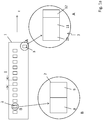
- Fig. 1a shows a first embodiment of a glass tube semifinished product according to the present invention with an enlarged view of provided thereon markings.
- a tubular strand marking 2 (“first marking") is continuously applied to the glass tube strand and contains at least first information 8.
- this first information 8 contains information which, in conjunction with further information (“second marking", as explained below), which is provided at a different position on the glass tube semifinished product, preferably details of manufacturer, production location and / or production facility of Glass tube 1 indicates and remains unchanged according to the invention to the hollow glass product (for example, pharmaceutical container).
- This information on the manufacturer, production location and / or production facility of the glass tube 1 can not be coded written in the first information 8, but may in principle be encoded and are then not readable in plain text but only according to a predetermined arithmetic or decoding instruction readable.
- the pipe string markings 2 in the longitudinal direction (z) of the glass tube semifinished product 1 are preferably mounted on the glass tube semifinished product 1 at predetermined, constant intervals (1) relative to one another.
- These distances 1 can, for example, be matched to the expected lengths of those sections from which the hollow glass products (for example pharmaceutical containers) are to be produced later and which must be cut to length from an original glass tube semifinished product, including any waste and sections to be separated.
- the tubing marker 2 additionally contains at least a second information 9, which later enables traceability of a glass tube semi-finished section separated from the glass tube semifinished product 1 or the hollow glass product (for example pharmaceutical container) subsequently produced therefrom.
- This second information 9 may in particular be data relating to batch number, pipe string number, a serial number of a glass tube semifinished product separated from the pipe string, production time.
- the second information 9 may contain additional information, for example regarding geometric dimensions in the respective sections of the pipe string markings 2, such as outer diameter, inner diameter, wall thickness, ovality, radius of curvature, etc.
- the aforementioned additional information of the pipe string markings 2 for example with respect to geometric dimensions in the respective sections of the glass pipe strand, such as outer diameter, inner diameter, wall thickness, ovality, radius of curvature, etc., only by combining the second information 9, as stated above, be read out with information from a second marker 3, as explained below, in particular according to a predetermined calculation or decoding instruction.
- the method used for marking is also selected.
- the pipe string marking is applied at temperatures below a transformation temperature of the glass, for example by means of laser marking.
- the tubing marking 2 is applied at temperatures above the transformation temperature of the glass, preferably in the form of a digital or binary-coded code, for example by means of a method as in US 2003 0029849 A1 .
- DE 102 34 002 A1 and WO 2012 028611 A1 the applicant discloses, the content of which is hereby expressly incorporated by reference.
- the aforementioned data can be applied in plain text or by means of a predetermined coding.
- At least one second marking 3 is provided at a suitable position on each glass tube semifinished product 1, for example at a respective beginning or end of a glass tube semifinished product 1.
- This second marking 3 contains at least a first information item 10.
- This first information item 10 preferably contains information about the manufacturer , Production location and / or production facility of the glass tube 1. These details can be applied in plain text, but are preferably coded inscribed.
- the second tag 3 preferably contains further information as follows: second information 11 containing information associated with either further information, which may be either the tubing tag 2 (or a section thereof) or may be the aforementioned first information 10, redundantly displays information on the manufacturer, production location and / or production facility of the glass tube 1.
- This information on the manufacturer, production site and / or production system of the glass tube 1 can not be read in clear text from the second information 11 but only according to a predetermined calculation or decoding instruction and in conjunction with the aforementioned further information, and can thus to an increased security against counterfeiting and Contribute to product quality.
- the second marking 3 may additionally contain at least one third piece of information 12, which makes it possible to determine which means was used to produce the first marking 2 (pipe string marking) and / or the second marking 3 on the glass tube semifinished product 1.
- This may be, for example, a serial number, type designation, etc. of such a device, which is made available by the original manufacturer of the glass tube semifinished product 1 or by a device manufacturer authorized for this purpose.
- This information can also be additionally certified by an external service provider, for example a testing agency. This information can be read out in plain text, but is preferably readable in accordance with a predetermined calculation or decoding rule.
- the second mark 3 is applied at temperatures below the transformation temperature of the glass, so that the first mark remains intact and the geometric properties of the glass tube semifinished product 1 are not further influenced.
- the second marking can be generated in particular by printing or stamping, for example a bar or bar code. Usable here are any other marking method with which a label can be applied at temperatures below the transformation temperature of the glass.
- the aforementioned data can be applied in plain text or by means of a predetermined coding.
- the second marking 3 can be removed during further processing of the glass tube semifinished product 1 to the hollow glass product in a further processing operation and according to a predetermined calculation or coding rule and while maintaining the information content
- the second Mark 3 with respect to traceability of the glass tube semi-finished by another second mark (“new mark") are replaced, as described below with reference to Fig. 3 described in more detail.
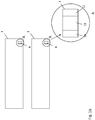
- the Fig. 1b shows a second embodiment of a glass tube semi-finished product according to the present invention with an enlarged view of a mark provided thereon. Specifically illustrated are two glass tube semi-finished products 1 after cutting from the continuous glass tube and after their separation. According to the Fig. 1b instead of the spatially separated applied first and second mark on the glass tube semifinished product 1 at a predetermined location, for example at a beginning or end of the glass tube semifinished product 1, a combination mark 4 is provided, the at least a first and a second information 10, 11, which are arranged in such close proximity to each other and linked to each other in a corresponding manner, as described above with reference to Fig.
- At least one third information 12 is provided in the combination marker 4.
- the subsections 10-12 of the combination marker 4 may be applied together in a single labeling step or, as appropriate, sequentially in separate labeling steps.
- the Fig. 2a shows a first embodiment of a hollow glass product, which was made of a glass tube semifinished product, as described above.
- the hollow glass product is a pharmaceutical container 20 in the form of a hollow cylindrical syringe body 21 with a flange 22 and an ejection opening 23.
- a first mark 2 and a second mark 3 are applied, expediently at spaced-apart positions.
- the information of the first and second markings is linked to one another in order to enable a decision on an originality, in particular an authenticity, or on the origin of the hollow glass product 20 and / or the origin of a device, with which the first and / or second mark the glass tube semifinished product 1 has been produced from which the hollow glass product 20 has been produced by further processing, in particular by further processing which comprises an at least partially thermal forming, especially at temperatures above the transformation temperature of the glass, as described above.
- Fig. 2b shows a further embodiment of such produced from a glass tube semi-finished hollow glass product, wherein instead of the first and second mark, as in the Fig. 2a shown, a combination marker 4 is provided, as described above with reference to Fig. 1b described.
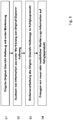
- the Fig. 3 shows a schematic flow diagram of a method for producing a hollow glass product according to the present invention, which was prepared by further processing a glass tube semi-finished product including at least partially thermal deformation of the glass tube semifinished product, in particular at temperatures above the transformation temperature of the glass.
- the glass tube semifinished product can be sufficiently heated at one end and then thermoformed in this area.
- This method is preferably carried out in a further processing operation that obtains original glass tube semi-finished products from an original manufacturer and processes them into desired hollow glass products.
- a preferred example of such hollow glass products, which are produced for the purposes of the present invention from original glass tube semi-finished products are containers for substances for pharmaceutical, medical or even cosmetic applications.
- step S1 a glass tube semifinished product, as described above with reference to FIGS. 1a and 1b described, fed to its further processing in the process.
- the original glass tube is provided at least with a first marking, in particular a combination marking, as described above with reference to FIG Fig. 1b described.
- a first marking in particular a combination marking, as described above with reference to FIG Fig. 1b described.
- two markings are provided on the original glass tube, in particular a continuous or at predetermined intervals applied to each other pipe string mark 2 and a second mark 3 (see. Fig. 1a ), which is preferably provided at only one predetermined position.
- the information of the marker (s) is read out in step S2 and is available for further processing.
- the further processing company for this purpose has knowledge of all relevant information and specifications, in what way the mark (s) of the original glass tube to read and process further, for example, for the purpose of decoding and re-encoding to apply a new or additional mark in step S4.
- the relevant devices in the further processing operation in particular a device for reading out the marking (s) and a device for applying a new or additional marking in step S4, via a network such as the Internet, preferably via a secured connection with encryption, with a central processor or a database the manufacturer of the original glass tubes are related.
- the second marking 3 (cf. Fig. 1a ) or at least a portion of the combination marker 4 (cf. Fig. 1b ), for example, by separating an end portion of the original glass tube semifinished product with the second mark 3, or made appropriately unreadable, for example by overwriting the relevant information or mark with empty information.
- This can also be an appropriate feedback to the manufacturer of the original glass tube semi-finished, for example, to update a database operated by the manufacturer with relevant information on all of this produced glass tube semi-finished products.
- the further processing of the original glass tube semifinished product may in particular include a partial thermal deformation at temperatures above the transformation temperature of the glass.
- new or additional information can be applied to the formed hollow glass product, preferably in the form of a digital matrix code (DMC) by means of a method as in US 2003 0029849 A1 .
- DE 102 34 002 A1 and WO 2012 028611 A1 the applicant discloses, the content of which is hereby expressly incorporated by reference.
- the aforementioned data can be applied in plain text or by means of a predetermined coding.
- the further processing operation in turn measures and records relevant process parameters during the further processing of the original glass tube semifinished product to the hollow glass product.
- This information may be in the generation of the new or additional mark on the Hollow glass product, be it that the relevant process parameters are included directly in the new or additional mark, be it that a corresponding link is integrated into the corresponding data records in a database operated by the processing company in the new or additional mark which in any case have access to the original manufacturer of the original glass tubes and the processing company, but possibly also to other parties, such as certification service providers.
- the relevant information which is read out from the first and / or second marking of the original glass tube is linked to one another in such a way that a decision is made regarding originality, in particular authenticity, or origin of the original glass tube from which the hollow glass product is made, and / or the origin of a device with which the first and / or second mark has been produced on this original glass tube.
- a decision is made regarding originality, in particular authenticity, or origin of the original glass tube from which the hollow glass product is made and / or the origin of a device with which the first and / or second mark has been produced on this original glass tube.
- such complete traceability to all relevant information of that original glass tube or the corresponding section thereof should be possible, from which the respective hollow glass product has been produced.
- a complete pedigree of the relevant data from the original glass tube or from the corresponding section thereof to the hollow glass product becomes possible, so that not only high counterfeit security results, but also quality control and optimization of logistics and further processing steps full traceability to all relevant parameters of the original glass tube or the corresponding section thereof is possible.
- the continuous tubing string can be marked with all the relevant original parameters (manufacturer, serial number, molten glass, tubing, etc.). This marking is combined with an additional marking in the tube separation.
- the marking on the isolated glass tube according to the invention with the pipe string marking combined so that a fake on the single tube would be recognized immediately.
- the pipe string marking is retained up to the hollow glass product. If the processing company receives an original glass tube which is marked continuously and in particular contains an additional marking (eg DMC), then later on clearly whether the individual mark on the glass tube originates from the original manufacturer of the glass tube or indicates a forgery in the supply chain.
- an additional marking eg DMC
- the authenticity of the hollow glass products can also be tested on the hollow glass product, eg on the part of the consumer, ie, for example, of pharmaceutical containers, namely in that the coding of the further processing operation is appropriately combined with the / Mark (s) of the original manufacturer is linked, so for example, contains a link to a tube code of the original glass tube.
- T G transformation temperature
- the genealogy of the material from the production of the original glass tube, from which the hollow glass product has been produced, to the hollow glass product can be traced back completely.
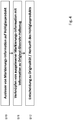
- FIG. 12 shows a schematic flow diagram of a method for tracing a hollow glass product according to the present invention, which has been produced by further processing a glass tube semifinished product including a thermal deformation of the glass tube semifinished product.
- This method can be carried out in particular by a consumer or also for the purpose of quality control and assurance.
- information is read out of the at least one marking on the hollow glass product in step S10, that is to say according to FIG Fig. 2a from the first and second mark 2, 3 or according to the Fig. 2b from the applied combination mark 4.
- This read information is in step S11 with further information to the original glass tube linked in order to finally enable a decision based on the link in step S12 to a originality, in particular an authenticity, or origin of the glass tube semi-finished product from which the hollow glass product has been produced, and / or a device with which the first and / or second mark has been produced on the glass tube semifinished product.
- a database can be provided which is operated by the manufacturer of the original glass tube and / or by the further processing company. This access can be via a network, such as a corporate network or the Internet, using preferably secure connections, including encryption.
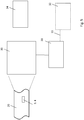
- the Fig. 5 shows a schematic diagram of an apparatus for determining the authenticity of a glass tube semifinished product or for tracing a hollow glass product according to the present invention, which has been produced by further processing a glass tube semi-finished product including a thermal deformation of the glass tube semifinished product.
- a detection device 30 is provided which reads at least one marking 3 or 4 on the hollow glass product (or on a glass tube semi-finished product).
- DMC digital matrix code
- Applicant discloses using optical readout techniques, which is done under the control of a controller 34, particularly a processor.
- a controller 34 particularly a processor.
- an internal database 31 in which relevant data are stored, which make it possible to infer originality or traceability of the hollow glass product 20 up to the glass tube semifinished product from which it was produced.
- This relevant data may also be stored on an external database 32 operated, for example, by an original manufacturer of glass tubes or a certified further processing company. Access to this external database 32 may be via a network, such as a corporate network or the Internet, with secure data connections, including encryption, being preferred.
- control can also take place via a control device 34, which is operated by an original manufacturer of glass tubes or a certified further processing operation.
- data communication can take place via a network, for example a corporate network or the Internet, whereby secure data connections, including encryption, are preferred.
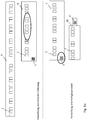
- the Fig. 6a summarizes schematically at various stages of the further processing of a glass tube semi-finished together at this provided markers.
- a continuous pipe string 1 is shown immediately after pipe forming.
- This pipe string 1 has a plurality of pipe string markings 2, as described above.
- glass tube semifinished products 1 are cut to length at the glass tube manufacturer with a predetermined length, for example, a length of 1.5 m.
- an additional mark 3 is generated at a predetermined position of the glass tube semifinished product 1, for example at a rear end.
- the information of this additional marking 3 is suitably associated with the information of the pipe string marking in order to enable a decision on an originality, in particular an authenticity, or origin of the glass pipe semifinished product 1 and / or the origin of a device with which the pipe extrusion marking 2 and / or the additional marking 3 is produced on the glass tube semifinished product 1, as described above.
- the relevant data in the production of the glass tube semifinished product 1 are also stored in a database of the glass tube manufacturer in a one-to-one association with the respective glass tube semifinished product 1. This database can be accessed by an authorized processor and / or bottler.
- the steps that are performed in a further processing operation are the steps that are performed in a further processing operation.
- the glass tube semifinished product 1 is removed from a transport packaging.
- the information from the pipe string mark 2 and the additional mark 3 are read out and processed further.
- the glass tube semi-finished product 1 is further processed, according to the Fig. 6a to a hollow glass product 20, for example to a syringe body, vial or the like.
- the additional marking 3 after it has been read, removed, for example by separating the portion with the additional marking of the glass tube semifinished product.
- the information read from the additional marker 3 is used to create a new marker 3 ', which is linked to the information of the tubular strand marking 2 in the manner described above, in order to decide on an originality, in particular authenticity, or origin of the glass tube semifinished product 1 and / or to allow the origin of a device with which the first and / or second mark is produced on the glass tube semifinished product 1.
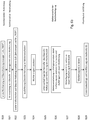
- the Fig. 6b shows a schematic flow diagram of the various stages of further processing of a glass tube semifinished product to a pharmaceutical packaging and its further processing.
- a first mark is produced on the continuous glass tube strand in step S20, for example a serial number ("7809").
- the cut-to-length glass tube semifinished product is marked in step S22 with a further information, in the illustrated example with a time stamp of the separation of the glass tube semifinished product.
- step S23 the glass tube semifinished product is delivered to a further processing operation.
- step S24 This reads after unpacking the glass tube semi-finished the mark (s) on the glass tube semi-finished product (step S24). Based on this information, a verification of the authenticity / originality of the glass tube semifinished product is carried out in step S25 by means of a database query from the manufacturer of the glass tube semifinished product. If this verification is successful, further processing of the glass tube semifinished product takes place to form a hollow glass product (step S26).
- the additional mark is removed after reading out their information, while the first mark, which was preferably generated at temperatures above the transformation temperature of the glass, is not changed.
- a new marking is applied to the hollow glass product, as described above with reference to FIG Fig. 6a described.
- the information of the new marking in the manner described above with the information of the tubing string marker (first marker) linked to allow a decision on an originality, especially an authenticity, or origin of the glass tube semifinished product 1 and / or the origin of a device with which the first and / or second marking is produced on the glass tube semifinished product 1.
- the information relevant for this purpose is also stored in a database in step S27, which in principle may also be the database of the manufacturer of the glass tube semifinished product.
- the hollow glass products are delivered to a pharmaceutical facility as they are being filled.
- the markings on the hollow glass product are initially read during pharmaceutical operation (step S28) in order to verify an authenticity / originality of the hollow glass product.
- a database query to verify the authenticity / originality of the hollow glass product step S29.
- This information may in particular relate to information that was determined in the further processing of the glass tube semifinished product to the hollow glass product, such as geometric sizes of the hollow glass product, such as inner diameter, outer diameter, wall thickness, lengths, variations of these sizes, etc. These parameters can continue in the pharmaceutical operation used to suitably control a filling of the hollow glass products.
- Glass tube semi-finished product (1) for use as a semi-finished product for the production of hollow glass products (20) by at least partially thermal forming, wherein the glass tube semifinished product (1) with a first mark with information regarding origin or with respect to origin and manufacture of the glass tube semifinished product (1 ) and a second mark, the information of which is linked to the information of the first mark, in order to decide on a basis of the combination of the information of the first mark (2; 10) with the information of the second mark (3; Originality, in particular an authenticity, or origin of the glass tube semi-finished product (1) and / or an origin allow device with which the first and / or second mark on the glass tube semifinished product (1) was generated.
- the hollow glass product (20) is a container for receiving pharmaceutical, medical or cosmetic substances, in particular a vial, a carpule or a syringe body.
- a computer program product having software code portions which, when read into a processor means (34), cause the processor means to carry out the method of any one of claims 11 to 15, based on linking the information of the first tag (2; 10). with the information of the second marking (3; 11) a decision to allow an originality, in particular an authenticity, or to an origin of the glass tube semi-finished product (1) or the hollow glass product (20) and / or to an origin of a device with the first mark (2; 10) has been produced on the glass tube semifinished product (1).
Landscapes
- Engineering & Computer Science (AREA)
- Chemical & Material Sciences (AREA)
- Physics & Mathematics (AREA)
- Business, Economics & Management (AREA)
- Optics & Photonics (AREA)
- Organic Chemistry (AREA)
- Materials Engineering (AREA)
- General Physics & Mathematics (AREA)
- Theoretical Computer Science (AREA)
- Life Sciences & Earth Sciences (AREA)
- Health & Medical Sciences (AREA)
- Chemical Kinetics & Catalysis (AREA)
- General Chemical & Material Sciences (AREA)
- Geochemistry & Mineralogy (AREA)
- Plasma & Fusion (AREA)
- Mechanical Engineering (AREA)
- Development Economics (AREA)
- Economics (AREA)
- Marketing (AREA)
- Accounting & Taxation (AREA)
- Strategic Management (AREA)
- Entrepreneurship & Innovation (AREA)
- Finance (AREA)
- General Business, Economics & Management (AREA)
- Toxicology (AREA)
- Pharmacology & Pharmacy (AREA)
- Animal Behavior & Ethology (AREA)
- General Health & Medical Sciences (AREA)
- Public Health (AREA)
- Veterinary Medicine (AREA)
- Medical Preparation Storing Or Oral Administration Devices (AREA)
- Details Of Rigid Or Semi-Rigid Containers (AREA)
Applications Claiming Priority (1)
| Application Number | Priority Date | Filing Date | Title |
|---|---|---|---|
| DE102016125129.1A DE102016125129A1 (de) | 2016-12-21 | 2016-12-21 | Verfahren zum Herstellen eines Glasrohr-Halbzeugs oder eines daraus hergestellten Hohlglasprodukts mit Markierungen, sowie Verwendungen hiervon |
Publications (1)
| Publication Number | Publication Date |
|---|---|
| EP3339259A1 true EP3339259A1 (de) | 2018-06-27 |
Family
ID=60629586
Family Applications (1)
| Application Number | Title | Priority Date | Filing Date |
|---|---|---|---|
| EP17206199.6A Withdrawn EP3339259A1 (de) | 2016-12-21 | 2017-12-08 | Verfahren zum herstellen eines glasrohr-halbzeugs oder eines daraus hergestellten hohlglasprodukts mit markierungen, sowie verwendungen hiervon |
Country Status (5)
| Country | Link |
|---|---|
| US (1) | US11872188B2 (enExample) |
| EP (1) | EP3339259A1 (enExample) |
| JP (3) | JP7280013B2 (enExample) |
| CN (1) | CN108218203A (enExample) |
| DE (1) | DE102016125129A1 (enExample) |
Families Citing this family (5)
| Publication number | Priority date | Publication date | Assignee | Title |
|---|---|---|---|---|
| CN108178496A (zh) * | 2016-12-08 | 2018-06-19 | 肖特股份有限公司 | 用于再加工玻璃管半成品的方法 |
| DE102016123865A1 (de) | 2016-12-08 | 2018-06-14 | Schott Ag | Verfahren zum Weiterverarbeiten eines Glasrohr-Halbzeugs einschließlich einer thermischen Umformung |
| DE102016124833A1 (de) | 2016-12-19 | 2018-06-21 | Schott Ag | Verfahren zum Herstellen eines Hohlglasprodukts aus einem Glasrohr-Halbzeug mit Markierungen, sowie Verwendungen hiervon |
| DE102016125129A1 (de) | 2016-12-21 | 2018-06-21 | Schott Ag | Verfahren zum Herstellen eines Glasrohr-Halbzeugs oder eines daraus hergestellten Hohlglasprodukts mit Markierungen, sowie Verwendungen hiervon |
| DE102020114903A1 (de) * | 2020-06-04 | 2021-12-09 | Gerresheimer Bünde Gmbh | Verfahren und Anlage zum Herstellen eines Glasbehältnisses sowie Glasbehältnis |
Citations (4)
| Publication number | Priority date | Publication date | Assignee | Title |
|---|---|---|---|---|
| US2378146A (en) * | 1943-05-20 | 1945-06-12 | Machlett & Son E | Apparatus for sealing glass tubes |
| US20090159174A1 (en) * | 2005-04-28 | 2009-06-25 | Jean-Pierre Grimard | Method of identifying a plurality of containers and/or finished articles obtained from the said containers |
| US20150064779A1 (en) * | 2013-08-30 | 2015-03-05 | Schott Ag | Method and apparatus for producing a tube partially having a non-circular cross section and having circular end portions and use thereof |
| EP3336066A2 (de) * | 2016-12-19 | 2018-06-20 | Schott Ag | Verfahren zum herstellen eines hohlglasprodukts aus einem glasrohr-halbzeug mit markierungen, sowie verwendungen hiervon |
Family Cites Families (56)
| Publication number | Priority date | Publication date | Assignee | Title |
|---|---|---|---|---|
| US3394263A (en) | 1964-12-28 | 1968-07-23 | Owens Illinois Inc | Method and apparatus for inspecting transparent articles for defects by fluorescent radiation |
| US3565536A (en) | 1968-01-15 | 1971-02-23 | Itt | Apparatus for detecting flaws in light transmissive tubing including a plurality of diametrically opposed light sources |
| US3777171A (en) | 1971-07-26 | 1973-12-04 | Westinghouse Electric Corp | Method and apparatus for detecting flaws in continuous length tubular glass |
| DE2234062C3 (de) | 1972-07-07 | 1979-08-02 | Hans-Joachim 1000 Berlin Dichter | Verfahren zum Herstellen von Ampullen und Maschine zur Durchführung des Verfahrens |
| US4136779A (en) | 1977-12-22 | 1979-01-30 | Owens-Illinois, Inc. | Ampule score line detection |
| CS214081B1 (en) | 1980-06-26 | 1982-04-09 | Peter Urbanek | Method of glass products surface treatment by means of infrared radiation of laser and apparatus for making the same |
| US4378494A (en) | 1980-11-07 | 1983-03-29 | Owens-Illinois, Inc. | Apparatus and method for detecting defects in glass bottles using event proximity |
| US4483615A (en) | 1981-12-18 | 1984-11-20 | Owens-Illinois, Inc. | Method and apparatus for detecting checks in glass tubes |
| US4487322A (en) | 1982-09-27 | 1984-12-11 | Owens-Illinois, Inc. | Method for inspecting glass containers |
| US4720192A (en) | 1985-04-16 | 1988-01-19 | Feco Engineered Systems, Inc. | Glass bottle inspection unit |
| DE4028823C2 (de) | 1990-09-11 | 1994-07-07 | Schott Glaswerke | Vorrichtung und Formfinger zum Formen eines Mündungsbereiches an einem Glasfläschchen |
| DE4111145C2 (de) | 1991-04-06 | 1995-09-14 | Schott Glaswerke | Verfahren zum Prüfen medizinischer Ampullen |
| DE4224282A1 (de) | 1992-07-23 | 1994-01-27 | Kristina Dipl Ing Schmidt | Verfahren zur abtragenden Mikrostrukturierung von Glas |
| JPH06263465A (ja) | 1993-03-09 | 1994-09-20 | Nippon Electric Glass Co Ltd | ガラス管端の封止方法 |
| DE4332024C2 (de) | 1993-09-21 | 1996-08-22 | Schott Rohrglas Gmbh | Verfahren zur Steuerung der freien Verformung von thermoplastischem Material |
| US5801356A (en) | 1995-08-16 | 1998-09-01 | Santa Barbara Research Center | Laser scribing on glass using Nd:YAG laser |
| DE19736732A1 (de) | 1997-08-22 | 1999-03-11 | Lzh Laserzentrum Hannover Ev | Einrichtung und Verfahren zur Bearbeitung eines Werkstückes mittels elektromagnetischer Strahlung sowie Spiegel zur Reflexion von elektromagnetischer Strahlung, insbesondere von Laserlicht |
| DE19926878A1 (de) | 1998-06-12 | 1999-12-16 | Matias Risse | Unverfälschbares Gravierungsverfahren zur Verwendung auf Glasbehältern |
| US6211952B1 (en) | 1998-10-02 | 2001-04-03 | Agr International, Inc. | Method and apparatus for inspecting glass containers for checks |
| FR2787061B1 (fr) | 1998-12-14 | 2001-01-26 | Becton Dickinson France | Procede et installation de marquage superficiel d'un substrat |
| JP2000355666A (ja) | 1999-06-14 | 2000-12-26 | Nippon Sheet Glass Co Ltd | 水溶性染料系インクおよびそれを用いてマーキングされたガラス物品 |
| EP1084996B1 (de) | 1999-09-15 | 2004-06-02 | SCHOTT ROHRGLAS GmbH | Verfahren und Vorrichtung zur Herstellung innenvergüteter Glasrohre |
| US6633377B1 (en) | 2000-04-20 | 2003-10-14 | Image Processing Systems Inc. | Dark view inspection system for transparent media |
| DE10122335C1 (de) | 2001-05-08 | 2002-07-25 | Schott Glas | Verfahren und Vorrichtung zum Markieren von Glas mit einem Laser |
| DE10138628A1 (de) | 2001-08-13 | 2003-02-27 | Bosch Gmbh Robert | Verfahren zur Herstellung eines Verschlusses eines Hohlraums einer Glasröhre |
| US20030044582A1 (en) | 2001-08-28 | 2003-03-06 | Sakoske George Emil | Screen printing process |
| DK1513779T3 (da) | 2002-06-19 | 2009-05-25 | Frewitt Printing Sa | Fremgangsmåde og indretning til anbringelse af en aftörringsfast og afgnidningsfast markering på transparent glas |
| DE10234002B4 (de) | 2002-07-25 | 2006-07-20 | Schott Ag | Verfahren zum Markieren von Glas |
| DE10335247B4 (de) | 2003-08-01 | 2005-12-01 | Schott Ag | Verfahren und Vorrichtung zum Abtrennen von Glasplatten |
| FR2885071B1 (fr) * | 2005-04-28 | 2010-02-12 | Becton Dickinson France | Procede d'identification d'un contenant et/ou d'un article fini obtenu a partir dudit contenant, en particulier a usage medical |
| US20060267250A1 (en) | 2005-05-24 | 2006-11-30 | Gerretz Herbert A | Device and method for forming a non-ground vial |
| FR2912530B1 (fr) | 2007-02-14 | 2010-11-19 | Saint Gobain Emballage | Produit en verre creux a marquage data matrix indelebile. |
| DE102007008958B3 (de) | 2007-02-21 | 2008-04-03 | Hartmut Geisel | Verfahren und Einrichtung zur Überwachung von Glasartikeln |
| JPWO2009116300A1 (ja) | 2008-03-21 | 2011-07-21 | 大和特殊硝子株式会社 | 低アルカリガラス容器の製造方法 |
| US8173038B2 (en) | 2008-04-18 | 2012-05-08 | Corning Incorporated | Methods and systems for forming microstructures in glass substrates |
| DE102008051614B4 (de) | 2008-10-09 | 2012-09-20 | Schott Ag | Verfahren zur Herstellung von Packmitteln aus Glas für Pharmaprodukte |
| CN102939203B (zh) | 2010-04-30 | 2014-08-27 | 贝克顿迪金森法国公司 | 用于标记透明容器的方法 |
| US9514131B1 (en) * | 2010-05-30 | 2016-12-06 | Crisi Medical Systems, Inc. | Medication container encoding, verification, and identification |
| DE102010037273A1 (de) | 2010-09-02 | 2012-03-08 | Schott Ag | Verfahren und Vorrichtung zum Markieren von Glas |
| DE102010037788B4 (de) | 2010-09-27 | 2012-07-19 | Viprotron Gmbh | Verfahren und Vorrichtung zur Anzeige von automatisiert ermittelten Fehlerstellen |
| IT1402103B1 (it) | 2010-10-08 | 2013-08-28 | Università Di Pisa | Metodo e dispositivo per rilevare la posizione geometrica di un difetto in un oggetto |
| EP2721698B1 (en) | 2011-06-17 | 2019-01-02 | I-Property Holding Corp. | 3d laser coding in glass |
| KR101623178B1 (ko) | 2011-12-31 | 2016-05-20 | 가부시키가이샤 섬코 | 실리카 유리 도가니의 제조 조건의 설정을 지원하는 장치, 실리카 유리 도가니 제조용 몰드의 제조 조건의 설정을 지원하는 장치, 실리카 유리 도가니를 이용한 실리콘 단결정 인상의 조건 설정을 지원하는 장치 |
| DE102012101948A1 (de) | 2012-03-08 | 2013-09-12 | Schott Ag | Formwerkzeug, Verfahren und Vorrichtung zur lasergestützten Glasformung |
| DE102012109189B3 (de) | 2012-09-27 | 2014-03-27 | Schott Ag | Verfahren und Vorrichtung zum wärmeweichen Verschließen von Glasrohren |
| US9701564B2 (en) | 2013-01-15 | 2017-07-11 | Corning Incorporated | Systems and methods of glass cutting by inducing pulsed laser perforations into glass articles |
| CN105378444B (zh) | 2013-06-25 | 2019-02-19 | 普睿司曼股份公司 | 用于检测杆形透明物体中的缺陷的方法 |
| DE102013212150A1 (de) | 2013-06-25 | 2015-01-22 | Schott Ag | Glasbearbeitungsvorrichtung und Bodenmaschine hierfür zum Herstellen von Glasbehältern |
| DE102013107607B4 (de) | 2013-07-17 | 2017-09-21 | Schott Ag | Verfahren zum Herstellen von Glasfläschchen |
| WO2015195102A1 (en) | 2014-06-17 | 2015-12-23 | Heraeus Tenevo Llc | Apparatus and method for measurement of transparent cylindrical articles |
| DE102014214083C5 (de) | 2014-07-18 | 2021-04-08 | Schott Ag | Vorrichtung und Verfahren zum thermischen Behandeln eines ringförmigen Bereichs einer inneren Oberfläche eines aus einem Borosilikat-Rohrglas hergestellten Glasbehälters |
| WO2016040072A1 (en) | 2014-09-11 | 2016-03-17 | California Advanced Labeling, Inc. | System and method of marking articles coated with a laser-sensitive material |
| DE102016114190A1 (de) | 2016-08-01 | 2018-02-01 | Schott Schweiz Ag | Verfahren und Vorrichtung zur optischen Untersuchung transparenter Körper |
| DE102016123865A1 (de) | 2016-12-08 | 2018-06-14 | Schott Ag | Verfahren zum Weiterverarbeiten eines Glasrohr-Halbzeugs einschließlich einer thermischen Umformung |
| CN108178496A (zh) | 2016-12-08 | 2018-06-19 | 肖特股份有限公司 | 用于再加工玻璃管半成品的方法 |
| DE102016125129A1 (de) | 2016-12-21 | 2018-06-21 | Schott Ag | Verfahren zum Herstellen eines Glasrohr-Halbzeugs oder eines daraus hergestellten Hohlglasprodukts mit Markierungen, sowie Verwendungen hiervon |
-
2016
- 2016-12-21 DE DE102016125129.1A patent/DE102016125129A1/de active Pending
-
2017
- 2017-12-08 US US15/835,659 patent/US11872188B2/en active Active
- 2017-12-08 CN CN201711293565.3A patent/CN108218203A/zh active Pending
- 2017-12-08 JP JP2017236219A patent/JP7280013B2/ja active Active
- 2017-12-08 EP EP17206199.6A patent/EP3339259A1/de not_active Withdrawn
-
2020
- 2020-12-11 JP JP2020206115A patent/JP2021037420A/ja active Pending
-
2022
- 2022-08-12 JP JP2022128934A patent/JP2022145956A/ja active Pending
Patent Citations (4)
| Publication number | Priority date | Publication date | Assignee | Title |
|---|---|---|---|---|
| US2378146A (en) * | 1943-05-20 | 1945-06-12 | Machlett & Son E | Apparatus for sealing glass tubes |
| US20090159174A1 (en) * | 2005-04-28 | 2009-06-25 | Jean-Pierre Grimard | Method of identifying a plurality of containers and/or finished articles obtained from the said containers |
| US20150064779A1 (en) * | 2013-08-30 | 2015-03-05 | Schott Ag | Method and apparatus for producing a tube partially having a non-circular cross section and having circular end portions and use thereof |
| EP3336066A2 (de) * | 2016-12-19 | 2018-06-20 | Schott Ag | Verfahren zum herstellen eines hohlglasprodukts aus einem glasrohr-halbzeug mit markierungen, sowie verwendungen hiervon |
Non-Patent Citations (1)
| Title |
|---|
| WIKIP: "Glassblowing (Wikipedia)", INTERNET CITATION, 8 February 2011 (2011-02-08), pages 1 - 8, XP007919403, Retrieved from the Internet <URL:http://en.wikipedia.org/w/index.php?oldid=412663373> [retrieved on 20110912] * |
Also Published As
| Publication number | Publication date |
|---|---|
| JP2022145956A (ja) | 2022-10-04 |
| US11872188B2 (en) | 2024-01-16 |
| JP7280013B2 (ja) | 2023-05-23 |
| CN108218203A (zh) | 2018-06-29 |
| JP2021037420A (ja) | 2021-03-11 |
| DE102016125129A1 (de) | 2018-06-21 |
| US20180168928A1 (en) | 2018-06-21 |
| JP2018099510A (ja) | 2018-06-28 |
Similar Documents
| Publication | Publication Date | Title |
|---|---|---|
| EP3336066B1 (de) | Verfahren zum herstellen eines hohlglasprodukts aus einem glasrohr-halbzeug mit markierungen, sowie verwendungen hiervon | |
| DE102016125129A1 (de) | Verfahren zum Herstellen eines Glasrohr-Halbzeugs oder eines daraus hergestellten Hohlglasprodukts mit Markierungen, sowie Verwendungen hiervon | |
| EP3333135B1 (de) | Verfahren zum weiterverarbeiten eines glasrohr-halbzeugs einschliesslich einer thermischen umformung | |
| EP2577553B1 (de) | Verfahren und vorrichtung zum markieren von glas | |
| WO2009071445A1 (de) | Codierung von pharmazeutischen behältnissen durch zufallsstrukturen | |
| EP3560896A1 (de) | Verfahren und vorrichtung zur herstellung von glashohlkörperprodukten sowie glashohlkörperprodukte und deren verwendung | |
| EP1447327A2 (de) | Verfahren zur Identifizierung und/oder Überwachung von medizinischen Spritzen | |
| EP3778204B1 (de) | Verfahren zum herstellen eines brillenglas-halbfabrikats und brillenglas-halbfabrikat | |
| EP2816017B1 (de) | Verfahren und Vorrichtung zum Erzeugen einer Sollbruchstelle an einer Brechampulle und dazugehörendes Produkt | |
| EP3333136B1 (de) | Verfahren zum weiterverarbeiten eines glasrohr-halbzeugs | |
| EP2157533A1 (de) | Verfahren zur Identifikation von medizinischen Behältnissen | |
| DE102017102161A1 (de) | Verfahren zum Weiterverarbeiten eines Glasrohr-Halbzeugs | |
| DE102021125343B4 (de) | Verfahren und Vorrichtung zur Herstellung einer Vielzahl von Bauelementen mit zumindest einer elektrischen Durchführung und einem Informationsspeicher, Bauelement sowie Verfahren und Vorrichtung zur Weiterverarbeitung solcher Bauelemente | |
| EP3678868B1 (de) | Direktdruckvorrichtung zum aufbringen eines umlaufenden druckbildes | |
| WO2013144215A1 (de) | Verfahren zur schulung von personal in der qualitätskontrolle | |
| WO2022078820A1 (de) | Verfahren, system, computerprogramm und computerlesbares medium zum anbringen einer anzahl von eindeutigen identifizierungscodes aus einer menge von eindeutigen identifizierungscodes an einer anzahl von gegenständen | |
| DE102019202750B3 (de) | Verfahren zur Kennzeichnung von Metallgussbauteilen mittels elektronischer Transponder | |
| AT520467B1 (de) | Versiegelungssystem für Flaschen, insbesondere Getränkeflaschen | |
| DE102018006961A1 (de) | Glashohlkörper und Verwendung eines Glashohlkörpers | |
| DE102023105602A1 (de) | Behälterbehandlungsanlage | |
| DE102019213180B4 (de) | Verfahren und Herstellungseinrichtung zum Herstellen eines Gussteils | |
| EP4389690A1 (de) | Verfahren und vorrichtung zur überprüfung von mit flüssigkeit befüllten behältnissen | |
| WO2025098908A1 (de) | Vorrichtung und rohstoff für die additive und subtraktive fertigung sowie daraus gefertigte bauteile | |
| DE102021116632A1 (de) | Verfahren und Vorrichtung zum Herstellen von Behältern | |
| DE102010019448A1 (de) | Rückverfolgungsverfahren sowie Rückverfolgungssystem für die Herstellung von Halbleiterprodukten |
Legal Events
| Date | Code | Title | Description |
|---|---|---|---|
| PUAI | Public reference made under article 153(3) epc to a published international application that has entered the european phase |
Free format text: ORIGINAL CODE: 0009012 |
|
| STAA | Information on the status of an ep patent application or granted ep patent |
Free format text: STATUS: REQUEST FOR EXAMINATION WAS MADE |
|
| 17P | Request for examination filed |
Effective date: 20180130 |
|
| AK | Designated contracting states |
Kind code of ref document: A1 Designated state(s): AL AT BE BG CH CY CZ DE DK EE ES FI FR GB GR HR HU IE IS IT LI LT LU LV MC MK MT NL NO PL PT RO RS SE SI SK SM TR |
|
| AX | Request for extension of the european patent |
Extension state: BA ME |
|
| STAA | Information on the status of an ep patent application or granted ep patent |
Free format text: STATUS: EXAMINATION IS IN PROGRESS |
|
| RBV | Designated contracting states (corrected) |
Designated state(s): AL AT BE BG CH CY CZ DE DK EE ES FI FR GB GR HR HU IE IS IT LI LT LU LV MC MK MT NL NO PL PT RO RS SE SI SK SM TR |
|
| 17Q | First examination report despatched |
Effective date: 20181008 |
|
| P01 | Opt-out of the competence of the unified patent court (upc) registered |
Effective date: 20230512 |
|
| STAA | Information on the status of an ep patent application or granted ep patent |
Free format text: STATUS: THE APPLICATION IS DEEMED TO BE WITHDRAWN |
|
| 18D | Application deemed to be withdrawn |
Effective date: 20250717 |