EP3328523B1 - Process for the recovery of sodium sulfate - Google Patents
Process for the recovery of sodium sulfate Download PDFInfo
- Publication number
- EP3328523B1 EP3328523B1 EP16727443.0A EP16727443A EP3328523B1 EP 3328523 B1 EP3328523 B1 EP 3328523B1 EP 16727443 A EP16727443 A EP 16727443A EP 3328523 B1 EP3328523 B1 EP 3328523B1
- Authority
- EP
- European Patent Office
- Prior art keywords
- water stream
- membrane distillation
- distillation unit
- concentration
- precipitated silica
- Prior art date
- Legal status (The legal status is an assumption and is not a legal conclusion. Google has not performed a legal analysis and makes no representation as to the accuracy of the status listed.)
- Active
Links
- PMZURENOXWZQFD-UHFFFAOYSA-L Sodium Sulfate Chemical compound [Na+].[Na+].[O-]S([O-])(=O)=O PMZURENOXWZQFD-UHFFFAOYSA-L 0.000 title claims description 117
- 229910052938 sodium sulfate Inorganic materials 0.000 title claims description 117
- 238000000034 method Methods 0.000 title claims description 83
- 230000008569 process Effects 0.000 title claims description 78
- 238000011084 recovery Methods 0.000 title claims description 21
- 235000011152 sodium sulphate Nutrition 0.000 title description 7
- XLYOFNOQVPJJNP-UHFFFAOYSA-N water Substances O XLYOFNOQVPJJNP-UHFFFAOYSA-N 0.000 claims description 192
- VYPSYNLAJGMNEJ-UHFFFAOYSA-N Silicium dioxide Chemical compound O=[Si]=O VYPSYNLAJGMNEJ-UHFFFAOYSA-N 0.000 claims description 189
- 239000012528 membrane Substances 0.000 claims description 140
- 239000007832 Na2SO4 Substances 0.000 claims description 110
- 238000004821 distillation Methods 0.000 claims description 93
- 239000000377 silicon dioxide Substances 0.000 claims description 93
- 238000001035 drying Methods 0.000 claims description 44
- 239000012466 permeate Substances 0.000 claims description 30
- 239000007787 solid Substances 0.000 claims description 20
- QAOWNCQODCNURD-UHFFFAOYSA-N Sulfuric acid Chemical compound OS(O)(=O)=O QAOWNCQODCNURD-UHFFFAOYSA-N 0.000 claims description 15
- 238000005406 washing Methods 0.000 claims description 12
- 239000004115 Sodium Silicate Substances 0.000 claims description 10
- 238000002360 preparation method Methods 0.000 claims description 10
- 238000001223 reverse osmosis Methods 0.000 claims description 10
- 238000001728 nano-filtration Methods 0.000 claims description 9
- NTHWMYGWWRZVTN-UHFFFAOYSA-N sodium silicate Chemical compound [Na+].[Na+].[O-][Si]([O-])=O NTHWMYGWWRZVTN-UHFFFAOYSA-N 0.000 claims description 9
- 229910052911 sodium silicate Inorganic materials 0.000 claims description 9
- BPQQTUXANYXVAA-UHFFFAOYSA-N Orthosilicate Chemical compound [O-][Si]([O-])([O-])[O-] BPQQTUXANYXVAA-UHFFFAOYSA-N 0.000 claims description 8
- 239000000725 suspension Substances 0.000 claims description 8
- 239000007788 liquid Substances 0.000 claims description 7
- 239000012429 reaction media Substances 0.000 claims description 6
- 238000000926 separation method Methods 0.000 claims description 6
- 229910001424 calcium ion Inorganic materials 0.000 claims description 5
- 238000006243 chemical reaction Methods 0.000 claims description 5
- 229910001425 magnesium ion Inorganic materials 0.000 claims description 5
- 239000007921 spray Substances 0.000 claims description 5
- 238000007599 discharging Methods 0.000 claims description 4
- 239000002253 acid Substances 0.000 claims description 2
- 238000005304 joining Methods 0.000 claims description 2
- 239000007789 gas Substances 0.000 description 31
- 238000004519 manufacturing process Methods 0.000 description 25
- 238000011282 treatment Methods 0.000 description 9
- 238000001914 filtration Methods 0.000 description 8
- 239000000243 solution Substances 0.000 description 7
- 238000001704 evaporation Methods 0.000 description 6
- 230000008020 evaporation Effects 0.000 description 6
- 239000000126 substance Substances 0.000 description 6
- 239000002351 wastewater Substances 0.000 description 6
- 229910052681 coesite Inorganic materials 0.000 description 5
- 229910052906 cristobalite Inorganic materials 0.000 description 5
- 238000002425 crystallisation Methods 0.000 description 5
- 230000008025 crystallization Effects 0.000 description 5
- -1 polytetrafluoroethylene Polymers 0.000 description 5
- 238000002203 pretreatment Methods 0.000 description 5
- 229910052682 stishovite Inorganic materials 0.000 description 5
- 229910052905 tridymite Inorganic materials 0.000 description 5
- 239000004743 Polypropylene Substances 0.000 description 4
- 238000009833 condensation Methods 0.000 description 4
- 238000010586 diagram Methods 0.000 description 4
- 230000000694 effects Effects 0.000 description 4
- 150000002500 ions Chemical class 0.000 description 4
- 239000000203 mixture Substances 0.000 description 4
- 229920001155 polypropylene Polymers 0.000 description 4
- 239000011148 porous material Substances 0.000 description 4
- 239000002033 PVDF binder Substances 0.000 description 3
- HEMHJVSKTPXQMS-UHFFFAOYSA-M Sodium hydroxide Chemical compound [OH-].[Na+] HEMHJVSKTPXQMS-UHFFFAOYSA-M 0.000 description 3
- 239000011575 calcium Substances 0.000 description 3
- 239000003792 electrolyte Substances 0.000 description 3
- 239000000835 fiber Substances 0.000 description 3
- 239000012530 fluid Substances 0.000 description 3
- 230000002209 hydrophobic effect Effects 0.000 description 3
- 239000012071 phase Substances 0.000 description 3
- 229920002981 polyvinylidene fluoride Polymers 0.000 description 3
- 238000001556 precipitation Methods 0.000 description 3
- 238000004094 preconcentration Methods 0.000 description 3
- 239000000047 product Substances 0.000 description 3
- 239000002904 solvent Substances 0.000 description 3
- 238000001694 spray drying Methods 0.000 description 3
- KKCBUQHMOMHUOY-UHFFFAOYSA-N Na2O Inorganic materials [O-2].[Na+].[Na+] KKCBUQHMOMHUOY-UHFFFAOYSA-N 0.000 description 2
- CDBYLPFSWZWCQE-UHFFFAOYSA-L Sodium Carbonate Chemical compound [Na+].[Na+].[O-]C([O-])=O CDBYLPFSWZWCQE-UHFFFAOYSA-L 0.000 description 2
- 239000002535 acidifier Substances 0.000 description 2
- VSCWAEJMTAWNJL-UHFFFAOYSA-K aluminium trichloride Chemical compound Cl[Al](Cl)Cl VSCWAEJMTAWNJL-UHFFFAOYSA-K 0.000 description 2
- 239000003153 chemical reaction reagent Substances 0.000 description 2
- 239000000701 coagulant Substances 0.000 description 2
- 239000012141 concentrate Substances 0.000 description 2
- 230000005494 condensation Effects 0.000 description 2
- 238000002474 experimental method Methods 0.000 description 2
- 239000012065 filter cake Substances 0.000 description 2
- 230000004907 flux Effects 0.000 description 2
- 239000012535 impurity Substances 0.000 description 2
- 230000000670 limiting effect Effects 0.000 description 2
- 239000007791 liquid phase Substances 0.000 description 2
- 239000000463 material Substances 0.000 description 2
- 229920002239 polyacrylonitrile Polymers 0.000 description 2
- 239000002244 precipitate Substances 0.000 description 2
- 230000009467 reduction Effects 0.000 description 2
- 230000002829 reductive effect Effects 0.000 description 2
- 239000012047 saturated solution Substances 0.000 description 2
- VEXZGXHMUGYJMC-UHFFFAOYSA-M Chloride anion Chemical compound [Cl-] VEXZGXHMUGYJMC-UHFFFAOYSA-M 0.000 description 1
- VGGSQFUCUMXWEO-UHFFFAOYSA-N Ethene Chemical compound C=C VGGSQFUCUMXWEO-UHFFFAOYSA-N 0.000 description 1
- 239000005977 Ethylene Substances 0.000 description 1
- CWYNVVGOOAEACU-UHFFFAOYSA-N Fe2+ Chemical compound [Fe+2] CWYNVVGOOAEACU-UHFFFAOYSA-N 0.000 description 1
- 229910021578 Iron(III) chloride Inorganic materials 0.000 description 1
- 229920012266 Poly(ether sulfone) PES Polymers 0.000 description 1
- 239000004952 Polyamide Substances 0.000 description 1
- 239000004698 Polyethylene Substances 0.000 description 1
- 239000006004 Quartz sand Substances 0.000 description 1
- 239000000654 additive Substances 0.000 description 1
- 238000013019 agitation Methods 0.000 description 1
- 229910052782 aluminium Inorganic materials 0.000 description 1
- 159000000013 aluminium salts Chemical class 0.000 description 1
- DIZPMCHEQGEION-UHFFFAOYSA-H aluminium sulfate (anhydrous) Chemical compound [Al+3].[Al+3].[O-]S([O-])(=O)=O.[O-]S([O-])(=O)=O.[O-]S([O-])(=O)=O DIZPMCHEQGEION-UHFFFAOYSA-H 0.000 description 1
- 239000012431 aqueous reaction media Substances 0.000 description 1
- 230000004888 barrier function Effects 0.000 description 1
- 229910052791 calcium Inorganic materials 0.000 description 1
- BRPQOXSCLDDYGP-UHFFFAOYSA-N calcium oxide Chemical compound [O-2].[Ca+2] BRPQOXSCLDDYGP-UHFFFAOYSA-N 0.000 description 1
- 239000000292 calcium oxide Substances 0.000 description 1
- ODINCKMPIJJUCX-UHFFFAOYSA-N calcium oxide Inorganic materials [Ca]=O ODINCKMPIJJUCX-UHFFFAOYSA-N 0.000 description 1
- 230000008859 change Effects 0.000 description 1
- 239000007795 chemical reaction product Substances 0.000 description 1
- 150000001875 compounds Chemical class 0.000 description 1
- 239000000356 contaminant Substances 0.000 description 1
- 238000001816 cooling Methods 0.000 description 1
- 229920001577 copolymer Polymers 0.000 description 1
- 239000013078 crystal Substances 0.000 description 1
- 230000003247 decreasing effect Effects 0.000 description 1
- 239000003599 detergent Substances 0.000 description 1
- 238000009792 diffusion process Methods 0.000 description 1
- 239000012510 hollow fiber Substances 0.000 description 1
- 230000006872 improvement Effects 0.000 description 1
- 239000011261 inert gas Substances 0.000 description 1
- 229910052500 inorganic mineral Inorganic materials 0.000 description 1
- 230000010354 integration Effects 0.000 description 1
- 229910052742 iron Inorganic materials 0.000 description 1
- RBTARNINKXHZNM-UHFFFAOYSA-K iron trichloride Chemical compound Cl[Fe](Cl)Cl RBTARNINKXHZNM-UHFFFAOYSA-K 0.000 description 1
- RUTXIHLAWFEWGM-UHFFFAOYSA-H iron(3+) sulfate Chemical compound [Fe+3].[Fe+3].[O-]S([O-])(=O)=O.[O-]S([O-])(=O)=O.[O-]S([O-])(=O)=O RUTXIHLAWFEWGM-UHFFFAOYSA-H 0.000 description 1
- 229910000359 iron(II) sulfate Inorganic materials 0.000 description 1
- 229910000360 iron(III) sulfate Inorganic materials 0.000 description 1
- 229910052749 magnesium Inorganic materials 0.000 description 1
- 239000011707 mineral Substances 0.000 description 1
- 235000010755 mineral Nutrition 0.000 description 1
- 230000003204 osmotic effect Effects 0.000 description 1
- TWNQGVIAIRXVLR-UHFFFAOYSA-N oxo(oxoalumanyloxy)alumane Chemical compound O=[Al]O[Al]=O TWNQGVIAIRXVLR-UHFFFAOYSA-N 0.000 description 1
- 230000036961 partial effect Effects 0.000 description 1
- 229920002647 polyamide Polymers 0.000 description 1
- 229920000573 polyethylene Polymers 0.000 description 1
- 229920001343 polytetrafluoroethylene Polymers 0.000 description 1
- 239000004810 polytetrafluoroethylene Substances 0.000 description 1
- 239000000843 powder Substances 0.000 description 1
- 239000000376 reactant Substances 0.000 description 1
- 239000012465 retentate Substances 0.000 description 1
- 230000002441 reversible effect Effects 0.000 description 1
- 239000004576 sand Substances 0.000 description 1
- 229910052710 silicon Inorganic materials 0.000 description 1
- 239000010703 silicon Substances 0.000 description 1
- 235000012239 silicon dioxide Nutrition 0.000 description 1
- 229910000029 sodium carbonate Inorganic materials 0.000 description 1
- 235000017550 sodium carbonate Nutrition 0.000 description 1
- 235000019351 sodium silicates Nutrition 0.000 description 1
- WBHQBSYUUJJSRZ-UHFFFAOYSA-N sodium;sulfuric acid Chemical group [H+].[H+].[Na+].[O-]S([O-])(=O)=O WBHQBSYUUJJSRZ-UHFFFAOYSA-N 0.000 description 1
- 238000010408 sweeping Methods 0.000 description 1
- 230000001960 triggered effect Effects 0.000 description 1
- 238000000108 ultra-filtration Methods 0.000 description 1
Images



Classifications
-
- B—PERFORMING OPERATIONS; TRANSPORTING
- B01—PHYSICAL OR CHEMICAL PROCESSES OR APPARATUS IN GENERAL
- B01D—SEPARATION
- B01D61/00—Processes of separation using semi-permeable membranes, e.g. dialysis, osmosis or ultrafiltration; Apparatus, accessories or auxiliary operations specially adapted therefor
- B01D61/36—Pervaporation; Membrane distillation; Liquid permeation
- B01D61/364—Membrane distillation
-
- C—CHEMISTRY; METALLURGY
- C01—INORGANIC CHEMISTRY
- C01D—COMPOUNDS OF ALKALI METALS, i.e. LITHIUM, SODIUM, POTASSIUM, RUBIDIUM, CAESIUM, OR FRANCIUM
- C01D5/00—Sulfates or sulfites of sodium, potassium or alkali metals in general
- C01D5/02—Preparation of sulfates from alkali metal salts and sulfuric acid or bisulfates; Preparation of bisulfates
-
- C—CHEMISTRY; METALLURGY
- C01—INORGANIC CHEMISTRY
- C01B—NON-METALLIC ELEMENTS; COMPOUNDS THEREOF; METALLOIDS OR COMPOUNDS THEREOF NOT COVERED BY SUBCLASS C01C
- C01B33/00—Silicon; Compounds thereof
- C01B33/113—Silicon oxides; Hydrates thereof
- C01B33/12—Silica; Hydrates thereof, e.g. lepidoic silicic acid
- C01B33/18—Preparation of finely divided silica neither in sol nor in gel form; After-treatment thereof
- C01B33/187—Preparation of finely divided silica neither in sol nor in gel form; After-treatment thereof by acidic treatment of silicates
- C01B33/193—Preparation of finely divided silica neither in sol nor in gel form; After-treatment thereof by acidic treatment of silicates of aqueous solutions of silicates
-
- C—CHEMISTRY; METALLURGY
- C01—INORGANIC CHEMISTRY
- C01D—COMPOUNDS OF ALKALI METALS, i.e. LITHIUM, SODIUM, POTASSIUM, RUBIDIUM, CAESIUM, OR FRANCIUM
- C01D5/00—Sulfates or sulfites of sodium, potassium or alkali metals in general
- C01D5/16—Purification
-
- C—CHEMISTRY; METALLURGY
- C01—INORGANIC CHEMISTRY
- C01D—COMPOUNDS OF ALKALI METALS, i.e. LITHIUM, SODIUM, POTASSIUM, RUBIDIUM, CAESIUM, OR FRANCIUM
- C01D5/00—Sulfates or sulfites of sodium, potassium or alkali metals in general
- C01D5/18—Dehydration
-
- C—CHEMISTRY; METALLURGY
- C02—TREATMENT OF WATER, WASTE WATER, SEWAGE, OR SLUDGE
- C02F—TREATMENT OF WATER, WASTE WATER, SEWAGE, OR SLUDGE
- C02F1/00—Treatment of water, waste water, or sewage
- C02F1/44—Treatment of water, waste water, or sewage by dialysis, osmosis or reverse osmosis
- C02F1/447—Treatment of water, waste water, or sewage by dialysis, osmosis or reverse osmosis by membrane distillation
-
- B—PERFORMING OPERATIONS; TRANSPORTING
- B01—PHYSICAL OR CHEMICAL PROCESSES OR APPARATUS IN GENERAL
- B01D—SEPARATION
- B01D2311/00—Details relating to membrane separation process operations and control
- B01D2311/04—Specific process operations in the feed stream; Feed pretreatment
-
- B—PERFORMING OPERATIONS; TRANSPORTING
- B01—PHYSICAL OR CHEMICAL PROCESSES OR APPARATUS IN GENERAL
- B01D—SEPARATION
- B01D2311/00—Details relating to membrane separation process operations and control
- B01D2311/10—Temperature control
- B01D2311/103—Heating
- B01D2311/1031—Heat integration, heat recovery or reuse within an apparatus
-
- B—PERFORMING OPERATIONS; TRANSPORTING
- B01—PHYSICAL OR CHEMICAL PROCESSES OR APPARATUS IN GENERAL
- B01D—SEPARATION
- B01D2311/00—Details relating to membrane separation process operations and control
- B01D2311/26—Further operations combined with membrane separation processes
- B01D2311/2642—Aggregation, sedimentation, flocculation, precipitation or coagulation
-
- B—PERFORMING OPERATIONS; TRANSPORTING
- B01—PHYSICAL OR CHEMICAL PROCESSES OR APPARATUS IN GENERAL
- B01D—SEPARATION
- B01D2311/00—Details relating to membrane separation process operations and control
- B01D2311/26—Further operations combined with membrane separation processes
- B01D2311/2643—Crystallisation
-
- B—PERFORMING OPERATIONS; TRANSPORTING
- B01—PHYSICAL OR CHEMICAL PROCESSES OR APPARATUS IN GENERAL
- B01D—SEPARATION
- B01D2311/00—Details relating to membrane separation process operations and control
- B01D2311/26—Further operations combined with membrane separation processes
- B01D2311/2649—Filtration
-
- C—CHEMISTRY; METALLURGY
- C02—TREATMENT OF WATER, WASTE WATER, SEWAGE, OR SLUDGE
- C02F—TREATMENT OF WATER, WASTE WATER, SEWAGE, OR SLUDGE
- C02F2101/00—Nature of the contaminant
- C02F2101/10—Inorganic compounds
- C02F2101/101—Sulfur compounds
-
- C—CHEMISTRY; METALLURGY
- C02—TREATMENT OF WATER, WASTE WATER, SEWAGE, OR SLUDGE
- C02F—TREATMENT OF WATER, WASTE WATER, SEWAGE, OR SLUDGE
- C02F2103/00—Nature of the water, waste water, sewage or sludge to be treated
- C02F2103/34—Nature of the water, waste water, sewage or sludge to be treated from industrial activities not provided for in groups C02F2103/12 - C02F2103/32
-
- Y—GENERAL TAGGING OF NEW TECHNOLOGICAL DEVELOPMENTS; GENERAL TAGGING OF CROSS-SECTIONAL TECHNOLOGIES SPANNING OVER SEVERAL SECTIONS OF THE IPC; TECHNICAL SUBJECTS COVERED BY FORMER USPC CROSS-REFERENCE ART COLLECTIONS [XRACs] AND DIGESTS
- Y02—TECHNOLOGIES OR APPLICATIONS FOR MITIGATION OR ADAPTATION AGAINST CLIMATE CHANGE
- Y02W—CLIMATE CHANGE MITIGATION TECHNOLOGIES RELATED TO WASTEWATER TREATMENT OR WASTE MANAGEMENT
- Y02W10/00—Technologies for wastewater treatment
- Y02W10/30—Wastewater or sewage treatment systems using renewable energies
- Y02W10/37—Wastewater or sewage treatment systems using renewable energies using solar energy
Definitions
- the invention relates to an energy efficient process for the recovery of sodium sulfate from water, in particular from water deriving from a precipitated silica manufacturing process.
- Sodium sulfate (Na 2 SO 4 ) is a commodity product widely used in the detergent and paper making industries.
- Precipitated silica is a synthetic, finely divided, white, amorphous form of silicon dioxide.
- Precipitated silica is typically obtained via the reaction of an alkaline silicate solution with a mineral acid.
- sulfuric acid and sodium silicate solutions are reacted under agitation according to the following reaction scheme: Na 2 O ⁇ 3.3SiO 2 + H 2 SO 4 ⁇ 3.3 SiO 2 + Na 2 SO 4 + H 2 O
- the resulting precipitate is filtered, washed and dried in the manufacturing process.
- the precipitated silica production process generates large volumes of wastewater containing large amounts of dissolved sodium sulfate. Although sodium sulfate is environmentally safe, the possibility to recover it from precipitated silica wastewaters in an economically viable fashion would represent an advantageous improvement of the overall precipitated silica manufacturing process.
- Drying may be carried using any known technique, such as spray drying, fluid bed drying, rotary drying and the like, wherein a suspension containing the precipitated silica particles is dried by means of hot dry air.
- hot dry air At the end of the drying process large volumes of hot gas, mainly water vapour, are discharged from the drying apparatus and typically wasted.
- the process is particularly advantageous when the water stream containing Na 2 SO 4 is produced in the precipitated silica manufacturing process.
- the combination of the heat discharged from the drying step with the membrane distillation process allows an economically advantageous route for the recovery of Na 2 SO 4 from water generated in the precipitated silica manufacturing process.
- a first objective of the present invention is to provide a process for the recovery of Na 2 SO 4 from a water stream by means of a membrane distillation process, said process using the heat generated in a drying apparatus to provide and maintain the thermal gradient needed to the membrane distillation process.
- a second objective of the present invention is to provide an economically advantageous process for the manufacture of precipitated silica which comprises the recovery of Na 2 SO 4 from water containing Na 2 SO 4 .
- a first object of the present invention is a process for the recovery of Na 2 SO 4 from a water stream, said process comprising the steps of:
- heat-exchanger is used herein to refer to any means suitable for transferring heat from a flow of hot gas to a water stream. There are no limitations on the type or design of the heat-exchanger for use in the inventive process.
- the transfer of heat from the flow of hot gas to water stream W 0 may be direct, that is involving a direct contact of the hot gas with the water stream.
- the transfer of heat may take place indirectly by means of one or more intermediate steps or devices.
- the step of providing heat to water stream W 0 by means of the flow of hot gas may take place in the membrane distillation unit.
- the step of providing heat to water stream W 0 by means of the flow of hot gas may take place independently from the membrane distillation unit.
- the process may comprise additional steps, such as pre-treatment and/or concentration steps before submitting water stream W 0 to the membrane distillation step.
- Recovery of Na 2 SO 4 can be accomplished either in the form of a concentrated solution of Na 2 SO 4 or in the form of solid Na 2 SO 4 .
- water stream W f is subjected to a step of concentration by evaporation before Na 2 SO 4 is recovered as a solid.
- water stream Wo is used herein to refer to water containing Na 2 SO 4 and optionally other contaminants and issuing from an industrial process.
- Na 2 SO 4 is recovered from water stream W 0 by means of the inventive process.
- Na 2 SO 4 is the main product, that is the product which is present at the highest concentration.
- the water stream containing Na 2 SO 4 may be generated in any industrial process.
- the drying apparatus providing the flow of hot gas and water stream W 0 derive from the same industrial process.
- the water stream containing Na 2 SO 4 derives from a process for the manufacture of precipitated silica.
- Processes for the preparation of precipitated silica are known. Notable non-limiting examples are disclosed for instance in EP396450A , EP520862A , EP670813A , EP670814A , EP762992A , EP762993A , EP917519A , EP1355856A , WO03/016215 , WO2009/112458 , WO2011/117400 .
- a process for the production of precipitated silica generally comprises the steps of:
- the choice of the acidifying agent and of the silicate is made in a way well known in the art.
- use is made of sulfuric acid and sodium silicate.
- silicate Any common form of silicate may be used in the process, such as metasilicates, disilicates and advantageously sodium silicate.
- Sodium silicate generally exhibits a ratio SiO 2 /Na 2 O by weight of between 2.0 and 4.0, in particular between 2.4 and 3.9, for example between 3.1 and 3.8.
- the silicate initially present in the vessel conventionally has a concentration (expressed in terms of SiO 2 ) of between 40 and 330 g/l, for example between 60 and 300 g/l.
- a silicate and an electrolyte may be initially charged in the reaction vessel.
- the electrolyte is typically sodium sulfate.
- water stream suitable for the recovery process of the invention can be obtained from a process for the preparation of precipitated silica which comprises the following steps:
- the process for the preparation of precipitated silica typically comprises at least one additional step of drying the wet precipitated silica in a drying apparatus, said apparatus discharging a flow of hot gas.
- the wet precipitated silica, before drying, may be subjected to one or more washing operations.
- the water recovered from the one or more washing operations may be merged with the water stream recovered from the step of separating the precipitated silica from the reaction medium to provide a water stream W 0 .
- water stream W 0 consists of the water stream recovered from the step of separating the precipitated silica from the reaction medium.
- the inventive process for the recovery of Na 2 SO 4 from a water stream comprises the steps of:
- Water stream W 0 contains Na 2 SO 4 at a concentration C 0 .
- the concentration of Na 2 SO 4 as well as the nature and respective amounts of other ions or compounds present in water stream W 0 may vary broadly and may depend on different factors.
- composition of water stream W 0 is the source and chemical nature of the sand used in the silicate manufacturing process. It is known that sodium silicates are obtained by hot treatment of natural quartz sand with sodium hydroxide or with soda ash.
- a second possible factor affecting the composition of water stream W 0 may be the process for the preparation of the precipitated silica itself which may involve different ratios for the reactants, the presence of specific electrolytes or additives or other variations in the process.
- Water stream W 0 typically also contains silica, both in suspended and/or in dissolved form.
- concentration of Na 2 SO 4 in water stream W 0 may vary widely and it is not a limiting factor on the ability of the inventive process to effectively recover Na 2 SO 4 .
- Concentration Co may be as low as 2.0 wt%, even as low as 3.0 wt%.
- Concentration C 0 may be up to 8.0 wt%, even up to 10.0 wt%.
- Typical values of concentration C 0 may be between 2.5 to 7.0 wt%, even between 3.5 and 6.5 wt%.
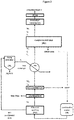
- water stream W 0 is fed to a heat-exchanger (indicated as HE in Figure 1 ) wherein heat is provided by the flow of hot gas (indicated as F i ) which is discharged by a drying apparatus (identified as DR in Figure 1 ).
- HE heat-exchanger
- F i hot gas
- the temperature of water stream W 0 is generally raised in the heat-exchanger from T 0 to T i due to the heat provided by the flow of hot gas.
- water stream W i is used herein to indicate water stream at temperature T i . Temperature T i of water stream W i at the exit of the heat-exchanger and at the inlet of the membrane distillation unit will be selected based on the operating conditions of the process.
- the initial temperature T 0 of water stream W 0 depends on several factors, including its source.
- water stream W 0 is a water stream produced during the filtration step in the precipitated silica manufacturing process, wherein wet precipitated silica is separated from the aqueous reaction medium
- its temperature T 0 may be up to 70°C, even up to 85°C.
- water stream W 0 is a water stream produced by combining the water stream produced during the filtration step, as discussed above, and the water deriving from the one or more washing operations of the wet precipitated silica, the temperature generally does not exceed 50°C, even 40°C.
- temperature To also generally does not exceed 50°C, even 40°C to avoid damaging the ultrafiltration or reverse osmosis membranes.
- the temperature of water stream W 0 is generally of at least 15°C.
- Membrane distillation is a thermally driven process in which separation is enabled due to phase change: a membrane, typically a porous hydrophobic membrane, provides a barrier for the liquid phase but it allows the vapour phase (e.g. water vapour) to pass through the membrane's pores condensing on the other side of the membrane.
- the driving force of the process is given by a partial vapour pressure difference triggered by a temperature difference: the higher the temperature gradient between the two sides of the membrane, the higher the productivity of the membrane distillation process.
- the process typically requires high amounts of thermal energy to maintain the temperature gradient across the membrane: the evaporation of water from one side of the membrane promotes a reduction of the temperature of the water stream which should be at the highest temperature, heat has thus to be constantly provided to this water stream to maintain its temperature.
- the heat required to achieve and maintain the temperature differential across the membrane is provided in a heat-exchanger, as defined above, which is operated using the residual heat discharged by a drying apparatus.
- a heat-exchanger as defined above, which is operated using the residual heat discharged by a drying apparatus.
- Any conventional heat-exchanger can be used for the purpose. More than one heat-exchanger, of the same or different type, can be used depending on the system configuration.
- the drying apparatus can be any conventional dryer which discharges a flow of hot gas which can be used in a heat-exchanger to heat a water stream.
- hot gas is used herein to indicate a gas which has a temperature higher than ambient temperature and in particular higher than 70°C.
- the temperature of the hot gas is preferably of at least 85°C, more preferably of at least 100°C.
- the temperature of the hot gas typically does not exceed 150°C.
- the drying apparatus is a dryer wherein wet precipitated silica is dried to afford precipitated silica.
- Any drying apparatus suitable for the drying of powders may be used, such as a spray dryer, a rotary dryer, a fluid bed dryer and the like. Drying of precipitated silica may, advantageously, be carried out by spray drying.
- any suitable type of spray dryer may be used, such as a turbine spray dryer or a nozzle spray dryer (liquid-pressure or two-fluid nozzle).
- the flow of hot gas discharged from the dryer is at a temperature of at least 90°C, even of at least 100°C.
- the temperature of the hot gas does not exceed 150°C.
- the hot gas is typically composed of air and water vapour.
- water stream W i is fed to the heat-exchanger at a temperature T 0 of from 40 to 80°C and is heated to a temperature T i of from 45 to 85°C.
- the amount of heat provided to water stream W i in the heat-exchanger is such that the temperature differential across the membrane in the membrane distillation unit is of at least 5°C, preferably of at least 10°C.
- water stream W i is fed to the membrane distillation unit.
- the heat exchange may take place within the membrane distillation unit or separately from it.
- a membrane distillation unit generally comprises at least one membrane, typically a porous hydrophobic membrane, which defines a feed side and a permeate side within the membrane distillation unit.
- feed side is used to identify the side of the unit to which the water stream that has to be concentrated is fed whereas the term “permeate side” is used to identify the side of the unit in which the permeating water is collected.
- water stream W i containing Na 2 SO 4 enters the membrane distillation unit on the feed side.
- water stream W i contains Na 2 SO 4 at a concentration C i and has a temperature T i which is greater than the temperature T p at the permeate side of the membrane distillation unit.
- Temperature T i is at least 5°C, preferably at least 10°C, higher than the temperature T p at the permeate side of the membrane distillation unit.
- the trans-membrane temperature difference induces a vapour pressure differential causing a vapour flux from the feed side to the permeate side of the membrane distillation unit.
- Volatile molecules evaporate at the hot liquid-vapour interface, cross the membrane pores in vapour phase from the feed side to the permeate side, and condense at the permeate side of the unit.
- the net effect of the process is an increase in the Na 2 SO 4 concentration on the feed side of the membrane so that water stream W f , exiting the membrane distillation unit, has a Na 2 SO 4 concentration C f higher than C i .
- Water is obtained on the permeate side of the membrane distillation unit. Said water contains very low amount of impurities, if any, and may be used in any process. For instance it can be recycled into any stage of a precipitated silica manufacturing process.
- a temperature differential T i -T p of at least 5°C, preferably of at least 10°C, and even of up to 25°C across the membrane may be used to create a driving force capable of generating considerable vapour flux across the membrane and at the same time a sustainable energy balance.
- the temperature differential T i -T p does not exceed 50°C.
- water stream W i is maintained at a temperature T i which is at least 5°C higher, preferably at least 10°C higher, than temperature T p .
- Water stream W i may conveniently be maintained at a temperature T i which is at most 40°C higher than the temperature T p at the permeate side of the membrane.
- the temperature T p on the permeate side of the membrane is typically between 25°C and 50°C and in any case it is at least 5°C, preferably at least 10°C lower than the temperature T i of water stream W i .
- Non-limiting examples of suitable membrane distillation techniques are:
- the membrane distillation unit used in the inventive process is a direct-contact membrane distillation unit.
- the membrane distillation unit is an air gap membrane distillation unit.
- the membrane distillation unit uses a method whereby vacuum is applied to cause the stream to flow under vacuum or reduced pressure such as a vacuum membrane distillation unit or, preferably, a vacuum multi-effect membrane distillation unit.
- membrane distillation units are made commercially available by Memsys, Aquastill, Aquaver, Solar Spring.
- the membranes typically used in the membrane distillation unit are hydrophobic polymeric membranes.
- Suitable membranes may for instance be made of polymeric material such as polytetrafluoroethylene, polyvinylidenefluoride, ethylene/chlorotrifluoroethylene copolymers, polypropylene, polyethylene.
- the membrane distillation process can be designed to increase the concentration of Na 2 SO 4 in the water stream up to the saturation concentration.
- the concentration C f of Na 2 SO 4 in water stream W f may be the concentration of a saturated solution at the temperature of the water stream at the exit of the membrane distillation unit.
- the concentration C f of Na 2 SO 4 in water stream W f may also be lower than the concentration of a saturated solution at the temperature of the water stream at the exit of the membrane distillation unit but in any event higher than C 0 .
- Na 2 SO 4 may be present in water stream W f at a concentration C f of up to 20.0 wt%, even of up to 25.0 wt%, preferably of up to 32.0 wt%.
- Concentration C f is typically between 25.0 and 32.0 wt%.
- Na 2 SO 4 may be recovered in the form of a solution having concentration C f of Na 2 SO 4 .
- Na 2 SO 4 may be recovered as a solid.
- the inventive process may comprise an additional step of further concentrating water stream W f , e.g. by evaporation, before recovering solid Na 2 SO 4 for instance by means of a crystallization step.
- the inventive process allows recovering Na 2 SO 4 with a high degree of purity, typically a degree of purity of more than 99.0%, even of 99.5%.
- inventive process may comprise further steps.
- water stream W 0 may be subjected to preliminary treatments.
- coagulants include but are not limited to ferric chloride, aluminum oxide, aluminum chloride, aluminum sulfate, polyaluminum chloride, ferrous or ferric sulfate, calcium oxide and mixtures thereof.
- the precipitates can be subsequently removed from the water stream by means known in the art, e.g. in a solid separation unit, prior to further treatment depending on the application.
- the concentration of Na 2 SO 4 in water stream W 0 may be increased before treatment in the membrane distillation unit.
- the concentration C i of Na 2 SO 4 in water stream W i at the inlet of the membrane distillation unit will be greater than the concentration C 0 .
- the value of the concentration C i may be up to 12.0 wt%, even up to 13.0 wt% or even up to 15.0 wt%.
- a nanofiltration unit may be employed to concentrate water stream W 0 .
- Any known type of nanofiltration equipment may be used to increase the concentration of Na 2 SO 4 in water stream Wo, typically polymeric nanofiltration membranes may be employed.
- Known polymeric nanofiltration membranes may be comprised of polyethersulfone (PES), polyacrylonitrile (PAN) or polyvinylidenefluoride (PVDF) with a typical pore diameter of 1 to 10 nm.
- reverse osmosis is used to increase the concentration of Na 2 SO 4 in water stream W 0 .
- Osmosis is the molecular diffusion of solvent across a semi-permeable membrane, which rejects the solute. Osmosis is driven by a chemical potential gradient. This gradient is caused by differences in component concentration, pressure and/or temperature across the membrane. The membrane permeable species (solvent) diffuses from the region of higher activity to a region of lower activity.
- Reverse osmosis uses hydraulic pressure to overcome the osmotic pressure, and thus reverse the flow of the solvent (water) from the solution containing the solute to the other side of the membrane which is at lower concentration. Any known type of reverse osmosis equipment may be used. Use is generally made of semi-permeable membranes, typically made of polyamides.
- Physical chemical treatment and concentration steps may be carried out independently one of the other.
- a physical chemical treatment step is carried out before submitting water stream W 0 to a concentration step.
- Nanofiltration and/or reverse osmosis are generally preferred as a method of concentration of water stream W 0 .
- the use of reverse osmosis is particularly advantageous.
- the optional pre-treatment step has the effect of reducing the amount of suspended and/or dissolved silica as well as Ca and/or Mg ions which may be contained in water stream W 0 .
- the process may comprise the additional step of increasing the concentration of Na 2 SO 4 in water stream W f before separating Na 2 SO 4
- the inventive process may also comprise a step wherein a portion of water stream W f , hereinafter referred to as "W f1 ", is separated from water stream W f and combined with water stream W 0 to improve the efficiency of the membrane distillation process.
- W f1 a portion of water stream W f , hereinafter referred to as "W f1 ", is separated from water stream W f and combined with water stream W 0 to improve the efficiency of the membrane distillation process.
- the process comprises the steps of:
- Water stream W f1 is combined with water stream W 0 before the heat-exchanger.
- Water stream W f1 may have the same, a larger or a smaller volume than water stream W f2 . Generally, water stream W f1 has a larger volume than W f2 .
- water stream W f1 after optional cooling, may be used as a cold stream in the permeate side of the membrane distillation unit.
- a second object of the present invention is a process for the manufacture of precipitated silica which comprises a step for recovering Na 2 SO 4 from a water stream.
- inventive process which combines the use of the flow of hot gas discharged by the drying of precipitated silica with the operation of a membrane distillation unit, allows a reduction in the energy required for the recovery of Na 2 SO 4 from wastewater with respect to prior art processes, such as evaporation crystallization.
- a further object of the invention is a system for carrying out the process according to the first and second object of the invention.
- object of the invention is a system comprising a reactor for the manufacture of precipitated silica, an unit for the filtration and optional washing of precipitated silica, a drying apparatus, a heat exchanger and a membrane distillation unit.
- Figure 1 illustrates an embodiment of a system for carrying out the Na 2 SO 4 recovery process which comprises a water stream W 0 , a heat exchanger HE, a drying apparatus DR and a membrane distillation unit MD.
- Figure 2 and 3 illustrate embodiments of a system for the preparation of precipitated silica which comprises a reactor for the precipitation of silica, a unit for the separation and optional washing of the wet precipitated silica, a drying apparatus DR for the drying of wet precipitated silica, and a system for carrying out the Na 2 SO 4 recovery process.
- Water stream W 0 used in the example was obtained from a precipitated silica manufacturing site. Its composition is provided in Table 1. Table 1 pH 4-5 Na 2 SO 4 4.0-5.5 wt% Suspended solids 100-200 mg/L, mainly SiO 2 Soluble SiO 2 approx. 100 mg/L Ca approx. 60 mg/L Mg approx. 3-5 mg/L
- the membrane distillation unit used in the examples comprised two commercial polypropylene membrane modules from Microdyn-Nadir as described in Table 2.
- Example 3 was carried out on a system additionally comprising a filtration unit.
- Water stream W 0 as received, was submitted to a pre-concentration step by nanofiltration using a membrane: Dow NF270-2540 and under the following conditions: pressure: 35 bar; temperature: 10-20°C; recirculation flowrate: 300 l/h.
- Water stream W 0 was treated in the membrane distillation unit according to three different configurations as summarized in Table 4.
- Feed and permeate recirculation flow rates were kept at 200 l/h and 100 l/h, respectively, throughout the experiments.
- Each cycle in the experiments corresponds to 8 hour periods of operation of the membrane distillation unit.
- W initial concentration of the Na 2 SO 4 in water stream W 0 longer times (i.e. more cycles) were necessary to reach a concentration of Na 2 SO 4 close to saturation.
- Pre-treatment with nanofiltration decreased the time needed to reach the crystallization concentration of Na 2 SO 4 .
- the diagram in Figure 4 illustrates one possible outline of thermal integration of a membrane distillation step in a process for the treatment of an industrial aqueous stream containing sodium sulfate obtained from a precipitated silica manufacturing unit.
- Na 2 SO 4 concentration in the initial wastewater stream is 5.9 wt%.
- This stream is first concentrated by reverse osmosis up to 15 wt% in Na 2 SO 4 .
- Temperature at the outlet of reverse osmosis of the Na 2 SO 4 -containing water stream is 48°C.
- This solution is concentrated up to 28 wt% in Na 2 SO 4 using an air-gap membrane distillation unit.
- the heat required to ensure evaporation is recovered by condensing water vapor from the exhaust of the dryer of the silica production, which needs to be cooled from 106°C down to 70°C.
Landscapes
- Chemical & Material Sciences (AREA)
- Organic Chemistry (AREA)
- Engineering & Computer Science (AREA)
- Inorganic Chemistry (AREA)
- Water Supply & Treatment (AREA)
- Materials Engineering (AREA)
- Chemical Kinetics & Catalysis (AREA)
- Environmental & Geological Engineering (AREA)
- Hydrology & Water Resources (AREA)
- Life Sciences & Earth Sciences (AREA)
- Separation Using Semi-Permeable Membranes (AREA)
- Solid-Sorbent Or Filter-Aiding Compositions (AREA)
- Silicon Compounds (AREA)
Priority Applications (1)
| Application Number | Priority Date | Filing Date | Title |
|---|---|---|---|
| PL16727443T PL3328523T3 (pl) | 2015-07-28 | 2016-06-01 | Sposób odzyskiwania siarczanu sodu |
Applications Claiming Priority (2)
| Application Number | Priority Date | Filing Date | Title |
|---|---|---|---|
| EP15306229 | 2015-07-28 | ||
| PCT/EP2016/062359 WO2017016712A1 (en) | 2015-07-28 | 2016-06-01 | Process for the recovery of sodium sulfate |
Publications (2)
| Publication Number | Publication Date |
|---|---|
| EP3328523A1 EP3328523A1 (en) | 2018-06-06 |
| EP3328523B1 true EP3328523B1 (en) | 2020-05-20 |
Family
ID=54035175
Family Applications (1)
| Application Number | Title | Priority Date | Filing Date |
|---|---|---|---|
| EP16727443.0A Active EP3328523B1 (en) | 2015-07-28 | 2016-06-01 | Process for the recovery of sodium sulfate |
Country Status (8)
| Country | Link |
|---|---|
| US (1) | US10414667B2 (pl) |
| EP (1) | EP3328523B1 (pl) |
| KR (1) | KR20180036983A (pl) |
| CN (1) | CN107921371A (pl) |
| BR (1) | BR112018000959A2 (pl) |
| ES (1) | ES2807272T3 (pl) |
| PL (1) | PL3328523T3 (pl) |
| WO (1) | WO2017016712A1 (pl) |
Families Citing this family (5)
| Publication number | Priority date | Publication date | Assignee | Title |
|---|---|---|---|---|
| CN109205828B (zh) * | 2018-09-06 | 2021-11-19 | 安徽凤阳赛吉元无机材料有限公司 | 一种降低白炭黑生产过程中含硫酸盐废水电导率的方法 |
| WO2020070119A1 (en) * | 2018-10-04 | 2020-04-09 | Rhodia Operations | Process for the manufacture of precipitated silica |
| CN110002510A (zh) * | 2019-03-22 | 2019-07-12 | 烟台金正环保科技有限公司 | 一种钢铁酸洗废水处理的集成工艺 |
| CN113968650A (zh) * | 2020-07-23 | 2022-01-25 | 中国石油化工股份有限公司 | 一种拟薄水铝石生产废水回用的系统和方法 |
| CN114291955B (zh) * | 2022-01-18 | 2022-11-29 | 龙佰集团股份有限公司 | 一种铁系颜料废水和还原钛尾气联合利用的方法 |
Family Cites Families (22)
| Publication number | Priority date | Publication date | Assignee | Title |
|---|---|---|---|---|
| FR2646673B1 (fr) | 1989-05-02 | 1991-09-06 | Rhone Poulenc Chimie | Silice sous forme de bille, procede de preparation et son utilisation au renforcement des elastomeres |
| FR2678259B1 (fr) | 1991-06-26 | 1993-11-05 | Rhone Poulenc Chimie | Nouvelles silices precipitees sous forme de granules ou de poudres, procedes de synthese et utilisation au renforcement des elastomeres. |
| PT670813E (pt) | 1993-09-29 | 2003-07-31 | Rhodia Chimie Sa | Silica precipitada |
| US6169135B1 (en) | 1993-09-29 | 2001-01-02 | Rhone Poulenc Chimie | Precipitated silica |
| FR2710630B1 (fr) | 1993-09-29 | 1995-12-29 | Rhone Poulenc Chimie | Nouvelles silices précipitées, leur procédé de préparation et leur utilisation au renforcement des élastomères. |
| FR2732328B1 (fr) | 1995-03-29 | 1997-06-20 | Rhone Poulenc Chimie | Nouveau procede de preparation de silice precipitee, nouvelles silices precipitees contenant de l'aluminium et leur utilisation au renforcement des elastomeres |
| FR2732329B1 (fr) | 1995-03-29 | 1997-06-20 | Rhone Poulenc Chimie | Nouveau procede de preparation de silice precipitee, nouvelles silices precipitees contenant de l'aluminium et leur utilisation au renforcement des elastomeres |
| US6217840B1 (en) | 1995-12-08 | 2001-04-17 | Goldendale Aluminum Company | Production of fumed silica |
| FR2763581B1 (fr) | 1997-05-26 | 1999-07-23 | Rhodia Chimie Sa | Silice precipitee utilisable comme charge renforcante pour elastomeres |
| US6365051B1 (en) * | 1999-10-12 | 2002-04-02 | Mansour S. Bader | Precipitation-membrane distillation hybrid system for the treatment of aqueous streams |
| FR2818966B1 (fr) | 2000-12-28 | 2003-03-07 | Rhodia Chimie Sa | Procede de preparation de silice precipitee contenant de l'aluminium |
| DK1419106T3 (en) | 2001-08-13 | 2017-01-30 | Rhone Poulenc Chimie | PROCEDURE FOR MANUFACTURING SILICA WITH SPECIFIC PARTICLE SIZE DISTRIBUTION AND / OR POR SIZE DISTRIBUTION |
| US7501065B1 (en) * | 2006-05-08 | 2009-03-10 | Bader Mansour S | Methods for treating agricultural drainage water and the like |
| CN100513312C (zh) * | 2006-12-28 | 2009-07-15 | 山西同德化工股份有限公司 | 从沉淀法二氧化硅生产废水中提取工业无水硫酸钠的方法 |
| JP5602358B2 (ja) * | 2007-11-30 | 2014-10-08 | 日揮触媒化成株式会社 | 非球状シリカゾル、その製造方法および研磨用組成物 |
| FR2928363B1 (fr) | 2008-03-10 | 2012-08-31 | Rhodia Operations | Nouveau procede de preparation de silices precipitees, silices precipitees a morphologie, granulometrie et porosite particulieres et leurs utilisations, notamment pour le renforcement de polymeres |
| CA2769197A1 (en) | 2009-08-05 | 2011-02-10 | The Procter & Gamble Company | Bag-in-box package with integrated cup |
| CN102030441A (zh) * | 2009-09-29 | 2011-04-27 | 天津膜科力科技有限公司 | 一种癸二酸生产废水处理方法 |
| US20110180479A1 (en) * | 2010-01-27 | 2011-07-28 | Milton Roy Company | Zero liquid discharge water treatment system and method |
| FR2957914B1 (fr) | 2010-03-25 | 2015-05-15 | Rhodia Operations | Nouveau procede de preparation de silices precipitees contenant de l'aluminium |
| ES2806136T3 (es) * | 2010-12-15 | 2021-02-16 | Stichting Wageningen Res | Proceso de separación por membrana |
| US8147697B2 (en) * | 2011-07-03 | 2012-04-03 | King Abdulaziz City for Science and Technology (KACST) | Apparatus and process for desalination of brackish water |
-
2016
- 2016-06-01 ES ES16727443T patent/ES2807272T3/es active Active
- 2016-06-01 BR BR112018000959A patent/BR112018000959A2/pt active Search and Examination
- 2016-06-01 KR KR1020187003992A patent/KR20180036983A/ko not_active Withdrawn
- 2016-06-01 US US15/748,528 patent/US10414667B2/en not_active Expired - Fee Related
- 2016-06-01 PL PL16727443T patent/PL3328523T3/pl unknown
- 2016-06-01 EP EP16727443.0A patent/EP3328523B1/en active Active
- 2016-06-01 CN CN201680044123.2A patent/CN107921371A/zh active Pending
- 2016-06-01 WO PCT/EP2016/062359 patent/WO2017016712A1/en not_active Ceased
Non-Patent Citations (1)
| Title |
|---|
| None * |
Also Published As
| Publication number | Publication date |
|---|---|
| BR112018000959A2 (pt) | 2018-09-18 |
| KR20180036983A (ko) | 2018-04-10 |
| PL3328523T3 (pl) | 2020-10-19 |
| US10414667B2 (en) | 2019-09-17 |
| CN107921371A (zh) | 2018-04-17 |
| US20180222758A1 (en) | 2018-08-09 |
| WO2017016712A1 (en) | 2017-02-02 |
| ES2807272T3 (es) | 2021-02-22 |
| EP3328523A1 (en) | 2018-06-06 |
Similar Documents
| Publication | Publication Date | Title |
|---|---|---|
| CN104843927B (zh) | 脱硫废水零排放工艺及系统 | |
| EP3328523B1 (en) | Process for the recovery of sodium sulfate | |
| US7459088B2 (en) | Water desalination process and apparatus | |
| CN102329036B (zh) | 余热利用高效含盐废水零排放回收处理方法 | |
| CN114380441B (zh) | 从pta尾气处理废液中回收溴元素及钠元素的方法及装置 | |
| CN105016541B (zh) | 一种高盐废水中盐的分离及回收方法 | |
| US20150232348A1 (en) | Water desalination and brine volume reduction process | |
| CN204675945U (zh) | 脱硫废水零排放系统 | |
| CN206142985U (zh) | 一种高含盐工业废水零排放的处理系统 | |
| WO2017181696A1 (zh) | 一种含氯化钠与硫酸钠的高盐废水资源化处理方法 | |
| US8491795B2 (en) | Conversion of seawater to drinking water at room temperature | |
| Hassan et al. | Review and assessment of the newly developed MD for desalination processes | |
| CN111960591A (zh) | 一种pta氧化尾气洗涤废水的回收利用方法 | |
| CN103508602A (zh) | 一种膜与蒸发结晶集成的高盐度工业废水零排放的工艺 | |
| CN203878018U (zh) | 一种脱硫废水循环利用及零排放系统 | |
| CN117202974A (zh) | 从液体流的锂回收 | |
| CN202131179U (zh) | 水回收系统 | |
| CN101564649A (zh) | 一种压气膜蒸馏装置与方法 | |
| CN104724729A (zh) | 氢氧化锂的生产工艺 | |
| CN213977333U (zh) | 一种锅炉脱硫废水零排放处理系统 | |
| JP2018502710A (ja) | ソーラー駆動浸透水浄化の方法およびシステム | |
| CN114195304A (zh) | 一种煤化工高盐废水的分质分盐处理装置和处理方法 | |
| JP4273203B2 (ja) | 高純度塩化ナトリウムの製造方法 | |
| CN112607828A (zh) | 一种降低浓缩液中一价离子浓度的系统和方法 | |
| JP2013123673A (ja) | フッ酸排水の処理方法 |
Legal Events
| Date | Code | Title | Description |
|---|---|---|---|
| STAA | Information on the status of an ep patent application or granted ep patent |
Free format text: STATUS: THE INTERNATIONAL PUBLICATION HAS BEEN MADE |
|
| PUAI | Public reference made under article 153(3) epc to a published international application that has entered the european phase |
Free format text: ORIGINAL CODE: 0009012 |
|
| STAA | Information on the status of an ep patent application or granted ep patent |
Free format text: STATUS: REQUEST FOR EXAMINATION WAS MADE |
|
| 17P | Request for examination filed |
Effective date: 20180228 |
|
| AK | Designated contracting states |
Kind code of ref document: A1 Designated state(s): AL AT BE BG CH CY CZ DE DK EE ES FI FR GB GR HR HU IE IS IT LI LT LU LV MC MK MT NL NO PL PT RO RS SE SI SK SM TR |
|
| AX | Request for extension of the european patent |
Extension state: BA ME |
|
| DAV | Request for validation of the european patent (deleted) | ||
| DAX | Request for extension of the european patent (deleted) | ||
| STAA | Information on the status of an ep patent application or granted ep patent |
Free format text: STATUS: EXAMINATION IS IN PROGRESS |
|
| 17Q | First examination report despatched |
Effective date: 20190301 |
|
| GRAP | Despatch of communication of intention to grant a patent |
Free format text: ORIGINAL CODE: EPIDOSNIGR1 |
|
| STAA | Information on the status of an ep patent application or granted ep patent |
Free format text: STATUS: GRANT OF PATENT IS INTENDED |
|
| INTG | Intention to grant announced |
Effective date: 20200103 |
|
| GRAS | Grant fee paid |
Free format text: ORIGINAL CODE: EPIDOSNIGR3 |
|
| GRAA | (expected) grant |
Free format text: ORIGINAL CODE: 0009210 |
|
| STAA | Information on the status of an ep patent application or granted ep patent |
Free format text: STATUS: THE PATENT HAS BEEN GRANTED |
|
| AK | Designated contracting states |
Kind code of ref document: B1 Designated state(s): AL AT BE BG CH CY CZ DE DK EE ES FI FR GB GR HR HU IE IS IT LI LT LU LV MC MK MT NL NO PL PT RO RS SE SI SK SM TR |
|
| REG | Reference to a national code |
Ref country code: GB Ref legal event code: FG4D |
|
| REG | Reference to a national code |
Ref country code: CH Ref legal event code: EP |
|
| REG | Reference to a national code |
Ref country code: DE Ref legal event code: R096 Ref document number: 602016036723 Country of ref document: DE |
|
| REG | Reference to a national code |
Ref country code: AT Ref legal event code: REF Ref document number: 1272241 Country of ref document: AT Kind code of ref document: T Effective date: 20200615 |
|
| RAP2 | Party data changed (patent owner data changed or rights of a patent transferred) |
Owner name: RHODIA OPERATIONS |
|
| REG | Reference to a national code |
Ref country code: NL Ref legal event code: FP |
|
| REG | Reference to a national code |
Ref country code: LT Ref legal event code: MG4D |
|
| PG25 | Lapsed in a contracting state [announced via postgrant information from national office to epo] |
Ref country code: NO Free format text: LAPSE BECAUSE OF FAILURE TO SUBMIT A TRANSLATION OF THE DESCRIPTION OR TO PAY THE FEE WITHIN THE PRESCRIBED TIME-LIMIT Effective date: 20200820 Ref country code: GR Free format text: LAPSE BECAUSE OF FAILURE TO SUBMIT A TRANSLATION OF THE DESCRIPTION OR TO PAY THE FEE WITHIN THE PRESCRIBED TIME-LIMIT Effective date: 20200821 Ref country code: FI Free format text: LAPSE BECAUSE OF FAILURE TO SUBMIT A TRANSLATION OF THE DESCRIPTION OR TO PAY THE FEE WITHIN THE PRESCRIBED TIME-LIMIT Effective date: 20200520 Ref country code: PT Free format text: LAPSE BECAUSE OF FAILURE TO SUBMIT A TRANSLATION OF THE DESCRIPTION OR TO PAY THE FEE WITHIN THE PRESCRIBED TIME-LIMIT Effective date: 20200921 Ref country code: SE Free format text: LAPSE BECAUSE OF FAILURE TO SUBMIT A TRANSLATION OF THE DESCRIPTION OR TO PAY THE FEE WITHIN THE PRESCRIBED TIME-LIMIT Effective date: 20200520 Ref country code: IS Free format text: LAPSE BECAUSE OF FAILURE TO SUBMIT A TRANSLATION OF THE DESCRIPTION OR TO PAY THE FEE WITHIN THE PRESCRIBED TIME-LIMIT Effective date: 20200920 Ref country code: LT Free format text: LAPSE BECAUSE OF FAILURE TO SUBMIT A TRANSLATION OF THE DESCRIPTION OR TO PAY THE FEE WITHIN THE PRESCRIBED TIME-LIMIT Effective date: 20200520 |
|
| PG25 | Lapsed in a contracting state [announced via postgrant information from national office to epo] |
Ref country code: BG Free format text: LAPSE BECAUSE OF FAILURE TO SUBMIT A TRANSLATION OF THE DESCRIPTION OR TO PAY THE FEE WITHIN THE PRESCRIBED TIME-LIMIT Effective date: 20200820 Ref country code: HR Free format text: LAPSE BECAUSE OF FAILURE TO SUBMIT A TRANSLATION OF THE DESCRIPTION OR TO PAY THE FEE WITHIN THE PRESCRIBED TIME-LIMIT Effective date: 20200520 Ref country code: RS Free format text: LAPSE BECAUSE OF FAILURE TO SUBMIT A TRANSLATION OF THE DESCRIPTION OR TO PAY THE FEE WITHIN THE PRESCRIBED TIME-LIMIT Effective date: 20200520 Ref country code: LV Free format text: LAPSE BECAUSE OF FAILURE TO SUBMIT A TRANSLATION OF THE DESCRIPTION OR TO PAY THE FEE WITHIN THE PRESCRIBED TIME-LIMIT Effective date: 20200520 |
|
| REG | Reference to a national code |
Ref country code: AT Ref legal event code: MK05 Ref document number: 1272241 Country of ref document: AT Kind code of ref document: T Effective date: 20200520 |
|
| PG25 | Lapsed in a contracting state [announced via postgrant information from national office to epo] |
Ref country code: AL Free format text: LAPSE BECAUSE OF FAILURE TO SUBMIT A TRANSLATION OF THE DESCRIPTION OR TO PAY THE FEE WITHIN THE PRESCRIBED TIME-LIMIT Effective date: 20200520 |
|
| PG25 | Lapsed in a contracting state [announced via postgrant information from national office to epo] |
Ref country code: AT Free format text: LAPSE BECAUSE OF FAILURE TO SUBMIT A TRANSLATION OF THE DESCRIPTION OR TO PAY THE FEE WITHIN THE PRESCRIBED TIME-LIMIT Effective date: 20200520 Ref country code: DK Free format text: LAPSE BECAUSE OF FAILURE TO SUBMIT A TRANSLATION OF THE DESCRIPTION OR TO PAY THE FEE WITHIN THE PRESCRIBED TIME-LIMIT Effective date: 20200520 Ref country code: IT Free format text: LAPSE BECAUSE OF FAILURE TO SUBMIT A TRANSLATION OF THE DESCRIPTION OR TO PAY THE FEE WITHIN THE PRESCRIBED TIME-LIMIT Effective date: 20200520 Ref country code: EE Free format text: LAPSE BECAUSE OF FAILURE TO SUBMIT A TRANSLATION OF THE DESCRIPTION OR TO PAY THE FEE WITHIN THE PRESCRIBED TIME-LIMIT Effective date: 20200520 Ref country code: SM Free format text: LAPSE BECAUSE OF FAILURE TO SUBMIT A TRANSLATION OF THE DESCRIPTION OR TO PAY THE FEE WITHIN THE PRESCRIBED TIME-LIMIT Effective date: 20200520 Ref country code: RO Free format text: LAPSE BECAUSE OF FAILURE TO SUBMIT A TRANSLATION OF THE DESCRIPTION OR TO PAY THE FEE WITHIN THE PRESCRIBED TIME-LIMIT Effective date: 20200520 Ref country code: CZ Free format text: LAPSE BECAUSE OF FAILURE TO SUBMIT A TRANSLATION OF THE DESCRIPTION OR TO PAY THE FEE WITHIN THE PRESCRIBED TIME-LIMIT Effective date: 20200520 |
|
| REG | Reference to a national code |
Ref country code: CH Ref legal event code: PL |
|
| REG | Reference to a national code |
Ref country code: ES Ref legal event code: FG2A Ref document number: 2807272 Country of ref document: ES Kind code of ref document: T3 Effective date: 20210222 |
|
| REG | Reference to a national code |
Ref country code: DE Ref legal event code: R097 Ref document number: 602016036723 Country of ref document: DE |
|
| PG25 | Lapsed in a contracting state [announced via postgrant information from national office to epo] |
Ref country code: MC Free format text: LAPSE BECAUSE OF FAILURE TO SUBMIT A TRANSLATION OF THE DESCRIPTION OR TO PAY THE FEE WITHIN THE PRESCRIBED TIME-LIMIT Effective date: 20200520 Ref country code: SK Free format text: LAPSE BECAUSE OF FAILURE TO SUBMIT A TRANSLATION OF THE DESCRIPTION OR TO PAY THE FEE WITHIN THE PRESCRIBED TIME-LIMIT Effective date: 20200520 |
|
| PLBE | No opposition filed within time limit |
Free format text: ORIGINAL CODE: 0009261 |
|
| STAA | Information on the status of an ep patent application or granted ep patent |
Free format text: STATUS: NO OPPOSITION FILED WITHIN TIME LIMIT |
|
| PG25 | Lapsed in a contracting state [announced via postgrant information from national office to epo] |
Ref country code: LU Free format text: LAPSE BECAUSE OF NON-PAYMENT OF DUE FEES Effective date: 20200601 |
|
| REG | Reference to a national code |
Ref country code: BE Ref legal event code: MM Effective date: 20200630 |
|
| 26N | No opposition filed |
Effective date: 20210223 |
|
| GBPC | Gb: european patent ceased through non-payment of renewal fee |
Effective date: 20200820 |
|
| PG25 | Lapsed in a contracting state [announced via postgrant information from national office to epo] |
Ref country code: IE Free format text: LAPSE BECAUSE OF NON-PAYMENT OF DUE FEES Effective date: 20200601 Ref country code: CH Free format text: LAPSE BECAUSE OF NON-PAYMENT OF DUE FEES Effective date: 20200630 Ref country code: LI Free format text: LAPSE BECAUSE OF NON-PAYMENT OF DUE FEES Effective date: 20200630 |
|
| PG25 | Lapsed in a contracting state [announced via postgrant information from national office to epo] |
Ref country code: BE Free format text: LAPSE BECAUSE OF NON-PAYMENT OF DUE FEES Effective date: 20200630 Ref country code: SI Free format text: LAPSE BECAUSE OF FAILURE TO SUBMIT A TRANSLATION OF THE DESCRIPTION OR TO PAY THE FEE WITHIN THE PRESCRIBED TIME-LIMIT Effective date: 20200520 |
|
| PGFP | Annual fee paid to national office [announced via postgrant information from national office to epo] |
Ref country code: FR Payment date: 20210513 Year of fee payment: 6 Ref country code: NL Payment date: 20210512 Year of fee payment: 6 Ref country code: DE Payment date: 20210505 Year of fee payment: 6 |
|
| PG25 | Lapsed in a contracting state [announced via postgrant information from national office to epo] |
Ref country code: GB Free format text: LAPSE BECAUSE OF NON-PAYMENT OF DUE FEES Effective date: 20200820 |
|
| PGFP | Annual fee paid to national office [announced via postgrant information from national office to epo] |
Ref country code: PL Payment date: 20210512 Year of fee payment: 6 Ref country code: TR Payment date: 20210527 Year of fee payment: 6 |
|
| PGFP | Annual fee paid to national office [announced via postgrant information from national office to epo] |
Ref country code: ES Payment date: 20210705 Year of fee payment: 6 |
|
| PG25 | Lapsed in a contracting state [announced via postgrant information from national office to epo] |
Ref country code: MT Free format text: LAPSE BECAUSE OF FAILURE TO SUBMIT A TRANSLATION OF THE DESCRIPTION OR TO PAY THE FEE WITHIN THE PRESCRIBED TIME-LIMIT Effective date: 20200520 Ref country code: CY Free format text: LAPSE BECAUSE OF FAILURE TO SUBMIT A TRANSLATION OF THE DESCRIPTION OR TO PAY THE FEE WITHIN THE PRESCRIBED TIME-LIMIT Effective date: 20200520 |
|
| PG25 | Lapsed in a contracting state [announced via postgrant information from national office to epo] |
Ref country code: MK Free format text: LAPSE BECAUSE OF FAILURE TO SUBMIT A TRANSLATION OF THE DESCRIPTION OR TO PAY THE FEE WITHIN THE PRESCRIBED TIME-LIMIT Effective date: 20200520 |
|
| REG | Reference to a national code |
Ref country code: DE Ref legal event code: R119 Ref document number: 602016036723 Country of ref document: DE |
|
| REG | Reference to a national code |
Ref country code: NL Ref legal event code: MM Effective date: 20220701 |
|
| PG25 | Lapsed in a contracting state [announced via postgrant information from national office to epo] |
Ref country code: NL Free format text: LAPSE BECAUSE OF NON-PAYMENT OF DUE FEES Effective date: 20220701 |
|
| PG25 | Lapsed in a contracting state [announced via postgrant information from national office to epo] |
Ref country code: FR Free format text: LAPSE BECAUSE OF NON-PAYMENT OF DUE FEES Effective date: 20220630 |
|
| PG25 | Lapsed in a contracting state [announced via postgrant information from national office to epo] |
Ref country code: DE Free format text: LAPSE BECAUSE OF NON-PAYMENT OF DUE FEES Effective date: 20230103 |
|
| REG | Reference to a national code |
Ref country code: ES Ref legal event code: FD2A Effective date: 20230726 |
|
| PG25 | Lapsed in a contracting state [announced via postgrant information from national office to epo] |
Ref country code: PL Free format text: LAPSE BECAUSE OF NON-PAYMENT OF DUE FEES Effective date: 20220601 |
|
| PG25 | Lapsed in a contracting state [announced via postgrant information from national office to epo] |
Ref country code: ES Free format text: LAPSE BECAUSE OF NON-PAYMENT OF DUE FEES Effective date: 20220602 |
|
| PG25 | Lapsed in a contracting state [announced via postgrant information from national office to epo] |
Ref country code: TR Free format text: LAPSE BECAUSE OF NON-PAYMENT OF DUE FEES Effective date: 20220601 |