EP3327770B1 - Heat sink connector pin and assembly - Google Patents
Heat sink connector pin and assembly Download PDFInfo
- Publication number
- EP3327770B1 EP3327770B1 EP16204147.9A EP16204147A EP3327770B1 EP 3327770 B1 EP3327770 B1 EP 3327770B1 EP 16204147 A EP16204147 A EP 16204147A EP 3327770 B1 EP3327770 B1 EP 3327770B1
- Authority
- EP
- European Patent Office
- Prior art keywords
- substrate
- heat sink
- fingers
- pin
- sleeve
- Prior art date
- Legal status (The legal status is an assumption and is not a legal conclusion. Google has not performed a legal analysis and makes no representation as to the accuracy of the status listed.)
- Active
Links
- 239000000758 substrate Substances 0.000 claims description 98
- 238000003780 insertion Methods 0.000 claims description 13
- 230000037431 insertion Effects 0.000 claims description 13
- 230000004044 response Effects 0.000 claims description 5
- 230000006835 compression Effects 0.000 description 6
- 238000007906 compression Methods 0.000 description 6
- 230000007246 mechanism Effects 0.000 description 5
- 230000009471 action Effects 0.000 description 4
- 238000009434 installation Methods 0.000 description 4
- 230000008901 benefit Effects 0.000 description 3
- 238000010521 absorption reaction Methods 0.000 description 2
- 239000000463 material Substances 0.000 description 2
- 230000009467 reduction Effects 0.000 description 2
- 235000013290 Sagittaria latifolia Nutrition 0.000 description 1
- 235000015246 common arrowhead Nutrition 0.000 description 1
- 230000008878 coupling Effects 0.000 description 1
- 238000010168 coupling process Methods 0.000 description 1
- 238000005859 coupling reaction Methods 0.000 description 1
- 230000000694 effects Effects 0.000 description 1
- 239000003292 glue Substances 0.000 description 1
- 230000014759 maintenance of location Effects 0.000 description 1
- 239000002184 metal Substances 0.000 description 1
- 238000012986 modification Methods 0.000 description 1
- 230000004048 modification Effects 0.000 description 1
- 230000035939 shock Effects 0.000 description 1
- 230000000007 visual effect Effects 0.000 description 1
Images


Classifications
-
- H—ELECTRICITY
- H01—ELECTRIC ELEMENTS
- H01L—SEMICONDUCTOR DEVICES NOT COVERED BY CLASS H10
- H01L23/00—Details of semiconductor or other solid state devices
- H01L23/34—Arrangements for cooling, heating, ventilating or temperature compensation ; Temperature sensing arrangements
- H01L23/40—Mountings or securing means for detachable cooling or heating arrangements ; fixed by friction, plugs or springs
-
- H—ELECTRICITY
- H05—ELECTRIC TECHNIQUES NOT OTHERWISE PROVIDED FOR
- H05K—PRINTED CIRCUITS; CASINGS OR CONSTRUCTIONAL DETAILS OF ELECTRIC APPARATUS; MANUFACTURE OF ASSEMBLAGES OF ELECTRICAL COMPONENTS
- H05K7/00—Constructional details common to different types of electric apparatus
- H05K7/20—Modifications to facilitate cooling, ventilating, or heating
- H05K7/2039—Modifications to facilitate cooling, ventilating, or heating characterised by the heat transfer by conduction from the heat generating element to a dissipating body
- H05K7/20436—Inner thermal coupling elements in heat dissipating housings, e.g. protrusions or depressions integrally formed in the housing
- H05K7/2049—Pressing means used to urge contact, e.g. springs
-
- F—MECHANICAL ENGINEERING; LIGHTING; HEATING; WEAPONS; BLASTING
- F16—ENGINEERING ELEMENTS AND UNITS; GENERAL MEASURES FOR PRODUCING AND MAINTAINING EFFECTIVE FUNCTIONING OF MACHINES OR INSTALLATIONS; THERMAL INSULATION IN GENERAL
- F16B—DEVICES FOR FASTENING OR SECURING CONSTRUCTIONAL ELEMENTS OR MACHINE PARTS TOGETHER, e.g. NAILS, BOLTS, CIRCLIPS, CLAMPS, CLIPS OR WEDGES; JOINTS OR JOINTING
- F16B19/00—Bolts without screw-thread; Pins, including deformable elements; Rivets
- F16B19/04—Rivets; Spigots or the like fastened by riveting
- F16B19/08—Hollow rivets; Multi-part rivets
- F16B19/10—Hollow rivets; Multi-part rivets fastened by expanding mechanically
- F16B19/1027—Multi-part rivets
- F16B19/1036—Blind rivets
- F16B19/109—Temporary rivets, e.g. with a spring-loaded pin
-
- F—MECHANICAL ENGINEERING; LIGHTING; HEATING; WEAPONS; BLASTING
- F16—ENGINEERING ELEMENTS AND UNITS; GENERAL MEASURES FOR PRODUCING AND MAINTAINING EFFECTIVE FUNCTIONING OF MACHINES OR INSTALLATIONS; THERMAL INSULATION IN GENERAL
- F16B—DEVICES FOR FASTENING OR SECURING CONSTRUCTIONAL ELEMENTS OR MACHINE PARTS TOGETHER, e.g. NAILS, BOLTS, CIRCLIPS, CLAMPS, CLIPS OR WEDGES; JOINTS OR JOINTING
- F16B5/00—Joining sheets or plates, e.g. panels, to one another or to strips or bars parallel to them
- F16B5/02—Joining sheets or plates, e.g. panels, to one another or to strips or bars parallel to them by means of fastening members using screw-thread
- F16B5/0266—Joining sheets or plates, e.g. panels, to one another or to strips or bars parallel to them by means of fastening members using screw-thread using springs
-
- H—ELECTRICITY
- H01—ELECTRIC ELEMENTS
- H01L—SEMICONDUCTOR DEVICES NOT COVERED BY CLASS H10
- H01L23/00—Details of semiconductor or other solid state devices
- H01L23/34—Arrangements for cooling, heating, ventilating or temperature compensation ; Temperature sensing arrangements
- H01L23/36—Selection of materials, or shaping, to facilitate cooling or heating, e.g. heatsinks
- H01L23/367—Cooling facilitated by shape of device
- H01L23/3672—Foil-like cooling fins or heat sinks
-
- H—ELECTRICITY
- H01—ELECTRIC ELEMENTS
- H01L—SEMICONDUCTOR DEVICES NOT COVERED BY CLASS H10
- H01L23/00—Details of semiconductor or other solid state devices
- H01L23/34—Arrangements for cooling, heating, ventilating or temperature compensation ; Temperature sensing arrangements
- H01L23/36—Selection of materials, or shaping, to facilitate cooling or heating, e.g. heatsinks
- H01L23/367—Cooling facilitated by shape of device
- H01L23/3675—Cooling facilitated by shape of device characterised by the shape of the housing
-
- H—ELECTRICITY
- H01—ELECTRIC ELEMENTS
- H01L—SEMICONDUCTOR DEVICES NOT COVERED BY CLASS H10
- H01L23/00—Details of semiconductor or other solid state devices
- H01L23/34—Arrangements for cooling, heating, ventilating or temperature compensation ; Temperature sensing arrangements
- H01L23/40—Mountings or securing means for detachable cooling or heating arrangements ; fixed by friction, plugs or springs
- H01L23/4093—Snap-on arrangements, e.g. clips
-
- H—ELECTRICITY
- H05—ELECTRIC TECHNIQUES NOT OTHERWISE PROVIDED FOR
- H05K—PRINTED CIRCUITS; CASINGS OR CONSTRUCTIONAL DETAILS OF ELECTRIC APPARATUS; MANUFACTURE OF ASSEMBLAGES OF ELECTRICAL COMPONENTS
- H05K1/00—Printed circuits
- H05K1/02—Details
- H05K1/0201—Thermal arrangements, e.g. for cooling, heating or preventing overheating
- H05K1/0203—Cooling of mounted components
-
- H—ELECTRICITY
- H05—ELECTRIC TECHNIQUES NOT OTHERWISE PROVIDED FOR
- H05K—PRINTED CIRCUITS; CASINGS OR CONSTRUCTIONAL DETAILS OF ELECTRIC APPARATUS; MANUFACTURE OF ASSEMBLAGES OF ELECTRICAL COMPONENTS
- H05K7/00—Constructional details common to different types of electric apparatus
- H05K7/20—Modifications to facilitate cooling, ventilating, or heating
- H05K7/20009—Modifications to facilitate cooling, ventilating, or heating using a gaseous coolant in electronic enclosures
- H05K7/20136—Forced ventilation, e.g. by fans
- H05K7/20154—Heat dissipaters coupled to components
-
- F—MECHANICAL ENGINEERING; LIGHTING; HEATING; WEAPONS; BLASTING
- F16—ENGINEERING ELEMENTS AND UNITS; GENERAL MEASURES FOR PRODUCING AND MAINTAINING EFFECTIVE FUNCTIONING OF MACHINES OR INSTALLATIONS; THERMAL INSULATION IN GENERAL
- F16B—DEVICES FOR FASTENING OR SECURING CONSTRUCTIONAL ELEMENTS OR MACHINE PARTS TOGETHER, e.g. NAILS, BOLTS, CIRCLIPS, CLAMPS, CLIPS OR WEDGES; JOINTS OR JOINTING
- F16B21/00—Means for preventing relative axial movement of a pin, spigot, shaft or the like and a member surrounding it; Stud-and-socket releasable fastenings
- F16B21/10—Means for preventing relative axial movement of a pin, spigot, shaft or the like and a member surrounding it; Stud-and-socket releasable fastenings by separate parts
- F16B21/12—Means for preventing relative axial movement of a pin, spigot, shaft or the like and a member surrounding it; Stud-and-socket releasable fastenings by separate parts with locking-pins or split-pins thrust into holes
-
- H—ELECTRICITY
- H01—ELECTRIC ELEMENTS
- H01L—SEMICONDUCTOR DEVICES NOT COVERED BY CLASS H10
- H01L23/00—Details of semiconductor or other solid state devices
- H01L23/34—Arrangements for cooling, heating, ventilating or temperature compensation ; Temperature sensing arrangements
- H01L23/40—Mountings or securing means for detachable cooling or heating arrangements ; fixed by friction, plugs or springs
- H01L23/4006—Mountings or securing means for detachable cooling or heating arrangements ; fixed by friction, plugs or springs with bolts or screws
-
- H—ELECTRICITY
- H05—ELECTRIC TECHNIQUES NOT OTHERWISE PROVIDED FOR
- H05K—PRINTED CIRCUITS; CASINGS OR CONSTRUCTIONAL DETAILS OF ELECTRIC APPARATUS; MANUFACTURE OF ASSEMBLAGES OF ELECTRICAL COMPONENTS
- H05K2201/00—Indexing scheme relating to printed circuits covered by H05K1/00
- H05K2201/06—Thermal details
- H05K2201/066—Heatsink mounted on the surface of the printed circuit board [PCB]
-
- H—ELECTRICITY
- H05—ELECTRIC TECHNIQUES NOT OTHERWISE PROVIDED FOR
- H05K—PRINTED CIRCUITS; CASINGS OR CONSTRUCTIONAL DETAILS OF ELECTRIC APPARATUS; MANUFACTURE OF ASSEMBLAGES OF ELECTRICAL COMPONENTS
- H05K2201/00—Indexing scheme relating to printed circuits covered by H05K1/00
- H05K2201/09—Shape and layout
- H05K2201/09009—Substrate related
- H05K2201/09063—Holes or slots in insulating substrate not used for electrical connections
Definitions
- the disclosure relates to pins that are used to attach heat sinks to substrates that support heat dissipating devices such as microprocessors, memory or other electronic circuits.
- Electronic devices such as microprocessors, graphics processors, accelerated processing units or other electronic circuits may dissipate large amounts of heat when operating.
- the electronic devices are sometimes placed in sockets which are then soldered to substrates such as circuit boards.
- Heat sinks are then placed in thermal contact with outer surfaces of the device (such as the outer surface of the package) to draw heat away from the electronic device.
- Fans may also be employed as well in an attempt to keep the heat dissipating device cool.
- Heat sink attachment pins also referred to as connector pins are often used to attach the heat sink to the substrate when it is placed on top of or under the electronic device.
- Some heat sink connector pins include push pin designs that are effectively two piece designs that use a rod that is pushed through a hole down the center of the pin to push finger like push mechanisms in the through-hole of the substrate to mechanically engage with the interior of the through-hole.
- the separate locking rod or pin holds open the push fingers which form an engagement with the interior of the through-hole of the substrate. Push pins however can be manually intensive to insert and can be difficult to remove.
- Other designs may include single pieces of plastic that have a pin head and angled tip (arrow head) with barbs along with a spring placed around a shaft of the pin in an effort to provide downward force to keep the heat sink pressed against the electronic device.
- the angled tip is forced into the through-hole causing deformation of the tip and the barb is forced through the hole.
- the barb then expands after being forced through the through-hole and the pin is then fixedly engaged in the hole.
- Such designs can require unnecessary amounts of force to insert the pin and are also typically not removable. Problems also arise where the electronic device is fragile and forcing the angled tip through the hole of the substrate can unnecessarily cause damage to the electronic device and substrate. Also, to remove some pins, both the top and underside of the substrate have to be made accessible as such a machine or dissembler has to have access to both the top of the substrate and the bottom of the substrate.
- US 2011/194257 discloses a fixing device for fixing a first element to a second element, and a heat sink assembly using the fixing device.
- a heat sink connector pin includes a pin assembly with linkage that provides the movement of a pin head or cap in a downward movement to cause multiple movable fingers at an opposing end of the pin to move from a retracted position that allows insertion of the heat sink connector pin through an opening in the substrate, such as a through-hole, to mechanically move to an outward extended position so that the multiple fingers engage or grasp a bottom surface of the substrate.
- the pin head is rotatable in a twisting action to cause downward movement of a shaft structure to cause the fingers to move in an outward extended position to grasp the bottom surface of the substrate such as an integrated circuit socket or printed circuit board or any other suitable substrate.
- any suitable force action may be employed other than a rotational or twisting motion that causes the shaft of the pin assembly to move in a downward motion to cause the fingers to move to a position to engage the bottom surface of the substrate.
- the heat sink connector pin may allow easier visual indication as to whether or not the pin is secured to the substrate and may only require access to a top surface of the substrate when inserting and removing the heat sink connector pin from a heat sink assembly.
- a heat sink connector pin for attaching a heatsink to a top surface of a substrate and in thermal contact with a heat generating device, includes a pin assembly having a pin head at a fist end and a plurality of moveable fingers at a second end.
- a shaft structure is operably engaged to the moveable fingers and to the pin head.
- the shaft structure is configured for downward movement, via rotational movement of pin head, pressing down on the pin head or any other suitable action causing downward movement of the shaft structure.
- the plurality of moveable fingers are configured to be in a retracted position that allows insertion of the second end through an opening in the substrate without deforming the plurality of movable fingers.
- the fingers are also configured to mechanically move outward to an extended position in a manner that positions the plurality of fingers to contact a bottom surface of the substrate, in response to downward movement of the shaft structure.
- the moveable fingers have a substrate engagement surface adapted to engage a bottom surface of the substrate when in the outward extended position.
- the pin assembly includes a sleeve adapted to receive the shaft structure and is adapted to engage with the pin head.
- the sleeve includes a substrate stop surface adapted to contact a top surface of the substrate during insertion of the second end through the substrate opening.
- the sleeve includes a threaded portion and the pin head includes a corresponding threaded portion adapted to engage with the threaded portion of the sleeve.
- the sleeve includes a finger guide portion adapted to receive the plurality of fingers.
- the finger guide portion includes finger slots configured to guide the plurality of moveable fingers when moving from the retracted position to the outwardly extended position.
- the finger guide includes a finger engagement surface configured to contact a heel portion of a finger.
- the heat sink connector pin includes a spring configured around the sleeve.
- a heat sink assembly includes the substrate that supports a heat generating device, the substrate defining at least one two through-holes.
- the heat sink assembly includes a heat sink in thermal contact with the heat generating device and a heat sink connector pin engaged with the heat sink and inserted through the through-hole of the substrate.
- the heat sink connector pin configured to affix the heat sink to the substrate.
- the heat sink connector pin being of a type set forth above.
- the heat sink connector pin includes a pin assembly having a pin head at a fist end and a plurality of moveable fingers at a second end.
- a shaft structure is operably engaged to the moveable fingers and to the pin head.
- the shaft structure is configured for downward movement, via rotational movement of pin head, pressing down on the pin head or any other suitable action causing downward movement of the shaft structure.
- the plurality of moveable fingers are configured to be in a retracted position that allows insertion of the second end through an opening in the substrate without deforming the plurality of movable fingers.
- the fingers are also configured to mechanically move in an outward extended position in response to downward movement of the shaft structure that configures the fingers to contact a bottom surface of the substrate.
- the moveable fingers have a substrate engagement surface adapted to engage the bottom surface of the substrate when in the outward extended position.
- the pin assembly includes a sleeve adapted to receive the shaft structure and is adapted to engage with the pin head.
- the sleeve includes a substrate stop surface adapted to contact a top surface of the substrate during insertion of the second end through the substrate opening.
- sleeve in another example, includes a heat sink stop surface and a substrate stop surface, the substrate stop surface adapted to contact a top surface of the substrate during insertion of the second end through the substrate opening, and wherein each of the plurality of the movable fingers includes a substrate engagement surface adapted to engage a bottom surface of the substrate when in the outward extended position.
- two or more fingers serve as substrate bottom grips when they are extended in an outward position.
- Another surface of the pin assembly serves as a top side substrate stop surface so that a sleeve of the pin assembly does not pass through the through-hole and the movable fingers pass through in a retracted position and extend outwardly after passing through the opening in the substrate.
- a compression spring is used that provides downward pressure pushing the heat sink against the heat dissipating device and enhances shock absorption.
- the pin head is configured for a quarter turn or half turn causing the shaft to move in a downward position to cause the plurality of fingers to engage with the bottom of the substrate.
- the pin head has a shape so that the user can determine whether a heat sink connector pin is properly installed.
- a compression spring is employed, rotating or turning the pin head causes the compression of the spring which can further cause an upward force to be applied by the outwardly extended fingers, however any suitable structure may be employed.
- FIG. 1 is a cross sectional view illustrating one example of a heat sink connector pin 100 that is being inserted through an opening 102 of a substrate 104 such as a printed circuit board, chip carrier, or any other suitable substrate.
- a heat sink see FIG. 5
- a heat sink coupling portion 106 that engages with an arm of a heat sink is employed however, such a portion may not be necessary depending upon the design of the heat sink. For example, there would be no need if the heat sink does not include attachment arms and instead includes through-holes through another portion of the heat sink.
- the heat sink connector pin 100 in this example is configured as a pin assembly that includes a pin head 108 at a first end of the pin assembly and a plurality of movable fingers 110a-110n that are located at a second end of the pin assembly.
- a shaft structure 112 is engaged to the movable fingers and to the pin head for downward movement shown by arrow 114 as the pin head 108 moves downward. Movement of the pin head in a vertical or downward motion toward the substrate mechanically extends the fingers in an outward position in a manner that positions the plurality of fingers to contact a bottom surface of the substrate.
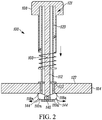
- FIG. 2 which illustrates the heat sink connector pin in an installed or engaged position, where the movable fingers 110a-110n are in an outwardly extended position so that at least a portion of the fingers extend beyond an edge of the opening and can contact a bottom surface of the substrate.
- the retracted position of the fingers in FIG. 1 allows frictionless insertion of the fingers through the opening 102, in this example a through-hole in the substrate 104.
- the second end is configured so that the fingers 110a and 111 are not deformed when they are passed through the through-hole thereby allowing a type of zero insertion force configuration. As illustrated in FIG.
- each of the movable fingers 110a and 110n include a substrate engagement surface 118a and 118n that are adapted to engage the bottom surface of the substrate 104 when they are in the outward extended position.
- the pin assembly includes a sleeve 120 that is adapted to receive the shaft structure 112.
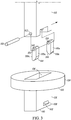
- FIG. 3 illustrates a non-cylindrical shaft design that may be employed instead of a cylindrical design (shown in FIG. 4).
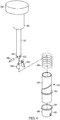
- FIG. 4 illustrates a cylindrical shaft and corresponding sleeve as illustrated in FIGs. 1 and 2 .
- the sleeve 120 is also adapted to engage with the pin head 108 by reciprocally sliding in an opening 121 (see FIG. 2 ) in the pin head 108 adapted to receive the sleeve 120.
- the sleeve 120 includes a substrate stop surface 122 shown in this example as a bottom surface of a substrate stop member 124.
- any suitable surface of the sleeve or other structure may be employed.
- the stop members 124 and 164 are shown as a disk structure that guides the shaft structure 112 however, there may be no need for a guide feature if the shaft structure does not need one nor do the stop members need to extend outwardly from the sleeve if desired.
- the substrate stop surface 122 is adapted to contact a top surface 127 of the substrate 104 during insertion of the second end 116 through the substrate opening 102.
- the pin head 108, sleeve 120, shaft 112, fingers 118a and 118n may be formed from plastic or any other suitable material.
- the sleeve 120 is made of multiple pieces that may be interconnected in any suitable manner such as snap fit, glue or in any suitable manner or may be a single piece if desired.
- the sleeve 120 includes a finger guide portion 126 which guides the fingers through the opening of the substrate.
- the finger guide portion 126 includes the substrate stop member 124 however the stop member 124 or any other portion of the sleeve providing the substrate stop surface 122 may be incorporated in any other suitable part of the sleeve 120 as desired.
- the finger guide portion 126 is cylindrical by may also be any suitable cross section or shape including conical to form a tapered tip for frictionless entry into the substrate opening.
- the shaft 112 may also be a single piece or made from multiple pieces as desired.
- the shaft 112 is attached to an interior of the pin head 108 for vertical (axial) movement but not rotational movement via a "C" clamp or other suitable structure inside the pin head 108 that receives the end of the shaft.
- attachment of the shaft may be done in any suitable manner.
- the sleeve 120 includes a threaded portion 130 and the pin head 108 includes a corresponding threaded portion 132 that is adapted to engage with the threaded portion 130 of the sleeve 120 to allow upward and downward movement of the pin head 108 with respect to the sleeve 120 in this example.
- any suitable structure may be employed other than a rotational mechanism to allow the pin head 108 to move in a downward motion causing the shaft 112 to move the movable fingers 110a and 110n in an outward position to engage a bottom surface of the substrate.
- the finger guide portion 126 receives the plurality of fingers 110a-110n, in this example through a channel 136 defined by the sleeve.
- the channel 136 also receives the shaft 112.
- the finger guide portion 126 includes finger slots 138 ( FIG. 3 ) that are configured to guide the plurality of movable fingers 110a-110n from moving from the retracted position to the outwardly extended position.
- finger slots may not be necessary depending on the design.
- the finger guide portion 126 includes a bottom 140 having a finger engagement surface 142 that is configured to contact a heel portion of a finger 144 and the curved portion of the heel makes contact with the bottom to force the fingers in an outward position.
- any other suitable mechanism may be employed to cause the fingers to expand outwardly to engage a bottom surface of the substrate.
- the plurality of movable fingers 110a-110n are rotatably connected to share a common axis shown as dashed line 148 which is a same rotational axis. In this example, this is accomplished using a pin 150 placed through corresponding openings in the shaft 112 shown as opening 152 and corresponding openings 154 in the fingers.
- any suitable connecting structure may be employed.
- the pin 150 may also be made from plastic, metal or any other suitable material.
- Other examples for connecting the fingers to rotate about an axis includes posts, or any other suitable engagement surfaces that connects the shaft 112 with the fingers so that the fingers rotatably move between a retracted position and extended position and share a same rotational axis. In another example, the rotational axis need not be shared if desired.
- a spring 160 serves as a compression spring that is configured around an outer surface of the sleeve 120.
- This spring 160 may not be necessary but can provide additional benefits such as allowing absorption during vibrations to cause the extended fingers 110a-110n ( FIG. 2 ) to be continuously forced against the bottom surface of the substrate 104.
- the spring 160 is not compressed, and as shown in FIG. 2 , the spring 160 is compressed through downward motion of the shaft 112 using the pin head 108 to push downwardly on the shaft 112.
- a rotational movement of the pin head 108 causes the threaded portion of the cap to move down the sleeve. The fingers are caused to pass through the finger guide portion 126.
- the fingers 110a-110n are then extended outward to grasp the bottom surface 129 of the substrate 104.
- the heels of the fingers contact the surface 142 pushing the fingers outward.
- the surface 142 may not be needed depending on the design as long as the fingers 110a-110n are caused to extend outwardly.
- the shape of the pin head 108 at the top of the pin head is shaped in a manner that allows a user to visually identify that the pin head 102 has been rotated thereby indicating proper installation. To remove the pin from a heat sink assembly, the pin head is rotated in the opposite direction.
- the shaft 112 is secured for vertical (axial) movement with pin head but not rotational movement via a "C" clamp or other suitable structure inside the pin head area that receives the end of the shaft.
- a "C” clamp or other suitable structure inside the pin head area that receives the end of the shaft.
- the cross section of the shaft 112 may be any suitable shape including cylindrical, square, conical or any suitable shape as desired.
- the fingers 110a and 110n may be any suitable shape as desired.
- the heat sink connector pin 100 in this example also includes a heat sink stop surface 162 to contact a surface of the heat sink such as a top portion of a heat sink arm (such arms as known in the art) such as arm 400 shown in FIG. 5 .
- the support surface 164 may also have a top surface 166 that supports the spring 160.
- the cap 108 includes a bottom surface 168 that serves as an opposing supporting surface for the spring to allow compression of the spring during downward movement of the cap 108.
- such support surfaces may not be needed where a spring is not employed or depending on the design of the heatsink.
- a heat sink assembly 402 is shown illustrating the substrate 102 that supports a heat generating device 404 which in this example is shown to be a microprocessor, APU, GPU, or any other suitable integrated circuit.
- the integrated circuit is in a package that is also shown to be in a carrier 406 although any suitable heat dissipating device may benefit.
- a heat sink 408 is in thermal contact with the heat generating device 404 when placed in contact with the heat dissipating device through any suitable heat conducting members if a direct connection is not employed.
- the heat sink connector pins 100 are inserted through the through-holes 102 of the substrate and are configured to affix the heat sink 408 to the substrate 104.
- a fan assembly 410 is also shown to be affixed to the heat sink through attachment screws 412.
- the heat sink connector pins are of the type described above with reference to FIGs. 1 and 2 .
- one or more embodiments simplifies the installation experience and can improve installation time using a system that has bottom fingers that automatically grab onto the bottom of the substrate with little vertical compressive force.
- a user may simply insert the heat sink connector pin into the heat sink and substrate and rotate the pin head to engage the fingers to the bottom surface of the substrate and rotate the pin head on an opposite direction to remove retract the moveable fingers.
- Non rotational mechanisms may also be used.
- the operations described may be done in any suitable manner. It is therefore contemplated that the present embodiments cover any and all modifications, variations or equivalents that fall within the scope of the basic underlying principles disclosed above and claimed herein.
- the above description describes hardware in the form of a processor executing code, hardware in the form of a state machine or dedicated logic capable of producing the same effect, other structures are also contemplated.
Landscapes
- Engineering & Computer Science (AREA)
- Microelectronics & Electronic Packaging (AREA)
- Physics & Mathematics (AREA)
- General Engineering & Computer Science (AREA)
- General Physics & Mathematics (AREA)
- Computer Hardware Design (AREA)
- Condensed Matter Physics & Semiconductors (AREA)
- Power Engineering (AREA)
- Mechanical Engineering (AREA)
- Chemical & Material Sciences (AREA)
- Materials Engineering (AREA)
- Thermal Sciences (AREA)
- Cooling Or The Like Of Electrical Apparatus (AREA)
- Cooling Or The Like Of Semiconductors Or Solid State Devices (AREA)
- Dowels (AREA)
- Mounting Components In General For Electric Apparatus (AREA)
- Theoretical Computer Science (AREA)
- Human Computer Interaction (AREA)
Applications Claiming Priority (1)
| Application Number | Priority Date | Filing Date | Title |
|---|---|---|---|
| US15/362,064 US10117356B2 (en) | 2016-11-28 | 2016-11-28 | Heat sink connector pin and assembly |
Publications (2)
| Publication Number | Publication Date |
|---|---|
| EP3327770A1 EP3327770A1 (en) | 2018-05-30 |
| EP3327770B1 true EP3327770B1 (en) | 2019-03-06 |
Family
ID=57799449
Family Applications (1)
| Application Number | Title | Priority Date | Filing Date |
|---|---|---|---|
| EP16204147.9A Active EP3327770B1 (en) | 2016-11-28 | 2016-12-14 | Heat sink connector pin and assembly |
Country Status (6)
| Country | Link |
|---|---|
| US (1) | US10117356B2 (enExample) |
| EP (1) | EP3327770B1 (enExample) |
| JP (1) | JP7106536B2 (enExample) |
| KR (1) | KR102443652B1 (enExample) |
| CN (1) | CN109891581B (enExample) |
| WO (1) | WO2018098456A1 (enExample) |
Families Citing this family (3)
| Publication number | Priority date | Publication date | Assignee | Title |
|---|---|---|---|---|
| CN113251047A (zh) * | 2021-04-29 | 2021-08-13 | 成都飞机工业(集团)有限责任公司 | 一种可单边操作的安全插销及其使用方法 |
| US11758690B2 (en) * | 2021-06-18 | 2023-09-12 | Nanning Fulian Fugui Precision Industrial Co., Ltd. | Heat-dissipation device allowing easy detachment from heat-generating component |
| US12471221B2 (en) * | 2022-10-21 | 2025-11-11 | Raytheon Company | Clamping device with pivoting retainer |
Family Cites Families (22)
| Publication number | Priority date | Publication date | Assignee | Title |
|---|---|---|---|---|
| US4213642A (en) * | 1979-02-12 | 1980-07-22 | Hartwell Corporation | Rotary latch and method of operation |
| US4760495A (en) * | 1987-04-16 | 1988-07-26 | Prime Computer Inc. | Stand-off device |
| US5199733A (en) * | 1991-09-09 | 1993-04-06 | Delorme Glen E | Safety hitch pin |
| US5517734A (en) * | 1995-04-10 | 1996-05-21 | Korpi; John G. | Quick fastener |
| US5870286A (en) | 1997-08-20 | 1999-02-09 | International Business Machines Corporation | Heat sink assembly for cooling electronic modules |
| US6118659A (en) * | 1998-03-09 | 2000-09-12 | International Business Machines Corporation | Heat sink clamping spring additionally holding a ZIF socket locked |
| US6752577B2 (en) * | 2002-02-27 | 2004-06-22 | Shu-Chen Teng | Heat sink fastener |
| KR100457220B1 (ko) | 2002-02-27 | 2004-11-16 | 잘만테크 주식회사 | 칩셋 냉각용 히트싱크장치 |
| JP3894070B2 (ja) | 2002-08-06 | 2007-03-14 | 富士通株式会社 | ヒートシンク、ヒートシンク装置、該ヒートシンクの固定方法及び該ヒートシンクを使用した電子装置 |
| US20040238947A1 (en) | 2003-05-28 | 2004-12-02 | Intel Corporation | Package and method for attaching an integrated heat spreader |
| US20050072558A1 (en) | 2003-10-03 | 2005-04-07 | Aavid Thermalloy, Llc | Heat sink assembly and connecting device |
| TWM248206U (en) * | 2003-10-17 | 2004-10-21 | Hon Hai Prec Ind Co Ltd | Clip for heat sink |
| US7516948B2 (en) * | 2004-04-02 | 2009-04-14 | Phd, Inc. | Pin clamp accessories |
| JP4212511B2 (ja) * | 2004-05-06 | 2009-01-21 | 富士通株式会社 | 半導体装置及び半導体装置の組立方法 |
| US7489511B2 (en) * | 2006-12-28 | 2009-02-10 | Hon Hai Precision Industry Co., Ltd. | Heat sink clip |
| US7852633B2 (en) * | 2008-07-24 | 2010-12-14 | Yamaichi Electronics Co., Ltd. | Connector for connection to a module board |
| DE102009002992B4 (de) * | 2009-05-11 | 2014-10-30 | Infineon Technologies Ag | Leistungshalbleitermodulanordnung mit eindeutig und verdrehsicher auf einem Kühlkörper montierbarem Leistungshalbleitermodul und Montageverfahren |
| JP3153773U (ja) * | 2009-07-08 | 2009-09-17 | 本俊 游 | 放熱モジュール用固定部材 |
| JP2011023491A (ja) * | 2009-07-15 | 2011-02-03 | Nec Corp | 係止治具及び半導体装置 |
| US20110027038A1 (en) * | 2009-07-28 | 2011-02-03 | Pen-Chun YU | Heat sink anchoring apparatus |
| CN102146944A (zh) | 2010-02-05 | 2011-08-10 | 鸿富锦精密工业(深圳)有限公司 | 固定装置及使用该固定装置的散热模组 |
| KR101508467B1 (ko) | 2014-09-23 | 2015-04-07 | 삼성전기주식회사 | 히트 싱크가 결합된 반도체 모듈 |
-
2016
- 2016-11-28 US US15/362,064 patent/US10117356B2/en active Active
- 2016-12-14 EP EP16204147.9A patent/EP3327770B1/en active Active
-
2017
- 2017-11-28 JP JP2019528492A patent/JP7106536B2/ja active Active
- 2017-11-28 KR KR1020197012083A patent/KR102443652B1/ko active Active
- 2017-11-28 CN CN201780066991.5A patent/CN109891581B/zh active Active
- 2017-11-28 WO PCT/US2017/063367 patent/WO2018098456A1/en not_active Ceased
Non-Patent Citations (1)
| Title |
|---|
| None * |
Also Published As
| Publication number | Publication date |
|---|---|
| US20180150114A1 (en) | 2018-05-31 |
| JP2020501354A (ja) | 2020-01-16 |
| KR20190082204A (ko) | 2019-07-09 |
| JP7106536B2 (ja) | 2022-07-26 |
| EP3327770A1 (en) | 2018-05-30 |
| CN109891581A (zh) | 2019-06-14 |
| WO2018098456A1 (en) | 2018-05-31 |
| KR102443652B1 (ko) | 2022-09-15 |
| US10117356B2 (en) | 2018-10-30 |
| CN109891581B (zh) | 2022-12-30 |
Similar Documents
| Publication | Publication Date | Title |
|---|---|---|
| US7576989B2 (en) | Heat sink assembly having supporting clip | |
| US7283368B2 (en) | Heat dissipating assembly | |
| US6611431B1 (en) | Heat dissipation assembly | |
| US7405939B2 (en) | Fastening device and heat sink assembly using the same | |
| US20070217159A1 (en) | Clip assembly for attaching a heat sink to an electronic device | |
| EP3327770B1 (en) | Heat sink connector pin and assembly | |
| CN1848035A (zh) | 锁固组件 | |
| US7817427B2 (en) | Fastener and heat sink assembly having the same | |
| CN101825937A (zh) | 散热装置 | |
| US8256736B2 (en) | Mounting rack structure and mounting hole adapter thereof | |
| US20060067053A1 (en) | Locking device for heat dissipating device | |
| US8120919B2 (en) | Adjustable mounting bracket for a computer component | |
| US7218525B2 (en) | Fastener for heat sink | |
| US20080158828A1 (en) | Heatsink structure and assembly fixture thereof | |
| US20090120613A1 (en) | Heat sink | |
| US9917033B2 (en) | Multicomponent heat sink with movable fin support portion | |
| CN101309569B (zh) | 扣具及散热装置组合 | |
| US20170034952A1 (en) | Fixture device for heat-dissipating module and heat-dissipating module having fixture device | |
| US20080192440A1 (en) | Connection assembly | |
| US6822870B2 (en) | Retaining apparatus | |
| US9711431B2 (en) | Adjustable fastening bracket for radiator | |
| US9414481B1 (en) | Heat sink fastener | |
| CN216775289U (zh) | 一种双层电路板卡接固定结构 | |
| JP3153773U (ja) | 放熱モジュール用固定部材 | |
| JP2012018922A (ja) | コンピュータプロセッサをソケットに固定するための一点駆動二荷重型機構 |
Legal Events
| Date | Code | Title | Description |
|---|---|---|---|
| STAA | Information on the status of an ep patent application or granted ep patent |
Free format text: STATUS: EXAMINATION IS IN PROGRESS |
|
| PUAI | Public reference made under article 153(3) epc to a published international application that has entered the european phase |
Free format text: ORIGINAL CODE: 0009012 |
|
| 17P | Request for examination filed |
Effective date: 20161214 |
|
| AK | Designated contracting states |
Kind code of ref document: A1 Designated state(s): AL AT BE BG CH CY CZ DE DK EE ES FI FR GB GR HR HU IE IS IT LI LT LU LV MC MK MT NL NO PL PT RO RS SE SI SK SM TR |
|
| AX | Request for extension of the european patent |
Extension state: BA ME |
|
| GRAP | Despatch of communication of intention to grant a patent |
Free format text: ORIGINAL CODE: EPIDOSNIGR1 |
|
| STAA | Information on the status of an ep patent application or granted ep patent |
Free format text: STATUS: GRANT OF PATENT IS INTENDED |
|
| RIC1 | Information provided on ipc code assigned before grant |
Ipc: F16B 21/12 20060101ALN20181005BHEP Ipc: F16B 19/10 20060101ALI20181005BHEP Ipc: F16B 5/02 20060101ALI20181005BHEP Ipc: H05K 7/20 20060101ALI20181005BHEP Ipc: H01L 23/40 20060101AFI20181005BHEP Ipc: H05K 1/02 20060101ALI20181005BHEP |
|
| INTG | Intention to grant announced |
Effective date: 20181029 |
|
| GRAS | Grant fee paid |
Free format text: ORIGINAL CODE: EPIDOSNIGR3 |
|
| GRAA | (expected) grant |
Free format text: ORIGINAL CODE: 0009210 |
|
| STAA | Information on the status of an ep patent application or granted ep patent |
Free format text: STATUS: THE PATENT HAS BEEN GRANTED |
|
| AK | Designated contracting states |
Kind code of ref document: B1 Designated state(s): AL AT BE BG CH CY CZ DE DK EE ES FI FR GB GR HR HU IE IS IT LI LT LU LV MC MK MT NL NO PL PT RO RS SE SI SK SM TR |
|
| REG | Reference to a national code |
Ref country code: GB Ref legal event code: FG4D |
|
| REG | Reference to a national code |
Ref country code: CH Ref legal event code: EP Ref country code: AT Ref legal event code: REF Ref document number: 1105694 Country of ref document: AT Kind code of ref document: T Effective date: 20190315 |
|
| REG | Reference to a national code |
Ref country code: DE Ref legal event code: R096 Ref document number: 602016010672 Country of ref document: DE |
|
| REG | Reference to a national code |
Ref country code: IE Ref legal event code: FG4D |
|
| REG | Reference to a national code |
Ref country code: NL Ref legal event code: MP Effective date: 20190306 |
|
| REG | Reference to a national code |
Ref country code: LT Ref legal event code: MG4D |
|
| PG25 | Lapsed in a contracting state [announced via postgrant information from national office to epo] |
Ref country code: FI Free format text: LAPSE BECAUSE OF FAILURE TO SUBMIT A TRANSLATION OF THE DESCRIPTION OR TO PAY THE FEE WITHIN THE PRESCRIBED TIME-LIMIT Effective date: 20190306 Ref country code: LT Free format text: LAPSE BECAUSE OF FAILURE TO SUBMIT A TRANSLATION OF THE DESCRIPTION OR TO PAY THE FEE WITHIN THE PRESCRIBED TIME-LIMIT Effective date: 20190306 Ref country code: NO Free format text: LAPSE BECAUSE OF FAILURE TO SUBMIT A TRANSLATION OF THE DESCRIPTION OR TO PAY THE FEE WITHIN THE PRESCRIBED TIME-LIMIT Effective date: 20190606 Ref country code: SE Free format text: LAPSE BECAUSE OF FAILURE TO SUBMIT A TRANSLATION OF THE DESCRIPTION OR TO PAY THE FEE WITHIN THE PRESCRIBED TIME-LIMIT Effective date: 20190306 |
|
| PG25 | Lapsed in a contracting state [announced via postgrant information from national office to epo] |
Ref country code: NL Free format text: LAPSE BECAUSE OF FAILURE TO SUBMIT A TRANSLATION OF THE DESCRIPTION OR TO PAY THE FEE WITHIN THE PRESCRIBED TIME-LIMIT Effective date: 20190306 Ref country code: RS Free format text: LAPSE BECAUSE OF FAILURE TO SUBMIT A TRANSLATION OF THE DESCRIPTION OR TO PAY THE FEE WITHIN THE PRESCRIBED TIME-LIMIT Effective date: 20190306 Ref country code: LV Free format text: LAPSE BECAUSE OF FAILURE TO SUBMIT A TRANSLATION OF THE DESCRIPTION OR TO PAY THE FEE WITHIN THE PRESCRIBED TIME-LIMIT Effective date: 20190306 Ref country code: BG Free format text: LAPSE BECAUSE OF FAILURE TO SUBMIT A TRANSLATION OF THE DESCRIPTION OR TO PAY THE FEE WITHIN THE PRESCRIBED TIME-LIMIT Effective date: 20190606 Ref country code: GR Free format text: LAPSE BECAUSE OF FAILURE TO SUBMIT A TRANSLATION OF THE DESCRIPTION OR TO PAY THE FEE WITHIN THE PRESCRIBED TIME-LIMIT Effective date: 20190607 Ref country code: HR Free format text: LAPSE BECAUSE OF FAILURE TO SUBMIT A TRANSLATION OF THE DESCRIPTION OR TO PAY THE FEE WITHIN THE PRESCRIBED TIME-LIMIT Effective date: 20190306 |
|
| REG | Reference to a national code |
Ref country code: AT Ref legal event code: MK05 Ref document number: 1105694 Country of ref document: AT Kind code of ref document: T Effective date: 20190306 |
|
| PG25 | Lapsed in a contracting state [announced via postgrant information from national office to epo] |
Ref country code: EE Free format text: LAPSE BECAUSE OF FAILURE TO SUBMIT A TRANSLATION OF THE DESCRIPTION OR TO PAY THE FEE WITHIN THE PRESCRIBED TIME-LIMIT Effective date: 20190306 Ref country code: SK Free format text: LAPSE BECAUSE OF FAILURE TO SUBMIT A TRANSLATION OF THE DESCRIPTION OR TO PAY THE FEE WITHIN THE PRESCRIBED TIME-LIMIT Effective date: 20190306 Ref country code: PT Free format text: LAPSE BECAUSE OF FAILURE TO SUBMIT A TRANSLATION OF THE DESCRIPTION OR TO PAY THE FEE WITHIN THE PRESCRIBED TIME-LIMIT Effective date: 20190706 Ref country code: AL Free format text: LAPSE BECAUSE OF FAILURE TO SUBMIT A TRANSLATION OF THE DESCRIPTION OR TO PAY THE FEE WITHIN THE PRESCRIBED TIME-LIMIT Effective date: 20190306 Ref country code: IT Free format text: LAPSE BECAUSE OF FAILURE TO SUBMIT A TRANSLATION OF THE DESCRIPTION OR TO PAY THE FEE WITHIN THE PRESCRIBED TIME-LIMIT Effective date: 20190306 Ref country code: ES Free format text: LAPSE BECAUSE OF FAILURE TO SUBMIT A TRANSLATION OF THE DESCRIPTION OR TO PAY THE FEE WITHIN THE PRESCRIBED TIME-LIMIT Effective date: 20190306 Ref country code: RO Free format text: LAPSE BECAUSE OF FAILURE TO SUBMIT A TRANSLATION OF THE DESCRIPTION OR TO PAY THE FEE WITHIN THE PRESCRIBED TIME-LIMIT Effective date: 20190306 Ref country code: CZ Free format text: LAPSE BECAUSE OF FAILURE TO SUBMIT A TRANSLATION OF THE DESCRIPTION OR TO PAY THE FEE WITHIN THE PRESCRIBED TIME-LIMIT Effective date: 20190306 |
|
| PG25 | Lapsed in a contracting state [announced via postgrant information from national office to epo] |
Ref country code: SM Free format text: LAPSE BECAUSE OF FAILURE TO SUBMIT A TRANSLATION OF THE DESCRIPTION OR TO PAY THE FEE WITHIN THE PRESCRIBED TIME-LIMIT Effective date: 20190306 Ref country code: PL Free format text: LAPSE BECAUSE OF FAILURE TO SUBMIT A TRANSLATION OF THE DESCRIPTION OR TO PAY THE FEE WITHIN THE PRESCRIBED TIME-LIMIT Effective date: 20190306 |
|
| REG | Reference to a national code |
Ref country code: DE Ref legal event code: R097 Ref document number: 602016010672 Country of ref document: DE |
|
| PG25 | Lapsed in a contracting state [announced via postgrant information from national office to epo] |
Ref country code: AT Free format text: LAPSE BECAUSE OF FAILURE TO SUBMIT A TRANSLATION OF THE DESCRIPTION OR TO PAY THE FEE WITHIN THE PRESCRIBED TIME-LIMIT Effective date: 20190306 Ref country code: IS Free format text: LAPSE BECAUSE OF FAILURE TO SUBMIT A TRANSLATION OF THE DESCRIPTION OR TO PAY THE FEE WITHIN THE PRESCRIBED TIME-LIMIT Effective date: 20190706 |
|
| PLBE | No opposition filed within time limit |
Free format text: ORIGINAL CODE: 0009261 |
|
| STAA | Information on the status of an ep patent application or granted ep patent |
Free format text: STATUS: NO OPPOSITION FILED WITHIN TIME LIMIT |
|
| PG25 | Lapsed in a contracting state [announced via postgrant information from national office to epo] |
Ref country code: DK Free format text: LAPSE BECAUSE OF FAILURE TO SUBMIT A TRANSLATION OF THE DESCRIPTION OR TO PAY THE FEE WITHIN THE PRESCRIBED TIME-LIMIT Effective date: 20190306 |
|
| 26N | No opposition filed |
Effective date: 20191209 |
|
| PG25 | Lapsed in a contracting state [announced via postgrant information from national office to epo] |
Ref country code: TR Free format text: LAPSE BECAUSE OF FAILURE TO SUBMIT A TRANSLATION OF THE DESCRIPTION OR TO PAY THE FEE WITHIN THE PRESCRIBED TIME-LIMIT Effective date: 20190306 |
|
| REG | Reference to a national code |
Ref country code: CH Ref legal event code: PL |
|
| REG | Reference to a national code |
Ref country code: BE Ref legal event code: MM Effective date: 20191231 |
|
| PG25 | Lapsed in a contracting state [announced via postgrant information from national office to epo] |
Ref country code: MC Free format text: LAPSE BECAUSE OF FAILURE TO SUBMIT A TRANSLATION OF THE DESCRIPTION OR TO PAY THE FEE WITHIN THE PRESCRIBED TIME-LIMIT Effective date: 20190306 |
|
| PG25 | Lapsed in a contracting state [announced via postgrant information from national office to epo] |
Ref country code: FR Free format text: LAPSE BECAUSE OF NON-PAYMENT OF DUE FEES Effective date: 20191231 Ref country code: LU Free format text: LAPSE BECAUSE OF NON-PAYMENT OF DUE FEES Effective date: 20191214 Ref country code: IE Free format text: LAPSE BECAUSE OF NON-PAYMENT OF DUE FEES Effective date: 20191214 |
|
| PG25 | Lapsed in a contracting state [announced via postgrant information from national office to epo] |
Ref country code: BE Free format text: LAPSE BECAUSE OF NON-PAYMENT OF DUE FEES Effective date: 20191231 Ref country code: LI Free format text: LAPSE BECAUSE OF NON-PAYMENT OF DUE FEES Effective date: 20191231 Ref country code: CH Free format text: LAPSE BECAUSE OF NON-PAYMENT OF DUE FEES Effective date: 20191231 |
|
| PG25 | Lapsed in a contracting state [announced via postgrant information from national office to epo] |
Ref country code: CY Free format text: LAPSE BECAUSE OF FAILURE TO SUBMIT A TRANSLATION OF THE DESCRIPTION OR TO PAY THE FEE WITHIN THE PRESCRIBED TIME-LIMIT Effective date: 20190306 |
|
| PG25 | Lapsed in a contracting state [announced via postgrant information from national office to epo] |
Ref country code: HU Free format text: LAPSE BECAUSE OF FAILURE TO SUBMIT A TRANSLATION OF THE DESCRIPTION OR TO PAY THE FEE WITHIN THE PRESCRIBED TIME-LIMIT; INVALID AB INITIO Effective date: 20161214 Ref country code: MT Free format text: LAPSE BECAUSE OF FAILURE TO SUBMIT A TRANSLATION OF THE DESCRIPTION OR TO PAY THE FEE WITHIN THE PRESCRIBED TIME-LIMIT Effective date: 20190306 |
|
| PG25 | Lapsed in a contracting state [announced via postgrant information from national office to epo] |
Ref country code: SI Free format text: LAPSE BECAUSE OF FAILURE TO SUBMIT A TRANSLATION OF THE DESCRIPTION OR TO PAY THE FEE WITHIN THE PRESCRIBED TIME-LIMIT Effective date: 20190306 |
|
| PG25 | Lapsed in a contracting state [announced via postgrant information from national office to epo] |
Ref country code: MK Free format text: LAPSE BECAUSE OF FAILURE TO SUBMIT A TRANSLATION OF THE DESCRIPTION OR TO PAY THE FEE WITHIN THE PRESCRIBED TIME-LIMIT Effective date: 20190306 |
|
| P01 | Opt-out of the competence of the unified patent court (upc) registered |
Effective date: 20230530 |
|
| PGFP | Annual fee paid to national office [announced via postgrant information from national office to epo] |
Ref country code: DE Payment date: 20241107 Year of fee payment: 9 |
|
| PGFP | Annual fee paid to national office [announced via postgrant information from national office to epo] |
Ref country code: GB Payment date: 20241205 Year of fee payment: 9 |