EP3308917B1 - Baumaterial und verfahren zur herstellung des baumaterials - Google Patents
Baumaterial und verfahren zur herstellung des baumaterials Download PDFInfo
- Publication number
- EP3308917B1 EP3308917B1 EP17192536.5A EP17192536A EP3308917B1 EP 3308917 B1 EP3308917 B1 EP 3308917B1 EP 17192536 A EP17192536 A EP 17192536A EP 3308917 B1 EP3308917 B1 EP 3308917B1
- Authority
- EP
- European Patent Office
- Prior art keywords
- unfoamed
- building material
- surface layer
- layer
- core layer
- Prior art date
- Legal status (The legal status is an assumption and is not a legal conclusion. Google has not performed a legal analysis and makes no representation as to the accuracy of the status listed.)
- Active
Links
Images
Classifications
-
- C—CHEMISTRY; METALLURGY
- C04—CEMENTS; CONCRETE; ARTIFICIAL STONE; CERAMICS; REFRACTORIES
- C04B—LIME, MAGNESIA; SLAG; CEMENTS; COMPOSITIONS THEREOF, e.g. MORTARS, CONCRETE OR LIKE BUILDING MATERIALS; ARTIFICIAL STONE; CERAMICS; REFRACTORIES; TREATMENT OF NATURAL STONE
- C04B28/00—Compositions of mortars, concrete or artificial stone, containing inorganic binders or the reaction product of an inorganic and an organic binder, e.g. polycarboxylate cements
- C04B28/14—Compositions of mortars, concrete or artificial stone, containing inorganic binders or the reaction product of an inorganic and an organic binder, e.g. polycarboxylate cements containing calcium sulfate cements
-
- B—PERFORMING OPERATIONS; TRANSPORTING
- B32—LAYERED PRODUCTS
- B32B—LAYERED PRODUCTS, i.e. PRODUCTS BUILT-UP OF STRATA OF FLAT OR NON-FLAT, e.g. CELLULAR OR HONEYCOMB, FORM
- B32B13/00—Layered products comprising a a layer of water-setting substance, e.g. concrete, plaster, asbestos cement, or like builders' material
- B32B13/04—Layered products comprising a a layer of water-setting substance, e.g. concrete, plaster, asbestos cement, or like builders' material comprising such water setting substance as the main or only constituent of a layer, which is next to another layer of the same or of a different material
- B32B13/045—Layered products comprising a a layer of water-setting substance, e.g. concrete, plaster, asbestos cement, or like builders' material comprising such water setting substance as the main or only constituent of a layer, which is next to another layer of the same or of a different material of foam
-
- B—PERFORMING OPERATIONS; TRANSPORTING
- B28—WORKING CEMENT, CLAY, OR STONE
- B28B—SHAPING CLAY OR OTHER CERAMIC COMPOSITIONS; SHAPING SLAG; SHAPING MIXTURES CONTAINING CEMENTITIOUS MATERIAL, e.g. PLASTER
- B28B1/00—Producing shaped prefabricated articles from the material
- B28B1/002—Producing shaped prefabricated articles from the material assembled from preformed elements
-
- B—PERFORMING OPERATIONS; TRANSPORTING
- B28—WORKING CEMENT, CLAY, OR STONE
- B28B—SHAPING CLAY OR OTHER CERAMIC COMPOSITIONS; SHAPING SLAG; SHAPING MIXTURES CONTAINING CEMENTITIOUS MATERIAL, e.g. PLASTER
- B28B1/00—Producing shaped prefabricated articles from the material
- B28B1/008—Producing shaped prefabricated articles from the material made from two or more materials having different characteristics or properties
-
- B—PERFORMING OPERATIONS; TRANSPORTING
- B28—WORKING CEMENT, CLAY, OR STONE
- B28B—SHAPING CLAY OR OTHER CERAMIC COMPOSITIONS; SHAPING SLAG; SHAPING MIXTURES CONTAINING CEMENTITIOUS MATERIAL, e.g. PLASTER
- B28B1/00—Producing shaped prefabricated articles from the material
- B28B1/50—Producing shaped prefabricated articles from the material specially adapted for producing articles of expanded material, e.g. cellular concrete
-
- B—PERFORMING OPERATIONS; TRANSPORTING
- B28—WORKING CEMENT, CLAY, OR STONE
- B28B—SHAPING CLAY OR OTHER CERAMIC COMPOSITIONS; SHAPING SLAG; SHAPING MIXTURES CONTAINING CEMENTITIOUS MATERIAL, e.g. PLASTER
- B28B1/00—Producing shaped prefabricated articles from the material
- B28B1/52—Producing shaped prefabricated articles from the material specially adapted for producing articles from mixtures containing fibres, e.g. asbestos cement
- B28B1/522—Producing shaped prefabricated articles from the material specially adapted for producing articles from mixtures containing fibres, e.g. asbestos cement for producing multi-layered articles
-
- B—PERFORMING OPERATIONS; TRANSPORTING
- B28—WORKING CEMENT, CLAY, OR STONE
- B28B—SHAPING CLAY OR OTHER CERAMIC COMPOSITIONS; SHAPING SLAG; SHAPING MIXTURES CONTAINING CEMENTITIOUS MATERIAL, e.g. PLASTER
- B28B1/00—Producing shaped prefabricated articles from the material
- B28B1/52—Producing shaped prefabricated articles from the material specially adapted for producing articles from mixtures containing fibres, e.g. asbestos cement
- B28B1/525—Producing shaped prefabricated articles from the material specially adapted for producing articles from mixtures containing fibres, e.g. asbestos cement containing organic fibres, e.g. wood fibres
-
- B—PERFORMING OPERATIONS; TRANSPORTING
- B28—WORKING CEMENT, CLAY, OR STONE
- B28B—SHAPING CLAY OR OTHER CERAMIC COMPOSITIONS; SHAPING SLAG; SHAPING MIXTURES CONTAINING CEMENTITIOUS MATERIAL, e.g. PLASTER
- B28B11/00—Apparatus or processes for treating or working the shaped or preshaped articles
-
- B—PERFORMING OPERATIONS; TRANSPORTING
- B28—WORKING CEMENT, CLAY, OR STONE
- B28B—SHAPING CLAY OR OTHER CERAMIC COMPOSITIONS; SHAPING SLAG; SHAPING MIXTURES CONTAINING CEMENTITIOUS MATERIAL, e.g. PLASTER
- B28B7/00—Moulds; Cores; Mandrels
- B28B7/0064—Moulds characterised by special surfaces for producing a desired surface of a moulded article, e.g. profiled or polished moulding surfaces
- B28B7/0082—Moulds characterised by special surfaces for producing a desired surface of a moulded article, e.g. profiled or polished moulding surfaces with surfaces for moulding parallel grooves or ribs
-
- B—PERFORMING OPERATIONS; TRANSPORTING
- B32—LAYERED PRODUCTS
- B32B—LAYERED PRODUCTS, i.e. PRODUCTS BUILT-UP OF STRATA OF FLAT OR NON-FLAT, e.g. CELLULAR OR HONEYCOMB, FORM
- B32B13/00—Layered products comprising a a layer of water-setting substance, e.g. concrete, plaster, asbestos cement, or like builders' material
- B32B13/02—Layered products comprising a a layer of water-setting substance, e.g. concrete, plaster, asbestos cement, or like builders' material with fibres or particles being present as additives in the layer
-
- B—PERFORMING OPERATIONS; TRANSPORTING
- B32—LAYERED PRODUCTS
- B32B—LAYERED PRODUCTS, i.e. PRODUCTS BUILT-UP OF STRATA OF FLAT OR NON-FLAT, e.g. CELLULAR OR HONEYCOMB, FORM
- B32B13/00—Layered products comprising a a layer of water-setting substance, e.g. concrete, plaster, asbestos cement, or like builders' material
- B32B13/04—Layered products comprising a a layer of water-setting substance, e.g. concrete, plaster, asbestos cement, or like builders' material comprising such water setting substance as the main or only constituent of a layer, which is next to another layer of the same or of a different material
-
- B—PERFORMING OPERATIONS; TRANSPORTING
- B32—LAYERED PRODUCTS
- B32B—LAYERED PRODUCTS, i.e. PRODUCTS BUILT-UP OF STRATA OF FLAT OR NON-FLAT, e.g. CELLULAR OR HONEYCOMB, FORM
- B32B37/00—Methods or apparatus for laminating, e.g. by curing or by ultrasonic bonding
- B32B37/10—Methods or apparatus for laminating, e.g. by curing or by ultrasonic bonding characterised by the pressing technique, e.g. using action of vacuum or fluid pressure
-
- B—PERFORMING OPERATIONS; TRANSPORTING
- B32—LAYERED PRODUCTS
- B32B—LAYERED PRODUCTS, i.e. PRODUCTS BUILT-UP OF STRATA OF FLAT OR NON-FLAT, e.g. CELLULAR OR HONEYCOMB, FORM
- B32B37/00—Methods or apparatus for laminating, e.g. by curing or by ultrasonic bonding
- B32B37/14—Methods or apparatus for laminating, e.g. by curing or by ultrasonic bonding characterised by the properties of the layers
- B32B37/15—Methods or apparatus for laminating, e.g. by curing or by ultrasonic bonding characterised by the properties of the layers with at least one layer being manufactured and immediately laminated before reaching its stable state, e.g. in which a layer is extruded and laminated while in semi-molten state
-
- C—CHEMISTRY; METALLURGY
- C04—CEMENTS; CONCRETE; ARTIFICIAL STONE; CERAMICS; REFRACTORIES
- C04B—LIME, MAGNESIA; SLAG; CEMENTS; COMPOSITIONS THEREOF, e.g. MORTARS, CONCRETE OR LIKE BUILDING MATERIALS; ARTIFICIAL STONE; CERAMICS; REFRACTORIES; TREATMENT OF NATURAL STONE
- C04B14/00—Use of inorganic materials as fillers, e.g. pigments, for mortars, concrete or artificial stone; Treatment of inorganic materials specially adapted to enhance their filling properties in mortars, concrete or artificial stone
- C04B14/02—Granular materials, e.g. microballoons
- C04B14/04—Silica-rich materials; Silicates
-
- C—CHEMISTRY; METALLURGY
- C04—CEMENTS; CONCRETE; ARTIFICIAL STONE; CERAMICS; REFRACTORIES
- C04B—LIME, MAGNESIA; SLAG; CEMENTS; COMPOSITIONS THEREOF, e.g. MORTARS, CONCRETE OR LIKE BUILDING MATERIALS; ARTIFICIAL STONE; CERAMICS; REFRACTORIES; TREATMENT OF NATURAL STONE
- C04B16/00—Use of organic materials as fillers, e.g. pigments, for mortars, concrete or artificial stone; Treatment of organic materials specially adapted to enhance their filling properties in mortars, concrete or artificial stone
- C04B16/02—Cellulosic materials
-
- C—CHEMISTRY; METALLURGY
- C04—CEMENTS; CONCRETE; ARTIFICIAL STONE; CERAMICS; REFRACTORIES
- C04B—LIME, MAGNESIA; SLAG; CEMENTS; COMPOSITIONS THEREOF, e.g. MORTARS, CONCRETE OR LIKE BUILDING MATERIALS; ARTIFICIAL STONE; CERAMICS; REFRACTORIES; TREATMENT OF NATURAL STONE
- C04B20/00—Use of materials as fillers for mortars, concrete or artificial stone according to more than one of groups C04B14/00 - C04B18/00 and characterised by shape or grain distribution; Treatment of materials according to more than one of the groups C04B14/00 - C04B18/00 specially adapted to enhance their filling properties in mortars, concrete or artificial stone; Expanding or defibrillating materials
- C04B20/0048—Fibrous materials
-
- C—CHEMISTRY; METALLURGY
- C04—CEMENTS; CONCRETE; ARTIFICIAL STONE; CERAMICS; REFRACTORIES
- C04B—LIME, MAGNESIA; SLAG; CEMENTS; COMPOSITIONS THEREOF, e.g. MORTARS, CONCRETE OR LIKE BUILDING MATERIALS; ARTIFICIAL STONE; CERAMICS; REFRACTORIES; TREATMENT OF NATURAL STONE
- C04B22/00—Use of inorganic materials as active ingredients for mortars, concrete or artificial stone, e.g. accelerators or shrinkage compensating agents
- C04B22/02—Elements
- C04B22/04—Metals, e.g. aluminium used as blowing agent
-
- C—CHEMISTRY; METALLURGY
- C04—CEMENTS; CONCRETE; ARTIFICIAL STONE; CERAMICS; REFRACTORIES
- C04B—LIME, MAGNESIA; SLAG; CEMENTS; COMPOSITIONS THEREOF, e.g. MORTARS, CONCRETE OR LIKE BUILDING MATERIALS; ARTIFICIAL STONE; CERAMICS; REFRACTORIES; TREATMENT OF NATURAL STONE
- C04B28/00—Compositions of mortars, concrete or artificial stone, containing inorganic binders or the reaction product of an inorganic and an organic binder, e.g. polycarboxylate cements
- C04B28/02—Compositions of mortars, concrete or artificial stone, containing inorganic binders or the reaction product of an inorganic and an organic binder, e.g. polycarboxylate cements containing hydraulic cements other than calcium sulfates
-
- C—CHEMISTRY; METALLURGY
- C04—CEMENTS; CONCRETE; ARTIFICIAL STONE; CERAMICS; REFRACTORIES
- C04B—LIME, MAGNESIA; SLAG; CEMENTS; COMPOSITIONS THEREOF, e.g. MORTARS, CONCRETE OR LIKE BUILDING MATERIALS; ARTIFICIAL STONE; CERAMICS; REFRACTORIES; TREATMENT OF NATURAL STONE
- C04B38/00—Porous mortars, concrete, artificial stone or ceramic ware; Preparation thereof
- C04B38/02—Porous mortars, concrete, artificial stone or ceramic ware; Preparation thereof by adding chemical blowing agents
-
- C—CHEMISTRY; METALLURGY
- C04—CEMENTS; CONCRETE; ARTIFICIAL STONE; CERAMICS; REFRACTORIES
- C04B—LIME, MAGNESIA; SLAG; CEMENTS; COMPOSITIONS THEREOF, e.g. MORTARS, CONCRETE OR LIKE BUILDING MATERIALS; ARTIFICIAL STONE; CERAMICS; REFRACTORIES; TREATMENT OF NATURAL STONE
- C04B41/00—After-treatment of mortars, concrete, artificial stone or ceramics; Treatment of natural stone
- C04B41/009—After-treatment of mortars, concrete, artificial stone or ceramics; Treatment of natural stone characterised by the material treated
-
- C—CHEMISTRY; METALLURGY
- C04—CEMENTS; CONCRETE; ARTIFICIAL STONE; CERAMICS; REFRACTORIES
- C04B—LIME, MAGNESIA; SLAG; CEMENTS; COMPOSITIONS THEREOF, e.g. MORTARS, CONCRETE OR LIKE BUILDING MATERIALS; ARTIFICIAL STONE; CERAMICS; REFRACTORIES; TREATMENT OF NATURAL STONE
- C04B41/00—After-treatment of mortars, concrete, artificial stone or ceramics; Treatment of natural stone
- C04B41/45—Coating or impregnating, e.g. injection in masonry, partial coating of green or fired ceramics, organic coating compositions for adhering together two concrete elements
- C04B41/50—Coating or impregnating, e.g. injection in masonry, partial coating of green or fired ceramics, organic coating compositions for adhering together two concrete elements with inorganic materials
- C04B41/5098—Cermets
-
- C—CHEMISTRY; METALLURGY
- C04—CEMENTS; CONCRETE; ARTIFICIAL STONE; CERAMICS; REFRACTORIES
- C04B—LIME, MAGNESIA; SLAG; CEMENTS; COMPOSITIONS THEREOF, e.g. MORTARS, CONCRETE OR LIKE BUILDING MATERIALS; ARTIFICIAL STONE; CERAMICS; REFRACTORIES; TREATMENT OF NATURAL STONE
- C04B41/00—After-treatment of mortars, concrete, artificial stone or ceramics; Treatment of natural stone
- C04B41/60—After-treatment of mortars, concrete, artificial stone or ceramics; Treatment of natural stone of only artificial stone
-
- C—CHEMISTRY; METALLURGY
- C04—CEMENTS; CONCRETE; ARTIFICIAL STONE; CERAMICS; REFRACTORIES
- C04B—LIME, MAGNESIA; SLAG; CEMENTS; COMPOSITIONS THEREOF, e.g. MORTARS, CONCRETE OR LIKE BUILDING MATERIALS; ARTIFICIAL STONE; CERAMICS; REFRACTORIES; TREATMENT OF NATURAL STONE
- C04B41/00—After-treatment of mortars, concrete, artificial stone or ceramics; Treatment of natural stone
- C04B41/60—After-treatment of mortars, concrete, artificial stone or ceramics; Treatment of natural stone of only artificial stone
- C04B41/61—Coating or impregnation
- C04B41/65—Coating or impregnation with inorganic materials
-
- E—FIXED CONSTRUCTIONS
- E04—BUILDING
- E04C—STRUCTURAL ELEMENTS; BUILDING MATERIALS
- E04C2/00—Building elements of relatively thin form for the construction of parts of buildings, e.g. sheet materials, slabs, or panels
- E04C2/02—Building elements of relatively thin form for the construction of parts of buildings, e.g. sheet materials, slabs, or panels characterised by specified materials
- E04C2/04—Building elements of relatively thin form for the construction of parts of buildings, e.g. sheet materials, slabs, or panels characterised by specified materials of concrete or other stone-like material; of asbestos cement; of cement and other mineral fibres
-
- E—FIXED CONSTRUCTIONS
- E04—BUILDING
- E04C—STRUCTURAL ELEMENTS; BUILDING MATERIALS
- E04C2/00—Building elements of relatively thin form for the construction of parts of buildings, e.g. sheet materials, slabs, or panels
- E04C2/02—Building elements of relatively thin form for the construction of parts of buildings, e.g. sheet materials, slabs, or panels characterised by specified materials
- E04C2/04—Building elements of relatively thin form for the construction of parts of buildings, e.g. sheet materials, slabs, or panels characterised by specified materials of concrete or other stone-like material; of asbestos cement; of cement and other mineral fibres
- E04C2/049—Building elements of relatively thin form for the construction of parts of buildings, e.g. sheet materials, slabs, or panels characterised by specified materials of concrete or other stone-like material; of asbestos cement; of cement and other mineral fibres completely or partially of insulating material, e.g. cellular concrete or foamed plaster
-
- E—FIXED CONSTRUCTIONS
- E04—BUILDING
- E04C—STRUCTURAL ELEMENTS; BUILDING MATERIALS
- E04C2/00—Building elements of relatively thin form for the construction of parts of buildings, e.g. sheet materials, slabs, or panels
- E04C2/02—Building elements of relatively thin form for the construction of parts of buildings, e.g. sheet materials, slabs, or panels characterised by specified materials
- E04C2/04—Building elements of relatively thin form for the construction of parts of buildings, e.g. sheet materials, slabs, or panels characterised by specified materials of concrete or other stone-like material; of asbestos cement; of cement and other mineral fibres
- E04C2/06—Building elements of relatively thin form for the construction of parts of buildings, e.g. sheet materials, slabs, or panels characterised by specified materials of concrete or other stone-like material; of asbestos cement; of cement and other mineral fibres reinforced
-
- E—FIXED CONSTRUCTIONS
- E04—BUILDING
- E04C—STRUCTURAL ELEMENTS; BUILDING MATERIALS
- E04C2/00—Building elements of relatively thin form for the construction of parts of buildings, e.g. sheet materials, slabs, or panels
- E04C2/30—Building elements of relatively thin form for the construction of parts of buildings, e.g. sheet materials, slabs, or panels characterised by the shape or structure
- E04C2/32—Building elements of relatively thin form for the construction of parts of buildings, e.g. sheet materials, slabs, or panels characterised by the shape or structure formed of corrugated or otherwise indented sheet-like material; composed of such layers with or without layers of flat sheet-like material
-
- E—FIXED CONSTRUCTIONS
- E04—BUILDING
- E04C—STRUCTURAL ELEMENTS; BUILDING MATERIALS
- E04C2/00—Building elements of relatively thin form for the construction of parts of buildings, e.g. sheet materials, slabs, or panels
- E04C2/30—Building elements of relatively thin form for the construction of parts of buildings, e.g. sheet materials, slabs, or panels characterised by the shape or structure
- E04C2/34—Building elements of relatively thin form for the construction of parts of buildings, e.g. sheet materials, slabs, or panels characterised by the shape or structure composed of two or more spaced sheet-like parts
- E04C2/36—Building elements of relatively thin form for the construction of parts of buildings, e.g. sheet materials, slabs, or panels characterised by the shape or structure composed of two or more spaced sheet-like parts spaced apart by transversely-placed strip material, e.g. honeycomb panels
- E04C2/365—Building elements of relatively thin form for the construction of parts of buildings, e.g. sheet materials, slabs, or panels characterised by the shape or structure composed of two or more spaced sheet-like parts spaced apart by transversely-placed strip material, e.g. honeycomb panels by honeycomb structures
-
- B—PERFORMING OPERATIONS; TRANSPORTING
- B32—LAYERED PRODUCTS
- B32B—LAYERED PRODUCTS, i.e. PRODUCTS BUILT-UP OF STRATA OF FLAT OR NON-FLAT, e.g. CELLULAR OR HONEYCOMB, FORM
- B32B38/00—Ancillary operations in connection with laminating processes
- B32B2038/0052—Other operations not otherwise provided for
- B32B2038/0076—Curing, vulcanising, cross-linking
-
- B—PERFORMING OPERATIONS; TRANSPORTING
- B32—LAYERED PRODUCTS
- B32B—LAYERED PRODUCTS, i.e. PRODUCTS BUILT-UP OF STRATA OF FLAT OR NON-FLAT, e.g. CELLULAR OR HONEYCOMB, FORM
- B32B38/00—Ancillary operations in connection with laminating processes
- B32B2038/0052—Other operations not otherwise provided for
- B32B2038/0084—Foaming
-
- B—PERFORMING OPERATIONS; TRANSPORTING
- B32—LAYERED PRODUCTS
- B32B—LAYERED PRODUCTS, i.e. PRODUCTS BUILT-UP OF STRATA OF FLAT OR NON-FLAT, e.g. CELLULAR OR HONEYCOMB, FORM
- B32B2305/00—Condition, form or state of the layers or laminate
- B32B2305/02—Cellular or porous
- B32B2305/022—Foam
-
- B—PERFORMING OPERATIONS; TRANSPORTING
- B32—LAYERED PRODUCTS
- B32B—LAYERED PRODUCTS, i.e. PRODUCTS BUILT-UP OF STRATA OF FLAT OR NON-FLAT, e.g. CELLULAR OR HONEYCOMB, FORM
- B32B2305/00—Condition, form or state of the layers or laminate
- B32B2305/08—Reinforcements
-
- B—PERFORMING OPERATIONS; TRANSPORTING
- B32—LAYERED PRODUCTS
- B32B—LAYERED PRODUCTS, i.e. PRODUCTS BUILT-UP OF STRATA OF FLAT OR NON-FLAT, e.g. CELLULAR OR HONEYCOMB, FORM
- B32B2305/00—Condition, form or state of the layers or laminate
- B32B2305/74—Partially cured
-
- B—PERFORMING OPERATIONS; TRANSPORTING
- B32—LAYERED PRODUCTS
- B32B—LAYERED PRODUCTS, i.e. PRODUCTS BUILT-UP OF STRATA OF FLAT OR NON-FLAT, e.g. CELLULAR OR HONEYCOMB, FORM
- B32B2311/00—Metals, their alloys or their compounds
- B32B2311/24—Aluminium
-
- B—PERFORMING OPERATIONS; TRANSPORTING
- B32—LAYERED PRODUCTS
- B32B—LAYERED PRODUCTS, i.e. PRODUCTS BUILT-UP OF STRATA OF FLAT OR NON-FLAT, e.g. CELLULAR OR HONEYCOMB, FORM
- B32B2315/00—Other materials containing non-metallic inorganic compounds not provided for in groups B32B2311/00 - B32B2313/04
-
- C—CHEMISTRY; METALLURGY
- C04—CEMENTS; CONCRETE; ARTIFICIAL STONE; CERAMICS; REFRACTORIES
- C04B—LIME, MAGNESIA; SLAG; CEMENTS; COMPOSITIONS THEREOF, e.g. MORTARS, CONCRETE OR LIKE BUILDING MATERIALS; ARTIFICIAL STONE; CERAMICS; REFRACTORIES; TREATMENT OF NATURAL STONE
- C04B2111/00—Mortars, concrete or artificial stone or mixtures to prepare them, characterised by specific function, property or use
- C04B2111/40—Porous or lightweight materials
-
- Y—GENERAL TAGGING OF NEW TECHNOLOGICAL DEVELOPMENTS; GENERAL TAGGING OF CROSS-SECTIONAL TECHNOLOGIES SPANNING OVER SEVERAL SECTIONS OF THE IPC; TECHNICAL SUBJECTS COVERED BY FORMER USPC CROSS-REFERENCE ART COLLECTIONS [XRACs] AND DIGESTS
- Y02—TECHNOLOGIES OR APPLICATIONS FOR MITIGATION OR ADAPTATION AGAINST CLIMATE CHANGE
- Y02W—CLIMATE CHANGE MITIGATION TECHNOLOGIES RELATED TO WASTEWATER TREATMENT OR WASTE MANAGEMENT
- Y02W30/00—Technologies for solid waste management
- Y02W30/50—Reuse, recycling or recovery technologies
- Y02W30/91—Use of waste materials as fillers for mortars or concrete
Definitions
- the present invention relates to a method for producing a building material.
- a ceramic siding board, a metal siding board, and ALC board (Autoclaved Lightweight aerated Concrete), and the like are used as building materials constituting an exterior wall or an interior wall of a building.
- the ceramic siding board is a building material for which an inorganic material such as a wood cement board, a cement excelsior board, a pulp fiber cement board, a wood chip cement calcium silicate board, a wood fiber cement calcium silicate board, or the like is used, and is excellent in terms of surface design.
- JP 2009-242189A describes a wood cement board composed of three layers, namely, a surface layer, a core layer, and a back layer, each of the layers being composed of a hydraulic material, a silica-containing material, and a wood reinforcement, and having an average specific gravity of 1.1 or more.
- the wood cement board described in JP 2009-242189A has acute-angled and clear projections and depressions on its surface, and thus an effect of exhibiting excellent formability can be achieved.
- "formability” means the ability to favorably form a pattern including projections and recesses such as an embossed pattern on the surface of the surface layer.
- JP S59-156705A describes a lightweight, thick-hardened product, which is an extrusion-molded article that has been reduced in weight by using a lightweight aggregate.
- EP 1 330 580 B1 relates to to a composite building material comprising a lightweight core with a thin fiber cement facing on one side of the core and a second facing material on the other side.
- WO 2016/000026 A1 discloses a method for forming a structural element comprising adding a mineral binder to an aqueous solution to form a cement, delivering the cement into a mould, and arranging at least one structural member with respect to the cement in the mould such that the cement is able to bind to the at least one structural member, maybe also forming a core.
- WO 93/01931 A1 discloses a composite structural material and a method of making a low cost, lightweight, ductile, long lasting, crack resistant, composite structural material which consists of a core constructed from lightweight, expanded foam.
- WO 84/01402 A1 relates to a structural member having a core material made from a foamed or unfoamed slurry of cement and water into which is homogenously incorporated foamed polystyrene beads, and an outer thin skin of steel fibre reinforced cementitious material made from a cement, sand and water slurry.
- JP 2009-242189A has the advantage of exhibiting excellent formability, its average specific gravity is 1.1 or more. In view of the workability and transportability when installing currently used wood cement boards, there is a need to further reduce weight.
- JP S59-156705A has the advantage of being able to be produced with good productivity at a low price.
- JP S59-156705A has the advantage of being able to be produced with good productivity at a low price.
- JP S59-156705A there is a demand for a new production method that can replace production methods using a lightweight aggregate.
- the present invention has been made in view of the above-described problems, and it is an object of the invention to provide a method for producing a building material that is lightweight and exhibits excellent form ability.
- the present invention relates to a method for producing a building material, including: a first step of curing a core layer material including a hydraulic material, a silica-containing material, and an aluminum powder to form a foamed core layer, the aluminum powder reacting and forming bubbles, and the hydraulic material and the silica-containing material being incompletely hardened; a second step of dispersing a surface layer material including a hydraulic material, and a silica-containing material, to form an unfoamed surface layer; a third step of stacking the foamed core layer on the unfoamed surface layer, to form a stack including the unfoamed surface layer and the foamed core layer; and a fourth step of pressing and curing the stack.
- a building material including: a foamed core layer including a hydraulic material, a silica-containing material, and bubbles formed by reaction of an aluminum powder; and an unfoamed surface layer including a hydraulic material and a silica-containing material, the unfoamed surface layer being provided on the foamed core layer.
- a building material including: a foamed core layer including a hydraulic material, a silica-containing material, and bubbles formed by reaction of an aluminum powder; an unfoamed surface layer including a hydraulic material, a silica-containing material, and a reinforcement, the unfoamed surface layer being provided on the foamed core layer; and an unfoamed back layer including a hydraulic material, a silica-containing material, and a reinforcement, the unfoamed back layer being provided under the foamed core layer.
- a method for producing a building material includes a first step of curing a core layer material including a hydraulic material, a silica-containing material, and an aluminum powder to form a foamed core layer, the aluminum powder reacting and forming bubbles, and the hydraulic material and the silica-containing material being incompletely hardened; a second step of dispersing a surface layer material including a hydraulic material, and a silica-containing material, to form an unfoamed surface layer; a third step of stacking the foamed core layer on the unfoamed surface layer, to form a stack including the unfoamed surface layer and the foamed core layer; and a fourth step of pressing and curing the stack.
- a building material that is lightweight because of the foamed core layer and exhibits excellent formability because of the unfoamed surface layer is produced.
- the foamed core layer is incompletely hardened by curing, whereas the unfoamed surface layer has not been cured. Therefore, the core layer is harder than the surface layer, and is less likely to be crushed. Accordingly, the resulting building material is lighter than a commonly used building material having the same thickness, such as a cement board.
- the foamed core layer is in an incomplete hardened state. Accordingly, a building material with excellent adhesion between the layers is produced by forming a stack and then pressing and curing the stack.
- a surface layer material including a hydraulic material, and a silica-containing material is dispersed to form an unfoamed surface layer, thus forming an unfoamed surface layer that has no bubbles and is denser than the foamed core layer. Consequently, a pattern including projections and recesses is favorably formed through pressing, achieving excellent formability.
- the incomplete hardening in the first step means a state in which the hardening of the foamed core layer has advanced to a certain degree that allows the foamed core layer to be transported onto the unfoamed surface layer, and further curing causes hardening to further advance.
- the hydraulic material it is possible to use, for example, cement, slag, gypsum, or the like.
- silica-containing material it is possible to use, for example, fly ash, fly ash balloon, silica sand, diatomaceous earth, silica fumes, or the like.
- curing examples include natural curing, steam curing, and autoclave curing. Only one of these methods may be performed, or two or more of these methods may be performed.
- pressing examples include roll pressing, filter pressing, and stack pressing. Only one of these may be performed, or two or more of these may be performed.
- the surface layer material is dispersed on a template having a pattern including projections and recesses punched from the back.
- the surface layer material is dispersed on a template having a pattern including projections and recesses punched from the back, thus favorably forming the pattern including projections and recesses on the surface of the unfoamed surface layer and producing a building material with excellent design.
- the unfoamed surface layer is pressed.
- the unfoamed surface layer is pressed in advance in the second step, to stack the foamed core layer, and is pressed again in the fourth step. Accordingly, in the resulting building material, only the unfoamed surface layer is pressed twice. Therefore, the production method achieves an even more dense surface layer and excellent formability.
- the surface layer material includes a reinforcement.
- a surface layer material including a hydraulic material, a silica-containing material, and a reinforcement is dispersed to form an unfoamed surface layer, thus reinforcing the surface of the produced building material.
- the building material has increased flexibility, and thus is less likely to be damaged.
- the third step further includes a step of dispersing, on the foamed core layer, a back layer material including a hydraulic material, a silica-containing material, and a reinforcement, to form an unfoamed back layer.
- a back layer material including a hydraulic material, a silica-containing material, and a reinforcement is dispersed to form an unfoamed back layer, thus reinforcing the back surface of the produced building material.
- a back layer material including a hydraulic material, a silica-containing material, and a reinforcement is dispersed to form an unfoamed back layer, thus reinforcing the back surface of the produced building material.
- a building material described but not according to the invention includes a foamed core layer including a hydraulic material, a silica-containing material, and bubbles formed by reaction of an aluminum powder; and an unfoamed surface layer including a hydraulic material and a silica-containing material, the unfoamed surface layer being provided on the foamed core layer.
- weight reduction of the building material is achieved by a structure in which the unfoamed surface layer is stacked on the foamed core layer including bubbles formed by the reaction of an aluminum powder.
- the unfoamed surface layer including a hydraulic material and a silica-containing material is formed on the surface of the foamed core layer, an unfoamed surface layer that has no bubbles and is denser than the foamed core layer is present, thus achieving excellent formability.
- the unfoamed surface layer may include a reinforcement.
- the surface of the building material is reinforced by a reinforcement.
- the building material has increased flexibility and is less likely to be damaged
- the reinforcement may be at least one selected from pulp, wood meal, wood flake, and synthetic fiber.
- the building material described is preferable in that the building material has increased flexibility and is inhibited from being damaged.
- the foamed core layer may have a thickness larger than a thickness of the unfoamed surface layer.
- the foamed core layer having a large number of bubbles may be the thickest among the layers constituting the building material, thus achieving further weight reduction.
- a building material described may include a foamed core layer including a hydraulic material, a silica-containing material, and bubbles formed by reaction of an aluminum powder; an unfoamed surface layer including a hydraulic material, a silica-containing material, and a reinforcement, the unfoamed surface layer being provided on the foamed core layer; and an unfoamed back layer including a hydraulic material, a silica-containing material, and a reinforcement, the unfoamed back layer being provided under the foamed core layer.
- weight reduction of the building material may be achieved by a structure in which the unfoamed surface layer is stacked on the foamed core layer including bubbles formed by the reaction of an aluminum powder.
- the unfoamed surface layer including a hydraulic material, a silica-containing material, and a reinforcement is formed on the surface of the foamed core layer, an unfoamed surface layer that has no bubbles and is denser than the foamed core layer is present, thus achieving excellent formability.
- the building material is reinforced, achieving an effect of inhibiting damage during transportation.
- shiplap portions may be provided on the surface side of a side end portion of the building material and the back surface side of the side end portion. Since the building material described may include dense unfoamed layers on both the surface side and the back surface side, it is possible to form shiplap portions having sufficient strength.
- the foamed core layer may have a thickness that is largest among thicknesses of the layers constituting the building material, and the unfoamed back layer has a thickness greater than or equal to a thickness of the unfoamed surface layer.
- the foamed core layer may be thicker than the unfoamed surface layer and the unfoamed back layer, so that the foamed core layer having a large number of bubbles is the thickest among the layers constituting the building material, thus achieving further weight reduction.
- the unfoamed back layer has a thickness greater than or equal to the thickness of the unfoamed surface layer, so that cracking is even more less likely to occur in the unfoamed back layer, further increasing the effect of inhibiting damage during transportation.
- a ratio of a mass of the unfoamed surface layer: a mass of the foamed core layer: a mass of the unfoamed back layer may be 10 to 20:45 to 70:15 to 45.
- the ratio of the masses of the unfoamed surface layer, the foamed core layer, and the unfoamed back layer may be within the above-described numerical value range, and therefore, it is possible to provide a building material that is lightweight, exhibits excellent formability, and provides an excellent effect of inhibiting damage during transportation.
- a building material that is lightweight and exhibits excellent formability is provided by producing a building material having a structure in which an unfoamed surface layer is stacked onto a foamed core layer including bubbles formed therein.
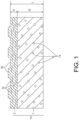
- FIG. 1 is a cross-sectional view of Embodiment 1 of a building material not part of the present invention.
- a building material 10 shown has a structure in which an unfoamed surface layer 2 is stacked onto a foamed core layer 1.
- the foamed core layer 1 is made of a material including at least a hydraulic material such as cement, slag, or gypsum; and a silica-containing material such as fly ash, fly ash balloon, silica sand, diatomaceous earth, and silica fumes, and includes bubbles 1a therein formed by the reaction of an aluminum powder.
- a hydraulic material such as cement, slag, or gypsum
- silica-containing material such as fly ash, fly ash balloon, silica sand, diatomaceous earth, and silica fumes
- the unfoamed surface layer 2 is made of a material including a hydraulic material such as cement, slag, or gypsum; a silica-containing material such as fly ash, fly ash balloon, silica sand, diatomaceous earth, or silica fumes; and a reinforcement such as pulp, wood meal, wood flake, or synthetic fiber.
- a hydraulic material such as cement, slag, or gypsum
- silica-containing material such as fly ash, fly ash balloon, silica sand, diatomaceous earth, or silica fumes
- a reinforcement such as pulp, wood meal, wood flake, or synthetic fiber.
- wood flakes are formed by cutting wood into fine flakes, that have, for example, a particle diameter of about 2 to about 5 mm, and a thickness of about 1 to about 2 mm.
- an inorganic admixture such as mica, pearlite, bentonite, wollastonite, pulp sludge ash, or biomass ash and an organic admixture such as acrylic resin, animal and vegetable fats and oils, succinic acid-based resin, silicone resin, or silane-based resin may be blended as needed.
- a pattern including projections and recesses 2b is formed on the surface (the surface opposite from the foamed core layer 1) of the unfoamed surface layer 2.
- the planar shape of the building material 10 is rectangular, for example, and has a length in the longitudinal direction of about 1.8 to about 3.0 m, and a length in the lateral direction of about 0.5 m, and has a thickness within the range of about 14 to about 25 mm.
- the unfoamed surface layer 2 has a thickness t1
- the foamed core layer 1 has a thickness t2.
- the thickness t2 of the foamed core layer 1 is larger than the thickness t1 of the unfoamed surface layer 2. Since the thickness t2 of the foamed core layer 1 including the bubbles 1a is the largest of the two component layers, further weight reduction can be achieved.
- the ratio of the mass of the unfoamed surface layer 2 and the mass of the foamed core layer 1 is set to 10 to 45: 55 to 90.
- the building material 10 is a building material that has a structure in which the unfoamed surface layer 2 is stacked on the foamed core layer 1 containing a larger number of bubbles 1a, and for which a significant weight reduction has been achieved.
- the building material 10 is a building material with a surface pattern such as a pattern including projections and recesses favorably formed thereon and exhibits excellent formability.
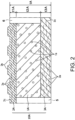
- FIG. 2 is a cross-sectional view of Embodiment 2 of a building material not part of the present invention.
- a building material 10A shown is different from the building material 10 in FIG. 1 in that a foamed core layer 1A is stacked onto an unfoamed back layer 3A.
- the building material 10A has a structure in which an unfoamed surface layer 2A and the unfoamed back layer 3A are formed on opposite sides of the foamed core layer 1A.
- the foamed core layer 1A is made of the same materials as the foamed core layer 1 of FIG. 1
- the unfoamed surface layer 2A is made of the same materials as the unfoamed surface layer 2 in FIG. 1 .
- the unfoamed back layer 3A is made of a material including a hydraulic material such as cement, slag, or gypsum; and a silica-containing material such as fly ash, fly ash balloon, silica sand, diatomaceous earth, or silica fumes; and a reinforcement such as pulp, wood meal, wood flake, or synthetic fiber.
- a hydraulic material such as cement, slag, or gypsum
- silica-containing material such as fly ash, fly ash balloon, silica sand, diatomaceous earth, or silica fumes
- a reinforcement such as pulp, wood meal, wood flake, or synthetic fiber.
- wood flake is formed by cutting wood into fine flakes, and, for example, has a particle diameter of about 2 to about 5 mm, and a thickness of about 1 to about 2 mm.
- an inorganic admixture such as mica, pearlite, bentonite, wollastonite, pulp sludge ash, or biomass ash
- an organic admixture such as acrylic resin, animal and vegetable fats and oils, succinic acid-based resin, silicone resin, or silane-based resin may be blended as needed.
- a pattern including projections and recesses 2b is formed on the surface (the surface opposite from the foamed core layer 1A) of the unfoamed surface layer 2A.
- the planar shape of the building material 10A is rectangular, for example, and has a length in the longitudinal direction of about 1.8 to about 3.0 m, and a length in the lateral direction of about 0.5 m, and its thickness tA is within the rage of about 14 to about 25 mm.
- the unfoamed surface layer 2A has a thickness t1A
- the foamed core layer 1A has a thickness t2A
- the unfoamed back layer 3A has a thickness t3A.
- the thickness t2A of the foamed core layer 1A is larger than the thickness t1A of the unfoamed surface layer 2A and the thickness t3A of the unfoamed back layer 3A, and the thickness t3A of the unfoamed back layer 3A is the same or larger than the thickness t1A of the unfoamed surface layer 2A. Accordingly, cracking is even more less likely to occur in the unfoamed back layer 3A, and the damage inhibiting effect during transportation is even higher.
- the ratio of the mass of the unfoamed surface layer 2A: the mass of the foamed core layer 1A: the mass of the unfoamed back layer 3A is set to 10 to 20:45 to 70:15 to 45.
- an upper shiplap portion 2c is provided on the surface side of a side end portion of the building material 10A and a lower shiplap portion 3c is provided on the back surface side of the side end portion.
- the upper shiplap portion 2c and the lower shiplap portion 3c are provided by pressing and curing the building material 10A, and subsequently cutting out portions of the side end portion.
- the unfoamed back layer 3A is formed on the back surface of the foamed core layer 1A of the building material 10A, the flexibility of the building material 10A is increased.
- building materials are transported, for example, by a method in which the building material is transported by two operators holding end portions in the longitudinal direction thereof. Since the flexibility of the building material 10A is increased by the unfoamed back layer 3A, the building material 10A is inhibited from being damaged due to the occurrence of cracking as a result of a tensile stress being generated in the vicinity of the center of the building material during transportation.
- the unfoamed surface layer 2A and the unfoamed back layer 3A are made of the same materials, but the unfoamed surface layer 2A contributes to the formability of the surface pattern including projections and recesses, and the unfoamed back layer 3A contributes to good transportability provided by the flexibility of the building material 10A.
- the thickness t2A of the foamed core layer 1A including the bubbles 1a is largest among the three layers constituting the building material 10A, a further weight reduction can be achieved.
- a core layer material including a hydraulic material, a silica-containing material, and an aluminum powder is cured, to react the aluminum powder and form bubbles, and incompletely harden the hydraulic material and the silica-containing material, to form a foamed core layer 1 (first step).
- the foamed core layer 1 is a hardened article, but is in an incomplete hardened state in which further curing causes hardening to further advance. Accordingly, the foamed core layer 1 is caused to adhere to the unfoamed surface layer 2 by being further cured in a subsequent step.
- curing examples include steam curing and autoclave curing.
- the curing in the present step is curing in which the core layer material is incompletely hardened.
- One example thereof is steam curing at 40 to 60°C for 3 to 10 hours.
- the present step may be performed simultaneously with or separately from a second step, which will be described below.
- a surface layer material including a hydraulic material, a silica-containing material, and a reinforcement is dispersed on a template having a pattern including projections and recesses punched from the back, to form an unfoamed surface layer 2 (second step).
- the surface layer material may or may not be pressed after being dispersed, but pressing makes the unfoamed surface layer 2 denser, and allows the pattern including projections and recesses 2b to be even more favorably formed on the surface of the unfoamed surface layer 2.
- pressing in the second step is performed on the entire unfoamed surface layer 2.
- the pressing pressure during pressing is not particularly limited, and pressing may be performed at 0.5 to 2.0 MPa, for example.
- the foamed core layer 1 is stacked on the unfoamed surface layer 2 formed in the second step, to form a stack composed of the unfoamed surface layer 2 and the foamed core layer 1 (third step).
- Pressing is performed on the entire stack, and the pressing pressure is 0.5 to 1.0 MPa, for example.
- the pressing pressure in the fourth step is lower than the pressing pressure in the second step. This allows the bubbles in the foamed core layer 1 to be favorably held so as to make the unfoamed surface layer 2 denser, and makes the adhesion between the layers even more favorable in the cured building material 10.
- curing examples include natural curing, steam curing, and autoclave curing.
- Autoclave curing can achieve good adhesion between the foamed core layer 1 and the unfoamed surface layer 2.
- Autoclave curing after steam curing can achieve better adhesion between the foamed core layer 1 and the unfoamed surface layer 2.
- the first step and the second step are the same as those in the production method of Embodiment 1.
- the foamed core layer 1A formed in the first step is stacked on the unfoamed surface layer 2A formed in the second step (third step).
- a back layer material including a hydraulic material, a silica-containing material, and a reinforcement is dispersed on the foamed core layer 1A, to form an unfoamed back layer 3A. Consequently, a stack composed of the unfoamed surface layer 2A, the foamed core layer 1A, and the unfoamed back layer 3Ais formed (fourth step).
- the stack formed in the fourth step is pressed and cured, to produce a building material 10A as shown in FIG. 2 (fifth step).
- Pressing in the fifth step is performed on the entire stack.
- the pressing pressure is 0.5 to 1.0 MPa, for example.
- the pressing pressure during pressing in the fifth step is smaller than the pressing pressure during pressing in the second step. This allows the bubbles in the foamed core layer 1A to be favorably held so as to make the unfoamed surface layer 2A denser, and makes the adhesion between the layers of the cured building material 10A more favorable.
- curing examples include natural curing, steam curing, and autoclave curing.
- Autoclave curing achieve good adhesion between the foamed core layer 1A and the unfoamed surface layer 2A, and good adhesion between the foamed core layer 1A and the unfoamed back layer 3A.
- Autoclave curing after steam curing achieves better adhesion between the foamed core layer 1A and the unfoamed surface layer 2A, and better adhesion between the foamed core layer 1A and the unfoamed back layer 3A.
- the present inventors produced building materials according to Samples 1 to 12, and verified the lightweightness, formability, and transportability of each of the building materials.
- the materials used to make the surface layer, the core layer, and the back layer, the mass ratio of the surface layer, the core layer, and the back layer, and whether or not pressing was performed after dispersing the surface layer material for each of the building materials are as shown in Table 1 below.
- a surface layer material was dispersed on a template having a depth of 4 mm and an inclination angle of 55 degrees and having a brick pattern punched from the back, to form a surface layer. Then, a core layer was stacked on the surface layer. Then, a back layer material was dispersed on the core layer, to form a back layer, which was stack-pressed at a pressure of 0.7 MPa, and then steam-cured at a temperature of 60°C for 10 hours in the pressed state. Thereafter, the stack was cured in an autoclave at a pressure of 0.6 MPa and a temperature of 165°C for 7 hours, to give 18 mm thick building materials according to Sample 1 to 8 and 10. Although some of the building materials of Samples 9, 11, and 12 did not include the core layer, or the surface layer and the back layer, all of these samples had a thickness of 18 mm, and the pressing conditions and the curing conditions were also the same.
- a core layer material including a hydraulic material, a silica-containing material, and an aluminum powder was kneaded with water (in an amount of 60 to 70% based on the solid content) with the lowest temperature set to 20°C. After being sufficiently stirred, the resulting mixture was charged into a mold, and heated and cured at about 40 to 60°C so as not to evaporate water, to form a core layer. The resulting core layer was released from the mold, and moved and stacked on the surface layer.
- the surface layer material was dispersed on the template, and thereafter the entire surface layer was pressed at a pressure of 1.5 MPa, followed by stacking the core layer thereon.
- the surface layer material was dispersed on the template, and thereafter, the next step was performed without performing pressing. Note that a crushed article of mica and remnants of a wood cement board was used at a mass ratio of 7:5 as the inorganic admixture.
- Table 1 below shows the ratios of the materials in the layers, the mass ratio of the surface layer, the core layer, and the back layer, whether or not pressing was performed after dispersion of the surface layer material, along with the verification results of the lightweightness and the formability.
- Table 1 shows that each of Samples 1 to 10 had a specific gravity of less than 1.0, thus achieving favorable results for both the lightweightness and the formability. Note that Sample 2 was evaluated to be “Good” to “Fair” because the brick pattern was expressed although some nest-like holes were seen in a part of the surface layer.
- Sample 11 had a specific gravity larger than 1.0 and thus was unfavorable in terms of lightweightness, and Sample 12 exhibited poor formability.
- Samples 1 to 12 were also evaluated for the transportability, and the results are shown in Table 1.
- Table 1 As for the transportability, with opposite ends in the longitudinal direction of each of the samples being held and raised 1 m above the ground, each of the samples was transported by 10 m in the transverse direction. Subsequently, the state of each of the samples was visually checked. The samples that had not undergone any change such as a damage were evaluated to be "Good”, and the samples that showed cracks or a damage were evaluated to be "Poor”. Consequently, Samples 1 to 8 achieved favorable results for the transportability.
- the results of the present experiment demonstrate that a preferable range of the ratio of the mass of the surface layer: the mass of the core layer: and the mass of the back layer is 10 to 20:45 to 70:15 to 45 for a sample composed of a surface layer including wood flake, a core layer including bubbles formed therein, and a back layer including wood flake.
- the results demonstrate that a sample for which the surface layer material was dispersed on the template, and thereafter the entire surface layer was pressed, followed by stacking the core layer thereon exhibits excellent formability and is preferable.
Landscapes
- Engineering & Computer Science (AREA)
- Chemical & Material Sciences (AREA)
- Ceramic Engineering (AREA)
- Structural Engineering (AREA)
- Architecture (AREA)
- Organic Chemistry (AREA)
- Materials Engineering (AREA)
- Mechanical Engineering (AREA)
- Manufacturing & Machinery (AREA)
- Civil Engineering (AREA)
- Inorganic Chemistry (AREA)
- Chemical Kinetics & Catalysis (AREA)
- General Chemical & Material Sciences (AREA)
- Wood Science & Technology (AREA)
- Life Sciences & Earth Sciences (AREA)
- Physics & Mathematics (AREA)
- Fluid Mechanics (AREA)
- Laminated Bodies (AREA)
- Porous Artificial Stone Or Porous Ceramic Products (AREA)
- Panels For Use In Building Construction (AREA)
- Finishing Walls (AREA)
Claims (6)
- Verfahren zum Herstellen eines Baumaterials, umfassend:einen ersten Schritt zum Aushärten eines Kernschichtmaterials, das ein hydraulisches Material, ein siliziumdioxidhaltiges Material und ein Aluminiumpulver umfasst, um eine geschäumte Kernschicht (1, 1A) zu bilden, wobei das Aluminiumpulver reagiert und Blasen (1A) bildet und das hydraulische Material und das siliziumdioxidhaltige Material unvollständig gehärtet werden;einen zweiten Schritt zum Dispergieren eines Oberflächenschichtmaterials, das ein hydraulisches Material und ein siliziumdioxidhaltiges Material umfasst, um eine ungeschäumte Oberflächenschicht (2, 2A) zu bilden;einen dritten Schritt zum Stapeln der geschäumten Kernschicht (1, 1A) auf die ungeschäumte Oberflächenschicht (2, 2A), um einen Stapel zu bilden, der die ungeschäumte Oberflächenschicht (2, 2A) und die geschäumte Kernschicht (1, 1A) umfasst; undeinen vierten Schritt zum Pressen und Aushärten des Stapels.
- Verfahren zum Herstellen eines Baumaterials nach Anspruch 1, wobei,
in dem zweiten Schritt, das Oberflächenschichtmaterial auf einer Matrize mit einem Muster dispergiert wird, das von hinten gestanzte Vorsprünge und Vertiefungen umfasst. - Verfahren zum Herstellen eines Baumaterials nach Anspruch 1 oder 2, wobei,
in dem zweiten Schritt, die ungeschäumte Oberflächenschicht (2, 2A) gepresst wird. - Verfahren zum Herstellen eines Baumaterials nach einem der Ansprüche 1, 2 und 3, wobei,
in dem zweiten Schritt, das Oberflächenschichtmaterial eine Verstärkung (2a) umfasst. - Verfahren zum Herstellen eines Baumaterials nach einem der Ansprüche 1, 2, 3 und 4, wobei
der dritte Schritt ferner einen Schritt zum Dispergieren eines Rückschichtmaterials, das ein hydraulisches Material, ein siliziumdioxidhaltiges Material und eine Verstärkung umfasst, auf der geschäumten Kernschicht (1A) umfasst, um eine ungeschäumte Rückschicht (3A) zu bilden. - Verfahren zum Herstellen eines Baumaterials nach Anspruch 3, wobei
der Pressdruck in dem vierten Schritt niedriger ist als der Pressdruck in dem zweiten Schritt.
Applications Claiming Priority (2)
| Application Number | Priority Date | Filing Date | Title |
|---|---|---|---|
| JP2016189695A JP6910777B2 (ja) | 2016-09-28 | 2016-09-28 | 建材の製造方法 |
| JP2016189722A JP6910778B2 (ja) | 2016-09-28 | 2016-09-28 | 建材の製造方法 |
Publications (2)
| Publication Number | Publication Date |
|---|---|
| EP3308917A1 EP3308917A1 (de) | 2018-04-18 |
| EP3308917B1 true EP3308917B1 (de) | 2023-05-03 |
Family
ID=60042983
Family Applications (1)
| Application Number | Title | Priority Date | Filing Date |
|---|---|---|---|
| EP17192536.5A Active EP3308917B1 (de) | 2016-09-28 | 2017-09-22 | Baumaterial und verfahren zur herstellung des baumaterials |
Country Status (5)
| Country | Link |
|---|---|
| US (2) | US20180086023A1 (de) |
| EP (1) | EP3308917B1 (de) |
| CN (1) | CN107867875B (de) |
| AU (1) | AU2017232164B2 (de) |
| RU (1) | RU2743743C2 (de) |
Families Citing this family (6)
| Publication number | Priority date | Publication date | Assignee | Title |
|---|---|---|---|---|
| CN110540397B (zh) * | 2019-08-27 | 2021-10-29 | 江苏博拓新型建筑材料有限公司 | 一种抗裂节能保温加气混凝土砌块及其制备方法 |
| US11118342B1 (en) * | 2019-09-20 | 2021-09-14 | Ajn Investment & Development 2008 Ltd | Wall panel system and method of use |
| CN111593912B (zh) * | 2020-05-21 | 2021-06-25 | 广州市第四装修有限公司 | 空调机房及其管段的预制安装方法 |
| CN112060290B (zh) * | 2020-09-23 | 2021-03-02 | 陈锐 | 一种同心环单边燕尾槽瓷砖背模芯及制成瓷砖 |
| CN114409320B (zh) * | 2022-02-07 | 2022-10-04 | 武汉理工大学 | 一种碳矿化纤维水泥板及其二次压制成型制备方法和应用 |
| CN116815988B (zh) * | 2023-08-21 | 2024-01-12 | 湖南宝悦新型建材有限公司 | 基于二维码溯源的管线一体化alc板材及其生产工艺 |
Citations (1)
| Publication number | Priority date | Publication date | Assignee | Title |
|---|---|---|---|---|
| WO1984001402A1 (en) * | 1982-10-05 | 1984-04-12 | Pool Fabrications Singapore Pt | Structural members |
Family Cites Families (12)
| Publication number | Priority date | Publication date | Assignee | Title |
|---|---|---|---|---|
| JPS59156705A (ja) | 1983-02-25 | 1984-09-06 | 松下電工株式会社 | 軽量厚物硬化体の製法 |
| JPH0688823B2 (ja) * | 1990-01-23 | 1994-11-09 | ニチハ株式会社 | 無機質成形板およびその製造方法 |
| EP0597982A1 (de) * | 1991-07-22 | 1994-05-25 | Diversitech Corporation | Verbundwerkstoff mit einem Kern aus Schaumkunststoff und Verfahren zu seiner Herstellung |
| JP3563704B2 (ja) * | 2000-03-07 | 2004-09-08 | ニチハ株式会社 | 木質成形体の製造方法 |
| CA2424889C (en) * | 2000-10-10 | 2010-12-07 | Harvey Dale Deford | Composite building material |
| CN101033149A (zh) * | 2007-02-09 | 2007-09-12 | 吕超 | 一种无机盐发泡建材制品的生产方法 |
| WO2009099968A2 (en) * | 2008-02-01 | 2009-08-13 | Clear Fx, Llc | Art infused films and methods for making the same |
| JP5548340B2 (ja) * | 2008-03-31 | 2014-07-16 | ニチハ株式会社 | 木質セメント板の製造方法 |
| JP5348921B2 (ja) * | 2008-03-31 | 2013-11-20 | ニチハ株式会社 | 木質セメント板の製造方法 |
| CN101781106B (zh) * | 2009-01-15 | 2012-12-19 | 北新集团建材股份有限公司 | 轻质纤维增强水泥板及其制造方法 |
| JP6204228B2 (ja) * | 2014-02-28 | 2017-09-27 | ニチハ株式会社 | 建材、及び建材の製造方法 |
| WO2016000026A1 (en) * | 2014-07-03 | 2016-01-07 | Csr Building Products Limited | Method for producing a structural element |
-
2017
- 2017-09-11 RU RU2017131742A patent/RU2743743C2/ru active
- 2017-09-21 AU AU2017232164A patent/AU2017232164B2/en active Active
- 2017-09-21 CN CN201710863201.8A patent/CN107867875B/zh active Active
- 2017-09-22 EP EP17192536.5A patent/EP3308917B1/de active Active
- 2017-09-27 US US15/716,976 patent/US20180086023A1/en not_active Abandoned
-
2021
- 2021-05-06 US US17/313,341 patent/US20210252832A1/en not_active Abandoned
Patent Citations (1)
| Publication number | Priority date | Publication date | Assignee | Title |
|---|---|---|---|---|
| WO1984001402A1 (en) * | 1982-10-05 | 1984-04-12 | Pool Fabrications Singapore Pt | Structural members |
Also Published As
| Publication number | Publication date |
|---|---|
| AU2017232164A1 (en) | 2018-04-12 |
| RU2743743C2 (ru) | 2021-02-25 |
| AU2017232164B2 (en) | 2022-05-26 |
| RU2017131742A3 (de) | 2020-09-04 |
| US20210252832A1 (en) | 2021-08-19 |
| CN107867875B (zh) | 2023-02-17 |
| RU2017131742A (ru) | 2019-03-11 |
| CN107867875A (zh) | 2018-04-03 |
| EP3308917A1 (de) | 2018-04-18 |
| US20180086023A1 (en) | 2018-03-29 |
Similar Documents
| Publication | Publication Date | Title |
|---|---|---|
| EP3308917B1 (de) | Baumaterial und verfahren zur herstellung des baumaterials | |
| AU2011263731B2 (en) | Composite panel based on cementitious mortar with properties of transparency | |
| JP5768197B1 (ja) | 非主用構造部材用プレストレストコンクリート | |
| CN103261539A (zh) | 增强水泥基轻质结构水泥面板用的具有增加耐水性和热稳定性的高性能不可燃石膏-水泥组合物 | |
| JP2006062883A (ja) | 木質セメント板およびその製造方法 | |
| KR102123226B1 (ko) | 무기질판 및 그 제조 방법 | |
| JP2005343740A (ja) | 木質セメント板の製造方法 | |
| JP6285835B2 (ja) | シリケートポリマー成形体の製造方法及びシリケートポリマー成形体 | |
| JP4781290B2 (ja) | 埋設型枠用ボード | |
| EP2646390B1 (de) | System und verfahren für verstärkte wand | |
| ITRM20070212A1 (it) | Calcestruzzo cellulare autoclavato a ridotto fenomeno di ritiro per la realizzazione di blocchi e/o solaio e/o pannelli armati e non armati da costruzione. | |
| JP6874273B2 (ja) | パネル構造体 | |
| JP6910777B2 (ja) | 建材の製造方法 | |
| JP6910778B2 (ja) | 建材の製造方法 | |
| JPH11287014A (ja) | プレキャストコンクリ―トプレ―ト | |
| KR100873515B1 (ko) | 고인성 콘크리트 거푸집을 이용한 구조물 시공방법 | |
| WO1985004164A1 (en) | Blocks, beams, pipes and building elements that can be sawn and nailed | |
| JP4334948B2 (ja) | 擁壁用型枠およびその製造方法 | |
| JP2883586B2 (ja) | ガラス繊維強化石膏製品及びその製造方法 | |
| WO2012139587A1 (en) | Concrete manufacturing process and panel manufactured by said process, where said panel has a decreasing density away from an exposed dense surface of con-crete or high performance concrete (hpc) | |
| JP3980182B2 (ja) | 木質セメント板の製造方法 | |
| CN113235810B (zh) | 一种高韧性夹芯墙板 | |
| JP4427287B2 (ja) | 木質セメント板の製造方法 | |
| CN110228971B (zh) | 玻璃纤维立体增强轻质水泥条板 | |
| HUP0900449A2 (en) | Building material using cellulose |
Legal Events
| Date | Code | Title | Description |
|---|---|---|---|
| PUAI | Public reference made under article 153(3) epc to a published international application that has entered the european phase |
Free format text: ORIGINAL CODE: 0009012 |
|
| STAA | Information on the status of an ep patent application or granted ep patent |
Free format text: STATUS: THE APPLICATION HAS BEEN PUBLISHED |
|
| AK | Designated contracting states |
Kind code of ref document: A1 Designated state(s): AL AT BE BG CH CY CZ DE DK EE ES FI FR GB GR HR HU IE IS IT LI LT LU LV MC MK MT NL NO PL PT RO RS SE SI SK SM TR |
|
| AX | Request for extension of the european patent |
Extension state: BA ME |
|
| STAA | Information on the status of an ep patent application or granted ep patent |
Free format text: STATUS: REQUEST FOR EXAMINATION WAS MADE |
|
| 17P | Request for examination filed |
Effective date: 20181016 |
|
| RBV | Designated contracting states (corrected) |
Designated state(s): AL AT BE BG CH CY CZ DE DK EE ES FI FR GB GR HR HU IE IS IT LI LT LU LV MC MK MT NL NO PL PT RO RS SE SI SK SM TR |
|
| STAA | Information on the status of an ep patent application or granted ep patent |
Free format text: STATUS: EXAMINATION IS IN PROGRESS |
|
| 17Q | First examination report despatched |
Effective date: 20210422 |
|
| GRAP | Despatch of communication of intention to grant a patent |
Free format text: ORIGINAL CODE: EPIDOSNIGR1 |
|
| STAA | Information on the status of an ep patent application or granted ep patent |
Free format text: STATUS: GRANT OF PATENT IS INTENDED |
|
| RIC1 | Information provided on ipc code assigned before grant |
Ipc: B28B 7/00 20060101ALI20221116BHEP Ipc: B28B 1/52 20060101ALI20221116BHEP Ipc: B28B 1/50 20060101ALI20221116BHEP Ipc: B28B 1/00 20060101AFI20221116BHEP |
|
| INTG | Intention to grant announced |
Effective date: 20221220 |
|
| GRAS | Grant fee paid |
Free format text: ORIGINAL CODE: EPIDOSNIGR3 |
|
| GRAA | (expected) grant |
Free format text: ORIGINAL CODE: 0009210 |
|
| STAA | Information on the status of an ep patent application or granted ep patent |
Free format text: STATUS: THE PATENT HAS BEEN GRANTED |
|
| AK | Designated contracting states |
Kind code of ref document: B1 Designated state(s): AL AT BE BG CH CY CZ DE DK EE ES FI FR GB GR HR HU IE IS IT LI LT LU LV MC MK MT NL NO PL PT RO RS SE SI SK SM TR |
|
| REG | Reference to a national code |
Ref country code: GB Ref legal event code: FG4D |
|
| REG | Reference to a national code |
Ref country code: DE Ref legal event code: R096 Ref document number: 602017068248 Country of ref document: DE |
|
| REG | Reference to a national code |
Ref country code: AT Ref legal event code: REF Ref document number: 1564199 Country of ref document: AT Kind code of ref document: T Effective date: 20230515 Ref country code: CH Ref legal event code: EP |
|
| REG | Reference to a national code |
Ref country code: IE Ref legal event code: FG4D |
|
| REG | Reference to a national code |
Ref country code: LT Ref legal event code: MG9D |
|
| REG | Reference to a national code |
Ref country code: NL Ref legal event code: MP Effective date: 20230503 |
|
| REG | Reference to a national code |
Ref country code: AT Ref legal event code: MK05 Ref document number: 1564199 Country of ref document: AT Kind code of ref document: T Effective date: 20230503 |
|
| PG25 | Lapsed in a contracting state [announced via postgrant information from national office to epo] |
Ref country code: SE Free format text: LAPSE BECAUSE OF FAILURE TO SUBMIT A TRANSLATION OF THE DESCRIPTION OR TO PAY THE FEE WITHIN THE PRESCRIBED TIME-LIMIT Effective date: 20230503 Ref country code: PT Free format text: LAPSE BECAUSE OF FAILURE TO SUBMIT A TRANSLATION OF THE DESCRIPTION OR TO PAY THE FEE WITHIN THE PRESCRIBED TIME-LIMIT Effective date: 20230904 Ref country code: NO Free format text: LAPSE BECAUSE OF FAILURE TO SUBMIT A TRANSLATION OF THE DESCRIPTION OR TO PAY THE FEE WITHIN THE PRESCRIBED TIME-LIMIT Effective date: 20230803 Ref country code: NL Free format text: LAPSE BECAUSE OF FAILURE TO SUBMIT A TRANSLATION OF THE DESCRIPTION OR TO PAY THE FEE WITHIN THE PRESCRIBED TIME-LIMIT Effective date: 20230503 Ref country code: ES Free format text: LAPSE BECAUSE OF FAILURE TO SUBMIT A TRANSLATION OF THE DESCRIPTION OR TO PAY THE FEE WITHIN THE PRESCRIBED TIME-LIMIT Effective date: 20230503 Ref country code: AT Free format text: LAPSE BECAUSE OF FAILURE TO SUBMIT A TRANSLATION OF THE DESCRIPTION OR TO PAY THE FEE WITHIN THE PRESCRIBED TIME-LIMIT Effective date: 20230503 |
|
| PG25 | Lapsed in a contracting state [announced via postgrant information from national office to epo] |
Ref country code: RS Free format text: LAPSE BECAUSE OF FAILURE TO SUBMIT A TRANSLATION OF THE DESCRIPTION OR TO PAY THE FEE WITHIN THE PRESCRIBED TIME-LIMIT Effective date: 20230503 Ref country code: PL Free format text: LAPSE BECAUSE OF FAILURE TO SUBMIT A TRANSLATION OF THE DESCRIPTION OR TO PAY THE FEE WITHIN THE PRESCRIBED TIME-LIMIT Effective date: 20230503 Ref country code: LV Free format text: LAPSE BECAUSE OF FAILURE TO SUBMIT A TRANSLATION OF THE DESCRIPTION OR TO PAY THE FEE WITHIN THE PRESCRIBED TIME-LIMIT Effective date: 20230503 Ref country code: LT Free format text: LAPSE BECAUSE OF FAILURE TO SUBMIT A TRANSLATION OF THE DESCRIPTION OR TO PAY THE FEE WITHIN THE PRESCRIBED TIME-LIMIT Effective date: 20230503 Ref country code: IS Free format text: LAPSE BECAUSE OF FAILURE TO SUBMIT A TRANSLATION OF THE DESCRIPTION OR TO PAY THE FEE WITHIN THE PRESCRIBED TIME-LIMIT Effective date: 20230903 Ref country code: HR Free format text: LAPSE BECAUSE OF FAILURE TO SUBMIT A TRANSLATION OF THE DESCRIPTION OR TO PAY THE FEE WITHIN THE PRESCRIBED TIME-LIMIT Effective date: 20230503 Ref country code: GR Free format text: LAPSE BECAUSE OF FAILURE TO SUBMIT A TRANSLATION OF THE DESCRIPTION OR TO PAY THE FEE WITHIN THE PRESCRIBED TIME-LIMIT Effective date: 20230804 |
|
| PG25 | Lapsed in a contracting state [announced via postgrant information from national office to epo] |
Ref country code: FI Free format text: LAPSE BECAUSE OF FAILURE TO SUBMIT A TRANSLATION OF THE DESCRIPTION OR TO PAY THE FEE WITHIN THE PRESCRIBED TIME-LIMIT Effective date: 20230503 |
|
| PG25 | Lapsed in a contracting state [announced via postgrant information from national office to epo] |
Ref country code: SK Free format text: LAPSE BECAUSE OF FAILURE TO SUBMIT A TRANSLATION OF THE DESCRIPTION OR TO PAY THE FEE WITHIN THE PRESCRIBED TIME-LIMIT Effective date: 20230503 |
|
| PG25 | Lapsed in a contracting state [announced via postgrant information from national office to epo] |
Ref country code: SM Free format text: LAPSE BECAUSE OF FAILURE TO SUBMIT A TRANSLATION OF THE DESCRIPTION OR TO PAY THE FEE WITHIN THE PRESCRIBED TIME-LIMIT Effective date: 20230503 Ref country code: SK Free format text: LAPSE BECAUSE OF FAILURE TO SUBMIT A TRANSLATION OF THE DESCRIPTION OR TO PAY THE FEE WITHIN THE PRESCRIBED TIME-LIMIT Effective date: 20230503 Ref country code: RO Free format text: LAPSE BECAUSE OF FAILURE TO SUBMIT A TRANSLATION OF THE DESCRIPTION OR TO PAY THE FEE WITHIN THE PRESCRIBED TIME-LIMIT Effective date: 20230503 Ref country code: EE Free format text: LAPSE BECAUSE OF FAILURE TO SUBMIT A TRANSLATION OF THE DESCRIPTION OR TO PAY THE FEE WITHIN THE PRESCRIBED TIME-LIMIT Effective date: 20230503 Ref country code: DK Free format text: LAPSE BECAUSE OF FAILURE TO SUBMIT A TRANSLATION OF THE DESCRIPTION OR TO PAY THE FEE WITHIN THE PRESCRIBED TIME-LIMIT Effective date: 20230503 Ref country code: CZ Free format text: LAPSE BECAUSE OF FAILURE TO SUBMIT A TRANSLATION OF THE DESCRIPTION OR TO PAY THE FEE WITHIN THE PRESCRIBED TIME-LIMIT Effective date: 20230503 |
|
| REG | Reference to a national code |
Ref country code: DE Ref legal event code: R097 Ref document number: 602017068248 Country of ref document: DE |
|
| PLBE | No opposition filed within time limit |
Free format text: ORIGINAL CODE: 0009261 |
|
| STAA | Information on the status of an ep patent application or granted ep patent |
Free format text: STATUS: NO OPPOSITION FILED WITHIN TIME LIMIT |
|
| 26N | No opposition filed |
Effective date: 20240206 |
|
| PG25 | Lapsed in a contracting state [announced via postgrant information from national office to epo] |
Ref country code: SI Free format text: LAPSE BECAUSE OF FAILURE TO SUBMIT A TRANSLATION OF THE DESCRIPTION OR TO PAY THE FEE WITHIN THE PRESCRIBED TIME-LIMIT Effective date: 20230503 |
|
| PG25 | Lapsed in a contracting state [announced via postgrant information from national office to epo] |
Ref country code: LU Free format text: LAPSE BECAUSE OF NON-PAYMENT OF DUE FEES Effective date: 20230922 |
|
| PG25 | Lapsed in a contracting state [announced via postgrant information from national office to epo] |
Ref country code: SI Free format text: LAPSE BECAUSE OF FAILURE TO SUBMIT A TRANSLATION OF THE DESCRIPTION OR TO PAY THE FEE WITHIN THE PRESCRIBED TIME-LIMIT Effective date: 20230503 Ref country code: LU Free format text: LAPSE BECAUSE OF NON-PAYMENT OF DUE FEES Effective date: 20230922 Ref country code: IT Free format text: LAPSE BECAUSE OF FAILURE TO SUBMIT A TRANSLATION OF THE DESCRIPTION OR TO PAY THE FEE WITHIN THE PRESCRIBED TIME-LIMIT Effective date: 20230503 Ref country code: MC Free format text: LAPSE BECAUSE OF FAILURE TO SUBMIT A TRANSLATION OF THE DESCRIPTION OR TO PAY THE FEE WITHIN THE PRESCRIBED TIME-LIMIT Effective date: 20230503 |
|
| REG | Reference to a national code |
Ref country code: IE Ref legal event code: MM4A |
|
| PG25 | Lapsed in a contracting state [announced via postgrant information from national office to epo] |
Ref country code: IE Free format text: LAPSE BECAUSE OF NON-PAYMENT OF DUE FEES Effective date: 20230922 |
|
| PG25 | Lapsed in a contracting state [announced via postgrant information from national office to epo] |
Ref country code: IE Free format text: LAPSE BECAUSE OF NON-PAYMENT OF DUE FEES Effective date: 20230922 |
|
| PGFP | Annual fee paid to national office [announced via postgrant information from national office to epo] |
Ref country code: BE Payment date: 20240816 Year of fee payment: 8 |
|
| PG25 | Lapsed in a contracting state [announced via postgrant information from national office to epo] |
Ref country code: BG Free format text: LAPSE BECAUSE OF FAILURE TO SUBMIT A TRANSLATION OF THE DESCRIPTION OR TO PAY THE FEE WITHIN THE PRESCRIBED TIME-LIMIT Effective date: 20230503 |
|
| PG25 | Lapsed in a contracting state [announced via postgrant information from national office to epo] |
Ref country code: BG Free format text: LAPSE BECAUSE OF FAILURE TO SUBMIT A TRANSLATION OF THE DESCRIPTION OR TO PAY THE FEE WITHIN THE PRESCRIBED TIME-LIMIT Effective date: 20230503 |
|
| PGFP | Annual fee paid to national office [announced via postgrant information from national office to epo] |
Ref country code: CH Payment date: 20241001 Year of fee payment: 8 |
|
| PG25 | Lapsed in a contracting state [announced via postgrant information from national office to epo] |
Ref country code: CY Free format text: LAPSE BECAUSE OF FAILURE TO SUBMIT A TRANSLATION OF THE DESCRIPTION OR TO PAY THE FEE WITHIN THE PRESCRIBED TIME-LIMIT; INVALID AB INITIO Effective date: 20170922 |
|
| PG25 | Lapsed in a contracting state [announced via postgrant information from national office to epo] |
Ref country code: HU Free format text: LAPSE BECAUSE OF FAILURE TO SUBMIT A TRANSLATION OF THE DESCRIPTION OR TO PAY THE FEE WITHIN THE PRESCRIBED TIME-LIMIT; INVALID AB INITIO Effective date: 20170922 |
|
| PGFP | Annual fee paid to national office [announced via postgrant information from national office to epo] |
Ref country code: DE Payment date: 20250730 Year of fee payment: 9 |
|
| PGFP | Annual fee paid to national office [announced via postgrant information from national office to epo] |
Ref country code: GB Payment date: 20250731 Year of fee payment: 9 |
|
| PGFP | Annual fee paid to national office [announced via postgrant information from national office to epo] |
Ref country code: FR Payment date: 20250808 Year of fee payment: 9 |
|
| PG25 | Lapsed in a contracting state [announced via postgrant information from national office to epo] |
Ref country code: TR Free format text: LAPSE BECAUSE OF FAILURE TO SUBMIT A TRANSLATION OF THE DESCRIPTION OR TO PAY THE FEE WITHIN THE PRESCRIBED TIME-LIMIT Effective date: 20230503 |