EP3301057A1 - Elevator system having lockdown mode - Google Patents
Elevator system having lockdown mode Download PDFInfo
- Publication number
- EP3301057A1 EP3301057A1 EP17194353.3A EP17194353A EP3301057A1 EP 3301057 A1 EP3301057 A1 EP 3301057A1 EP 17194353 A EP17194353 A EP 17194353A EP 3301057 A1 EP3301057 A1 EP 3301057A1
- Authority
- EP
- European Patent Office
- Prior art keywords
- elevator car
- lockdown mode
- elevator
- parameter
- car door
- Prior art date
- Legal status (The legal status is an assumption and is not a legal conclusion. Google has not performed a legal analysis and makes no representation as to the accuracy of the status listed.)
- Granted
Links
Images


Classifications
-
- B—PERFORMING OPERATIONS; TRANSPORTING
- B66—HOISTING; LIFTING; HAULING
- B66B—ELEVATORS; ESCALATORS OR MOVING WALKWAYS
- B66B1/00—Control systems of elevators in general
- B66B1/02—Control systems without regulation, i.e. without retroactive action
- B66B1/06—Control systems without regulation, i.e. without retroactive action electric
-
- B—PERFORMING OPERATIONS; TRANSPORTING
- B66—HOISTING; LIFTING; HAULING
- B66B—ELEVATORS; ESCALATORS OR MOVING WALKWAYS
- B66B5/00—Applications of checking, fault-correcting, or safety devices in elevators
- B66B5/02—Applications of checking, fault-correcting, or safety devices in elevators responsive to abnormal operating conditions
- B66B5/021—Applications of checking, fault-correcting, or safety devices in elevators responsive to abnormal operating conditions the abnormal operating conditions being independent of the system
-
- B—PERFORMING OPERATIONS; TRANSPORTING
- B66—HOISTING; LIFTING; HAULING
- B66B—ELEVATORS; ESCALATORS OR MOVING WALKWAYS
- B66B1/00—Control systems of elevators in general
- B66B1/24—Control systems with regulation, i.e. with retroactive action, for influencing travelling speed, acceleration, or deceleration
- B66B1/28—Control systems with regulation, i.e. with retroactive action, for influencing travelling speed, acceleration, or deceleration electrical
-
- B—PERFORMING OPERATIONS; TRANSPORTING
- B66—HOISTING; LIFTING; HAULING
- B66B—ELEVATORS; ESCALATORS OR MOVING WALKWAYS
- B66B1/00—Control systems of elevators in general
- B66B1/34—Details, e.g. call counting devices, data transmission from car to control system, devices giving information to the control system
- B66B1/3415—Control system configuration and the data transmission or communication within the control system
- B66B1/3423—Control system configuration, i.e. lay-out
-
- B—PERFORMING OPERATIONS; TRANSPORTING
- B66—HOISTING; LIFTING; HAULING
- B66B—ELEVATORS; ESCALATORS OR MOVING WALKWAYS
- B66B19/00—Mining-hoist operation
- B66B19/007—Mining-hoist operation method for modernisation of elevators
-
- B—PERFORMING OPERATIONS; TRANSPORTING
- B66—HOISTING; LIFTING; HAULING
- B66B—ELEVATORS; ESCALATORS OR MOVING WALKWAYS
- B66B5/00—Applications of checking, fault-correcting, or safety devices in elevators
-
- B—PERFORMING OPERATIONS; TRANSPORTING
- B66—HOISTING; LIFTING; HAULING
- B66B—ELEVATORS; ESCALATORS OR MOVING WALKWAYS
- B66B5/00—Applications of checking, fault-correcting, or safety devices in elevators
- B66B5/0006—Monitoring devices or performance analysers
- B66B5/0012—Devices monitoring the users of the elevator system
-
- B—PERFORMING OPERATIONS; TRANSPORTING
- B66—HOISTING; LIFTING; HAULING
- B66B—ELEVATORS; ESCALATORS OR MOVING WALKWAYS
- B66B9/00—Kinds or types of lifts in, or associated with, buildings or other structures
Definitions
- the subject matter disclosed herein generally relates to elevator systems and, more particularly, to an elevator system operable in a lockdown mode.
- Facilities such as office buildings, hospitals, university campuses, etc. often have the need for lockdown procedures in the event of civil unrest, violence, terrorist attack, or other emergency situation.
- Example lockdown procedures may instruct occupants to proceed to a safe area and await first responders. Such procedures may also entail locking doors, closing window shades, reducing noise, etc.
- Existing lockdown procedures focus on instructing individuals on where to go and how to act, but are lacking in control of transportation systems, such as elevator systems.
- an elevator system includes an elevator car configured to travel in a hoistway; an elevator car door configured to open and close; a machine configured to impart force to the elevator car; an interface configured to generate a lockdown mode signal; and a controller configured to control operation of at least one of the machine and the elevator car door in response to the lockdown mode signal.
- further embodiments may include wherein when the lockdown mode signal is active, the controller controls operation of at least one of the machine and the elevator car door in response to a lockdown mode parameter.
- lockdown mode parameter comprises an operation activation parameter, the operation activation parameter indicating collective or individual elevator car control.
- further embodiments may include, wherein the lockdown mode parameter comprises an elevator car identifier parameter, the elevator car identifier parameter indicating at least one of: all elevator cars, groups of elevator cars or individually selected elevator cars.
- lockdown mode parameter comprises an elevator car travel parameter to control elevator car travel when lockdown mode is active.
- further embodiments may include wherein the elevator car travel parameter indicates at least one of: stop at next available landing; stop at next called landing; recall to a specified landing, recall to lobby, travel between non-lockdown landings.
- lockdown mode parameter comprises an elevator car door parameter to control the elevator car door when lockdown mode is active.
- further embodiments may include wherein the elevator car door parameter indicates at least one of: elevator car door remains closed; elevator car door remains opened; elevator car door closes and remains closed; elevator car door opens and remains open; elevator car door open button enable/disable; elevator car door close button enable/disable; remote elevator car door open button enable; remote elevator car door close button enable.
- lockdown mode parameter comprises an announcement parameter, the announcement parameter indicating that an announcement is to be made.
- further embodiments may include wherein the announcement parameter indicates at least one of: no announcement, an announcement throughout a facility and an announcement in the elevator car.
- lockdown mode parameter comprises a lockdown mode exit parameter
- the lockdown mode exit parameter indicating operation of at least one of the machine and the elevator car door when the lockdown mode signal changes from active to inactive.
- further embodiments may include a user interface configured to input the lockdown mode parameter.
- further embodiments may include wherein the controller suspends operation of the machine and the elevator car door in response to the lockdown mode parameter.
- controller controls the machine to move the elevator car to a predetermined floor in response to the lockdown mode parameter.
- further embodiments may include wherein the controller moves the elevator car to stop in between landings in response to the lockdown mode parameter.
- a method for controlling an elevator system having a machine, an elevator car and an elevator car door includes receiving, at an interface, a lockdown mode parameter; storing, by a controller, the lockdown mode parameter; monitoring, by the controller, a lockdown mode signal; and when the lockdown mode signal is active, the controller controlling operation of at least one of the machine and the elevator car door in response to the lockdown mode parameter.
- further embodiments may include when the lockdown mode signal is inactive, exiting lockdown mode operation in response to the lockdown mode parameter.
- further embodiments may include wherein in the lockdown mode parameter comprises a lockdown mode exit parameter, the lockdown mode exit parameter indicating operation of at least one of the machine and the elevator car door when the lockdown mode signal changes from active to inactive.
- inventions of the present disclosure include the ability to assign lockdown mode parameters for an elevator system and operate the elevator system in accordance with the lockdown mode parameters when a lockdown mode is in effect.
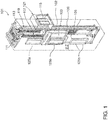
- FIG. 1 is a perspective view of an elevator system 101 including an elevator car 102, a counterweight 105, a roping 107, a guide rail 109, a machine 111, a position encoder 113, and a controller 115.
- the elevator car 102 and counterweight 105 are connected to each other by the roping 107.
- the roping 107 may include or be configured as, for example, ropes, steel cables, and/or coated-steel belts.
- the counterweight 105 is configured to balance a load of the elevator car 102 and is configured to facilitate movement of the elevator car 102 concurrently and in an opposite direction with respect to the counterweight 105 within an elevator hoistway 117 and along the guide rail 109.
- the roping 107 engages the machine 111, which is part of an overhead structure of the elevator system 101.
- the machine 111 is configured to control movement of the elevator car 102 and the counterweight 105.
- the position encoder 113 may be mounted on an upper sheave of a speed-governor system 119 and may be configured to provide position signals related to a position of the elevator car 102 within the elevator hoistway 117. In other embodiments, the position encoder 113 may be directly mounted to a moving component of the machine 111, or may be located in other positions and/or configurations as known in the art.
- the controller 115 is located in a controller room 121 of the elevator hoistway 117 and is configured to control the operation of the elevator system 101, and particularly the elevator car 102.
- the controller 115 may provide drive signals to the machine 111 to control the acceleration, deceleration, leveling, stopping, etc. of the elevator car 102.
- the controller 115 may also be configured to receive position signals from the position encoder 113.
- the elevator car 102 When moving up or down within the elevator hoistway 117 along guide rail 109, the elevator car 102 may stop at one or more landings 125a, 125b and 125c as controlled by the controller 115.
- the elevator system may serve more or less than three floors.
- the controller 115 may also be configured to control the elevator car door 103.
- the controller 115 may open or close the elevator car door 103 and may enable or disable the elevator car door open and close buttons inside elevator car 102. Although shown in a controller room 121, those of skill in the art will appreciate that the controller 115 can be located and/or configured in other locations or positions within the elevator system 101.
- the machine 111 may include a motor or similar driving mechanism.
- the machine 111 is configured to include an electrically driven motor.
- the power supply for the motor may be any power source, including a power grid, which, in combination with other components, is supplied to the motor.
- the elevator system 101 may use a ropeless machine for moving the elevator car 102 along the hoistway 117.
- the elevator system 101 may include a plurality of elevator cars 102, under the control of a single controller 115.
- the controller 115 may be divided into a plurality of group controllers, each controller responsible for a single car or a group of elevator cars 102.
- the elevator system 101 may include multiple elevator cars operating within the same elevator hoistway 117.
- FIG. 1 is a non-limiting example presented for illustrative and explanatory purposes.
- FIG. 2 depicts a system for controlling the elevator system 101 in an embodiment.
- the controller 115 includes a processor 202 and a memory 204, which may store executable instructions and/or data.
- the executable instructions may be stored or organized in any manner and at any level of abstraction, such as in connection with one or more applications, processes, routines, procedures, methods, etc.
- the instructions stored in the memory 204 may be executed by the processor 202.
- the memory 204 may also store lockdown mode parameters, as described in detail below, that define how the elevator system 101 is to operate during the occurrence of a lockdown.
- An interface 206 is coupled to the controller 115.
- the interface 206 may be implemented using known input/output devices which may include one or more of a keyboard or keypad, a key switch, a touchscreen or touch panel, a display screen, a microphone, a speaker, a mouse, a button, a remote control, a joystick, a printer, a telephone or mobile device (e.g., a smartphone), etc.
- the user interface 206 may be remote from the controller 115 and coupled to the controller 115 by a network connection (e.g., wired and/or wireless). In one embodiment, the interface 206 may be in wired connection to the controller 115.
- the architecture shown in FIG. 2 depicts a single interface 206 and a single controller 115. In other embodiments, a plurality of controllers may be used, each controller having an interface and controlling one or more elevator cars 102.
- the interface 206 generates a lockdown mode signal as an output signal to the controller 115.
- the lockdown mode signal initiates the lockdown mode and indicates whether the facility, where the elevator system 101 is installed, is in lockdown mode.
- the lockdown mode signal is active if the facility is currently in lockdown mode, and inactive if the facility is currently not in lockdown mode, also referred to as normal operating mode.
- the lockdown mode may be initiated for a variety of reasons, including a natural disaster, an intruder, civil disturbance, etc.
- the lockdown mode signal may be activated in a variety of ways from the interface 206.
- the lockdown mode signal is activated by a button or key enabled switch on a security panel in communication with the interface 206.
- a portable, electronic "panic button” may be used to authorize the interface 206 to place the lockdown mode signal in active status.
- a person is activating the lockdown mode signal generated by the interface 206. The person may have a particular role, such as a building manager, fire, police, first responder, EMT, etc.
- the input device at the interface 206 can be operated by security personnel at a security desk, by building executives at any landing, by first responders at specified locations, or by anyone if an input device is available and the situation warrants this behavior.
- the interface 206 may require authentication (e.g., a password, code, etc.) of an input requesting that the lockdown mode signal be activated.
- the interface 206 activates the lockdown mode signal in response to a signal from detection devices.
- Devices such as acoustic detectors, can automatically determine that lockdown condition exists and send a command to the interface 206 to output an active lockdown mode signal.
- detectors may detect an audible lockdown alarm, gunshot(s), a lockdown voice command (from authorized personnel), etc.
- Other devices may use cameras to detect a flash of a firearm discharge and provide a location signal.
- a single interface 206 is shown in FIG. 2 , but it is understood that the interface 206 may be distributed across multiple locations, including locations remote from the building housing the elevator system 101. Further, multiple types of interfaces 206 may be connected to controller 115 and capable of outputting an active lockdown mode signal.
- the interface 206 includes a panel in a security office of a building.
- the interface 206 may also include one or more of an elevator user interface or joint interface, to initiate lockdown mode.
- the interface 206 is intended to cover a variety of devices that produce a lockdown mode signal. If the lockdown mode signal is active, the controller 115 alters operation of the elevator system 101.
- the interface 206 allows a user to specify how the controller 115 will function when the lockdown mode signal is active by identifying lockdown mode parameters.
- a building operator can specify the lockdown mode parameters at setup of the elevator system 101.
- the lockdown mode parameters can be changed at any point.
- the interface 206 may also be implemented using a service tool, either alone or in combination with a service panel or other device.
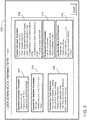
- FIG. 3 depicts an interface 206 for specifying lockdown mode parameters 301 in an embodiment.
- the interface 206 of FIG. 3 provides a variety of lockdown mode parameters 301, including operation activation parameters 302, elevator car identifier parameters 304, elevator car travel parameters 306, elevator car door parameters 308, announcement parameters 310 and lockdown mode exit parameters 312. It is understood that the lockdown mode parameters 301 are examples, and other lockdown mode parameters may be used to control the elevator system 101 during a lockdown.
- the operation activation parameters 302 allow the user to specify how the lockdown mode will be initiated in the event of a lockdown, including a per car input for one or all cars, a single input to activate all cars or those specified by 304, and inputs for one car or all cars at one or more landings.
- Control commands from the controller 115 may be issued to all the elevators cars as a group, or individually to each elevator car, as determined by the operation activation parameters 302.
- all cars can be used to handle passenger travel and stopped safely at the next available landing 306 or at a specified landing 306, open the doors 308 and allow the passengers to exit or keep the doors closed 308 and retain all passengers.
- the cars can be disabled from further motion and all door control disabled 308.
- all cars can be used to entrap a perpetrator by immediately disabling door control, stopping the car safely at the next available landing or bringing the car to a predetermined landing where remote activation of the door can be controlled when safe to do so.
- the elevator car identifier parameters 304 allow the user to specify which elevator cars 102 are controlled in lockdown mode, including all elevator cars, groups of elevator cars or individually selected elevator cars.
- the elevator car identifier parameters 304 identify how the presence or absence of the lockdown mode is communicated through the elevator system 101. For example, is lockdown mode is initiated at one elevator car 102 (as identified by the operation activation parameters 302), communication between the elevators cars 102 can allow for other elevator cars 102, as defined by the elevator car identifier parameters 304, to enter the lockdown operation.
- the elevator car travel parameters 306 indicate how the elevator cars 102 will be controlled in lockdown mode.
- the elevator car travel parameters 306 include stop at next available landing; stop at next called landing; recall to a specified landing, recall to lobby and allow continual travel between non-lockdown landings. During a lockdown, certain landings may be inaccessible as being locked down, referred to as lockdown landings.
- the elevator car door parameters 308 indicate how the elevator car doors 103 will be controlled in lockdown mode.
- the elevator car door parameters 308 include elevator car door remains closed; elevator car door remains opened; elevator car door closes and remains closed; elevator car door opens and remains open; elevator car door open button enable/disable; elevator car door close button enable/disable; remote elevator car door open button enable; remote elevator car door close button enable.
- the elevator car door parameters 308 allow for control of individuals in the building. For example, if the elevator car doors 103 are commanded to remain in a present state, this further prevents access to elevator cars 102 (e.g., open doors remain open and closed doors remain closed). Closing open elevator car doors 103 can both provide one or more safe zones and restrict movement of all individuals in the building.
- the elevator car door parameters 308 can provide for access and egress to cars after the safe travel of passengers or the restriction of access and egress to enable the entrapment of passengers. For example, if when arriving at a landing the doors open to allow passengers to exit they may be kept open or allowed to close to prevent further access. Also, as an example, open car doors may be closed immediately when the lockdown mode is initiated and the door control from within the car could be disabled to entrap a person inside the elevator.
- the announcement parameters 310 indicate whether and how an announcement of the lockdown should be made.
- the announcement parameters 310 include not make any announcement, making an announcement in the elevator cars, and making an announcement throughout the whole facility (e.g., by sending a signal to a public address system).
- the lockdown mode exit parameters 312 indicate what events are to occur for the lockdown mode to be exited.
- the lockdown mode exit parameters 312 include: reset each elevator car individually, reset groups of elevator cars, specified exit conditions such as door state (opened/closed) or other user-specified operations. For example, if a single input is required to activate the operation in a single car or a group of cars, that single input when deactivated will allow for the single car or group of cars to exit lockdown operation.
- the lockdown mode parameters 301 cause all elevator operations to be suspended in lockdown mode.
- the lockdown mode parameters 301 cause all elevator cars to bring all passengers to a predetermined floor.
- the lockdown mode parameters 301 cause the elevator cars to stop in between landings, so that no one can enter or exit the elevators cars.
- the controller 115 executes a process to control the elevator system 101 as shown in FIG. 4 .
- the controller 115 receives the lockdown mode parameters from the interface 206, such as that shown in FIG. 3 .
- the controller 115 stores the lockdown mode parameters in memory 204.
- the controller 115 monitors the lockdown mode signal 412 from the interface 206. If the lockdown mode signal is not active, flow proceeds to 416 where the controller 115 determines if the car was in lockdown mode. If not, the controller 115 operates the elevator system 101 in normal operating mode at 424. If so, the lockdown mode is exited 422, and the car returns to operate in normal mode at 424.
- Blocks 414, 416, and 424 repeat until the lockdown mode signal is active and flow proceeds to 418a or 418b where the controller 115 enters or remains in lockdown mode, respectively.
- the controller 115 controls operation of the elevator system 101 in response to the lockdown mode parameters 301 stored in memory 204.
- Flow proceeds to 414 where the controller 115 determines if the lockdown signal is still active. If so, flow continues to 418a or 418b. If not and the exit conditions as specified in the lockdown mode exit parameters 312 are met, flow proceeds to 416.
- the controller 115 exits lockdown mode by performing the operation as specified in the lockdown mode exit parameters 312.
- lockdown mode parameters are stored at 411 and are not altered.
- the lockdown mode parameters may be updated periodically and then stored in memory 204.
- the lockdown mode parameters changed when the lockdown mode signal from interface 206 is active.
- the lockdown mode parameters may be updated or changed, even if the lockdown mode signal from interface 206 is active.
- Embodiments allow a user to specify lockdown mode parameters at an elevator controller, which are then used to operate the elevator system in lockdown mode.
- the lockdown mode parameters provide multiple settings relating to elevator car motion control and elevator car door control that will enable a facility to enact a specified operation(s) as defined by that jurisdiction or property to allow for the elevator car(s) to be moved and controlled appropriately.
- various functions or acts may take place at a given location and/or in connection with the operation of one or more apparatuses, systems, or devices. For example, in some embodiments, a portion of a given function or act may be performed at a first device or location, and the remainder of the function or act may be performed at one or more additional devices or locations.
- an apparatus or system may include one or more processors, and memory storing instructions that, when executed by the one or more processors, cause the apparatus or system to perform one or more methodological acts as described herein.
- Various mechanical components known to those of skill in the art may be used in some embodiments.
- Embodiments may be implemented as one or more apparatuses, systems, and/or methods.
- instructions may be stored on one or more computer program products or computer-readable media, such as a transitory and/or non-transitory computer-readable medium.
- the instructions when executed, may cause an entity (e.g., an apparatus or system) to perform one or more methodological acts as described herein.
Landscapes
- Engineering & Computer Science (AREA)
- Automation & Control Theory (AREA)
- Computer Networks & Wireless Communication (AREA)
- Elevator Control (AREA)
Abstract
Description
- The subject matter disclosed herein generally relates to elevator systems and, more particularly, to an elevator system operable in a lockdown mode.
- Facilities, such as office buildings, hospitals, university campuses, etc. often have the need for lockdown procedures in the event of civil unrest, violence, terrorist attack, or other emergency situation. Example lockdown procedures may instruct occupants to proceed to a safe area and await first responders. Such procedures may also entail locking doors, closing window shades, reducing noise, etc. Existing lockdown procedures focus on instructing individuals on where to go and how to act, but are lacking in control of transportation systems, such as elevator systems.
- According to one embodiment, an elevator system includes an elevator car configured to travel in a hoistway; an elevator car door configured to open and close; a machine configured to impart force to the elevator car; an interface configured to generate a lockdown mode signal; and a controller configured to control operation of at least one of the machine and the elevator car door in response to the lockdown mode signal.
- In addition to one or more of the features described above, or as an alternative, further embodiments may include wherein when the lockdown mode signal is active, the controller controls operation of at least one of the machine and the elevator car door in response to a lockdown mode parameter.
- In addition to one or more of the features described above, or as an alternative, further embodiments may include wherein the lockdown mode parameter comprises an operation activation parameter, the operation activation parameter indicating collective or individual elevator car control.
- In addition to one or more of the features described above, or as an alternative, further embodiments may include, wherein the lockdown mode parameter comprises an elevator car identifier parameter, the elevator car identifier parameter indicating at least one of: all elevator cars, groups of elevator cars or individually selected elevator cars.
- In addition to one or more of the features described above, or as an alternative, further embodiments may include wherein the lockdown mode parameter comprises an elevator car travel parameter to control elevator car travel when lockdown mode is active.
- In addition to one or more of the features described above, or as an alternative, further embodiments may include wherein the elevator car travel parameter indicates at least one of: stop at next available landing; stop at next called landing; recall to a specified landing, recall to lobby, travel between non-lockdown landings.
- In addition to one or more of the features described above, or as an alternative, further embodiments may include wherein the lockdown mode parameter comprises an elevator car door parameter to control the elevator car door when lockdown mode is active.
- In addition to one or more of the features described above, or as an alternative, further embodiments may include wherein the elevator car door parameter indicates at least one of: elevator car door remains closed; elevator car door remains opened; elevator car door closes and remains closed; elevator car door opens and remains open; elevator car door open button enable/disable; elevator car door close button enable/disable; remote elevator car door open button enable; remote elevator car door close button enable.
- In addition to one or more of the features described above, or as an alternative, further embodiments may include wherein the lockdown mode parameter comprises an announcement parameter, the announcement parameter indicating that an announcement is to be made.
- In addition to one or more of the features described above, or as an alternative, further embodiments may include wherein the announcement parameter indicates at least one of: no announcement, an announcement throughout a facility and an announcement in the elevator car.
- In addition to one or more of the features described above, or as an alternative, further embodiments may include wherein the lockdown mode parameter comprises a lockdown mode exit parameter, the lockdown mode exit parameter indicating operation of at least one of the machine and the elevator car door when the lockdown mode signal changes from active to inactive.
- In addition to one or more of the features described above, or as an alternative, further embodiments may include a user interface configured to input the lockdown mode parameter.
- In addition to one or more of the features described above, or as an alternative, further embodiments may include wherein the controller suspends operation of the machine and the elevator car door in response to the lockdown mode parameter.
- In addition to one or more of the features described above, or as an alternative, further embodiments may include wherein the controller controls the machine to move the elevator car to a predetermined floor in response to the lockdown mode parameter.
- In addition to one or more of the features described above, or as an alternative, further embodiments may include wherein the controller moves the elevator car to stop in between landings in response to the lockdown mode parameter.
- According to another embodiment, a method for controlling an elevator system having a machine, an elevator car and an elevator car door includes receiving, at an interface, a lockdown mode parameter; storing, by a controller, the lockdown mode parameter; monitoring, by the controller, a lockdown mode signal; and when the lockdown mode signal is active, the controller controlling operation of at least one of the machine and the elevator car door in response to the lockdown mode parameter.
- In addition to one or more of the features described above, or as an alternative, further embodiments may include when the lockdown mode signal is inactive, exiting lockdown mode operation in response to the lockdown mode parameter.
- In addition to one or more of the features described above, or as an alternative, further embodiments may include wherein in the lockdown mode parameter comprises a lockdown mode exit parameter, the lockdown mode exit parameter indicating operation of at least one of the machine and the elevator car door when the lockdown mode signal changes from active to inactive.
- Technical effects of embodiments of the present disclosure include the ability to assign lockdown mode parameters for an elevator system and operate the elevator system in accordance with the lockdown mode parameters when a lockdown mode is in effect.
- The foregoing features and elements may be combined in various combinations without exclusivity, unless expressly indicated otherwise. These features and elements as well as the operation thereof will become more apparent in light of the following description and the accompanying drawings. It should be understood, however, that the following description and drawings are intended to be illustrative and explanatory in nature and non-limiting.
- The present disclosure is illustrated by way of example and not limited in the accompanying figures in which like reference numerals indicate similar elements.
-
FIG. 1 depicts an elevator system in an embodiment; -
FIG. 2 depicts system for controlling an elevator system in an embodiment; -
FIG. 3 depicts a user interface for specifying lockdown mode parameters in an embodiment; and -
FIG. 4 depicts a method for controlling an elevator system in an embodiment. -
FIG. 1 is a perspective view of anelevator system 101 including anelevator car 102, acounterweight 105, aroping 107, aguide rail 109, amachine 111, aposition encoder 113, and acontroller 115. Theelevator car 102 andcounterweight 105 are connected to each other by theroping 107. Theroping 107 may include or be configured as, for example, ropes, steel cables, and/or coated-steel belts. Thecounterweight 105 is configured to balance a load of theelevator car 102 and is configured to facilitate movement of theelevator car 102 concurrently and in an opposite direction with respect to thecounterweight 105 within anelevator hoistway 117 and along theguide rail 109. - The
roping 107 engages themachine 111, which is part of an overhead structure of theelevator system 101. Themachine 111 is configured to control movement of theelevator car 102 and thecounterweight 105. Theposition encoder 113 may be mounted on an upper sheave of a speed-governor system 119 and may be configured to provide position signals related to a position of theelevator car 102 within theelevator hoistway 117. In other embodiments, theposition encoder 113 may be directly mounted to a moving component of themachine 111, or may be located in other positions and/or configurations as known in the art. - The
controller 115 is located in acontroller room 121 of theelevator hoistway 117 and is configured to control the operation of theelevator system 101, and particularly theelevator car 102. For example, thecontroller 115 may provide drive signals to themachine 111 to control the acceleration, deceleration, leveling, stopping, etc. of theelevator car 102. Thecontroller 115 may also be configured to receive position signals from theposition encoder 113. When moving up or down within theelevator hoistway 117 alongguide rail 109, theelevator car 102 may stop at one ormore landings controller 115. The elevator system may serve more or less than three floors. Thecontroller 115 may also be configured to control theelevator car door 103. Thecontroller 115 may open or close theelevator car door 103 and may enable or disable the elevator car door open and close buttons insideelevator car 102. Although shown in acontroller room 121, those of skill in the art will appreciate that thecontroller 115 can be located and/or configured in other locations or positions within theelevator system 101. - The
machine 111 may include a motor or similar driving mechanism. In accordance with embodiments of the disclosure, themachine 111 is configured to include an electrically driven motor. The power supply for the motor may be any power source, including a power grid, which, in combination with other components, is supplied to the motor. - Although shown and described with a roping system, elevator systems that employ other methods and mechanisms of moving an elevator car within an
elevator hoistway 117 may employ embodiments of the present disclosure. For example, theelevator system 101 may use a ropeless machine for moving theelevator car 102 along thehoistway 117. Also, although asingle elevator car 102 is shown, it is understood that theelevator system 101 may include a plurality ofelevator cars 102, under the control of asingle controller 115. Further, thecontroller 115 may be divided into a plurality of group controllers, each controller responsible for a single car or a group ofelevator cars 102. In one embodiment, theelevator system 101 may include multiple elevator cars operating within thesame elevator hoistway 117.FIG. 1 is a non-limiting example presented for illustrative and explanatory purposes. -
FIG. 2 depicts a system for controlling theelevator system 101 in an embodiment. As shown inFIG. 2 , thecontroller 115 includes aprocessor 202 and amemory 204, which may store executable instructions and/or data. The executable instructions may be stored or organized in any manner and at any level of abstraction, such as in connection with one or more applications, processes, routines, procedures, methods, etc. The instructions stored in thememory 204 may be executed by theprocessor 202. Thememory 204 may also store lockdown mode parameters, as described in detail below, that define how theelevator system 101 is to operate during the occurrence of a lockdown. - An
interface 206 is coupled to thecontroller 115. Theinterface 206 may be implemented using known input/output devices which may include one or more of a keyboard or keypad, a key switch, a touchscreen or touch panel, a display screen, a microphone, a speaker, a mouse, a button, a remote control, a joystick, a printer, a telephone or mobile device (e.g., a smartphone), etc. Theuser interface 206 may be remote from thecontroller 115 and coupled to thecontroller 115 by a network connection (e.g., wired and/or wireless). In one embodiment, theinterface 206 may be in wired connection to thecontroller 115. The architecture shown inFIG. 2 depicts asingle interface 206 and asingle controller 115. In other embodiments, a plurality of controllers may be used, each controller having an interface and controlling one ormore elevator cars 102. - The
interface 206 generates a lockdown mode signal as an output signal to thecontroller 115. The lockdown mode signal initiates the lockdown mode and indicates whether the facility, where theelevator system 101 is installed, is in lockdown mode. The lockdown mode signal is active if the facility is currently in lockdown mode, and inactive if the facility is currently not in lockdown mode, also referred to as normal operating mode. The lockdown mode may be initiated for a variety of reasons, including a natural disaster, an intruder, civil disturbance, etc. - The lockdown mode signal may be activated in a variety of ways from the
interface 206. In one embodiment, the lockdown mode signal is activated by a button or key enabled switch on a security panel in communication with theinterface 206. In another embodiment, a portable, electronic "panic button" may be used to authorize theinterface 206 to place the lockdown mode signal in active status. In these embodiments, a person is activating the lockdown mode signal generated by theinterface 206. The person may have a particular role, such as a building manager, fire, police, first responder, EMT, etc. By way of example, the input device at theinterface 206 can be operated by security personnel at a security desk, by building executives at any landing, by first responders at specified locations, or by anyone if an input device is available and the situation warrants this behavior. Theinterface 206 may require authentication (e.g., a password, code, etc.) of an input requesting that the lockdown mode signal be activated. - In other embodiments, the
interface 206 activates the lockdown mode signal in response to a signal from detection devices. Devices, such as acoustic detectors, can automatically determine that lockdown condition exists and send a command to theinterface 206 to output an active lockdown mode signal. Such detectors may detect an audible lockdown alarm, gunshot(s), a lockdown voice command (from authorized personnel), etc. Other devices may use cameras to detect a flash of a firearm discharge and provide a location signal. - A
single interface 206 is shown inFIG. 2 , but it is understood that theinterface 206 may be distributed across multiple locations, including locations remote from the building housing theelevator system 101. Further, multiple types ofinterfaces 206 may be connected tocontroller 115 and capable of outputting an active lockdown mode signal. In one embodiment, theinterface 206 includes a panel in a security office of a building. Theinterface 206 may also include one or more of an elevator user interface or joint interface, to initiate lockdown mode. Thus, theinterface 206 is intended to cover a variety of devices that produce a lockdown mode signal. If the lockdown mode signal is active, thecontroller 115 alters operation of theelevator system 101. - The
interface 206 allows a user to specify how thecontroller 115 will function when the lockdown mode signal is active by identifying lockdown mode parameters. A building operator can specify the lockdown mode parameters at setup of theelevator system 101. The lockdown mode parameters can be changed at any point. Theinterface 206 may also be implemented using a service tool, either alone or in combination with a service panel or other device. -
FIG. 3 depicts aninterface 206 for specifying lockdown mode parameters 301 in an embodiment. Theinterface 206 ofFIG. 3 provides a variety of lockdown mode parameters 301, includingoperation activation parameters 302, elevatorcar identifier parameters 304, elevatorcar travel parameters 306, elevatorcar door parameters 308,announcement parameters 310 and lockdownmode exit parameters 312. It is understood that the lockdown mode parameters 301 are examples, and other lockdown mode parameters may be used to control theelevator system 101 during a lockdown. - The
operation activation parameters 302 allow the user to specify how the lockdown mode will be initiated in the event of a lockdown, including a per car input for one or all cars, a single input to activate all cars or those specified by 304, and inputs for one car or all cars at one or more landings. Control commands from thecontroller 115 may be issued to all the elevators cars as a group, or individually to each elevator car, as determined by theoperation activation parameters 302. - Several modes of operation are available for any car commanded to enter the lockout operation as established by using a combination of the available parameters. For example, all cars can be used to handle passenger travel and stopped safely at the next available landing 306 or at a specified
landing 306, open thedoors 308 and allow the passengers to exit or keep the doors closed 308 and retain all passengers. The cars can be disabled from further motion and all door control disabled 308. Also, all cars can be used to entrap a perpetrator by immediately disabling door control, stopping the car safely at the next available landing or bringing the car to a predetermined landing where remote activation of the door can be controlled when safe to do so. - The elevator
car identifier parameters 304 allow the user to specify whichelevator cars 102 are controlled in lockdown mode, including all elevator cars, groups of elevator cars or individually selected elevator cars. The elevatorcar identifier parameters 304 identify how the presence or absence of the lockdown mode is communicated through theelevator system 101. For example, is lockdown mode is initiated at one elevator car 102 (as identified by the operation activation parameters 302), communication between theelevators cars 102 can allow forother elevator cars 102, as defined by the elevatorcar identifier parameters 304, to enter the lockdown operation. - The elevator
car travel parameters 306 indicate how theelevator cars 102 will be controlled in lockdown mode. The elevatorcar travel parameters 306 include stop at next available landing; stop at next called landing; recall to a specified landing, recall to lobby and allow continual travel between non-lockdown landings. During a lockdown, certain landings may be inaccessible as being locked down, referred to as lockdown landings. - The elevator
car door parameters 308 indicate how theelevator car doors 103 will be controlled in lockdown mode. The elevatorcar door parameters 308 include elevator car door remains closed; elevator car door remains opened; elevator car door closes and remains closed; elevator car door opens and remains open; elevator car door open button enable/disable; elevator car door close button enable/disable; remote elevator car door open button enable; remote elevator car door close button enable. The elevatorcar door parameters 308 allow for control of individuals in the building. For example, if theelevator car doors 103 are commanded to remain in a present state, this further prevents access to elevator cars 102 (e.g., open doors remain open and closed doors remain closed). Closing openelevator car doors 103 can both provide one or more safe zones and restrict movement of all individuals in the building. The elevatorcar door parameters 308 can provide for access and egress to cars after the safe travel of passengers or the restriction of access and egress to enable the entrapment of passengers. For example, if when arriving at a landing the doors open to allow passengers to exit they may be kept open or allowed to close to prevent further access. Also, as an example, open car doors may be closed immediately when the lockdown mode is initiated and the door control from within the car could be disabled to entrap a person inside the elevator. - The
announcement parameters 310 indicate whether and how an announcement of the lockdown should be made. Theannouncement parameters 310 include not make any announcement, making an announcement in the elevator cars, and making an announcement throughout the whole facility (e.g., by sending a signal to a public address system). The lockdownmode exit parameters 312 indicate what events are to occur for the lockdown mode to be exited. The lockdownmode exit parameters 312 include: reset each elevator car individually, reset groups of elevator cars, specified exit conditions such as door state (opened/closed) or other user-specified operations. For example, if a single input is required to activate the operation in a single car or a group of cars, that single input when deactivated will allow for the single car or group of cars to exit lockdown operation. If multiple inputs are required to activate the operation in multiple cars, or at multiple landings, all inputs must be deactivated for all cars to exit from lockdown operation. It is possible that a single input can initiate lockdown operation in multiple cars and inputs per car can allow a single car to exit from lockdown operation. - By adjusting the lockdown mode parameters 301, a wide variety of elevator operations are available during lockdown mode. In one example, the lockdown mode parameters 301 cause all elevator operations to be suspended in lockdown mode. In another example, the lockdown mode parameters 301 cause all elevator cars to bring all passengers to a predetermined floor. In another example, the lockdown mode parameters 301 cause the elevator cars to stop in between landings, so that no one can enter or exit the elevators cars.
- The
controller 115 executes a process to control theelevator system 101 as shown inFIG. 4 . At 410, thecontroller 115 receives the lockdown mode parameters from theinterface 206, such as that shown inFIG. 3 . At 411, thecontroller 115 stores the lockdown mode parameters inmemory 204. At 414, thecontroller 115 monitors thelockdown mode signal 412 from theinterface 206. If the lockdown mode signal is not active, flow proceeds to 416 where thecontroller 115 determines if the car was in lockdown mode. If not, thecontroller 115 operates theelevator system 101 in normal operating mode at 424. If so, the lockdown mode is exited 422, and the car returns to operate in normal mode at 424.Blocks controller 115 enters or remains in lockdown mode, respectively. At 420, thecontroller 115 controls operation of theelevator system 101 in response to the lockdown mode parameters 301 stored inmemory 204. Flow proceeds to 414 where thecontroller 115 determines if the lockdown signal is still active. If so, flow continues to 418a or 418b. If not and the exit conditions as specified in the lockdownmode exit parameters 312 are met, flow proceeds to 416. At 416, if the lockdown signal was previously active, thecontroller 115 exits lockdown mode by performing the operation as specified in the lockdownmode exit parameters 312. Once lockdown mode is exited, flow proceeds to 424. In the process to control theelevator system 101 shown inFIG. 4 the lockdown mode parameters are stored at 411 and are not altered. As noted above, the lockdown mode parameters may be updated periodically and then stored inmemory 204. In other embodiments, the lockdown mode parameters changed when the lockdown mode signal frominterface 206 is active. For example, at 420 ofFIG. 4 , the lockdown mode parameters may be updated or changed, even if the lockdown mode signal frominterface 206 is active. - Embodiments allow a user to specify lockdown mode parameters at an elevator controller, which are then used to operate the elevator system in lockdown mode. The lockdown mode parameters provide multiple settings relating to elevator car motion control and elevator car door control that will enable a facility to enact a specified operation(s) as defined by that jurisdiction or property to allow for the elevator car(s) to be moved and controlled appropriately.
- As described herein, in some embodiments various functions or acts may take place at a given location and/or in connection with the operation of one or more apparatuses, systems, or devices. For example, in some embodiments, a portion of a given function or act may be performed at a first device or location, and the remainder of the function or act may be performed at one or more additional devices or locations.
- Embodiments may be implemented using one or more technologies. In some embodiments, an apparatus or system may include one or more processors, and memory storing instructions that, when executed by the one or more processors, cause the apparatus or system to perform one or more methodological acts as described herein. Various mechanical components known to those of skill in the art may be used in some embodiments.
- Embodiments may be implemented as one or more apparatuses, systems, and/or methods. In some embodiments, instructions may be stored on one or more computer program products or computer-readable media, such as a transitory and/or non-transitory computer-readable medium. The instructions, when executed, may cause an entity (e.g., an apparatus or system) to perform one or more methodological acts as described herein.
- Aspects of the disclosure have been described in terms of illustrative embodiments thereof. Numerous other embodiments, modifications and variations within the scope and spirit of the appended claims will occur to persons of ordinary skill in the art from a review of this disclosure. For example, one of ordinary skill in the art will appreciate that the steps described in conjunction with the illustrative figures may be performed in other than the recited order, and that one or more steps illustrated may be optional.
Claims (15)
- An elevator system comprising:an elevator car configured to travel in a hoistway;an elevator car door configured to open and close;a machine configured to impart force to the elevator car;an interface configured to generate a lockdown mode signal; anda controller configured to control operation of at least one of the machine and the elevator car door in response to the lockdown mode signal.
- The elevator system of claim 1, wherein when the lockdown mode signal is active, the controller controls operation of at least one of the machine and the elevator car door in response to a lockdown mode parameter.
- The elevator system of claim 2, wherein the lockdown mode parameter comprises an operation activation parameter, the operation activation parameter indicating collective or individual elevator car control.
- The elevator system of claim 2, wherein the lockdown mode parameter comprises an elevator car identifier parameter, the elevator car identifier parameter indicating at least one of: all elevator cars, groups of elevator cars or individually selected elevator cars.
- The elevator system of claim 2, wherein the lockdown mode parameter comprises an elevator car travel parameter to control elevator car travel when lockdown mode is active, and
optionally wherein the elevator car travel parameter indicates at least one of: stop at next available landing; stop at next called landing; recall to a specified landing, recall to lobby, travel between non-lockdown landings. - The elevator system of claim 2, wherein the lockdown mode parameter comprises an elevator car door parameter to control the elevator car door when lockdown mode is active, and
optionally wherein the elevator car door parameter indicates at least one of: elevator car door remains closed; elevator car door remains opened; elevator car door closes and remains closed; elevator car door opens and remains open; elevator car door open button enable/disable; elevator car door close button enable/disable; remote elevator car door open button enable; remote elevator car door close button enable. - The elevator system of claim 2, wherein the lockdown mode parameter comprises an announcement parameter, the announcement parameter indicating that an announcement is to be made, and
optionally wherein the announcement parameter indicates at least one of: no announcement, an announcement throughout a facility and an announcement in the elevator car. - The elevator system of claim 2, wherein the lockdown mode parameter comprises a lockdown mode exit parameter, the lockdown mode exit parameter indicating operation of at least one of the machine and the elevator car door when the lockdown mode signal changes from active to inactive.
- The elevator system of any of claims 2-8, further comprising a user interface configured to input the lockdown mode parameter.
- The elevator system of any of claims 2-9, wherein the controller suspends operation of the machine and the elevator car door in response to the lockdown mode parameter.
- The elevator system of any of claims 2-10, wherein the controller controls the machine to move the elevator car to a predetermined floor in response to the lockdown mode parameter.
- The elevator system of any of claims 2-11, wherein the controller moves the elevator car to stop in between landings in response to the lockdown mode parameter.
- A method for controlling an elevator system having a machine, an elevator car and an elevator car door, the method comprising:receiving, at an interface, a lockdown mode parameter;storing, by a controller, the lockdown mode parameter;monitoring, by the controller, a lockdown mode signal; andwhen the lockdown mode signal is active, the controller controlling operation of at least one of the machine and the elevator car door in response to the lockdown mode parameter.
- The method of claim 13, further comprising:when the lockdown mode signal is inactive, exiting lockdown mode operation in response to the lockdown mode parameter.
- The method of claim 14, wherein in the lockdown mode parameter comprises a lockdown mode exit parameter, the lockdown mode exit parameter indicating operation of at least one of the machine and the elevator car door when the lockdown mode signal changes from active to inactive.
Applications Claiming Priority (1)
| Application Number | Priority Date | Filing Date | Title |
|---|---|---|---|
| US15/282,248 US10384911B2 (en) | 2016-09-30 | 2016-09-30 | Elevator system having lockdown mode |
Publications (2)
| Publication Number | Publication Date |
|---|---|
| EP3301057A1 true EP3301057A1 (en) | 2018-04-04 |
| EP3301057B1 EP3301057B1 (en) | 2023-02-01 |
Family
ID=60001778
Family Applications (1)
| Application Number | Title | Priority Date | Filing Date |
|---|---|---|---|
| EP17194353.3A Active EP3301057B1 (en) | 2016-09-30 | 2017-10-02 | Elevator system having lockdown mode |
Country Status (3)
| Country | Link |
|---|---|
| US (1) | US10384911B2 (en) |
| EP (1) | EP3301057B1 (en) |
| CN (1) | CN107879204B (en) |
Cited By (2)
| Publication number | Priority date | Publication date | Assignee | Title |
|---|---|---|---|---|
| EP3666711A1 (en) * | 2018-12-10 | 2020-06-17 | Otis Elevator Company | System and method for operating elevator system during lockdown |
| US12122639B2 (en) | 2019-10-03 | 2024-10-22 | Otis Elevator Company | Mobile interface, communication, and control system to facilitate operation of elevator cars with media options |
Families Citing this family (4)
| Publication number | Priority date | Publication date | Assignee | Title |
|---|---|---|---|---|
| CN107979410B (en) * | 2016-10-21 | 2020-09-04 | 菜鸟智能物流控股有限公司 | A method and related device for automatically entering and leaving a riding device |
| EP3650382B1 (en) | 2018-11-06 | 2024-01-03 | KONE Corporation | An operational entity and a multicar elevator system for controlling movement of a plurality of elevator cars of a multicar elevator system |
| EP3653556B1 (en) * | 2018-11-15 | 2023-05-10 | KONE Corporation | Resetting an elevator shaft access monitoring system |
| US12428259B2 (en) | 2021-03-18 | 2025-09-30 | International Business Machines Corporation | Occupant-based intelligent elevator actions |
Citations (4)
| Publication number | Priority date | Publication date | Assignee | Title |
|---|---|---|---|---|
| US5159163A (en) * | 1991-11-27 | 1992-10-27 | Otis Elevator Company | Elevator management system time based security |
| GB2267977A (en) * | 1992-06-19 | 1993-12-22 | Gold Star Ind System | Anti-crime system for elevators |
| US20070151808A1 (en) * | 2005-03-02 | 2007-07-05 | Mitsubsihi Electric Corporation | Image monitoring device for elevator |
| EP1873108A1 (en) * | 2005-04-20 | 2008-01-02 | Mitsubishi Denki Kabushiki Kaisha | Crime preventive operation system of elevator |
Family Cites Families (32)
| Publication number | Priority date | Publication date | Assignee | Title |
|---|---|---|---|---|
| GB464591A (en) * | 1935-01-02 | 1937-04-21 | Westinghouse Electric & Mfg Co | Improvements in or relating to elevator control systems |
| JPS61260391A (en) * | 1985-05-14 | 1986-11-18 | 三菱電機株式会社 | Monitor/controller |
| ES2016817B3 (en) * | 1986-06-10 | 1990-12-01 | Inventio Ag | DEVICE FOR CONTROLLING THE CIRCULATION OF SEVERAL ELEVATORS AT A MAIN STOP. |
| JPH03172294A (en) * | 1989-11-28 | 1991-07-25 | Mitsubishi Electric Corp | Burglarproof device for elevator |
| DE4306187A1 (en) | 1993-02-27 | 1994-09-01 | Industrieanlagen Betriebsges | Method and arrangement of devices for protecting buildings and people against violent offenders |
| DE29817351U1 (en) * | 1998-09-28 | 1999-10-07 | C. Haushahn GmbH & Co., 70469 Stuttgart | Device for the special operation of elevator systems |
| JP2003146553A (en) * | 2001-11-13 | 2003-05-21 | Hitachi Building Systems Co Ltd | Elevator control device and control method |
| US6948592B2 (en) * | 2002-09-23 | 2005-09-27 | Medtronic Emergency Response Systems, Inc. | Elevators equipped with emergency medical devices |
| JP2004203623A (en) | 2002-12-23 | 2004-07-22 | Inventio Ag | Emergency evacuation method and system for person in building and modernization method for existing building using system |
| US7280030B1 (en) | 2004-09-24 | 2007-10-09 | Sielox, Llc | System and method for adjusting access control based on homeland security levels |
| US7529646B2 (en) | 2005-04-05 | 2009-05-05 | Honeywell International Inc. | Intelligent video for building management and automation |
| WO2008004295A1 (en) * | 2006-07-06 | 2008-01-10 | Mitsubishi Electric Corporation | Evacuation assistance device for elevator |
| US20080091278A1 (en) * | 2006-10-11 | 2008-04-17 | The Peelle Company Ltd. | Freight elevator door control utilizing serial communication |
| ES2499340T3 (en) * | 2007-08-07 | 2014-09-29 | Thyssenkrupp Elevator Ag | Elevator system |
| JP4597174B2 (en) * | 2007-09-19 | 2010-12-15 | 株式会社日立製作所 | Elevator equipment |
| ES1066672Y (en) | 2007-11-28 | 2008-05-16 | Oses Jose Ramon Echeverria | DEVICE FOR QUICK EVACUATION OF BUILDINGS |
| WO2010002378A1 (en) * | 2008-06-30 | 2010-01-07 | Otis Elevator Company | Security-based elevator control |
| JP2011063416A (en) | 2009-09-18 | 2011-03-31 | Toshiba Elevator Co Ltd | Violence detector and violence detecting method |
| US8230980B2 (en) | 2009-12-31 | 2012-07-31 | Inventio Ag | Method of operating elevators during emergency situations |
| FI125122B (en) | 2010-02-01 | 2015-06-15 | Kone Corp | Elevator system |
| EP2402275A1 (en) | 2010-06-30 | 2012-01-04 | Inventio AG | Elevator access control system |
| CN102058939A (en) | 2010-08-18 | 2011-05-18 | 清华大学 | Method and system for evaluating building fire situation and instructing evacuation |
| JP2012180175A (en) * | 2011-03-01 | 2012-09-20 | Toshiba Elevator Co Ltd | Elevator |
| IL216841A0 (en) * | 2011-12-08 | 2012-02-29 | Yoram Madar | Elevator protection against short circuit of safety devices |
| US9114953B2 (en) * | 2011-12-29 | 2015-08-25 | Inventio Ag | Emergency operation of elevators based on an indicated emergency condition |
| KR101423215B1 (en) * | 2013-02-27 | 2014-07-25 | 오티스엘리베이터 유한회사 | Elevator Door Stopping Device |
| US10313144B2 (en) | 2013-06-07 | 2019-06-04 | Lennie Earl Franks | System and method for incident reporting and notification |
| US10282949B2 (en) | 2013-12-12 | 2019-05-07 | Rustin B. Penland | Security system for identifying disturbances in a building |
| CN106463038A (en) | 2014-05-29 | 2017-02-22 | 奥的斯电梯公司 | Active threat mitigation control system |
| CN105129563A (en) * | 2015-08-03 | 2015-12-09 | 公安部上海消防研究所 | Elevator evacuation dynamic warning supporting system applied to high-rise building fire |
| CN105060052B (en) | 2015-08-04 | 2016-08-17 | 北京黎阳之光科技有限公司 | Incident of violence early warning system in elevator based on image procossing |
| CN105000443A (en) | 2015-08-04 | 2015-10-28 | 董岩 | A method for early warning of violent incidents in elevators based on image processing |
-
2016
- 2016-09-30 US US15/282,248 patent/US10384911B2/en active Active
-
2017
- 2017-09-29 CN CN201710914773.4A patent/CN107879204B/en active Active
- 2017-10-02 EP EP17194353.3A patent/EP3301057B1/en active Active
Patent Citations (4)
| Publication number | Priority date | Publication date | Assignee | Title |
|---|---|---|---|---|
| US5159163A (en) * | 1991-11-27 | 1992-10-27 | Otis Elevator Company | Elevator management system time based security |
| GB2267977A (en) * | 1992-06-19 | 1993-12-22 | Gold Star Ind System | Anti-crime system for elevators |
| US20070151808A1 (en) * | 2005-03-02 | 2007-07-05 | Mitsubsihi Electric Corporation | Image monitoring device for elevator |
| EP1873108A1 (en) * | 2005-04-20 | 2008-01-02 | Mitsubishi Denki Kabushiki Kaisha | Crime preventive operation system of elevator |
Cited By (3)
| Publication number | Priority date | Publication date | Assignee | Title |
|---|---|---|---|---|
| EP3666711A1 (en) * | 2018-12-10 | 2020-06-17 | Otis Elevator Company | System and method for operating elevator system during lockdown |
| US11383956B2 (en) * | 2018-12-10 | 2022-07-12 | Otis Elevator Company | System and method for operating elevator system during lockdown |
| US12122639B2 (en) | 2019-10-03 | 2024-10-22 | Otis Elevator Company | Mobile interface, communication, and control system to facilitate operation of elevator cars with media options |
Also Published As
| Publication number | Publication date |
|---|---|
| US20180093860A1 (en) | 2018-04-05 |
| EP3301057B1 (en) | 2023-02-01 |
| US10384911B2 (en) | 2019-08-20 |
| CN107879204A (en) | 2018-04-06 |
| CN107879204B (en) | 2022-05-17 |
Similar Documents
| Publication | Publication Date | Title |
|---|---|---|
| EP3301057B1 (en) | Elevator system having lockdown mode | |
| US7621378B2 (en) | System for controlled operation of elevator in case of fire and method of controlled operation of elevator in case of fire | |
| JP5452505B2 (en) | Elevator system | |
| CN102712445B (en) | Method of operating elevators during emergency situations | |
| CN101939242B (en) | Elevator controller | |
| JP2004203623A (en) | Emergency evacuation method and system for person in building and modernization method for existing building using system | |
| WO2021124405A1 (en) | Elevator control system and elevator control method | |
| JP5615104B2 (en) | Elevator control device | |
| JPWO2008090615A1 (en) | Elevator control system | |
| CN103648951B (en) | Elevator device | |
| US11091350B2 (en) | Audio orientation systems for elevator cars | |
| JP6210164B2 (en) | Elevator equipment | |
| JPH04235881A (en) | Emergency remote rescue device for detached house elevator | |
| EP2085348A1 (en) | Elevator controller | |
| JP2006290501A (en) | Elevator apparatus and operation control method thereof | |
| JP2004359405A (en) | Elevator remote rescue method in case of earthquake | |
| JP2010024024A (en) | Earthquake control preferential communication system | |
| KR102469078B1 (en) | Passenger rescue system using emergency call device | |
| JP2007246230A (en) | Rescue system for elevator | |
| JP5485671B2 (en) | Elevator system | |
| JP5137489B2 (en) | Elevator control device | |
| JP2011098799A (en) | Notification device of elevator | |
| JP5003060B2 (en) | Elevator earthquake rescue operation method | |
| JP2023111339A (en) | elevator | |
| JP2025011371A (en) | Elevator Control System |
Legal Events
| Date | Code | Title | Description |
|---|---|---|---|
| PUAI | Public reference made under article 153(3) epc to a published international application that has entered the european phase |
Free format text: ORIGINAL CODE: 0009012 |
|
| STAA | Information on the status of an ep patent application or granted ep patent |
Free format text: STATUS: THE APPLICATION HAS BEEN PUBLISHED |
|
| AK | Designated contracting states |
Kind code of ref document: A1 Designated state(s): AL AT BE BG CH CY CZ DE DK EE ES FI FR GB GR HR HU IE IS IT LI LT LU LV MC MK MT NL NO PL PT RO RS SE SI SK SM TR |
|
| AX | Request for extension of the european patent |
Extension state: BA ME |
|
| STAA | Information on the status of an ep patent application or granted ep patent |
Free format text: STATUS: REQUEST FOR EXAMINATION WAS MADE |
|
| 17P | Request for examination filed |
Effective date: 20181004 |
|
| RBV | Designated contracting states (corrected) |
Designated state(s): AL AT BE BG CH CY CZ DE DK EE ES FI FR GB GR HR HU IE IS IT LI LT LU LV MC MK MT NL NO PL PT RO RS SE SI SK SM TR |
|
| STAA | Information on the status of an ep patent application or granted ep patent |
Free format text: STATUS: EXAMINATION IS IN PROGRESS |
|
| 17Q | First examination report despatched |
Effective date: 20200227 |
|
| GRAP | Despatch of communication of intention to grant a patent |
Free format text: ORIGINAL CODE: EPIDOSNIGR1 |
|
| STAA | Information on the status of an ep patent application or granted ep patent |
Free format text: STATUS: GRANT OF PATENT IS INTENDED |
|
| INTG | Intention to grant announced |
Effective date: 20210713 |
|
| GRAJ | Information related to disapproval of communication of intention to grant by the applicant or resumption of examination proceedings by the epo deleted |
Free format text: ORIGINAL CODE: EPIDOSDIGR1 |
|
| STAA | Information on the status of an ep patent application or granted ep patent |
Free format text: STATUS: EXAMINATION IS IN PROGRESS |
|
| INTC | Intention to grant announced (deleted) | ||
| GRAP | Despatch of communication of intention to grant a patent |
Free format text: ORIGINAL CODE: EPIDOSNIGR1 |
|
| STAA | Information on the status of an ep patent application or granted ep patent |
Free format text: STATUS: GRANT OF PATENT IS INTENDED |
|
| INTG | Intention to grant announced |
Effective date: 20220110 |
|
| GRAJ | Information related to disapproval of communication of intention to grant by the applicant or resumption of examination proceedings by the epo deleted |
Free format text: ORIGINAL CODE: EPIDOSDIGR1 |
|
| STAA | Information on the status of an ep patent application or granted ep patent |
Free format text: STATUS: EXAMINATION IS IN PROGRESS |
|
| INTC | Intention to grant announced (deleted) | ||
| GRAP | Despatch of communication of intention to grant a patent |
Free format text: ORIGINAL CODE: EPIDOSNIGR1 |
|
| STAA | Information on the status of an ep patent application or granted ep patent |
Free format text: STATUS: GRANT OF PATENT IS INTENDED |
|
| INTG | Intention to grant announced |
Effective date: 20220630 |
|
| GRAS | Grant fee paid |
Free format text: ORIGINAL CODE: EPIDOSNIGR3 |
|
| GRAA | (expected) grant |
Free format text: ORIGINAL CODE: 0009210 |
|
| STAA | Information on the status of an ep patent application or granted ep patent |
Free format text: STATUS: THE PATENT HAS BEEN GRANTED |
|
| AK | Designated contracting states |
Kind code of ref document: B1 Designated state(s): AL AT BE BG CH CY CZ DE DK EE ES FI FR GB GR HR HU IE IS IT LI LT LU LV MC MK MT NL NO PL PT RO RS SE SI SK SM TR |
|
| REG | Reference to a national code |
Ref country code: GB Ref legal event code: FG4D |
|
| REG | Reference to a national code |
Ref country code: CH Ref legal event code: EP Ref country code: AT Ref legal event code: REF Ref document number: 1546896 Country of ref document: AT Kind code of ref document: T Effective date: 20230215 |
|
| REG | Reference to a national code |
Ref country code: DE Ref legal event code: R096 Ref document number: 602017065875 Country of ref document: DE |
|
| REG | Reference to a national code |
Ref country code: IE Ref legal event code: FG4D |
|
| REG | Reference to a national code |
Ref country code: LT Ref legal event code: MG9D |
|
| REG | Reference to a national code |
Ref country code: NL Ref legal event code: MP Effective date: 20230201 |
|
| REG | Reference to a national code |
Ref country code: AT Ref legal event code: MK05 Ref document number: 1546896 Country of ref document: AT Kind code of ref document: T Effective date: 20230201 |
|
| PG25 | Lapsed in a contracting state [announced via postgrant information from national office to epo] |
Ref country code: RS Free format text: LAPSE BECAUSE OF FAILURE TO SUBMIT A TRANSLATION OF THE DESCRIPTION OR TO PAY THE FEE WITHIN THE PRESCRIBED TIME-LIMIT Effective date: 20230201 Ref country code: PT Free format text: LAPSE BECAUSE OF FAILURE TO SUBMIT A TRANSLATION OF THE DESCRIPTION OR TO PAY THE FEE WITHIN THE PRESCRIBED TIME-LIMIT Effective date: 20230601 Ref country code: NO Free format text: LAPSE BECAUSE OF FAILURE TO SUBMIT A TRANSLATION OF THE DESCRIPTION OR TO PAY THE FEE WITHIN THE PRESCRIBED TIME-LIMIT Effective date: 20230501 Ref country code: NL Free format text: LAPSE BECAUSE OF FAILURE TO SUBMIT A TRANSLATION OF THE DESCRIPTION OR TO PAY THE FEE WITHIN THE PRESCRIBED TIME-LIMIT Effective date: 20230201 Ref country code: LV Free format text: LAPSE BECAUSE OF FAILURE TO SUBMIT A TRANSLATION OF THE DESCRIPTION OR TO PAY THE FEE WITHIN THE PRESCRIBED TIME-LIMIT Effective date: 20230201 Ref country code: LT Free format text: LAPSE BECAUSE OF FAILURE TO SUBMIT A TRANSLATION OF THE DESCRIPTION OR TO PAY THE FEE WITHIN THE PRESCRIBED TIME-LIMIT Effective date: 20230201 Ref country code: HR Free format text: LAPSE BECAUSE OF FAILURE TO SUBMIT A TRANSLATION OF THE DESCRIPTION OR TO PAY THE FEE WITHIN THE PRESCRIBED TIME-LIMIT Effective date: 20230201 Ref country code: ES Free format text: LAPSE BECAUSE OF FAILURE TO SUBMIT A TRANSLATION OF THE DESCRIPTION OR TO PAY THE FEE WITHIN THE PRESCRIBED TIME-LIMIT Effective date: 20230201 Ref country code: AT Free format text: LAPSE BECAUSE OF FAILURE TO SUBMIT A TRANSLATION OF THE DESCRIPTION OR TO PAY THE FEE WITHIN THE PRESCRIBED TIME-LIMIT Effective date: 20230201 |
|
| PG25 | Lapsed in a contracting state [announced via postgrant information from national office to epo] |
Ref country code: SE Free format text: LAPSE BECAUSE OF FAILURE TO SUBMIT A TRANSLATION OF THE DESCRIPTION OR TO PAY THE FEE WITHIN THE PRESCRIBED TIME-LIMIT Effective date: 20230201 Ref country code: PL Free format text: LAPSE BECAUSE OF FAILURE TO SUBMIT A TRANSLATION OF THE DESCRIPTION OR TO PAY THE FEE WITHIN THE PRESCRIBED TIME-LIMIT Effective date: 20230201 Ref country code: IS Free format text: LAPSE BECAUSE OF FAILURE TO SUBMIT A TRANSLATION OF THE DESCRIPTION OR TO PAY THE FEE WITHIN THE PRESCRIBED TIME-LIMIT Effective date: 20230601 Ref country code: GR Free format text: LAPSE BECAUSE OF FAILURE TO SUBMIT A TRANSLATION OF THE DESCRIPTION OR TO PAY THE FEE WITHIN THE PRESCRIBED TIME-LIMIT Effective date: 20230502 Ref country code: FI Free format text: LAPSE BECAUSE OF FAILURE TO SUBMIT A TRANSLATION OF THE DESCRIPTION OR TO PAY THE FEE WITHIN THE PRESCRIBED TIME-LIMIT Effective date: 20230201 |
|
| PG25 | Lapsed in a contracting state [announced via postgrant information from national office to epo] |
Ref country code: SM Free format text: LAPSE BECAUSE OF FAILURE TO SUBMIT A TRANSLATION OF THE DESCRIPTION OR TO PAY THE FEE WITHIN THE PRESCRIBED TIME-LIMIT Effective date: 20230201 Ref country code: RO Free format text: LAPSE BECAUSE OF FAILURE TO SUBMIT A TRANSLATION OF THE DESCRIPTION OR TO PAY THE FEE WITHIN THE PRESCRIBED TIME-LIMIT Effective date: 20230201 Ref country code: EE Free format text: LAPSE BECAUSE OF FAILURE TO SUBMIT A TRANSLATION OF THE DESCRIPTION OR TO PAY THE FEE WITHIN THE PRESCRIBED TIME-LIMIT Effective date: 20230201 Ref country code: DK Free format text: LAPSE BECAUSE OF FAILURE TO SUBMIT A TRANSLATION OF THE DESCRIPTION OR TO PAY THE FEE WITHIN THE PRESCRIBED TIME-LIMIT Effective date: 20230201 Ref country code: CZ Free format text: LAPSE BECAUSE OF FAILURE TO SUBMIT A TRANSLATION OF THE DESCRIPTION OR TO PAY THE FEE WITHIN THE PRESCRIBED TIME-LIMIT Effective date: 20230201 |
|
| REG | Reference to a national code |
Ref country code: DE Ref legal event code: R097 Ref document number: 602017065875 Country of ref document: DE |
|
| PG25 | Lapsed in a contracting state [announced via postgrant information from national office to epo] |
Ref country code: SK Free format text: LAPSE BECAUSE OF FAILURE TO SUBMIT A TRANSLATION OF THE DESCRIPTION OR TO PAY THE FEE WITHIN THE PRESCRIBED TIME-LIMIT Effective date: 20230201 |
|
| PLBE | No opposition filed within time limit |
Free format text: ORIGINAL CODE: 0009261 |
|
| STAA | Information on the status of an ep patent application or granted ep patent |
Free format text: STATUS: NO OPPOSITION FILED WITHIN TIME LIMIT |
|
| 26N | No opposition filed |
Effective date: 20231103 |
|
| PG25 | Lapsed in a contracting state [announced via postgrant information from national office to epo] |
Ref country code: SI Free format text: LAPSE BECAUSE OF FAILURE TO SUBMIT A TRANSLATION OF THE DESCRIPTION OR TO PAY THE FEE WITHIN THE PRESCRIBED TIME-LIMIT Effective date: 20230201 |
|
| REG | Reference to a national code |
Ref country code: DE Ref legal event code: R119 Ref document number: 602017065875 Country of ref document: DE |
|
| PG25 | Lapsed in a contracting state [announced via postgrant information from national office to epo] |
Ref country code: IT Free format text: LAPSE BECAUSE OF FAILURE TO SUBMIT A TRANSLATION OF THE DESCRIPTION OR TO PAY THE FEE WITHIN THE PRESCRIBED TIME-LIMIT Effective date: 20230201 Ref country code: MC Free format text: LAPSE BECAUSE OF FAILURE TO SUBMIT A TRANSLATION OF THE DESCRIPTION OR TO PAY THE FEE WITHIN THE PRESCRIBED TIME-LIMIT Effective date: 20230201 |
|
| REG | Reference to a national code |
Ref country code: CH Ref legal event code: PL |
|
| REG | Reference to a national code |
Ref country code: BE Ref legal event code: MM Effective date: 20231031 |
|
| PG25 | Lapsed in a contracting state [announced via postgrant information from national office to epo] |
Ref country code: LU Free format text: LAPSE BECAUSE OF NON-PAYMENT OF DUE FEES Effective date: 20231002 |
|
| GBPC | Gb: european patent ceased through non-payment of renewal fee |
Effective date: 20231002 |
|
| PG25 | Lapsed in a contracting state [announced via postgrant information from national office to epo] |
Ref country code: LU Free format text: LAPSE BECAUSE OF NON-PAYMENT OF DUE FEES Effective date: 20231002 |
|
| PG25 | Lapsed in a contracting state [announced via postgrant information from national office to epo] |
Ref country code: GB Free format text: LAPSE BECAUSE OF NON-PAYMENT OF DUE FEES Effective date: 20231002 |
|
| PG25 | Lapsed in a contracting state [announced via postgrant information from national office to epo] |
Ref country code: CH Free format text: LAPSE BECAUSE OF NON-PAYMENT OF DUE FEES Effective date: 20231031 |
|
| PG25 | Lapsed in a contracting state [announced via postgrant information from national office to epo] |
Ref country code: GB Free format text: LAPSE BECAUSE OF NON-PAYMENT OF DUE FEES Effective date: 20231002 Ref country code: FR Free format text: LAPSE BECAUSE OF NON-PAYMENT OF DUE FEES Effective date: 20231031 Ref country code: DE Free format text: LAPSE BECAUSE OF NON-PAYMENT OF DUE FEES Effective date: 20240501 Ref country code: CH Free format text: LAPSE BECAUSE OF NON-PAYMENT OF DUE FEES Effective date: 20231031 |
|
| PG25 | Lapsed in a contracting state [announced via postgrant information from national office to epo] |
Ref country code: BE Free format text: LAPSE BECAUSE OF NON-PAYMENT OF DUE FEES Effective date: 20231031 |
|
| PG25 | Lapsed in a contracting state [announced via postgrant information from national office to epo] |
Ref country code: IE Free format text: LAPSE BECAUSE OF NON-PAYMENT OF DUE FEES Effective date: 20231002 |
|
| PG25 | Lapsed in a contracting state [announced via postgrant information from national office to epo] |
Ref country code: IE Free format text: LAPSE BECAUSE OF NON-PAYMENT OF DUE FEES Effective date: 20231002 |
|
| PG25 | Lapsed in a contracting state [announced via postgrant information from national office to epo] |
Ref country code: BG Free format text: LAPSE BECAUSE OF FAILURE TO SUBMIT A TRANSLATION OF THE DESCRIPTION OR TO PAY THE FEE WITHIN THE PRESCRIBED TIME-LIMIT Effective date: 20230201 |
|
| PG25 | Lapsed in a contracting state [announced via postgrant information from national office to epo] |
Ref country code: BG Free format text: LAPSE BECAUSE OF FAILURE TO SUBMIT A TRANSLATION OF THE DESCRIPTION OR TO PAY THE FEE WITHIN THE PRESCRIBED TIME-LIMIT Effective date: 20230201 |
|
| PG25 | Lapsed in a contracting state [announced via postgrant information from national office to epo] |
Ref country code: CY Free format text: LAPSE BECAUSE OF FAILURE TO SUBMIT A TRANSLATION OF THE DESCRIPTION OR TO PAY THE FEE WITHIN THE PRESCRIBED TIME-LIMIT; INVALID AB INITIO Effective date: 20171002 |
|
| PG25 | Lapsed in a contracting state [announced via postgrant information from national office to epo] |
Ref country code: HU Free format text: LAPSE BECAUSE OF FAILURE TO SUBMIT A TRANSLATION OF THE DESCRIPTION OR TO PAY THE FEE WITHIN THE PRESCRIBED TIME-LIMIT; INVALID AB INITIO Effective date: 20171002 |
|
| PG25 | Lapsed in a contracting state [announced via postgrant information from national office to epo] |
Ref country code: TR Free format text: LAPSE BECAUSE OF FAILURE TO SUBMIT A TRANSLATION OF THE DESCRIPTION OR TO PAY THE FEE WITHIN THE PRESCRIBED TIME-LIMIT Effective date: 20230201 |