EP3296311B1 - Aminoglycosides and uses thereof in treating genetic disorders - Google Patents
Aminoglycosides and uses thereof in treating genetic disorders Download PDFInfo
- Publication number
- EP3296311B1 EP3296311B1 EP17192028.3A EP17192028A EP3296311B1 EP 3296311 B1 EP3296311 B1 EP 3296311B1 EP 17192028 A EP17192028 A EP 17192028A EP 3296311 B1 EP3296311 B1 EP 3296311B1
- Authority
- EP
- European Patent Office
- Prior art keywords
- compound
- compounds
- marked
- grams
- activity
- Prior art date
- Legal status (The legal status is an assumption and is not a legal conclusion. Google has not performed a legal analysis and makes no representation as to the accuracy of the status listed.)
- Active
Links
- 0 C1*C2C=C*2C1 Chemical compound C1*C2C=C*2C1 0.000 description 5
- LQCGBBTVNPHNAK-AXRZSIELSA-N CC[C@H](C(C1O)O)O[C@H]1OC(C([C@@H](CC1N)NC([C@H](CCN)O)=O)O)[C@@H]1O[C@H](C(C1O)N)OC(CO)[C@H]1O Chemical compound CC[C@H](C(C1O)O)O[C@H]1OC(C([C@@H](CC1N)NC([C@H](CCN)O)=O)O)[C@@H]1O[C@H](C(C1O)N)OC(CO)[C@H]1O LQCGBBTVNPHNAK-AXRZSIELSA-N 0.000 description 1
- KYZZCZUUUQUEET-BXFQNMKISA-N C[C@]([C@H](C(C1O)O)O[C@H]1OC(C([C@@H](CC1N)NC([C@H](CCN)O)=O)O)[C@@H]1O[C@H](C(C1O)N)OC(CO)[C@H]1O)(N)S(C)=C Chemical compound C[C@]([C@H](C(C1O)O)O[C@H]1OC(C([C@@H](CC1N)NC([C@H](CCN)O)=O)O)[C@@H]1O[C@H](C(C1O)N)OC(CO)[C@H]1O)(N)S(C)=C KYZZCZUUUQUEET-BXFQNMKISA-N 0.000 description 1
Images


Classifications
-
- C—CHEMISTRY; METALLURGY
- C07—ORGANIC CHEMISTRY
- C07H—SUGARS; DERIVATIVES THEREOF; NUCLEOSIDES; NUCLEOTIDES; NUCLEIC ACIDS
- C07H1/00—Processes for the preparation of sugar derivatives
-
- A—HUMAN NECESSITIES
- A61—MEDICAL OR VETERINARY SCIENCE; HYGIENE
- A61K—PREPARATIONS FOR MEDICAL, DENTAL OR TOILETRY PURPOSES
- A61K31/00—Medicinal preparations containing organic active ingredients
- A61K31/70—Carbohydrates; Sugars; Derivatives thereof
- A61K31/7028—Compounds having saccharide radicals attached to non-saccharide compounds by glycosidic linkages
- A61K31/7034—Compounds having saccharide radicals attached to non-saccharide compounds by glycosidic linkages attached to a carbocyclic compound, e.g. phloridzin
- A61K31/7036—Compounds having saccharide radicals attached to non-saccharide compounds by glycosidic linkages attached to a carbocyclic compound, e.g. phloridzin having at least one amino group directly attached to the carbocyclic ring, e.g. streptomycin, gentamycin, amikacin, validamycin, fortimicins
-
- A—HUMAN NECESSITIES
- A61—MEDICAL OR VETERINARY SCIENCE; HYGIENE
- A61K—PREPARATIONS FOR MEDICAL, DENTAL OR TOILETRY PURPOSES
- A61K45/00—Medicinal preparations containing active ingredients not provided for in groups A61K31/00 - A61K41/00
- A61K45/06—Mixtures of active ingredients without chemical characterisation, e.g. antiphlogistics and cardiaca
-
- A—HUMAN NECESSITIES
- A61—MEDICAL OR VETERINARY SCIENCE; HYGIENE
- A61P—SPECIFIC THERAPEUTIC ACTIVITY OF CHEMICAL COMPOUNDS OR MEDICINAL PREPARATIONS
- A61P13/00—Drugs for disorders of the urinary system
- A61P13/12—Drugs for disorders of the urinary system of the kidneys
-
- A—HUMAN NECESSITIES
- A61—MEDICAL OR VETERINARY SCIENCE; HYGIENE
- A61P—SPECIFIC THERAPEUTIC ACTIVITY OF CHEMICAL COMPOUNDS OR MEDICINAL PREPARATIONS
- A61P21/00—Drugs for disorders of the muscular or neuromuscular system
-
- A—HUMAN NECESSITIES
- A61—MEDICAL OR VETERINARY SCIENCE; HYGIENE
- A61P—SPECIFIC THERAPEUTIC ACTIVITY OF CHEMICAL COMPOUNDS OR MEDICINAL PREPARATIONS
- A61P21/00—Drugs for disorders of the muscular or neuromuscular system
- A61P21/04—Drugs for disorders of the muscular or neuromuscular system for myasthenia gravis
-
- A—HUMAN NECESSITIES
- A61—MEDICAL OR VETERINARY SCIENCE; HYGIENE
- A61P—SPECIFIC THERAPEUTIC ACTIVITY OF CHEMICAL COMPOUNDS OR MEDICINAL PREPARATIONS
- A61P43/00—Drugs for specific purposes, not provided for in groups A61P1/00-A61P41/00
-
- A—HUMAN NECESSITIES
- A61—MEDICAL OR VETERINARY SCIENCE; HYGIENE
- A61P—SPECIFIC THERAPEUTIC ACTIVITY OF CHEMICAL COMPOUNDS OR MEDICINAL PREPARATIONS
- A61P7/00—Drugs for disorders of the blood or the extracellular fluid
- A61P7/04—Antihaemorrhagics; Procoagulants; Haemostatic agents; Antifibrinolytic agents
-
- B—PERFORMING OPERATIONS; TRANSPORTING
- B65—CONVEYING; PACKING; STORING; HANDLING THIN OR FILAMENTARY MATERIAL
- B65D—CONTAINERS FOR STORAGE OR TRANSPORT OF ARTICLES OR MATERIALS, e.g. BAGS, BARRELS, BOTTLES, BOXES, CANS, CARTONS, CRATES, DRUMS, JARS, TANKS, HOPPERS, FORWARDING CONTAINERS; ACCESSORIES, CLOSURES, OR FITTINGS THEREFOR; PACKAGING ELEMENTS; PACKAGES
- B65D79/00—Kinds or details of packages, not otherwise provided for
-
- C—CHEMISTRY; METALLURGY
- C07—ORGANIC CHEMISTRY
- C07H—SUGARS; DERIVATIVES THEREOF; NUCLEOSIDES; NUCLEOTIDES; NUCLEIC ACIDS
- C07H13/00—Compounds containing saccharide radicals esterified by carbonic acid or derivatives thereof, or by organic acids, e.g. phosphonic acids
- C07H13/02—Compounds containing saccharide radicals esterified by carbonic acid or derivatives thereof, or by organic acids, e.g. phosphonic acids by carboxylic acids
- C07H13/04—Compounds containing saccharide radicals esterified by carbonic acid or derivatives thereof, or by organic acids, e.g. phosphonic acids by carboxylic acids having the esterifying carboxyl radicals attached to acyclic carbon atoms
-
- C—CHEMISTRY; METALLURGY
- C07—ORGANIC CHEMISTRY
- C07H—SUGARS; DERIVATIVES THEREOF; NUCLEOSIDES; NUCLEOTIDES; NUCLEIC ACIDS
- C07H15/00—Compounds containing hydrocarbon or substituted hydrocarbon radicals directly attached to hetero atoms of saccharide radicals
- C07H15/20—Carbocyclic rings
- C07H15/22—Cyclohexane rings, substituted by nitrogen atoms
- C07H15/222—Cyclohexane rings substituted by at least two nitrogen atoms
- C07H15/226—Cyclohexane rings substituted by at least two nitrogen atoms with at least two saccharide radicals directly attached to the cyclohexane rings
- C07H15/228—Cyclohexane rings substituted by at least two nitrogen atoms with at least two saccharide radicals directly attached to the cyclohexane rings attached to adjacent ring-carbon atoms of the cyclohexane rings
- C07H15/23—Cyclohexane rings substituted by at least two nitrogen atoms with at least two saccharide radicals directly attached to the cyclohexane rings attached to adjacent ring-carbon atoms of the cyclohexane rings with only two saccharide radicals in the molecule, e.g. ambutyrosin, butyrosin, xylostatin, ribostamycin
-
- C—CHEMISTRY; METALLURGY
- C07—ORGANIC CHEMISTRY
- C07H—SUGARS; DERIVATIVES THEREOF; NUCLEOSIDES; NUCLEOTIDES; NUCLEIC ACIDS
- C07H5/00—Compounds containing saccharide radicals in which the hetero bonds to oxygen have been replaced by the same number of hetero bonds to halogen, nitrogen, sulfur, selenium, or tellurium
- C07H5/04—Compounds containing saccharide radicals in which the hetero bonds to oxygen have been replaced by the same number of hetero bonds to halogen, nitrogen, sulfur, selenium, or tellurium to nitrogen
- C07H5/06—Aminosugars
Definitions
- the present invention in some embodiments thereof, relates to a new class of aminoglycosides and more particularly, but not exclusively, to novel aminoglycosides with improved efficacy towards treatment of genetic disorders.
- Certain aminoglycosides have been shown to have therapeutic value in the treatment of several genetic diseases because of their ability to induce ribosomes to read-through stop codon mutations, generating full-length proteins from part of the mRNA molecules.
- aminoglycosides are highly potent, broad-spectrum antibiotics commonly used for the treatment of life-threatening infections. It is accepted that the mechanism of action of aminoglycoside antibiotics, such as paromomycin, involves interaction with the prokaryotic ribosome, and more specifically involved binding to the decoding A-site of the 16S ribosomal RNA, which leads to protein translation inhibition and interference with the translational fidelity.
- the desired characteristics of an effective read-through drug would be oral administration and little or no effect on bacteria.
- Antimicrobial activity of read-through drug is undesirable as any unnecessary use of antibiotics, particularly with respect to the gastrointestinal (GI) biota, due to the adverse effects caused by upsetting the GI biota equilibrium and the emergence of resistance.
- GI gastrointestinal
- the majority of clinical aminoglycosides are greatly selective against bacterial ribosomes, and do not exert a significant effect on cytoplasmic ribosomes of human cells.
- Nudelman, I., et al., Bioorg Med Chem, 2010. 18(11): p. 3735-46 also relates to the compounds denoted as NB74 and NB84 and describes their reduced cell toxicity and superior readthrough efficacy compared to gentamicin.
- the present invention relates to subject matter as defined in the claims.
- the presently disclosed aminoglycosides are characterized by a core structure based on Rings I, II and III of paromomycin with the addition of an alkyl in position 5" on Ring III.
- a compound having the general formula I: or a pharmaceutically acceptable salt thereof for use in the treatment of a genetic disorder in combination with another agent useful in the treatment of said genetic disorder wherein:
- the alkyl is methyl
- R 2 is AHB and R 3 is hydrogen.
- R 2 is hydrogen and R 3 is an alkyl having 1-4 carbon atoms.
- R 2 is AHB and R 3 is an alkyl having 1-4 carbon atoms.
- the alkyl is methyl
- the compounds presented herein are characterized by exhibiting a ratio of IC 50 translation inhibition in eukaryotes to IC 50 translation inhibition in prokaryotes lower than 15. According to some embodiments of the invention, the ratio is lower than 1.
- the compounds presented herein are characterized by a MIC in Gram-negative bacteria higher than 200 ⁇ M and a MIC in Gram-positive bacteria higher than 20 ⁇ M.
- a pharmaceutical composition which includes any one of the compounds presented herein and a pharmaceutically acceptable carrier.
- the genetic disorder is selected from the group consisting of cystic fibrosis (CF), Duchenne muscular dystrophy (DMD), ataxia-telangiectasia, Hurler syndrome, hemophilia A, hemophilia B, Usher syndrome and Tay-Sachs.
- CF cystic fibrosis
- DMD Duchenne muscular dystrophy
- Hurler syndrome hemophilia A
- hemophilia B hemophilia B
- Usher syndrome and Tay-Sachs.
- the genetic disorder is cystic fibrosis.
- the present invention in some embodiments thereof, relates to a new class of aminoglycosides for use in the treatment of a genetic disorder in combination with another agent useful in the treatment of said genetic disorder and more particularly, but not exclusively, to novel aminoglycosides with improved efficacy towards treatment of genetic disorders.
- aminoglycosides e.g., exemplary reference compounds NB30, NB54 NB74 and NB84
- S side-chain
- ring III ribosamine ring
- This new pharmacophore point is a fifth point now added to the previous four points discovered and disclosed in, for example, WO 2007/113841 .
- Scheme 1 presents the paromamine core with all five pharmacophore points discovered hitherto, numbered i-iv according to the sequence of their discovery.
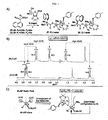
- the pharmacophore point denoted “i” refers to the provision of a hydroxyl group in position 6'; the point denoted “ii” refers to the provision of an AHB group in position N1; point “iii” refers to the provision of a third saccharide moiety (Ring III) attached to the second saccharide ring; “iv” is the provision of a modification at position 6' (exemplified in Scheme 1 as a lower alkyl); and the pharmacophore point disclosed herein is denoted “v” and refers to the provision of modification at position 5" according to the present embodiments (exemplified in Scheme 1 as a lower alkyl).
- Ring III at position O5 on Ring II has been shown to exhibit optimal results, other positions for Ring III are contemplated, such as position O6 on Ring II and positions 3' and 4' on Ring I.
- hydroxyl or "hydroxy”, as used herein, refer to an -OH group.
- amine describes a -NR'R" group where each of R' and R" is independently hydrogen, alkyl, cycloalkyl, heteroalicyclic, aryl or heteroaryl, as these terms are defined herein.
- cycloalkyl refers to an all-carbon monocyclic or fused ring ( i.e ., rings which share an adjacent pair of carbon atoms), branched or unbranched group containing 3 or more carbon atoms where one or more of the rings does not have a completely conjugated pi-electron system, and may further be substituted or unsubstituted.
- exemplary cycloalkyl groups include, for example, cyclopropyl, cyclobutyl, cyclopentyl, cyclohexyl, or cyclododecyl.
- the alkyl group may contain 1 carbon atom, 2 carbon atoms, 3 carbon atoms, etc., up to and including 10 carbon atoms.
- the alkyl is a lower alkyl, including 1-6 or 1-4 carbon atoms.
- An alkyl can be substituted or unsubstituted.
- the substituent can be, for example, an alkyl (forming a branched alkyl), an alkenyl, an alkynyl, a cycloalkyl, an aryl, a heteroaryl, a halo, a hydroxy, an alkoxy and a hydroxyalkyl as these terms are defined hereinbelow.
- alkyl as used herein, also encompasses saturated or unsaturated hydrocarbon, hence this term further encompasses alkenyl and alkynyl.
- alkenyl describes an unsaturated alkyl, as defined herein, having at least two carbon atoms and at least one carbon-carbon double bond, e.g., allyl, vinyl, 3-butenyl, 2-butenyl, 2-hexenyl and i-propenyl.
- the alkenyl may be substituted or unsubstituted by one or more substituents, as described hereinabove.
- aryl describes an all-carbon monocyclic or fused-ring polycyclic (i.e., rings which share adjacent pairs of carbon atoms) groups having a completely conjugated pi-electron system.
- the aryl group may be substituted or unsubstituted by one or more substituents, as described hereinabove.
- heteroaryl describes a monocyclic or fused ring ( i.e ., rings which share an adjacent pair of atoms) group having in the ring(s) one or more atoms, such as, for example, nitrogen, oxygen and sulfur and, in addition, having a completely conjugated pi-electron system.
- heteroaryl groups include pyrrole, furane, thiophene, imidazole, oxazole, thiazole, pyrazole, pyridine, pyrimidine, quinoline, isoquinoline and purine.
- the heteroaryl group may be substituted or unsubstituted by one or more substituents, as described hereinabove. Representative examples are thiadiazole, pyridine, pyrrole, oxazole, indole, purine and the like.
- halide refers to the anion of a halo atom, i.e. F - , Cl - , Br - and I - .
- hydroxyalkyl refers to an alkyl group substituted with one hydroxy group, e.g., hydroxymethyl, p-phydroxyethyl and 4-hydroxypentyl.
- AHB The moiety ( S )-4-amino-2-hydroxybutyryl, is also referred to herein as AHB.
- an alternative to the AHB moiety can be the ⁇ -hydroxy- ⁇ -aminopropionyl (AHP) moiety.
- AHP ⁇ -hydroxy- ⁇ -aminopropionyl
- side chains or optional moieties are believed to block the access of aminoglycoside-modifying enzymes to the target sites.
- AHB or AHP contain a 1,3- or 1,2-hydroxylamine moiety that binds to phosphodiesters and to the hoogsten base face of guanosine of the A-site of 16S rRNA.
- R 1 is alkyl
- R 1 is alkyl, as described herein
- R 2 is hydrogen
- R 3 is alkyl, as described herein.
- these compounds do not possess the second (ii) point and do possess the fourth (iv) point.
- These compounds exhibit superior pharmacologic profile compared to previously known compounds and drugs which are considered for use in treating genetic disorders, namely these compounds are less toxic and more efficient in reading-through premature stop codon mutations, as demonstrated in the Examples section that follows below.
- Exemplary aminoglycoside compounds which exhibit hydrogen in position R 2 and alkyl in position R 3 include: which differ from each other in the stereo-configuration of the chiral center at position 5" of Ring III.
- exemplary reference NB33 inhibits the translation mechanism in a different inhibition mode, as shown in the crystal of complex between the cytoplasmic A site RNA and exemplary reference NB33 [ ChemBioChem, 2007, 8(14), p. 1617 ].
- an aminoglycoside for an aminoglycoside to exhibit desired traits of a premature stop codon mutation readthrough drug candidate, 1) it should inhibit both prokaryotic and eukaryotic ribosomes by same mechanism of to binding to the aminoacyl-tRNA binding site and stabilizing the decoding conformation, or inhibit protein translation process by interfering with the fidelity of proof-reading process; and 2) the IC 50 Euk /IC 50 Pro ratio favoring eukaryotes should also be accompanied with a significant decrease in the specificity of the compound to the prokaryotic ribosome; in other words elevated IC 50 Pro values.
- a representative example for this requirement is G418; it IC 50 Euk /IC 50 Pro ratio is 225, which is significantly lower to that of gentamicin but still it is highly toxic as indicated by a relatively very low IC 50 Pro value.
- a promising aminoglycoside compound is one that does not have a notable or any antimicrobial activity. Such non-activity is also predictive for low or no cytotoxicity of the compound to mammalians.
- the results, which show that the exemplary compounds which have been prepared and tested for antimicrobial activity or lack thereof, are presented in Tables 1 and 2 hereinbelow.
- prodrug refers to an agent, which is converted into the active compound (the active parent drug) in vivo.
- Prodrugs are typically useful for facilitating the administration of the parent drug. They may, for instance, be bioavailable by oral administration whereas the parent drug is not.
- a prodrug may also have improved solubility as compared with the parent drug in pharmaceutical compositions.
- Prodrugs are also often used to achieve a sustained release of the active compound in vivo.
- An example, without limitation, of a prodrug would be a compound of the present invention, having one or more carboxylic acid moieties, which is administered as an ester (the "prodrug").
- Such a prodrug is hydrolyzed in vivo, to thereby provide the free compound (the parent drug).
- the selected ester may affect both the solubility characteristics and the hydrolysis rate of the prodrug.
- the acid addition salt is a sulfate salt.
- the synthetic pathways described herein include a reaction between an acceptor and a donor, whereby the term "acceptor” is used herein to describe the skeletal structure derived from paromamine which has at least one and preferably selectively selected available (unprotected) hydroxyl group at positions such as C5, C6 and C3', which is reactive during a glycosylation reaction, and can accept a glycosyl, and the term “donor” is used herein to describe the glycosyl.
- the position on the acceptor is the C5 position.
- glycosyl refers to a chemical group which is obtained by removing the hydroxyl group from the hemiacetal function of a monosaccharide and, by extension, of a lower oligosaccharide.
- monosaccharide refers to a simple form of a sugar that consists of a single saccharide molecule which cannot be further decomposed by hydrolysis. Most common examples of monosaccharides include glucose (dextrose), fructose, galactose, and ribose.
- Monosaccharides can be classified according to the number of carbon atoms of the carbohydrate, i.e., triose, having 3 carbon atoms such as glyceraldehyde and dihydroxyacetone; tetrose, having 4 carbon atoms such as erythrose, threose and erythrulose; pentose, having 5 carbon atoms such as arabinose, lyxose, ribose, xylose, ribulose and xylulose; hexose, having 6 carbon atoms such as allose, altrose, galactose, glucose, gulose, idose, mannose, talose, fructose, psicose, sorbose and tagatose; heptose, having 7 carbon atoms such as mannoheptulose, sedoheptulose; octose, having 8 carbon atoms such as 2-keto
- oligosaccharide refers to a compound that comprises two or more monosaccharide units, as these are defined herein.
- an oligosaccharide comprises 2-6 monosaccharides.
- an oligosaccharide comprises 2-4 monosaccharides, or further alternatively, an oligosaccharide is a disaccharide moiety, having two monosaccharide units.
- the donors and acceptors are designed so as to form the desired compounds according to some embodiments of the present invention.
- the following describes some embodiments of this aspect of the present process, presenting exemplary processes of preparing exemplary subsets of the compounds described herein. Detailed processes of preparing exemplary compounds according to some embodiments of the present invention, are presented in the Examples section that follows below.
- the syntheses of the compounds according to some embodiments of the present invention generally include (i) preparing an acceptor compound by selective protection of one or more hydroxyls and amines at selected positions present on the paromamine scaffold, leaving one or two positions unprotected and therefore free to accept a donor (glycosyl) compound as defined herein; (ii) preparing a donor compound by selective protection of one or more hydroxyls and amines at selected positions present on the glycosyl, leaving one position unprotected and therefore free to couple with an acceptor compound as defined herein; (iii) subjecting the donor and the acceptor to a coupling reaction; and (iii) removing of all protecting groups to thereby obtain the desired compound.
- protecting group refers to a substituent that is commonly employed to block or protect a particular functionality while reacting other functional groups on the compound.
- an “amino-protecting group” is a substituent attached to an amino group that blocks or protects the amino functionality in the compound.
- Suitable amino-protecting groups include azide (azido), N-phthalimido, N-acetyl, N-trifluoroacetyl, N-t-butoxycarbonyl (BOC), N-benzyloxycarbonyl (CBz) and N-9-fluorenylmethylenoxycarbonyl (Fmoc).
- a "hydroxyl-protecting group” refers to a substituent of a hydroxyl group that blocks or protects the hydroxyl functionality.
- Suitable protecting groups include isopropylidene ketal and cyclohexanone dimethyl ketal (forming a 1,3-dioxane with two adjacent hydroxyl groups), 4-methoxy-1-methylbenzene (forming a 1,3-dioxane with two adjacent hydroxyl groups), O-acetyl, O-chloroacetyl, O-benzoyl and O-silyl.
- the amino-protecting groups include an azido (N 3 -) and/or an N-phthalimido group
- the hydroxyl-protecting groups include O-acetyl (AcO-), O-benzoyl (BzO-) and/or O-chloroacetyl.
- a "protecting group” refers to a moiety that can protect one reactive function on a compound or more than one function at the same time, such as in the case of two adjacent functionalities, e.g., two hydroxyl groups that can be protected at once by a isopropylidene ketal.
- a process of preparing the compounds having the general Formula I as presented herein is effected by preparing a suitably protected acceptor compound and a suitably protected donor compound, coupling these two compounds to one another, and subsequently removing all the protecting groups from the resulting compound.
- the donor compound is a protected monosaccharide which can be represented by the general Formula II, having a leaving group at position 1" thereof, denoted L, and an alkyl, cycloalkyl or aryl at position 5", denoted R 1 : wherein:
- the absolute stereo-configuration of the chiral center at position 5" is determined by the identity of R 4 and R 5 , giving both options of R - and S -configuration as two individual and separable donors (being diastereomers) or as a racemic mixture thereof.
- a detailed process for obtaining each of the R - and S -donor compounds and a method for assigning the absolute stereo-configuration thereof is presented in the Examples section below.
- the phrase "leaving group” describes a labile atom, group or chemical moiety that readily undergoes detachment from an organic molecule during a chemical reaction, while the detachment is facilitated by the relative stability of the leaving atom, group or moiety thereupon.
- any group that is the conjugate base of a strong acid can act as a leaving group.
- suitable leaving groups according to the present embodiments therefore include, without limitation, trichloroacetimidate, acetate, tosylate, triflate, sulfonate, azide, halide, hydroxy, thiohydroxy, alkoxy, cyanate, thiocyanate, nitro and cyano.
- the leaving group is trichloroacetimidate, which gave the most satisfactory results in the coupling reaction with the acceptor, although other leaving groups are contemplated.
- each of the donor hydroxyl-protecting groups is O-benzoyl and the donor amino-protecting group in either R 4 or R 5 is azido, although other protecting groups are contemplated.
- the structure of the donor compound sets the absolute structure of Ring III in the resulting compound according to some embodiments of the present invention, namely the stereo-configuration of the 5" position and the type of alkyl at that position.
- exemplary donor compounds suitable for affording compounds according to some embodiments of the present invention, include Compound ( S )- 17 and Compound ( R )- 18 , the preparation thereof is illustrated in Scheme 2 hereinbelow.
- the acceptor hydroxyl-protecting group is O-acetyl
- the donor amino-protecting group is azido, although other protecting groups are contemplated.
- the exemplary embodiment provided hereinabove refers to a protected for of AHB, however it is not meant to be limiting to use of the AHB moiety as other useful moieties, such as AHP as presented hereinabove, may be used instead. In those cases the process will be modified by using an acceptor compound wherein the reactive groups of the moiety used in place of AHB are protected accordingly.
- acceptor compound sets the absolute structure of Ring I and Ring II in the resulting compound according to some embodiments of the present invention, namely the stereo-configuration of the 6' position and the type of alkyl at that position when present, and the substituent on the amino group at position N1.
- exemplary acceptor compounds suitable for affording compounds according to some embodiments of the present invention, include Compounds 19, 20, 219 and 220, the preparation of which is illustrated in Scheme 3 and Scheme 4 hereinbelow.
- the exemplary compound NB118 can be afforded by deprotecting Compound ( S )-21 , which is obtained by glycosilating (coupling) acceptor Compound 19 with donor Compound ( S )- 17 .
- the exemplary compound NB119 is obtained by deprotecting Compound ( R )- 22 which is the product of coupling acceptor Compound 19 with donor Compound ( R )- 18 .
- treating includes abrogating, substantially inhibiting, slowing or reversing the progression of a condition, substantially ameliorating clinical or aesthetical symptoms of a condition or substantially preventing the appearance of clinical or aesthetical symptoms of a condition.
- the term "pharmaceutically acceptable carrier” refers to a carrier or a diluent that does not cause significant irritation to an organism and does not abrogate the biological activity and properties of the administered compound.
- carriers are: propylene glycol, saline, emulsions and mixtures of organic solvents with water, as well as solid (e.g., powdered) and gaseous carriers.
- the administration is effected orally.
- the compounds presented herein can be formulated readily by combining the compounds with pharmaceutically acceptable carriers well known in the art. Such carriers enable the compounds presented herein to be formulated as tablets, pills, dragees, capsules, liquids, gels, syrups, slurries, suspensions, and the like, for oral ingestion by a patient.
- Pharmacological preparations for oral use can be made using a solid excipient, optionally grinding the resulting mixture, and processing the mixture of granules, after adding suitable auxiliaries if desired, to obtain tablets or dragee cores.
- Suitable excipients are, in particular, fillers such as sugars, including lactose, sucrose, mannitol, or sorbitol; cellulose preparations such as, for example, maize starch, wheat starch, rice starch, potato starch, gelatin, gum tragacanth, methyl cellulose, hydroxypropylmethyl-cellulose, sodium carbomethylcellulose; and/or physiologically acceptable polymers such as polyvinylpyrrolidone (PVP).
- disintegrating agents may be added, such as cross-linked polyvinyl pyrrolidone, agar, or alginic acid or a salt thereof such as sodium alginate.
- compositions which can be used orally, include push-fit capsules made of gelatin as well as soft, sealed capsules made of gelatin and a plasticizer, such as glycerol or sorbitol.
- the push-fit capsules may contain the active ingredients in admixture with filler such as lactose, binders such as starches, lubricants such as talc or magnesium stearate and, optionally, stabilizers.
- the compounds presented herein may be dissolved or suspended in suitable liquids, such as fatty oils, liquid paraffin, or liquid polyethylene glycols.
- stabilizers may be added. All formulations for oral administration should be in dosages suitable for the chosen route of administration.
- compositions may take the form of tablets or lozenges formulated in conventional manner.
- compositions may be suspensions, solutions or emulsions in oily or aqueous vehicles, and may contain formulatory agents such as suspending, stabilizing and/or dispersing agents.
- compositions herein described may also comprise suitable solid of gel phase carriers or excipients.
- suitable solid of gel phase carriers or excipients include, but are not limited to, calcium carbonate, calcium phosphate, various sugars, starches, cellulose derivatives, gelatin and polymers such as polyethylene glycols.
- Dosage amount and interval may be adjusted individually to provide plasma levels of the compounds presented herein which are sufficient to maintain the desired effects, termed the minimal effective concentration (MEC).
- MEC minimal effective concentration
- the MEC will vary for each preparation, but can be estimated from in vitro data; e.g., the concentration of the compounds necessary to achieve 50-90 % expression of the whole gene having a truncation mutation, i.e. read-through of the mutation codon. Dosages necessary to achieve the MEC will depend on individual characteristics and route of administration. HPLC assays or bioassays can be used to determine plasma concentrations.
- the pharmaceutical composition is packaged in a packaging material and identified in print, in or on the packaging material, for use in the treatment of a genetic disorder, as defined herein.
- the compounds presented herein or pharmaceutical compositions containing the same are expected to be administered throughout the lifetime of the subject being treated. Therefore, the mode of administration of pharmaceutical compositions containing the compounds should be such that will be easy and comfortable for administration, preferably by self-administration, and such that will take the smallest toll on the patient's wellbeing and course of life.
- compositions, method or structure may include additional ingredients, steps and/or parts, but only if the additional ingredients, steps and/or parts do not materially alter the basic and novel characteristics of the claimed composition, method or structure.
- glycosylation reaction using thioglycoside donors such as ( S )- 15 and ( R )- 16 may be afforded in the presence of various glycosylation reagents including N-iodosucinimide (NIS) and trifloromethane sulfonic acid (HOTf); or NIS and silver triflate (AgOTf).
- NIS N-iodosucinimide
- HATf trifloromethane sulfonic acid
- AgOTf silver triflate
- the hemiacetal was stirred in a mixture of dichloromethane (40 ml) and trichloroacetonitrile (5 ml) at 0 °C for 10 minutes to which catalytic amount of DBU (0.3 ml) was added.
- the reaction mixture was stirred in same temperature and the progress was monitored by TLC. After completion (3 hours), the reaction mixture was diluted with DCM and washed with saturated NH 4 Cl. The combined organic layer was dried over MgSO 4 and concentrated to obtain Compound ( S )-17 (9 grams). The crude product was directly used for the glycosylation reaction without purification.
- the hemiacetal was stirred in a mixture of dichloromethane (50 ml) and trichloroacetonitrile (6 ml) at 0 °C for 10 minutes to which catalytic amount of DBU (0.3 ml) was added.
- the reaction mixture was stirred in same temperature and the progress was monitored by TLC. After completion (3 hours), the reaction mixture was diluted with DCM and washed with saturated NH 4 Cl. The combined organic layer was dried over MgSO 4 and concentrated to obtain Compound ( R )-18 (9 grams). The crude product was directly used for the glycosylation reaction without purification.
- the glycosylation product Compound ( S )-21 (1.0 grams, 0.001 mol) was treated with a solution of MeNH 2 (33 % solution in EtOH, 50 ml and the reaction progress was monitored by TLC (EtOAc/MeOH 85:15), which indicated completion after 8 hours.
- the reaction mixture was evaporated to dryness and the residue was dissolved in a mixture of THF (5 ml) and aqueous NaOH (1 mM, 5.0 ml). The mixture was stirred at room temperature for 10 minutes, after which PMe 3 (1 M solution in THF, 5.0 ml, 5.0 mmol) was added.
- the reaction progress was monitored by TLC [CH 2 Cl 2 /MeOH/H 2 O/MeNH 2 (33 % solution in EtOH) 10:15:6:15], which indicated completion after 1 hour.
- the product was purified by column chromatography on a short column of silica gel. The column was washed with the following solvents: THF (800 ml), CH 2 Cl 2 (800 ml), EtOH (200 ml), and MeOH (400 ml). The product was then eluted with a mixture of 20 % MeNH 2 (33 % solution in EtOH) in 80 % MeOH. Fractions containing the product were combined and evaporated to dryness. The residue was re-dissolved in a small volume of water and evaporated again (2-3 repeats) to afford the free amine form of NB118.
- the analytically pure product was obtained by passing the above product through a short column of Amberlite CG50 (NH 4 + form). The column was first washed with a mixture of MeOH/H 2 O (3:2), then the product was eluted with a mixture of MeOH/H 2 O/NH 4 OH (80:10:10) to afford NB118 (0.405 grams, 82 % yield).
- the glycosylation product Compound (R)-22 (1.0 grams, 0.001 mol) was treated with a solution of MeNH 2 (33 % solution in EtOH, 50 ml) and the reaction progress was monitored by TLC (EtOAc/MeOH 85:15), which indicated completion after 8 hours.
- the reaction mixture was evaporated to dryness and the residue was dissolved in a mixture of THF (5 ml) and aqueous NaOH (1 mM, 5.0 ml). The mixture was stirred at room temperature for 10 minutes, after which PMe 3 (1 M solution in THF, 5.0 ml, 5.0 mmol) was added.
- the reaction progress was monitored by TLC [CH 2 Cl 2 /MeOH/H 2 O/MeNH 2 (33 % solution in EtOH) 10:15:6:15], which indicated completion after 1 hour.
- the product was purified by column chromatography on a short column of silica gel. The column was washed with the following solvents: THF (800 ml), CH 2 Cl 2 (800 ml), EtOH (200 ml), and MeOH (400 ml). The product was then eluted with a mixture of 20 % MeNH 2 (33 % solution in EtOH) in 80 % MeOH. Fractions containing the product were combined and evaporated to dryness. The residue was re-dissolved in a small volume of water and evaporated again (2-3 repeats) to afford the free amine form of NB119, also referred to as NB119.
- the analytically pure product was obtained by passing the above product through a short column of Amberlite CG50 (NH 4 + form). The column was first washed with a mixture of MeOH/H 2 O (3:2), then the product was eluted with a mixture of MeOH/H 2 O/NH 4 OH (80:10:10) to afford NB119 (0.398 grams, 80 % yield).
- the glycosylation product Compound ( S )- 23 (1.1 grams, 0.001 mol) was treated with a solution of MeNH 2 (33 % solution in EtOH, 50 ml) and the reaction progress was monitored by TLC (EtOAc/MeOH 85:15), which indicated completion after 8 hours.
- the reaction mixture was evaporated to dryness and the residue was dissolved in a mixture of THF (5 ml) and aqueous NaOH (1 mM, 5.0 ml). The mixture was stirred at room temperature for 10 minutes, after which PMe 3 (1 M solution in THF, 5.0 ml, 5.0 mmol) was added.
- the reaction progress was monitored by TLC [CH 2 Cl 2 /MeOH/H 2 O/MeNH 2 (33 % solution in EtOH) 10:15:6:15], which indicated completion after 1 hour.
- the product was purified by column chromatography on a short column of silica gel. The column was washed with the following solvents: THF (800 ml), CH 2 Cl 2 (800 ml), EtOH (200 ml), and MeOH (400 ml). The product was then eluted with a mixture of 20 % MeNH 2 (33 % solution in EtOH) in 80 % MeOH. Fractions containing the product were combined and evaporated to dryness. The residue was re-dissolved in a small volume of water and evaporated again (2-3 repeats) to afford the free amine form of NB122.
- the analytically pure product was obtained by passing the above product through a short column of Amberlite CG50 (NH 4 + form). The column was first washed with a mixture of MeOH/H 2 O (3:2), then the product was eluted with a mixture of MeOH/H 2 O/NH 4 OH (80:10:10) to afford NB122 (0.450 grams, 79 % yield).
- the glycosylation product Compound ( R )-24 (1.2 grams, 0.0011 mol) was treated with a solution of MeNH 2 (33 % solution in EtOH, 50 ml) and the reaction progress was monitored by TLC (EtOAc/MeOH 85:15), which indicated completion after 8 hours.
- the reaction mixture was evaporated to dryness and the residue was dissolved in a mixture of THF (5 ml) and aqueous NaOH (1 mM, 5.0 ml). The mixture was stirred at room temperature for 10 minutes, after which PMe 3 (1 M solution in THF, 5.0 ml, 5.0 mmol) was added.
- the reaction progress was monitored by TLC [CH 2 Cl 2 /MeOH/H 2 O/MeNH 2 (33 % solution in EtOH) 10:15:6:15], which indicated completion after 1 hour.
- the product was purified by column chromatography on a short column of silica gel. The column was washed with the following solvents: THF (800 ml), CH 2 Cl 2 (800 ml), EtOH (200 ml), and MeOH (400 ml). The product was then eluted with a mixture of 20 % MeNH 2 (33 % solution in EtOH) in 80 % MeOH. Fractions containing the product were combined and evaporated to dryness. The residue was re-dissolved in a small volume of water and evaporated again (2-3 repeats) to afford the free amine form of NB123.
- the analytically pure product was obtained by passing the above product through a short column of Amberlite CG50 (NH 4 + form). The column was first washed with a mixture of MeOH/H 2 O (3:2), then the product was eluted with a mixture of MeOH/H 2 O/NH 4 OH (80:10:10) to afford NB123 (0.510 grams, 82 % yield).
- the glycosylation product Compound ( R )- 224 (1.12 grams, 0.001 mol) was treated with a solution of MeNH 2 (33 % solution in EtOH, 50 ml) and the reaction progress was monitored by TLC (EtOAc/MeOH 85:15), which indicated completion after 8 hours.
- the reaction mixture was evaporated to dryness and the residue was dissolved in a mixture of THF (5 ml) and aqueous NaOH (1 mM, 5.0 ml). The mixture was stirred at room temperature for 10 minutes, after which PMe 3 (1 M solution in THF, 5.0 ml, 5.0 mmol) was added.
- DNA fragments derived from PCDH15, CFTR, Dystrophin and IDUA cDNAs including the tested nonsense mutation or the corresponding wild type (wt) codon, and four to six upstream and downstream flanking codons were created by annealing following pairs of complementary oligonucleotides:
- the constructs of p2luc plasmid harboring the R3X, R245X, Q70X and W1282X mutations were transfected to HEK-293 cells using lipofectamine2000 and the tested compounds were added 6 hours post transfection. Cells were harvested after 16 hours incubation and luciferase activity was determined using the dual luciferase reporter assay system (PromegaTM). Stop codon readthrough was calculated as described previously, and the results are averages of at least three independent experiments
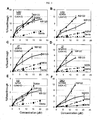
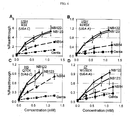
- NB127 which contains (S)-5"-methyl group is significantly potent than the NB128 containing (R)-5"-methyl group.
- both NB127 and NB128 are significantly stronger readthrough inducers than the corresponding counterparts not possessing an AHB moiety in the N1 position (namely NB124 and NB125) and the compound NB84 that contains only (R)-6'-mathyl and N1-AHB
- NB127 exhibited similar or greater activity than that of G418, and further that in all the in vitro tests performed to date, G418 is considered the strongest readthrough inducer.
- the observation that NB127 can surpasses G416 activity, while exhibiting far lower cell toxicity than that of G418 (see the Table 2) demonstrates the benefits conferred by compounds according to some embodiments of the present invention.
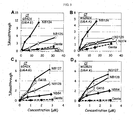
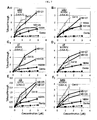
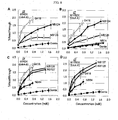
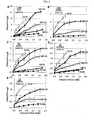
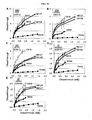
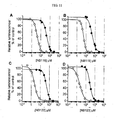
- Figures 10A-E present the results of the stop codon readthrough assay showing comparative graphs of ex vivo stop codon suppression levels induced by NB127 (marked by black rectangles), NB128 (marked by empty triangles), NB84 (reference example; marked by black rhombs) and the control drugs gentamicin (marked by black rectangles) and G418 (marked by empty rectangles) in a series of nonsense mutation context constructs representing various genetic diseases (in parenthesis), wherein results pertaining to the R3X (USH1) construct are shown in Figure 10A , R245X (USH1) in Figure 10B , Q70X (HS) in Figure 10C , W1282X (CF) in Figure 10D and G542X (CF) in Figure 10E .
- LC 50 values half-maximal-lethal concentration value
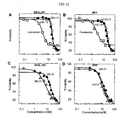
- the percentages of cell viability were calculated as the ratio between the numbers of living cells in cultures grown in the presence of the tested compounds, versus cultures grown under the identical protocol but without the tested compound. The results represent averages of at least three independent experiments.
- LC 50 half-maximal lethal concentration
- Table 1 presents comparative cell toxicity, eukaryotic and prokaryotic translation inhibition, and antibacterial activity assays obtain for gentamicin, paromomycin, the previously reported reference examples NB30 and NB54, and the exemplary compounds NB118, NB119, NB122 and NB123.
- Table 1 Antibacterial activity MIC ( ⁇ M) Translation inhibition Cell toxicity LC 50 (mM) Aminoglycosi de B. subtilis ATCC66 33 E.
- the novel NB124 , NB125 , NB127 and NB128 compounds do not exhibit significant antibacterial activity both in E. coli and B. subtilis (see, Table 2 above). These data are further supported by their drastically reduced inhibition of prokaryotic protein synthesis (Table 2) in comparison to standard aminoglycoside antibiotics and thus are in accordance to a general trend that aminoglycosides with reduced inhibition of prokaryotic translation are also less cytotoxic probably due to reduced inhibition of mitochondrial protein synthesis.
- exemplary compounds NB118, NB119, NB122, NB123, NB124, NB125, NB127 and NB128 were investigated as antibacterial agents against both Gram-negative (Escherichia coli) and Gram-positive (Bacillus subtilis) bacteria, together with their prokaryotic anti-translational activities (see, Table 1 and Table 2).
- the observed data with NB118, NB119, NB122, NB123, NB124, NB125, NB127 and NB128 is similar to that observed for reference examples NB30, NB54, NB74 and NB84 and further support the previously reported correlation in aminoglycosides between prokaryotic anti-translational activity and MIC values, namely, decreased inhibition of prokaryotic translation is associated with the decrease in antibacterial activity.
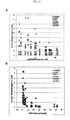
- Figures 13A-B present scatter plots for identifying possible correlation between readthrough activity and protein translation inhibition in vitro in eukaryotic systems as observed for a series of known compounds and exemplary compounds according to some embodiments of the present invention, wherein increasing inhibition of protein synthesis (lower IC 50 values) is associated with the increase of readthrough activity
- Figure 13A is a semilogarithmic plot of eukaryotic inhibition of translation versus in vitro readthrough activity at 1.4 ⁇ M concentration of the tested aminoglycosides (shown on the X-axis) using six different nonsense mutations ( W1282X, Q70X, R3X, R245X, G542X and R3381X )
- Figure 1B is a linear plot of the same data presented in FIG 13A .
- NB33 is essentially a dimer of paromamine in which two paromamine moieties are connected at 3'-oxygens via methylene bridge.
- NB33 is highly specific to eukaryotic ribosome and inhibits protein synthesis by IC 50 Euk value of 1.1 mM, almost twice as much as G418 (IC 50 Euk of 2.0 mM).
- IC 50 Euk of 2.0 mM IC 50 Euk of 2.0 mM.
- NB33 has almost no readthrough activity, indicating that its mechanism of inhibition is different to that of known aminoglycosides and the compounds according to some embodiments of the present invention, that exhibit readthrough activity.
Landscapes
- Health & Medical Sciences (AREA)
- Chemical & Material Sciences (AREA)
- Organic Chemistry (AREA)
- Life Sciences & Earth Sciences (AREA)
- General Health & Medical Sciences (AREA)
- Engineering & Computer Science (AREA)
- Veterinary Medicine (AREA)
- Public Health (AREA)
- Medicinal Chemistry (AREA)
- Animal Behavior & Ethology (AREA)
- Pharmacology & Pharmacy (AREA)
- Molecular Biology (AREA)
- Biochemistry (AREA)
- Biotechnology (AREA)
- Genetics & Genomics (AREA)
- General Chemical & Material Sciences (AREA)
- Chemical Kinetics & Catalysis (AREA)
- Nuclear Medicine, Radiotherapy & Molecular Imaging (AREA)
- Bioinformatics & Cheminformatics (AREA)
- Epidemiology (AREA)
- Neurology (AREA)
- Physical Education & Sports Medicine (AREA)
- Orthopedic Medicine & Surgery (AREA)
- Mechanical Engineering (AREA)
- Diabetes (AREA)
- Urology & Nephrology (AREA)
- Hematology (AREA)
- Pharmaceuticals Containing Other Organic And Inorganic Compounds (AREA)
- Saccharide Compounds (AREA)
- Medicines That Contain Protein Lipid Enzymes And Other Medicines (AREA)
- Measuring Or Testing Involving Enzymes Or Micro-Organisms (AREA)
Applications Claiming Priority (3)
| Application Number | Priority Date | Filing Date | Title |
|---|---|---|---|
| US41495610P | 2010-11-18 | 2010-11-18 | |
| PCT/IL2011/000889 WO2012066546A1 (en) | 2010-11-18 | 2011-11-17 | Aminoglycosides and uses thereof in treating genetic disorders |
| EP11799501.9A EP2640734B1 (en) | 2010-11-18 | 2011-11-17 | Aminoglycosides and uses thereof in treating genetic disorders |
Related Parent Applications (1)
| Application Number | Title | Priority Date | Filing Date |
|---|---|---|---|
| EP11799501.9A Division EP2640734B1 (en) | 2010-11-18 | 2011-11-17 | Aminoglycosides and uses thereof in treating genetic disorders |
Publications (2)
| Publication Number | Publication Date |
|---|---|
| EP3296311A1 EP3296311A1 (en) | 2018-03-21 |
| EP3296311B1 true EP3296311B1 (en) | 2020-09-30 |
Family
ID=45390144
Family Applications (2)
| Application Number | Title | Priority Date | Filing Date |
|---|---|---|---|
| EP17192028.3A Active EP3296311B1 (en) | 2010-11-18 | 2011-11-17 | Aminoglycosides and uses thereof in treating genetic disorders |
| EP11799501.9A Active EP2640734B1 (en) | 2010-11-18 | 2011-11-17 | Aminoglycosides and uses thereof in treating genetic disorders |
Family Applications After (1)
| Application Number | Title | Priority Date | Filing Date |
|---|---|---|---|
| EP11799501.9A Active EP2640734B1 (en) | 2010-11-18 | 2011-11-17 | Aminoglycosides and uses thereof in treating genetic disorders |
Country Status (18)
| Country | Link |
|---|---|
| US (7) | US8895519B2 (enExample) |
| EP (2) | EP3296311B1 (enExample) |
| JP (3) | JP5960712B2 (enExample) |
| CA (1) | CA2816789C (enExample) |
| CY (1) | CY1120082T1 (enExample) |
| DK (1) | DK2640734T3 (enExample) |
| ES (2) | ES2655916T3 (enExample) |
| HR (1) | HRP20180056T1 (enExample) |
| HU (1) | HUE036248T2 (enExample) |
| IL (3) | IL266495B (enExample) |
| LT (1) | LT2640734T (enExample) |
| NO (1) | NO2640734T3 (enExample) |
| PL (1) | PL2640734T3 (enExample) |
| PT (1) | PT2640734T (enExample) |
| RS (1) | RS56739B1 (enExample) |
| SI (1) | SI2640734T1 (enExample) |
| SM (1) | SMT201800019T1 (enExample) |
| WO (1) | WO2012066546A1 (enExample) |
Families Citing this family (13)
| Publication number | Priority date | Publication date | Assignee | Title |
|---|---|---|---|---|
| LT2640734T (lt) | 2010-11-18 | 2018-02-12 | Technion Research & Development Foundation Ltd. | Aminoglikozidai ir jų panaudojimas genetinių susirgimų gydymui |
| KR101703137B1 (ko) | 2014-05-30 | 2017-02-07 | 선문대학교 산학협력단 | 당 부가 아미노글리코사이드 화합물, 이의 제조방법 및 이를 유효성분으로 함유하는 약학적 조성물 |
| EP3151840A1 (en) | 2014-06-05 | 2017-04-12 | Eloxx Pharmaceuticals Ltd. | Use of aminoglycoside analogs in the treatment of rett syndrome |
| WO2017037717A1 (en) * | 2015-09-02 | 2017-03-09 | Eloxx Pharmaceuticals Ltd. | Aminoglycoside derivatives and uses thereof in treating genetic disorders |
| WO2017037718A1 (en) | 2015-09-02 | 2017-03-09 | Eloxx Pharmaceuticals Ltd. | Aminoglycoside derivatives and uses thereof in treating genetic disorders |
| CA2996763A1 (en) * | 2015-09-02 | 2017-03-09 | Eloxx Pharmaceuticals Ltd. | Aminoglycoside derivatives and uses thereof in treating genetic disorders |
| EP3400232A4 (en) * | 2016-01-05 | 2019-10-16 | Eloxx Pharmaceuticals Ltd. | AMINO-L-KOSIDE DERIVATIVES AND USES THEREOF FOR THE TREATMENT OF GENETIC DISEASES |
| AU2018235441C1 (en) * | 2017-03-15 | 2024-10-24 | Eloxx Pharmaceuticals Ltd. | Large scale preparation of pseudo-trisaccharide aminoglycosides and of intermediates thereof |
| WO2019237076A1 (en) * | 2018-06-07 | 2019-12-12 | Eloxx Pharmaceuticals, Inc. | Methods, compositions, and kits for inducing readthrough |
| KR102067477B1 (ko) * | 2018-06-20 | 2020-01-17 | 고려대학교 산학협력단 | 스킬로이노사민을 포함하는 아미노사이클리톨 화합물, 이의 제조방법 및 이를 함유하는 약학 조성물 |
| KR20220003502A (ko) * | 2018-11-29 | 2022-01-10 | 엘록스 파마슈티칼스 | 안구 질환을 치료하기 위한 방법, 조성물 및 키트 |
| WO2021061873A1 (en) * | 2019-09-23 | 2021-04-01 | Eloxx Pharmaceuticals, Inc. | Methods, compositions, and kits for treating polycystic kidney disease |
| EP4230196A1 (en) | 2022-02-21 | 2023-08-23 | Som Innovation Biotech, S.A. | Compounds for use in the treatment of dystrophinopathies |
Family Cites Families (5)
| Publication number | Priority date | Publication date | Assignee | Title |
|---|---|---|---|---|
| JPS5960712A (ja) | 1982-09-30 | 1984-04-06 | Toshiba Corp | デ−タ判別装置 |
| JP5830213B2 (ja) | 2004-02-17 | 2015-12-09 | ザ ホスピタル フォー シック チルドレン | Mecp2e1遺伝子 |
| DK2390255T3 (en) | 2006-04-03 | 2016-11-07 | Technion Res & Dev Foundation | Novel aminoglycosides and uses thereof in the treatment of genetic disorders |
| LT2640734T (lt) * | 2010-11-18 | 2018-02-12 | Technion Research & Development Foundation Ltd. | Aminoglikozidai ir jų panaudojimas genetinių susirgimų gydymui |
| EP3151840A1 (en) | 2014-06-05 | 2017-04-12 | Eloxx Pharmaceuticals Ltd. | Use of aminoglycoside analogs in the treatment of rett syndrome |
-
2011
- 2011-11-17 LT LTEP11799501.9T patent/LT2640734T/lt unknown
- 2011-11-17 ES ES11799501.9T patent/ES2655916T3/es active Active
- 2011-11-17 DK DK11799501.9T patent/DK2640734T3/en active
- 2011-11-17 NO NO11799501A patent/NO2640734T3/no unknown
- 2011-11-17 WO PCT/IL2011/000889 patent/WO2012066546A1/en not_active Ceased
- 2011-11-17 HU HUE11799501A patent/HUE036248T2/hu unknown
- 2011-11-17 JP JP2013539397A patent/JP5960712B2/ja active Active
- 2011-11-17 RS RS20180029A patent/RS56739B1/sr unknown
- 2011-11-17 HR HRP20180056TT patent/HRP20180056T1/hr unknown
- 2011-11-17 PT PT117995019T patent/PT2640734T/pt unknown
- 2011-11-17 SI SI201131387T patent/SI2640734T1/en unknown
- 2011-11-17 SM SM20180019T patent/SMT201800019T1/it unknown
- 2011-11-17 ES ES17192028T patent/ES2833938T3/es active Active
- 2011-11-17 EP EP17192028.3A patent/EP3296311B1/en active Active
- 2011-11-17 US US13/885,715 patent/US8895519B2/en active Active
- 2011-11-17 CA CA2816789A patent/CA2816789C/en active Active
- 2011-11-17 PL PL11799501T patent/PL2640734T3/pl unknown
- 2011-11-17 EP EP11799501.9A patent/EP2640734B1/en active Active
-
2014
- 2014-08-18 US US14/461,477 patent/US9175029B2/en active Active
-
2015
- 2015-09-27 US US14/866,960 patent/US9616079B2/en active Active
-
2016
- 2016-01-22 JP JP2016011038A patent/JP2016121168A/ja active Pending
-
2017
- 2017-03-09 US US15/453,990 patent/US9943533B2/en active Active
-
2018
- 2018-01-15 CY CY20181100039T patent/CY1120082T1/el unknown
- 2018-03-01 JP JP2018036281A patent/JP6758338B2/ja active Active
- 2018-03-07 US US15/914,045 patent/US10398718B2/en active Active
-
2019
- 2019-05-07 IL IL266495A patent/IL266495B/en active IP Right Grant
- 2019-08-23 US US16/550,121 patent/US10973839B2/en active Active
-
2020
- 2020-09-01 IL IL277063A patent/IL277063B/en unknown
-
2021
- 2021-04-08 US US17/226,050 patent/US11865128B2/en active Active
- 2021-06-16 IL IL284067A patent/IL284067B/en unknown
Non-Patent Citations (1)
| Title |
|---|
| None * |
Also Published As
Similar Documents
| Publication | Publication Date | Title |
|---|---|---|
| US11865128B2 (en) | Aminoglycosides and uses thereof in treating genetic disorders | |
| US10159689B2 (en) | Aminoglycosides and uses thereof in the treatment of genetic disorders | |
| US11613551B2 (en) | Aminoglycoside derivatives and uses thereof in treating genetic disorders | |
| US20190016746A1 (en) | Aminoglycoside derivatives and uses thereof in treating genetic disorders | |
| HK1248709B (en) | Aminoglycosides and uses thereof in treating genetic disorders | |
| HK1190157A (en) | Aminoglycosides and uses thereof in treating genetic disorders | |
| HK1190157B (en) | Aminoglycosides and uses thereof in treating genetic disorders |
Legal Events
| Date | Code | Title | Description |
|---|---|---|---|
| PUAI | Public reference made under article 153(3) epc to a published international application that has entered the european phase |
Free format text: ORIGINAL CODE: 0009012 |
|
| STAA | Information on the status of an ep patent application or granted ep patent |
Free format text: STATUS: REQUEST FOR EXAMINATION WAS MADE |
|
| 17P | Request for examination filed |
Effective date: 20170920 |
|
| AC | Divisional application: reference to earlier application |
Ref document number: 2640734 Country of ref document: EP Kind code of ref document: P |
|
| AK | Designated contracting states |
Kind code of ref document: A1 Designated state(s): AL AT BE BG CH CY CZ DE DK EE ES FI FR GB GR HR HU IE IS IT LI LT LU LV MC MK MT NL NO PL PT RO RS SE SI SK SM TR |
|
| REG | Reference to a national code |
Ref country code: HK Ref legal event code: DE Ref document number: 1248709 Country of ref document: HK |
|
| GRAP | Despatch of communication of intention to grant a patent |
Free format text: ORIGINAL CODE: EPIDOSNIGR1 |
|
| STAA | Information on the status of an ep patent application or granted ep patent |
Free format text: STATUS: GRANT OF PATENT IS INTENDED |
|
| RIC1 | Information provided on ipc code assigned before grant |
Ipc: C07H 1/00 20060101ALI20200409BHEP Ipc: A61P 21/04 20060101ALI20200409BHEP Ipc: A61P 21/00 20060101ALI20200409BHEP Ipc: A61P 43/00 20060101ALI20200409BHEP Ipc: A61K 31/7036 20060101ALI20200409BHEP Ipc: A61P 13/12 20060101ALI20200409BHEP Ipc: A61P 7/04 20060101ALI20200409BHEP Ipc: C07H 15/23 20060101AFI20200409BHEP |
|
| INTG | Intention to grant announced |
Effective date: 20200428 |
|
| GRAS | Grant fee paid |
Free format text: ORIGINAL CODE: EPIDOSNIGR3 |
|
| GRAA | (expected) grant |
Free format text: ORIGINAL CODE: 0009210 |
|
| STAA | Information on the status of an ep patent application or granted ep patent |
Free format text: STATUS: THE PATENT HAS BEEN GRANTED |
|
| AC | Divisional application: reference to earlier application |
Ref document number: 2640734 Country of ref document: EP Kind code of ref document: P |
|
| AK | Designated contracting states |
Kind code of ref document: B1 Designated state(s): AL AT BE BG CH CY CZ DE DK EE ES FI FR GB GR HR HU IE IS IT LI LT LU LV MC MK MT NL NO PL PT RO RS SE SI SK SM TR |
|
| REG | Reference to a national code |
Ref country code: CH Ref legal event code: EP Ref country code: GB Ref legal event code: FG4D |
|
| REG | Reference to a national code |
Ref country code: AT Ref legal event code: REF Ref document number: 1318699 Country of ref document: AT Kind code of ref document: T Effective date: 20201015 |
|
| REG | Reference to a national code |
Ref country code: DE Ref legal event code: R096 Ref document number: 602011068817 Country of ref document: DE |
|
| REG | Reference to a national code |
Ref country code: IE Ref legal event code: FG4D |
|
| REG | Reference to a national code |
Ref country code: CH Ref legal event code: NV Representative=s name: PATENTANWAELTE SCHAAD, BALASS, MENZL AND PARTN, CH |
|
| REG | Reference to a national code |
Ref country code: NL Ref legal event code: FP |
|
| PG25 | Lapsed in a contracting state [announced via postgrant information from national office to epo] |
Ref country code: FI Free format text: LAPSE BECAUSE OF FAILURE TO SUBMIT A TRANSLATION OF THE DESCRIPTION OR TO PAY THE FEE WITHIN THE PRESCRIBED TIME-LIMIT Effective date: 20200930 Ref country code: HR Free format text: LAPSE BECAUSE OF FAILURE TO SUBMIT A TRANSLATION OF THE DESCRIPTION OR TO PAY THE FEE WITHIN THE PRESCRIBED TIME-LIMIT Effective date: 20200930 Ref country code: NO Free format text: LAPSE BECAUSE OF FAILURE TO SUBMIT A TRANSLATION OF THE DESCRIPTION OR TO PAY THE FEE WITHIN THE PRESCRIBED TIME-LIMIT Effective date: 20201230 Ref country code: BG Free format text: LAPSE BECAUSE OF FAILURE TO SUBMIT A TRANSLATION OF THE DESCRIPTION OR TO PAY THE FEE WITHIN THE PRESCRIBED TIME-LIMIT Effective date: 20201230 Ref country code: SE Free format text: LAPSE BECAUSE OF FAILURE TO SUBMIT A TRANSLATION OF THE DESCRIPTION OR TO PAY THE FEE WITHIN THE PRESCRIBED TIME-LIMIT Effective date: 20200930 |
|
| REG | Reference to a national code |
Ref country code: AT Ref legal event code: MK05 Ref document number: 1318699 Country of ref document: AT Kind code of ref document: T Effective date: 20200930 |
|
| REG | Reference to a national code |
Ref country code: GR Ref legal event code: EP Ref document number: 20200403473 Country of ref document: GR Effective date: 20210215 |
|
| PG25 | Lapsed in a contracting state [announced via postgrant information from national office to epo] |
Ref country code: RS Free format text: LAPSE BECAUSE OF FAILURE TO SUBMIT A TRANSLATION OF THE DESCRIPTION OR TO PAY THE FEE WITHIN THE PRESCRIBED TIME-LIMIT Effective date: 20200930 Ref country code: LV Free format text: LAPSE BECAUSE OF FAILURE TO SUBMIT A TRANSLATION OF THE DESCRIPTION OR TO PAY THE FEE WITHIN THE PRESCRIBED TIME-LIMIT Effective date: 20200930 |
|
| REG | Reference to a national code |
Ref country code: LT Ref legal event code: MG4D |
|
| PG25 | Lapsed in a contracting state [announced via postgrant information from national office to epo] |
Ref country code: EE Free format text: LAPSE BECAUSE OF FAILURE TO SUBMIT A TRANSLATION OF THE DESCRIPTION OR TO PAY THE FEE WITHIN THE PRESCRIBED TIME-LIMIT Effective date: 20200930 Ref country code: SM Free format text: LAPSE BECAUSE OF FAILURE TO SUBMIT A TRANSLATION OF THE DESCRIPTION OR TO PAY THE FEE WITHIN THE PRESCRIBED TIME-LIMIT Effective date: 20200930 Ref country code: CZ Free format text: LAPSE BECAUSE OF FAILURE TO SUBMIT A TRANSLATION OF THE DESCRIPTION OR TO PAY THE FEE WITHIN THE PRESCRIBED TIME-LIMIT Effective date: 20200930 Ref country code: RO Free format text: LAPSE BECAUSE OF FAILURE TO SUBMIT A TRANSLATION OF THE DESCRIPTION OR TO PAY THE FEE WITHIN THE PRESCRIBED TIME-LIMIT Effective date: 20200930 Ref country code: PT Free format text: LAPSE BECAUSE OF FAILURE TO SUBMIT A TRANSLATION OF THE DESCRIPTION OR TO PAY THE FEE WITHIN THE PRESCRIBED TIME-LIMIT Effective date: 20210201 Ref country code: LT Free format text: LAPSE BECAUSE OF FAILURE TO SUBMIT A TRANSLATION OF THE DESCRIPTION OR TO PAY THE FEE WITHIN THE PRESCRIBED TIME-LIMIT Effective date: 20200930 |
|
| PG25 | Lapsed in a contracting state [announced via postgrant information from national office to epo] |
Ref country code: AT Free format text: LAPSE BECAUSE OF FAILURE TO SUBMIT A TRANSLATION OF THE DESCRIPTION OR TO PAY THE FEE WITHIN THE PRESCRIBED TIME-LIMIT Effective date: 20200930 Ref country code: AL Free format text: LAPSE BECAUSE OF FAILURE TO SUBMIT A TRANSLATION OF THE DESCRIPTION OR TO PAY THE FEE WITHIN THE PRESCRIBED TIME-LIMIT Effective date: 20200930 Ref country code: PL Free format text: LAPSE BECAUSE OF FAILURE TO SUBMIT A TRANSLATION OF THE DESCRIPTION OR TO PAY THE FEE WITHIN THE PRESCRIBED TIME-LIMIT Effective date: 20200930 Ref country code: IS Free format text: LAPSE BECAUSE OF FAILURE TO SUBMIT A TRANSLATION OF THE DESCRIPTION OR TO PAY THE FEE WITHIN THE PRESCRIBED TIME-LIMIT Effective date: 20210130 |
|
| REG | Reference to a national code |
Ref country code: ES Ref legal event code: FG2A Ref document number: 2833938 Country of ref document: ES Kind code of ref document: T3 Effective date: 20210616 |
|
| PG25 | Lapsed in a contracting state [announced via postgrant information from national office to epo] |
Ref country code: SK Free format text: LAPSE BECAUSE OF FAILURE TO SUBMIT A TRANSLATION OF THE DESCRIPTION OR TO PAY THE FEE WITHIN THE PRESCRIBED TIME-LIMIT Effective date: 20200930 Ref country code: MC Free format text: LAPSE BECAUSE OF FAILURE TO SUBMIT A TRANSLATION OF THE DESCRIPTION OR TO PAY THE FEE WITHIN THE PRESCRIBED TIME-LIMIT Effective date: 20200930 |
|
| REG | Reference to a national code |
Ref country code: DE Ref legal event code: R097 Ref document number: 602011068817 Country of ref document: DE |
|
| PG25 | Lapsed in a contracting state [announced via postgrant information from national office to epo] |
Ref country code: LU Free format text: LAPSE BECAUSE OF NON-PAYMENT OF DUE FEES Effective date: 20201117 |
|
| PLBE | No opposition filed within time limit |
Free format text: ORIGINAL CODE: 0009261 |
|
| STAA | Information on the status of an ep patent application or granted ep patent |
Free format text: STATUS: NO OPPOSITION FILED WITHIN TIME LIMIT |
|
| PG25 | Lapsed in a contracting state [announced via postgrant information from national office to epo] |
Ref country code: DK Free format text: LAPSE BECAUSE OF FAILURE TO SUBMIT A TRANSLATION OF THE DESCRIPTION OR TO PAY THE FEE WITHIN THE PRESCRIBED TIME-LIMIT Effective date: 20200930 |
|
| 26N | No opposition filed |
Effective date: 20210701 |
|
| PG25 | Lapsed in a contracting state [announced via postgrant information from national office to epo] |
Ref country code: SI Free format text: LAPSE BECAUSE OF FAILURE TO SUBMIT A TRANSLATION OF THE DESCRIPTION OR TO PAY THE FEE WITHIN THE PRESCRIBED TIME-LIMIT Effective date: 20200930 |
|
| PG25 | Lapsed in a contracting state [announced via postgrant information from national office to epo] |
Ref country code: IS Free format text: LAPSE BECAUSE OF FAILURE TO SUBMIT A TRANSLATION OF THE DESCRIPTION OR TO PAY THE FEE WITHIN THE PRESCRIBED TIME-LIMIT Effective date: 20210130 Ref country code: TR Free format text: LAPSE BECAUSE OF FAILURE TO SUBMIT A TRANSLATION OF THE DESCRIPTION OR TO PAY THE FEE WITHIN THE PRESCRIBED TIME-LIMIT Effective date: 20200930 Ref country code: MT Free format text: LAPSE BECAUSE OF FAILURE TO SUBMIT A TRANSLATION OF THE DESCRIPTION OR TO PAY THE FEE WITHIN THE PRESCRIBED TIME-LIMIT Effective date: 20200930 Ref country code: CY Free format text: LAPSE BECAUSE OF FAILURE TO SUBMIT A TRANSLATION OF THE DESCRIPTION OR TO PAY THE FEE WITHIN THE PRESCRIBED TIME-LIMIT Effective date: 20200930 |
|
| PG25 | Lapsed in a contracting state [announced via postgrant information from national office to epo] |
Ref country code: MK Free format text: LAPSE BECAUSE OF FAILURE TO SUBMIT A TRANSLATION OF THE DESCRIPTION OR TO PAY THE FEE WITHIN THE PRESCRIBED TIME-LIMIT Effective date: 20200930 |
|
| PGFP | Annual fee paid to national office [announced via postgrant information from national office to epo] |
Ref country code: ES Payment date: 20230125 Year of fee payment: 12 |
|
| REG | Reference to a national code |
Ref country code: ES Ref legal event code: FD2A Effective date: 20250103 |
|
| PG25 | Lapsed in a contracting state [announced via postgrant information from national office to epo] |
Ref country code: ES Free format text: LAPSE BECAUSE OF NON-PAYMENT OF DUE FEES Effective date: 20231118 |
|
| PG25 | Lapsed in a contracting state [announced via postgrant information from national office to epo] |
Ref country code: ES Free format text: LAPSE BECAUSE OF NON-PAYMENT OF DUE FEES Effective date: 20231118 |
|
| REG | Reference to a national code |
Ref country code: CH Ref legal event code: U11 Free format text: ST27 STATUS EVENT CODE: U-0-0-U10-U11 (AS PROVIDED BY THE NATIONAL OFFICE) Effective date: 20251201 |
|
| PGFP | Annual fee paid to national office [announced via postgrant information from national office to epo] |
Ref country code: NL Payment date: 20251119 Year of fee payment: 15 |
|
| PGFP | Annual fee paid to national office [announced via postgrant information from national office to epo] |
Ref country code: DE Payment date: 20251119 Year of fee payment: 15 |
|
| PGFP | Annual fee paid to national office [announced via postgrant information from national office to epo] |
Ref country code: GB Payment date: 20251121 Year of fee payment: 15 |
|
| PGFP | Annual fee paid to national office [announced via postgrant information from national office to epo] |
Ref country code: IT Payment date: 20251125 Year of fee payment: 15 |
|
| PGFP | Annual fee paid to national office [announced via postgrant information from national office to epo] |
Ref country code: FR Payment date: 20251126 Year of fee payment: 15 |
|
| PGFP | Annual fee paid to national office [announced via postgrant information from national office to epo] |
Ref country code: GR Payment date: 20251120 Year of fee payment: 15 Ref country code: BE Payment date: 20251119 Year of fee payment: 15 |
|
| PGFP | Annual fee paid to national office [announced via postgrant information from national office to epo] |
Ref country code: CH Payment date: 20251201 Year of fee payment: 15 |
|
| PGFP | Annual fee paid to national office [announced via postgrant information from national office to epo] |
Ref country code: IE Payment date: 20251121 Year of fee payment: 15 |