EP3261485B1 - Kosmetisches produkt umfassend eine metalldose und deren inhalt - Google Patents
Kosmetisches produkt umfassend eine metalldose und deren inhalt Download PDFInfo
- Publication number
- EP3261485B1 EP3261485B1 EP16703537.7A EP16703537A EP3261485B1 EP 3261485 B1 EP3261485 B1 EP 3261485B1 EP 16703537 A EP16703537 A EP 16703537A EP 3261485 B1 EP3261485 B1 EP 3261485B1
- Authority
- EP
- European Patent Office
- Prior art keywords
- thread
- metal
- acid
- cosmetic
- cosmetic product
- Prior art date
- Legal status (The legal status is an assumption and is not a legal conclusion. Google has not performed a legal analysis and makes no representation as to the accuracy of the status listed.)
- Revoked
Links
Images

Classifications
-
- A—HUMAN NECESSITIES
- A45—HAND OR TRAVELLING ARTICLES
- A45D—HAIRDRESSING OR SHAVING EQUIPMENT; EQUIPMENT FOR COSMETICS OR COSMETIC TREATMENTS, e.g. FOR MANICURING OR PEDICURING
- A45D40/00—Casings or accessories specially adapted for storing or handling solid or pasty toiletry or cosmetic substances, e.g. shaving soaps or lipsticks
- A45D40/0068—Jars
-
- A—HUMAN NECESSITIES
- A61—MEDICAL OR VETERINARY SCIENCE; HYGIENE
- A61K—PREPARATIONS FOR MEDICAL, DENTAL OR TOILETRY PURPOSES
- A61K8/00—Cosmetics or similar toiletry preparations
- A61K8/18—Cosmetics or similar toiletry preparations characterised by the composition
- A61K8/30—Cosmetics or similar toiletry preparations characterised by the composition containing organic compounds
- A61K8/33—Cosmetics or similar toiletry preparations characterised by the composition containing organic compounds containing oxygen
- A61K8/34—Alcohols
- A61K8/342—Alcohols having more than seven atoms in an unbroken chain
-
- A—HUMAN NECESSITIES
- A61—MEDICAL OR VETERINARY SCIENCE; HYGIENE
- A61K—PREPARATIONS FOR MEDICAL, DENTAL OR TOILETRY PURPOSES
- A61K8/00—Cosmetics or similar toiletry preparations
- A61K8/18—Cosmetics or similar toiletry preparations characterised by the composition
- A61K8/30—Cosmetics or similar toiletry preparations characterised by the composition containing organic compounds
- A61K8/33—Cosmetics or similar toiletry preparations characterised by the composition containing organic compounds containing oxygen
- A61K8/36—Carboxylic acids; Salts or anhydrides thereof
- A61K8/361—Carboxylic acids having more than seven carbon atoms in an unbroken chain; Salts or anhydrides thereof
-
- A—HUMAN NECESSITIES
- A61—MEDICAL OR VETERINARY SCIENCE; HYGIENE
- A61K—PREPARATIONS FOR MEDICAL, DENTAL OR TOILETRY PURPOSES
- A61K8/00—Cosmetics or similar toiletry preparations
- A61K8/18—Cosmetics or similar toiletry preparations characterised by the composition
- A61K8/30—Cosmetics or similar toiletry preparations characterised by the composition containing organic compounds
- A61K8/33—Cosmetics or similar toiletry preparations characterised by the composition containing organic compounds containing oxygen
- A61K8/37—Esters of carboxylic acids
- A61K8/375—Esters of carboxylic acids the alcohol moiety containing more than one hydroxy group
-
- A—HUMAN NECESSITIES
- A61—MEDICAL OR VETERINARY SCIENCE; HYGIENE
- A61K—PREPARATIONS FOR MEDICAL, DENTAL OR TOILETRY PURPOSES
- A61K8/00—Cosmetics or similar toiletry preparations
- A61K8/18—Cosmetics or similar toiletry preparations characterised by the composition
- A61K8/30—Cosmetics or similar toiletry preparations characterised by the composition containing organic compounds
- A61K8/33—Cosmetics or similar toiletry preparations characterised by the composition containing organic compounds containing oxygen
- A61K8/39—Derivatives containing from 2 to 10 oxyalkylene groups
-
- A—HUMAN NECESSITIES
- A61—MEDICAL OR VETERINARY SCIENCE; HYGIENE
- A61K—PREPARATIONS FOR MEDICAL, DENTAL OR TOILETRY PURPOSES
- A61K8/00—Cosmetics or similar toiletry preparations
- A61K8/18—Cosmetics or similar toiletry preparations characterised by the composition
- A61K8/72—Cosmetics or similar toiletry preparations characterised by the composition containing organic macromolecular compounds
- A61K8/84—Cosmetics or similar toiletry preparations characterised by the composition containing organic macromolecular compounds obtained by reactions otherwise than those involving only carbon-carbon unsaturated bonds
- A61K8/89—Polysiloxanes
- A61K8/891—Polysiloxanes saturated, e.g. dimethicone, phenyl trimethicone, C24-C28 methicone or stearyl dimethicone
-
- A—HUMAN NECESSITIES
- A61—MEDICAL OR VETERINARY SCIENCE; HYGIENE
- A61Q—SPECIFIC USE OF COSMETICS OR SIMILAR TOILETRY PREPARATIONS
- A61Q19/00—Preparations for care of the skin
-
- B—PERFORMING OPERATIONS; TRANSPORTING
- B65—CONVEYING; PACKING; STORING; HANDLING THIN OR FILAMENTARY MATERIAL
- B65D—CONTAINERS FOR STORAGE OR TRANSPORT OF ARTICLES OR MATERIALS, e.g. BAGS, BARRELS, BOTTLES, BOXES, CANS, CARTONS, CRATES, DRUMS, JARS, TANKS, HOPPERS, FORWARDING CONTAINERS; ACCESSORIES, CLOSURES, OR FITTINGS THEREFOR; PACKAGING ELEMENTS; PACKAGES
- B65D43/00—Lids or covers for rigid or semi-rigid containers
- B65D43/02—Removable lids or covers
- B65D43/0202—Removable lids or covers without integral tamper element
- B65D43/0225—Removable lids or covers without integral tamper element secured by rotation
- B65D43/0231—Removable lids or covers without integral tamper element secured by rotation only on the outside, or a part turned to the outside, of the mouth of the container
-
- A—HUMAN NECESSITIES
- A45—HAND OR TRAVELLING ARTICLES
- A45D—HAIRDRESSING OR SHAVING EQUIPMENT; EQUIPMENT FOR COSMETICS OR COSMETIC TREATMENTS, e.g. FOR MANICURING OR PEDICURING
- A45D2200/00—Details not otherwise provided for in A45D
- A45D2200/05—Details of containers
-
- B—PERFORMING OPERATIONS; TRANSPORTING
- B65—CONVEYING; PACKING; STORING; HANDLING THIN OR FILAMENTARY MATERIAL
- B65D—CONTAINERS FOR STORAGE OR TRANSPORT OF ARTICLES OR MATERIALS, e.g. BAGS, BARRELS, BOTTLES, BOXES, CANS, CARTONS, CRATES, DRUMS, JARS, TANKS, HOPPERS, FORWARDING CONTAINERS; ACCESSORIES, CLOSURES, OR FITTINGS THEREFOR; PACKAGING ELEMENTS; PACKAGES
- B65D2543/00—Lids or covers essentially for box-like containers
- B65D2543/00009—Details of lids or covers for rigid or semi-rigid containers
- B65D2543/00018—Overall construction of the lid
- B65D2543/00064—Shape of the outer periphery
- B65D2543/00074—Shape of the outer periphery curved
- B65D2543/00092—Shape of the outer periphery curved circular
-
- B—PERFORMING OPERATIONS; TRANSPORTING
- B65—CONVEYING; PACKING; STORING; HANDLING THIN OR FILAMENTARY MATERIAL
- B65D—CONTAINERS FOR STORAGE OR TRANSPORT OF ARTICLES OR MATERIALS, e.g. BAGS, BARRELS, BOTTLES, BOXES, CANS, CARTONS, CRATES, DRUMS, JARS, TANKS, HOPPERS, FORWARDING CONTAINERS; ACCESSORIES, CLOSURES, OR FITTINGS THEREFOR; PACKAGING ELEMENTS; PACKAGES
- B65D2543/00—Lids or covers essentially for box-like containers
- B65D2543/00009—Details of lids or covers for rigid or semi-rigid containers
- B65D2543/00018—Overall construction of the lid
- B65D2543/00259—Materials used
- B65D2543/00277—Metal
-
- B—PERFORMING OPERATIONS; TRANSPORTING
- B65—CONVEYING; PACKING; STORING; HANDLING THIN OR FILAMENTARY MATERIAL
- B65D—CONTAINERS FOR STORAGE OR TRANSPORT OF ARTICLES OR MATERIALS, e.g. BAGS, BARRELS, BOTTLES, BOXES, CANS, CARTONS, CRATES, DRUMS, JARS, TANKS, HOPPERS, FORWARDING CONTAINERS; ACCESSORIES, CLOSURES, OR FITTINGS THEREFOR; PACKAGING ELEMENTS; PACKAGES
- B65D2543/00—Lids or covers essentially for box-like containers
- B65D2543/00009—Details of lids or covers for rigid or semi-rigid containers
- B65D2543/00953—Sealing means
- B65D2543/00962—Sealing means inserted
- B65D2543/00981—Discs
Definitions
- the invention relates to a cosmetic product comprising a metal container from a container part with a rotating thread (container thread), in the interior of which a cosmetic preparation is stored, and a metal lid part with a thread, (cover thread), wherein the lid part by means of the cover thread and the container thread through Rotary movement on the container part closing up and screwed, so open by screwing and re-closable is designed.
- a cosmetic product comprising a metal container from a container part with a rotating thread (container thread), in the interior of which a cosmetic preparation is stored, and a metal lid part with a thread, (cover thread), wherein the lid part by means of the cover thread and the container thread through Rotary movement on the container part closing up and screwed, so open by screwing and re-closable is designed.
- Cosmetic products comprising metal cans with contents, for example creams, fats and the like have been used for at least a hundred years, see for example WO 2008/125238 A1 ,
- a disadvantage of these known tin cans is that either the choice of wall material is limited, as by screwing the lid on the container part almost inevitably creates an abrasion that leads to unsightly dirtiness, or that containers without screw thread must be selected, but this leads to leakage problems can lead.
- the object of the invention was to provide a metal can with a profile edge, which has a circular flat surface and is particularly suitable for sealing and thereby does not have the disadvantages of the prior art.
- Spreiten is the often desired, in other situations also often unwanted, mainly based on capillary forces property of low-viscosity oils, particularly easy to thinly distributed on documents or on the skin. This can be beneficial for skin care. This property may be disadvantageous in the packaging of such oils or preparations containing them.
- a measure of the spreadability is the spreading coefficient, which assumes particularly high values, for example, with defoamers and antifoaming agents.
- the unit of measure of the spreading coefficient is that of the quotient of the spreading surface over which the spreading takes place and the spreading time in which the spreading takes place. It is usually given in [mm2 / 10 minutes].
- fats oils, waxes and the like occasionally uses the term “lipids”, as is well known to the person skilled in the art.
- oil phase and “lipid phase” are used interchangeably.
- preparations according to the invention contain up to 35% by weight of a lipid phase.
- oils used according to the invention are selected from the group of substances listed in the following table: Table 1 trade name Name according to INCI Viscosity mPas Spreading capacity (20 / ⁇ l / Rotband filter) mPa.s mm 2/10 min.
- Solvent IH Isohexadecan 8th 990 isoeicosane 12 800 Cegesoft® C24 Octylpalmitate 11 910 isopropyl 9 910 Estol® 1540 EHC octyl cocoate 10 930 Finsolv® TN C 12-15 alkyl benzoates 14 730 Cetiol® OE dicaprylyl 8th 1020 DUB DNPG Neopentyl glycol diheptanoate 13 830 Miglyol® 840 Propylene glycol dicaprylate / dicaprate 12 855 DC Fluid 345 cyclomethicone 5 770 isopropyl palmitate 7.1 1590 Cetiol® B dibutyl 5.5 935 DUB VCI 10 isodecyl 3.9 962 Cetiol® CC dicaprylyl 7.26 875 Cetiol® S dioctylcyclohexane 14.41 723 dihexyl 3.8 1056 dihexyl 1.87 11
- Such a metal box has a sufficiently wide, flat surface at the top edge for sealing, so that in a conventional manner Aufleger can be firmly sealed to the can.
- a flexible sheet of metal, plastic or their composite is sealed by heat contact welding or ultrasound on the filled box, wherein the applied before the molding of the can inner protective lacquer has thermoplastic sealable or ultrasonic welding properties.
- a suitable sealing compound such as high-melting wax, adhesive, paint or the like on the annular surface of the profile edge of the finished molded box, after which the film is sealed, for example by pressure, heat, heat radiation, ultrasound or the like, including a combination of these measures can be applied, as is state-of-the-art.
- the sealed can then be closed with a lid in the usual way.
- An inner protection is advantageously mounted on the inside of the can in a conventional manner, in particular of a sealable lacquer or the like, said inner protection is advantageously already attached before forming the can and the rolled edge
- a bead runs laterally around the can , which serves for its stiffening and possibly as a stop for a auf deciden cover, as is well known.
- Other or other beads may be provided in a conventional manner.
- the bottom of the box according to the invention is slightly curved inwards, but can also be flat if desired.
- the material used for the inventive can advantageously aluminum or an aluminum alloy, but also steel sheet surface treated as tinned, chrome, aluminized, painted, plastic coated, etc., is suitable.
- the preparation of the doses according to the invention can be carried out in a conventional manner.
- the flange-shaped edge of the clamped on a rotating feed, deep-drawn can body by a tangential to its central axis acting, designed as a profiled disk spinning tool with its cutting edge outward, rotating pressed to a profile edge, which then has on its upper side a semicircular profile, which below with a plane smoothing tool under axial feed plastically deformed and thereby flattened, so that a completely flat, annular plan surface is formed.
- An advantageous embodiment of the box according to the invention and a can of the prior art are shown in the drawing.
- the cosmetic or dermatological preparations according to the invention may be composed as usual and used for the treatment, care and cleansing of the skin and / or the hair and as a make-up product in decorative cosmetics. They preferably contain from 0.001% by weight to 10% by weight, preferably from 0.05% by weight to 5% by weight, in particular from 0.1 to 2.0% by weight, based on the total weight of the preparations, on active compound combinations used according to the invention.
- Complexing agents are known auxiliaries of cosmetology or medical galenics. By complexing of interfering metals such as Mn, Fe, Cu and others, for example, unwanted chemical reactions in cosmetic or dermatological preparations can be prevented.
- Complexing agents in particular chelators, form complexes with metal atoms, which in the presence of one or more polybasic complexing agents, ie chelators, represent metallacycles.
- Chelates are compounds in which a single ligand occupies more than one coordination site on a central atom. In this case, normally stretched compounds are closed by complex formation via a metal atom or ion into rings. The number of bound ligands depends on the coordination number of the central metal. The prerequisite for chelation is that the metal-reactive compound contain two or more atomic groups acting as electron donors.
- the complexing agent (s) can advantageously be selected from the group of the customary compounds, preference being given to at least one substance selected from the group consisting of tartaric acid and its anions, citric acid and its anions, aminopolycarboxylic acids and their anions (such as, for example, ethylenediaminetetraacetic acid (EDTA) and their anions, Nitrilotriacetic acid (NTA) and its anions, hydroxyethylenediaminotriacetic acid (HOEDTA) and its anions, diethylenetaminopentaacetic acid (DPTA) and their anions, trans-1,2-diaminocyclohexanetetraacetic acid (CDTA) and their anions).
- EDTA ethylenediaminetetraacetic acid
- NTA Nitrilotriacetic acid
- HOEDTA hydroxyethylenediaminotriacetic acid
- DPTA diethylenetaminopentaacetic acid
- CDTA trans-1,2-diamin
- the complexing agent (s) according to the invention are advantageously present in cosmetic or dermatological preparations, preferably at from 0.01% by weight to 10% by weight, preferably from 0.05% by weight to 5% by weight, particularly preferably 0.1 to 2.0 wt .-%, based on the total weight of the preparations.
- the cosmetic and dermatological preparations are applied according to the invention in the usual manner for cosmetics on the skin and / or hair in sufficient quantity.
- Cosmetic and dermatological preparations according to the invention can be present in various forms.
- they may contain a solution, an anhydrous preparation, an emulsion or microemulsion of the water-in-oil (W / O) type or of the oil-in-water (O / W) type, a multiple emulsion, for example water-type. in-oil-in-water (W / O / W), a gel, a solid stick, an ointment or even an aerosol.
- isoquercitrin in encapsulated form for example in collagen matrices and other conventional encapsulation materials, for example as cellulose encapsulates, in gelatin, wax matrices or liposomally encapsulated.
- wax matrices like those in the DE-OS 43 08 282 have been described, have turned out to be favorable.
- the cosmetic and dermatological preparations according to the invention may comprise cosmetic adjuvants such as are conventionally used in such preparations, e.g. Preservatives, bactericides, perfumes, anti-foaming agents, dyes, pigments having a coloring effect, thickeners, surface-active substances, emulsifiers, softening, moisturizing and / or moisturizing substances, fats, oils, waxes or other conventional ingredients of a cosmetic or dermatological formulation such as alcohols, polyols, polymers, foam stabilizers, electrolytes, organic solvents or silicone derivatives.
- cosmetic adjuvants such as are conventionally used in such preparations, e.g. Preservatives, bactericides, perfumes, anti-foaming agents, dyes, pigments having a coloring effect, thickeners, surface-active substances, emulsifiers, softening, moisturizing and / or moisturizing substances, fats, oils, waxes or other conventional ingredients of a cosmetic or dermatological
- Emulsions according to the invention are advantageous and contain, for example, the said fats, oils, waxes and other fatty substances, as well as water and an emulsifier, as is customarily used for such a type of formulation.
- the oil phase of the emulsions, oleogels or hydrodispersions or lipodispersions in the context of the present invention is advantageously selected from the group of esters of saturated and / or unsaturated, branched and / or unbranched alkanecarboxylic acids having a chain length of 3 to 30 carbon atoms and saturated and / or or unsaturated, branched and / or unbranched alcohols having a chain length of 3 to 30 carbon atoms, from the group of esters of aromatic carboxylic acids and saturated and / or unsaturated, branched and / or unbranched alcohols having a chain length of 3 to 30 carbon atoms.
- ester oils can then be advantageously selected from the group isopropyl myristate, isopropyl palmitate, isopropyl stearate, isopropyl oleate, n-butyl stearate, n-hexyl laurate, n-decyl oleate, isooctyl stearate, isononyl stearate, isononyl isononanoate, 2-ethylhexyl palmitate, 2-ethylhexyl laurate, 2-hexyldecyl stearate, 2 Octyldodecyl palmitate, oleyl oleate, oleyl erucate, erucyl oleate, erucyl erucate and synthetic, semi-synthetic and natural mixtures of such esters, eg Jojoba oil.
- the oil phase can be advantageously selected from the group of branched and unbranched hydrocarbons and waxes, the silicone oils, the dialkyl ethers, the group of saturated or unsaturated, branched or unbranched alcohols, and the fatty acid triglycerides, namely the triglycerol esters of saturated and / or unsaturated, branched and / or unbranched alkanecarboxylic acids of a chain length of 8 to 24, in particular 12 to 18 carbon atoms.
- the fatty acid triglycerides can be selected, for example, advantageously from the group of synthetic, semi-synthetic and natural oils, for example olive oil, sunflower oil, soybean oil, peanut oil, rapeseed oil, almond oil, palm oil, coconut oil, palm kernel oil and the like.
- any mixtures of such oil and wax components are also advantageous to use in the context of the present invention. It may also be advantageous, if appropriate, to use waxes, for example cetyl palmitate, as the sole lipid component of the oil phase.
- the oil phase is advantageously selected from the group 2-ethylhexyl isostearate, octyldodecanol, isotridecyl isononanoate, isoeicosane, 2-ethylhexyl cocoate, C 12-15 -alkyl benzoate, caprylic-capric triglyceride, dicaprylyl ether.
- Particularly advantageous are mixtures of C 12-15 -alkyl benzoate and 2-ethylhexyl isostearate, mixtures of C 12-15 -alkyl benzoate and isotridecyl isononanoate and mixtures of C 12-15 -alkyl benzoate, 2-ethylhexyl isostearate and isotridecyl isononanoate.
- hydrocarbons paraffin oil, squalane and squalene are to be used advantageously in the context of the present invention.
- the oil phase may further comprise a content of cyclic or linear silicone oils or consist entirely of such oils, although it is preferred to use an additional content of other oil phase components in addition to the silicone oil or silicone oils.
- Dimethicone is advantageously used as the silicone oil to be used according to the invention.
- other silicone oils are also advantageous for the purposes of the present invention, for example hexamethylcyclotrisiloxane, polydimethylsiloxane, poly (methylphenylsiloxane).
- the aqueous phase of the preparations according to the invention may advantageously contain alcohols, diols or polyols of low C number, and their ethers, preferably ethanol, isopropanol, propylene glycol, glycerol, ethylhexlglycerol, ethylene glycol, ethylene glycol monoethyl or monobutyl ether, propylene glycol monomethyl, monoethyl or monobutyl ether, diethylene glycol monomethyl or monoethyl ether and analogous products, furthermore alcohols of low carbon number, for example ethanol, isopropanol, 1,2-propanediol, glycerol and in particular one or more thickening agents, which or which can be advantageously selected from the group silicon dioxide, aluminum silicates , Polysaccharides or their derivatives, for example hyaluronic acid, xanthan gum, hydroxypropylmethylcellulose, particularly advantageously from the group of polyacrylates, preferably
- mixtures of the abovementioned solvents are used.
- alcoholic solvents water can be another ingredient.
- Emulsions of the invention are advantageous and contain e.g. the said fats, oils, waxes and other fatty substances, as well as water and an emulsifier, as commonly used for such a type of formulation.
- Gels according to the invention usually contain low C number alcohols, e.g. Ethanol, isopropanol, 1,2-propanediol, glycerol and water or an above-mentioned oil in the presence of a thickener which is preferably silica or an aluminum silicate in oily-alcoholic gels, preferably a polyacrylate in aqueous-alcoholic or alcoholic gels.
- low C number alcohols e.g. Ethanol, isopropanol, 1,2-propanediol, glycerol and water or an above-mentioned oil in the presence of a thickener which is preferably silica or an aluminum silicate in oily-alcoholic gels, preferably a polyacrylate in aqueous-alcoholic or alcoholic gels.
- preparations according to the invention may also contain other substances which absorb UV radiation in the UVA and / or UVB range, the total amount of filter substances being e.g. 0.1 wt .-% to 30 wt .-%, preferably 0.5 to 10 wt .-%, in particular 1.0 to 6.0 wt .-%, based on the total weight of the preparations to cosmetic preparations for To provide the hair or the skin against the entire range of ultraviolet radiation.
- the total amount of filter substances being e.g. 0.1 wt .-% to 30 wt .-%, preferably 0.5 to 10 wt .-%, in particular 1.0 to 6.0 wt .-%, based on the total weight of the preparations to cosmetic preparations for To provide the hair or the skin against the entire range of ultraviolet radiation.
Landscapes
- Health & Medical Sciences (AREA)
- Life Sciences & Earth Sciences (AREA)
- Veterinary Medicine (AREA)
- Animal Behavior & Ethology (AREA)
- General Health & Medical Sciences (AREA)
- Public Health (AREA)
- Birds (AREA)
- Epidemiology (AREA)
- Emergency Medicine (AREA)
- Dermatology (AREA)
- Engineering & Computer Science (AREA)
- Mechanical Engineering (AREA)
- Cosmetics (AREA)
Description
- Die Erfindung betrifft ein kosmetisches Produkt umfassend eine Metalldose aus einem Behälterteil mit Drehgewinde (Behältergewinde), in dessen Innerem eine kosmetische Zubereitung aufbewahrt wird, sowie einem Deckelteil aus Metall mit einem Gewinde, (Deckelgewinde), wobei der Deckelteil vermittels des Deckelgewindes und des Behältergewindes durch Drehbewegung auf den Behälterteil verschließend auf- und zuschraubbar, also durch Schraubverschluss öffnen- und wieder verschließbar ausgestaltet ist.
- Kosmetische Produkte umfassend Metalldosen mit Inhalt, beispielsweise Cremes, Fette und dergleichen werden seit mindestens hundert Jahren verwendet, siehe beispielsweise
WO 2008/125238 A1 . - Nachteilig bei diesen bekannten Blechdosen ist es, dass entweder die Wahl des Wandungsmaterials eingeschränkt ist, da durch Schraubbewegung des Deckels auf dem Behälterteil nahezu zwangsläufig ein Abrieb entsteht, der zu unschönen Schmutzerscheinungen führt, oder dass Behälter ohne Schraubgewinde gewählt werden müssen, was aber zu Dichtigkeitsproblemen führen kann.
- Aufgabe der Erfindung war es, eine Metalldose mit Profilrand zu schaffen, welcher eine kreisrunde Planfläche aufweist und insbesondere zum Versiegeln geeignet ist und dabei die geschilderten Nachteile des Standes der Technik nicht aufweist.
- Gelöst werden diese Aufgaben erfindungsgemäß durch ein kosmetisches Produkt umfassend
eine Metalldose, umfassend - aa) einen metallenen Behälterteil (A) mit Drehgewinde (A'),
aaa) in dessen Innerem sich eine kosmetische Zubereitung (Z) befindet, sowie - bb) einen Deckelteil (D) mit einem Gewinde, (D') aus demselben Metall wie der Behälterteil,
wobei der Deckelteil (D) vermittels des Deckelgewindes (D') und des Behältergewindes (A') durch Drehbewegung auf den Behälterteil (A) verschließend auf- bzw. abschraubbar, also durch Schraubbewegung öffnen- und wieder verschließbar ausgestaltet ist,
dadurch gekennzeichnet, dass die kosmetische Zubereitung eine Emulsion aus - cc) einer oder mehreren hydrophilen Phasen
- dd) einer oder mehreren lipophilen Phasen
umfasst, wobei - ee) bei welchen die Lipidphase mindestens ein Lipid mit einer Viskosität von weniger als 15 mPa·s (bei 25 °C), welches einen Spreitwert von mindestens 700 mm2/10 Minuten (bei 25 °C) aufweist, enthält.
- Spreiten ist die oft erwünschte, in anderen Situationen auch oftmals unerwünschte vorwiegend auf Kapillarkräften beruhende Eigenschaft niedrigviskoser Öle, sich besonders leicht auf Unterlagen oder auch auf der Haut dünnschichtig zu verteilen. Dies kann bei der Hautpflege von Vorteil sein. Nachteilig kann sich diese Eigenschaft bei der Verpackung derartiger Öle oder diese enthaltender Zubereitungen auswirken. Ein Maß für das Spreitvermögen ist der Spreitungskoeffizient, der beispielsweise bei Entschäumern und Schaumverhütungsmitteln besonders hohe Werte annimmt.
- Barry und Grace entwickelten eine Methode zur Bestimmung des Spreitverhaltens (J. Pharmac. Sci. 61, 335 [1972] und Beyer entwickelte ein Modell-Testsystem zur Prüfung des Spreitverhaltens (Arch. Pharm. [Weinh.] 310, 729 [1977]; Chem.Abstr. 88, Nr. 12-79017 [1978]). Über das Spreiten von Salben am Modell berichtet Beyer ferner in Arch. Pharm. 310, 473 und 858 (1977); Zbl. Pharm. 118, 51 (1979). Über das Spreitvermögen verschiedener flüssiger Hilfsstoffe auf Basis von Fetten bzw. fettähnlichen Stoffen berichten Pascale et.al. (Cosmet. Toiletries 100, Nr. 10, 75 [1985]).
- Die Maßeinheit des Spreitungskoeffizienten ist die des Quotienten aus der Spreitungsfläche, über die die Spreitung erfolgt, und der Spreitungszeit, in der die Spreitung erfolgt. Sie wird üblicherweise in [mm2/ 10 Minuten] angegeben.
- Im Rahmen der vorliegenden Offenbarung wird als Oberbegriff für Fette, Öle, Wachse und dergleichen gelegentlich der Ausdruck "Lipide" verwendet, wie dem Fachmanne durchaus geläufig ist. Auch werden die Begriffe "Ölphase" und "Lipidphase" synonym angewandt.
- Bevorzugt enthalten erfindungsgemäße Zubereitungen bis zu 35 Gew.-% einer Lipidphase.
- Vorteilhaft werden die erfindungsgemäß verwendeten Öle gewählt aus der Gruppe der Substanzen, die in der folgenden Tabelle aufgelistet sind:
Tabelle 1 Handelsname Name analog INCI Viskosität mPas Spreitfähigkeit (20/µl/Rotbandfilter) mPa·s mm2/10 Min. Solvent IH Isohexadecan 8 990 Isoeikosan 12 800 Cegesoft® C24 Octylpalmitate 11 910 Isopropylstearat 9 910 Estol® 1540 EHC Octylcocoat 10 930 Finsolv® TN C12-15 Alkylbenzoate 14 730 Cetiol® OE Dicaprylylether 8 1.020 DUB DNPG Neopentyl-Glycol-diheptanoat 13 830 Miglyol® 840 Propylenglycol-dicaprylat/dicaprat 12 855 DC Fluid 345 Cyclomethicon 5 770 Isopropylpalmitat 7,1 1.590 Cetiol® B Dibutyladipat 5,5 935 DUB VCI 10 Isodecylneopentanoat 3,9 962 Cetiol® CC Dicaprylylcarbonat 7,26 875 Cetiol ® S Dioctylcyclohexan 14,41 723 Dihexylcarbonat 3,8 1.056 Dihexylether 1,87 1.174 Ecolane® 130 Cycloparaffin 5,22 908 Softcutol® O Ethoxydiglycololeate 13,07 804 Transcutol® CG Ethoxydiglycol 4,14 999 Dermofeel® BGC Butylenglycol-caprylat/caprat 12 800 Prisorine® 2036 Octylisostearat 15 800 Tegosoft® SH Stearylheptanoat 13 755 Tegosoft® DC Decylcocoat 10,3 788 Transcutol® P Ethoxydiglycol 4,27 962 Arlasolv® DMI Dimethylisosorbid 10 880 - Eine solche Metalldose weist eine ausreichend breite, ebene Fläche an der Oberkante zum Versiegeln auf, so dass in an sich bekannter Weise Aufleger fest auf die Dose gesiegelt werden können. Dazu wird auf die gefüllte Dose beispielsweise eine flexible Folie aus Metall, Kunststoff oder ihrem Verbund mittels Wärmekontakt-Verschweißung oder Ultraschall aufgesiegelt, wobei der vor der Formung der Dose applizierte Innenschutzlack thermoplastisch siegelfähige oder ultraschallschweißfähige Eigenschaften hat.
- Es kann auch nachträglich eine geeignete Versiegelungsmasse, wie hochschmelzendes Wachs, Klebstoff, Lack oder dergleichen auf die kreisringförmige Planfläche des Profilrandes der fertig geformten Dose aufgetragen werden, worauf die Folie aufgesiegelt wird, beispielsweise durch Druck, Wärme, Wärmestrahlung, Ultraschall oder dergleichen, wobei auch eine Kombination dieser Maßnahmen angewendet werden kann, wie dies zum Stand der Technik gehört. Die versiegelte Dose kann sodann mit einem Deckel in üblicher Weise verschlossen werden.
- Vorteilhaft ist auf der Innenseite der Dose in an sich bekannter Weise ein Innenschutz angebracht, insbesondere aus einem siegelfähigen Lack oder dergleichen, wobei dieser Innenschutz vorteilhaft bereits vor der Formung der Dose und des Rollrandes angebracht ist Gemäß einer bevorzugten Ausführungsform läuft seitlich um die Dose eine Sicke, die zu ihrer Versteifung und ggf. als Anschlag für einen aufzusetzenden Deckel dient, wie dies an sich bekannt ist. Weitere oder andere Sicken können in an sich bekannter Weise vorgesehen sein. Zudem ist vorteilhaft der Boden der erfindungsgemäßen Dose leicht nach innen gewölbt, kann aber auch, wenn erwünscht, eben sein.
- Als Material wird für die erfindungsgemäße Dose vorteilhaft Aluminium oder eine AluminiumLegierung verwendet, wobei aber auch Stahlblech oberflächenbehandelt wie verzinnt, verchromt, aluminiert, lackiert, kunststoffbeschichtet etc., geeignet ist.
- Die Herstellung der erfindungsgemäßen Dosen kann in an sich bekannter Weise erfolgen. Insbesondere wird der flanschförmige Rand des auf einem umlaufenden Futter festgespannten, tiefgezogenen Dosenkörpers durch ein tangential zu seiner Mittelachse wirkendes, als Profilscheibe ausgebildetes Drückwerkzeug mit seiner Schnittkante nach außen, rotierend zu einem Profilrand gedrückt, der danach an seiner Oberseite ein halbrundes Profil aufweist, welches nachfolgend mit einem Planflächenglattwalzwerkzeug unter axialem Vorschub plastisch verformt und dabei flachgedrückt wird, so dass eine vollkommen ebene, kreisringförmige Planfläche entsteht Eine vorteilhafte Ausführungsform der erfindungsgemäßen Dose sowie eine Dose des Standes der Technik sind in der Zeichnung dargestellt.
- Die erfindungsgemäßen kosmetischen oder dermatologischen Zubereitungen können wie üblich zusammengesetzt sein und zur Behandlung, der Pflege und der Reinigung der Haut und/oder der Haare und als Schminkprodukt in der dekorativen Kosmetik dienen. Sie enthalten bevorzugt 0,001 Gew.-% bis 10 Gew.-%, bevorzugt 0,05 Gew.-% bis 5 Gew.-%, insbesondere 0,1 bis 2,0 Gew.-%, bezogen auf das Gesamtgewicht der Zubereitungen, an erfindungsgemäß verwendeten Wirkstoffkombinationen.
- Es ist erfindungsgemäß bevorzugt, den erfindungsgemäß verwendeten Wirkstoffkombinationen bzw. kosmetischen oder dermatologischen Zubereitungen, solche Wirkstoffkombinationen enthaltend Komplexbildner zuzufügen.
- Komplexbildner sind an sich bekannte Hilfsstoffe der Kosmetologie bzw. der medizinischen Galenik. Durch die Komplexierung von störenden Metallen wie Mn, Fe, Cu und anderer können beispielsweise unerwünschte chemische Reaktionen in kosmetischen oder dermatologischen Zubereitungen verhindert werden.
- Komplexbildner, insbesondere Chelatoren, bilden mit Metallatomen Komplexe, welche bei Vorliegen eines oder mehrerer mehrbasiger Komplexbildner, also Chelatoren, Metallacyclen darstellen. Chelate stellen Verbindungen dar, in denen ein einzelner Ligand mehr als eine Koordinationsstelle an einem Zentralatom besetzt. In diesem Falle werden also normalerweise gestreckte Verbindungen durch Komplexbildung über ein Metall-Atom od. -Ion zu Ringen geschlossen. Die Zahl der gebundenen Liganden hängt von der Koordinationszahl des zentralen Metalls ab. Voraussetzung für die Chelatbildung ist, dass die mit dem Metall reagierende Verbindung zwei oder mehr Atomgruppierungen enthält, die als Elektronendonatoren wirken.
- Der oder die Komplexbildner können vorteilhaft aus der Gruppe der üblichen Verbindungen gewählt werden, wobei bevorzugt mindestens eine Substanz aus der Gruppe bestehend aus Weinsäure und deren Anionen, Citronensäure und deren Anionen, Aminopolycarbonsäuren und deren Anionen (wie beispielsweise Ethylendiamintetraessigsäure (EDTA) und deren Anionen, Nitrilotriessigsäure (NTA) und deren Anionen, Hydroxyethylendiaminotriessigsäure (HOEDTA) und deren Anionen, Diethylenaminopentaessigsäure (DPTA) und deren Anionen, trans-1,2-Diaminocyclohexantetraessigsäure (CDTA) und deren Anionen).
- Der oder die Komplexbildner sind erfindungsgemäß vorteilhaft in kosmetischen oder dermatologischen Zubereitungen bevorzugt zu 0,01 Gew.-% bis 10 Gew.-%, bevorzugt zu 0,05 Gew.-% bis 5 Gew.-%, insbesondere bevorzugt zu 0,1 bis 2,0 Gew.-%, bezogen auf das Gesamtgewicht der Zubereitungen, enthalten.
- Zur Anwendung werden die kosmetischen und dermatologischen Zubereitungen erfindungsgemäß in der für Kosmetika üblichen Weise auf die Haut und/oder die Haare in ausreichender Menge aufgebracht.
- Erfindungsgemäße kosmetische und dermatologische Zubereitungen können in verschiedenen Formen vorliegen. So können sie z.B. eine Lösung, eine wasserfreie Zubereitung, eine Emulsion oder Mikroemulsion vom Typ Wasser-in-ÖI (W/O) oder vom Typ Öl-in-Wasser (O/W), eine multiple Emulsionen, beispielsweise vom Typ Wasser-in-ÖI-in-Wasser (W/O/W), ein Gel, einen festen Stift, eine Salbe oder auch ein Aerosol darstellen. Es ist auch vorteilhaft, Isoquercitrin in verkapselter Form darzureichen, z.B. in Kollagenmatrices und anderen üblichen Verkapselungsmaterialien, z.B. als Celluloseverkapselungen, in Gelatine, Wachsmatrices oder liposomal verkapselt. Insbesondere Wachsmatrices wie sie in der
DE-OS 43 08 282 beschrieben werden, haben sich als günstig herausgestellt. - Es ist auch möglich und vorteilhaft im Sinne der vorliegenden Erfindung, erfindungsgemäß verwendete Wirkstoffkombinationen in wässrige Systeme bzw. Tensidzubereitungen zur Reinigung der Haut und der Haare einzufügen.
- Die erfindungsgemäßen kosmetischen und dermatologischen Zubereitungen können kosmetische Hilfsstoffe enthalten, wie sie üblicherweise in solchen Zubereitungen verwendet werden, z.B. Konservierungsmittel, Bakterizide, Parfüme, Substanzen zum Verhindern des Schäumens, Farbstoffe, Pigmente, die eine färbende Wirkung haben, Verdickungsmittel, oberflächenaktive Substanzen, Emulgatoren, weichmachende, anfeuchtende und/oder feucht haltende Substanzen, Fette, Öle, Wachse oder andere übliche Bestandteile einer kosmetischen oder dermatologischen Formulierung wie Alkohole, Polyole, Polymere, Schaumstabilisatoren, Elektrolyte, organische Lösemittel oder Silikonderivate.
- Erfindungsgemäße Emulsionen sind vorteilhaft und enthalten z.B. die genannten Fette, Öle, Wachse und anderen Fettkörper, sowie Wasser und einen Emulgator, wie er üblicherweise für einen solchen Typ der Formulierung verwendet wird.
- Die Lipidphase kann vorteilhaft gewählt werden aus folgender Substanzgruppe:
- Mineralöle, Mineralwachse
- Öle, wie Triglyceride der Caprin- oder der Caprylsäure, Esteröle, wie Dicaprylylether, ferner natürliche Öle wie z.B. Rizinusöl;
- Fette, Wachse und andere natürliche und synthetische Fettkörper, vorzugsweise Ester von Fettsäuren mit Alkoholen niedriger C-Zahl, z.B. mit Isopropanol, Propylenglykol oder Glycerin, oder Ester von Fettalkoholen mit Alkansäuren niedriger C-Zahl oder mit Fettsäuren oder natürliche Wachse, wie Shea Butter;
- Alkylbenzoate;
- Silikonöle wie Dimethicone, Dimethylpolysiloxane, Diethylpolysiloxane, Diphenylpolysiloxane sowie Mischformen daraus.
- Die Ölphase der Emulsionen, Oleogele bzw. Hydrodispersionen oder Lipodispersionen im Sinne der vorliegenden Erfindung wird vorteilhaft gewählt aus der Gruppe der Ester aus gesättigten und/oder ungesättigten, verzweigten und/oder unverzweigten Alkancarbonsäuren einer Kettenlänge von 3 bis 30 C-Atomen und gesättigten und/oder ungesättigten, verzweigten und/oder unverzweigten Alkoholen einer Kettenlänge von 3 bis 30 C-Atomen, aus der Gruppe der Ester aus aromatischen Carbonsäuren und gesättigten und/oder ungesättigten, verzweigten und/oder unverzweigten Alkoholen einer Kettenlänge von 3 bis 30 C-Atomen. Solche Esteröle können dann vorteilhaft gewählt werden aus der Gruppe Isopropylmyristat, Isopropylpalmitat, Isopropylstearat, Isopropyloleat, n-Butylstearat, n-Hexyllaurat, n-Decyloleat, Isooctylstearat, Isononylstearat, Isononylisononanoat, 2-Ethylhexylpalmitat, 2-Ethylhexyllaurat, 2-Hexyldecylstearat, 2-Octyldodecylpalmitat, Oleyloleat, Oleylerucat, Erucyloleat, Erucylerucat sowie synthetische, halbsynthetische und natürliche Gemische solcher Ester, z.B. Jojobaöl.
- Ferner kann die Ölphase vorteilhaft gewählt werden aus der Gruppe der verzweigten und unverzweigten Kohlenwasserstoffe und -wachse, der Silkonöle, der Dialkylether, der Gruppe der gesättigten oder ungesättigten, verzweigten oder unverzweigten Alkohole, sowie der Fettsäuretriglyceride, namentlich der Triglycerinester gesättigter und/oder ungesättigter, verzweigter und/oder unverzweigter Alkancarbonsäuren einer Kettenlänge von 8 bis 24, insbesondere 12 - 18 C-Atomen. Die Fettsäuretriglyceride können beispielsweise vorteilhaft gewählt werden aus der Gruppe der synthetischen, halbsynthetischen und natürlichen Öle, z.B. Olivenöl, Sonnenblumenöl, Sojaöl, Erdnussöl, Rapsöl, Mandelöl, Palmöl, Kokosöl, Palmkernöl und dergleichen mehr.
- Auch beliebige Abmischungen solcher Öl- und Wachskomponenten sind vorteilhaft im Sinne der vorliegenden Erfindung einzusetzen. Es kann auch gegebenenfalls vorteilhaft sein, Wachse, beispielsweise Cetylpalmitat, als alleinige Lipidkomponente der Ölphase einzusetzen.
- Vorteilhaft wird die Ölphase gewählt aus der Gruppe 2-Ethylhexylisostearat, Octyldodecanol, Isotridecylisononanoat, Isoeicosan, 2-Ethylhexylcocoat, C12-15-Alkylbenzoat, Capryl-Caprinsäure-triglycerid, Dicaprylylether.
- Besonders vorteilhaft sind Mischungen aus C12-15-Alkylbenzoat und 2-Ethylhexylisostearat, Mischungen aus C12-15-Alkylbenzoat und Isotridecylisononanoat sowie Mischungen aus C12-15-Alkylbenzoat, 2-Ethylhexylisostearat und Isotridecylisononanoat.
- Von den Kohlenwasserstoffen sind Paraffinöl, Squalan und Squalen vorteilhaft im Sinne der vorliegenden Erfindung zu verwenden.
- Vorteilhaft kann die Ölphase ferner einen Gehalt an cyclischen oder linearen Silikonölen aufweisen oder vollständig aus solchen Ölen bestehen, wobei allerdings bevorzugt wird, außer dem Silikonöl oder den Silikonölen einen zusätzlichen Gehalt an anderen Ölphasenkomponenten zu verwenden.
- Vorteilhaft wird Dimethicon als erfindungsgemäß zu verwendendes Silikonöl eingesetzt. Aber auch andere Silikonöle sind vorteilhaft im Sinne der vorliegenden Erfindung zu verwenden, beispielsweise Hexamethylcyclotrisiloxan, Polydimethylsiloxan, Poly(methylphenylsiloxan).
- Die wässrige Phase der erfindungsgemäßen Zubereitungen enthält gegebenenfalls vorteilhaft Alkohole, Diole oder Polyole niedriger C-Zahl, sowie deren Ether, vorzugsweise Ethanol, Isopropanol, Propylenglykol, Glycerin, Ethylhexlglycerin, der Ethylenglykol, Ethylenglykolmonoethyl- oder -monobutylether, Propylenglykolmonomethyl, -monoethyl- oder -monobutylether, Diethylenglykolmonomethyl- oder -monoethylether und analoge Produkte, ferner Alkohole niedriger C-Zahl, z.B. Ethanol, Isopropanol, 1,2-Propandiol, Glycerin sowie insbesondere ein oder mehrere Verdickungsmittel, welches oder welche vorteilhaft gewählt werden können aus der Gruppe Siliciumdioxid, Aluminiumsilikate, Polysaccharide bzw. deren Derivate, z.B. Hyaluronsäure, Xanthangummi, Hydroxypropylmethylcellulose, besonders vorteilhaft aus der Gruppe der Polyacrylate, bevorzugt ein Polyacrylat aus der Gruppe der sogenannten Carbopole, beispielsweise Carbopole der Typen 980, 981, 1382, 2984, 5984, TR2, TR1 jeweils einzeln oder in Kombination.
- Insbesondere werden Gemische der vorstehend genannten Lösemittel verwendet. Bei alkoholischen Lösemitteln kann Wasser ein weiterer Bestandteil sein.
- Erfindungsgemäße Emulsionen sind vorteilhaft und enthalten z.B. die genannten Fette, Öle, Wachse und anderen Fettkörper, sowie Wasser und einen Emulgator, wie er üblicherweise für einen solchen Typ der Formulierung verwendet wird.
- Gele gemäß der Erfindung enthalten üblicherweise Alkohole niedriger C-Zahl, z.B. Ethanol, Isopropanol, 1,2-Propandiol, Glycerin und Wasser bzw. ein vorstehend genanntes Öl in Gegenwart eines Verdickungsmittels, das bei ölig-alkoholischen Gelen vorzugsweise Siliciumdioxid oder ein Aluminiumsilikat, bei wässrig-alkoholischen oder alkoholischen Gelen vorzugweise ein Polyacrylat ist.
- Vorteilhaft können erfindungsgemäße Zubereitungen außerdem weitere Substanzen enthalten, die UV-Strahlung im UVA- und/oder UVB-Bereich absorbieren, wobei die Gesamtmenge der Filtersubstanzen z.B. 0,1 Gew.-% bis 30 Gew.-%, vorzugsweise 0,5 bis 10 Gew.-%, insbesondere 1,0 bis 6,0 Gew.-% beträgt, bezogen auf das Gesamtgewicht der Zubereitungen, um kosmetische Zubereitungen zur Verfügung zu stellen, die das Haar bzw. die Haut vor dem gesamten Bereich der ultravioletten Strahlung schützen.
- Die folgenden Beispiele sollen die Erfindung näher beschreiben. Die Angaben beziehen sich, sofern nichts anderes angegeben ist, auf Gew.-%, bezogen auf das Gesamtgewicht der Zusammensetzung (Z).
Beispiel Nr. 1 2 3 4 5 Palmitinsäure + Stearinsäure + Myristinsäure + Arachidionsäure + Ölsäure 0,9 1 Polyglyceryl-10 Stearat 1,2 0,8 1,2 Glycerylstearat 0,85 1,2 0,8 0,99 1,2 Cetylstearylalkohol 3,2 2,4 3,2 Cetylalkohol 1 1,2 Dimethicone 0,25 0,9 0,9 0,25 0,9 C12-15 Alkyl Benzoate 2,5 1,8 2,2 Isopropylstearat 2,9 3,1 Isopropylpalmitat 3,9 3 3,9 Carbomer 0,7 0,2 0,2 0,7 0,2 Acrylates/C10-30 Alkyl Acrylate Crosspolymer 0,04 0,4 0,2 0,06 0,1 Xanthan Gum 0,2 Glycerin 10 10 5 5 10 Phenoxyethanol 0,25 0,5 0,5 0,25 0,5 Alcohol Denat. 96 % 10 3 3 10 3 Ethylhexylglycerin 0,5 0,5 0,5 Distärkephosphat 0,5 0 1 1,5 0 Wasser + Trinatrium EDTA 1 1 1 Octocrylen 2 1 2,5 Butylmethoxydibenzoylmethan 2 1 3 Phenylbenzimidazolsulfonsäure 2,25 Wasser + NaOH (45%) 0,65 1,15 0,3 0,85 0,35 Wasser ad 100 ad 100 ad 100 ad 100 ad 100 - Die Zubereitungen gemäß den Beispielen werden in Aluminiumdosen gemäß den
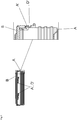
Figuren 1 - 3 abgefüllt. -
Fig. 1 zeigt eine Schnittzeichnung einer erfindungsgemäß verwendeten Metalldose, umfassend- aa) einen metallenen Behälterteil (A) mit Drehgewinde (A'),
aaa) in dessen Innerem sich eine kosmetische Zubereitung (Z) befindet, sowie - bb) einen Deckelteil (D) mit einem Gewinde, (D') aus demselben Metall wie der Behälterteil,
Ferner wird inFig. 1 ein Detail der Wandung der Dose bzw. des Deckels, wo insbesondere Gewindeteile A' und D' herausgehoben sind. - aa) einen metallenen Behälterteil (A) mit Drehgewinde (A'),
-
Fig. 2 zeigt die Schnittzeichnung ausFig. 1 wiederholt und einen waagereichten Schnitt durch das komplette kosmetische Produkt, also die Dose mit der kosmetischen Zubereitung (Z) -
Fig. 3 zeigt eine perspektivische Zeichnung des kosmetischen Produktes mit einem Werbeschriftzug.
Claims (3)
- Kosmetisches Produkt umfassend
eine Metalldose, umfassendaa) einen metallenen Behälterteil (A) mit Drehgewinde (A'),
aaa) in dessen Innerem sich eine kosmetische Zubereitung (Z) befindet, sowiebb) einen Deckelteil (D) mit einem Gewinde, (D') aus demselben Metall wie der Behälterteil,
wobei der Deckelteil (D) vermittels des Deckelgewindes (D') und des Behältergewindes (A') durch Drehbewegung auf den Behälterteil (A) verschließend auf- bzw. abschraubbar, also durch Schraubbewegung öffnen- und wieder verschließbar ausgestaltet ist,
wobei die kosmetische Zubereitung eine Emulsion auscc) einer oder mehreren hydrophilen Phasendd) einer oder mehreren lipophilen Phasen
umfasst, wobeiee) bei welchen die Lipidphase mindestens ein Lipid mit einer Viskosität von weniger als 15 mPa·s (bei 25 °C), welches einen Spreitwert von mindestens 700 mm2/10 Minuten (bei 25 °C) aufweist, enthält. - Kosmetisches Produkt nach Anspruch 1, dadurch gekennzeichnet, dass das oder die verwendeten Lipide gewählt wird oder werden aus der Gruppe folgender Substanzen:
Palmitinsäure, Stearinsäure, Myristinsäure, Arachidinsäure, Ölsäure, Glycerylstearat, Cetylalkohol, Cetearyl Alcohol, C12-15 Alkyl Benzoate, Polyglyceryl-10 Stearate, Isopropyl Stearate, Isopropyl Palmitate, Dimethicone. - Kosmetisches Produkt nach Anspruch 1 dadurch gekennzeichnet, dass die Metalldose aus Aluminium besteht, wobei auf der Innenseite der Dose in an sich bekannter Weise ein Innenschutz angebracht, insbesondere aus einem siegelfähigen Lack oder dergleichen, wobei dieser Innenschutz vorteilhaft bereits vor der Formung der Dose und des Rollrandes angebracht ist.
Applications Claiming Priority (2)
| Application Number | Priority Date | Filing Date | Title |
|---|---|---|---|
| DE102015203565.4A DE102015203565A1 (de) | 2015-02-27 | 2015-02-27 | Kosmetisches Produkt umfassend eine Metalldose und deren Inhalt |
| PCT/EP2016/052612 WO2016134962A1 (de) | 2015-02-27 | 2016-02-08 | Kosmetisches produkt umfassend eine metalldose und deren inhalt |
Publications (2)
| Publication Number | Publication Date |
|---|---|
| EP3261485A1 EP3261485A1 (de) | 2018-01-03 |
| EP3261485B1 true EP3261485B1 (de) | 2019-08-28 |
Family
ID=55315430
Family Applications (1)
| Application Number | Title | Priority Date | Filing Date |
|---|---|---|---|
| EP16703537.7A Revoked EP3261485B1 (de) | 2015-02-27 | 2016-02-08 | Kosmetisches produkt umfassend eine metalldose und deren inhalt |
Country Status (8)
| Country | Link |
|---|---|
| US (1) | US20180035783A1 (de) |
| EP (1) | EP3261485B1 (de) |
| CN (2) | CN117281346A (de) |
| BR (1) | BR112017017012A2 (de) |
| DE (1) | DE102015203565A1 (de) |
| ES (1) | ES2756586T3 (de) |
| MX (1) | MX2017010231A (de) |
| WO (1) | WO2016134962A1 (de) |
Families Citing this family (1)
| Publication number | Priority date | Publication date | Assignee | Title |
|---|---|---|---|---|
| CN108190219A (zh) * | 2018-02-09 | 2018-06-22 | 杭州临安盛翔科技有限公司 | 一种铁铝组合盖 |
Family Cites Families (24)
| Publication number | Priority date | Publication date | Assignee | Title |
|---|---|---|---|---|
| US2313161A (en) * | 1938-11-19 | 1943-03-09 | Empire Metal Cap Co Inc | Sheet metal container |
| DE7102103U (de) * | 1971-01-21 | 1971-09-23 | Beiersdorf Ag | Kombinationspackung fuer salbenartige insbesondere kosmetische produkte |
| CH553695A (de) * | 1972-05-18 | 1974-09-13 | Lovida Ag | Gefuelltes behaeltnis mit deckel. |
| JPS5298541U (de) * | 1976-01-21 | 1977-07-25 | ||
| US5106609A (en) * | 1990-05-01 | 1992-04-21 | The Procter & Gamble Company | Vehicle systems for use in cosmetic compositions |
| DE4308282C2 (de) | 1993-03-16 | 1994-12-22 | Beiersdorf Ag | Vorzugsweise in Form von Mikrosphärulen vorliegende galenische Matrices |
| FR2715637B1 (fr) * | 1994-01-28 | 1996-04-12 | Safet Embamet | Récipient métallique perfectionné pour des produits siccatifs et adhérents, notamment des peintures ou des vernis. |
| US5560917A (en) * | 1995-02-01 | 1996-10-01 | Maybelline Intermediate Company | Cosmetic makeup composition |
| EP0810852A1 (de) * | 1995-02-22 | 1997-12-10 | Bausch & Lomb Incorporated | Hautpflegemittel |
| JP2000083724A (ja) * | 1998-09-09 | 2000-03-28 | Wada Kogyo Kk | コンパクト容器 |
| JP4531171B2 (ja) * | 1999-11-05 | 2010-08-25 | 周防工業株式会社 | 容器 |
| DE10048683A1 (de) * | 2000-09-30 | 2002-04-11 | Beiersdorf Ag | Zubereitung von Emulsionstyp W/O mit erhöhtem Wassergehalt auf der Basis niedrigviskoser,gut spreitender Lipidkomponenten,ferner enthaltend ein oder mehrere Alkylmethiconcopolyole und/oder Alkyl-Dimethicopolyole |
| KR200267509Y1 (ko) * | 2001-09-29 | 2002-03-12 | 정영덕 | 알루미늄 화장품용기 |
| JP4781646B2 (ja) * | 2004-08-10 | 2011-09-28 | 大和製罐株式会社 | 缶容器 |
| US20070251910A1 (en) * | 2006-04-28 | 2007-11-01 | Buckeye Boys, Llc. | Payload carrying and dispensing apparatus |
| DE102007018778A1 (de) * | 2007-04-17 | 2008-10-30 | Beiersdorf Ag | Mehrfarbig bedruckter und geprägter Deckel für Cremedosen und Verfahren zur Herstellung solcher Deckel |
| CN201101232Y (zh) * | 2007-11-06 | 2008-08-20 | 英文精密企业股份有限公司 | 香水瓶防漏塞结构 |
| DE102009004235B4 (de) * | 2009-01-09 | 2015-10-29 | Weener Plastik Gmbh | Deckel zum Verschließen einer Behälteröffnung, Verpackung mit einem Behälter und einem solchen Deckel sowie Verfahren zum Versiegeln eines Behälters mit einem solchen Deckel |
| WO2010090741A1 (en) * | 2009-02-04 | 2010-08-12 | Kalamazoo Holdings, Inc. | Compositions and methods for enhancing the stability of foods, beverages, nutritional supplements and cosmetics |
| FR2943896B1 (fr) * | 2009-04-01 | 2012-03-02 | Oreal | "roll-on" a forte teneur en acide salicylique. |
| TWM400243U (en) * | 2010-05-26 | 2011-03-21 | Lian Sheng Co Ltd | Improved structure of powder container |
| CN202151181U (zh) * | 2011-08-02 | 2012-02-29 | 浙江锦盛包装有限公司 | 一种密封式膏霜瓶 |
| CN202897120U (zh) * | 2012-11-09 | 2013-04-24 | 江苏安惠生物科技有限公司 | 化妆品瓶 |
| AU2015213747B2 (en) * | 2014-02-07 | 2019-03-07 | Ball Corporation | Metallic container with a threaded closure |
-
2015
- 2015-02-27 DE DE102015203565.4A patent/DE102015203565A1/de not_active Withdrawn
-
2016
- 2016-02-08 EP EP16703537.7A patent/EP3261485B1/de not_active Revoked
- 2016-02-08 BR BR112017017012-4A patent/BR112017017012A2/pt not_active Application Discontinuation
- 2016-02-08 ES ES16703537T patent/ES2756586T3/es active Active
- 2016-02-08 CN CN202311156125.9A patent/CN117281346A/zh active Pending
- 2016-02-08 CN CN201680010735.XA patent/CN107257638A/zh active Pending
- 2016-02-08 US US15/551,596 patent/US20180035783A1/en active Pending
- 2016-02-08 MX MX2017010231A patent/MX2017010231A/es unknown
- 2016-02-08 WO PCT/EP2016/052612 patent/WO2016134962A1/de not_active Ceased
Non-Patent Citations (5)
| Title |
|---|
| MINTEL, DM BALEA TEINT PERFEKTION VON DM DROGERIE MARKT GERMANY, September 2014 (2014-09-01) |
| MINTEL, MELLSAVON BLOOMIN' YUZU VON JAPAN GATEWAY, November 2014 (2014-11-01) |
| MINTEL, MELLSAVON FLORAL HERB VON JAPAN GATEWAY, November 2014 (2014-11-01) |
| MINTEL, MY GOLDEN TWENTIES NOURISHING CREAM VON DM DROGERIE MARKT, December 2014 (2014-12-01) |
| MINTEL, SCHWARZKOPF & HENKEL, GERMANY VON SCHWARZKOPF & HENKEL, 1 February 2006 (2006-02-01) |
Also Published As
| Publication number | Publication date |
|---|---|
| CN107257638A (zh) | 2017-10-17 |
| US20180035783A1 (en) | 2018-02-08 |
| BR112017017012A2 (pt) | 2018-04-10 |
| MX2017010231A (es) | 2018-06-07 |
| DE102015203565A1 (de) | 2016-09-01 |
| CN117281346A (zh) | 2023-12-26 |
| EP3261485A1 (de) | 2018-01-03 |
| ES2756586T3 (es) | 2020-04-27 |
| WO2016134962A1 (de) | 2016-09-01 |
Similar Documents
| Publication | Publication Date | Title |
|---|---|---|
| EP2057995B1 (de) | Bioaktive Zusammensetzung für kosmetische Anwendungen | |
| DE102012002950A1 (de) | Stabile Wasser in Öl Emulsionen mit HLB-ähnlichen Emulgatoren | |
| WO1997026858A1 (de) | Gegen bakterien, parasiten, protozoen, mycota and viren wirksame zusammensetzungen auf der basis von squalen und sphingolipiden | |
| EP3122315B1 (de) | Wirkstoffkombinationen aus 4-hydroxyacetophenon und einem oder mehreren glycerin- und/oder oligoglycerinester von verzweigtkettigen und/oder unverzweigtkettigen alkancarbonsäuren, sowie kosmetische oder dermatologische zubereitungen, diese wirkstoffkombinationen enthaltend | |
| EP3154509B1 (de) | Kosmetische zusammensetzungen zur hautaufhellung | |
| EP1858597A1 (de) | Kosmetische und dermatologische zubereitungen, enthaltend transparente oberflächenbeschichtete titandioxidpartikel | |
| DE102015203565A1 (de) | Kosmetisches Produkt umfassend eine Metalldose und deren Inhalt | |
| WO2007096088A1 (de) | Gegen unreine haut und milde formen der akne wirksame zubereitungen mit einem gehalt an hydroxymatairesinol als wirksames prinzip | |
| EP2100584A1 (de) | Foundation mit UV-Filterkombination | |
| DE102016221737A1 (de) | Creme für empfindliche Haut mit Aloe Vera und einem möglichst niedrigen Gehalt an Konservierungsmitteln | |
| DE102005051862B4 (de) | Emulsion enthaltend 1,2-Alkandiole, Emulgatoren und polare Ölkomponenten sowie deren Verwendung | |
| DE102005030864A1 (de) | Kosmetische Zubereitung zur Verbesserung der Hautfeuchtigkeit | |
| DE102015203566A1 (de) | Kosmetisches Produkt umfassend eine Metalldose und deren Inhalt | |
| EP3122317B1 (de) | Stabile wasser-in-öl-emulsionen mit einem gehalt an 4-hydroxyacetophenon | |
| DE102012222783A1 (de) | Polyolhaltige kosmetische oder dermatologische Zubereitungen mit verbesserter Sensorik | |
| DE10025123B4 (de) | Desodorierende Zubereitungen mit Oligoglycerinmonocarbonsäuremonoestern, Arylverbindungen und Glycerylethern | |
| DE102014205475A1 (de) | Polypropylenglykole mit antimikrobieller Wirkung in kosmetischen oder dermatologischen Zubereitungen | |
| DE102012214716A1 (de) | Durch Phosphatemulgatoren stabilisierte Emulsion | |
| DE102005029388B4 (de) | Wirkstoffkombinationen aus Glycopyrroniumbromid und einem oder mehreren partiell neutralisierten Ester von Monoglyceriden und/oder Diglyceriden gesättigter Fettsäuren mit Zitronensäure | |
| DE102017006533A1 (de) | Wasserfreie Zusammensetzungen in Aerosolform, die ein oder mehrere suspendierte Elektrolyte enthalten | |
| EP4065239A1 (de) | Wirkstoffkombinationen aus ubichinol und ubichinon, kosmetische oder dermatologische zubereitungen, solche wirkstoffkombinationen enthaltend, und verwendung von ubichinol zur verbesserung der wirksamkeit kosmetischer oder dermatologischer zubereitungen mit einem gehalt an ubichinon | |
| DE102014104254B4 (de) | Wirkstoffkombinationen aus 4-Hydroxyacetophenon und einem oder mehreren Zimtsäurederivaten | |
| DE10203001A1 (de) | Kosmetische Zubereitungen mit antimikrobieller Wirkung | |
| DE102009055915A1 (de) | Verwendung von Zingeron zur Herstellung kosmetischer oder dermatologischer Zubereitungen, welche auf der Haut ein Prickeln hervorrufen | |
| DE102012212928A1 (de) | Verwendung von alpha-Glucosylrutin zur verbesserten Hautkonturierung bzw. gegen Cellulite |
Legal Events
| Date | Code | Title | Description |
|---|---|---|---|
| STAA | Information on the status of an ep patent application or granted ep patent |
Free format text: STATUS: THE INTERNATIONAL PUBLICATION HAS BEEN MADE |
|
| PUAI | Public reference made under article 153(3) epc to a published international application that has entered the european phase |
Free format text: ORIGINAL CODE: 0009012 |
|
| STAA | Information on the status of an ep patent application or granted ep patent |
Free format text: STATUS: REQUEST FOR EXAMINATION WAS MADE |
|
| 17P | Request for examination filed |
Effective date: 20170927 |
|
| AK | Designated contracting states |
Kind code of ref document: A1 Designated state(s): AL AT BE BG CH CY CZ DE DK EE ES FI FR GB GR HR HU IE IS IT LI LT LU LV MC MK MT NL NO PL PT RO RS SE SI SK SM TR |
|
| AX | Request for extension of the european patent |
Extension state: BA ME |
|
| STAA | Information on the status of an ep patent application or granted ep patent |
Free format text: STATUS: EXAMINATION IS IN PROGRESS |
|
| 17Q | First examination report despatched |
Effective date: 20180730 |
|
| RAP1 | Party data changed (applicant data changed or rights of an application transferred) |
Owner name: BEIERSDORF AG |
|
| GRAP | Despatch of communication of intention to grant a patent |
Free format text: ORIGINAL CODE: EPIDOSNIGR1 |
|
| STAA | Information on the status of an ep patent application or granted ep patent |
Free format text: STATUS: GRANT OF PATENT IS INTENDED |
|
| RIC1 | Information provided on ipc code assigned before grant |
Ipc: A61K 8/37 20060101ALI20190320BHEP Ipc: A45D 40/00 20060101AFI20190320BHEP Ipc: B65D 43/02 20060101ALI20190320BHEP Ipc: A61K 8/39 20060101ALI20190320BHEP Ipc: A61K 8/891 20060101ALI20190320BHEP Ipc: A61Q 19/00 20060101ALI20190320BHEP Ipc: A61K 8/36 20060101ALI20190320BHEP Ipc: A61K 8/34 20060101ALI20190320BHEP |
|
| INTG | Intention to grant announced |
Effective date: 20190410 |
|
| GRAS | Grant fee paid |
Free format text: ORIGINAL CODE: EPIDOSNIGR3 |
|
| GRAA | (expected) grant |
Free format text: ORIGINAL CODE: 0009210 |
|
| STAA | Information on the status of an ep patent application or granted ep patent |
Free format text: STATUS: THE PATENT HAS BEEN GRANTED |
|
| AK | Designated contracting states |
Kind code of ref document: B1 Designated state(s): AL AT BE BG CH CY CZ DE DK EE ES FI FR GB GR HR HU IE IS IT LI LT LU LV MC MK MT NL NO PL PT RO RS SE SI SK SM TR |
|
| AX | Request for extension of the european patent |
Extension state: BA ME |
|
| REG | Reference to a national code |
Ref country code: GB Ref legal event code: FG4D Free format text: NOT ENGLISH |
|
| REG | Reference to a national code |
Ref country code: CH Ref legal event code: EP |
|
| REG | Reference to a national code |
Ref country code: DE Ref legal event code: R096 Ref document number: 502016006292 Country of ref document: DE |
|
| REG | Reference to a national code |
Ref country code: AT Ref legal event code: REF Ref document number: 1171313 Country of ref document: AT Kind code of ref document: T Effective date: 20190915 |
|
| REG | Reference to a national code |
Ref country code: IE Ref legal event code: FG4D Free format text: LANGUAGE OF EP DOCUMENT: GERMAN |
|
| REG | Reference to a national code |
Ref country code: NL Ref legal event code: MP Effective date: 20190828 |
|
| REG | Reference to a national code |
Ref country code: LT Ref legal event code: MG4D |
|
| PG25 | Lapsed in a contracting state [announced via postgrant information from national office to epo] |
Ref country code: FI Free format text: LAPSE BECAUSE OF FAILURE TO SUBMIT A TRANSLATION OF THE DESCRIPTION OR TO PAY THE FEE WITHIN THE PRESCRIBED TIME-LIMIT Effective date: 20190828 Ref country code: NO Free format text: LAPSE BECAUSE OF FAILURE TO SUBMIT A TRANSLATION OF THE DESCRIPTION OR TO PAY THE FEE WITHIN THE PRESCRIBED TIME-LIMIT Effective date: 20191128 Ref country code: SE Free format text: LAPSE BECAUSE OF FAILURE TO SUBMIT A TRANSLATION OF THE DESCRIPTION OR TO PAY THE FEE WITHIN THE PRESCRIBED TIME-LIMIT Effective date: 20190828 Ref country code: LT Free format text: LAPSE BECAUSE OF FAILURE TO SUBMIT A TRANSLATION OF THE DESCRIPTION OR TO PAY THE FEE WITHIN THE PRESCRIBED TIME-LIMIT Effective date: 20190828 Ref country code: NL Free format text: LAPSE BECAUSE OF FAILURE TO SUBMIT A TRANSLATION OF THE DESCRIPTION OR TO PAY THE FEE WITHIN THE PRESCRIBED TIME-LIMIT Effective date: 20190828 Ref country code: BG Free format text: LAPSE BECAUSE OF FAILURE TO SUBMIT A TRANSLATION OF THE DESCRIPTION OR TO PAY THE FEE WITHIN THE PRESCRIBED TIME-LIMIT Effective date: 20191128 Ref country code: HR Free format text: LAPSE BECAUSE OF FAILURE TO SUBMIT A TRANSLATION OF THE DESCRIPTION OR TO PAY THE FEE WITHIN THE PRESCRIBED TIME-LIMIT Effective date: 20190828 Ref country code: PT Free format text: LAPSE BECAUSE OF FAILURE TO SUBMIT A TRANSLATION OF THE DESCRIPTION OR TO PAY THE FEE WITHIN THE PRESCRIBED TIME-LIMIT Effective date: 20191230 |
|
| PG25 | Lapsed in a contracting state [announced via postgrant information from national office to epo] |
Ref country code: AL Free format text: LAPSE BECAUSE OF FAILURE TO SUBMIT A TRANSLATION OF THE DESCRIPTION OR TO PAY THE FEE WITHIN THE PRESCRIBED TIME-LIMIT Effective date: 20190828 Ref country code: GR Free format text: LAPSE BECAUSE OF FAILURE TO SUBMIT A TRANSLATION OF THE DESCRIPTION OR TO PAY THE FEE WITHIN THE PRESCRIBED TIME-LIMIT Effective date: 20191129 Ref country code: LV Free format text: LAPSE BECAUSE OF FAILURE TO SUBMIT A TRANSLATION OF THE DESCRIPTION OR TO PAY THE FEE WITHIN THE PRESCRIBED TIME-LIMIT Effective date: 20190828 Ref country code: RS Free format text: LAPSE BECAUSE OF FAILURE TO SUBMIT A TRANSLATION OF THE DESCRIPTION OR TO PAY THE FEE WITHIN THE PRESCRIBED TIME-LIMIT Effective date: 20190828 Ref country code: IS Free format text: LAPSE BECAUSE OF FAILURE TO SUBMIT A TRANSLATION OF THE DESCRIPTION OR TO PAY THE FEE WITHIN THE PRESCRIBED TIME-LIMIT Effective date: 20191228 |
|
| PG25 | Lapsed in a contracting state [announced via postgrant information from national office to epo] |
Ref country code: TR Free format text: LAPSE BECAUSE OF FAILURE TO SUBMIT A TRANSLATION OF THE DESCRIPTION OR TO PAY THE FEE WITHIN THE PRESCRIBED TIME-LIMIT Effective date: 20190828 |
|
| REG | Reference to a national code |
Ref country code: ES Ref legal event code: FG2A Ref document number: 2756586 Country of ref document: ES Kind code of ref document: T3 Effective date: 20200427 |
|
| PG25 | Lapsed in a contracting state [announced via postgrant information from national office to epo] |
Ref country code: RO Free format text: LAPSE BECAUSE OF FAILURE TO SUBMIT A TRANSLATION OF THE DESCRIPTION OR TO PAY THE FEE WITHIN THE PRESCRIBED TIME-LIMIT Effective date: 20190828 Ref country code: EE Free format text: LAPSE BECAUSE OF FAILURE TO SUBMIT A TRANSLATION OF THE DESCRIPTION OR TO PAY THE FEE WITHIN THE PRESCRIBED TIME-LIMIT Effective date: 20190828 Ref country code: DK Free format text: LAPSE BECAUSE OF FAILURE TO SUBMIT A TRANSLATION OF THE DESCRIPTION OR TO PAY THE FEE WITHIN THE PRESCRIBED TIME-LIMIT Effective date: 20190828 Ref country code: PL Free format text: LAPSE BECAUSE OF FAILURE TO SUBMIT A TRANSLATION OF THE DESCRIPTION OR TO PAY THE FEE WITHIN THE PRESCRIBED TIME-LIMIT Effective date: 20190828 |
|
| VS25 | Lapsed in a validation state [announced via postgrant information from nat. office to epo] |
Ref country code: MD Free format text: LAPSE BECAUSE OF FAILURE TO SUBMIT A TRANSLATION OF THE DESCRIPTION OR TO PAY THE FEE WITHIN THE PRESCRIBED TIME-LIMIT Effective date: 20190828 |
|
| REG | Reference to a national code |
Ref country code: DE Ref legal event code: R026 Ref document number: 502016006292 Country of ref document: DE |
|
| PG25 | Lapsed in a contracting state [announced via postgrant information from national office to epo] |
Ref country code: CZ Free format text: LAPSE BECAUSE OF FAILURE TO SUBMIT A TRANSLATION OF THE DESCRIPTION OR TO PAY THE FEE WITHIN THE PRESCRIBED TIME-LIMIT Effective date: 20190828 Ref country code: SK Free format text: LAPSE BECAUSE OF FAILURE TO SUBMIT A TRANSLATION OF THE DESCRIPTION OR TO PAY THE FEE WITHIN THE PRESCRIBED TIME-LIMIT Effective date: 20190828 Ref country code: IS Free format text: LAPSE BECAUSE OF FAILURE TO SUBMIT A TRANSLATION OF THE DESCRIPTION OR TO PAY THE FEE WITHIN THE PRESCRIBED TIME-LIMIT Effective date: 20200224 Ref country code: SM Free format text: LAPSE BECAUSE OF FAILURE TO SUBMIT A TRANSLATION OF THE DESCRIPTION OR TO PAY THE FEE WITHIN THE PRESCRIBED TIME-LIMIT Effective date: 20190828 |
|
| PLBI | Opposition filed |
Free format text: ORIGINAL CODE: 0009260 |
|
| PLAX | Notice of opposition and request to file observation + time limit sent |
Free format text: ORIGINAL CODE: EPIDOSNOBS2 |
|
| 26 | Opposition filed |
Opponent name: HENKEL AG & CO. KGAA Effective date: 20200525 |
|
| PG2D | Information on lapse in contracting state deleted |
Ref country code: IS |
|
| PG25 | Lapsed in a contracting state [announced via postgrant information from national office to epo] |
Ref country code: SI Free format text: LAPSE BECAUSE OF FAILURE TO SUBMIT A TRANSLATION OF THE DESCRIPTION OR TO PAY THE FEE WITHIN THE PRESCRIBED TIME-LIMIT Effective date: 20190828 |
|
| REG | Reference to a national code |
Ref country code: CH Ref legal event code: PL |
|
| REG | Reference to a national code |
Ref country code: BE Ref legal event code: MM Effective date: 20200229 |
|
| PG25 | Lapsed in a contracting state [announced via postgrant information from national office to epo] |
Ref country code: MC Free format text: LAPSE BECAUSE OF FAILURE TO SUBMIT A TRANSLATION OF THE DESCRIPTION OR TO PAY THE FEE WITHIN THE PRESCRIBED TIME-LIMIT Effective date: 20190828 Ref country code: LU Free format text: LAPSE BECAUSE OF NON-PAYMENT OF DUE FEES Effective date: 20200208 |
|
| PLBB | Reply of patent proprietor to notice(s) of opposition received |
Free format text: ORIGINAL CODE: EPIDOSNOBS3 |
|
| PG25 | Lapsed in a contracting state [announced via postgrant information from national office to epo] |
Ref country code: CH Free format text: LAPSE BECAUSE OF NON-PAYMENT OF DUE FEES Effective date: 20200229 Ref country code: LI Free format text: LAPSE BECAUSE OF NON-PAYMENT OF DUE FEES Effective date: 20200229 |
|
| PG25 | Lapsed in a contracting state [announced via postgrant information from national office to epo] |
Ref country code: IE Free format text: LAPSE BECAUSE OF NON-PAYMENT OF DUE FEES Effective date: 20200208 |
|
| RDAF | Communication despatched that patent is revoked |
Free format text: ORIGINAL CODE: EPIDOSNREV1 |
|
| PG25 | Lapsed in a contracting state [announced via postgrant information from national office to epo] |
Ref country code: BE Free format text: LAPSE BECAUSE OF NON-PAYMENT OF DUE FEES Effective date: 20200229 |
|
| REG | Reference to a national code |
Ref country code: DE Ref legal event code: R103 Ref document number: 502016006292 Country of ref document: DE Ref country code: DE Ref legal event code: R064 Ref document number: 502016006292 Country of ref document: DE |
|
| PGFP | Annual fee paid to national office [announced via postgrant information from national office to epo] |
Ref country code: FR Payment date: 20210226 Year of fee payment: 6 Ref country code: IT Payment date: 20210222 Year of fee payment: 6 |
|
| PGFP | Annual fee paid to national office [announced via postgrant information from national office to epo] |
Ref country code: GB Payment date: 20210224 Year of fee payment: 6 Ref country code: DE Payment date: 20210228 Year of fee payment: 6 |
|
| VS25 | Lapsed in a validation state [announced via postgrant information from nat. office to epo] |
Ref country code: MA Free format text: LAPSE BECAUSE OF FAILURE TO SUBMIT A TRANSLATION OF THE DESCRIPTION OR TO PAY THE FEE WITHIN THE PRESCRIBED TIME-LIMIT Effective date: 20190828 |
|
| RDAG | Patent revoked |
Free format text: ORIGINAL CODE: 0009271 |
|
| STAA | Information on the status of an ep patent application or granted ep patent |
Free format text: STATUS: PATENT REVOKED |
|
| REG | Reference to a national code |
Ref country code: FI Ref legal event code: MGE |
|
| 27W | Patent revoked |
Effective date: 20210304 |
|
| GBPR | Gb: patent revoked under art. 102 of the ep convention designating the uk as contracting state |
Effective date: 20210304 |
|
| PGFP | Annual fee paid to national office [announced via postgrant information from national office to epo] |
Ref country code: ES Payment date: 20210422 Year of fee payment: 6 |
|
| REG | Reference to a national code |
Ref country code: AT Ref legal event code: MA03 Ref document number: 1171313 Country of ref document: AT Kind code of ref document: T Effective date: 20210304 |
|
| PG25 | Lapsed in a contracting state [announced via postgrant information from national office to epo] |
Ref country code: MT Free format text: LAPSE BECAUSE OF FAILURE TO SUBMIT A TRANSLATION OF THE DESCRIPTION OR TO PAY THE FEE WITHIN THE PRESCRIBED TIME-LIMIT Effective date: 20190828 Ref country code: CY Free format text: LAPSE BECAUSE OF FAILURE TO SUBMIT A TRANSLATION OF THE DESCRIPTION OR TO PAY THE FEE WITHIN THE PRESCRIBED TIME-LIMIT Effective date: 20190828 |
|
| PG25 | Lapsed in a contracting state [announced via postgrant information from national office to epo] |
Ref country code: AT Free format text: LAPSE BECAUSE OF THE APPLICANT RENOUNCES Effective date: 20210304 |
|
| PG25 | Lapsed in a contracting state [announced via postgrant information from national office to epo] |
Ref country code: AT Free format text: LAPSE BECAUSE OF THE APPLICANT RENOUNCES Effective date: 20210304 |
|
| PGFP | Annual fee paid to national office [announced via postgrant information from national office to epo] |
Ref country code: AT Payment date: 20260410 Year of fee payment: 5 |