EP3259147B1 - Hybridfahrzeug - Google Patents
Hybridfahrzeug Download PDFInfo
- Publication number
- EP3259147B1 EP3259147B1 EP16709813.6A EP16709813A EP3259147B1 EP 3259147 B1 EP3259147 B1 EP 3259147B1 EP 16709813 A EP16709813 A EP 16709813A EP 3259147 B1 EP3259147 B1 EP 3259147B1
- Authority
- EP
- European Patent Office
- Prior art keywords
- clutch
- state
- power
- hydraulic pressure
- engine
- Prior art date
- Legal status (The legal status is an assumption and is not a legal conclusion. Google has not performed a legal analysis and makes no representation as to the accuracy of the status listed.)
- Active
Links
Images





Classifications
-
- B—PERFORMING OPERATIONS; TRANSPORTING
- B60—VEHICLES IN GENERAL
- B60K—ARRANGEMENT OR MOUNTING OF PROPULSION UNITS OR OF TRANSMISSIONS IN VEHICLES; ARRANGEMENT OR MOUNTING OF PLURAL DIVERSE PRIME-MOVERS IN VEHICLES; AUXILIARY DRIVES FOR VEHICLES; INSTRUMENTATION OR DASHBOARDS FOR VEHICLES; ARRANGEMENTS IN CONNECTION WITH COOLING, AIR INTAKE, GAS EXHAUST OR FUEL SUPPLY OF PROPULSION UNITS IN VEHICLES
- B60K6/00—Arrangement or mounting of plural diverse prime-movers for mutual or common propulsion, e.g. hybrid propulsion systems comprising electric motors and internal combustion engines
- B60K6/20—Arrangement or mounting of plural diverse prime-movers for mutual or common propulsion, e.g. hybrid propulsion systems comprising electric motors and internal combustion engines the prime-movers consisting of electric motors and internal combustion engines, e.g. HEVs
- B60K6/22—Arrangement or mounting of plural diverse prime-movers for mutual or common propulsion, e.g. hybrid propulsion systems comprising electric motors and internal combustion engines the prime-movers consisting of electric motors and internal combustion engines, e.g. HEVs characterised by apparatus, components or means specially adapted for HEVs
- B60K6/38—Arrangement or mounting of plural diverse prime-movers for mutual or common propulsion, e.g. hybrid propulsion systems comprising electric motors and internal combustion engines the prime-movers consisting of electric motors and internal combustion engines, e.g. HEVs characterised by apparatus, components or means specially adapted for HEVs characterised by the driveline clutches
- B60K6/387—Actuated clutches, i.e. clutches engaged or disengaged by electric, hydraulic or mechanical actuating means
-
- B—PERFORMING OPERATIONS; TRANSPORTING
- B60—VEHICLES IN GENERAL
- B60K—ARRANGEMENT OR MOUNTING OF PROPULSION UNITS OR OF TRANSMISSIONS IN VEHICLES; ARRANGEMENT OR MOUNTING OF PLURAL DIVERSE PRIME-MOVERS IN VEHICLES; AUXILIARY DRIVES FOR VEHICLES; INSTRUMENTATION OR DASHBOARDS FOR VEHICLES; ARRANGEMENTS IN CONNECTION WITH COOLING, AIR INTAKE, GAS EXHAUST OR FUEL SUPPLY OF PROPULSION UNITS IN VEHICLES
- B60K6/00—Arrangement or mounting of plural diverse prime-movers for mutual or common propulsion, e.g. hybrid propulsion systems comprising electric motors and internal combustion engines
- B60K6/20—Arrangement or mounting of plural diverse prime-movers for mutual or common propulsion, e.g. hybrid propulsion systems comprising electric motors and internal combustion engines the prime-movers consisting of electric motors and internal combustion engines, e.g. HEVs
- B60K6/42—Arrangement or mounting of plural diverse prime-movers for mutual or common propulsion, e.g. hybrid propulsion systems comprising electric motors and internal combustion engines the prime-movers consisting of electric motors and internal combustion engines, e.g. HEVs characterised by the architecture of the hybrid electric vehicle
- B60K6/44—Series-parallel type
- B60K6/445—Differential gearing distribution type
-
- B—PERFORMING OPERATIONS; TRANSPORTING
- B60—VEHICLES IN GENERAL
- B60K—ARRANGEMENT OR MOUNTING OF PROPULSION UNITS OR OF TRANSMISSIONS IN VEHICLES; ARRANGEMENT OR MOUNTING OF PLURAL DIVERSE PRIME-MOVERS IN VEHICLES; AUXILIARY DRIVES FOR VEHICLES; INSTRUMENTATION OR DASHBOARDS FOR VEHICLES; ARRANGEMENTS IN CONNECTION WITH COOLING, AIR INTAKE, GAS EXHAUST OR FUEL SUPPLY OF PROPULSION UNITS IN VEHICLES
- B60K6/00—Arrangement or mounting of plural diverse prime-movers for mutual or common propulsion, e.g. hybrid propulsion systems comprising electric motors and internal combustion engines
- B60K6/20—Arrangement or mounting of plural diverse prime-movers for mutual or common propulsion, e.g. hybrid propulsion systems comprising electric motors and internal combustion engines the prime-movers consisting of electric motors and internal combustion engines, e.g. HEVs
- B60K6/22—Arrangement or mounting of plural diverse prime-movers for mutual or common propulsion, e.g. hybrid propulsion systems comprising electric motors and internal combustion engines the prime-movers consisting of electric motors and internal combustion engines, e.g. HEVs characterised by apparatus, components or means specially adapted for HEVs
- B60K6/36—Arrangement or mounting of plural diverse prime-movers for mutual or common propulsion, e.g. hybrid propulsion systems comprising electric motors and internal combustion engines the prime-movers consisting of electric motors and internal combustion engines, e.g. HEVs characterised by apparatus, components or means specially adapted for HEVs characterised by the transmission gearings
- B60K6/365—Arrangement or mounting of plural diverse prime-movers for mutual or common propulsion, e.g. hybrid propulsion systems comprising electric motors and internal combustion engines the prime-movers consisting of electric motors and internal combustion engines, e.g. HEVs characterised by apparatus, components or means specially adapted for HEVs characterised by the transmission gearings with the gears having orbital motion
-
- B—PERFORMING OPERATIONS; TRANSPORTING
- B60—VEHICLES IN GENERAL
- B60W—CONJOINT CONTROL OF VEHICLE SUB-UNITS OF DIFFERENT TYPE OR DIFFERENT FUNCTION; CONTROL SYSTEMS SPECIALLY ADAPTED FOR HYBRID VEHICLES; ROAD VEHICLE DRIVE CONTROL SYSTEMS FOR PURPOSES NOT RELATED TO THE CONTROL OF A PARTICULAR SUB-UNIT
- B60W10/00—Conjoint control of vehicle sub-units of different type or different function
- B60W10/02—Conjoint control of vehicle sub-units of different type or different function including control of driveline clutches
-
- B—PERFORMING OPERATIONS; TRANSPORTING
- B60—VEHICLES IN GENERAL
- B60W—CONJOINT CONTROL OF VEHICLE SUB-UNITS OF DIFFERENT TYPE OR DIFFERENT FUNCTION; CONTROL SYSTEMS SPECIALLY ADAPTED FOR HYBRID VEHICLES; ROAD VEHICLE DRIVE CONTROL SYSTEMS FOR PURPOSES NOT RELATED TO THE CONTROL OF A PARTICULAR SUB-UNIT
- B60W10/00—Conjoint control of vehicle sub-units of different type or different function
- B60W10/10—Conjoint control of vehicle sub-units of different type or different function including control of change-speed gearings
- B60W10/11—Stepped gearings
- B60W10/115—Stepped gearings with planetary gears
-
- B—PERFORMING OPERATIONS; TRANSPORTING
- B60—VEHICLES IN GENERAL
- B60W—CONJOINT CONTROL OF VEHICLE SUB-UNITS OF DIFFERENT TYPE OR DIFFERENT FUNCTION; CONTROL SYSTEMS SPECIALLY ADAPTED FOR HYBRID VEHICLES; ROAD VEHICLE DRIVE CONTROL SYSTEMS FOR PURPOSES NOT RELATED TO THE CONTROL OF A PARTICULAR SUB-UNIT
- B60W20/00—Control systems specially adapted for hybrid vehicles
- B60W20/20—Control strategies involving selection of hybrid configuration, e.g. selection between series or parallel configuration
-
- F—MECHANICAL ENGINEERING; LIGHTING; HEATING; WEAPONS; BLASTING
- F16—ENGINEERING ELEMENTS AND UNITS; GENERAL MEASURES FOR PRODUCING AND MAINTAINING EFFECTIVE FUNCTIONING OF MACHINES OR INSTALLATIONS; THERMAL INSULATION IN GENERAL
- F16H—GEARING
- F16H3/00—Toothed gearings for conveying rotary motion with variable gear ratio or for reversing rotary motion
- F16H3/44—Toothed gearings for conveying rotary motion with variable gear ratio or for reversing rotary motion using gears having orbital motion
- F16H3/72—Toothed gearings for conveying rotary motion with variable gear ratio or for reversing rotary motion using gears having orbital motion with a secondary drive, e.g. regulating motor, in order to vary speed continuously
- F16H3/727—Toothed gearings for conveying rotary motion with variable gear ratio or for reversing rotary motion using gears having orbital motion with a secondary drive, e.g. regulating motor, in order to vary speed continuously with at least two dynamo electric machines for creating an electric power path inside the gearing, e.g. using generator and motor for a variable power torque path
- F16H3/728—Toothed gearings for conveying rotary motion with variable gear ratio or for reversing rotary motion using gears having orbital motion with a secondary drive, e.g. regulating motor, in order to vary speed continuously with at least two dynamo electric machines for creating an electric power path inside the gearing, e.g. using generator and motor for a variable power torque path with means to change ratio in the mechanical gearing
-
- F—MECHANICAL ENGINEERING; LIGHTING; HEATING; WEAPONS; BLASTING
- F16—ENGINEERING ELEMENTS AND UNITS; GENERAL MEASURES FOR PRODUCING AND MAINTAINING EFFECTIVE FUNCTIONING OF MACHINES OR INSTALLATIONS; THERMAL INSULATION IN GENERAL
- F16H—GEARING
- F16H61/00—Control functions within control units of change-speed- or reversing-gearings for conveying rotary motion ; Control of exclusively fluid gearing, friction gearing, gearings with endless flexible members or other particular types of gearing
- F16H61/02—Control functions within control units of change-speed- or reversing-gearings for conveying rotary motion ; Control of exclusively fluid gearing, friction gearing, gearings with endless flexible members or other particular types of gearing characterised by the signals used
- F16H61/0202—Control functions within control units of change-speed- or reversing-gearings for conveying rotary motion ; Control of exclusively fluid gearing, friction gearing, gearings with endless flexible members or other particular types of gearing characterised by the signals used the signals being electric
- F16H61/0204—Control functions within control units of change-speed- or reversing-gearings for conveying rotary motion ; Control of exclusively fluid gearing, friction gearing, gearings with endless flexible members or other particular types of gearing characterised by the signals used the signals being electric for gearshift control, e.g. control functions for performing shifting or generation of shift signal
-
- F—MECHANICAL ENGINEERING; LIGHTING; HEATING; WEAPONS; BLASTING
- F16—ENGINEERING ELEMENTS AND UNITS; GENERAL MEASURES FOR PRODUCING AND MAINTAINING EFFECTIVE FUNCTIONING OF MACHINES OR INSTALLATIONS; THERMAL INSULATION IN GENERAL
- F16H—GEARING
- F16H61/00—Control functions within control units of change-speed- or reversing-gearings for conveying rotary motion ; Control of exclusively fluid gearing, friction gearing, gearings with endless flexible members or other particular types of gearing
- F16H61/02—Control functions within control units of change-speed- or reversing-gearings for conveying rotary motion ; Control of exclusively fluid gearing, friction gearing, gearings with endless flexible members or other particular types of gearing characterised by the signals used
- F16H61/0262—Control functions within control units of change-speed- or reversing-gearings for conveying rotary motion ; Control of exclusively fluid gearing, friction gearing, gearings with endless flexible members or other particular types of gearing characterised by the signals used the signals being hydraulic
- F16H61/0265—Control functions within control units of change-speed- or reversing-gearings for conveying rotary motion ; Control of exclusively fluid gearing, friction gearing, gearings with endless flexible members or other particular types of gearing characterised by the signals used the signals being hydraulic for gearshift control, e.g. control functions for performing shifting or generation of shift signals
-
- F—MECHANICAL ENGINEERING; LIGHTING; HEATING; WEAPONS; BLASTING
- F16—ENGINEERING ELEMENTS AND UNITS; GENERAL MEASURES FOR PRODUCING AND MAINTAINING EFFECTIVE FUNCTIONING OF MACHINES OR INSTALLATIONS; THERMAL INSULATION IN GENERAL
- F16H—GEARING
- F16H61/00—Control functions within control units of change-speed- or reversing-gearings for conveying rotary motion ; Control of exclusively fluid gearing, friction gearing, gearings with endless flexible members or other particular types of gearing
- F16H61/02—Control functions within control units of change-speed- or reversing-gearings for conveying rotary motion ; Control of exclusively fluid gearing, friction gearing, gearings with endless flexible members or other particular types of gearing characterised by the signals used
- F16H61/0262—Control functions within control units of change-speed- or reversing-gearings for conveying rotary motion ; Control of exclusively fluid gearing, friction gearing, gearings with endless flexible members or other particular types of gearing characterised by the signals used the signals being hydraulic
- F16H61/0265—Control functions within control units of change-speed- or reversing-gearings for conveying rotary motion ; Control of exclusively fluid gearing, friction gearing, gearings with endless flexible members or other particular types of gearing characterised by the signals used the signals being hydraulic for gearshift control, e.g. control functions for performing shifting or generation of shift signals
- F16H61/0267—Layout of hydraulic control circuits, e.g. arrangement of valves
-
- B—PERFORMING OPERATIONS; TRANSPORTING
- B60—VEHICLES IN GENERAL
- B60Y—INDEXING SCHEME RELATING TO ASPECTS CROSS-CUTTING VEHICLE TECHNOLOGY
- B60Y2200/00—Type of vehicle
- B60Y2200/90—Vehicles comprising electric prime movers
- B60Y2200/92—Hybrid vehicles
-
- F—MECHANICAL ENGINEERING; LIGHTING; HEATING; WEAPONS; BLASTING
- F16—ENGINEERING ELEMENTS AND UNITS; GENERAL MEASURES FOR PRODUCING AND MAINTAINING EFFECTIVE FUNCTIONING OF MACHINES OR INSTALLATIONS; THERMAL INSULATION IN GENERAL
- F16H—GEARING
- F16H37/00—Combinations of mechanical gearings, not provided for in groups F16H1/00 - F16H35/00
- F16H37/02—Combinations of mechanical gearings, not provided for in groups F16H1/00 - F16H35/00 comprising essentially only toothed or friction gearings
- F16H37/06—Combinations of mechanical gearings, not provided for in groups F16H1/00 - F16H35/00 comprising essentially only toothed or friction gearings with a plurality of driving or driven shafts; with arrangements for dividing torque between two or more intermediate shafts
- F16H37/08—Combinations of mechanical gearings, not provided for in groups F16H1/00 - F16H35/00 comprising essentially only toothed or friction gearings with a plurality of driving or driven shafts; with arrangements for dividing torque between two or more intermediate shafts with differential gearing
- F16H37/0833—Combinations of mechanical gearings, not provided for in groups F16H1/00 - F16H35/00 comprising essentially only toothed or friction gearings with a plurality of driving or driven shafts; with arrangements for dividing torque between two or more intermediate shafts with differential gearing with arrangements for dividing torque between two or more intermediate shafts, i.e. with two or more internal power paths
- F16H37/084—Combinations of mechanical gearings, not provided for in groups F16H1/00 - F16H35/00 comprising essentially only toothed or friction gearings with a plurality of driving or driven shafts; with arrangements for dividing torque between two or more intermediate shafts with differential gearing with arrangements for dividing torque between two or more intermediate shafts, i.e. with two or more internal power paths at least one power path being a continuously variable transmission, i.e. CVT
- F16H2037/0866—Power-split transmissions with distributing differentials, with the output of the CVT connected or connectable to the output shaft
- F16H2037/0873—Power-split transmissions with distributing differentials, with the output of the CVT connected or connectable to the output shaft with switching means, e.g. to change ranges
-
- F—MECHANICAL ENGINEERING; LIGHTING; HEATING; WEAPONS; BLASTING
- F16—ENGINEERING ELEMENTS AND UNITS; GENERAL MEASURES FOR PRODUCING AND MAINTAINING EFFECTIVE FUNCTIONING OF MACHINES OR INSTALLATIONS; THERMAL INSULATION IN GENERAL
- F16H—GEARING
- F16H2200/00—Transmissions for multiple ratios
- F16H2200/20—Transmissions using gears with orbital motion
- F16H2200/2002—Transmissions using gears with orbital motion characterised by the number of sets of orbital gears
- F16H2200/2007—Transmissions using gears with orbital motion characterised by the number of sets of orbital gears with two sets of orbital gears
-
- F—MECHANICAL ENGINEERING; LIGHTING; HEATING; WEAPONS; BLASTING
- F16—ENGINEERING ELEMENTS AND UNITS; GENERAL MEASURES FOR PRODUCING AND MAINTAINING EFFECTIVE FUNCTIONING OF MACHINES OR INSTALLATIONS; THERMAL INSULATION IN GENERAL
- F16H—GEARING
- F16H2200/00—Transmissions for multiple ratios
- F16H2200/20—Transmissions using gears with orbital motion
- F16H2200/203—Transmissions using gears with orbital motion characterised by the engaging friction means not of the freewheel type, e.g. friction clutches or brakes
- F16H2200/2038—Transmissions using gears with orbital motion characterised by the engaging friction means not of the freewheel type, e.g. friction clutches or brakes with three engaging means
-
- Y—GENERAL TAGGING OF NEW TECHNOLOGICAL DEVELOPMENTS; GENERAL TAGGING OF CROSS-SECTIONAL TECHNOLOGIES SPANNING OVER SEVERAL SECTIONS OF THE IPC; TECHNICAL SUBJECTS COVERED BY FORMER USPC CROSS-REFERENCE ART COLLECTIONS [XRACs] AND DIGESTS
- Y02—TECHNOLOGIES OR APPLICATIONS FOR MITIGATION OR ADAPTATION AGAINST CLIMATE CHANGE
- Y02T—CLIMATE CHANGE MITIGATION TECHNOLOGIES RELATED TO TRANSPORTATION
- Y02T10/00—Road transport of goods or passengers
- Y02T10/60—Other road transportation technologies with climate change mitigation effect
- Y02T10/62—Hybrid vehicles
-
- Y—GENERAL TAGGING OF NEW TECHNOLOGICAL DEVELOPMENTS; GENERAL TAGGING OF CROSS-SECTIONAL TECHNOLOGIES SPANNING OVER SEVERAL SECTIONS OF THE IPC; TECHNICAL SUBJECTS COVERED BY FORMER USPC CROSS-REFERENCE ART COLLECTIONS [XRACs] AND DIGESTS
- Y10—TECHNICAL SUBJECTS COVERED BY FORMER USPC
- Y10S—TECHNICAL SUBJECTS COVERED BY FORMER USPC CROSS-REFERENCE ART COLLECTIONS [XRACs] AND DIGESTS
- Y10S903/00—Hybrid electric vehicles, HEVS
- Y10S903/902—Prime movers comprising electrical and internal combustion motors
- Y10S903/903—Prime movers comprising electrical and internal combustion motors having energy storing means, e.g. battery, capacitor
- Y10S903/904—Component specially adapted for hev
- Y10S903/909—Gearing
- Y10S903/91—Orbital, e.g. planetary gears
- Y10S903/911—Orbital, e.g. planetary gears with two or more gear sets
-
- Y—GENERAL TAGGING OF NEW TECHNOLOGICAL DEVELOPMENTS; GENERAL TAGGING OF CROSS-SECTIONAL TECHNOLOGIES SPANNING OVER SEVERAL SECTIONS OF THE IPC; TECHNICAL SUBJECTS COVERED BY FORMER USPC CROSS-REFERENCE ART COLLECTIONS [XRACs] AND DIGESTS
- Y10—TECHNICAL SUBJECTS COVERED BY FORMER USPC
- Y10S—TECHNICAL SUBJECTS COVERED BY FORMER USPC CROSS-REFERENCE ART COLLECTIONS [XRACs] AND DIGESTS
- Y10S903/00—Hybrid electric vehicles, HEVS
- Y10S903/902—Prime movers comprising electrical and internal combustion motors
- Y10S903/903—Prime movers comprising electrical and internal combustion motors having energy storing means, e.g. battery, capacitor
- Y10S903/904—Component specially adapted for hev
- Y10S903/915—Specific drive or transmission adapted for hev
- Y10S903/917—Specific drive or transmission adapted for hev with transmission for changing gear ratio
- Y10S903/918—Continuously variable
-
- Y—GENERAL TAGGING OF NEW TECHNOLOGICAL DEVELOPMENTS; GENERAL TAGGING OF CROSS-SECTIONAL TECHNOLOGIES SPANNING OVER SEVERAL SECTIONS OF THE IPC; TECHNICAL SUBJECTS COVERED BY FORMER USPC CROSS-REFERENCE ART COLLECTIONS [XRACs] AND DIGESTS
- Y10—TECHNICAL SUBJECTS COVERED BY FORMER USPC
- Y10S—TECHNICAL SUBJECTS COVERED BY FORMER USPC CROSS-REFERENCE ART COLLECTIONS [XRACs] AND DIGESTS
- Y10S903/00—Hybrid electric vehicles, HEVS
- Y10S903/902—Prime movers comprising electrical and internal combustion motors
- Y10S903/903—Prime movers comprising electrical and internal combustion motors having energy storing means, e.g. battery, capacitor
- Y10S903/93—Conjoint control of different elements
Definitions
- the invention relates to a hybrid vehicle and, more particularly, to a hybrid vehicle including first and second rotary electric machines and a power transmission unit.
- hybrid vehicle including not only an engine, two rotary electric machines (first rotary electric machine and second rotary electric machine) and a differential unit (power split mechanism) but also a transmission unit (power transmission unit) between the engine and the differential unit.
- a vehicle described in International Application Publication No. 2013/114594 employs a series-parallel hybrid system.
- the power of an engine is transmitted to a first rotary electric machine and is used to generate electric power, while part of the power of the engine is also transmitted to drive wheels via a differential unit.
- hybrid vehicle having a configuration (series hybrid system) by which the hybrid vehicle generates electric power by the use of the power of an engine and travels in series mode in which a motor is driven by the generated electric power.
- series hybrid system the power of the engine is not transmitted to drive wheels.
- the vehicle described in International Application Publication No. 2013/114594 is not able to travel in series mode because the power of the engine is also transmitted to the drive wheels via the differential unit at the time when the power of the engine is transmitted to the first rotary electric machine.
- the invention suppresses occurrence of a shock in a hybrid vehicle that is able to select one of series-parallel mode and series mode.
- the invention provides a hybrid vehicle according to claim 1.
- the hybrid vehicle includes an internal combustion engine, a first rotary electric machine, a second rotary electric machine, a power transmission unit, a clutch and an engagement prevention unit.
- the second rotary electric machine is configured to output power to a drive wheel.
- the power transmission unit includes an input element, an output element and an engaging portion.
- the input element is configured to receive power from the internal combustion engine.
- the output element is configured to output power input to the input element.
- the engaging portion is configured to be placed in a non-neutral state when supplied with hydraulic pressure or current and be placed in a neutral state when not supplied with hydraulic pressure or current.
- the non-neutral state is a state where power is transmitted between the input element and the output element.
- the neutral state is a state where power is not transmitted between the input element and the output element.
- the differential unit includes a first rotating element, a second rotating element and a third rotating element.
- the first rotating element is connected to the first rotary electric machine.
- the second rotating element is connected to the second rotary electric machine and the drive wheel.
- the third rotating element is connected to the output element.
- the differential unit is configured such that, when rotation speeds of any two of the first rotating element, the second rotating element and the third rotating element are determined, a rotation speed of the remaining one of the first rotating element, the second rotating element and the third rotating element is determined.
- the clutch is configured to be set to an engaged state when supplied with hydraulic pressure or current and be set to a released state when not supplied with hydraulic pressure or current.
- the engaged state is a state where power is transmitted from the internal combustion engine to the first rotary electric machine.
- the released state is a state where transmission of power from the internal combustion engine to the first rotary electric machine is interrupted. Power from the internal combustion engine is transmitted to the first rotary electric machine though at least one of a first path or a second path.
- the first path is a path through which power is transmitted from the internal combustion engine to the first rotary electric machine via the power transmission unit and the differential unit.
- the second path is a path through which power is transmitted from the internal combustion engine to the first rotary electric machine via a path different from the first path.
- the clutch is provided in the second path.
- the engagement prevention unit is configured to, when the engaging portion of the power transmission unit is supplied with hydraulic pressure or current, cut off supply of hydraulic pressure or current to the clutch.
- the thus configured hybrid vehicle it is possible to select one of the series-parallel mode and the series mode by controlling the power transmission unit provided in the first path and the clutch provided in the second path.
- the engagement prevention unit is provided, switching of the clutch provided in the second path to the engaged state is prevented when the power transmission unit provided in the first path is in the non-neutral state (power transmitting state). Therefore, it is possible to suppress occurrence of a shock.
- the engagement prevention unit may be a hydraulic valve configured to be placed in an engagement permission state when the engaging portion of the power transmission unit is not supplied with hydraulic pressure and be placed in an engagement prevention state when the engaging portion of the power transmission unit is supplied with hydraulic pressure, the engagement permission state may be a state where supply of hydraulic pressure to the clutch is allowed, and the engagement prevention state may be a state where supply of hydraulic pressure to the clutch is cut off.
- the engagement prevention unit may be configured to, when a difference between a rotation speed of the internal combustion engine and a rotation speed of the first rotary electric machine is larger than a predetermined value and the engaging portion of the power transmission unit is supplied with hydraulic pressure, be placed in the engagement prevention state where supply of hydraulic pressure to the clutch is cut off.
- the hybrid vehicle may further include an engagement permission unit.
- the engagement permission unit may be configured to be activated when the difference between the rotation speed of the internal combustion engine and the rotation speed of the first rotary electric machine is smaller than the predetermined value.
- the engagement permission unit may be configured to place the engagement prevention unit in the engagement permission state even when the engaging portion of the power transmission unit is supplied with hydraulic pressure.
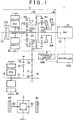
- FIG. 1 is a view that shows the overall configuration of a hybrid vehicle (which may be simply referred to as vehicle) 1 according to the embodiment that is an example of the invention.
- the hybrid vehicle 1 includes an engine 10, a drive system 2, drive wheels 90 and a controller 100.
- the drive system 2 includes a first motor generator (hereinafter, referred to as first MG) 20 that is a first rotary electric machine, a second motor generator (hereinafter, referred to as second MG) 30 that is a second rotary electric machine, a transmission unit (power transmission unit) 40, a differential unit 50, a clutch CS, an input shaft 21, a counter shaft 70 that is an output shaft of the drive system 2, a differential gear set 80 and a hydraulic circuit 500.
- first MG motor generator
- second MG second motor generator
- the vehicle 1 is a front-engine front-drive (FF) hybrid vehicle that travels by using the power of at least any one of the engine 10, the first MG 20 or the second MG 30.
- the vehicle 1 may be a plug-in hybrid vehicle of which a battery (see FIG. 2 ) 60 is rechargeable from an external power supply.
- the engine 10 is, for example, an internal combustion engine, such as a gasoline engine and a diesel engine.
- Each of the first MG 20 and the second MG 30 is, for example, a permanent magnet synchronous motor that includes a rotor in which permanent magnets are embedded.
- the drive system 2 is a double-axis drive system in which the first MG 20 is provided along a first axis 12 coaxial with the crankshaft of the engine 10 and the second MG 30 is provided along a second axis 14 different from the first axis 12.
- the first axis 12 and the second axis 14 are parallel to each other.
- the transmission unit 40, the differential unit 50 and the clutch CS are further provided along the first axis 12.
- the transmission unit 40, the differential unit 50, the first MG 20 and the clutch CS are arranged from the side close to the engine 10 in the stated order.
- the first MG 20 is provided so as to be able to receive power from the engine 10. More specifically, the input shaft 21 of the drive system 2 is connected to the crankshaft of the engine 10. The input shaft 21 extends along the first axis 12 in a direction away from the engine 10. The input shaft 21 is connected to the clutch CS at its distal end extending from the engine 10. A rotary shaft 22 of the first MG 20 extends in a cylindrical shape along the first axis 12. The input shaft 21 passes through the inside of the rotary shaft 22 at a portion before the input shaft 21 is connected to the clutch CS. The input shaft 21 is connected to the rotary shaft 22 of the first MG 20 via the clutch CS.
- the clutch CS is provided in the power transmission path from the engine 10 to the first MG 20.
- the clutch CS is a hydraulic friction engagement element that is able to couple the input shaft 21 to the rotary shaft 22 of the first MG 20.
- the clutch CS When the clutch CS is placed in an engaged state, the input shaft 21 and the rotary shaft 22 are coupled to each other, and the power of the engine 10 is allowed to be directly transmitted to the first MG 20 via the clutch CS.
- the clutch CS is placed in a released state, coupling of the input shaft 21 to the rotary shaft 22 is released, and the power of the engine 10 is not allowed to be directly transmitted to the first MG 20 via the clutch CS.
- the transmission unit 40 shifts power from the engine 10 and then outputs the power to the differential unit 50.
- the transmission unit 40 includes a single-pinion-type planetary gear mechanism, a clutch C1 and a brake B1.
- the single-pinion-type planetary gear mechanism includes a sun gear S1, pinions PI, a ring gear R1 and a carrier CA1.
- the sun gear S1 is provided such that the rotation center of the sun gear S1 coincides with the first axis 12.
- the ring gear R1 is provided coaxially with the sun gear S1 on the radially outer side of the sun gear S1.
- the pinions P1 are arranged between the sun gear S1 and the ring gear R1, and are in mesh with the sun gear S1 and the ring gear R1.
- the pinions P1 are rotatably supported by the carrier CA1.
- the carrier CA1 is connected to the input shaft 21, and rotates integrally with the input shaft 21.
- Each of the pinions P1 is provided so as to be revolvable about the first axis 12 and rotatable around the central axis of the pinion P1.
- the rotation speed of the sun gear S1, the rotation speed of the carrier CA1 (that is, the rotation speed of the engine 10) and the rotation speed of the ring gear R1 are in the relationship represented by points that are connected by a straight line in each of the nomographs (that is, the relationship that, when any two rotation speeds are determined, the remaining one rotation speed is also determined).
- the carrier CA1 is provided as an input element to which power is input from the engine 10, and the ring gear R1 is provided as an output element that outputs the power input to the carrier CA1.
- the planetary gear mechanism including the sun gear S1, the pinions P1, the ring gear R1 and the carrier CA1, power input to the carrier CA1 is shifted and output from the ring gear R1.
- the clutch C1 is a hydraulic friction engagement element that is able to couple the sun gear S1 to the carrier CA1.
- the sun gear S1 and the carrier CA1 are coupled to each other, and rotate integrally with each other.
- the clutch C1 is placed in a released state, integral rotation of the sun gear S1 and the carrier CA1 is cancelled.
- the brake B1 is a hydraulic friction engagement element that is able to restrict (lock) the rotation of the sun gear S1.
- the sun gear S1 When the brake B1 is placed in an engaged state, the sun gear S1 is fixed to the case body of the drive system, and the rotation of the sun gear S1 is restricted.
- the brake B1 When the brake B1 is placed in a released state (disengaged state), the sun gear S1 is separated from the case body of the drive system, and the rotation of the sun gear S1 is allowed.
- a speed ratio (the ratio of the rotation speed of the carrier CA1 that is the input element to the rotation speed of the ring gear R1 that is the output element, specifically, Rotation Speed of Carrier CA1/Rotation Speed of Ring Gear R1) of the transmission unit 40 is changed in response to a combination of the engaged/released states of the clutch C1 and brake B1.
- a low gear position Lo in which the speed ratio is 1.0 (directly coupled state) is established.
- a high gear position Hi in which the speed ratio is smaller than 1.0 for example, 0.7, and a so-called over-drive state
- the clutch C1 is engaged and the brake B1 is engaged, the rotation of the sun gear S1 and the rotation of the carrier CA1 are restricted, so the rotation of the ring gear R1 is also restricted.
- the transmission unit 40 is configured to be able to switch between a non-neutral state and a neutral state. In the non-neutral state, power is transmitted. In the neutral state, power is not transmitted. In the present embodiment, the above-described directly coupled state and over-drive state correspond to the non-neutral state. On the other hand, when both the clutch C1 and the brake B1 are released, the carrier CA1 is allowed to coast about the first axis 12. Thus, the neutral state in which power transmitted from the engine 10 to the carrier CA1 is not transmitted from the carrier CA1 to the ring gear R1 is obtained.
- the differential unit 50 includes a single-pinion-type planetary gear mechanism and a counter drive gear 51.
- the single-pinion-type planetary gear mechanism includes a sun gear S2, pinions P2, a ring gear R2 and a carrier CA2.
- the sun gear S2 is provided such that the rotation center of the sun gear S2 coincides with the first axis 12.
- the ring gear R2 is provided coaxially with the sun gear S2 on the radially outer side of the sun gear S2.
- the pinions P2 are arranged between the sun gear S2 and the ring gear R2, and are in mesh with the sun gear S2 and the ring gear R2.
- the pinions P2 are rotatably supported by the carrier CA2.
- the carrier CA2 is connected to the ring gear R1 of the transmission unit 40, and rotates integrally with the ring gear R1.
- Each of the pinions P2 is provided so as to be revolvable about the first axis 12 and rotatable around the central axis of the pinion P2.
- the rotary shaft 22 of the first MG 20 is connected to the sun gear S2.
- the rotary shaft 22 of the first MG 20 rotates integrally with the sun gear S2.
- the counter drive gear 51 is connected to the ring gear R2.
- the counter drive gear 51 is an output gear of the differential unit 50. The output gear rotates integrally with the ring gear R2.
- the rotation speed of the sun gear S2 (that is, the rotation speed of the first MG 20), the rotation speed of the carrier CA2 and the rotation speed of the ring gear R2 are in the relationship represented by points that are connected by a straight line in each of the nomographs (that is, the relationship that, when any two rotation speeds are determined, the remaining one rotation speed is also determined). Therefore, when the rotation speed of the carrier CA2 is a predetermined value, it is possible to steplessly change the rotation speed of the ring gear R2 by adjusting the rotation speed of the first MG 20.
- the counter shaft 70 extends parallel to the first axis 12 and the second axis 14.
- the counter shaft 70 is arranged parallel to the rotary shaft 22 of the first MG 20 and a rotary shaft 31 of the second MG 30.
- a driven gear 71 and a drive gear 72 are provided on the counter shaft 70.
- the driven gear 71 is in mesh with the counter drive gear 51 of the differential unit 50. That is, the power of the engine 10 and the power of the first MG 20 are transmitted to the counter shaft 70 via the counter drive gear 51 of the differential unit 50.
- the transmission unit 40 and the differential unit 50 are connected in series with each other in a power transmission path from the engine 10 to the counter shaft 70. Therefore, power from the engine 10 is shifted in the transmission unit 40 and the differential unit 50 and then transmitted to the counter shaft 70.
- the driven gear 71 is in mesh with a reduction gear 32 connected to the rotary shaft 31 of the second MG 30. That is, the power of the second MG 30 is transmitted to the counter shaft 70 via the reduction gear 32.
- the drive gear 72 is in mesh with a differential ring gear 81 of the differential gear set 80.
- the differential gear set 80 is connected to the right and left drive wheels 90 via corresponding right and left drive shafts 82. That is, the rotation of the counter shaft 70 is transmitted to the right and left drive shafts 82 via the differential gear set 80.
- the hybrid vehicle 1 is allowed to operate in a mode in which a series-parallel system is used (hereinafter, referred to as series-parallel mode) and is also allowed to operate in a mode in which a series system is used (hereinafter, referred to as series mode).
- series mode a mode in which a series-parallel system is used
- series mode a mode in which a series system is used
- FIG. 2 is a block diagram that schematically shows power transmission paths of components of the vehicle in FIG. 1 .
- the vehicle 1 includes the engine 10, the first MG 20, the second MG 30, the transmission unit 40, the differential unit 50, the battery 60 and the clutch CS.
- the battery 60 supplies electric power to the first MG 20 or the second MG 30 during motoring of a corresponding one of the first MG 20 and the second MG 30, and stores electric power generated by the first MG 20 or the second MG 30 during regeneration of a corresponding one of the first MG 20 and the second MG 30.
- the vehicle 1 includes two paths K1, K2 as a path through which the power of the engine 10 is transmitted to the first MG 20.
- the path K1 is a path through which the power of the engine 10 is transmitted to the first MG 20 via the transmission unit 40 and the differential unit 50.
- the transmission unit 40 When the transmission unit 40 is placed in a non-neutral state (any one of the clutch C1 and the brake B1 is placed in the engaged state, and the other one of the clutch C1 and the brake B1 is placed in the released state), the power of the engine 10 is transmitted to the first MG 20 through the path K1.
- the transmission unit 40 is placed in a neutral state (both the clutch C1 and the brake B1 are placed in the released state)
- transmission of power through the path K1 is interrupted.
- the path K2 is different from the path K1, and is a path through which the power of the engine 10 is directly transmitted to the first MG 20 without passing through the transmission unit 40 or the differential unit 50.
- the clutch CS is provided in the path K2. When the clutch CS is placed in the engaged state, the power of the engine 10 is transmitted to the first MG 20 through the path K2. On the other hand, when the clutch CS is placed in the released state, transmission of power through the path K2 is interrupted.
- the vehicle 1 In HV mode in which the engine 10 is operated, when the power of the engine 10 is transmitted through the path K1 and the path K2 is interrupted (that is, the transmission unit 40 is placed in the non-neutral state and the clutch CS is placed in the released state), the vehicle 1 is operable in series-parallel mode.
- the vehicle 1 is operable in series mode.
- the carrier CA2 connected to the transmission unit 40 is freely rotatable (free), so the sun gear S2 connected to the first MG 20 and the ring gear R2 connected to the second MG 30 do not influence each other and are rotatable. Therefore, it is possible to independently perform the operation of generating electric power by rotating the first MG 20 with the use of the rotation of the engine 10 and the operation of rotating the drive wheels 90 by driving the second MG 30.
- the transmission unit 40 does not always need to be able to change the speed ratio. As long as it is possible to interrupt transmission of power through the path K1, a mere clutch is applicable.
- FIG. 3 is a block diagram that shows the configuration of the controller 100 of the hybrid vehicle 1 shown in FIG. 1 .
- the controller 100 includes an HV ECU 150, an MG ECU 160 and an engine ECU 170.
- Each of the HV ECU 150, the MG ECU 160 and the engine ECU 170 is an electronic control unit including a computer.
- the number of ECUs is not limited to three. An integrated single ECU may be provided as a whole, or two or four or more of divided ECUs may be provided.
- the MG ECU 160 controls the first MG 20 and the second MG 30.
- the MG ECU 160 controls the output torque of the first MG 20 by adjusting the value of current that is supplied to the first MG 20, and controls the output torque of the second MG 30 by adjusting the value of current that is supplied to the second MG 30.
- the engine ECU 170 controls the engine 10.
- the engine ECU 170 controls the opening degree of an electronic throttle valve of the engine 10, controls ignition of the engine by outputting an ignition signal, or controls injection of fuel to the engine 10.
- the engine ECU 170 controls the output torque of the engine 10 through opening degree control over the electronic throttle valve, injection control, ignition control, and the like.
- the HV ECU 150 comprehensively controls the entire vehicle.
- a vehicle speed sensor, an accelerator operation amount sensor, an MG1 rotation speed sensor, an MG2 rotation speed sensor, an output shaft rotation speed sensor, a battery sensor, and the like, are connected to the HV ECU 150. With these sensors, the HV ECU 150 acquires a vehicle speed, an accelerator operation amount, the rotation speed of the first MG 20, the rotation speed of the second MG 30, the rotation speed of the output shaft of a power transmission system, a battery state SOC, and the like.
- the HV ECU 150 calculates a required driving force, a required power, a required torque, and the like, for the vehicle on the basis of acquired information.
- the HV ECU 150 determines the output torque of the first MG 20 (hereinafter, also referred to as MG1 torque), the output torque of the second MG 30 (hereinafter, also referred to as MG2 torque) and the output torque of the engine 10 (hereinafter, also referred to as engine torque) on the basis of the calculated required values.
- the HV ECU 150 outputs a command value of the MG1 torque and a command value of the MG2 torque to the MG ECU 160.
- the HV ECU 150 outputs a command value of the engine torque to the engine ECU 170.
- the HV ECU 150 controls the clutches C1, CS and the brake B1 on the basis of the drive mode (described later), and the like.
- the HV ECU 150 outputs, to the hydraulic circuit 500 shown in FIG. 1 , a command value (PbC1) of hydraulic pressure that is supplied to the clutch C1, a command value (PbCS) of hydraulic pressure that is supplied to the clutch CS and a command value (PbB1) of hydraulic pressure that is supplied to the brake B1.
- the HV ECU 150 outputs a control signal NM for controlling an electric oil pump 502 (see FIG. 4 (described later)) and a control signal S/C for controlling an electromagnetic switching valve 560 (see FIG. 4 (described later)) to the hydraulic circuit 500 shown in FIG. 1 .
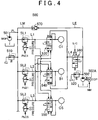
- FIG. 4 is a view that schematically shows the configuration of the hydraulic circuit 500 mounted on the hybrid vehicle 1.
- the hydraulic circuit 500 includes a mechanical oil pump (hereinafter, also referred to as MOP) 501, the electric oil pump (hereinafter, also referred to as EOP) 502, pressure regulating valves 510, 520, linear solenoid valves SL1, SL2, SL3, simultaneous supply prevention valves 530, 540, 550, an electromagnetic change-over valve 560, a check valve 570, and oil passages LM, LE, L1, L2, L3, L4.
- MOP mechanical oil pump
- EOP electric oil pump
- the MOP 501 is driven by the rotation of the carrier CA2 of the differential unit 50 to generate hydraulic pressure. Therefore, when the carrier CA2 is rotated by, for example, driving the engine 10, the MOP 501 is also driven; whereas, when the carrier CA2 is stopped, the MOP 501 is also stopped.
- the MOP 501 outputs generated hydraulic pressure to the oil passage LM.
- the hydraulic pressure in the oil passage LM is regulated (reduced) to a predetermined pressure by the pressure regulating valve 510.
- the hydraulic pressure in the oil passage LM regulated by the pressure regulating valve 510, is also referred to as line pressure PL.
- the line pressure PL is supplied to each of the linear solenoid valves SL1, SL2, SL3.
- the linear solenoid valve SL1 generates hydraulic pressure for engaging the clutch C1 (hereinafter, referred to as C1 pressure) by regulating the line pressure PL in response to the hydraulic pressure command value PbC1 from the controller 100.
- the C1 pressure is supplied to the clutch C1 via the oil passage L1.
- the linear solenoid valve SL2 generates hydraulic pressure for engaging the brake B1 (hereinafter, referred to as B1 pressure) by regulating the line pressure PL in response to the hydraulic pressure command value PbB1 from the controller 100.
- the B1 pressure is supplied to the brake B 1 via the oil passage L2.
- the linear solenoid valve SL3 generates hydraulic pressure for engaging the clutch CS (hereinafter, referred to as CS pressure) by regulating the line pressure PL in response to the hydraulic pressure command value PbCS from the controller 100.
- the CS pressure is supplied to the clutch CS via the oil passage L3.
- the simultaneous supply prevention valve 530 is provided in the oil passage L1, and is configured to prevent the clutch C1 and at least one of the brake B1 or the clutch CS from being simultaneously engaged.
- the oil passages L2, L3 are connected to the simultaneous supply prevention valve 530.
- the simultaneous supply prevention valve 530 operates by using the B1 pressure and the CS pressure through the oil passages L2, L3 as signal pressures.
- the simultaneous supply prevention valve 530 When both signal pressures that are the B1 pressure and the CS pressure are not input to the simultaneous supply prevention valve 530 (that is, when both the brake B1 and the clutch CS are released), the simultaneous supply prevention valve 530 is in a normal state in which the C1 pressure is supplied to the clutch C1.
- FIG. 4 illustrates the case where the simultaneous supply prevention valve 530 is in the normal state.
- the simultaneous supply prevention valve 530 switches into a drain state in which supply of the C1 pressure to the clutch C1 is cut off and the hydraulic pressure in the clutch C1 is released to the outside.
- the clutch C1 is released, so the clutch C1 and at least one of the brake B1 or the clutch CS are prevented from being simultaneously engaged.
- the simultaneous supply prevention valve 540 operates in response to the C1 pressure and the CS pressure as signal pressures to prevent the brake B1 and at least one of the clutch C1 or the clutch CS from being simultaneously engaged. Specifically, when both the signal pressures that are the C1 pressure and the CS pressure are not input to the simultaneous supply prevention valve 540, the simultaneous supply prevention valve 540 is in a normal state in which the B1 pressure is supplied to the brake B1. On the other hand, when at least one of the signal pressures that are the C1 pressure and the CS pressure is input to the simultaneous supply prevention valve 540, the simultaneous supply prevention valve 540 switches into a drain state in which supply of the B1 pressure to the brake B1 is cut off and the hydraulic pressure in the brake B1 is released to the outside.
- FIG. 4 illustrates the case where the C1 pressure is input to the simultaneous supply prevention valve 540 as the signal pressure and the simultaneous supply prevention valve 540 is in the drain state.
- the simultaneous supply prevention valve (hydraulic valve) 550 operates by using the C1 pressure and the B1 pressure as signal pressures to prevent the clutch CS and at least one of the clutch C1 or the brake B1 from being simultaneously engaged. Specifically, when both the signal pressures that are the C1 pressure and the B1 pressure are not input to the simultaneous supply prevention valve 550, the simultaneous supply prevention valve 550 is in a normal state in which the CS pressure is supplied to the clutch CS.
- the simultaneous supply prevention valve 550 switches into a drain state in which supply of the CS pressure to the clutch CS is cut off and the hydraulic pressure in the clutch CS is released to the outside.
- FIG. 4 illustrates the case where the C1 pressure is input to the simultaneous supply prevention valve 550 and the simultaneous supply prevention valve 550 is in the drain state.
- One of the most characteristic points of the hydraulic circuit 500 according to the present embodiment is that the simultaneous supply prevention valve 550 is provided. Because of the function of the simultaneous supply prevention valve 550, when the transmission unit 40 is in the non-neutral state (when at least one of the clutch C1 or the brake B1 is engaged), it is possible to suppress occurrence of a shock as a result of further engagement of the clutch CS. This point will be described in detail later.
- the EOP 502 is driven by a motor 502A to generate hydraulic pressure.
- the motor 502A is controlled by the control signal NM from the controller 100. Therefore, the EOP 502 is operable irrespective of whether the carrier CA2 is rotating.
- the EOP 502 outputs generated hydraulic pressure to the oil passage LE.
- the hydraulic pressure in the oil passage LE is regulated (reduced) to a predetermined pressure by the pressure regulating valve 520.
- the oil passage LE is connected to the oil passage LM via the check valve 570.
- the check valve 570 opens, and the hydraulic pressure in the oil passage LE is supplied to the oil passage LM via the check valve 570.
- the electromagnetic change-over valve 560 is switched to any one of an on state and an off state in response to the control signal S/C from the controller 100.
- the electromagnetic change-over valve 560 communicates the oil passage LE with the oil passage L4.
- the electromagnetic change-over valve 560 interrupts the oil passage LE from the oil passage L4, and releases the hydraulic pressure in the oil passage L4 to the outside.
- FIG. 4 illustrates the case where the electromagnetic change-over valve 560 is in the off state.
- the oil passage L4 is connected to the simultaneous supply prevention valves 530, 540.
- the electromagnetic change-over valve 560 When the electromagnetic change-over valve 560 is in the on state, the hydraulic pressure in the oil passage LE is input to the simultaneous supply prevention valves 530, 540 via the oil passage L4 as a signal pressure.
- the simultaneous supply prevention valve 530 When the signal pressure from the oil passage L4 is input to the simultaneous supply prevention valve 530, the simultaneous supply prevention valve 530 is forcibly fixed to the normal state irrespective of whether the signal pressure (B1 pressure) is input from the oil passage L2.
- the simultaneous supply prevention valve 540 when the signal pressure is input from the oil passage L4 to the simultaneous supply prevention valve 540, the simultaneous supply prevention valve 540 is forcibly fixed to the normal state irrespective of whether the signal pressure (C1 pressure) is input from the oil passage L1.
- the simultaneous supply prevention valves 530, 540 are simultaneously fixed to the normal state.
- the clutch C1 and the brake B1 are allowed to be simultaneously engaged, and two-motor mode (described later) is enabled.
- control modes of the hybrid vehicle 1 will be described.
- the details of the control modes of the hybrid vehicle 1 will be described with reference to an operation engagement chart and the nomographs.
- FIG. 5 is a chart that shows each drive mode and controlled statuses of the clutch C1 and brake B1 of the transmission unit (power transmission unit) 40 in each drive mode.
- the controller 100 causes the hybrid vehicle 1 to travel in motor drive mode (hereinafter, referred to as EV mode) or hybrid mode (hereinafter, referred to as HV mode).
- EV mode is a control mode in which the engine 10 is stopped and the hybrid vehicle 1 is caused to travel by using the power of at least one of the first MG 20 or the second MG 30.
- HV mode is a control mode in which the hybrid vehicle 1 is caused to travel by using the power of the engine 10 and the power of the second MG 30.
- Each of the EV mode and the HV mode is further divided into some control modes.
- C1, B1, CS, MG1 and MG2 respectively denote the clutch C1, the brake B1, the clutch CS, the first MG 20 and the second MG 30.
- the circle mark (O) in each of the C1, B1, CS columns indicates the engaged state
- the cross mark (x) indicates the released state
- the triangle mark ( ⁇ ) indicates that any one of the clutch C1 and the brake B1 is engaged during engine brake.
- the sign G in each of the MG1 column and the MG2 column indicates that the MG1 or the MG2 is mainly operated as a generator.
- the sign M in each of the MG1 column and the MG2 column indicates that the MG1 or the MG2 is mainly operated as a motor.
- the controller 100 selectively switches between one-motor mode and two-motor mode in response to a user's required torque, and the like.
- one-motor mode the hybrid vehicle 1 is caused to travel by using the power of the second MG 30 alone.
- two-motor mode the hybrid vehicle 1 is caused to travel by using the power of both the first MG 20 and the second MG 30. For example, when the load of the drive system 2 is low, the one-motor mode is used, and, when the load of the drive system 2 becomes high, the drive mode is changed to the two-motor mode.
- the controller 100 when the vehicle 1 is driven (moved forward or reversed) in one-motor EV mode, the controller 100 places the transmission unit 40 in the neutral state (state in which no power is transmitted) by releasing the clutch C1 and releasing the brake B1. At this time, the controller 100 mainly uses the first MG 20 to fix the rotation speed of the sun gear S2 to zero, and causes the second MG 30 to operate as a motor (see FIG. 6 (described later)).
- the current of the first MG 20 may be controlled in a feedback manner such that the rotation speed of the first MG 20 becomes zero or, if possible, cogging torque of the first MG 20 may be utilized without adding current to the first MG 20.
- the transmission unit 40 When the transmission unit 40 is placed in the neutral state, the engine 10 is not co-rotated during braking, so a loss is smaller by that amount, and it is possible to recover large regenerated electric power.
- the controller 100 engages any one of the clutch C1 and the brake B1.
- engine brake is used together with regenerative brake.
- SOC of the battery is close to a full charge state, regenerated electric power cannot be charged, so it is conceivable to establish an engine brake state.
- a so-called engine brake state is established.
- the rotation of the drive wheels 90 is transmitted to the engine 10, and the engine 10 is rotated.
- the controller 100 causes the first MG 20 to mainly operate as a motor, and causes the second MG 30 to mainly operate as a generator.
- the controller 100 restricts (locks) the rotation of the ring gear R1 of the transmission unit 40 by engaging the clutch C1 and engaging the brake B1.
- the controller 100 causes the first MG 20 and the second MG 30 to mainly operate as motors (see FIG. 7 (described later)).
- EV mode one-motor mode or two-motor mode
- the engine 10 is stopped, so the MOP 501 is also stopped. Therefore, in EV mode, the clutch C1 or the brake B1 is engaged by using hydraulic pressure that is generated by the EOP 502.
- the controller 100 In HV mode, the controller 100 causes the first MG 20 to operate as a generator, and causes the second MG 30 to operate as a motor. In HV mode, the controller 100 sets the control mode to any one of the series-parallel mode and the series mode.
- the controller 100 When the hybrid vehicle 1 is caused to move forward in an intermediate or low speed range, the controller 100 establishes the low gear position Lo (see the continuous line in FIG. 8 (described later)) by engaging the clutch C1 and releasing the brake B1 as shown in the H2 line in FIG. 5 .
- the controller 100 When the hybrid vehicle 1 is caused to move forward in a high speed range, the controller 100 establishes the high gear position Hi (see the dashed line in FIG. 8 (described later)) by releasing the clutch C1 and engaging the brake B1 as shown in the H1 line in FIG. 5 .
- the transmission unit 40 and the differential unit 50 operate as a continuously variable transmission as a whole.
- the controller 100 engages the clutch C1 and releases the brake B1 as shown in the H3 line in FIG. 5 .
- the controller 100 rotates the second MG 30 alone in the reverse direction; whereas, when there is no allowance in the SOC of the battery, the controller 100 generates electric power with the use of the first MG 20 by operating the engine 10 and rotates the second MG 30 in the reverse direction.
- the entire power of the engine 10 is used as power for generating electric power with the use of the first MG 20.
- the second MG 30 drives the drive wheels 90 by using electric power generated by the first MG 20.
- the controller 100 releases both the clutch C1 and the brake B1 and engages the clutch CS (see FIG. 9 (described later)) as shown in the H4 line and the H5 line in FIG. 9 .
- HV mode the engine 10 is operating, so the MOP 501 is also operating. Therefore, in HV mode, the clutch C1, the clutch CS or the brake B1 is engaged mainly by using hydraulic pressure generated by the MOP 501.
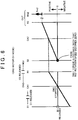
- FIG. 6 is a nomograph in one-motor EV mode.
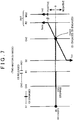
- FIG. 7 is a nomograph in two-motor EV mode.
- FIG. 8 is a nomograph in series-parallel mode.
- FIG. 9 is a nomograph in series mode.
- S1, CA1 and R1 respectively denote the sun gear S1, the carrier CA1 and the ring gear R1 of the transmission unit 40
- S2, CA2 and R2 respectively denote the sun gear S2, the carrier CA2 and the ring gear R2 of the differential unit 50.
- the controlled status in one-motor EV mode (E1 line in FIG. 5 ) will be described with reference to FIG. 6 .
- the controller 100 releases the clutch C1, the brake B1 and the clutch CS of the transmission unit 40, stops the engine 10, and causes the second MG 30 to mainly operate as a motor. Therefore, in one-motor EV mode, the hybrid vehicle 1 travels by using the torque of the second MG 30 (hereinafter, referred to as second MG torque Tm2).
- the controller 100 executes feedback control over the torque of the first MG 20 (hereinafter, referred to as first MG torque Tm1) such that the rotation speed of the sun gear S2 becomes zero. Therefore, the sun gear S2 does not rotate. However, because the clutch C1 and brake B1 of the transmission unit 40 are released, the rotation of the carrier CA2 of the differential unit 50 is not restricted. Therefore, the ring gear R2 and carrier CA2 of the differential unit 50 and the ring gear R1 of the transmission unit 40 are rotated (coasted) interlocking with the rotation of the second MG 30 in the same direction as the second MG 30.
- first MG torque Tm1 the torque of the first MG 20
- the carrier CA1 of the transmission unit 40 is kept in a stopped state because the engine 10 is stopped.
- the sun gear S1 of the transmission unit 40 is rotated (coasted) interlocking with the rotation of the ring gear R1 in a direction opposite to the rotation direction of the ring gear R1.
- the controller 100 engages the clutch C1 and the brake B1, releases the clutch CS, and stops the engine 10. Therefore, the rotation of each of the sun gear S1, carrier CA1 and ring gear R1 of the transmission unit 40 is restricted such that the rotation speed becomes zero.
- the controller 100 causes the first MG 20 and the second MG 30 to mainly operate as motors. Specifically, the second MG 30 is rotated in the positive direction by setting the second MG torque Tm2 to a positive torque, and the first MG 20 is rotated in the negative direction by setting the first MG torque Tm1 to a negative torque.
- first MG transmission torque Tmlc The first MG torque Tm1 (hereinafter, referred to as first MG transmission torque Tmlc) that is transmitted to the ring gear R2 acts in the positive direction, and is transmitted to the counter shaft 70. Therefore, in two-motor EV mode, the hybrid vehicle 1 travels by using the first MG transmission torque Tmlc and the second MG torque Tm2.
- the controller 100 adjusts the distribution ratio between the first MG torque Tm1 and the second MG torque Tm2 such that the sum of the first MG transmission torque Tmlc and the second MG torque Tm2 meets the user's required torque.
- FIG. 8 illustrates the case where the vehicle is traveling forward in the low gear position Lo (see H2 line in FIG. 5 , and the continuous common line shown in the nomograph of S1, CA1 and R1 in FIG. 8 ) and the case where the vehicle is traveling forward in the high gear position Hi (see H1 line in FIG. 5 , and the dashed common line shown in the nomograph of S1, CA1 and R1 in FIG. 8 ).
- the rotation speed of the ring gear R1 is the same either when the vehicle is traveling forward in the low gear position Lo or when the vehicle is traveling forward in the high gear position Hi.
- the controller 100 engages the clutch C1, and releases the brake B1 and the clutch CS. Therefore, the rotating elements (the sun gear S1, the carrier CA1 and the ring gear R1) rotate integrally with one another.
- the ring gear R1 of the transmission unit 40 also rotates at the same rotation speed as the carrier CA1, and the rotation of the engine 10 is transmitted from the ring gear R1 to the carrier CA2 of the differential unit 50 at the same rotation speed. That is, the torque of the engine 10 (hereinafter, referred to as engine torque Te) input to the carrier CA1 of the transmission unit 40 is transmitted from the ring gear R1 of the transmission unit 40 to the carrier CA2 of the differential unit 50.
- the rotation of the engine 10, transmitted to the carrier CA2 of the differential unit 50, is steplessly shifted by the use of the rotation speed of the sun gear S2 (the rotation speed of the first MG 20), and is transmitted to the ring gear R2 of the differential unit 50.
- the controller 100 basically causes the first MG 20 to operate as a generator to apply the first MG torque Tm1 in the negative direction.
- the first MG torque Tm1 serves as reaction force for transmitting the engine torque Te, input to the carrier CA2, to the ring gear R2.
- the engine torque Te transmitted to the ring gear R2 (hereinafter, referred to as engine transmission torque Tec) is transmitted from the counter drive gear 51 to the counter shaft 70, and acts as driving force of the hybrid vehicle 1.
- the controller 100 causes the second MG 30 to mainly operate as a motor.
- the second MG torque Tm2 is transmitted from the reduction gear 32 to the counter shaft 70, and acts as driving force of the hybrid vehicle 1. That is, in series-parallel HV mode, the hybrid vehicle 1 travels by using the engine transmission torque Tec and the second MG torque Tm2.
- the controller 100 engages the brake B1, and releases the clutch C1 and the clutch CS. Because the brake B 1 is engaged, the rotation of the sun gear S1 is restricted. Thus, the rotation of the engine 10, input to the carrier CA1 of the transmission unit 40, is increased in speed, and is transmitted from the ring gear R1 of the transmission unit 40 to the carrier CA2 of the differential unit 50. Therefore, when the high gear position Hi is established, the transmission unit output torque Tr1 is smaller than the engine torque Te (Te > Tr1).
- series HV mode the controller 100 releases the clutch C1 and the brake B1, and engages the clutch CS. Therefore, when the clutch CS is engaged, the sun gear S2 of the differential unit 50 rotates at the same rotation speed as the carrier CA1 of the transmission unit 40, and the rotation of the engine 10 is directly transmitted to the first MG 20 via the clutch CS. Thus, electric power is allowed to be generated with the use of the first MG 20 by using the engine 10 as a power source.
- the function of the simultaneous supply prevention valve 550 will be described.
- the path K1 through which the power of the engine 10 is transmitted to the first MG 20 via the transmission unit 40 and the differential unit 50 and the path K2 through which the power of the engine 10 is directly transmitted to the first MG 20 and which is different from the path K1 are provided, and the clutch CS is provided in the path K2. Therefore, it is possible to select one of the series-parallel mode and the series mode.
- FIG. 10 is a nomograph that shows an example of changes in the statuses of the rotating elements when the clutch CS is further engaged in the non-neutral state where the vehicle 1 is traveling in the high gear position Hi by engaging the brake B 1 of the transmission unit 40.
- the alternate long and short dashes line represents a common line before the clutch CS is engaged
- the continuous line represents a common line after the clutch CS is engaged.
- FIG. 10 illustrates the case where the rotation speed of the first MG 20 is higher than the rotation speed of the engine 10 before the clutch CS is engaged (alternate long and short dashes line).
- the hydraulic circuit 500 includes the simultaneous supply prevention valve 550 that is actuated by using the C1 pressure and the B1 pressure as signal pressures to cut off the CS pressure.
- the simultaneous supply prevention valve 550 With the function of the simultaneous supply prevention valve 550, the clutch CS and at least one of the clutch C1 or brake B1 of the transmission unit 40 are prevented from being simultaneously engaged. Therefore, it is possible to suppress occurrence of the above-described shock resulting from engagement of the clutch CS in the case where the transmission unit 40 is in the non-neutral state.
- the simultaneous supply prevention valve 550 (hydraulic valve) is used as a configuration that prevents simultaneous engagement of the clutch CS and at least one of the clutch C1 or brake B1 of the transmission unit 40.
- the hydraulic valve that is actuated by hydraulic pressure may be replaced with a configuration that prevents simultaneous engagement in an electrical circuit by using electromagnetic clutches that are actuated by electrical signals (hydraulic pressure command values PbC1, PbB1, PbCS).
- the clutch C1 and brake B1 of the transmission unit 40 and the clutch CS are hydraulic clutches; instead, these clutches may be electrical clutches (clutches that are actuated by energization).
- the simultaneous supply prevention valve 550 may be replaced with an electromagnetic clutch as a configuration that prevents simultaneous engagement.
- the electromagnetic clutch just needs to be configured to cut off supply of current to the clutch CS when current is being supplied to the engaging portion (clutch C1 and brake B1) of the transmission unit 40.
- the clutch CS and at least one of the clutch C1 or brake B1 of the transmission unit 40 may be temporarily allowed to be simultaneously engaged by temporarily inactivating the simultaneous supply prevention valve 550.
- the simultaneous supply prevention valve 550 just needs to be activated.
- the simultaneous supply prevention valve 550 it is possible to suppress occurrence of a large shock resulting from simultaneous engagement of the clutch C1 or brake B1 and the clutch CS.
- FIG. 11 is a view that schematically shows the configuration of a hydraulic circuit 500A according to the present alternative embodiment.
- the hydraulic circuit 500A shown in FIG. 11 differs from the hydraulic circuit 500 shown in FIG. 4 in that an electromagnetic switching valve 580 and an oil passage L5 are added.
- the remaining structure is the same as the above-described configuration shown in FIG. 4 and has been already described, so the detailed description will not be repeated.
- the oil passage L5 connects the oil passage LE to the simultaneous supply prevention valve 550.
- the electromagnetic switching valve 580 is provided in the oil passage L5.
- the electromagnetic switching valve 580 is switched to any one of an on state and an off state in response to a control signal from the controller 100.
- the electromagnetic switching valve 580 In the on state, the electromagnetic switching valve 580 outputs the hydraulic pressure in the oil passage LE to the simultaneous supply prevention valve 550.
- the electromagnetic switching valve 580 does not output the hydraulic pressure in the oil passage LE to the simultaneous supply prevention valve 550.
- FIG. 11 illustrates the case where the electromagnetic switching valve 580 is in the on state.
- the controller 100 drives the EOP 502 and switches the electromagnetic switching valve 580 to the on state. That is, the electromagnetic switching valve 580 is set to the on state by the controller 100 when the difference between the rotation speed of the engine 10 and the rotation speed of the first MG 20 is smaller than the predetermined value, and outputs the hydraulic pressure in the oil passage LE, generated by the EOP 502, to the simultaneous supply prevention valve 550.
- the simultaneous supply prevention valve 550 is configured to, when the hydraulic pressure is input to the simultaneous supply prevention valve 550 from the electromagnetic switching valve 580, be forcibly switched to a normal state (state where the CS pressure is supplied to the clutch CS) even when the C1 pressure or the B1 pressure is input. Thus, it is possible to temporarily allow simultaneous engagement of the clutch C1 or brake B1 and the clutch CS by temporarily inactivating the simultaneous supply prevention valve 550.
- the controller 100 switches the electromagnetic switching valve 580 to the off state. That is, the electromagnetic switching valve 580 is set to the off state by the controller 100 when the difference between the rotation speed of the engine 10 and the rotation speed of the first MG 20 is larger than the predetermined value.
- the simultaneous supply prevention valve 550 it is possible to prevent simultaneous engagement of the clutch C1 or brake B1 and the clutch CS by activating the simultaneous supply prevention valve 550.
- FIG. 11 shows an example in which the source pressure of the electromagnetic switching valve 580 is set to the hydraulic pressure in the oil passage LE (hydraulic pressure generated by the EOP 502).
- the source pressure of the electromagnetic switching valve 580 is not limited to the hydraulic pressure in the oil passage LE, and may be set to the hydraulic pressure in the oil passage LM (hydraulic pressure generated by the MOP 501).
- FIG. 12 is a view that schematically shows the configuration of a hydraulic circuit 500B in which the source pressure of the electromagnetic switching valve 580 is set to the hydraulic pressure in the oil passage LM.
- the electromagnetic switching valve 580 may be provided in an oil passage L6 that connects the oil passage LM to the simultaneous supply prevention valve 550, and the electromagnetic switching valve 580 may output the hydraulic pressure in the oil passage LM to the simultaneous supply prevention valve 550.
Landscapes
- Engineering & Computer Science (AREA)
- Mechanical Engineering (AREA)
- General Engineering & Computer Science (AREA)
- Transportation (AREA)
- Chemical & Material Sciences (AREA)
- Combustion & Propulsion (AREA)
- Automation & Control Theory (AREA)
- Electric Propulsion And Braking For Vehicles (AREA)
- Hybrid Electric Vehicles (AREA)
- Structure Of Transmissions (AREA)
Claims (4)
- Hybridfahrzeug, umfassend:einen Verbrennungsmotor (10),eine erste elektrische Rotationsmaschine (20),eine zweite elektrische Rotationsmaschine (30), die dazu ausgestaltet ist, Energie an ein Antriebsrad (90) auszugeben,eine Energieübertragungseinheit (40), die ein Eingangselement (CA1), ein Ausgangselement (R1) und eine Einrücksektion (C1, B1) beinhaltet, wobei das Eingangselement (CA1) dazu ausgestaltet ist, Energie von dem Verbrennungsmotor (10) zu empfangen, das Ausgangselement (R1) dazu ausgestaltet ist, einen Energieeingang an das Eingangselement (CA1) auszugeben, und die Einrücksektion (C1, B1) dazu ausgestaltet ist, in einen nicht neutralen Zustand versetzt zu werden, wenn ihr hydraulischer Druck oder Strom zugeführt wird, und in einen neutralen Zustand versetzt zu werden, wenn kein hydraulischer Druck oder Strom zugeführt wird, wobei der nicht neutrale Zustand ein Zustand ist, in dem Energie zwischen dem Eingangselement (CA1) und dem Ausgangselement (R1) übertragen wird, und der neutrale Zustand ein Zustand ist, in dem keine Energie zwischen dem Eingangselement (CA1) und dem Ausgangselement (R1) übertragen wird,eine Differentialeinheit (50), die ein erstes rotierendes Element (S2), ein zweites rotierendes Element (R2) und ein drittes rotierendes Element (CA2) beinhaltet, wobei das erste rotierende Element (S2) mit der ersten elektrischen Rotationsmaschine (20) verbunden ist, das zweite rotierende Element (R2) mit der zweiten elektrischen Rotationsmaschine (30) und dem Antriebsrad (90) verbunden ist, das dritte rotierende Element (CA2) mit dem Ausgangselement (R1) verbunden ist, und die Differentialeinheit (50) derart ausgestaltet ist, dass, wenn Drehzahlen von zwei beliebigen des ersten rotierenden Elements (S2), des zweiten rotierenden Elements (R2) und des dritten rotierenden Elements (CA2) bestimmt werden, eine Drehzahl des verbleibenden des ersten rotierenden Elements (S2), des zweiten rotierenden Elements (R2) und des dritten rotierenden Elements (CA2) bestimmt wird, gekennzeichnet durcheine Kupplung (CS), die dazu ausgestaltet ist, in einen eingerückten Zustand gesetzt zu werden, wenn ihr hydraulischer Druck oder Strom zugeführt wird, und in einen ausgerückten Zustand gesetzt zu werden, wenn ihr kein hydraulischer Druck oder Strom zugeführt wird, wobei der eingerückte Zustand ein Zustand ist, in dem Energie von dem Verbrennungsmotor (10) an die erste elektrische Rotationsmaschine (20) übertragen wird, und der ausgerückte Zustand ein Zustand ist, in dem eine Energieübertragung von dem Verbrennungsmotor (10) zu der ersten elektrischen Rotationsmaschine (20) unterbrochen ist, wobei die Kupplung (CS) in einem zweiten Pfad vorgesehen ist, der einer von einem ersten Pfad und dem zweiten Pfad ist, durch den Energie von dem Verbrennungsmotor (10) übertragen wird, wobei der erste Pfad ein Pfad ist, durch den Energie von dem Verbrennungsmotor (10) über die Energieübertragungseinheit (40) und die Differentialeinheit (50) zu der ersten elektrischen Rotationsmaschine (20) übertragen wird, und der zweite Pfad ein Pfad ist, durch den Energie von dem Verbrennungsmotor (10) über einen von dem ersten Pfad verschiedenen Pfad zu der ersten elektrischen Rotationsmaschine (20) übertragen wird, undeine Einrückverhinderungseinheit (550), die dazu ausgestaltet ist, wenn der Einrücksektion (C1, B1) der Energieübertragungseinheit (40) hydraulischer Druck oder Strom zugeführt wird, eine Zufuhr von hydraulischem Druck oder Strom zu der Kupplung (CS) zu unterbrechen.
- Hybridfahrzeug nach Anspruch 1, wobei
die Einrückverhinderungseinheit (550) ein Hydraulikventil ist, das dazu ausgestaltet ist, in einen Einrückzulassungszustand versetzt zu werden, wenn der Einrücksektion (C1, B1) der Energieübertragungseinheit (40) kein hydraulischer Druck zugeführt wird, und in einen Einrückverhinderungszustand versetzt zu werden, wenn der Einrücksektion (C1, B1) der Energieübertragungseinheit (40) hydraulischer Druck zugeführt wird, wobei der Einrückzulassungszustand ein Zustand ist, in dem eine Zufuhr von hydraulischem Druck zu der Kupplung (CS) zulässig ist, und der Einrückverhinderungszustand ein Zustand ist, in dem eine Zufuhr von hydraulischem Druck zu der Kupplung (CS) unterbrochen ist. - Hybridfahrzeug nach Anspruch 2, wobei
die Einrückverhinderungseinheit (550) dazu ausgestaltet ist, wenn eine Differenz zwischen einer Drehzahl des Verbrennungsmotors (10) und einer Drehzahl der ersten elektrischen Rotationsmaschine (20) größer als ein vorbestimmter Wert ist und der Einrücksektion (C1, B1) der Energieübertragungseinheit (40) hydraulischer Druck zugeführt wird, in den Einrückverhinderungszustand versetzt zu werden, in dem eine Zufuhr von hydraulischem Druck zu der Kupplung (CS) unterbrochen ist. - Hybridfahrzeug nach Anspruch 3, ferner umfassend:
eine Einrückzulassungseinheit (580), die dazu ausgestaltet ist, aktiviert zu werden, wenn die Differenz zwischen der Drehzahl des Verbrennungsmotors (10) und der Drehzahl der ersten elektrischen Rotationsmaschine (20) kleiner als der vorbestimmte Wert ist, wobei die Einrückzulassungseinheit (580) dazu ausgestaltet ist, die Einrückverhinderungseinheit (550) in den Einrückzulassungszustand zu versetzen, selbst wenn der Einrücksektion (C1, B1) der Energieübertragungseinheit (40) hydraulischer Druck zugeführt wird.
Applications Claiming Priority (2)
| Application Number | Priority Date | Filing Date | Title |
|---|---|---|---|
| JP2015029432A JP2016150675A (ja) | 2015-02-18 | 2015-02-18 | ハイブリッド車両 |
| PCT/IB2016/000136 WO2016132202A1 (en) | 2015-02-18 | 2016-02-16 | Hybrid vehicle |
Publications (2)
| Publication Number | Publication Date |
|---|---|
| EP3259147A1 EP3259147A1 (de) | 2017-12-27 |
| EP3259147B1 true EP3259147B1 (de) | 2021-04-07 |
Family
ID=55527591
Family Applications (1)
| Application Number | Title | Priority Date | Filing Date |
|---|---|---|---|
| EP16709813.6A Active EP3259147B1 (de) | 2015-02-18 | 2016-02-16 | Hybridfahrzeug |
Country Status (5)
| Country | Link |
|---|---|
| US (1) | US10173515B2 (de) |
| EP (1) | EP3259147B1 (de) |
| JP (1) | JP2016150675A (de) |
| CN (1) | CN107206885B (de) |
| WO (1) | WO2016132202A1 (de) |
Families Citing this family (9)
| Publication number | Priority date | Publication date | Assignee | Title |
|---|---|---|---|---|
| JP6387947B2 (ja) * | 2015-12-07 | 2018-09-12 | トヨタ自動車株式会社 | ハイブリッド自動車 |
| JP6834879B2 (ja) * | 2017-09-21 | 2021-02-24 | トヨタ自動車株式会社 | 車両の制御装置 |
| KR102722569B1 (ko) * | 2018-02-20 | 2024-10-28 | 투 헤드즈 엘엘씨 | 기어 박스의 사용 없이 토크를 전송하기 위한 시스템 및 방법 |
| WO2020037233A1 (en) | 2018-08-16 | 2020-02-20 | Allison Transmission, Inc. | Electric axle assembly |
| CN109667926B (zh) * | 2019-01-23 | 2020-01-10 | 重庆长安汽车股份有限公司 | 一种湿式双离合自动变速器的低速预挂挡方法 |
| CN112824178B (zh) * | 2019-11-21 | 2022-04-05 | 广州汽车集团股份有限公司 | 行星齿轮机构控制方法、装置、控制器和可读存储介质 |
| CN111976463B (zh) * | 2020-08-31 | 2023-12-26 | 东风汽车集团有限公司 | 能实现单电机两档驱动的混合动力车辆驱动系统 |
| CN111976464B (zh) * | 2020-08-31 | 2023-09-19 | 东风汽车集团有限公司 | 换挡时利用电机调速的混合动力车辆驱动系统 |
| WO2022162809A1 (ja) * | 2021-01-28 | 2022-08-04 | 日産自動車株式会社 | 車両用内燃機関の発電負荷低減方法および発電負荷低減装置 |
Family Cites Families (13)
| Publication number | Priority date | Publication date | Assignee | Title |
|---|---|---|---|---|
| JP2001280476A (ja) * | 2000-03-30 | 2001-10-10 | Nissan Motor Co Ltd | 変速比無限大無段変速機の制御装置 |
| JP4069898B2 (ja) * | 2004-04-12 | 2008-04-02 | トヨタ自動車株式会社 | ハイブリッド車の駆動装置 |
| JP4301212B2 (ja) * | 2005-06-03 | 2009-07-22 | 日産自動車株式会社 | 車両の制御装置 |
| JP4140647B2 (ja) * | 2006-10-24 | 2008-08-27 | トヨタ自動車株式会社 | 動力出力装置およびハイブリッド自動車 |
| JP4450017B2 (ja) * | 2007-06-22 | 2010-04-14 | トヨタ自動車株式会社 | 動力出力装置およびそれを備えたハイブリッド自動車 |
| JP2012071699A (ja) * | 2010-09-29 | 2012-04-12 | Toyota Motor Corp | ハイブリッド車両の駆動制御装置 |
| US9187087B2 (en) * | 2011-08-04 | 2015-11-17 | Ford Global Technologies, Llc | Control of powersplit transmission for an electric vehicle |
| JP2013133020A (ja) * | 2011-12-27 | 2013-07-08 | Toyota Motor Corp | 動力伝達装置および車両用駆動装置 |
| RU2585501C2 (ru) | 2012-02-01 | 2016-05-27 | Тойота Дзидося Кабусики Кайся | Устройство приведения в движение для гибридного транспортного средства |
| WO2014013556A1 (ja) * | 2012-07-17 | 2014-01-23 | トヨタ自動車株式会社 | ハイブリッド車両用駆動装置 |
| BR112015028546A2 (pt) * | 2013-05-13 | 2017-07-25 | Toyota Motor Co Ltd | dispositivo de acionamento de veículo híbrido |
| JP2015024793A (ja) * | 2013-07-29 | 2015-02-05 | トヨタ自動車株式会社 | ハイブリッド車両用駆動装置 |
| JP5949692B2 (ja) * | 2013-07-30 | 2016-07-13 | トヨタ自動車株式会社 | ハイブリッドシステム |
-
2015
- 2015-02-18 JP JP2015029432A patent/JP2016150675A/ja active Pending
-
2016
- 2016-02-16 WO PCT/IB2016/000136 patent/WO2016132202A1/en not_active Ceased
- 2016-02-16 US US15/548,317 patent/US10173515B2/en active Active
- 2016-02-16 CN CN201680009357.3A patent/CN107206885B/zh not_active Expired - Fee Related
- 2016-02-16 EP EP16709813.6A patent/EP3259147B1/de active Active
Non-Patent Citations (1)
| Title |
|---|
| None * |
Also Published As
| Publication number | Publication date |
|---|---|
| CN107206885A (zh) | 2017-09-26 |
| US10173515B2 (en) | 2019-01-08 |
| JP2016150675A (ja) | 2016-08-22 |
| WO2016132202A1 (en) | 2016-08-25 |
| EP3259147A1 (de) | 2017-12-27 |
| CN107206885B (zh) | 2019-07-30 |
| US20180022355A1 (en) | 2018-01-25 |
Similar Documents
| Publication | Publication Date | Title |
|---|---|---|
| EP3259147B1 (de) | Hybridfahrzeug | |
| US9975545B2 (en) | Hybrid vehicle | |
| US10214093B2 (en) | Hybrid vehicle operable in series mode and in series-parallel mode | |
| US10189344B2 (en) | Hybrid vehicle | |
| US10011271B2 (en) | Hybrid vehicle | |
| US10315507B2 (en) | Hybrid vehicle | |
| US10227068B2 (en) | Hybrid vehicle | |
| JP2017088069A (ja) | ハイブリッド車両の駆動力制御装置 | |
| JP6519631B2 (ja) | ハイブリッド車両 |
Legal Events
| Date | Code | Title | Description |
|---|---|---|---|
| STAA | Information on the status of an ep patent application or granted ep patent |
Free format text: STATUS: THE INTERNATIONAL PUBLICATION HAS BEEN MADE |
|
| PUAI | Public reference made under article 153(3) epc to a published international application that has entered the european phase |
Free format text: ORIGINAL CODE: 0009012 |
|
| STAA | Information on the status of an ep patent application or granted ep patent |
Free format text: STATUS: REQUEST FOR EXAMINATION WAS MADE |
|
| 17P | Request for examination filed |
Effective date: 20170814 |
|
| AK | Designated contracting states |
Kind code of ref document: A1 Designated state(s): AL AT BE BG CH CY CZ DE DK EE ES FI FR GB GR HR HU IE IS IT LI LT LU LV MC MK MT NL NO PL PT RO RS SE SI SK SM TR |
|
| AX | Request for extension of the european patent |
Extension state: BA ME |
|
| DAV | Request for validation of the european patent (deleted) | ||
| DAX | Request for extension of the european patent (deleted) | ||
| RIC1 | Information provided on ipc code assigned before grant |
Ipc: B60K 6/387 20071001ALI20160831BHEP Ipc: F16H 37/08 20060101ALI20160831BHEP Ipc: F16H 3/72 20060101ALI20160831BHEP Ipc: B60K 6/445 20071001AFI20160831BHEP Ipc: F16H 61/02 20060101ALI20160831BHEP |
|
| GRAP | Despatch of communication of intention to grant a patent |
Free format text: ORIGINAL CODE: EPIDOSNIGR1 |
|
| STAA | Information on the status of an ep patent application or granted ep patent |
Free format text: STATUS: GRANT OF PATENT IS INTENDED |
|
| INTG | Intention to grant announced |
Effective date: 20201103 |
|
| GRAS | Grant fee paid |
Free format text: ORIGINAL CODE: EPIDOSNIGR3 |
|
| GRAA | (expected) grant |
Free format text: ORIGINAL CODE: 0009210 |
|
| STAA | Information on the status of an ep patent application or granted ep patent |
Free format text: STATUS: THE PATENT HAS BEEN GRANTED |
|
| AK | Designated contracting states |
Kind code of ref document: B1 Designated state(s): AL AT BE BG CH CY CZ DE DK EE ES FI FR GB GR HR HU IE IS IT LI LT LU LV MC MK MT NL NO PL PT RO RS SE SI SK SM TR |
|
| REG | Reference to a national code |
Ref country code: GB Ref legal event code: FG4D |
|
| REG | Reference to a national code |
Ref country code: AT Ref legal event code: REF Ref document number: 1379240 Country of ref document: AT Kind code of ref document: T Effective date: 20210415 Ref country code: CH Ref legal event code: EP |
|
| REG | Reference to a national code |
Ref country code: DE Ref legal event code: R096 Ref document number: 602016055601 Country of ref document: DE |
|
| REG | Reference to a national code |
Ref country code: IE Ref legal event code: FG4D |
|
| REG | Reference to a national code |
Ref country code: LT Ref legal event code: MG9D |
|
| REG | Reference to a national code |
Ref country code: NL Ref legal event code: MP Effective date: 20210407 Ref country code: AT Ref legal event code: MK05 Ref document number: 1379240 Country of ref document: AT Kind code of ref document: T Effective date: 20210407 |
|
| PG25 | Lapsed in a contracting state [announced via postgrant information from national office to epo] |
Ref country code: HR Free format text: LAPSE BECAUSE OF FAILURE TO SUBMIT A TRANSLATION OF THE DESCRIPTION OR TO PAY THE FEE WITHIN THE PRESCRIBED TIME-LIMIT Effective date: 20210407 Ref country code: BG Free format text: LAPSE BECAUSE OF FAILURE TO SUBMIT A TRANSLATION OF THE DESCRIPTION OR TO PAY THE FEE WITHIN THE PRESCRIBED TIME-LIMIT Effective date: 20210707 Ref country code: AT Free format text: LAPSE BECAUSE OF FAILURE TO SUBMIT A TRANSLATION OF THE DESCRIPTION OR TO PAY THE FEE WITHIN THE PRESCRIBED TIME-LIMIT Effective date: 20210407 Ref country code: LT Free format text: LAPSE BECAUSE OF FAILURE TO SUBMIT A TRANSLATION OF THE DESCRIPTION OR TO PAY THE FEE WITHIN THE PRESCRIBED TIME-LIMIT Effective date: 20210407 Ref country code: NL Free format text: LAPSE BECAUSE OF FAILURE TO SUBMIT A TRANSLATION OF THE DESCRIPTION OR TO PAY THE FEE WITHIN THE PRESCRIBED TIME-LIMIT Effective date: 20210407 Ref country code: FI Free format text: LAPSE BECAUSE OF FAILURE TO SUBMIT A TRANSLATION OF THE DESCRIPTION OR TO PAY THE FEE WITHIN THE PRESCRIBED TIME-LIMIT Effective date: 20210407 |
|
| PG25 | Lapsed in a contracting state [announced via postgrant information from national office to epo] |
Ref country code: IS Free format text: LAPSE BECAUSE OF FAILURE TO SUBMIT A TRANSLATION OF THE DESCRIPTION OR TO PAY THE FEE WITHIN THE PRESCRIBED TIME-LIMIT Effective date: 20210807 Ref country code: LV Free format text: LAPSE BECAUSE OF FAILURE TO SUBMIT A TRANSLATION OF THE DESCRIPTION OR TO PAY THE FEE WITHIN THE PRESCRIBED TIME-LIMIT Effective date: 20210407 Ref country code: GR Free format text: LAPSE BECAUSE OF FAILURE TO SUBMIT A TRANSLATION OF THE DESCRIPTION OR TO PAY THE FEE WITHIN THE PRESCRIBED TIME-LIMIT Effective date: 20210708 Ref country code: NO Free format text: LAPSE BECAUSE OF FAILURE TO SUBMIT A TRANSLATION OF THE DESCRIPTION OR TO PAY THE FEE WITHIN THE PRESCRIBED TIME-LIMIT Effective date: 20210707 Ref country code: PL Free format text: LAPSE BECAUSE OF FAILURE TO SUBMIT A TRANSLATION OF THE DESCRIPTION OR TO PAY THE FEE WITHIN THE PRESCRIBED TIME-LIMIT Effective date: 20210407 Ref country code: PT Free format text: LAPSE BECAUSE OF FAILURE TO SUBMIT A TRANSLATION OF THE DESCRIPTION OR TO PAY THE FEE WITHIN THE PRESCRIBED TIME-LIMIT Effective date: 20210809 Ref country code: SE Free format text: LAPSE BECAUSE OF FAILURE TO SUBMIT A TRANSLATION OF THE DESCRIPTION OR TO PAY THE FEE WITHIN THE PRESCRIBED TIME-LIMIT Effective date: 20210407 Ref country code: RS Free format text: LAPSE BECAUSE OF FAILURE TO SUBMIT A TRANSLATION OF THE DESCRIPTION OR TO PAY THE FEE WITHIN THE PRESCRIBED TIME-LIMIT Effective date: 20210407 |
|
| REG | Reference to a national code |
Ref country code: DE Ref legal event code: R097 Ref document number: 602016055601 Country of ref document: DE |
|
| PG25 | Lapsed in a contracting state [announced via postgrant information from national office to epo] |
Ref country code: SK Free format text: LAPSE BECAUSE OF FAILURE TO SUBMIT A TRANSLATION OF THE DESCRIPTION OR TO PAY THE FEE WITHIN THE PRESCRIBED TIME-LIMIT Effective date: 20210407 Ref country code: SM Free format text: LAPSE BECAUSE OF FAILURE TO SUBMIT A TRANSLATION OF THE DESCRIPTION OR TO PAY THE FEE WITHIN THE PRESCRIBED TIME-LIMIT Effective date: 20210407 Ref country code: CZ Free format text: LAPSE BECAUSE OF FAILURE TO SUBMIT A TRANSLATION OF THE DESCRIPTION OR TO PAY THE FEE WITHIN THE PRESCRIBED TIME-LIMIT Effective date: 20210407 Ref country code: DK Free format text: LAPSE BECAUSE OF FAILURE TO SUBMIT A TRANSLATION OF THE DESCRIPTION OR TO PAY THE FEE WITHIN THE PRESCRIBED TIME-LIMIT Effective date: 20210407 Ref country code: EE Free format text: LAPSE BECAUSE OF FAILURE TO SUBMIT A TRANSLATION OF THE DESCRIPTION OR TO PAY THE FEE WITHIN THE PRESCRIBED TIME-LIMIT Effective date: 20210407 Ref country code: ES Free format text: LAPSE BECAUSE OF FAILURE TO SUBMIT A TRANSLATION OF THE DESCRIPTION OR TO PAY THE FEE WITHIN THE PRESCRIBED TIME-LIMIT Effective date: 20210407 Ref country code: RO Free format text: LAPSE BECAUSE OF FAILURE TO SUBMIT A TRANSLATION OF THE DESCRIPTION OR TO PAY THE FEE WITHIN THE PRESCRIBED TIME-LIMIT Effective date: 20210407 |
|
| PLBE | No opposition filed within time limit |
Free format text: ORIGINAL CODE: 0009261 |
|
| STAA | Information on the status of an ep patent application or granted ep patent |
Free format text: STATUS: NO OPPOSITION FILED WITHIN TIME LIMIT |
|
| 26N | No opposition filed |
Effective date: 20220110 |
|
| PGFP | Annual fee paid to national office [announced via postgrant information from national office to epo] |
Ref country code: DE Payment date: 20211230 Year of fee payment: 7 |
|
| PG25 | Lapsed in a contracting state [announced via postgrant information from national office to epo] |
Ref country code: IS Free format text: LAPSE BECAUSE OF FAILURE TO SUBMIT A TRANSLATION OF THE DESCRIPTION OR TO PAY THE FEE WITHIN THE PRESCRIBED TIME-LIMIT Effective date: 20210807 Ref country code: AL Free format text: LAPSE BECAUSE OF FAILURE TO SUBMIT A TRANSLATION OF THE DESCRIPTION OR TO PAY THE FEE WITHIN THE PRESCRIBED TIME-LIMIT Effective date: 20210407 |
|
| PG25 | Lapsed in a contracting state [announced via postgrant information from national office to epo] |
Ref country code: IT Free format text: LAPSE BECAUSE OF FAILURE TO SUBMIT A TRANSLATION OF THE DESCRIPTION OR TO PAY THE FEE WITHIN THE PRESCRIBED TIME-LIMIT Effective date: 20210407 |
|
| PG25 | Lapsed in a contracting state [announced via postgrant information from national office to epo] |
Ref country code: MC Free format text: LAPSE BECAUSE OF FAILURE TO SUBMIT A TRANSLATION OF THE DESCRIPTION OR TO PAY THE FEE WITHIN THE PRESCRIBED TIME-LIMIT Effective date: 20210407 |
|
| REG | Reference to a national code |
Ref country code: CH Ref legal event code: PL |
|
| REG | Reference to a national code |
Ref country code: BE Ref legal event code: MM Effective date: 20220228 |
|
| GBPC | Gb: european patent ceased through non-payment of renewal fee |
Effective date: 20220216 |
|
| PG25 | Lapsed in a contracting state [announced via postgrant information from national office to epo] |
Ref country code: LU Free format text: LAPSE BECAUSE OF NON-PAYMENT OF DUE FEES Effective date: 20220216 |
|
| PG25 | Lapsed in a contracting state [announced via postgrant information from national office to epo] |
Ref country code: FR Free format text: LAPSE BECAUSE OF NON-PAYMENT OF DUE FEES Effective date: 20220228 |
|
| PG25 | Lapsed in a contracting state [announced via postgrant information from national office to epo] |
Ref country code: LI Free format text: LAPSE BECAUSE OF NON-PAYMENT OF DUE FEES Effective date: 20220228 Ref country code: IE Free format text: LAPSE BECAUSE OF NON-PAYMENT OF DUE FEES Effective date: 20220216 Ref country code: GB Free format text: LAPSE BECAUSE OF NON-PAYMENT OF DUE FEES Effective date: 20220216 Ref country code: CH Free format text: LAPSE BECAUSE OF NON-PAYMENT OF DUE FEES Effective date: 20220228 |
|
| PG25 | Lapsed in a contracting state [announced via postgrant information from national office to epo] |
Ref country code: BE Free format text: LAPSE BECAUSE OF NON-PAYMENT OF DUE FEES Effective date: 20220228 |
|
| P01 | Opt-out of the competence of the unified patent court (upc) registered |
Effective date: 20230427 |
|
| REG | Reference to a national code |
Ref country code: DE Ref legal event code: R119 Ref document number: 602016055601 Country of ref document: DE |
|
| PG25 | Lapsed in a contracting state [announced via postgrant information from national office to epo] |
Ref country code: DE Free format text: LAPSE BECAUSE OF NON-PAYMENT OF DUE FEES Effective date: 20230901 |
|
| PG25 | Lapsed in a contracting state [announced via postgrant information from national office to epo] |
Ref country code: HU Free format text: LAPSE BECAUSE OF FAILURE TO SUBMIT A TRANSLATION OF THE DESCRIPTION OR TO PAY THE FEE WITHIN THE PRESCRIBED TIME-LIMIT; INVALID AB INITIO Effective date: 20160216 |
|
| PG25 | Lapsed in a contracting state [announced via postgrant information from national office to epo] |
Ref country code: MK Free format text: LAPSE BECAUSE OF FAILURE TO SUBMIT A TRANSLATION OF THE DESCRIPTION OR TO PAY THE FEE WITHIN THE PRESCRIBED TIME-LIMIT Effective date: 20210407 Ref country code: CY Free format text: LAPSE BECAUSE OF FAILURE TO SUBMIT A TRANSLATION OF THE DESCRIPTION OR TO PAY THE FEE WITHIN THE PRESCRIBED TIME-LIMIT Effective date: 20210407 |
|
| PG25 | Lapsed in a contracting state [announced via postgrant information from national office to epo] |
Ref country code: TR Free format text: LAPSE BECAUSE OF FAILURE TO SUBMIT A TRANSLATION OF THE DESCRIPTION OR TO PAY THE FEE WITHIN THE PRESCRIBED TIME-LIMIT Effective date: 20210407 |
|
| PG25 | Lapsed in a contracting state [announced via postgrant information from national office to epo] |
Ref country code: MT Free format text: LAPSE BECAUSE OF FAILURE TO SUBMIT A TRANSLATION OF THE DESCRIPTION OR TO PAY THE FEE WITHIN THE PRESCRIBED TIME-LIMIT Effective date: 20210407 |