EP3249359B1 - Navigationsunterstützungsverfahren und vorrichtung eines batterieelektrischen fahrzeugs - Google Patents
Navigationsunterstützungsverfahren und vorrichtung eines batterieelektrischen fahrzeugs Download PDFInfo
- Publication number
- EP3249359B1 EP3249359B1 EP17173151.6A EP17173151A EP3249359B1 EP 3249359 B1 EP3249359 B1 EP 3249359B1 EP 17173151 A EP17173151 A EP 17173151A EP 3249359 B1 EP3249359 B1 EP 3249359B1
- Authority
- EP
- European Patent Office
- Prior art keywords
- route
- distance
- vehicle
- residual range
- electric vehicle
- Prior art date
- Legal status (The legal status is an assumption and is not a legal conclusion. Google has not performed a legal analysis and makes no representation as to the accuracy of the status listed.)
- Active
Links
Images



Classifications
-
- G—PHYSICS
- G01—MEASURING; TESTING
- G01C—MEASURING DISTANCES, LEVELS OR BEARINGS; SURVEYING; NAVIGATION; GYROSCOPIC INSTRUMENTS; PHOTOGRAMMETRY OR VIDEOGRAMMETRY
- G01C21/00—Navigation; Navigational instruments not provided for in groups G01C1/00 - G01C19/00
- G01C21/26—Navigation; Navigational instruments not provided for in groups G01C1/00 - G01C19/00 specially adapted for navigation in a road network
- G01C21/34—Route searching; Route guidance
- G01C21/3453—Special cost functions, i.e. other than distance or default speed limit of road segments
- G01C21/3469—Fuel consumption; Energy use; Emission aspects
-
- B—PERFORMING OPERATIONS; TRANSPORTING
- B60—VEHICLES IN GENERAL
- B60L—PROPULSION OF ELECTRICALLY-PROPELLED VEHICLES; SUPPLYING ELECTRIC POWER FOR AUXILIARY EQUIPMENT OF ELECTRICALLY-PROPELLED VEHICLES; ELECTRODYNAMIC BRAKE SYSTEMS FOR VEHICLES IN GENERAL; MAGNETIC SUSPENSION OR LEVITATION FOR VEHICLES; MONITORING OPERATING VARIABLES OF ELECTRICALLY-PROPELLED VEHICLES; ELECTRIC SAFETY DEVICES FOR ELECTRICALLY-PROPELLED VEHICLES
- B60L58/00—Methods or circuit arrangements for monitoring or controlling batteries or fuel cells, specially adapted for electric vehicles
- B60L58/10—Methods or circuit arrangements for monitoring or controlling batteries or fuel cells, specially adapted for electric vehicles for monitoring or controlling batteries
- B60L58/12—Methods or circuit arrangements for monitoring or controlling batteries or fuel cells, specially adapted for electric vehicles for monitoring or controlling batteries responding to state of charge [SoC]
-
- G—PHYSICS
- G01—MEASURING; TESTING
- G01C—MEASURING DISTANCES, LEVELS OR BEARINGS; SURVEYING; NAVIGATION; GYROSCOPIC INSTRUMENTS; PHOTOGRAMMETRY OR VIDEOGRAMMETRY
- G01C21/00—Navigation; Navigational instruments not provided for in groups G01C1/00 - G01C19/00
- G01C21/26—Navigation; Navigational instruments not provided for in groups G01C1/00 - G01C19/00 specially adapted for navigation in a road network
- G01C21/34—Route searching; Route guidance
- G01C21/3407—Route searching; Route guidance specially adapted for specific applications
- G01C21/3415—Dynamic re-routing, e.g. recalculating the route when the user deviates from calculated route or after detecting real-time traffic data or accidents
-
- G—PHYSICS
- G01—MEASURING; TESTING
- G01C—MEASURING DISTANCES, LEVELS OR BEARINGS; SURVEYING; NAVIGATION; GYROSCOPIC INSTRUMENTS; PHOTOGRAMMETRY OR VIDEOGRAMMETRY
- G01C21/00—Navigation; Navigational instruments not provided for in groups G01C1/00 - G01C19/00
- G01C21/26—Navigation; Navigational instruments not provided for in groups G01C1/00 - G01C19/00 specially adapted for navigation in a road network
- G01C21/34—Route searching; Route guidance
- G01C21/36—Input/output arrangements for on-board computers
- G01C21/3697—Output of additional, non-guidance related information, e.g. low fuel level
-
- B—PERFORMING OPERATIONS; TRANSPORTING
- B60—VEHICLES IN GENERAL
- B60L—PROPULSION OF ELECTRICALLY-PROPELLED VEHICLES; SUPPLYING ELECTRIC POWER FOR AUXILIARY EQUIPMENT OF ELECTRICALLY-PROPELLED VEHICLES; ELECTRODYNAMIC BRAKE SYSTEMS FOR VEHICLES IN GENERAL; MAGNETIC SUSPENSION OR LEVITATION FOR VEHICLES; MONITORING OPERATING VARIABLES OF ELECTRICALLY-PROPELLED VEHICLES; ELECTRIC SAFETY DEVICES FOR ELECTRICALLY-PROPELLED VEHICLES
- B60L1/00—Supplying electric power to auxiliary equipment of vehicles
- B60L1/02—Supplying electric power to auxiliary equipment of vehicles to electric heating circuits
-
- B—PERFORMING OPERATIONS; TRANSPORTING
- B60—VEHICLES IN GENERAL
- B60L—PROPULSION OF ELECTRICALLY-PROPELLED VEHICLES; SUPPLYING ELECTRIC POWER FOR AUXILIARY EQUIPMENT OF ELECTRICALLY-PROPELLED VEHICLES; ELECTRODYNAMIC BRAKE SYSTEMS FOR VEHICLES IN GENERAL; MAGNETIC SUSPENSION OR LEVITATION FOR VEHICLES; MONITORING OPERATING VARIABLES OF ELECTRICALLY-PROPELLED VEHICLES; ELECTRIC SAFETY DEVICES FOR ELECTRICALLY-PROPELLED VEHICLES
- B60L2240/00—Control parameters of input or output; Target parameters
- B60L2240/60—Navigation input
- B60L2240/62—Vehicle position
- B60L2240/622—Vehicle position by satellite navigation
-
- B—PERFORMING OPERATIONS; TRANSPORTING
- B60—VEHICLES IN GENERAL
- B60L—PROPULSION OF ELECTRICALLY-PROPELLED VEHICLES; SUPPLYING ELECTRIC POWER FOR AUXILIARY EQUIPMENT OF ELECTRICALLY-PROPELLED VEHICLES; ELECTRODYNAMIC BRAKE SYSTEMS FOR VEHICLES IN GENERAL; MAGNETIC SUSPENSION OR LEVITATION FOR VEHICLES; MONITORING OPERATING VARIABLES OF ELECTRICALLY-PROPELLED VEHICLES; ELECTRIC SAFETY DEVICES FOR ELECTRICALLY-PROPELLED VEHICLES
- B60L2240/00—Control parameters of input or output; Target parameters
- B60L2240/60—Navigation input
- B60L2240/64—Road conditions
- B60L2240/642—Slope of road
-
- B—PERFORMING OPERATIONS; TRANSPORTING
- B60—VEHICLES IN GENERAL
- B60L—PROPULSION OF ELECTRICALLY-PROPELLED VEHICLES; SUPPLYING ELECTRIC POWER FOR AUXILIARY EQUIPMENT OF ELECTRICALLY-PROPELLED VEHICLES; ELECTRODYNAMIC BRAKE SYSTEMS FOR VEHICLES IN GENERAL; MAGNETIC SUSPENSION OR LEVITATION FOR VEHICLES; MONITORING OPERATING VARIABLES OF ELECTRICALLY-PROPELLED VEHICLES; ELECTRIC SAFETY DEVICES FOR ELECTRICALLY-PROPELLED VEHICLES
- B60L2250/00—Driver interactions
- B60L2250/10—Driver interactions by alarm
-
- B—PERFORMING OPERATIONS; TRANSPORTING
- B60—VEHICLES IN GENERAL
- B60L—PROPULSION OF ELECTRICALLY-PROPELLED VEHICLES; SUPPLYING ELECTRIC POWER FOR AUXILIARY EQUIPMENT OF ELECTRICALLY-PROPELLED VEHICLES; ELECTRODYNAMIC BRAKE SYSTEMS FOR VEHICLES IN GENERAL; MAGNETIC SUSPENSION OR LEVITATION FOR VEHICLES; MONITORING OPERATING VARIABLES OF ELECTRICALLY-PROPELLED VEHICLES; ELECTRIC SAFETY DEVICES FOR ELECTRICALLY-PROPELLED VEHICLES
- B60L2250/00—Driver interactions
- B60L2250/16—Driver interactions by display
-
- B—PERFORMING OPERATIONS; TRANSPORTING
- B60—VEHICLES IN GENERAL
- B60L—PROPULSION OF ELECTRICALLY-PROPELLED VEHICLES; SUPPLYING ELECTRIC POWER FOR AUXILIARY EQUIPMENT OF ELECTRICALLY-PROPELLED VEHICLES; ELECTRODYNAMIC BRAKE SYSTEMS FOR VEHICLES IN GENERAL; MAGNETIC SUSPENSION OR LEVITATION FOR VEHICLES; MONITORING OPERATING VARIABLES OF ELECTRICALLY-PROPELLED VEHICLES; ELECTRIC SAFETY DEVICES FOR ELECTRICALLY-PROPELLED VEHICLES
- B60L2260/00—Operating Modes
- B60L2260/40—Control modes
- B60L2260/50—Control modes by future state prediction
- B60L2260/52—Control modes by future state prediction drive range estimation, e.g. of estimation of available travel distance
-
- B—PERFORMING OPERATIONS; TRANSPORTING
- B60—VEHICLES IN GENERAL
- B60L—PROPULSION OF ELECTRICALLY-PROPELLED VEHICLES; SUPPLYING ELECTRIC POWER FOR AUXILIARY EQUIPMENT OF ELECTRICALLY-PROPELLED VEHICLES; ELECTRODYNAMIC BRAKE SYSTEMS FOR VEHICLES IN GENERAL; MAGNETIC SUSPENSION OR LEVITATION FOR VEHICLES; MONITORING OPERATING VARIABLES OF ELECTRICALLY-PROPELLED VEHICLES; ELECTRIC SAFETY DEVICES FOR ELECTRICALLY-PROPELLED VEHICLES
- B60L2260/00—Operating Modes
- B60L2260/40—Control modes
- B60L2260/50—Control modes by future state prediction
- B60L2260/54—Energy consumption estimation
-
- Y—GENERAL TAGGING OF NEW TECHNOLOGICAL DEVELOPMENTS; GENERAL TAGGING OF CROSS-SECTIONAL TECHNOLOGIES SPANNING OVER SEVERAL SECTIONS OF THE IPC; TECHNICAL SUBJECTS COVERED BY FORMER USPC CROSS-REFERENCE ART COLLECTIONS [XRACs] AND DIGESTS
- Y02—TECHNOLOGIES OR APPLICATIONS FOR MITIGATION OR ADAPTATION AGAINST CLIMATE CHANGE
- Y02T—CLIMATE CHANGE MITIGATION TECHNOLOGIES RELATED TO TRANSPORTATION
- Y02T10/00—Road transport of goods or passengers
- Y02T10/60—Other road transportation technologies with climate change mitigation effect
- Y02T10/70—Energy storage systems for electromobility, e.g. batteries
-
- Y—GENERAL TAGGING OF NEW TECHNOLOGICAL DEVELOPMENTS; GENERAL TAGGING OF CROSS-SECTIONAL TECHNOLOGIES SPANNING OVER SEVERAL SECTIONS OF THE IPC; TECHNICAL SUBJECTS COVERED BY FORMER USPC CROSS-REFERENCE ART COLLECTIONS [XRACs] AND DIGESTS
- Y02—TECHNOLOGIES OR APPLICATIONS FOR MITIGATION OR ADAPTATION AGAINST CLIMATE CHANGE
- Y02T—CLIMATE CHANGE MITIGATION TECHNOLOGIES RELATED TO TRANSPORTATION
- Y02T10/00—Road transport of goods or passengers
- Y02T10/60—Other road transportation technologies with climate change mitigation effect
- Y02T10/72—Electric energy management in electromobility
-
- Y—GENERAL TAGGING OF NEW TECHNOLOGICAL DEVELOPMENTS; GENERAL TAGGING OF CROSS-SECTIONAL TECHNOLOGIES SPANNING OVER SEVERAL SECTIONS OF THE IPC; TECHNICAL SUBJECTS COVERED BY FORMER USPC CROSS-REFERENCE ART COLLECTIONS [XRACs] AND DIGESTS
- Y02—TECHNOLOGIES OR APPLICATIONS FOR MITIGATION OR ADAPTATION AGAINST CLIMATE CHANGE
- Y02T—CLIMATE CHANGE MITIGATION TECHNOLOGIES RELATED TO TRANSPORTATION
- Y02T90/00—Enabling technologies or technologies with a potential or indirect contribution to GHG emissions mitigation
- Y02T90/10—Technologies relating to charging of electric vehicles
- Y02T90/16—Information or communication technologies improving the operation of electric vehicles
Definitions
- the invention relates to the field of vehicle navigation systems.
- Known navigation systems offer a few options to change the selection of a path. The most common ones are shortest path and fastest path. Furthermore, you can choose or avoid road sections of roads subjected to toll payment. Battery-electric vehicles have a very limited range compared to vehicles provided with an internal combustion engine and, furthermore, the number of stations that can be used to charge the batteries are limited and the time needed for a charging stop is much longer than the refuelling of a fossil fuel.
- WO2015022555 discloses a method for monitoring and navigating a vehicle with electric drive moving towards a predetermined target along a navigated route. It teaches to apply a positive corrective coefficient to account for positive and negative slopes along with a route to be travelled.
- the object of the invention is to provide a method to calculate a route that better suits the features of an electric vehicle
- the invention is defined in the independent claims. Preferred embodiments are set out in the dependent claims.
- the idea on which the invention is based is that of allowing the system for the estimation of the residual range of an electric vehicle to dialogue with a vehicle navigation system, so as to better consider the reduced capacity of the vehicle batteries.
- the idea comprises a step of estimating a residual range of the electric vehicle, of calculating a route for a predetermined destination and of virtually correcting the length thereof based on the relative altimetry variations.
- the method takes into account the total altimetry variation only if it is positive and/or the method takes into account local altimetry variations relating to the portions producing a zero resultant, namely those portions that take the vehicle back to the same height/altitude that there was before the road section comprising said altimetry variation.
- the navigator immediately before warning the driver that he/she needs to make a charging stop, the navigator checks whether, by setting a vehicle configuration with lower consumption and reduced performances (eco-drive), said second distance is smaller than said range, which is also expressed as a distance; in case of a positive answer, said navigator optionally informs the driver that he/she can start the navigation along said route with lower consumption.
- the navigator shows the journey times in relation to the type of route - route with minimum consumption or shortest route - also taking into account the charging times, preferably taking into account the features of the charging station and the possible waiting times before being able to actually have access to the charging station.
- the driver is allowed to decide whether to choose the navigation through the fastest path or the path with minimum consumption (or shortest path) and, in the last case, whether in standard mode or in eco-drive mode.
- the method to calculate a fastest path, namely a path that requires less time, and a path with lower consumption, namely a path that covers less road, are known.
- the power delivered by the electric motor is reduced and/or the air conditioning system is weakened or even disabled, as well as other on-board devices, such as for example the sound system, the electric outlets of the vehicle, etc..
- the navigator besides comprising maps as well as information on the types of roads, altitude varations, etc., also comprises information of the location of the battery charging stations.
- the navigator has also stored information on the power that can be delivered to each charging vehicle and adjusts the aforesaid calculation of the journey times based on the actual charging time, which is a function of said deliverable power and of the capacity of the batteries installed on board the vehicle.
- the navigator comprises a telematics connection and, when the driver selects the preferred type of path, if it needs at least one charging stop, the navigator is configured to proceed automatically, if the charging station allows it to do so, to book a charging position for the time in which the station will be reached by the vehicle.
- the subject-matter of the invention is a navigation support method of an electric vehicle.
- a further subject-matter of the invention is a navigation support device of an electric vehicle implementing the aforesaid method.
- a further subject-matter of the invention is an electric vehicle comprising the aforesaid vehicle navigator.
- second component does not imply the presence of a "first” component.
- first component does not imply the presence of a "first” component.
- At least one route is calculated, regardless of whether it is the fastest or the shortest one.
- a route can involve a total altimetry variation. If it has a positive value, then a total percentage slope can be calculated and, from the latter, a first corrective factor Z1 is obtained. This coefficient is used to correct the length of the path associated with the entire route.
- the route can have road sections with transitory altimetry variations, i.e. having a zero resultant. In other words, you can identify a starting point and an end point of each one of said road sections having a same height/altitude. This leads to an extra-consumption of energy, which is hardly entirely recovered when driving downhill.
- the length of the road section of route that leas to a transitory altimetry variation is corrected by means of a further corrective coefficient Z2, which is a function of the positive value of said local altimetry variation with a zero resultant.
- the fastest route is the one that leads to the smallest travel time.
- the shortest route is the one that leads to the smallest consumption of energy.
- Figure 1 shows a development of the coefficients Z1 and Z2 as a function of the positive percentage slope.
- Z1 only considers the contribution of the total uphill road to the consumption of energy and it does not take into account a possible recovery while driving downhill.
- Z1 has a linear development
- Z2 has a parabolic development and, if you consider figure 1 , you can clearly see that Z2 prevails in case of low slopes, while Z2 prevails in case of high slopes.
- Z1 is applied to the entire path, whereas Z2 is applied to portions thereof, often small ones.
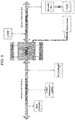
- Figure 2 shows a flowchart through which the driver of an electric vehicle is offered the chance to reach a predetermined destination having a clear idea of whether and how many stops will be necessary to charge the batteries.
- the estimation of the residual range is carried out by the VMU (Vehicular control unit), which is a vehicle processing unit that usually controls the on-board systems, both safety systems, such as ESP, ABS, etc., and comfort systems, such as the heater of the cabin, the infotainment system.
- VMU Vehicle control unit
- safety systems such as ESP, ABS, etc.
- comfort systems such as the heater of the cabin, the infotainment system.
- the latter further includes the sound system, the vehicle navigation system and other possible systems, such as - for example - the interface to a smartphone, so as to make and receive phone calls, etc..
- the VMU is connected to known sensors, which allow it - among other things - to know the instantaneous speed of the vehicle, the position of the pedals, the state of charge of the vehicle batteries.
- the method according to the invention is preferably implemented by means of the infotainment system itself, and in particular by the application defining the vehicle navigator.
- Other hardware/software configurations are admissible.
- the journey time is indicated and, if one or more battery charging stops are needed, said time is increased by the charging time, taking into account the features of the charging stations.
- the energy that can be delivered by the charging stations can vary.
- the driver is allowed to decide whether to choose the navigation through the fastest path or the path with minimum consumption or the path with minimum consumption in eco-drive mode.
- the navigator comprises, as it is known, a memory where there are stored, in a persisting manner or on-demand, road maps consisting in a set of routes. Furthermore, each route is associated with features, such as type of road, speed limits, height variations, toll booths, presence of horizontal and/or vertical signals, etc..
- the navigator calculates the fastest path and/or the path with minimum consumption. The latter, according to known navigators, usually coincides with the shortest path. As described below, this is not always true according to the invention.
- the calculation algorithms are not changed, but the features associated with the single routes are changed, with the result that, even though their calculation algorithms are left unchanged, the routes can turn out to be significantly different.
- both the route with minimum consumption and the fastest route are calculated also taking into account possible height variations along the route.
- the journey time, net of possible charging stops, for the aforesaid selected routes remains unchanged, but the total journey time, which also includes possible stops, is calculated taking into account a possible increase due to the times needed to charge the batteries as a consequence of the extra-consumption deriving from the virtual elongation of the routes having at least one portion with positive gradient.
- the navigator besides comprising maps as well as information on the types of roads, differences in height, etc., also comprises information of the location of the battery charging stations.
- the memory means of the navigator for example a solid-state storage, also include information concerning the charging stations located along the previously calculated routes and, in particular, the power that can be delivered to each charging vehicle and, hence, the navigator adjusts the aforesaid calculation of the journey times based on the actual charging time, which is an inverse function of said deliverable power and a direct function of the capacity of the batteries installed on board the vehicle.
- the navigator comprises a telematics connection, if necessary also used to acquire said one-demand maps and said information on the charging stations, and, when the driver selects the preferred type of path, if it needs at least one charging stop, the navigator is configured to proceed automatically, if the charging station allows it to do so, to book a charging position for the time in which the station will be reached by the vehicle.
- each charging station receives a booking request and compares said request with its availability. If the request can be met, the booking is confirmed and the station sends a positive message to the navigator, otherwise it communicates the minimum amount of time needed to have charging column available.
- the navigator can inquire another charging station or confirm the booking with said delayed availability.
- the navigator inquires the charging stations beforehand and updates the journey times before the route is selected.
- the driver can set, among the criteria of selection of the routes by the navigator, his/her preferences in terms of types of roads, payment of tolls or lack thereof, etc. and, in particular, he/she can select the route with minimum consumption or the fastest route as preferred route.
- the confirmation of the charge booking is done after the selection of the route by the driver.
- the method of interaction between the vehicle navigator and the charging station is part of the subject-matter of the invention, as well.
- the residual range comprises, in a cyclic succession
- the corrective coefficient K of the residual energy is identified by means of the aforesaid residual drain time, which allows you to correct the residual energy of the vehicle batteries estimated in a known manner.
- samplings are carried out and the relative mean values are calculated.
- the estimation of the mean speed is way more precise than the estimation of the variation of the SOC in the same time interval; as a consequence, the method according to the invention is significantly more precise and sensitive compared to the ones of the prior art, as it allows you to better calculate the residual drain time and, therefore, to have a more realistic estimation of the residual range.
- the aforesaid calculations are carried out by means of a sampling of the speed of the vehicle and of the residual energy of the vehicle batteries, not in terms of time, but in terms of distance covered. Therefore, the sampling can be performed, for example, every 100 m or every 1000 m, etc..
- the aforesaid value of consumption per kilometre is obtained not taking into account the energy consumed by any other on-board service, including the heating of the vehicle cabin.
- the residual drain time is substantially calculated based on the sole "driving" consumption, whereas the consumption of on-board services is taken into account in a less precise manner through the acquisition of the classic parameter SOC.
- the aforesaid calculations are carried on mean values of speed S_E and residual energy E_E stored in the batteries.
- the sampling is carried out on the distance covered, namely every N metres covered by the vehicle, for example every 100m or 200m or 500m, etc..
- Said residual energy can be obtained, for example, by means of the aforesaid parameter SOC, which is provided by proper means monitoring the state of charge of the batteries. Said parameter is known.
- the mean speed S_E of the vehicle and a mean residual energy E_E of the vehicle batteries are calculated.
- the initial residual charge is preferably multiplied by a mean K value, which preferably coincides with the one implying a complete drain in 4 hours, K(4).
- the method according to the invention can be reinitialized after a vehicle battery charging operation and/or after the turning off of the vehicle.
- the number of charges is stored in order to also estimate the fading of the capacity of the vehicle batteries to store energy by means of an aging coefficient KA, which reduces the nominal capacity of the batteries by approximately 1%
- a preferred embodiment of the method comprises the following steps:
- Step 1 Since the coefficient of consumption per kilometre DK is pre-calculated, for convenience it is associated with a preliminary step: Step 0.
- Said coefficient of consumption per kilometre DK expressed in kWh per kilometre (or - equally - in VAh/km) is obtained experimentally with experimental tests carried out on a specific vehicle and stored in a proper non-volatile memory of a processing unit used for the calculation of the residual range.
- said coefficient DK is a mean of different load condition of the vehicle. Fortunately, it turned out that said changes of load, meant as weight, do not affect very much the coefficient DK.
- said tests are carried out keeping the other on-board loads/services turned off.
- the experimental tests are also carried out reducing the deliverable power and, hence, the electric absorption of the driving motor. In this case, a further coefficient of consumption per kilometre is calculated and stored.
- the coefficient of consumption per kilometre is updated with every charging cycle of the batteries.
- a new coefficient DK' is calculated.
- said new coefficient is properly weighed and added to the coefficient DK of the previous step, which is also weighed.
- the actually used coefficient alfa*DK+beta*DK' slowly changes in time, without risking an excessive alteration of the result of the calculation algorithm after specific negative events, such as for example excessively long uphill roads or a strong contrary wind, etc..
- the same concept can also be applied both to the vehicle in standard conditions and to the vehicle in eco-drive conditions.
- Figure 4 shows in detail block 3 of figure 3 , which corresponds to the aforesaid step 3.
- Block 31 comprises a control of the number of samples sampled and of the distance covered; in other words, if the distance covered is greater than N, you move on to step 32, in which the sampling of Si and Si is carried out. This is repeated as long as the index "i" is equal to Z, which is when the control ends and you can move on to block 4, to which the 2 *Z samples are sent.
- a further guard coefficient SOCG is included, which further reduces the estimation of the residual charge of the batteries, so as to ensure a sufficient level of guard, which is preferably set between 0.15 and 0.2.
- the SOC is used in 0 - 1 form and not in a percentage form.
- the processing unit used for the aforesaid calculation of the residual range preferably is the VMU, but it is also possible that all processing operations are carried out by the navigator itself, which, for example, is made up of a tablet or a smartphone, where a suitable application (App) is installed and which is properly interfaced with the on-board data network through cable or wireless.
- the navigator which, for example, is made up of a tablet or a smartphone, where a suitable application (App) is installed and which is properly interfaced with the on-board data network through cable or wireless.
- FIG 4 shows an example of a vehicle data network where a VMU interconnects two CAN networks, CAN 1 and CAN 2.
- the first CAN1 is dedicated to the management of on-board systems, such as ESP, ABS, on-board computer and battery monitoring system, whereas line 2 connects user devices and the driving inverter, which powers at least one driving electric motor.
- This invention can be advantageously implemented by means of a computer program comprising coding means for carrying out one or more steps of the method, when the program is run on a computer. Therefore, the scope of protection is extended to said computer program and, furthermore, to means that can be read by a computer and comprise a recorded message, said means that can be read by a computer comprising program coding means for carrying out one or more steps of the method, when the program is run on a computer.
Landscapes
- Engineering & Computer Science (AREA)
- Radar, Positioning & Navigation (AREA)
- Remote Sensing (AREA)
- Automation & Control Theory (AREA)
- Physics & Mathematics (AREA)
- General Physics & Mathematics (AREA)
- Life Sciences & Earth Sciences (AREA)
- Sustainable Development (AREA)
- Sustainable Energy (AREA)
- Power Engineering (AREA)
- Transportation (AREA)
- Mechanical Engineering (AREA)
- Electric Propulsion And Braking For Vehicles (AREA)
- Navigation (AREA)
- Radar Systems Or Details Thereof (AREA)
- Charge And Discharge Circuits For Batteries Or The Like (AREA)
Claims (9)
- Navigationsverfahren eines Elektrofahrzeugs, umfassend- einen Schritt (Schritt A) des Schätzens einer ersten Restreichweite (D1, D1') des Elektrofahrzeugs,- einen Schritt der Berechnung (Schritt B) einer ersten Route für ein vorbestimmtes Ziel und einer ersten Strecke, die auf der ersten Route (D2, D3),- und einen Schritt des Vergleichens der ersten Restreichweite mit der ersten Strecke, wobei die erste Route einen Routenabschnitt umfasst, der eine lokale Höhenänderung aufweist, dadurch gekennzeichnet, dass der Schritt der Berechnung der ersten Strecke der ersten zurückzulegenden Route umfasst:- einen Schritt der Identifizierung eines Startpunkts und eines Endpunkts des Routenabschnitts, wobei der Startpunkt und der Endpunkt dieselbe Höhenlage aufweisen, und- einen Schritt der Multiplikation einer Länge des Routenabschnitts mit einem zweiten Korrekturkoeffizienten (Z2), der eine Funktion eines positiven Abschnitts der lokalen Höhenänderung ist.
- Verfahren nach Anspruch 1, wobei der Schritt der Berechnung der ersten Strecke der ersten zurückzulegenden Route weiter die Multiplikation eines Werts der ersten Strecke mit einem ersten Korrekturkoeffizienten (Z1) umfasst, welcher eine Funktion einer gesamten Höhenänderung der ersten Route ist.
- Verfahren nach Anspruch 1 oder 2, wobei der erste Korrekturkoeffizient aus einer linearen Funktion der Höhenänderung der ersten Strecke erhalten wird und/oder wobei der zweite Korrekturkoeffizient aus einer parabolischen Funktion des Absolutwertes der lokalen Änderung erhalten wird.
- Verfahren nach einem der vorstehenden Ansprüche 1 bis 3, wobei der Schritt des Vergleichens der ersten Restreichweite mit der ersten Strecke umfasst:- einen Schritt des Prüfens, ob die erste Strecke kleiner oder gleich der ersten Restreichweite ist, und im Falle eines positiven Ergebnisses- (CH1: Ja) einen Schritt des Anzeigens einer ersten Nachricht (WG) an den Fahrer bezüglich der Tatsache, dass das Ziel mittels der ersten Route erreicht werden kann, und einer relativen geschätzten Fahrzeit, und einen Schritt des Startens (NAV.START) einer Navigation entlang der ersten Route; falls andererseits die erste Strecke größer ist als die erste Restreichweite, dann- (CH1: Nein) einen Schritt der Berechnung (Schritt C) einer Route mit minimalem Verbrauch, wobei diese mittels des ersten und/oder zweiten Korrekturkoeffizienten korrigiert wird; dann, falls eine der Route mit minimalem Verbrauch entsprechende zweite zurückzulegende Strecke (D3) kleiner oder gleich der ersten Restreichweite (D1) ist,- (CH2: Ja) einen Schritt des Anzeigens einer ersten Nachricht (WG) an den Fahrer bezüglich der Tatsache, dass das Ziel über die Route mit minimalem Verbrauch erreicht werden kann, und einer relativen geschätzten Fahrzeit, und einen Schritt des Startens (NAV.START) einer Navigation entlang der Route mit minimalem Verbrauch; ansonsten- optional (CH2: Nein) Berechnung (Schritt A') einer zweiten Restreichweite (D1') unter Öko-Fahrbedingungen; dann, falls die zweite Route (D3) mit minimalem Verbrauch, die mittels des ersten und/oder zweiten Korrekturkoeffizienten korrigiert wird, kleiner oder gleich der zweiten Restreichweite (D1') ist,- (CH3: Ja) einen Schritt des Anzeigens einer zweiten Nachricht (WG'), die den Fahrer des Elektrofahrzeugs darüber informiert, dass, um das vorbestimmte Ziel zu erreichen, es nötig ist, in den Öko-Fahrmodus zu schalten, und einen Schritt des Startens (NAV.START) einer Navigation entlang der ersten Route im Öko-Fahrmodus, oder- (CH3: Nein) einen Schritt des Anzeigens einer dritten Nachricht (WG"), die den Fahrer des Elektrofahrzeugs darüber informiert, dass, um das vorbestimmte Ziel zu erreichen, es nötig ist, mindestens einen Halt einzulegen, um die Batterien zu laden, und einen Schritt des Startens (NAV.START) einer Navigation entlang der ersten Route im normalen Modus.
- Verfahren nach Anspruch 4, wobei die dritte Nachricht (WG") die folgenden Informationen umfasst:- eine erste geschätzte Fahrzeit, umfassend eine Haltezeit zum Laden der Batterien.
- Verfahren nach Anspruch 5 und weiter umfassend einen Schritt der Abfrage der Verfügbarkeit einer Ladestation und des Einbeziehens einer möglichen Wartezeit, die gewartet werden muss, um Zugang zu den entsprechenden Ladediensten zu erhalten, in eine Berechnung der Fahrzeit.
- Verfahren nach einem der vorstehenden Ansprüche 4 bis 6, wobei dann, wenn mindestens ein Halt zum Laden erwartet wird, der Schritt des Startens (NAV.START) der Navigation einen Schritt des Buchens einer Ladung an einer vorbestimmten Ladestation entlang der Route umfasst.
- Navigationsunterstützungsvorrichtung (NAV) eines Elektrofahrzeugs, wobei das Fahrzeug ein Batteriepack und mindestens einen Elektromotor umfasst, der mit einem Fahrzeuggetriebe und einer ersten Verarbeitungseinheit (VCU) zusammenwirkt, welche so ausgeführt ist, dass sie eine erste Restreichweite (D1) des Elektrofahrzeugs schätzt, wobei die Vorrichtung (NAV) umfasst:- Mittel zum Erfassen der Schätzung der ersten Restreichweite von der ersten Verarbeitungseinheit (VCU),- Speichermittel, in denen Straßenabschnitte und zugehörige Informationen, wie Länge, Geschwindigkeitsbegrenzungen und Steigungen gespeichert sind,- Mittel zum Erfassen eines Ziels,- Verarbeitungsmittel, die ausgeführt sind, um alle Schritte von einem der Ansprüche 1 bis 7 auszuführen.
- Elektrofahrzeug, umfassend ein Batteriepack und mindestens einen Elektromotor, der mit dem Fahrzeuggetriebe und einer Einheit (VCU) zusammenwirkt, um eine erste Restreichweite eines Elektrofahrzeugs nach Anspruch 8 zu schätzen.
Priority Applications (1)
| Application Number | Priority Date | Filing Date | Title |
|---|---|---|---|
| EP20208216.0A EP3798579B1 (de) | 2016-05-26 | 2017-05-26 | Verfahren und vorrichtung zur navigationsunterstützung eines batterie-elektrischen fahrzeugs |
Applications Claiming Priority (1)
| Application Number | Priority Date | Filing Date | Title |
|---|---|---|---|
| ITUA2016A003842A ITUA20163842A1 (it) | 2016-05-26 | 2016-05-26 | Metodo e dispositivo di ausilio alla navigazione di un veicolo elettrico a batteria |
Related Child Applications (2)
| Application Number | Title | Priority Date | Filing Date |
|---|---|---|---|
| EP20208216.0A Division-Into EP3798579B1 (de) | 2016-05-26 | 2017-05-26 | Verfahren und vorrichtung zur navigationsunterstützung eines batterie-elektrischen fahrzeugs |
| EP20208216.0A Division EP3798579B1 (de) | 2016-05-26 | 2017-05-26 | Verfahren und vorrichtung zur navigationsunterstützung eines batterie-elektrischen fahrzeugs |
Publications (3)
| Publication Number | Publication Date |
|---|---|
| EP3249359A2 EP3249359A2 (de) | 2017-11-29 |
| EP3249359A3 EP3249359A3 (de) | 2018-09-12 |
| EP3249359B1 true EP3249359B1 (de) | 2021-03-31 |
Family
ID=57045283
Family Applications (2)
| Application Number | Title | Priority Date | Filing Date |
|---|---|---|---|
| EP20208216.0A Active EP3798579B1 (de) | 2016-05-26 | 2017-05-26 | Verfahren und vorrichtung zur navigationsunterstützung eines batterie-elektrischen fahrzeugs |
| EP17173151.6A Active EP3249359B1 (de) | 2016-05-26 | 2017-05-26 | Navigationsunterstützungsverfahren und vorrichtung eines batterieelektrischen fahrzeugs |
Family Applications Before (1)
| Application Number | Title | Priority Date | Filing Date |
|---|---|---|---|
| EP20208216.0A Active EP3798579B1 (de) | 2016-05-26 | 2017-05-26 | Verfahren und vorrichtung zur navigationsunterstützung eines batterie-elektrischen fahrzeugs |
Country Status (3)
| Country | Link |
|---|---|
| EP (2) | EP3798579B1 (de) |
| ES (1) | ES2870591T3 (de) |
| IT (1) | ITUA20163842A1 (de) |
Cited By (1)
| Publication number | Priority date | Publication date | Assignee | Title |
|---|---|---|---|---|
| FR3150170A1 (fr) * | 2023-06-22 | 2024-12-27 | Valeo Systemes Thermiques | Procédé de gestion de la consommation d’énergie électrique pour un véhicule à propulsion électrique |
Families Citing this family (12)
| Publication number | Priority date | Publication date | Assignee | Title |
|---|---|---|---|---|
| IT201900000605A1 (it) * | 2019-01-15 | 2020-07-15 | Univ Degli Studi Genova | Metodo e sistema per la gestione ottimizzata in tempo reale del trasporto tramite veicoli elettrici |
| CN109849734B (zh) * | 2019-01-23 | 2020-09-08 | 江苏敏安电动汽车有限公司 | 一种基于用户体验的电动汽车剩余续驶里程算法 |
| CN110154831B (zh) * | 2019-05-17 | 2020-10-20 | 长安大学 | 一种纯电动汽车单位时间耗电量、车辆续航里程和行驶旅程所需电量的计算系统和方法 |
| CN110281812B (zh) * | 2019-06-27 | 2022-08-12 | 一汽解放汽车有限公司 | 一种基于工况识别的续航里程估算系统 |
| CN110733382B (zh) * | 2019-11-08 | 2021-03-16 | 合肥科尚电子科技有限公司 | 一种车载设备用电源智能管理系统 |
| DE102020203813A1 (de) * | 2020-03-24 | 2021-09-30 | Volkswagen Aktiengesellschaft | Verfahren zum Überprüfen einer Beförderungsfahrt eines Nutzers mit einem autonom fahrenden Fahrzeug, sowie elektronisches Verwaltungssystem |
| CN111516553B (zh) * | 2020-04-24 | 2021-12-17 | 东风汽车集团有限公司 | 纯电动汽车剩余续航里程计算方法 |
| CN113043916A (zh) * | 2021-04-23 | 2021-06-29 | 上汽大通汽车有限公司 | 一种氢燃料电池车续航能力的测试系统及其测试方法 |
| LU500994B1 (de) | 2021-12-12 | 2023-06-12 | Eclever Entw Ohg | Fahrzeug- und fahrzeugführerspezifisches routing |
| DE102021214173A1 (de) | 2021-12-12 | 2023-06-15 | eClever Entwicklungs OHG | Fahrzeug- und fahrzeugführerspezifisches routing |
| CN116476694B (zh) * | 2023-03-07 | 2025-10-17 | 北京新能源汽车股份有限公司 | 剩余里程预测方法、装置、车辆及存储介质 |
| CN117748688B (zh) * | 2024-01-30 | 2024-07-05 | 中煤科工机器人科技有限公司 | 一种用于四差速轮式巡检机器人的自动充电管理系统 |
Citations (1)
| Publication number | Priority date | Publication date | Assignee | Title |
|---|---|---|---|---|
| US20160084665A1 (en) * | 2010-09-08 | 2016-03-24 | Harman Becker Automotive Systems Gmbh | Vehicle navigation system |
Family Cites Families (6)
| Publication number | Priority date | Publication date | Assignee | Title |
|---|---|---|---|---|
| CN102870270A (zh) * | 2010-03-31 | 2013-01-09 | 菲斯科汽车公司 | 用于车辆中的量程计算的系统及方法 |
| JP5928320B2 (ja) * | 2012-12-07 | 2016-06-01 | 株式会社日立製作所 | 電気自動車向けナビゲーションシステム |
| DE102013003411B4 (de) * | 2013-02-28 | 2025-11-20 | Hochschule Karlsruhe | Verfahren und System zum Steuern und/oder Regeln des Energieverbrauchs und/oder der Fahrtroute eines Elektrofahrzeugs |
| HUP1300488A2 (en) * | 2013-08-15 | 2015-03-02 | Gps Tuner Kft | Method for monitoring and navigating electric vehicles on a navigated route |
| WO2015063967A1 (ja) * | 2013-10-31 | 2015-05-07 | パナソニック インテレクチュアル プロパティ コーポレーション オブ アメリカ | 制御方法、プログラム、情報処理装置、および予約システム |
| DE102014221062A1 (de) * | 2014-10-16 | 2016-04-21 | Continental Automotive Gmbh | Verfahren und Vorrichtung zur Positionsermittlung eines Fahrzeugs |
-
2016
- 2016-05-26 IT ITUA2016A003842A patent/ITUA20163842A1/it unknown
-
2017
- 2017-05-26 EP EP20208216.0A patent/EP3798579B1/de active Active
- 2017-05-26 ES ES17173151T patent/ES2870591T3/es active Active
- 2017-05-26 EP EP17173151.6A patent/EP3249359B1/de active Active
Patent Citations (1)
| Publication number | Priority date | Publication date | Assignee | Title |
|---|---|---|---|---|
| US20160084665A1 (en) * | 2010-09-08 | 2016-03-24 | Harman Becker Automotive Systems Gmbh | Vehicle navigation system |
Cited By (1)
| Publication number | Priority date | Publication date | Assignee | Title |
|---|---|---|---|---|
| FR3150170A1 (fr) * | 2023-06-22 | 2024-12-27 | Valeo Systemes Thermiques | Procédé de gestion de la consommation d’énergie électrique pour un véhicule à propulsion électrique |
Also Published As
| Publication number | Publication date |
|---|---|
| EP3249359A2 (de) | 2017-11-29 |
| EP3798579A1 (de) | 2021-03-31 |
| ITUA20163842A1 (it) | 2017-11-26 |
| ES2870591T3 (es) | 2021-10-27 |
| EP3798579B1 (de) | 2025-05-07 |
| EP3249359A3 (de) | 2018-09-12 |
Similar Documents
| Publication | Publication Date | Title |
|---|---|---|
| EP3249359B1 (de) | Navigationsunterstützungsverfahren und vorrichtung eines batterieelektrischen fahrzeugs | |
| CN115900744B (zh) | 充电路径规划方法、装置和服务器 | |
| CN112566810B (zh) | 车辆电源系统以及车辆调配系统 | |
| US11409300B2 (en) | Autonomous car, traveling controller, traveling control method, and storage medium storing control program | |
| US9713962B2 (en) | Systems and methods for reducing the cost of vehicle charging based on route prediction | |
| CN107571860B (zh) | 用于运行电驱动的或能电驱动的车辆的方法及车辆 | |
| JP6137304B2 (ja) | エネルギー消費量予測装置およびエネルギー消費量予測方法 | |
| CN102770304B (zh) | 电力供给控制装置以及信息提供装置 | |
| US8914173B2 (en) | Method and system for conditioning an energy storage system (ESS) for a vehicle | |
| JP5714073B2 (ja) | スマートグリッドシステムおよび車載装置 | |
| KR20180025950A (ko) | 하이브리드 자동차의 연료 및 전기 소비를 관리하기 위한 셋포인트 계산 방법 | |
| US11586159B2 (en) | Machine learning method and system for executing remote commands to control functions of a vehicle | |
| JP7403117B2 (ja) | 電気自動車用カーナビゲーションのシステム、方法、および、プログラム | |
| CN106157459A (zh) | 一种基于预估电量的租车系统预约租车方法 | |
| FR2971874A1 (fr) | Systeme de recharge | |
| JP2010239849A (ja) | 車載装置および車載システム | |
| GB2546565A (en) | A method and system for trip planning for vehicles with limited on-board energy | |
| CN112406874B (zh) | 一种电动汽车远距离充电辅助决策方法 | |
| CN113613945A (zh) | 用于控制车辆的能量存储系统的方法 | |
| CN112193085A (zh) | 高压电池的充电持续时间预测和机动车 | |
| CN116358579A (zh) | 基于基线和动态驾驶员模型的电动汽车行程能量预测 | |
| CN116263339B (zh) | 车辆能耗的估计的修正 | |
| CN102844951B (zh) | 用于获知车辆的电蓄能器的过剩的能源量的方法以及装置 | |
| CN108734875B (zh) | 一种基于预估电量和等待时间的web预约租车方法 | |
| US20240369368A1 (en) | Electronic vehicle route calculator |
Legal Events
| Date | Code | Title | Description |
|---|---|---|---|
| PUAI | Public reference made under article 153(3) epc to a published international application that has entered the european phase |
Free format text: ORIGINAL CODE: 0009012 |
|
| STAA | Information on the status of an ep patent application or granted ep patent |
Free format text: STATUS: THE APPLICATION HAS BEEN PUBLISHED |
|
| AK | Designated contracting states |
Kind code of ref document: A2 Designated state(s): AL AT BE BG CH CY CZ DE DK EE ES FI FR GB GR HR HU IE IS IT LI LT LU LV MC MK MT NL NO PL PT RO RS SE SI SK SM TR |
|
| AX | Request for extension of the european patent |
Extension state: BA ME |
|
| PUAL | Search report despatched |
Free format text: ORIGINAL CODE: 0009013 |
|
| AK | Designated contracting states |
Kind code of ref document: A3 Designated state(s): AL AT BE BG CH CY CZ DE DK EE ES FI FR GB GR HR HU IE IS IT LI LT LU LV MC MK MT NL NO PL PT RO RS SE SI SK SM TR |
|
| AX | Request for extension of the european patent |
Extension state: BA ME |
|
| RIC1 | Information provided on ipc code assigned before grant |
Ipc: G01C 21/34 20060101AFI20171204BHEP |
|
| PUAF | Information related to the publication of a search report (a3 document) modified or deleted |
Free format text: ORIGINAL CODE: 0009199SEPU |
|
| D17D | Deferred search report published (deleted) | ||
| RIC1 | Information provided on ipc code assigned before grant |
Ipc: G01C 21/34 20060101AFI20180503BHEP |
|
| RIC1 | Information provided on ipc code assigned before grant |
Ipc: G01C 21/34 20060101AFI20180508BHEP |
|
| RIC1 | Information provided on ipc code assigned before grant |
Ipc: G01C 21/34 20060101AFI20180524BHEP |
|
| PUAL | Search report despatched |
Free format text: ORIGINAL CODE: 0009013 |
|
| AK | Designated contracting states |
Kind code of ref document: A3 Designated state(s): AL AT BE BG CH CY CZ DE DK EE ES FI FR GB GR HR HU IE IS IT LI LT LU LV MC MK MT NL NO PL PT RO RS SE SI SK SM TR |
|
| AX | Request for extension of the european patent |
Extension state: BA ME |
|
| RIC1 | Information provided on ipc code assigned before grant |
Ipc: B60L 11/18 20060101ALI20180806BHEP Ipc: G01C 21/34 20060101AFI20180806BHEP |
|
| STAA | Information on the status of an ep patent application or granted ep patent |
Free format text: STATUS: REQUEST FOR EXAMINATION WAS MADE |
|
| STAA | Information on the status of an ep patent application or granted ep patent |
Free format text: STATUS: EXAMINATION IS IN PROGRESS |
|
| 17P | Request for examination filed |
Effective date: 20190311 |
|
| RBV | Designated contracting states (corrected) |
Designated state(s): AL AT BE BG CH CY CZ DE DK EE ES FI FR GB GR HR HU IE IS IT LI LT LU LV MC MK MT NL NO PL PT RO RS SE SI SK SM TR |
|
| 17Q | First examination report despatched |
Effective date: 20190411 |
|
| RIC1 | Information provided on ipc code assigned before grant |
Ipc: G01C 21/34 20060101AFI20200812BHEP Ipc: B60L 58/12 20190101ALI20200812BHEP Ipc: B60L 1/02 20060101ALI20200812BHEP |
|
| GRAP | Despatch of communication of intention to grant a patent |
Free format text: ORIGINAL CODE: EPIDOSNIGR1 |
|
| STAA | Information on the status of an ep patent application or granted ep patent |
Free format text: STATUS: GRANT OF PATENT IS INTENDED |
|
| INTG | Intention to grant announced |
Effective date: 20201021 |
|
| GRAS | Grant fee paid |
Free format text: ORIGINAL CODE: EPIDOSNIGR3 |
|
| GRAA | (expected) grant |
Free format text: ORIGINAL CODE: 0009210 |
|
| STAA | Information on the status of an ep patent application or granted ep patent |
Free format text: STATUS: THE PATENT HAS BEEN GRANTED |
|
| AK | Designated contracting states |
Kind code of ref document: B1 Designated state(s): AL AT BE BG CH CY CZ DE DK EE ES FI FR GB GR HR HU IE IS IT LI LT LU LV MC MK MT NL NO PL PT RO RS SE SI SK SM TR |
|
| REG | Reference to a national code |
Ref country code: GB Ref legal event code: FG4D Ref country code: CH Ref legal event code: EP |
|
| REG | Reference to a national code |
Ref country code: DE Ref legal event code: R096 Ref document number: 602017035548 Country of ref document: DE Ref country code: AT Ref legal event code: REF Ref document number: 1377423 Country of ref document: AT Kind code of ref document: T Effective date: 20210415 |
|
| REG | Reference to a national code |
Ref country code: IE Ref legal event code: FG4D |
|
| REG | Reference to a national code |
Ref country code: LT Ref legal event code: MG9D |
|
| PG25 | Lapsed in a contracting state [announced via postgrant information from national office to epo] |
Ref country code: NO Free format text: LAPSE BECAUSE OF FAILURE TO SUBMIT A TRANSLATION OF THE DESCRIPTION OR TO PAY THE FEE WITHIN THE PRESCRIBED TIME-LIMIT Effective date: 20210630 Ref country code: HR Free format text: LAPSE BECAUSE OF FAILURE TO SUBMIT A TRANSLATION OF THE DESCRIPTION OR TO PAY THE FEE WITHIN THE PRESCRIBED TIME-LIMIT Effective date: 20210331 Ref country code: FI Free format text: LAPSE BECAUSE OF FAILURE TO SUBMIT A TRANSLATION OF THE DESCRIPTION OR TO PAY THE FEE WITHIN THE PRESCRIBED TIME-LIMIT Effective date: 20210331 Ref country code: BG Free format text: LAPSE BECAUSE OF FAILURE TO SUBMIT A TRANSLATION OF THE DESCRIPTION OR TO PAY THE FEE WITHIN THE PRESCRIBED TIME-LIMIT Effective date: 20210630 |
|
| PG25 | Lapsed in a contracting state [announced via postgrant information from national office to epo] |
Ref country code: SE Free format text: LAPSE BECAUSE OF FAILURE TO SUBMIT A TRANSLATION OF THE DESCRIPTION OR TO PAY THE FEE WITHIN THE PRESCRIBED TIME-LIMIT Effective date: 20210331 Ref country code: LV Free format text: LAPSE BECAUSE OF FAILURE TO SUBMIT A TRANSLATION OF THE DESCRIPTION OR TO PAY THE FEE WITHIN THE PRESCRIBED TIME-LIMIT Effective date: 20210331 Ref country code: RS Free format text: LAPSE BECAUSE OF FAILURE TO SUBMIT A TRANSLATION OF THE DESCRIPTION OR TO PAY THE FEE WITHIN THE PRESCRIBED TIME-LIMIT Effective date: 20210331 |
|
| REG | Reference to a national code |
Ref country code: NL Ref legal event code: MP Effective date: 20210331 |
|
| REG | Reference to a national code |
Ref country code: AT Ref legal event code: MK05 Ref document number: 1377423 Country of ref document: AT Kind code of ref document: T Effective date: 20210331 |
|
| REG | Reference to a national code |
Ref country code: ES Ref legal event code: FG2A Ref document number: 2870591 Country of ref document: ES Kind code of ref document: T3 Effective date: 20211027 |
|
| PG25 | Lapsed in a contracting state [announced via postgrant information from national office to epo] |
Ref country code: NL Free format text: LAPSE BECAUSE OF FAILURE TO SUBMIT A TRANSLATION OF THE DESCRIPTION OR TO PAY THE FEE WITHIN THE PRESCRIBED TIME-LIMIT Effective date: 20210331 Ref country code: SM Free format text: LAPSE BECAUSE OF FAILURE TO SUBMIT A TRANSLATION OF THE DESCRIPTION OR TO PAY THE FEE WITHIN THE PRESCRIBED TIME-LIMIT Effective date: 20210331 Ref country code: AT Free format text: LAPSE BECAUSE OF FAILURE TO SUBMIT A TRANSLATION OF THE DESCRIPTION OR TO PAY THE FEE WITHIN THE PRESCRIBED TIME-LIMIT Effective date: 20210331 Ref country code: CZ Free format text: LAPSE BECAUSE OF FAILURE TO SUBMIT A TRANSLATION OF THE DESCRIPTION OR TO PAY THE FEE WITHIN THE PRESCRIBED TIME-LIMIT Effective date: 20210331 Ref country code: EE Free format text: LAPSE BECAUSE OF FAILURE TO SUBMIT A TRANSLATION OF THE DESCRIPTION OR TO PAY THE FEE WITHIN THE PRESCRIBED TIME-LIMIT Effective date: 20210331 Ref country code: LT Free format text: LAPSE BECAUSE OF FAILURE TO SUBMIT A TRANSLATION OF THE DESCRIPTION OR TO PAY THE FEE WITHIN THE PRESCRIBED TIME-LIMIT Effective date: 20210331 |
|
| PG25 | Lapsed in a contracting state [announced via postgrant information from national office to epo] |
Ref country code: IS Free format text: LAPSE BECAUSE OF FAILURE TO SUBMIT A TRANSLATION OF THE DESCRIPTION OR TO PAY THE FEE WITHIN THE PRESCRIBED TIME-LIMIT Effective date: 20210731 Ref country code: PL Free format text: LAPSE BECAUSE OF FAILURE TO SUBMIT A TRANSLATION OF THE DESCRIPTION OR TO PAY THE FEE WITHIN THE PRESCRIBED TIME-LIMIT Effective date: 20210331 Ref country code: PT Free format text: LAPSE BECAUSE OF FAILURE TO SUBMIT A TRANSLATION OF THE DESCRIPTION OR TO PAY THE FEE WITHIN THE PRESCRIBED TIME-LIMIT Effective date: 20210802 Ref country code: RO Free format text: LAPSE BECAUSE OF FAILURE TO SUBMIT A TRANSLATION OF THE DESCRIPTION OR TO PAY THE FEE WITHIN THE PRESCRIBED TIME-LIMIT Effective date: 20210331 Ref country code: SK Free format text: LAPSE BECAUSE OF FAILURE TO SUBMIT A TRANSLATION OF THE DESCRIPTION OR TO PAY THE FEE WITHIN THE PRESCRIBED TIME-LIMIT Effective date: 20210331 |
|
| REG | Reference to a national code |
Ref country code: CH Ref legal event code: PL |
|
| REG | Reference to a national code |
Ref country code: DE Ref legal event code: R097 Ref document number: 602017035548 Country of ref document: DE |
|
| PG25 | Lapsed in a contracting state [announced via postgrant information from national office to epo] |
Ref country code: LI Free format text: LAPSE BECAUSE OF NON-PAYMENT OF DUE FEES Effective date: 20210531 Ref country code: MC Free format text: LAPSE BECAUSE OF FAILURE TO SUBMIT A TRANSLATION OF THE DESCRIPTION OR TO PAY THE FEE WITHIN THE PRESCRIBED TIME-LIMIT Effective date: 20210331 Ref country code: DK Free format text: LAPSE BECAUSE OF FAILURE TO SUBMIT A TRANSLATION OF THE DESCRIPTION OR TO PAY THE FEE WITHIN THE PRESCRIBED TIME-LIMIT Effective date: 20210331 Ref country code: AL Free format text: LAPSE BECAUSE OF FAILURE TO SUBMIT A TRANSLATION OF THE DESCRIPTION OR TO PAY THE FEE WITHIN THE PRESCRIBED TIME-LIMIT Effective date: 20210331 Ref country code: CH Free format text: LAPSE BECAUSE OF NON-PAYMENT OF DUE FEES Effective date: 20210531 Ref country code: LU Free format text: LAPSE BECAUSE OF NON-PAYMENT OF DUE FEES Effective date: 20210526 |
|
| PLBE | No opposition filed within time limit |
Free format text: ORIGINAL CODE: 0009261 |
|
| STAA | Information on the status of an ep patent application or granted ep patent |
Free format text: STATUS: NO OPPOSITION FILED WITHIN TIME LIMIT |
|
| REG | Reference to a national code |
Ref country code: BE Ref legal event code: MM Effective date: 20210531 |
|
| 26N | No opposition filed |
Effective date: 20220104 |
|
| PG25 | Lapsed in a contracting state [announced via postgrant information from national office to epo] |
Ref country code: IE Free format text: LAPSE BECAUSE OF NON-PAYMENT OF DUE FEES Effective date: 20210526 |
|
| PG25 | Lapsed in a contracting state [announced via postgrant information from national office to epo] |
Ref country code: IS Free format text: LAPSE BECAUSE OF FAILURE TO SUBMIT A TRANSLATION OF THE DESCRIPTION OR TO PAY THE FEE WITHIN THE PRESCRIBED TIME-LIMIT Effective date: 20210731 |
|
| PG25 | Lapsed in a contracting state [announced via postgrant information from national office to epo] |
Ref country code: BE Free format text: LAPSE BECAUSE OF NON-PAYMENT OF DUE FEES Effective date: 20210531 |
|
| PG25 | Lapsed in a contracting state [announced via postgrant information from national office to epo] |
Ref country code: HU Free format text: LAPSE BECAUSE OF FAILURE TO SUBMIT A TRANSLATION OF THE DESCRIPTION OR TO PAY THE FEE WITHIN THE PRESCRIBED TIME-LIMIT; INVALID AB INITIO Effective date: 20170526 |
|
| P01 | Opt-out of the competence of the unified patent court (upc) registered |
Effective date: 20230523 |
|
| PG25 | Lapsed in a contracting state [announced via postgrant information from national office to epo] |
Ref country code: CY Free format text: LAPSE BECAUSE OF FAILURE TO SUBMIT A TRANSLATION OF THE DESCRIPTION OR TO PAY THE FEE WITHIN THE PRESCRIBED TIME-LIMIT Effective date: 20210331 |
|
| PG25 | Lapsed in a contracting state [announced via postgrant information from national office to epo] |
Ref country code: GR Free format text: LAPSE BECAUSE OF FAILURE TO SUBMIT A TRANSLATION OF THE DESCRIPTION OR TO PAY THE FEE WITHIN THE PRESCRIBED TIME-LIMIT Effective date: 20210331 |
|
| PG25 | Lapsed in a contracting state [announced via postgrant information from national office to epo] |
Ref country code: MK Free format text: LAPSE BECAUSE OF FAILURE TO SUBMIT A TRANSLATION OF THE DESCRIPTION OR TO PAY THE FEE WITHIN THE PRESCRIBED TIME-LIMIT Effective date: 20210331 |
|
| PG25 | Lapsed in a contracting state [announced via postgrant information from national office to epo] |
Ref country code: TR Free format text: LAPSE BECAUSE OF FAILURE TO SUBMIT A TRANSLATION OF THE DESCRIPTION OR TO PAY THE FEE WITHIN THE PRESCRIBED TIME-LIMIT Effective date: 20210331 |
|
| PG25 | Lapsed in a contracting state [announced via postgrant information from national office to epo] |
Ref country code: MT Free format text: LAPSE BECAUSE OF FAILURE TO SUBMIT A TRANSLATION OF THE DESCRIPTION OR TO PAY THE FEE WITHIN THE PRESCRIBED TIME-LIMIT Effective date: 20210331 |
|
| PGFP | Annual fee paid to national office [announced via postgrant information from national office to epo] |
Ref country code: DE Payment date: 20250528 Year of fee payment: 9 |
|
| PGFP | Annual fee paid to national office [announced via postgrant information from national office to epo] |
Ref country code: ES Payment date: 20250611 Year of fee payment: 9 |
|
| PGFP | Annual fee paid to national office [announced via postgrant information from national office to epo] |
Ref country code: IT Payment date: 20250512 Year of fee payment: 9 |
|
| PGFP | Annual fee paid to national office [announced via postgrant information from national office to epo] |
Ref country code: FR Payment date: 20250526 Year of fee payment: 9 |
|
| PGFP | Annual fee paid to national office [announced via postgrant information from national office to epo] |
Ref country code: GB Payment date: 20260304 Year of fee payment: 10 |